Candy (1968)

Candy (1968)

“I don’t understand! What does it all mean?”

Synopsis:
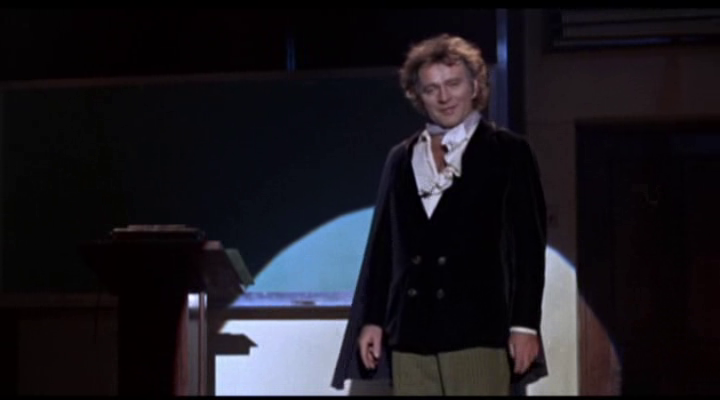
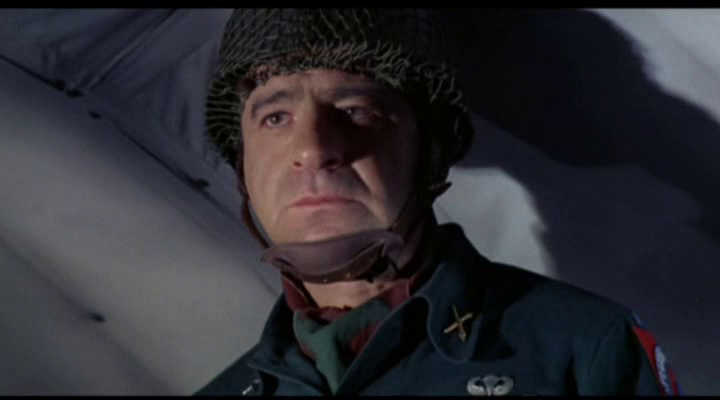
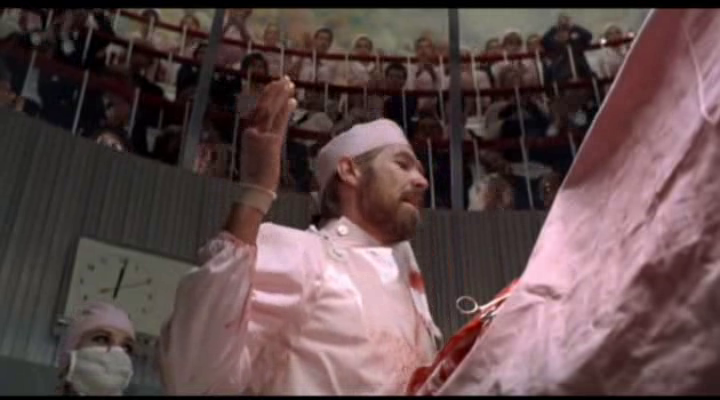
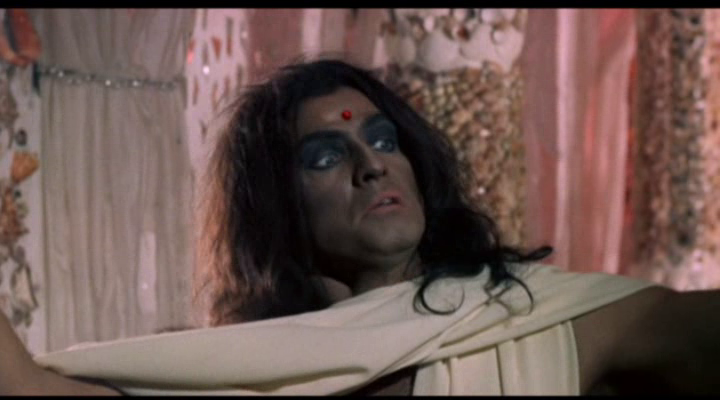
A vapid, sexually alluring teen (Ewa Aulin) encounters lustful older men — including her father (John Astin), his twin brother (Astin), a poet (Richard Burton), a gardener (Ringo Starr), a hunch-backed juggler (Charles Aznavour), a renowned surgeon (James Coburn), a general (Walter Matthau), and a guru (Marlon Brando) — everywhere she goes.

Genres, Themes, Actors, and Directors:

  • Counterculture
  • James Coburn Films
  • Marlon Brando Films
  • Richard Burton Films
  • Ringo Starr Films
  • Satires and Spoofs
  • Walter Matthau Films

Review:
Based on the best-selling 1958 novel by Terry Southern (which itself was loosely inspired by Voltaire’s Candide), this infamously awful camp classic is (as summed up by DVD Savant) simply “a pack of stale sex jokes enlivened here and there by spirited performances”. It’s difficult to know exactly what all the big name actors who committed to this project thought they were getting into — but fortunately for film fanatics, there’s actually quite a bit to enjoy in their cameo spots. Burton, for instance, is deliciously bombastic as a poet with perpetually wind-swept hair, while Matthau riffs nicely on his crusty screen persona, and Brando has great fun (too much fun??) playing a lecherous guru living out of the back of a truck. Aulin herself is convincingly vacant as the sexy object of all men’s desires — and if she’s no great actress, she’s at least appropriately cast for the part. Yet you’ll likely find your patience sorely tested as you question the ultimate point of Candy’s sexual wanderings, given that she doesn’t seem to be particularly turned on by any of these men. Indeed, if you take it all too seriously, it’s easy to be deeply offended by the very premise of a sexually available, under-age naif allowing herself to be seduced by nearly every male she comes across — and the incessant faux humping (this is a satire on pornography, after all) quickly becomes tiresome. Watch this one, if you dare, simply for its value as a curio.

Redeeming Qualities and Moments:

  • Richard Burton as McPhisto
  • Walter Matthau as General Smight
  • James Coburn as Dr. Krankheit
  • Marlon Brando as Grindl

Must See?
Yes, but only for its notoriety as a campy clunker. Listed as a Camp Classic in the back of Peary’s book.

Categories

  • Cult Movie

Links:

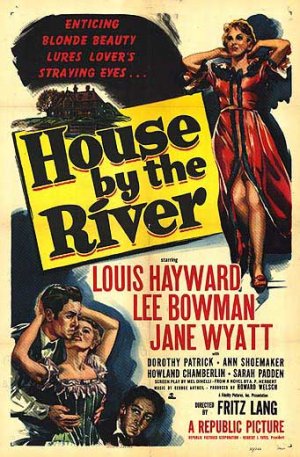
House by the River (1950)

House by the River (1950)

“There’s a limit to this business of being brothers.”

Synopsis:
A sociopathic writer (Louis Hayward) enlists the help of his brother (Lee Bowman) in hiding the body of a maid (Dorothy Patrick) he’s accidentally strangled.

Genres, Themes, Actors, and Directors:

  • Falsely Accused
  • Fritz Lang Films
  • Hiding Dead Bodies
  • Historical Drama
  • Jane Wyatt Films
  • Siblings

Review:
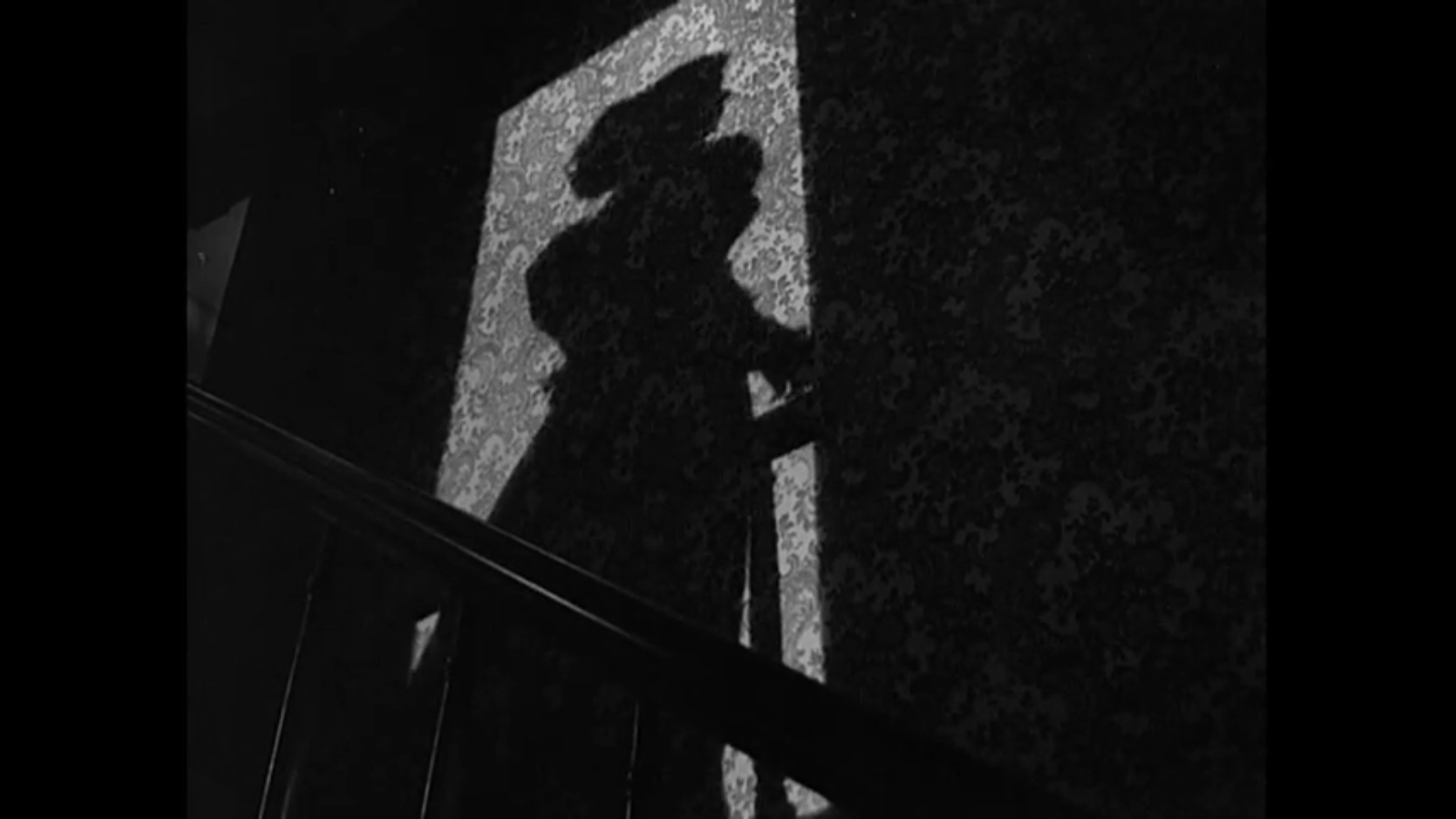
This little-seen historical melodrama by Fritz Lang is arguably the film in his oeuvre “with the strongest camp appeal”. Featuring a sociopathic protagonist we come to despise within 10 minutes of his appearance on-screen, the gothic storyline moves inexorably towards Hayward’s downfall — though there remains a fair amount of suspense in wondering just how he’ll get there, and how many other people he’ll manage to hurt along the way. As noted in Digitally Obsessed’s review, “It’s a pretty trashy soap opera of a movie, overheated and crammed with melodrama, the sort of picture that will have you cheering the hero and hissing the villain” — and the film does suffer a bit from its rather predictable set-up (including an obligatory would-be romance between Hayward’s wife [Jane Wyatt] and Bowman). However, Lang does a fine job maintaining moody atmosphere throughout — thanks in part to Edward Cronjager’s cinematography — and Hayward is surprisingly memorable and weaselly in the lead role. Worth a look, but not must-see viewing.

Redeeming Qualities and Moments:

  • Louis Hayward as Stephen
  • Edward Cronjager’s atmospheric cinematography

Must See?
No, though it’s worth a one-time look.

Links:

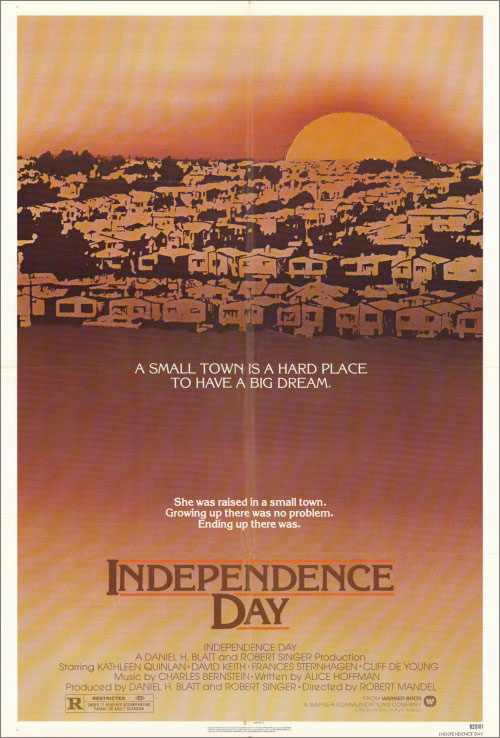
Independence Day (1983)

Independence Day (1983)

“Don’t let Jack make you forget what you really want.”

Synopsis:
An aspiring small-town photographer (Kathleen Quinlan) hoping to get accepted to art school in L.A. begins an affair with a mechanic (David Keith) whose sister (Dianne Wiest) is married to an abusive husband (Cliff De Young).

Genres, Themes, Actors, and Directors:

  • Domestic Abuse
  • Feminism and Women’s Issues
  • Kathleen Quinlan Films
  • Romance
  • Small Town America

Review:
Based on a script by novelist Alice Hoffman, this unfortunately-titled indie film — forever overshadowed by the 1996 sci-fi hit of the same name — features a fine central performance by Kathleen Quinlan, whose main claim to cinematic fame remains her Oscar-nominated turn as Tom Hanks’ wife in Apollo 13. However, the dilemma posed by both Quinlan’s aspirations and her romance with car-racing Keith (Will she or won’t she get into the school of her dreams? Will he or won’t he accompany her on her quest to the Big City?) is ultimately rather predictable and uninspired. Much more fascinating is the film’s secondary narrative, about an abused housewife (Wiest, giving a heartbreaking performance) who appears to simply accept her lot in life with a timid, fearful smile, yet has an audacious escape plan in mind. Director Robert Mandel should be applauded for daring to present Wiest’s situation in all its discomfiting rawness; truthfully, the film really should have been primarily hers.

Redeeming Qualities and Moments:

  • Dianne Wiest as Nancy
  • Kathleen Quinlan as Mary Ann

Must See?
No, but it’s worth seeking out simply for Wiest’s stand-out performance, and for its unforgettable denouement. Listed as a Sleeper and a Personal Recommendation in the back of Peary’s book.

Links:

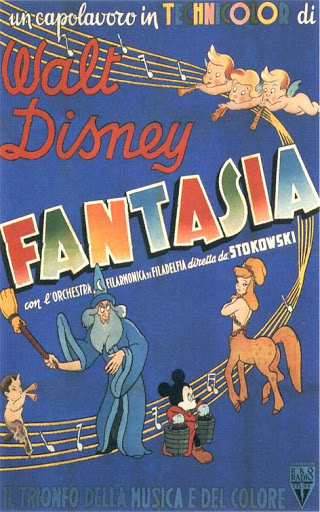
Fantasia (1940)

Fantasia (1940)

“Then the music begins to suggest other things to your imagination…”

Synopsis:
Leopold Stowkowski conducts the Philadelphia Philharmonic Orchestra as Deems Taylor introduces a series of animated vignettes set to classical music.

Genres, Themes, Actors, and Directors:

  • Animated Features
  • Episodic Films
  • Musicals

Response to Peary’s Review:
I was lucky enough to recently revisit this classic Disney animated feature by watching it “live” at the Hollywood Bowl, with all but two of its vignettes introduced by maestro John Mauceri and performed by the L.A. Philharmonic (and with fireworks on display in the background during Tchaikovsky’s “The Nutcracker Suite”). This was clearly a stellar way to enjoy this “most ambitious and conceptually daring of Disney’s features”, which remains a crowd-pleasing favorite decades after its rediscovery “in the early seventies when the ‘acid’ generation found that watching the almost psychedelic images was a sensory experience” (wine-drinking viewers at the Hollywood Bowl these days probably feel much the same way!).

Peary notes that Fantasia was Disney’s attempt “to impress the highbrow audience”, but he “was viciously attacked for taking much leeway with the music and for being so pretentious as to try to teach others about classical music when he himself was completely ignorant of the art”. Peary argues that “today one will probably be less upset by the mishandling of the music … than by the repetition of the images (characters napping, reflections on water); the lack of good personality animation (a Disney trademark) as characters of the same type tend to act identically; and the predictable way that nature goes haywire in almost every sequence… and the way scenes end as they begin, in tranquility.” Bah, humbug, Peary! In our post-modern era, the complaint that music can possibly be “mishandled” by an artist attempting to use it for secondary purposes seems naive at best — and while some of the imagery and/or thematic constructs may be repetitive, the animation is so consistently well-drawn and creatively conceived that one doesn’t really mind. Meanwhile, “good personality” isn’t exactly what one expects in a film like this.

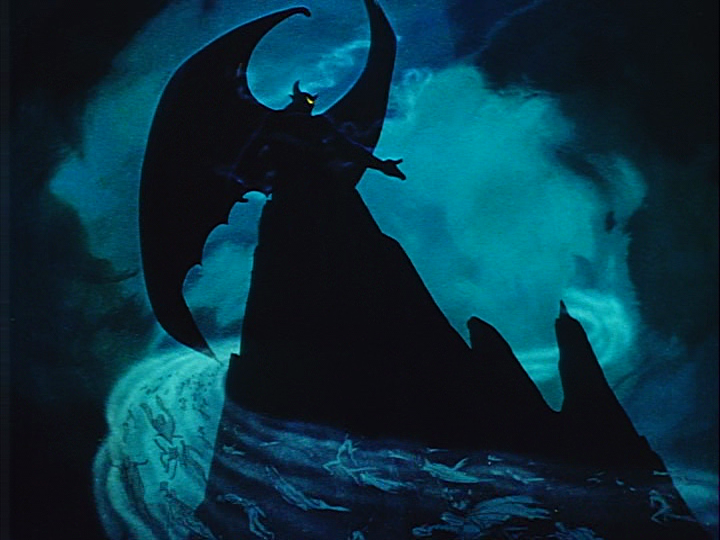
Despite his grumpy overall attitude, however, Peary does call out a number of the film’s undeniable highlights — including “the exciting ‘The Sorcerer’s Apprentice’, starring Mickey Mouse and featuring a cosmic storm and march of the brooms; the creation of the world in ‘The Rite of Spring’ with otherworldly Kubrick-like shots of a newly formed volcanic landscape; ‘Dance of the Hours’, which has acrobatic ostriches, hippos in tutus, elephants, and alligators parodying ballet with a knockabout dance; and the spooky ‘Night on Bald Mountain’, featuring Vlad Tytla‘s magnificent demon”.

Interestingly, sixty years later, Disney Studios released Fantasia 2000, consisting of six new vignettes (and the original “Sorcerer’s Apprentice” thrown in for good measure). This is in keeping with Disney’s original intent for the film, which he envisioned as a true cult favorite which would stay in theaters permanently, with new vignettes gradually inserted over time. To that end, I should note that the Hollywood Bowl screening also included a couple of “new” vignettes — such as the Dali-inspired “Destino”, and the never-completed segment “Clair de Lune”. Very fitting, indeed.

Redeeming Qualities and Moments:

  • Plenty of creatively conceived, expertly rendered animation


  • The justifiably famous “Sorcerer’s Apprentice” sequence
  • The truly stunning “Night on Bald Mountain” finale

Must See?
Yes, as a genuine Disney classic.

Categories

  • Genuine Classic
  • Historically Relevant

(Listed in 1001 Movies You Must See Before You Die)

Links:

Jail Bait (1954)

Jail Bait (1954)

“This afternoon we had a long telephone conversation earlier in the day.”

Synopsis:
The son (Clancy Malone) of a renowned plastic surgeon (Herbert Rawlinson) is bailed out of prison by his sister (Dolores Fuller), but soon lured back into a life of crime by gangster Vic Brady (Timothy Farrell).

Genres, Themes, Actors, and Directors:

  • Ed Wood Films
  • Fugitives
  • Plastic Surgery

Response to Peary’s Review:
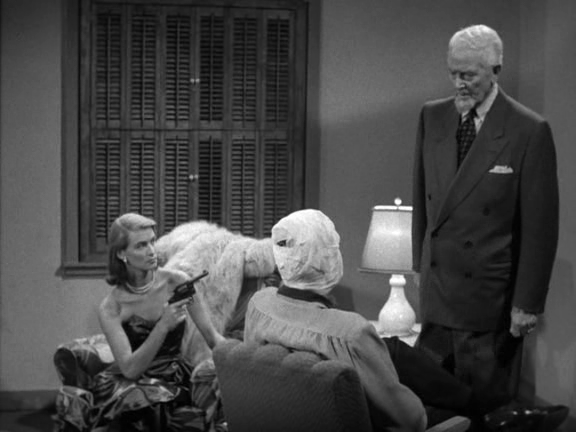
Peary argues that while this Ed Wood “melodrama is ineptly made”, his “fans will be disappointed”, given that it actually “has a coherent plot”, “even has a clever ending”, and features acting that may be “mediocre” but is “better than in other Wood films”. With that said, “bad movie” fans will be happy to note that “the photography is dark, the sound and dubbing are horrible, [and] the music laughable”. (Indeed, the relentlessly repetitive, Spanish-themed guitar and piano score — borrowed directly from Mesa of Lost Women (1953) — is guaranteed to get on your nerves within about five minutes, and is far too often inappropriately “applied”.) Peary is dead wrong, however, in stating that “the women are ugly”: while Fuller isn’t necessarily a pin-up candidate, former fashion model Theodora Thurman — playing Farrell’s gun-toting mistress — is quite stunning.

Note: Sadly, Tim Burton’s Ed Wood skips over the production of Jail Bait altogether, moving straight from Glen or Glenda (1953) to Bride of the Monster (1955). While this is understandable, given its already two-hour-long running time, one can’t help but wonder what juicy tidbits would/could have been unearthed…

Redeeming Qualities and Moments:

  • An amusingly inept (though occasionally surprisingly engaging) crime thriller

Must See?
No, though naturally Wood cultists will want to be sure to check it out. Available for free viewing on the Internet Archive.

Links:

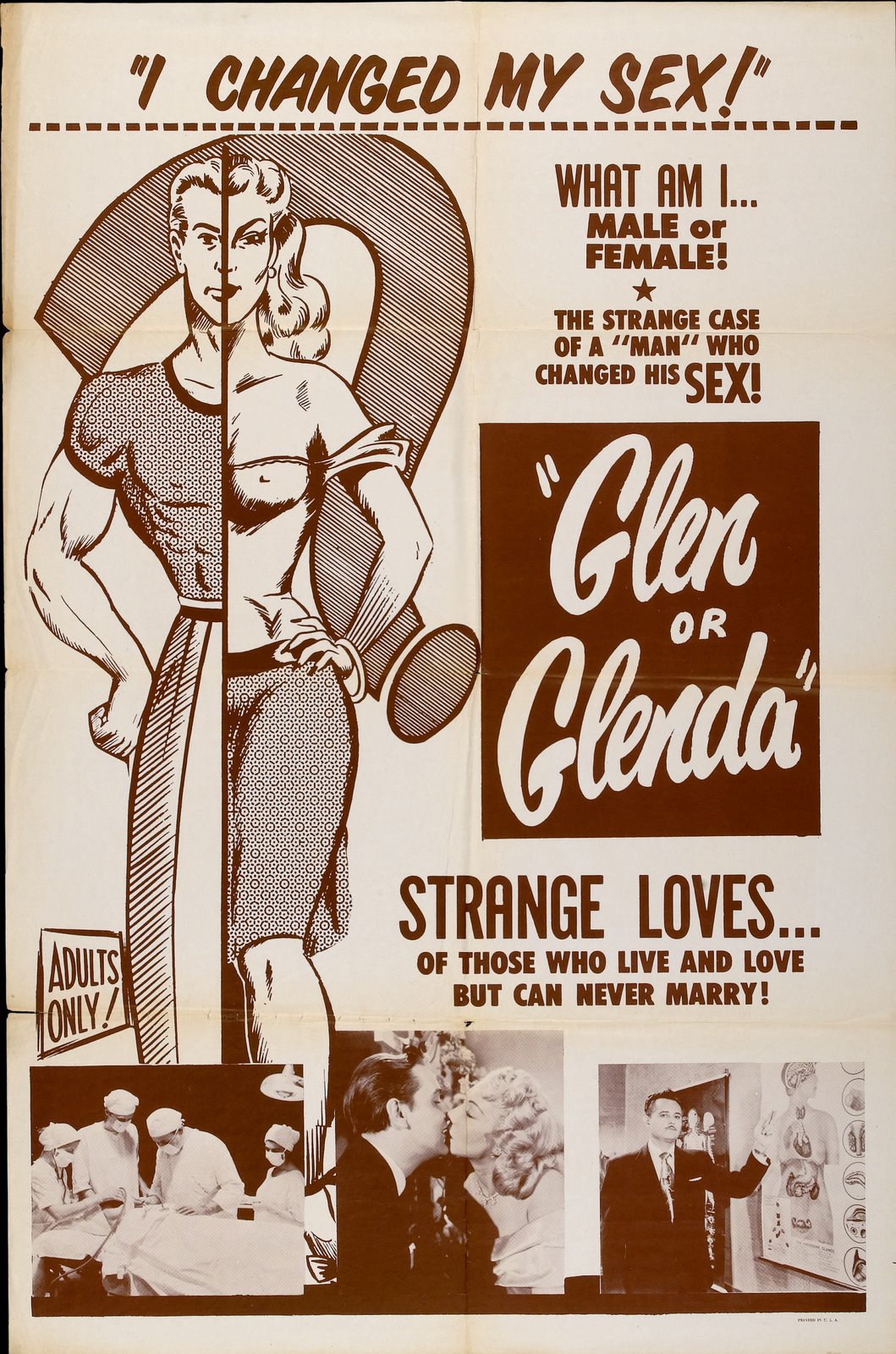
Glen or Glenda / I Led Two Lives / I Changed My Sex / He or She (1953)

Glen or Glenda / I Led Two Lives / I Changed My Sex / He or She (1953)

“Only the infinity of the depths of a man’s mind can really tell the story.”

Synopsis:
A psychiatrist (Timothy Farrell) tells a concerned policeman (Lyle Talbot) the story of two individuals struggling with gender identity: a transvestite (Ed Wood) debating how to tell his fiancee (Dolores Fuller) about his cross-dressing predilection, and a transsexual (Tommy Haynes) about to undergo surgery.

Genres, Themes, Actors, and Directors:

  • Bela Lugosi Films
  • Ed Wood Films
  • Gender Bending
  • Morality Police

Response to Peary’s Review:
Any film fanatic who’s seen Tim Burton’s must-see biopic Ed Wood (1994) will be keenly interested to (re)visit this “utterly perverse, personal film by Edward D. Wood, Jr.”, “making his directorial debut” and starring (under a pseudonym) in the title role. Originally intended to capitalize on the notoriety of Christine Jorgensen (whose story as the first widely known recipient of a sex change operation was later filmed as a “straight” biopic), Ed Wood saw the film as an opportunity to simultaneously address his own gender-bending predilection: transvestism. As Peary notes, “the picture’s treatment of [this issue] is serious and sensitive”, with Wood daring to “defend transvestites, saying that if allowed to wear women’s clothing they’ll be credits to their communities and government”. Peary argues that “one must be impressed by this film for the very reason that it takes a stand on a subject that surely was in 1953 not even acceptable enough to be considered controversial”.

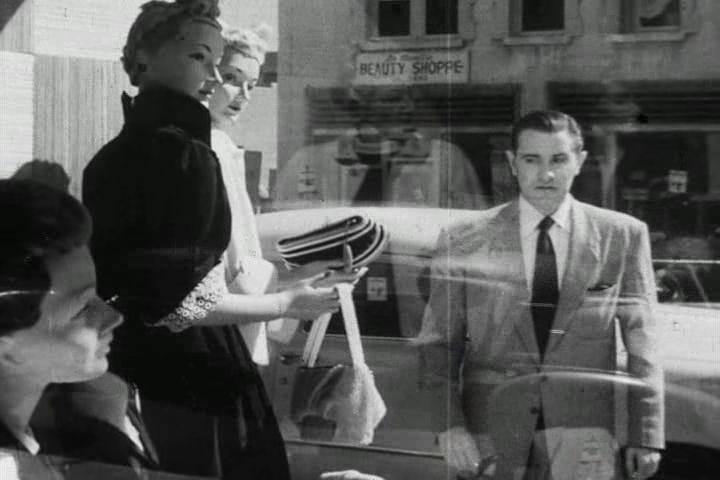
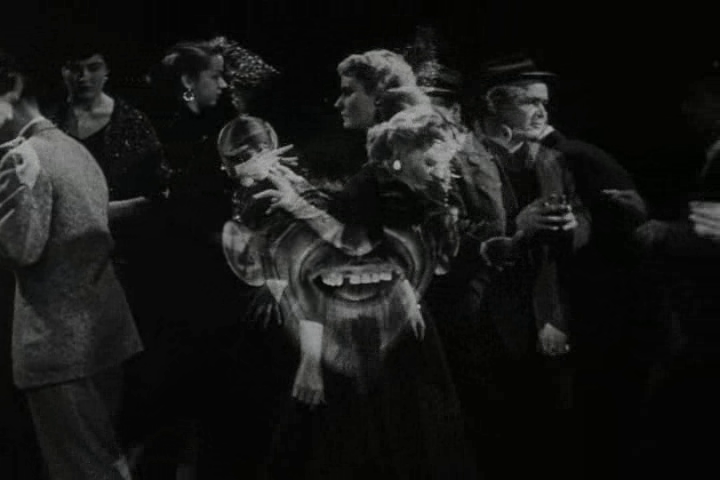
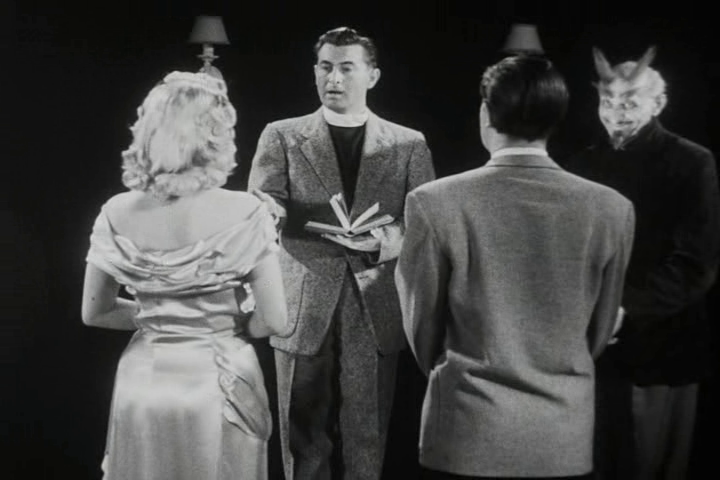
He also points out that “Wood dares to incorporate footage that was obviously influenced by surrealists and experimental filmmakers”, noting that it’s “no matter that this footage is absolutely ridiculous”, given that “it shows Wood had an imagination”. Indeed, the surreal dream sequence occurring midway through the film is actually filled with such genuinely provocative imagery that, at the very least, you’ll sit up and pay attention — thus giving credence to the theory (espoused by some of Wood’s cult fans) that he may have been more of a maverick (amateur) auteur than merely the “bad director” he’s so frequently dismissed as. Meanwhile, those who’ve seen Ed Wood (or read about Glen or Glenda‘s production history) will know that Bela Lugosi was cast simply because of his name and his friendship with Wood, who wanted to provide him with some work. However, his role here is truly limited to that of an “absurd narrator” (“Pull the string! Pull the string!”); as Peary puts it, “Who knows what he is talking about?”

Redeeming Qualities and Moments:

  • A truly groundbreaking look at a taboo subject
  • The impressively surreal dream sequence

Must See?
Yes, as one of Ed Wood’s most infamous cult films.

Categories

  • Cult Movie
  • Important Director

Links:

Outlaw Josey Wales, The (1976)

Outlaw Josey Wales, The (1976)

“Get ready, little lady. Hell is coming to breakfast.”

Synopsis:
A Missouri farmer (Clint Eastwood) becomes a vengeful outlaw when his wife and child are killed by pro-Union Jawhawkers during the Civil War. Soon he finds himself crossing paths with a motley group of individuals, including a young pro-Confederate guerrilla (Sam Bottoms), an elderly Cherokee Indian (Chief Dan George), and a feisty Yankee woman (Paula Trueman) with a nubile young granddaughter (Sondra Locke).

Genres, Themes, Actors, and Directors:

  • Civil War
  • Clint Eastwood Films
  • Outlaws
  • Revenge
  • Westerns

Response to Peary’s Review:
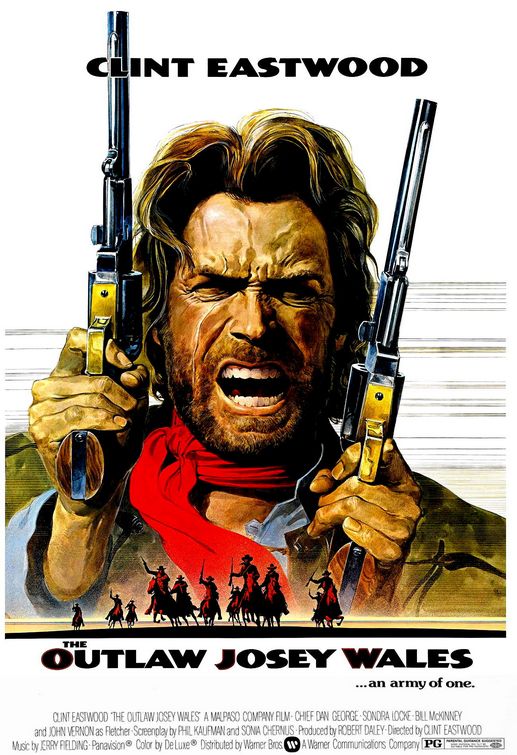
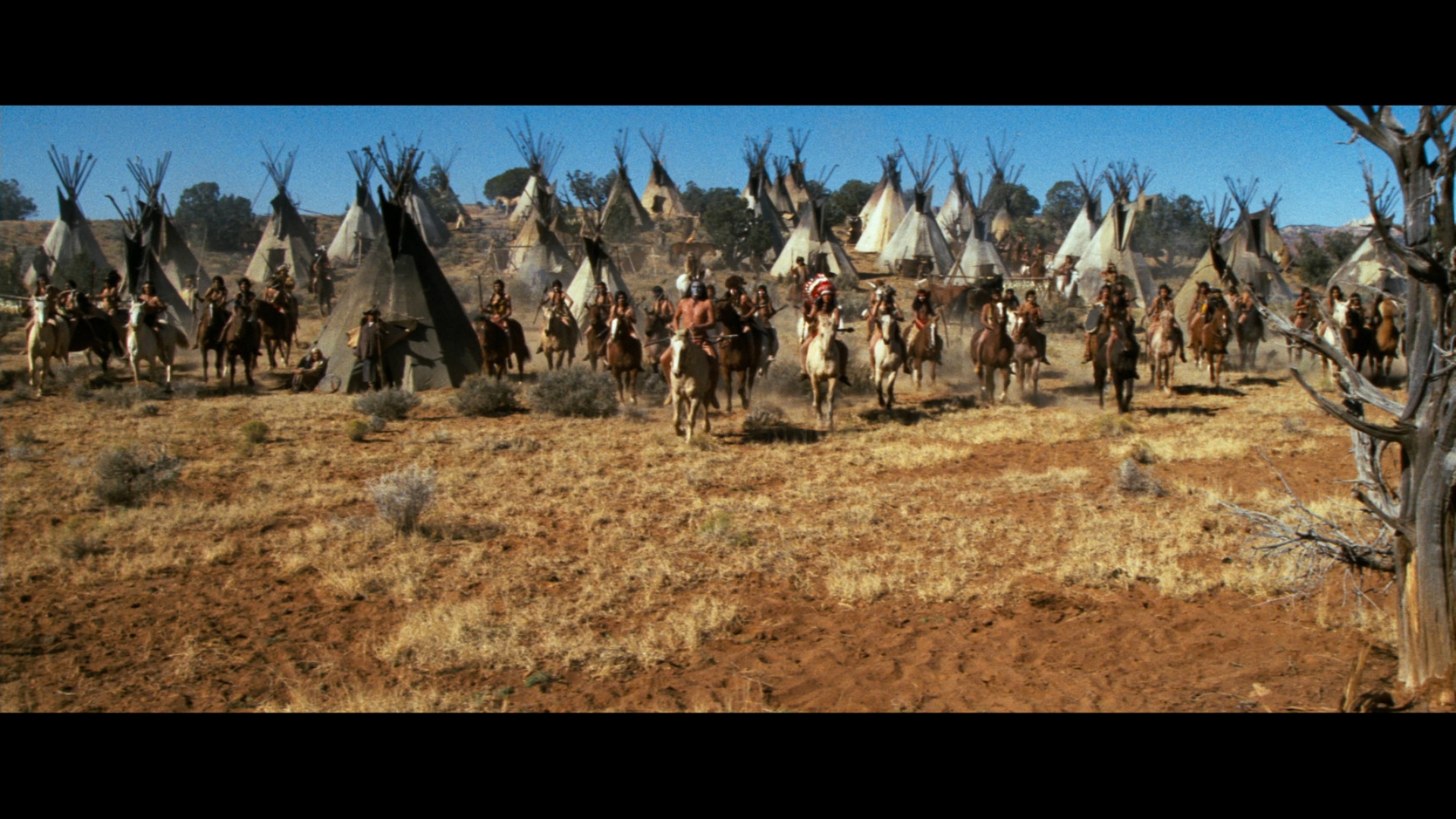
Peary accurately labels this “impressively directed” Clint Eastwood film a “sweeping epic”, calling out the “epic score” by Jerry Fielding, and noting that “the violence is bloody, made all the more exciting by Bruce Surtees’s [cinemato]graphy, which gives each shot the authentic look of old Civil War photographs”. He argues that this film indicates a “mellowing” of Eastwood’s iconic “westerner… from his early days”, showing that he “was ready to put his guns away and settle down” — but this actually isn’t quite true. Despite the fact that Wales “ends up living in a communal situation with his ‘family’ of friends”, the majority of the film focuses on his relentless vendetta against the men who’ve double-crossed him; he has multiple guns ready to fire at any given moment, and never stops to rest — other than during a brief, obligatory lovemaking scene with Locke, “whom he fell in love with off screen as well as on”. Regardless, Wales remains a well-produced, rousing western with quirky performances (particularly by Chief Dan George as Wales’ new Indian companion) and a refreshingly authentic portrayal of Native Americans in general. My only quibble — pointed out by Richard Eder in his original review for the New York Times — is the film’s “attempt to assert the romantic individualism of the South against the cold expansionism of the North”, given that “every Unionist is vicious and incompetent”; as Eder notes, “there is something cynical about this primitive one-sidedness”.

Redeeming Qualities and Moments:

  • Bruce Surtee’s cinematography
  • Chief Dan George as Lone Watie
  • A refreshingly authentic portrayal of Native Americans
  • Jerry Fielding’s “epic score”

Must See?
Yes, as a classic western, and one of Eastwood’s best films.

Categories

  • Genuine Classic

(Listed in 1001 Movies You Must See Before You Die)

Links:

Smash-Up: The Story of a Woman (1947)

Smash-Up: The Story of a Woman (1947)

[Note: The following review is of a non-Peary title; click here to read more.]

“I can’t keep her away from the stuff if she’s determined to get at it!”

Synopsis:
An aspiring singer (Susan Hayward) gives up her career for marriage, then suffers from jealousy and despondency — fueled by alcohol — when her husband (Lee Bowman) suddenly becomes a hit radio star.

Genres, Themes, Actors, and Directors:

  • Alcoholism and Drug Addiction
  • Downward Spiral
  • Marital Problems
  • Susan Hayward Films

Review:
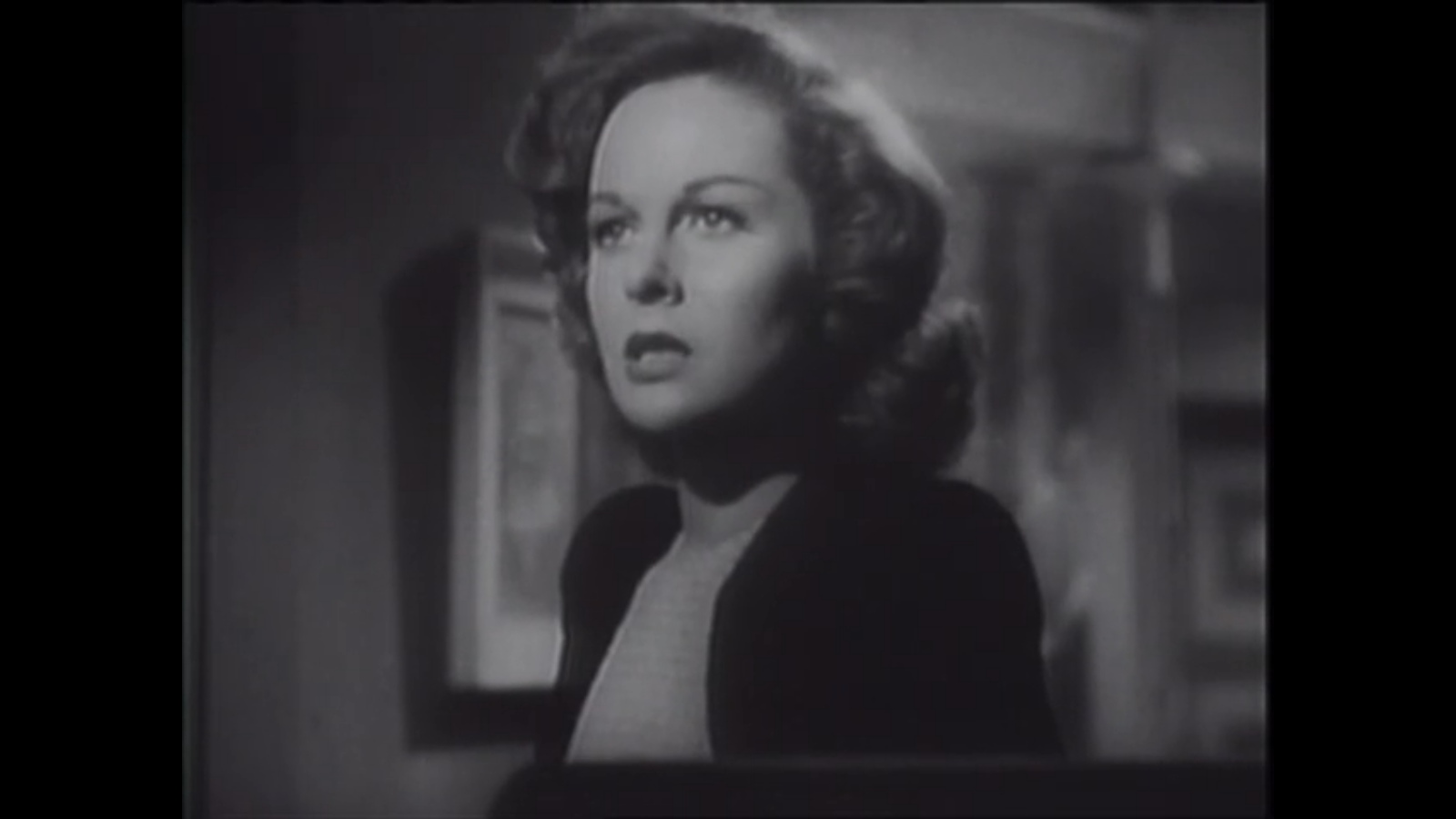
In his Alternate Oscars book, Peary argues that Susan Hayward is the actress from the forties and fifties who “most needs rediscovery”. In addition to awarding her Best Actress of the Year in 1958 for I Want to Live!, he nominates her no less than three other times — yet he neglects to include the titles of two of these four films in his own GFTFF: I’ll Cry Tomorrow (1955), an adaptation of Lillian Roth’s best-selling memoir about her battles with alcoholism (certainly worth a look for Hayward’s performance, but ultimately not must-see); and this film, an unsung “female” counterpoint to Billy Wilder’s Oscar-winning The Lost Weekend, and a minor must-see title.

Bolstered by a brave, nuanced, and sympathetic central performance by Hayward, the Oscar-nominated script manages to portray the insidious effects of alcoholism (still a mostly misunderstood disease at the time) within the context of a woman who is subconsciously devastated by the “need” to give up her own career for the presumed ideal of marriage and motherhood. Despite the overly simplistic rationale provided for why Hayward drinks too much (while she once drank for courage on stage, she’s soon drinking to assuage her increasing feelings of jealousy and inadequacy), it’s nonetheless impressive to watch a film about marital dysfunction in which neither party is truly to blame. Knowing as we do now that alcoholism is an addiction, it’s painful to watch Bowman treating Hayward with such disdain late in their marriage — but his actions and attitude are somewhat understandable, given that she really does make a mess of things. We are genuinely rooting for both these individuals throughout the entire film — a rare and worthy feat for a movie of this kind.

Redeeming Qualities and Moments:

  • Susan Hayward as Angie Conway
  • Stanley Cortez’s cinematography
  • A few-holds-barred look at the havoc wreaked on a marriage by alcoholism

Must See?
Yes, for Hayward’s Oscar-nominated central performance, and as a fine early film about alcoholism.

Categories

  • Noteworthy Performance(s)
  • Oscar Winner or Nominee

Links:

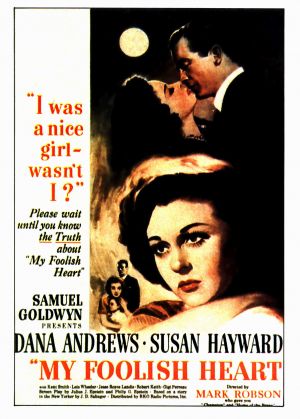
My Foolish Heart (1949)

My Foolish Heart (1949)

“Eloise Winters! I thought you were a ‘nice girl’!”

Synopsis:
An unhappily married woman (Susan Hayward) reminisces with her former college roommate (Lois Wheeler) about her romance with a dashing soldier (Dana Andrews), and how she eventually came to steal away Wheeler’s dull boyfriend (Kent Smith).

Genres, Themes, Actors, and Directors:

  • Dana Andrews Films
  • Flashback Films
  • Marital Problems
  • Mark Robson Films
  • Susan Hayward Films

Review:
My Foolish Heart is perhaps best known as the only authorized film adaptation of any work by J.D. Salinger, who was so deeply distressed by how his short story “Uncle Wiggily in Connecticut” was translated to the screen that he never allowed his cult classic The Catcher in the Rye to be made into a movie. It’s easy to see how a notoriously iconoclastic author like Salinger might take umbrage at this soaper, which was critically lambasted upon its release, and far too often devolves into cliches. Indeed, the film is actually flawed from the get-go, given that Hayward (who, as always, does her best with the material she’s given) is immediately presented to us in such an entirely unflattering light — she drinks too much, takes her beautiful home for granted, and treats her loyal husband like s**t — that we’re never really won over to her side, no matter how “innocent” her past turns out to be.

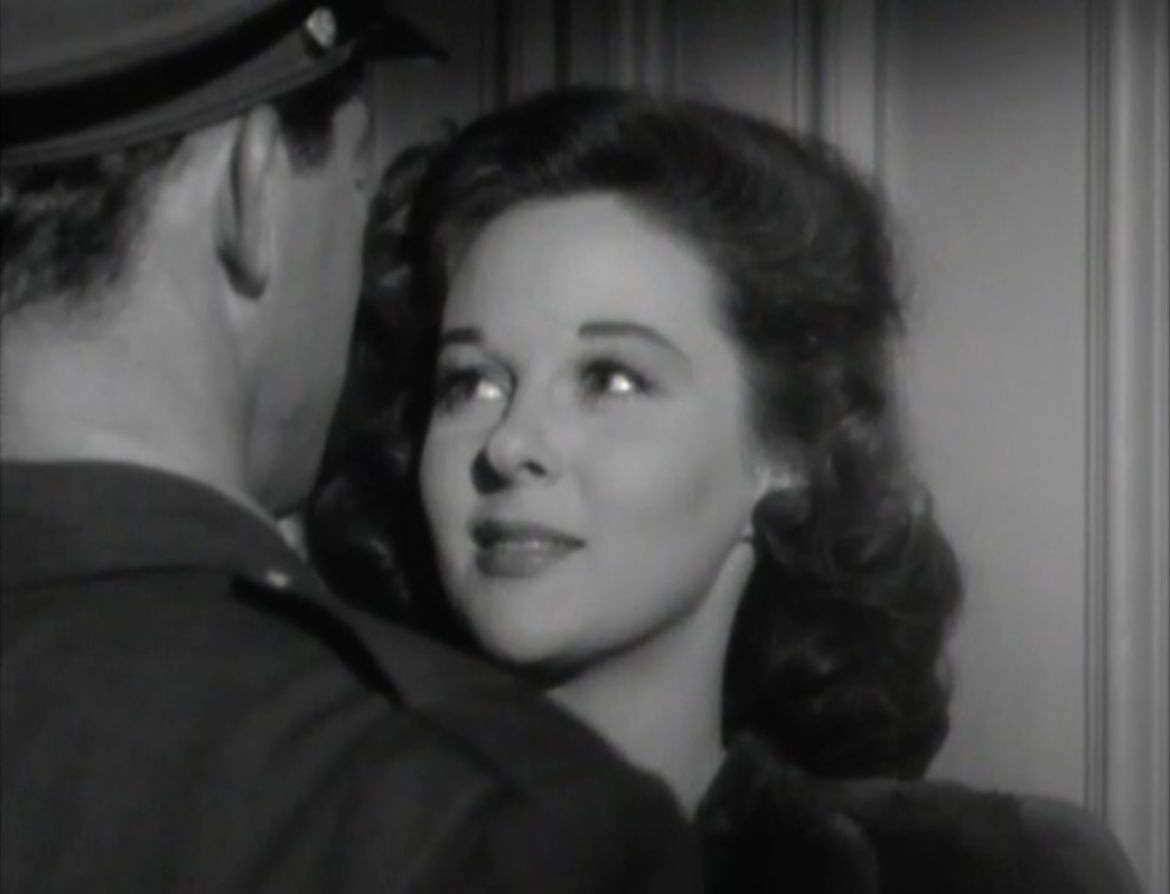
With that said, the script does possess a surprising number of well-crafted moments — such as the entire initial interaction between Hayward and Andrews the night they meet-cute at a party. Their conversation together afterwards feels surprisingly authentic (not to mention risque); and, once Hayward has left Andrews’ apartment, I like how the camera lingers silently on him, as he eventually walks over to his sink to start washing the pile of dirty dishes Hayward commented on earlier. It all just feels real, in a way Hollywood films of that era seldom do. It’s too bad, then, that the framing narrative of the film is so disappointing — especially the pat denouement, which makes little emotional sense. Salinger did deserve better than that, at least.

Redeeming Qualities and Moments:

  • Susan Hayward as Eloise (nominated by Peary as one of the Best Actresses of the Year in his Alternate Oscars)
  • An occasionally inspired screenplay by Julius and Philip Epstein

Must See?
No, but it’s recommended for one-time viewing. Listed as a Sleeper in the back of Peary’s book.

Links:

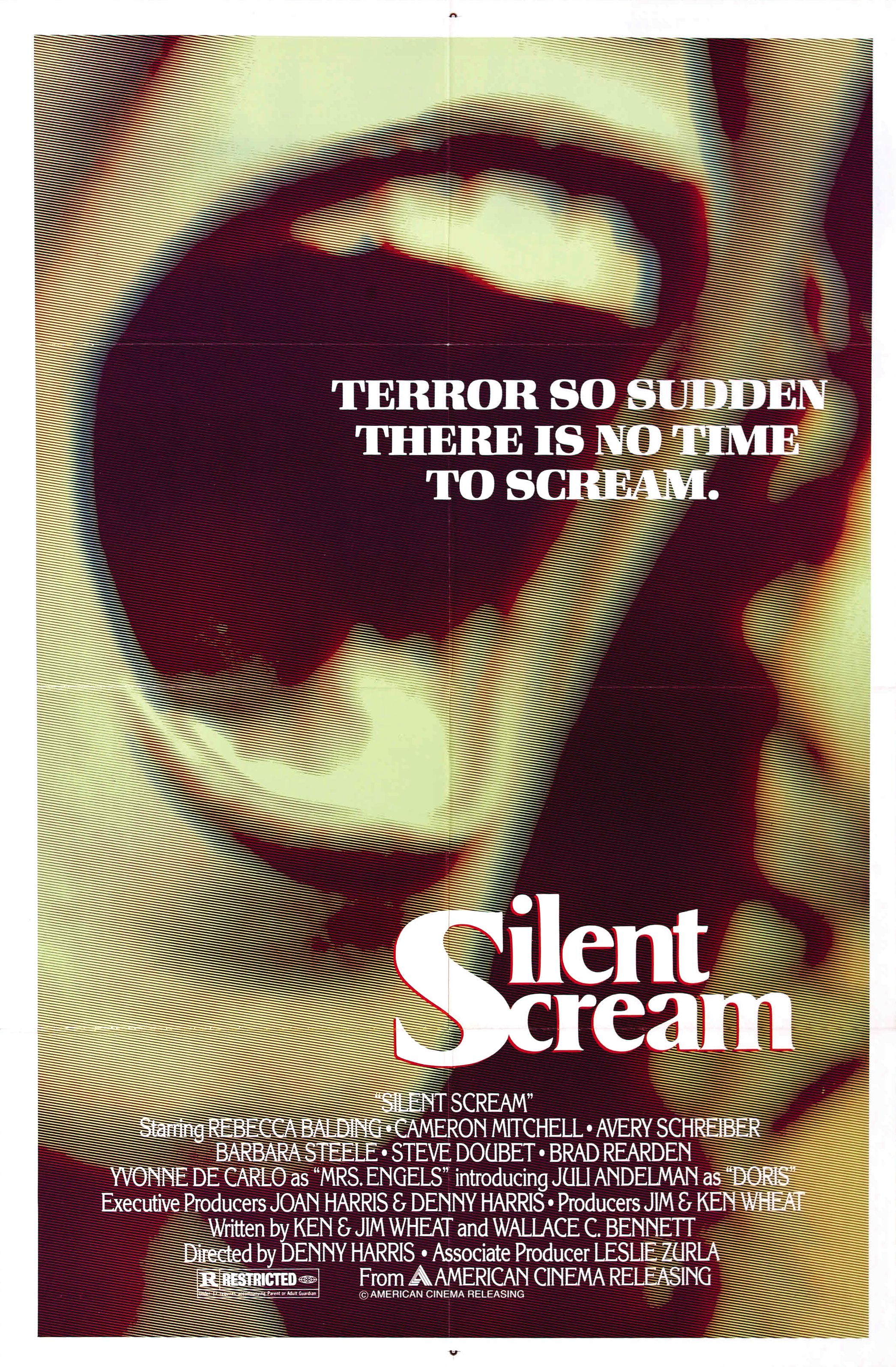
Silent Scream (1980)

Silent Scream (1980)

“I’m not a violent person by nature, but if there’s a room here I’m ready to fight for it!”

Synopsis:
A group of college students (Rebecca Balding, John Widelock, Juli Andelman, and Steve Doubet) living in a seaside house owned by an elderly woman (Yvonne De Carlo) and her teenage son (Brad Rearden) find their lives at risk when one of them is suddenly murdered on the beach.

Genres, Themes, Actors, and Directors:

  • Cameron Mitchell Films
  • Horror Films
  • Murder Mystery
  • Yvonne De Carlo Films

Review:
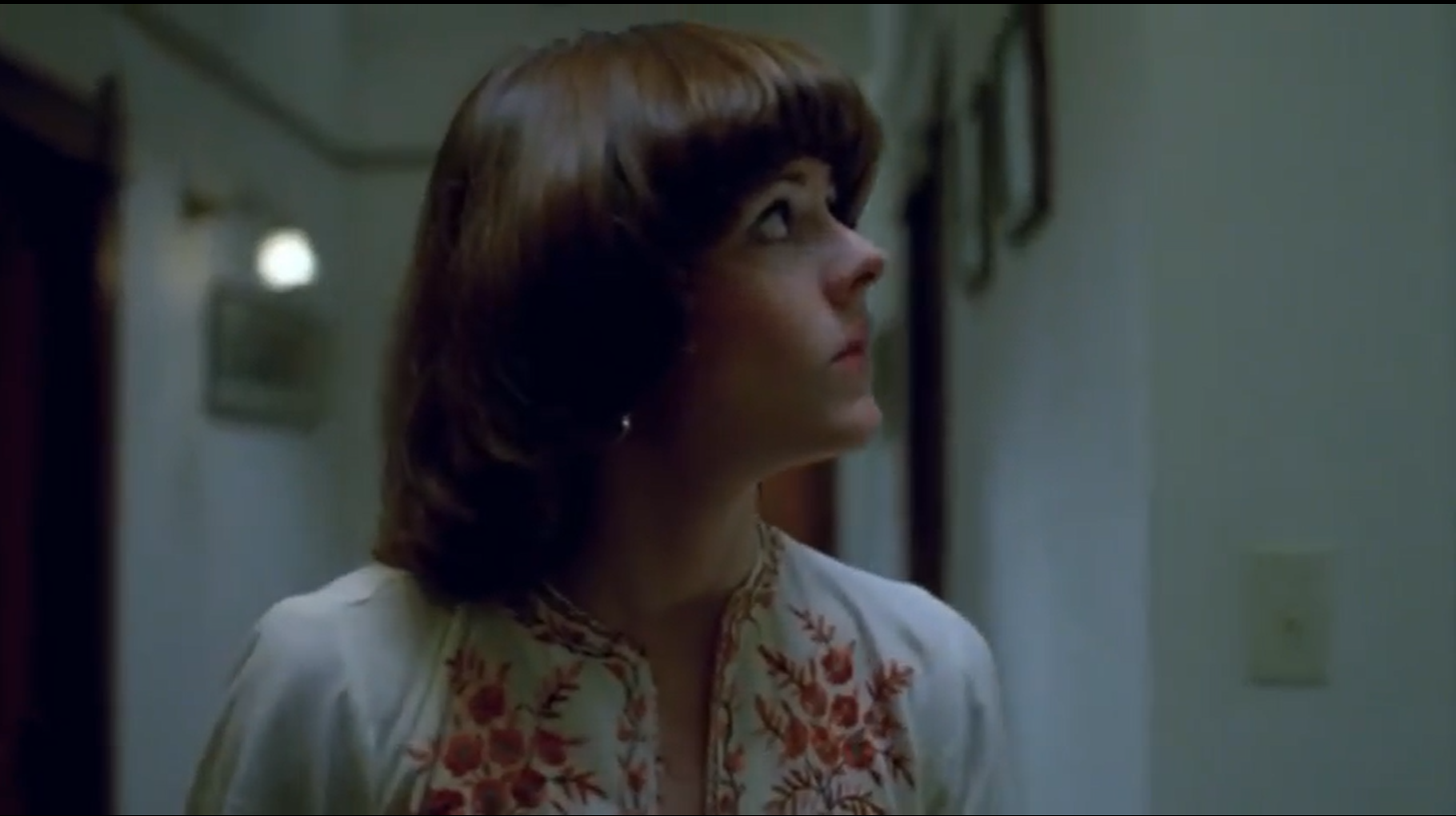
Shot before the release of Halloween in 1978 (but not shown in theaters until 1980), this sole directorial effort by Denny Harris remains a surprisingly effective early entry in the slasher genre. All the standard tropes of such a flick are on full display — including a nubile young romantic lead who has sex before putting herself in harm’s way (Balding is charismatic in the central role):

… an overtly annoying character who, naturally, is the first to bite the dust; several misleadingly creepy suspects; and all the false deaths and near misses you’d expect to see during the appropriately bloody denouement. Much of what takes place during the first hour of the film plays out in a strictly straightforward fashion — but it’s shot and acted with enough competence (i.e., there’s actually a modicum of “natural” rapport among the young college kids) to hold one’s interest with ease.

Suddenly, however, things take a turn for the enjoyably weird, and only the most hardened of viewers won’t be at least a little bit startled by what transpires from this point on. Recently released on DVD with boatloads of extras, the film seems to be developing a neo-cult by viewers who are pleasantly surprised to (re)discover it — especially given the critical appearance of an iconic horror star (CLICK FOR SPOILER) during the final half hour. But the less said about that, the better.

Redeeming Qualities and Moments:

  • A surprisingly effective slasher-thriller

Must See?
Yes, as an enjoyable early entry in this seminal cinematic genre.

Categories

Links: