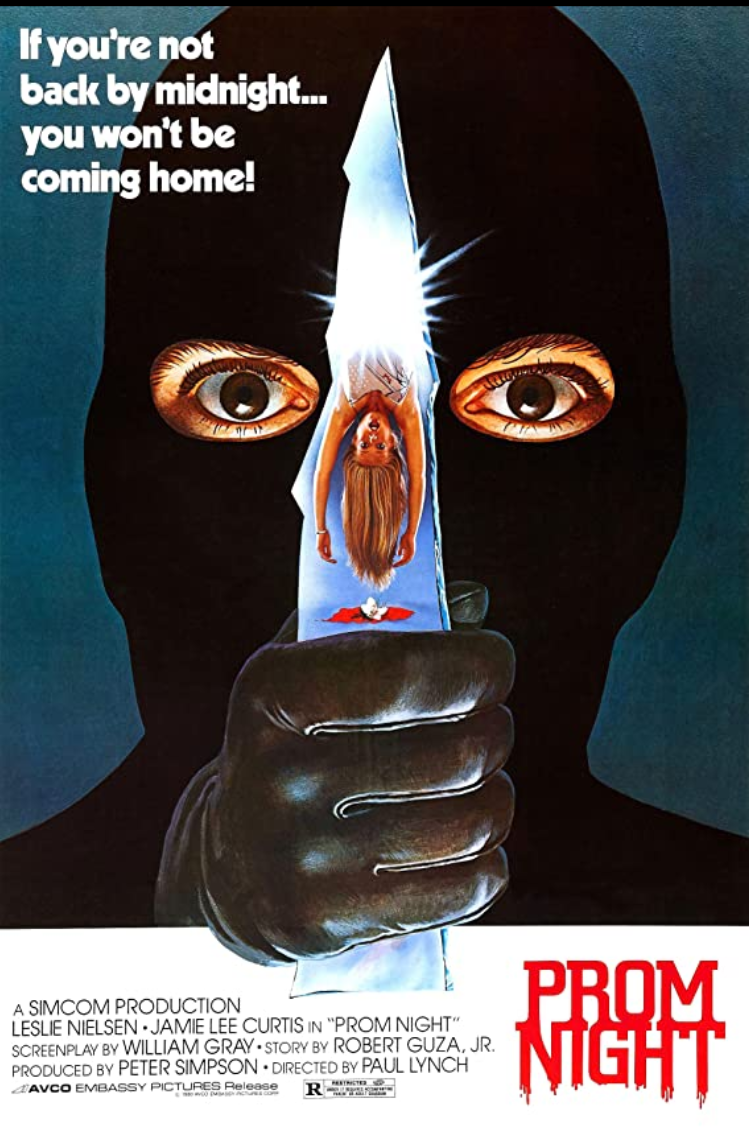
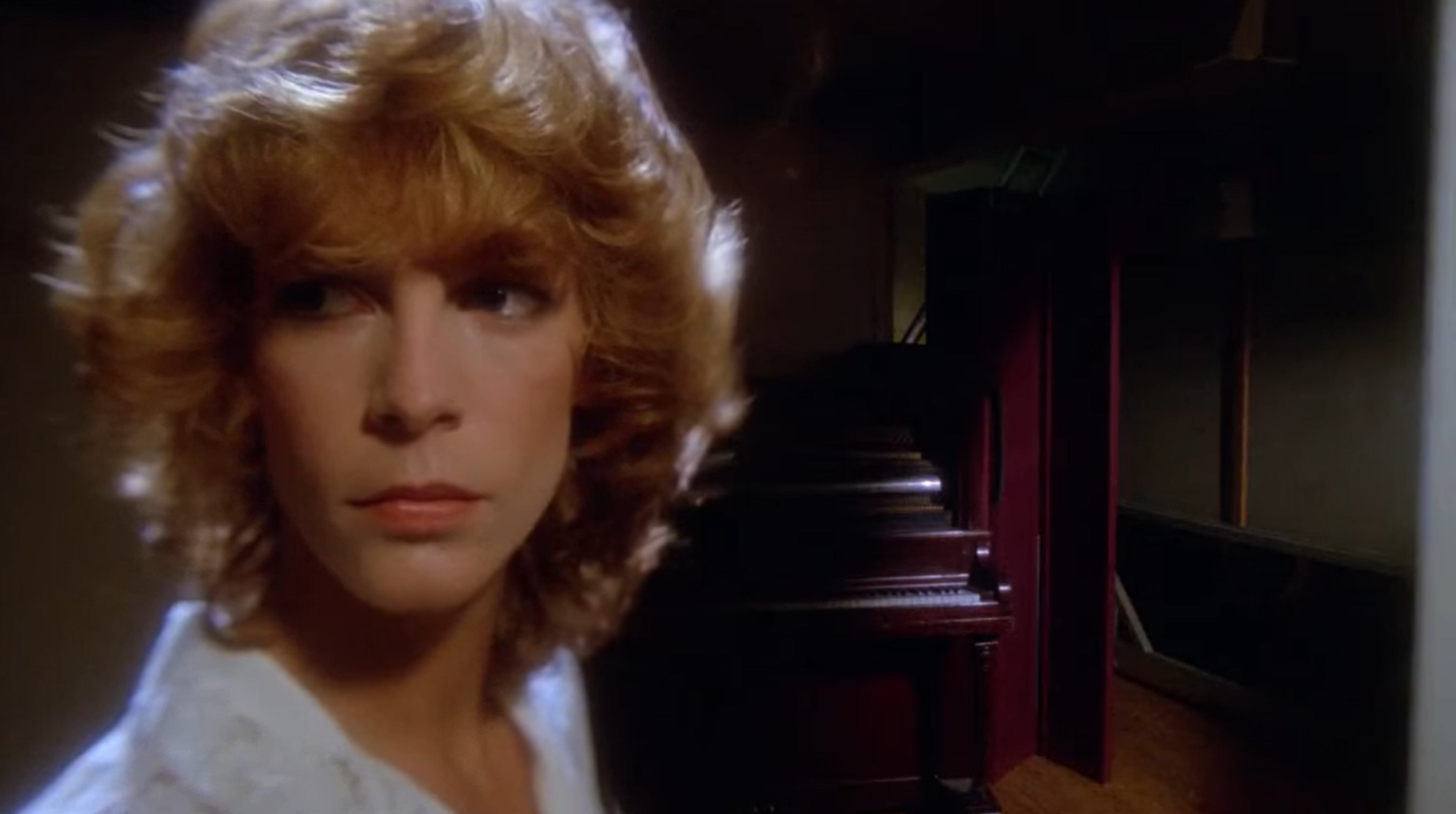
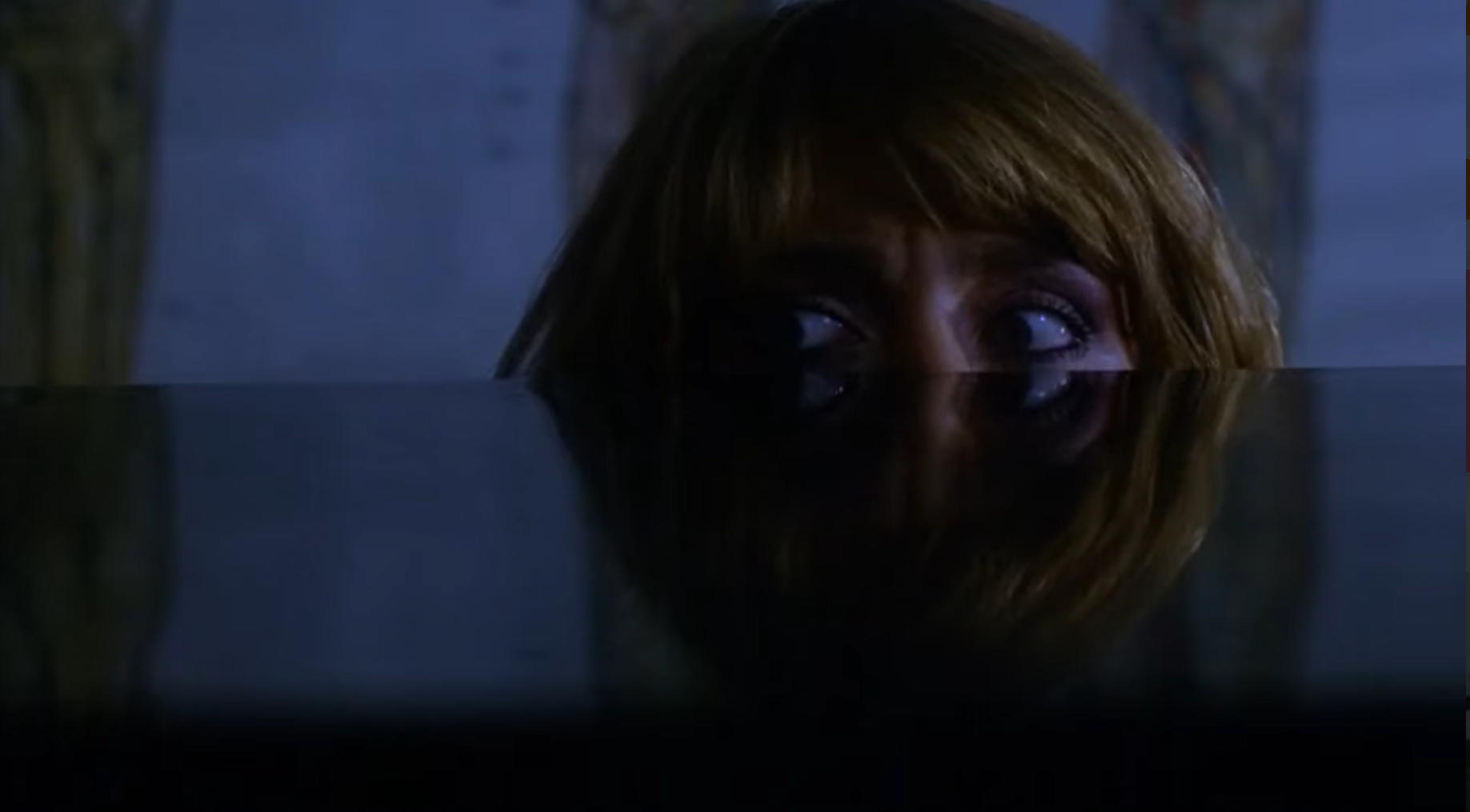
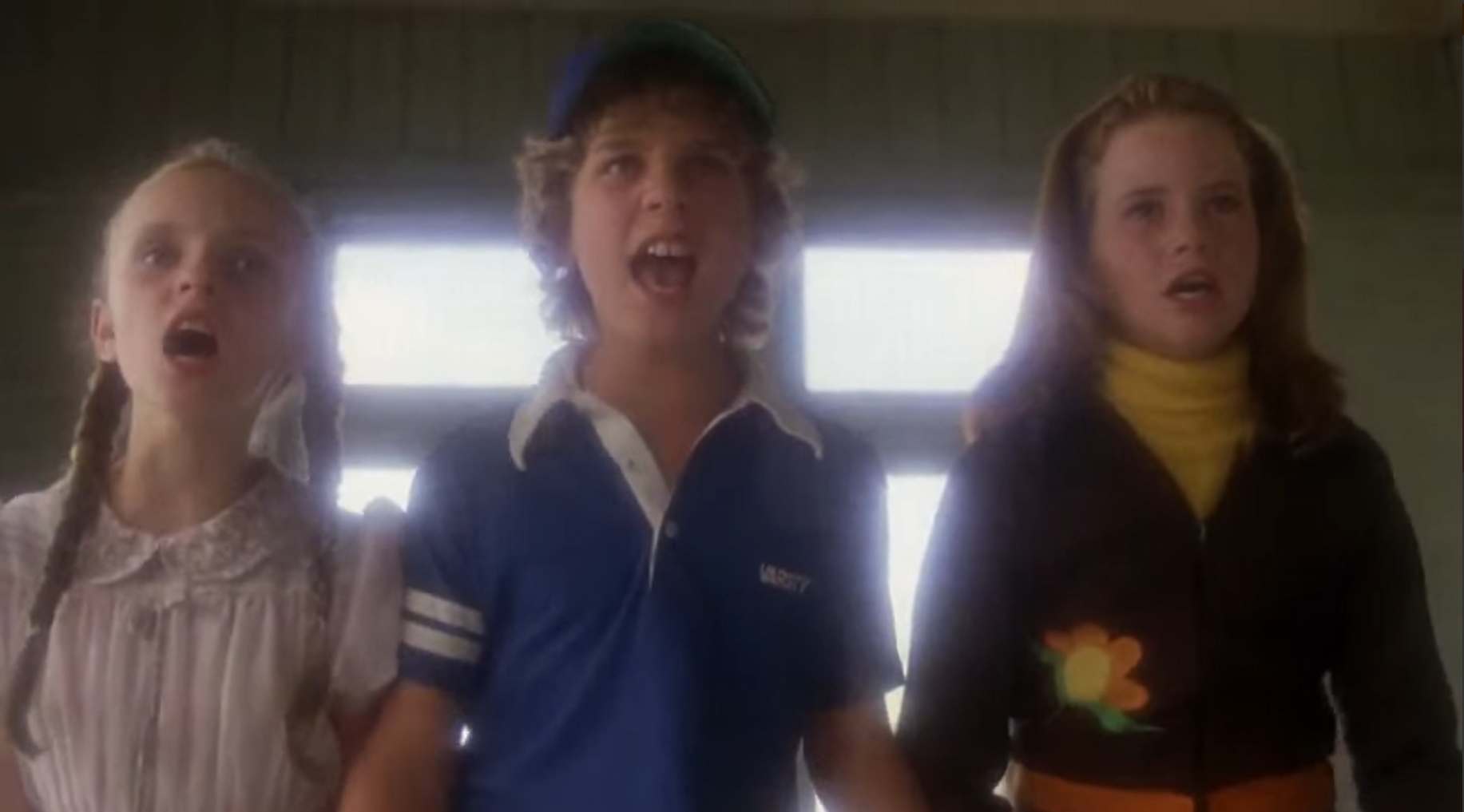
Prom Night (1980)
“I’ve always been really sorry about it.”
|
Synopsis: |
|
Genres, Themes, Actors, and Directors:
Review: Redeeming Qualities and Moments:
Must See? Links: |
“Some places are like people: some shine, and some don’t.”
|
Synopsis: |
|
Genres, Themes, Actors, and Directors:
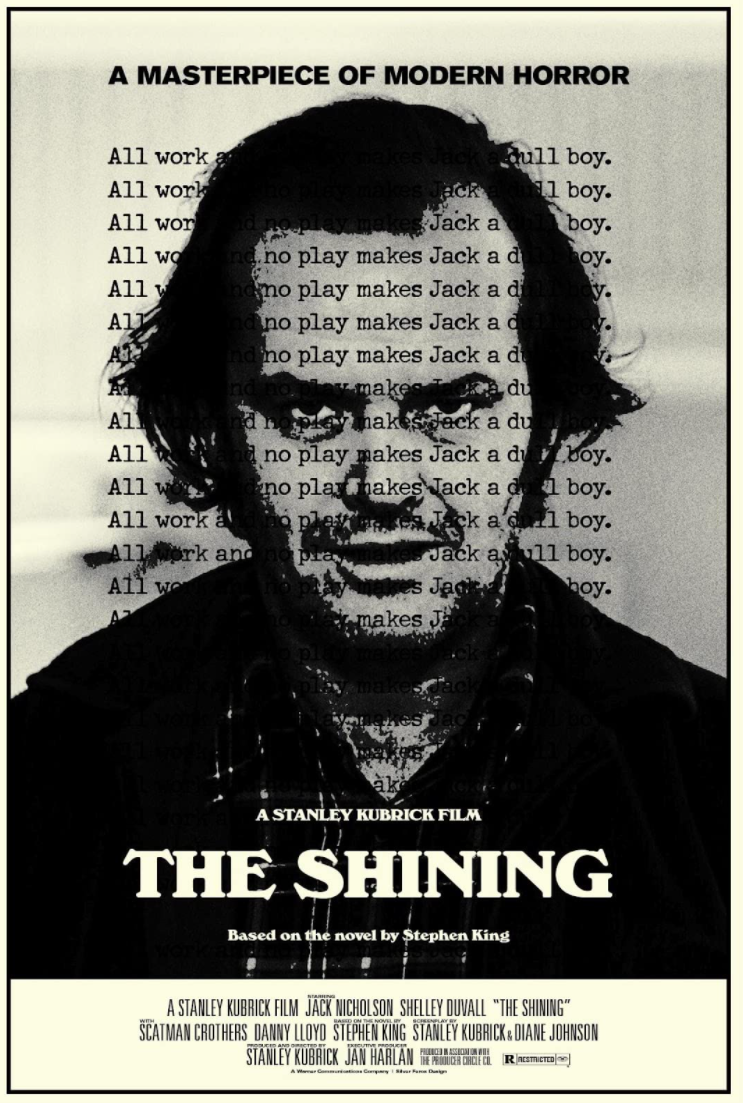
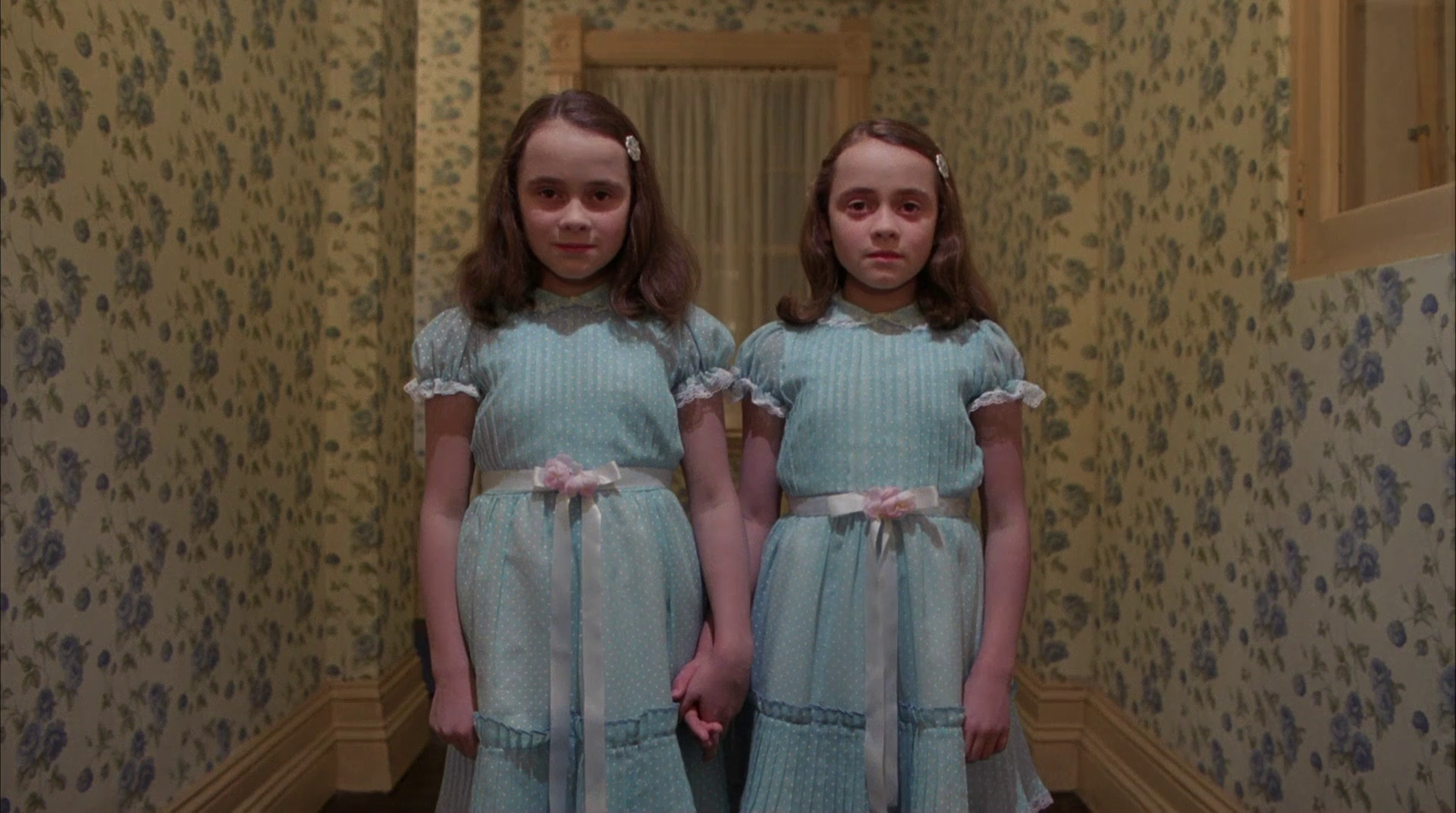
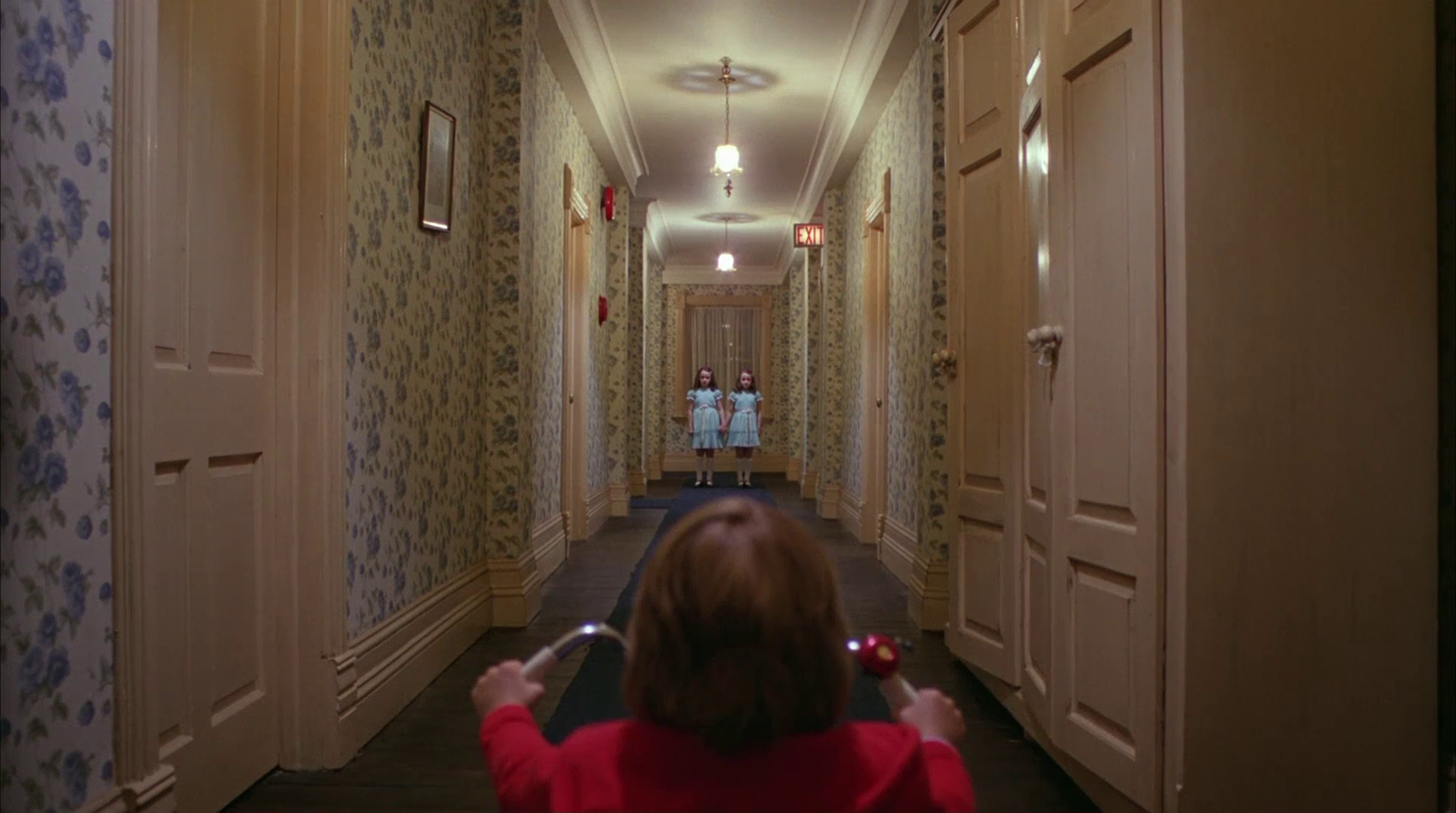
Response to Peary’s Review: Peary argues that “for us to fully grasp Danny’s primal fear that his father will turn on him and his mother, it’s important that the father begin the story as a sympathetic, loving father and husband” — though I’m not sure I agree with this assessment. Much to King’s stated chagrin, Kubrick most definitely made this story his own — but within the logic of Kubrick’s interpretation, it makes sense that Lloyd’s fear of his father (who abused him sufficiently to prompt him to stop attending school) would simply intensify upon moving to an isolated house away from the rest of humanity. Peary posits that “Nicholson’s crazed performance begins to wear on one’s nerves, no matter how remarkable it is at times” (I would agree), and that “by [the] picture’s end, one realizes that Duvall has outacted him” (well, she certainly gives a powerhouse performance — perhaps the best of her career!). Peary concedes that “there are scary things in the movie — the appearance of the dead twins:
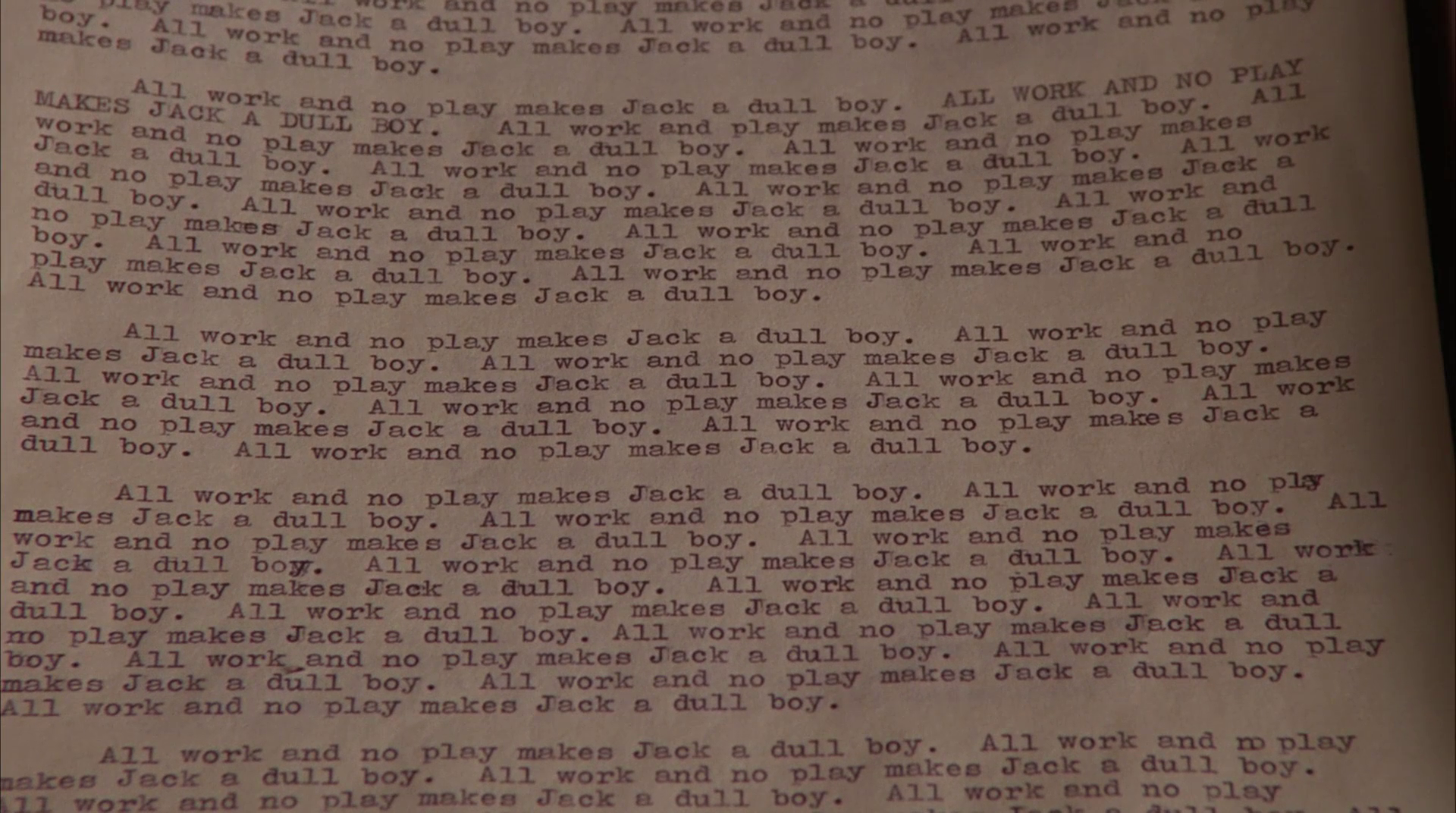
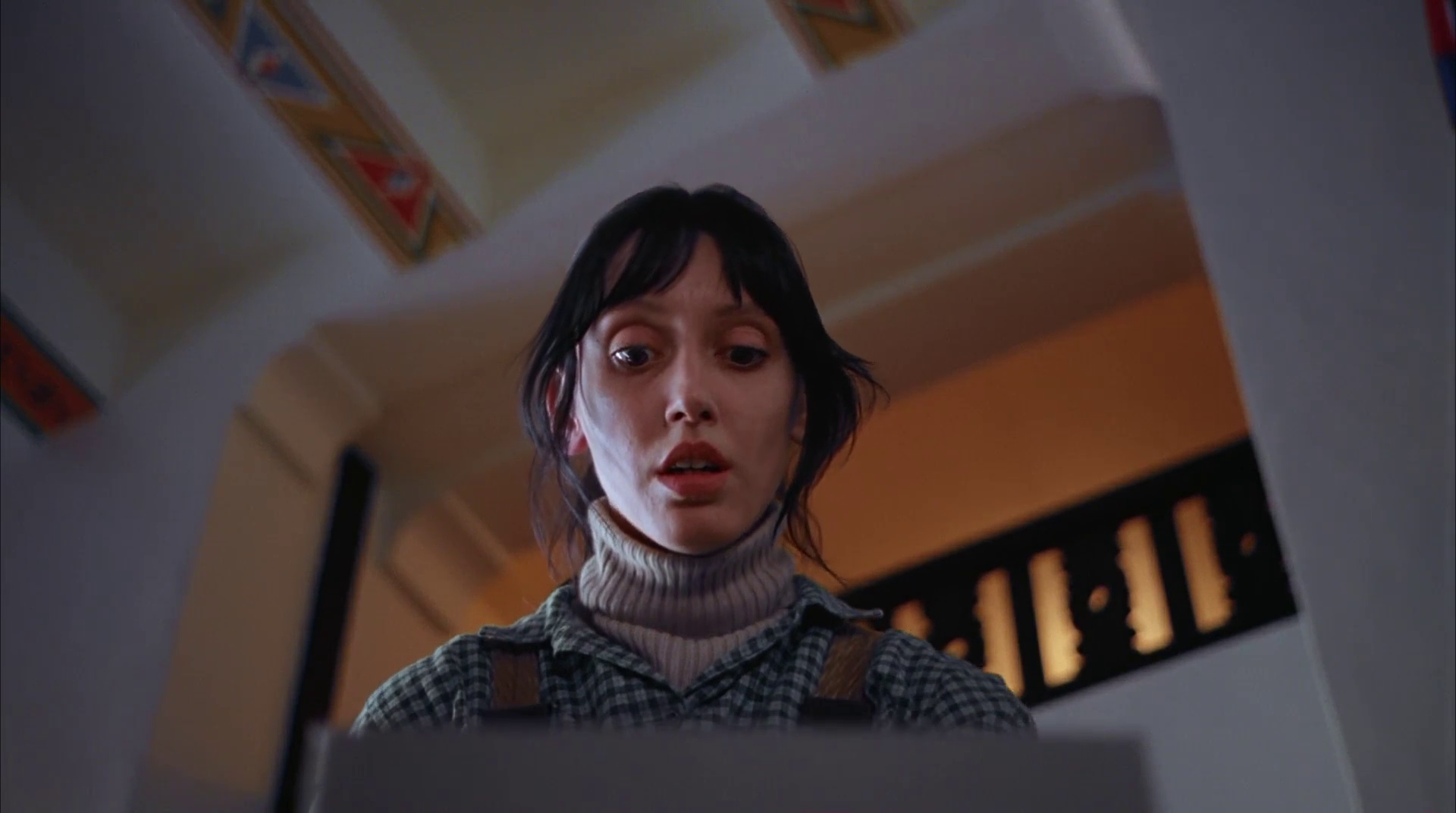
… Duvall reading her husband’s lengthy manuscript and discovering that it’s proof positive he is insane:
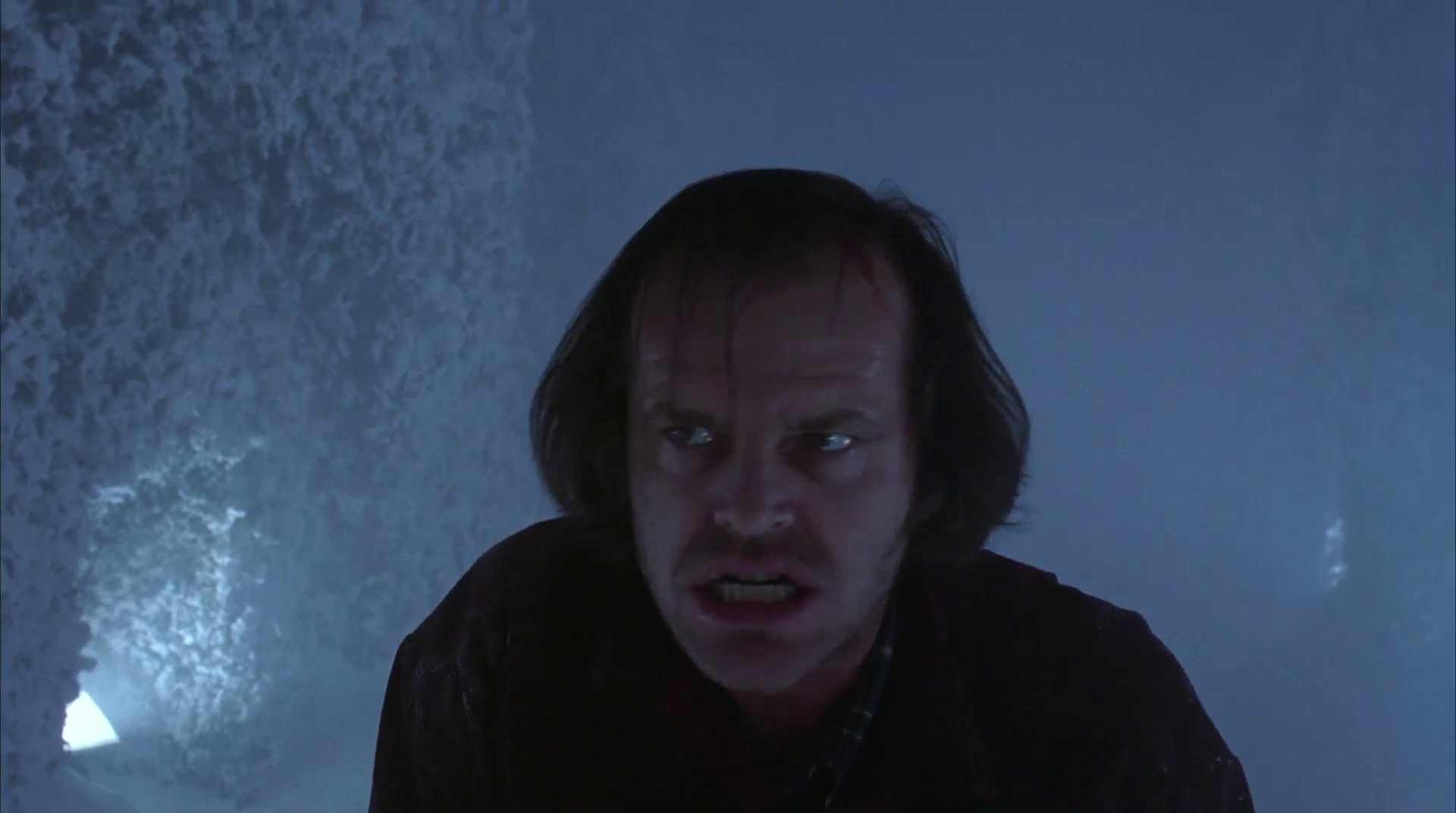
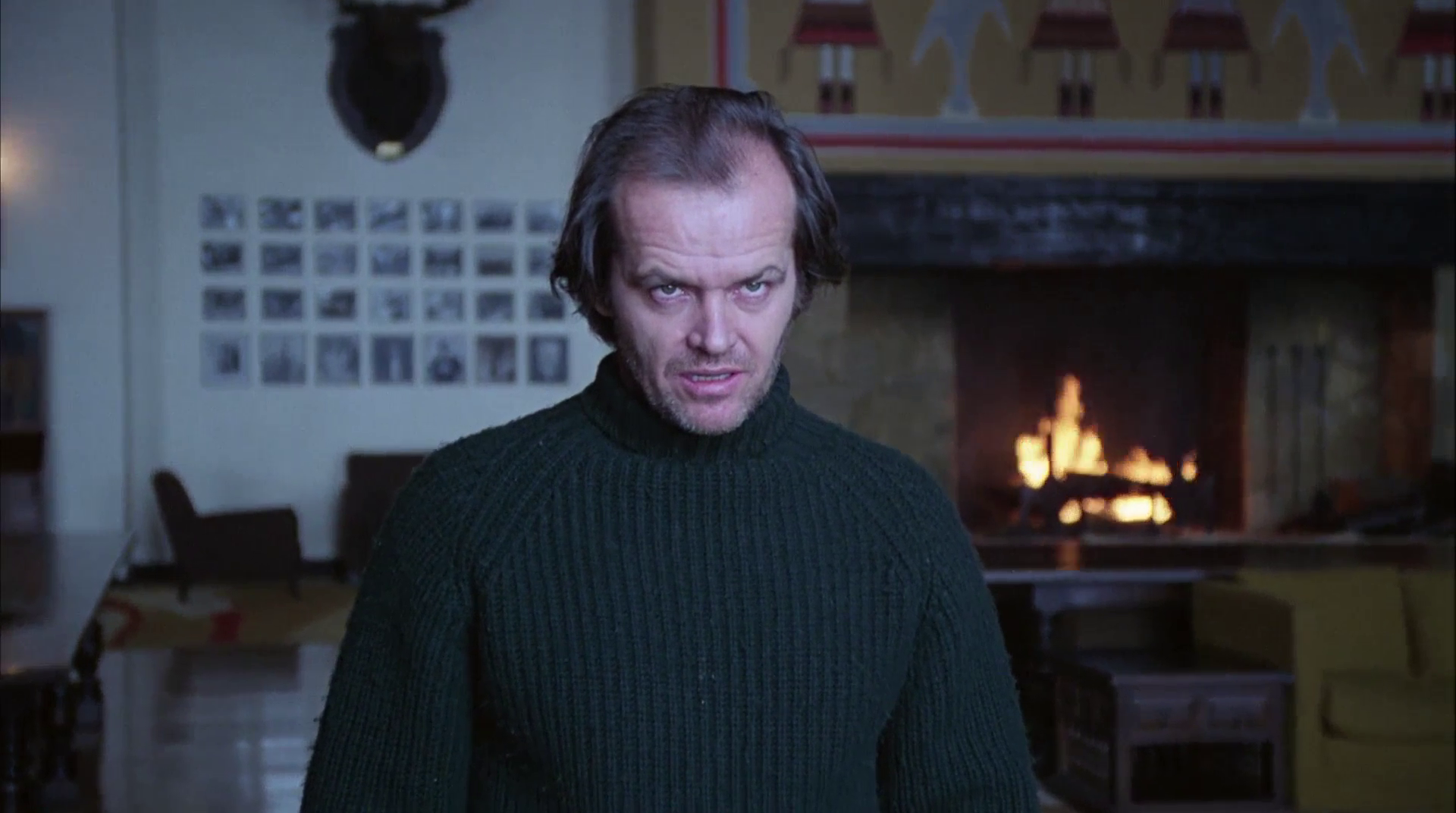
… Nicholson chasing his son through the outdoor maze with an axe”:
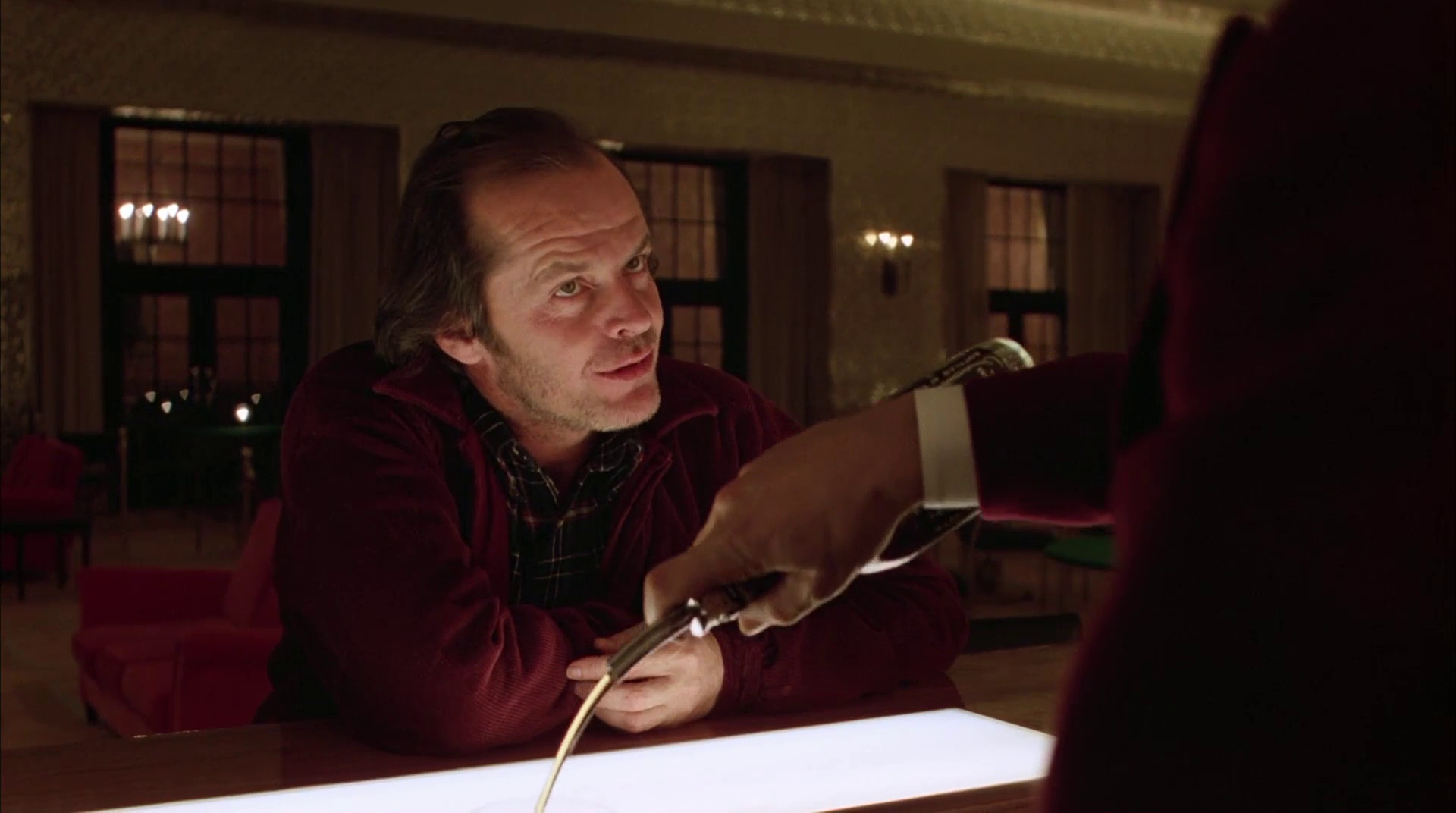
— and he writes that “for a while it is both powerful and creepy”. But he believes that “the moment Nicolson talks with the ghost bartender, the picture loses its grip,” and “from then on everything comes across as absurd.”
Peary also hates the famous final shot, arguing that it’s “a terrible choice” and illustrates that “neither Kubrick nor his co-writer, Diane Johnson, was familiar enough with horror films to know what were the cliches of the genre.” In the film’s favor, Peary notes that “as do all Kubrick pictures, this one (in which he employed a Steadicam) looks great — better, in fact, than all other horror films”, and that Kubrick’s “familiar mannered, intentionally rapid dialogue (in which everyone uses the other person’s first name repeatedly) does create tension.” Given what a tremendous fan base this film has — an entire documentary, Room 237 (2012), is devoted simply to various potential explanations of underlying themes — it’s impossible to deny its importance in cinematic history. Like Peary, I appreciate much of the craftsmanship on display in The Shining — and unlike Peary, I’m not upset about the numerous significant shifts from King’s novel (which I haven’t read); I believe viewers should watch this film as part of Stanley Kubrick’s oeuvre, rather than as a “King adaptation”. However, I’ll admit to not being a huge personal fan of the film, simply because the pacing seems off (it takes more than half an hour for the family to finally be left alone in the hotel), and Nicholson’s psychopathic character is so utterly unlikable and obnoxious from start to finish that he’s challenging to watch for so long. I do recommend that all film fanatics give Room 237 a look, simply to take a deeper dive into what might possibly be going on in Kubrick’s meticulously planned storyline (is the shift in typewriter color an accident of continuity, or intentional? what is the significance of Danny’s Apollo USA sweater?). Agree or disagree with the views espoused, you’ll surely begin to understand the depth to which many people obsess over this movie. Redeeming Qualities and Moments:
Must See? Categories
(Listed in 1001 Movies You Must See Before You Die) Links: |
“There’s nothing sadder than the tender-hearted grief of a monster.”
|
Synopsis: |
|
Genres, Themes, Actors, and Directors:
Review:
Redeeming Qualities and Moments:
Must See? Links: |
“There are mysterious parts in that book — but the only true mystery is that our very lives are governed by dead people.”
|
Synopsis: |
|
Genres, Themes, Actors, and Directors:
Review:
Redeeming Qualities and Moments:
Must See? Links: |
“It’s perfectly normal for insects to be slightly telepathic.”
|
Synopsis: |
|
Genres, Themes, Actors, and Directors:
Response to Peary’s Review:
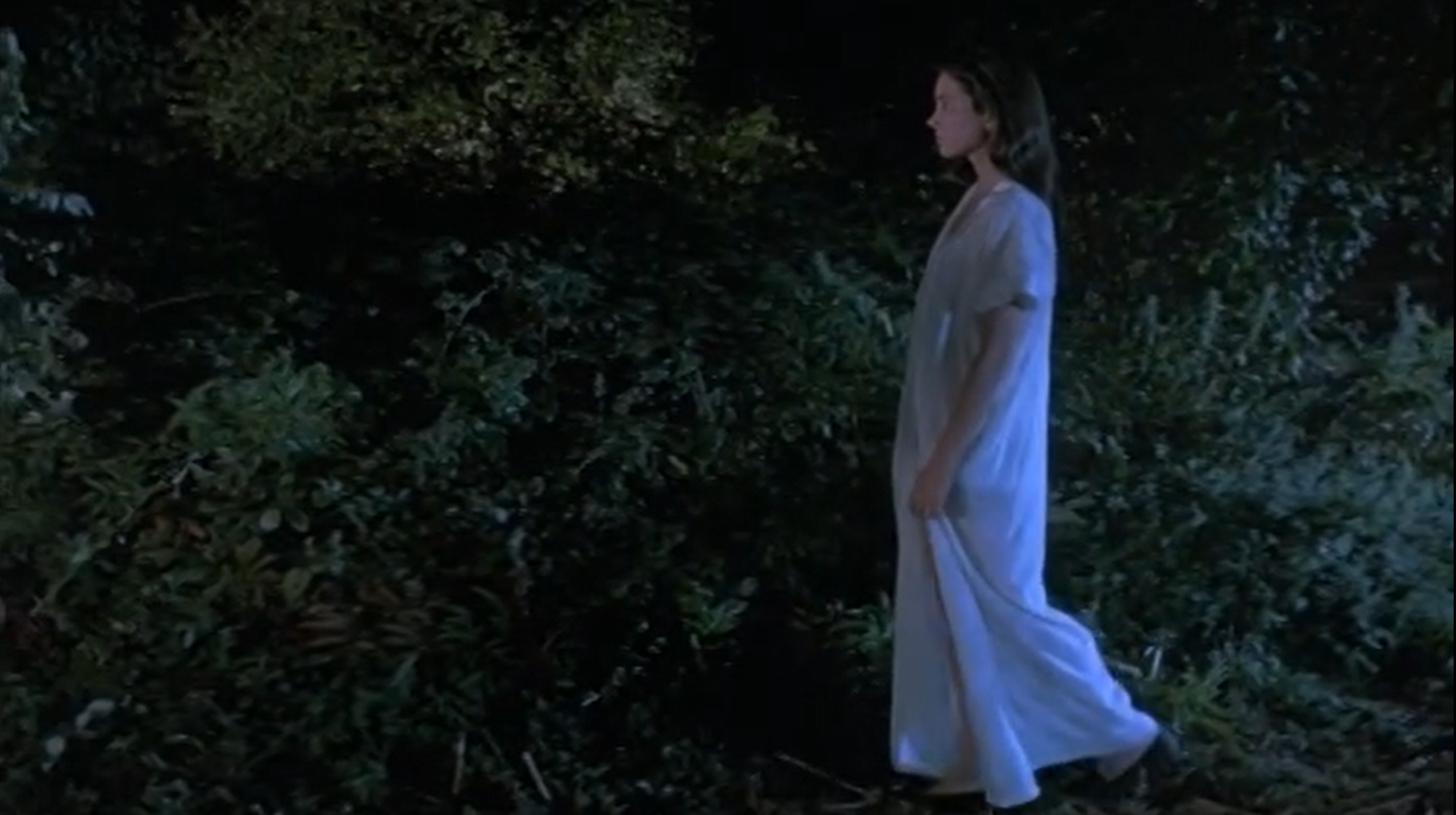
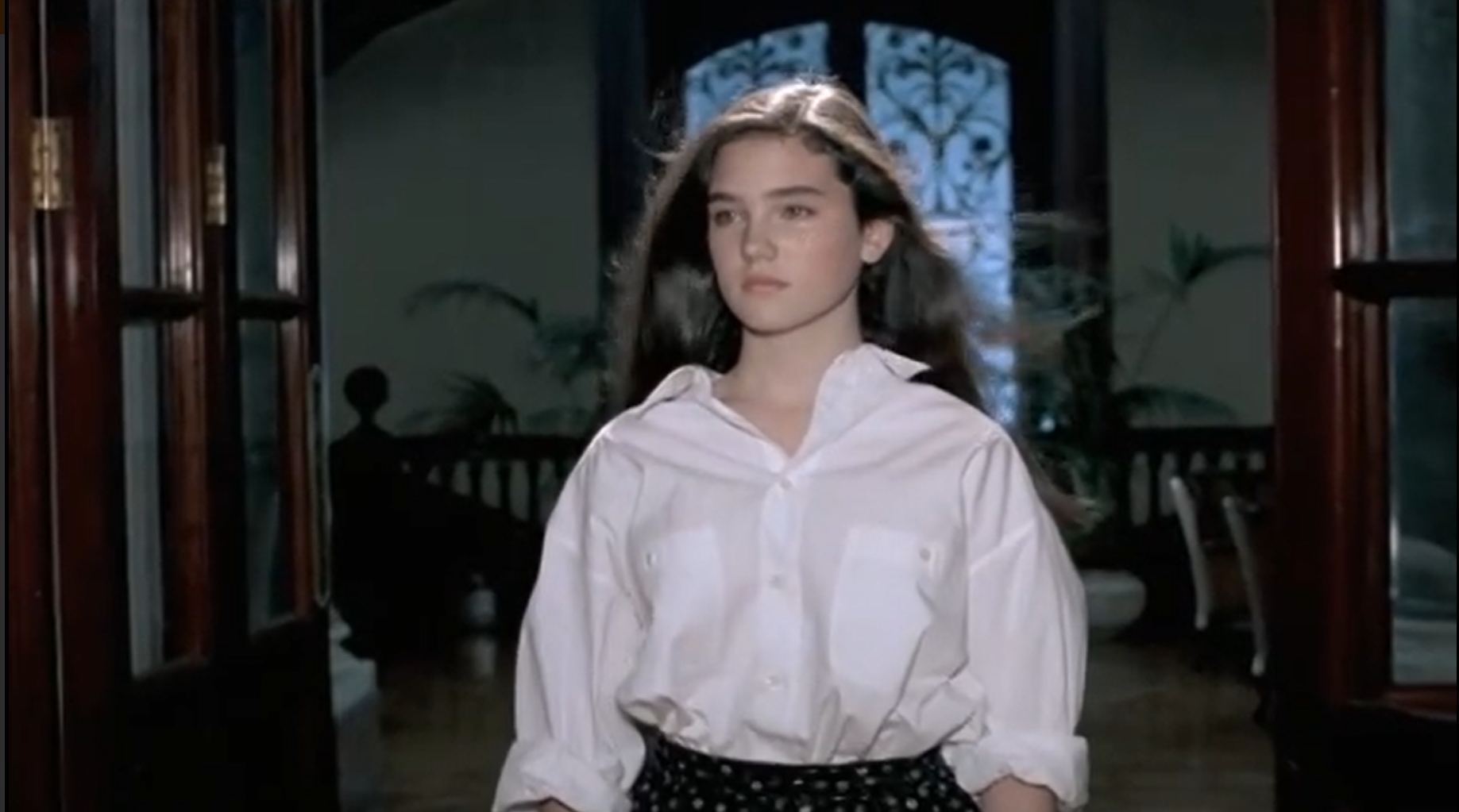
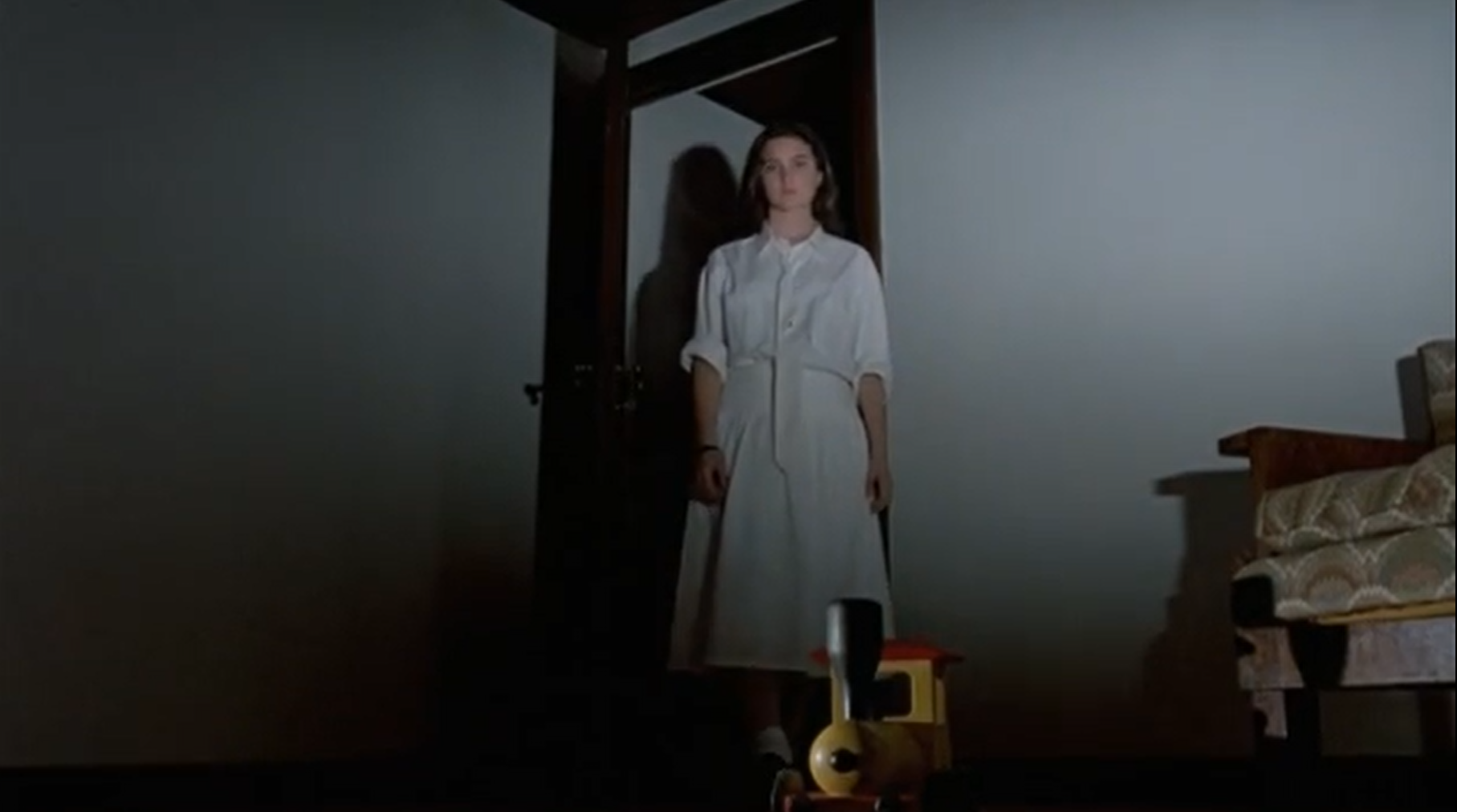
… and even her control over insects smack[ing] of writer’s ‘convenience’; in fact, the insect premise has such little effect on what happens that they could easily be eliminated without serious damage being done to the film.” Indeed, everything about the screenplay is awkwardly handled, clumsily plotted, occasionally illogical, and woodenly acted. To that end, Peary points out that Pleasence’s chimp “gives the film’s most impressive performance” (!). While 15-year-old Connelly is undeniably stunning:
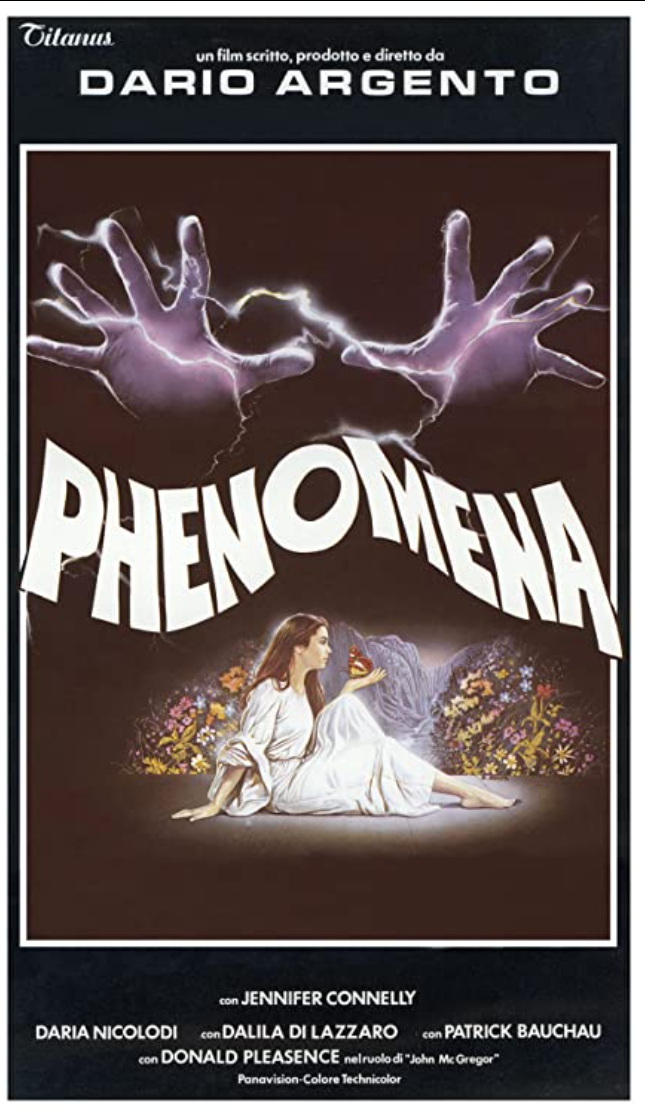
… she’s given terribly lame dialogue and situations to play out. Feel free to skip this one. To watch a humorous overview by a fan of this film (who generously points out its many laughably bad moments: “It’s time for another Donald Pleasence monologue…”), click here. Note: For this review, I’ve used the American-release title of the film as referenced in Guide For the Film Fanatic, which had 20+ minutes removed. This is likely the version Peary saw, though I watched the 116 minute version known as Phenomena. Redeeming Qualities and Moments:
Must See? Links: |
“Why not breed a parasite that can do something useful?”
|
Synopsis: |
|
Genres, Themes, Actors, and Directors:
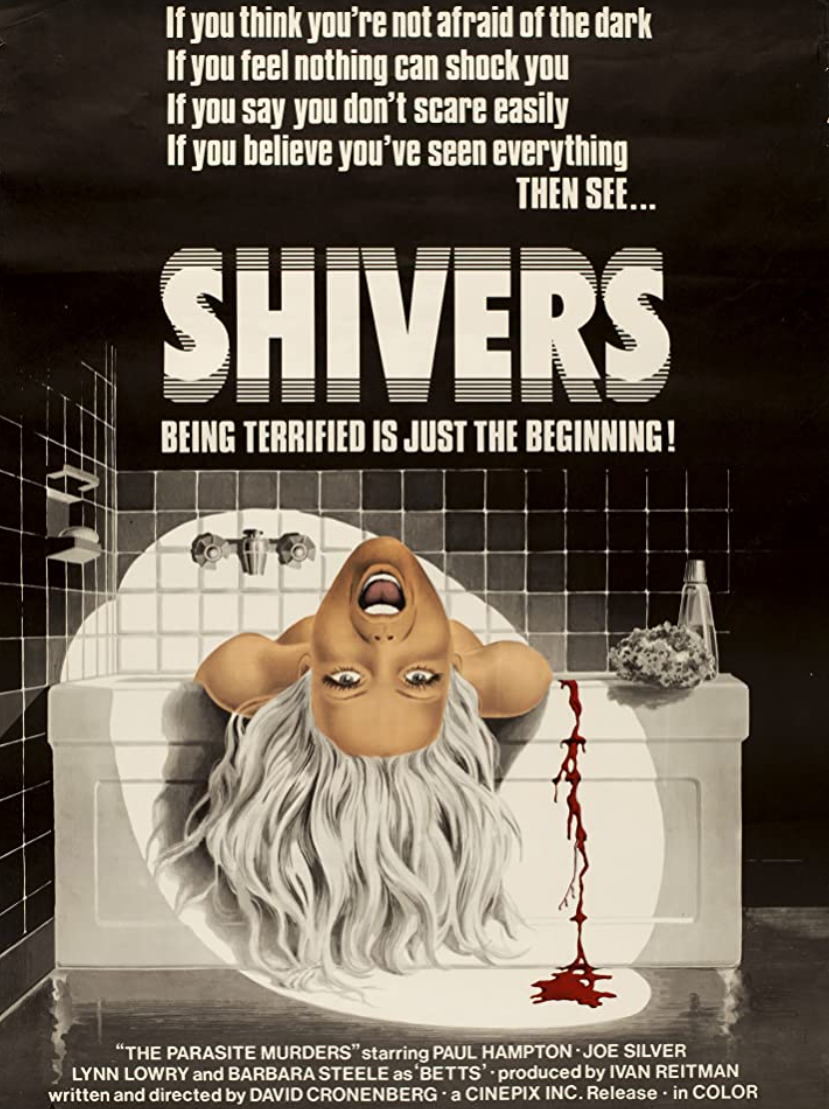
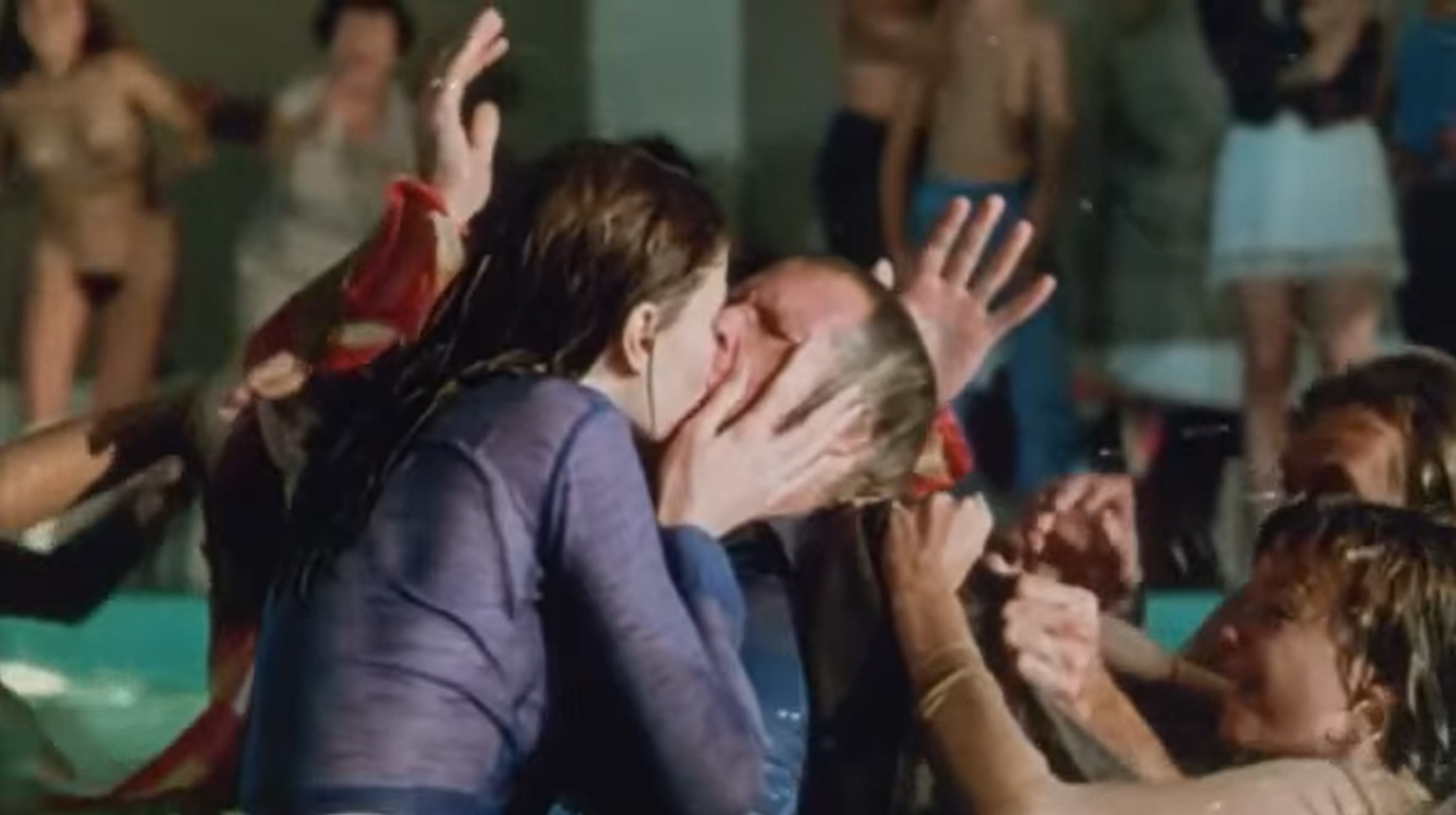
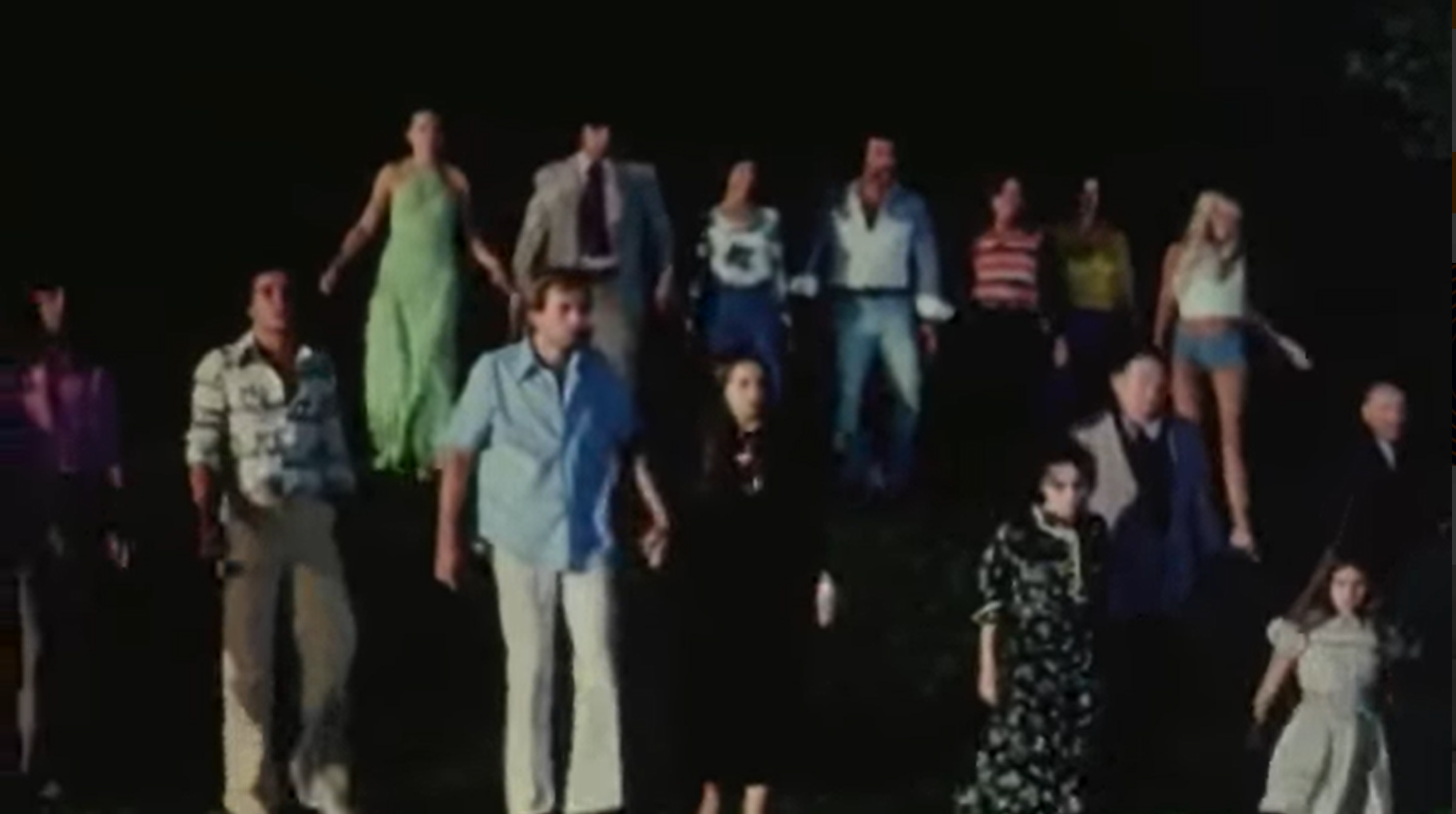
Response to Peary’s Review: Peary writes that while this “exploitation picture is too violent and crude”, the “special effects (i.e., creatures moving beneath the skin) by Joe Blasco anticipated those that would appear in future big-budget SF and horror films” — like Alien (1979). Because the sub-genre of “sci fi body horror” films isn’t a personal favorite, it’s hard for me to comment on whether Cronenberg’s film goes off the rails or simply continues along its own perversely logical trajectory; I can say that things certainly build to a tense fever pitch by the end, leading to a sense of claustrophobia and despair.
As Richard Scheib of Moria writes, “Shivers is Night of the Living Dead construed as a satire on the 1970s swinger lifestyle” — a very apt analogy indeed. Redeeming Qualities and Moments:
Must See? Links: |
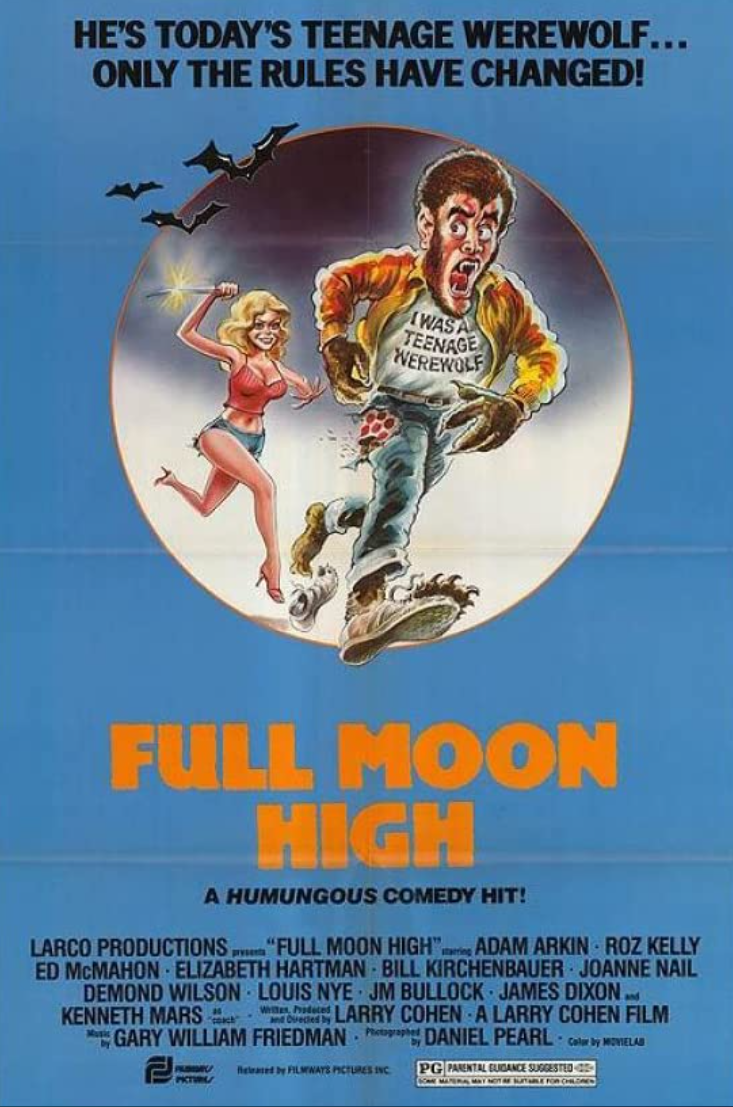
“I know all about werewolves and their little problems.”
|
Synopsis: |
|
Genres, Themes, Actors, and Directors:
Review:
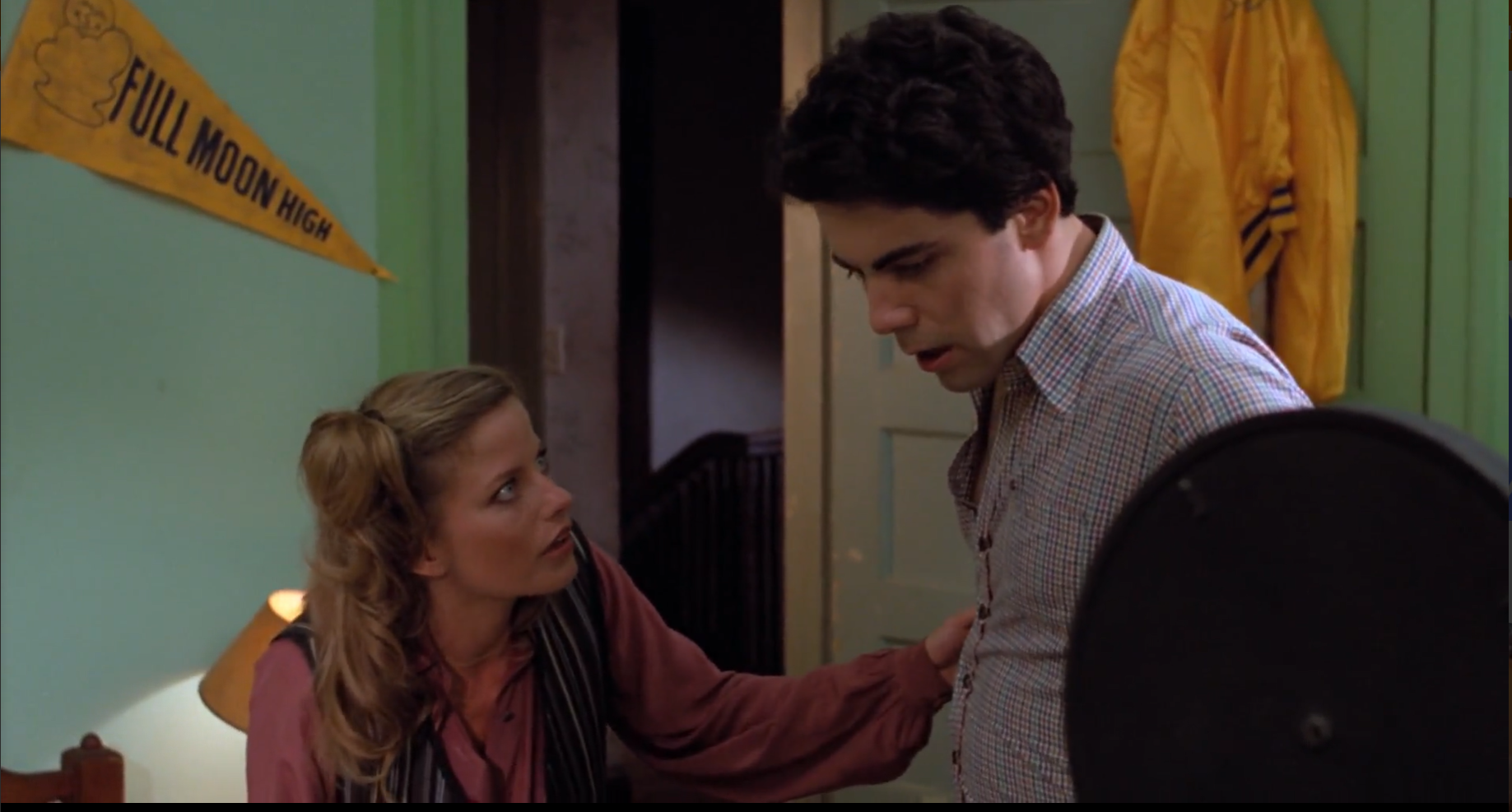
Watch for Alan Arkin (Arkin’s real-life dad) in a bit role as an “insults-based” therapist called in to try to help.
Redeeming Qualities and Moments:
Must See? Links: |
“A wolf may be more than he seems.”
|
Synopsis: |
|
Genres, Themes, Actors, and Directors:
Response to Peary’s Review:
— and while “it could be called a ‘suspense’ film or a ‘terror’ film,” it’s “more accurately… a film about sexual anxiety and a young virgin’s fear of and fascination about crossing the sexual threshold.” He notes that Jordan and Carter “have brought new sexual meaning to the fairytale” of Little Red Riding Hood:
… “by making the girl-wolf relationship a metaphor for all male-female relationships and by having the girl’s fairytale walk through the woods to Grandma’s house be the centerpiece of a frenzied dream of a young girl.”
Peary describes the movie as “wondrously photographed (its ‘look’ is unique)”, representing a “netherworld” that “is magical, enchanting, yet mysterious and foreboding. It’s a world filled with insects, snakes and toads, and warm-blooded animals; twisted trees, spider webs, and all kinds of sexual imagery.”
While Rosaleen is warned by her grandmother (in “a delightful bit by Angela Lansbury”) to “stay away from men”:
… and she “believes her grandmother speaks the truth about men and fears sexual contact”, she “does not run from the stranger she meets in the forest.”
Peary adds that “even more than Picnic at Hanging Rock, this film expresses the painful and confusing sexual yearnings of young girls.” He ends his review by noting that while this movie is “not for all tastes”, it’s “definitely worth a look” — and in the years since Peary’s GFTFF was published, it’s developed a cult following, as has his phenomenal thriller The Crying Game (1992) (which happens to be one of my top-ten personal favorite films — but my review of that will have to wait until I have time to resume writing about post-GFTFF must-see titles…) What most impresses me about The Company of Wolves (other than its incomparable other-worldly sensibility) is how strongly it empowers females: while Peary focuses on Patterson’s sexual development, I see this as primarily a movie about a girl daring to venture out into the (admittedly scary) world on her own, imagining the worst that might happen to a female at the hands of men (dealing with an insistent suitor; being attacked; being impregnated and/or abandoned) and also how she might handle and survive such a fate. Redeeming Qualities and Moments:
Must See? Categories
Links: |
“The law believes in motherhood.”
|
Synopsis: |
|
Genres, Themes, Actors, and Directors:
Response to Peary’s Review:
While he feels the “film often has repulsive imagery and much in the climactic scene is illogical,” there “are several terrifying scenes” and he posits that the picture has “a cold, other-worldly feel” which is “heightened by the fact that many of the characters’ surnames… can’t be found in your local telephone book” (!). Peary elaborates upon his review in his first Cult Movies book, where he admits to being “intrigued by the premises of all of Cronenberg’s film” but questioning “his judgments and directorial maturity”, given that he gets “juvenile pleasure from trying to jolt viewers by repelling them with blatant, often ridiculous images”, and gets “kicks trying to disgust us.” (In a “making of” documentary about this movie, Eggar concedes that it was hard not to laugh while filming the infamous scene in which she reveals her deformed body to Hindle…) Peary writes that among the “terrifying sequences” are “the murders of Julianna [Nuala Fitzgerald] and Barton [Henry Beckman]” (Eggar’s parents); he accurately notes that “when Julianna enters her mysteriously ramshackle kitchen, looks up toward the ceiling, and spots a little crouched figure in red atop the cupboards about to leap on her, or when Candy sees the hooded figure (who may remind you of the dwarf assassin in Don’t Look Now, 1973) hiding on the stairwell, you are likely to jump.” Meanwhile, “the most chilling” scenes are when two of the dwarf-like creatures “brazenly enter Candy’s classroom pretending to be her classmates:
… and when they walk with Candy hand in hand along the highway in the snow.” Peary writes that “perhaps what is most remarkable about The Brood is the sinister quality that Cronenberg establishes,” by “staging intense psychodramas between Raglan and Nola” (and, in the opening scene, with another troubled patient):
… as well as “by creating a restrictive atmosphere around the Psychoplasmics Institute; by making his characters humorless and setting the picture in cold, snowy weather (where everyone wears coats and scarves, and walks under gray skies)”:
… “by giving the autocratic Raglan a henchman; [and] by making us aware of the history of child abuse in Nola’s life.” While Peary doesn’t think the final sequence makes sense, he concedes that “at least it’s spooky, lively, and comes after about an hour and a half of absorbing, solid cinema.” Redeeming Qualities and Moments:
Must See? Categories
Links: |
“You said forever — never ending. Do you remember?”
|
Synopsis: |
|
Genres, Themes, Actors, and Directors:
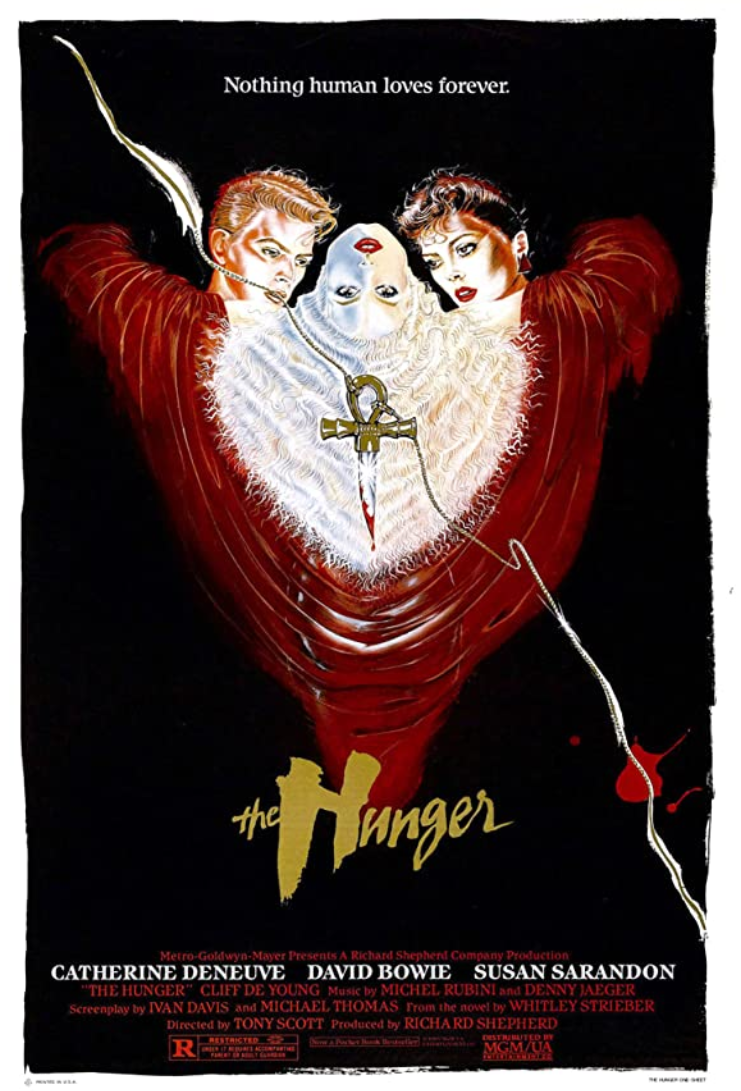
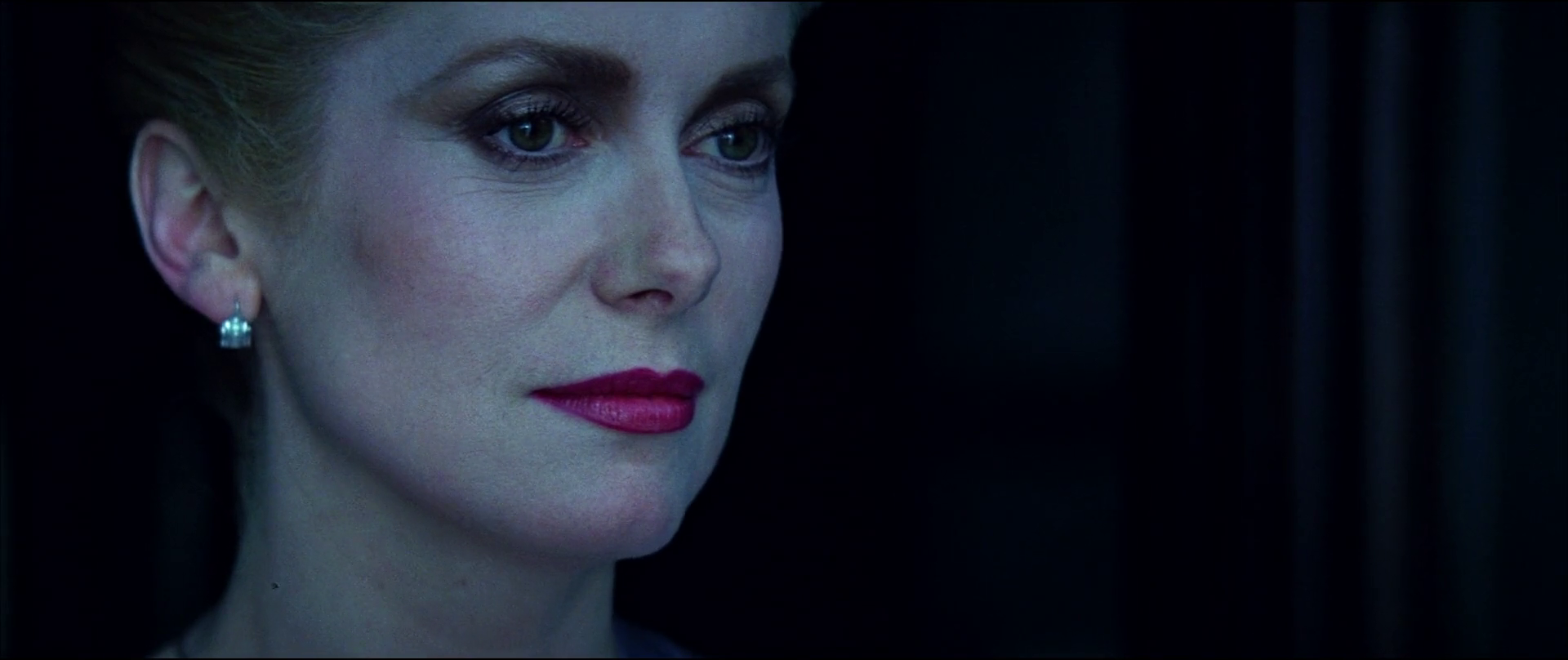
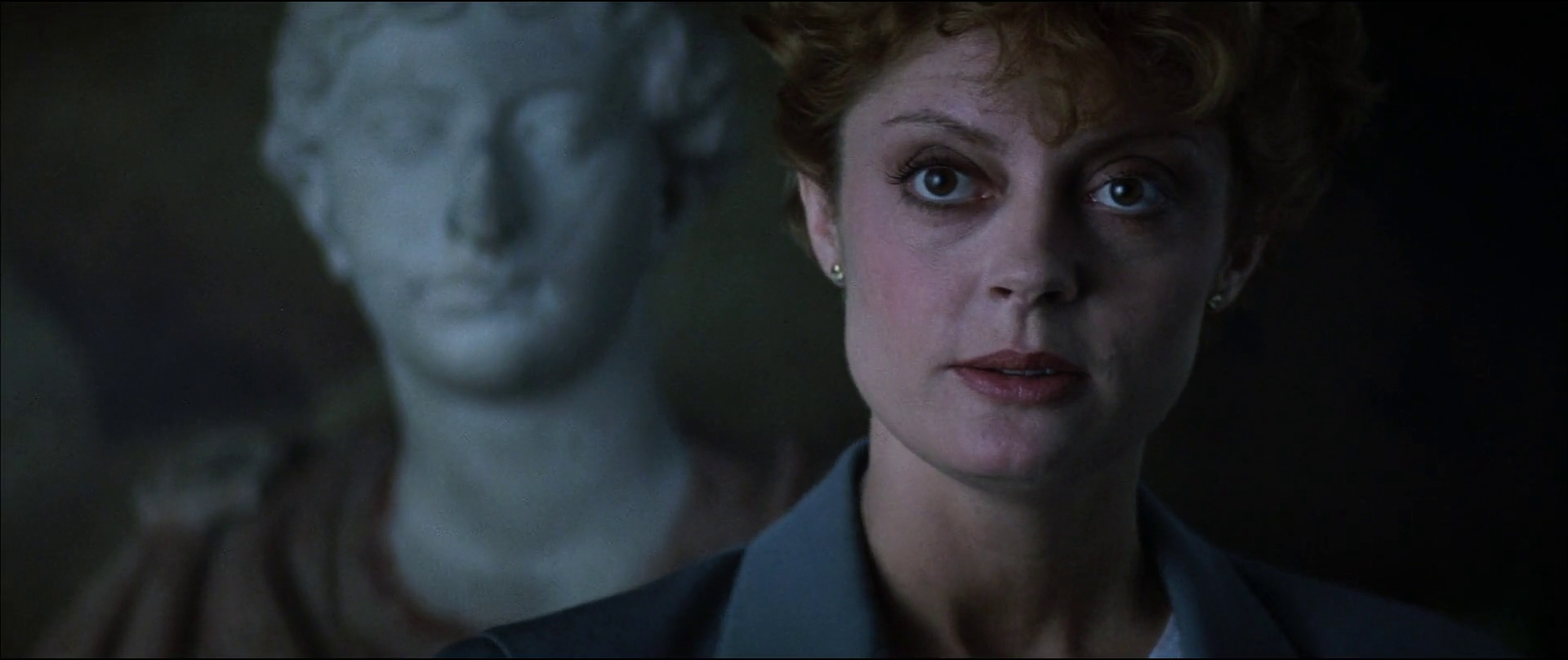
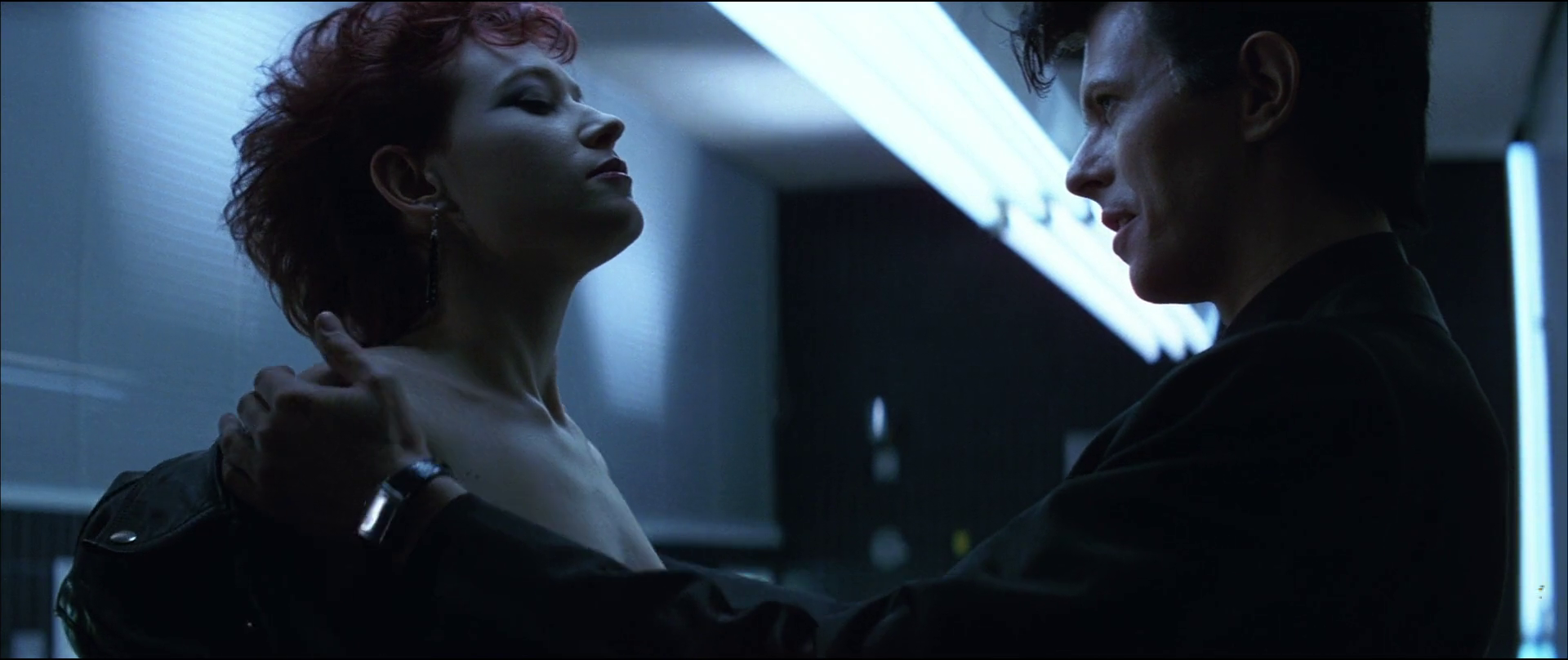
Response to Peary’s Review: (SPOILER ALERT) … by positing that “the trite, horrible scene in which all of Deneuve’s former lovers rise from their coffins and revolt against her is the worst horror-movie finale since the ghost attack in The Sentinel.” I’m less disappointed by this highly stylized cult vampire flick than Peary obviously is. While some aspects of the screenplay — i.e., nearly everything taking place in Sarandon’s laboratory — are insufficiently explained, the overall mood is (appropriately) one of sensuous horror amidst grandeur and deception. Deneuve and Bowie are perfectly cast as (nearly) ageless vampires who live for seduction (and classical music), and Sarandon is both sexy and believable as a doctor strangely attracted to Deneuve. The ending works okay for me, though (again) I wish some elements were explained more clearly, and I’m not sure what to make of the (deliberately?) ambiguous coda. Meanwhile, Denny Jaeger and Michel Rubin’s score makes excellent use of music by Ravel, Schubert, and Delibes (I’m a sucker for his “Flower Duet”). Redeeming Qualities and Moments:
Must See? Links: |