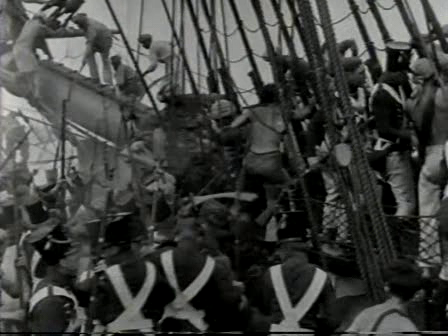
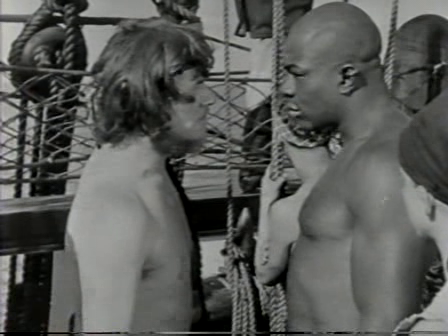
Shoah (1985)

Shoah (1985)

“It’s hard to recognize, but it was here.”

Synopsis:
Director Claude Lanzmann interviews survivors and perpetrators of the “Final Solution” against European Jews during World War II.

Genres, Themes, Actors, and Directors:

  • Documentary
  • Jews
  • World War II

Response to Peary’s Review:
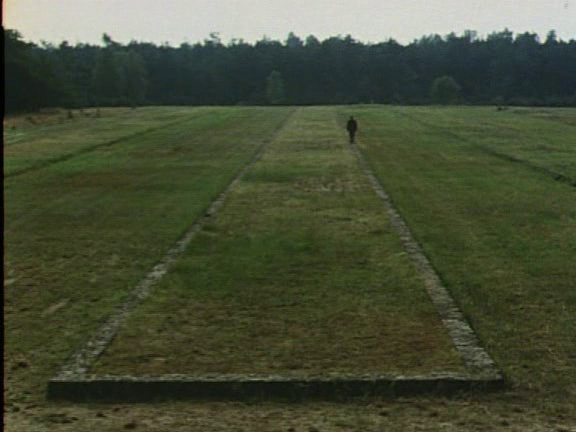
In his “oral history of the systematic extermination of Jews by the Nazis in Treblinka, Auschwitz, Chelmno, and other concentration camps,” director Claude Lanzmann “uses no archival footage but instead takes his cameras to the concentration camp sites and surrounding areas to see what they are like today.” When “he takes us through Auschwitz and down into the cremation chambers,” it’s “a terrifying experience” — and when “he takes us to Treblinka,” we see “where the gas chambers stand solitary in the wilderness like Mayan pyramids in Mexico.” Meanwhile, “at Chelmno it’s hard to tell a camp existed.”

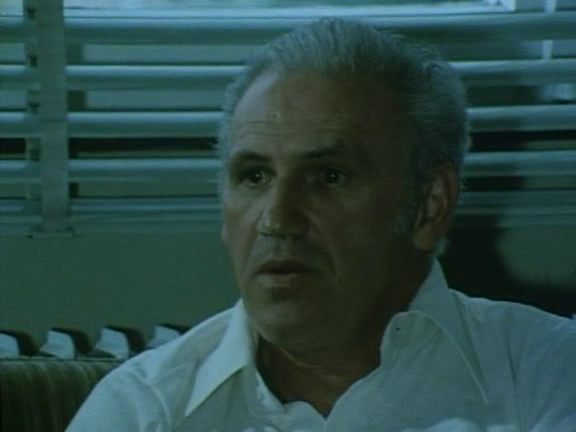
Lanzmann interviews many different impacted individuals, including “concentration camp survivors (their stories are horrific) who often did special work duties that kept them alive (one cut hair of women going to the gas chamber, another cleaned the crematorium, etc.).” They tend to “talk without emotion, then something snaps and they burst into tears, and Lanzmann [controversially] urges them to continue.”

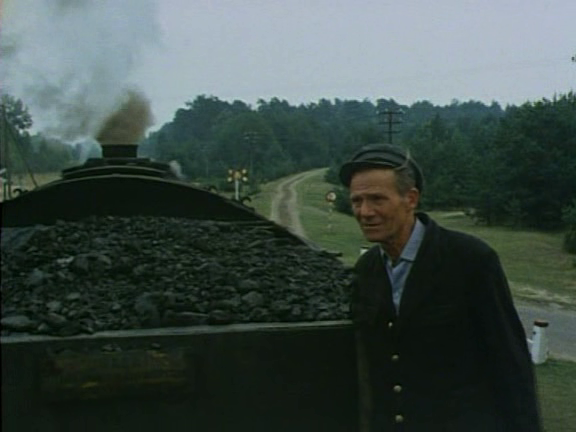
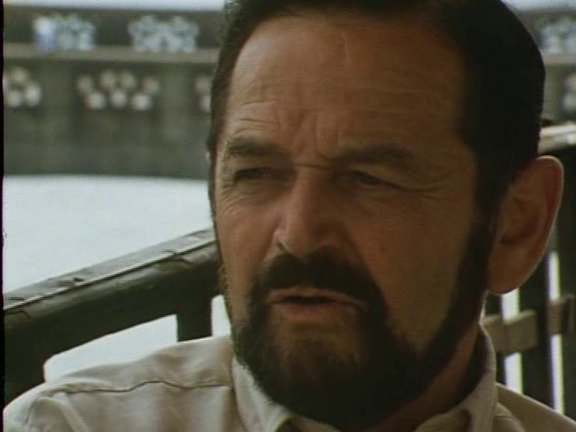
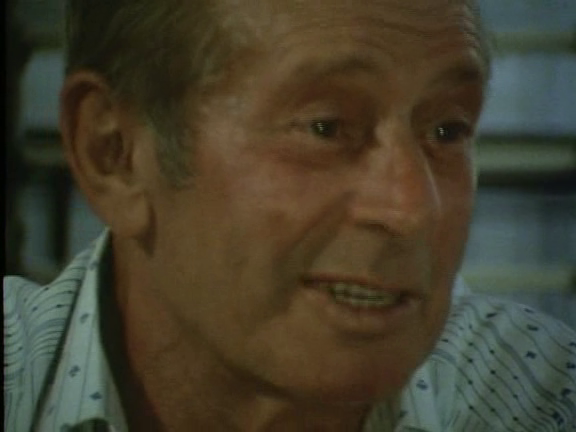
Indeed, it may seem that Lanzmann is exploiting the “survivors, forcing them to reopen old wounds for what he believed would be the definitive film about the Holocaust” — but, Peary asserts, “because it is not, what they go through for him isn’t worth it.” Lanzmann “also speaks to former Nazis, a Polish train engineer who transported Jews to Treblinka:

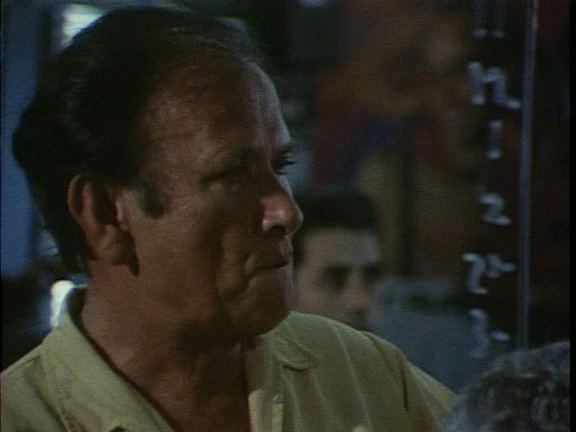
… and the people who lived by the camps.”

He points out that “what is most terrifying is that these people would [seemingly] not protest the roundup and extermination of the Jews if it happened again” — unless, perhaps, it’s to protest the trauma they are put through in having to watch such atrocities occur; as one bystander casually notes:

“[It] gets on your nerves, seeing that every day. You can’t force a whole village to watch such distress.”

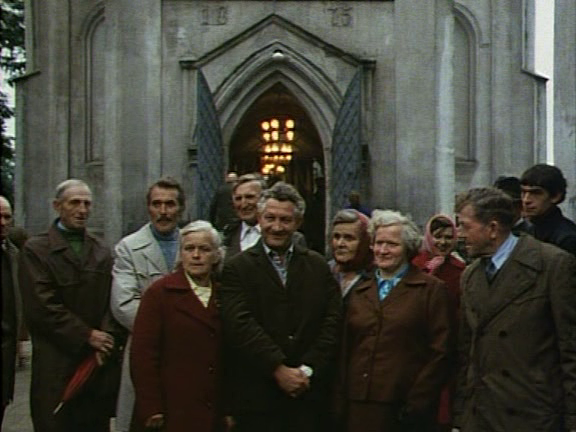
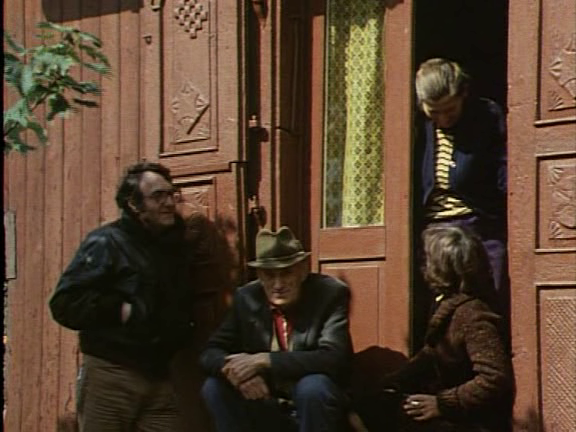
Peary calls out a particularly “revolting” scene in which the “one survivor of Chelmno stands with his Christian ‘friends’ outside a Roman Catholic church” and hears how “the people didn’t like the Nazis but still talk about how God intended Jews to be punished for what happened to Christ.”

Peary argues that while the survivors suffer in telling their tales, “we viewers do benefit from each recollection, each harrowing detail about the slaughter. And the obsessive Lanzmann insists on details: we get exact accounts of what happened, involving the amount of time prisoner trains took to reach the camps from their destination, what the prisoners were wearing, [and] how they were greeted by the Nazis at the camp.” Peary adds that while the “first half of the film contains much unforgettable material, [the] second half goes off on too many tangents (i.e., a long recollection about the Warsaw ghetto)” and “by the end you’re sick of Lanzmann (who often acts like Mike Wallace at his worst) and his techniques.” He concludes that this film remains “important viewing, but not consistently powerful, though it should be, considering its subject.”

I disagree with Peary on several of his points: I don’t think it’s up to us as viewers to say whether it was “worth it” for the survivors to be pushed in the way they were, and I don’t believe Lanzmann becomes annoying. Meanwhile, the “tangents” in the final portion of this lengthy film serve as an invaluable back-story for everything we’ve seen and heard until then: by starting with footage of the death camp sites, then moving back and forth in time and space to talk with various people who either participated in or saw what was taking place, we gradually build a collective sense of how this years-long genocide unfolded.

Indeed, Lanzmann is incredibly clear about what he’s determined to document, and refuses to compromise on his vision. Once you give in to the fact that this film 9 1/2 hour film will not relent — instead forcing you to watch, listen, absorb, and make sense of people’s memories without the mediating support or distraction of historical visuals — you begin to appreciate what Lanzmann is doing, and how, and why. Quotes from participants become seared into your brain:

“I was thirteen, and all I’d ever seen until then was dead bodies.”

“With rubbish, paper, and gasoline, people burn very well.”

“Claude, you asked for my impression: if you could lick my heart, it would poison you.”

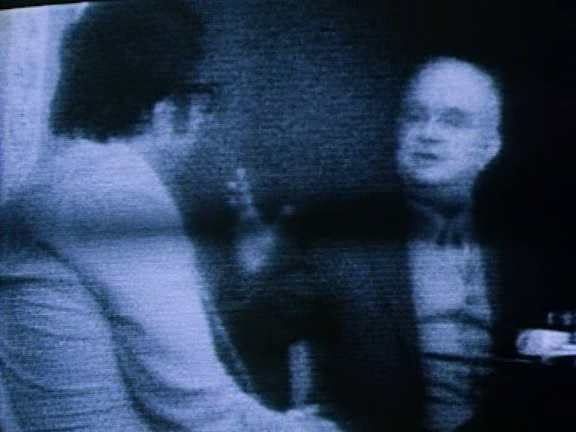
In response to a question about his stylistic choice to not show any archival footage or stills, Lanzmann at one point noted that not a single photo actually exists of activity within the death camps — so, the only way to try to document this historic atrocity s to talk with people who were there. And if hearing Nazi bureaucrats discuss the logistics of exactly how the death camps operated doesn’t convince you, then what will? Take, for instance, this excerpt from Lanzmann’s interview with war criminal Franz Suchomel (being filmed secretly from a van parked outside):

“Treblinka then [in August of 1942] was operating at full capacity… Trains arrived. The Warsaw ghetto was being emptied then. Three trains arrived in two days, each with three, four, five thousand people aboard, all from Warsaw. But at the same time other trains came in from Kielce and other places… What’s more, the cars were French, made of steel. So that while 5,000 Jews arrived in Treblinka, 3,000 were dead. In the cars. They had slashed their wrists, or just died. The ones we unloaded were half-dead and half-mad. In the other trains from Kielce and elsewhere, at least half were dead. We stacked them here, here, here and here [points to a map of the camp]. Thousands of people piled one on top of another. On the ramp. Stacked like wood. In addition, other Jews, still alive, waited there for two days: the small gas chambers could no longer handle the number. They functioned day and night in that period.”

“We puked and wept… The smell was infernal… because gas was constantly escaping. It stank horribly, for miles around… It depended on the wind. The stink was carried on the wind… More people kept coming, always more, whom we hadn’t the facilities to kill. Those gents were in a rush to clean out the Warsaw ghetto. The [small] gas-chambers couldn’t handle the load… The Jews had to wait their turn for a day — two days, three days. They foresaw what was coming. They foresaw it. They may not have been certain, but many knew. There were Jewish women who slashed their daughters’ wrists at night, then cut their own. Others poisoned themselves. They heard the engine feeding the gas-chambers.”

“Because there were so many dead that couldn’t be got rid of, the bodies piled up around the gas-chambers and stayed there for days. Under this pile of bodies was a cesspool: 3 inches deep, full of blood, worms, and shit. No one wanted to clean it out. The Jews preferred to be shot rather than work there… It was awful. Burying their own people, seeing it all — the dead flesh came off in their hands.”

This lengthy narrative is followed immediately by interview clips with Jewish survivor Filip Müller, who describes what it was like to enter the incineration chamber in Camp 1 at Auschwitz and engage in disposal of corpses for hours on end — in his case, “doing the work” instead of “choosing” to be shot.

Suffice it to say that there is nothing in existence comparable to this documentary, which remains not only essential (albeit grueling) viewing for film fanatics, but an invaluable archive of facts that — shockingly — continue to be refuted and denied by some. Please do make the time and energy for it, though I recommend chunking it out into more manageable sessions (perhaps four).

Redeeming Qualities and Moments:

  • Invaluable oral evidence of inexplicable atrocities

  • Many raw, powerful moments

Must See?
Yes, for its ongoing historical and cinematic relevance.

Categories

  • Historically Relevant

(Listed in 1001 Movies You Must See Before You Die)

Links:

M (1931)

M (1931)

“But I can’t help it!”

Synopsis:
When a serial child murderer (Peter Lorre) in Berlin kills yet another young girl (Inge Landgut), Inspector Lohmann (Otto Wernicke) intensifies his search, leading the head of the criminal underground (Gustaf Gründgens) to rally his own men — including local beggars — in helping to identify, capture, and try Lorre.

Genres, Themes, Actors, and Directors:

  • Amateur Sleuths
  • Fritz Lang Films
  • German Films
  • Pedophiles
  • Peter Lorre Films
  • Serial Killers

Response to Peary’s Review:
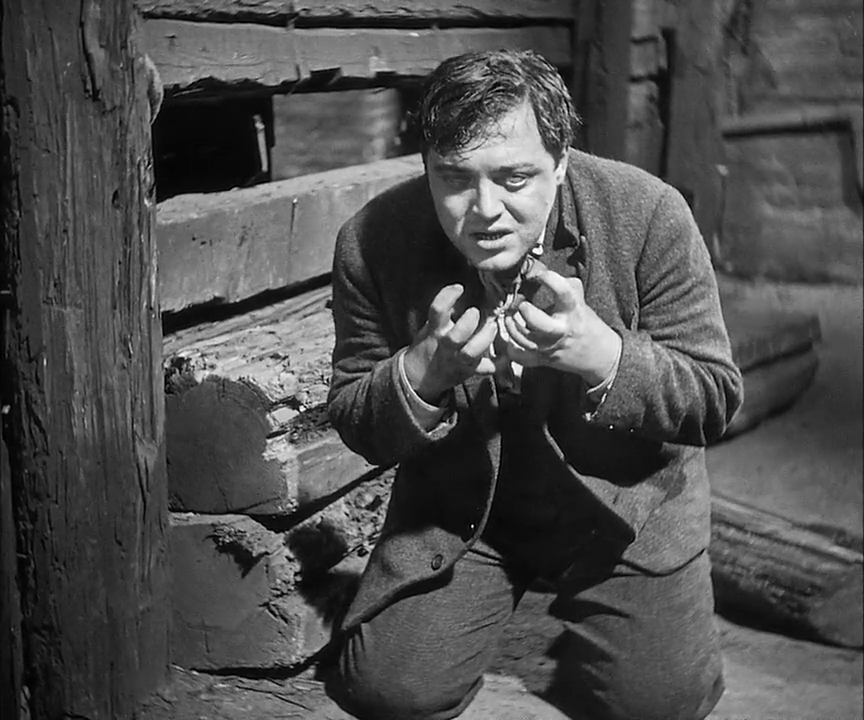
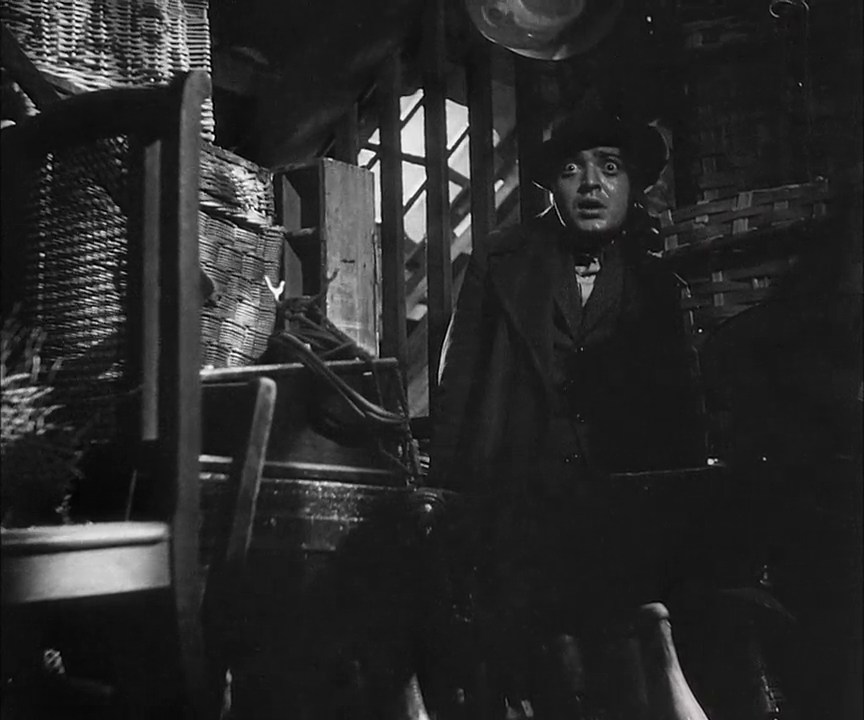
Peary opens his review of Fritz Lang’s “first sound film” — based “on the real-life Dusseldorf murderer” — by stating, “Exciting filmmaking!” and ends by referring to it as “a masterpiece.” He reminds us that “Lang’s films are about paranoia, where a single figure walks through a city in which everybody seems to be his enemy” — and “in this case everyone is after Lorre.” Despite playing a “sweaty, plump murderer of little girls,” Lorre still manages to move us with his “pathetic, screeching plea for mercy” when he claims, “I can’t help myself!” Peary writes that “Lorre’s delivery of the guilt-ridden speech” during “the criminals’ kangaroo court” is “one of the truly great performances in cinema history.”

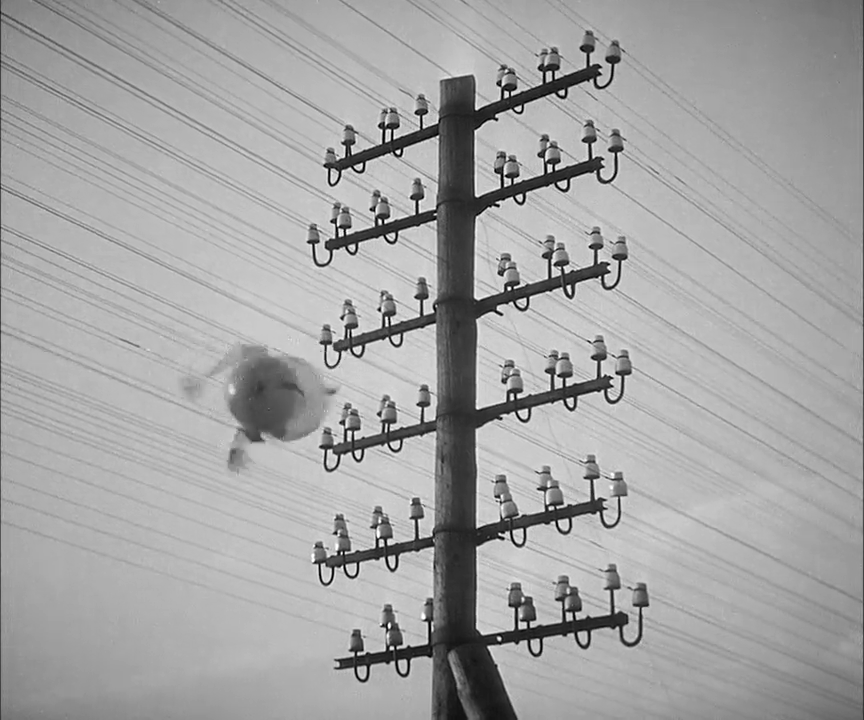
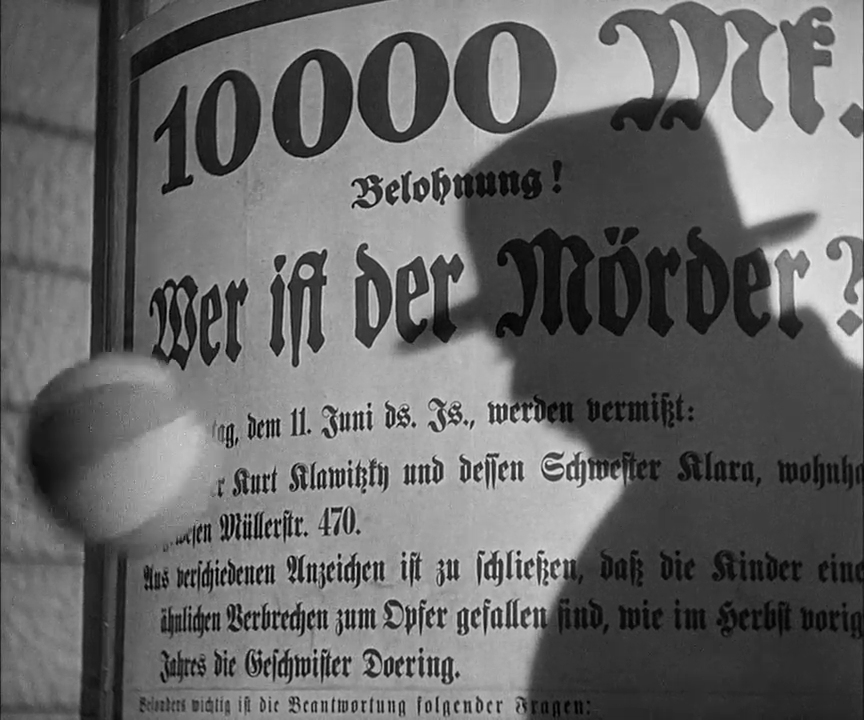
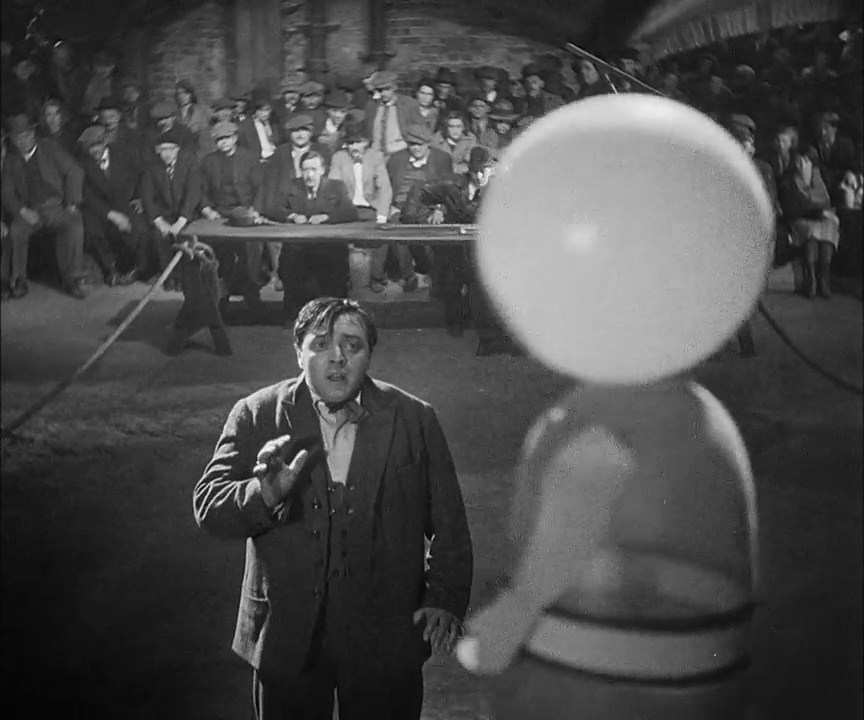
… and argues that the “picture is tasteful, considering its subject matter; yet it is uncompromising.” He points out that “suspense is heightened by the imaginative use of props (a balloon floating away in the sky and a rolling ball indicate children have been killed):


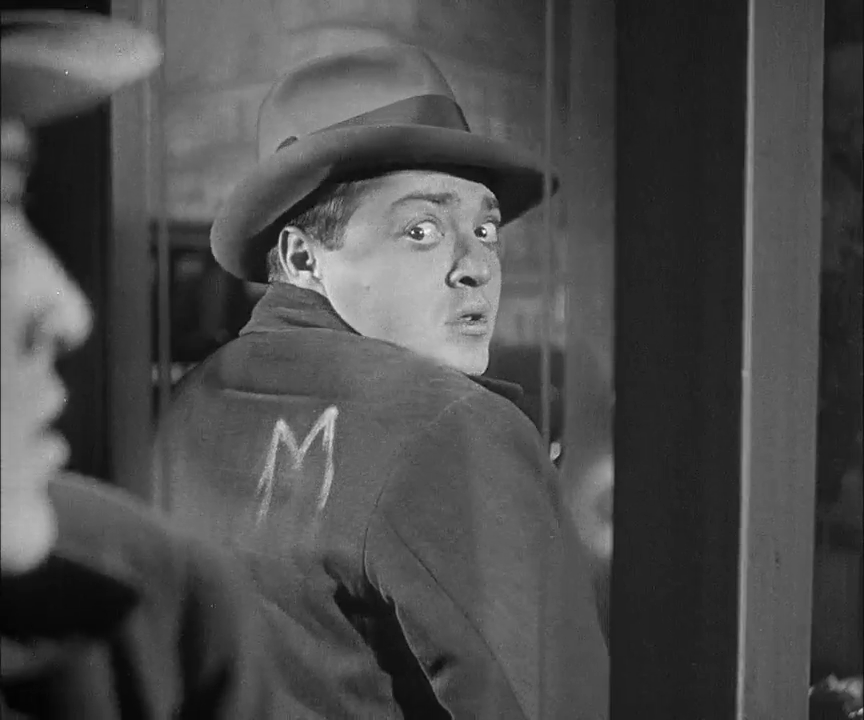
… and Lorre’s eerie whistling of [a] tune from Grieg’s Peer Gynt” (“In the Hall of the Mountain King”). Finally, he highlights the “expressionistic style” of cinematography “by Fritz Arno Wagner.” Peary is right in his assessment of this classic thriller — not an easy film to watch by a long stretch, but critical to all film fanatics’ understanding of Lang’s cinematic genius. Check out this video entitled “M: The First Serial Killer Film” for a nice overview of how and why this movie remains so significant.

Redeeming Qualities and Moments:

  • Peter Lorre as Hans Beckert
  • Highly atmospheric cinematography and sets


  • The masterful “kangaroo court” sequence
  • Expert use of sound

Must See?
Yes, as a masterpiece of early sound cinema.

Categories

  • Genuine Classic
  • Important Director

(Listed in 1001 Movies You Must See Before You Die)

Links:

1,000 Eyes of Dr. Mabuse, The (1960)

1,000 Eyes of Dr. Mabuse, The (1960)

“In reality, my marriage is sheer hell.”

Synopsis:
A suicidal woman (Dawn Addams) whose abusive husband (Reinhard Kolldehoff) refuses to divorce her is rescued from a hotel ledge by a wealthy American (Peter Van Eyck) who sends for her psychiatrist (Wolfgang Preiss), then promptly falls in love with her. Meanwhile, a detective (Gert Fröbe) investigates who may be behind recent murders conducted by the unseen Dr. Mabuse; a pushy insurance agent (Werner Peters) lurks around the corners of the Nazi-built hotel; and a blind psychic (Lupo Prezzo) makes ominous predictions.

Genres, Themes, Actors, and Directors:

  • Criminal Investigation
  • Detectives and Private Eyes
  • Fritz Lang Films
  • German Films
  • Marital Problems
  • Mind Control and Hypnosis
  • World Domination

Review:
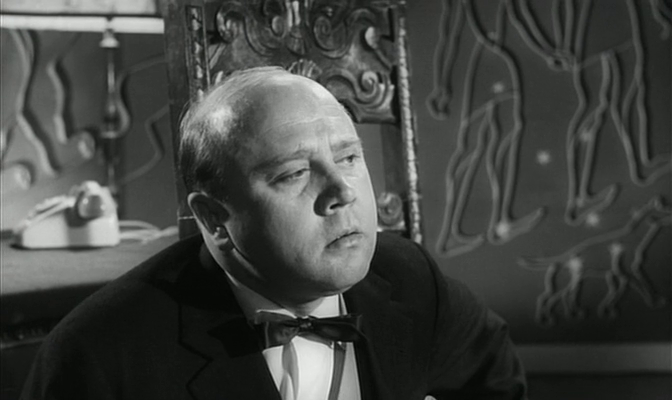
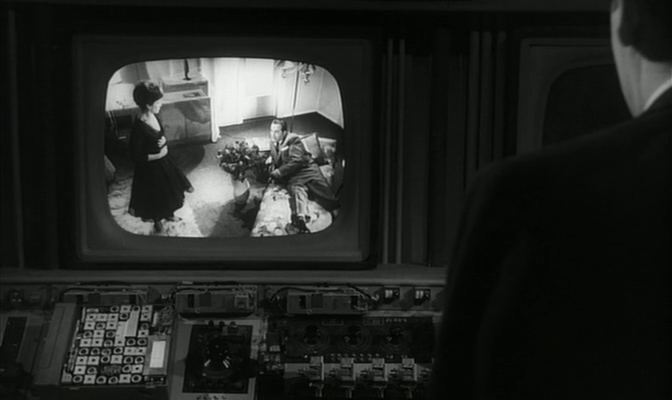
Fritz Lang’s fourth film about criminal mastermind “Dr. Mabuse” — after his two-part silent epic Dr. Mabuse, The Gambler (1922) and its sound-era sequel, The Testament of Dr. Mabuse (1933) — also turned out to be his final movie. It’s a less visually impressive, but narratively complex continuation of the machinations of “Mr. Mabuse”, updated to incorporate pervasively modern (for the time) video surveillance technology. As DVD Savant describes in his review:

1,000 Eyes breaks a complicated mystery down into dozens of short, interlocking scenes. Each scene introduces only a single puzzle piece for the mystery. It’s as if each little scene has the verb for the scene that precedes it, and the noun for the scene that follows. We the viewers must digest the flood of un-collated information as fast as we can.

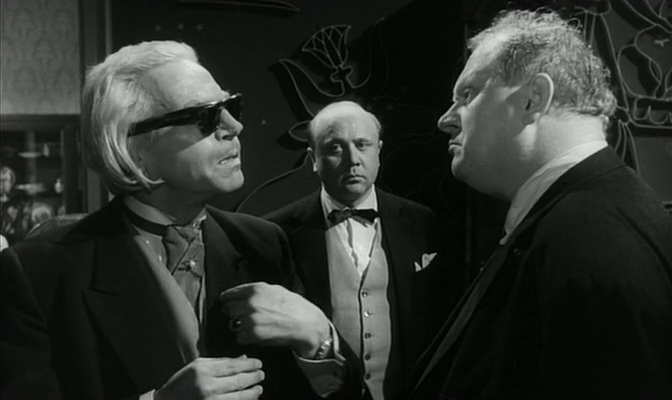
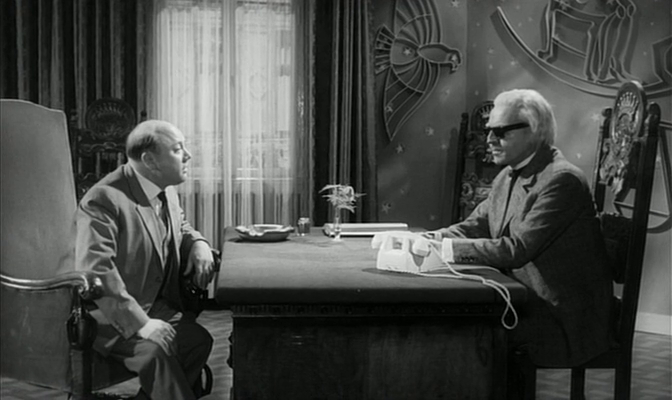
Indeed, viewers who stick with this storyline are guaranteed a wild ride, as a long con is eventually revealed and leads to yet more character revelations and plot twists. Fröbe makes an effectively bemused yet committed detective:

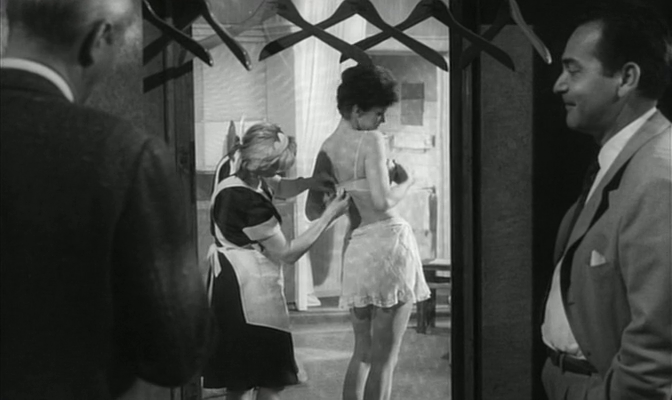
… while Peters delivers a surprisingly amusing and complex supporting character:

… and Prezzo is appropriately creepy as a psychic with indeterminate motives.

Redeeming Qualities and Moments:

  • Atmospheric sets and cinematography

  • A cleverly intricate tale of surveillance and terror

Must See?
No, but it’s recommended, and of course a must for Lang fans.

Links:

Big Bird Cage, The (1972)

Big Bird Cage, The (1972)

“What an army we could raise, if we only had a lot of women!”

Synopsis:
A social climber (Anitra Ford) is taken hostage during a siege by revolutionary lovers Blossom (Pam Grier) and Django (Sid Haig), and sent to a women’s prison in the jungle. Will Terry (Ford) and her fellow prisoners be able to escape their brutal fate?

Genres, Themes, Actors, and Directors:

  • Pam Grier Films
  • Prisoners
  • Revolutionaries
  • Strong Females

Review:
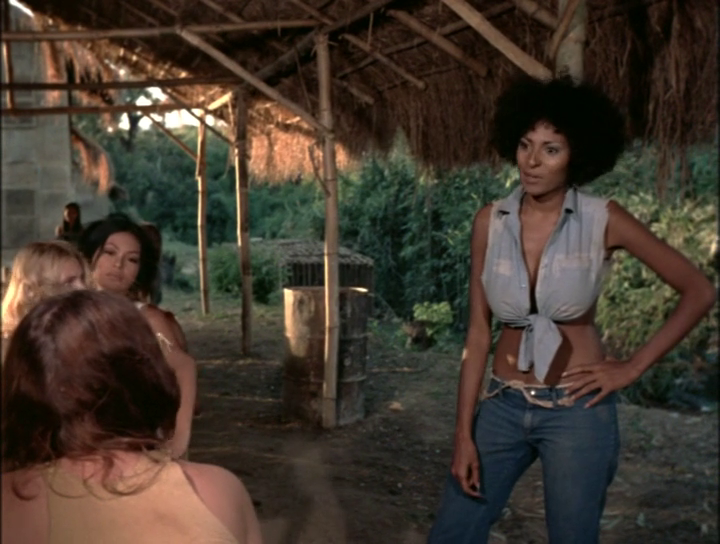
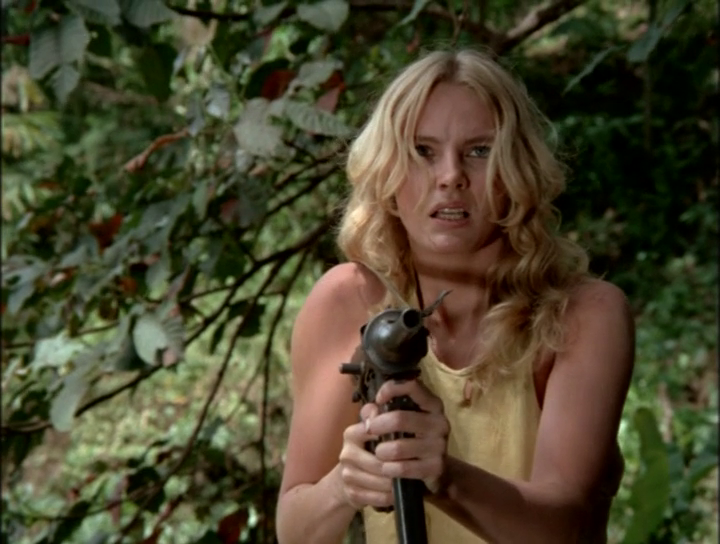
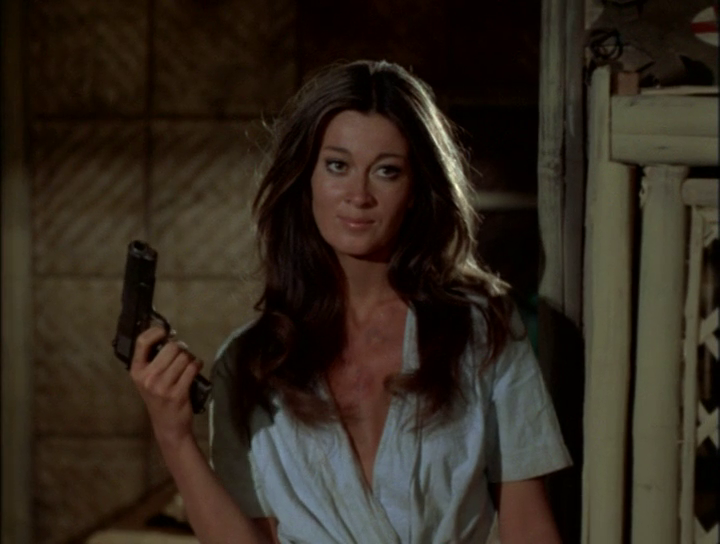
Director Jack Hill’s follow-up to The Big Doll House (1971) was this similarly themed WIP exploitation flick, once again starring Pam Grier — though this time she’s given the role of an undercover revolutionary:

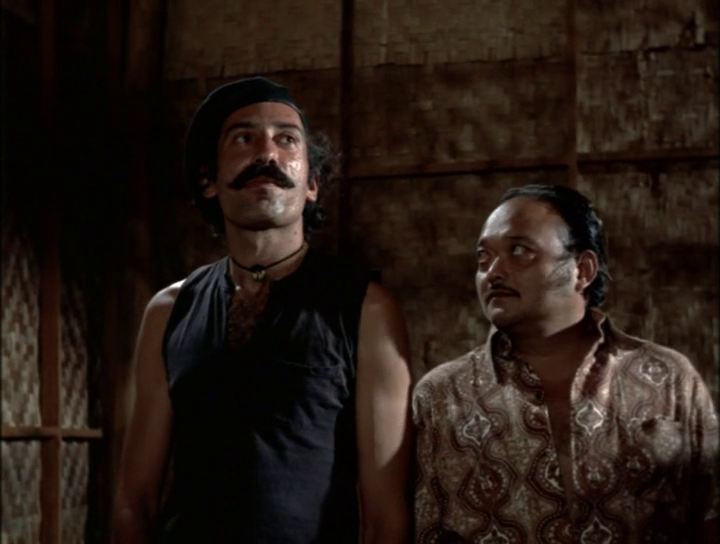
… romantically paired with Sid Haig, whose “schtick” is to pretend to be gay to distract the male prison guards:

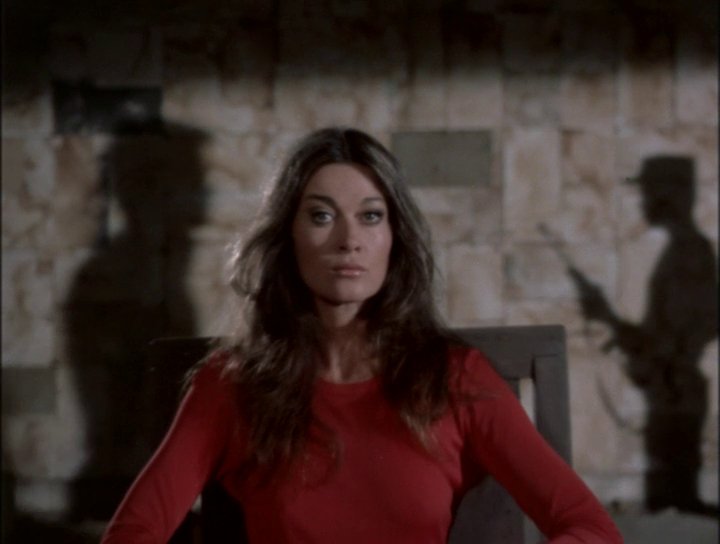
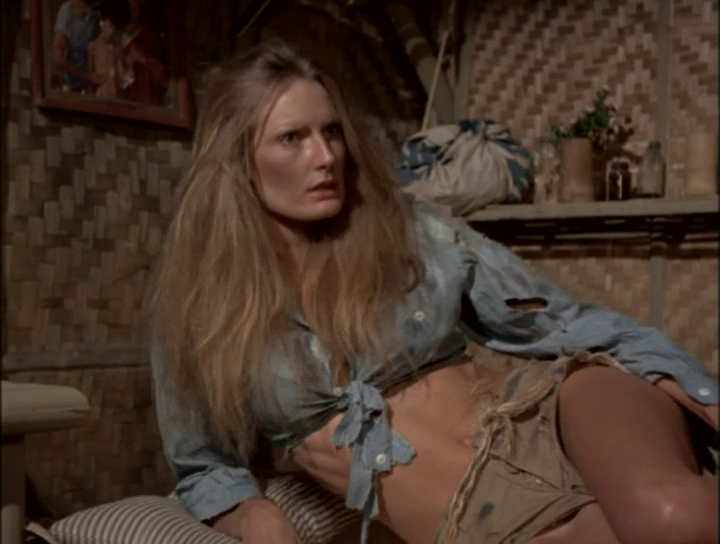
Of primary note in the cast is Anitra Ford — of “The Price is Right” modeling fame — playing a leggy, sultry hostage:

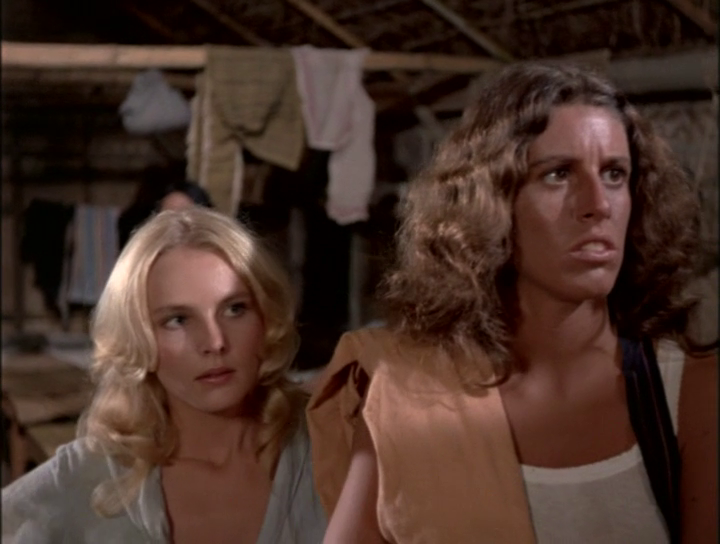
… surrounded by a bevy of “types”, including sex-obsessed Carla:

… jokey “Bull” Jones (Teda Bracci):

… Amazonian Karen:

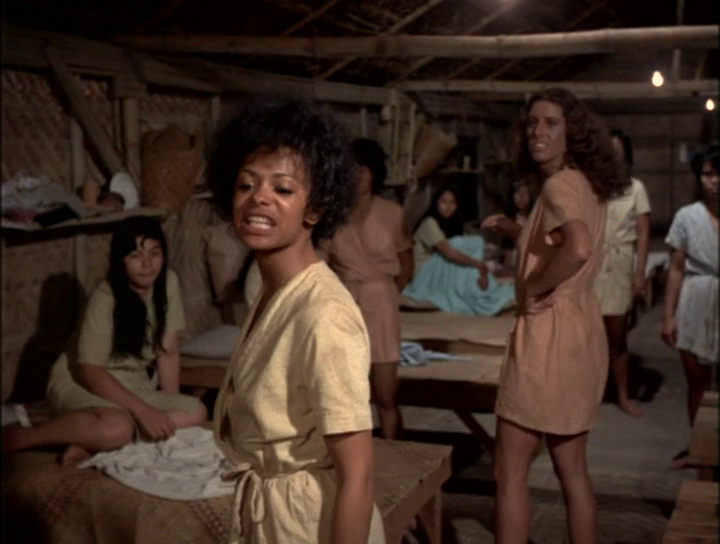
… and pint-sized Mickie (Carol Speed):

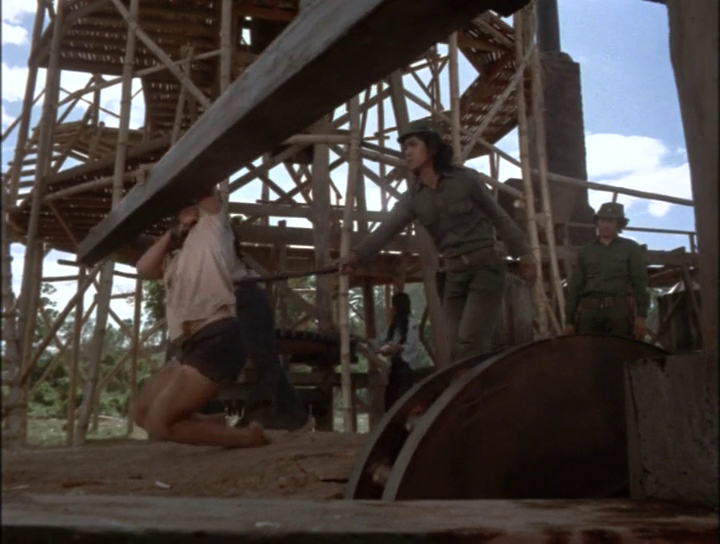
There’s everything here you would expect in such a flick, including an elaborate “torture” machine (actually a sugar mill) the women are forced to work with (the titular “big bird cage”):

… mud wrestling, rape, attempted escapes, and a fiery denouement. Only hardcore fans of the genre need bother to check this one out.

Redeeming Qualities and Moments:

  • Anitra Ford’s bemused performance as Terry

Must See?
No; you can skip this one unless you’re a fan of the genre. Listed as a Camp Classic and a Cult Movie in the back of Peary’s book.

Links:

Women in Cages (1971)

Women in Cages (1971)

“This is going to be just like home — only different!”

Synopsis:
An American (Jennifer Gan) whose boyfriend (Charlie Davao) is involved in criminal drug trafficking is sent to prison on his behalf, where she meets a sadistic warden (Pam Grier) and bunks with other tortured inmates — including Sandy (Judy Brown), heroin-addicted Stoke (Roberta Collins), and Grier’s lover Theresa (Sofia Moran).

Genres, Themes, Actors, and Directors:

  • Escape
  • Pam Grier Films
  • Prisoners
  • Strong Females

Review:
Filipino director Gerardo de Leon helmed this WiP (Women in Prison) exploitation flick, released around the same time as Jack Hill’s The Big Doll House (1971) and The Big Bird Cage (1972). As Stuart Galbraith writes in his review for DVD Talk, “The plots for these women-in-prison films” are “pretty interchangeable” — including:

… “the obligatory group shower scene; sadistic and usually lesbian jailers who set their sights on the newest wide-eyed and wrongly-convicted prisoners; lascivious male guards scheming for free sex; outlandish scenes of torture, with contraptions rivaling those of the Marquis de Sade; catfights among the women, often incorporating food fights and/or much writhing in the mud; [and] riots in which the jailers spray the women with a fire hose.”

Grier gets “promoted” in this flick from prisoner to warden, and shows off her ability to be tough and ruthless under any circumstances:

Meanwhile, Collins (rather than Brooke Mills) plays the heroin-addicted inmate this time around, and is ultimately much livelier than primary protagonist Gan (who simply comes across as foolishly naive):

Redeeming Qualities and Moments:

  • Roberta Collins as Stoke
  • Some reasonably effective cinematography

Must See?
No; you can skip this one. Listed as a Cult Movie in the back of Peary’s book.

Links:

Ben-Hur (1925)

Ben-Hur (1925)

“What chance has a Jew against a Roman?”

Synopsis:
When Jewish prince Judah Ben-Hur (Ramon Navarro) meets his former childhood friend Messala (Francis X. Bushman) — now a cruel Roman nobleman — and is sent into slavery, he vows revenge on behalf of himself, his mother (Claire McDowell), and his sister (Kathleen Key).

Genres, Themes, Actors, and Directors:

  • Ancient Greece and Rome
  • Biblical Stories
  • Mistaken or Hidden Identities
  • Revenge
  • Silent Films
  • Slavery

Review:
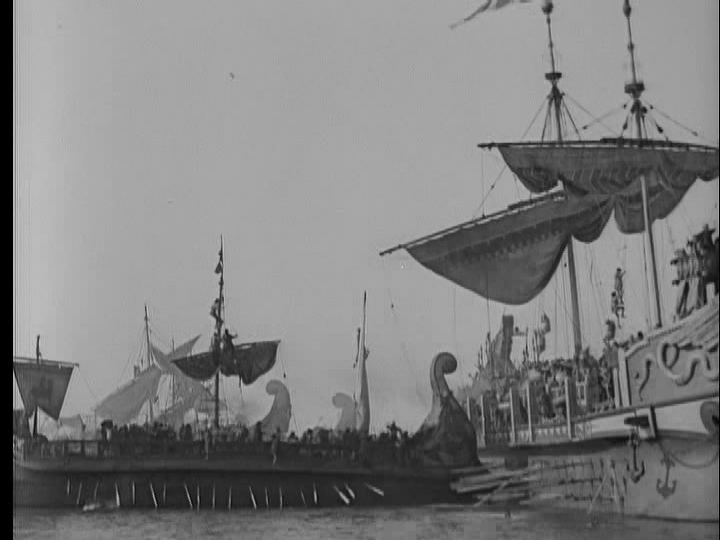
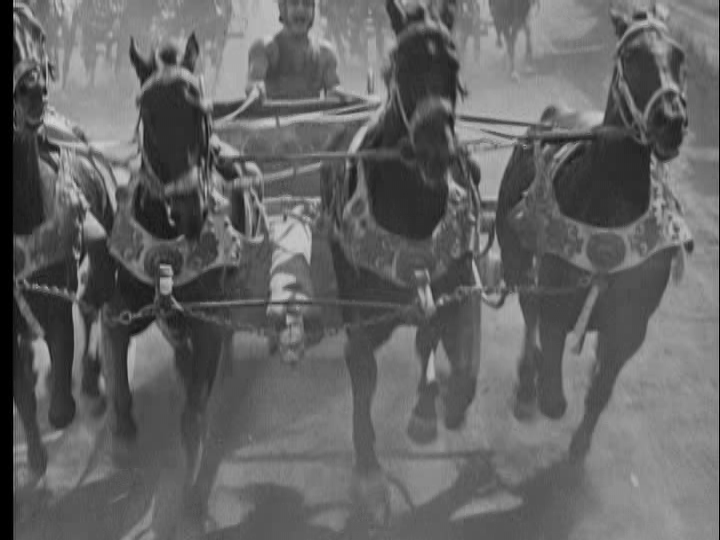
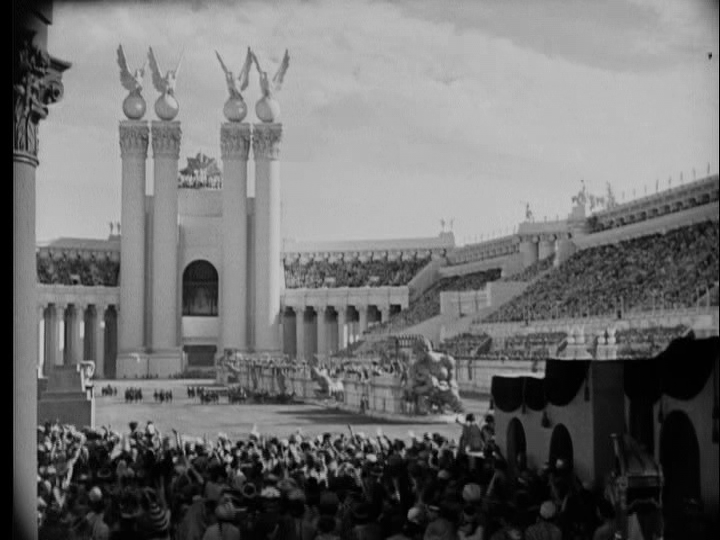
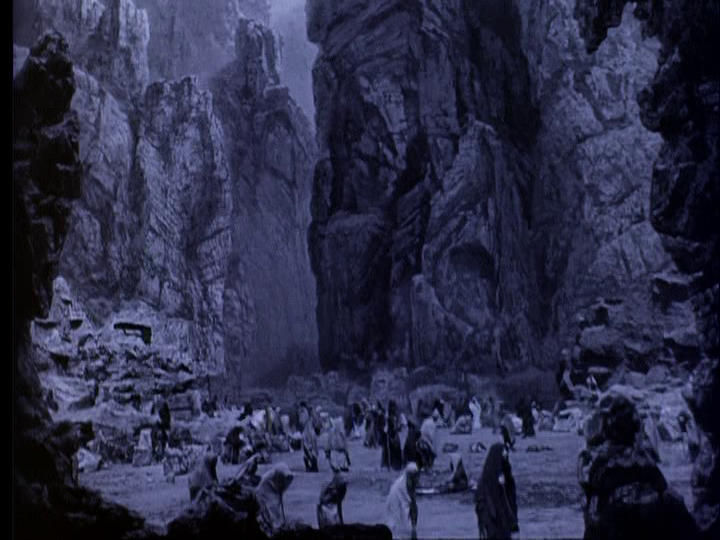
This second cinematic adaptation of Lew Wallace’s 1880 novel was selected in 1997 “for preservation in the United States National Film Registry by the Library of Congress as being ‘culturally, historically, or aesthetically significant'” — in part due to being the most expensive film ever made at the time, but also because of the cinematic genius of the chariot race sequence (shot by no less than 42 cameramen). Equally exciting is the battle-at-sea between Greek pirate ships and the Roman vessel carrying Ben-Hur as a slave. As a narrative, it should satisfy those interested in this Biblical-era tale of a revenge and spiritual awakening — but it’s not must-see for anyone other than silent film enthusiasts.

Redeeming Qualities and Moments:

  • The ship attack scene
  • The exciting chariot race
  • Impressive sets

  • Fine cinematography and special effects

Must See?
No, though it’s worth a look for its historical relevance as the most expensive silent movie made at that time (and a box office hit for years), as well as to see the chariot race (but simply look for this sequence on YouTube). Listed as a film with Historical Importance in the back of Peary’s book.

Links:

Touch of Evil (1958)

Touch of Evil (1958)

“All border towns bring out the worst in a country.”

Synopsis:
A Mexican detective (Charlton Heston) travelling across the border with his new American wife (Janet Leigh) investigates a death-by-bombing which seems to involve the head (Akim Tamaroff) of the local crime family. Meanwhile, American detective Hank Quinlan (Orson Welles) and his loyal assistant (Joseph Calleia) attempt to implicate the Mexican husband (Victor Millan) of the victim’s daughter (Joanna Moore) in the bombing crime by planting evidence, and Tamiroff tries to incriminate Leigh and Heston as drug users.

Genres, Themes, Actors, and Directors:

  • Akim Tamiroff Films
  • Charlton Heston Films
  • Corruption
  • Detectives and Private Eyes
  • Falsely Accused
  • Framed
  • Janet Leigh Films
  • Joseph Cotten Films
  • Marlene Dietrich Films
  • Mercedes McCambridge Films
  • Mexico
  • Newlyweds
  • Orson Welles Films

Response to Peary’s Review:
Peary writes that “producer Albert Zugsmith gave Orson Welles his long-awaited chance to again direct a Hollywood film” in this very loose adaptation (by Welles) of “Whit Masterson’s novel Badge of Evil.” He notes that “Welles the writer turned out the sleaziest story imaginable — with seedy characters and locations, drugs, sex, corruption, murder, racism, etc.” while “Welles the director shot it like an artist, employing some of the most audacious visual strokes of his career” — resulting in “a masterpiece.” He points out that “Welles’s Detective Hank Quinlan is one of his most interesting, complex characters”: a “great detective but he thinks himself above the law,” and while he’s “always correct when he accuses someone of a crime,” he nonetheless “always plants incriminating evidence” to “assure convictions.”

Peary writes that “Welles’s characters are potentially great men but none of them act nobly on their way to the thrones of their particular worlds” — which is why “Calleia, who loves Welles’s Quinlan, is so disappointed: real heroes must have pure pasts.”

Peary notes that “Leigh was never sexier — Welles was the rare director to emphasize her large chest”:

… and “Dietrich (as the only person who understands Welles) has a memorable cameo.”

In the years since Peary’s GFTFF was published, this classic has undergone an infamous revision based on Welles’s 58-page memo written to the studio, which (typical for Welles) messed substantially with his original vision. The “1998 version” is the one I watched for this review (and saw in theaters back in ’98), but the DVD provides ample evidence and discussion of the differences, for those who are interested. Regardless of which version you see, it remains powerful and provocative viewing, clearly demonstrating Welles’ cinematic gifts. With that said, I do have a few quibbles: I’m not a fan of Tamiroff’s intermittently comedic characterization as “Uncle” Joe Grandi:

… or Dennis Weaver’s performance as a loony motel manager:

… and I find it hard to believe that Leigh’s character would go off with a stranger in a border town at night, then get pissy when confronted by the head of a notorious criminal family.


(I know she’s meant to be a “tough cookie” but she simply comes across like a foolhardy rube.) However, Heston acquits himself nicely (despite not attempting a Spanish accent):

… and Welles and Calleia have authentic chemistry together. Watch for tiny cameos by Big Names, including not just Dietrich but Joseph Cotten, Zsa Zsa Gabor, and Mercedes McCambridge (!).

Redeeming Qualities and Moments:

  • Orson Welles as Harry Quinlan
  • Joseph Calleia as Sergeant Menzies
  • Fun cameos in the supporting cast


  • The still-impressive 3 1/2 minute opening tracking shot
  • Russell Metty’s cinematography


  • The excitingly shot finale sequence

Must See?
Yes, as a still-powerful classic by a master director.

Categories

  • Genuine Classic
  • Important Director

(Listed in 1001 Movies You Must See Before You Die)

Links:

Belle de Jour (1967)

Belle de Jour (1967)

“You like being humiliated.”

Synopsis:
A frigid housewife (Catherine Deneuve) unable to make love with her caring husband (Jean Sorel) is intrigued to hear from an acquaintance (Michel Piccoli) that houses of prostitution still exist in Paris, and she secretly begins working for a madam (Genevieve Page) in the afternoons, participating in numerous odd fantasies — but when an edgy client (Pierre Clementi) falls for Deneuve and she’s equally attracted to him, she puts her private existence in danger.

Genres, Themes, Actors, and Directors:

  • Catherine Deneuve Films
  • French Films
  • Housewives
  • Infidelity
  • Luis Bunuel Films
  • Marital Problems
  • Mistaken or Hidden Identities
  • Newlyweds
  • Prostitutes and Gigolos
  • S&M
  • Sexual Repression
  • Surrealism

Response to Peary’s Review:
Peary writes that this “popular, controversial” film by Luis Bunuel is either — “depending on your viewpoint” — an “erotic or sexually reprehensible film.” He describes Deneuve’s character as feeling “no guilt for participating in sex” when she’s “at the brothel each afternoon”, becoming “part of the male clients’ weird fantasies” — and “it’s interesting that as she becomes more liberated through sex (breaking free of bourgeois shackles), she begins to reject the depraved, masochistic sex that characterized her early desires”, which is “a form of self-hatred” reflecting “her shame at having been molested as a child.” He continues his analysis by noting that “as her fantasies become more normal, at least as far as her role in them is concerned, [Deneuve] becomes ready to enter a normal sexual relationship with her husband” — but “he must be liberated as well, because guilt over his repressed sexual desires toward Deneuve cripple him, figuratively — and literally — speaking.”

Given that “in time we can’t distinguish between fantasy and reality,” Peary notes it’s possible that “the entire film, excluding the opening carriage ride and the final moment, might even be imagined by Deneuve,” which makes sense (though I’m not sure why he would exclude the “opening carriage ride” given its distressingly surreal outcome). Peary’s take on this enigmatic story — based on a 1928 novel by Joseph Kessel — makes just as much as sense as others that have been floated; Bunuel himself stated, “I myself cannot tell you what is real and what’s imaginary in the film. For me they form the same thing.” While it’s not a personal favorite, I admire the narrative risks taken, and believe all film fanatics should view this film at least once.

Redeeming Qualities and Moments:

  • Catherine Deneuve as Severine
  • Sacha Vierny’s fine cinematography

Must See?
Yes, as an enigmatic classic by a master director.

Categories

  • Genuine Classic
  • Important Director

(Listed in 1001 Movies You Must See Before You Die)

Links:

Old Ironsides (1926)

Old Ironsides (1926)

“For three hundred years, these pirates have gone unchecked. This is their last day — or ours.”

Synopsis:
While sailing on a merchant ship in the early 19th century, a bos’n (Wallace Beery), gunner (George Bancroft), cook (George Godfrey), and young shipman (Charles Farrell) in love with the captain’s daughter (Esther Ralston) find themselves involved with the USS Constitution in a lethal fight against Mediterranean pirates.

Genres, Themes, Actors, and Directors:

  • At Sea
  • George Bancroft Films
  • Historical Drama
  • Pirates
  • Silent Films
  • Wallace Beery Films

Review:
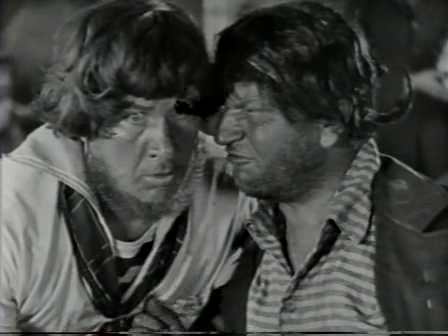
Three years after helming The Covered Wagon (1923), director James Cruze turned to the high seas for this rousing recreation of early American efforts against piracy. The storyline is pure hokum, centering entirely on: 1) jovial rivalry between Beery and Bancroft:

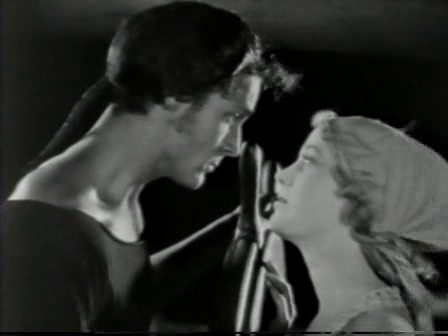
… and 2) the inevitable romance that blossoms between the film’s two gorgeous young leads (including an impossibly impeccable Ralston making moon eyes at Farrell during the most inopportune times).

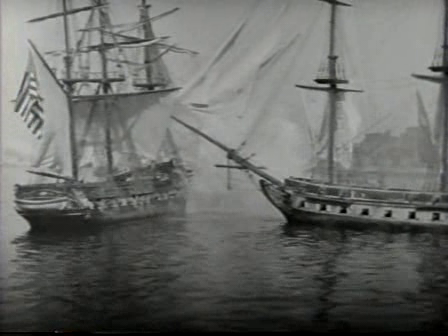
Naturally, what one watches for are the impressive shots of sailing ships at sea (filmed off of Catalina Island). This film is also notable for use of a process known as Magnascope, in which certain sections of the movie were magnified for dramatic effect. While Old Ironsides isn’t must-see for all film fanatics, it will likely be of interest to silent film aficionados.

Redeeming Qualities and Moments:

  • The exciting culminating battle

  • Refreshing inclusion of a Black actor (George Godfrey) as part of the primary cast

Must See?
No, though it’s worth a look if you’re curious. Listed as a film with Historical Importance and a Personal Recommendation in the back of Peary’s book.

Links:

Testament of Dr. Mabuse, The/Crimes of Dr. Mabuse, The/Last Will of Dr. Mabuse, The (1933)

Testament of Dr. Mabuse, The/Crimes of Dr. Mabuse, The/Last Will of Dr. Mabuse, The (1933)

“The ultimate purpose of crime is to establish the endless empire of crime.”

Synopsis:
A disgraced cop (Karl Meixner) is driven insane before he’s able to tell his boss (Otto Wernicke) who the mastermind is behind mysterious plans to establish an “empire of crime”. During his investigation, Wernicke visits an asylum where Dr. Mabuse (Rudolf Klein-Rogge) is housed, not realizing that Mabuse has manipulated the asylum’s director (Oscar Beregi) into doing his will. Meanwhile, when one of Mabuse’s hapless minions (Gustav Diessl) decides to tell his girlfriend (Monique Rolland) about his work as a counterfeiter, she supports him in breaking free from Mabuse’s clutches.

Genres, Themes, Actors, and Directors:

  • Detectives and Private Eyes
  • Fritz Lang Films
  • Gangsters
  • German Films
  • Mad Doctors and Scientists
  • Mind Control and Hypnosis

Response to Peary’s Review:
Peary writes that “for his second sound film Fritz Lang decided to bring back Dr. Mabuse (Rudolf Klein-Rogge), the heinous genius criminal of his 1922 silent classic Dr. Mabuse the Gambler” — who, despite being unable to speak and living in an insane asylum, “has regained his desire to mastermind great crimes, commit terrorist acts, dominate people’s wills through mind control, [and] rule the world.” The bulk of Peary’s review is taken up with discussion of the film’s logistics — i.e., the fact that it was filmed in both French and German, that Joseph “Goebbels seized the German version because the script (although written by Lang’s Nazi wife, Thea von Harbou) drew parallels between madman Mabuse and Hitler,” and that (at the time GFTFF was published), one was only likely to see poorly dubbed versions in circulation (a situation since rectified). Peary does note that “you’ll still enjoy several sequences that have impressive visual elements,” including “a high speed car chase on a country road at night:

… a murder at a stoplight:

… Baum [Beregi] visualizing ghostly presences:

… and an underwater explosion.”

However, this sequel can’t quite live up to the atmospheric dread generated by its predecessor, and is only must-see for fans of Lang’s evolving oeuvre.

Redeeming Qualities and Moments:

  • Fritz Arno Wagner’s cinematography
  • Fine special effects and sound effects

Must See?
No, unless you’re a Lang fan.

Links: