Nickelodeon (1976)

Nickelodeon (1976)

“Any jerk can direct!”

Synopsis:
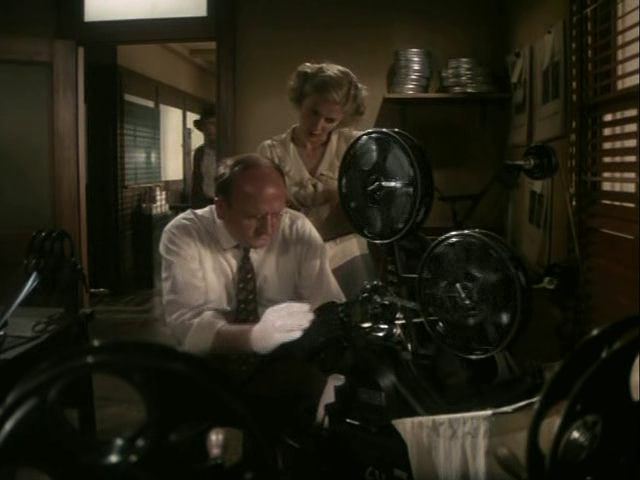
In the early days of Hollywood, an attorney (Ryan O’Neal) and a cowboy (Burt Reynolds) — both in love with the same woman (Jane Hitchcock) — become involved in the burgeoning motion picture industry.

Genres, Themes, Actors, and Directors:

  • Brian Keith Films
  • Burt Reynolds Films
  • Comedy
  • Hollywood
  • Lawyers
  • Movie Directors
  • Peter Bogdanovich Films
  • Ryan O’Neal Films
  • Stella Stevens Films

Review:
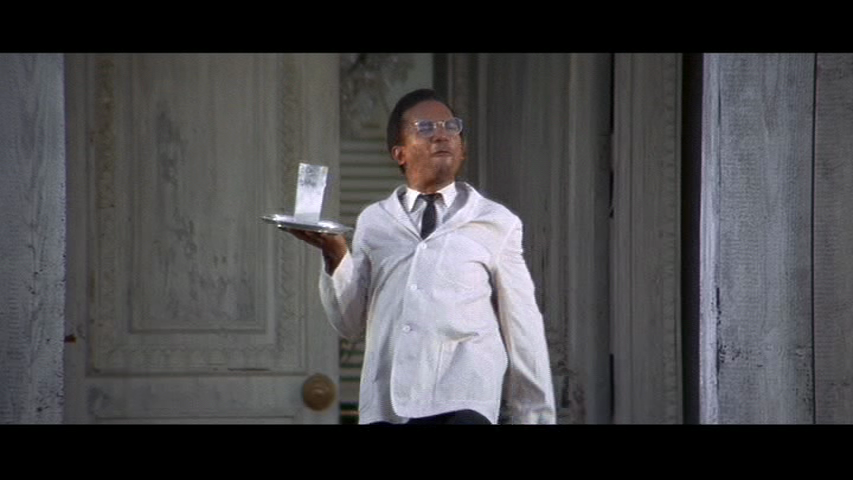
Peter Bogdanovich’s unabashedly affectionate paean to the earliest days of the motion picture industry remains a curiously uninvolving effort — one so focused on recreating elements and attributes of its era that it forgets to tell a compelling tale in its own right. The ultimate point of the storyline seems to be that luck and timing (i.e., serendipity) played a defining role in determining who found work and success in early Hollywood — see the selected quote above for an indication of the attitude on display, supposedly meant as a contrast to the arrival of “real” (i.e., auteurist) cinema (as signified by the film’s powerful culminating sequence, in which the various characters join a wider audience to watch the inaugural screening of D.W. Griffith’s The Birth of a Nation). Meanwhile, Bogdanovich’s screenplay incorporates weak attempts at silent-era slapstick (bespectacled O’Neal is a sort-of stand-in for Harold Lloyd), as well as a standard-issue love triangle subplot which fails to involve us. While serious cinephiles will surely be curious to check this one out given its subject matter, it’s ultimately a missed opportunity; see Howard Zieff and Rob Thompson’s Hearts of the West (released the previous year) for a much more successful and authentic evocation of early Hollywood.

Note: TCM’s article offers some valuable insights into why this film wasn’t as successful as it could have been; Bogdanovich’s vision was apparently thwarted.

Redeeming Qualities and Moments:

  • Burt Reynolds as Buck Greenway
  • An affectionate homage to early Hollywood

Must See?
No, though it’s worth a one-time look simply for its obvious interest to cinephiles.

Links:

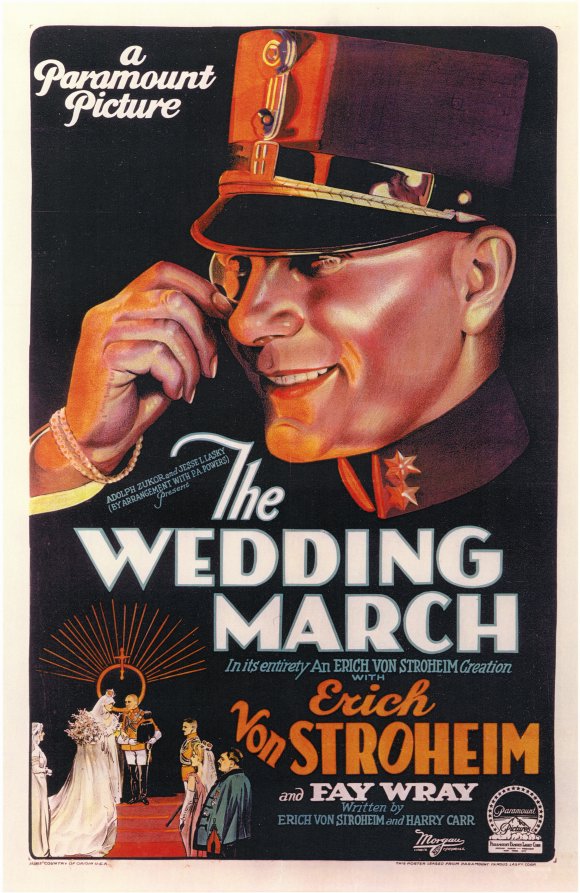
Wedding March, The (1928)

Wedding March, The (1928)

“There is no such thing as accident. It is Fate — mis-named.”

Synopsis:
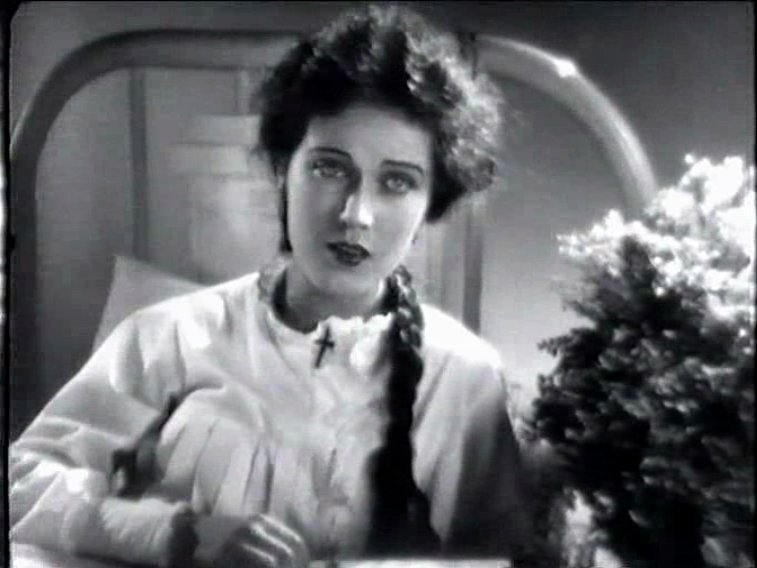
A fun-loving Viennese prince (Erich von Stroheim) is warned by his parents (George Fawcett and Maude George) that he must marry for money in order to maintain his sumptuous lifestyle; but despite becoming engaged to a club-footed heiress (Zasu Pitts), he falls in love with a beautiful innkeeper’s daughter (Fay Wray) whose own fiance (Matthew Betz) is a bullying brute.

Genres, Themes, Actors, and Directors:

  • Cross-Class Romance
  • Erich von Stroheim Films
  • Fay Wray Films
  • Royalty and Nobility
  • Silent Films
  • Star-Crossed Lovers

Review:
Peary seems to be an enormous fan of this fragmented silent epic by Erich von Stroheim, whose notoriously sadistic, perfectionist tendencies on set resulted in a bloated initial cut (11 hours!) which was eventually edited down into two films — this and its sequel, The Honeymoon (the only copy of which was lost in a fire in the 1950s). As with von Stroheim’s Queen Kelly (1929), The Wedding March must thus be viewed as a butchered version of the director’s original vision — yet despite being lauded by many as one of von Stroheim’s finest films, I simply can’t agree. Yes, the cinematography is lovely and the sets painstakingly rendered — but the melodramatic storyline and stereotypical characters (other than Wray’s luminous “Mitzi”) leave one feeling decidedly neutral about the actual proceedings. While it’s argued that the film’s story arc stands just fine on its own, one can’t help feeling that it is indeed (as intended) merely part of a longer, richer narrative. The Wedding March is ultimately only must-see for fans of silent cinema and/or von Stroheim’s uniquely truncated oeuvre.

Redeeming Qualities and Moments:

  • Fay Wray as Mitzi
  • Meticulously crafted sets

Must See?
No; only von Stroheim fans need seek this one out. Listed as a film with Historical Importance and a Personal Recommendation in the back of Peary’s book, and named one of the Best Films of the Year in his Alternate Oscars. Selected for preservation by the National Film Registry.

Links:

Hearts of the West (1975)

Hearts of the West (1975)

“There’s no such thing as wasted time for the writer; he’s always thinking.”

Synopsis:
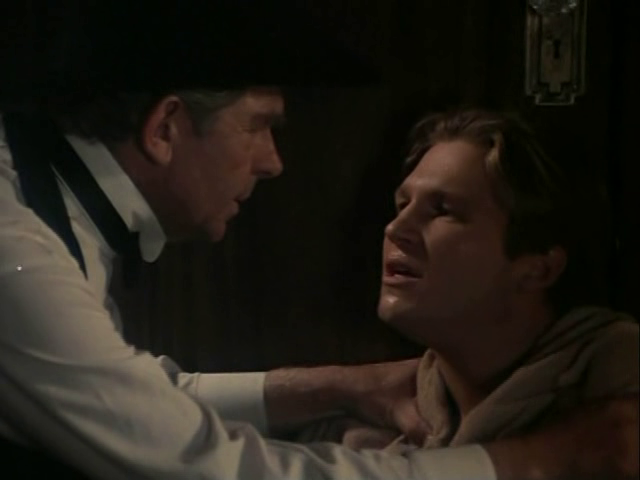
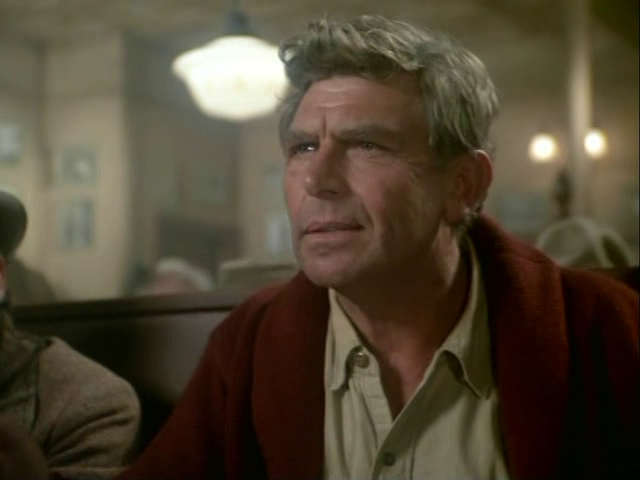
An aspiring western writer (Jeff Bridges) accidentally steals money from a pair of crooks (Richard B. Shull and Anthony James) running a sham correspondence school in Nevada, and escapes to Hollywood, where he finds work as an actor for a skinflint producer (Alan Arkin), falls for a pretty script girl (Blythe Danner), and receives advice from a grizzled performer (Andy Griffith).

Genres, Themes, Actors, and Directors:

  • Alan Arkin Films
  • Andy Griffith Films
  • Blythe Danner Films
  • Comedy
  • Con-Artists
  • Donald Pleasence Films
  • Historical Drama
  • Hollywood
  • Jeff Bridges Films
  • Westerns
  • Writers

Review:
This humorous tale of an innocent Iowa farmboy fleeing from the clutches of villainous crooks and landing smack-dab in the middle of Depression-Era Hollywood remains a hidden treasure, one film fanatics will be pleased to discover. Bridges’ “Lewis Tater” is eminently likable: we care about his travails from the moment we first see him acting out a western scene playing in his head, and talking earnestly to whoever will listen about the craft of writing. He refuses to let any obstacles get in his way, instead viewing whatever happens to him — and my, quite a bit happens! — as welcome fodder for his prose. Director Howard Zieff and screenwriter Rob Thompson affectionately evoke the milieu of ’30s Western matinees, taking us behind the scenes to expose the business side of this kiddie-fantasy world, complete with both fond camaraderie and bitter bargaining. All supporting actors on board — Arkin, Danner, Griffith, and others — give fine performances, rounding out this consistently enjoyable coming-of-age tale, which never takes itself too seriously (viz. the comedic omnipresence of Shull and James, complete with their own theme music), yet maintains an unexpected level of poignancy throughout.

Redeeming Qualities and Moments:

  • Jeff Bridges as Lewis Tater
  • Andy Griffith as Howard Pike
  • A fun look at film-making in old (young?) Hollywood
  • Excellent period sets
  • Rob Thompson’s smart, affectionate screenplay

Must See?
Yes. Listed as a Sleeper in the back of Peary’s book — a perfect designation.

Categories

  • Good Show

Links:

Finian’s Rainbow (1968)

Finian’s Rainbow (1968)

“Things are indeed hopeless. Hopeless! But they’re not serious.”

Synopsis:
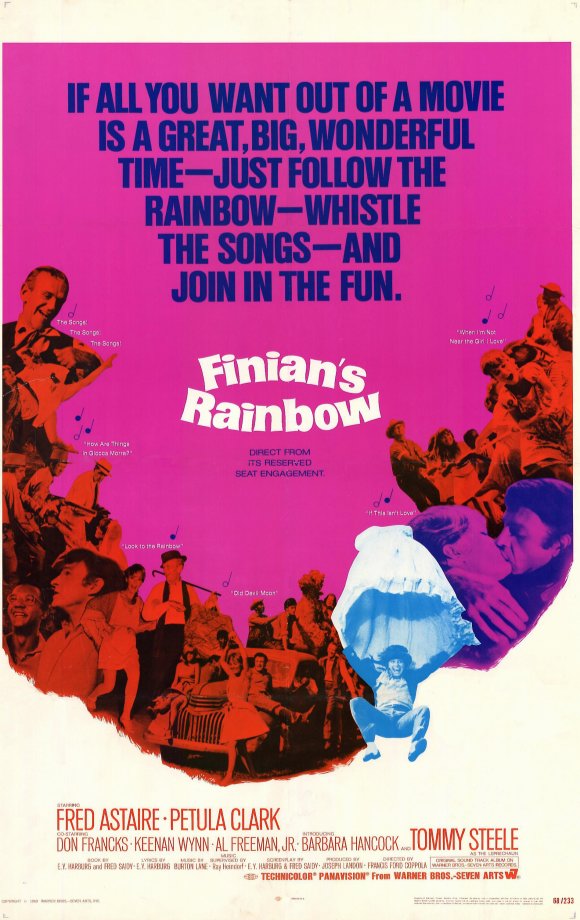
An Irishman named Finian (Fred Astaire) and his daughter Sharon (Petula Clark) arrive in the American state of “Miltucky” with a pot of gold which Finian has stolen from a leprechaun (Tommy Steele), intending to bury it in the ground and accelerate its growth; meanwhile, a local dreamer (Don Francks) collaborates with a botanist (Al Freeman, Jr.) to create mentholated tobacco, and a bigoted, greedy senator (Keenan Wynn) is turned into a black man while attempting to buy the land where Finian has planted his pot of gold.

Genres, Themes, Actors, and Directors:

  • Fantasy
  • Francis Ford Coppola Films
  • Fred Astaire Films
  • Keenan Wynn Films
  • Leprechauns
  • Musicals
  • Racism

Review:
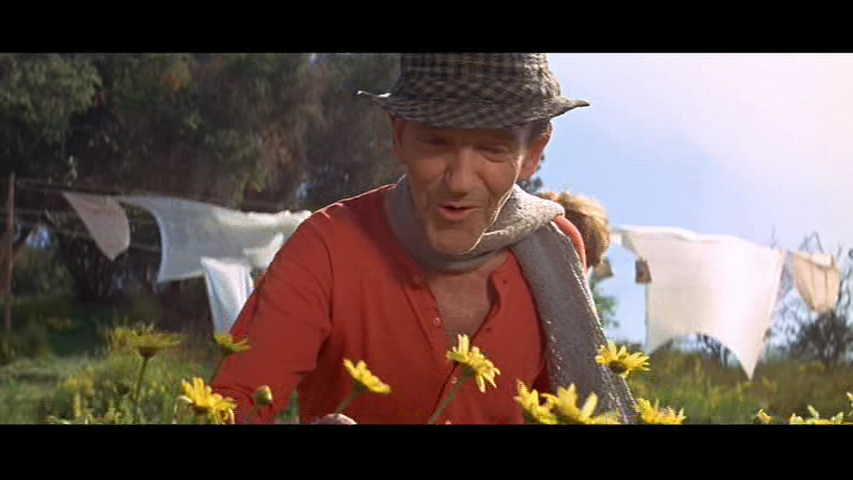
Early in his career, Francis Ford Coppola directed this adaptation of a popular Broadway musical (first produced in 1947, and revived in 2009) featuring an unusual mixture of light-hearted fantasy and some fairly trenchant social justice concerns — including racial bigotry, poverty, and political corruption. Indeed, these “hot button” topics apparently prevented the musical from being turned into a film for many years, until the social climate of the ’60s finally allowed for such concerns to be satirized head-on. The end result is a sporadically entertaining but ultimately uneven and over-long musical which tries to incorporate too many narrative strands, and never really reconciles its multiple foci. For instance, there’s a clever subplot in which Clark accidentally wishes Wynn (whose character is based on this real-life politician) could experience life as a black man, and the wish is made manifest — but we don’t see enough of how this impacts Wynn’s world-view; his storyline is treated on merely a surface level, and only occasionally makes an appearance in the remainder of the narrative. Freeman is hilarious in an early key scene as he kowtows to his new employer (Wynn), emulating the type of slow-moving black man Wynn assumes he should be — but this, too, goes no further than a single interaction. Meanwhile, a mute character named Susan the Silent (played by ballerina Barbara Hancock) flits throughout the proceedings, and eventually plays an important role in the denouement, but remains a cypher in every other way.

The performances are a mixed bag as well: it’s always a treat to see Astaire dancing on screen (he’s still sprightly at the age of 69), and he’s nicely cast here as the mischievous Finian; but Steele is ultimately overbearing as Og the Leprechaun (he’ll get on your nerves), and Clark’s primary selling point is her incomparable voice. She seems a bit old for the part, and doesn’t project quite enough charisma for such a central role; compare her performance with that of Janet Munro in Darby O’Gill and the Little People (1959) for an effective study in contrasts. The musical score is a winner (you’re guaranteed to be humming the theme song — “Look to the Rainbow” — for days after the film is over), and Coppola does a nice job bringing at least some of the action and dancing to real-life settings (as during the opening sequences, filmed in Napa Valley). But this one ultimately isn’t successful enough to recommend as must-see to anyone but diehard musical fans.

Redeeming Qualities and Moments:

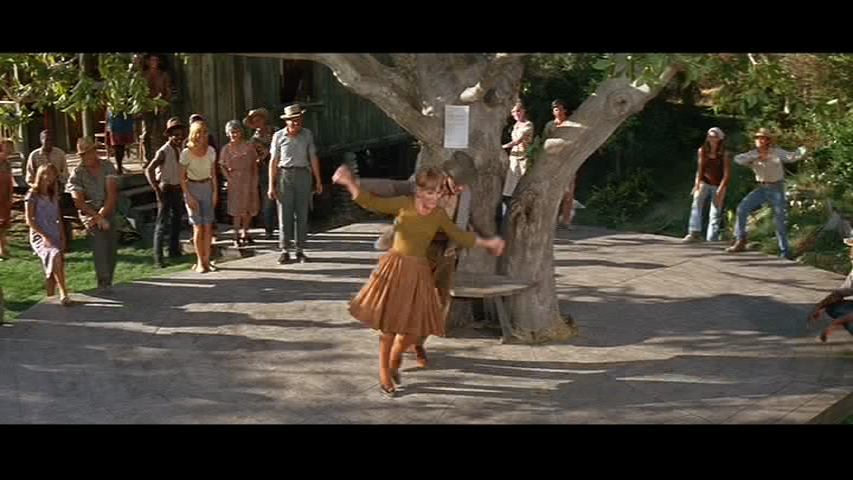
  • Astaire and Clark dancing to “Look to the Rainbow”
  • Al Freeman, Jr. as Howard
  • Fine Technicolor cinematography
  • Burton Lane and E.Y. Harburg’s score

Must See?
No, though it’s recommended for one-time viewing.

Links:

Wings (1927)

Wings (1927)

“Jack Powell had always longed to fly… In every day-dream he heard the whir of wings.”

Synopsis:
Two aspiring aviators (Charles “Buddy” Rogers and Richard Arlen) in love with the same girl (Jobyna Ralston) become buddies when they join the American Expeditionary Forces during World War I; meanwhile, Rogers’ neighbor (Clara Bow) — who harbors an unrequited crush on him — travels to France and attempts to keep an eye on him.

Genres, Themes, Actors, and Directors:

  • Airplanes and Pilots
  • Clara Bow Films
  • Gary Cooper Films
  • Love Triangle
  • Silent Films
  • William Wellman Films
  • World War I

Response to Peary’s Review:
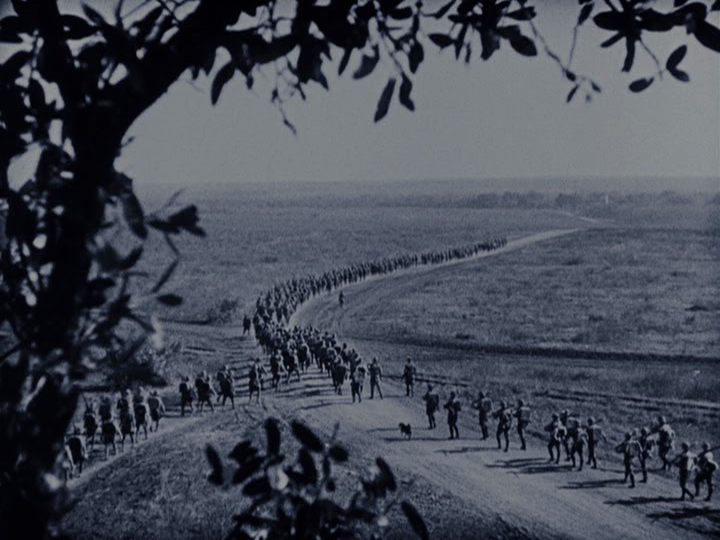
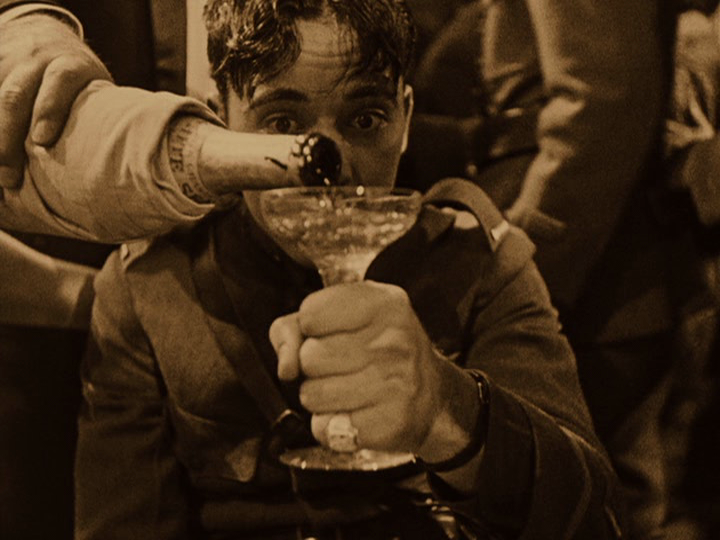
As Peary notes, this “grand-scale silent classic” — directed by “former pilot William A. Wellman”, and winner of the first “Best Production” Academy Award — is “known for some truly spectacular dogfight sequences”, as well as “some amazing stunt work and aerial photography”. He points out that the “picture is beautifully filmed throughout” — particularly “Wellman’s revolutionary boom shot at the Paris cafe in which his camera zooms over several tables into a close shot of the drunk Rogers and Arlen with some French trollops” — and notes that “the sweeping final battle — on land and in air — is remarkable!” He argues that the “film’s major problem is that… the leads have little screen presence”, and that “today the film seems a little slow — but the brutality seen in the impressive war sequences keeps it timely”. In his Alternate Oscars book, Peary reigns back his enthusiasm a bit further, asserting that Wings “pales in comparison with [F.W. Murnau’s] Sunrise” (which won an Academy Award for best “Artistic Quality”), as well as King Vidor’s “The Crowd and Charles Chaplin’s unnominated The Circus;” he argues that the film has “dated badly” given its “weak [lead] performances, an overly peppy Clara Bow, and long flight sequences in which you can’t tell friend from foe”.

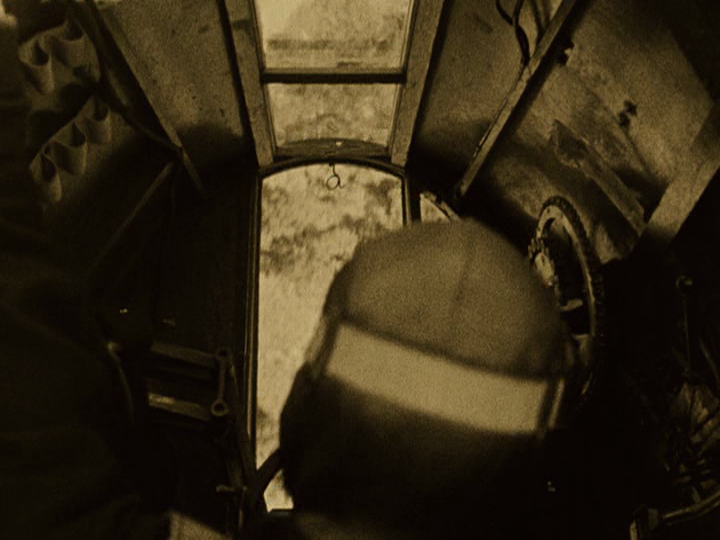
Actually, the points made in both of Peary’s assessments ring true. While the storyline itself remains as simplistic and cliched as that found in (far too) many silent films, Wellman’s overall craftmanship can’t be denied — and the aerial sequences are undeniably stunning. Knowing that all the stunts and effects were achieved in real life (no CGI to fall back on!), one simply marvels at the audacity of both Wellman’s vision and his intrepid crew (Rogers and Arlen actually learned to fly); viewing the 35-minute “making of” documentary on the recently restored DVD version of the film gives added insights into exactly how risky (and innovative) much of the filming was. Meanwhile, the non-aerial battle scenes are just as impressive, and rival those found in King Vidor’s The Big Parade (1925). Regarding the lead actors, I actually find Rogers’ performance adequately charismatic, and handsome Arlen’s appropriately subdued (especially given that he’s holding onto a powerful secret the entire time); poor Bow’s character is simply put through the ringer — but so it goes, I suppose, when you’ll do anything for your man.

Redeeming Qualities and Moments:

  • Truly amazing aerial camerawork
  • The impressively shot battle sequences
  • Fine overall direction by Wellman

Must See?
Yes, for its historical relevance and for its still-stunning aerial sequences.

Categories

  • Historically Relevant
  • Oscar Winner or Nominee

Links:

Terminal Island (1973)

Terminal Island (1973)

“Everybody on this island’s a killer.”

Synopsis:
On an island where convicted murderers are sent to live and die, a new female arrival (Ena Hartman) quickly learns that its inhabitants are divided between those who support a ruthless psychopath (Sean Kenney), and those attempting to live a more democratic existence.

Genres, Themes, Actors, and Directors:

  • Prisoners
  • Stephanie Rothman Films
  • Survival

Response to Peary’s Review:
I had reasonably high hopes for this “futuristic low-budget action adventure” flick, given both the slyly subversive nature of director Stephanie Rothman’s other female-centric exploitation films (i.e., Group Marriage) and the cleverness of the film’s opening “man on the street” news sequence (which neatly synopsizes its futuristic premise). Unfortunately, the story quickly devolves into a tedious survival flick in which impossibly beautiful female prisoners (all clad in skin-tight jeans, and sporting impeccably managed hair) either bed or battle a host of diversely macho men.

The one exception to this latter category is Tom Selleck’s gentle “Dr. Milford”, notoriously sent to the island for conducting a mercy killing; it’s too bad his semi-interesting character is quickly forgotten in favor of endless scenes of bloody violence.

Analogies to Lord of the Flies are inevitable, but despite Peary’s claim that it remains “interesting… because of [its] feminist-humanist themes” (and the fact that “the women and men renegades… shar[e] in the action, the danger, the plotting of war strategy”), its disappointing screenplay — which “deals with a civil war for supremacy of the island” — comes nowhere close to effectively exploring this inherently provocative premise. Peary’s a big fan of this one, but I’m not.

Redeeming Qualities and Moments:

  • The clever, scene-setting opening sequence

Must See?
No; only fans of Rothman’s work — or WIP (women-in-prison) flicks — need bother seeking this one out.

Links:

Broadway Melody, The (1929)

Broadway Melody, The (1929)

“Those men aren’t going to pay ten bucks to look at your face; this is Broadway!”

Synopsis:
A songwriter (Charlie King) helps his girlfriend (Bessie Love) and her sister (Anita Page) break into show business on Broadway — but King’s sudden declaration of love for Page (which they keep secret from Love) prompts Page into a dangerous dalliance with a sleazy socialite (Kenneth Thomson).

Genres, Themes, Actors, and Directors:

  • Aspiring Stars
  • Love Triangle
  • Musicals

Review:
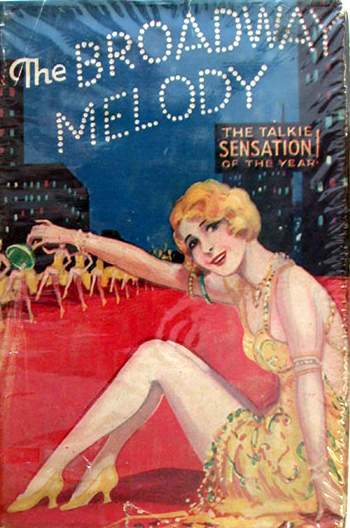
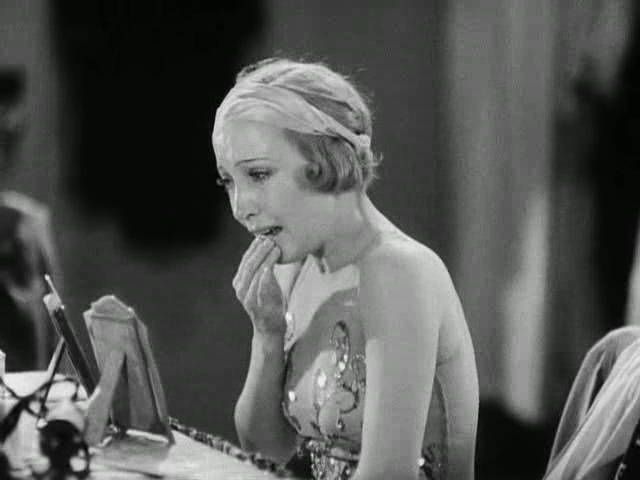
This creaky backstage melodrama will forever hold a special place in cinematic history given its status as the first all-talking musical, the first sound film to win a Best Picture Oscar, the first film featuring a sequence (“Wedding of the Painted Doll”) shot to pre-recorded music, and the source of several familiar musical numbers (“You Were Meant for Me”, “You Are My Lucky Star”) given new life in Singin’ in the Rain (1952). Unfortunately, the storyline itself — a tired tale of (somewhat) talentless Broadway hopefuls navigating the lecherous waters of show business — leaves much to be desired; we’ve seen this basic narrative play out far too many times since then. At least the central romantic conflict — in which Page and King suddenly, mutually, and for no apparent reason realize they’re in love/lust with one another, but fear hurting the person they both care deeply about — is provided with some added emotional weight given Love’s spunky performance; and the “big reveal” scene, in which Love learns the truth about her sister and fiance, is appropriately lauded. But the rest of the film shows clear evidence of its age, with relatively static camera work (though to be fair, it’s better than many other “filmed plays” of the era) and several awkwardly handled dramatic moments.

Redeeming Qualities and Moments:

  • Bessie Love as Hank (nominated by Peary as one of the Best Actresses of the Year in his Alternate Oscars)

Must See?
Yes, once, but simply for historical reasons. Listed as a film with Historical Importance in the back of Peary’s book.

Categories

  • Historically Relevant
  • Oscar Winner or Nominee

Links:

What Price Glory (1926)

What Price Glory (1926)

“There’s something rotten about a world that’s got to be wet down every thirty years with the blood of boys like those.”

Synopsis:
Two rivalrous Marines — Sgt. Quirt (Edmund Lowe) and Captain Flagg (Victor McLaglen) — compete for the affections of a beautiful French girl (Dolores del Rio) on the eve of World War I.

Genres, Themes, Actors, and Directors:

  • Dolores Del Rio Films
  • Love Triangle
  • Play Adaptation
  • Raoul Walsh Films
  • Rivalry
  • Silent Films
  • Soldiers
  • Victor McLaglen Films
  • World War I Films

Review:
Raoul Walsh directed this first cinematic adaptation of Maxwell Anderson and Laurence Stallings’ play, which was filmed again in 1952 by John Ford with James Cagney in the lead. Perhaps best known as the silent film which rewards careful lip-readers with evidence of spoken profanity not indicated on the title cards themselves (!), it tells an overly simplistic tale of macho rivalry (Lowe and McLaglen’s tussle over del Rio is preceded by similar conflicts with other women) set against the backdrop of World War I. Unfortunately, there’s not really enough to the story or the characters to sustain modern viewers’ interest, and the humor comes across as overly broad. While the battle scenes are impressively shot, film fanatics hoping to see a more engaging treatment of World War I in a silent film would be better off watching King Vidor’s The Big Parade (1925) or William Wellman’s Wings (1927).

Redeeming Qualities and Moments:

  • The powerfully filmed wartime sequences

Must See?
No, though it will likely be of interest to fans of Walsh’s work.

Links:

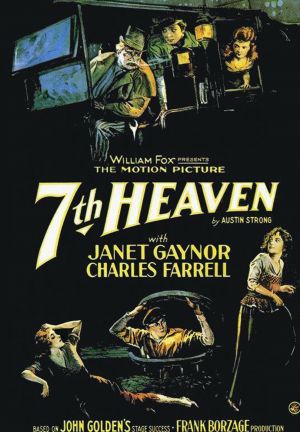
Seventh Heaven (1927)

Seventh Heaven (1927)

“Never look down; always look up!”

Synopsis:
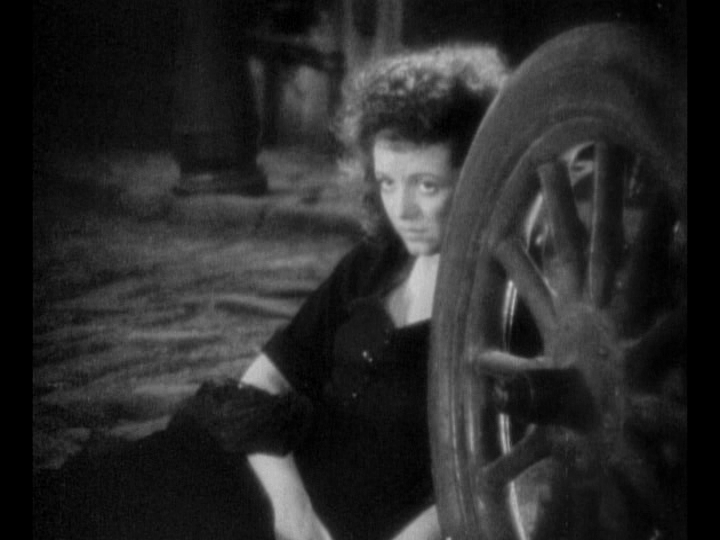
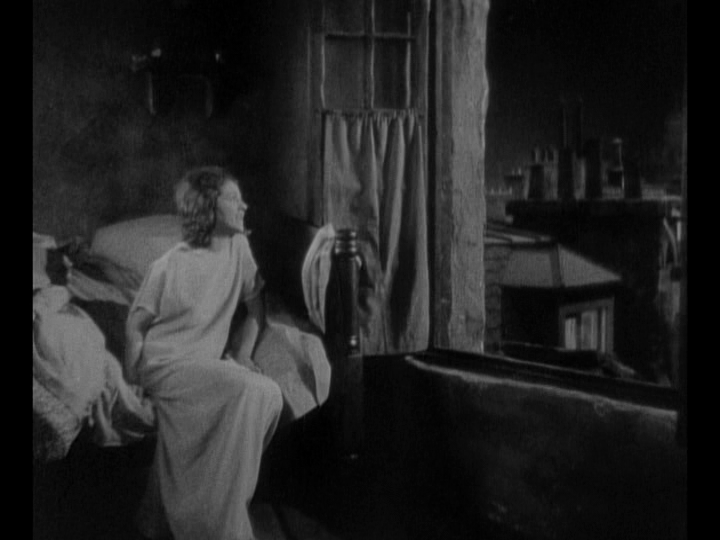
A French prostitute (Janet Gaynor) browbeaten by her abusive sister (Gladys Brockwell) finds comfort and transformation in the arms of a streetcleaner (Charles Farrell) — but when World War I descends, Farrell enlists and the newly married couple must sustain their love from afar.

Genres, Themes, Actors, and Directors:

  • Frank Borzage Films
  • Janet Gaynor Films
  • Play Adaptations
  • Prostitutes and Gigolos
  • Romance
  • Silent Films
  • World War I

Review:
In Alternate Oscars, Peary argues that Janet Gaynor’s popularity both “with the public and within the industry” helped land her the first ever Best Actress Academy Award, for “three good [but not great] performances” in 1927-28 — including her role here as a downtrodden young waif whose life is redeemed by a charitable former “sewer rat”. Despite solid direction by Frank Borzage, nice use of Expressionistic sets, and Gaynor’s sympathetic lead performance, the film unfortunately hasn’t aged all that well — primarily due to its overly simplistic storyline (based on a popular Broadway play), which doesn’t really have anywhere interesting to go once Gaynor is rescued from her sorry plight — speaking of which, Brockwell is a caricature of Evil rather than a three-dimensional character — and the young couple realize they’re in love. The imminence of World War I makes for a convenient narrative hitch — but Gaynor and Farrell’s promise to “come to each other” at 11:00 each day is simply sappy, and the utterly unrealistic ending will have your eyes rolling. Ultimately, this one is only must-see for diehard enthusiasts of silent films, and/or Oscar completists.

Redeeming Qualities and Moments:

  • Janet Gaynor as Diane
  • Lovely Expressionist sets

Must See?
No, though it will be of interest to fans of Borzage, silent films, and/or Oscar winners. Listed as a film with Historical Importance in the back of Peary’s book.

Links:

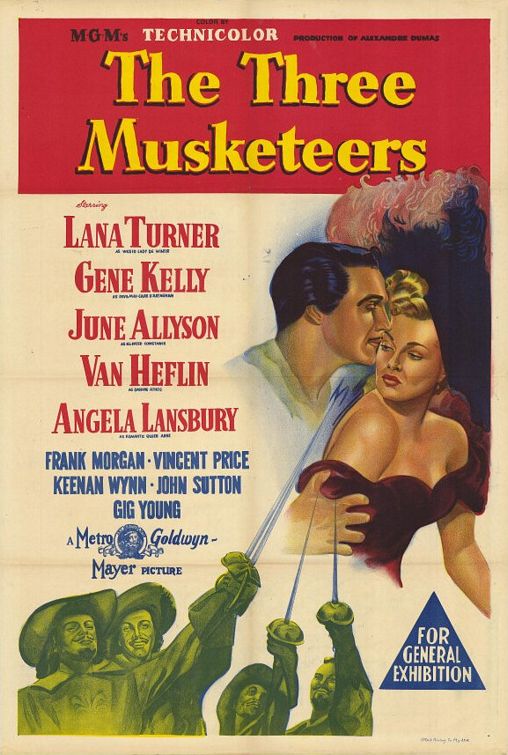
Three Musketeers, The (1948)

Three Musketeers, The (1948)

“To die among friends; can a man ask for more?”

Synopsis:
An aspiring musketeer (Gene Kelly) in 17th century France joins veteran musketeers Athos (Van Heflin), Porthos (Gig Young), and Aramis (Robert Coote) in their efforts to protect Queen Anne (Angela Lansbury) against the evil intentions of Richelieu (Vincent Price) and his henchwoman, Lady de Winter (Lana Turner).

Genres, Themes, Actors, and Directors:

  • Angela Lansbury Films
  • Frank Morgan Films
  • Gene Kelly Films
  • George Sidney Films
  • Gig Young Films
  • Historical Drama
  • June Allyson Films
  • Lana Turner Films
  • Mistaken Identities
  • Royalty and Nobility
  • Van Heflin Films
  • Vincent Price Films

Review:
Fans of Alexandre Dumas’ swashbuckling classic will likely be the primary audience for this colorful literary adaptation, produced by MGM Studios and starring a host of big names in key roles — most notably Gene Kelly, who was excited about the opportunity to recreate the role (D’Artagnan) originally inhabited by his idol, Douglas Fairbanks, Sr. There’s plenty of intrigue in the plotting-rich narrative, and those already familiar with the basic storyline and characters in Dumas’ serialized novel will fare best at puzzling out exactly what’s going on, and who’s attempting to do what to whom (and why); if you’re at all distracted while watching, however, you may find yourself a bit lost at times — though it’s never anything but clear who are the good guys/ladies (this group includes June Allyson as D’Artagnan’s instant beloved, Constance) versus the bad guys (guess which side Vincent Price falls on?). Personally, I find the production both overly comedic (Kelly’s performance in particular borders on clownish-ness) and far too melodramatic (Kelly and Allyson’s romance is never anything less than full-throttle — complete with overly strategic use of the infamous melody “Hearts and Flowers” whenever they’re together).

Note: Van Heflin gives the most impassioned and nuanced performance in the film, playing Athos with an appropriate level of brooding; whenever he’s on screen, one can’t help becoming absorbed in the story.

Redeeming Qualities and Moments:

  • Van Heflin as Athos
  • Lovely Technicolor cinematography

Must See?
No; this one is only must-see for fans of the book or the genre.

Links: