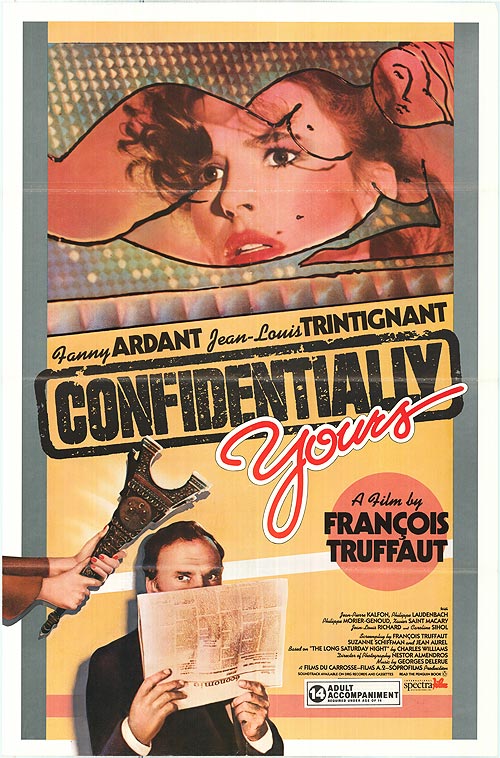
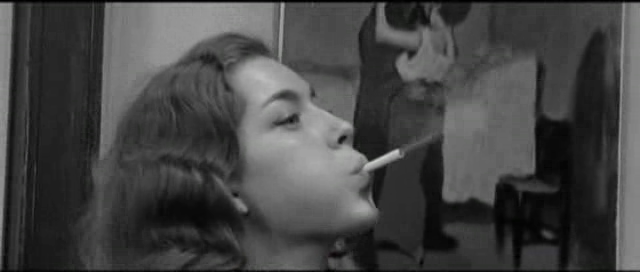
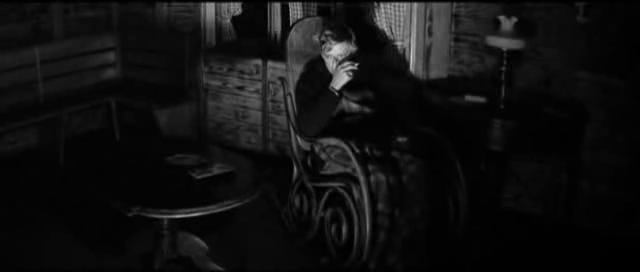
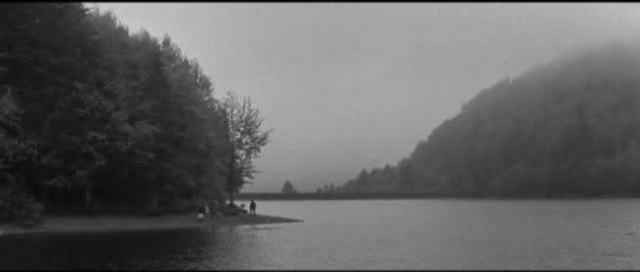
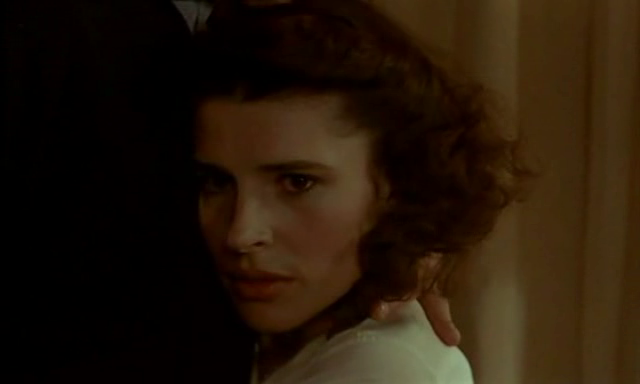
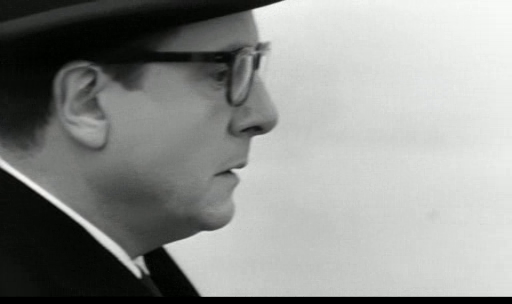
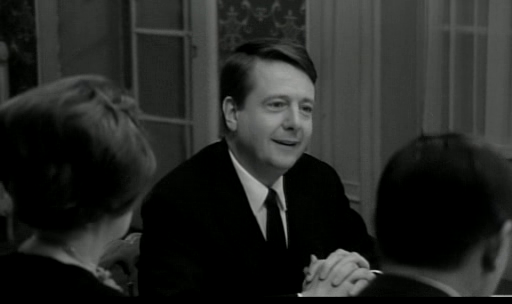
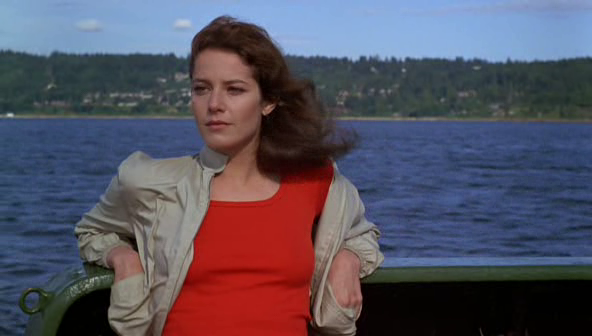
Confidentially Yours (1983)
“These idiots suspect me. They want to detain me.”
|
Synopsis: |
|
Genres, Themes, Actors, and Directors:
Review: Redeeming Qualities and Moments:
Must See? Links: |
“These idiots suspect me. They want to detain me.”
|
Synopsis: |
|
Genres, Themes, Actors, and Directors:
Review: Redeeming Qualities and Moments:
Must See? Links: |
“They stopped by a river full of torrents: they decided the tumbling water was like Ann, the eddies like Claude, the peaceful pools like Muriel.”
|
Synopsis: |
|
Genres, Themes, Actors, and Directors:
Review: There’s no denying the “pictorial beauty” of Two English Girls, which is consistently gorgeous, with fine attention paid to period detail. However, the storyline itself suffers from being too much of a somber literary adaptation, with Truffaut’s customary voice-over dominating the proceedings. Ultimately, those who have seen Truffaut’s Jules and Jim (and which film fanatic hasn’t?) will recognize this later film as simply a variation on the same theme; indeed, Leaud’s callow character is clearly based on Roche, and is even seen at one point writing and publishing a novel called Jerome et Julien, “about a woman who loved two men… It was his story, which transposed his love for the two sisters.” But while Jules and Jim remains a heady New Wave classic, utilizing creative editing and a non-linear storyline, Two English Girls takes more than two hours to tell its multi-year tale, and eventually becomes somewhat wearisome. In sum, I find myself agreeing with Peary’s initial take on the movie (as “depressing and endless”), rather than with his later enthusiasm. Redeeming Qualities and Moments:
Must See? Links: |
“We burn them to ashes, and then burn the ashes — that’s our official motto.”
|
Synopsis: |
|
Genres, Themes, Actors, and Directors:
Response to Peary’s Review: While Peary’s hypothesis is a provocative one, I don’t think it quite holds water. First, as much as he adored every aspect of films and filmmaking, Truffaut was a deeply literate man who found tremendous value in books and writing — as is evident not only in many of his other films (where he often shows his characters engaged in thoughtful writing), but through his lifelong work as a screenwriter, as well as his frequent decision to adapt novels for the screen. Second, Montag isn’t shown being “seduced” by Clarisse in any way — in fact, their relationship never smacks of anything other than complicity in their growing awareness of how restricted their lives are. Linda and Clarisse (cleverly portrayed by the same actress — though this wasn’t Truffaut’s original intent) simply serve as dueling catalysts in Montag’s deeply personal struggle — indeed, Fahrenheit 451 is all about Montag. On that note, Werner and Truffaut notoriously butted heads over their conception of how Montag should be portrayed, to the point where their friendship ended bitterly and Werner attempted to sabotage continuity in the final scenes of the film by cutting his hair (!). While many disagree, I find Werner’s performance to be oddly compelling, in a robotic sort of way — he acts exactly how I would imagine a man in his position (and within this particular society) might act under such circumstances. Meanwhile, though Christie’s performance as short-haired Clarisse (her wig is terrible) isn’t particularly noteworthy, she does a fine job portraying Linda as a willing Stepford Wife, exhibiting an appropriate air of befuddlement when her husband suddenly begins to sabotage the secure life they’ve created for themselves. The best performance in the film, however, is a brief one given by stage actress Bee Duffel as “The Book Lady”, whose love of books overrides any other sense of self-preservation; she’s haunting to watch in her few moments on screen. As a whole, however, I agree with Peary that the film is somewhat of a “disappointment”, perhaps due in part to limitations in the original novel (which I haven’t read in many years — but message board posts on IMDb corroborate this suspicion). There are ultimately too many glaring inconsistencies and unanswered questions in the story itself to allow this adaptation to be anything other than a provocatively stylized rendering of a uniquely dystopian society; as DVD Savant puts it, “Conceptual problems that may have been easy to evade in print, leap out of the movie screen”, mostly revolving around Truffaut’s choice to show the entire society as “printless”. Yet it’s certainly worth a one-time look by film fanatics — for its visuals, its enduringly relevant themes, and a stand-out score by Bernard Herrmann. Redeeming Qualities and Moments:
Must See? Links: |
“Shooting a movie is like a stagecoach ride in the old west. At first you hope for a nice trip; soon you just hope to reach your destination.”
|
Synopsis: |
|
Genres, Themes, Actors, and Directors:
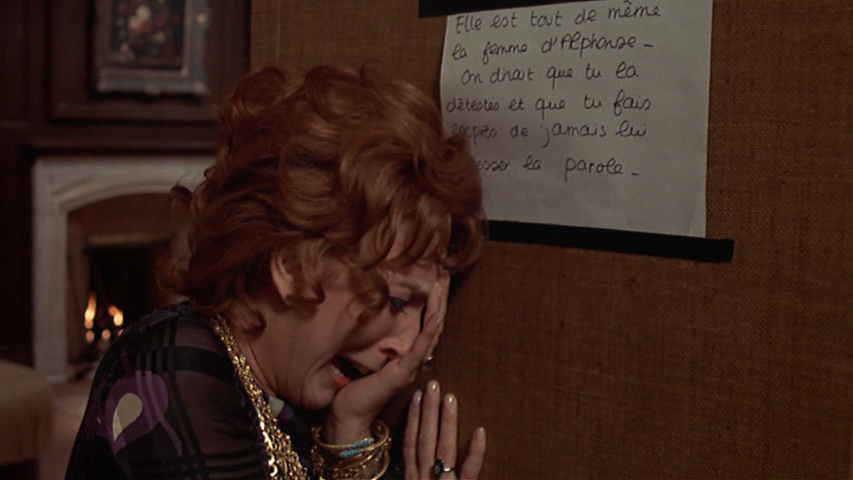
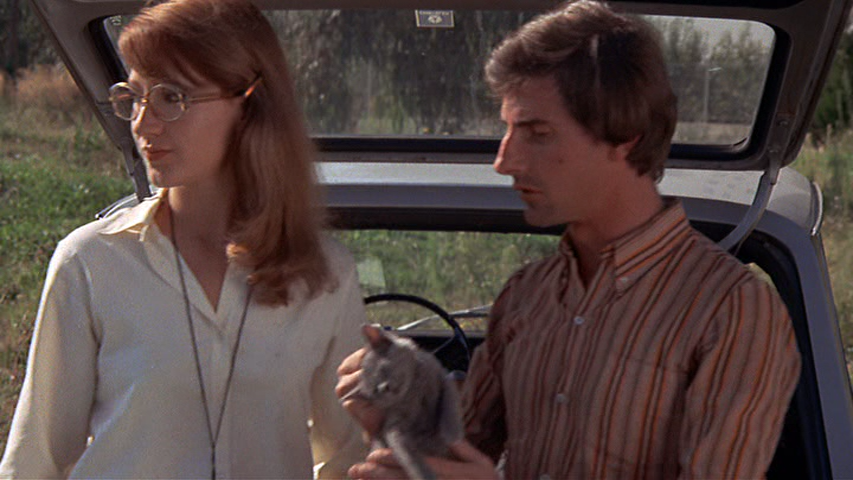
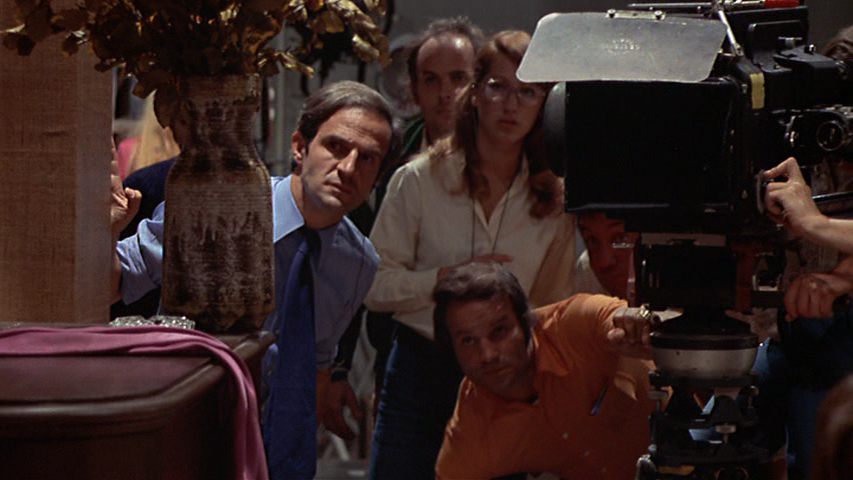
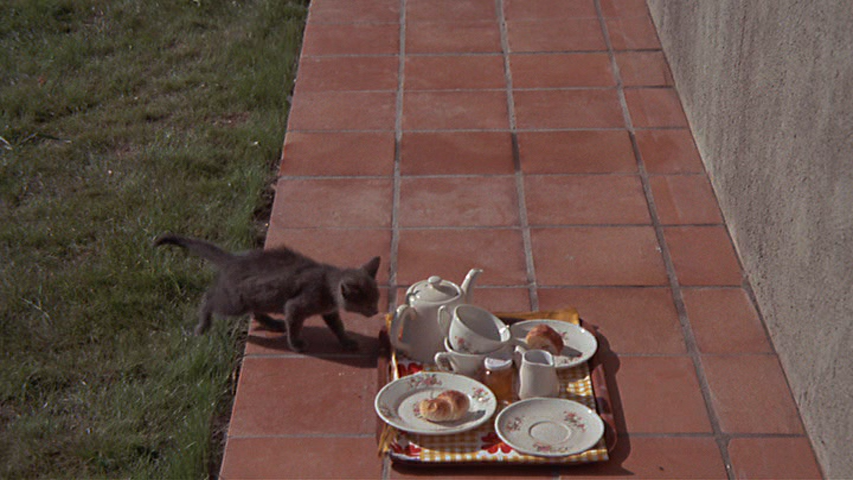
Response to Peary’s Review: Regardless, Day for Night remains a delightfully absorbing backstage drama, one which almost instantly makes us (as viewers) regret any criticism we heap upon “poor” filmmakers, given what a miracle it apparently is that anything noteworthy ever emerges from their efforts. In addition to a classic scene involving a kitten who refuses to drink the milk placed in front of it, the most memorable instance of such insanity is the tragic yet hilarious extended sequence in which drunk Cortese attempts in vain to remember her lines and open up the correct door; to that end, Cortese perfectly embodies an aging diva desperate to maintain her dignity while clearly on the path towards irreparable decline, and Jean-Pierre Aumont is equally well-cast as her past-and-present romantic co-star. Much less involving is the storyline involving Leaud’s callow, self-absorbed young star; his single-minded passion for a free-spirited young woman (Dani) is simply a distraction. However, Bisset gives a fine, vulnerable performance as the female star of the film, who doesn’t arrive on set until fairly late in the film but remains a dominant presence. She’s never been lovelier (and her French is quite remarkable). Redeeming Qualities and Moments:
Must See? Categories
(Listed in 1001 Movies You Must See Before You Die) Links: |
“I think the only cause of his dumbness is the isolation in which he lived.”
|
Synopsis: |
|
Genres, Themes, Actors, and Directors:
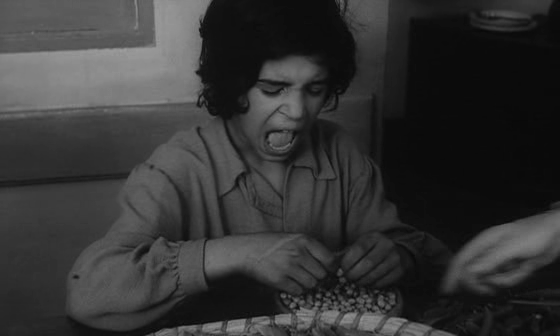
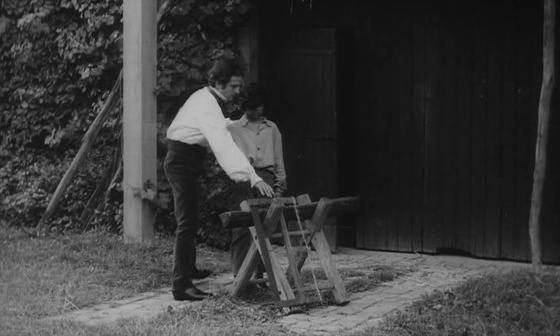
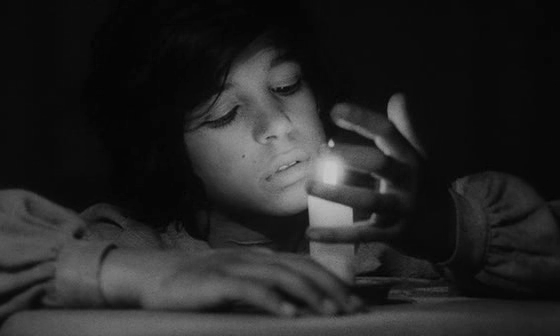
Response to Peary’s Review: Unlike Peary, most other critics found (and continue to find) much to praise about the film; for instance, Time Out’s reviewer calls it “as lucid and wryly witty a film as you could wish for, uncluttered by superfluous period detail”, with “a beautiful use of simple techniques” — such as “black-and-white photography, Vivaldi music, even devices as outmoded as the iris” — “giv[ing] it a very refreshing quality”. While my ultimate opinion lies somewhere in between Peary’s and the above assessment, what I’m most impressed by in the film is the astonishing performance given by Cargol, a gypsy selected from 2,500 potential boys to play the title role. Cargol (who apparently never acted again, instead turning to a career in music as an adult) is never anything less than entirely believable, seemingly remaining oblivious to the presence of the camera as he gives one of the most convincing child performances I’ve ever seen on screen. It’s for his performance alone that I recommend this film as one-time must-see viewing for film fanatics (who will surely also appreciate Nestor Almendros’ luminous b&w cinematography). Note: Click here to read some additional background on the film, told in part from the perspective of Truffaut’s daughter, Laura, who was on the set as a child. Redeeming Qualities and Moments:
Must See? Categories
Links: |
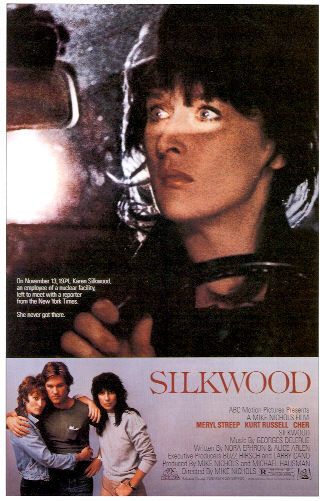
“I think you’d do just about anything to shut down this plant.”
|
Synopsis: |
|
Genres, Themes, Actors, and Directors:
Review: Note: Click here to read a follow-up story in People Magazine about the various individuals in Silkwood’s real life. Redeeming Qualities and Moments:
Must See? Categories
Links: |
“Jim accepted it. She belonged to Jules.”
|
Synopsis: |
|
Genres, Themes, Actors, and Directors:
Response to Peary’s Review: Interestingly, while many critics seem to agree that this film is really more about Catherine than about the title characters, I remain most fascinated by the relationship that evolves between Jules and Jim, with Catherine simply serving as a mediating (and binding) influence between them. As the film opens, we’re told the accelerated story of how Jules and Jim “met”, which comes across as awfully close to a romantic infatuation:
Of course, the story then immediately segues into the film’s decidedly heterosexual central premise — the fact that Jules “had no girls in Paris” but wanted one, and how, because “Jim had several”, he introduced a few to Jules. But the solidity and tenderness of Jules and Jim’s friendship has already been firmly established by this point; they are two of a kind, as evidenced in a charming taxi scene involving Marie Dubois’ delightfully anarchic “Therese”, who gets their names mixed up time and again, and doesn’t really mind which one she ends up spending the night with. Even during the first pivotal turning point in the film — when Jules quietly insists to Jim that Catherine is “hers” and not to be shared — we’re pleasantly surprised to see that Jim accepts this assertion, rather than arguing or pouting. He knows that his friendship with Jules is ultimately what’s most important, and while he can’t help his own feelings for Catherine, he respectfully stays out of their romance. After a “brief” interlude of wartime (Jim admits, “Sometimes, I’m afraid I’ll kill Jules during a battle”), Jules eventually realizes that Catherine is not happy within the idyllic homelife he’s carefully crafted for their little family, and understands that he must allow Jim and Catherine’s infatuation to manifest itself physically. From this point forth, Catherine’s “selfish actions” take center stage, and we sense that we’re watching a hopeless love triangle playing itself out to a bitterly unknown end. Jules in particular remains a haunting, relentlessly intriguing presence, and Werner perfectly embodies his weary resignation. I’ve focused my review here primarily on an analysis of the characters and their storyline, choosing just one of many interesting elements (Jules and Jim’s friendship) to explore. Equally worthy of analysis, however, is the fact that Truffaut — basing his film on an autobiographical novel by Henri-Pierre Roche — so boldly explores the nature of an “open” relationship, at a time when such a topic was rarely hinted at, let alone given center stage in a film. But what ultimately makes Jules and Jim such an enduring classic is the way in which it is told: it truly epitomizes the French New Wave, with its unconventional editing, compressed narrative structure, shifting camera styles, and thematic interest in freedom from societal constraints. While The 400 Blows (1959) remains my personal favorite among Truffaut’s oeuvre, Jules and Jim is equally relevant to any film fanatic’s understanding of this unique period in cinematic history, and is certainly must-see viewing at least once. Redeeming Qualities and Moments:
Must See? Categories
(Listed in 1001 Movies You Must See Before You Die) Links: |
“Love affairs must have a beginning, a middle, and an end.”
|
Synopsis: |
|
Genres, Themes, Actors, and Directors:
Review: Redeeming Qualities and Moments:
Must See? Links: |
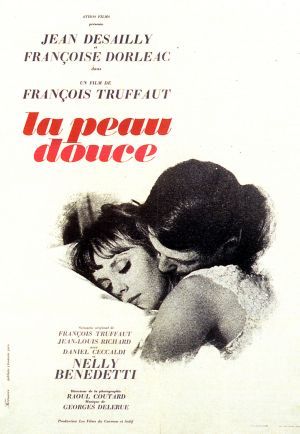
“I’ve discovered life wasn’t what I expected lately.”
|
Synopsis: |
|
Genres, Themes, Actors, and Directors:
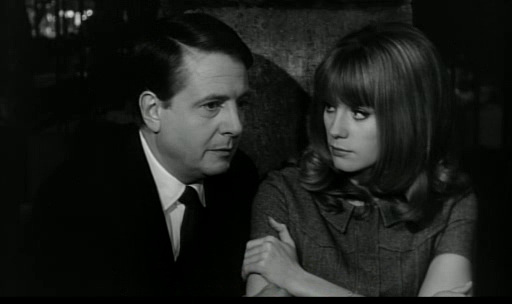
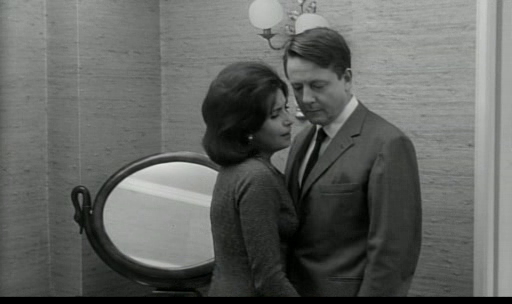
Review: It’s difficult at first to accept the pudgy, nondescript Desailly as a likely candidate to attract the attentions of a sexy young thing like Dorleac — yet we soon understand that it’s his celebrity (there are posters plastered around Riems announcing his upcoming lecture) and his intellect that she finds so appealing. Meanwhile, it’s equally difficult to understand exactly why Desailly would feel a desire to cheat on his sexy wife (Benedetti) — but then again, motivations for infidelity often makes little sense! The three leads (especially Dorleac and Benedetti) all provide solid performances, and Raoul Coutard’s lovely b&w cinematography firmly grounds the film within its cinematic era. While this isn’t must-see viewing by Truffaut, it’s certainly worth a one-time look. Redeeming Qualities and Moments:
Must See? Links: |
“You can kick me out of here, but I ain’t quittin’.”
|
Synopsis: |
|
Genres, Themes, Actors, and Directors:
Response to Peary’s Review: Winger plays an appealingly independent-minded character, yet she’s reduced — like all the working-class women in her town, apparently — to waiting for a man to rescue her from her situation, whether it’s for a temporary month-long fling, or a longer commitment. We’re meant to tsk at the tactics employed by Winger’s best friend Lynette (Lisa Blount) when trying to snag a cadet of her own (David Keith), but Winger isn’t necessarily a much better role model. Meanwhile, petite Lisa Eilbacher is cast in a gratuitous role as a female trainee struggling to make her way through candidacy, who breaks down into tears every time she tries to progress through a particularly challenging component of the obstacle course — and, naturally, she’s helped by a man in the end. The famous final factory scene between Gere and Winger is perhaps most egregious of all, though I won’t spoil the film by saying too much more. Ultimately, this erstwhile hit remains erotic eye candy at best, with the added bonus of seeing Winger in one of her too-few leading roles before she left Hollywood semi-permanently in the mid-1990s. Redeeming Qualities and Moments:
Must See? Links: |