To Have and Have Not (1944)

To Have and Have Not (1944)

“You save France; I’m going to save my boat.”

Synopsis:
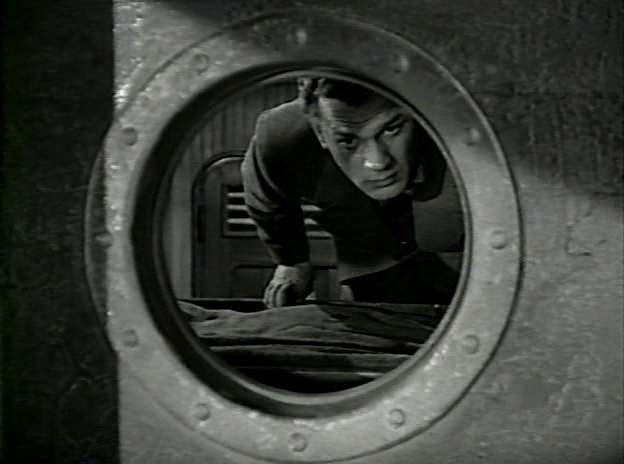
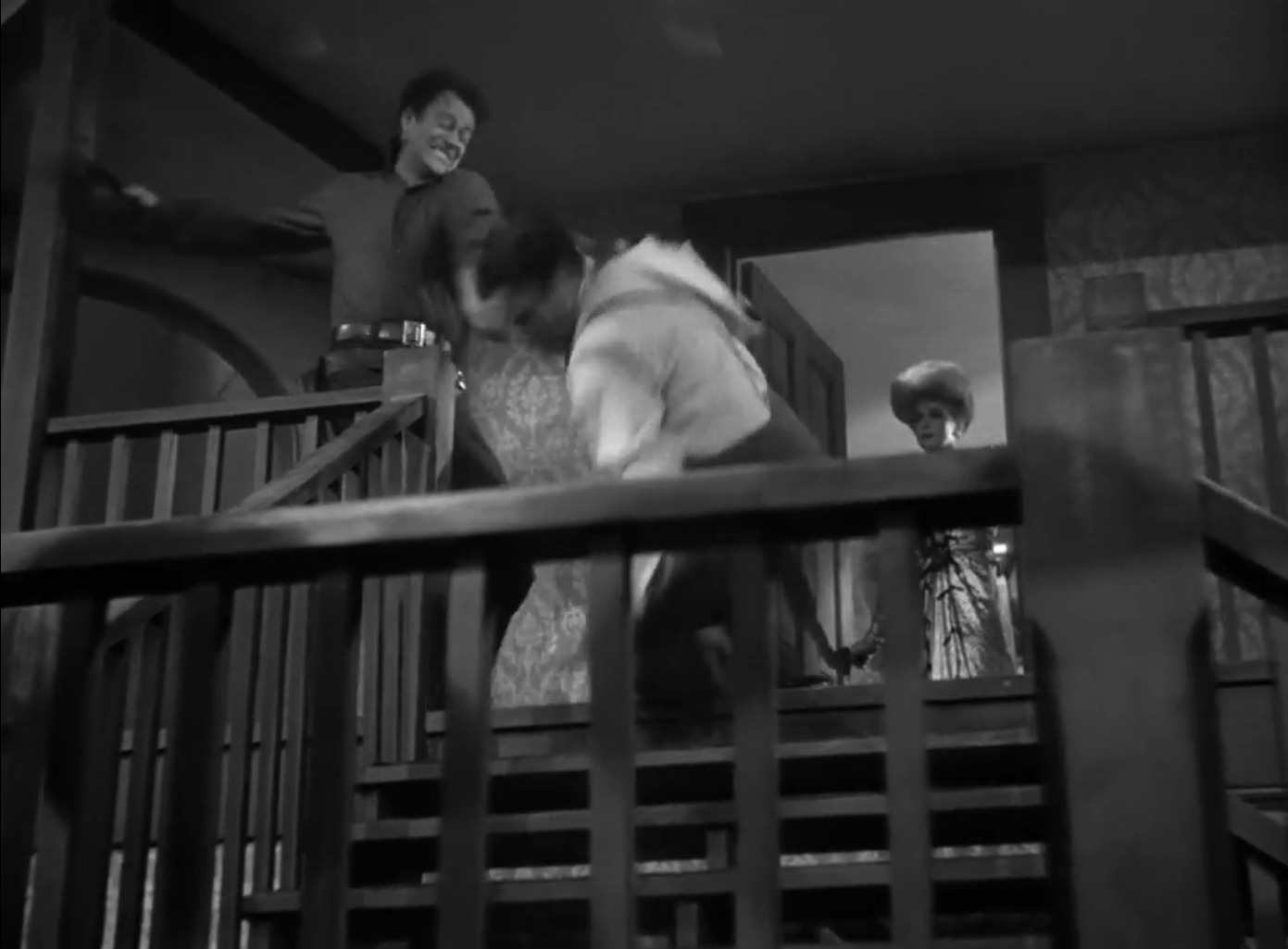
After the untimely death of his highest-paying customer (Walter Sande), a charter boat owner (Humphrey Bogart) in WWII-era Martinique agrees to help the patriotic owner of a hotel-cafe (Marcel Dalio) by transporting a resistance fighter (Walter Szurovy) and his wife (Dolores Moran) to safety; meanwhile, Bogart’s alcoholic shipmate (Walter Brennan) remains a liability, but a sexy young singer (Lauren Bacall) promises romantic adventure.

Genres, Themes, Actors, and Directors:

  • Howard Hawks Films
  • Humphrey Bogart Films
  • Lauren Bacall Films
  • Resistance Fighters
  • Romance
  • Walter Brennan Films

Response to Peary’s Review:
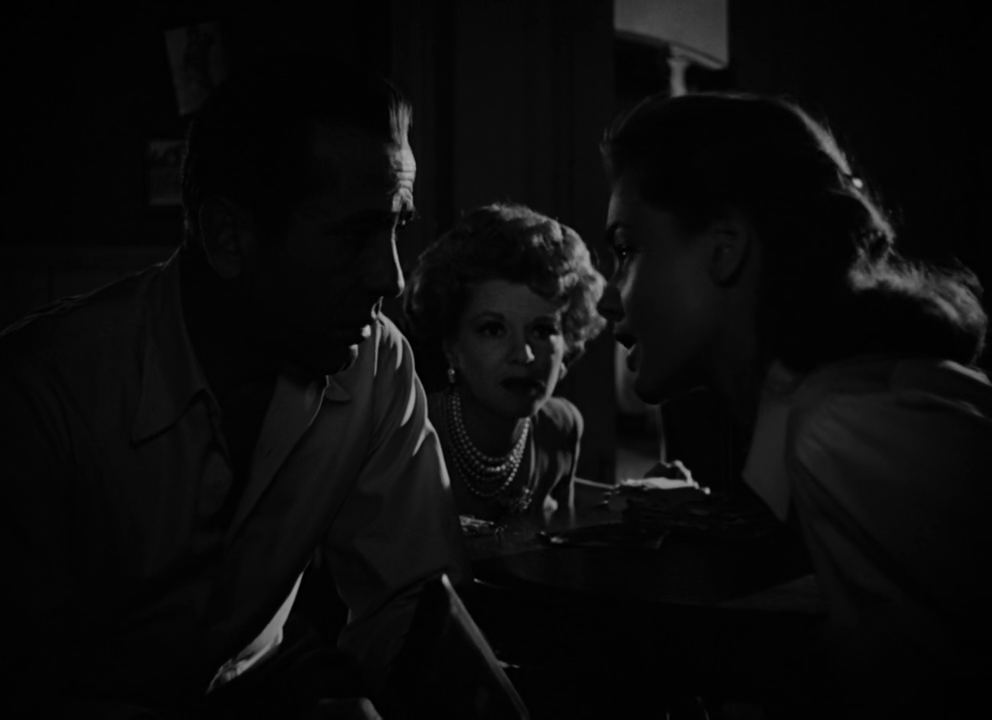
Peary suggests that viewers “forget the Hemingway novel on which William Faulkner and Jules Furthman supposedly based their script” for Howard Hawks’ “reworking of Casablanca,” and points out the many parallels between the two films, noting that once again “Bogart’s an American expatriate… who’s trying to ignore the political situation” but “eventually… becomes inspired by [some resistance fighters] and intolerant of the fascists in power and joins their cause”. In this flick, however, Bogart is less enamored with the beautiful wife (Dolores Moran) of the resistance fighter (Walter Molnar) — i.e., Ingrid Bergman’s role in Casablanca — and is instead smitten by Lauren Bacall’s ‘Slim’, “the husky-voiced singer [who] has no part in the political-action story” but “makes the most of… [her] limited screen time in her movie debut”, “slinking around a room, in control of her sexual impulses but making it obvious what’s on her mind”. Peary argues that while “the film itself becomes confusing and klutzy, the ending is weak, and the secondary characters are poor substitutes for Casablanca‘s memorable cast of heroes and villains”, “every time Bogie and Bacall have a scene together, we feel the romance that was building on and off camera”.

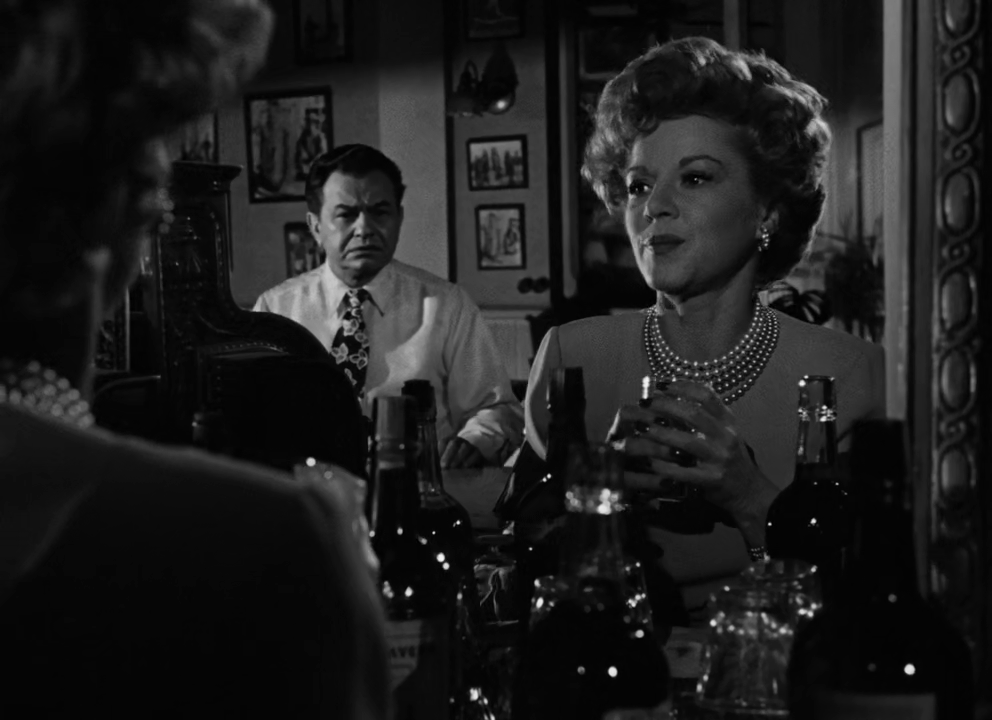
Indeed, Bogart and Bacall’s romantic tension drives the film: it’s impossible to imagine this movie being nearly so memorable without Bacall in her breakthrough role, or the genuine sparks that went flying between the two. With her peekaboo hair and sultry voice, Bacall is simply dynamite. (Click here to see an edited section from the animated “Merrie Melodies” spoof “Bacall to Arms”, re-enacting some of Bogie and Bacall’s most memorable onscreen moments.) Walter Brennan turns in yet another solid supporting performance as Bogie’s “rummy” shipmate, whose extreme drinking problem is played for laughs at times, but also acknowledged for the deadly serious gamble is presents (what will or won’t Brennan do or say for another drink?). Also notable is Hoagy Carmichael’s presence as “Cricket”, a piano-songwriter who accompanies Bacall on several memorable ditties. Thankfully, the film’s more-faithful-to-the-novel remake The Breaking Point (1950) — co-starring John Garfield and Patricia Neal — is differently excellent, and also well worth a look.

Note: See this TCM article for fascinating insights into how and why the locale was shifted from the original Cuban setting in Hemingway’s novel.

Redeeming Qualities and Moments:

  • Lauren Bacall as “Slim” (nominated as one of the Best Actresses of the Year in Peary’s Alternate Oscars)
  • Humphrey Bogart as Harry Morgan (nominated as one of the Best Actors of the Year in Alternate Oscars)
  • Walter Brennan as Eddie
  • Hoagy Carmichael’s songs
  • Sidney Hickox’s atmospheric cinematography

  • A sassy, hard-boiled script: “I’m hard to get, Steve. All you have to do is ask me.”

Must See?
Yes, as an enduring classic.

Categories

  • Genuine Classic
  • Noteworthy Performance(s)

(Listed in 1001 Movies You Must See Before You Die)

Links:

Breaking Point, The (1950)

Breaking Point, The (1950)

“What else do I know? What else am I good at? I’m a boat jockey.”

Synopsis:
A charter boat skipper (John Garfield) struggling to support his wife (Phyllis Thaxter) and kids agrees to take a man (Ralph Dumke) and his mistress (Patricia Neal) to Mexico, but soon finds himself embroiled in increasingly dangerous dealings.

Genres, Themes, Actors, and Directors:

  • At Sea
  • Blackmail
  • John Garfield Films
  • Juano Hernandez Films
  • Michael Curtiz Films
  • Patricia Neal Films

Response to Peary’s Review:
Peary writes that while this “excellent remake of To Have and Have Not… doesn’t resemble Hemingway’s novel any more than Faulkner’s script for Howard Hawks’s 1944 film did, at least it conveys more of its spirit”. He praises the film — directed by Michael Curtiz — for presenting “the WWII veteran as a disillusioned, financially troubled forgotten man” who may long “for some of the excitement of war rather than his life of bills to pay and familiar spats”, and he argues that “it makes sense that, having reached his breaking point, [Garfield] dares get involved with lawbreakers, risks his life to make a bundle of money in a hurry, [and] contemplates an affair with a loose woman”. He concludes his review by noting that the film is “well acted, nicely shot (partly on location)”, “smartly written” and “has an exciting climactic action sequence and classic final shot”. Peary’s review is spot-on, though he neglects to point out the excellent performances all around — not only by stars Garfield and Neal but by Phyllis Thaxter as Garfield’s loyal yet far-from-dull wife (“I can think about you anytime and get excited.”) and Juano Hernandez as Garfield’s doomed right-hand man (the scenes with his son [Juan Hernandez] are particularly poignant and heartbreaking). This one is well worth a look.

Redeeming Qualities and Moments:

  • John Garfield as Harry Morgan (nominated by Peary as one of the Best Actors of the Year in his Alternate Oscars)
  • Patricia Neal as Leona Charles
  • Phyllis Thaxter as Lucy Morgan
  • Juano Hernandez as Wesley Park
  • Atmospheric cinematography

Must See?
Yes, as a finely acted and directed adaptation of Hemingway’s novel.

Categories

  • Good Show

Links:

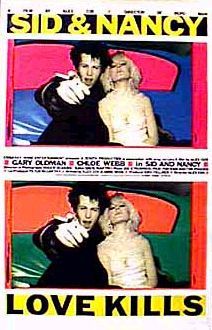
Sid and Nancy (1986)

Sid and Nancy (1986)

“If I asked you to kill me, would you?”

Synopsis:
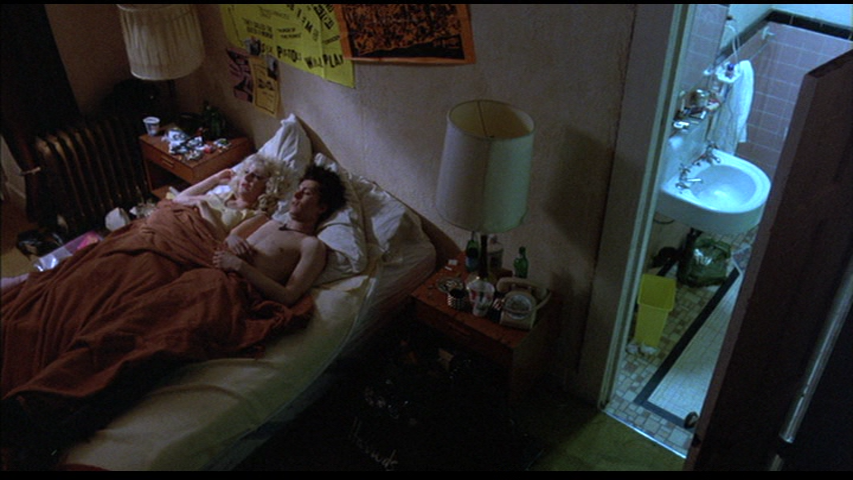
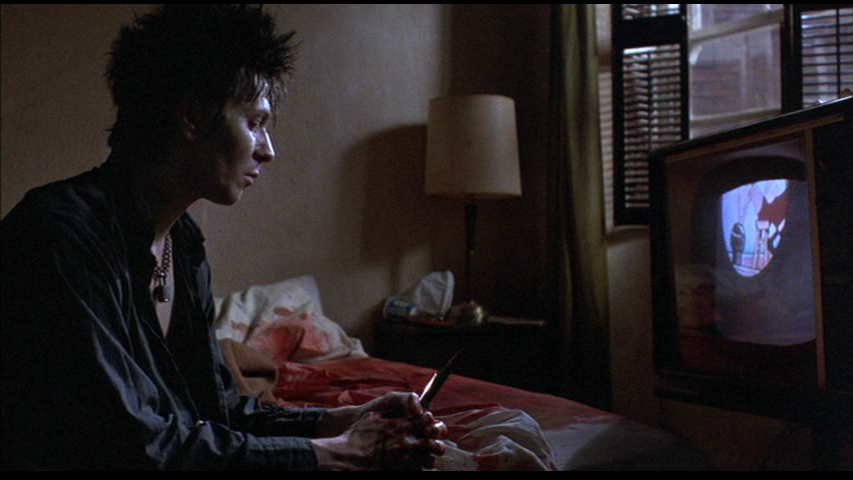
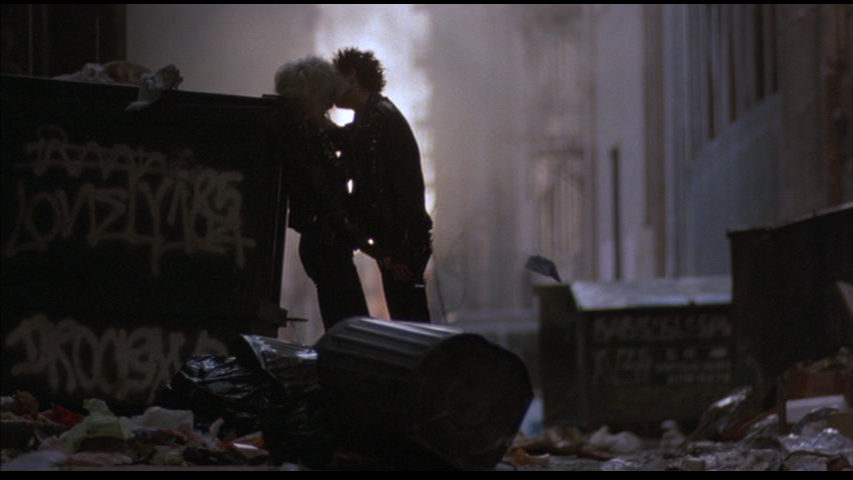
Bass guitarist Sid Vicious (Gary Oldman) falls for a whining junkie (Chloe Webb) who sends them both on a downward spiral towards lethal violence.

Genres, Themes, Actors, and Directors:

  • Alcoholism and Drug Addiction
  • Biopics
  • Flashback Films
  • Musicians
  • Obsessive Love

Review:
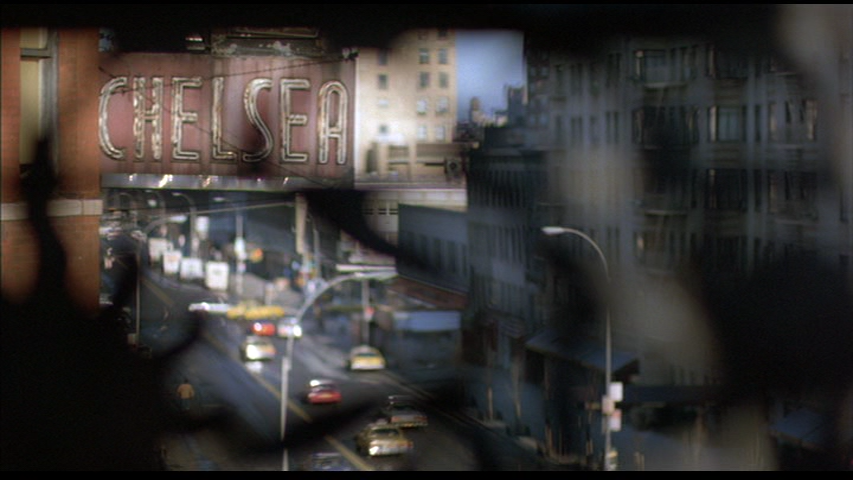
Having recently reread Deborah Spungen’s heartbreaking account of her struggles to raise Nancy Spungen — the chaotically disturbed girl who gained infamy as punk rocker Sid Vicious’s slain girlfriend — I was curious to view Alex Cox’s cult film about the couple (which Spungen insists she’s never watched). (The film was also soundly disavowed by Sex Pistols lead singer Johnny Rotten, who claims he wasn’t consulted and that the film got everything “all wrong”.) Nearly three decades after “nauseating Nancy”‘s death by stabbing in New York’s Chelsea Hotel, the story holds some morbid fascination, but will likely only be of interest to true fans of early punk. On its own, it’s a challenging film to sit through, given its inherently unlikable protagonists: sure, Oldman and Webb give fine performances as the duo Roger Ebert referred to as the “Romeo and Juliet of punk”, but why should we care about their painfully dysfunctional existence?

Redeeming Qualities and Moments:

  • Gary Oldman as Sid Vicious
  • Chloe Webb as Nancy Spungen
  • Authentically gritty sets

  • Roger Deakins’ cinematography

Must See?
No, though it’s worth a look as a cult flick. Peary’s clearly a big fan, given that he lists this title as a Cult Movie, a film with Historical Importance, and a Personal Recommendation in the back of his book. He also nominates it as one of the Best Movies of the Year in his Alternate Oscars, and nominates both Oldman and Webb for their performances.

Links:

Angel and the Badman (1947)

Angel and the Badman (1947)

“Only a man who carries a gun ever needs one.”

Synopsis:
A wounded gunslinger (John Wayne) being tracked by a lawman (Harry Carey) falls in love with a naive but sincere young Quaker woman (Gail Russell) who hopes to marry and reform him.

Genres, Themes, Actors, and Directors:

  • Christianity
  • Cross-Cultural Romance
  • Gail Russell Films
  • John Wayne Films
  • Westerns

Response to Peary’s Review:
As Peary writes, this “most enjoyable” “high-class ‘B’ western” is “truly delightful and believable”, and certainly “anticipated Peter Weir’s Witness.” Wayne and Russell — “who were lovers off screen as well” — are a “sweet couple”, and “there are some wonderful moments when Wayne [Quirt] looks at Russell [Penny] adoringly, and when Russell feels emotions building inside her as she looks at him”; indeed, they have genuine chemistry together, and both actors give excellent, sincere performances.

The cinematography — with much location shooting in Arizona, including Monument Valley — is nicely done, and there are numerous touching and/or humorous scenes, such as when Wayne is stuck holding a baby at a Quaker gathering.

The story-line is simple, but filled with genuine tension and many unanswered questions: Is Penny’s love for Quirt simply naive infatuation, or something deeper — and vice versa? Will Penny’s parents (Irene Rich and Stephen Grant) tolerate her love for a gunslinger? Will Quirt be able to evade both his sworn enemy (Bruce Cabot) and the lawman (Carey) determined to catch him? Can — and should — Quirt convince Penny that she’s better off with a steadfast Quaker suitor (Marshall Reed)? It’s a delight to watch and find out.

Redeeming Qualities and Moments:

  • Gail Russell as Penny
  • John Wayne as Quirt Evans
  • Archie Stout’s cinematography

  • Fine use of location shooting in Arizona

Must See?
Yes, as a fine and charming western.

Categories

  • Genuine Classic

Links:

Morocco (1930)

Morocco (1930)

“Every time a man has helped me, there has been a price. What’s yours?”

Synopsis:
A sultry nightclub singer (Marlene Dietrich) in Morocco falls for a womanizing Foreign Legion soldier (Gary Cooper) while being wooed by a kind millionaire (Adolph Menjou).

Genres, Themes, Actors, and Directors:

  • Adolph Menjou Films
  • Gary Cooper Films
  • Josef von Sternberg Films
  • Love Triangle
  • Marlene Dietrich Films
  • Military
  • Romance

Response to Peary’s Review:
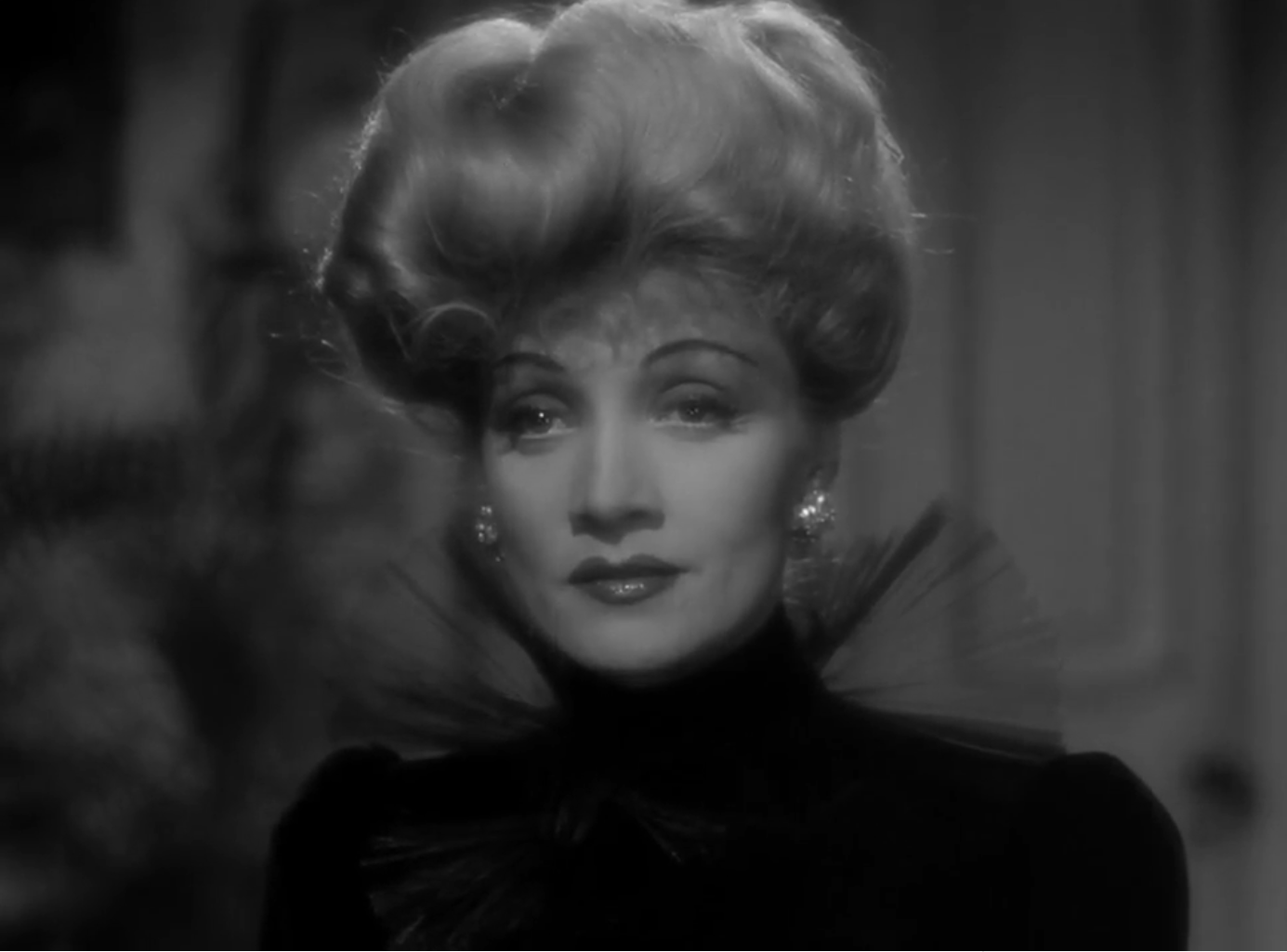
Peary writes that in her second collaboration with director Josef von Sternberg — and “her first Hollywood film” — Marlene Dietrich “is quite an attraction”, “whether wearing a tux and kissing a woman on the mouth (!) or a skimpy outfit that reveals her long, luscious legs”. He notes it’s “refreshing that both [Cooper and Dietrich] play characters who have had numerous affairs”, and that “they are both free to express passion”. In his Alternate Oscars, he names Dietrich Best Actress of the Year for her role here as Amy Jolly, arguing that she’s “perfect because she understood the importance of ‘presence’ on the screen — and knew she had it — and because she conveyed the self-knowledge that her audience was watching a unique star”. He adds that her character’s “ironic wit/nature comes from knowing that she is condemned by the male-dominated society for using sex to manipulate men when even they know she must use her body to survive”, and that “she maintains an air of superiority and startling indifference”. However, while it’s true that “Dietrich, who seems to be followed around by smoke, is at her most likable”, we never learn enough about her to understand her as anything other than a confident yet jaded woman who, over the course of the film, gradually “become[s] less flamboyant” and thinks “of herself more as a typical woman”. (We know even less about Cooper.) Although Dietrich does have impressive star presence and gives a fine performance, I don’t believe the screenplay of this “erotic and exotic” film does her justice.

Redeeming Qualities and Moments:

  • Beautiful cinematography by Lee Garmes


Must See?
No, though it’s worth a look for its historical relevance and cinematic beauty.

Links:

Up! (1976)

Up! (1976)

“One of these people has committed murder most foul — but which one?”

Synopsis:
A nude “Greek chorus of one” (Kitten Navidad) narrates the tale of a Hitler-lookalike (Edward Schaaf) being murdered in his bathtub by a piranha after an encounter with a man dressed as a Pilgrim (Robert McLane); a rapist (Larry Dean) being killed by his buxomy victim (Raven De La Croix); De La Croix’s affair with a horny sheriff (Monty Bane); and the opening of a new diner by McLane and his bisexual wife (Janet Wood), who has been carrying on an affair with a female trucker (Linda Sue Ragsdale).

Genres, Themes, Actors, and Directors:

  • Mistaken or Hidden Identities
  • Murder Mystery
  • Russ Meyer Films

Response to Peary’s Review:
As Peary writes, this “ugly Russ Meyer film” has “sex scenes that are more graphic and repulsive than those usually found in Meyer films”, is lacking in “Meyer humor”, and “contains a tasteless S&M sequence… and a couple of rapes… played for laughs”. He points out the fact that “Meyer’s films always contain ‘hicks’ so he can get away with objectionable dialogue” — of which there is more than plenty. He ends his review by noting that the “picture’s best scene has two surviving women running nude through the forest, trying to kill each other and simultaneously carrying on a lengthy conversation that ties up all the film’s loose ends”, thus representing “Meyer at his most outrageous”.

Why in the world does Peary include this title in his GFTFF?

Redeeming Qualities and Moments:
Not much, unless you’re a Meyer fan.

Must See?
No; definitely skip this one.

Links:

Journey Into Fear (1943)

Journey Into Fear (1943)

“I can forgive almost anything but stupidity.”

Synopsis:
During World War II, a ballistics expert (Joseph Cotten) in Turkey is separated from his wife (Ruth Warrick) and taken by a business representative (Everett Sloane) to a nightclub, where he is nearly killed. A Turkish colonel (Orson Welles) arranges for him to travel home by steamer — but when his would-be assassin (Jack Moss) appears to be stalking him on-board the ship, Cotten relies on the friendship of a beautiful nightclub dancer (Dolores Del Rio) to help him make sense of his nightmarish situation.

Genres, Themes, Actors, and Directors:

  • At Sea
  • Dolores Del Rio Films
  • Hans Conried Films
  • Joseph Cotten Films
  • Living Nightmare
  • “No One Believes Me!”
  • Orson Welles Films

Review:
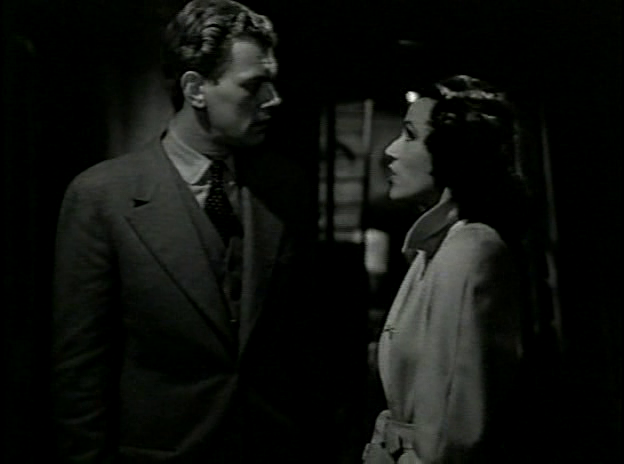
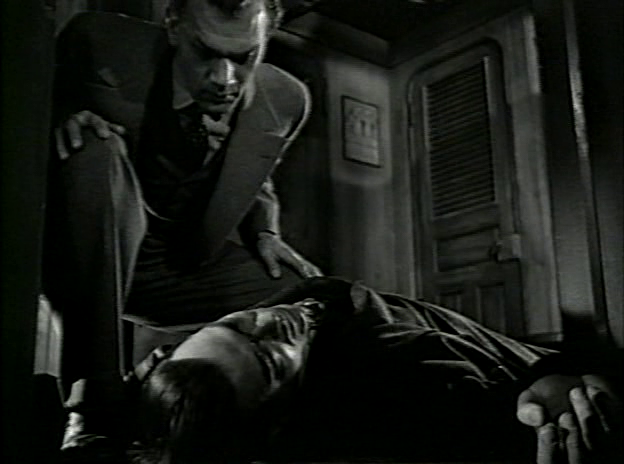
Orson Welles was reportedly deeply unhappy with the results of this adaptation of Eric Ambler’s spy-novel, which he designed, produced, and co-scripted (with Cotten), but which got severely butchered by RKO during editing. It’s easy to understand why Welles was so upset: the footage that’s here (just 69 minutes) is atmospheric, creatively filmed (by director Norman Foster and DP Karl Struss), and filled with quirky characters and dialogue — but the whirlwind tale needs much more context to sufficiently flesh it out. The existing film is essentially a Kafka-esque living-nightmare — straightforward to follow, but in a way that will have your head spinning with endless unanswered questions: Was Cotten’s life jeopardized from the get-go, or did Sloane trigger a domino effect, and if so, to what point? Is this meant to be a “realistic” spy thriller, or an allegorical tale about the insanity of war? Is Cotten’s marriage really at risk, or was his voice-over added to bring “romantic tension” to the story? Fans of Welles’ distinctive work will certainly be curious to check out this interesting film, but be prepared for frustration at what-might-have-been.

Redeeming Qualities and Moments:

  • Atmospheric cinematography

  • Creative direction

Must See?
No, though it’s recommended for its historical and cinematic interest. Listed as a Sleeper in the back of Peary’s book.

Links:

Key Largo (1948)

Key Largo (1948)

“When your head says one thing and your whole life says another, your head always loses.”

Synopsis:
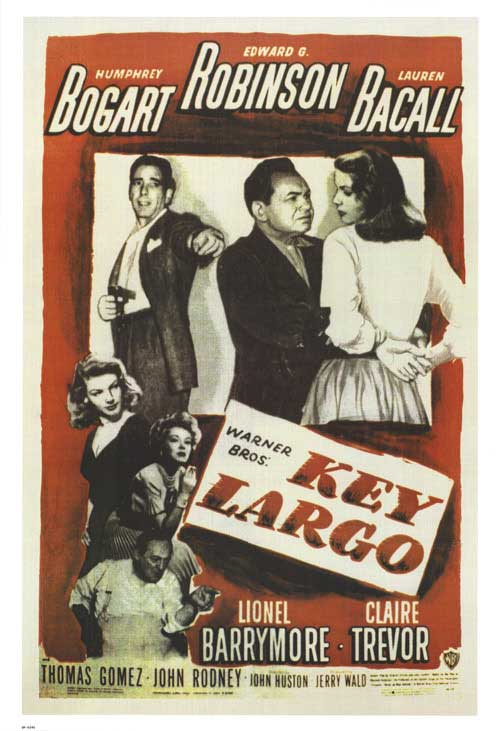
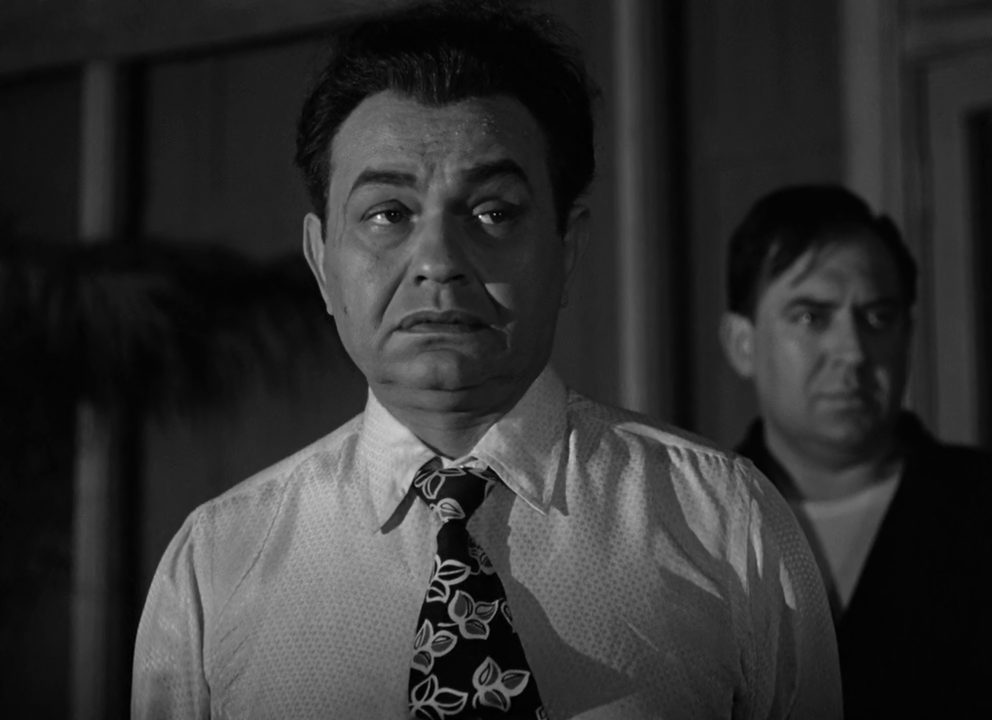
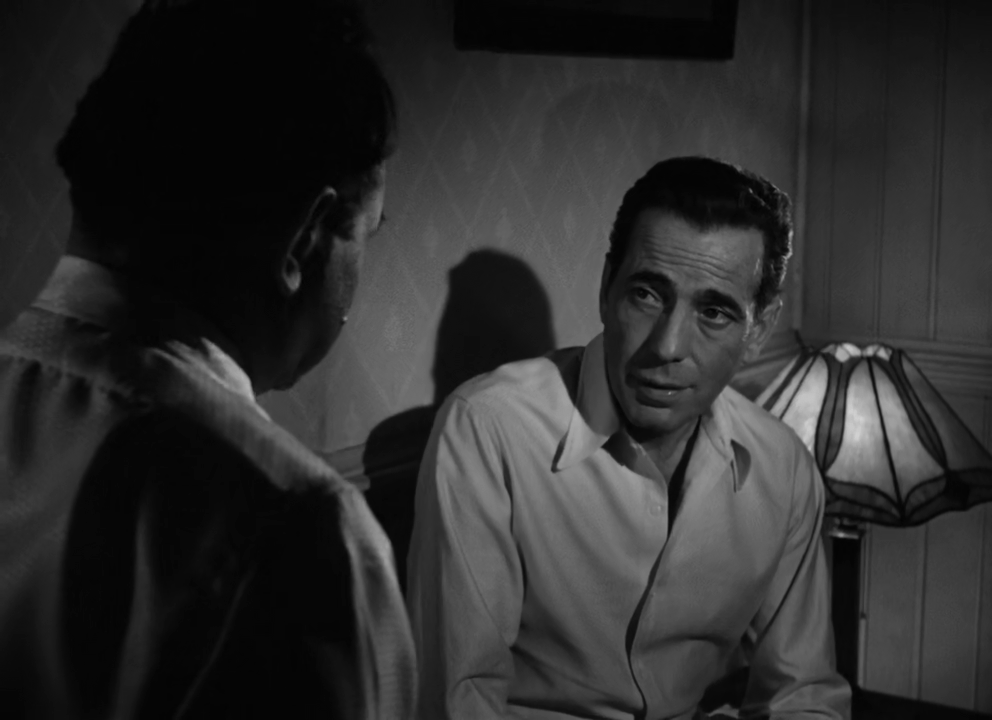
On the eve of a hurricane, an ex-major (Humphrey Bogart) travels to a hotel in the Florida Keys to visit the widow (Lauren Bacall) and father (Lionel Barrymore) of a deceased army friend. He is soon embroiled in a stand-off with the hotel’s only guests: gangster Johnny Rocco (Edward G. Robinson), Rocco’s assistants (Harry Lewis, Thomas Gomez, William Haade, and Dan Seymour), and Rocco’s alcoholic moll (Claire Trevor).

Genres, Themes, Actors, and Directors:

  • Claire Trevor Films
  • Edward G. Robinson Films
  • Gangsters
  • Hostages
  • Humphrey Bogart Films
  • John Huston Films
  • Lauren Bacall Films
  • Lionel Barrymore Films
  • Play Adaptation

Review:
Directed by John Huston and based on a play by Maxwell Anderson, this tension-filled hostage flick featured the fourth on-screen pairing of real-life couple Lauren Bacall and Humphrey Bogart — after To Have and Have Not (1944), The Big Sleep (1946), and Dark Passage (1947) — and afforded Robinson an opportunity to reprise his “gangster persona” as a fictional mash-up of Al Capone and Charles ‘Lucky’ Luciano. The screenplay (by Huston and Richard Brooks) makes excellent use of a claustrophobic “old dark house” setting, as the characters are bound together through both an impending hurricane and the threats of a ruthless, psychopathic gangster; meanwhile, surviving veteran Bogart is able to prove his masculinity and integrity to Bacall, others, and himself. Excellent performances, atmospheric cinematography, and a taut script make this a must-see classic by a master director.

Redeeming Qualities and Moments:

  • Fine performances by the entire cast


  • Karl Freund’s cinematography

  • An exciting, tension-filled script

Must See?
Yes, as a genuine classic.

Categories

  • Genuine Classic
  • Important Director

Links:

Spoilers, The (1942)

Spoilers, The (1942)

“The law is working in 45 states — it ought to work in Alaska.”

Synopsis:
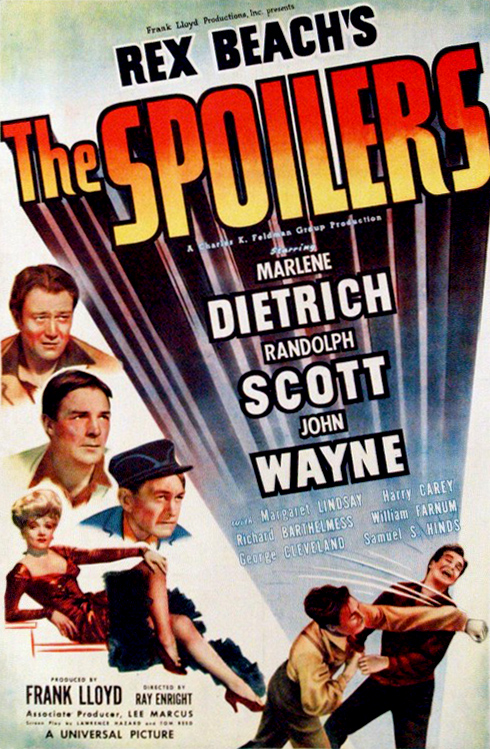
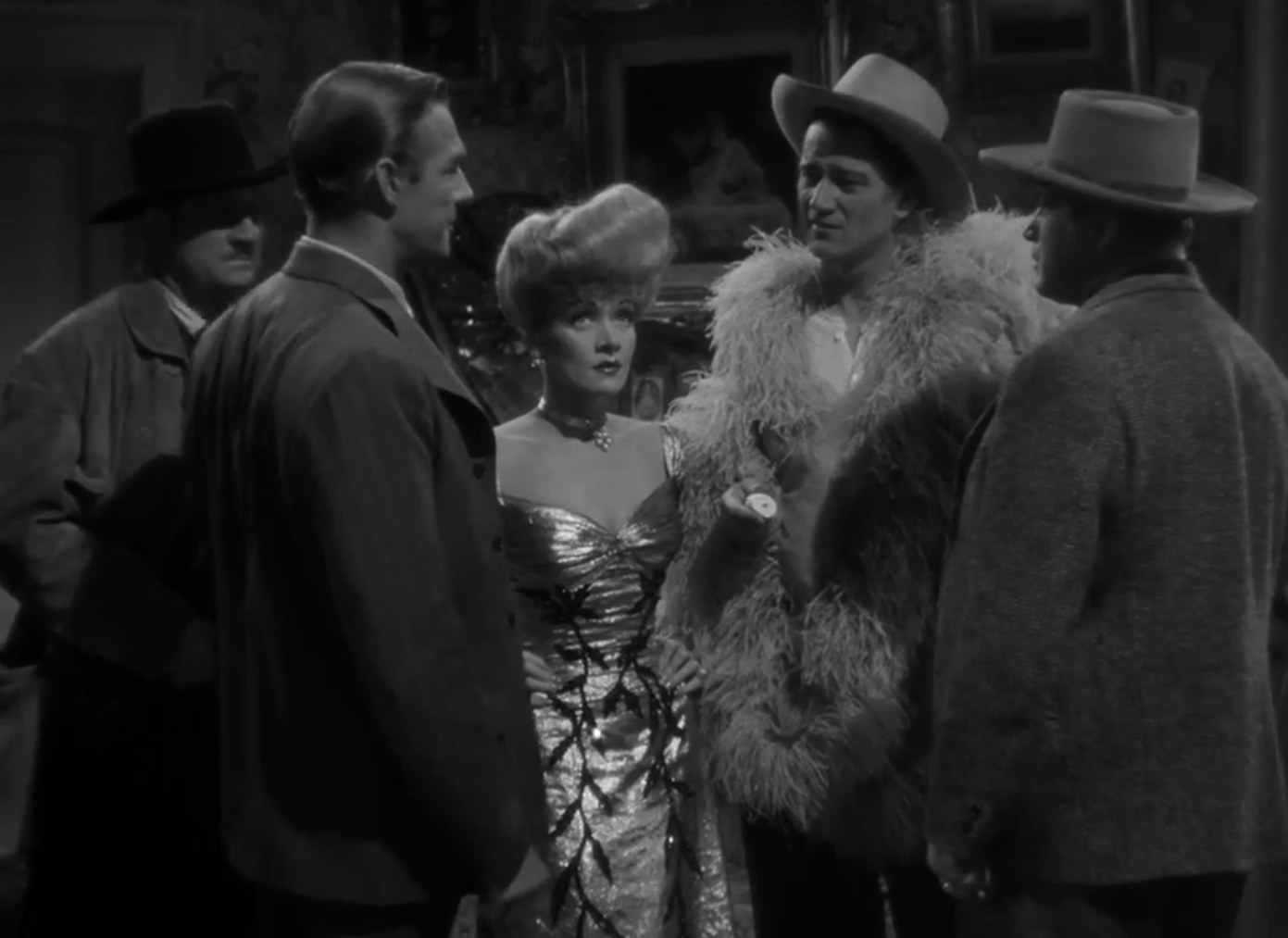
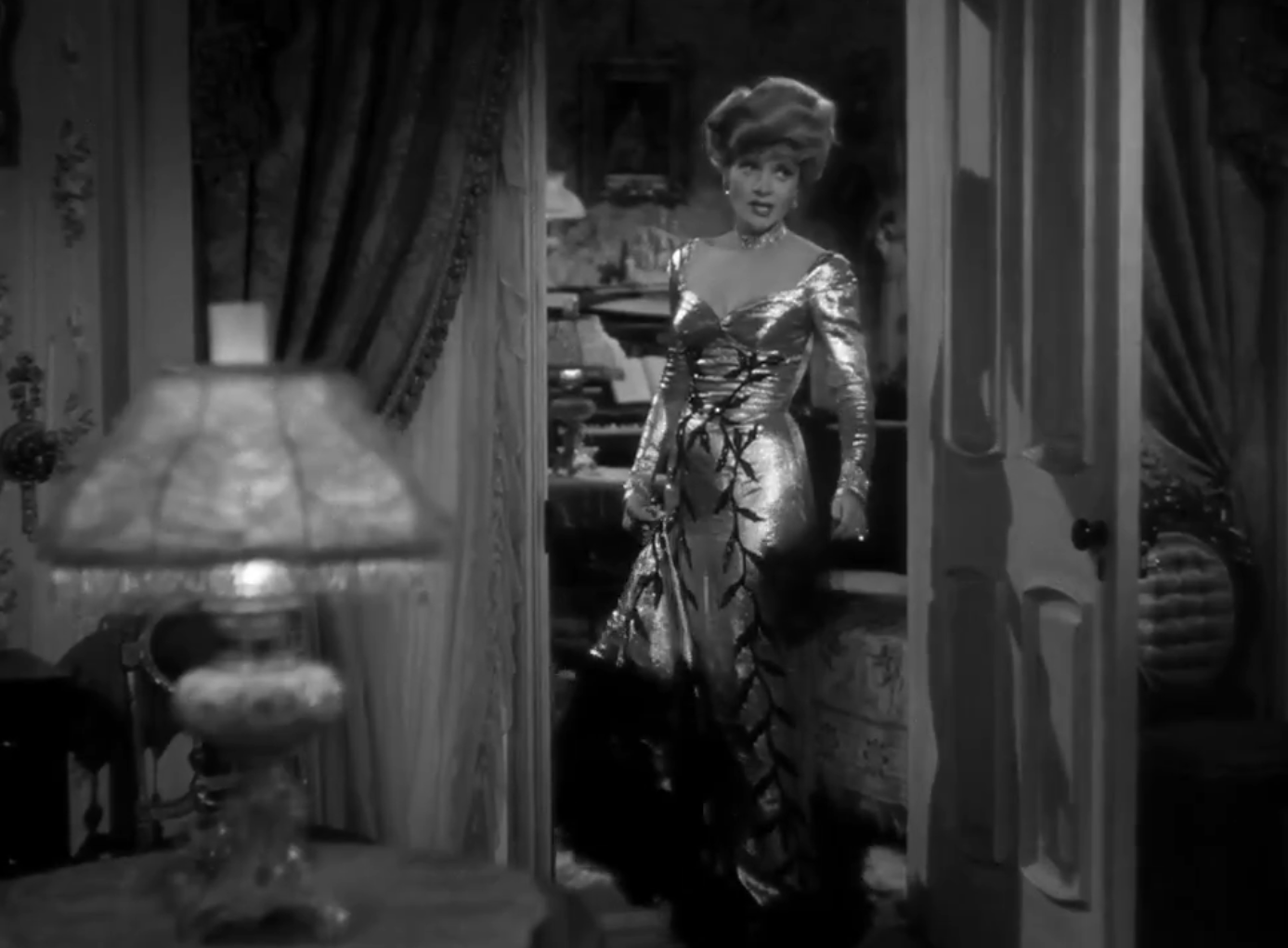
During the Alaskan gold rush, a feisty saloon owner (Marlene Dietrich) is caught in a love quadrangle between a miner (John Wayne), a crooked gold commissioner (Randolph Scott), and the niece (Margaret Lindsay) of a corrupt judge (Samuel S. Hinds).

Genres, Themes, Actors, and Directors:

  • Corruption
  • Gold Seekers
  • John Wayne Films
  • Marlene Dietrich Films
  • Randolph Scott Films
  • Strong Females
  • Westerns

Review:
Based on an oft-filmed novel by Rex Beach, this Marlene Dietrich vehicle (set in the historic milieu of The Great Nome Gold Rush in 1900) offers plenty of straight-forward, old-fashioned cinematic drama — including love triangles, government corruption, good-versus-bad-guys, shoot-outs, and fist fights.

Given that we know who will triumph in the end, there aren’t many surprises in the narrative: the tension lies in getting there, and watching Dietrich struggle to accept the dictates of her heart, ultimately demonstrating her moral superiority over her romantic rival (though the final duke-’em-out scene belongs to Wayne and Scott).

Note: The demeaning portrayal of Dietrich’s African-American maid (Marietta Canty) is unfortunate, though sadly commonplace for the era.

Canty was typecast as a maid in Father of the Bride (1950), A Streetcar Named Desire (1951), and Rebel Without a Cause (1955), among others.

Redeeming Qualities and Moments:

  • Vera West’s gorgeous gowns (click here to read about West’s mysterious death-by-drowning at 47)

  • Milton Krasner’s cinematography

Must See?
No; this one is only must-see for fans of Dietrich or Wayne.

Links:

Experiment in Terror (1962)

Experiment in Terror (1962)

“I know a good deal about you — almost everything there is to know.”

Synopsis:
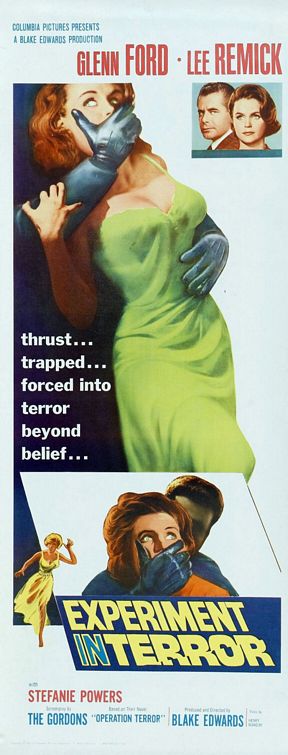
A mysterious asthmatic psychopath (Ross Martin) threatens to kill a bank teller (Lee Remick) and her sister (Stefanie Powers) if Remick doesn’t steal $100,000 for him — but Remick manages to call an FBI agent (Glenn Ford) whose team keeps a close eye on her safety.

Genres, Themes, Actors, and Directors:

  • Blake Edwards Films
  • Glenn Ford Films
  • Hostages
  • Lee Remick Films
  • Mistaken or Hidden Identities

Review:
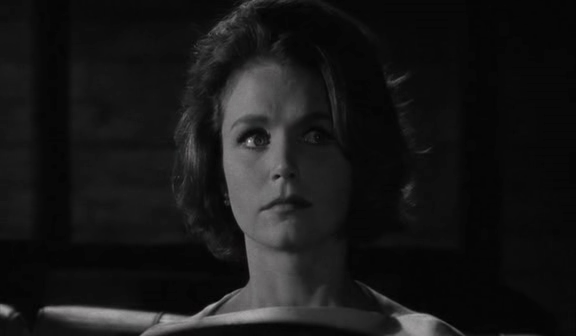
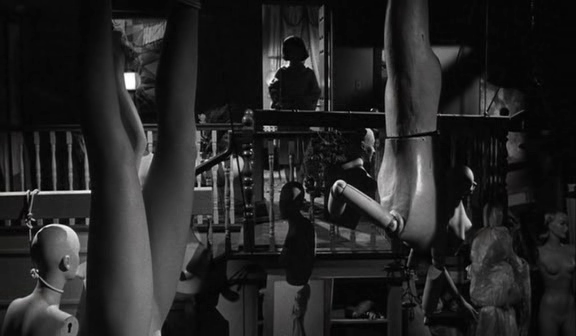
Blake Edwards’ follow-up to Breakfast at Tiffany’s (1961) was this atmospheric “female in distress” thriller set in the hills, teeming streets, and landmarks of San Francisco. The opening moments are especially tense, as Remick is terrorized in the shadows of her garage by an unseen man (Martin) who spares no details in sharing what will happen to her and her sister if she doesn’t cooperate with his plans. Unfortunately, the rest of the screenplay fails to maintain this initial tension: Remick makes a phone call to the FBI (how does she get ahold of them so easily?), is threatened once again by Martin for doing so, then goes about her daily life, concerned for her safety but otherwise “free”. While Martin is clearly keeping a close eye on both Remick and Powers — even murdering a mannequin-designer (Patricia Huston) in her highly stylized apartment as a warning — the threat still feels diffuse.

Part of the problem is pacing: at over two hours long, there’s simply too much footage here, and too much time lapsing between and during scenes. Meanwhile, the inclusion of a sub-plot about Martin’s Asian-American lover (Lisa Soong) and her disabled son (Warren Hsieh) doesn’t do anything but confuse our understanding of Martin’s character and motivations (are we meant to sympathize with him after learning he’s been helping Soong with Hsieh’s expenses?). The climactic scene during a baseball game in Candlestick Park is nicely shot, but ultimately more atmospheric than truly suspenseful, given how many FBI men are literally swarming the joint. The film’s title is apt: this represents Edwards’ cinematic “experiment in terror”, one that’s nicely mounted but not entirely successful. Best/creepiest scene: Martin accosts Remick in a hallway, dressed as an old bespectacled woman in a hooded cape.

Redeeming Qualities and Moments:

  • Lee Remick as Kelly Sherwood
  • Fine use of location shooting
  • Atmospheric cinematography
  • Henry Mancini’s score

Must See?
No, though it’s certainly worth a look by those interested in the genre. Listed as a Personal Recommendation in the back of Peary’s book.

Links: