El Norte (1983)

El Norte (1983)

“In our land, we have no home; here, we are not welcome.”

Synopsis:
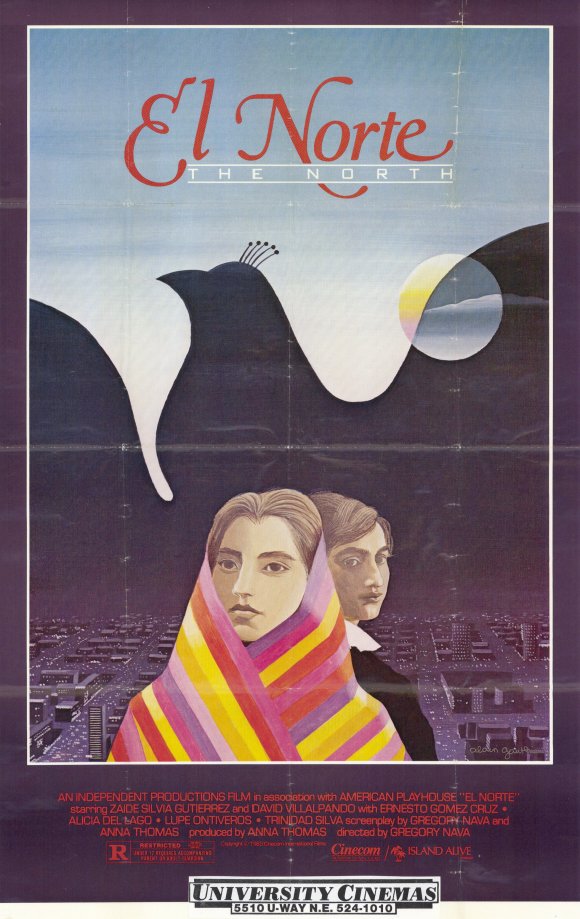
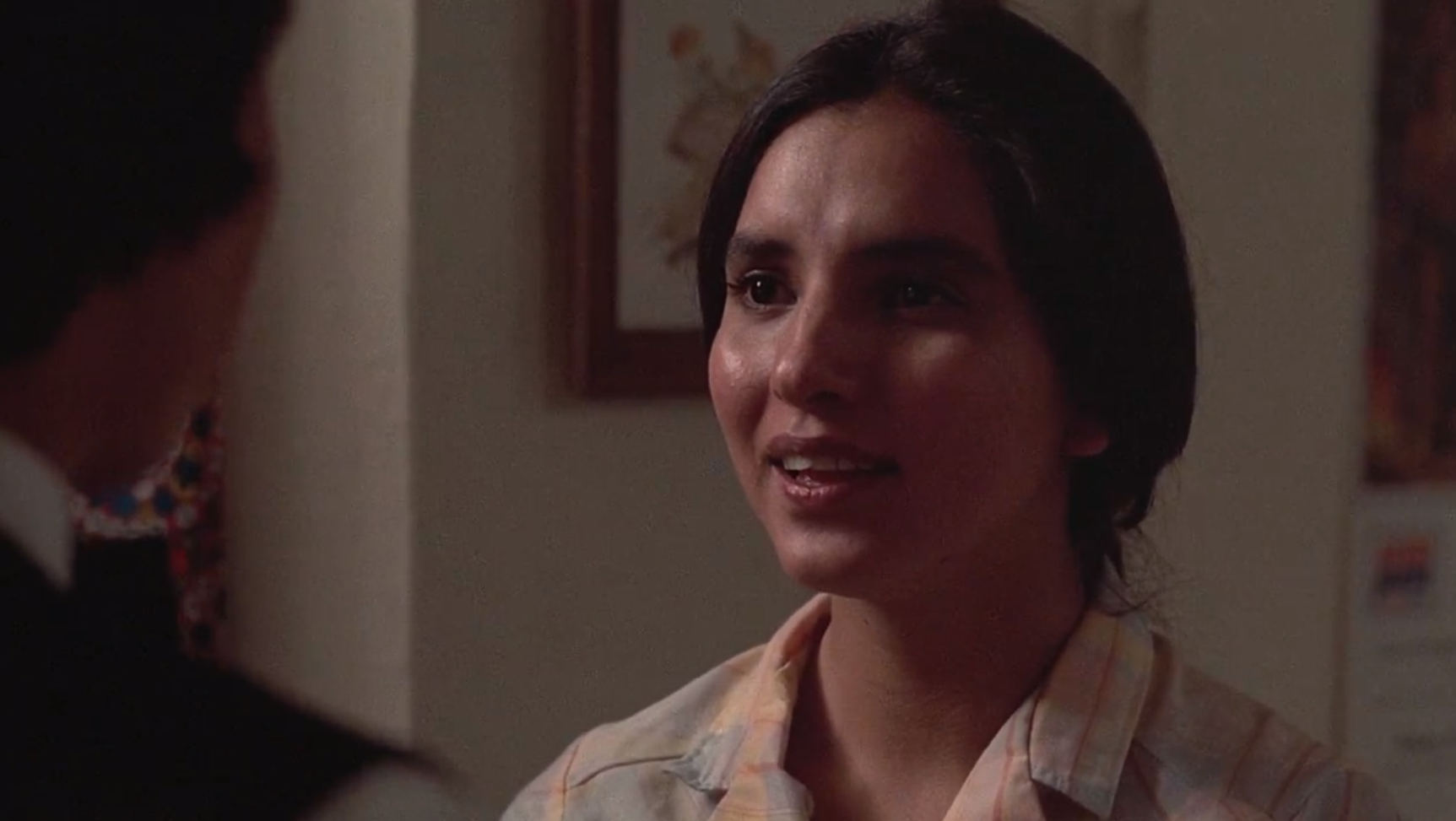
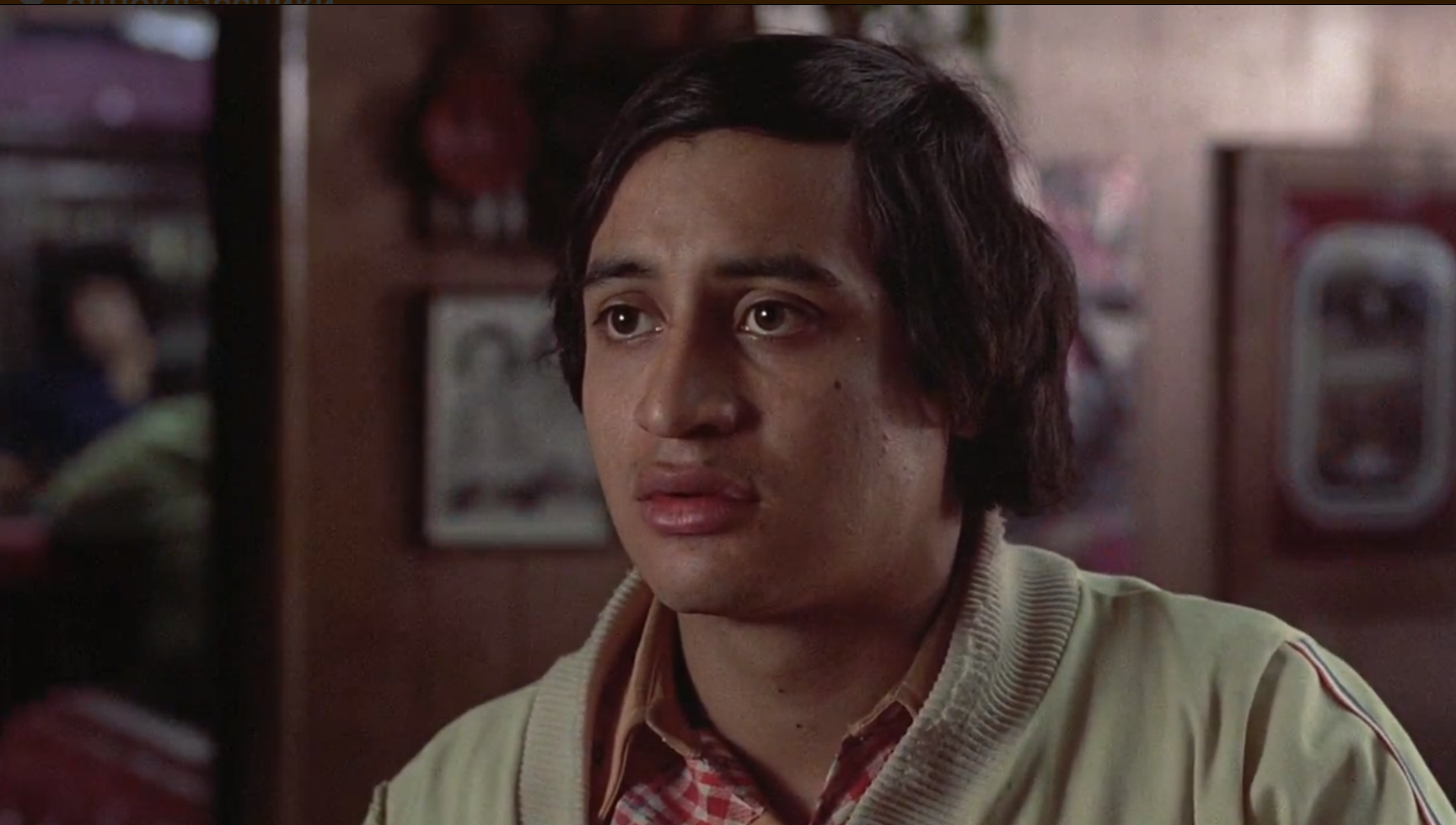
Guatemalan siblings Enrique and Rosa (David Villalpando and Zaide Silvia Gutierrez) escape from an oppressive political regime to the “promised land” of America (El Norte), only to find that life is just as difficult across the border.

Genres, Themes, Actors, and Directors:

  • Immigrants and Immigration
  • Refugees
  • South and Central America
  • Survival

Response to Peary’s Review:
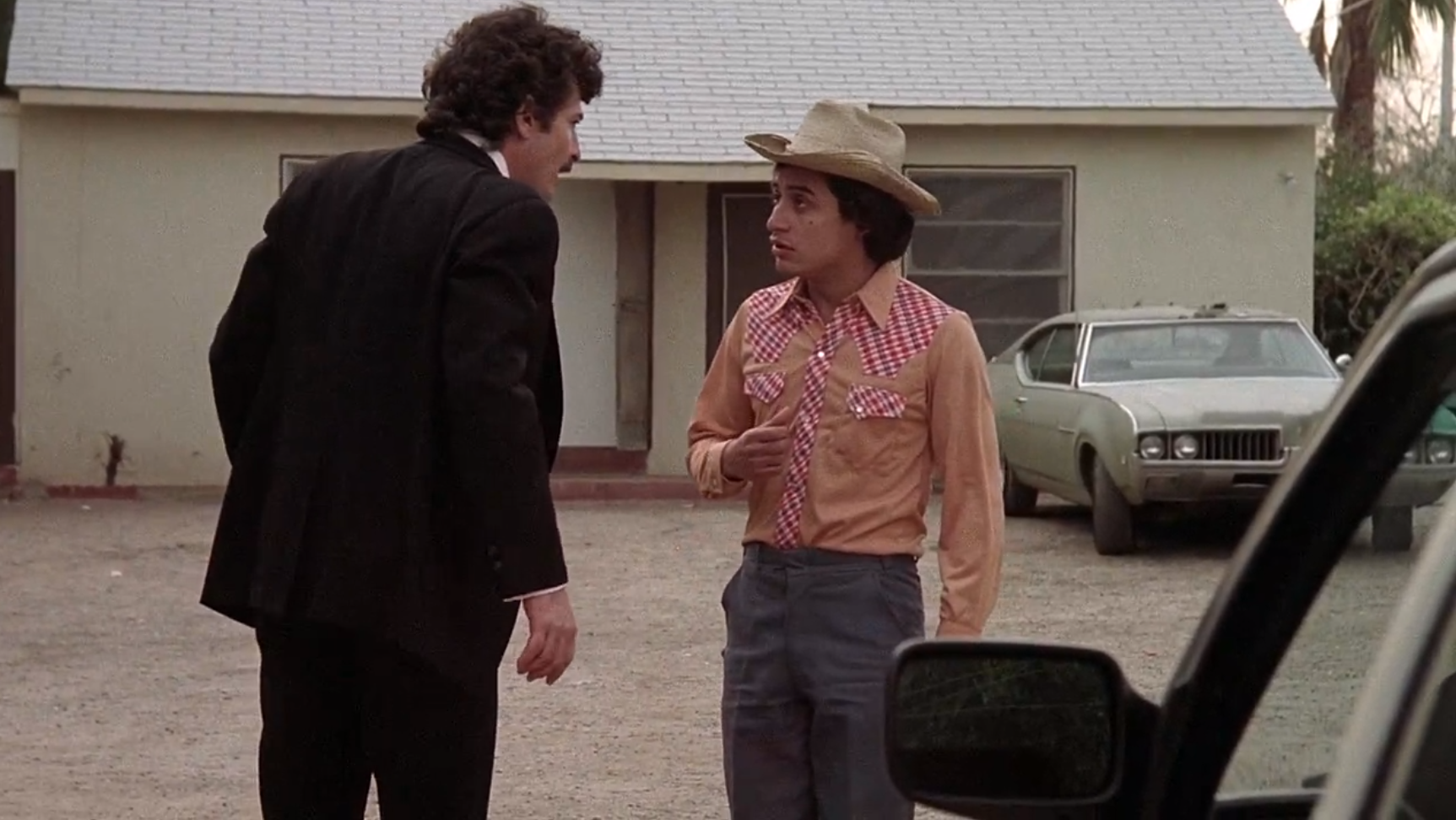
As Peary notes, this “exceptional film” about the travails of illegal immigration is “extremely moving”, and shows a side of American life not often portrayed in the movies. Fortunately, while the subject matter is relentlessly downbeat, director Gregory Nava manages to infuse some much-needed levity into certain scenes, such as when Rosa and Enrique are interrogated by the Border Patrol, and Enrique peppers his speech with swear words to pass as a Mexican (it works!). Peary laments the film’s “overly depressing” finale, noting, “The characters are already defeated — there is no need to destroy them.” But I found the ending to be appropriately authentic. This is not a film that tries to gloss over the hardships of immigration; instead, it shows that life for the working poor is difficult all over the world, and that it takes more than strong will to overcome systemic oppression.

Redeeming Qualities and Moments:

  • Zaide Silvia GutiĆ©rrez as Rosa
  • David Villalpando as Enrique
  • An authentic portrayal of Mayan village life in Guatemala
  • A realistic look at the hardships suffered by illegal immigrants trying to find work in America

Must See?
Yes. This remains one of the most powerful films about illegal immigration to date.

Categories

  • Foreign Gem
  • Historically Relevant

(Listed in 1001 Movies You Must See Before You Die)

Links:

Baby Love (1968)

Baby Love (1968)

“The poor bitch, she had nothing — no one to turn to, only me.”

Synopsis:
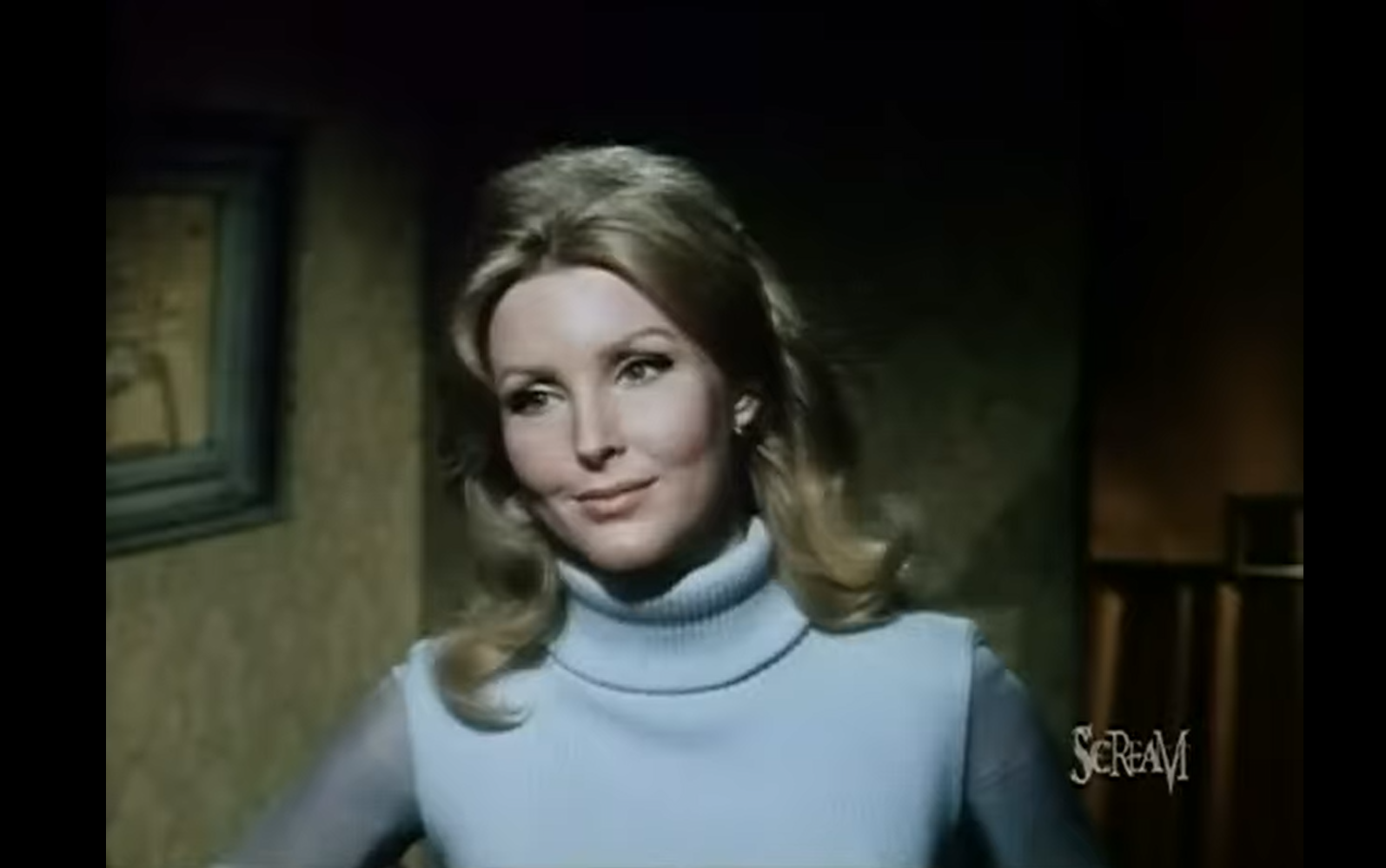
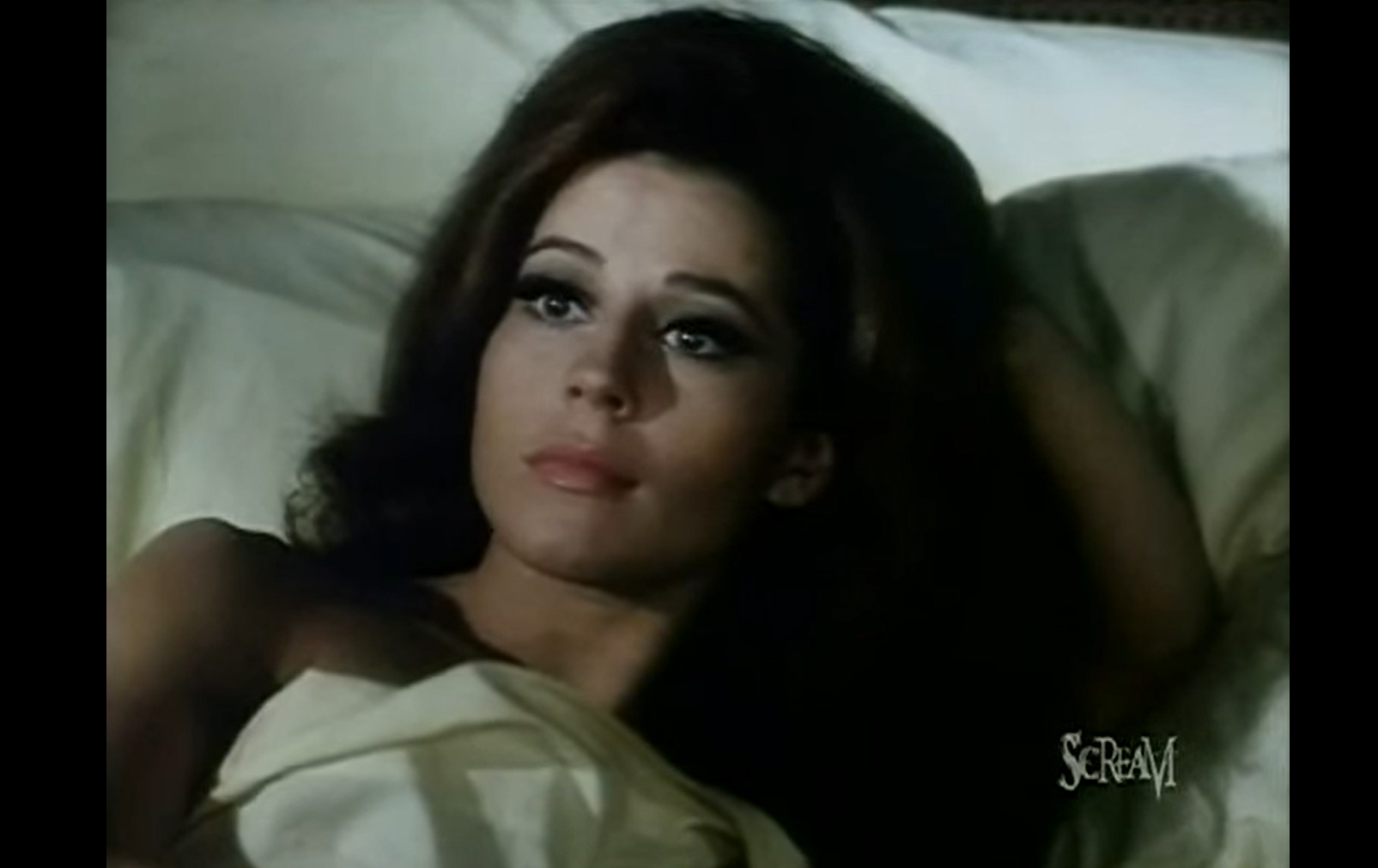
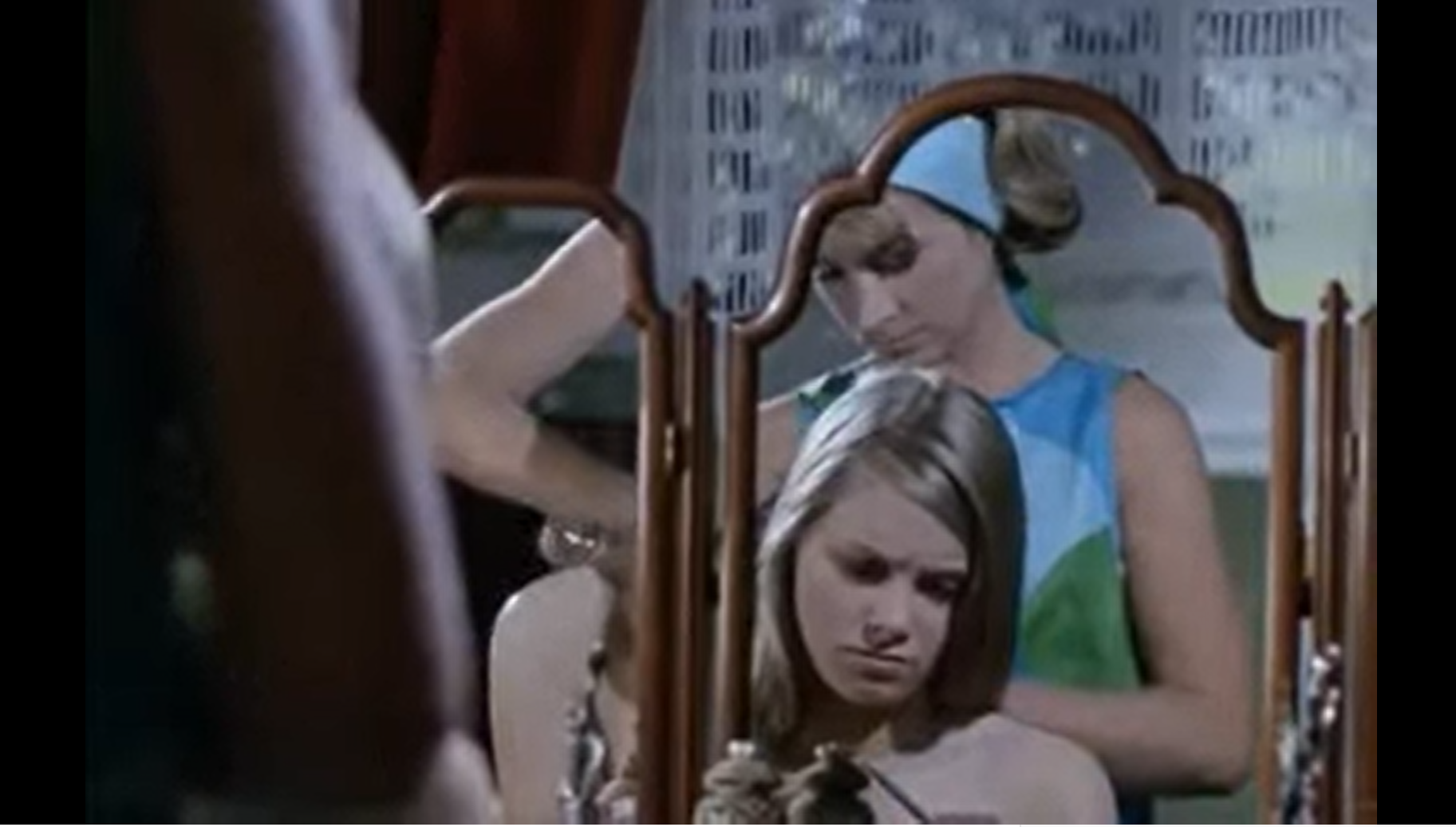
After her mother (Diana Dors) commits suicide, 15-year-old Luci (Linda Hayden) goes to live with her mother’s former lover (Keith Barron) and his family.

Genres, Themes, Actors, and Directors:

  • Catalysts
  • Femmes Fatales
  • Lesbianism

Response to Peary’s Review:
Peary’s review of this rarely seen British film focuses on the “mischievous, manipulative” nature of its lead character (nubile Linda Hayden), whose very presence turns her new family “against one another” and wrecks their “once happy home.” Indeed, he refers to it as a “weird little potboiler”, and calls it “fascinating in a perverse sort of way”. My take is different, however: I was impressed by director Alistair Reid’s attempt to show the history behind Luci’s behavior, with flashbacks and nightmares clearly revealing the source of her confusion and manipulation. She comes across as a sympathetic victim of a dysfunctional home rather than a ruthless vamp; this is a girl who has learned to exploit her body simply because that’s all she’s ever seen. The most interesting subplot by far focuses on the sexual awakening of Barron’s wife (Ann Lynn), who finds herself enormously attracted to Luci. Their scenes together are handled with grace, and could easily have carried the entire film. Unfortunately, the movie turns unnaturally melodramatic and contrived by the final scenes; as one IMDb contributor writes, “the ending is an anti-climax and suggests a loss of interest in the story”.

Redeeming Qualities and Moments:

  • Ann Lynn’s performance as a woman coming to terms with her lesbian attractions
  • Linda Hayden as the sexy young catalyst who turns an entire household upside down
  • Creative direction

Must See?
No, but it’s a good little film worth seeking out.

Links:

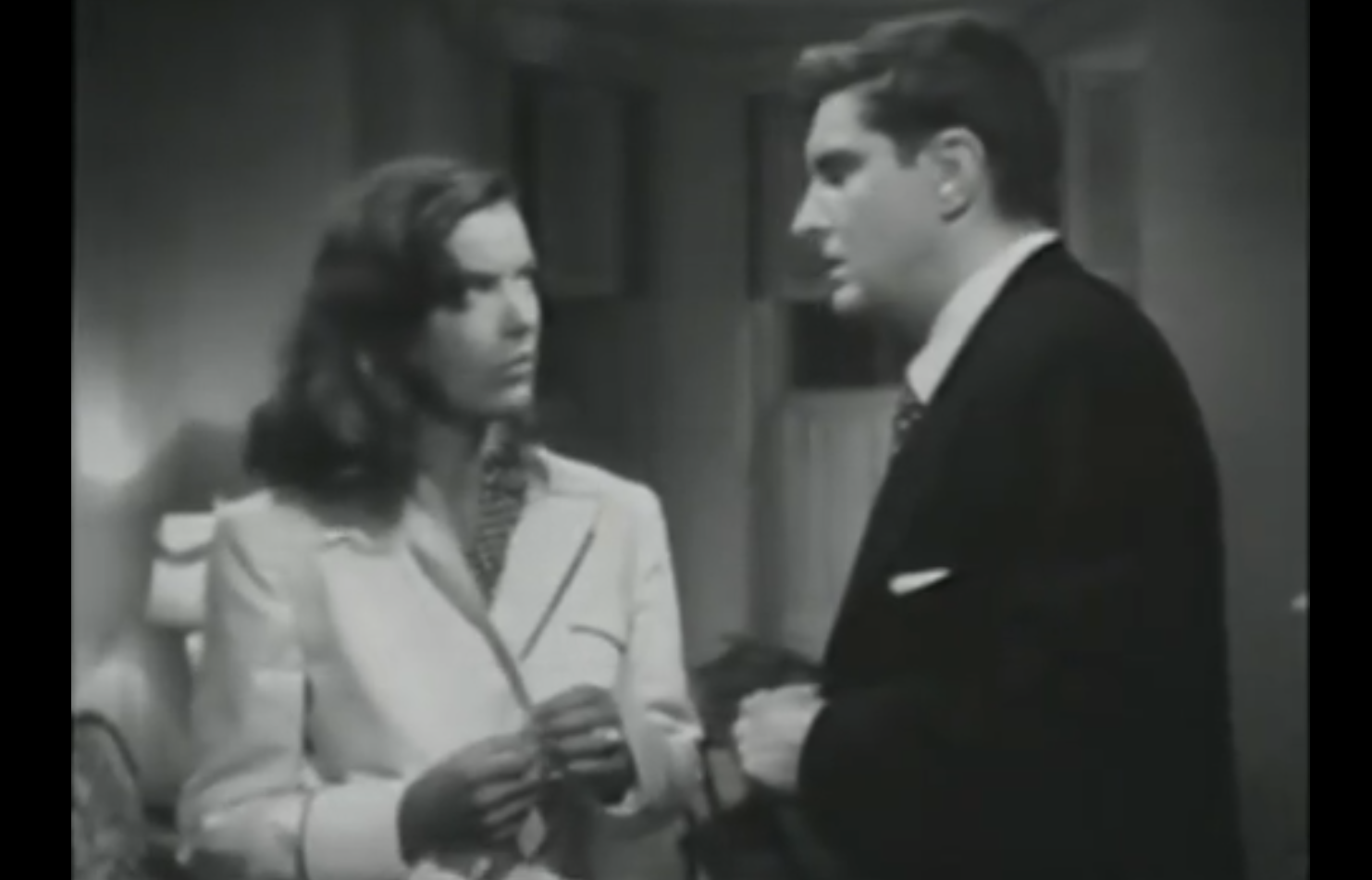
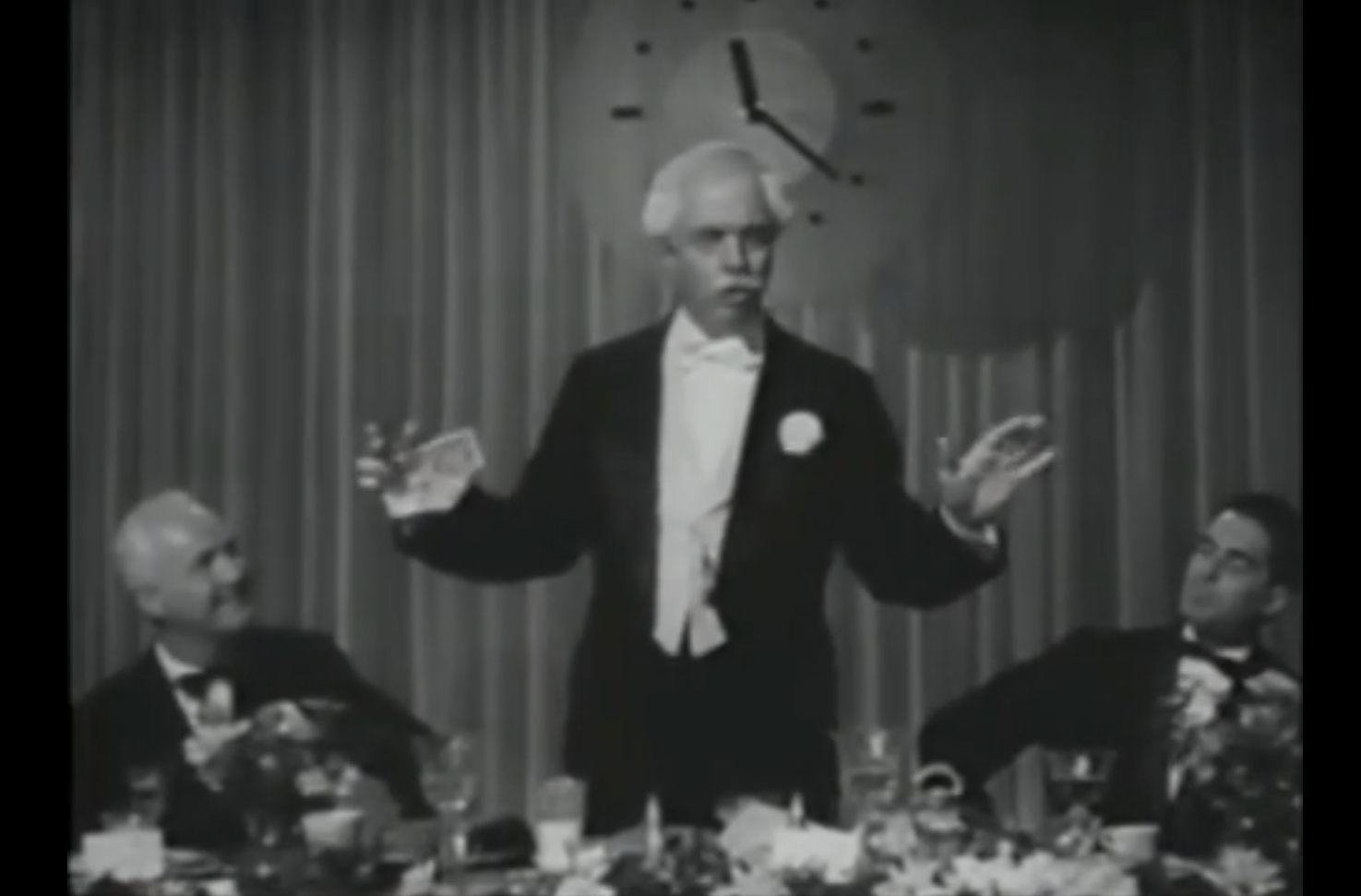
Senator Was Indiscreet, The (1947)

Senator Was Indiscreet, The (1947)

“Owning a nice little diary is like owning a nice little atom bomb — even if you never do anything with it, it’s a comfort just to know it’s there.”

Synopsis:
Dim-witted Senator Ashton (William Powell) angles for the presidency by using his diary as a source of blackmail material against his fellow politicians.

Genres, Themes, Actors, and Directors:

  • Blackmail
  • Comedy
  • Ella Raines Films
  • Hans Conried Films
  • Political Corruption
  • Satires and Spoofs
  • William Powell Films

Response to Peary’s Review:
As Peary notes, this amusing political satire by playwright George S. Kaufman (his lone directorial effort) doesn’t quite have the “frantic dialogue, idiosyncratic secondary characters, and political bite” it needs to be a classic screwball comedy a la Preston Sturges. Indeed, the wit is often heavy-handed, and several of the characters (i.e., the paranoid “Bolshevik waiter” who constantly accuses Senator Ashton of anti-communist prejudice) are played a bit too broadly. Nonetheless, the film benefits from a surprisingly satisfying ‘whodunit’ ending, and solid performances by the lead actors. In addition, it cleverly illustrates — to a satirical degree — the notion that competency isn’t necessarily a factor in getting elected to public office, and that corruption in politics is rampant. Given the current political climate in our country, these facts seem more relevant now than ever.

Redeeming Qualities and Moments:

  • Ella Raines as the energetic young journalist who hopes to expose Ashton’s diary
  • William Powell’s over-the-top performance as the buffoonish senator
  • The humorous ongoing riff whereby a political aide takes hours to get in touch with every politician exposed in Powell’s diary
  • Some zingy one-liners: “There’s an old saying in my state — if you can’t beat ’em, bribe ’em!”

Must See?
No, though it’s an interesting curio in film history, and worth watching at least once.

Links:

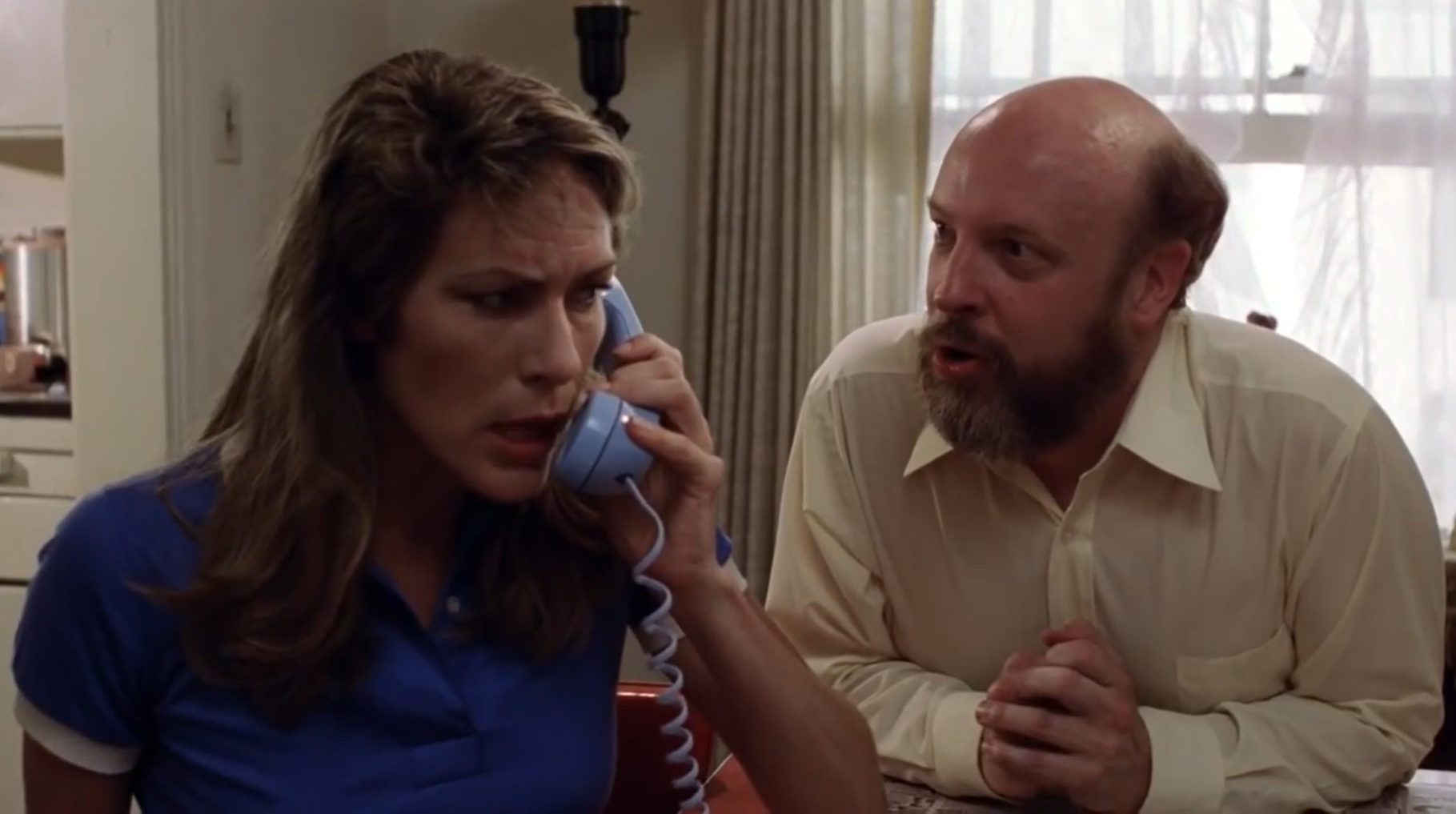
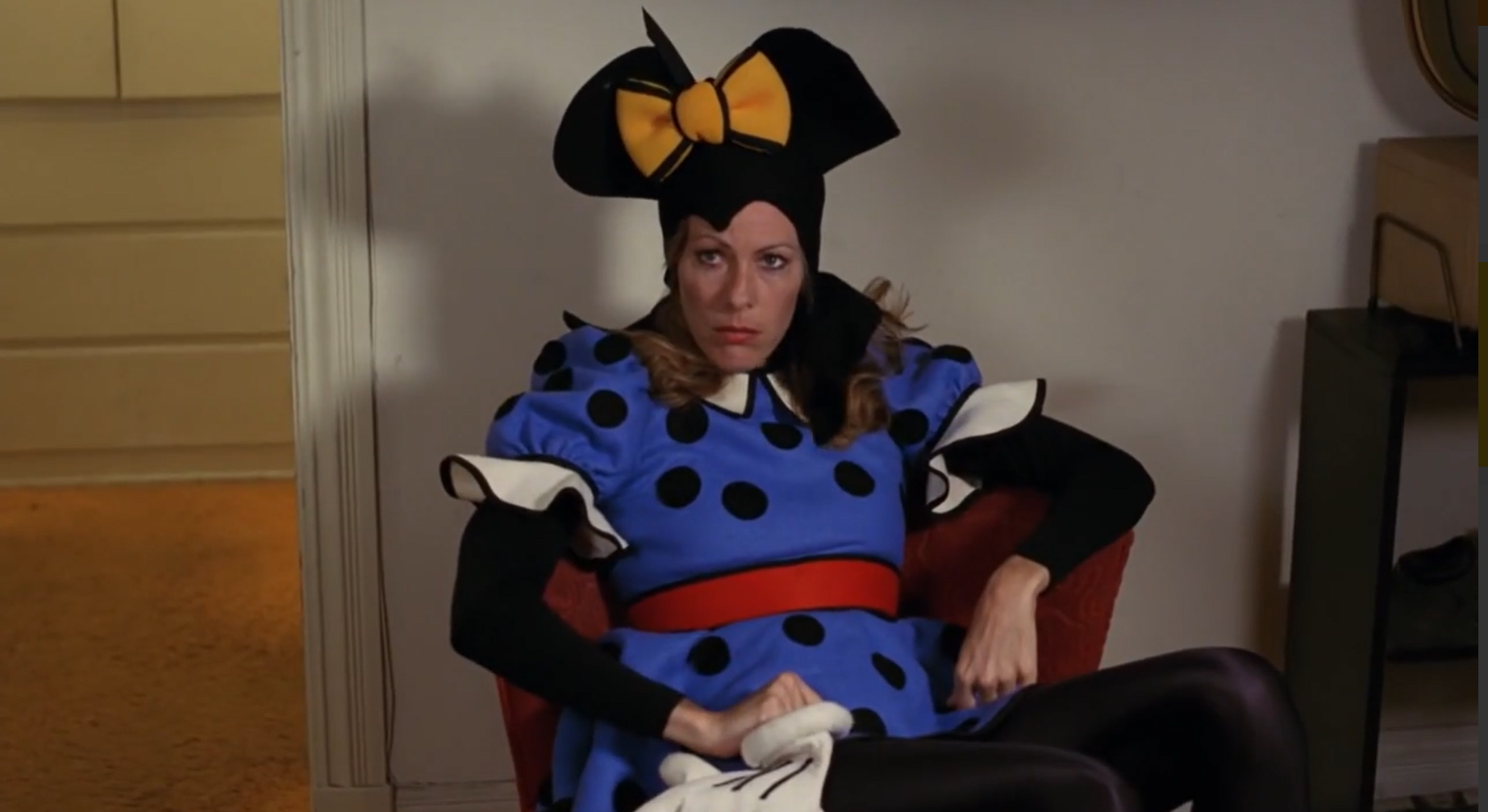
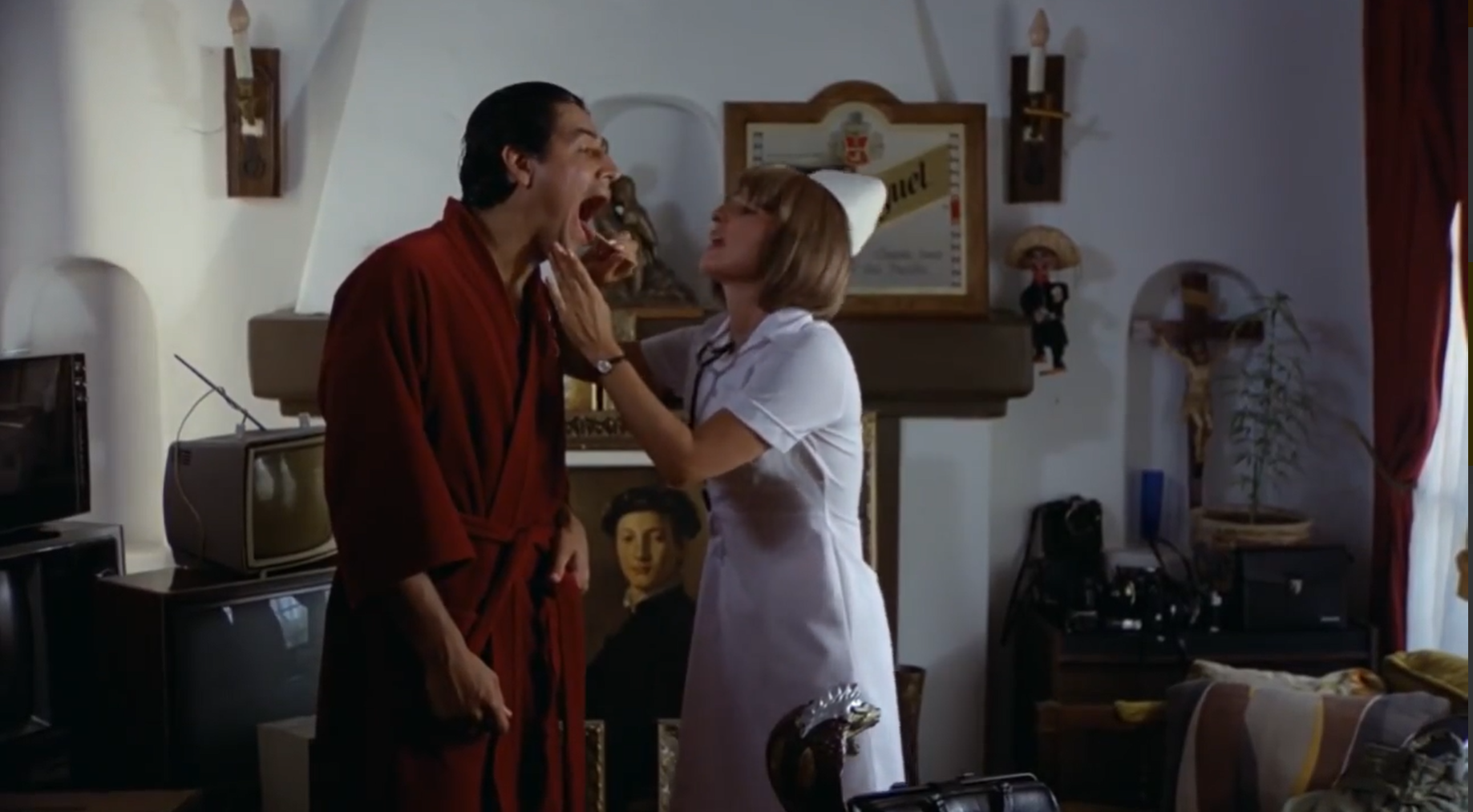
Eating Raoul (1982)

Eating Raoul (1982)

“Mary — I just killed a man.”

Synopsis:
Straight-laced couple Paul and Mary Bland (Paul Bartel and Mary Woronov) need money to open their own restaurant, so they decide to lure sexual perverts to their house and rob them. Things get sticky, however, when an opportunistic locksmith named Raoul (Robert Beltran) becomes their partner in crime, and seduces Mary.

Genres, Themes, Actors, and Directors:

  • Black Comedy
  • Ed Begley Jr. Films
  • Love Triangle
  • S&M
  • Serial Killers

Response to Peary’s Review:
This wickedly humorous black comedy — the ultimate “midnight movie” — never oversteps the boundaries of pure camp, taking place in an alternate universe where one strong whack on the head with a skillet can kill a man, corpses are easily sold as dog food, and every other man is a lech or a con-artist. Indeed, it’s easy to sympathize with the well-meaning Blands, who are surrounded by degradation on all sides, and can’t seem to get by without joining the fray. As Peary notes, the primary dilemma in the movie — will Woronov “remain faithful to her mild-mannered, asexual husband or kill him and run off with Raoul?” — is an interesting one, and doesn’t resolve as expected. This is a rare film where all people — good or bad — get what’s coming to them.

Redeeming Qualities and Moments:

  • Woronov and Bartel’s strong performances as the sympathetic murderers
  • Hilarious S&M costumes
  • Susan Saiger as Doris the Dominatrix, who wears many different hats
  • Edie McClurg in a tiny, scene-stealing moment as a swinger

Must See?
Yes. This low-budget black comedy is an essential part of independent cinema history.

Categories

  • Cult Movie

Links:

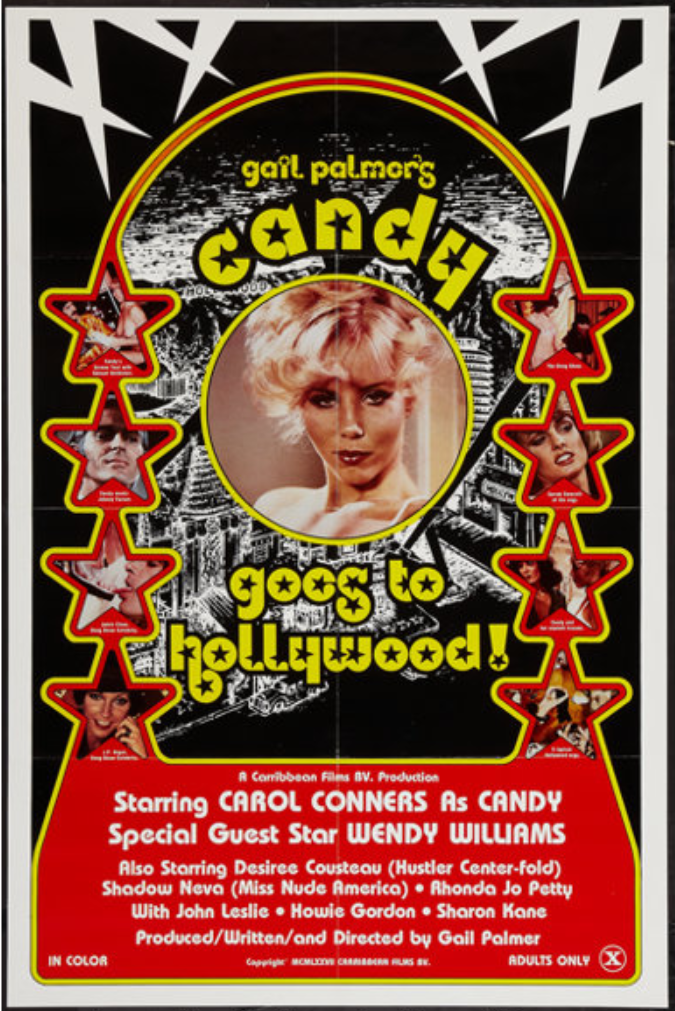
Candy Goes to Hollywood (1979)

Candy Goes to Hollywood (1979)

“Anyone who can sing that much on her chest deserves a big — 69!”

Synopsis:
Aspiring actress Candy Christian (Carol Conners) heads to Hollywood, where she is exploited by sleazy talent agent Johnny Dooropener (John Leslie).

Genres, Themes, Actors, and Directors:

  • Adult Films
  • Aspiring Stars
  • Dumb Blondes
  • Hollywood

Response to Peary’s Review:
Offensive in nearly every way, this adult comedy (directed by a woman!) is the ultimate “dumb blonde” movie, featuring a female lead so dense she allows herself to be sexually manipulated again and again without learning any better. Of course, this is all part of the inexorable “logic” of p. films — but as Peary notes, “[p.] filmmakers have got to figure out ways to get female characters into bed other than making them childish bubbleheads who can be talked into anything.” With that said, the movie does contain some moments of genuine humor, and is a relatively pointed satire on the difficulties of breaking into Hollywood.

Redeeming Qualities and Moments:

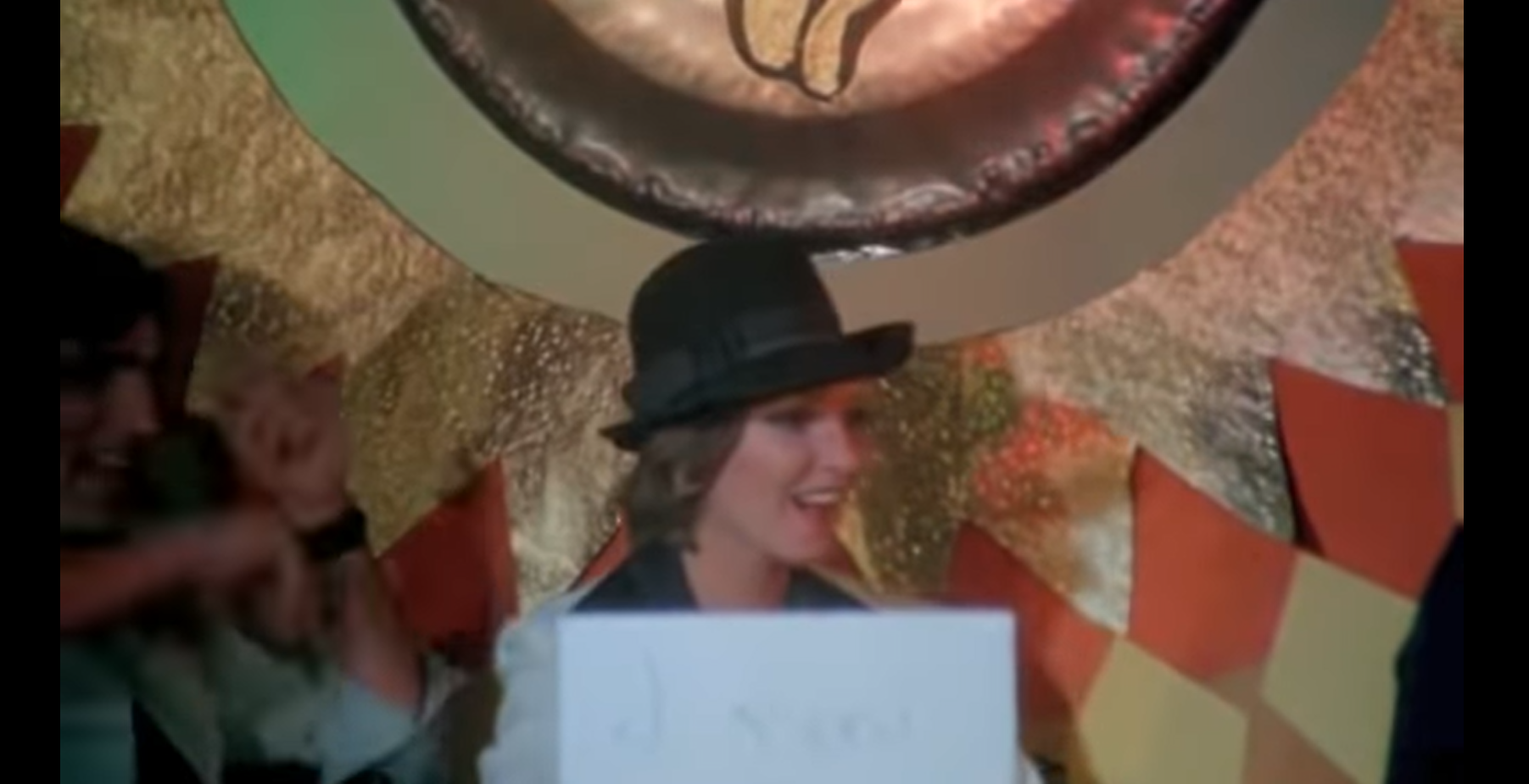
  • A fairly amusing spoof of the Gong Show (here called “The Dong Show”)

Must See?
No; you can skip this one

Links:

Porky’s (1981)

Porky’s (1981)

“You just got to show them who’s boss.”

Synopsis:
When a group of horny teenage boys are thrown out of a sleazy strip joint named Porky’s and a corrupt sheriff (Alex Karras) damages their car, they vow to get their revenge.

Genres, Themes, Actors, and Directors:

  • Comedy
  • Revenge
  • Susan Clark Films
  • Teenagers
  • Virginity

Response to Peary’s Review:
As Peary notes, this “smutty juvenile comedy” centering “on a group of jerky high-school boys who have sex on the brain” is amazingly “unfunny”, with “all the humor… vulgar and sex-related.” The characters are “repulsive”, the acting is “awful”, and director “Bob Clark’s idea of a good joke is having one character embarrass himself/herself sexually and having lots of other characters stand around laughing.” However, given what a “phenomenal commercial success” this flick was (and the cult following it continues to maintain), film fanatics should probably sit through it once. Good luck.

Redeeming Qualities and Moments:

  • A surprisingly serious subplot in which a boy (Cyril O’Reilly) deals with both his abusive father and his anti-semitism

Must See?
Yes, but simply for its cult status and infamy as one of the first of the “Teen Sex Gross Out” films.

Categories

  • Cult Movie
  • Historically Relevant

Links:

Ride Lonesome (1959)

Ride Lonesome (1959)

“There are some things a man just can’t ride around.”

Synopsis:
A bounty hunter (Randolph Scott) seeking his wife’s killer (Lee Van Cleef) uses the killer’s brother (James Best) as bait.

Genres:

  • Bounty Hunters
  • Budd Boetticher Films
  • James Coburn Films
  • Lee Van Cleef Films
  • Outlaws
  • Randolph Scott Films
  • Revenge
  • Western

Response to Peary’s Review:
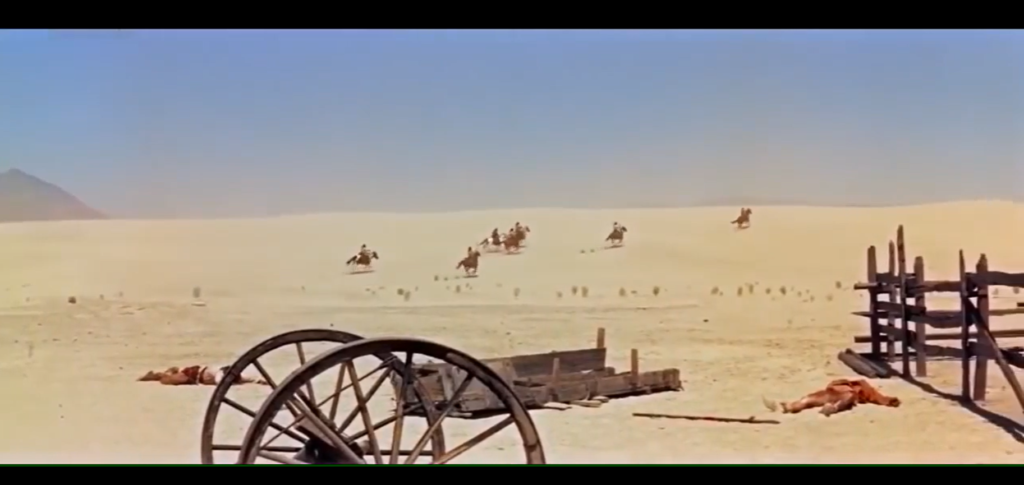
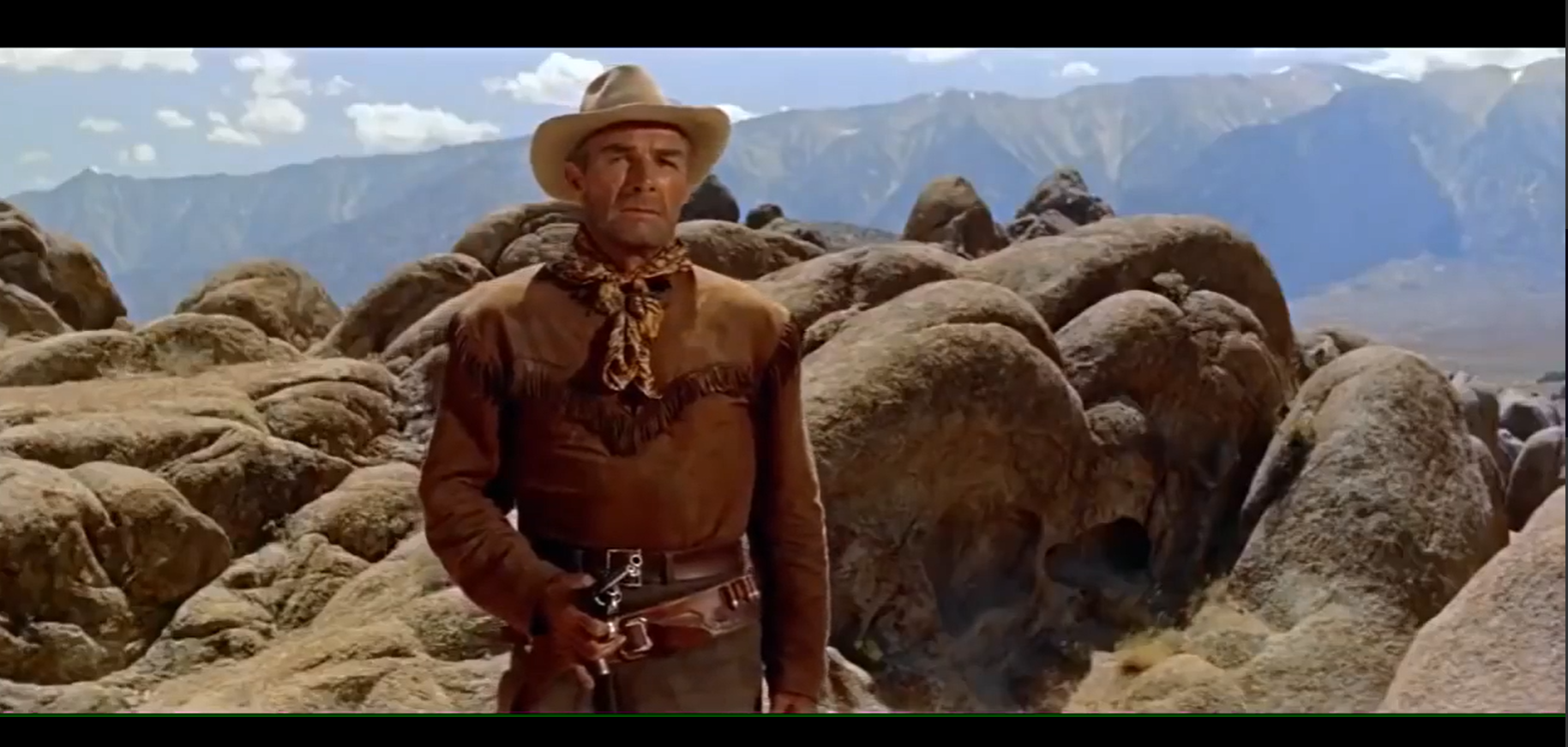
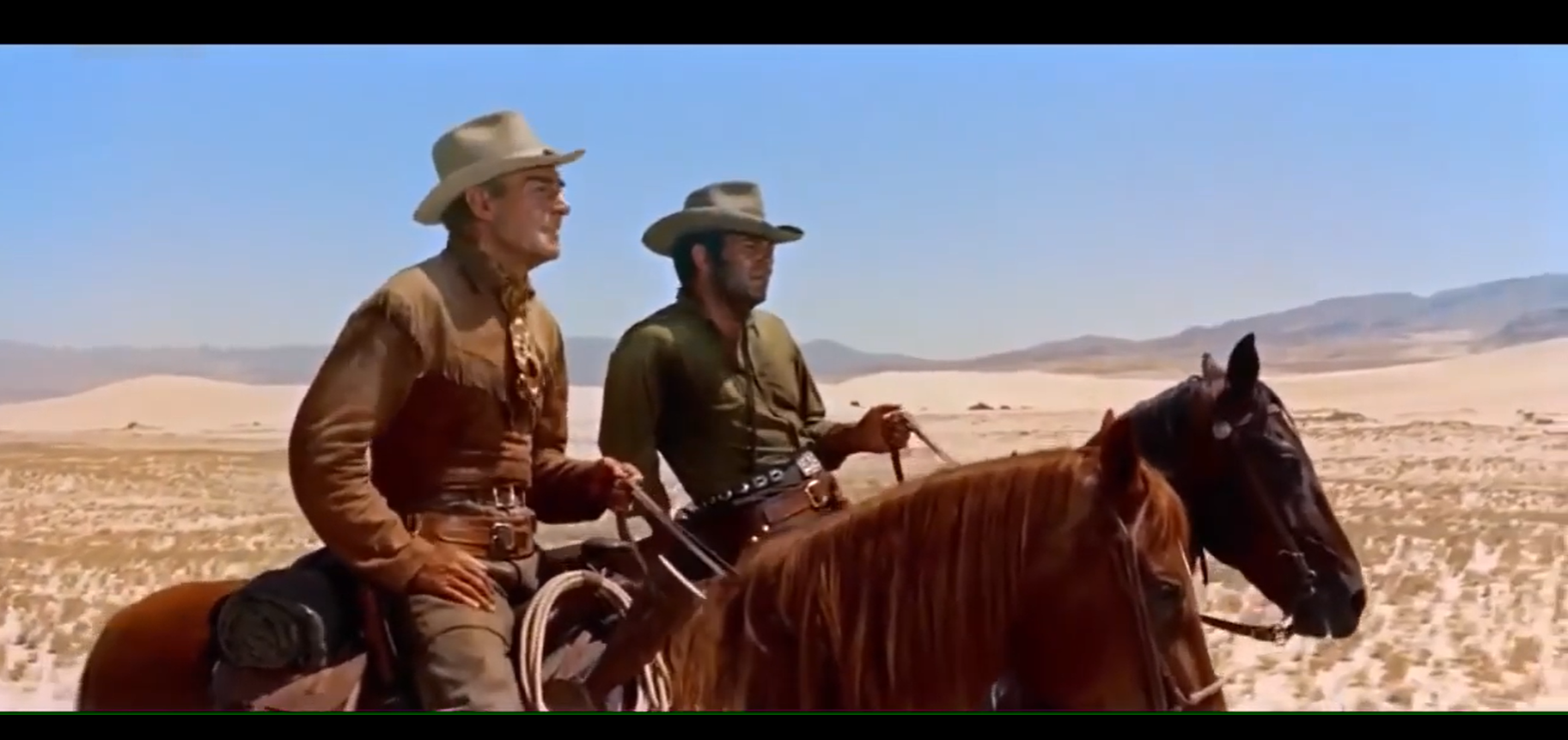
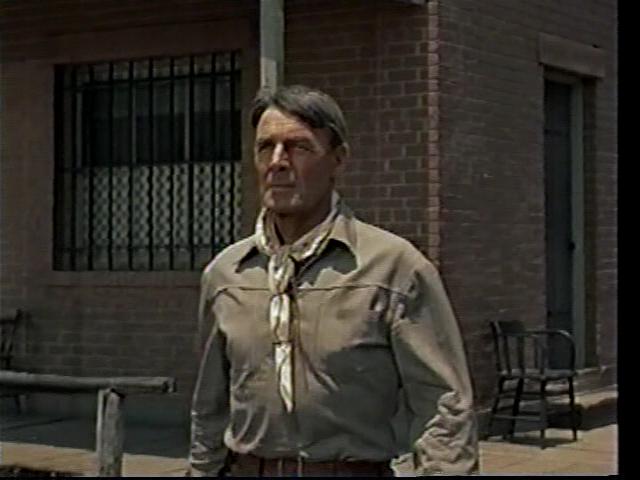
This “powerful, provocative” western by Budd Boetticher manages to explore several important themes within the space of just 73 minutes. As in many of the other Boetticher/Scott films, Scott’s character is once again hell-bent on seeking vengeance for his wife’s death.
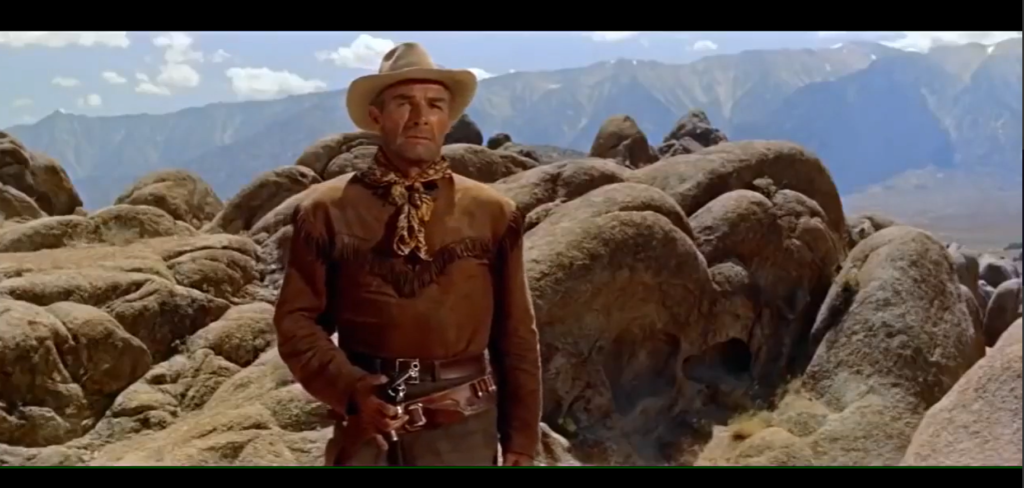
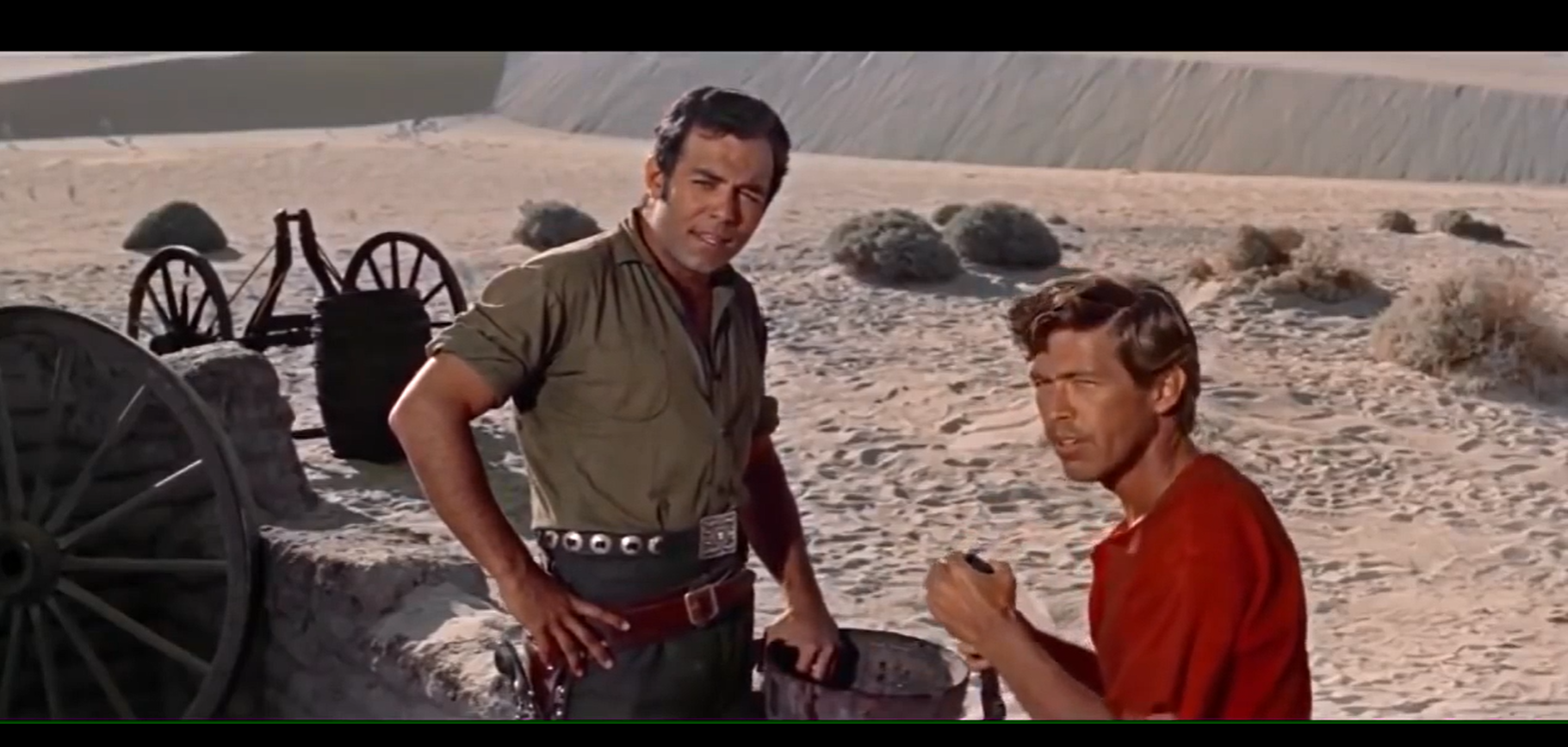
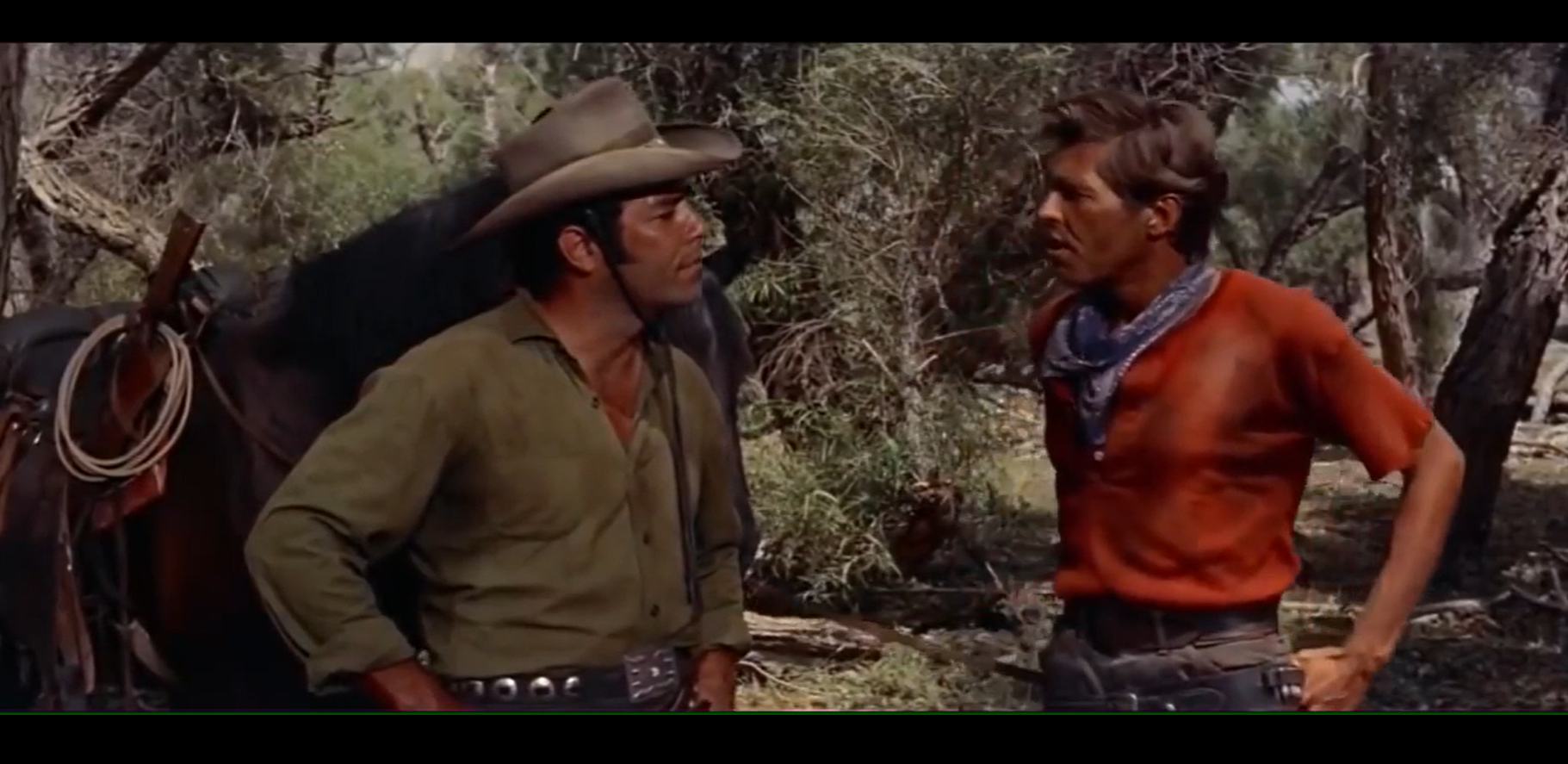
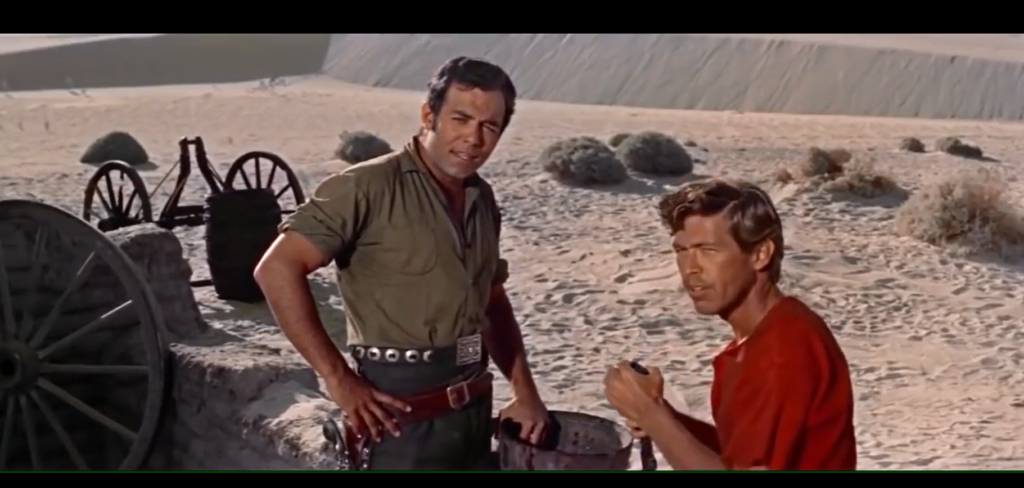
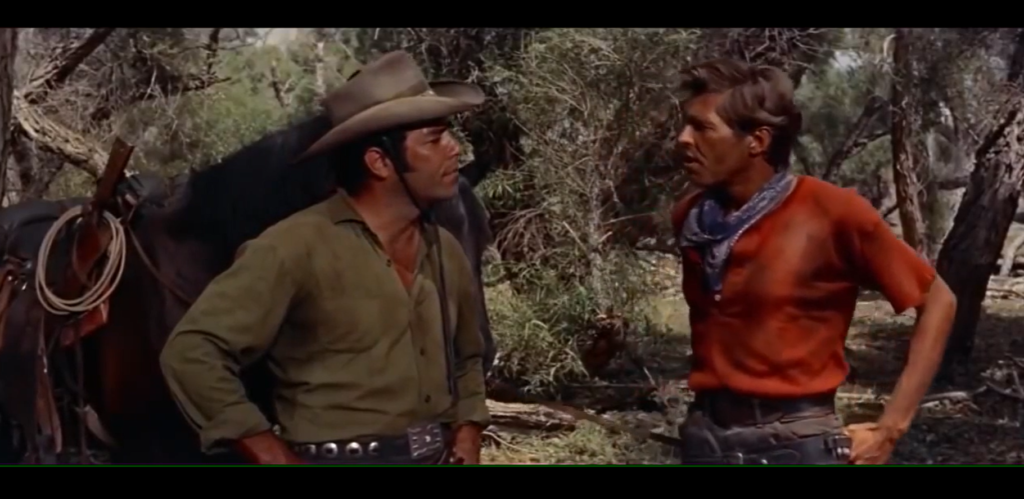
But his story is balanced by that of two outlaws — one (Pernell Roberts) calculating, the other (James Coburn) gullible — who have competing plans for the killer’s murderous brother: by bringing him in themselves, they can receive total amnesty for their previous crimes.
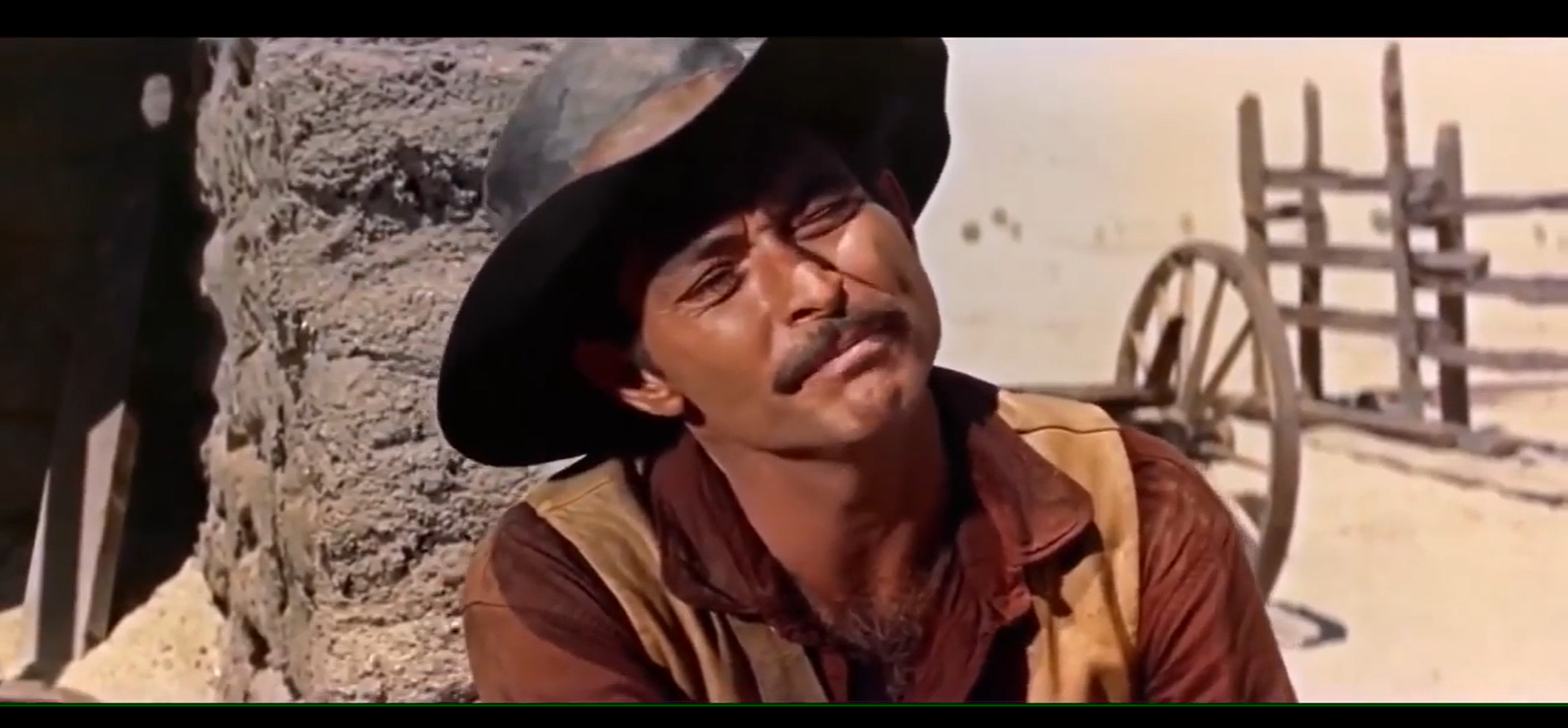
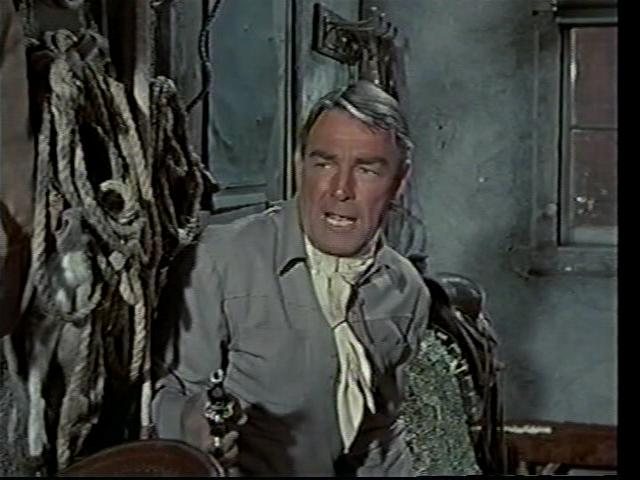
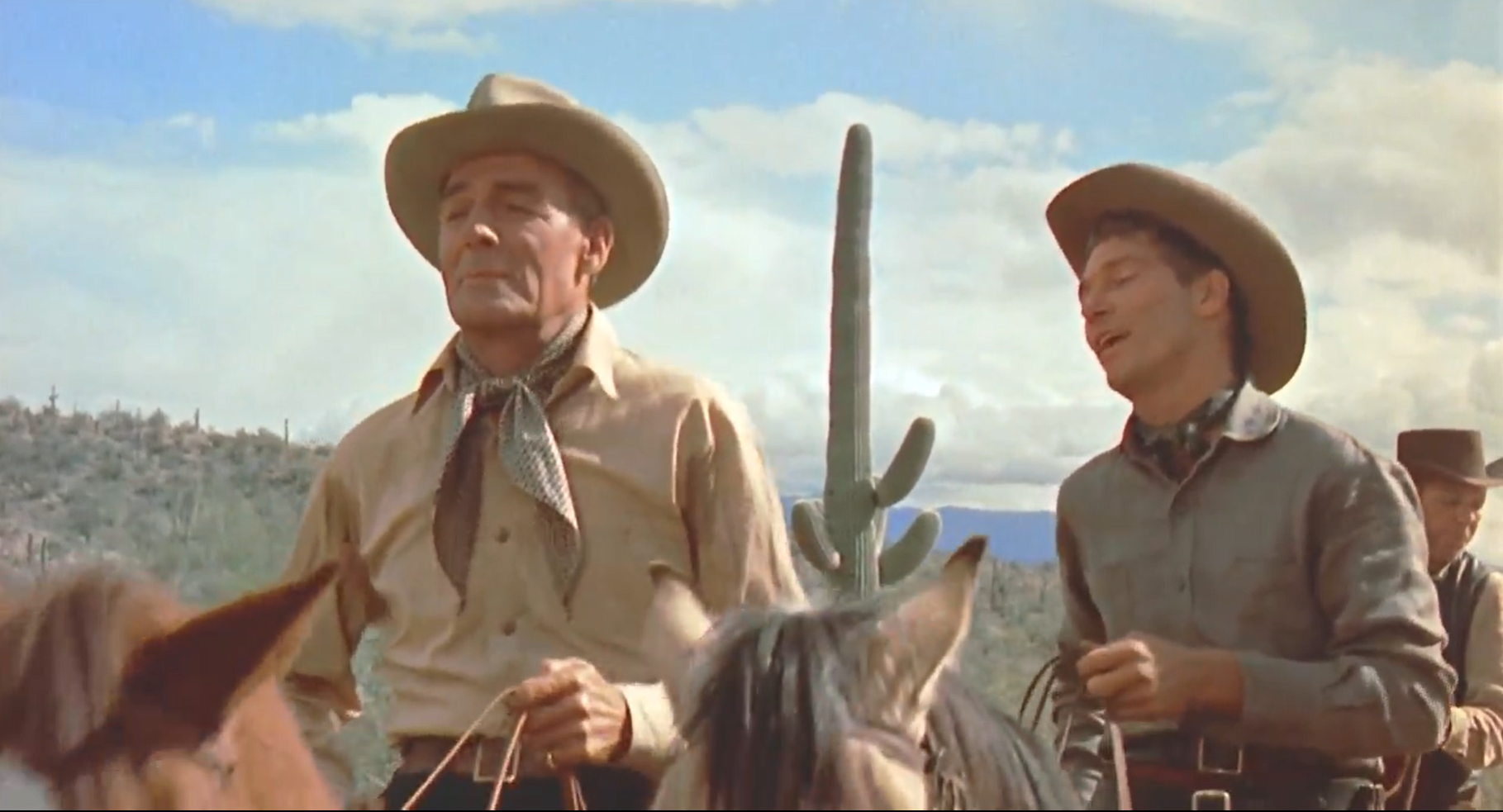
Since the true villain of the film (Van Cleef) is rarely on-screen:
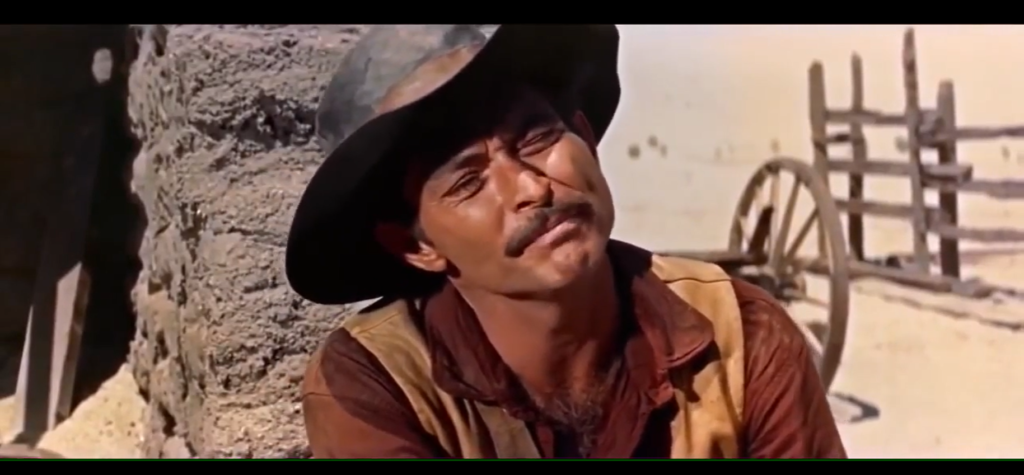
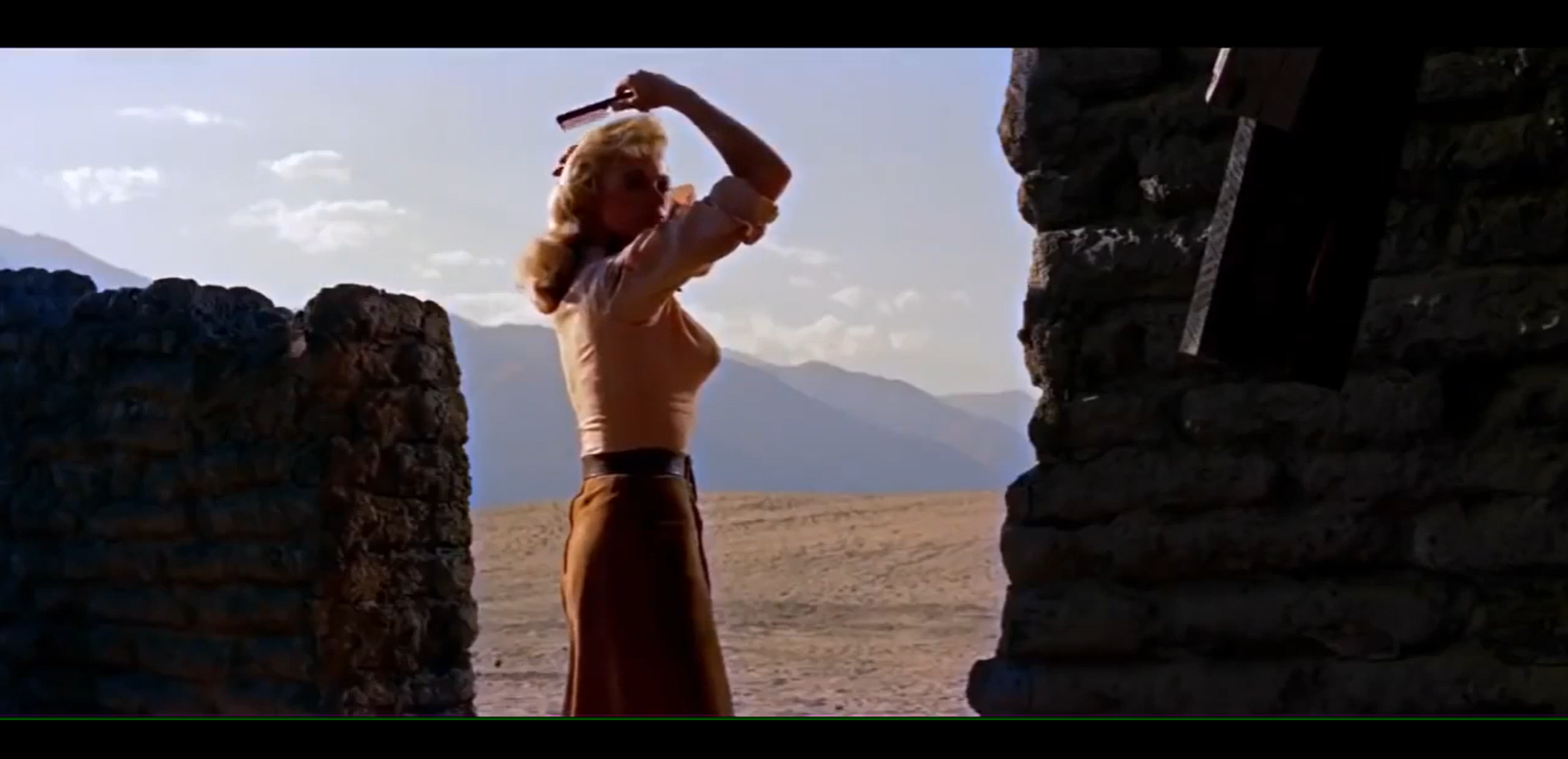
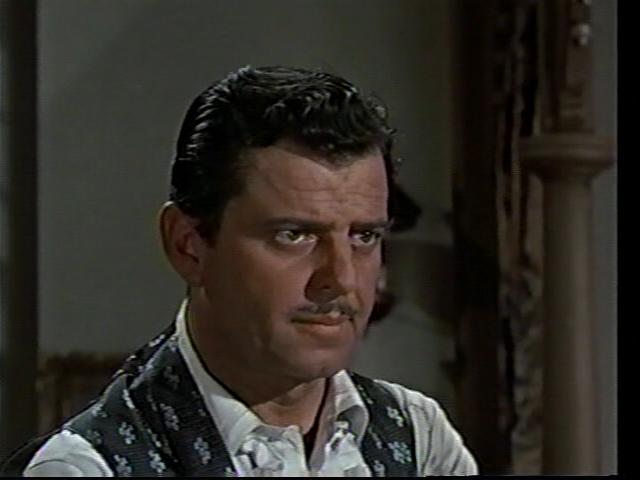
… the primary interactions thus take place between Scott, Roberts, and a buxomy young widow (Karen Steele) they pick up along the way, who represents the possibility of a new life for Roberts:
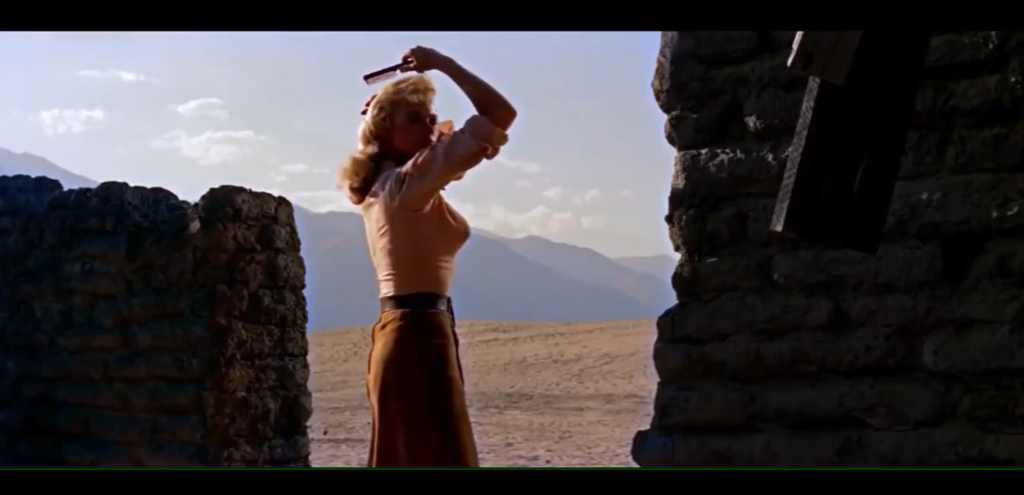
Unfortunately, despite its unique take on Western themes, Ride Lonesome is still very much a product of its time — as referenced in the following exchange about Steele, which reveals antiquated notions about what exactly women “need”:

Coburn: I wonder what she’ll do now she’s out a man?
Roberts: Find another.
Coburn: Well, she loved that fella hard enough… She’d stay a widow, wouldn’t she?
Roberts: Ain’t the kind — not her…. She’s the kind that’s got a need — a deep, lonely need only a man can get at.

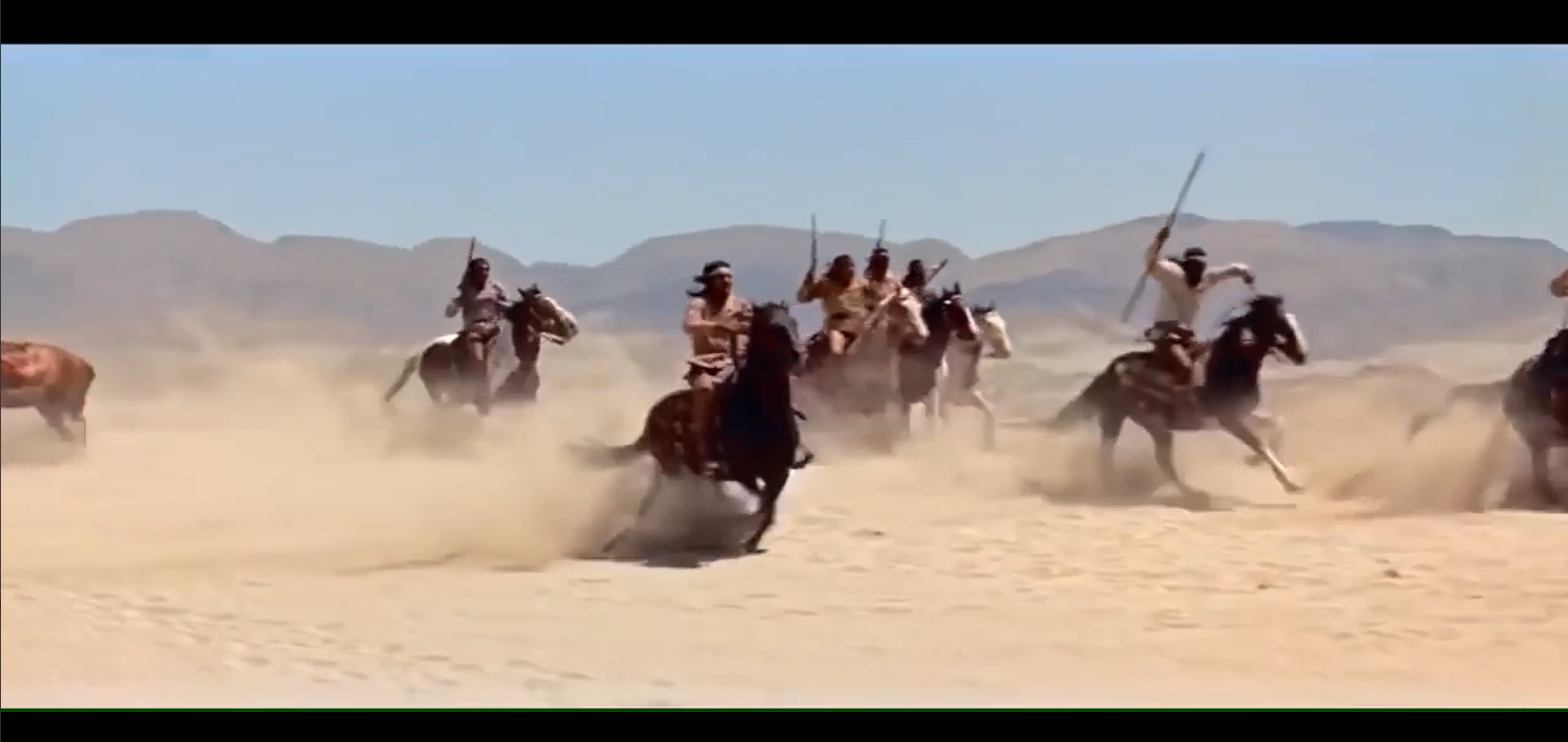
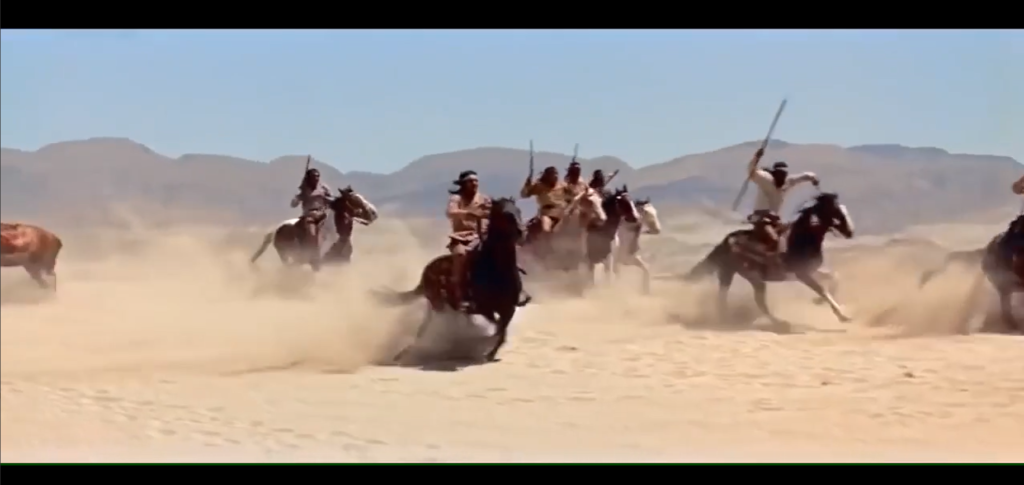
In addition, I’m puzzled by screenwriter Burt Kennedy’s decision to include a skirmish with local Indians, since it does nothing to further the plot.
However, overall this remains a provocative western by a master director, and is certainly worth a look.

Redeeming Qualities and Moments:

  • Pernell Roberts and James Coburn (in his screen debut) as the opportunistic outlaws
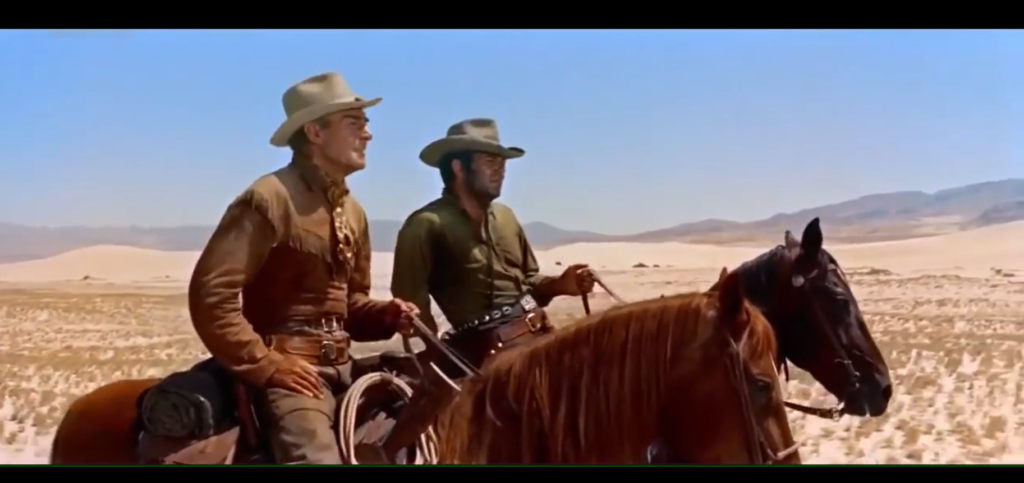
  • Beautiful cinematography and landscapes
Must See?
Yes; this is one of the best known of the Boetticher/Scott films, and should be seen by every film fanatic.

Categories

  • Important Director

(Listed in 1001 Movies You Must See Before You Die)

Links:

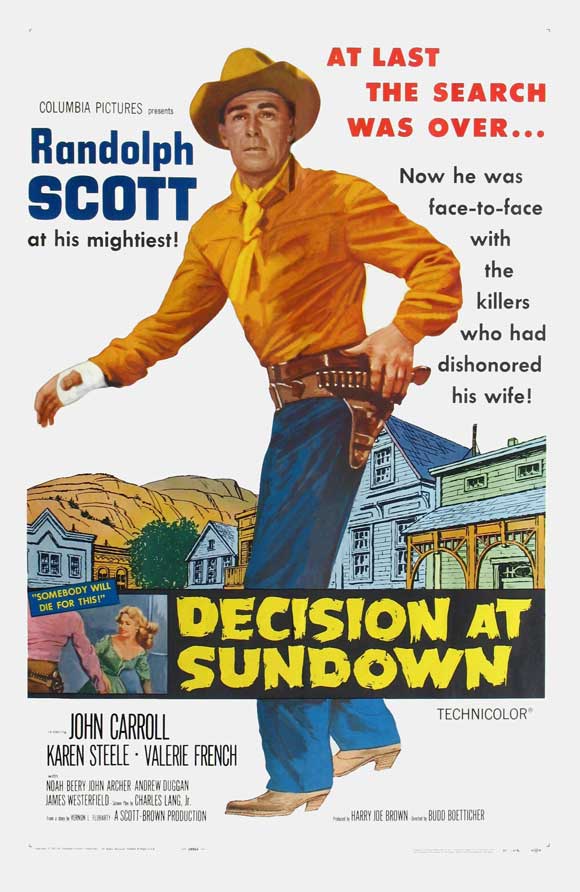
Decision at Sundown (1957)

Decision at Sundown (1957)

“A man’s gotta draw the line somewhere if he’s going to go on living with himself.”

Synopsis:
A man (Randolph Scott) obsessed with avenging his wife’s death rides into the town of Sundown and threatens to kill the local head honcho, Tate Kimbrough (John Carroll).

Genres, Themes, Actors, and Directors:

  • Budd Boetticher Films
  • Catalysts
  • Randolph Scott Films
  • Revenge
  • Western

Response to Peary’s Review:
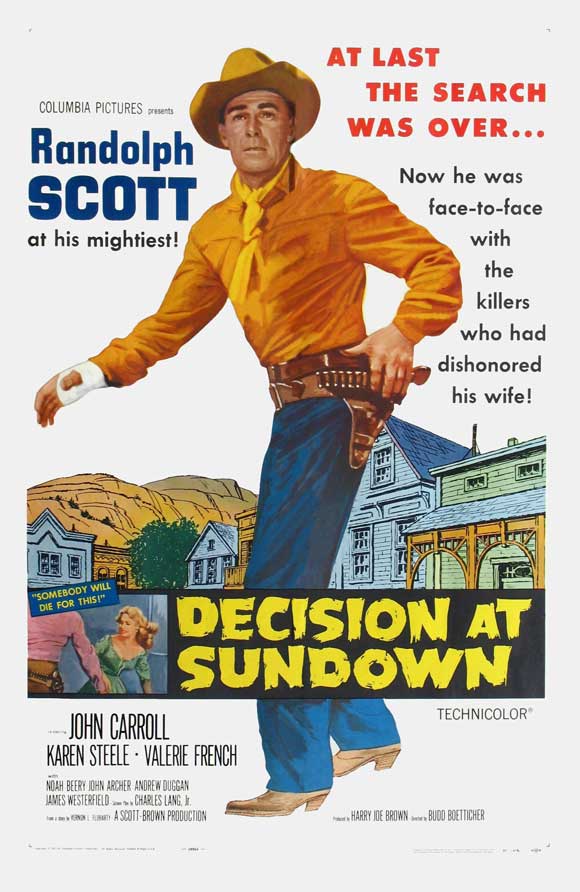
This surprisingly tense and effective western about a man (Scott) “obsessed with killing [a] conceited dandy” (John Carroll) who “had an affair with [his] wife prior to her suicide” adds a new twist to the trope of vengeance in the old West. Although the protagonist (Scott) stubbornly refuses to recognize the irrationality of his obsession, his visit serves as a catalyst for the inhabitants of Sundown, who suddenly realize the folly of their subservience to Carroll. As Peary notes, the film is “well directed, offbeat, and psychologically complex,” with an “effective but downbeat script” by Charles Lang, Jr. However, Peary adds he has “a hard time enjoying [the] film because Scott’s character is too crazed by revenge to admire”; like “all Boetticher heroes, he must come to terms with his own flaws, obsessions, and blindness.” Lang’s screenplay moves along at a fast clip, and makes excellent use of a surprise revelation, a stalled wedding, a daylong stand-off, and a “satisfying, unusual ending.” This one remains well worth a viewing.

Redeeming Qualities and Moments:

  • Randolph Scott as a man nearly blinded by obsessive vengeance
  • John Carroll’s surprisingly nuanced characterization as the womanizing Tate Kimbrough
  • Exciting use of claustrophobic locales
  • A surprising ending

Must See?
Yes. This remains one of Boetticher’s finest and most unusual westerns.

Categories

  • Important Director

Links:

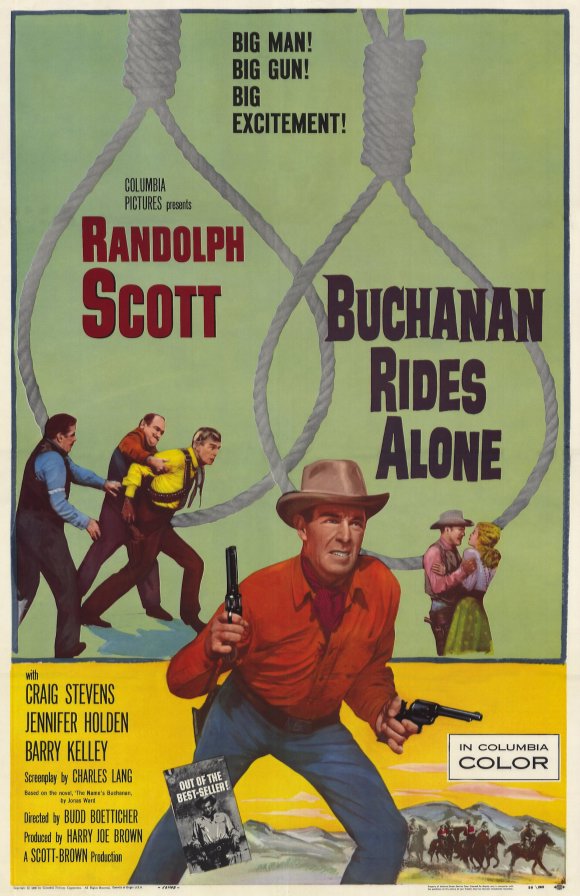
Buchanan Rides Alone (1958)

Buchanan Rides Alone (1958)

“The name’s Buchanan.”

Synopsis:
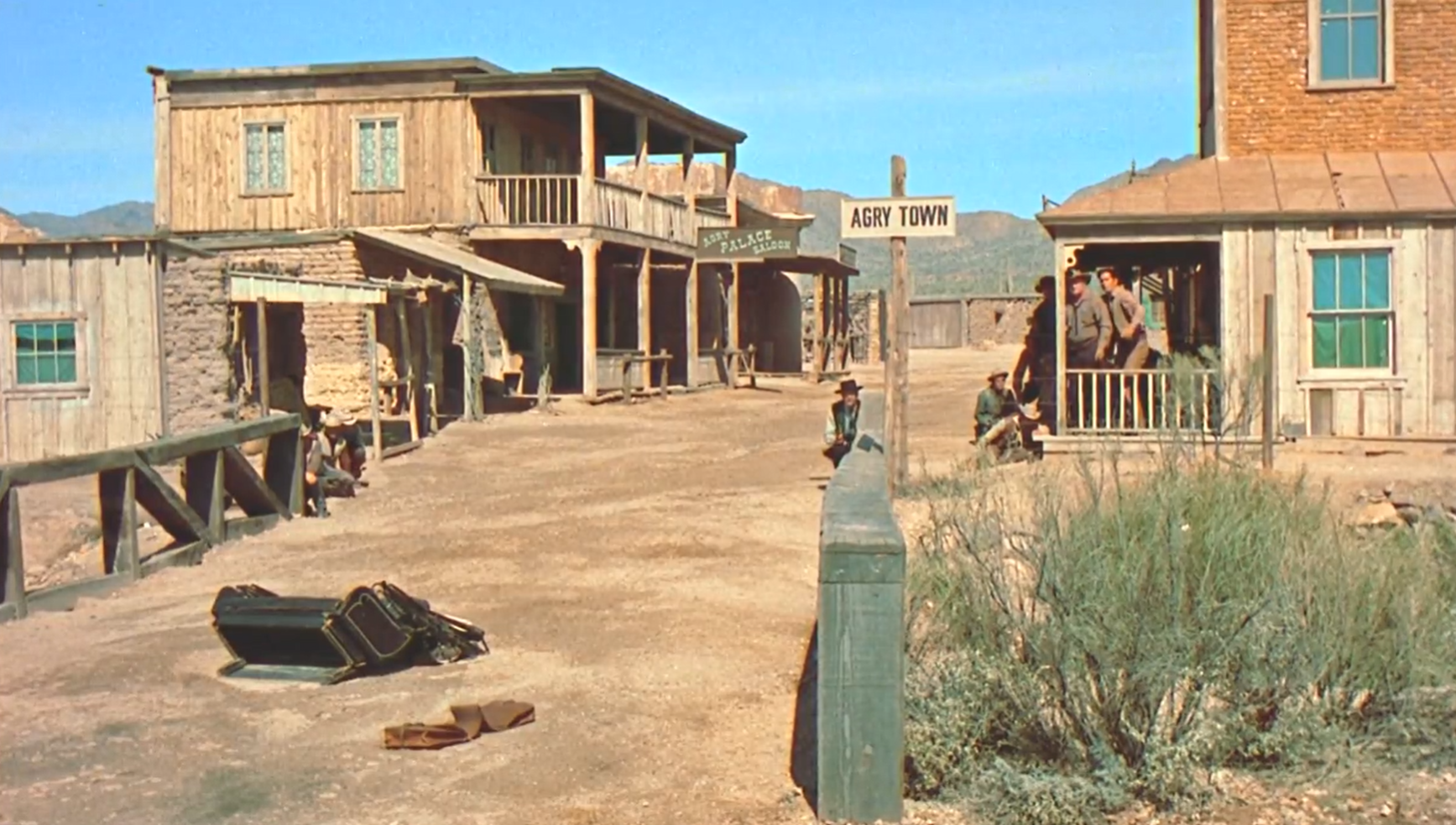
When heading home through the corrupt border town of Agry, a lone rider (Randolph Scott) gets embroiled in a feud between the Agry brothers and a Mexican family.

Genres, Themes, Actors, and Directors:

  • Budd Boetticher Films
  • Corruption
  • Randolph Scott Films
  • Revenge
  • Western

Response to Peary’s Review:
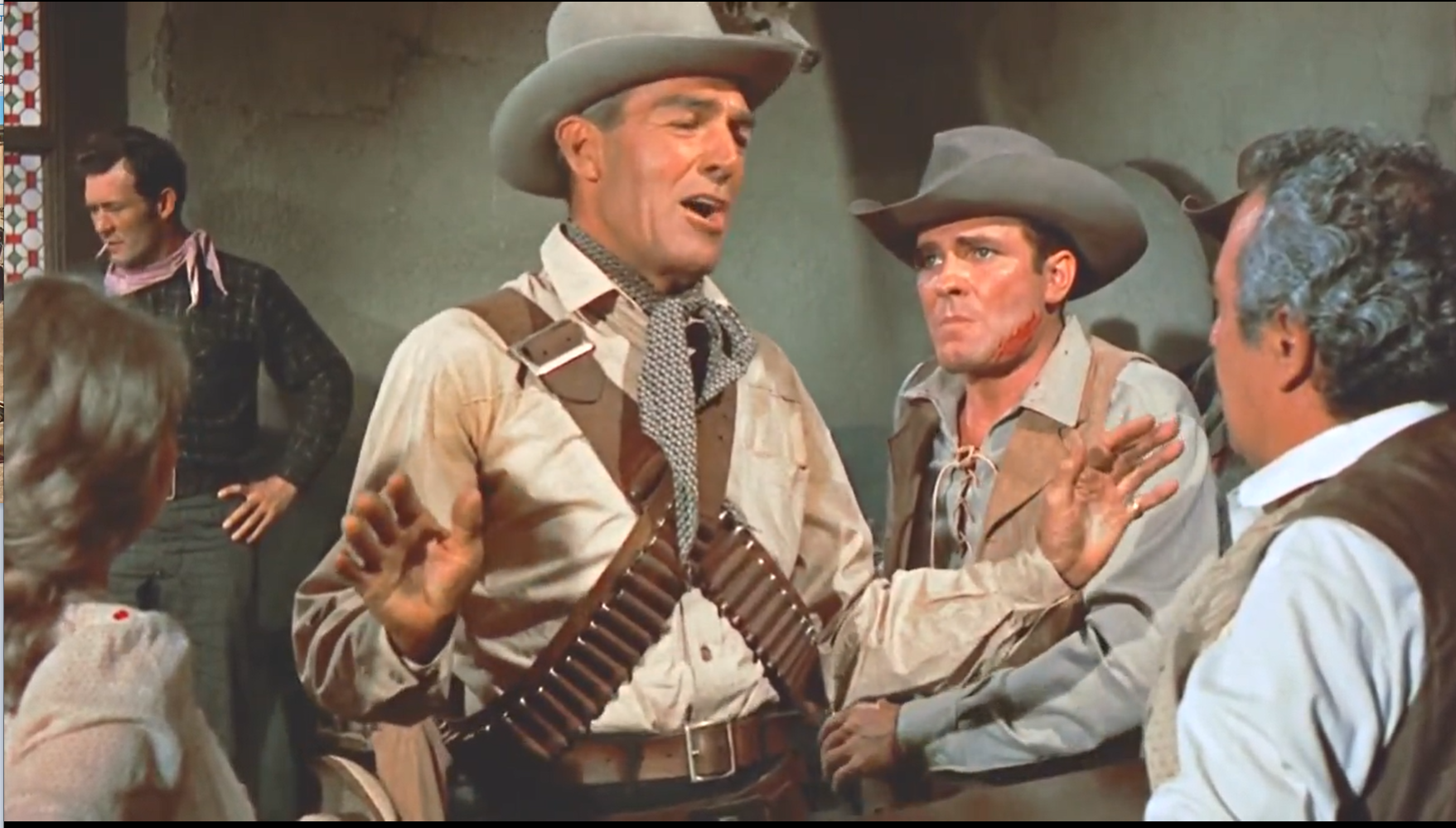
As Peary notes, this “offbeat”, surprisingly tongue-in-cheek western about a loner riding into a feuding town is reminiscent of both Leone’s A Fistful of Dollars (1964) and Kurosawa’s Yojimbo (1961). For most of the film, Scott has a bemused look of detachment on his face — all he wants is to get home to West Texas.

But when push comes to shove, he does what is needed to help protect those who are innocent, and to retrieve what is rightfully his. In his review of The Tall T (1958) — another of the seven westerns Boetticher ultimately made starring Randolph Scott — Peary notes Boetticher’s tendency to show men (in this case, Buchanan and the Mexicans) who choose to act with pride and honor in the face of an increasingly corrupt and violent “civilized” West. Indeed, women play only minor secondary roles in the film; this is very much a male western.

Note: As I wrote in my review of The Bullfighter and the Lady (1951), Boetticher was one of the rare filmmakers at the time to portray Mexicans in a dignified and respectful manner; this is clearly evident in Buchanan Rides Alone as well.

Redeeming Qualities and Moments:

  • Randolph Scott as Buchanan
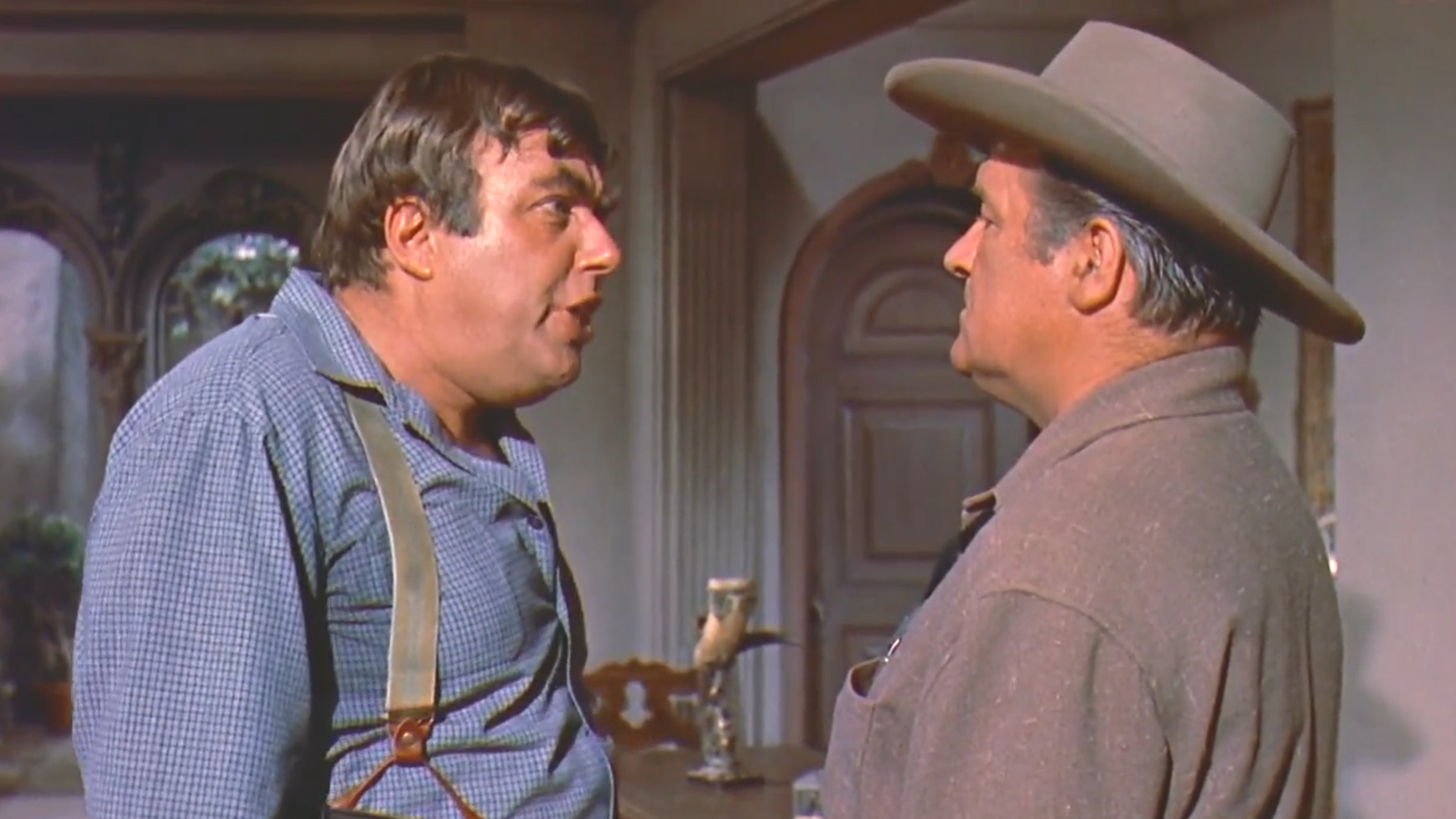
  • Peter Whitney as Amos, the bumbling, half-wit Agry brother who’s always on-the-move and in-the-know
  • An exciting final shoot-out

Must See?
No, though any fan of Boetticher/Scott films will undoubtedly want to check it out.

Links:

St. Elmo’s Fire (1985)

St. Elmo’s Fire (1985)

“This isn’t real. You know what it is? It’s St. Elmo’s Fire.”

Synopsis:
A group of self-centered friends struggle with life and love after college.

Genres, Themes, Actors, and Directors:

  • Ensemble Cast
  • Friendship
  • Love Triangle
  • Martin Balsam Films

Response to Peary’s Review:
Peary is fairly dismissive of this hit Brat Pack film, calling it “trite and klutzy, a beatable combination”. I was equally disappointed when re-watching it recently; the characters are so unappealing that it’s difficult to generate any concern for what happens to them. The one exception is Emilio Estevez as Kirby, the love-lorn medical student whose travails could easily have filled the entire film — instead, however, director Joel Schumacher chooses to shuffle back and forth continuously between far too many inane sub-plots about drug addiction, infidelity, and career crises. A hot 80’s soundtrack (including the winning title song) was what kept me going through this otherwise insufferable mess.

Redeeming Qualities and Moments:

  • Sensitive performances by Ally Sheedy, Mare Winningham, and Emilio Estevez


  • An undeniably catchy title song

Must See?
No, though it’s worth a look simply for its historical notoriety as the ultimate “brat pack” film.

Links: