Browsed by
Category: Response Reviews

My comments on Peary’s reviews in Guide for the Film Fanatic (Simon & Schuster, 1986).

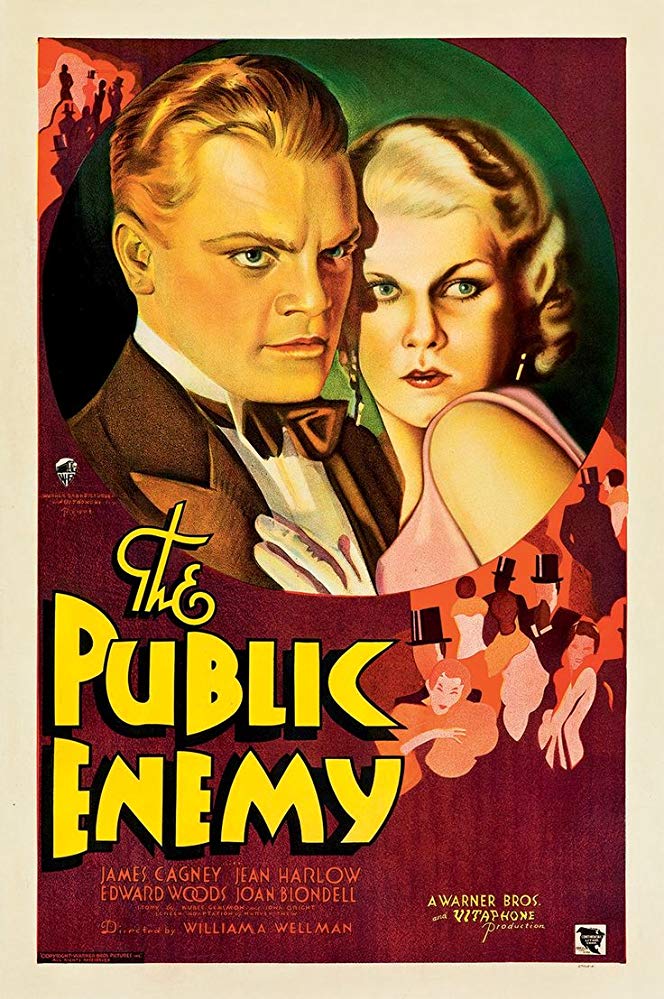
Public Enemy (1931)

Public Enemy (1931)

“Why, that dirty, no-good, yellow-bellied stool!”

Synopsis:
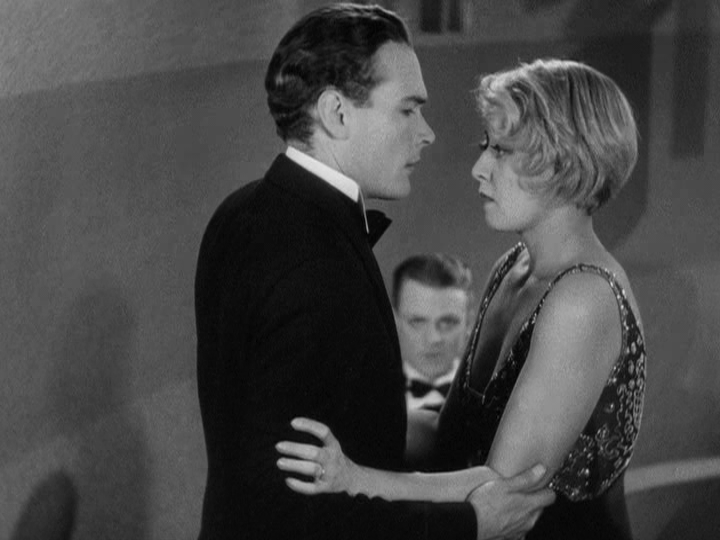
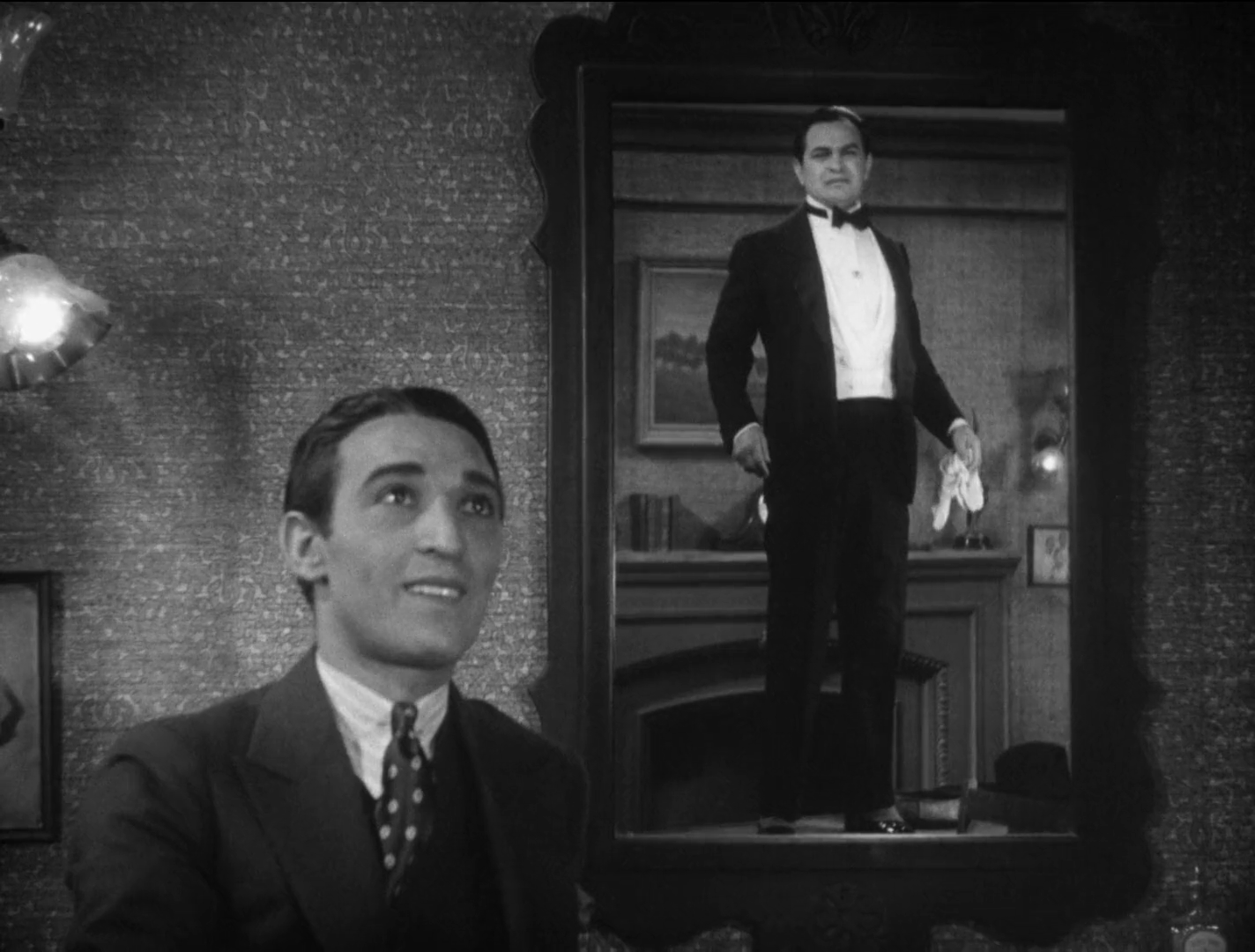
When a young hoodlum (Jimmy Cagney) and his friend (Edward Woods) are betrayed by their fence (Murray Kinnell), they join forces during Prohibition with a bootlegger (Robert Emmett O’Connor) and a wealthy gangster (Leslie Fenton). Cagney’s straight-laced brother (Donald Cook) disapproves of Cagney’s career choice, while his sweet mother (Beryl Mercer) remains clueless. Meanwhile, Cagney mistreats his current girlfriend (Mae Clarke) and woos another (Jean Harlow), while Woods marries his girlfriend (Joan Blondell) and Cagney is unwillingly seduced by O’Connor’s moll (Mia Marvin).

Genres, Themes, Actors, and Directors:

  • Bootlegging
  • Gangsters
  • Jean Harlow Films
  • Jimmy Cagney Films
  • Joan Blondell Films
  • Juvenile Delinquents<
  • William Wellman Films

Response to Peary’s Review:
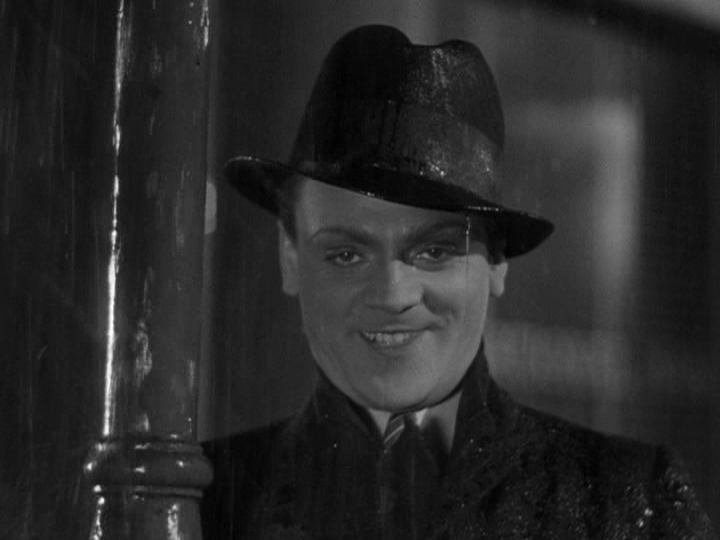
Peary writes that this “seminal Warners gangster film, directed by William Wellman, catapulted James Cagney to stardom”, and that despite being “somewhat dated” it remains worth watching for Cagney’s performance as Tom Powers (which he nominates as one of the best of the year in his Alternate Oscars). He writes that “Cagney is so engaging as Powers, so full of spirit, energy, and charm, that viewers couldn’t help but confuse liking the actor with liking his character”, who is “having a good time — shooting guns, killing other bad guys, hanging out with pretty women…, and making lots of money — while his honest brother (Donald Cook) is a bore, has a cruddy low-pay job as a trolley-car ticket puncher…, and lives with a scowl on his face.” Peary adds that “surely male viewers envied tough guy Powers because he wasn’t afraid to take on bullies and cops since he had no fear of death.”

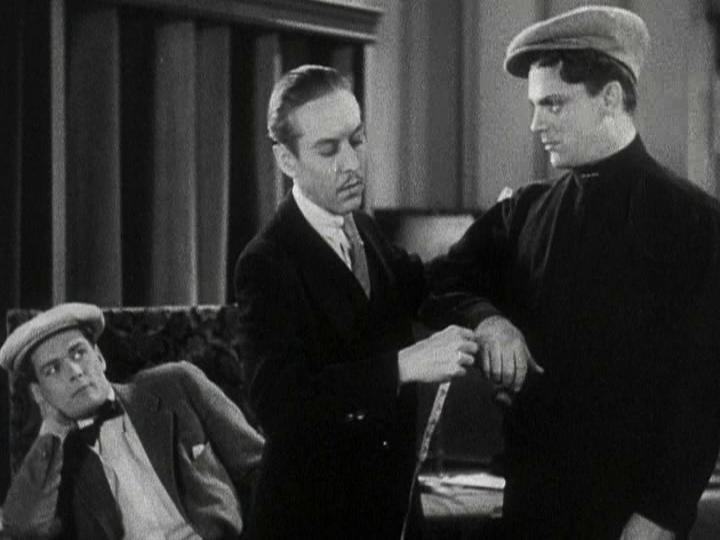
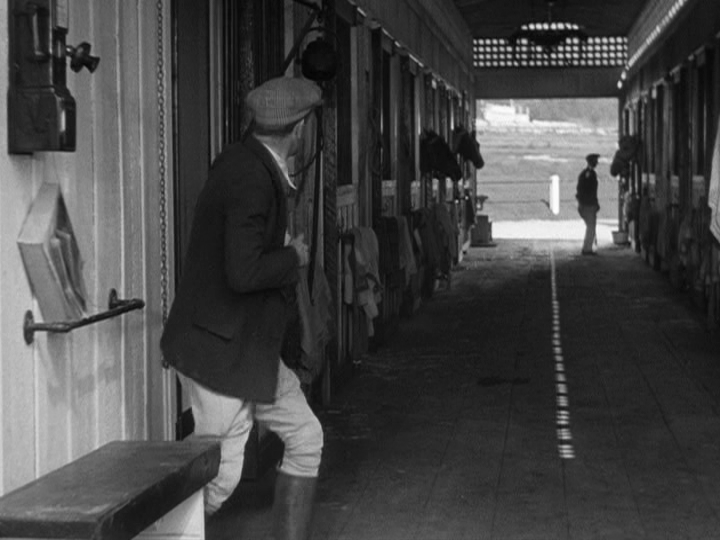
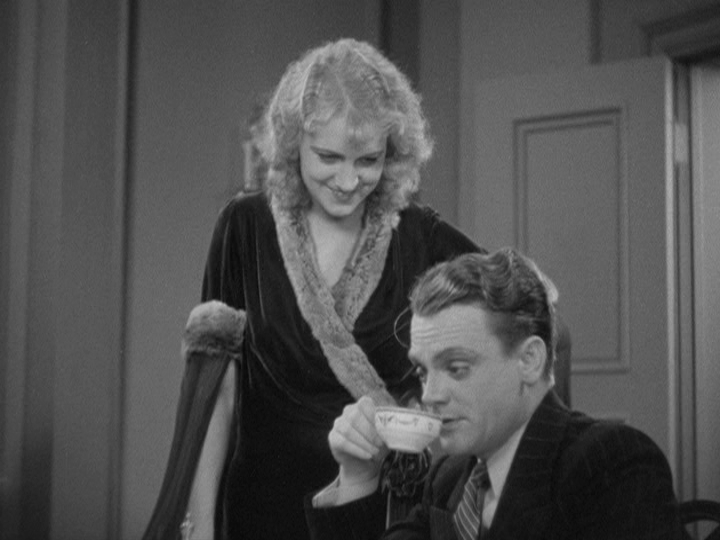
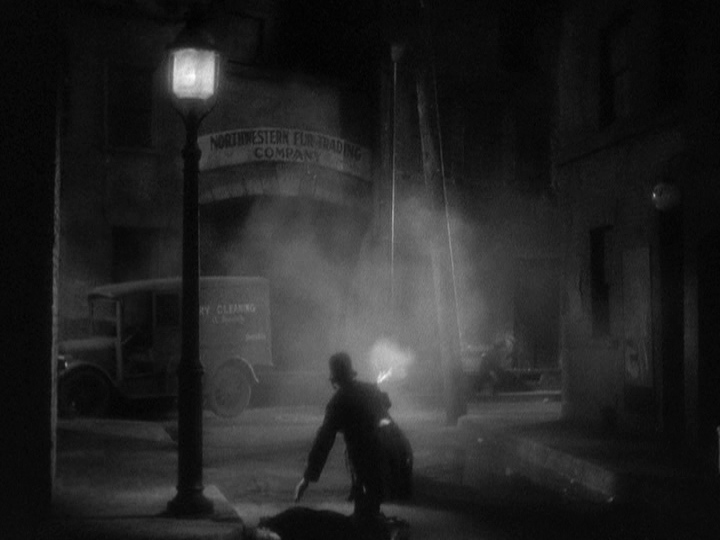
Peary notes that this film has “several classic scenes: the classic grapefruit bit” (in which “Powers pushed a grapefruit in the kisser of his mistress”); “the badly wounded Cagney tap-stepping his way through a large puddle; Cagney’s off-screen execution of a horse; the delivery of Cagney’s body back home”. It’s likely that the version of this film Peary watched when writing GFTFF didn’t have several additional, memorably racy scenes that were added back in for its DVD release, including “a markedly effeminate tailor measuring Tom for a suit” and “Tom being seduced when hiding out in a woman’s apartment.” Overall, Public Enemy remains a more engaging and nuanced film than its equally well-known counterpart, Little Caesar (1931), both of which were re-released in 1954 with the same prologue cautioning that the lead characters “are a menace that the public must confront”. With that said, the narrative isn’t as tight as it should be (the female characters in particular aren’t fleshed out), making this more of an historic must-see than an all-out classic.

Redeeming Qualities and Moments:

  • Jimmy Cagney as Tom Powers
  • Good historical detail and sets

  • Numerous memorable (pre-Code) moments


  • Strong direction by Wellman
  • Atmospheric cinematography

Must See?
Yes, for its historical relevance and Oscar-nominated performance by Cagney.

Categories

(Listed in 1001 Movies You Must See Before You Die)

Links:

Monsieur Verdoux (1947)

Monsieur Verdoux (1947)

“Don’t believe too much: this is a ruthless world, and one must be ruthless to cope with it.”

Synopsis:
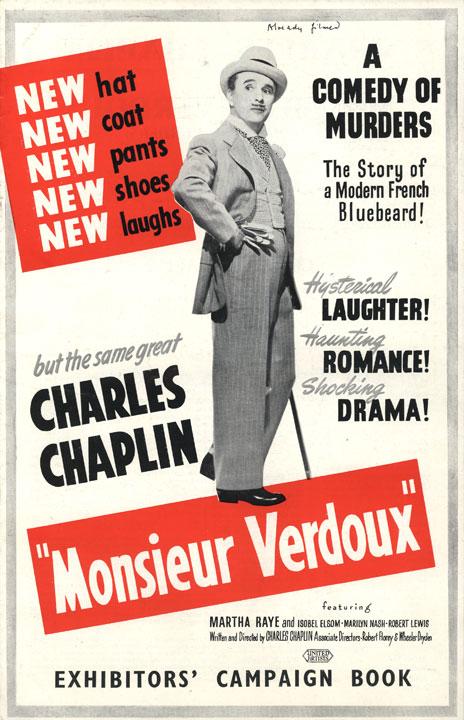
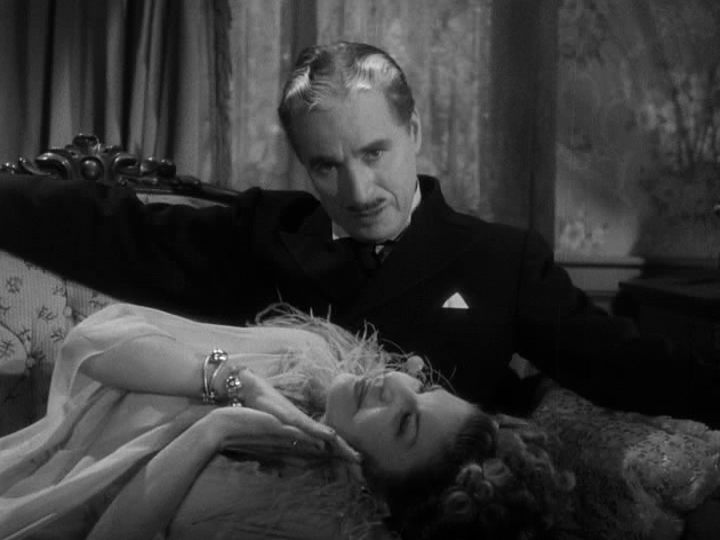
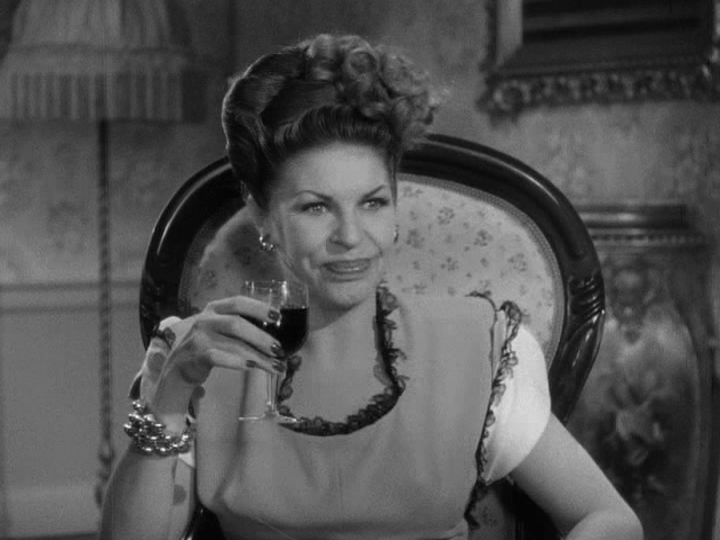
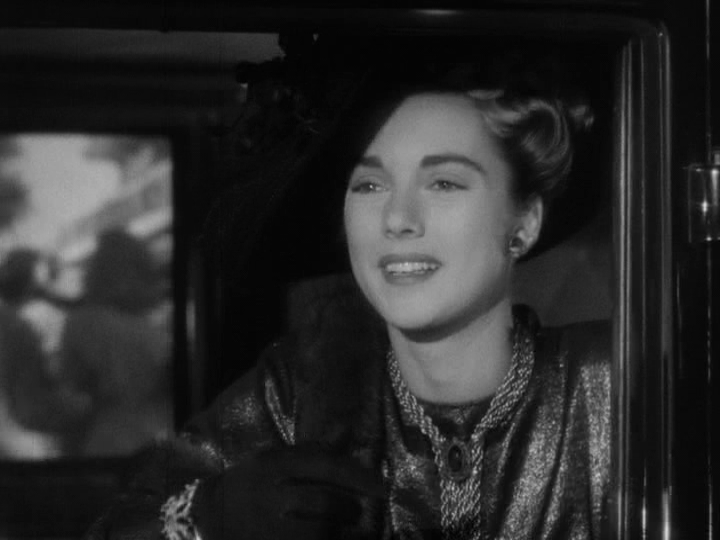
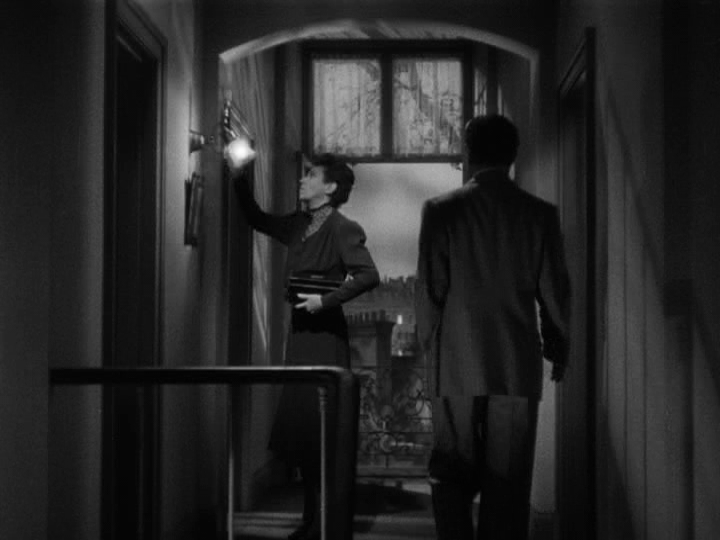
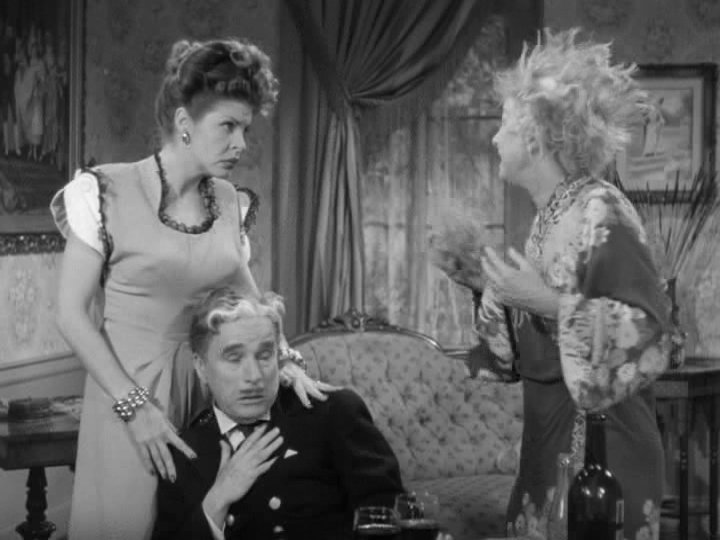
In Depression-era Paris, a former bank teller (Charlie Chaplin) with an invalid wife (Mady Corell) and young son (Allison Roddan) has a dark record of secretly marrying and murdering wealthy women. While plotting to kill one of them (Martha Raye), Chaplin intends to test his poison on a down-and-out young girl (Marilyn Nash) but takes pity on her instead. Meanwhile, he relentlessly courts a widow (Isobel Elsom) by sending her bouquets through a flower girl (Barbara Slater), and risks imminent discovery by the police.

Genres, Themes, Actors, and Directors:

  • Black Comedy
  • Charlie Chaplin Films
  • Depression Era
  • Homicidal Spouses
  • Serial Killers

Response to Peary’s Review:
Peary writes that “Charles Chaplin’s last masterpiece was certainly his most controversial film”: “while The Great Dictator had been a comedy about Hitler and the Nazis… this was perhaps even more daring. After all, in this comedy Charlie Chaplin, once the lovable tramp, plays a cold-blooded murderer.” However, “Verdoux, the murderer of 14 women, kills only one person (a woman who has no life to begin with) during the film — therefore we find his character palatable”. While Chaplin “wisely doesn’t try to make Verdoux sympathetic”, we “can see traces of the tender, romantic, life-loving man he once was”, and we “understand his bitterness.” Peary writes that this “most compelling and unusual film” — once “championed by James Agee” — has a “storyline [that] is serious and sometimes morbid, but there is hilarity, especially in Chaplin’s scenes with Raye.”

In Alternate Oscars, Peary names this the Best Film of the Year and once again awards Chaplin the Best Actor award (for the third time!), thus providing plenty of additional written analysis. Peary’s selection of Monsieur Verdoux as the “best film” in a year filled with so many other worthy contenders — including the Peary-nominated Black Narcissus, Great Expectations, Miracle on 34th Street, Nightmare Alley, and Out of the Past — speaks volumes about his adoration for Chaplin’s oeuvre (and for underdog films that were unfairly maligned due to their creator’s politics). He writes that, “Depite its morbid plot line”, this film is “full of wit, ranging from Verdoux’s sardonic lines to wild Chaplinesque slapstick”.

Peary adds that “Verdoux’s scenes with Martha Raye’s loudmouthed, nasty Annabella are some of the funniest in all of Chaplin’s work”, with “the sequence in which he tries to poison her… [a] most complex comedy routine”, and “Verdoux’s discovery of Annabella at his wedding to Madame Grosnay” [Elsom] “hilariously complicated.” He writes that “in addition to the humor, the picture has charm… poignancy… and tenderness”, yet “we never forget that the Chaplin who wrote and directed this film is quite cynical, quite serious”: while “no one would think that Charlie Chaplin could give us the creeps… that’s our reaction just before he kills Lydia [Margaret Hoffman]”. Verdoux is presented as a “wise but insane man”, and “viewers must decide for themselves where Verdoux is bound” (heaven or hell), given that he isn’t “so sympathetic or likable that we automatically forgive his crimes”.

In his review of Chaplin’s acting, Peary writes that his Verdoux was “without question” “the best performance in 1947”. In addition to Chaplin’s ability to present a highly complex character (as discussed above), Peary notes that “at forty-eight he was still a masterful physical comedian, as exhibited when he backflips out of a window and when, without stopping his conversation or spilling his tea, he tumbles off a couch and onto his knees while proposing to Madame Grosnay.” Among Chaplin’s many hilarious scenes with Raye, Peary highlights “Verdoux’s attempt to drown her American Tragedy-style in a lake. When she suspects something is fishy, he quickly sits down, legs crossed, with the hilariously innocent expression of a naughty five-year-old.” Peary further adds that it’s “most interesting watching Chaplin play a dapper, gentlemanly Lothario, capable of seducing any woman he speaks to… In his conquests he’s as aggressive as Groucho Marx… but uses words like Charles Boyer.” Peary writes that he sees “Verdoux as the flip side of Chaplin’s Little Tramp”: while “Verdoux still acts in a gentlemanly manner, he has long given up the dignity and self-respect that is key to the Little Tramp’s resilience and survival.”

Redeeming Qualities and Moments:

  • Charlie Chaplin as Monsieur Verdoux
  • Martha Raye as Annabella
  • Marilyn Nash as The Girl
  • Many memorable scenes and sequences

Must See?
Yes, as a dark classic by a master director. Discussed at length in Peary’s Cult Movies 3 book.

Categories

(Listed in 1001 Movies You Must See Before You Die)

Links:

Little Caesar (1931)

Little Caesar (1931)

“Can’t you just forget about me?”

Synopsis:
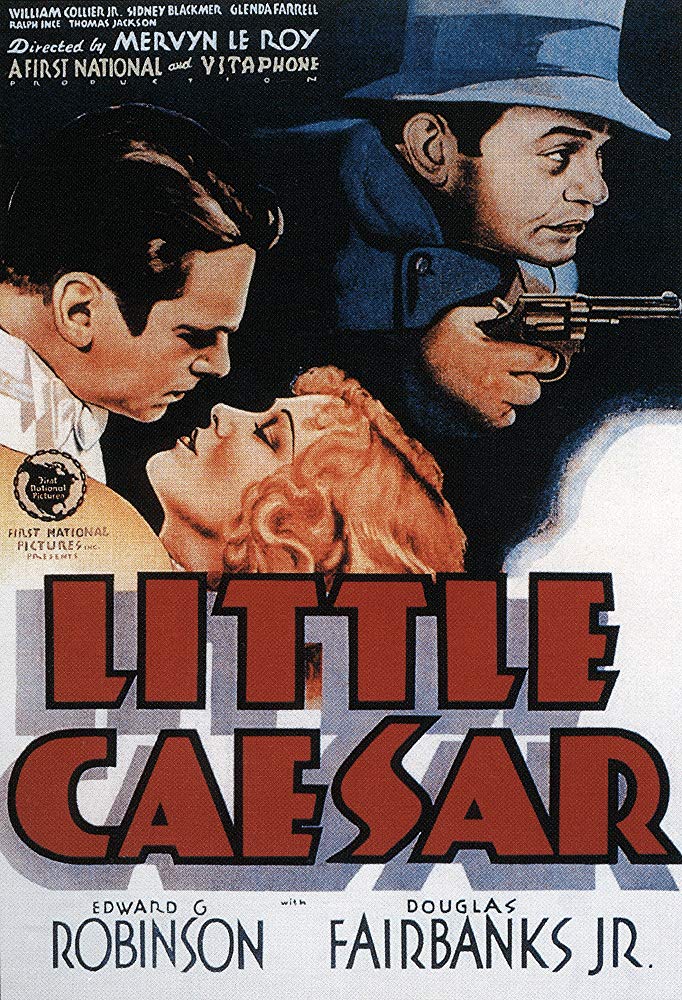
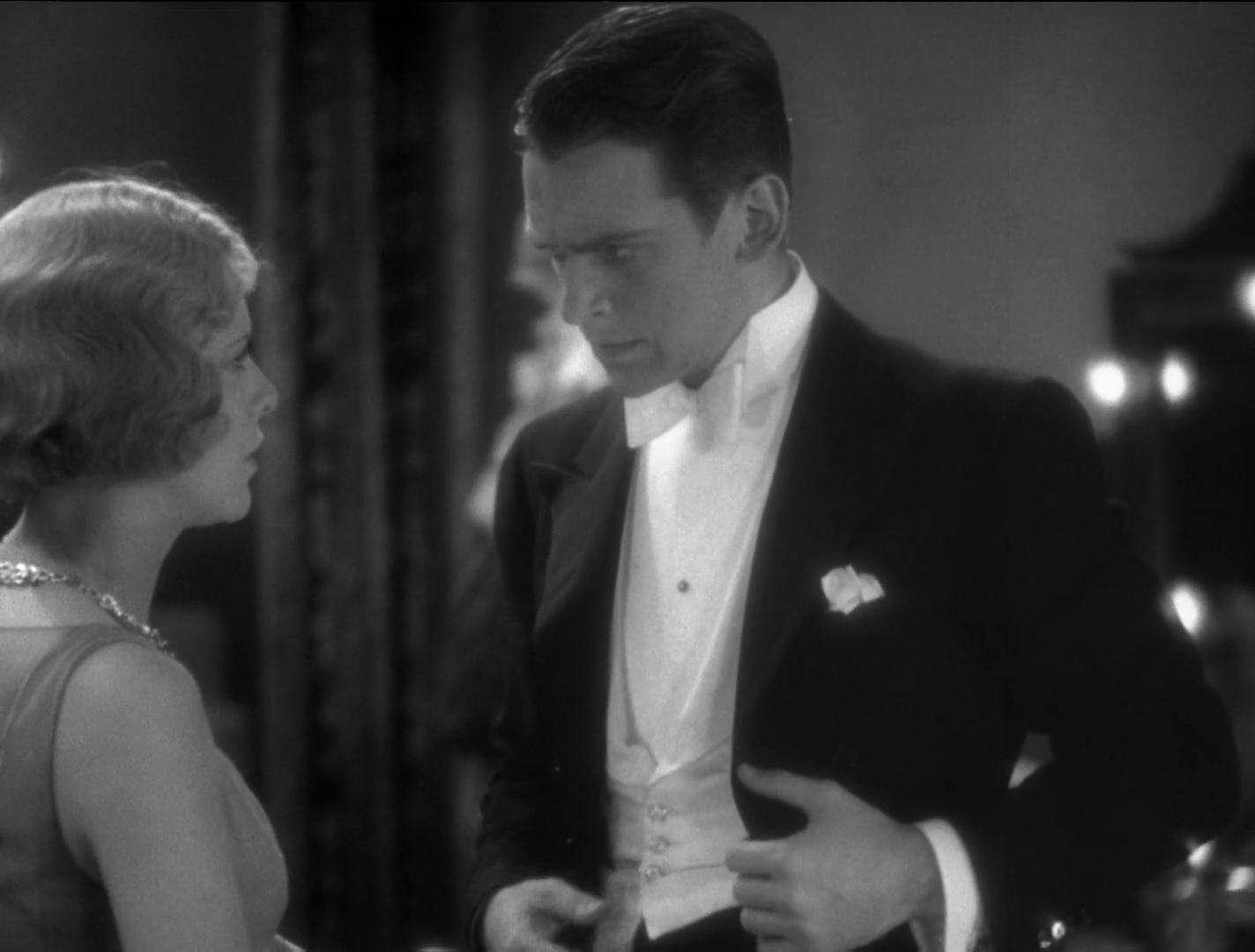
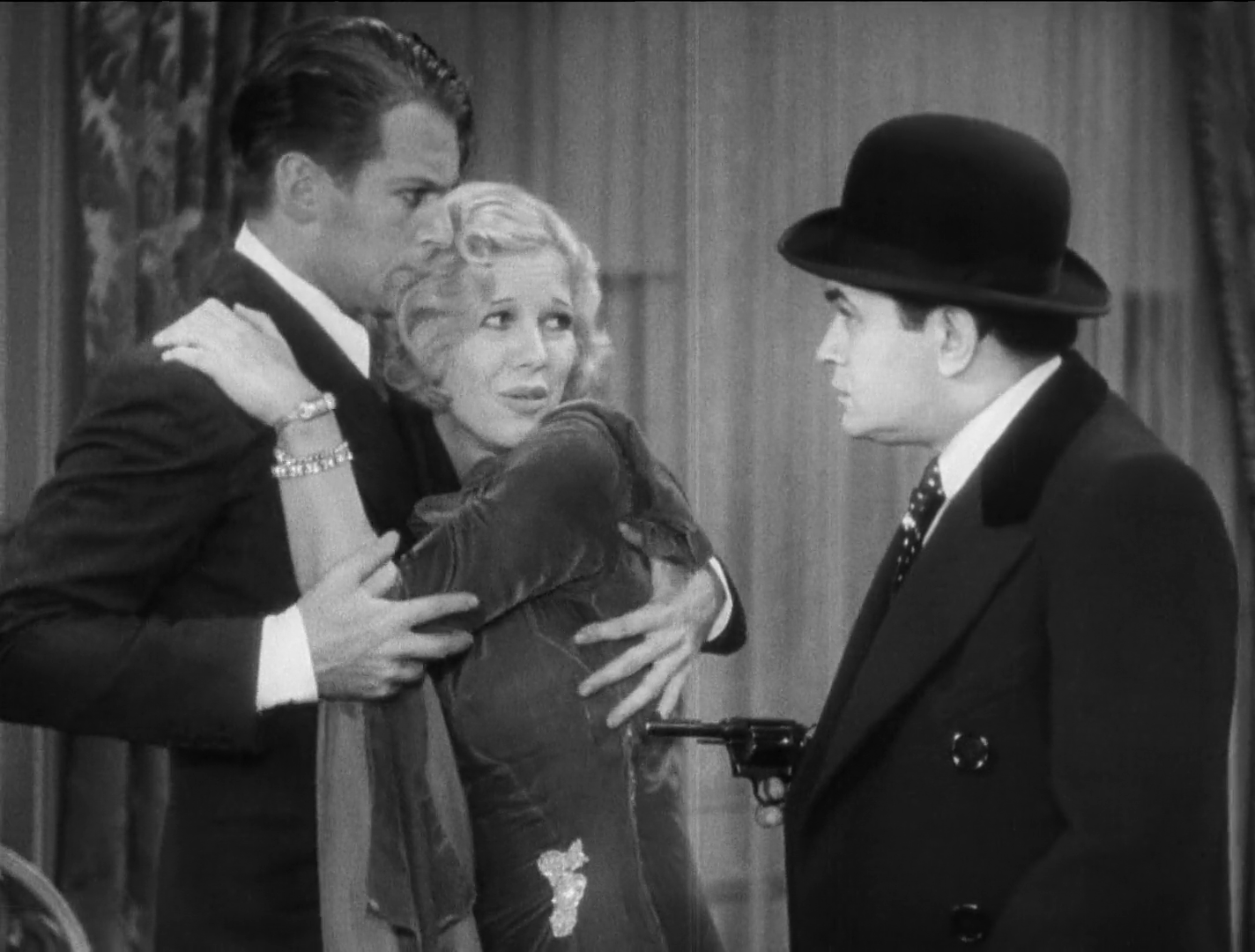
A small-time hood named Rico (Edward G. Robinson) rises to prominence as a gangster, but is frustrated when his best friend (Douglas Fairbanks, Jr.) chooses a life with his new dancing partner (Glenda Farrell) over crime.

Genres, Themes, Actors, and Directors:

  • Douglas Fairbanks, Jr. Films
  • Edward G. Robinson Films
  • Gangsters
  • Mervyn LeRoy Films
  • Rise-and-Fall

Response to Peary’s Review:
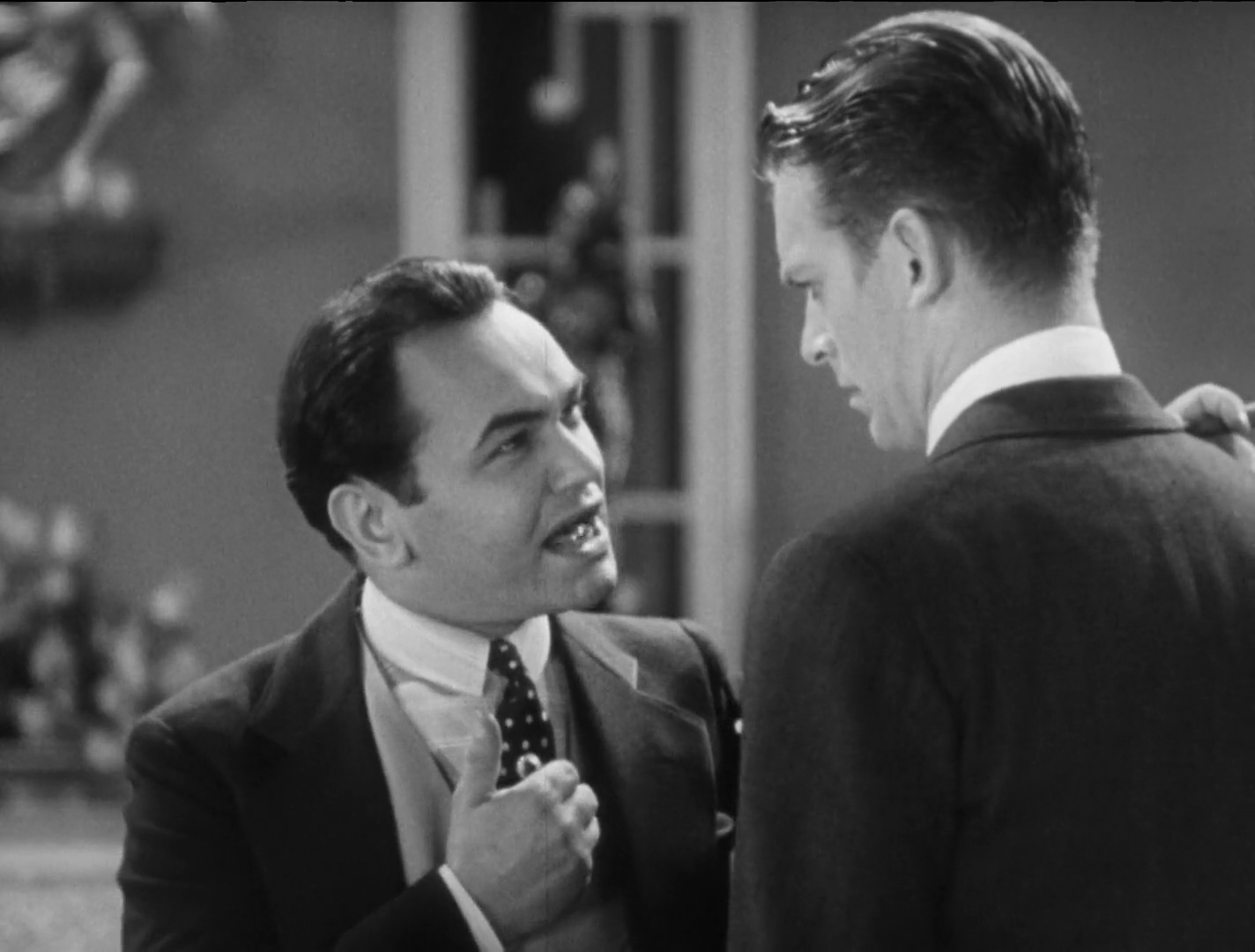
Peary writes that this “first of the sound gangster films” — directed by Mervyn LeRoy — “is somewhat dated, but still has power, thanks to Edward G. Robinson’s performance as the vicious, swaggering braggart Enrico Bandello, who rises from two-bit hood to public enemy number one.” He notes that “Rico has no redeeming qualities, no economic or social reasons for having chosen a life of crime. He just lusts for power, fame (gangsters make headlines), territory (an essential element in gangster films) — he gets the coveted North Side — and money (the spoils of gang warfare) — like Caesar.” Most of Peary’s GFTFF review focuses on “the only person [Rico] has feelings for” — his “former partner, Douglas Fairbanks, Jr.” — noting that “their relationship is central to one interpretation of the film: Rico is a latent homosexual whose suppressed sexual aggression manifests itself in shooting men.” He concludes his review by noting that the “best scenes in the movie come at the end, when Rico has lost his power” and utters his “famous last words: ‘Mother of mercy, is this the end of Rico?'”

Peary elaborates on his praise for Robinson’s performance in Alternate Oscars, where he names Robinson Best Actor of the Year and notes, “Robinson is frightening as the swaggering, power-hungry Rico, not a character anyone would want to emulate. When he’s just a henchman, he scowls constantly, looks at everyone with sideways glances under a pulled-down hat, and is always snarling, talking back, or arguing… He uses his thumb when he talks, intimidatingly pointing it at others or thumping his chest like a dictator. Only when he becomes powerful is he cheerful, admiring himself in the mirror, getting his picture taken, combing his hair, having a banquet thrown in his honor, smoking cigars, wearing the outfit and pinky ring that a gangster he envied once wore.” However, when “Rico tumbles back to the gutter, he becomes a grotesque, primitive, slovenly figure.” Indeed Rico could be viewed as pure “id” — his character isn’t nuanced, but rather simply representative of Desire for Power. Fairbanks, Jr.’s role offers audiences an opportunity to see someone more human and humane, grappling with loyalty versus future goals; he’s fine in his supporting role, as is gutsy Farrell.

Redeeming Qualities and Moments:

  • Edward G. Robinson as Rico
  • Douglas Fairbanks, Jr. as Joe
  • Glenda Farrell as Olga
  • Atmospheric cinematography by Tony Gaudio

Must See?
Yes, for its historical relevance and Robinson’s performance.

Categories

(Listed in 1001 Movies You Must See Before You Die)

Links:

Million, Le (1931)

Million, Le (1931)

“Did you get the ticket?”

Synopsis:
A penniless artist (Rene Lefevre) caught flirting with his client (Vanda Greville) is excited to learn from his friend (Louis Allibert) that one of them has won the lottery, but is quickly dismayed to learn that his fiancee (Annabella) has given Lefevre’s coat — which contains the winning ticket — to a thief (Paul Ollivier), who in turn has sold it to a pompous opera singer (Constantin Siroesco). Can the jacket — and the ticket — be found, and Lefevre’s romance with Annabella salvaged?

Genres, Themes, Actors, and Directors:

  • French Films
  • Millionaires
  • Musicals
  • Rene Clair Films
  • Romantic Comedy

Response to Peary’s Review:
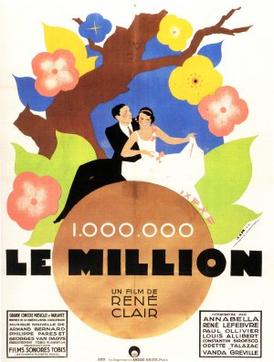
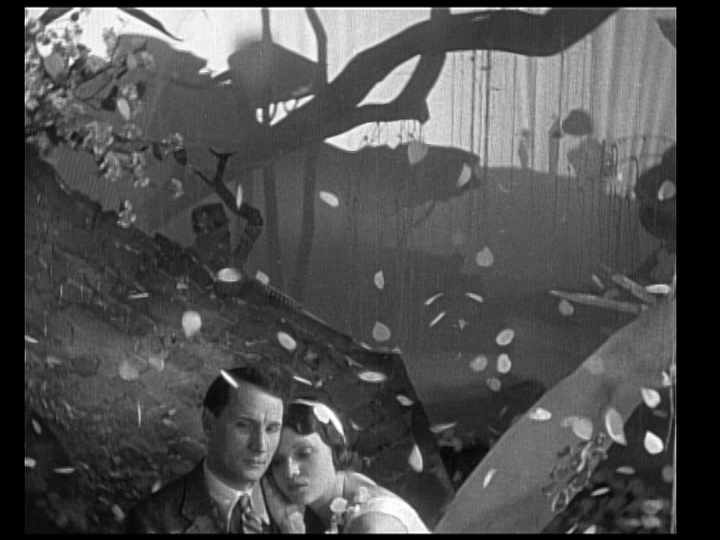
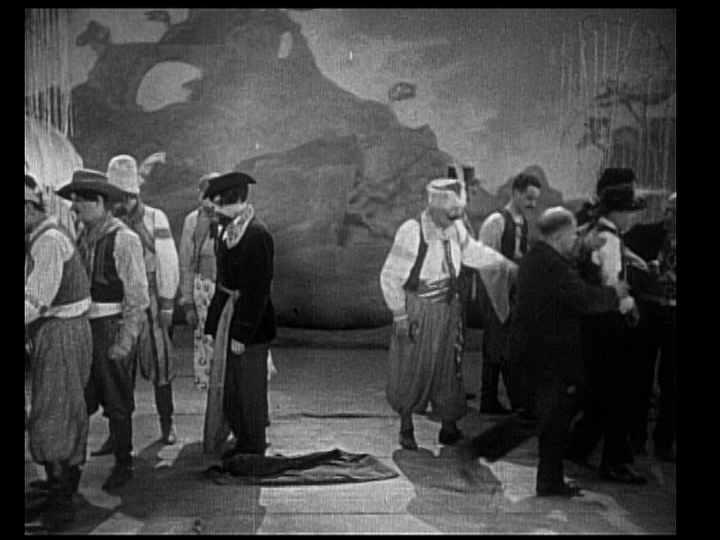
Peary writes that this “famous early musical” by Rene Clair — centered on a “mad scramble to retrieve [Lefevre’s] jacket from, first, a police fugitive and, later, an opera singer who’s giving his last performance before going on tour” — mixes “farce, slapstick, and Gilbert and Sullivan”; but he argues that while Clair “neatly sets up his gags, they don’t really deliver”, and that “this classic has lost a lot of its freshness.” He points out that the “major problem is obvious – the characters aren’t very funny”. However, he concedes that the “film benefits from Clair’s innovative use of sound and music, as well as his decision to again use Lazare Meerson as his set designer and Georges Perinal as his cinematographer.” I’m more or less in agreement with Peary’s assessment, though I believe the film is innovative enough in its presentation, style, and storyline to merit a must-see look. While we certainly don’t care much about these characters (other than poor Annabella, who has terrible taste in men) and the collective singing is a bit forced, it’s undeniably clever how Clair and his team manage to set up a fast-paced, madcap race for a jacket that’s slippier than black ice; you can’t help feeling viscerably pulled to the beaten-up jacket as you see it hanging on hooks, being torn apart, and landing on top of an unsuspecting taxi cab, all the while knowing that it’s actually the tiny slip of paper inside that’s really desired (will it be there?).

Redeeming Qualities and Moments:

  • Luminous cinematography and sets
  • Nicely choreographed comedic sequences

Must See?
Yes, once, for its historical relevance as an innovative early talkie-musical.

Categories

(Listed in 1001 Movies You Must See Before You Die)

Links:

Limelight (1952)

Limelight (1952)

“Life is a desire, not a meaning.”

Synopsis:
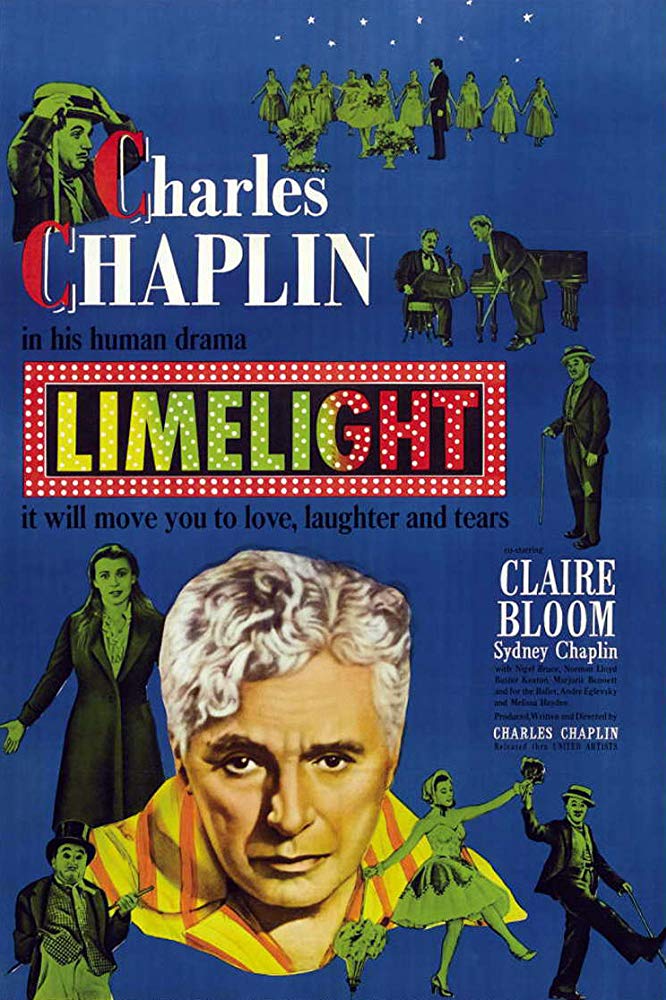
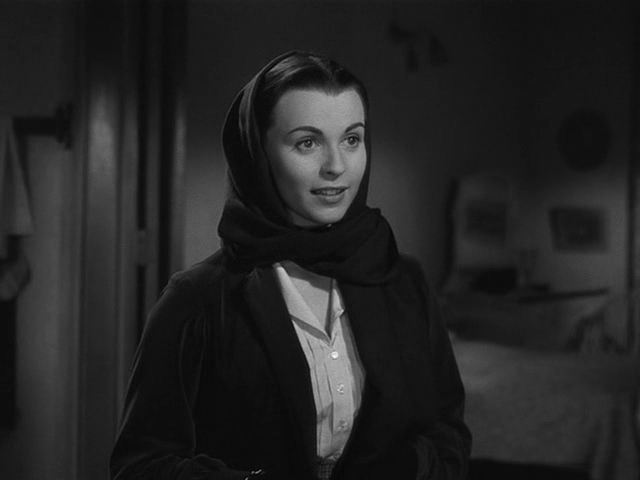
In 1914 London, a washed-up, alcoholic clown (Charlie Chaplin) saves a despondent young ballerina (Claire Bloom) from killing herself, and she soon falls in love with him. As Bloom’s career begins to take off, Chaplin’s fails to resuscitate; meanwhile, Bloom insists she wants to marry Chaplin rather than accept the advances of a handsome young composer (Sydney Chaplin).

Genres, Themes, Actors, and Directors:

  • Alcoholism and Drug Addiction
  • Ballet
  • Charlie Chaplin Films
  • Claire Bloom Films
  • Clowns
  • Do-Gooders
  • Has-Beens
  • May-December Romance
  • Suicide

Response to Peary’s Review:
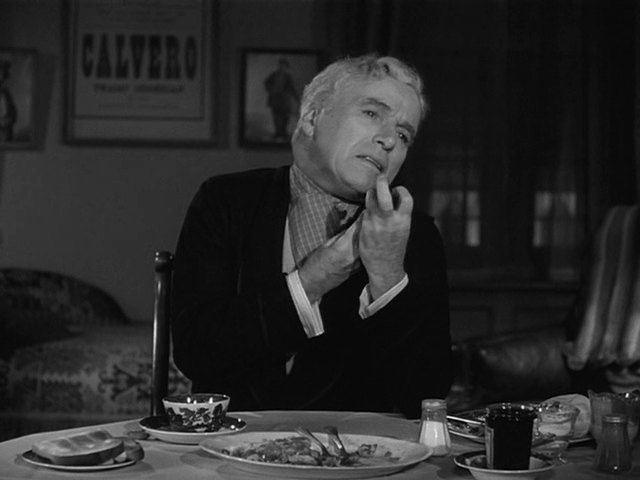
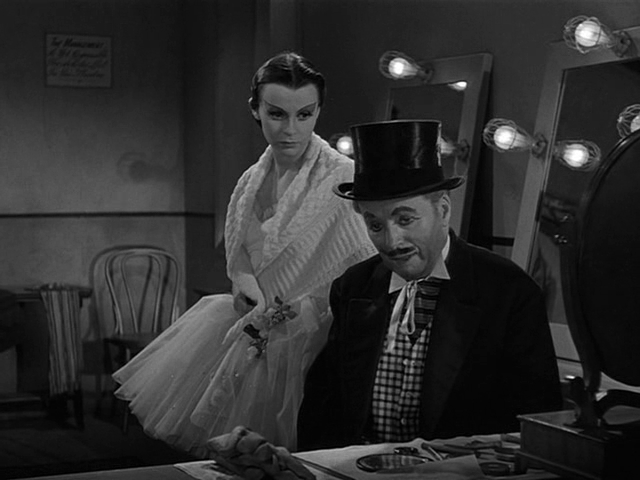
Peary writes that this late-career Chaplin film about a once-famous clown named Calvero who “inspires [a suicidal ballerina] to take a more optimistic view of life” is hurt by the fact that Chaplin clearly “craves sympathy”: his “Calvero (Chaplin’s surrogate) is a martyr whose vast talents are ignored by producers and the public, and who doesn’t realize (as Bloom and we do) what an altruistic, selfless human being he is.” Peary adds that “Bloom is an appealing lead, gorgeous (what a smile), tender, talented”, and that “Chaplin does some impressive comedy stage routines”. However, this well-meaning film is flawed in numerous ways: by dated Freudian psychology (Bloom is convinced she can’t even walk, let alone dance, until Calvero becomes her savior merely through encouragement); an overly leisurely screenplay that runs about an hour too long; and a melodramatic ending hyper-focused on Calvero’s martyrdom. Buster Keaton arrives near the end to co-star with Calvero but isn’t given sufficient focus or due. It’s also not clear why audience members are suddenly so uproariously engaged by Calvero’s routines during a final revival (unlike during previous performences)– is this meant to indicate Calvero’s fantasy during his final moments?

Redeeming Qualities and Moments:

  • Claire Bloom as Terry
  • Charlie Chaplin as Calvero
  • Atmospheric cinematography

Must See?
No, though of course Chaplin fans will want to check it out.

Links:

Modern Times (1936)

Modern Times (1936)

“We’ll get a home, even if I have to work for it.”

Synopsis:
An over-worked factory employee (Charlie Chaplin) suffers a nervous breakdown and is sent to the hospital. Upon emerging, he is instantly arrested as a Communist agitator and sent to prison, where his bravery in stopping a jail break earns him special privileges. On the outside, he meets a beautiful, determined orphan (Paulette Goddard) and the pair fall in love, attempting to secure a life for themselves — but will they prevail in a world weighted so heavily against the poor?

Genres, Themes, Actors, and Directors:

  • Charlie Chaplin Films
  • Comedy
  • Depression Era
  • Homeless
  • Mental Breakdown
  • Paulette Goddard Films
  • Romance
  • Silent Films

Response to Peary’s Review:
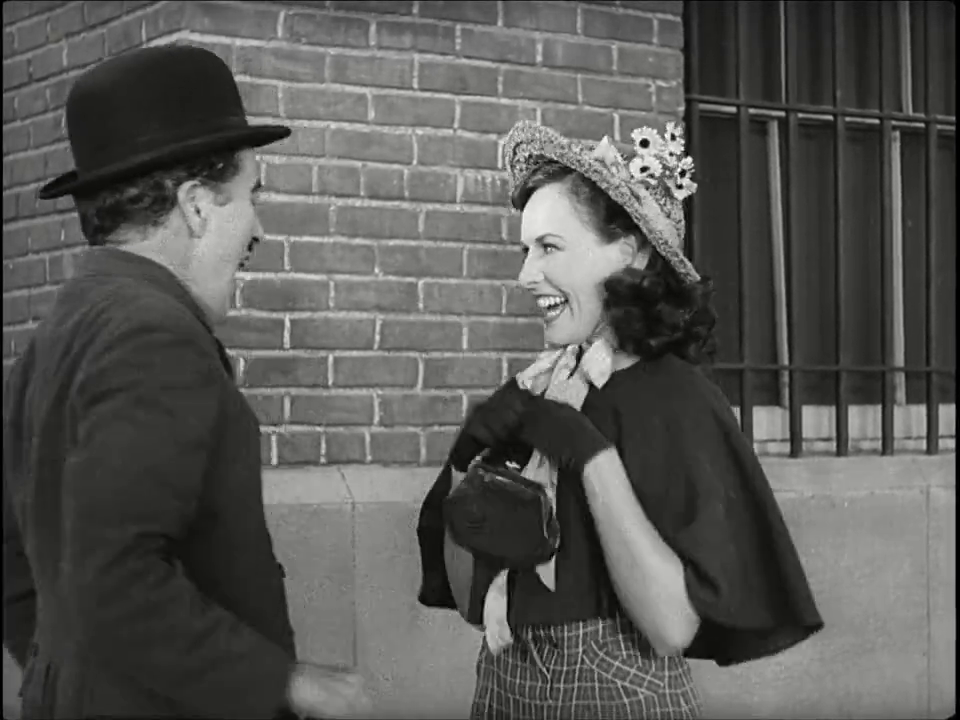
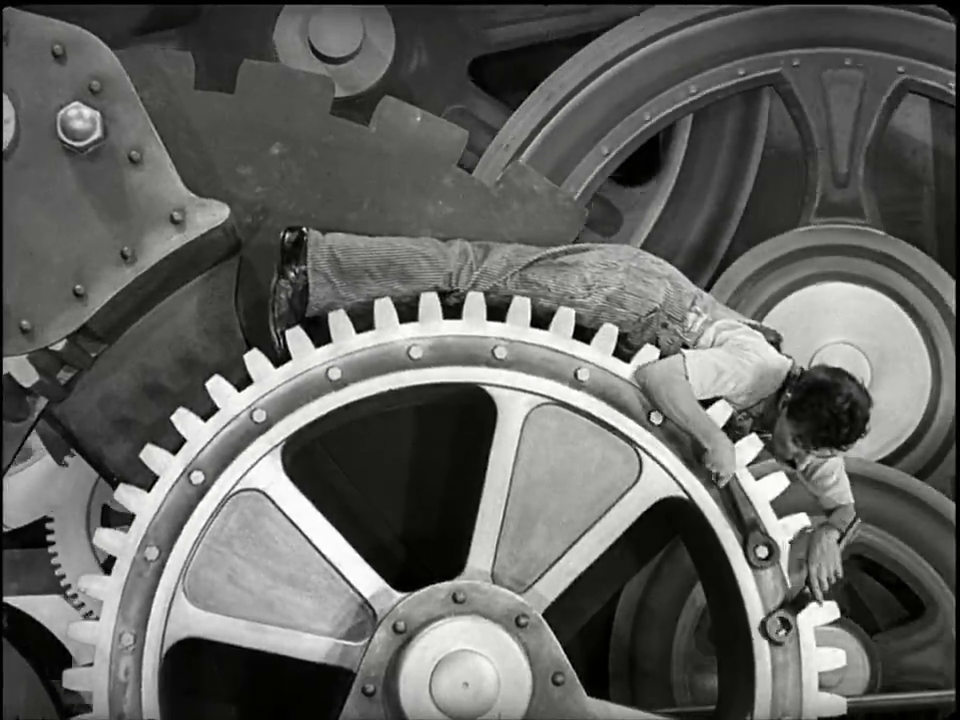
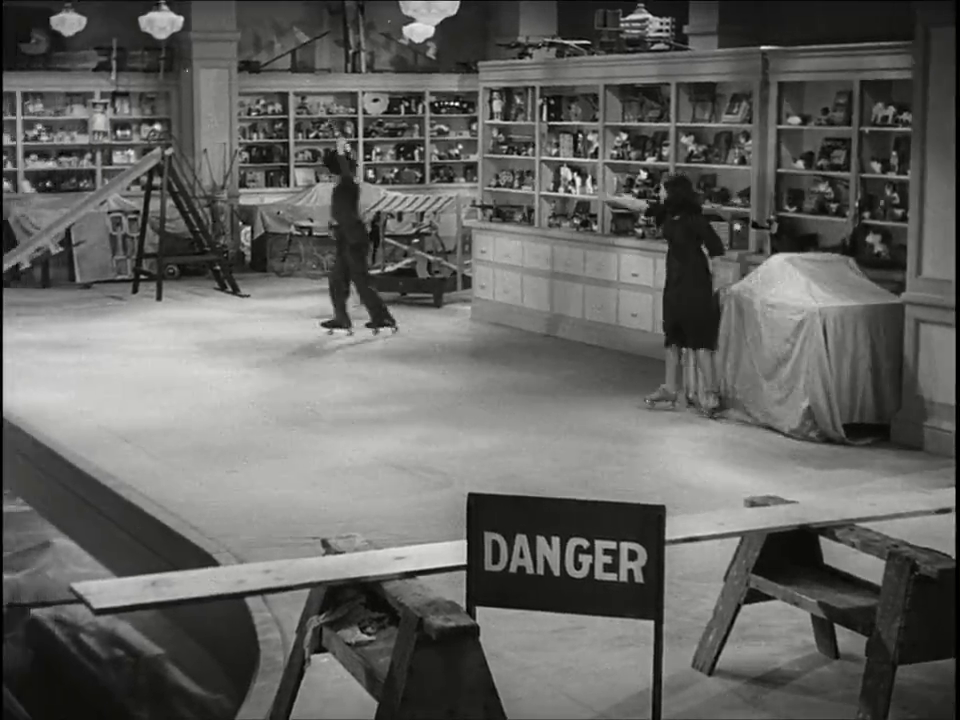
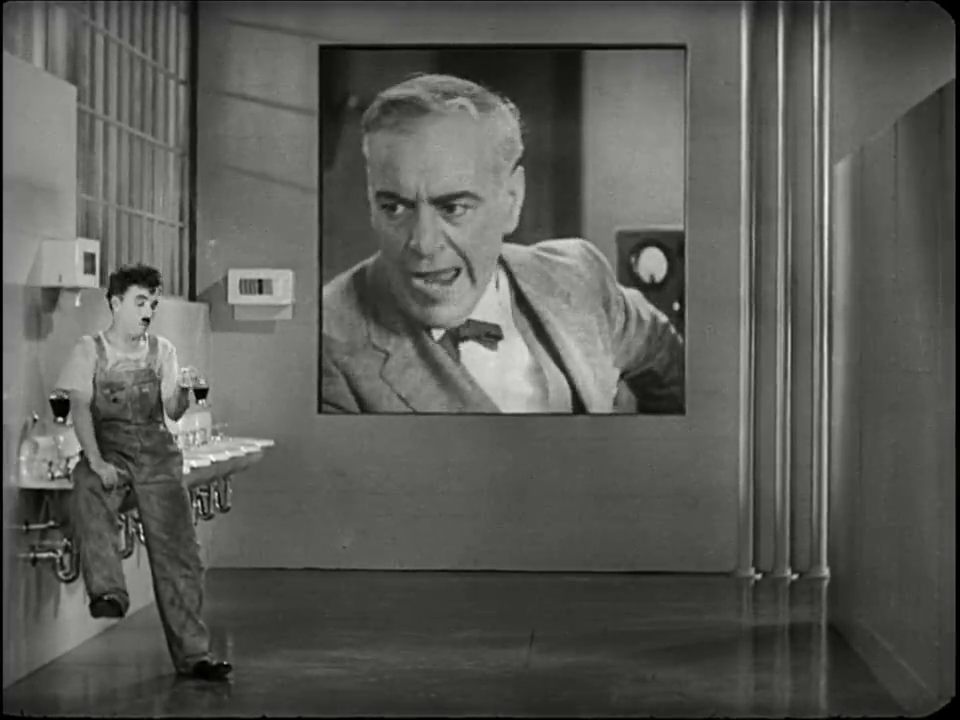
In his short GFTFF review of this “classic Charlie Chaplin film” — which “pits modern man against [the] modern, industrialized, impersonal city” — Peary writes that “in the opening sequence, it looks like man will lose out”, given that “Chaplin has a nervous breakdown while turning bolts — he becomes like a machine out of whack.” However, “Charlie will regain his humanity and maintain it, despite being tossed into jail every time he expresses human qualities at work (in his many new jobs) or on the cop-infested streets” — and it “is his new love for gamine Paulette Goddard that keeps him from ever becoming depressed or defeated.” Peary adds that “this is a surprisingly optimistic film”, despite “few good things happen[ing] to Chaplin or Goddard”, and he notes that the “chemistry between the married leads is strong — Charlie looks spiffier than we’d seen him”, and “Goddard is incredibly sexy and pretty.” He notes that highlights include “Chaplin on roller skates by a ledge, Chaplin as a singing waiter, Chaplin and Goddard walking arm and arm into the sunset.”

Peary goes into greater detail about the movie in his Alternate Oscars, where he awards it Best Picture of the Year and also gives Chaplin his second Best Actor Oscar — after The Circus (1928) — for his leading role. Peary writes that this “masterwork” was “Chaplin’s last film without actual dialogue, though it does have sound effects (from machines churning to stomachs grumbling) and music, including Chaplin’s glorious ‘Smile’ on the soundtrack and Chaplin (in the singing waiter scene) performing the studio-recorded ‘Titina’, the first time he was ever heard on film.” However, “stylistically, Chaplin remained in the silent era, with several scenes recalling specific scenes in his silent classics”. Peary writes that “Modern Times is consistently funny, but while we laugh at Chaplin’s cleverly conceived and brilliantly performed antics, we never forget that the two characters we love are in trouble and are hungry”, and points out that “the majority of scenes in the picture have something to do with food”.

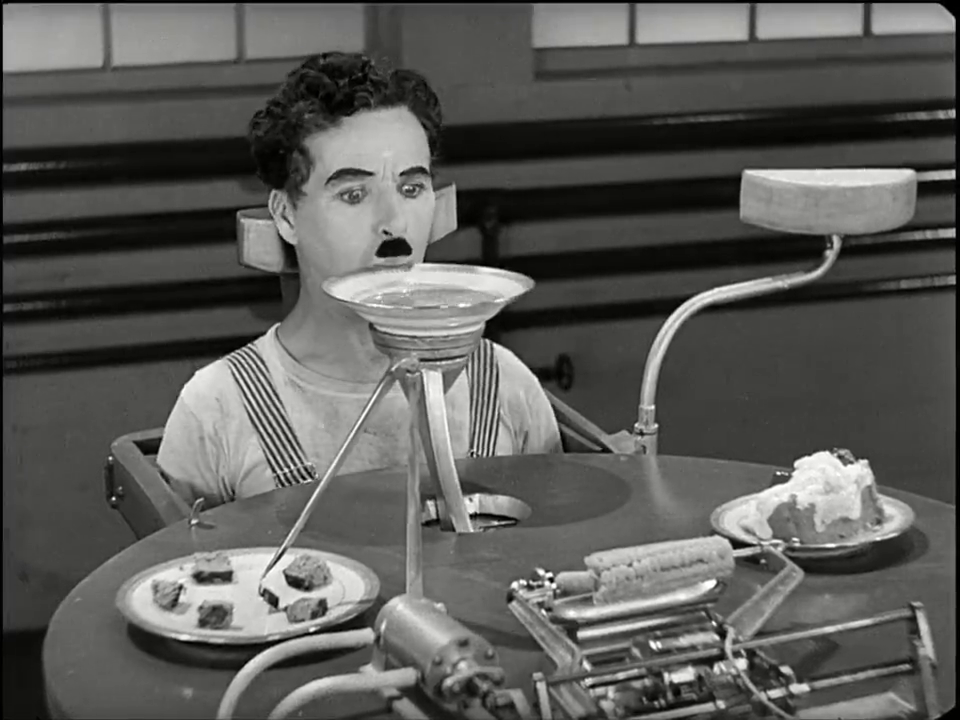
In his discussion of Chaplin’s performance in Alternate Oscars, Peary notes that it is, “quite simply, wonderful” and adds that “so many images of Chaplin in Modern Times are etched in the movie lover’s mind, perhaps more than from any other of his films.” Peary asserts that “we all remember Chaplin turning bolts on the assembly line and then being unable to stop his arms from making the turning motion — he automatically tries to turn the buttons on a female worker’s dress and chases down the street a fat woman who wears a blouse with a button over each breast.” Of course “we remember him being strapped to an out-of-control feeding machine” as its operators blithely forget about the man inside being abused as it malfunctions, and we are giddy with anticipation as we watch “the blindfolded Chaplin roller-skating on a high floor in the department store, not realizing he’s close to a ledge.” Equally enjoyable are “two classic sequences in the cabaret: as a waiter he carries a tray with a duck he wants to serve an impatient customeer, but every time he nears the table he is spun to the other side of the restaurant by the many dancers on the floor;” and “debuting as a singer, he forgets the words and proceeds to sing in French gibberish, using expressions and body movements to convey that the lyrics are racy.”

What’s especially notable about this iteration of Chaplin’s Little Tramp is that “Chaplin the director-screenwriter doesn’t make it too hard on Chaplin’s character”. While his “worst moments come at the beginning in the factory”, at least “his mind is almost gone already” — and though he’s “thrown into prison several times”, it is a “sanctuary” “where he gets good treatment and is fed”. Finally, while “life is hard on the streets”, for once “Chaplin has a companion… who adores him as much as the Little Tramp adores… beautiful, unattainable women in earlier Chaplin films”. Indeed, Peary points out that the “final scene is a gem, with Chaplin (using his inimitable walk) and the lovely twenty-one-year-old Paulette Goddard… determinedly leaving the city together, hand in hand, to confront the future.”

Redeeming Qualities and Moments:

  • Fine lead performances

  • A sobering look at the dangers of an overly mechanistic, anti-humanist, Big Brother society
  • Numerous memorable sequences


Must See?
Yes, as a still-enjoyable classic “silent” comedy.

Categories

(Listed in 1001 Movies You Must See Before You Die)

Links:

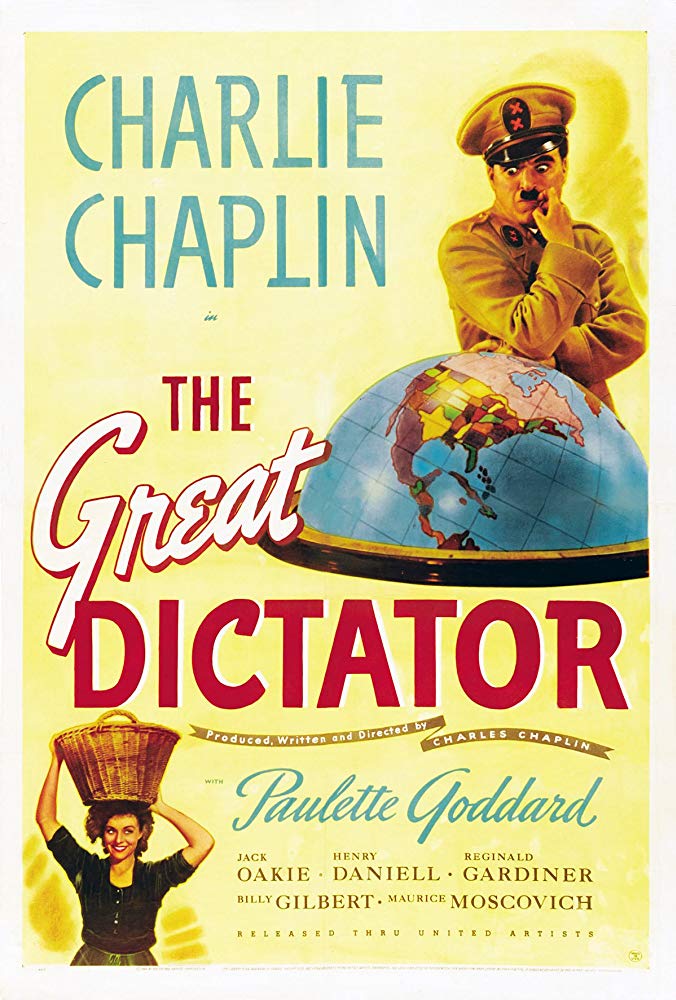
Great Dictator, The (1940)

Great Dictator, The (1940)

“We can’t fight alone — but we can lick ’em together!”

Synopsis:
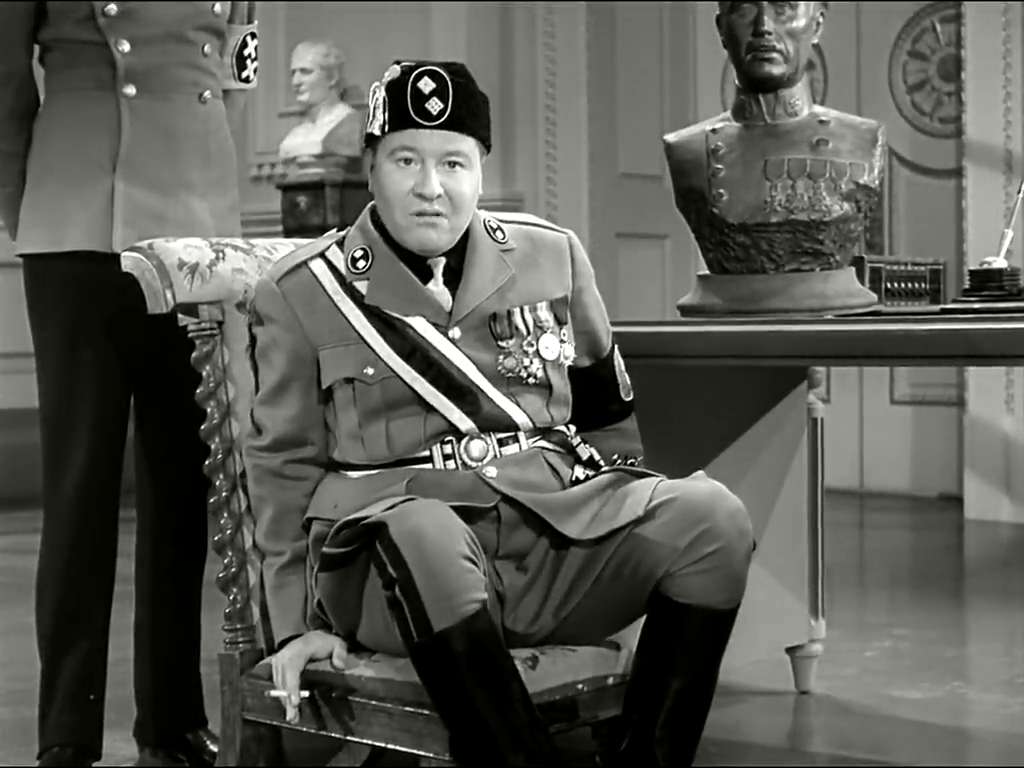
A shell-shocked Jewish barber (Charlie Chaplin) returns 20 years after World War I to his village, which is overrun by anti-semitic soldiers. He actively protests alongside a feisty maid (Paulette Goddard) he’s fallen in love with; meanwhile, their country’s tyrannical dictator, Adenoid Hynkel (Charlie Chaplin), engages in rivalty with the equally bombastic leader of neighboring Bacteria (Jack Oakie).

Genres, Themes, Actors, and Directors:

  • Charlie Chaplin Films
  • Comedy<
  • Mistaken or Hidden Identities
  • Nazis
  • Paulette Goddard Films
  • Rivalry
  • Ruthless Leaders
  • World Domination
  • World War Two

Response to Peary’s Review:
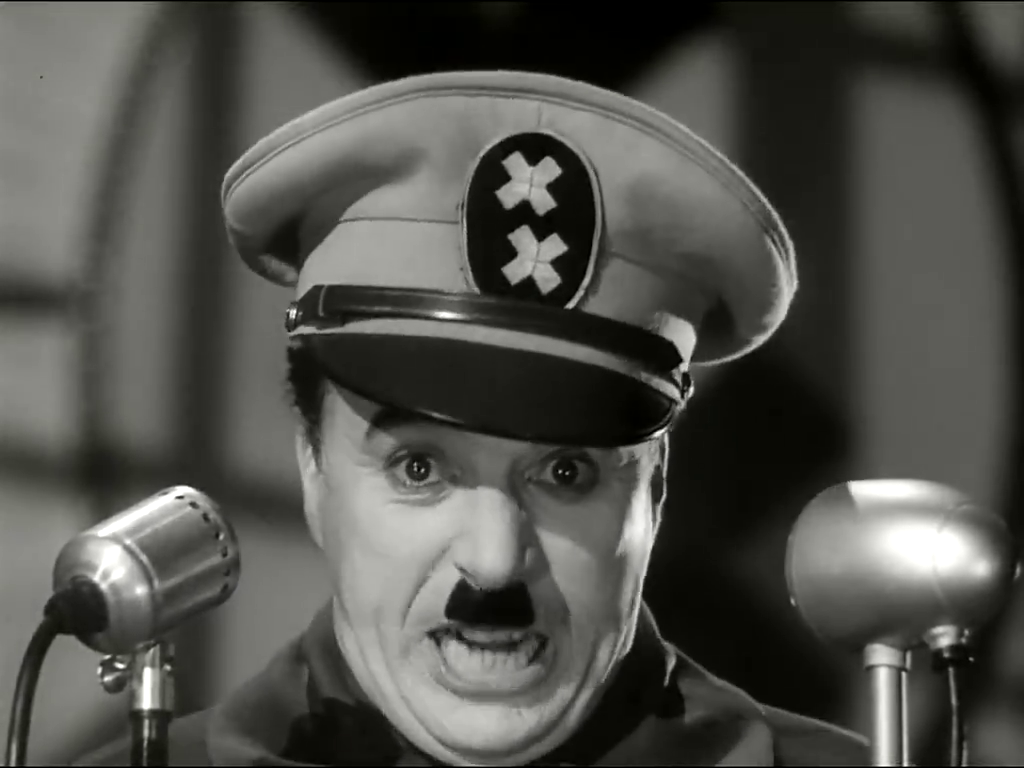
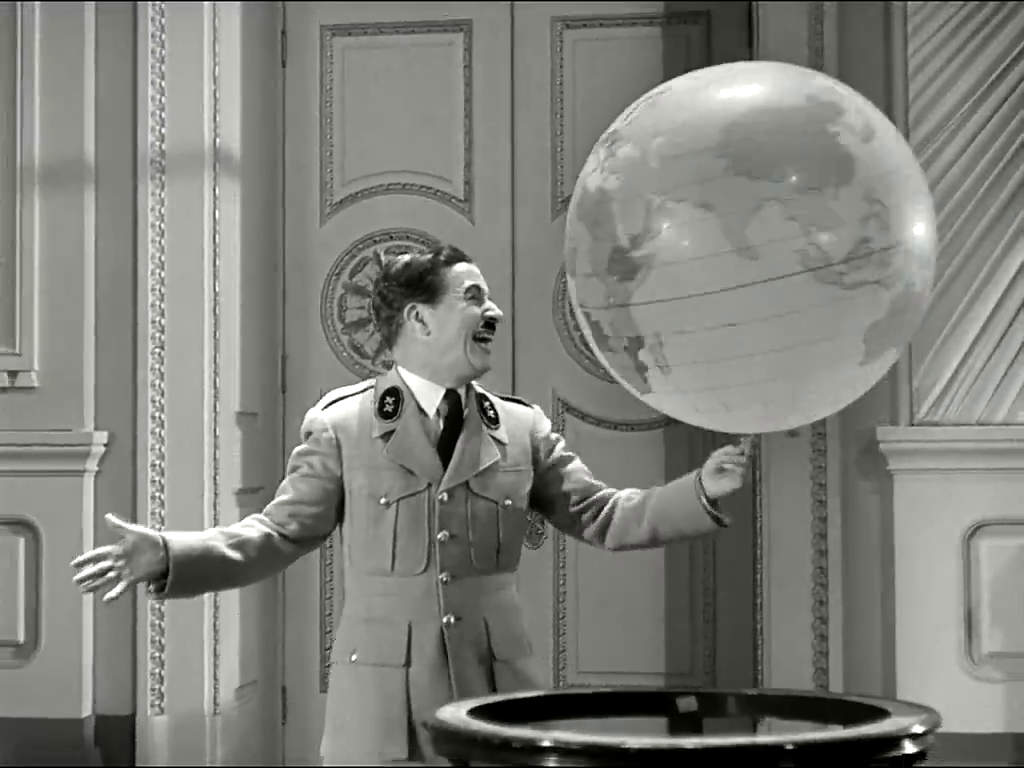
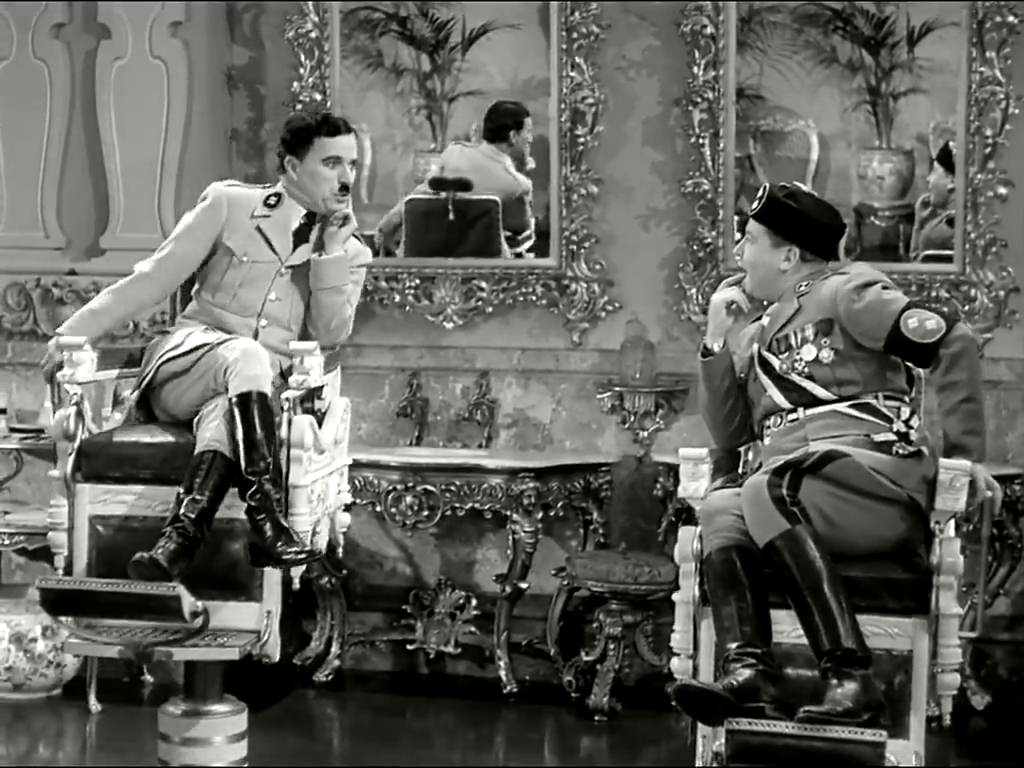
Peary’s review of this controversial classic “in which Chaplin plays both a persecuted Jewish ghetto barber in Tomania and that country’s power-mad dictator” shows evidence of his conflicted feelings. He writes that a few years after the film’s release, “Chaplin expressed regret that he’d made this film a comedy because he then realized how naive he’d been about the whole political situation in Germany”, and “at the time, he didn’t know about what was actually taking place in concentration camps, or about the impossibility of any resistance to SS troops, or about the absurdity of suggesting Hitler’s ouster, or about the extreme brutality of Hitler’s vision”. Peary adds, “Despite Chaplin’s correct reservations about the film, it’s still a joy to watch Hynkel/Hitler tumble down a flight of stairs, or have Benzino Napolino (Jack Oakie), dictator of Bacteria, toss peanut shells on him, or act the buffoon as he fantasizes about world conquest — climbing up his curtains and bouncing a balloon globe off his rump while in the paroxysms of … ecstasy”. In his Alternate Oscars, Peary doesn’t nominate this as one of the Best Pictures of the Year (unlike the actual Academy), though he retains Chaplin’s nomination as one of the Best Actors of the Year.

Unlike Peary, I don’t believe Chaplin needed to make excuses for crafting this highly effective satire, which strikes me as akin to To Be Or Not to Be (1942) turned up a notch. With that said, according to TCM’s Behind the Camera article:

As the premiere approached, Chaplin had good reason to be concerned about his gamble on political commentary. Gallup polls revealed that 96 per cent of Americans opposed U.S. involvement in the war in Europe, and threatening letters from Nazi sympathizers poured into the studio. At one point he even asked a friend with the Longshoreman’s Union in New York if they could have some union members present at the opening to prevent a pro-Nazi demonstration.

Chaplin makes his open disgust for both Hitler and fascism clear in multiple ways throughout the film. As James Hendricks notes in his review for Q Network:

With the exception of a few notable German words and phrases, most of what Hynkel says is pure nonsense, which is a direct literalization of Chaplin’s view of fascist politics. And that, ultimately, is what The Great Dictator demonstrated to the world, undercutting hatred and totalitarianism by revealing them to be the strained devices of desperately pathetic and insecure men.

Unfortunately, this film remains highly relevant in our climate of political bromances between world leaders — indeed, the best scenes are those between Chaplin-as-Hynkel and Oakie-as-Napolini. I’m less enamored with the narrative thread about The Barber’s romance with Goddard, though it serves its purpose well and leads us towards the highly contested final six minutes of the film. As Peary notes, “this was Chaplin’s first talkie for a reason — he wanted audiences to hear the difference between Hitler’s words of madness (they’re unrecognizable, he’s shouting so strongly)… and Chaplin’s own clear words of sanity and reason, delivered in a speech by the barber (who’s passing as Hynkel), which call for brotherhood and peace.” I disagree with critics who feel the speech is overbearing and interrupts the film’s flow; it’s actually a perfectly fine ending to a movie that serves as both a satire and a serious call to awareness and action.

Redeeming Qualities and Moments:

  • Charlie Chaplin as Hynkel
  • Jack Oakie as Napolini
  • Many memorable sequences

Must See?
Yes, for its historical relevance and still biting satirical wit. Named to the National Film Registry in 1997.

Categories

Links:

City Lights (1931)

City Lights (1931)

“Thank you for your kindness, sir.”

Synopsis:
A noble tramp (Charlie Chaplin) falls in love with a blind flower-girl (Virginia Cherrill) and saves the life of a drunk, suicidal millionaire (Harry Myers) who quickly befriends him, but forgets he knows him once sober. Can Chaplin earn the money to help Cherrill pay for a sight-restoring operation — or will Myers help him out?

Genres, Themes, Actors, and Directors:

  • Blindness
  • Charlie Chaplin Films
  • Do-Gooders
  • Homeless
  • Millionaires
  • Mistaken or Hidden Identities
  • Romance
  • Silent Films

Response to Peary’s Review:
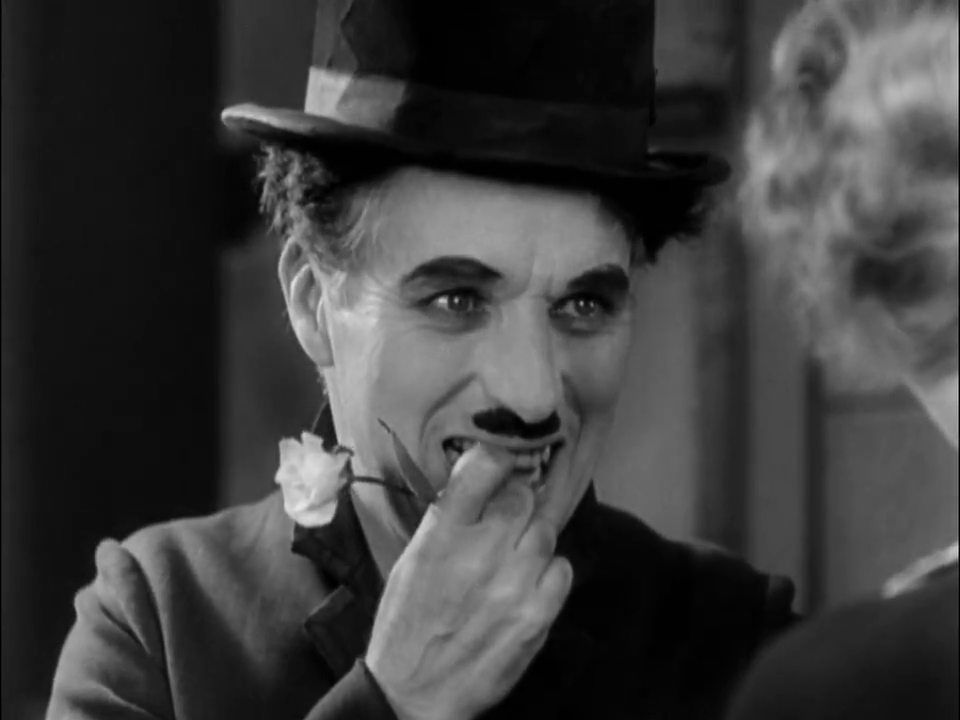
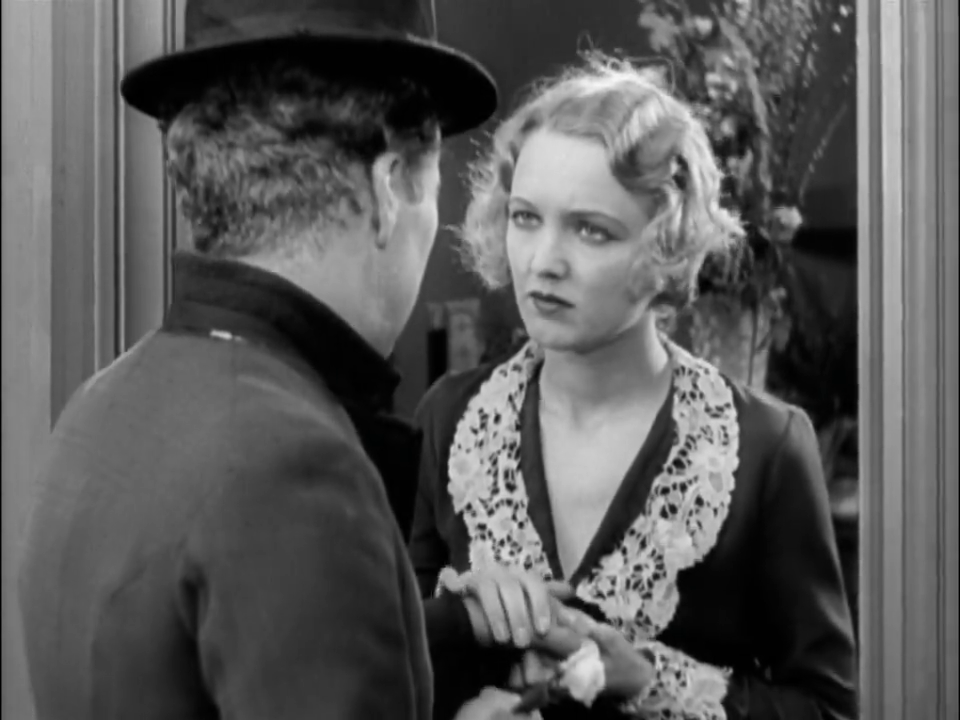
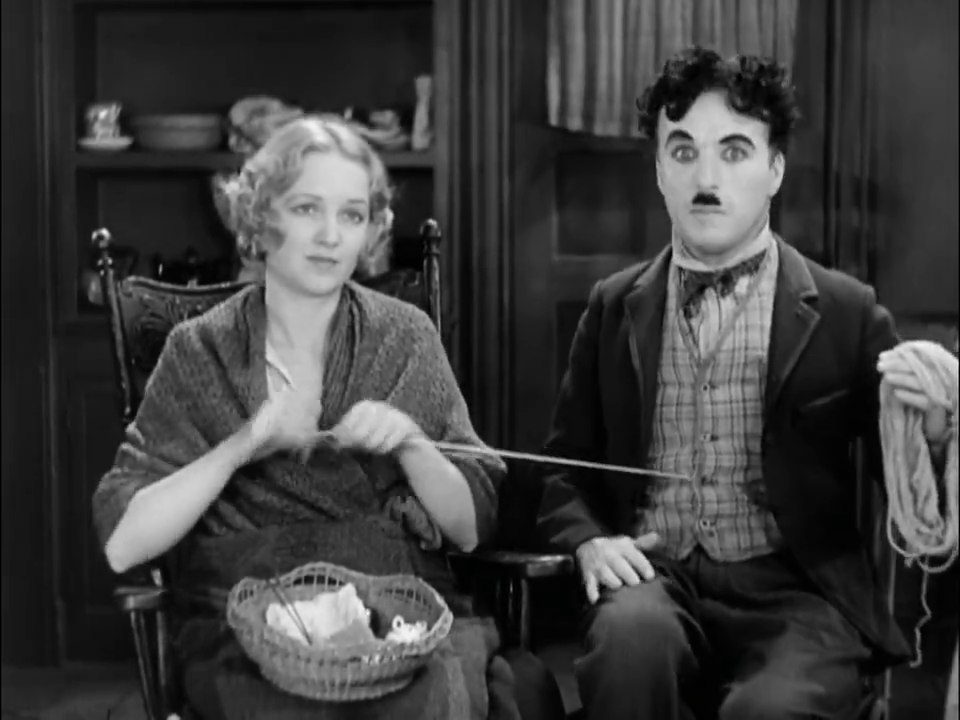
Peary writes that this “hilarious, poignant comedy masterpiece by Charles Chaplin” is an “exquisite, infinitely rewarding film”. He names it Best Picture of the Year in his Alternate Oscars, where he notes that Chaplin “intended his new picture to be a tribute to the art of pantomime and in the vanguard of a new wave of nontalking films” — including a “soundtrack with his own truly exceptional score and sound effects”. While he was wrong (he took an expensive, $2 million gamble), it “received tremendous critical acclaim and did exceptionally well at the box office”. In Alternate Oscars, Peary writes that the world presented in City Lights is “confusing” and “topsy-turvy” — a place where “the most dignified, noble character is a tramp, where the person with the most money wants to kill himself while a man without anything tells him about the joys of life”; indeed, the “identities of both people and props are in question”. He details the many comedic instances in which props are not what they seem: confetti becomes mixed with spaghetti; Chaplin “almost cuts into a man’s bald head that he thinks is a plate of food”; Chaplin “washes his face with cheese instead of the soap that finds its way into a coworker’s sandwich”; and “the blind girl unravels the tramp’s shirt when she mistakenly thinks she’s rolling string”. Adding to this confusion, Chaplin almost constantly has “characters’ arms, hands, and legs interlock, almost as if the characters are hugging, dancing, or wrestling with one another”.

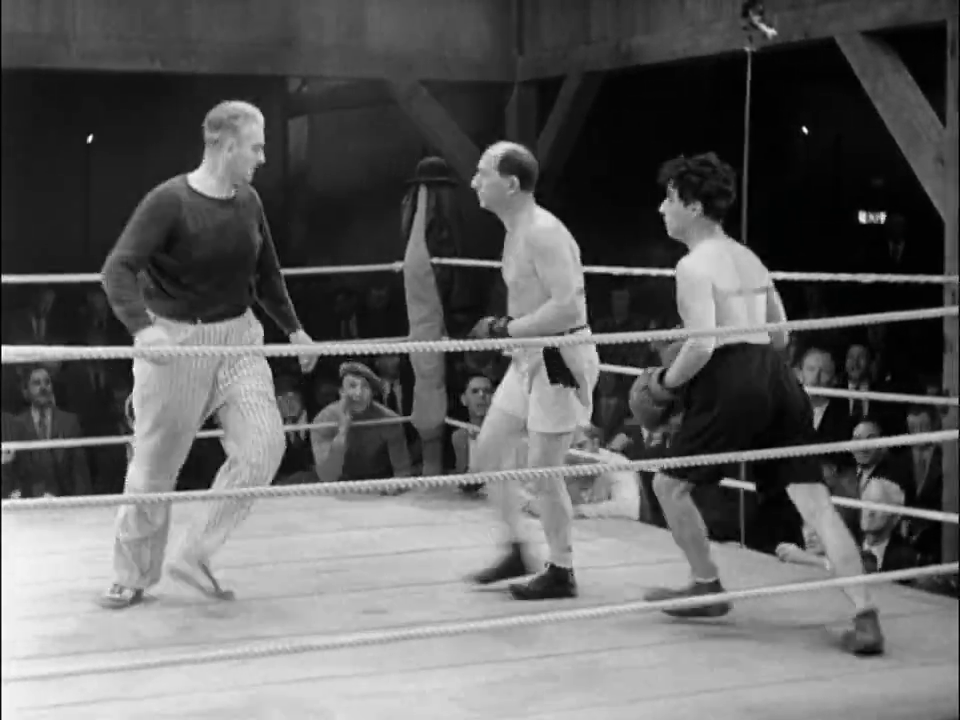
Cherrill’s performance — notoriously earned through hundreds of hours of gruelling retakes — shows authentic pathos, and Chaplin is at the peak of his game: his “Little Tramp retains his pride and dignity despite the constant humiliations he endures”, though “sadly, few recognize the beauty that is in him.” The numerous slapstick sequences are exquisitely choreographed: Chaplin’s perfectionism as a writer, director, editor, and actor paid off. Among many memorable scenes are Cherrill tossing water unknowingly in Chaplin’s face (knowing how hard he worked her, this is especially satisfying to watch); Chaplin gallantly interrupting a passionate nightclub dance that he assumes is domestic violence; the humorously choreographed boxing match, which plays to viewers’ ongoing sense that the referee up there in the ring will surely get hurt one day; and, of course, the tear-jerking ending in which Cherrill recognizes the Tramp’s true identity.

Redeeming Qualities and Moments:

  • Charlie Chaplin as The Tramp
  • Virginia Cherrill as The Girl
  • Many memorable moments

  • Chaplin’s carefully choreographed and synchronized score and sound effects

Must See?
Yes, as an enduring classic.

Categories

(Listed in 1001 Movies You Must See Before You Die)

Links:

Sugarland Express, The (1974)

Sugarland Express, The (1974)

“No more runnin’ off, no more speedin’, and no more guns. Now what do you say to that?”

Synopsis:
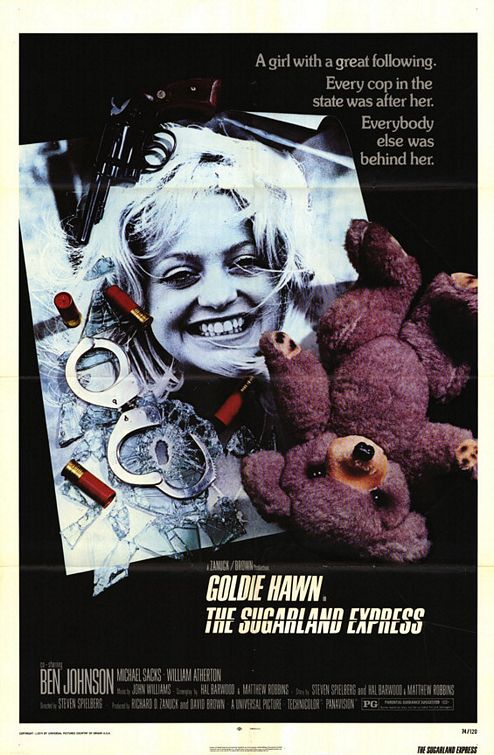
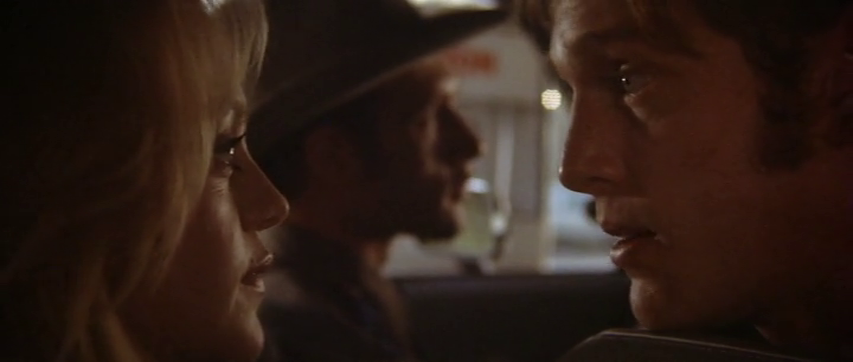
A mother (Goldie Hawn) recently released from prison convinces her about-to-be-released husband (William Atherton) to go on the lam and retrieve their young son from his foster parents. During their escape, they take a patrol officer (Michael Sachs) hostage, and soon develop an uneasy friendship — but will the captain (Ben Johnson) in charge of the situation give Hawn and Atherton a second chance?

Genres, Themes, Actors, and Directors:

  • Ben Johnson Films
  • Car Chase
  • Criminal Couples on the Run
  • Goldie Hawn Films
  • Hostages
  • Media Spectacles
  • Steven Spielberg Films

Response to Peary’s Review:
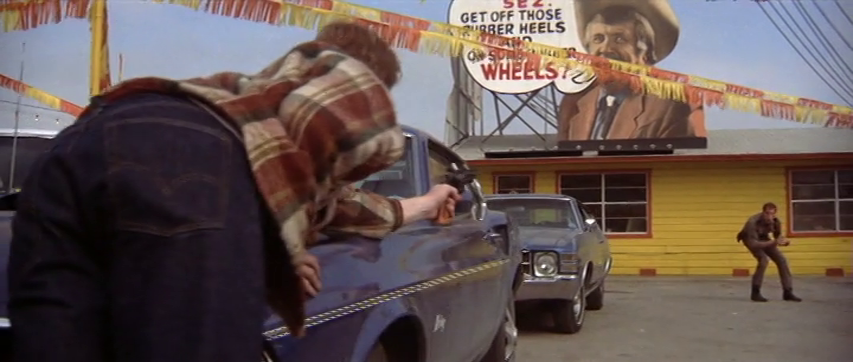
Peary writes that “Steven Spielberg’s debut film is exciting, offbeat entertainment” with “the kinetic energy and visual dynamism of Spielberg’s later films”, but “far more cynical”. He points out how “Spielberg sways us into favoring Lou Jean [Hawn] by showing us the too-old foster mother and a baby that cries anytime she holds it”, but notes he “wouldn’t want the baby to be given to Lou Jean — she is a sweet person, but she’s off her rocker”. He asserts that “people like Lou Jen and Clovis [Atheron] have no chance — they act impulsively and naively, never comprehending that they’re taking on a force that will crush them.” While “Tanner [Johnson] may feel sympathetic toward the couple… he will take only so much of their challenging the law”, and “the police will impersonally carry out their role in the drama — just as the government scientists will carry out their impersonal role in E.T.” He adds that “the shame is that there is no attempt to understand Lou Jean and Clovis on a personal level, so that the police could understand that Lou Jean and Clovis would never harm Slide” — but that’s not necessarily true; given Hawn’s determination to “rescue” her son and live a “normal” family life, there’s no telling what she wouldn’t do on behalf of this goal. Peary notes that while the “picture has interesting characters”, “Spielberg gives us no one who can be admired”. With that said, the “acting is solid”, the “action sequences are extremely well done”, and Vilmos Zsigmond’s cinematography is “impressive”.

Redeeming Qualities and Moments:

  • Fine performances by the two leads
  • Vilmos Zsigmond’s cinematography

Must See?
No, but it’s recommended as a well-directed chase flick with heart.

Links:

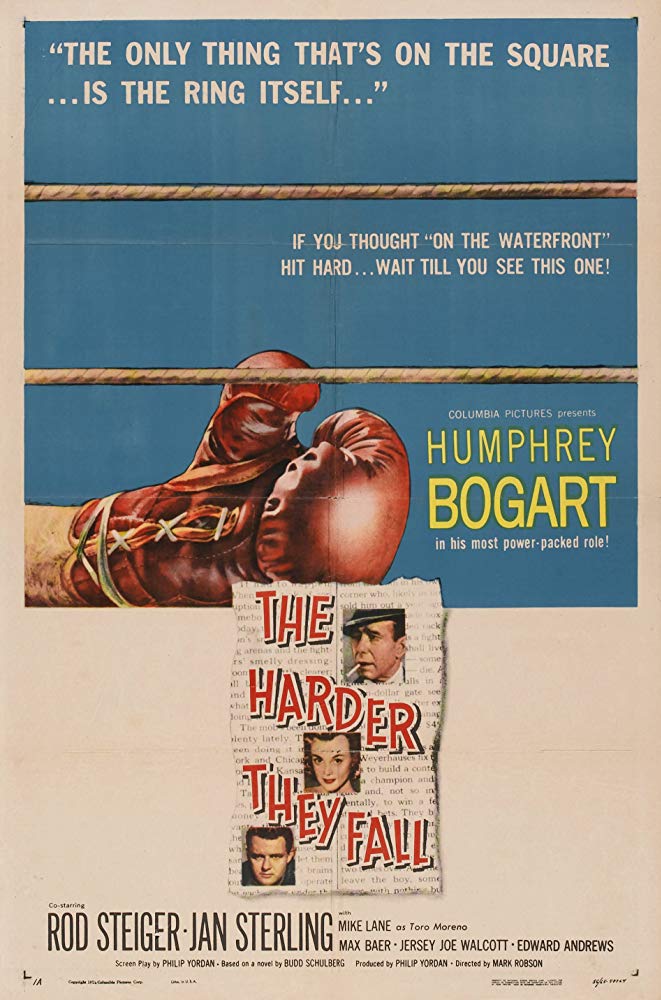
Harder They Fall, The (1956)

Harder They Fall, The (1956)

“Money’s money, no matter where you get it.”

Synopsis:
A washed-up sportswriter (Humphrey Bogart) eager for steady income accepts a gig as publicist for a hulky but ineffective new fighter (Mike Lane) working under a corrupt promoter (Rod Steiger) — but when an ethical journalist friend (Harold J. Stone) and his wife (Jan Sterling) learns more about what he’s doing, Bogart begins to have second thoughts.

Genres, Themes, Actors, and Directors:

  • Boxing
  • Corruption
  • Humphrey Bogart Films
  • Jan Sterling Films
  • Journalists
  • Mark Robson Films
  • Rod Steiger Films

Response to Peary’s Review:
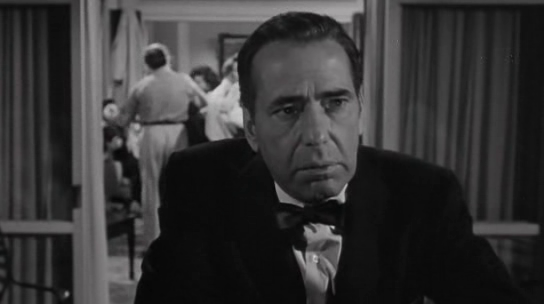
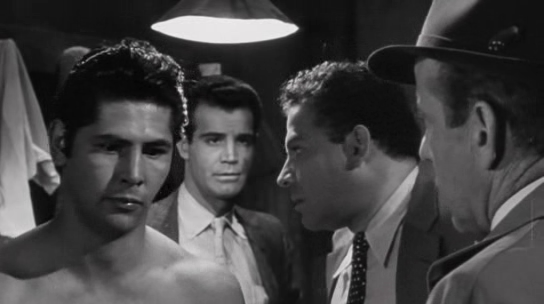
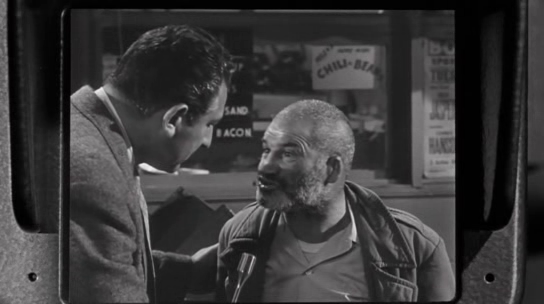
Peary writes that this “skillfully directed”, “remarkable, well-acted” film by Mark Robson — with an “outstanding no-punches-pulled (literally speaking) script by Philip Yordan,” based on a novel by Budd Schulberg — remains “the harshest indictment of boxing on film”, and is a “rare boxing film where the person who ‘sells out’ for money is not a fighter.” He notes that “the boxing world that is depicted is abominable. Not only is the sport itself brutal… but also most fights are shown to be rigged, and fighters are at the mercy of racketeers and money-hungry managers who should protect their fighters but treat them like cattle (to be bought, used, sold).” Peary adds, “Curiously, Max Baer plays the champ” who sadistically beats Toro [Lane], “twenty years after really mauling Primo Carnera (the basis for Toro) in [the] title bout; one wonders why he or Jersey Joe Wolcott (who plays Toro’s trainer) would participate in a film that condemns their sport” — but this comment belittles the intelligence and awareness of the boxers themselves, who surely realize (now if not then) the exploitation inherent in their own career choice, and also likely needed the money (!). Bogart looks tired and unwell in his final role, though this suits his character: he’s a man who recognizes that corruption is both tempting and relentlessly omnipresent, a formidable force to be reckoned with in a lifelong battle to privilege human dignity and respect over greed and gratification of the masses.

Redeeming Qualities and Moments:

  • Strong direction by Robson
  • Burnett Guffey’s cinematography
  • Many effective scenes


Must See?
Yes, as a still-powerful indictment of corruption in sports.

Categories

Links: