Browsed by
Category: Response Reviews

My comments on Peary’s reviews in Guide for the Film Fanatic (Simon & Schuster, 1986).

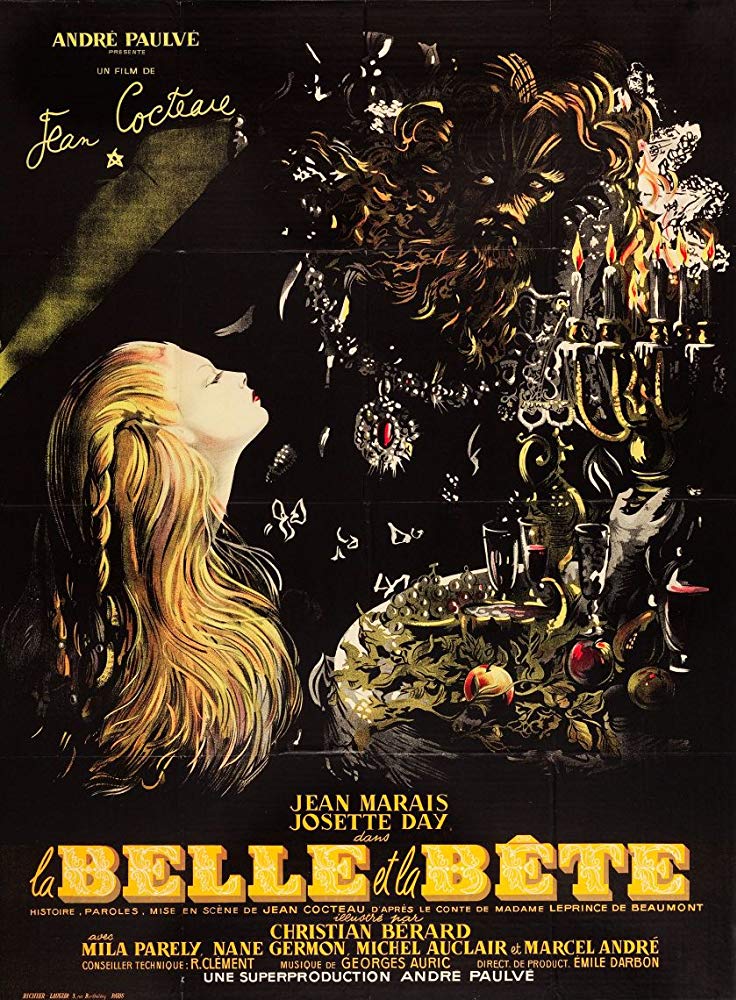
Beauty and the Beast (1946)

Beauty and the Beast (1946)

“I disgust you. You find me repulsive.”

Synopsis:
When a man (Marcel Andre) is sentenced to death by a beast (Jean Marais) after plucking a rose in his garden, his loyal daughter (Josette Day) — who has refused to marry a local suitor (also Jean Marais) — agrees to go and live with the beast in exchange for her father’s life.

Genres, Themes, Actors, and Directors:

  • Folk Tales, Fairy Tales, and Mythology
  • French Films
  • Jean Cocteau Films
  • Mistaken or Hidden Identities
  • Romance

Response to Peary’s Review:
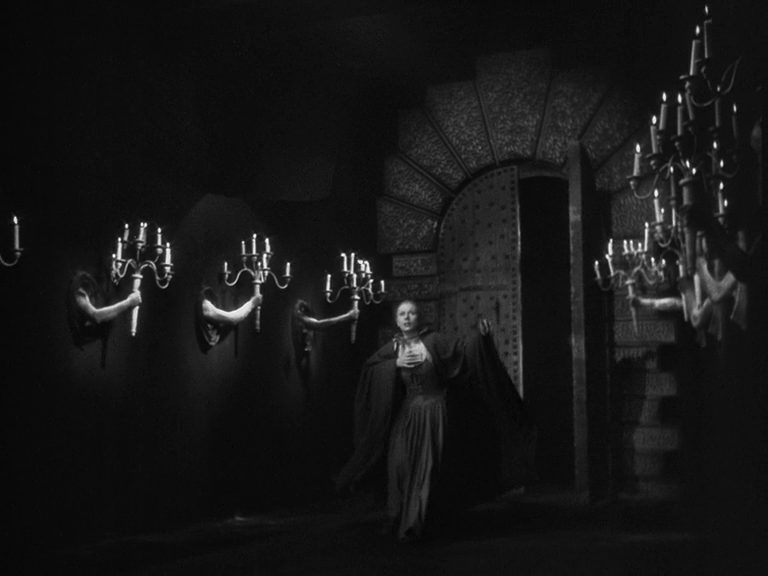
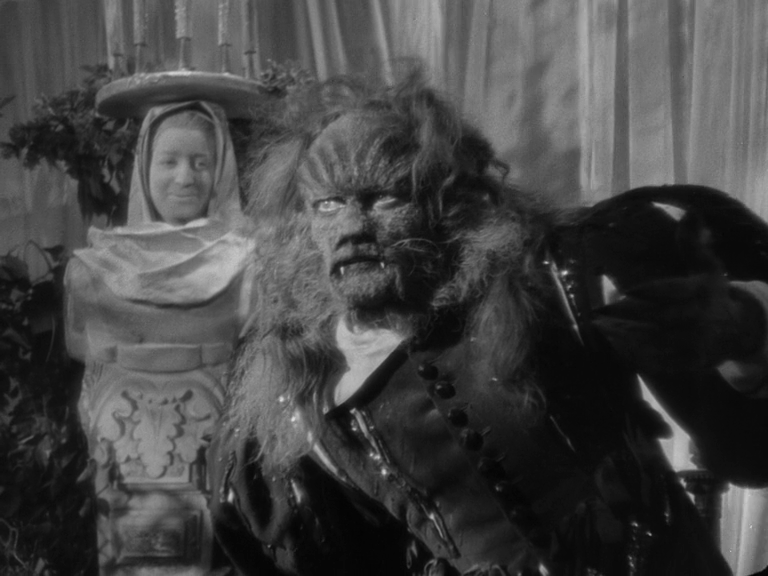
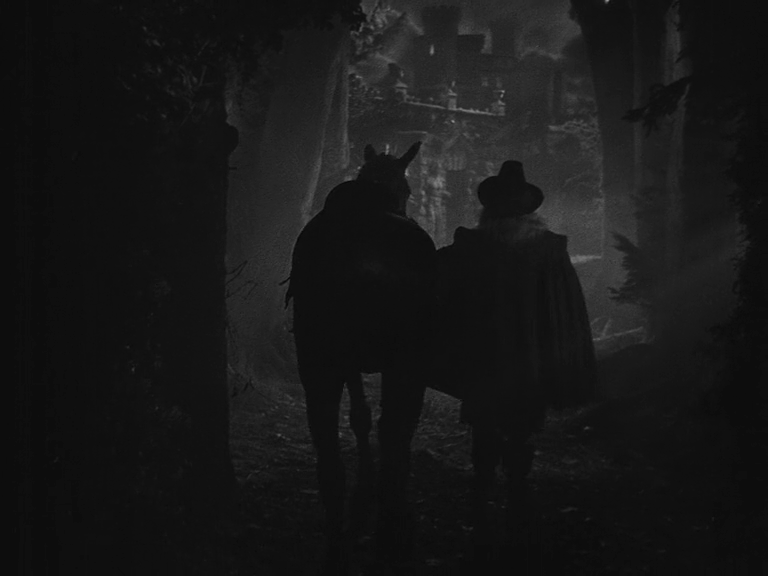
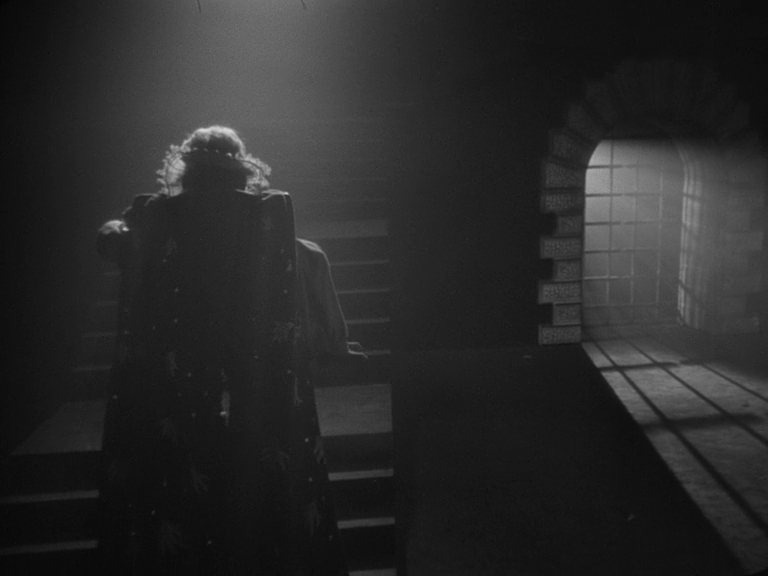
Peary writes that “Jean Cocteau’s legendary, increasingly popular adult adaptation of Madame Le Prince de Beaumont’s classic fairytale” is “the cinema’s most ‘poetic’ work, with much of its charm coming from the fact that it is presented so simply, without self-indulgence or pretense.” He points out it’s full of “hauntingly beautiful, dreamlike imagery” — including “the merchant’s terrifying visit to the Beast’s dark, forbidding castle, in which statues move and unattached arms extend from the wall to hold candelabra; and Beauty’s arrival at the castle, in which she floats/walks trancelike through the various rooms and hallways”. He notes that Cocteau “was exploring ‘the reality of the unreal’, and only through his surreal imagery did he believe he could convey the precise emotions, feelings, and atmosphere that he believed represented absolute truth”. He argues that while “Josette Day is perfectly cast as one of literature’s great heroines: innocent, strong of character, honest, loyal, exquisite, and virtuous”, “less impressive is Jean Marais” who “plays the obnoxious, foolish rapscallion Avenant, whom Beauty loves; the wimpish, self-pitying, though elegant-looking Beast; and the worst of all, the effeminate Prince into whom the Beast turns at the end”.

Peary elaborates on this and other aspects of the film in his Cult Movies book, where he writes that “first time viewers are invariably impressed and surprised that such an unusual film exists; that Cocteau dared to make a fairy tale without drastically changing the content of the original story; that he dared make a film with ‘art’ and not box office success as the ultimate goal; and that he dared approach his film as a poet rather than as a typical movie director.” All of this rings true: it remains a genuine pleasure to revisit this film, despite its shortfalls — which include (for me) a storyline that seems to lag at times, perhaps due to Cocteau’s emphasis on lingering for atmospheric effects. On that note, Peary points out that cinematographer Henri Alekan’s “camera rarely moves, yet within his fixed frame comes a mesmerizing panorama of movements…, shadows, darkness, the clear white sky, and characters who, set against that sky, are filmed as if they were moving statues.”

Regarding Peary’s frustration with the Beast’s transformation into “a human being who looks like Avenant with a permanent”, I can’t say I share it. Peary’s assertion that “Beauty suddenly becomes flirtatious, as if all along she had only pretended to be an innocent” is an unfair assessment of her piqued romantic interest; why does Peary begrudge her happiness at seeing a beloved companion transformed into a human who she can more easily envision as a viable life partner? Meanwhile, Peary’s fixation on the prince’s “effeminate” nature and hair perm are uncharitable at best (his hairdo is certainly no better or worse than that of Avenant). Peary’s ending statement in his Cult Movies review — “We aren’t pleased by any means. This transformation, the worst scene in the picture, almost ruins what went before it: a true king has been demoted to a prissy prince.” — is simply not true. For shame, Peary! (especially given that Marais was Cocteau’s real-life lover). Allow this fairy tale to end the way one might imagine it to in its original form, as intended by Cocteau.

Redeeming Qualities and Moments:

  • Visually stunning sets and costumes
  • Creative special effects

  • Henri Alekan’s “splendid photography”

  • Georges Auric’s score

Must See?
Yes, as an unusual and visually mesmerizing cult classic.

Categories

  • Foreign Gem
  • Genuine Classic

(Listed in 1001 Movies You Must See Before You Die)

Links:

Force of Evil (1948)

Force of Evil (1948)

“All that Cain did to Abel was murder him.”

Synopsis:
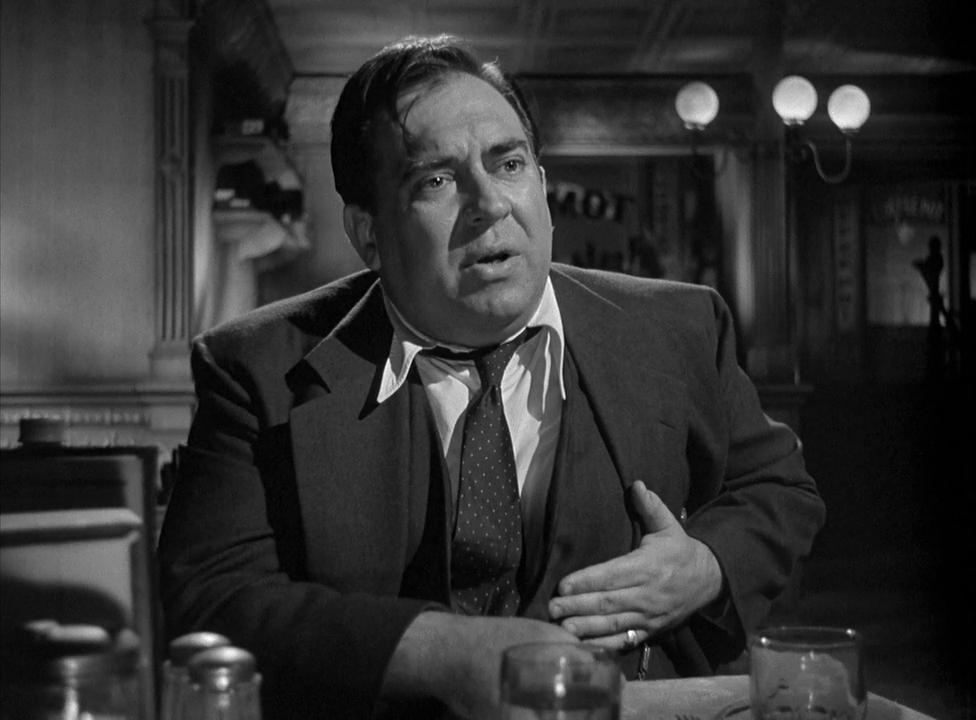
A lawyer (John Garfield) working for a high-level racketeer (Roy Roberts) tries unsuccessfully to convince his brother (Thomas Gomez) to merge his small-time numbers operation with others before he’s wiped out by corruption on the fourth of July. Meanwhile, Garfield falls for Gomez’s secretary (Beatrice Pearson), who attempts to be a good influence on Garfield.

Genres, Themes, Actors, and Directors:

  • Corruption
  • Gambling
  • Gangsters
  • John Garfield Films
  • Lawyers
  • Marie Windsor Films

Response to Peary’s Review:
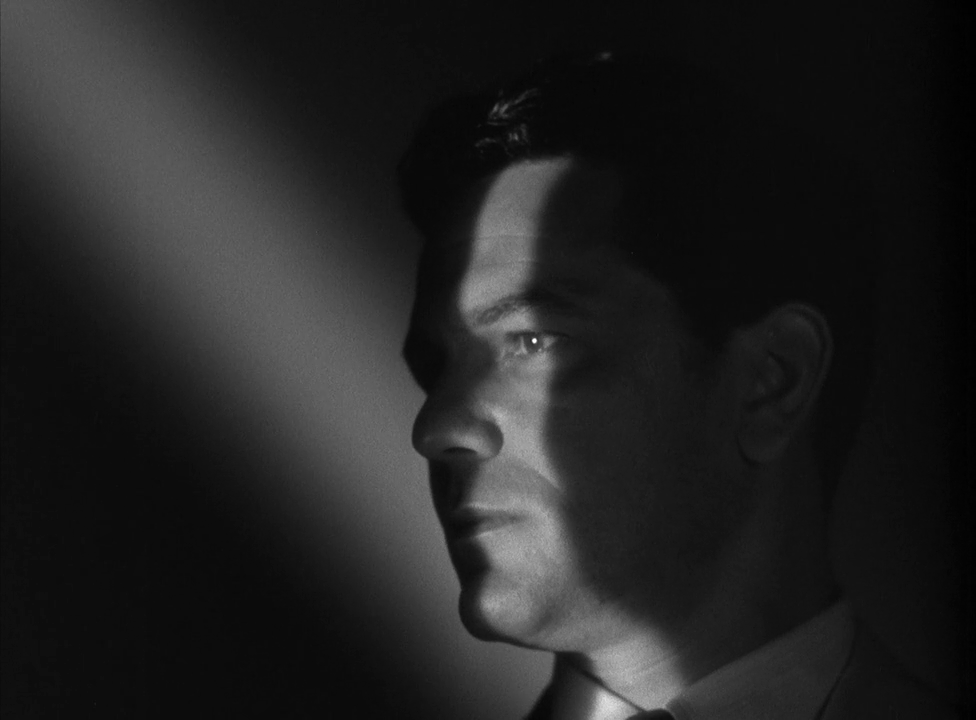
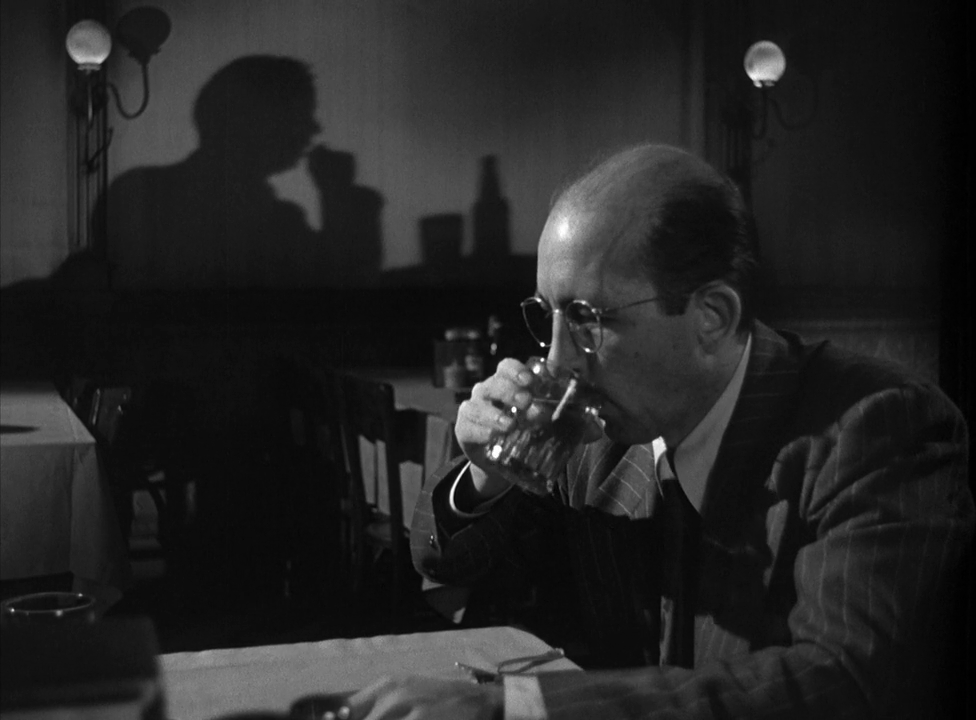
Peary writes that in this “underground classic” — the “only film directed by Marxist screenwriter-director Abraham Polonsky prior to his blacklisting in Hollywood for being an ‘uncooperative’ witness in front of HUAC in 1951” — Polonsky “presents an ugly, cynical view… of our capitalistic, money-and-power-oriented society, where even ‘decent’ people… are so trapped and poisoned by the system that they resign themselves to making a living in crime; [and] where there is little, if any, distinction between crime and business, law enforcers and gangsters, and what is legal and illegal.” He notes that this ‘autopsy on capitalism’ “merely touches on some basic Marxist thought: characters are products of their environment; conflict results from the interaction of different classes; capitalism breeds decadence”. He writes that while the film “makes one aware of the economic shame of the cities — the rich get richer by exploiting the poor, the only jobs for the poor are in crime and involve further exploitation of their class — Polonsky shies away from making a real plea for social change or suggesting how group (class) action could change the capitalist power structure”, instead “conventionally concentrat[ing] on the individual and advanc[ing] the common Hollywood theme ‘Don’t sell out'”; he argues that “worst of all is that he would have Garfield become an informer.” He further points out the “moody” score by David Raksin and how the film is “strikingly photographed by George Barnes so that the characters seem dominated by their surroundings”, thus making this “the darkest, seediest, most claustrophobic entry in films noir.” Finally, he argues it “has the most rhythmic, believable ‘city street’ dialogue found in any Hollywood film, and a great performance by Garfield as one of his few educated characters.”

Peary discusses this film at greater length in Cult Movies book, where he notes that “just as Garfield’s boxer did at the end of the Polonsky-scripted Body and Soul (1947) when he refused to throw his fight despite what the mob might do to him”, his character here is shown as “taking a (progressive) step forward” in terms of giving “his allegiance to the law”. However, Peary refers to this as “Hogwash!” given that “throughout the film Polonsky has shown us a law that is unfeeling, a pawn of the rackets (whenever a lawbreaker wants another lawbreaker thrown in jail he simply calls the cops) and oppressive: the rackets investigation is run by a man we never see (Big Brother?) called Hall (as in City Hall), who bugs phones, raids policy banks, and throws anyone on the premises in jail whether they work there or not, and makes arrests and convictions by using a network of informers and creating an atmosphere of paranoia.” Peary expresses puzzlement about why Polonsky “disregard[s] all this in his climax”, which isn’t “horrible, but… is disappointing in that it is too pat by Hollywood standards”. Ultimately, the film shows that the longer the brothers are “part of the pervading corruption”, “constantly moving up the wobbly ladder of ‘success’, the closer they come to self-destruction.” The smartest (though not necessarily successful) individuals in the movie are those who sincerely want to get out of the corruption game altogether; and while this is shown as nearly impossible — a bespectacled informer (Howland Chamberlain) hoping to escape meets a grimly inevitable fate instead — the ending scene in which “Joe has walked back up the stairs from… purgatory to join Doris, and has been regenerated” is at least meant to provide a form of hope for the future.

Redeeming Qualities and Moments:

  • John Garfield as Joe Morse (nominated as one of the Best Actors of the Year in Alternate Oscars)
  • Thomas Gomez as Leo
  • Noir-ish cinematography

Must See?
Yes, as a still-powerful anti-corruption flick.

Categories

  • Good Show

Links:

Knife in the Water (1962)

Knife in the Water (1962)

“On the water, you need to have reflexes.”

Synopsis:
An aggressive sports writer (Leon Niemczyk) and his wife (Jolanta Umecka) pick up a young hitchhiker (Zygmunt Malanoqwicz) on their way to a weekly boating trip, and invite him to accompany them — but tensions and rivalries continue to mount as the two men show off their prowess in front of bikini-clad Umecka.

Genres, Themes, Actors, and Directors:

  • At Sea
  • Marital Problems
  • Masculinity
  • Rivalry
  • Roman Polanski Films

Review:
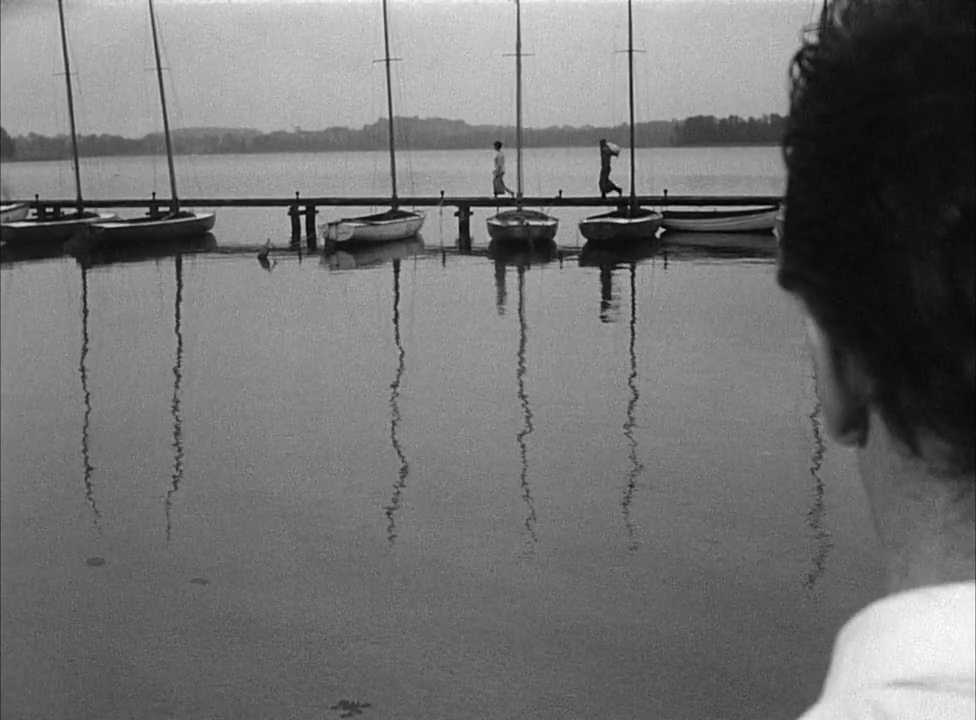
Peary writes that “Roman Polanski’s first film, his only Polish film, is an enigmatic three-character piece he wrote with Jerzy Skolimowski and Jakub Goldberg”, which “concentrates on the stiff competition between the two men [Niemczyk and Malanoqwicz] at sailing, at pickup sticks, at knife playing”. He points out the “sense of claustrophobia (heightened when they go below) that dramatically builds tension; just as the wind determines the boat’s movements, fate seems to control the characters” — and while “we expect that in this natural setting the characters will lay bare their deepest emotions”, they “never really strip off their defenses and totally reveal themselves”. Peary further notes that “Niemczyk desires to show off for his wife and to himself by humiliating the younger man; but while he wins his small victories, he seems increasingly infantile” — and ultimately, the “immense problems in the relationship between Niemcyzk and Umecka… come to [the] surface” and must be confronted. Other than pointing out Jerzy Lipman’s “excellent hand-held photography”, however, Peary’s review neglects to highlight the visual strengths of this unusual and surprisingly potent chamber piece — including and perhaps primarily its camera angles, strategic blocking of characters, and highly effective editing. While this isn’t a film I would choose to return to repeatedly, it should be seen at least once for its technical brilliance.

Redeeming Qualities and Moments:

  • Solid direction, cinematography, and editing throughout


Must See?
Yes, as Polanski’s worthy debut feature.

Categories

  • Important Director

Links:

Salt of the Earth (1954)

Salt of the Earth (1954)

“I want to arise, and push everything up with me as I go.”

Synopsis:
Along with others in her community, the wife (Rosaria Revueltas) of a zinc mine worker (Juan Chacon) resists traditional gender norms in supporting the men in their strike for better working and living conditions.

Genres, Themes, Actors, and Directors:

  • Feminism and Women’s Issues
  • Labor Movement
  • Marital Problems
  • Mining Towns
  • Strong Females

Response to Peary’s Review:
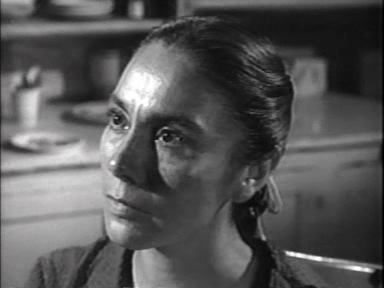
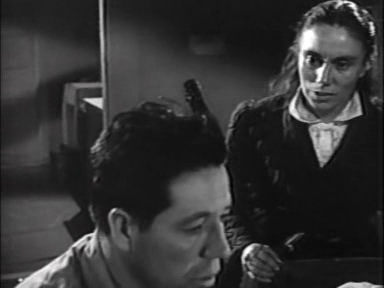
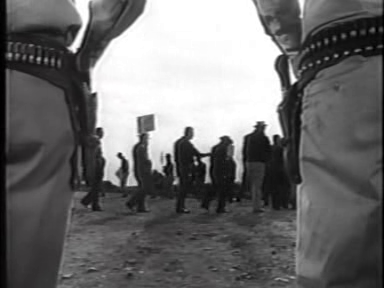
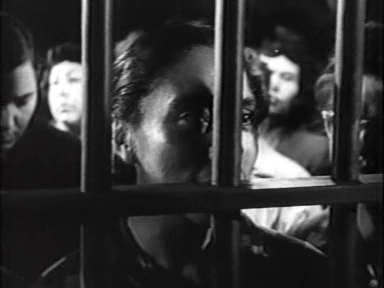
Peary begins his review of this “remarkable, stirring political film” by explaining that it “tells the true story of a successful 13-month strike at a zinc mine in New Mexico, begun in 1953… that was won because the wives of the miners took over the picket line after a Taft-Hartley injunction enjoined their husbands from picketing.” He writes that “not only does this film give women proper recognition for their contribution to the labor movement of the seventies, in that it makes an issue of equality in jobs, equality in the home, and sexual equality” but that “this was the first American narrative film set in America that dared to have women standing with their husbands against the oppressors”: “Significantly, their liberation is achieved by them independently — it is not, cannot, be given them by men; their liberation is then in turn a liberating catalyst for men, who are also trapped by sex-role conventions.” He adds that “the film’s strong theme is that the liberated woman is no real threat to her man; her existence will benefit him.”

Despite being “called a subversive film in Congress and the New York Times before its release”, this is actually a “pro-human rather than anti-American” film, one “which makes no pitch for revolution — just solidarity against the power elite, encompassing racial brotherhood and sexual equality”. Peary notes that the “script was written with cooperation of the participants in the strike, many of whom act in the film”, and that “we are touched by the characters because they are not epic figures — only when they stand together do they take on heroic proportions.” This engaging film (one that “lives up to the legend”) possesses “many scenes [that] will cause smiles, tears, cheers”, and was selected by Peary (over On the Waterfront, which he doesn’t even nominate) as Best Movie of the Year in his Alternate Oscars, where he refers to it as “the greatest political narrative ever made in the United States.”

In his Alternate Oscars review, Peary notes his pleasure in giving the award to a film “made by people blacklisted in Hollywood (director [Herbert] Biberman, producer Paul Jarrico, writer Michael Wilson, cinematographers Leonard Stark and Stanley Meredith, composer Sol Kaplan, [and] actor Will Geer, among them), television workers, and blacks not allowed in Roy Brewer’s segregated International Alliance of Theatrical and State Employees; was cast mostly with the working people the film is about; was condemned in the Hollywood Press, The New York Times, and by RKO box Howard Hughes and members of HUAC; was processed surreptitiously because Hollywood labs refused to handle it; was edited secretly; and was booked into only thirteen theaters nationally (and those theaters were picketed) because Brewer’s IATSE projectionists refused to show it.” With such a lengthy list of constraints, one might expect this movie to be both less polished and more pedantic than it is — but it remains surprisingly engaging, and more relevant than ever. It’s a pleasure to know, as Peary writes from taking with producer Jarrico, that it “has been seen, probably, by more people than any film in history.”

Redeeming Qualities and Moments:

  • Rosaura Revueltas as Esperanza
  • Fine performances by the non-professional cast
  • Powerful direction and cinematography

  • Appropriately disturbing evidence of entrenched racism and sexism

Must See?
Yes, both for its historical relevance and as a still-noteworthy drama. Discussed at length in Peary’s Cult Movies 2 book.

Categories

  • Cult Movie
  • Historically Relevant

(Listed in 1001 Movies You Must See Before You Die)

Links:

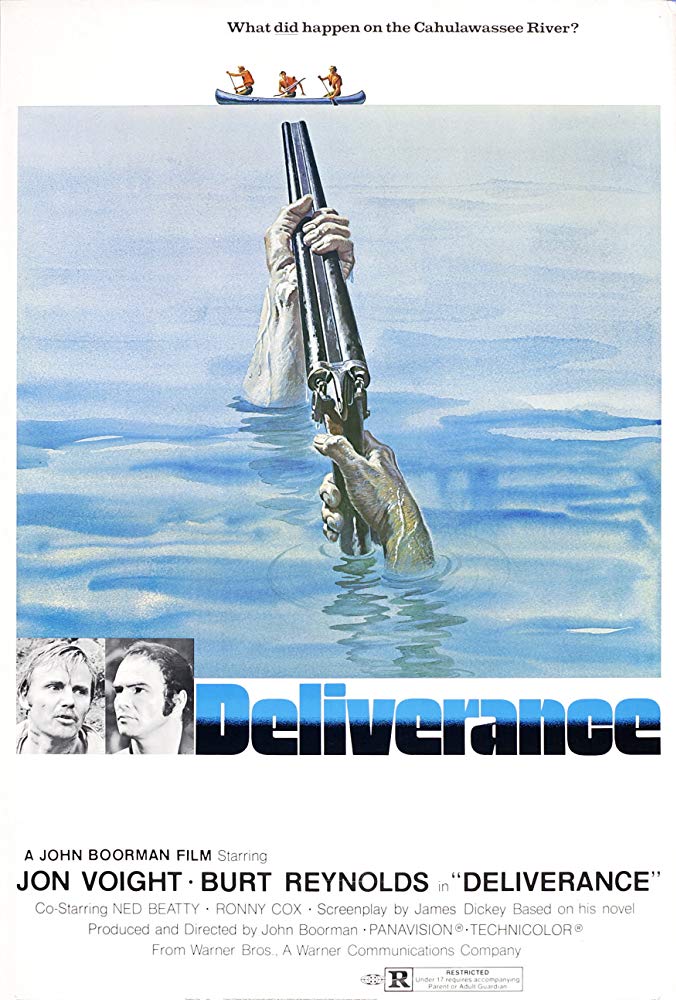
Deliverance (1972)

Deliverance (1972)

“Sometimes you have to lose yourself before you can find anything.”

Synopsis:
When four friends (Burt Reynolds, Jon Voight, Ned Beatty, and Ronny Cox) go on a canoeing vacation in the backwoods of Georgia, they quickly find themselves endangered by both extreme rapids and brutal local denizens.

Genres, Themes, Actors, and Directors:

  • Burt Reynolds Films
  • Class Relations
  • Deep South
  • John Boorman Films
  • Jon Voight Films
  • Living Nightmare
  • Masculinity
  • Ned Beatty Films
  • Rape
  • Survival
  • Vacation

Response to Peary’s Review:
Peary opens his review of this disturbing thriller by noting that “in some of our more terrifying dreams we may find ourselves thrust into an alien, hostile environment where we are at the mercy of strangers from another culture who want to kill us for reasons we can’t comprehend”. He argues that “no film better captures the essence of this particular nightmare than this thrilling version of James Dickey’s novel, directed by John Boorman and scripted by Dickey”: “Indeed, this film depicts the male’s worst nightmare — having his masculinity threatened.” Peary describes the “illiterate hillbillies” encountered by the vacationing quartet as people “whose bodies and brains seem to have been damaged by malnutrition, disease, and inbreeding”; when Voight and Beatty “take the wrong fork in the river and find themselves threatened by two vile and frightening backwoodsmen (Bill McKinney, Herbert ‘Cowboy’ Coward)”, viewers are subjected to “an unforgettably shocking scene”.

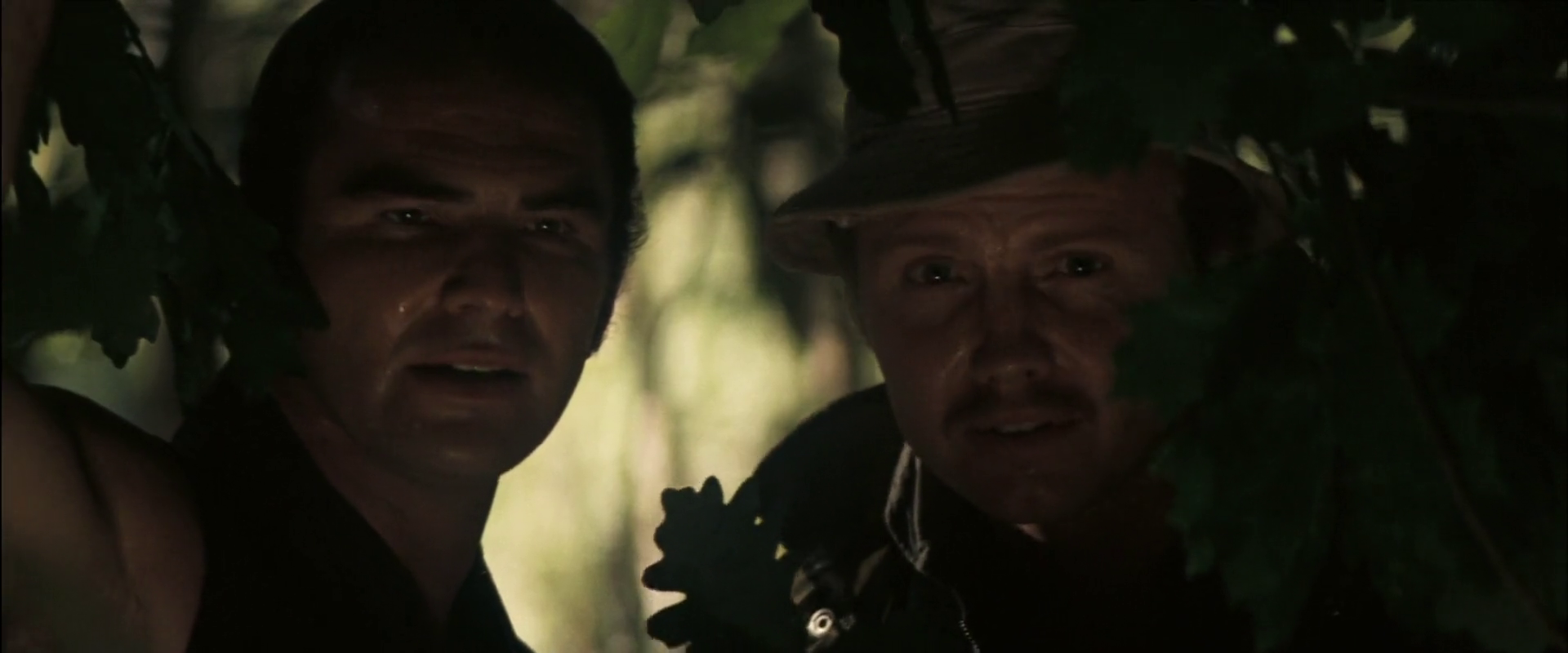
Peary argues that the “film is both provocative and an extremely powerful nail-biter”, and adds the weirdly unnecessary caveat that “it’s too intense and violent for kids” (no kidding!!!). Finally, he points out that the movie is “beautifully filmed by Vilmos Szigmond”, and that a “highlight is when Cox plays ‘Dueling Banjos’ with a young hillbilly” (Billie Redden, a local who was cast for his appearance rather than actual ability to play the banjo). I have little to add to Peary’s accurate review, other than stressing that this is a film I fully acknowledge as brilliant, but don’t want to watch again for a really, really long time. With that said, I adore everything about the dueling banjos scene — from the creative camera angles (it’s no coincidence that Redden is placed far above Cox) and close-ups of Redden’s face, to the juxtaposition of the beginning of this scene with Reynolds’ negotiations to find drivers for their trip, to Beatty’s disparagingly throwaway comment about “genetic deficiencies” as Redden deftly strums, to the old man in a hat hopping around in dancing delight (while Beatty openly mocks him), to Cox’s humble admission near the end of the song (“I’m lost”) as Redden’s grin widens and he continues playing. This group does indeed become lost, unaware of the dangerous and impenetrable power dynamics they’re about to enter into.

Redeeming Qualities and Moments:

  • Strong lead performances
  • Vilmos Zsigmond’s cinematography

  • Ronny Cox and Billy Redden’s banjo duet/duel (and the soundtrack based on the tune)

Must See?
Yes, as a disturbing and powerful classic.

Categories

  • Genuine Classic

(Listed in 1001 Movies You Must See Before You Die)

Links:

Hunchback of Notre Dame, The (1939)

Hunchback of Notre Dame, The (1939)

“I’m not a man and I’m not a beast. I’m as shapeless as a man on the moon!”

Synopsis:
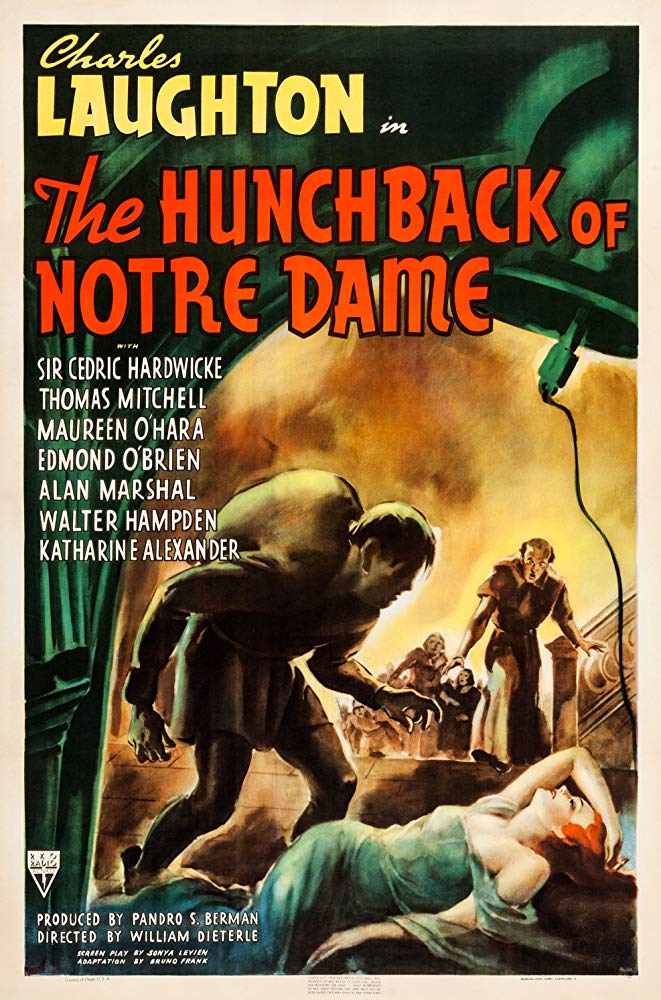
In medieval Paris, a hunch-backed bell-ringer (Charles Laughton) at Notre Dame Cathedral provides sanctuary for a young gypsy woman (Maureen O’Hara) falsely accused of murder by an insanely jealous chief justice (Cedric Hardwicke) who lusts after her. Will Esmeralda (O’Hara) be saved by her new husband (Edmond O’Brien), the King of the Beggars (Thomas Mitchell), or Quasimodo (Laughton) himself?

Genres, Themes, Actors, and Directors:

  • Charles Laughton Films
  • Disfigured Faces
  • Edmond O’Brien Films
  • Falsely Accused
  • Gypsies
  • Historical Drama
  • Maureen O’Hara Films
  • Misfits
  • Thomas Mitchell Films
  • William Dieterle Films

Response to Peary’s Review:
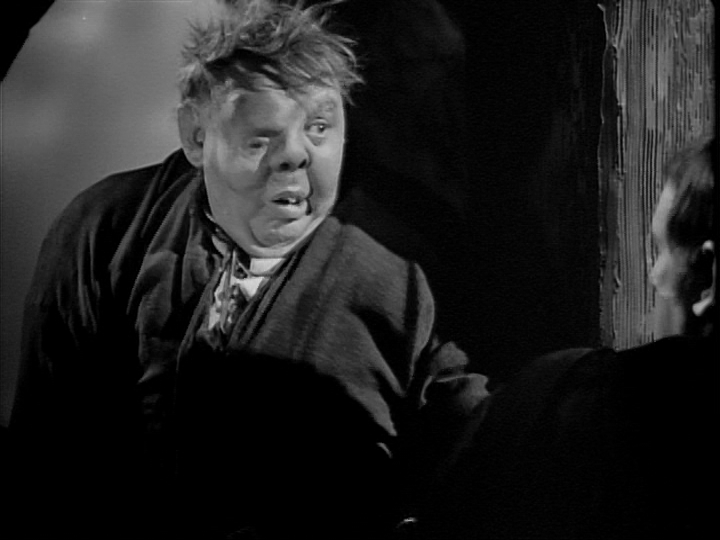
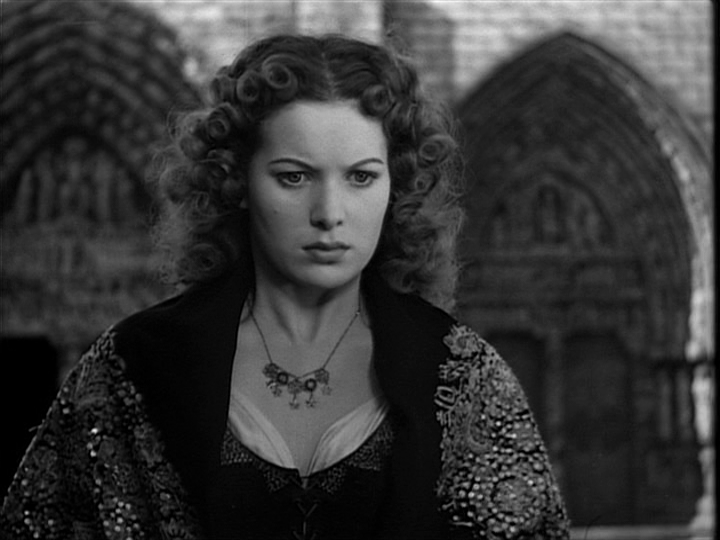
Peary writes that this “visually impressive telling of Victor Hugo’s classic, set in 11th-century Paris”, features an “excellent cast” — including a young Edmond O’Brien “looking skinny”.

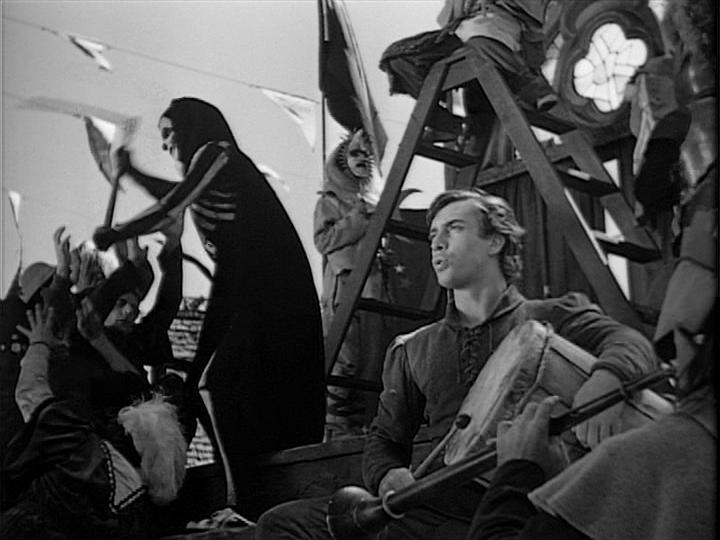
He notes that director William Dieterle handles “the crowd scenes (more than 3000 extras were employed) expertly” and instructed “cameraman Joseph H. August to use some interesting angles.” However, he argues that while “Laughton has received a great deal of praise for his performance”, he “doesn’t really get much opportunity to act” given that “what few lines he has are intended to make us (or Esmeralda, or the Parisians in the streets) feel sorry for him”.

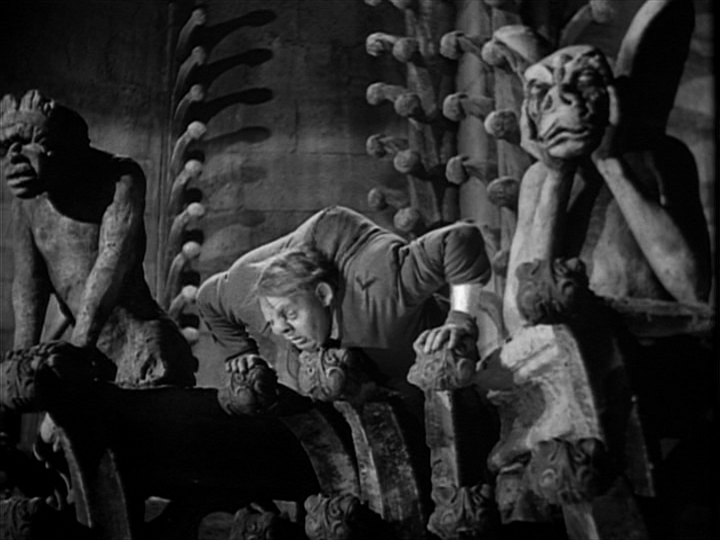
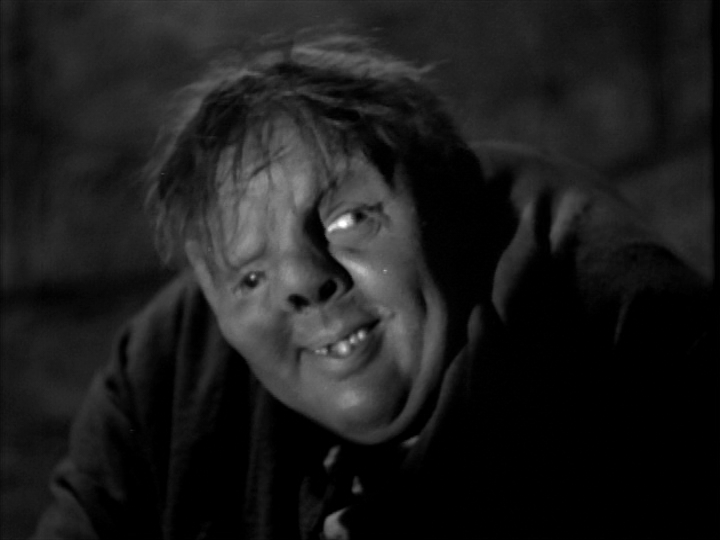
Peary believes “the film surely would have worked better if Laughton’s hunchback didn’t let his physical appearance completely dominate his every thought and word, because he’ll get enough pity as it is just from his hideous looks (the make-up people must have used a deformed walrus as Quasimodo’s model”). He argues that “O’Hara, who is breathtakingly beautiful, comes across better.”

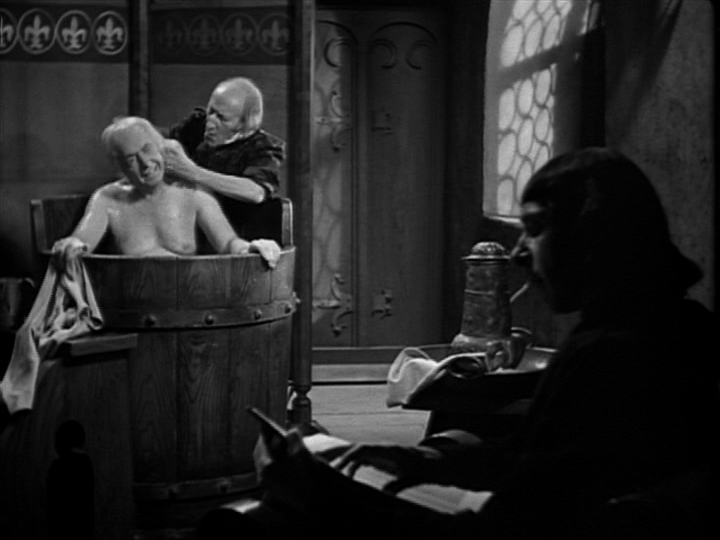
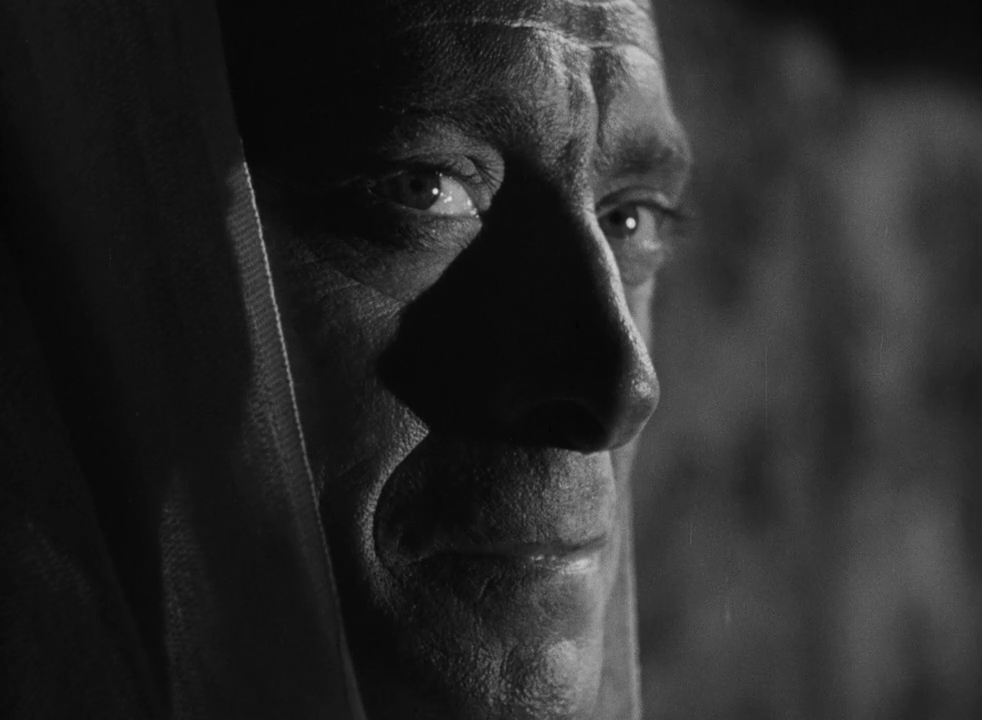
I’m less critical of Laughton’s performance and make-up than Peary, though I’ll admit to not being a huge fan of the storyline either in this adaptation or the earlier silent version with Lon Chaney, Sr. — Quasimodo’s personality and background ultimately seem under-developed (is he mentally challenged, and/or simply irreparably traumatized?), as does that of Hardwicke’s character:

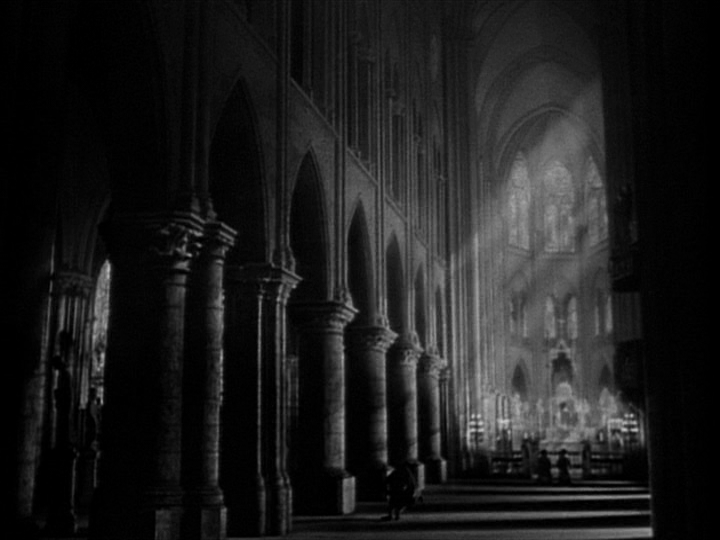
… and the damsel-in-distress, Beauty-and-the-Beast narrative hook doesn’t do much for me. It’s once again the sets and crowds (along with atmospheric cinematography) that most impress in this film.

Redeeming Qualities and Moments:

  • Charles Laughton as Quasimodo
  • Maureen O’Hara as Esmeralda
  • Van Nest Polglase’s sets
  • Joseph August’s cinematography
  • Perc Westmore’s make-up

Must See?
No, though it’s worth a look as an Oscar-nominated classic.

Links:

Hunchback of Notre Dame, The (1923)

Hunchback of Notre Dame, The (1923)

“All Quasimodo knew was that this girl had once been kind to him.”

Synopsis:
A deformed bell-ringer (Lon Chaney, Sr.) in Notre Dame Cathedral provides sanctuary to a young gypsy woman (Patsy Ruth Miller) falsely accused of killing a nobleman (Norman Kerry) who was actually stabbed by the jealous and unscrupulous brother (Brandon Hurst) of an archdeacon.

Genres, Themes, Actors, and Directors:

  • Disabilities
  • Falsely Accused
  • Gypsies
  • Historical Drama
  • Lon Chaney, Sr. Films
  • Misfits
  • Silent Films

Response to Peary’s Review:
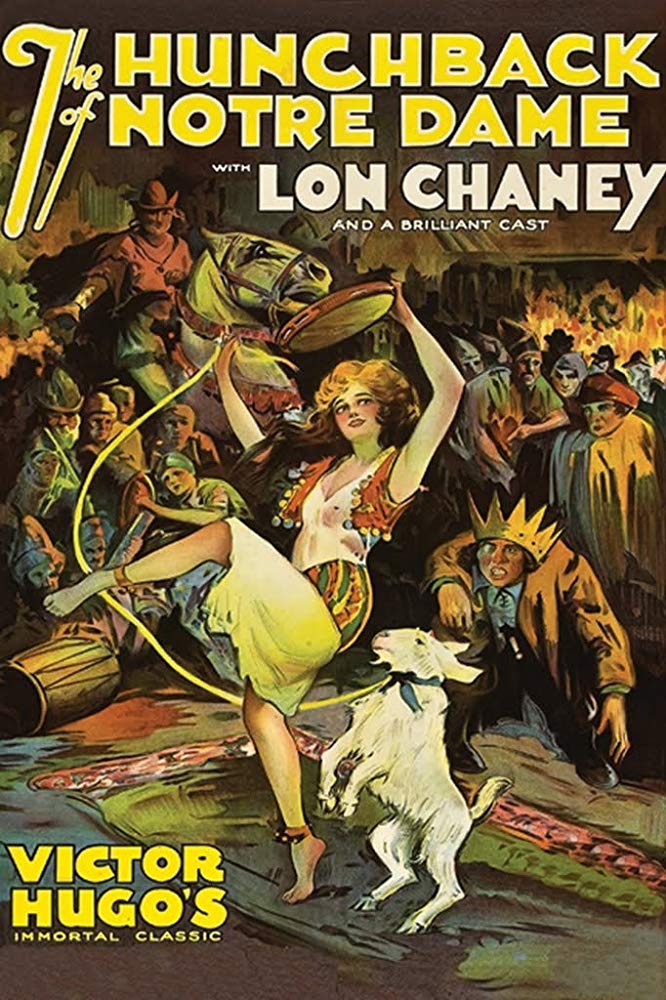
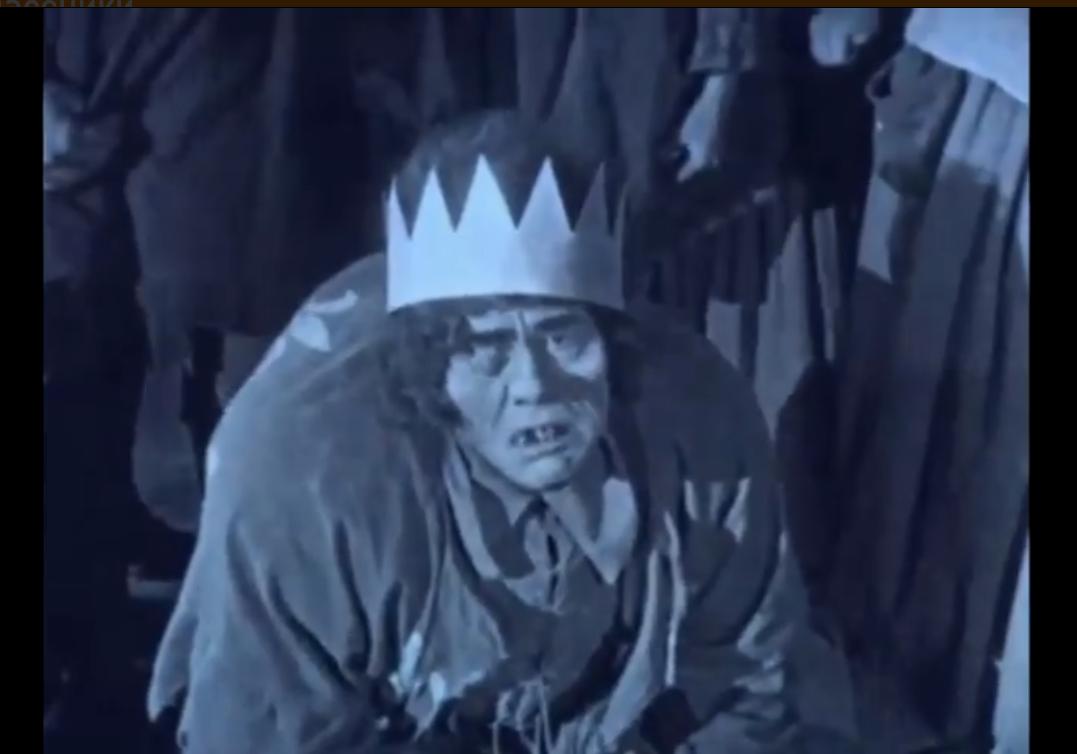
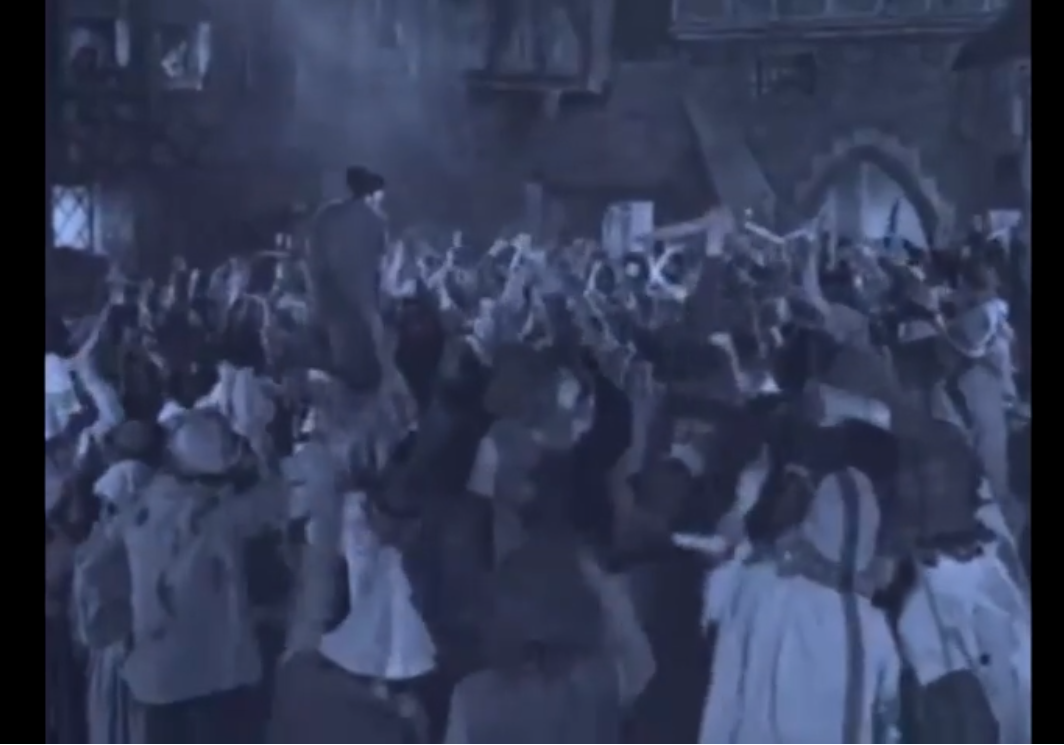
Peary recommends that film fanatics see this “first of many screen adaptations of Victor Hugo’s classic” before any others. He notes that it’s an “impressive production with large sets and hundreds of extras”, “beautifully photographed, ambitiously staged by director Wallace Worsley, and marvelously acted” by Chaney and Miller. He points out that the “key to Chaney’s definitive performance as Quasimodo is that his expressions and gestures are subtle, not demonstrative as one would expect in a silent picture”; he argues that while “later actors who played the hunchback hammed it up and worked too hard to get our pity”, “Chaney realized that the make-up alone was strong enough to make viewers feel sympathy for the hunchback — he wanted to show that Quasimodo’s personality was opposite of his monstrous exterior”. Peary concludes his review by noting that “the finale is extravagant and exciting, then poignant.” While I’m suitably impressed with how lavishly well-mounted this early silent flick is, I share less of Peary’s overall enthusiasm. It’s certainly worth a look for Chaney’s memorable performances, but the storyline creaks.

Redeeming Qualities and Moments:

  • Lon Chaney, Sr. as Quasimodo
  • Impressive sets (spanning 19 acres) and handling of large crowds

Must See?
No, though it’s worth a look as a lavish early silent adaptation, and to see Chaney, Sr. in one of his signature roles.

Links:

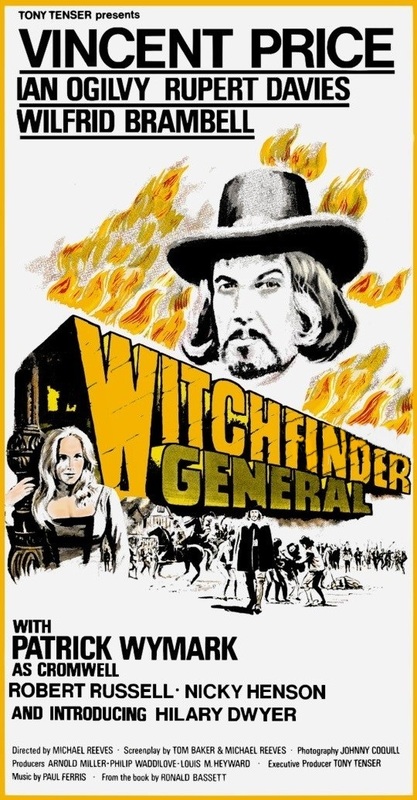
Conqueror Worm, The / Witchfinder General, The (1968)

Conqueror Worm, The / Witchfinder General, The (1968)

“Men sometimes have strange motives for the things they do.”

Synopsis:
When a cavalry soldier (Ian Ogilvy) in 17th century England learns that infamous witchfinder Matthew Hopkins (Vincent Price) and his sadistic assistant John Stearne (Robert Russell) have descended upon the household of his fiancee (Hilary Dwyer) and her uncle (Rupert Davies), he vows revenge at any cost.

Genres, Themes, Actors, and Directors:

  • Falsely Accused
  • Historical Drama
  • Horror Films
  • Michael Reeves Films
  • Morality Police
  • Revenge
  • Vincent Price Films
  • Witches and Wizards

Response to Peary’s Review:
Peary writes that this “brutal, visually and thematically fascinating cult film by the controversial Michael Reeves” — “his last work before his death at age twenty-five” — shows that “his talent as director and writer was indisputable and his condemnation of those who lust for and abuse power admirable”. He points out that the evil in this film “is all-encompassing, as is evident when Hopkins kills suspected heretics in fire, in water (by drowning), and in the air (by hanging)”. Price — playing an “angel of death” — “has never been better”, portraying “a menacing, brutal, shrewd, arrogant puritan on a black horse who conveys the scorn that a man of Hopkins’s breeding would have for a world that financially rewards him for committing monstrous acts”: he “debases… people by raping their women, taking their money, and executing those brave enough to protest.” Peary reminds us that this film is “not for the squeamish, but [nonetheless] a powerful, one-of-a-kind film”.

Peary’s GFTFF review is lifted directly from his lengthier Cult Movies essay, where he contrasts this horror film (based in name only on a poem by Poe) with “all those enjoyable Poe films starring Vincent Price, like The House of Usher (1960), The Pit and the Pendulum (1961), and The Masque of the Red Death (1965)“, which were “intentionally claustrophobic, with almost everything taking place within secluded castles”, and evil — as “personified by the mad, hermitlike Vincent Price characters” — “confined to the castles themselves, so that if the castles are destroyed the evil within their walls will be destroyed as well.” In The Conqueror Worm, on the other hand, we “are presented with an evil that is overwhelming, invulnerable, and that will emerge victorious” — it is “not confined to a single castle but runs rampant across all of England, contaminating the people, wiping out whatever goodness exists and replacing it with a contagious sickness characterized by each ‘victim’s’ desperate need to be cruel to his fellow human beings.”

Peary adds that two of Reeves’ greatest achievements with this film — his third and last after The She Beast (1961) and The Sorcerers (1967) — were managing “to keep Price from going into the ham actor routine that mars many of his performances”, and for keeping narrative tensions consistently high. He points out that the film starts with a “pre-credits sequence so powerful — a screaming woman being led to a scaffold where she is hanged — that the film must be kept at a high level of intensity in order to avoid a dramatic letdown”, but notes that Reeves is successful in maintaining “an extraordinary momentum throughout”. Viewers should be forewarned that “along the way there is much violence — executions, tortures, a nerve-wracking soldier-ambush sequence” — and “whenever there is a chance that the hectic pace might be slowing a bit, Reeves automatically has Marshall [Ogilvy] jump on his mighty steed and race it across the countryside”, thus never giving the audience “a chance to relax”. I agree with Peary’s closing statement that “by the end of the film it is as if you have just run the gauntlet”.

With that said, this film’s relentless violence has a (sadly relevant) purpose, showing how easily mankind can descend into joy of torture — or at least mindless acceptance of it as commonplace and necessary. Reeves includes plenty of tracking shots showing villagers calmly watching as “witches” are burnt to death; minor facial expressions demonstrate that they likely believe the heretics deserve their fate.
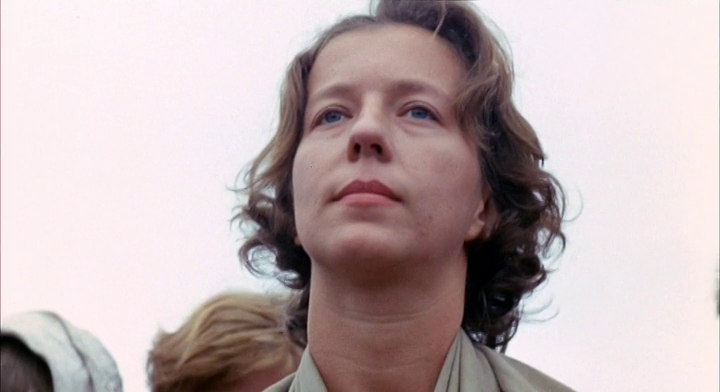
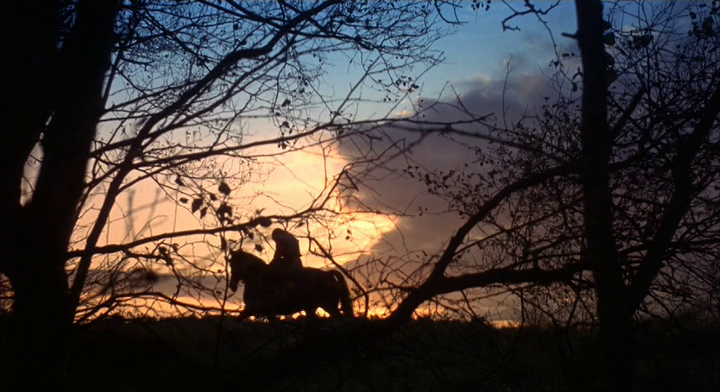
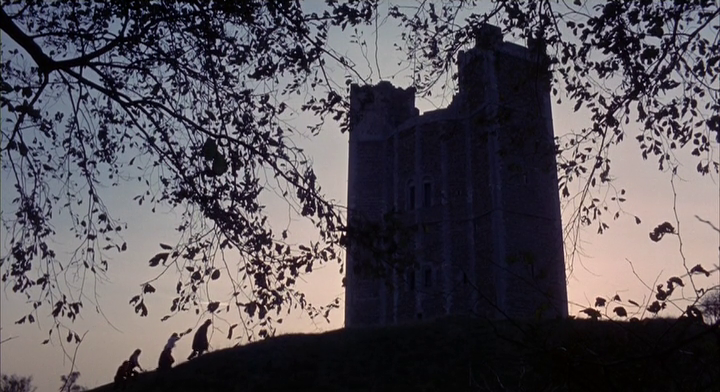
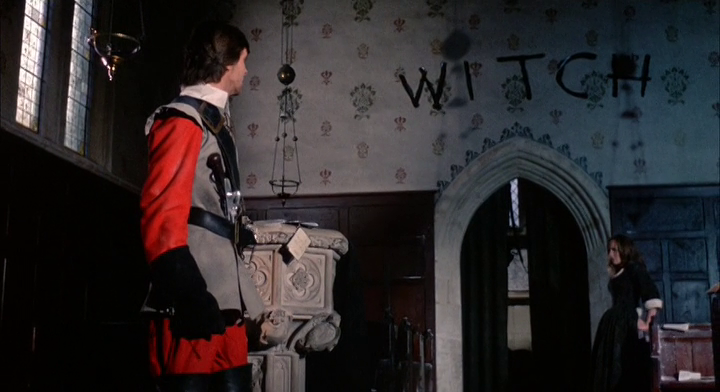
Also of note is the film’s gorgeous cinematography, showcasing real-life horror taking place in an atmospheric landscape of Gothic forests, meadows, village squares, and dank interiors. With his expert directorial hand, Reeves makes powerful visual statements throughout: for instance, as Ogilvy comes back to Dwyer and listens to her “confession” about what she’s done to try to save her uncle, she is framed by the word “WITCH” scrawled on the wall of a church behind her — but when Ogilvy brings her down to her knees with him to pray and ask God to marry them, the term neatly disappears from our view. In another notable instance, crashing waves at the seashore (freedom) turn into the fiery flames that will put an innocent victim to death. Reeves’ film is both brutal and brilliant, a worthy culmination to his far-too-short career.

Redeeming Qualities and Moments:

  • Vincent Price as Matthew Hopkins (nominated as one of the Best Actors of the Year in Peary’s Alternate Oscars)
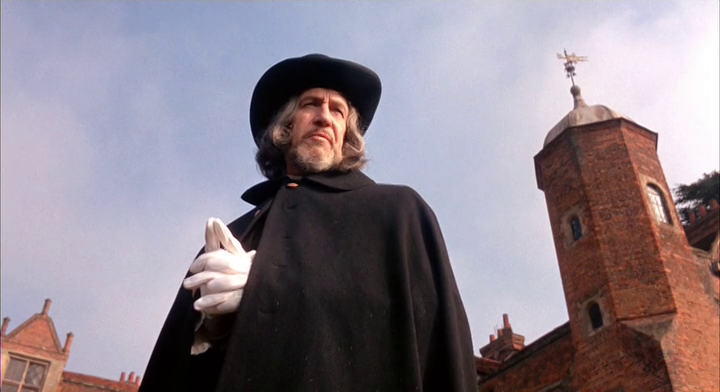
  • Johnny Coquillon’s cinematography

  • Strong direction throughout

Must See?
Yes, as a justifiable cult favorite.

Categories

Links:

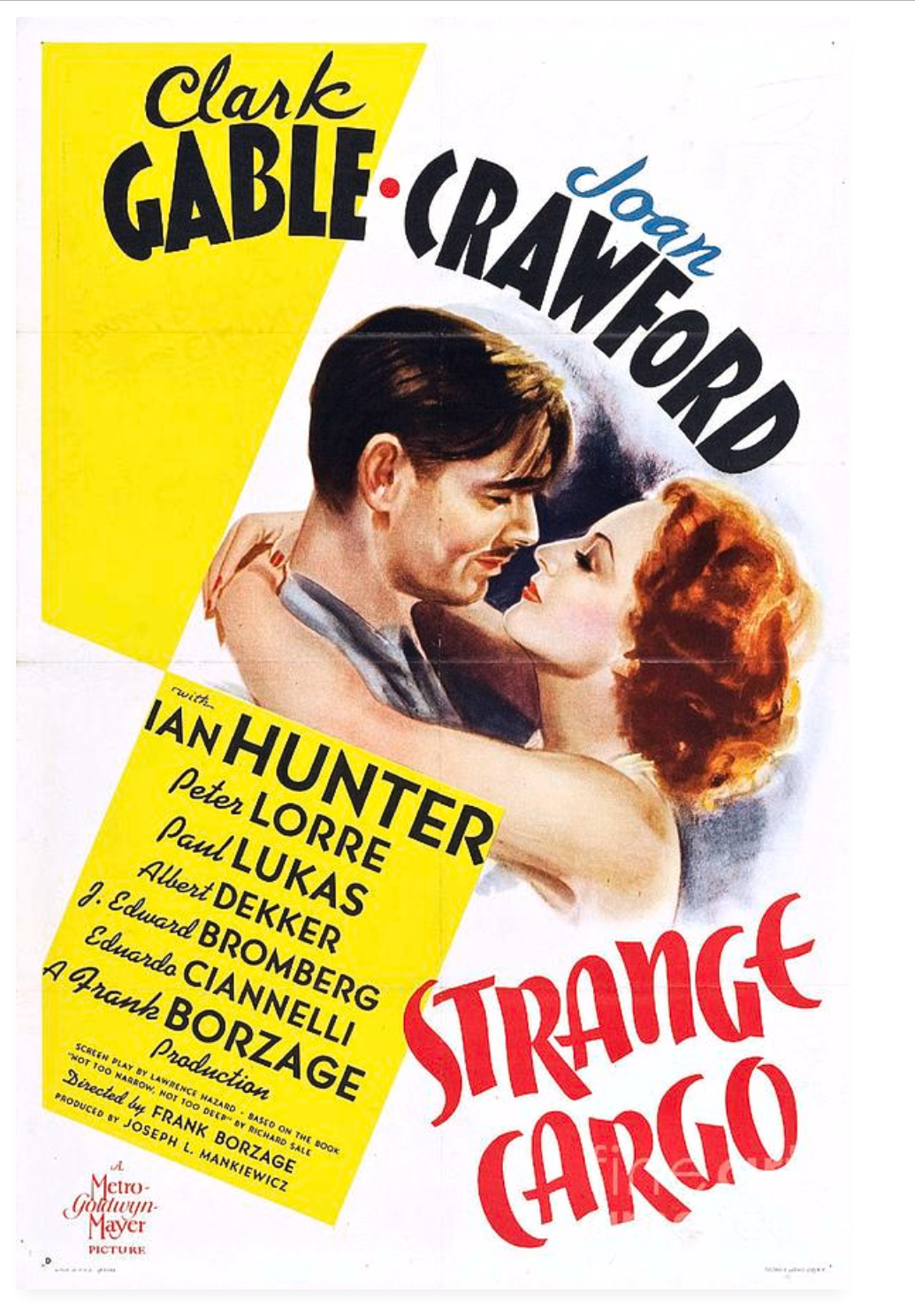
Strange Cargo (1940)

Strange Cargo (1940)

“There’s nothing a man can’t get through to be free!”

Synopsis:
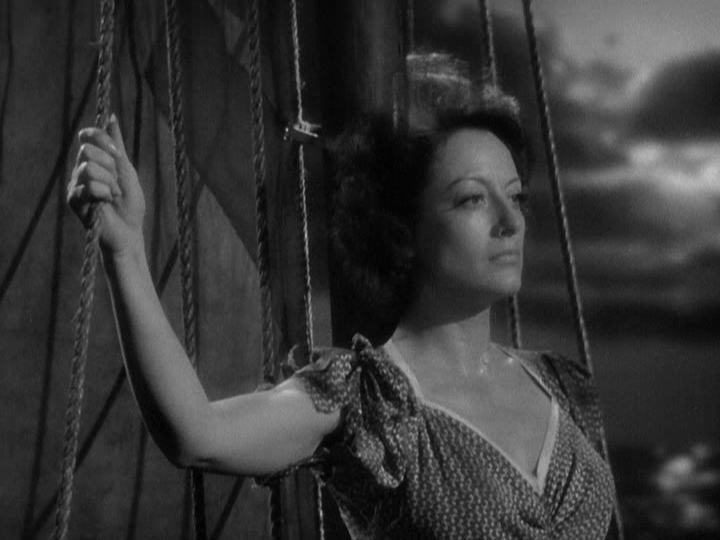
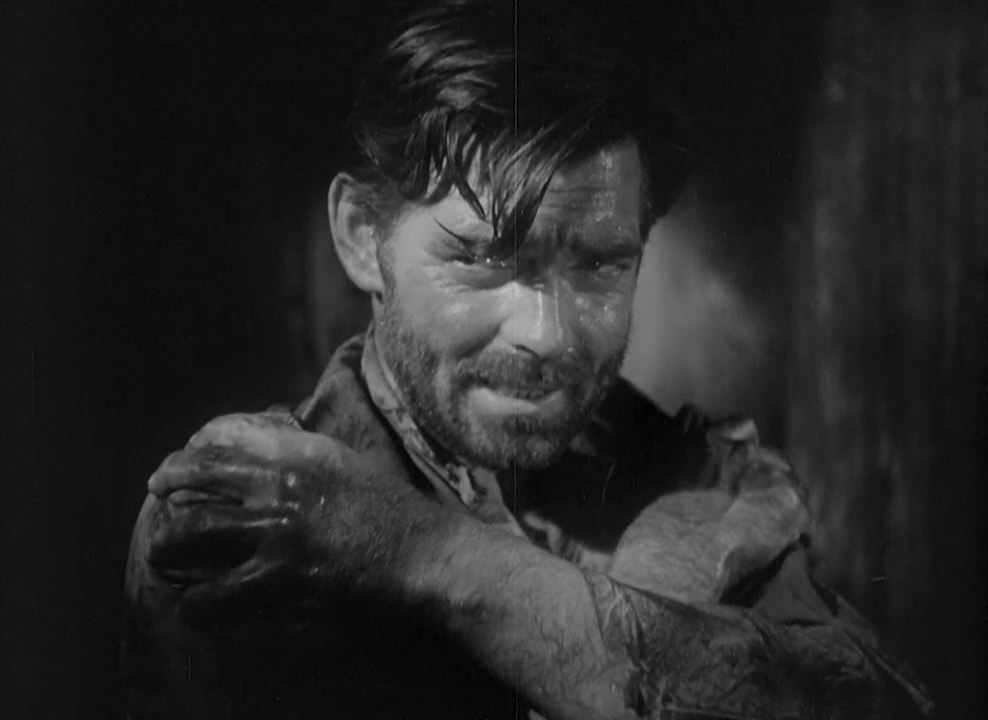
A convict (Clark Gable) escapes from a French penal colony with a small group of fellow prisoners — including a calm, Christ-like figure (Ian Hunter) — accompanied by a prostitite (Joan Crawford) eager to get away from a weaselly informer (Peter Lorre).

Genres, Themes, Actors, and Directors:

  • Clark Gable Films
  • Do-Gooders
  • Escape
  • Ex-Cons
  • Frank Borzage Films
  • Ian Hunter Films
  • Joan Crawford Films
  • Paul Lukas Films
  • Peter Lorre Films

Response to Peary’s Review:
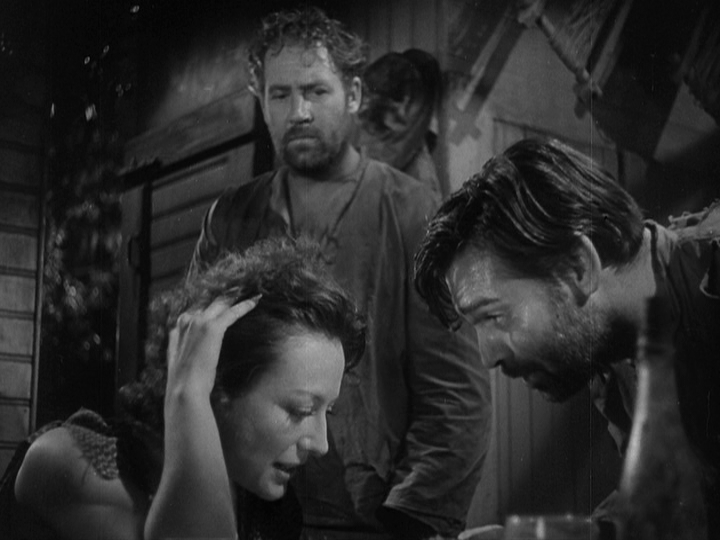
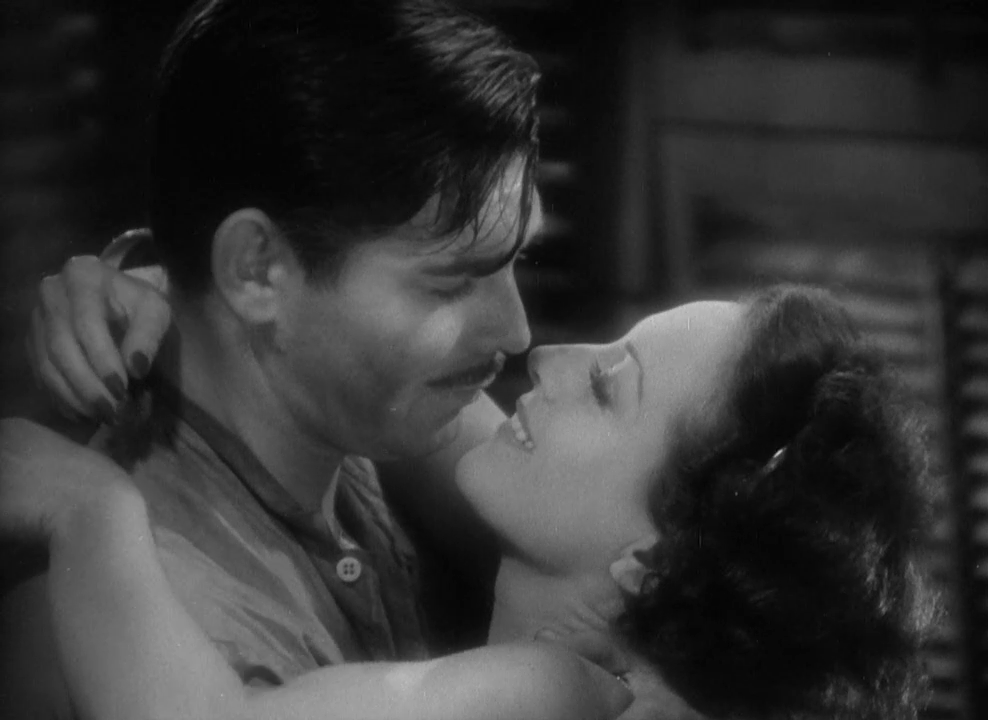
Peary opens his review of this atmospheric outing by director Frank Borzage with the simple statement: “Strange film.” He notes that the “picture begins dynamically on [a] penal colony, with extremely good, hard-edged dialogue being exchanged by the sinful characters.” He adds that the “initial meetings between Gable and the hostile Crawford are gems”, and that “Gable and Crawford sizzle throughout”. However, he argues that “the religious mumbo-jumbo gets in [the] way of what might have been a fascinating escape film. Every time anybody wants to do something exciting, the calm and solemn Hunter stops them, tells them the possible consequences of their actions, and gives them second thoughts”, thus leading to “the characters’ toughness and the picture’s as well [being] diluted.”

I’m not quite in agreement with Peary’s assessment. While it’s certainly an interesting narrative choice to have a living conscience accompanying the crew of sinners, it’s done consistently enough (Hunter really is Christ-like) that we understand what the filmmakers are aiming for. I think it’s the point of this film for the characters to become less tough, and learn how to live a more introspective, charitable life (even if they’re near the end of it — as many are). I wish Lorre had some juicier moments, but Gable and Crawford bring solid star presence and credibility to their roles — and the overall cinematography and direction are stellar. This would make an interesting double-bill with Papillon (1973), also about an attempted escape from Devil’s Island.

Note: This was the eighth and final collaborative film between Crawford and Gable, who were on-and-off-again lovers, rivals, and lifelong friends.

Redeeming Qualities and Moments:

  • Joan Crawford as Julie
  • Clark Gable as Verne
  • Strong direction by Borzage
  • Robert Planck’s cinematography

Must See?
Yes, as an atmospheric, well-acted, unusual flick.

Categories

  • Good Show

Links:

Gunga Din (1939)

Gunga Din (1939)

“Come on, Din — the world is ours!”

Synopsis:
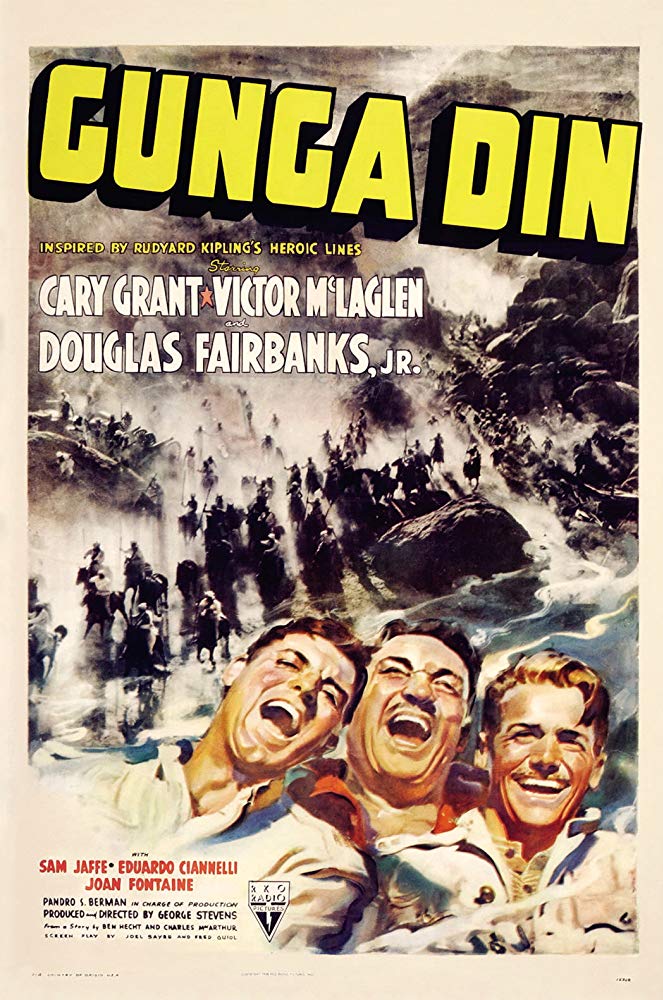
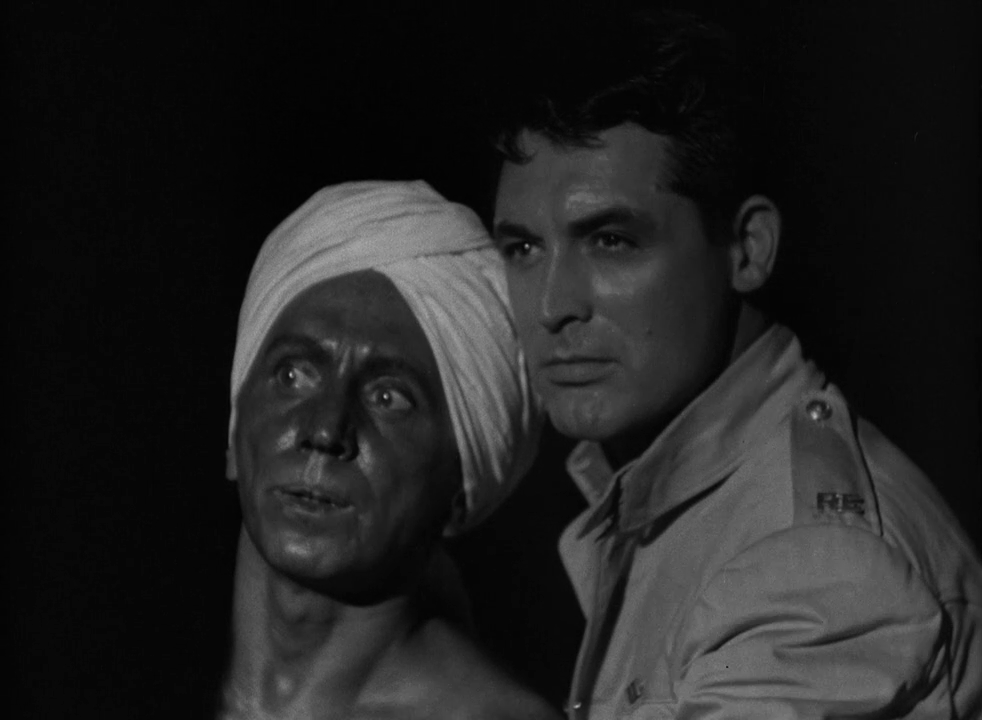
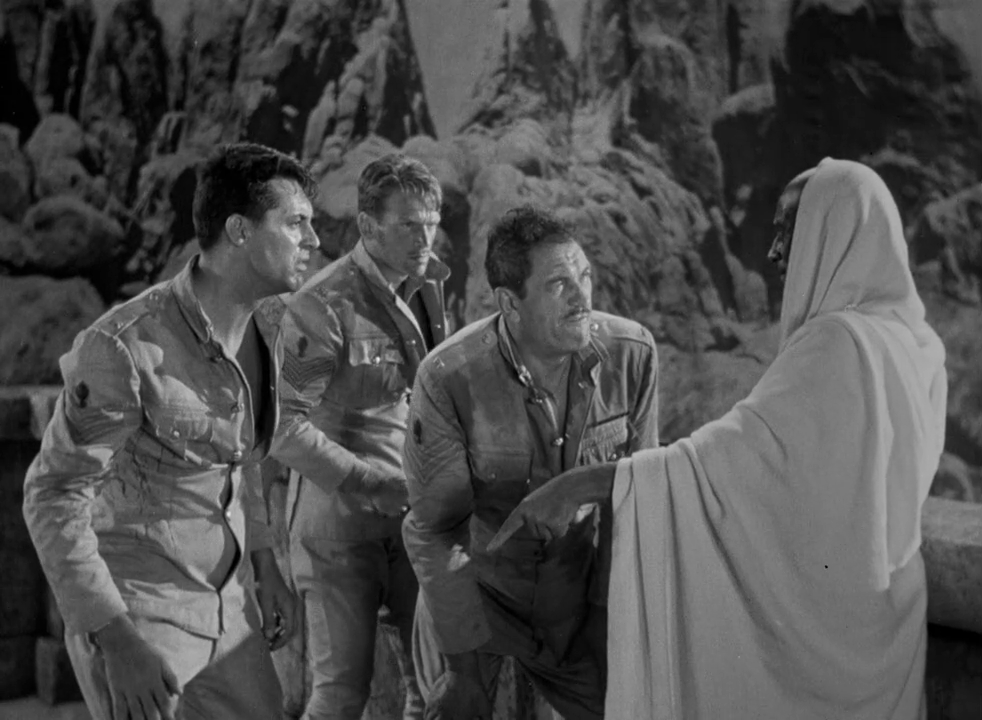
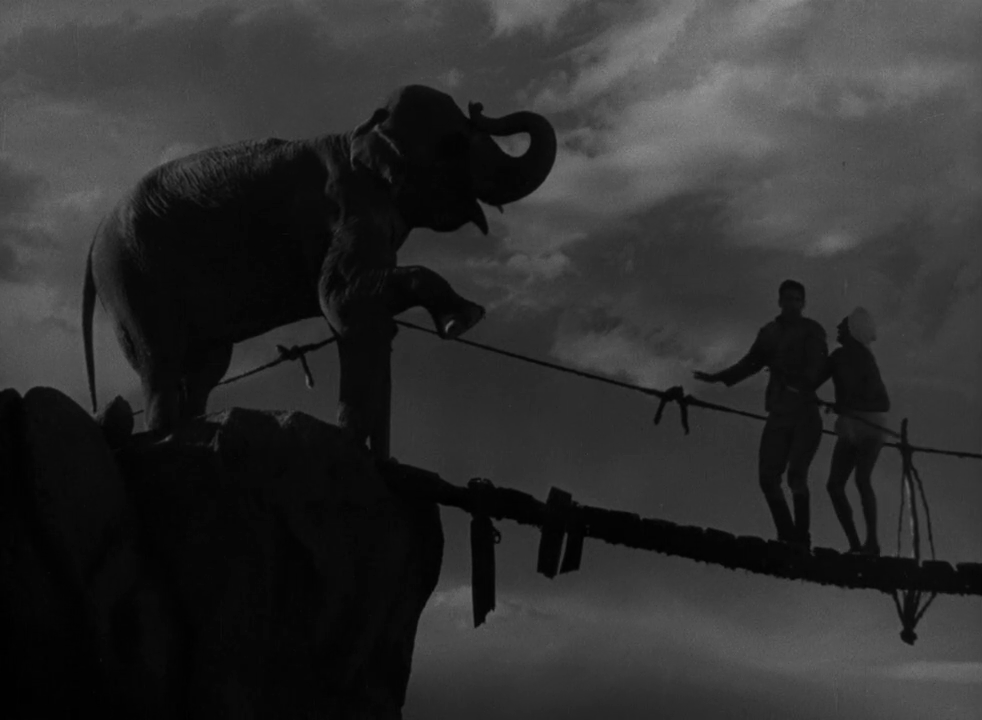
In 1890s colonial-era India, a treasure-seeking sergeant (Cary Grant) is sent with an aspiring water bearer named Gunga Din (Sam Jaffe) to investigate a mysterious lack of communication from an outpost. When Grant is captured by the leader (Eduardo Cianelli) of a criminal sect known as the Thuggees, Jaffe travels back for help from Grant’s compatriots: the elephant-loving Sgt. MacChesney (Victor McLaglen) and a sergeant (Douglas Fairbanks, Jr.) about to leave the service to marry his fiancee (Joan Fontaine). Will the fearless team be able to warn the British army about an impending ambush by the Thuggees?

Genres, Themes, Actors, and Directors:

  • Cary Grant Films
  • Cults
  • Douglas Fairbanks, Jr. Films
  • George Stevens Films
  • Gold Seekers
  • India
  • Joan Fontaine Films
  • Sam Jaffe Films
  • Soldiers
  • Victor McLaglen Films

Response to Peary’s Review:
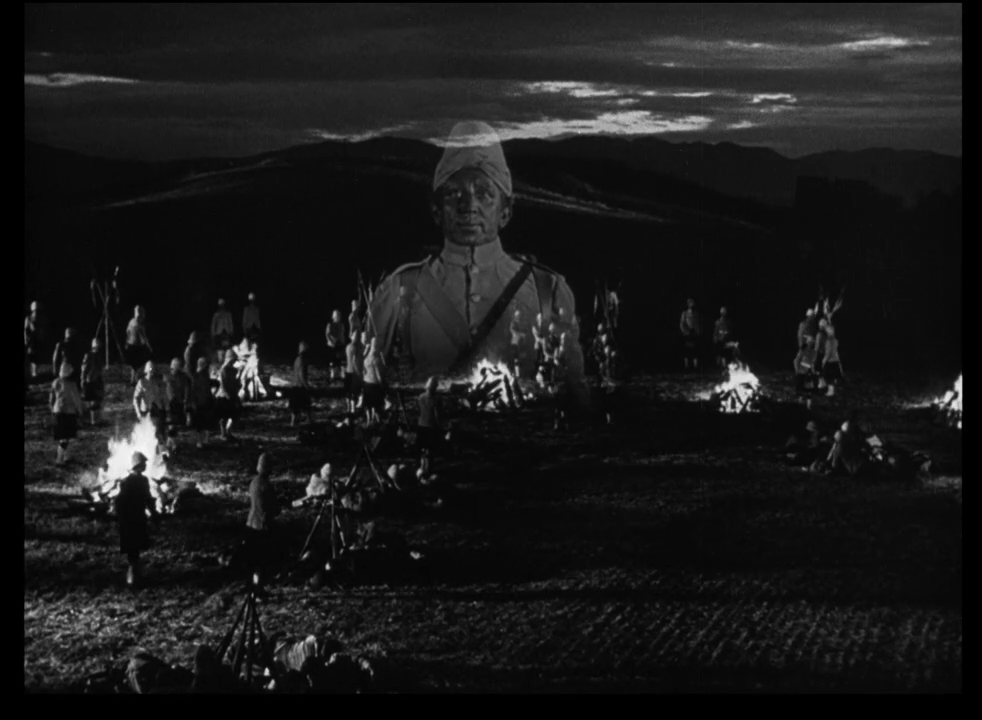
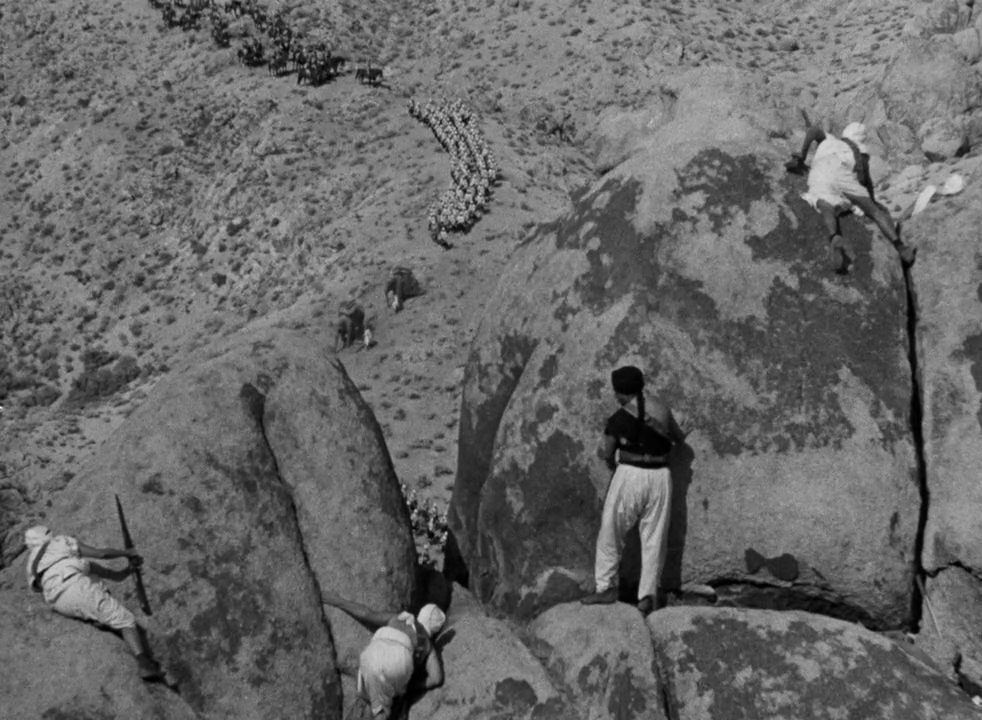
Peary is unambiguously fond of this “all-time great Hollywood action-adventure” flick, “inspired by Kipling’s famous poem about an Indian water boy who won the hearts of the British soldiers he served.” Peary focuses his review on comparing the storyline to that of Alexandre Dumas’s The Three Musketeers, with Gunga Din (similar to D’Artagnan) “a fearless, poor outsider whose life’s dream is to be one of the French muskeeters”, portrayed in this film by Grant, McLaglen,and Fairbanks, Jr. as “three inseparable, cheerful, fight-loving British soldiers” who “are also reluctant to let the outsider into their select company, treating him like a mascot until he proves himself.” He points out that “the action scenes are great fun and, until the final battle, usually feature bits of slapstick and funny heroics by the three imperturbable leads”. He further notes that while the “film should have been in color”, it “still has great pictorial beauty”, and that the “super direction” by George Stevens leads to a film that’s “spirited, stirring, and, finally, sentimental.”

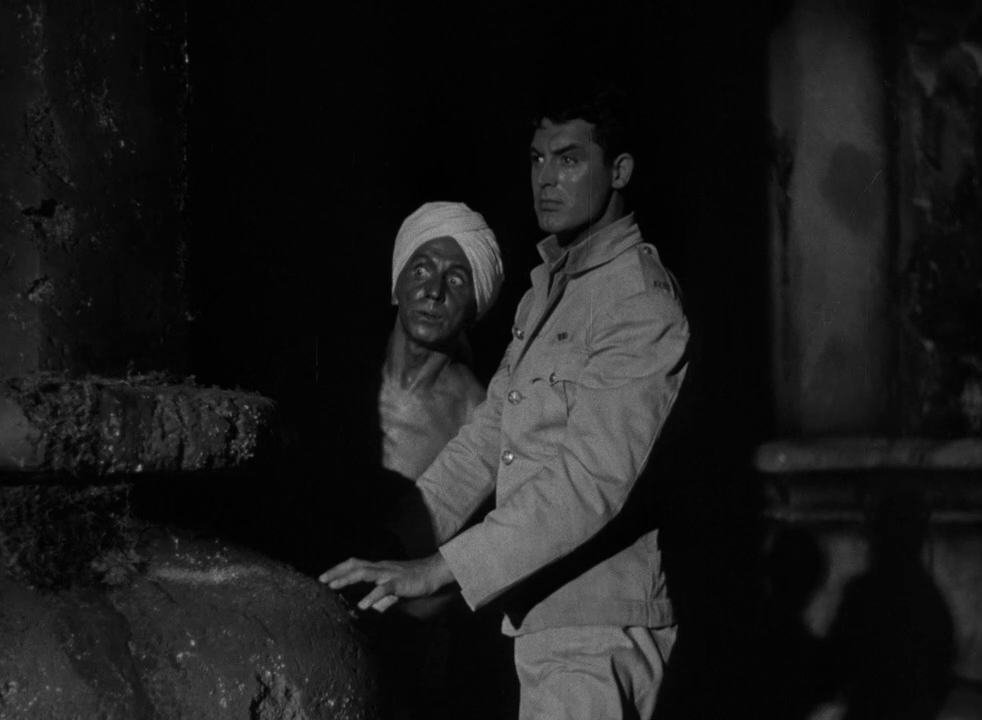
This is all true: Gunga Din is wonderfully mounted, featuring atmospheric cinematography, solid performances, and fine handling of action scenes. However, it’s impossible not to be disturbed by the film’s blatantly Orientalist view of colonized India. Kipling’s poem is more than casually racist, as the following quotes demonstrate:

Of all them blackfaced crew
The finest man I knew
Was our regimental bhisti, Gunga Din
. . .
An’ for all ’is dirty ’ide
’E was white, clear white, inside
When ’e went to tend the wounded under fire!

DVD Savant’s review begins to get at the more problematic aspects of this film, pointing out that “Din is the prime example of the child-like ‘native’ that lives for the doglike joy of pleasing his anglo superiors.

Grant is a nice guy, and treats Din to the ‘honor’ of military compliments, with gestures halfway between sincerity and snickering patronizing.” Savant also reminds us how blatantly history is misrepresented in the film, given that “the 1870s-1880s battles in India were [actually] fought against rebel princes and Rajas resisting English rule” — though of course “it’s always convenient to characterize those resisting Western force-of-arms as fanatic cultists.”

Redeeming Qualities and Moments:

  • Rousing performances by the three leads
  • Good use of location shooting in Lone Pine, California
  • Joseph August’s cinematography


Must See?
Yes, once, for its historical relevance and spirited storyline.

Categories

  • Historically Relevant

Links: