Browsed by
Category: Response Reviews

My comments on Peary’s reviews in Guide for the Film Fanatic (Simon & Schuster, 1986).

I’m All Right Jack (1959)

I’m All Right Jack (1959)

“It’s not compulsory, only you’ve got to join — see?”

Synopsis:
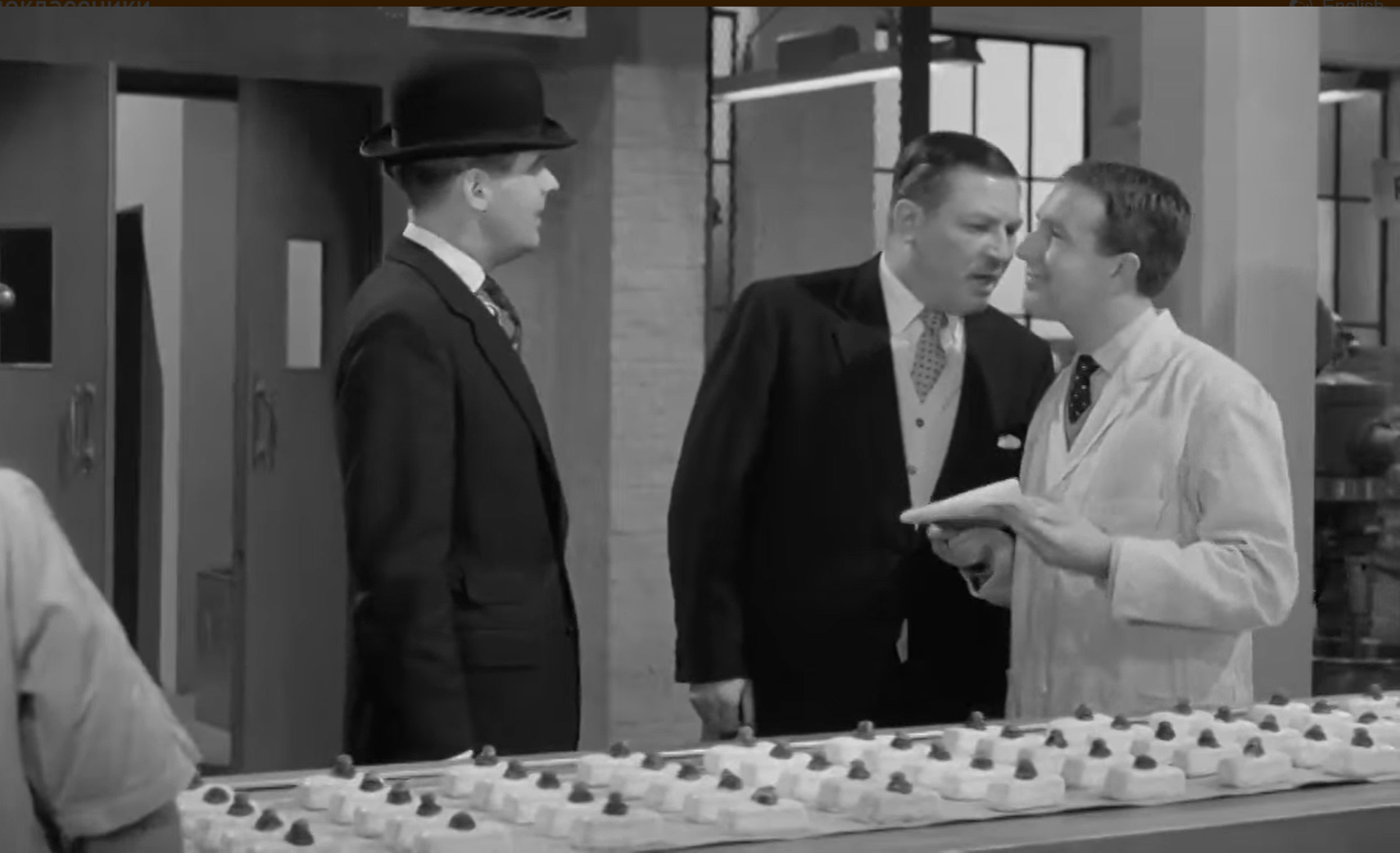
An upper-classman (Ian Carmichael) hoping to find a job in “industry” starts working for his wealthy uncle (Dennis Price) in a munitions factory, not realizing that he will quickly become embroiled in tensions between a trade union steward (Peter Sellers) and an old army buddy (Terry-Thomas) with corrupt plans for re-routing the company’s contract.

Genres, Themes, Actors, and Directors:

  • Class Relations
  • Labor Movements
  • Margaret Rutherford Films
  • Peter Sellers Films
  • Richard Attenborough Films
  • Satires and Spoofs

Response to Peary’s Review:
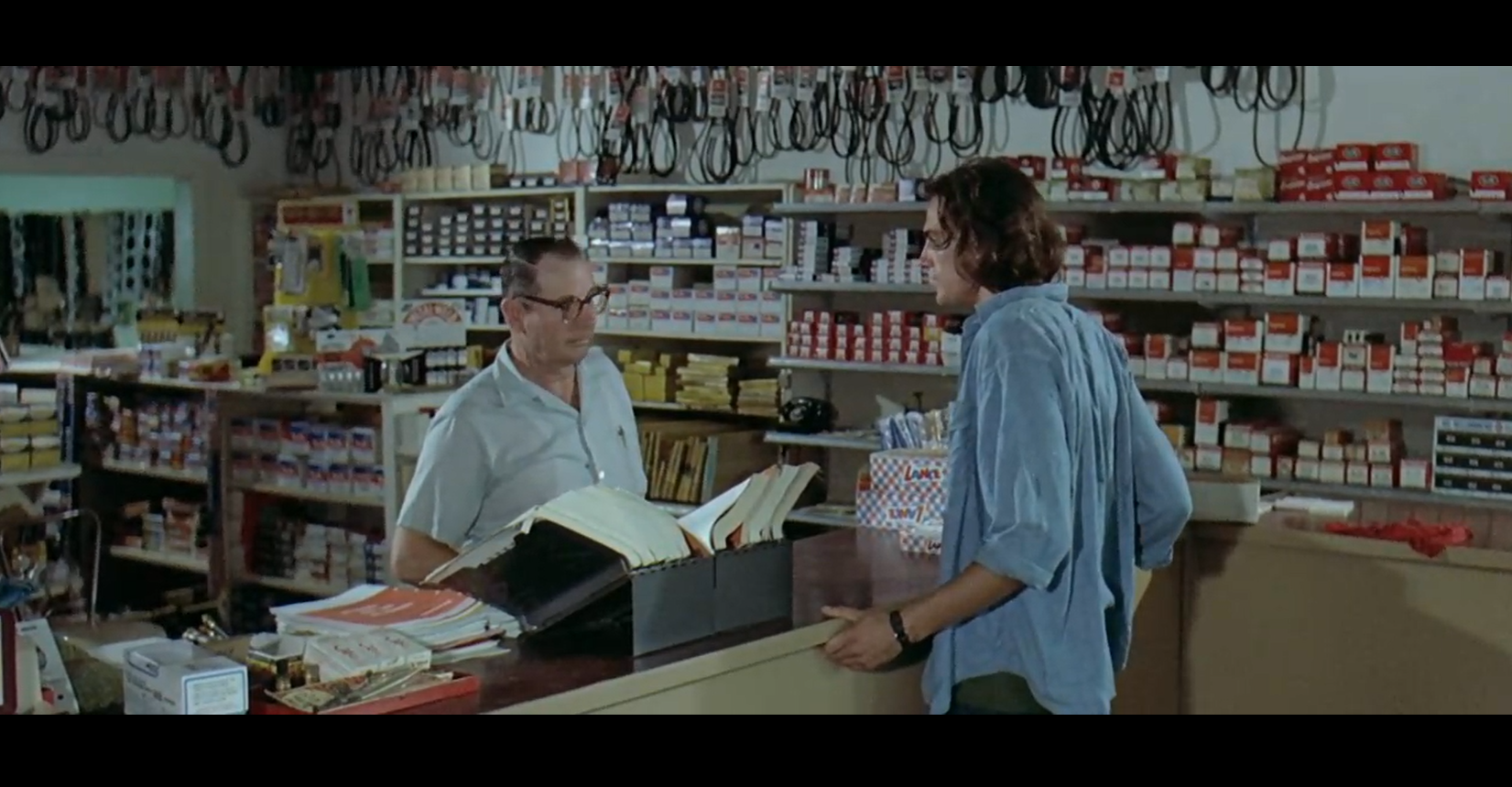
Peary writes that this “classic British satire” by John and Ray Boulting — about a “naive but enthusiastic college grad who uses his wealthy family’s connections to break into industry”:

… and then “becomes the unwitting pawn of both the corrupt management and the workers’ union” — remains a “sharp, cynical comedy” that “chastises workers, but is clearly sympathetic toward them” given “they’re not bad sorts, and much preferable to their sneaky, crooked bosses who are willing to sell out their country for a profit.”

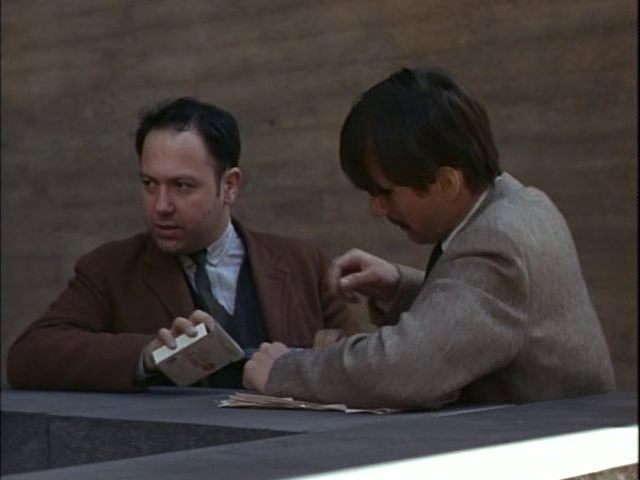
He adds that he doubts “if an American union-made film will ever deal so bravely with similar labor-management problems”. While this film mercilessly skewers labor-related problems of the day in a way that likely resonated deeply with many viewers, I’ll admit to feeling a bit detached from it: the basic theme of corruption on both sides of the aisle — not just with smarmy businessmen (of course), but with labor unions determined to ensure that “no worker is fired, be he incompetent, lazy, or doing work that a machine could handle in a tenth of the time”:

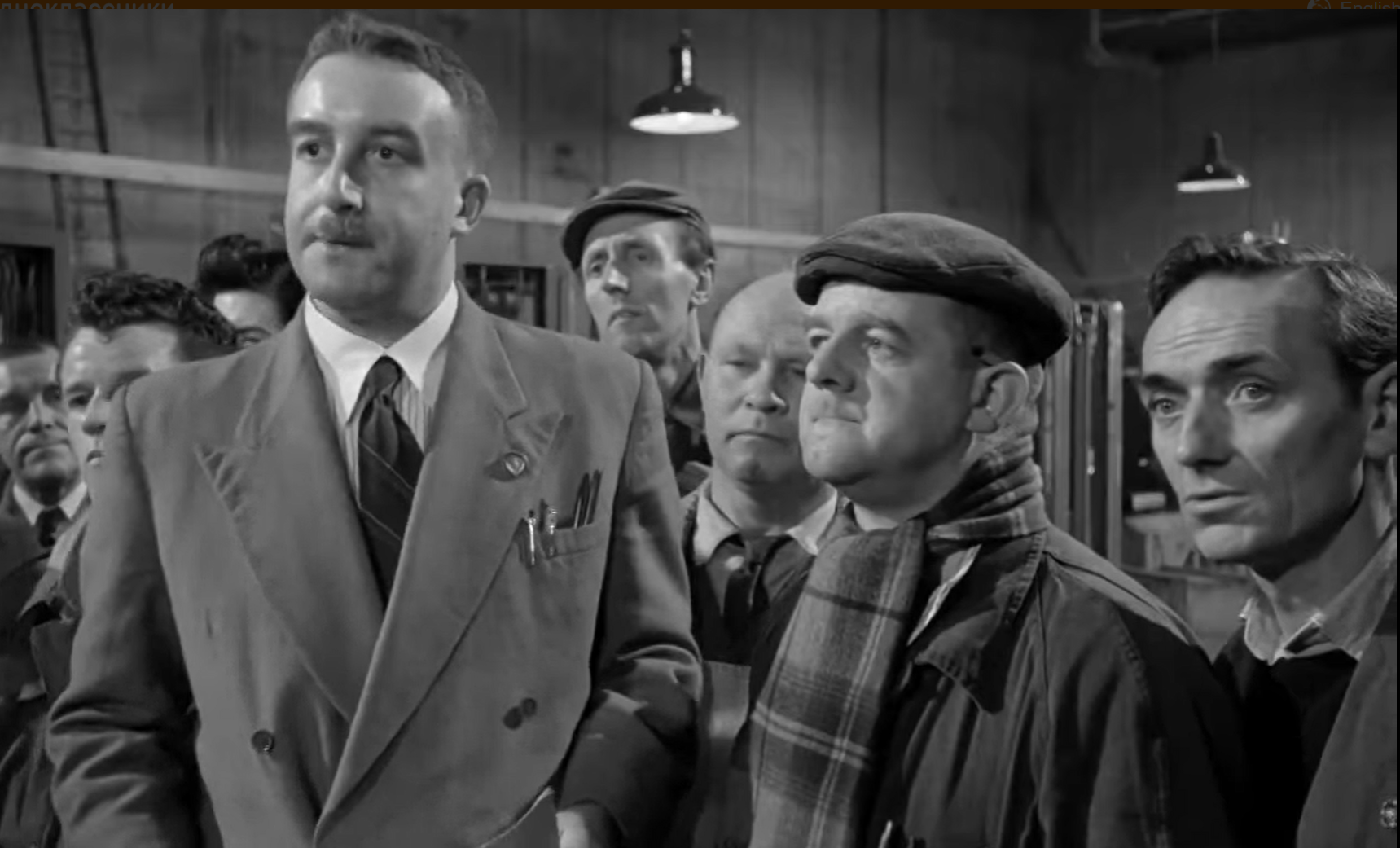
— is loud and strong, but the protagonist is too much of a twit to relate to in any way. Sellers is a top reason to watch the film:

His devotion to the cause of Labor comes through loud and strong, and his character seems like a flesh-and-blood individual capable of authentic growth and emotion.

Redeeming Qualities and Moments:

  • Peter Sellers as Fred Kite

Must See?
No, though it’s worth a look.

Links:

Greetings (1968)

Greetings (1968)

“Like cats, there are so many young people, wandering to and fro.”

Synopsis:
Three friends — a draft-avoiding sex-seeker (Jonathan Warden), a Peeping Tom (Robert De Niro), and an obsessive follower of JFK’s assassination (Gerrit Graham) — spend time in New York City while the Vietnam War rages.

Genres, Themes, Actors, and Directors:

  • Allen Garfield Films
  • Brian DePalma Films
  • Counterculture
  • Episodic Films
  • New York City
  • Peeping Toms
  • Robert De Niro Films

Response to Peary’s Review:
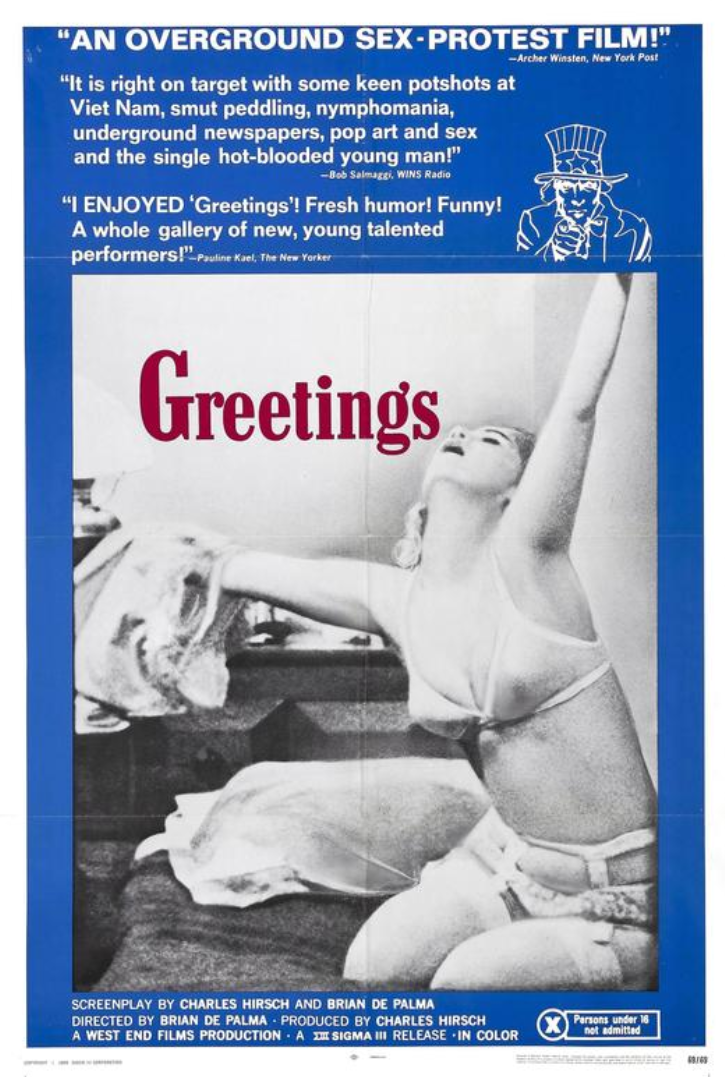
Peary writes that this “seriocomedy, made in two weeks for a mere $43,000 by 28-year-old Brian De Palma, was one of the most popular ‘anti-establishment’ pictures of the late sixties and early seventies,” and “was that rare film made for filmmakers and film students as much as for the young, alienated, angry generation.” He argues it’s a “splendid example of the type of independent films made then: there are technical lapses and sloppy editing and photography throughout — but there are moments of cinematic brilliance,” and while the “wild, slapdash humor” is “original”, at times it is also “smug, vulgar, and self-congratulatory.” He points out the theme of obsession woven throughout each of the three main characters, but also — and most especially — De Palma himself, who “reveals here that he is obsessed with and is exploring the very nature of film.”

Peary elaborates upon all these points in his lengthier Cult Movies review, where he discusses the many cinematic influences on display. He writes that while “De Palma’s studio-backed pictures of the seventies and eighties invariably call attention to Alfred Hitchcock,” the “cinema-verite look to some of the scenes and the use of new footage and segments of Lyndon Johnson speeches… to counterpoint the disturbing images of ‘reality’ we see, suggest the influence of such diverse documentarians of the period as D.A. Pennebacker [Don’t Look Back, (1967)] and Emile D’Antonio [Point of Order, (1964); Millhouse: A White Comedy (1967)].” Meanwhile, as Graham “starts examining photos of the Kennedy assassination and considers enlarging some to see if he can discover another gunman in Dallas’s infamous grassy knoll, he becomes increasingly like the David Hemmings character in Michelangelo Antonioni’s Blow-Up (1966).” Finally, Peary points out De Palma’s obvious debt to Jean-Luc Godard, given that “the young characters who inhabit De Palma’s world could very well be acquaintances of Jean-Pierre Leaud and his compadres in Godard’s Masculin Feminine (1966) and La Chinoise (1967).”

Peary goes on to write about how “Greetings is most interesting today as a testament of its times” (I agree). He notes that “not only does it reflect the political unrest and malaise of 1968 America — and the despair in Vietnam — but it… has a left-wing, anti-government/society/authority/status quo bias” and “is concerned with disillusioned young [white, heterosexual] males” (the genders, races, and sexual orientations of the protagonists would surely be more diverse if the film were made today) “who look for a direction in and meaning to life (another side to the previous year’s The Graduate.”) Indeed, much of this film should feel quite familiar in many ways to millenials, who are similarly skeptical of their government and seeking a point to their lives in the midst of rampant commercialism, greed, violence, racism, and (currently) a global pandemic. Even if technology has advanced, we remain — like the three characters here — obsessed with voyeurism, sex, and conspiracy; not that much has changed.

Redeeming Qualities and Moments:

  • An intriguing time-capsule glimpse into a certain era of American history

  • Many memorably quirky and/or amusing moments

Must See?
Yes, as a one-time cult favorite.

Links:

Cage Aux Folles, La (1979)

Cage Aux Folles, La (1979)

“We have to marry her off in great splendor. You’ll be the symbol of tradition once again.”

Synopsis:
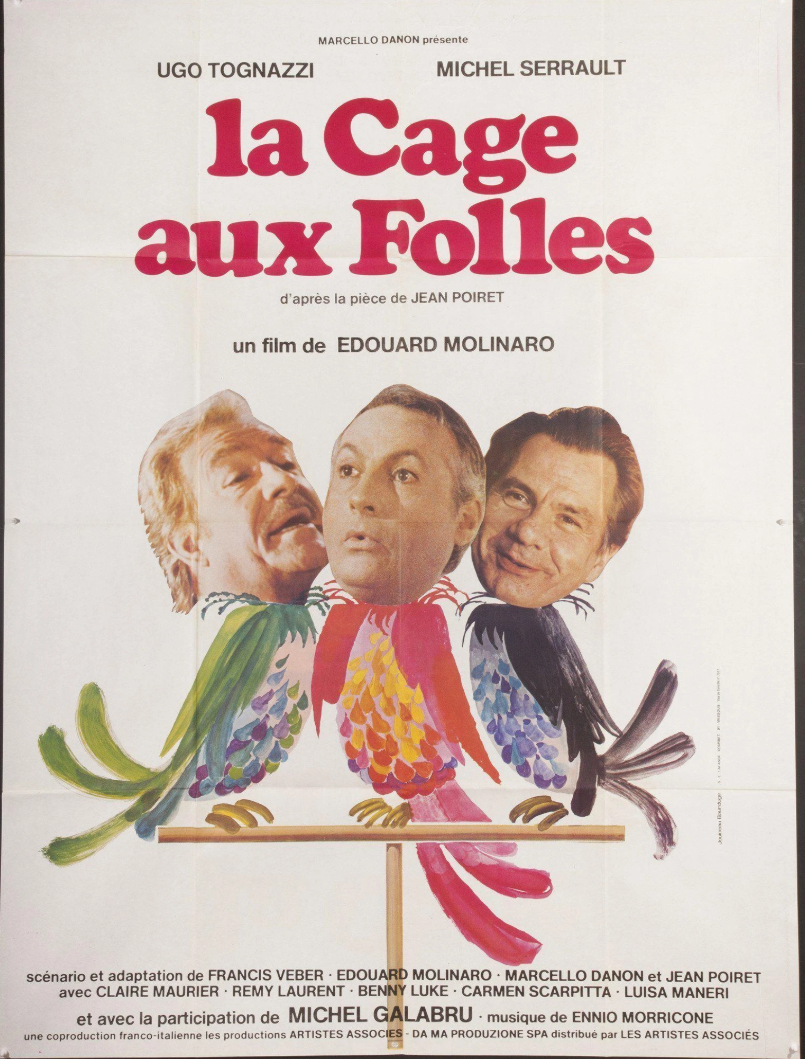
When his son (Remy Laurent) announces he’s getting married to the daughter (Lisa Maneri) of a conservative couple (Carmen Scarpitta and Michel Galabru), the owner (Ugo Tognazzi) of a nightclub featuring transvestite dancers realizes he’ll have to send his long-time partner (Michel Serrault) away and invite his son’s estranged mother (Claire Maurier) to dinner that night — but Serrault, appropriately indignant, refuses to leave. How will the situation turn out?

Genres, Themes, Actors, and Directors:

  • Comedy
  • French Films
  • Gender Bending
  • Homosexuality
  • Mistaken or Hidden Identities
  • Morality Police
  • Nightclubs
  • Play Adaptation

Response to Peary’s Review:
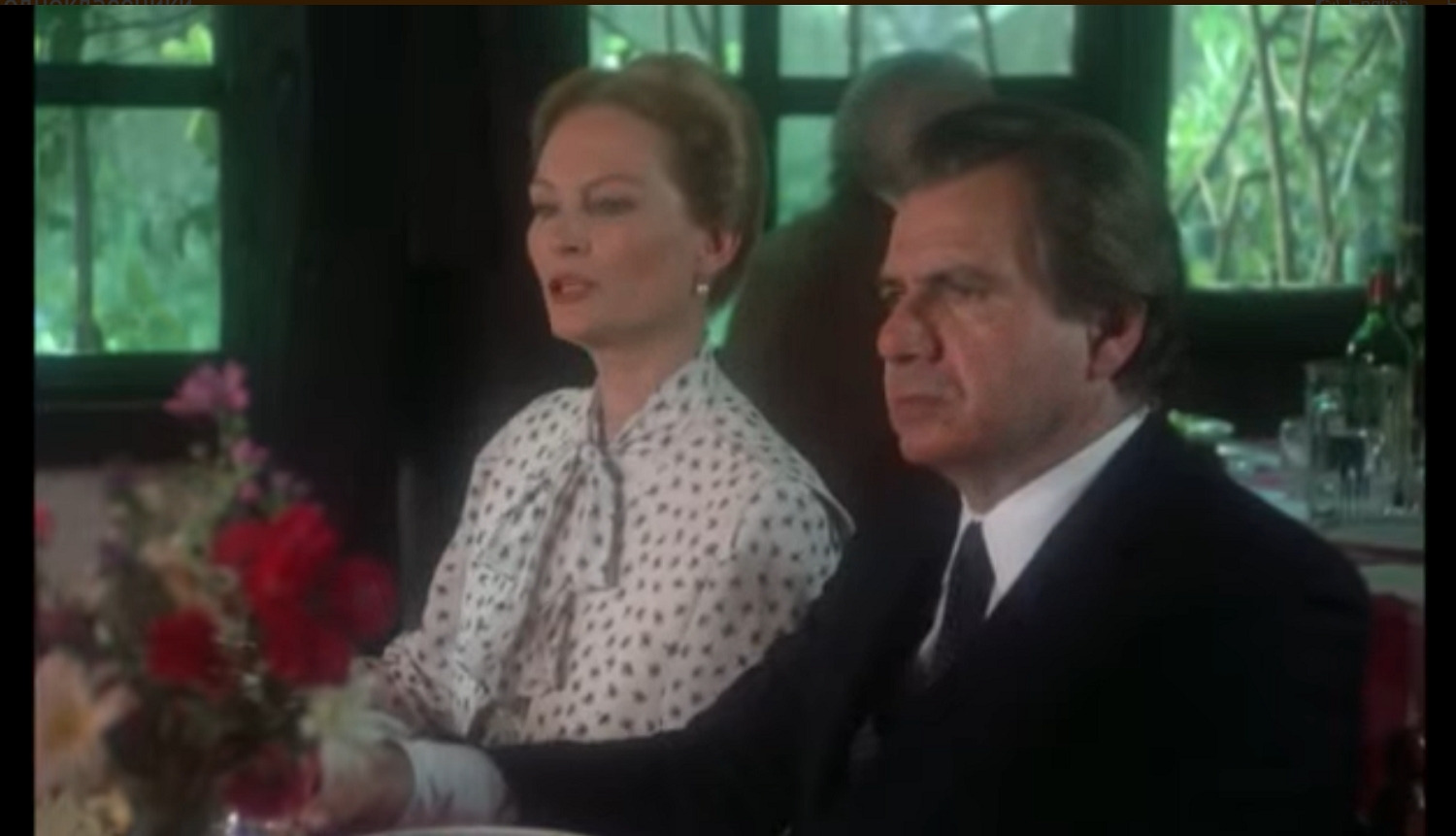
Peary is clearly no fan of this “French farce” which “became the most successful foreign film ever to play in the U.S., raking in more than $40 million and playing in some theaters for more than a year.” He notes that given how “it caused so much excitement among those who loved it or despised it”, it’s “startling how innocuous it is;” he goes on to refer to it as a “dishonest film” that is “so timid it suggests that this gay couple could raise a heterosexual son — and a boring son at that” (?!?).
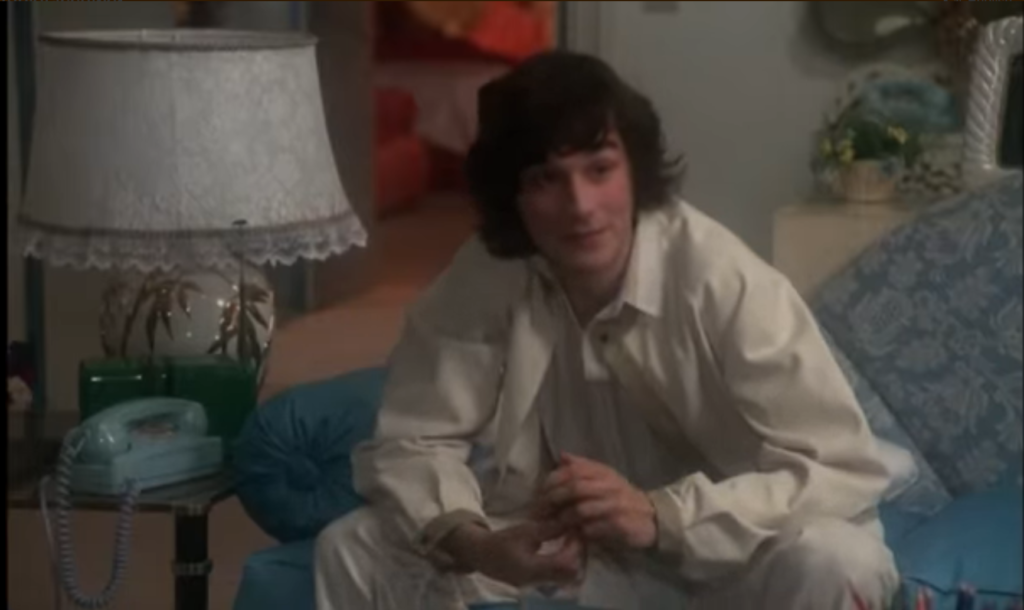
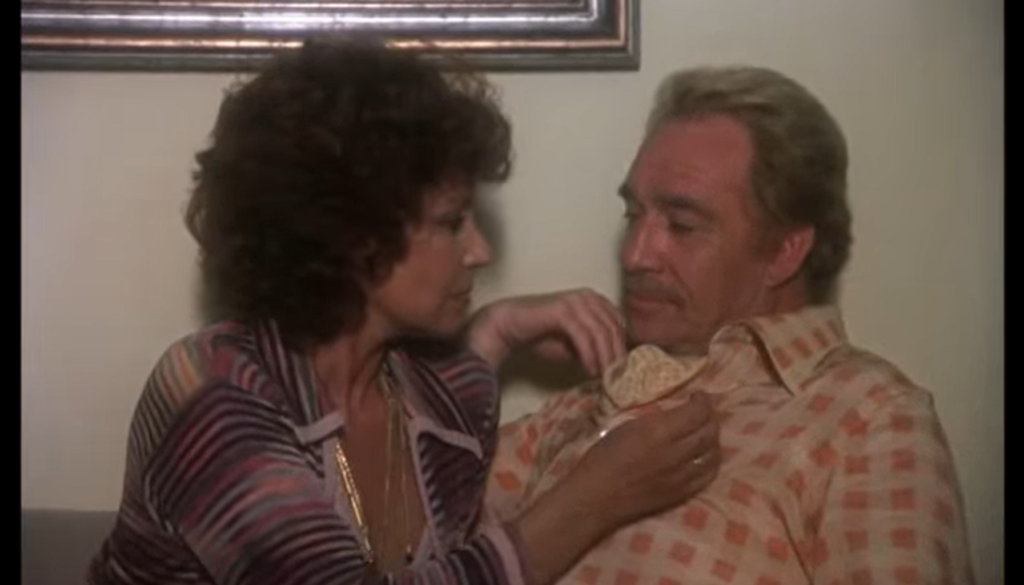
He’s right to point out that the film “plays it [too] safe, catering to straight audiences” to the extent that the only “lovemaking scene” we see “involves [Tognazzi] with a female, his ex-wife”.
He also points out that much of the film’s “humor comes at the gay characters’ expense; repeatedly we are supposed to laugh at how effeminate [Serrault] and butler Jacob [Benny Luke] are, at how exaggerated their mannerisms are, at how awkward they look when walking or gesturing, at how affected their voices are … , and how they whine or scream in surprise over everything.”
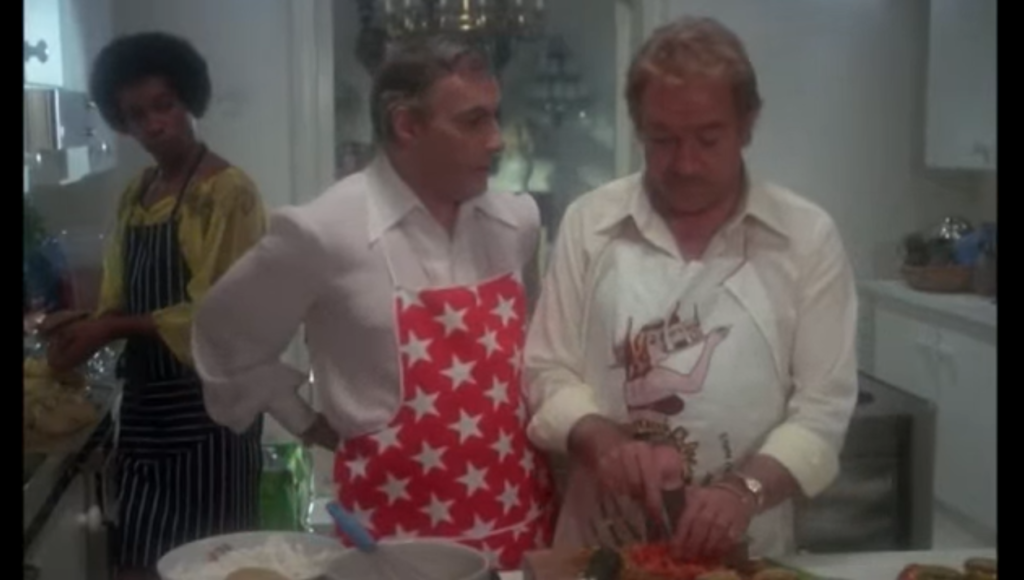
Unfortunately, “director-co-writer Edouard Molinaro never bothers to explore the subtleties of his characters or accentuate their endearing idiosyncrasies”: Tognazzi “tolerates [Serrault] in [a] conventional movie fashion — like a husband who accepts the childish activities and personality of his wife because she is female and is supposed to act that way;” and “there are surprisingly few funny moments in the major sequence in which [Tognazzi] and [Serrault] try to clean up their act when [Tognazzi’s] son brings home for dinner his fiancee, her mother, and her father… who is the secretary for the Union of Moral Order.”
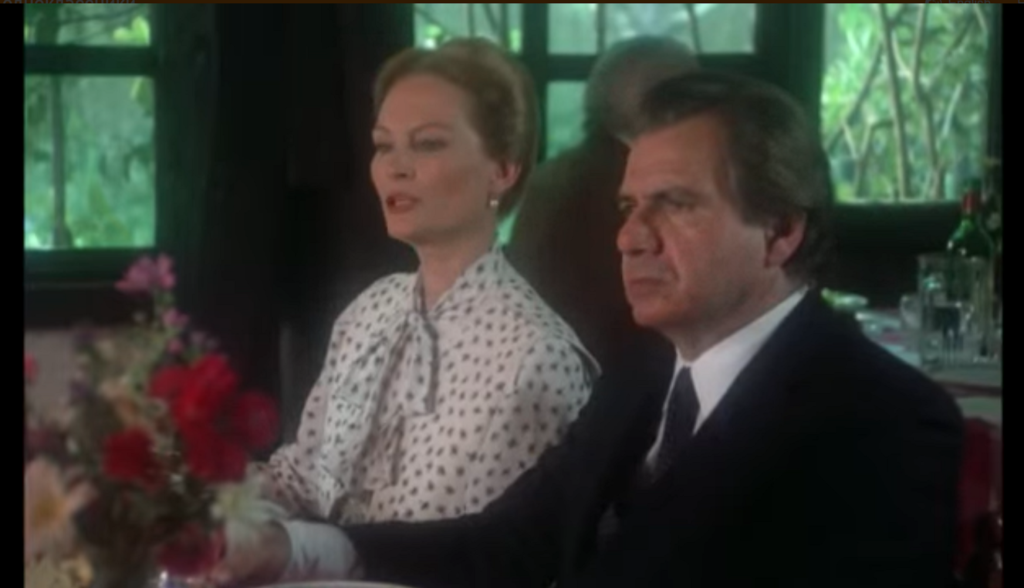
Peary argues that while “there’s potential for fireworks”, “Molinaro forgot the matches”. He rags further on the film in his Cult Movies book, where he states that “Molinaro has no flare for comedy and never lets a scene run long enough for the gags to develop sufficiently.”

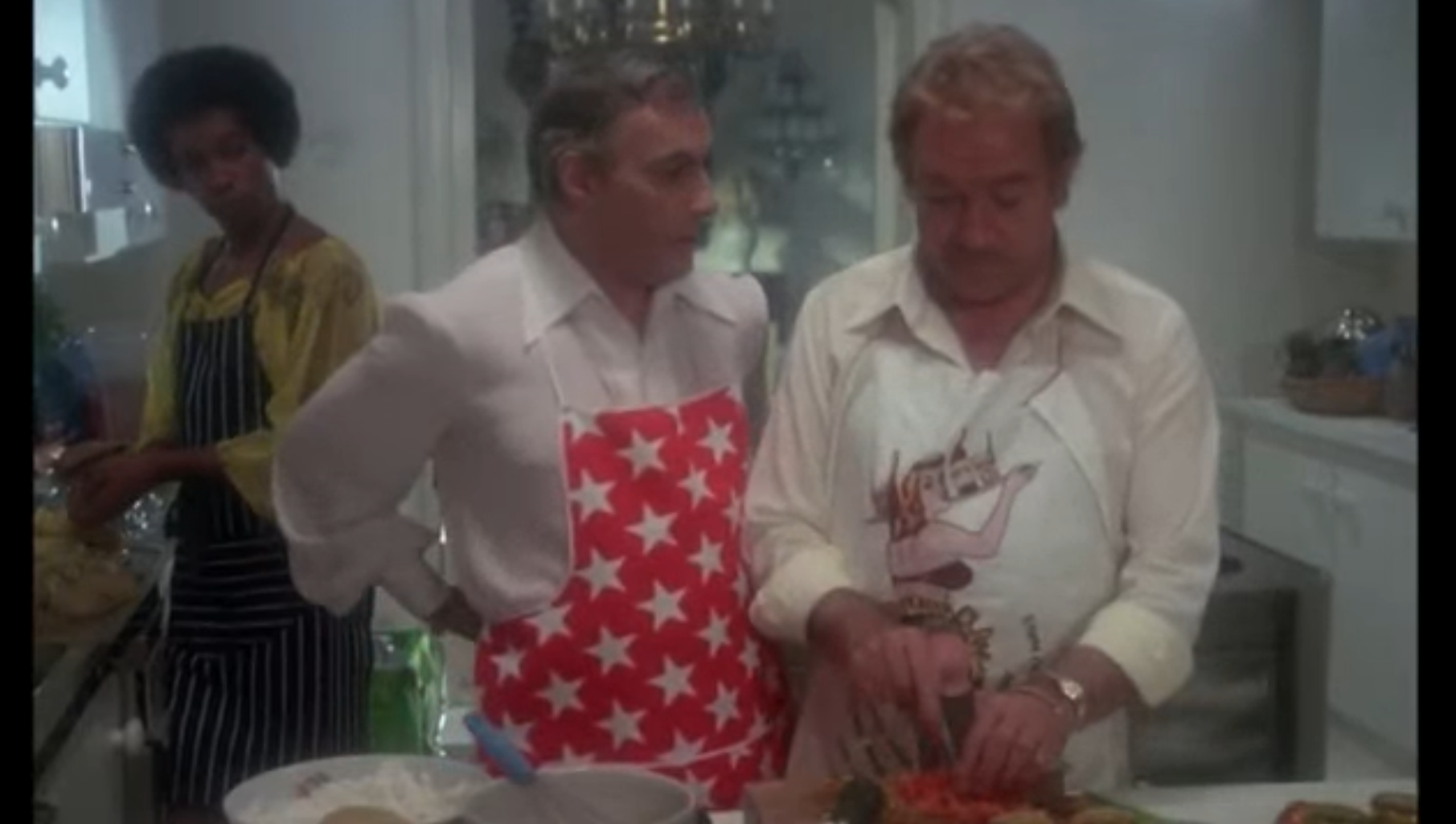
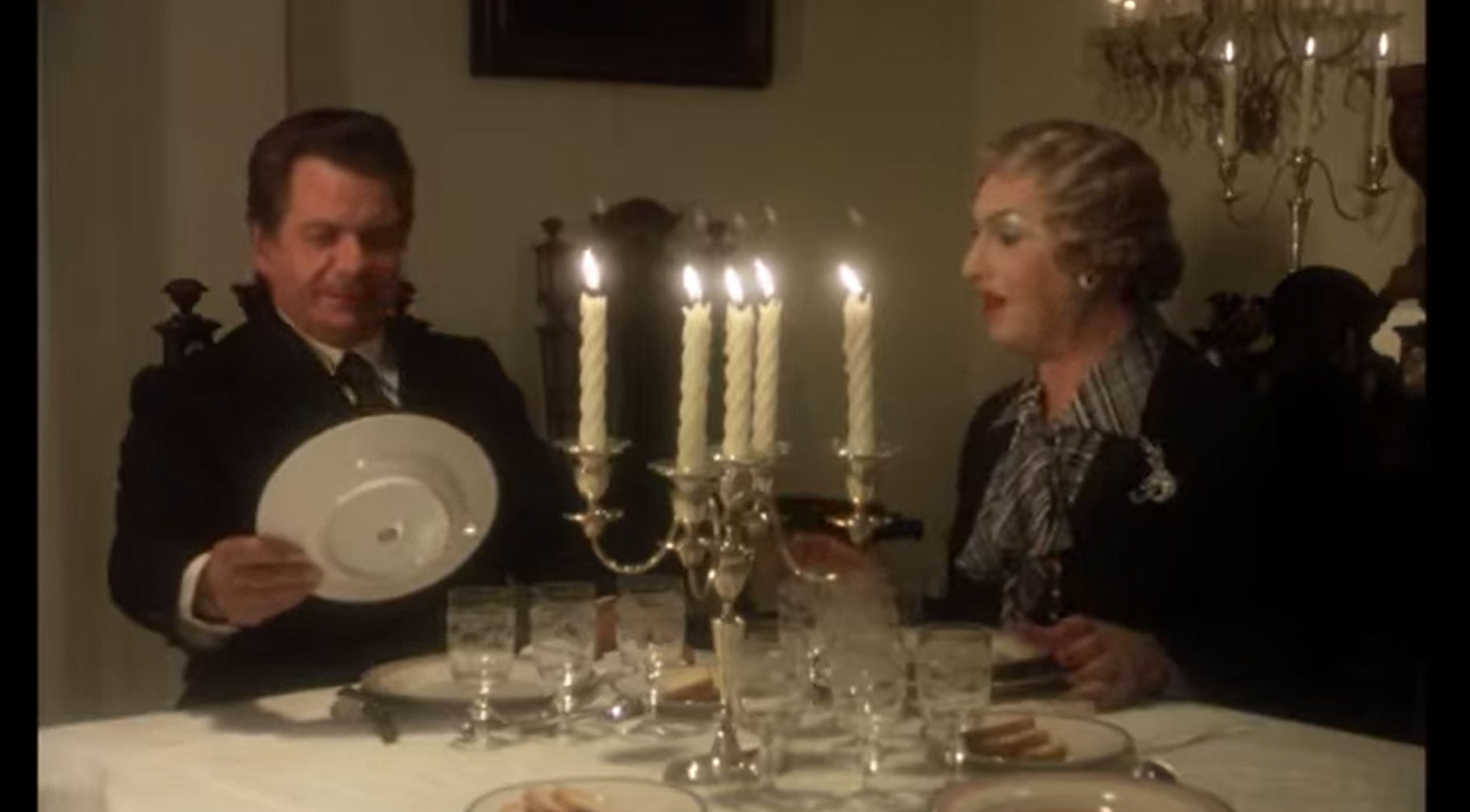
Peary does concede that there are at least “several amusing moments in the picture”, including “when [Tognazzi] toasts [Maneri] over the phone by breaking a glass on the receiver;” “when [Tognazzi] instructs [Serrault] how to butter his toast and stir his tea in a masculine manner;” and “when [Scarpitta] and [Serrault] quibble over whether the nude figures on the dinner dishes are all boys, as [Scarpitta] insists, or are male and female, as [Serrault] fibs.”
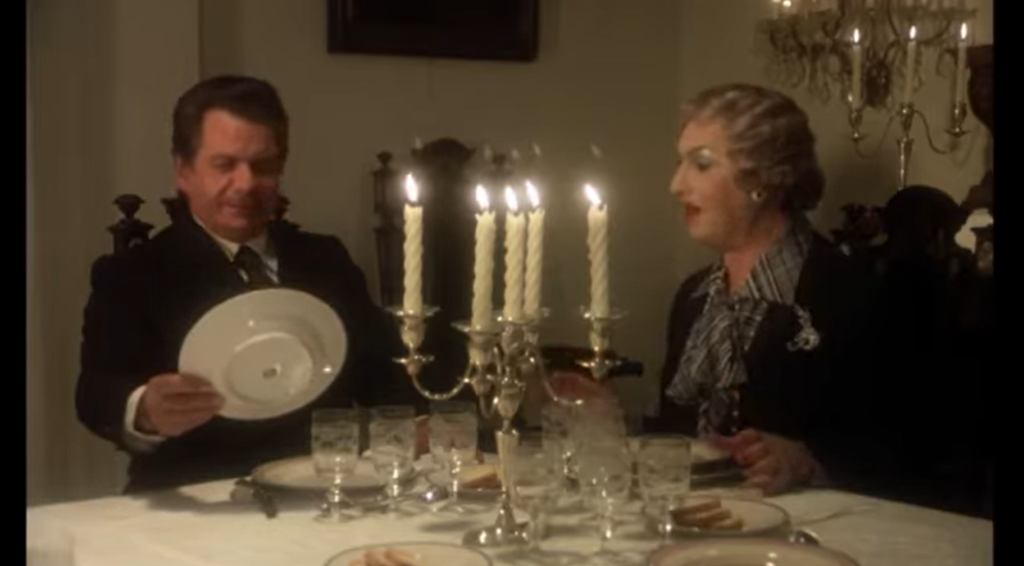
Ultimately, however, Peary dismisses this film as “a family comedy that never rises above a level of mediocrity” — as “rollicksome as the most tired French bedroom farce but not as risque, as stupid a Laura Antonelli sex comedy but not as arousing, and as ‘controversial’ and ‘relevant’ as Guess Who’s Coming to Dinner? (1967) is today.”

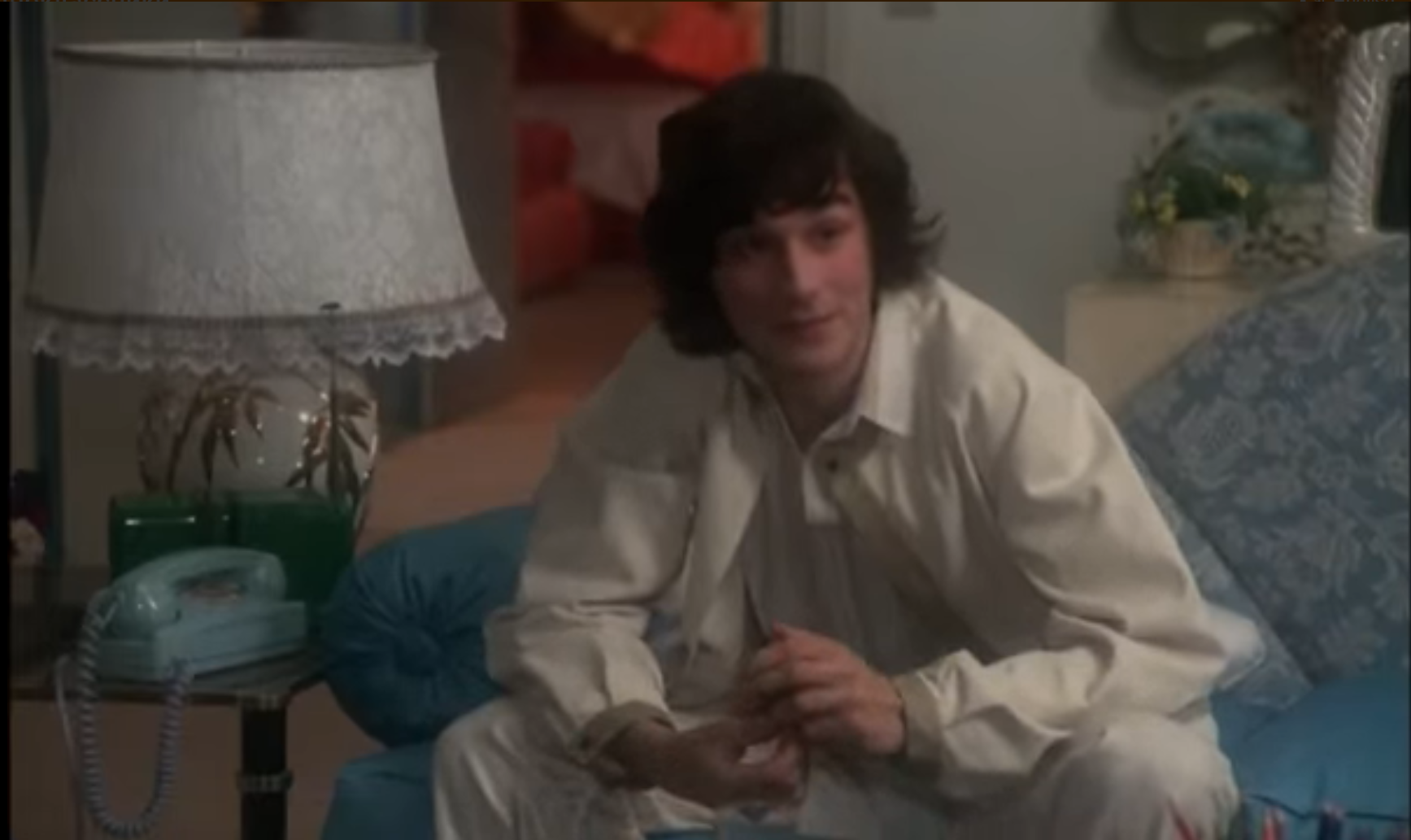
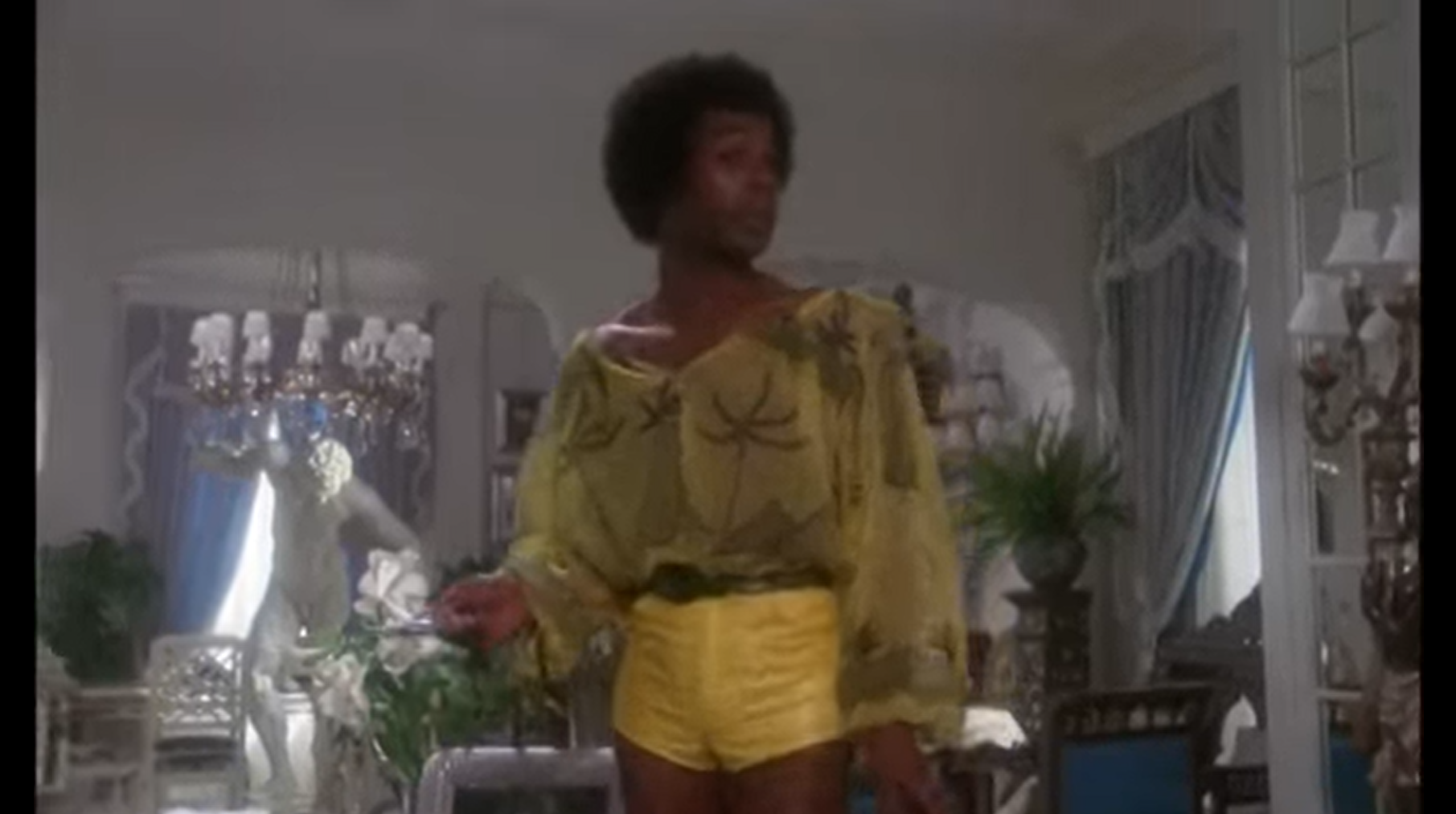
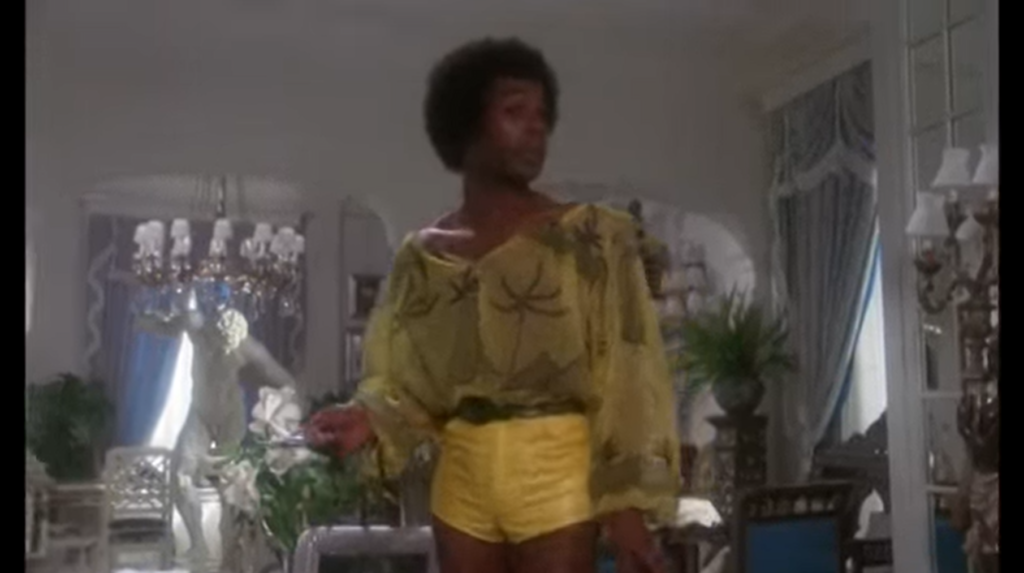
While I enjoyed this “innocuous” cult comedy more than Peary, I agree with many of his assessments. It’s weird — though perhaps not surprising, given the intended audience — that Tognazzi allows himself to be “seduced” by Maurier (perhaps this was done to “prove” that Laurent could have been conceived once upon a long time ago?), and much of the humor-at-the-expense-of-homosexuality comes across as terribly dated these days. How much you laugh may depend on how much you can simply giggle uncomfortably — something that’s NOT possible in any way with Luke’s portrayal of a servile black “maid” (everything about how his character is presented and treated rings distasteful).
With that said, I think all film fanatics should watch this film once to become familiar with it, though it likely won’t become a repeat favorite.

Redeeming Qualities and Moments:

  • Michel Serrault as Albin

Must See?
Yes, once, for its cult status.

Categories

  • Cult Movie

Links:

Two-Lane Blacktop (1971)

Two-Lane Blacktop (1971)

“They’re just a bunch of small-town car freaks, that’s all they are.”

Synopsis:
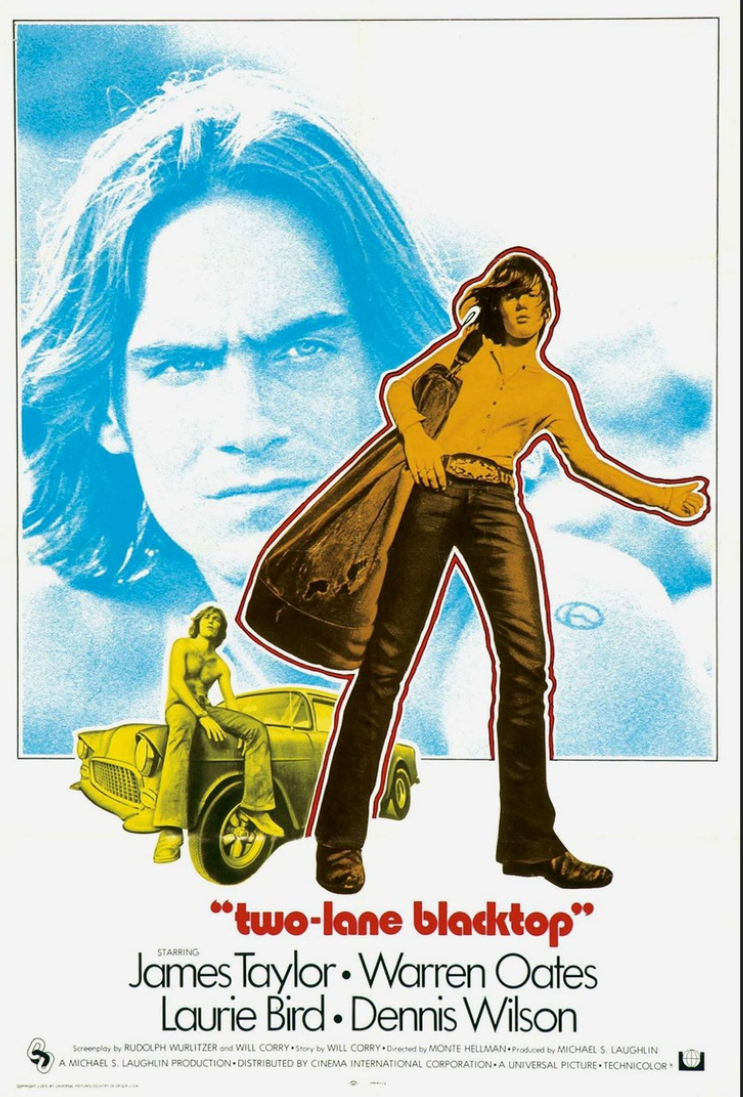
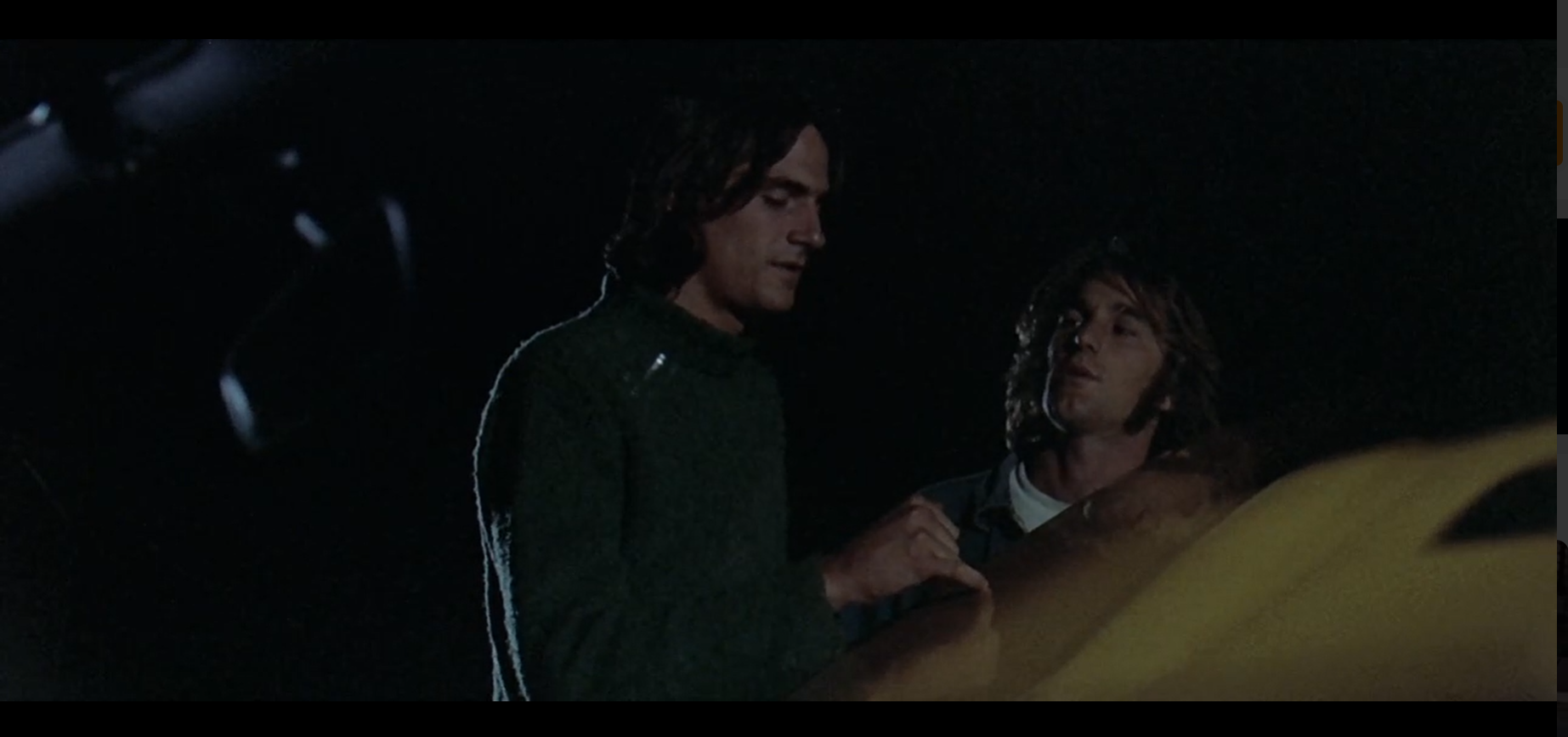
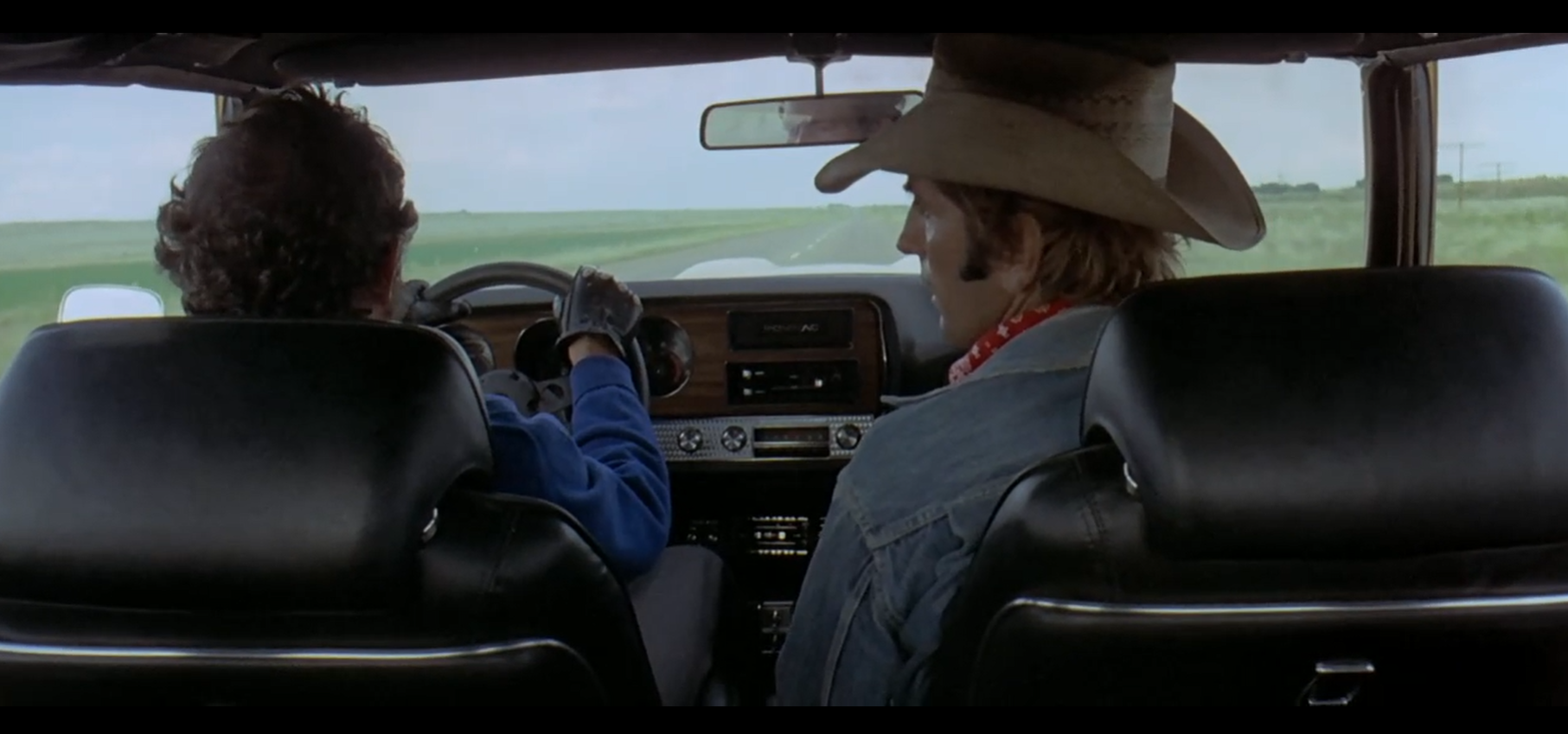
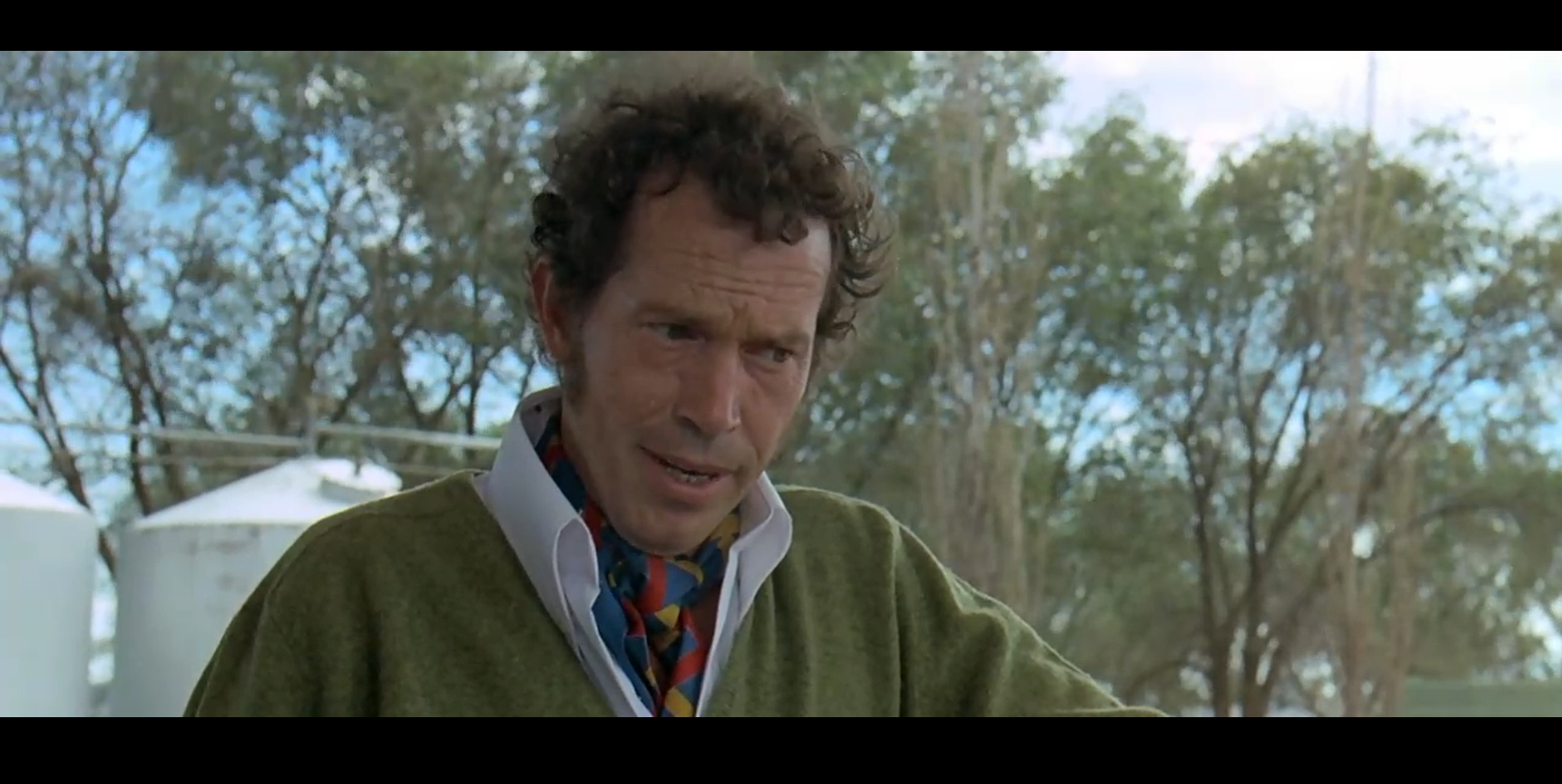
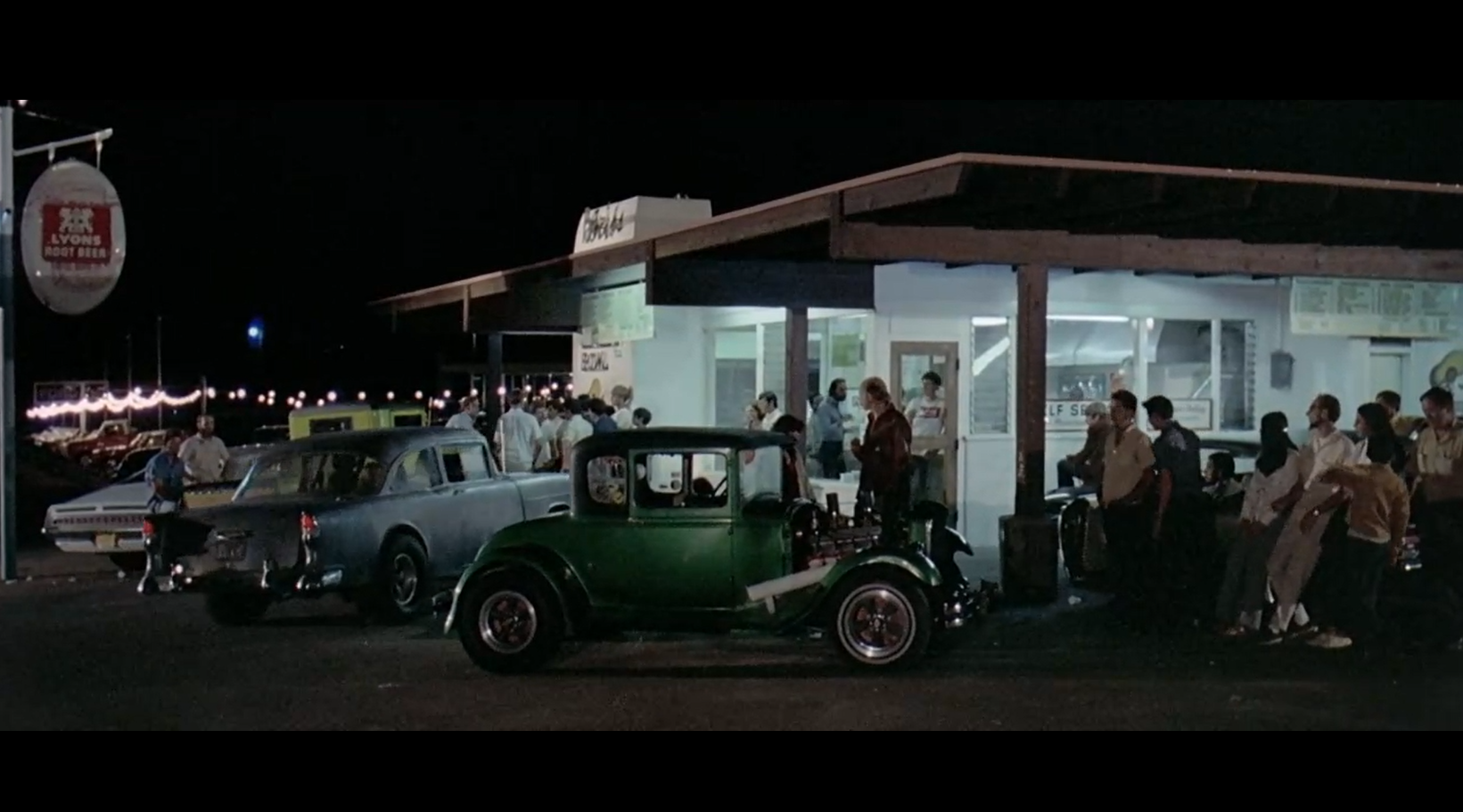
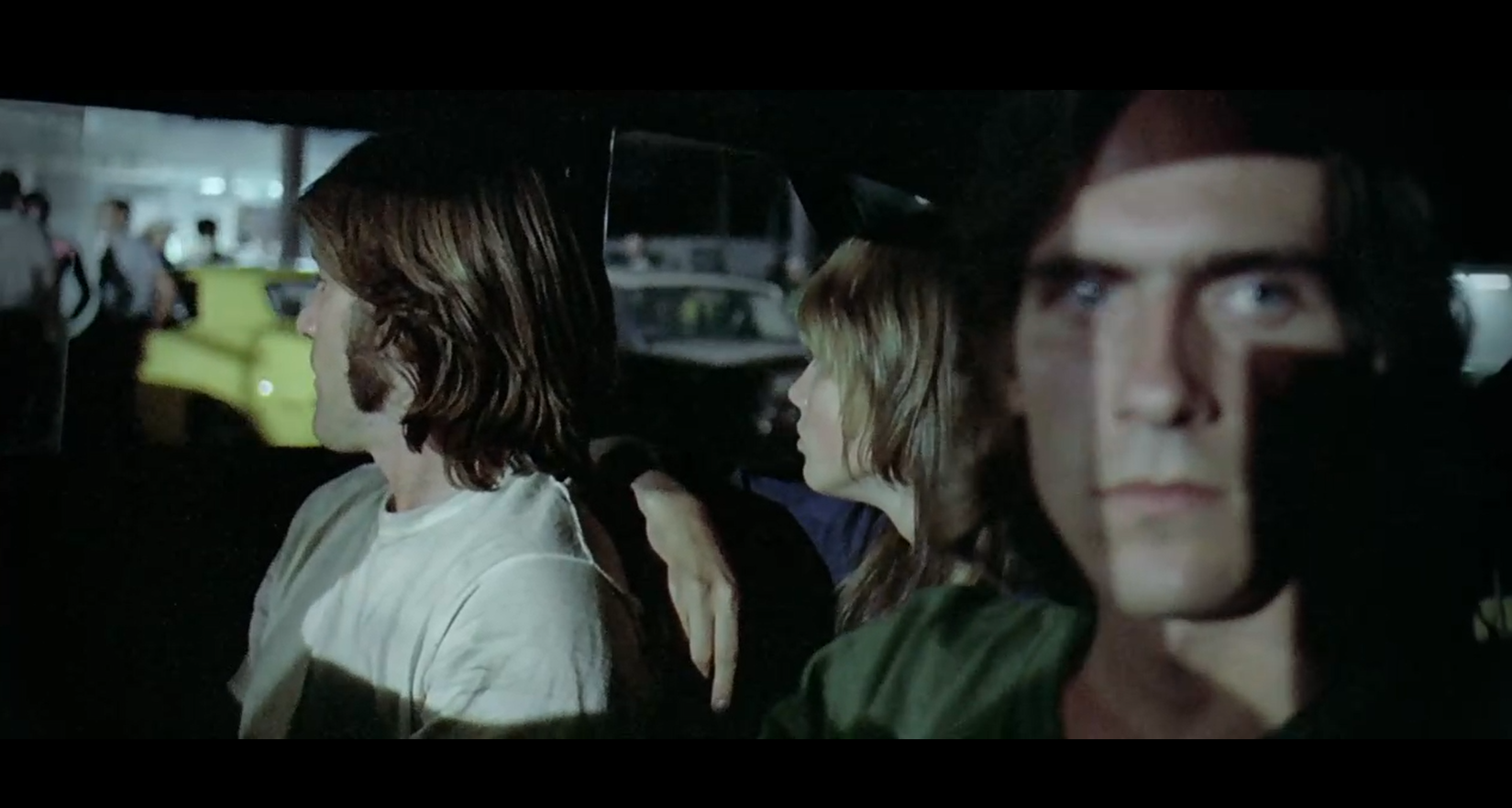
As the driver (James Taylor) and the mechanic (Dennis Wilson) of a souped up ’55 Chevy drive across the country looking for opportunities to race, they pick up a young hitchhiker (Laurie Bird) and eventually meet the middle-aged owner (Warren Oates) of a GTO who’s willing to race them cross-country for high stakes.

Genres, Themes, Actors, and Directors:

  • Car Racing
  • Harry Dean Stanton Films
  • Monte Hellman Films
  • Road Trip
  • Warren Oates Films

Response to Peary’s Review:
Peary writes that while “Monte Hellman’s film” — predicted to be “the movie of the year” and “turn the youth market as only Easy Rider had” — “never lived up to its pre-release publicity”, it remains “a unique, thematically interesting film that has deservedly become a cult favorite.” He describes it as an existential film in which The Driver (Taylor) and The Mechanic (Wilson) “race their car… back and forth across America’s highways and byways — going fast but going nowhere on the metaphorical endless highway of meaningless life.” Given how much loving attention is paid (by Hellman) to The Car, Peary notes that “we learn more about [it] than about the zombielike men who ride in it,” whose rare conversation are “only about cars and racing.”

Indeed, even when The Girl (Bird) “enters their life” and “swims nude in front of them, they reminisce about old cars, not old flames.”

Peary points out that “The Driver and the Mechanic epitomize the sad products of a frustration-making D.C. bureaucracy, specifically a Nixon government which is conducting a controversial war that makes complete apathy as inviting as a warm cozy bed.” He notes that “while other films were about the alienation of the drug culture and war protesters, Hellman’s pessimistic film is about the alienation of everyone else: both those who race around the desolate, poor, conservative country and all those people inside the cubicles they pass who are just as withdrawn and isolated from the problems/horrors of their world.”

Peary discusses Two-Lane Blacktop at greater length in his Cult Movies book, where he notes that he finds it “so much more honest and less exploitative than the similarly plotted box office smash Easy Rider, another film about a routeless odyssey across America undertaken by society’s dropouts.” He describes Oates as, “as usual, a standout, showing the wide range of emotions of a troubled man” and providing “much wit to the film”. He adds that “most amusing, and pathetic, is how he keeps picking up the worst brand of hitchhikers… but keeps trying to find ideal companionship.”

Peary asserts that while he likes this movie — “its characters, and its premise” — he finds the “beginning of the film… compelling” but “toward the end it becomes a bit tiresome and fizzles — just like the race.” I think that’s exactly the point, however. As The Girl makes yet another random decision near the end of the film about who she’ll hang out and travel with, we see that nothing’s really changed — life will continue to be about distraction, alienation, and thwarted attempts to connect; Two-Lane Blacktop is remarkably effective at portraying those still-enduring challenges of existence.

Redeeming Qualities and Moments:

  • Warren Oates as GTO
  • Many memorable moments
  • An authentic sense of time and place

  • Fine cinematography


Must See?
Yes, as a cult favorite.

Categories

  • Cult Movie

(Listed in 1001 Movies You Must See Before You Die)

Links:

Russ Meyer’s Vixen / Vixen (1968)

Russ Meyer’s Vixen / Vixen (1968)

“The bush pilot had to know a little about everything in order to survive.”

Synopsis:
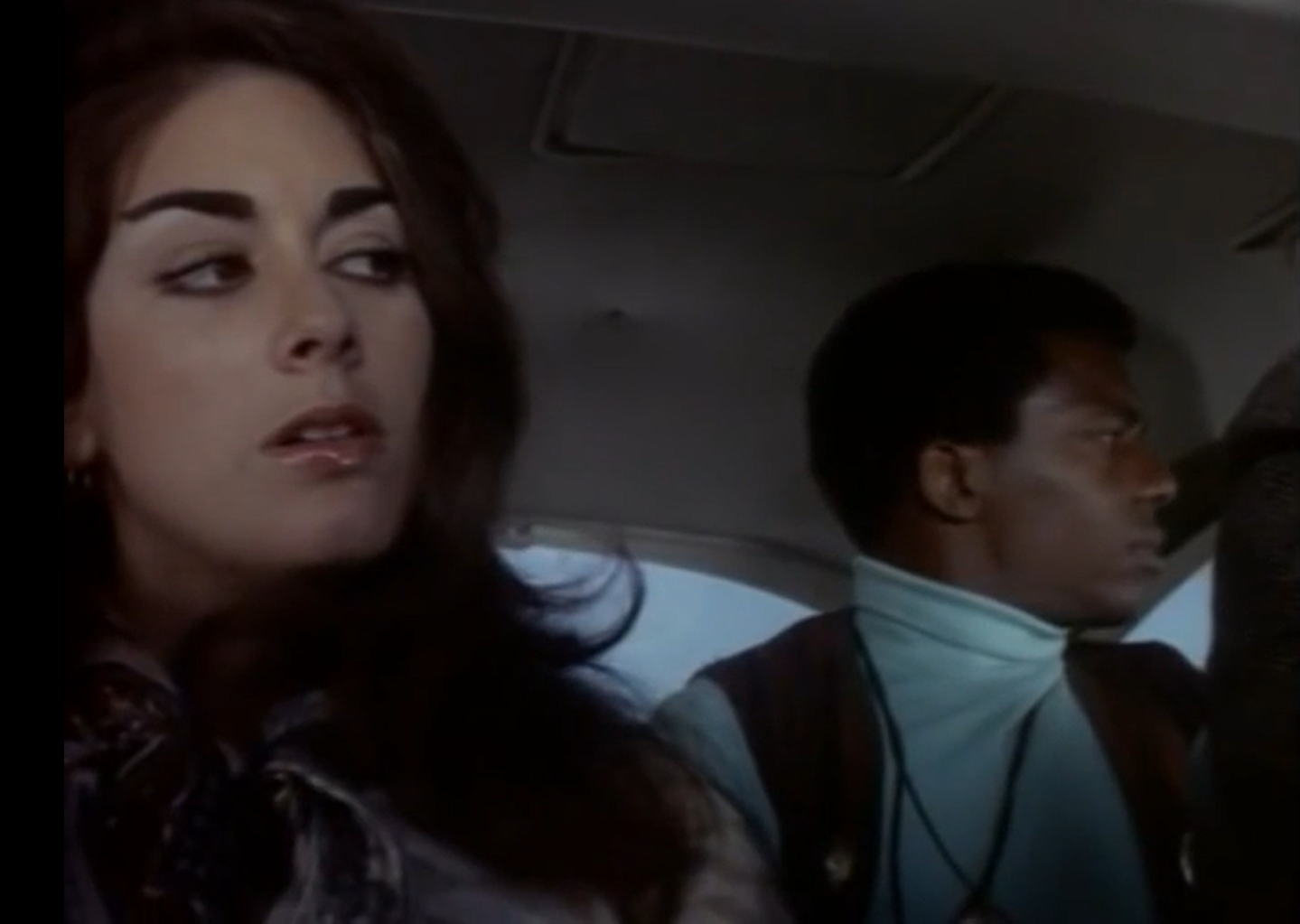
A deeply racist woman (Erica Gavin) whose bush-pilot husband (Garth Pillsbury) is clueless about her infidelity has sex with a Canadian mountie (Peter Carpenter) and both members of a couple (Vincene Wallace and Robert Aiken) who have chartered a ride with Pillsbury. Next, Vixen (Gavin) dares her own brother (Jon Evans) to have sex with her, and mercilessly hassles Evans’ African-American, draft-evading friend (Harrison Page) — but when an Irish Communist (Michael Donovan O’Donnell) hires Pillsbury for a special trip and Page comes along, Gavin finds the tables turned.

Genres, Themes, Actors, and Directors:

  • Infidelity
  • Racism and Race Relations
  • Russ Meyer Films
  • Strong Females

Response to Peary’s Review:
Peary provides significant historical context for this “landmark soft-core sex film from ‘King of the Nudies’ Russ Meyer”, which “bypassed [the] stag-movie circuit for long runs in major theaters” and “made what was probably [the] biggest rate of profit on investment in independent-film history until Halloween — playing in some theaters for over a year, and making history at one drive-in where it sold several times more tickets than the town’s population” (!!!). He writes that “in its own way, it had [the] impact of and paved the way for Deep Throat,” becoming “the subject of many articles” and with “star Erica Gavin [doing] the talk-show circuit, taking on the likes of Betty Friedan, who insisted Meyer had exploited Gavin.” (Apparently “years later Gavin agreed.”) He asserts that “Gavin’s erotically charged performance surely is on the verge of being obscene”, and that this “is the perfect film for swingers”, though the “bizarre finale” temporarily diverts it from its “stag-movie plot”.

Unfortunately, while Peary concedes that Gavin’s Vixen is a “foul-mouthed, racist” woman, he nonetheless describes her as “Meyer’s best heroine”, and the reason this picture hasn’t “faded away by now”. He writes that “as the most aggressive female of them all, she does the best job of expressing a woman in sexual heat”, and apparently “proved to be a heroine even women viewers liked,” given that many “weren’t used to seeing cinema heroines be so confident, so aggressive, so free of sexual inhibitions.”

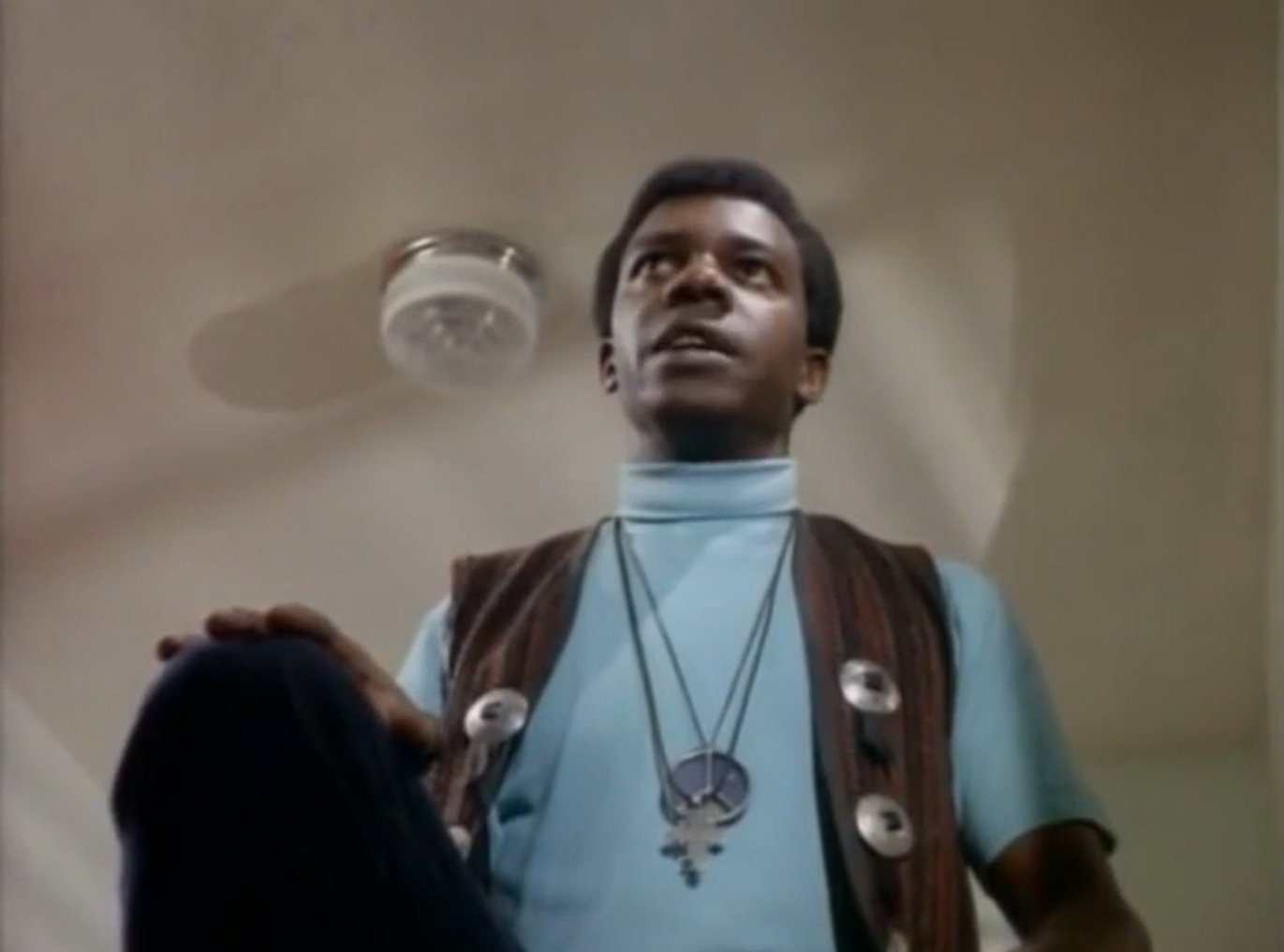
It’s sad to think that so many women in the late 1960s were willing to overlook Vixen’s abusively racist rhetoric towards Page (who gives the best “straightforward” performance in the film). While I understand that Vixen is meant to be over-the-top and uninhibited in every way — including, just for instance, seducing her grown brother — seeing so much toxic vitriol heaped upon the film’s one Black character is simply intolerable. I had a hard time getting through this one, and am frankly flabbergasted that it has maintained such a following.

Redeeming Qualities and Moments:

  • Harrison Page as Niles

Must See?
Nope; steer clear unless you’re a diehard Russ Meyer fan.

Links:

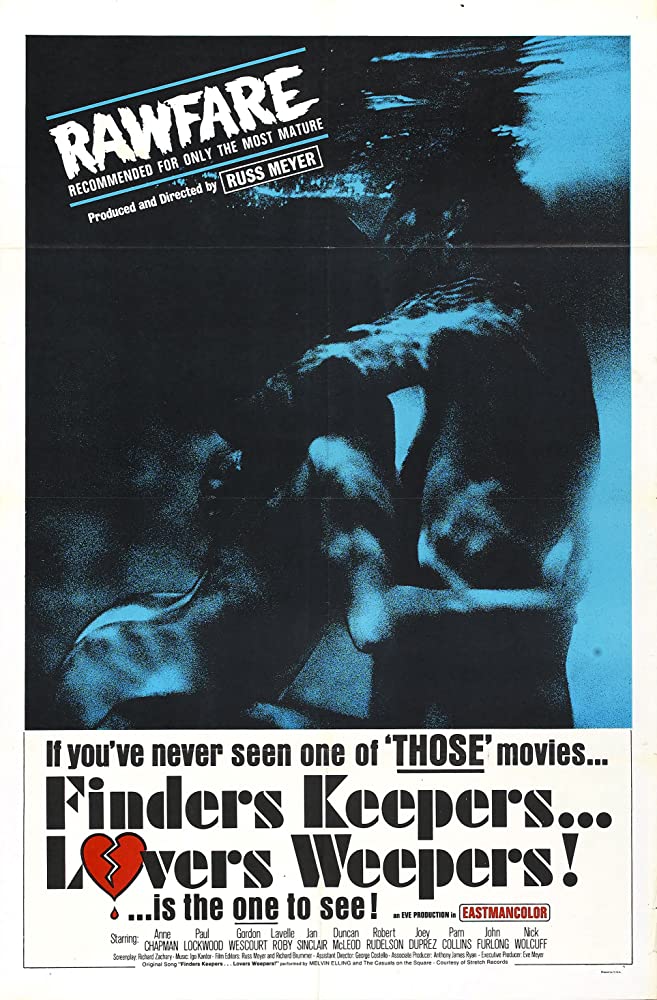
Finders Keepers, Lovers Weepers! (1968)

Finders Keepers, Lovers Weepers! (1968)

“You try any funny stuff on me, buster, and I’ll slice you up like a jigsaw puzzle.”

Synopsis:
As two ex-cons (Duncan McLeod and Robert Rudelson) wait until closing time to rob the safe of a topless dancing club, the club’s owner (Paul Lockwood) is lured to the home of a madam (Lavelle Roby), where he’s seduced by an Amish woman (Jan Sinclair) as well as Roby herself. Meanwhile, Lockwood’s sexually unsatisfied wife (Anne Chapman) has a guilty affair with the club’s bartender (Gordon Wescourt), and all three end up unwittingly involved in the heist back at the club.

Genres, Themes, Actors, and Directors:

  • Heists
  • Infidelity
  • Russ Meyer Films

Response to Peary’s Review:
Peary writes that this “piggy Russ Meyer film… probably won’t please even his diehard fans”, given that it “has none of the typical Meyer humor” and “even has a cruel edge to it.” He adds the unnecessary comment that “of course, the women have large chests; but they’re not particularly pretty — they’re the types who show up in stag films” (!!!). Vincent Canby’s review for the NY Times is a bit more delicately worded, if similarly dismissive: “Meyer’s sole preoccupation with extraordinarily well-developed female breasts, usually photographed from a low angle and while they’re in some sort of motion, is no longer particularly erotic.” (And kudos to Canby for introducing me to the new term “satyriasis.”) To Meyer’s credit, he perfectly captures the essence of the “male gaze” in the creatively shot and edited opening sequence of this film, which remains its artistic highlight.

Redeeming Qualities and Moments:

  • The cleverly filmed opening sequence


Must See?
No; this one is only must-see for Meyer fans.

Links:

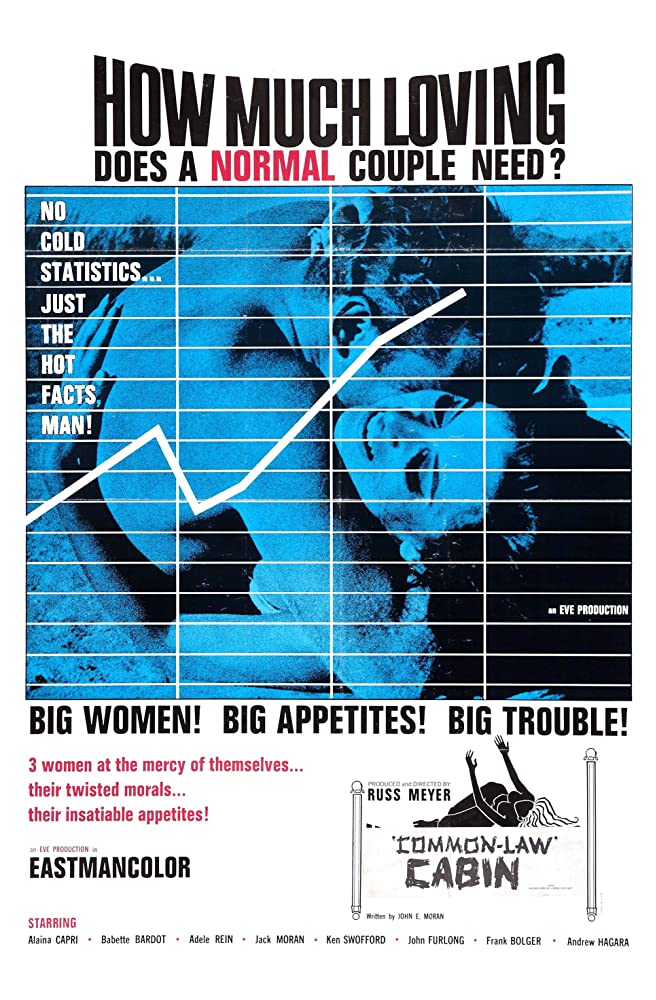
Common Law Cabin / How Much Loving Does a Normal Couple Need? (1967)

Common Law Cabin / How Much Loving Does a Normal Couple Need? (1967)

“How’s your motor working?”

Synopsis:
An alcoholic boat captain (Frank Bolger) brings three new clients — a man with a briefcase (Ken Swofford), a spineless doctor (John Furlong), and the doctor’s lustful wife (Alaina Capri) — to a broken-down tourist destination where the owner (Jackie Moran), his busty French housekeeper (Babette Bardot), and his pubescent daughter (Adele Rein) are ready to entertain.

Genres, Themes, Actors, and Directors:

  • Deep South
  • Incest and Incestuous Undertones
  • Infidelity
  • Russ Meyer Films

Response to Peary’s Review:
Peary refers to this memorably-titled exploitation flick — set in “an out-of-the-way tourist trap on a little-traveled Colorado River tributary” — as “one of Russ Meyer’s ‘sweat’ films”. He notes that it “drags in spots, but holds interest due to sexy women… , smutty lines by [the] doctor’s wife(!!!), and [the] gathering of [a] strange group in a strange location.”

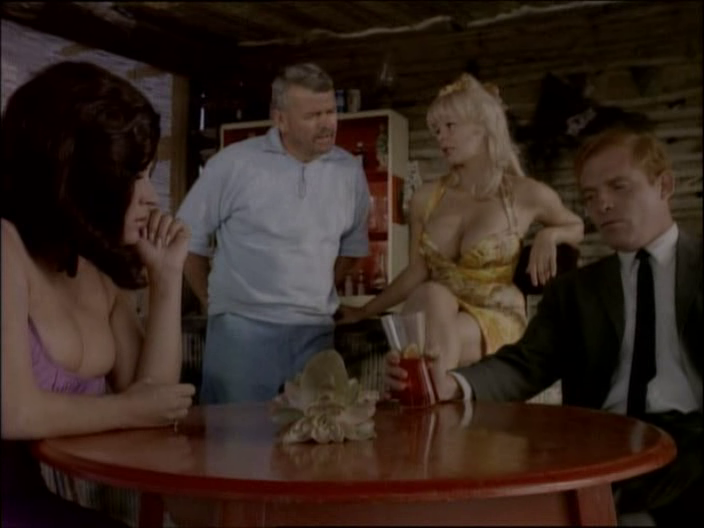
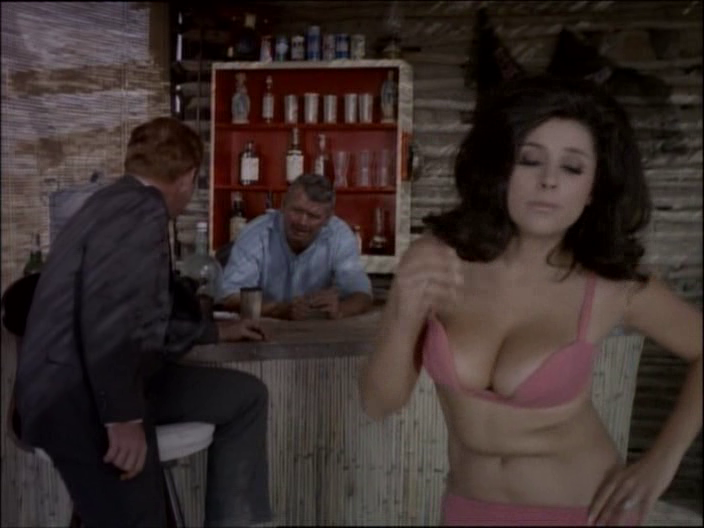
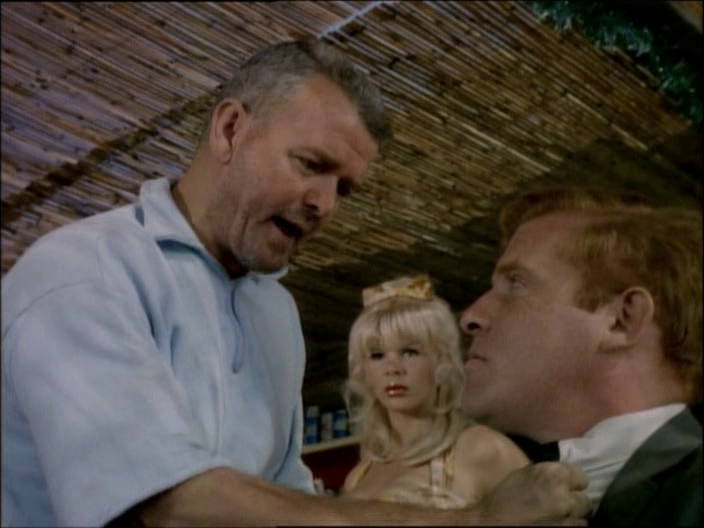
He argues that the “existential aspects of the story would have made it an ideal project for some European director; in fact… if it were left intact, and made in a foreign language, it could pass as a masterpiece (that would be a suitable second feature to a film like Knife in the Water).” Oh, Peary — not quite. I actually gave this a try (playing portions of the film without any soundtrack), and was hard pressed to think about how any of these scenes, for instance:


… might be perceived in an “existential” fashion as part of a “masterpiece”.

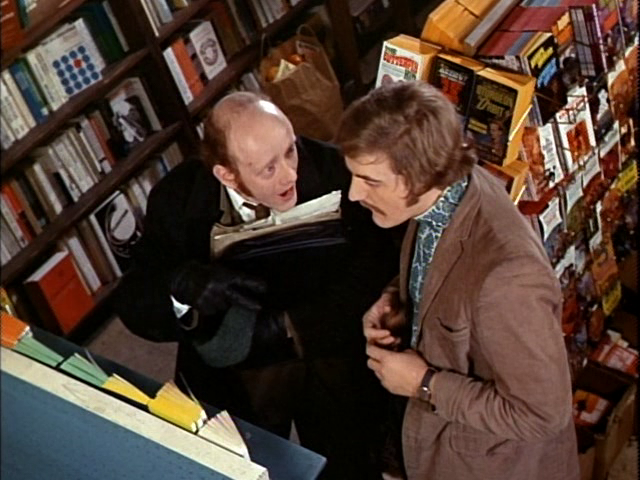
Note: Swofford (see still below, bottom right) looks remarkably like a combination of Burt Lancaster and Damian Lewis.

Redeeming Qualities and Moments:

  • Reasonably creative direction

Must See?
No; you can skip this one.

Links:

Mud Honey / Rope of Flesh (1965)

Mud Honey / Rope of Flesh (1965)

“I always wondered if you was any kind of a man at all.”

Synopsis:
An ex-con (John Furlong) takes a job working for an aging farmer (Stu Lancaster) whose niece (Antoinette Cristiani) is married to a sadistic, alcoholic psychopath (Hal Hopper). As Furlong realizes he’s falling for Cristiani, he tries to distract himself by going to visit two local prostitutes (Rena Horton and Lorna Maitland) and their madam (Princess Livingston) — but Hopper’s rage and jealousy know no bounds, and when a local preacher (Frank Bolger) and his wife (Lee Ballard) treat Hopper like a “poor sinner”, he takes this designation and runs with it.

Genres, Themes, Actors, and Directors:

  • Deep South
  • Domestic Abuse
  • Ex-Cons
  • Infidelity
  • Russ Meyer Films

Response to Peary’s Review:
Peary writes that this “tawdry tale” may be director “Russ Meyer’s best film” — a dubious designation I can’t agree with, given that Faster, Pussycat! Kill! Kill! (1965) remains his most memorably oddball flick. Peary describes Mud Honey — what exactly does this (or the alternate title, Rope of Flesh) refer to? — as being “set in a small town in Missouri that’s full of stupid but shrewd, sweaty, hypocritical men and stupid, big-breasted women” (an unfair assessment, given that Cristiani is overly loyal rather than stupid), where “everyone is driven by lust, hatred and greed” (again, not entirely accurate — what about Cristiani and Lancaster?).

In his review, Peary reveals a major spoiler that doesn’t occur until the last 15 minutes of the film (unusual for him), thus making it hard for me to quote too much more of his assessment. However, I’ll cite and agree with his statement that this “sleazy fake morality play is surprisingly well made”, with “Meyer’s camera work… fairly creative”:

the acting “satisfactory”, and the dialogue “flavorful”; we really are made to “believe that the characters live in this hellish version of Tobacco Road” — a place we’re oh-so-eager to say goodbye to once the dramatic, violent denouement comes to an end.

Note: Viewers will surely notice the distinctive presence of cackling “Princess Livingston” (what a name!), whose red-wigged, middle-aged dancing in Meyer’s Beyond the Valley of the Dolls (1970) stands out in a veritable sea of surreal, bombarding imagery.

Redeeming Qualities and Moments:

  • Strong direction and cinematography

Must See?
No — though naturally, Russ Meyer fans will want to check it out.

Links:

Lorna (1964)

Lorna (1964)

“I’m married, sure — but we never REALLY married, like now.”

Synopsis:
The sexually dissatisfied wife (Lorna Maitland) of a kind salt mine worker (James Rucker) is raped by a violent ex-convict (Mark Bradley), who she then desires as a lover and brings home — but when Bradley and his two co-workers (Hal Hopper and Doc Scortt) come home early that day after Rucker has fought Bradley on behalf of Maitland’s honor, they’re in for an unpleasant surprise.

Genres, Themes, Actors, and Directors:

  • Deep South
  • Ex-Cons
  • Infidelity
  • Russ Meyer Films
  • Sexuality

Response to Peary’s Review:
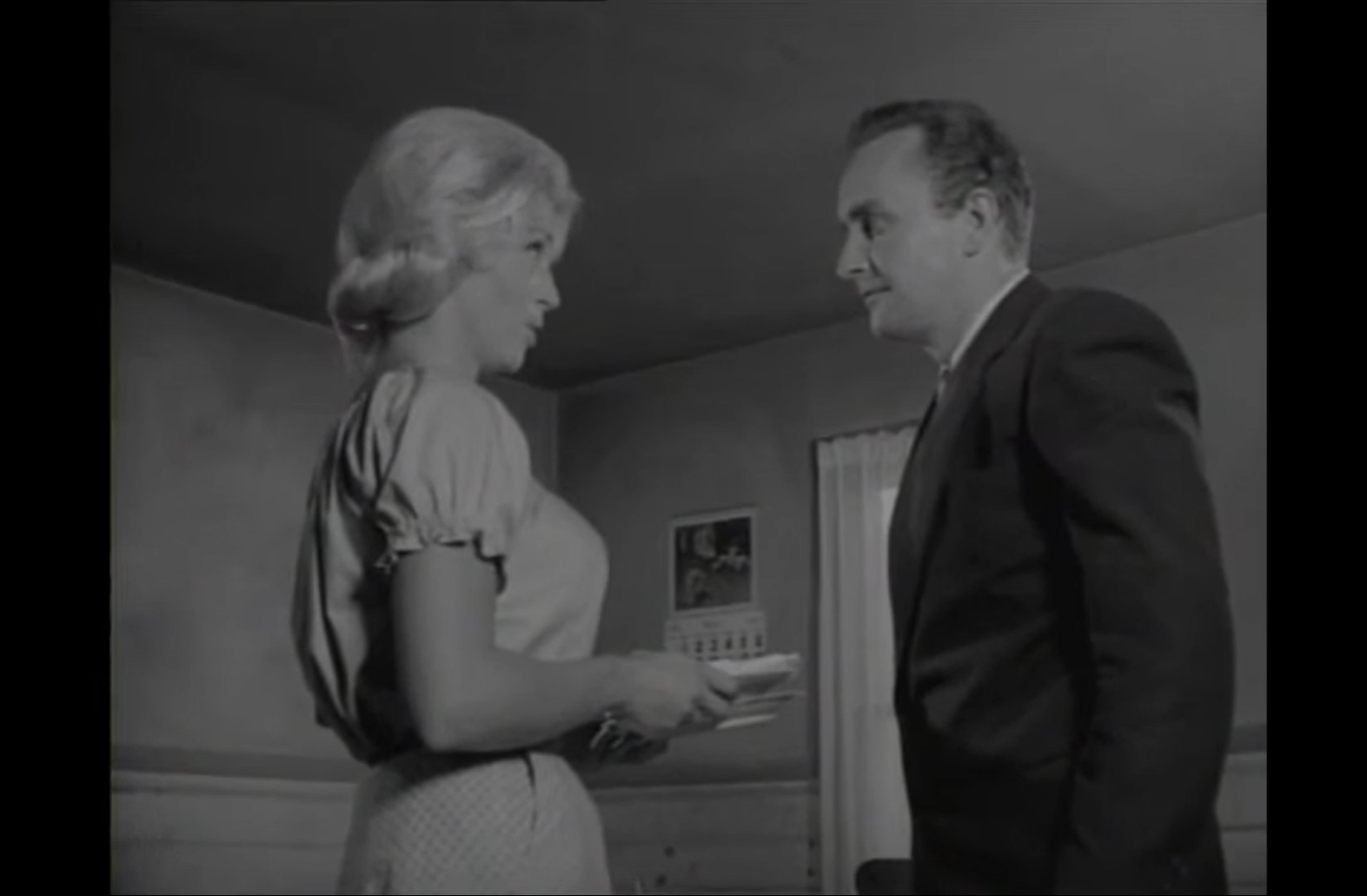
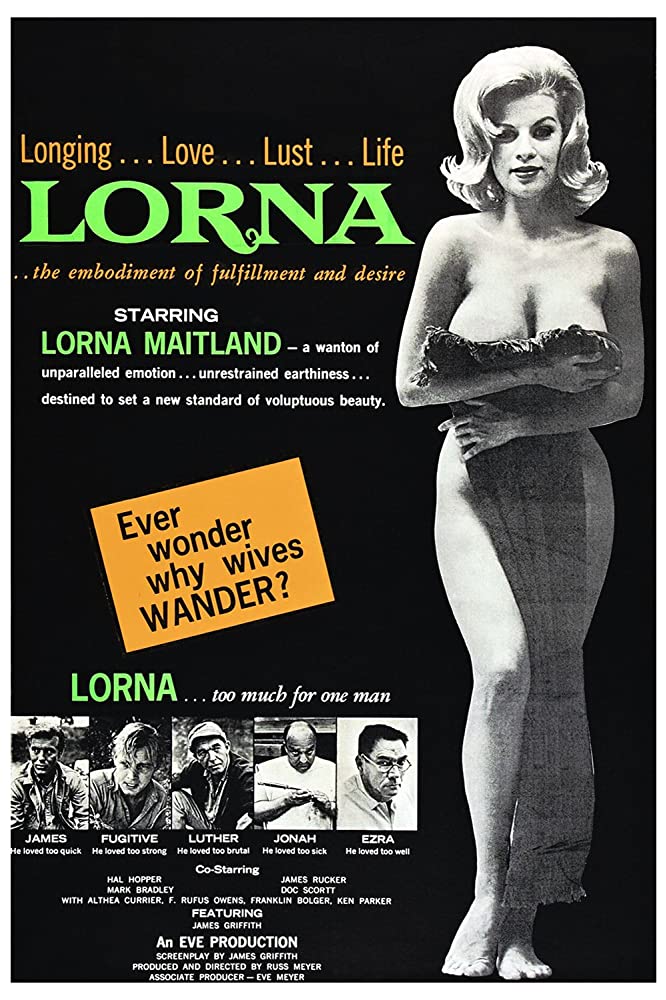
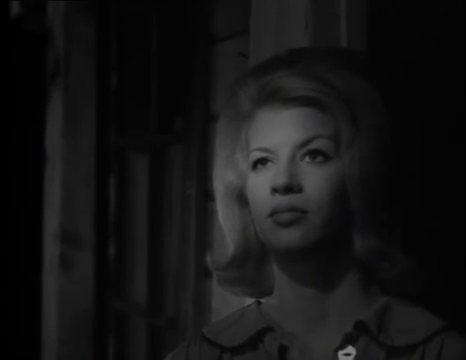
Peary writes that this “Russ Meyer potboiler” — “his first attempt to make a serious film with a plot and theme” — “recalls those independently made, sleazy, sex-filled fake social dramas of the thirties (i.e., Child Bride).” He notes that “Meyer mixed Erskine Caldwell, John Steinbeck, and [a] phony morality tale to pretty good effect”, “impressively creat[ing] the sweaty, puritanical backwoods environment” and establishing “how a young woman could go crazy trying to repress her sexual impulses in such a ‘hot’ environment”. He points out that “Lorna’s character goes through much of what Hedy Lamarr does in Ecstasy; like Lamarr, she must be punished — according to a male filmmaker — for fulfilling her fantasies.” Given that the film opens with a near-rape — Hopper follows a drunk woman (Althea Currier) home and savagely beats her after she refuses his advances — then Lorna later “gets turned on by a rapist”, this film is clearly made from and for a certain perspective, and is really only must-see for Meyer enthusiasts.

Redeeming Qualities and Moments:

  • Atmospheric b&w cinematography

Must See?
No, though of course Russ Meyer fans will certainly want to check it out.

Links:

Beyond the Valley of the Dolls (1970)

Beyond the Valley of the Dolls (1970)

“This is my happening, and it freaks me out!”

Synopsis:
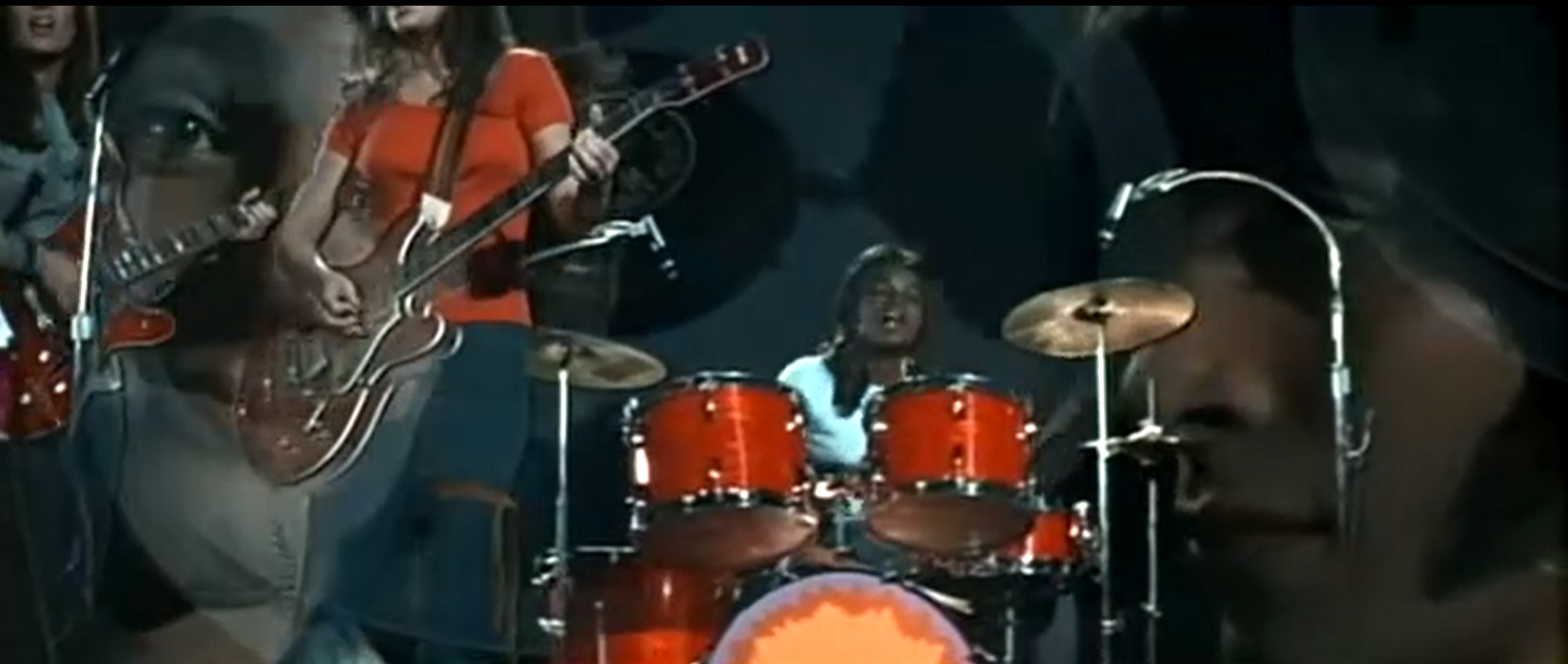
Three rock performers — Kelly (Dolly Read), Casey (Cynthia Myers), and Pet (Marcia McBroom) — travel with their manager Harris (David Gurian) to Hollywood, where Kelly’s Aunt Susan (Phyllis Davis) introduces her to wild parties led by Z-Man (John Lazar). Soon Z-Man helps the three musicians form a new band called The Carrie Nations, and tensions arise between Z-Man and Harris. Meanwhile, romantic entanglements quickly ensue: Kelly starts an affair with a hunky player named Lance Rocke (Michael Blodgett) while also seducing her aunt’s financial caretaker (Duncan McLeod) into giving her a larger portion of their inheritance; Harris is relentlessly pursued by a bosomy porn star (Edy Williams); Pet falls in love with an aspiring lawyer (Harrison Page) but strays with a prizefighter (James Iglehart); and Casey falls for a lesbian (Erica Gavin).

Genres, Themes, Actors, and Directors:

  • Hollywood
  • Musicians
  • Rock ‘n Roll
  • Russ Meyer Films

Response to Peary’s Review:
Peary writes that this “cult favorite” by Russ Meyer — “about a small-town three-woman rock band… who make it big in Hollywood, the land of sex, drugs, moral corruption, and deviance” — was originally “slated to be a sequel to Valley of the Dolls, but instead of expanding on Jacqueline Susann’s trashy best-seller it turned around and parodied the first film and other overblown, cliche-filled Hollywood soap operas.” However, as Peary complains, “there is nothing worse than a multi-million-dollar spoof of movies that are already self-parodies.” He expresses frustration that “when Meyer finally got his chance to make a studio picture (with 20th Century Fox)… he proved to be lazy and conservative” instead of “really inventive”, “opting to make an outrageously campy caricature-populated film rather than attempting to make a serious, solid melodrama”. Peary adds that “critic Roger Ebert’s script is smug and vulgar, and full of violence-against-female scenes (which Meyer films seriously) of the type he has crusaded against as a critic.”

Peary expands upon his frustrations and disappointment with this film in his first Cult Movies book, where he starts by discussing Meyer’s two cinematic “phases” before BTVOTD: Meyer began as “King of the Nudies”, making a “fortune as the independent producer-director-cameraman-editor-writer-distributor of such cheapie harbingers of the Naked Cinema as the ground-breaking The Immoral Mr. Teas (1959)…” Next he made “infinitely more ambitious” “tongue-in-cheek potboilers” that “served as the basis for the pre-Beyond the Valley of the Dolls cult: Lorna (1964), Mud Honey (1965), … Faster Pussycat, Kill, Kill (1966) … and [Peary’s] favorite, Cherry, Harry, and Raquel (1969).” Peary describes this second string of films — “set in rugged terrains… [and] inhabited by sexually driven buxom beauties…, strong-jawed, no-nonsense heroes, and an assortment of religious zealots, rapists, and sweaty lowlifes” — as “essentially fake morality plays, in which the numerous sinners either repent or are punished severely.” He argues that “as skin flicks, Meyer’s 1964-1969 films were far superior to those of his competitors”, given they are “extremely well-photographed” and feature “wild, absurd visual humor, dialogue that makes no sense…, and ridiculous plot situations — while his actors play their roles straight.”

Peary goes on to say that while “to many moviegoers who hadn’t seen a Russ Meyer film, BTVOTD was a revelation — a film that they (mostly college students) considered to be their own ‘far-out’ wave length” — Peary and others realized they’d “overestimated [Meyer’s] talents”. Peary refers to BTVOTD as “really a terrible film, energetically but poorly acted by ex-Playboy bunnies Dolly Reed and Cynthia Meyers, model Marcia McBroom, and under-emoting or overemoting stars.” He points out that “cryptic jargon and Meyer’s rapid-fire editing techniques” (your head will seriously spin!) “are meant to camouflage the picture’s emptiness” — but “the holes in the script come through”. He ends his scathing review (which I essentially agree with) by noting “there is little in [it] to recommend”, and that it simply “proved that what [fans] had seen in his early films were everything Meyer had to offer”; “by choice (!), Meyer returned to making independent sex films — in the Vixen mold but not as good”, which “unfortunately [was] the milieu to which he [was] best suited.”

Redeeming Qualities and Moments:

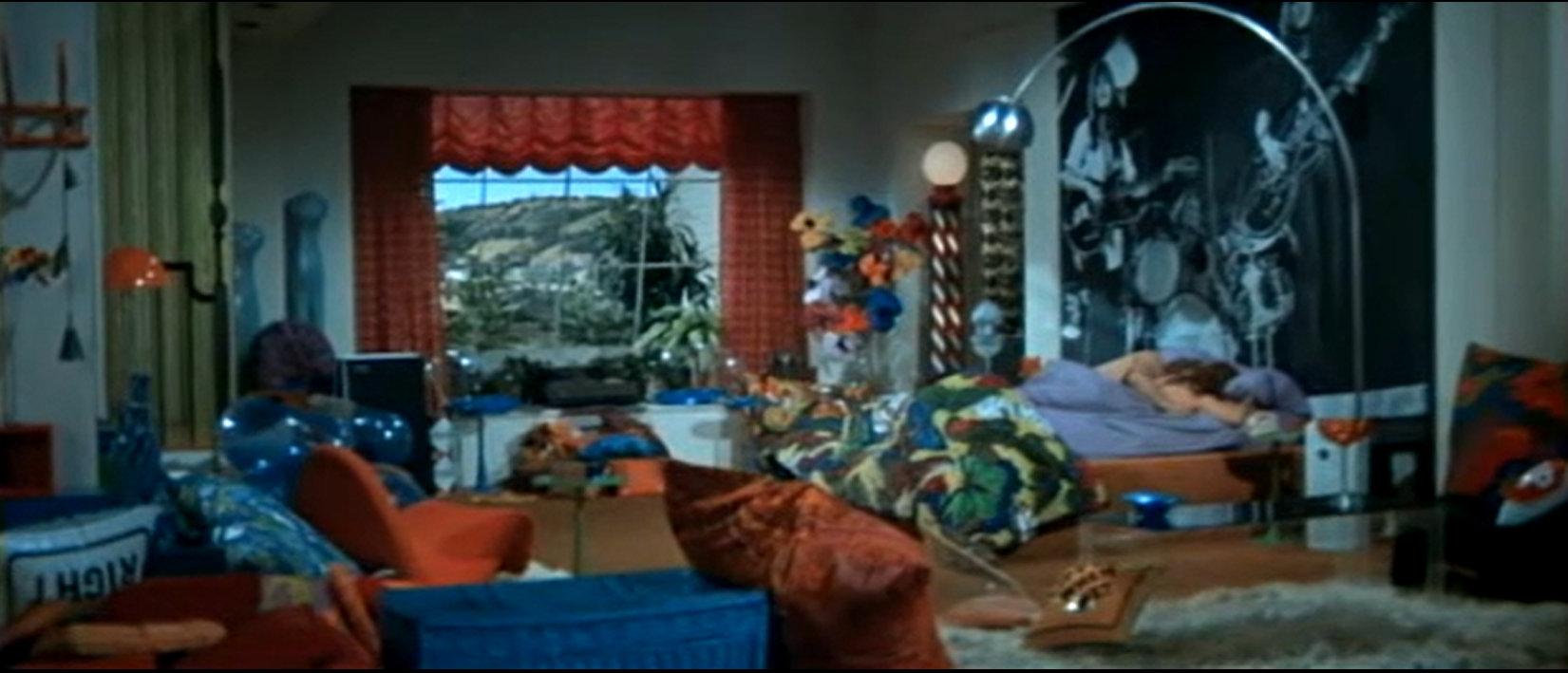
  • Colorful sets
  • Far-out cinematography

Must See?
Yes, once — but simply for its cult status and notoriety.

Categories

  • Cult Movie

Links: