Browsed by
Category: Response Reviews

My comments on Peary’s reviews in Guide for the Film Fanatic (Simon & Schuster, 1986).

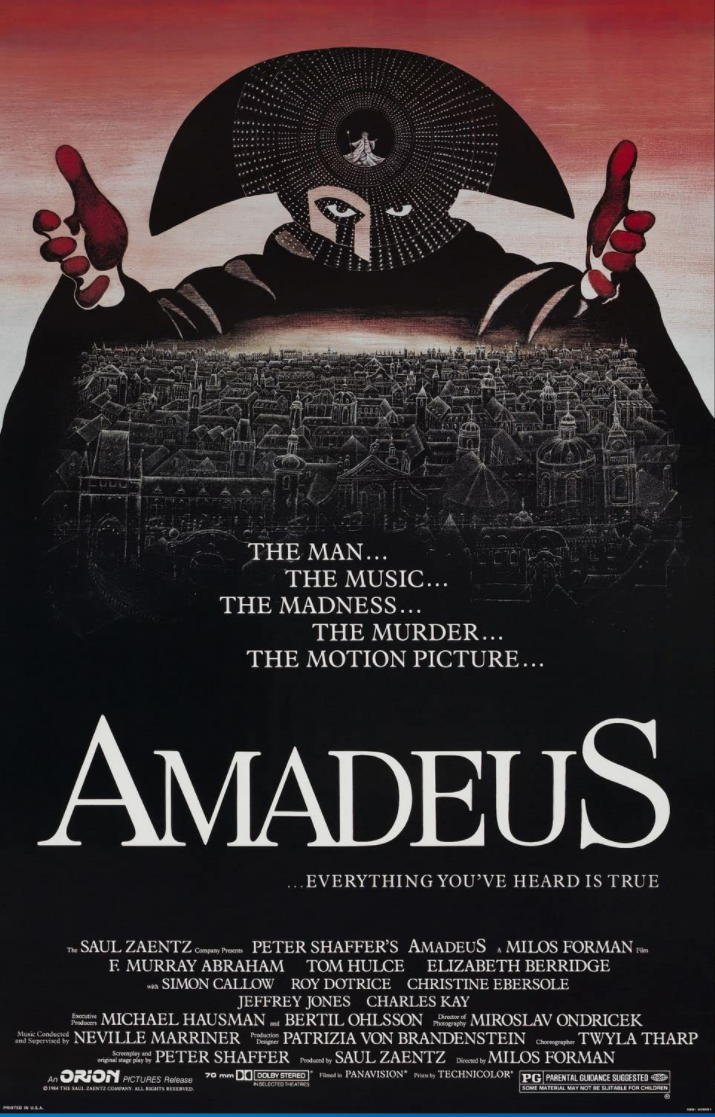
Amadeus (1984)

Amadeus (1984)

“That was God laughing at me through that obscene giggle.”

Synopsis:
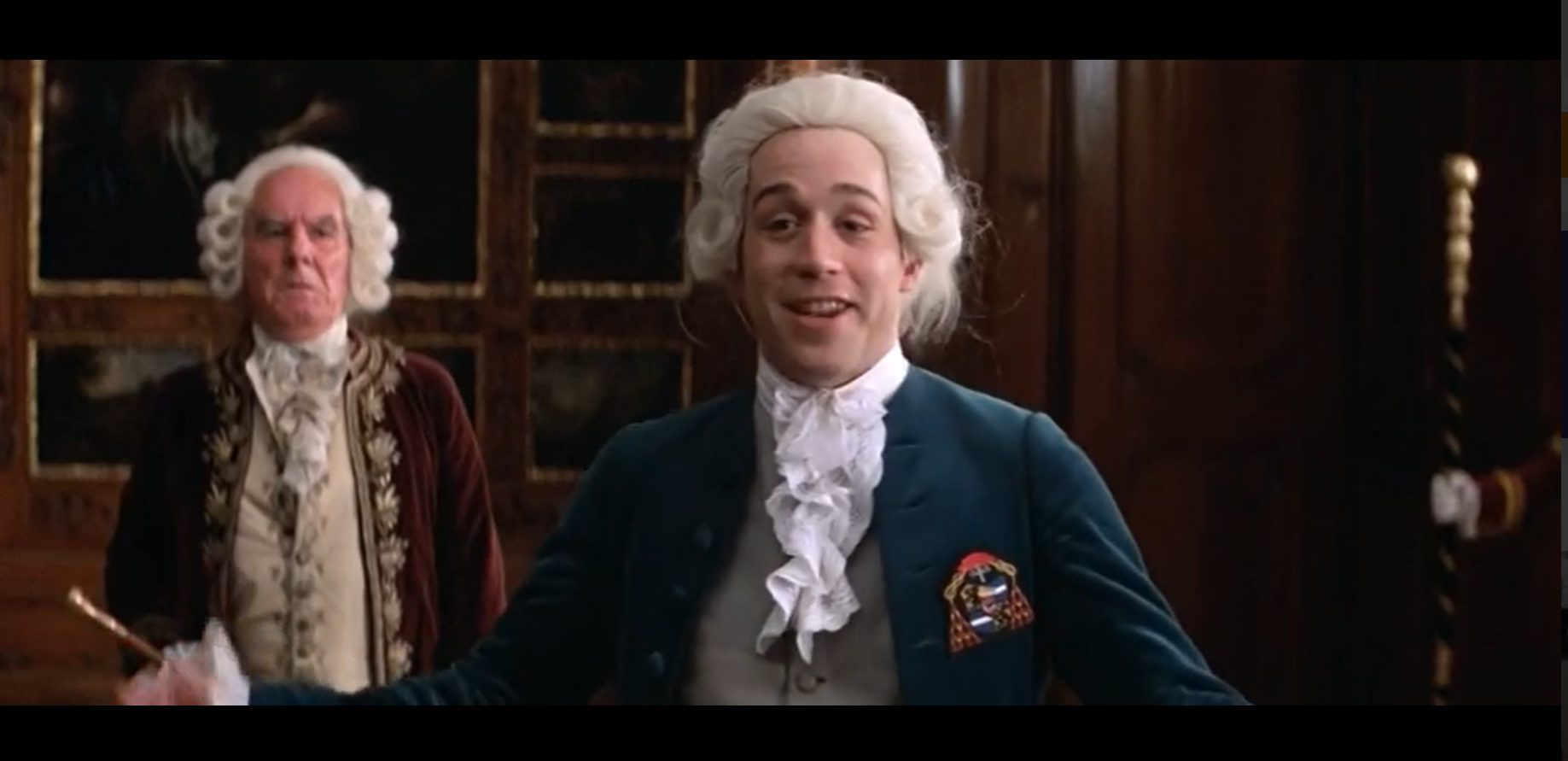
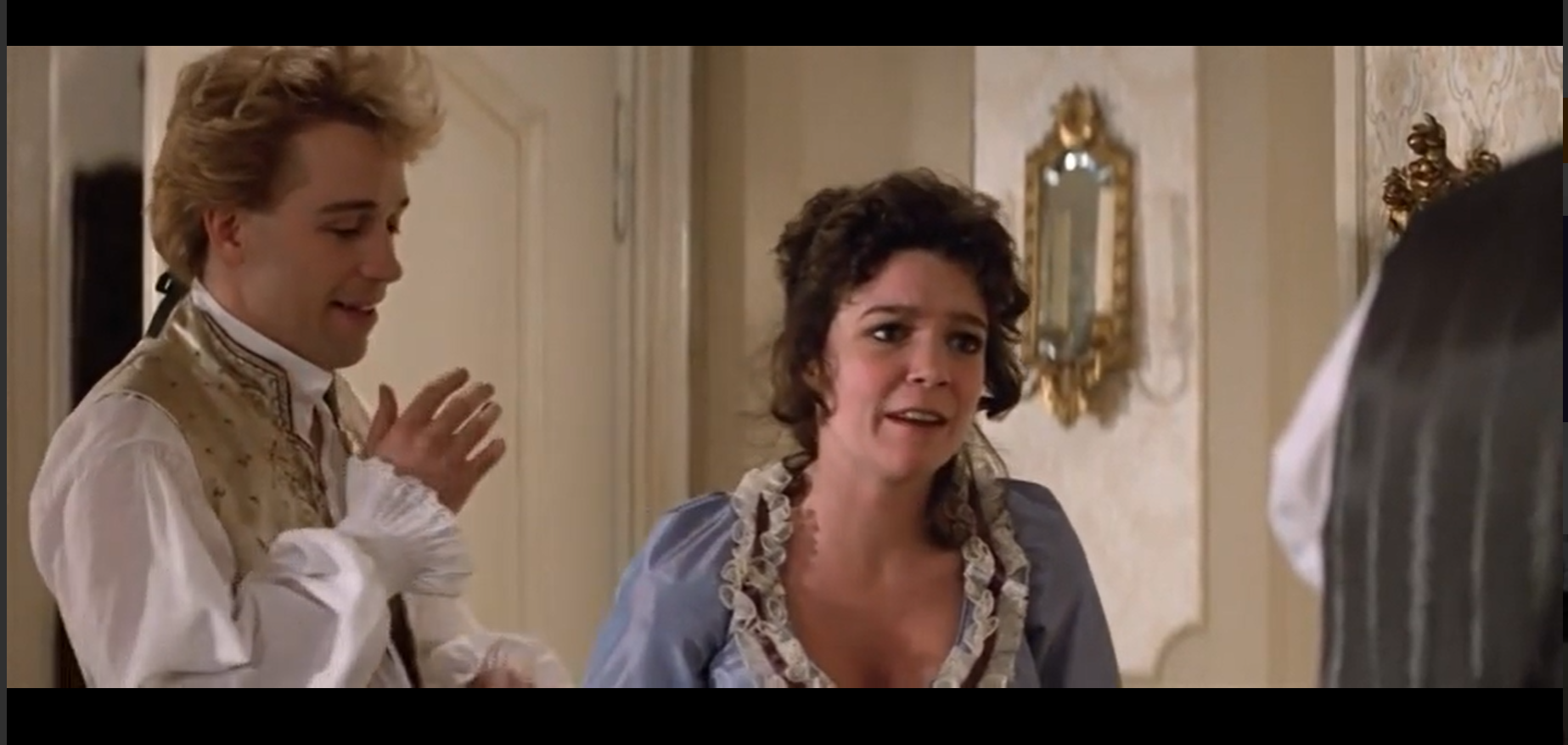
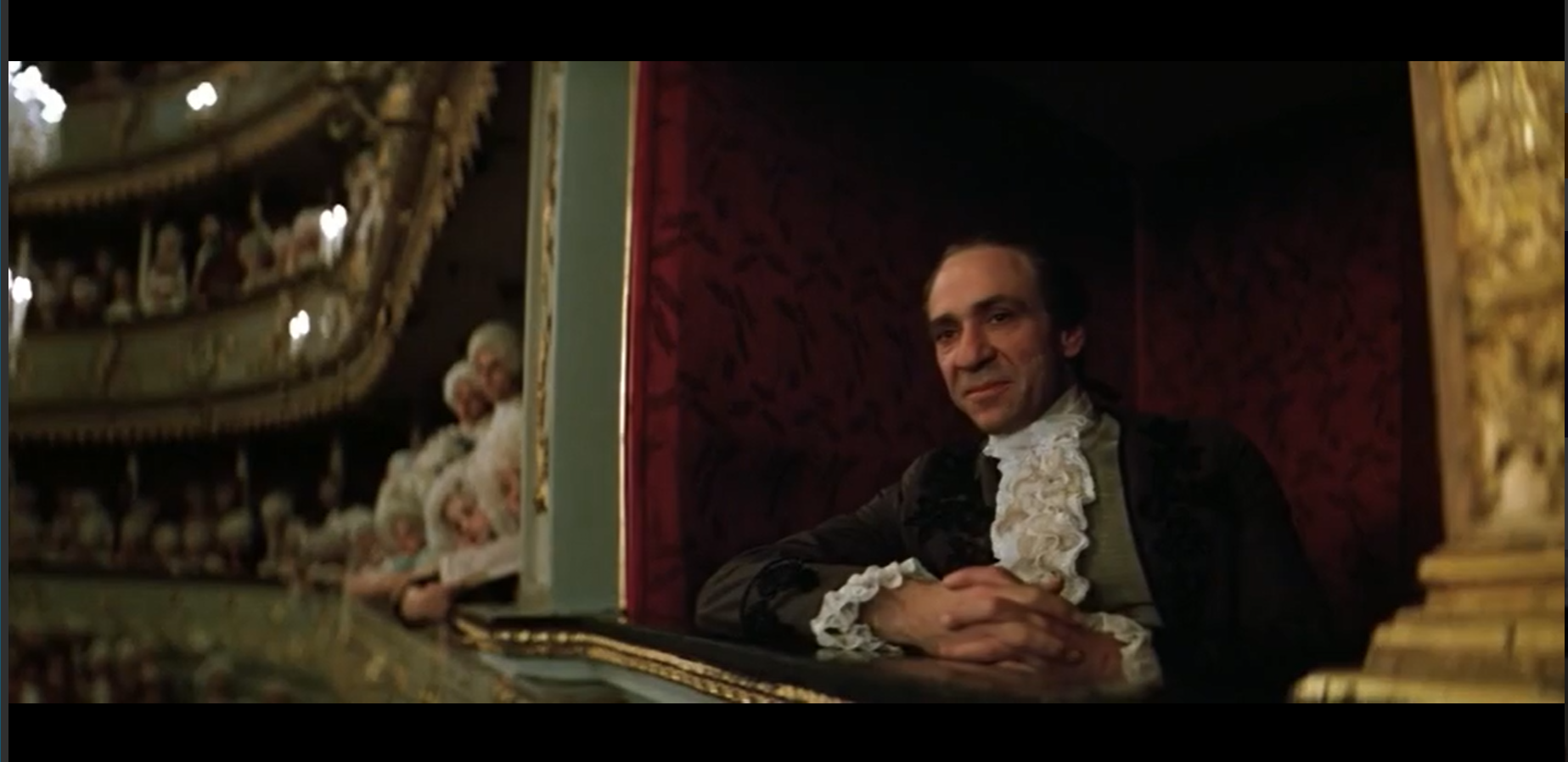
Now housed in a mental asylum, aging Antonio Salieri (F. Murray Abraham) — former court composer for Emperor Joseph II (Jeffrey Jones) — tells a priest (Richard Frank) about his intense rivalry with Wolfgang Amadeus Mozart (Tom Hulce), whose musical brilliance was often overshadowed by his struggles to support his wife (Elizabeth Berridge) and child.

Genres, Themes, Actors, and Directors:

  • Biopics
  • Composers
  • Flashback Films
  • Historical Drama
  • Milos Forman Films
  • Play Adaptation
  • Revenge

Response to Peary’s Review:
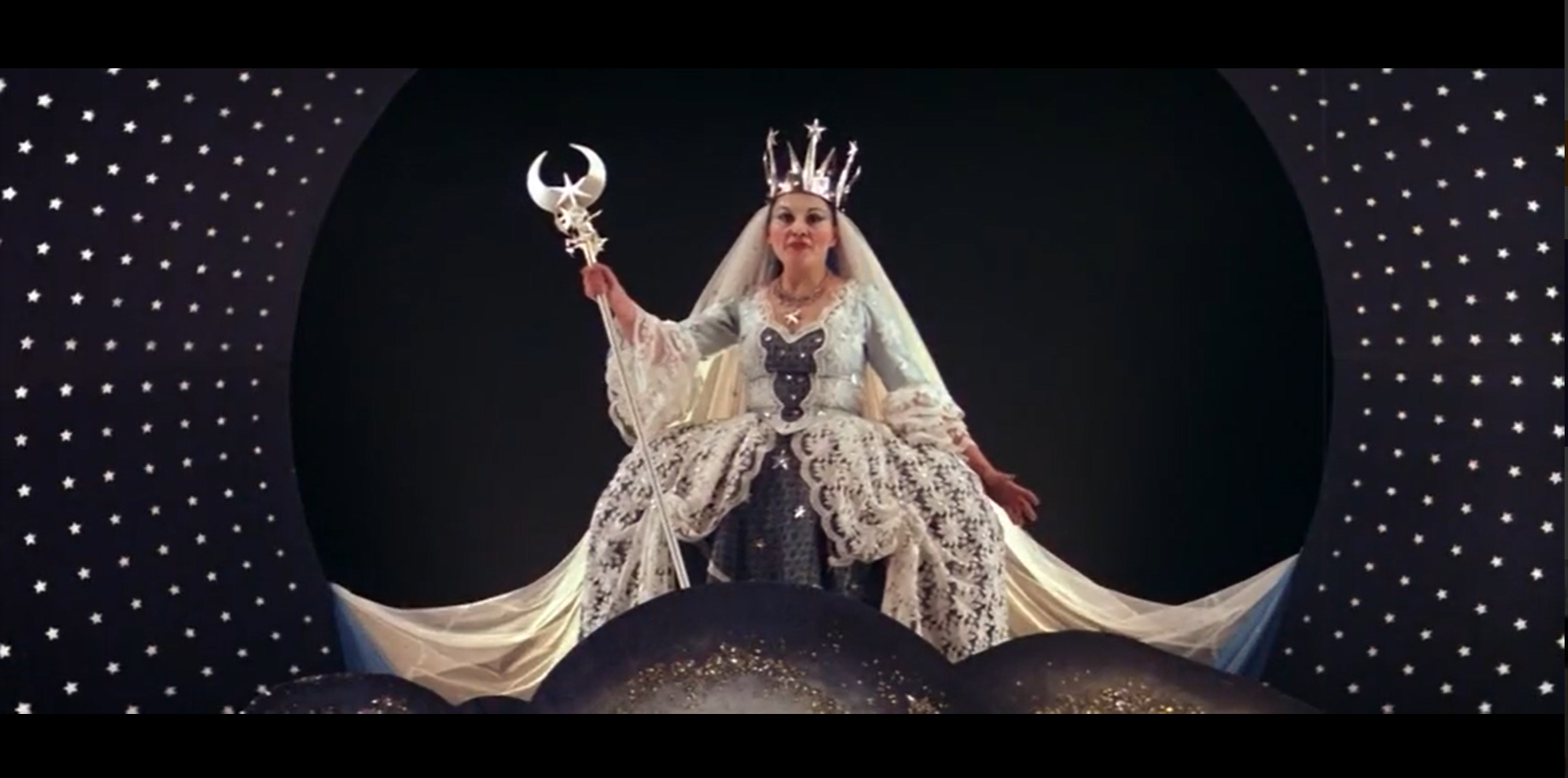
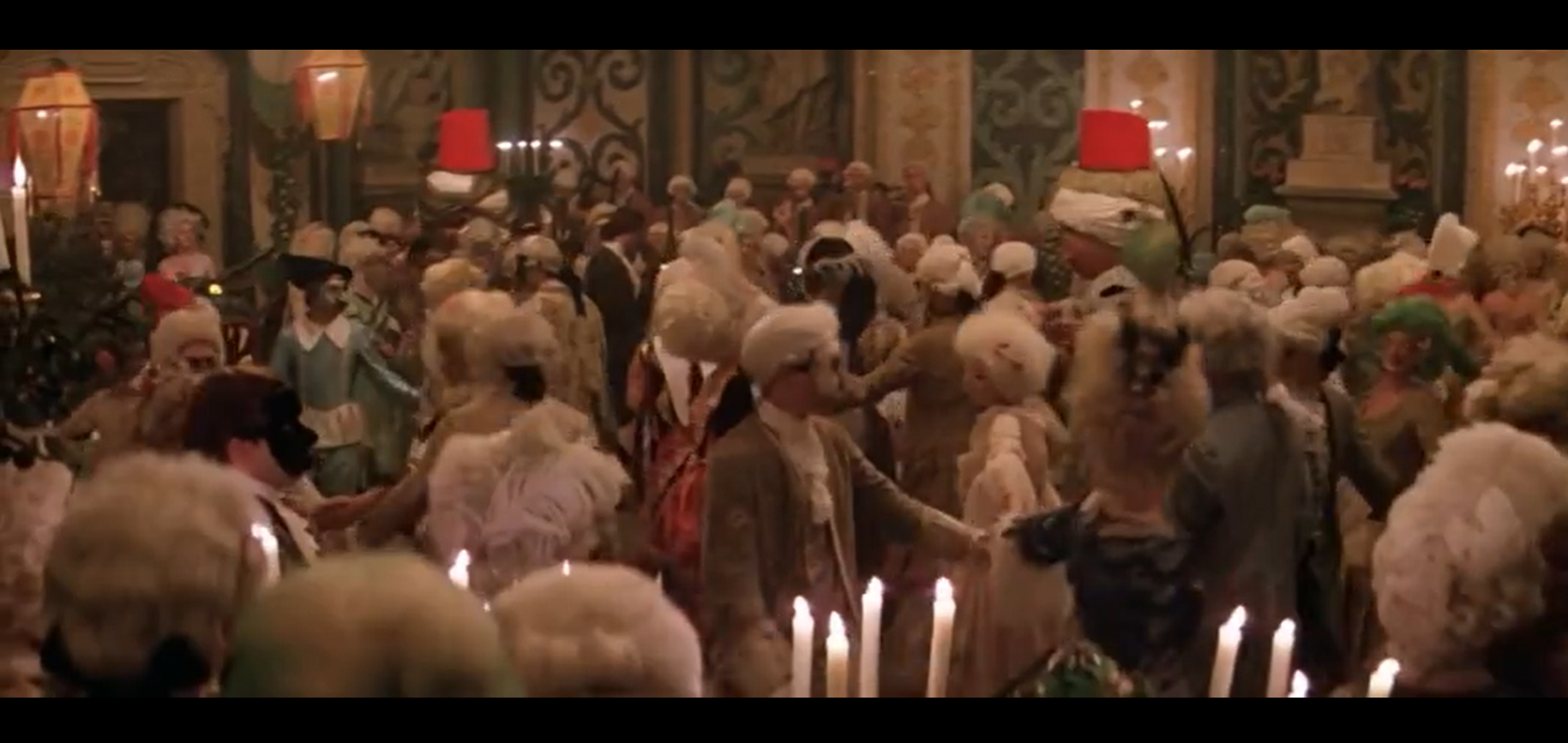
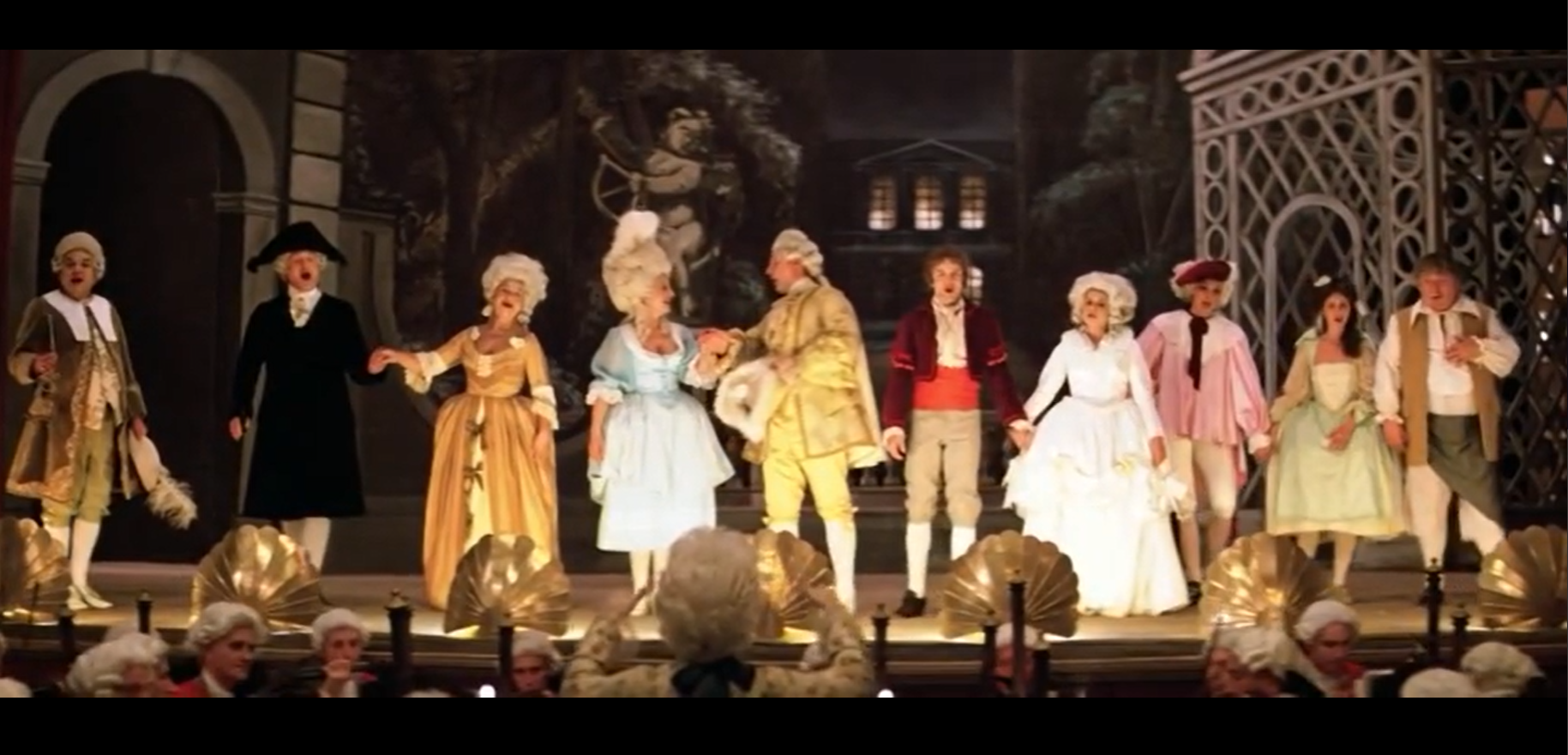
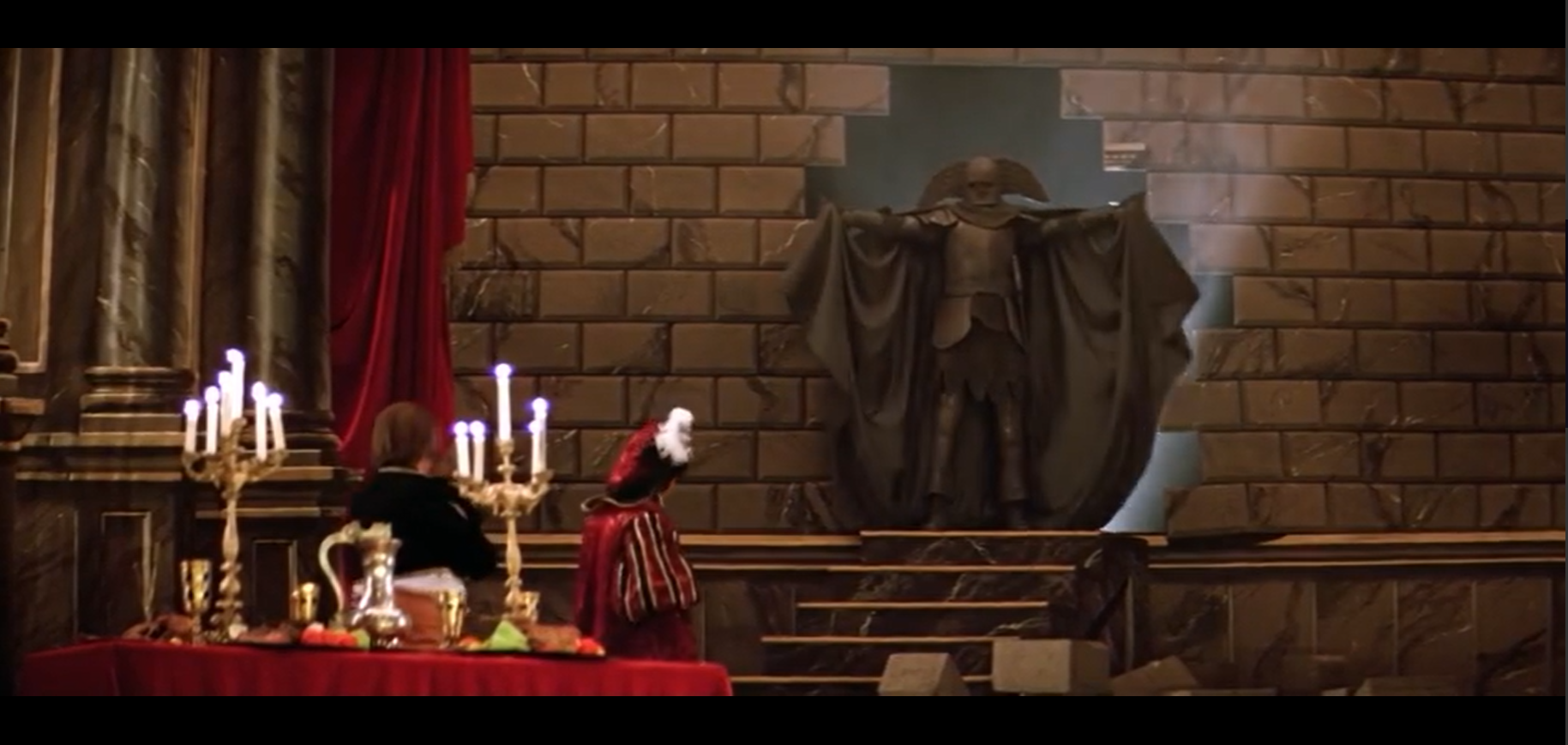
Peary writes that Milos Forman’s “Oscar-winning, large-scale adaptation of Peter Shaffer’s 1979 fictional play about the obsessive jealousy an 18th-century Italian hack composer, Antonio Salieri, felt for Wolfgang Amadeus Mozart’s musical genius” features “great” acting — but he argues that “while the characters are interestingly unusual the first time we see them, they don’t vary in the slightest from then on” and “anyone could fill in their dialogue, reactions, etc.” He posits that “in fact, each time a group of characters gets together, they virtually replay an earlier scene — there are only about four basic scenes in the movie, which are repeated in different settings.” He adds that the “dialogue and situations are embarrassingly anachronistic,” and that “if characters weren’t in fancy period dress… viewers would have laughed it off screen.” Peary does concede, however, that the “period detail and lavish recreations of excerpts from four Mozart operas give the film immense flavor”, and notes that the movie “should be applauded for trying to convey what it is to be an artistic genius, and to show a genius actually in the act of creating.”

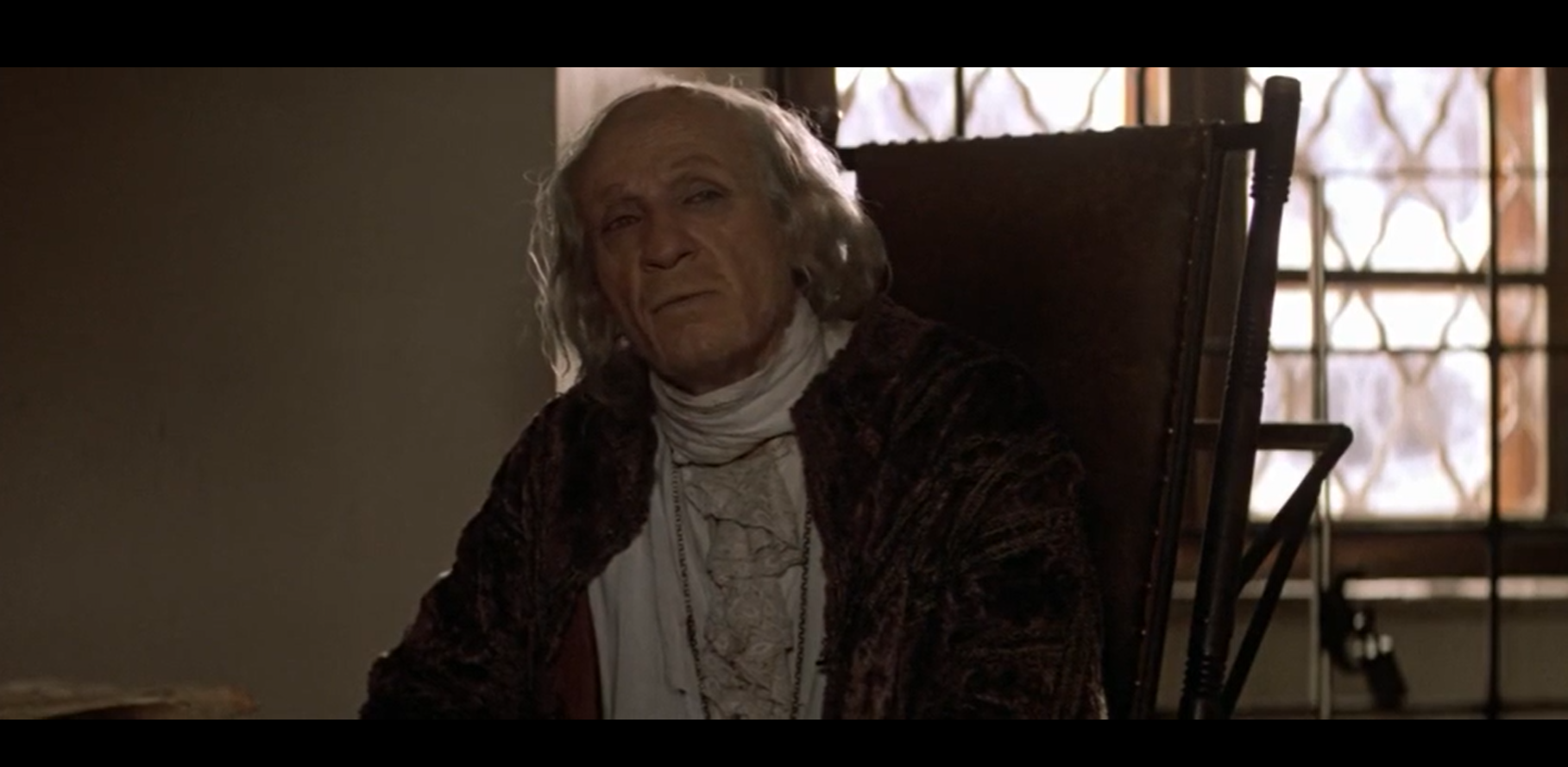
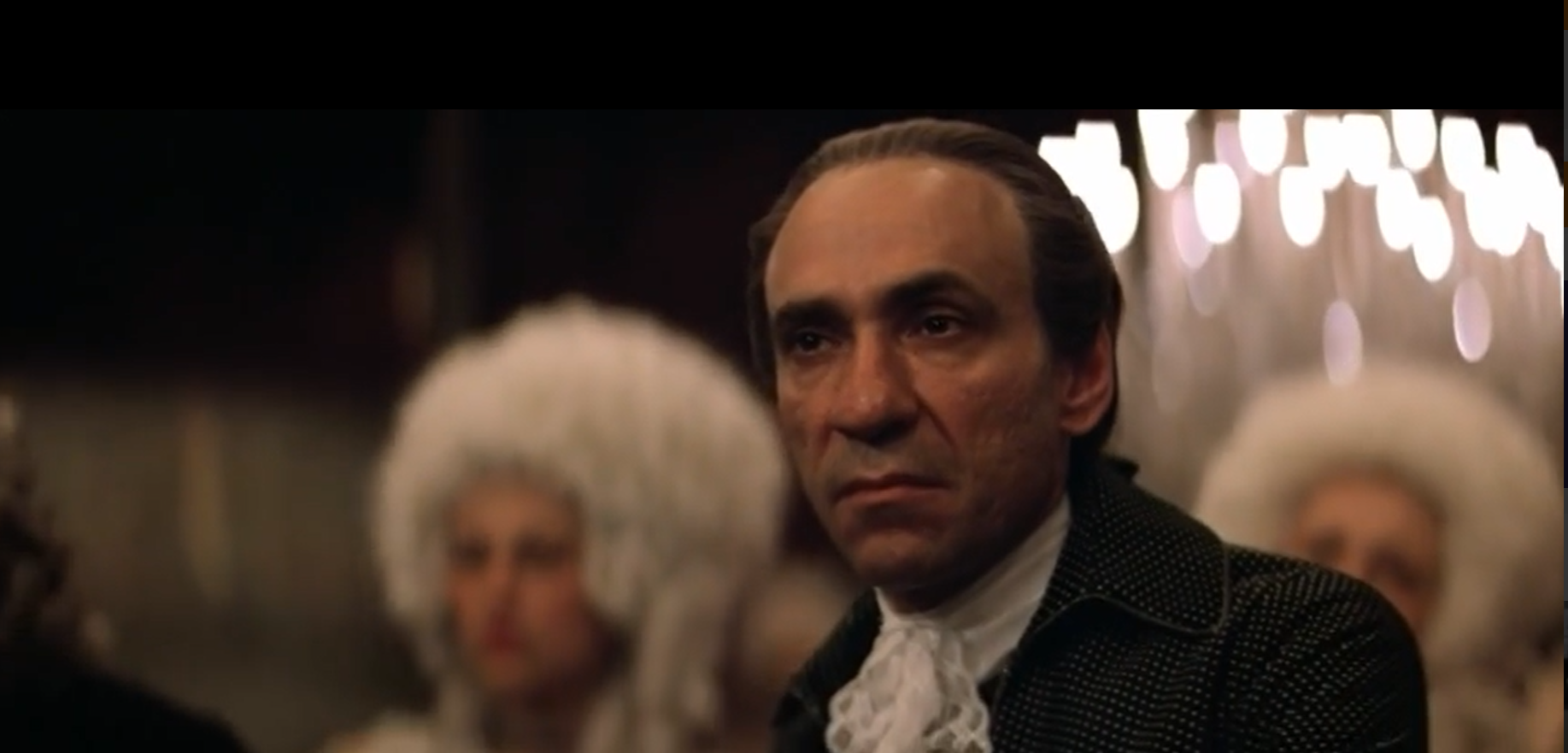
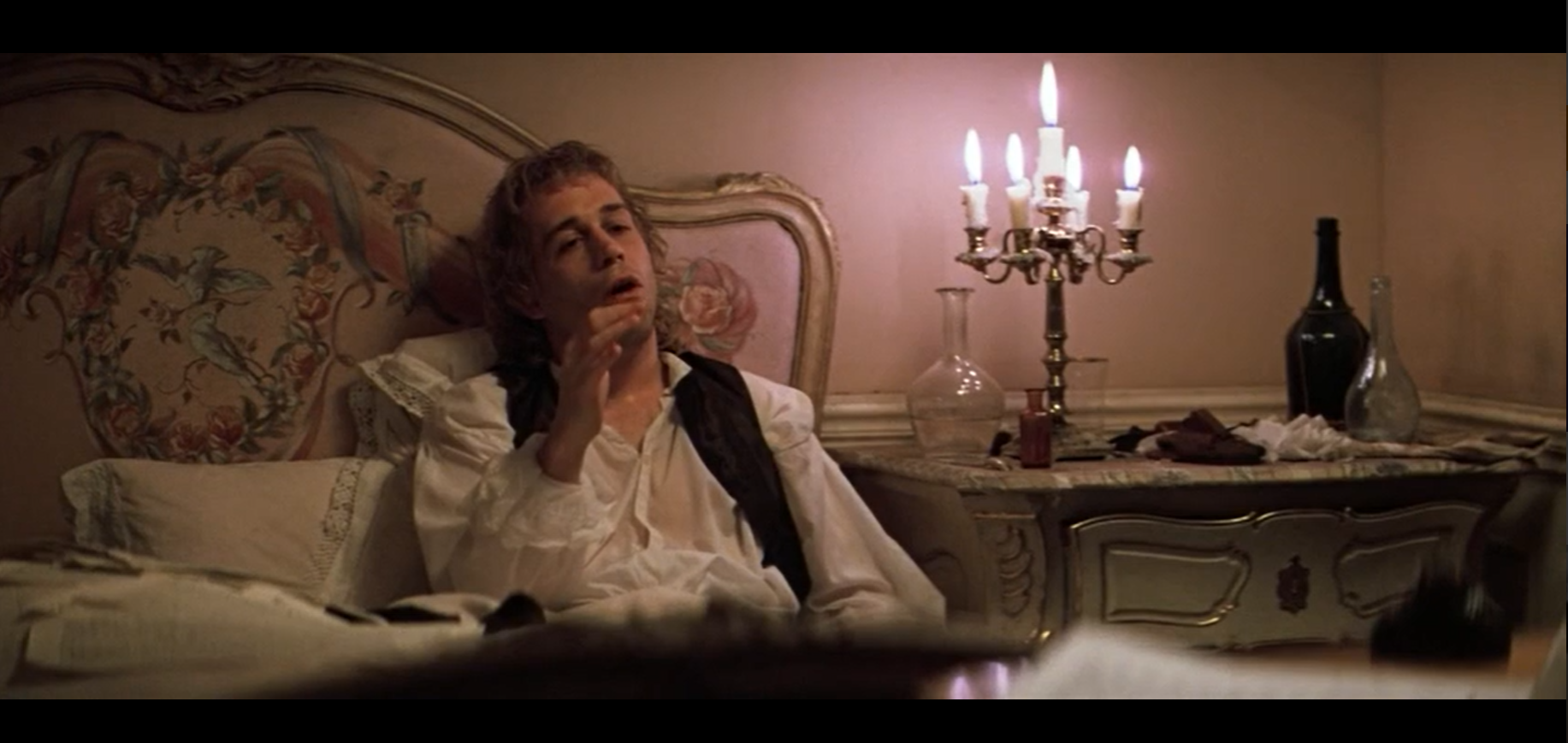
I think Peary largely misses the mark in his overly harsh review. If the characters here don’t “vary”, it’s because they’re coherent protagonists in a compelling narrative (consisting of much more than simply “four basic scenes”) which shows the doomed trajectory of a brilliant but insolvent genius (Mozart) — and the lifelong regrets of the man (Salieri) who most fully recognizes Mozart’s gifts while simultaneously cursing God for giving them to such a “shockingly vulgar” young man. The actors’ American accents aren’t distracting, given they’re uniform across the production, and the occasional anachronisms can easily be forgiven if viewing this as a passionate tale of jealousy and revenge rather than a faithful historical biopic (which it’s not; it’s largely fictional). The flashback structure — in which aging Salieri, who has just attempted suicide, explains his “sins” to a priest — works well as a framing device for depicting an aging man coming to terms with his own inadequacies and failings:

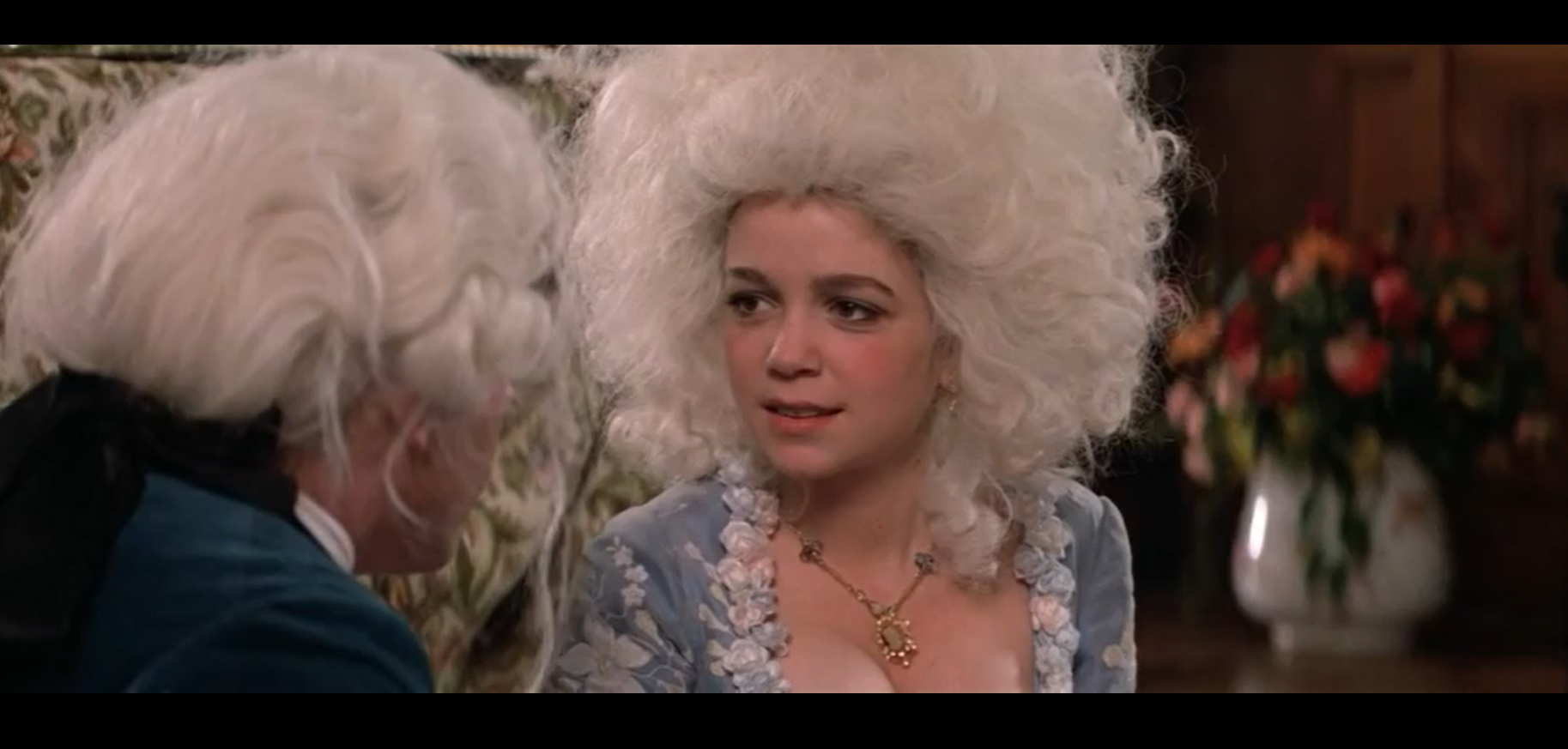
… but most importantly, we deeply understand the reverence both Salieri and Mozart held for music — and how challenging it was for each of them (in different ways) to rely on the charity of patrons to survive. Berridge is nicely cast as Mozart’s wife — one can see both why she’s chosen him as her partner, and how he causes her so much consternation.

Meanwhile, the music throughout is — naturally — top-notch; conductor Neville Marriner only agreed to participate in the film if not a single note of Mozart’s music was changed.

Redeeming Qualities and Moments:

  • F. Murray Abraham as Antonio Salieri
  • Tom Hulce as Wolfgang Amadeus Mozart
  • Elizabeth Berridge as Constanze Mozart
  • Beautiful period detail and sets


  • Fine stagings of several of Mozart’s operas

  • Luminous cinematography (with all-natural lighting)

Must See?
Yes, as a noteworthy Oscar-winning film and for the lead performances.

Categories

  • Noteworthy Performance(s)
  • Oscar Winner or Nominee

(Listed in 1001 Movies You Must See Before You Die)

Links:

And Soon the Darkness (1970)

And Soon the Darkness (1970)

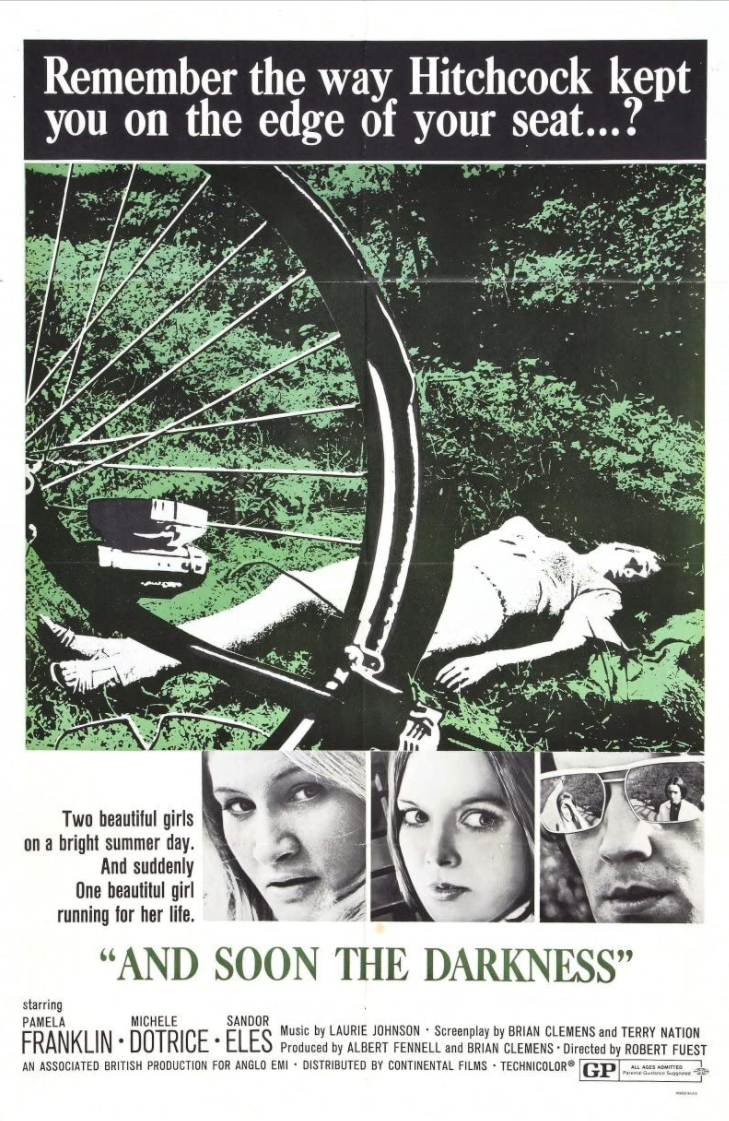
“It’s murder — the most unpredictable of crimes.”

Synopsis:
On a bicycling trip across the French countryside, two student nurses (Pamela Martin and Michele Dotrice) part ways temporarily after a quibble — but soon Martin learns Dotrice has gone missing, and she is unsure whether or not to trust a young man (Sandor Eles) who claims to be an amateur sleuth.

Genres, Themes, Actors, and Directors:

  • Horror
  • Mysterious Disappearance
  • Road Trip

Response to Peary’s Review:
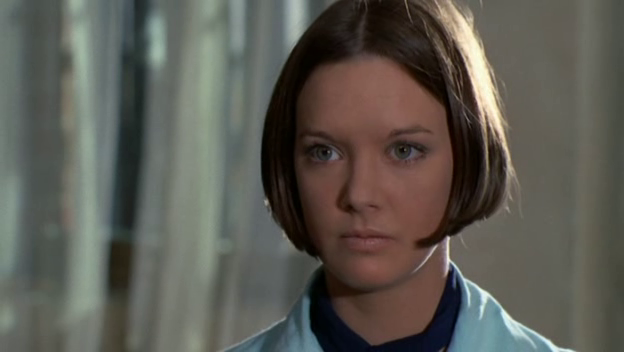
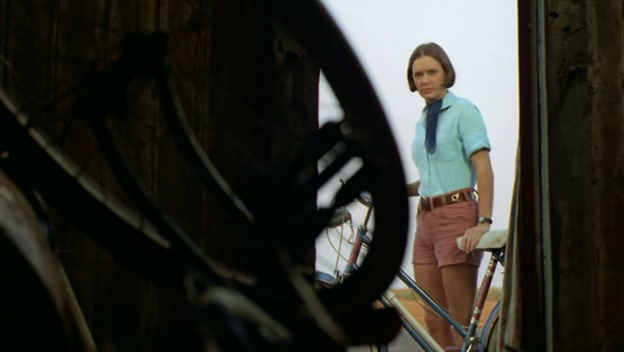
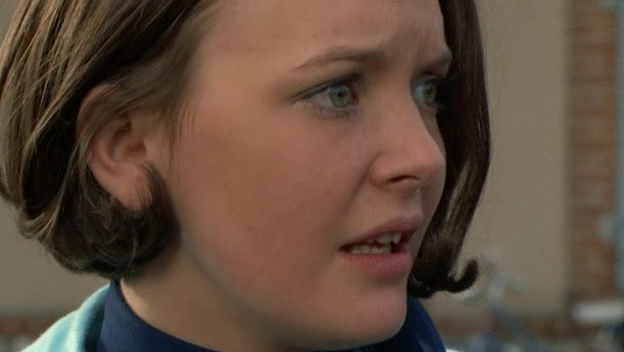
Peary writes that if “Dennis Hopper and Peter Fonda convinced hippies not to cycle through America’s South” in Easy Rider, then Martin and Dotrice “should convince young women not to bicycle through the French countryside — particularly if a sex maniac is on the loose.” He argues that while “certainly this thriller is no gem,” it “has some suspense and titillation, and, as always, Franklin is a sympathetic heroine-in-jeopardy.” Indeed, not too much happens in this slow-moving film about a couple of naive young travelers who really should have learned a bit more survival-French and decided on a safer route through unknown territory. With that said, director Robert Fuest generates a fair amount of tension through creative framing and pacing, and we’re left wondering until the end how plucky Franklin will get herself out of the mess she’s landed in.

Redeeming Qualities and Moments:

  • Pamela Martin as Jane
  • Fine direction and cinematography


Must See?
No, but it’s worth a one-time viewing.

Links:

Giant (1956)

Giant (1956)

“We Texans like a little vinegar in our greens, honey — gives ’em flavor.”

Synopsis:
After a wealthy Texan rancher (Rock Hudson) marries the beautiful daughter (Elizabeth Taylor) of an East Coast doctor (Paul Fix) and socialite (Judith Evelyn) — with Taylor swiftly rejecting her would-be British fiance (Rod Taylor) — the couple settle into life on Reata Ranch, where Hudson’s sister (Mercedes McCambridge) is wary about her position as head-female being disrupted; a disgruntled cowhand (James Dean) becomes smitten with Taylor; and Taylor attempts to better the lives of marginalized locals. Dean eventually strikes oil on a small piece of land given to him by McCambridge, and years later, Hudson and Taylor’s grown kids — Jordan (Dennis Hopper), Luz (Carroll Baker), and Judy (Fran Bennett) — find their own way through life: Hopper faces the wrath of his father for not wanting to take over the family ranch, and racist backlash for falling in love with the daughter (Elsa Cardenas) of a Mexican-American doctor (Maurice Jara), while Baker develops a youthful crush on Dean, and Bennett wants to work on her own, smaller spread with her new husband.

Genres, Themes, Actors, and Directors:

  • Carroll Baker Films
  • Dennis Hopper Films
  • Elizabeth Taylor Films
  • George Stevens Films
  • James Dean Films
  • Marital Problems
  • Masculinity
  • Mercedes McCambridge Films
  • Oil Drilling
  • Race Relations and Racism
  • Ranchers
  • Rock Hudson Films
  • Rod Taylor Films
  • Sal Mineo Films
  • Strong Females
  • Westerns

Response to Peary’s Review:
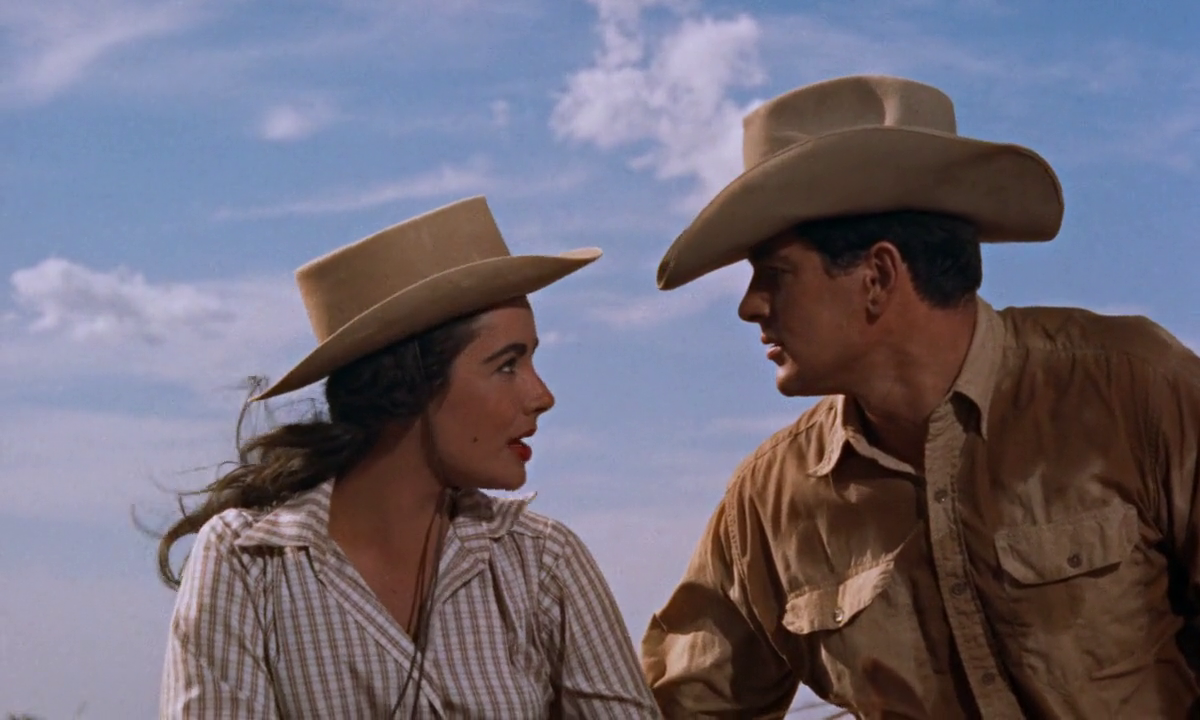
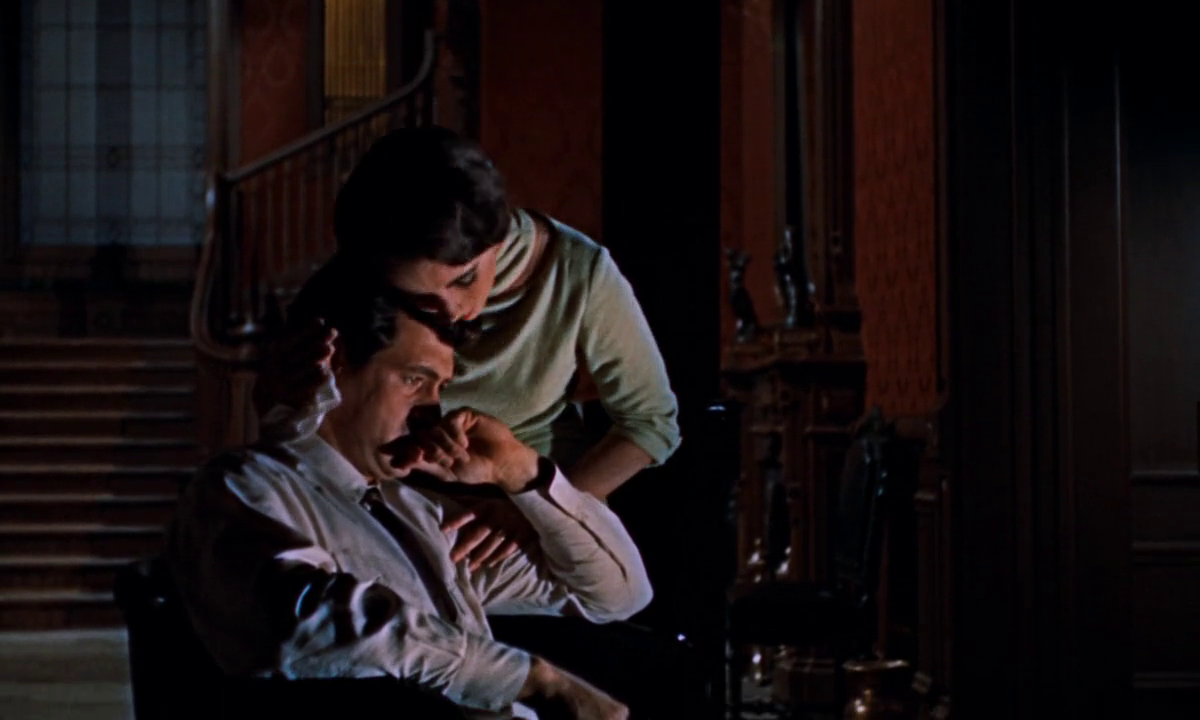
As Peary writes, “George Stevens directed this sprawling epic version of Edna Ferber’s supersoaper”, which centers on Hudson’s attempts to “keep Taylor in line” due to “family pride and masculine pride” — and Taylor sticking “to her guns despite the arguments” (which is “one of the reasons we appreciate her character”). While Peary argues that Dean “steals the film from Hudson and Taylor” as someone who “stands for the new Texas, the instant ‘white trash’ millionaires who haven’t the imagination of men like [Hudson]”, I patently disagree. Upon rewatching this third and final feature film starring Dean — made just before his fatal car crash at the age of 24, after his starring roles in Rebel Without a Cause (1955) and East of Eden (1955) — I’m much less impressed by his Oscar-nominated performance than I expected. His use of Method acting leads to mumbling incoherence at times, and as Peary writes, it’s hard to “get a handle on the character.”

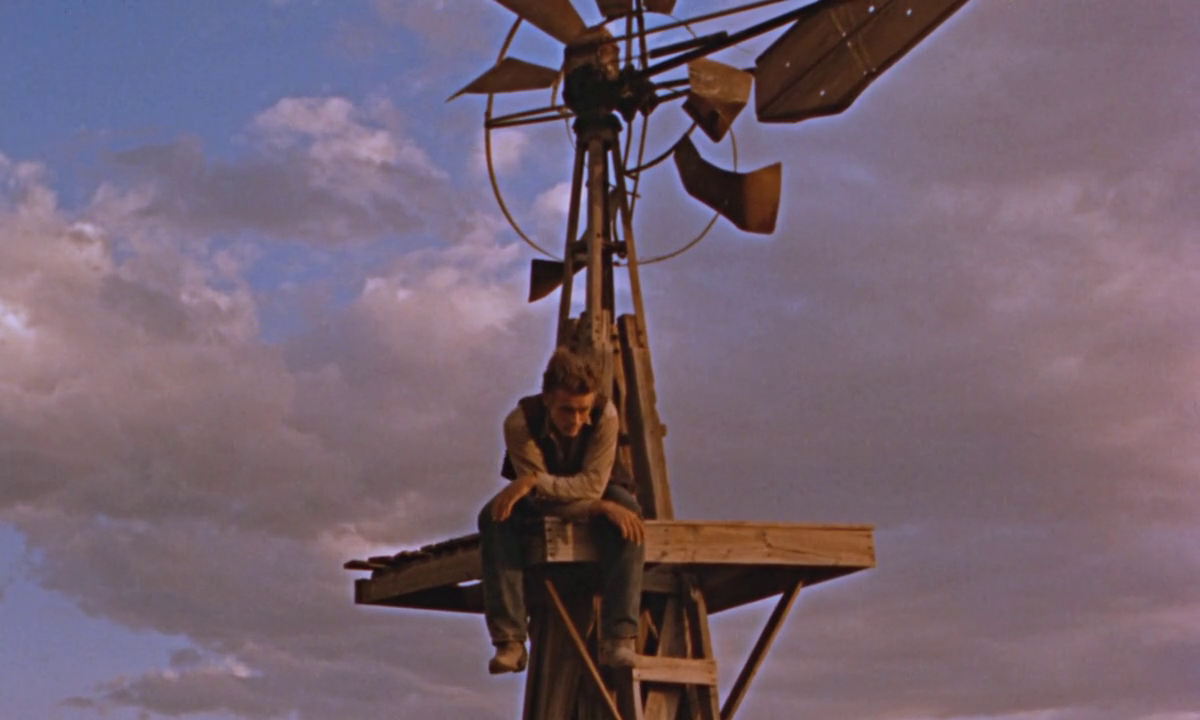
With that said, I agree with Peary that a “particularly memorable” scene is the one “where he strikes it rich and gets covered by oil”:

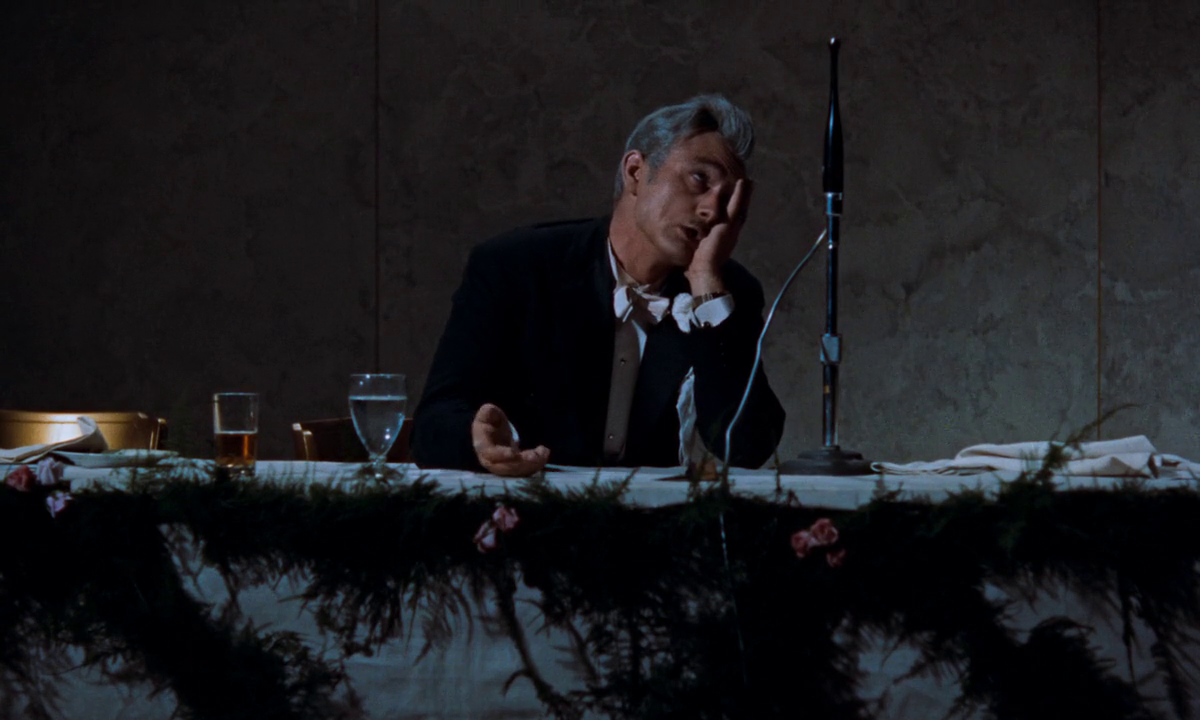
… though I’m less enamored by “the scene where [Dean] — now an older man — drunkenly recites a speech although his audience has long gone home.”

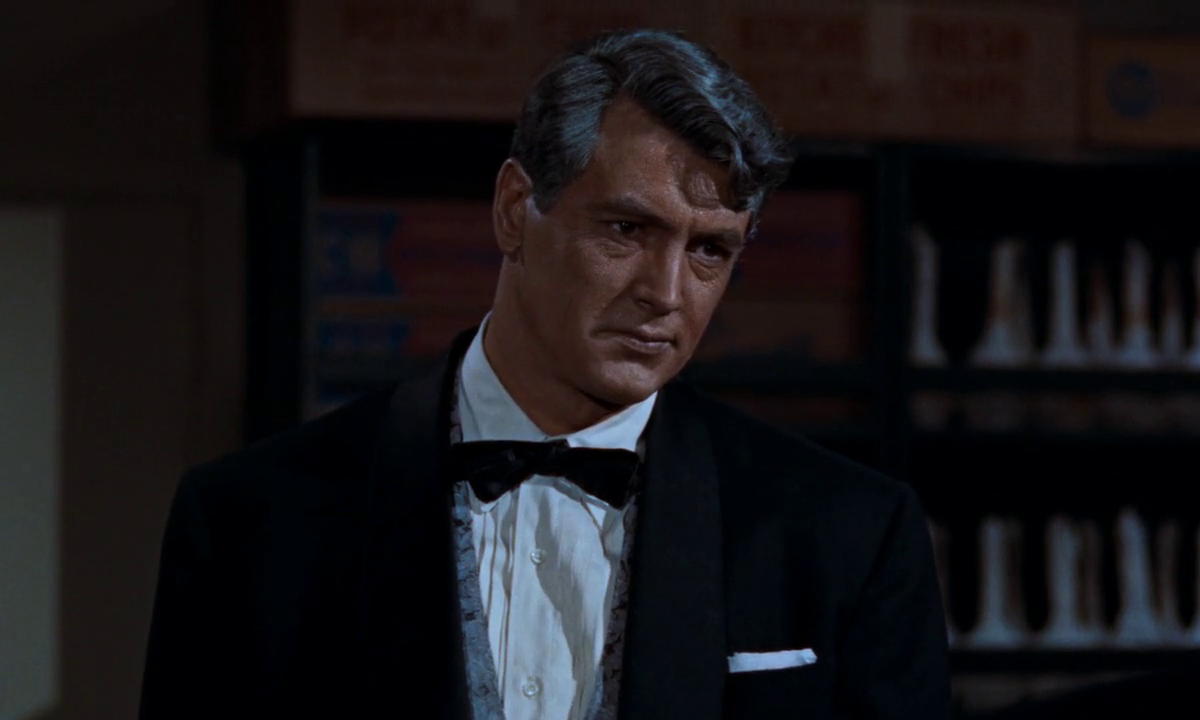
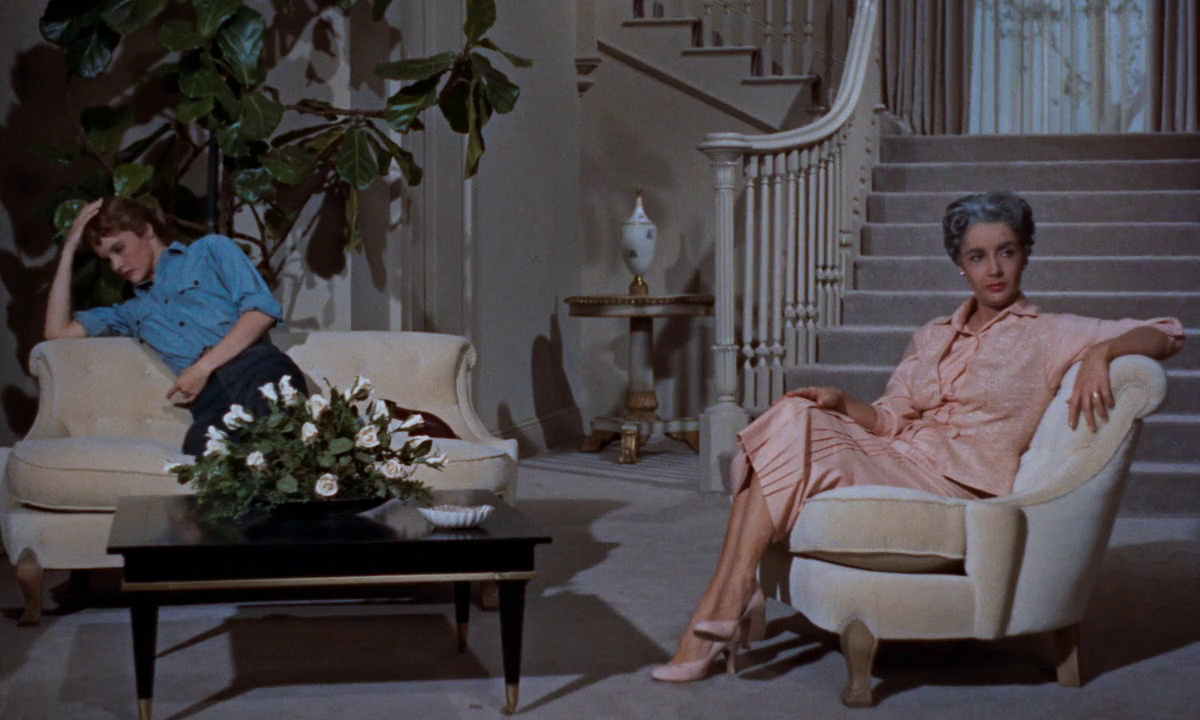
Apparently Dean resisted having much aging make-up applied — though to be fair, it looks pretty awkward on Hudson and Taylor:


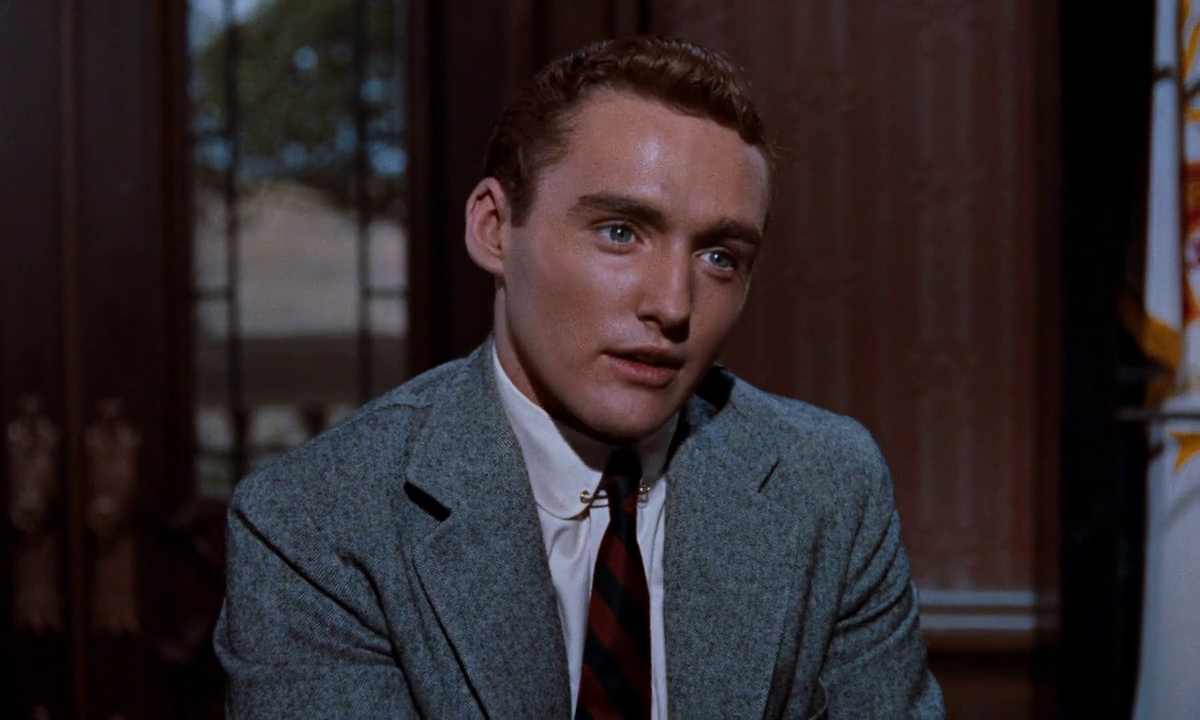
Peary ultimately writes that “more interesting [than Dean] is Hudson’s character, who’s basically a nice guy but tries — without complete success — to cover up his gentle, soft qualities so he won’t seem weaker than his father”; however, since “it’s a new time in American history,” “men don’t have to strut their machismo to be giants.” Unmentioned in Peary’s review but of even more interest to me upon this re-viewing is Hopper’s character — a bold young man who knows what he wants (to be a doctor) and who he wants (Cardenas), and represents Taylor’s no-nonsense approach to equitable racial relations coming to full and personal fruition.

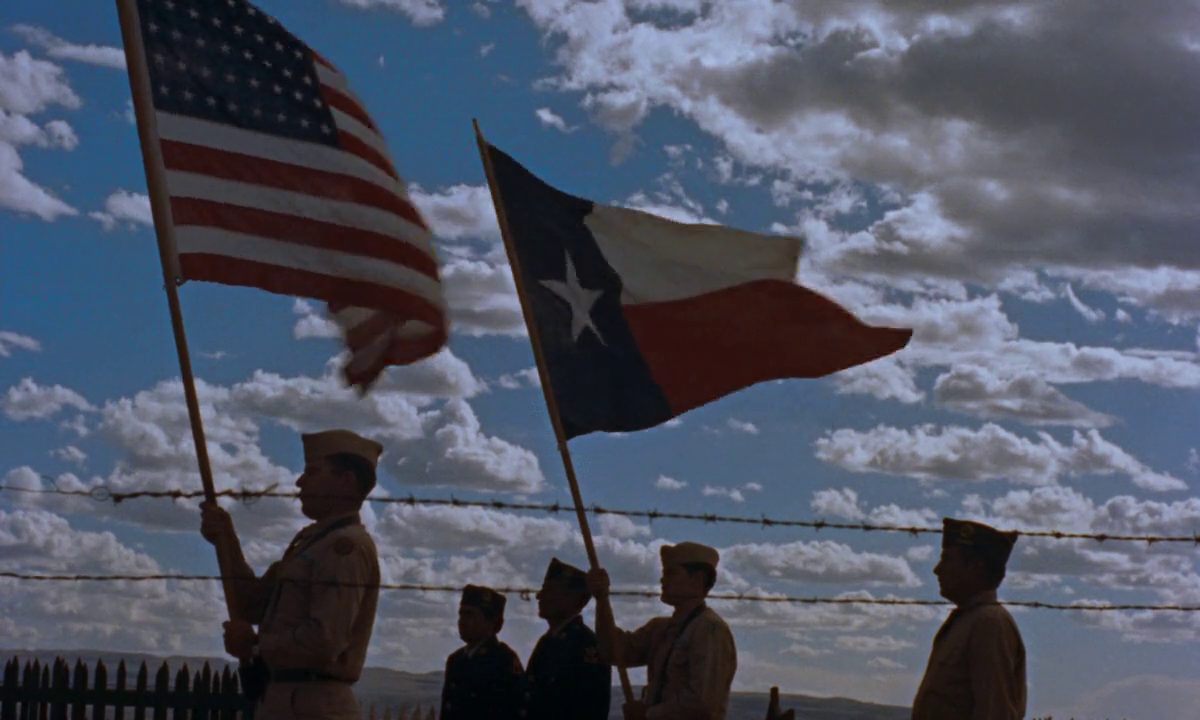
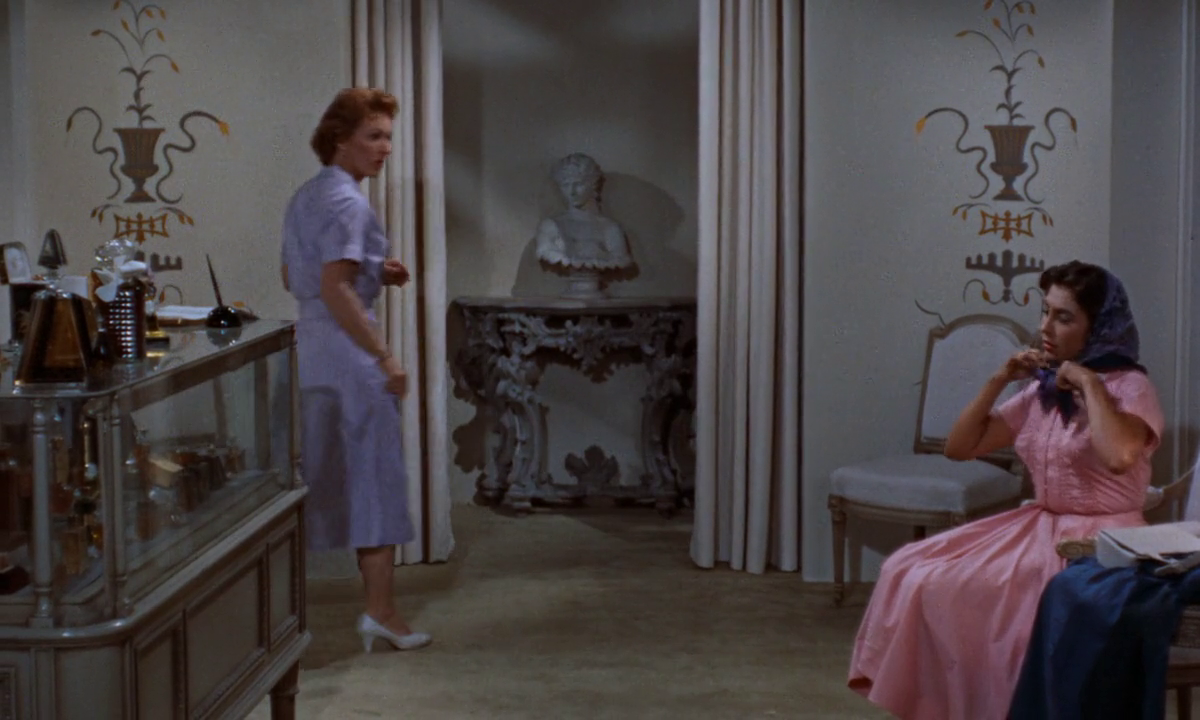
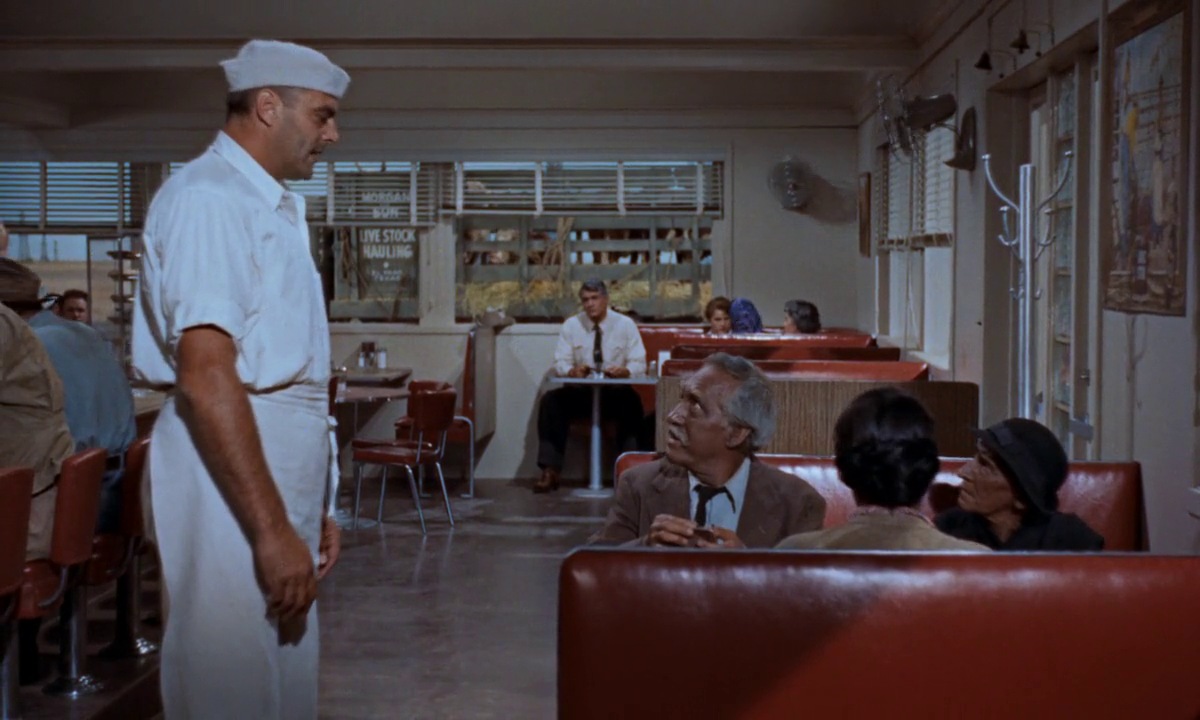
Speaking of racial relations, the film’s most notable theme is that of racial intolerance — and the filmmakers deserve acclaim for presenting this in such a straightforward fashion. While modern social justice language isn’t used, we can clearly see white supremacy on dominant display time and again — from Hudson’s huffy refusal to acknowledge the theft of Texan land from Mexicans (one of Taylor’s first comments to him the night they meet), to his annoyance at Taylor humanizing their Mexican-American employees by seeking to know and correctly pronounce their names, to Taylor’s insistence that a doctor go look at a sickly “wetback” Mexican baby. In later scenes, we see even more egregious acts of racist segregation in 1940s Texas: a beauty salon refuses to serve Cardenas once they see her skin color (per orders of Dean); and, in the film’s penultimate scene, Hudson ends up in a fist fight with a bigoted cafe owner (Mickey Simpson) who refuses to serve a Mexican family and treats Hudson’s daughter-in-law and grandson with racist contempt. As Peary notes, this is a “terrific scene” — and though the “wide-screen production is patriotic,” it “still acknowledges that bigotry is widespread.” Peary closes his review by noting that while the “film has slow and hackneyed scenes,” it’s “quite enjoyable.” Sadly, I can’t really agree: while it’s worth a look for its historical popularity, it’s not one I personally plan to revisit.

Redeeming Qualities and Moments:

  • Elizabeth Taylor as Leslie Benedict
  • Rock Hudson as Bick Benedict
  • Dennis Hopper as Jordan Jr.
  • Fine cinematography


  • A powerful (for its time) depiction of racism

Must See?
Yes, once, simply for its historical importance.

Categories

(Listed in 1001 Movies You Must See Before You Die)

Links:

Head (1968)

Head (1968)

“Everybody’s where they wanna be.”

Synopsis:
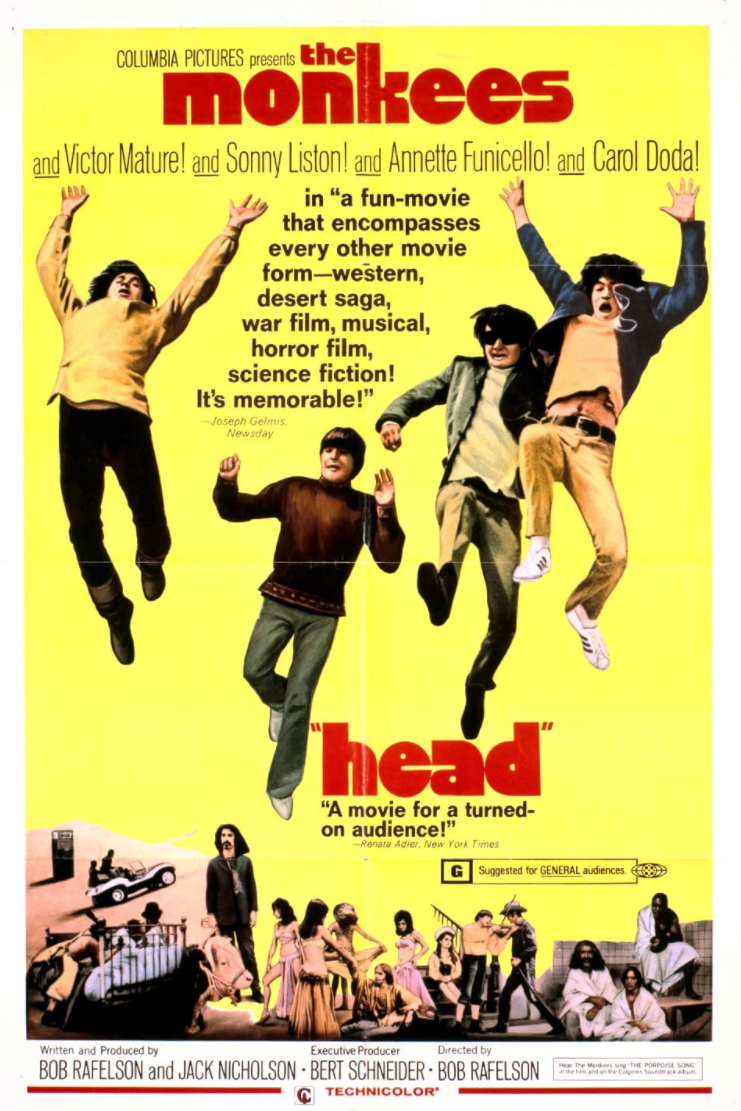
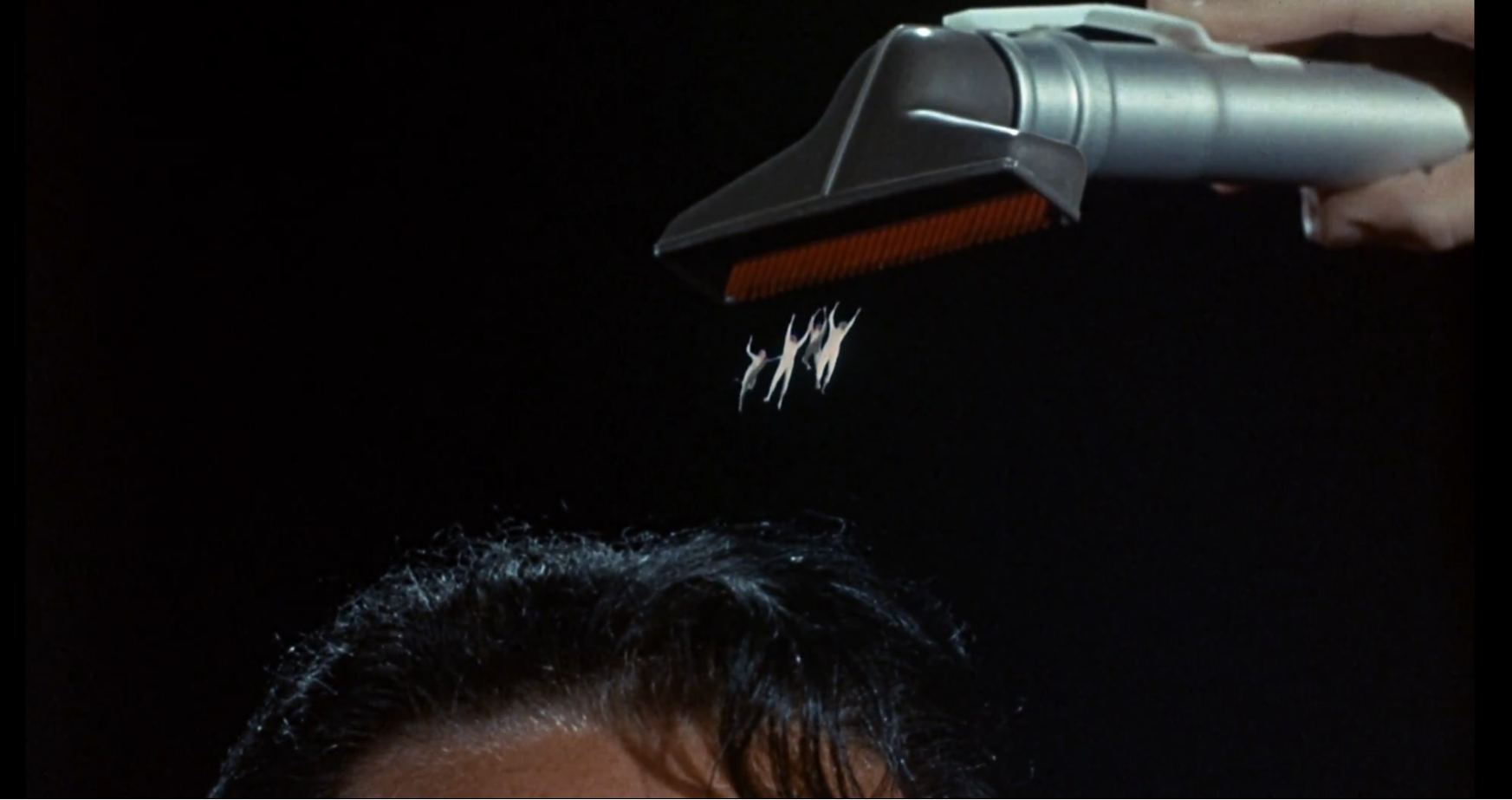
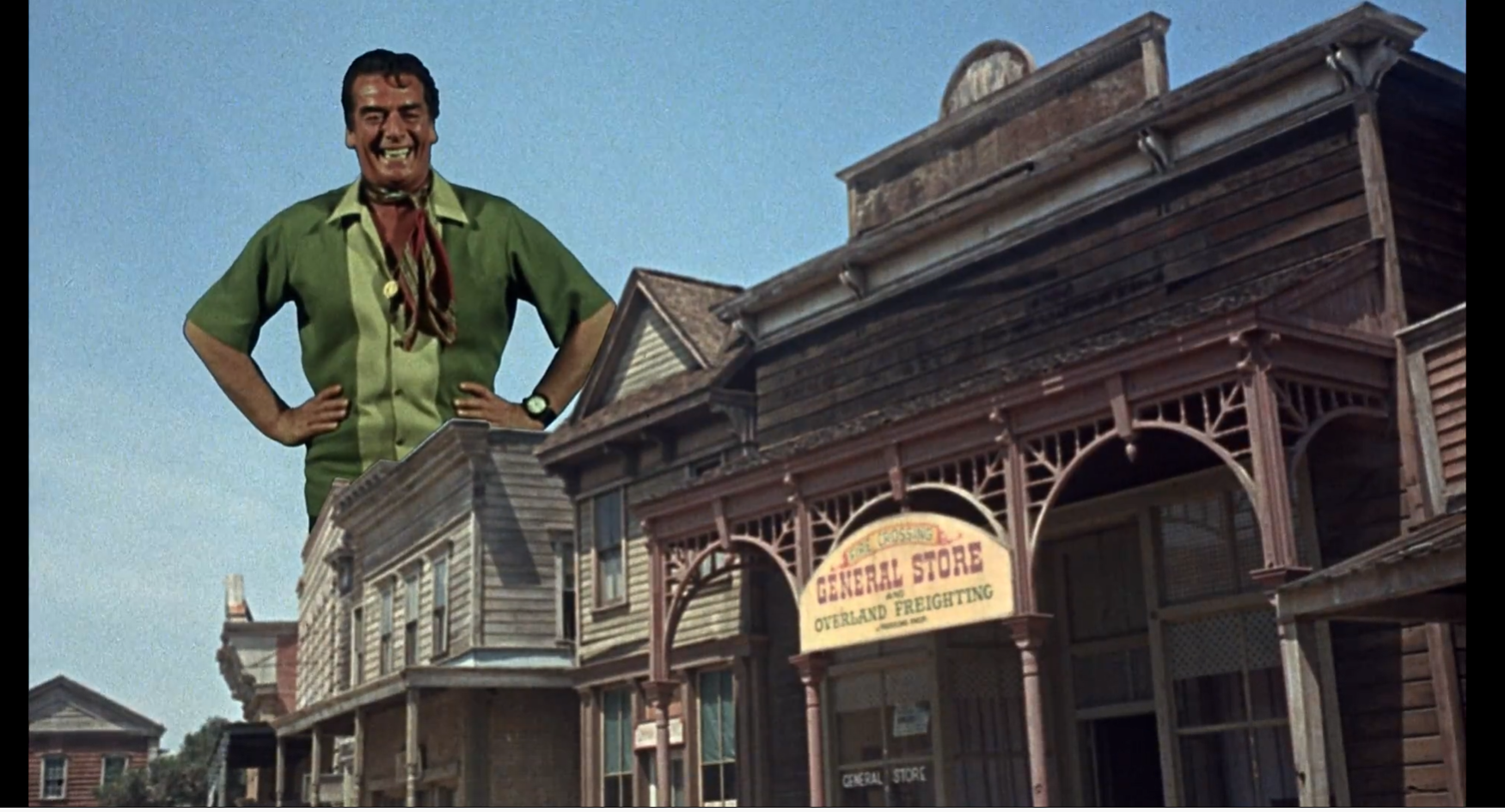
The Monkees (Peter Tork, Michael Nesmith, Micky Dolenz, and Davy Jones) take a head trip through reality and beyond — including to Victor Mature’s hair.

Genres, Themes, Actors, and Directors:

  • Bob Rafelson Films
  • Musicians
  • Surrealism
  • Victor Mature Films

Response to Peary’s Review:
Peary points out that the “one film” of The Monkees — “a Beatles-influenced singing group [that] was formed to star in a television series and make records” — was “aimed not at the groups’ loyal teenybopper fans, but at a more sophisticated audience”. Directed by Bob Rafelson and co-scripted by Rafelson and Jack Nicholson (as well as The Monkees themselves, uncredited), the film “contains political references (including documentary footage of the Vietnam war); satirizes the world of movies, television, and commercials; and spoofs the group’s wholesome image.” Peary notes that “each Monkee becomes a mere pawn being jerked from one incoherent sequence to the next, and is subordinate to the gimmicky (psychedelic) visuals and special effects” — but “there are funny moments,” including the Monkees becoming “dandruff on Victor Mature’s greasy hair” (!).

However, he argues that “the film is a mess (by design — that’s the shame) and tedious,” and thus only “recommended for Monkees fans who comprise [the] film’s cult today”; “others will be disappointed.

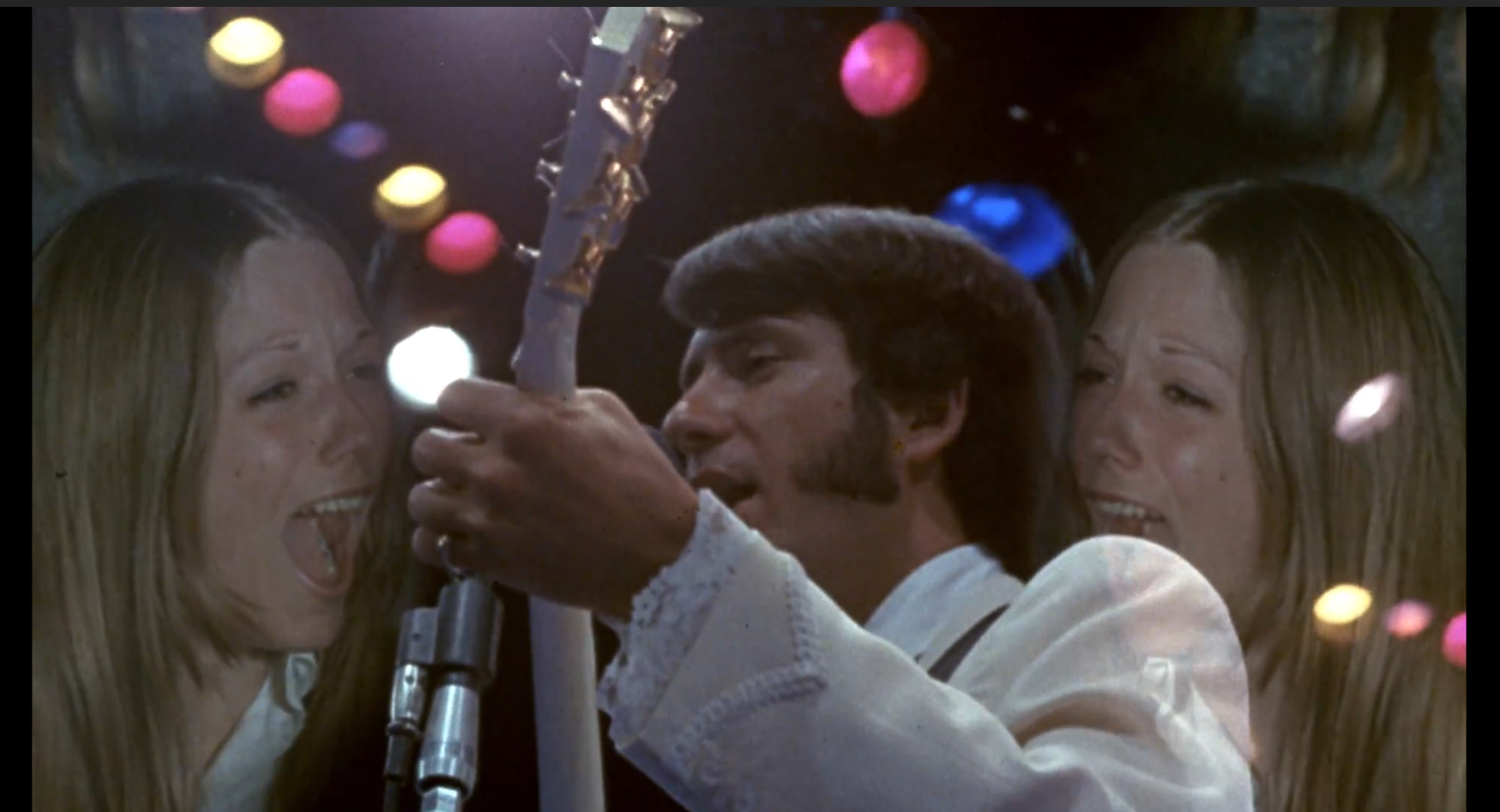
I’m in agreement with Peary’s review, which accurately captures both the chaos and the frustration of this intentionally “cult-like”, self-referential satire. Rafelson himself has admitted that the entire screenplay was written while tripping on acid — and there’s deliberately very little coherence across scenes. At one point, we’re told that what we’re seeing from then on is a policeman’s dream, but since the dream portion never “ends”, we’re left wondering whether this was simply one more “joke” meant to trip us up (literally). With that said, film fanatics may have fun trying to recognize the various classic movie clips scattered throughout — which include The Black Cat (1934), Golden Boy (1939), City for Conquest (1940), and Gilda (1946).

Redeeming Qualities and Moments:

  • Plenty of creatively surreal imagery


Must See?
No, though it’s worth a one-time look for its cult status.

Links:

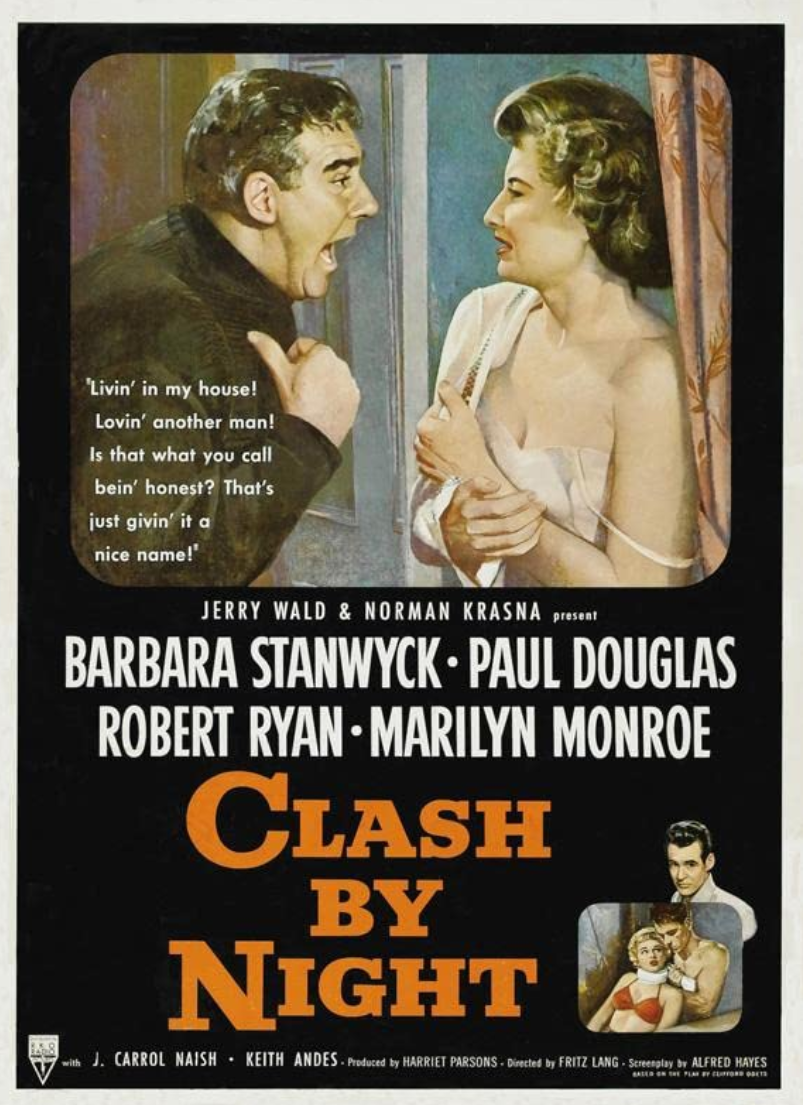
Clash By Night (1951)

Clash By Night (1951)

“I want a man to give me confidence. Somebody to fight off the blizzards and floods! Somebody to beat off the world when it tries to swallow you up!”

Synopsis:
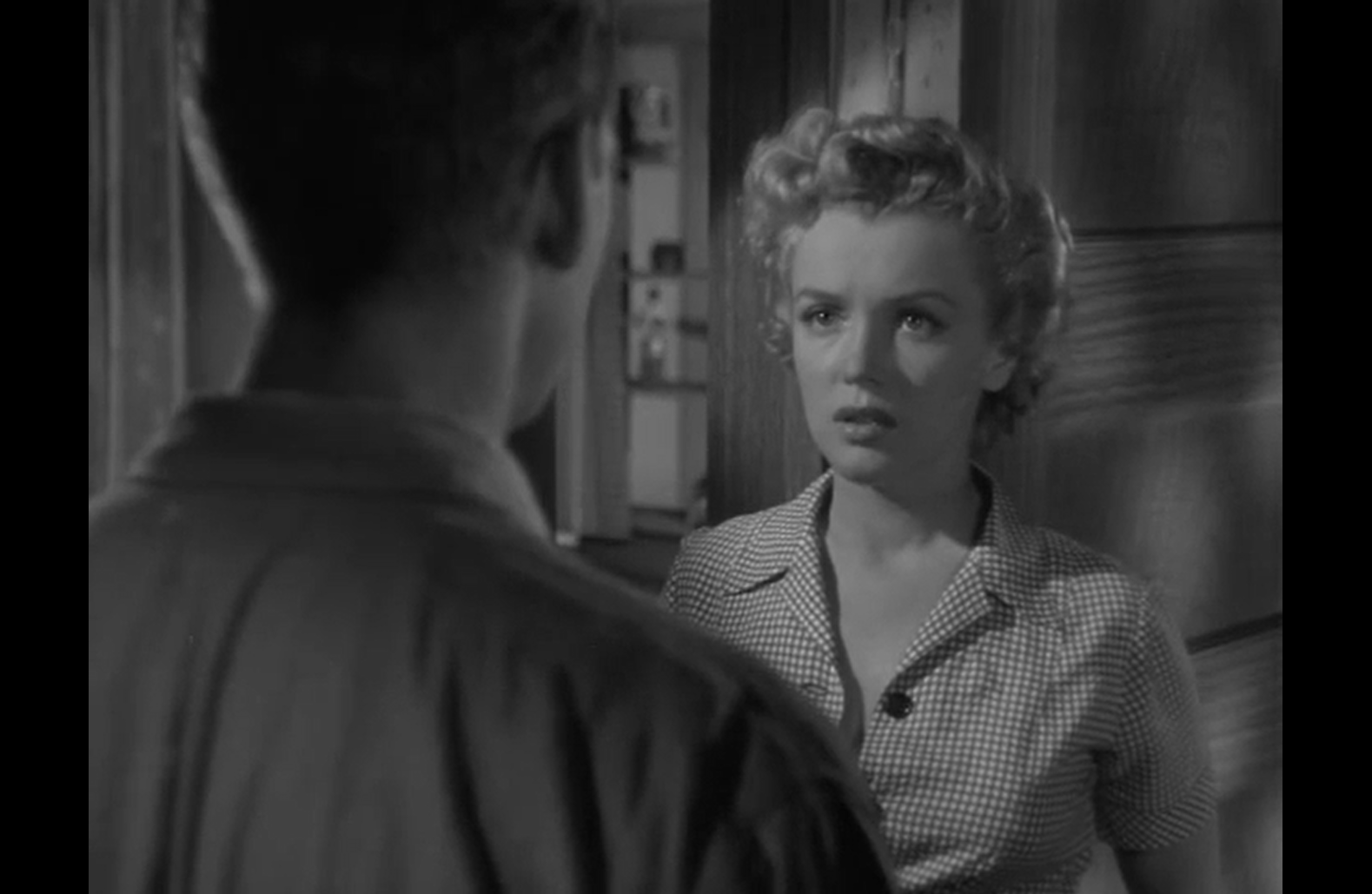
When a restless woman (Barbara Stanwyck) returns home to live near her brother (Keith Andes) and his girlfriend (Marilyn Monroe), she is wooed by a loyal fisherman (Paul Douglas) who convinces her to settle down with him — but can she resist the lure of Douglas’s handsome friend (Robert Ryan)?

Genres, Themes, Actors, and Directors:

  • Barbara Stanwyck Films
  • Fishermen
  • Fritz Lang Films
  • Infidelity
  • Love Triangle
  • Marilyn Monroe Films
  • Marital Problems
  • Paul Douglas Films
  • Play Adaptation
  • Robert Ryan Films

Response to Peary’s Review:
Peary writes that Fritz Lang’s adaptation of Clifford Odets’s play seems like an “odd choice” for the director “because there is no place in this deliberately paced drama where he can use his visual flare”: while he “does move his camera more than usual in an unsuccessful attempt to keep this talkfest from seeming stagy,” “dramatic lighting, sharp editing, and varied camera angles would have been out of place.” Peary points out that “in the absence of action, the film has lonely, lost, broken people philosophizing about life, love, trust, and responsibility” — and “what excitement there is comes from the characters, who are presented as life’s forces, exhibiting raw passions, gut emotions.” He notes that “while the love-triangle plot in which the unsuspecting husband is odd-man-out has been around since the Edward G. Robinson and Edward Arnold films of the thirties and forties film noir, this was the rare instance in which the woman is the film’s central character.” He argues that while the “picture needs sparks — and more of Monroe”, the “acting is good, and the last scene is extremely satisfying.”

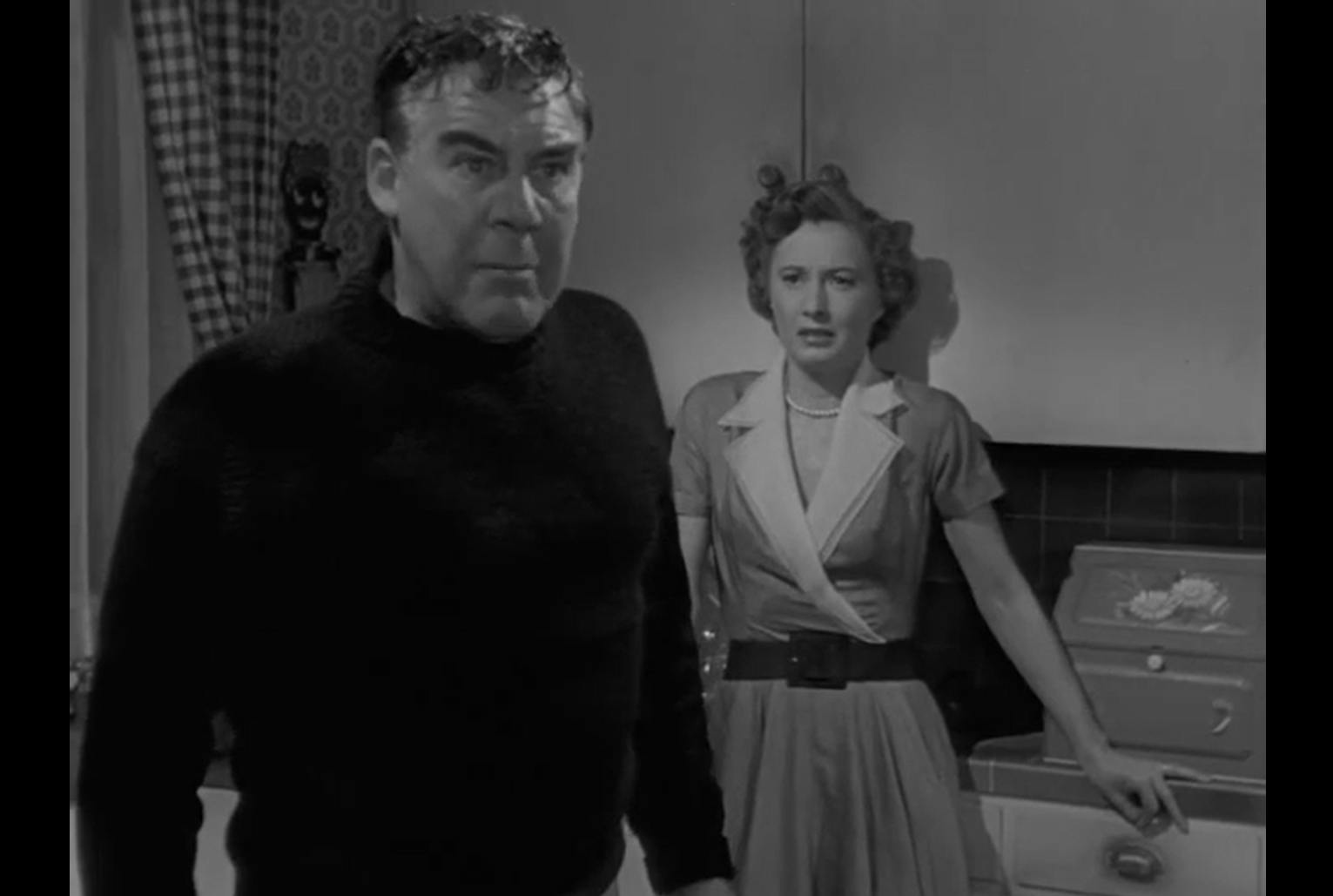
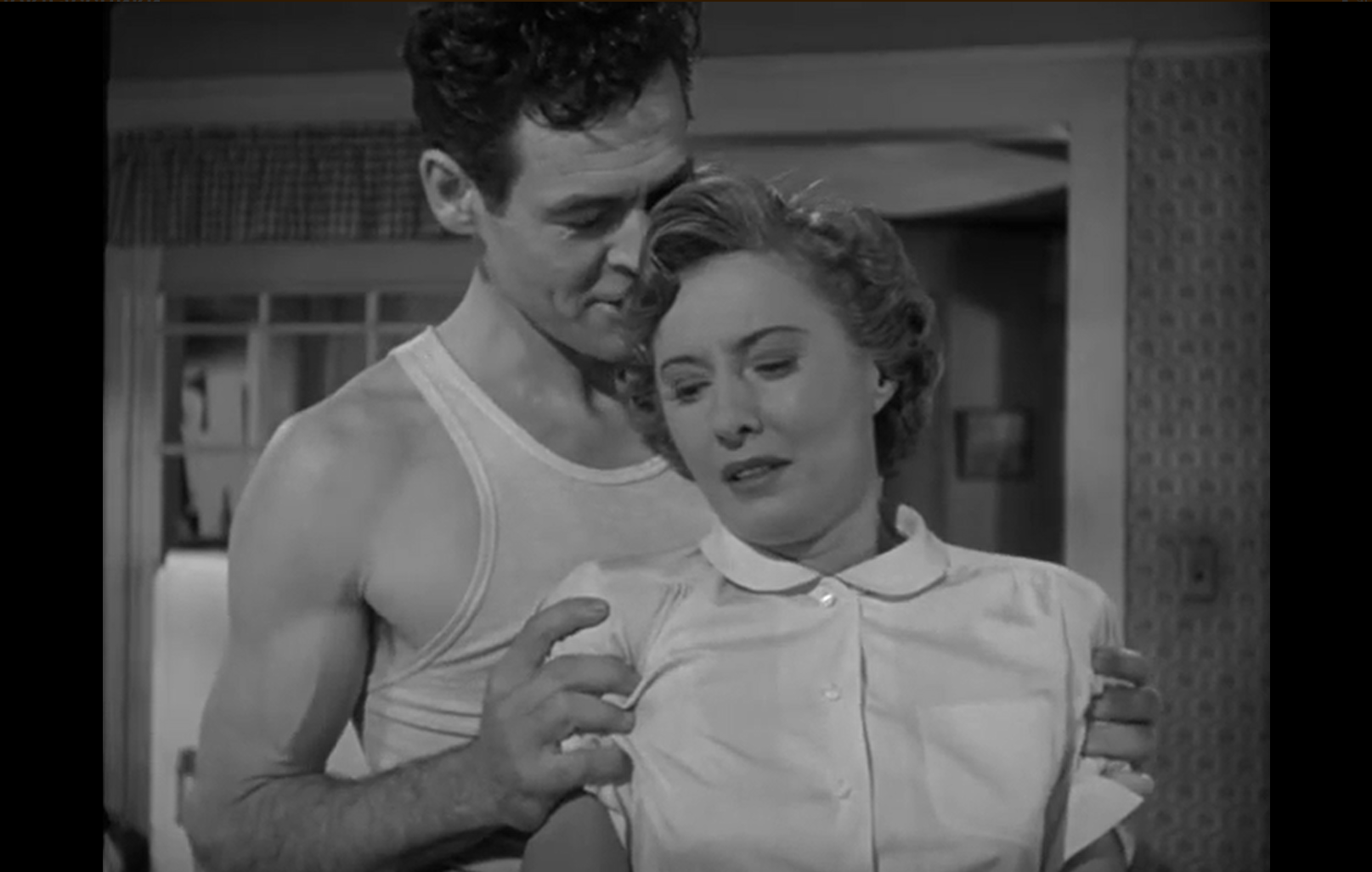
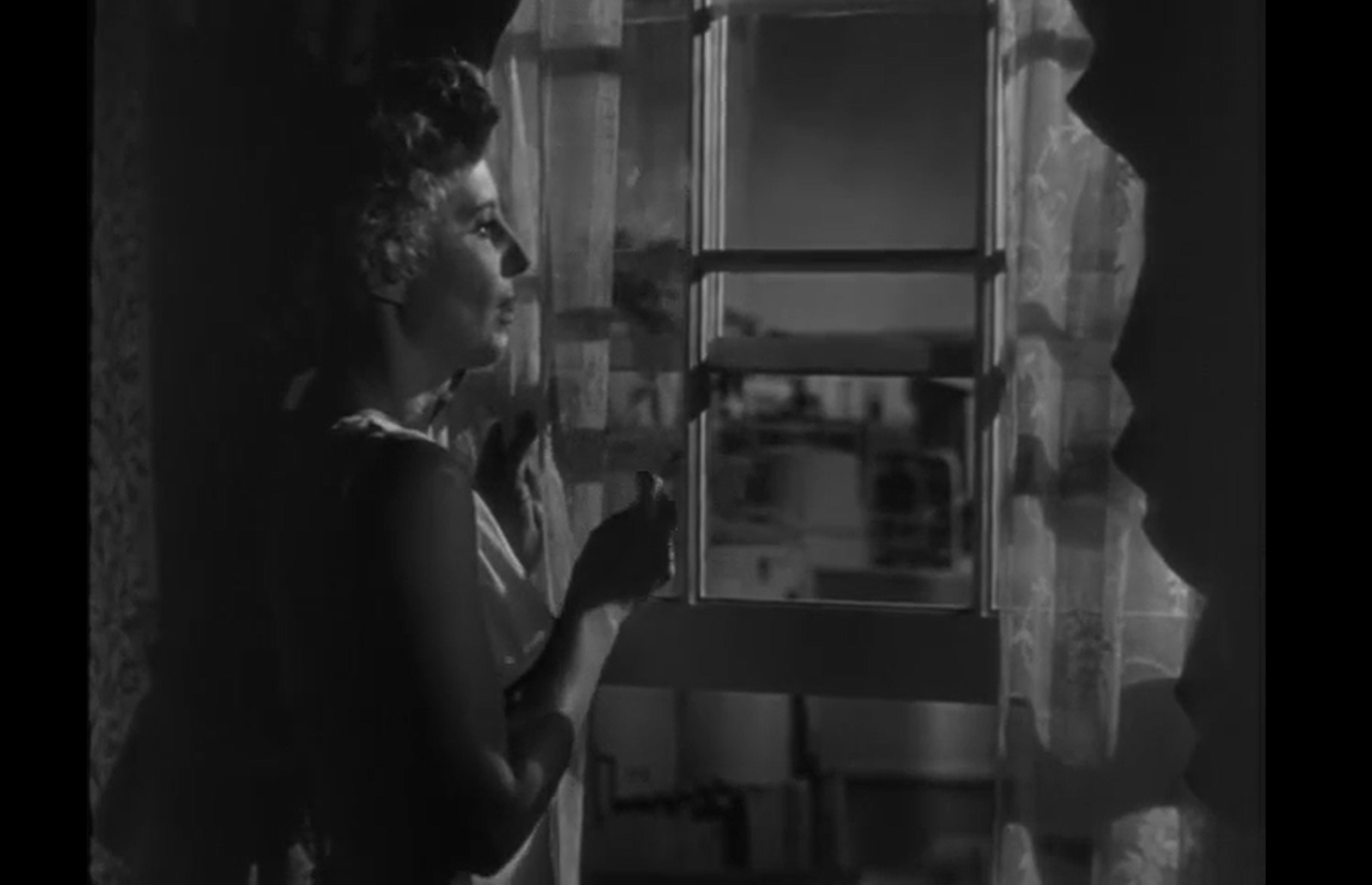
Peary’s review just about sums up my own take on this film: while Nicholas Musuraca’s cinematography is nicely atmospheric, and the performances are all fine (Douglas is especially effective), it’s rough spending nearly two hours watching Stanwyck sowing seeds of destruction all around her, and then seeing the inevitable chaos that results. Meanwhile, there are too many cut-aways to scenes of waves crashing violently on shore, and an odd emphasis in Odets’s dialogue on violence towards women (“Didn’t you ever wanna cut up a beautiful dame?”). Is this drama meant to show that misogyny is somehow justified, given that perennially dissatisfied women will always test men’s faith and tolerance? As Douglas’s Uncle Vince (J. Carroll Naish) boldly states: “I never married. You know why? We spoil women in this country. Too much education, too much free speech”; later he adds, “Always said, women and horses: use the whip on them.” Or take this exchange between Andes and Monroe, early in the film:

Peggy (Monroe): Irene came into work with a black eye. That fella she married in San Jose when she was working the fruit cannery came down last night. Wanted her to go back up state and live with him again. And when she wouldn’t, he just beat her up awful. You should see her eye!

Joe Doyle (Andes): Well, he’s her husband.

Peggy (Monroe): So what? I suppose you’d beat me up too if I was your wife.

Joe Doyle (Andes): Sure! Regular.

Viewers should be forewarned that this film will evoke complex emotions, though it’s worth a one-time look.

Redeeming Qualities and Moments:

  • Fine performances by the leads

  • Nicholas Musuraca’s cinematography

Must See?
No, but it’s worth checking out.

Links:

She Wore a Yellow Ribbon (1949)

She Wore a Yellow Ribbon (1949)

“Never apologize; it’s a sign of weakness.”

Synopsis:
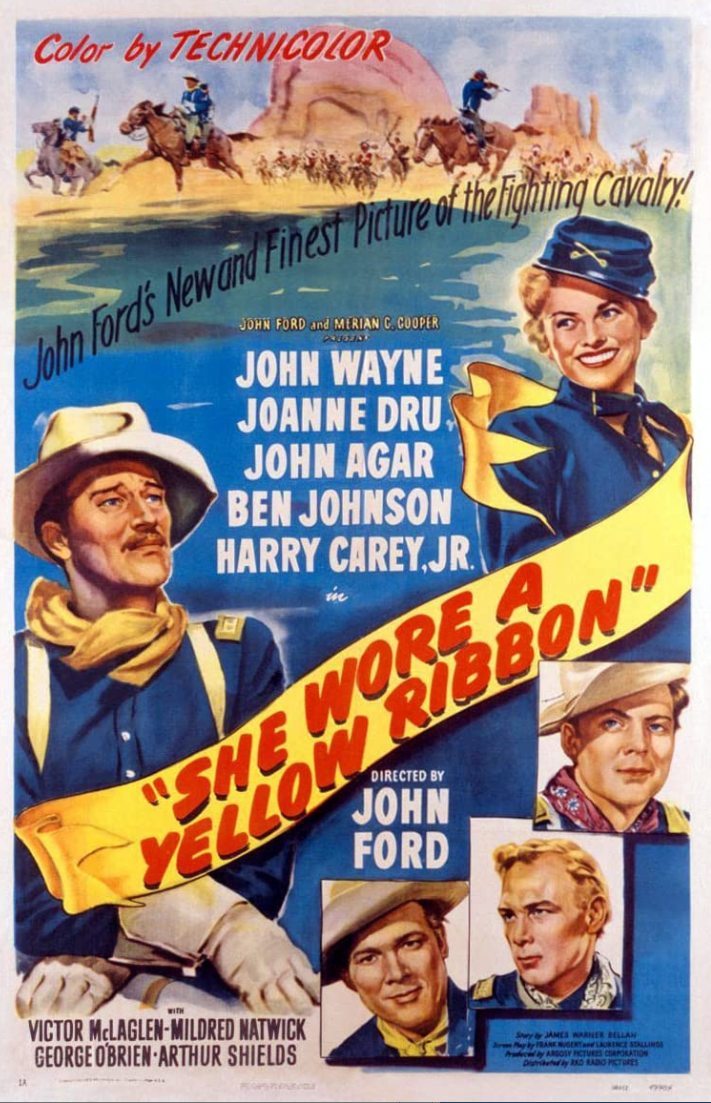
Just after the Battle of Little Bighorn, a nearly-retired Cavalry officer (John Wayne) whose first sergeant (Victor McLaglen) can’t stay away from liquor is tasked with preventing an uprising by local Cheyenne and Arapaho tribes, while also escorting an officer’s wife (Mildred Natwick) and niece (Joanne Dru) — who is being courted by two different officers (John Agar and Harry Carey, Jr.) — to a stagecoach station. Will Wayne be able to broker peace with his old friend Chief Pony That Walks (Chief John Big Tree) before massive killing ensues?

Genres, Themes, Actors, and Directors:

  • Ben Johnson Films
  • Cavalry
  • Joanne Dru Films
  • John Agar Films
  • John Ford Films
  • John Wayne Films
  • Love Triangle
  • Native Americans
  • Retirement
  • Victor McLaglen Films
  • Westerns

Response to Peary’s Review:
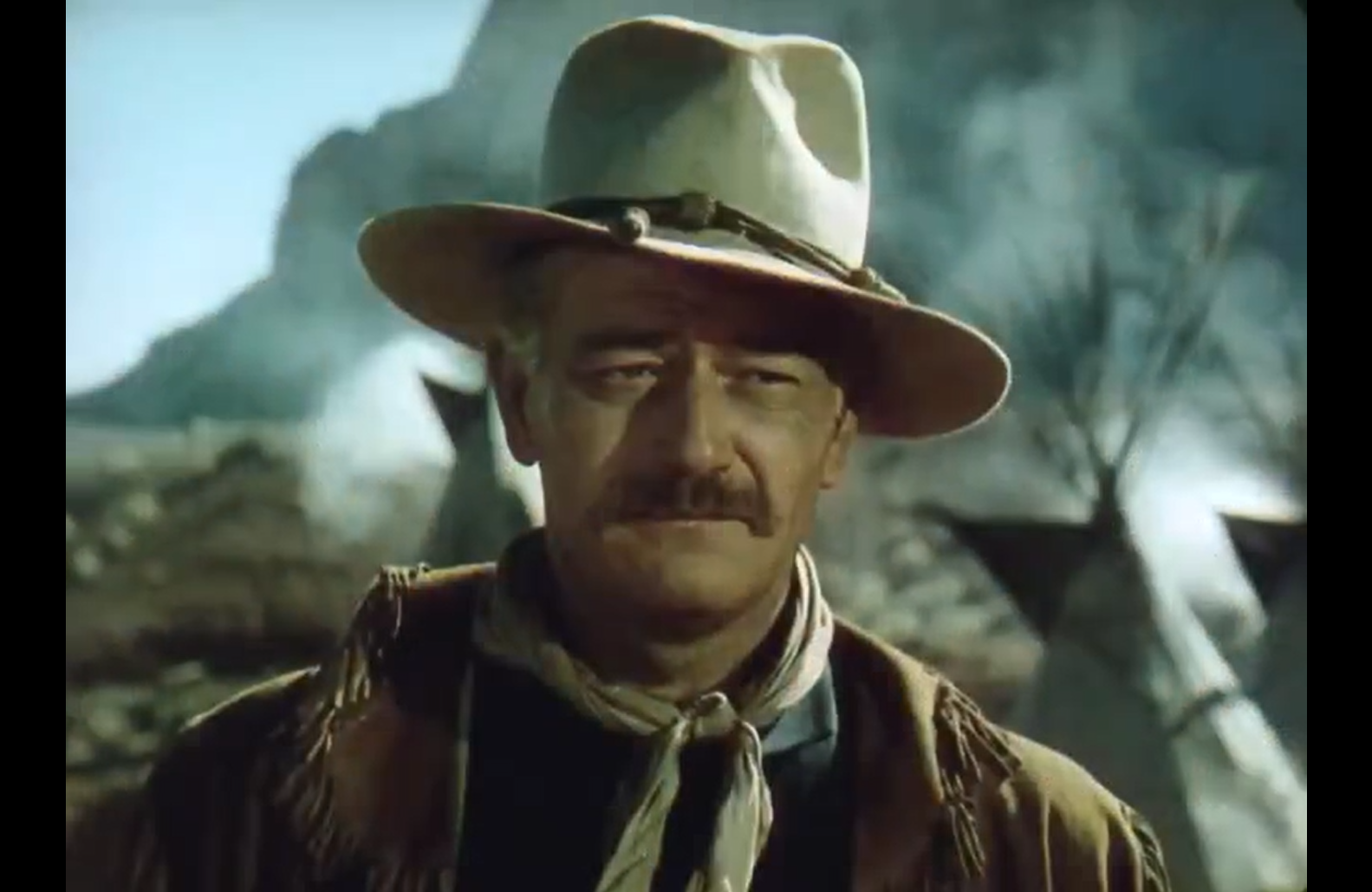
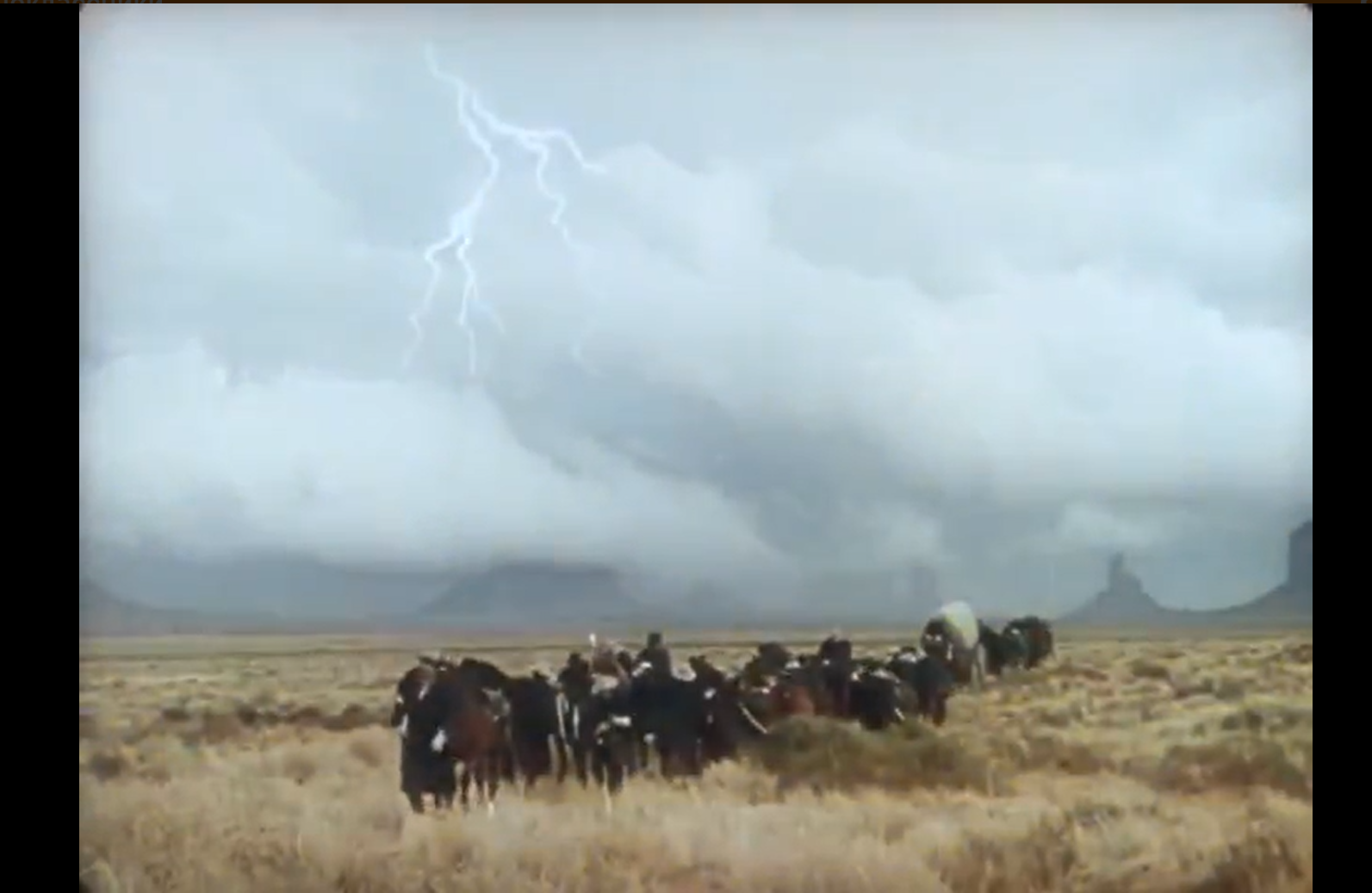
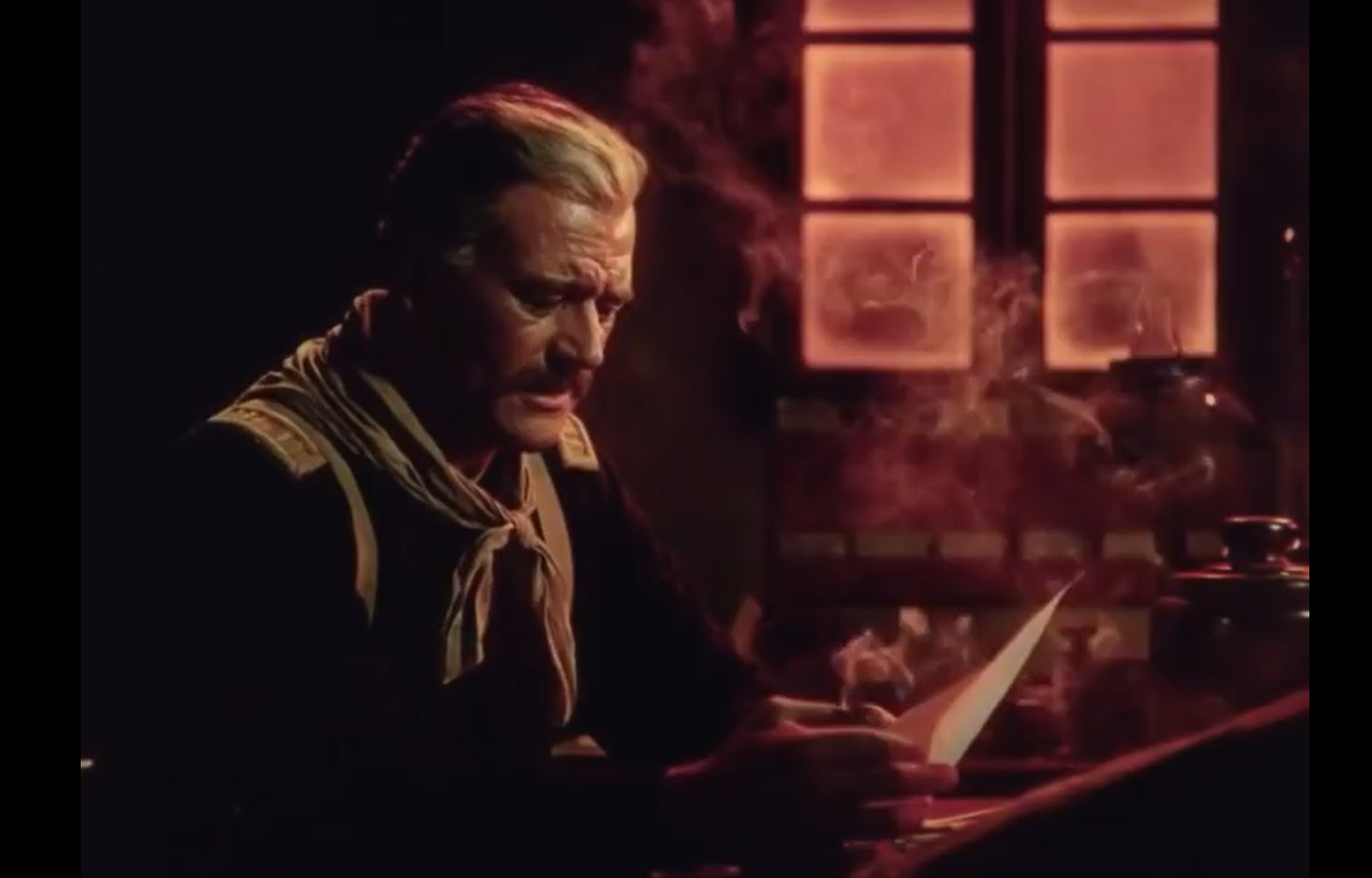
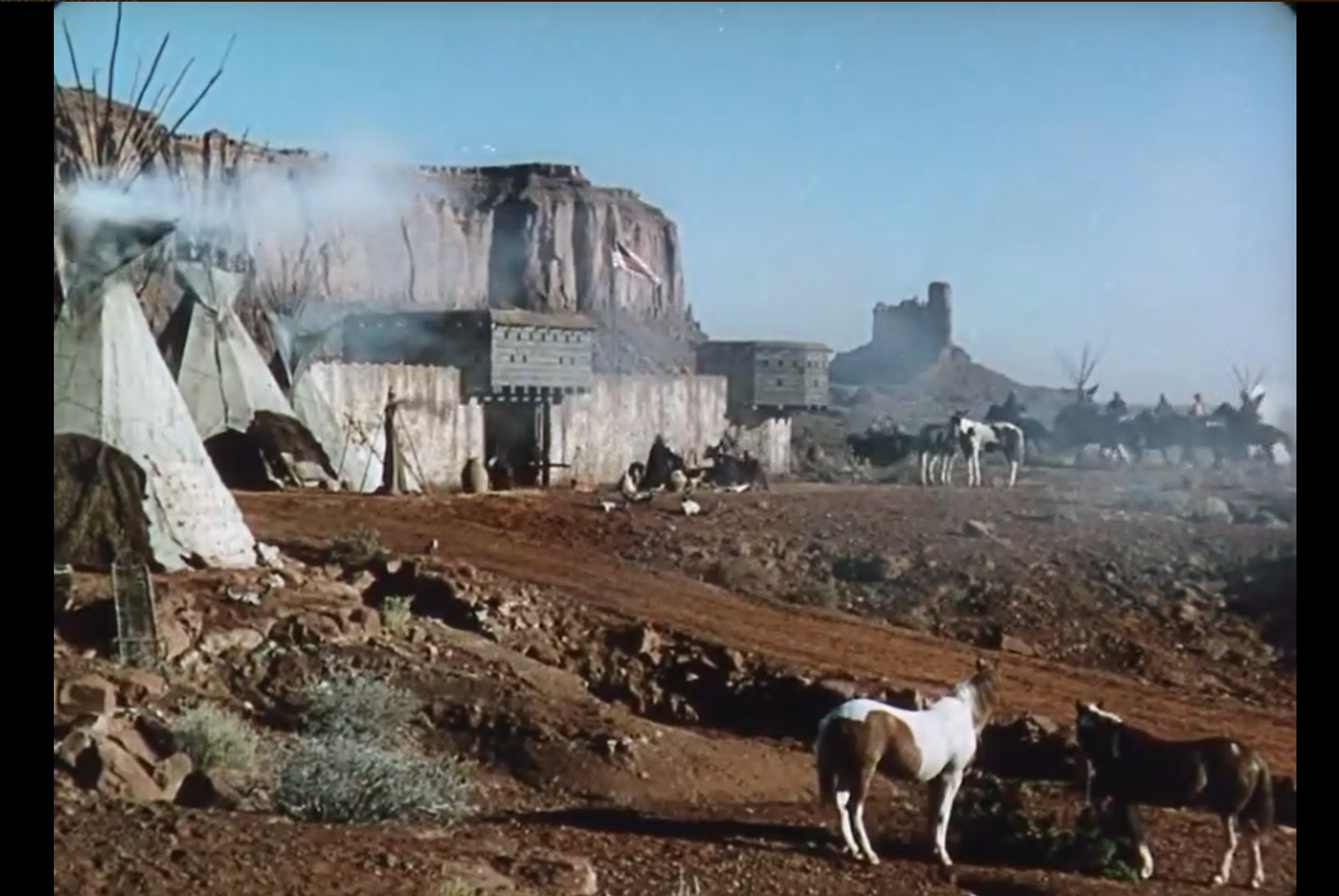
Peary writes that while “this isn’t the film with which to introduce friends to John Ford westerns”, “if you’re already a Ford fan, you’ll love the second picture in his cavalry trilogy, made between Fort Apache and Rio Grande.” He notes that it’s a “tribute to the old guard/old soldiers/the old cavalry,” focusing on the fact that while Lieutenant Cahill (Agar) “is not sufficiently prepared to assume… command at such a vital time,” Captain Brittles (Wayne) will have to accept that “a captain’s job is never done,” and “therefore there will come a time, a crucial time, when Brittles will have to leave his post in the hands of an inexperienced officer.” Peary writes that while “Wayne gives a fine performance,” the “film’s real star is cinematography Winton C. Hoch, who captured the Remington look” while filming “in Monument Valley”.

Peary argues that while “there are too many false endings… and a silly romantic triangle,” “once the cavalry start singing the title song, you’ll get emotional (if you’re a Ford fan) and forget all the film’s flaws” — which include a running gag about McLaglen’s tippling nature (culminating in a silly bar-room brawl), and a demeaning “cameo appearance” by Chief John Big Tree (who mimics some of his limited lines from Drums Along the Mohawk). Peary ultimately argues that while this is “not as good as Fort Apache,” it remains “essential Ford” — and with reluctance I would agree, simply for the incredible imagery.

Redeeming Qualities and Moments:

  • John Wayne as Captain Brittles (nominated by Peary as one of the
  • Stunning Technicolor cinematography by Winton C. Hoch


  • Incredible location shooting in Monument Valley

Must See?
Yes, once, for the Oscar-winning cinematography.

Categories

  • Oscar Winner or Nominee

Links:

Red River (1948)

Red River (1948)

“I don’t like quitters — especially when they’re not good enough to finish what they start.”

Synopsis:
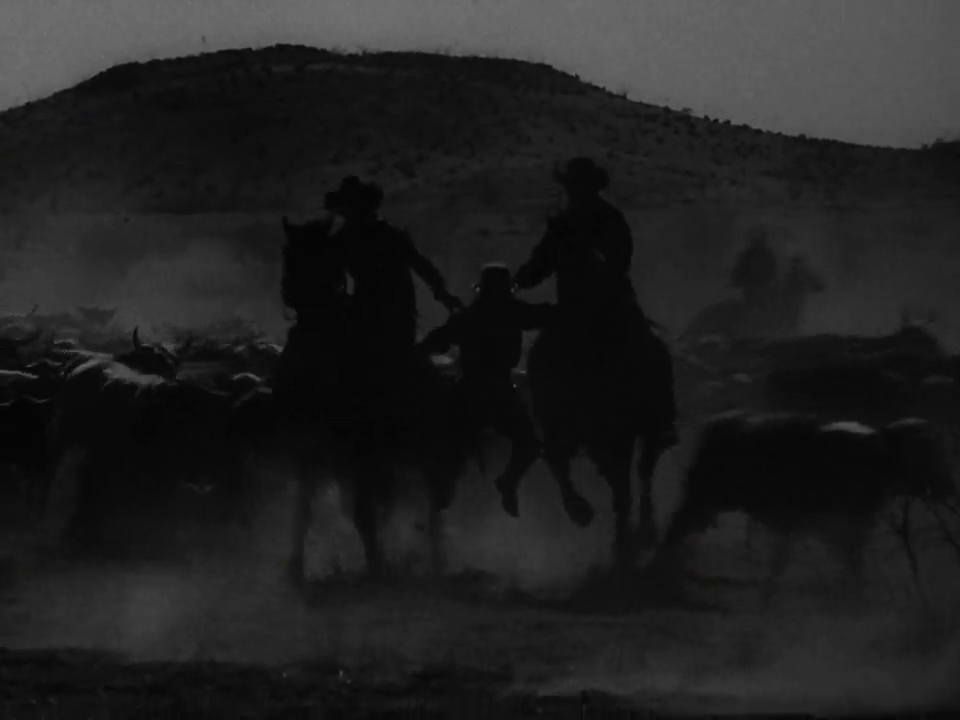
After his fiancee (Coleen Gray) is killed in a wagon raid, an ambitious rancher (John Wayne) raises an orphan from the raid (Mickey Kuhn) like his own son. Years later, Wayne — accompanied by his cook (Walter Brennan), his now-grown “son” (Montgomery Clift), a loyal gunfighter (John Ireland), and many other hired hands — begins a lengthy cattle drive from Texas to Missouri, but quickly finds his tolerance lagging after one of his men (Ivan Parry) accidentally sets off a stampede that kills another (Harry Carey, Jr.). Soon Wayne becomes so unreasonable about “deserters” that Clift must take over the drive — but Wayne vows revenge; and when he encounters a beautiful young woman (Joanne Dru) Clift has fallen for, she becomes embroiled in their feud as well.

Genres, Themes, Actors, and Directors:

  • Coleen Gray Films
  • Cowboys
  • Howard Hawks Films
  • Joanne Dru Films
  • John Ireland Films
  • John Wayne Films
  • Mentors
  • Montgomery Clift Films
  • Mutiny
  • Ranchers
  • Ruthless Leaders
  • Walter Brennan Films
  • Westerns

Response to Peary’s Review:
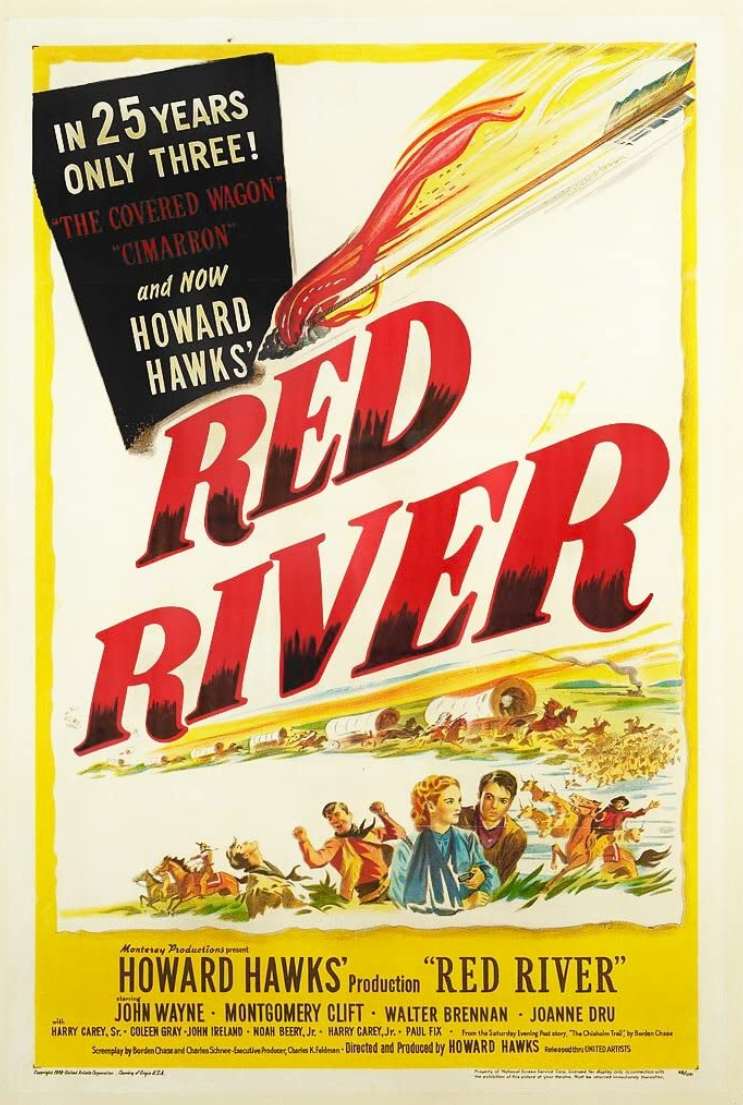
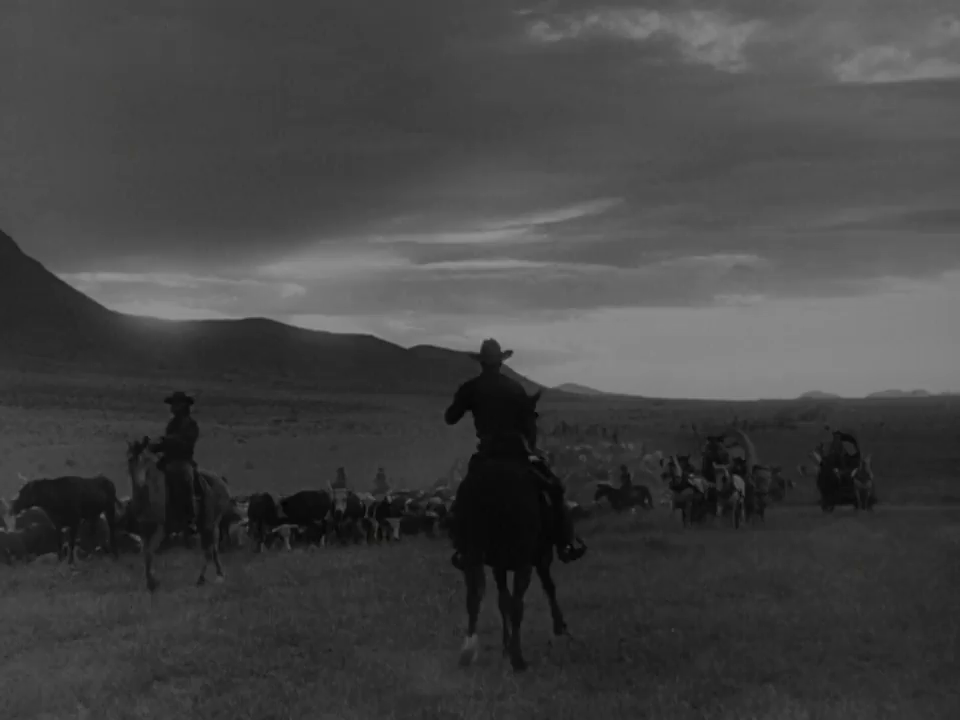
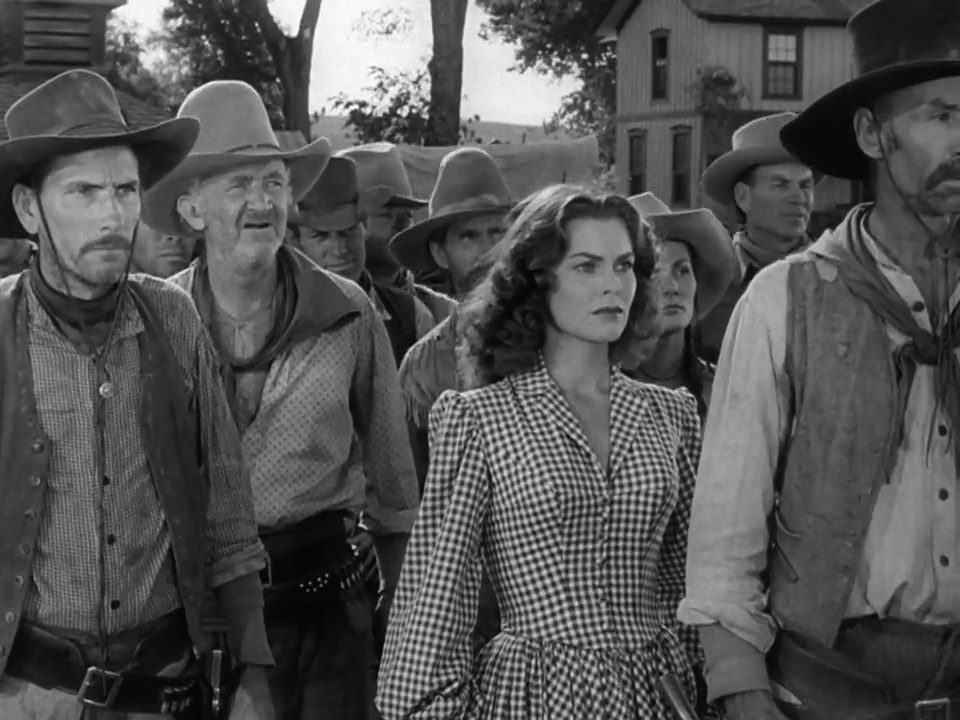
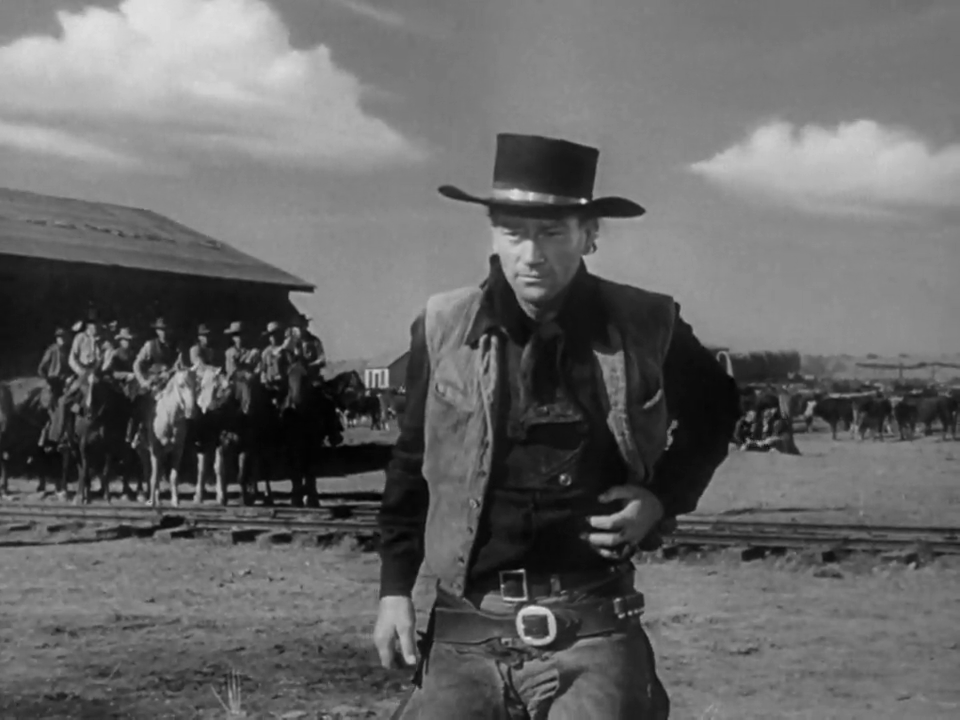
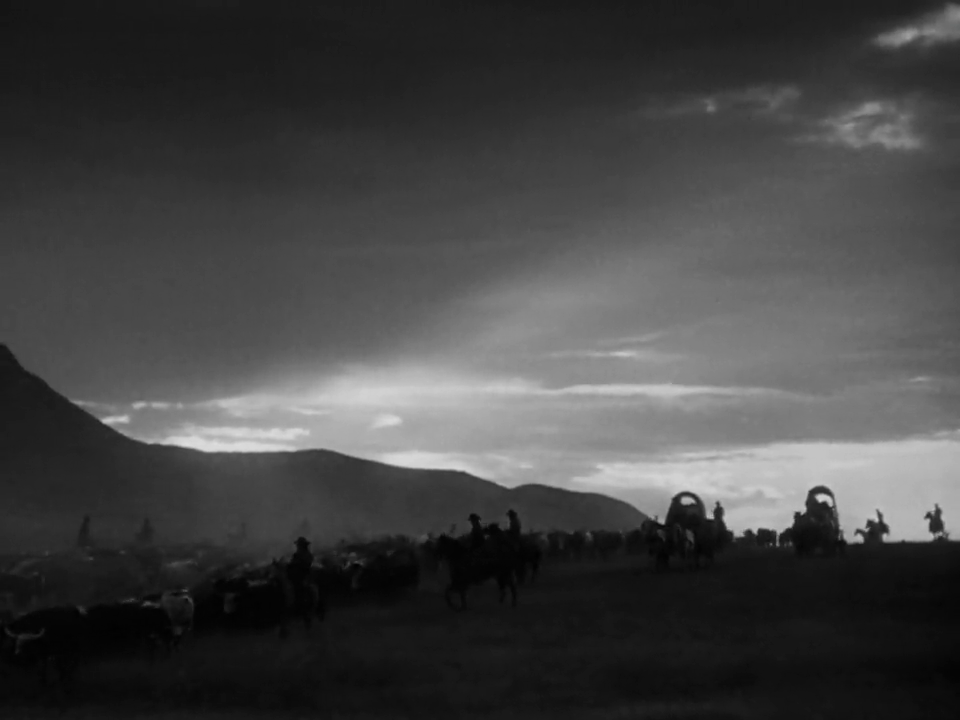
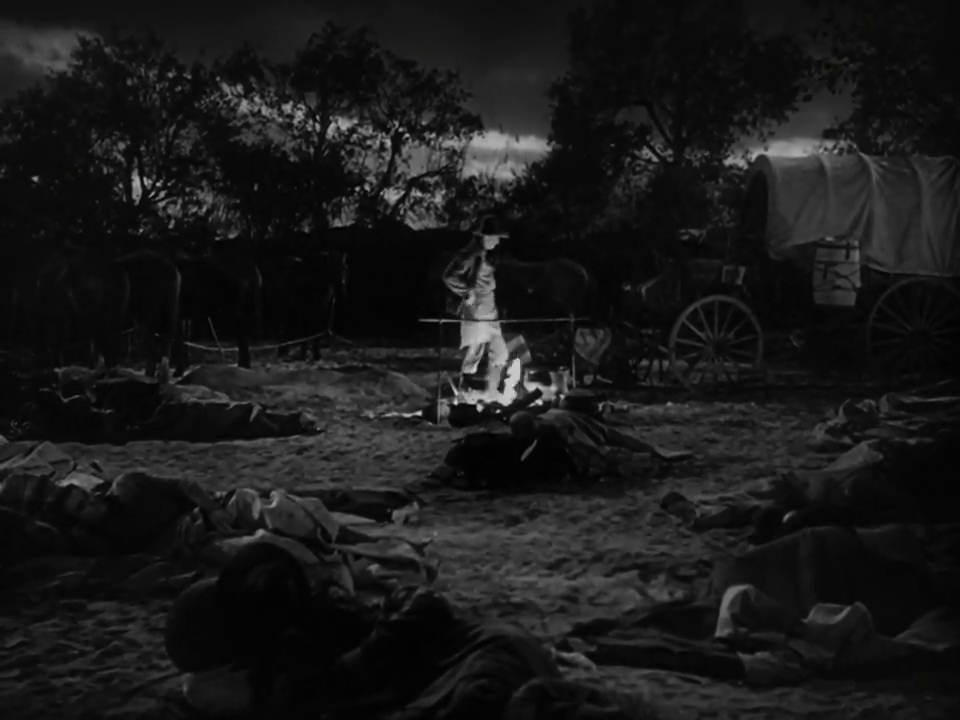
Peary writes that this “monumental first western” by Howard Hawks — “scripted by Borden Chase and Charles Schnee from Chase’s [story] “The Chisholm Trail” — is a “westernized Mutiny on the Bounty that advanced the possibility that the Bligh-Christian conflict was Oedipal in nature” (I wouldn’t go that far). Peary points out that this “unromanticized western has remarkable authenticity” and “beautiful black-and-white photography by Russell Harlan, with [an] emphasis on cloudy skies, barren terrain, [and] darkness that makes night oppressive”, thus giving a “harsh feel to the West”.

He notes that “Hawks deals with emotions rarely explored in westerns, including Wayne’s uncharacteristic interrelated senses of fear (of failure) and paranoia” — indeed, “this is Wayne’s only character whose sense of morality becomes clouded, who can’t tell the difference between right and wrong.” Peary adds that “Clift, who makes a passable cowboy in his debut, displays sensitivity and tenderness that were almost nonexistent among western heroes” — but he complains (I agree) that miscast Dru’s role — given she comes “in so late in the film and [has] such an important part” to play — changes the picture’s tone, making the ending “momentarily satisfying” but “more suitable for a comedy.”

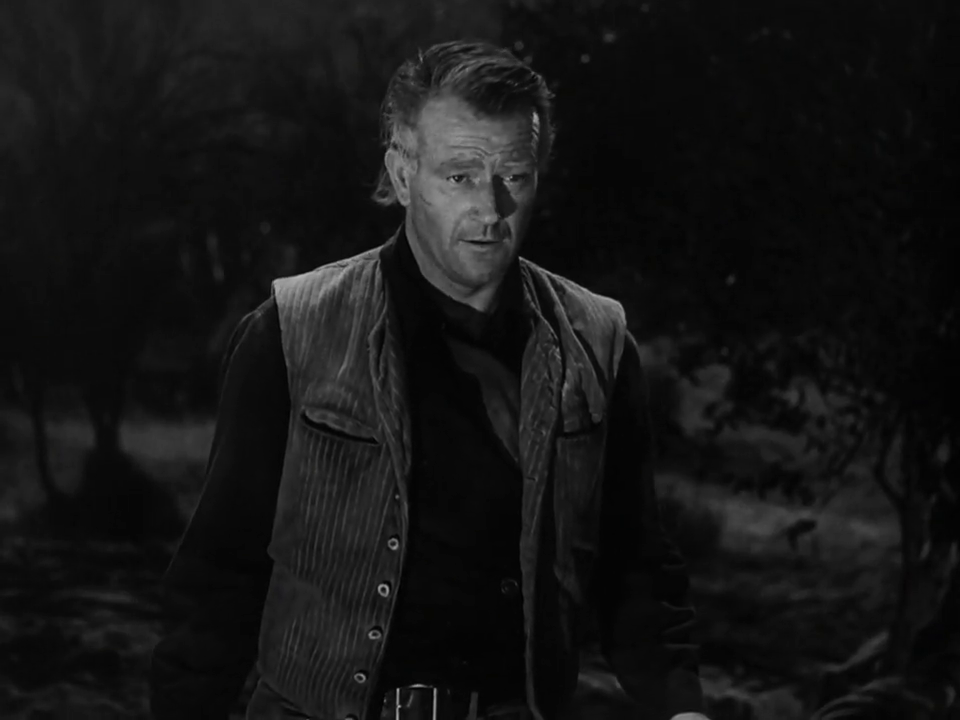
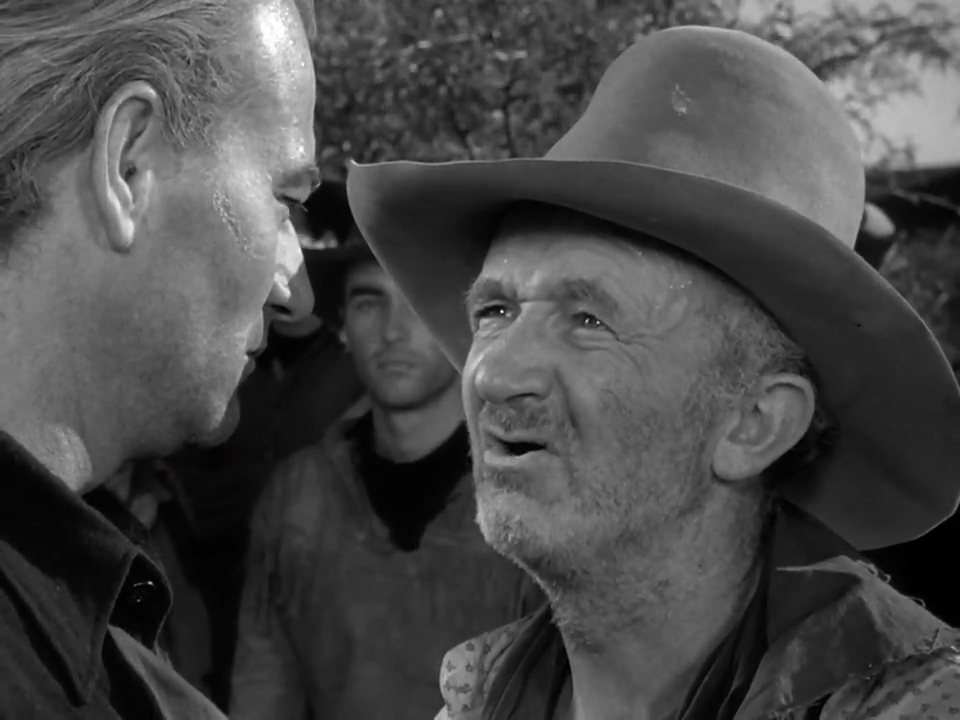
Peary’s review covers many of the essentials of this classic western, which has stood the test of time quite nicely and remains an enjoyable, exciting tale. As Peary points out, “Wayne and Clift are both excellent”, and “their different acting styles work to emphasize their characters’ different attitudes.” Wayne’s willingness to play a Bligh-like character (albeit one we feel some sympathy for) is impressive, and speaks to the acting range he was allowed to display after this point. Clift — in his almost-screen debut, after The Search (1948) — couldn’t be more gorgeous:

… and is entirely credible in his role, bringing nuance to an undeniably challenging situation: needing to take over the reins from one’s beloved but now-unstable “parent”.

Harlan’s cinematography is indeed gorgeous, and the many sequences involving thousands of cattle are truly impressive.

Redeeming Qualities and Moments:

  • John Wayne as Dunson (nominated by Peary as one of the Best Actors of the Year in Alternate Oscars)
  • Montgomery Clift as Matt Garth
  • Fine supporting performances
  • Russell Harlan’s cinematography


  • Many impressive sequences

Must See?
Yes. Named by Peary as one of the Best Movies of the Year in his Alternate Oscars, and named as one of the Top 10 Westerns by the AFI.

Categories

  • Genuine Classic

(Listed in 1001 Movies You Must See Before You Die)

Links:

Zambizanga / Sambizanga (1973)

Zambizanga / Sambizanga (1973)

“The Rich are the Poor’s enemies. They see to it that the Poor stay poor. “

Synopsis:
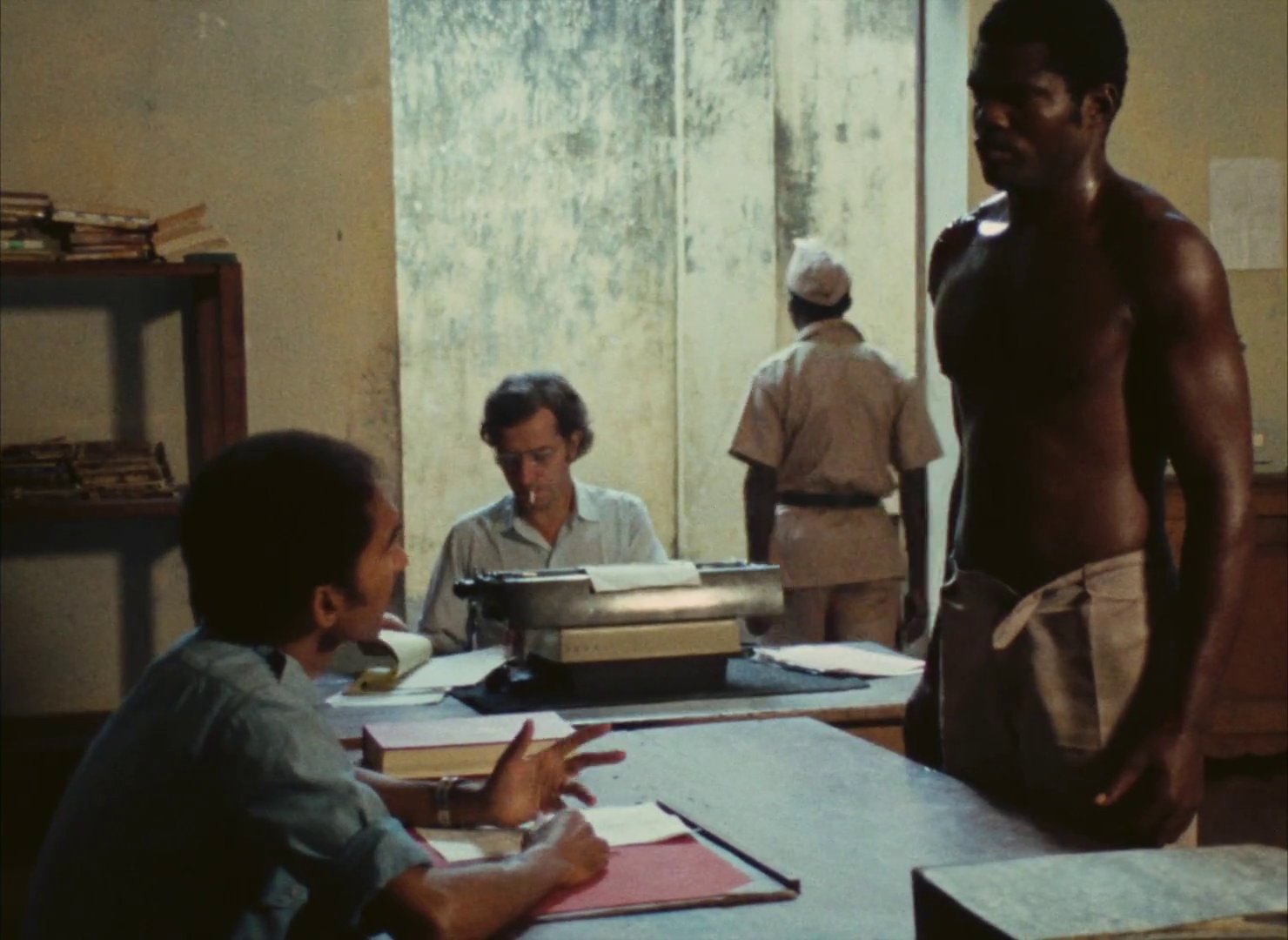
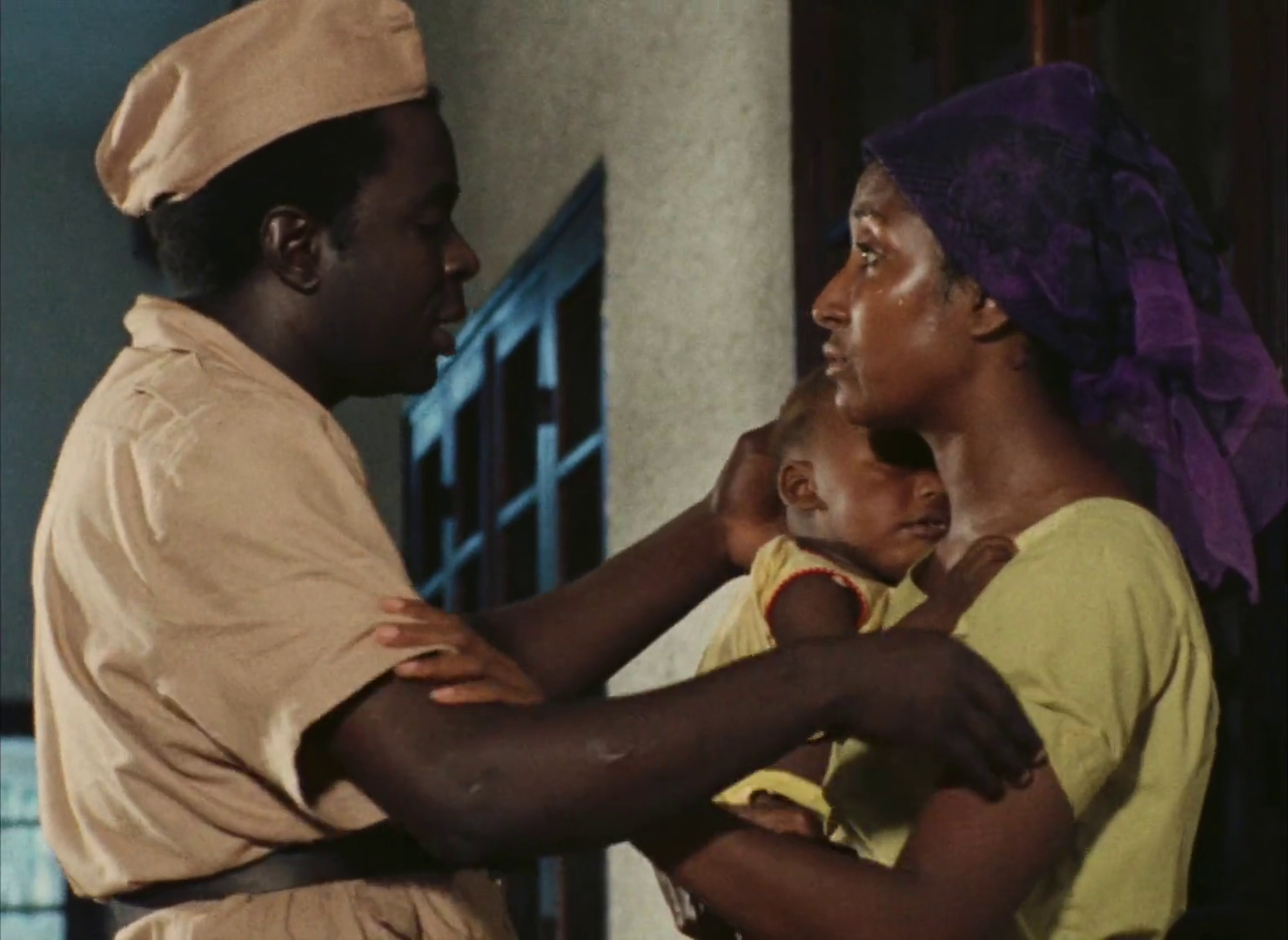
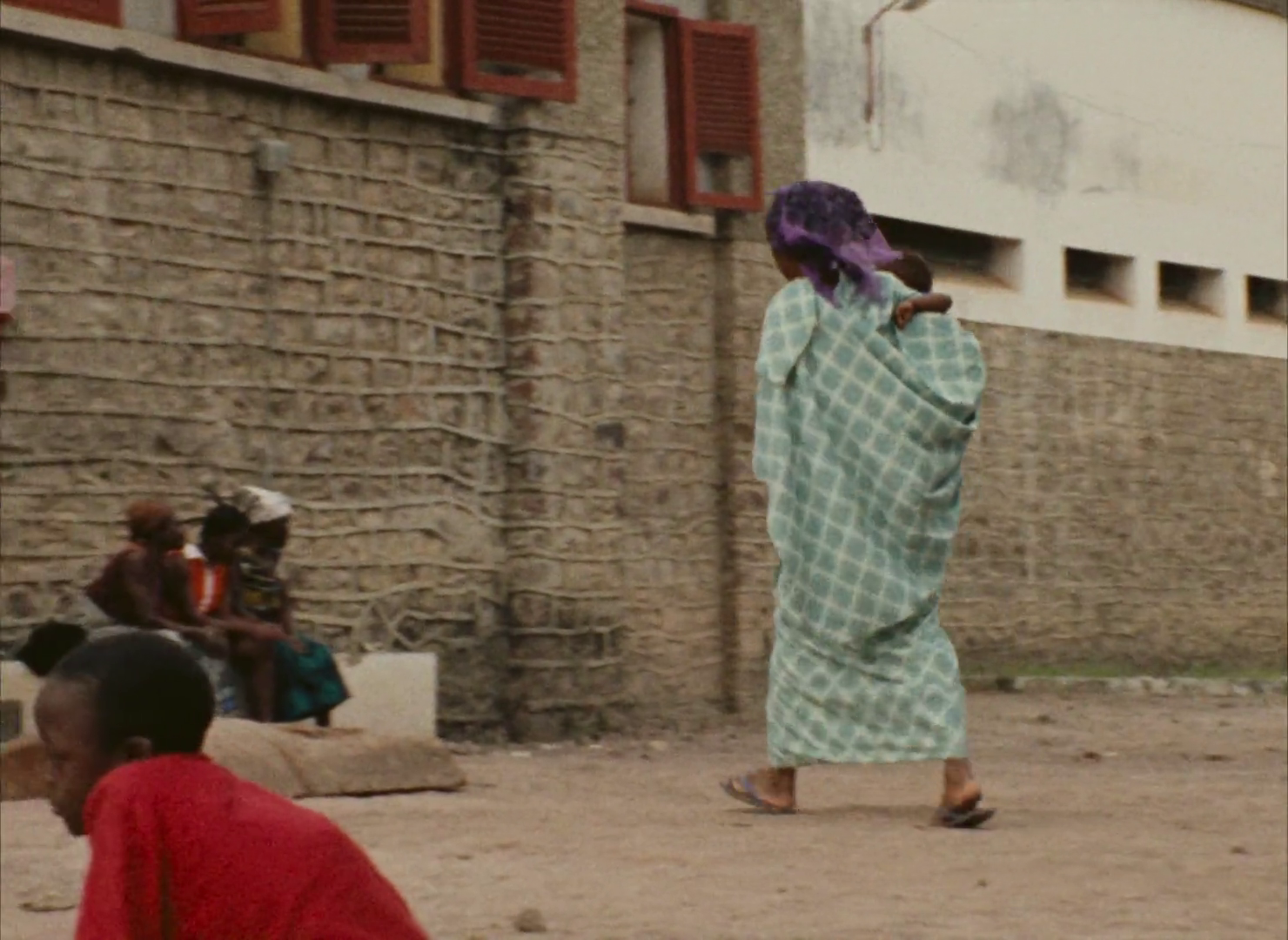
When a black construction worker (Domingos Oliviera) in 1961 Angola is suddenly arrested as a political prisoner, his wife (Elisa Andrade) sets out with their baby to find him in the capital city of Luanda.

Genres, Themes, Actors, and Directors:

  • African Films
  • Class Relations
  • Labor Movements
  • Prisoners
  • Race Relations and Racism
  • Revolutionaries
  • Strong Females

Response to Peary’s Review:
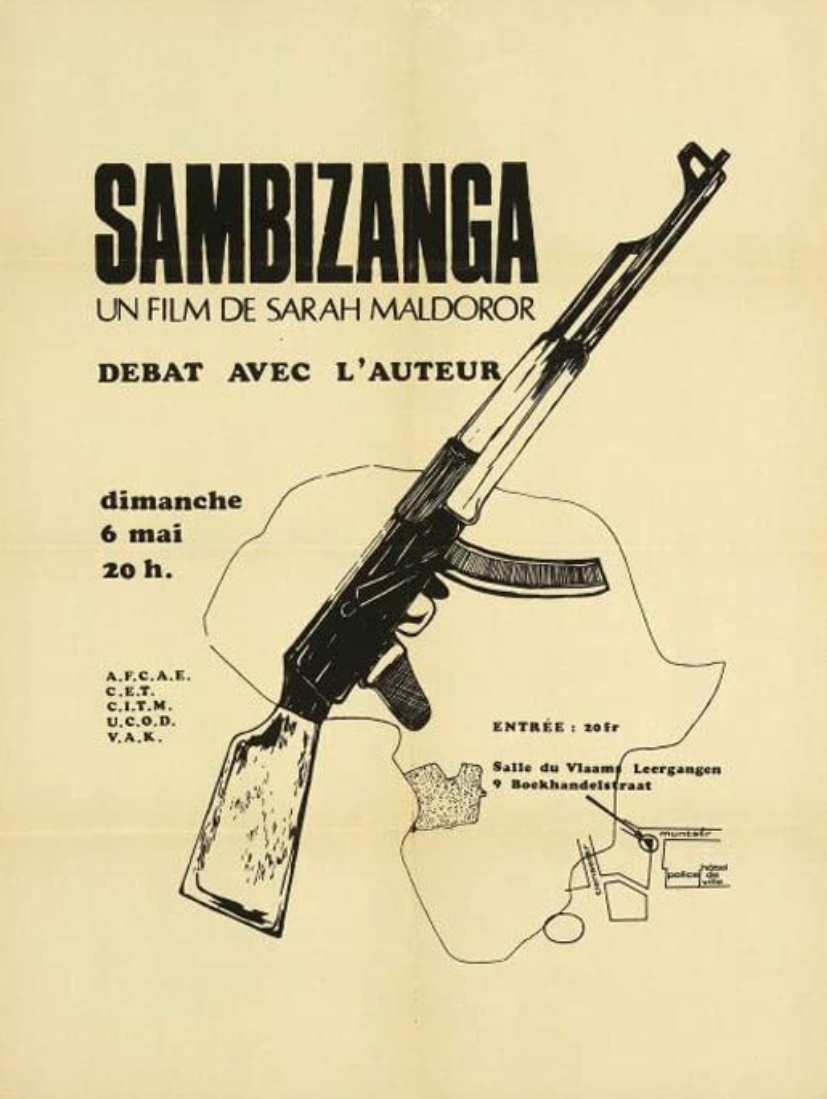
Peary informs us that this “radical film” — “directed by Sarah Maldoror, French-born black feminist, and co-written by her husband, a leader in the Angolan resistance” — was, according to Maldoror, “made ‘to make Europeans, who hardly know anything about Africa, conscious of the forgotten war in Angola, Mozambique, and Guinea-Bissau‘.” (I, for one, will admit that I knew nothing about the Angolan War of Independence before watching this film.) Peary writes that as the “politically naive” wife of a secret activist “goes from prison to prison in search of her husband,” she “discovers that what is happening to prisoners (including her husband) is horrific,” and “she develops a political consciousness.” He argues it’s a “terrific, unforgettable picture,” one that “reveals the horrid nature of political oppression in colonial countries where there are liberation movements” — and I would definitely agree. It’s not at all an easy film to watch, especially given that Maldoror highlights not only the toxic effects of colonialism but the stark reality of racism and gender inequality. However, it also portrays the resilience of people who band together for mutual support (one woman even breast-feeds Andrade’s baby for her during a rest stop), and demonstrates that Oliviera’s torture is not suffered in vain.

Redeeming Qualities and Moments:

  • A powerful neo-realist tale of political resistance

Must See?
Yes, as a unique window into a specific cultural time and movement, and for its historical significance as what was likely the first feature film directed by a woman in Sub-Sarahan Africa.

Categories

  • Historically Relevant

Links:

Hollywood Boulevard (1976)

Hollywood Boulevard (1976)

“This is Hollywood — we change everything; we have to.”

Synopsis:
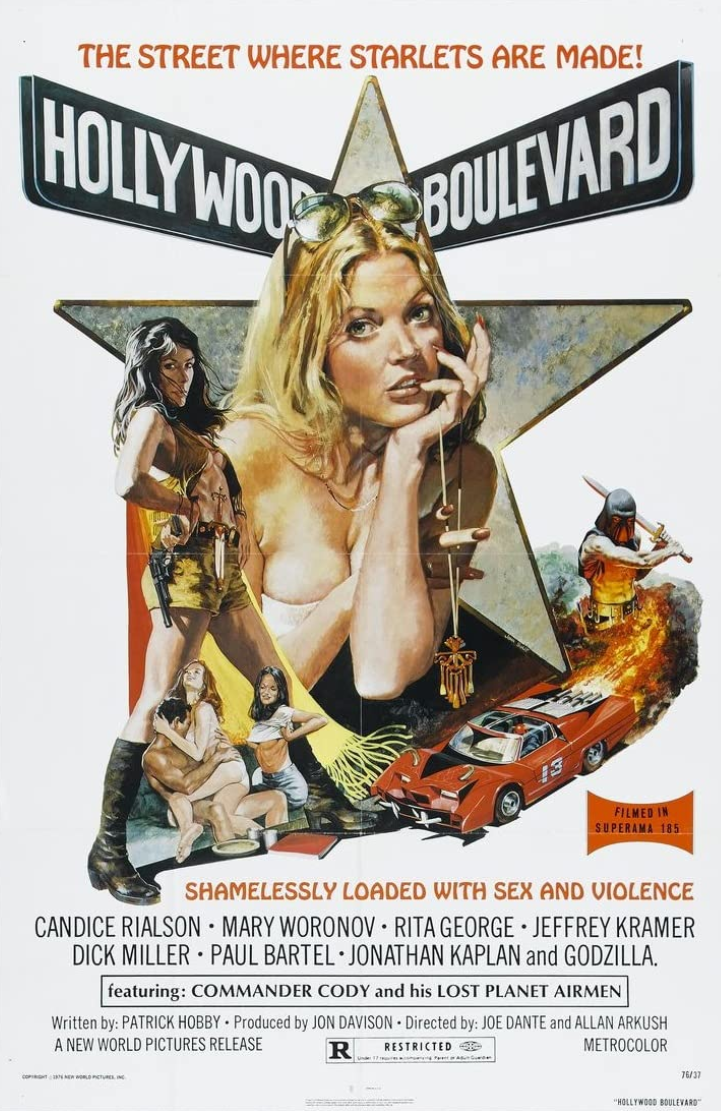
An aspiring starlet (Candice Rialson) hoping to make it big in Hollywood signs on with a hard-working agent (Dick Miller) and is soon working for a pretentious director (Paul Bartel) whose leading lady (Mary Woronov) detests her competition, and whose other actresses are mysteriously being killed off, one by one.

Genres, Themes, Actors, and Directors:

  • Aspiring Stars
  • Dick Miller Films
  • Hollywood
  • Joe Dante Films
  • Movie Directors
  • Satires and Spoofs
  • Serial Killers

Response to Peary’s Review:
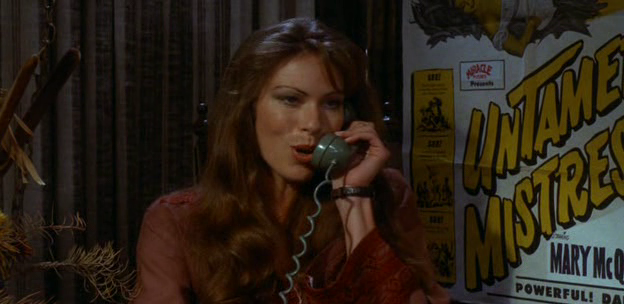
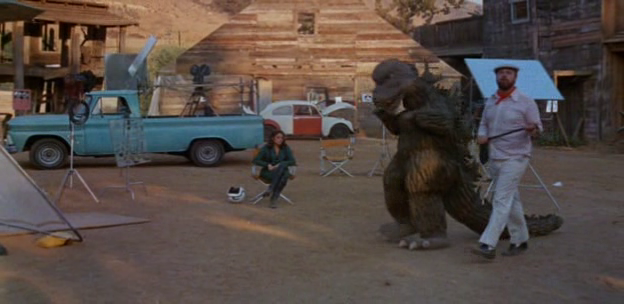
Peary writes that the “main claim to fame” of this “self-parody” is “that it was made in record-breaking time on a pocket-change budget” by “Joe Dante and Alan Arkush, New World editors” who “wanted to prove to studio head Roger Corman that they could effectively direct quickie sexploitation films in the Corman mold”. He notes that “Patrick Hobby’s script is inventive and funny”, with “a barrage of surprisingly clever sight gags and references to Corman’s style of filmmaking; and the entire cast hams it up to perfection.” He points out that “Paul Bartel is hilarious as a director who tries to inject ‘art’, ‘meaning’, and character motivation into his trashy films — while maintaining a large quantity of T&A, car crashes, and massacre scenes” — but I’m more fond of Woronov, who has delicious fun skewering her own image as a “big-name” cult star. Peary argues that the “film falters toward [the] end, when it gets a bit too serious and includes a needlessly vicious knife murder”, but writes that “surprisingly, the film” — which incorporates “inserted footage from previous Corman productions” — “looks polished.” I’m essentially in agreement with Peary’s assessment, though I don’t think modern film fanatics need to see this one unless it piques their interest.

Redeeming Qualities and Moments:

  • Mary Woronov as Mary McQueen
  • A shameless skewering of “quickie” exploitation movies
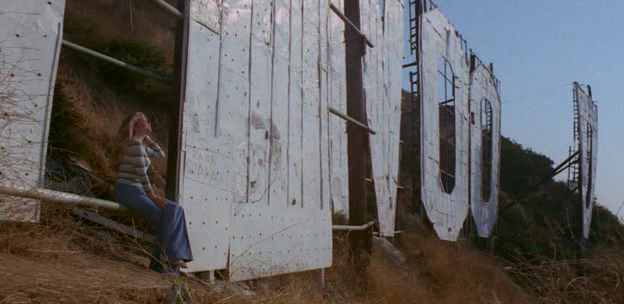
  • Good use of L.A. locales

Must See?
No, though it’s worth a one-time look.

Links:

Lolita (1962)

Lolita (1962)

“You and I, we have lots of fun — don’t we, Lolita?”

Synopsis:
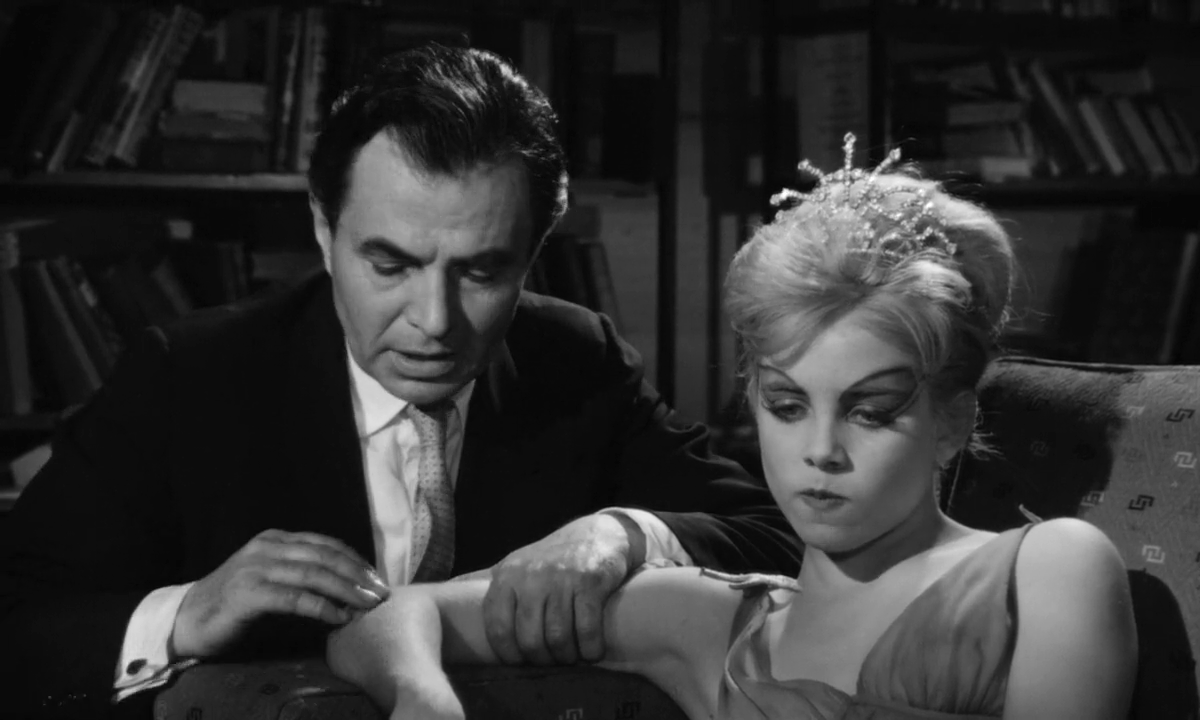
After killing a playwright named Clare Quilty (Peter Sellers), a professor (James Mason) recounts in flashback his saga of marrying a lonely widow (Shelley Winters) in order to gain access to her young daughter, Lolita (Sue Lyon).

Genres, Themes, Actors, and Directors:

  • Black Comedy
  • Flashback Films
  • James Mason Films
  • Obsessive Love
  • Pedophiles
  • Peter Sellers Films
  • Shelley Winters Films
  • Stanley Kubrick Films

Response to Peary’s Review:
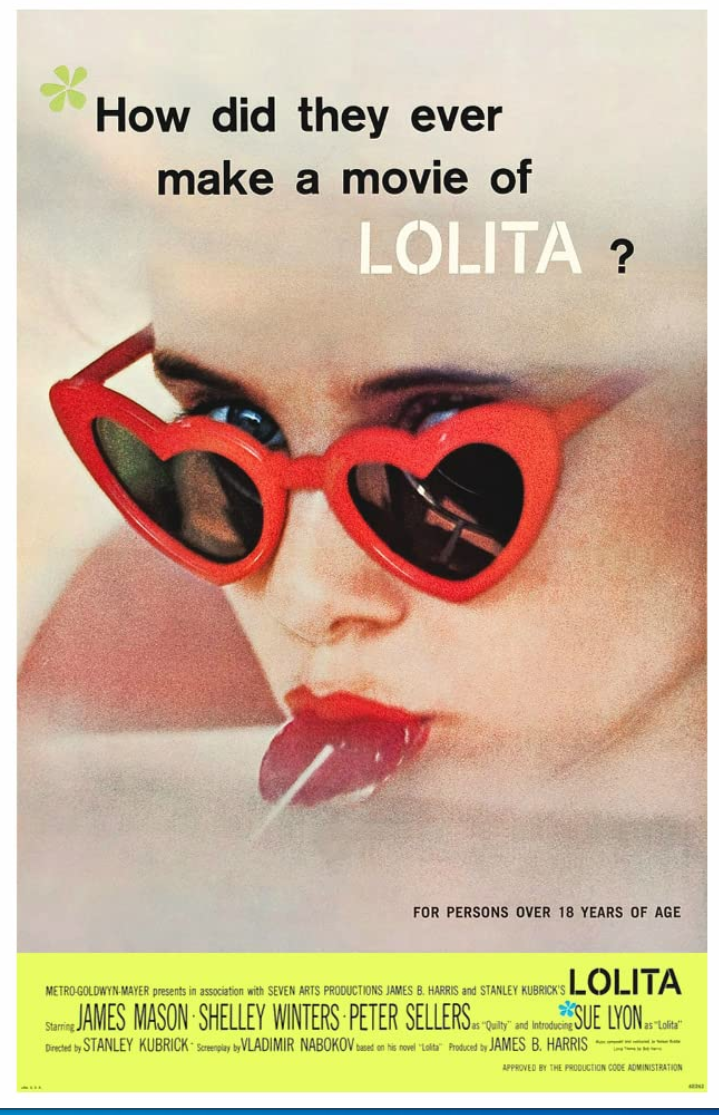
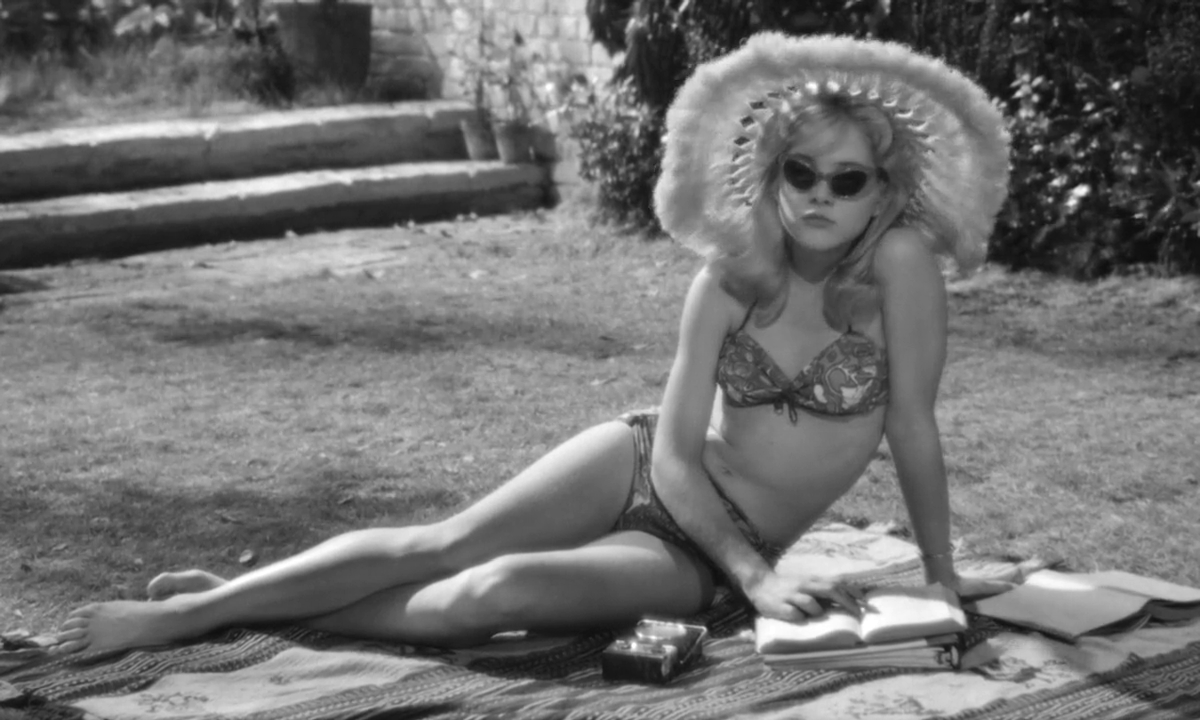
Peary writes that while “Stanley Kubrick’s ambitious black comedy about a high class of degenerates was initially blasted for being inferior to and taking liberties with Vladimir Nabakov’s much loved novel,” it “looks better with every passing year.” He argues that “perhaps we’ve begun to accept Kubrick’s sophisticated cinematic techniques (use of visuals, music) as a storytelling alternative to Nabakov’s celebrated prose (i.e., use of language); we better appreciate the mannered comedy of Peter Sellers (this was before Kubrick’s Dr. Strangelove, What’s New, Pussycat? and The Pink Panther); and we have now seen enough Eric Rohmer films — in which sophisticated ‘gentlemen’ can fall madly in love with bland, beautiful teenagers simply because they have tantalizing, dimpled knees — to understand that [14]-year-old Lolita (Sue Lyon) need do absolutely nothing sexually provocative (other than sit around in a skimpy bikini and heart-shaped glasses) for nymphette-lover Humbert Humbert (James Mason) to be in uncontrolled heat.”

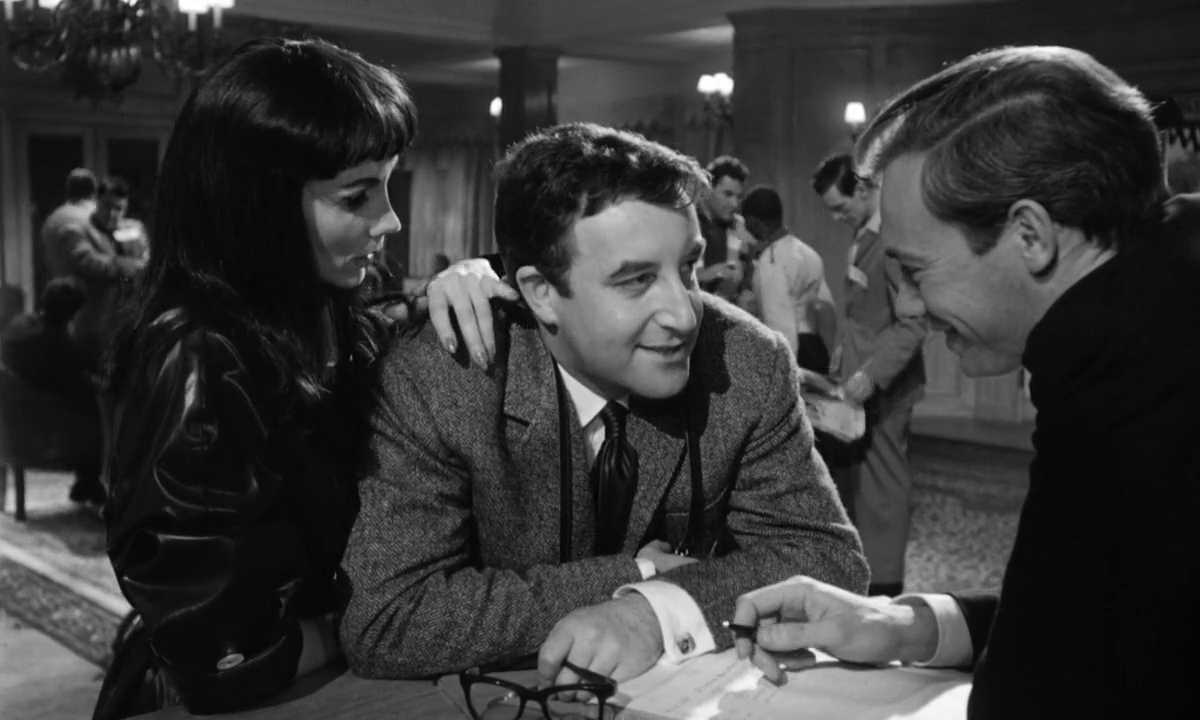
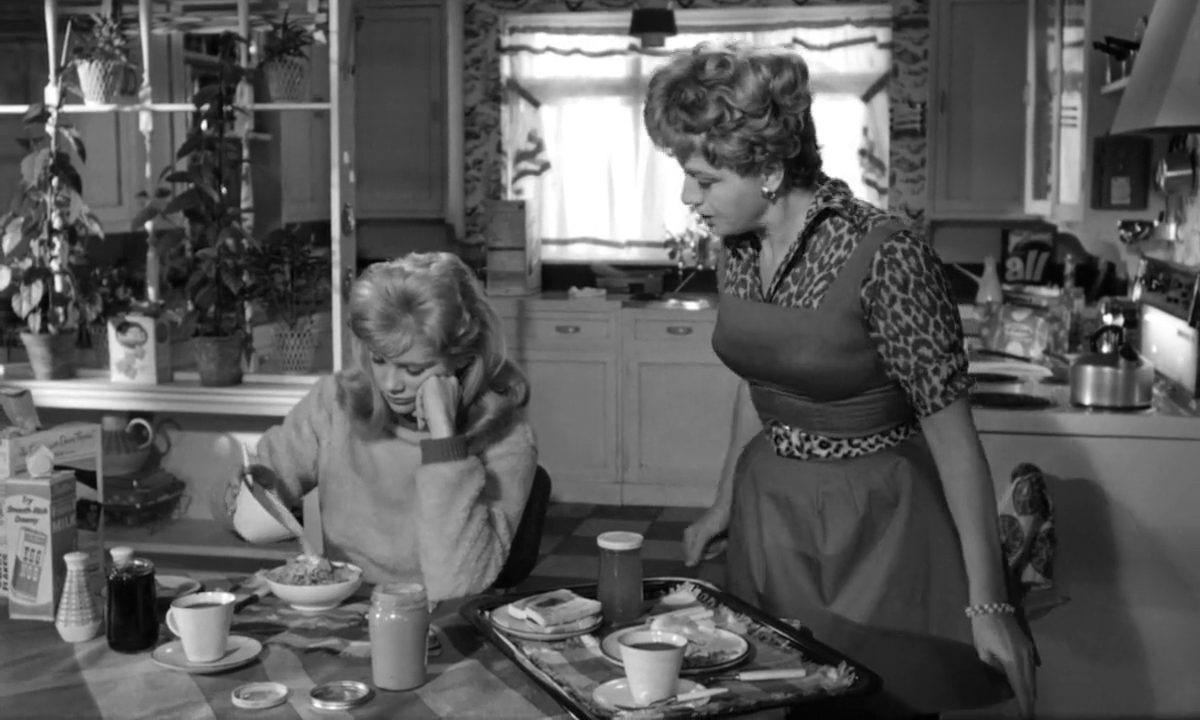
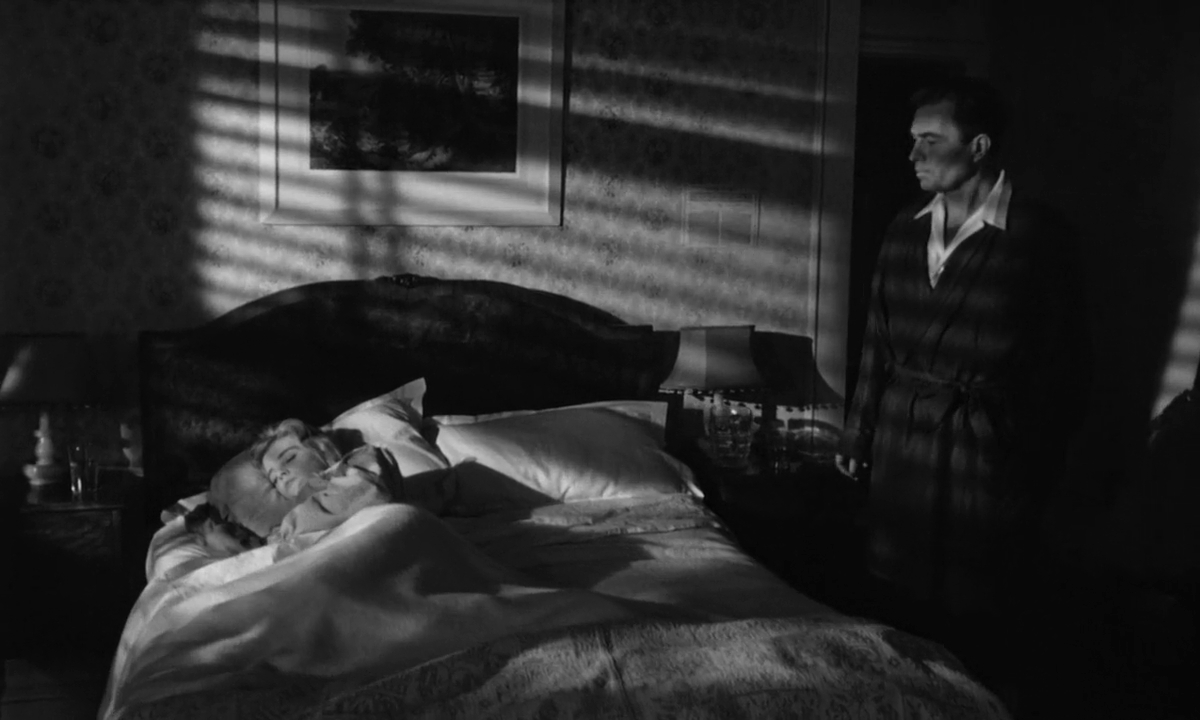
In his description of the film’s narrative, Peary notes that after Winters (giving “a hilarious performance”) is “run over (conveniently), Humbert whisk[s] Lolita out of camp” (Camp Climax!) “and [takes] her on a lengthy trip, from one motel to the next”, becoming increasingly “possessive of Lolita and [forbidding] his young lover to date once they settle down and she [goes] to school.” However, Lolita has been “going out on the sly with the openly perverse Quilty [Sellers], the director of the school play in which she had the lead”, and eventually she runs “off with Quilty, whom she considered a genius.” Peary notes that “to this naive girl Humbert [is] normal” — though “of course, Humbert isn’t normal at all — and much humor comes from his difficult attempts to appear normal/moral to the people he comes across (so they won’t suspect him of improprieties with Lolita) only to discover that those who judge him are as wacko as he is.”

Peary writes that the “picture is at times screamingly funny,” that “the performances by Sellers… and Mason — talking smart yet acting like a five-year-old, displaying a sickly smile — are marvelous,” and that “pretty Sue Lyon, only [14]… but looking sexy and 17, gives a very self-assured, naughty (notice that smile, indicating she knows what Humbert’s up to) Carroll Baker-like portrayal.” Indeed, Lyon’s performance is at the heart of this film’s success — she’s preternaturally able to embody this challenging role and convince us that events are playing out exactly as seen on screen. (It’s too bad Lyon had such a tough time with Hollywood, since her performance here indicates she was a natural.) Mason, of course, is stellar as always, and Sellers shows the genius for characterization he would demonstrate to greatest effect in Dr. Strangelove just two years later. While not for all tastes, Kubrick’s adaptation of Nabakov’s novel remains a provocative, well-made classic, worthy of at least one-time viewing.

Redeeming Qualities and Moments:

  • Sue Lyon as Lolita
  • James Mason as Humbert Humbert (nominated by Peary as one of the Best Actors of the Year in his Alternate Oscars)
  • Peter Sellers as Quiltey
  • Shelley Winters as Charlotte
  • Oswald Morris’s cinematography

Must See?
Yes, as a cult classic by a master director.

Categories

  • Cult Movie
  • Important Director

(Listed in 1001 Movies You Must See Before You Die)

Links: