Browsed by
Category: Response Reviews

My comments on Peary’s reviews in Guide for the Film Fanatic (Simon & Schuster, 1986).

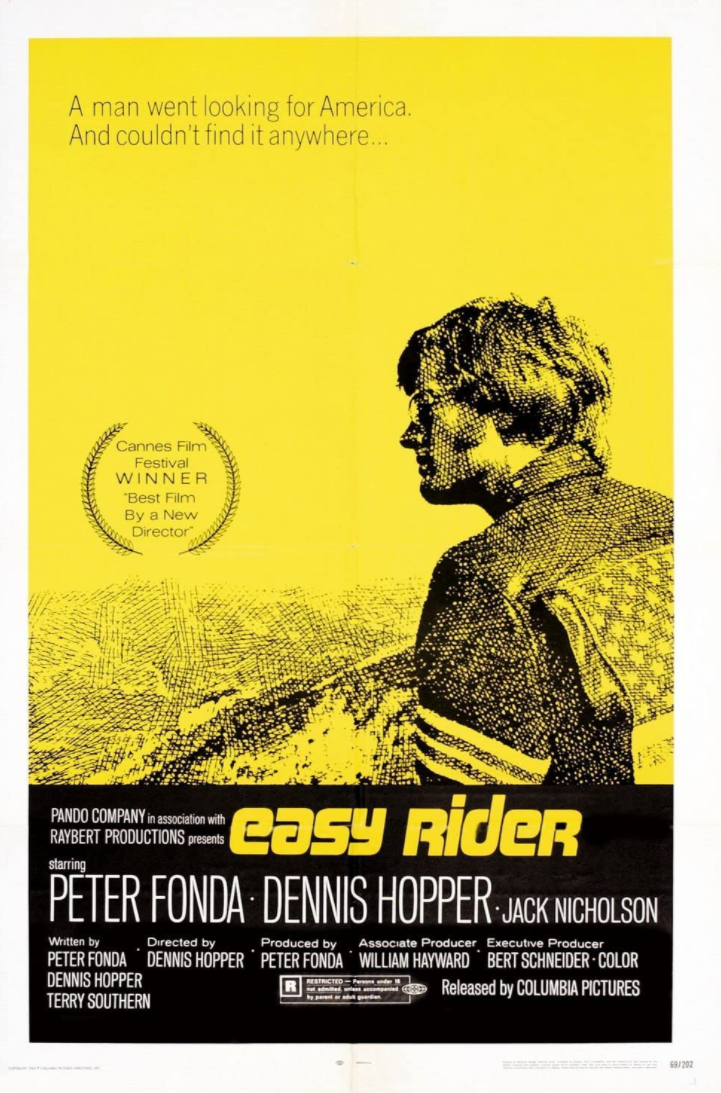
Easy Rider (1969)

Easy Rider (1969)

“You know, this used to be a hell of a good country.”

Synopsis:
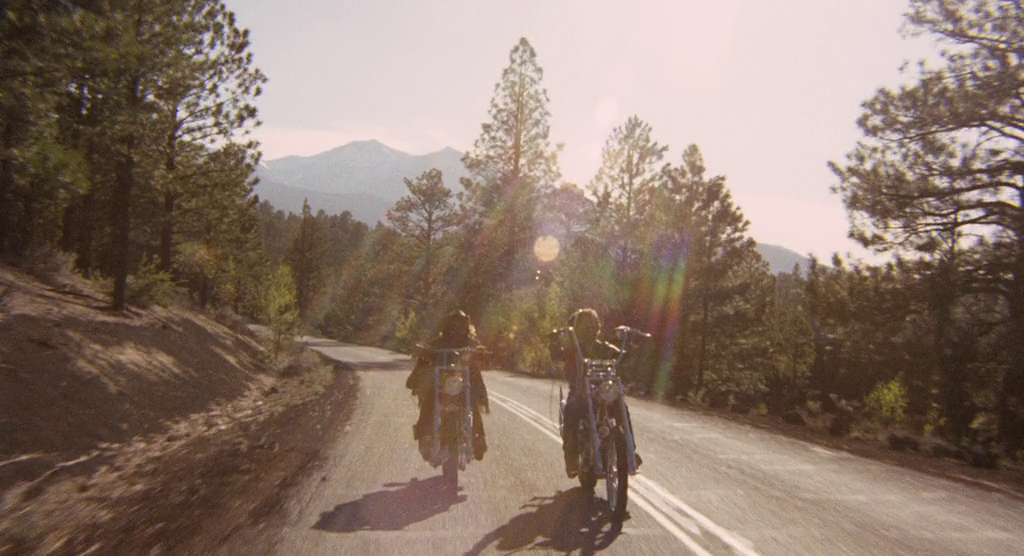
After making a drug deal in Mexico, two motorcyclists (Peter Fonda and Dennis Hopper) ride across the United States to New Orleans, first picking up a hippie (Luke Askew) who brings them to his commune, then riding with an alcoholic ACLU lawyer (Jack Nicholson) they meet in jail. Will they make it safely across the Deep South without being harassed by bigoted anti-hippies?

Genres, Themes, Actors, and Directors:

  • Counterculture
  • Deep South
  • Dennis Hopper Films
  • Drug Dealers
  • Jack Nicholson Films
  • Karen Black Films
  • Motorcyclists
  • Peter Fonda Films
  • Road Trip

Response to Peary’s Review:
Peary argues that this “low-budget commercial blockbuster” — about a pair of motorcyclists who “make a big dope sale (to Phil Spector!), hop on their flashy motorcycles, and begin an odyssey across American’s Southwest and South” — “makes no real statement, political or otherwise, other than to tell us longhairs of the period not to travel through the South.” He writes that the film’s cinematic relevance lies in how it “changed the face of Hollywood for years to come”, given that “every studio would begin producing low-budget ‘personal’ films geared for the youth market.” However, “many in its target audience were disappointed, preferring films like Medium Cool because of their obvious leftwing politics.” He notes that while audience members “loved the great background music (including the Byrds and the Band), adored the lively, drawling performance by Nicholson (who grins from ear to ear under his football helmet in the role that caused his career to take off):

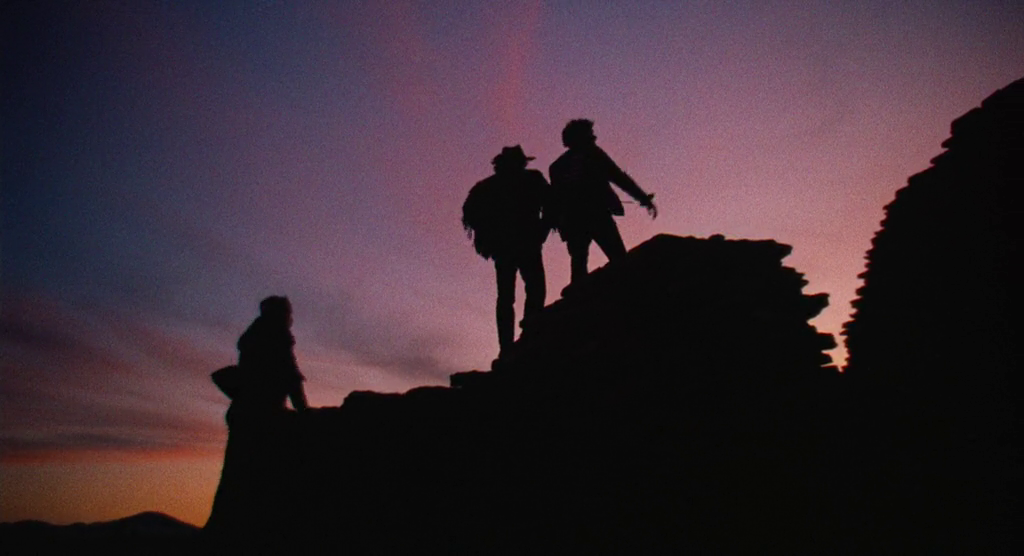
… admired Hopper’s bizarre editing techniques, and packed their knapsacks after seeing Laszlo Kovacs’s stunning photography of the southwestern landscape… they objected to the females being mere sex objects” and were upset by “the flimsiness of the script,” including the “thoroughly depressing rather than progressive finale.”

In Cult Movies 3, Peary expands his discussion of this film, which he writes has become “legendary” — a “celluloid symbol of freedom.” However, while it “has been romanticized” by those who want to “just chuck it all and ride free and easy across our beautiful land,” he notes that these viewers “refuse to acknowledge/remember that Wyatt [Fonda] and Billy [Hopper] discover there is no real freedom in our cemetery-lined ‘land of the free’.” Peary adds that “one forgets that the ‘personal’ films of the late sixties and early seventies were almost all pessimistic, and that Easy Rider was the biggest downer of them all.”

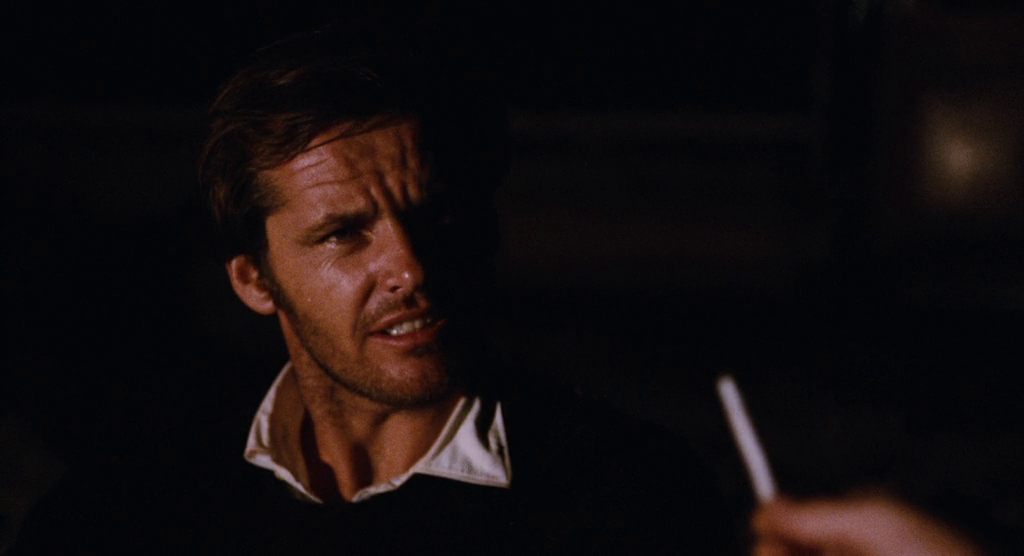
I agree with Peary’s overall assessment, and was surprised upon my revisit of this film to see how aimless and unsatisfying it really is. The pacing is odd (perhaps due to Hopper originally envisioning it as many hours long): we never have a sense of where things will go or what will happen to these characters, who might be infinitely more sympathetic than the bigoted Southerners who hurl invectives at them simply for having “long hair”, but are not exactly people you want to spend time with (they’re cocaine smugglers, after all). Nicholson remains the bright light in the storyline, showing the vibrant lunacy that would serve him so well in coming films. Otherwise, as Peary points out, “the other characters in the film are as insufferable as Wyatt and Billy.” For instance, “the obnoxious, lamebrain male and female commune dwellers — dummies in the desert — are a sorry lot”, and “Hopper, Fonda, and co-writer Terry Southern (added to give the film class) give no indication there were also more admirable, more socially involved members of the counterculture.” Film fanatics should definitely check this film out once, given its iconic relevance in American movie history — but prepare to be disappointed.

Redeeming Qualities and Moments:

  • László Kovács’ cinematography

  • Jack Nicholson as George
  • A fine soundtrack

Must See?
Yes, once, simply for its historical and cult value.

Categories

  • Cult Movie
  • Historically Relevant

Links:

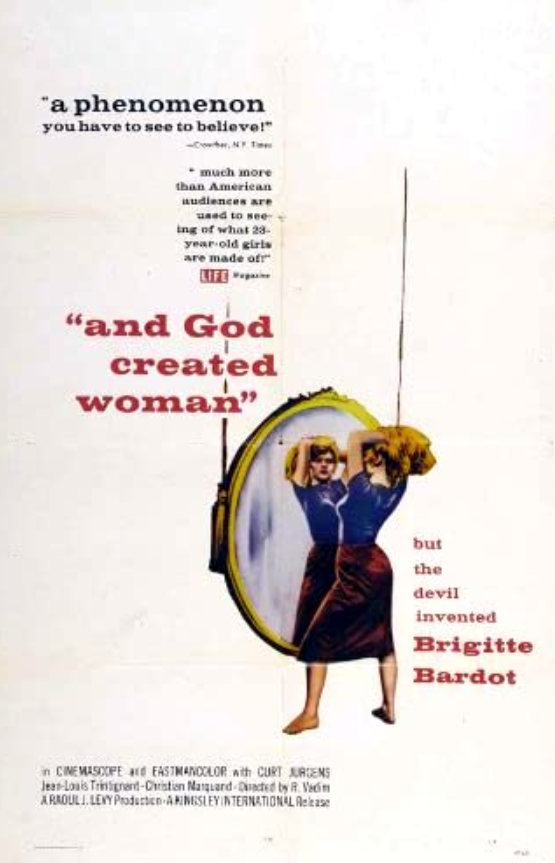
… And God Created Woman / And Woman… Was Created (1956)

… And God Created Woman / And Woman… Was Created (1956)

“With that mouth, you can have anything you want!”

Synopsis:
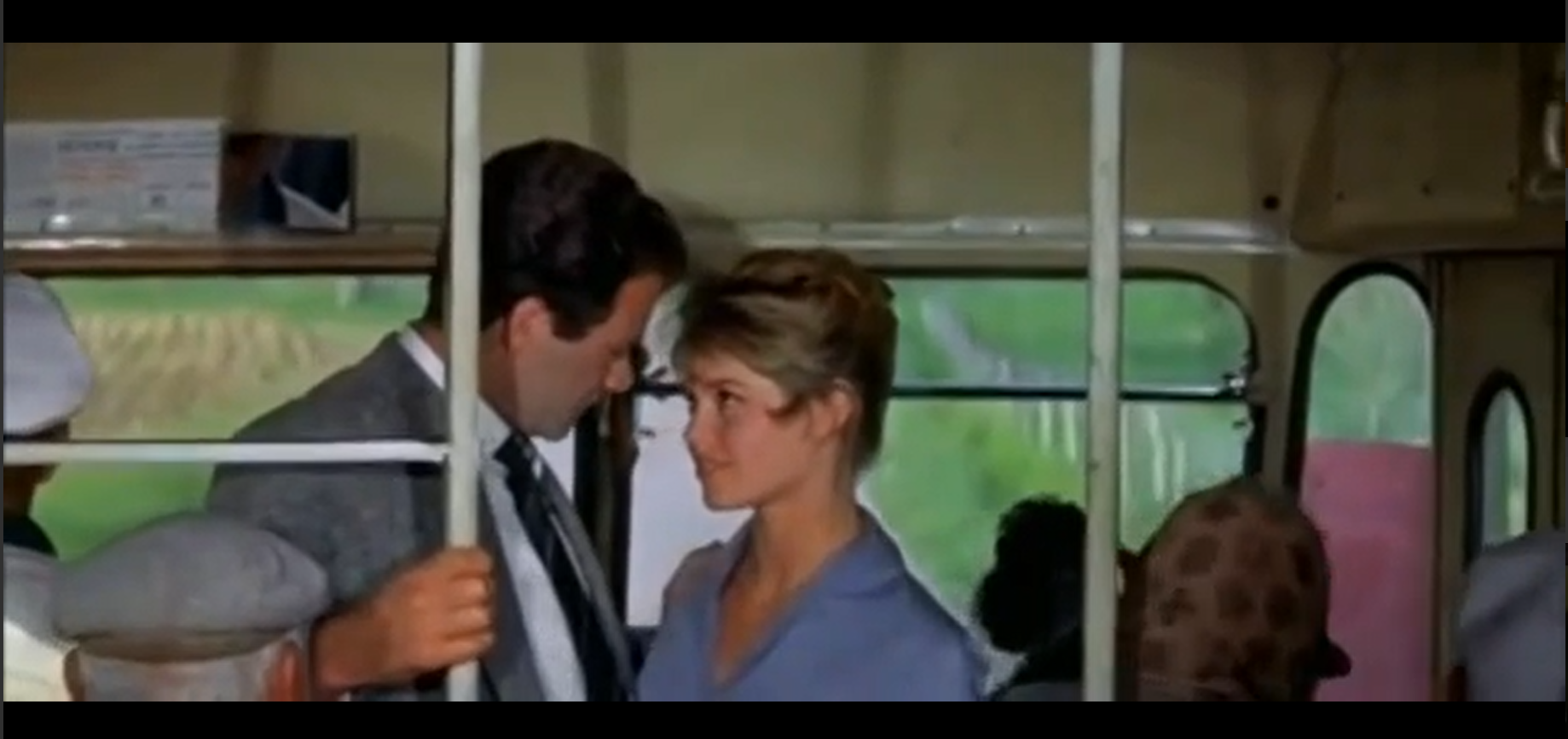
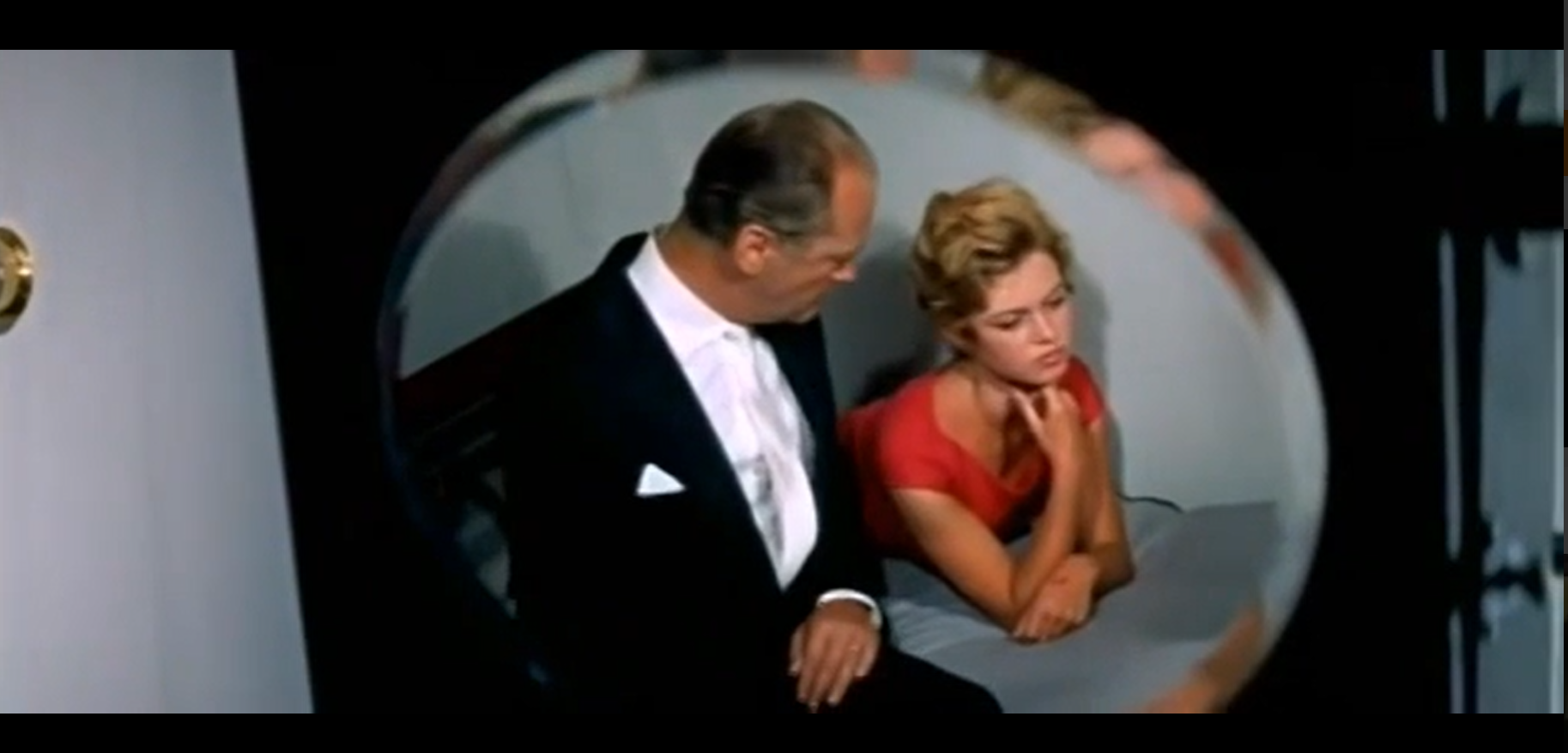
In St. Tropez, a dissatisfied teenager (Brigitte Bardot) marries a local boy (Jean-Louis Trintignant) to avoid being sent back to the orphanage, but continues to covet Trintignant’s brother (Christian Marquand) and is desired by a middle-aged businessman (Curd Jurgens) hoping to purchase land owned by Trintignant and Marquand’s family.

Genres, Themes, Actors, and Directors:

  • Brigitte Bardot Films
  • Curt Jurgens Films
  • French Films
  • Infidelity
  • Morality Police
  • Orphans
  • Roger Vadim Films
  • Sexuality

Response to Peary’s Review:
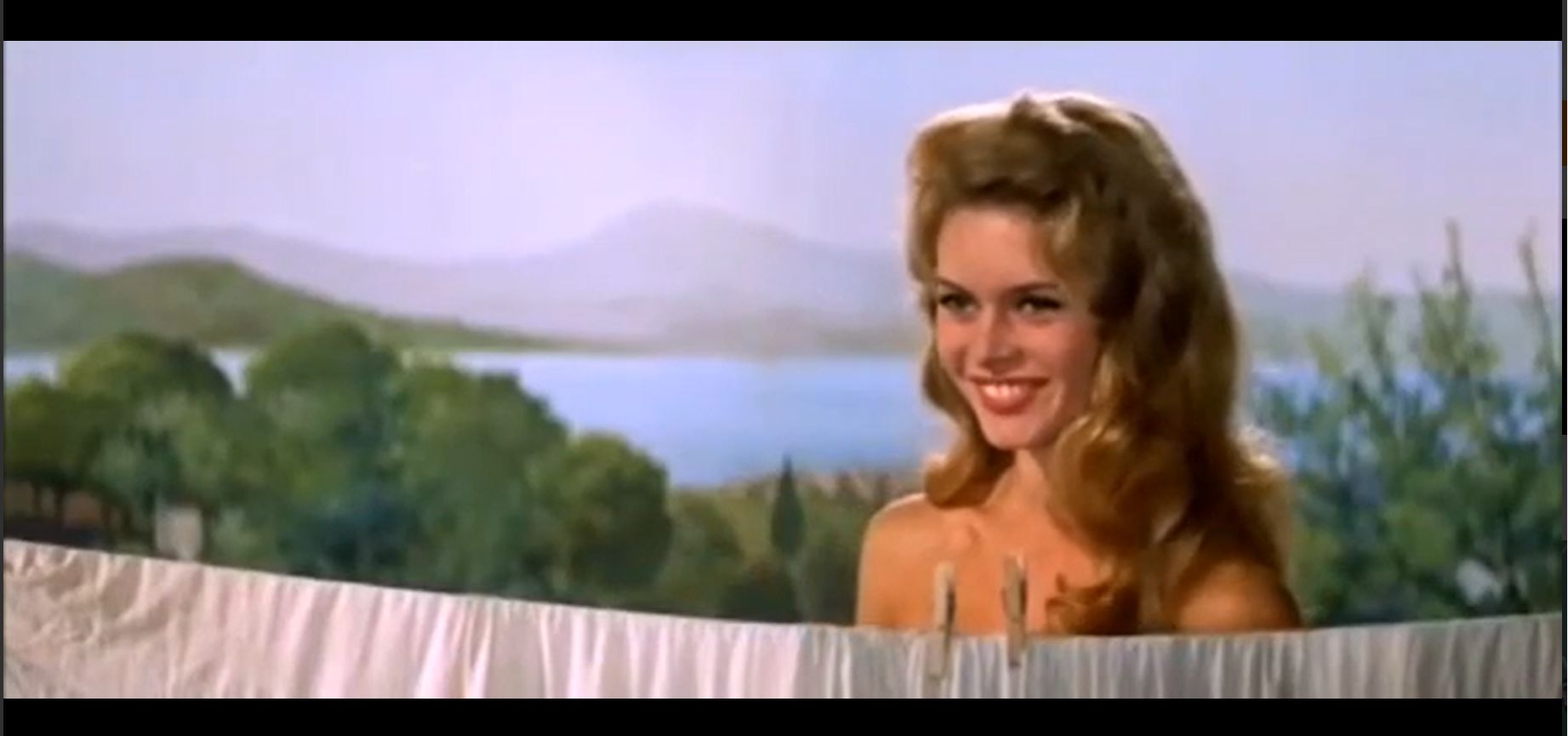
Peary writes that “Brigitte Bardot became an international sex symbol as the result of her role in husband Roger Vadim’s debut film,” spending “the entire film wrapped in towels or in tight, sexy outfits, or nude.” He describes Bardot as “the forerunner of many young females in future French film in that she lives for herself, is sexually promiscuous, is guiltless about her disloyalty toward men, [and] has an eager body that sends stronger messages to her brain than her conscience” (!). Peary argues that “you’ll forget the men” in this picture “and remember Bardot sunbathing,” “standing nude behind a sheet on the outdoor clothesline”, “in bed with Trintignant”, “on the beach with Marquand”, and “doing a sizzling dance in front of many men.” You’ll also likely remember the lovely location shooting in St. Tropez, which is a distinctive plus. Peary writes that while the “picture tends to be dismissed as simply the film that made Bardot famous,” it “could very easily be called the first picture of the French New Wave”, and as such merits a look by historically minded film fanatics — but be forewarned that the storyline is both boring and overwrought, and none of the characters are particularly sympathetic.

Redeeming Qualities and Moments:

  • Brigitte Bardot as Juliete

  • Fine cinematography

  • Lovely location shooting in St. Tropez

Must See?
Yes, simply for Bardot’s performance — and its historical relevance as a precursor to the French New Wave.

Categories

  • Historically Relevant
  • Noteworthy Performance(s)

Links:

From Here to Eternity (1953)

From Here to Eternity (1953)

“Nobody ever lies about being lonely.”

Synopsis:
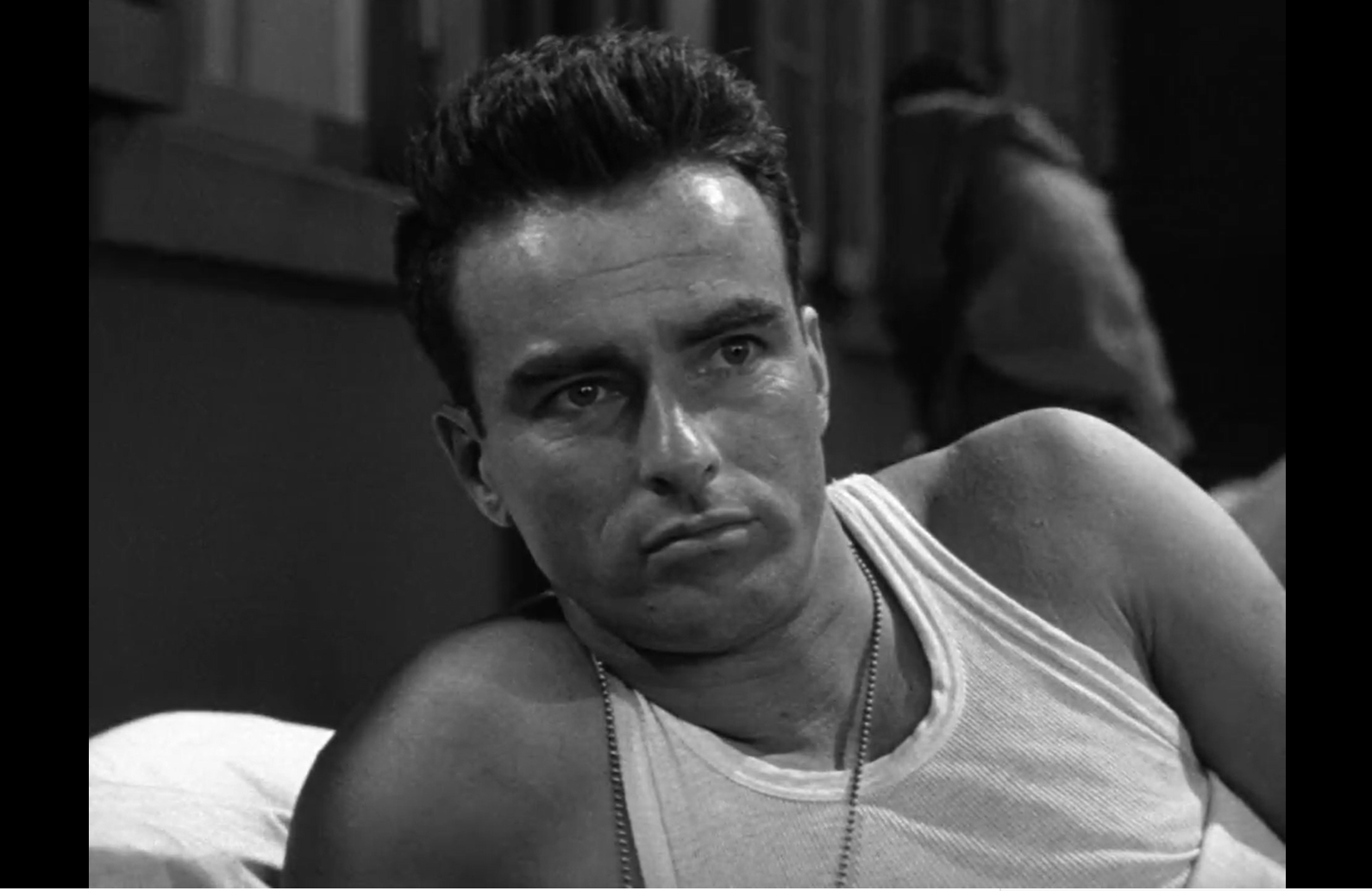
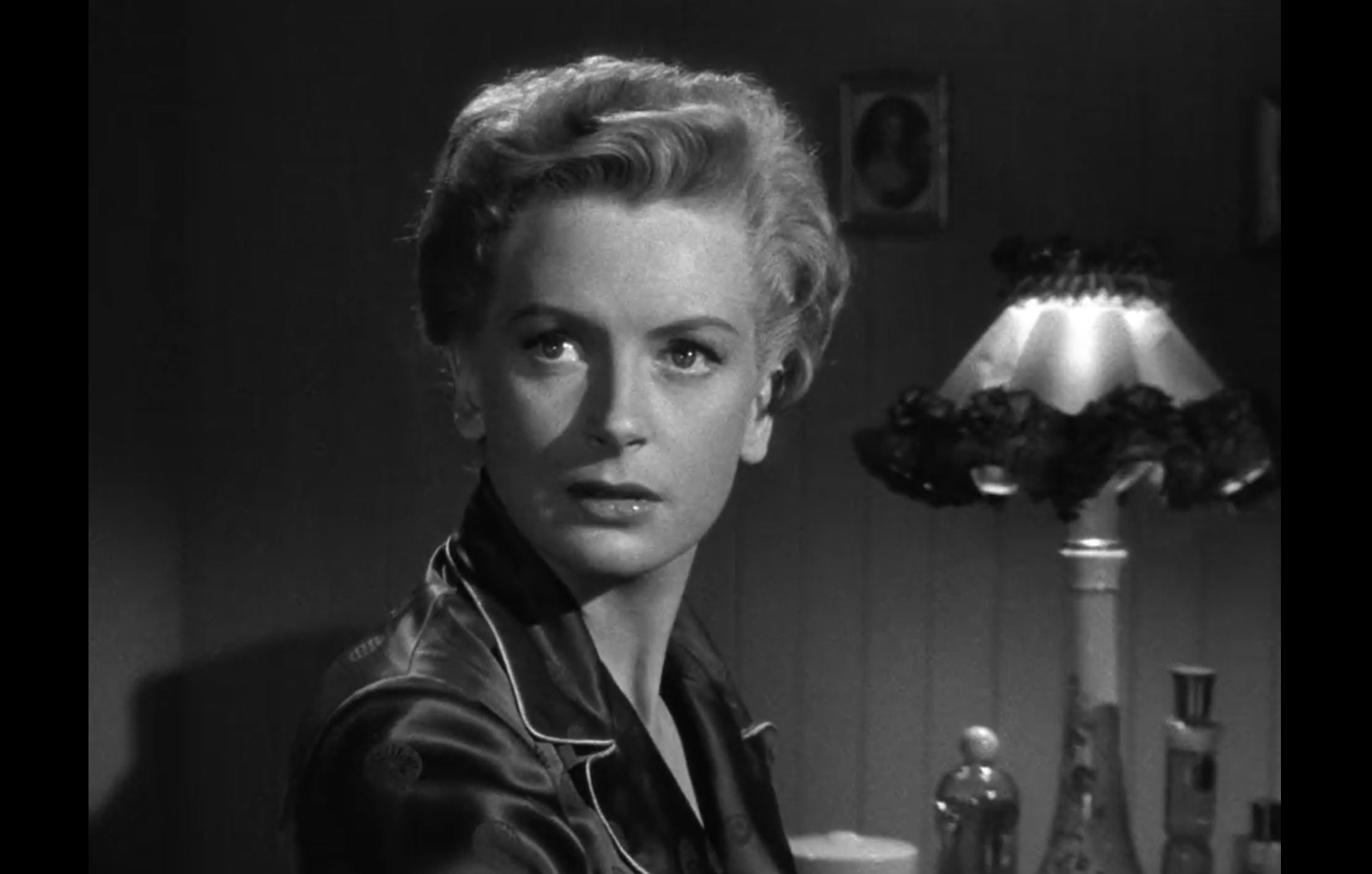
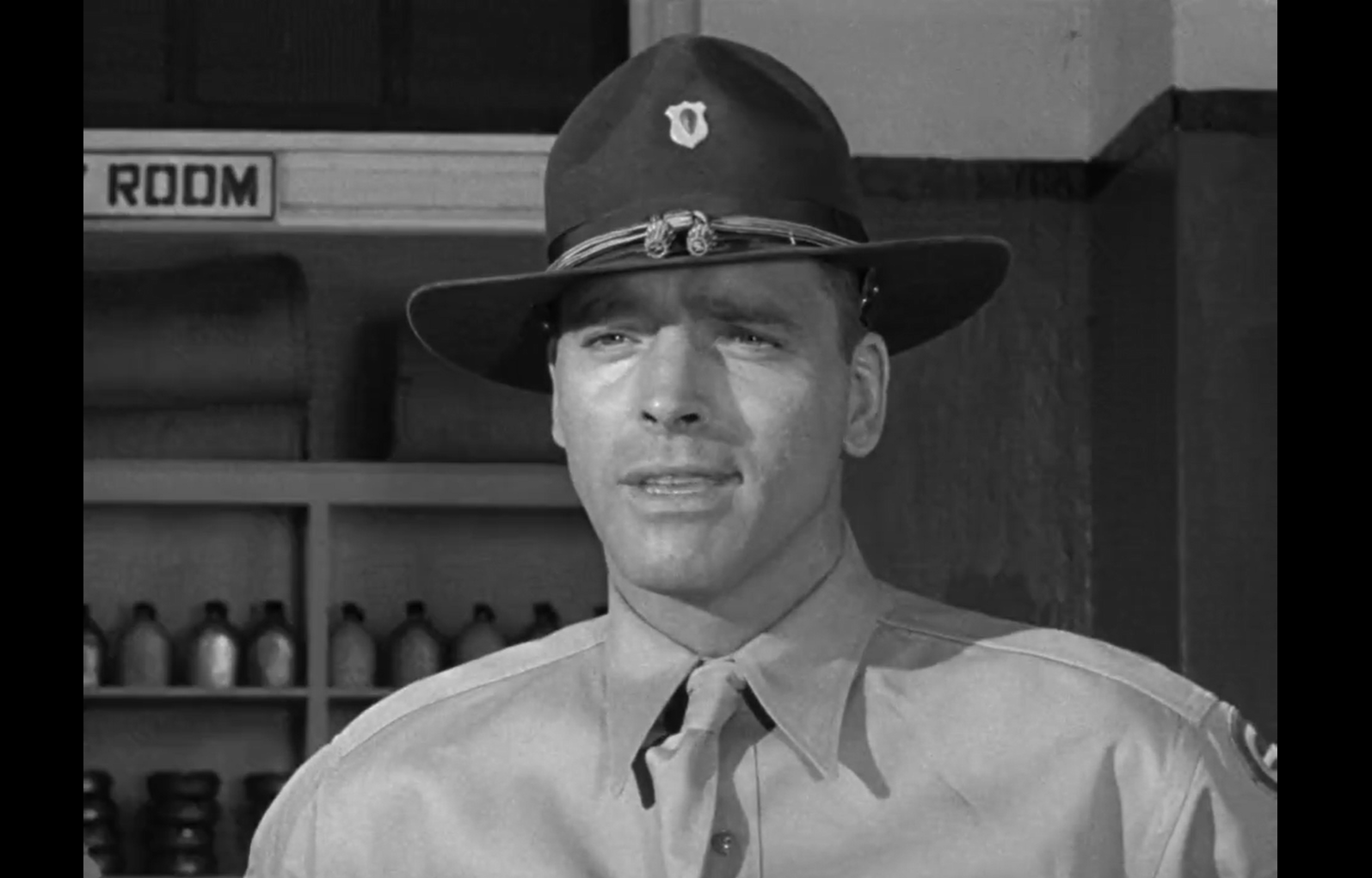
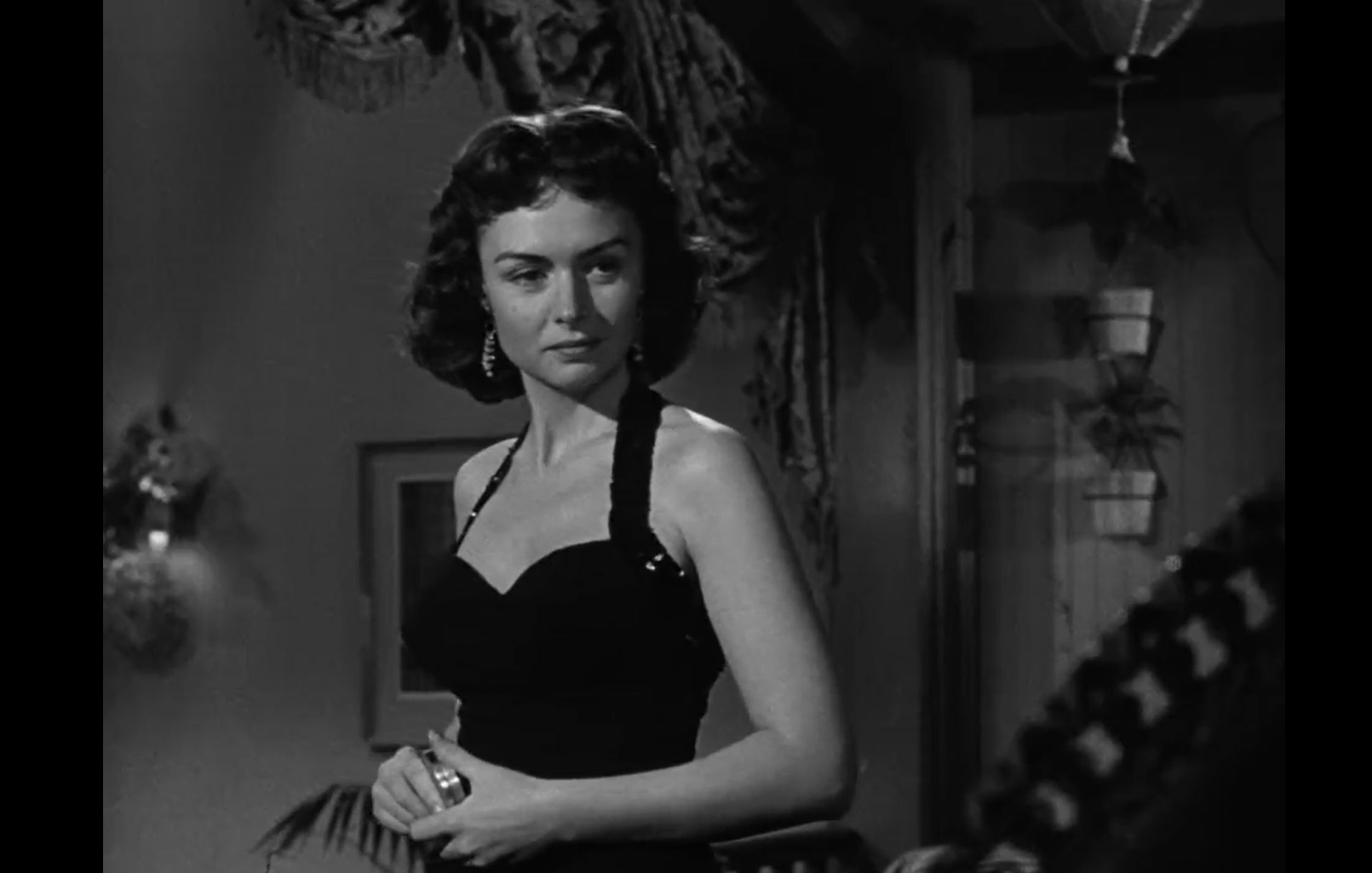
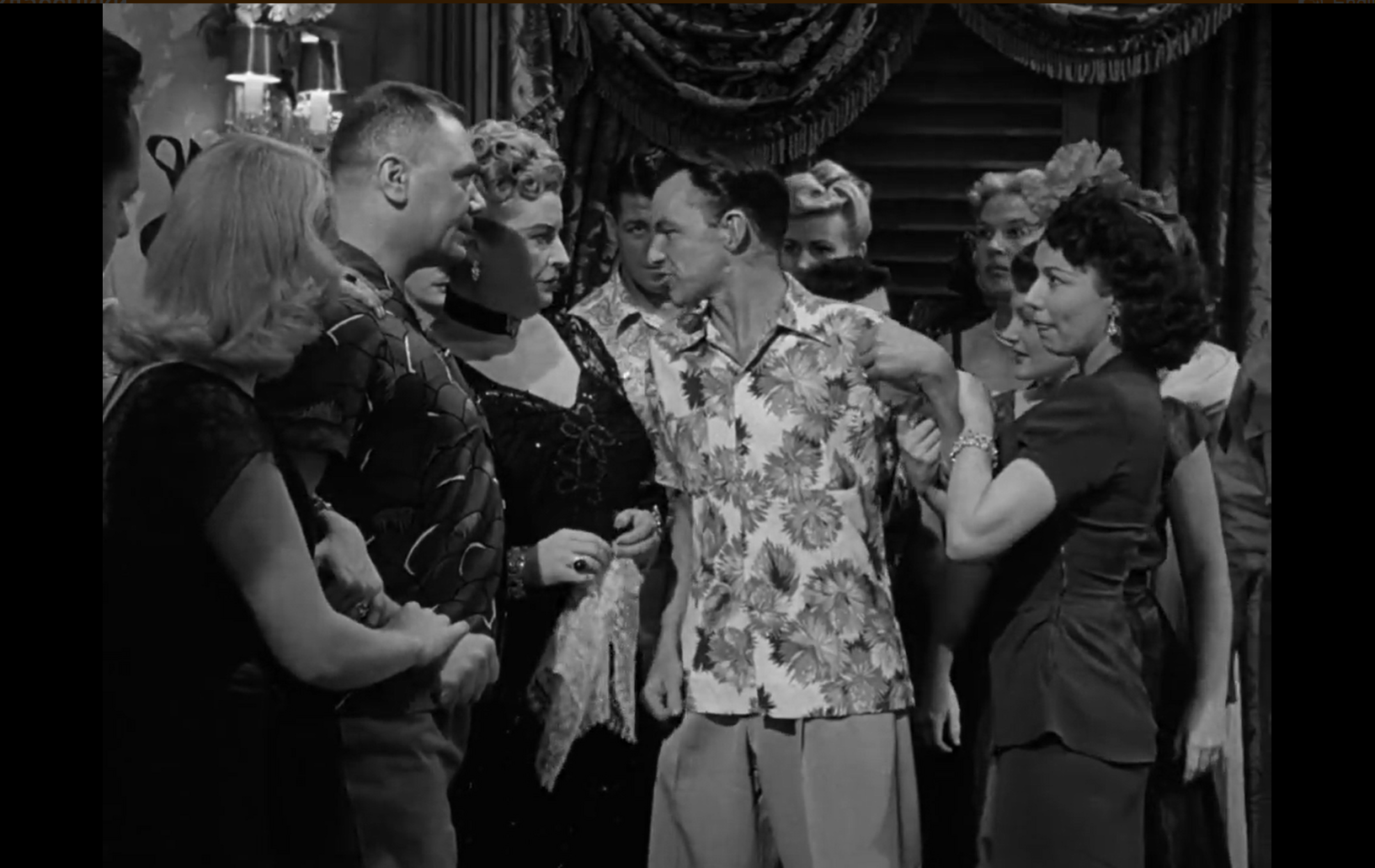
A newly transferred private (Montgomery Clift) at Pearl Harbor Army Base is harassed by his captain (Philip Ober) and several colleagues for refusing to join the boxing team, but finds friendship with a spunky soldier (Frank Sinatra) and romance with a local dance hall hostess (Donna Reed). Meanwhile, Ober’s assistant (Burt Lancaster) woos Ober’s unhappy wife (Deborah Kerr), and Sinatra becomes increasingly agitated by a sadistic, piano-playing guard (Ernest Borgnine).

Genres, Themes, Actors, and Directors:

  • Burt Lancaster Films
  • Deborah Kerr Films
  • Donna Reed Films
  • Ernest Borgnine Films
  • Frank Sinatra Films
  • Fred Zinneman Films
  • Infidelity
  • Military
  • Montgomery Clift Films
  • Soldiers

Response to Peary’s Review:
Peary writes that the appeal of this “solid version of James Jones’s novel” is that “Lancaster, Clift, Sinatra, Kerr, and Reed all anticipate the rebel figures that would dominate the rest of the fifties” by breaking “army rules and society’s rules.” He points out that “they are the only characters with compassion, who can love — so here rebels are positive figures,” and notes that the “picture has superb acting, [and] strong direction by Fred Zinneman.” In Alternate Oscars, Peary adds that this remains “a quality picture in spite of its soap elements and the unsatisfying resolutions for most of its characters” (though he gives the Best Picture Oscar to Shane instead).

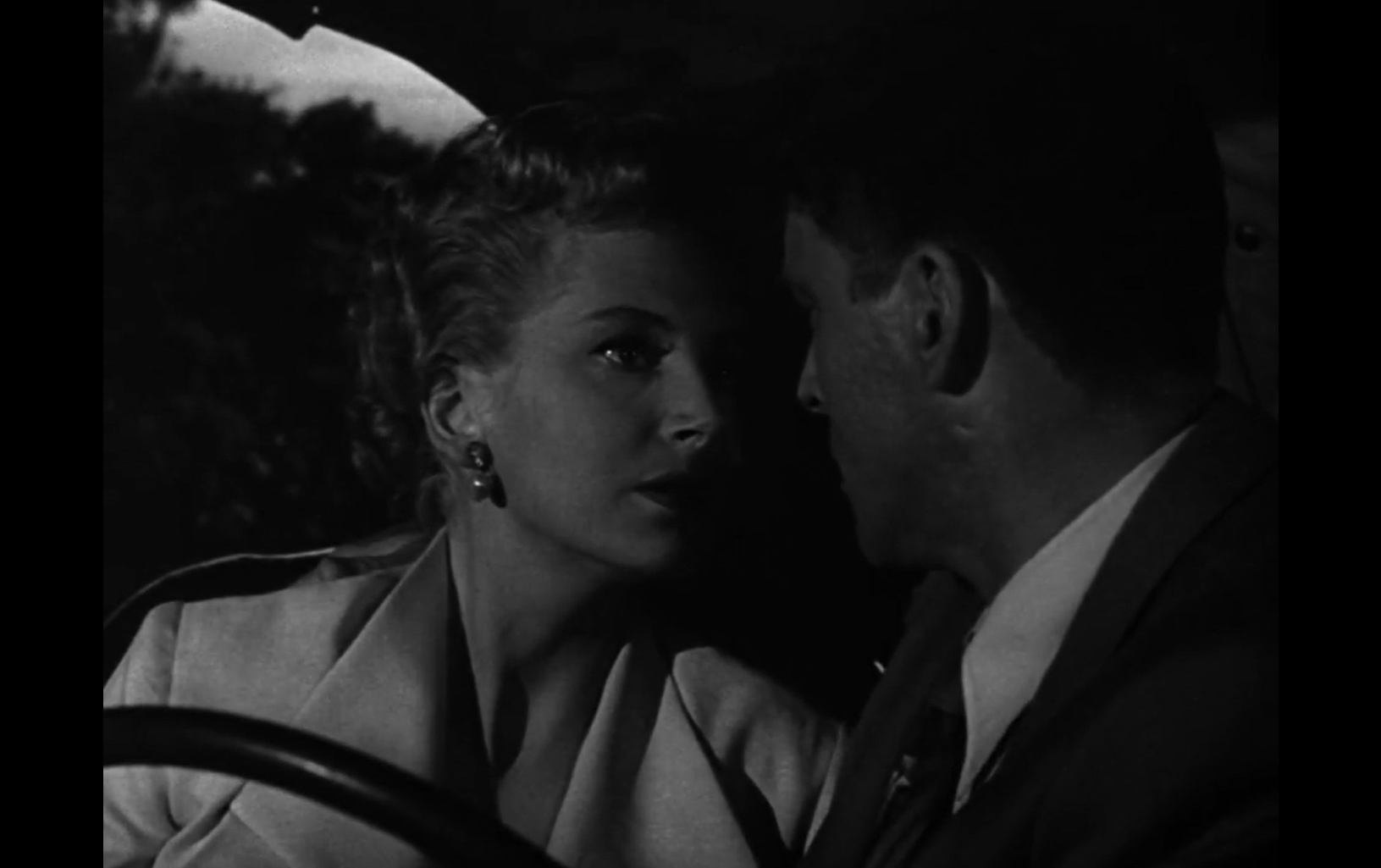
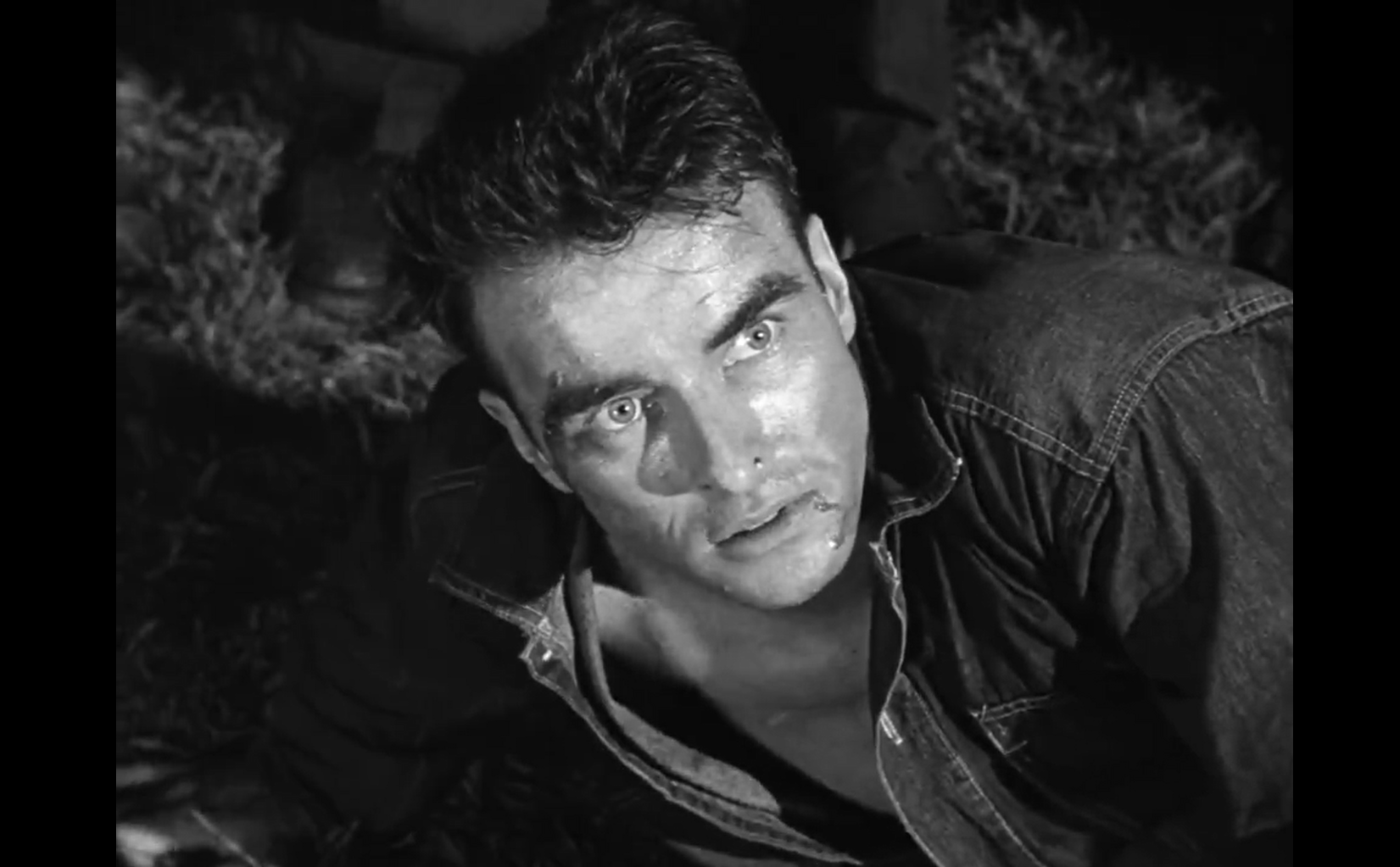
However, Peary does name Clift the Best Actor of the Year, noting that “Clift was such a cerebral, introspective actor that it is exciting just to watch him think.” In addition to Clift doing “a lot of wordless acting” in the film, Peary points out that his performance “is extremely physical”, given that we “see Prewitt box, have a knife fight, shoot a little pool, fall down some stairs, run, march, dig a hole, get down on his knees to do chores, [and] stumble about when drunk.” Playing a “hardheaded” soldier who “knows he must make correct choices or he won’t be able to live with himself,” Clift is enormously appealing, and we want nothing but good outcomes for him. Faring well in an array of supporting performances are a host of stars willing to give Clift his deserved limelight; none unduly hog the screen, but we believe in their characters and their challenges — particularly Lancaster and Kerr’s forbidden romance; the infamous beach scene in which “Lancaster and Kerr [are] kissing while lying in the surf” remains as sexy and evocative as ever.

Redeeming Qualities and Moments:

  • Fine performances by the entire cast


  • Atmospheric cinematography
  • Numerous memorable moments
  • The well-filmed Pearl Harbor bombing sequence

Must See?
Yes, as an Oscar-winning classic.

Categories

  • Oscar Winner or Nominee

(Listed in 1001 Movies You Must See Before You Die)

Links:

Cujo (1983)

Cujo (1983)

“There’s no such thing as real monsters; only in stories.”

Synopsis:
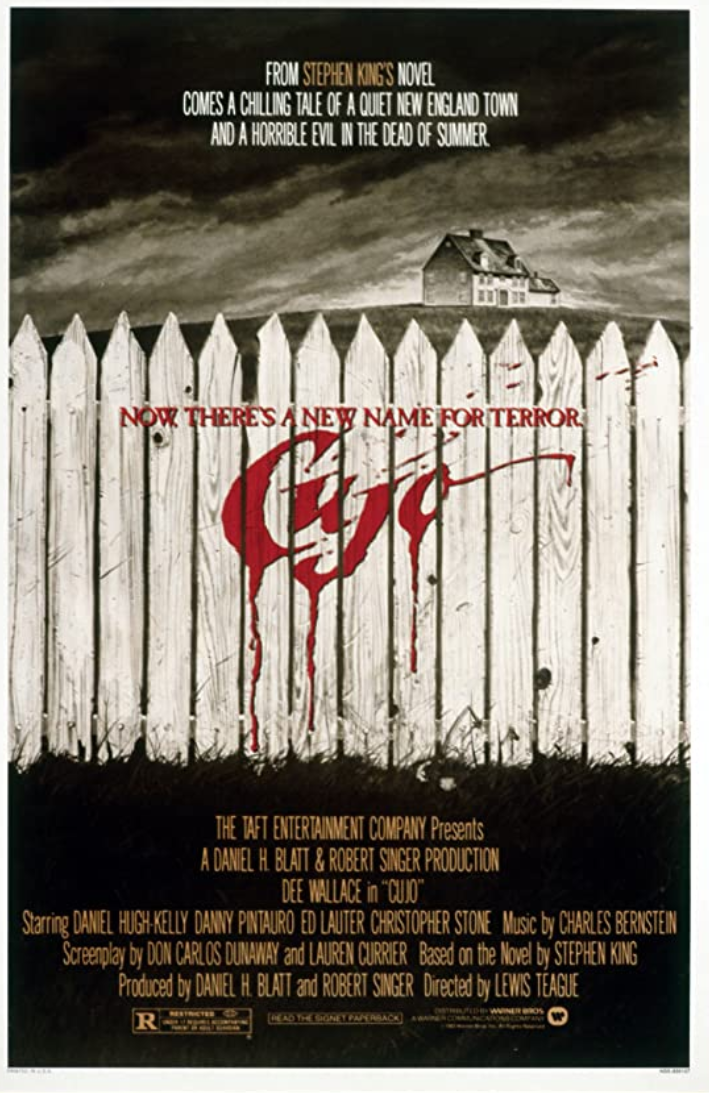
A woman (Dee Wallace) who has recently confessed to her husband (Daniel Hugh-Kelly) that she’s been having an affair with a local handyman (Christopher Stone) takes her son (Danny Pintauro) with her to get their car repaired at the home of a mechanic (Ed Lauter) who has just gone away for the week, and a rabid dog named Cujo is lying in wait for victims.

Genres, Themes, Actors, and Directors:

  • Horror Films
  • Infidelity
  • Killer Animals
  • Stephen King Adaptations
  • Survival
  • Trapped

Response to Peary’s Review:
Peary writes that this “simply plotted, surprisingly nerve-racking adaptation of Stephen King’s novel” is “fast-paced,” with “economical direction by Lewis Teague, who’d later direct King’s Cat’s Eye.” He points out that while it’s “a good date movie”, it “may be too frightening for little kids” — no kidding! (There is no way I would show this film to my own kids, currently ages 8, 10, and 12.) However, I agree with Peary that it’s a nifty little flick, one which generates a surprising amount of suspense and terror given the (necessarily) limited setting and circumstances. Wallace is highly sympathetic as a woman given the ultimate opportunity to atone for her transgressions (she becomes the epitome of a bad-ass mom), and Pintauro is one of the more natural kid actors to grace the screen. Fine cinematography and location shooting add to the appeal of this movie, which remains worth a look.

Redeeming Qualities and Moments:

  • Dee Wallace as Donna
  • Danny Pintauro as Tad
  • Fine location shooting (albeit in Northern California rather than Maine)
  • Atmospheric cinematography
  • Many highly effective sequences

Must See?
Yes, as a good (horror) show.

Categories

  • Good Show

Links:

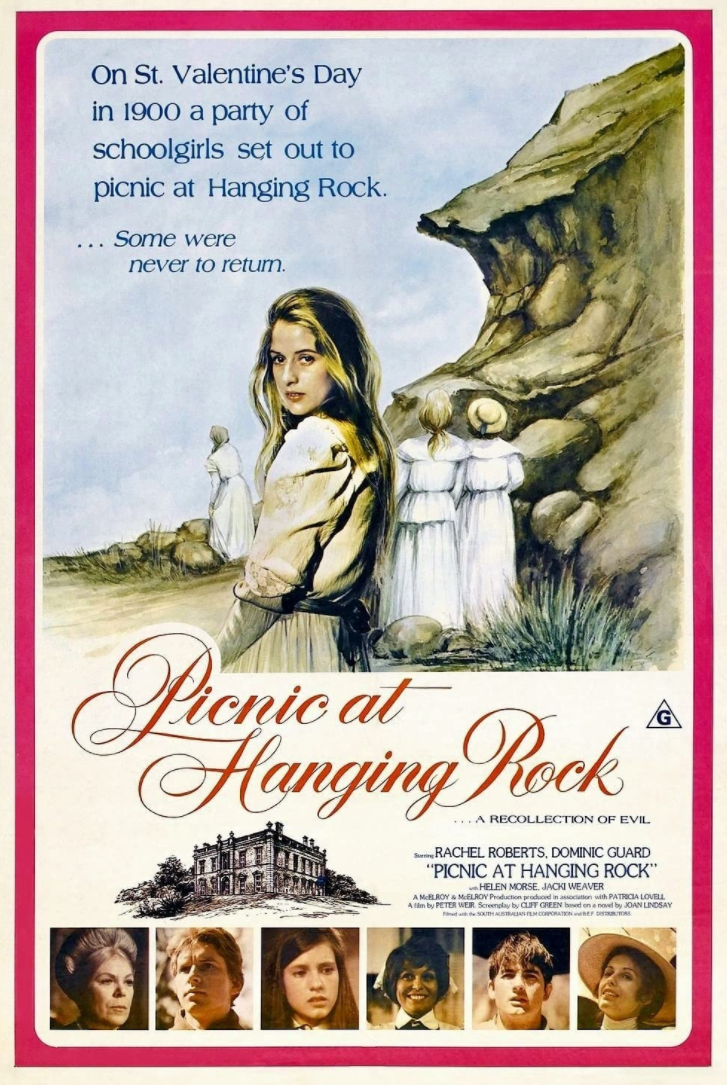
Picnic at Hanging Rock (1975)

Picnic at Hanging Rock (1975)

“Don’t worry about us, mademoiselle – we shall only be gone a little while.”

Synopsis:
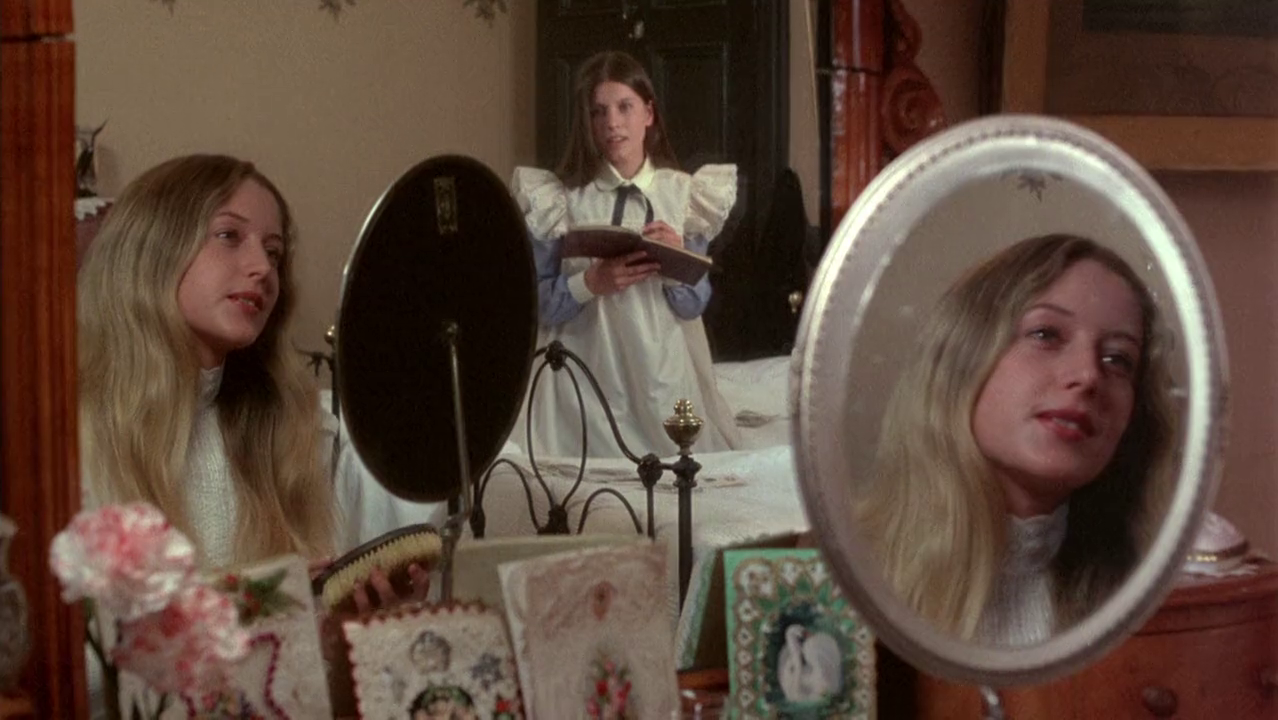
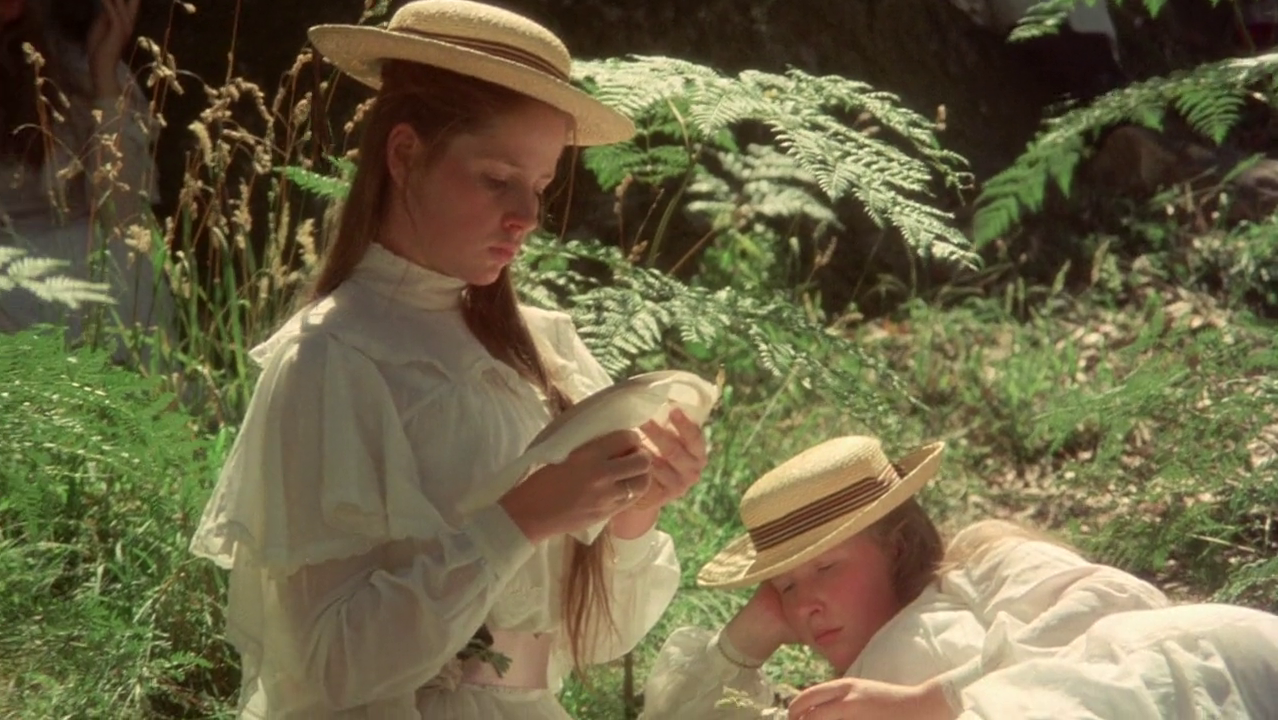
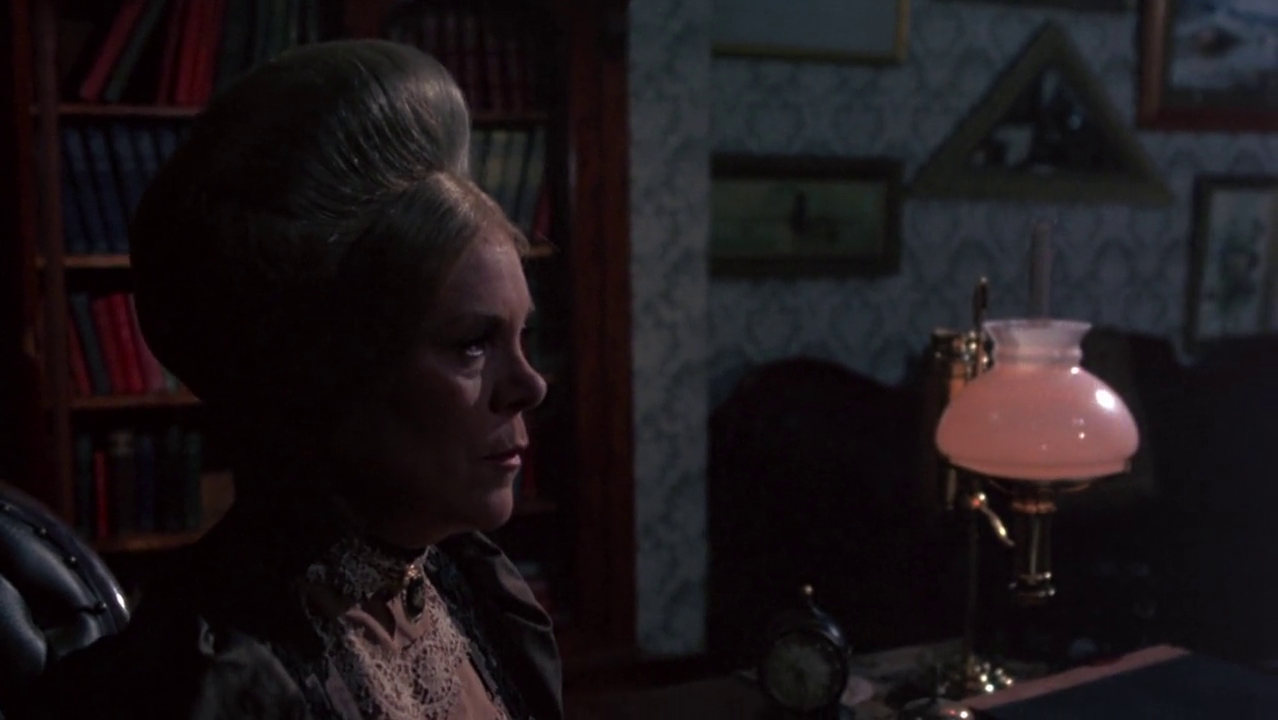
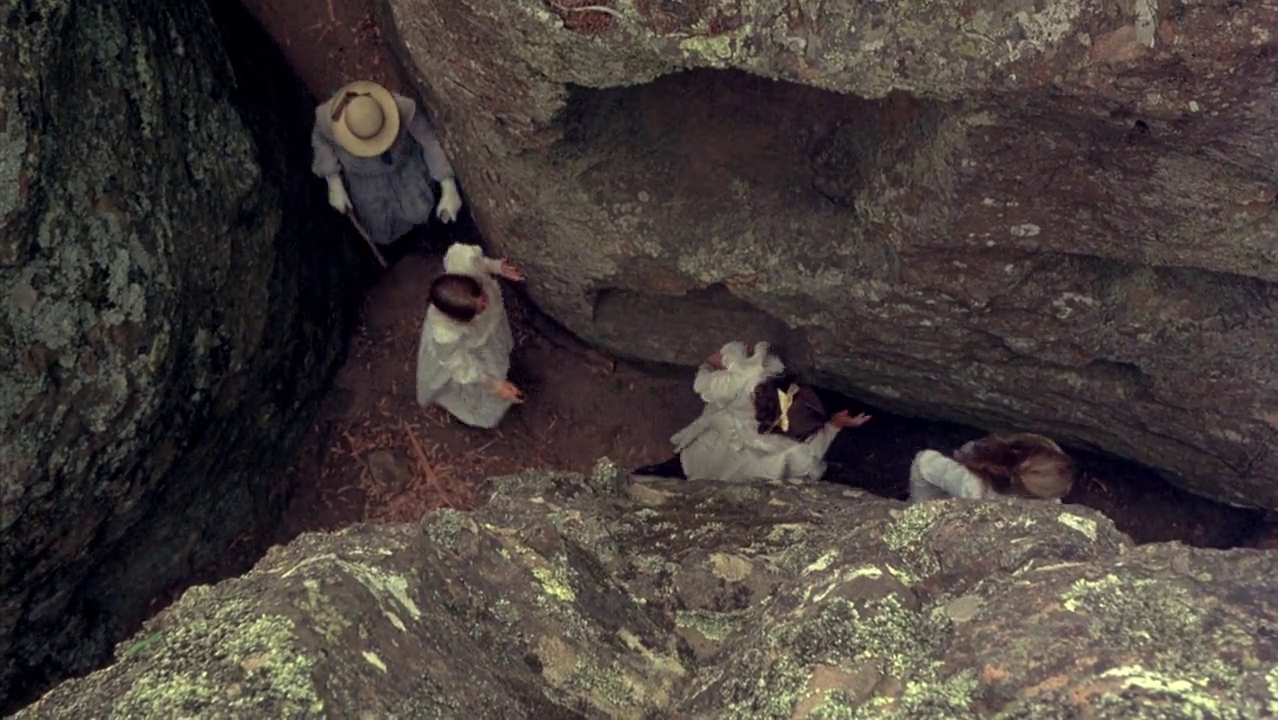
While on a picnic at Hanging Rock, a group of four boarding school teens — Miranda (Anne Lambert), Irma (Karen Robson), Marion (Jane Vallis), and Edith (Christine Schuler) — are given permission by their French instructor (Helen Morse) to explore a little higher. Edith eventually comes back screaming hysterically, and their math instructor (Vivean Gray) heads up to investigate but is soon declared lost along with the three missing girls. A British boy (Dominic Guard) who witnessed the girls set out on their exploration is determined to help find them, and enlists the help of his servant (John Jarratt) in returning to the formation. Meanwhile, back at the boarding school, the strict headmistress (Rachael Ray) is panicked by the ramifications of this scandalous event, and takes out her wrath on an orphan (Margaret Nelson) whose financial accounts are in arrears. Will the missing girls eventually be found — and if so, will we learn what happened to them?

Genres, Themes, Actors, and Directors:

  • Australian Films
  • Boarding Schools
  • Mysterious Disappearances
  • Peter Weir Films
  • Psychological Horror
  • Teenagers

Response to Peary’s Review:
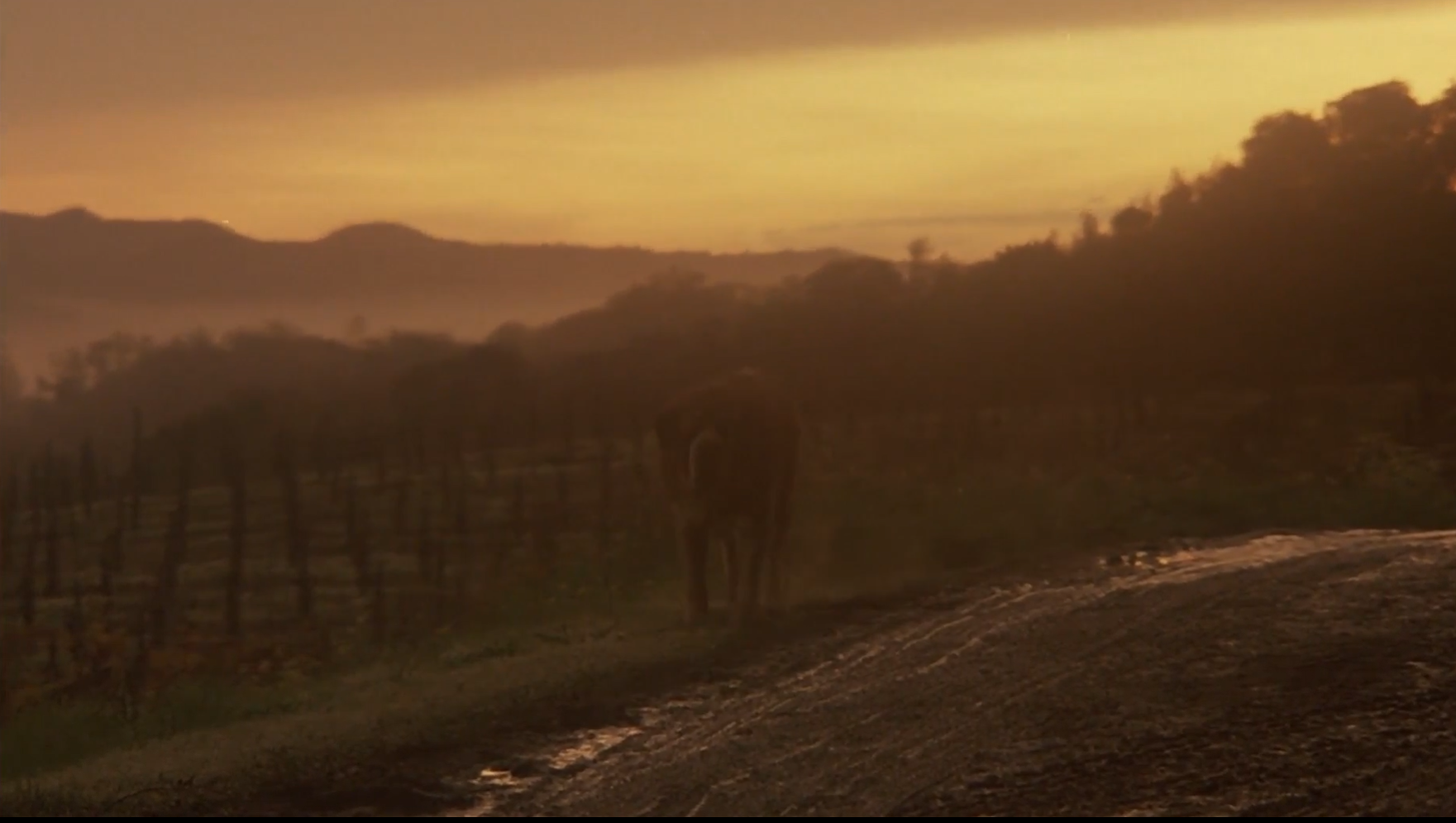
Peary points out that this “enigmatic cult film” — adapted by Peter Weir from a “1967 novel by Joan Lindsay, Australia’s first female novelist from a well-known and esteemed aristocratic family” — is “fiction passing as fact about the inexplicable disappearance of three young ladies and an instructor from Appleyard College as they explored Hanging Rock — a formidable, 500-foot high, million-year-old, uncharted volcanic formation — during a St. Valentine’s Day picnic in 1900.” He argues that “the first part of the film is absolutely spell-binding — no picture has more sinister atmosphere”; but he asserts that “compared to what happens on the Rock — a great, haunting, imaginatively photographed scene — everything that comes afterward is anticlimactic,” especially given that “horror movies with sadistic headmistresses are a dime a dozen.” He points out that while “Weir is faithful to Lindsay,” “on the whole this film is less satisfying because we miss the first-person perspective of former Victorian boarding-school survivor Lindsay.” However, he notes that the picture is “beautifully photographed by Russell Boyd, who put dyed (orange-yellow) wedding veils over his lens to capture the feel of Lindsay’s outdoor scenes, to capture a ‘lost summer’ feeling.”

Peary’s GFTFF review is excerpted directly from his much longer Cult Movies 2 article, where he goes into extensive detail about his thoughts on this unusual story’s translation from novel to film. First, he firmly reminds us that Lindsay’s tale was NOT based on any kind of an actual historical event, thus leaving interpretation of “what happened” up to a much wider array of possibilities (including primeval and/or super-natural ones) — though he ultimately argues that “no theory… totally works.” Next he offers his thoughts on the many ways in which he finds the film less satisfying than the novel (including how a late-in-the-film death is handled). Finally, he offers his own take on what the various events and characters represent — most specifically Miranda, who he refers to as “not of this world” and “not a human being”. He writes:

She is a flower to Sara. She is a swan to Michael [Guard]. A sex object to Albert [Jarratt]. A love object to the rest of the girls. A vision, a dream to herself. An ideal (a goddess) to Mrs. Appleyard [Roberts]. A (Botticelli) angel to Mlle. de Poitiers [Morse]. To us she is the embodiment of sexual desire stifled.

Indeed, it’s impossible not to pick up on strong hints that “it was Miranda’s mission to deliver sexually repressed girls, and even virginal Greta McGraw [Gray], into a world of sexual freedom, far away from adults like Mrs. Appleyard and the uncaring parents who would entrust them to such a witch.” Regardless of what “really happened,” one’s enjoyment of this film will depend on how much you’re willing to accepts its puzzle-like nature, and be swept up in its mood rather than searching for literal answers to its many mysteries.

Redeeming Qualities and Moments:

  • Russell Boyd’s stunning cinematography


  • Fine period detail

  • Many haunting and memorable moments


  • Bruce Smeaton’s distinctive score

Must See?
Yes, both as an enigmatic classic and for its historical relevance in Australian cinema.

Categories

  • Genuine Classic
  • Historically Relevant

(Listed in 1001 Movies You Must See Before You Die)

Links:

Driller Killer, The (1979)

Driller Killer, The (1979)

“What’s happening to you?”

Synopsis:
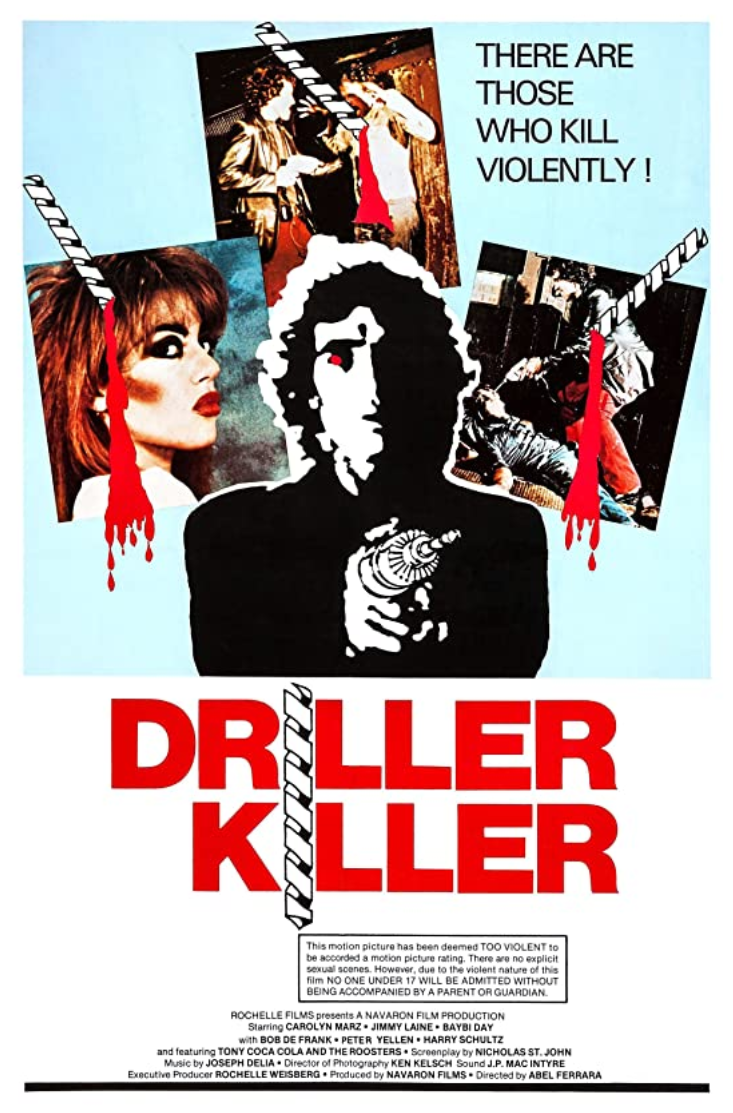
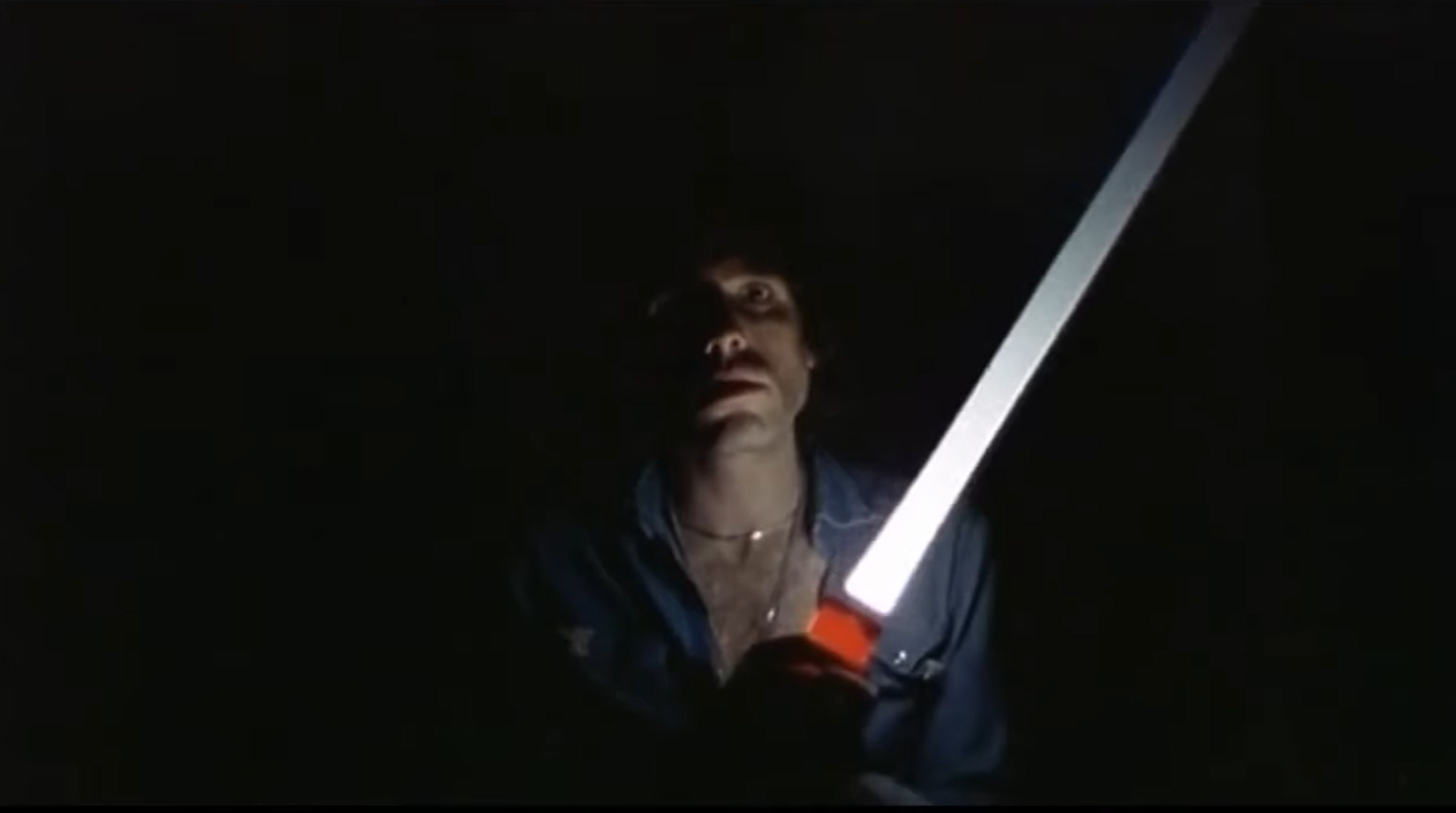
A painter (Abel Ferrara) living in New York with his “sensible” girlfriend (Carolyn Marz) and her “spacy” lover (Baybi Day) becomes increasingly unhinged as he struggles to pay his bills, and a rock band rehearses incessantly above his apartment. Soon he is taking his fury out on random male victims across the city, using a power drill as his weapon of choice.

Genres, Themes, Actors, and Directors:

  • Artists
  • Mental Breakdown
  • Revenge
  • Serial Killers

Response to Peary’s Review:
Peary writes that this “sleazy cult film was the first venture of independent New York director Abel Ferrara,” who — under the stage name ‘Jimmy Lane’ — “plays a struggling artist” who “paints obsessively and begins to lose his senses” and eventually “has a complete breakdown”. Peary notes that this “grisly film is not your typical slice-and-dice splatter fare”, given it’s “not about a man stalking scantily clad females” (the “artist’s victims are all men”) — but while Peary asserts he believes “Ferrara is making some point about the artist feeling hatred toward men because he fears he is a homosexual himself,” I disagree with that interpretation; Ferrara’s victims are almost all down-on-their-luck vagrants who perhaps represent Ferrara’s fears of his own fate if he isn’t able to survive as an artist — a point highlighted when his finally-finished “masterpiece” is scorned by his agent (guess what happens to him?). Peary writes that Ferrara “scores with a lot of weird touches and humor”, but the “storyline is hard to follow and the violence is unnecessarily graphic”; indeed, this creatively filmed but self-indulgent flick can easily be skipped.

Redeeming Qualities and Moments:

  • Good use of location shooting in New York City
  • Atmospheric cinematography

Must See?
Nope; you can most certainly skip this one unless you happen to be interested in Ferrara’s output.

Links:

Summer Place, A (1959)

Summer Place, A (1959)

“Are you bad, Johnny? Have you been bad with girls?”

Synopsis:
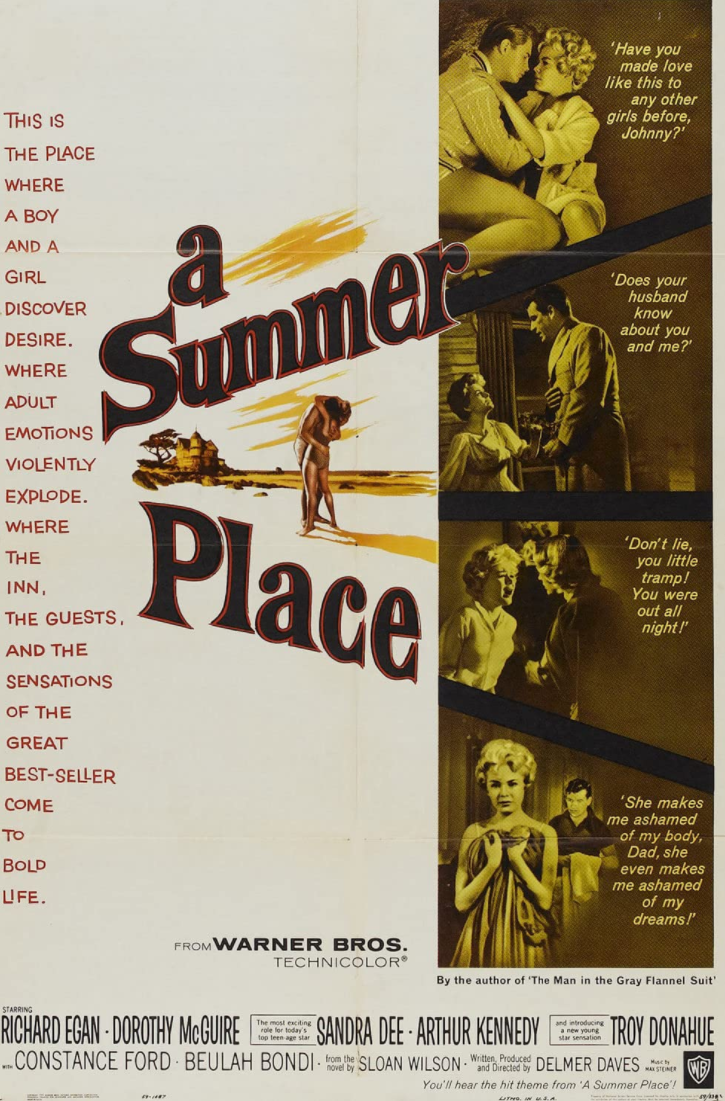
A self-made millionaire (Richard Egan) travels with his wife (Constance Ford) and daughter (Sandra Dee) to a summer resort run by Egan’s former flame (Dorothy McGuire), her alcoholic husband (Arthur Kennedy), and their son (Troy Donahue). Soon Egan and McGuire have rekindled their romance, and Dee and Donahue have fallen for one another — but will Ford’s prudish sensibilities and sinister plans to milk her husband for alimony ruin everyone’s chance for happiness?

Genres, Themes, Actors, and Directors:

  • Arthur Kennedy Films
  • Beulah Bondi Films
  • Class Relations
  • Cross-Class Romance
  • Delmer Daves Films
  • Dorothy McGuire Films
  • First Love
  • Sandra Dee Films
  • Teenagers
  • Troy Donahue Films
  • Virginity

Response to Peary’s Review:
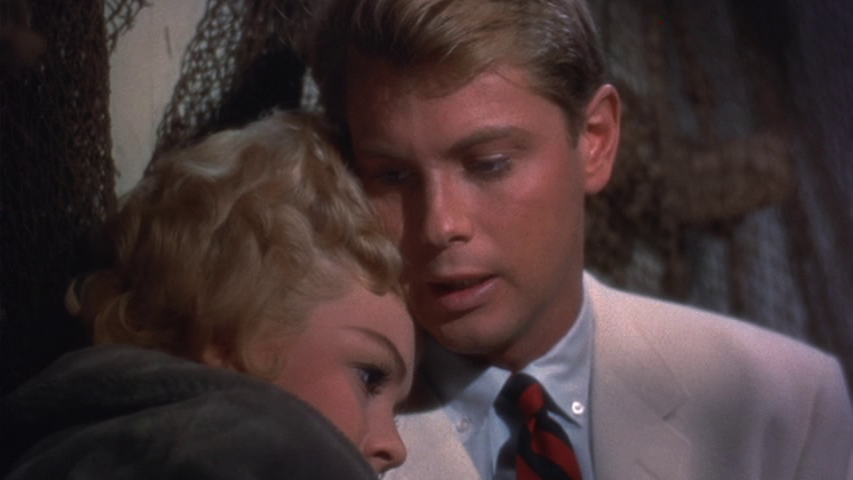
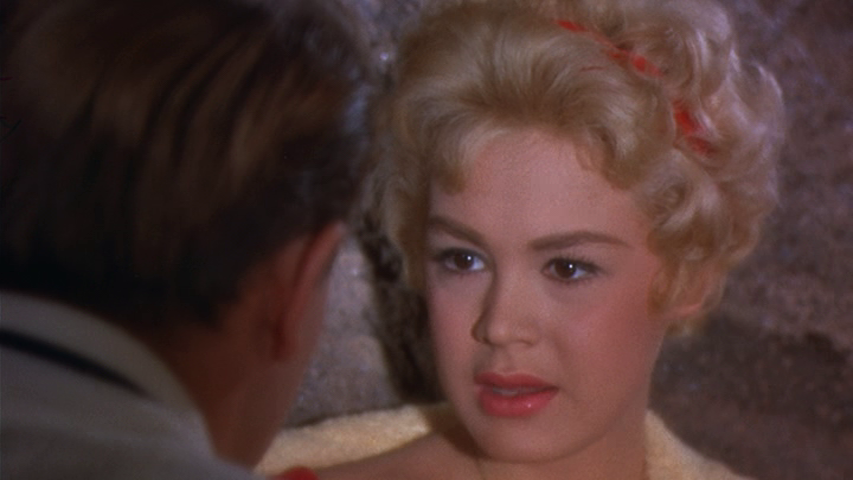
Peary argues that this “first-rate trash about ‘we’ve gotta-be-good‘ young lovers… trying to find a refuge from their mixed up parents” is “lots of fun: it’s corny, there’s a lot of emphasis on sex, there’s hysteria.” He writes that “Dee and Donahue are a movie match made in camp heaven:

and Ford is deliciously diabolical.”

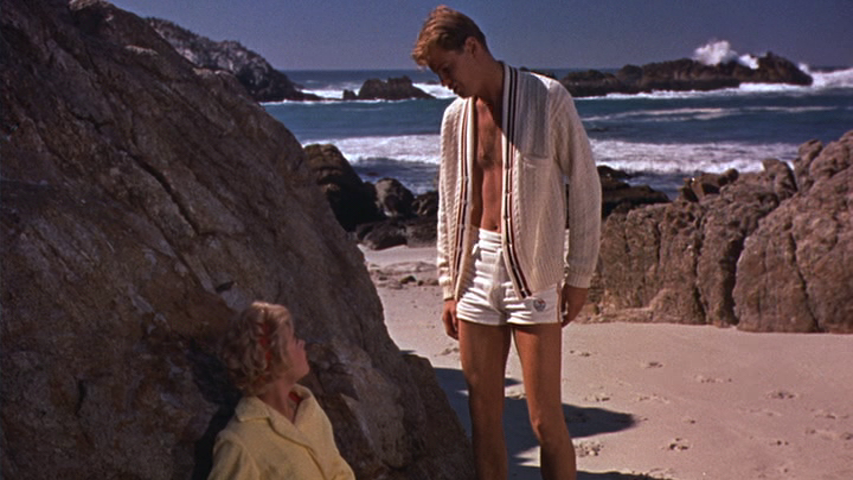
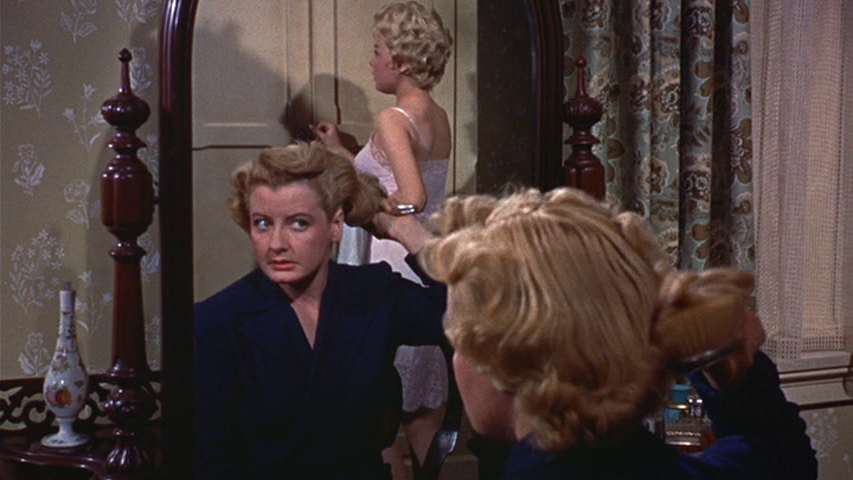
Indeed, there is so much overwrought melodrama and laughable dialogue in this soaper it’s hard to know where to begin in a critique. For instance, abusive Ford subjects Dee to a full physical examination after she’s been shipwrecked for a night with Donahue, despite Dee crying out in agony:

“I haven’t done anything wrong. I’ve been a good girl. I haven’t done anything wrong. Please, I want my father. No! No! No! I’ve been a good girl! No! No!”

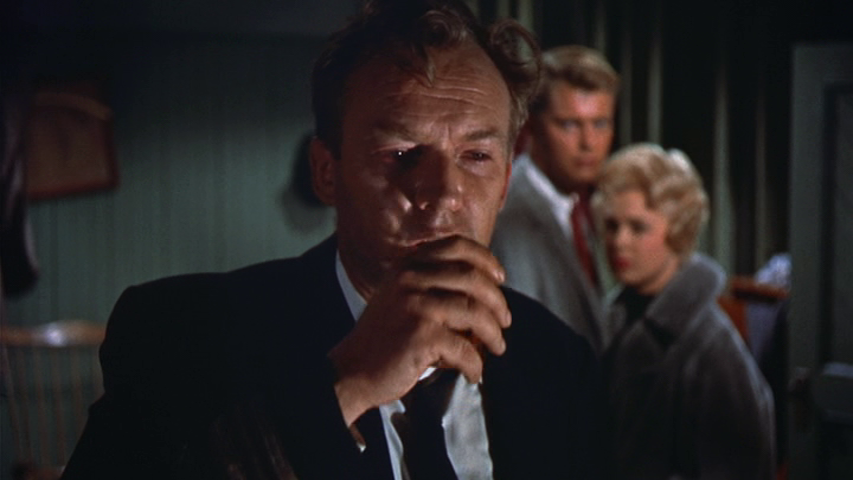
Eventually, of course, Donahue and Dee’s love for one another transcends their parents’ fruitless attempts to keep them apart and they land in the Ultimate Trouble. Meanwhile, Kennedy’s alcoholism continues to worsen:

while McGuire and Egan live out their newly validated romance in a Frank Lloyd Wright house by the shore.

How will everything work out for the young lovers? You’ll have to watch to see — but be forewarned that Max Steiner’s recognizable score will remain stuck in your head indefinitely.

Redeeming Qualities and Moments:

  • Fine Technicolor cinematography and location shooting


Must See?
Yes, once, simply for its notoriety.

Categories

  • Historically Relevant

Links:

Treasure of the Sierra Madre, The (1948)

Treasure of the Sierra Madre, The (1948)

“The way I see it, gold can be as much of a blessing as a curse.”

Synopsis:
Two penniless drifters (Humphrey Bogart and Tim Holt) partner with an aging prospector (Walter Huston) to search for gold in the Sierra Madre Mountains of Mexico, but quickly find their quest marred by bandits, greed, and distrust.

Genres, Themes, Actors, and Directors:

  • Betrayal
  • Gold Seekers
  • Greed
  • Humphrey Bogart Films
  • John Huston Films
  • Mental Breakdown
  • Walter Huston Films

Response to Peary’s Review:
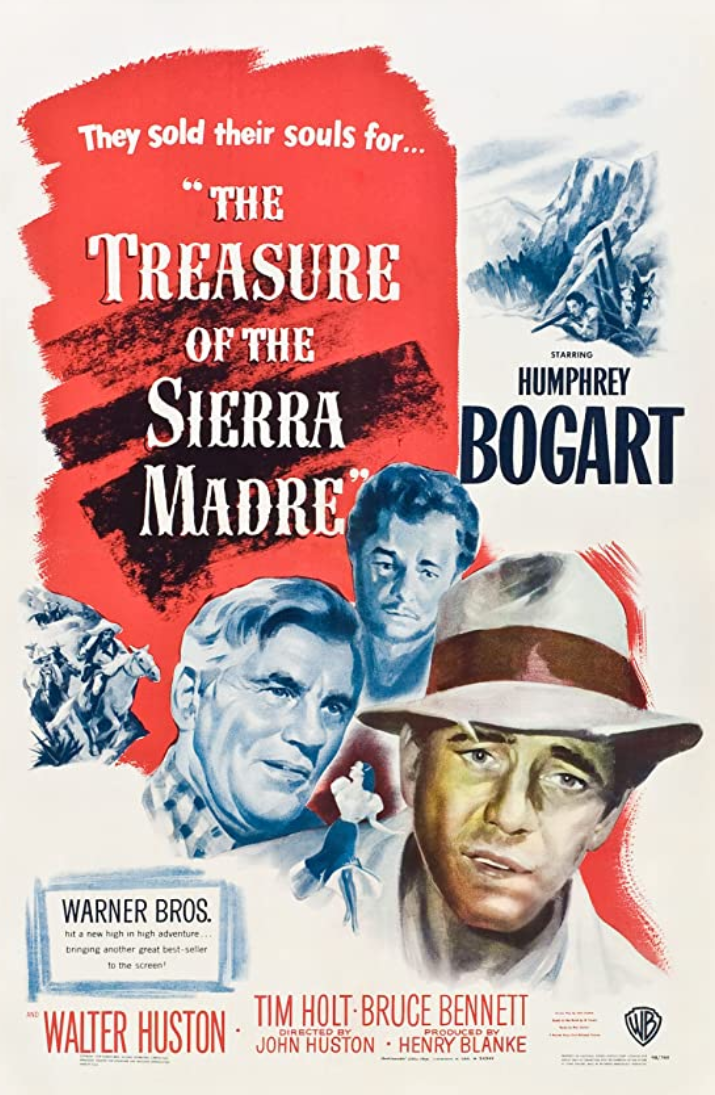
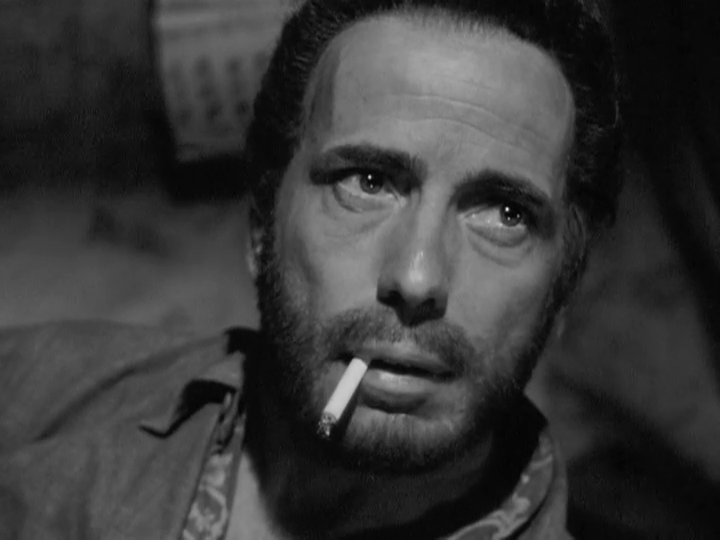
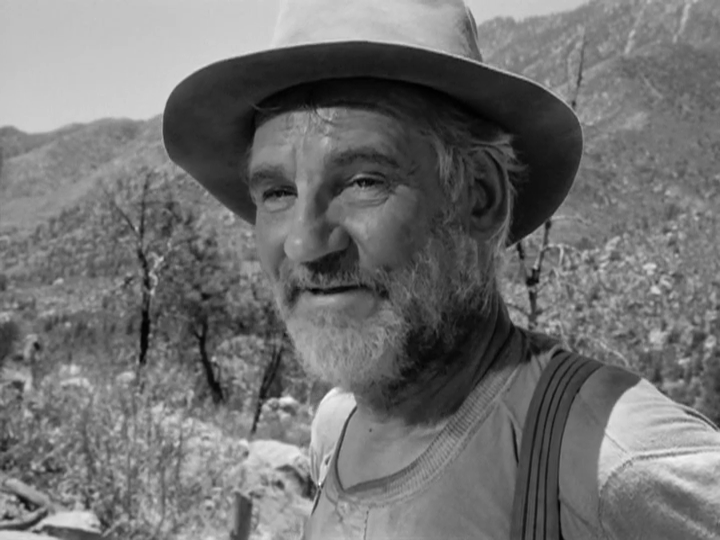
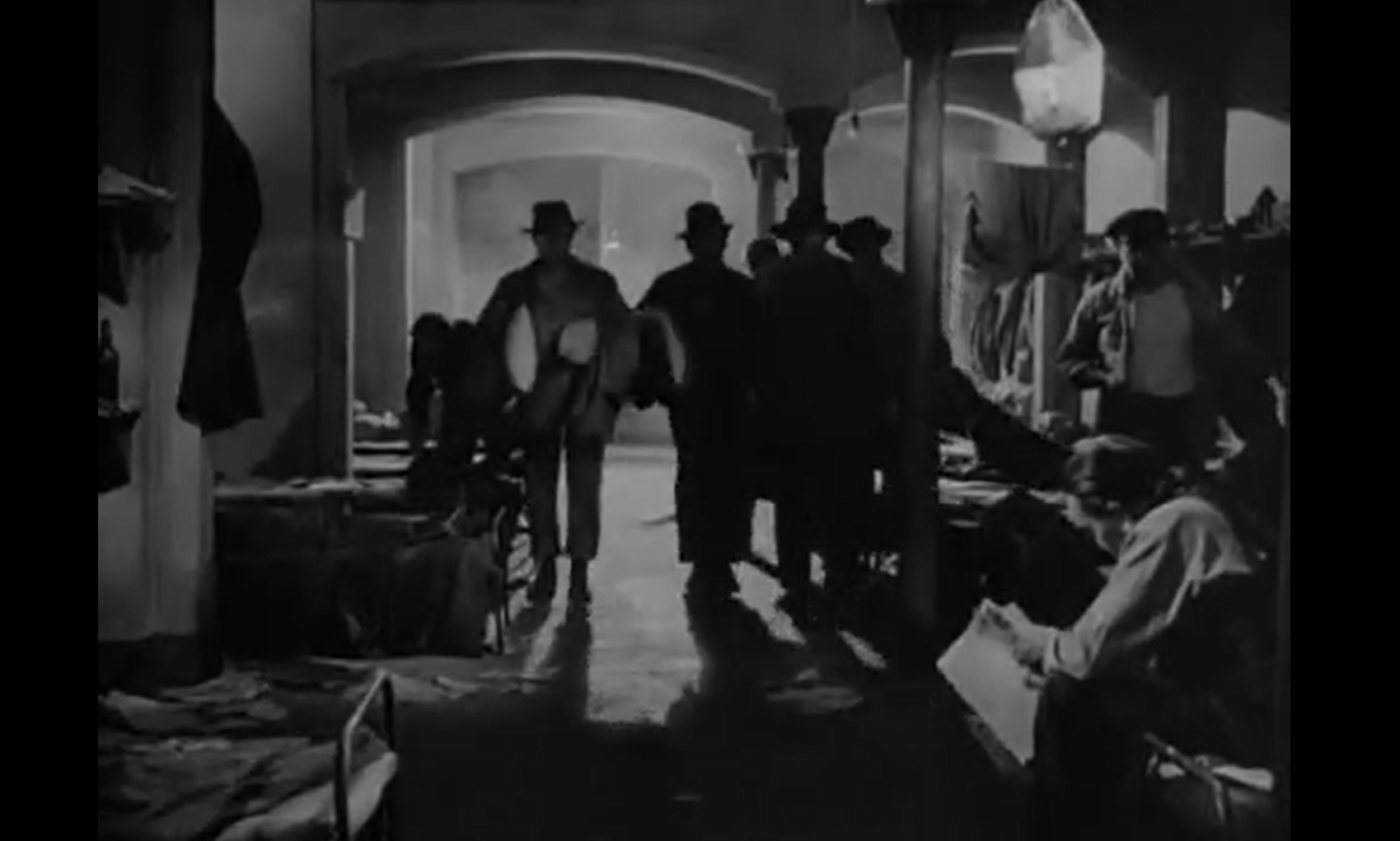
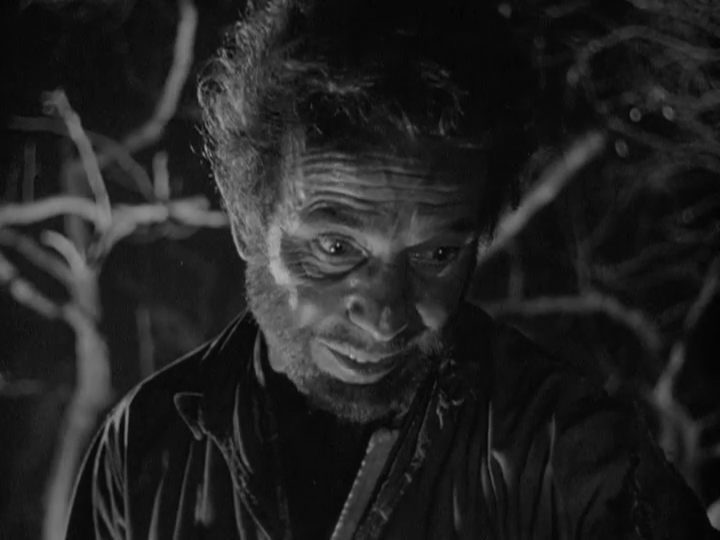
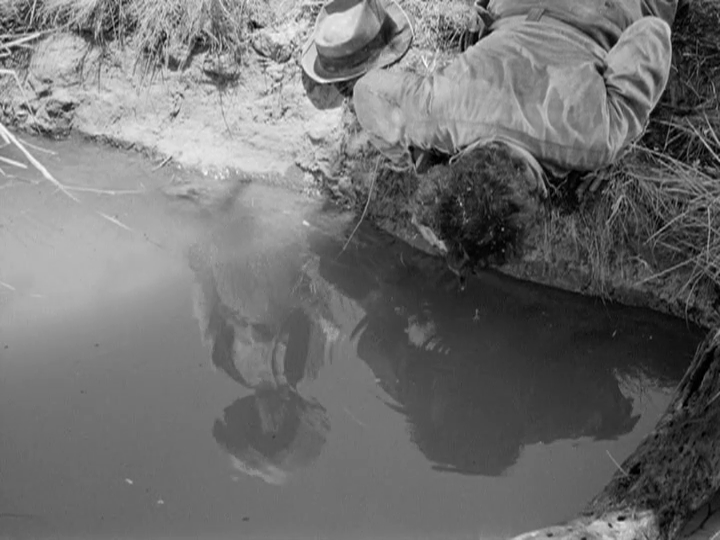
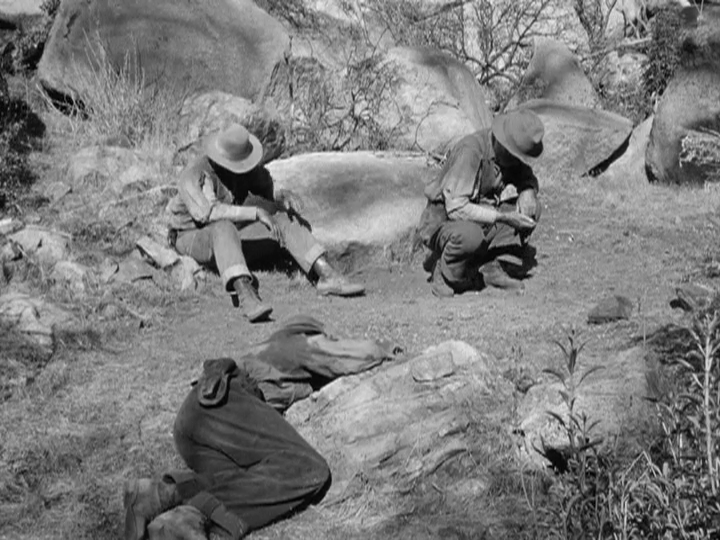
Peary notes that this adaptation of B. Traven’s novel represents “masterful storytelling by John Huston, who won Oscars for his direction and his script adaptation” — indeed, it “is one of the greatest American films.” He writes that “Humphrey Bogart had one of his finest roles as Fred C. Dobbs, revealing the brittleness and paranoia that his ’40s heroes felt but held in check.” Meanwhile, Supporting Oscar-winning Huston plays a “wise, fast-talking” man who “teaches his two partners about mining” but warns that they may “become distrustful of each other” — which does indeed happen, leading to a “brilliantly played character transformation” by Bogart in which he “nears madness”. Peary notes that this “epic has dynamic scenes in wilderness and civilization, superior dialogue, exciting action-adventure, [and] interesting characters” — but “what really makes this film special is that Dobbs, who proves anything but moral or heroic, is the lead (most emphasized) character rather than having that designation going to the moral Curtin [Holt], who, in movie storytelling terms, is the more logical choice.”

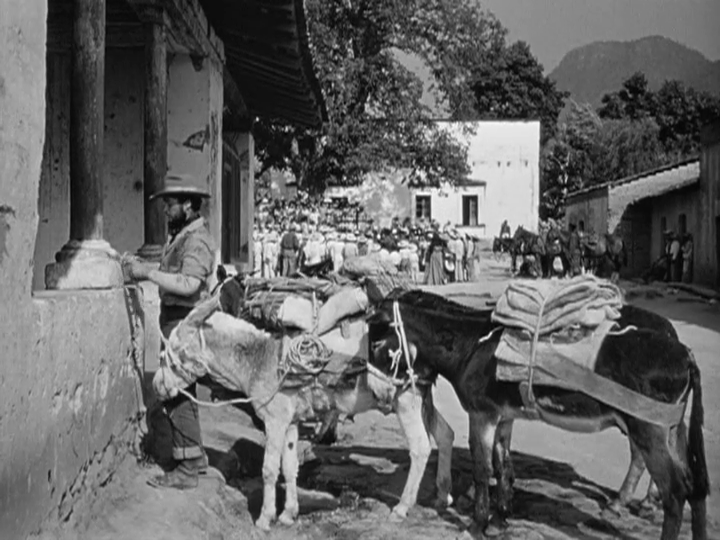
In Alternate Oscars, Peary names this the Best Movie of the Year (over Laurence Olivier’s Hamlet), and elaborates on what makes it such a fine picture. He writes that in order to “achieve authenticity, as well as a dirty, gritty, dangerous feel to his picture, Huston insisted on shooting on location in Mexico” — making it “the first narrative American movie filmed entirely out of the States” — and “hired Mexican character actors and amateurs,” wisely chancing on “including long bits of dialogue that were delivered in Spanish and had no subtitles.” However, Peary argues that “Huston’s major contribution to the film was making Gold Hat” (a bandito played by Alfonso Bedoya) “a continuing character”: he’s a “vile, smiling, almost comical” bandit who “could have been conceived by Luis Bunuel” and “is one of the screen’s great punk-bully villains”, with his “great moment” coming when “he tries to pass himself and his men off as federales, and Dobbs (Bogart) asks to see their badges:

“Badges? We ain’t got no badges. We don’t need no badges. I don’t have to show you any stinking badges.”

Peary notes that while “at first glance The Treasure of the Sierra Madre seems to be an action-adventure film geared for young boys, with its treasure hunt in unknown territory, gunplay, fisticuffs (the scene in which Dobbs and Curtin fight with their boss… in a bar is a classic), tension and squabbling among partners, brutal villains, [and] no women”, it’s “also a complex character study about what the discovery of gold can do to individuals.” Peary further points out how “most of the tension in the picture is caused by intrusion: the lure of gold intruding on [the] minds of and relationships among the three men, and different characters intruding on space ‘belonging’ to others.” Suffice it to say there’s much rich material here to be explored, and Huston does a marvelous job presenting a story with numerous surprises — both brutal and heartwarming — but one that never pulls any punches.

Redeeming Qualities and Moments:

  • Humphrey Bogart as Fred Dobbs
  • Walter Huston as Howard
  • Tim Holt as Curtin
  • Ted McCord’s cinematography


  • Highly effective location shooting in Mexico

  • Many memorable moments

Must See?
Yes, as a genuine classic.

Categories

  • Genuine Classic
  • Oscar Winner or Nominee

(Listed in 1001 Movies You Must See Before You Die)

Links:

Champion (1949)

Champion (1949)

“What you don’t know would fill a book — but you’ve got guts!”

Synopsis:
A man (Kirk Douglas) and his brother (Arthur Kennedy) find work at a diner, where Douglas romances the beautiful daughter (Ruth Roman) of the owner but disappears when he’s forced by her father into a shotgun marriage. With the help of a retired trainer (Paul Stewart), Douglas works his way to the top of his game and eventually becomes famous — but will he alienate everyone he loves during his climb to success?

Genres, Themes, Actors, and Directors:

  • Arthur Kennedy Films
  • Boxing
  • Corruption
  • Kirk Douglas Films
  • Mark Robson Films
  • Ruth Roman Films

Response to Peary’s Review:
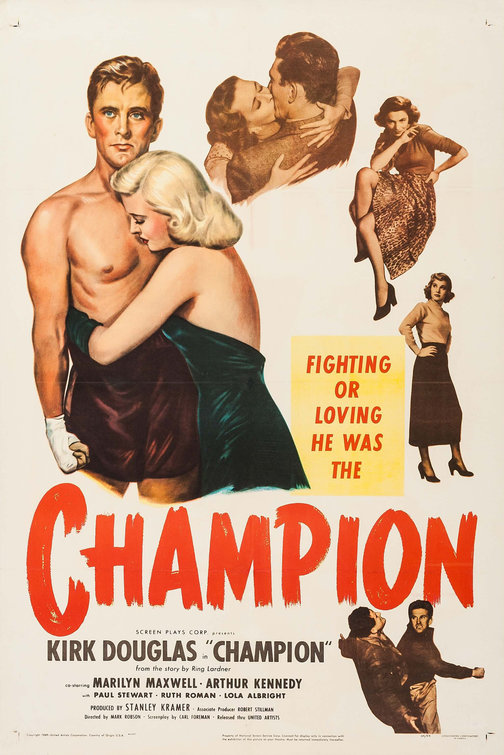
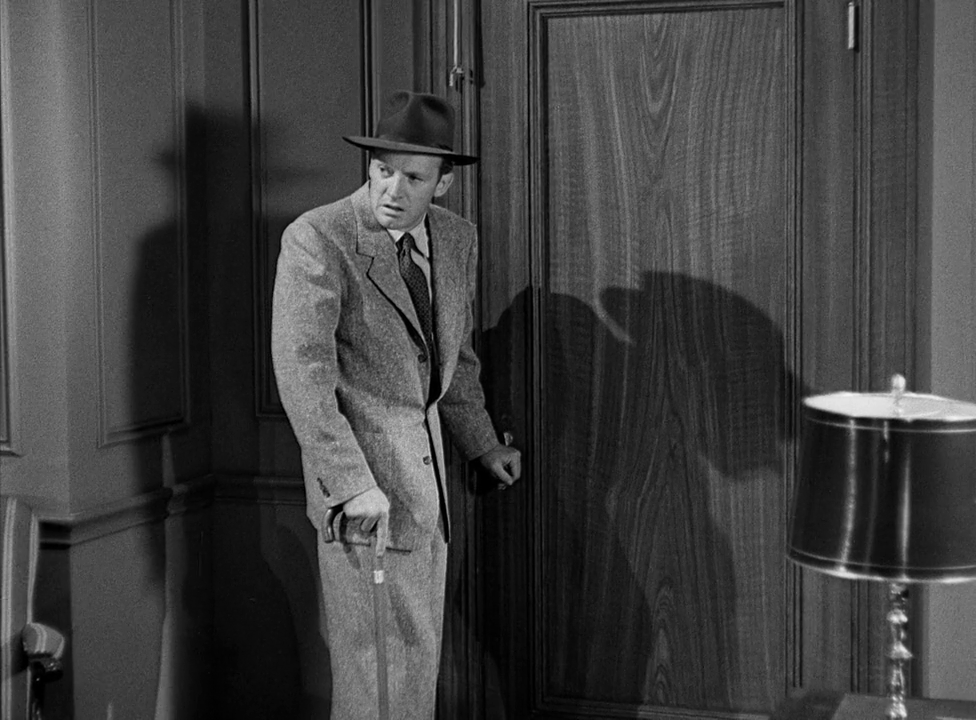
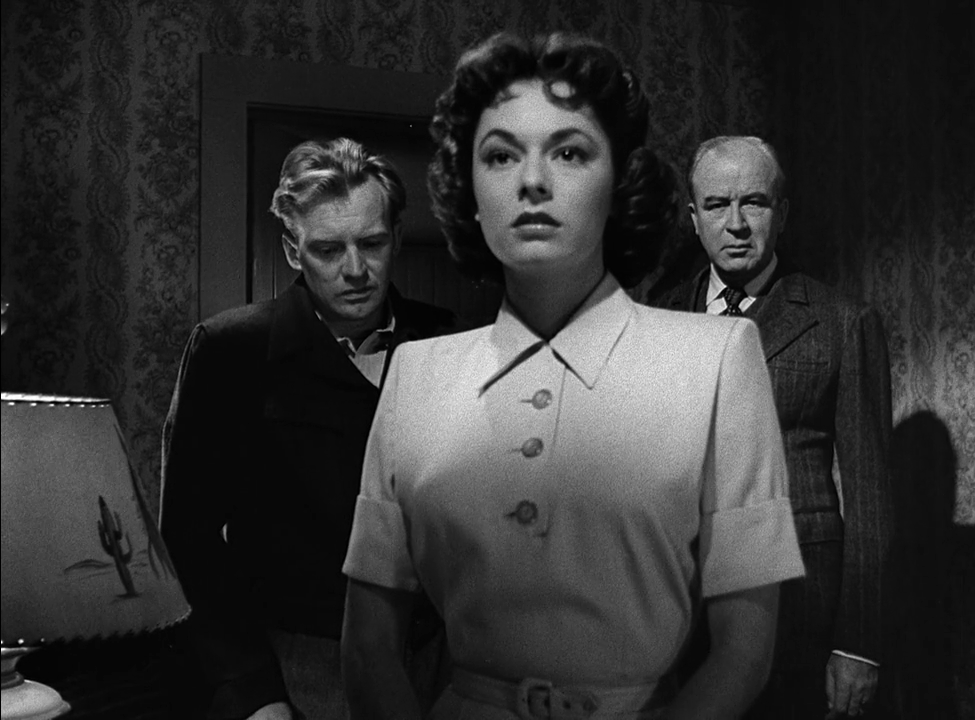
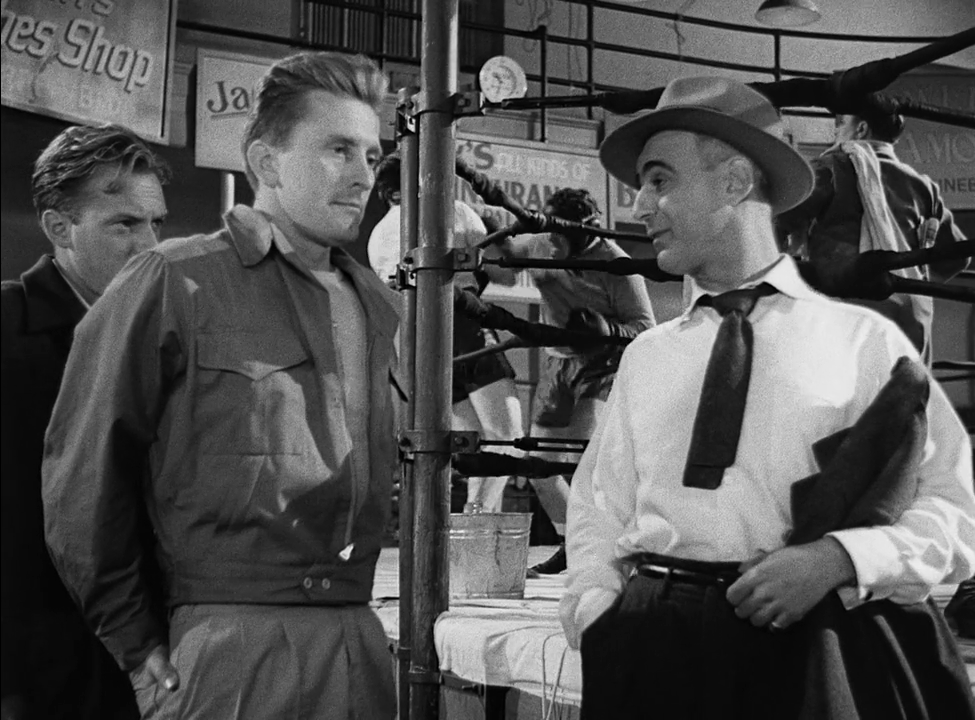
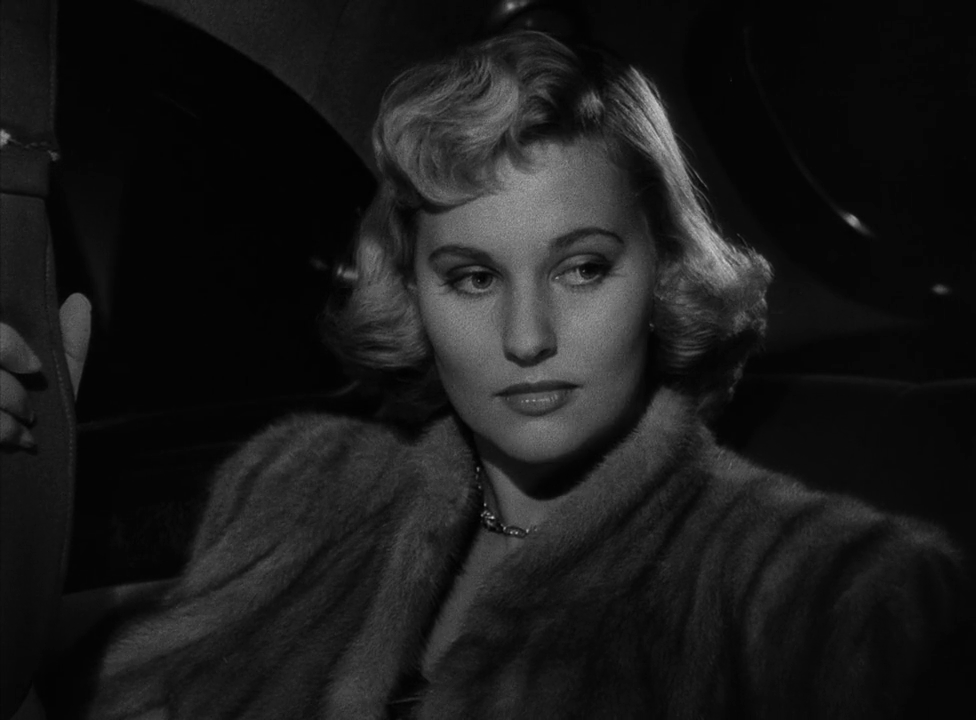
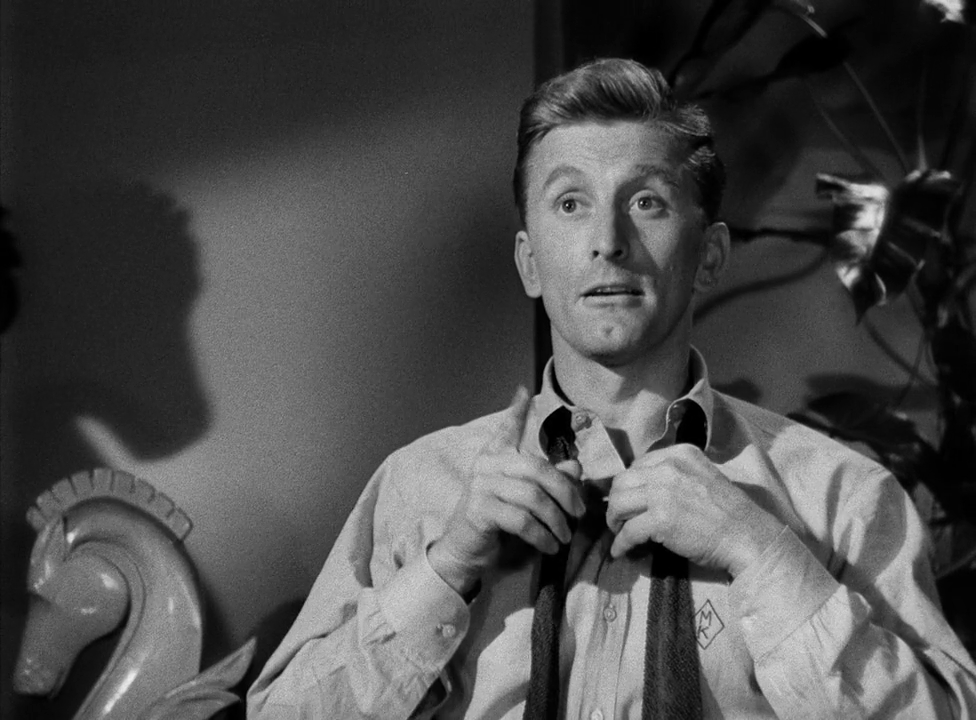
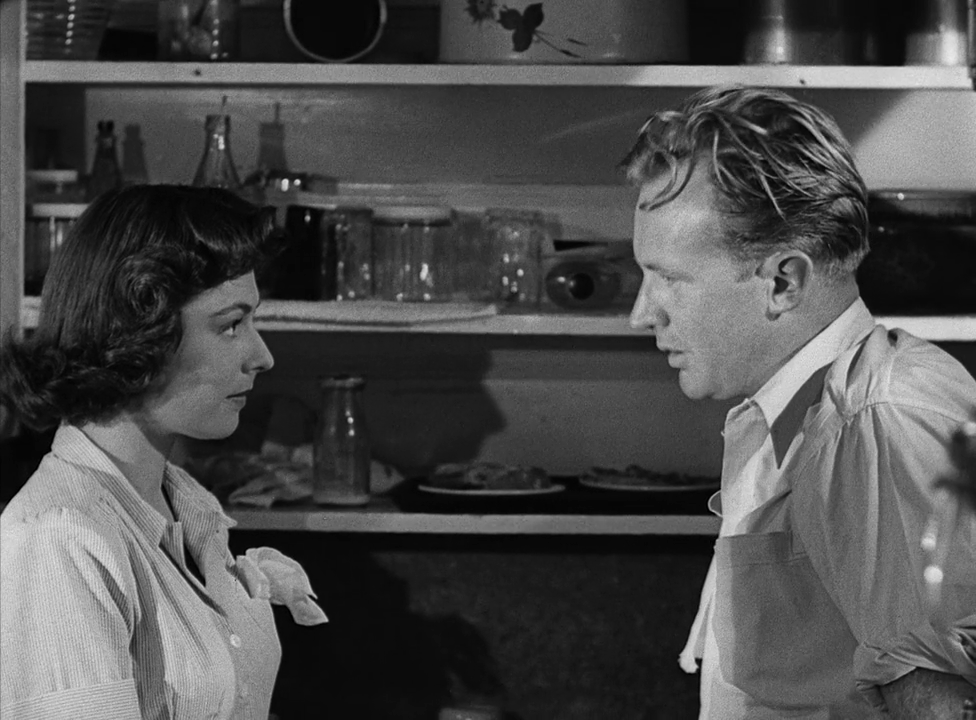
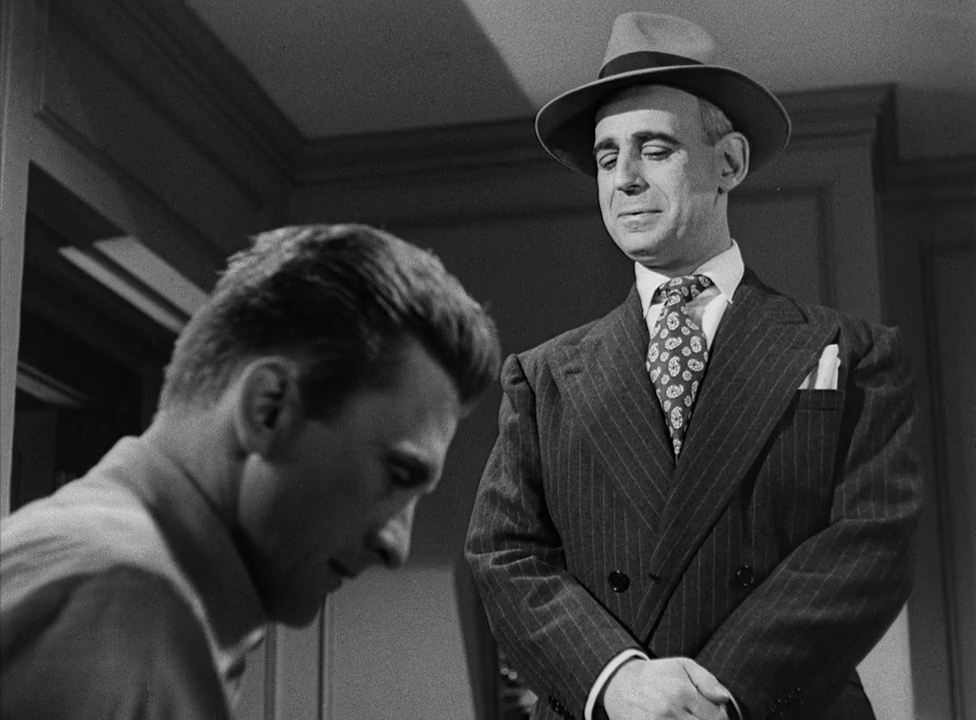
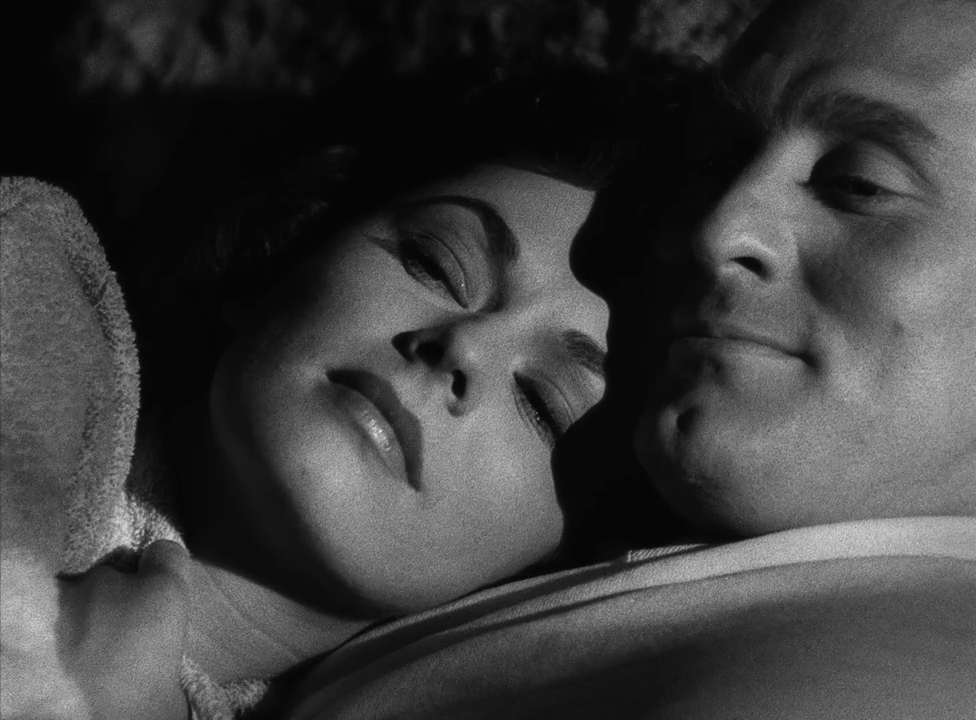
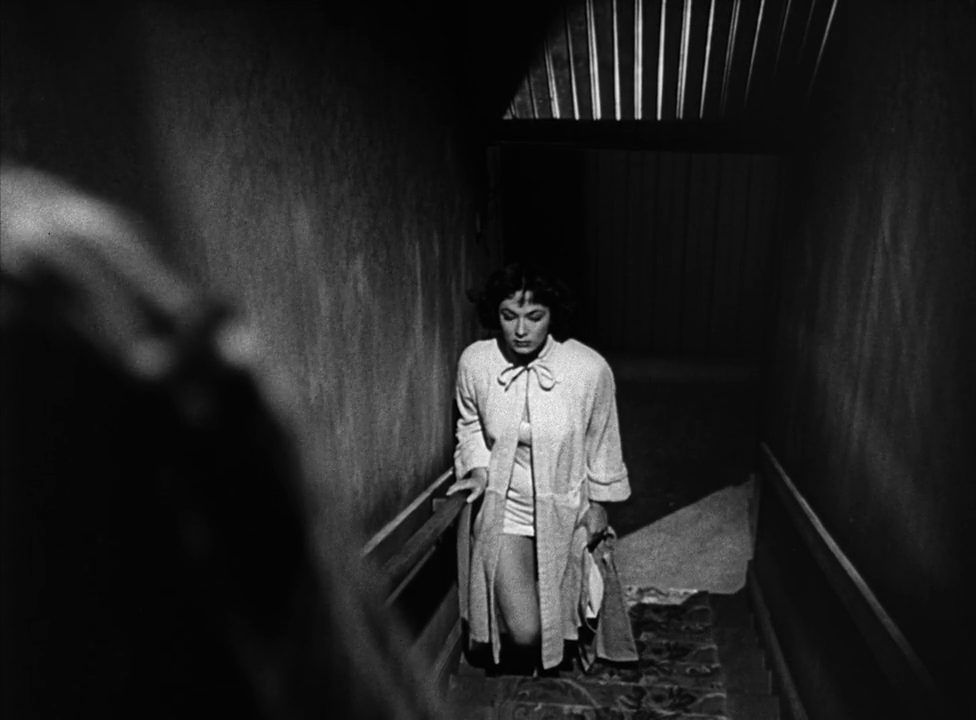
Peary writes that while “most boxing films contend that the sport corrupts individuals”, this classic — directed by Mark Robson, and “shot like a B-film in shadowy noir style by Franz Planer” — “contends that some individuals want to be corrupted”. Kirk Douglas stars as Midge Kelley — one of his “quintessential ‘heels'”, a “ruthless man who’ll do anything necessary, rub shoulders with anyone…, and step on friends and loved ones in order to get ‘people to call me mister‘.” Peary describes him as “the typical man in the American rat race, a scoundrel moving up in the business world” in which “boxers sell out their scruples to get ahead,” and “men such as Midge dupe the public into idolizing them and buying tickets to their fights.” In Alternate Oscars — where Peary gives Douglas the Best Actor Award — he adds that “Midge’s motivation isn’t so bad” and “we like Midge at times because he is protective of his brother, smothers his mother with kisses, and has guts enough always to get in the last punch, even when defeated.” In addition to Douglas’s fine central performance, Champion is noteworthy for its striking cinematography and a well-cast roster of supporting players, especially Kennedy as Douglas’s “lame” brother:

… Ruth Roman as a young woman who falls for Douglas’s charms before he makes a name for himself:

… Paul Stewart as a self-proclaimed “boxing addict” who agrees to help Douglas out.

… and Lola Albright as a sculptress who’s shocked to find that Douglas’s ambitions really do trump all else.

Note: To see Roman, Stewart, and Kennedy co-starring the same year in very different roles, be sure to check out The Window (1949).

Redeeming Qualities and Moments:

  • Kirk Douglas as Midge
  • Fine supporting performances

  • Franz Planer’s cinematography

Must See?
Yes, for Douglas’s performance and as an all-around good show.

Categories

  • Good Show
  • Noteworthy Performance(s)

Links:

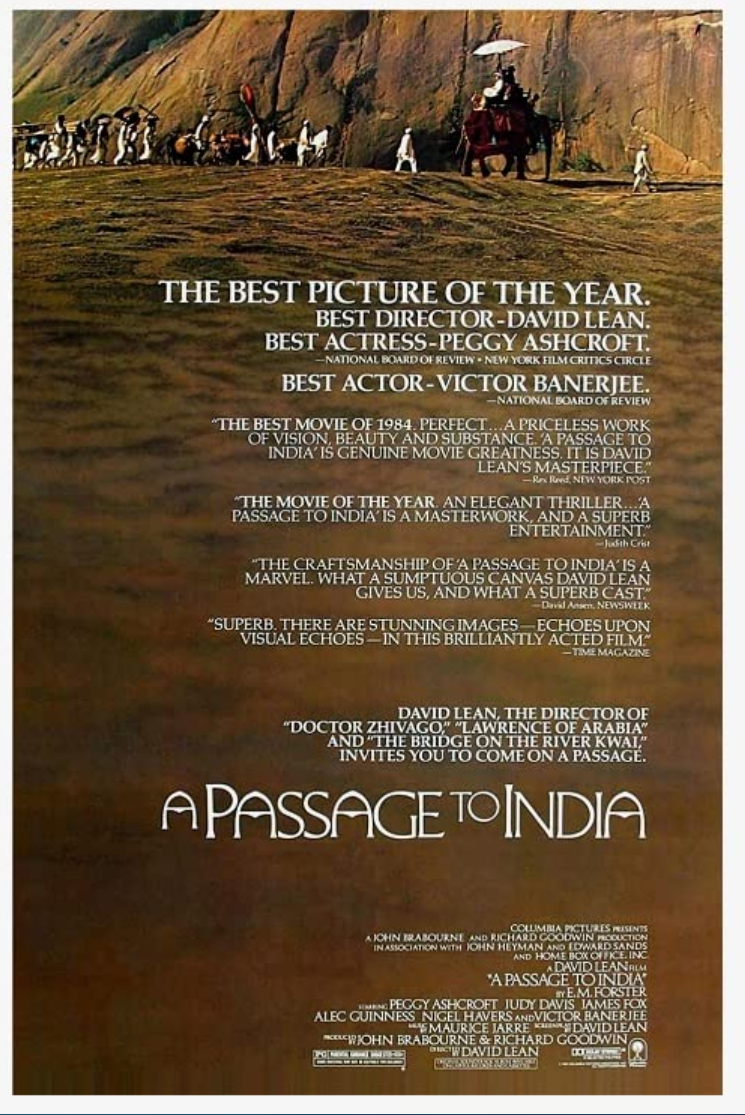
Passage to India, A (1984)

Passage to India, A (1984)

“India forces one to come face to face with oneself.”

Synopsis:
A young woman (Judy Davis) travels to British-colonized India with the mother (Peggy Ashcroft) of her intended (Nigel Havers), and given their interest in getting to know the “real” India, they soon find themselves invited by a local widowed doctor (Victor Banerjee) to visit the nearby Marabar Caves. When the journey turns unexpectedly traumatic, Banerjee’s name and livelihood are in jeopardy; can he count on the support of the local school superintendent (James Fox) to help him be acquitted of a crime he didn’t commit?

Genres, Themes, Actors, and Directors:

  • Alec Guinness Films
  • Courtroom Drama
  • David Lean Films
  • Falsely Accused
  • India
  • James Fox Films
  • Racism and Race Relations

Response to Peary’s Review:
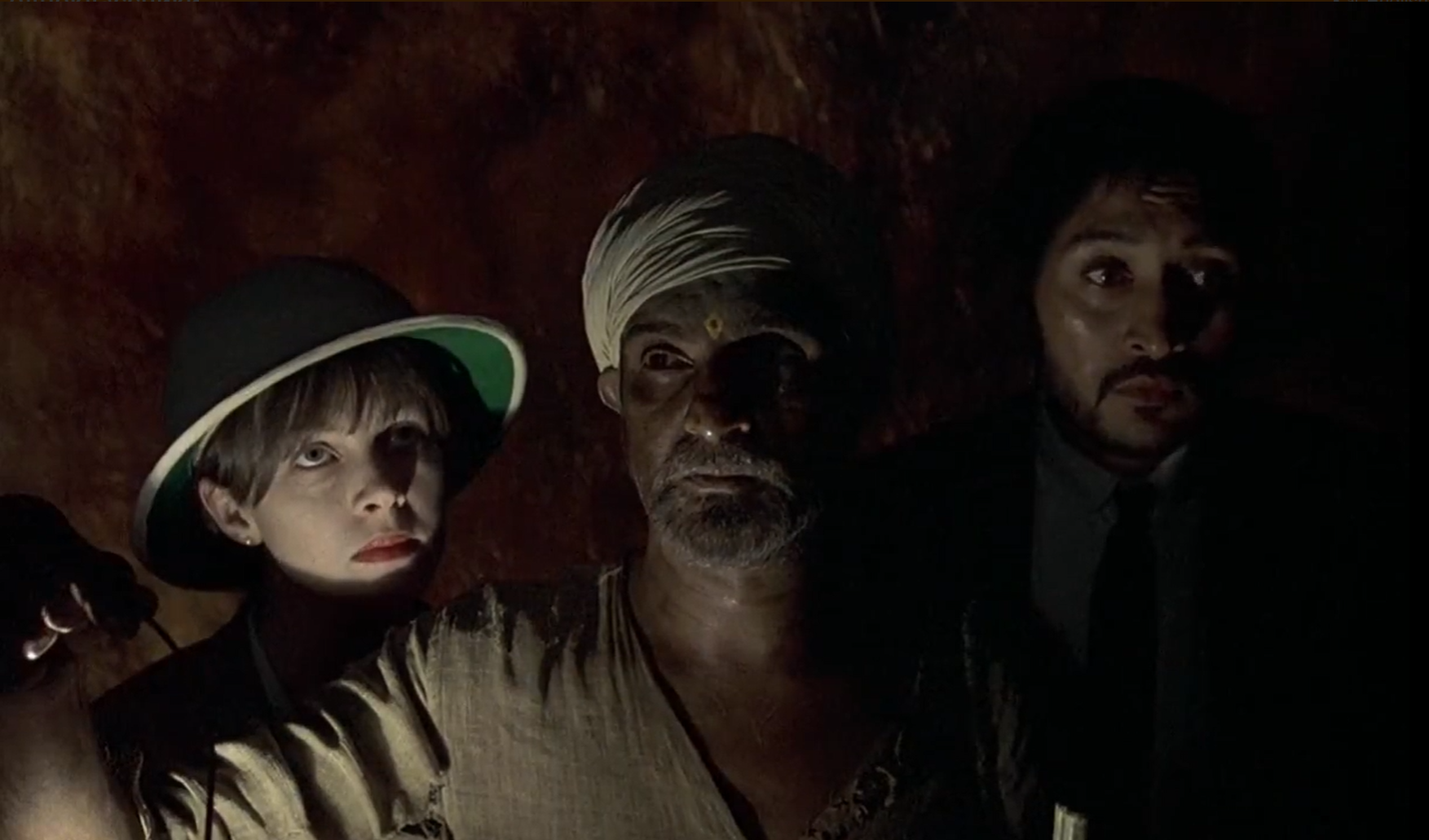
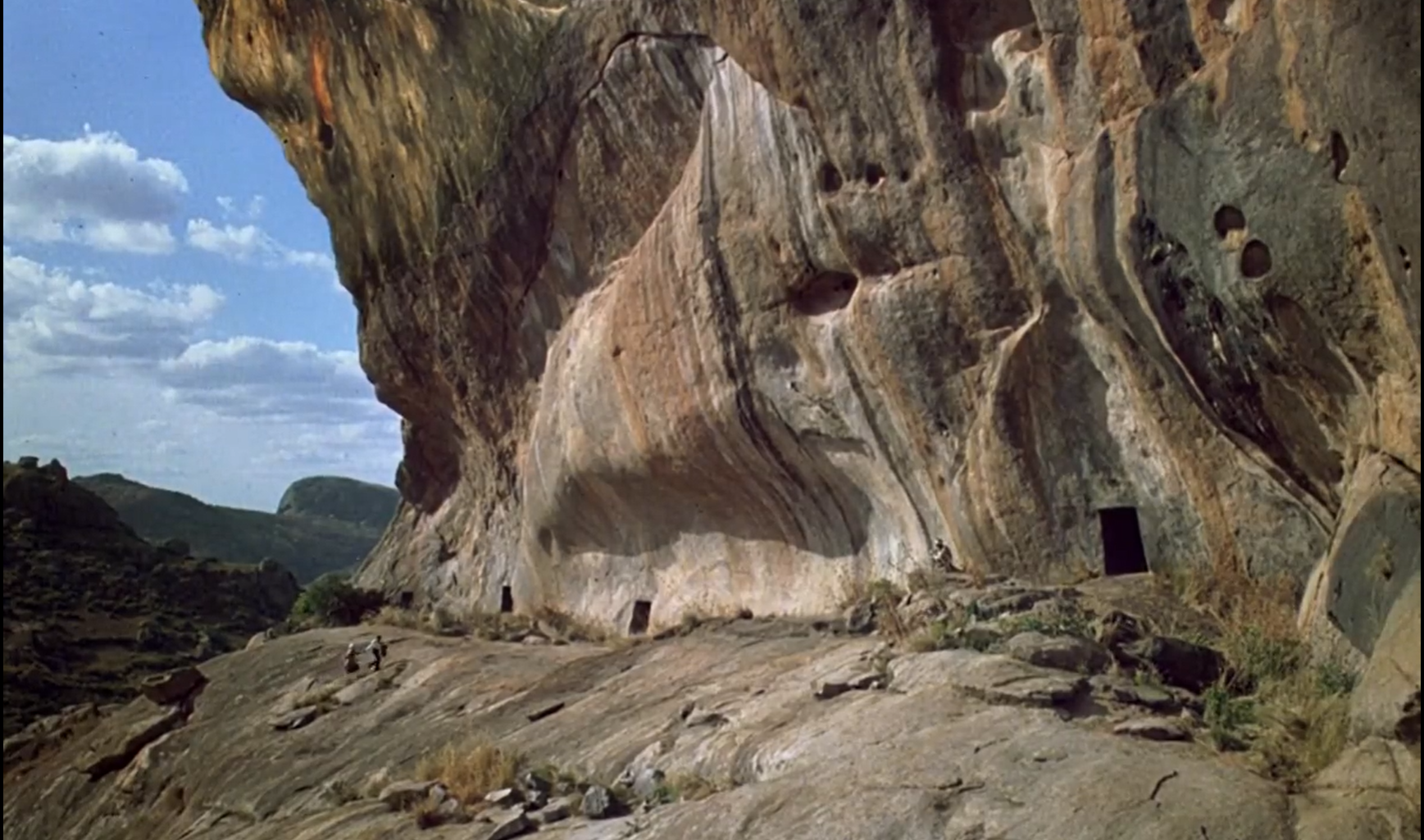
As Peary writes, David Lean returned “after a 14-year hiatus” to write and direct “this epic adaptation of E.M. Forster’s novel, which had long been considered unfilmable.” He notes that just like the “sexual tension when the virgin girls move through phallic and vaginal rock formations in Picnic at Hanging Rock,” that “sensation is captured again when the dazed, sexually repressed/frustrated Miss [Adela] Quested [Davis] stands inside a dark cave and looks out toward the entrance, where Aziz stands, ready to come inside” (he is eventually accused of attempted rape). Peary argues, however, that the “ambiguities that result from our not knowing what happened make us even further detached from the major characters than we already are.” He posits that while “we watch an interesting story, we marvel at the majestic sights, and we’re impressed by the acting,” it’s “hard to be more than a spectator and get emotionally involved.” He adds that while “we delight in watching Lean become another British director to take swipes at the snooty British upper crust,” his “failure to individualize a sufficient number of Indians… is regrettable.”

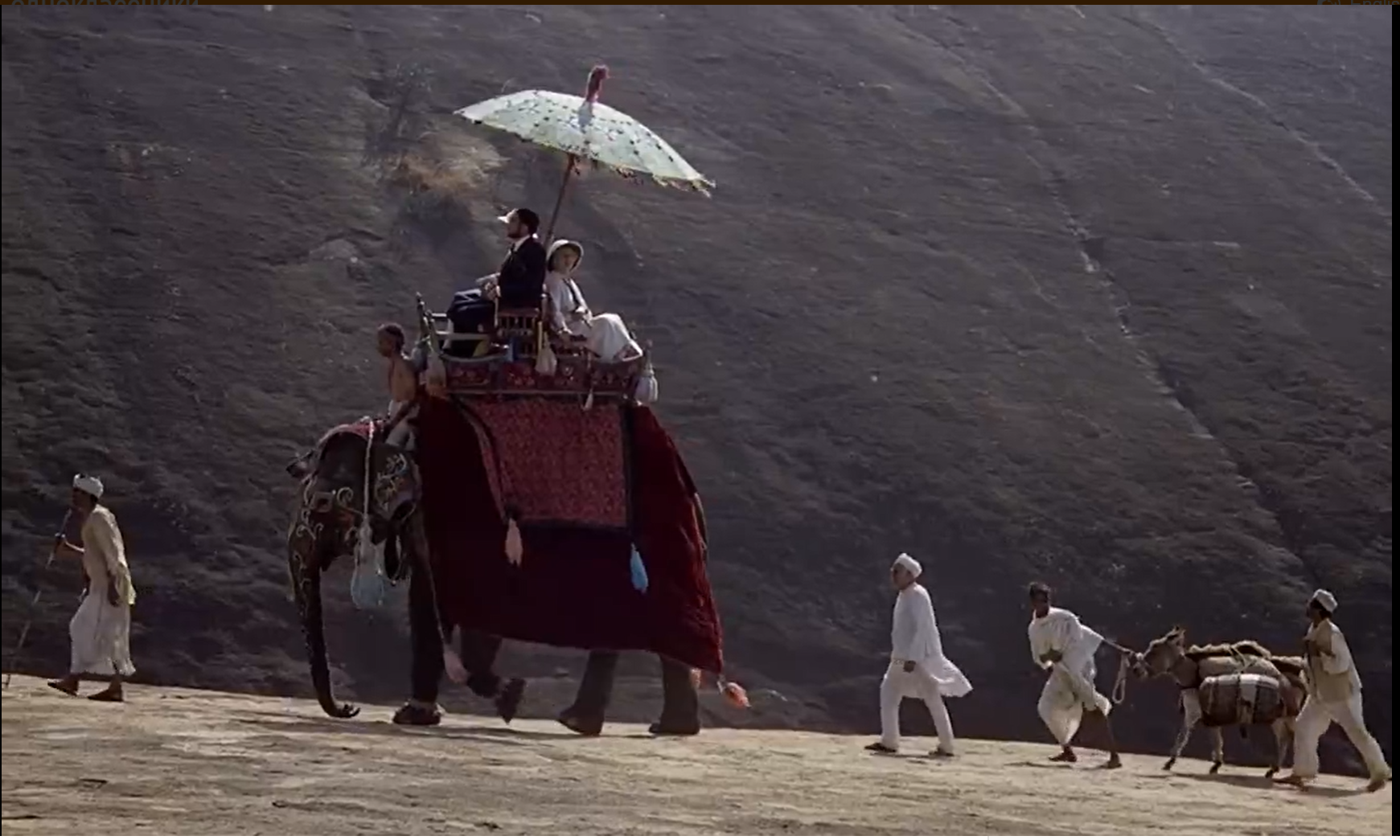
I’m ultimately more taken with this adaptation than Peary seems to be. Of course the issue of “what happened in the caves” is of paramount importance — and was famously never revealed by Forster himself — but is meant to be shrouded in mystery, as it is here. (I disagree with Peary’s suggestion that the film indicates Aziz “did attempt something” and “might have been guilty.”) What is clear, however, is that Adela’s ambivalence over whether or not to marry Havers — combined with the sensory overwhelm of being in a hot new country with so many sights, sounds, smells, tastes, and customs to become used to — combine to put her into a decidedly hallucinatory and unwell state. As DVD Savant writes in his review, “In one of the best-edited scenes, Lean communicates Adela’s sexual fear in a confrontation with erotic sculptures and a horde of very non-cute monkeys. She’s never even in the same frame with a monkey, yet Lean makes us feel their threat. Monkeys show up at several key moments in the movie, and seem to represent the savagery and sexual chaos that the British fear in the Indian culture.”


To that end, Lean does a powerful job representing the very-real tensions between colonial Britons and fed up Indians, who are rightfully ready for change and increasingly intolerant of Britain’s patronizing attitudes and actions. Dr. Aziz (Banerjee) personifies this tension, with his attitude shifting over the course of the film as he gradually realizes that his own well-being — and that of his nation — will depend on extrication from his desire to “present well” to the British. Fox’s role (though minor) is equally pivotal in the movement towards respectful equality between Indians and the British.

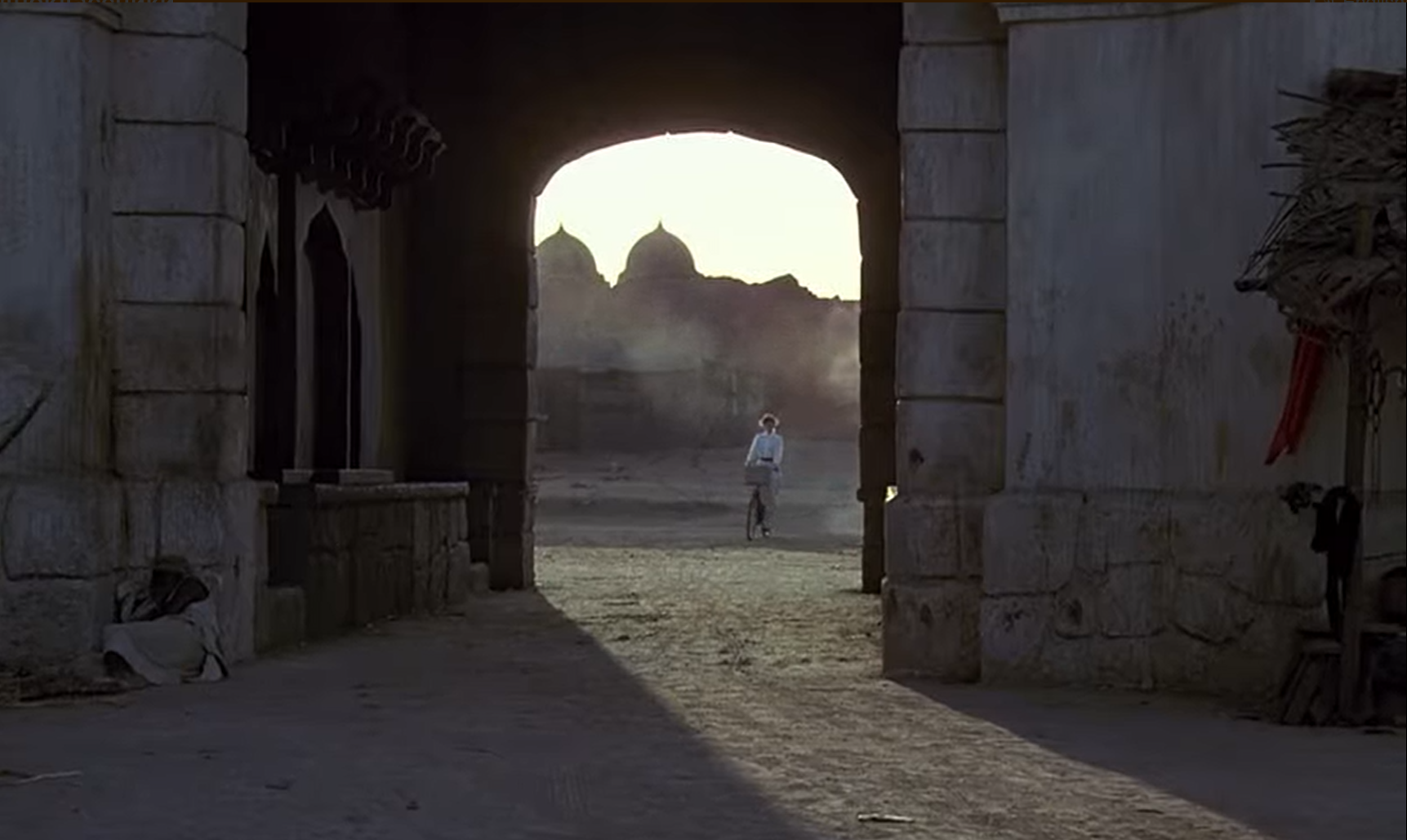
While Peary writes that “it’s hard to tell if Lean is trying to impress us with the glorious scenery or the cinematography itself”, this comment doesn’t make much sense — he does impress us, but I’m not sure how or why this is problematic. India’s landscape is indeed gorgeous and awe-inspiring, and Ernest Day’s cinematography is stellar.

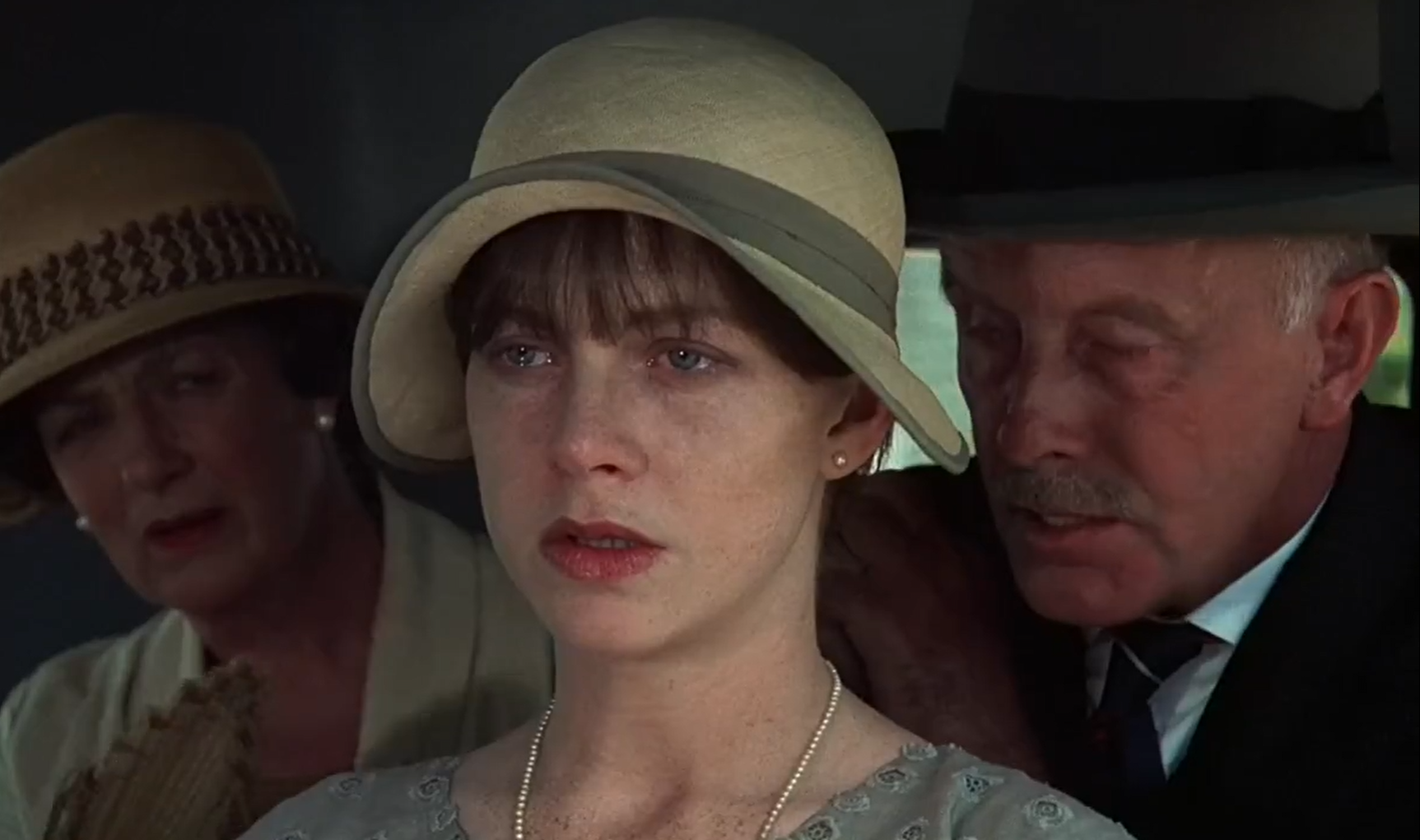
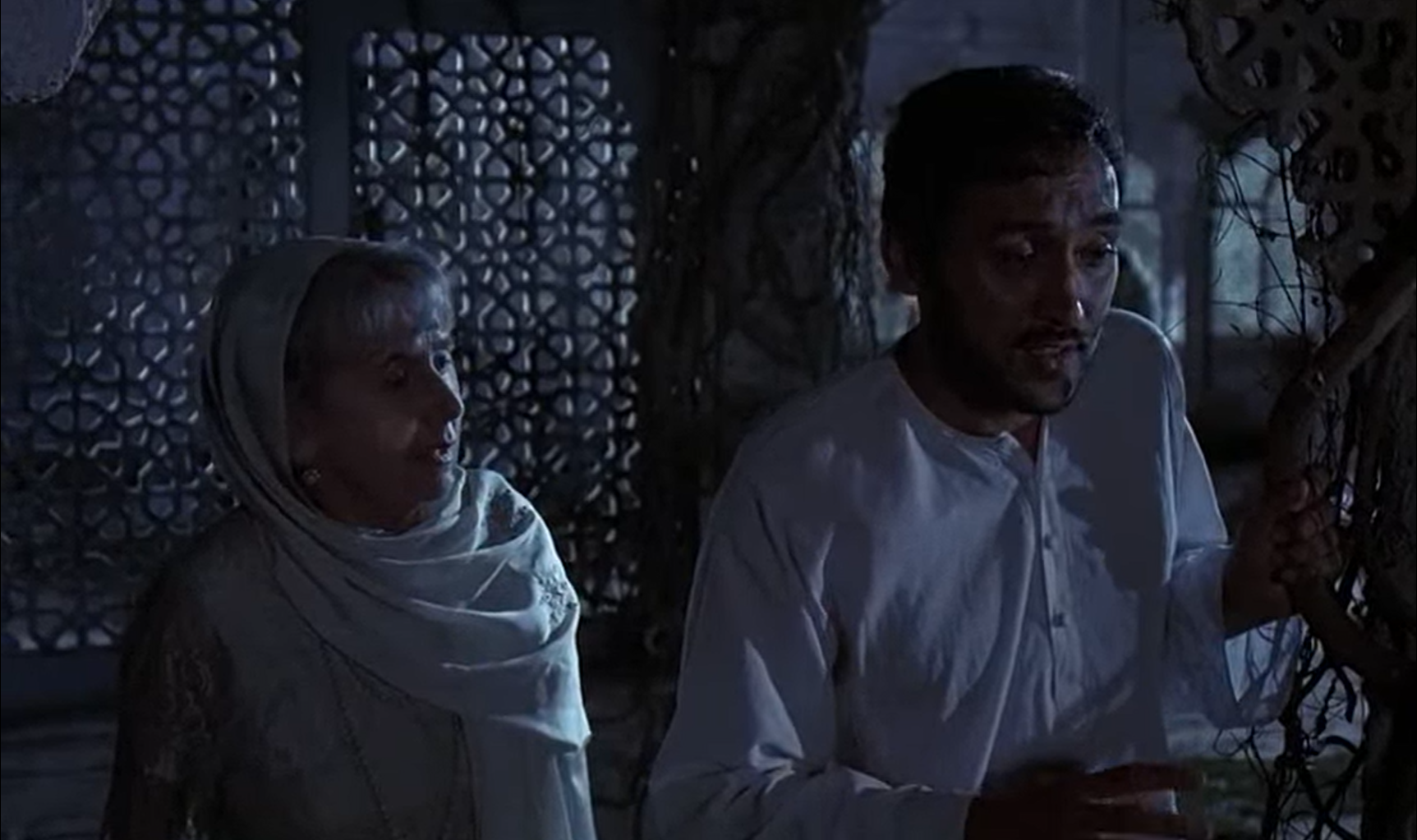
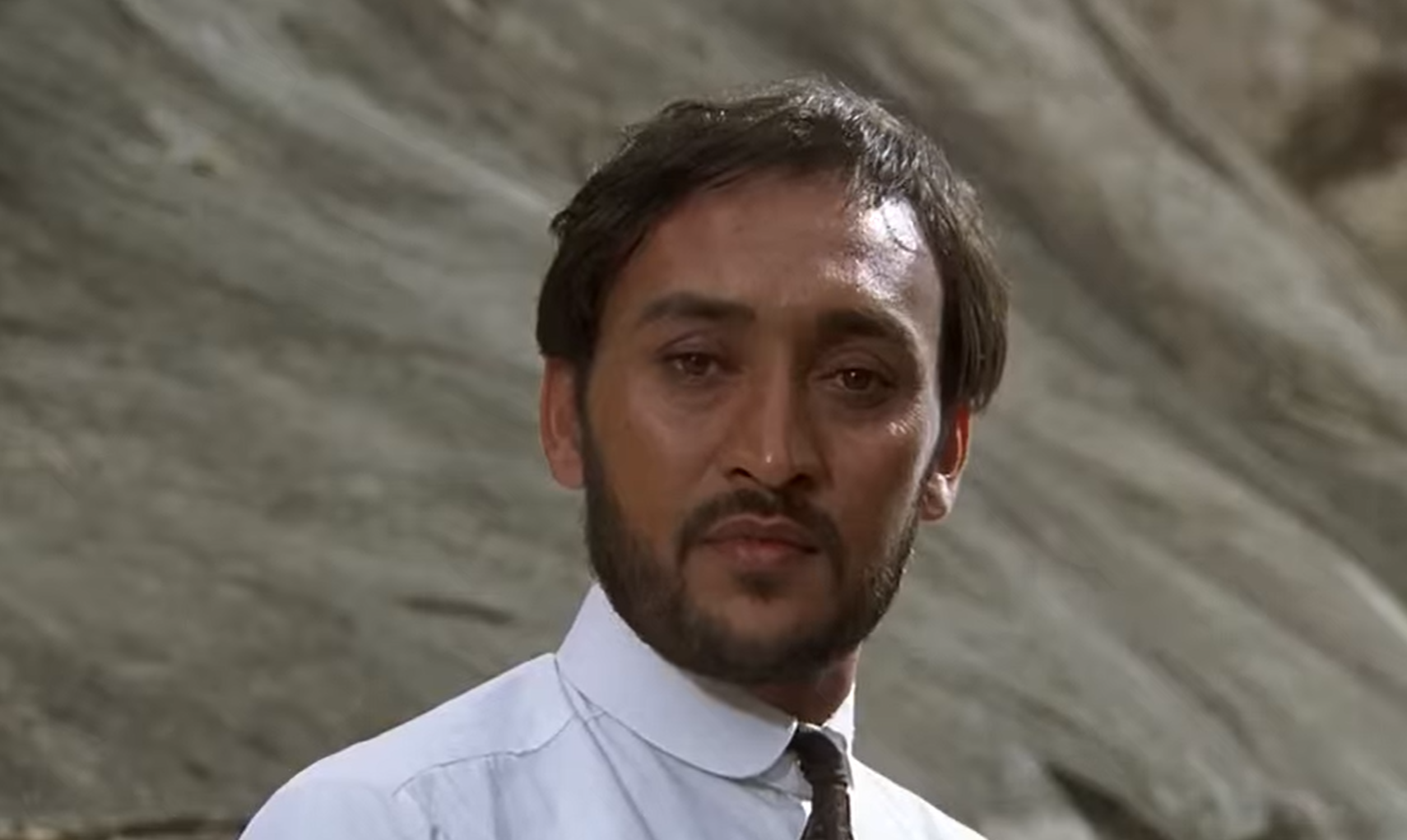
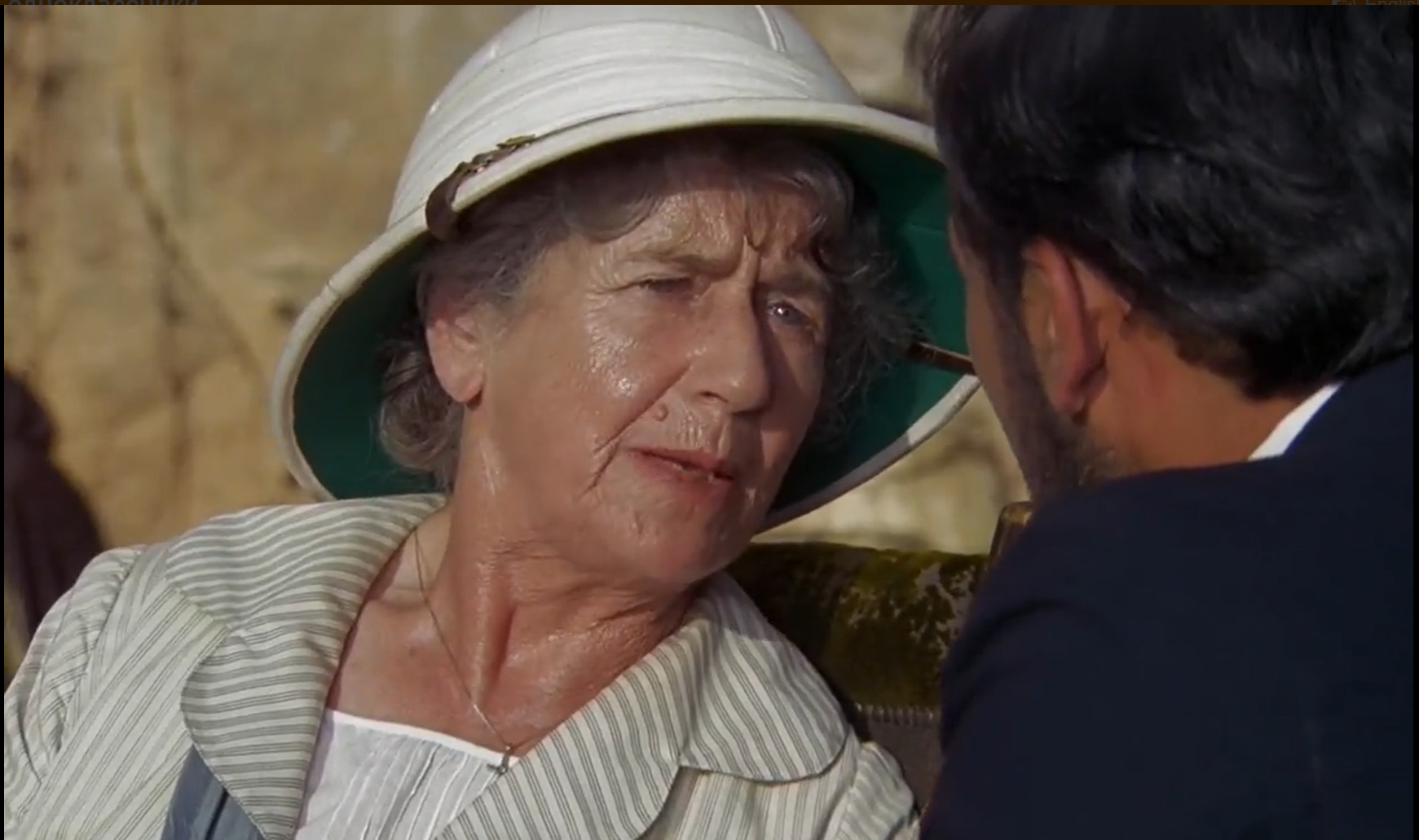
Meanwhile, the performances across the board — particularly by Davis, Ashcroft, and Banerjee:


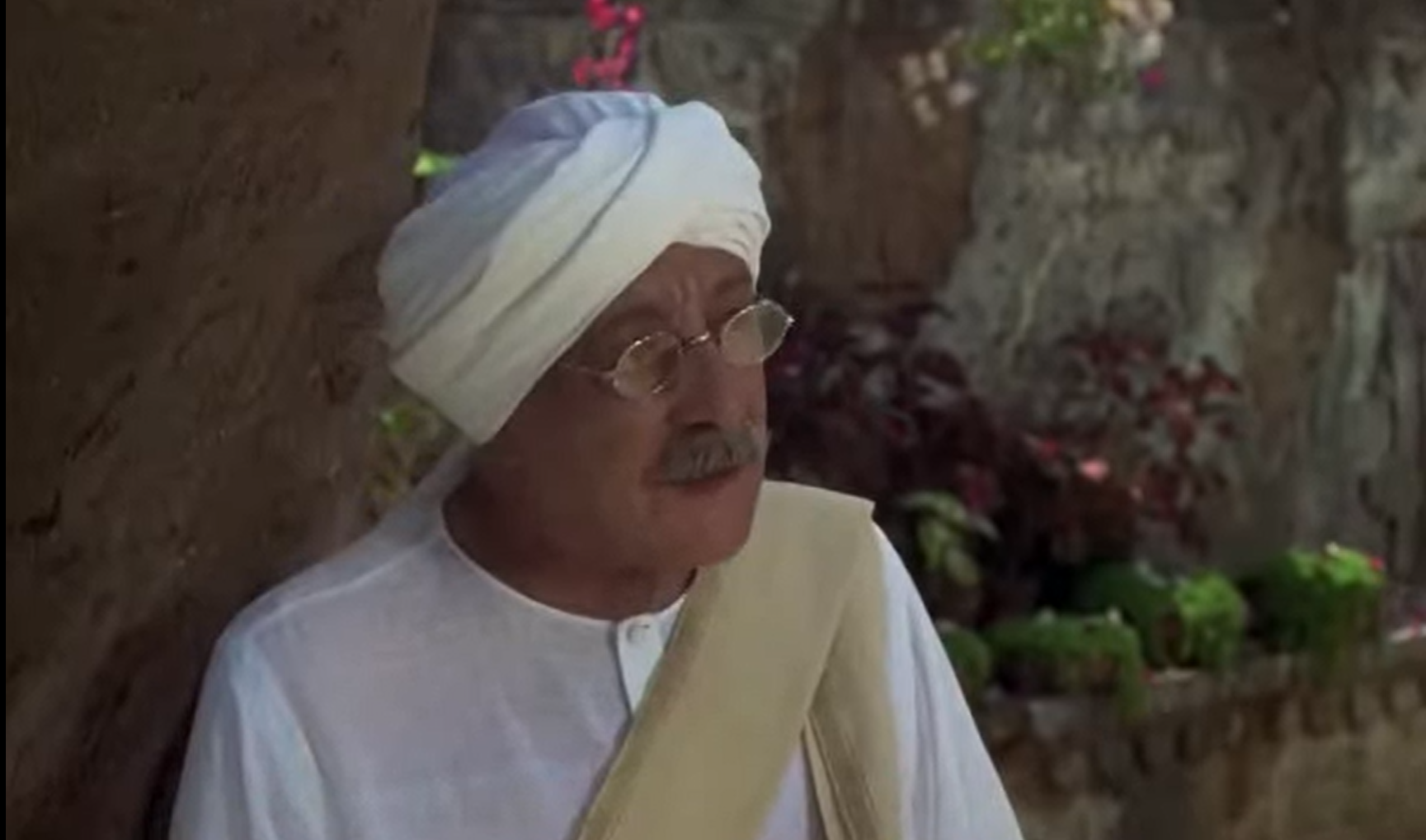
— are outstanding, with just one exception: Lean’s selection of Alec Guinness to play a minor role as a Hindu-Brahmin professor feels decidedly antiquated and inappropriate. (They apparently didn’t get along well on set.)

However, Guinness is on screen for such little time that it doesn’t much impact the overall movie. This remains a powerful, finely crafted epic by a master director, and is well worth a one-time visit.

Redeeming Qualities and Moments:

  • Victor Banerjee as Dr. Aziz
  • Judy Davis as Adela
  • Peggy Ashcroft as Mrs. Moore
  • Gorgeous cinematography
  • Excellent use of outdoor locales

Must See?
Yes, as a beautifully-mounted and haunting adaptation.

Categories

  • Important Director
  • Oscar Winner or Nominee

(Listed in 1001 Movies You Must See Before You Die)

Links: