Browsed by
Category: Original Reviews

Responses to Peary’s “must see” movie reviews, as well as my own “must see” movie reviews up to and after 1986 (when Peary’s book was published).

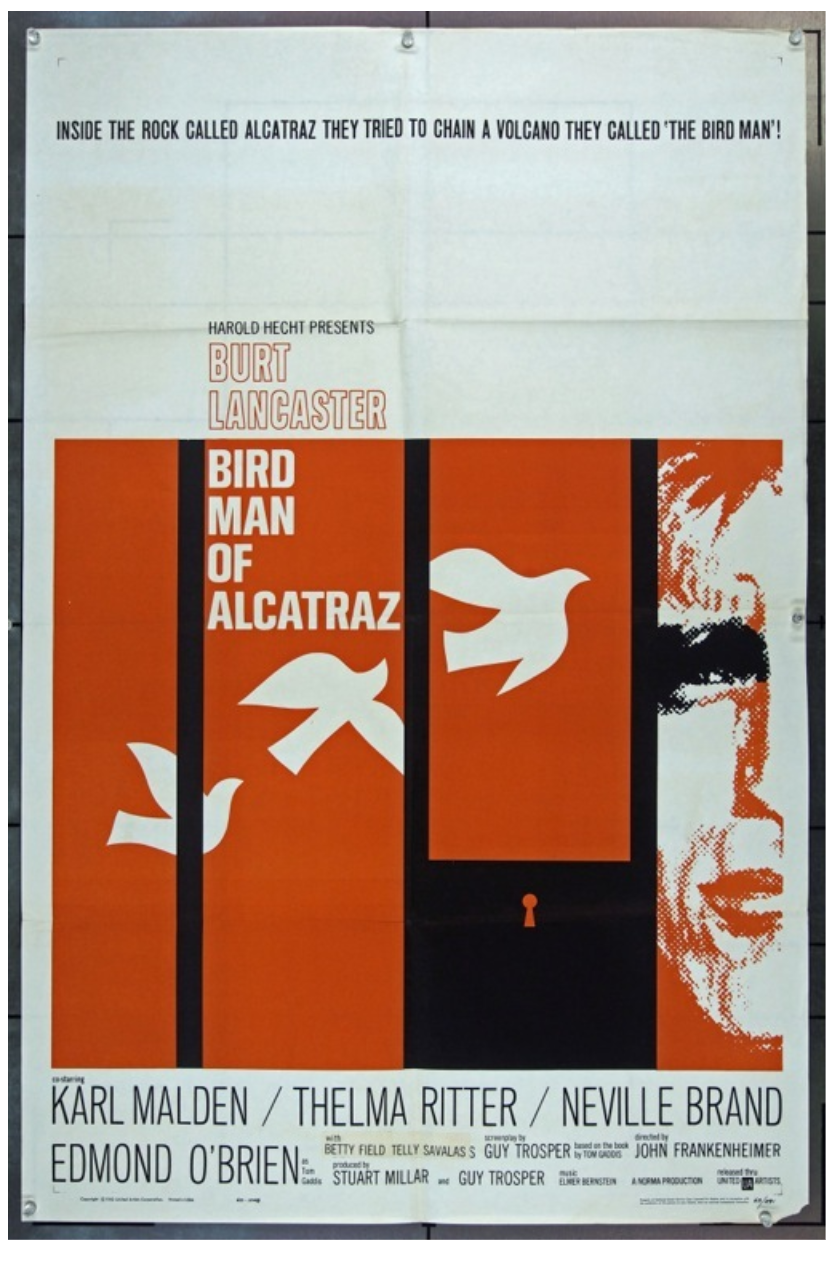
Birdman of Alcatraz (1962)

Birdman of Alcatraz (1962)

“Even a convict’s got a right to breathe.”

Synopsis:
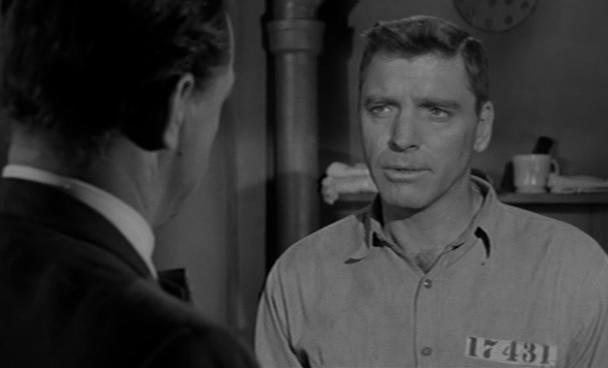
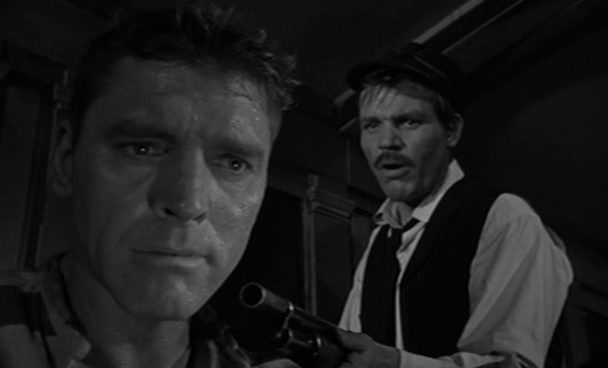
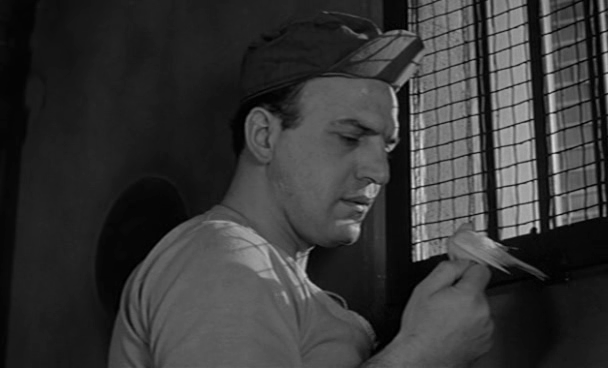
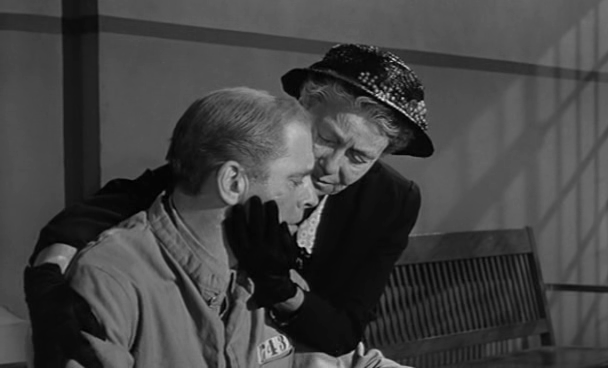
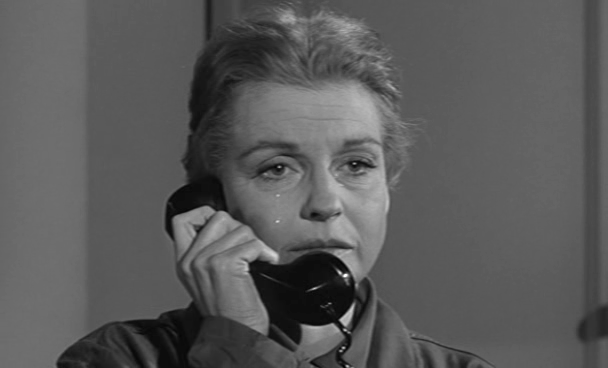
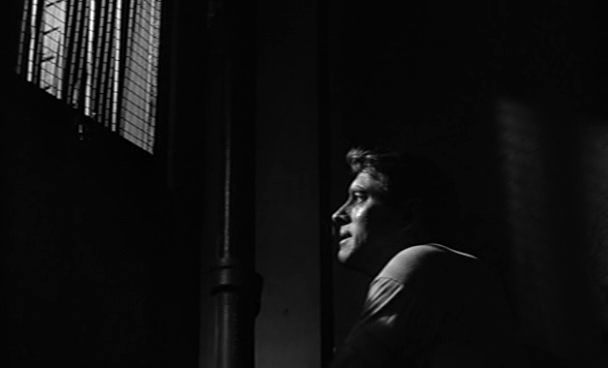
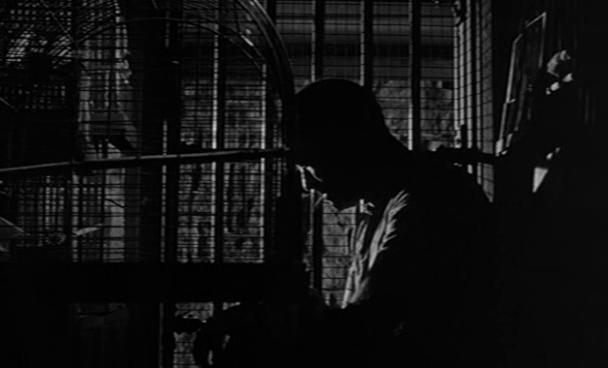
Against the wishes of his prison warden (Karl Malden), a convicted killer (Burt Lancaster) at Leavenworth Federal Penitentiary — whose domineering mother (Thelma Ritter) has negotiated a life sentence for him rather than hanging — begins raising canaries in his cell and becomes a renowned expert in ornithology. Eventually he marries a woman (Betty Field) he meets through his bird research, and life seems to be looking up — until resentful Malden has him transferred to Alcatraz, without his birds.

Genres:

  • Betty Field Films
  • Biopics
  • Burt Lancaster Films
  • Character Arc
  • Hugh Marlowe Films
  • John Frankenheimer Films
  • Karl Malden Films
  • Neville Brand Films
  • Prisoners
  • Telly Savalas Films
  • Thelma Ritter Films

Review:
This highly fictionalized biopic about sociopathic but industrial prisoner Robert Stroud (whose life story was memorialized in a 1955 book by Thomas Gaddis) remains an absorbing, well-acted film about a man who — cinematically, at least — recovered his sense of humanity within the most abject of conditions by connecting with birds. Thankfully, Lancaster’s initial crimes and temperament aren’t sugar-coated: the rationale behind Malden’s determination to keep him isolated for the rest of his life makes logical sense. While Malden is ultimately posited as an inflexible and grudge-holding baddie, Lancaster is no saint either; rather, he’s a weary and pragmatic man who comes to understand the inevitability of his situation. A surprisingly hard-hitting narrative moment occurs midway through the film, when details of Ritter’s character are revealed and Lancaster’s history (posited here as stemming at least in part from his “momma issues”) is brought to light; he’s forced to make a challenging choice, and “does the right thing”. Watch for Telly Savalas in a small but notable role as Lancaster’s next-door cellmate; Neville Brand playing against type in a wonderfully modulated turn as Lancaster’s long-time guard; and Field’s honorable performance as the woman who unknowingly threaten’s Ritter’s dominance over Lancaster.

Redeeming Qualities and Moments:

  • Burt Lancaster as Robert Stroud
  • Fine supporting performances across the board


  • Burnett Guffey’s cinematography

  • Elmer Bernstein’s score

Must See?
Yes, as an engaging and well-made drama.

Categories

  • Oscar Winner or Nominee

Links:

Teahouse of the August Moon, The (1956)

Teahouse of the August Moon, The (1956)

“It’s my job to teach these Okinawans democracy — and they’re going to learn democracy if I have to shoot every last one of them!”

Synopsis:
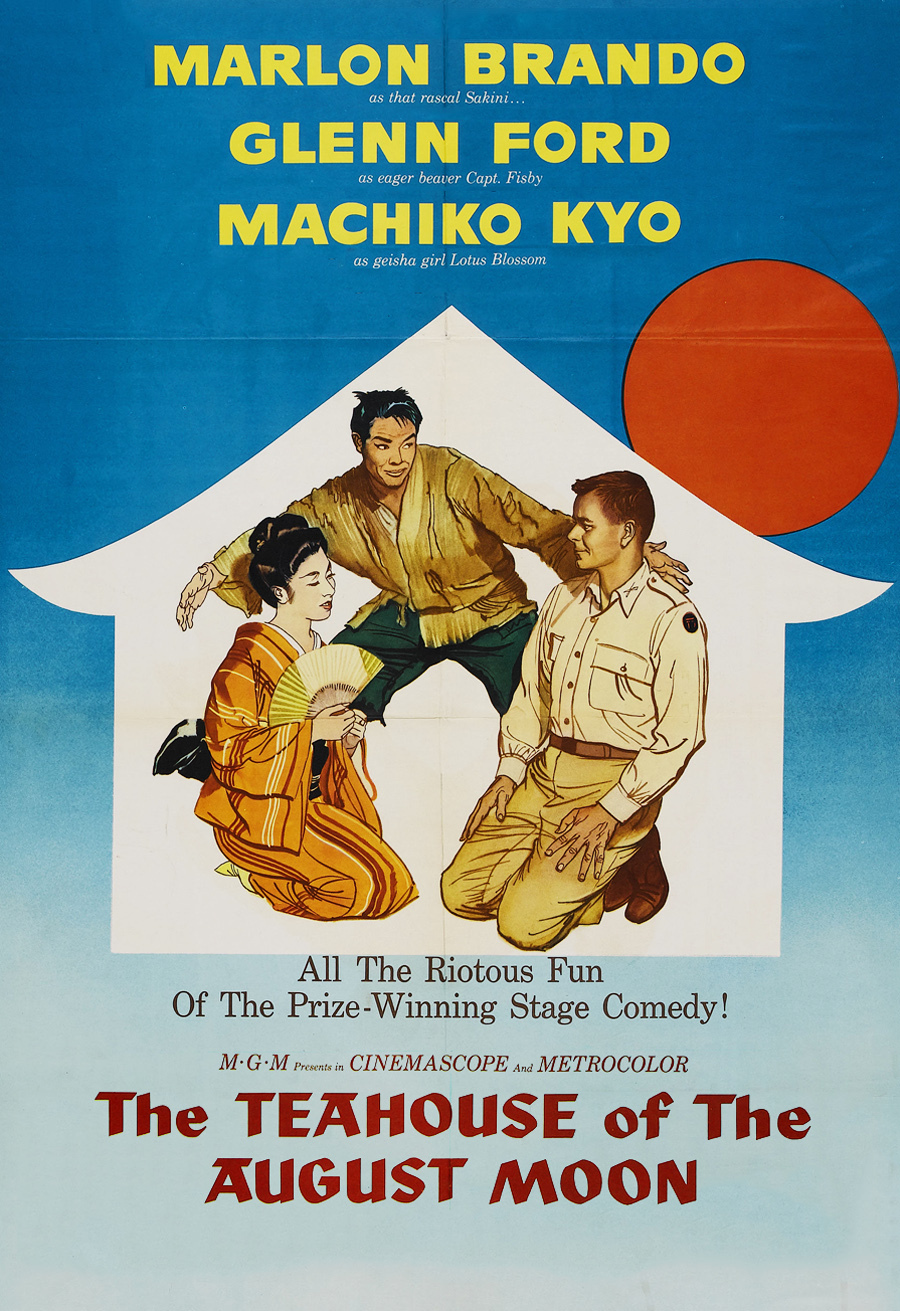
In post-WWII Japan, a bumbling American captain (Glenn Ford) is sent to Okinawa to set up a school and bring democracy to the village. Once there, his wily interpreter (Marlon Brando) helps him understand that the villagers have different goals in mind — including gifting him a geisha girl (Machiko Kyo) and convincing him to use American funds to build a teahouse instead of a school. A visiting military doctor (Eddie Albert) is soon lured into helping with agriculture, and he and Ford assist the village in selling homemade brandy; it’s up to Ford’s promotion-seeking superior (Paul Ford) to set everything straight.

Genres, Themes, Actors, and Directors:

  • Eddie Albert Films
  • Glenn Ford Films
  • Marlon Brando Films
  • Military
  • Play Adaptation
  • Satires and Spoofs

Review:
Based on the Pulitzer Prize- and Tony-winning 1953 play by John Patrick (itself based on a 1951 novel by Vern Sneider), this “occupation comedy” arouses immediate suspicion and distaste given the casting of Marlon Brando as a Japanese man — but he’s surprisingly effective and inoffensive, most likely due to his genuine love of the play and respect for his craft. According to TCM’s article:

The role of Sakini had been played by David Wayne on Broadway, but since he had little track record in movies, the part went to Marlon Brando who had loved the play so much he saw it three times. Brando intended to use some of his salary to finance a United Nations film program in Asia. True to his reputation, he worked on making his role as authentic as possible, studying the motions and spoken accents of real Okinawans though he had to adapt the language slightly to be more intelligible to American audiences.

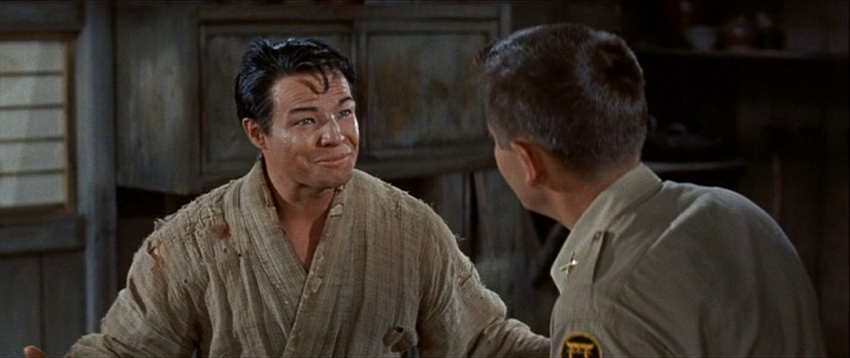
Meanwhile, DVD Savant writes that Brando’s character is “a natural prankster who uses his charm and guile to completely derail Captain Fisby’s [Ford’s] mission. He completely manipulates the situation by selectively interpreting, or misinterpreting, Fisby’s words.” Indeed, the entire film handily mocks America for trying to impose democracy wholesale onto a different culture, and it’s refreshing watching the villagers quietly and insistently get what they want. As Savant — who argues the film “takes a bit of getting used to” — notes:

… It’s disconcerting at first to see the presentation of the Okinawans as ‘cute’ and inoffensive ‘little people.’ Only slowly do we realize that they are the ones in control of the situation, and by the end the film is awarding them full respect while lampooning the American military as hopeless dummies.

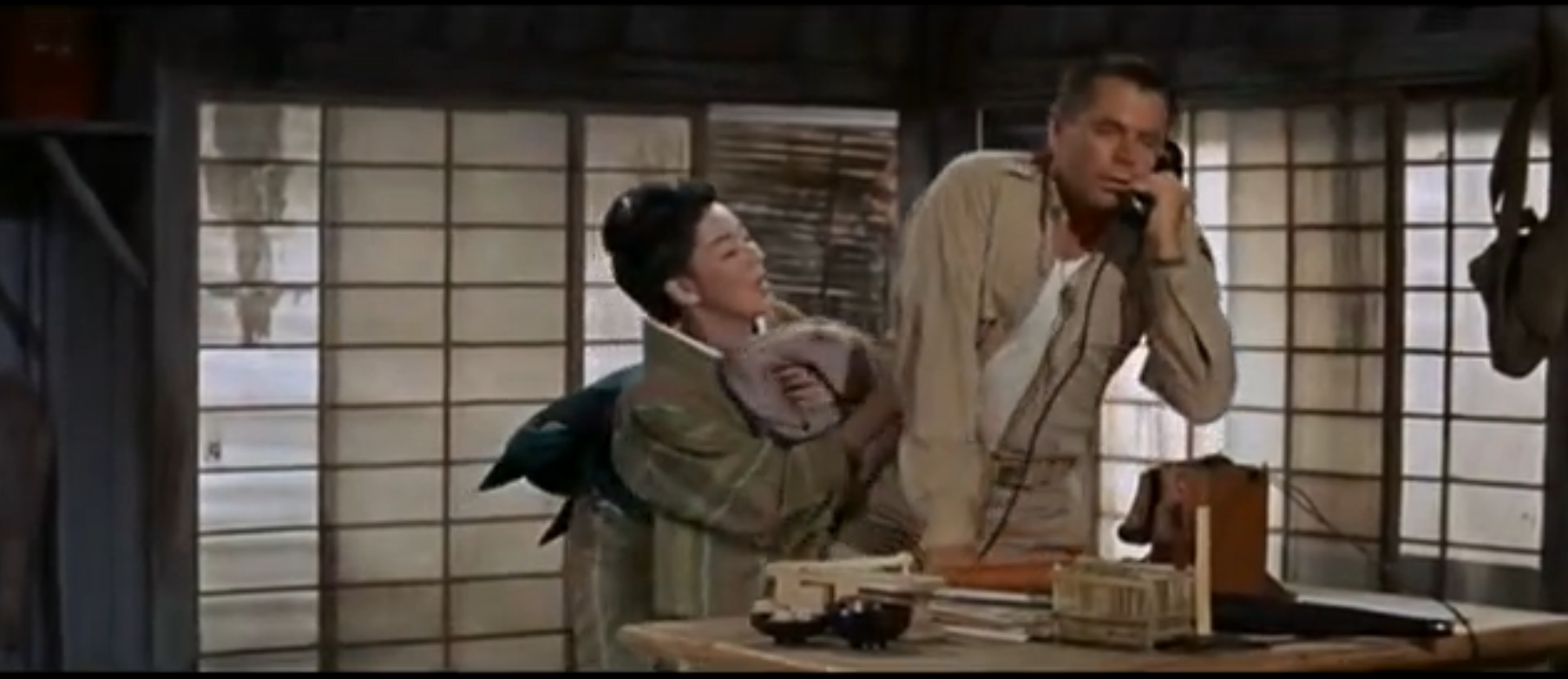
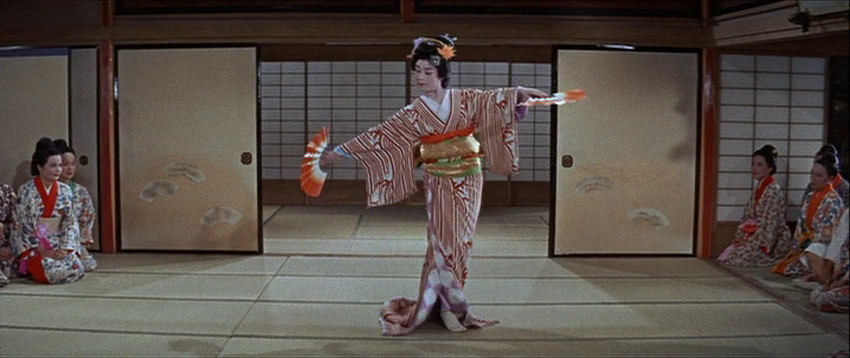
Beautiful Machiko Kyo — star of Akira Kurosawa’s Rashomon (1950); the Academy Award-winning Best Foreign Picture Gate of Hell (1953); Kenzi Mizoguchi’s Ugetsu (1953), Princess Yang Kwei Fei (1955), and Street of Shame (1956); Yasujiro Ozu’s Floating Weeds (1959); and Kon Ichikawa’s Kagi (1961) — acquits herself very nicely, and is especially delightful during an initial tussle with Ford as she struggles to get his clothes off.

Redeeming Qualities and Moments:

  • Amusing lead performances
  • Beautiful Technicolor cinematography

Must See?
No, but it’s worth a one-time look.

Links:

Fat Man, The (1951)

Fat Man, The (1951)

“Why would anyone want to kill a nice person like the doctor?”

Synopsis:
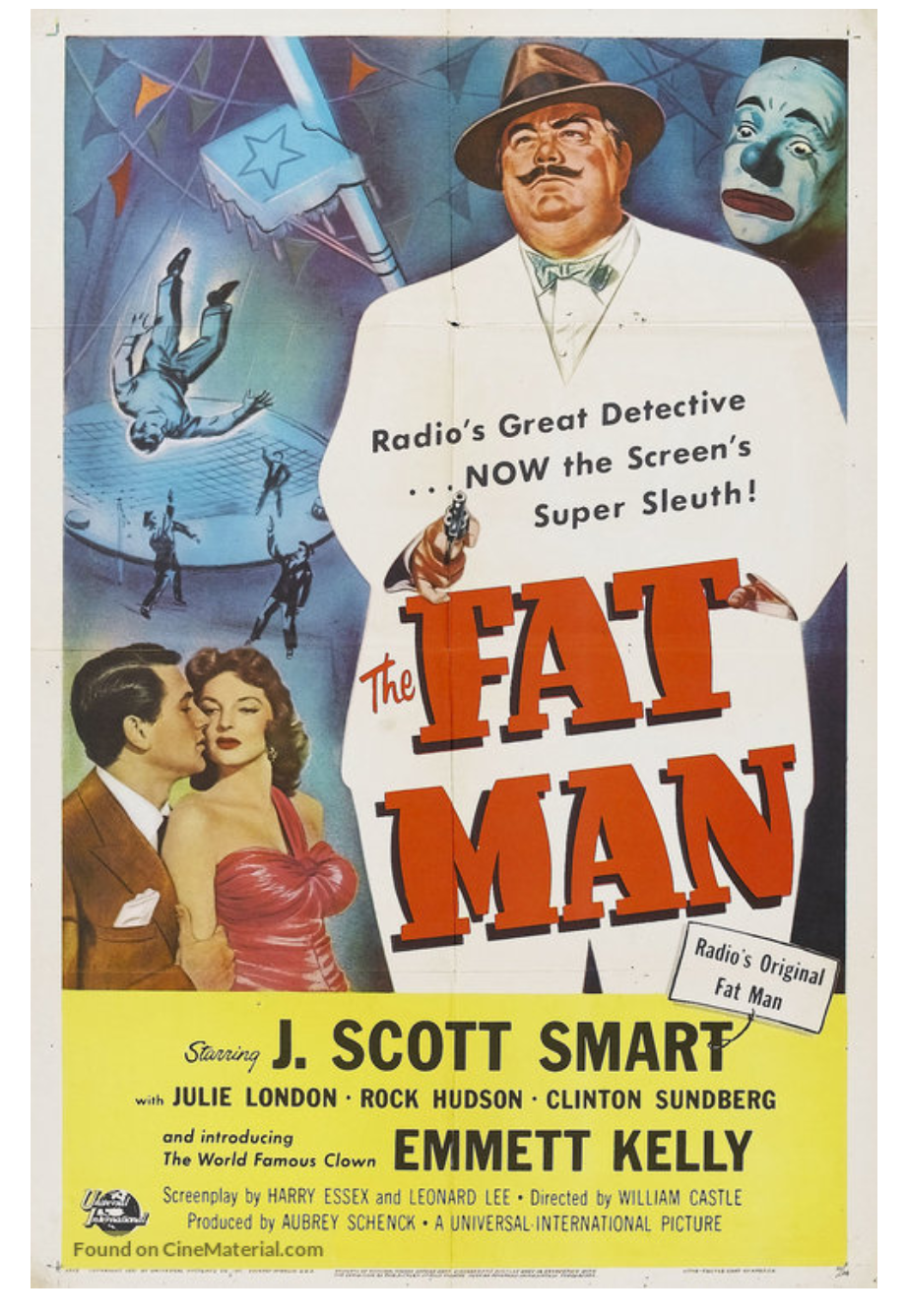
A portly private eye (J. Scott Smart) hired by a dental nurse (Jayne Meadows) to investigate the sudden murder of her boss (Ken Niles) soon learns that the survival of dental records from an ex-con (Rock Hudson) married to a cocktail waitress (Julie London) and friends with a clown (Emmett Till) may have something to do with the mystery.

Genres, Themes, Actors, and Directors:

  • Detectives and Private Eyes
  • Flashback Films
  • Murder Mystery
  • Rock Hudson Films
  • William Castle Films

Review:
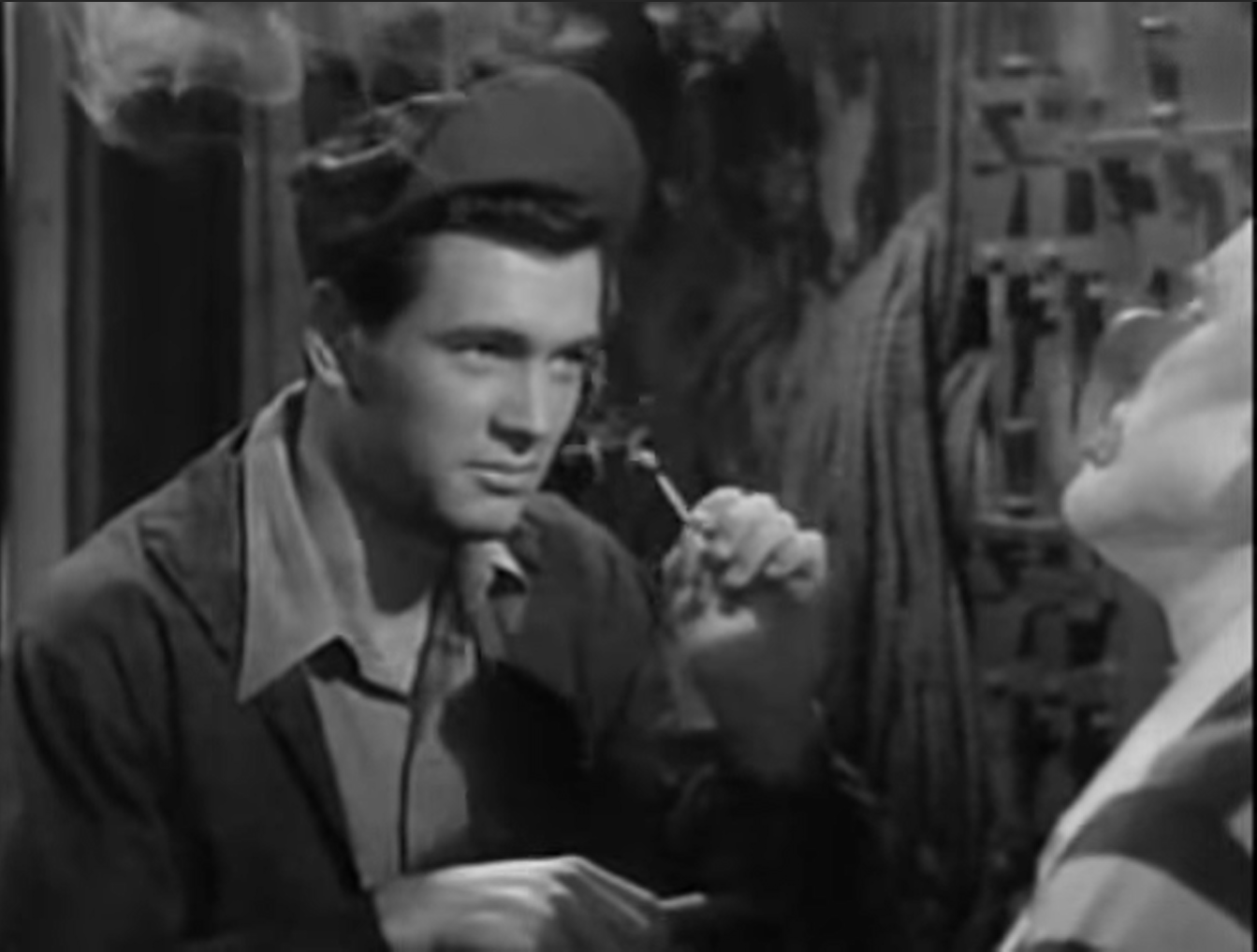
Directed by William Castle and based on a radio series of the same name (created by Dashiell Hammett), this flashback-filled detective noir is primarily notable for an early co-starring presence by Hudson:

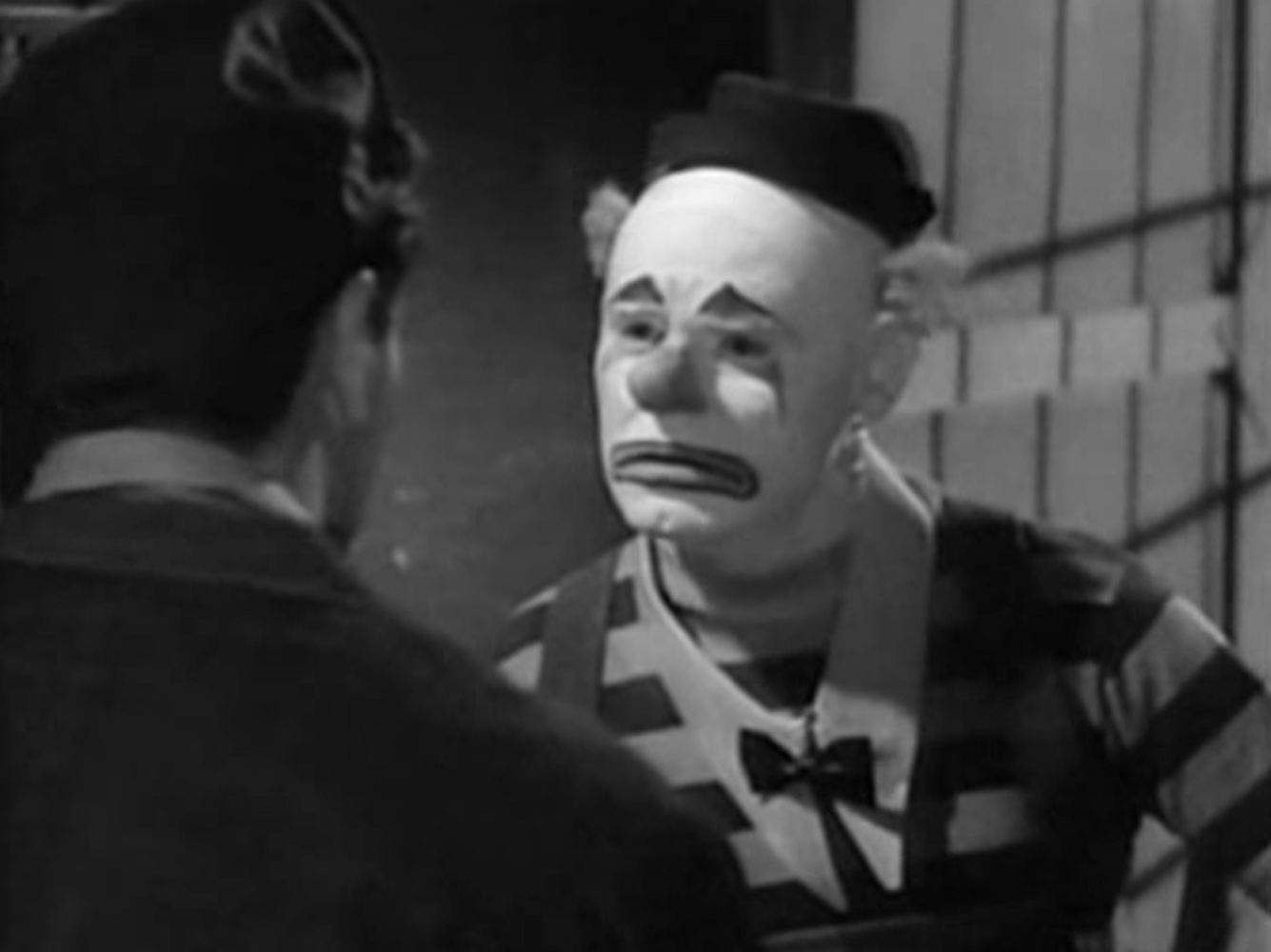
and for featuring the screen debut of world-famous clown Emmett Kelly (Ed Deets):

… who would co-star in The Greatest Show on Earth (1952) the following year. Unfortunately, Smart isn’t all that distinctive as a private dick; the fact that he enjoys eating isn’t particularly relevant or interesting.

However, the film as a whole is well-produced, and is worth a look for fans of the genre and era.

Redeeming Qualities and Moments:

  • Irving Glassberg’s cinematography

Must See?
No, though it’s worth a one-time look — and as a public domain title, it’s easy enough to find.

Links:

Devil’s Disciple, The (1959)

Devil’s Disciple, The (1959)

“We don’t arrest them unless we’re going to hang ’em.”

Synopsis:
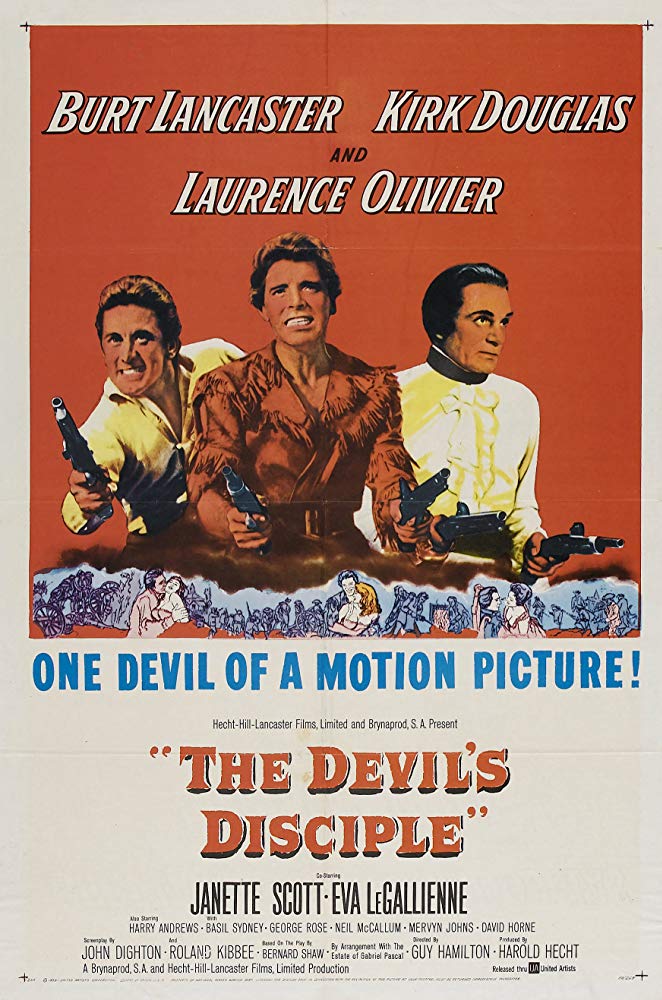
During the American Revolutionary War, a priest (Burt Lancaster) rides with a local parishioner (Neil McCallum) to the imminent hanging of McCallum’s father, wrongly accused of treason by Major Swindon (Harry Andrews) and his superior, General Burgoyne (Laurence Olivier) — but they are too late to save him. McCallum’s prodigal brother (Kirk Douglas) rescues his father’s hung body and returns it to his childhood home, where Lancaster insists on allowing Douglas safe haven despite the protests of his wife (Janette Scott). When Lancaster is called away to oversee the sudden funeral of Douglas’s mother (Eva Le Gallienne), Douglas is mistaken by British soldiers for Lancaster, and taken away to be hanged. How will Lancaster respond when he returns and learns what has transpired — including his wife’s sudden affection for Douglas?

Genres, Themes, Actors, and Directors:

  • American Revolutionary War
  • Burt Lancaster Films
  • Falsely Accused
  • Harry Andrews Films
  • Historical Drama
  • Kirk Douglas Films
  • Laurence Olivier Films
  • Play Adaptation
  • Priests and Ministers
  • Revolutionaries

Review:
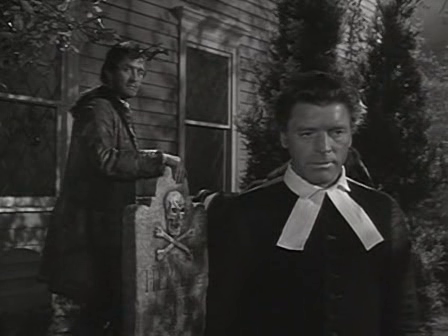
This adaptation of George Bernard Shaw’s 1897 play is one of four Peary-listed titles co-starring Douglas and Lancaster — including Gunfight at the O.K. Corral (1957), The List of Adrian Messenger (1963), and Seven Days in May (1964).

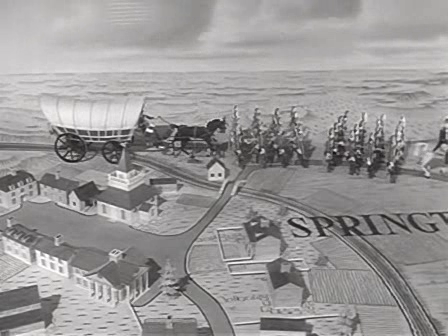
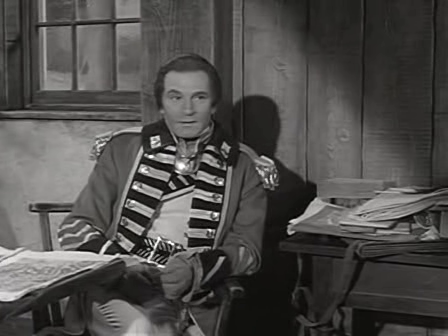
It’s a curiously told story, with Lancaster’s wife experiencing a rapidly shifting hate-love relationship with Douglas that doesn’t ring realistic, and the final sequences exhibiting more slapsticky physical humor than one would expect in an historical drama about war, treason, and executions. Most noteworthy is Olivier’s supporting performance as a gentlemanly Brit who, along with inept Andrews, represents the distance and disdain that led to England’s eventual defeat in the war. Also of note are the clever, unexpected animated sequences using maps and stop motion:

… and Jack Hildyard’s atmospheric cinematography.

Redeeming Qualities and Moments:

  • Olivier as General Burgoyne
  • Jack Hildyard’s cinematography

Must See?
No, though it’s worth a one-time look.

Links:

Macabre (1958)

Macabre (1958)

“We’ve got to think like the man who did this — it’s the only way that we’re going to find Marge.”

Synopsis:
With help from his loyal nurse (Jacqueline Scott), a widowed doctor (William Prince) whose blind and pregnant sister-in-law (Christine White) has just passed away receives a message that his daughter (Dorothy Morris) has been buried alive in a coffin and has only five hours to live before asphyxiating.

Genres, Themes, Actors, and Directors:

  • Flashback Films
  • Horror Films
  • Kidnapping
  • Search
  • William Castle Films

Review:
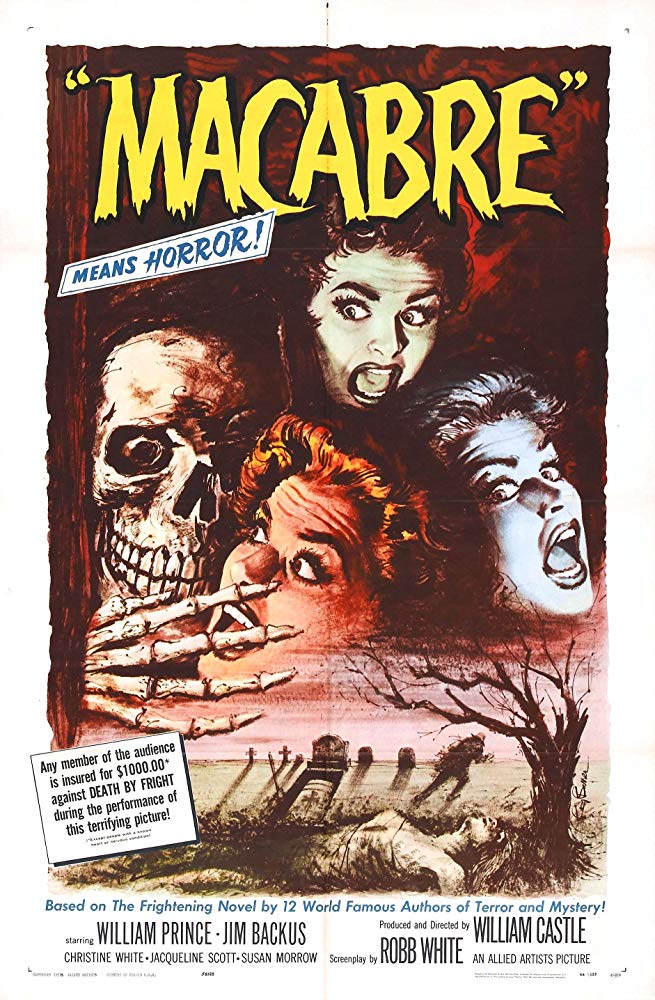
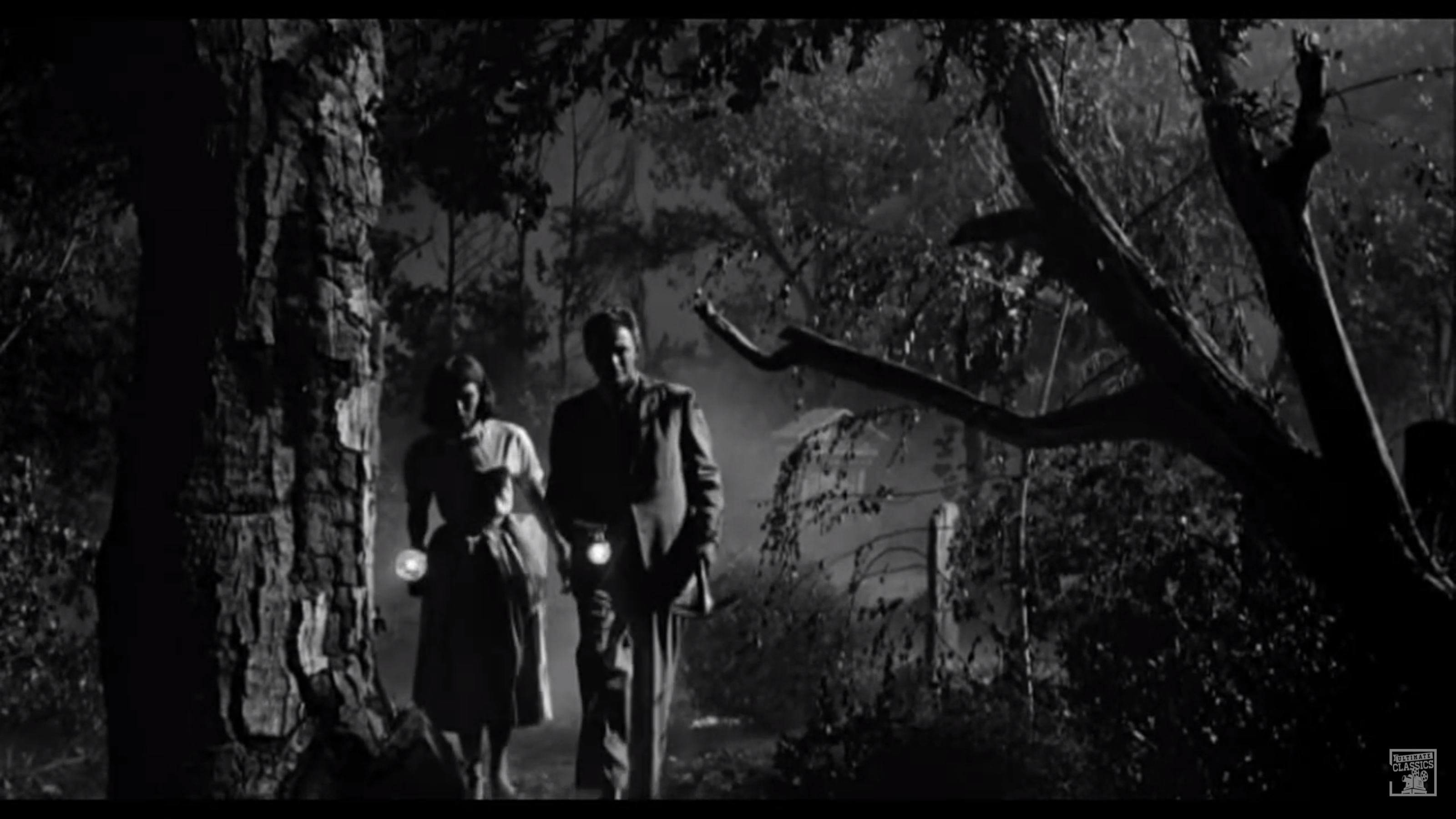
William Castle’s breakthrough “gimmick horror” film — in which he offered audience members “death by fright” life insurance policies — was this race-against-the-clock thriller, which provides plenty of atmospheric sets and shadows while maintaining genuine suspense about Morris’s well-being and who the actual culprit is. Scott is a plucky sleuth-in-waiting:

… hard-working character actress Ellen Corby (check out her resume on IMDb!) is appropriately mysterious as a long-time nanny:

… and Jonathan Kidd is nicely cast as an anxious funeral director with a chip on his shoulder.

Jim Backus’s character, on the other hand, feels out of place:

… and a flashback tale about Prince’s blind sister-in-law seems like a subplot from another movie. Overall, however, this is a solid horror outing, worth a look for fans of Castle’s work.

Redeeming Qualities and Moments:

  • Atmospheric cinematography
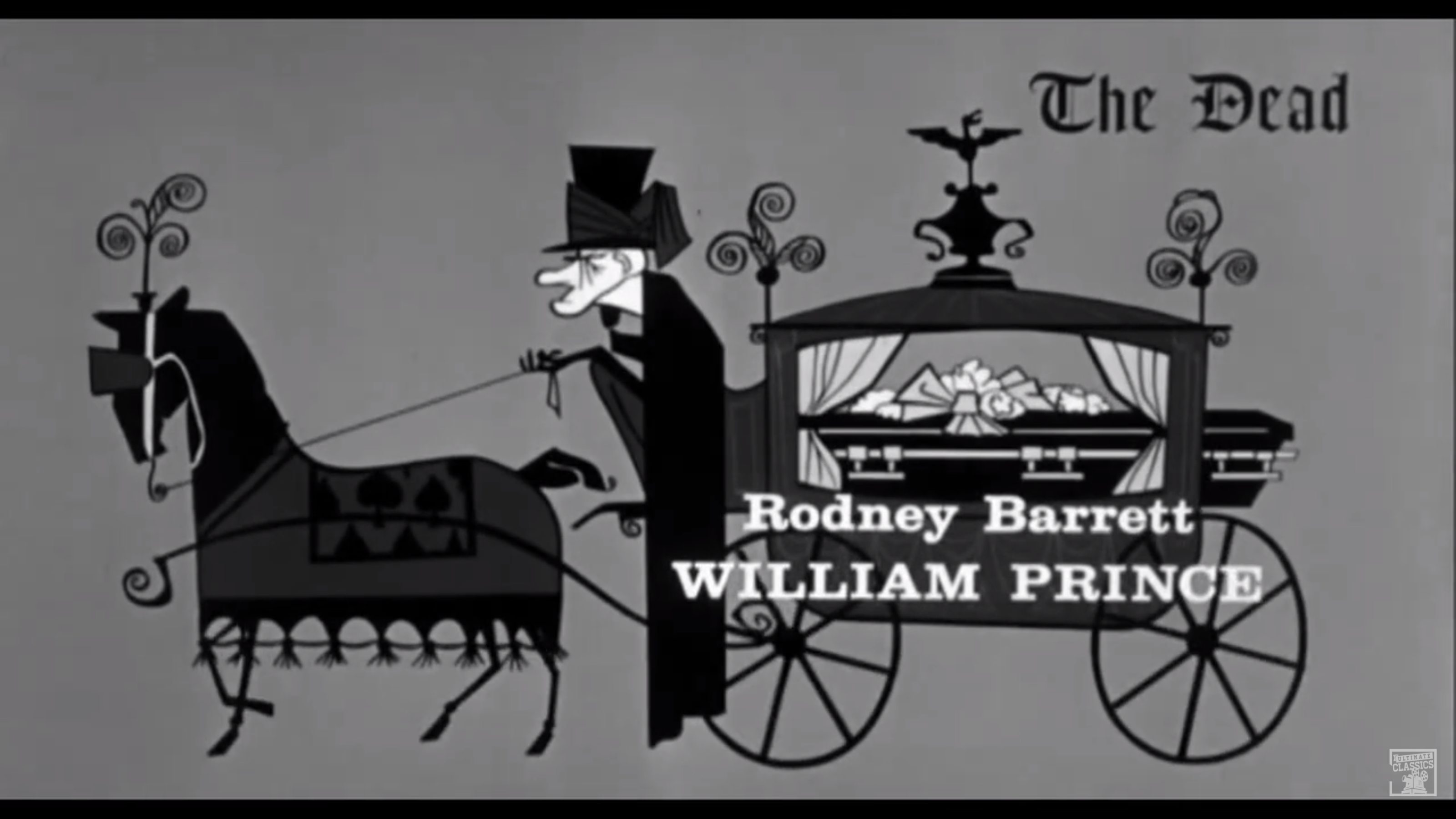
  • Fun credits
  • Les Baxter’s score

Must See?
No, but it’s got some nice thrills, and is must-see for Castle fans.

Links:

House on Haunted Hill (1959)

House on Haunted Hill (1959)

“Only the ghosts in this house are glad we’re here.”

Synopsis:
An eccentric millionaire (Vincent Price) and his embittered wife (Carol Ohmart) invite five strangers — a secretary (Carolyn Craig), a pilot (Richard Long), a journalist (Julie Mitchum), a psychiatrist (Alan Marshal), and the owner of a haunted house (Elisha Cook, Jr.) — to spend the night in Cook’s house, promising them each $10,000 if they can last the night.

Genres, Themes, Actors, and Directors:

  • Elisha Cook, Jr. Films
  • Horror Films
  • Millionaires
  • Old Dark House
  • Vincent Price Films
  • William Castle Films

Review:
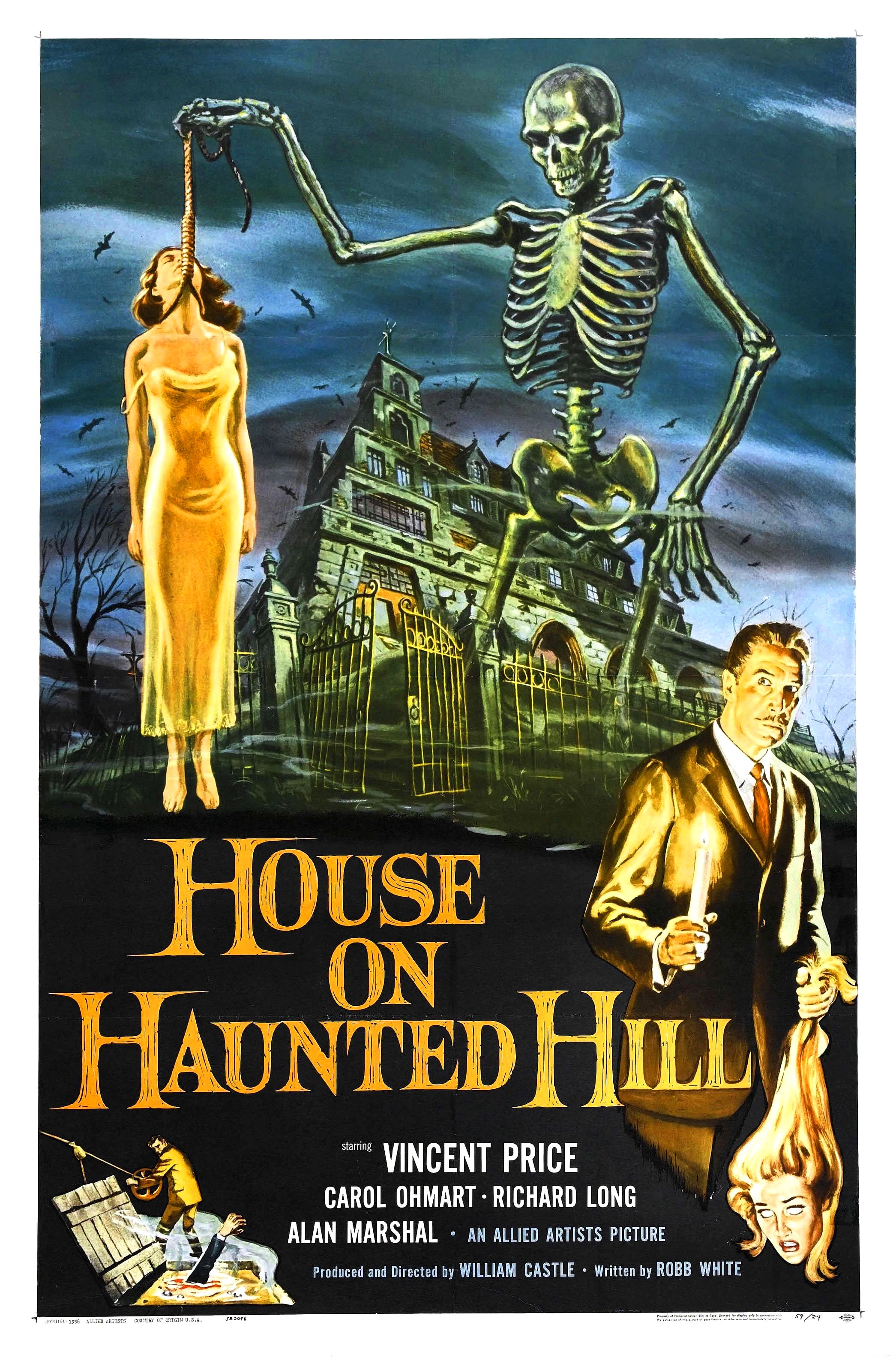
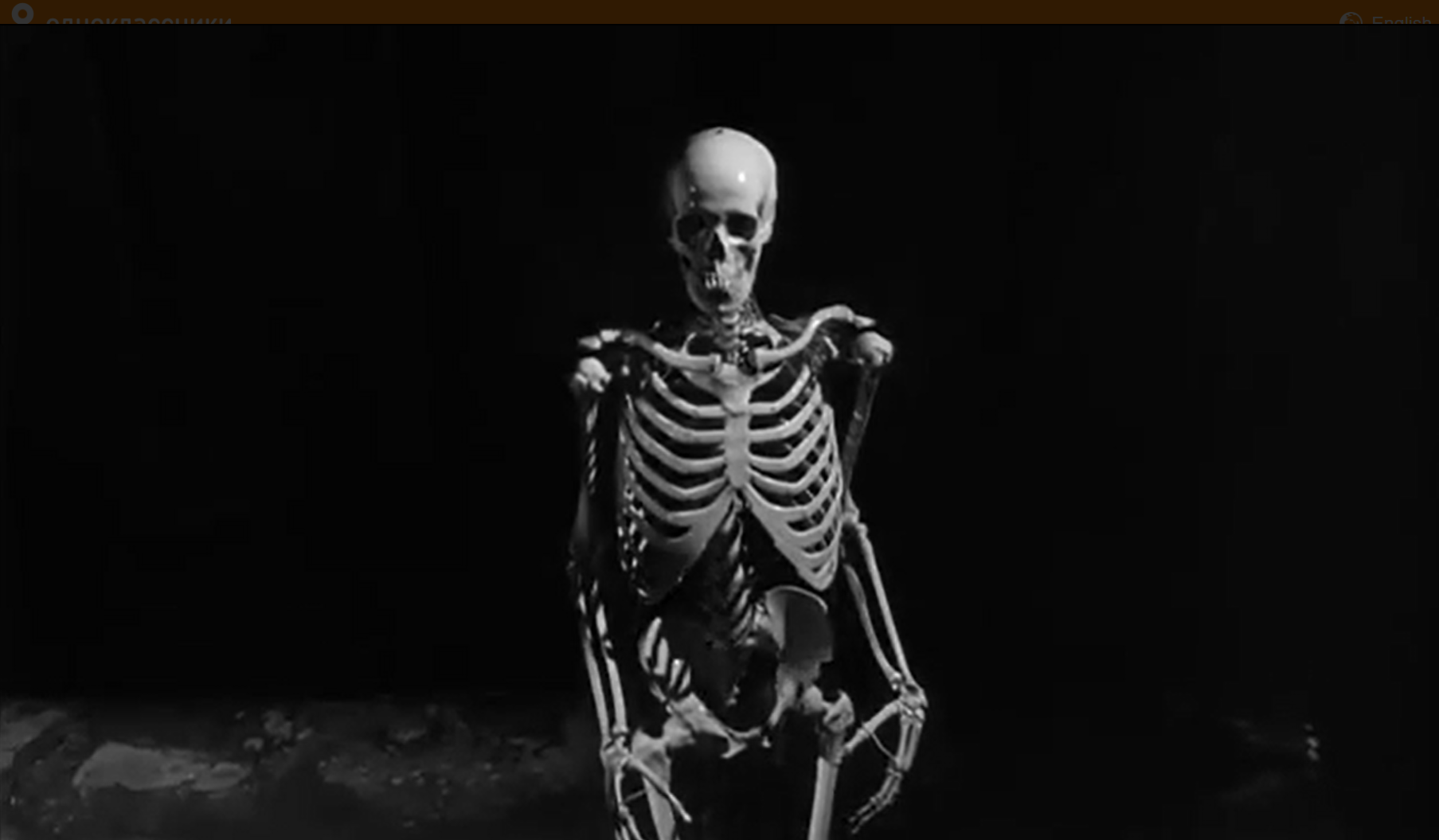
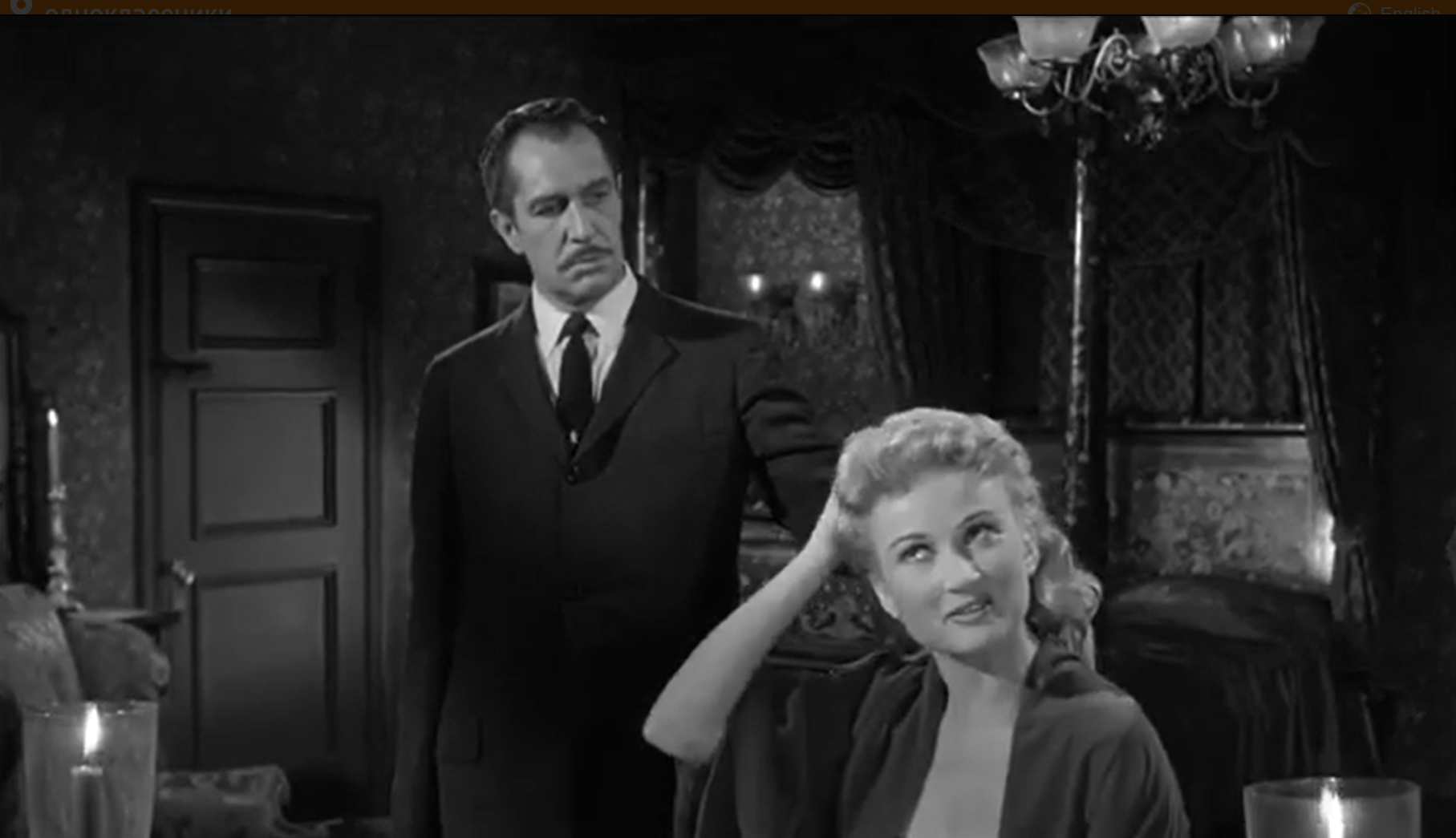
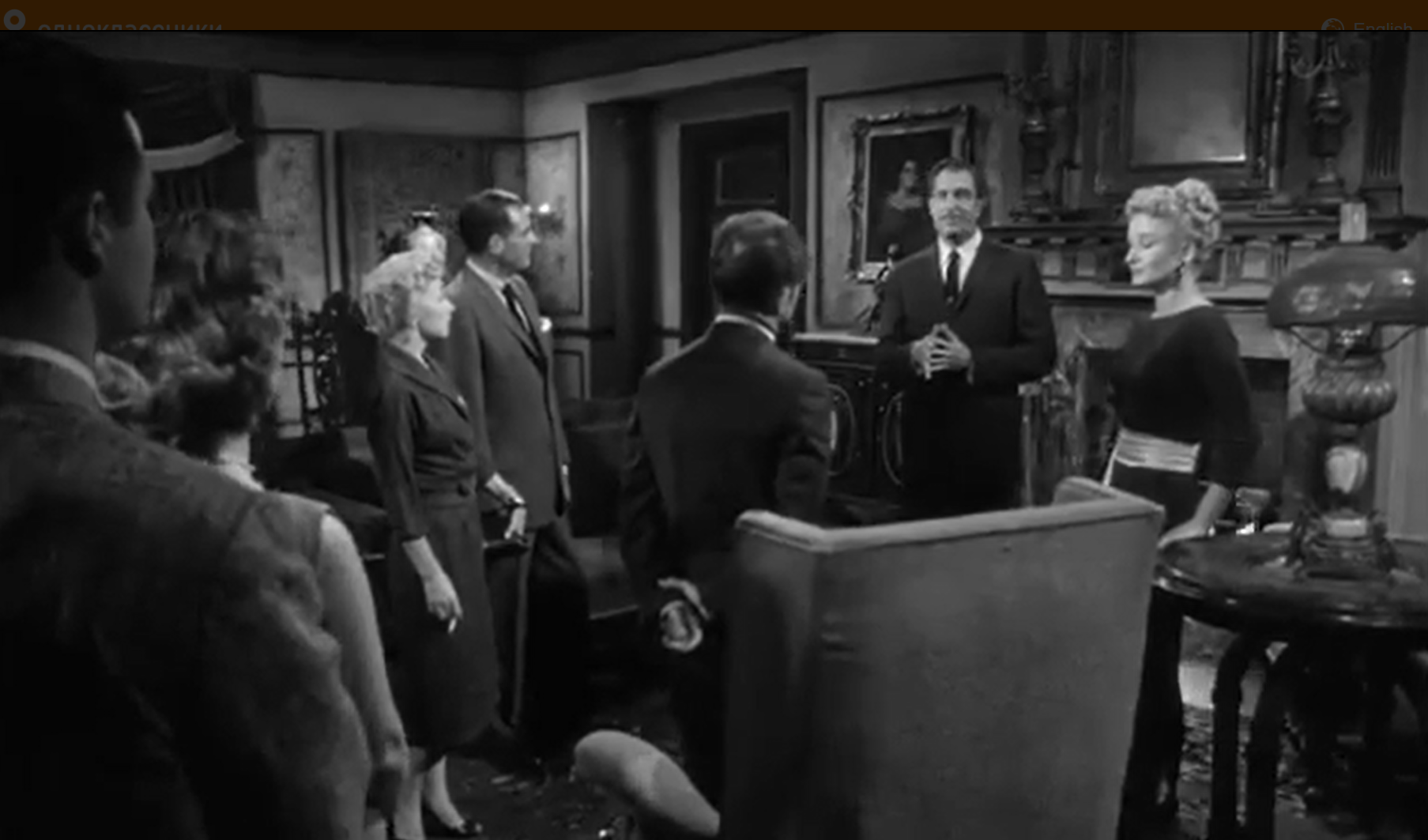
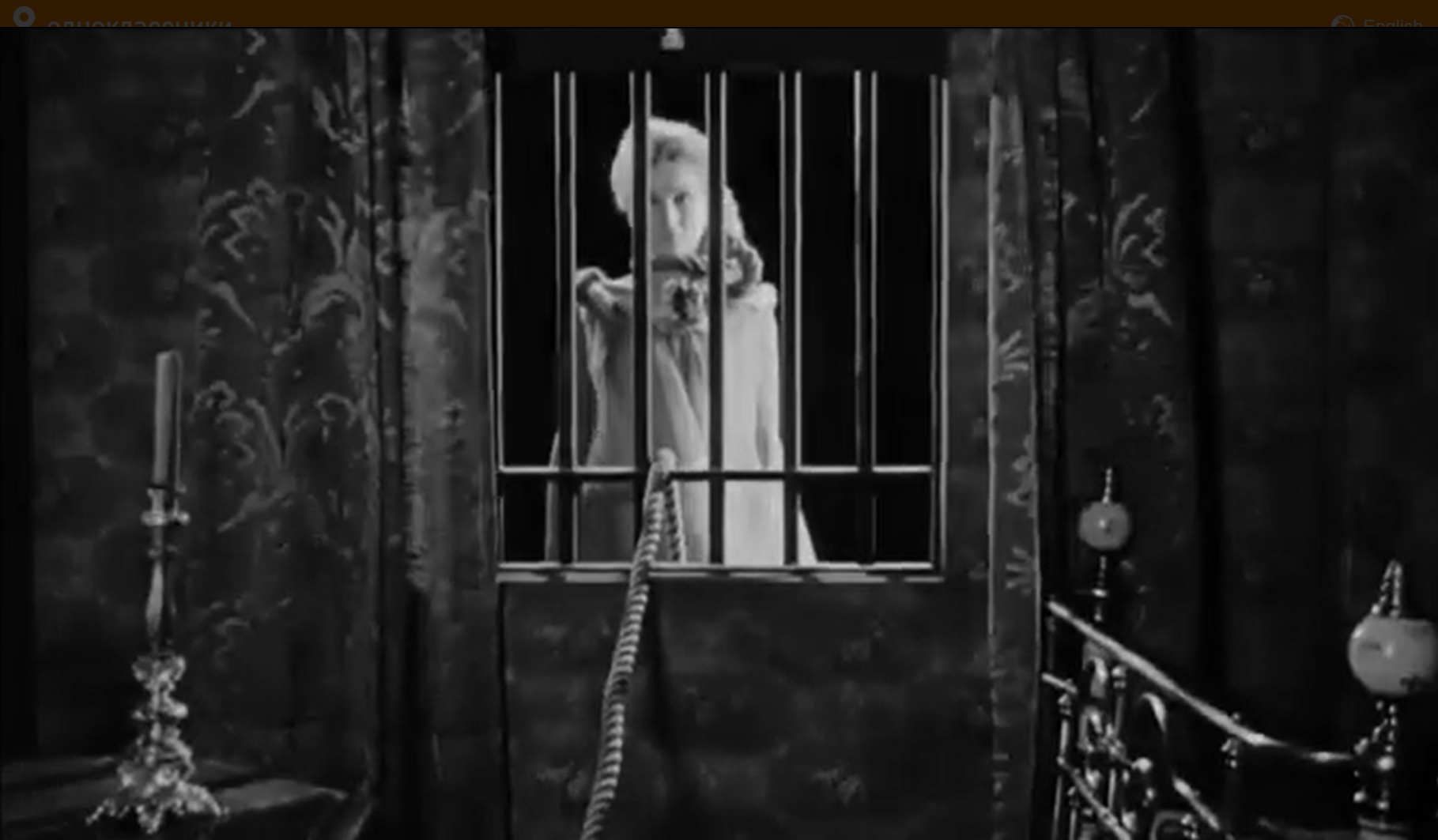
One of gimmick-meister William Castle’s best-known and loved films was this Old Dark House flick (remade in 1999 and apparently in development as another remake), featuring Emergo — a skeleton “emerged” from the theater and descended upon audiences —

and plenty of twists and turns to keep audiences screaming in fright. The storyline, centered around Price’s contentiously bitter arguments with fourth-wife Ohmart:

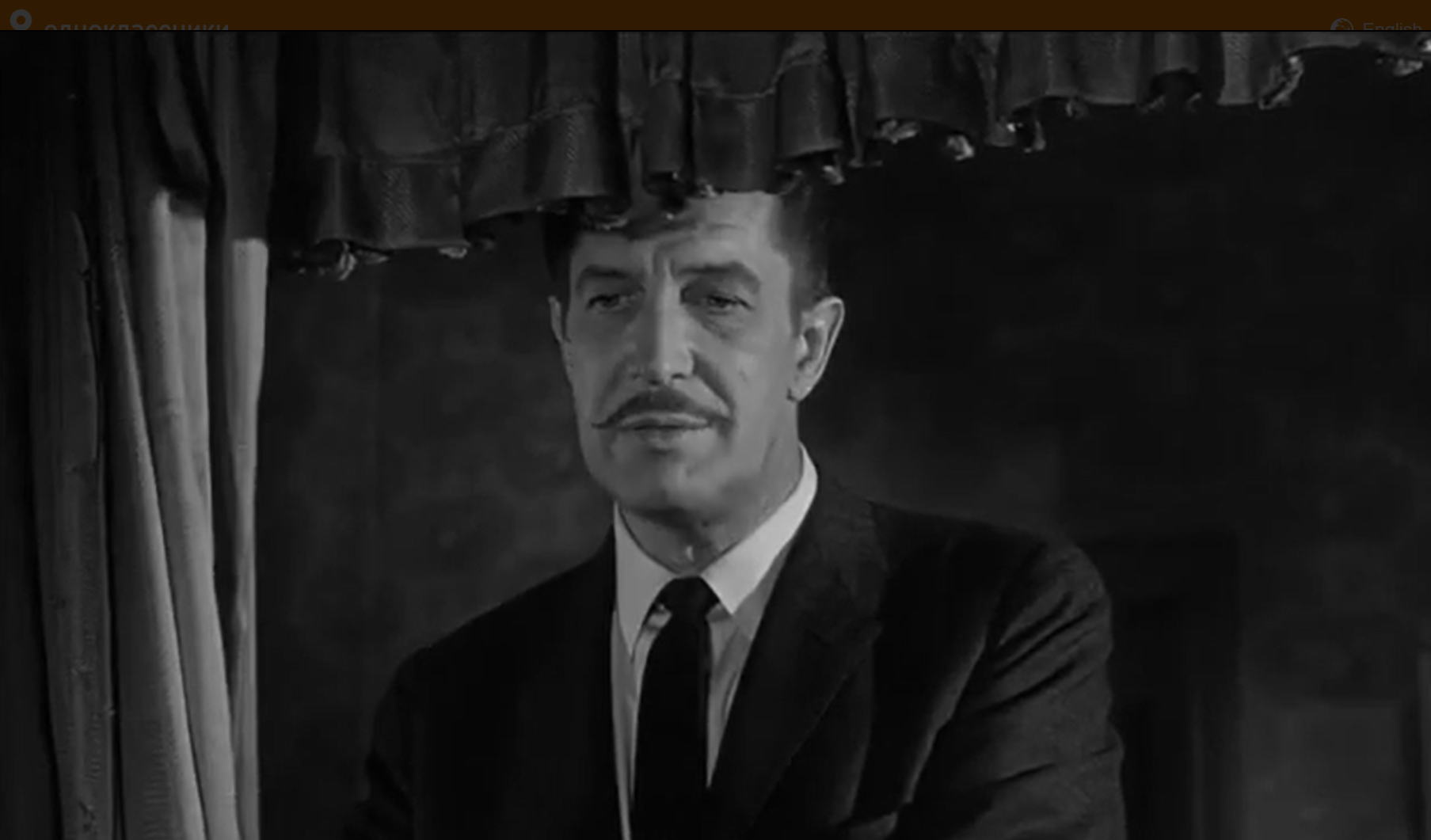
… keeps us guessing about who’s up to what, and it’s relatively easy to forgive some egregious lapses in logic (isn’t that what horror films are known for?). Price:

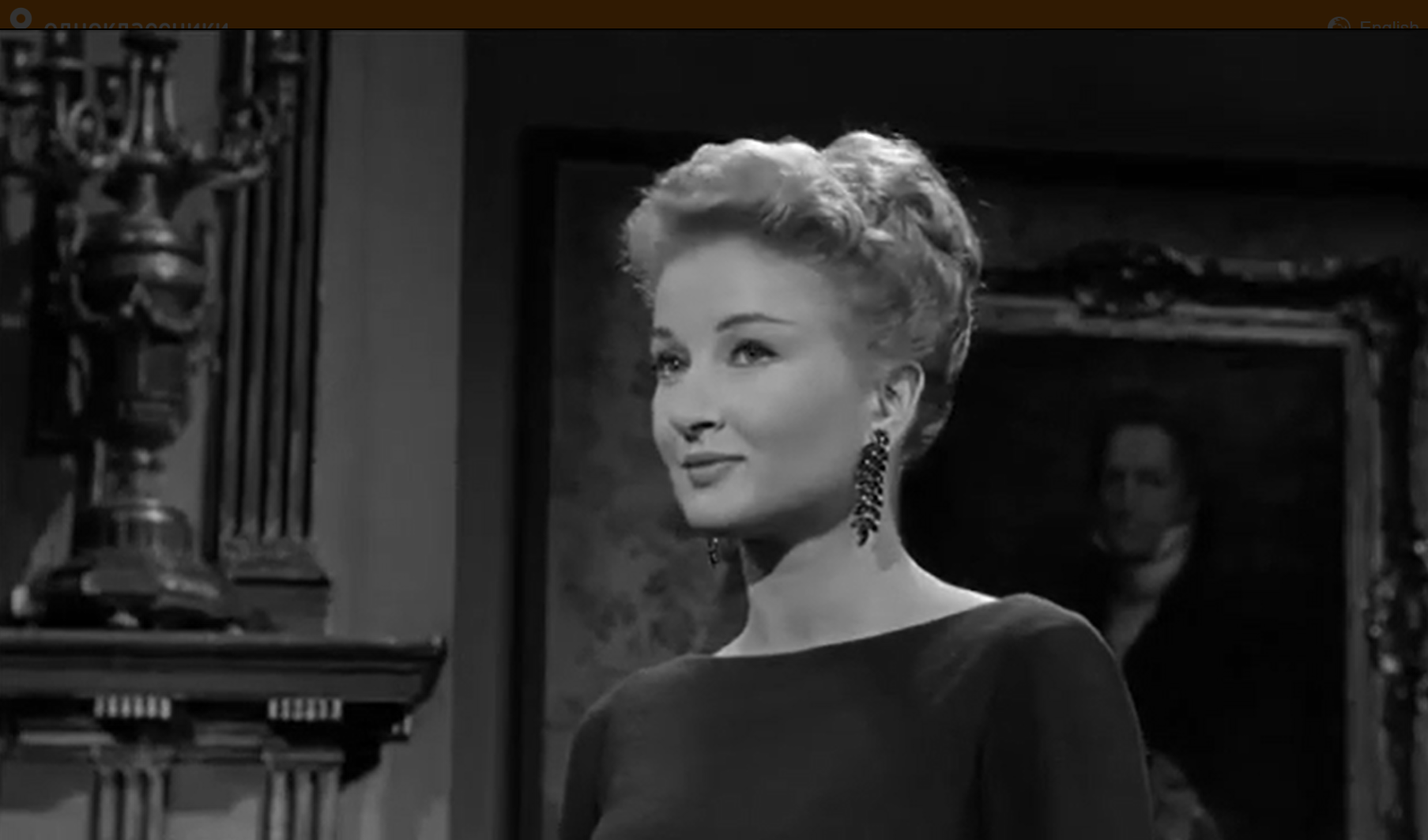
… Ohmart:

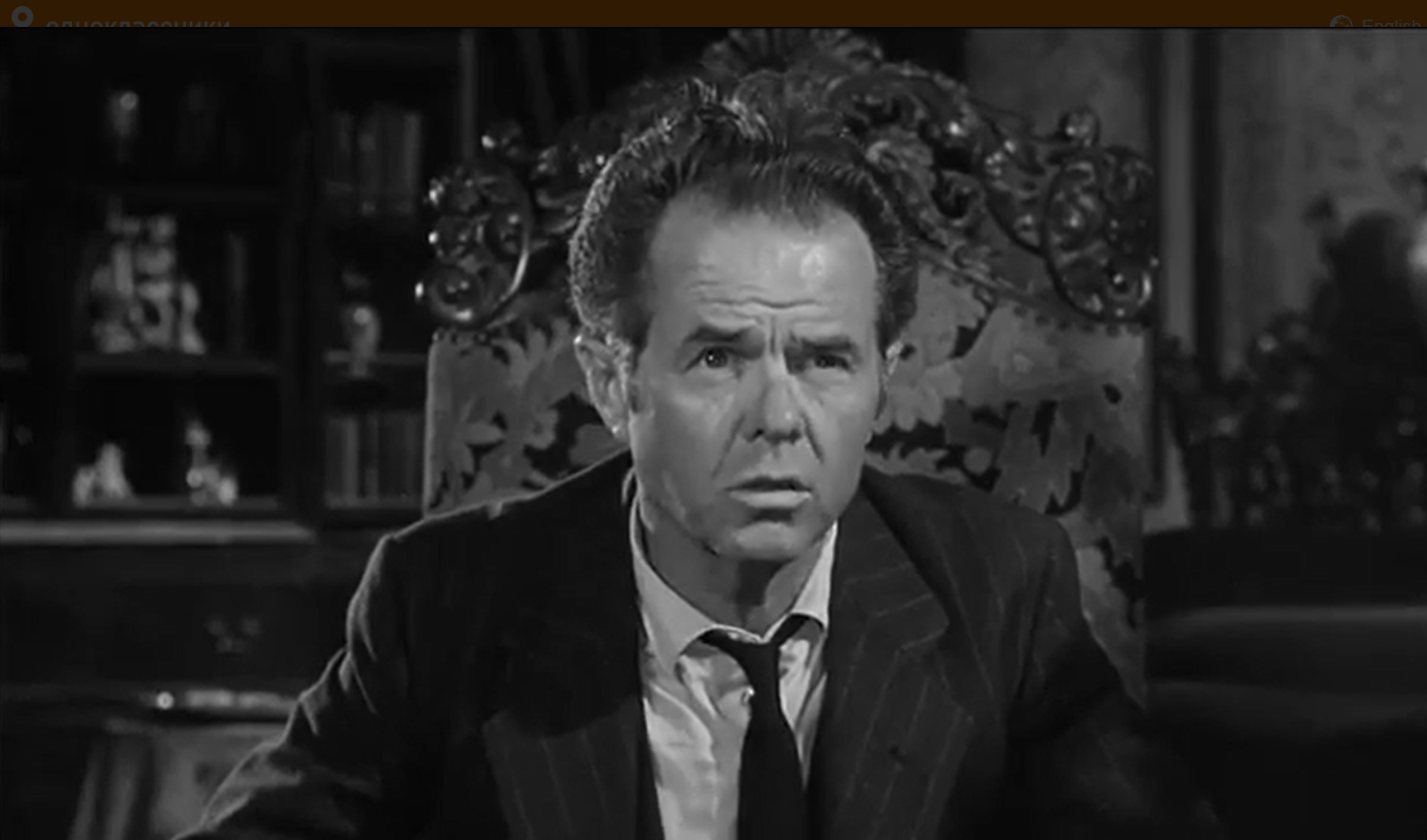
… and Cook, Jr.:

… are especially well cast, and the other actors acquit themselves nicely.

Redeeming Qualities and Moments:

  • Atmospheric cinematography

  • A number of effectively spooky moments

Must See?
Yes, for its historical importance as a film that inspired Hitchcock and was beloved by audiences of the day. Listed as a Cult Movie and a Personal Recommendation in the back of Peary’s book.

Categories

  • Historically Relevant

Links:

North Star, The (1943)

North Star, The (1943)

“We’re the younger generation, and the future of our nation!”

Synopsis:
Ukrainian villagers — including high school graduate Marina (Anne Baxter), her college-bound fiance Damian (Farley Granger), her best friend Clavdia (Jane Withers), Clavdia’s brother (Eric Roberts), and Damian’s older brother (Dana Andrews) — must deal with the sudden invasion of Nazi soldiers in their nation, including heinous crimes against children led by Dr. von Harden (Erich von Stroheim).

Genres, Themes, Actors, and Directors:

  • Anne Baxter Films
  • Dana Andrews Films
  • Erich von Stroheim Films
  • Farley Granger Films
  • Lewis Milestone Films
  • Walter Huston Films
  • World War II Films

Review:
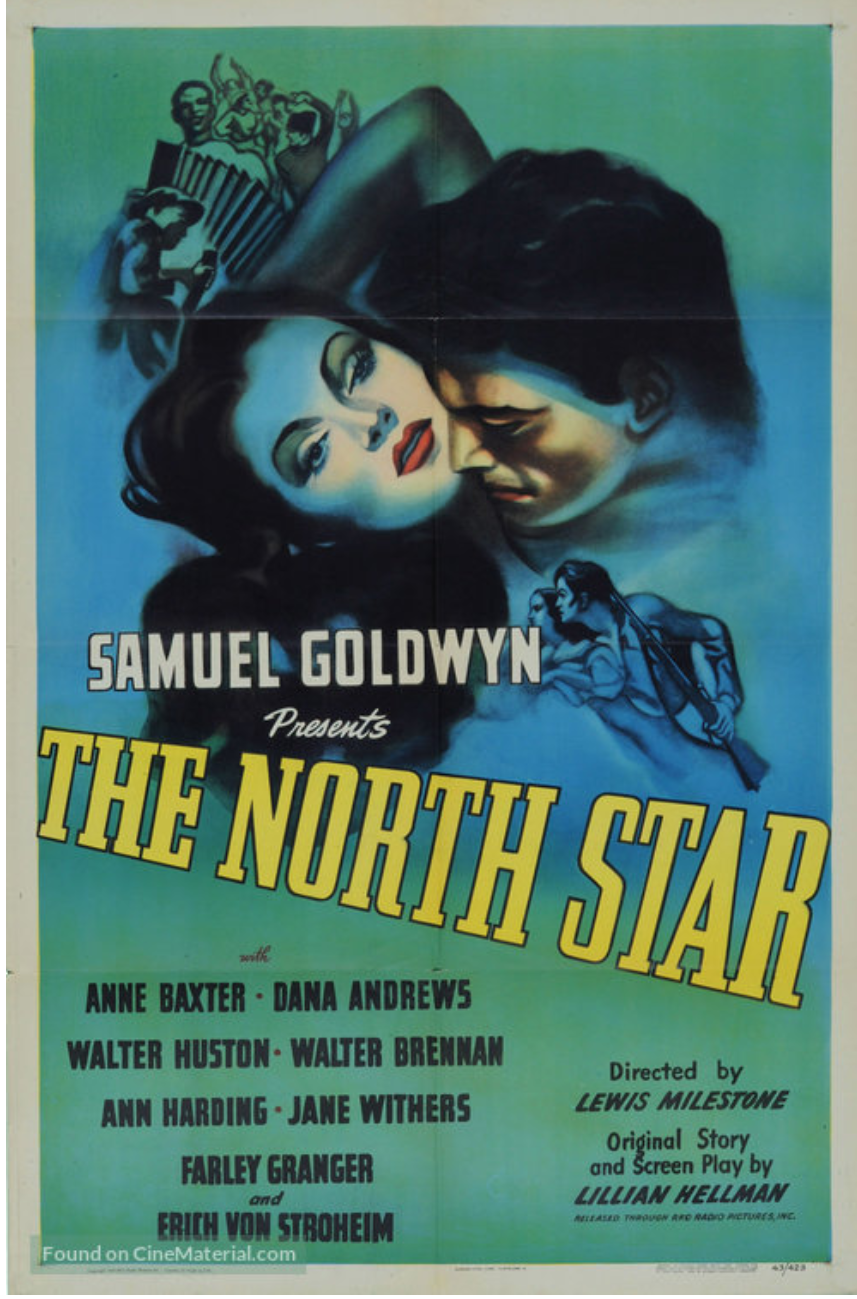
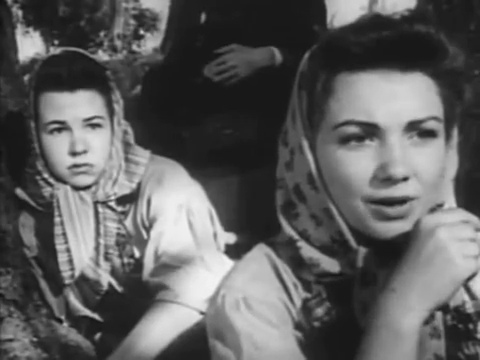
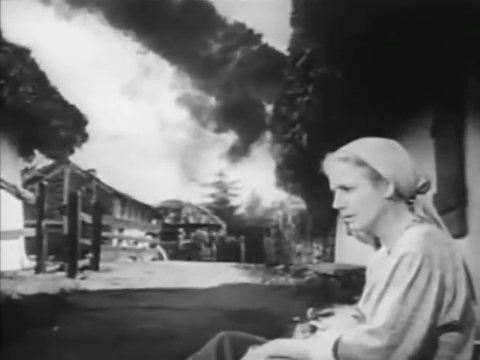
This Oscar-nominated Hollywood production — featuring Lewis Milestone as director, Lillian Hellman as screenwriter, Aaron Copland as composer, James Wong Howe as ciematographer, William Cameron Menzies as producer, and a bevy of major stars — remains a most curious wartime entry, made during the 1941-1945 U.S.-Soviet alliance when some were keen to tell the Soviets’ tale of patriotic resistance against the Nazis. Interestingly, the directorial style — especially during the surreal first third, which is designed like a sound-stage operetta — bears much in common with early Soviet cinema, yet with the added cognitive dissonance of seeing well-known American stars populating the screen.

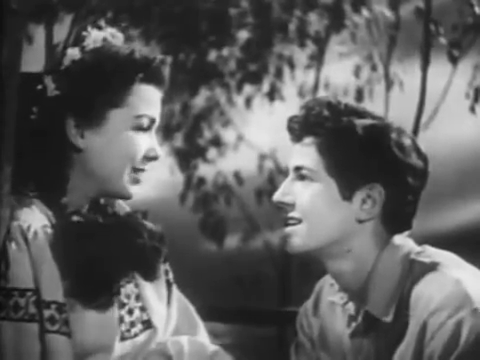
There is unfortunately very little to commend during these opening scenes, which are set up simply as a starkly idyllic, drawn-out counterpoint to the hell that’s about to descend, complete with corny musical interludes. There’s a hinted-at romantic triangle established between Baxter, Granger, and Andrews — which later turns into an opportunity for Granger to show his worthiness as more than “simply” a university student — and for Withers (oh-so-poorly miscast) to be dumped upon as a fat (?) and pathetically lovestruck young woman who is also eventually given a chance to show her mettle.

Once fighter planes ruthlessly bomb civilians on a road — a Nazi pilot grins with evil glee — the film becomes almost shockingly brutal, including sequences taking place under the supervision of von Stroheim’s calmly evil doctor.

Will the villagers prevail? Wait for Anne Baxter’s final speech to find out.

Note: The history behind this film’s production, release, reception, and subsequent Red-sanitized re-release under a different name (Armored Attack) is well worth reading about.

Redeeming Qualities and Moments:

  • James Wong Howe’s cinematography
  • Skilled camera direction
  • Shockingly realistic scenes of wartime brutality

Must See?
No, though I suppose it’s worth a look as a historical curiosity.

Links:

Flame and the Arrow, The (1950)

Flame and the Arrow, The (1950)

“A man who knows what he’s dying for only seems to die.”

Synopsis:
In medieval Hessian-occupied Italy, an archer named Dardo (Burt Lancaster) loses his son (Gordon Gebert) to his estranged wife (Lynn Baggett), who is cohabitating with Count Ulrich “The Hawk” (Frank Allenby). With the help of his loyal sidekick (Nick Cravat), Dardo kidnaps The Hawk’s niece (Virginia Mayo) for ransom, and attempts to bargain for his son.

Genres, Themes, Actors, and Directors:

  • Burt Lancaster Films
  • Historical Dramas
  • Jacques Tourneur Films
  • Kidnapping
  • Revolutionaries
  • Royalty and Nobility
  • Virginia Mayo Films

Review:
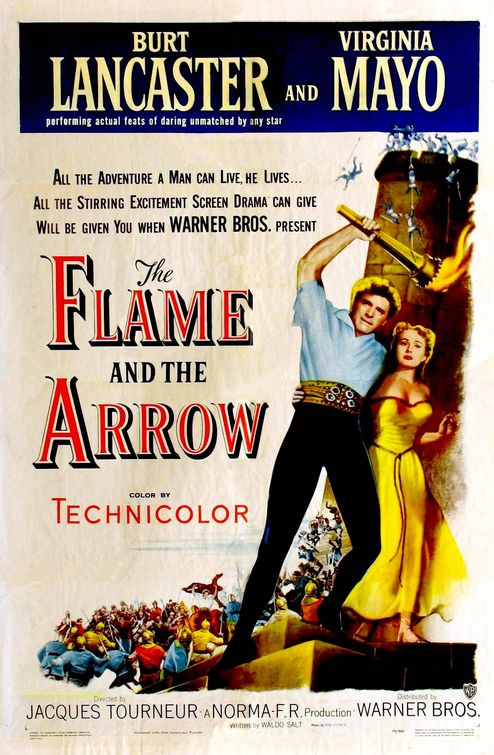
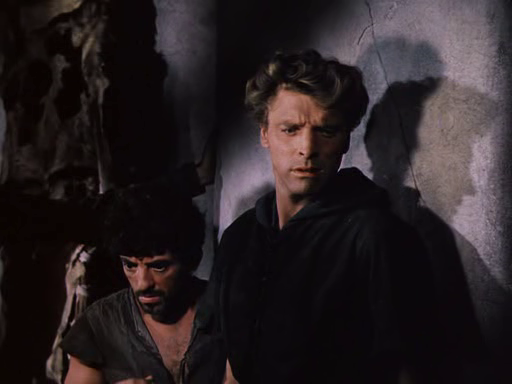
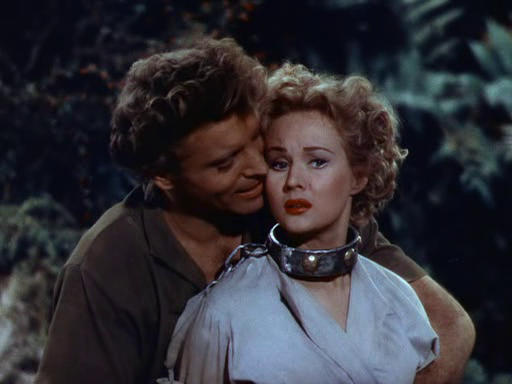
Jacques Tourneur directed this Waldo Salt-scripted historical adventure flick, co-starring Burt Lancaster and his former circus partner Nick Cravat (the duo would go on to co-star in The Crimson Pirate two years later).

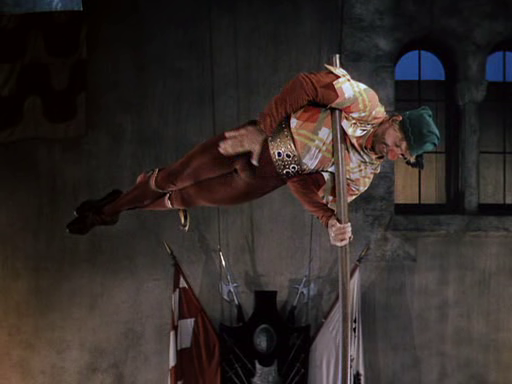
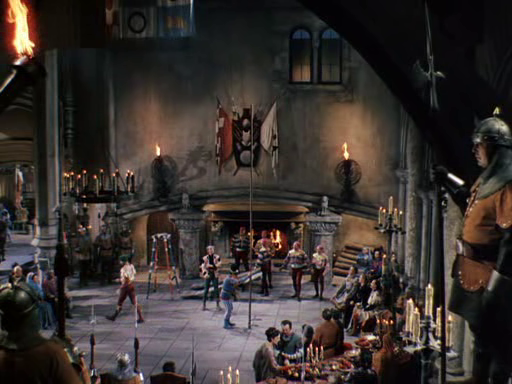
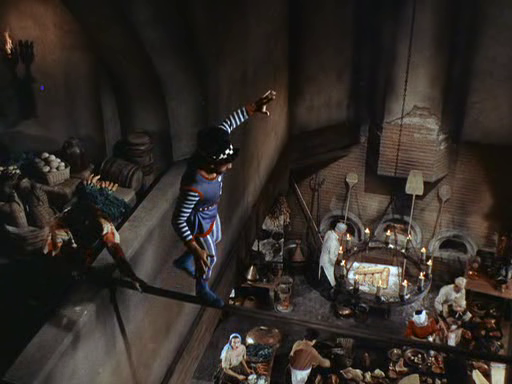
The Flame and the Arrow — the top-grossing film of its year — is prime escapist fare, filmed in Technicolor and featuring both swashbuckling fights and daring acrobatic feats performed by Lancaster and Cravat themselves.

Indeed, it’s easy to see how audiences of the time would appreciate its colorful sense of fun, daring, and rebellion, with beautiful and feisty Virginia Mayo included as well.

With that said, it’s not must-see viewing for all film fanatics, but rather recommended for those who enjoy well-told tales of this time period and genre.

Redeeming Qualities and Moments:

  • Colorful sets and fight sequences

  • Ernest Haller’s cinematography

Must See?
No, though it’s worthy viewing for fans of swashbucklers.

Links:

Conqueror, The (1956)

Conqueror, The (1956)

“I feel this Tartar woman is for me, and my blood says, take her.”

Synopsis:
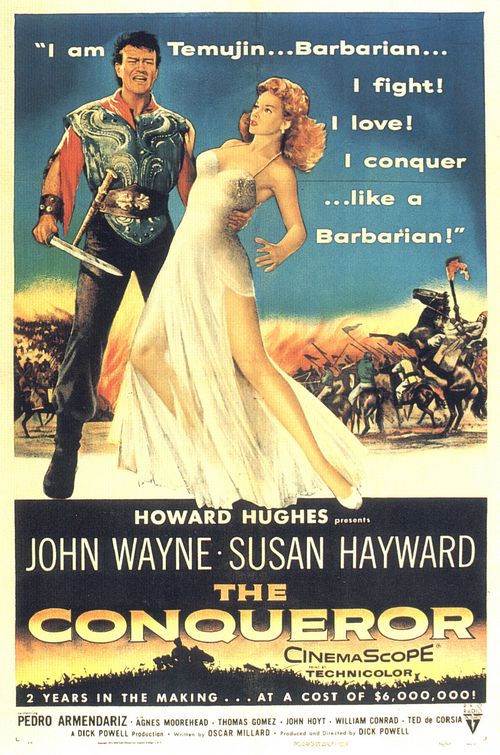
With assistance from his loyal brother (Pedro Armendariz), a Mongol warrior (John Wayne) soon-to-be-known-as Genghis Khan attempts to conquer neighboring tribes while also winning the heart of his captive wife (Susan Hayward).

Genres, Themes, Actors, and Directors:

  • Historical Drama
  • John Wayne Films
  • Lee Van Cleef Films
  • Marital Problems
  • Ruthless Leaders
  • Susan Hayward Films

Review:
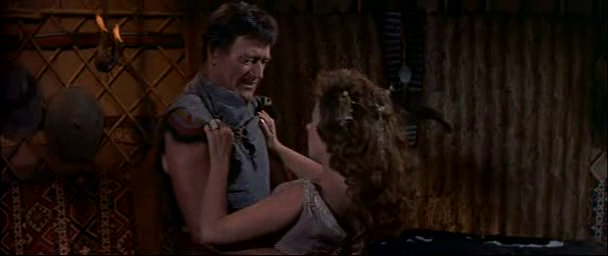
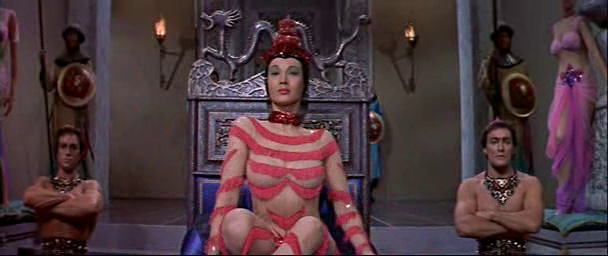
“John Wayne as Genghis Khan!” What sounds like a joke is actually a reality, as borne out by this notoriously awful mash-up of westerns and 13th century Mongolian history. According to Hollywood legend, Wayne walked into producer Dick Powell’s office, saw this script in the trashcan, pulled it out, and decided he wanted to have a go at it (and who says no to the world’s top box office star?). Wayne’s flat accent and performance-a-la-cowboy are the first and most obvious sacrificial elements one notices, but there’s plenty more to hoot at: the elaborately colorful and creative “historical” costumes; the florid script by Oscar Millard; the lack of actual Asians playing any of the lead characters; the number of horses that seem to simply topple over during the battle sequences (none were hurt in real life); the surreal dance performance; and the horrifically offensive seduction-through-rape romance depicted between Wayne and Hayward (who thankfully reports she simply laughed hysterically after each take). In addition to being cringeworthingly bad, this film is infamous for its (literally) toxic filming circumstances: three times as many cast and crew participants died of cancer than would normally occur in a population of its size. According to Wikipedia:

Parts of the film were shot in Snow Canyon, Warner Valley, Pine Valley, Leeds, and Harrisburg, Utah. The exterior scenes were shot near St. George, Utah, 137 miles (220 km) downwind of the United States government’s Nevada National Security Site. In 1953, 11 above-ground nuclear weapons tests occurred at the site as part of Operation Upshot–Knothole. The cast and crew spent many difficult weeks at the site, and Hughes later shipped 60 tons of dirt back to Hollywood in order to match the Utah terrain and lend realism to studio re-shoots. The filmmakers knew about the nuclear tests but the federal government assured residents that the tests caused no hazard to public health.

Redeeming Qualities and Moments:

  • Many laughably terrible and/or ill-conceived elements

Must See?
I’ll weigh in with a Yes on this train wreck, simply because film fanatics won’t be able to curb their curiosity, and may get some laughs.

Categories

  • Cult Movie

Links:

Home of the Brave (1949)

Home of the Brave (1949)

“You either like a guy or you don’t. That’s all there is to it; that’s all there’ll ever be to it.”

Synopsis:
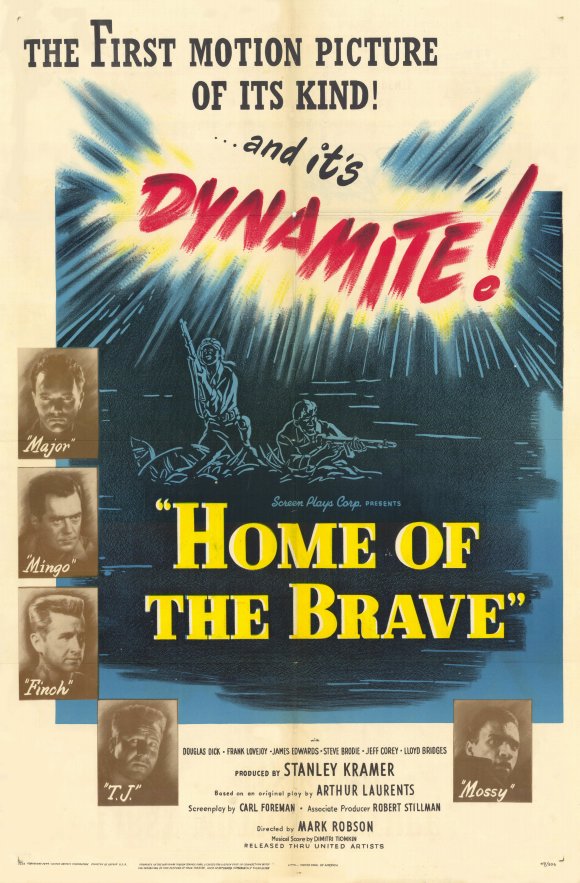
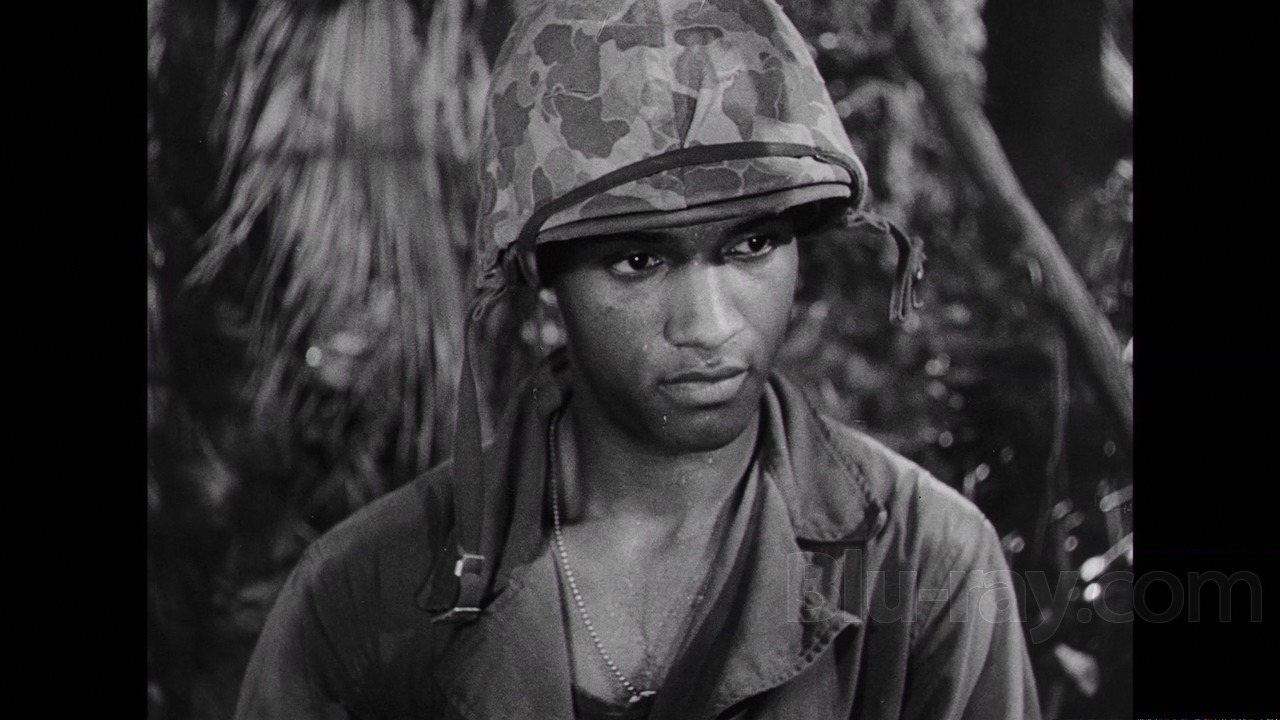
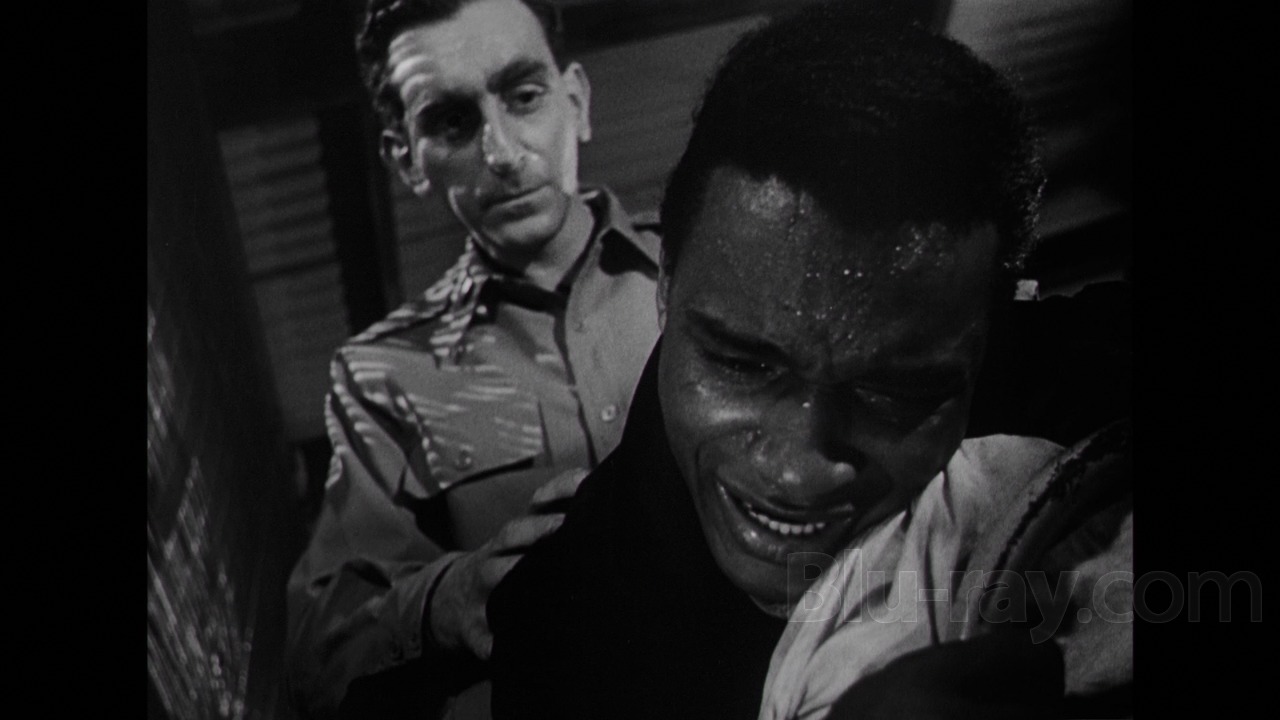
During World War II, a paralyzed war veteran (James Edwards) tells an army psychiatrist (Jeff Corey) about his experiences as the only black man in an otherwise all-white platoon — led by a young major (Douglas Dick) — tasked with reconnaissance work on a Pacific island held by the Japanese. While his former high school buddy (Lloyd Bridges) is genuinely thrilled to see him again, a bigot (Steve Brodie) is open in his disdain, and a troubled sergeant (Frank Lovejoy) observes their conflicts with concern.

Genres, Themes, Actors, and Directors:

  • African-Americans
  • Flashback Films
  • Lloyd Bridges Films
  • Mark Robson Films
  • Mental Breakdown
  • Racism
  • Soldiers
  • World War II

Review:
Based on a play by Arthur Laurents (in which the protagonist is Jewish), Home of the Brave is a refreshingly bold if dated and still-troubling depiction of racism in mid-century America. The flashback narrative structure reflects simplistic notions that psychoanalysis can cure enormous ills: if only Edwards can remember exactly what happened the night his legs stopped working, he will surely be well. Setting this dramatically dubious convention aside, Edwards’ challenges come across as all too realistic, aptly demonstrating the insidiousness of what it’s like to endure chronic racism, both blunt and subtle, on a daily basis. The main problem with Edwards’ travails is that they are presented as simply Edwards’ own deeply internalized belief in what he’s been told for years — that he’s inherently lesser than whites on every level. Bridges tries to convince Edwards to move past this toxic brainwashing, but slips up himself at one point, almost using a derogatory term and demonstrating that racist sentiments really are just a tongue slip away. As noted in Donald Bogle’s Blacks in American Films and Television: An Illustrated Encyclopedia (1989)

… there is a tinge of patronage because it is the white man offering his hand to the black man. Yet there is still something decent about the film’s sincerity and its optimism.

Indeed, Home of the Brave is a rare attempt to face uncomfortable race relations head on, and is worth a look for its unusual and unflinching storyline.

Note: It’s telling that the NY Times referred to racism as “the urgent and delicate subject of anti-Negro prejudice”; this was about the level of engagement possible at the time in mainstream media.

Redeeming Qualities and Moments:

  • James Edwards as Moss
  • Lloyd Bridges as Finch
  • Robert de Grasse’s cinematography

Must See?
Yes, for its historical value.

Categories

Links: