Browsed by
Category: Original Reviews

Responses to Peary’s “must see” movie reviews, as well as my own “must see” movie reviews up to and after 1986 (when Peary’s book was published).

Suddenly (1954)

Suddenly (1954)

“There’s cruelty and hatred and tyranny in the world. You can’t make believe they aren’t there.”

Synopsis:
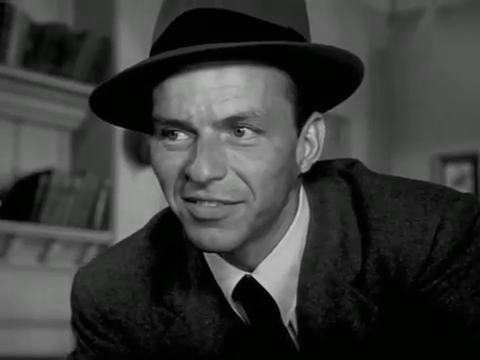
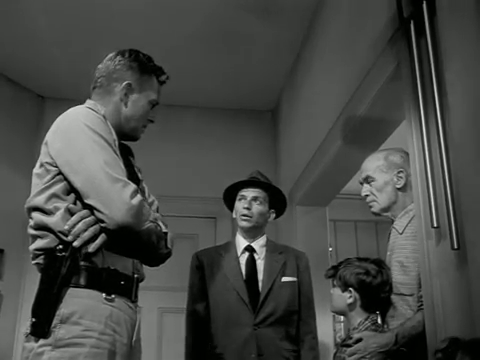
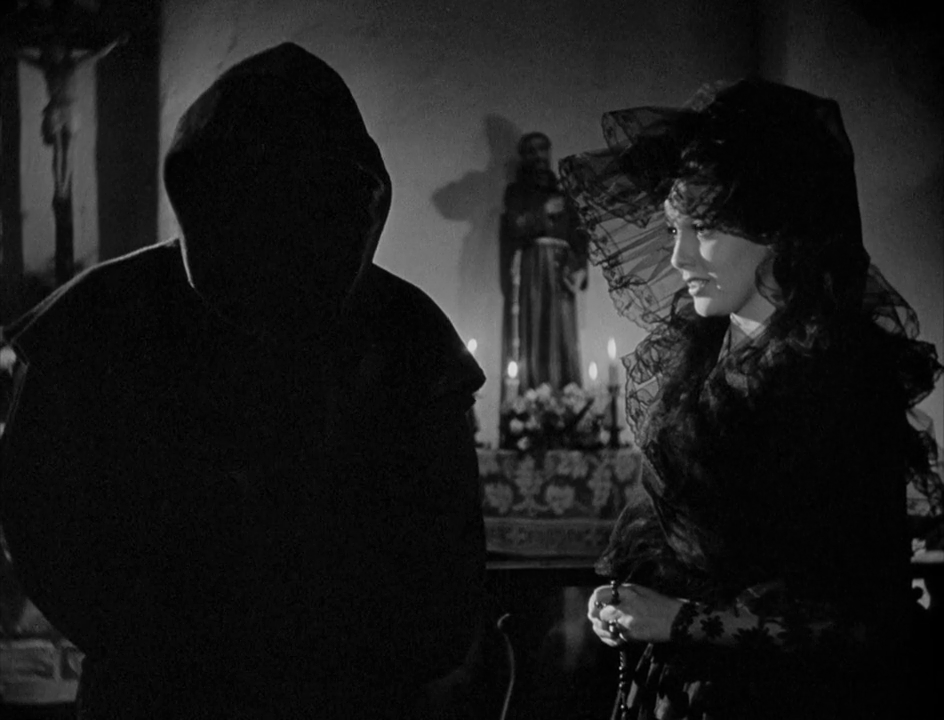
A widowed mother (Nancy Gates) and her young son (Kim Charney) become trapped in their house along with Gates’ father-in-law (James Gleason), the local sheriff (Sterling Hayden), and a television repairman (James O’Hara) when a crazed assassin (Frank Sinatra) and his henchmen (Paul Frees and Christopher Dark) invade their home during a presidential motorcade.

Genres, Themes, Actors, and Directors:

  • Assassination
  • Frank Sinatra Films
  • Hostages
  • Single Mothers
  • Small Town America
  • Sterling Hayden Films

Review:
Frank Sinatra’s first role after his Academy Award-winning performance in From Here to Eternity (1953) was this effectively chilling portrayal of a sociopathic veteran hired to kill the president. According to TCM’s article, when Sinatra heard Lee Harvey Oswald watched this movie the day before shooting Kennedy, he requested that it — and The Manchurian Candidate (1962), also about an attempted presidential assassination — be taken out of circulation. Interestingly, Suddenly — the eponymous title refers to the sleepy little town where all this action “suddenly” takes place — is a pro-gun movie, starting with young Charney’s frustration that he isn’t allowed to have one, and culminating in a situation where having guns lying around the house is very much a life-saving choice for this group of unwitting hostages (then again, when are hostages ever not unwitting?). Overall, this tense story is told in a compact and highly effective style, showing a small American town disrupted by pure malevolence, but saved by collective ingenuity and bravery.

Redeeming Qualities and Moments:

  • Frank Sinatra as John Baron
  • Nancy Gates as Ellen
  • A tense screenplay, well-directed by Lewis Allen

Must See?
Yes, as a fine and well-told thriller. Listed as a Sleeper in the back of Peary’s book.

Categories

  • Good Show

Links:

Incredible Journey, The (1963)

Incredible Journey, The (1963)

“From the very start, the travelers had adopted a certain marching order.”

Synopsis:
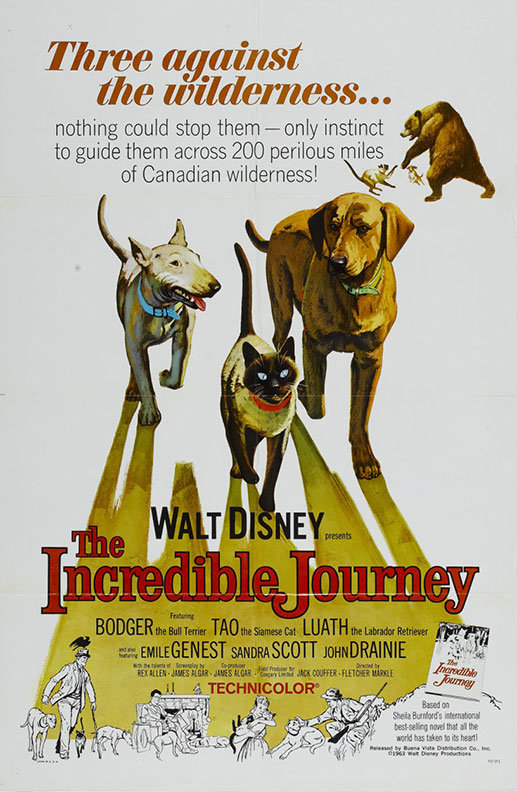
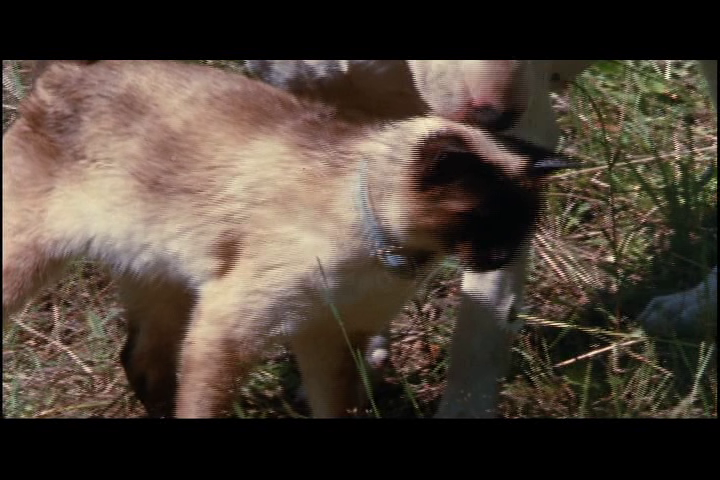
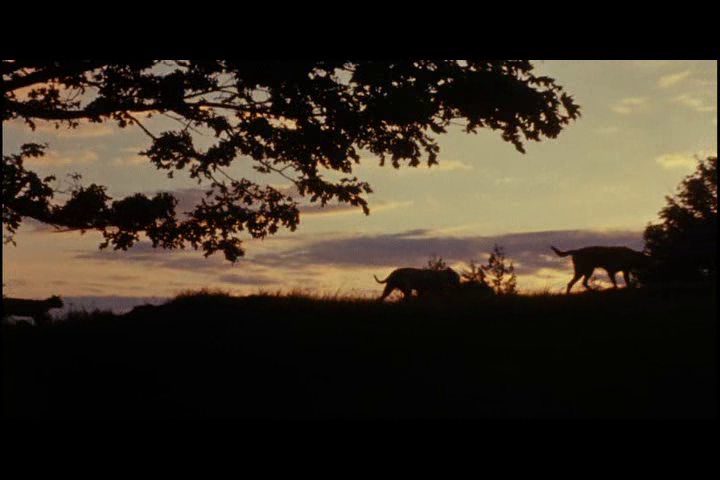
Two dogs and a cat leave their temporary caretaker (Emile Genest) in search of their owners, and soon find themselves on a truly incredible adventure across the Canadian wilderness.

Genres, Themes, Actors, and Directors:

  • Friendship
  • Pets
  • Road Trip
  • Survival

Review:
Disney’s first live action adaptation of Sheila Burnford’s classic children’s novel features a voice-over narration chronicling the tale of three plucky pets sticking with each other through thick and thin as they battle obstacles such as a raging river, a prickly porcupine, and a lynx. They receive ample support from well-meaning humans along the way, but their ultimate destination (getting back home to their owners) is never far from their minds. Thank goodness the animals don’t talk; we’re allowed to believe in them as actual creatures who happen to be incredibly hardy, loyal, and smart. The sections with human actors are poorly acted and a bit stilted, leaving one even more impressed by what the well-trained animals here manage to pull off. This film is infinitely better than Benji (1974), and holds a certain charm, but it isn’t must-see viewing for all film fanatics.

Redeeming Qualities and Moments:

  • Assured performances by the animal cast
  • Fine cinematography

Must See?
No. Listed as a Personal Recommendation in the back of Peary’s book.

Links:

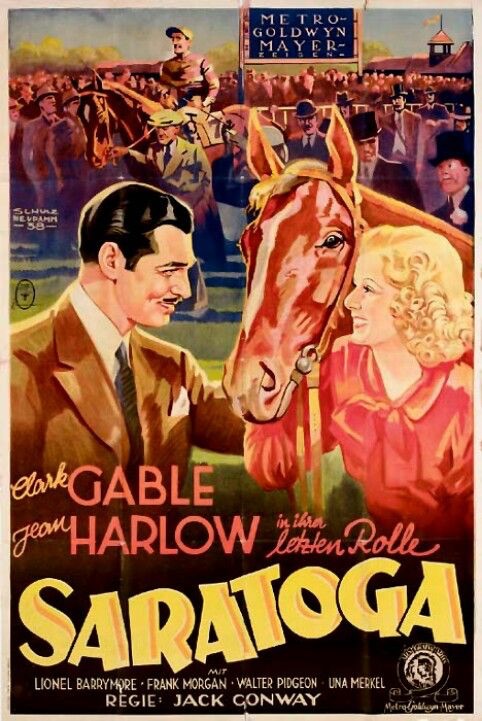
Saratoga (1937)

Saratoga (1937)

“You don’t belong at the track. What do you know about handicapping horses?”

Synopsis:
The daughter (Jean Harlow) of a recently deceased gambler (Jonathan Hale) tries to earn back her family home through gambling rather than relying on her wealthy fiance (Walter Pidgeon), but finds her efforts complicated when she falls for her father’s bookkeeper-friend (Clark Gable).

Genres, Themes, Actors, and Directors:

  • Clark Gable Films
  • Gambling
  • Jean Harlow Films
  • Lionel Barrymore Films
  • Love Triangle
  • Romantic Comedy
  • Walter Pidgeon Films

Review:
Peary almost certainly lists this lackluster MGM romantic comedy in his GFTFF given its infamy as Jean Harlow’s final film (which could only be completed through creative use of doubles, dubbing, and editing).

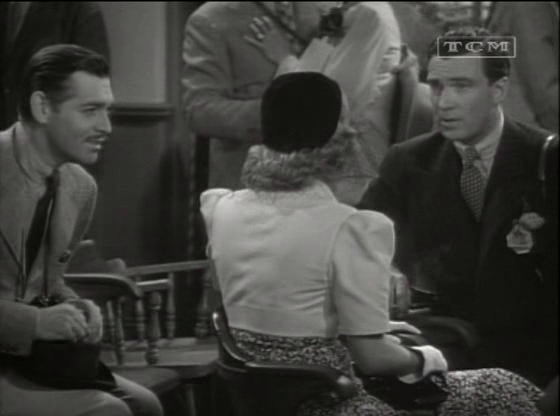
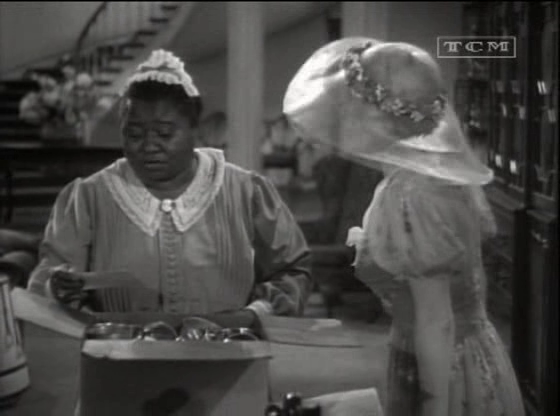
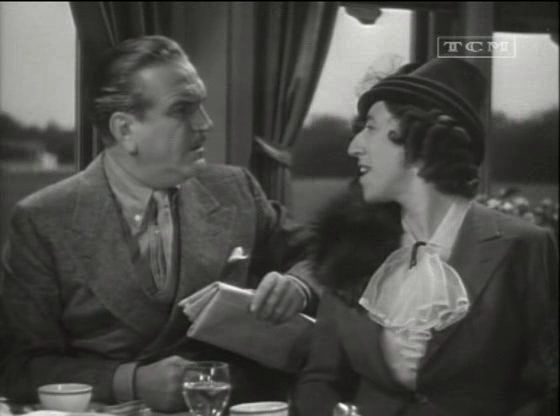
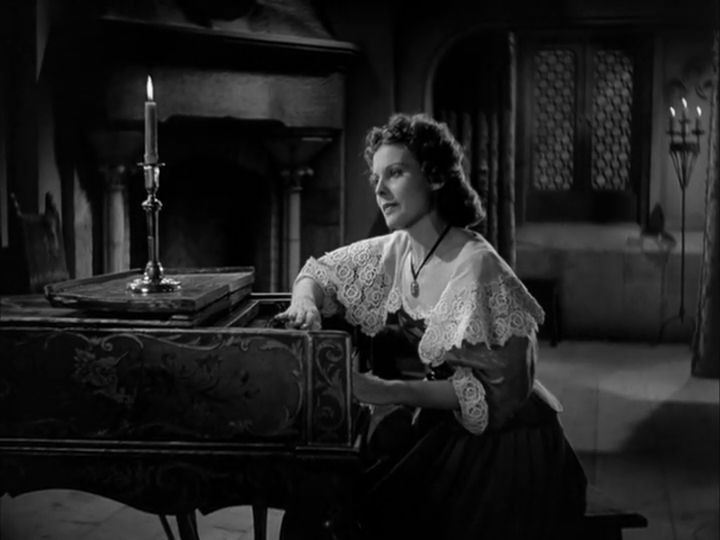
The storyline is innocuous and/or silly, and the performances are hit-or-miss: Harlow isn’t at her best (perhaps because of the ailments which led to her premature death from kidney failure at the age of just 26); Gable and Pidgeon are fine but not all that memorable; and the large cast of supporting actors (including Lionel Barrymore, Una Merkel, Margaret Hamilton, Frank Morgan, and Hattie McDaniel) simply reprise familiar archetypes. Saratoga isn’t a terrible film but limited to something audiences of the day likely enjoyed escaping into. The most interesting (albeit morbid and sad) aspect of this movie comes from observing how the crew managed to craft final scenes without Harlow: by filming her double from behind:

… wearing a wide-brimmed hat:

… and looking through binoculars.

Redeeming Qualities and Moments:

Must See?
No; this one is only must see for Harlow fans.

Links:

Three Musketeers, The (1939)

Three Musketeers, The (1939)

“Don’t worry: no noose is good noose.”

Synopsis:
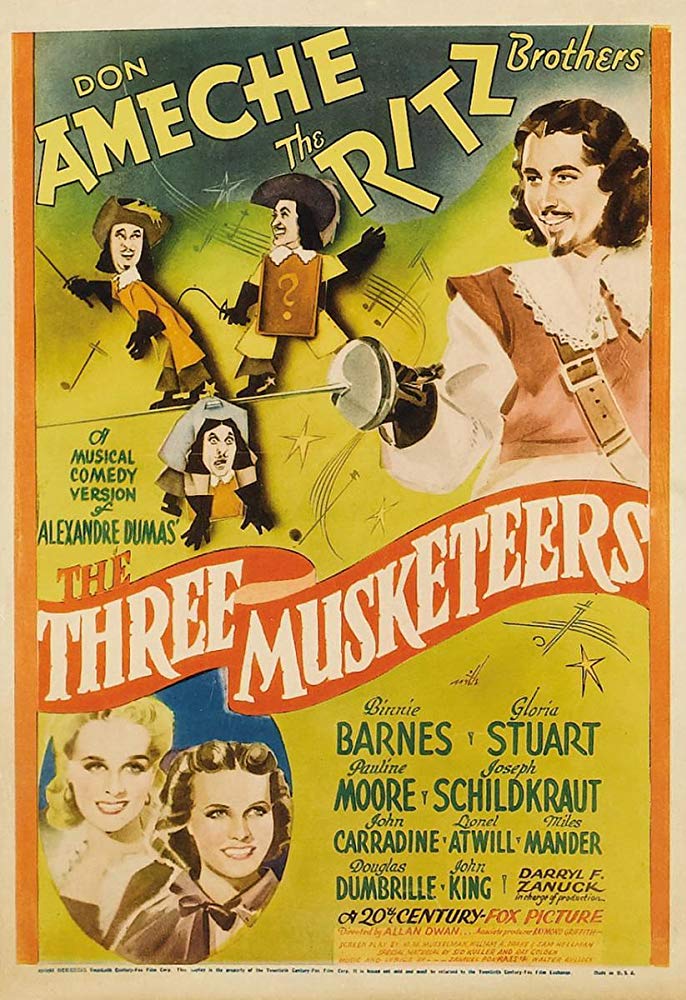
In 17th century France, D’Artagnan (Don Ameche) falls in love with a lady (Pauline Moore) in the court of King Louis XIII (Joseph Schildkraut), whose chief cardinal (Miles Mander) enlists the help of evil Milady De Winter (Binnie Barnes) and De Rochefort (Lionel Atwill) in disgracing the queen (Gloria Stuart) by stealing her emerald brooch. Will D’Artagnan’s three new musketeers (Harry Ritz, Al Ritz, and Jimmy Ritz) come to the rescue?

Genres, Themes, Actors, and Directors:

  • Allan Dwan Films
  • Comedy
  • Don Ameche Films
  • John Carradine Films
  • Mistaken or Hidden Identities
  • Musicals
  • Royalty and Nobility

Review:
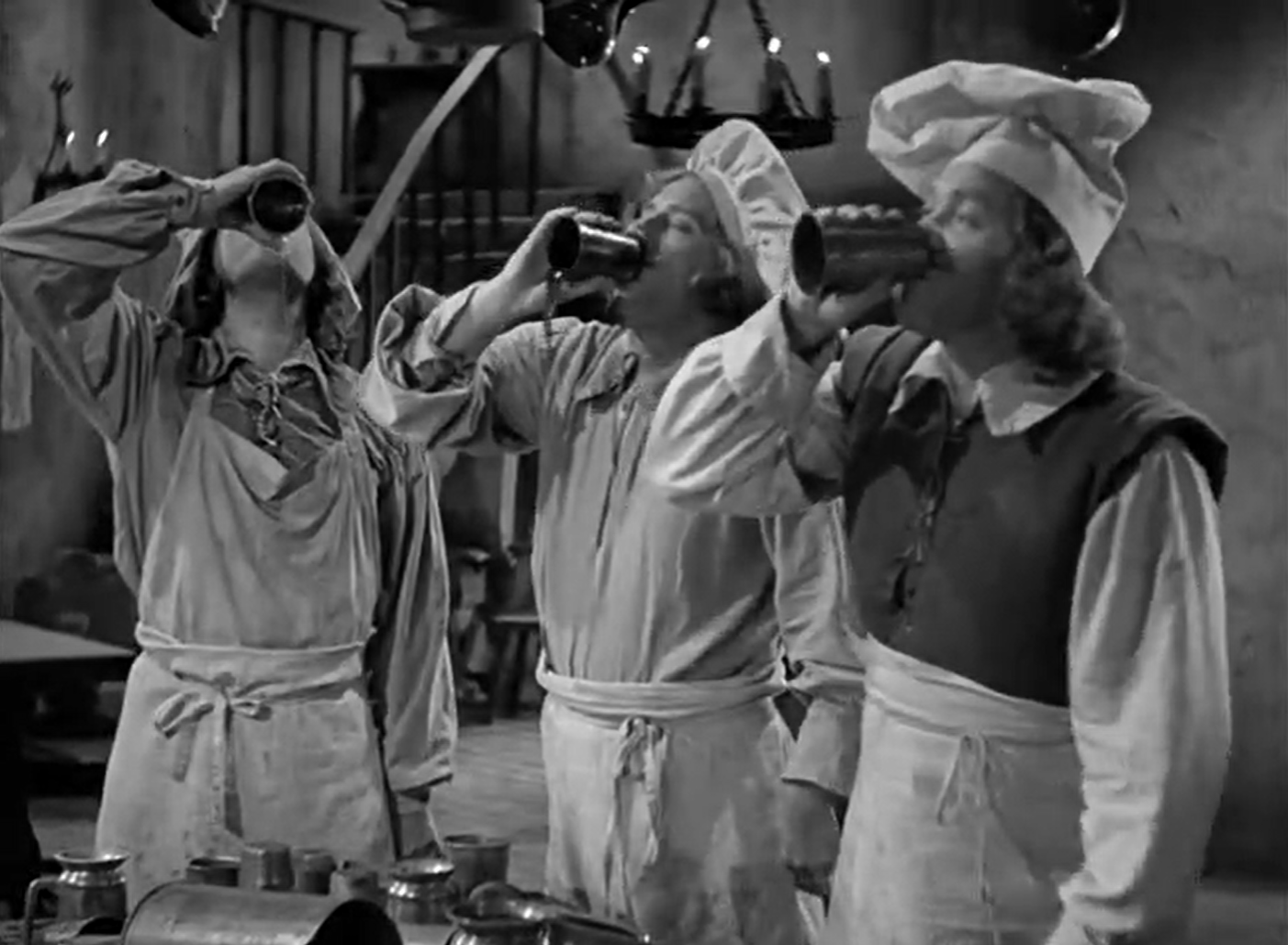
Peary almost certainly lists this adaptation of Alexandre Dumas’ classic novel in GFTFF given the presence of the Ritz Brothers, a comedic group described by Stuart Galbraith of DVD Talk as follows:

As for The Ritz Brothers (Al, Harry, and Jimmy), well, they’re as much an acquired taste now as they were 70 years ago. Completely forgotten today except by film buffs and old-time comics (their fans include Mel Brooks and, believe it not, Pauline Kael), the team was undeniably popular in the late-1930s and inarguably bridged the styles of film comedy that dominated the early- and mid-1930s (adapted from the stage and hangers-on from the silent era) with the slicker, faster, and streamlined comedians (Bob Hope, Abbott & Costello, etc.) that would dominate the forties, but their rubber-faced mugging generally plays more silly than funny.

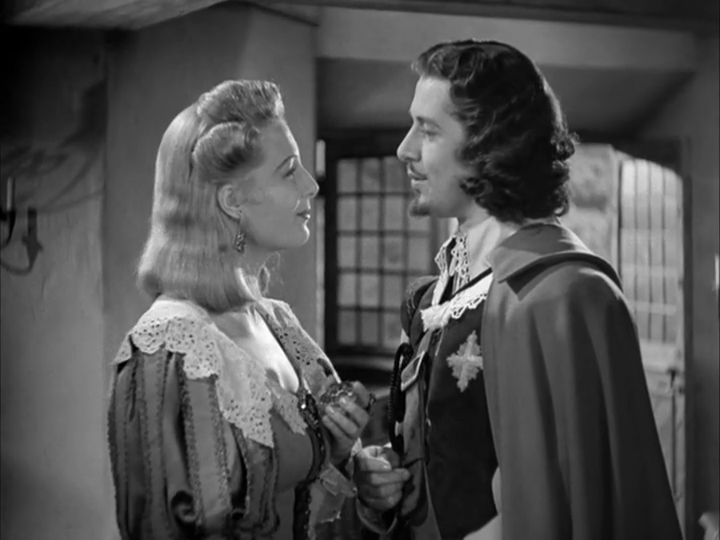
Frank Nugent, in his review for the New York Times, was among the group’s current-day detractors, noting, “They leave me as cold as a marinated herring and twice as limp.” With that said, Ameche is game as D’Artagnan, and nicely matched by Barnes as a sly villainess — and the entire production is well-mounted. At just over 70 minutes long, it’s tolerable but innocuous. Feel free to skip this one unless you’re curious to see the Ritz Brothers in action.

Redeeming Qualities and Moments:

  • Don Ameche as D’Artagnan
  • Binnie Barnes as Milady De Winter
  • Atmospheric cinematography and sets

Must See?
No; you can skip this one.

Links:

Aguirre, the Wrath of God (1972)

Aguirre, the Wrath of God (1972)

“Fortune smiles on the brave and spits on the coward.”

Synopsis:
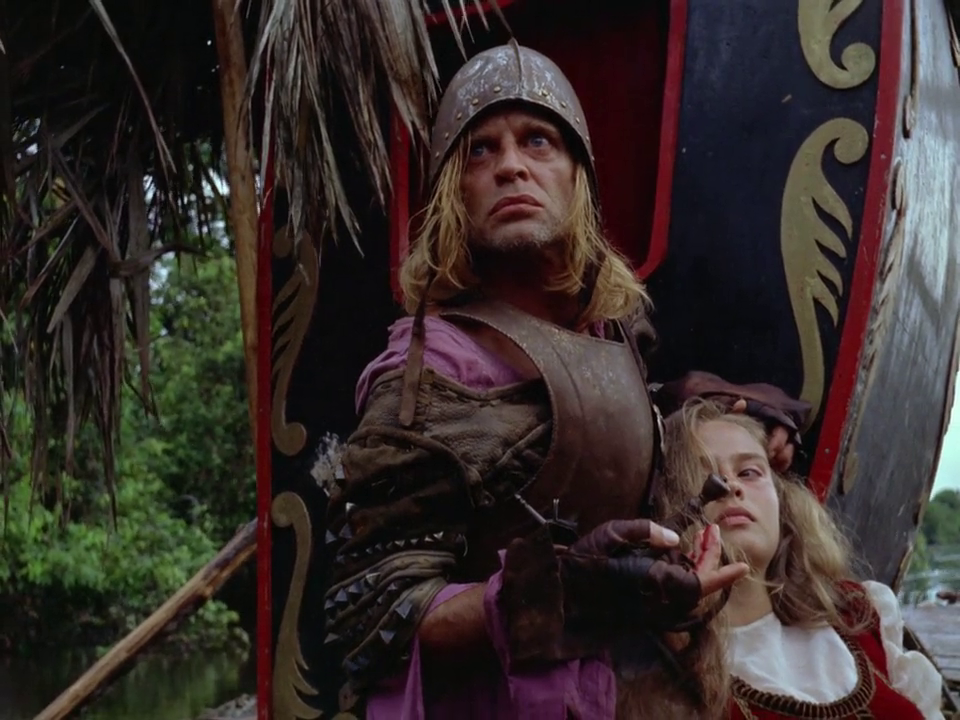
When a mad Spanish conquistador (Klaus Kinski) rebels against the leader (Ruy Guerra) of an expeditionary crew sent by Francisco Pizarro in search of fabled El Dorado on the Amazon River, the fortunes of Kinski’s entire crew — including Guerra’s wife (Helene Rojo), Kinski’s 15-year-old daughter (Cecilia Rivera), a nobleman (Peter Berling), an African slave (Edward Roland), and a monk (Del Negro) chronicling their travails — quickly unravel.

Genres, Themes, Actors, and Directors:

  • At Sea
  • Historical Drama
  • Living Nightmare
  • Ruthless Leaders
  • South and Central America
  • Werner Herzog Films

Response to Peary’s Review:
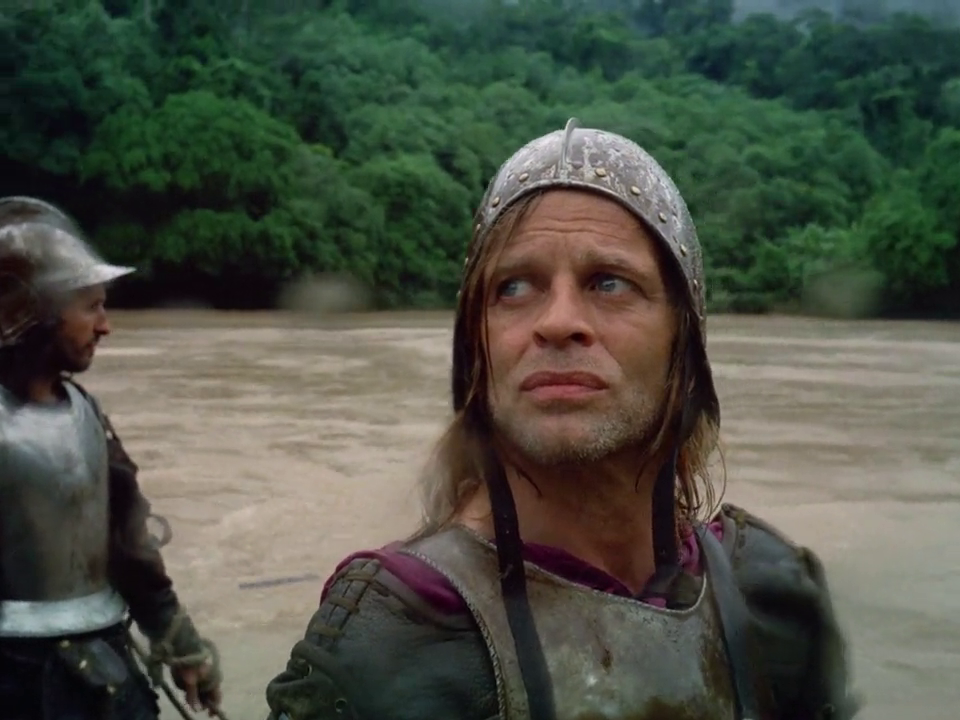
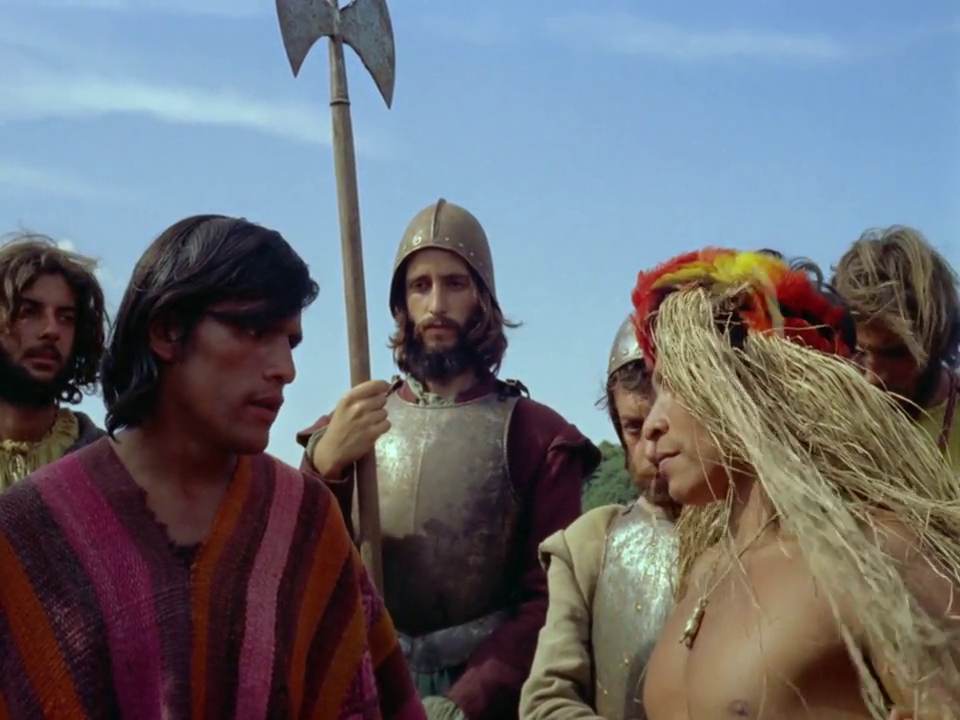
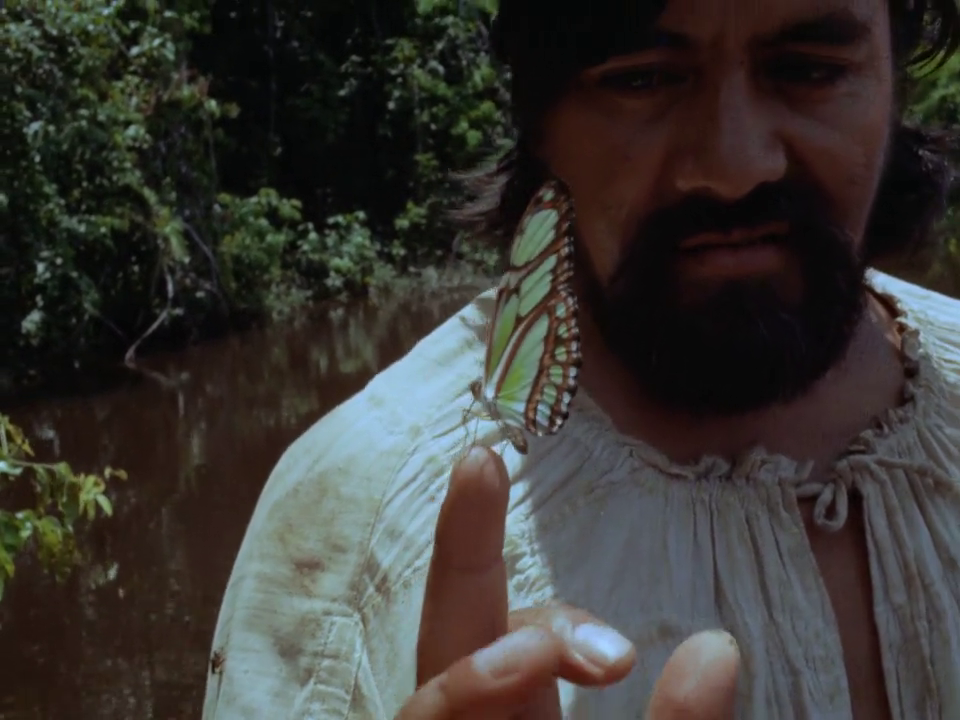
Peary writes that this “fictional masterpiece” by director Werner Herzog was the result of Herzog taking “his cast and crew to unexplored regions of South America — steep mountain ledges and an Amazon tributary”, thus representing “filmmaking under the most trying circumstances” but with “priceless” results, given that “Thomas Mauch’s camera has gone back in time to a lost world that is at once beautiful and terrifying.” Peary points out that this “spellbinding” film — which “at first… is dreamlike”, but ultimately becomes “hallucinatory” — begins “with an incredible image of perhaps a thousand soldiers in full armor, women in long dresses, and Indian slaves dragging cannons along a narrow, steep mountain path”, and ends “with a delirious image of lone-survivor Aguirre stranded on a monkey-covered raft”. He writes that “the journey downriver is full of haunting images: ghostly figures moving in the brush, ready to pick off intruders with arrows, spears, and poison darts; an abandoned cannibal village; a small raft caught in a roaring whirlpool; [and a] hooded black horse that stands abandoned in the prehistoric jungle.” He points out that, “as in [his] other films, Herzog delights in placing characters in hostile environments where, having nothing tangible to fight, they are unable to cope” and “eventually their minds become mush from the constant horror, depression, and fear of death.”

Peary points out that “Aguirre himself has little dialogue, and that is delivered without emotions, but seconds after we first see Kinski — sneering and snarling, gnarled like Richard III, standing at an angle as if to signify he’s at odds with the world, twisting his head before moving his body — we recognize that he is contemptuous of the world and tortured by inner demons.” Peary argues that “certainly Aguirre is meant to represent Hitler (though George Armstrong Custer also is appropriate)”, but “his consistently poor leadership and frustration are treated with such mock delight by Herzog that there’s evidence Aguirre is used as a comic villain, and the film itself is, though somberly presented, a comedy about a most embarrassingly unsuccessful expedition, carried out not by heroic figures, but by nefarious Spanish imperialists who deserved the sad end Herzog happily writes for them”. Peary concludes his GFTFF review by noting that “Popol Vuh’s music contributes greatly, making the journey come across as a funeral procession.”

Peary’s comprehensive review (elaborated upon in Cult Movies) nicely describes this incomparable film, “whose very production seems too remarkable to comprehend.” It’s well worth viewing, numerous times.

Redeeming Qualities and Moments:

  • Klaus Kinski as Don Lope de Aguirre
  • Thomas Mauch’s cinematography

  • Many memorable, haunting images


  • Popul Vuh’s soundtrack

Must See?
Yes, of course, as an influential and long-standing cult favorite by a master director.

Categories

(Listed in 1001 Movies You Must See Before You Die)

Links:

Dodge City (1939)

Dodge City (1939)

“We’re the public disgrace of America.”

Synopsis:
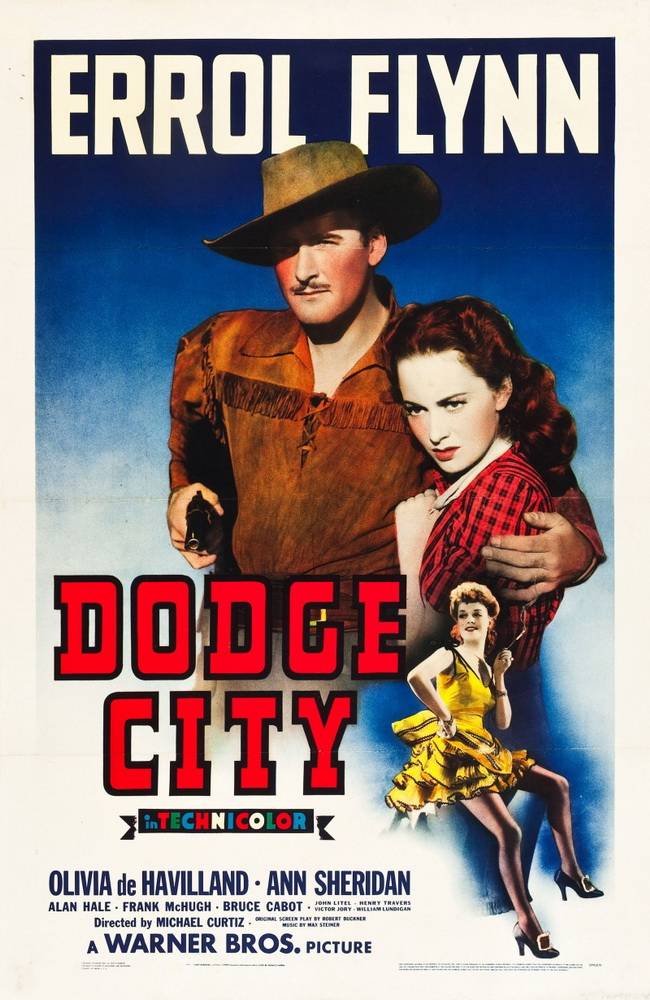
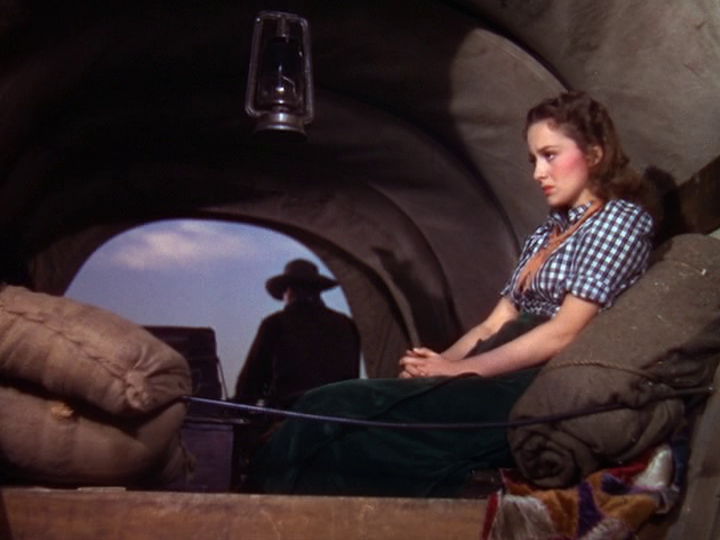
A wagon train driver (Errol Flynn) falls for the beautiful sister (Olivia de Havilland) of an immature young man (William Lundigan) who is accidentally killed in a cattle stampede. Meanwhile, he reluctantly agrees to become sheriff of a town dominated by a corrupt cattle buyer (John Cabot).

Genres, Themes, Actors, and Directors:

  • Ann Sheridan Films
  • Corruption
  • Errol Flynn Films
  • Michael Curtiz Films
  • Olivia de Havilland Films
  • Settlers
  • Sheriffs
  • Ward Bond Films
  • Westerns

Review:
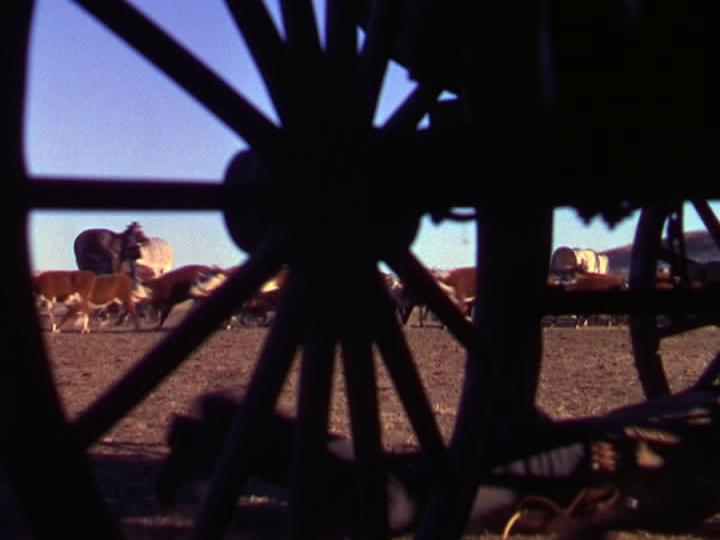
Errol Flynn made his western debut in this competently directed (by Michael Curtiz) yet narratively predictable oater about a reluctant sheriff taking over the lawless frontier town of Dodge City, Kansas. Flynn handles his role well, and the Technicolor cinematography is gorgeous — but as DVD Savant puts it so bluntly in his review, Dodge City “can only be described as a big-studio superwestern, an attempt to put a fancy wrapper on the same themes as had been playing out in cheap series oaters for thirty years.” A similar storyline was handled with greater panache in Jacques Tourneur’s Wichita (1955), which is recommended instead.

Redeeming Qualities and Moments:

  • Sal Polito and Ray Rennahan’s cinematography


Must See?
No, though it’s certainly worth a look by Western fans.

Links:

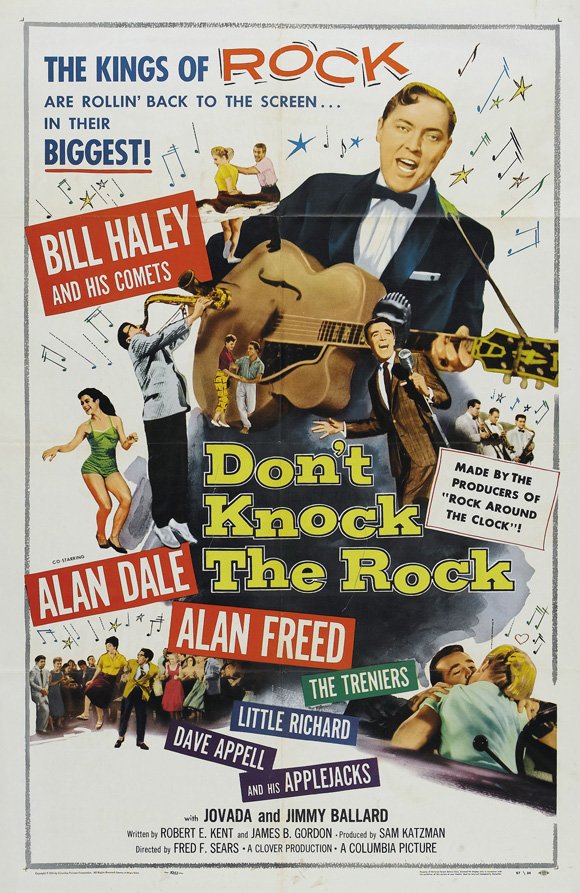
Don’t Knock the Rock (1956)

Don’t Knock the Rock (1956)

“Rock ‘n roll is for morons!”

Synopsis:
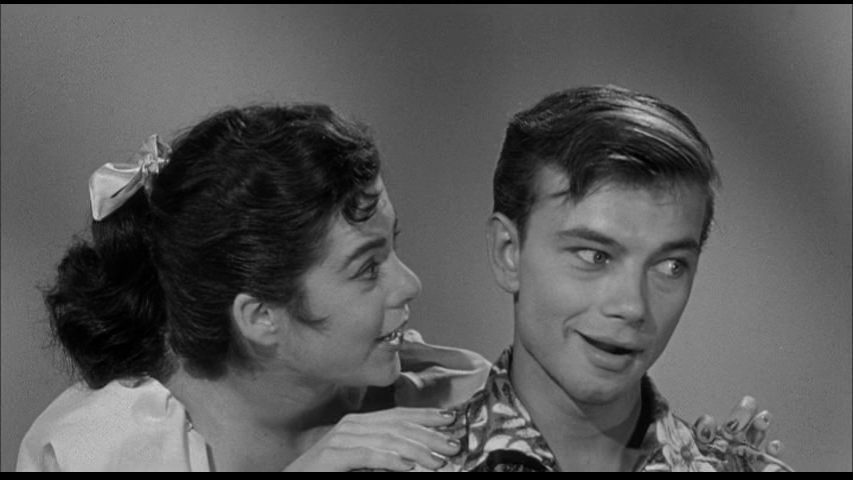
A hot young crooner (Alan Dale) attempts to get away from clamoring crowds of groupies by returning to his hometown, where he learns that its conservative mayor (Pierre Watkins) and a local columnist (Fay Baker) disapprove of rock ‘n roll’s influence on youth. Things quickly become even more complicated when Dale falls for Baker’s daughter (Patricia Hardy), and the rock-loving teenage daughter (Jana Lund) of an influential townsman (George Cisar) repeatedly attempts to seduce Dale.

Genres:

  • Generation Gap
  • Morality Police
  • Musicians
  • Rock ‘n Roll

Response to Peary’s Review:
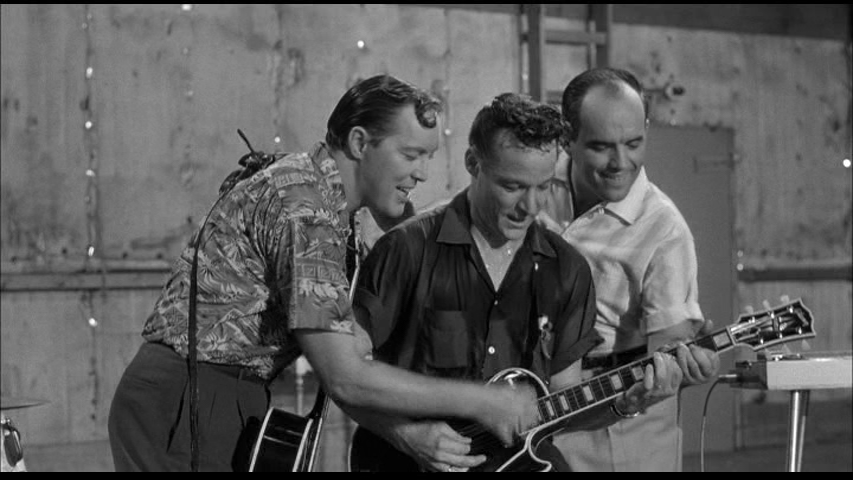
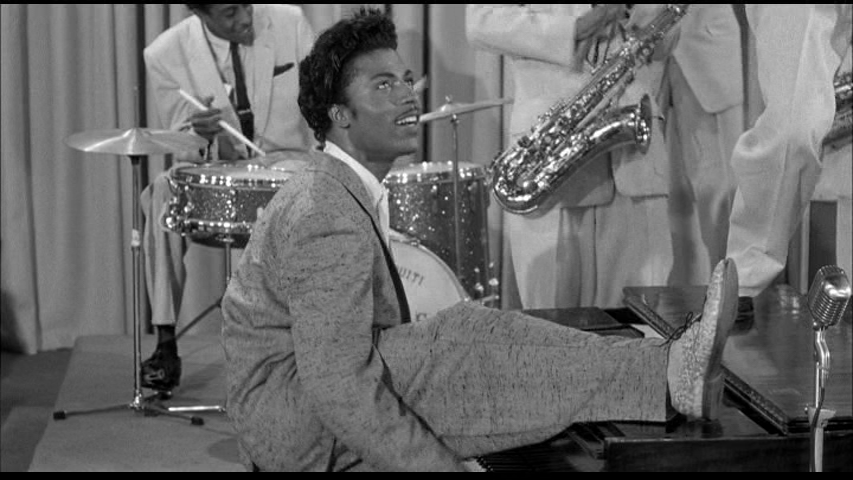
Modern film fanatics likely won’t have heard of crooner Alan Dale, who sings nicely but displays decidedly underwhelming acting chops in this companion piece to Rock Around the Clock (1956). The film’s most notable subplot involves a seductive underage teen (Lund) who literally won’t take no for an answer: if cell phones were around at that time, Dale would want to film their interactions as evidence on his own behalf. Of course, this “generation clash” flick is really all about showcasing key players in the rock ‘n roll “movement”, and to that end there are several enjoyable musical numbers by big names — however, it’s certainly not must-see viewing for anyone other than die-hard fans of this genre and era.

Redeeming Qualities and Moments:

  • Several fun musical sequences

  • Humorously over-the-top displays of cross-generational clashing

Must See?
No; skip this one unless you’re a fan of the musicians or up for a few chuckles. Listed as a Camp Classic in the back of Peary’s book.

Links:

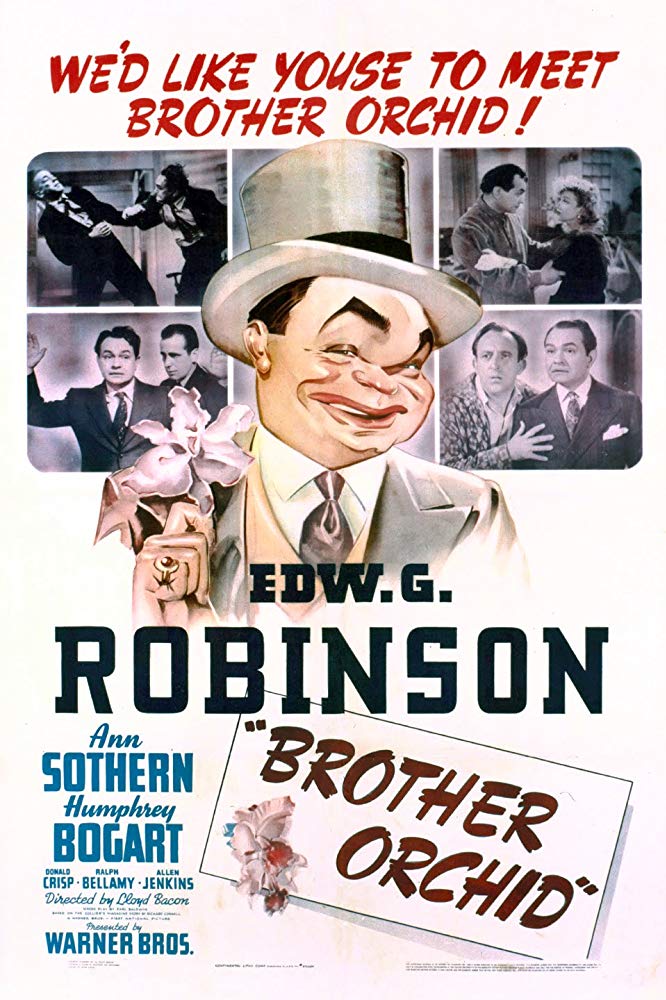
Brother Orchid (1940)

Brother Orchid (1940)

“I always was a great guy for orchids. That’ll be my new tag: Brother Orchid.”

Synopsis:
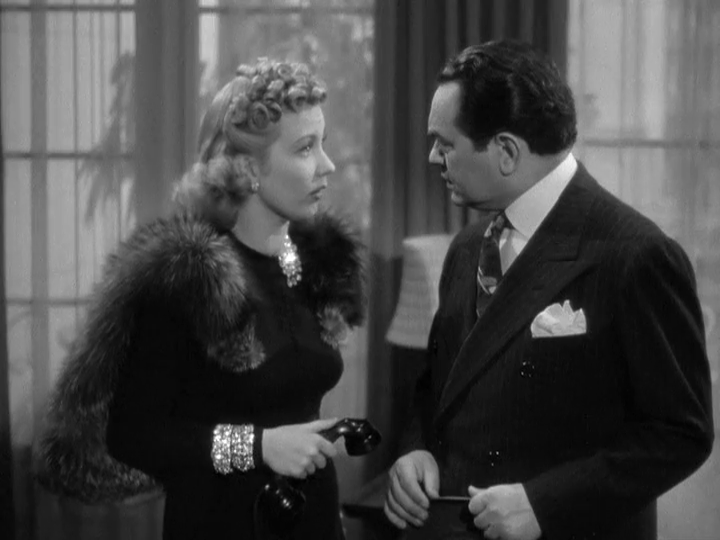
Before a crime lord (Edward G. Robinson) travels to Europe in search of some “class”, he helps his loyal girlfriend (Ann Sothern) secure a job and leaves his territory in the hands of an underling (Humphrey Bogart). Upon his return, he is nearly killed by Bogart and hides out with a group of flower-growing monks (including Donald Crisp and Cecil Kellaway) who help him achieve a change of heart. When Robinson learns his girlfriend is about to marry a wealthy cowboy (Ralph Bellamy), he emerges from seclusion and decides to take action — but will his new, more charitable outlook on life impact his choices?

Genres, Themes, Actors, and Directors:

  • Ann Sothern Films
  • Cecil Kellaway Films
  • Character Arc
  • Donald Crisp Films
  • Gangsters
  • Humphrey Bogart Films
  • Mistaken or Hidden Identities
  • Priests and Ministers
  • Ralph Bellamy Films

Review:
According to TCM’s article, this comedic crime flick (featuring Edward G. Robinson and Humphrey Bogart in their fourth and penultimate on-screen pairing before Key Largo in 1948) was purportedly made by Robinson in exchange for his casting in the more serious, non-gangster-themed Confessions of a Nazi Spy (1939) and The Sea Wolf (1941). As a farce, it pales in comparison with Robinson’s delightfully goofy A Slight Case of Murder (1938) — however, it offers enough off-beat touches and narrative twists that fans likely won’t be too disappointed. Bogart’s performance is inconsequential, but Sothern is well-cast as Robinson’s deeply loyal albeit “dizzy” moll.

Redeeming Qualities and Moments:

  • Edward G. Robinson as Little John Sarto
  • Ann Sothern as Flo
  • Effective cinematography

Must See?
No, though it’s worth a one-time look.

Links:

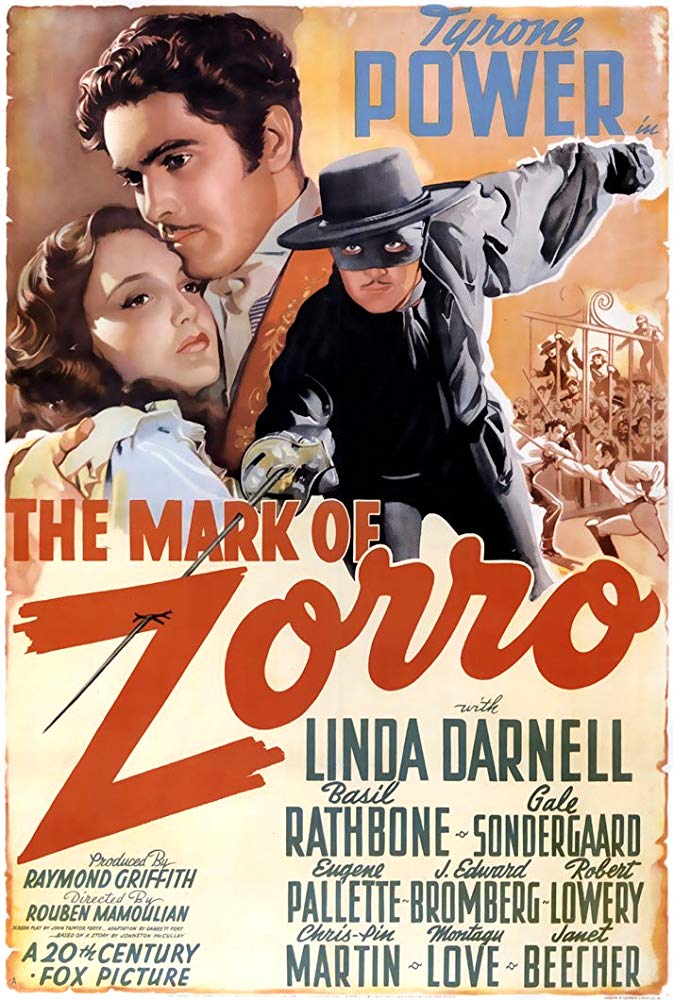
Mark of Zorro, The (1940)

Mark of Zorro, The (1940)

“How could I refuse a man anything with a naked sword in his hand?”

Synopsis:
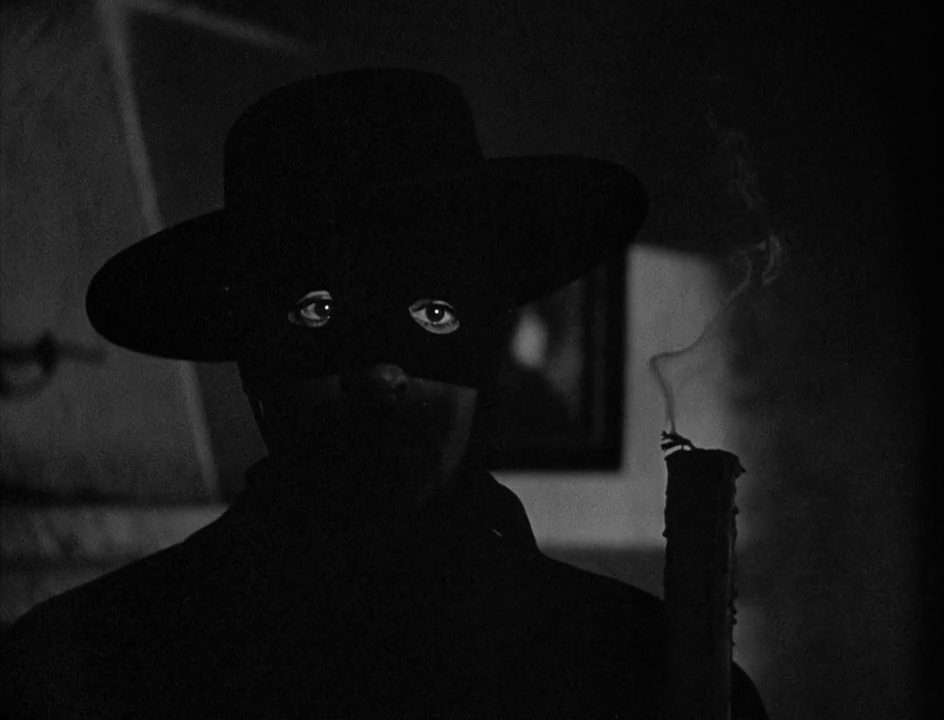
A 19th century Spanish don (Tyrone Power) is shocked to find that his father (Montagu Love) has been replaced as governor of Los Angeles by a corrupt alcalde (J. Edward Bromberg). Donning a mask, Power becomes “Zorro” the masked avenger, fighting the villainous Bromberg and his henchman (Basil Rathbone), and winning the heart of Bromberg’s beautiful niece (Linda Darnell).

Genres, Themes, Actors, and Directors:

  • Basil Rathbone Films
  • Historical Drama
  • Linda Darnell Films
  • Mistaken or Hidden Identities
  • Rouben Mamoulian Films
  • Tyrone Power Films

Review:
This remake of the 1920 silent-era film (starring Douglas Fairbanks, Sr.) brought the fictional masked vigilante Zorro to a new generation of movie-going viewers. 20th Century Fox matinee-idol Power is well-cast in the title role, bringing verve and elan to a character embodying a hybrid of Robin Hood and The Scarlet Pimpernel. The cinematography is appropriately atmospheric, and Rouben Mamoulian directs with a solid hand throughout; a particular highlight is Power’s thrilling duel with Rathbone. With that said, the humor, romance, and corruption-driven narrative aren’t all that memorable, and I suspect modern film fanatics won’t be quite as taken with this outing as 1940 audiences were. It’s primarily worth a look for its (and Power’s) historical popularity.

Redeeming Qualities and Moments:

  • The truly exciting swashbuckling scene between Power and Rathbone
  • Arthur C. Miller’s atmospheric cinematography

Must See?
No, though it’s recommended for one-time viewing given its historical relevance. Listed as a film with Historical Relevance and a Personal Recommendation in the back of Peary’s book. Named to the National Film Registry in 2009 by the Library of Congress.

Links:

Monty Python Live at the Hollywood Bowl (1982)

Monty Python Live at the Hollywood Bowl (1982)

“They’re a typical Hollywood audience: all the kids are on drugs and all the adults are on roller skates.”

Synopsis:
Monty Python’s comedy troupe performs live in front of an audience at the Hollywood Bowl.

Genres, Themes, Actors, and Directors:

  • Comedy
  • Monty Python Films

Review:
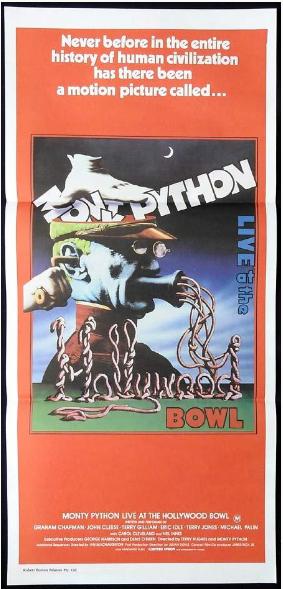
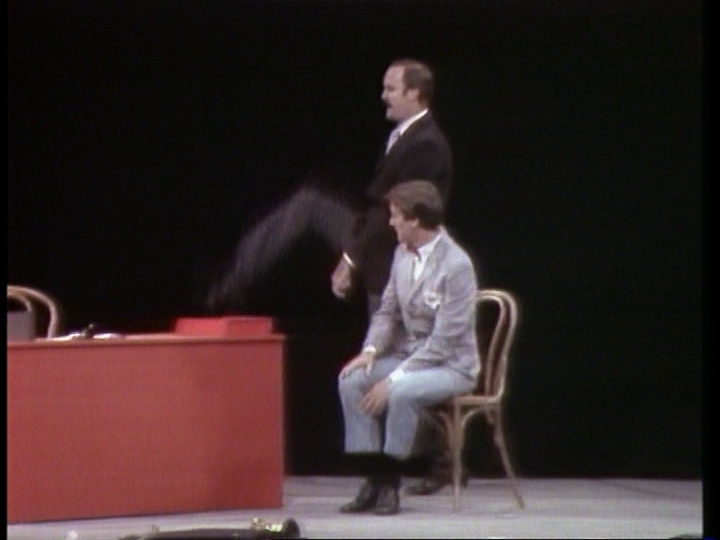
Peary lists all five Monty Python feature films in his GFTFF: And Now For Something Completely Different (1971), Life of Brian (1979), Monty Python and the Holy Grail (1975), Monty Python’s The Meaning of Life (1983), and this cinematic rendering (by director Terry Gilliam) of the troupe’s four live performances at the Hollywood Bowl in September, 1980. Peary’s clearly a completist, and there’s nothing at all wrong with adding this enjoyable ensemble work to one’s viewing list (click here for a complete run-down of the many sketches on display). However, film fanatics not already enamored with the group should probably start with one of their better-known classics and work their way towards this one as desired. With that said, … Live at the Hollywood Bowl brings a unique flavor to the team’s oeuvre in terms of incorporating direct audience participation; we are given an undeniable sense of how authentically engaged and delighted fans were.

Redeeming Qualities and Moments:

  • Numerous enjoyable skits, animation, and audience participation

Must See?
No, though of course Monty Python fans will want to check this one out.

Links: