Browsed by
Category: Original Reviews

Responses to Peary’s “must see” movie reviews, as well as my own “must see” movie reviews up to and after 1986 (when Peary’s book was published).

Caught in the Draft (1941)

Caught in the Draft (1941)

“Of course I’m not a coward. I’m just allergic to bullets!”

Synopsis:
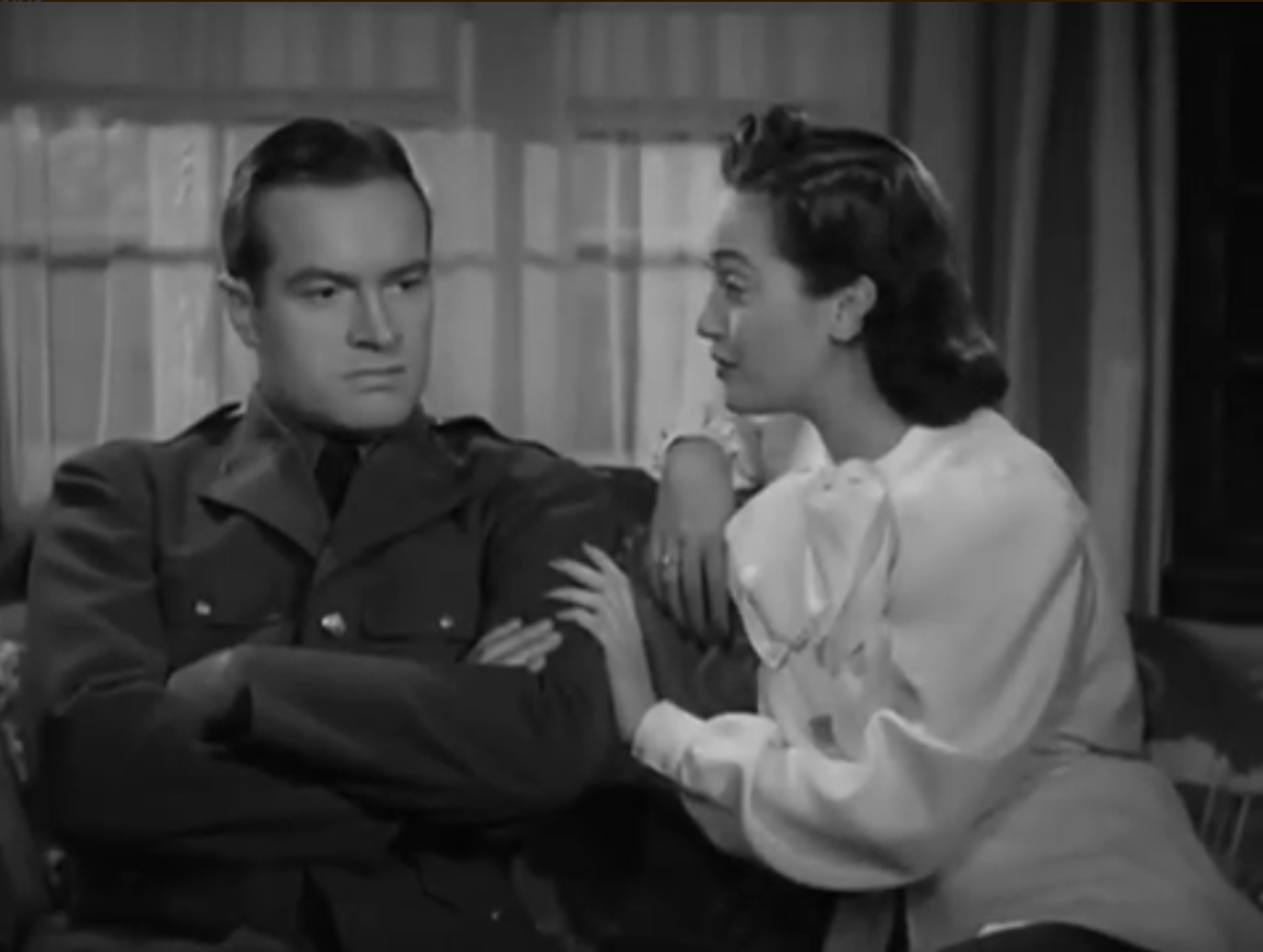
A cowardly actor (Bob Hope) afraid of loud noises does everything he can to avoid enlisting in the army, including wooing the beautiful daughter (Dorothy Lamour) of a crusty colonel (Clarence Kolb) — but he nonetheless soon finds himself in basic training with his buddies (Eddie Bracken and Lynne Overman).

Genres, Themes, Actors, and Directors:

  • Actors and Actresses
  • Bob Hope Films
  • Cowardice
  • Dorothy Lamour Films
  • Military
  • Romantic Comedy
  • World War II

Review:
This box office hit was squarely designed to capitalize both on the success of the Road To… series (Hope’s character at one point says, “She looks like Dorothy Lamour, with clothes on.”) and current-day angst over involuntary enlistment during the earliest stages of American engagement with World War II.

It was quite well received — Bosley Crowther wrote a glowing review for the New York Times, referring to it as “a lively slapstick farce in which the gags are beautifully abundant” — but it hasn’t aged all that well. Hope’s cowardly character quickly (instantly, actually) grates on one’s nerves, and his treatment of Lamour is so utilitarian from the get-go that we have a hard time rooting either for him or for them as a couple. You can skip this one unless you’re a diehard fan of Hope or Lamour.

Redeeming Qualities and Moments:
Not much, unless this is your cup of tea.

Must See?
No; feel free to skip this one.

Links:

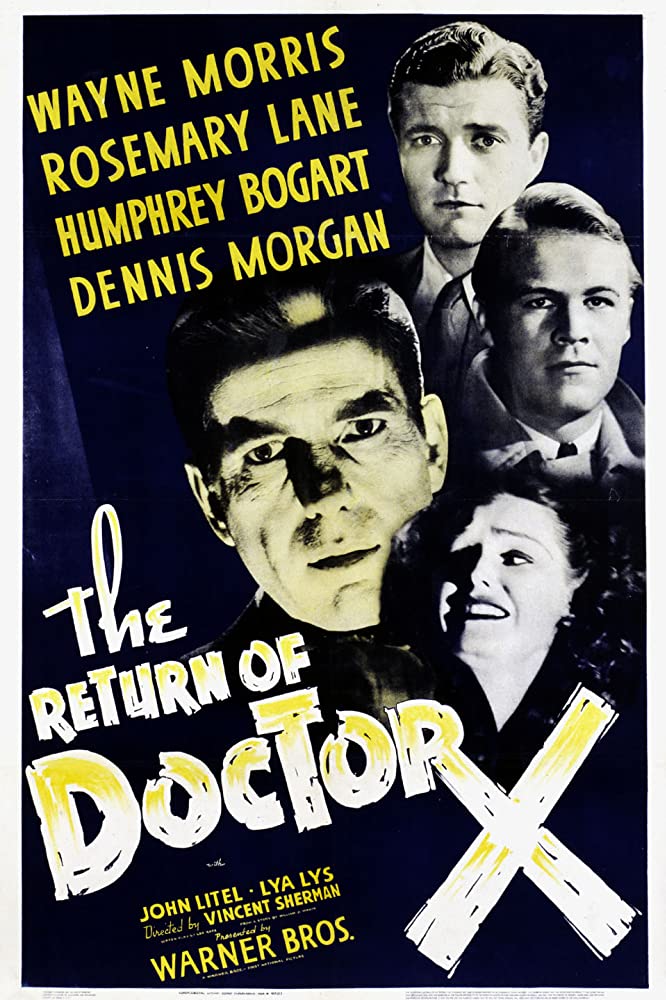
Return of Dr. X, The (1939)

Return of Dr. X, The (1939)

“The day is coming when man will be able to control blood — and when that time does arrive, he’ll be able to control his destiny. Blood is the source of life!”

Synopsis:
When an eager journalist (Wayne Morris) who has arranged to meet a glamorous actress (Lya Lys) at her apartment arrives to find her dead, he promptly calls his newspaper to file the story — but the police find Lys perfectly alive, and Morris is fired. Morris consults his doctor-friend (Dennis Morgan) for help in investigating the mystery, and they meet both Morgan’s mentor (John Litel) and Litel’s assistant (Humphrey Bogart), who are conducting experiments related to blood types, and are eager to connect with Morgan’s colleague (Rosemary Lane) — who happens to have the exact blood type they’re in search of.

Genres, Themes, Actors, and Directors:

  • Amateur Sleuths
  • Humphrey Bogart Films
  • Journalists
  • Mad Doctors and Scientists
  • Murder Mystery

Review:
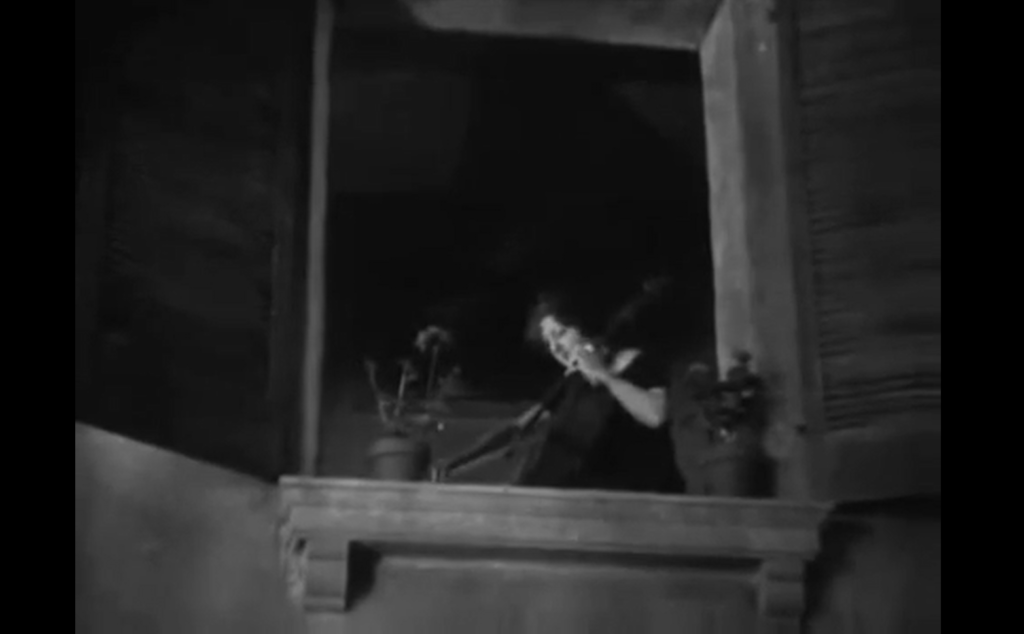
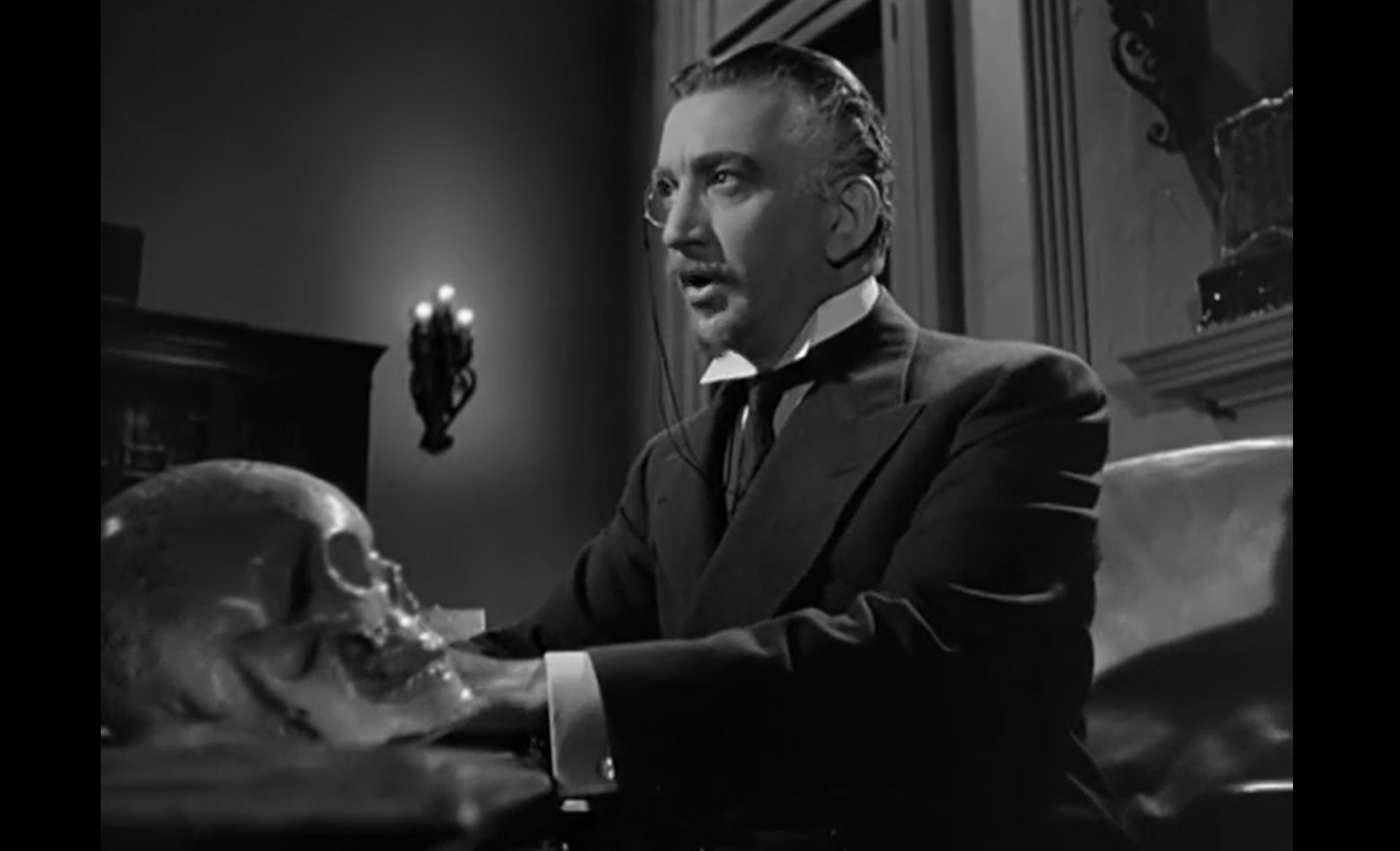
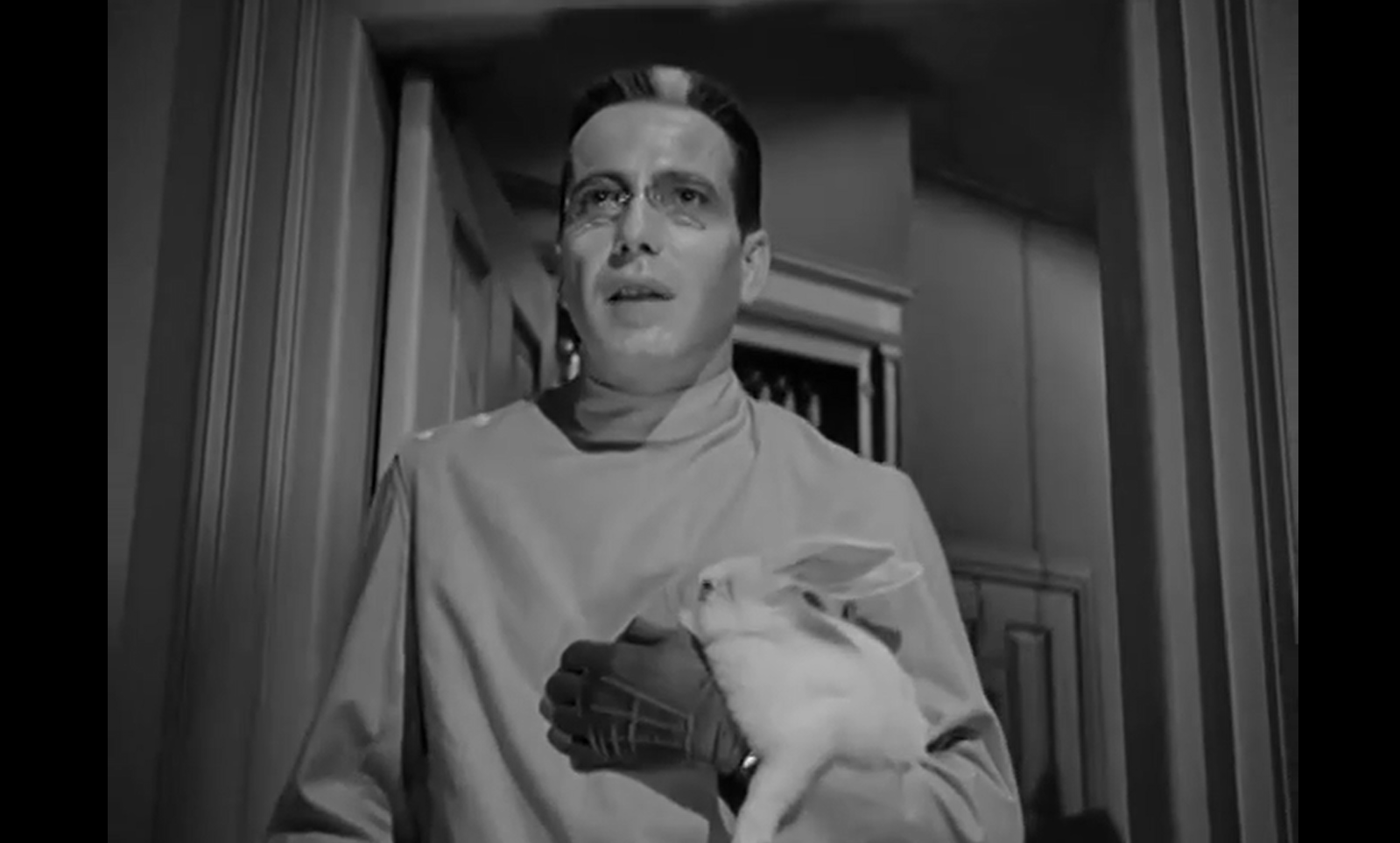
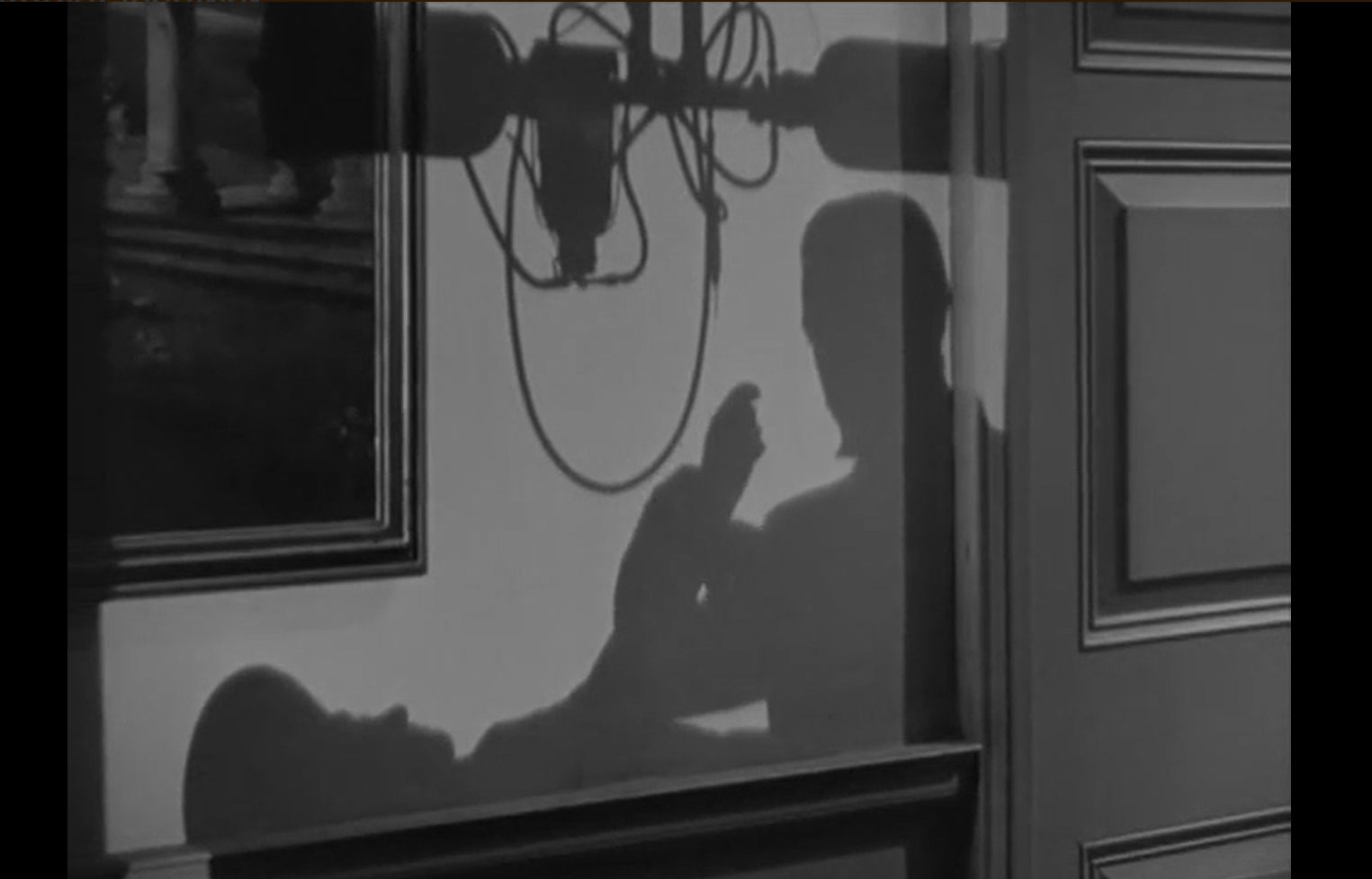
This atmospherically shot B-flick — directed with panache by newbie Vincent Sherman — is best known for featuring Humphrey Bogart in his only “horror flick” role, but it’s actually more of a pseudo-comedic mad-doctor amateur-sleuth genre-mash. In just 62 minutes, we’re taken quickly through a tale of journalistic gusto, mysteriously disappearing bodies, vampiric visages, a pet monkey, a fuzzy white bunny, and a monocled scientist …

SPOILERS HERE

… willing to revive a doctor put to death for — no kidding — experimentally starving a baby (!). Bogart’s white hair-streak is clearly intentionally reminiscent of Elsa Lanchester in The Bride of Frankenstein (1935), and while he wasn’t at all thrilled with his role here, he actually does a decent job — much better than his supporting turn as a Mexican bandit in Michael Curtiz’s Virginia City the same year. There’s some amusingly droll dialogue (“His interest in blood… almost equals my own.”), and Sherman’s visual flair is consistently engaging. While this isn’t high art by any means — and the narrative has plenty of holes — it’s an enjoyable low-budget film and worth a look.

Redeeming Qualities and Moments:

  • Highly atmospheric cinematography and sets


Must See?
Yes, as a nifty little B-flick. Listed as a Camp Classic in the back of Peary’s book.

Categories

  • Good Show

Links:

Virginia City (1940)

Virginia City (1940)

“Don’t let him question you — he’s a union spy.”

Synopsis:
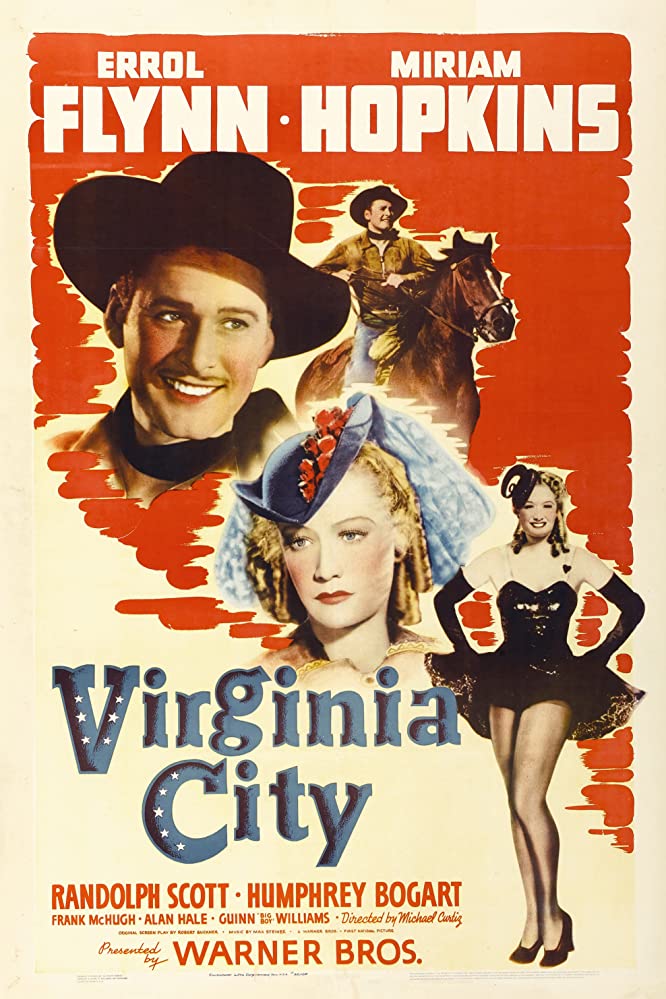
Near the end of the Civil War, a Union prisoner (Errol Flynn) and his compatriots (Alan Hale and Guinn “Big Boy” Williams) escape from captivity and head by stagecoach to Virginia City, Nevada, where they intend to secretly interrupt the conveyance of silver to the Confederate Army. On their way there, Flynn falls in love with a woman (Miriam Hopkins) who turns out to be not only a dance hall singer, but a Confederate accomplice whose lover (Randolph Scott) is heading the entire silver-transport affair.

Genres, Themes, Actors, and Directors:

  • Alan Hale Films
  • Civil War
  • Errol Flynn Films
  • Historical Drama
  • Humphrey Bogart Films
  • Love Triangle
  • Michael Curtiz Films
  • Miriam Hopkins Films
  • Randolph Scott Films
  • Spies

Review:
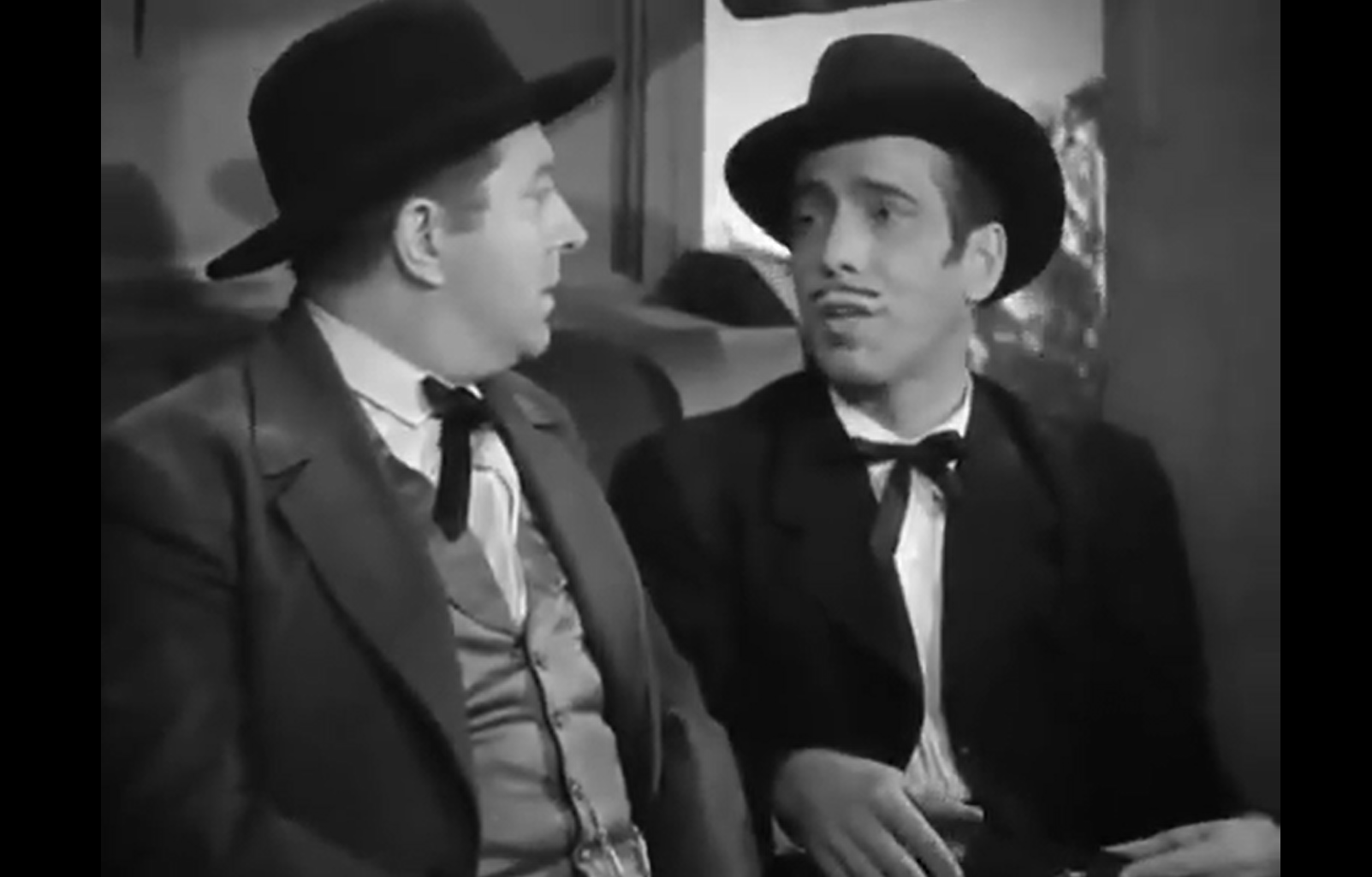
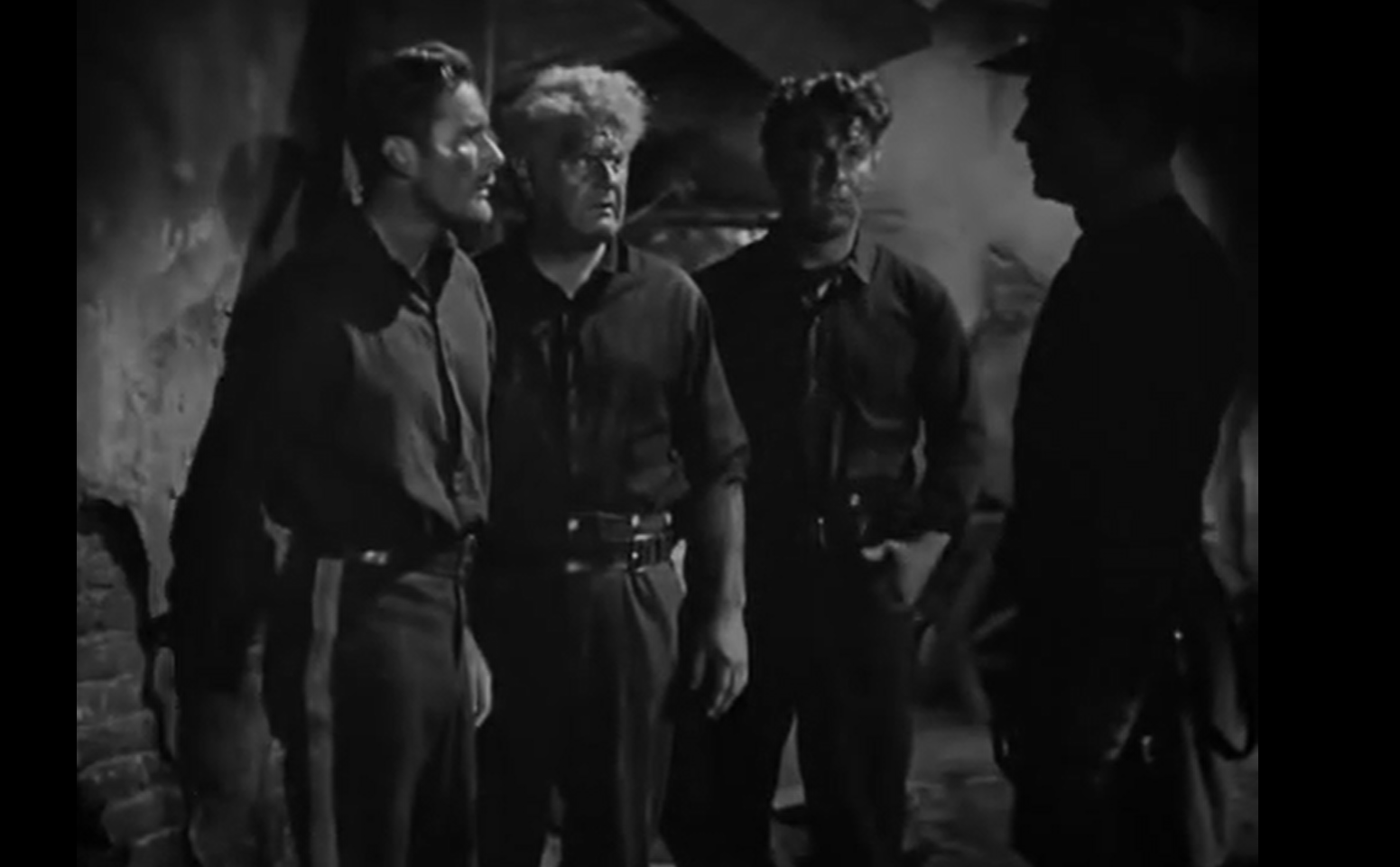
Michael Curtiz and Errol Flynn made no less than 12 films together between 1935 and 1941 — among them Captain Blood (1935), The Charge of the Light Brigade (1936), The Adventures of Robin Hood (1938), Dodge City (1939), The Private Lives of Elizabeth and Essex (1939), The Sea Hawk (1940), Santa Fe Trail (1940), and this “based on real events” historical drama with fictional characters and an unconvincing plot. New York Times’ reviewer Frank Nugent referred to it somewhat uncharitably as a “two-hour Blitzkrieg upon the human nerves”, which isn’t really fair, given that it’s finely mounted and photographed (by Curtiz’s regular DP Sol Polito). However, it has the dubious distinction of featuring Humphrey Bogart in one of his worst mis-castings ever (as a Mexican bandit):

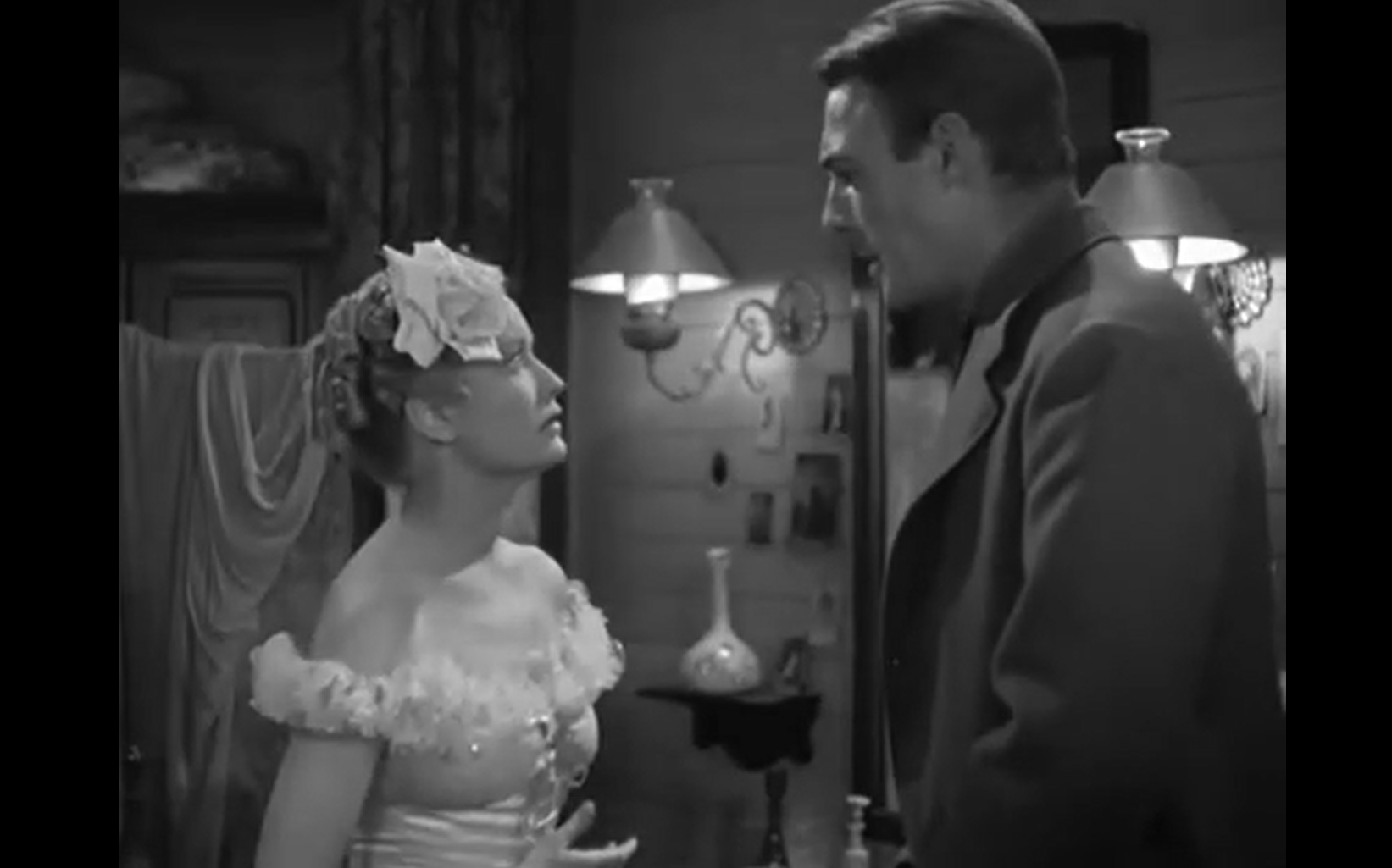
… and a miserable-looking Hopkins giving a surprisingly subdued and depressed performance.

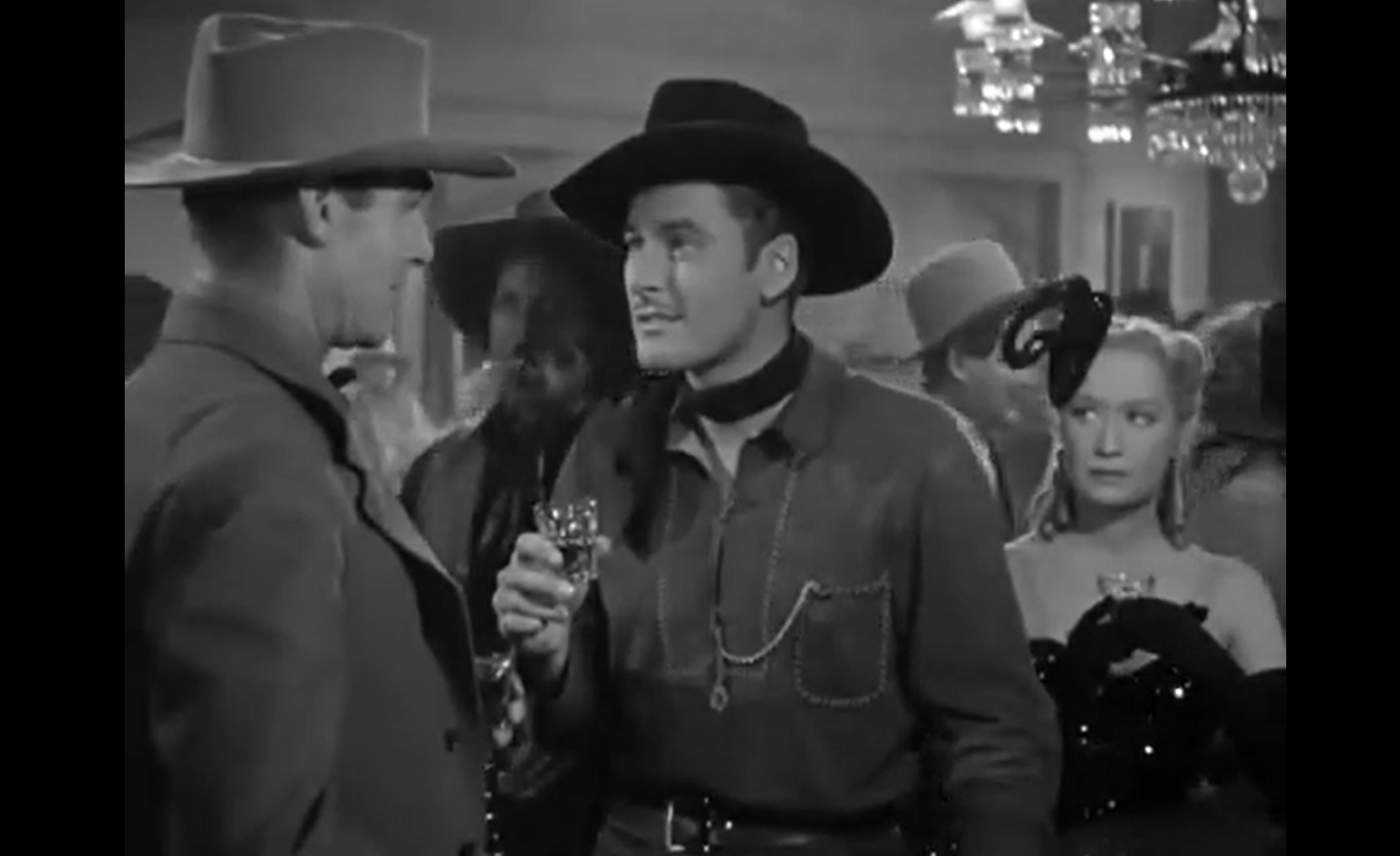
Thankfully, Scott and Flynn acquit themselves well (despite the fact that Flynn was originally slated to perform Scott’s role).

Watch for an interestingly filmed “cameo” by President Lincoln (Victor Kilian) in the film’s improbable ending.

Redeeming Qualities and Moments:

  • Sol Polito’s atmospheric cinematography

Must See?
No, though it’s worth a look by Curtiz fans.

Links:

Under Two Flags (1936)

Under Two Flags (1936)

“Seeing a lady like that makes a fellow feel sort of… homesick, doesn’t it, sir?”

Synopsis:
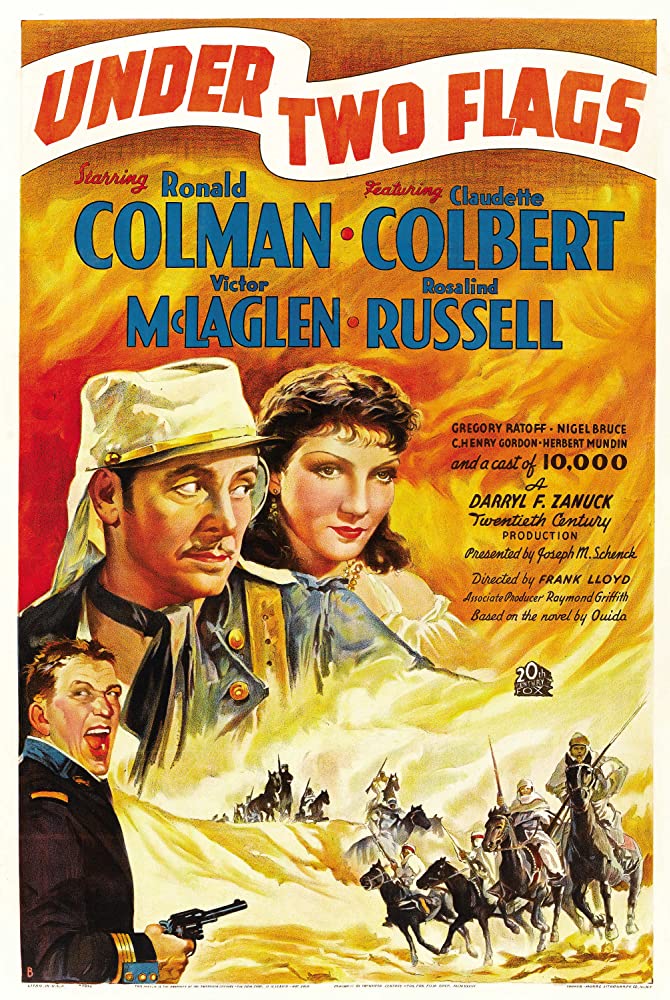
A French Foreign Legionnaire (Ronald Colman) in Algeria falls in love with a visiting noblewoman (Rosalind Russell), who is equally smitten with him. Meanwhile, Colman’s commander (Victor McLaglen) is jealous and upset that his girlfriend “Cigarette” (Claudette Colbert) has also fallen for Colman, and attempts to send Colman into numerous dangerous situations.

Genres, Themes, Actors, and Directors:

  • Claudette Colbert Films
  • Historical Drama
  • Love Triangle
  • Military
  • Ronald Colman Films
  • Rosalind Russell Films
  • Victor McLaglen Films

Review:
Modern film fanatics will likely be unfamiliar with the bestselling 1867 novel upon which this romantic desert war flick is based, though it was popular enough to have undergone numerous adaptations before this one. Unfortunately, the story hasn’t aged well at all, coming across these days as simply an orientalist excuse to mount elaborate battle scenes in what the opening title cards tell us is “North Africa at the turn of the century — a land of eternal mystery — primitive, barbaric, the camel train its only link with the outer world.” The lead actors all try their best with the material they’re given, but they’re merely caught up in a standard cross-class love quadrangle which can clearly only end one way. The location shooting (in Arizona) is quite effective, but otherwise this one is only must-see viewing for completists of Colman, Colbert (who replaced both Simone Simon and Barbara Stanwyck in her role), Russell, or McLaglen.

Redeeming Qualities and Moments:

  • Effective cinematography

Must See?
No; you can skip this one.

Links:

Night Must Fall (1937)

Night Must Fall (1937)

“You want adventure, don’t you? And it’s here — here in this house.”

Synopsis:
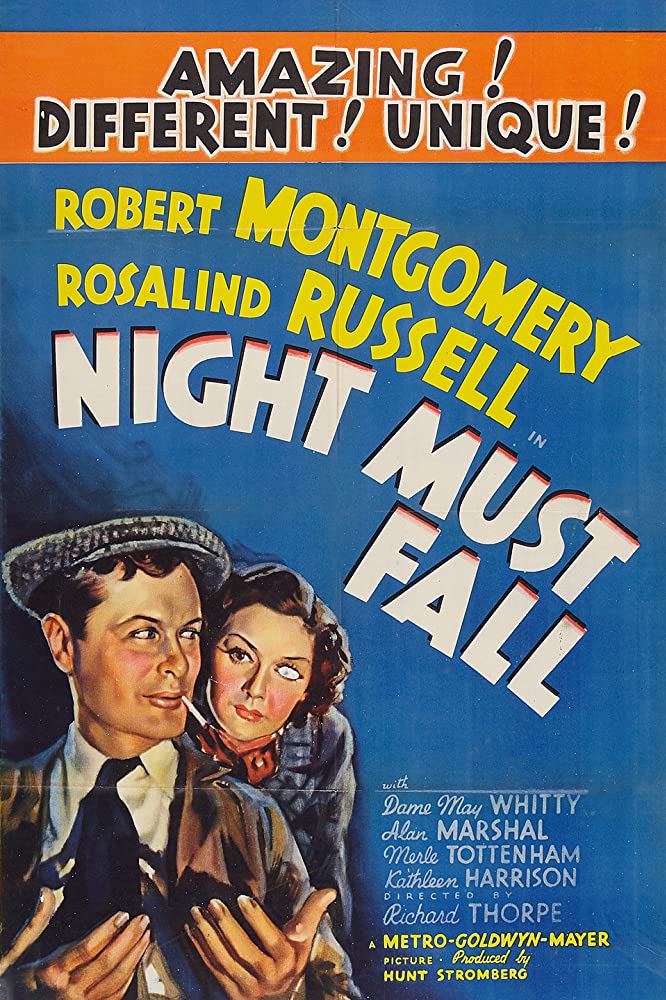
When a wealthy but cantankerous woman (Dame May Whitty) hires the boyfriend (Robert Montgomery) of her pregnant housemaid (Merle Tottenham) as a handyman, Whitty’s suspicious niece (Rosalind Russell) is both wary and intrigued — especially as news continues to circulate about a mysterious murder nearby.

Genres, Themes, Actors, and Directors:

  • Amateur Sleuths
  • Inheritance
  • Murder Mystery
  • Robert Montgomery Films
  • Rosalind Russell Films

Review:
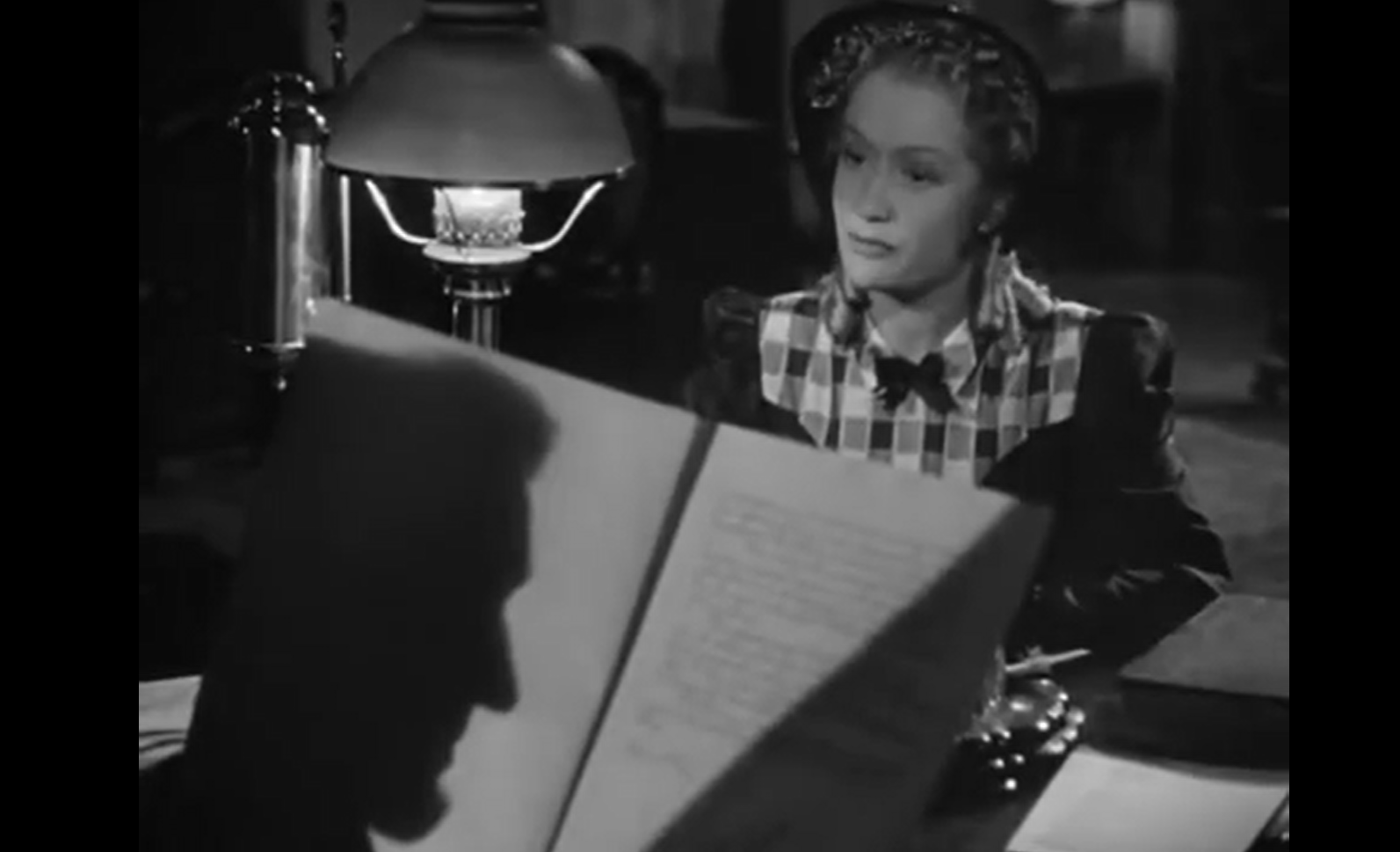
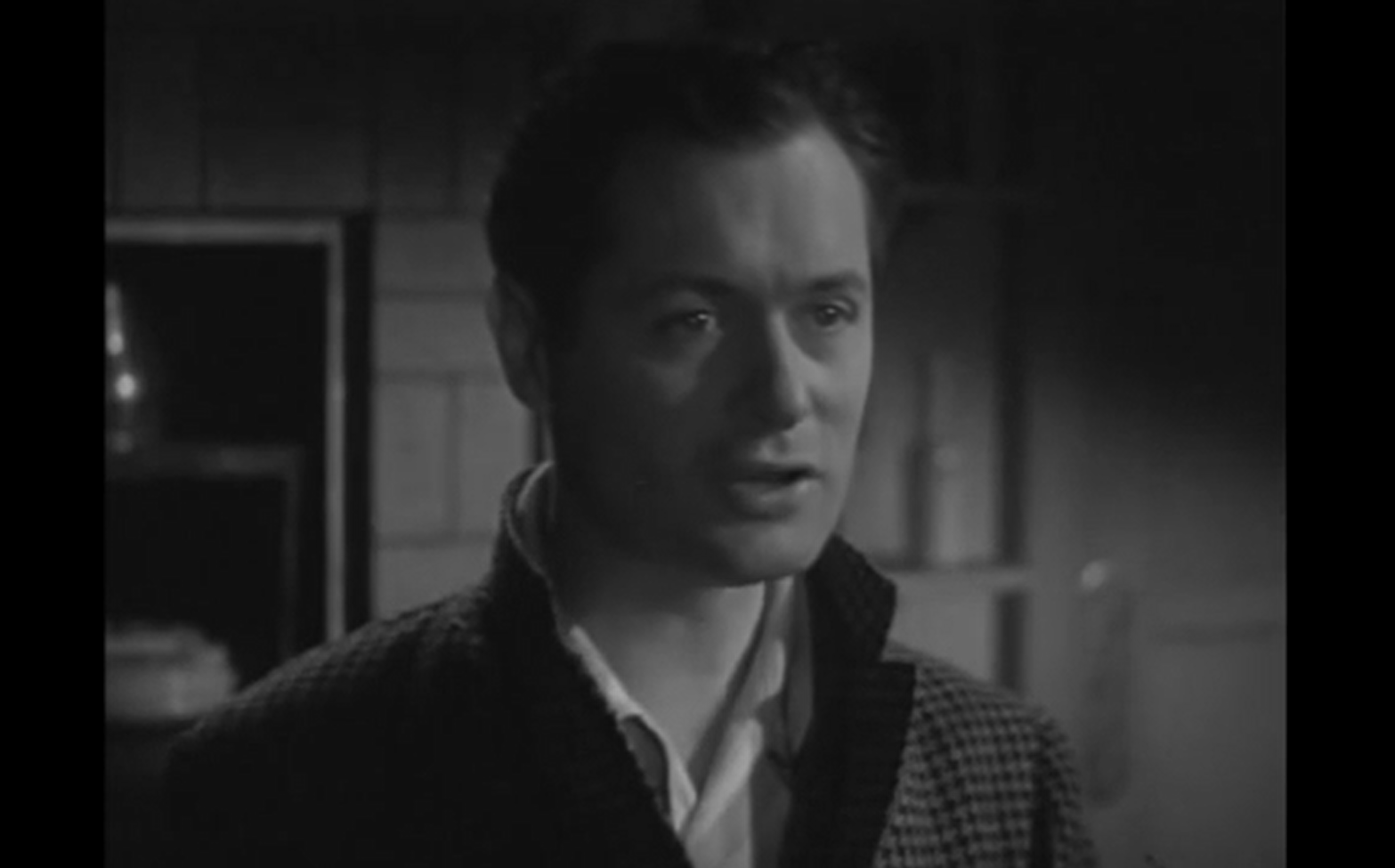
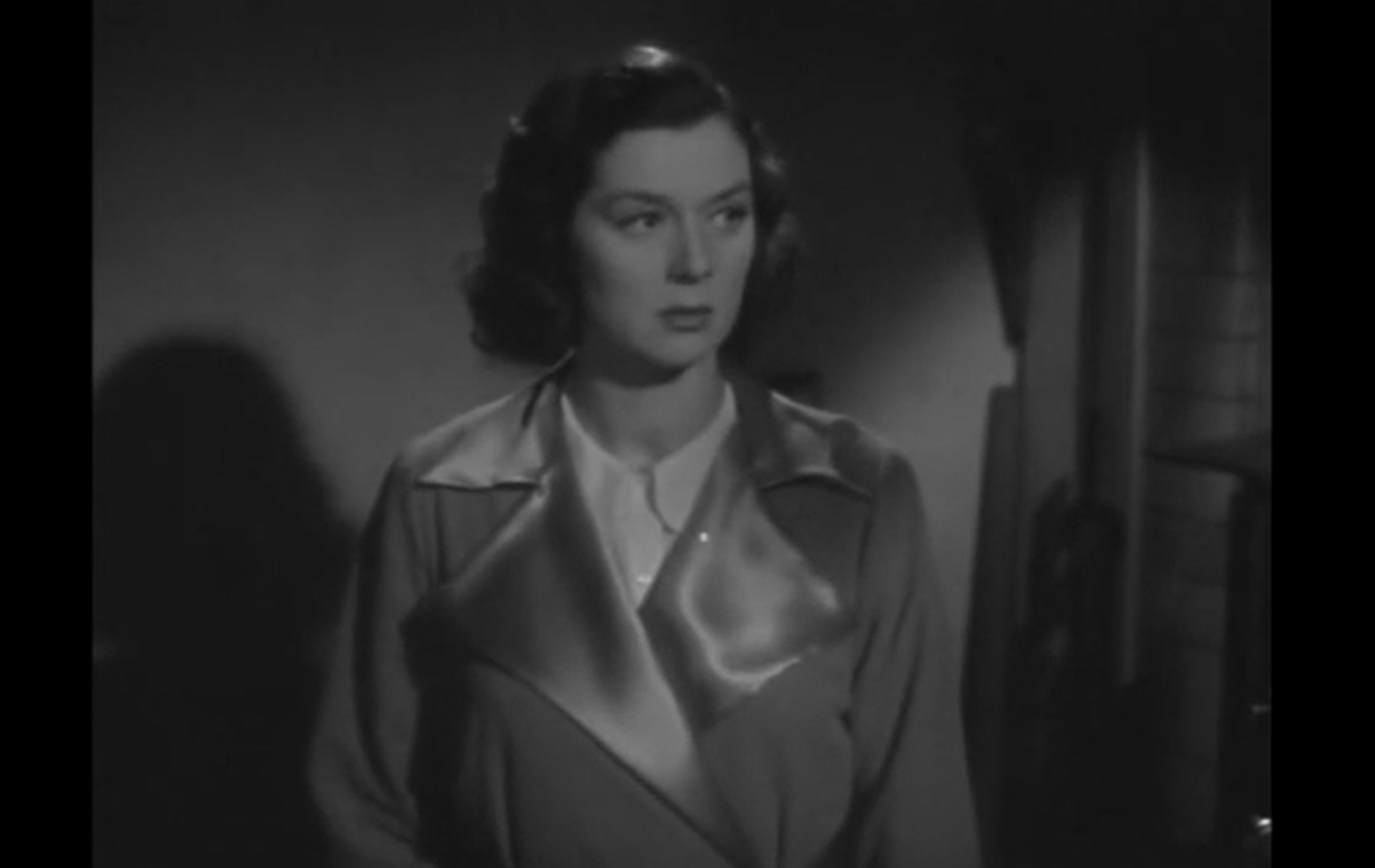
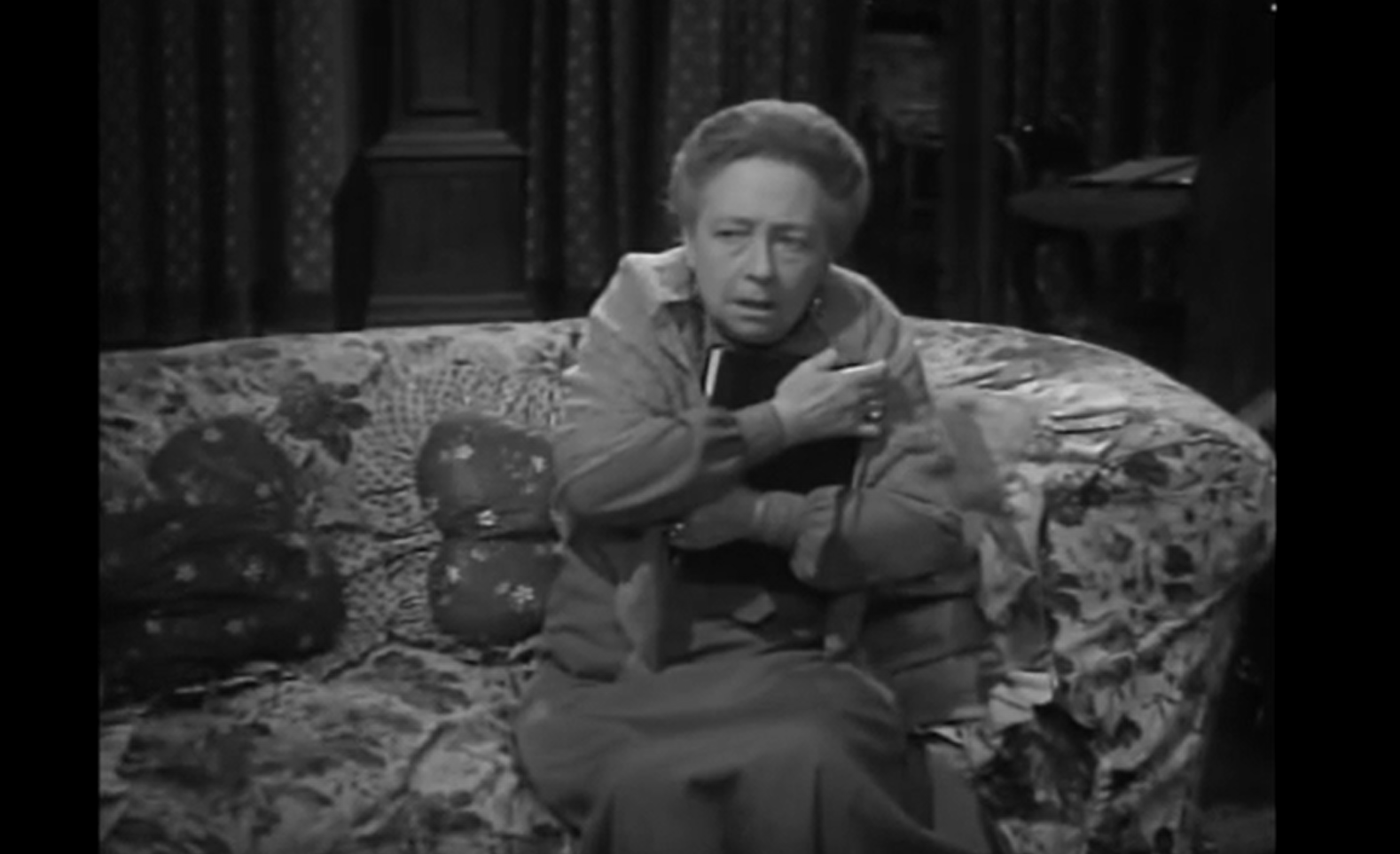
Robert Montgomery is appropriately enigmatic and charming in this adaptation of Welsh writer-actor Emlyn Williams’ play, which — like Shadow of a Doubt (1943) — effectively showcases both the dangers of unwarranted trust and the need for “amateur sleuths” to keep a keen eye about them when a handsome stranger is on the scene. Russell plays nicely against type as a mousy young woman with a yen for darker matters, and Oscar-nominated Whitty is spot-on — but it’s Montgomery who really shines here: it’s all-too-easy to understand how he uses his sociopathic charms to wing his way cleverly into Whitty’s graces. (I like how Montgomery convincingly demonstrates the mental anguish he seems to be suffering from as well.) Despite a few minor narrative quibbles — see Moria’s review — this story keeps us consistently curious how things will end, and is worth a look.

Redeeming Qualities and Moments:

  • Robert Montgomery as Danny
  • Rosalind Russell as Olivia
  • Dame May Whitty as Mrs. Bramson
  • Atmospheric cinematography

Must See?
Yes, as a unique and well-acted thriller.

Categories

  • Good Show

Links:

Green Pastures, The (1936)

Green Pastures, The (1936)

“In my own image, let there be man.”

Synopsis:
African-American children in a rural church listen to their Sunday School teacher (George Reed) tell creatively staged biblical stories, including the story of Adam (Rex Ingram) and Eve (Myrtle Anderson), Noah (Eddie “Rochester” Anderson) and his ark, and Moses (Frank Wilson) — all overseen by “De Lawd” (Rex Ingram) himself.

Genres:

  • African-Americans
  • Biblical Stories
  • Play Adaptations
  • Priests and Ministers
  • Rex Ingram Films

Review:
Based on a Pulitzer Prize-winning play of the same name, this film with an all-black cast remains a unique relic of its era — nicely described in TCM’s article:

Imagine, if you can, a “Southern-style Heaven” where black English vernacular is spoken, fish fries and free cigars are plentiful, and the Hall Johnson Choir sings spirituals in the background all day. In other words, you have a broadly played black miracle play…

TCM’s article also points out criticism of the movie by black film historian Donald Bogle, who notes that it “rests on a cruel assumption: that nothing could be more ludicrous than transporting the lowly language and folkways of the early twentieth-century Negro back to the high stately world before the flood.” With that said, it’s refreshing to see a rare mainstream 1930s movie centering black individuals’ lives, experiences, dreams, and fears; it’s too bad the film’s trailer was literally dominated by white actor Dick Powell (though at least this gives crucial historical context to the film’s release and reception).

Redeeming Qualities and Moments:

  • A creative biblical narrative

Must See?
Yes, as a unique film of its era.

Categories

Links:

Treasure Island (1934)

Treasure Island (1934)

“We’ll always be mates, won’t we?”

Synopsis:
When an alcoholic sea captain (Lionel Barrymore) visits and then dies at an inn run by a widow (Dorothy Peterson) and her son (Jackie Cooper), he leaves behind a coveted treasure map. Cooper sets sail on an adventure with Captain Smollet (Lewis Stone), Dr. Livesey (Otto Kruger), and Squire Trelawney (Nigel Bruce), also befriending a one-legged pirate known as Long John Silver (Wallace Beery).

Genres, Themes, Actors, and Directors:

  • At Sea
  • Friendship
  • Gold Seekers
  • Hidden Treasure
  • Lionel Barrymore Films
  • Pirates
  • Victor Fleming Films
  • Wallace Beery Films

Review:
This first sound adaptation of Robert Louis Stephenson’s classic adventure tale re-paired MGM stars Wallace Beery and Jackie Cooper — who first appeared together in The Champ (1931), then The Bowery (1933) — in a hokey retread of their “paternal bonding” from these earlier films. The cinematography and sets are appropriately atmospheric, but Beery’s over-acting and Cooper’s limited range severely hamper our ability to believe in this tale as anything other than a young boy’s fantasy writ large. (Why in the world was it considered appealing to have loutish, lying Beery take advantage of gullible Cooper time and again?) Film fanatics should check out Disney’s live action version instead.

Redeeming Qualities and Moments:

  • Atmospheric cinematography

Must See?
No, though fans of the book may be curious to check it out.

Links:

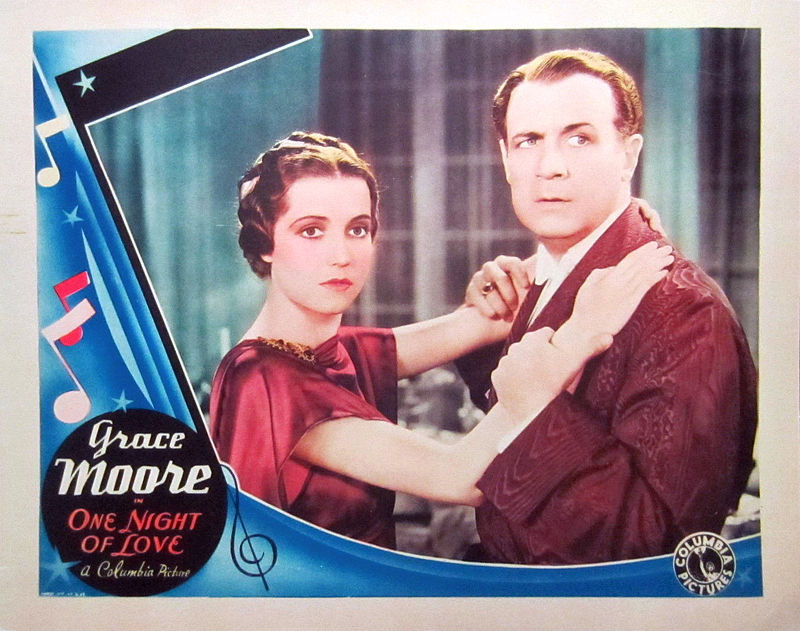
One Night of Love (1934)

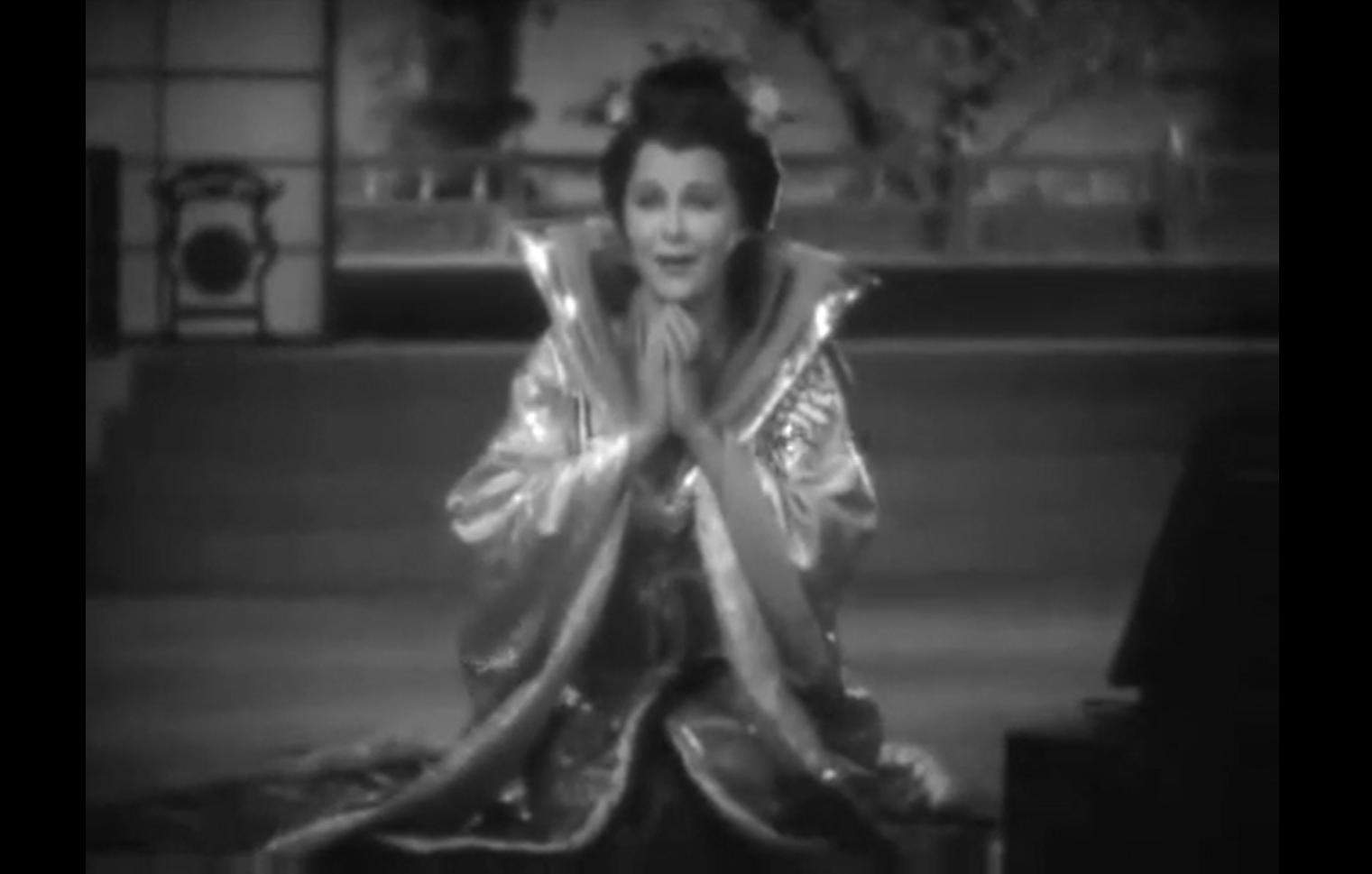
One Night of Love (1934)

“You must work, work, and work.”

Synopsis:
When an operatic guru (Tullio Carminati) takes an aspiring soprano (Grace Moore) under his wing, they maintain a strict and highly regimental work environment — but will romance inevitably flourish between the two?

Genres, Themes, Actors, and Directors:

  • Aspiring Stars
  • Musicals
  • Singers

Review:
Operatic diva Grace Moore was notoriously challenging to work with on multiple fronts. After being denied Jeanette McDonald’s role in The Merry Widow (1934) with MGM due to her fluctuating weight, she signed on with Columbia Pictures, but studio head Harry Cohn was nervous about making a film with operatic music for mass audiences. As described in TCM’s fact-filled article:

“Columbia’s chief negotiator in uneasy situations, Sam Briskin, summoned Miss Moore and told her the deal was off; Columbia would buy out her contract. She responded with what was to be recognized as the Moore style. She screamed her refusal and stalked out of the office, slamming the door hard enough to shatter the glass.”

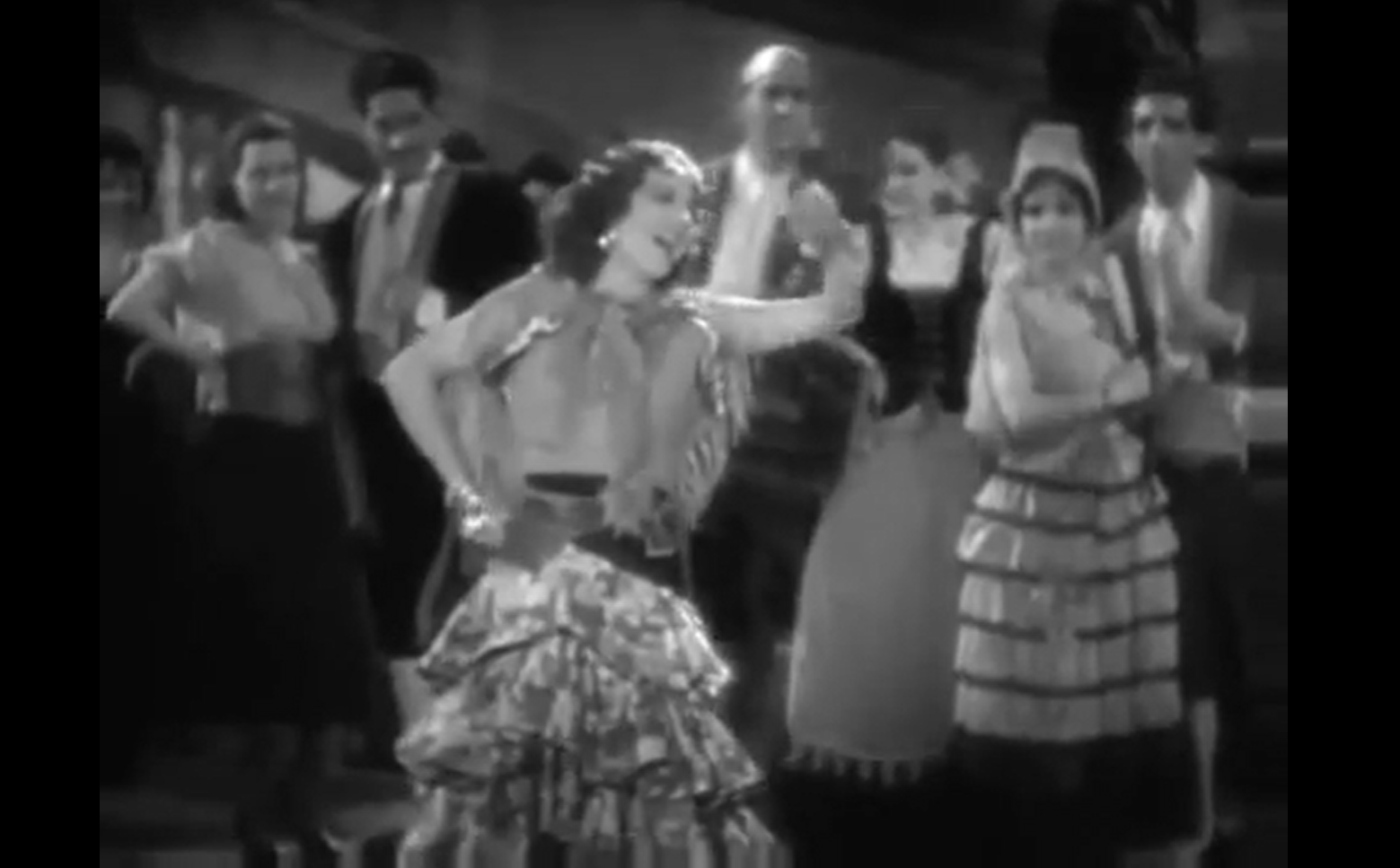
The resulting film is a fairly standard “I wanna be a star and will do whatever it takes!” romantic musical melodrama, with the twist that Carminati — having recently ended an affair with an untalented but wealthy ingenue (Mona Barrie) — sets strict “work only” guidelines despite Moore living with him. Will Carminati and Moore fall for one another, even though he works her like a dog and doesn’t appear to have much charisma? I’ll leave that to you to find out. Moore’s musical numbers are a treat, so at least this is a good opportunity to see and hear her in action.

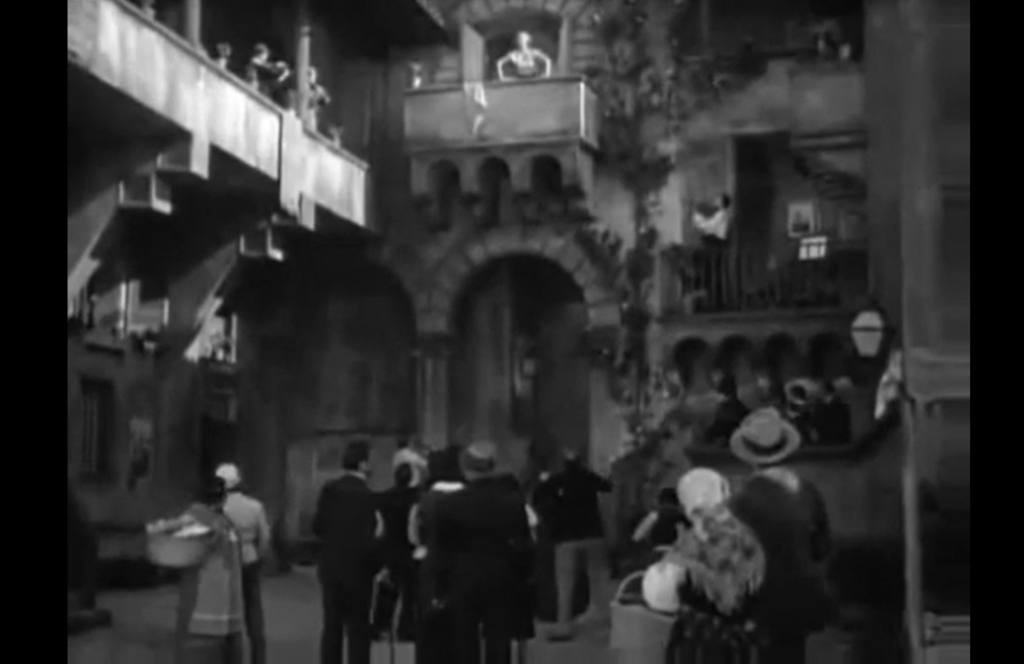
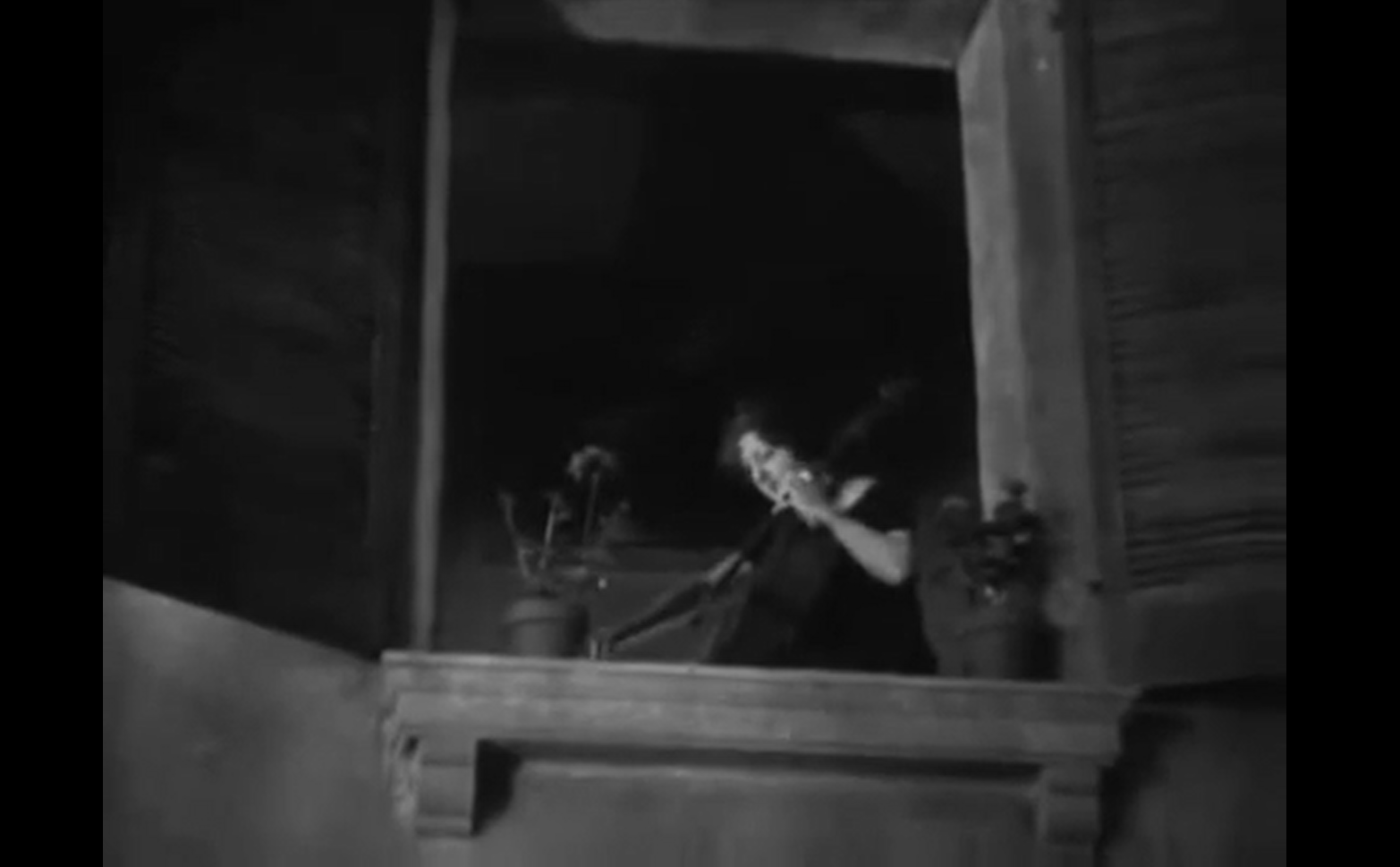
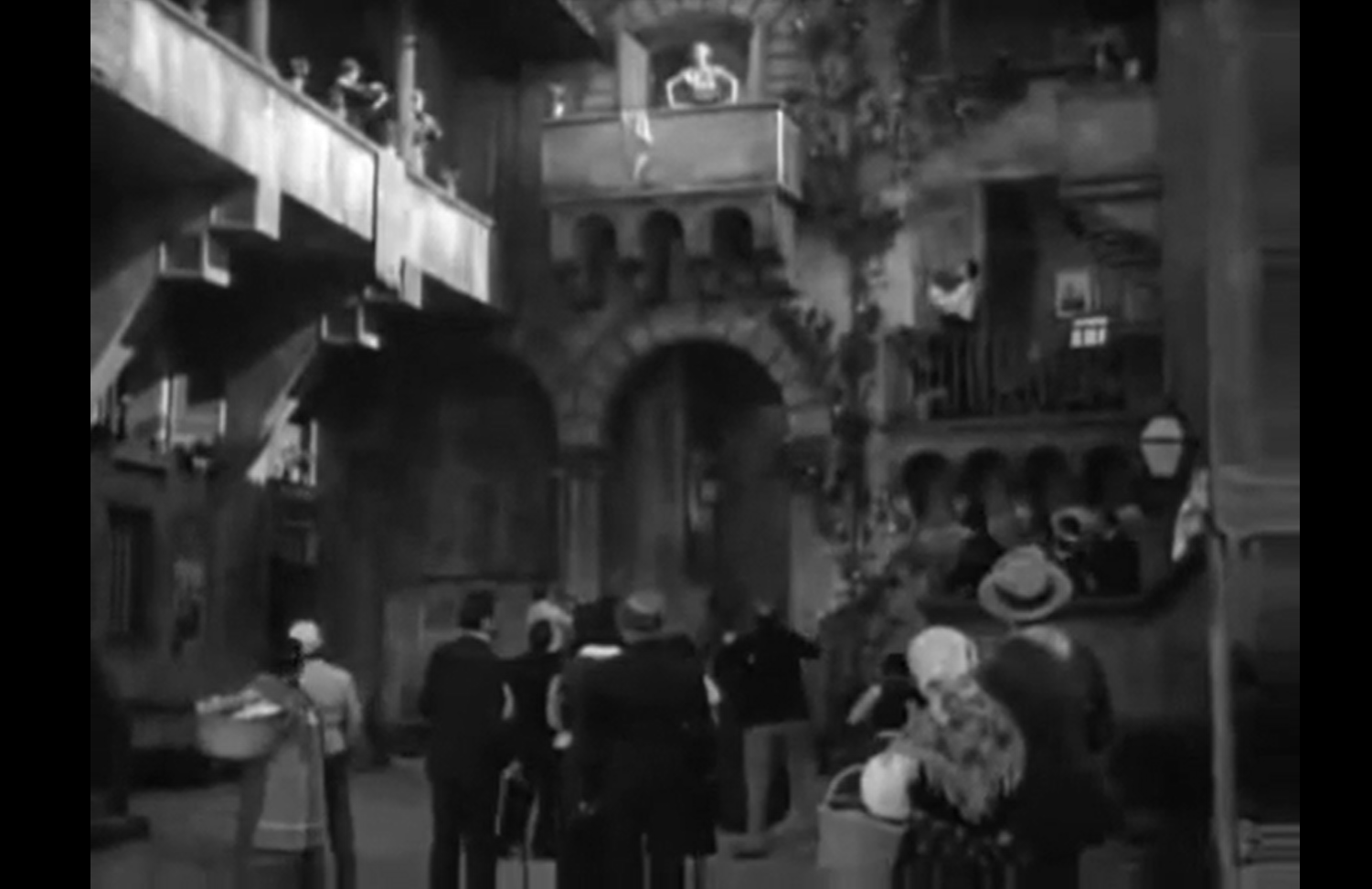
Note: It’s especially touching and timely to see the impromptu balcony concert taking place during the beginning of the film, as Italians join together across apartments to make collective community music.

Redeeming Qualities and Moments:

  • The opening balcony concert scene

  • Several enjoyable musical sequences

Must See?
No, though opera fans may be curious to check it out.

Links:

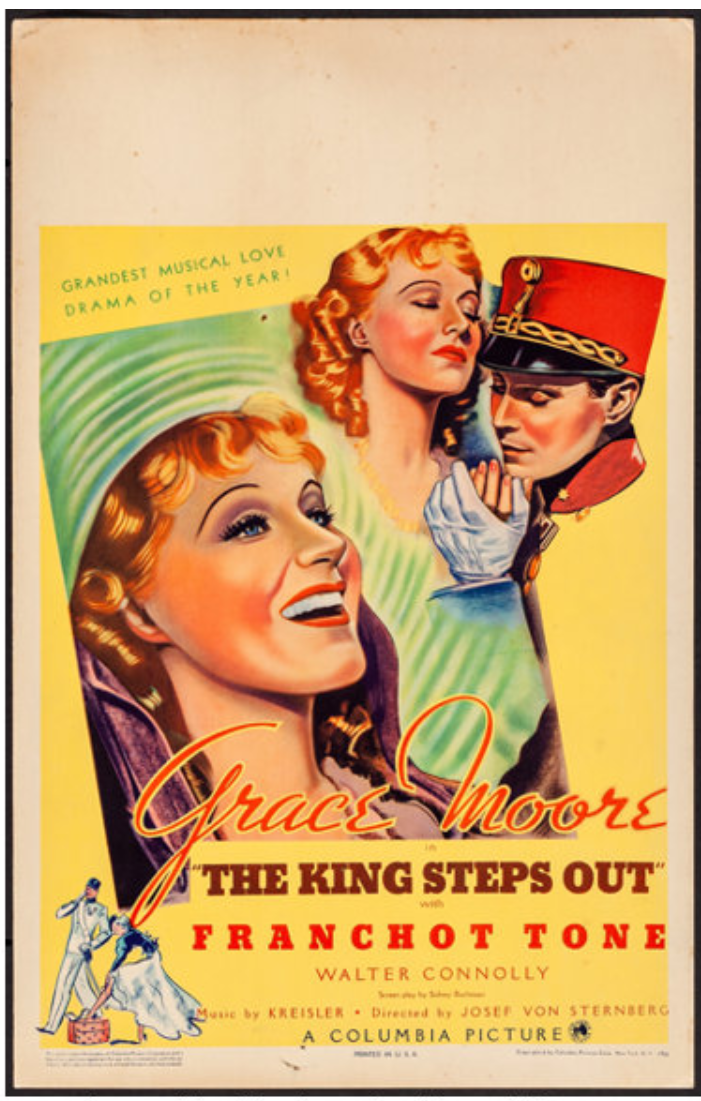
King Steps Out, The (1936)

King Steps Out, The (1936)

“I’ll look you in the eye later; I’m too busy now.”

Synopsis:
To prevent her sister (Frieda Inescort) from having to marry the Emperor of Bavaria (Franchot Tone), “Sissy” (Grace Moore) travels incognito to Tone’s court, where she poses as a dress-maker and attempts to seduce him.

Genres, Themes, Actors, and Directors:

  • Cross-Class Romance
  • Franchot Tone Films
  • Historical Drama
  • Josef von Sternberg Films
  • Mistaken or Hidden Identities
  • Musicals
  • Romantic Comedy
  • Royalty and Nobility

Review:
Loosely based on the life of the Empress Elisabeth of Austria, this romantic comedy — directed by Josef von Sternberg for Columbia Pictures after he completed Crime and Punishment (1935) — featured operatic soprano Grace Moore, who only appeared in nine films before dying in a plane crash at age 48. Unfortunately, the storyline here is utterly tiresome, and Moore’s presence grates on one’s nerves (at least, my own). This is clearly a film for those who like their narratives feathery light, and don’t mind scenarios interrupted by trilling arias which instantly cause male romantic leads to swoon. Meanwhile, the ongoing “comic relief” is tiresome; nobody, really, comes off well here. According to Wikipedia’s article on von Sternberg:

Columbia had high hopes for Sternberg’s next feature, The King Steps Out, starring soprano Grace Moore and based on Fritz Kreisler‘s operetta Cissy. A comedy of errors concerning Austrian royalty set in Vienna, the production was undermined by personal and professional discord between opera diva and director. Sternberg found himself unable to identify himself with his leading lady or adapt his style to the demands of operetta. Wishing to distance himself from the fiasco, Sternberg quickly departed Columbia Pictures after the film’s completion. The King Steps Out is the only movie that he insisted be expunged from any retrospective of his work.

I can’t say I blame him.

Redeeming Qualities and Moments:

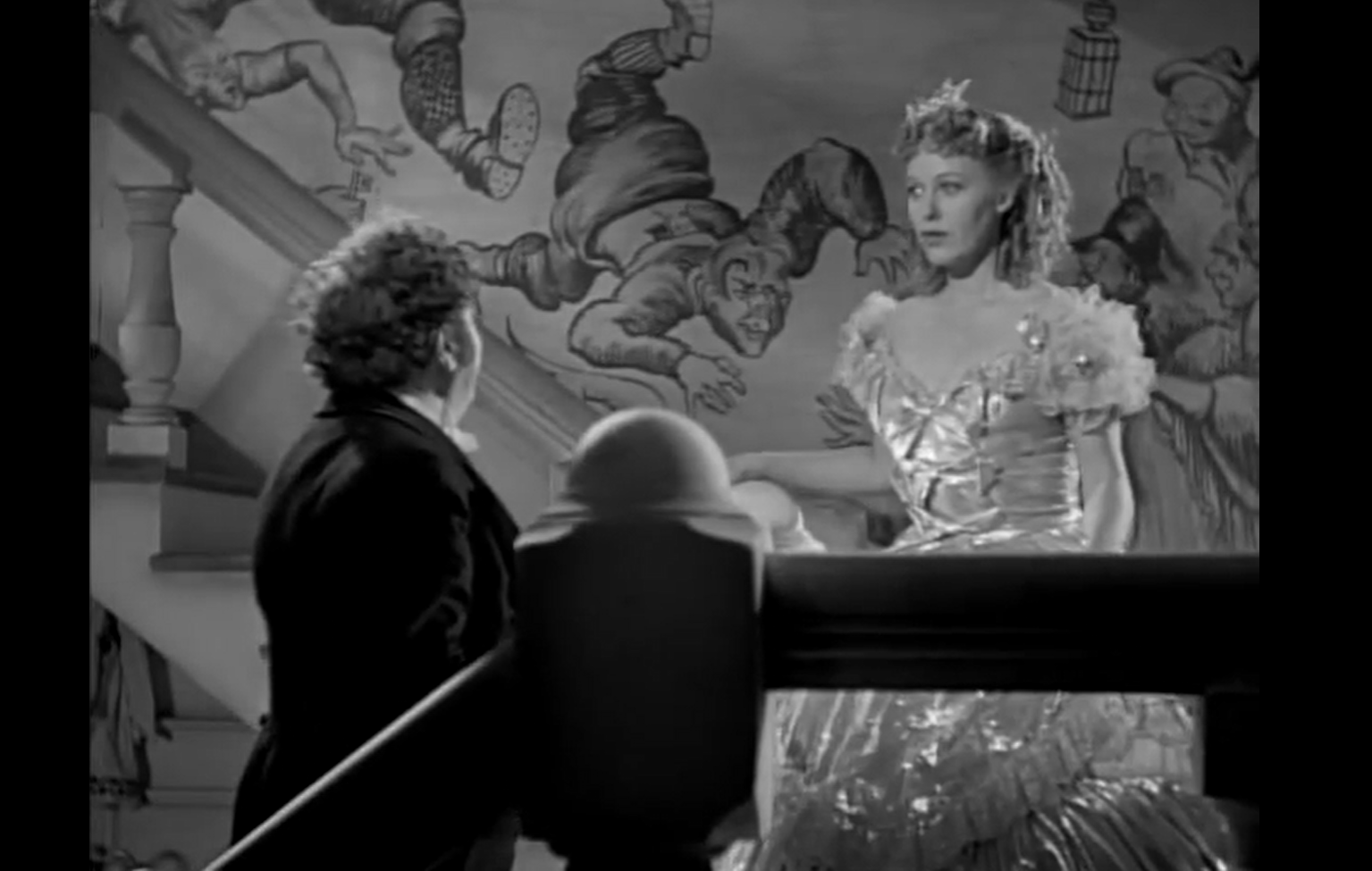
  • Creative sets

Must See?
No; you can definitely skip this one.

Links:

Oblong Box, The (1969)

Oblong Box, The (1969)

“Tell me — what really did happen in Africa?”

Synopsis:
After being disfigured in an African voodoo ritual, a now-insane man (Alister Williamson)– whose guilt-ridden brother (Vincent Price), hoping to peacefully marry his fiancee (Hilary Dwyer), keeps him locked in the attic — seeks help from a crooked lawyer (Peter Arne) in receiving a potion from a witch-doctor (Harry Baird) that will put him into a death-like coma and allow him to escape. Complications ensue when a scientist (Christopher Lee) studying grave-robbed bodies opens Williamson’s oblong-coffin, and Williamson — wearing a red mask — begins a spree of revenge across the city.

Genres:

  • Christopher Lee Films
  • Disfigured Faces
  • Edgar Allan Poe Films
  • Horror Films
  • Revenge
  • Vincent Price Films
  • Voodoo

Review:
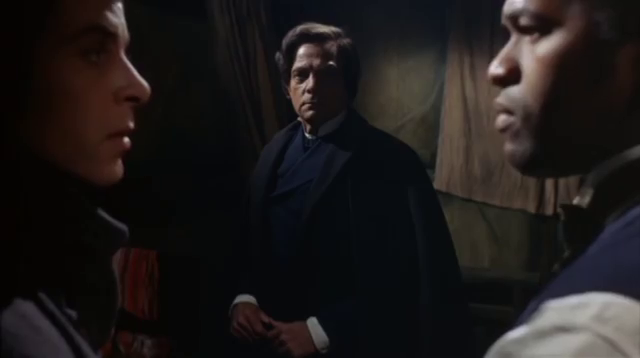
Gordon Hessler directed this Edgar Allan Poe-“inspired” AIP flick, originally slated as a project for Michael Reeves — director of The She-Beast (1966), The Sorcerers (1967), and The Witchfinder General (1968) — before Reeves’ unexpected death at age 25. Unfortunately, everything here seems to have suffered as a result of this shift at the helm: while the film isn’t confusing, and the sets and cinematography are appropriately atmospheric, it never quite coheres or engages; not even Price can resurrect the overall mood. The most refreshing element of the film is Price’s admission about whites wreaking havoc on and taking advantage of the people of Africa, leading to mutual misery.

Note: Price and Lee appear together on-screen near the end, but only for a brief moment, and they don’t exchange dialogue.

Redeeming Qualities and Moments:

  • Atmospheric cinematography and sets

Must See?
No; feel free to skip this one.

Links: