Browsed by
Category: Original Reviews

Responses to Peary’s “must see” movie reviews, as well as my own “must see” movie reviews up to and after 1986 (when Peary’s book was published).

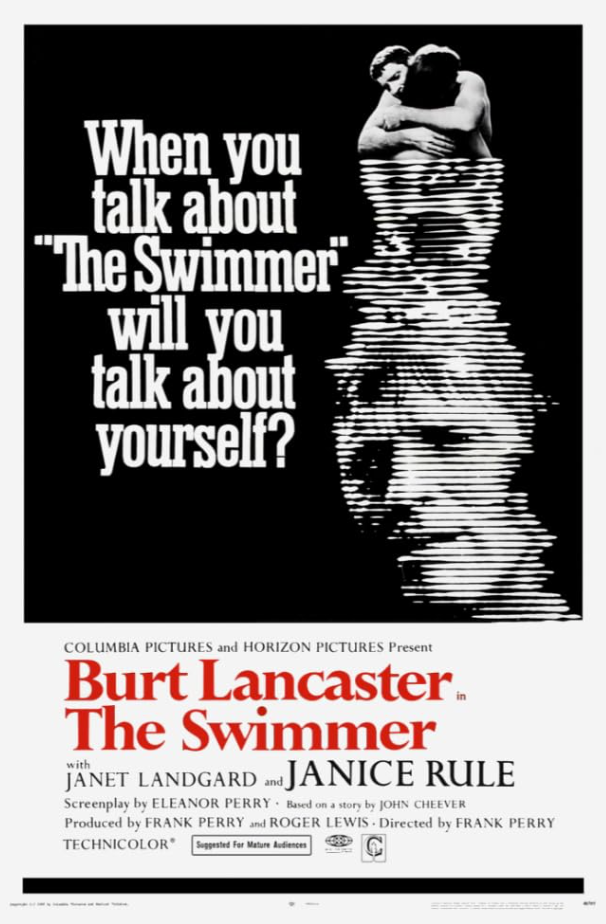
Swimmer, The (1968)

Swimmer, The (1968)

“It’s a great pool you’ve got here.”

Synopsis:
A middle-aged man (Burt Lancaster) decides to swim back to his own home through the pools of neighbors and friends.

Genres, Themes, Actors, and Directors:

  • Burt Lancaster Films
  • Downward Spiral
  • Frank Perry Films
  • Janice Rule Films
  • Kim Hunter Films
  • Mid-Life Crisis
  • Road Trip

Review:
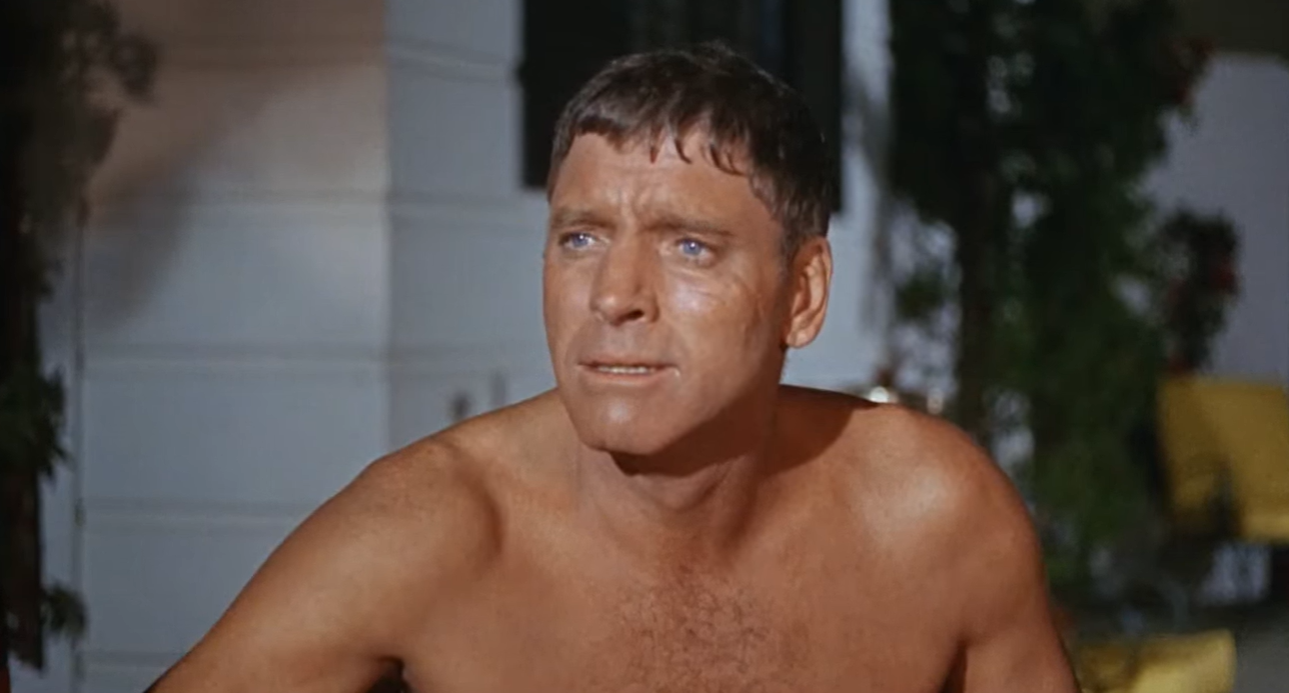
Husband-wife team Frank and Eleanor Perry collaborated on this adaptation of a (seemingly unfilmable) 13-page short story by John Cheever, telling a uniquely haunting road trip about a man hoping to literally swim his way back home again. What will he find once he gets there? We’re slowly given clues throughout Lancaster’s journey, as the people he encounters at various pools gradually humor him less and less; we know something is up with his past (and that he’s not quite in touch with reality), but specifics aren’t clear. At his first pool after emerging from the woods, Lancaster maps out his trek:

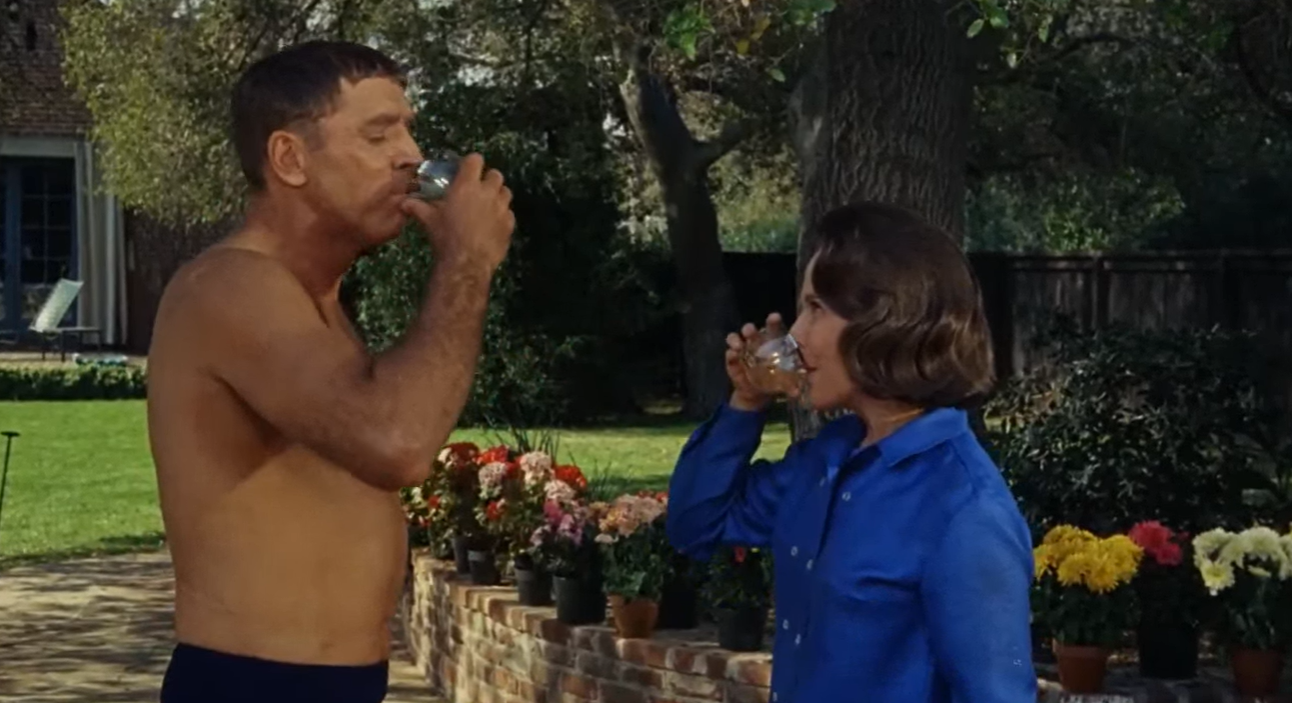
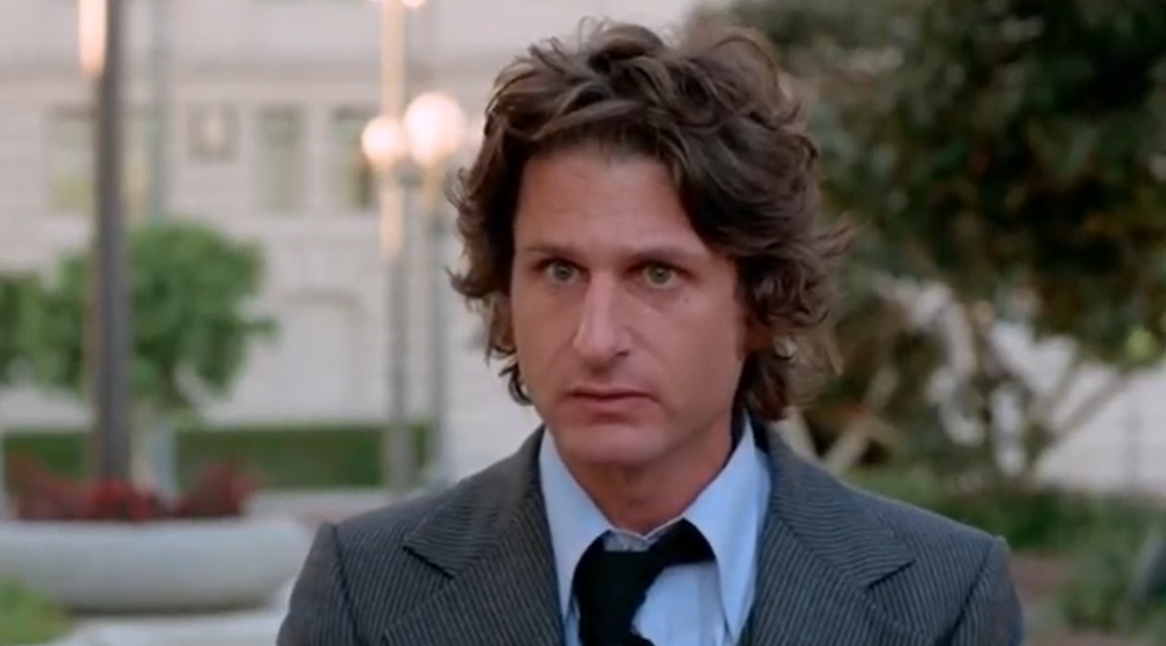
… heading next to a new pool just put in by Kim Hunter and her husband (Charles Drake).

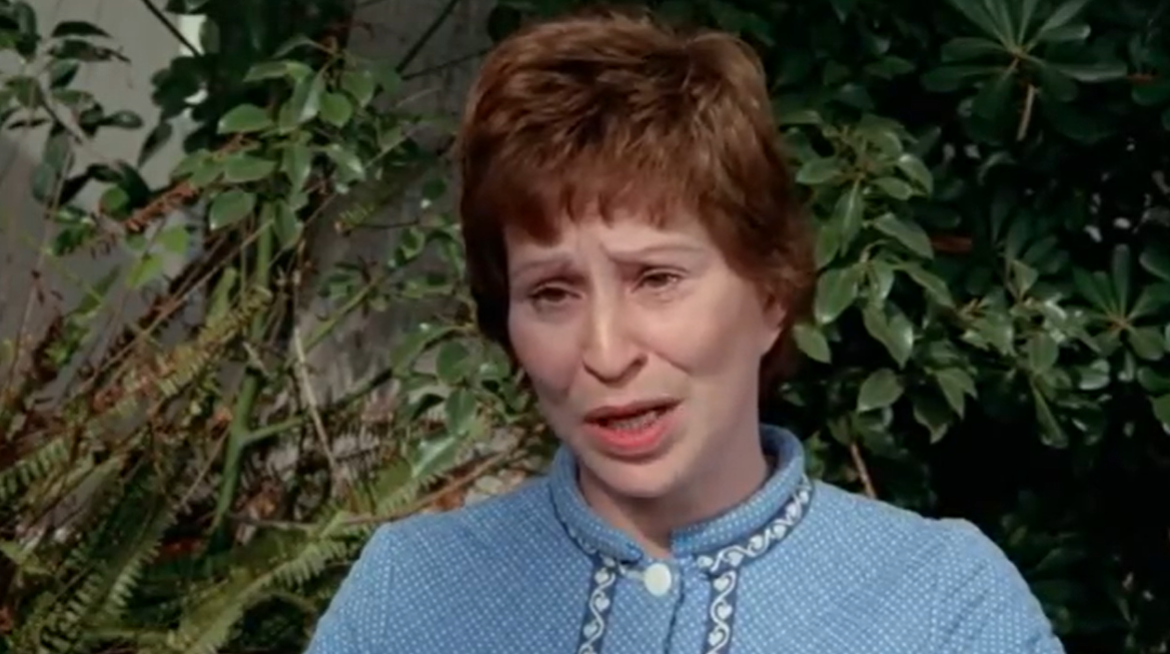
After this, he arrives at a pool where he’s chastised by a woman (Cornelia Otis Skinner) upset at him for not visiting her sick son in the hospital — and we see here that all is not as fine and chummy with Lancaster across his social set as he’d like us to believe.

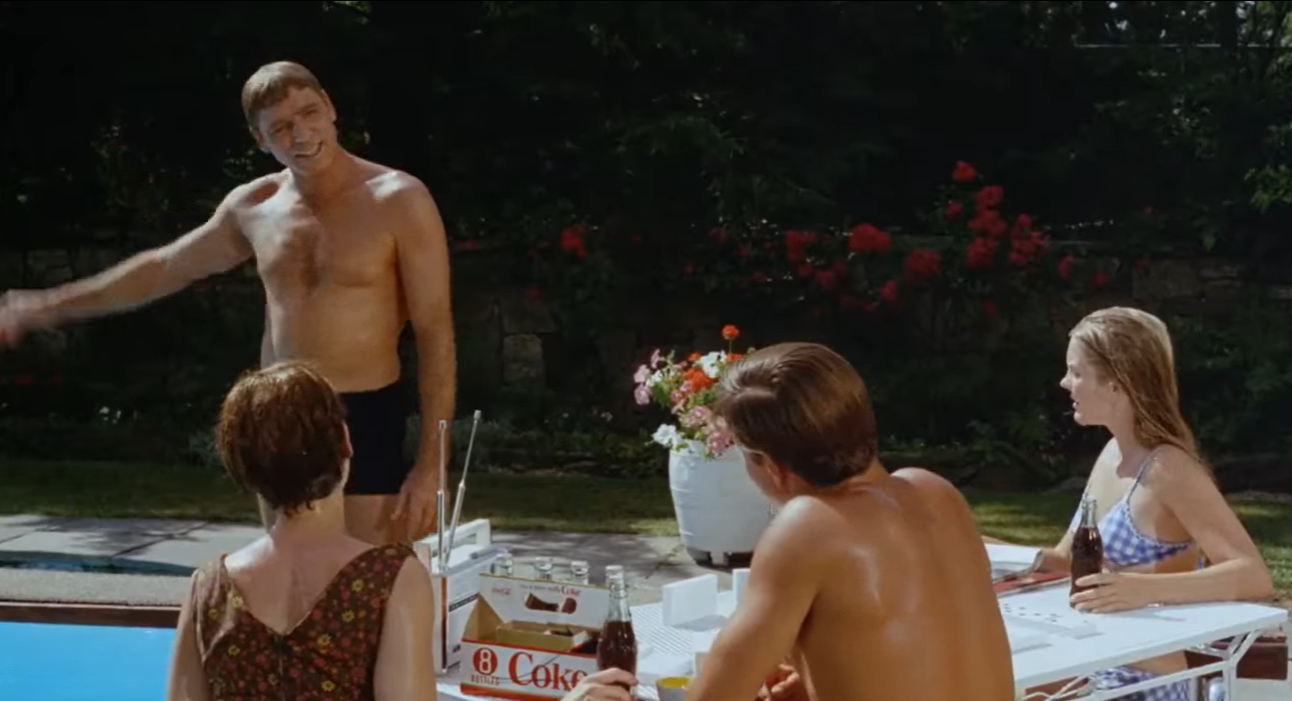
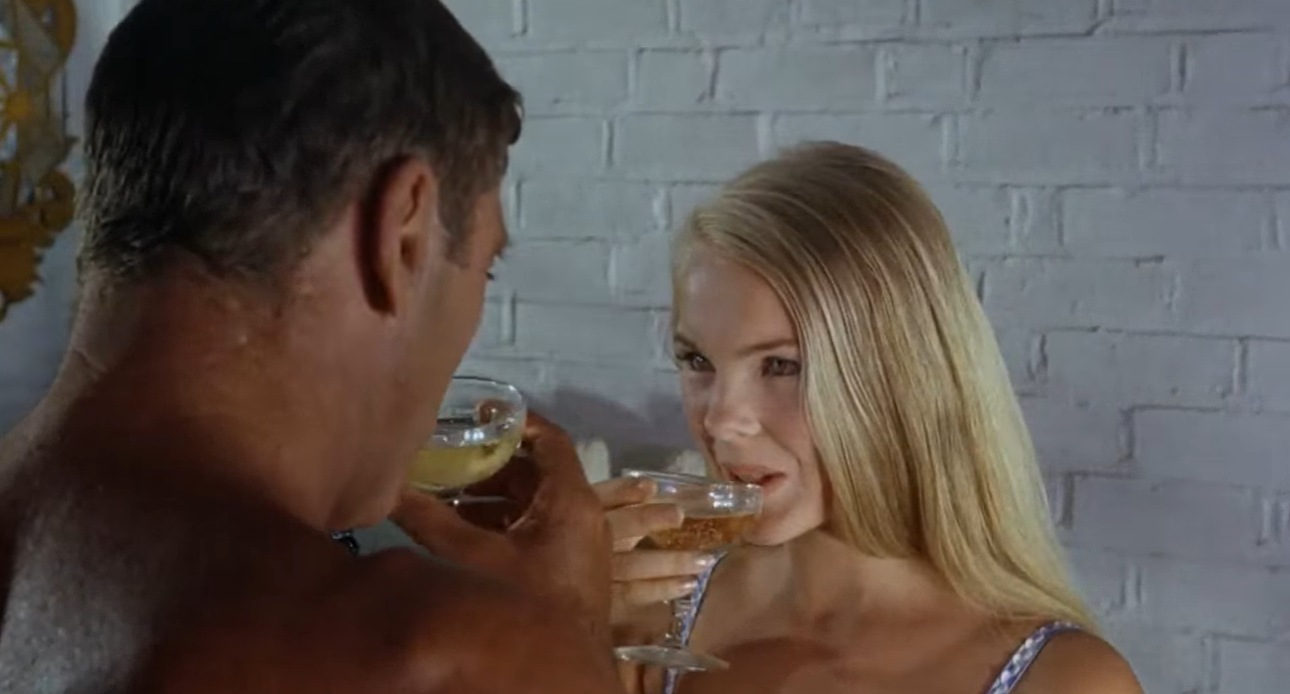
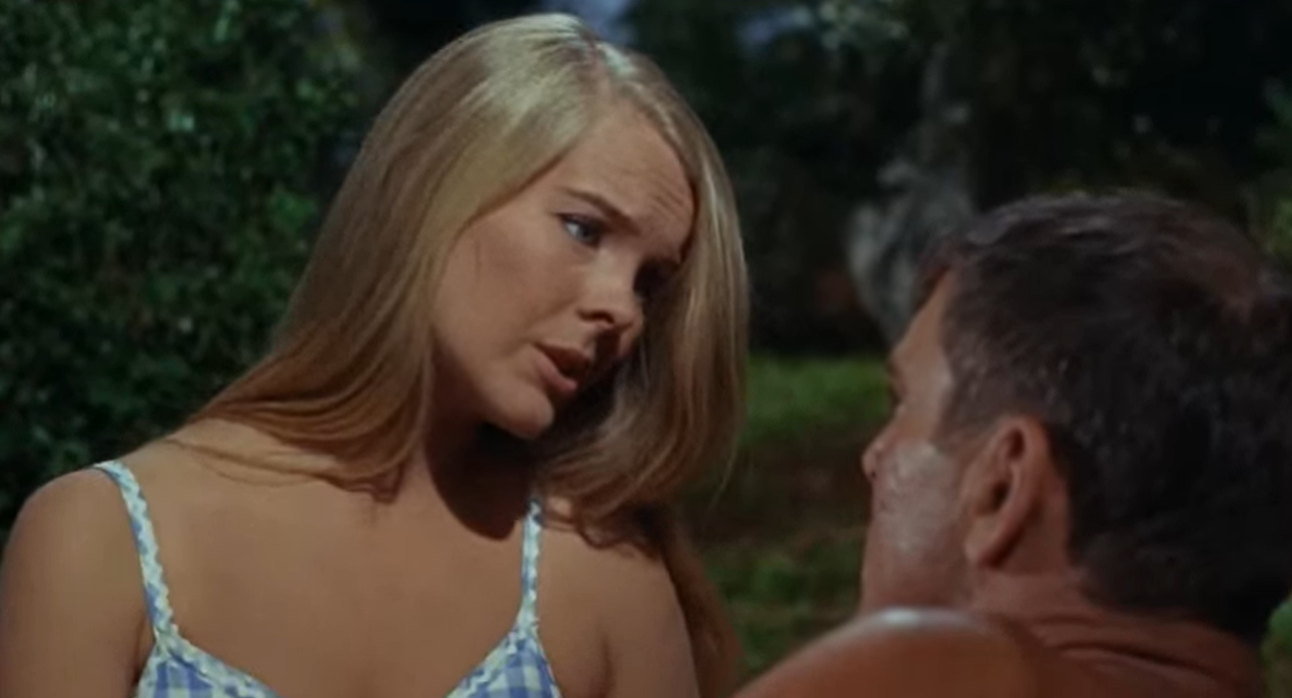
However, Lancaster is given an extended idyllic reprieve at his next stop, where he encounters his kids’ now-grown babysitter (Janice Landgard), who agrees to go on part of his swimming adventure with him.

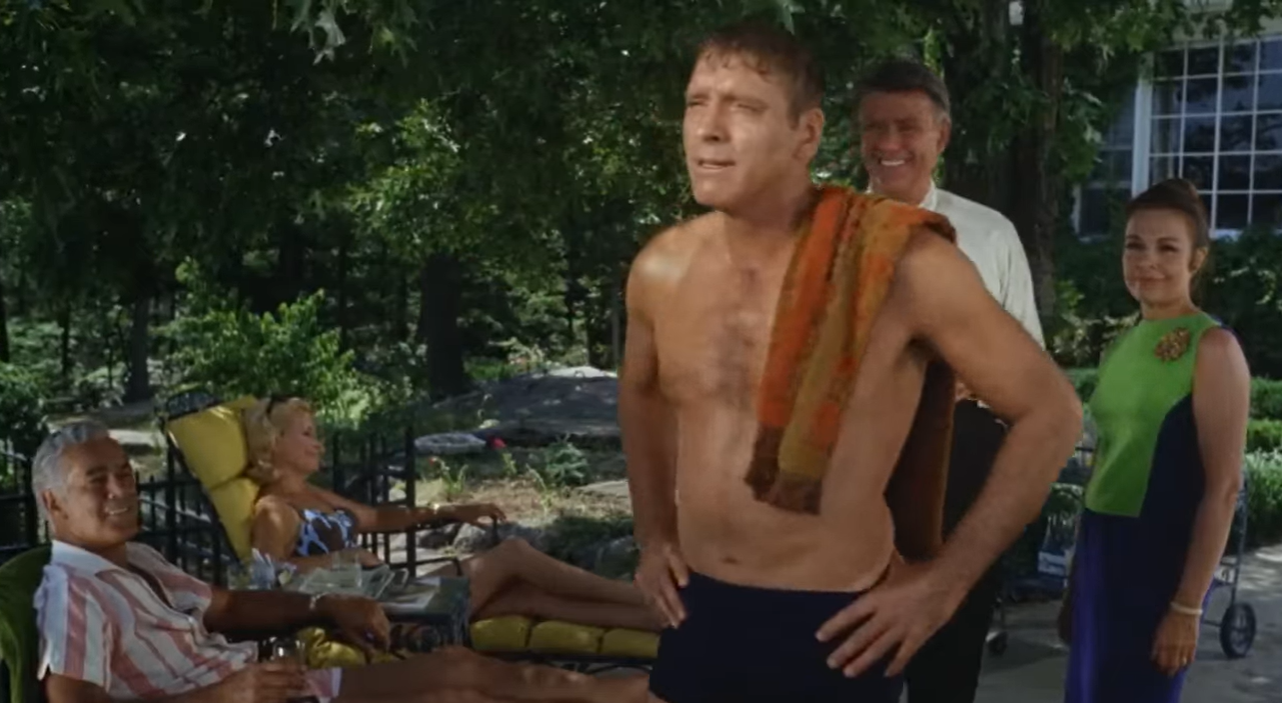
They stop at a rollicking, drink-filled pool party:

… but after slo-mo reminiscing and frolicking:

… his bubble of reality is burst once again.

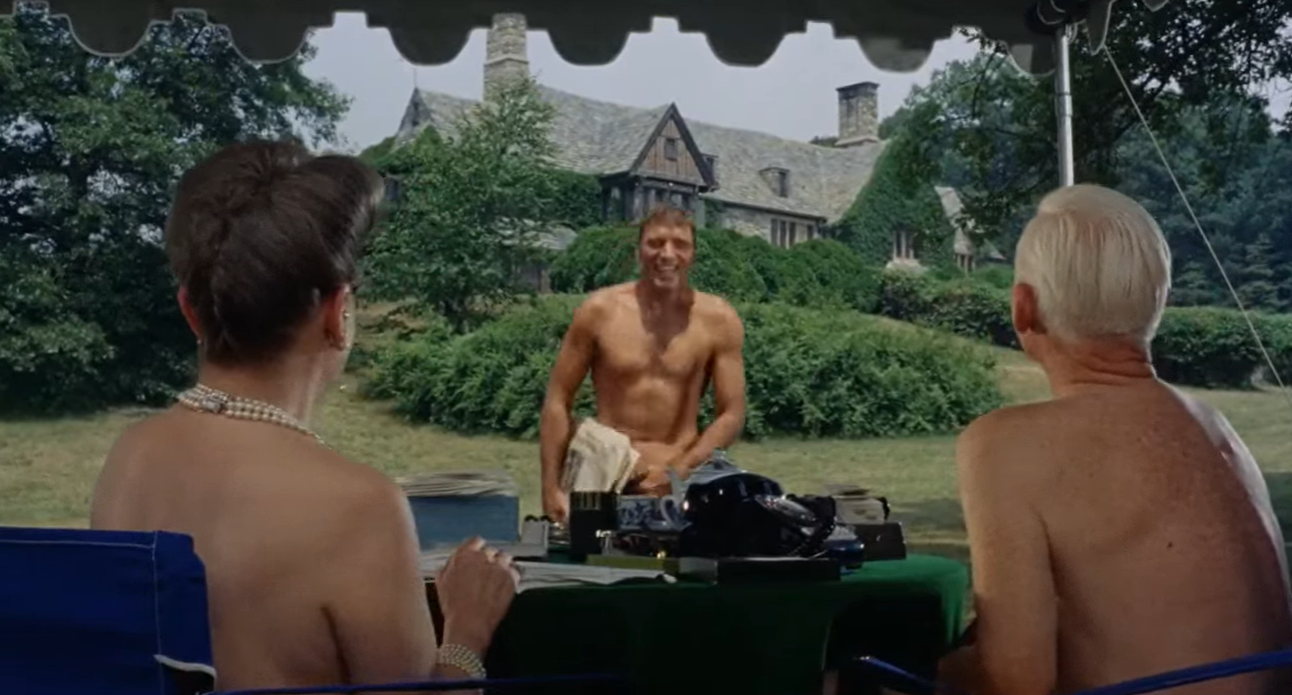
He sprints off to a pool owned by a pair of prissy nudists (Richard McMurray and Marge Champion):

[SPOILER ALERT FROM ABOUT HERE ON OUT]

… who make it crystal clear that Lancaster is no longer the wealthy man he seems to think he still is. From there, he visits with a poor little rich boy (Michael Kearney) left home alone with a maid and an empty pool:

… and after leaving this boy with visions of fantasy (“You see, if you make believe hard enough that something is true, then it is true, for you!”), his own decline becomes even more pronounced. He next visits an over-the-top pool party with plenty of former friends ready to put him down:

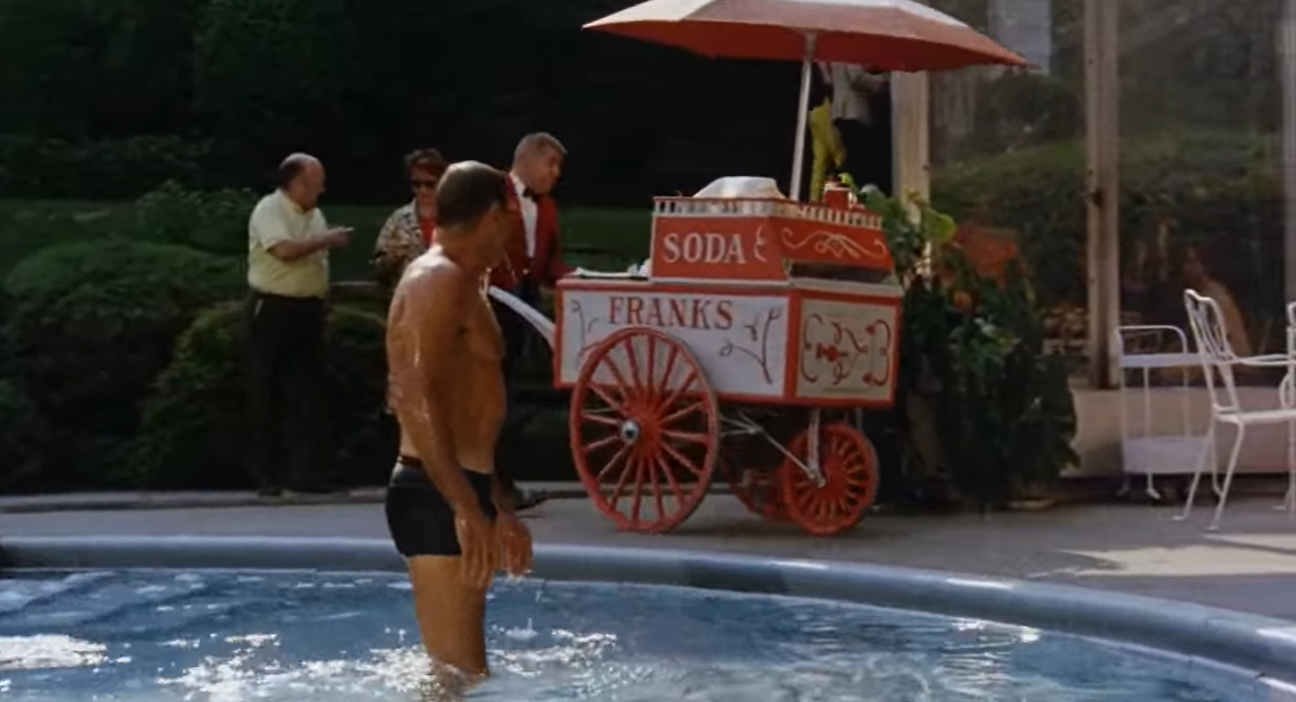
… and becomes especially agitated when he spots a hot dog cart that he formerly used with his own kids.

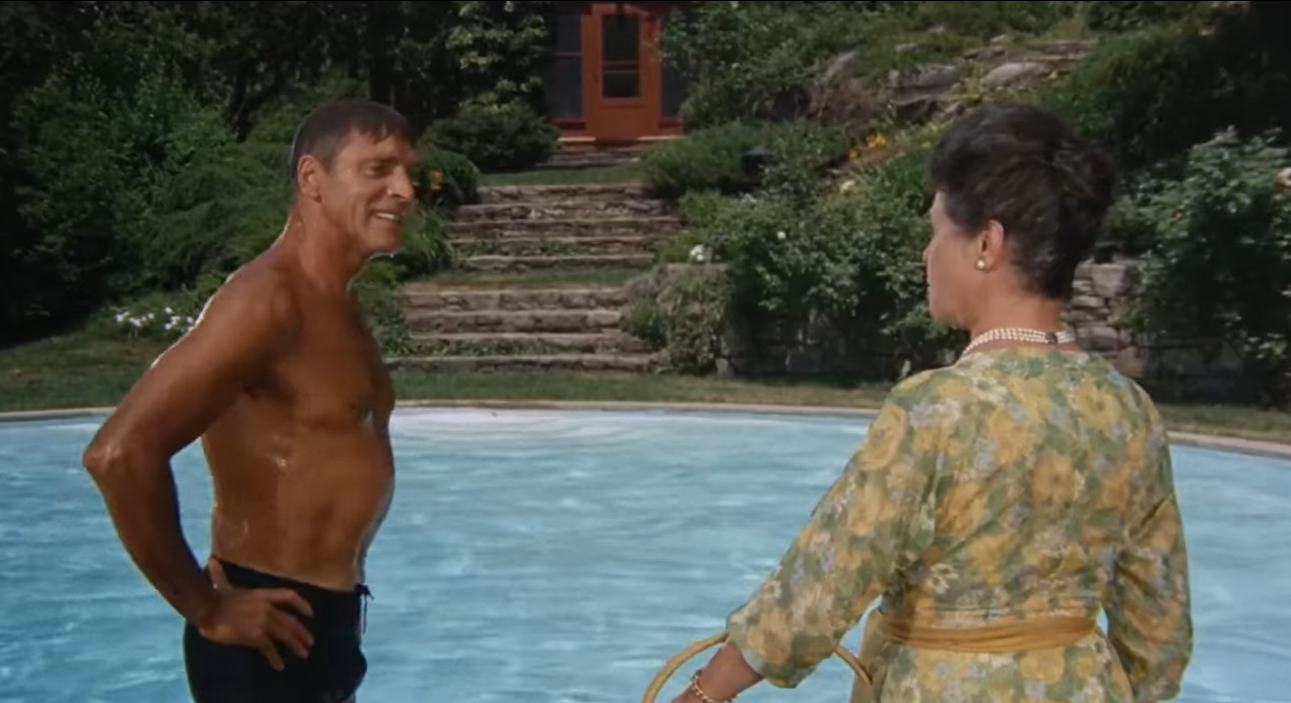
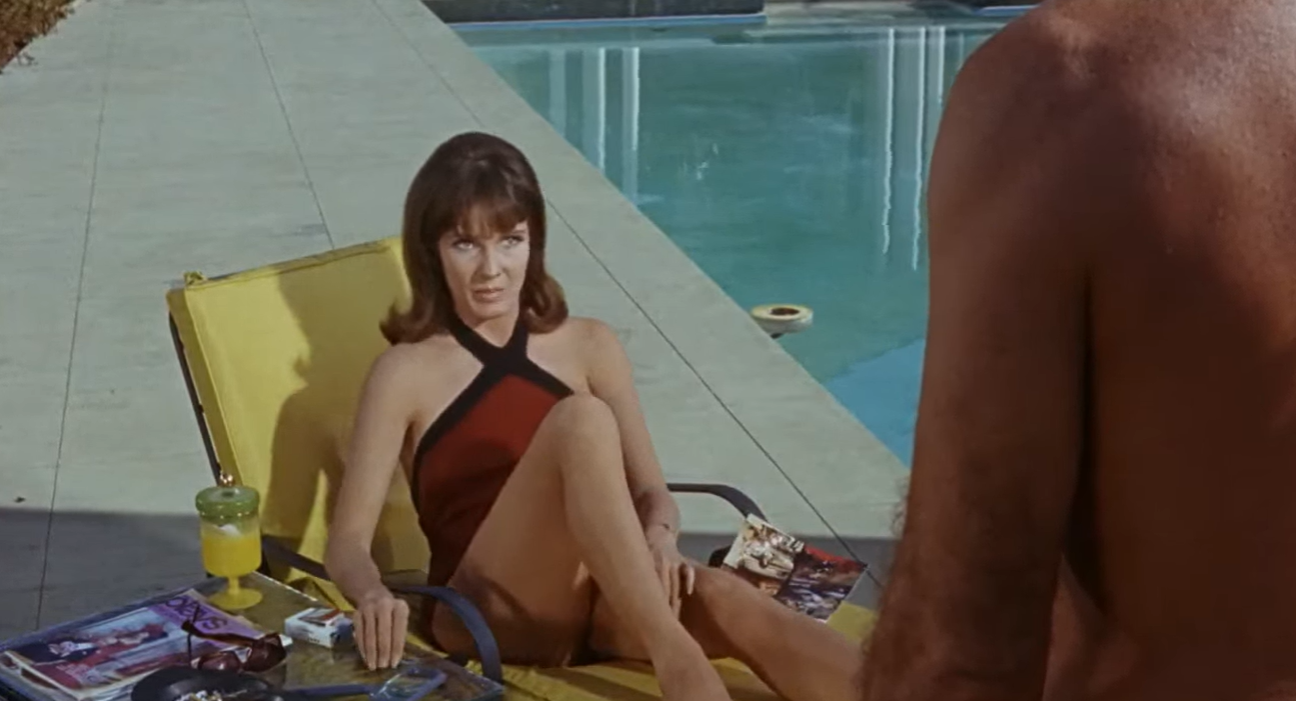
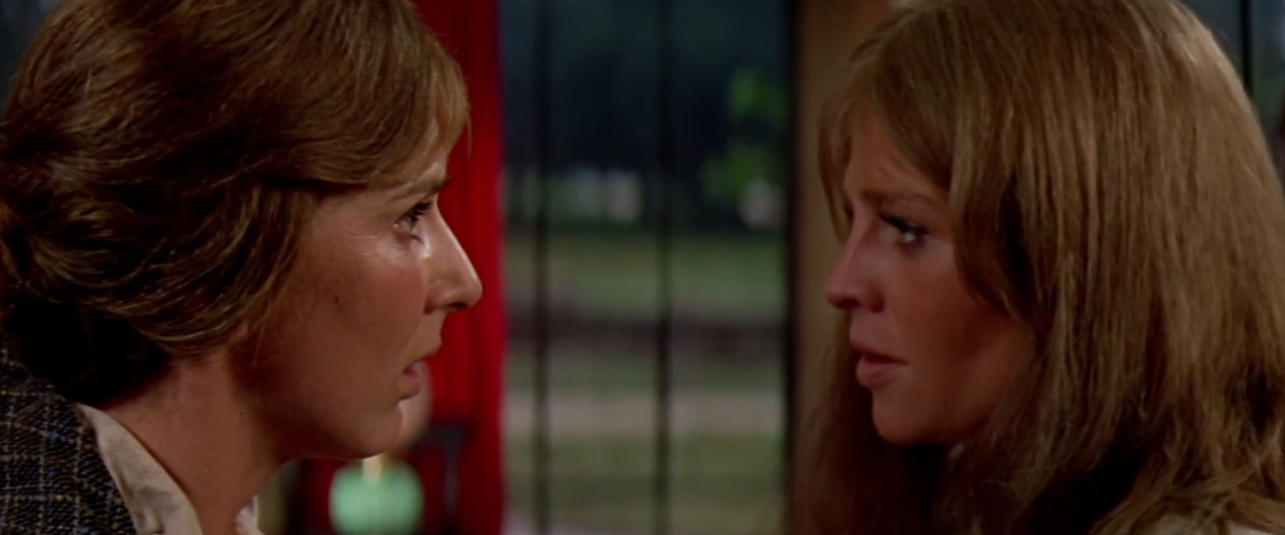
He can’t understand how or why it left his family’s possession, and things nearly turn violent. His next stop is with a former lover (Janice Rule) who is beyond exasperated with him; while she eventually shows some sympathy, she ultimately wants nothing more to do with him.

Lancaster’s final stop is a crowded municipal pool that he is barely allowed into, given he doesn’t have 50 cents to pay and his feet are dirty from crossing a highway; however, he eventually crawls his way across:

… and arrives at his ultimate destination, only to find the shock of his life waiting back at his home. By this point we realize the film has been unfolding like a Twilight Zone episode — and we really don’t know how things will end. It’s an unnerving but intriguing journey to follow along on, well worth a one-time look (though a repeated viewing will unveil new layers about what’s come before).

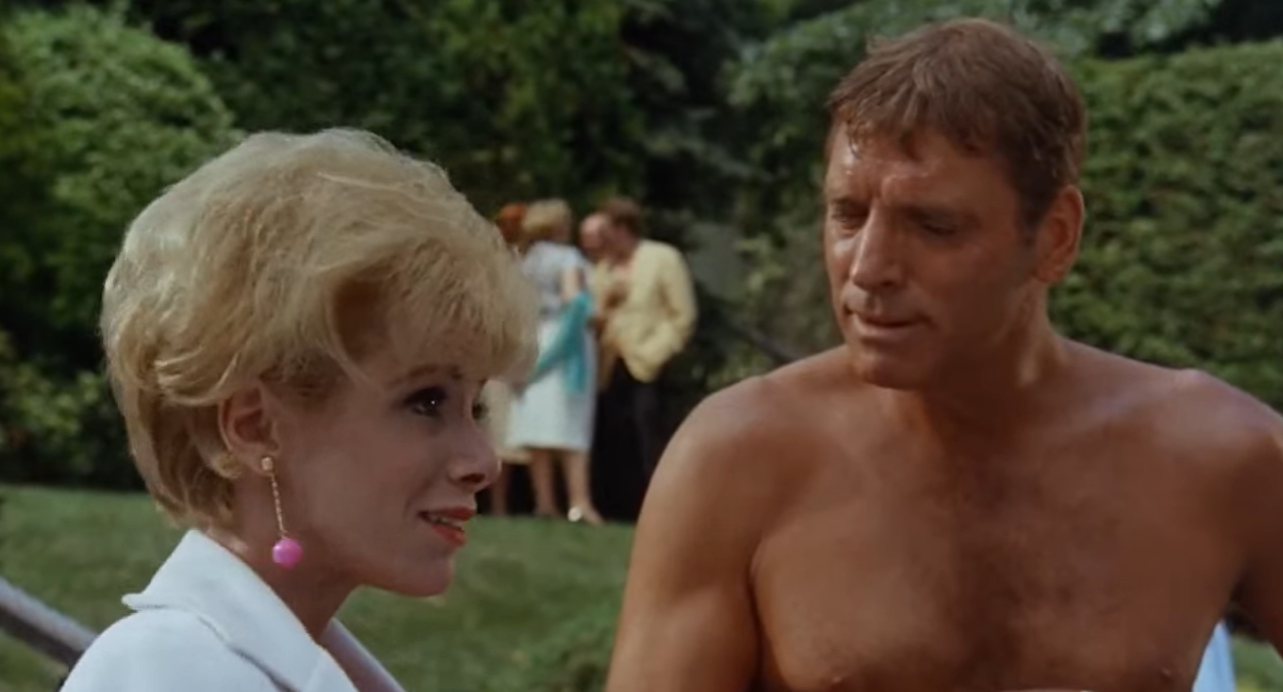
Note: Watch for Joan Rivers in a memorable bit part (her screen debut), as someone nervously flirting with Lancaster before she’s clued in about how troubled he is.

Notable Performances, Qualities, and Moments:

  • Burt Lancaster as Ned
  • David L. Quaid’s cinematography

Must See?
Yes, as a uniquely told cinematic story. Listed as a Cult Movie in the back of Peary’s book.

Categories

  • Good Show

Links:

Far From the Madding Crowd (1967)

Far From the Madding Crowd (1967)

“A woman like you does more damage than she can conceivably imagine.”

Synopsis:
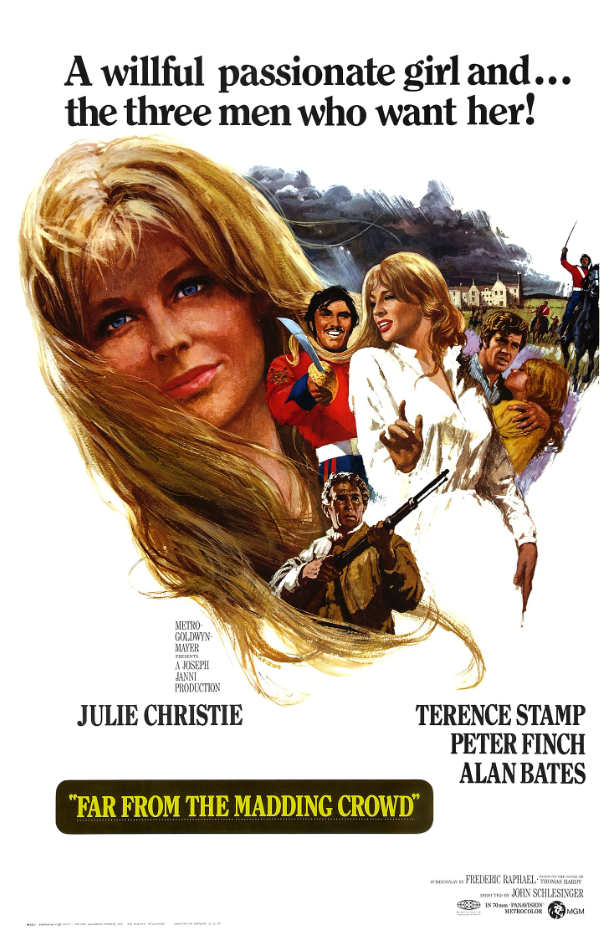
In late 19th century England, after inheriting her uncle’s farm, Bathsheba Everdene (Julie Christie) rejects romantic advances from a poor shepherd (Alan Bates), instead flirting with a local landowner (Peter Finch) and then falling for a rakish soldier (Terence Stamp) with a girlfriend (Prunella Ransome); who will Bathsheba ultimately decide to be with?

Genres, Themes, Actors, and Directors:

  • Alan Bates Films
  • Heiresses
  • Historical Drama
  • John Schlesinger Films
  • Julie Christie Films
  • Love Triangle
  • Peter Finch Films
  • Strong Females
  • Terence Stamp Films

Review:
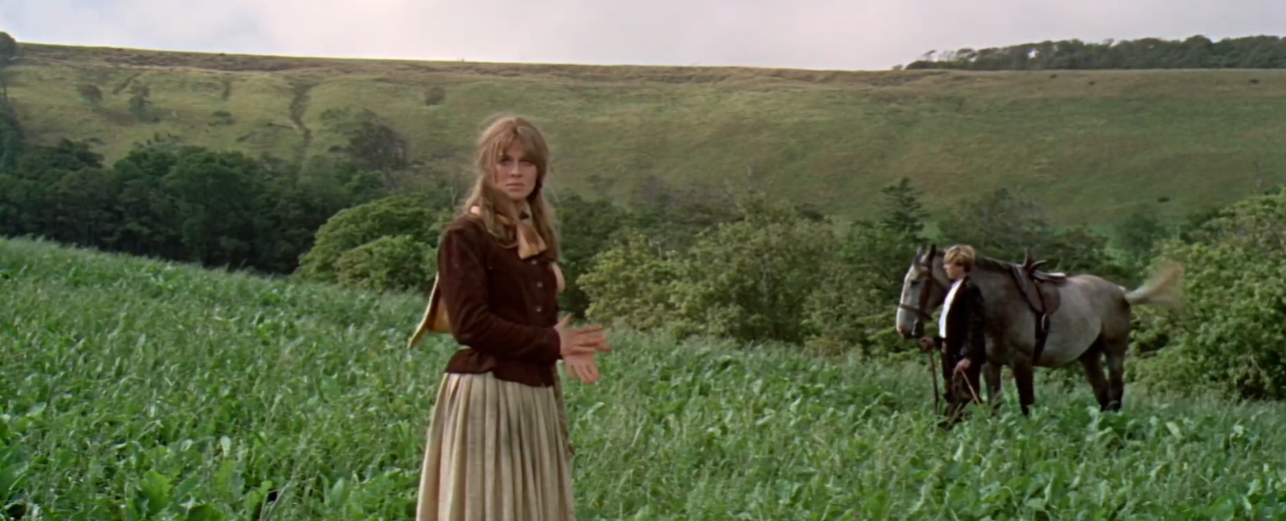
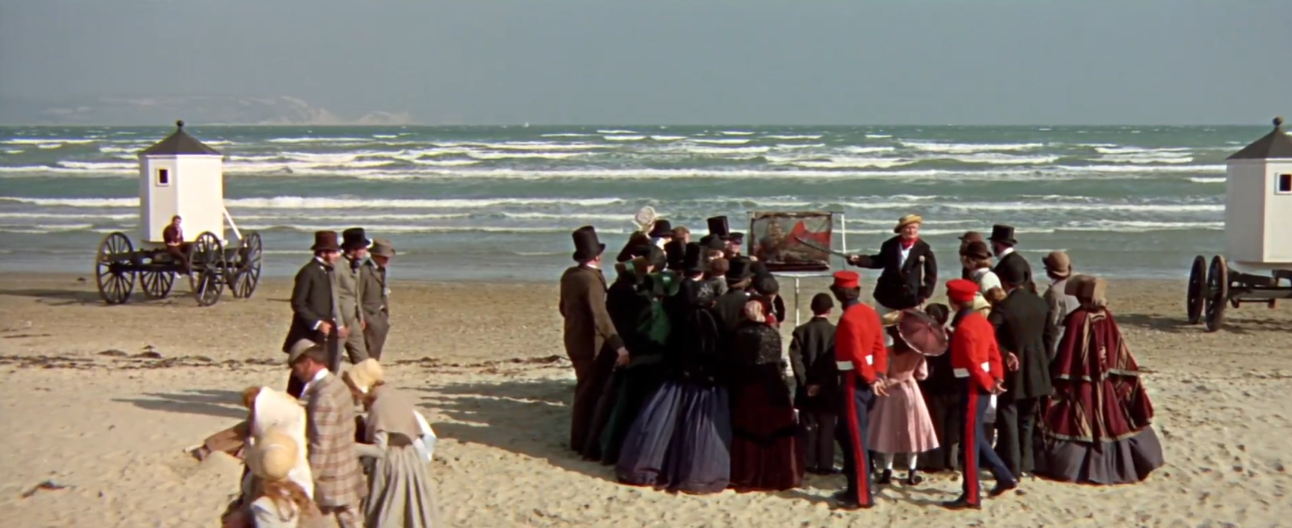
John Schlesinger directed this relatively faithful adaptation of Thomas Hardy’s 1874 novel of the same name, working once again with Julie Christie, who had starred previously in his Billy Liar (1963) and Darling (1965). The nearly three-hour-long film — shot mostly on location in Dorset and Wiltshire — is most notable for Nicolas Roeg’s stunning cinematography:

… and was surely inspired by the sight of beautiful Christie in another recent big-screen historical epic, Dr. Zhivago (1965) (not to mention echoes of yet another cinematic Julie among rolling hills — what does this shot remind you vaguely of?).

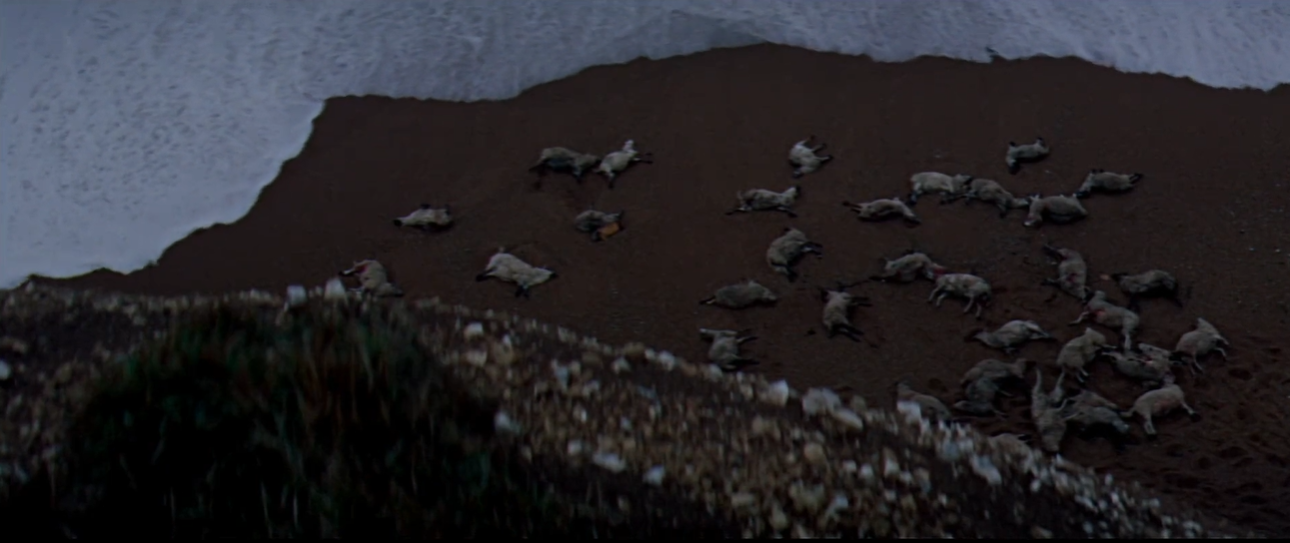
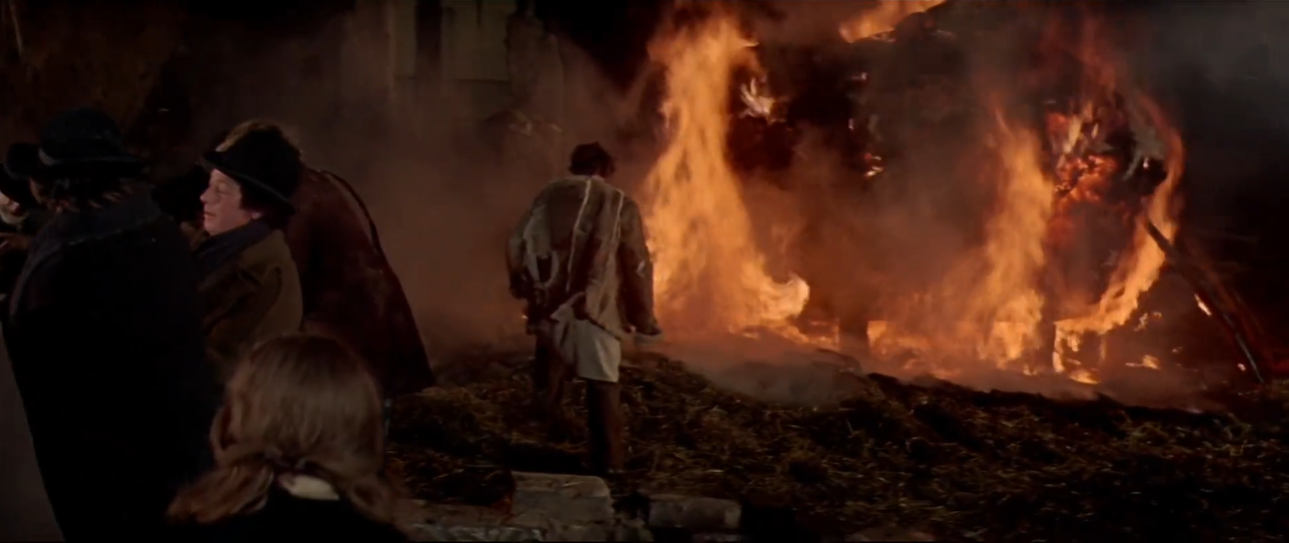
The storyline itself — revolving primarily around which of her three suitors Christie will choose — is ultimately of less interest than how doomed everyone in this Victorian world seems to be by the whims of fate, ranging from the early tragic loss of an entire herd of sheep:

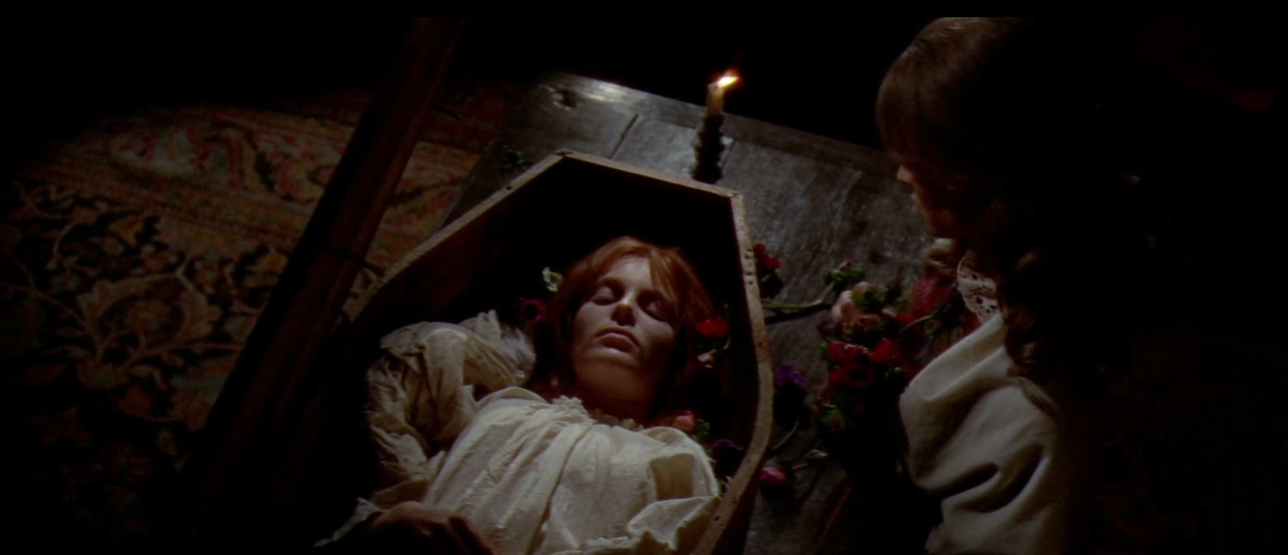
… to a devastating fire:

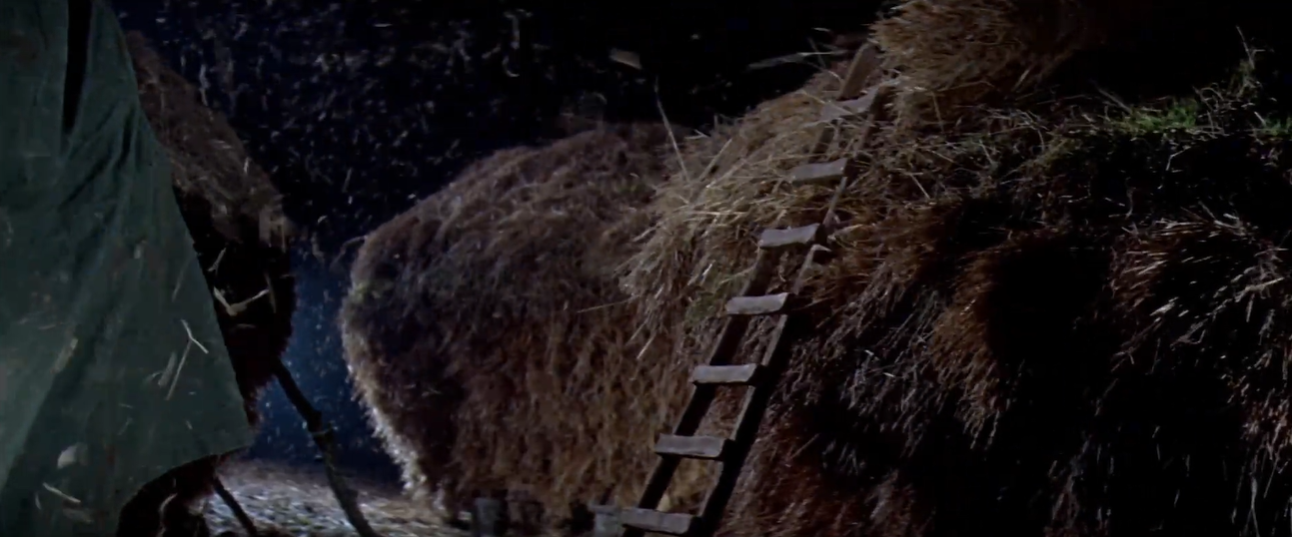
… to a windstorm which nearly destroys giant ricks of hay:

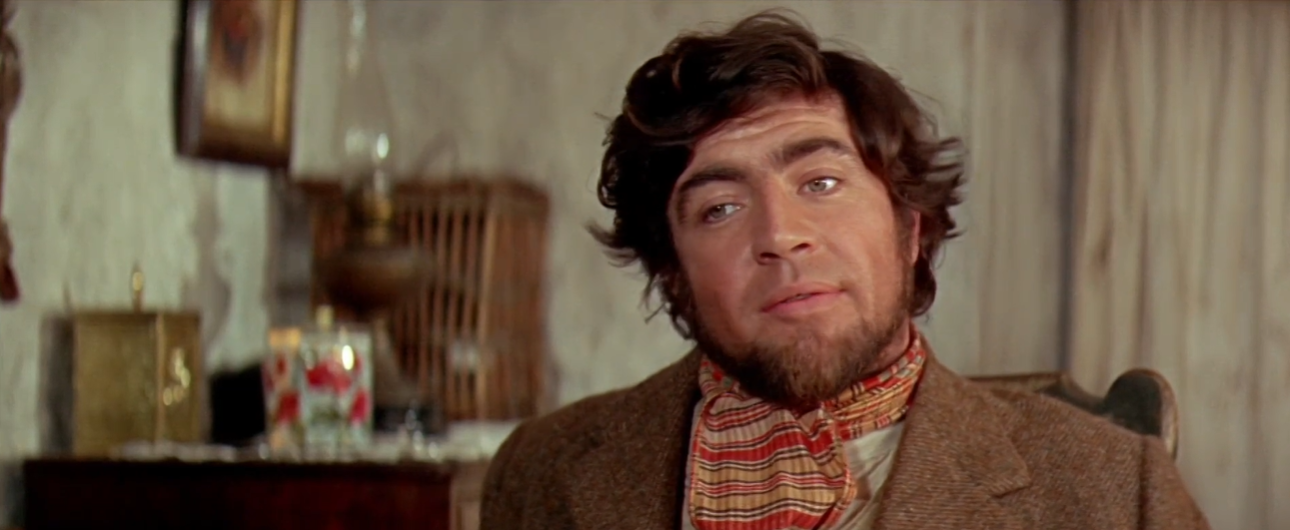
… to the life-altering implications of missed connections at a would-be wedding. Meanwhile, it’s hard to know quite how to feel about each of the main players — though we lean towards sympathizing most with Bates’s earnest Gabriel Oak:

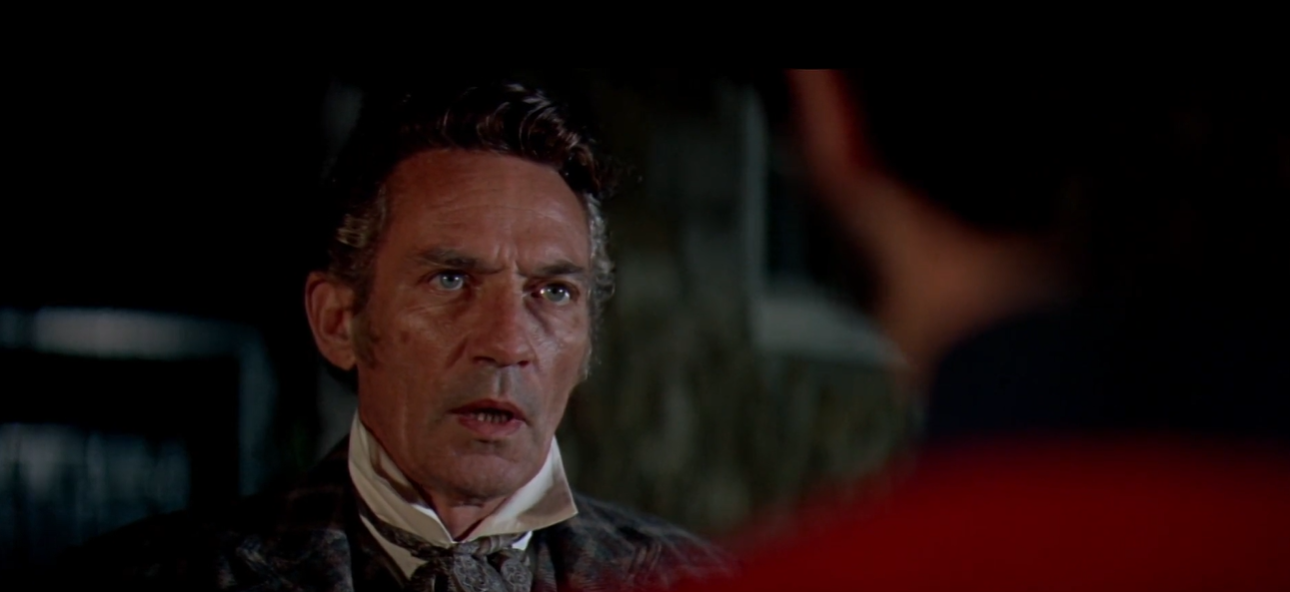
… given that he remains stalwart and unassuming throughout numerous set-backs. Christie’s Bathsheba is admirable for her insistence on managing her own household — though she’s not immune to the follies of her heart, which foils things for her time and again. Finch’s William Boldwood is ultimately a somewhat pitiable character:

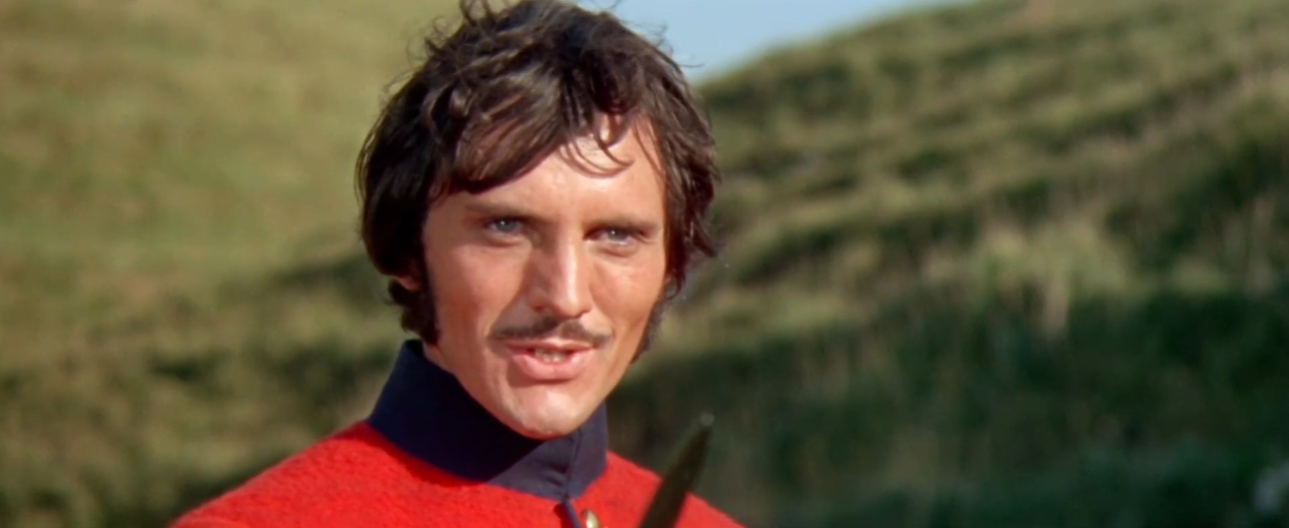
… given that his attraction to Christie often overrides his own dignity; and Stamp is clearly the most contemptuously vile of them all:

… though even his motivations defy expectations at times. Fans of Hardy, Schlesinger, and/or any of the lead actors will surely want to check this one out, though it’s ultimately not a must-see classic.

Notable Performances, Qualities, and Moments:

  • Beautiful cinematography

  • Fine period detail

Must See?
No, but it’s certainly worth a one-time look simply for its visual beauty.

Links:

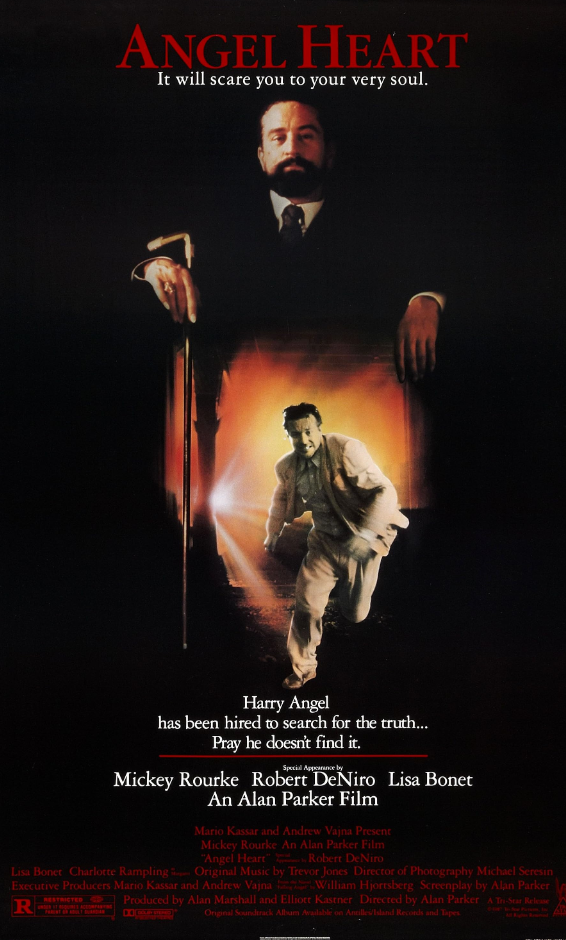
Angel Heart (1987)

Angel Heart (1987)

“I’ve got a thing about chickens.”

Synopsis:
In 1950s New York, private eye Harry Angel (Mickey Rourke) is hired by a lawyer (Dann Florek) to help his client Louis Cyphre (Robert De Niro) track down a missing crooner named Johnny Favorite; soon Angel finds himself involved in more mystery, murder, and darkness than he could possibly have imagined.

Genres, Themes, Actors, and Directors:

  • Alan Parker Films
  • Charlotte Rampling Films
  • Detectives and Private Eyes
  • Historical Drama
  • Horror Films
  • Mickey Rourke Films
  • Mistaken and Hidden Identities
  • Robert De Niro Films

Review:
Alan Parker directed this adaptation of William Hjortsberg’s 1978 novel Falling Angel — a spiritual noir combining a private eye flick (disheveled O’Rourke is well-cast):

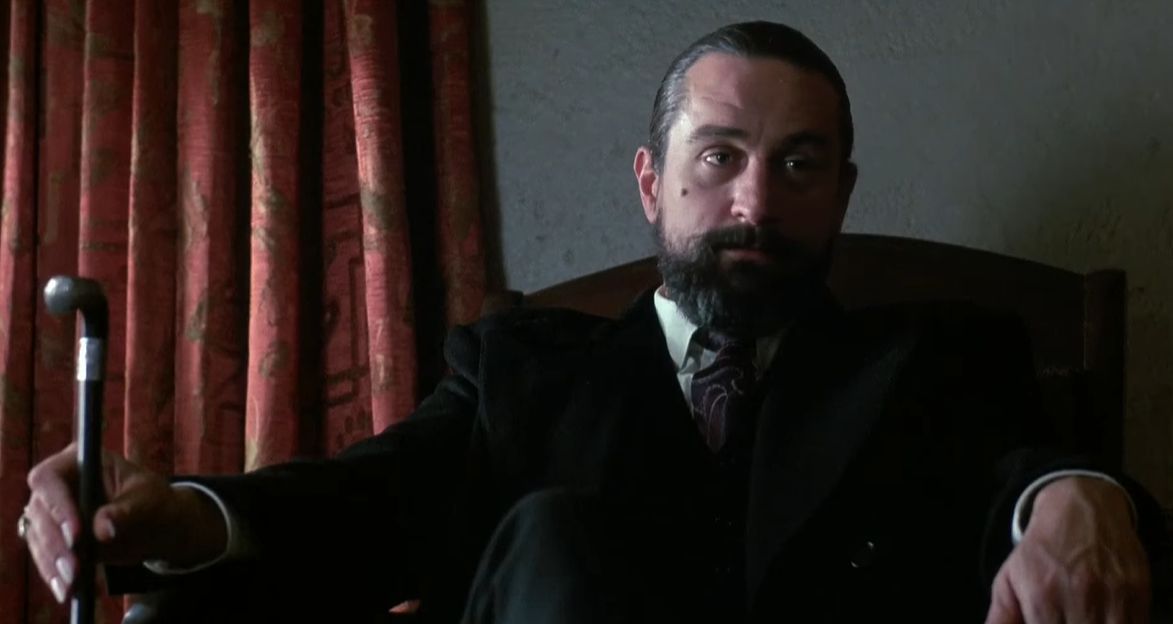
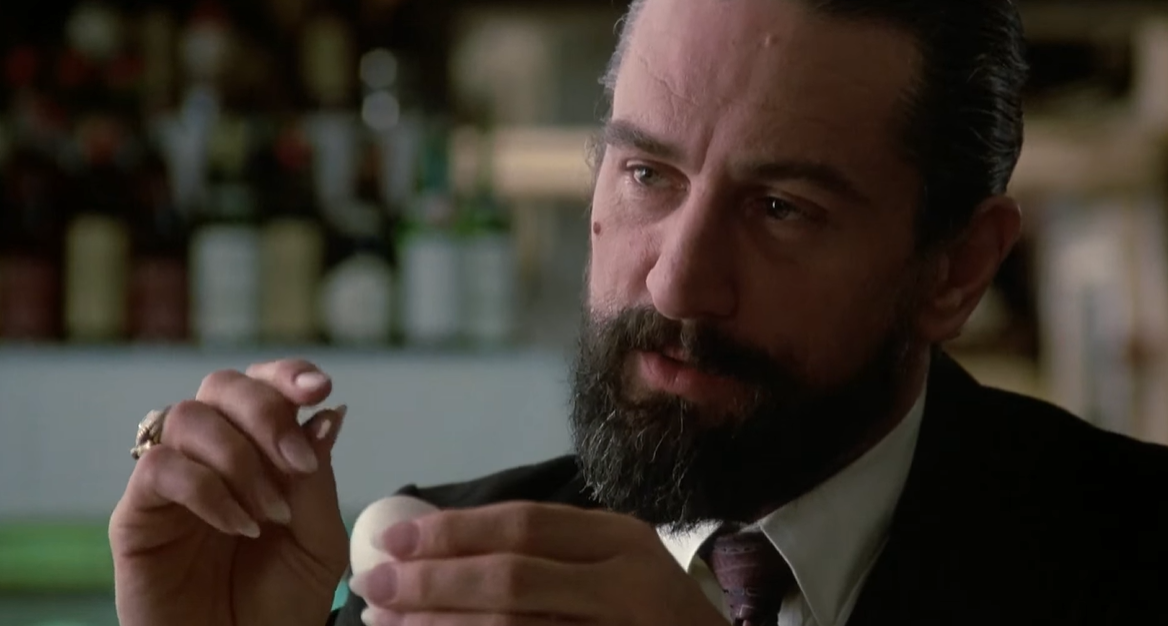
… with mystical forces which become ever-darker as the storyline proceeds. Central to the film’s positing of the world as filled with danger and menace is the oh-so-perfect casting of De Niro as the Devil (while his identity isn’t stated outright until later on, it’s obvious enough that it can’t really be considered an early spoiler).

We know — even if O’Rourke doesn’t — that he’s being sent on a mission to find someone who has reneged on a soul-swapping bargain. The details become much more complex, but we’re able to follow along well enough to make emergent sense of both what happened in the past — there is liberal use of cryptic flashbacks — and what’s currently unfolding. (Click here for an intriguing 25-minute video analysis.)

Along his travails, O’Rourke first visits an asylum, where he sweet-talks a nurse (Kathleen Wilhoite):

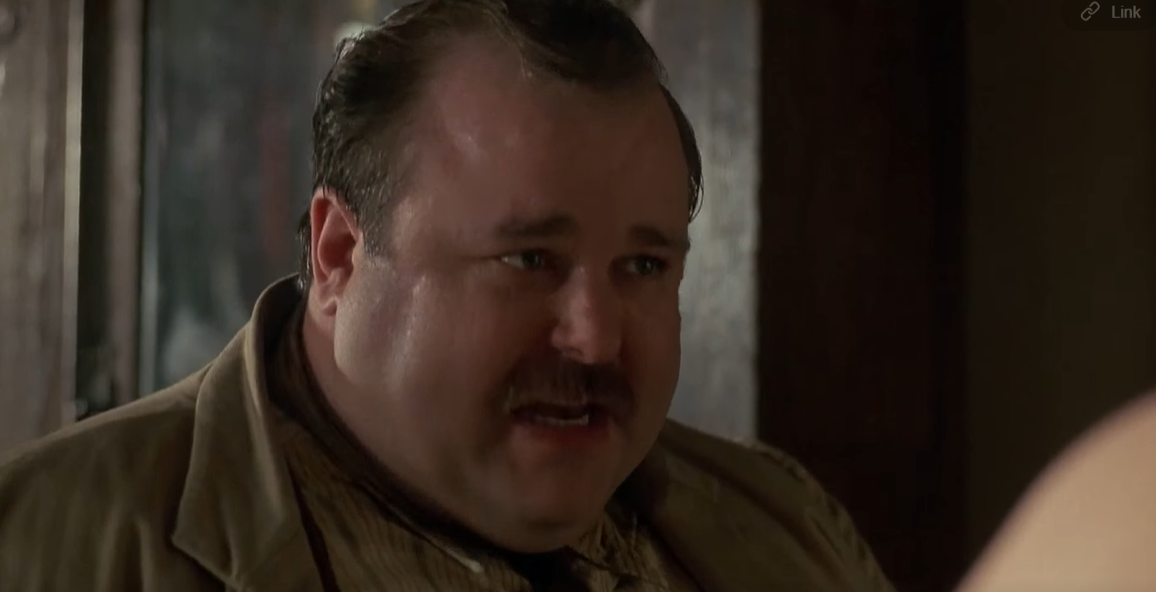
… into divulging information that allows him to track down a heroin-addicted doctor (Michael Higgins) in New York.

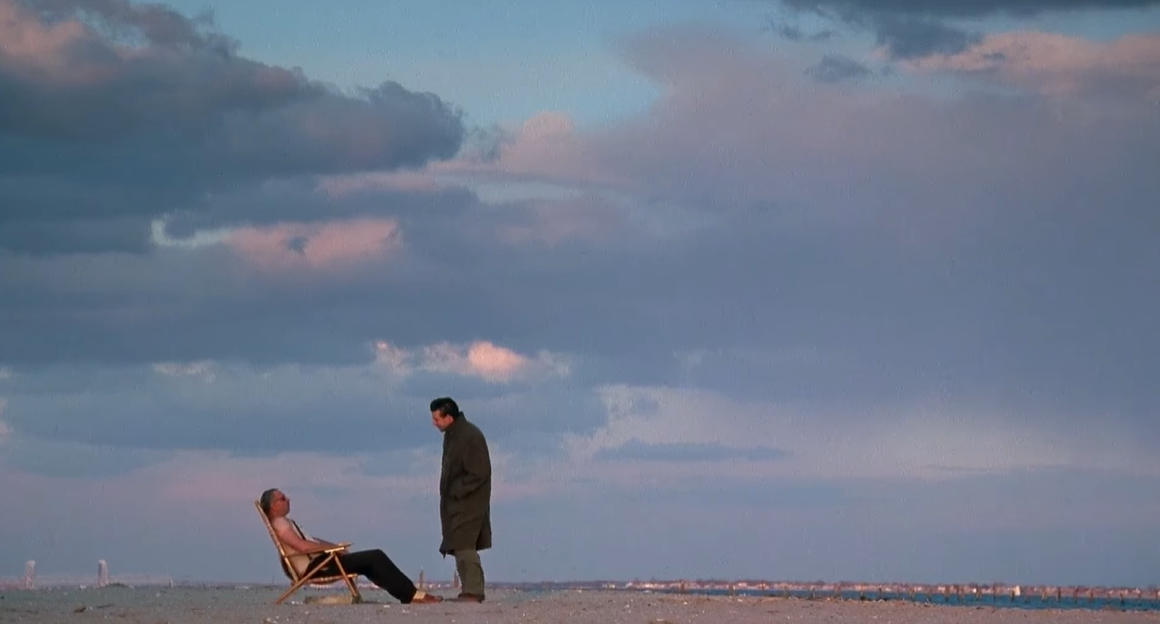
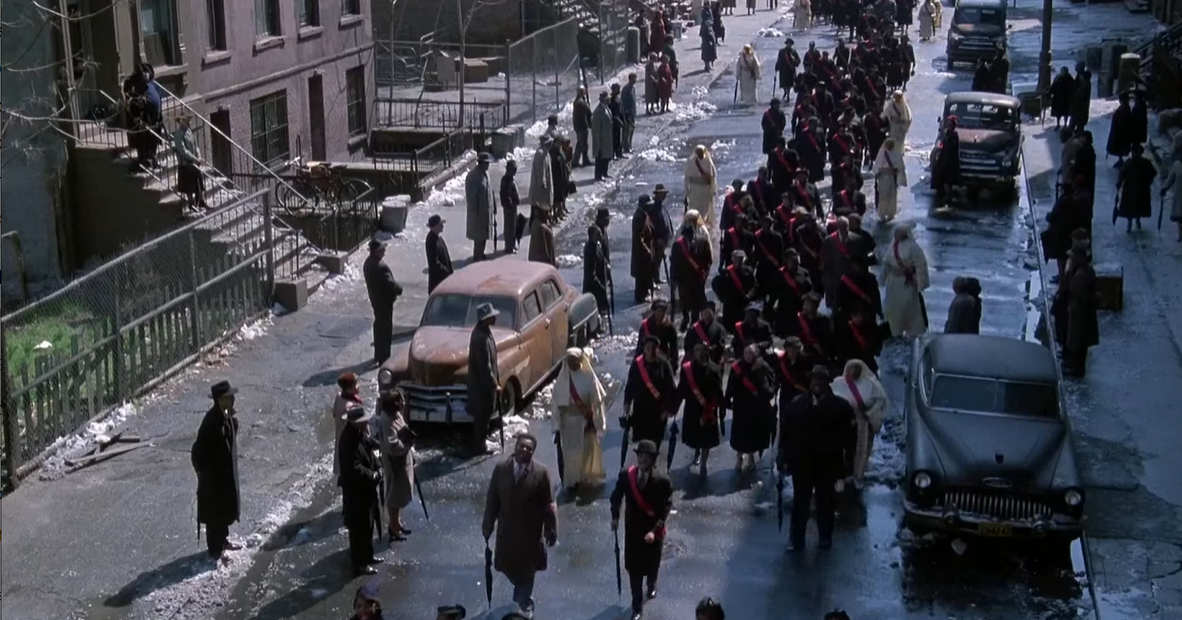
He takes a trip to Coney Island:

… before travelling down to New Orleans, where he encounters a beautiful young mother (Lisa Bonet):

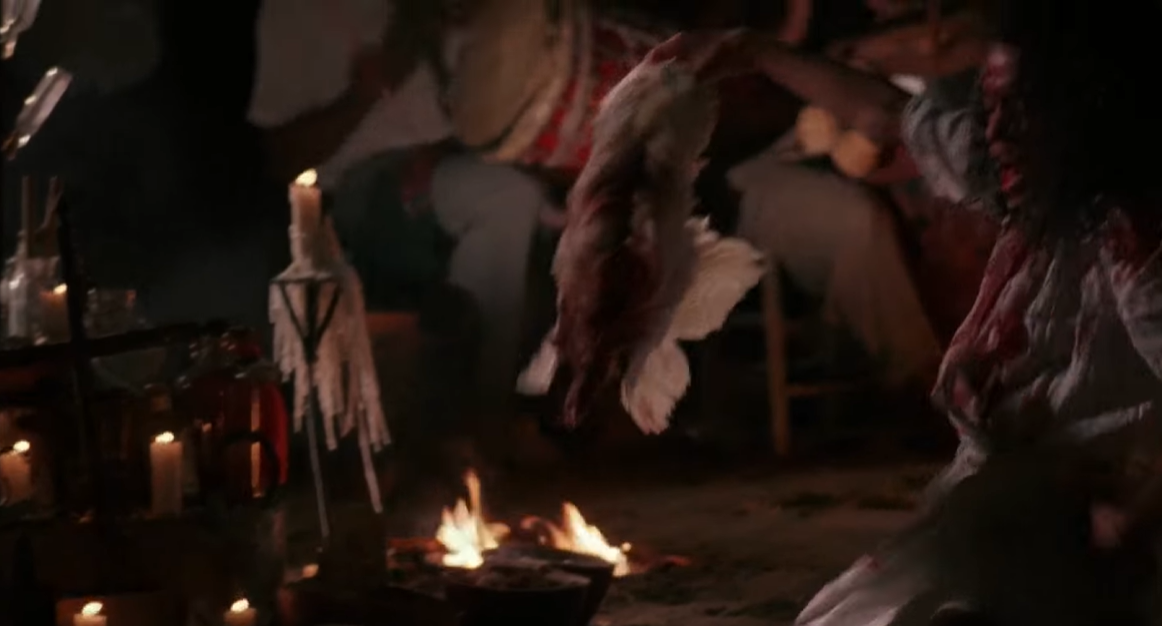
… witnesses all kinds of voodoo magic:

… is trailed by a couple of cops (Eliott Keener and Pruitt Taylor Vince):

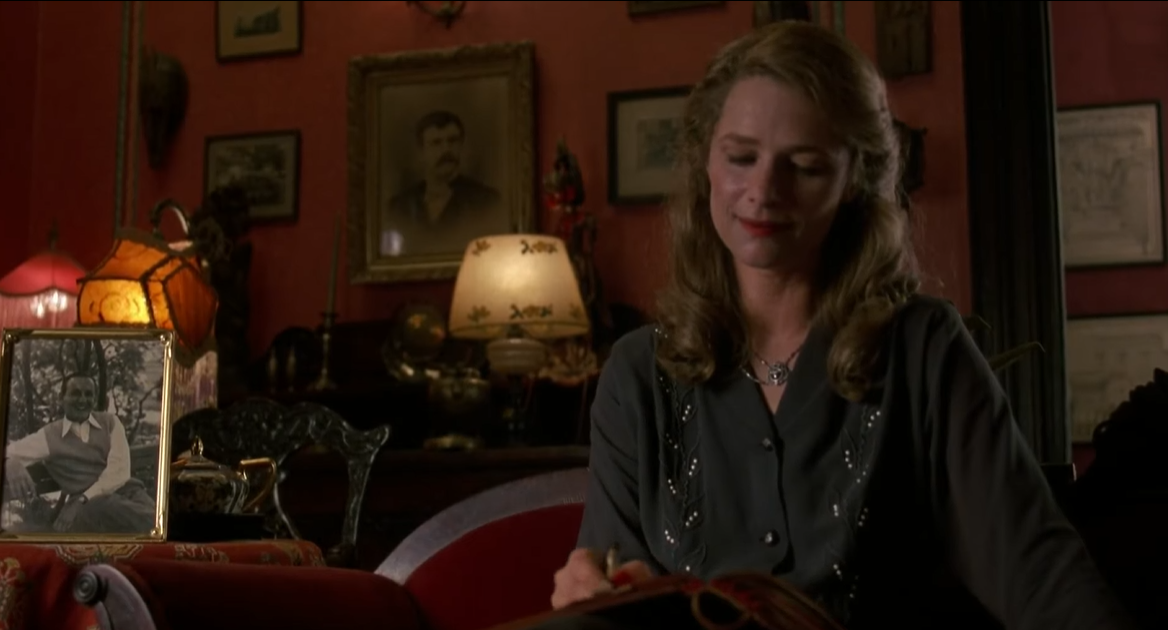
… books an appointment with a beautiful middle-aged tarot reader (Charlotte Rampling):

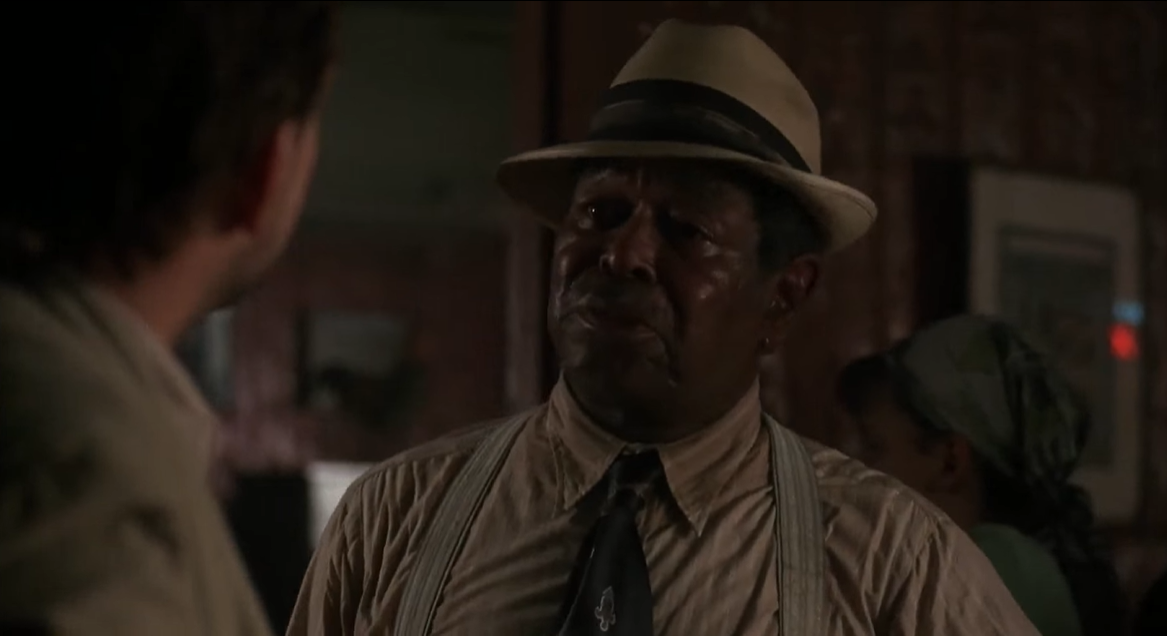
… meets a blues singer called Toots Sweet (real-life musician Brownie McGhee):

… and falls for Bonet. (This film was notorious for earning an X rating due to a sexually explicit scene between O’Rourke and Bonet, forcing Parker to remove 10 seconds of footage in exchange for an R.) Be forewarned that there’s plenty of increasingly dark imagery throughout this film, but O’Rourke is appropriately repulsed by it all, and it builds to a satisfying denouement. This one remains worth a look.

Notable Performances, Qualities, and Moments:

  • Mickey Rourke as Harry Angel
  • Robert De Niro as Louis Cyphre
  • Fine historical production design
  • Michael Seresin’s cinematography
  • Trevor Jones’ score

Must See?
Yes, as a controversial cult favorite.

Categories

  • Controversial Film
  • Cult Movie

Links:

Blue Sunshine (1977)

Blue Sunshine (1977)

“How do you stop a madman without killing him?”

Synopsis:
After being falsely accused of murder, a man (Zalman King) on the lam seeks help from his girlfriend (Deborah Winters) and a doctor-friend (Robert Walden) in trying to discover why certain people around him — all associated with aspiring-politician Edward Flemming (Mark Goddard) — are suddenly becoming bald and psychotic.

Genres, Themes, Actors, and Directors:

  • Amateur Sleuths
  • Falsely Accused
  • Horror Films

Review:
Writer-director Jeff Lieberman’s follow-up to Squirm (1976) was this equally low-budget horror flick capitalizing on post-counterculture paranoia. At the crux of the story’s mystery is whether a strand of LSD known as “Blue Sunshine” — dealt years earlier by Goddard — might be having a long-delayed impact. While it’s easy to understand how such a scenario might resonate with now-straight young Baby Boomers, and King comes across as appropriately earnest:

… the actual chaos we see unfolding is, frankly, laughably low-budget.

Sure, there’s a bit of tension in terms of wondering who might be afflicted (or not), but — do we care? Well, apparently many do, since this film became a cult favorite (and is listed as such in the back of Peary’s book); however, it’s not worth seeking out unless you happen to be a fan of the director. Watch for Alice Ghostley in a bit role as a helpful neighbor.

Notable Performances, Qualities, and Moments:

  • A quirky sense of horror-humor

Must See?
No; you can skip this one unless you’re curious and/or it sounds like your cup of tea. Listed as a Cult Movie in the back of Peary’s book.

Links:

Street Fighter, The (1974)

Street Fighter, The (1974)

“Listen, my son — trust no one!”

Synopsis:
A mercenary martial artist (Shin’ichi “Sonny” Chiba) violently kills or harms nearly everyone who enters into his path of destruction.

Genres, Themes, Actors, and Directors:

  • Japanese Films
  • Kidnapping
  • Martial Arts

Review:
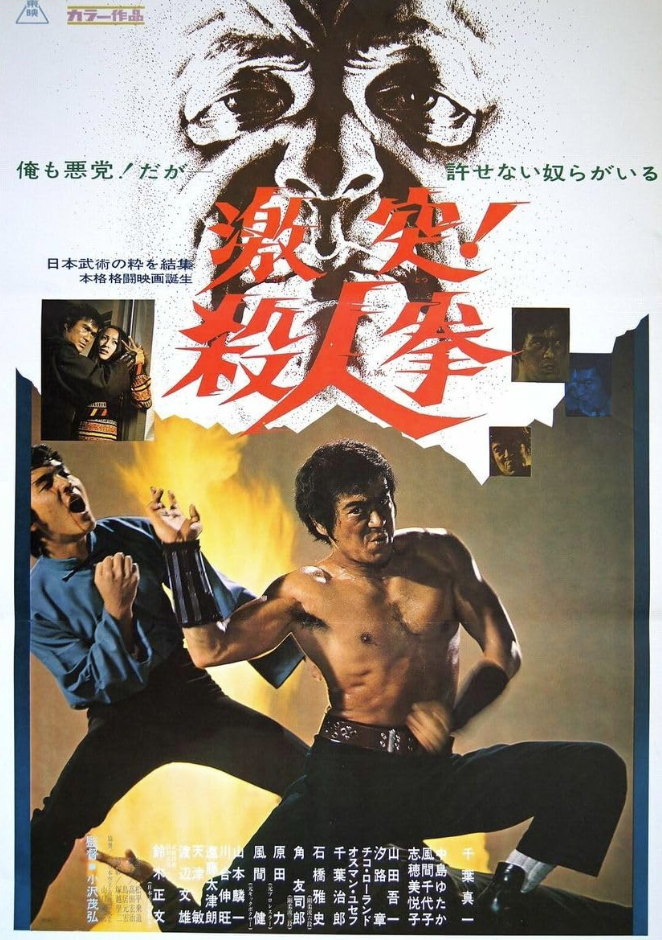
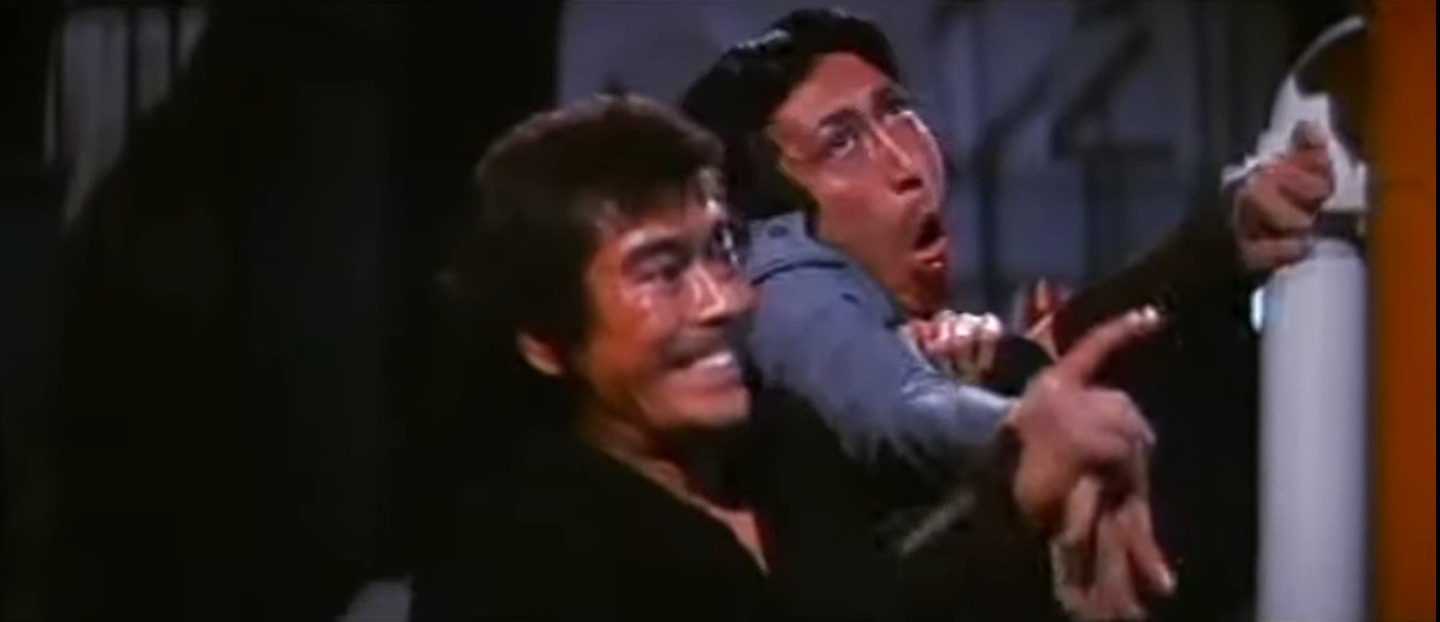
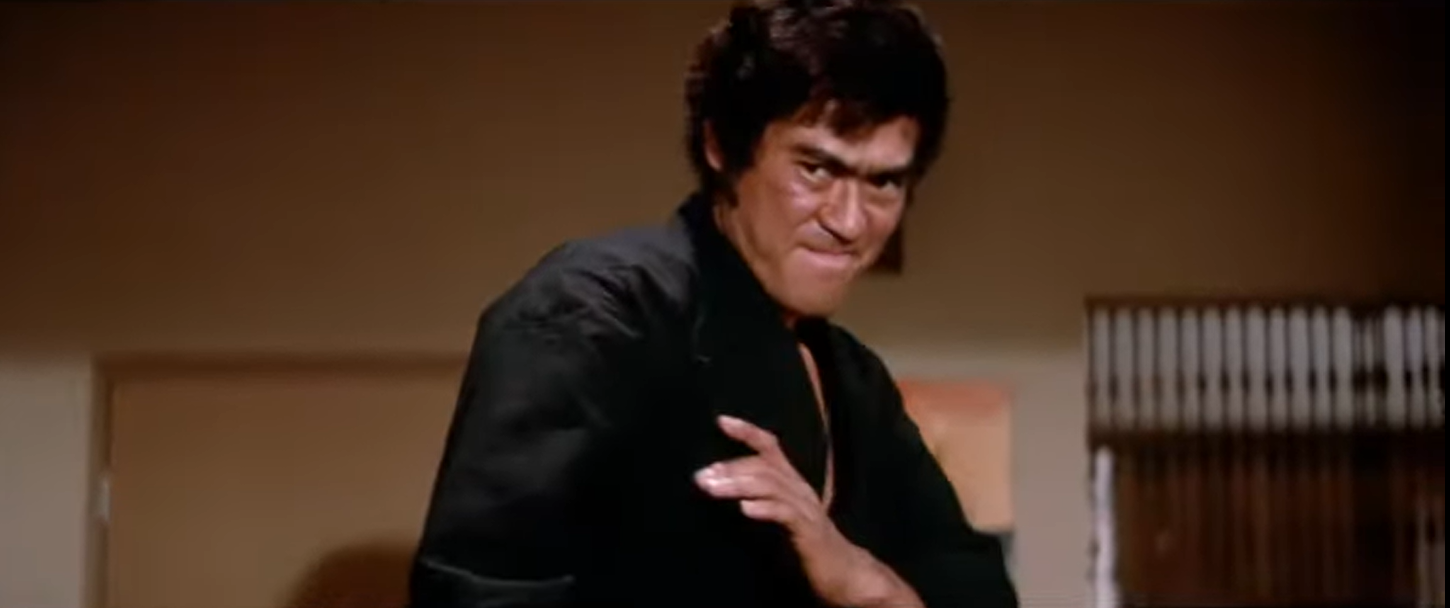
Perhaps best known by modern film fanatics as the swordsmith Hattori Hanzō in Quentin Tarantino’s Kill Bill Volume 1 (2003), Shin’ichi “Sonny” Chiba had his breakthrough role in this ultra-violent martial arts film — the first to receive an X for this designation — produced by Japan’s Toei Studios and released by New Line Cinema in the United States. It’s challenging and perhaps pointless to follow the storyline, which involves Yakuza gangsters, the kidnapping of a business magnate’s daughter, and numerous highly unrealistic sudden deaths by karate blows. (The stats below are from Grindhouse Review’s laudatory video overview.)

This film is primarily worth a cursory look simply to see Chiba (considered the “anti-hero” Bruce Lee) hamming it up on screen.

Notable Performances, Qualities, and Moments:

  • Shin’ichi Chiba as Terry

Must See?
No; this one is only must-see for martial arts fans.

Links:

Lord Jim (1965)

Lord Jim (1965)

“No white man hides himself in the wilderness without a reason.”

Synopsis:
After a young merchant seaman (Peter O’Toole) abandons his ship during a storm, he tries to rectify his shame by drifting around the South Seas, soon befriending the owner (Paul Lukas) of a cargo ship and agreeing to help a local town leader in an uprising against a warlord known as The General (Eli Wallach). Eventually he falls in love with a native girl (Daliah Lavi) and attempts to live a happy life with her — but the arrival of a ruthless pirate (James Mason) forces him to make difficult choices.

Genres, Themes, Actors, and Directors:

  • Akim Tamaroff Films
  • At Sea
  • Curt Jurgens Films
  • Eli Wallach Films
  • Historical Drama
  • Jack Hawkins Films
  • James Mason Films
  • Paul Lukas Films
  • Peter O’Toole Films
  • Richard Brooks Films

Review:
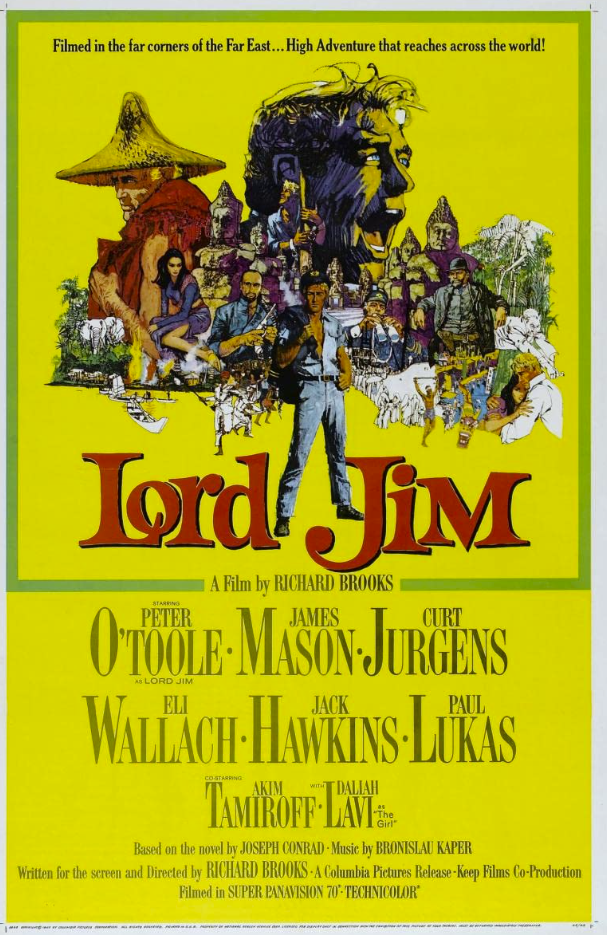
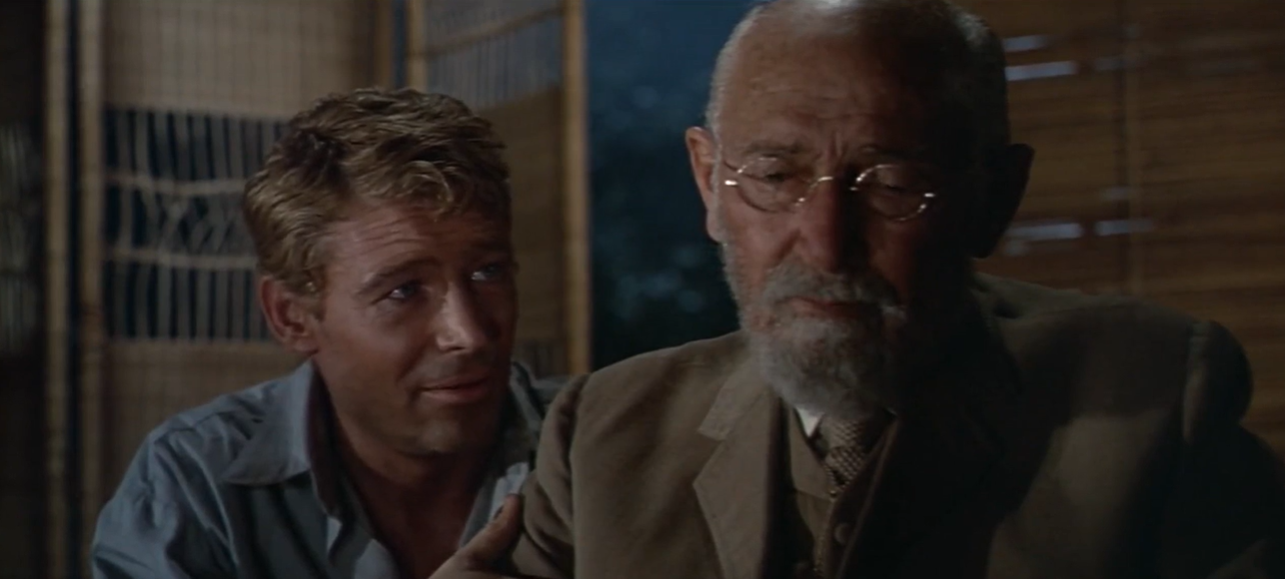
Richard Brooks wrote and directed this adaptation of Joseph Conrad’s 1900 novel of the same name, based on a real-life incident involving Muslim Indonesians on a seabound pilgrimage to Mecca. It received some negative reviews upon release, and unfortunately, I can see why. Though Freddie Young’s cinematography is as beautiful as always:

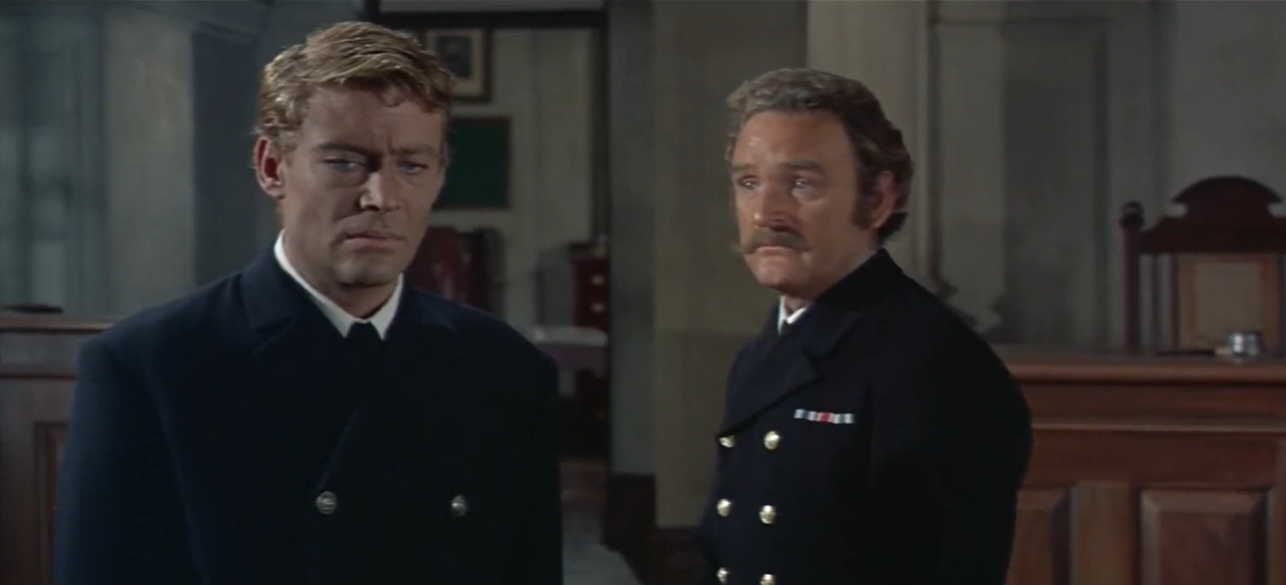
… and O’Toole is effectively earnest as a young man wracked with guilt for his decision during a time of crisis:

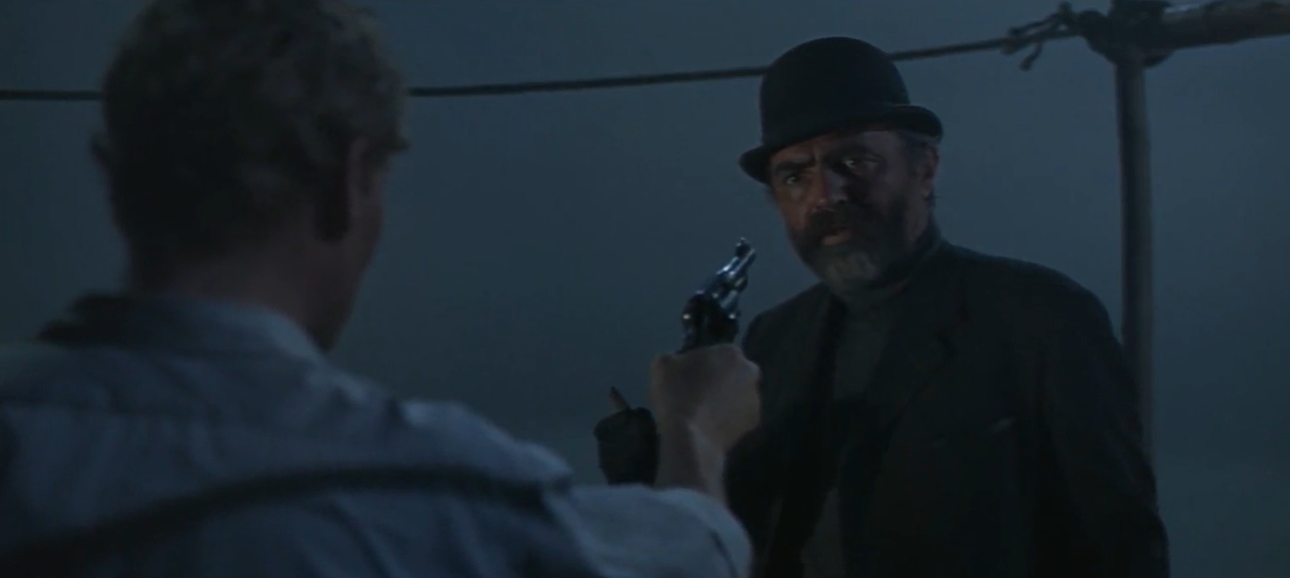
… the rest of the plot simply plays like a standard tale of a White man attempting to lose himself in foreign lands with a beautiful native girl (while getting inextricably caught up in local politics). The eventual appearance of James Mason’s “Gentleman Brown” is a welcome plot turn, but the storyline as a whole fails to compel.

Notable Performances, Qualities, and Moments:

  • Paul Lukas as Stein
  • James Mason as Gentleman Brown
  • Freddie Young’s cinematography

Must See?
No, though fans of the stars and/or Richard Brooks will likely be curious to check it out.

Links:

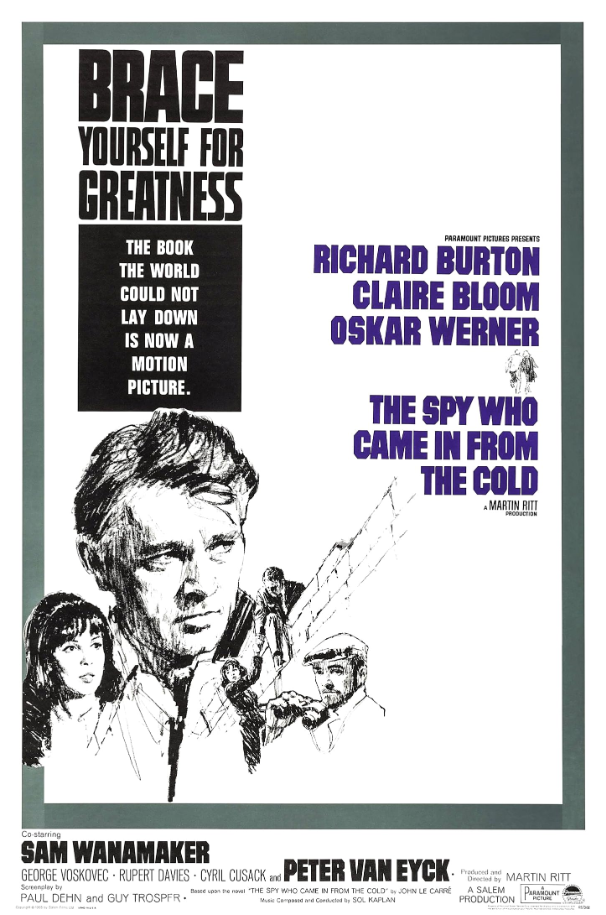
Spy Who Came In From the Cold, The (1965)

Spy Who Came In From the Cold, The (1965)

“We have to live without sympathy, don’t we?”

Synopsis:
During the Cold War, a British spy (Richard Burton) dating a librarian’s aide (Claire Bloom) is ordered by his superior (Cyril Cusack) to pretend to be willing to defect — but will their elaborate ruse lead to the arrest of evil Comrade Mundt (Peter van Eyck)?

Genres, Themes, Actors, and Directors:

  • Claire Bloom Films
  • Cold War
  • Martin Ritt Films
  • Mistaken and Hidden Identities
  • Niall MacGinnis Films
  • Richard Burton Films
  • Spies

Review:
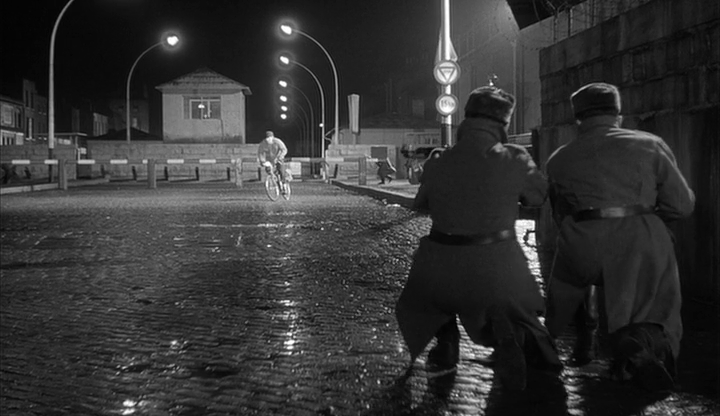
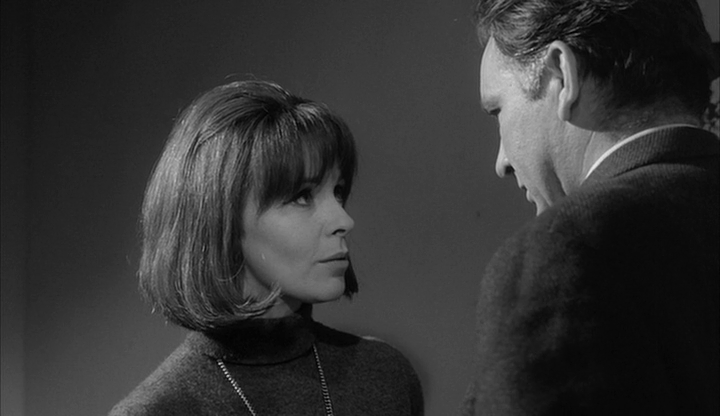
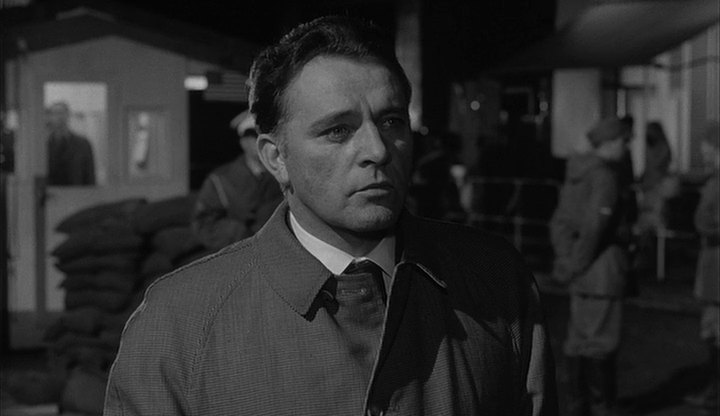
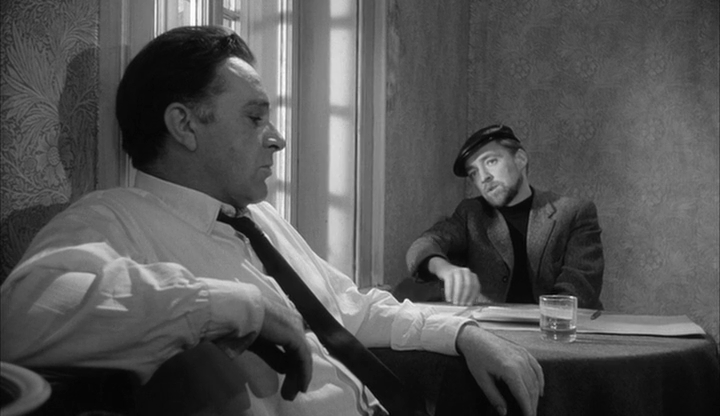
Martin Ritt’s adaptation of John Le Carre’s best-selling novel is both reasonably faithful to its source material, and an atmospherically shot spy noir in its own right. The necessarily complex storyline starts with the shooting of one of Burton’s compatriots as he’s crossing the Berlin Wall:

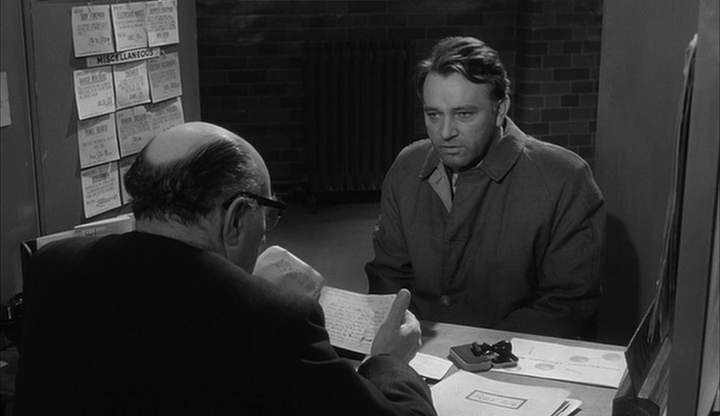
… and quickly shows us Burton’s descent into alcoholism, despair:

… and eventually violence, though he finds some respite and solace from a preternaturally kind librarian’s aide who stands by his side through thick and thin.

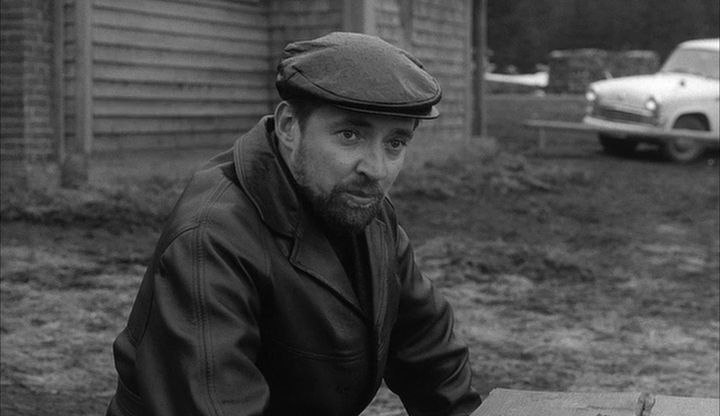
When Burton “defects”, he becomes friendly with a reasonably sympathetic interrogator (Oskar Werner), and cross-political allegiances become ever more entangled.

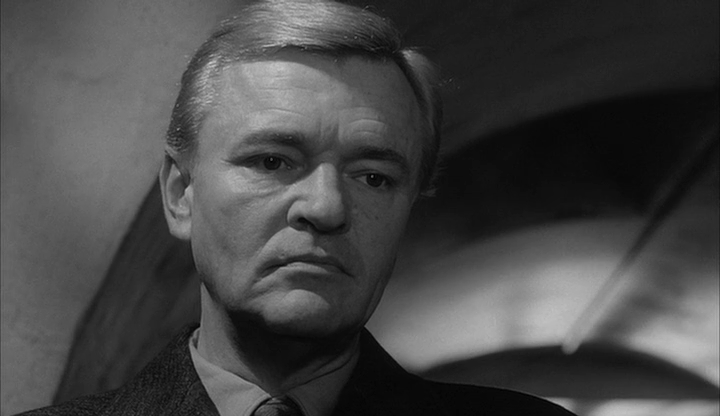
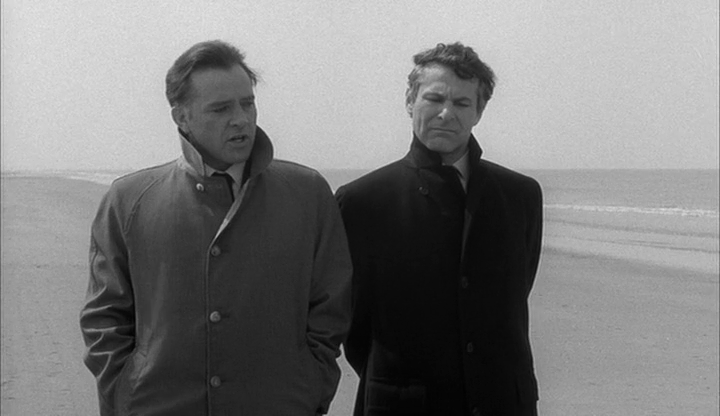
Who, exactly, is working for who (and why)? While it’s clear that Mundt (a Nazi) is a “baddie”:

… of course, it’s not quite that simple. To its credit, the film retains all the suspense of the book while both simplifying key plot points and visually opening up certain scenes. Oswald Morris’s atmospheric cinematography is top-rate, and the performances are fine across the board. This remains worth a look as a powerful realist antidote to escapist Bond fare of the time.

Notable Performances, Qualities, and Moments:

  • Richard Burton as Alec Leamas
  • Oskar Werner as Fiedler
  • Oswald Morris’s cinematography

Must See?
Yes, as a powerful spy thriller.

Categories

  • Good Show

Links:

King Rat (1965)

King Rat (1965)

“I judge a man by the company he keeps.”

Synopsis:
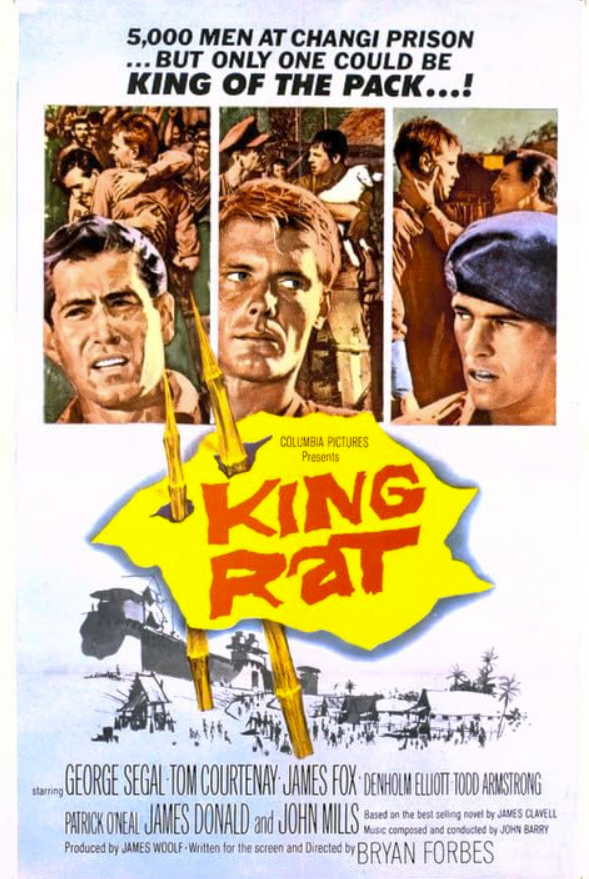
Near the end of World War II, a savvy American (George Segal) in a Japanese POW camp rules the roost with his ability to secure much-needed supplies, and convinces a Malay-speaking Brit (James Fox) to collaborate with him on key deals, much to the dismay of rule-following Lieutenant Gray (Tom Courtenay).

Genres, Themes, Actors, and Directors:

  • Bryan Forbes Films
  • Cat and Mouse
  • Denholm Elliott
  • George Segal Films
  • James Fox Films
  • John Mills Films
  • Patrick O’Neal Films
  • Prisoners of War
  • Survival
  • Tom Courtenay Films
  • World War II

Review:
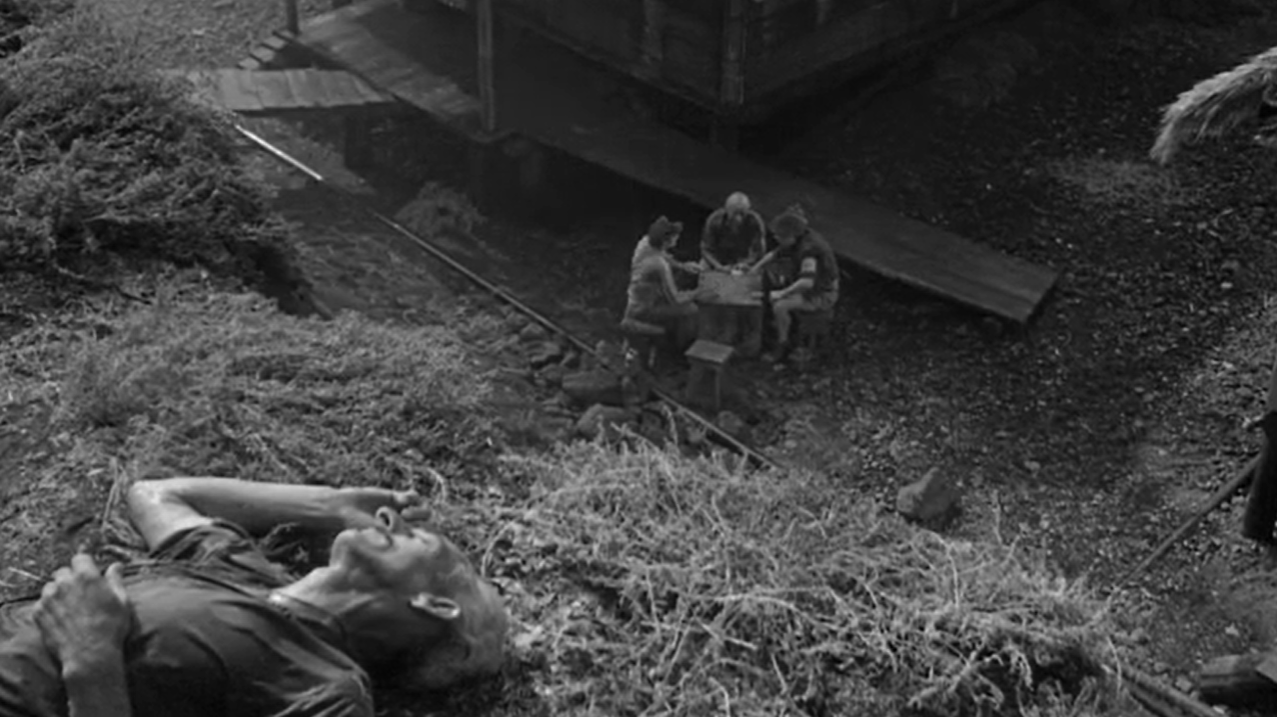
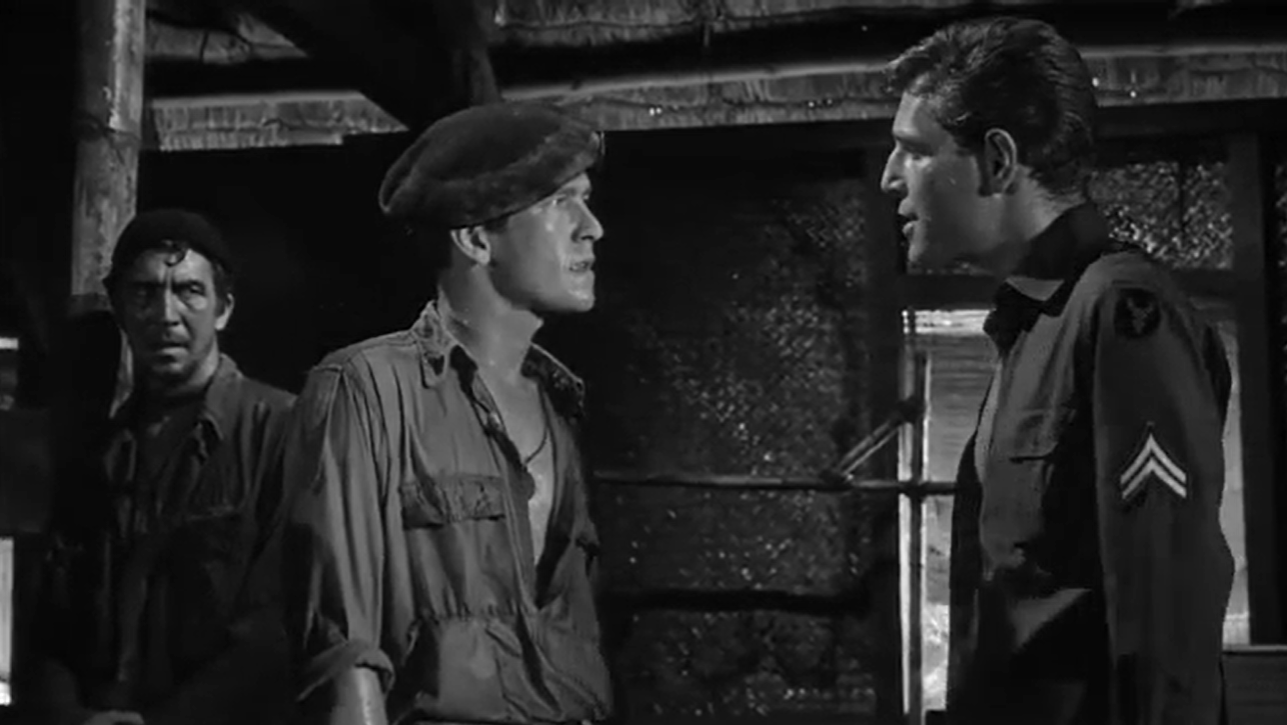
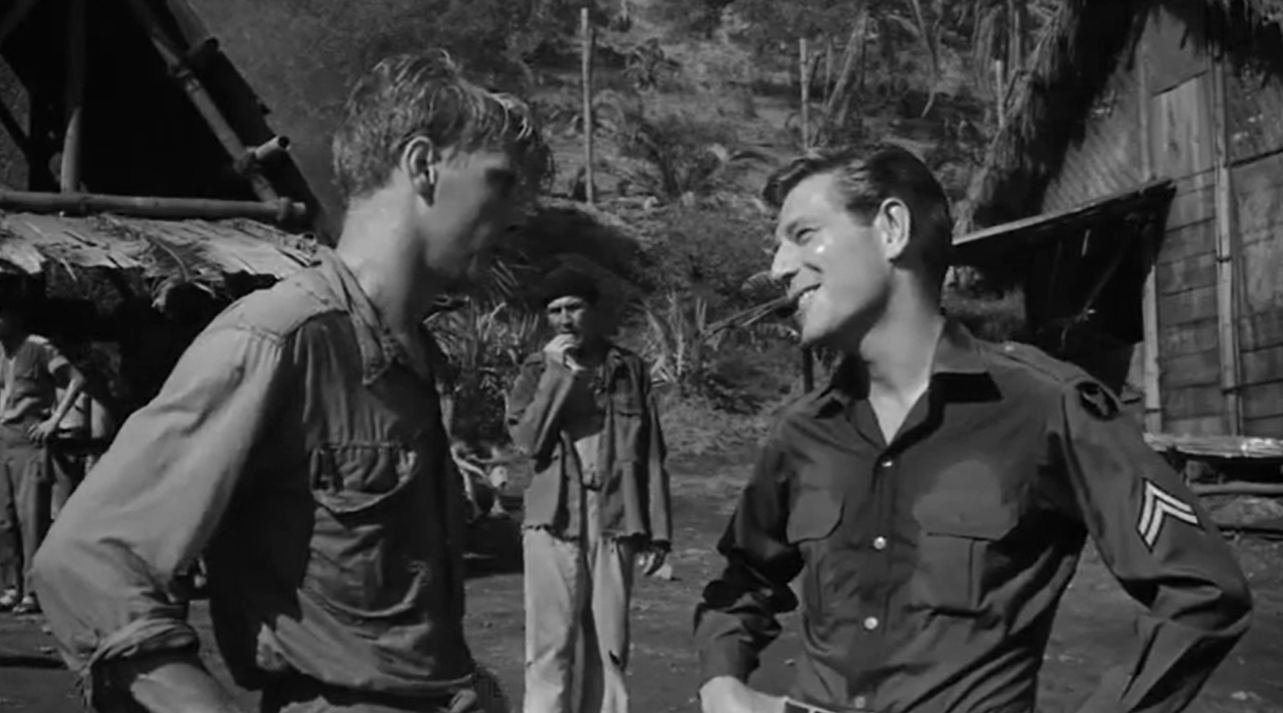
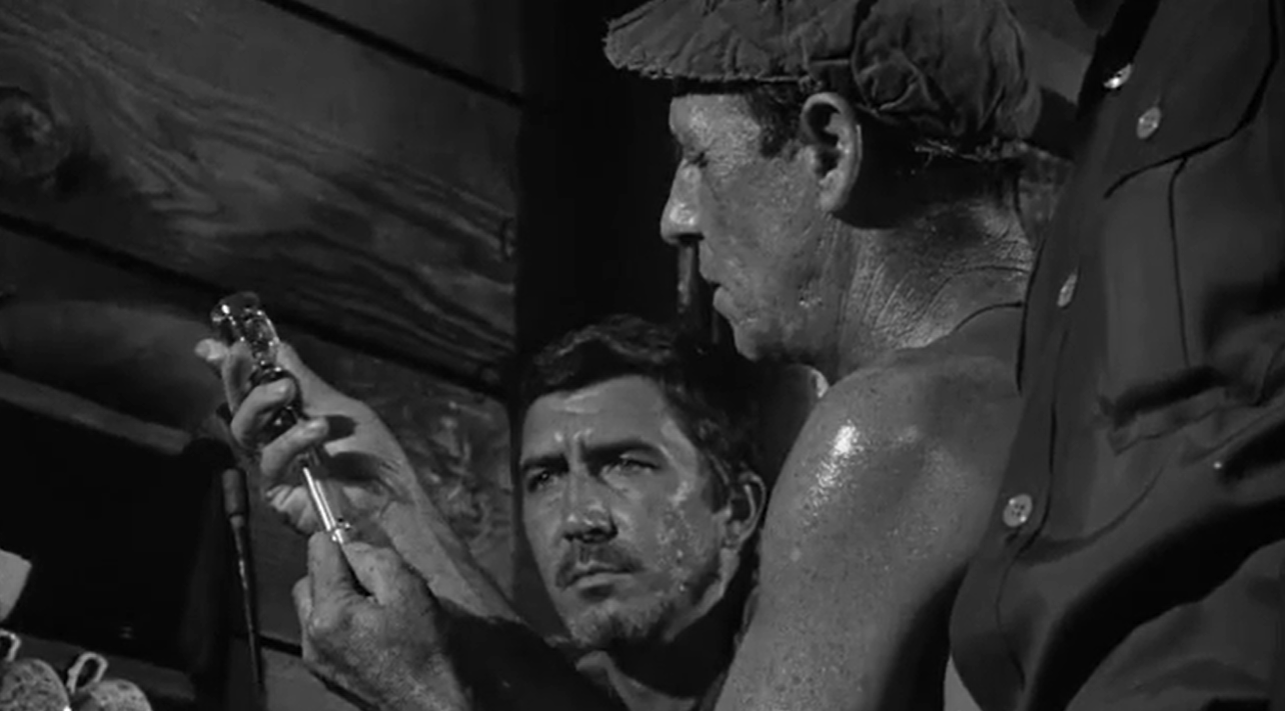
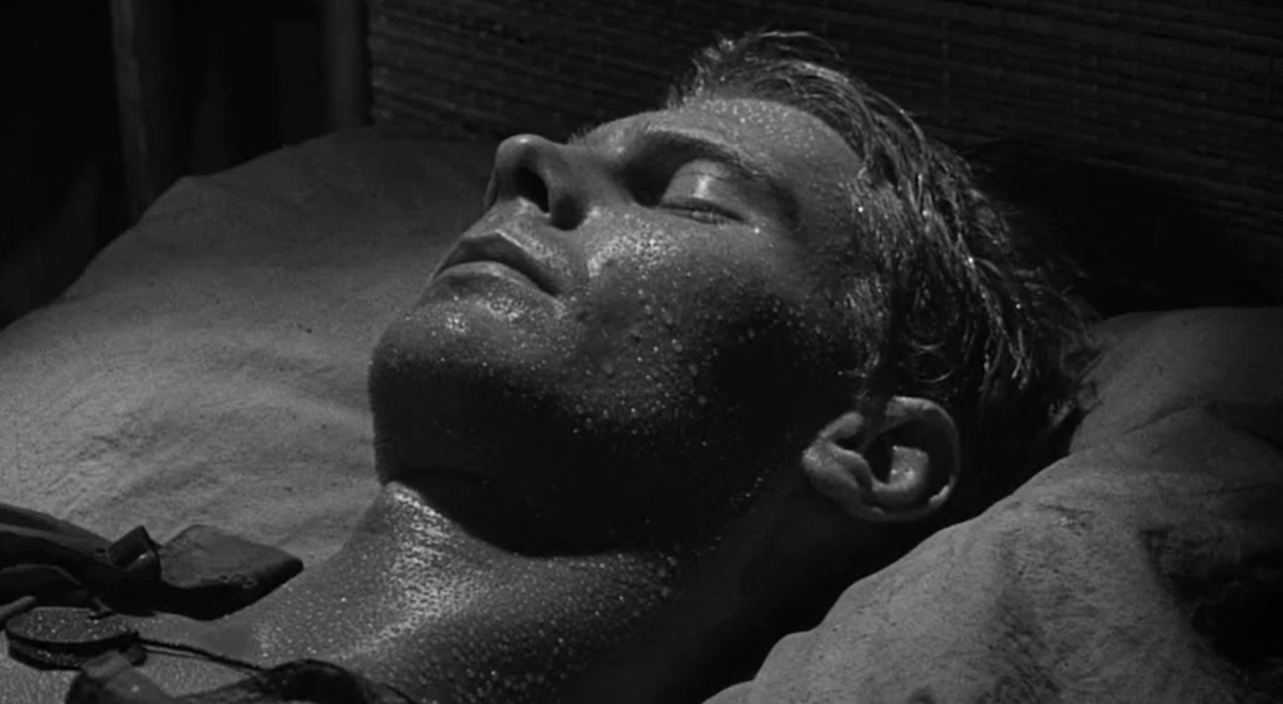
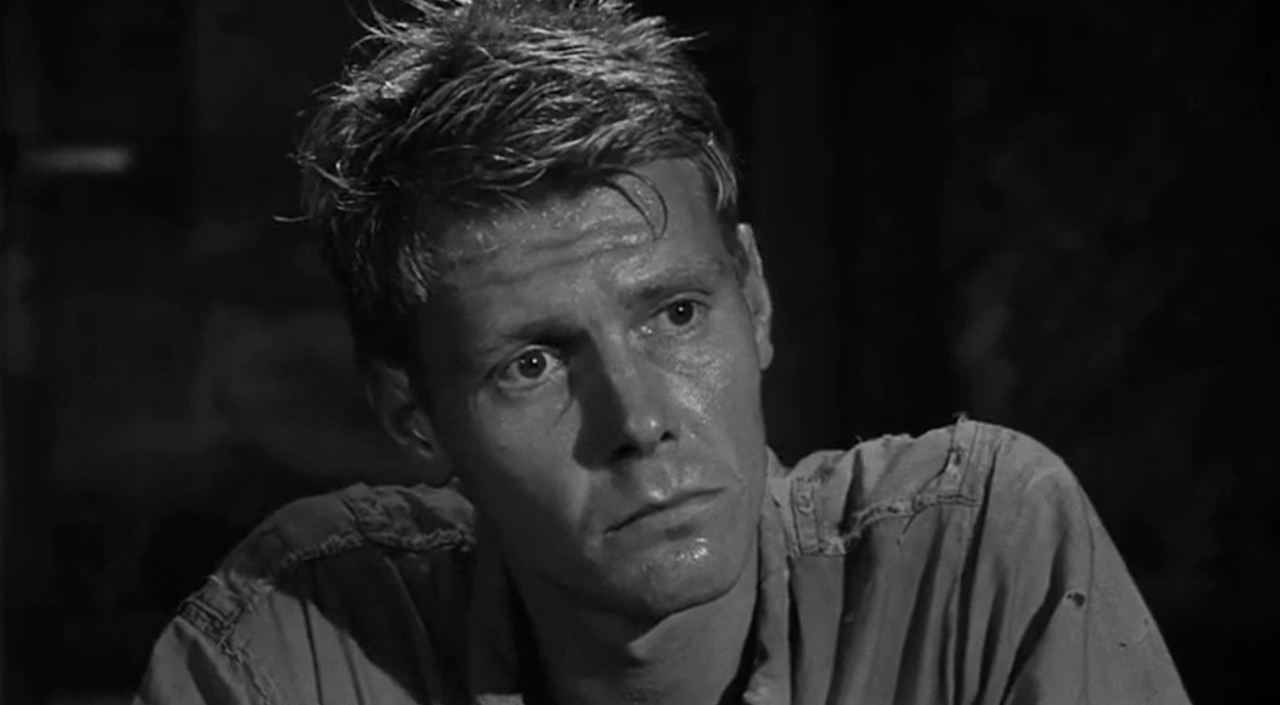
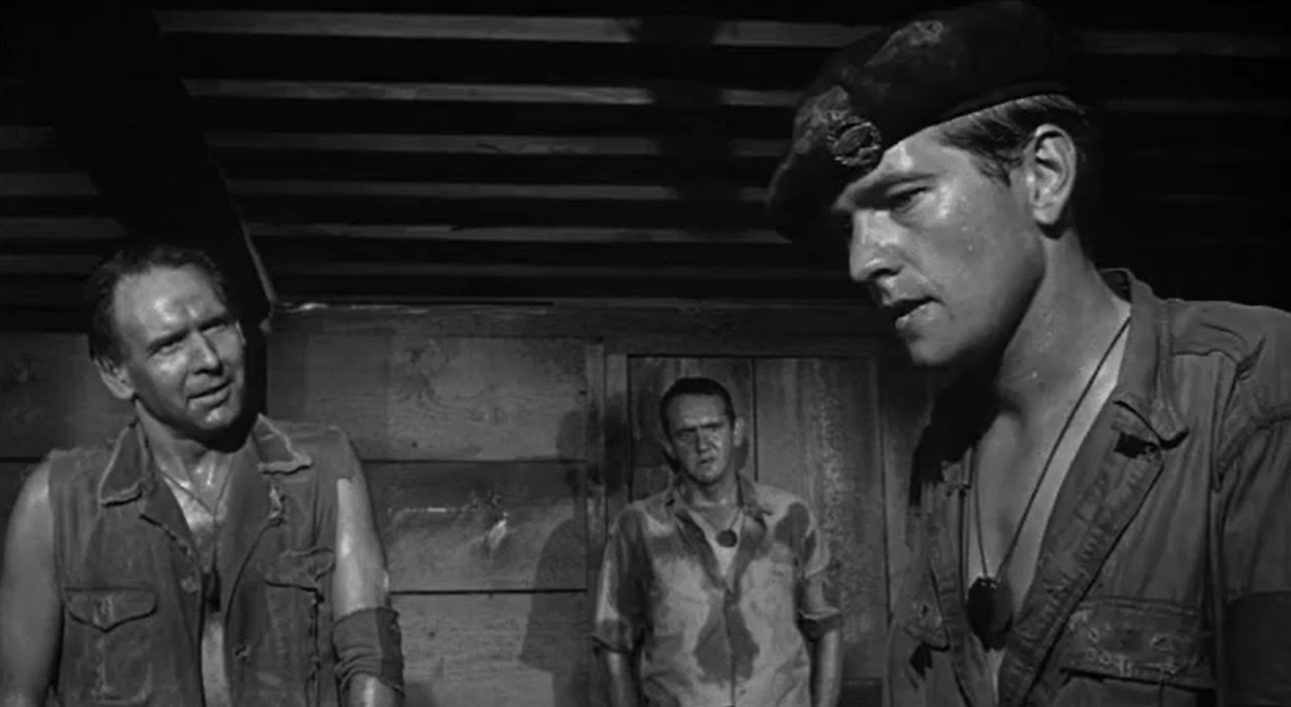
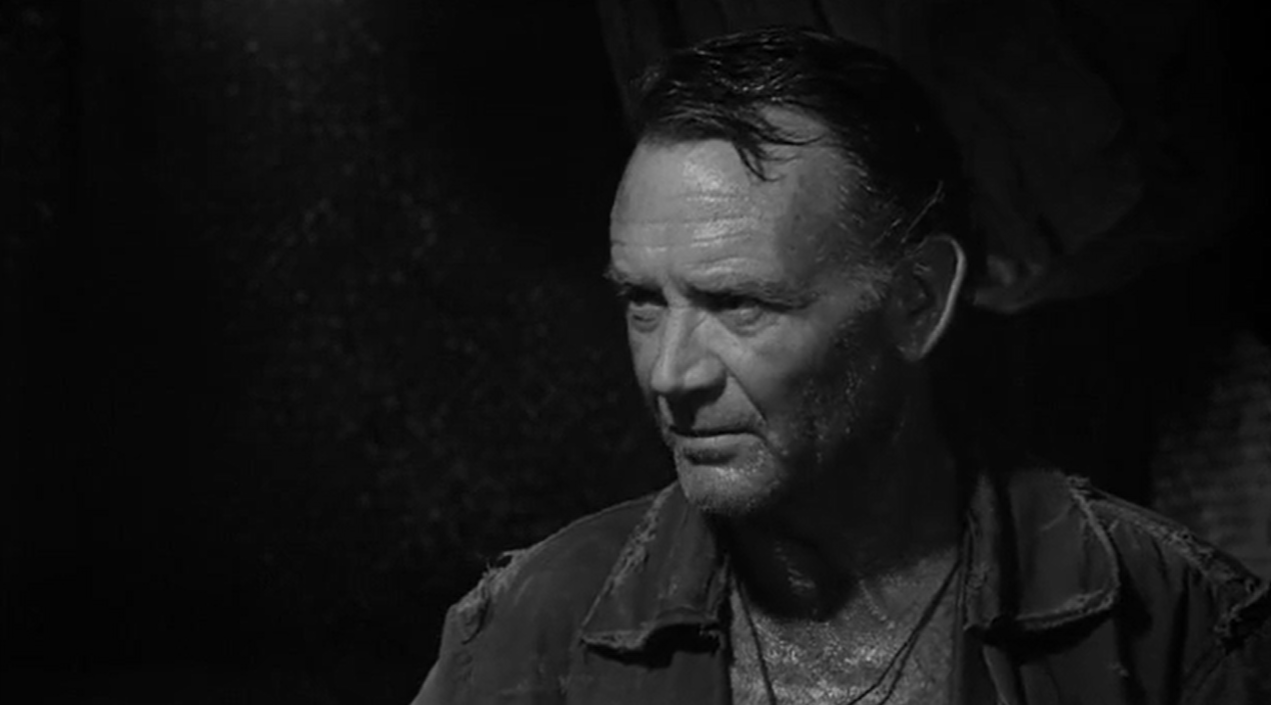
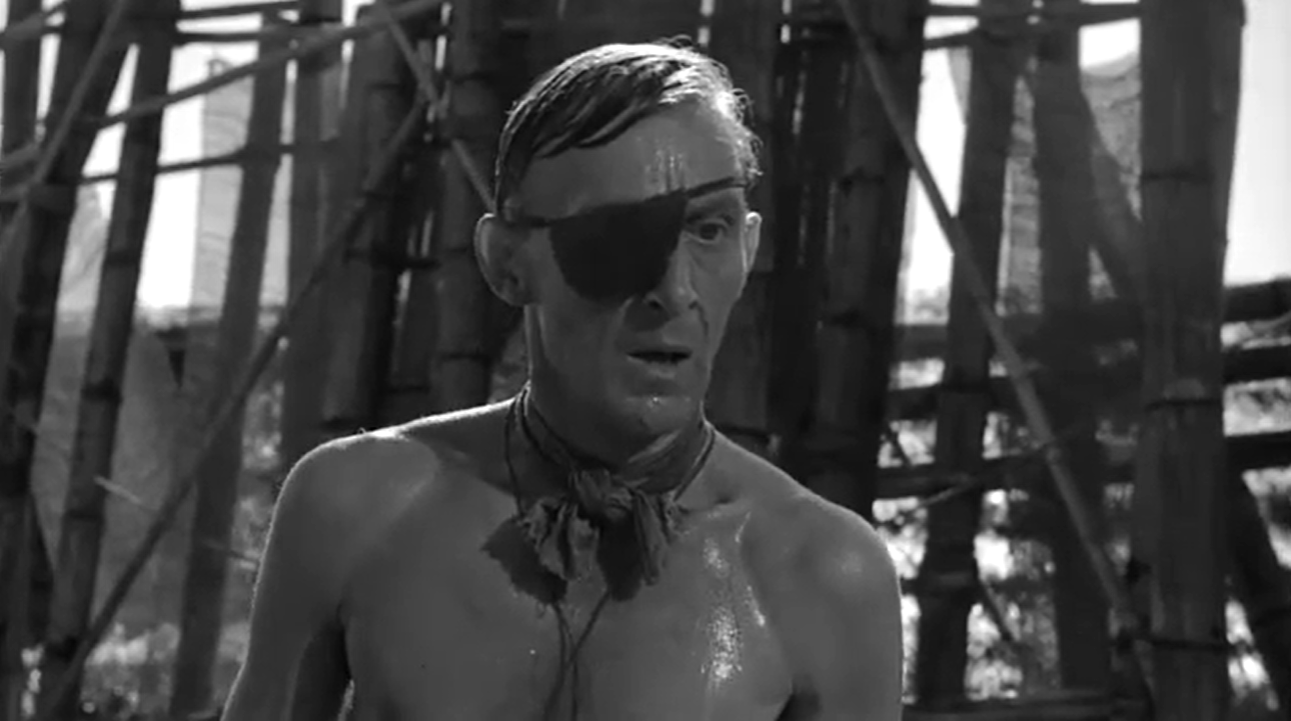
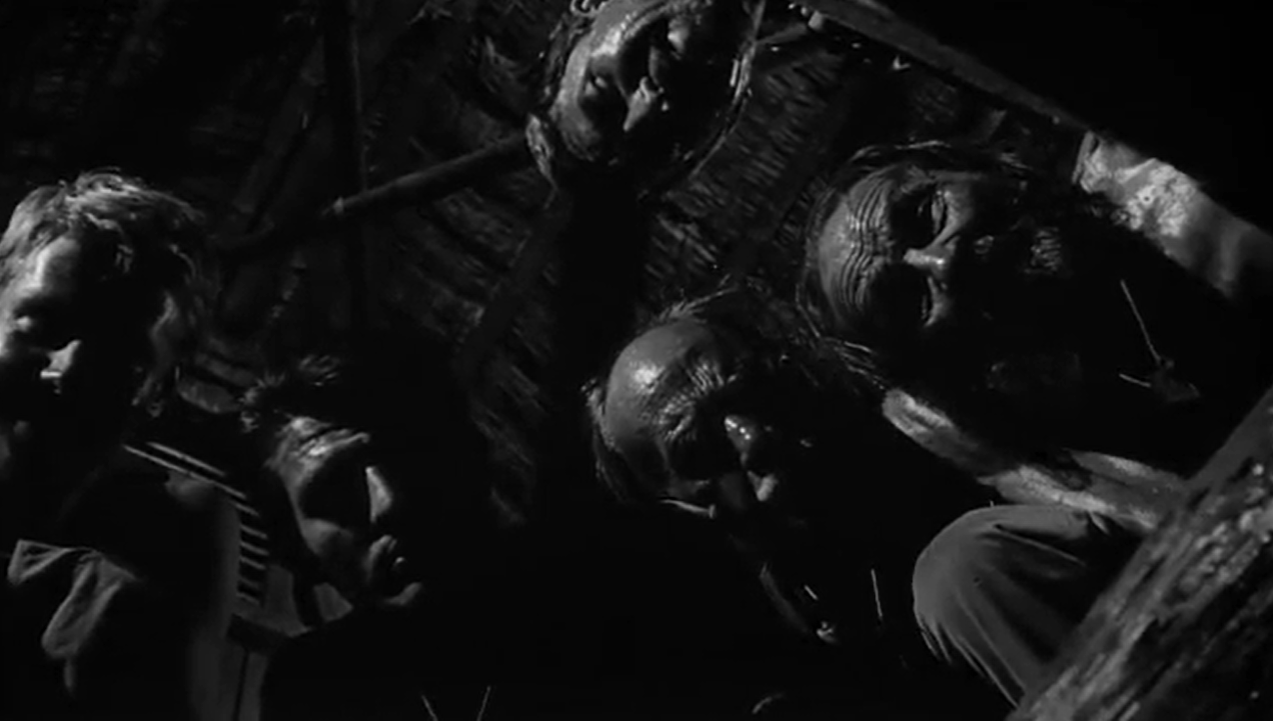
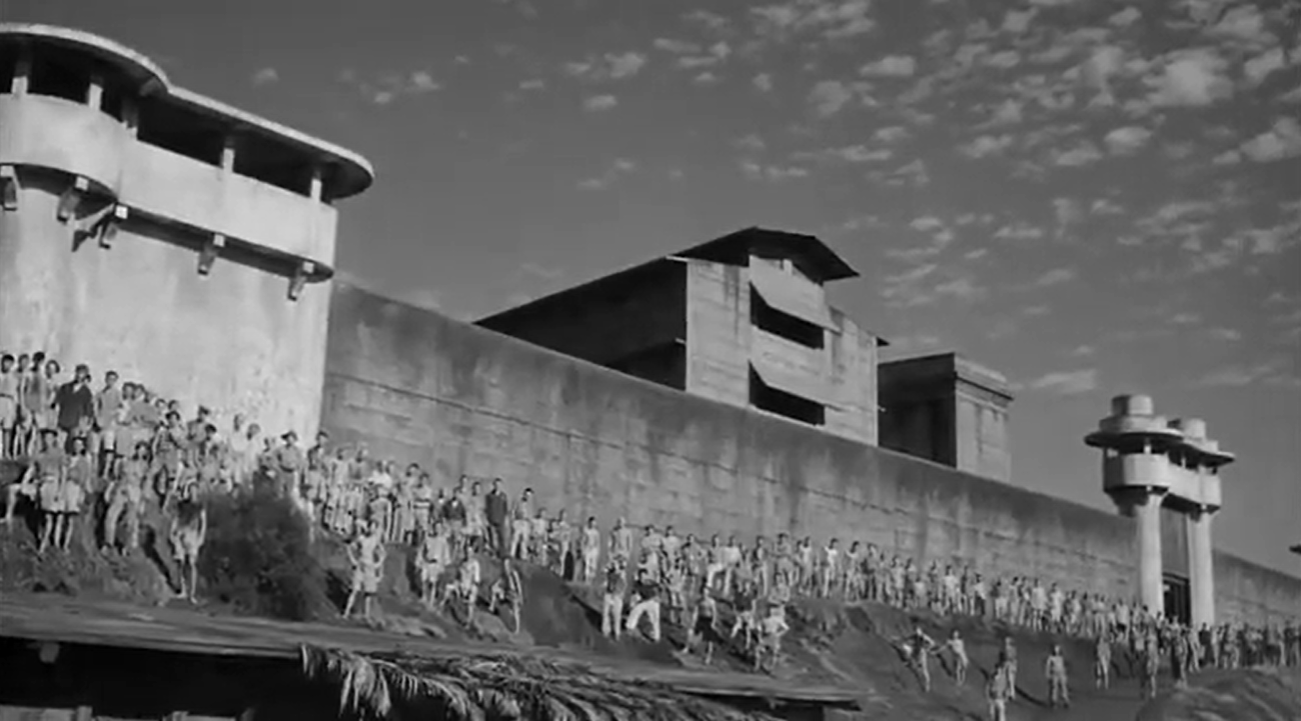
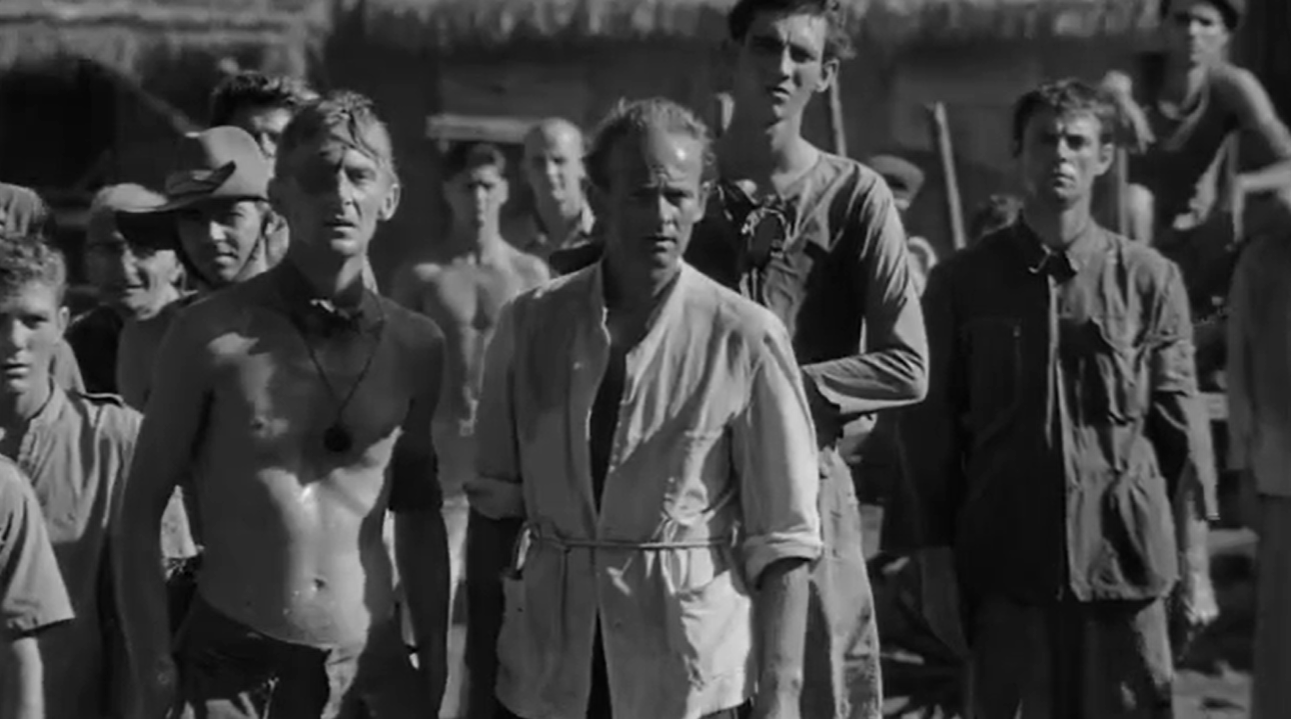
Bryan Forbes scripted and directed this adaptation of James Clavell’s 1962 novel, based in part on his own experiences in a POW camp. Perhaps more so than any other such film, King Rat is unrelenting in its graphic depiction of the heat, starvation, despair, craziness, lethargy, boredom, and overall sense of hopelessness pervasive in these camps:

… with Segal’s preternaturally cheerful “Corporal King” a notable exception. His hustle is so successful that he’s living a relatively easy life, able to procure fresh shirts, food, and cigarettes while his compatriots wither away in misery and/or grovel at his feet. His nemesis is Courtenay’s Lieutenant Gray, with the two caught in a cat-and-mouse tussle between pragmatism and protocol.

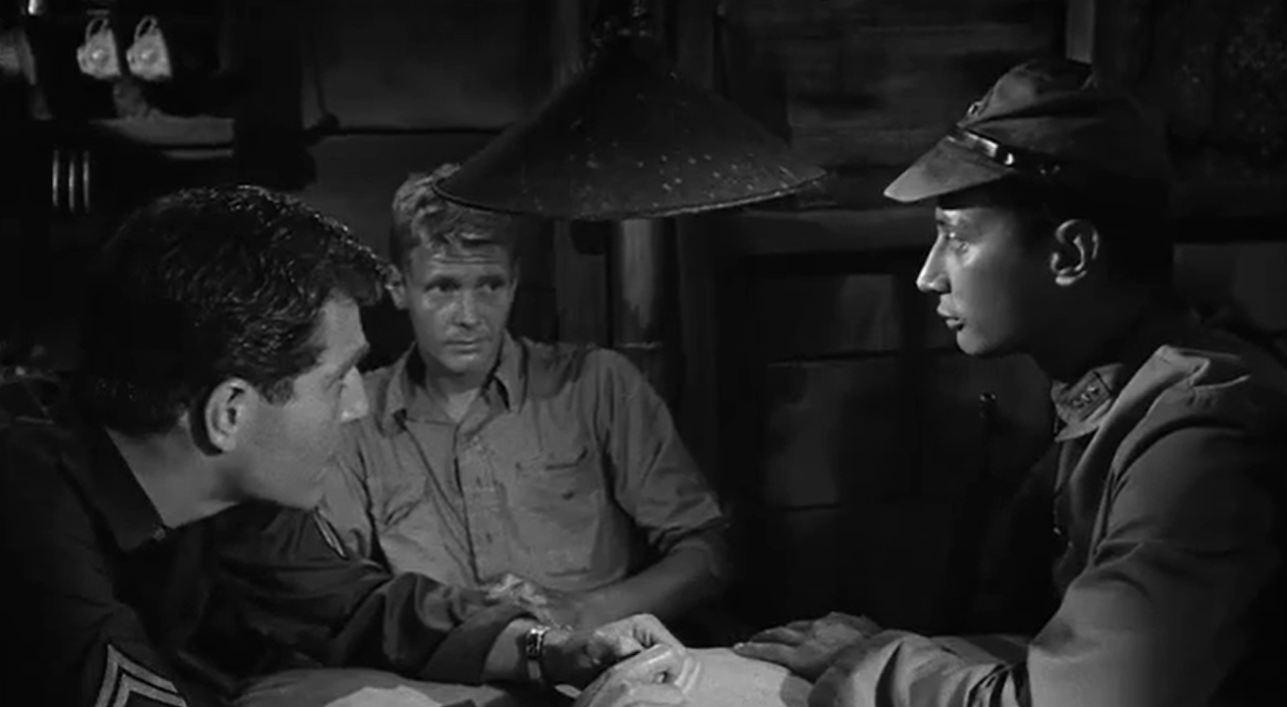
Front and center in the screenplay, however, is the emergent friendship between Segal and Fox, who refuses to accept bribes or “gifts” from Segal and thus quickly earns his respect.

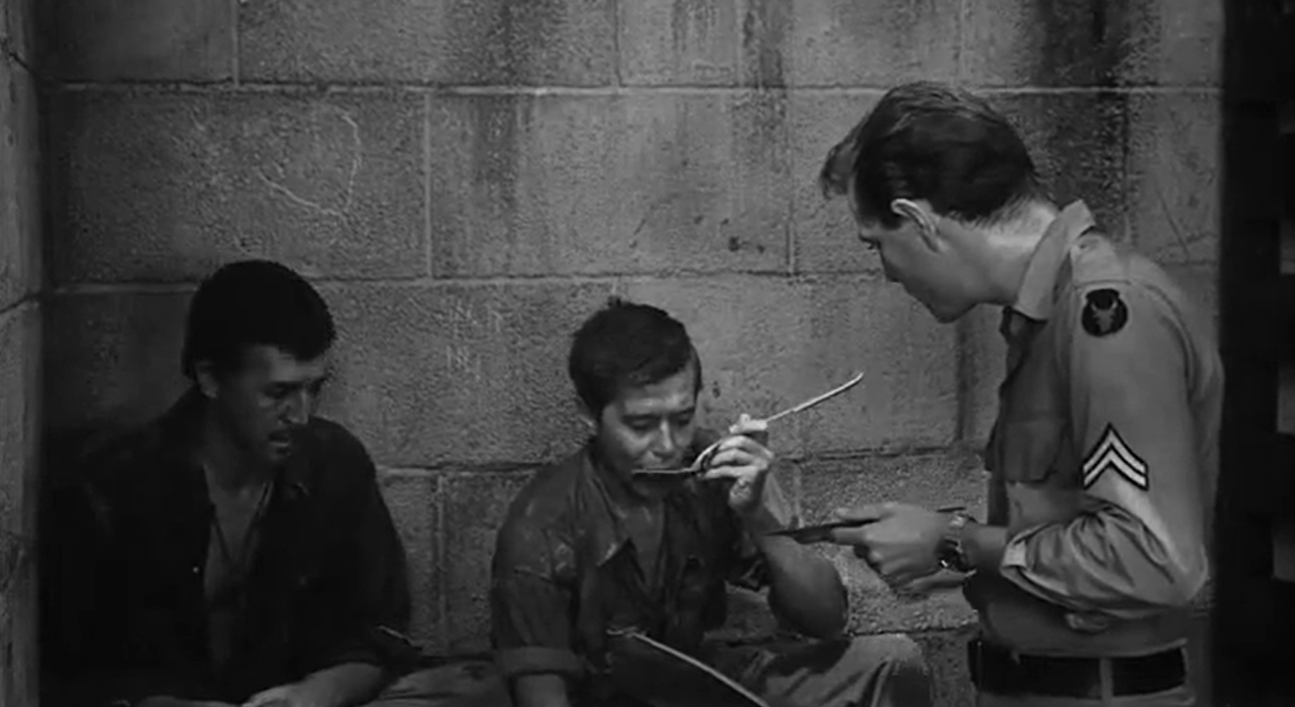
In addition to admirably capturing the overall oppressive atmosphere of the camp, the film includes numerous memorable sequences — such as Segal slyly convincing the starving men that it’s okay to eat a beloved pet:

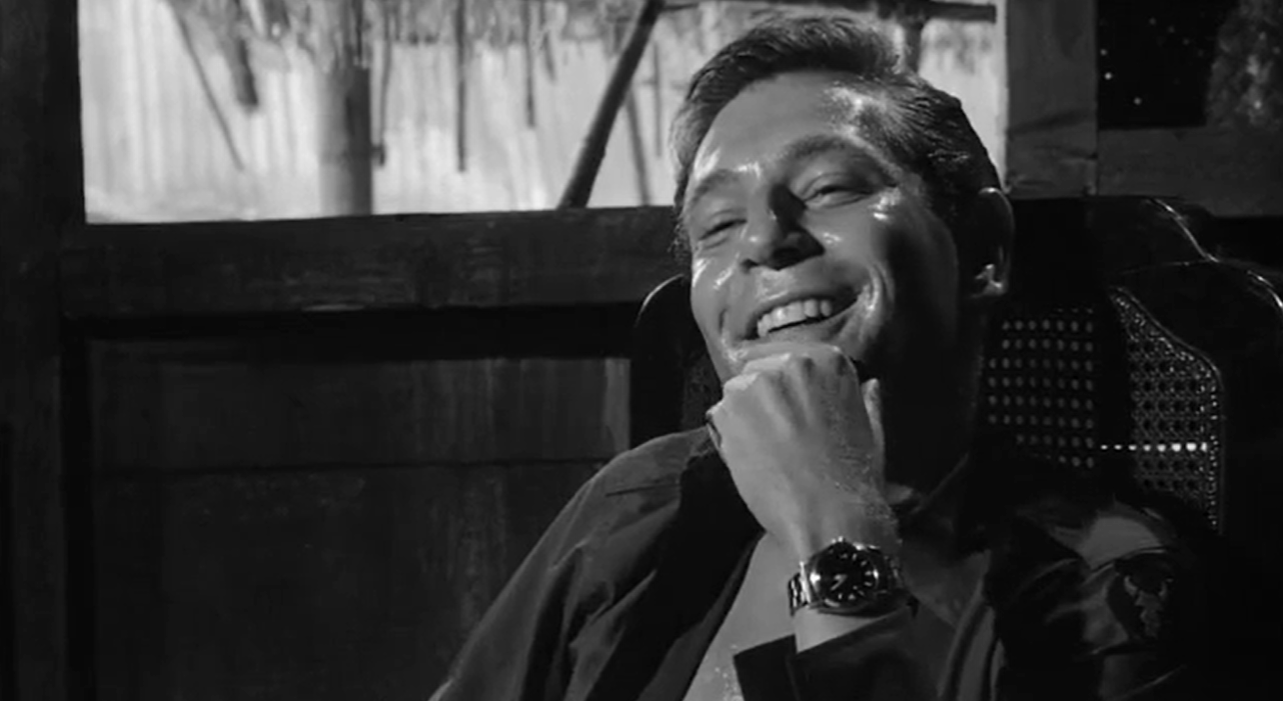
… Segal using Fox’s translating support to trade a watch for money:

… and Segal arranging for a medic to help Fox with a seemingly incurable medical tragedy.


Burnett Guffey’s cinematography is effectively atmospheric throughout, and the supporting performances are all top-notch. This one remains well worth a look.

Notable Performances, Qualities, and Moments:

  • George Segal as Corporal King
  • James Fox as Pete Marlowe
  • Tom Courtenay as Lieutenant Gray
  • Strong performances by the supporting cast

  • Burnett Guffey’s cinematography
  • Fine sets and overall production design
  • John Barry’s score

Must See?
Yes, as a powerful WWII-era drama.

Categories

  • Good Show

Links:

Fifth Horseman is Fear, The (1965)

Fifth Horseman is Fear, The (1965)

“A man is as he thinks; you can’t change that.”

Synopsis:
In Nazi-occupied Czechoslovakia, a Jewish doctor (Miroslav Machacek) is pressured into providing care for a wounded resistance fighter, and soon finds himself searching for morphine across the city while under intense scrutiny.

Genres, Themes, Actors, and Directors:

  • Doctors and Nurses
  • Eastern European Films
  • Jews
  • Resistance Fighters

Review:
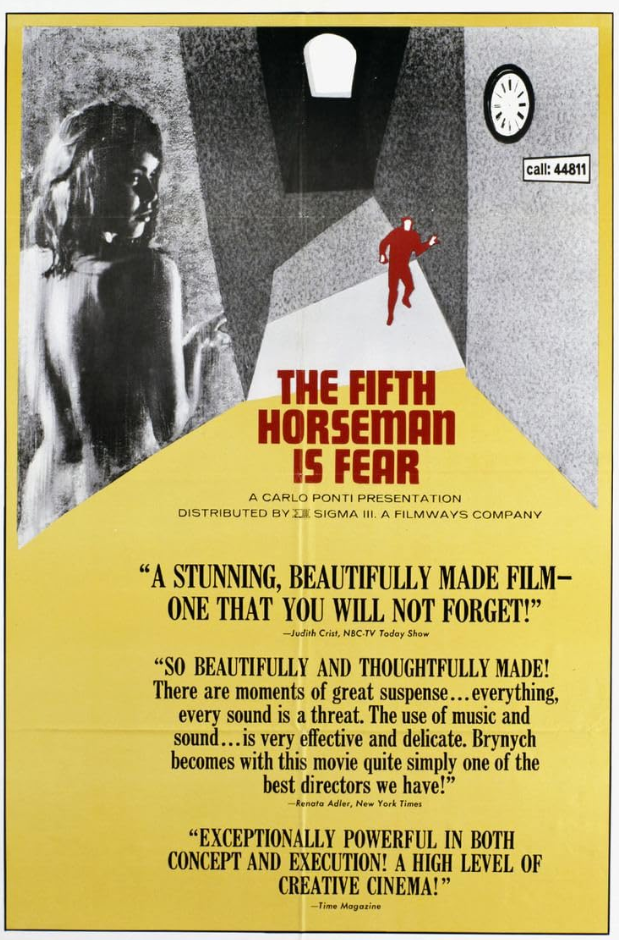
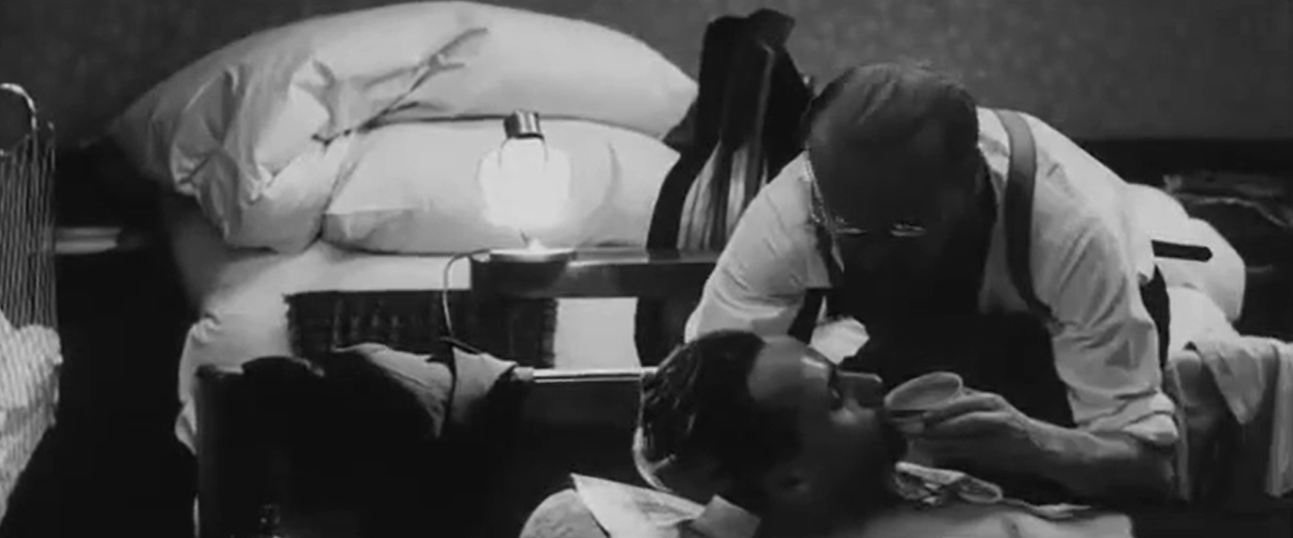
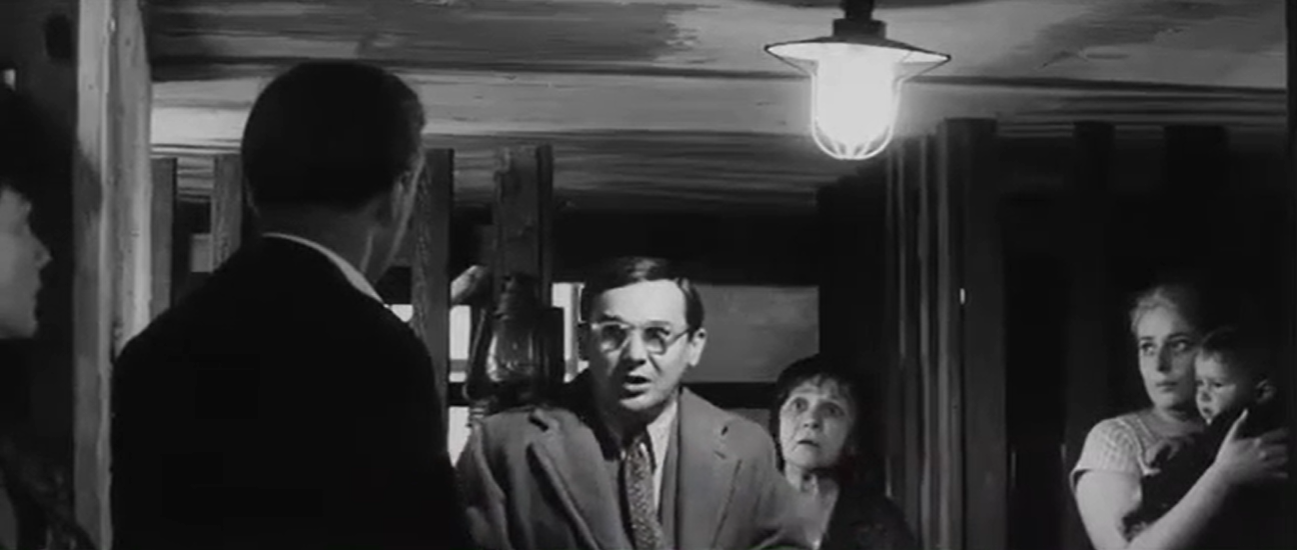
Czech director Zbynek Brynych helmed this vaguely allegorical tale of defiance during oppression — nominally about a Jewish doctor daring to treat a wounded Resistance fighter during wartime occupation:

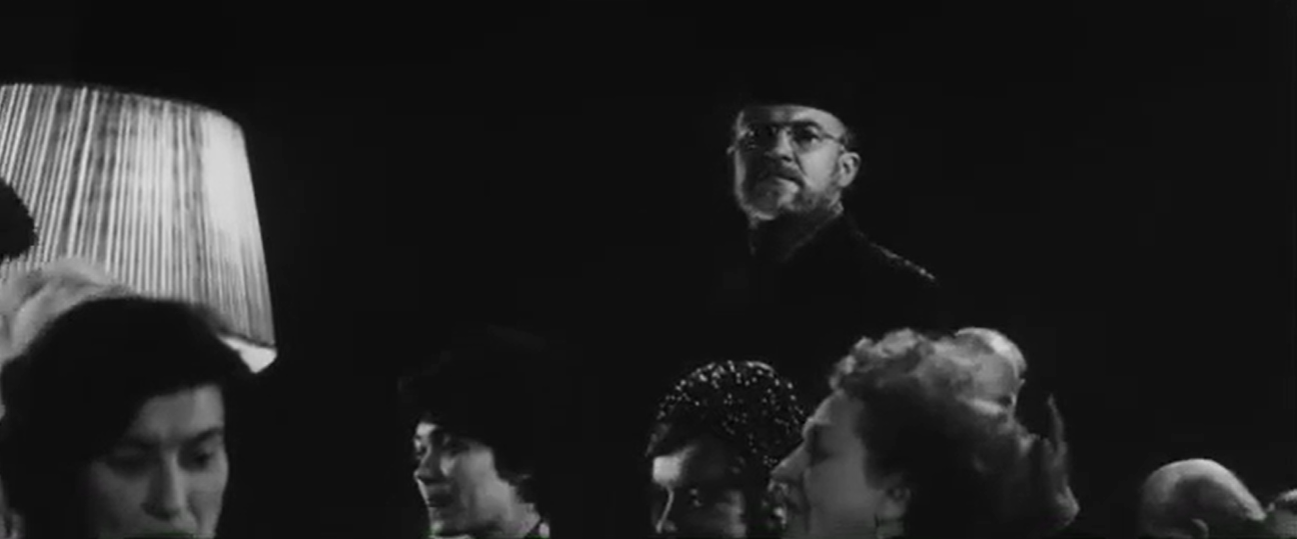
… but perhaps really (also) about resisting repression and surveillance in a Soviet-occupied country. Meanwhile, Eddie Muller has argued on behalf of this film as a noir, given that it takes place during “one dark night of the soul” and tells the tale of difficult choices made by an individual who is tempted by fate and other forces.

While visually rich, the storyline is fairly straightforward, as described in Wikipedia’s overview:

Set in Prague during the German occupation of Czechoslovakia, the film follows Dr. Braun, a Jewish doctor forbidden to practice medicine. He instead works for German officials, cataloging confiscated Jewish property.


All Braun wants to do is survive, but his pragmatic mentality is challenged when an injured resistance fighter stumbles into his apartment building. A quest for morphine leads Dr. Braun through his tortured city, where fear eats away at the social structure.

Superficially, the city might appear to be normal, but hallucinations, awkward outbursts, and nervous, self-conscious behavior make it clear that society is falling apart.

It’s all very atmospherically filmed, and well worth a look as an incisive glimpse at a particular time and place (or perhaps two) in history.

Notable Performances, Qualities, and Moments:

  • Fine direction and cinematography

Must See?
Yes, for its historical relevance within international cinema. Listed as a film with Historical Relevance and a Personal Recommendation in the back of Peary’s book.

Categories

  • Foreign Gem

Links:

Woman in the Dunes (1964)

Woman in the Dunes (1964)

“That sand just ruins everything, doesn’t it?”

Synopsis:
When an amateur etymologist (Eiji Okada) searching for rare bugs on the beach misses his train home, he stays overnight in the shack of a widow (Kyoko Kishida) eager for companionship, and soon realizes he’s trapped down in the dunes with her.

Genres, Themes, Actors, and Directors:

  • Japanese Films
  • Living Nightmare
  • Psychological Horror
  • Widows and Widowers

Review:
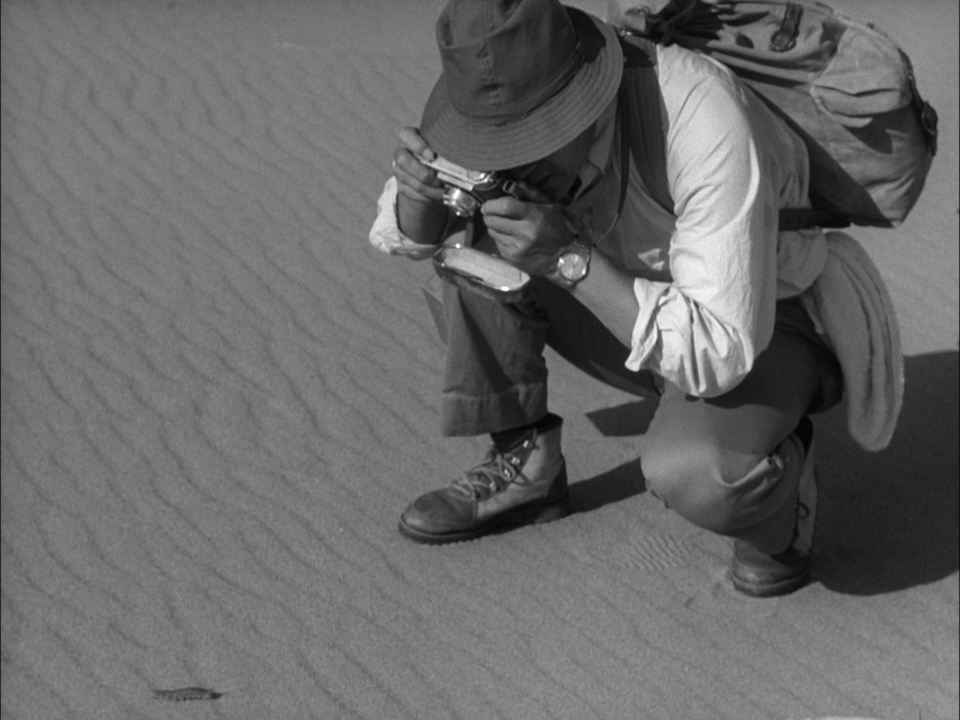
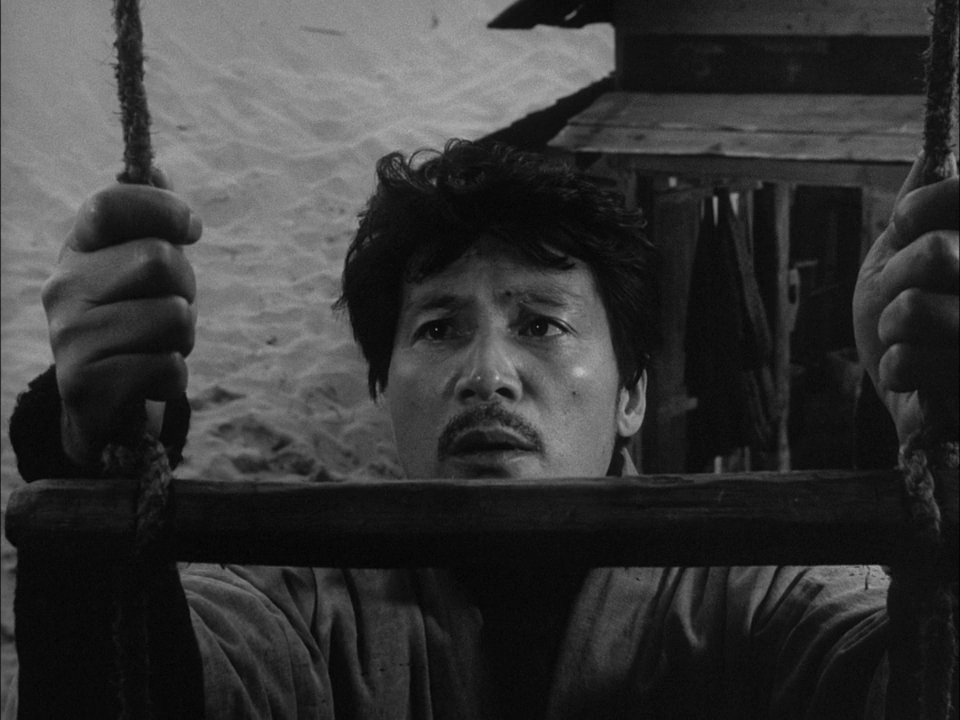
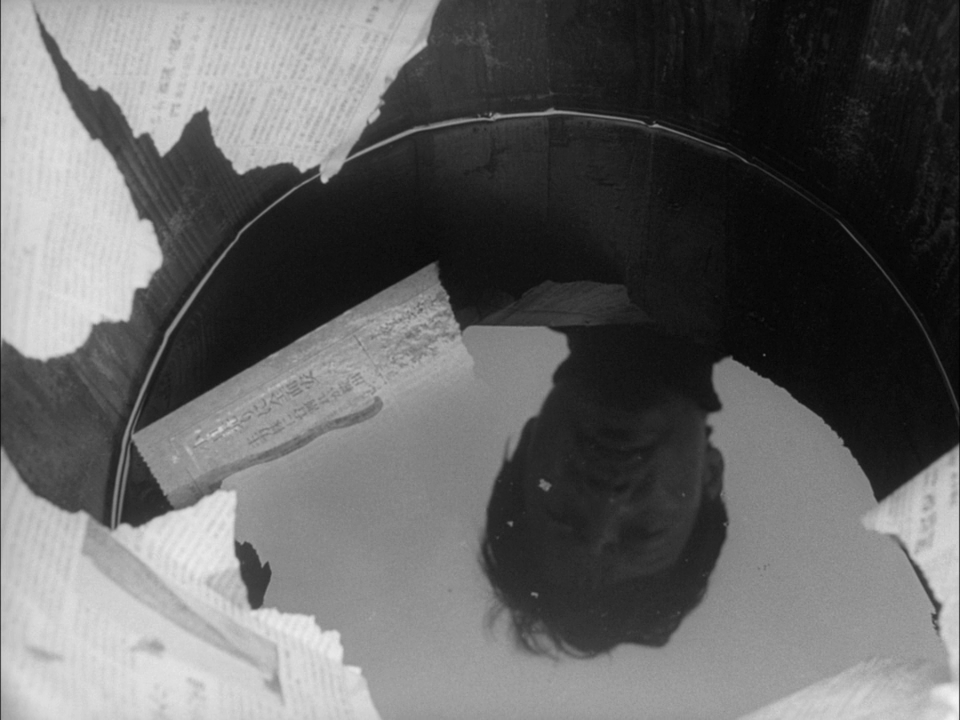
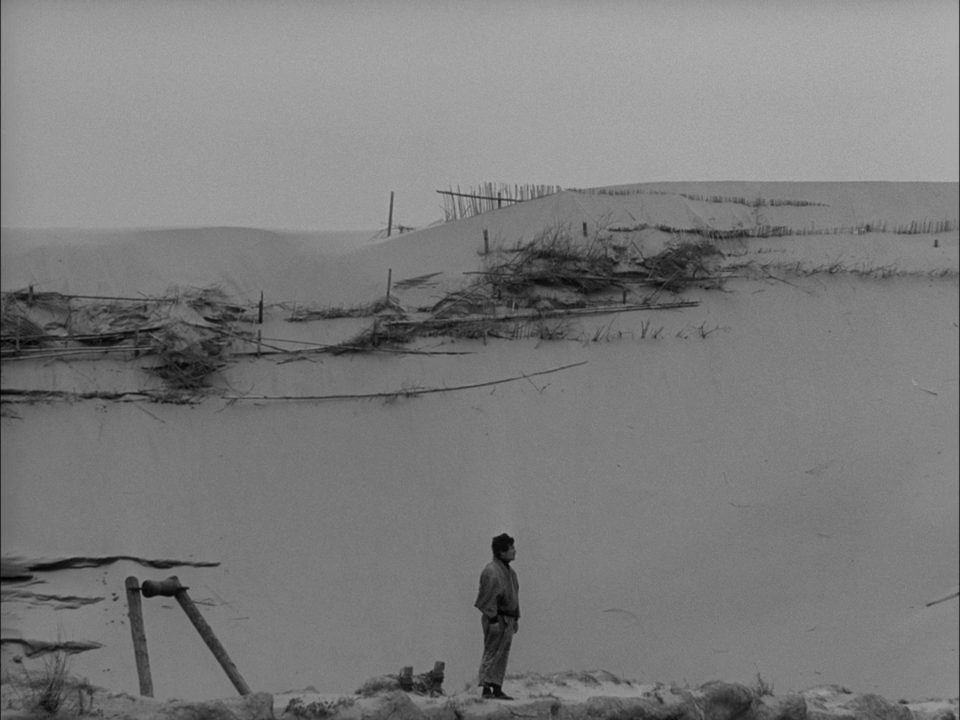
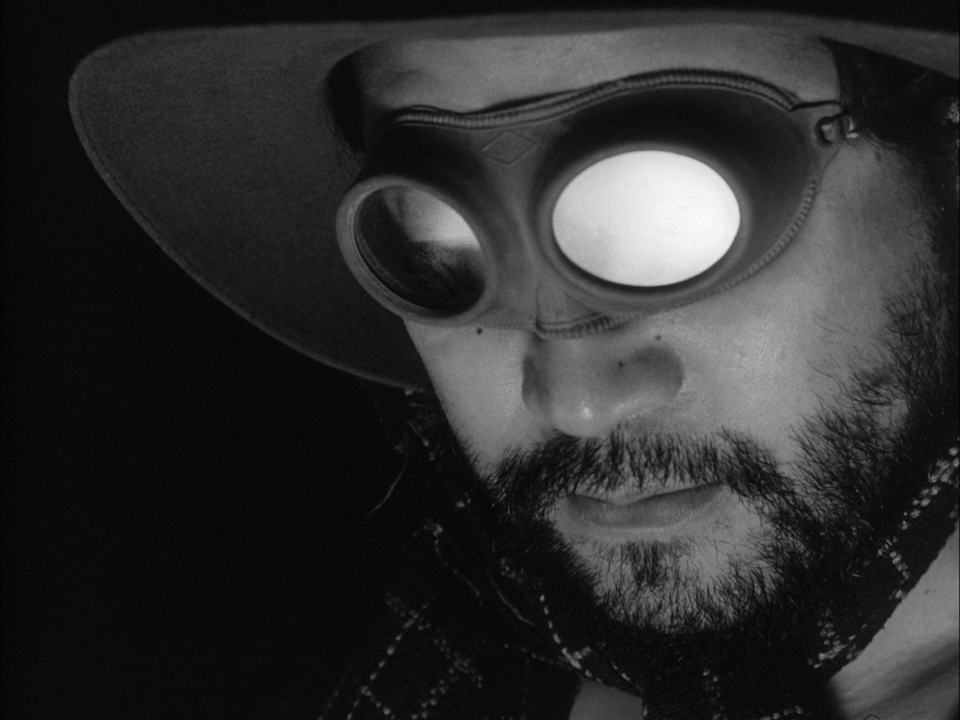
This collaboration by director Hiroshi Teshigahara, writer Kobo Abe (basing the screenplay on his novel), and composer Toru Takemitsu remains a one-of-a-kind masterpiece from mid-20th century Japanese cinema. We are quickly immersed in the living nightmare of protagonist Okada’s dilemma — stuck at the bottom of a sand dune with no way to scramble up and out; thus, the man who came in search of bugs to probe and examine:

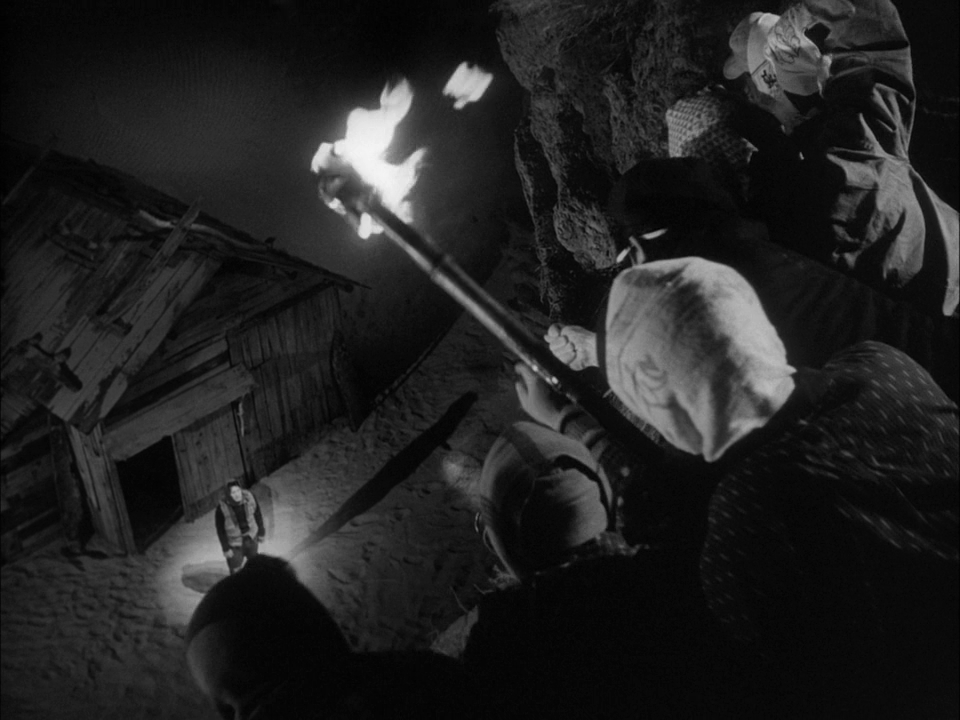
… is soon trapped under the gaze of those (the villagers) who watch and taunt him for their own amusement.

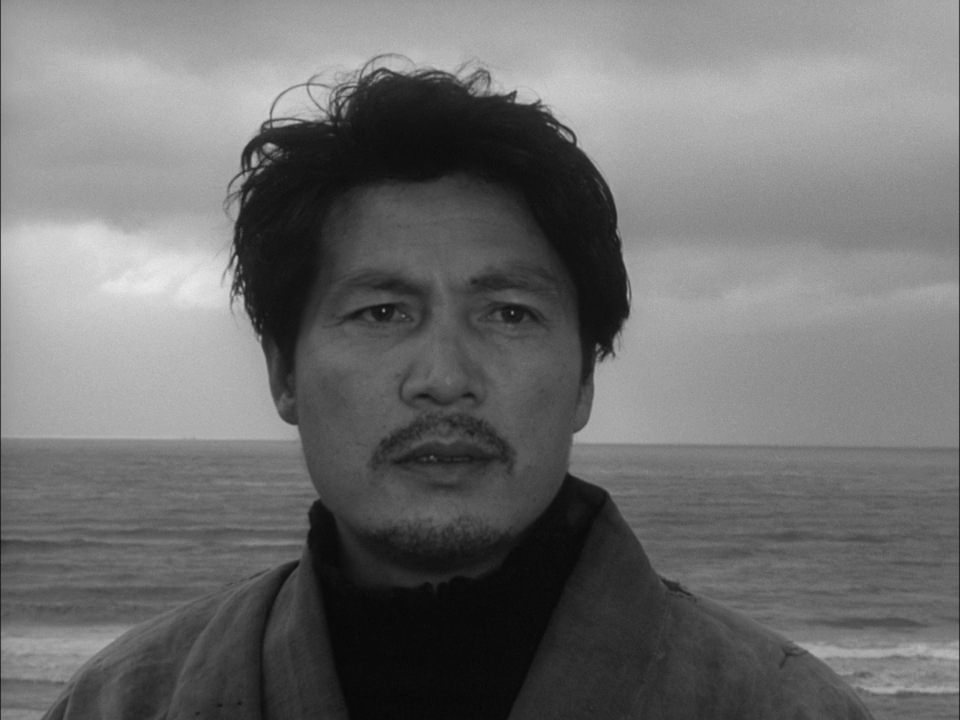
Okada — likely best known to film fanatics from co-starring in Hiroshima Mon Amour (1959) — is entirely believable as a man convinced he can find a way out of his dilemma, only to eventually be beaten down by forces beyond his control.

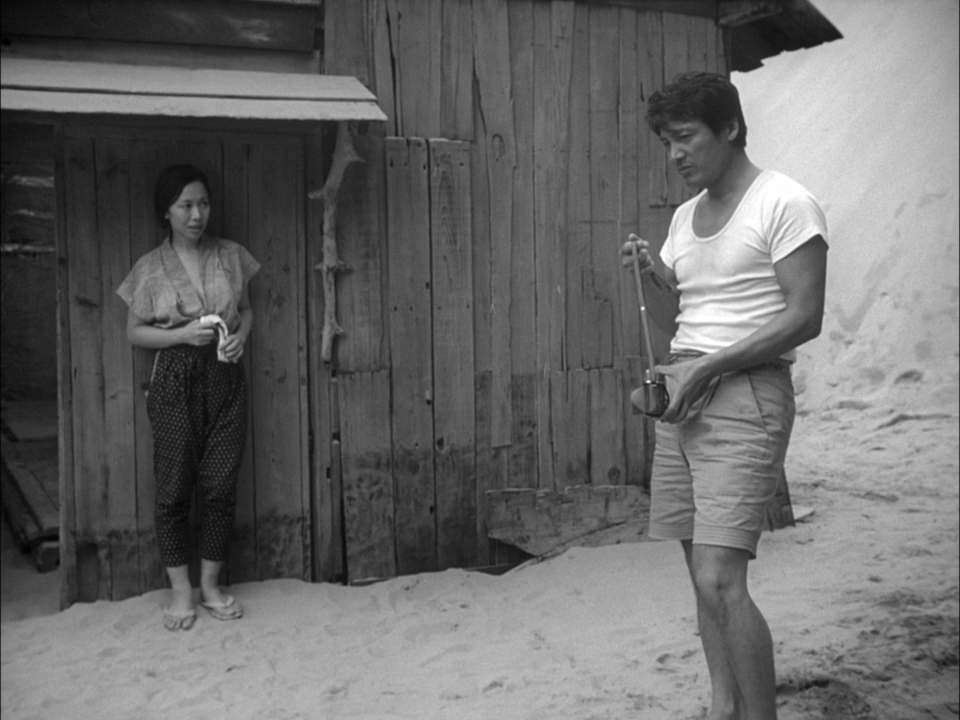
Kishida is equally effective as a young widow who seems slightly delusional (and is most certainly manipulative), but is simply responding to her own dire circumstances.

The pair form an unexpectedly sweet bond of captivity, supporting one another through work, companionship, and sensual connection.


In some ways, the less said about this movie the better, given that it unfolds in an eerily suspenseful way — and we’re not sure until the very end what will happen to the protagonists. It’s possible to enjoy this film either on its surface (albeit surreal) narrative level, or by probing into its thematic layers: Is the omnipresent gritty sand a stand-in for nuclear fallout dust? Are we all trapped in a menial existence filled with hard labor under the scrutiny of others? Regardless of how you choose to approach the story, the visceral impact of living with these individuals in their gritty, nightmarish existence is unlike what I’ve experienced with any other movie.

Note: This film made Teshigahara the first Japanese director to be nominated for an Oscar for directing.

Notable Performances, Qualities, and Moments:

  • Eiji Okada as the Entomologist
  • Kyoko Kishida as the Woman
  • Hiroshi Segawa’s cinematography
  • Fine use of location shooting
  • Many memorable moments and sequences
  • Toru Takemitsu’s haunting soundscape

Must See?
Yes, as a truly unique and absorbing foreign film. Listed as a film with Historical Relevance and a Personal Recommendation in the back of Peary’s book.

Categories

  • Foreign Gem

(Listed in 1001 Movies You Must See Before You Die)

Links: