Browsed by
Category: Original Reviews

Responses to Peary’s “must see” movie reviews, as well as my own “must see” movie reviews up to and after 1986 (when Peary’s book was published).

Jeanne Dielman, 23 Quai du Commerce, 1080 Bruxelles (1976)

Jeanne Dielman, 23 Quai du Commerce, 1080 Bruxelles (1976)

“See you next week, then.”

Synopsis:
A single mother (Delphine Seyrig) supports her teenage son (Jan Decorte) by working part-time as a prostitute.

Genres, Themes, Actors, and Directors:

  • Character Studies
  • Delphine Seyrig Films
  • Experimental Films
  • Feminism
  • Prostitutes

Review:
I’ve heard it said that it’s impossible to make a film about war — no matter how gruesome, violent, pointed, or macabre — without simultaneously glorifying it; I would argue that the same is true for prostitution. With only a few notable exceptions (Lizzie Borden’s Working Girls comes to mind), prostitution inevitably comes across in films as a somewhat glamorous — if undeniably dangerous and demeaning — profession.

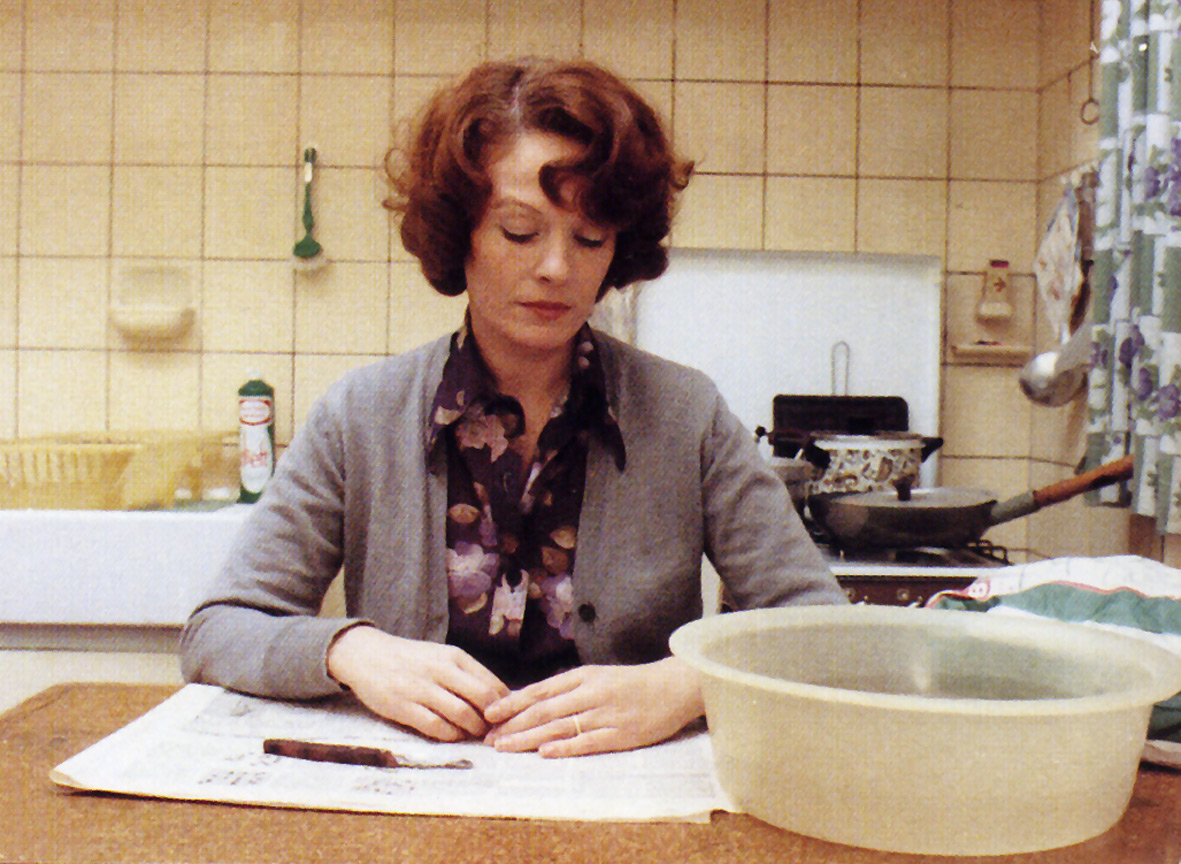
In Jeanne Dielman, however, director Chantal Akerman strips prostitution completely bare: there are no fancy outfits or make-up here; no cat calls; no dangerous street positioning; no pimps; no underlying psychological reasons for having entered into this profession. What we’re left with instead is a middle-aged homemaker and mother who happens to have sex for money with men on a regular basis. It’s never stated explicitly in the film, but it’s implied that neither Jeanne’s son nor any of her neighbors have any idea what she does to bring in money. Indeed, until the final moments of the film, not even the audience sees Jeanne servicing her Johns — all we are allowed to witness are scenes of Jeanne inviting a man into her bedroom; exiting a few seconds later (in a convenient time lapse); coldly accepting cash from him; and stating almost robotically, “See you next week, then,” before seeing the man out the door.

Akerman’s three-hour long character study is ultimately concerned with chronicling the predictable minutiae of Jeanne’s daily life, as she takes care of her home, cooks for her son, answers letters from her sister, watches her neighbor’s baby, and runs various errands around town. None of this is inherently compelling, yet it’s strangely hypnotic to watch Jeanne pursuing her mundane rituals, day after day. Indeed, because so much time is spent showing the way Jeanne carefully maintains control over her life — and the frustration she feels when things don’t go just right — the shocking final moments of the movie seem almost like an inevitable outgrowth of her routine. It’s difficult not to impose one’s own interpretation onto a film like Jeanne Dielman, which leaves so much room for deliberation and conjecture. The unusual power of this marathon exercise in minimalism is the way in which we both accept Jeanne’s “final” action as natural, and find ourselves questioning everything that has come before.

Redeeming Qualities and Moments:

  • A subtly powerful portrait of tedium and despair
  • A daring — if undeniably arduous — “real time” approach to fiction filmmaking

Must See?
Yes. This demanding film remains a landmark of experimental European cinema.

Categories

  • Historically Relevant
  • Important Director

(Listed in 1001 Movies You Must See Before You Die)

Links:

Shack Out on 101 (1955)

Shack Out on 101 (1955)

“The apes have taken over — while we were busy watching television and filling our freezers, they’ve come out of the jungle and moved in!”

Synopsis:
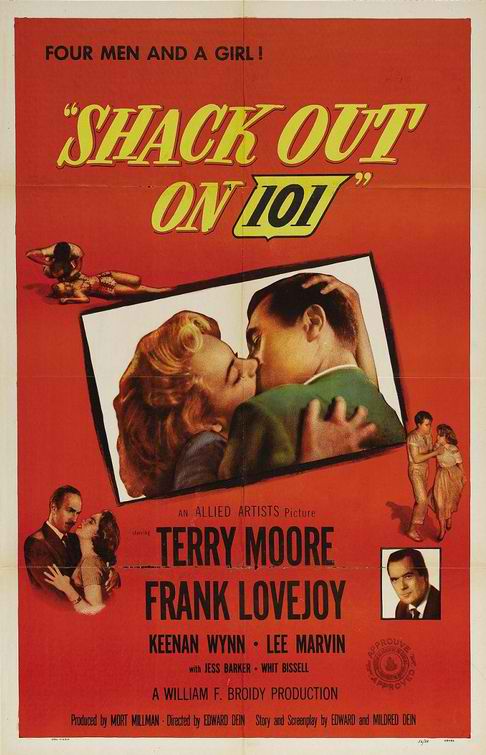
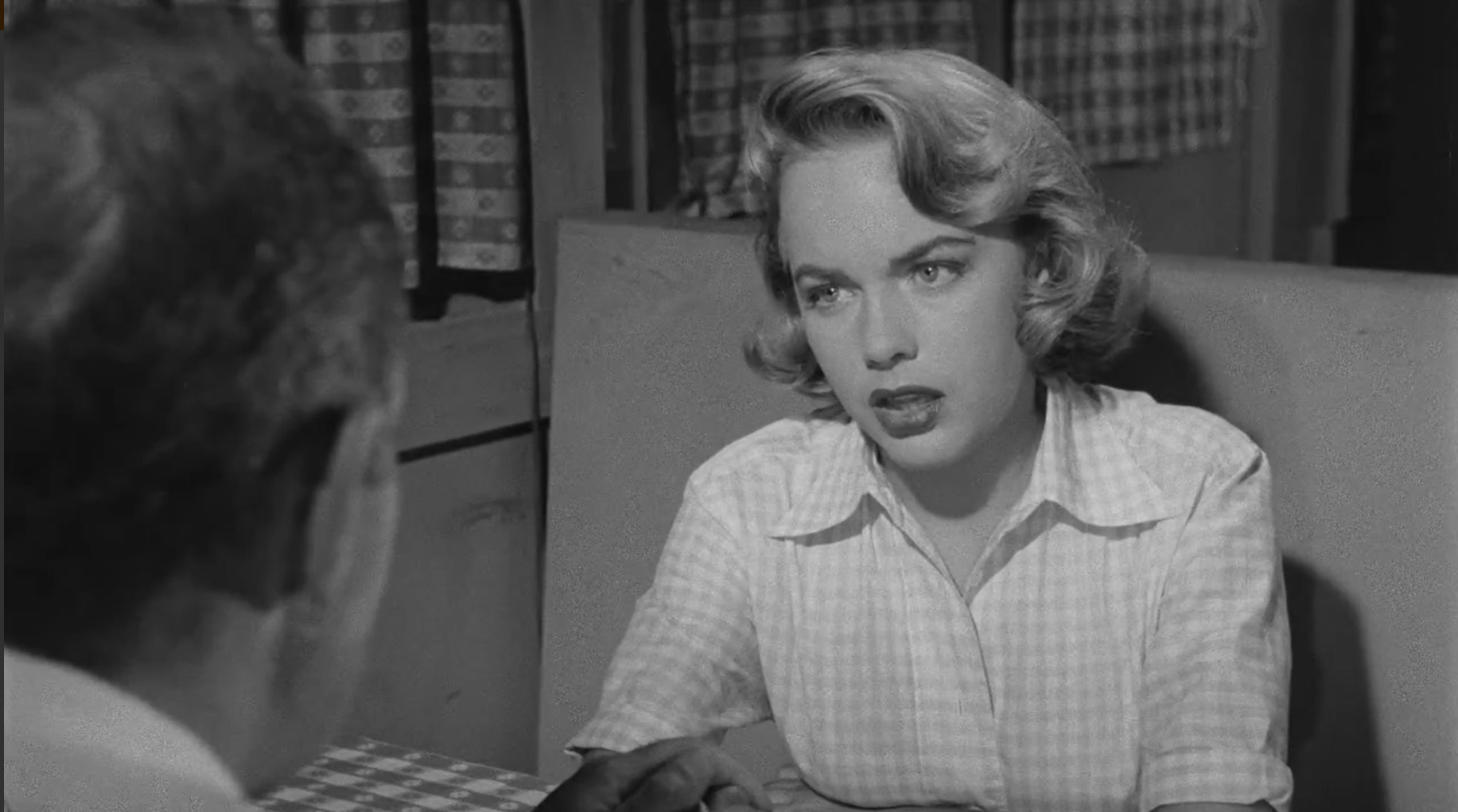
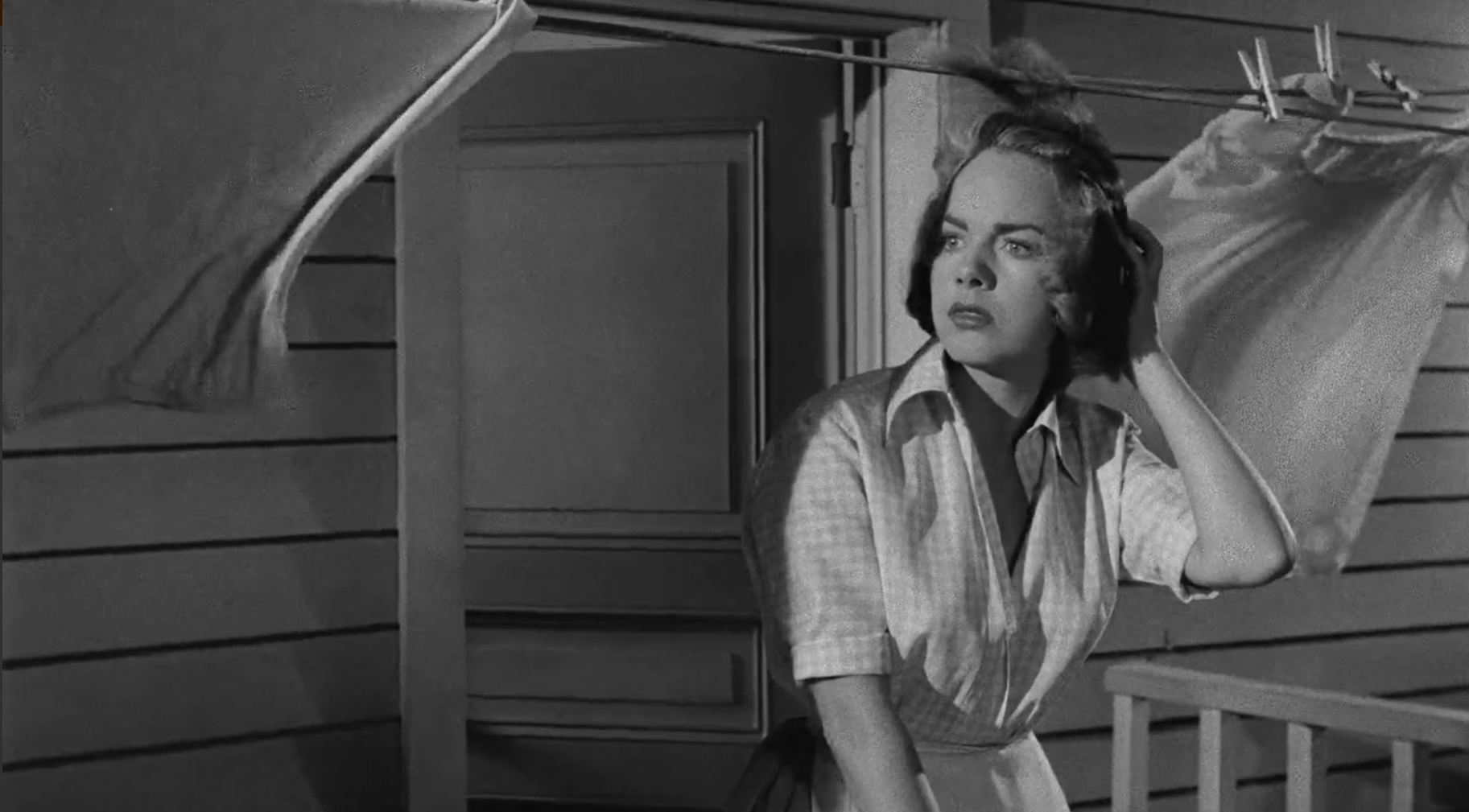
A waitress (Terry Moore) at an isolated seaside cafe discovers that her physicist boyfriend (Frank Lovejoy) and the cafe’s violent cook, “Slob” (Lee Marvin), are smuggling nuclear secrets out of the country.

Genres, Themes, Actors, and Directors:

  • Cold War
  • Keenan Wynn Films
  • Lee Marvin Films
  • Mistaken or Hidden Identities
  • Propaganda
  • Spies
  • Terry Moore Films

Review:
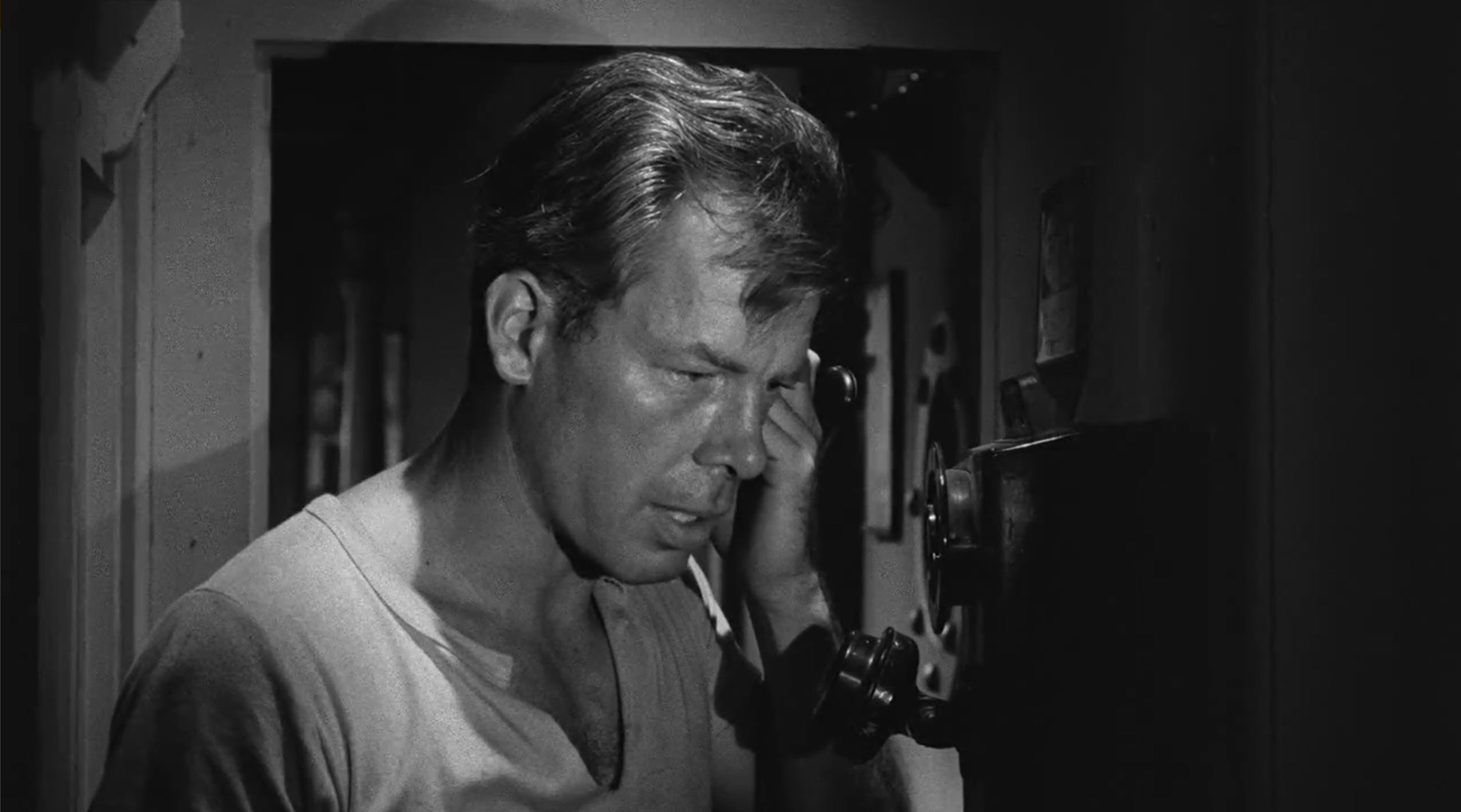
Despite its low budget and limited locales, this character-driven drama remains an effectively suspenseful thriller about Cold War paranoia and patriotism. The film possesses a fair amount of levity (especially in the scene where Wynn and Marvin are lifting weights), and plenty of reliably zingy dialogue:

“Slob’s got an eight-cylinder body and a two-cylinder mind!”

Plus, the acting by everyone involved is well above average for a B-movie, and there are enough plot twists to keep you on the edge of your seat.

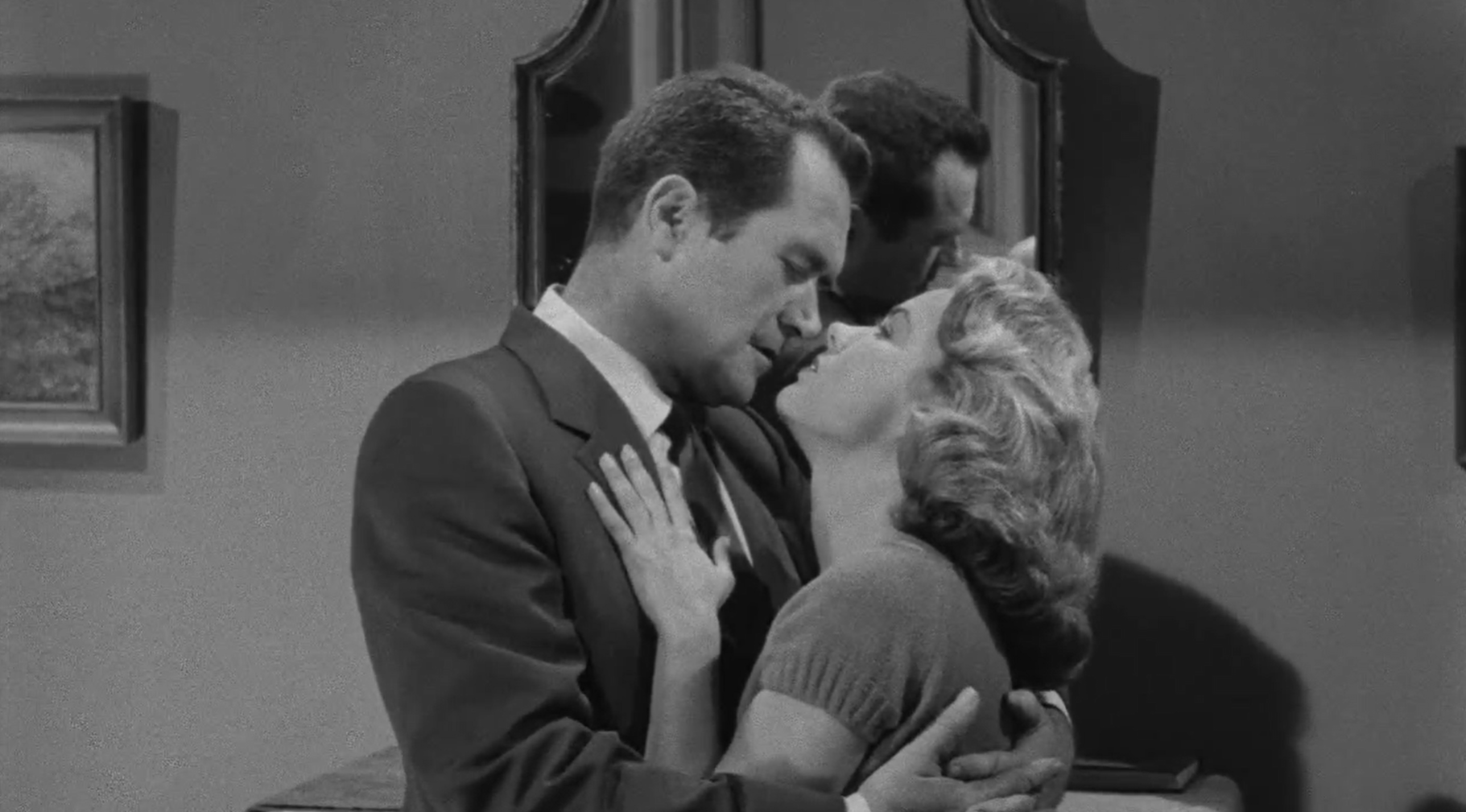
Favorite scene: Moore and Lovejoy interspersing kisses with questions about the U.S. Constitution:

Redeeming Qualities and Moments:

  • Lee Marvin in an early yet typically hard-hitting role
  • Keenan Wynn as the hard-working owner of the “shack”
  • Terry Moore as the sexy yet feisty waitress who refuses to stand by and let her beloved country be compromised
  • Fine cinematography and direction

  • Amusingly sincere pro-America dialogue:

    “What form of government is this?”
    “The best!”

Must See?
Yes. This cult film is well worth seeking out.

Categories

  • Cult Movie

Links:

Homicidal (1961)

Homicidal (1961)

“It’s only when hate is dammed up that it breaks out in murder!”

Synopsis:
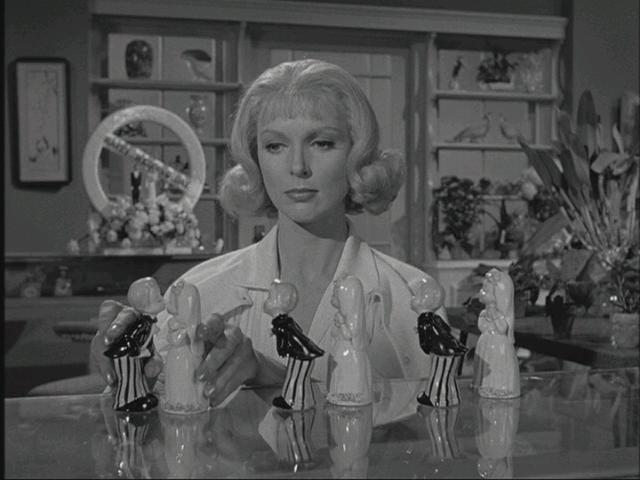
An attractive blonde (Jean Arless) with deadly motives murders a justice of the peace (James Westerfield) under an assumed name, then returns home to wreak additional havoc.

Genres, Themes, Actors, and Directors:

  • Jealousy
  • Psychopaths
  • Siblings
  • William Castle Films

Review:
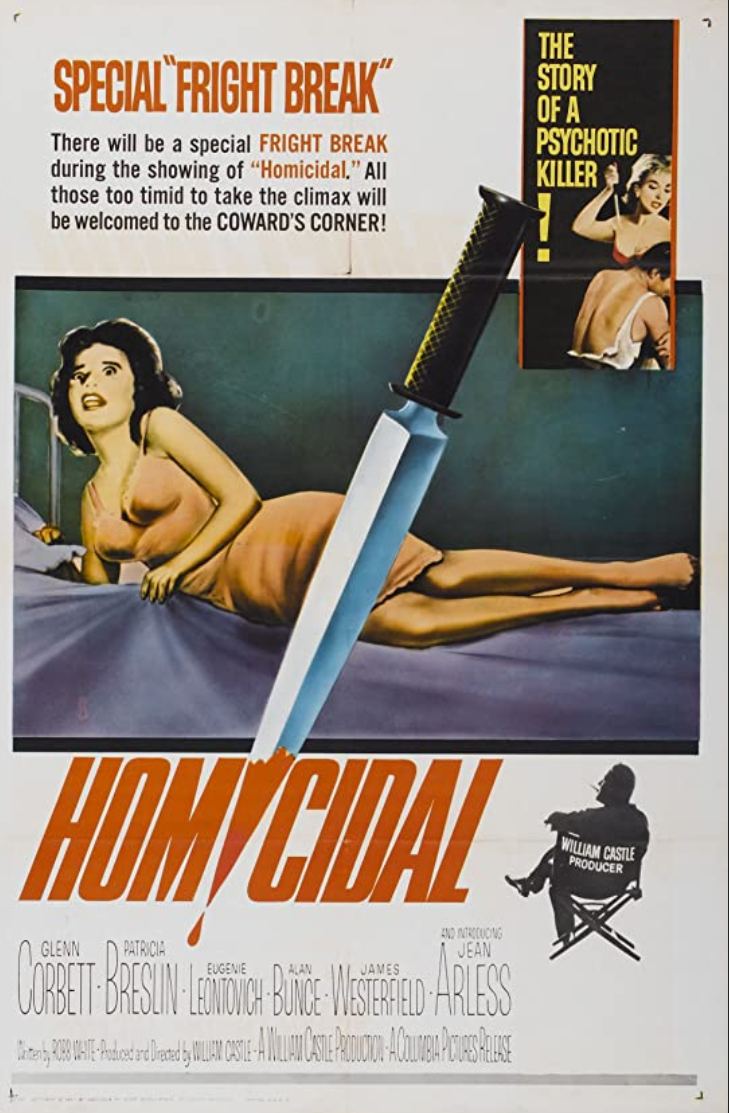
William Castle’s notoriously popular B-grade follow-up to Psycho (1960) comes across as laughably inferior today, with predictable plot twists, uneven acting, bad dubbing, and outrageously naive behavior by every character involved. The film’s primary plot twist is obvious from a mile away, and its storyline is too ridiculous to be genuinely frightening. Amazingly enough, audience members at the time reacted differently, with many kept in the dark about the true identity of one of the key characters, and some actually taking advantage of Castle’s highly publicized “Fright Break” gimmick, in which they could leave the film pre-denouement for a full refund by carrying a yellow “I am a bona fide coward” card and waiting in the corner of the lobby.

Despite its obvious flaws, however, Homicidal comes across today as a reasonably enjoyable cult film, primarily because all its ludicrous elements add up to such silly fun. Plus, though the primary plot twist is far too easy to guess, the hidden secret behind this twist comes as a genuine surprise. If you forget that Homicidal was ever meant as a serious rival to Hitchcock’s masterpiece, you’ll probably get a kick out of its enjoyably campy approach to sibling rivalry, gender, loyalty, and murder.

Redeeming Qualities and Moments:

  • A deliciously campy sensibility
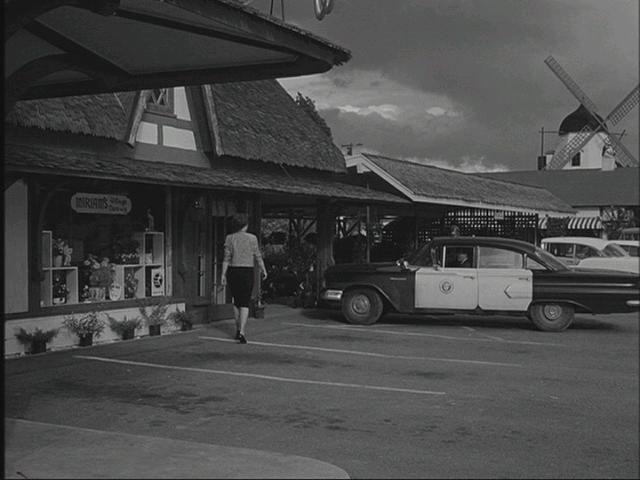
  • Good use of Solvang, California as a small-town locale
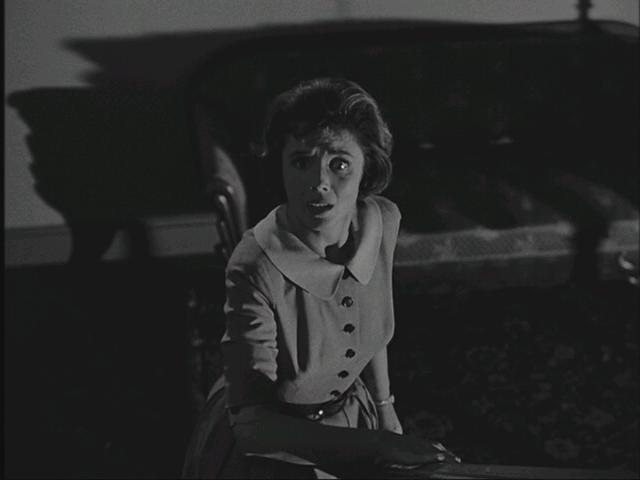
  • Effectively eerie use of lighting and shadows
  • An interesting second plot twist (but you’ll guess the first one immediately!)

Must See?
Yes, simply for its notoriety as a follow-up to Psycho.

Categories

  • Cult Movie
  • Historically Relevant

Links:

Rise of Louis XIV, The (1966)

Rise of Louis XIV, The (1966)

“Even my seemingly loyal subjects are as much to be feared as the most rebellious.”

Synopsis:
Young Louis XIV (Jean-Marie Patte) ensures dominance over France during the first twenty years of his reign.

Genres, Themes, Actors, and Directors:

  • Historical Drama
  • French Films
  • Roberto Rossellini Films
  • Royalty and Nobility

Response to Peary’s Review:
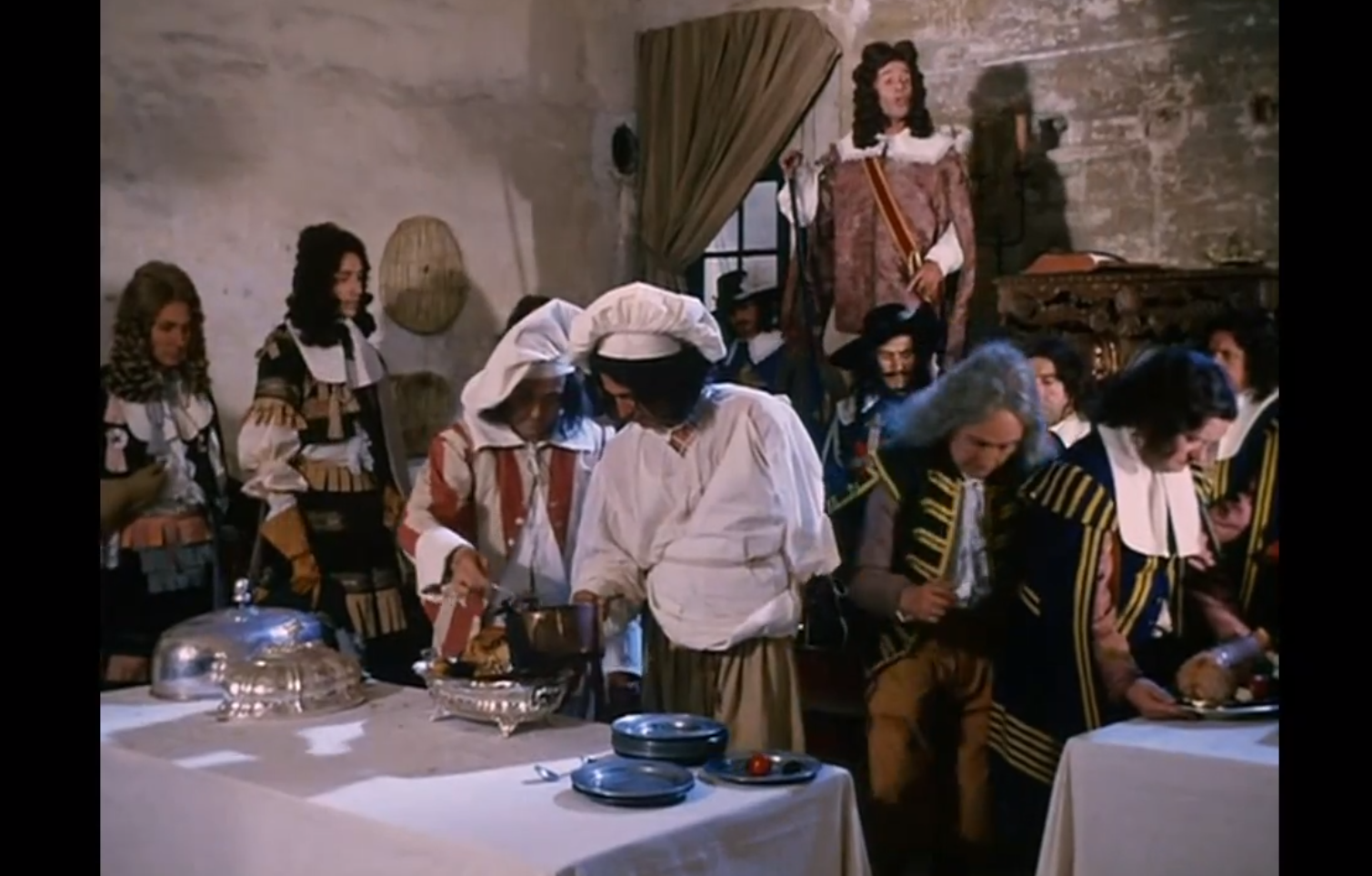
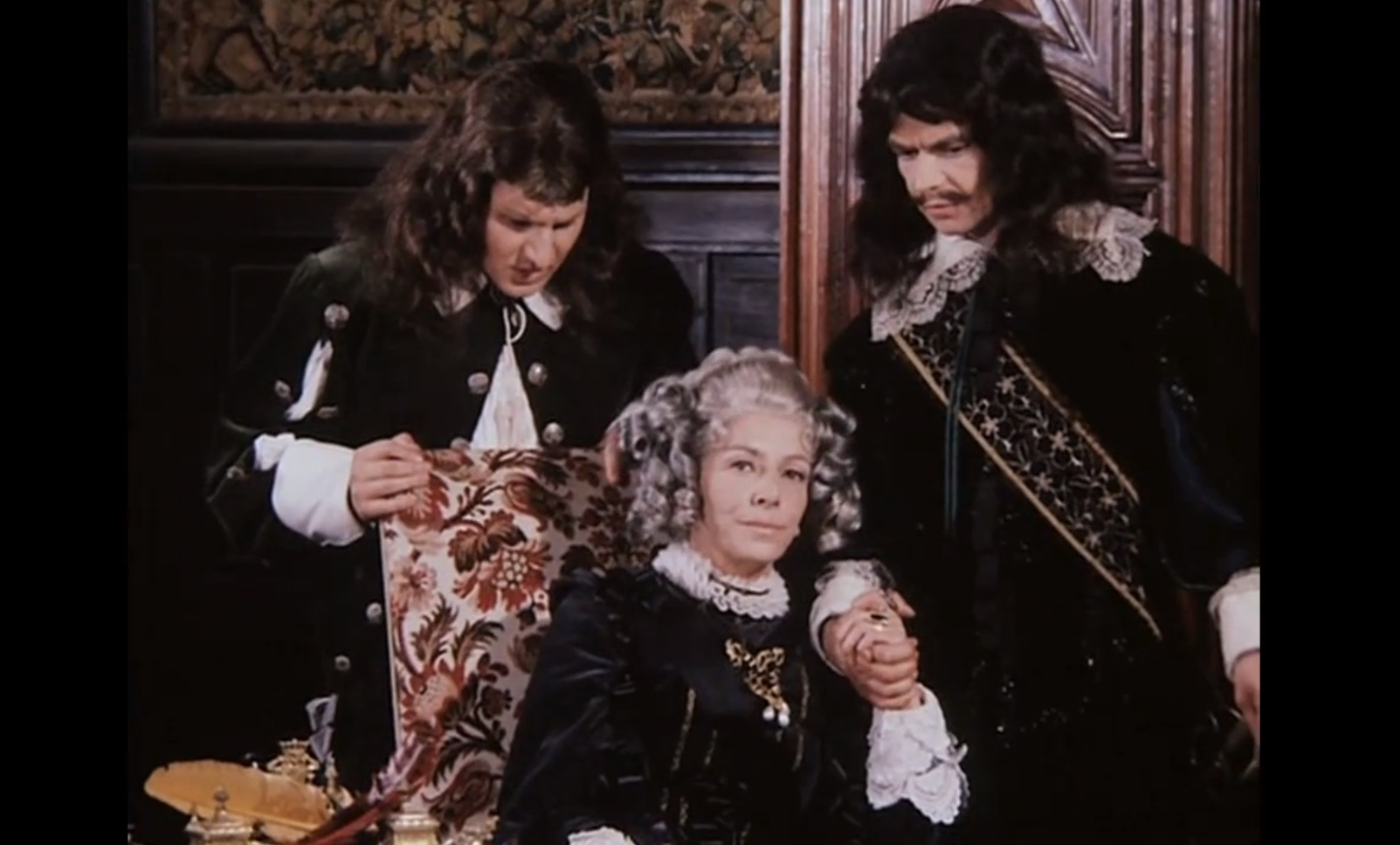
Originally made for Italian T.V. (then released cinematically), Roberto Rossellini’s neo-realist costume drama is, as Peary notes, “slow-paced”, but provides “unusual viewing pleasure” for those with enough patience to sit through it. Rossellini boldly forgoes pomp and spectacle in favor of intimacy and realistic banter; the result is a quietly absorbing look at daily life and power machinations in Louis’ court. While dramatic encounters and bold musical scores are the stock-in-trade of most historical dramas, Rossellini’s approach shows us what such elements deny us — the chance to eavesdrop on historical figures as they go about their everyday, minute-to-minute lives.

Redeeming Qualities and Moments:

  • A meticulous, historically accurate evocation of 18th century France
  • Colorful costumes and sets
  • An intriguing and revealing depiction of Louis’ gradual rise-to-power

Must See?
Yes. Widely regarded as Rossellini’s last true masterpiece, this film merits a look by all film fanatics.

Categories

  • Important Director

Links:

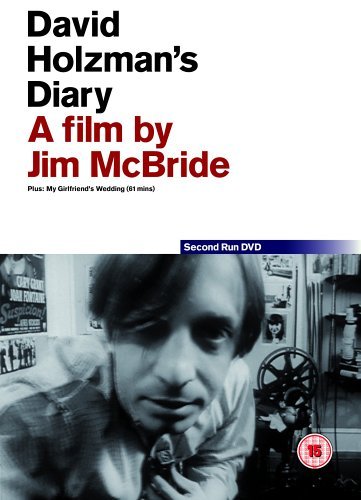
David Holzman’s Diary (1968)

David Holzman’s Diary (1968)

“The noted French wit Jean-Luc Godard said, ‘What is film? Film is truth 24 times a second.'”

Synopsis:
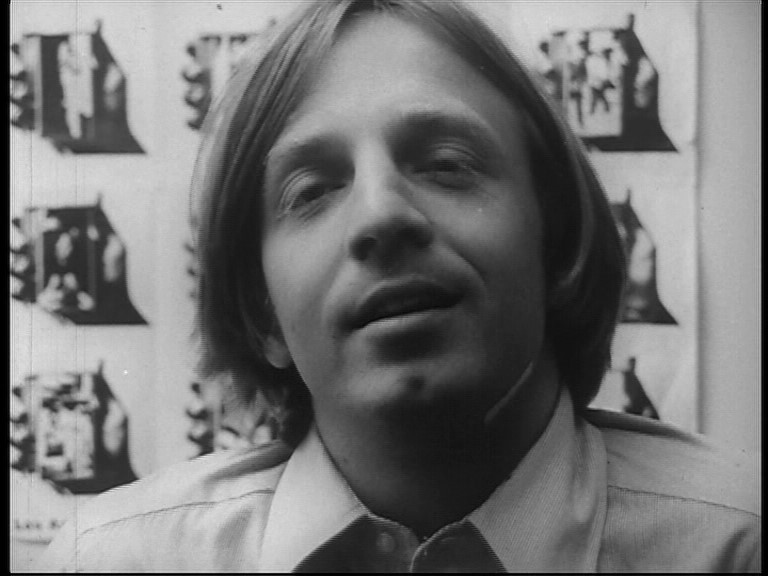
A young filmmaker named David Holzman (L.M. Kit Carson) decides to “figure out his life” by creating a documentary of his everyday actions.

Genres, Themes, Actors, and Directors:

  • Documentary
  • Satires and Spoofs

Review:
The inherent irony of this early mockumentary — a prescient forerunner of “reality TV”, YouTube, blogs, and all other forms of self-promotion through digital media — is that, in his attempt to lampoon the banality of everyday life, director Jim McBride ultimately creates a movie which is, in a word, boring. While there are some clever cinematic techniques and a few moments of levity (David being hit on by his lusty neighbor; David obsessing over the mysterious girl who lives across the street), ultimately it’s annoying to watch this narcissistic young man try to capture every moment of his humdrum existence on film — and when he films his naked sleeping girlfriend (Eileen Dietz) against her wishes, you’ll want to throttle him! Even at 74 minutes, this innovative yet uninteresting film — more effective in theory than in practice — is too long.

Redeeming Qualities and Moments:

  • A creative lampoon of “cinema verite”
  • An effective depiction of filmmakers as narcissistic voyeurs
  • Louise Levine as Holzman’s hilariously lusty, deep-voiced neighbor, “Sandra”
  • Some clever cinematic techniques (such as the long, long traveling shot of elderly people sitting on benches in a park)

Must See?
Yes, but only for its place in cinematic history.

Categories

  • Cult Movie
  • Historically Relevant

(Listed in 1001 Movies You Must See Before You Die)

Links:

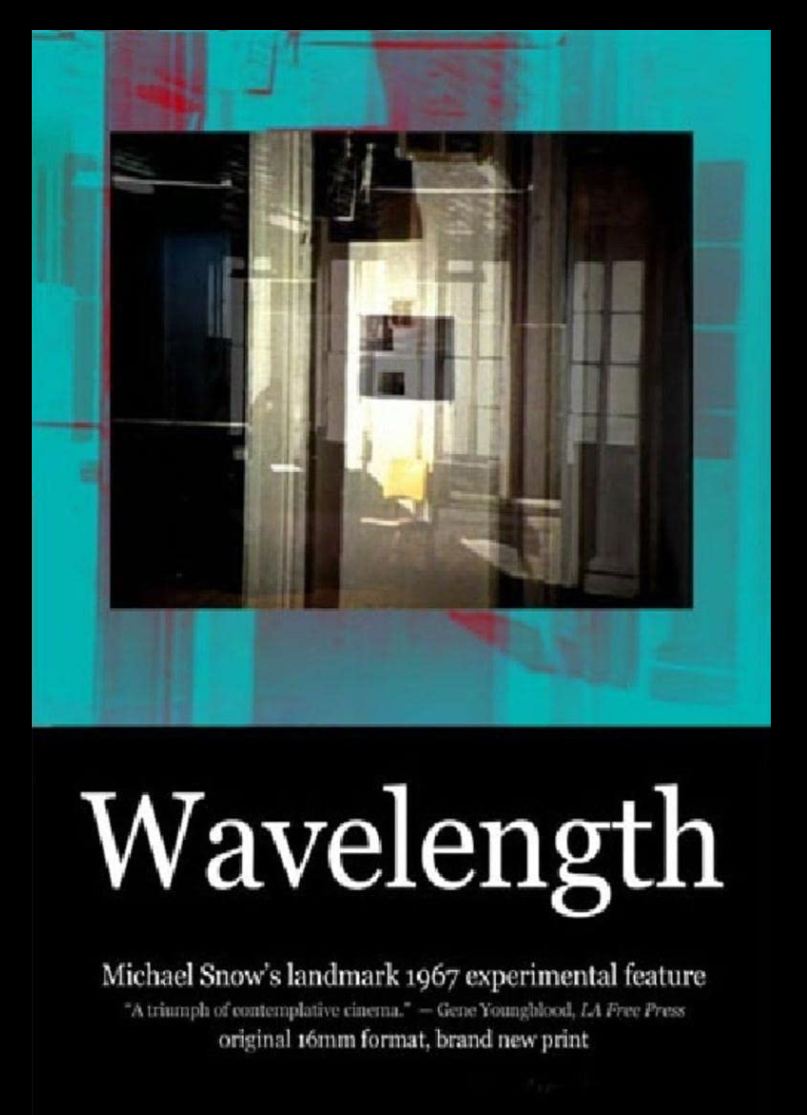
Wavelength (1967)

Wavelength (1967)

“Nothing is real… and nothing to get hung about.”

Synopsis:
A camera slowly zooms in on empty room while people come and go, ultimately ending on a photograph of waves.

Genres, Themes, Actors, and Directors:

  • Experimental Films

Review:
In this notorious minimalist film, director Michael Snow utilizes jump cuts, flashbacks, repeated shots, different film stock, filters, and other cinematic devices to create a technically innovative yet ultimately tedious piece of underground cinema. While watching what appears to be (but isn’t) a 45-minute single zoom shot, we are subjected to the sound of a single sine-wave, ranging from its lowest note (50 cycles per second) to its annoyingly shrill highest note (12,000 cycles per second). The film ends with a cloying play on words, as the camera focuses on a photograph of ocean waves. In honor of Peary’s no-holds-barred, highly personal approach to film criticism — and at the true risk of appearing gauche — I’ll admit I wish that Snow had bothered to incorporate a bit more interest into the narrative of this ground-breaking yet “difficult” film. Given the extreme amount of cinematic manipulation he uses, Snow can’t (or shouldn’t) legitimately argue that he was aiming for any kind of narrative purity. I dare you to watch this film — best seen as an experiment in form rather than a cohesive narrative — at home without touching the fast forward button on your remote control; but I won’t blame you if you do.

Note: To watch the entire film in 2.5 minutes, click here. It’ll be the fastest viewing of a GFTFF title you’ve ever experienced!

Redeeming Qualities and Moments:

  • An original, if boring, piece of avant-garde film making.

Must See?
Yes, once, simply for its historical importance.

Categories

  • Historically Relevant

(Listed in 1001 Movies You Must See Before You Die)

Links:

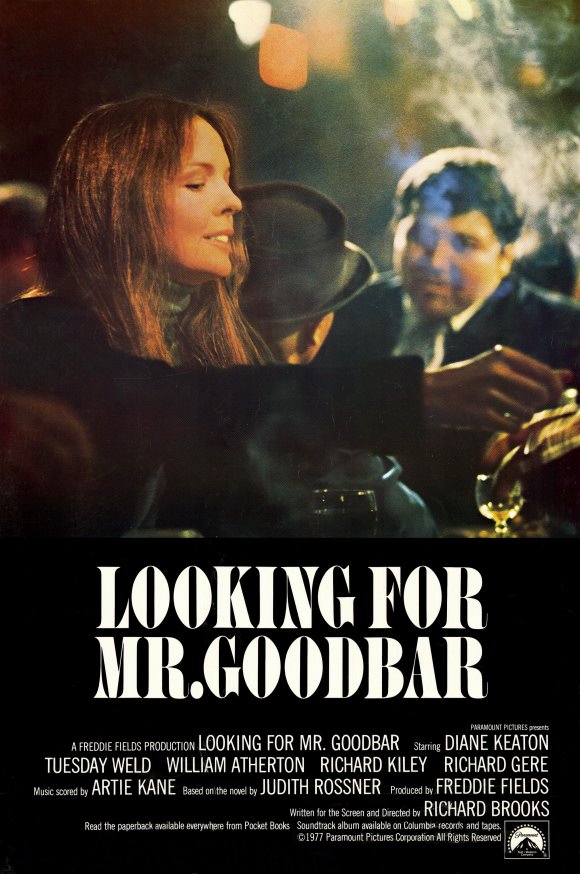
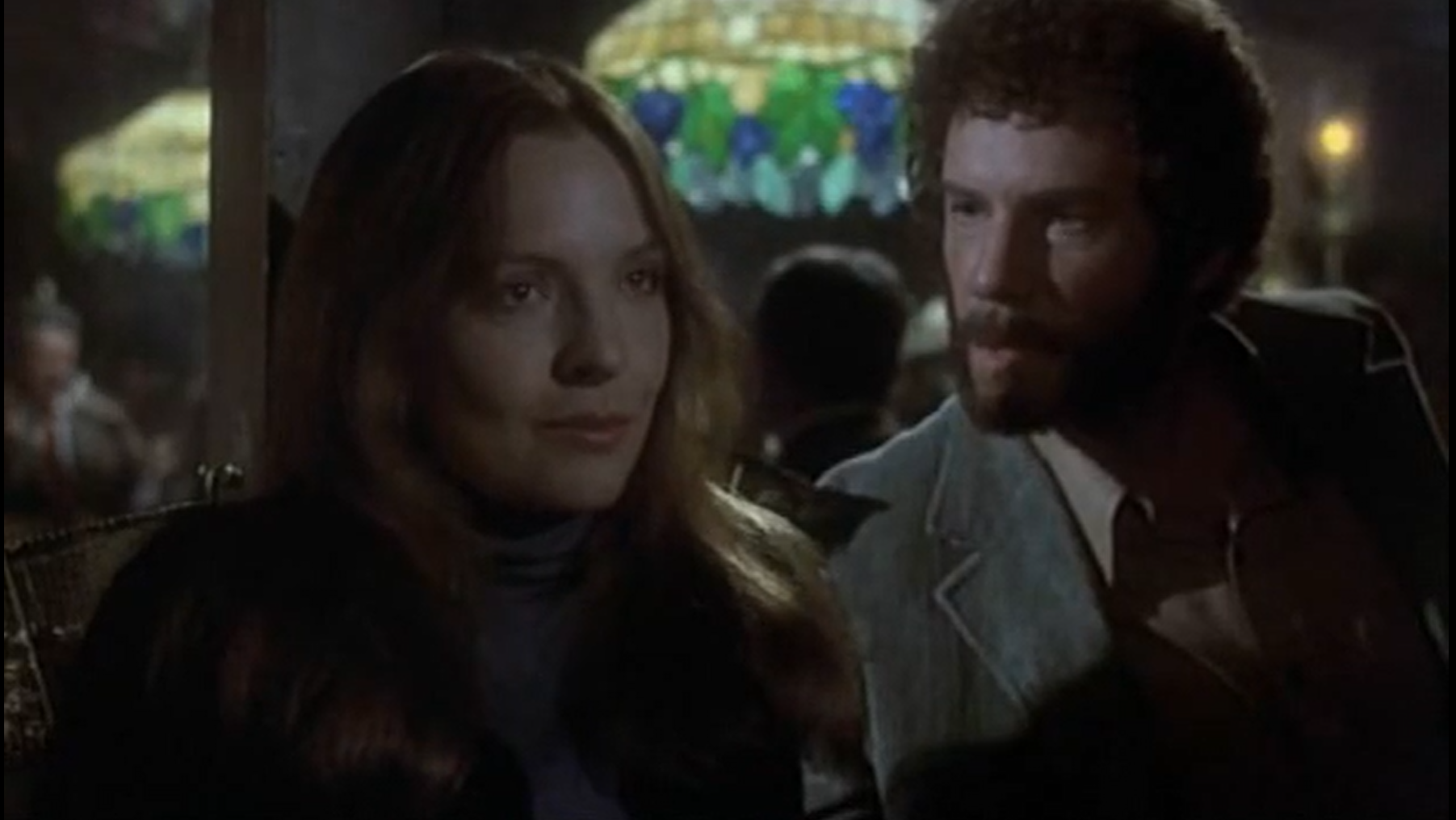
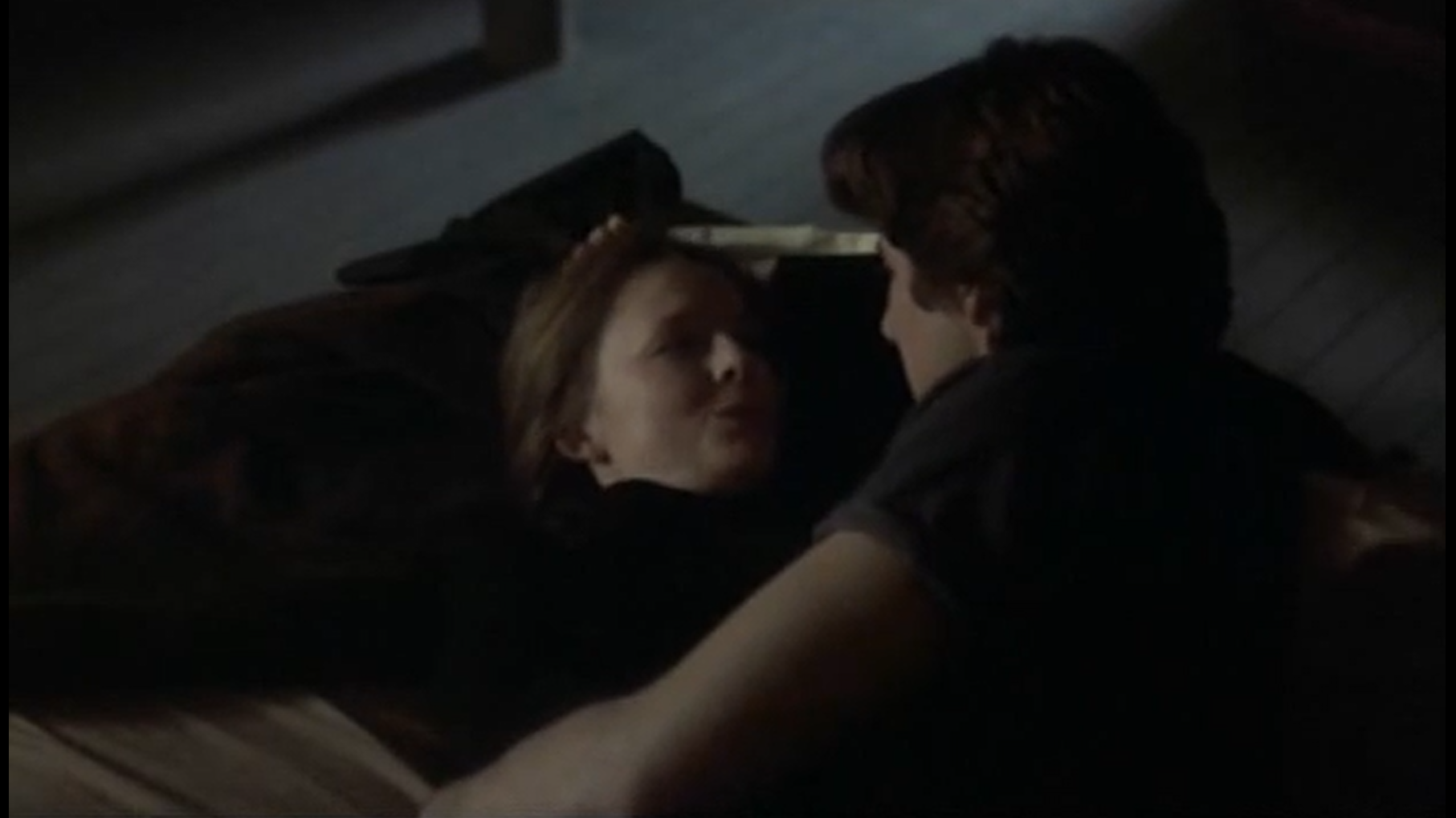
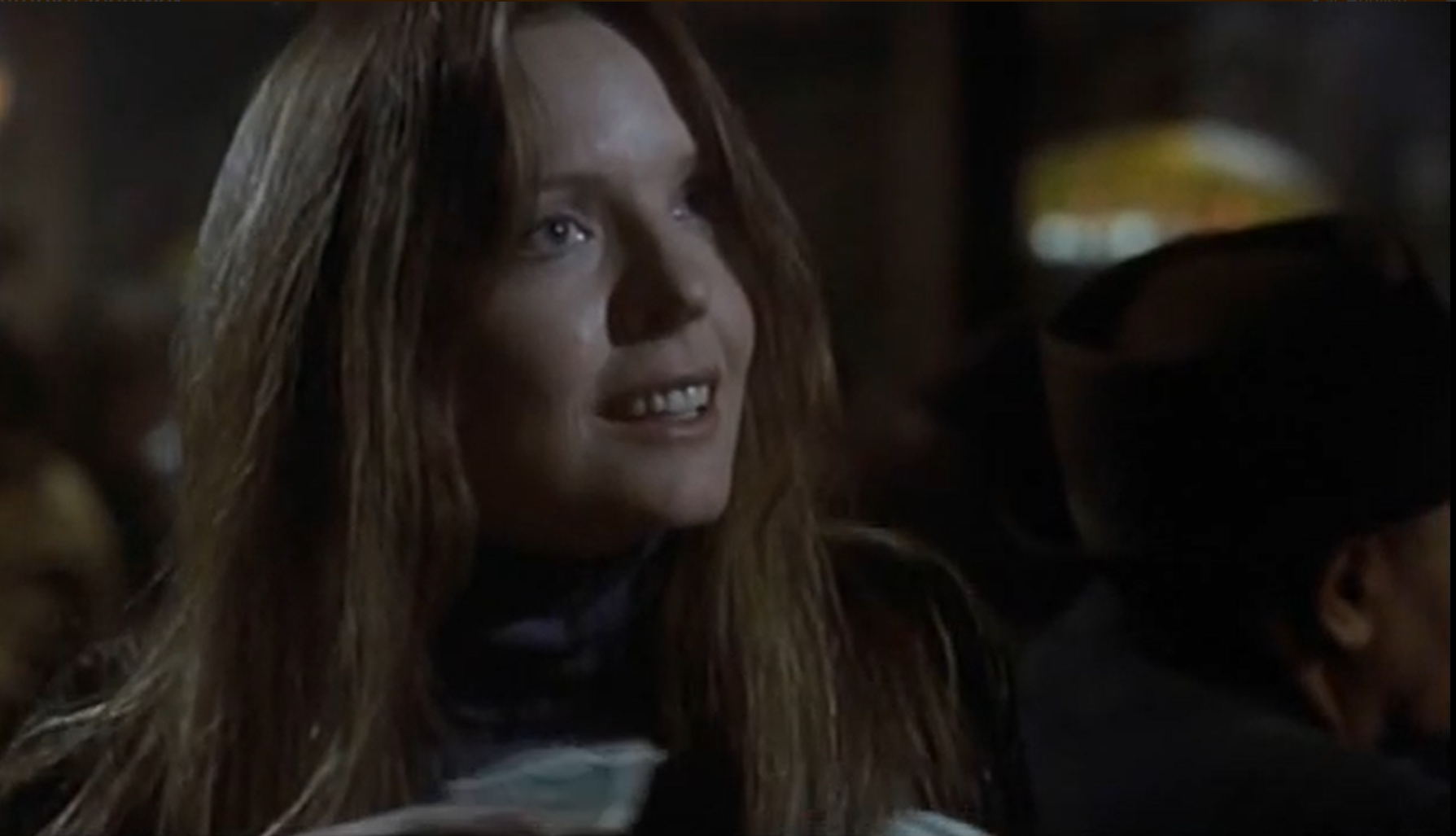
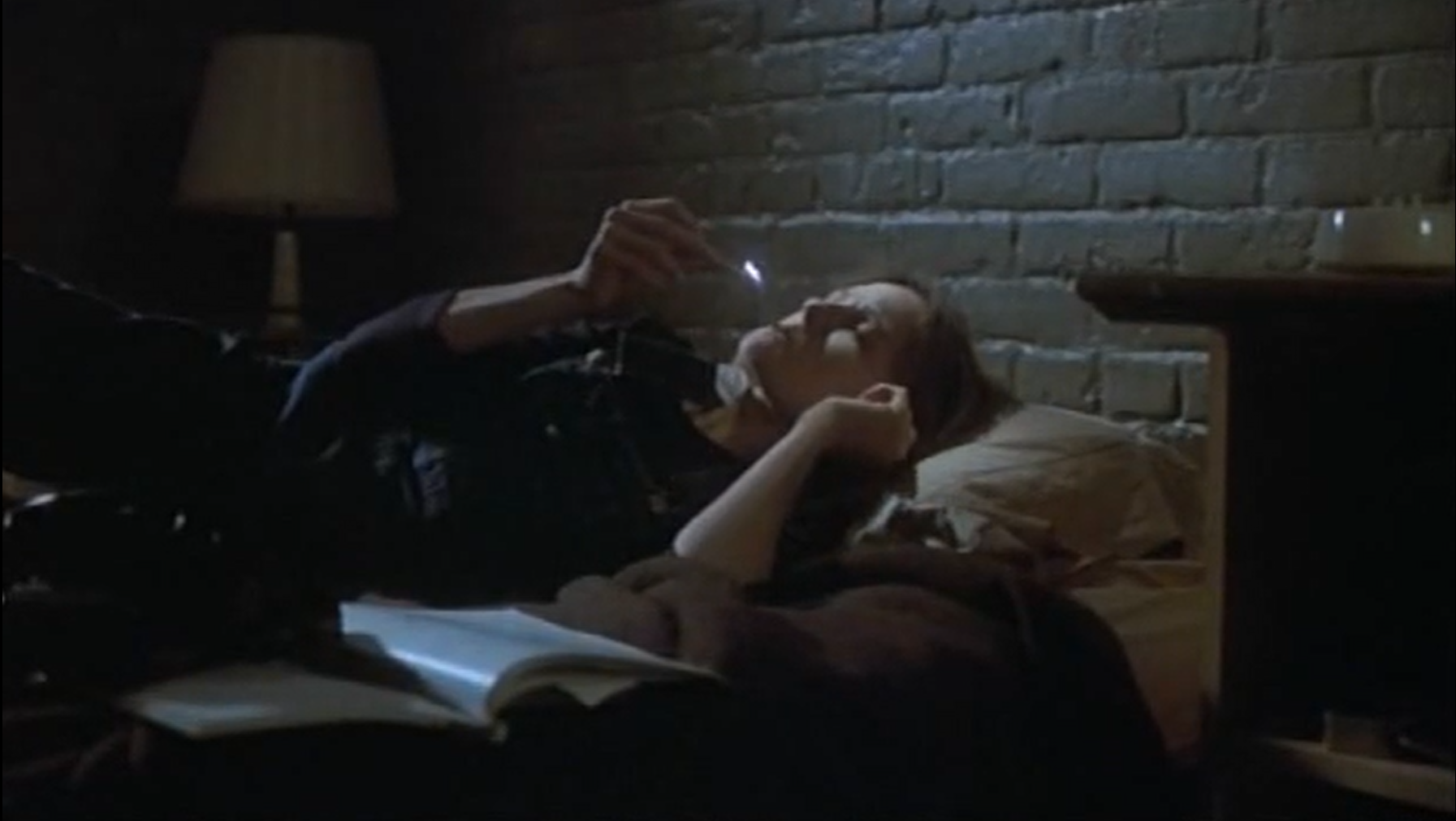
Looking for Mr. Goodbar (1977)

Looking for Mr. Goodbar (1977)

“Everybody’s taking something, or they’d never make it ’til morning.”

Synopsis:
Schoolteacher Theresa Dunn (Diane Keaton) cruises New York bars at night looking for sex and excitement, and finds herself in increasingly dangerous situations.

Genres, Themes, Actors, and Directors:

  • Character Studies
  • Diane Keaton Films
  • Richard Brooks Films
  • Richard Gere Films
  • Sexuality
  • Teachers
  • Tuesday Weld Films

Review:
Based on the real-life murder of 27-year-old schoolteacher Rosanne Quinn, this cinematic adaptation of Judith Rossner’s bestselling novel was released the same year as Woody Allen’s comedic paean to life and love in New York — Annie Hall (1977) — and features its Oscar-winning eponymous heroine (Diane Keaton) in a radically different role. As in Annie Hall and many other films of the time (i.e., Paul Mazursky’s An Unmarried Woman), Looking for Mr. Goodbar deals with single females exploring their sexuality during the heyday of women’s lib. Indeed, once she gives herself the opportunity to sleep with any and every man she sees, Theresa takes advantage of this to the nth degree — but ultimately it’s more painful than liberating to watch her encounters with a series of unbearably chauvinistic men, including her married professor (Alan Feinstein) and a jealous player (Richard Gere).


As several reviewers have pointed out (see links below), many elements of Looking for Mr. Goodbar‘s otherwise provocative screenplay are unnecessarily heavy-handed: Theresa’s conflicts with her Catholic parents come across as overbearingly Freudian, and the flashback scenes to Theresa’s traumatic childhood experiences with scoliosis are derivative. Plus, it’s distressing to watch a film in which you already know the gory outcome — the cumulative effect is one of watching a morality tale-cum-train wreck about the dangers of wanton sexual exploration. This is too bad, because Keaton’s daring performance as a woman unafraid of her own sexual cravings deserves a much more respectful treatment.

Redeeming Qualities and Moments:

  • Diane Keaton as a rebellious schoolteacher living a double life
  • A realistic, albeit cautionary, look at hedonism in the 1970s

Must See?
Yes. While it’s not an entirely successful film, Diane Keaton’s performance makes it must-see viewing at least once.

Categories

  • Noteworthy Performance(s)

Links:

Geisha, A / Gion Bayashi (1953)

Geisha, A / Gion Bayashi (1953)

“Geisha don’t lie — they talk business.”

Synopsis:
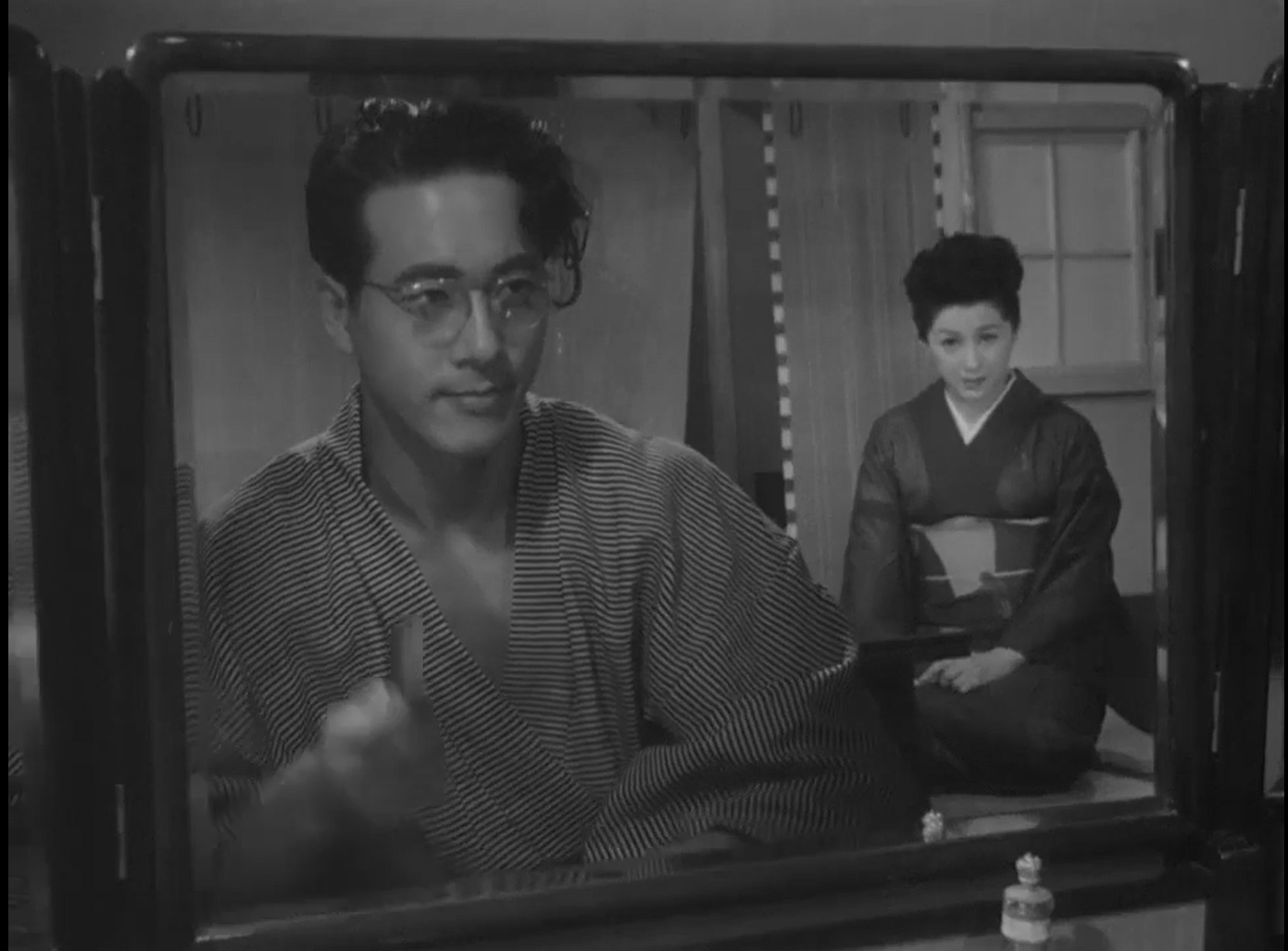
After taking on 16-year-old Eiko (Ayako Wakao) as an apprentice, geisha Miyoharu (Michiyo Kogure) and her new protege find their positions compromised by men (Seizaburo Kawazu and Kanji Koshiba) who demand more than geisha traditionally provide.

Genres, Themes, Actors, and Directors:

  • Feminism and Women’s Issues
  • Japanese Films
  • Kenzi Mizoguchi Films
  • Mentors

Review:
Throughout his career, director Kenzi Mizoguchi exhibited an uncanny sympathy for the plight of women in male-dominated Japanese society. While his most famous works (The Life of Oharu, Ugetsu Monogatari, and Sansho the Bailiff) were historical dramas set in the distant past, Gion Bayashi — a staunchly realistic depiction of life for geisha in post-WWII Japan — is a notable exception; yet it fits clearly into his ongoing depiction of noble females who must cope with debasing situations. Most Americans became familiarized with the life of Japanese geisha — a term which translates roughly into “artisans” (not prostitutes) — either through Arthur Golden’s 1997 novel Memoirs of a Geisha or its disappointing 2005 cinematic adaptation by Rob Marshall. Marshall’s film is lush and beautiful yet ultimately empty, replacing Golden’s detailed evocation of life in a geisha house with an insipidly melodramatic story of unrequited love, and a romanticized view of female subjugation.

Fortunately, Mizoguchi makes no such mistake in his film. Time and again in Gion Bayashi, men (without a single exception) are shown exploiting geisha for any of numerous reasons: their personal sexual gratification (Kawazu nearly rapes the adolescent Eiko, while Koshiba calls Miyoharu “cold” for refusing his advances); to advance their business (“renting” the right geisha for one’s clients can help grease transactions); or for cold, hard cash (Eiko’s deadbeat dad refuses to help sponsor her training as a geisha, but comes begging for handouts once she’s successful). In addition, unlike in Memoirs, the geisha “sisters” in this film don’t develop cut-throat rivalries with one another; instead, they understand that camaraderie and empathy is what will help them survive. In perhaps the most interesting scene of the film, Miyoharu sits with Eiko after she has severely compromised their reputations by fighting back during an attempted rape by Kawazu (she bit his mouth so badly he was hospitalized for a month). Rather than chastising Eiko, however, Miyoharu admits that she would have done the same thing. Eventually, Miyoharu becomes a mother-figure of sorts to Eiko, attempting to protect her at all costs from the debasement geisha face in a modern world which no longer respects their work — and it is hard, difficult work — as a noble craft.

Redeeming Qualities and Moments:

  • Michiyo Kogure’s sensitive performance as the noble Miyoharu
  • Ayako Wakao as the willful young Eiko (a.k.a. “Miyue”)
  • A fascinating, detailed look at life for geisha in post-WWII Japan

Must See?
Yes. Listed in the back of Peary’s book as a Personal Recommendation.

Categories

  • Historically Relevant
  • Important Director

Links:

Bigger Than Life (1956)

Bigger Than Life (1956)

“One pill, and he thought he could handle anything. One pill, and he thought he was bigger than life!”

Synopsis:
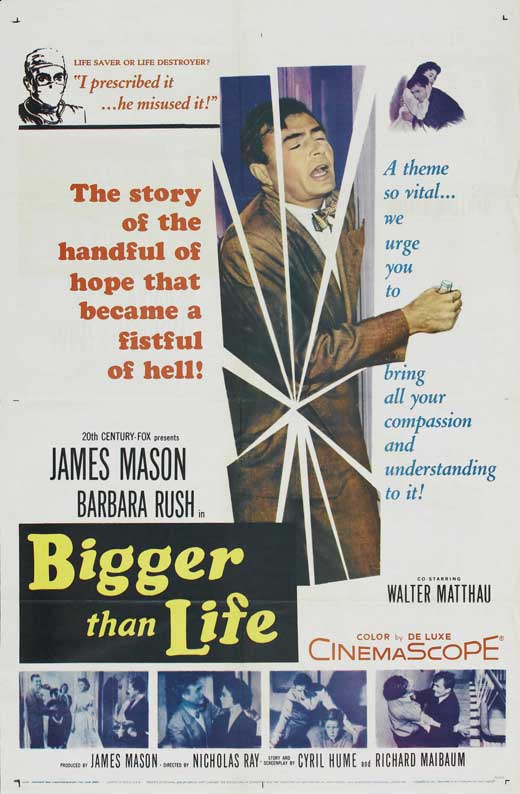
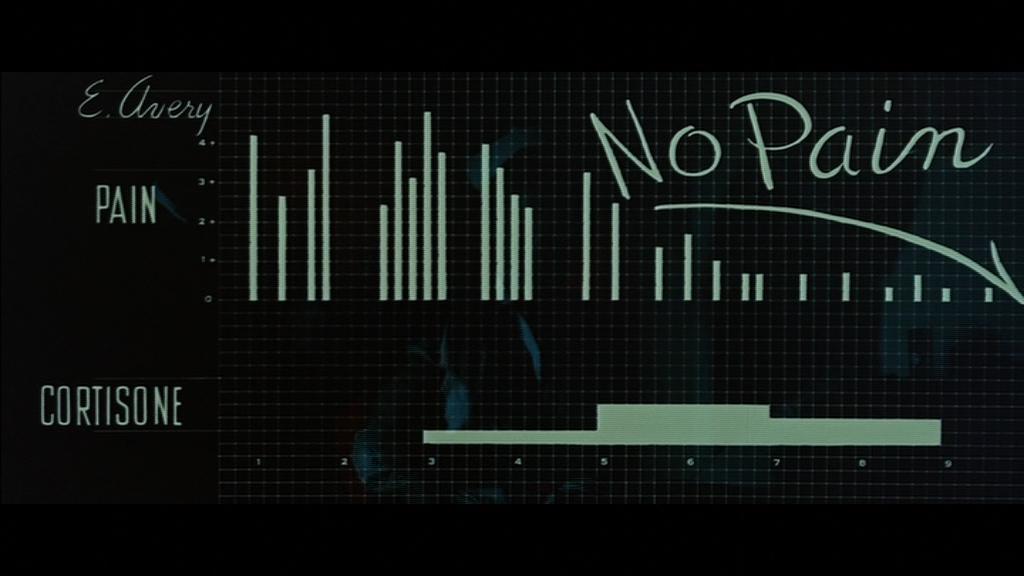
Overworked husband and father Ed Avery (James Mason) is prescribed cortisone as a pain-reliever for his rare arterial disease, and soon becomes addicted to the feelings this “wonder drug” produces in him — but his increasingly psychotic behavior puts his loyal wife (Barbara Rush) and son (Christopher Olsen) at grave risk.

Genres:

  • Alcoholism and Drug Addiction
  • Barbara Rush Films
  • Family Problems
  • James Mason Films
  • Mental Breakdown
  • Nicholas Ray Films
  • Psychological Horror
  • Walter Matthau Films

Review:
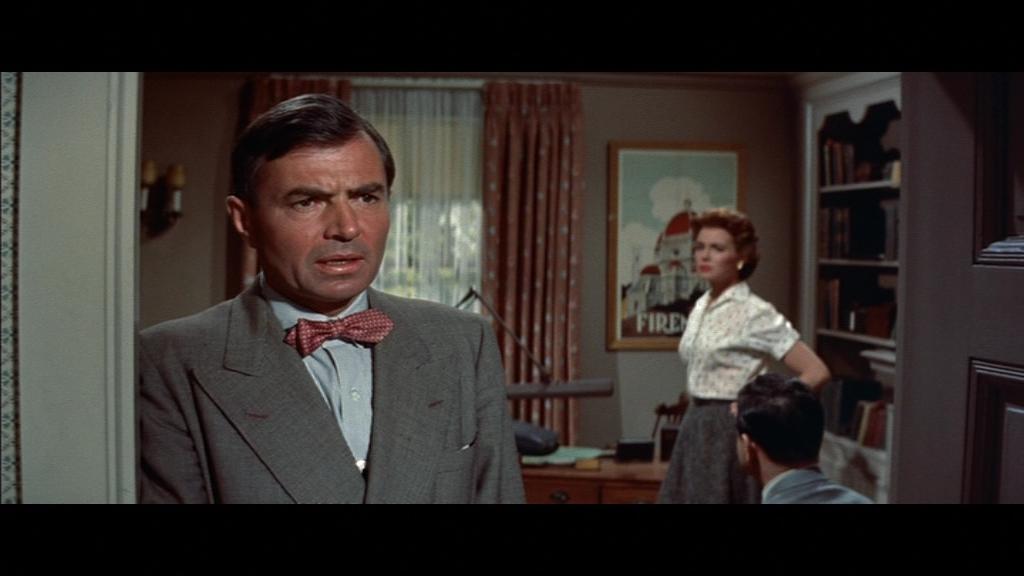
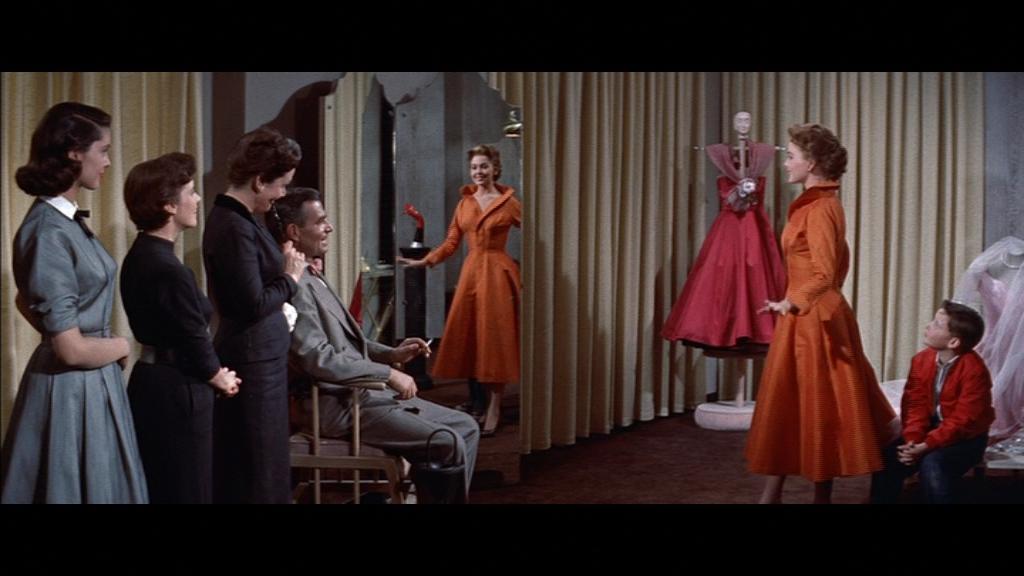
Nicholas Ray’s little-seen “social drama” about the ills of cortisone abuse has been voted by critics as one of the top-twenty best films unavailable on video in the United States. Much like Ray’s classic teen-angst drama Rebel Without a Cause (1955), Bigger Than Life provides a scathing, thinly veiled commentary on middle-class mores in 1950s America while ostensibly dealing with a different subject altogether. James Mason (who also produced) plays a man torn between familial duties and a desire for less pedestrian pursuits. As the film opens, we watch him leaving his day-job as a teacher to work surreptitiously as an operator for a taxi company. His wife has no idea that he’s moonlighting to supplement their comfortable middle-class lifestyle, instead suspecting him of an affair. But when he doubles over in acute pain, blacks out, and must be rushed to the hospital, she learns (with ironic relief) the truth about his stressful situation. Ed’s prognosis isn’t good, but with the help of a steady dose of cortisone — the new “wonder drug” of the day — he’s able to manage his pain and quickly return back to his regular life.

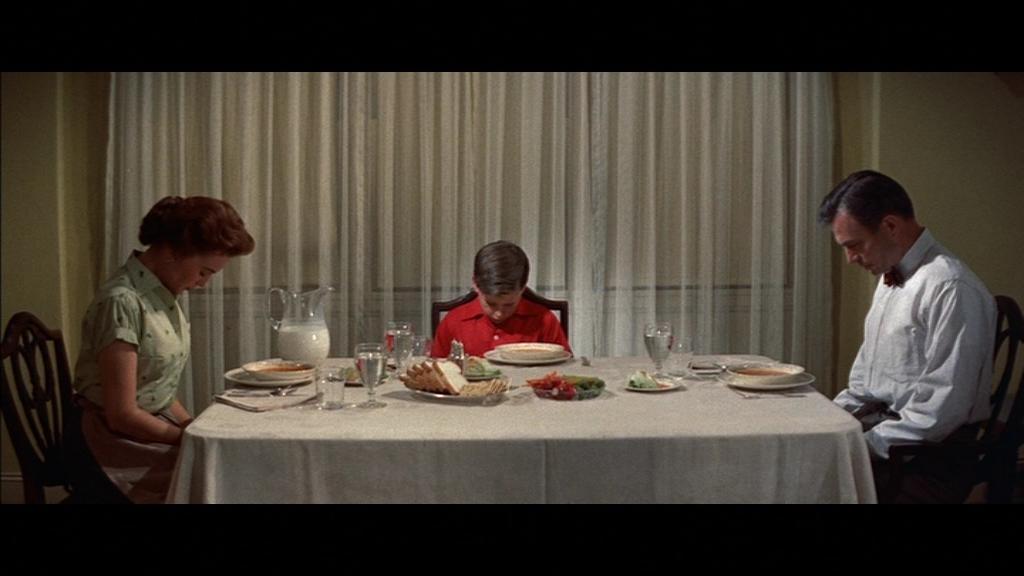
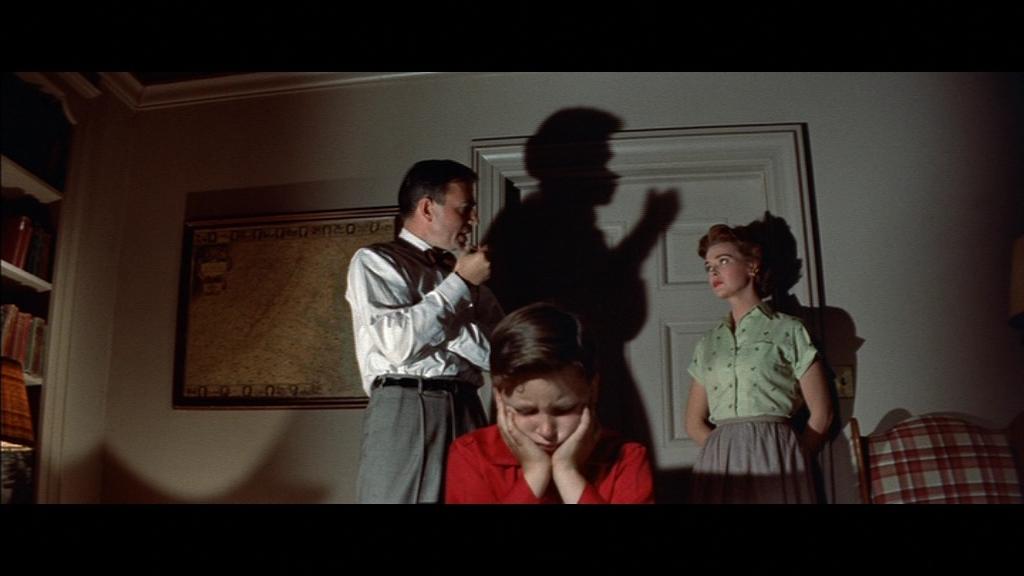
Unfortunately, this seeming “happy ending” merely signals the onset of an increasingly nightmarish existence for the Averys, as Ed discovers that cortisone provides him with a new kind of strength and virility which he had been sorely lacking before. He can’t seem to help himself from taking more than the prescribed dosage of his medication, and soon becomes a frightening figure of irrational authority in his household, demanding more and more control over his wife and son’s every move. The story quickly goes beyond the audience’s comfort zone, showing us the “hidden” impulses and thoughts which emerge when Ed is no longer constrained by petty concerns such as earning an income and maintaining a modicum of social propriety.

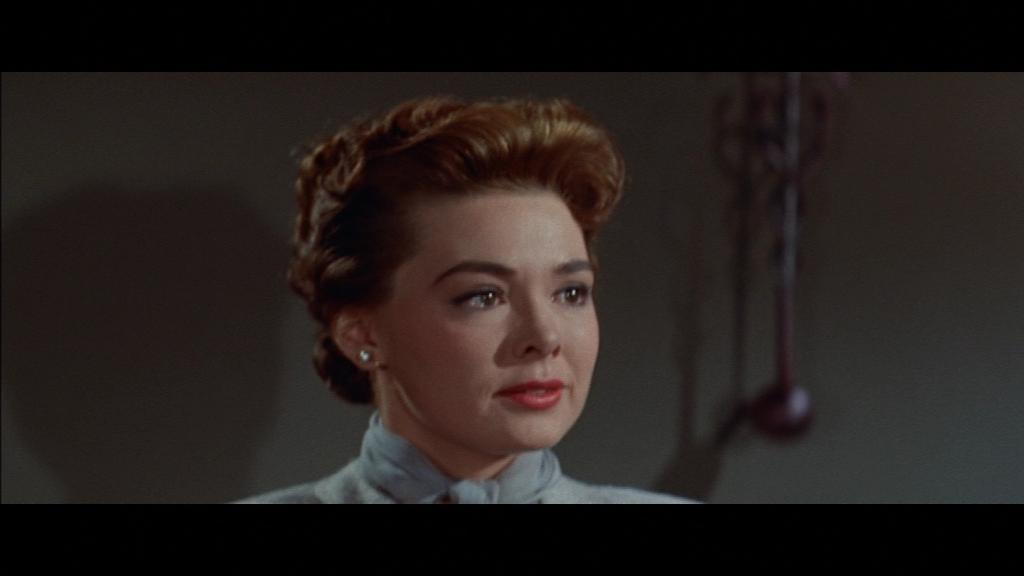
Ultimately, then, Bigger Than Life shows us a prototypical 1950s family man who secretly longs to transcend his cloistered existence (posters and maps of far-away countries — places he can’t afford to visit — line the walls of his house), but who is torn by a sense of guilty responsibility to his family. His wife (played with firm resolve by Barbara Rush) is similarly stuck in a vision of 1950s propriety: she’s afraid to send Ed to a psychiatrist because of what this would imply about his sanity, and unable to stand up to her husband even in the face of extreme danger to herself and her son. While the film ends on an unrealistically upbeat, pro-family note (perhaps demanded by audiences of the day), fortunately this doesn’t erase the impact of the gripping psychological horror that has come before.

Redeeming Qualities and Moments:

  • James Mason’s frightening portrayal as a real-life “Jekyll and Hyde”

  • Barbara Rush as Mason’s loyal wife
  • Vibrant Technicolor cinematography
  • A shattering indictment of 1950s middle-class materialism and gender roles
  • A powerful portrayal of a family torn apart by prescription drugs

Must See?
Yes. Listed in the back of Peary’s book at as a Personal Recommendation and a film with historical importance.

Categories

  • Controversial Film
  • Important Director
  • Noteworthy Performance(s)

(Listed in 1001 Movies You Must See Before You Die)

Links:

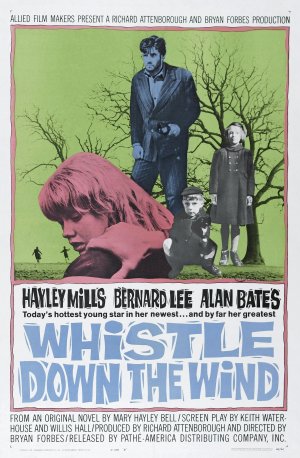
Whistle Down the Wind (1961)

Whistle Down the Wind (1961)

“[It’s] Jesus — He’s in our barn. He’s come back.”

Synopsis:
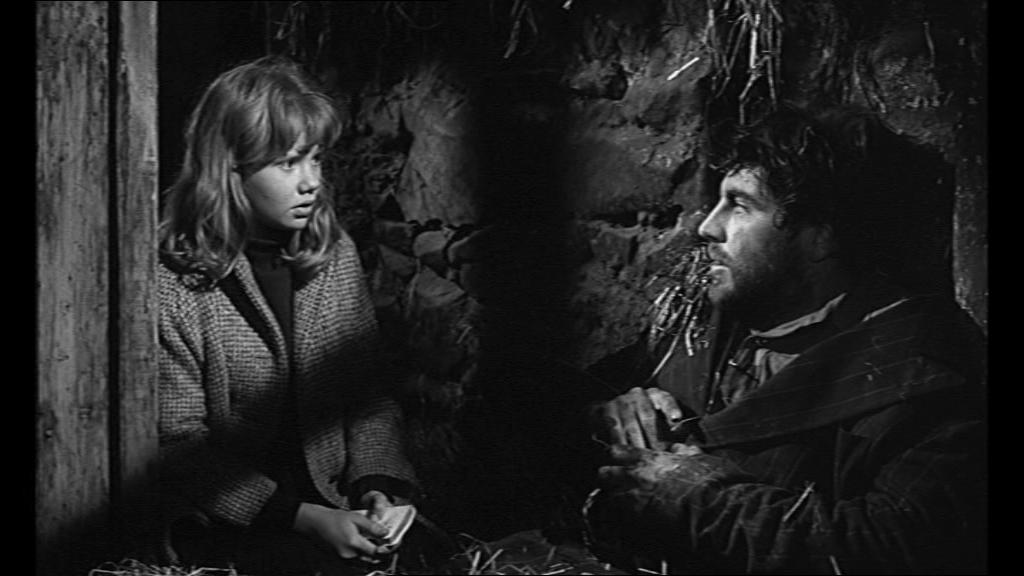
Three motherless siblings (Hayley Mills, Diane Holgate, and Alan Barnes) find a fugitive (Alan Bates) hiding in their barn, and mistakenly believe he is Jesus.

Genres, Themes, Actors, and Directors:

  • Alan Bates Films
  • Bryan Forbes Films
  • Childhood
  • Do-Gooders
  • Fugitives
  • Mistaken or Hidden Identities
  • Religious Faith

Review:
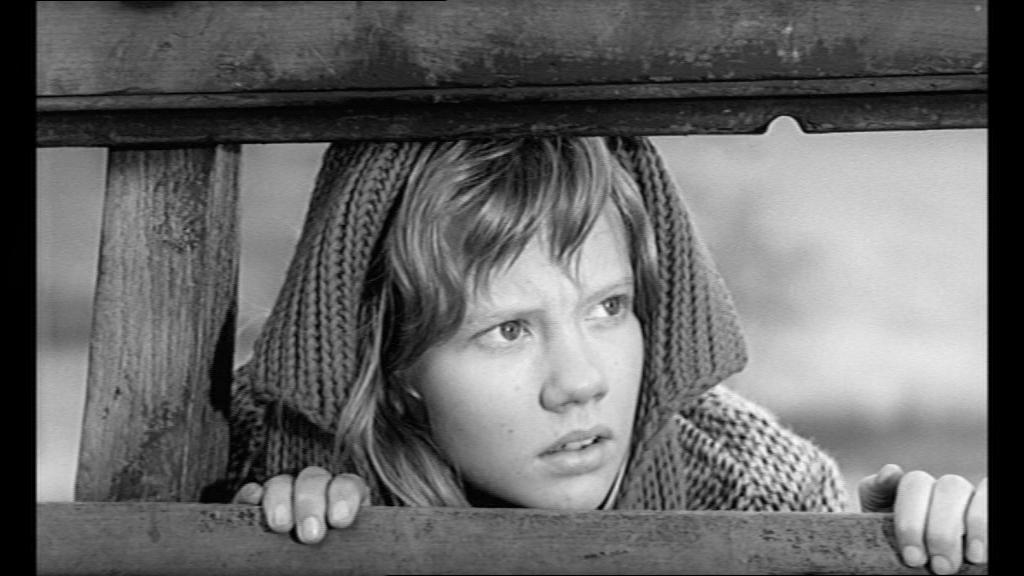
At the age of five, I desperately wanted to know who “God” was, and how He fit into the broader scheme of the universe; therefore, I could instantly relate to the adventures of the likable lead characters in Whistle Down the Wind, a rare film — much like Rene Clement’s Forbidden Games (1951) — which manages to depict the natural innocence of children without patronizing them. As the film opens, the three Bostock siblings are stealthily following a man in a coat who is carrying a burlap sack under his arm. This man, we soon learn, is their father’s farmhand, and the sack he carries contains a litter of unwanted kittens. After he tosses the bag into a river and walks away, the siblings quickly rescue the helpless animals and bring them to hidden safety in their barn — where they discover the fugitive who they soon come to believe is Jesus Christ.

This powerful opening sequence — quiet and grim, yet hopeful at the same time — effectively establishes a tense dialectic between childhood idealism and adult pragmatism, a theme which continues through the entire film. The notion of these village children mistaking a scruffy, bearded stranger for Christ is highly credible, as is their quest to keep him safe from the evil hands of Adults Who Want Him Gone — after all, if adults will kill innocent kittens, what aren’t they capable of? Fortunately, though grown-ups may be the ones in power most of the time, children easily trump them in terms of their cleverness, imagination, and sheer trust in goodness, as this film ably shows.

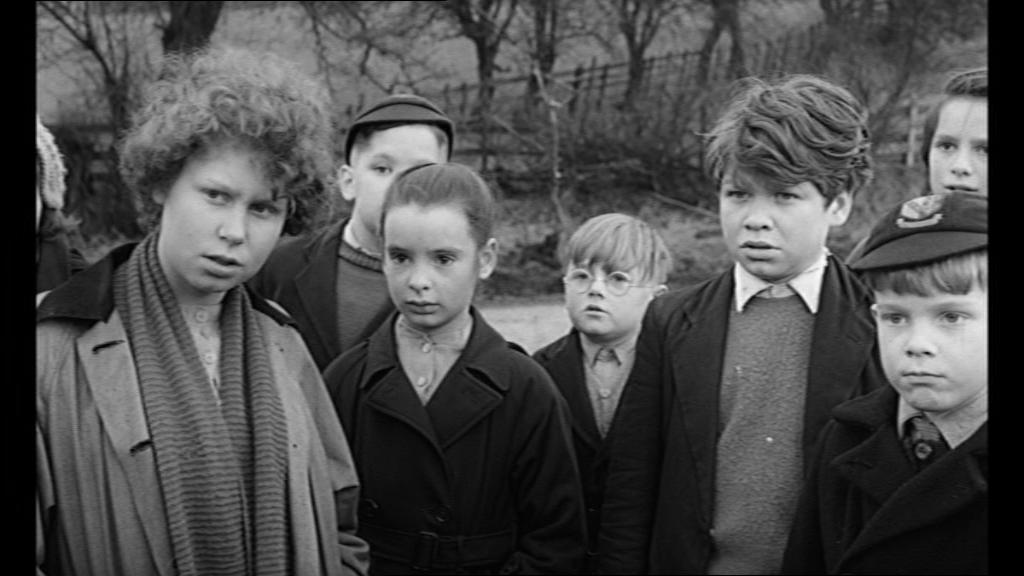
In addition to its provocative, unusual storyline, Whistle Down the Wind benefits from marvelous acting. Mills is once again natural and vibrant in a role which required her to ditch her perfect Queen’s English for a Northern dialect, and Alan Bates (in his film debut) wisely plays The Man (a.k.a. “Jesus”) as someone reticent and careful rather than vicious and bold, thus allowing the children’s impressions of him to form the bulk of his characterization. The cast of local children (labeled “The Disciples” in the film’s closing credits) are appropriately diverse in both appearance and demeanor, and the town’s adults (including Diane Clare as the children’s well-meaning Sunday School teacher, Bernard Lee as the siblings’ harried yet concerned single father, and Hamilton Dyce as the local vicar) are realistic as well.

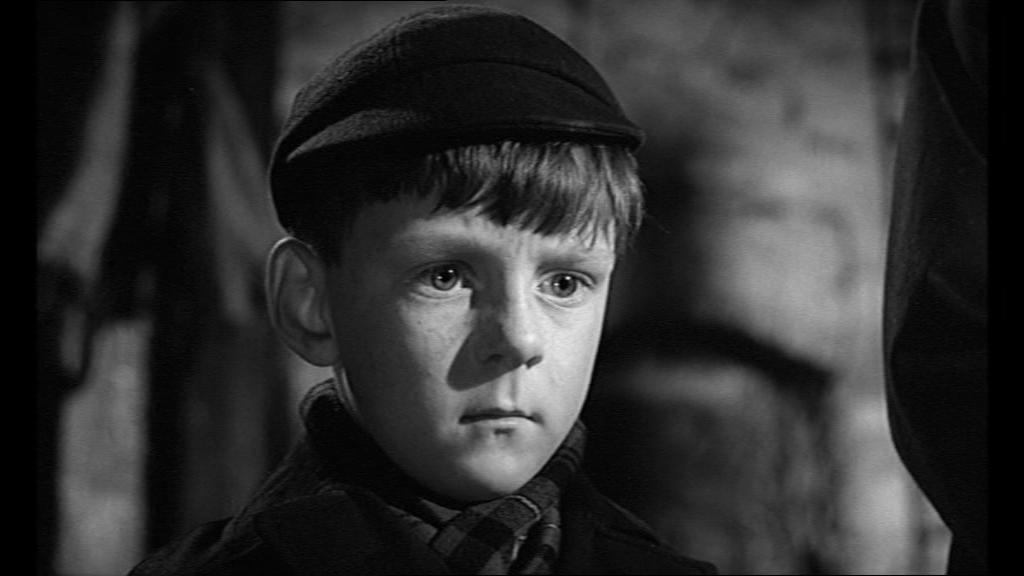
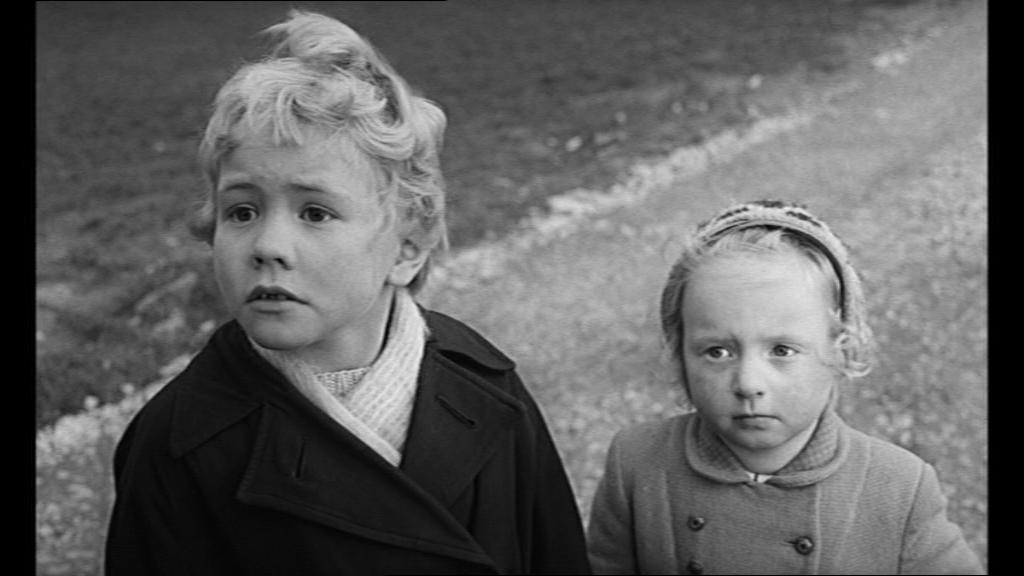
But the film’s stand-out performance undeniably belongs to the youngest Bostock sibling (Charles), played by Alan Barnes — who, as Bosley Crowther of the New York Times put it, “is absolutely the most terrific little fellow we’ve ever seen in a film.” Charles is the type of precocious kid who suddenly announces out loud at the breakfast table: “198”, then explains — as though the relevance and importance of this numerical fact should be obvious — that this is how many eggs he’s eaten since Easter. Charles is a boy who requires concrete proof of anything in order to be persuaded, and when “Jesus” allows the kitten Charles has placed in his care to die, Charles’s faith is suddenly and irreparably damaged: “It isn’t Jesus. It’s just a fella,” he takes to announcing with cynical disdain.

Ultimately, however, Whistle Down the Wind is most concerned with Mills’s character (Kathy), and how she negotiates the tricky terrain of childhood conviction in the face of adult authority. Fortunately, the film builds to a credible denouement, with the movie’s final scene arriving as a satisfying solution to what seemed (to me at least) like an impossible task — bringing about justice for the fugitive’s crimes without shattering Mills’s faith completely. It is a testament to this fine, original film that it manages to achieve both.

Redeeming Qualities and Moments:

  • Hayley Mills in yet another impressive early performance
  • Alan Barnes as the inimitable young Charles
  • Realistic performances by local children
  • Alan Bates’s low-key yet fateful interactions with Mills
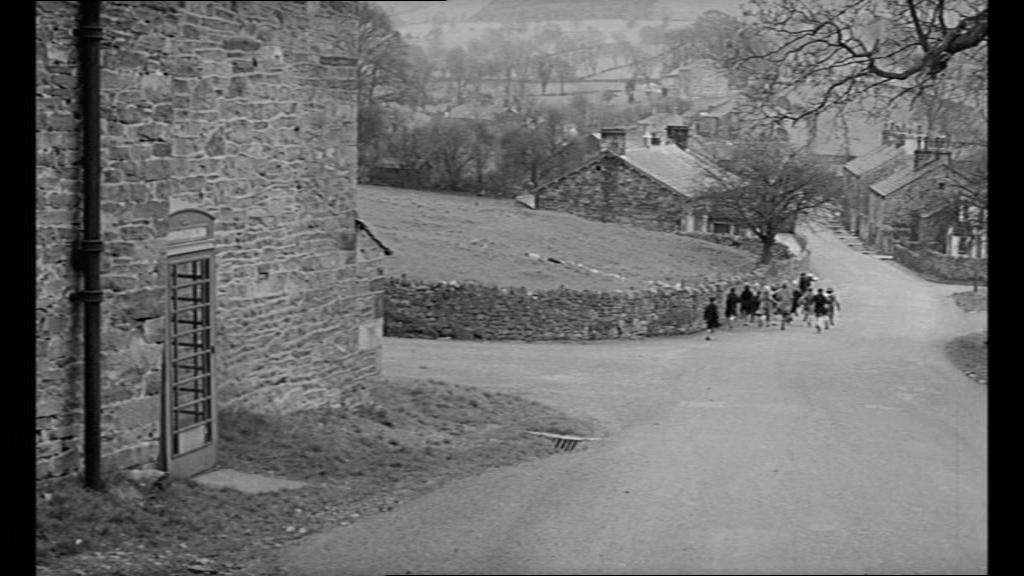
  • Beautiful north England scenery
  • Effective use of camera angles, lighting, and sets
  • A touching, memorable final scene

Must See?
Yes. This allegory of childhood innocence and faith remains an unsung classic of British cinema.

Categories

  • Good Show
  • Noteworthy Performance(s)

Links: