Browsed by
Category: Original Reviews

Responses to Peary’s “must see” movie reviews, as well as my own “must see” movie reviews up to and after 1986 (when Peary’s book was published).

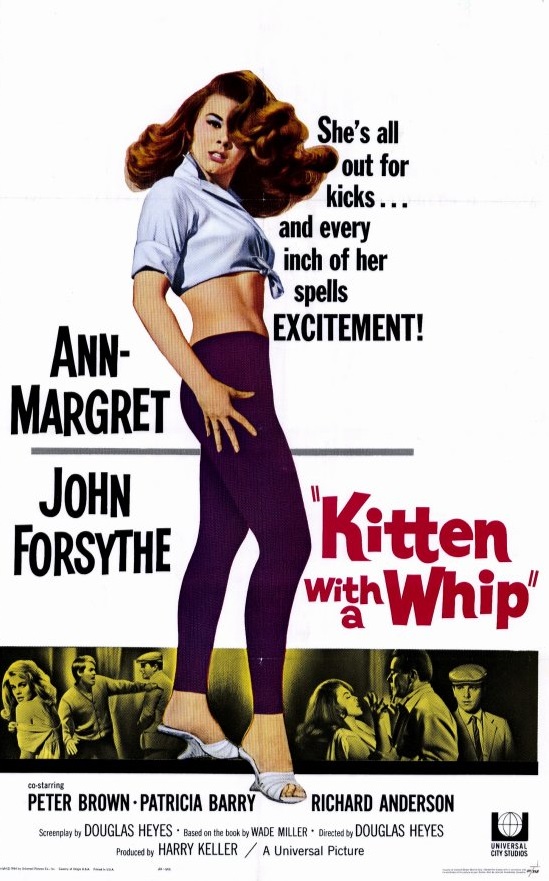
Kitten With a Whip (1964)

Kitten With a Whip (1964)

“You’re going to think I have an awful dirty mind, David — I change it so often.”

Synopsis:
A juvenile delinquent (Ann-Margret) escapes from reform school and takes refuge in the home of aspiring politician David Stratton (John Forsythe). While Stratton wants nothing to do with her, Jody (Ann-Margret) threatens to reveal his involvement in harboring a fugitive, and soon he finds himself battling Jody’s manipulative pals (Peter Brown and James Ward) down in Tijuana.

Genres, Themes, Actors, and Directors:

  • Femmes Fatales
  • Fugitives
  • Hostages
  • Juvenile Delinquents

Review:
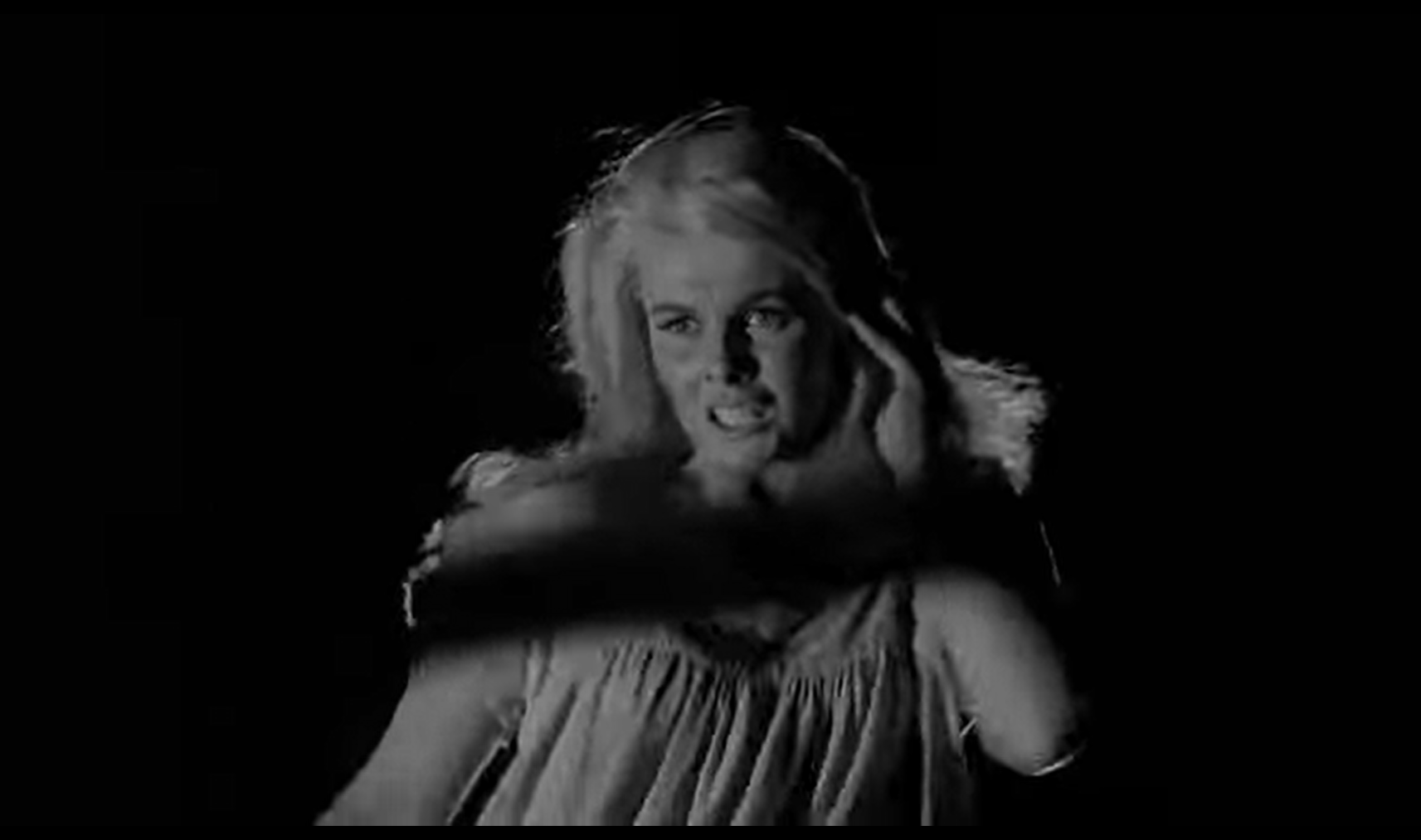
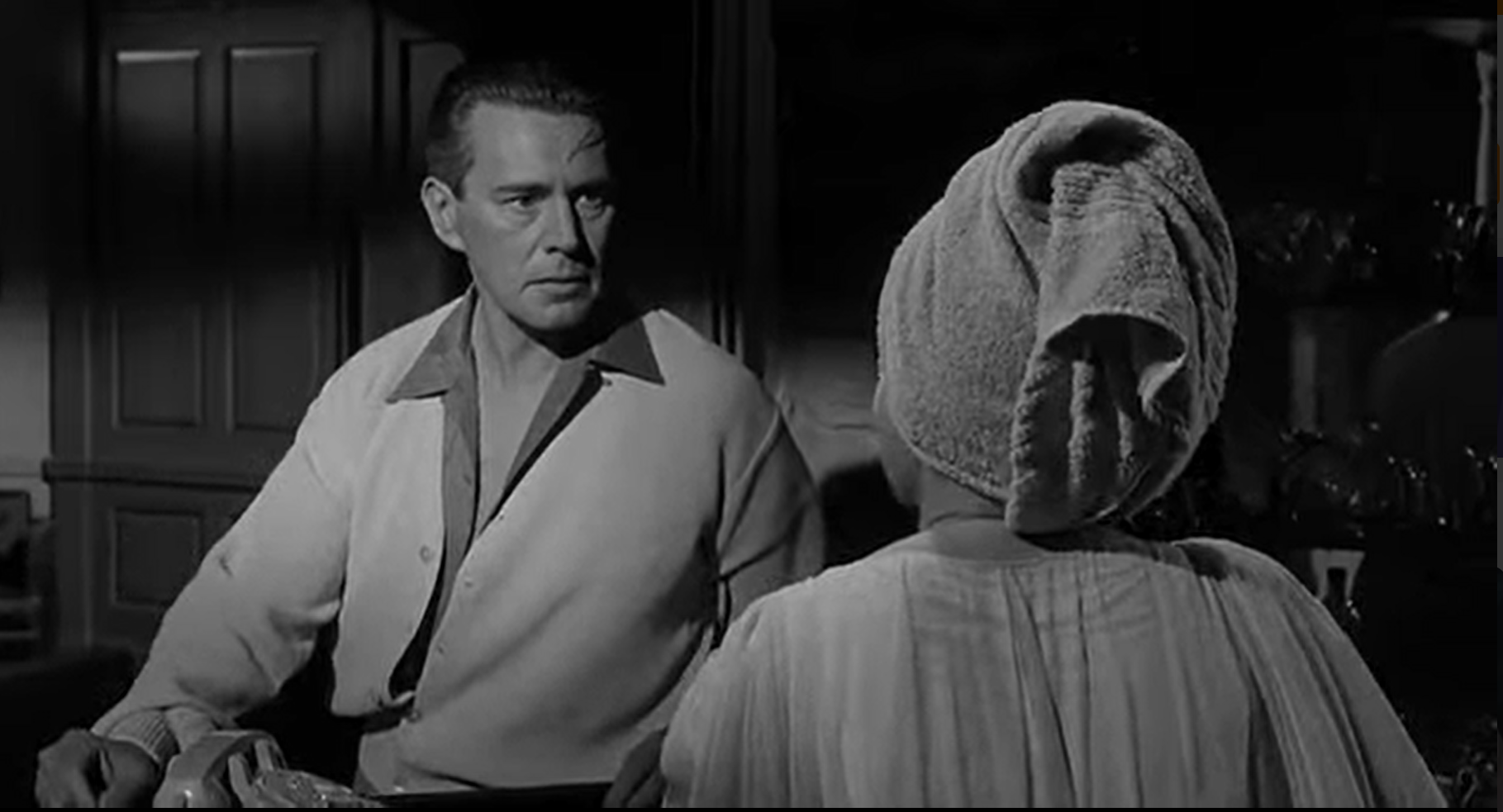
This unfairly maligned B-flick — referred to by the TV Guide as a “thoroughly hideous and unpleasant movie” — is actually an enjoyably kitschy drama which offers plenty of lurid, sassy entertainment. From the opening shot of sexy Ann-Margret (Jody) running down the street in a baby doll nightgown:

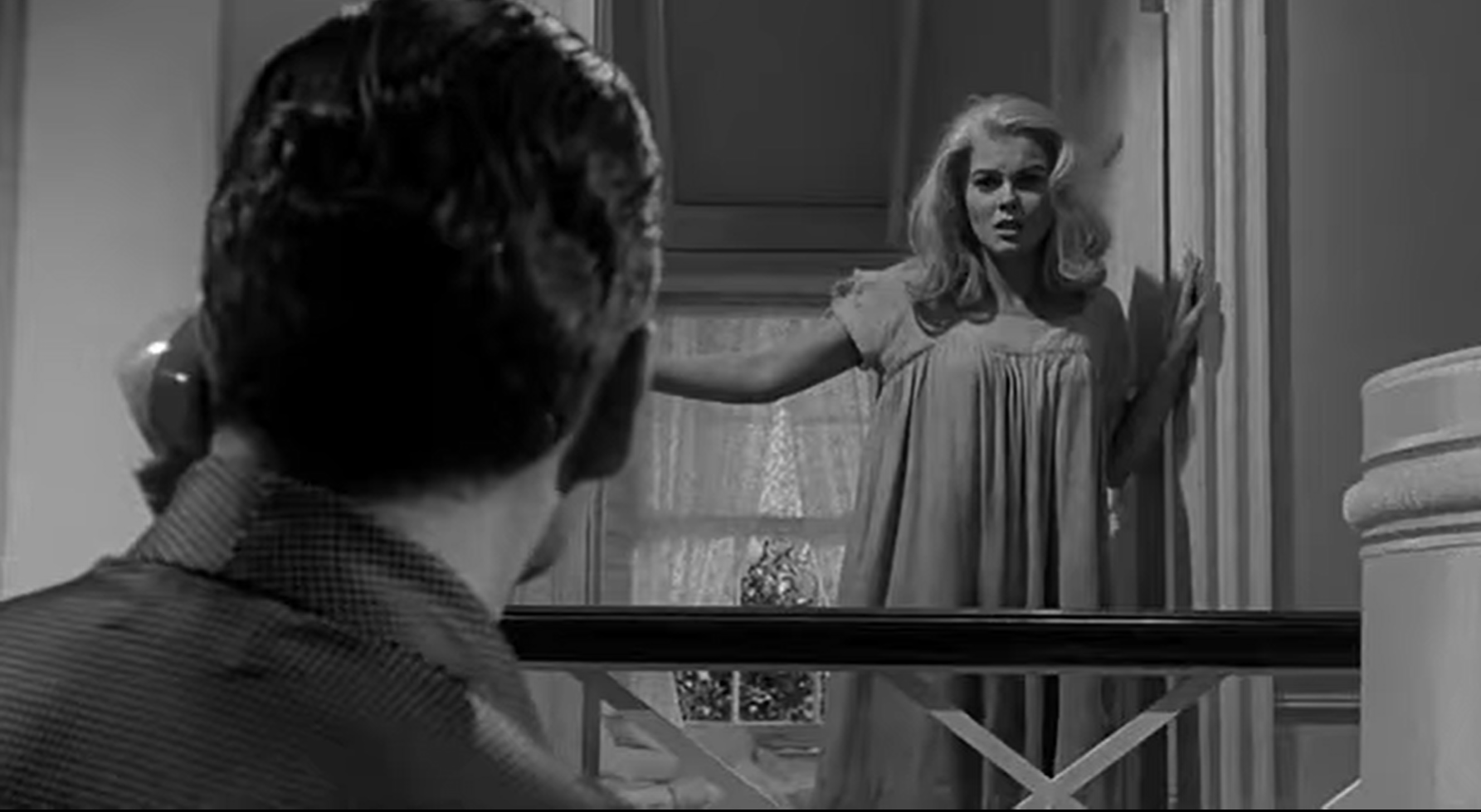
… we’re taken along for a fast-paced ride as Jody-cum-Goldilocks “accidentally” sleeps in a publicity-conscious senator’s house:

… takes advantage of his compassion, then quickly reveals her true nature as a deeply manipulative — and deeply troubled — juvenile delinquent. Ann-Margret is perfectly cast (and appropriately over-the-top) as Jody, a wild-card teen with vicious claws; and while many have ridiculed John Forsythe’s performance as Jody’s “square” counterpart, he does a believable job reacting the way a compassionate yet publicity-paranoid politician most likely would.

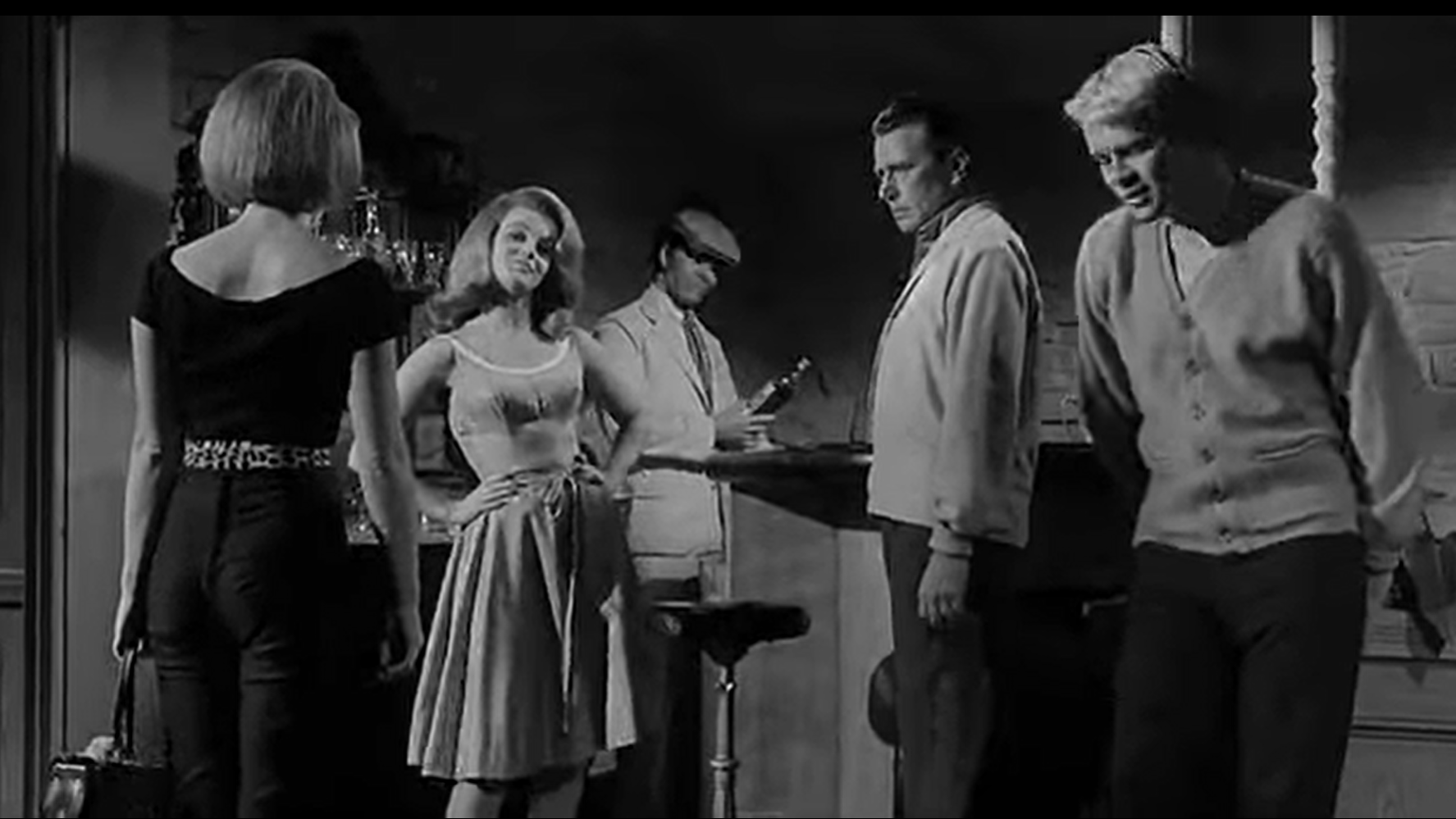
Just when we think the heated story is going to remain centered on Jody’s manipulation of David (will this red-blooded male — separated from his wife, no less — give in to Jody’s tempting sexual advances?), several new characters are introduced:

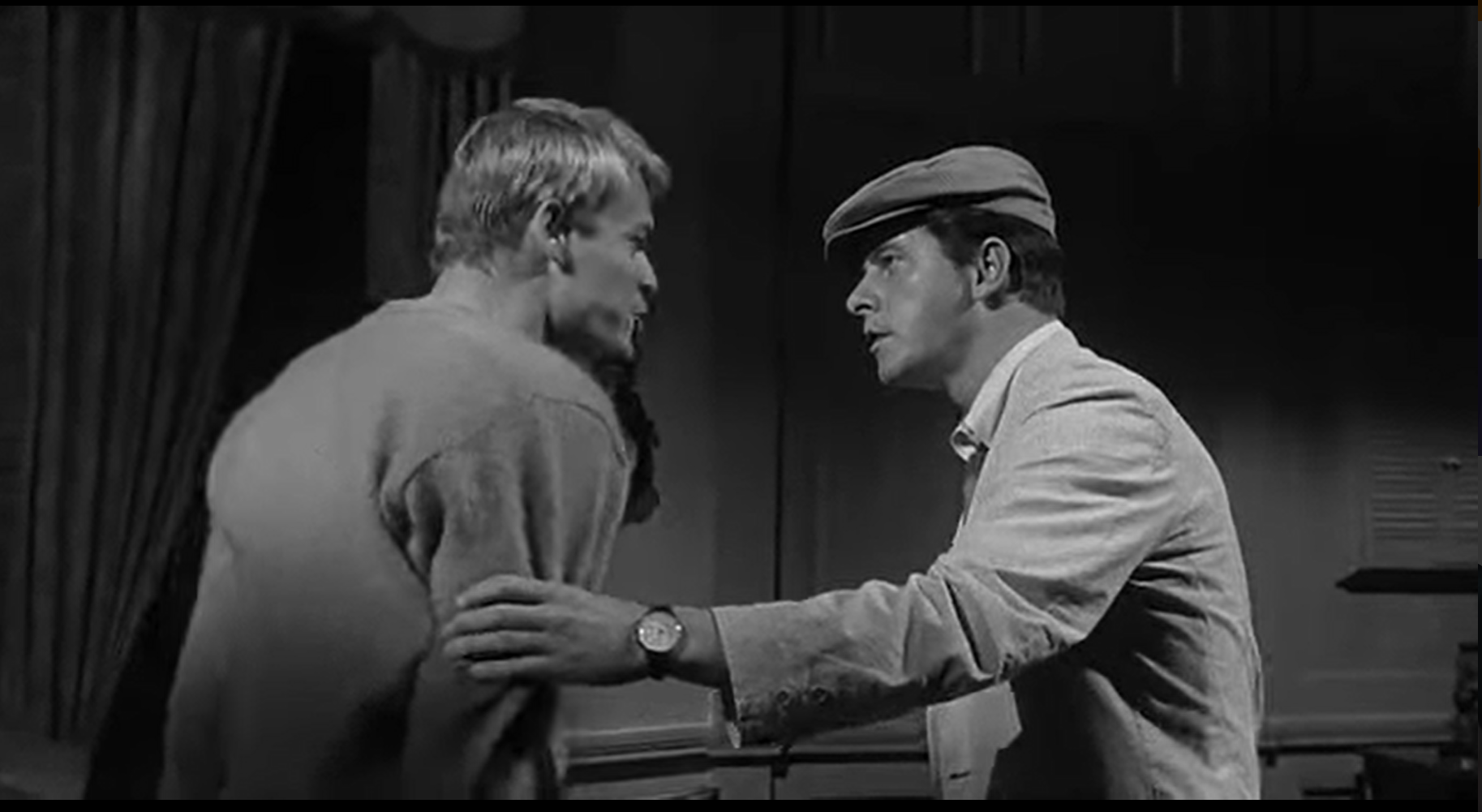
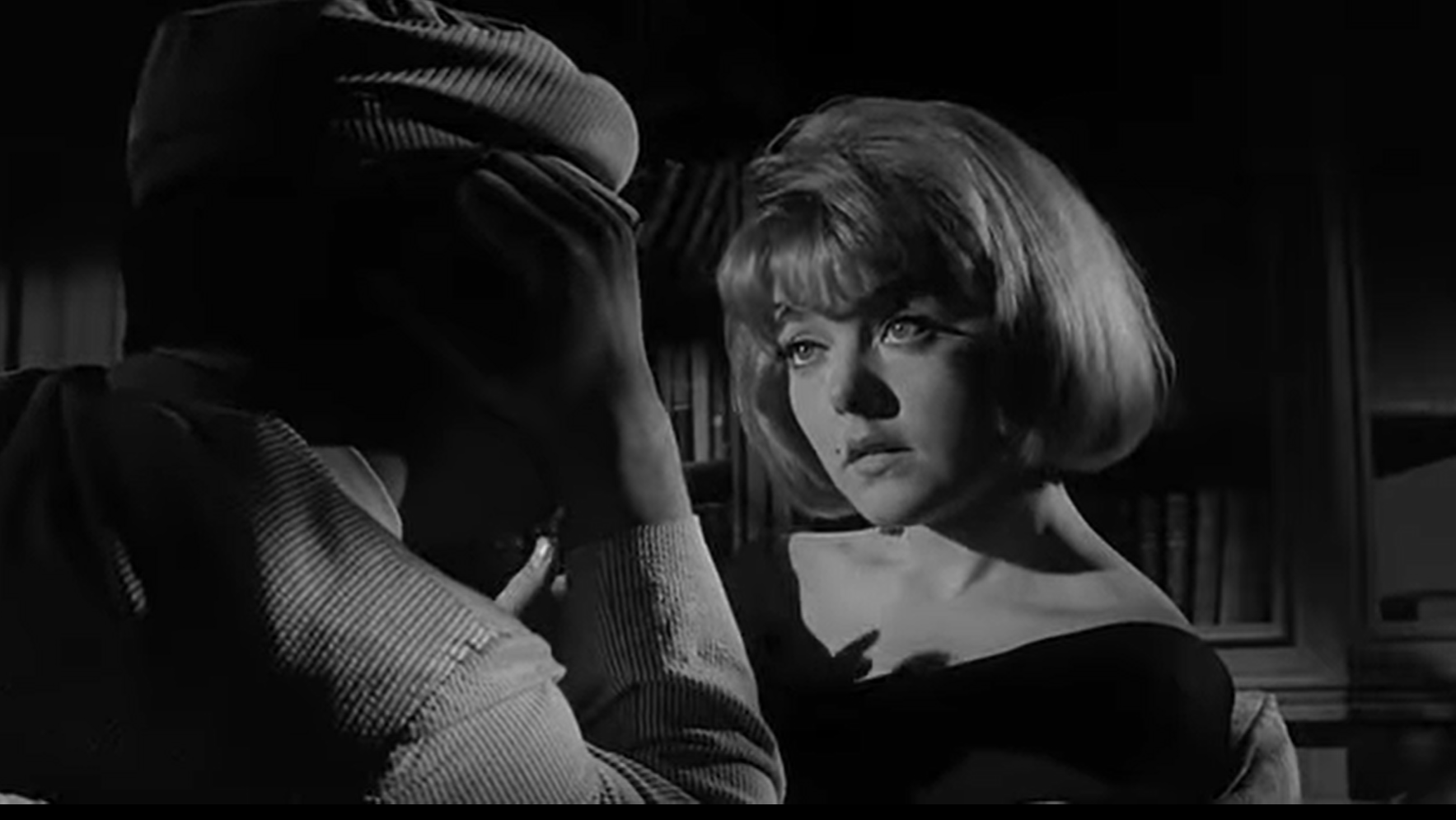
Peter Brown and James Ward are appropriately creepy and cocky as the hoodlum pals who show up on David’s doorstep, and Diane Sayer (equally good in The Strangler, released the same year) adds just the right touch of guilelessness to her role as “Midge”, a female hanger-on given to saying “Guy!” instead of “God!” By the time the story takes us to Tijuana (ever-reliable as a border-town location of crisis and chaos), we’re anxiously awaiting David’s opportunity to finally break free from the clutches of his juvenile hostage-takers; fortunately, the film’s ending — while improbable — is perhaps the most satisfying of all possible outcomes.

Note: Kitten With a Whip was spoofed by the MST3K crew (and can be viewed in 10-minute installments on You Tube), but remains a rare entry in that series which bears watching on its own as well, without commentary.

Redeeming Qualities and Moments:

  • Ann-Margret as Jody
  • John Forsythe as David
  • Peter Brown and James Ward as Jody’s hoodlum friends
  • Diane Sayer as naive Midge
  • A luridly enjoyable tale of manipulation
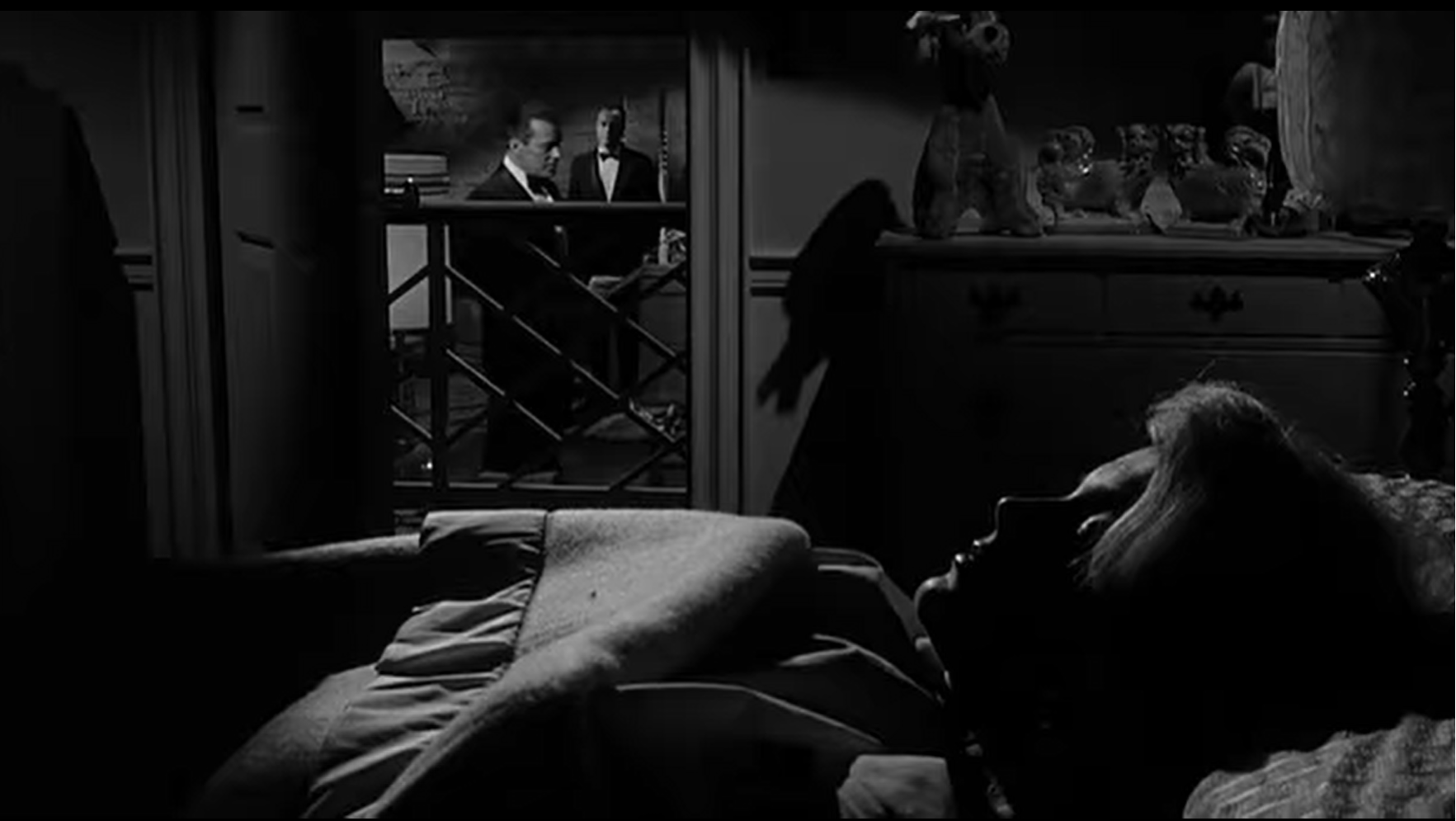
  • Atmospheric cinematography
  • Plenty of hilariously sassy lingo (“I feel creamy!”)

Must See?
Yes, for its status as a cult favorite. Listed as a Sleeper in the back of Peary’s book.

Categories

  • Cult Movie

Links:

First Comes Courage (1943)

First Comes Courage (1943)

“You know what I am to you? An international complication.”

Synopsis:
A WWII resistance fighter (Merle Oberon) has an affair with an unsuspecting German major (Carl Esmond), and is able to pass on vital information to the Norwegian underground. When Esmond’s superior becomes suspicious, however, a British agent (Brian Aherne) — formerly Oberon’s lover — is sent to assassinate Esmond.

Genres, Themes, Actors, and Directors:

  • Brian Aherne Films
  • Dorothy Arzner Films
  • Merle Oberon Films
  • Nazis
  • Resistance Fighters
  • Spies
  • World War II

Review:
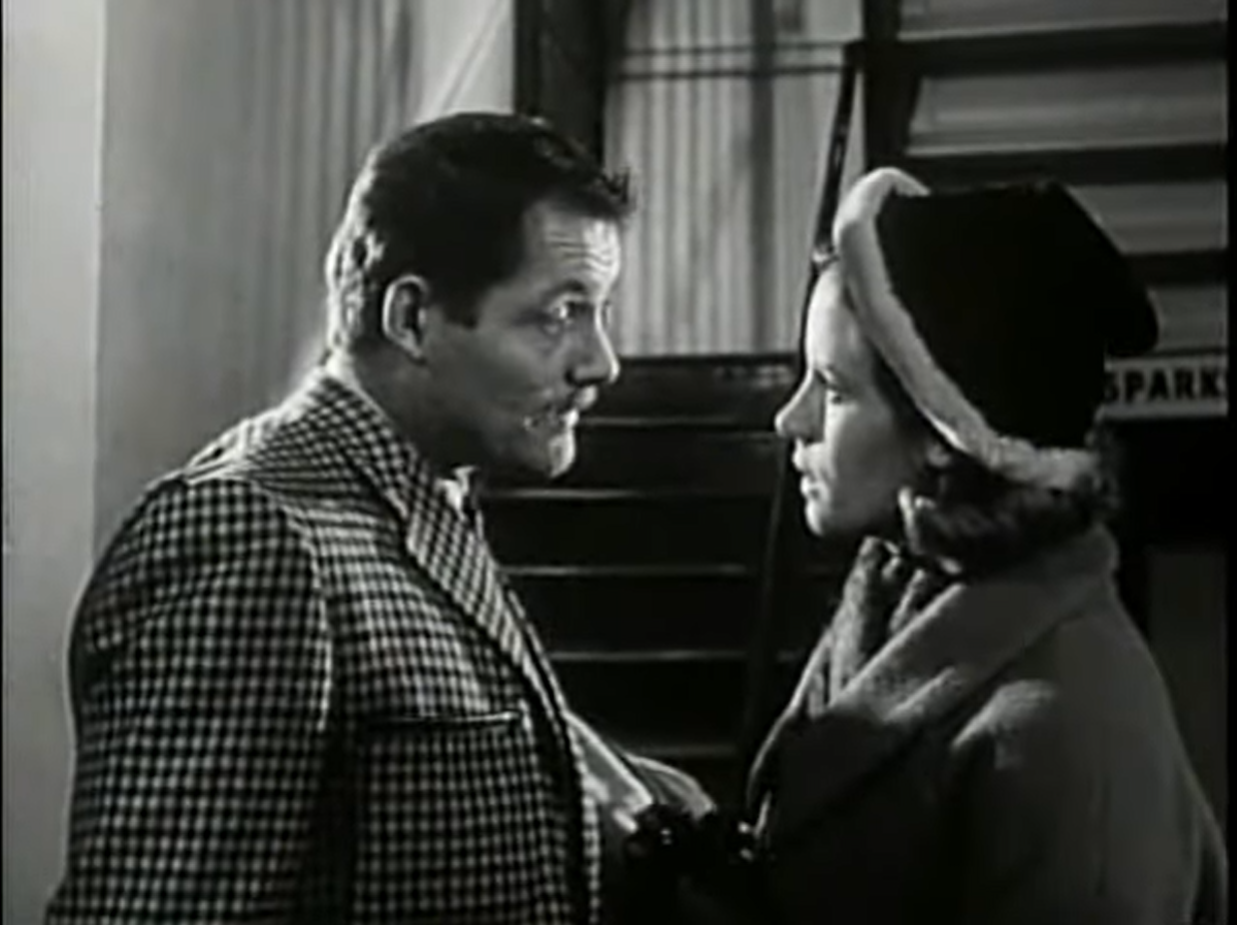
This rather pedestrian wartime melodrama is primarily notable as director Dorothy Arzner’s final feature film, yet it offers little that’s new or different to the genre; as noted so succinctly in the New York Times‘ original review, “Although the film does maintain a measure of suspense quite steadily, its authors and director have failed to stamp it with any distinction or depth of conviction to lift it above the level of a dozen similar mediocre war films.” Oberon is generally fine — and appropriately beautiful (if unconvincing as a Norwegian) — in the leading role (though she doesn’t know how to mime piano-playing for the life of her!):

Faring slightly better is Brian Aherne as her British lover, who at least brings some welcome energy to the proceedings.

While one knows that all will (or should) work out in the end, there are at least a few tension-filled moments along the way — ultimately, however, First Comes Courage remains resolutely “ordinary”, and will only be of real interest to die-hard Arzner fans.

Redeeming Qualities and Moments:

  • Brian Aherne as Captain Lowell
  • Fine cinematography

Must See?
No; I suspect the only reason this film is listed in Peary’s book is because it was directed by Arzner.

Links:

Luck of Ginger Coffey, The (1964)

Luck of Ginger Coffey, The (1964)

“Oh Ginger, face facts… When have you ever lasted in any job? What have you ever done in any job but dream about what you’d do with the next one?”

Synopsis:
An Irish immigrant (Robert Shaw) in Montreal remains hopeful that a “job with possibilities” lies just around the corner — meanwhile, his disillusioned wife (Mary Ure) grows tired of her husband’s lies and instability, and threatens to break up their marriage.

Genres, Themes, Actors, and Directors:

  • Canadian Films
  • Character Studies
  • Immigrants and Immigration
  • Marital Problems
  • Robert Shaw Films
  • Unemployment

Review:
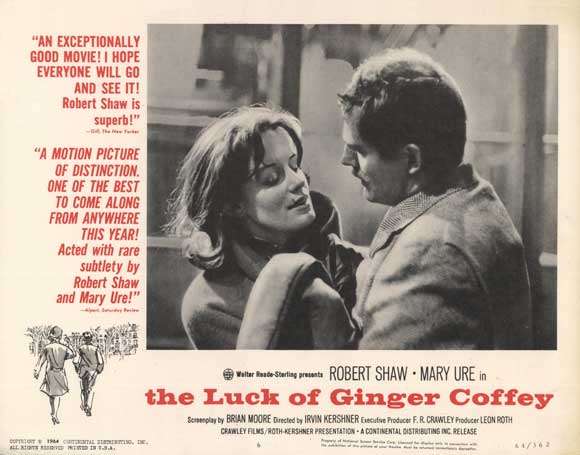
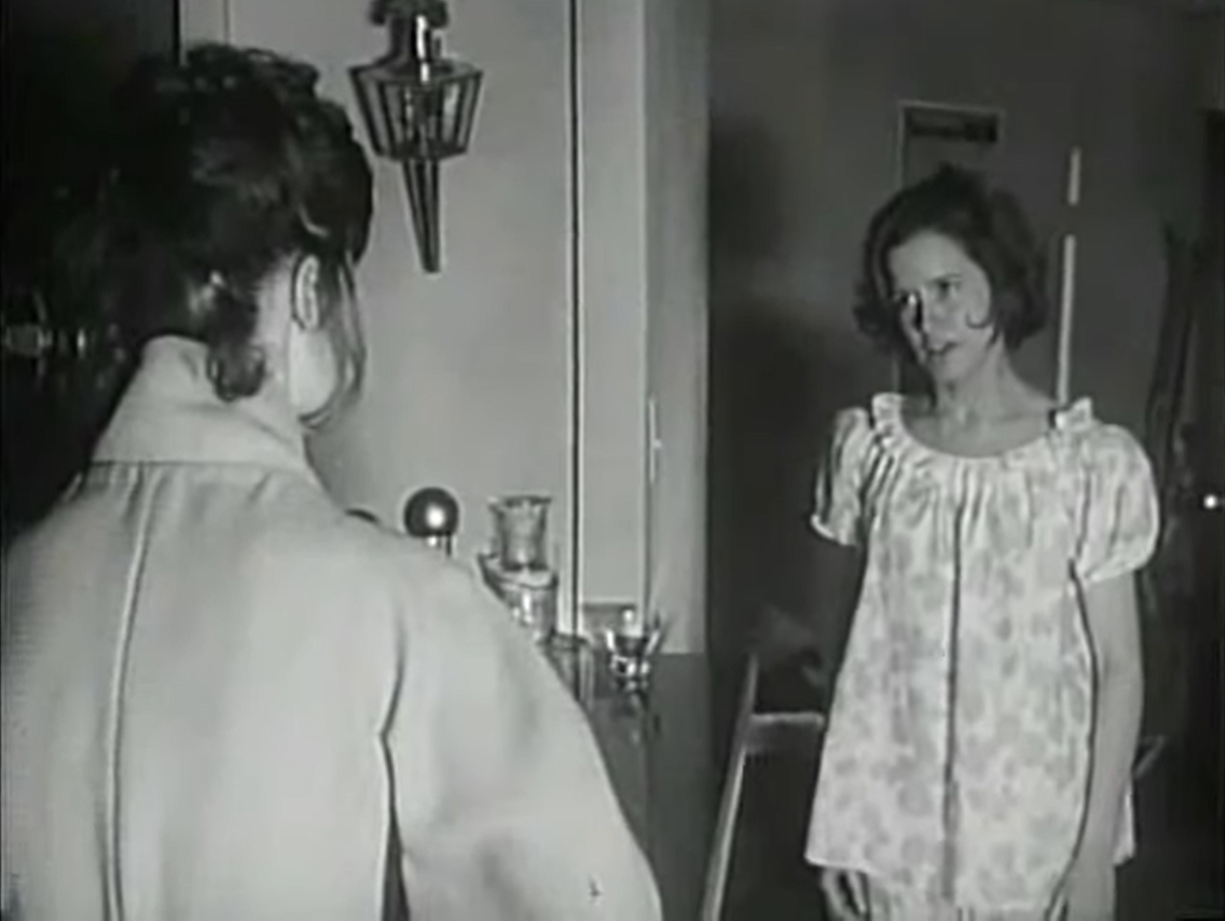
Robert Shaw shines as the title character in this tale of Irish immigrants hoping to create a new life for themselves in Montreal, Canada. While “Ginger” is undeniably self-deluded, unrealistic, and dishonest, the strength of Shaw’s performance lies in the fact that we literally can’t help sympathizing with Ginger from the moment he appears on-screen: his face is full of such genuine good cheer (his eyes are piercingly bright) that one immediately understands why he gets so far on charisma and charm alone. Unfortunately, despite the deceptively cheery soundtrack, circumstances quickly go downhill, as Ginger makes one bad decision after another, and his wife (played with nuance and depth by Shaw’s real-life wife, Mary Ure) suddenly realizes she can no longer count on Ginger as a reliable partner. Given its depressing trajectory, The Luck of Ginger Coffey won’t be for all tastes — but it’s certainly worth a look if you can locate a copy.

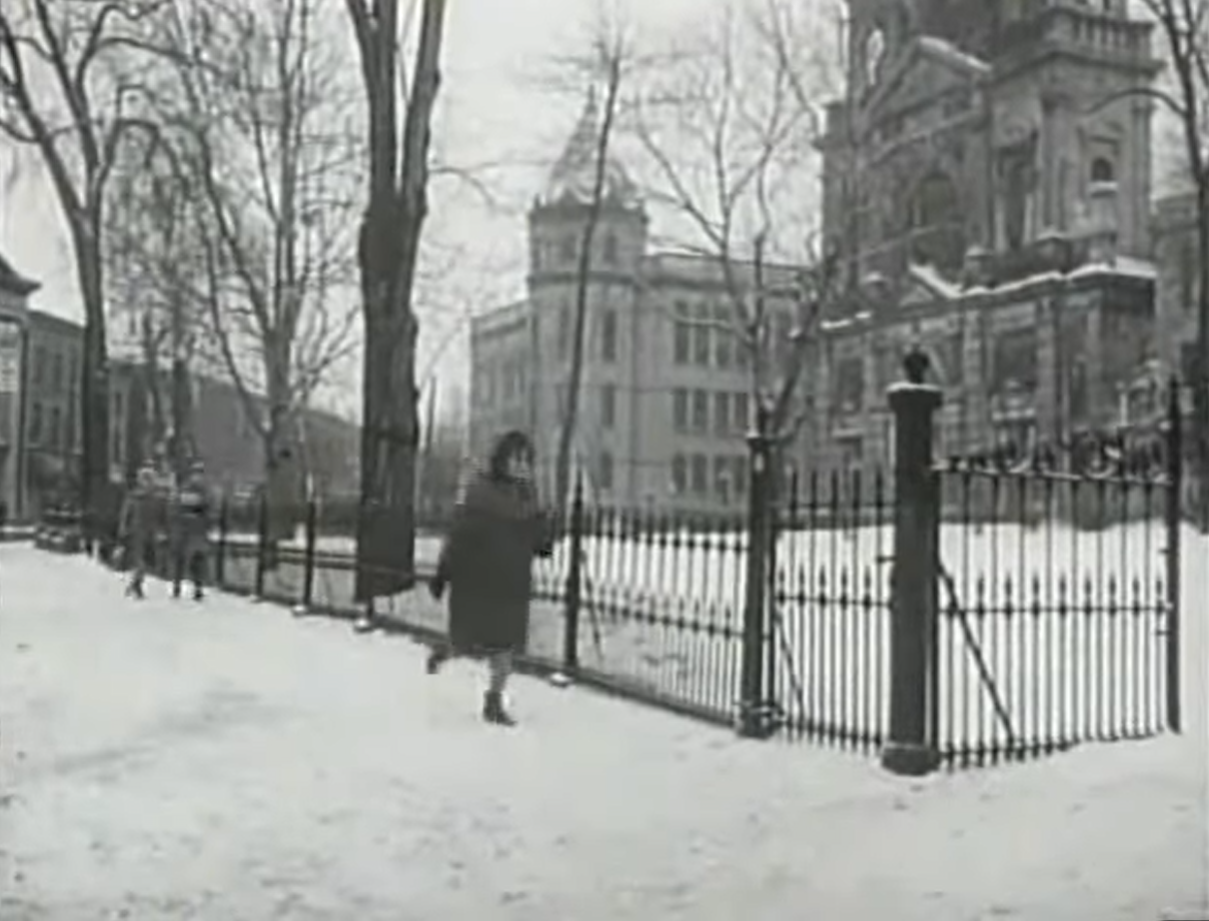
Note: Director Irvin Kershner makes excellent use of Montreal locales, seamlessly incorporating several vignettes which reveal the language tensions inherent in mid-century Canadian politics.

Redeeming Qualities and Moments:

  • Robert Shaw as Ginger Coffey
  • Mary Ure as Ginger’s put-upon wife, Vera
  • Libby McClintock as Ginger and Vera’s teenage daughter, Paulie
  • Fine on-location footage in Montreal

Must See?
No, but it’s absolutely worth a look simply for Shaw’s noteworthy performance.

Links:

Greeks Had a Word For Them, The / Three Broadway Girls (1932)

Greeks Had a Word For Them, The / Three Broadway Girls (1932)

“I’m sure I’ve met you before — I never forget a face, and you are good looking, you know!”

Synopsis:
Three former showgirls — Schatzi (Joan Blondell), Polaire (Madge Evans), and Jean (Ina Claire) — hoping to land sugar daddies find their friendship compromised when Jean repeatedly butts in on the other girls’ conquests.

Genres, Themes, Actors, and Directors:

  • Gold Diggers
  • Joan Blondell Films
  • Play Adaptation
  • Rivalry
  • Romantic Comedy

Review:
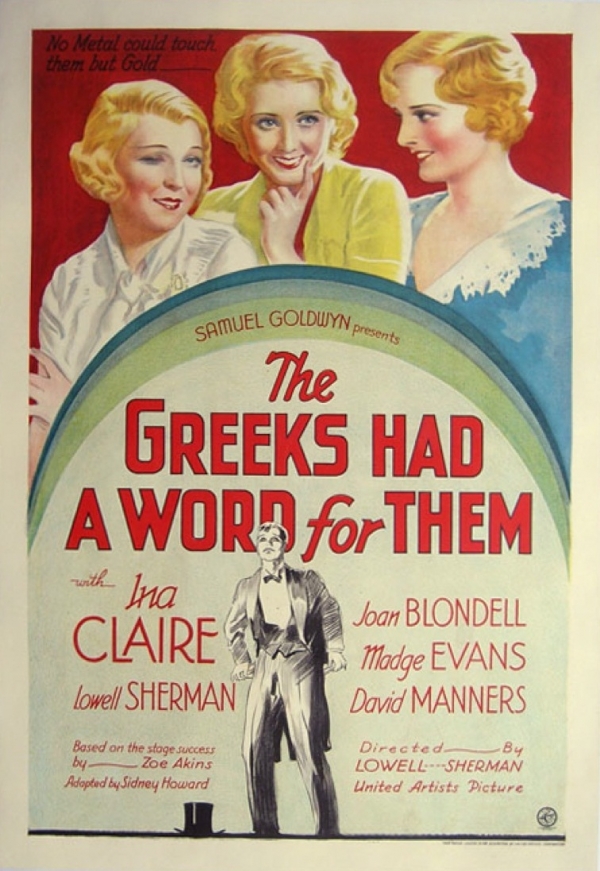
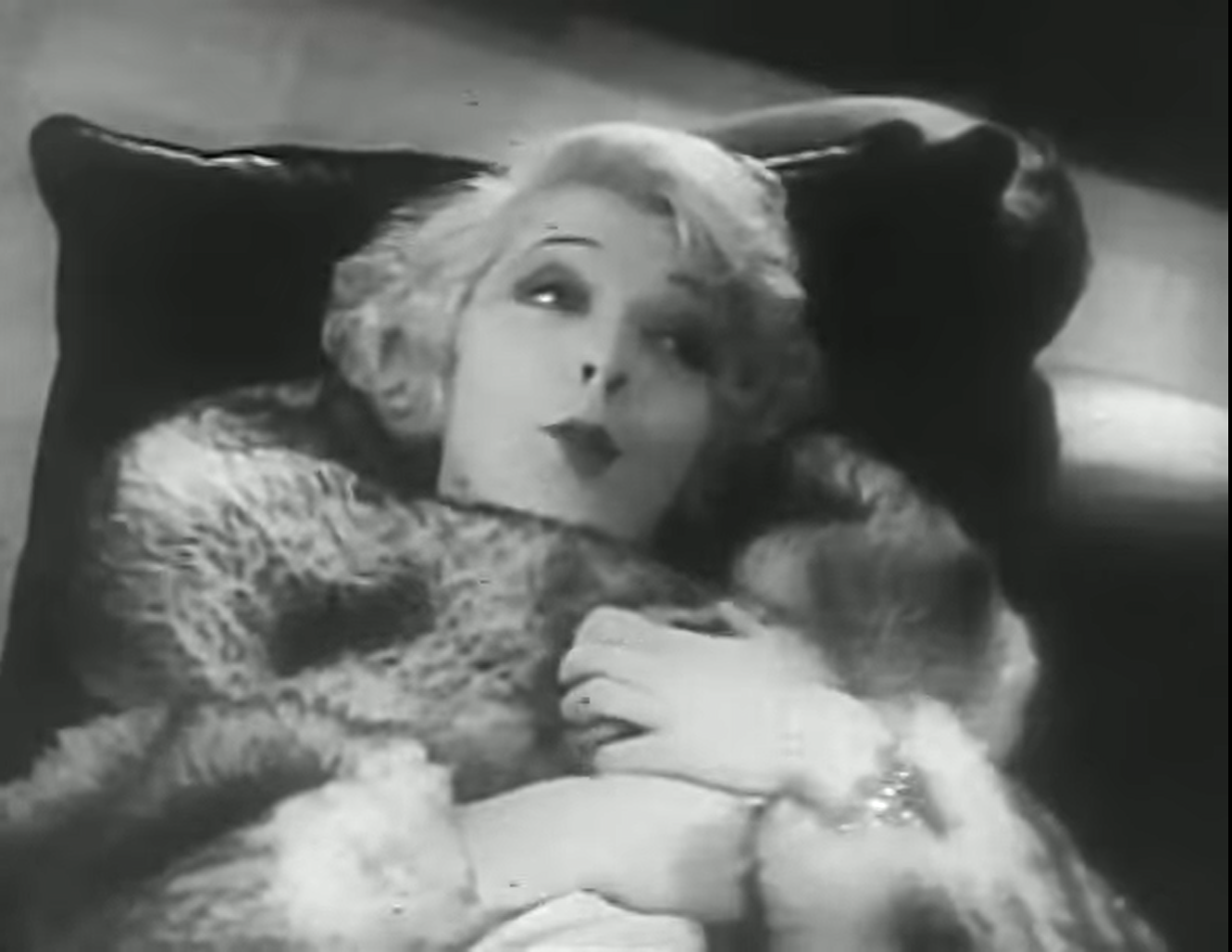
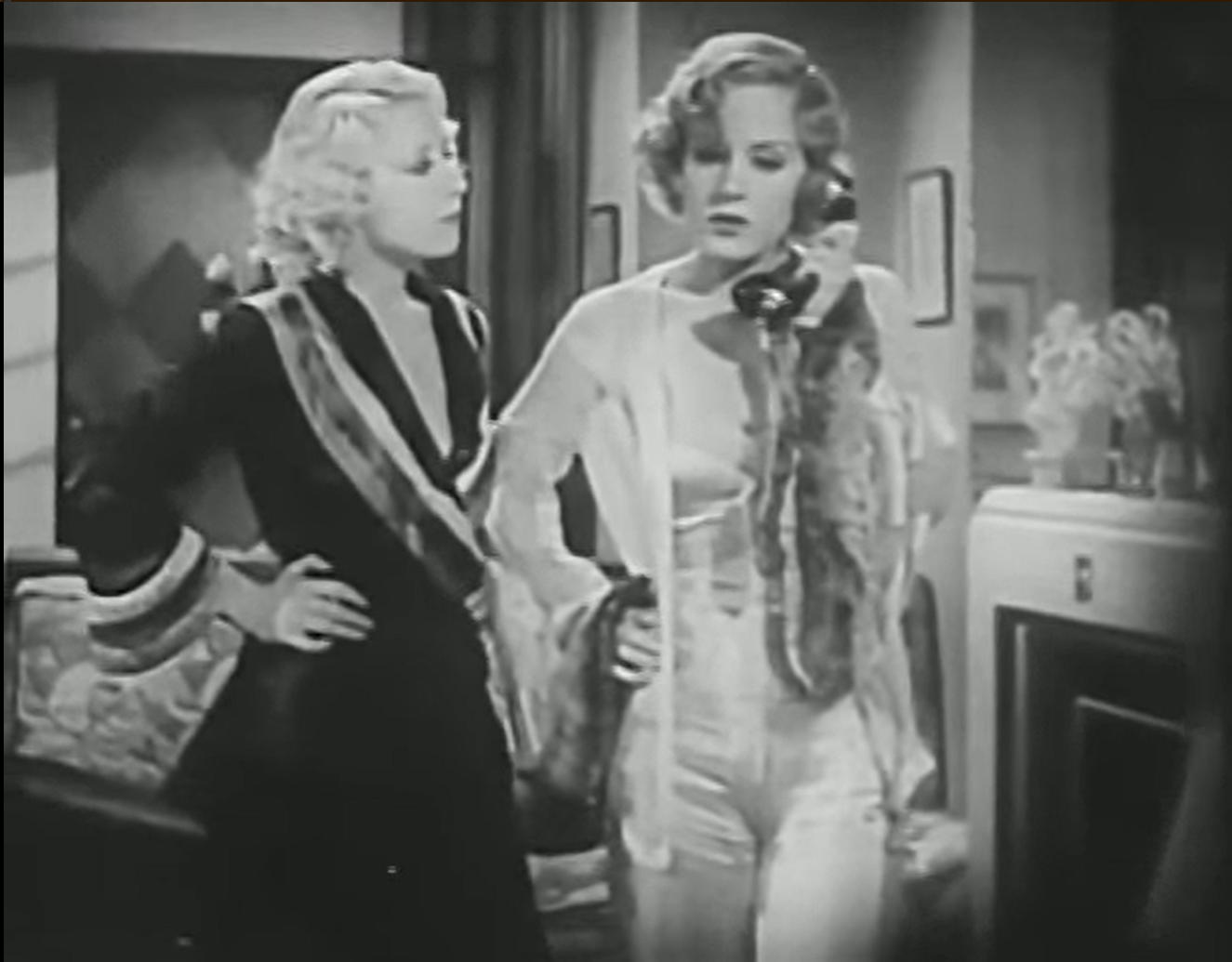
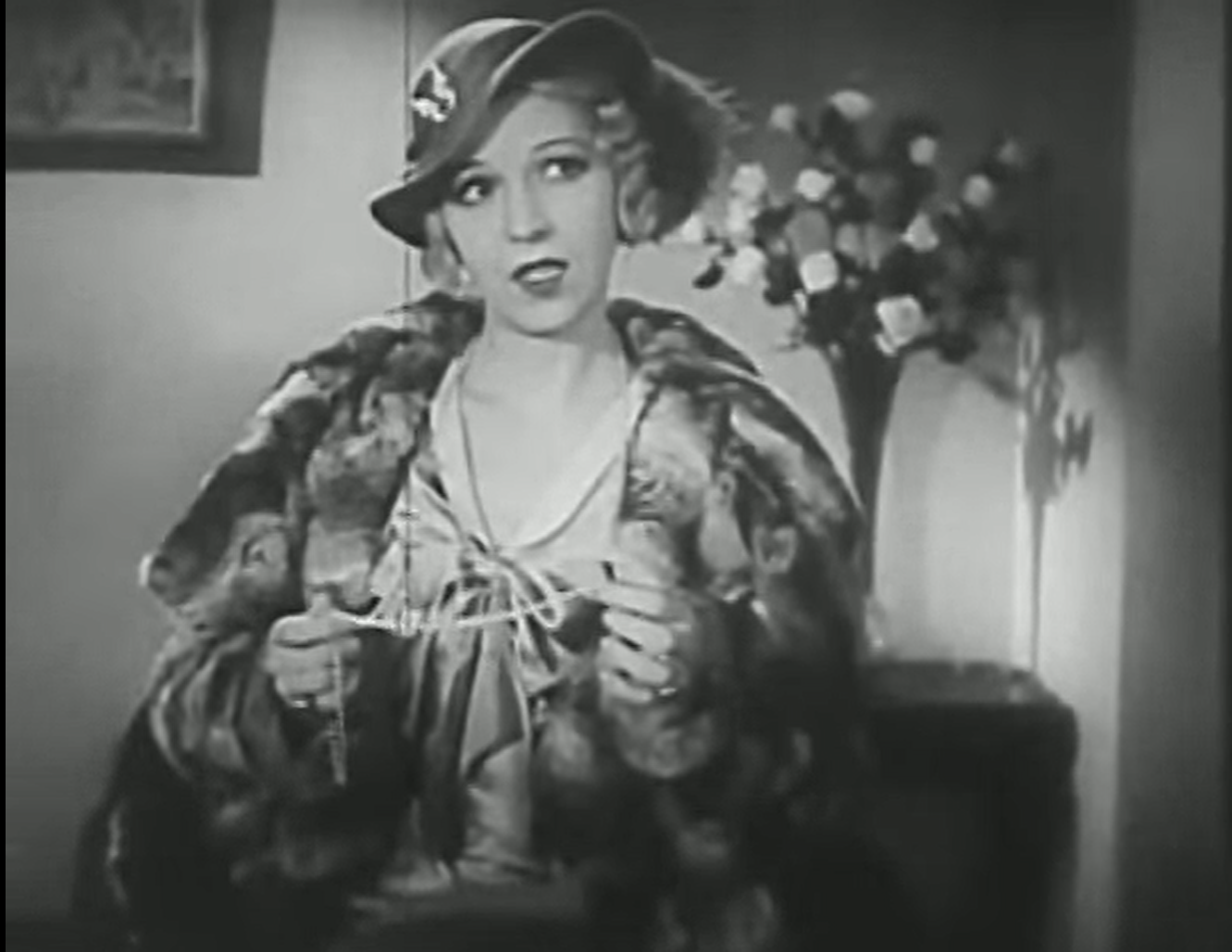
This early cinematic adaptation of Zoe Akins’ Broadway play — later remade (and substantially rewritten) as How to Marry a Millionaire (1953) — is a disappointment. The primary problem lies in the way the character of Jean is written: while Ina Claire gives a marvelously over-the-top performance:

… it defies belief that Schatze and Polaire would continue their friendship with her given her history of rampant double-crossing.

Indeed, it’s deeply unpleasant to watch Jean ruthlessly edging in on one relationship after the other while her friends stand by helplessly — by the end of the film, she’s becomes somewhat of a villainess, a development out of keeping for a story presumably about female solidarity. Ultimately, it’s just not very enjoyable to watch these three unlikely friends pursuing their (uninteresting and instantly forgettable) male catches.

Redeeming Qualities and Moments:

  • Ina Claire as Jean

Must See?
No; the remake is infinitely better.

Links:

Queen, The (1968)

Queen, The (1968)

“All drag queens want is love — and they try to get that love by being beautiful and sexy.”

Synopsis:
Drag queens from all over the country compete in 1967’s All American Camp Beauty Pageant in New York.

Genres, Themes, Actors, and Directors:

  • Beauty Contests
  • Documentary
  • Gender Bending

Review:
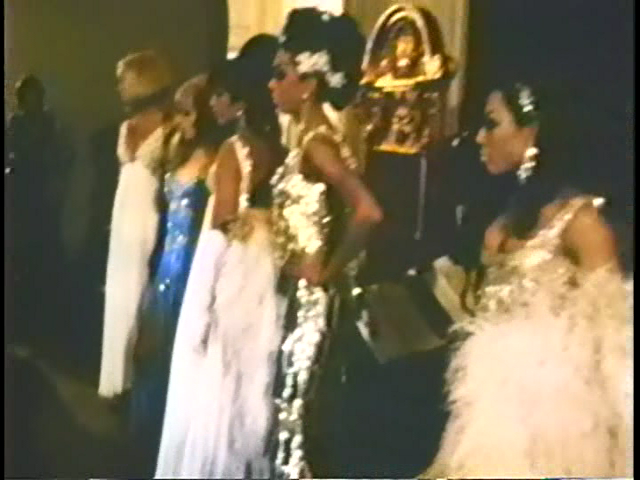
Made more than two decades before Jennie Livingston’s Paris is Burning (1990), The Queen offers a compelling cinema verite glimpse at the subculture of competitive male cross-dressing. At just a little over an hour long, The Queen stays firmly focused on the task at hand, documenting the participants (all winners in local contests) as they arrive in New York for the ultimate American “camp” beauty pageant, spend days primping and preening, then actually compete against one another for the coveted title of Queen (“There can sadly be only one…”). The most compelling scenes are those in which we get to eavesdrop on the participants chatting in their rooms about topics ranging from sex change operations to homosexuality to the Vietnam War draft; they’re remarkably comfortable with one another, despite their status as rivals. While it’s difficult to imagine some of these men effectively turning themselves into glamorous beauty queens, the results on the Big Night are impressive indeed. Be forewarned that the bitter coda at the end comes as a surprise, yet offers an invaluable glimpse at the underlying politics of any “high stakes” competition.

Redeeming Qualities and Moments:

  • A revealing glimpse of a unique subculture
  • The contestants talking frankly with each other about the draft, sex operations, and homosexuality

Must See?
No, but it’s a worthy time capsule snapshot, and must-see for documentary fans. Listed as a Cult Movie in the back of Peary’s book.

Links:

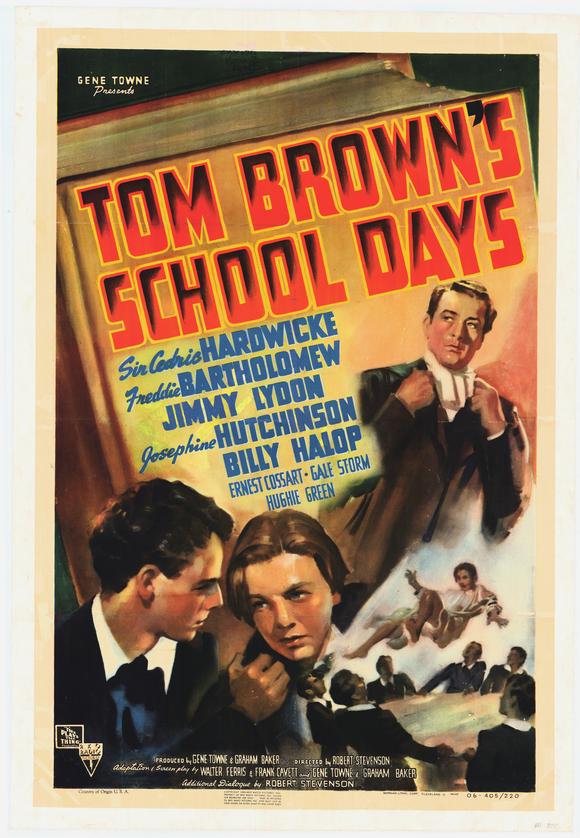
Tom Brown’s Schooldays (1951)

Tom Brown’s Schooldays (1951)

“Tell the truth, keep a brave, kind heart, and you’ll survive.”

Synopsis:
When Tom Brown (John Howard Davies) arrives at Rugby boarding school, he’s mercilessly tormented by the school’s evil bully, Flashman (John Forrest). With the help of his friend East (John Charlesworth), plucky Brown devises a plan to get back at Flashman; in the meantime, he’s asked to look out for a timid new student (Glyn Dearman), whose life is accidentally put in peril during a school race.

Genres, Themes, Actors, and Directors:

  • Boarding Schools
  • Bullies
  • Robert Newton Films

Review:
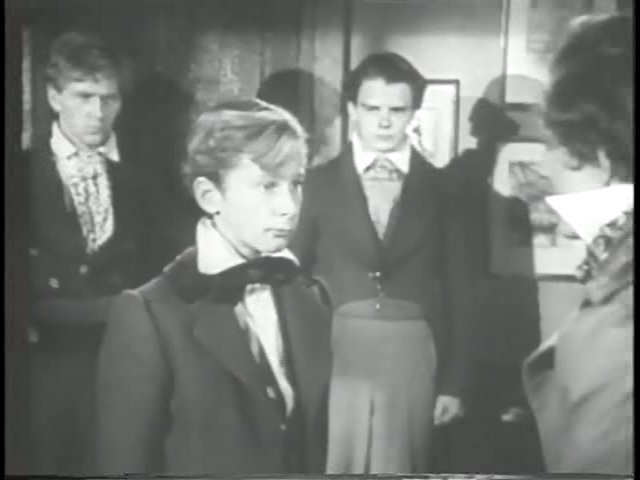
Thomas Hughes’ semi-autobiographical novel, published in 1857, has been adapted for the screen no less than five times: in 1916, 1940, 1951, 1971, and 2005; this version is the only one listed in Peary’s book. From its opening scenes, Tom Brown’s Schooldays (the title is falsely innocuous) remains a difficult film to watch, given the relentless display of abuse young Tom suffers, first from the entire school (following tradition, he’s forced to stand up and sing during dinner, while being pelted with food from all sides), then — most brutally — at the hands of a sociopathic bully, whose power at Rugby remains absolute due to a code of “honor” preventing students from “peaching” (i.e., tattling). While a distinction is clearly drawn between these two levels of behavior, both are appalling; fortunately, there are enough scenes of genuine camaraderie sprinkled throughout the film (group sing-alongs at dinner; rousing football games) to convince us that these boys will have at least a few happy memories of their school days. By the end of the film, it’s clear that honor and integrity will ultimately triumph over sadism, thanks in part to a progressive headmaster (Robert Newton) who’s determined to make changes at the school — but be forewarned that the journey until then is a tough one to swallow.

Redeeming Qualities and Moments:

  • John Howard Davies as Tom Brown
  • Fine location shooting at Rugby School in England

Must See?
No, but it’s worth a look simply as a brutally honest depiction of “public school” bullying in early 1800s England.

Links:

Zenobia (1939)

Zenobia (1939)

“I’d rather do something for somebody that needs a doctor — even if they can’t pay their bills!”

Synopsis:
A kind country doctor (Oliver Hardy) successfully treats the depressed pet elephant (Zenobia) of a traveling medicine man (Harry Langdon), only to find that the grateful Zenobia won’t leave him alone afterwards. Meanwhile, his daughter (Jean Parker) hopes to marry a young man (James Ellison) whose snobby mother (Alice Brady) wants nothing to do with the “lowly” doctor and his family.

Genres, Themes, Actors, and Directors:

  • Comedy
  • Cross-Class Romance
  • Deep South
  • Doctors and Nurses
  • Harry Langdon Films
  • Jean Parker Films
  • Laurel and Hardy Films

Review:
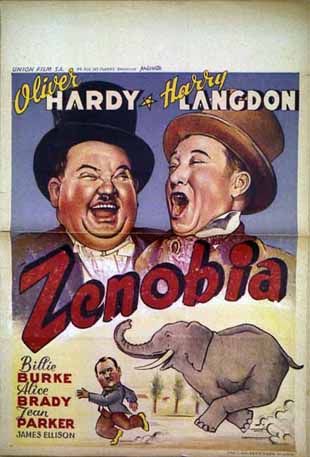
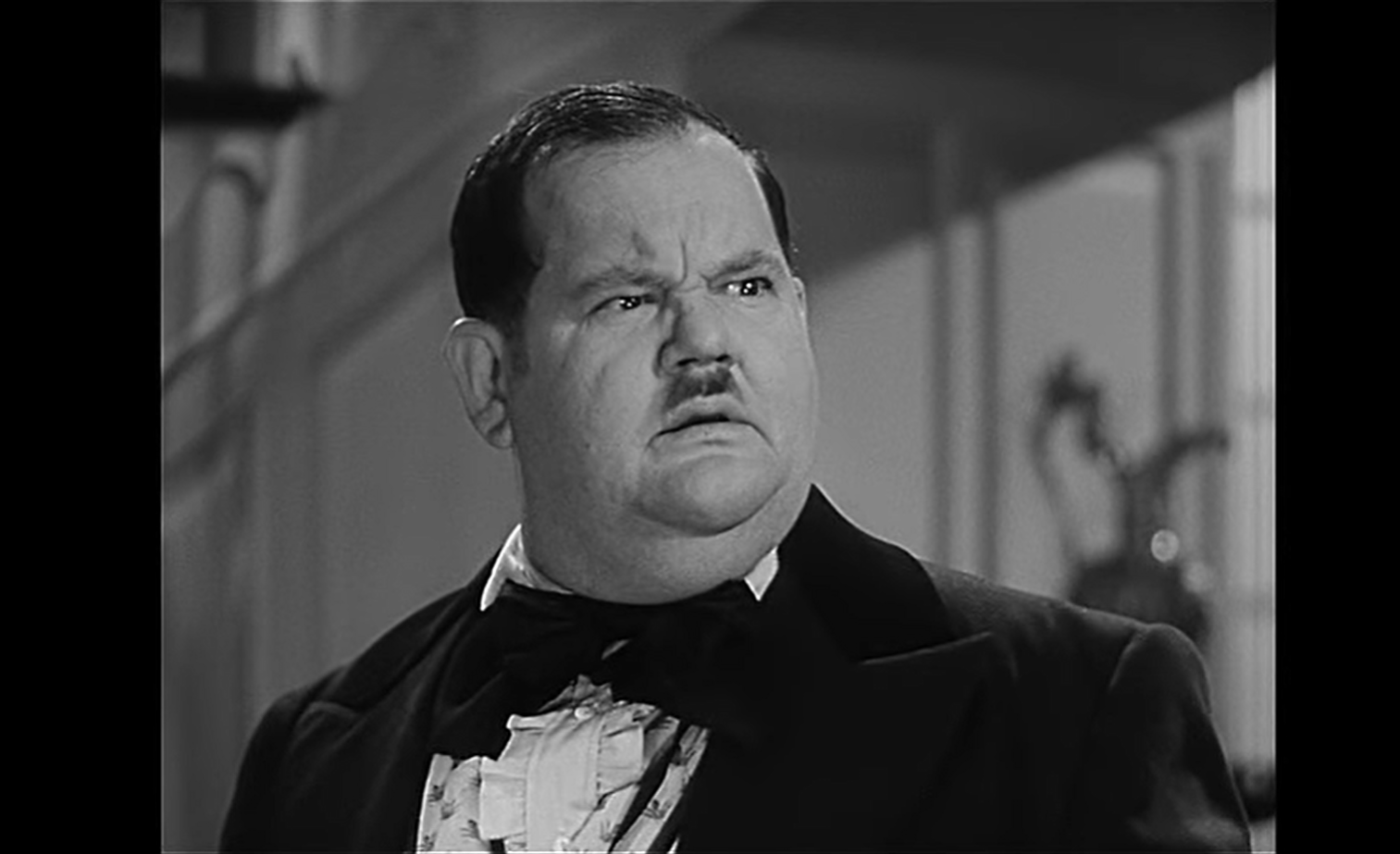
Originally developed as a feature for comedic duo Stan Laurel and Oliver Hardy, Zenobia ultimately teamed Hardy with silent screen legend Harry Langdon:

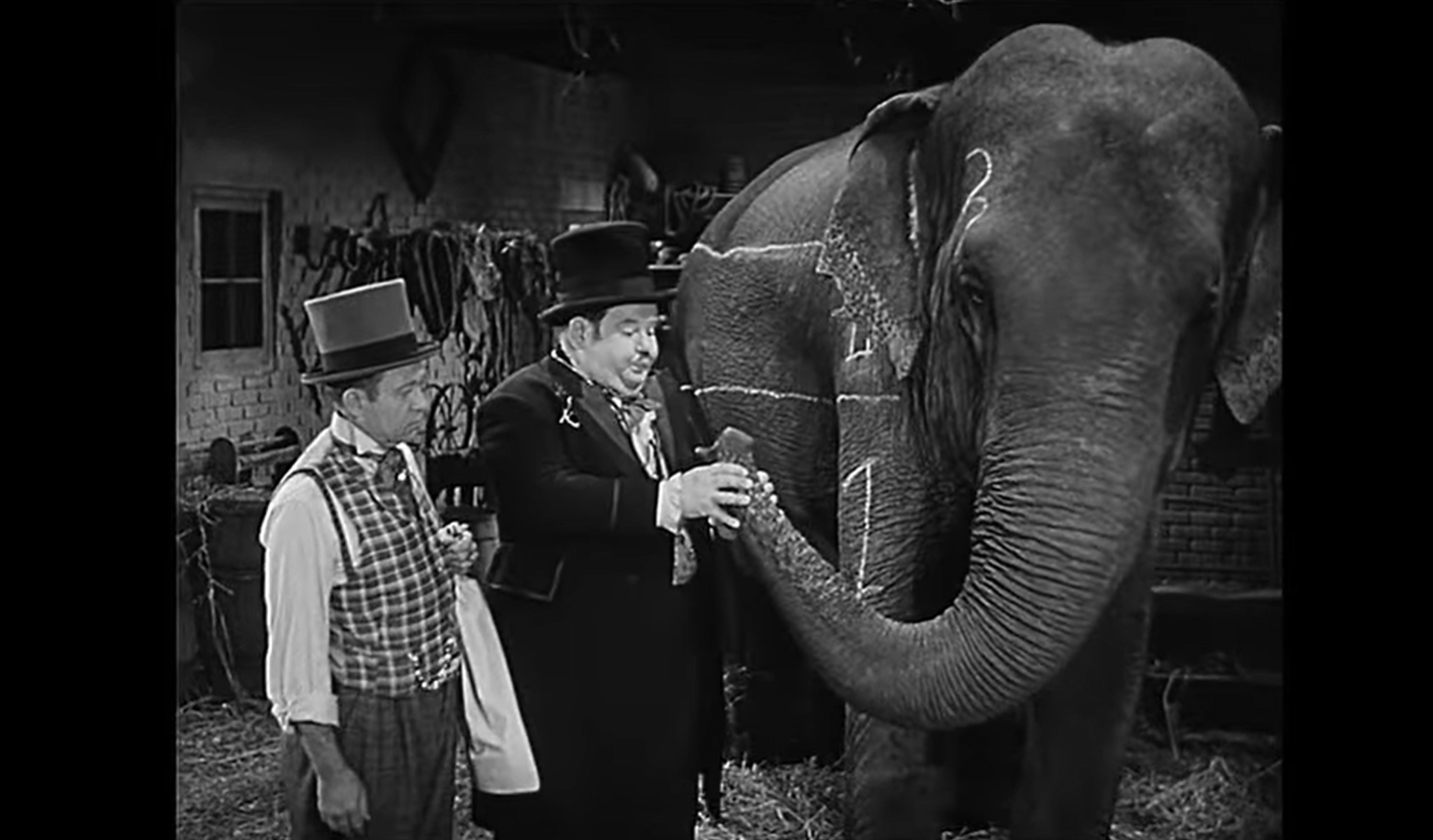
… when Laurel had a falling out with Hal Roach studios. The result is a well-meaning but decidedly tepid comedy, one which admirably shows Hardy’s talents as a “leading man” yet fails to deliver many genuine laughs. The title character — a testy female elephant named Zenobia —

… is the film’s primary claim to uniqueness, yet Zenobia’s relentless attachment to Hardy unfortunately takes a back seat to the rather dull primary drama about cross-class romance and Southern snobbery. With that said, film fanatics will likely appreciate seeing Alice Brady in one of her final roles before she succumbed to cancer later that year; she looks frail but still manages to invest her character with gumption and energy.

Redeeming Qualities and Moments:

  • Oliver Hardy in a rare role without Stan Laurel by his side
  • Alice Brady in one of her final screen roles

Must See?
No, though fans of either Laurel and Hardy or Langdon will likely be curious to check it out.

Links:

…

Read More Read More

Bowery, The (1933)

Bowery, The (1933)

“Remember what I always tells ya: this is a man’s world.”

Synopsis:
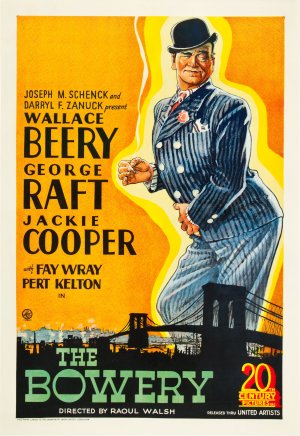
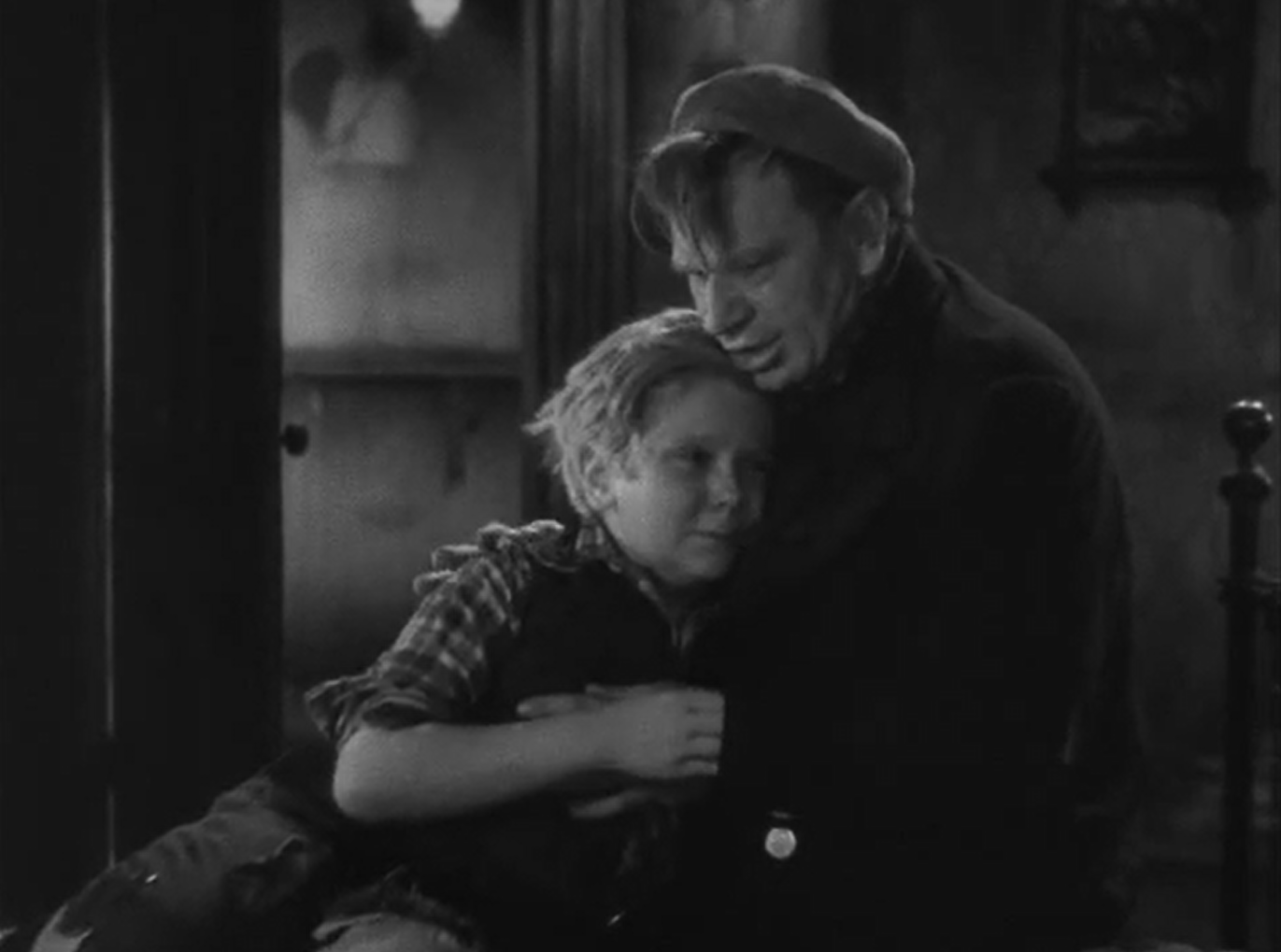
In 1890s New York, saloon-owner Chuck Connors (Wallace Beery) and suave gambler Steve Brodie (George Raft), continue their lifelong rivalry by vying for the affections of a street urchin (Jackie Cooper) and a beautiful young woman (Fay Wray).

Genres, Themes, Actors, and Directors:

  • Fay Wray Films
  • George Raft Films
  • Historical Drama
  • New York City
  • Raoul Walsh Films
  • Rivalry
  • Wallace Beery Films

Review:
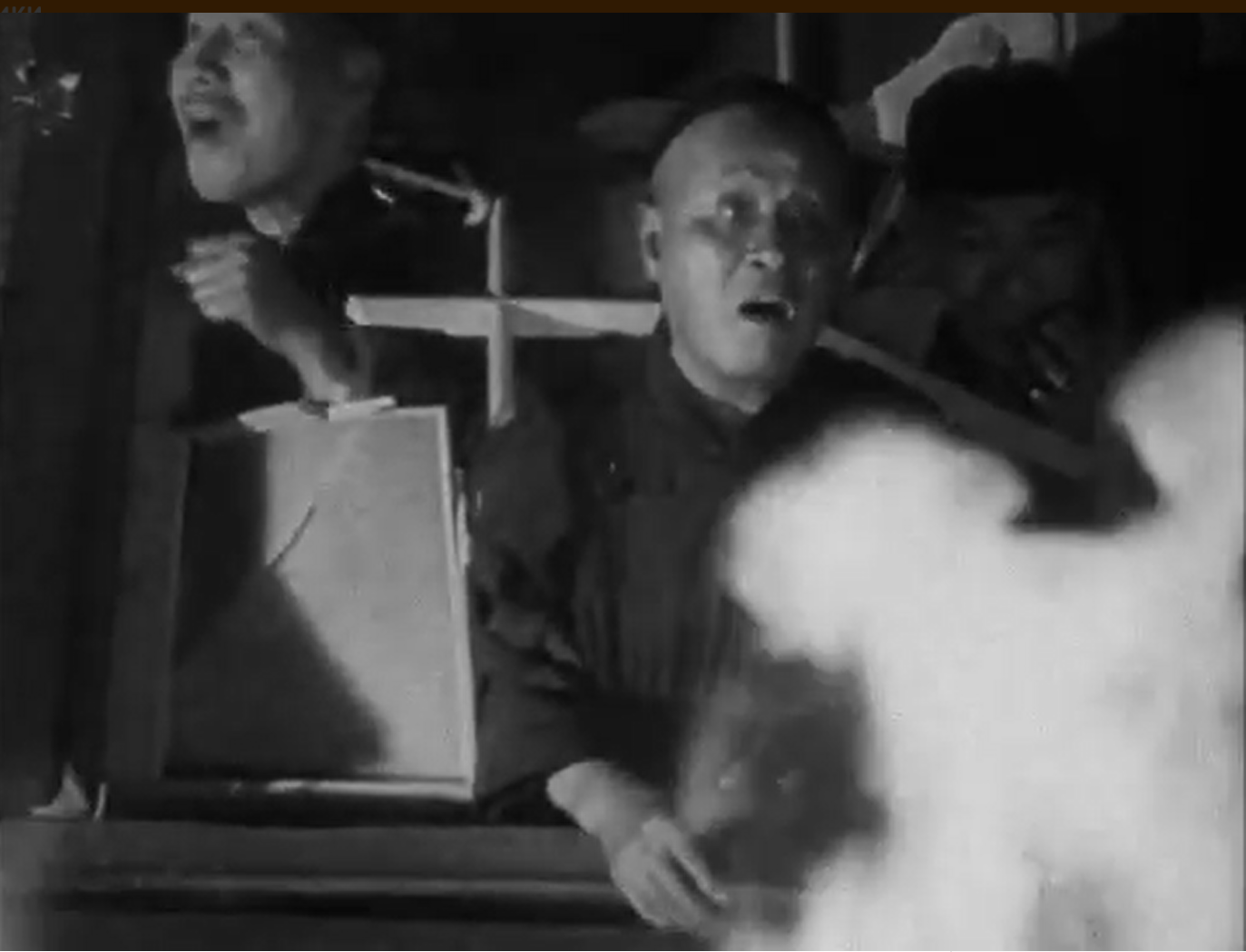
Raoul Walsh’s bawdy interpretation of life on the Bowery in 1890s New York comes across today as misogynistic and racist, with little to redeem it as a worthwhile drama. While some may argue that such unsavory sentiments are authentic to the era, it’s literally painful to watch an early “humorous” scene in which Chinese men are trapped in their burning laundromat:

… while volunteer firemen brigades engage in a street brawl rather than putting out the fire — and to know that the fire itself was caused by Cooper being given “permission” by Beery to “throw just a tiny rock in the Chinks’ window” (naturally, not a shred of guilt is expressed by either party). Regardless of these hideously uncomfortable scenes, however, Connor and Brodie’s lifelong rivalry simply doesn’t sustain a narrative; the “high point” of the story occurs when Brodie jumps off the Brooklyn Bridge on a dare:

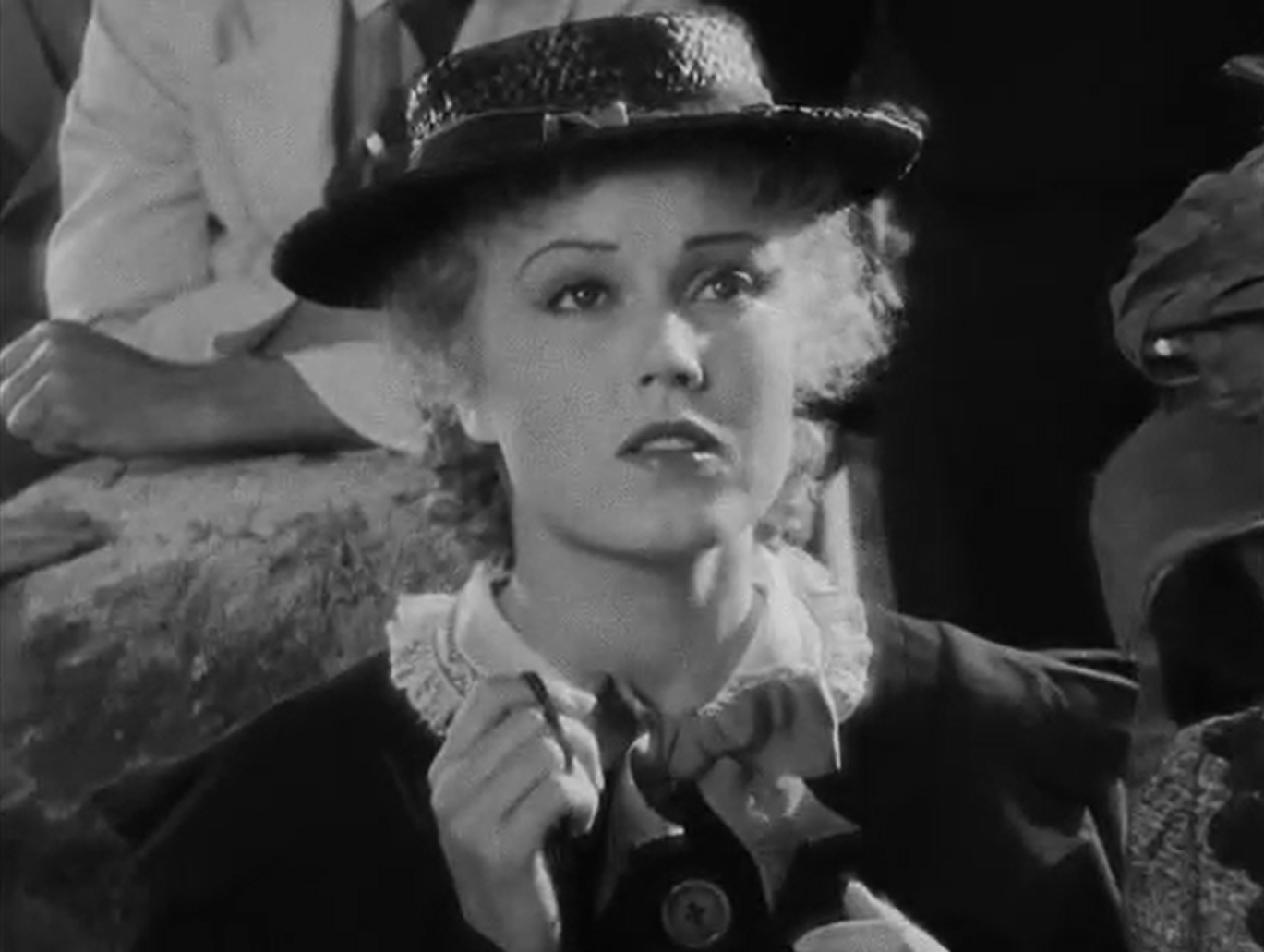
… and Connor loses his saloon as a result — but who really cares about these louts anyway? Fay Wray is sympathetic but wasted as Brodie’s love interest:

while Cooper seems to be simply reprising his earlier role opposite Beery in The Champ (1931).

Redeeming Qualities and Moments:

  • An interesting (albeit historically suspect) glimpse at how Carrie Nation and her minions carried out their abolitionist agenda

Must See?
No; this one can easily be skipped. Listed as a film with Historical Importance in the back of Peary’s book.

Links:

All the Marbles (1981)

All the Marbles (1981)

“Like it or not, the three of us are a team — and we’re going to make it, or die trying.”

Synopsis:
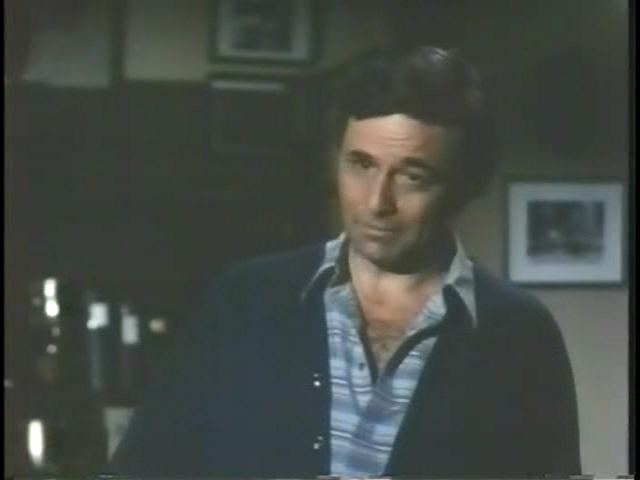
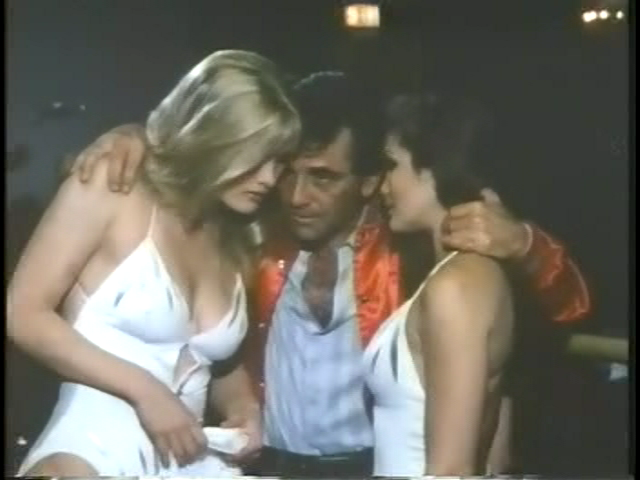
The manager (Peter Falk) of two beautiful “tag team” wrestlers (Vicki Frederick and Laurene Landon) tries to find work for his “California Dolls”, who aspire towards a match in Reno with their ultimate rivals: the Toledo Tigers (Tracy Reed and Ursaline Bryant).

Genres, Themes, Actors, and Directors:

  • Aspiring Stars
  • Peter Falk Films
  • Richard Jaeckel Films
  • Rivalry
  • Robert Aldrich Films
  • Strong Females
  • Wrestling

Review:
This semi-comedic female wrestling flick was director Robert Aldrich’s final film, and shows ample evidence of his willingness to tackle even the most unusual topics. Although it’s no longer widely available, it’s easy to understand why Peary lists All the Marbles (a.k.a. The California Dolls) as an erstwhile cult favorite, given that it stars two strong, sexy females who spend most of the film wearing form-fitting leotards and cat fighting in an arena — indeed, fans of female wrestling won’t be disappointed, as there’s plenty of girl on girl action scattered throughout. Fortunately, those of us not so interested in either t&a or wrestling can still appreciate the humorous rapport between Falk (excellent as always) and his two appealing “dolls” — one of whom (Frederick) is his sometime-lover, and the other of whom (Landon) suffers from a “mild” addiction to prescription drugs. Indeed, Landon’s professed but unseen “problem” with drugs is indicative of the film’s overall attitude of glowing unreality: Frederick and Landon should by any account be black-and-blue given the thrashings they encounter in the ring, but the most they ever seem to suffer from is a hurt back or a mildly split lip. Ultimately, then, All the Marbles is more of a fairy tale fable than an expose, with the Dolls conveniently triumphing by the end.

Redeeming Qualities and Moments:

  • Peter Falk as Harry
  • Believable, humorous rapport between Falk, Frederick, and Landon
  • The exciting final MGM match between the California Dolls and the Toledo Tigers

Must See?
No, but it’s worth a look. Listed as a Personal Recommendation and Cult Movie in the back of Peary’s book.

Links:

Crime Without Passion (1934)

Crime Without Passion (1934)

“Always saving somebody’s life, so abominably clever at solving other people’s trouble — so half-witted when it comes to my own.”

Synopsis:
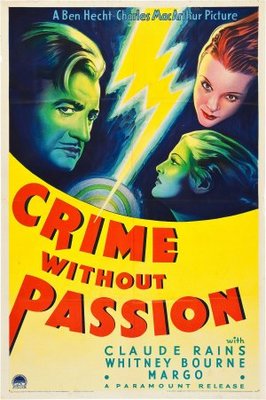
A successful lawyer (Claude Rains) engaged to an icy blonde (Whitney Bourne) accidentally shoots his mistress (Margo), then constructs an elaborate series of alibis to cover up his crime.

Genres, Themes, Actors, and Directors:

  • Claude Rains Films
  • Jealousy
  • Lawyers
  • Love Triangle
  • Womanizers

Review:
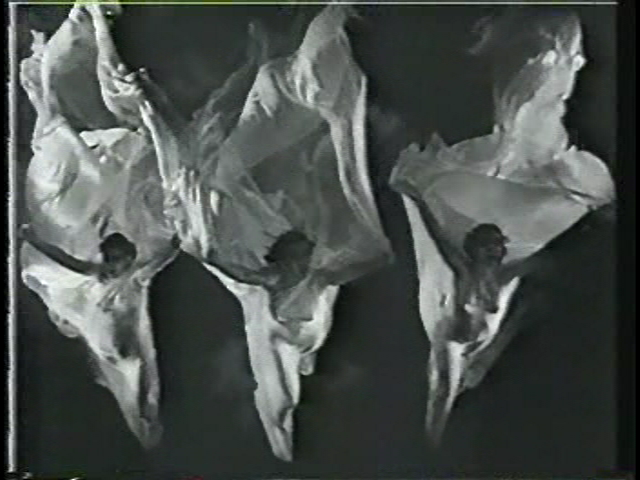
This little-seen psychological thriller establishes itself as a must-see gem from its fantastical opening sequence, in which we witness the three dark-haired “Furies” of Greek myth emerging full-form from droplets of blood, and immediately wreaking gleeful havoc upon unsuspecting mortals. When this mind-bending montage comes to a close and the camera settles upon the story’s all-too-human protagonist (Rains), the effect is somewhat unsettling — yet Ben Hecht and Charles MacArthur’s clever, witty screenplay immediately draws us in to Rains’ romantic dilemma. While the story remains firmly grounded in “real life” from this moment on (with only occasional nods to the supernatural), the point has been well established that Rains’ cocky, womanizing lawyer will be made to pay for his arrogance, and in a suitably dramatic fashion.

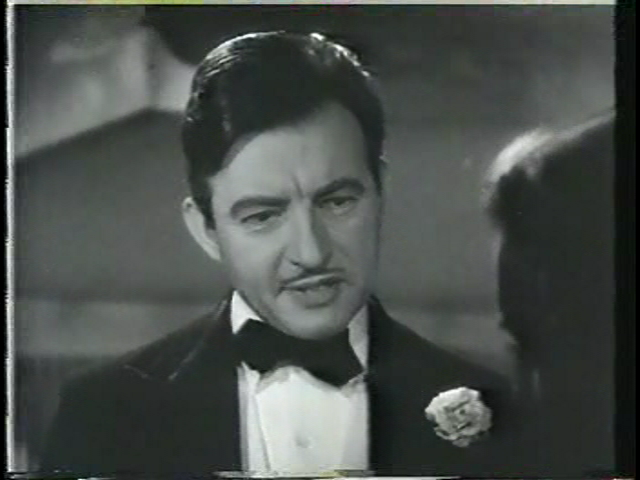
Rains is excellent in the lead role, managing to sustain our interest despite his character’s decidedly unsavory actions and demeanor. Equally impressive is 17-year-old Margo (castanet-clicking “Clo-Clo” in Val Lewton’s The Leopard Man) in her screen debut as the object of Rains’ lustful affections — while we desperately want to shake some sense into her (how can she be in love with such a cad?!), she engages our genuine sympathies as well. Wrapping up within a neat 70 minutes, Crime Without Passion tells its fall-from-grace narrative quickly and succinctly, and is well worth the enjoyable ride.

Redeeming Qualities and Moments:

  • Claude Rains as Lee Gentry
  • Margo (in her screen debut) as Carmen Brown
  • The phenomenal opening montage sequence, showing the “Three Furies” emerging from drops of blood and wreaking havoc on humankind
  • Lee Garmes’ impressive camera work
  • Hecht and MacArthur’s clever screenplay

Must See?
Yes, as an all around “good show”. Listed as a Cult Movie in the back of Peary’s book.

Categories

  • Good Show

Links: