Browsed by
Category: Original Reviews

Responses to Peary’s “must see” movie reviews, as well as my own “must see” movie reviews up to and after 1986 (when Peary’s book was published).

Mishima (1985)

Mishima (1985)

“All my life I have been acutely aware of a contradiction in the very nature of my existence.”

Synopsis:
Scenes from three novels by controversial Japanese writer Yukio Mishima (Ken Ogata) are interwoven into a reflection on his troubled life and infamous suicide by seppuku.

Genres, Themes, Actors, and Directors:

  • Biopics
  • Episodic Films
  • Japanese Films
  • Paul Schrader Films
  • Suicide
  • Writers

Review:
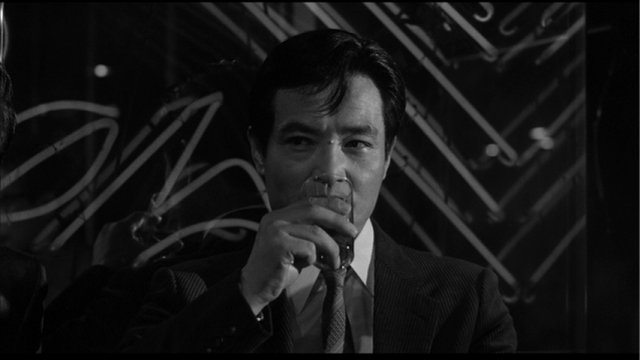
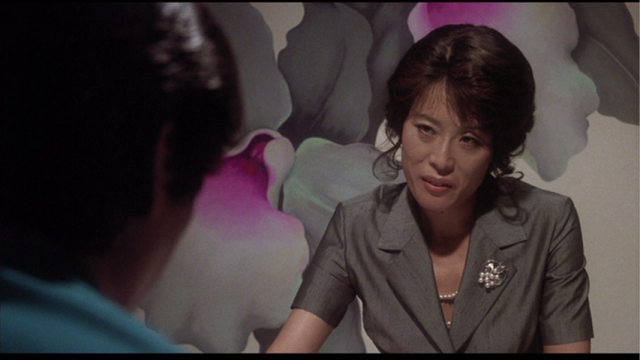
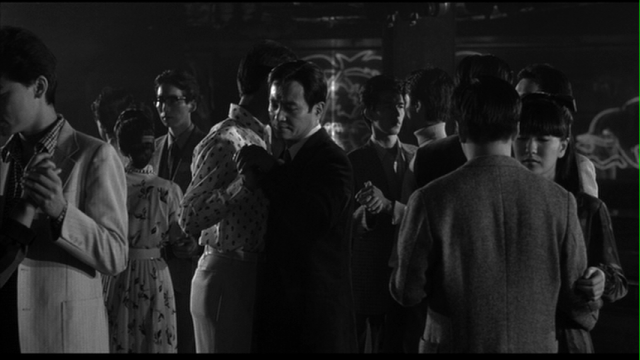
Paul Schrader’s Mishima remains one of cinema’s most uniquely conceived, visually evocative biopics. By weaving strategically chosen vignettes from several of Mishima’s novels — The Temple of the Golden Pavilion, Kyoko’s House, and Runaway Horses — into the background of his unconventional life, viewers are given an unprecedented glimpse into this warrior-poet’s heady sensibility: we bear witness to his past as a stuttering youth, his ambiguous sexuality, his obsession with bodybuilding, and his determination to die while young and beautiful. What’s most immediately memorable about the film is its stunning palette of vibrant colors, put to work within a series of gorgeous stylized sets used during the “fictional” elements of the film; see the stills below for merely a glimpse of what’s to come. Indeed, the film’s visuals are so captivating that it might be easy to overlook the fine performances by Ken Ogata and others in the supporting cast (most notably Reisen Lee as a butch, domineering lover in “Kyoko’s House”). Meanwhile, Philip Glass’s pulsating score seems like the only logical choice for a film this audaciously original. Time Out‘s reviewer labels Mishima a “breathless plunge into the creative soul”, and this is an apt description: we may not like Mishima-the-author very much, but we can’t help watching his life as portrayed here with fascination.

Redeeming Qualities and Moments:

  • John Bailey’s varied cinematographic palette
  • Eiko Ishioka’s vibrant set designs
  • Ken Ogata as Mishima
  • Reisen Lee as Kiyomi
  • A unique and spellbinding approach to a biopic
  • Philip Glass’s pulsating score

Must See?
Yes, as a one-of-a-kind cinematic treat, and a cult favorite. Listed as a Cult Movie in the back of Peary’s book.

Categories

  • Cult Movie
  • Good Show

Links:

Get Carter (1971)

Get Carter (1971)

“The only reason I came back to this craphouse was to find out who did it — and I’m not leaving until I do!”

Synopsis:
A petty London gangster (Michael Caine) heads to his hometown of Newcastle to investigate the mysterious death of his brother.

Genres, Themes, Actors, and Directors:

  • Amateur Sleuths
  • Britt Ekland Films
  • Gangsters
  • Michael Caine Films
  • Murder Mystery
  • Revenge

Review:
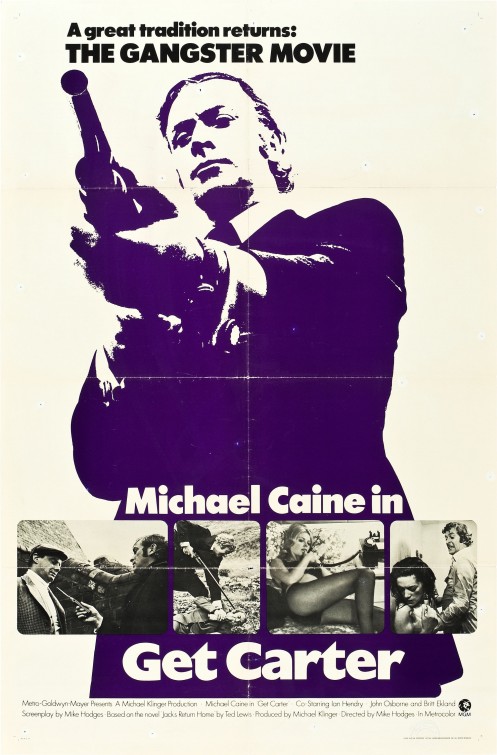
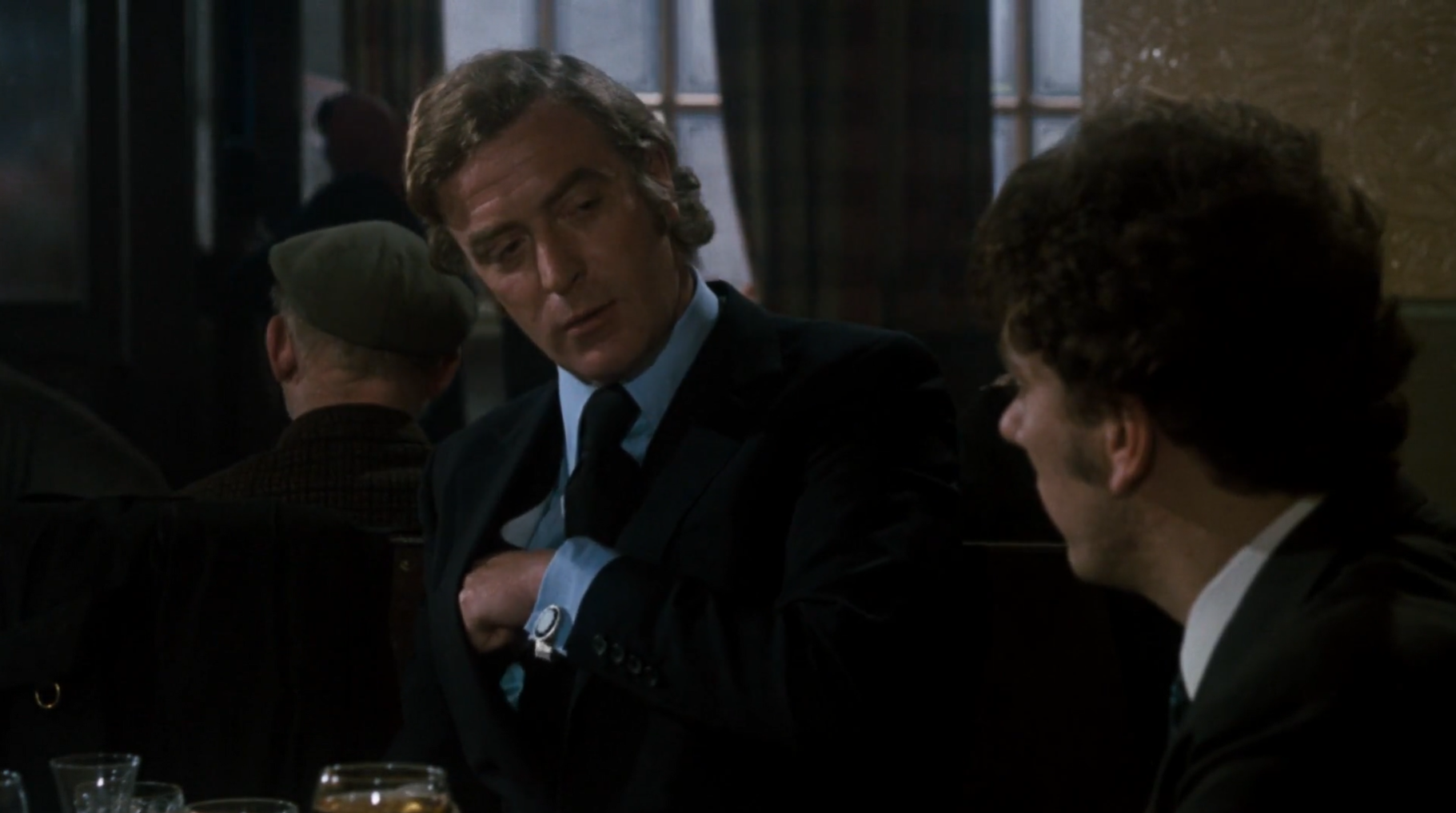
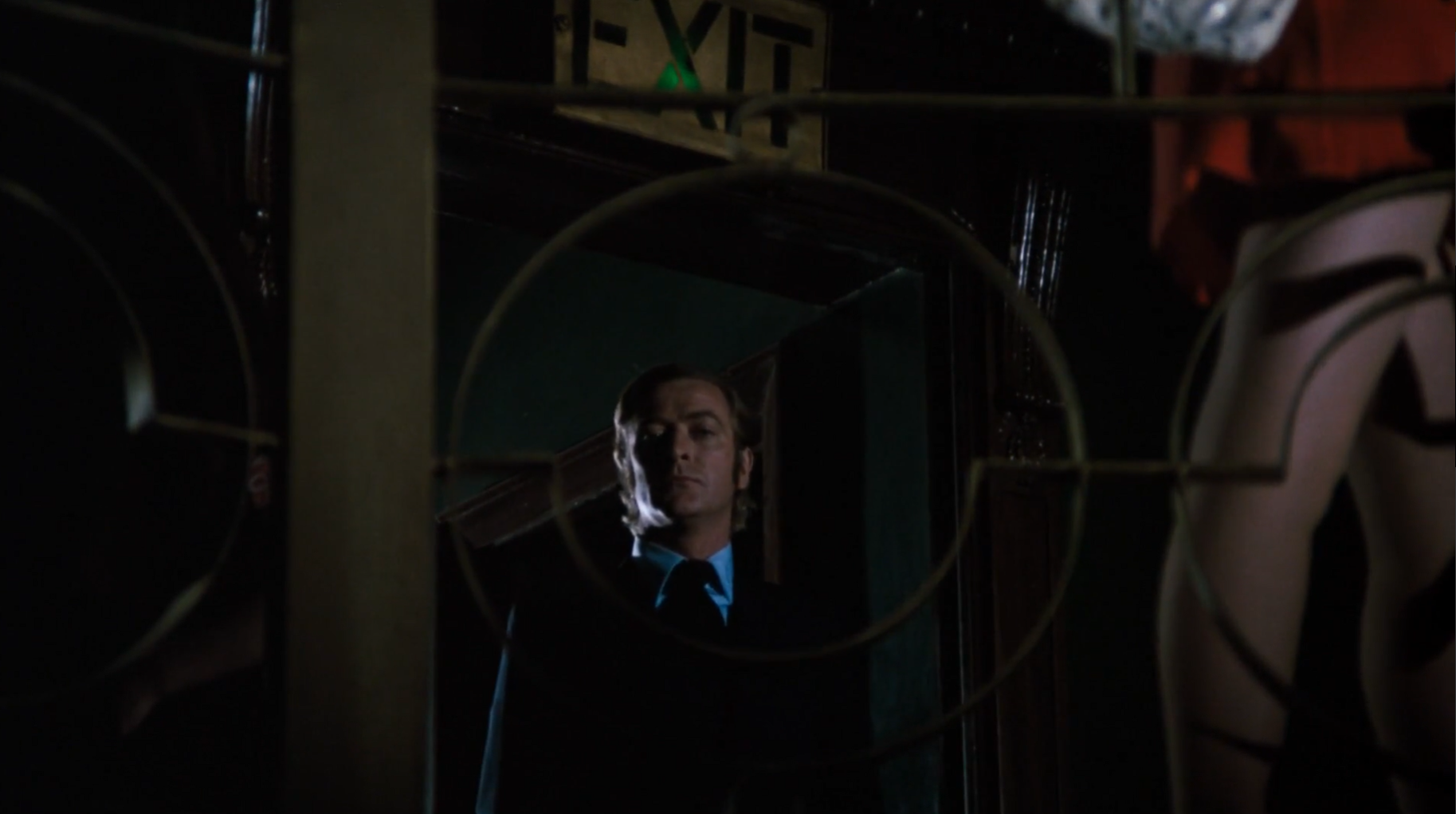
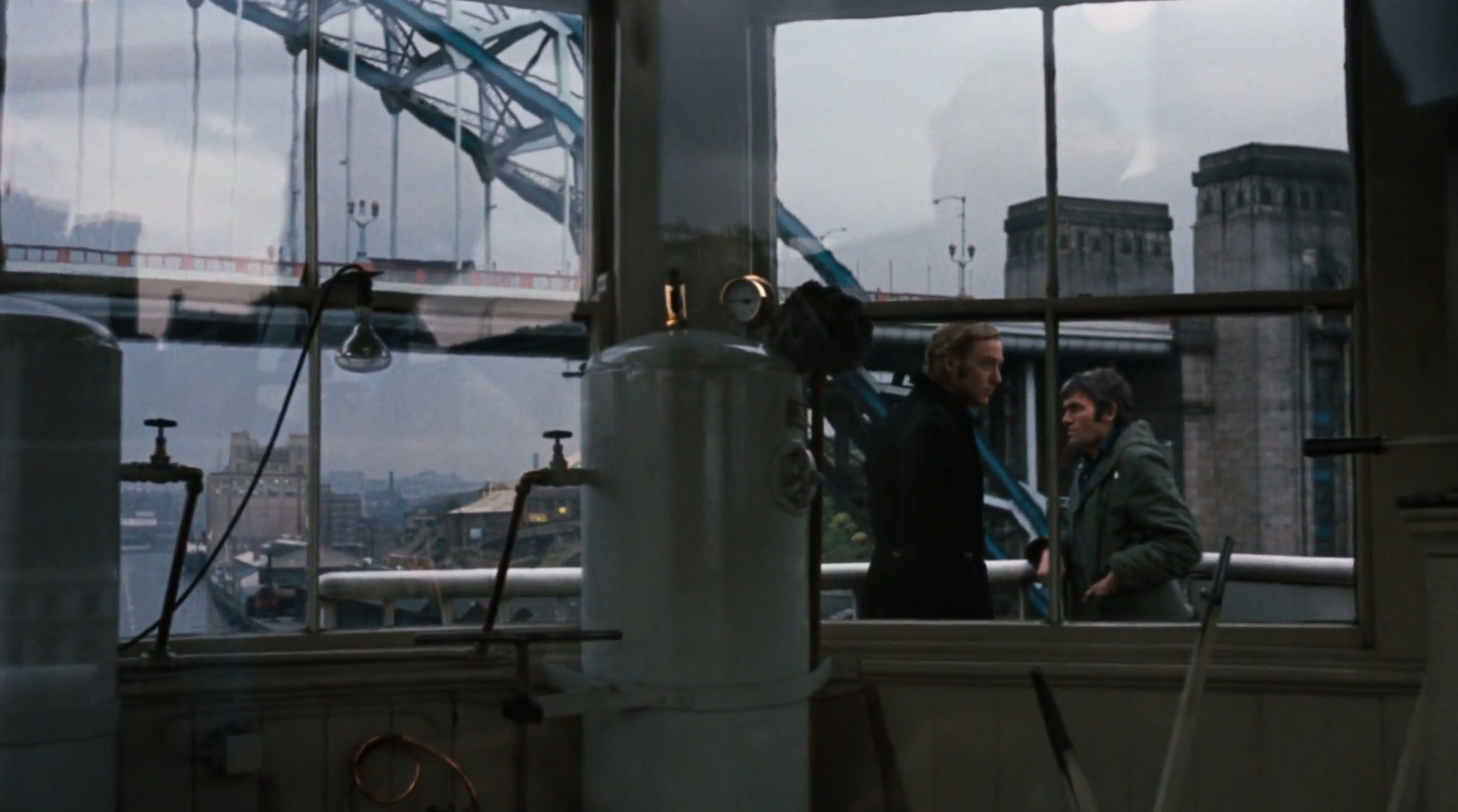
Steely-eyed Michael Caine gives perhaps his iciest performance ever in this cult British gangster flick, which is ranked 16th on the British Film Institute’s “Top 100 British Films of the 20th Century”. Based on Ted Lewis’s crime novel Jack’s Return Home, it tells the cold-blooded tale of a man hell-bent on avenging his brother’s death, who simultaneously discovers that his niece has become embroiled in a pornography ring. The convoluted plot is far too complicated for its own good, but what one ultimately “remembers” about the film are its fine performances, the gritty on-location cinematography, and its hard-boiled dialogue (“You know, I’d almost forgotten what your eyes looked like. Still the same. Pissholes in the snow.”). Quentin Tarantino, Guy Ritchie, and countless other modern filmmakers obviously owe an enormous debt to this bleak but groundbreaking movie, which you may find too genuinely unpleasant to really “enjoy”, but which should be seen at least once by all film fanatics. Remade with Sylvester Stallone (!) in 2000, but this version is widely considered a failure.

Redeeming Qualities and Moments:

  • Michael Caine as Carter
  • Mike Hodges’ stylish direction (assisted by DP Wolfgang Suschitzky)
  • Excellent use of diverse Newcastle locales

Must See?
Yes, as a cult favorite.

Categories

  • Cult Movie

(Listed in 1001 Movies You Must See Before You Die)

Links:

Sand Pebbles, The (1966)

Sand Pebbles, The (1966)

“Hello, engine; I’m Jake Holman.”

Synopsis:
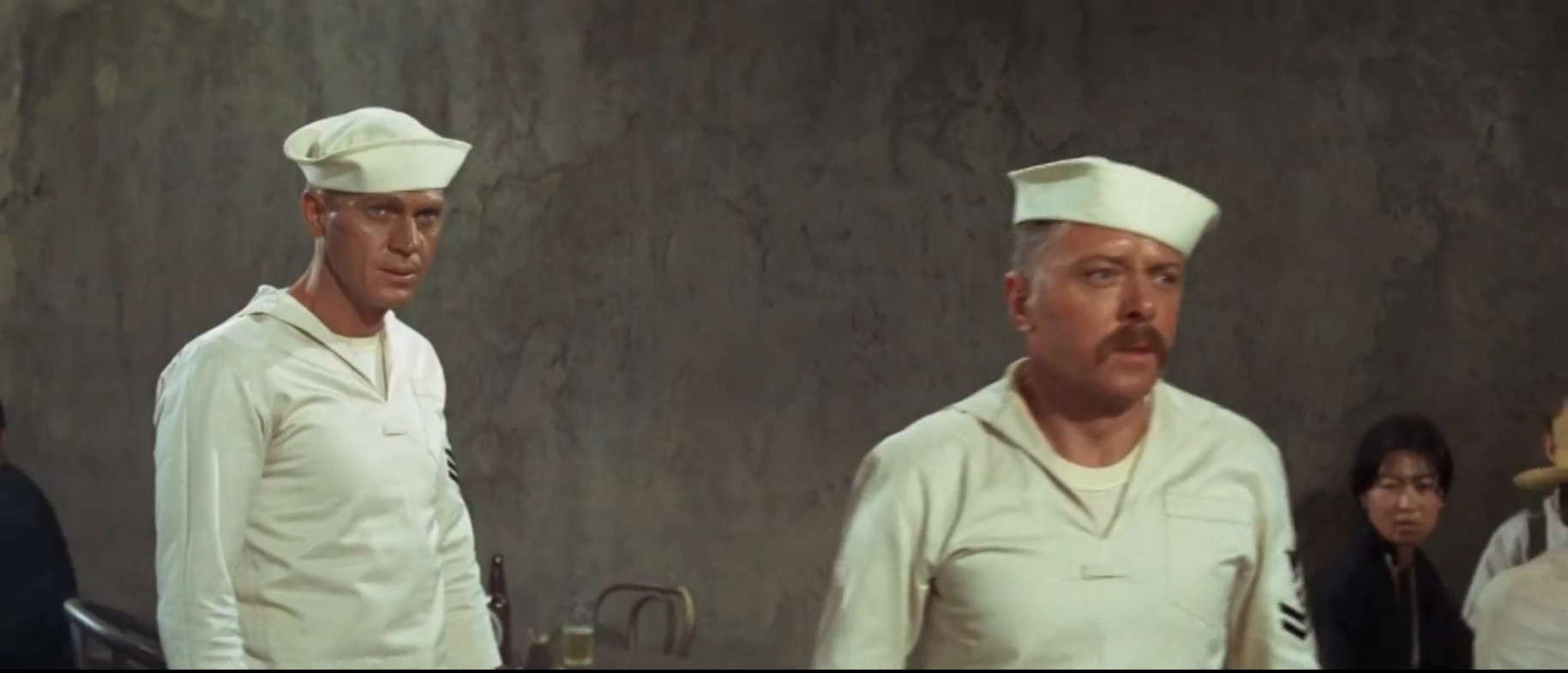
A naval engineer (Steve McQueen) onboard an American gunboat in 1920s China finds himself at odds with his strait-laced captain (Richard Crenna).

Genres, Themes, Actors, and Directors:

  • Candice Bergen Films
  • China
  • Historical Drama
  • Race Relations
  • Richard Attenborough Films
  • Robert Wise Films
  • Sailors
  • Steve McQueen Films

Review:
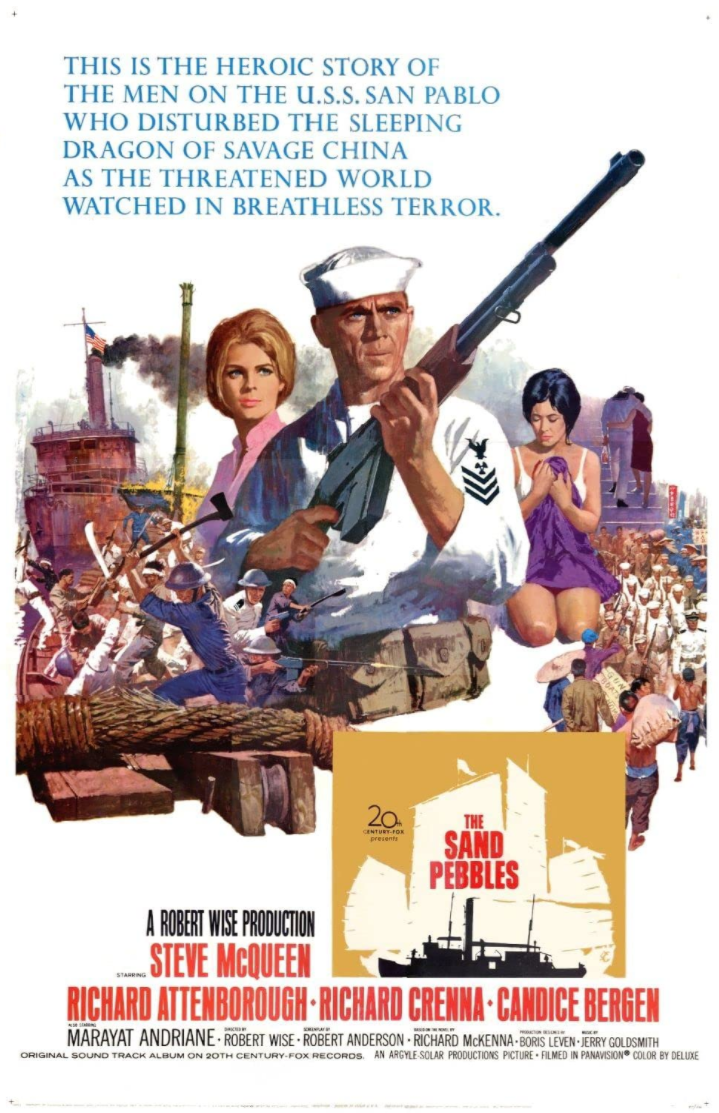
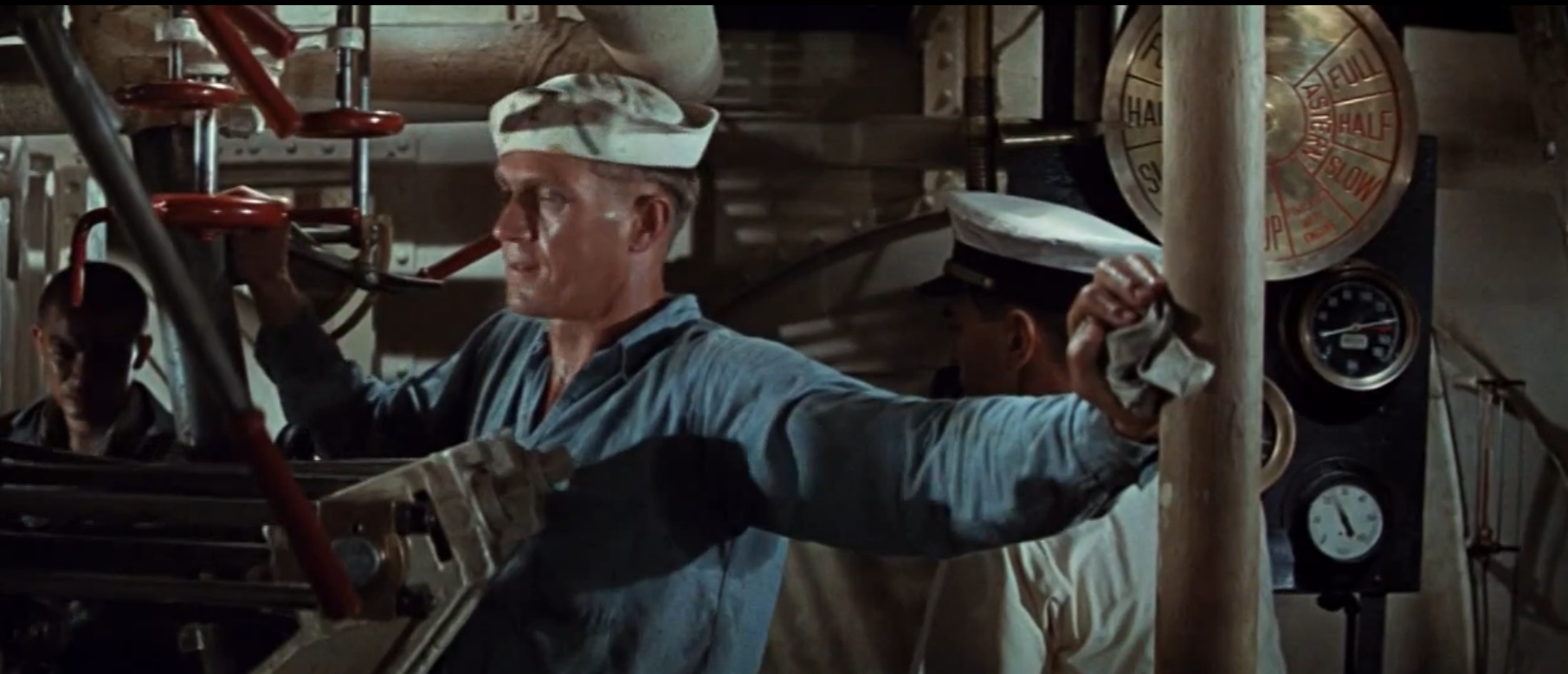
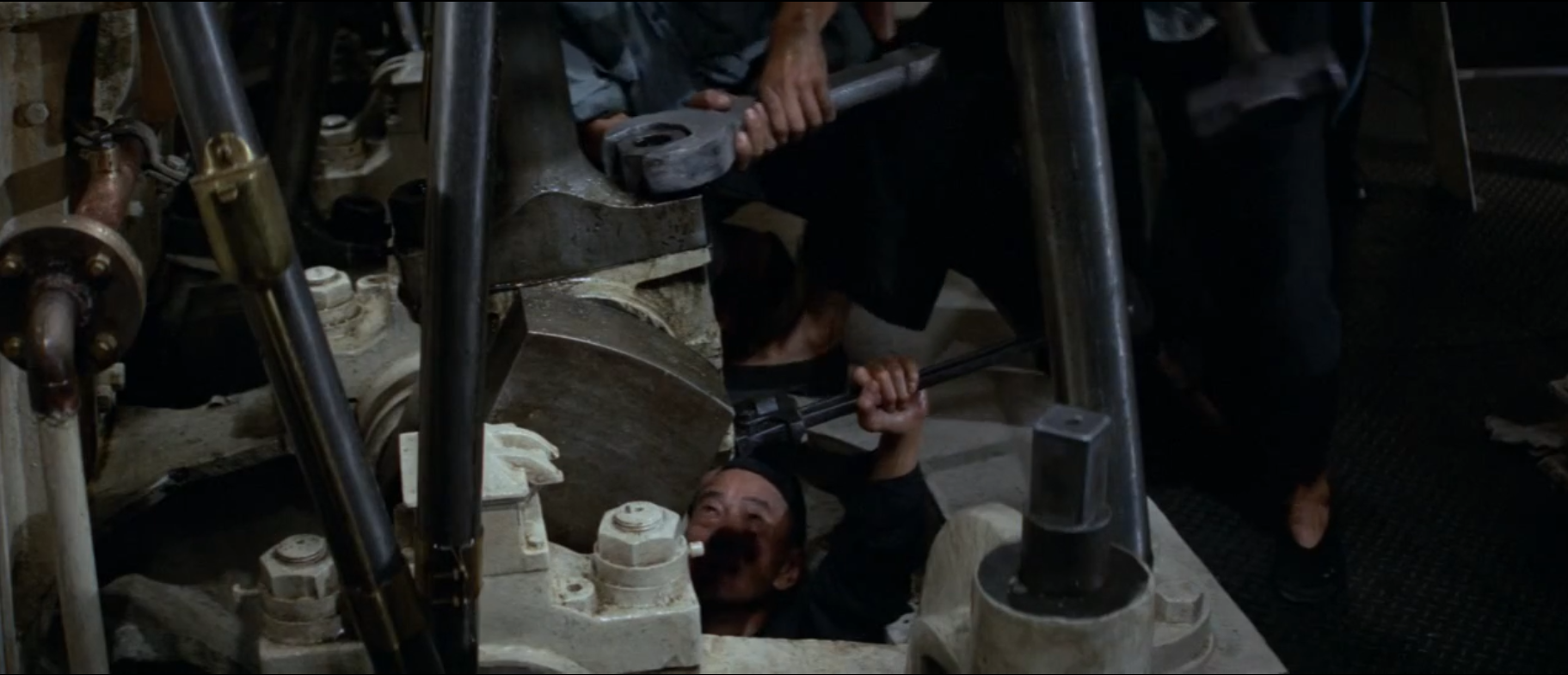
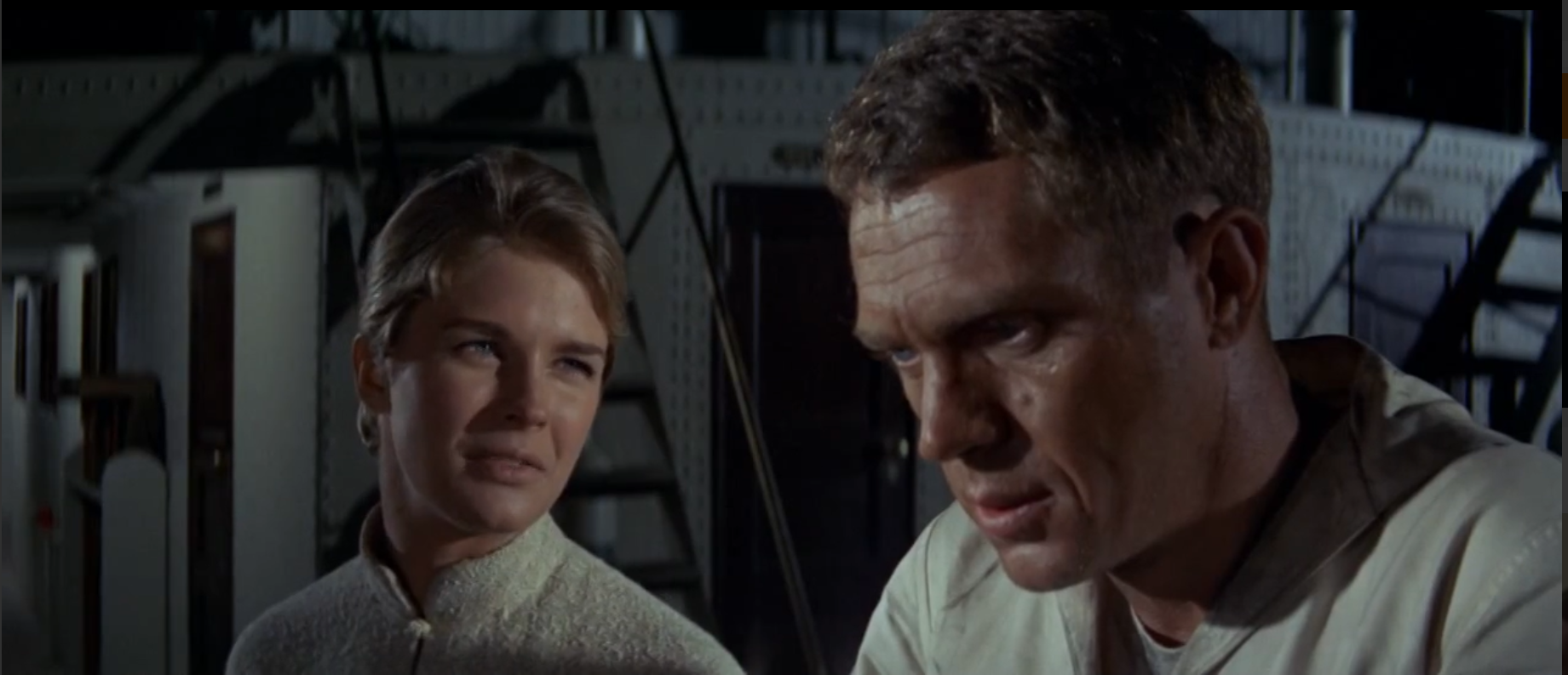
A year after winning an Oscar as best director for The Sound of Music (1965), Robert Wise helmed this epic historical military flick, based on a bestselling novel by Richard McKenna. Critics at the time of its release were understandably distracted by the screenplay’s obvious parallels with the United States’ involvement in the Vietnam War; these days, it’s easier to accept the story on its own merits. Steve McQueen gave one of his best, most introspective performances in the central role of Jake Holman — a soldier genuinely “in love” with engines, who situates his integrity as a man within his ability to care for them effectively.

To that end, his insistence on rigorous maintenance while aboard the San Pablo becomes the catalyst driving two key narrative threads: his contentious relationship with his superior (Crenna, whose only interest lies in continuing to manifest a strong American “presence” in China), and the racial tensions that ensue when he tries to take over responsibilities traditionally handled by Chinese “coolies”.

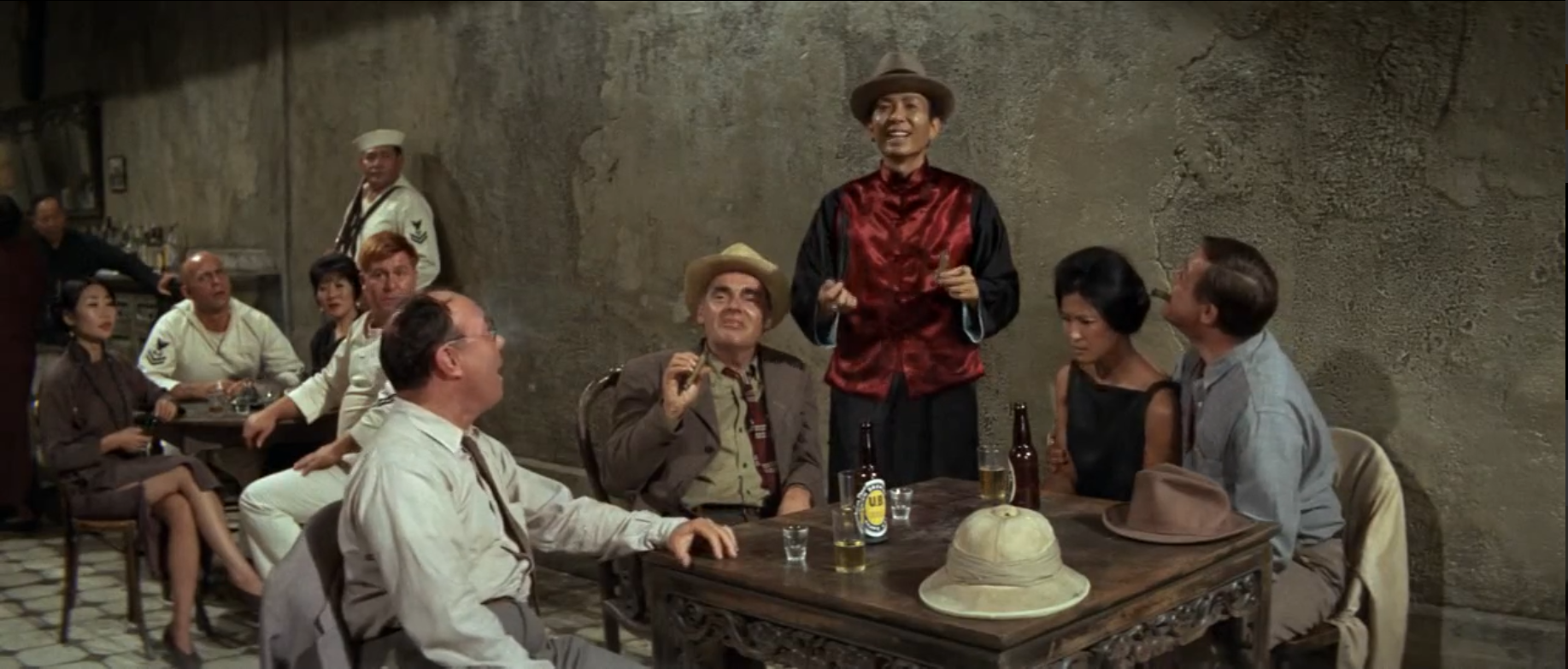
Given its lengthy running time (nearly 3 hours) and epic ambitions, there’s a lot more going on in The Sand Pebbles than “just” Jake’s identity as a naval engineer. His inevitable romantic interest is played by Candice Bergen (just 19 years old!) as a do-gooding teacher — but the primary romantic subplot is filled by Jake’s shipmate Richard Attenborough and his Eurasian flame Maily (Emmanuelle Arsan), whose “forbidden” love affair has tragic consequences.


Meanwhile, there are plenty of exciting action sequences sprinkled throughout, and Joseph MacDonald’s cinematography brings the Chinese landscape to vibrant life. But the film isn’t uniformly entertaining: the story immediately begins to drag whenever Attenborough and Arsan’s romance is given screentime, and despite an initial attempt at humanizing the Chinese (as evidenced in Mako‘s Oscar-nominated performance as a doomed “coolie” who briefly befriends McQueen), they ultimately turn into an amorphous mass of “Others”. Nonetheless, McQueen’s impressive performance is reason enough for film fanatics to check this film out at least once.

Note: Wise was apparently so proud of his work on this film that he hosted annual cast reunions for years after its release; click here for a website devoted exclusively to the film.

Redeeming Qualities and Moments:

  • Steve McQueen as Jake Holman (McQueen’s performance earned him his only Academy Award nomination)
  • Beautiful on-location cinematography (by Joseph MacDonald)

Must See?
Yes, simply for Steve McQueen’s Oscar-nominated performance.

Categories

  • Noteworthy Performance(s)
  • Oscar Winner or Nominee

Links:

Cat’s Eye (1985)

Cat’s Eye (1985)

“If you smoke, they’ll see you.”

Synopsis:
A stray cat bears witness to three tales of everyday horror: a smoker (James Woods) finds his family’s safety at risk when he joins a strong-arming organization called Quitters, Inc.; a former tennis pro (Robert Hays) is blackmailed by his lover’s gambling husband (Kenneth McMillan) into walking on the ledge of a highrise; and a young girl (Drew Barrymore) is terrorized at night by a breath-stealing troll in her wall.

Genres, Themes, Actors, and Directors:

  • Cat-and-Mouse
  • Episodic Films
  • Fantasy
  • Horror Films
  • James Woods Films
  • Stephen King Adaptations

Review:
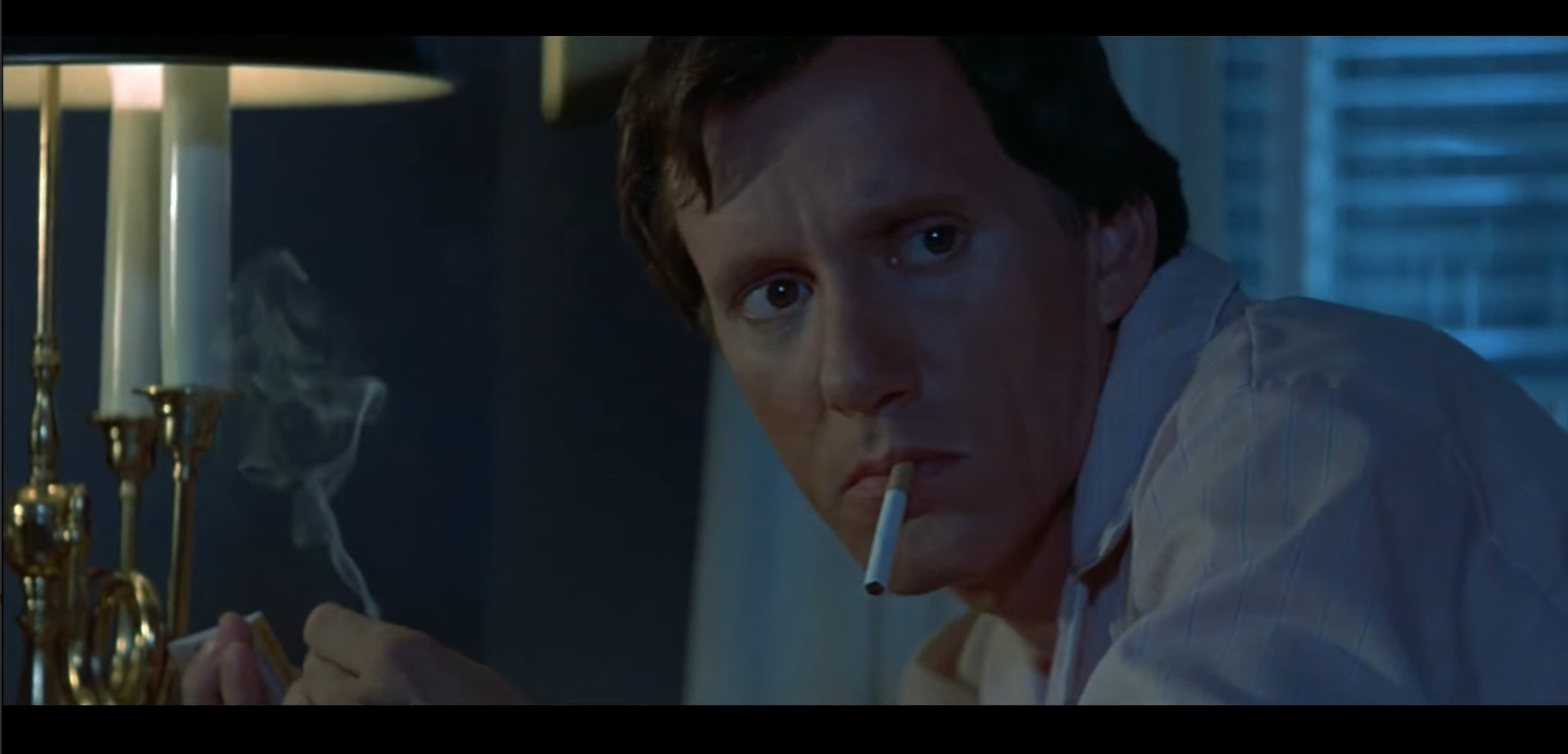
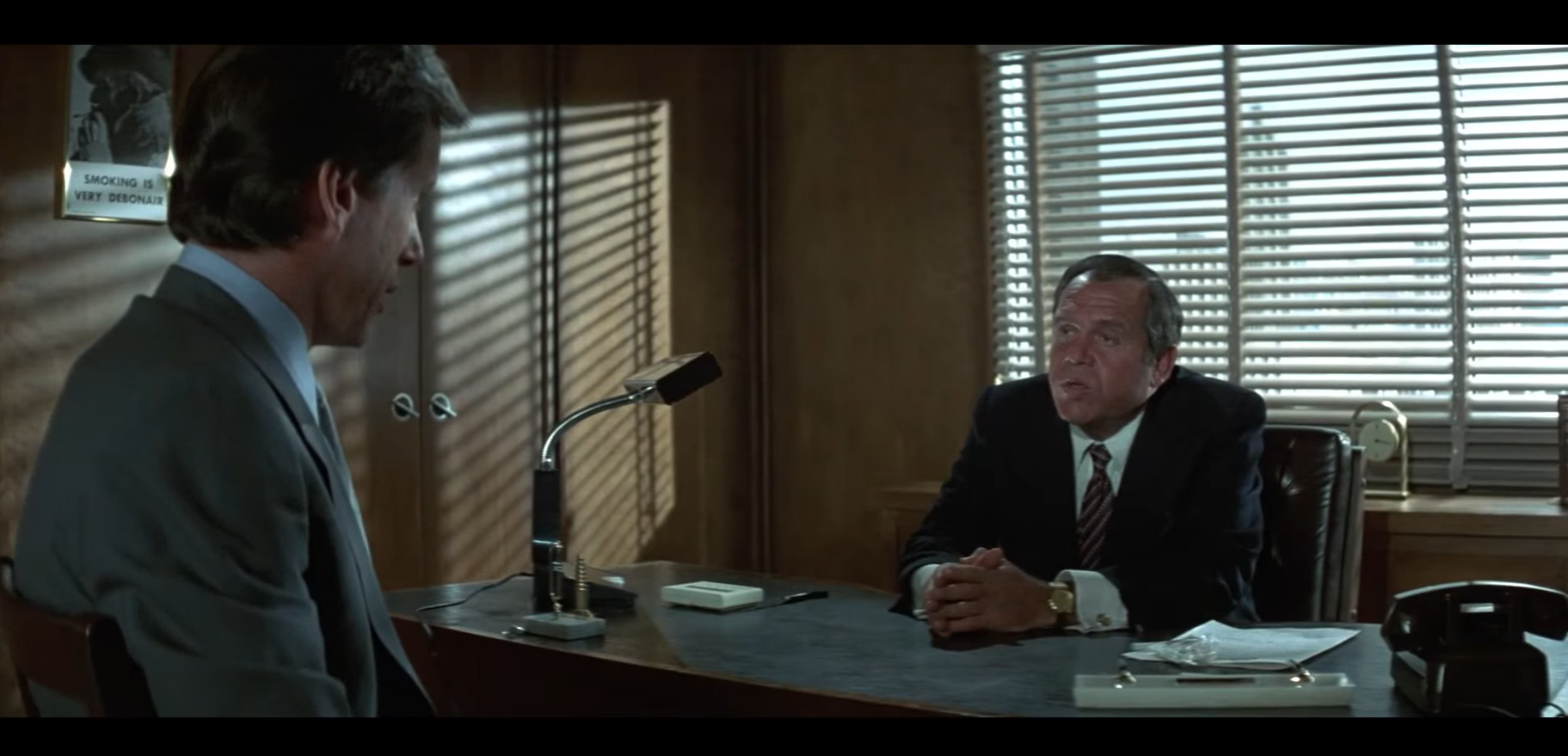
There seems to be little consensus among critics as to which segment of this Stephen King horror anthology film (directed by Lewis Teague, who also helmed Cujo) is the “best” and which one(s) fall flat; therefore, I’ll simply add my own subjective two cents here by noting that I find the first story (“Quitters, Inc.”) to be the most consistently compelling. James Woods is perfectly cast as a smoker who instantly regrets walking in the door of an anti-smoking organization (run by Alan King) which takes its mission deadly seriously:

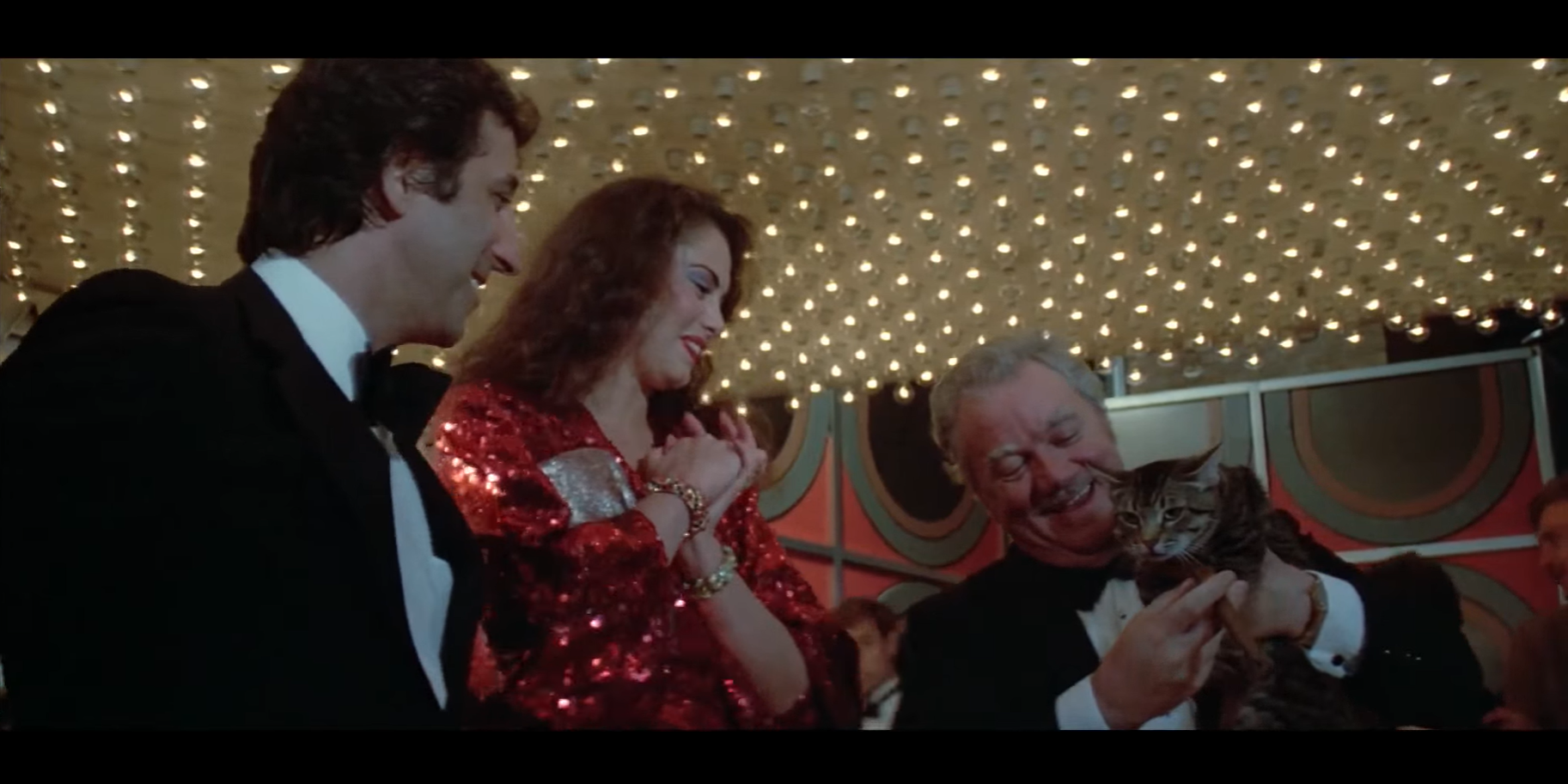
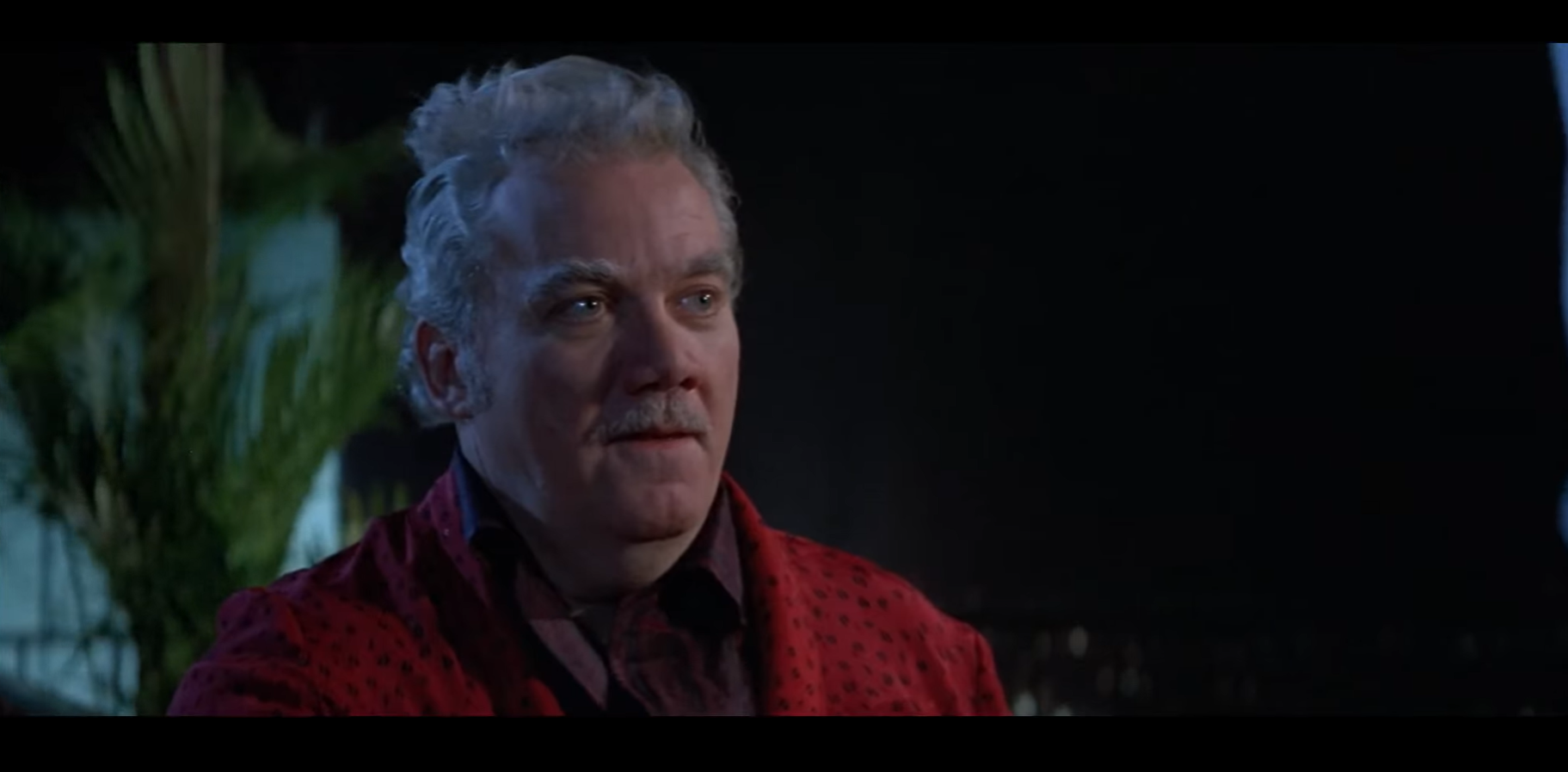
The dark comedic potential in this set-up is effectively mined. Fortunately, there’s something to enjoy in each of the other two segments as well; it’s impossible not to feel one’s heart in one’s mouth during “The Ledge”, for instance:

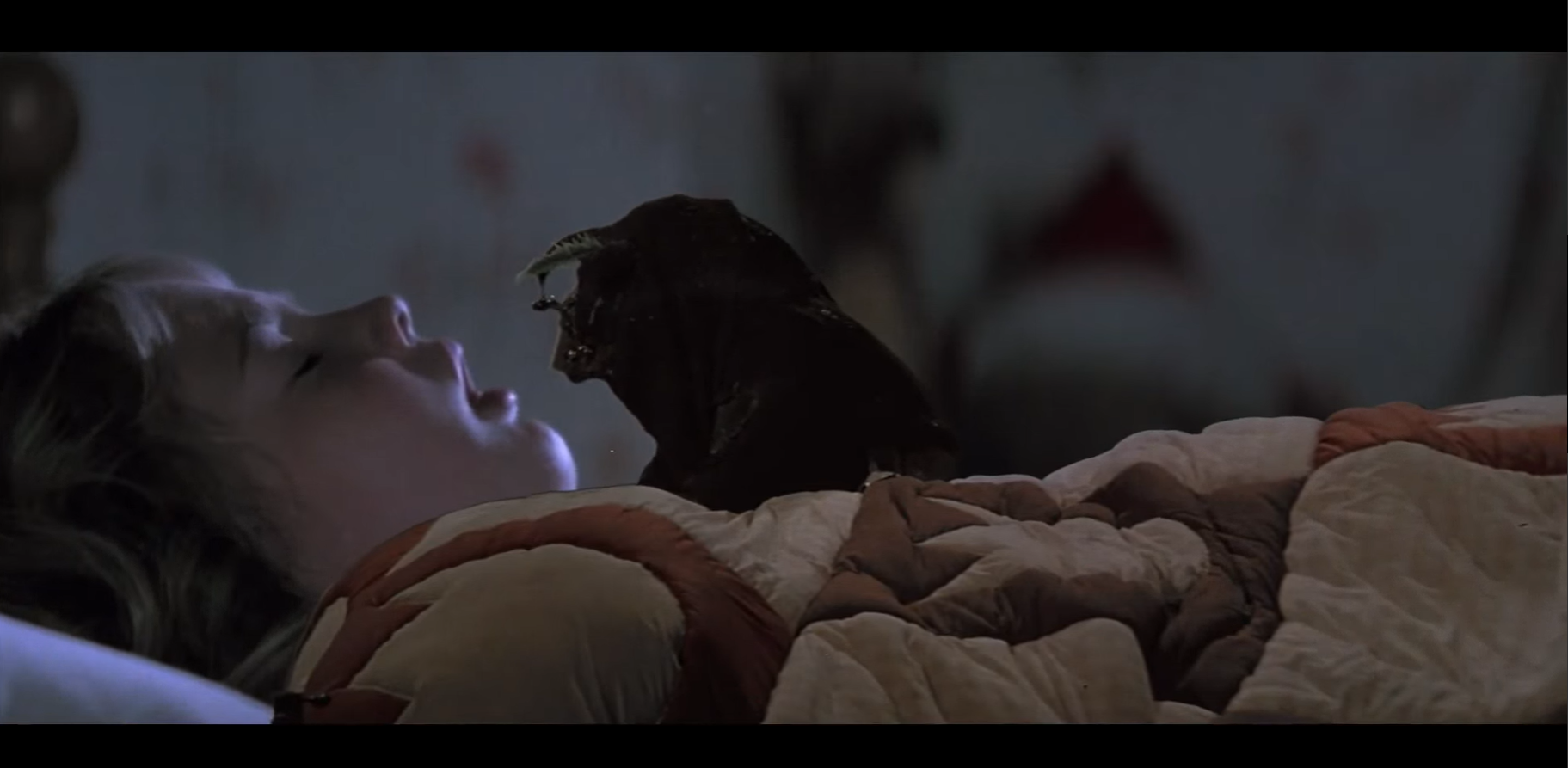
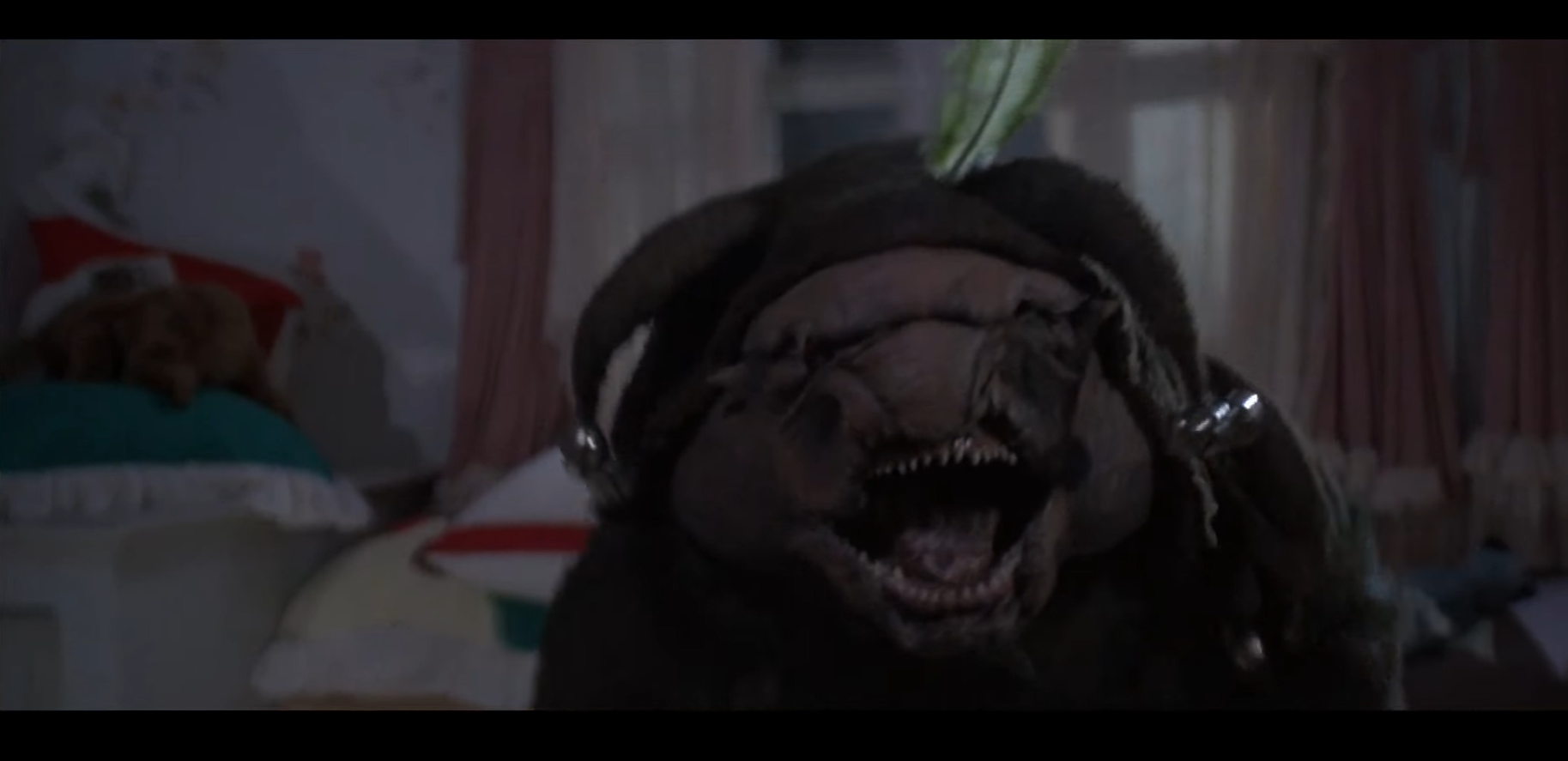
… and I’m impressed by Carlo Rambaldi’s troll in the third segment (the scene in which the troll slowly sucks breath directly out of Barrymore’s sleeping mouth is truly haunting).

Best of all, it’s nice to see cats getting such a good rap here — and it should be noted that the multiple tabbies enlisted to “play” the central feline character do an impressive job (at the very least their handler, Karl Lewis Miller, should be applauded!).

Redeeming Qualities and Moments:

  • The entire first segment (“Quitters, Inc.”)
  • Kenneth McMillan as jealous Cressner in “The Ledge”
  • Carlo Rambaldi’s special-effects troll in “The General”

Must See?
No, but horror fans will likely be curious to check it out.

Links:

Little Murders (1971)

Little Murders (1971)

“I married you because I wanted to mold you!”

Synopsis:
A nihilistic apathist (Elliott Gould) in New York is courted by a headstrong optimist (Marcia Rodd) who hopes to change his outlook on life, but their marriage is weirdly interrupted by a series of random murders.

Genres, Themes, Actors, and Directors:

  • Alan Arkin Films
  • Black Comedy
  • Donald Sutherland Films
  • Elliott Gould Films
  • New York City
  • Play Adaptation

Review:
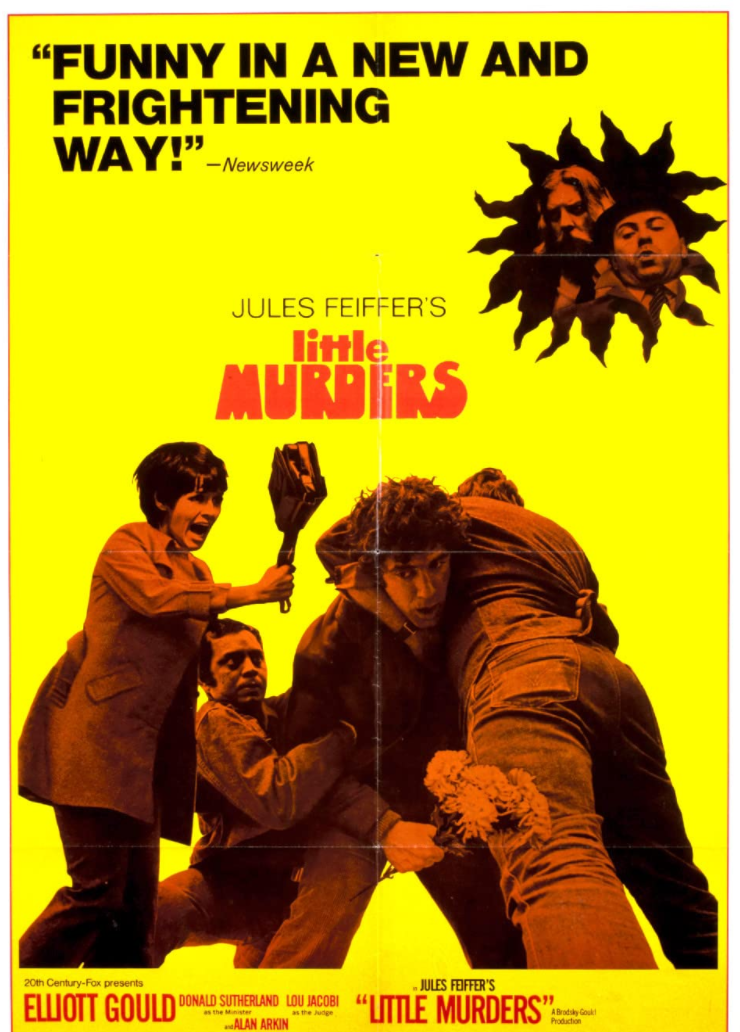
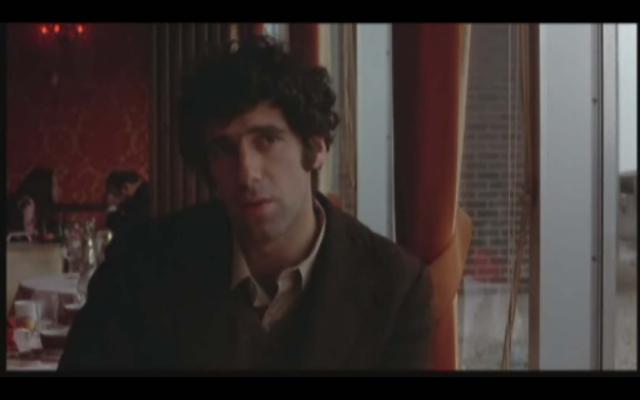
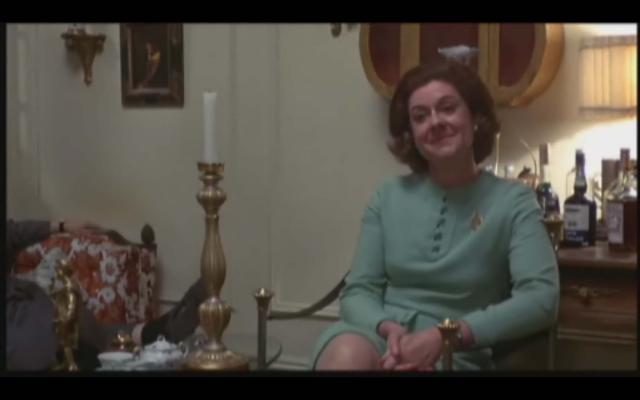
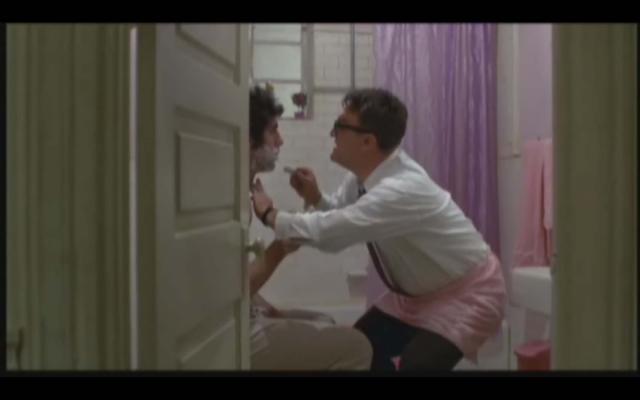
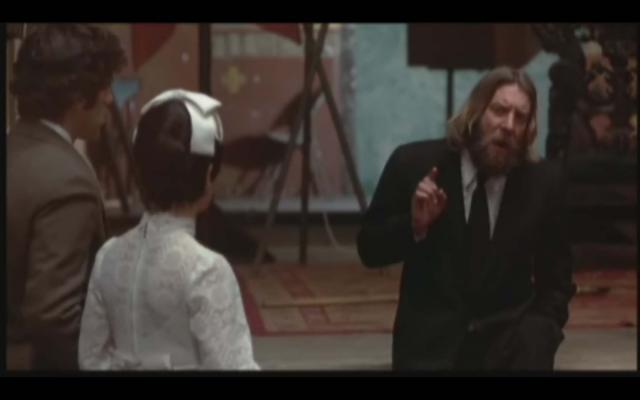
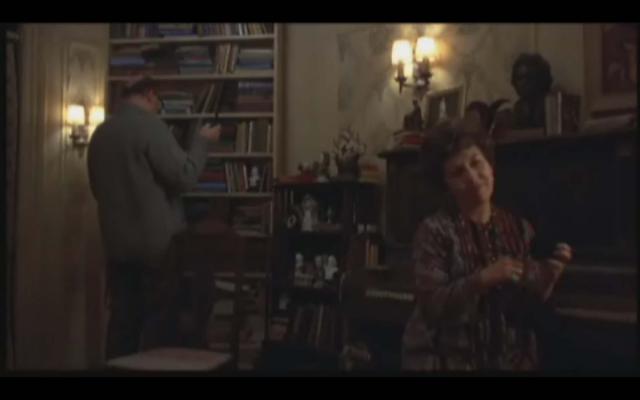
Alan Arkin directed and Elliott Gould co-produced this adaptation of writer-cartoonist Jules Feiffer‘s semi-autobiographical play, which isn’t for all tastes. As Roger Ebert noted in his original review, it’s “a very New York kind of movie, paranoid, masochistic and nervous”, leaving you to wonder what type of trouble might be lurking around the next corner. To a certain extent, I can appreciate where Feiffer is coming from with his passively nihilistic perspective, in which emotions are a liability given the unpredictability of life — but the overall effect of the random-violence-ridden story is one of numbness and discomfiture, and for a satire, it offers relatively few outright laughs. The performances by all the actors involved (see stills below) are the main reason to check out this unusual but alienating film; they’re remarkably game players.

Redeeming Qualities and Moments:

  • Elliott Gould as Alfred
  • Marcia Rodd as Patricia
  • Elizabeth Wilson as Mrs. Newquist
  • Vincent Gardenia as Mr. Newquist
  • Donald Sutherland as “The Minister”
  • Alfred trying in vain to interview his detached parents (Doris Roberts and John Randolph) about his childhood

Must See?
No, but it’s worth a look simply for the performances.

Links:

Eyewitness (1981)

Eyewitness (1981)

“Whoever killed Long is a hero in my book.”

Synopsis:
A janitor (William Hurt) stumbles upon the murdered body of a Vietnamese businessman in his office building, and hopes that his “privileged information” will give him access to a beautiful television journalist (Sigourney Weaver) he’s had a crush on for years.

Genres, Themes, Actors, and Directors:

  • Christopher Plummer Films
  • James Woods Films
  • Journalists
  • Murder Mystery
  • Obsessive Fans
  • Peter Yates Films
  • Sigourney Weaver Films
  • William Hurt Films

Review:
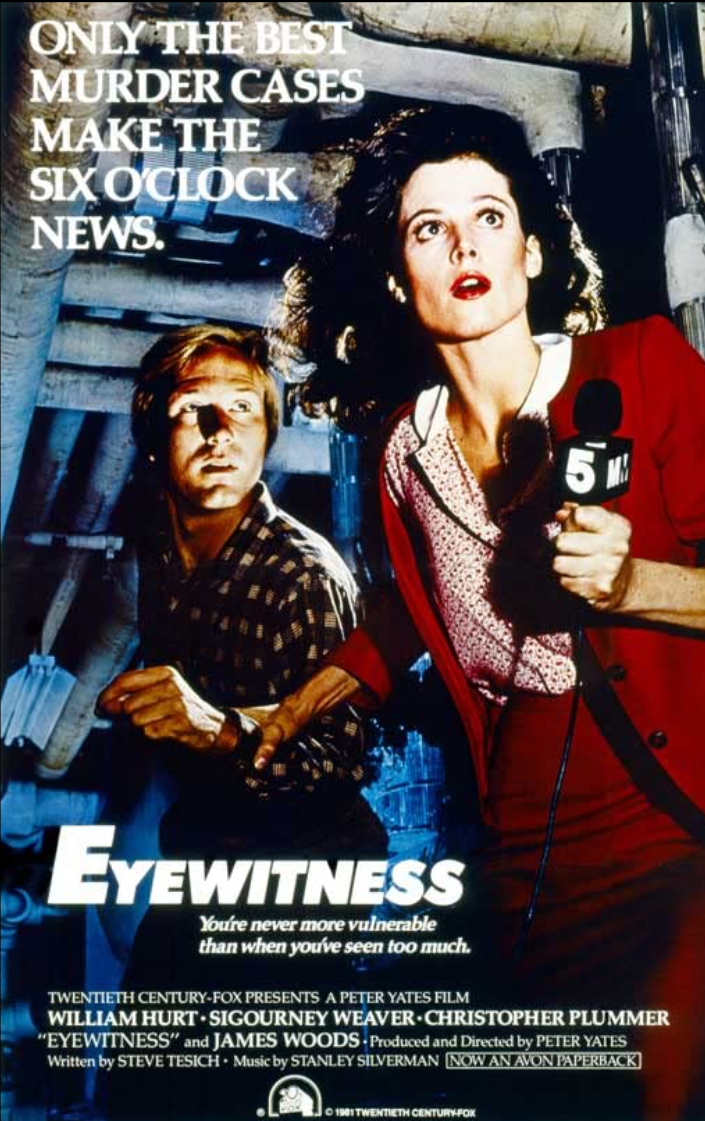
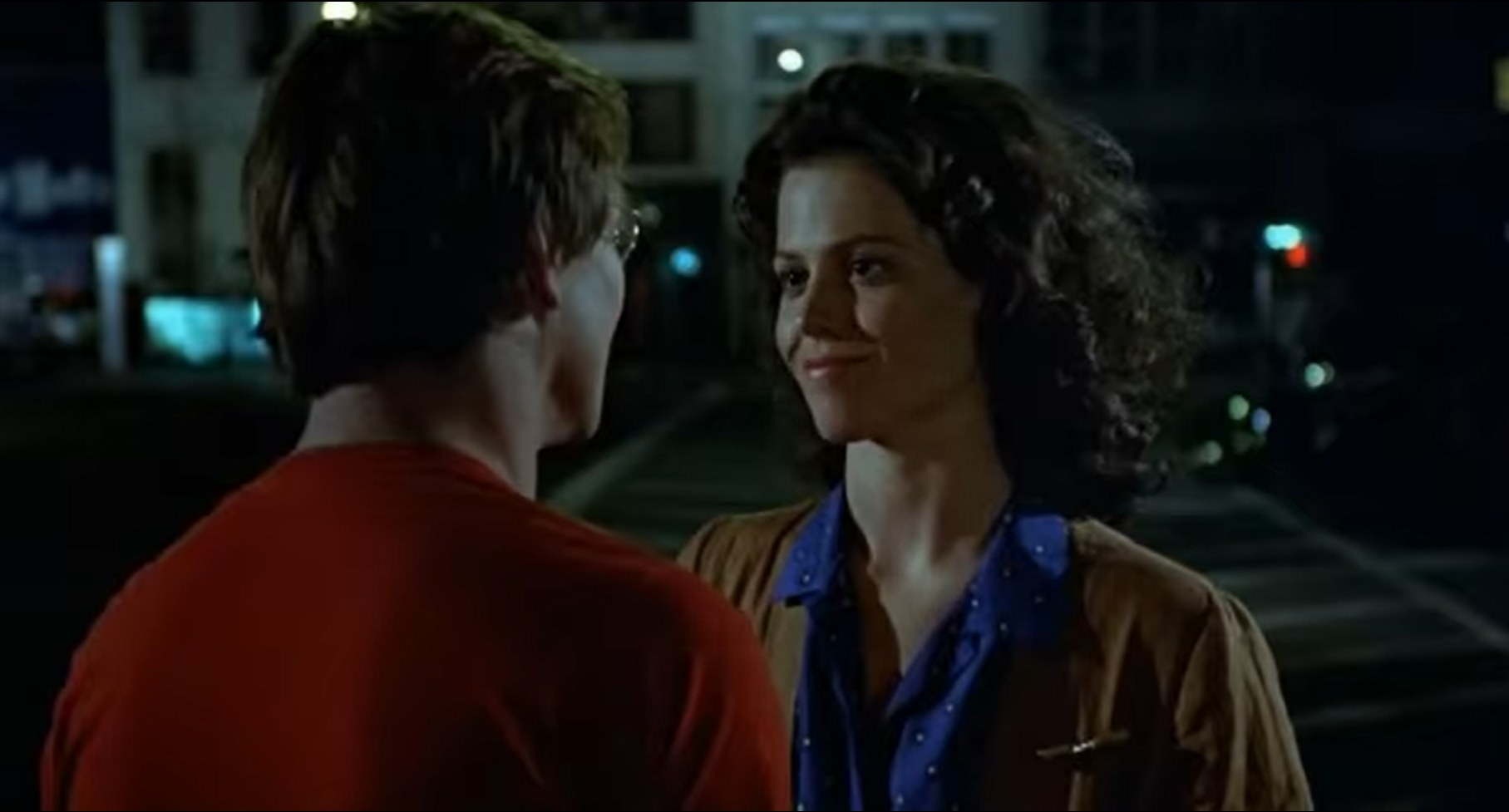
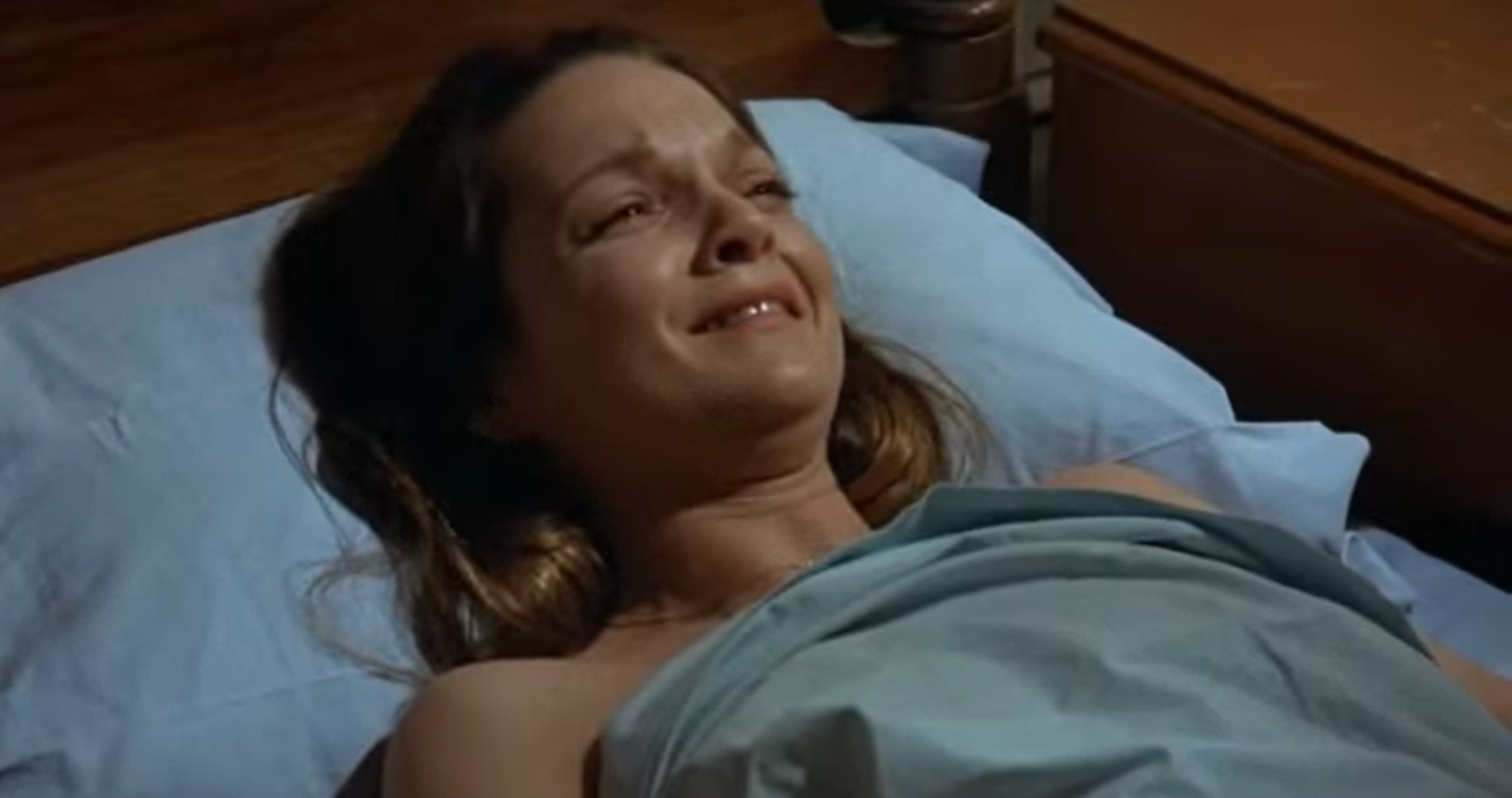
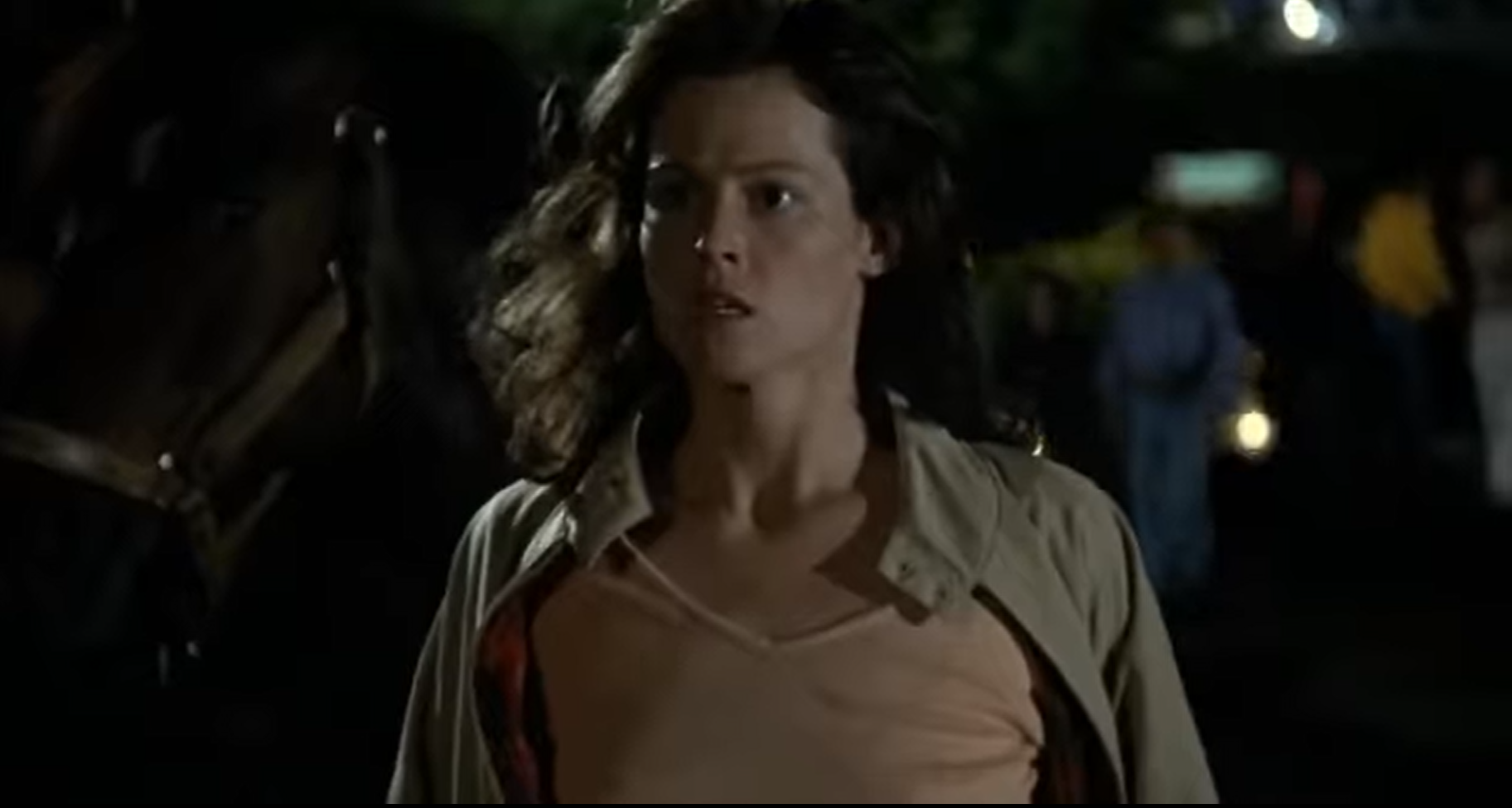
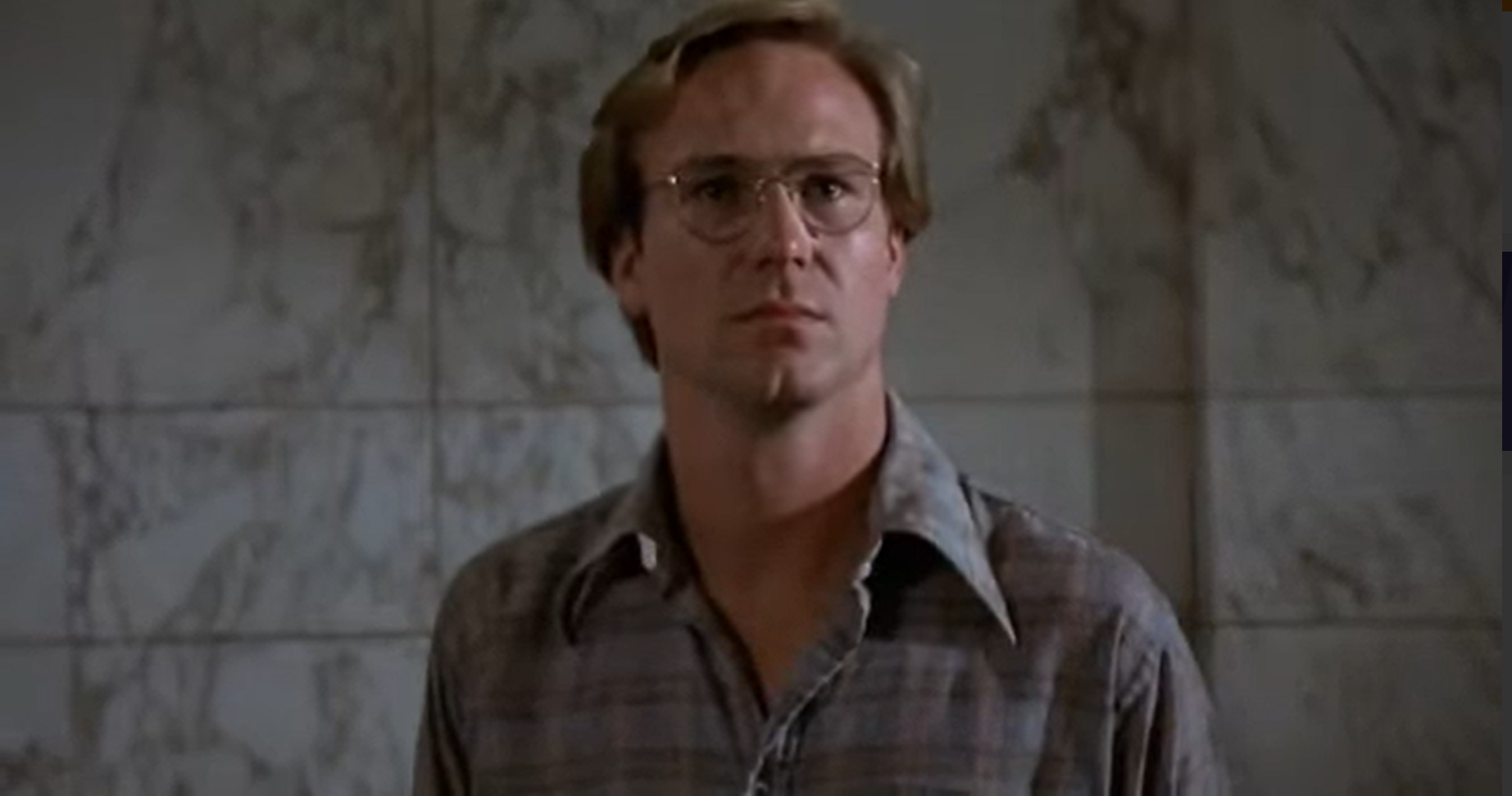
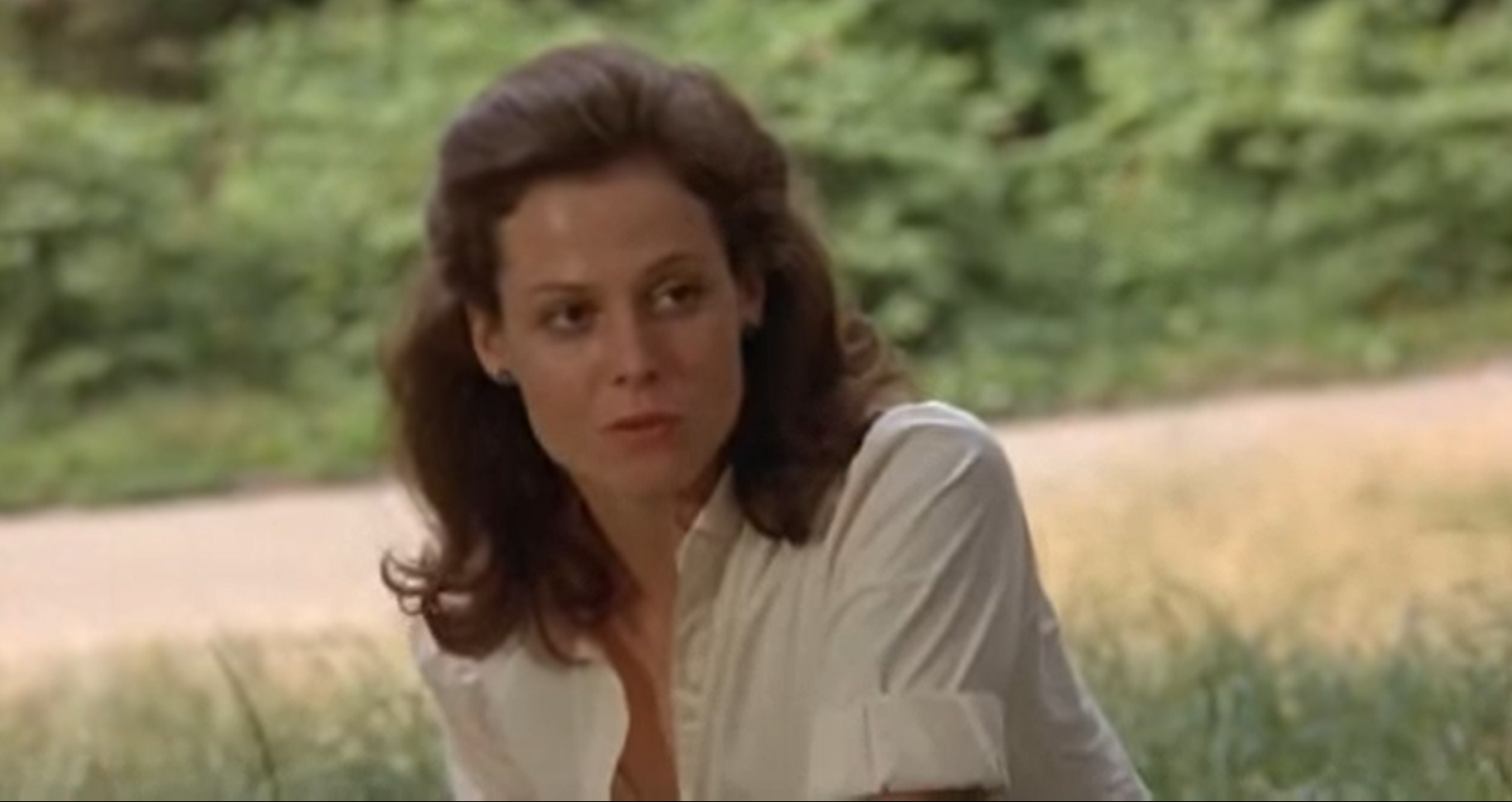
What does an underground movement to smuggle Jews out of communist Russia have to do with obsessive fans, Vietnam vets, horses, motorcycles, and a hated Asian businessman who’s found by a janitor late one night with a telephone cord wrapped tightly around his neck? Screenwriter Steve Tesich — who also wrote the script for director Peter Yates’ highly regarded cult film, Breaking Away (1979) — manages to weave these seemingly disparate plot elements into a most unusual “murder mystery” thriller, one which unfolds in completely unanticipated ways. What’s most refreshing about Tesich’s script (in which red herrings abound) is its character-driven focus: as the movie progresses, we learn more and more about each of the characters, who are gradually revealed to be more complex and nuanced than we originally thought. Indeed, it’s difficult to say too much about Eyewitness without giving away spoilers of one kind or another, given that so much of what happens exposes new character motivations. Young Hurt and Weaver are both excellent:

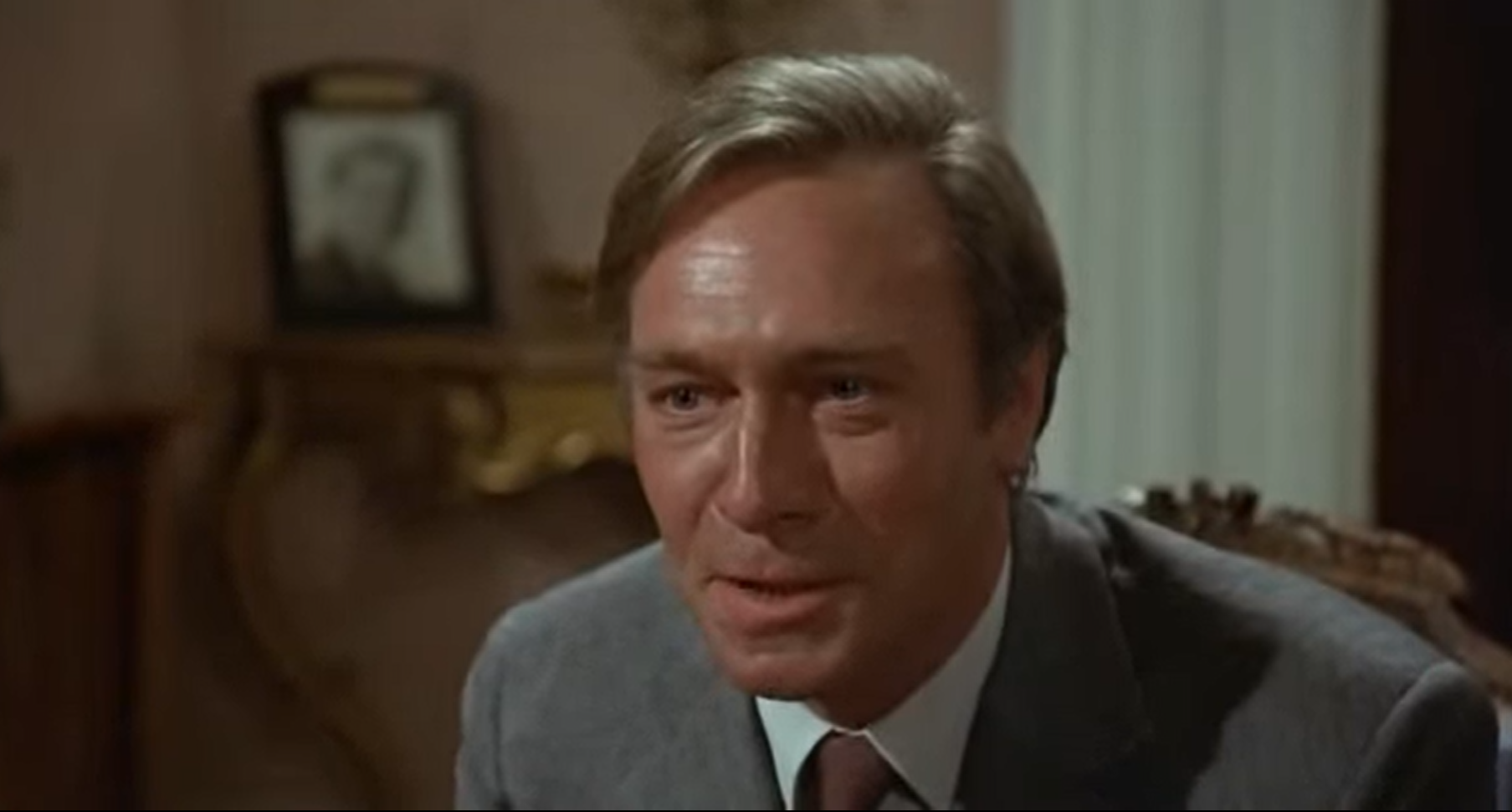
… as is the cast of supporting players — including Christopher Plummer as Weaver’s pro-Israel boyfriend:

… James Woods as Hurt’s co-worker and friend:

… and Pamela Reed as Hurt’s long-time girlfriend:

Meanwhile, the final climactic scene in a stable is most creatively staged.

Redeeming Qualities and Moments:

  • William Hurt as Daryll Deever
  • Sigourney Weaver as Tony
  • Steve Tesich’s character-driven screenplay

Must See?
No, but it’s a good, unusual little thriller, and worth seeing once. Listed as a Sleeper in the back of Peary’s book.

Links:

Perfect Couple, A (1979)

Perfect Couple, A (1979)

“I don’t think you two should be kissing while I’m suturing.”

Synopsis:
An aspiring singer (Marta Heflin) and a Greek antiques dealer (Paul Dooley) meet through a video dating service, but find their budding romance foiled by their overbearing families and roommates.

Genres, Themes, Actors, and Directors:

  • Dating
  • Musicals
  • Robert Altman Films
  • Romantic Comedy
  • Star-Crossed Lovers

Review:
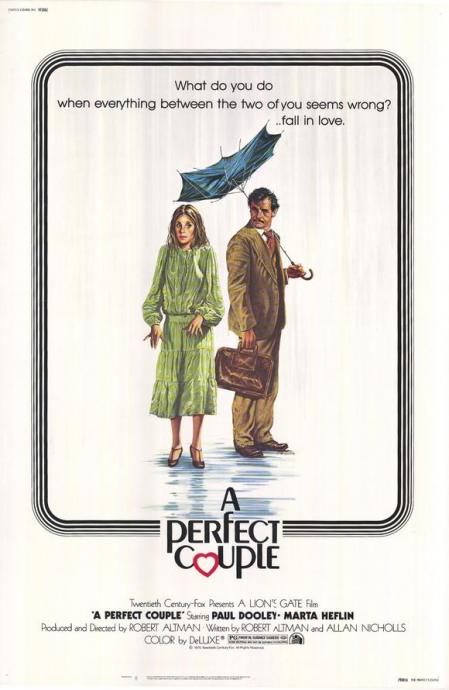
The opening scene of this would-be romantic comedy by Robert Altman promises an amusing look at the vagaries of dating: an obviously uncomfortable couple out on their first date get drenched by a rainstorm at the Hollywood Bowl, only to find their increasingly disastrous evening together miraculously redeemed by an electrifying goodnight kiss.

Unfortunately, however, the film completely fails to live up to its initial potential. Most egregiously, Dooley’s character comes across as obnoxious: he’s pushy, self-absorbed, and possessive (he beats up another man who wants to go out with Heflin), and is rarely worthy of our sympathy.

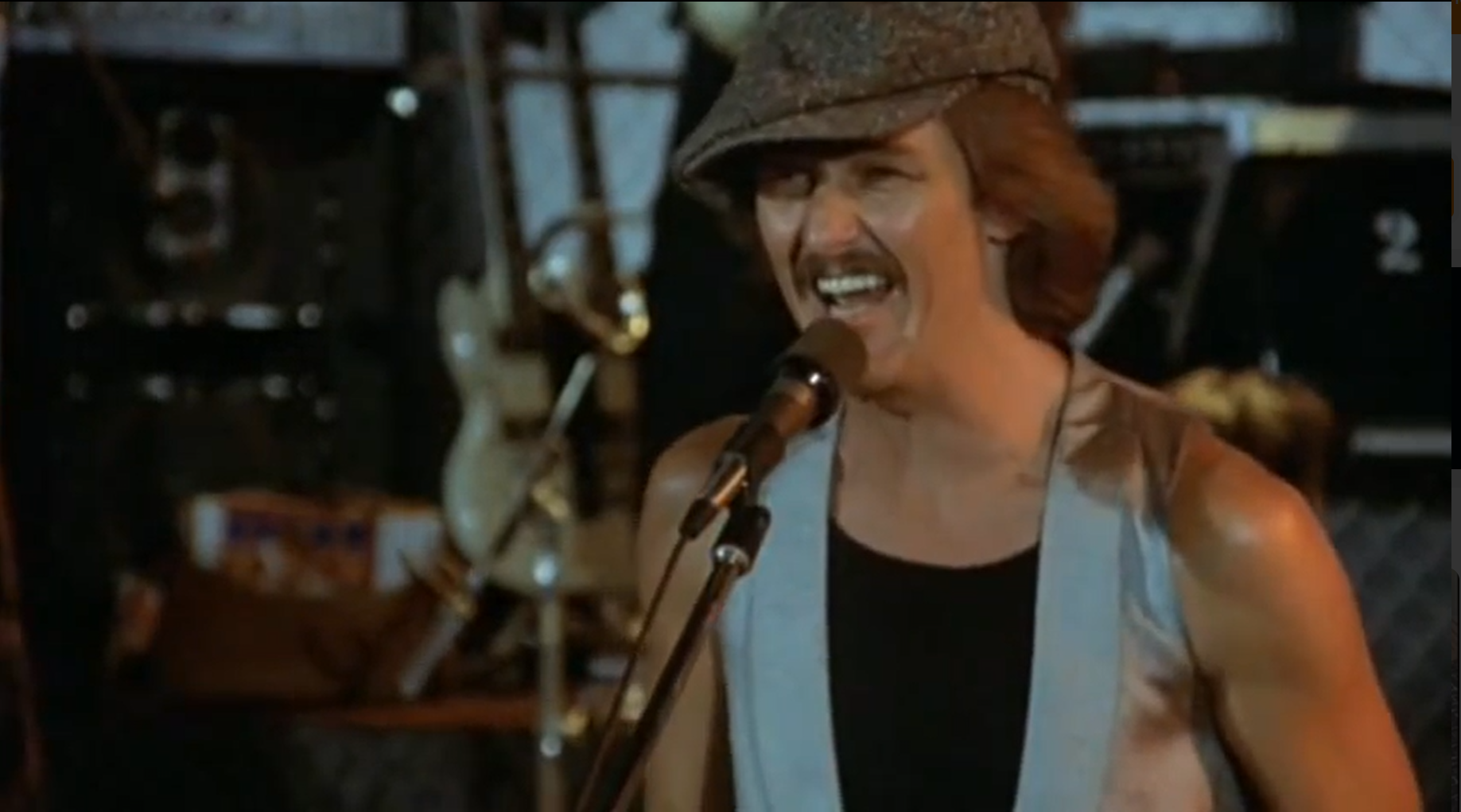
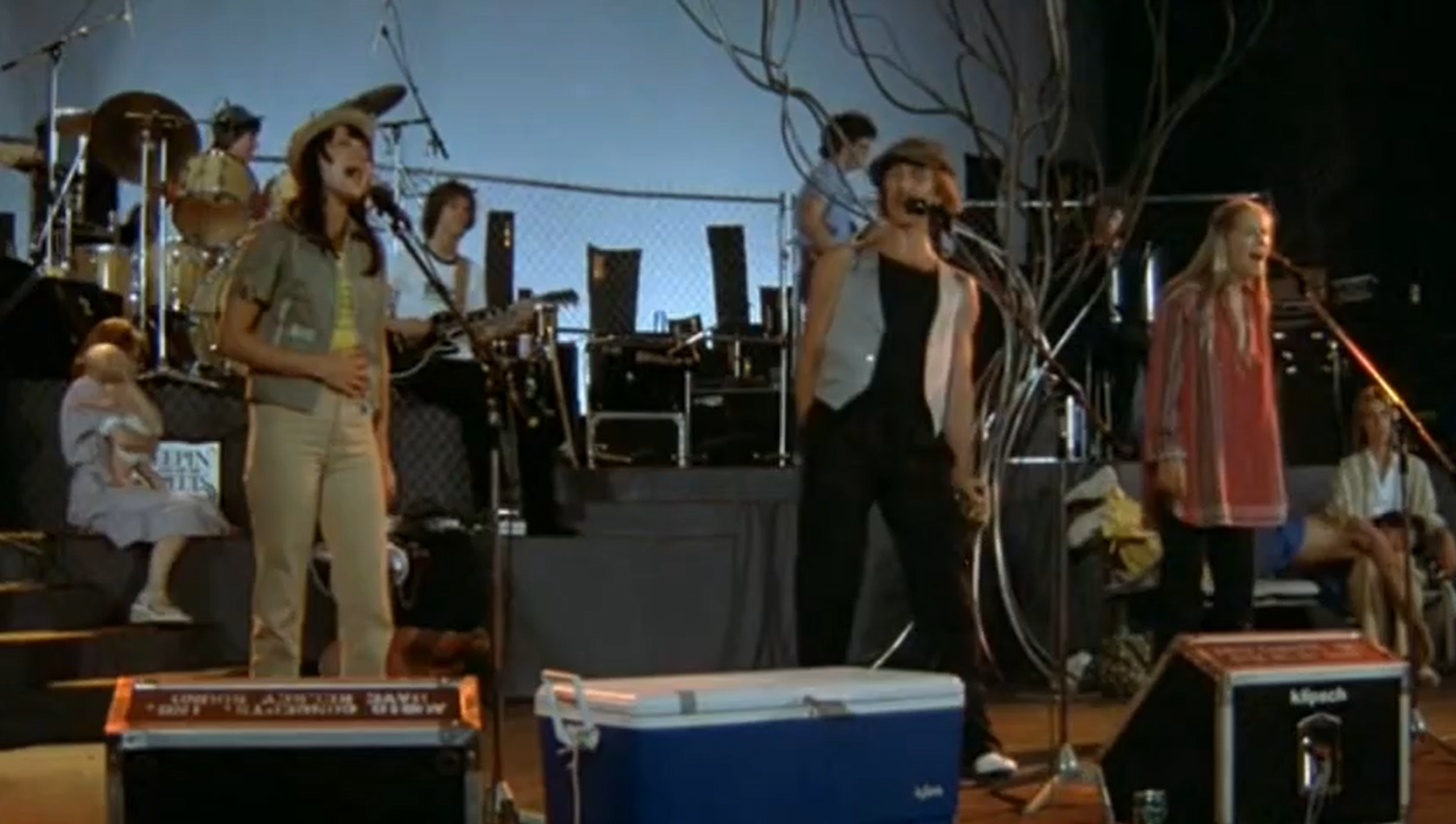
Meanwhile, waifish Heflin is, despite her fine voice, utterly unbelievable as a backup singer in a communal rock band (her bandmates are all ten times more energetic than her), and her distractingly skeletal body makes one cringe for her well-being.

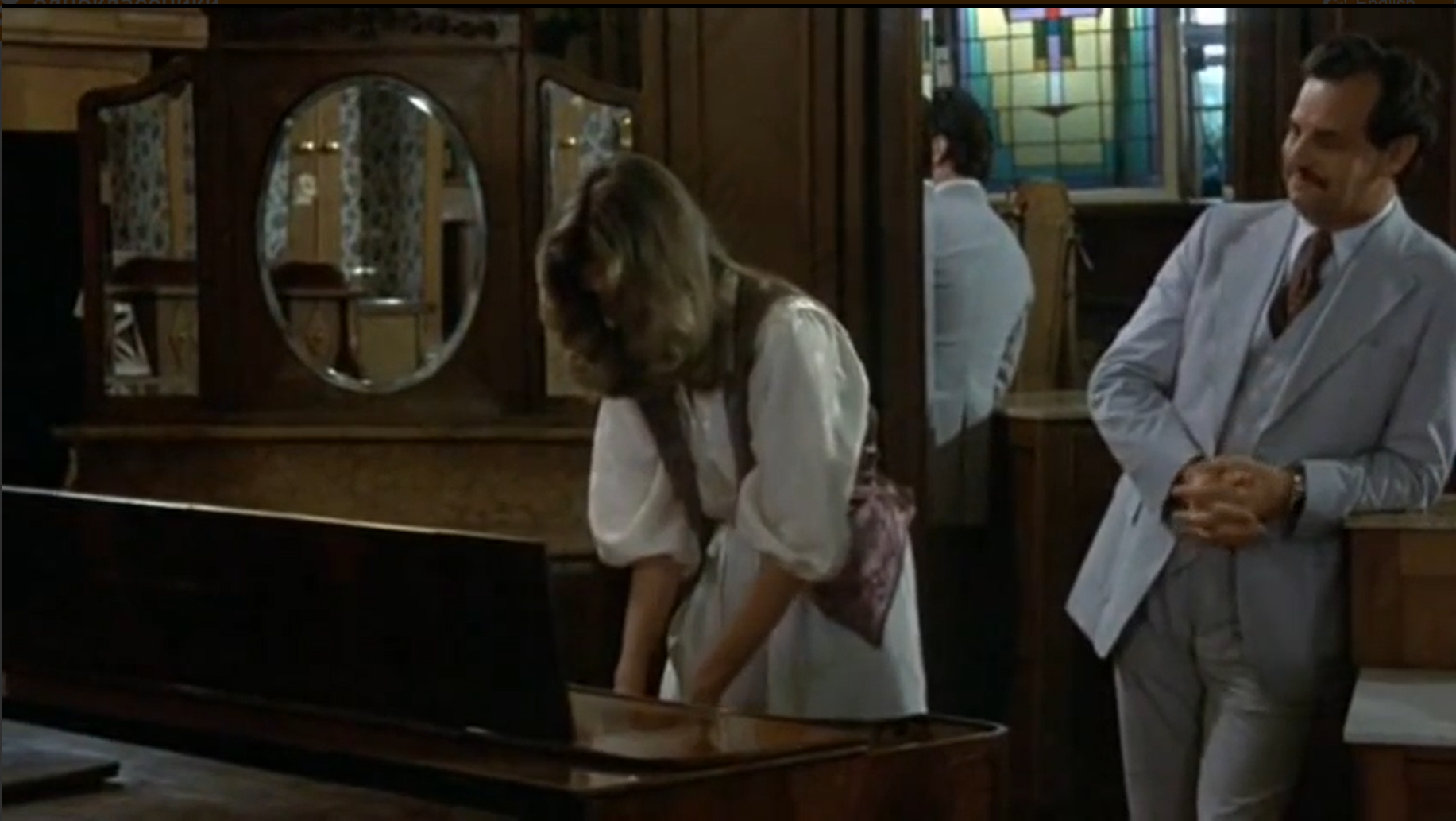
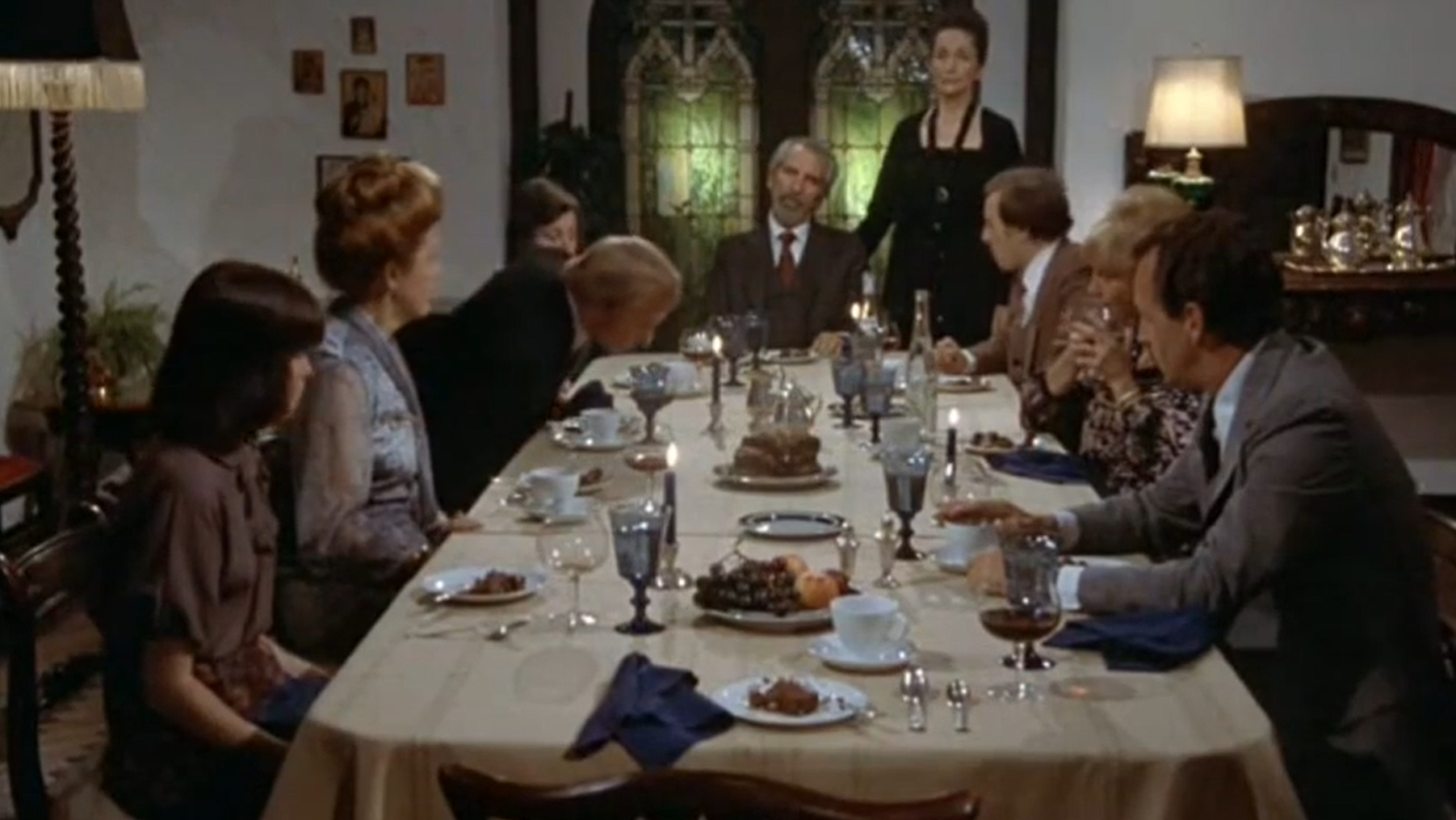
Side stories involving members of Dooley’s overbearing Greek family fall utterly flat:

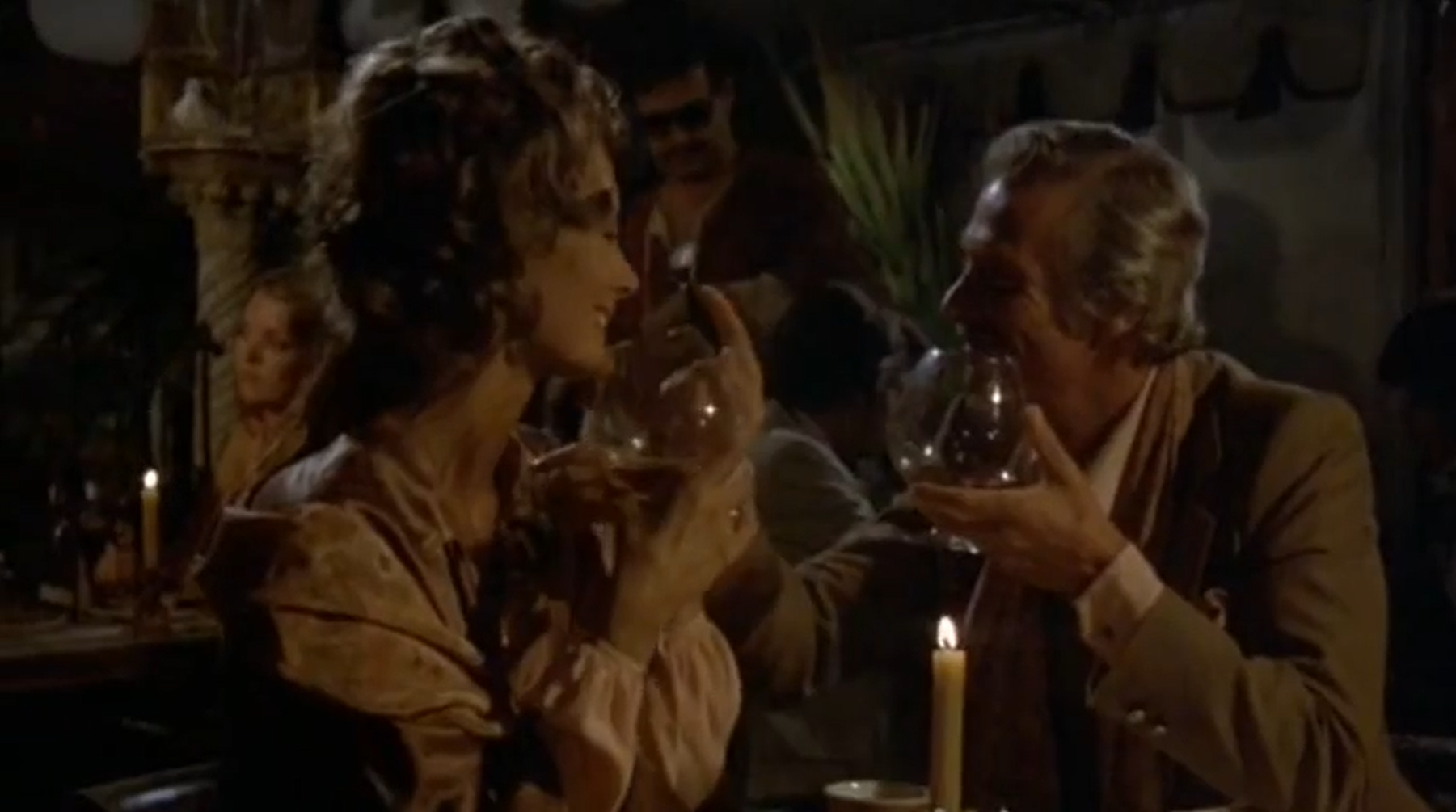
… as does a recurring visual “joke” involving a true “perfect couple” (Fred Bier and Jette Seear), whose presence is meant to serve as a comedic counterpart to Dooley and Heflin’s troubled courtship.

The film’s primary redeeming quality is Heflin’s band (“Keepin’ Em Off the Streets”), whose incessant rehearsals inappropriately dominate the screenplay, but ultimately provide a welcome respite from the tedious storyline.

Note: Watch for charismatic Ted Neeley (“Jesus Christ Superstar”) as the band’s domineering lead singer — what inspired casting!

Redeeming Qualities and Moments:

  • A host of fun ’70s-era songs by “Keepin’ Em Off the Streets”

Must See?
No; unless you’re a true Altman-completist, feel free to skip this one.

Links:

Therese Desqueyroux (1962)

Therese Desqueyroux (1962)

“Don’t you think that a life like ours already feels a lot like death?”

Synopsis:
A woman (Emmanuelle Riva) accused of attempting to poison her wealthy husband (Philippe Noiret) reflects upon her unhappy marriage as she leaves prison; once she arrives home, vengeful Noiret refuses to divorce her but is determined to make her life miserable.

Genres, Themes, Actors, and Directors:

  • Downward Spiral
  • French Films
  • Flashback Films
  • Georges Franju Films
  • Homicidal Spouses
  • Marital Problems

Review:
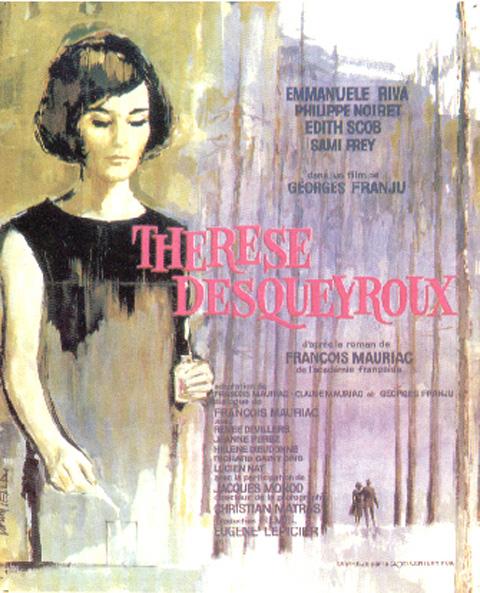
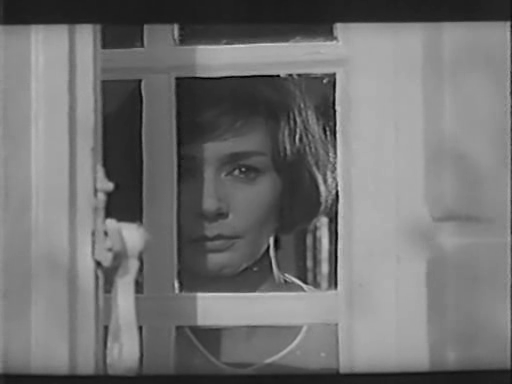
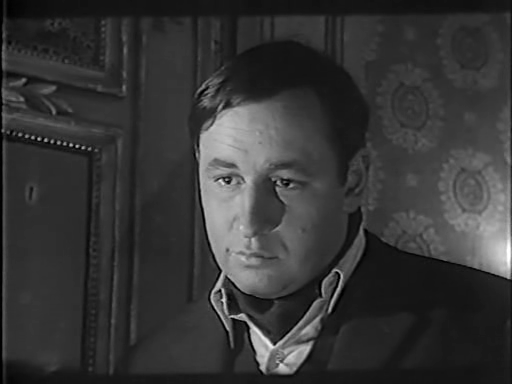
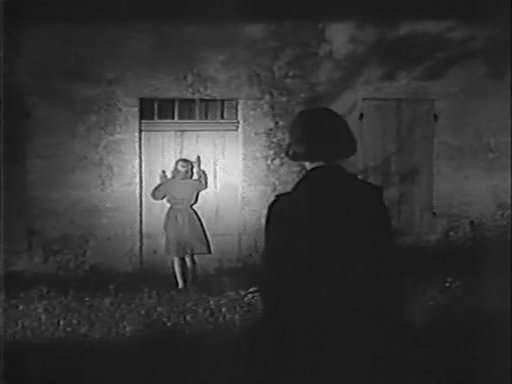
Georges Franju is most famous for directing the 1960 horror masterpiece Eyes Without a Face; this film (made just two years later) shares some of its predecessor’s thematic interests (a woman is forcibly isolated in her own home by a powerful man), but ultimately lacks both its compelling horror trajectory and its sense of dark humor. Indeed, the deadly serious Therese (based on a 1927 novel by Francois Mauriac) is resolutely bleak, and — despite a voiceover meant to fill us in on the details of Riva’s unhappy marriage before she attempts to murder her pompous husband — her titular protagonist remains a true feminist enigma throughout. At first, it seems that Therese married her husband simply as a veiled proxy to be near his lovely young sister (Edith Scob) — but this vaguely titillating suggestion is never developed. Instead, we come to accept that she simply made a dreadful mistake in marrying Bernard (whose socially acceptable family name she craved on some level), and has compounded this mistake by stupidly trying to murder him. The remainder of the film — as Therese becomes a virtual prisoner in her own house, resorting to simply smoking and drinking in bed — is too depressing for words. Fortunately, the film’s evocative visuals, fine central performances (Noiret is particularly good in a decidedly unsympathetic role), and memorable score by Maurice Jarre all help to make up for its downer storyline (which is apparently faithful to its source material).

Redeeming Qualities and Moments:

  • Emmanuelle Riva as Therese (she won a Best Actress award at the Venice Film Festival for her work here)
  • Phillipe Noiret as Bernard
  • Raymond Heil and Christian Matras’ cinematography
  • Maurice Jarre’s lilting, haunting score

Must See?
No, but it’s certainly worth a look if you can locate a copy.

Links:

Phantom Carriage, The (1921)

Phantom Carriage, The (1921)

“The one to whom something fatal happens on New Year’s Eve is forced to drive the Phantom Carriage!”

Synopsis:
On New Year’s Eve, an alcoholic (Victor Sjostrom) is visited by the driver (Tore Svennberg) of the “phantom carriage” of death, and forced to reflect on his boorish life, during which he abused his innocent wife (Hilda Borgstrom) and rebuffed the assistance of a do-gooding missionary (Astrid Holm).

Genres, Themes, Actors, and Directors:

  • Do-Gooders
  • Domestic Abuse
  • Flashback Films
  • Ghosts
  • Horror Films
  • Scandinavian Films
  • Silent Films

Review:
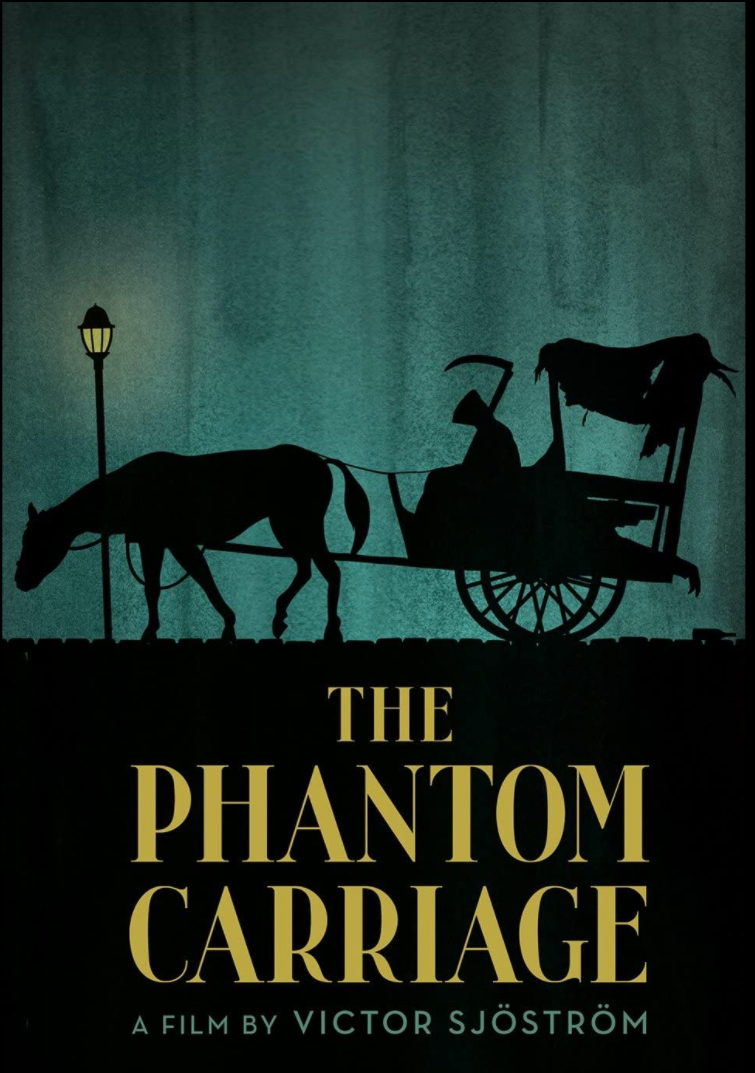
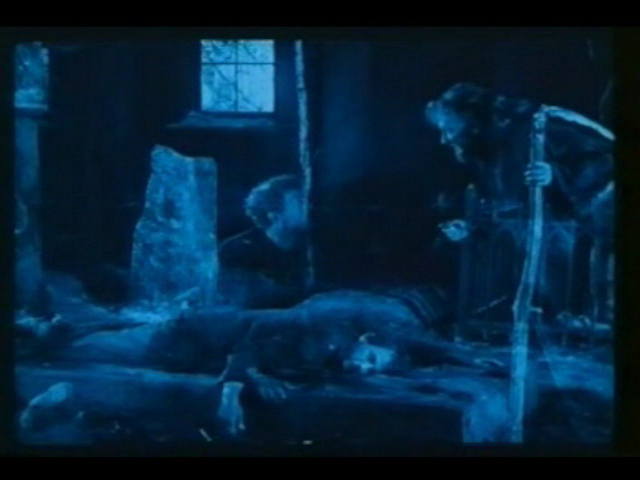
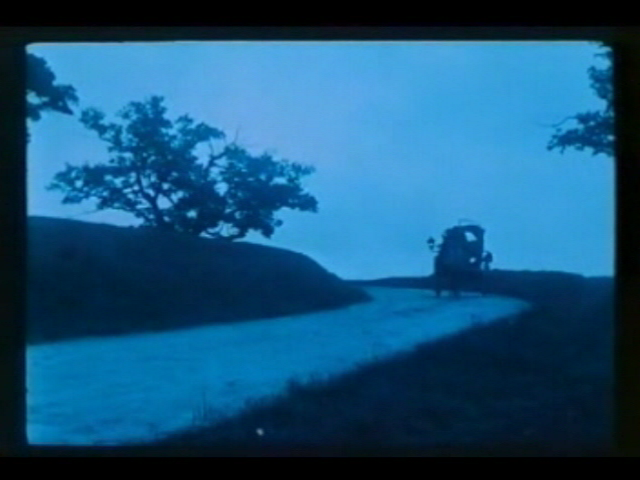
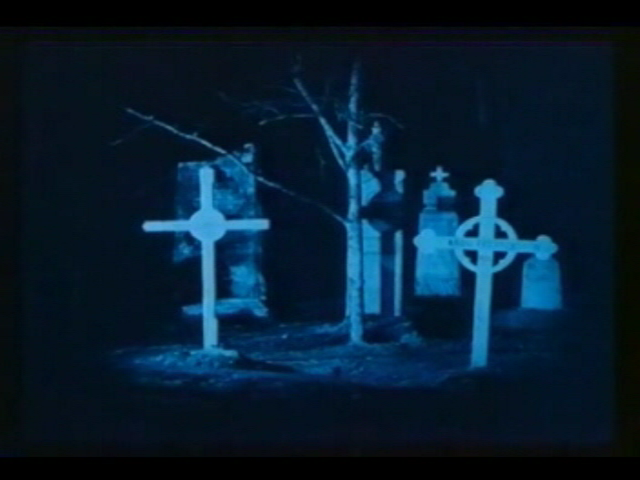
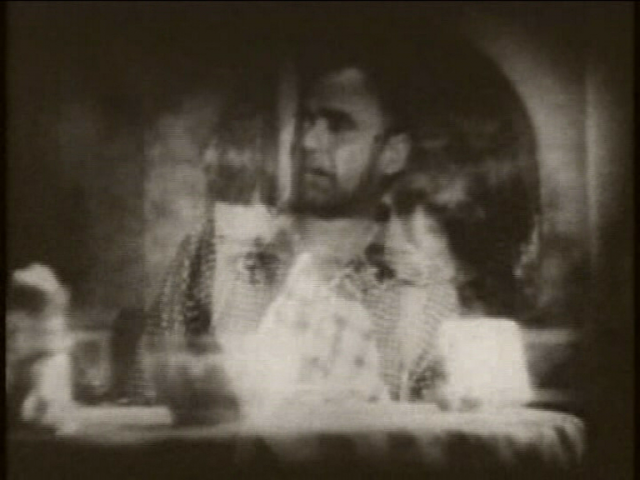
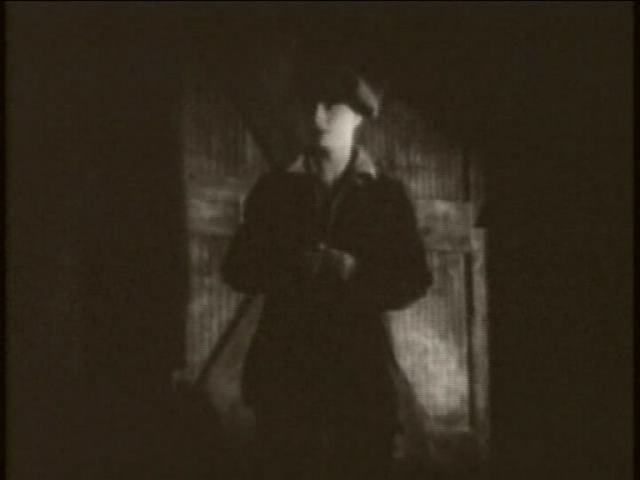
Based on a novel by Nobel Prize-winning Swedish author Selma Lagerlof, The Phantom Carriage is primarily known for the influence it had on Ingmar Bergman, who cast the film’s director (Victor Sjostrom) in the lead role of Wild Strawberries (1957), and paid explicit homage to its imagery and themes. Yet it remains an important historical milestone in its own right, due simply to its impressive technical innovations: cinematographer Julius Jaenzon, working with lab executive Eugen Hellman, created stunning “double-exposure” effects which resulted in truly memorable and haunting imagery (see stills below). Unfortunately, the narrative itself — a Christian variation of sorts on Dickens’ A Christmas Carol, and a clear precursor to Capra’s It’s a Wonderful Life (1946) — is less impressive. The film’s multiple-flashback structure is unduly confusing, and Sjostrom’s troubled protagonist is such a boorish lout — he drinks, terrorizes his wife and kids, and knowingly tries to infect as many people as possible with his tuberculosis — that it’s truly difficult to feel any sympathy for him as he cowers at death’s door. Regardless of its narrative shortcomings, however, film fanatics will surely want to check out this film — which Bergman reportedly re-watched every year after he first stumbled upon it at the age of 15 — at least once, for its stunning visuals and historical relevance.

Note: See Wikipedia’s entry on the film to read more about its production history and subsequent influence on cinema.

Redeeming Qualities and Moments:

  • Julius Jaenzon’s innovative double-exposure cinematography

  • Many haunting images

Must See?
Yes. Listed as a film with Historical Importance and a Personal Recommendation in the back of Peary’s book.

Categories

  • Historically Relevant

(Listed in 1001 Movies You Must See Before You Die)

Links:

Beggars of Life (1928)

Beggars of Life (1928)

“Even them people in feather beds ain’t satisfied — we’re all beggars of life.”

Synopsis:
A young woman (Louise Brooks) who has just killed her stepfather in self-defense goes on the lam with a hobo (Richard Arlen) — but the leader of a group of thieves (Wallace Beery) is determined to secure Brooks as his “gal” at any cost.

Genres, Themes, Actors, and Directors:

  • Character Arc
  • Fugitives
  • Homeless
  • Louise Brooks Films
  • Silent Films
  • Thieves and Criminals
  • Wallace Beery Films
  • William Wellman Films

Review:
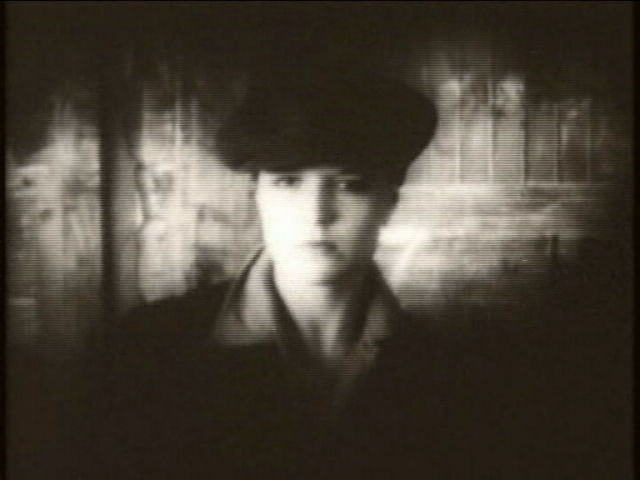
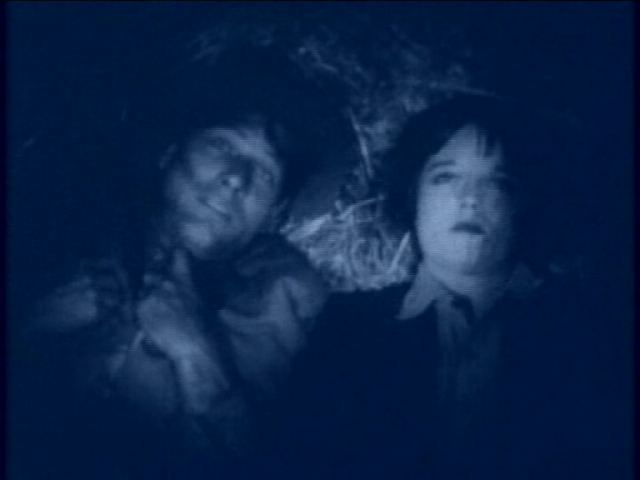
This silent film by director William Wellman is a clear thematic precursor to his Depression-era flick Wild Boys of the Road (1933), but with a fugitive sensibility and less overt social commentary. The story starts off with a bang, as Arlen walks into a room with a dead man, then spots a beautiful young woman descending the stairs; as Brooks describes how she killed her stepfather after he tried to rape her, Wellman superimposes flashback images over her expressive face, to haunting effect. Arlen begrudgingly takes Brooks (a fugitive) under his wing, teaching her how to hop trains (she doesn’t make it on her first try), and their care for one another slowly begins to grow; the scene in which the two acquaintances lie together on a makeshift haystack “bed” is a nervy, remarkably provocative artifact of pre-Code mentality.

Once Arlen and Brooks encounter a group of thieves (led by blustery Wallace Beery), the story becomes a bit more conventional and less intrinsically interesting — though Beery’s “look” when he dons a trash bag and dark glasses to convene a kangaroo court bears viewing (see still below). Things take yet another turn by the end, when Beery experiences a change of heart — but to say more would give away spoilers. While its rather perfunctory storyline prevents Beggars of Life from being a classic of silent cinema, Wellman does present some lovely imagery (helped by Henry Gerrard’s shadowy cinematography), and film fanatics will likely be curious to see Brooks in her final Hollywood film before she left for Germany to collaborate with G.W. Pabst. (Has any actress EVER been more luminous and compulsively watchable on-screen?)

Note: Beggars of Life is actually considered to be Paramount Pictures’ first “talkie”, given the insertion of a song sung by Beery, but this wasn’t included on the version I watched, and in every other respect the film is an archetypal silent picture.

Redeeming Qualities and Moments:

  • Louise Brooks as Nancy
  • Brooks’ sweet, budding “romance” with Arlen
  • Wallace Beery as Oklahoma Red
  • The opening flashback sequence
  • Henry Gerrard’s cinematography

Must See?
Yes, simply as an early Wellman film, and to see Brooks in her final Hollywood performance. Listed as a film with Historical Importance in the back of Peary’s book.

Categories

  • Important Director
  • Noteworthy Performance(s)

Links: