Browsed by
Category: Original Reviews

Responses to Peary’s “must see” movie reviews, as well as my own “must see” movie reviews up to and after 1986 (when Peary’s book was published).

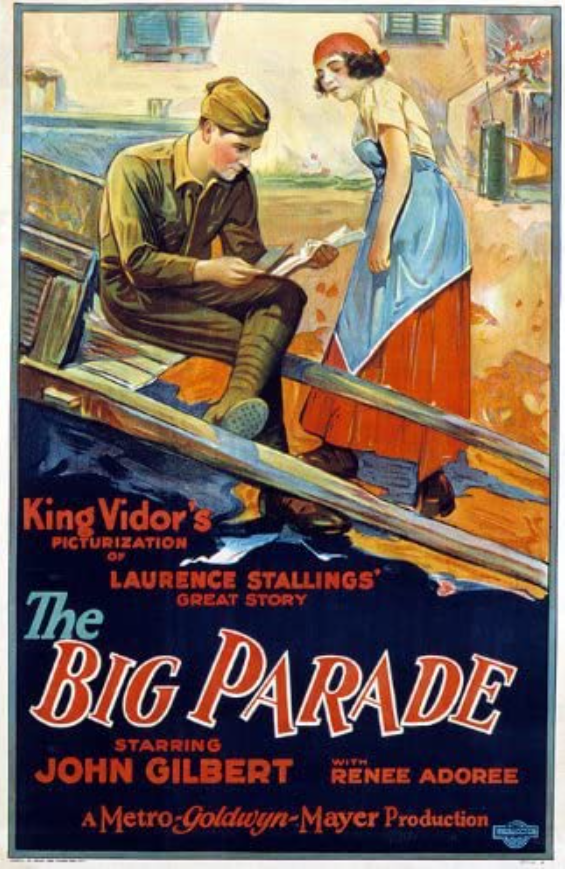
Big Parade, The (1925)

Big Parade, The (1925)

“Waiting! Orders! Mud! Blood! Stinking stiffs! What the hell do we get out of this war anyway?”

Synopsis:
Three young Americans — the wealthy son (John Gilbert) of a businessman, a bartender (Tom O’Brien), and a welder (Karl Dane) — experience love and tragedy when they head off to France to fight in World War One.

Genres, Themes, Actors, and Directors:

  • Character Arc
  • John Gilbert Films
  • King Vidor Films
  • Silent Films
  • Soldiers
  • World War One

Review:
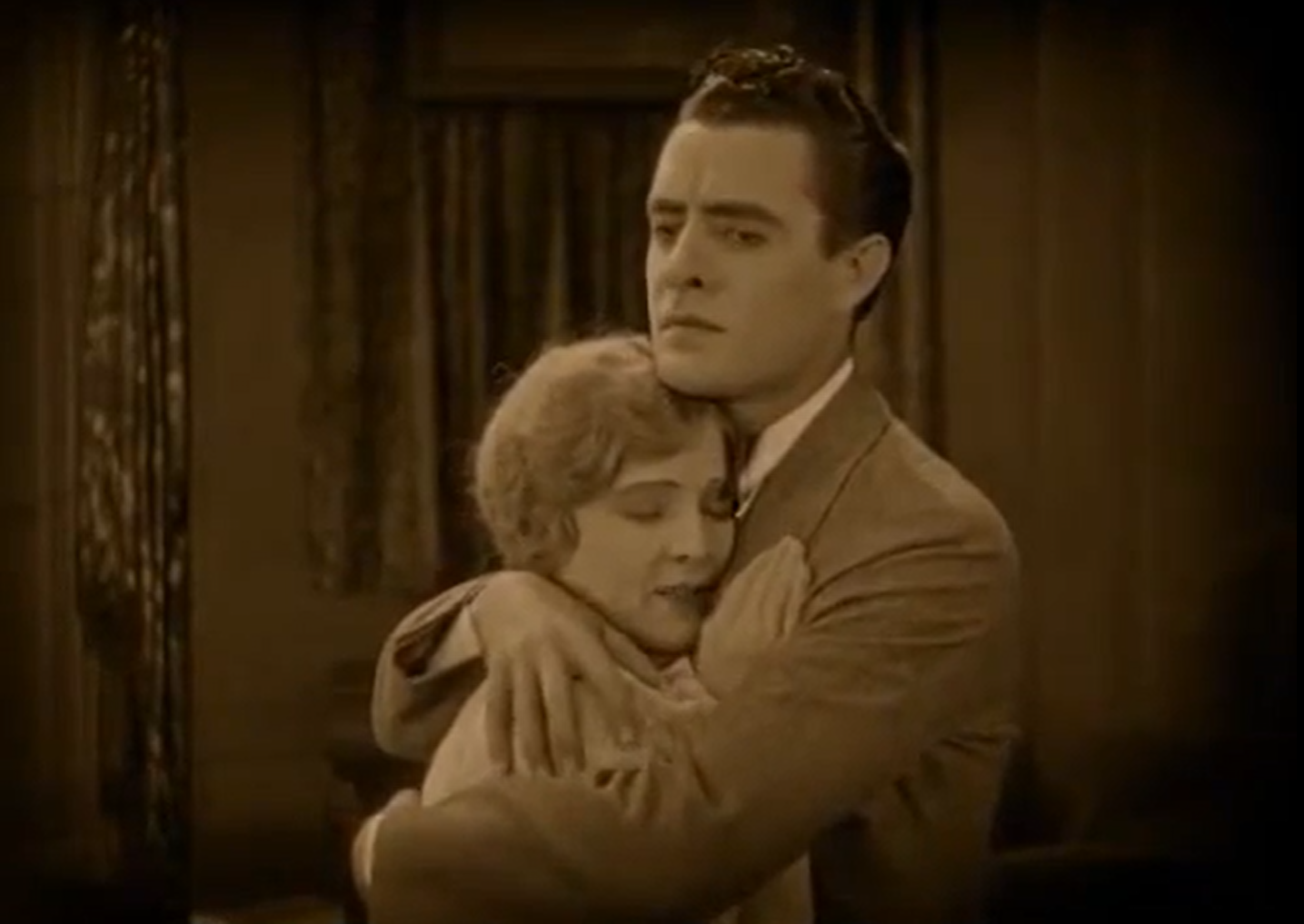
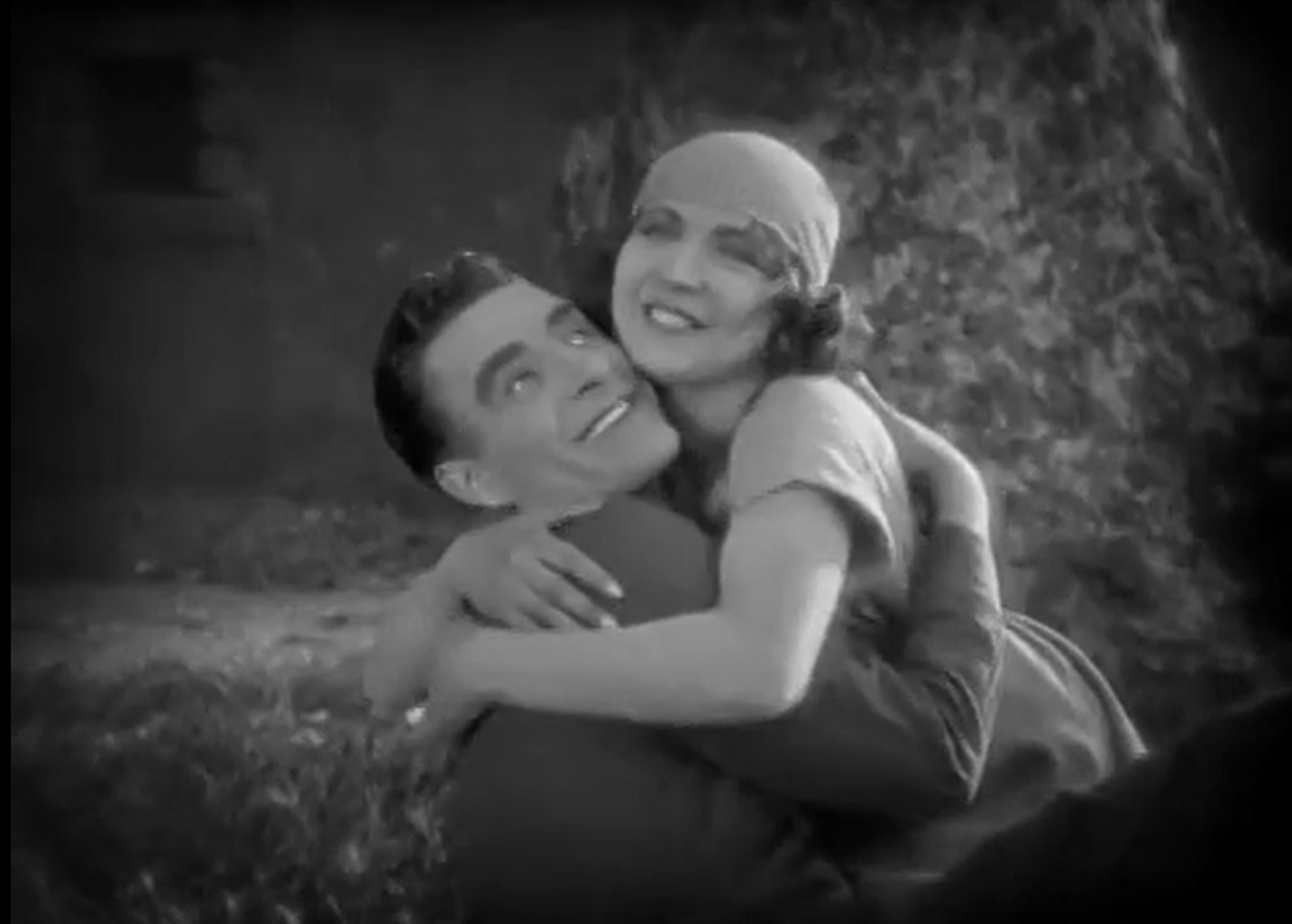
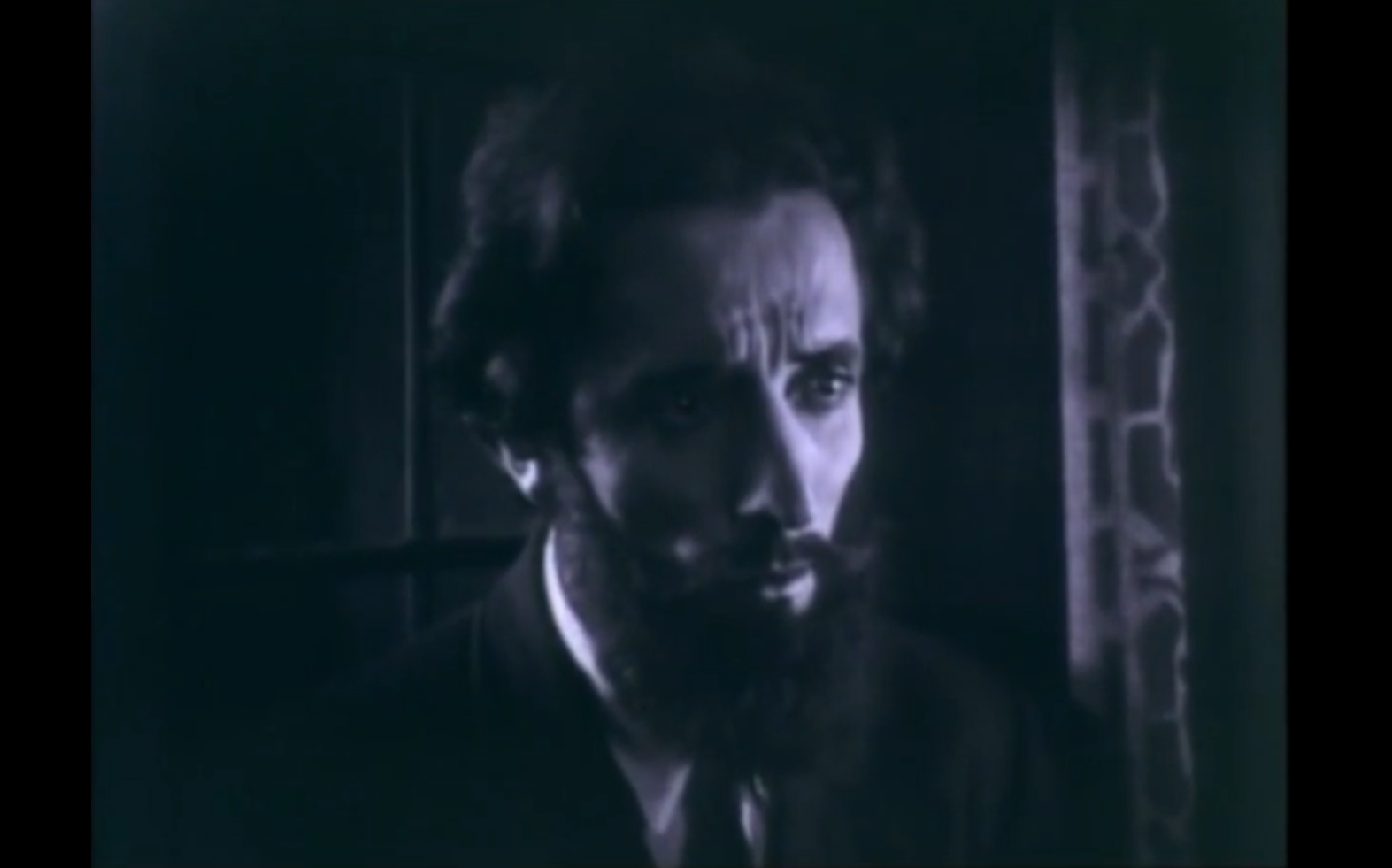
King Vidor’s blockbuster WWI epic was the highest grossing silent film of all time, and received rave reviews upon its release (“as a motion picture it is something beyond the fondest dreams of most people”, gushed reviewer Mordaunt Hall of the New York Times). It’s easy to see why audiences at the time were impressed: handsome movie icon John Gilbert gives a nuanced and sympathetic performance in the central role:

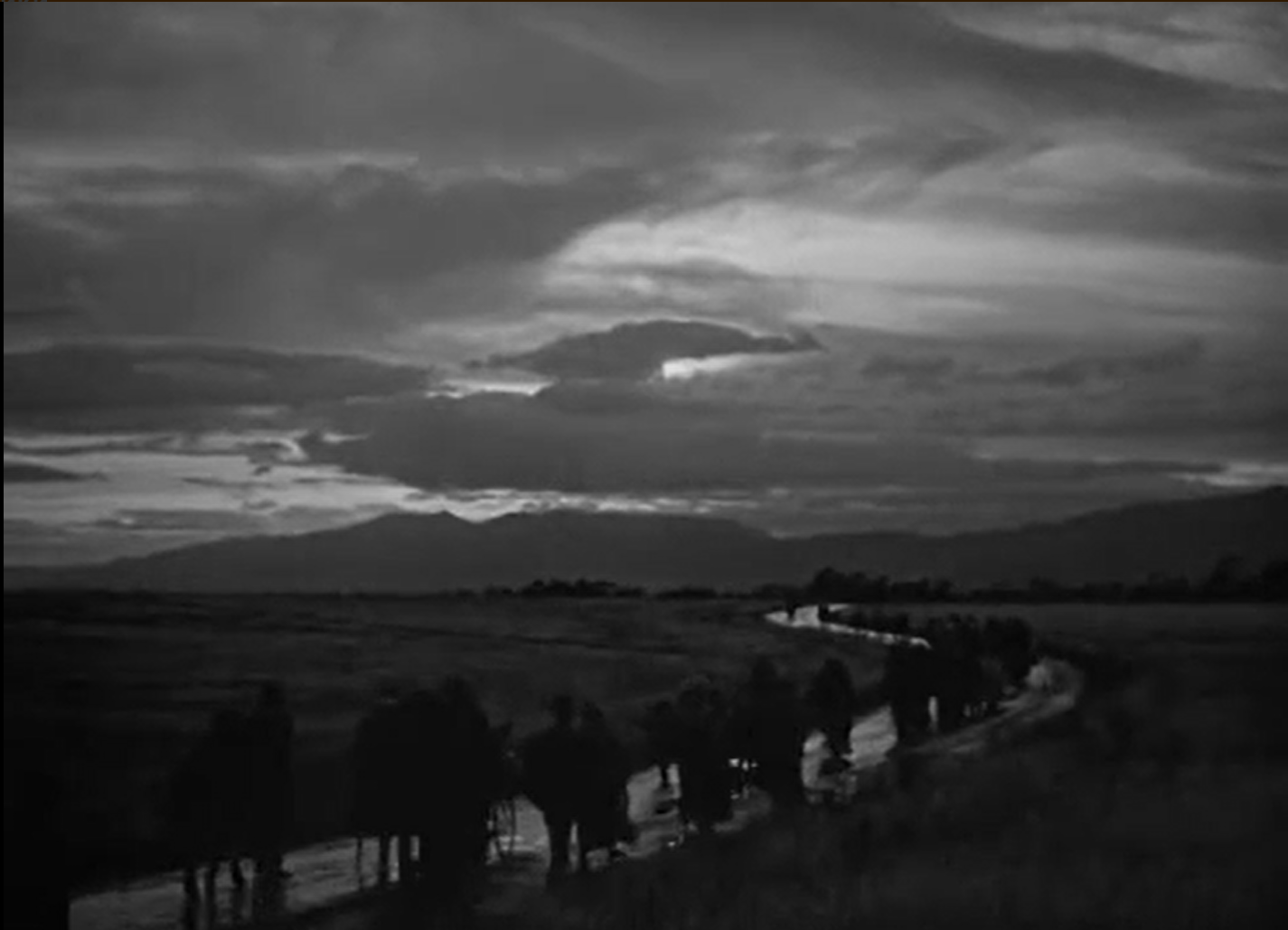
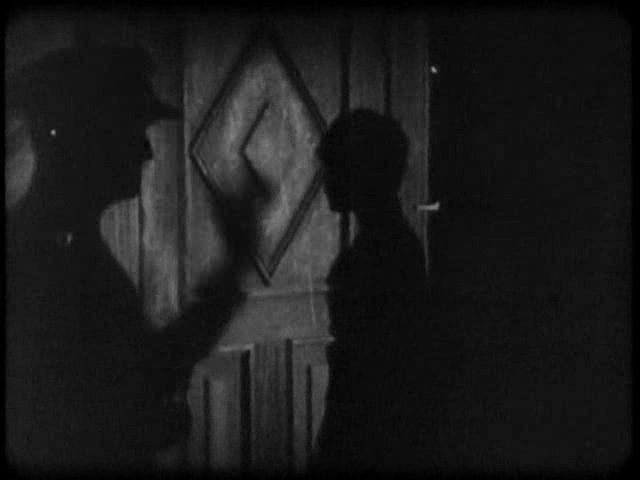
… many scenes are beautifully lit and composed:

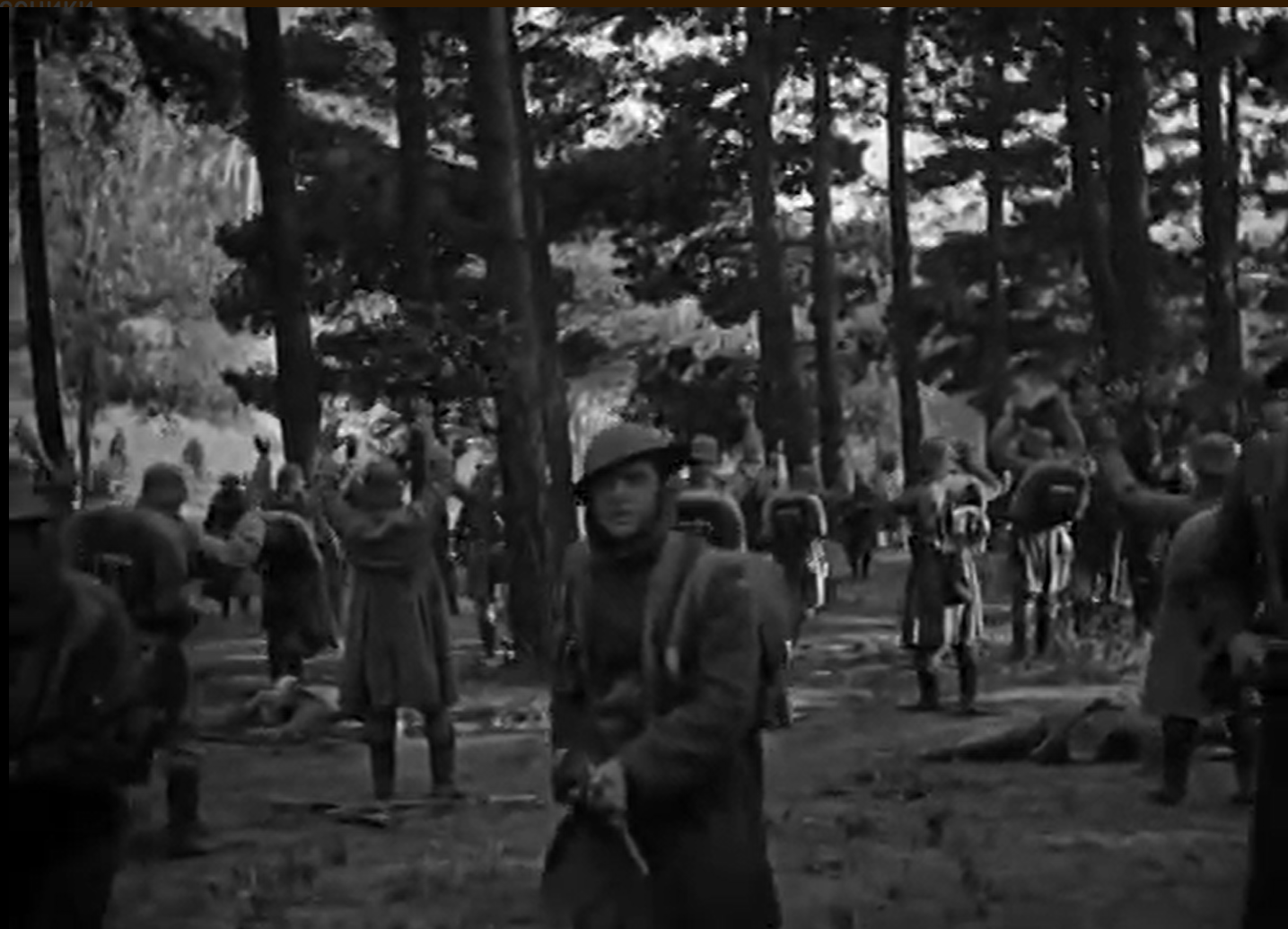
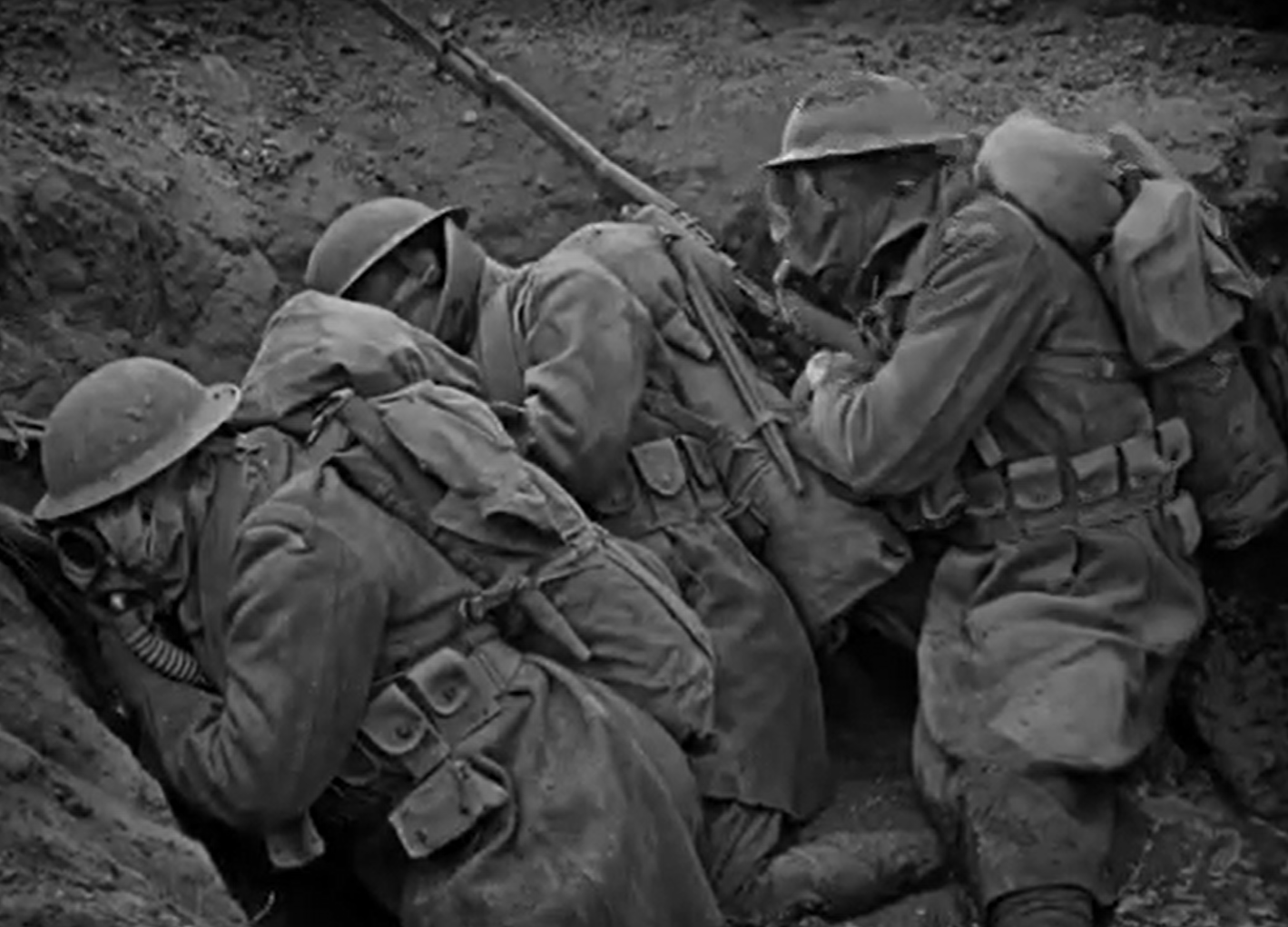
… and Vidor’s depiction of life for soldiers on the front was surely revelatory.

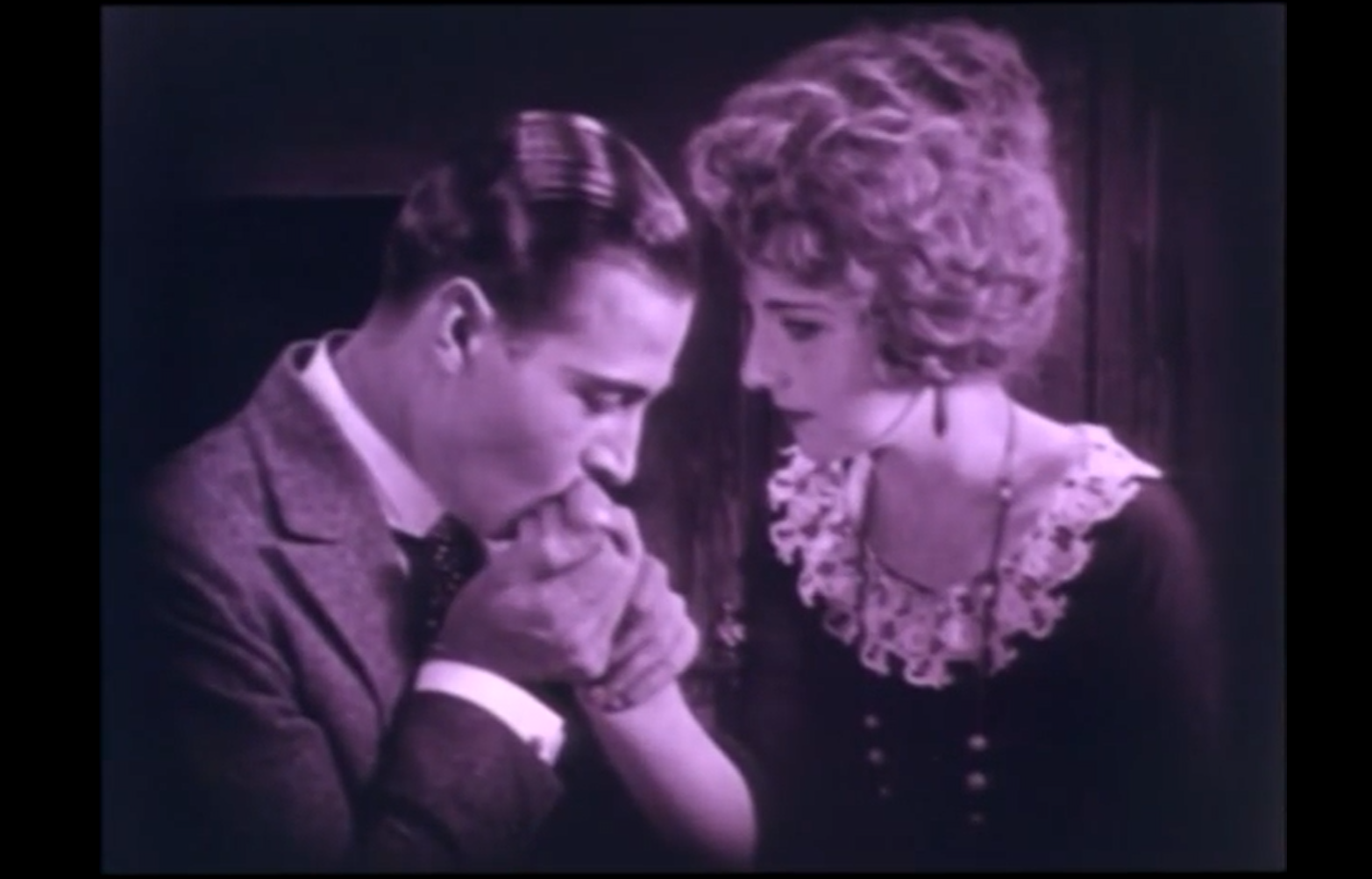
Unfortunately, however, the story itself hasn’t aged all that well. An inordinate amount of time is taken up by a rather pedestrian subplot in which Gilbert falls in lust/love with a comely French milkmaid (Renee Adoree):

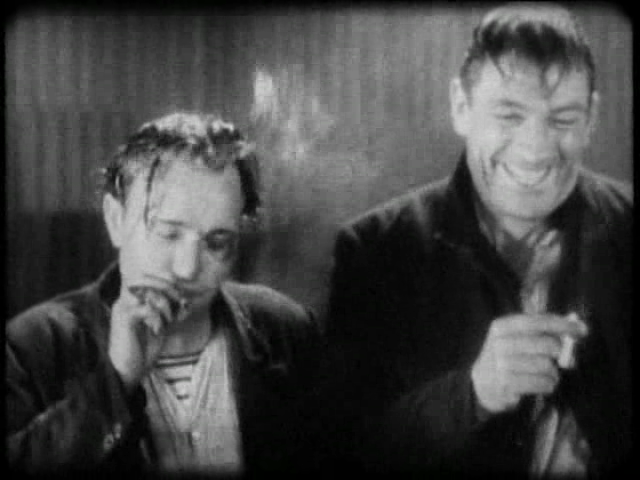
… conveniently neglecting his fiancee, Claire Adams, back at home. By the time he and his two buddies (played simply as “types” by O’Brien and Kane; they never emerge as true individuals):

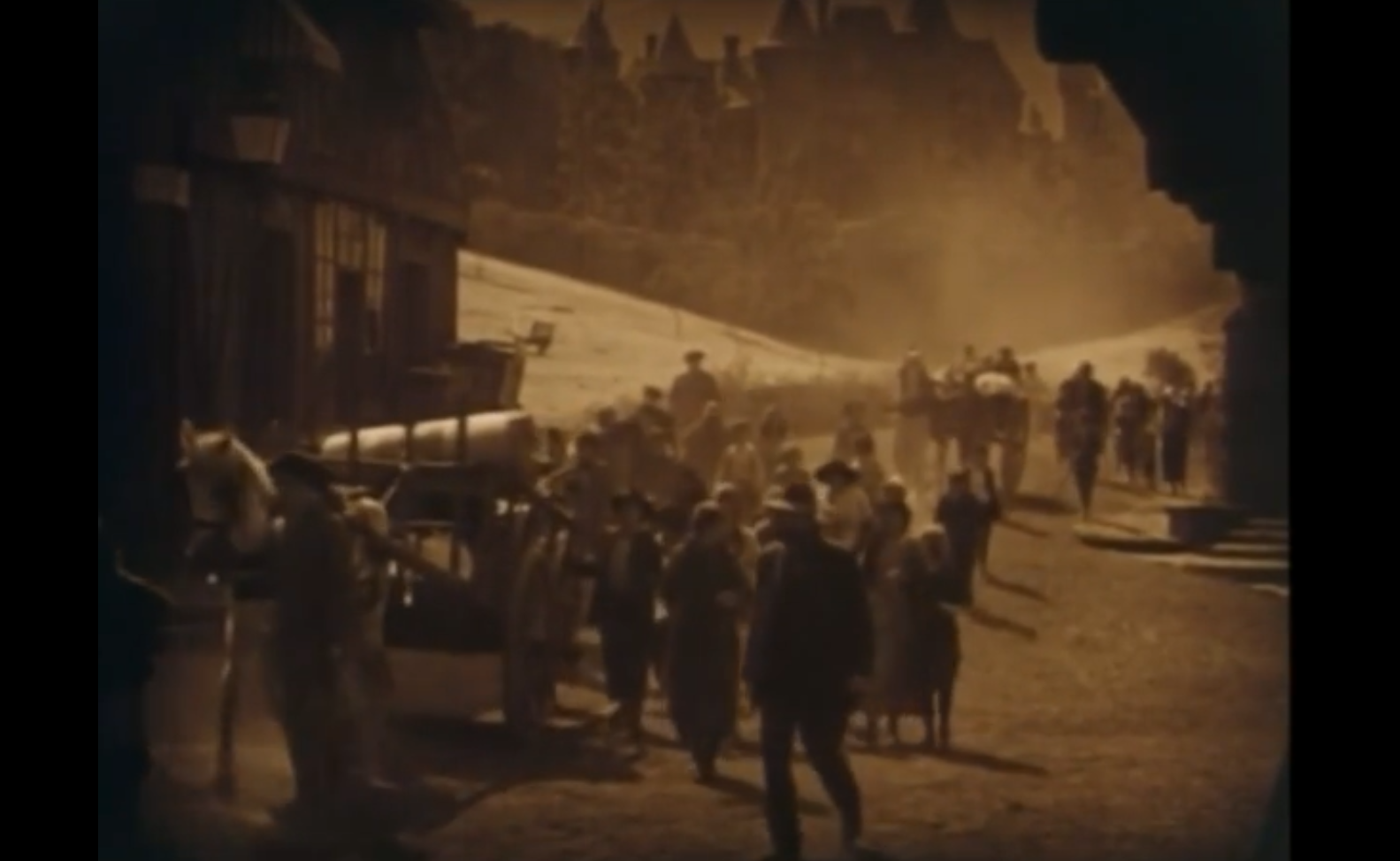
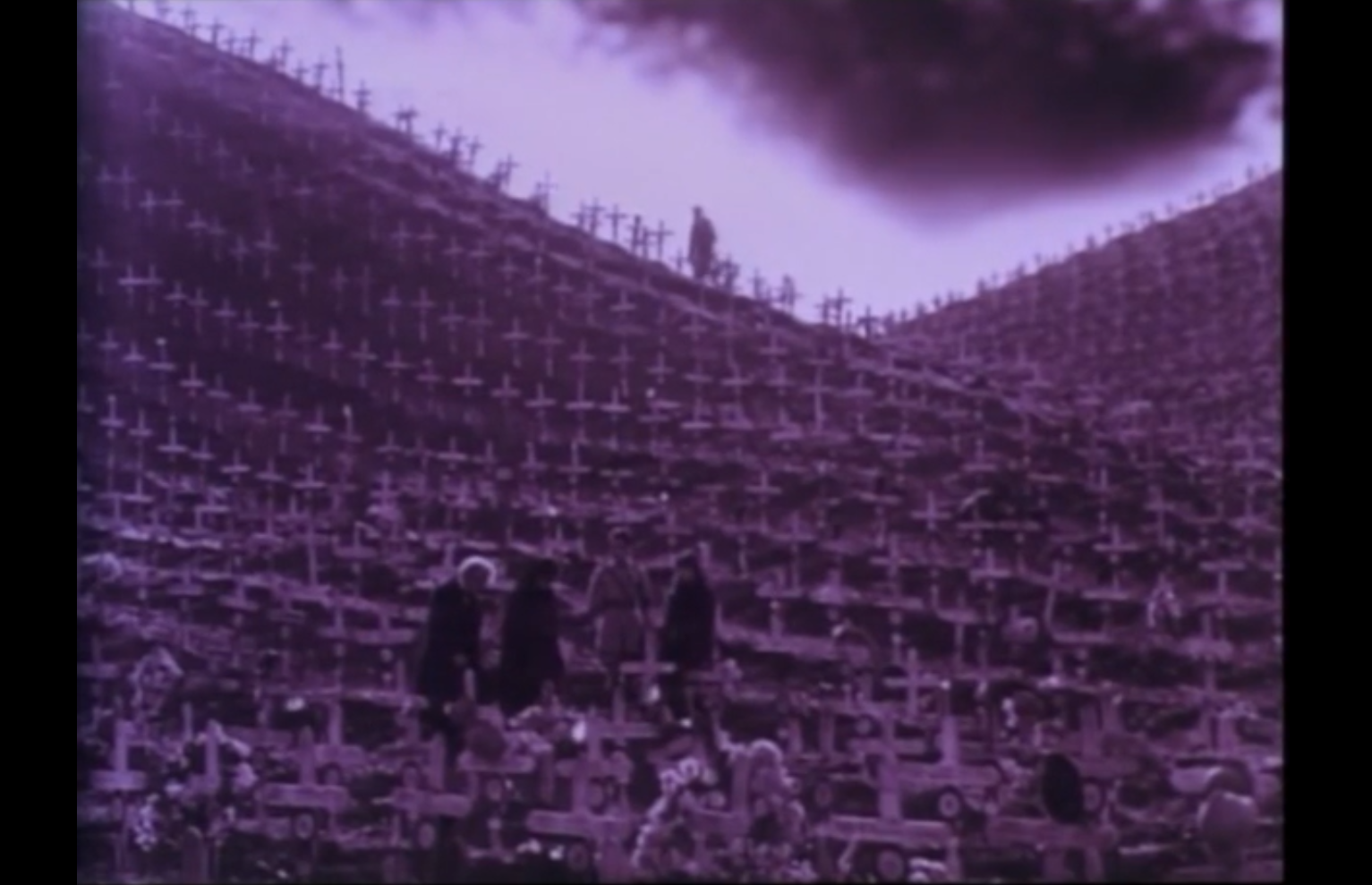
… get to the trenches, more than half the movie is over — we only see them fighting in one hideous battle, and then they’re sent home, so there’s no sense of the endless scope of time spent by most soldiers on the front. Despite these complaints, however, film fanatics will surely want to check out this famous silent film at least once, and should definitely enjoy Vidor’s stunning imagery (see stills below).

Redeeming Qualities and Moments:

  • John Gilbert as James Apperson
  • A powerful early portrait of war
  • Lovely cinematography
  • Many impressive “large scale” compositions

Must See?
Yes, for its historical popularity. Listed as a film with Historical Importance and a Personal Recommendation in the back of Peary’s book.

Categories

  • Historically Relevant
  • Important Director

(Listed in 1001 Movies You Must See Before You Die)

Links:

Beyond the Limit (1983)

Beyond the Limit (1983)

“An affair always involves a few lies.”

Synopsis:
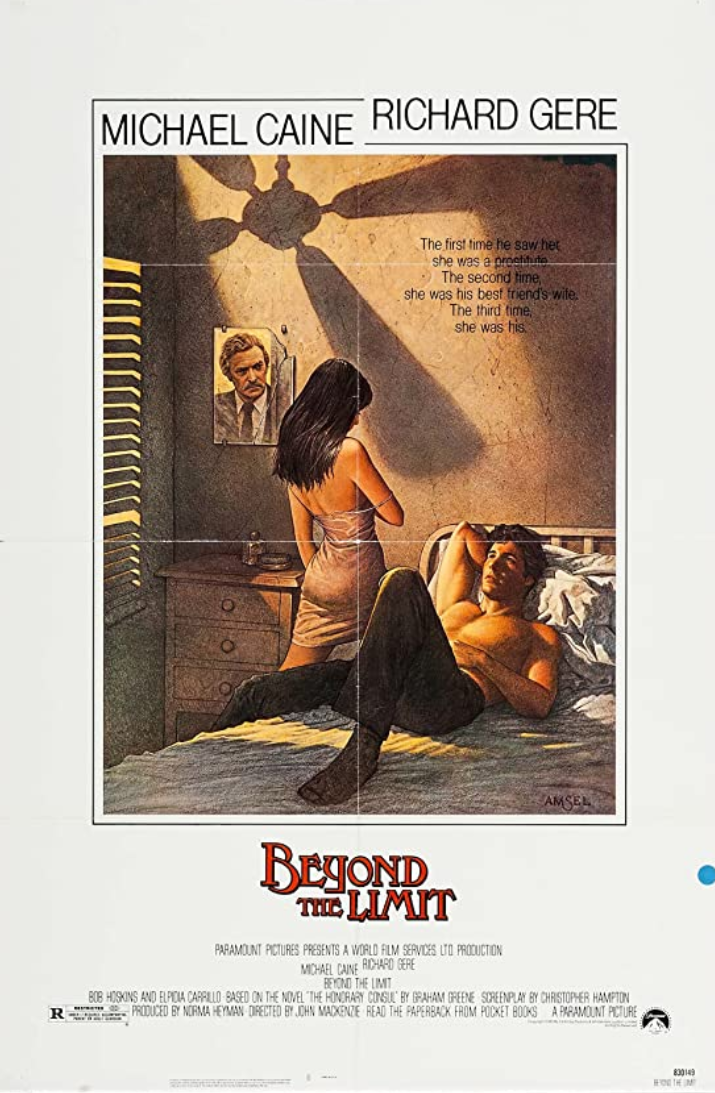
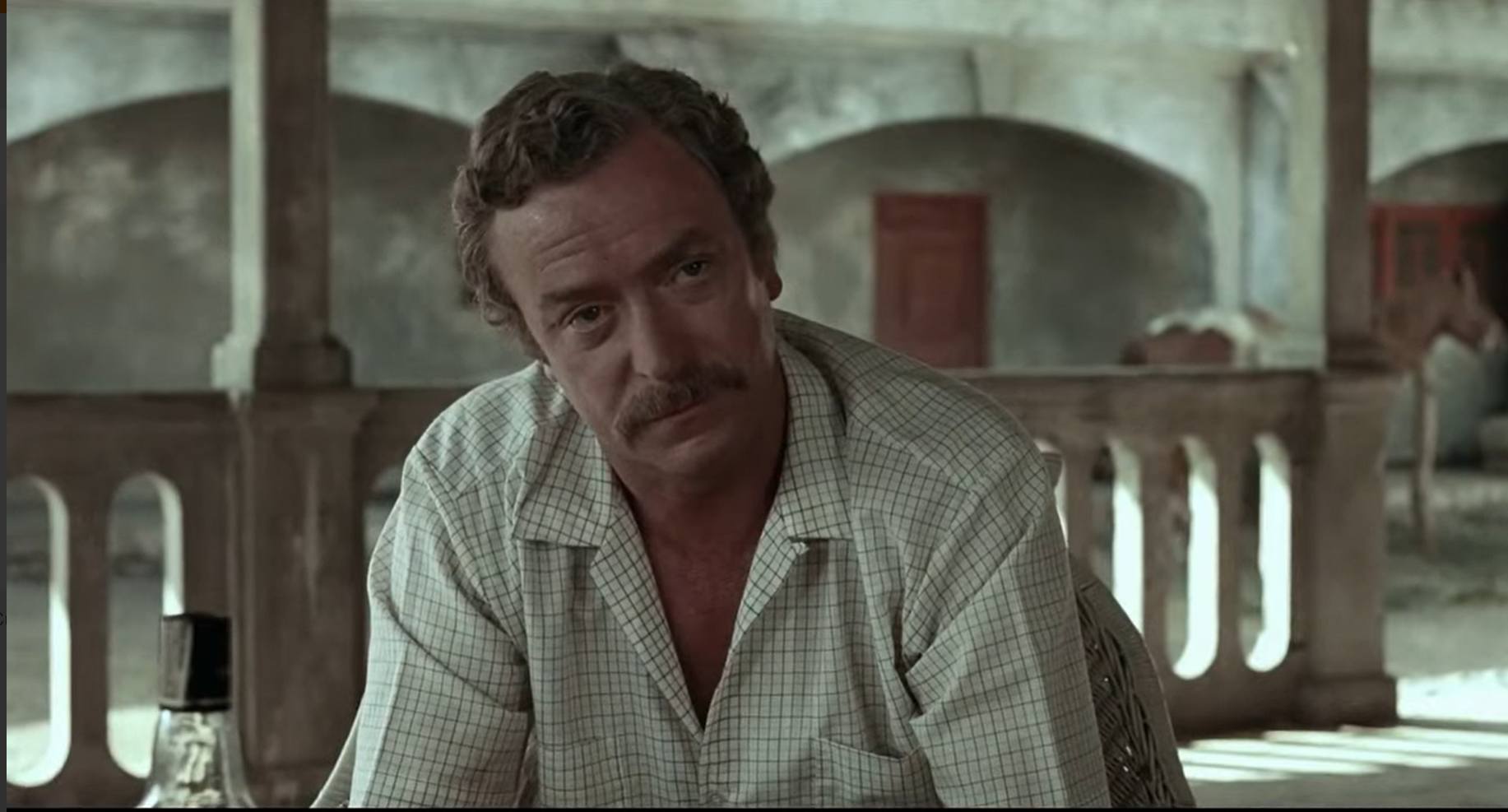
A half-Paraguayan doctor (Richard Gere) involved with revolutionaries finds his loyalties divided when a scheme to kidnap an American diplomat goes awry, and his acquaintance — an “honorary British consul” (Michael Caine) — is accidentally taken instead.

Genres, Themes, Actors, and Directors:

  • Bob Hoskins Films
  • Infidelity
  • Kidnapping
  • Michael Caine Films
  • Revolutionariess
  • Richard Gere Films
  • South and Central America

Review:
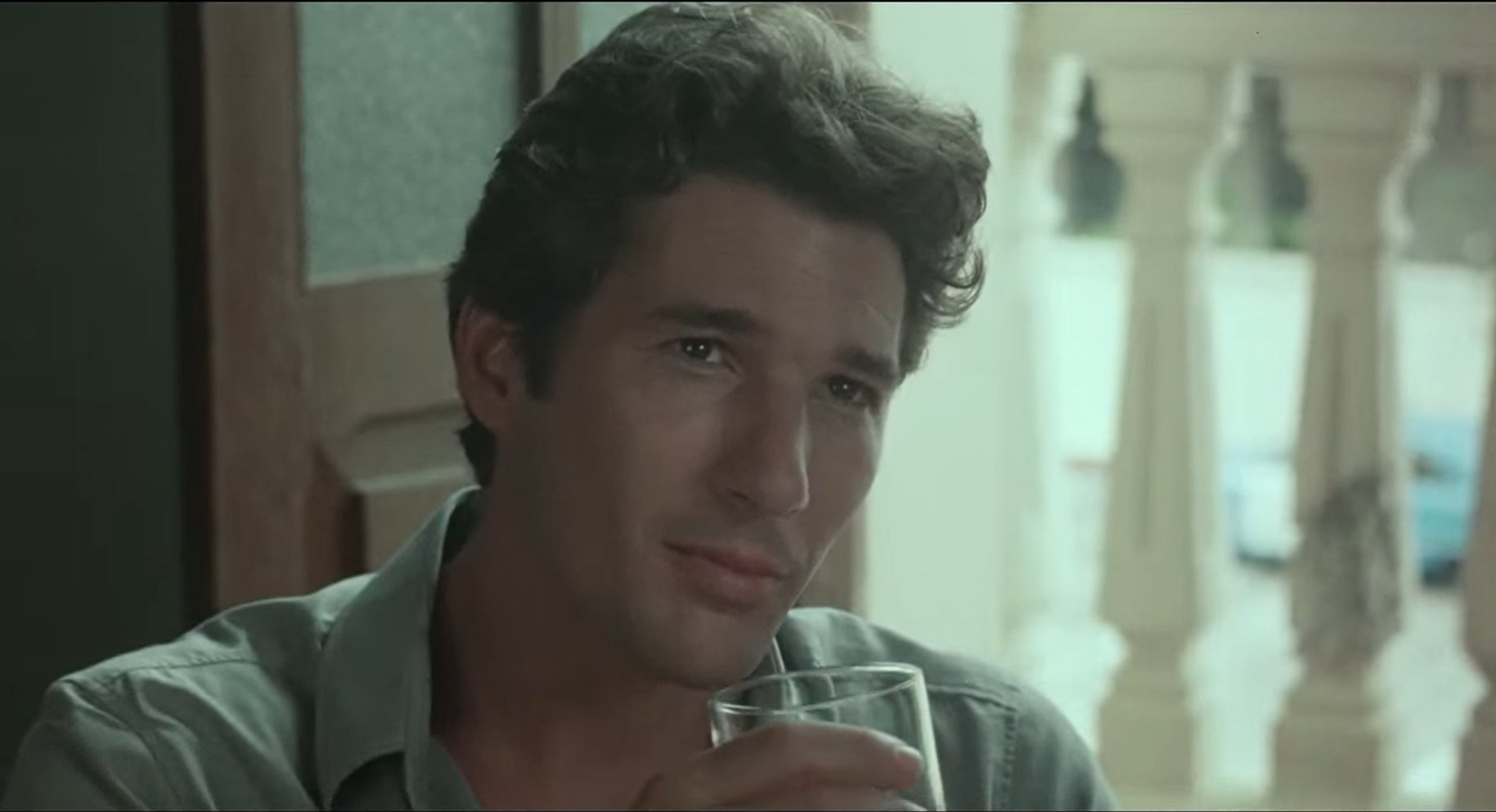
This psycho-political thriller, based on Graham Greene’s 1973 novel The Honorary Consul, is a dull disappointment. Its most egregious problem is the awful central miscasting of Richard Gere: we never believe he’s either half-Paraguayan or half-British (his pseudo-English-accent is annoyingly inconsistent), nor do we particularly understand anything else about what makes him tick.

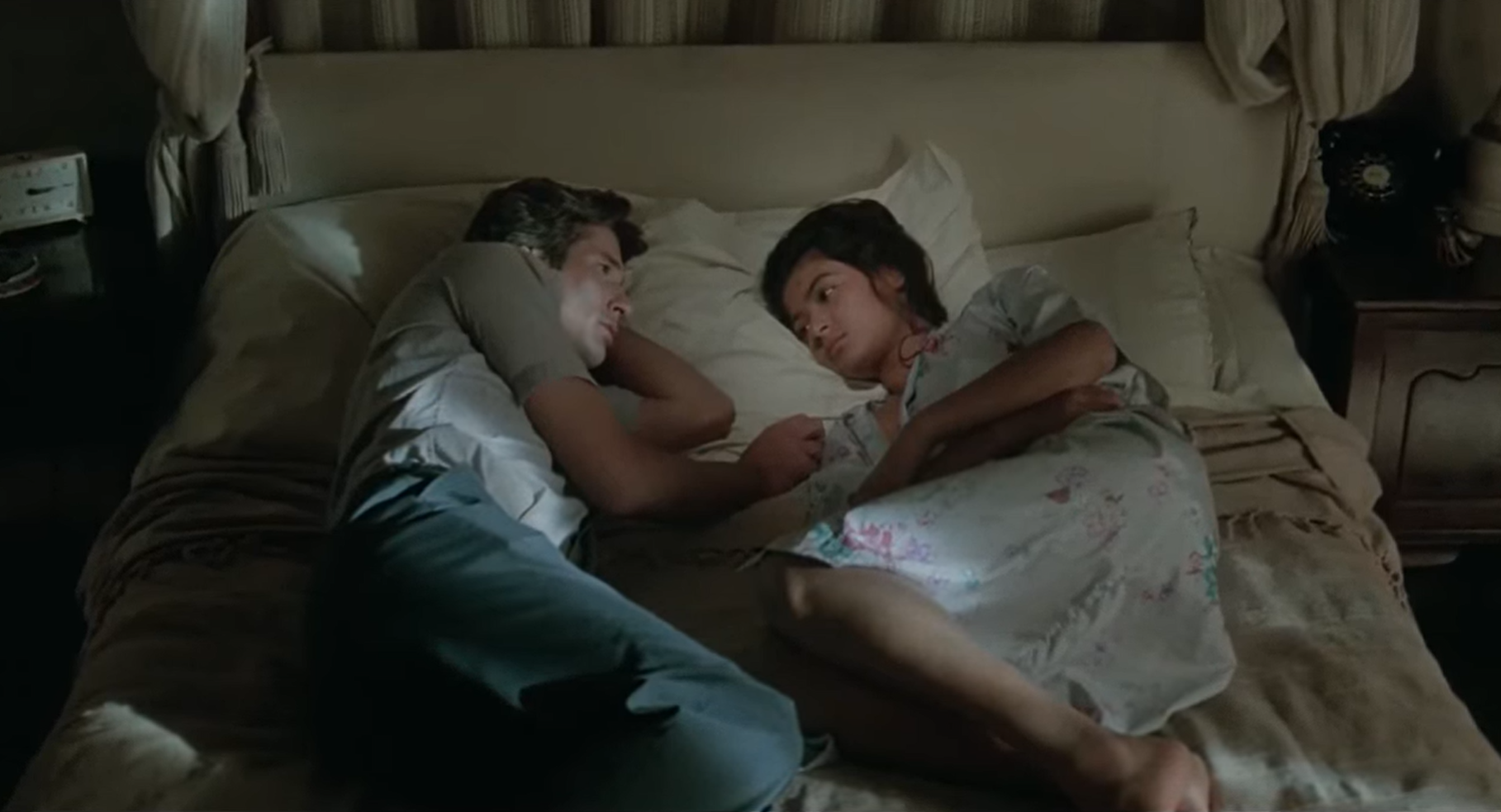
He devotes himself to caring for the sick, for instance, yet callously beds Caine’s new young wife (Elpidia Carrillo) without much concern for the feelings of either party involved.

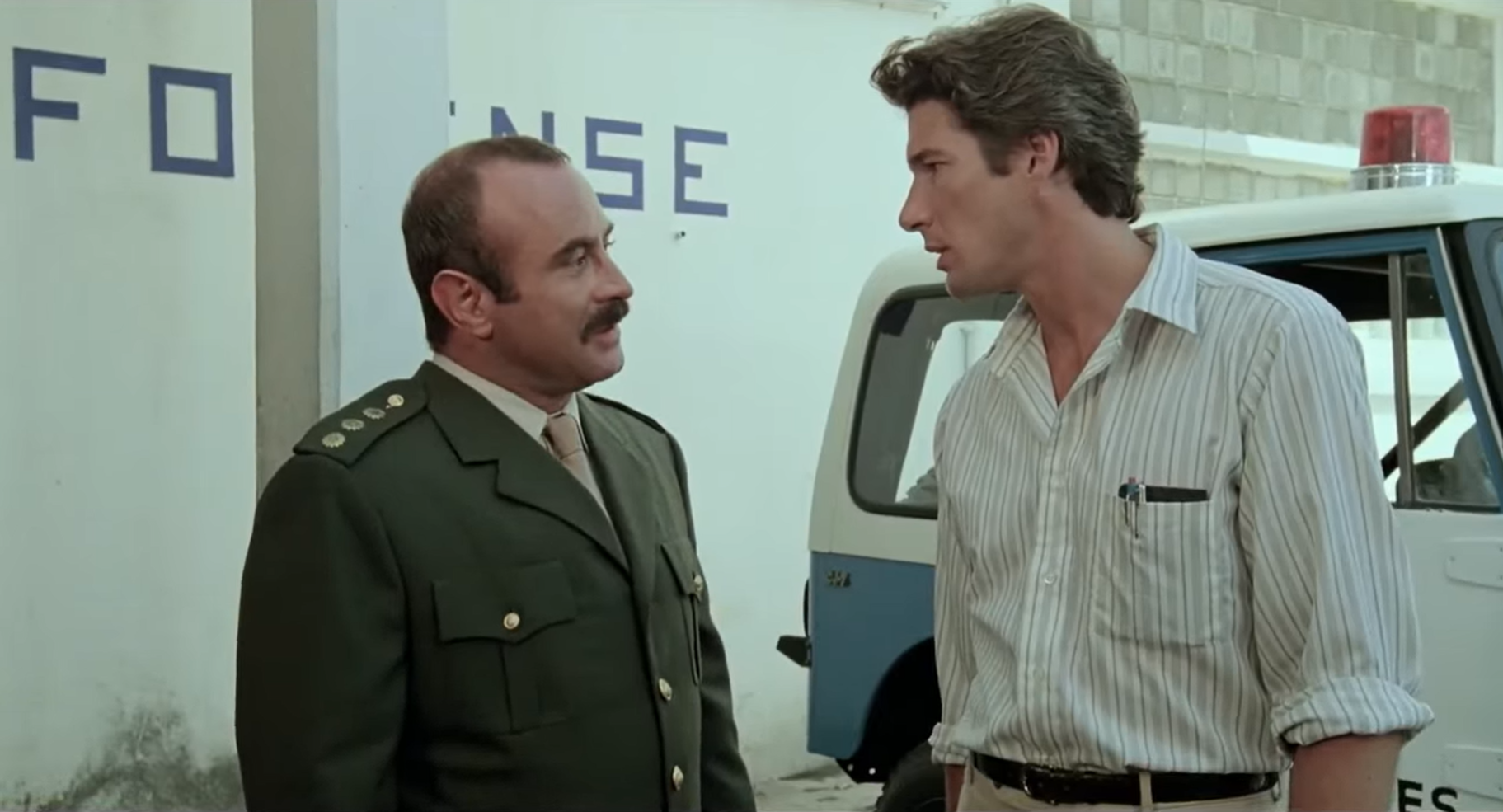
Unfortunately, his co-stars — with the noticeable exception of Caine — are equally unconvincing. Carrillo does little more than bare her bosom and simulate sex with Gere, while Bob Hoskins — star of director John Mackenzie’s previous film, The Long Good Friday (1980) — struggles with maintaining a South American accent in his underdeveloped role as a police chief who is rightly suspicious of Gere’s involvement in the kidnapping.

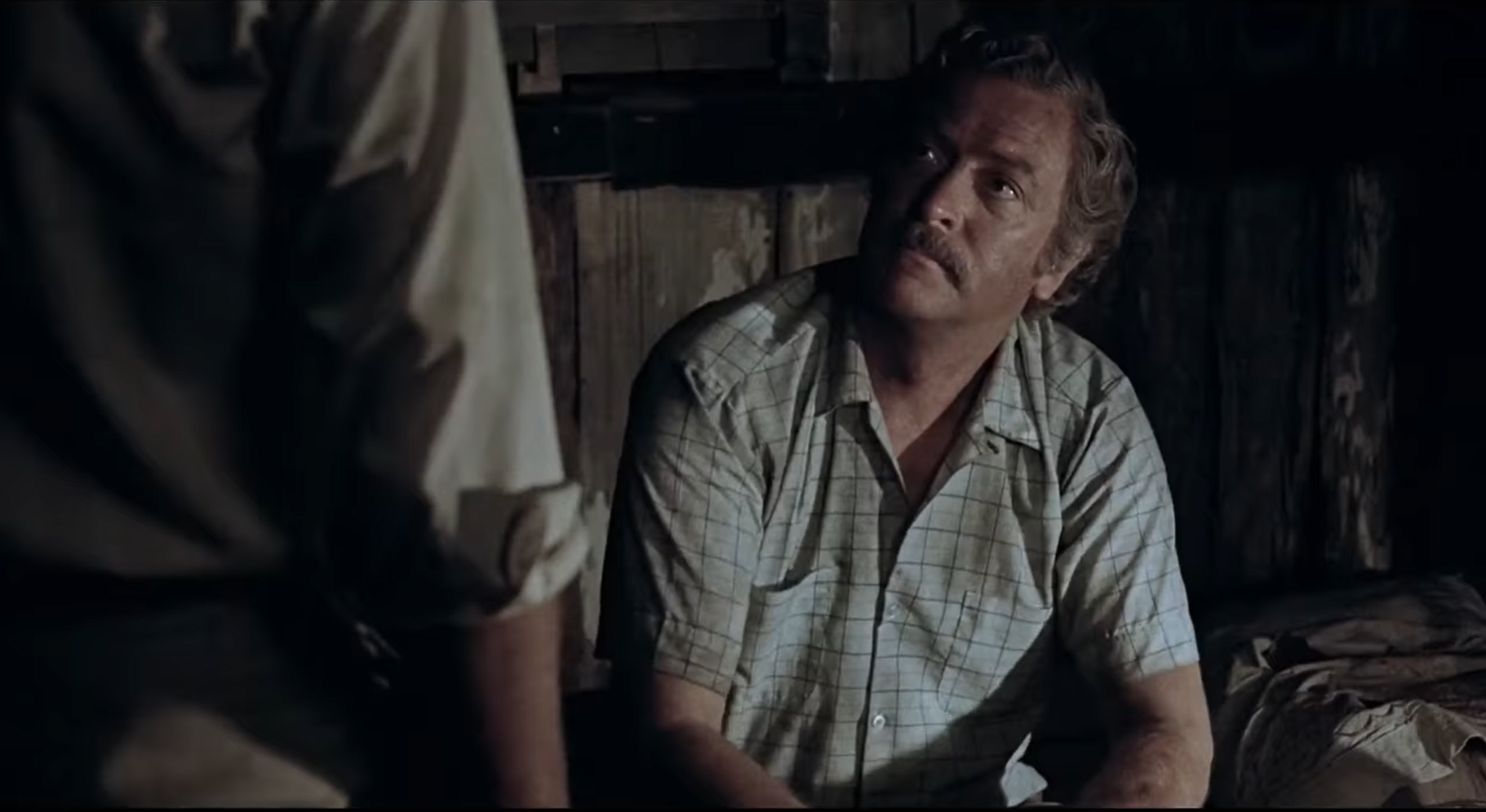
Meanwhile, the story itself lacks conviction: although the revolutionaries are presumably meant to be somewhat sympathetic, we never get to know them well enough to relate to their passionate cause; as a result, when they bungle the kidnapping job, they come across — somewhat incongruously — as merely bumbling fools. It doesn’t help matters any that all the characters speak English, despite the story taking place in South America; I find it particularly egregious to watch non-native-English speakers conversing in English rather than Spanish when “real life” would dictate that they speak in the latter (c.f. Hitchcock’s turgid Topaz for another representative example of this irritating and demeaning Hollywood tendency). The sole redeeming feature of Beyond the Limit is Caine, who brings depth and humanity to his role as an alcoholic has-been who recognizes the limits of his usefulness (tragically, he knows he’s not worth ransoming); his fine performance simply highlights the emptiness of the rest of the film.

Redeeming Qualities and Moments:

  • Michael Caine as the “honorary consul”

Must See?
No, though diehard Caine fans will be curious to see it just for his performance. Listed as a Sleeper in the back of Peary’s book.

Links:

Command, The (1954)

Command, The (1954)

“I’ve got a uniform and a conscience. Right now, the uniform covers the conscience.”

Synopsis:
A cavalry doctor (Guy Madison) reluctantly takes command of a troop when its officer dies, and must hide his real identity when asked to help Infantrymen escort a wagon train through hostile Indian territory.

Genres, Themes, Actors, and Directors:

  • Cavalry
  • Doctors and Nurses
  • James Whitmore Films
  • Mistaken Identities
  • Westerns

Review:
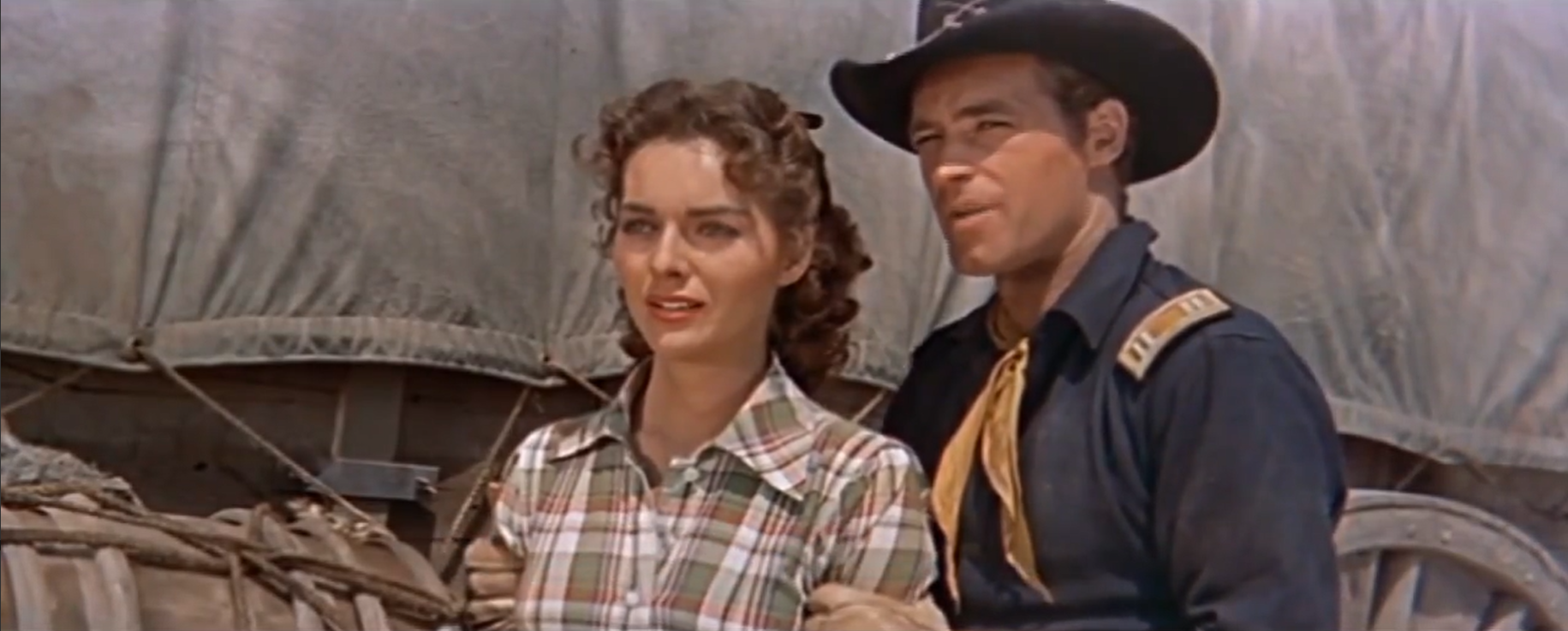
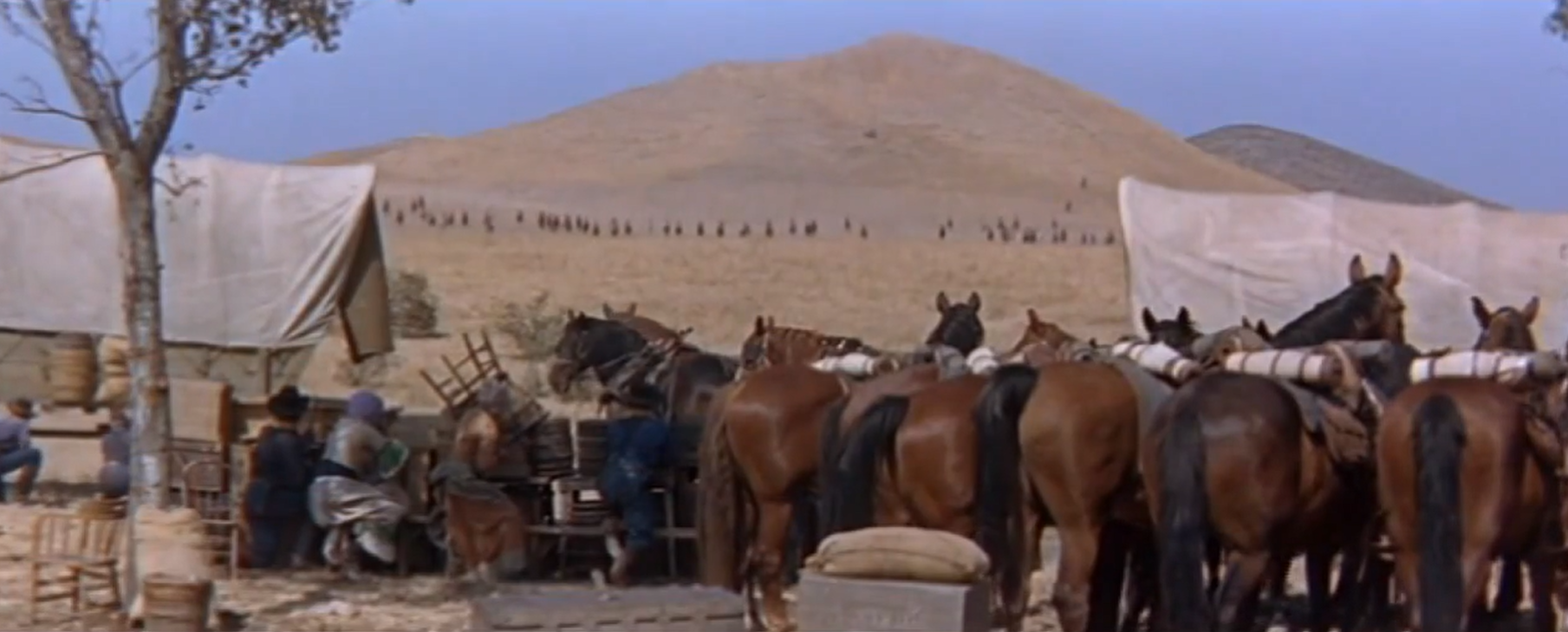
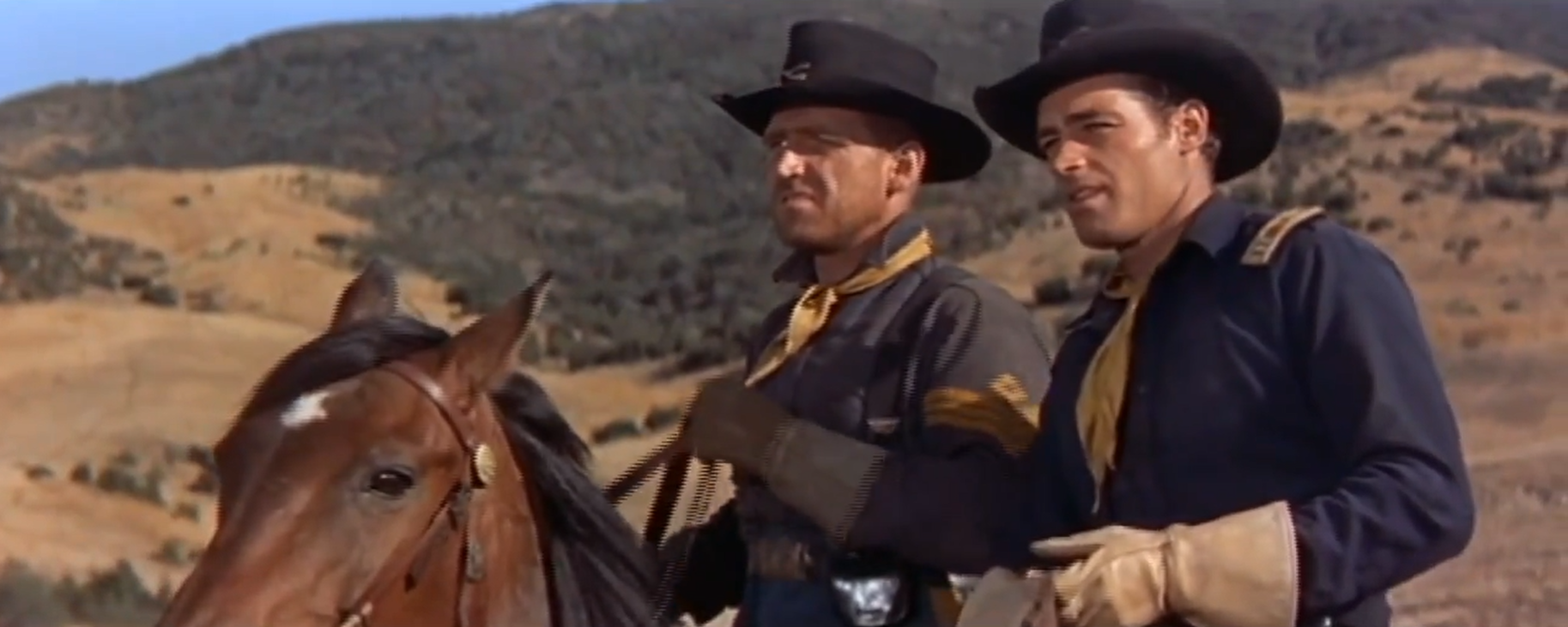
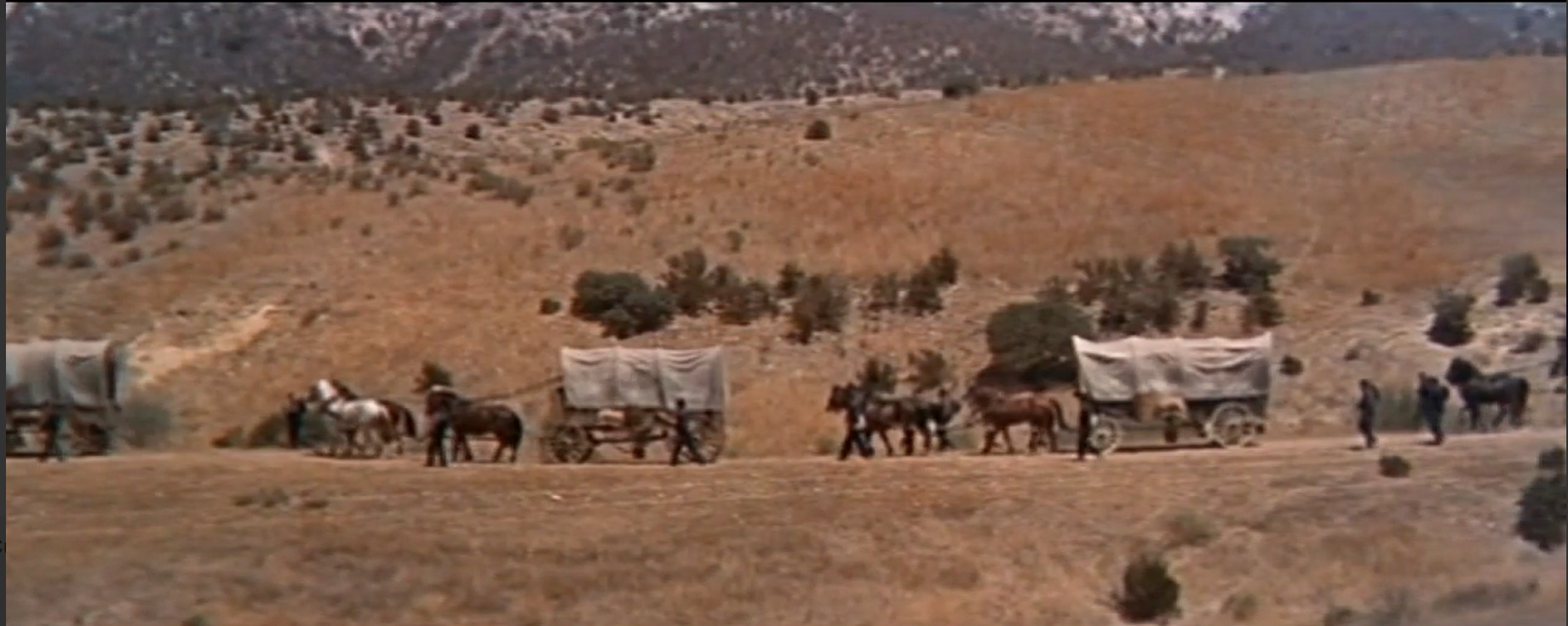
Samuel Fuller co-wrote the screenplay for this shoot-’em-up cavalry flick about an “accidental” military leader (Madison) whose all-purpose savvy and willingness to think outside the box serve him well in highly stressful situations. Madison — star of the 1950s television series “The Adventures of Wild Bill Hickok” — is well-cast in the central role as the humble yet brave doctor-turned-captain, while James Whitmore as his right-hand man is as solid as ever. Director David Butler makes fine use of new widescreen capabilities, with some impressive shots of a lengthy wagon train crossing the prairie, and a row of Indians perched along the ridge of a hill. Unfortunately, Fuller’s screenplay frequently devolves into cliche: Madison is given a conventional love interest (Joan Weldon):


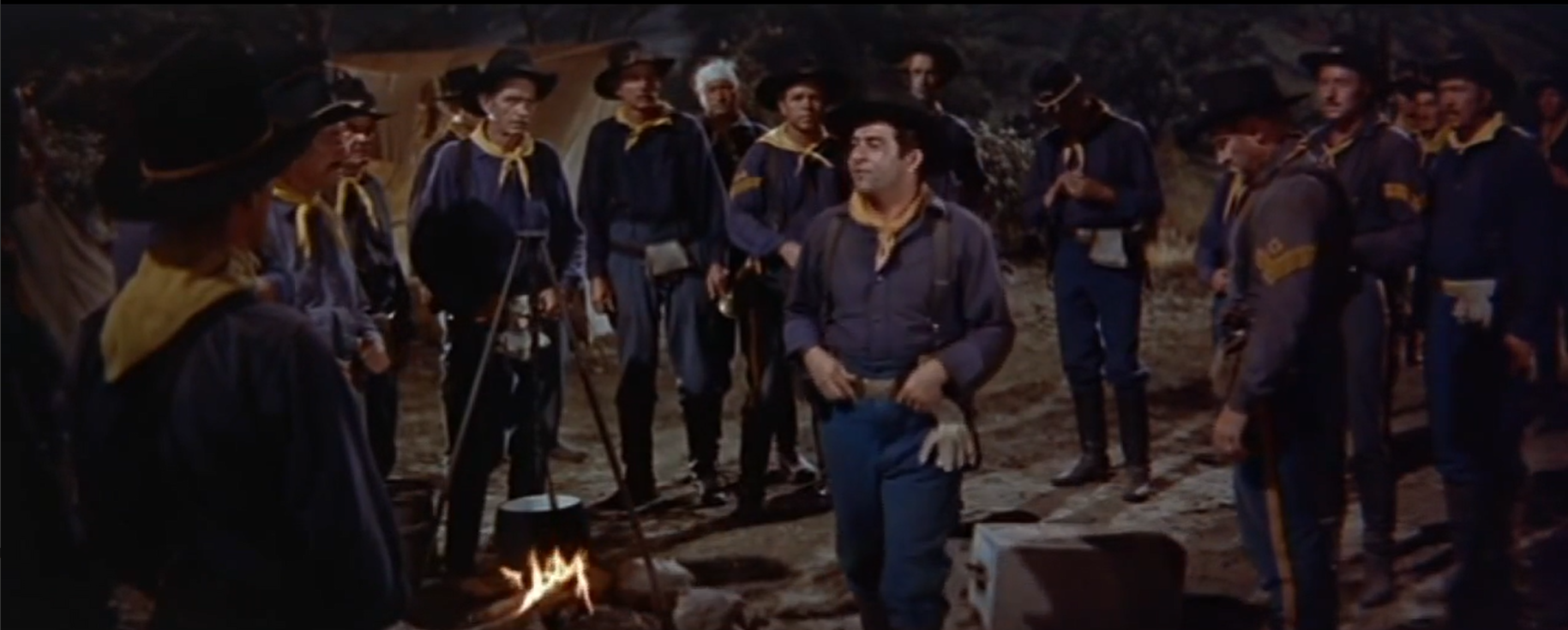
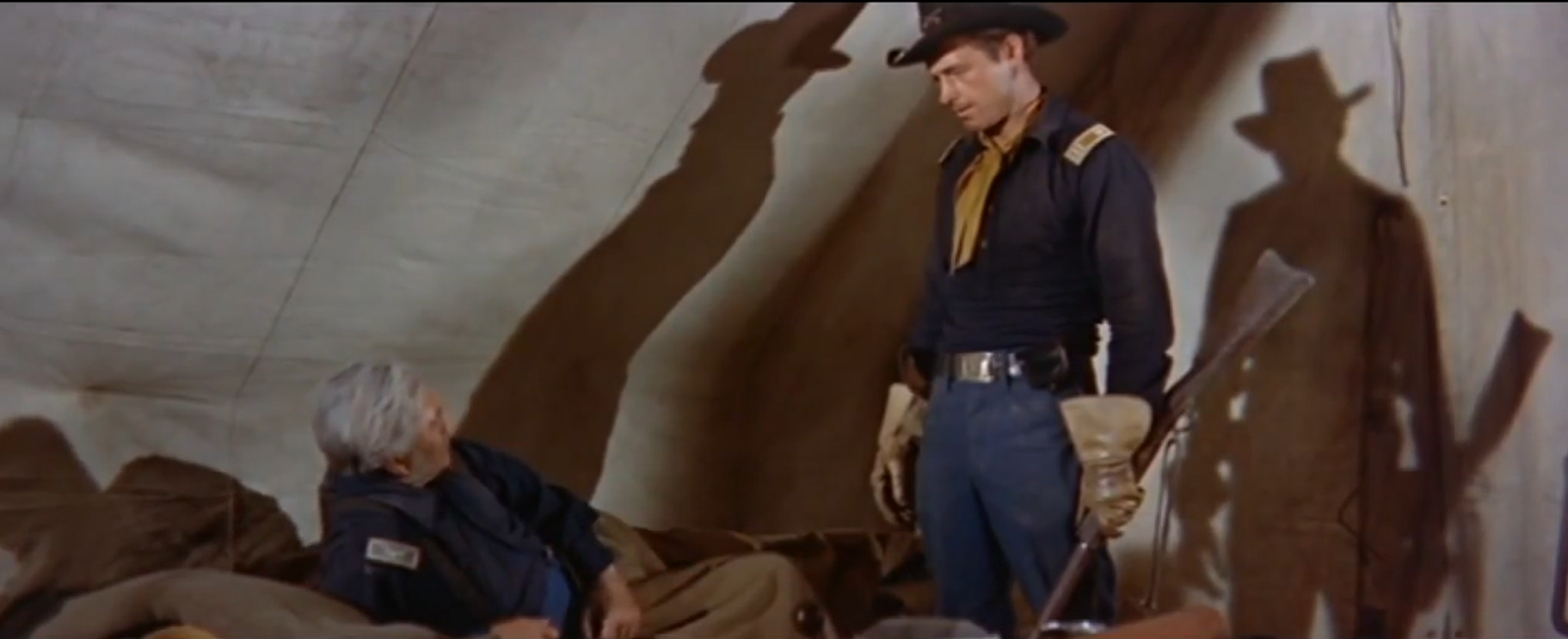
… an annoying “comedic” wiseacre (Harvey Lembeck) insists on questioning Madison’s authority:

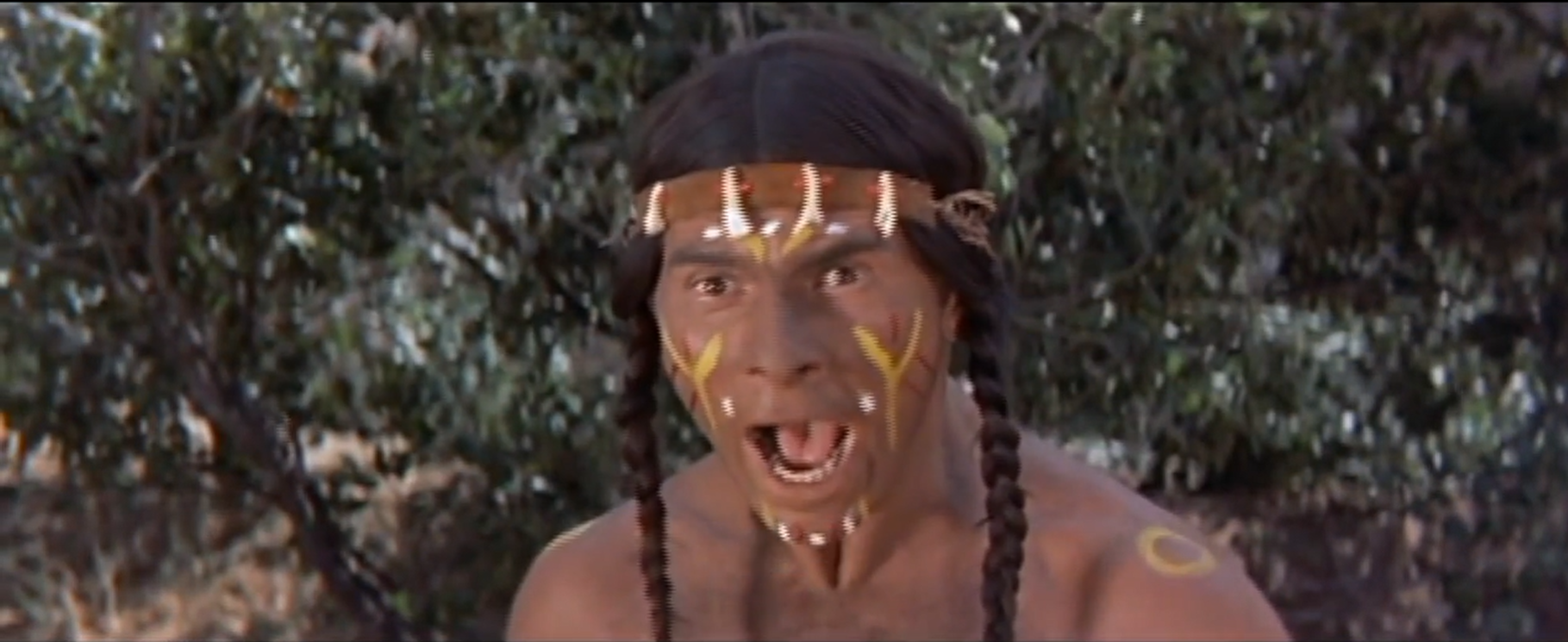
… and the Indians — who, naturally, lack any distinctive personalities — are repeatedly demeaned (Madison refers to them as possessing a “child’s logic” and “lacking civilization”).


Otherwise, however, The Command remains an enjoyable western, and is certainly worth viewing once.

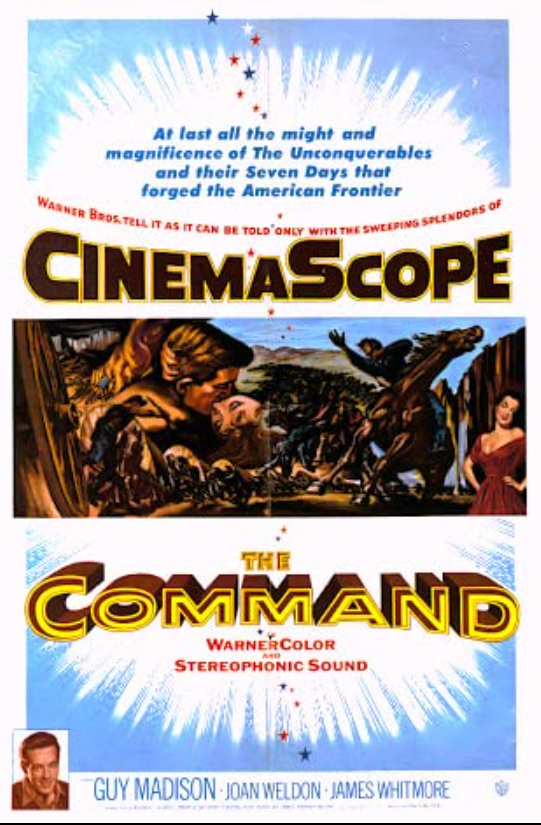
Note: The Command is notable as the first widescreen western of the 1950s, and Warner Brothers’ first Cinemascope production.

Redeeming Qualities and Moments:

  • Guy Madison as Dr. MacClaw
  • James Whitmore as Sergeant Elliott
  • Fine use of widescreen cinematography
  • The exciting final shoot-out

Must See?
No, but it’s certainly worth a look. Listed as a Sleeper in the back of Peary’s book.

Links:

Magic Box, The (1951)

Magic Box, The (1951)

“You don’t see other people; you see colors, filters, little bits of machinery, and that’s the world for you!”

Synopsis:
British inventor William Friese-Greene (Robert Donat) reflects on his lifelong attempt to develop a “moving pictures camera” — a single-minded pursuit which leads to a life of poverty, and provokes both pride and anxiety in his two wives (Maria Schell and Margaret Johnston).

Genres, Themes, Actors, and Directors:

  • Biopics
  • Flashback Films
  • Glynis Johns Films
  • Historical Drama
  • Inventors
  • Leo Genn Films
  • Margaret Rutherford Films
  • Maria Schell Films
  • Michael Redgrave Films
  • Peter Ustinov Films
  • Richard Attenborough Films
  • Robert Donat Films

Review:
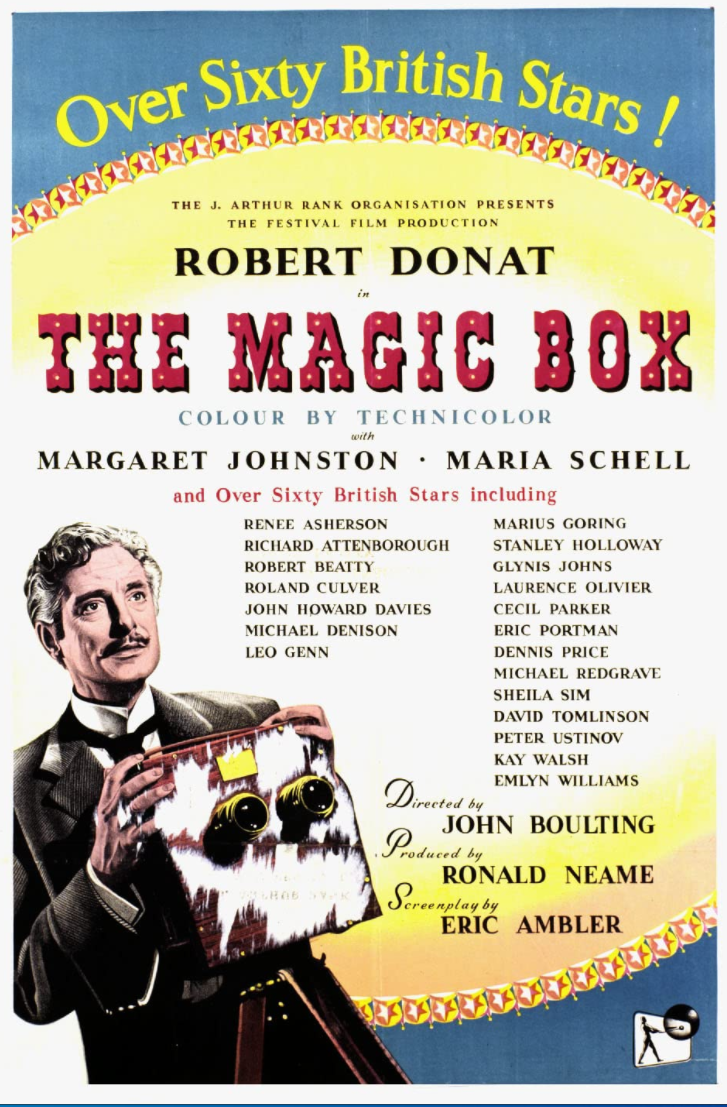
The Magic Box was the English film industry’s contribution to 1951’s Festival of Britain — a national event meant to boost public morale and, post-WWII, to “remind the world of Britain’s contribution to past, present, and future contributions to society, culture, and technological progress”. It’s fitting, then, that The Magic Box is a somewhat reverential film dedicated to chronicling the life of an unsung, largely unknown British inventor named William Friese-Greene, who ran neck-to-neck with Thomas Edison (and others) in an unofficial race to invent the first “moving picture machine”. Big-name British stars forsook their usual salaries for a chance to participate, and cameo appearances — from Richard Attenborough to Glynis Johns to Laurence Olivier — abound.

Friese-Greene (at least as portrayed here by Robert Donat) was a most frustrating individual: his single-minded devotion to cinematic invention wreaks havoc on both his marriages, forces his famil(ies) to live in dire poverty, and, tragically, prompts his three eldest sons to enlist in WWI in order to avoid being a financial burden. In a truly heartbreaking scene, Friese-Greene must comfort one of his teenage sons who has come home from school sobbing because a classmate called his father a “liar and a thief” — the former because Friese-Greene’s scientific contributions were unmentioned in the encyclopedias of the day, and the latter because of his lifetime of chronic debt and borrowing.

Indeed, examples of Friese-Greene’s economic duress — and his “creative” means of getting around it — abound. In one early scene, he actually scams a woman who has come to sit for a portrait: having pawned the last of his photographic slides to earn money for his pregnant wife’s medications, he nonetheless doesn’t want to pass up the opportunity for a sale, so he asks the gullible woman for a deposit and pretends to take her photo, planning to recoup some of his slides with her money, inform her the next day that an “accident” occurred with her original shots, and then “re-shoot” them. He’s clever, to be sure, but his ploy is also skanky, and the scene is decidedly discomfiting.

Friese-Greene’s chronic money troubles are all the more frustrating given that he eventually, through sheer luck and gumption, does make a name for himself, and is clearly capable of bringing in a decent income — only to lose it all by stubbornly refusing to maintain a sane balance between work and experimentation. We’re (perhaps) meant to sympathize with his drive for innovation, given that he openly lambastes his business partner for caring only about money (doesn’t he realize that without inventors like him, there wouldn’t be any products to peddle?!), but in the meantime, his first wife becomes literally ill with worry, and eventually dies, while his second wife finally leaves him in order to support herself and her sons. Screenwriter Eric Ambler — working from a biography by Ray Allister — should probably be commended for not shying away from the uglier truths of Friese-Greene’s life, yet the end result is that we don’t really want to feel much appreciation for this somewhat pathetic and misguided — albeit undeniably hardworking and visionary — dreamer.

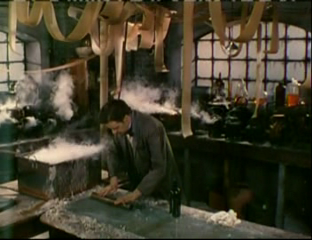
I’m of two minds about Donat’s performance: while he’s excellent at portraying Friese-Greene’s single-minded devotion to his pursuits, once he’s an older man he seems to be trying a little bit too hard — a la Mr. Chips — for sympathy. Faring better are his two wives, played with gusto by Margaret Johnston (who narrates the first flashback sequence of the film) and Maria Schell, who, for better or for worse, remains loyal to her husband until the day she dies. Most interesting of all, however, is the behind-the-scenes look we get at Friese-Greene hard at work in his laboratory: the sequence in which he finally tries out his new “moving pictures camera” — with Hyde Park coming to life inside his building — is genuinely moving, and reminds one how innovative and exciting this art form we now take for granted once was.

Redeeming Qualities and Moments:

  • An interesting look at the early days of cinematic innovation
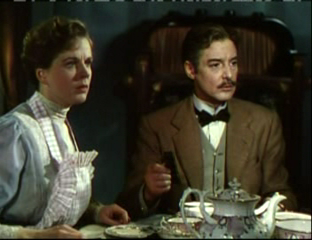
  • Maria Schell as Helena Friese-Greene
  • Margaret Johnston as Edith Harrison Friese-Greene
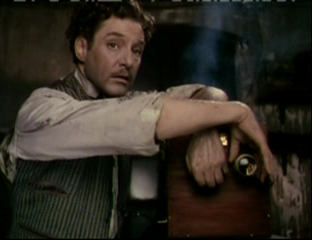
  • Donat’s discovery — witnessed by Laurence Olivier in a cameo role as a passing policeman — that he has at long last created something momentous
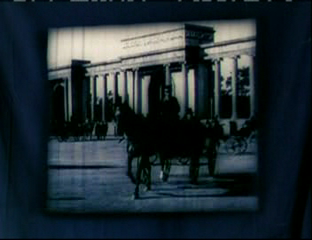
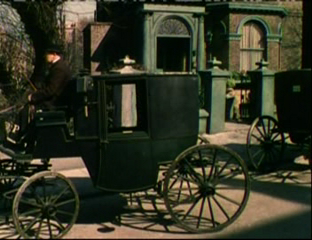
  • A fine recreation of Victorian England
Must See?
No, but it’s certainly worth a look.

Links:

Girl in Every Port, A (1928)

Girl in Every Port, A (1928)

“That big ox means more to me than any woman.”

Synopsis:
A pair of happily brawling sailors named Spike (Victor McLaglen) and Salami (Robert Armstrong) find their friendship at risk when Spike falls for a wily golddigger (Louise Brooks) in Marseilles.

Genres, Themes, Actors, and Directors:

  • Comedy
  • Friendship
  • Gold Diggers
  • Howard Hawks Films
  • Louise Brooks Films
  • Rivalry
  • Sailors
  • Silent Films
  • Victor McLaglen Films

Review:
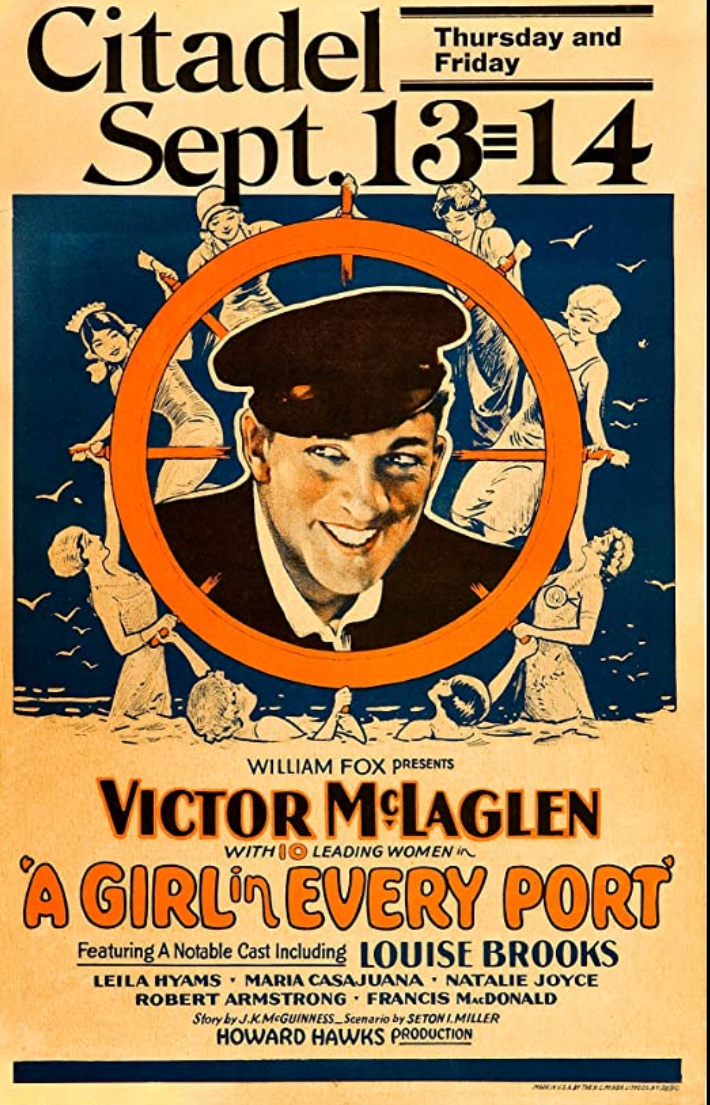
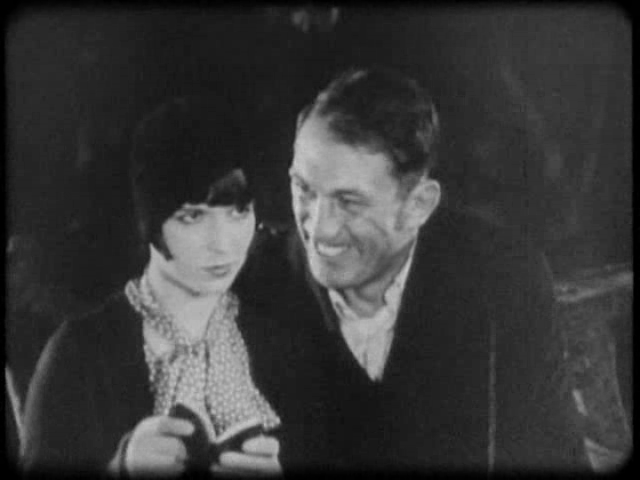
Howard Hawks’ silent-era buddy comedy is an enjoyable harbinger of his later, similarly-themed films. It’s swiftly paced, nicely acted by McLaglen and Armstrong (who reminds me of a slightly more mature Heath Ledger), and consistently amusing. The clever script showcases Spike and Salami’s distinctly macho friendship, which is predicated on fist-fights and rivalry, yet grounded with oddly intimate touches (in a running gag, Spike pulls Salami’s disjointed finger back into shape after every brawl he’s in). Meanwhile, Malcolm Stuart Boylan’s intertitles bring the briny patois of these globetrotting sailors to life: “You’re not in love. You’re just broke out all over with monkey-bites”, says Armstrong to McLaglen. Given its status as a pre-Code film, it’s made refreshingly clear that Spike and Salami are after sexual conquests; to that end, some of the most amusing moments in the film come early one, as we watch Spike looking up port-side women in his “little black book”, trying to find someone who’s still single and childless, and who hasn’t yet been “tainted” by his then-unknown rival. Quickly, however, Spike and Salami’s friendship takes a central role in the film, with the arrival of Brooks’ seductive femme fatale functioning primarily as a hitch in their lifelong commitment to one another. While her role is relatively small, Brooks is as luminous here as ever; it’s clear why G.W. Pabst hired her shortly thereafter to star in his Pandora’s Box (1929) and Diary of a Lost Girl (1929).

Redeeming Qualities and Moments:

  • Victor McLaglen as Spike
  • Robert Armstrong as Salami
  • Louise Brooks as Marie
  • A humorous portrait of rivalrous friendship
  • Atmospheric cinematography
  • Enjoyably slangy intertitles: “When I catch that snooping sea-snipe, I’ll put my trade-mark on his jaw!”

Must See?
Yes, as a most enjoyable early film by Hawks.

Categories

  • Important Director

Links:

Smile (1975)

Smile (1975)

“Boys get money and scholarships for making a lot of touchdowns, right? Why shouldn’t a girl get one for being cute and charming?”

Synopsis:
A group of teenage beauty queens — including Miss Anaheim (Annette O’Toole) and Miss Antelope Valley (Robin Gibson) — compete in California’s Young American Miss Pageant.

Genres, Themes, Actors, and Directors:

  • Beauty Contests
  • Bruce Dern Films
  • Michael Ritchie Films
  • Satires and Spoofs
  • Small Town America

Review:
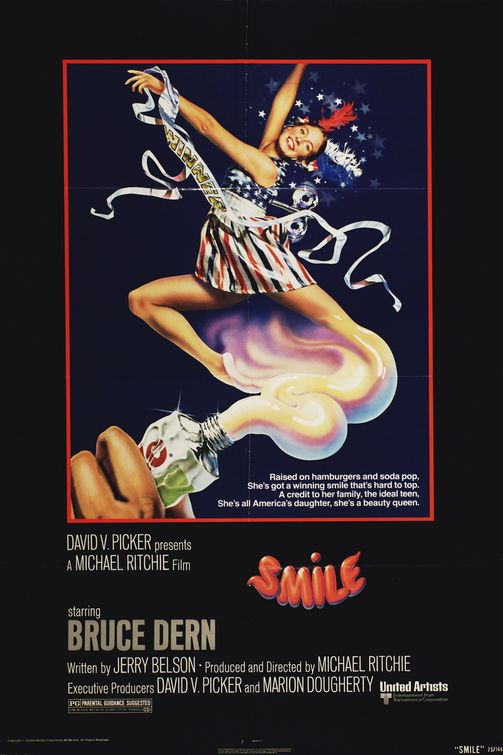
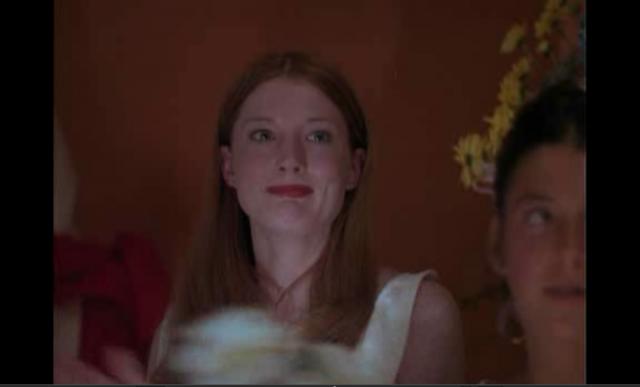
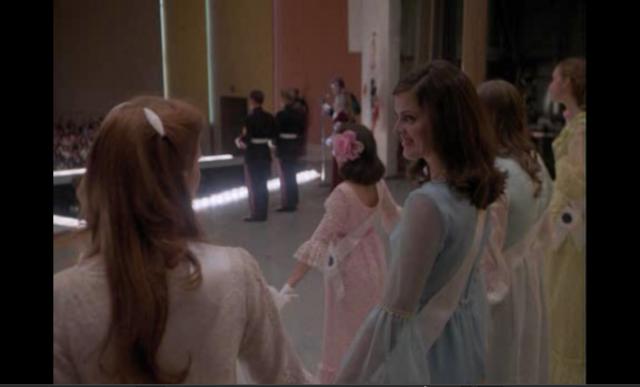
Smile — directed by Michael Ritchie — is beloved by many critics and fans as the original (and probably the best) “beauty pageant satire”, long before disappointments like 1999’s Drop Dead Gorgeous made it to the big screen. The fact that beauty pageants are “easy pickings” for spoofing makes writer Jerry Belson’s relative success here especially notable: everything about this fictional pageant rings true, from the pride felt by former Young American Miss Barbara Feldon as the contestants’ advice-spinning “den mother” to the sense of “civic duty” possessed by Bruce Dern’s RV-salesman-cum-pageant judge (Dern is fabulous, as always). I especially like the fact that an expected rivalry between the two primary protagonists — seasoned contestant Annette O’Toole (note-perfect in her early role here) and more serious newcomer Robin Gibson — never materializes, and that the outcome of the pageant itself is truly unexpected. The presence of real-life choreographer Michael Kidd as an overpaid but effectual dance director also works surprisingly well. Even some of the more slapsticky elements of the screenplay — i.e., Dern’s pubescent son (Eric Shea) colluding with two buddies to sell nude photographs of the girls — come across as convincing and humorous.

Unfortunately, however, not all elements of Belson’s over-long screenplay work. A subplot involving Feldon’s midlife-crisis-suffering husband (Nicholas Pryor) and his participation (with Dern) in an inane fraternal ritual involving roosters seems completely out of place (especially when his deteriorating relationship with Feldon turns unexpectedly violent), and I’m disturbed by the girls’ rabid, generally accepted hostility towards the only non-White contestant (Maria O’Brien) in the competition. Overall, however, Smile remains an enjoyable time capsule comedy, one which possesses some enduring insights into the world of competitive pageantry.

Redeeming Qualities and Moments:

  • Bruce Dern as “Big Bob”
  • Annette O’Toole as “Miss Anaheim”
  • “Little Bob”‘s naughty escapades
  • Jerry Belson’s often clever screenplay

Must See?
Yes, as an enjoyable satire. Listed as a Personal Recommendation in the back of Peary’s book.

Categories

  • Good Show

Links:

Life and Death of Colonel Blimp, The (1943)

Life and Death of Colonel Blimp, The (1943)

“You laugh at my big belly, but you don’t know how I got it! You laugh at my mustache, but you don’t know why I grew it!”

Synopsis:
A British colonel (Roger Livesey) reflects on his long career in the military, his friendship with a sympathetic German officer (Anton Walbrook), and his love for two look-alike women (both played by Deborah Kerr).

Genres, Themes, Actors, and Directors:

  • Anton Walbrook Films
  • Character Studies
  • Deborah Kerr Films
  • Flashback Films
  • Friendship
  • Generation Gap
  • Love Triangle
  • Michael Powell Films
  • Military
  • Roger Livesey Films

Review:
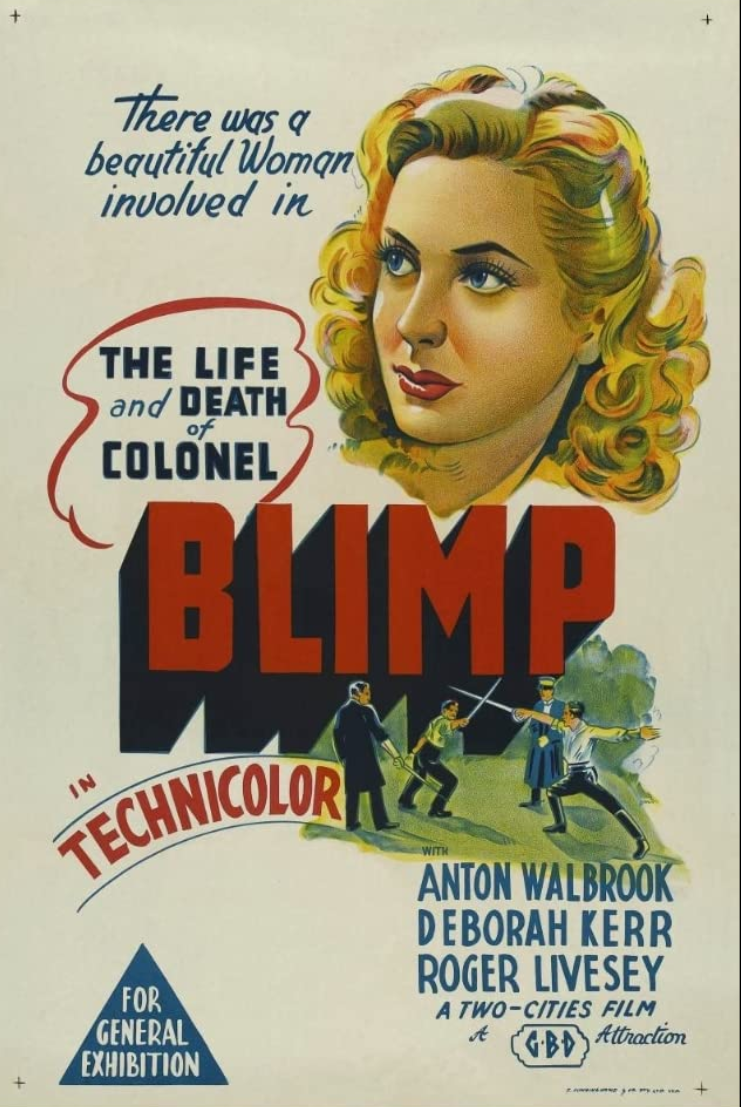
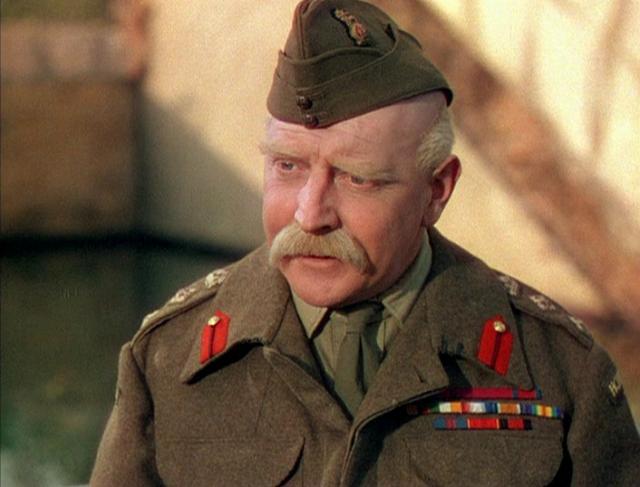
Despite the presence of war as its steady backdrop, this surprisingly compelling character study — co-produced, co-written, and co-directed by famed creative team Michael Powell and Emeric Pressburger — is primarily concerned with exploring the shifting nature of British (military) identity through the late 19th and early 20th centuries. This is achieved by cracking open the humanity behind an archetypal British caricature — that of David’s Low’s infamous cartoon character “Colonel Blimp”. However, while Low’s “Blimp” was conceived of as “pompous, irascible, jingoistic and stereotypically British”, gravelly-voiced Roger Livesey’s “Colonel Candy” — his cinematic doppelganger — is portrayed as well-meaning and noble, yet simply “behind the times”. Indeed, Candy ultimately emerges as a much more complex figure than merely the stuffy, pot-bellied elder we see during the film’s chaotic opening scene (a somewhat confusing sequence which makes much more sense when it’s repeated near the end of the film — first-time viewers, don’t give up too quickly!).

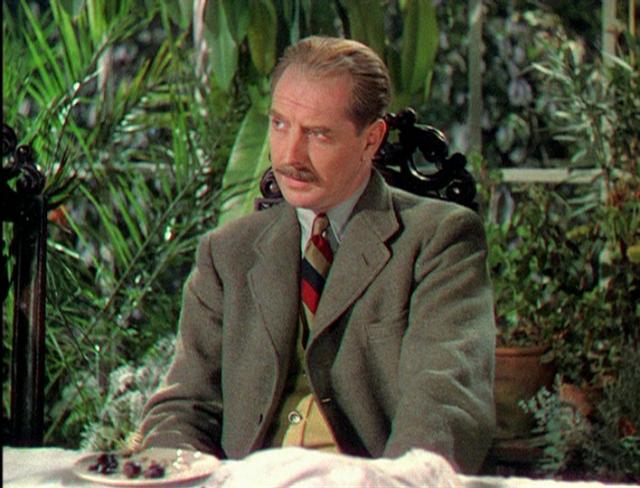
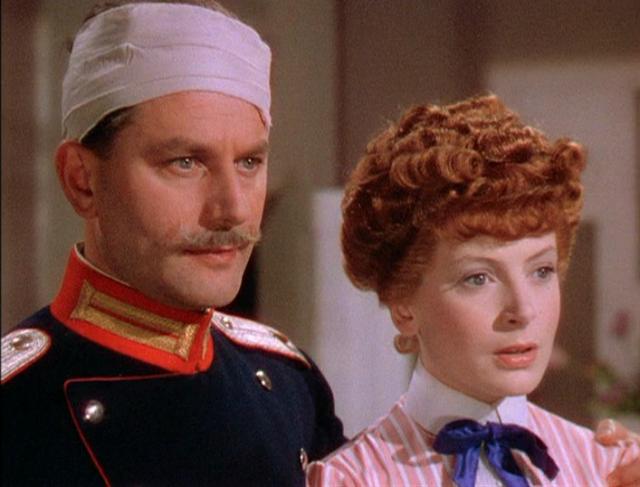
As we soon learn through a series of flashbacks, Candy was once slender, dashing, and so in love with a beautiful young woman (Deborah Kerr) that her very image haunts him for the rest of his life — a fact which Powell and Pressburger creatively “exploit” by having Kerr play his second love interest (and a third character) as well. Equally relevant to the film’s character-driven plot is Candy’s contentious lifelong friendship with a Prussian officer (Walbrook), who effectively humanizes “the enemy”, and reminds viewers that there are complex histories and lives behind every facet of war. The trio of lead performances by Livesey, Kerr, and Walbrook are uniformly excellent, and the film’s visuals are equally impressive, with Georges Perinal’s Technicolor cinematography and Alfred Junge’s sets collectively bringing the various eras and settings to vibrant life. The makeup used to age Colonel Candy over four decades is astonishingly effective as well.

As DVD Savant notes, it’s a miracle that a movie like this — a military satire shot in Technicolor, with countless extras and a lengthy running time — could ever have been made during the height of a devastating world war; indeed, it was bound to raise shackles, which is exactly what happened: Winston Churchill was so outraged by its very premise that he refused to contribute any military equipment to the directors, and refused to allow it to be shown in any other country until two years after the war ended (see TCM’s article for further details). For years it was shown in a butchered 90+ minute incarnation, but film fanatics can now, fortunately, see it in all its 163-minute glory.

Redeeming Qualities and Moments:

  • Roger Livesey as Colonel Candy (Peary nominates him for an Alternate Oscar as Best Actor of the Year)
  • Anton Walbrook as Theo Kretschmar-Schuldorff
  • Deborah Kerr as Edith, Barbara, and “Johnny” (pictured below)
  • Alfred Junge’s elaborate set designs
  • Livesey’s truly impressive makeup
  • Georges Perinal’s lovely Technicolor cinematography
  • Powell and Pressburger’s smart, often witty script

Must See?
Yes, for numerous reasons. Listed as a film with Historical Importance, a Cult Movie, and a Personal Recommendation in the back of Peary’s book.

Categories

  • Genuine Classic
  • Historically Relevant
  • Important Director
  • Noteworthy Performance(s)

(Listed in 1001 Movies You Must See Before You Die)

Links:

Great Gabbo, The (1929)

Great Gabbo, The (1929)

“Little Otto there is the only human thing about you.”

Synopsis:
An egomaniacal ventriloquist known as the Great Gabbo (Erich von Stroheim) treats his kind assistant (Betty Compson) so badly that she leaves him for another man (Donald Douglas) — but Gabbo (who begins to invest more and more of his personality in his dummy, Otto) never gives up hope that Compson may return to him one day.

Genres, Themes, Actors, and Directors:

  • Erich von Stroheim Films
  • Mental Breakdown
  • Puppets and Ventriloquism
  • Vaudeville and Burlesque

Review:
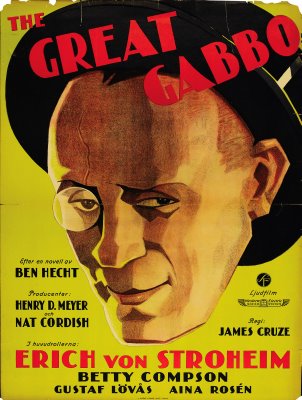
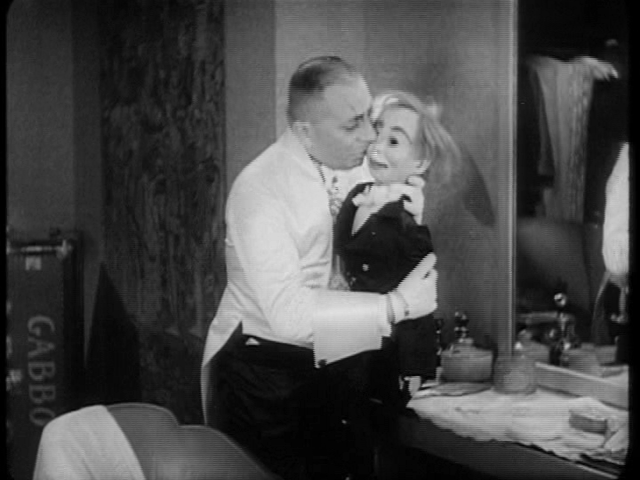
This early “transitional talkie” — based on a story by Ben Hecht, and starring Erich von Stroheim in his first acting role after the end of his directing career — is a disappointing enigma. Despite its intriguing premise, the movie is utterly undone by deathly slow pacing, an underdeveloped plot, and countless extraneous musical revue numbers thrown in to pad the film’s running time. Gabbo’s performances with Otto are neither amusing nor remotely realistic, yet — in perhaps the most surreal aspect of the entire movie — Gabbo is supposed to be a world-class entertainer (?!). Far too much is made of the fact that Otto is somehow able to “talk” while Gabbo is eating, drinking, and smoking (we’re shown this “trick” no less than three times); in fact, we think there must be either fraud or something fantastical going on, but again, neither of these hints are ever explored.

Meanwhile, Von Stroheim — never the most nuanced of actors — is both heavy-handed and insufferably heartless as Gabbo: the insults he hurls at poor Compson in the opening ten minutes of the film are enough to make you want to throttle him, and he never (re)gains our sympathy. In fact, the entire screenplay is premised on Compson’s enduring pity for Gabbo, yet we can’t help thinking she’s nuts to give him the time of day. The creepy promise of Gabbo’s descent into ventriloquial madness isn’t adequately exploited until the very end of the picture, at which point it’s too little, too late. At least there are occasional moments of surreal hilarity scattered throughout the film — as when Otto sings a song about preferring lemon drops to lollipops because the latter get “all over icky”. Indeed.

Redeeming Qualities and Moments:

  • A creepy — albeit sadly unfulfilled — portrait of an obsessed ventriloquist
  • Otto singing the truly surreal “lollipop song”:

    “I always drop my lollipop, and it gets all over icky”

  • Some surreal performance sets

Must See?
No, though most film fanatics will likely be morbidly curious to check it out. See “The Ventriloquist’s Dummy” segment in Dead of Night (1945) instead for a truly creepy story about an obsessed ventriloquist.

Links:

Four Horsemen of the Apocalypse, The (1921)

Four Horsemen of the Apocalypse, The (1921)

“And when the sun rises in a few hours the world will behold the Four Horsemen — enemies of mankind!”

Synopsis:
An Argentinian cattle baron (Pomeroy Cannon) with two European son-in-laws — a Frenchman (Josef Swickard) and a German (Alan Hale) — favors his rakish French grandson Julio (Rudolph Valentino) over all others. Meanwhile, the arrival of World War I wreaks havoc on the family’s tenuous ties, as well as Julio’s love affair with the wife (Alice Terry) of an older attorney (John St. Polis).

Genres, Themes, Actors, and Directors:

  • Alan Hale Films
  • Character Arc
  • Infidelity
  • Rudolph Valentino Films
  • Silent Films
  • World War One

Review:
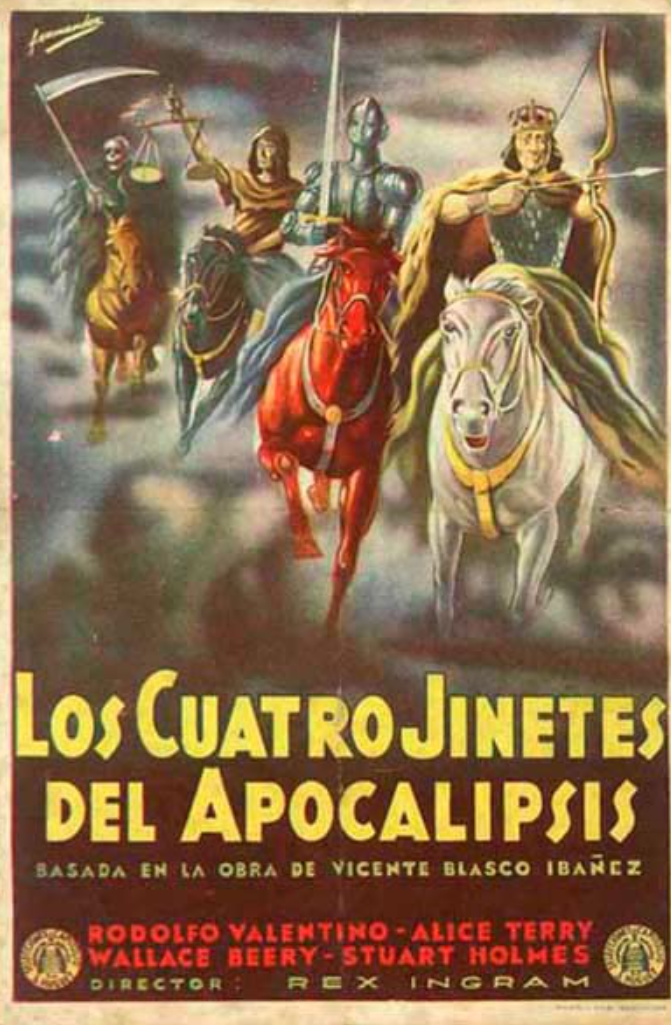
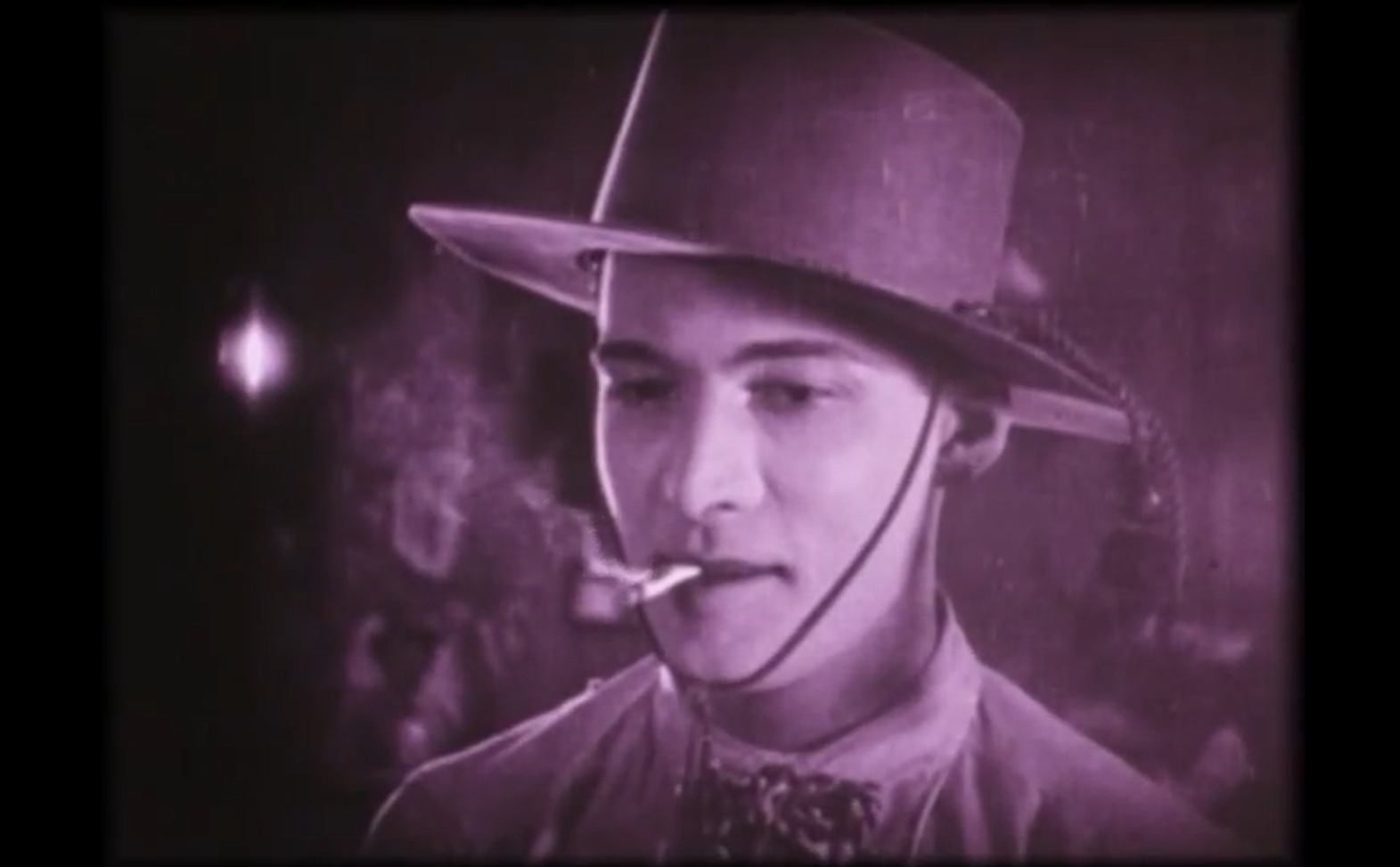
Based on a “mystical” novel by Spanish author Vicente Blasco-Ibanez, this epic silent film (directed by Rex Ingram) broke all box office records the year of its release (it was the first film to gross more than one million dollars), and became the sixth highest grossing silent film of all time. It’s widely known as the film that brought “Latin Lover” Rudolph Valentino (real name: Rodolfo Alfonzo Raffaelo Pierre Filibert Guglielmi di Valentina D’Antonguolla!!!) into the spotlight as a leading man, and his charisma is clearly evident — at one point, while in the midst of seducing a woman, he actually turns to the camera in a quick aside, as though to wink at the audience!

His early, sultry tango scenes — not part of the original novel — are so sensual and evocative that they made the dance a hit craze for a while.

As far as the story goes, it’s a fairly standard overblown saga of forbidden romance, family feuds, and the inevitable tragedy of war — with Germans emerging as the definite baddies of the bunch (it was released, after all, just three years after the end of World War I, when sentiments were still raw). Meanwhile, the integration of a “mystical” element into the story — embodied by a wacky neighbor (Nigel De Brulier) who foretells the coming of the “four horsemen of the Apocalypse” (hence the film’s title) — is simply silly and heavy-handed.

But Ingram has a fine directorial hand, framing his scenes carefully and adding unique visual touches — many of which are quite memorable (see stills below); and the “DeMille”-ian amounts of money spent on the production seem to have been put to good use, given Ingram’s ability to effectively present the devastation of war. Remade by Vincente Minnelli (!) in 1962, with Glenn Ford (!) starring as Julio.

Redeeming Qualities and Moments:

  • Rudolph Valentino as Julio
  • A devastating portrait of war
  • Powerful imagery

Must See?
Yes, for its historical importance. Listed in the back of Peary’s book as a film with Historical Relevance.

Categories

  • Historically Relevant

Links:

Lilith (1964)

Lilith (1964)

“Somehow insanity seems a lot less sinister to watch in a man than in a woman, doesn’t it?”

Synopsis:
A troubled young veteran (Warren Beatty) takes a job as an occupational therapist at an upscale mental asylum, where he falls for a bewitching schizophrenic named Lilith (Jean Seberg).

Genres, Themes, Actors, and Directors:

  • Femmes Fatales
  • Gene Hackman Films
  • Jessica Walter Films
  • Kim Hunter Films
  • Mental Illness
  • Obsessive Love
  • Peter Fonda Films
  • Robert Rossen Films
  • Veterans
  • Warren Beatty Films

Review:
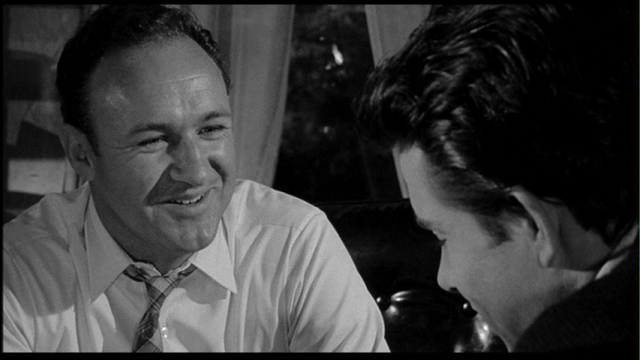
Though it’s received mixed reviews from critics over the years, Robert Rossen’s final film is ultimately a dated disappointment. Drawing upon every possible cliched romanticization about mental asylums and their inhabitants, Rossen’s screenplay (based on J.R. Salamanca’s novel) comes across as well-intentioned but painfully pretentious and unrealistic. From the beginning, we wonder how a potentially disturbed young veteran can walk off the street into a high-scale asylum and secure a specialized job as a pseudo-therapist, working closely with its inmates and spending more and more time with one beautiful inmate in particular, while nobody bats an eyelid (only in the movies — that’s how). To that end, Kim Hunter as Vincent’s boss (who SHOULD be more attentive!) is completely wasted in an underdeveloped role, while Jessica Walter (as Vincent’s former girlfriend) and Gene Hackmann (as her husband) fare better in tiny supporting roles (but their role in the story is insubstantial at best).

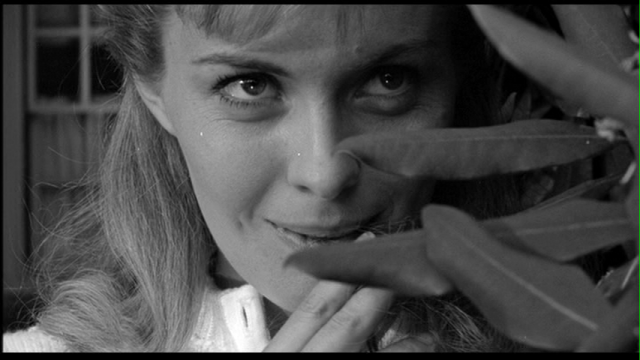
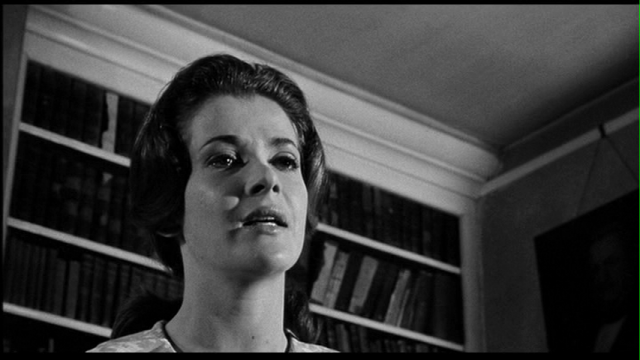
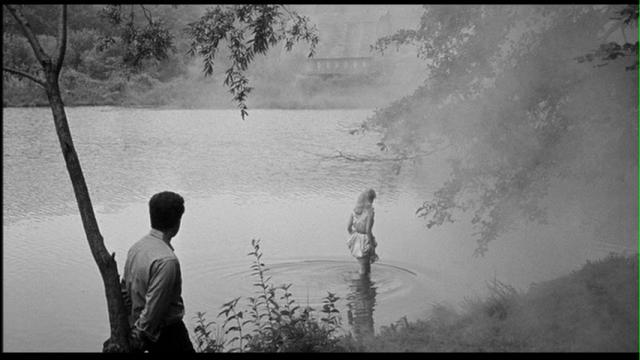
Meanwhile, Beatty’s overreliance on Method-acting mannerisms does him no favors here: his character is all hesitations and sideways glances, and never really comes to life. What redeems Lilith to a certain extent — but only marginally — is Seberg’s performance in the title role. I’m not an enormous fan of her work in general, and find her range limited, but here she really takes the role and runs with it; clearly she was able to relate to Lilith’s seductive insanity in some fundamental way, and channel that back through onto the screen. Equally compelling is Eugen Schufftan’s black-and-white cinematography: the film is truly stunning to look at, with each shot like a work of art, beautifully lit and framed. It’s all the more of a shame, then, that the story itself — which, as DVD Savant notes, “wants to be about the mysteries of the human personality” — is ultimately simply a muddled and tiresome snoozefest.

Redeeming Qualities and Moments:

  • Jean Seberg as Lilith
  • Jessica Walter as Laura
  • Gene Hackman as Norman
  • Eugen Schufftan’s gorgeous b&w cinematography

Must See?
No. Listed as a film with Historical Importance and a Cult Movie in the back of Peary’s book, but I’m not sure it has much of a following anymore, and am unclear about why it would hold historical relevance.

Links: