Browsed by
Category: Original Reviews

Responses to Peary’s “must see” movie reviews, as well as my own “must see” movie reviews up to and after 1986 (when Peary’s book was published).

Drunken Angel (1948)

Drunken Angel (1948)

“You worry about all of your patients more than yourself.”

Synopsis:
An alcoholic doctor (Takashi Shimura) in post-WWII Japan tries to convince a TB-ridden gangster (Toshiro Mifune) to mend his ways and get well.

Genres, Themes, Actors, and Directors:

  • Doctors and Nurses
  • Do-Gooders
  • Gangsters
  • Japanese Films
  • Kurosawa Films
  • Toshiro Mifune Films

Review:
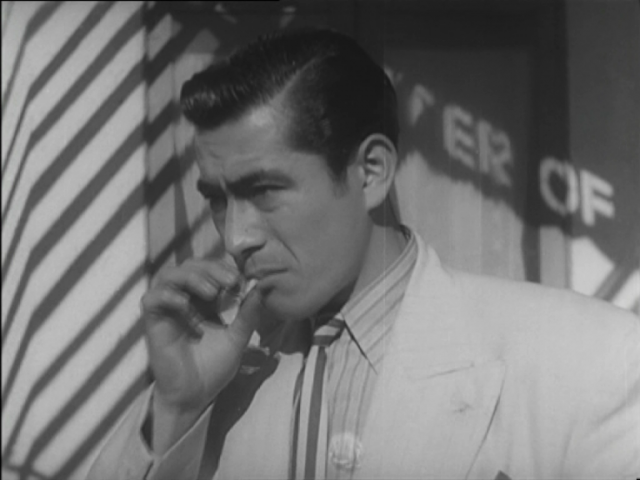
While famed Japanese director Akira Kurosawa is best known for his highly influential historical films — including The Seven Samurai (1954), The Hidden Fortress (1958), Yojimbo (1961), and Ran (1985), to name just a few — he helmed a number of powerful “real time” films early in his lengthy career, many of which remain worthy viewing as well. Drunken Angel — the earliest Kurosawa film listed in Peary’s book — is notable as the movie in which Kurosawa self-reportedly “found himself” as a director. It’s also notable as the first film in which he cast Toshiro Mifune, who would become inextricably linked with Kurosawa’s oeuvre until their final collaboration together in 1965’s Red Beard; Mifune’s volatile performance here makes his star power eminently clear.

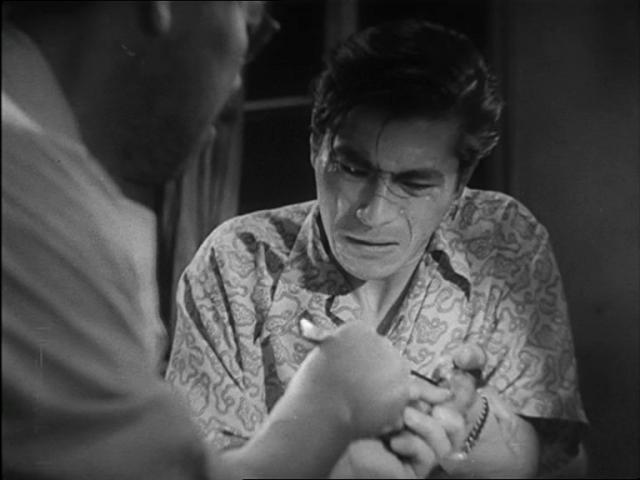
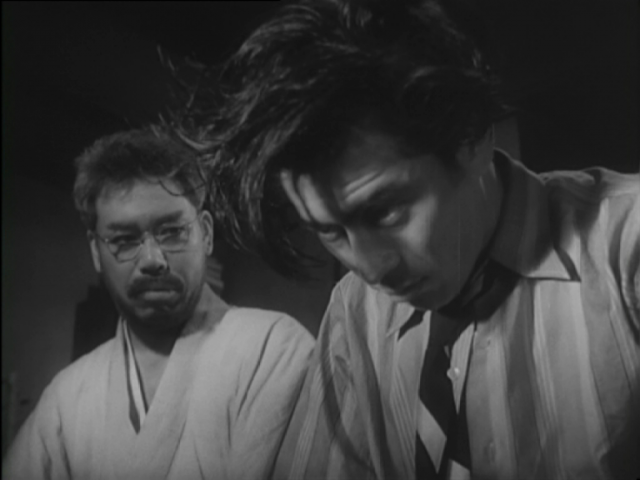
Drunken Angel is an atmospheric, neo-realist rendering of life in post-WWII Japan, with Shimura’s desperate attempt to save the life of his TB-riddled patient symbolizing the nation’s struggle to right itself after years of debilitating warfare. Shimura, while noble in his desires, is ultimately a flawed protagonist — he drinks too much, and is too willing to take unnecessary risks in order to rescue Mifune from himself; meanwhile, Mifune — despite his Yakuza associations — is surprisingly sympathetic, and comes across as imminently redeemable. Their relationship together is both curious and weirdly logical, and we watch with fascination to see how things will turn out for this unconventional “odd couple”. Meanwhile, Kurosawa fills the screen with sensuous yet repellent imagery, continuously evoking fetid water as a palpable metaphor for post-war decay and destruction; it’s impossible to turn away, no matter how disturbing the sight.

Redeeming Qualities and Moments:

  • Toshiro Mifune as Matsunaga
  • Takashi Shimura as Dr. Sanada
  • Takeo Ito’s noirish cinematography

Must See?
Yes, as one of Kurosawa’s earliest triumphs. Listed as a film with Historical Importance in the back of Peary’s book.

Categories

  • Historically Relevant
  • Important Director

Links:

Stage Fright (1950)

Stage Fright (1950)

“I’m afraid the murderer might come here, Madam.”

Synopsis:
A drama student (Jane Wyman) goes undercover as a maid for a well-known actress (Marlene Dietrich) who tricked her young lover (Richard Todd) — Wyman’s secret crush — into taking the rap for the murder of her husband.

Genres, Themes, Actors, and Directors:

  • Actors and Actresses
  • Alastair Sim Films
  • Falsely Accused
  • Femmes Fatales
  • Hitchcock Films
  • Jane Wyman Films
  • Marlene Dietrich Films

Review:
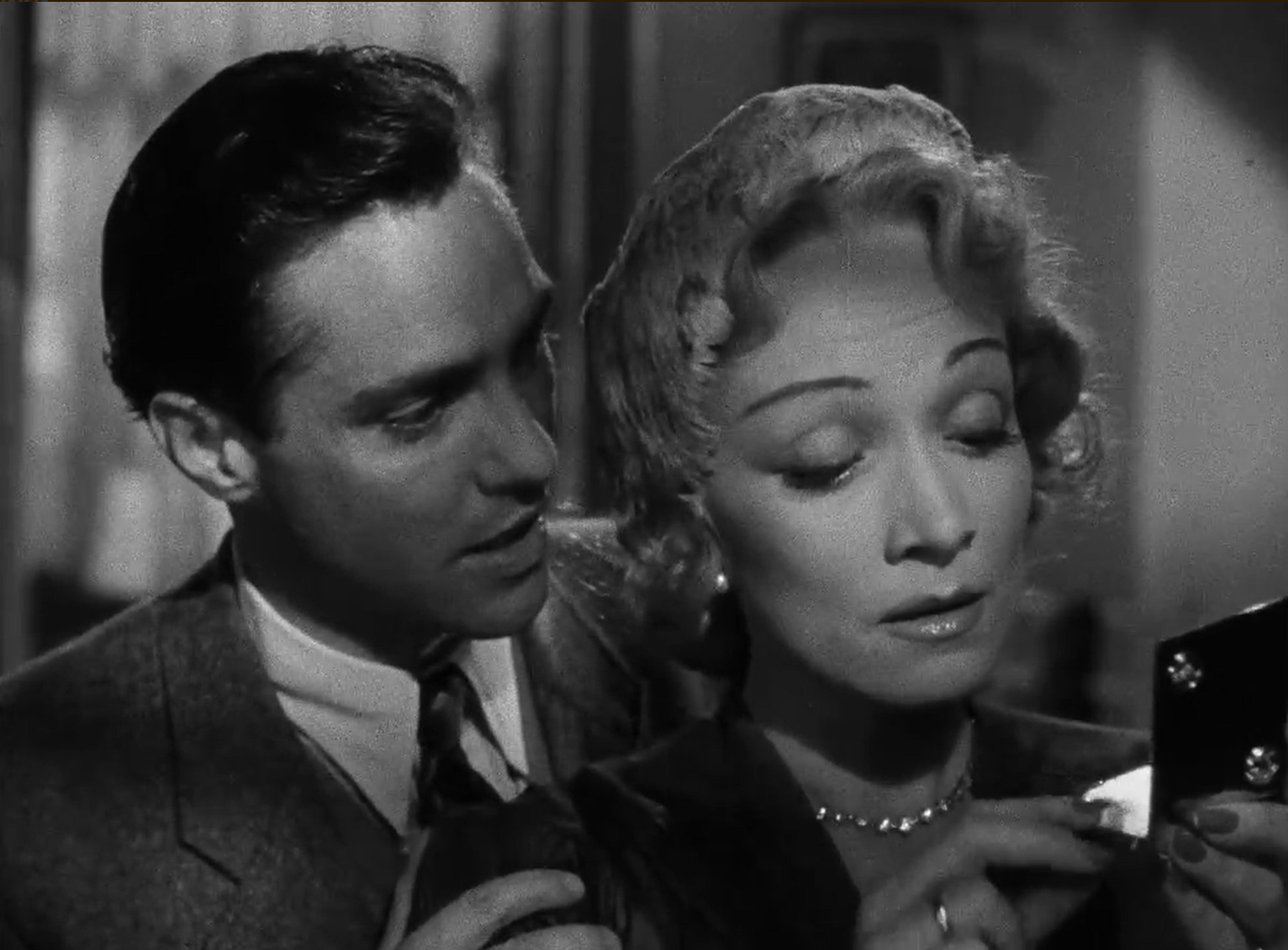
While this Hitchcock thriller is perhaps best known for its flashback-driven narrative, it’s equally notable for starring Marlene Dietrich as a femme fatale in her only Hitchcockian film role:


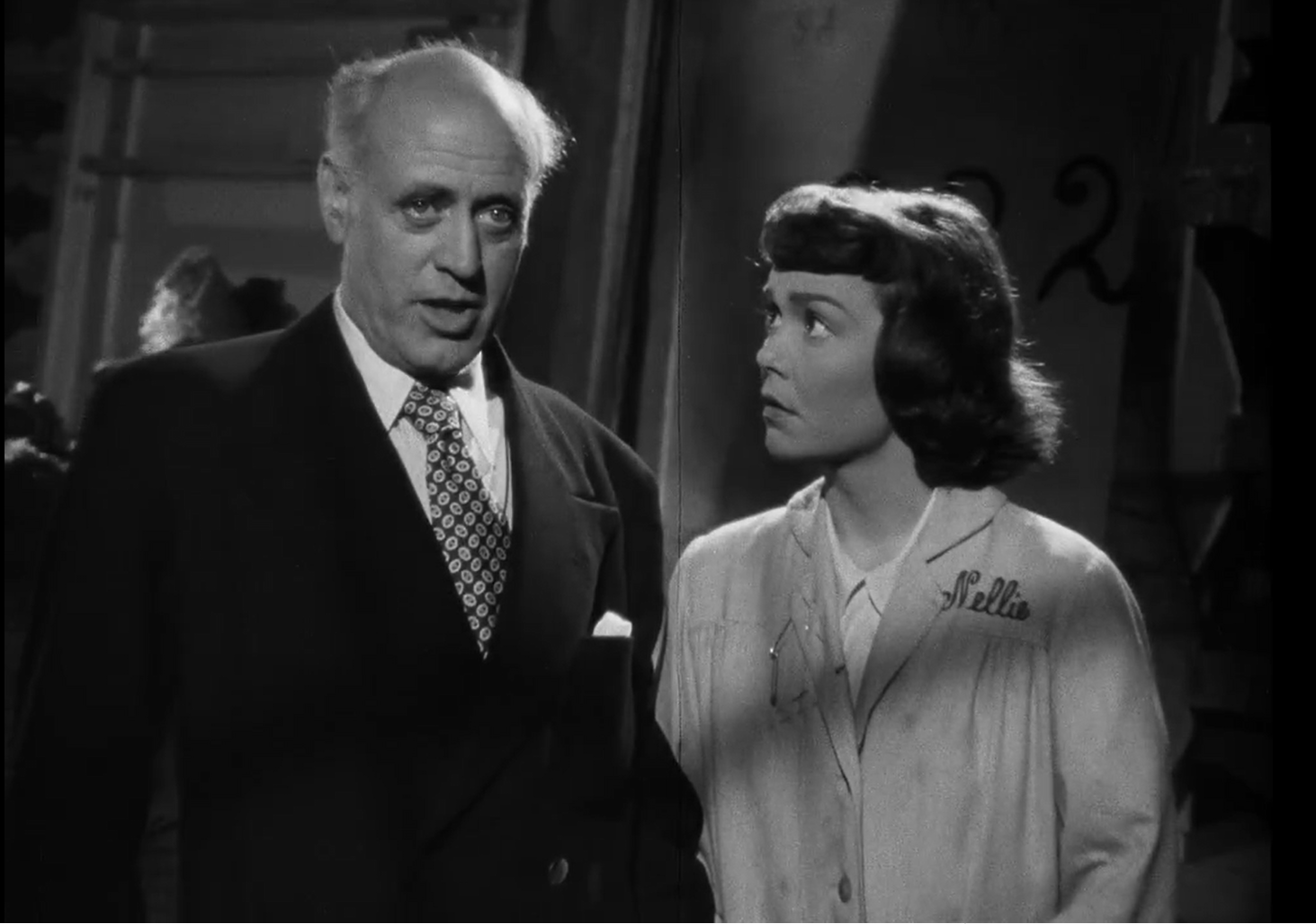
and Alastair Sim in a wonderfully droll supporting performance as Jane Wyman’s father.

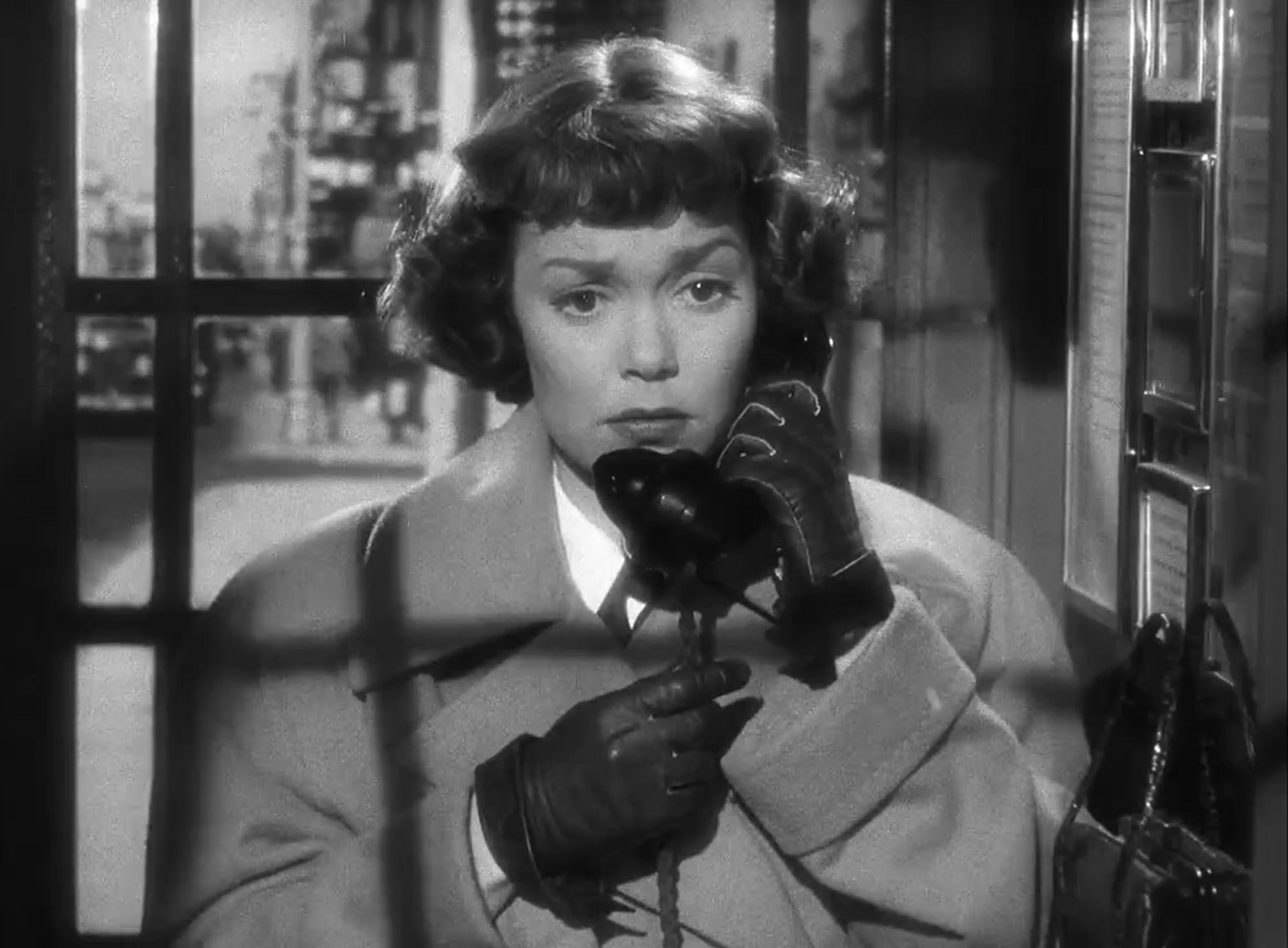
Wyman, never the most charismatic or beautiful of actresses, nonetheless acquits herself nicely in dual roles here as a student actress with the real-life role of a lifetime; while we feel sorry for her initially (she’s clearly enamored with the Wrong Guy), she’s quickly and conveniently given another love interest (Michael Wilding’s investigative detective), and it’s easy to root for her throughout her dramatic travails.

Although Stage Fright is enjoyable while it lasts, and certainly must-see viewing at least once for all Hitchcock fans, it’s not really all that noteworthy; what lingers longest in one’s memory of the film is Sims’ performance, proving that he was one of cinema’s true iconic delights.

Redeeming Qualities and Moments:

  • Jane Wyman as Eve/Doris
  • Alastair Sim as Wyman’s father
  • Atmospheric cinematography

Must See?
No, though it’s a must for any Hitchcock fan, and recommended for one-time viewing.

Links:

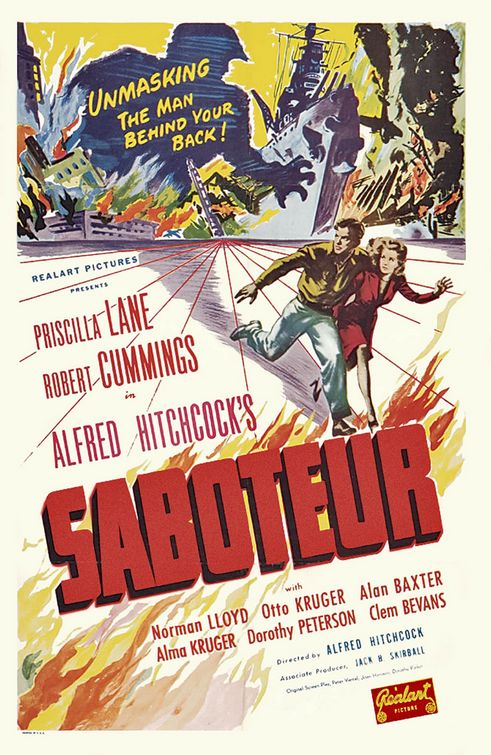
Saboteur (1942)

Saboteur (1942)

“A man like you can’t last in a country like this.”

Synopsis:
When an airplane factory worker (Robert Cummings) is wrongly accused of starting a fire that killed his best friend, he goes on the lam to search for the real saboteur (Norman Lloyd), enlisting the reluctant help of a feisty billboard model (Priscilla Lane).

Genres, Themes, Actors, and Directors:

  • Falsely Accused
  • Fugitives
  • Hitchcock Films
  • Priscilla Lane Films
  • Robert Cummings Films
  • Spies

Review:
Alfred Hitchcock made so many tautly directed thrillers about “falsely accused men” that it can be difficult to determine which ones should be considered required viewing. As an inveterate Hitchcock fan, I tend to go out on a limb in support of most of them — including this most enjoyable “man on the lam” flick, starring B-actor Robert Cummings in perhaps his most significant film role. Co-scripted by Joan Harrison (who wrote the screenplay for several of Hitchcock’s other same-era films, including 1940’s Foreign Correspondent), Saboteur was Hitch’s second film within six years specifically about sabotage, and may suffer somewhat in one’s memory from its rather generic title. It’s also often unfairly dismissed as merely an inferior thematic forerunner to Hitchcock’s later, more esteemed classic North by Northwest (1959).

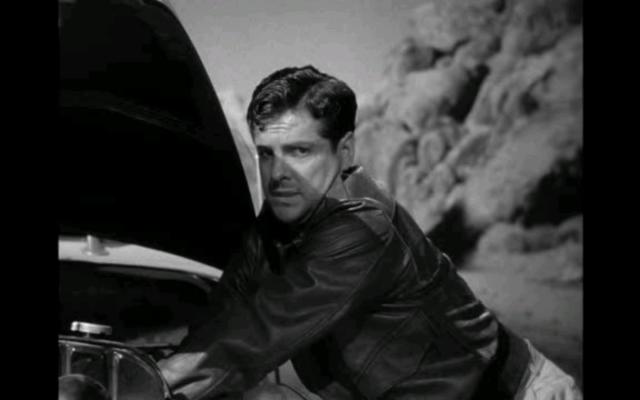
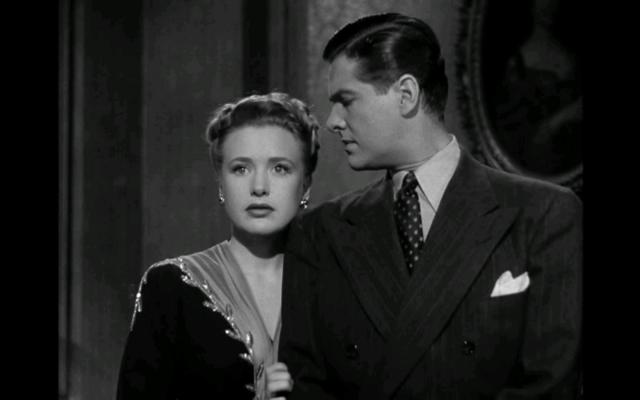
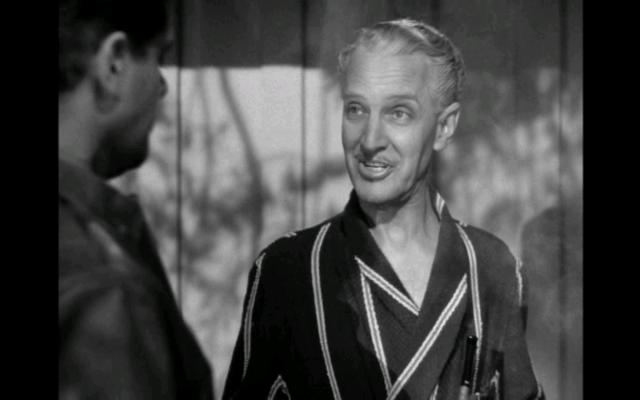
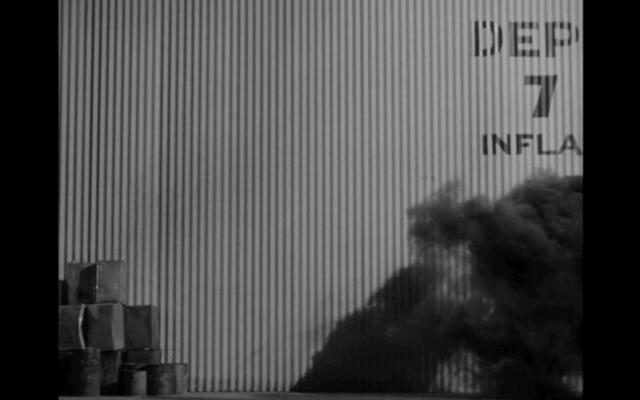
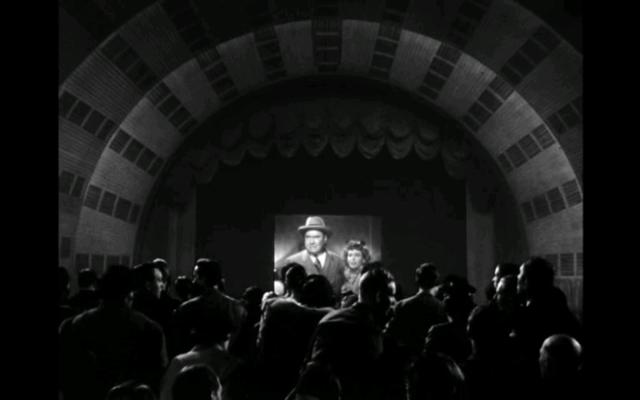
Yet Saboteur remains a highly enjoyable flick in its own right: it’s jam-packed with exciting sequences, creative settings, and memorable character actors (most notably Otto Kruger as one of the first enemies Cummings encounters after his escape from the police, and Norman Lloyd as the real saboteur). As Cummings desperately wends his way across the country to clear his name, he encounters a requisite feisty love interest (nicely played by Priscilla Lane); meanwhile, he must escape from the clutches of an underground network of fascists who seem to lurk around every corner. From the opening act of sabotage — a dramatically filmed factory fire that astonishes me anew each time I see it — Hitchcock keeps his sets fresh and exciting; see stills below for glimpses of Cummings (with Lane) at a deceptively dangerous upper-crust party, escaping gunfire at Radio City Music Hall, and fighting for his life atop the Statue of Liberty. Other memorable scenes include Cummings’ poolside encounter with Kruger and his grandson, as well as Cummings and Lane’s brief interlude with a troupe of circus “freaks”.

Note: Listen for some zingy dialogue by Dorothy Parker, who contributed to several key scenes.

Redeeming Qualities and Moments:

  • Robert Cummings as Barry Kane
  • Priscilla Lane as Pat
  • Otto Kruger as Charles Tobin
  • Norman Lloyd as Frank Fry
  • The opening factory fire
  • The incredibly tense “party sequence”
  • The creatively conceived Radio City Music Hall shoot-out
  • The closing “Statue of Liberty” sequence

Must See?
Yes, as an underrated thriller by Hitchcock.

Categories

  • Good Show
  • Important Director

Links:

Serial (1980)

Serial (1980)

“You-ness. Me-ness. Us-ness. We-ness.”

Synopsis:
A Marin County husband (Martin Mull) and wife (Tuesday Weld) struggle to keep their marriage and family together in the midst of New Age temptations.

Genres, Themes, Actors, and Directors:

  • Christopher Lee Films
  • Counterculture
  • Marital Problems
  • Sally Kellerman Films
  • Satire
  • Tuesday Weld Films

Review:
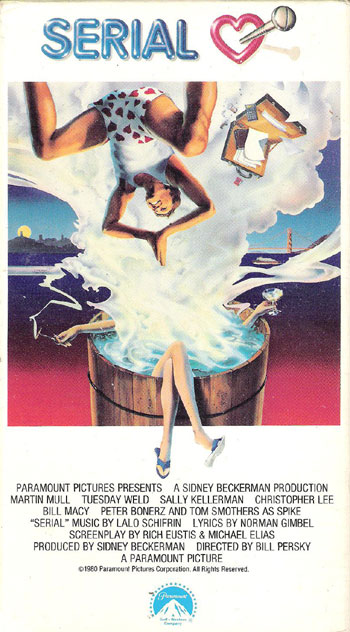
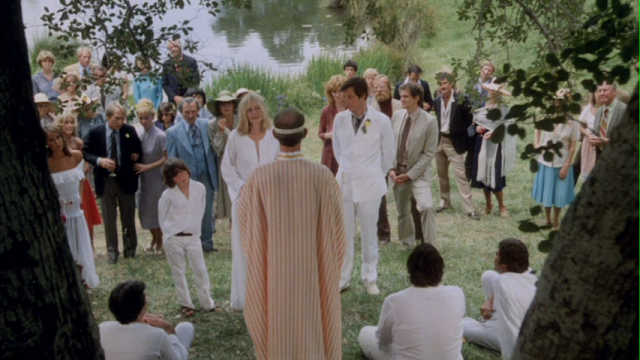
I’ll admit to a fondness for this silly but frequently giggle-inducing satire about California’s post-hippie culture in the late 1970s (based on a novel by newspaper columnist Cyra McFadden), which mercilessly skewers some of the era’s more far-out fads and phenomenons — from teenagers joining Moonie cults, to psychobabbling pseudo-therapists, to “free love” in its many forms — all within the very particular socio-cultural milieu of upper-middle-class, primarily white Marin County. While the motley ensemble of characters (including Christopher Lee as a closeted gay weekend motorcyclist!) never emerge as more than simply iconic representations, they’re not really meant to: Martin Mull’s put-upon lawyer-husband-father is simply a representation of a “sane” reaction to the crazed-out world he finds himself and his family immersed in.

Not all the vignettes are equally humorous, but many are inspired — particularly those involving Sally Kellerman as a happily spaced-out mom whose son (Anthony Battaglia) is in continual psychotherapy with a coke-sniffing shyster therapist (Peter Bonerz); who asks her African-American maid (Ann Weldon) to shuck her uniform in order to look like an acquaintance rather than an employee; and who thinks nothing about engaging in casual serial marriage as a hobby. I wouldn’t call Serial a must-see comedy for all film fanatics, but it remains a personal wacky favorite.

Redeeming Qualities and Moments:

  • Numerous humorous vignettes


Must See?
No, but it’s definitely recommended — and a personal “must see”.

Links:

Old Boyfriends (1979)

Old Boyfriends (1979)

“You can’t just pick these things up again like a book you never finished.”

Synopsis:
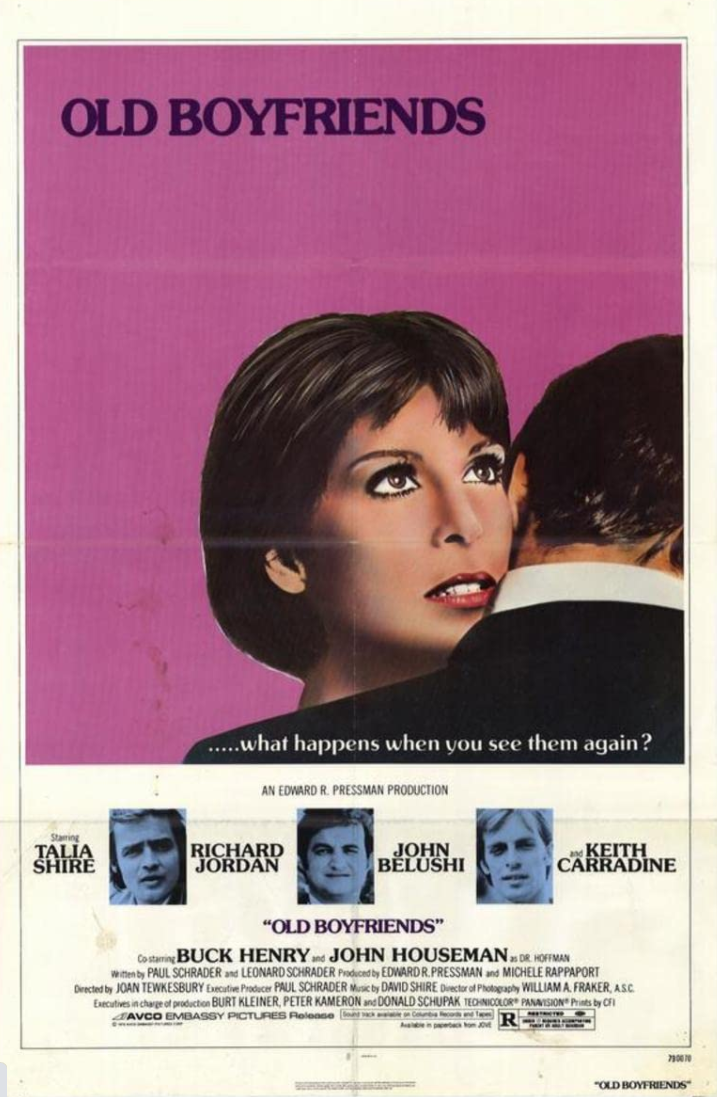
A troubled psychologist (Talia Shire) hoping to understand herself better takes a road trip to reconnect with three of her former beaus — including a college boyfriend (Richard Jordan), a high school flame (John Belushi), and a childhood sweetheart.

Genres, Themes, Actors, and Directors:

  • Character Studies
  • John Belushi Films
  • Paul Schrader Films
  • Road Trip
  • Talia Shire Films

Review:
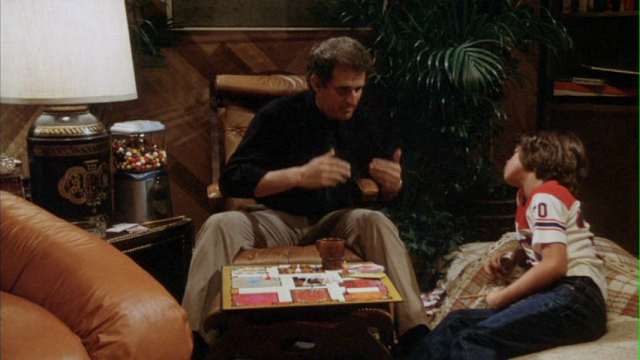
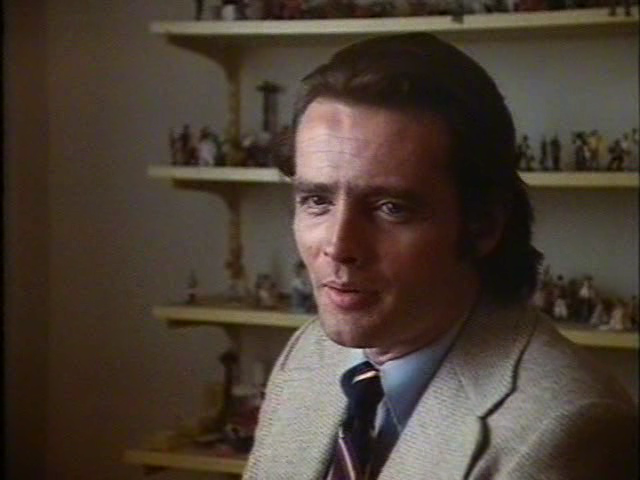
The premise of this succinctly titled character study is compelling: who hasn’t fantasized at some point about revisiting one’s former lovers, and reassessing, in hindsight, what went wrong? Unfortunately, director Joan Tewkesbury — best known for writing Robert Altman’s Nashville (1975) and Thieves Like Us (1974) — fails to turn this intriguing narrative framework into a convincing drama. At the heart of the problem lies Shire’s performance, which is uneven and unfocused; sadly, we never grow to care about her character. Part of the issue also lies in Paul and Leonard Schrader’s screenplay: after an initial voice-over giving a cursory explanation of what Shire’s setting out to do and why, we’re plunged into her road trip without an opportunity to feel any investment in her or her dilemma. The surprisingly lame dialogue doesn’t help matters any either (Shire says to her womanizing ex-boyfriend Belushi — who now runs a formal wear company — “I always knew you’d get into women’s clothes – but this is ridiculous!” Ha.) Meanwhile, David Shire’s sumptuous but overused film score seems to belong to another movie entirely. Richard Jordan (playing Shire’s sympathetic almost-fiance from her college days) provides the film’s sole redeeming element, though his role is regrettably small, and his character’s actions don’t really ring all that true.

Note: Fans of John Belushi will certainly be interested to see his brief appearance here as a mega-louse; he acquits himself reasonably well.

Redeeming Qualities and Moments:

  • Richard Jordan as Diane’s college flame

Must See?
No; feel free to skip this one.

Links:

Swarm, The (1978)

Swarm, The (1978)

“Oh, my God — bees, bees, millions of bees!”

Synopsis:
A renowned entomologist (Michael Caine) clashes with a military general (Richard Widmark) over how to deal with an attack by killer bees.

Genres, Themes, Actors, and Directors:

  • Ben Johnson Films
  • Cameron Mitchell Films
  • Disaster Flicks
  • Fred MacMurray Films
  • Henry Fonda Films
  • Jose Ferrer Films
  • Katharine Ross Films
  • Killer Animals
  • Lee Grant Films
  • Michael Caine Films
  • Olivia de Havilland Films
  • Richard Chamberlain Films
  • Richard Widmark Films
  • Scientists

Review:
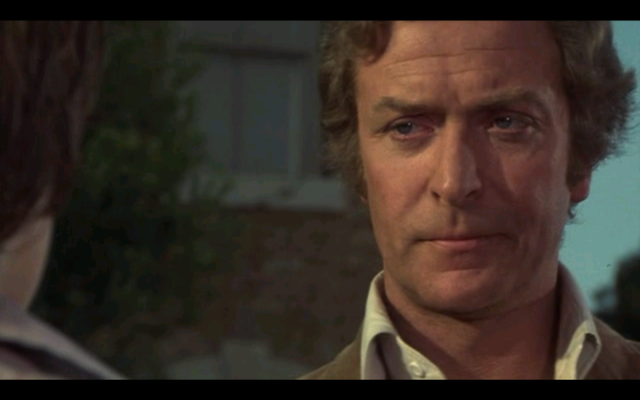
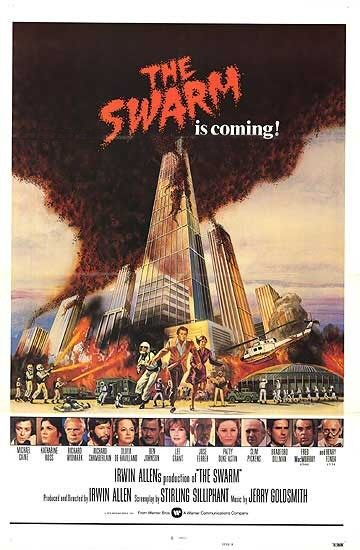
Helmed by famed “Master of Disaster” Irwin Allen (producer of The Poseiden Adventure and The Towering Inferno), The Swarm is an astonishingly boring mess of trite dialogue, ridiculous scenarios, and embarrassing performances by a host of big-name, Oscar-winning actors who should have known better than to attach themselves to this project. Those who argue that Michael Caine is incapable of giving a bad performance, for instance, need look no further than his role here as the film’s Hero, Dr. Crane. Meanwhile, he’s matched by Katherine Ross’s outrageously wooden performance as the requisite Beautiful Female Doctor who conveniently serves as Crane’s Love Interest; she possesses not a shred of conviction in this role. Aging screen legends Olivia De Havilland, Fred McMurray, and Ben Johnson try gamely, but ultimately embarrass themselves in an utterly gratuitous “romantic triangle” subplot.
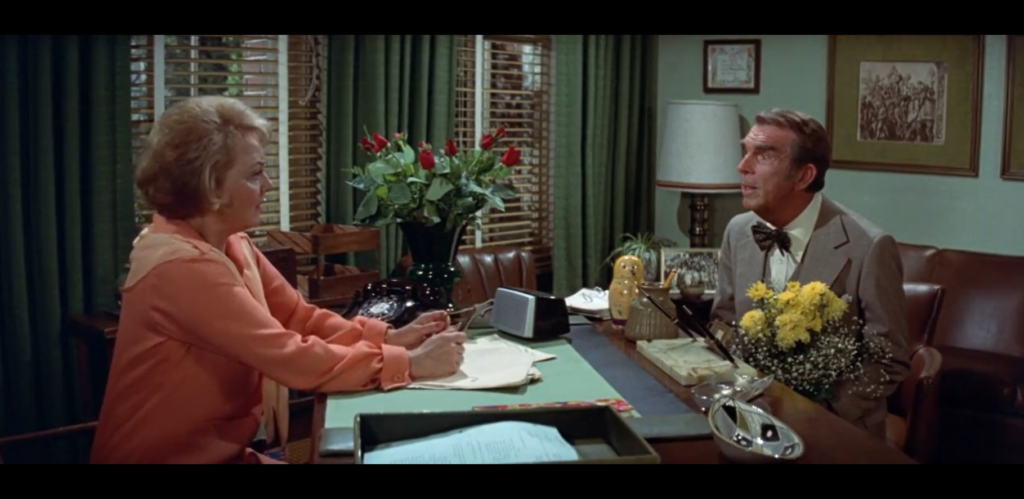
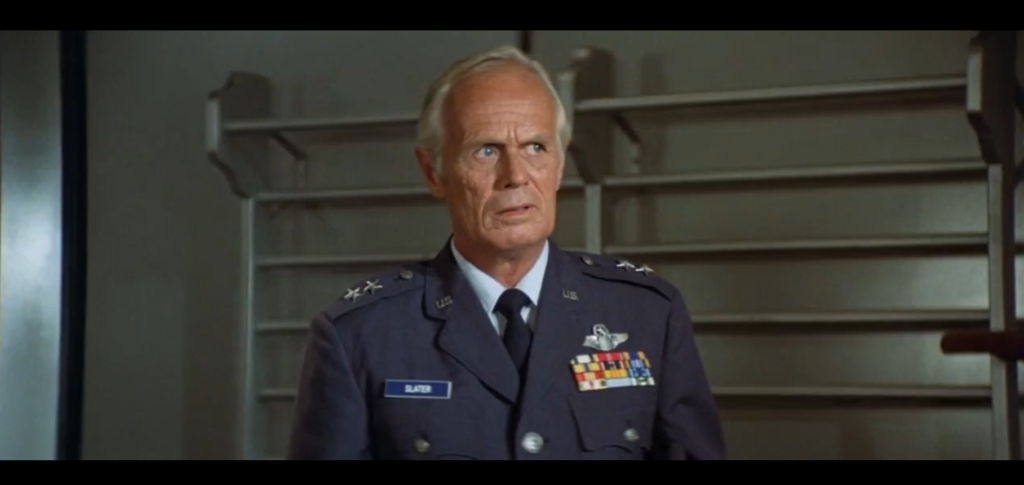
Faring only marginally better are Richard Widmark as the Crusty General (Caine’s central nemesis):
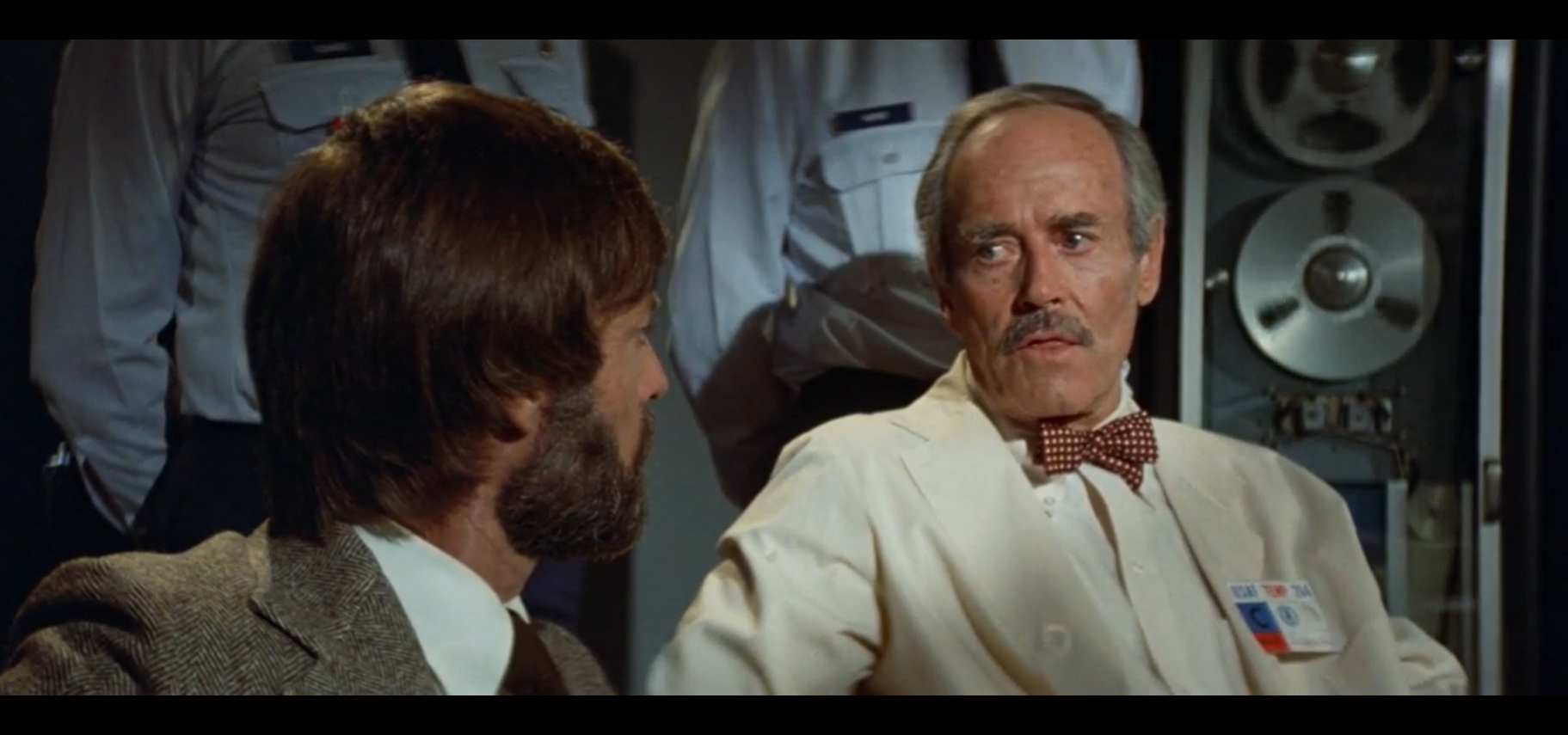
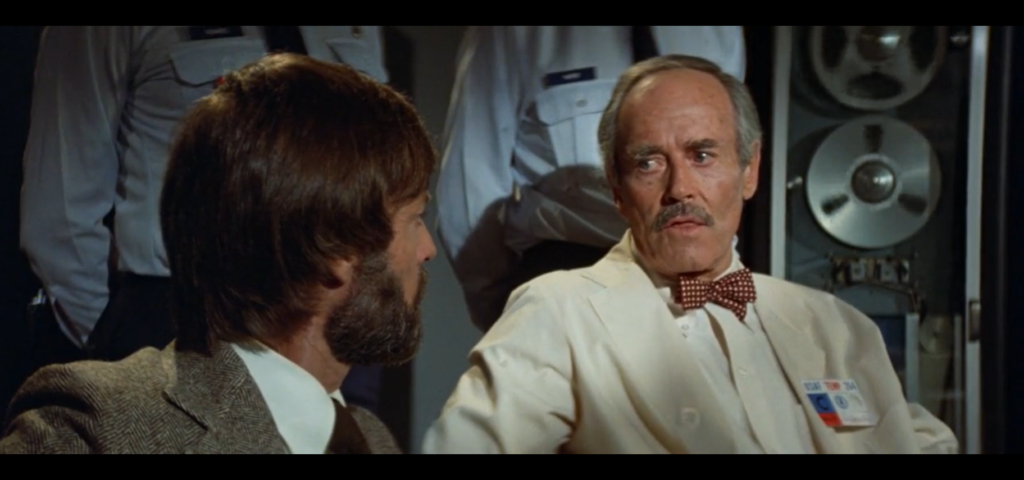
and Henry Fonda as a Renowned Scientist who may or may not be able to develop an antidote to the killer bees’ venom.
Other big names (Lee Grant as The Newscaster, Patty Duke as The Pregnant Woman in Distress, etc.) have such inconsequential roles that they’re barely worth mentioning.

Fortunately, The Swarm is just bad enough to provide some unintentional chuckles throughout its otherwise unendurable running time. Allen’s use of slow-motion at critical attack times — the initial Idyllic Picnic Scene, for instance, or the Schoolyard Deluge — is good for a few laughs, as is Widmark’s consistent labeling of the bees as “Africans”, which provides a jaw-droppingly offensive commentary throughout the film: “By tomorrow there will be no more Africans — at least not in the Houston sector.” Much less amusing is Allen’s deathly slow pacing, which effectively nullifies any potential for terror the film may have possessed.

Redeeming Qualities and Moments:

  • Unintentionally campy performances and dialogue
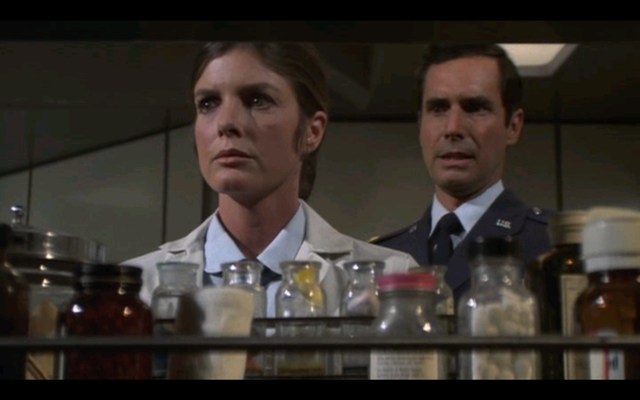

  • A few mildly freaky scenes of “killer bees” (though they’re too little, too late)

Must See?
No, unless you’re curious. Listed as a Camp Classic in the back of Peary’s book.

Links:

Other Side of the Mountain, The (1975)

Other Side of the Mountain, The (1975)

“I think the hardest time is waking up in the morning — those moments before I remember who I am, and think instead about who I was.”

Synopsis:
An Olympic hopeful (Marilyn Hassett) becomes paralyzed in a skiing accident, and struggles to create a meaningful new life for herself.

Genres:

  • Beau Bridges Films
  • Biopics
  • Disabilities
  • Flashback Films
  • Romance

Review:
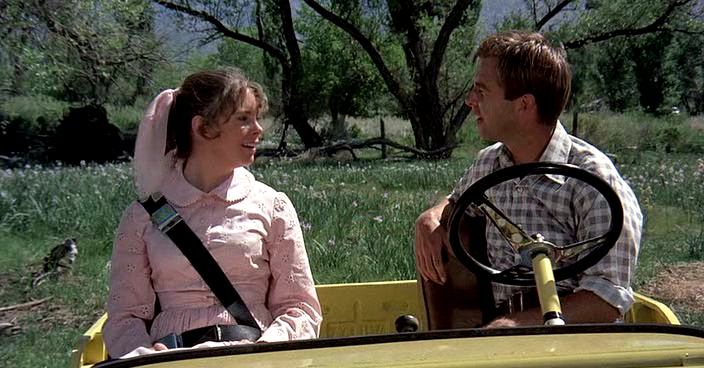
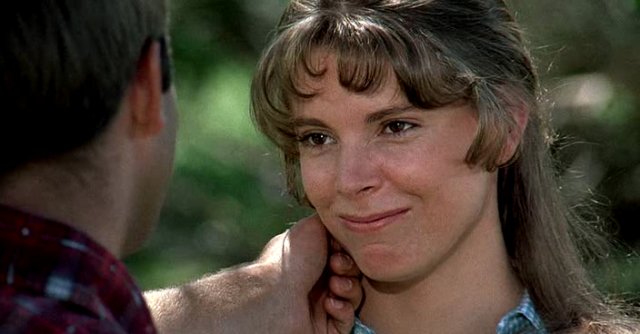
This flashback biopic about real-life skier Jill Kinmont’s tragic, paralyzing accident — and her subsequent romance with a fellow skier (Beau Bridges) who refuses to let her feel sorry for herself — is essentially a glorified disease-of-the-week TV movie, featuring slightly higher quality performances and made with a bit more care. Fortunately, Hassett is an appealing lead (we can’t help rooting for her), and both her post-accident recovery and her tenuous relationship with Bridges (a reckless but oddly seductive daredevil):

… are handled sensitively. Yet knowing Kinmont’s fate ahead of time dampens the lengthy, snow-filled exposition of the film, as teenage Hassett engages in run after run:

… and we’re kept cringing on the edge of our seats as we wonder which one will finally lead to The Accident. Plus, the surprisingly bleak ending is a bit of a downer, after how invested we’ve become in Kinmont’s post-accident happiness.

With all that said, the film provides an interesting sociological perspective on the lack of basic human rights afforded to disabled Americans before the American Civil Rights Act of 1964; we learn that because of being in a wheelchair, Kinmont wasn’t able to secure a job as a teacher in the majority of schools across the country, and had to fight to find a school that would accept her before she could be granted a teaching license. Given that she went on to become a well-known educator in her hometown of Bishop, California (with a school named after her), this remains a fascinating bit of educational history.

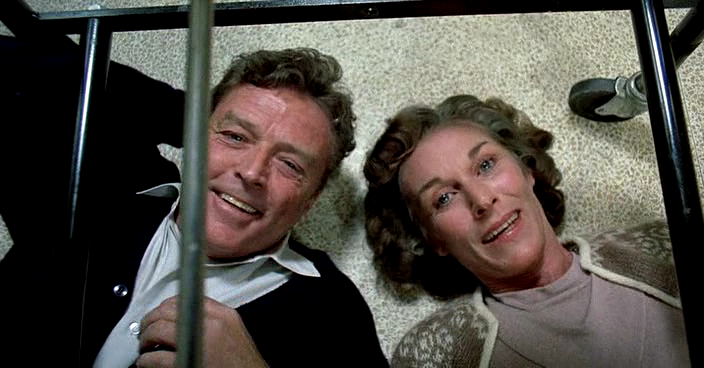
Watch for fine supporting performances by Nan Martin and William Bryant as Kinmont’s concerned parents:

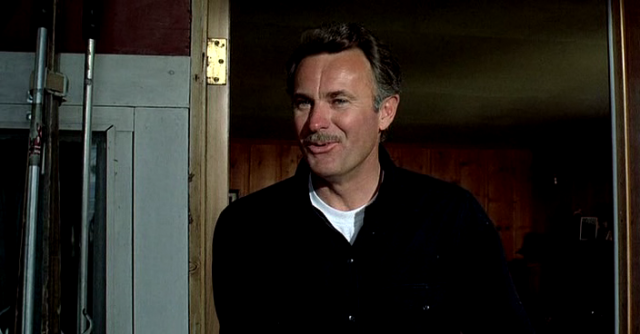
… and Dabney Coleman (!) as her skiing coach.

Note: I haven’t see the follow-up film (the not-very-creatively named OSOTM, Part 2), but apparently it continues where this one leaves off, starring Hassett and several of her co-stars once again.

Redeeming Qualities and Moments:

  • Marilyn Hassett as Jill
  • Jill’s struggle to regain the use of her limbs

Must See?
No, but it’s worth a look if you’re in the mood for this kind of soaper. Listed as a Personal Recommendation in the back of Peary’s book.

Links:

It’s a Wonderful World (1939)

It’s a Wonderful World (1939)

“I need you as much as I need a giraffe!”

Synopsis:
A falsely accused private detective (Jimmy Stewart) tries to ditch an overly helpful poetess (Claudette Colbert) he meets while on the lam.

Genres:

  • Claudette Colbert Films
  • Detectives and Private Eyes
  • Falsely Accused
  • Fugitives
  • Jimmy Stewart Films
  • Romantic Comedy

Review:
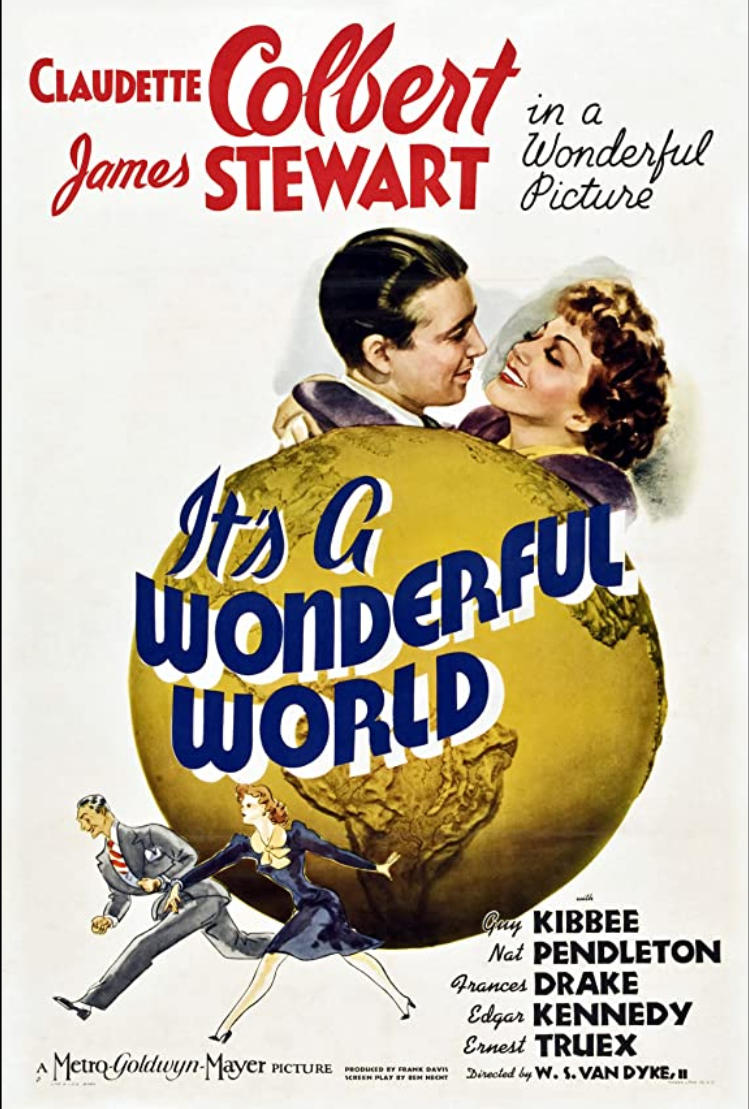
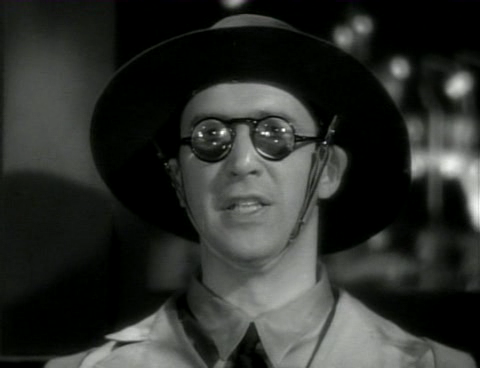
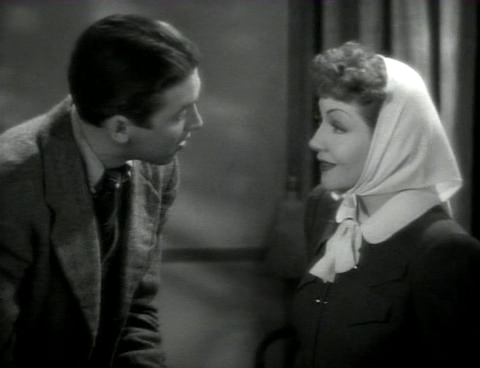
When people think of Jimmy Stewart in a film starting with It’s a Wonderful…, the word that automatically springs to mind is …Life — thus dooming this earlier Stewart vehicle (directed by W.S. Van Dyke, and scripted by Ben Hecht and Herman J. Mankiewicz) to permanent second-class status. If you do manage to locate a copy of …World (it’s curiously unavailable on DVD), you’ll discover a flawed but innocuous screwball rom-com, with Stewart cast against type as a boorish private eye (audiences of the day weren’t happy), and plucky Colbert gamely playing his nemesis and love interest. Unfortunately, we never really believe in their potential together as romantic partners, given their underdeveloped characters and the script’s clumsy handling of their love-hate relationship; with that said, there are some reasonably humorous throwaway moments (i.e., Stewart hiding out as a scout master in coke-bottle glasses):

… and Hecht and Mankiewicz’s screenplay offers a few random zingers: “Lady, you’re full of prunes!” But the end result is ultimately rather forgettable.

Redeeming Qualities and Moments:

  • An innocuously enjoyable screwball comedy

Must See?
No, but fans of the genre may be curious to check it out.

Links:

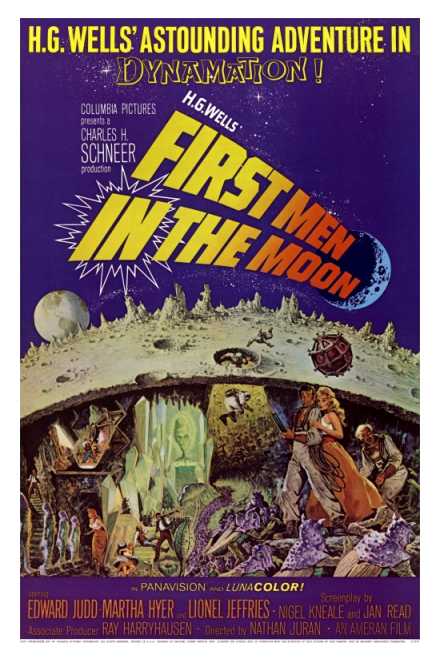
First Men in the Moon (1964)

First Men in the Moon (1964)

“Do you think we’ll ever see our world again?”

Synopsis:
An elderly Englishman (Edward Judd) reminisces about a turn-of-the-century trip he took to the moon with his fiancee (Martha Hyer) and a neighbor (Lionel Jeffries).

Genres, Themes, Actors, and Directors:

  • Aliens
  • Flashback Films
  • H.G. Wells Films
  • Ray Harryhausen Films
  • Science Fiction
  • Space Exploration

Review:
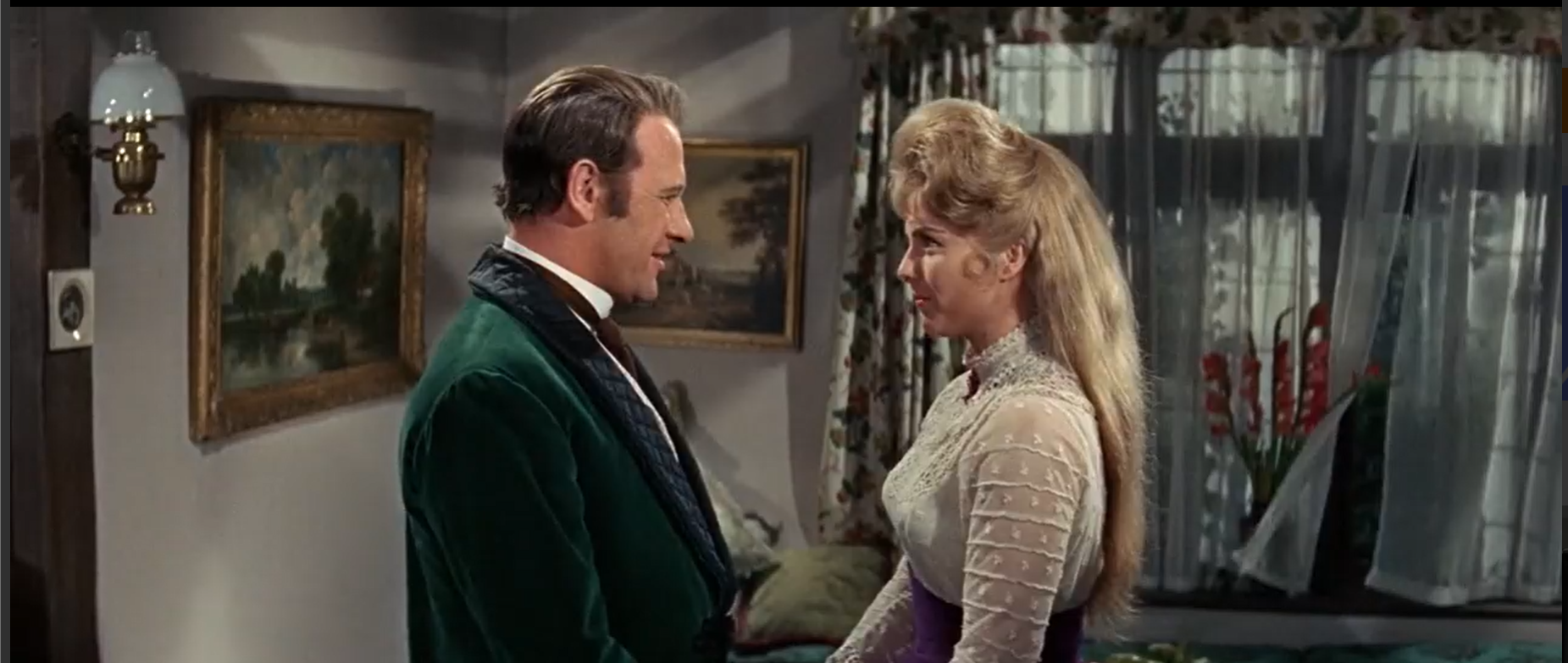
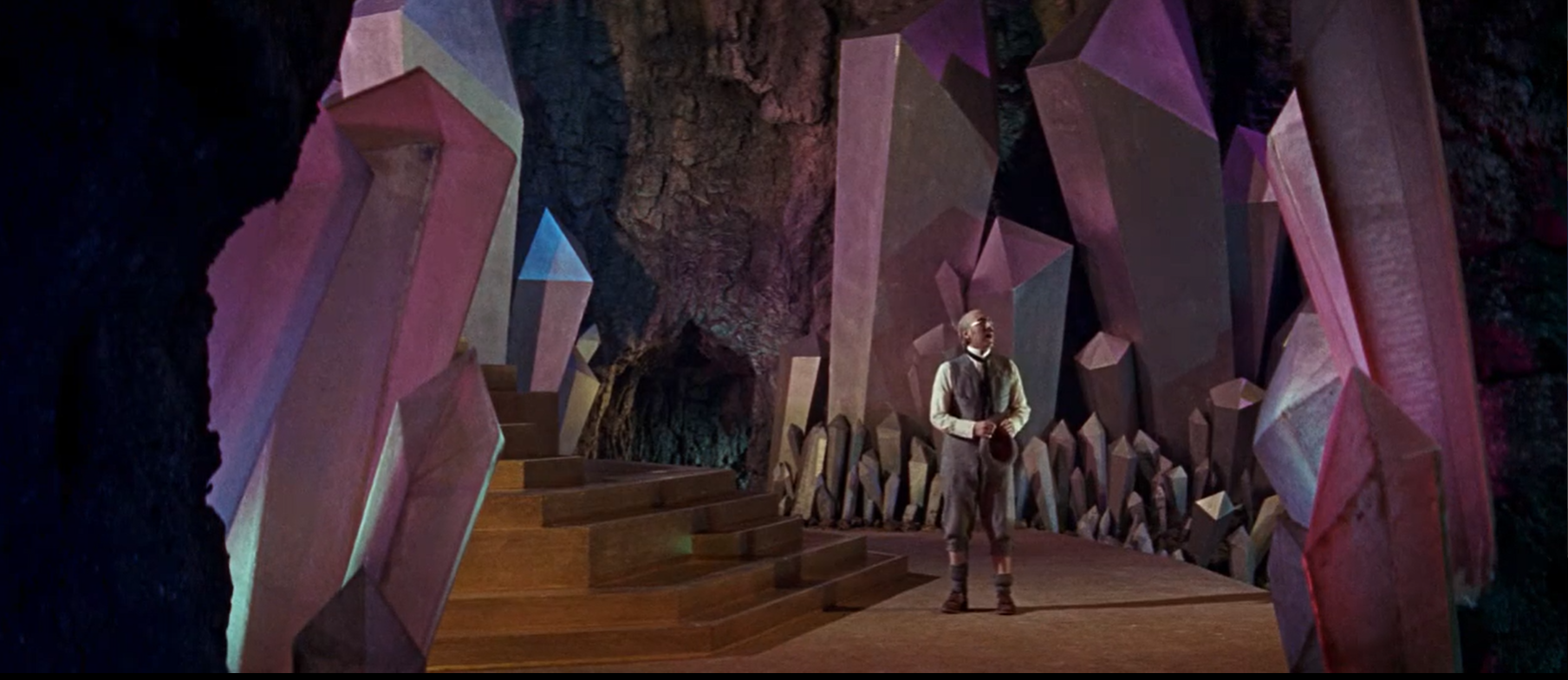
This adaptation of H.G. Wells’ 1901 novel is primarily notable for featuring the work of special effects guru Ray Harryhausen. As DVD Savant notes in his review, “Although there’s relatively little of Harryhausen’s standard animation techniques, the design and creation of the wall-to-wall effects is clearly his”, and the lunar world encountered by Wells’ Victorian-era space travelers is “imaginative, colorful and well designed”. Wells’ original storyline — about an insolvent playwright and an eccentric scientist encountering an ant-like colony of residents inside the moon — is padded here with both an irritating romantic subplot between Judd and Hyer (which merely turns our sentiments against the deceitful Judd, who is lying to Hyer):

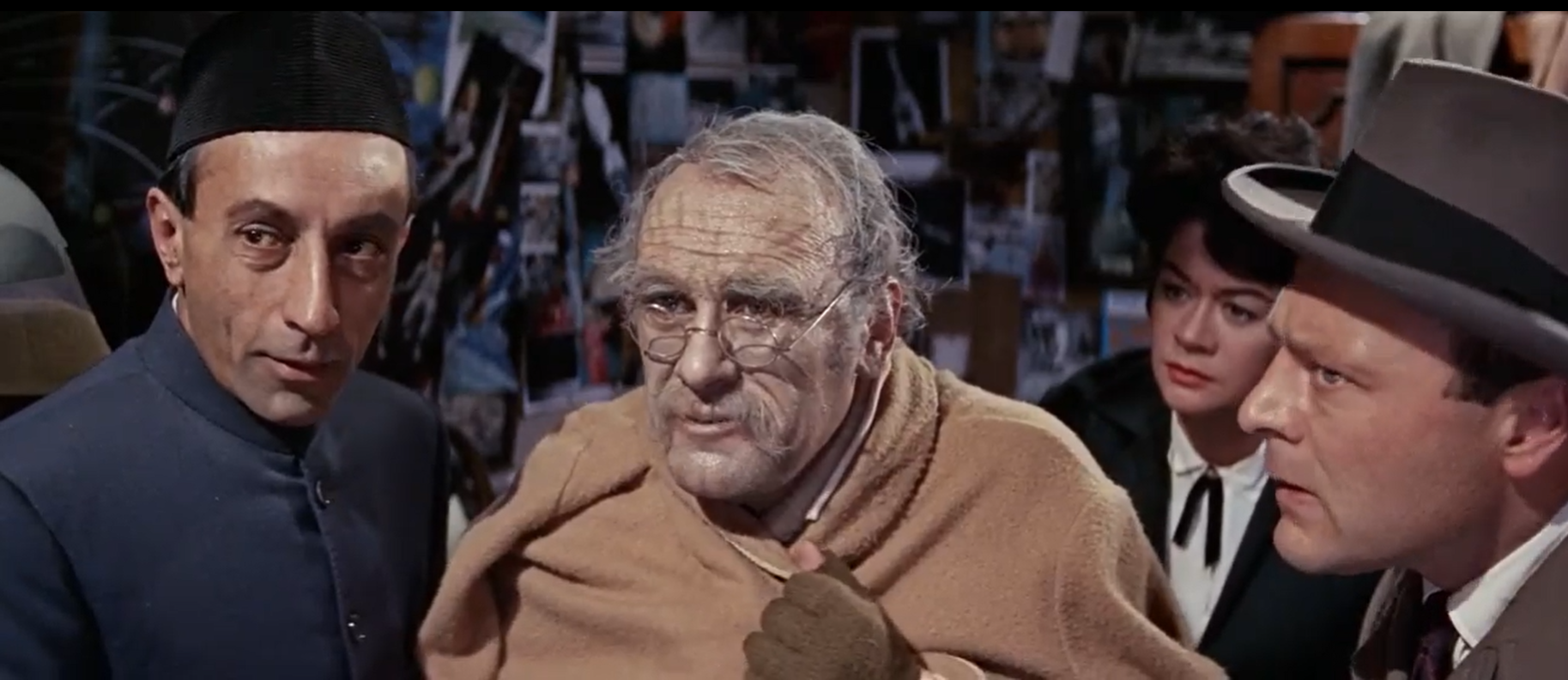
… and a reasonably clever exposition, in which Judd’s elderly protagonist is finally able to tell his story with credibility once a Union Jack is found on the moon by modern-day astronauts.

Unfortunately, the meat of the story — i.e., the travelers’ inter-species encounter — isn’t given nearly enough screen time, resulting in an underdeveloped sci-fi film which appears to exist simply as a showcase for Harryhausen’s work.

Redeeming Qualities and Moments:

  • Impressive sets and special effects by Harryhausen

Must See?
No, though it’s certainly worth a look simply for Harryhausen’s work.

Links:

Attack of the Crab Monsters (1957)

Attack of the Crab Monsters (1957)

“We are dealing with a man who is dead, but whose voice and memory live — how this can be, I do not know, but its implications are far more terrible than any ghost could be.”

Synopsis:
A group of scientists studying the effects of nuclear testing on an island find themselves pursued by giant mind-controlling crabs.

Genres, Themes, Actors, and Directors:

  • Mind Control and Hypnosis
  • Mutant Monsters
  • Roger Corman Films
  • Science Fiction
  • Scientists

Review:
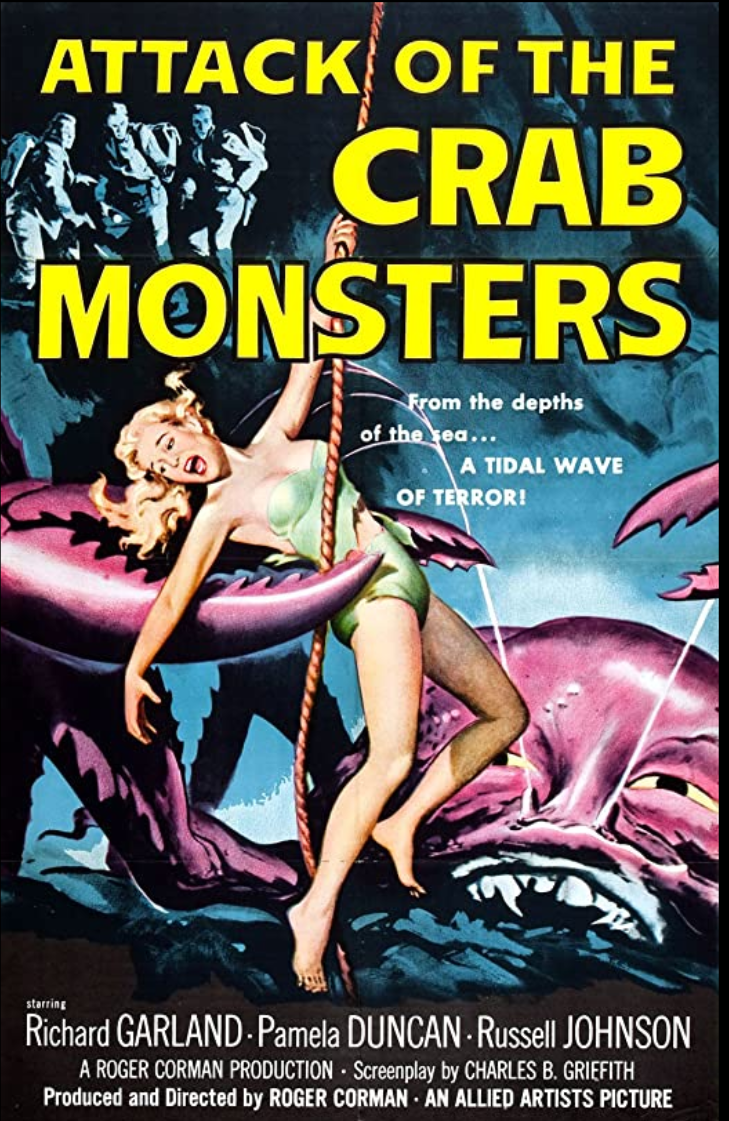
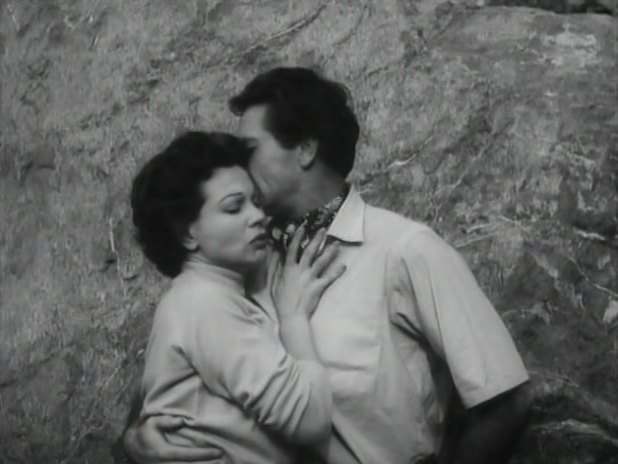
Maverick B-director Roger Corman made no less than nine films in 1957 — including this infamously titled mutant monster flick, featuring mind-controlling styrofoam crabs. The acting is just as campy as you might imagine from such a low-budget venture, with Pamela Duncan’s terrible performance as the busty female marine scientist “Dr. Martha Hunter” particularly noteworthy and giggle-inducing — and the dialogue is equally ludicrous:

Crab Monster: “So you have wounded me! I must grow a new claw, well and good, for I can do it in a day — but will you grow new lives when I have taken yours from you?”

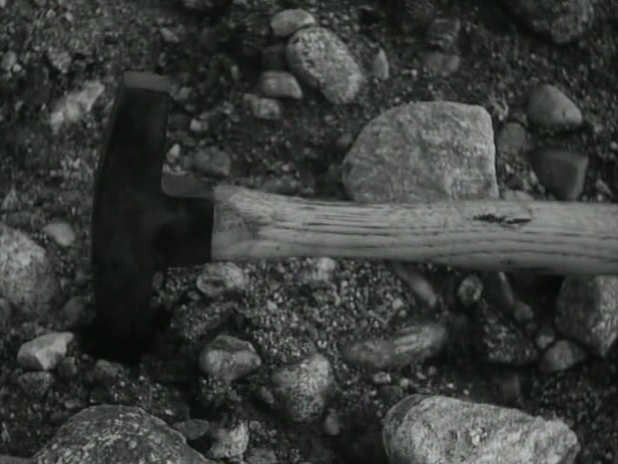
Meanwhile, the storyline is simply too ridiculous to take seriously on any level, with atomically-charged crabs channeling the minds of the humans they’ve devoured through metal objects (?!). Despite such ludicrous plot devices, however, the story as a whole is surprisingly dull, especially in comparison with screenwriter Charles B. Griffith’s deliciously satirical collaboration with Corman two years later — 1959’s A Bucket of Blood. Only true fans of low-grade sci-fi need to bother checking this one out.

P.S. Fans of Gilligan’s Island will surely be thrilled to see “The Professor” (Russell Johnson) in a key role here; note in particular his final heroic act — very “Professor-worthy”.

Redeeming Qualities and Moments:

  • Ridiculously campy performances and special effects


  • Plenty of chuckle-worthy dialogue: “Once, they were men; now, they are crabs.”

Must See?
No, but diehard Corman fans won’t want to miss it. Listed as a Camp Classic in the back of Peary’s book.

Links: