Browsed by
Category: Original Reviews

Responses to Peary’s “must see” movie reviews, as well as my own “must see” movie reviews up to and after 1986 (when Peary’s book was published).

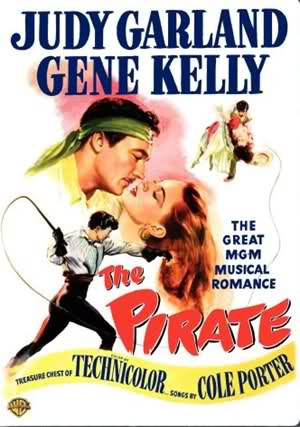
Pirate, The (1948)

Pirate, The (1948)

“Underneath this prim exterior there are depths of emotion — romantic longings!”

Synopsis:
On a 19th century Caribbean isle, a young woman (Judy Garland) engaged to her town’s pompous mayor (Walter Slezak) is wooed by a travelling troubadour (Gene Kelly), who pretends to be the mysterious pirate Macoco in order to impress her.

Genres, Themes, Actors, and Directors:

  • Actors and Actresses
  • Gene Kelly Films
  • Judy Garland Films
  • Mistaken or Hidden Identities
  • Musicals
  • Pirates
  • Vincente Minnelli Films

Review:
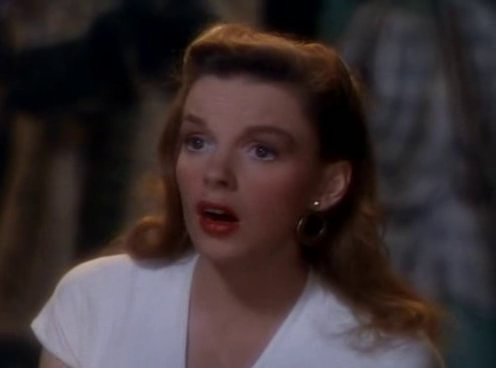
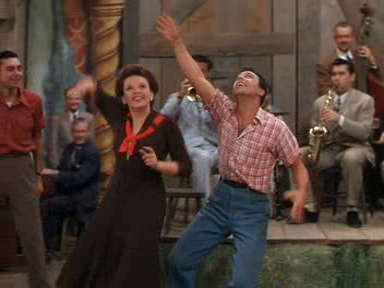
Vincente Minnelli’s third and final film with his wife (Garland) in a leading role — after Meet Me in St. Louis (1944) and The Clock (1945) — was this critically panned musical-fantasy, which has since gained a renewed reputation as a cult favorite (though it’s not labeled as such in the back of Peary’s book; perhaps this status has emerged in recent years). Both Garland and Kelly are in peak form, and appear to be having a blast; they seem to realize that the story is purely escapist fare, and (thankfully) never take it too seriously. Garland’s finest moment comes early on, as she breaks free from her character’s prim persona, and — under the influence of hypnosis — dazzles Kelly and everyone around her by breaking into a lustful ditty about her crush on “Mack the Black” (who, according to the song’s lyrics, “leads a flaming trail of masculinity” !); the pure contrast between this and what we’ve seen before, with Garland’s Manuela meekly agreeing to marry a portly man much older than herself, is remarkably effective.

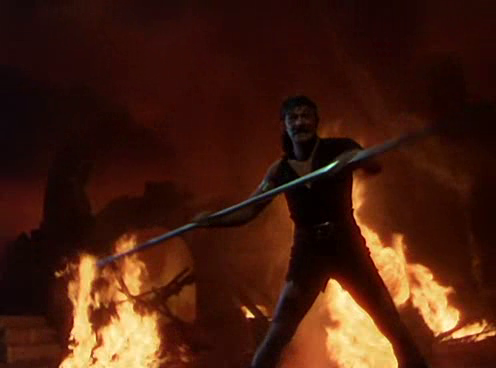
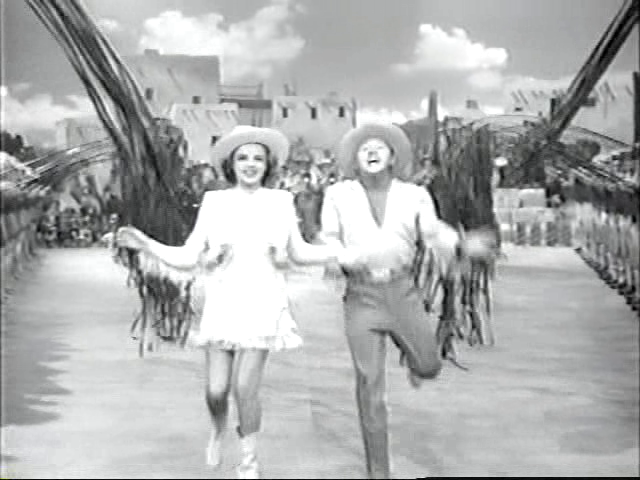
Kelly, meanwhile, exhibits seemingly unflagging energy throughout. He’s given the opportunity to shine during two wonderful dance sequences: early on, during the song “Nina”, as he makes it known that he’ll fall for any beautiful woman he sees (though naturally, once he lays eyes on Manuela, his womanizing days are over); then later, during a daydream envisioned by Manuela, as he shows off his remarkably muscular physique while dancing the stunning “Pirate Ballet” (see still below). Walter Slezak is well-cast as his nemesis (and the film’s all-around baddie); to that end, the mistaken identity plot is nicely handled, and allows for some fine tension during the denouement. The vibrant sets and Technicolor cinematography are also worth a mention. While not one of Garland’s (or Minnelli’s) best musicals, The Pirate is enjoyable while it lasts, and should be seen by all film fanatics at least once, simply for its cult status.

Redeeming Qualities and Moments:

  • Gene Kelly as Serafin
  • Judy Garland as Manuela
  • Fabulous Technicolor sets

Must See?
Yes, as a recent cult favorite.

Categories

  • Cult Movie

Links:

Child is Waiting, A (1963)

Child is Waiting, A (1963)

“We have to accept these children as they are — just as they are.”

Synopsis:
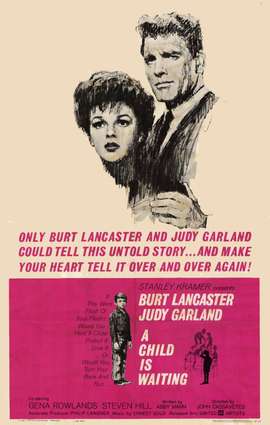
A musician (Judy Garland) comes to work at a boarding school for mentally retarded children (run by Burt Lancaster), and finds herself especially drawn towards one particular child, Reuben (Bruce Ritchey). Soon she’s called Reuben’s absentee mother (Gena Rowlands) out to the school for a visit, and learns more about his parents’ reluctance to play an active part in his life.

Genres, Themes, Actors, and Directors:

  • Burt Lancaster Films
  • Gena Rowlands Films
  • John Cassavetes Films
  • Judy Garland Films
  • Mentally Retarded
  • Paul Stewart Films
  • Teachers

Review:
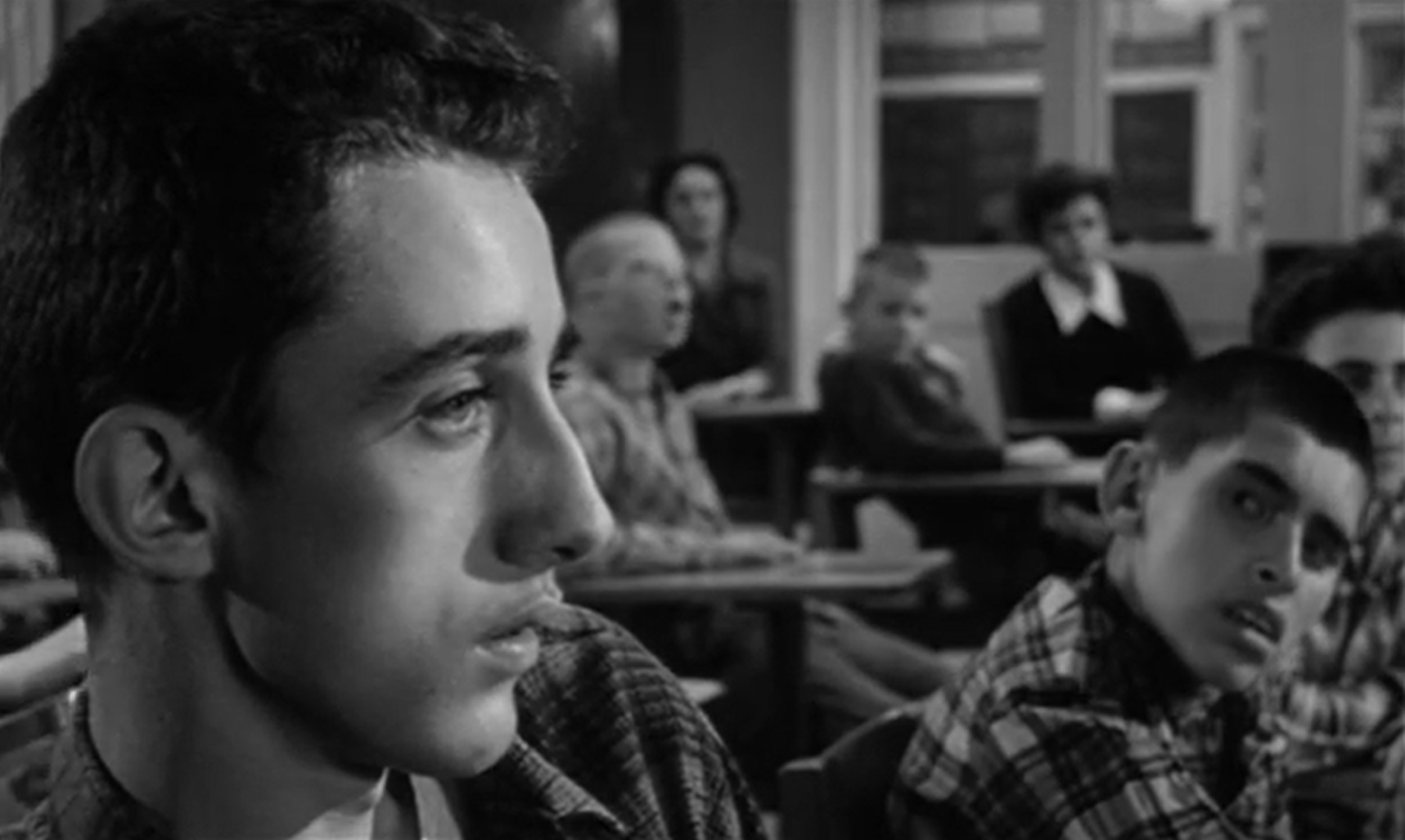
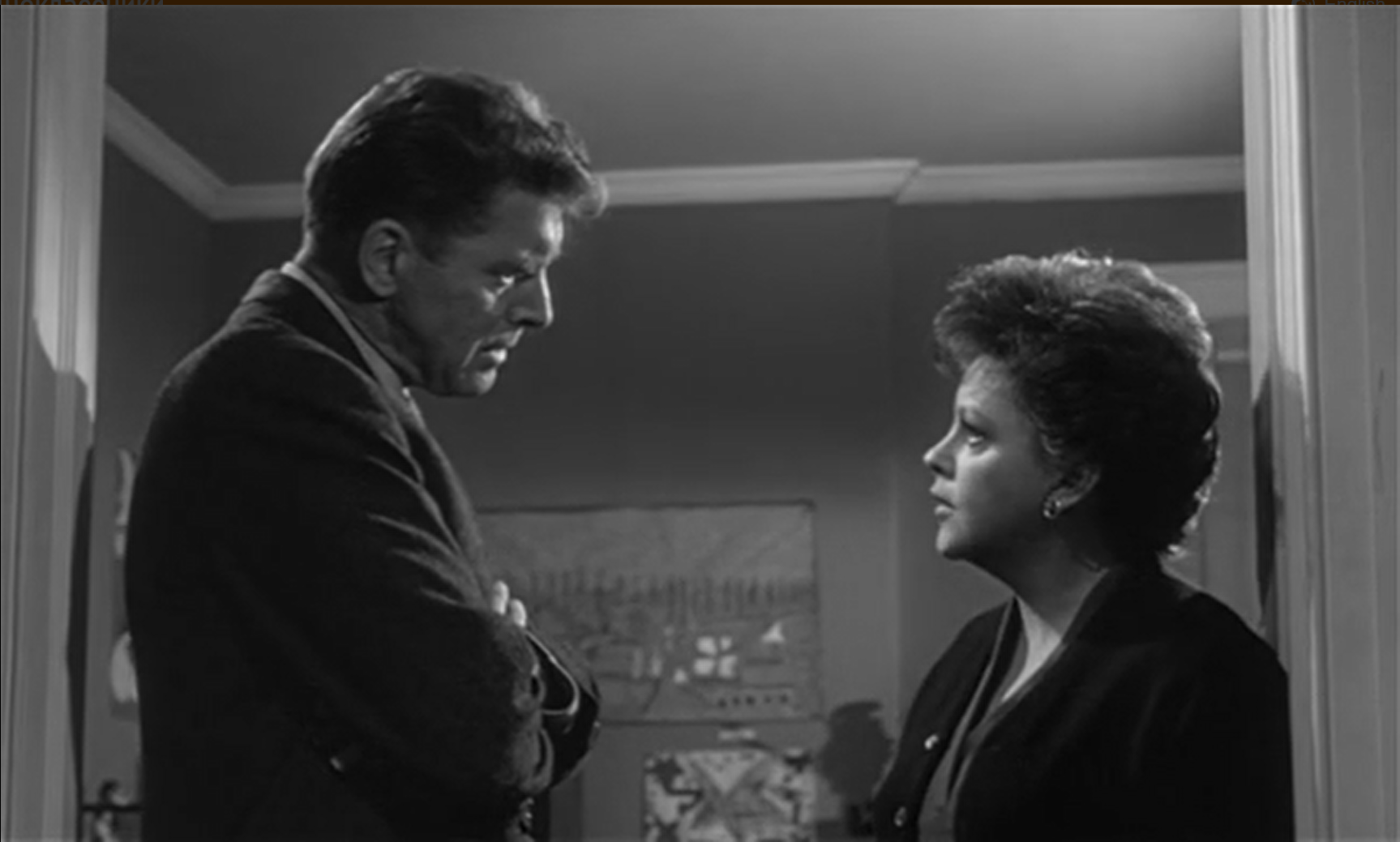
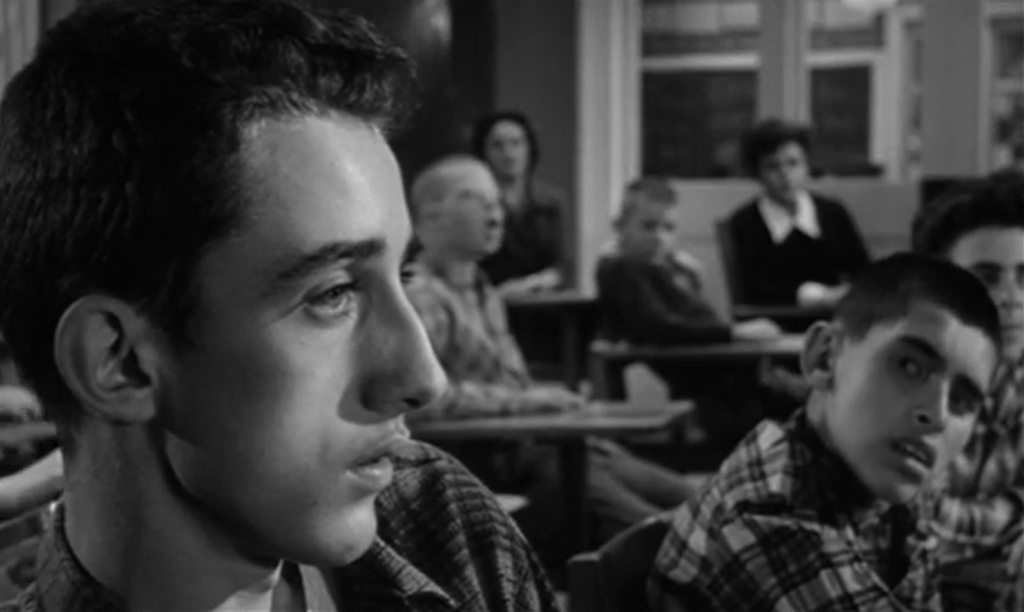
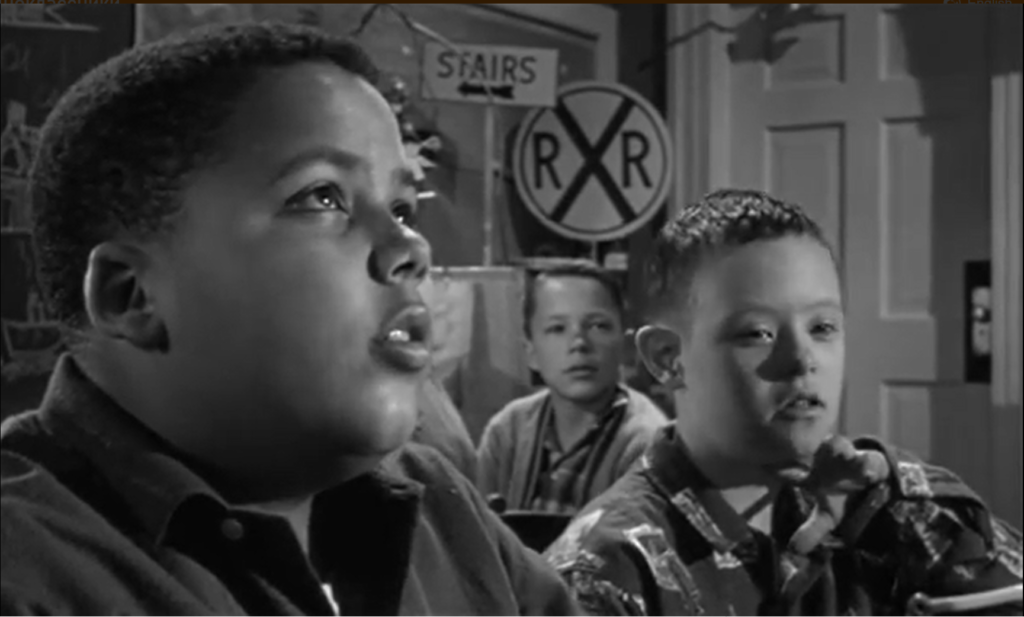
Judy Garland’s next-to-last film — one of just two studio pictures directed by independent filmmaker John Cassavetes — is a well-intentioned but ultimately patronizing, dated, and frustrating affair. It shows just enough evidence of Cassavetes’ famed cinéma vérité style (through footage of actual children at the school where the story takes place) to frustrate viewers hoping for much more of this:
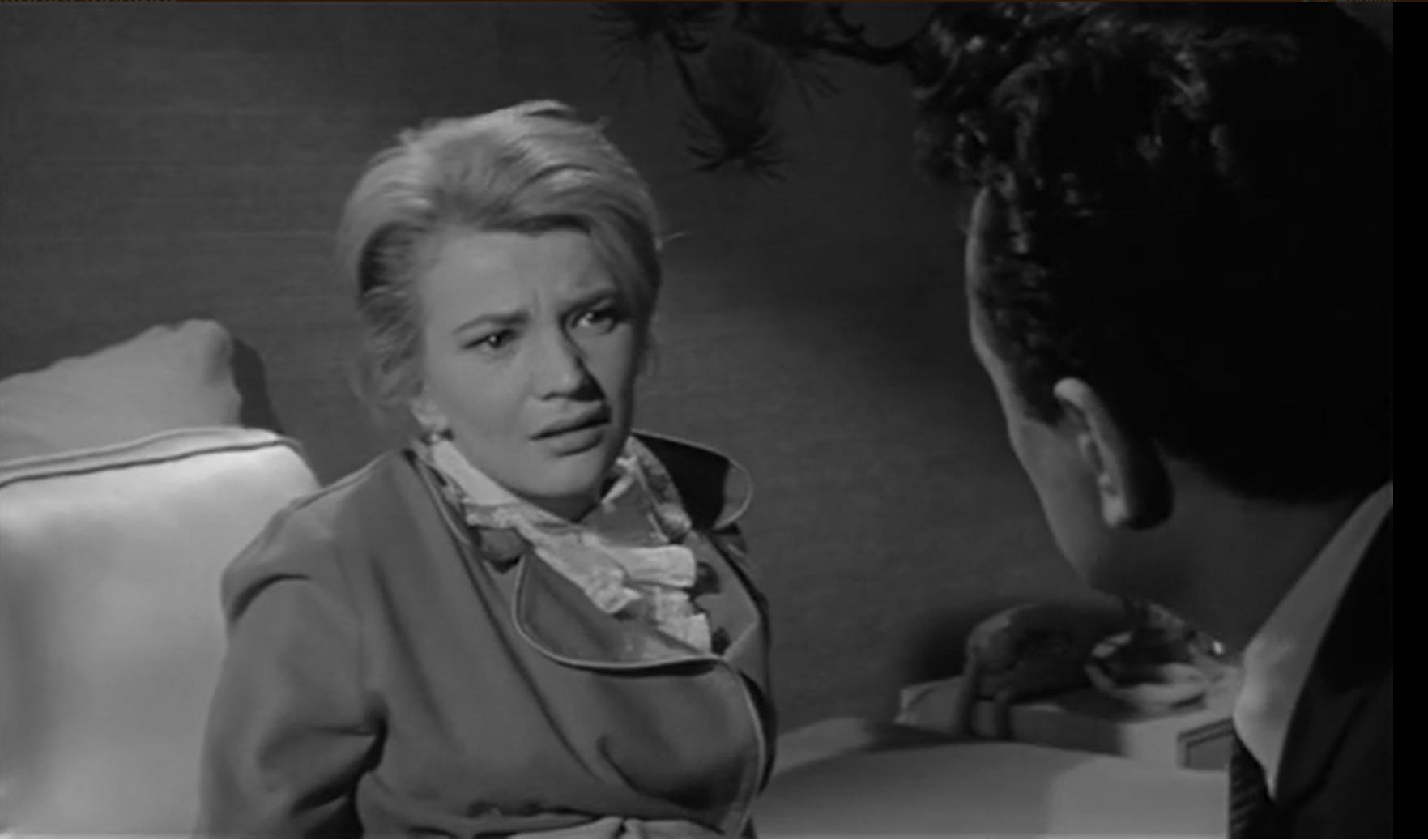
Meanwhile, the storyline itself is purely calculated drivel all the way. One would think that Garland, close to the end of her tragically drug-addled existence, would be well-suited for the lead role, playing a musician desperately seeking some kind of meaning in her life (rumor has it that Garland loved children in general, and children with disabilities in particular) — but her character is frustratingly shallow here; all we learn about her is that she’s an unmarried, well-trained musician.
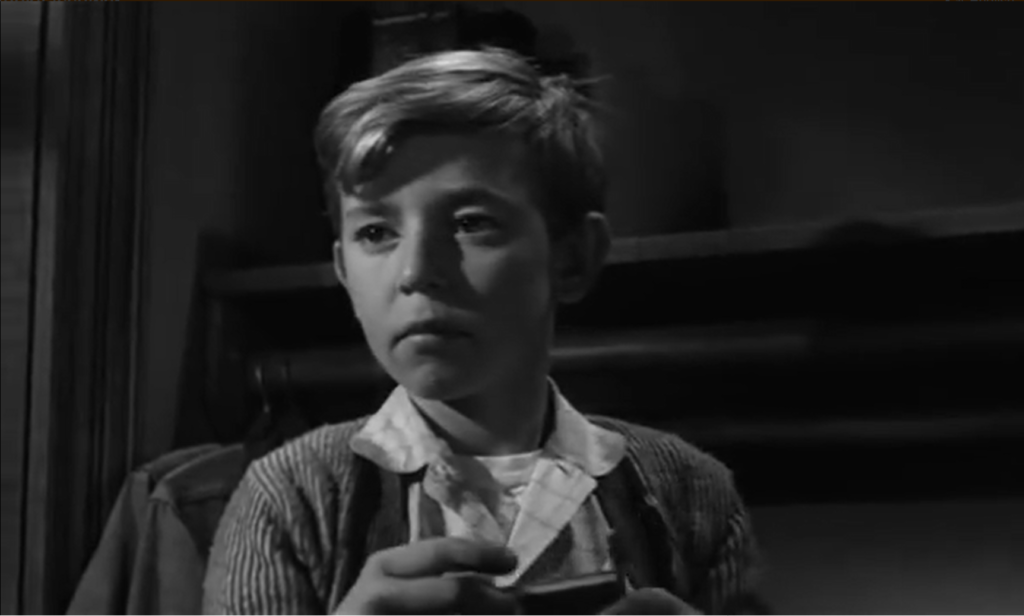
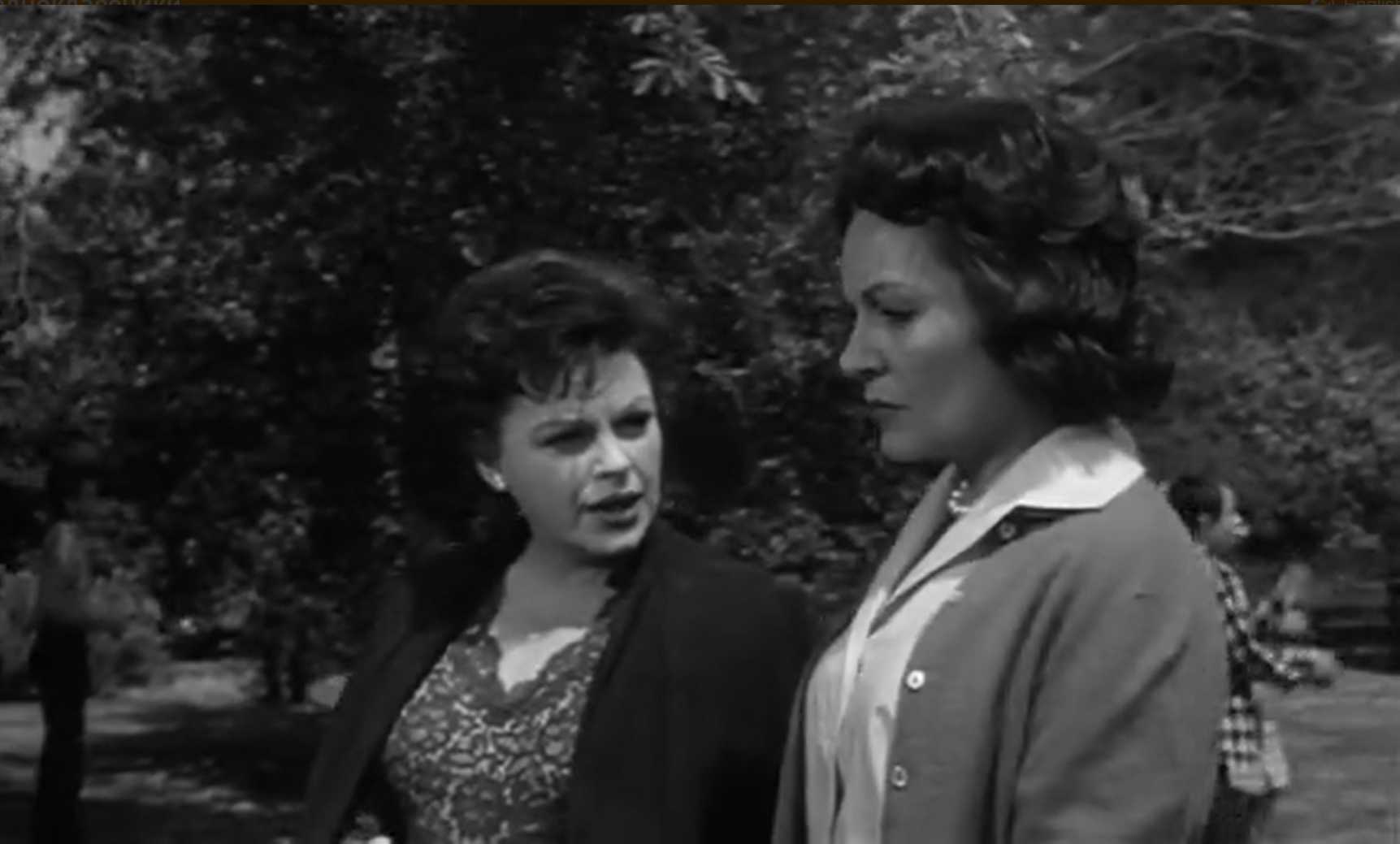
Meanwhile, she’s allowed to come work at the school despite possessing no credentials other than her own good intentions — and even once she’s hired, we simply see her wandering the grounds for the majority of the film:
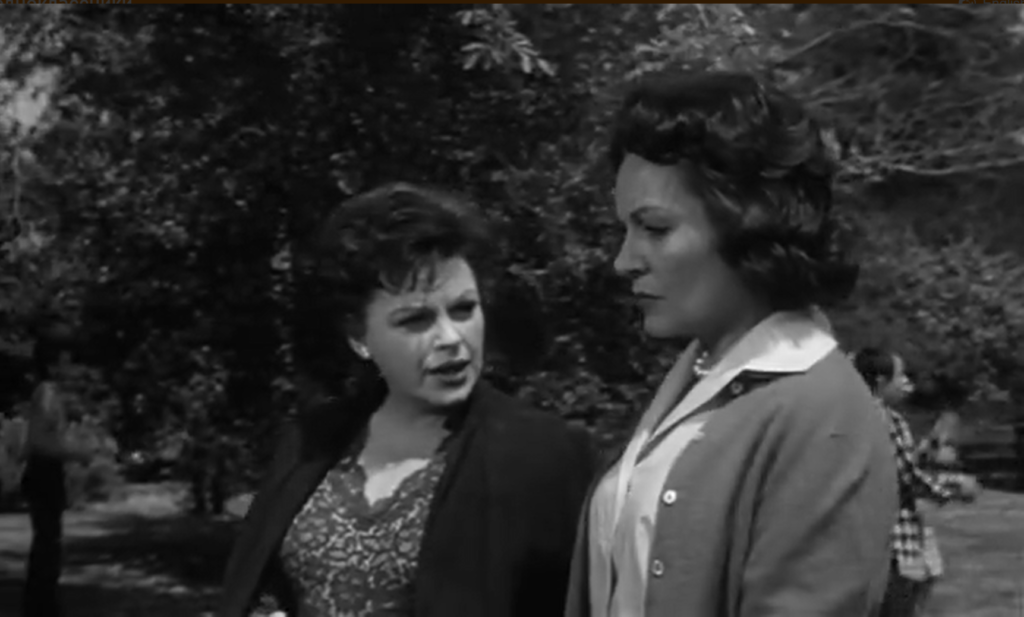
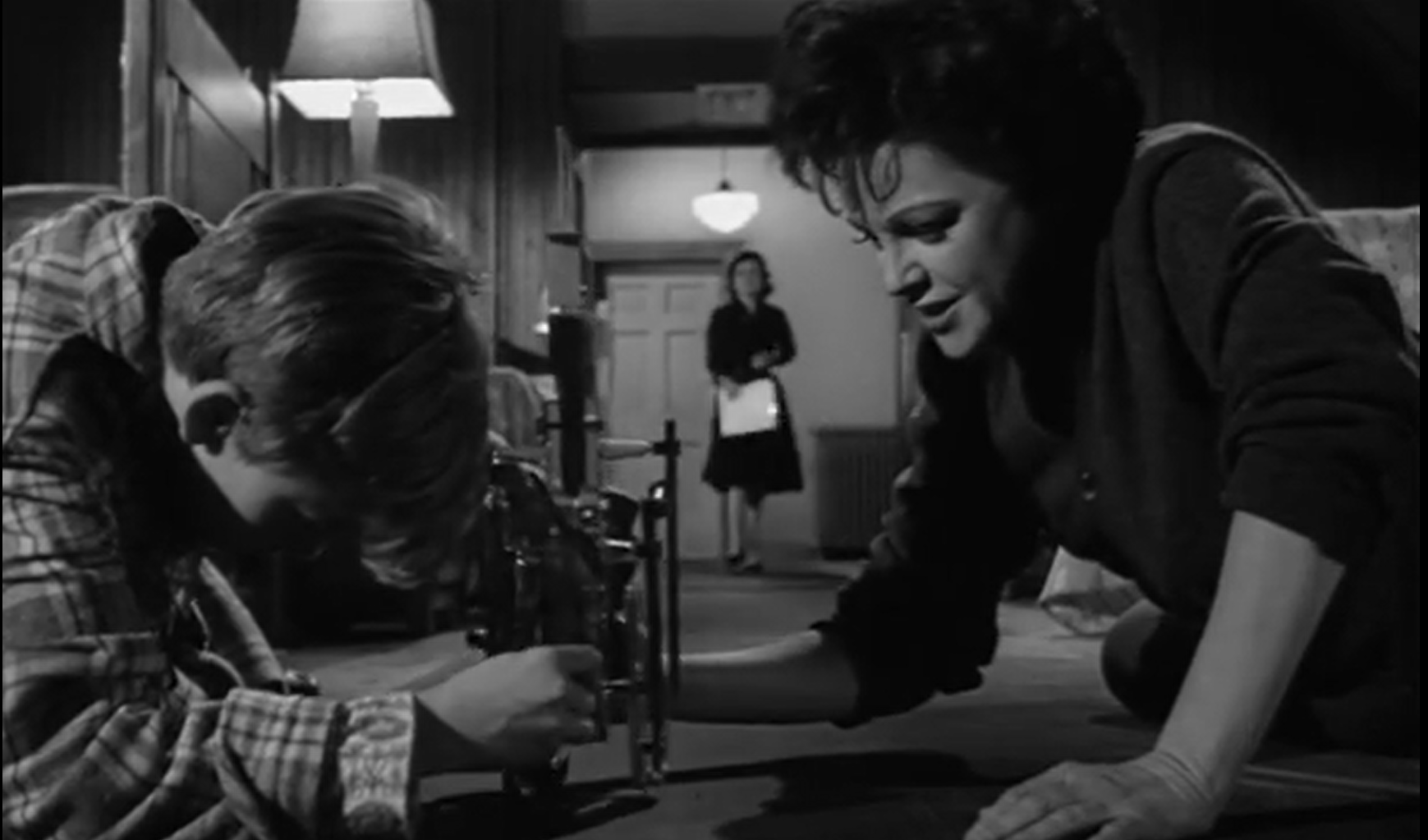
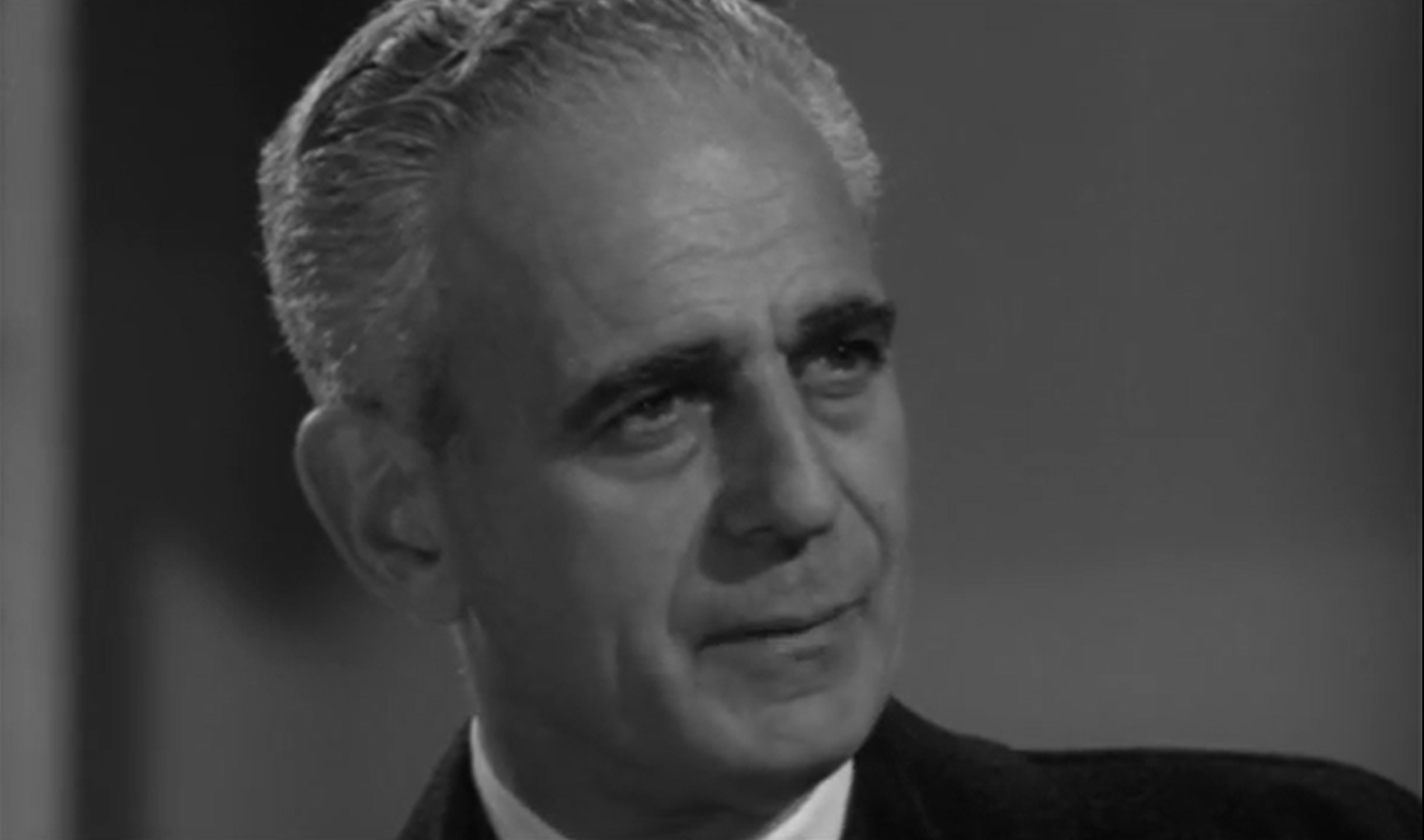
until she’s finally tasked by Lancaster to actually teach the music classes she claimed in her brief interview that she wanted to implement; ultimately, her character comes across as simply one more “case” for Lancaster to explore (though this angle isn’t sufficiently exploited, either).

That a mid-century-Hollywood “issue” film like this comes across these days as horribly dated is no surprise, and shouldn’t necessarily be a deal-breaker for would-be viewers. Fortunately, at least in the United States, we’ve moved beyond the well-intentioned but utterly corrupt notion that children with mental retardation (now referred to more properly as students with intellectual disabilities) are best served by being separated from their families and taught to live “independently” in a group home with others; in one climactic “horror scene”, we’re shown older MR individuals (clearly in a state of blathering incapacity) who were apparently allowed to stay at home with their parents for too long, and consequently were left helpless and without appropriate skills by the time they were finally institutionalized as adults (!!). While surely well-intentioned at the time, this scene comes across nowadays as voyeuristic at best.

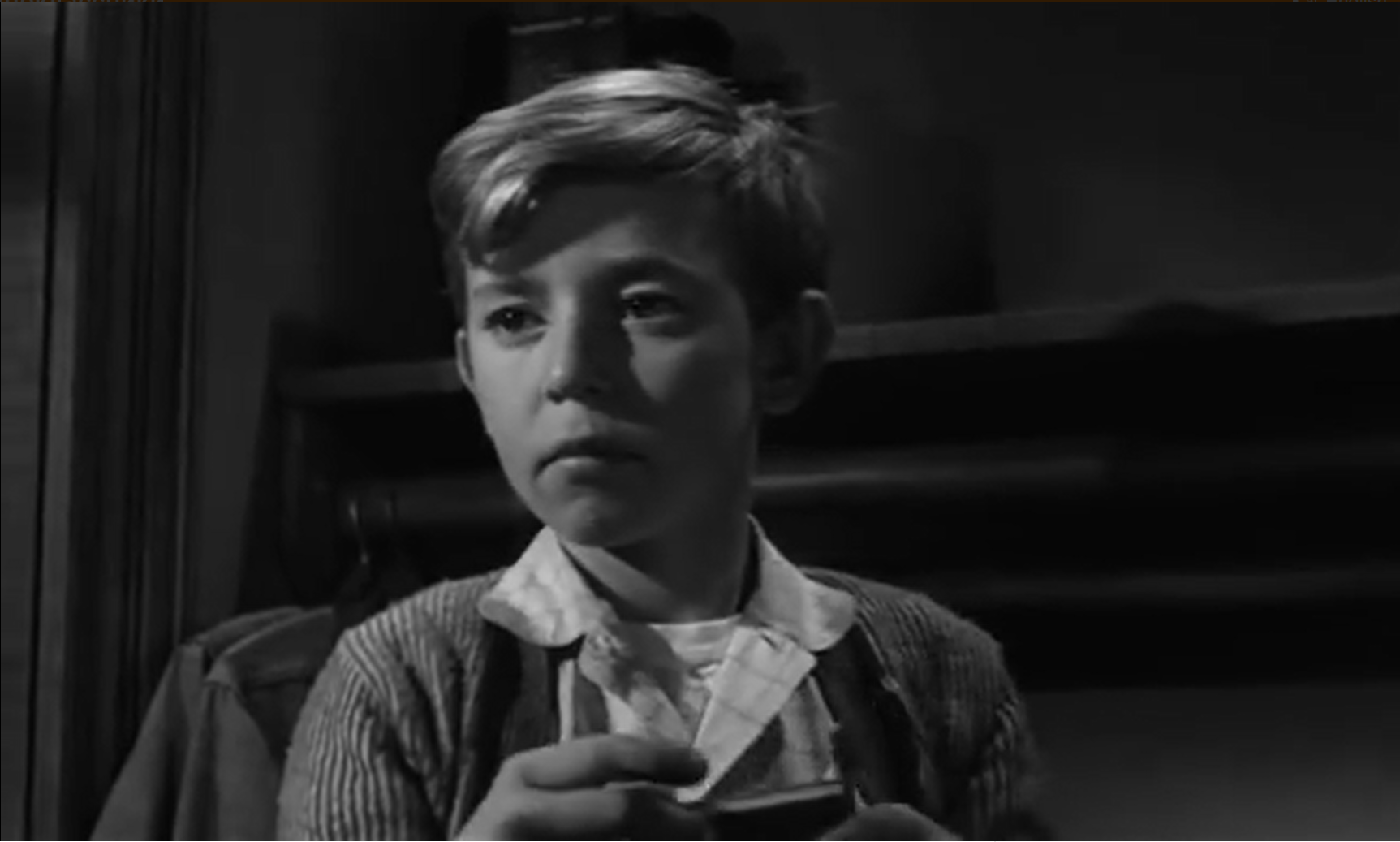
Meanwhile, Reuben (well-played by Bruce Ritchey, the only actor among the cast of children) becomes the film’s token representative case study — someone Garland immediately “adopts” as her special-interest child (perhaps because he looks “normal”, in comparison to the other children, though her rationale is never made quite clear).
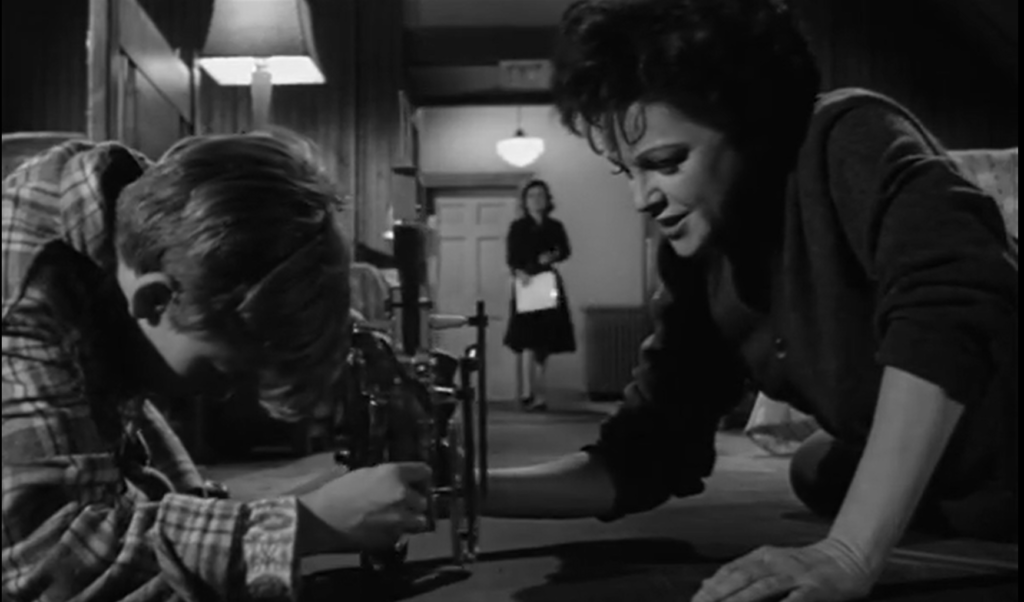
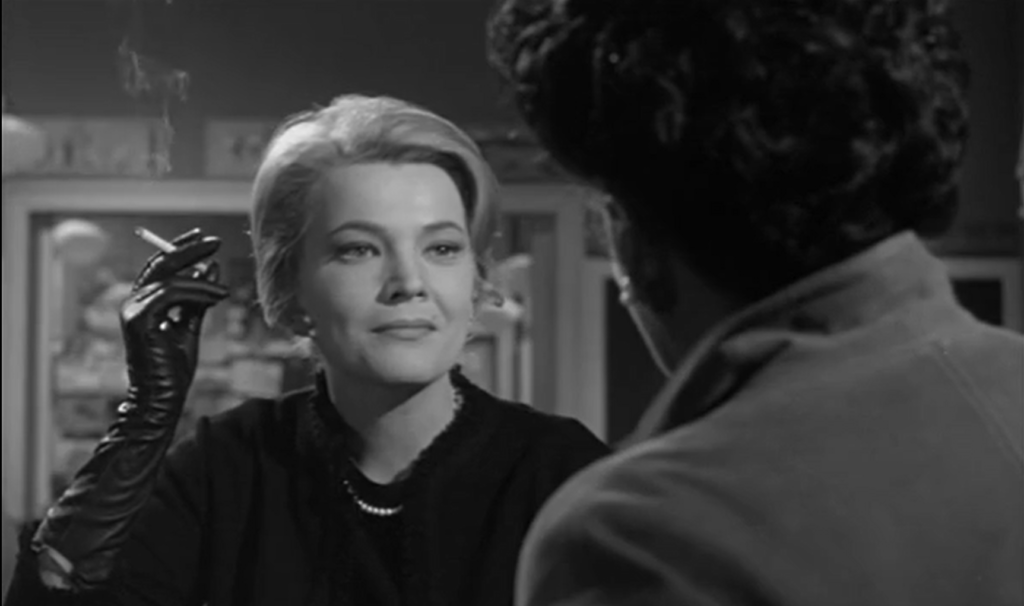
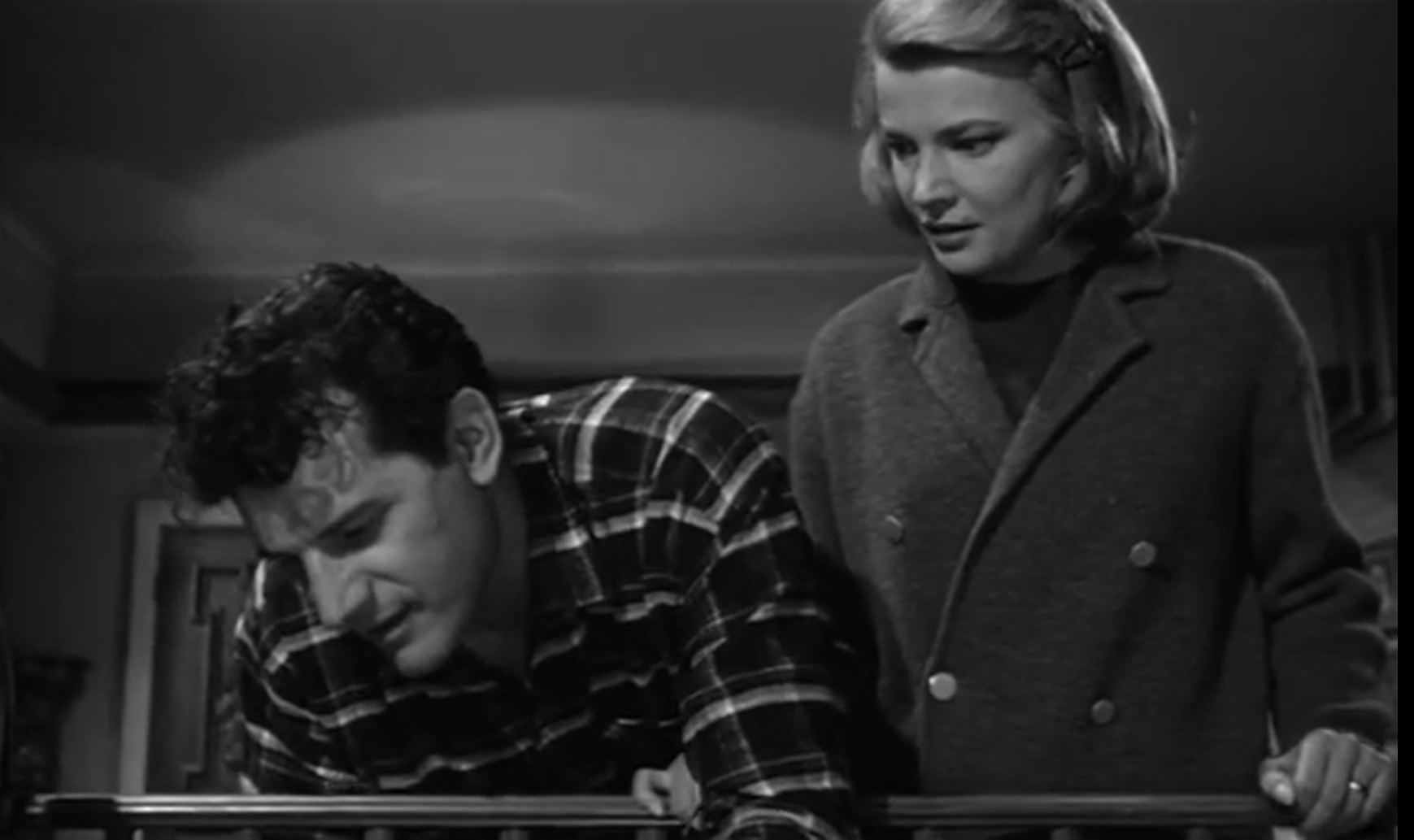
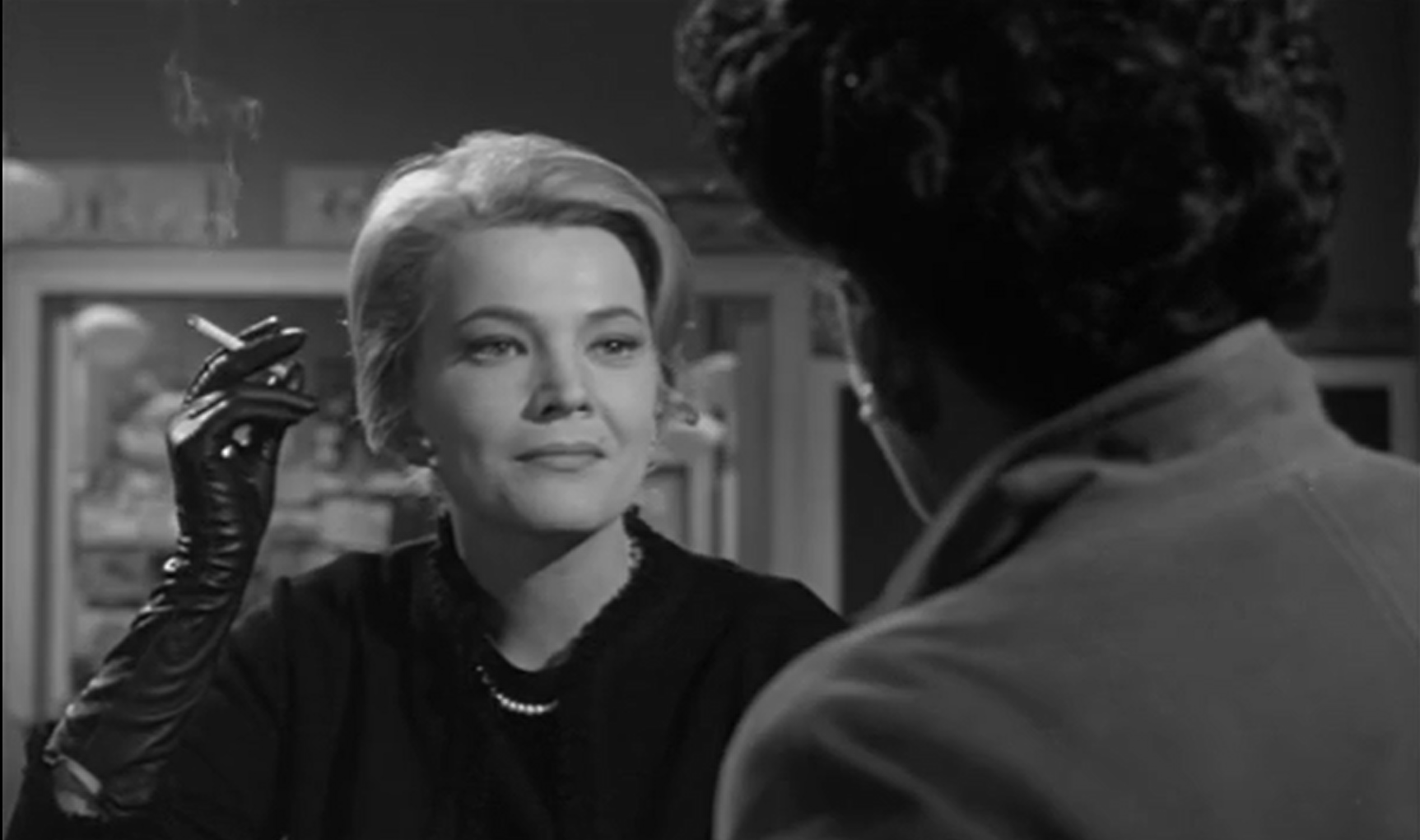
We’re shown flashbacks of the trauma his well-heeled, educated parents (Gena Rowlands and Steven Hill) experienced before finally realizing that their child was “defective”:
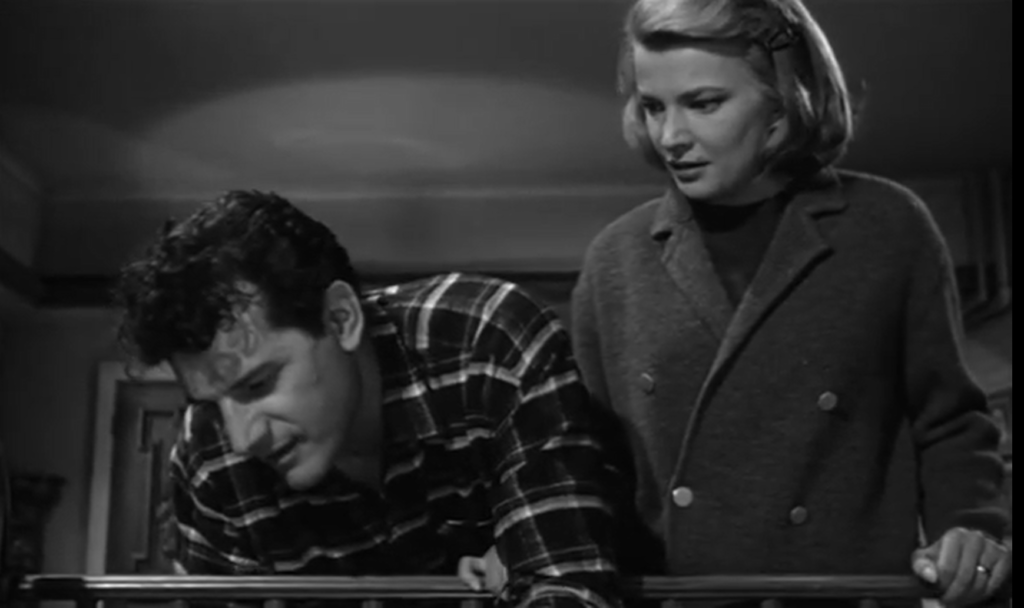
As Lancaster explains heatedly, and in all sincerity, to Garland, “His parents didn’t face the fact that he was retarded until very, very late; they let him play with ordinary children, and go to Kindergarten!” This kind of statement would be campily laughable if it weren’t so painfully representative of erstwhile attitudes.

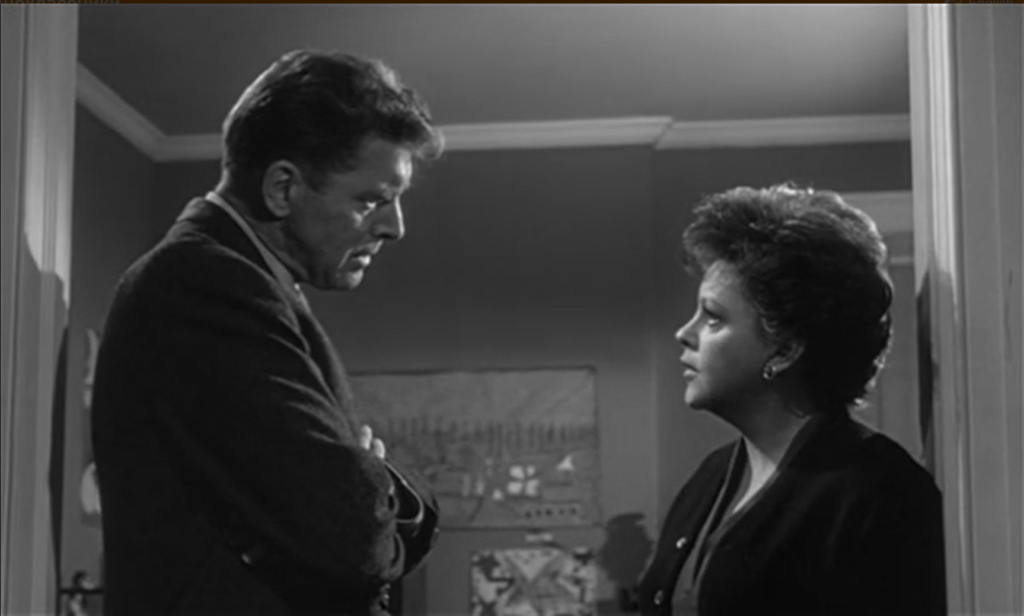
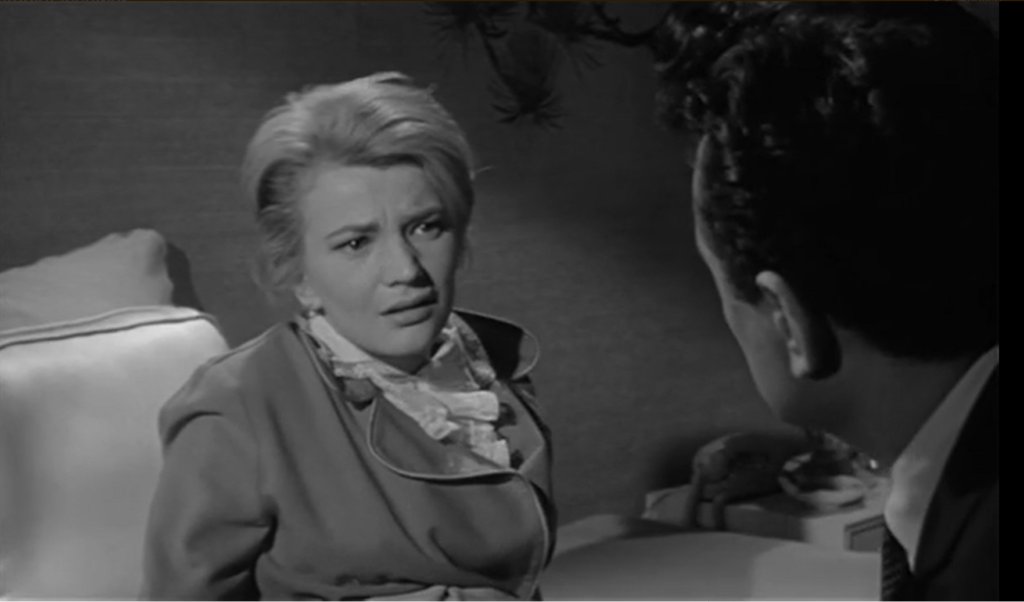
The film’s best moments are those in which Cassavetes is allowed to show his directorial hand, and presents us with more authentic slices-of-life — most noticeably during the interactions between Rowlands and Hill (both wonderful):
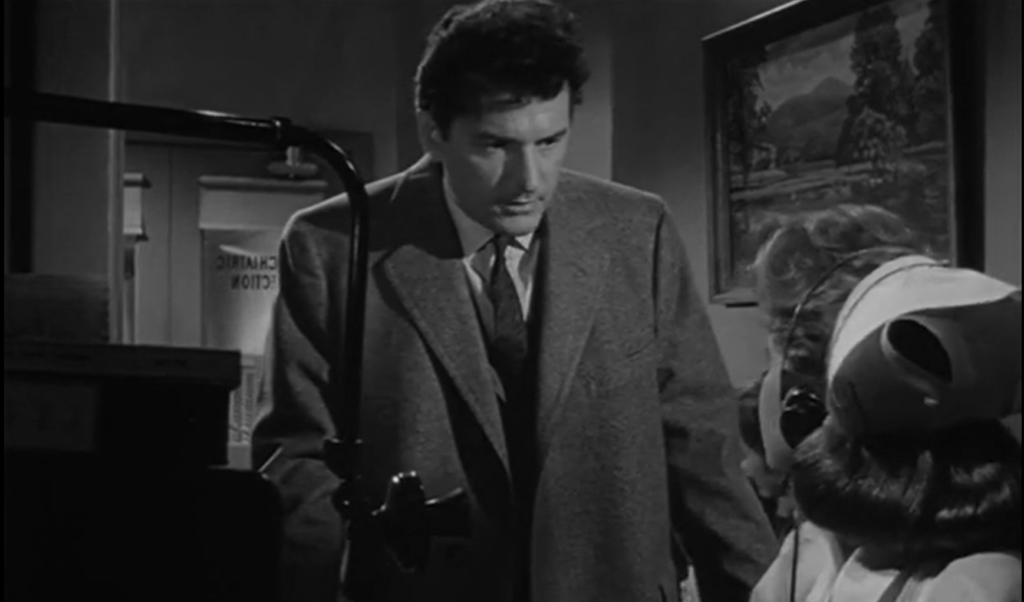
and one short scene in which Paul Stewart shares his own experiences as the father of a child with intellectual challenges. In contrast, all scenes with either Lancaster or Garland simply smack of Hollywoodized “best intentions”:
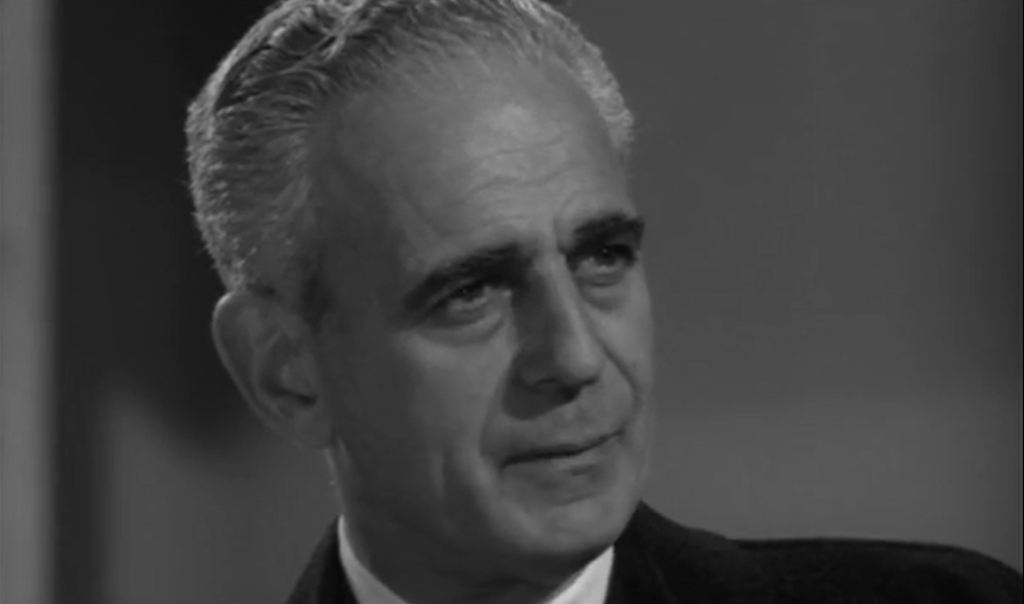
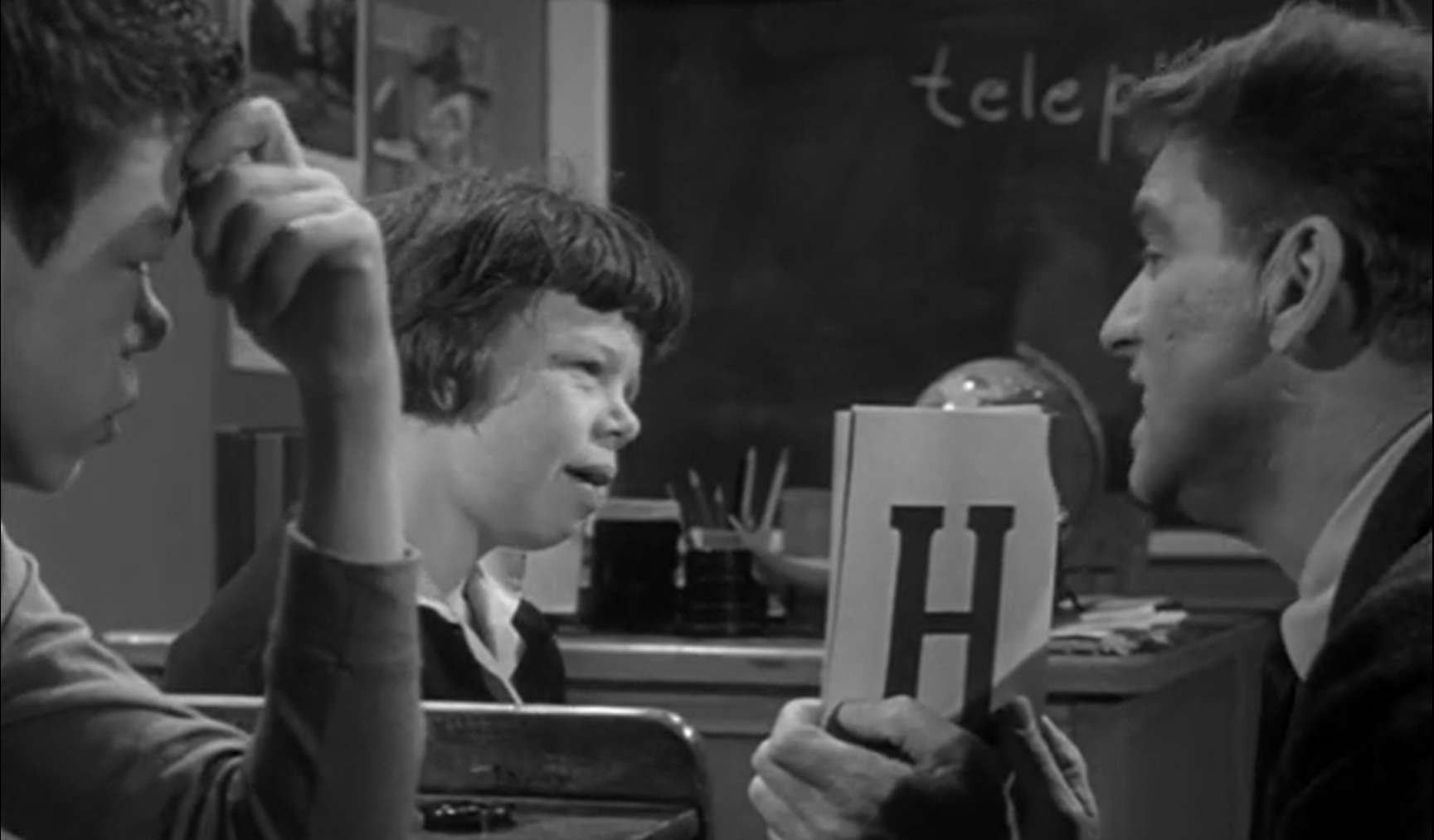
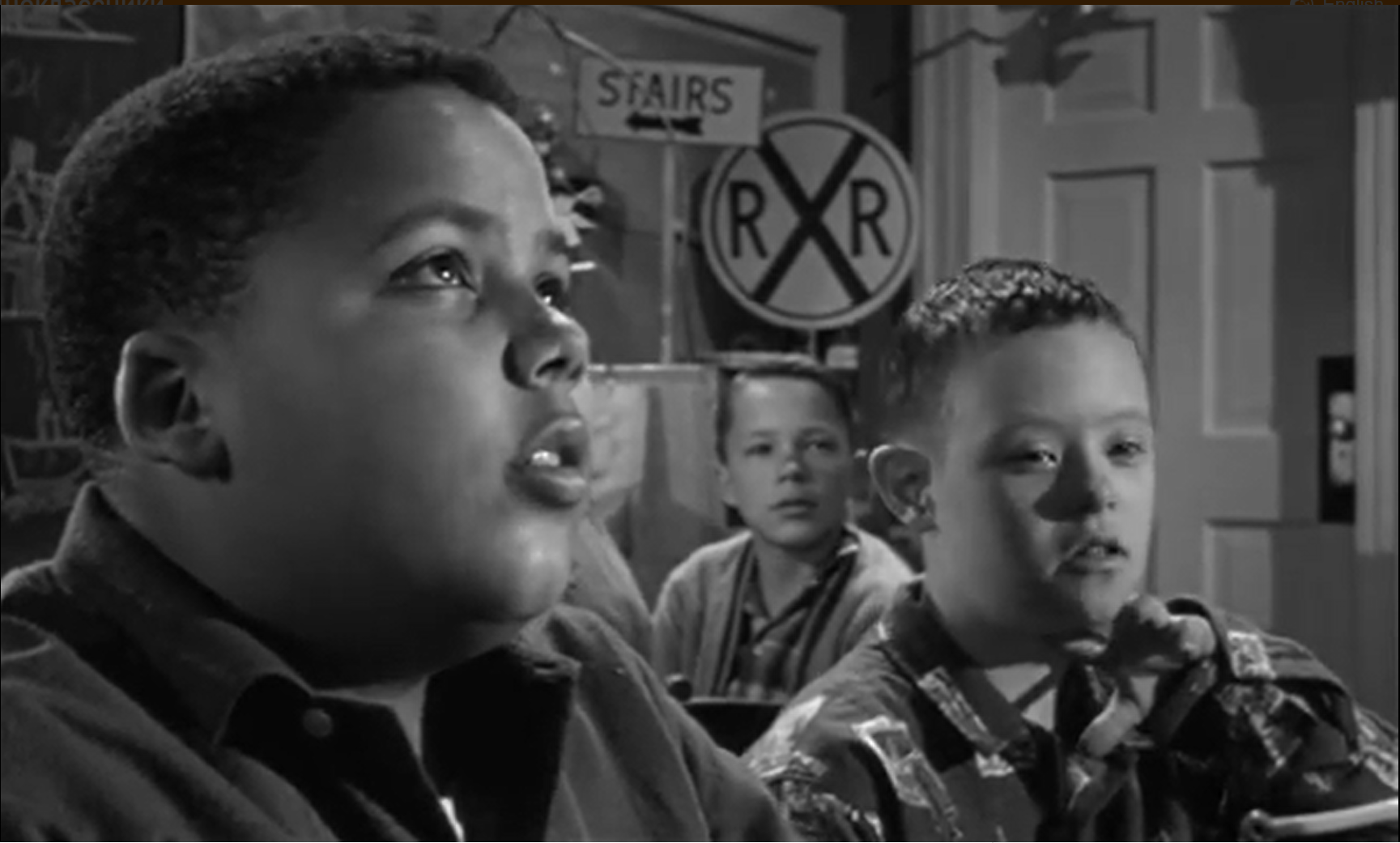
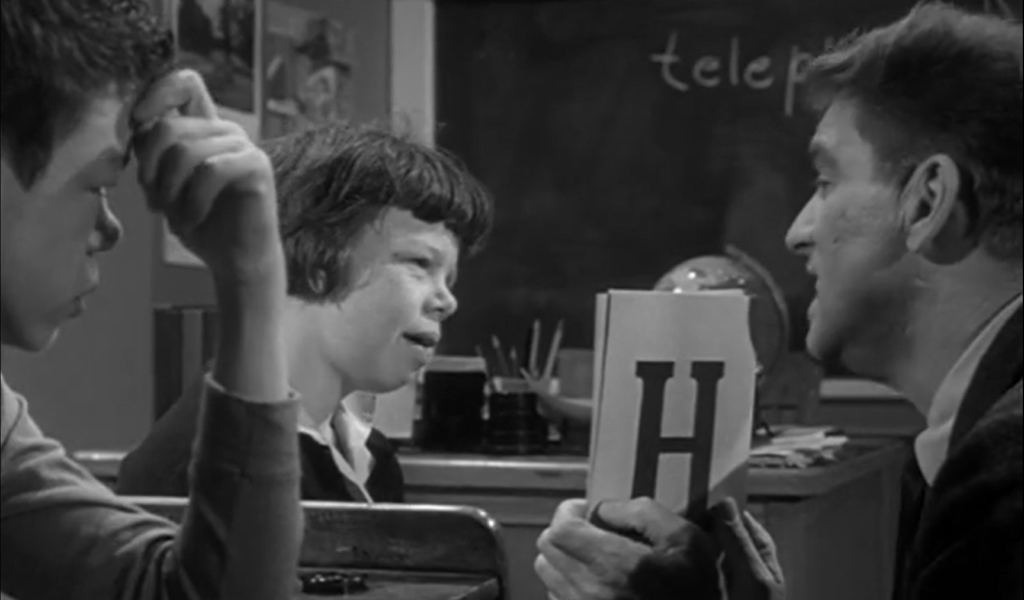
While many viewers (see IMDb) seem to adore both actors here, and to admire the film in general for its “daring” subject-matter, I’m not impressed by any of it (as should be clear by now!). Lancaster’s Dr. Clark represents a Firm-But-Kind Authority Figure who occasionally (for no apparent reason other than to allow us a refreshing glimpse of the “real” children) wanders through the school quizzing the students on their letter recognition skills (wouldn’t this be done by a trained speech pathologist?):
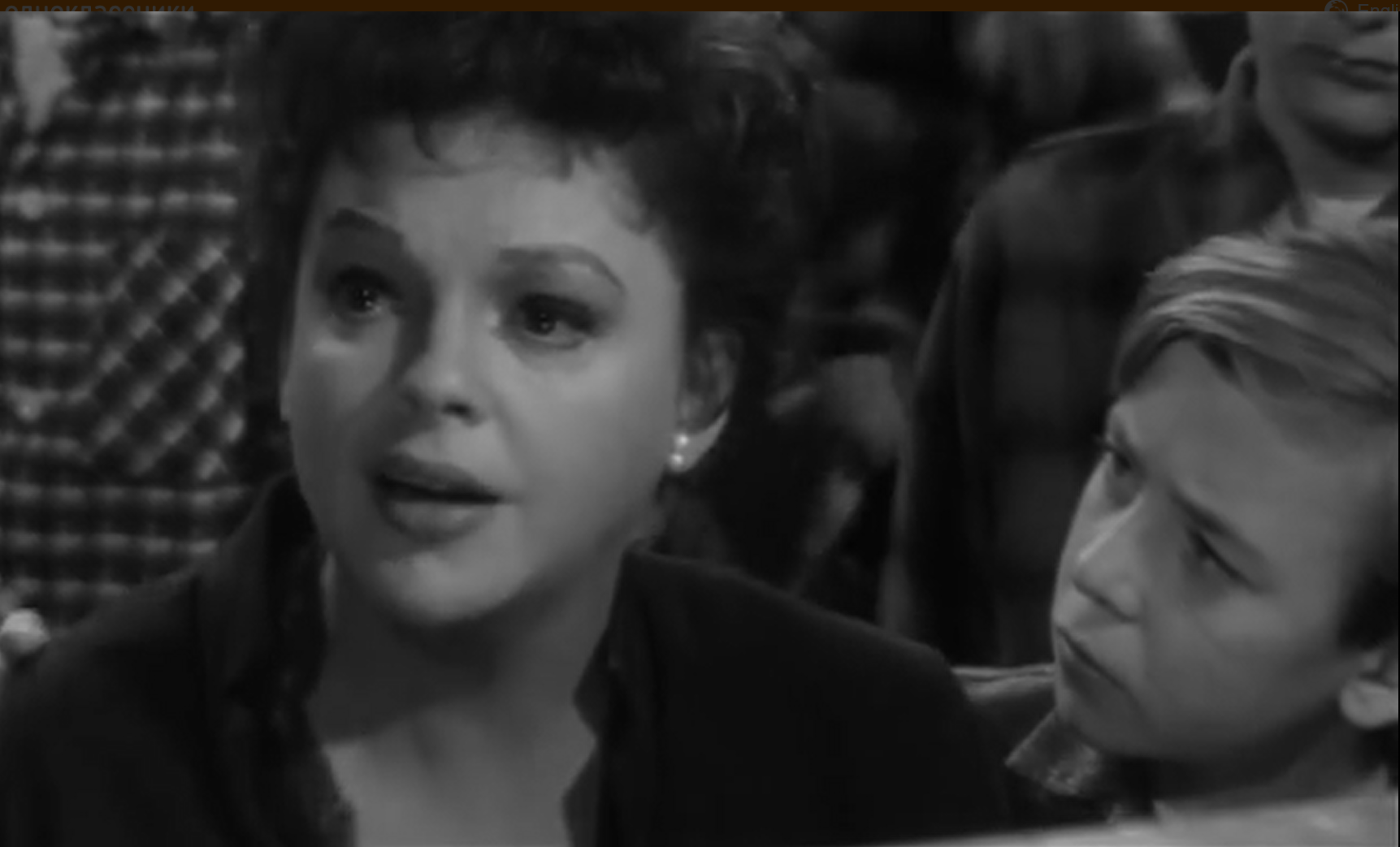
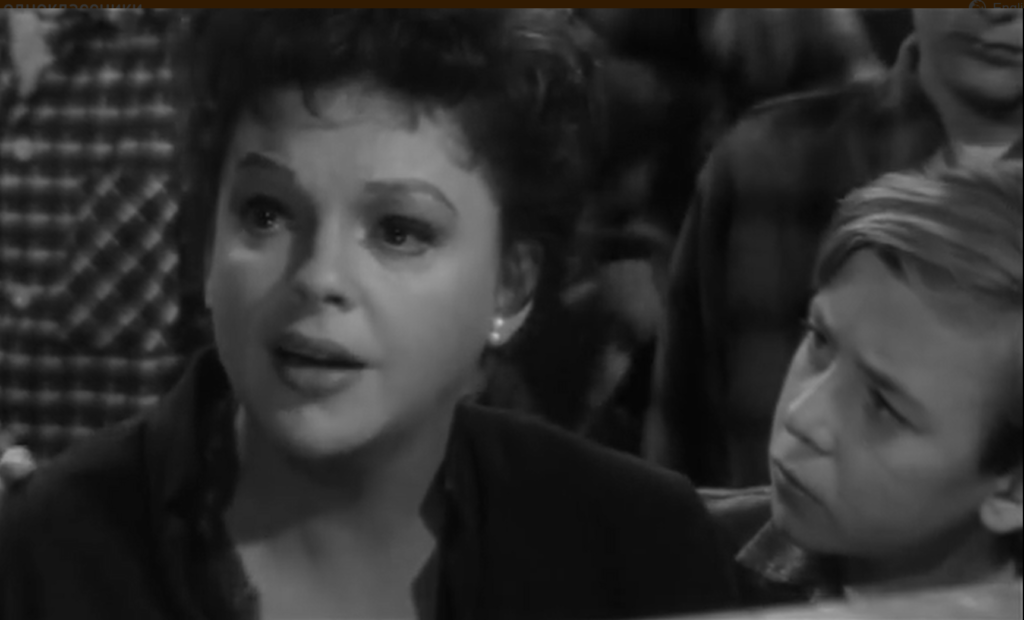
Meanwhile, Garland’s character isn’t nearly fleshed-out enough — she seems to simply be wandering the set in a state of dazed bewilderment (surely a reflection of her personal health at the time), and we quickly become desperate to see more spunk and vitality of some kind.
True Garland fans (and there are plenty of them!) probably won’t mind — but all other film fanatics should simply stick with watching her earlier films.

Redeeming Qualities and Moments:

  • Bruce Ritchey as Reuben
  • Gena Rowlands as Reuben’s mother
  • Steven Hill as Reuben’s father
  • Paul Stewart in a small but memorable role as a sympathetic school staff member
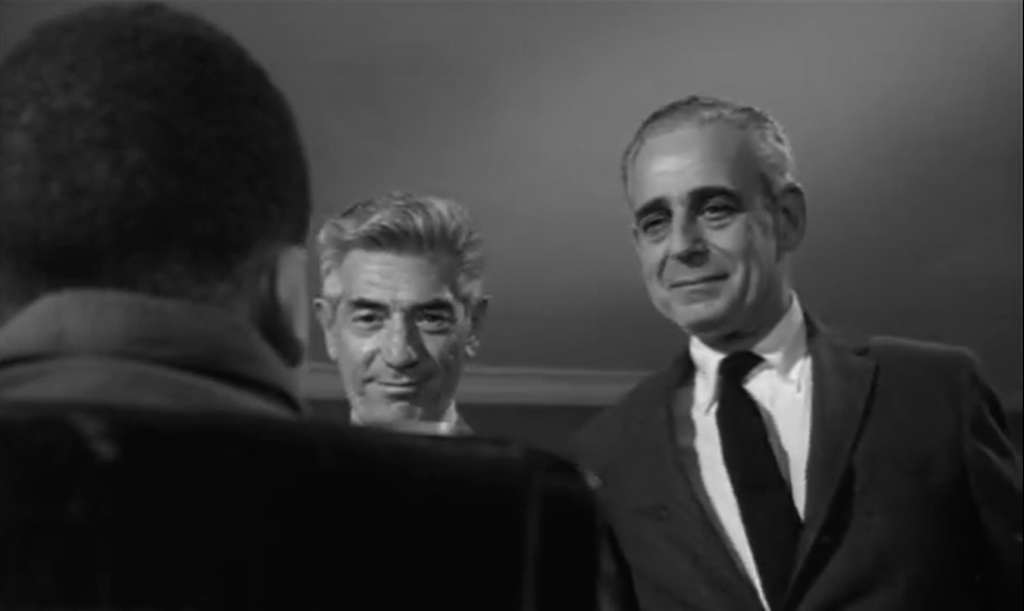
  • Fine, if frustratingly intermittent, use of cinéma vérité techniques
Must See?
No, though most film fanatics will be curious to check it out once.

Links:

Girl Crazy (1943)

Girl Crazy (1943)

“I always said you were girl crazy. I was wrong – you’re just crazy!”

Synopsis:
The girl-crazy son (Mickey Rooney) of a newspaper magnate (Henry O’Neill) is sent out West to attend a boys-only college, where he nonetheless falls in love with one of the only girls around — the dean’s beautiful daughter, Ginger (Judy Garland).

Genres, Themes, Actors, and Directors:

  • Busby Berkeley Films
  • College
  • Judy Garland Films
  • Let’s Put On a Show!
  • Mickey Rooney Films
  • Musicals

Review:
Judy Garland and Mickey Rooney’s final film together (at least in leading roles) was this rousing adaptation of George and Ira Gershwin’s 1930 stage musical. The plot is as silly as they come, but ultimately inconsequential in the face of a host of fabulous, memorable tunes — including “Bidin’ My Time”, “Fascinating Rhythm”, “But Not For Me”, and “I’ve Got Rhythm”, among others (wowee!). Meanwhile, Garland and Rooney are in peak form here, with Garland lovelier than ever (it’s a treat to see her actually resisting Rooney’s advances for once, rather than the other way around), and Rooney a bundle of typically irrepressible — but somehow tolerable — energy (viz. the random but enjoyable scene in which he entertains Garland by acting out a boxing round). Busby Berkeley notoriously directed the film’s stunningly choreographed finale, “I’ve Got Rhythm” (which was shot first), but was replaced by Norman Taurog, who does a fine job managing the rest of the escapist material. Don’t pay too much attention to details of the plot, however, or you’ll find yourself irritated by what amounts to lazy scriptwriting (I’m speaking specifically about events related to the “Miss Rodeo” contest, but won’t give away more here).

Redeeming Qualities and Moments:

  • Mickey Rooney as Danny
  • Judy Garland as Ginger
  • Numerous rousing Gershwin tunes

Must See?
Yes, as one of Rooney and Garland’s best films together (in large part due to that Gershwin score!).

Categories

  • Good Show

Links:

Summer Stock (1950)

Summer Stock (1950)

“Running a farm isn’t women’s work; why don’t you put the burden where it belongs?”

Synopsis:
A farmer (Judy Garland) engaged to the nebbishy son (Eddie Bracken) of a storeowner (Ray Collins) struggles to make ends meet; meanwhile, her flighty sister (Gloria DeHaven) suddenly brings her boyfriend (Gene Kelly) and his troupe of performers to Garland’s barn, where they hope to put on a show.

Genres, Themes, Actors, and Directors:

  • Farming
  • Gene Kelly Films
  • Hans Conried Films
  • Judy Garland Films
  • Let’s Put On a Show!
  • Musicals

Review:
Summer Stock is primarily remembered for its notoriety as the film which ended Judy Garland’s career at MGM. Read any review or write-up on the movie, and you’ll learn all you need to know about the sad details surrounding Garland’s ongoing addiction, stint in rehab, 20-pound weight gain (leading to the oddity of a “show-stopping” finale number added several months after primary filming, at which point she’d clearly lost the weight), and overall struggles to make it to the set each day; you’ll also read about Kelly’s kindness in helping her through the ordeal (including faking a fall one day to allow her to take the day off). Ultimately, however, what really “matters” is whether the film succeeds or not — and critical opinions remain deeply divided on this point.

DVD Savant
, for instance — while acknowledging the redeeming power of the musical numbers — argues that the plot’s “mechanics are even simpler than shows like Babes on Broadway: Save the farm, put on a show, ditch the loser love interests so the leads can get together”, and points out the “lazy way the… script abuses the supporting players” so that “amusing personality Eddie Bracken and so-so MGM contract player Gloria DeHaven both play unfunny, unpleasant jerks so as to make Garland and Kelly seem all the more virtuous for dumping them”. In his laudatory review for Digitally Obsessed, however, David Krauss argues that the “snappy script… somehow makes the tired backstage story seem fresh”, and that “the colorful characters and brisk pacing (care of director Charles Walters, who also helmed Easter Parade) keep us fully engaged at all times”.

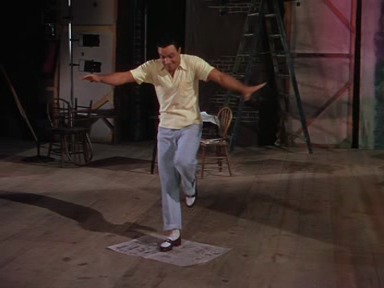
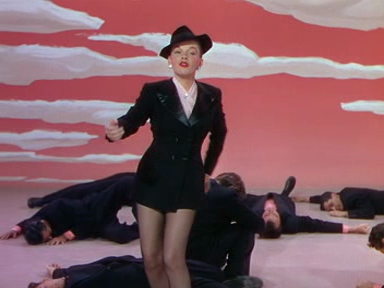
In truth, I’m more in agreement with DVD Savant than Krauss on this debate; the cliched storyline is a bit too escapist for my blood (sorry, but nothing about Garland’s attempt to fill farming shoes “worked” for me) — and while I didn’t have much of a problem with DeHaven as Garland’s spoiled sister (or Bracken as her spineless fiance), the presence of Phil Silvers as Kelly’s irritating sidekick was simply cringe-worthy throughout. With all that said, the film is at least partially redeemed by a host of rousing musical numbers, as well as truly top-notch performances by both Garland and Kelly; whatever troubles Garland may have been having behind the scenes are (amazingly) nowhere in evidence on-screen. While only her stunning finale number (“Get Happy”) is memorable enough to stick in your head for days afterwards, the remaining songs are all enjoyable while they last, and perfectly suited for Garland’s timbre. Meanwhile, Kelly gets to dance one of his best, most creative numbers (and that’s saying a lot!) as he shuffles away on a wooden floor, engaging a newspaper for sound effects. It’s fun stuff.

Redeeming Qualities and Moments:

  • Judy Garland as Jane
  • Gene Kelly as Joe
  • Kelly and Garland dancing the Portland Fancy
  • Kelly’s truly classic solo tap-dance sequence
  • Garland’s justifiably famous “Get Happy” finale

Must See?
No. While certainly recommended, this one is only must-see for Garland or Kelly completists.

Links:

It! The Terror From Beyond Space (1958)

It! The Terror From Beyond Space (1958)

“You honestly believe I’d murder nine of my closest friends in order to survive on Mars?”

Synopsis:
The lone survivor (Marshall Thompson) of a manned mission to Mars is accused of murdering his crewmates — until a vicious alien (Ray Corrigan) shows up on the ship sent to take him back to Earth, and the lives of everyone on board are threatened.

Genres, Themes, Actors, and Directors:

  • Aliens
  • Falsely Accused
  • Horror
  • Science Fiction

Review:
It! is primarily known for its sandwiched reputation as the film inspired by Howard Hawks’ The Thing (1951), and as the unofficial inspiration for Ridley Scott’s bigger-budget variation on the same theme — Alien (1979). Despite its labeling by Peary as a Camp Classic — due to its obviously low budget and stereotypically one-dimensional characters — It! remains a surprisingly effective little sci-fi thriller, one which packs a fairly scary wallop and makes good use of a smart, economical script by Jerome Bixby. Once it’s established that Corrigan DIDN’T murder his original crewmates in a fit of survivalist panic (yeah, right — how likely is THAT?!), we’re able to focus on the very-real menace of a seemingly un-killable alien presence on board the claustrophobic quarters of a spaceship. As with Alien, we’re kept in suspense about which character will be the next to bite the dust — and we genuinely feel for the predicament of one astronaut stuck in close quarters with the beast as his air supply slowly dwindles. Don’t dismiss this one out of hand as simply Alien-on-a-diet; it’s actually worth a look.

Note: Director Edward L. Cahn’s follow-up film — well, one of SEVEN films he made the next year! (Take that, Roger Corman!) — was The Invisible Invaders (1959), which (somewhat surprisingly) received full Criterion treatment for its release onto DVD.

Redeeming Qualities and Moments:

  • Effectively creepy low-budget special effects

Must See?
Yes, for its historical importance, and as a fine little B-flick in its own right. Listed as a Camp Classic in the back of Peary’s book.

Categories

  • Historically Relevant

Links:

Lancelot of the Lake (1974)

Lancelot of the Lake (1974)

“It was not the Grail; it was God you all wanted.”

Synopsis:
Upon return from a fruitless quest for the Holy Grail, Sir Lancelot (Luc Simon) tries to break off his affair with Queen Guinevere (Laura Duke Condominas) and prepares for battle with his arch-enemy Mordred (Patrick Bernard).

Genres, Themes, Actors, and Directors:

  • French Films
  • Historical Drama
  • Medieval Times
  • Robert Bresson Films
  • Royalty and Nobility

Review:
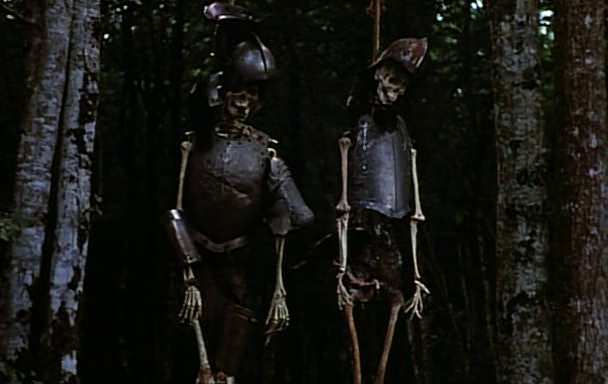
As I’ve noted in other reviews, I’ll admit to a strong bias against Robert Bresson’s highly stylized approach to filmmaking, in which his actors are explicitly directed to remain expressionless, and Bresson’s own thematically enriched visuals take center stage. While I admire his intentions with this unique approach to the subject matter here (simply check out some of the lengthy user comments on IMDb for a sense of the strategic points he was apparently hoping to make), I’m much more in favor of Eric Rohmer’s alternatively stylized take on the same period and historical figures (1978’s Perceval). With that said, there’s still quite a bit here for all film fanatics (including my own grouchy self) to enjoy and appreciate — such as the power of Bresson’s strategically “cubic” representations of armored body parts, etc., through which one does quickly get a sense of the dreary oppression that dominated this bloodiest of eras. Indeed, the visuals are consistently inventive; all the more shame, then, that his narrative — about guilt and love and shame and God (I think?) — remains so frustratingly opaque. True fans of Bresson will be enamored by Lancelot du Lac; others will simply grow weary and long for clarity.

Redeeming Qualities and Moments:

  • An effectively stylized rendering of medieval England and Arthurian legend
  • Fine, authentic sets and costumes

Must See?
No, though naturally Bresson fans will want to check it out. Listed as a Cult Movie in the back of Peary’s book.

Links:

Babes in Arms (1939)

Babes in Arms (1939)

“Listen, you kids: I think our time has come!”

Synopsis:
The son (Mickey Rooney) of aging vaudevillians (Charles Winninger and Grace Hayes) is determined to put on a show to raise money for his household, and his girlfriend (Judy Garland) is eager to help — but she soon feels insecure about the arrival of a former child actress (June Preisser) hoping to play the lead role.

Genres:

Review:
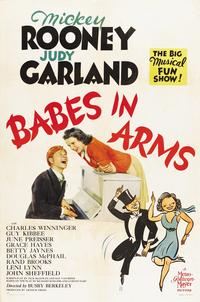
Babes in Arms — the third on-screen pairing of Mickey Rooney and Judy Garland, a year after their memorable rapport in Love Finds Andy Hardy (1938) — is notable for being an even higher money-maker than The Wizard of Oz (1939), released the same year and also co-starring typecast Margaret Hamilton, whose character is cleverly described here as someone who would “put butterflies to work making rubber tires” (!).

Babes… — directed by Busby Berkeley — is likely the first film one thinks of when contemplating the “let’s put on a show!” genre, and this one pulls out all the stops, complete with an offensive black-face minstrel piece which will distress any modern viewers not hardened enough to simply regard it as an unfortunate product of its time.

The storyline itself is surprisingly hard-hitting — most notably in its depiction of strained relations between Rooney and his father (Winninger), who at first is in massive denial about the imminent collapse of vaudeville’s reign, then bitterly angry about the role his son is trying to play in its revitalization; their father-son squalls together are far from representative of typical escapist fare.

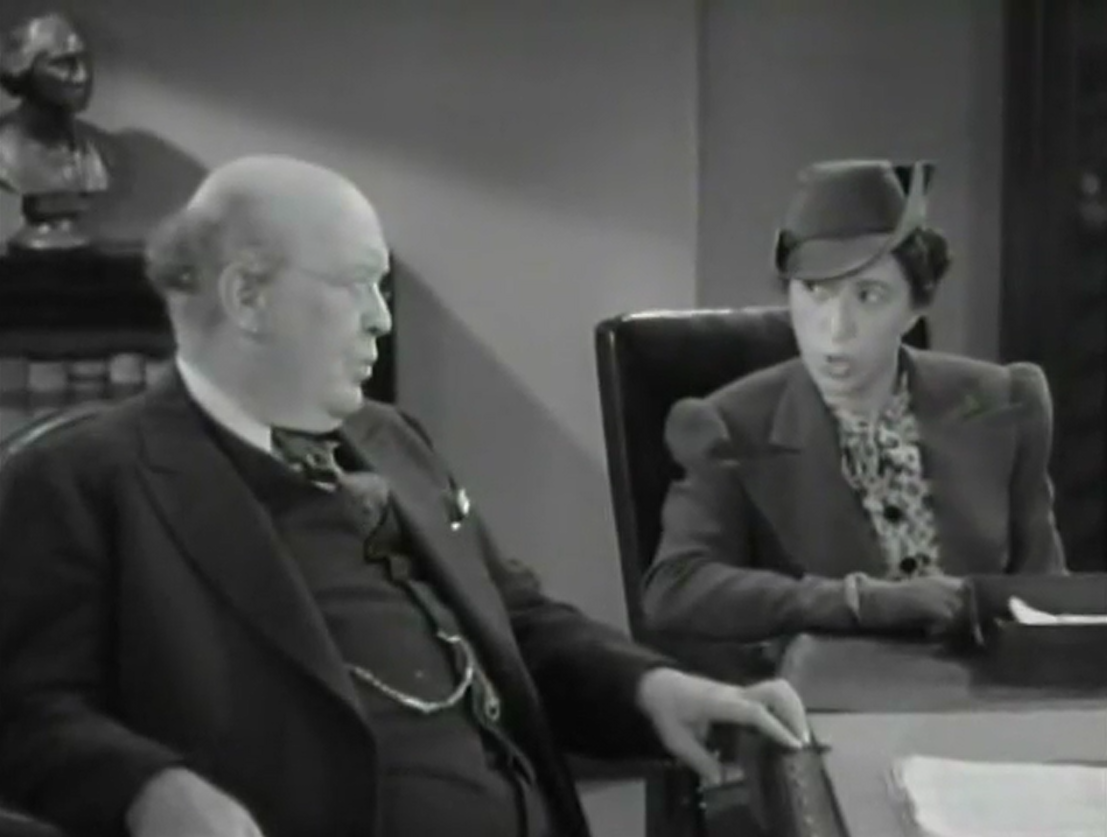
But, naturally, there’s plenty of levity throughout as well — primarily in the form of Preisser as an “aging” child-actress with tremendous gymnastic talents (check out those back flips!), plenty of money to fling around, and mooning eyes for Rooney:

Her temporary threat to Rooney’s romance with Garland provides the bulk of the film’s narrative tension. The songs, sadly, are mostly forgettable, but listen for a fine rendition of Arthur Freed’s “Good Morning”.

Redeeming Qualities and Moments:

  • Mickey Rooney as Mickey and Judy Garland as Patsy

Must See?
Yes, simply for its erstwhile popularity. Listed as a film with Historical Importance in the back of Peary’s book.

Categories

  • Historically Relevant

(Listed in 1001 Movies You Must See Before You Die)

Links:

Panic in Needle Park, The (1971)

Panic in Needle Park, The (1971)

“I’m not hooked — I’m just chippin’.”

Synopsis:
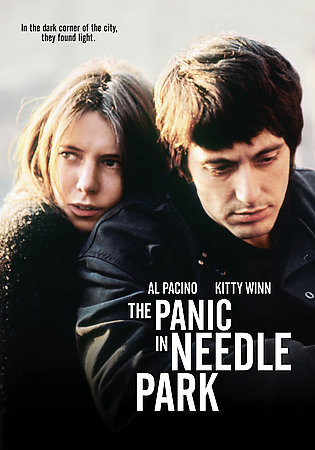
A heroin addict (Al Pacino) introduces his new girlfriend (Kitty Winn) to his lifestyle, and she’s soon addicted herself.

Genres, Themes, Actors, and Directors:

  • Al Pacino Films
  • Alcoholism and Drug Addiction
  • Downward Spiral
  • Star-Crossed Lovers

Review:
Director Jerry Schatzberg’s follow-up to his disappointing debut film Puzzle of a Downfall Child (1970) was this cinéma vérité look — sans any musical score — at heroin use in New York City’s “Needle Park”. One of the first films to directly and graphically show needles being injected into users’ arms:

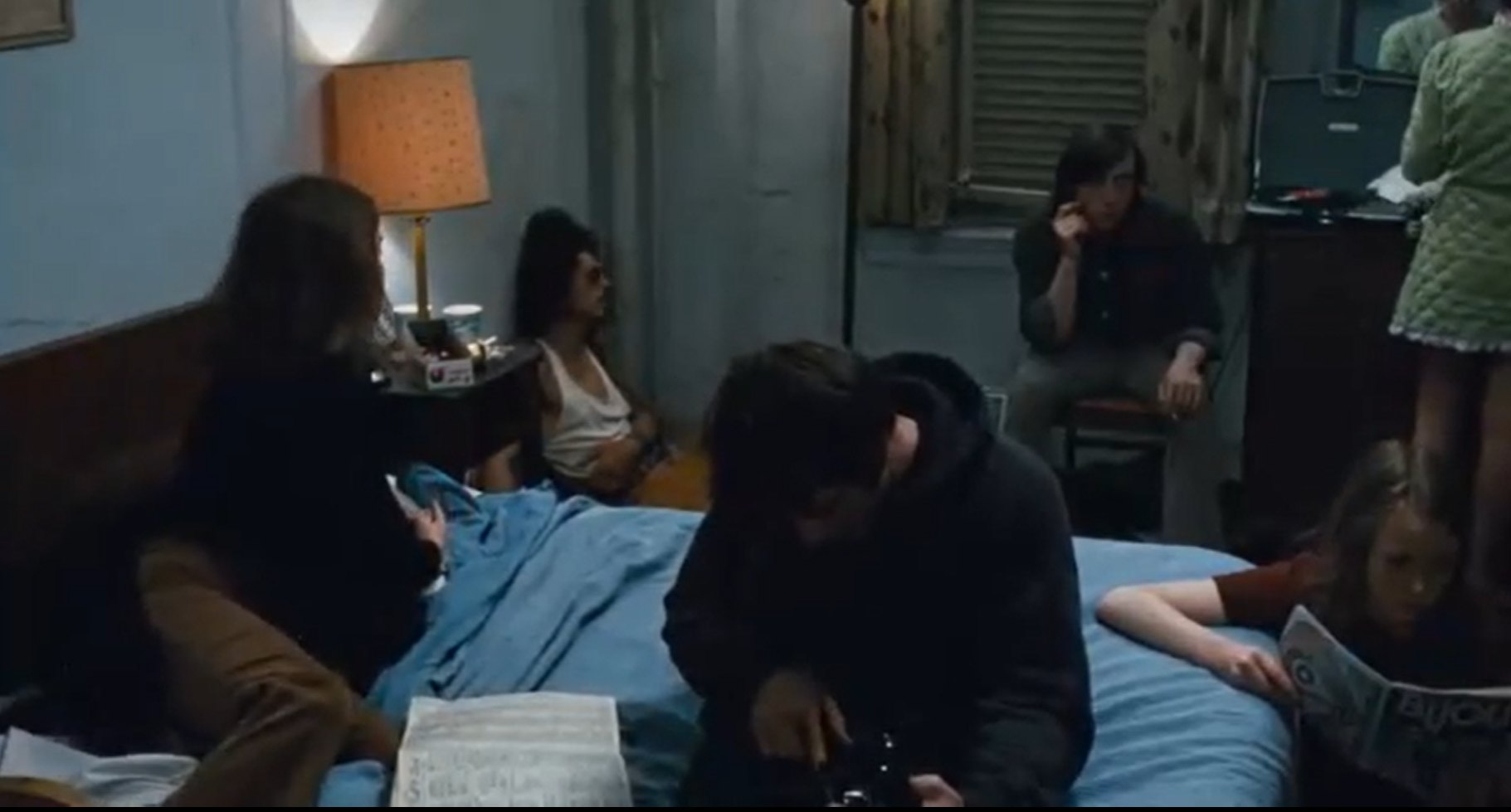
… Panic… is NOT for the faint-of-heart: it’s the type of film that makes drug use seem so utterly unappealing (users loll around in listless states of wastedness) that it’s slightly difficult to understand why even a lost waif like Winn would choose to enter into this world.

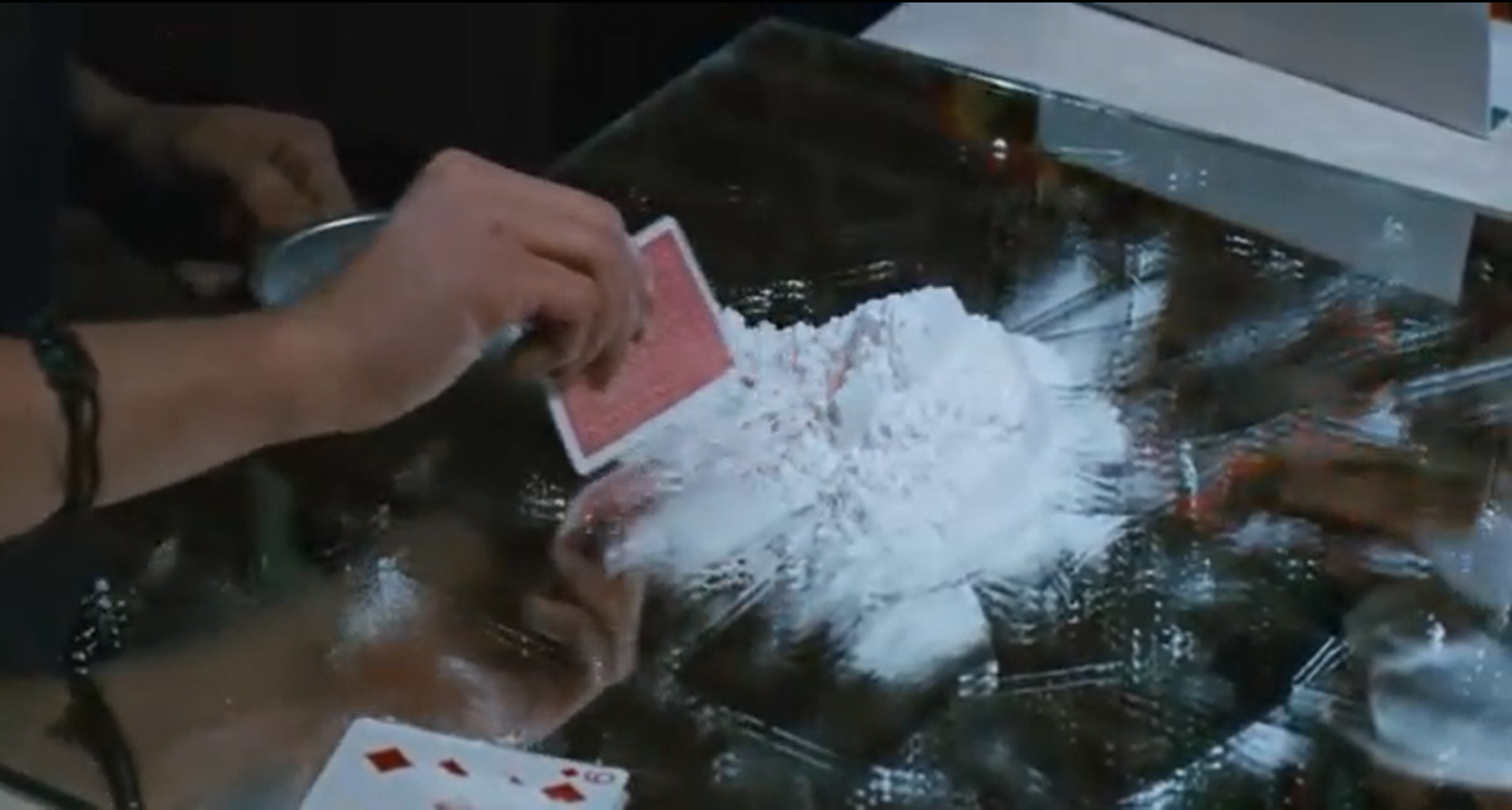
(Of course, we’re made to believe that it’s Pacino’s charisma — and her desperate need for love and acceptance — that propels her, but still…). Regardless, Schatzberg should be commended for his no-holds-barred approach to this milieu — including an effective, oft-imitated (viz: 2007’s American Gangster), entirely silent scene in which Pacino witnesses a small team of workers preparing the drug for sale. At the time of the film’s release, this kind of thing must have been utterly revelatory for audiences.

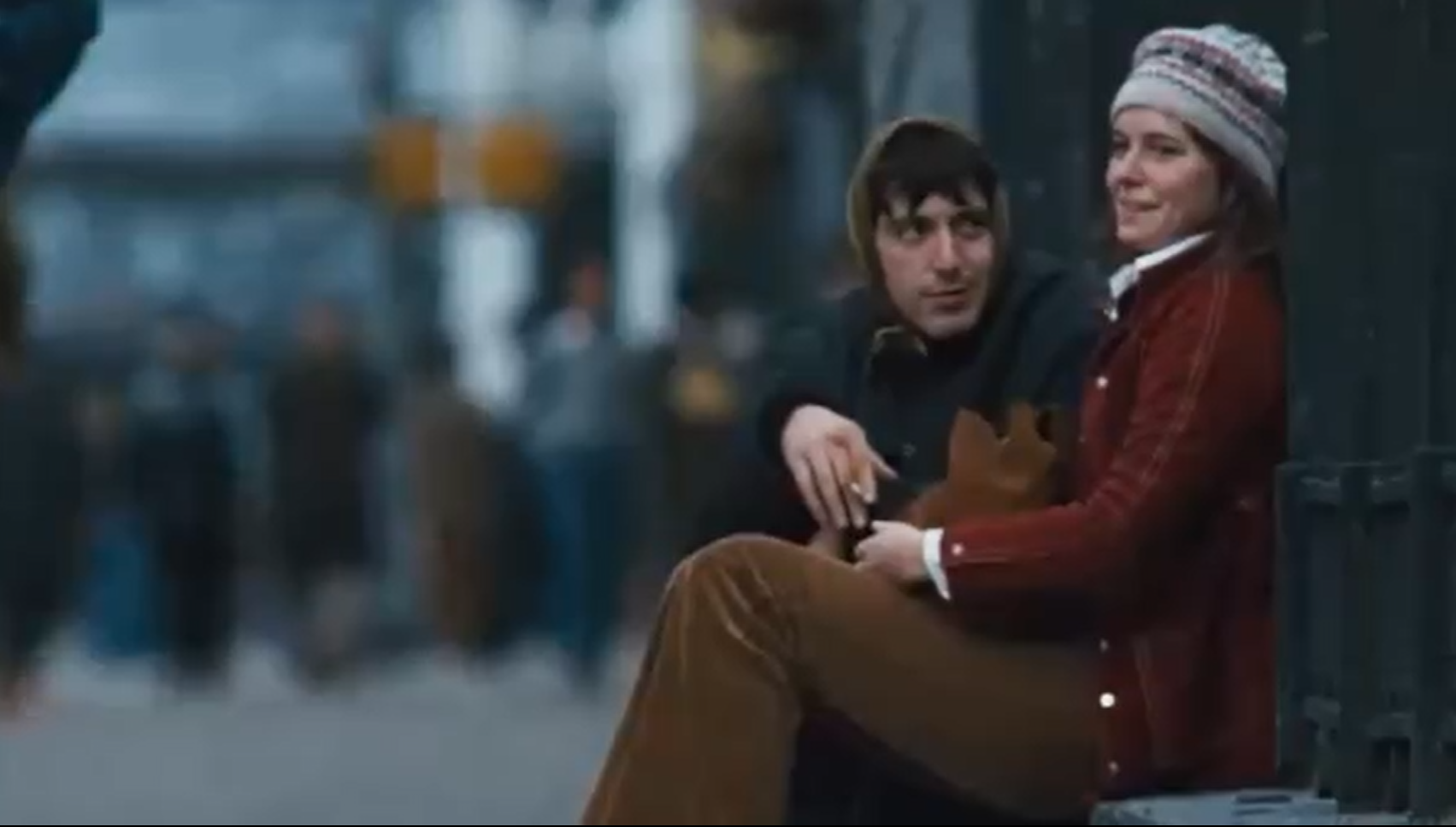
Panic… is also remembered today for Al Pacino’s standout performance — his first leading role on-screen, and the catalyst for his casting the following year in Coppola’s The Godfather. He’s a bundle of hopped-up energy here, literally sweeping Winn off her feet in the opening scenes (as she’s recovering from an illegal abortion):

… and somehow charismatic enough to convince Winn that his cadre of drug-injecting losers is a worthy gang to hang with. Inevitably, of course, Winn (whose career infamously never really went anywhere after her auspicious debut here; she chose family life instead) is caught up in the insanity of addiction herself — and, as expected, things simply go downhill from there. So many films (both fiction and documentary) about the pathetic lives of drug users have been released since Panic… that today’s viewers will likely not be shocked by what they’re seeing on-screen — but it remains a worthy early entry in the genre, one film fanatics should expose themselves to once (and then can feel free to leave behind forever, as I will).

Redeeming Qualities and Moments:

  • Al Pacino as Bobby
  • Kitty Winn as Helen (nominated by Peary as one of the Best Actresses of the Year in his Alternate Oscars)
  • A gruesomely graphic, no-holds-barred depiction of drug addiction

Must See?
Yes, simply for its historical relevance as one of the first films to show drug abuse in its shoddy reality — and for Pacino’s performance.

Categories

  • Historically Relevant
  • Noteworthy Performance(s)

Links:

Torn Curtain (1966)

Torn Curtain (1966)

“It takes a scientist to pick a scientist’s brain.”

Synopsis:
The fiancee (Julie Andrews) of an American physicist (Paul Newman) is distressed to learn that he has seemingly defected to East Berlin, where he hopes to learn mathematical secrets from a famed nuclear scientist (Ludwig Donath).

Genres, Themes, Actors, and Directors:

  • Cold War
  • Hitchcock Films
  • Julie Andrews Films
  • Paul Newman Films
  • Scientists
  • Spies

Review:
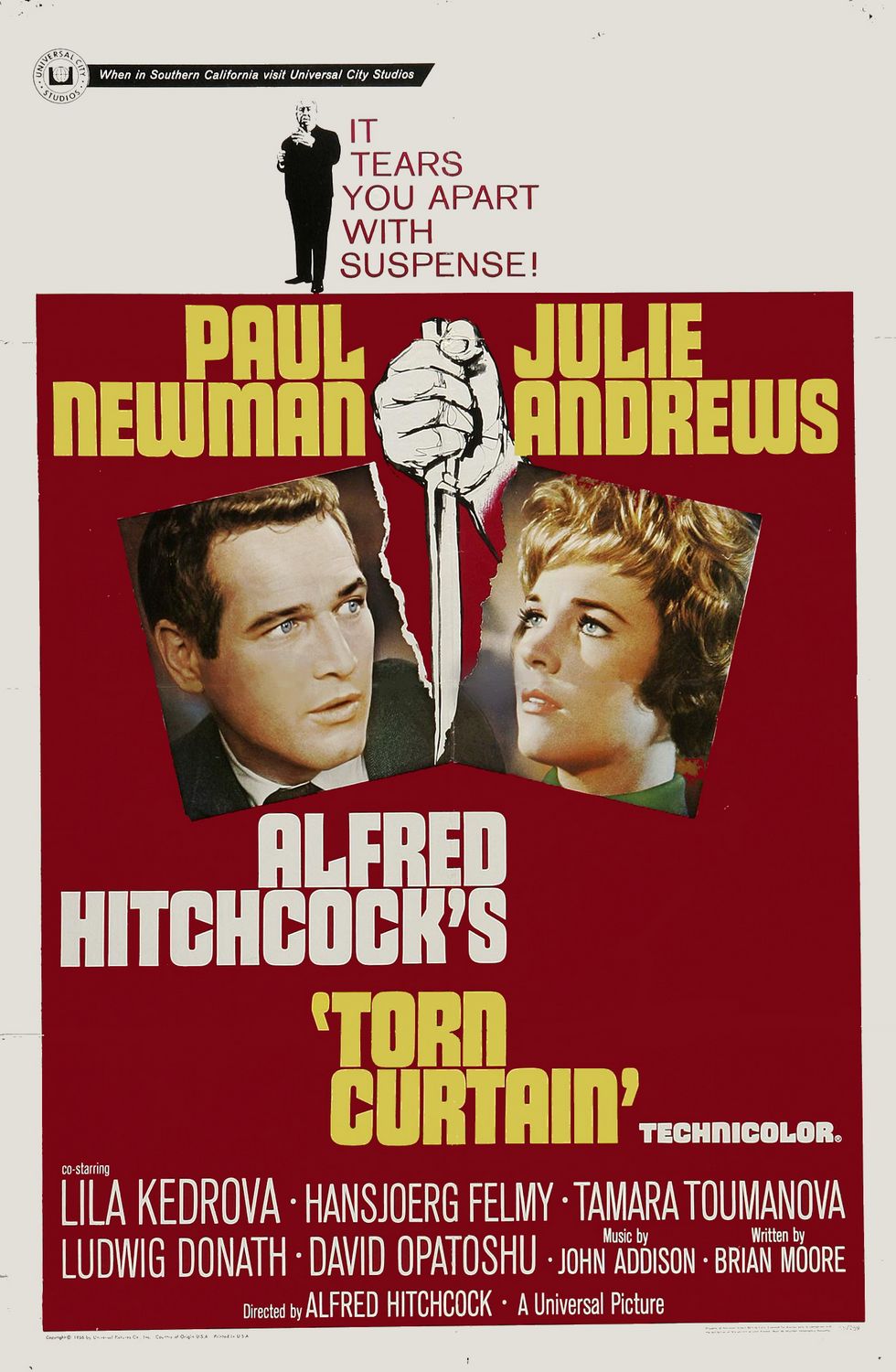
Critics have long debated whether this late-life entry in Hitchcock’s estimable oeuvre — his fourth-to-last film — is a complete clunker, or simply a lesser effort by an acknowledged genius. My personal assessment is the latter, given that it remains a positive delight in comparison with Hitchcock’s one GENUINE “clunker” — the frightfully boring (and mercifully Peary-omitted) Topaz (1969). With that said, of course it’s true that Torn Curtain is far from Hitchcock’s best, and there are certainly signs that his cinematic vision was beginning to waver. Jeffrey Anderson of Combustible Celluloid labels it as “a strangely muted, dull effort”, and this description is somewhat apt: in some ways, Hitchcock seems to be simply moving his characters through a series of scenarios which lack the punch or overtly cynical humor of similar earlier efforts. The fault seems to lie largely in Brian Moore’s script, which even Hitchcock himself professed to be displeased with; and Bernard Herrmann’s would-be score is also sorely missed.

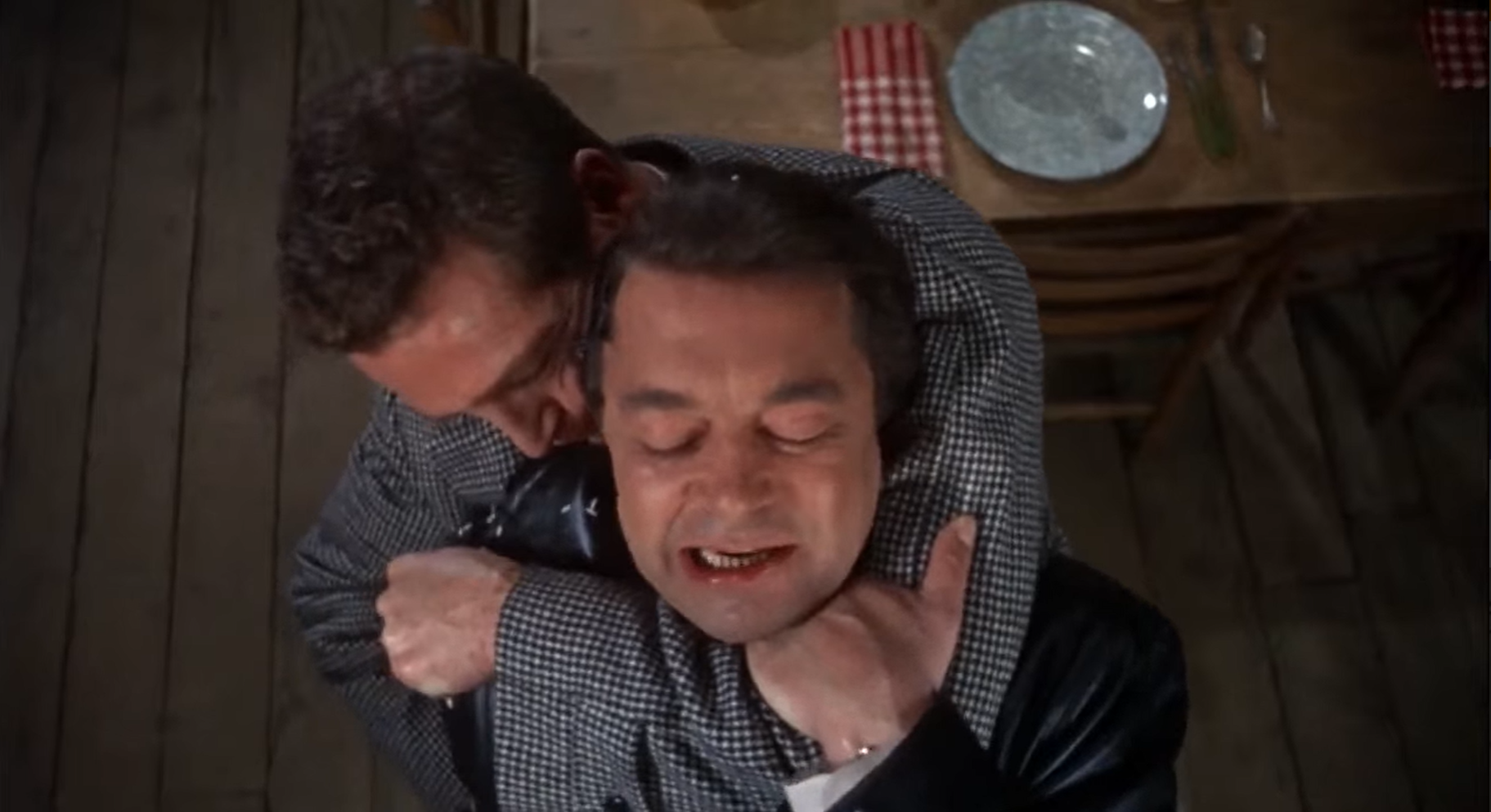
Yet there remain a handful of gripping scenarios — including the infamous “kitchen murder scene” (which Hitchcock intended to show just how challenging it can really be to kill a man):

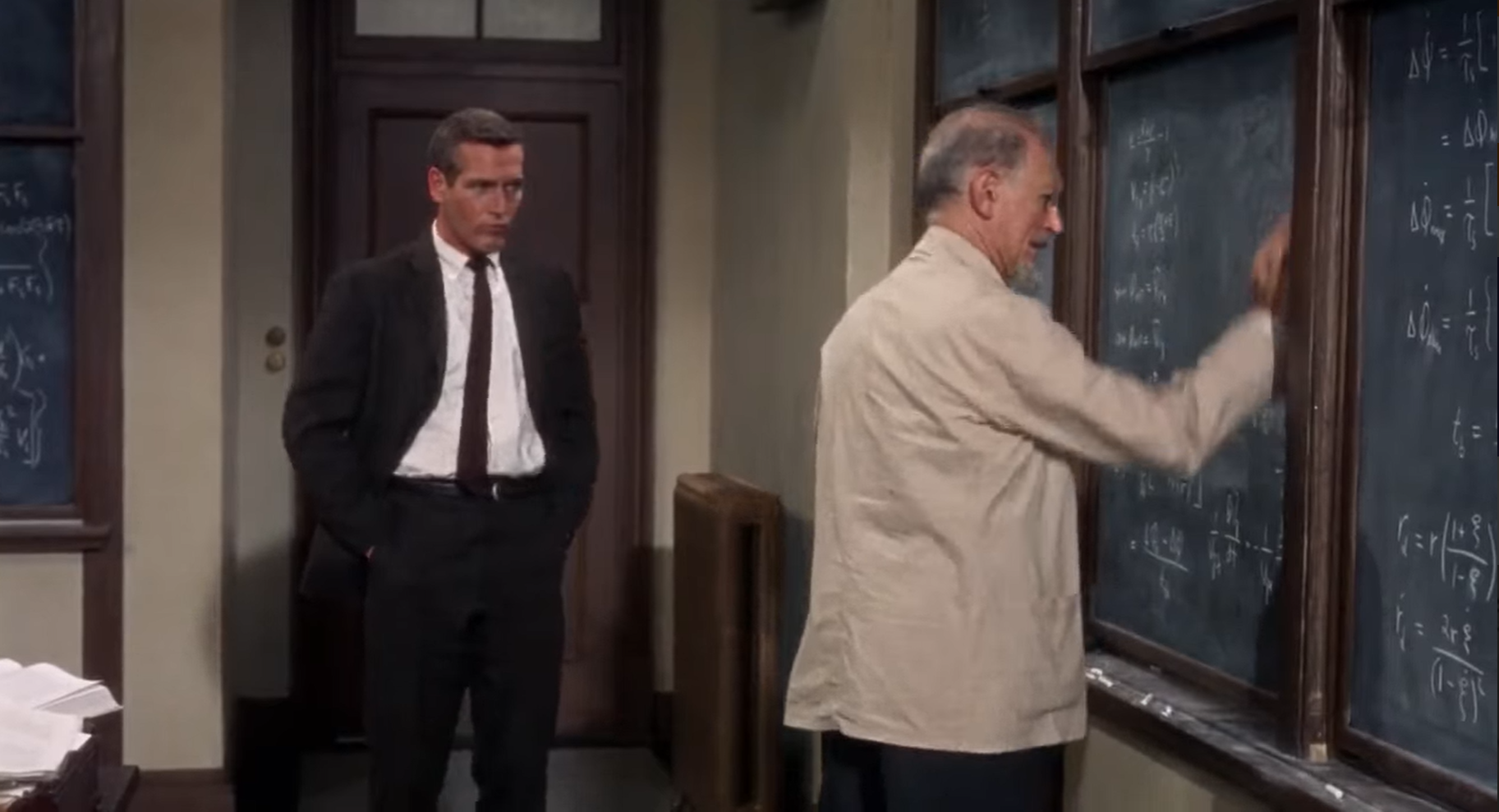
… the scene in which Newman finally converses with Professor Lindt, racing against time to get (and memorize) critical mathematical information before he’s found out:

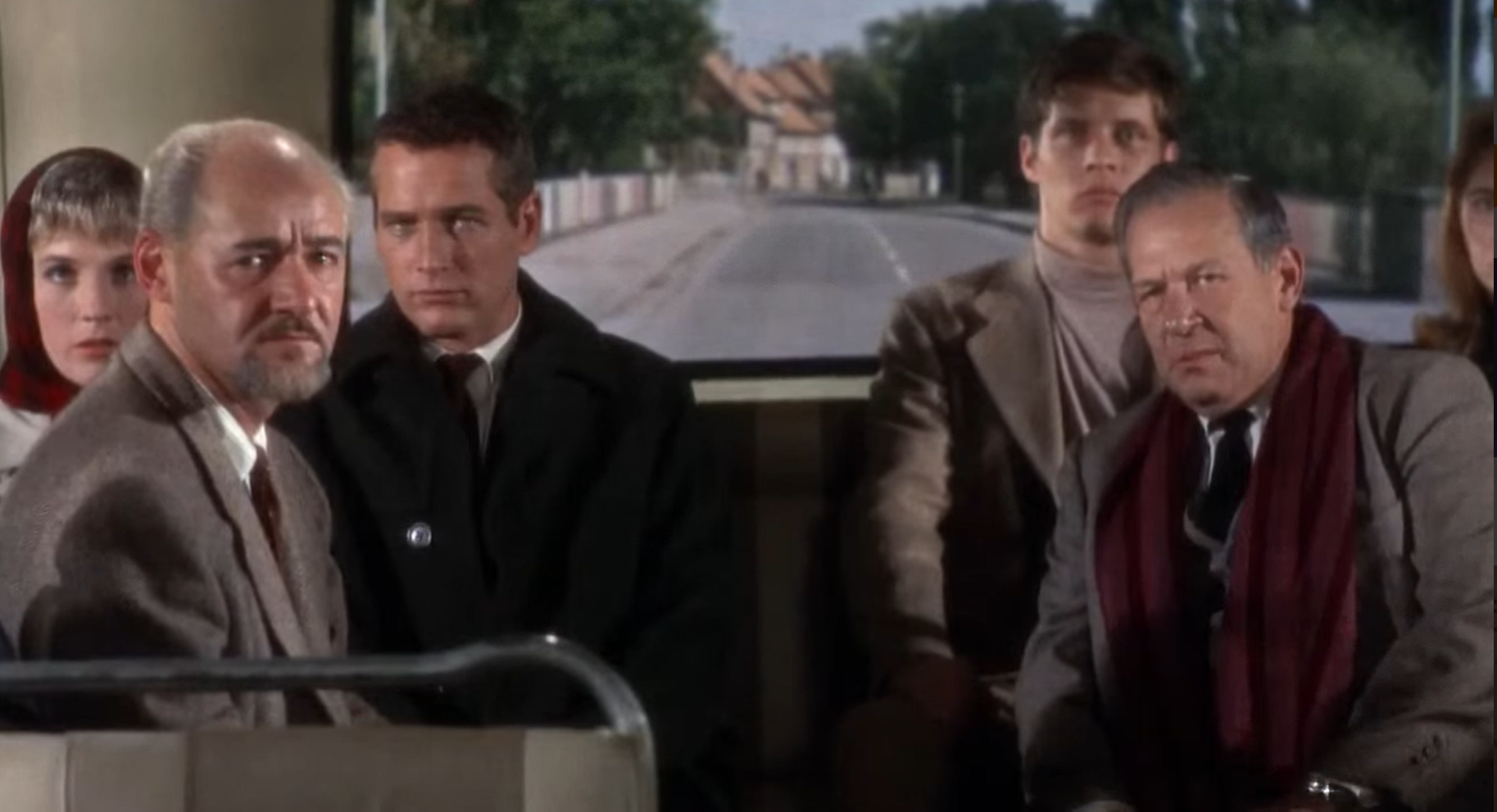
and the nerve-wracking bus ride sequence out of Berlin.

In general, I find the last 45 minutes or so of this over-long film to be its best, given that everyone’s finally on the move and we’re held in genuine tension about whether or not Newman and loyal Andrews (doing her best in a virtually thankless role) will be able to make it out. While Torn Curtain isn’t must-see viewing for all-purpose film fanatics, it’s certainly worth a look by his fans.

Redeeming Qualities and Moments:

  • John F. Warren’s cinematography
  • Fine period detail and sets

Must See?
No, though naturally diehard Hitchcock enthusiasts won’t want to miss seeing it at least once.

Links:

Love Finds Andy Hardy (1938)

Love Finds Andy Hardy (1938)

“Dad, I don’t understand these modern girls.”

Synopsis:
While his girlfriend (Ann Rutherford) is out of town for the holidays, Andy Hardy (Mickey Rooney) is paid by his friend (George P. Breakston) to “watch over” his sexy girl (Lana Turner); meanwhile, the daughter (Judy Garland) of a well-known singer comes to stay with her grandparents next door to Andy, and quickly develops a crush on him.

Genres:

  • Judy Garland Films
  • Lana Turner Films
  • Lewis Stone Films
  • Love Triangle
  • Mickey Rooney Films
  • Small Town America

Review:
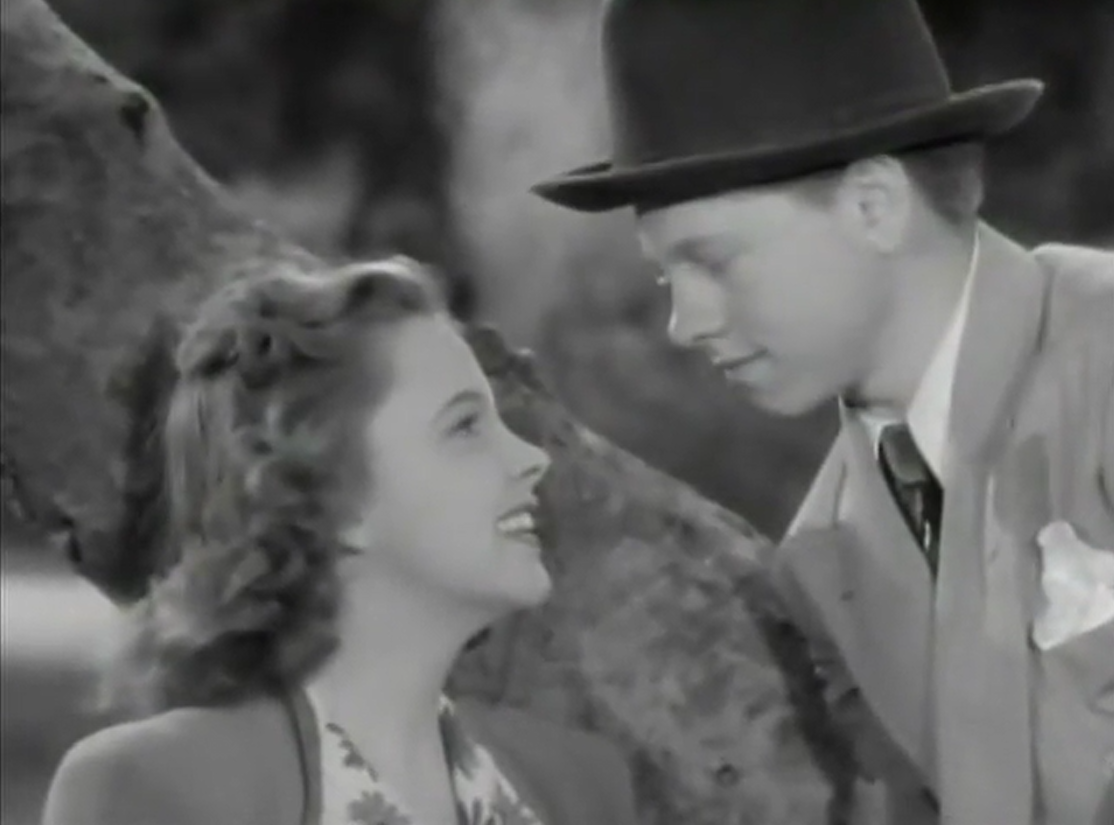
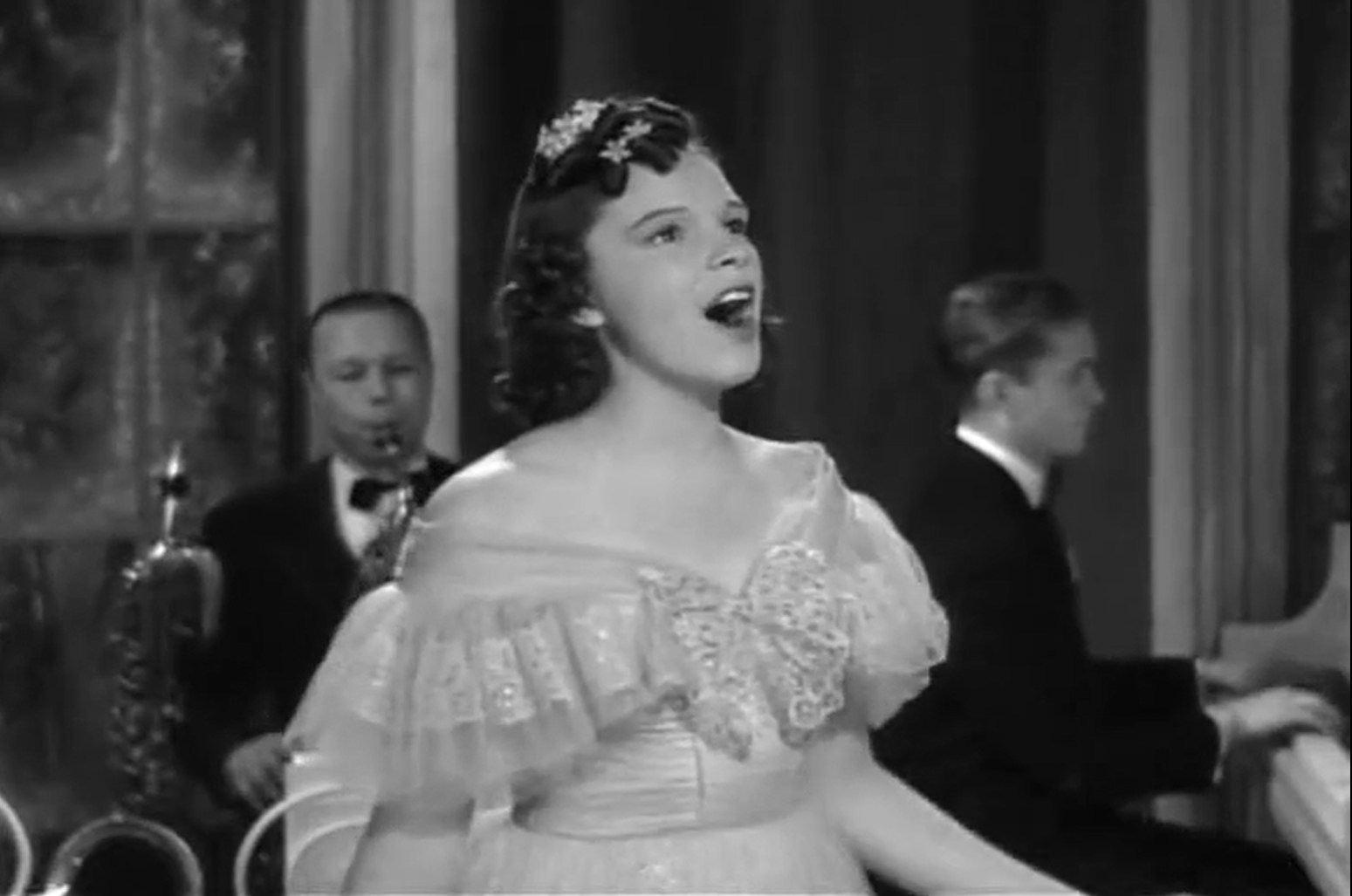
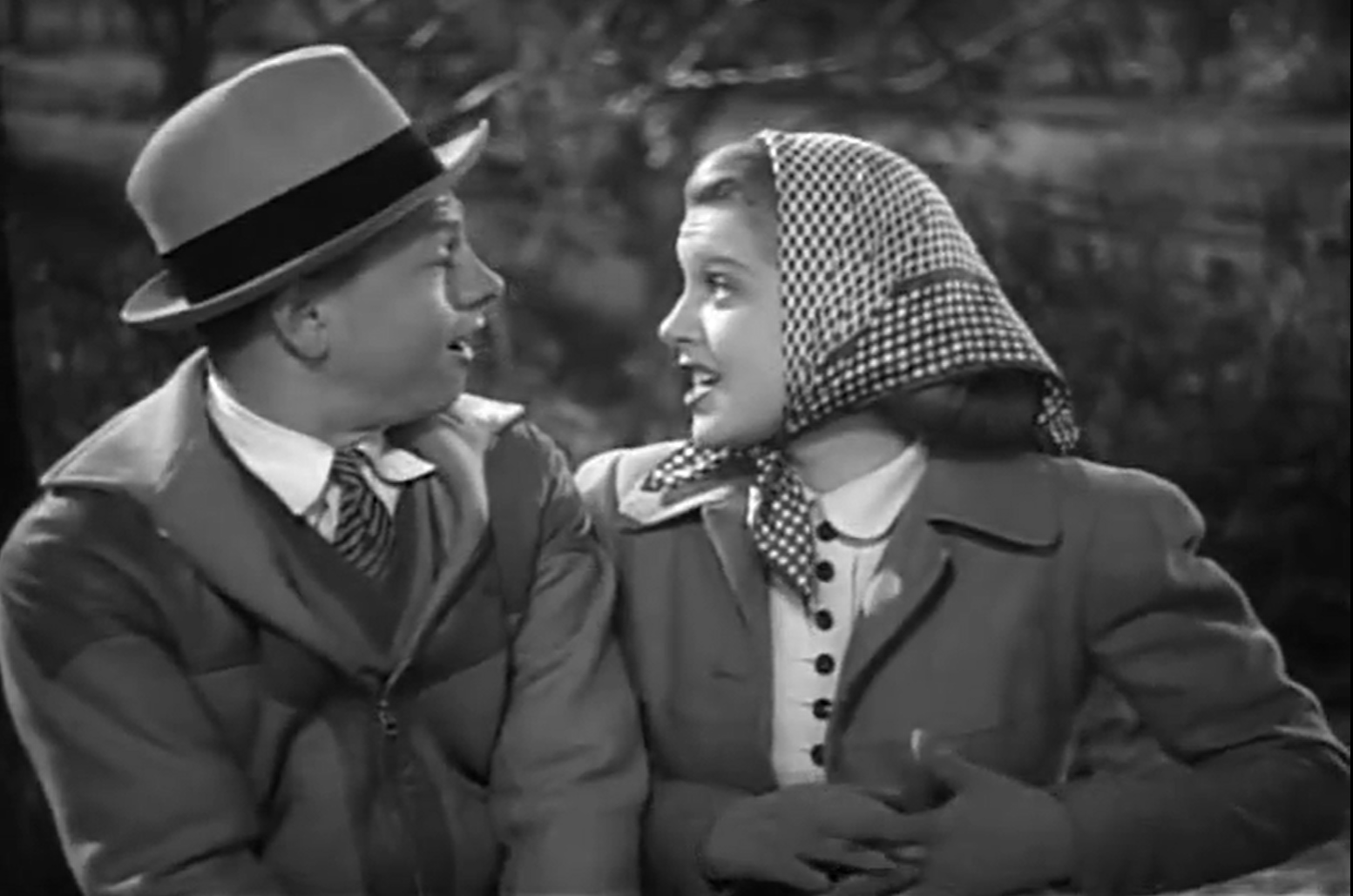
The fourth in the immensely popular “Andy Hardy” film series — which is often cited as the first real “sitcom”, before television took over this function — Love Finds Andy Hardy is generally regarded as one of the best of the bunch, thanks to the presence of young MGM starlets Lana Turner and Judy Garland. Garland, at the tender age of 15, is simply phenomenal, showcasing both her estimable vocal skills and her nascent acting chops:

We truly feel for her difficult situation as a “tween”, not quite old enough to be of interest to boys like Andy Hardy (! his “charisma” continues to stump), but certainly old enough to want to be. Turner is appropriately sexy and petulant:

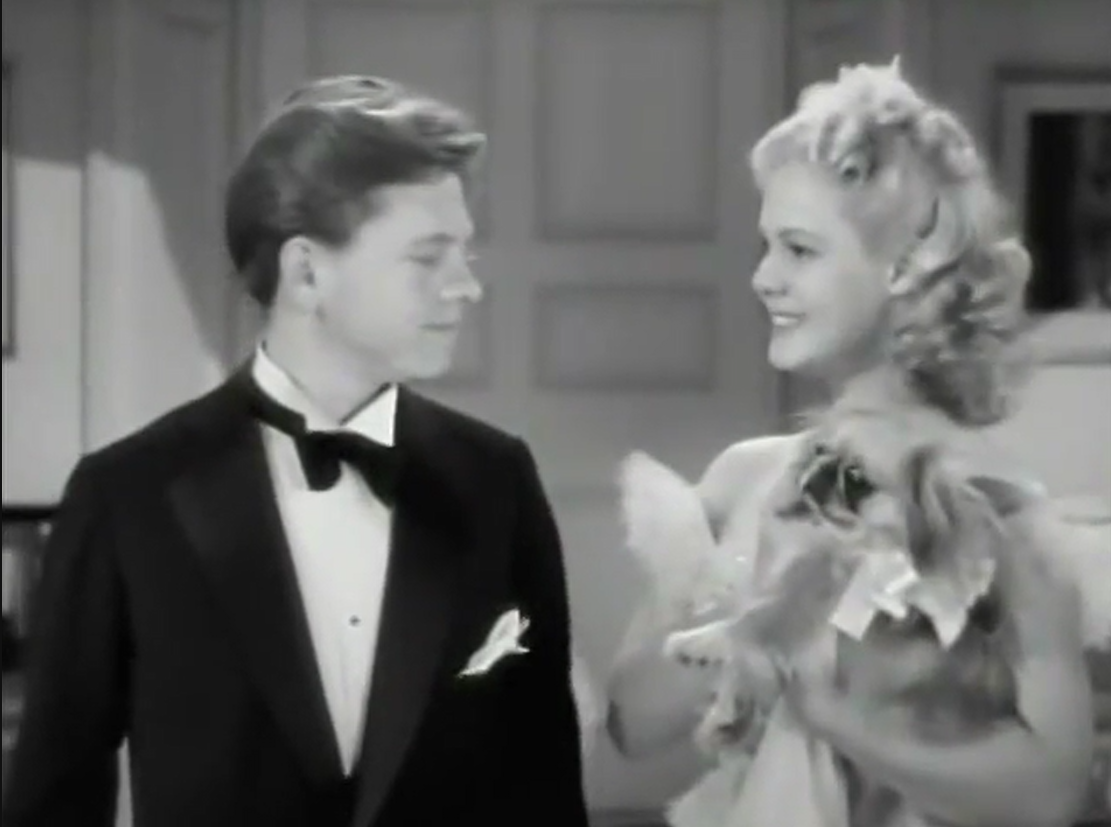
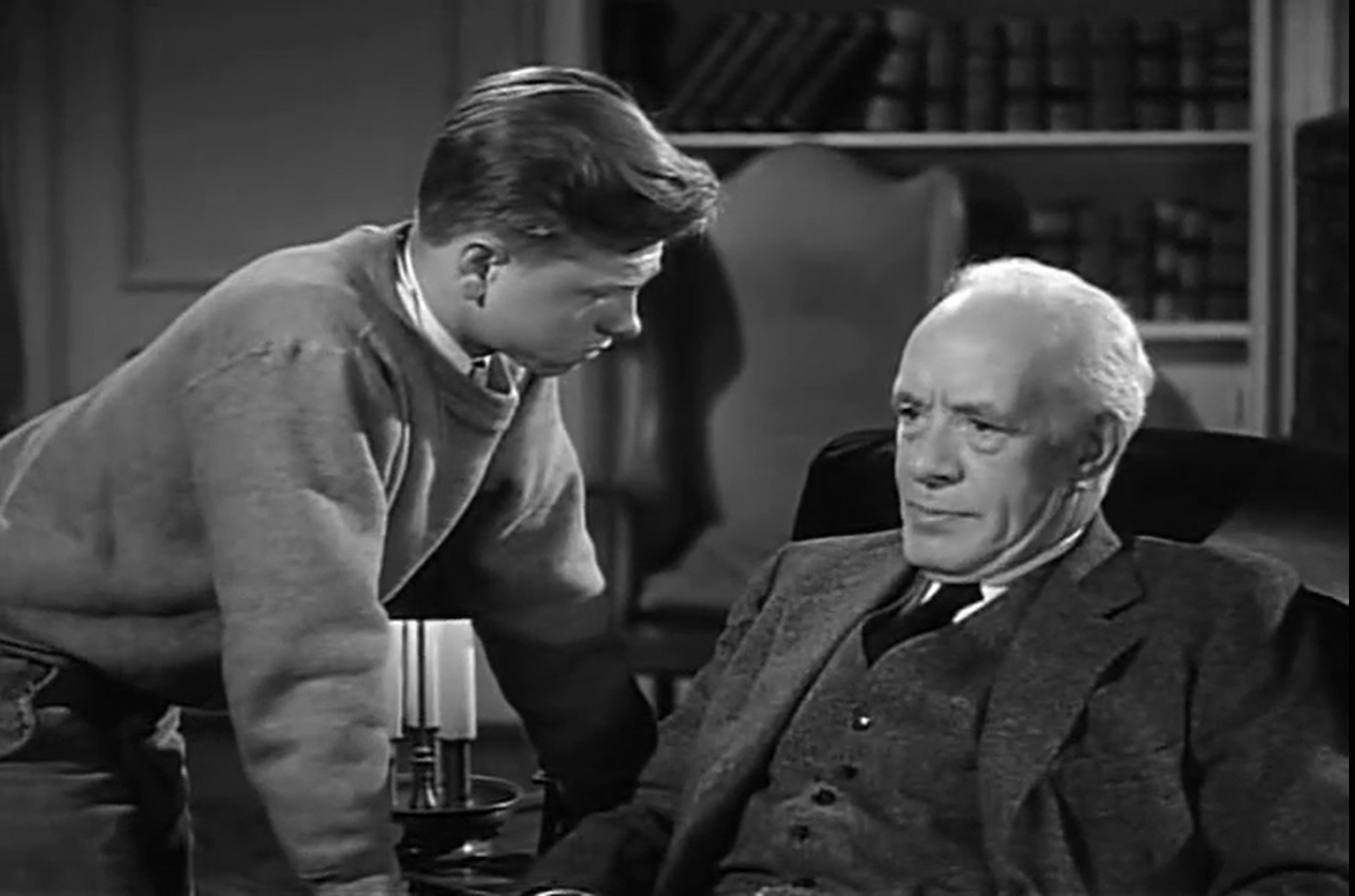
… but doesn’t really have enough screen time to register as a real (cinematic) threat to Garland, who easily steals the show. Meanwhile, film fanatics who haven’t seen the entire series like I have (ahem; I’ll admit to being rather obsessed with them as a teenager) can rest assured that they’ll get a sense of the essential formula, which remains intact here: starting with an opening court case — in which Judge Hardy (Lewis Stone, note-perfect) dispenses a resolution or two — the plot quickly unfolds to reveal some issue or concern Andy is dealing with, which dominates the storyline, and eventually includes a heart-to-heart with Dad; meanwhile, secondary plot elements relating to either Andy’s mother (Fay Holden) and/or sister (Cecilia Parker) recur throughout. While I’m no longer quite so enamored with the series — in truth, I found Love Finds… rather dated this time around — there’s no denying its charm and erstwhile appeal as perhaps the ultimate expression of small town ideals.

Redeeming Qualities and Moments:

  • Lewis Stone as Judge Hardy
  • Judy Garland as Betsy

Must See?
Yes, as a fine, representative example of the Andy Hardy series. Listed as a film with Historical Importance in the back of Peary’s book. Added to the National Film Registry in 2000.

Categories

  • Historically Relevant
  • Representative Film

Links: