Browsed by
Category: Original Reviews

Responses to Peary’s “must see” movie reviews, as well as my own “must see” movie reviews up to and after 1986 (when Peary’s book was published).

Circus of Horrors (1960)

Circus of Horrors (1960)

“A thief and a prostitute: the perfect candidate for the Schuler Circus.”

Synopsis:
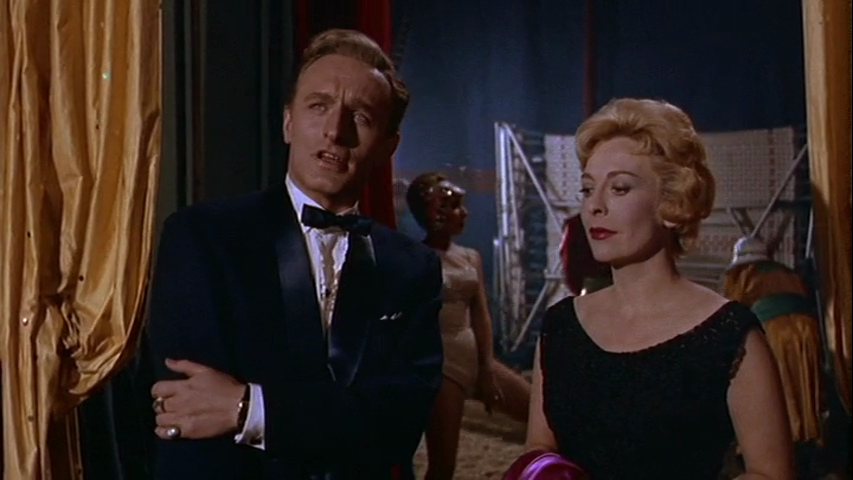
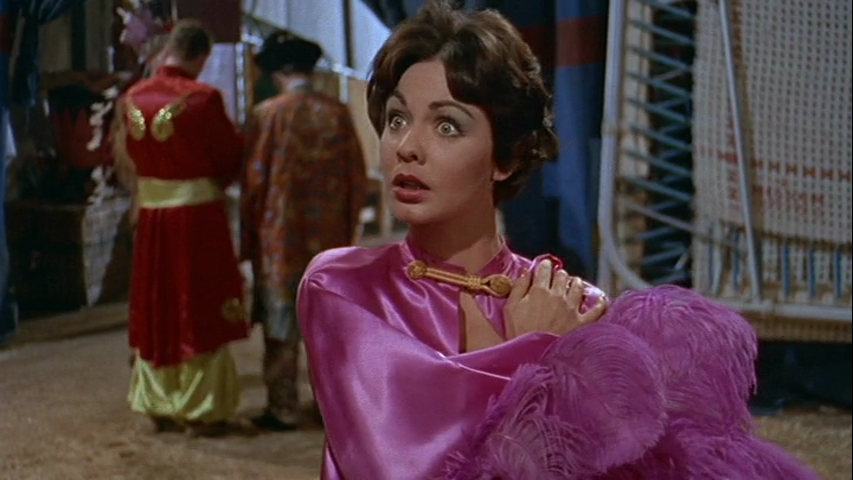
After botching a job on a society woman (Colette Wilde), a plastic surgeon (Anton Diffring) goes on the lam, taking over a circus owned by a Frenchman (Donald Pleasence) with a scarred daughter (Carla Challoner), and populating it with facially disfigured, troubled women whose beauty he restores. When his protegees choose to leave, however, he jealously kills them one by one, and soon a detective (Conrad Phillips) is on his trail.

Genres, Themes, Actors, and Directors:

  • Carnivals and Circuses
  • Detectives and Private Eyes
  • Disfigured Faces
  • Donald Pleasence Films
  • Fugitives
  • Horror
  • Mad Doctors and Scientists

Review:
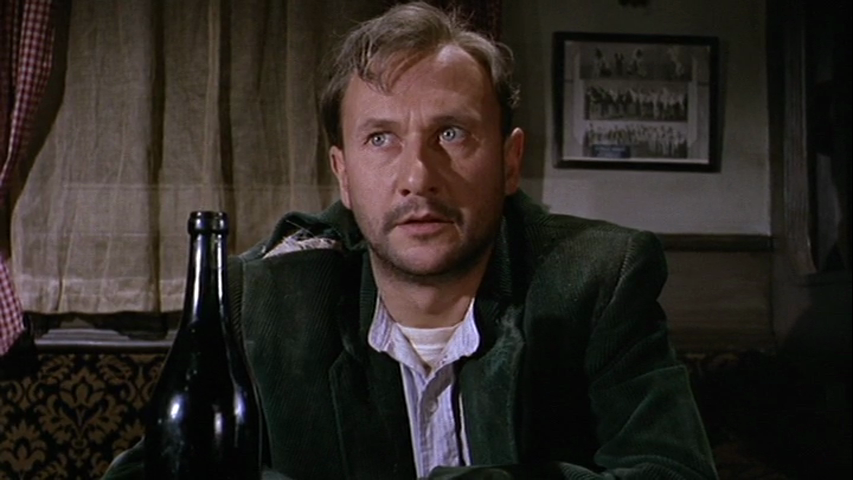
According to TCM’s article, “During a twelve month period between April 1959 and April 1960 British filmmakers tested the boundaries of the horror film with a much stronger emphasis on sex and violence in three features often referred to as the ‘Sadian Trilogy’ — Horrors of the Black Museum, Circus of Horrors and Peeping Tom.” Of these, Peeping Tom (1960) is the most highly regarded, but Circus of Horrors — while not “must-see” for anyone other than fans of the genre — remains a well-mounted, effectively lurid tale in its own right. Despite possessing a host of egregious flaws in narrative logic, it’s guaranteed to hold your interest, thanks in part to colorful cinematography (by DP Douglas Slocombe), solid direction (by Sidney Hayers, best known for 1962’s Burn, Witch, Burn!), and several fine performances (including a small, early one by Donald Pleasence, who — like all others killed or maimed in this film — meets a most unpleasant death).

German-born Diffring is nicely cast as the troubled lead of the film, who is clearly a “baddie” but not entirely evil; from the film’s opening sequence — in which a woman (Wilde) shrieks with horror at the botched job that’s been done on her face — it’s made clear that Diffring never intended for things to work out this way, and that he actually takes great pride in the stellar work he’s able to carry out, under the right circumstances. With that said, we soon learn that Diffring’s Dr. Rossiter/Schuler is an egomaniacal control freak who desires not only to make disfigured women beautiful again, but to hold them forever accountable to his will (and sexual desires). His choice (as a fugitive) to run a very-public circus, as well as his uncanny ability to turn all the women he takes under his wing into stellar acrobats, are evidence of the flawed logic listed previously; but they help to propel the undeniably sensationalist story towards its inevitable conclusion, with several gruesomely circus-themed deaths thrown in along the way. Meanwhile, fine use is made of Billy Smart’s actual circus performers; fans of this type of entertainment will surely enjoy seeing its historical capturing on film.

Redeeming Qualities and Moments:

  • Anton Diffring as Dr. Schuler
  • Donald Pleasence as Vanet
  • Erika Remberg as Elissa
  • Fine use of Billy Smart’s Circus as a setting

Must See?
No, but it’s certainly recommended.

Links:

Journey’s End (1930)

Journey’s End (1930)

“Think of it all as romantic — it helps.”

Synopsis:
During World War I, a fatigued captain (Colin Clive) on the verge of a breakdown is distressed to learn that a former classmate (David Manners) who once idolized him has been sent to his company; meanwhile, an older lieutenant (Ian Maclaren) tries to help Clive stay balanced and sane until his replacement arrives.

Genres, Themes, Actors, and Directors:

  • Colin Clive Films
  • James Whale Films
  • Play Adaptation
  • Soldiers
  • World War One

Review:
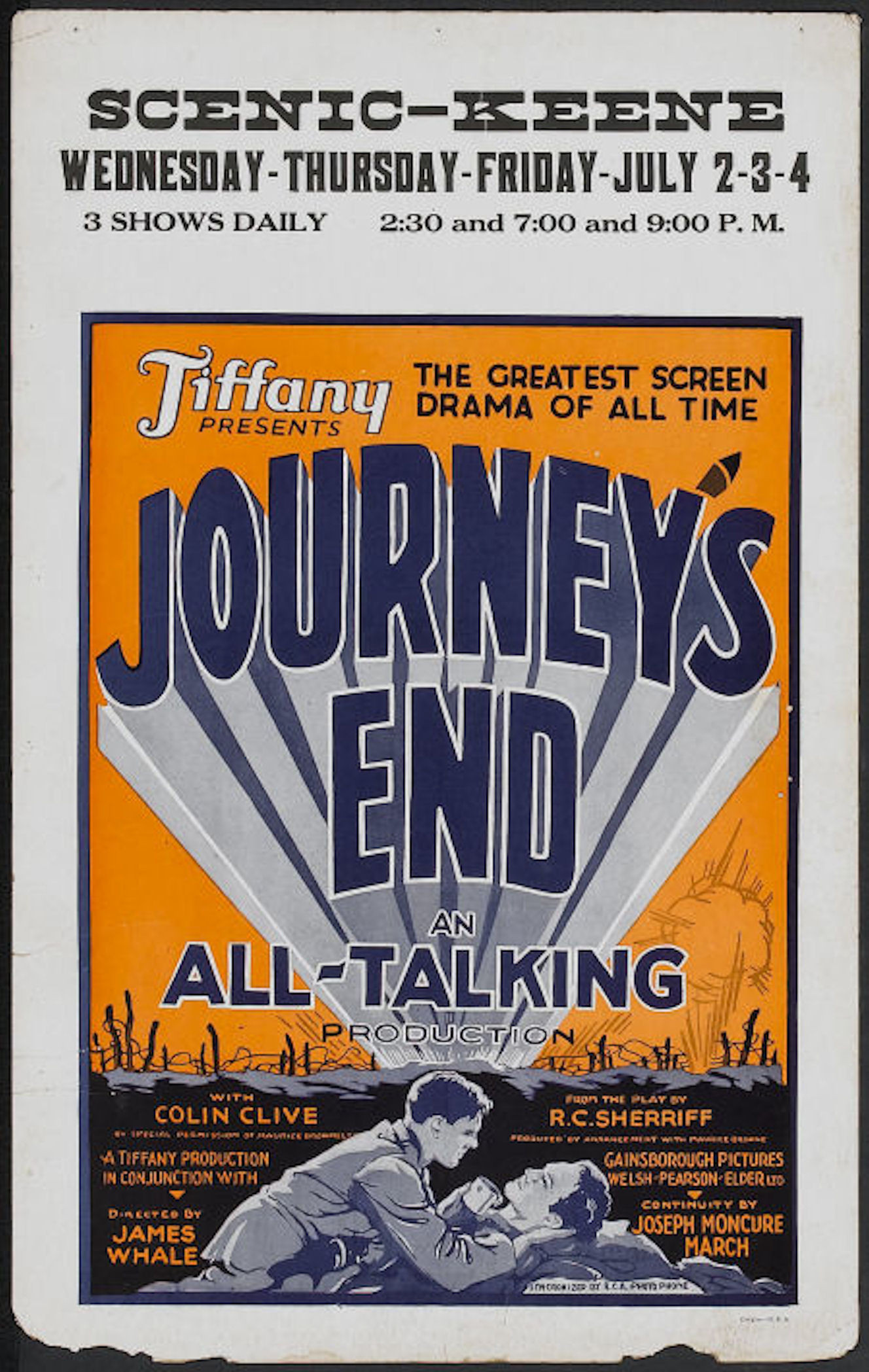
Based on an enormously popular British play by R.C. Sherriff, Journey’s End is notable as the film which brought director James Whale to Hollywood, and provided Colin Clive with his screen debut. Whale had directed Clive in the original play as well, and much of the material remains overly stagebound (perhaps due to its status as a very early talkie); while a few outdoor battle scenes are included (with fine cinematography by Benjamin Kline), the bulk of the film’s action takes place within the officers’ dugouts, and consists simply of dialogue. Speaking of dialogue, the screenplay includes an extraordinary amount of stereotypically polite British banter about the war, which one can only assume is characteristic of how officers at the time might have spoken with each other; sample exchanges include the following:

“It all seems rather silly, doesn’t it?”
“Yes, it does — rather.”

“It’s all a damn nuisance, but I suppose it’s necessary.”
“I suppose it is.”

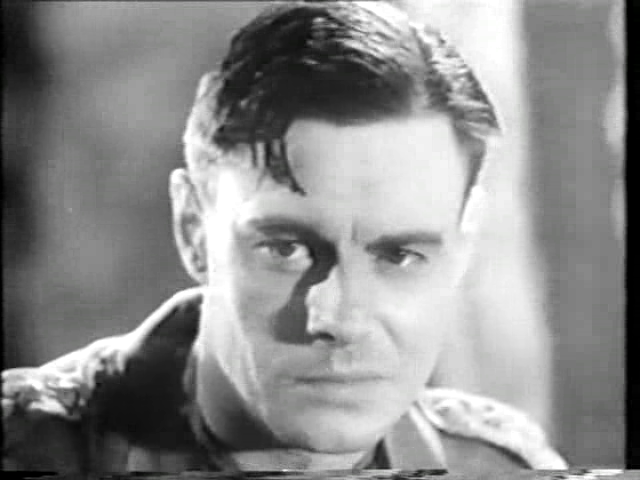
That damned, silly, necessary nuisance of a war, indeed! Meanwhile, in the midst of such civilized discussion, we witness a quietly powerful character study of a man (Clive is simply brilliant) struggling to reconcile the reality of his daily lived experiences with the stalwart persona he must maintain, for the sake of all his men. He lives in terror of the rumors he’s sure must be circulating about him (notably, that he’s taken to drinking at all hours of the day), but the storyline surprises us in its ultimate revelations about Clive’s reputation.

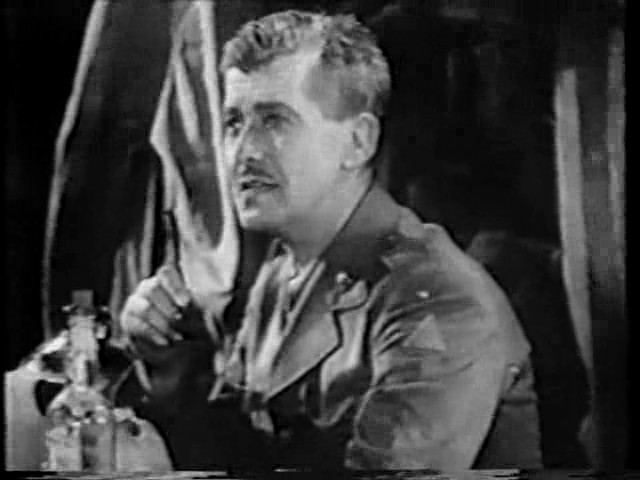
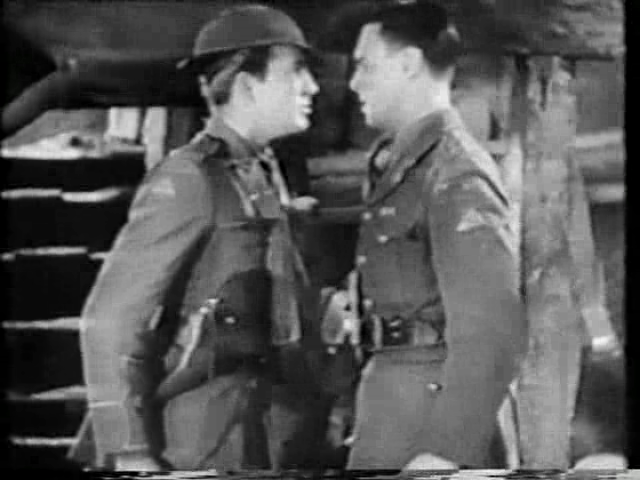
Viewers willing to sit patiently through what may be the most “talky”, least-action-filled war film ever made will be rewarded by numerous instances of quiet authenticity. My favorite scene is one in which the seasoned Maclaren (affectionately known as “Uncle”) and the green, gung-ho Manners are about to go up into battle; Maclaren reads from Alice in Wonderland while enjoining Manners to use these precious final moments to think about anything at all other than their imminent task. Less successful are periodic snippets of “comedic relief” provided by the company’s clueless cook (Charles K. Gerrard) and a rotund lieutenant (Billy Bevan) who seems resolutely determined to care more about his next meal than the chaos surrounding him. However, it’s moments like all of these, taken together, which ultimately help viewers to understand the complex psychology behind warfare, as these men prepare themselves in a variety of ways to face truly unspeakable horrors.

Redeeming Qualities and Moments:

  • Colin Clive as Captain Stanhope
  • Ian Maclaren as Lieutenant Osborne
  • An incisive, literate screenplay
  • Benjamin Kline’s cinematography

Must See?
No, though it’s certainly worth a look. Listed as a Sleeper in the back of Peary’s book.

Links:

Funnyman (1967)

Funnyman (1967)

“It doesn’t mean anything. I want it to mean something — anything!”

Synopsis:
A comedian (Peter Bonerz) struggles to find both romantic and creative meaning in his life.

Genres, Themes, Actors, and Directors:

  • Character Studies
  • Comedians
  • John Korty Films
  • Mid-Life Crisis

Review:
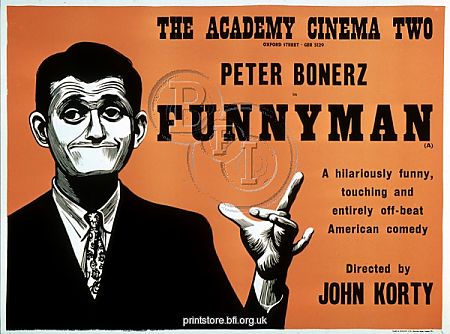
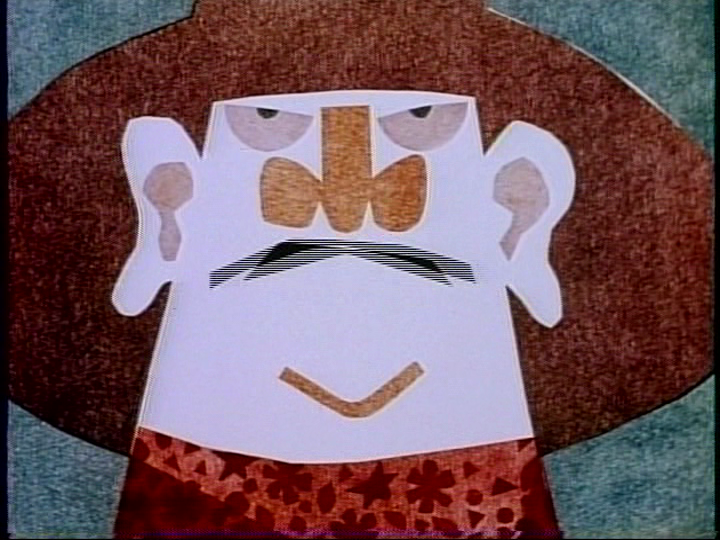
John Korty’s second feature-length outing — after his uniquely satisfying debut film The Crazy-Quilt (1966) — was this highly experimental character study starring Peter Bonerz (then active in the Bay Area improv troupe known as The Committee). Unfortunately, the non-linear, improvisational storyline (co-written by Bonerz and Korty) fails to engage us on anything other than a superficial level; the central protagonist’s quest for satisfaction in both his career and his love life never really sustains our interest, largely because we’re not emotionally invested in this likable but self-absorbed character. As the film opens, we see that Bonerz’ “Perry” has recently broken up with a long-time girlfriend (though we don’t learn why); throughout the course of the movie, he sleeps with various women who present themselves to him, but learn next to nothing about any of them. Meanwhile, we see Perry’s resentment at having to bastardize his creative talents by contributing ideas to a marketing firm — which ironically leads to one of the film’s most engaging and inventive sequences, as we see stop-motion advertisements Bonerz has dreamed up for bug spray; one can’t help thinking of Korty’s later work on the enormously inventive Twice Upon a Time (1983).

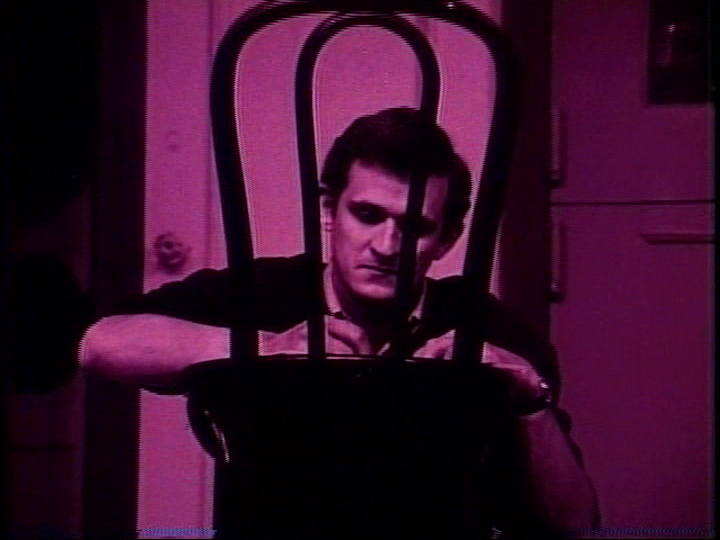
When Perry throws a tantrum and demands to be given a chance to put on a solo show, we’re curious to see what he’ll come up with — but the result is imminently forgettable. Meanwhile, the rest of the film turns into essentially a meandering road trip, as Bonerz leaves the city (to where, we’ve never sure) and encounters a variety of diverse individuals. I won’t say more, at risk of giving away too much of the plot, but suffice it to say that the final half-hour or so consists of a series of intriguingly cinéma vérité encounters without nearly enough narrative context to sustain them. Ultimately, the entire affair comes across as simply self-indulgent — which is not to say it doesn’t hold interest on some level. Korty is a strong enough director that even his overly experimental, New Wave-inspired cinematic palette — including frequent shifts from b&w cinematography to various tinted hues — can be forgiven as simply an attempt to bring a fresh perspective to the proceedings. However, while The Crazy-Quilt is a hidden must-see gem (buy a copy from Korty himself!), Funnyman is only worth seeking out if you have a strong interest in the early development of Korty’s unusual oeuvre.

Note: Bonerz had supporting roles in a few big-name films after this — including What Ever Happened to Aunt Alice? (1969) (not listed in Peary’s book), Medium Cool (1969), and Catch-22 (1970) — and was the coke-sniffing psychiatrist in Serial (1980); his best-known role was probably as Dr. Jerry Robinson on “The Bob Newhart Show”. However, the bulk of his career has been spent as a director; see his listing at IMDb for more details.

Redeeming Qualities and Moments:

  • Creative incorporation of animation
  • Peter Bonerz as Perry

Must See?
No, but it’s worth a look. Listed as a Sleeper in the back of Peary’s book.

Links:

Hobson’s Choice (1954)

Hobson’s Choice (1954)

“My brain and your hands will make a working partnership!”

Synopsis:
The ambitious eldest daughter (Brenda de Banzie) of a patriarchal shoe store owner (Charles Laughton) woos her father’s best employee (John Mills) into marrying her and setting up their own shop, much to the consternation of Laughton and her two class-conscious sisters (Daphne Anderson and Prunella Scales).

Genres, Themes, Actors, and Directors:

  • Charles Laughton Films
  • Class Relations
  • Cross-Class Romance
  • David Lean Films
  • Father and Child
  • Feminism and Women’s Issues
  • Historical Drama
  • John Mills Films
  • Play Adaptation
  • Strong Females

Review:
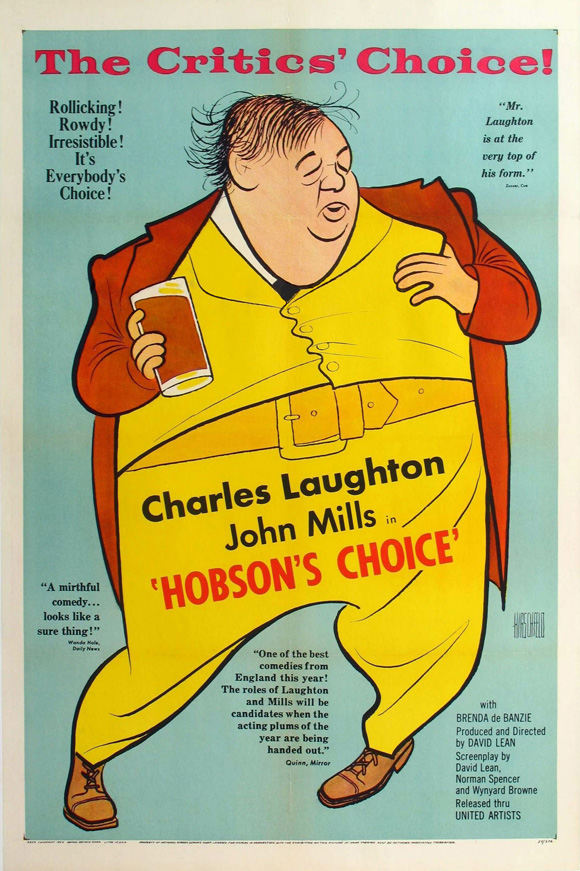
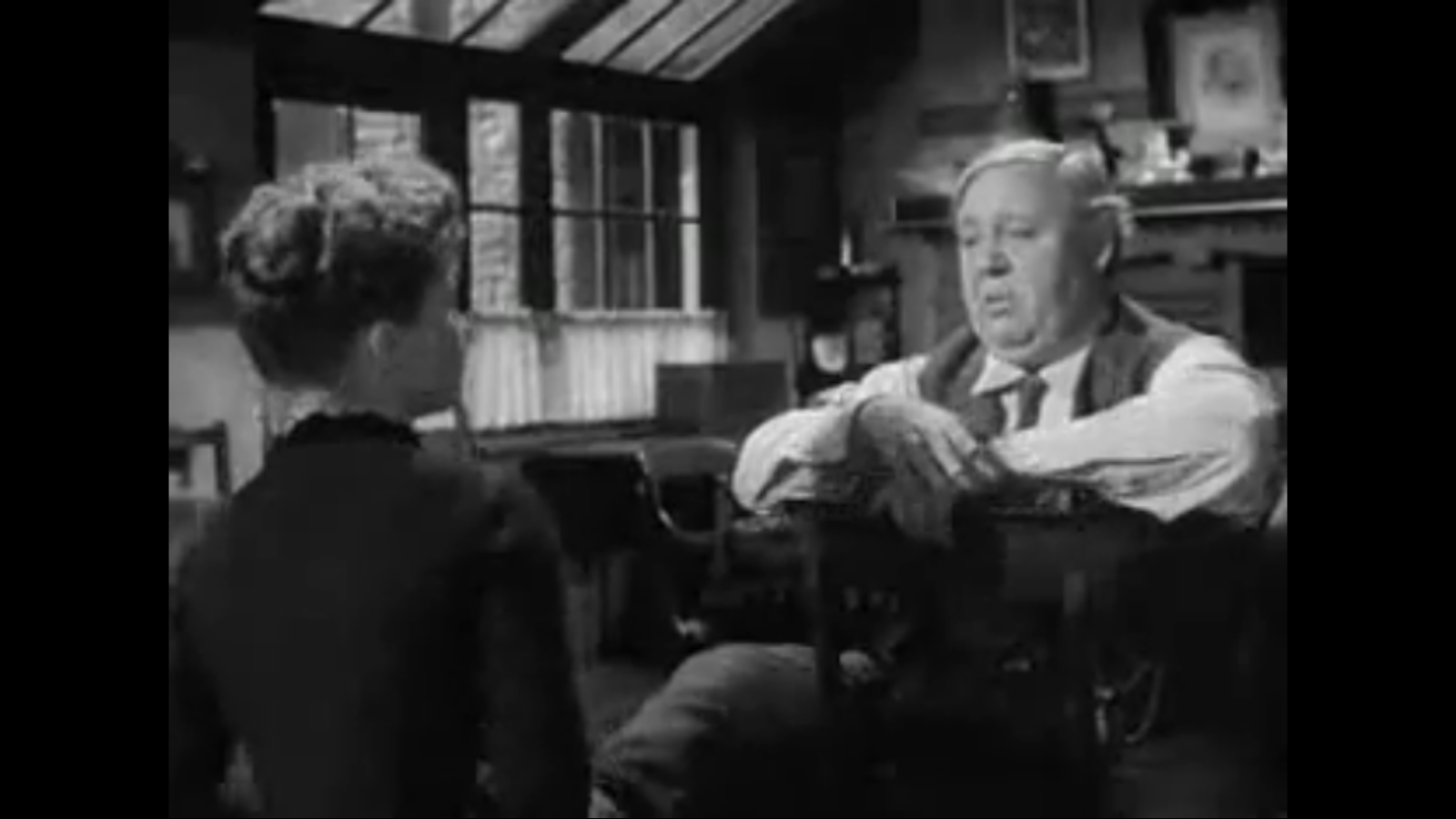
It’s actually somewhat astonishing to be reminded that this classic comedy by director David Lean (one of only two in his oeuvre) is based on a stage play, given how utterly un-stagebound it feels. Lean’s masterful direction opens up the story to show us a pre-Industrial England in which feminism was just beginning to emerge, and women like Brenda de Banzie’s Maggie were truly unsung mavericks. Indeed, Hobson’s Choice is not only a droll comedic delight, but a notable feminist film, in addition to offering a refreshing skewering of class relations. To that end, Laughton’s Henry Hobson is a genuine paradigm of his time: he’s a self-satisfied, condescending patriarch who believes his position in life (as both a father and a business owner) provides him with de facto entitlement to boss others around, and to spend his own time lolling about in a local pub.

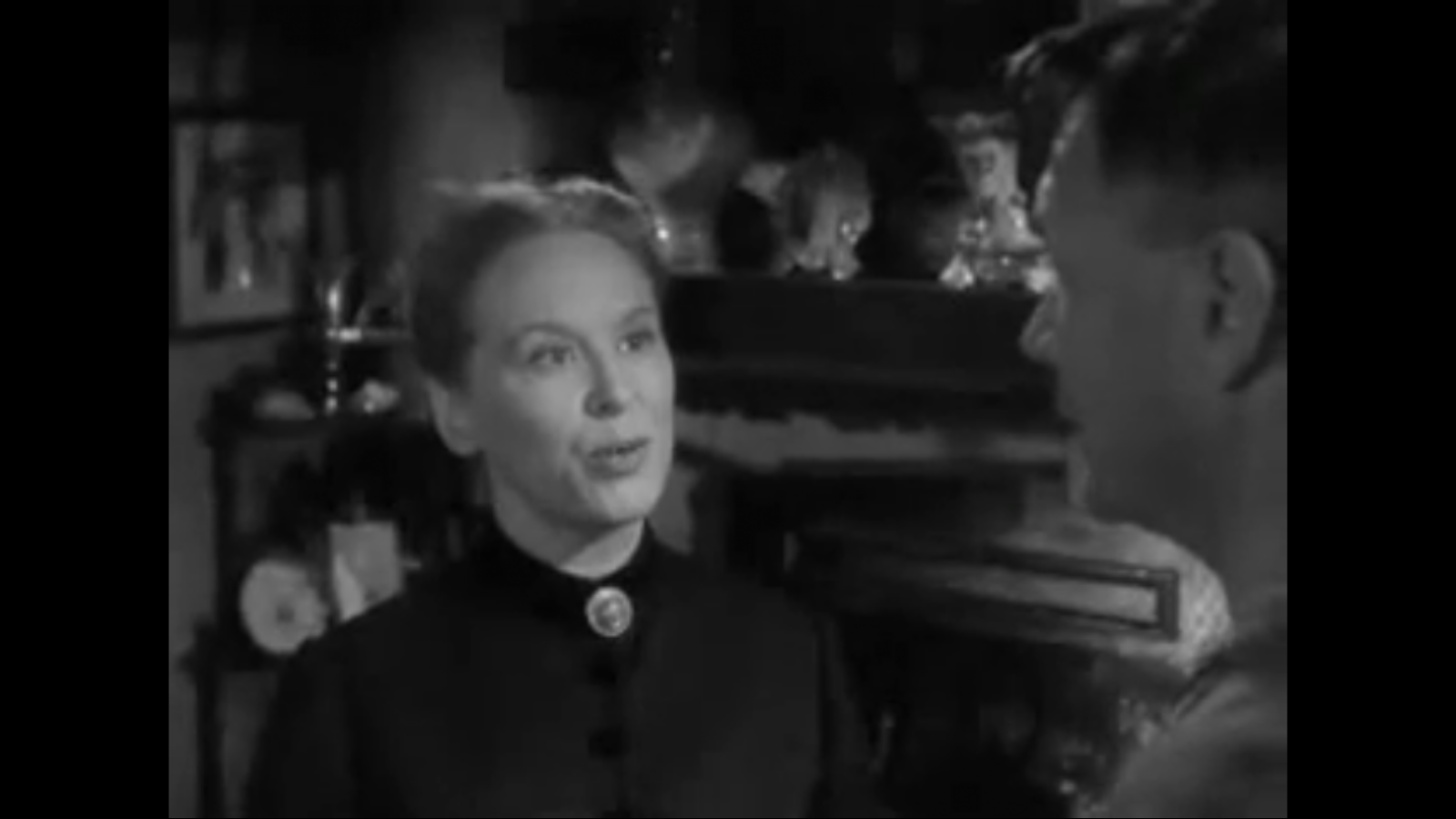
The storyline centers on Hobson’s delicious come-uppance — with the title itself ultimately referring to the fact that Hobson really has no choice in mending his ways. Interestingly, while he’s the clear antagonist of the story, we can’t help feeling a bit of compassion for him, given how inevitable his downfall is — and how clueless he is about its coming. Meanwhile, de Banzie’s Maggie makes for a most unlikely protagonist, but that’s precisely the point: from the very beginning, she’s posited (by Laughton) as someone too old and too plain to marry or make anything more of her life than what she has; she spends the rest of the storyline proving him wrong. It helps that de Banzie herself is a somewhat unknown cinematic face: her only other notable (supporting) film roles were as a female baddie in Hitchcock’s second version of The Man Who Knew Too Much (1956), and as Laurence Olivier’s wife in The Entertainer (1960). This makes her emergence as an unexpectedly strong force-to-be-reckoned-with all the more pleasantly surprising.

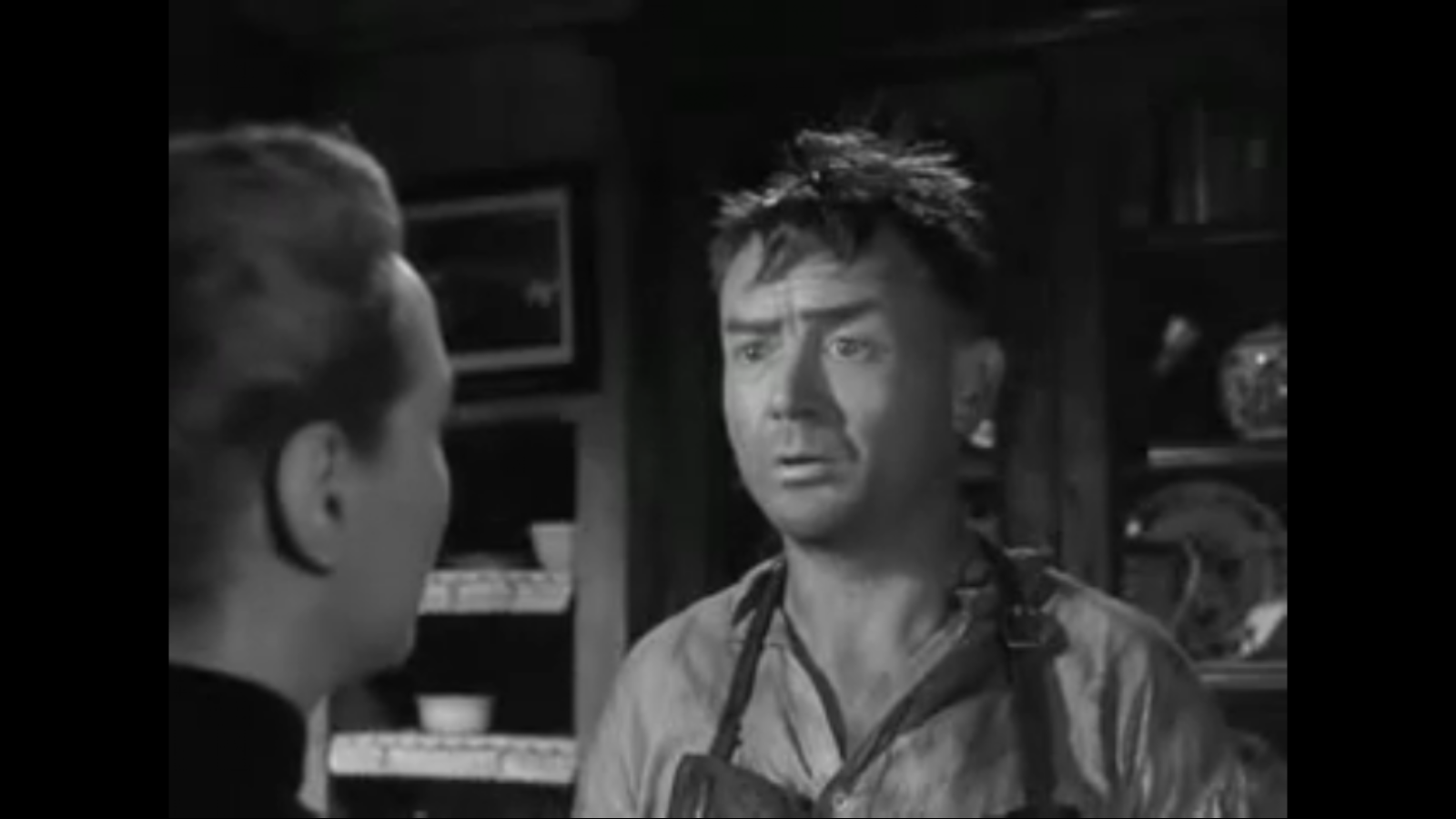
Peary nominates Laughton as one of the Best Actors of the Year for his work in this film, and it does remain one among many of his impeccable performances; no one was better at embodying grotesque disdain than Laughton. John Mills is equally delightful (if unexpectedly cast) in the pivotal role as Willie Mossop, a gifted yet intellectually challenged shoemaker who slowly comes into his own as a man of means. Every scene he’s in is delightful, but my favorite is probably the one showcasing the moments before and after his wedding night (with the night itself, naturally, cut out); with help from Lean, Mills masterfully conveys everything we need to know about this critical facet of his shifting relationship with de Banzie. Also worth pointing out is Malcolm Arnold’s instantly hummable score, which seems as much a part of the film experience as the visuals and storyline. This one is a true delight, and should be seen by all film fanatics at least once.

Redeeming Qualities and Moments:

  • Brenda de Banzie as Maggie Hobson
  • Charles Laughton as Henry Hobson (nominated by Peary as one of the Best Actors of the Year in his Alternate Oscars)
  • John Mills as Willie Mossop
  • Fine direction by Lean
  • The effective opening sequence
  • Malcolm Arnold’s jaunty score

Must See?
Yes, as a most enjoyable dramatic comedy. Listed as a film with Historical Importance and a Personal Recommendation in the back of Peary’s book.

Categories

  • Good Show
  • Important Director

Links:

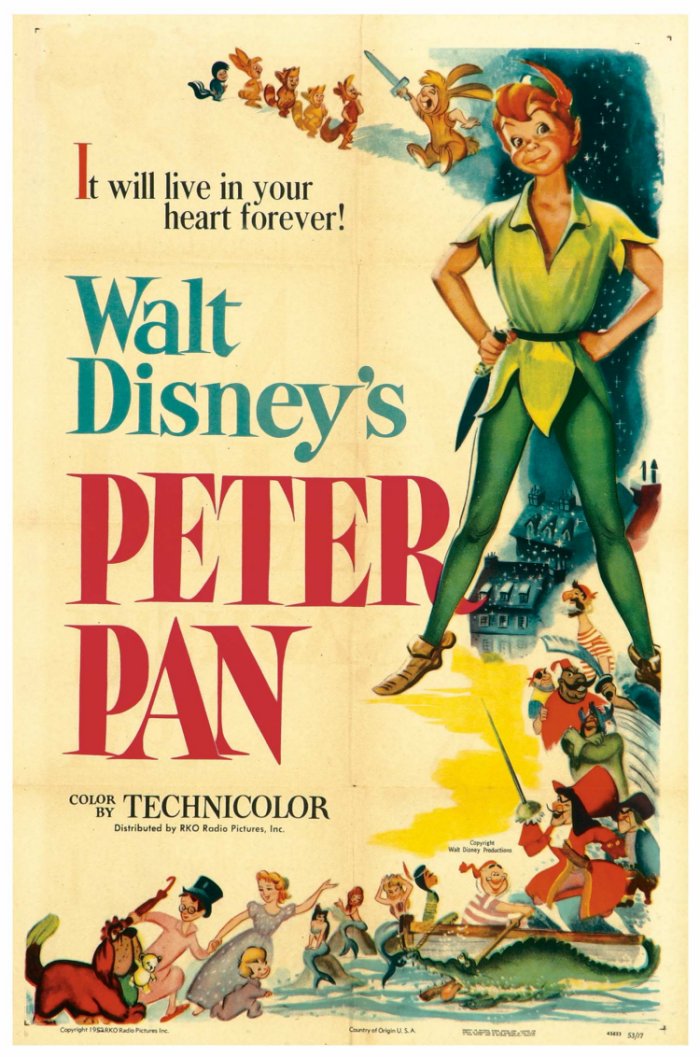
Peter Pan (1953)

Peter Pan (1953)

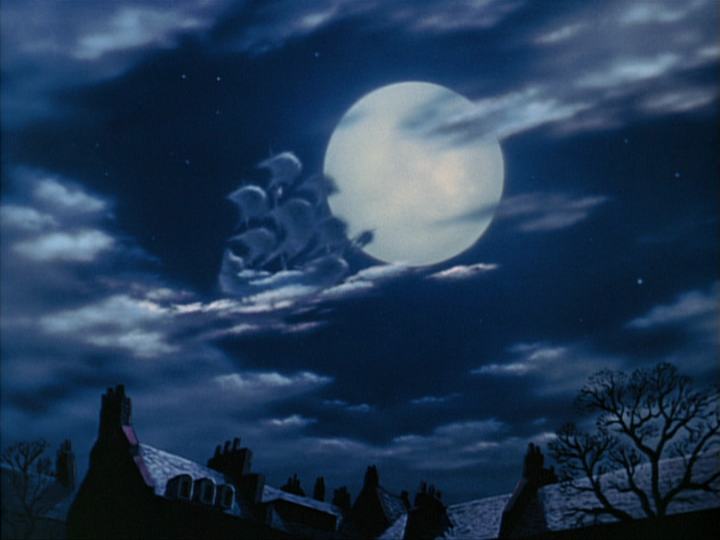
“That corner house over there is the home of the Darling family — and Peter Pan chose this particular house because there were people here who believed in him.”

Synopsis:
A forever-boy named Peter Pan (Bobby Driscoll) flies into the nursery of the Darling children — Wendy (Kathryn Beaumont), John (Paul Collins), and Michael (Tommy Luske) — and takes them to Never Land, where they battle against evil Captain Hook (Hans Conreid).

Genres, Themes, Actors, and Directors:

  • Animated Features
  • Fantasy
  • Hans Conried Films
  • Pirates
  • Revenge

Review:
Walt Disney’s animated version of J.M. Barrie’s play-turned-novel is beloved by many, but ultimately remains one of his lesser classics. With the exception of the catchy tune “You Can Fly!”, the songs aren’t very memorable, and the animation — while representative of the fine work Disney Studios produced — isn’t all that distinguished. What hurts the film the most, however, is its disjointed storyline, which flits around through various scenarios (including a typically offensive one involving “redskins”), and simply never feels focused. In addition, we’re not quite sure who to be rooting for: while Peter Pan would be the obvious choice, he’s too much of a scampish scoundrel to feel much sympathy for; and though Wendy is a lovely character, she’s not sufficiently developed to be viewed as a central protagonist.

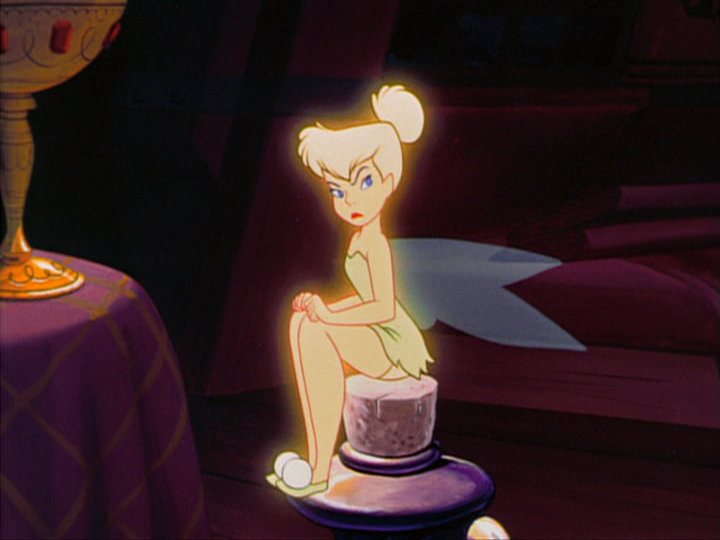
Other characters, meanwhile, are simply disappointing and/or ill-conceived: as Richard Scheib of Moria Reviews puts it, “the Lost Boys look… like anthropomorphized fluffy bunnies and Smee [Hook’s right-hand-man] looks like he has strayed in from a casting call for one of the Seven Dwarves.” Meanwhile, Hook (wonderfully voiced by Hans Conried) is too buffoonish to represent a real threat; his interactions with both Peter and “The Crocodile” rely far too heavily on tiresome slapstick. The most intriguing character in the film by a long shot is Tinkerbell, who never says a word, but says PLENTY with her expressions, body language, and actions.

Other than Tinkerbell, the most interesting aspect of this film for me (as a mom of two little kids) was the fact that young Michael Darling wears pink the entire time. This prompted me to do a bit of research, and I came upon this short article, which states: “Pink and blue arrived, along with other pastels, as colors for babies in the mid-19th century, yet the two colors were not promoted as gender signifiers until just before World War I—and even then, it took time for popular culture to sort things out.” Since the original Peter Pan was written (and takes place) near the turn of the century, this choice makes sense.

Redeeming Qualities and Moments:

  • Typically fine Disney animation

  • The refreshingly feisty character of Tinkerbell

Must See?
No, though naturally it holds some cultural interest (it was the highest grossing film of 1953), and is a must for Disney fans.

Links:

Smallest Show on Earth, The (1957)

Smallest Show on Earth, The (1957)

“We’ve got to make the Bijou the best little cinema in this part of the country!”

Synopsis:
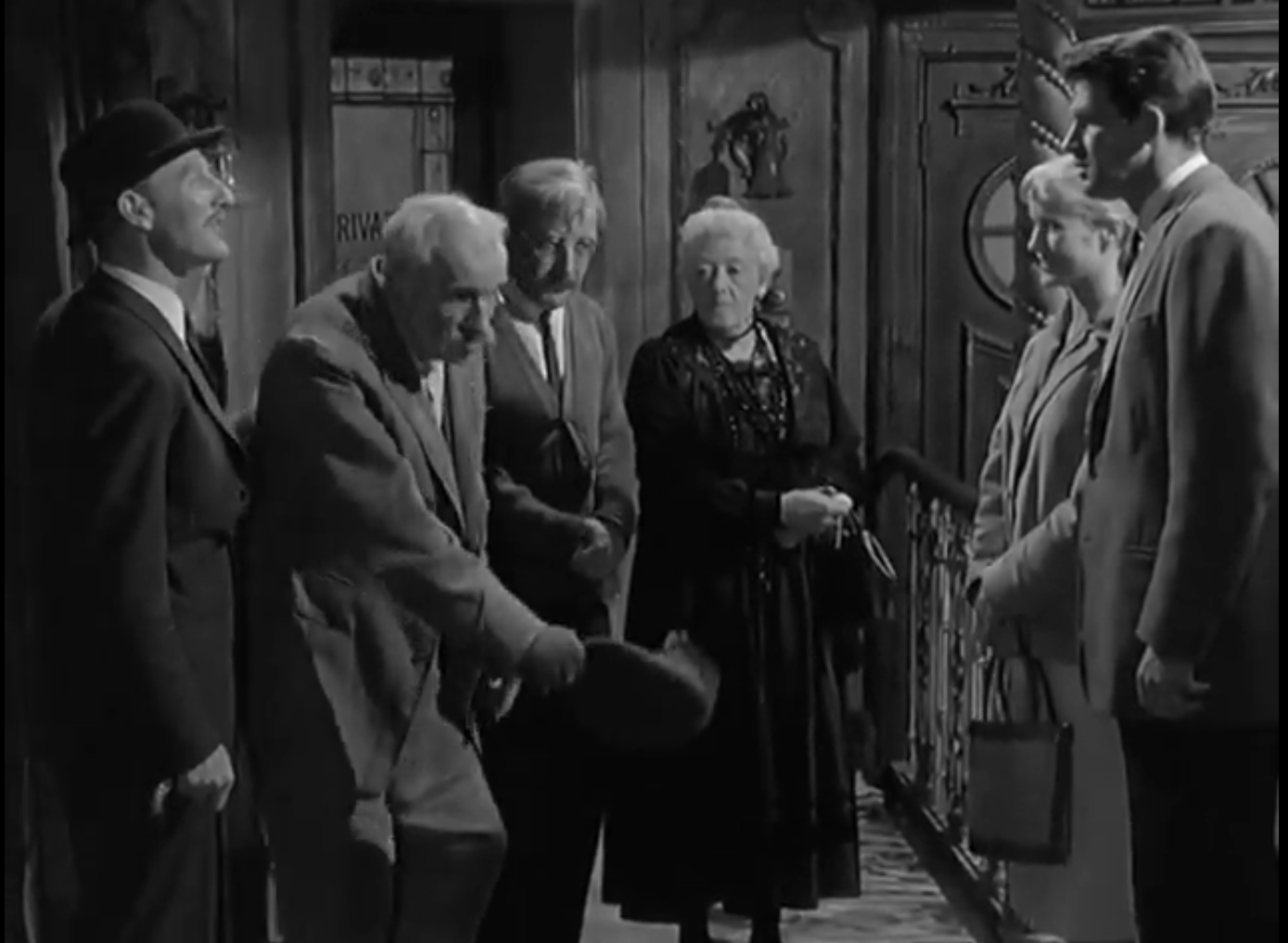
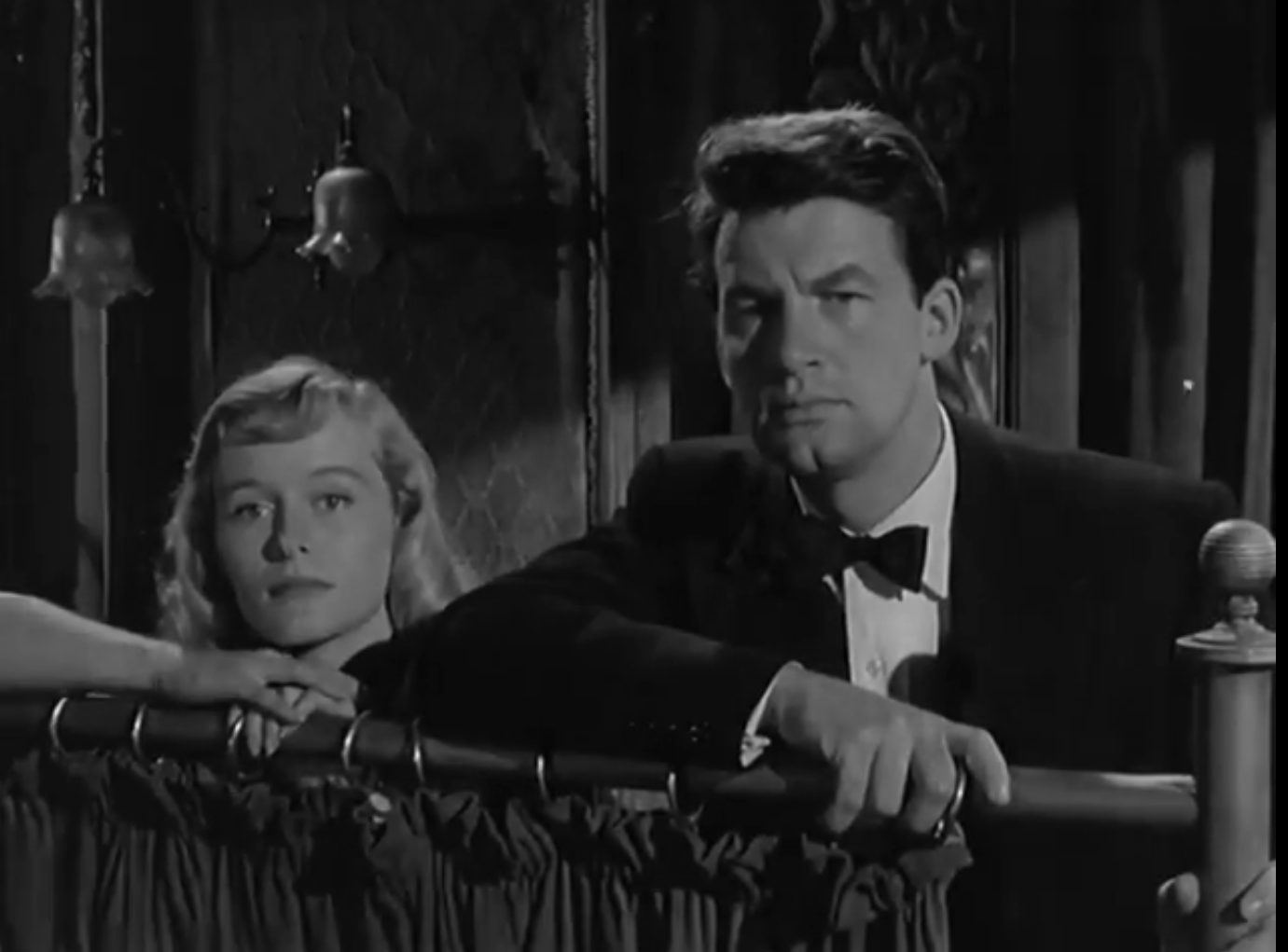
When a writer (Bill Travers) and his wife (Virginia McKenna) inherit a rundown cinema (the Bijou) previously manned by three aging employees — a doorman (Bernard Miles), a ticket-taker (Margaret Rutherford), and a tippling projectionist (Peter Sellers) — they attempt to turn it into a going concern in order to convince their competitor (Francis De Wolff) to buy them out.

Genres, Themes, Actors, and Directors:

  • Comedy
  • Inheritance
  • Margaret Rutherford Films
  • Peter Sellers Films
  • Rivalry

Review:
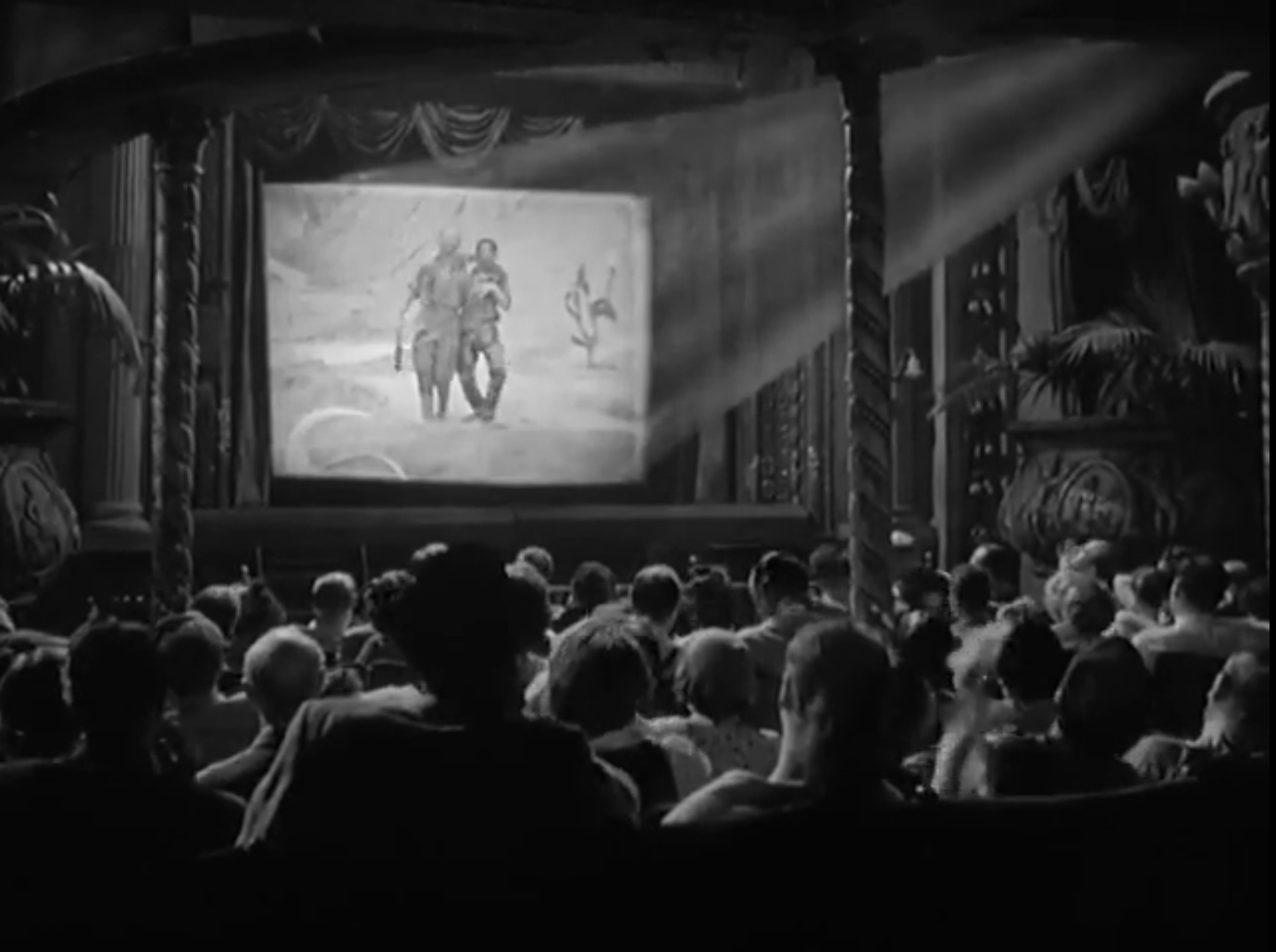
Film fanatics will surely be inherently drawn to the subject matter of this comedy about a young couple trying to revive an ailing independent cinema house (which shows nothing but westerns!). Unfortunately, while there are some genuinely charming moments scattered throughout — and one definitely gains a renewed appreciation for the skill involved in running a movie theater — the storyline itself never really takes off, making this a good-natured situation comedy with much potential but too little pay-off. Once the central conflict is established — McKenna and Travers must convince De Wolff that they’re serious in their commitment to running the Bijou — all that’s left is to watch our intrepid cast attempt to make a go of things; but their antics are mildly amusing at best. Meanwhile, none of the three “elderly” characters — played by cinematic favorites Sellers, Rutherford, and a nearly-indistinguishable Miles — are sufficiently developed (or given enough screentime):

… and the understated denouement is surprisingly discomfiting.

Redeeming Qualities and Moments:

  • An amusing look at the challenges of running an independent cinema house

Must See?
No, though it’s worth a look, and will likely be endearing to most film fanatics, given its subject matter. Listed as a Sleeper in the back of Peary’s book.

Links:

Voyage to the Planet of Prehistoric Women (1968)

Voyage to the Planet of Prehistoric Women (1968)

“No man living today can predict exactly what the future holds.”

Synopsis:
A race of sexy blonde Venutians, led by Moana (Mamie Van Doren), are threatened by the arrival of a small crew of astronauts on their planet.

Genres, Themes, Actors, and Directors:

  • Astronauts
  • Mamie Van Doren Films
  • Peter Bogdanovich Films
  • Science Fiction
  • Space Exploration

Review:
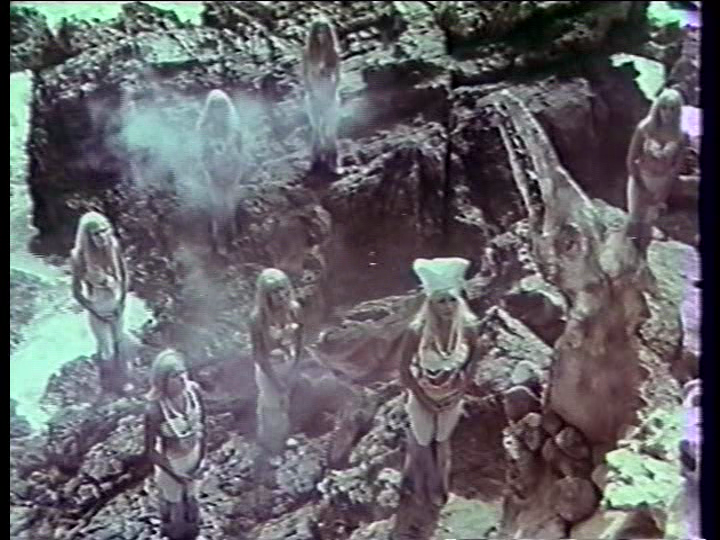
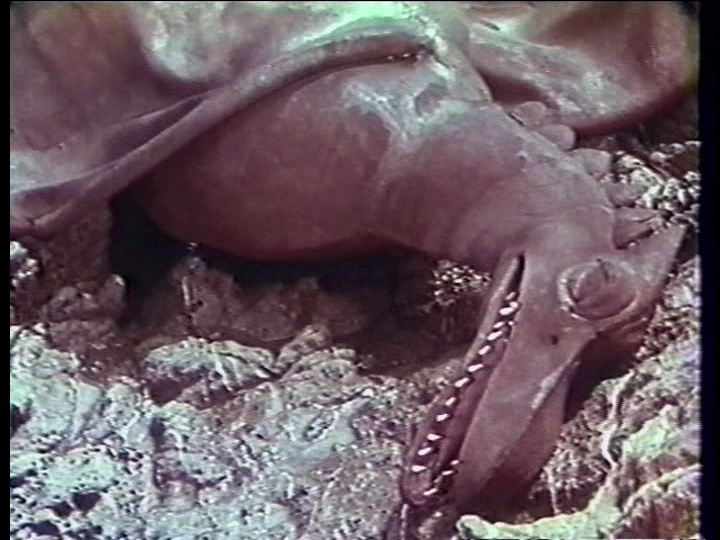
This bizarre early entry in Peter Bogdanovich’s directorial career was produced by Roger Corman as a way to gain additional mileage from two Soviet space exploration films he had purchased and already used to make Battle Beyond the Sun (1963) and Voyage to the Prehistoric Planet (1965). The resulting film is — perhaps inevitably — a jarring mish-mosh of scenes, with most of the film’s running time spent following a crew of dubbed Soviet astronauts and their robot as they explore Venus, and additional scenes showing a bevy of telepathic blonde Venutians (wearing skin-tight pants and seashell bras) worshiping their god:

… and reacting with silent horror to the invasion of their planet. The two cohorts, naturally, never actually meet. It’s all frightfully sub-par — but interestingly enough, the storyline moves along at a quick enough pace that you’ll likely never be bored, exactly. You can’t help wondering what the astronauts are really saying (how closely is writer Henry Ney sticking to the original script?), and thinking about whether he was inspired at all by Woody Allen’s spoof What’s Up, Tiger Lily? (1966).

My favorite exchange:

Astronaut #1: It almost sounds like a girl…
Astronaut #2: Or a monster!

Same difference, naturally.

Redeeming Qualities and Moments:

  • Moments of campy appeal

Must See?
No; feel free to skip this one. Listed as a Camp Classic in the back of Peary’s book.

Links:

Bitch, The (1979)

Bitch, The (1979)

“After the pleasure, the pain, lover!”

Synopsis:
A gambler (Antonio Cantafora) in debt to the Mafia seduces the nymphomaniac owner (Joan Collins) of a failing discoteque.

Genres, Themes, Actors, and Directors:

  • Joan Collins Films

Review:
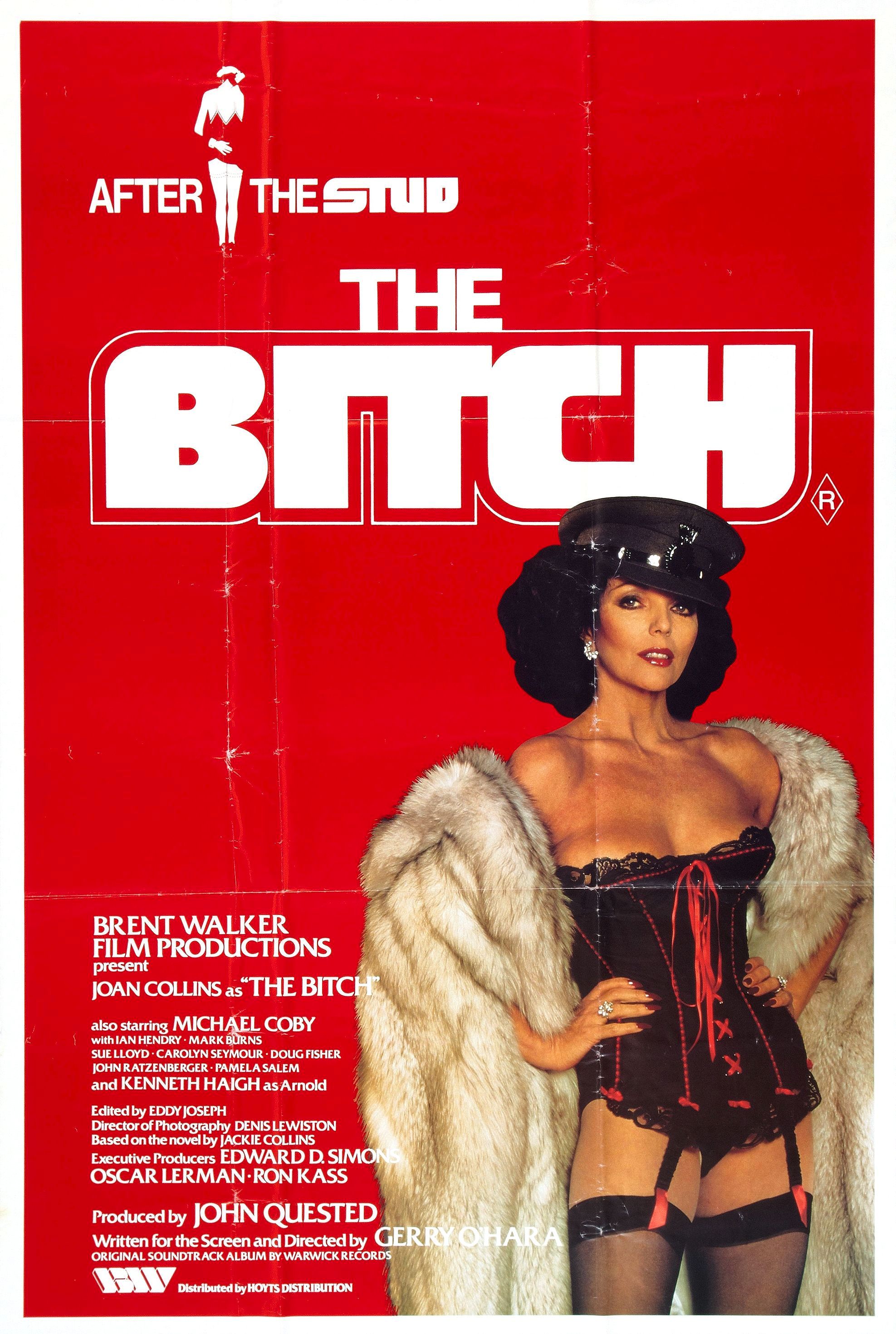
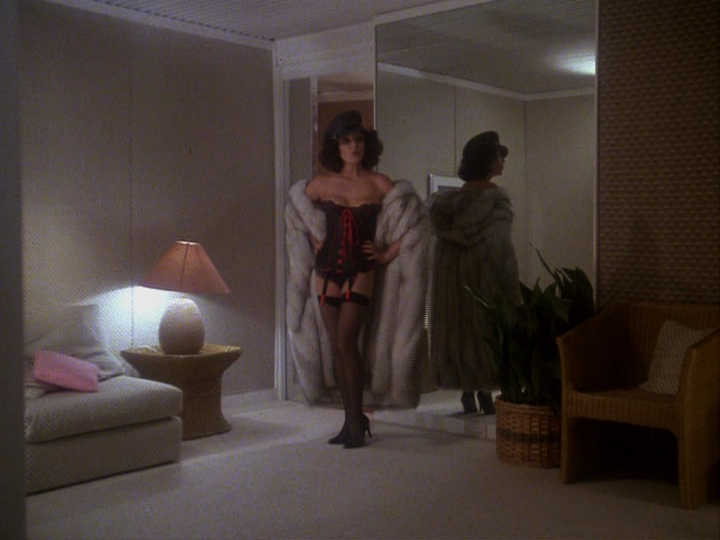
This trashy sequel to a title mercifully missing from Peary’s book (1978’s The Stud) similarly stars Joan Collins in an adaptation of a blockbuster novel written by her sister, Jackie Collins. I was genuinely hard-pressed to come up with a meaningful synopsis of The Bitch, given that the “storyline” (such as it is) is simply an excuse to get the various characters into bed with each other, in between showing off numerous high-end locales. I presume we’re supposed to enjoy watching a still-sexy 40-something “bitch” like Collins seducing young men left and right (including her hapless chauffeur; ha ha), but ultimately it all simply comes across like badly-directed soft core porn, without nearly enough unintentional laughs to merit its labeling by Peary as a Camp Classic. (Naturally, it does have its base of fans, as evidenced by comments on IMDb, including some calling for its remake — heaven help us!)

Redeeming Qualities and Moments:

  • Joan Collins’ unabashedly raunchy portrayal as Fontaine Khaled

Must See?
No; skip this one.

Links:

Cloak and Dagger (1946)

Cloak and Dagger (1946)

“If anyone’s going to develop the atom bomb, you want it to be us — not the Nazis.”

Synopsis:
An American scientist (Gary Cooper) sent to Europe as a secret agent tries to help a fellow nuclear scientist (Vladimir Sokoloff) escape from a brutal Fascist regime, with the help of a beautiful Italian Resistance fighter (Lilli Palmer).

Genres:

Review:
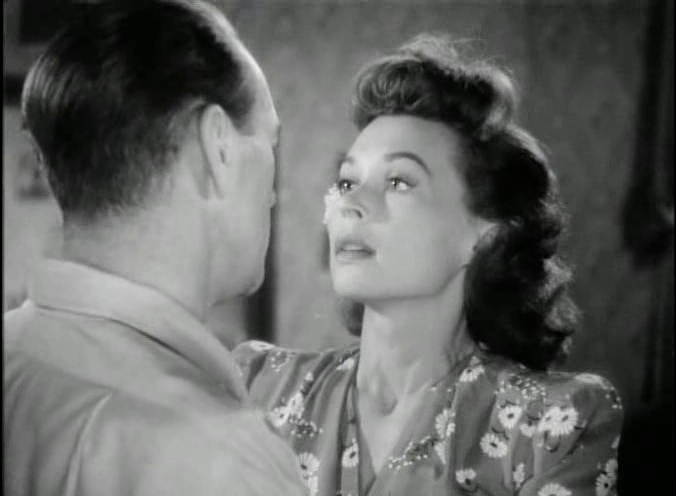
Peary lists no less than 26 Fritz Lang films in his GFTFF, including (naturally) all of Lang’s best-known works, as well as a handful of his lesser-known titles — such as this one. Cloak and Dagger — based on a non-fiction book about the O.S.S. — remains an undistinguished but competently made war-era spy thriller, featuring a memorable performance by Lilli Palmer as the female lead:

and a storyline which, at the very least, keeps one engaged while watching. Cooper acquits himself reasonably well (people have complained that he doesn’t look like a nuclear scientist; what, pray tell, does a “nuclear scientist” look like??):

but unfortunately his character’s transformation from bookish lab rat to gallant spy isn’t particularly convincing; however, if you accept this mild implausibility, it’s easy enough to get caught up in his adventures. The best scene, taking place in a hallway, is a wordless one, reminiscent of the infamously dialogue-free “oven murder” scene in Hitchcock’s Torn Curtain (1966); it shows clear evidence of Lang’s directorial vision.

Note: Check out DVD Savant’s article to read more about “one of the most interesting post-production alterations ever done to an American film”.

Redeeming Qualities and Moments:

  • Lilli Palmer as Gina
  • The wordless hallway fight sequence

Must See?
No, but it’s recommended.

Links:

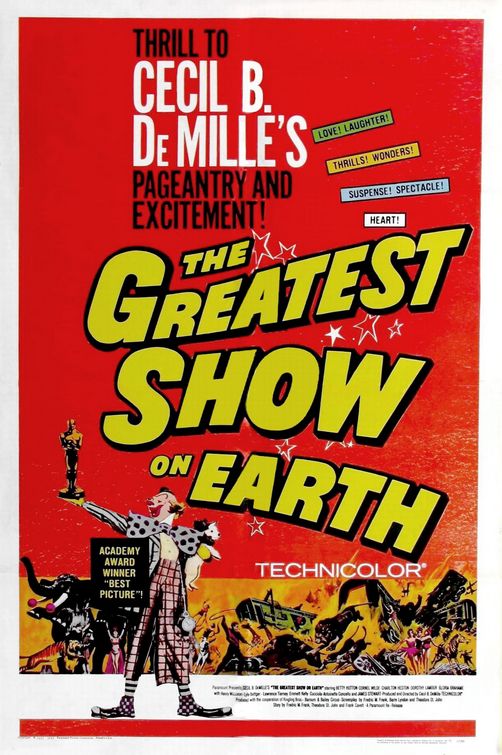
Greatest Show on Earth, The (1952)

Greatest Show on Earth, The (1952)

“Is it me you’re worried about, or the circus?”

Synopsis:
A circus manager (Charlton Heston) hires a famous aerialist (Cornel Wilde) as a new star act, provoking the jealousy of one of his current aerialists (Betty Hutton), who was hoping to take center stage herself. Meanwhile, a clown (Jimmy Stewart) with a deep secret hides his identity behind a permanent mask of make-up, and an elephant-rider (Gloria Grahame) dating an aggressive trainer (Lyle Bettger) secretly pines for Heston.

Genres, Themes, Actors, and Directors:

  • Betty Hutton Films
  • Carnivals and Circuses
  • Cecil B. Demille Films
  • Charlton Heston Films
  • Cornel Wilde Films
  • Dorothy Lamour Films
  • Gloria Grahame Films
  • Jimmy Stewart Films
  • Lawrence Tierney Films
  • Love Triangle
  • Rivalry

Review:
Peary doesn’t review this notoriously “unworthy” Best Picture winner in his GFTFF (where he simply lists it in the back as a film with Historical Importance) — but in his Alternate Oscars, he summarily dismisses it as “entertaining junk”, noting that it likely won the award simply because “voters probably knew somebody in the all-star cast or huge production crew”. Peary’s certainly not alone in his cynical assessment; a quick glance at message boards on IMDb reveals the depth of many viewers’ frustration that such worthy Oscar contenders as Singin’ in the Rain and High Noon (for instance) were passed over in favor of TGSOE. (I’ve found that people tend to feel harshest about films they believe “undeservedly” stole critical kudos from acknowledged classics.)

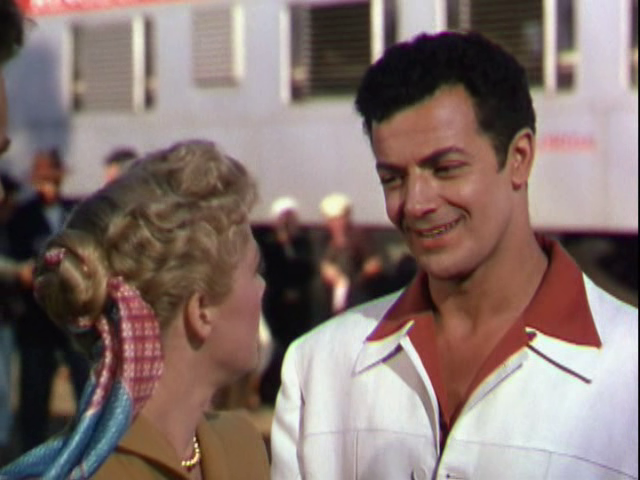
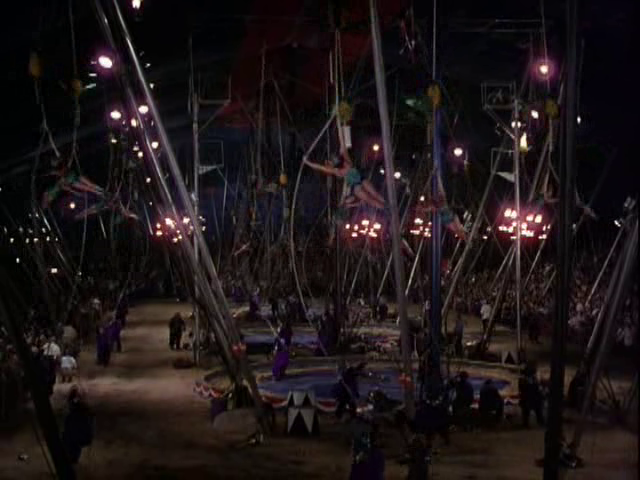
At any rate, given its overall negative rap, I was surprised to find myself reasonably engaged as I revisited this over-the-top Technicolor spectacle (Cecil B. DeMille’s second-to-last directorial effort), which — as DVD Savant writes — “has too much color and too many varied circus acts to be boring.” I couldn’t seem to help getting caught up in the drama of it all — and darned if the central love quadrangle (between Heston, Hutton, Wilde, and Grahame) isn’t milked effectively until the very end, leaving you in “suspense” about who will end up with who. However, this faint praise is not meant to diminish the film’s more troublesome elements: it frequently (very frequently) devolves into campy melodrama; DeMille’s intrusive voice-over narration is often laughably grandiose; there’s some truly sloppy editing at times; the subplot involving Lawrence Tierney as a corrupt carny shyster is given too little screentime (we learn almost nothing about him — he simply appears, looking menacing); and there are far, far too many self-serving reaction shots of audience members gawking in wonder at the marvels of the circus (we get it already!).

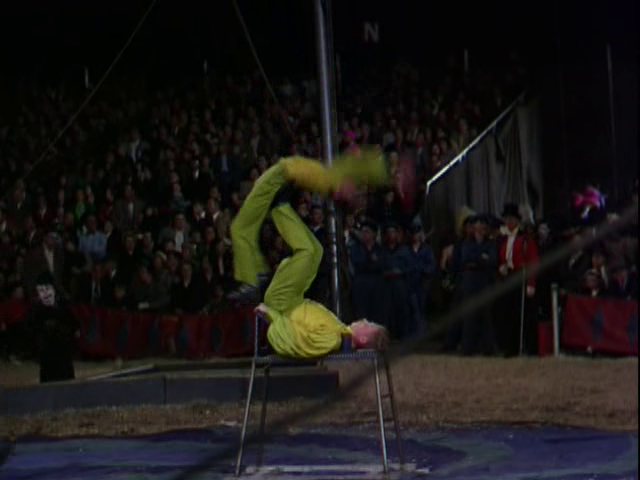
At least the lead actors all seem game with the material. Hutton has been raked over the coals for her hyper-kinetic performance here, but what else would one expect from her? I actually think she’s wonderfully convincing as an acrobat (clearly she worked out quite a bit in preparation — before such things were so commonplace in Hollywood), and, as someone aggressively pursuing fame in her own life as well, she seems to suit her role to a tee. Heston is likewise perfectly cast as a man with so much “sawdust in his blood” that he literally breathes “circus” in and out. Wilde is the pleasant surprise of the bunch — he has rollicking fun with his role as a womanizing egomaniac with an alluring foreign accent (and what a body he crafted for the part!). Grahame’s role is frustratingly underwritten during the first half of the film, but she’s allowed more of a welcome presence during the second half. Stewart — notoriously remaining in make-up throughout the entire film — is appropriately subdued and mysterious in his critical role, which is based on a provocative premise. Meanwhile, the spectacle surrounding their various intertwining melodramas provides an interesting glimpse at what passed for entertainment in mid-century America — much of it (i.e., the acrobatic acts) remains just as thrilling today, while the remainder (i.e., the various “albums” paraded through the rings) is simply laughably quaint.

Note: Along with Tierney, poor Dorothy Lamour seems least-well-served here; her character is essentially a send-up of her previous glamour-girl roles (and watch for a silly cameo by her Road To… co-stars in the audience).

Redeeming Qualities and Moments:

  • Cornel Wilde (having great fun) as the Great Sebastian
  • An interesting time capsule glimpse of mid-century circus life and performances


  • Plenty of unintentionally hilarious dialogue: “The only thing I like about you are your elephants.”

Must See?
Yes, simply for its historical notoriety.

Categories

  • Historically Relevant
  • Oscar Winner or Nominee

Links: