Browsed by
Category: Original Reviews

Responses to Peary’s “must see” movie reviews, as well as my own “must see” movie reviews up to and after 1986 (when Peary’s book was published).

Turning Point, The (1977)

Turning Point, The (1977)

“I don’t believe in being sorry; we are what we are.”

Synopsis:
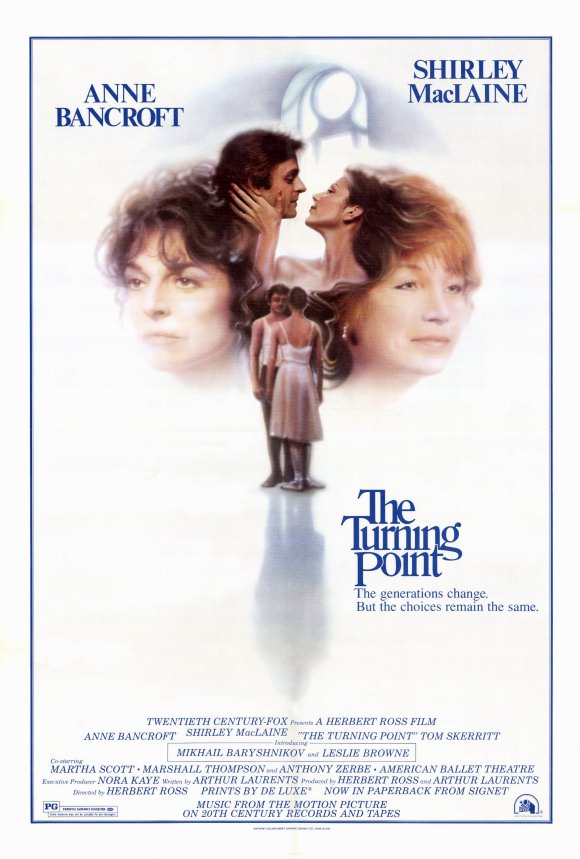
A former ballerina (Shirley MacLaine) who gave up her career to marry her lover (Tom Skerritt) and have children revisits her past when her oldest daughter (Leslie Browne) is offered a position with the American Ballet Company, and is mentored by MacLaine’s friend and former rival (Anne Bancroft).

Genres, Themes, Actors, and Directors:

  • Anne Bancroft Films
  • Ballet
  • Friendship
  • Has-Beens
  • Herbert Ross Films
  • Rivalry
  • Shirley MacLaine Films

Review:
The Turning Point (produced and directed by Herbert Ross) holds a rather infamous place in cinematic history, given that it garnered no less than 11 Academy Award nominations (including one for Best Picture), but didn’t win in any category. As a backstage melodrama centered around the highly competitive world of professional ballet, it has generated renewed interest since the release of Black Swan in 2010 — however, the two films take radically different approaches to the material, with The Turning Point grounded much more firmly in real-world interactions. Unfortunately, its heavy-handed script is a disappointment, relying on cliched subplots and scenarios; while there are honest and complex emotions lurking behind everything that takes place, as played out, we can’t help feeling like we’re watching an extended episode of “As the Ballet World Turns”. Meanwhile, the entire affair is hurt by the noticeably amateurish supporting cast, many of whom are professional dancers whose estimable physical talents belong on the stage, not behind a movie camera.

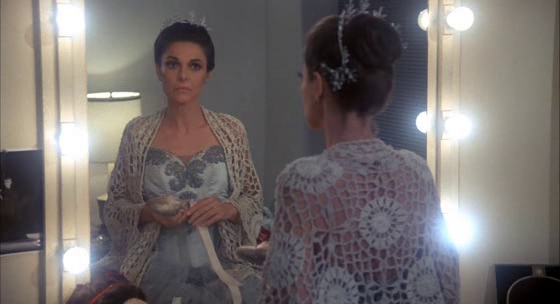
Indeed, it’s simply astonishing to note that the Academy gave a Best Supporting Actress nod to Browne, whose dancing is lovely but whose expressions are simply vacuous; Baryshnikov (whose caddish character is terribly underwritten) displays hints of acting chops, but one simply waits impatiently for his next stunning dance appearance on stage. With that said, the film is not without some solid merits — most notably the strong lead performances by Bancroft and MacLaine, playing lifelong friends and rivals whose complex relationship inevitably comes to a stormy head. Indeed, their nuanced portrayals as middle-aged women mourning the loss of their ballet-driven identities (MacLaine for what she never had, aging Bancroft for what she’s about to lose) almost make up for the film’s other faults — but not quite.

Redeeming Qualities and Moments:

  • Anne Bancroft as Emma (nominated as one of the Best Actresses of the Year in Peary’s Alternate Oscars)
  • Shirley MacLaine as Deedee (nominated as one of the Best Actresses of the Year in Peary’s Alternate Oscars)
  • Mikhail Baryshnikov’s dancing

Must See?
No, though it’s worth a one-time look for the two strong lead performances.

Links:

Great Moment, The (1944)

Great Moment, The (1944)

“You know I discovered the use of ether, don’t you?”

Synopsis:
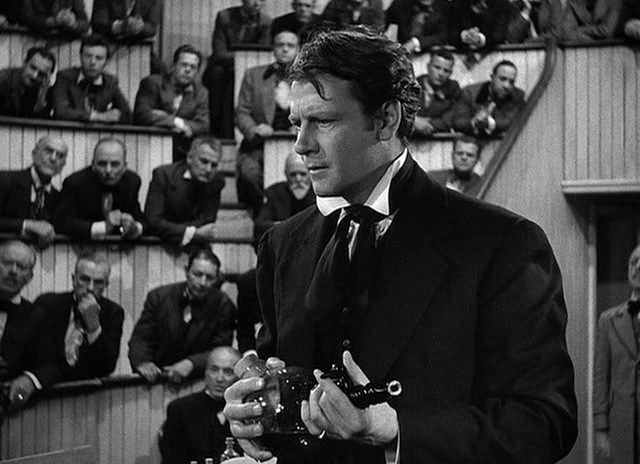
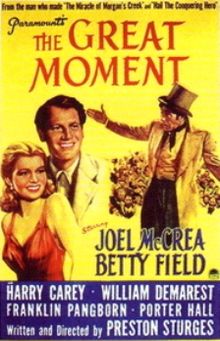
An 18th century dentist (Joel McCrea) discovers the use of ether as an effective means of anesthetizing pain during dental operations, but encounters resistance and anger when he tries to patent his discovery.

Genres, Themes, Actors, and Directors:

  • Betty Field Films
  • Biopics
  • Dentists
  • Flashback Films
  • Historical Drama
  • Inventors
  • Joel McCrea Films
  • Preston Sturges Films

Review:
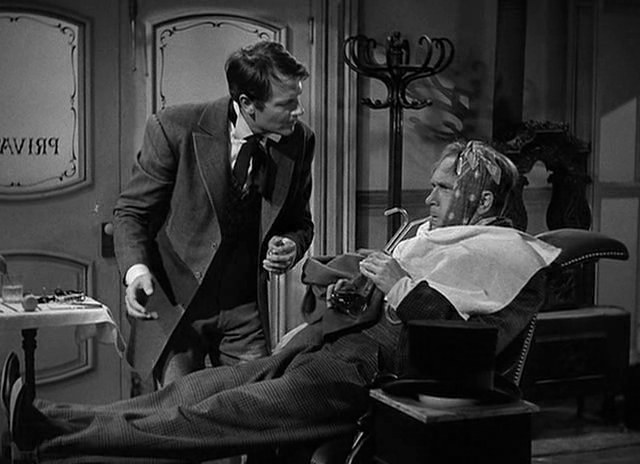
The Great Moment is surely the oddest entry in Preston Sturges’ estimable Hollywood career, given that the “biopic” genre was about as far removed from his standard milieu of satirical screwball comedies as possible. However, when one recalls that Sturges invented a “kissproof” lipstick in 1920 (!), his personal investment in telling the life story of a notoriously troubled inventor begins to make a bit more sense… Indeed, while The Great Moment doesn’t quite succeed as a classic Sturges outing, one stills feels oddly grateful that this story got made at all — and that it was given at least some semblance of the “Sturges touch”, rather than being told in standard (turgid) Hollywood fashion. Many of Sturges’ stock players show up in the cast, with William Demarest given an especially significant supporting role as the man who is first successfully operated upon by Dr. Morton (McCrea) while under the influence of ether; he and other familiar faces ensure that there’s a steady strain of comedic energy flowing through the film. Other scenes, unfortunately (including most with Betty Field as McCrea’s loyal, pretty wife), come across as disappointingly mainstream; Field’s opening flashback monologue, for instance, is laughably solemn.

Regardless of the film’s overall uneven approach to the material, however, you’re almost guaranteed to get caught up in the tale being told. While Dr. Morton’s story is presented from an unequivocally sympathetic point of view (the opening title card alone lets you know what Sturges’ opinion is on the matter), you’ll likely find yourself questioning his motives nonetheless: what is the right thing to do in a case like this, where one’s breakthrough discovery has the potential to prevent an enormous amount of suffering in the world? Meanwhile, the issue of multiple hands and minds inevitably playing a part in any medical “discovery” is respectfully handled; it’s made eminently clear that, despite Morton’s noteworthy role in persisting with his experimentation until he finally achieves success, he was not working or thinking in isolation.

Redeeming Qualities and Moments:

  • Joel McCrea as Dr. Morton
  • An interesting depiction of the incipient development of anesthesiology
Must See?
No, though it’s worth a look, and is must-see for Sturges completists.

Links:

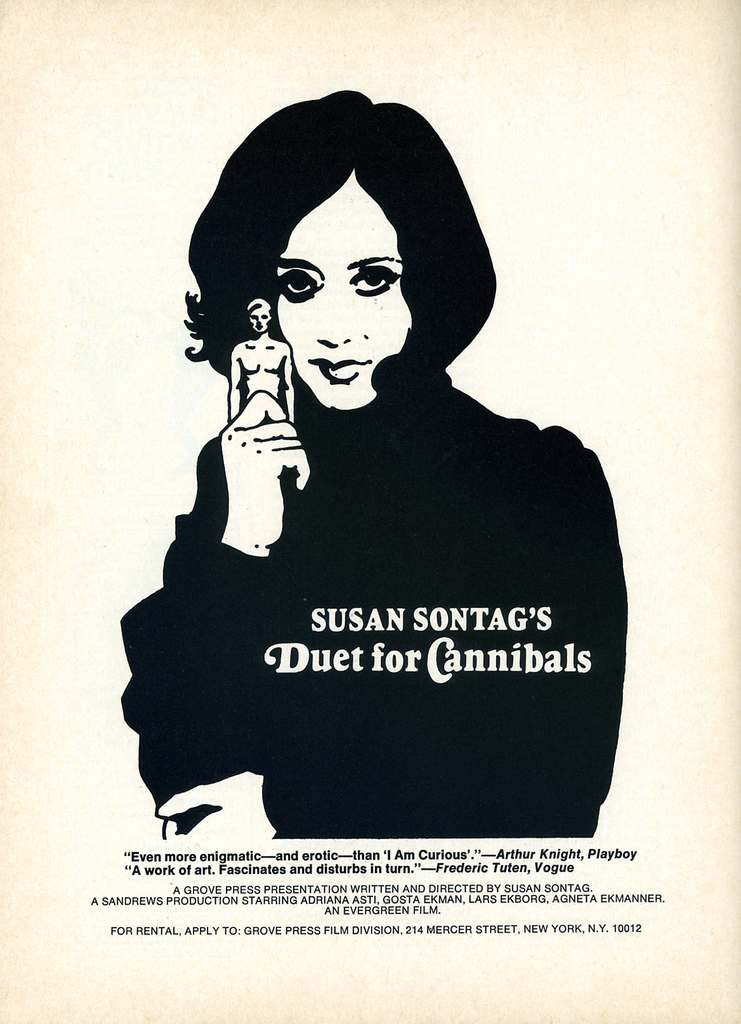
Duet for Cannibals (1969)

Duet for Cannibals (1969)

“About her, I know even less. I don’t understand what is between them.”

Synopsis:
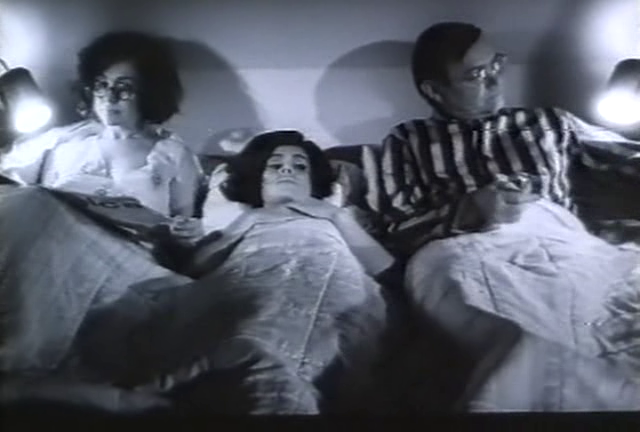
A young man (Gosta Ekman) takes a job helping to organize the papers of a renowned philosopher (Lars Ekborg), and soon finds himself inextricably embroiled in Ekborg’s troubled marriage to a seemingly insane wife (Adriana Asti); when Ekman’s frustrated girlfriend (Agneta Ekmanner) appears at their house, relations get even more surreal and complicated.

Genres, Themes, Actors, and Directors:

  • Marital Problems
  • Scandinavian Films

Review:
It’s no surprise that noted philosopher/essayist Susan Sontag’s directorial cinematic debut — a Bergmanesque psychological drama housed within a Bunuel-ian/Godard-ian surrealist framework — has nothing to do with actual flesh-eating cannibals; what’s disappointing, however, is how ultimately derivative and pointless her experimental vision is. While we’re kept intentionally in the dark about various characters’ motivations, it’s immediately clear that Ekborg and his wife are manipulative narcissists desperate to ensnare gullible subjects in their troubled marital web; the real question (for those involved enough to care) is why Ekman and Ekmanner allow themselves to become part of such a farcically dysfunctional drama. When trying to read a bit more about Sontag’s possible intentions with the film, I stumbled across the following quote in an analytical essay, in which Duet… is described as “a film that punishes you vindictively for threatening its existence by trying to interpret it away” — in other words, viewers should be forewarned that any director who previously published a collection of essays entitled Against Interpretation (1966) is not likely to create a movie that allows for easy or straightforward analysis. Ultimately, this one is exclusively for diehard Sontag fans; all others should be forewarned.

Redeeming Qualities and Moments:

  • Occasional moments of head-scratching surrealism

Must See?
No; this one will only appeal to certain constituents, and isn’t worth seeking out by all-purpose film fanatics. Listed as a film with Historical Importance in the back of Peary’s book, though I’m not sure why.

Links:

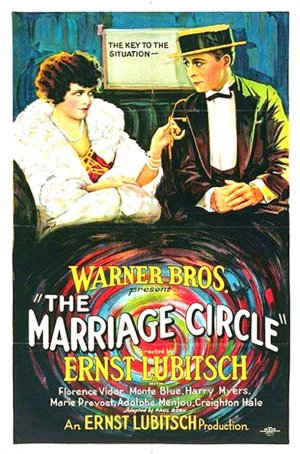
Marriage Circle, The (1924)

Marriage Circle, The (1924)

“How can a husband, who loves his wife, neglect her so!”

Synopsis:
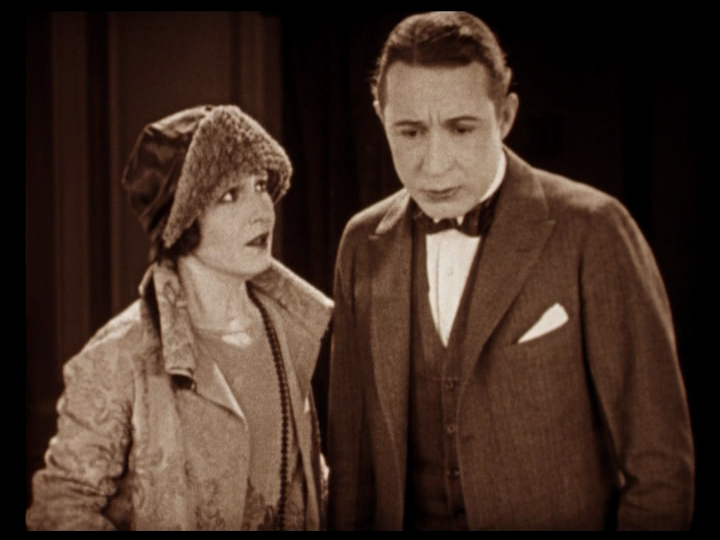
An unhappily married woman (Marie Prevost) attempts to seduce the husband (Monte Blue) of her best friend (Florence Vidor), not knowing that her own divorce-seeking husband (Adolph Menjou) has set a detective (Harry Myers) on her trail; meanwhile, Vidor must stave off affectionate advances from her husband’s business partner (Creighton Hale).

Genres, Themes, Actors, and Directors:

  • Adolph Menjou Films
  • Ernst Lubitsch Films
  • Love Triangle
  • Marital Problems
  • Silent Films

Review:
The Marriage Circle was Ernst Lubitsch’s second American film, and is notable for showing early evidence of his fabled “touch” — i.e., his light hand with sophisticated romantic comedies. It was remade in 1932 as the musical One Hour With You, and my reaction to both films was much the same: frustration with the character played by Blue (who looks somewhat like Chevalier, his counterpart in the later version). We never quite understand the motivations of this presumably-happily-married fellow, given that he allows himself to be seduced by a femme fatale, and shows signs of not being nearly as committed to his devoted wife as he should be (i.e., he carelessly drops a bouquet of flowers she’s picked for him); is their “ideal marriage” just a figment of Vidor’s imagination, or is Blue really that much of a two-timing, gullible sap? The most believable characters are played by Prevost and Menjou, whose strained marriage (as epitomized in the smartly filmed opening scene) comes across as all-too-realistic. Their manipulative machinations — and easy willingness to use others for their own purposes — are reminiscent in some ways of the dynamics between Valmont and the Marquise in Dangerous Liaisons.

Redeeming Qualities and Moments:

  • Adolph Menjou as Professor Stock
  • Florence Vidor as Charlotte Braun

Must See?
No, though it’s certainly must-see for Lubitsch fans.

Links:

For Heaven’s Sake (1926)

For Heaven’s Sake (1926)

“We’ll just kidnap Manners and argue it out with him back at the Club.”

Synopsis:
A carefree millionaire (Harold Lloyd) falls in love with the daughter (Jobyna Ralston) of a missionary (Paul Weigel), and helps fund the construction of their new mission; but when he proposes to Ralston, his wealthy pals decide to save him from his “mistake” by kidnapping him.

Genres, Themes, Actors, and Directors:

  • Comedy
  • Cross-Class Romance
  • Harold Lloyd Films
  • Kidnapping
  • Millionaires
  • Missionaries and Revivalists
  • Silent Films

Review:
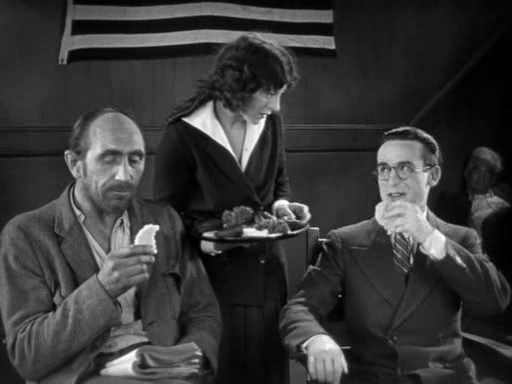
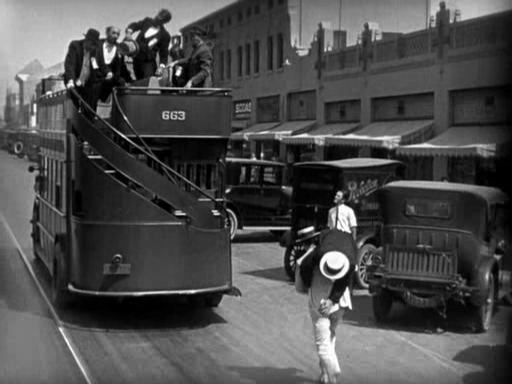
Made in between two of Harold Lloyd’s most beloved features — The Freshman (1925) and The Kid Brother (1927) — For Heaven’s Sake was reportedly not one of Lloyd’s personal favorites among his oeuvre; he cut it down in length to just under an hour in response to initial audience reactions, yet was “still so unhappy that he offered to buy the film back from the studio”. There’s actually some truth to Lloyd’s dissatisfaction, given that the overly simplistic narrative doesn’t really allow much room for development: Lloyd’s character shifts too quickly from self-absorbed playboy to magnanimous mission worker, and the kidnapping subplot comes literally out of nowhere, with a posse of “friends” suddenly showing up who we’ve never seen before. However, this merely serves as the narrative springboard for the film’s stunning finale, which begins with a series of amusingly conceived drunken antics by Lloyd’s “rescuers”, and leads to a handful of daringly accomplished physical stunts involving numerous moving vehicles. Ultimately, however, this one is only must-see for Lloyd fans; others will want to stick with watching his most celebrated successes.

Redeeming Qualities and Moments:

  • Several amusing sequences
  • The stunningly executed finale

Must See?
No, though of course it’s a must for fans of Harold Lloyd.

Links:

Eagle, The (1925)

Eagle, The (1925)

“I enlisted for war service only.”

Synopsis:
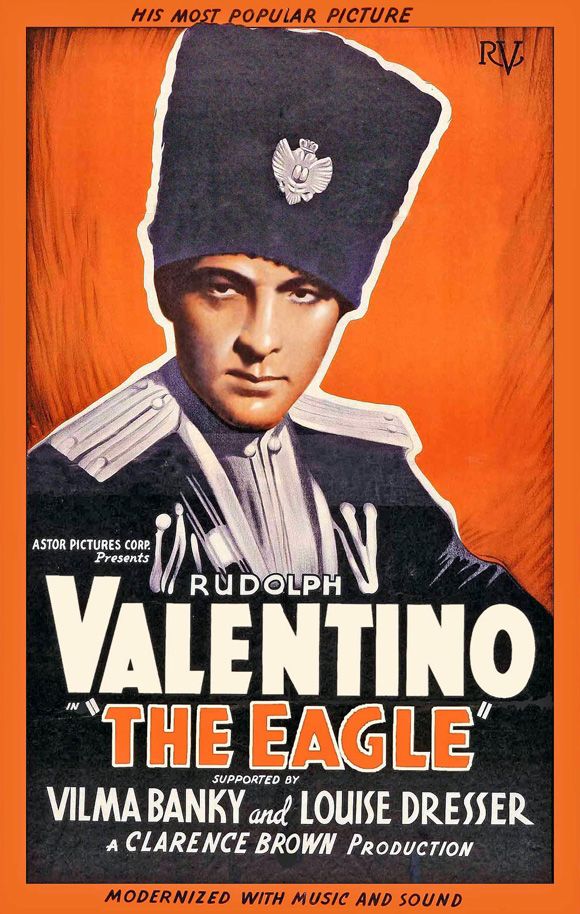
When a handsome young Cossack (Rudolph Valentino) rebuffs the romantic advances of Catherine the Great (Louise Dresser), he must flee to safety; meanwhile, after learning that his father (Spottiswoode Aitken) has been fleeced by a notorious thief (Albert Conti) — whose beautiful daughter (Vilma Banky) Valentino recently saved from a runaway carriage — he dons a mask to become an avenger known as the Black Eagle.

Genres, Themes, Actors, and Directors:

  • Clarence Brown Films
  • Historical Drama
  • Mistaken or Hidden Identities
  • Revenge
  • Royalty and Nobility
  • Rudolph Valentino Films
  • Silent Films

Review:
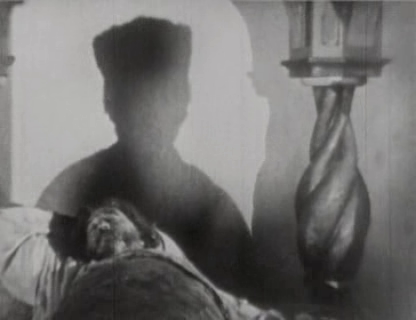
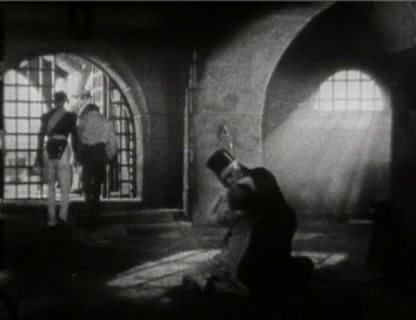
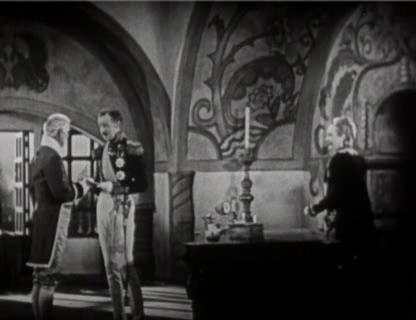
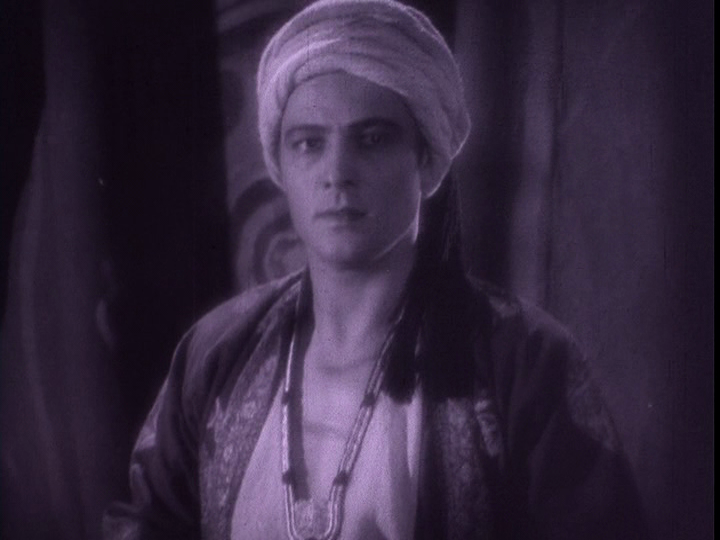
Loosely based on an unfinished novel by Alexander Pushkin, this historical romantic adventure (directed by Clarence Brown) was one of Rudolph Valentino’s final films before his death at the age of 31. It’s the type of material that seems perfectly suited for Valentino’s cinematic “rival”, Douglas Fairbanks, Sr. — indeed, Valentino’s donning of a mask to become a Robin Hood-like avenger hearkens back immediately to Fairbanks’ work in The Mark of Zorro and its sequel. Unfortunately, The Eagle‘s storyline doesn’t offer much that’s new or particularly noteworthy; the most astonishing scene occurs early on, as the Czarina Catherine (Dresser) bids Valentino’s Lt. Dubrovsky to kneel and kiss her hand, then seems to want him to stay down in that location for much longer than he’s comfortable with… One wishes the rest of the narrative focused on Catherine’s May-December lustiness for young Valentino; instead, we’re given a fairly standard tale of vengeance and concealed identities, with obligatory romantic tensions thrown in for good measure. (Hungarian-born Banky is as beautiful as ever, though her erotic appeal is exploited much more effectively in her follow-up film with Valentino — Son of the Sheik).

Redeeming Qualities and Moments:

  • Solid direction by Clarence Brown

  • William Cameron Menzies’ sets

Must See?
No, unless you happen to be a Valentino fan.

Links:

Calling Dr. Death (1943)

Calling Dr. Death (1943)

“I have no alibi — don’t even know where I was.”

Synopsis:
When his faithless wife (Ramsay Ames) is found murdered, a neurologist (Lon Chaney, Jr.) who is perhaps overly fond of his beautiful nurse (Patricia Morison) becomes the prime suspect. Soon Ames’s lover (David Bruce) is accused instead, but the investigating detective on the case (J. Carrol Naish) refuses to leave Chaney alone.

Genres, Themes, Actors, and Directors:

  • Amnesia
  • Detectives and Private Eyes
  • Falsely Accused
  • Lon Chaney, Jr. Films
  • Murder Mystery

Review:
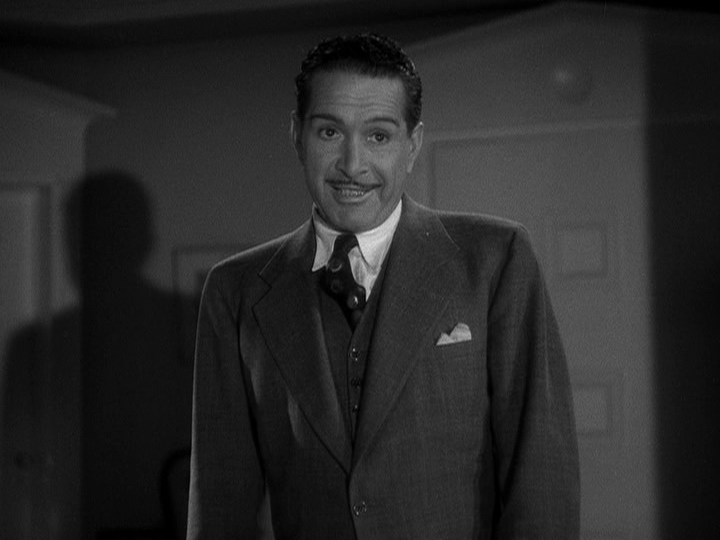
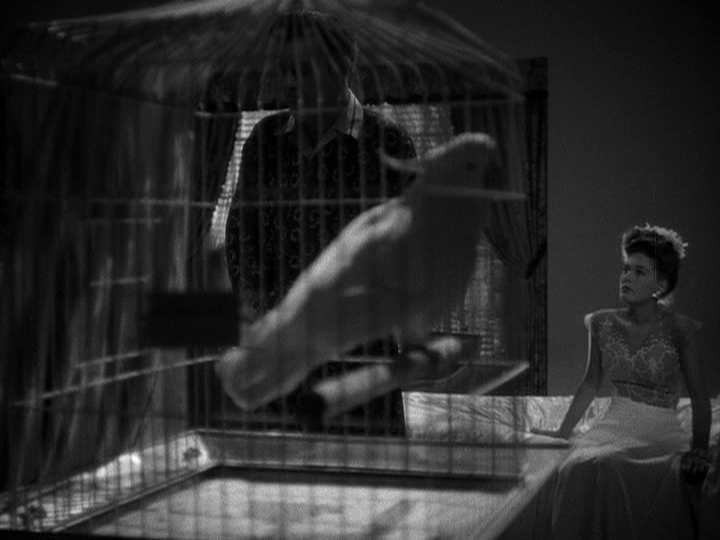
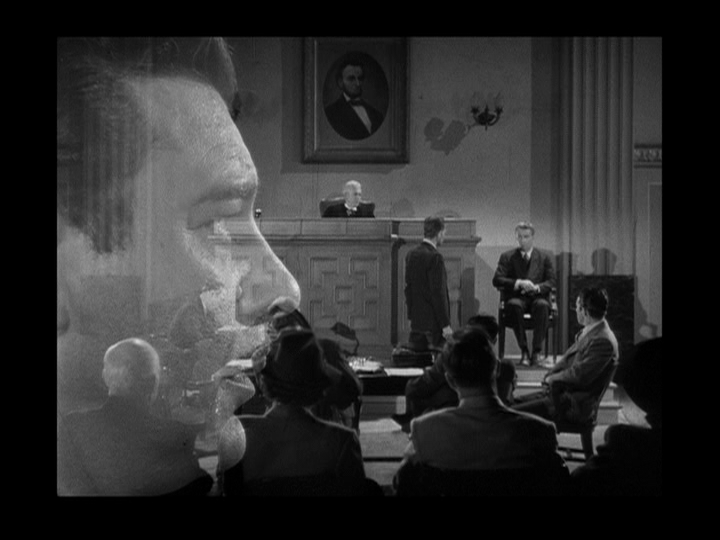
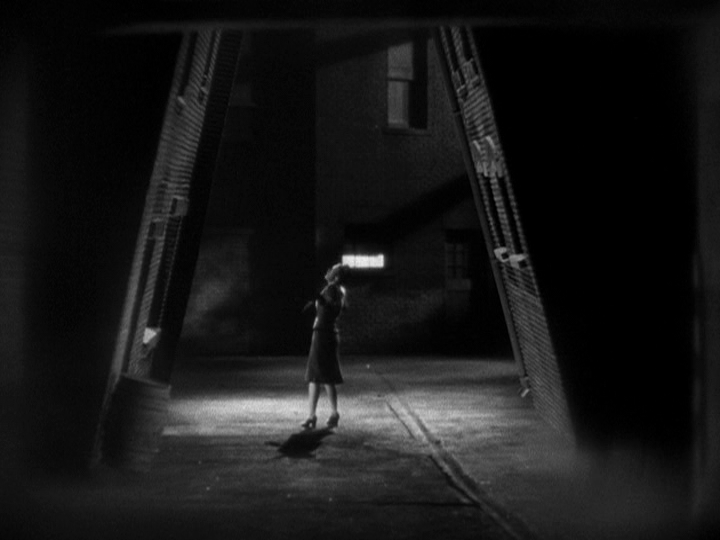
The first of Universal Studios’ “Inner Sanctum” films (inspired by the popular radio series of the same name), this surprisingly dull murder mystery stars Lon Chaney, Jr. as an unhappily married doctor who suffers from an inconvenient bout of amnesia during just the weekend his philandering wife is killed. Despite some creative visual touches (thanks primarily to effective use of double exposure), the storyline plods along creakily, without generating much interest; it ultimately feels much longer than its 63 minutes. A snappy performance by J. Carroll Naish as the omnipresent detective on the case simply highlights how tepid all the other actors are: Chaney is his usually plodding, tortured self, and while Morison is lovely to look at, her performance never rises above adequate (though her talents are head-and-shoulders above those of Ames, who is mercifully only on screen for a couple of short scenes before her death).

Redeeming Qualities and Moments:

  • J. Carrol Naish as Inspector Gregg
  • Creative visual touches

  • The inspired final flashback scene

Must See?
No; this one is only must-see for Inner Sanctum fans.

Links:

Weird Woman (1944)

Weird Woman (1944)

“I’m a scientist, but I’m not immune — you can’t be surrounded by fear and not be infected.”

Synopsis:
A highly rational professor (Lon Chaney, Jr.) marries a superstitious woman (Anne Gwynne) he meets while travelling in the South Seas. When they return to his college campus, his former flame (Evelyn Ankers) immediately becomes jealous of his new wife, and plots to make Chaney’s life miserable.

Genres, Themes, Actors, and Directors:

  • Jealousy
  • Lon Chaney, Jr. Films
  • Professors
  • South Seas Islands
  • Voodoo and Black Magic

Review:
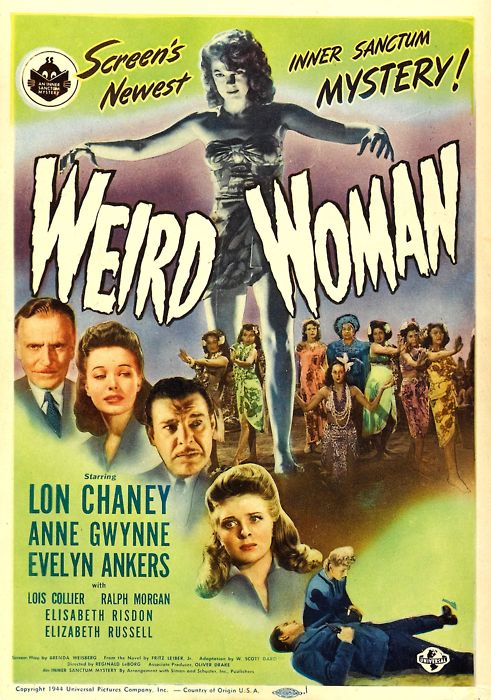
In the 1940s, Universal Studios produced six low-budget horror films based on the popular “Inner Sanctum” radio series (all starring Lon Chaney, Jr.); Peary lists two of these titles in his GFTFF: Calling Dr. Death (1943) and Weird Woman, an early adaptation of Fritz Leiber’s 1942 novel Conjure Wife (filmed again by Sidney Hayers in 1962 as Burn, Witch, Burn!). It strains credibility (to put it mildly) to imagine Chaney, Jr. as a man so brilliant and so appealing to women that elaborate plots of vengeance and backstabbing are concocted on his behalf — but once you accept this questionable bit of casting, it’s relatively easy to get caught up in this hour-long psychological horror flick, which features committed performances by both Ankers (deliciously vengeful) and Gwynne (perpetually fearful). Fans of Burn, Witch, Burn! will be especially interested to watch for parallels and differences between the two adaptations; while BWB remains a highly atmospheric cult classic (and is clearly the much better film), WW does a fine job within its limited budget and visionary scope.

Redeeming Qualities and Moments:

  • Game performances by the B-level cast

Must See?
No, though diehard fans of Burn, Witch, Burn! will certainly be curious to check it out.

Links:

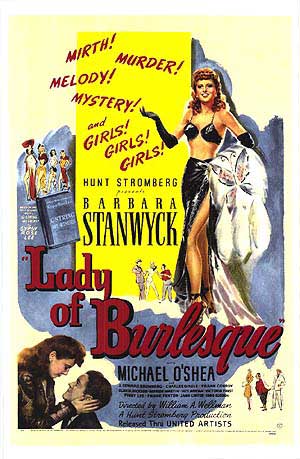
Lady of Burlesque (1943)

Lady of Burlesque (1943)

“Three people get crowded at a table for two.”

Synopsis:
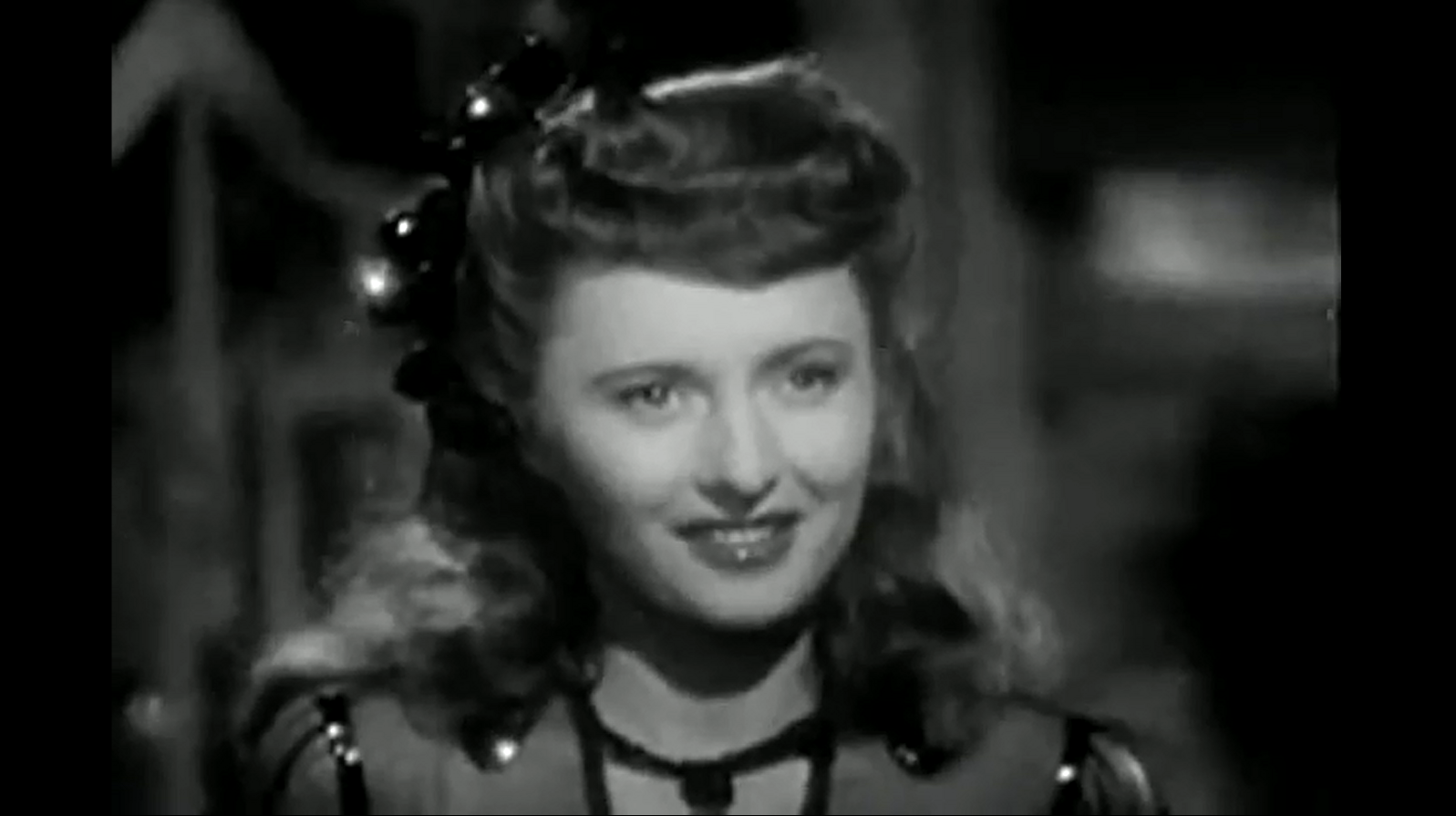
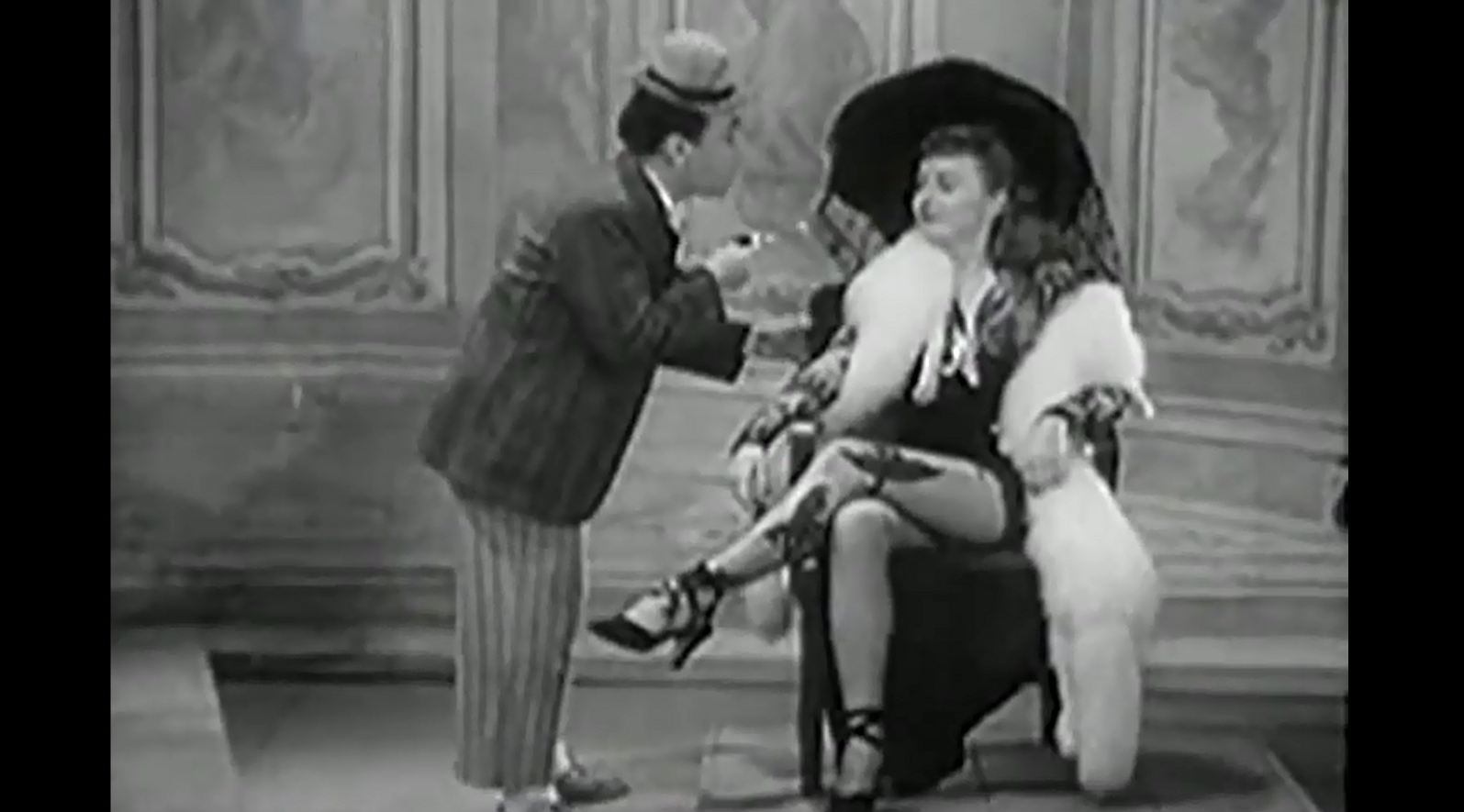
When ambitious burlesque dancer Lolita La Verne (Victoria Faust) is murdered, her gangster lover (Gerald Mohr) as well as all her fellow performers — including new arrival Dixie Daisy (Barbara Stanwyck), a comic romantically pursuing Dixie (Michael O’Shea), and a snooty rival known as the Princess Nirvena (Stephanie Bachelor) — are under suspicion.

Genres, Themes, Actors, and Directors:

  • Amateur Sleuths
  • Barbara Stanwyck Films
  • Murder Mystery
  • Vaudeville and Burlesque
  • William Wellman Films

Review:
Barbara Stanwyck is a class act the entire way in this censor-tamed adaptation of Gypsy Rose Lee‘s best-selling mystery thriller The G-String Murders (whose title, naturally, was changed for the big screen). The storyline itself is little more than a standard whodunit, with nearly all the film’s motley characters under suspicion at one point or another (and a second murder thrown in for good measure). What really counts here is the setting in which the entire affair takes place — a relatively faithful if highly sanitized recreation of the behind-the-scenes mayhem, camaraderie, romance, and rivalry that constituted the rapidly fading world of burlesque. Directed by William Wellman (who helmed the much more serious literary adaptation The Ox-Bow Incident the same year), the film holds interest throughout, thanks to a sincere performance by Stanwyck and game turns by the supporting cast. You may be surprised by the identity of the murderer — though I’ll admit I guessed correctly for once (albeit without an accurate assessment of motive).

Redeeming Qualities and Moments:

  • Barbara Stanwyck as Dixie Daisy
  • A fine tribute to the quickly-fading world of burlesque

Must See?
No, though it’s recommended. As a public domain title, it’s available for free viewing at www.archive.org.

Links:

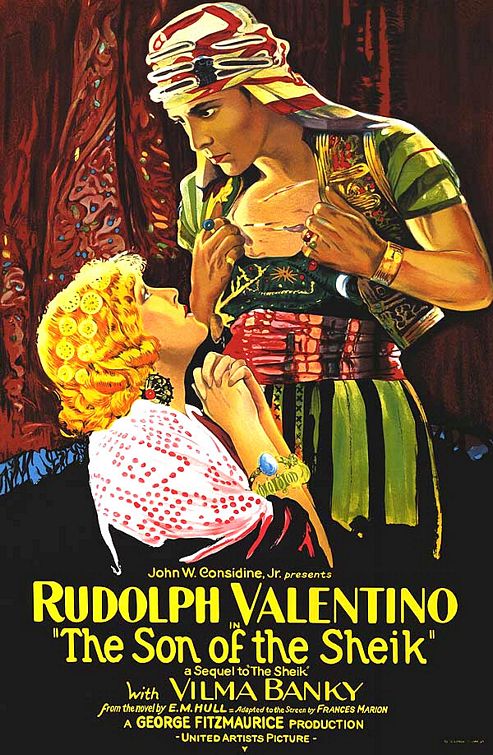
Son of the Sheik, The (1926)

Son of the Sheik, The (1926)

“Like all youths, he loved a dancing girl. Like all dancing girls, she tricked him.”

Synopsis:
The son (Rudolph Valentino) of an Arabian sheik (also Valentino) falls in love with a dancer (Vilma Banky) whose father (George Fawcett) and his cronies are thieves. When young Ahmed (Valentino) is mistakenly led to believe Banky seduced him as a front for her father’s gang, he feels terribly betrayed, and kidnaps her in revenge.

Genres, Themes, Actors, and Directors:

  • Father and Son
  • Kidnapping
  • Middle East
  • Rudolph Valentino Films
  • Silent Films

Review:
The Son of the Sheik — notable as one of Hollywood’s first sequels — was released just two weeks after Rudolph Valentino’s premature death from appendicitis at the age of 31, and was one of his biggest hits with audiences; it’s now widely considered by critics to be his best film. Indeed, it shows clear evidence of how far Valentino’s acting range had evolved since his laughably one-dimensional performance in The Sheik (1921) (which consisted of little more then leers and melodramatic eyebrow-raising); here, playing both the Sheik and his son, his expressions are much subtler — it’s not just the elder Sheik’s graying hair that allows us to differentiate between father and son. Meanwhile, the original film’s disturbing premise of love borne from captivity has been replaced by a refreshingly mutual attraction between young Valentino and Banky; their sexual chemistry together is palpable, and makes for enjoyable eye candy. With all that said, The Son of the Sheik is ultimately little more than escapist fare; the fact that it’s more palatable than its awful predecessor isn’t saying a whole lot. However, I am recommending it as a “must see” title to film fanatics, simply to see Valentino in his final role.

Redeeming Qualities and Moments:

  • Rudolph Valentino in dual roles as the Sheik and his son

  • Plenty of sexual chemistry between Valentino and Banky
  • Fine cinematography

Must See?
Yes, simply to see Valentino in his last — and arguably his best — role(s).

Categories

  • Historically Relevant

Links: