Finishing School (1934)
“The aim of our school — and we like to believe the achievement — is to prepare young ladies to meet graciously all social demands.”
|
Synopsis: |
|
Genres, Themes, Actors, and Directors:
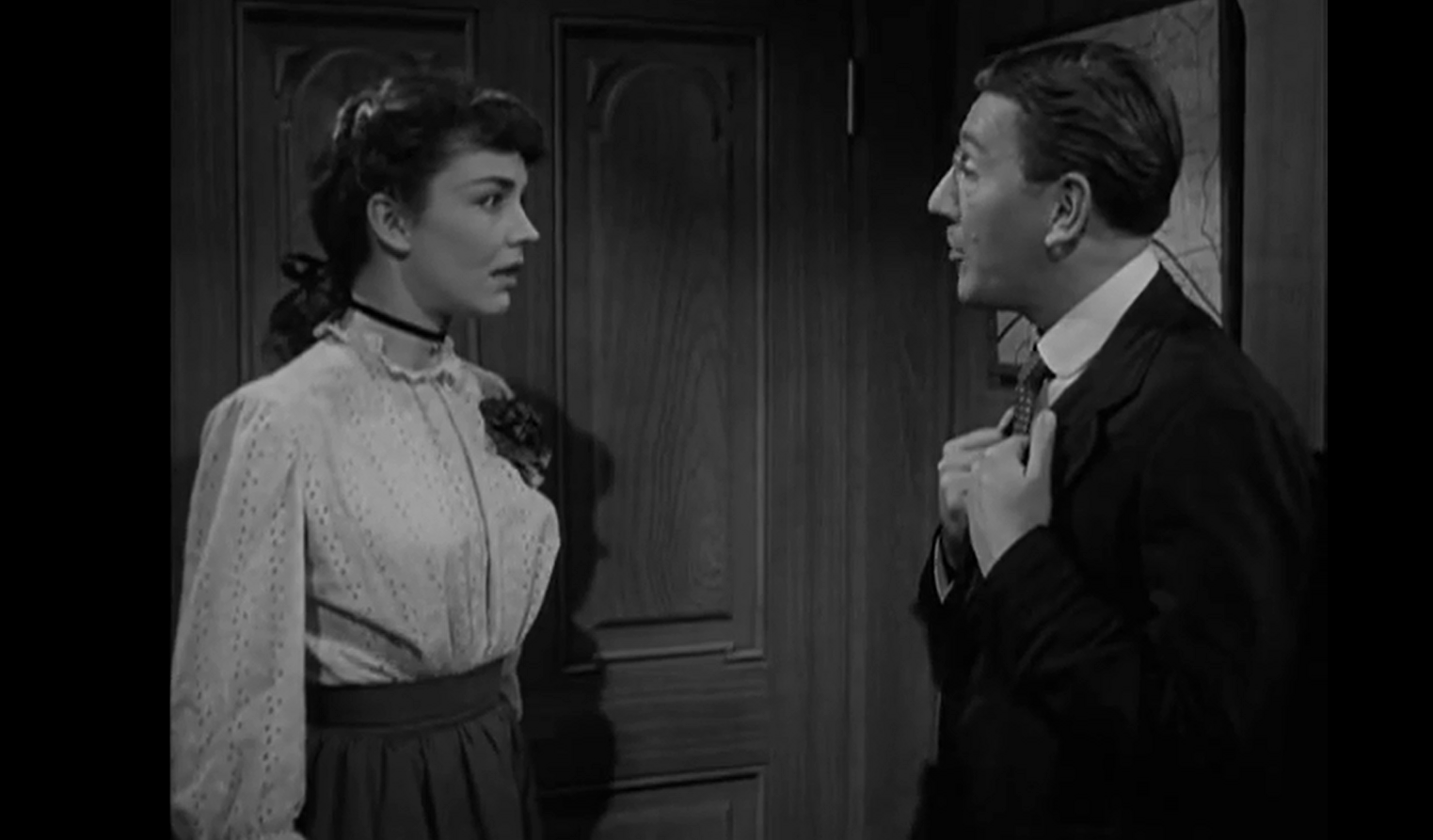
Review: (sorry for mild spoilers) … isn’t necessarily made to pay for her “sins”. What’s most fascinating about Finishing School is the way it daringly portrays the utter hypocrisy behind upper-class mores, which hold that as long as one isn’t “caught”, one can get away with just about anything; the goal is to avoid detection and public shame. One particularly well-handled scene shows Bondi glimpsing Dee arriving home after an outing with Mac, and hesitating as she clearly wishes she could pretend not to have seen what she just saw.
Dee’s sin isn’t carousing; it’s falling in love with a lower-class man and daring to present it openly. Dee does a fine, sensitive job in the leading role:
… and Cabot stands out as refreshingly natural in what appears at first to be a nominal supporting role (he’s first glimpsed wandering around a hotel room picking up after the partying socialites), but turns into a major romantic lead; one can easily see why Dee would fall for someone like him.
Rogers, meanwhile, is perfectly cast as Dee’s wisecracking roomie, and other young starlets — including Anne Shirley — do a fine job portraying young heiresses of various stripes. Interestingly, Finishing School was co-directed by a woman (Wanda Tuchock) — something so unusual at the time that it most definitely stands out when watching the opening credits. (Unfortunately, it seems she only directed one other short film; the rest of her Hollywood career was spent on screenwriting.) Redeeming Qualities and Moments:
Must See? Categories
Links: |