Browsed by
Category: Original Reviews

Responses to Peary’s “must see” movie reviews, as well as my own “must see” movie reviews up to and after 1986 (when Peary’s book was published).

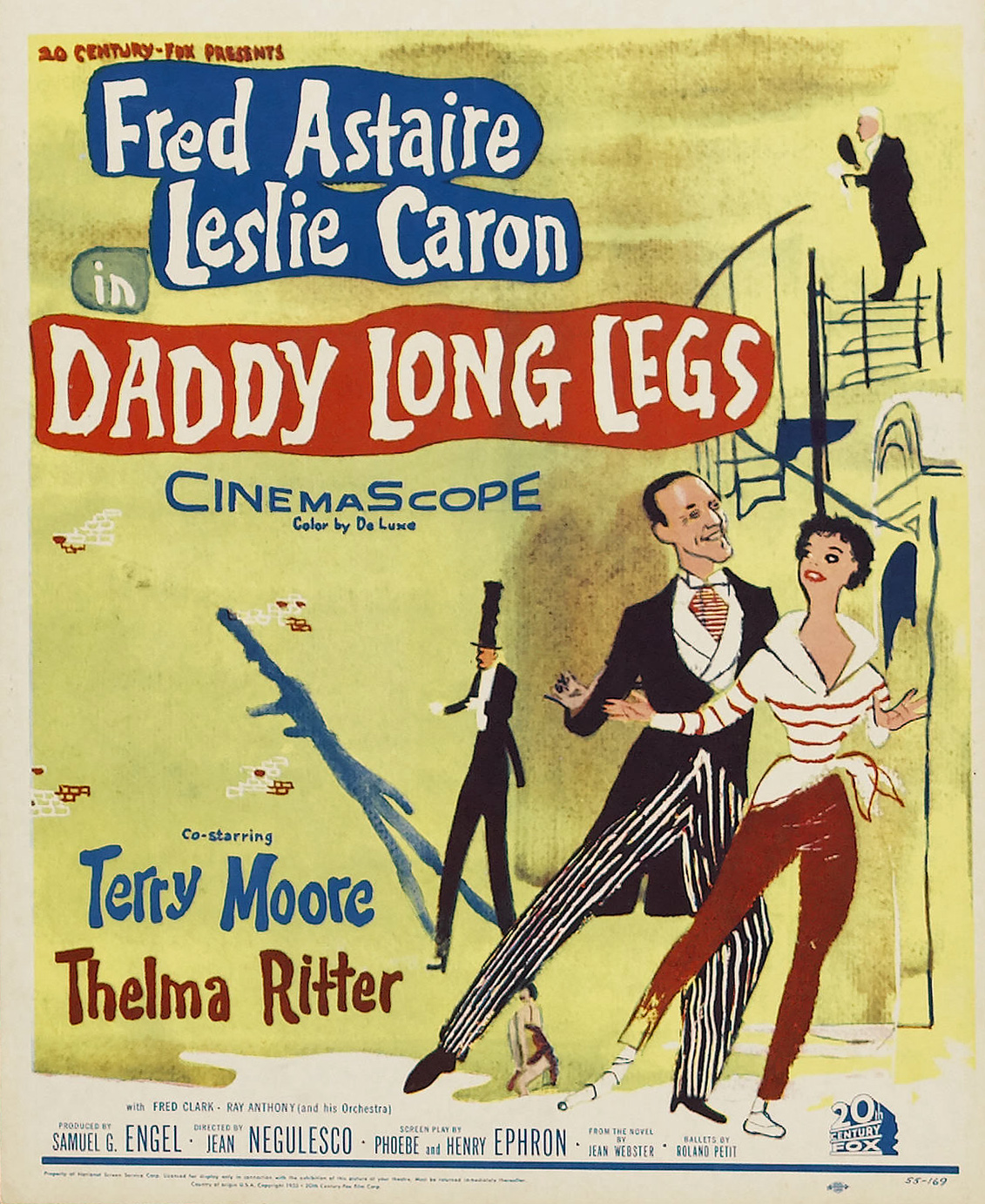
Daddy Long Legs (1955)

Daddy Long Legs (1955)

“Sure, the girl is much younger than I am — there’s no denying that!”

Synopsis:
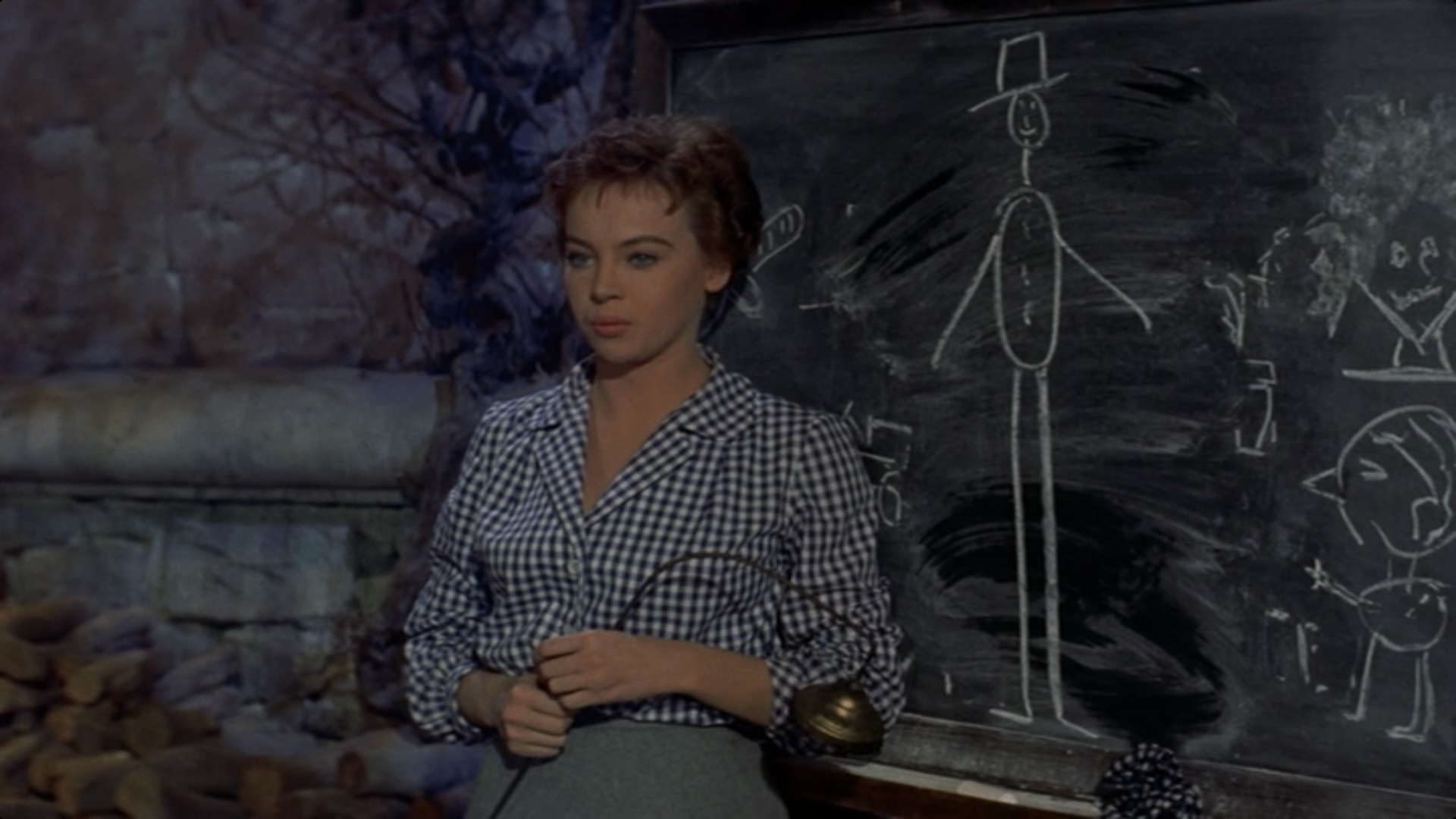
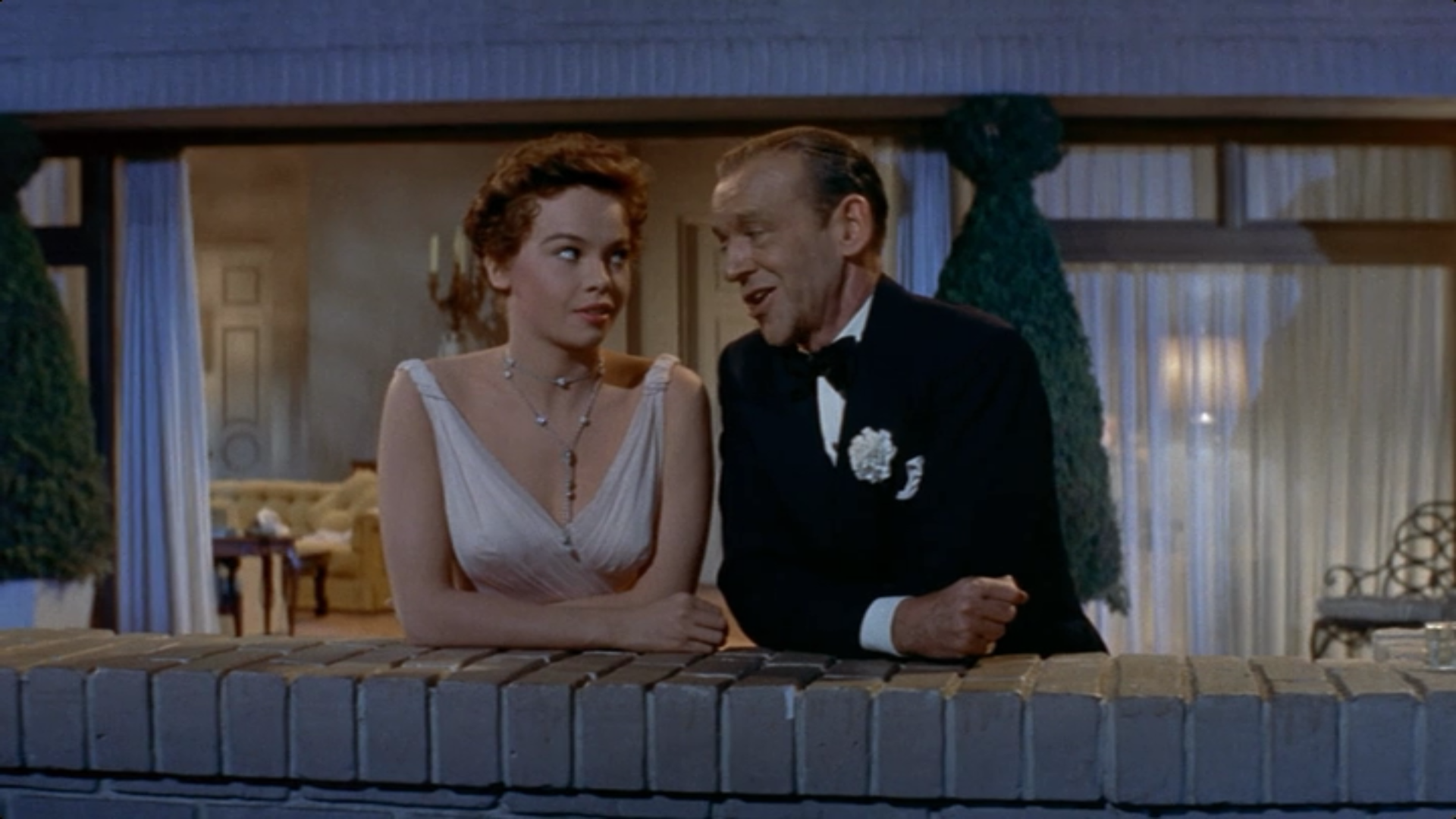
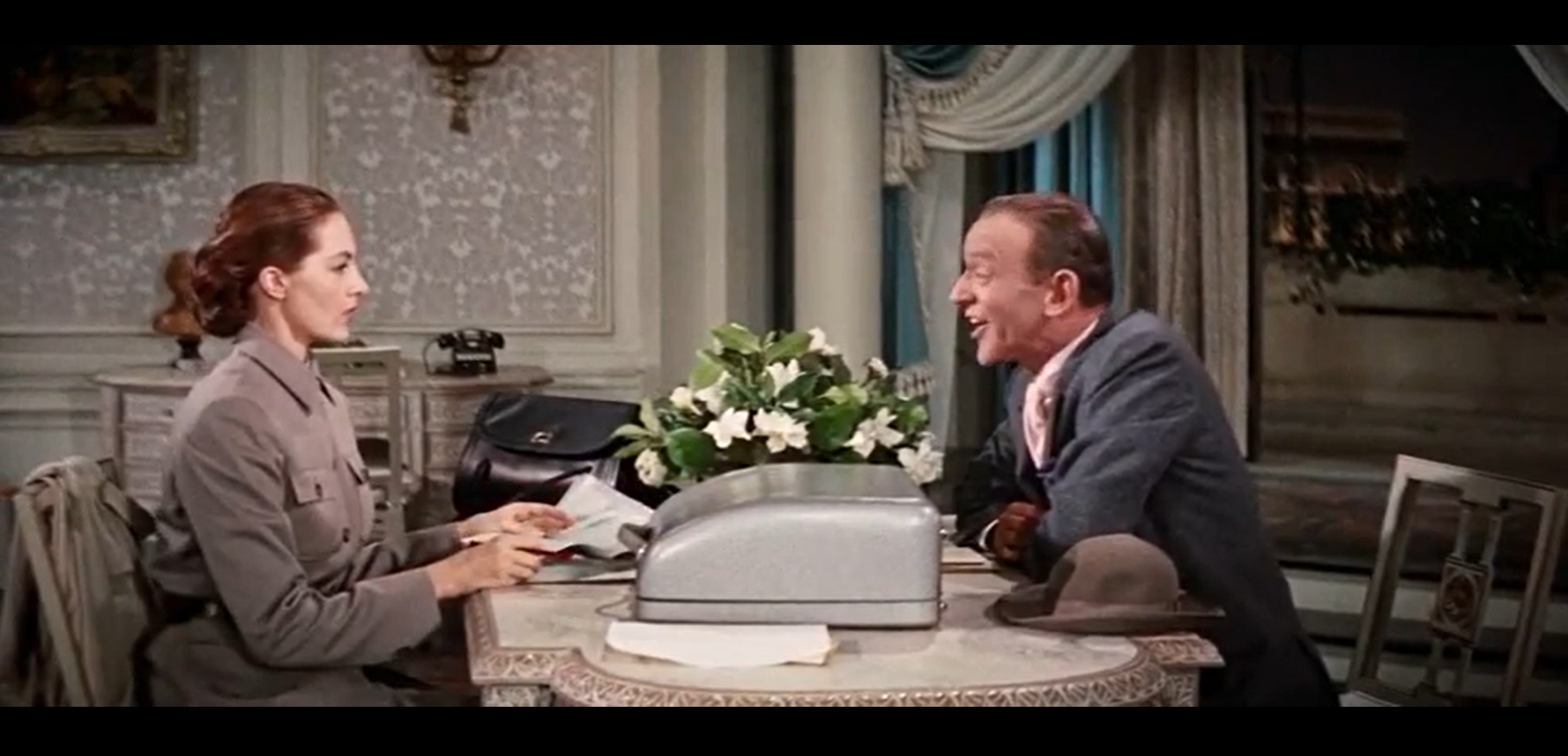
A middle-aged millionaire (Fred Astaire) spies a young orphaned woman (Leslie Caron) in France and arranges to secretly sponsor her education in America, sending her to the same college attended by his niece (Terry Moore). Although Caron writes monthly letters to her anonymous benefactor (who she refers to as “Daddy Long Legs”), Astaire pays her no attention — until his secretary (Thelma Ritter) and business manager (Fred Clark) guilt him into paying her a visit, at which point he refers to himself simply as Moore’s “Uncle Jervis”, and the two fall in love.

Genres, Themes, Actors, and Directors:

  • Fred Astaire Films
  • Jean Negulesco Films
  • Leslie Caron Films
  • May-December Romance
  • Millionaires
  • Mistaken Identities
  • Musicals
  • Orphans
  • Terry Moore Films
  • Thelma Ritter

Review:
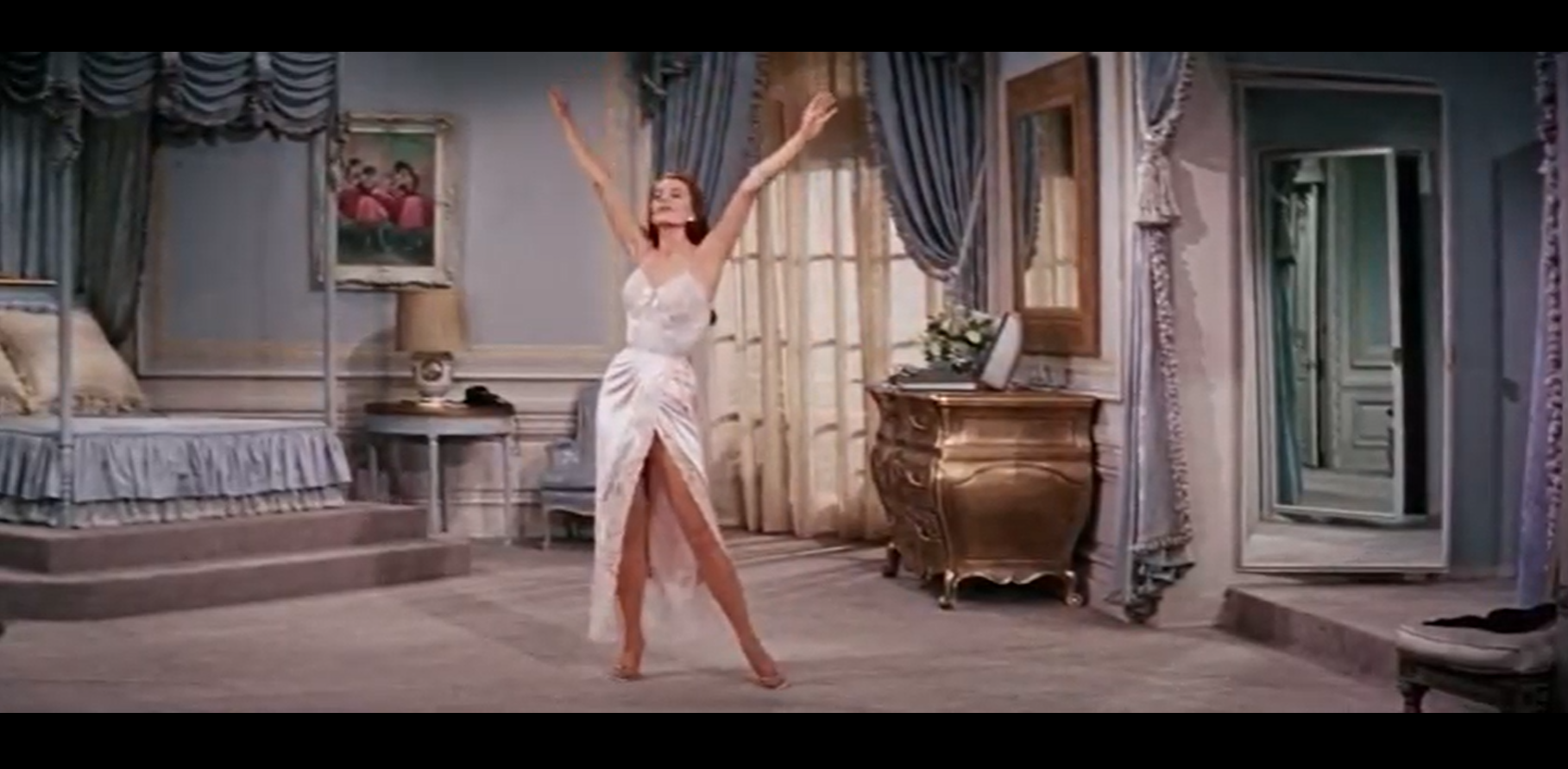
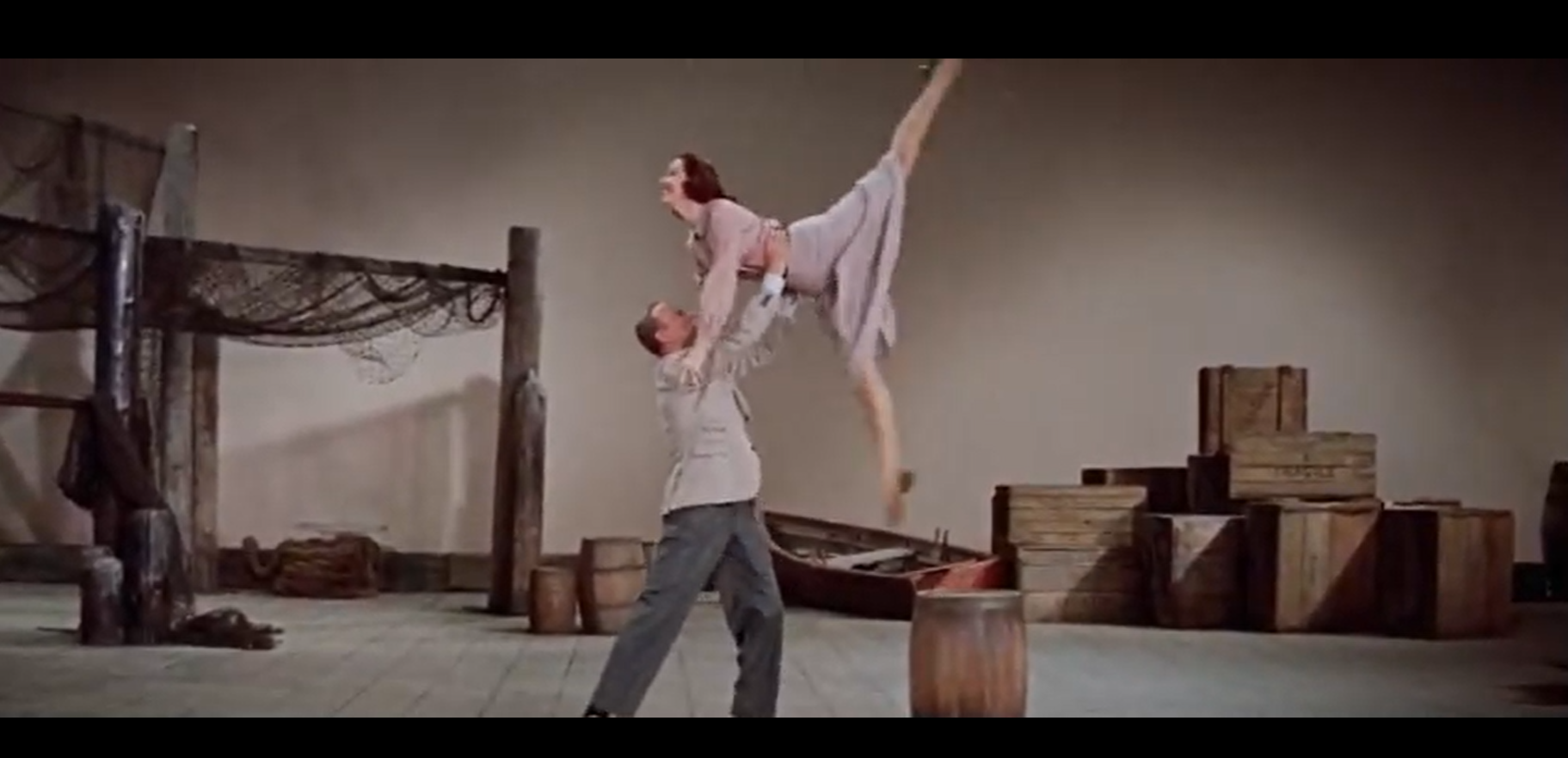
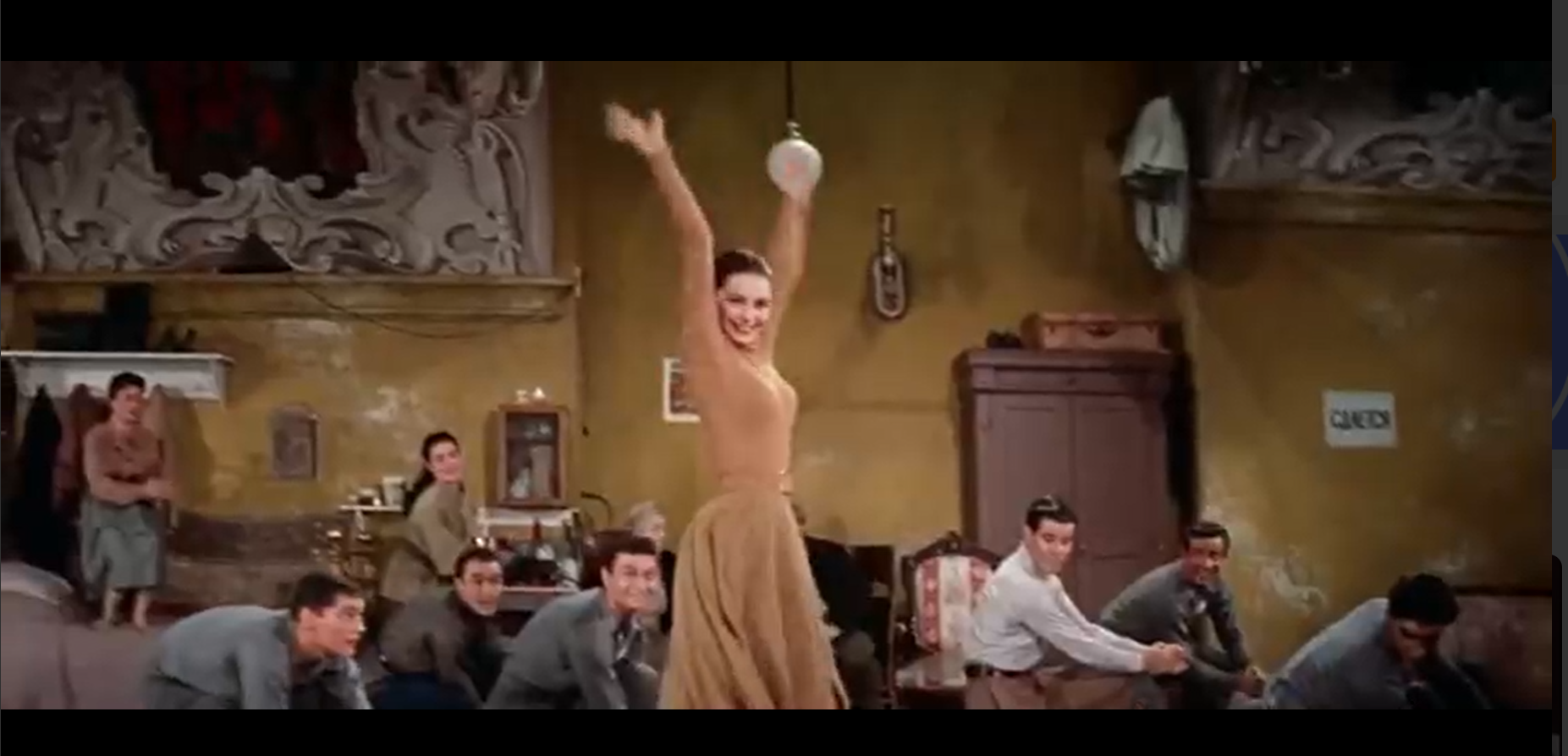
Jean Webster’s classic coming-of-age epistolary novel — available for free reading through Project Gutenberg — has been adapted for the screen numerous times (including once in 1935 with Shirley Temple as Curly Top) — but this musical, directed by Jean Negelescu, is likely the best-known version. Although the age difference between Astaire (56) and Caron (24) is certainly noticeable, the fact that it’s acknowledged as a concern — and actually functions as a critical element in the plot — allows us to feel much more comfortable watching them falling in love. Indeed, while DVD Savant complains that Astaire’s “complicated millionaire comes off as a real cradle-robber, and Leslie Caron’s child-woman doesn’t seem mature enough to make a good choice”, I disagree: Caron is posited from the beginning as mature-beyond-her-years (she’s a war orphan, seen caring in a motherly way for other children in her group home), and Astaire’s status as a fun-loving millionaire makes him an obvious catch for any sophisticated young woman. With that said, the storyline and Johnny Mercer’s soundtrack — other than the duo’s fun performance of “Something’s Gotta Give” — aren’t really exceptional or memorable enough to elevate this film into classic status; it’s fun Cinemascope escapism, but nothing more.

Redeeming Qualities and Moments:

  • Leslie Caron as Julie
  • Astaire and Caron performing “Something’s Gotta Give”

Must See?
No, though fans of Astaire and/or Caron will likely want to check it out.

Links:

Lilies of the Field (1963)

Lilies of the Field (1963)

“I’m gonna’ build me a chapel.”

Synopsis:
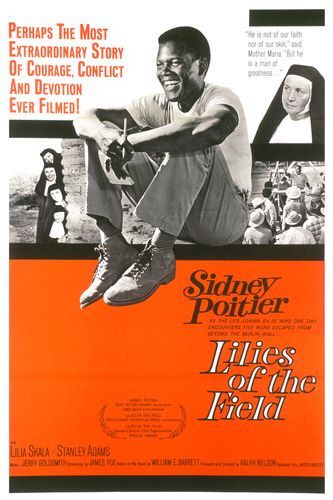
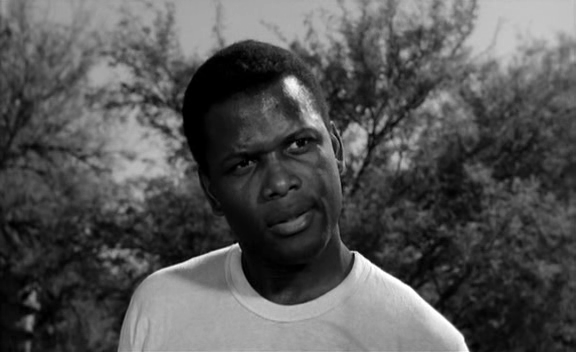
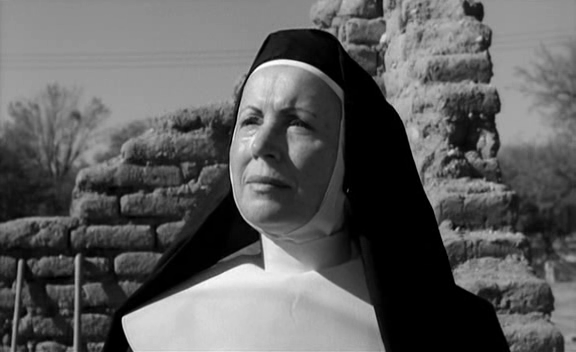
An itinerant African-American (Sidney Poitier) is waylaid in his journeys when the head (Lilia Skala) of a group of nuns in the desert enlists his help in building a chapel — despite the fact that they have no money and few supplies.

Genres, Themes, Actors, and Directors:

  • Nuns
  • Race Relations and Racism
  • Sidney Poitier Films

Review:
Although Peary doesn’t review Lilies of the Field in GFTFF, he does discuss it a bit in his Alternate Oscars, where he notes that Poitier’s selection as Best Actor came “at a time when millions of whites across America were deeply involved in the Civil Rights movement”, and thus his award may have been “given because Academy voters… felt pressure to show the world they were willing to give their major awards to blacks”. While he acknowledges that Poitier “had given consistently excellent performances” since “beginning his film career in 1950”, Peary argues that “with the possible exception of his performance in A Raisin the Sun, he was never worthy of a Best Actor Oscar” — especially not for playing “likable” handyman Homer Smith in this “pleasant but unremarkable” film by director Ralph Nelson, based on a novel by William Edmund Barrett. He asserts that “Homer is [Poitier’s] least interesting and least complex character”, not to mention “least threatening” given that “he can even take his shirt off around nuns.”

With that said, Poitier brings some much-needed energy to this otherwise overly-twee tale of a no-nonsense head nun and her gaggle of nondescript “sisters”. The storyline is far too simple to engage on anything other than a vaguely metaphorical level, and even then we’re not quite sure exactly what to make of its fable-like qualities. I suppose the primary moral is that persistence and faith pay off, given how Skala’s stubborn insistence that her chapel WILL be built eventually bears fruit; meanwhile, a message about the importance of relying on others for strategic help is slipped in as well. Ultimately, this film remains worth a one-time look both for historical reasons (Poitier’s landmark Oscar) and as a fine early attempt at intimate, low-budget filmmaking — but the narrative (apparently based on a true story) isn’t compelling enough to make it must-see viewing.

Redeeming Qualities and Moments:

  • Sidney Poitier as Homer Smith
  • Lilia Skala as Mother Maria

Must See?
No, though of course it’s of interest for historical reasons.

Links:

Prince and the Showgirl, The (1957)

Prince and the Showgirl, The (1957)

“With such a girl like that, anything can happen — anything.”

Synopsis:
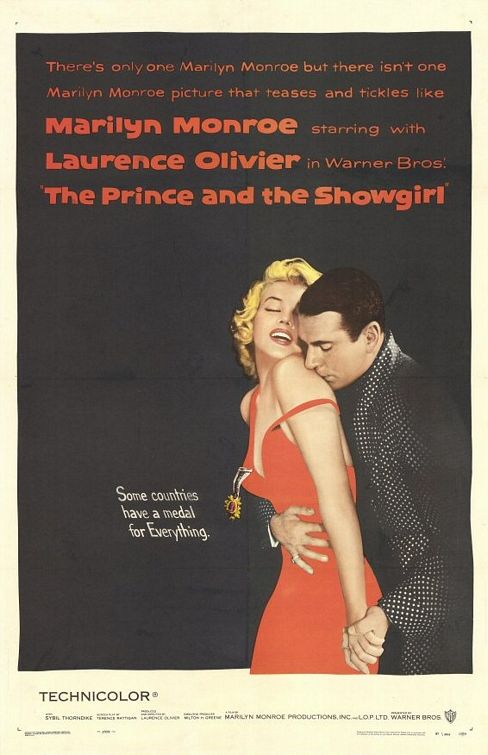
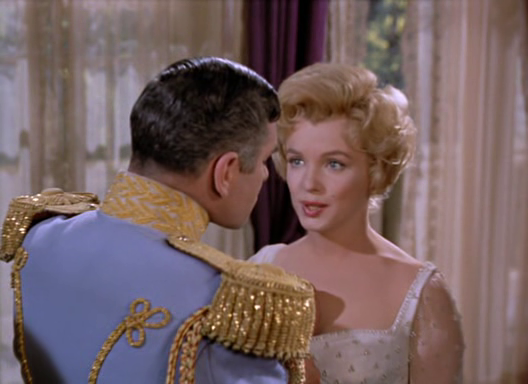
Just before the coronation of King George V in 1911 London, the Prince Regent of Carpathia (Laurence Olivier) woos a sexy American showgirl (Marilyn Monroe) while feuding with his son (Jeremy Spencer) and dealing with attempts to take over his throne.

Genres, Themes, Actors, and Directors:

  • Cross-Class Romance
  • Historical Drama
  • Laurence Olivier Films
  • Marilyn Monroe Films
  • Play Adaptation
  • Romantic Comedy
  • Royalty and Nobility
  • Showgirls

Review:
Laurence Olivier’s first non-Shakespearean effort as a cinematic director was this lightweight historical romantic comedy, based on Terence Rattigan‘s play The Sleeping Prince, and best known by modern audiences as the subject of the 2011 film My Week With Marilyn (starring Michelle Williams). Indeed, MWWM offers such a fascinating — if potentially apocryphal — glimpse behind the scenes of the film’s notoriously troubled production that most film fanatics will want to take a look simply out of curiosity; but unfortunately, it hasn’t held up as engaging entertainment on its own. The primary problem is that Olivier isn’t comfortable enough with the comedic genre to elevate the material: his one-note portrayal as the Teutonic prince regent feels strained, as does the entire stagy scenario. Monroe gives a typically appealing performance as a sexpot who isn’t quite as naive as she looks or acts (and wow, how she fills out that dress!) — but her interactions with Olivier are consistently painful, given that he’s not only a complete user (he simply wants to bed her and discard her — end of story), but never manages to redeems himself as anyone worthy of her romantic interests. Meanwhile, the way in which Monroe’s character does eventually fall for Olivier’s character completely discredits her intelligence, making it a challenge to respect her throughout the rest of the film. The best aspect of the movie by far is Jack Cardiff’s incomparably luminous cinematography, which showcases Monroe and her vibrantly colored surroundings to wonderful effect.

Redeeming Qualities and Moments:

  • Marilyn Monroe as Elsie
  • Jack Cardiff’s cinematography

Must See?
No – though naturally it will be of interest to those who’ve seen My Week With Marilyn, or to Monroe completists.

Links:

Rain (1932)

Rain (1932)

“Yes, I can see how a reformer might feel a little out of place here — sort of like a schoolteacher waking up in a harem.”

Synopsis:
While stranded in a hotel on a South Seas island, a prostitute (Joan Crawford) on the lam from San Francisco is proselytized by a judgmental “reformer” (Walter Huston) and his wife (Beulah Bondi); meanwhile, a kind American soldier (William Gargan) woos Sadie (Crawford) by tempting her with marriage and a new life in Australia.

Genres, Themes, Actors, and Directors:

  • Beulah Bondi Films
  • Character Arc
  • Joan Crawford Films
  • Lewis Milestone Films
  • Missionaries and Revivalists
  • Morality Police
  • Play Adaptation
  • Prostitutes and Gigolos
  • South Sea Islands
  • Walter Huston Films

Review:
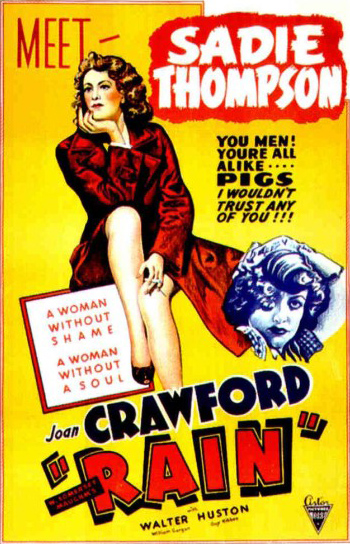
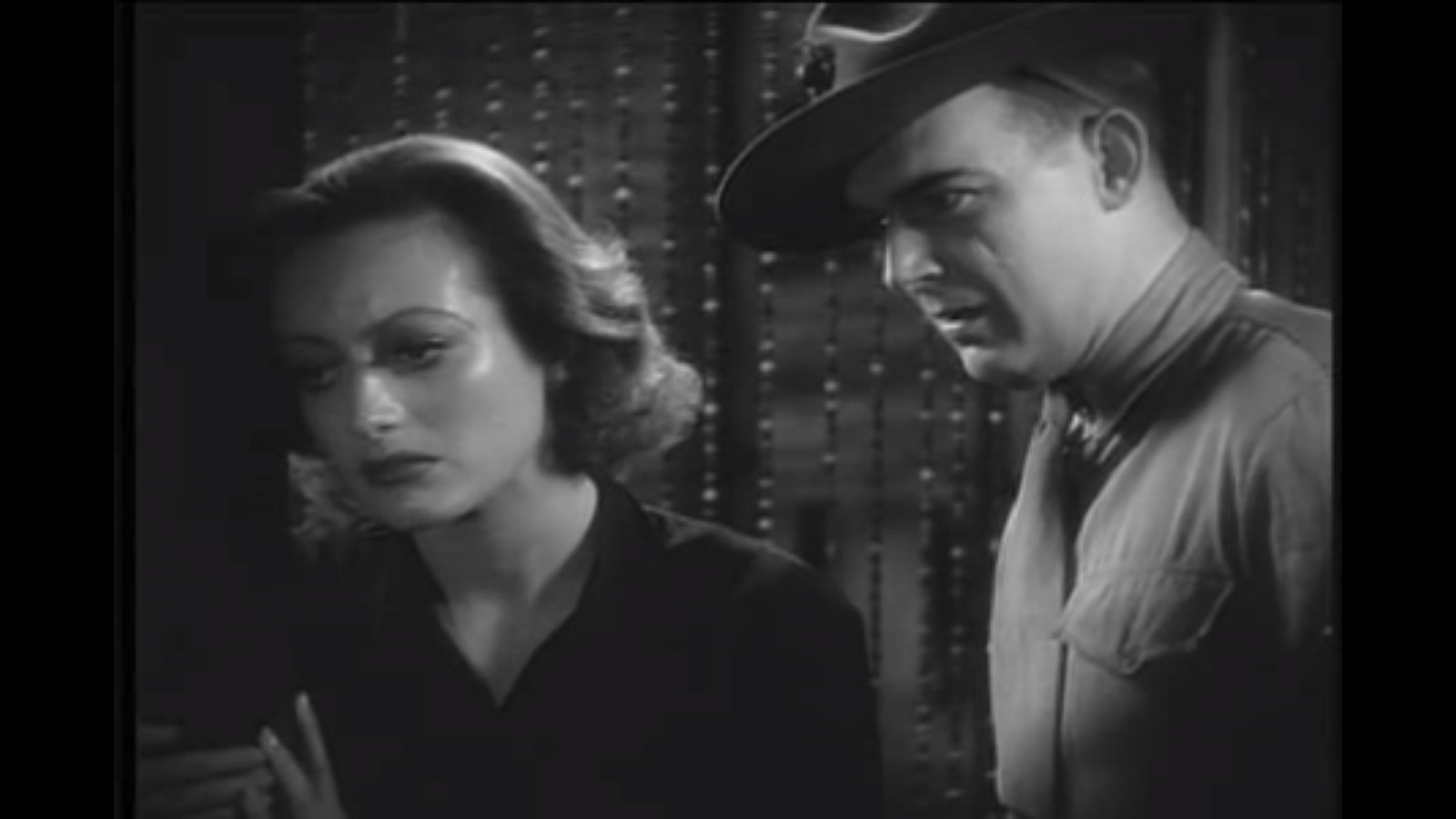
Although Joan Crawford purportedly hated her performance in this pre-Code adaptation of Somerset Maugham’s story-turned-play — originally filmed with Gloria Swanson in a silent version, and remade with Rita Hayworth in 1953 — she’s actually quite effective in the challenging role of a bold, fun-loving woman who’s cowed into submission by a bullying, hypocritical missionary. With that said, I’m not really a fan of the storyline itself; the primary problem is that we sympathize immediately with Crawford’s Sadie — especially when, after a rocky initial interaction, she makes a sincere effort towards compromise and reconciliation with Huston and Bondi — and it’s thus painful to watch her treated so badly. In addition, later climactic events between Crawford and Huston, elided over even in this relatively sassy pre-Code version, are both too vague and too unexpected to fully convince. Nonetheless, the film remains worthy viewing both for Crawford’s dynamic performance, and for how wonderfully atmospheric the entire production remains, thanks to nifty camera movements and editing, fine cinematography, and effective use of insistent rain on the soundtrack to underscore the claustrophobia experienced by all inhabitants in the hotel.

Redeeming Qualities and Moments:

  • Joan Crawford as Sadie
  • Effective cinematography and directorial flair (by Lewis Milestone)
  • Fine use of atmospheric sound effects

Must See?
Yes, as a classic Pre-Code adaptation of Maugham’s play, and for Crawford’s performance. Listed as a film with Historical Interest in the back of Peary’s book. Available for free viewing at www.archive.org.

Categories

  • Noteworthy Performance(s)

Links:

Silk Stockings (1957)

Silk Stockings (1957)

“I didn’t do anything to the commissars — Paris did!”

Synopsis:
When three bumbling Soviet commissars (Peter Lorre, Jules Munshin, and Joseph Buloff) fail to convince a composer (Wim Sonneveld) to return from Paris to Russia, a hard-nosed female agent (Cyd Charisse) is sent to investigate the situation — but she soon finds herself falling for the suave producer (Fred Astaire) of the musical production Sonneveld is involved with.

Genres, Themes, Actors, and Directors:

  • Character Arc
  • Cross-Cultural Romance
  • Cyd Charisse Films
  • Fred Astaire Films
  • Musicals
  • Peter Lorre Films
  • Play Adaptations
  • Rouben Mamoulian Films

Review:
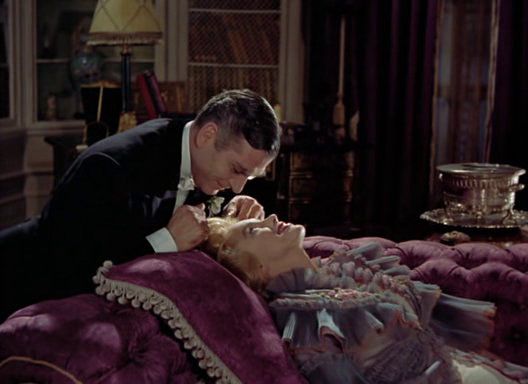
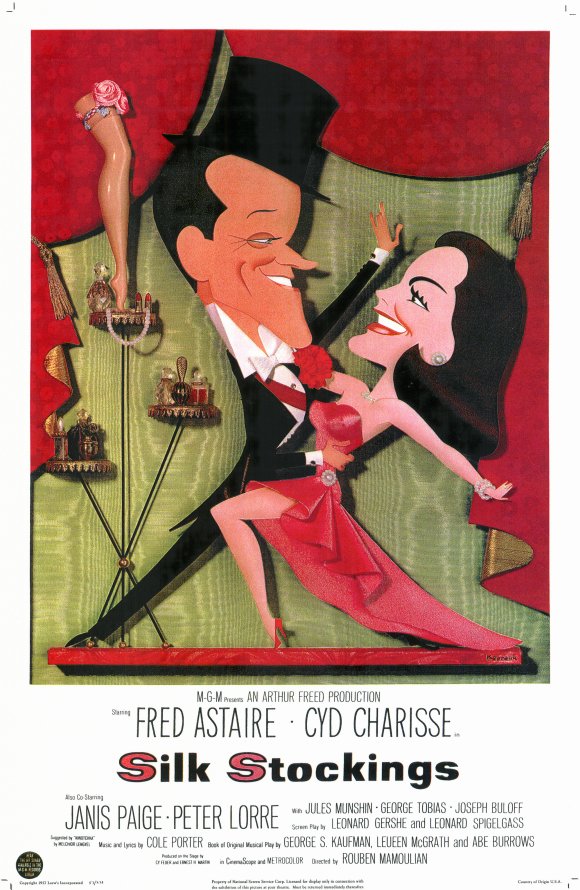
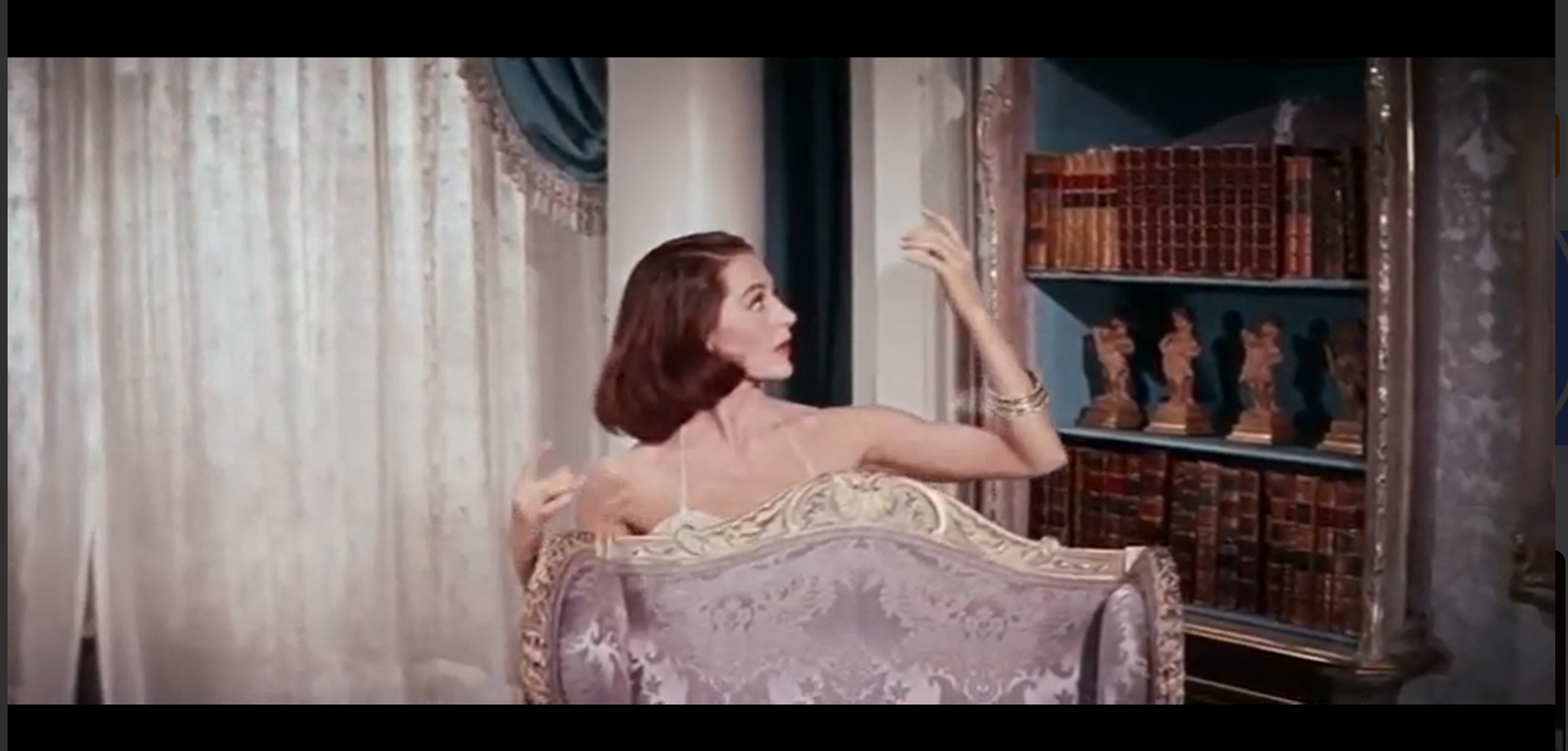
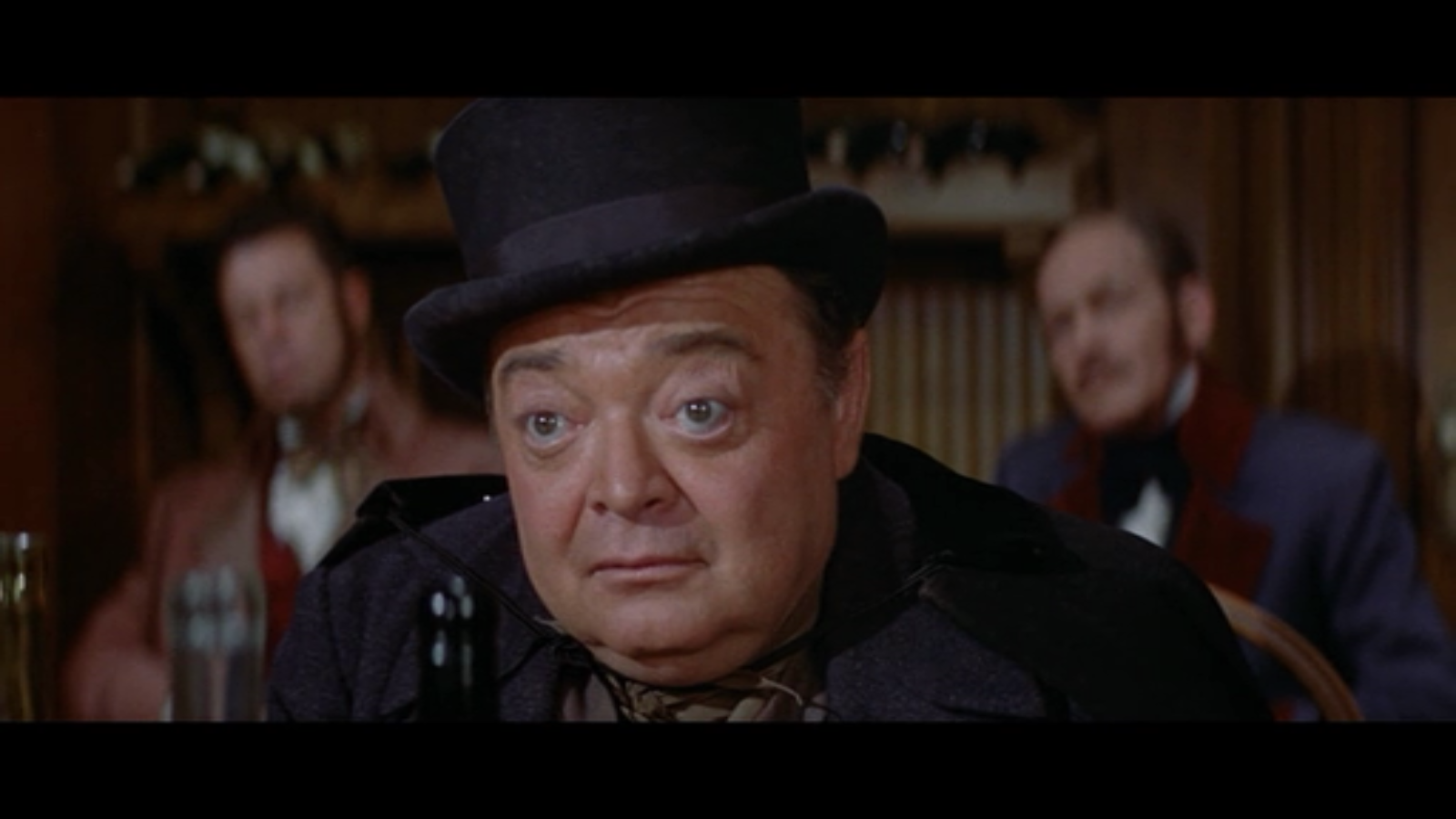
This musical version of Ernst Lubitsch’s Ninotchka (1939), based on a 1955 Broadway production with music by Cole Porter, is an unfortunate misfire on most accounts. While Lubitsch’s comedy effectively incorporated an unconventional romance into a boldly satirical skewering of early Communist Russia, this unfunny Cold War-era remake simply feels stale. It’s embarrassing enough to see Lorre reduced to playing such a silly part:

… but poor Charisse fares even worse; her wooden performance can’t help evoking consistently unkind comparisons to Garbo.

On the plus side, there’s plenty of Charisse’s incomparable dancing to enjoy: her “Silk Stockings” solo is a highlight:

… as are her performances with Astaire (“Fated to Be Mated”) and the rest of the cast (“Red Blues”).


Also adding to the film’s enjoyment is a spirited performance by Janis Paige as “Peggy Dayton”, whose character — “America’s swimming sweetheart” — was obviously modeled after Esther Williams; her “Stereophonic Sound” duet with Astaire is especially fun and lively. However, while those enamored with Charisse’s uniquely fluid cinematic dancing style will clearly want to check this one out, others needn’t bother.

Redeeming Qualities and Moments:

  • Cyd Charisse’s lovely dancing
  • Janis Paige as Peggy Dayton
  • Astaire and Paige performing “Stereophonic Sound”

Must See?
No; this one is only must-see for musical fanatics.

Links:

Raven, The (1963)

Raven, The (1963)

“Men like Scarabus thrive on the apathy of others.”

Synopsis:
After helping a magician-turned-raven (Peter Lorre) return to his human form, the son (Vincent Price) of a deceased grand sorceror — accompanied by his daughter (Olive Sturgess), Lorre, and Lorre’s son (Jack Nicholson) — heads to the castle of his father’s rival, Dr. Scarabus (Boris Karloff), who may be living with Price’s long-lost wife Lenore (Hazel Court).

Genres, Themes, Actors, and Directors:

  • Boris Karloff Films
  • Edgar Allan Poe Films
  • Fantasy
  • Jack Nicholson Films
  • Peter Lorre Films
  • Rivalry
  • Roger Corman Films
  • Vincent Price Films
  • Witches and Wizards

Review:
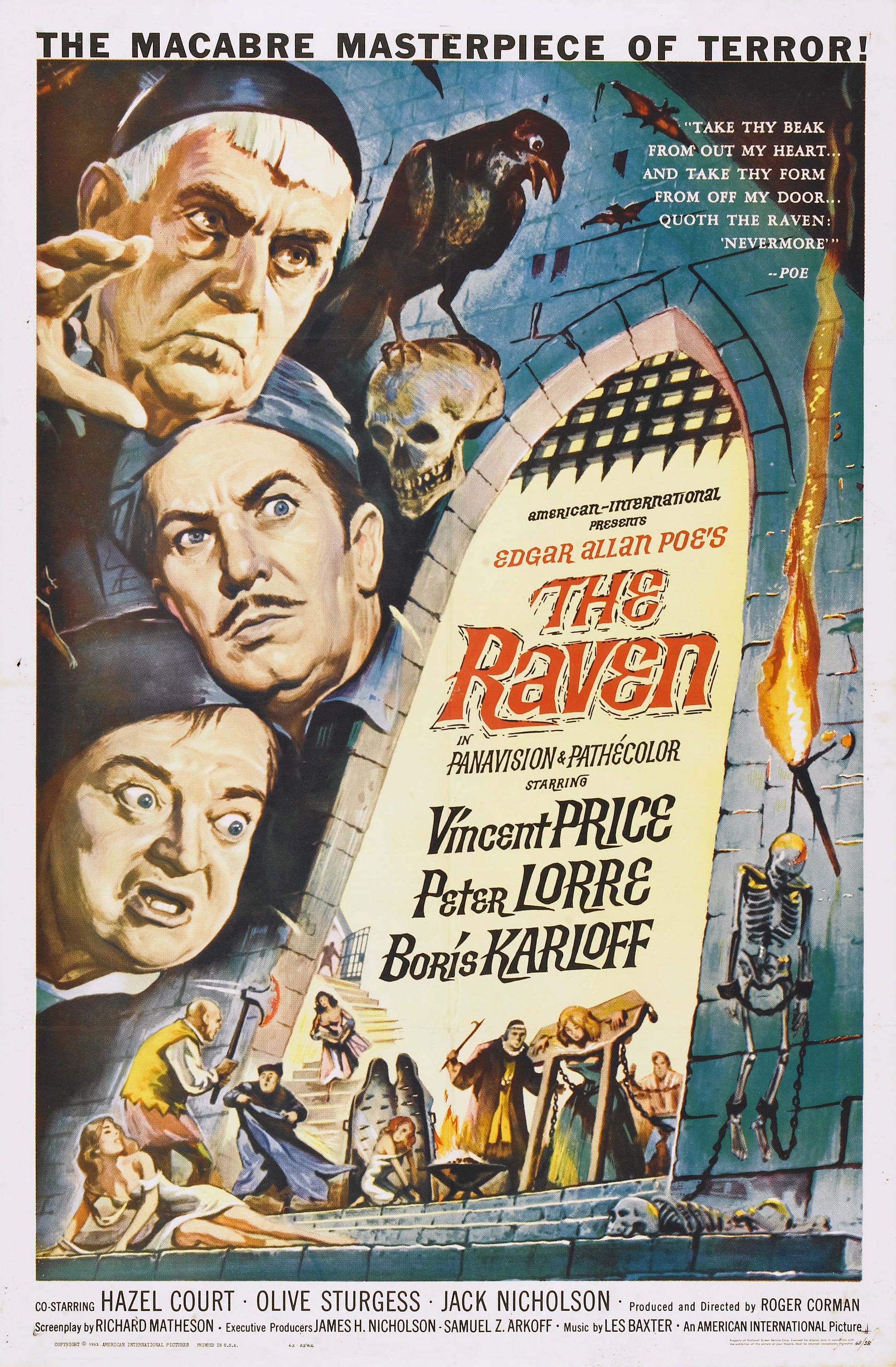
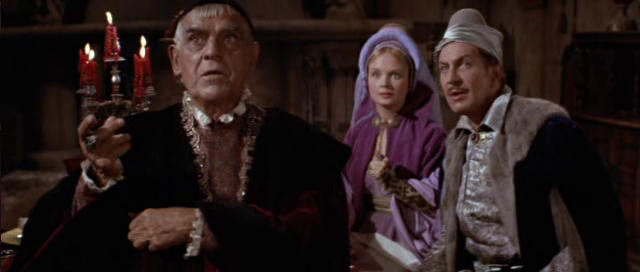
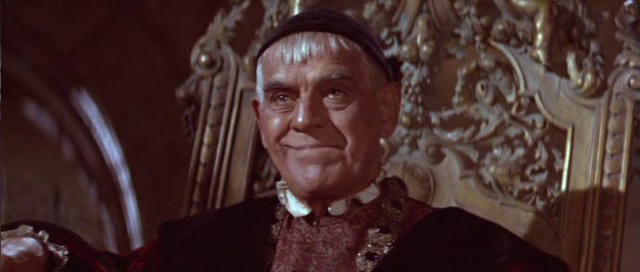
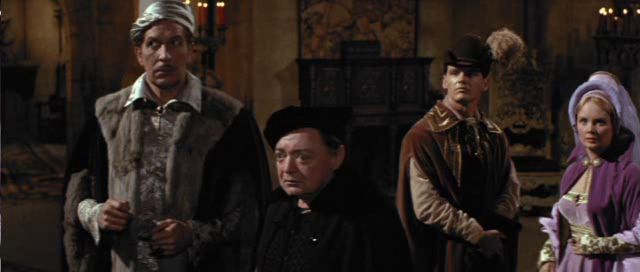
After successfully injecting dark humor into the second vignette of their Poe-inspired anthology film Tales of Terror (1962), Roger Corman and screenwriter Richard Matheson decided to craft this overtly comedic parody, which only very loosely adheres to elements of its supposed source material (Poe’s poem “The Raven”). While the premise is clever, the film gets off to a decidedly creaky start, as the humor remains dull at best, and we keep hoping for more biting wit to emerge; it’s not until Karloff arrives on the scene that things finally begin to perk up — indeed, he’s such an engaging presence that whenever his character is part of the storyline, one can’t help suddenly feeling more involved.

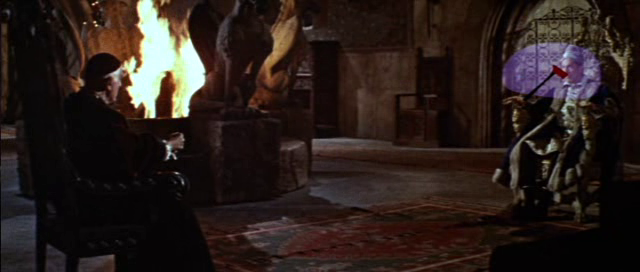
Karloff’s culminating duel with Price — while marred somewhat by corny low-budget special effects — remains the film’s undisputed comedic highlight. Watch for a young, handsome Jack Nicholson, who gives a decent (if not particularly inspired) performance as Lorre’s son.

Note: Karloff co-starred in another Poe-related film entitled The Raven (1935) nearly 30 years earlier; the two would make an interesting double-bill.

Redeeming Qualities and Moments:

  • Boris Karloff as Dr. Scarabus
  • Game performances by the ensemble cast
  • The fun duel finale

Must See?
No, though it’s worth a one-time look, simply for its fun moments — and as a cult favorite.

Links:

Tales of Terror (1962)

Tales of Terror (1962)

“Pardon me, ladies, but could you spare a coin for a moral cripple?”

Synopsis:
A trio of vignettes tell Poe-inspired tales: in “Morella”, a grieving widower (Vincent Price) blames his grown daughter (Leona Gage) for the death of his long-dead wife (Maggie Pierce); in “The Black Cat”, an abusive drunkard (Peter Lorre) seeks bitter revenge on his wife (Joyce Jameson) and her lover (Vincent Price); and in “The Case of M. Valdemar”, a sickly man (Vincent Price) allows a shady hypnotist (Basil Rathbone) to keep him hypnotized as he’s dying, much to the distress of his wife (Debra Paget) and doctor (David Frankham).

Genres, Themes, Actors, and Directors:

  • Basil Rathbone Films
  • Debra Paget Films
  • Episodic Films
  • Horror Films
  • Mind Control and Hypnosis
  • Peter Lorre Films
  • Revenge
  • Roger Corman Films
  • Vincent Price Films

Review:
Between 1959 and 1964, low-budget producer Roger Corman released what is perhaps his most famous “cycle” of films — eight movies inspired by the literature of Edgar Allen Poe (all but one of which are listed in Peary’s GFTFF). According to TCM’s article on this fourth entry in the series, Corman admitted he “was getting a bit tired of the Poe films by this time” — and his fatigue is somewhat in evidence, given that none of the segments (all scripted by Richard Matheson) are particularly noteworthy, and taken together, they leave one feeling decidedly unsatisfied. The most interesting segment — though only marginally so — is the middle one, inspired in part by Poe’s classic tale “The Cask of Amontillado”; Lorre does an eerily fine job playing a perennially drunk, mean-spirited bastard who fully deserves his comeuppance, and there’s some clever dialogue sprinkled throughout. Meanwhile, it’s nice to see Price — who plays a critical role in each of the three stories — showing some range in his diverse characterizations. However, this one is primarily recommended for diehard followers of Corman’s AIP/Poe flicks, who may be itching for a dose of their signature style (which is here in spades); other film fanatics can feel free to skip it.

Redeeming Qualities and Moments:

  • Fun performances by Price and Lorre
  • Richard Matheson’s clever, Poe-inspired dialogue:

    Montresor (Lorre): “Haven’t I convinced you of my sincerity yet? I’m genuinely dedicated to your destruction.”

Must See?
No; this one is strictly for fans of the franchise.

Links:

Comedy of Terrors, The (1963)

Comedy of Terrors, The (1963)

“I don’t think he’s quite dead enough yet to bury.”

Synopsis:
A drunken undertaker (Vincent Price) in need of clients bullies his assistant (Peter Lorre) into helping him kill innocent people — but their attempt to murder their strangely resilient landlord (Basil Rathbone) results in unexpectedly challenging consequences. Meanwhile, Lorre harbors a crush on Price’s mistreated wife (Joyce Jameson), whose aged father (Boris Karloff) has no idea Price is trying to slowly poison him.

Genres, Themes, Actors, and Directors:

  • Basil Rathbone Films
  • Black Comedy
  • Boris Karloff Films
  • Historical Drama
  • Jacques Tourneur Films
  • Marital Problems
  • Peter Lorre Films
  • Vincent Price Films

Review:
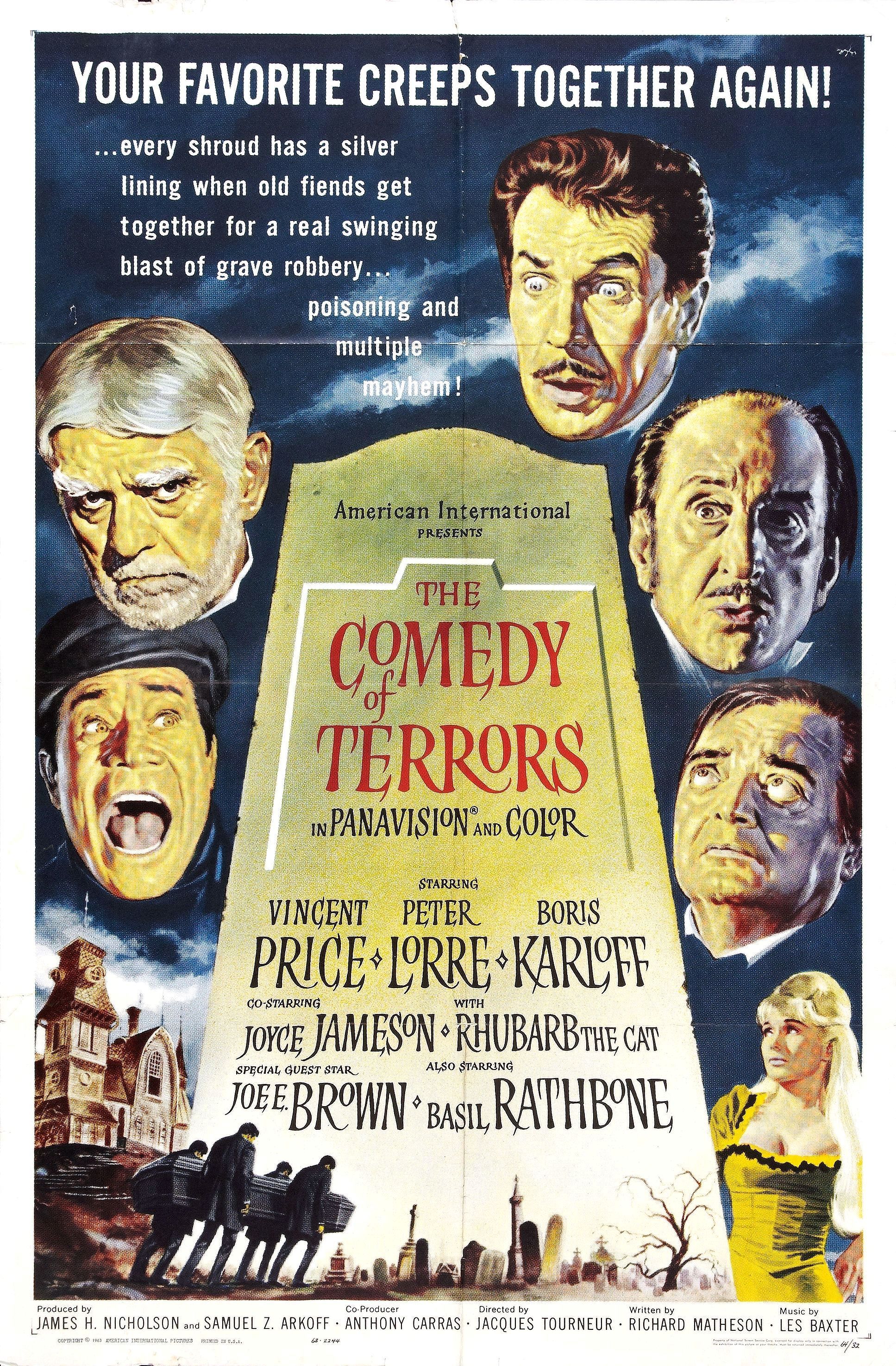
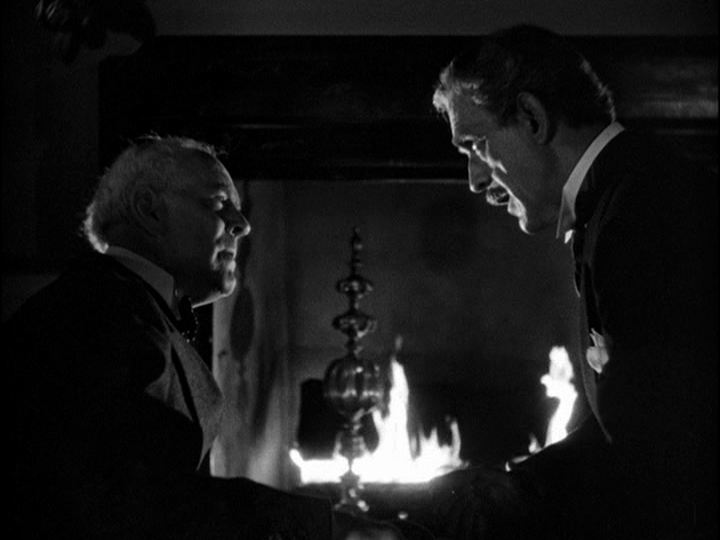
This belabored black “comedy” by director Jacques Tourneur — with a screenplay by Richard Matheson — possesses many loyal fans (see IMDb), but I’m not one of them. There’s simply no fun to be had in watching Price — playing one of his most irredeemably loathsome protagonists — abusing Lorre, Jameson, and Karloff while keeping himself in a perennial state of drunkenness; meanwhile, the screenplay is riddled with clunkers — such as the following exchange (not funny the first time), which is for some reason repeated ad nauseum:

Gillie: Mr. Tremble…
Trumbull (correcting him): Trumbull.
Gillie: I SAID “Tremble”!

A similarly painful gag involving Jameson’s terrible singing voice is milked dry as well. The allure of getting to see so many prime horror icons together onscreen, and/or a respect for Tourneur’s prior classics — such as Cat People (1942) or Night of the Demon (1957) — is clearly what will tempt most film fanatics to check this one out; however, as noted in Time Out’s review, “With credentials of this calibre, the movie could hardly fail, but it comes perilously close”. Be forewarned.

Redeeming Qualities and Moments:

  • Fine production values

Must See?
No; definitely feel free to skip this one, unless your curiosity gets the better of you.

Links:

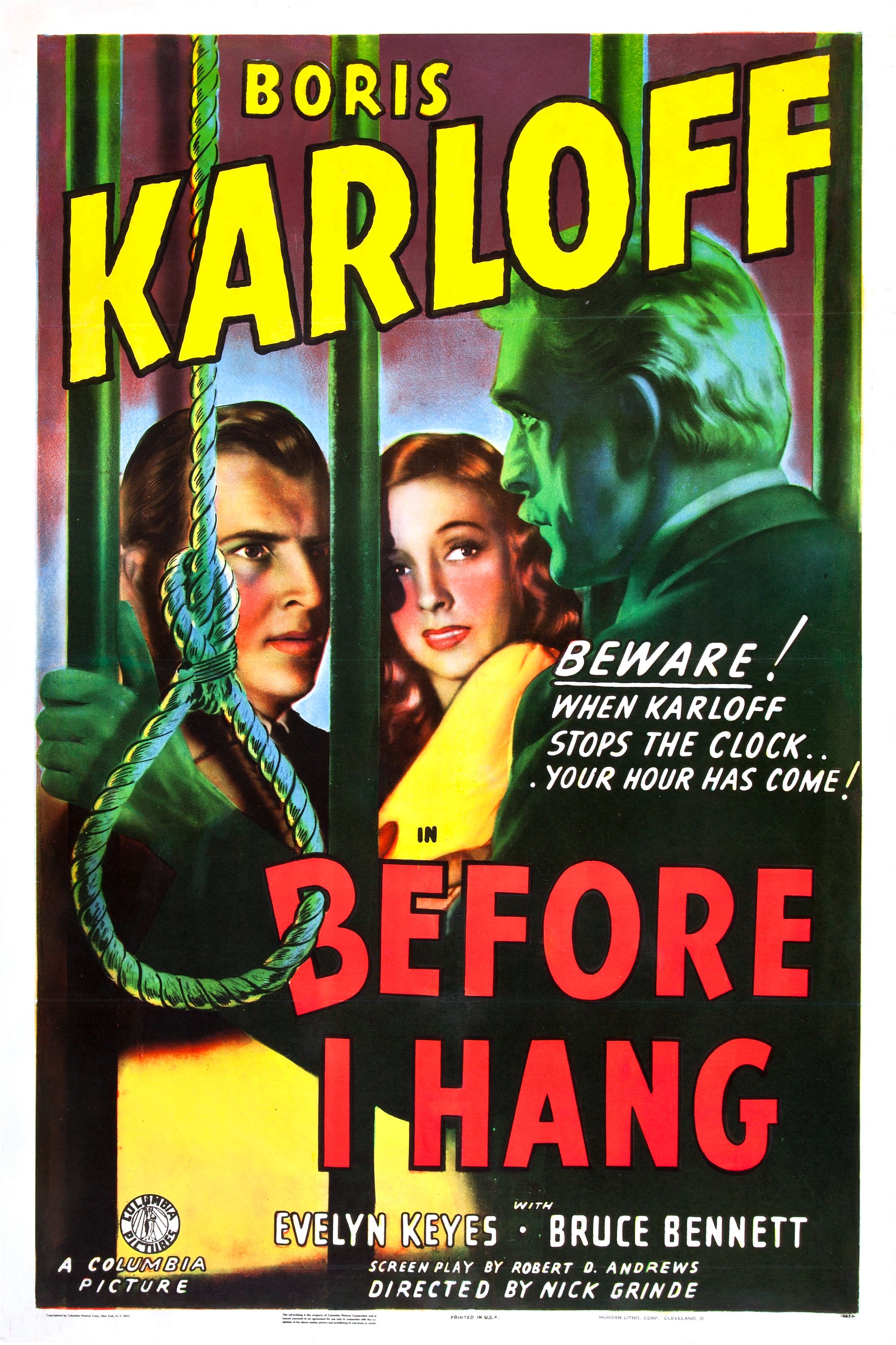
Before I Hang (1940)

Before I Hang (1940)

“With one small inoculation, I can add years to your life – now, at once! How can you even hesitate?”

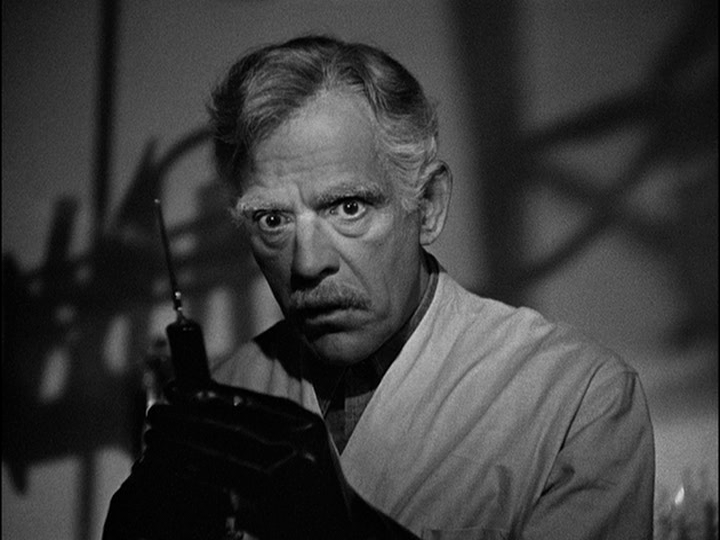
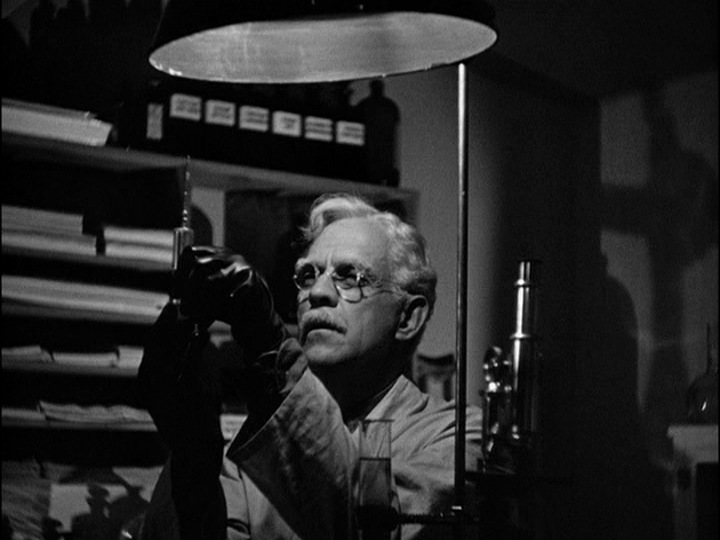
Synopsis:
An elderly doctor (Boris Karloff) about to be hung for committing a mercy killing conducts one final experiment by injecting himself with an anti-aging serum derived from the blood of a murderer — but when he’s given a last-minute pardon and allowed to live, he finds himself plagued by uncontrollable homicidal urges.

Genres, Themes, Actors, and Directors:

  • Boris Karloff Films
  • Evelyn Keyes Films
  • Horror Films
  • Mad Doctors and Mad Scientists

Review:
A year after starring as The Man They Could Not Hang (1939), Boris Karloff was once again cast by Columbia Pictures as a misunderstood doctor whose attempts to transcend the limitations of the human body wreak disastrous results. This time, however, rather than seeking revenge on those who have wronged him, Karloff’s protagonist remains sympathetic throughout, given that his murderous shift in character is accidental, and he’s genuinely unable to control his homicidal urges. With that said, there’s really nothing new here for any film fanatic who’s already seen the handful of other same-era Karloff “mad doctor” flicks listed in Peary’s GFTFF; while the cinematography is atmospheric, and Karloff is as invested as always in his performance, the overly straightforward storyline simply doesn’t have enough going for it to elevate it above a middling B-level quickie. Feel free to skip this one unless you’re a diehard Karloff fan.

Redeeming Qualities and Moments:

  • Boris Karloff as Dr. Garth
  • Benjamin Kline’s cinematography

Must See?
No; this one is only must-see for Karloff completists.

Links:

Grass is Greener, The (1960)

Grass is Greener, The (1960)

“It’s like a top secret that everyone knows — like the day before D-Day.”

Synopsis:
The wife (Deborah Kerr) of a penniless lord (Cary Grant) becomes romantically involved with a wealthy American (Robert Mitchum) who arrives as a tourist at their estate; but despite attempts by Kerr’s friend (Jean Simmons) to fill Grant in on details of the affair, he remains strangely calm.

Genres, Themes, Actors, and Directors:

  • Cary Grant Films
  • Deborah Kerr Films
  • Infidelity
  • Jean Simmons Films
  • Love Triangle
  • Noel Coward Films
  • Robert Mitchum Films
  • Romantic Comedy
  • Royalty and Nobility
  • Stanley Donen Films

Review:
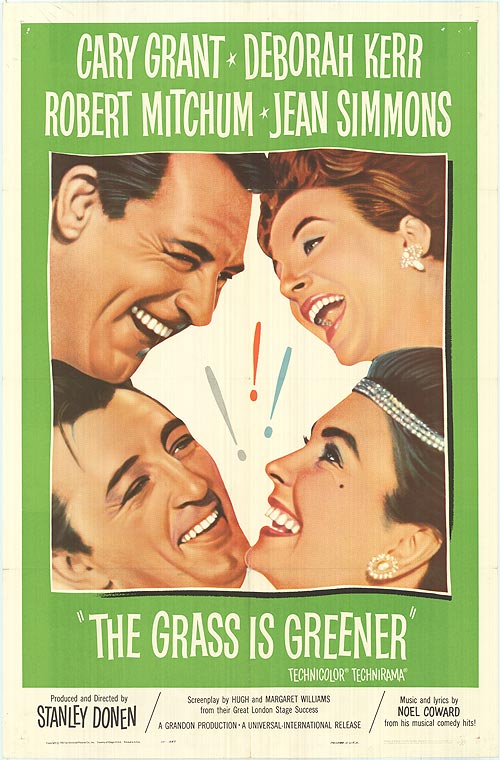
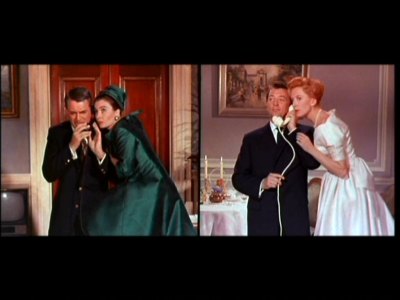
The enticing cast of this would-be romantic comedy — directed by Stanley Donen, and based on a 1956 play by Hugh and Margaret Williams — is the best thing going for it by far. Its insipid storyline is based on a paper-thin premise which never feels believable: Kerr is apparently reasonably happily married to Grant, yet falls into a passionate embrace within 20 minutes of encountering a stranger who’s barged into a private room of her estate. (If her husband were played by someone less attractive than Grant, this scenario MIGHT be a tad more plausible — but as presented here, it’s simply ludicrous.) Meanwhile, the annoying character played by Simmons is completely gratuitous, and seems to be added into the mix simply to round things out and provide one more pretty face to look at. Feel free to skip this clunker unless you’re a diehard fan of one of the actors, and feel compelled to see them in everything they completed.

Redeeming Qualities and Moments:

  • Decent performances by all four leads
  • Noel Coward’s fun opening-and-closing ditty about English manors

Must See?
No; definitely feel free to skip this one.

Links: