Browsed by
Category: Original Reviews

Responses to Peary’s “must see” movie reviews, as well as my own “must see” movie reviews up to and after 1986 (when Peary’s book was published).

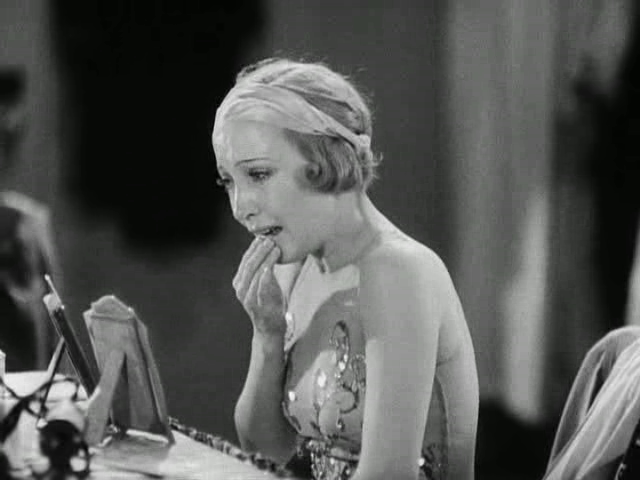
Broadway Melody, The (1929)

Broadway Melody, The (1929)

“Those men aren’t going to pay ten bucks to look at your face; this is Broadway!”

Synopsis:
A songwriter (Charlie King) helps his girlfriend (Bessie Love) and her sister (Anita Page) break into show business on Broadway — but King’s sudden declaration of love for Page (which they keep secret from Love) prompts Page into a dangerous dalliance with a sleazy socialite (Kenneth Thomson).

Genres, Themes, Actors, and Directors:

  • Aspiring Stars
  • Love Triangle
  • Musicals

Review:
This creaky backstage melodrama will forever hold a special place in cinematic history given its status as the first all-talking musical, the first sound film to win a Best Picture Oscar, the first film featuring a sequence (“Wedding of the Painted Doll”) shot to pre-recorded music, and the source of several familiar musical numbers (“You Were Meant for Me”, “You Are My Lucky Star”) given new life in Singin’ in the Rain (1952). Unfortunately, the storyline itself — a tired tale of (somewhat) talentless Broadway hopefuls navigating the lecherous waters of show business — leaves much to be desired; we’ve seen this basic narrative play out far too many times since then. At least the central romantic conflict — in which Page and King suddenly, mutually, and for no apparent reason realize they’re in love/lust with one another, but fear hurting the person they both care deeply about — is provided with some added emotional weight given Love’s spunky performance; and the “big reveal” scene, in which Love learns the truth about her sister and fiance, is appropriately lauded. But the rest of the film shows clear evidence of its age, with relatively static camera work (though to be fair, it’s better than many other “filmed plays” of the era) and several awkwardly handled dramatic moments.

Redeeming Qualities and Moments:

  • Bessie Love as Hank (nominated by Peary as one of the Best Actresses of the Year in his Alternate Oscars)

Must See?
Yes, once, but simply for historical reasons. Listed as a film with Historical Importance in the back of Peary’s book.

Categories

  • Historically Relevant
  • Oscar Winner or Nominee

Links:

What Price Glory (1926)

What Price Glory (1926)

“There’s something rotten about a world that’s got to be wet down every thirty years with the blood of boys like those.”

Synopsis:
Two rivalrous Marines — Sgt. Quirt (Edmund Lowe) and Captain Flagg (Victor McLaglen) — compete for the affections of a beautiful French girl (Dolores del Rio) on the eve of World War I.

Genres, Themes, Actors, and Directors:

  • Dolores Del Rio Films
  • Love Triangle
  • Play Adaptation
  • Raoul Walsh Films
  • Rivalry
  • Silent Films
  • Soldiers
  • Victor McLaglen Films
  • World War I Films

Review:
Raoul Walsh directed this first cinematic adaptation of Maxwell Anderson and Laurence Stallings’ play, which was filmed again in 1952 by John Ford with James Cagney in the lead. Perhaps best known as the silent film which rewards careful lip-readers with evidence of spoken profanity not indicated on the title cards themselves (!), it tells an overly simplistic tale of macho rivalry (Lowe and McLaglen’s tussle over del Rio is preceded by similar conflicts with other women) set against the backdrop of World War I. Unfortunately, there’s not really enough to the story or the characters to sustain modern viewers’ interest, and the humor comes across as overly broad. While the battle scenes are impressively shot, film fanatics hoping to see a more engaging treatment of World War I in a silent film would be better off watching King Vidor’s The Big Parade (1925) or William Wellman’s Wings (1927).

Redeeming Qualities and Moments:

  • The powerfully filmed wartime sequences

Must See?
No, though it will likely be of interest to fans of Walsh’s work.

Links:

Seventh Heaven (1927)

Seventh Heaven (1927)

“Never look down; always look up!”

Synopsis:
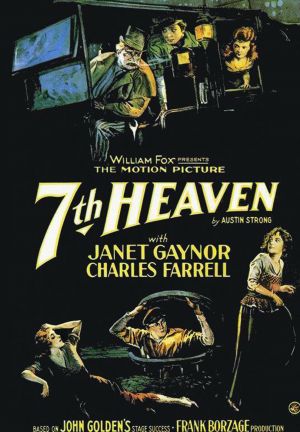
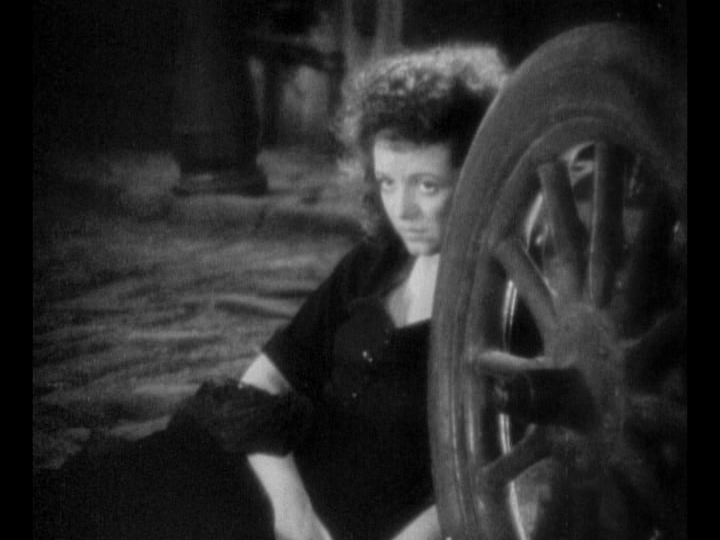
A French prostitute (Janet Gaynor) browbeaten by her abusive sister (Gladys Brockwell) finds comfort and transformation in the arms of a streetcleaner (Charles Farrell) — but when World War I descends, Farrell enlists and the newly married couple must sustain their love from afar.

Genres, Themes, Actors, and Directors:

  • Frank Borzage Films
  • Janet Gaynor Films
  • Play Adaptations
  • Prostitutes and Gigolos
  • Romance
  • Silent Films
  • World War I

Review:
In Alternate Oscars, Peary argues that Janet Gaynor’s popularity both “with the public and within the industry” helped land her the first ever Best Actress Academy Award, for “three good [but not great] performances” in 1927-28 — including her role here as a downtrodden young waif whose life is redeemed by a charitable former “sewer rat”. Despite solid direction by Frank Borzage, nice use of Expressionistic sets, and Gaynor’s sympathetic lead performance, the film unfortunately hasn’t aged all that well — primarily due to its overly simplistic storyline (based on a popular Broadway play), which doesn’t really have anywhere interesting to go once Gaynor is rescued from her sorry plight — speaking of which, Brockwell is a caricature of Evil rather than a three-dimensional character — and the young couple realize they’re in love. The imminence of World War I makes for a convenient narrative hitch — but Gaynor and Farrell’s promise to “come to each other” at 11:00 each day is simply sappy, and the utterly unrealistic ending will have your eyes rolling. Ultimately, this one is only must-see for diehard enthusiasts of silent films, and/or Oscar completists.

Redeeming Qualities and Moments:

  • Janet Gaynor as Diane
  • Lovely Expressionist sets

Must See?
No, though it will be of interest to fans of Borzage, silent films, and/or Oscar winners. Listed as a film with Historical Importance in the back of Peary’s book.

Links:

Three Musketeers, The (1948)

Three Musketeers, The (1948)

“To die among friends; can a man ask for more?”

Synopsis:
An aspiring musketeer (Gene Kelly) in 17th century France joins veteran musketeers Athos (Van Heflin), Porthos (Gig Young), and Aramis (Robert Coote) in their efforts to protect Queen Anne (Angela Lansbury) against the evil intentions of Richelieu (Vincent Price) and his henchwoman, Lady de Winter (Lana Turner).

Genres, Themes, Actors, and Directors:

  • Angela Lansbury Films
  • Frank Morgan Films
  • Gene Kelly Films
  • George Sidney Films
  • Gig Young Films
  • Historical Drama
  • June Allyson Films
  • Lana Turner Films
  • Mistaken Identities
  • Royalty and Nobility
  • Van Heflin Films
  • Vincent Price Films

Review:
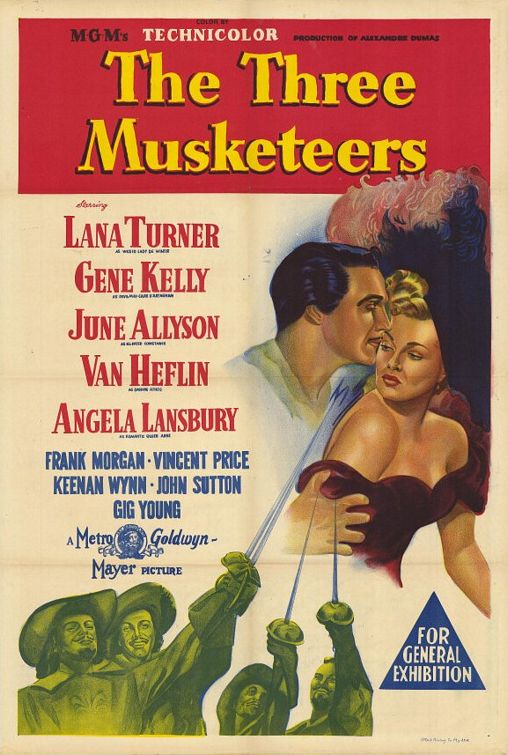
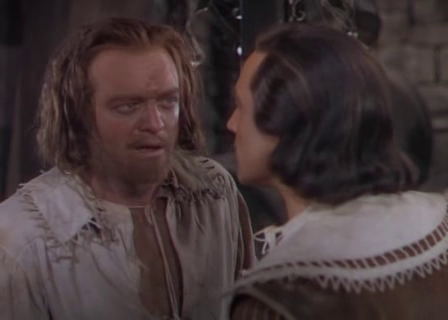
Fans of Alexandre Dumas’ swashbuckling classic will likely be the primary audience for this colorful literary adaptation, produced by MGM Studios and starring a host of big names in key roles — most notably Gene Kelly, who was excited about the opportunity to recreate the role (D’Artagnan) originally inhabited by his idol, Douglas Fairbanks, Sr. There’s plenty of intrigue in the plotting-rich narrative, and those already familiar with the basic storyline and characters in Dumas’ serialized novel will fare best at puzzling out exactly what’s going on, and who’s attempting to do what to whom (and why); if you’re at all distracted while watching, however, you may find yourself a bit lost at times — though it’s never anything but clear who are the good guys/ladies (this group includes June Allyson as D’Artagnan’s instant beloved, Constance) versus the bad guys (guess which side Vincent Price falls on?). Personally, I find the production both overly comedic (Kelly’s performance in particular borders on clownish-ness) and far too melodramatic (Kelly and Allyson’s romance is never anything less than full-throttle — complete with overly strategic use of the infamous melody “Hearts and Flowers” whenever they’re together).

Note: Van Heflin gives the most impassioned and nuanced performance in the film, playing Athos with an appropriate level of brooding; whenever he’s on screen, one can’t help becoming absorbed in the story.

Redeeming Qualities and Moments:

  • Van Heflin as Athos
  • Lovely Technicolor cinematography

Must See?
No; this one is only must-see for fans of the book or the genre.

Links:

Tumbleweeds (1925)

Tumbleweeds (1925)

“The only land I’ll settle down on will be under a tombstone.”

Synopsis:
A rancher (William S. Hart) hoping to stake a claim in a land run and then marry his sweetheart (Barbara Bedford) is falsely accused by Bedford’s nefarious brother (Richard R. Neill) of being a ‘sooner’, and imprisoned just as the run is about to start; will he get out in time to claim his new property?

Genres, Themes, Actors, and Directors:

  • Cowboys
  • Falsely Accused
  • Ranchers
  • Settlers
  • Silent Films
  • Westerns

Review:
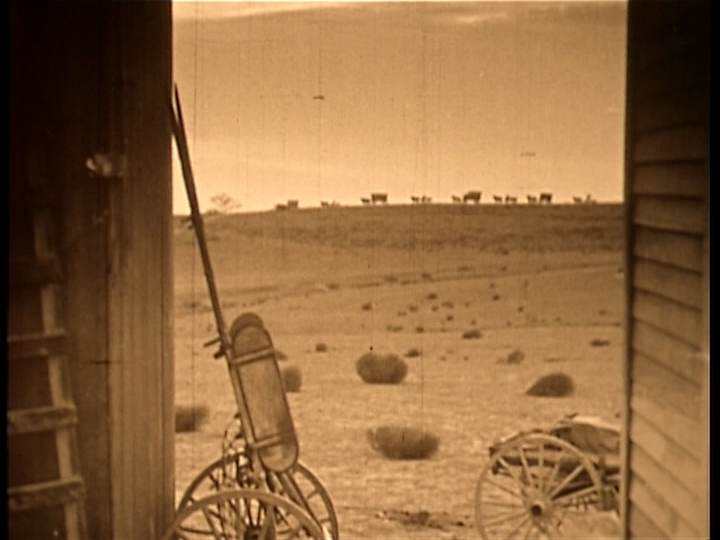
Stoic performer William S. Hart was among the most popular and beloved stars of the silent western era (he acted in no less than 75 films, and directed 53) — though most modern film fanatics are likely unfamiliar with his work or his presence. This title was the last film Hart made before retiring, and is generally considered one of the best in its genre; it’s based upon the classic western trope of ranchers versus settlers, but given added gravitas due to being situated within a specific historical time and place, the 1893 Cherokee Strip Land Run in Oklahoma (also immortalized on screen in both the 1931 and the 1960 versions of Edna Ferber’s Cimarron). The film itself doesn’t offer many surprises — other than the fact that Hart’s character isn’t entirely pure and good (he’s not above breaking the law when necessary) — but it’s finely paced and directed, and short enough (at just 78 minutes) to hold one’s attention throughout.

Redeeming Qualities and Moments:

  • Fine cinematography
  • The impressive land run sequence

Must See?
Yes, simply to see iconic western star William S. Hart in one of his better films.

Categories

  • Historically Relevant
  • Representative Film

Links:

Working Girls, The (1974)

Working Girls, The (1974)

“Hired? For what? I don’t even know what business you’re in!”

Synopsis:
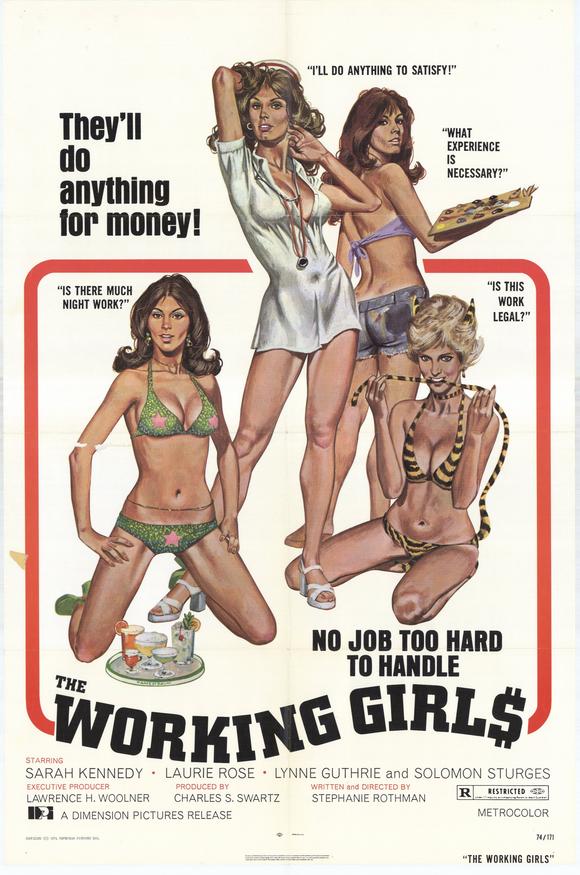
An itinerant blonde (Sarah Kennedy) arrives in Los Angeles and is given a place to stay by a sign painter (Laurie Rose) whose roommate (Lynne Guthrie) works as a waitress in a strip club. After turning the tables on a woman (Mary Beth Hughes) who’s hired her to knock off her husband, Kennedy accepts an offer by an eccentric businessman (Solomon Sturges) to be his conversation-partner; meanwhile, Guthrie dates a mobster (Mark Thomas) while moving up the career ladder at her job by both stripping and looking after the club when its manager (Gene Elman) is on vacation; and Rose falls for an itinerant singer (Ken Del Conte) who’s secretly a jewel fence.

Genres, Themes, Actors, and Directors:

  • Feminism and Women’s Issues
  • Stephanie Rothman Films

Review:
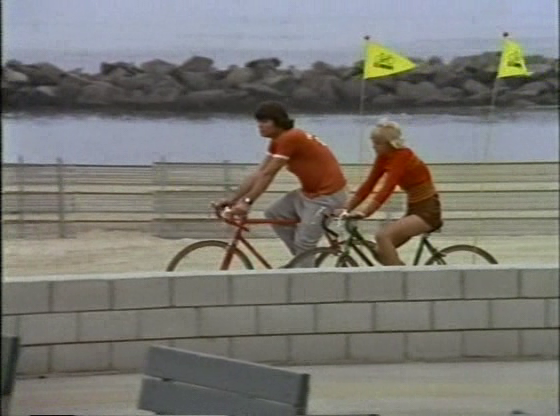
Stephanie Rothman’s final film as a director was this lighthearted exploitation flick about a trio of sexy young women seeking love, jobs, friendship, and independence in Los Angeles. As in Rothman’s previous female-centric films (The Student Nurses and Group Marriage), the protagonists here possess a strong feminist sensibility, demonstrating their ability to survive and thrive in a male-dominated universe by sticking together and supporting one another unconditionally — i.e., Rose immediately offers Kennedy a free place to stay; Kennedy willingly allows Rose to “steal” her one-night-stand (Ken Del Conte) as her lover; a colleague (Cassandra Peterson) teaches Guthrie the tricks of the stripping trade; etc. Meanwhile, Kennedy — who initially strikes one as merely a “dumb blonde” — quickly flouts our expectations by demonstrating a strong sense of logic and head for business. While its weak ensemble storyline ultimately makes this one of Rothman’s lesser efforts, it’s certainly worth a look by followers of slyly subversive feminist cinema.

Redeeming Qualities and Moments:

  • Good use of authentic L.A.-area locales

Must See?
No, though it’s worth a one-time look.

Links:

Group Marriage (1973)

Group Marriage (1973)

“Two girls and three men — what do you call that?”

Synopsis:
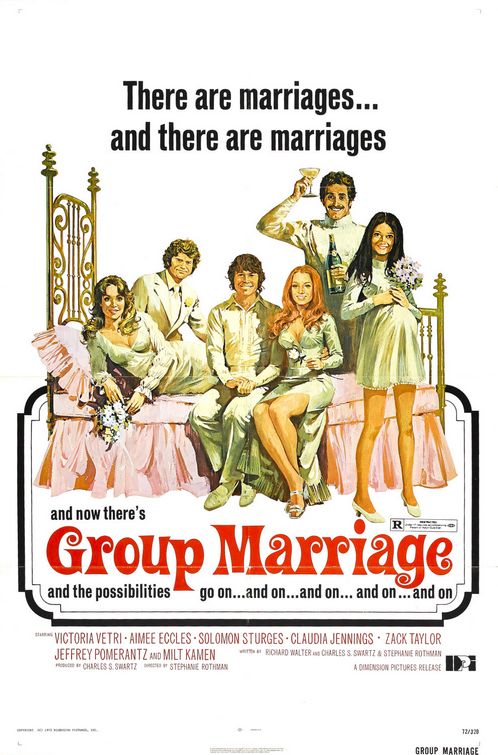
A car-savvy young woman (Aimee Eccles) in a contentious but committed relationship with her bumper sticker-producing boyfriend (Solomon Sturges) has an affair with a parole officer (Jeff Pomerantz), who brings his girlfriend (Victoria Vetri) into their growing sexual household. Soon Vetri meets a hunky lifeguard (Zack Taylor) who rounds out their “group marriage” by convincing a lawyer (Claudia Jennings) to join their unusual living arrangement.

Genres, Themes, Actors, and Directors:

  • Claudia Jennings Films
  • Comedy
  • Counterculture
  • Sexuality
  • Stephanie Rothman Films

Review:
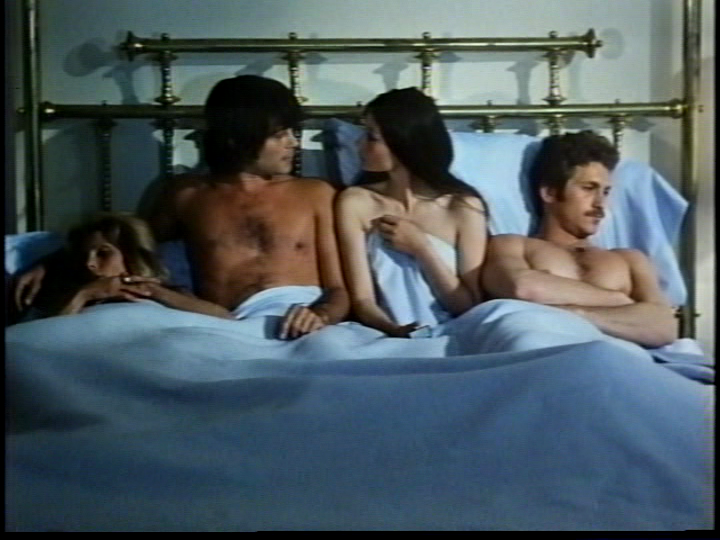
Four years after the release of Paul Mazursky’s Bob & Carol & Ted & Alice (1969), maverick feminist director Stephanie Rothman made this much bolder exploitation comedy about the same topic: poly-amorous relationships. While Mazursky’s film was notable for introducing this timely concern to mainstream audiences in a crowd-pleasing fashion, Rothman’s variation dares to take B&C&T&A‘s concerns to the next logical step, as the group of adults in question actually carry out their desire to experiment with shifting sexual partnerships and a communal living arrangement. The script is often clunky (a pair of onlooking gay male neighbors are especially poorly handled), and the performances less-than-fine-tuned — but one nonetheless gets the sense that Rothman is genuinely concerned with exploring what a “group marriage” might look like, and what some of the obstacles might be, including (surprisingly) one member’s ultimate desire for more freedom than even such a radically-conceived “marriage” allows for. Meanwhile, it’s refreshing as always to see Rothman’s attempts to infuse her female characters with unexpected strengths and skills — gorgeous Eccles, for instance, is a whiz at fixing cars, while Jennings is a no-nonsense lawyer.

Note: Watch for the film’s most unintentionally giggle-worthy moment, as Vetri encounters Taylor on the beach for the first time.

Redeeming Qualities and Moments:

  • A clever spoof of shifting sexual mores

Must See?
Yes, simply to see one of Rothman’s iconic exploitation films — and as an interesting counterpoint to Bob & Carol & Ted & Alice (they would make a provocative double-bill).

Categories

  • Historically Relevant

Links:

There’s No Business Like Show Business (1954)

There’s No Business Like Show Business (1954)

“You start worrying about your kids the day they’re born, and you never stop. Even after they bury you, I bet you never stop worrying.”

Synopsis:
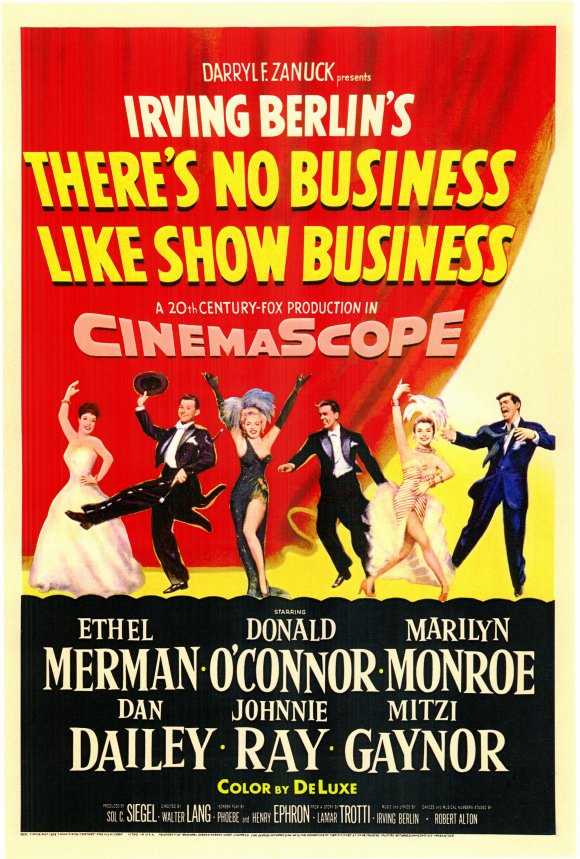
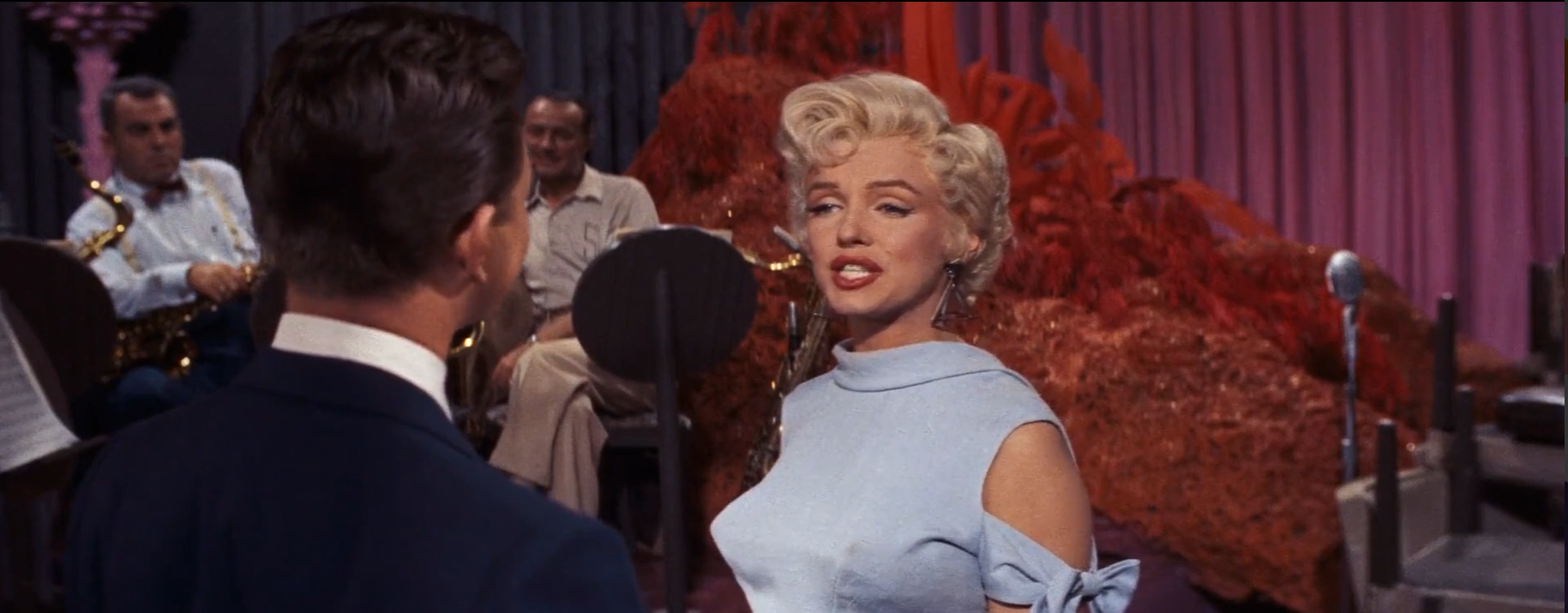
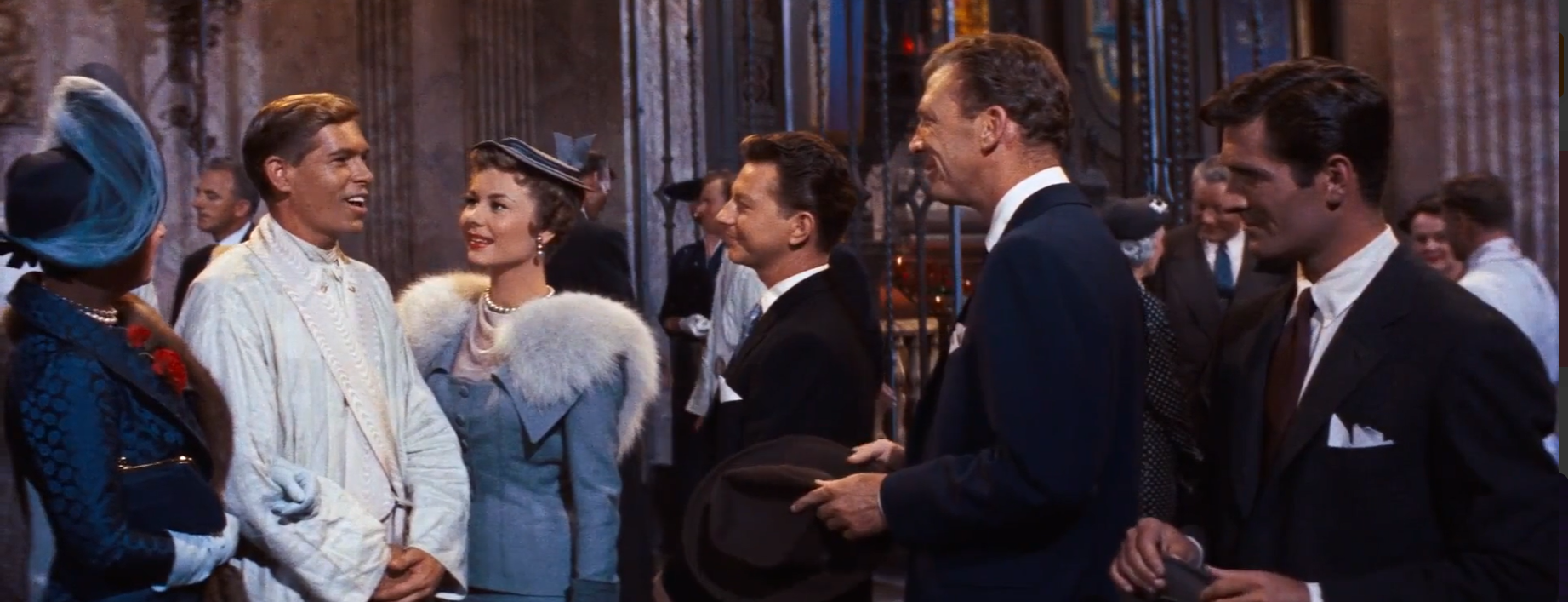
Married vaudeville team Terence (Dan Dailey) and Molly (Ethel Merman) Donahue become “The Five Donahues” when their children — Tim (Donald O’Connor), Katy (Mitzi Gaynor), and Steve (Johnnie Ray) — join them onstage; but Steve’s desire to join the priesthood and Tim’s struggles with alcohol while romancing a sexy singer (Marilyn Monroe) bring challenges to their family’s happiness.

Genres, Themes, Actors, and Directors:

  • Dan Dailey Films
  • Marilyn Monroe Films
  • Musicals
  • Vaudeville and Burlesque

Review:
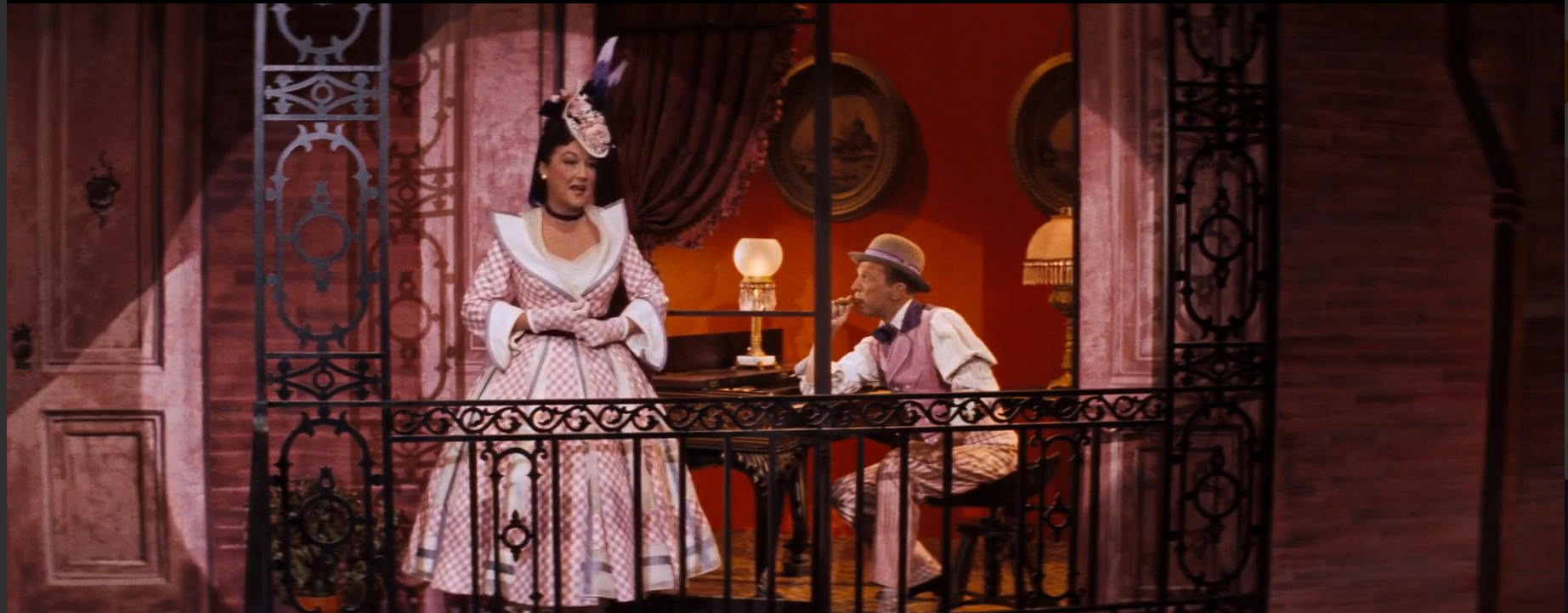
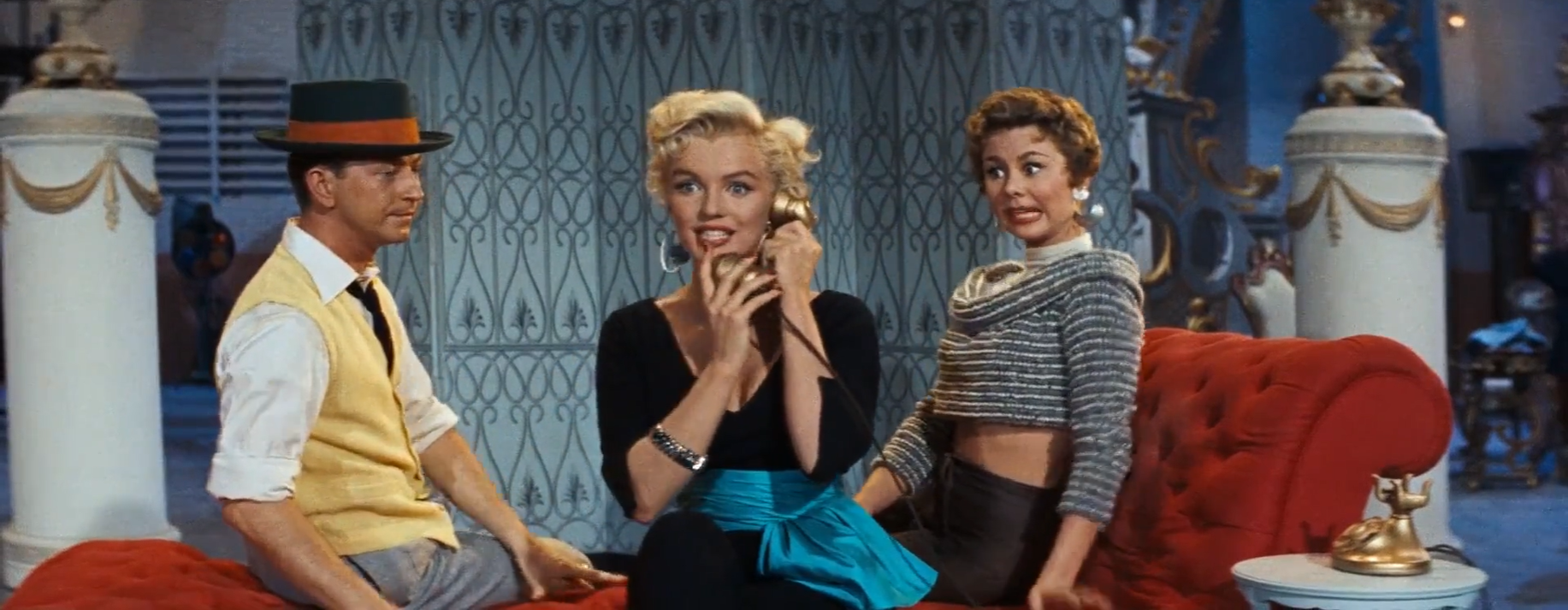
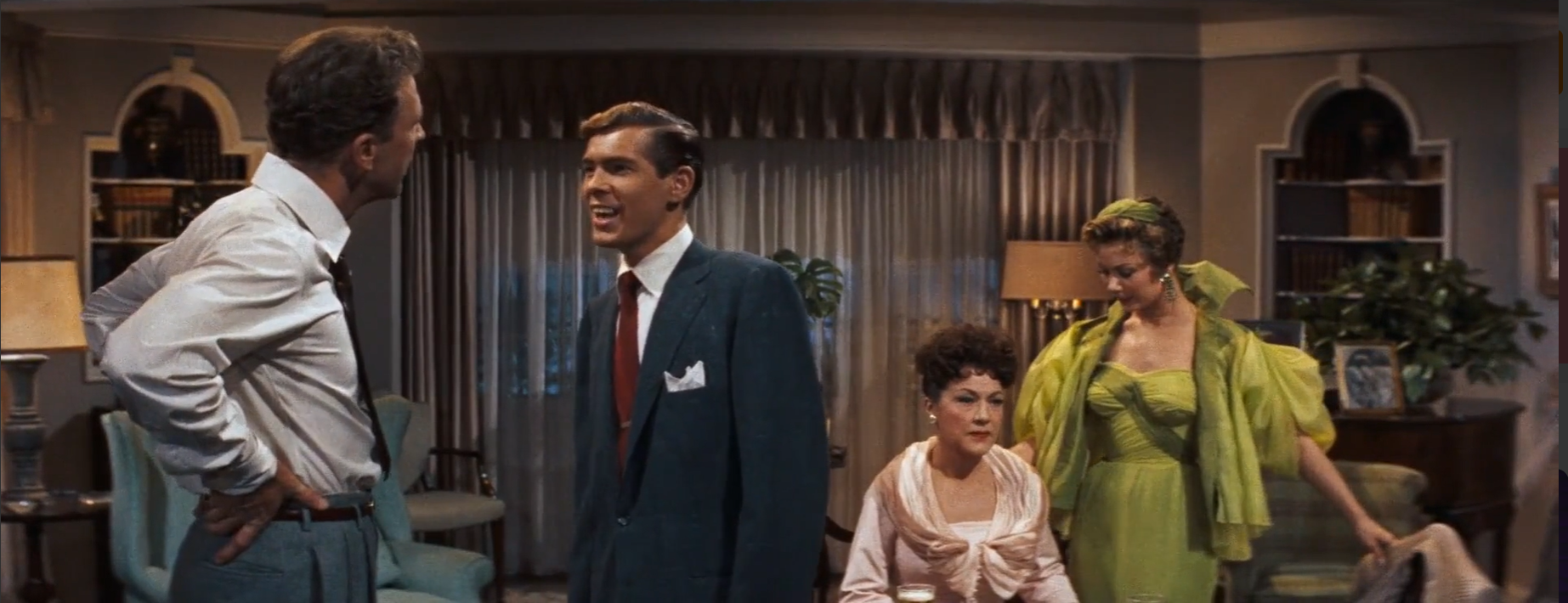
As noted by Time Out’s reviewer, this disappointing 20th Century Fox musical — its first filmed in Cinemascope — features “[Ethel] Merman at her loudest:

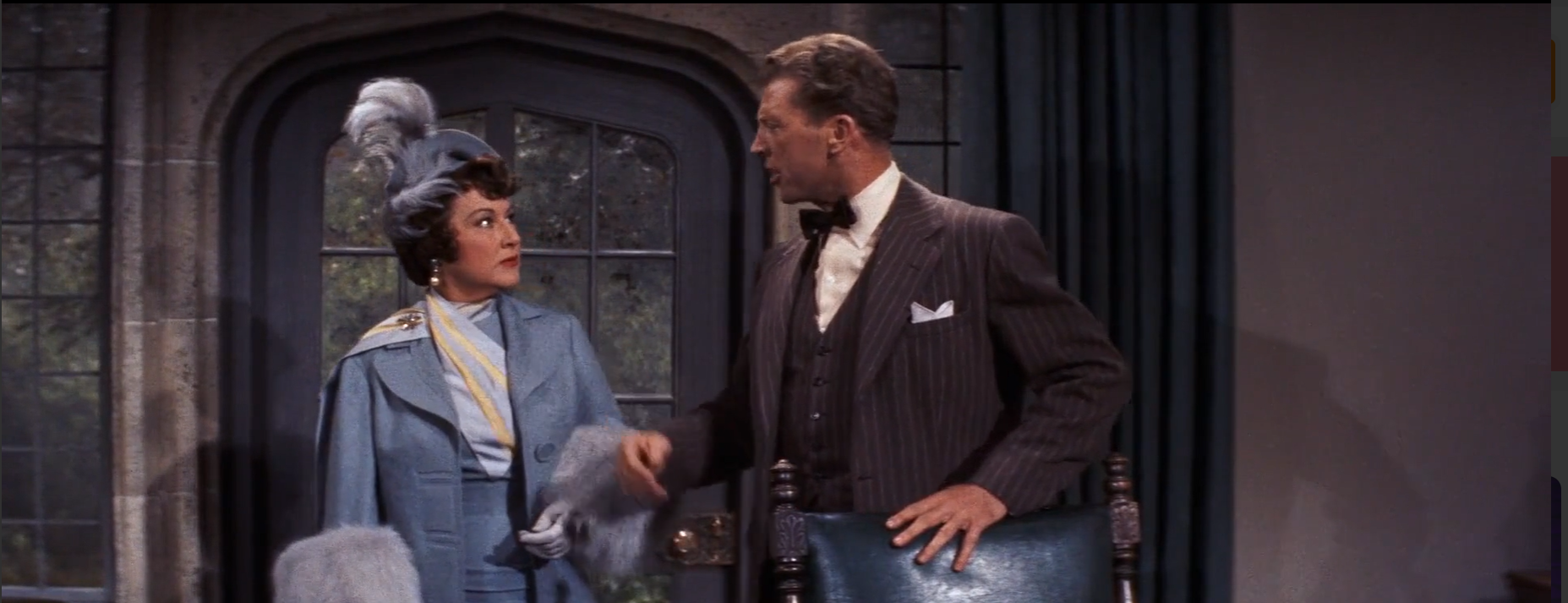
… [Dan] Dailey at his crassest:

… and [Marilyn] Monroe, thank heaven, at her 20th Century Foxiest”.

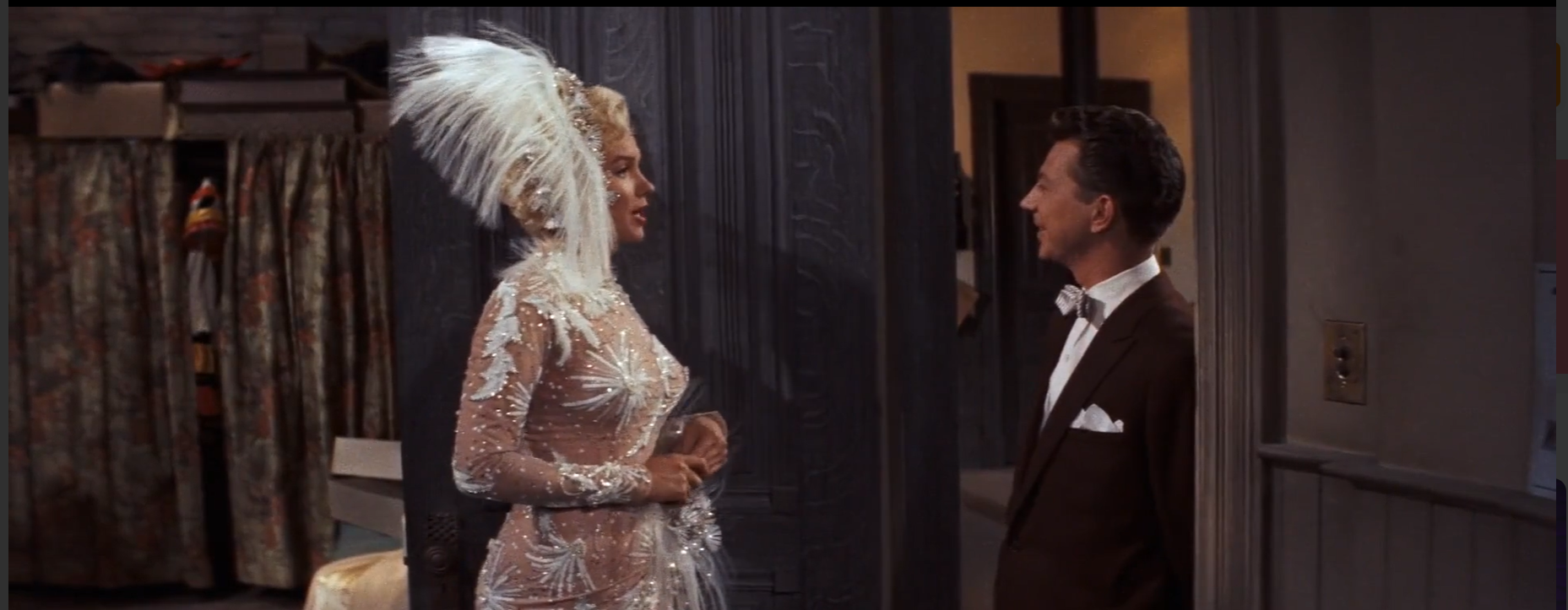
Indeed, other than its Irving Berlin-ful score, Monroe will be the main draw for most viewers — though her supporting role here seems decidedly shoehorned into the narrative, and she’s paired with the worst possible choice of romantic interests in her entire movie career.

(No offense meant to O’Connor; they’re simply utterly mismatched. Ray would have been a much better choice — but his character is sent off into priesthood!)

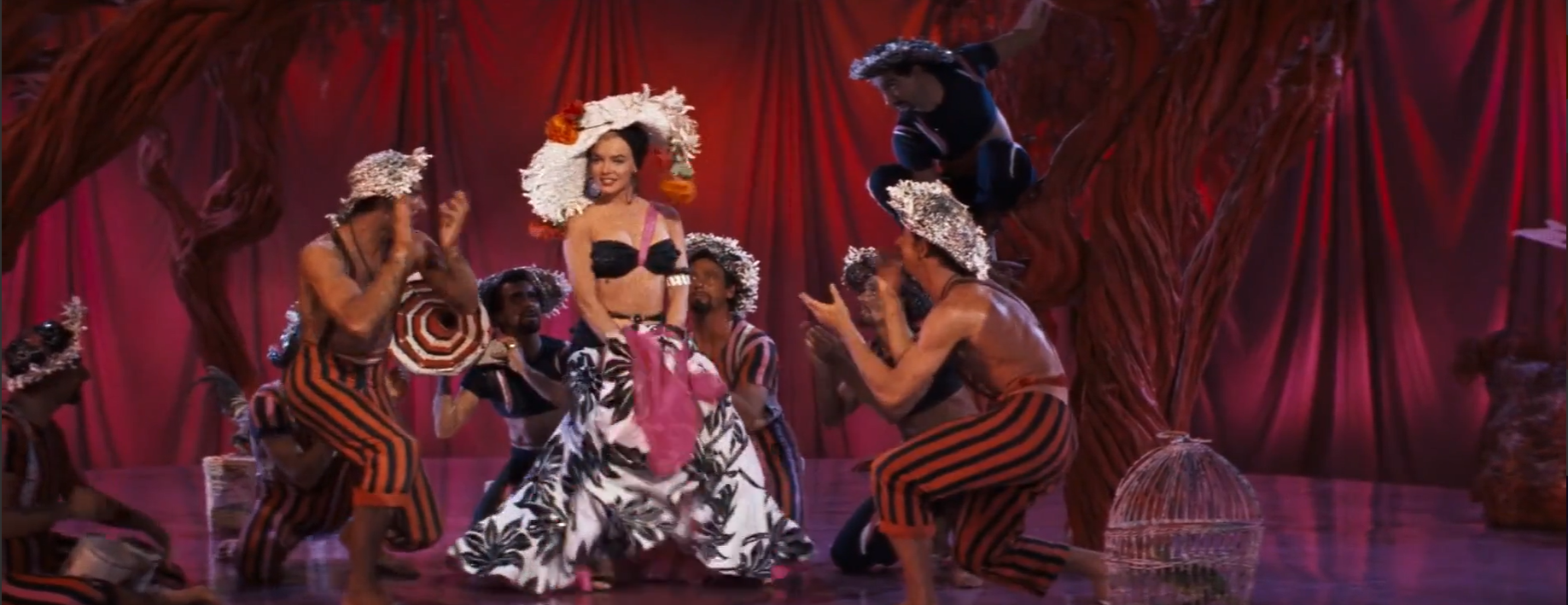
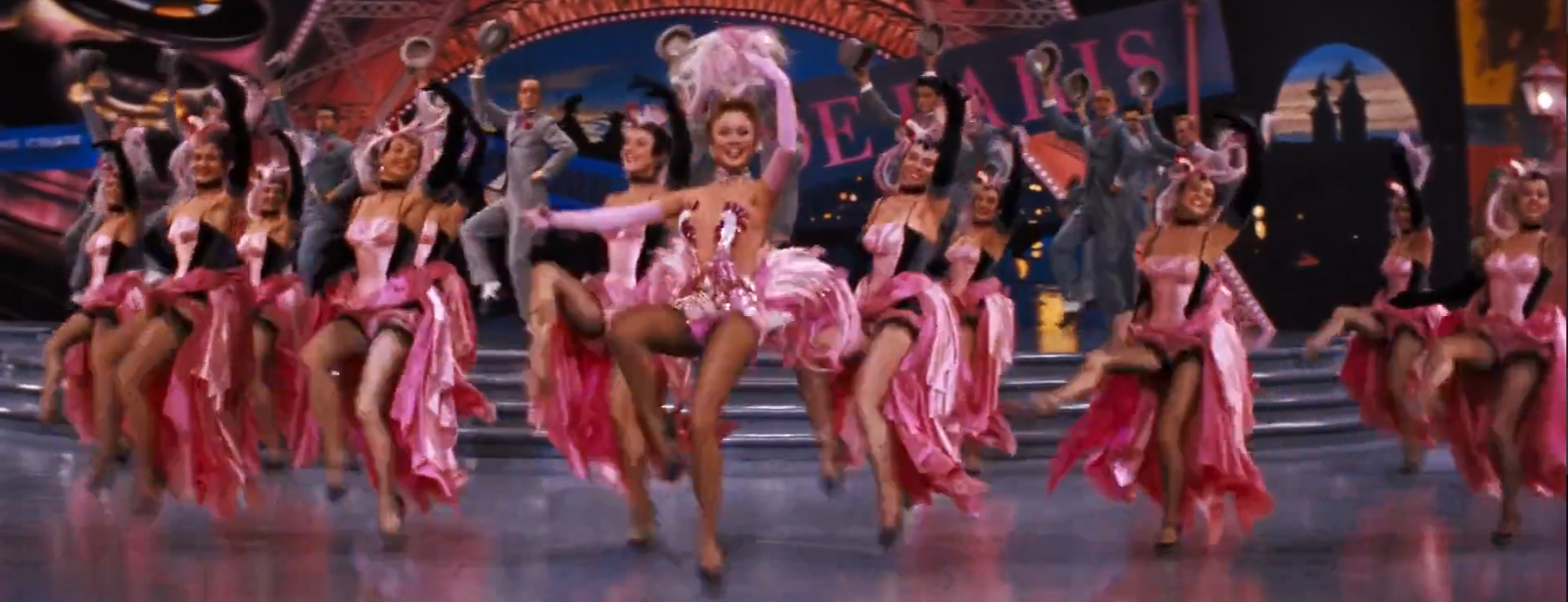
Meanwhile, as pointed out by DVD Savant, “the production is rather garish and empty (an awful lot of wide screens full of billowing, sequined drapes)”, and while “this is supposed to [represent] the gaudy world of vaudeville… the final kiss of death is that a lot of the stuff Marilyn is made to wear here is just plain ugly” (!!).

While it possesses a couple of nicely staged and performed Berlin tunes, the movie’s sole point of interest for film fanatics is the chance to watch a handful of little-seen cinematic performers — Merman (primarily a Broadway star), Gaynor (primarily a voiceover singer), and Ray (primarily a musician) — onscreen; but the vehicle they’re given is such a clunker that it’s really not worth their efforts, or ours.

Redeeming Qualities and Moments:

  • Monroe, O’Connor, and Gaynor performing “Lazy”
  • Merman and Gaynor performing “A Sailor’s Not a Sailor (‘Til a Sailor’s Been Tattooed)”
  • Vibrant CinemaScope cinematography and sets

Must See?
No; feel free to skip this one unless you’re a Monroe completist.

Links:

We Are Not Alone (1939)

We Are Not Alone (1939)

“Did you really think I’d allow them to be together for another minute?”

Synopsis:
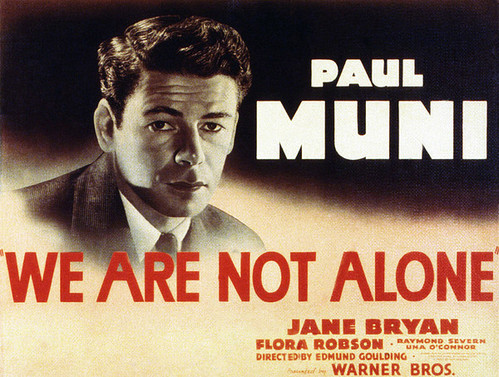
On the brink of World War I, a kind doctor (Paul Muni) hires a down-on-her-luck Austrian dancer (Jane Bryan) to be a governess for his high-needs son (Ramond Severn) — but when his shrewish wife (Flora Robson) learns about Bryan’s troubled past and insists that she leave, unforeseen trouble soon emerges.

Genres, Themes, Actors, and Directors:

  • Cecil Kellaway Films
  • Doctors and Nurses
  • Falsely Accused
  • Flora Robson Films
  • Governesses and Nannies
  • Marital Problems
  • Paul Muni Films

Review:
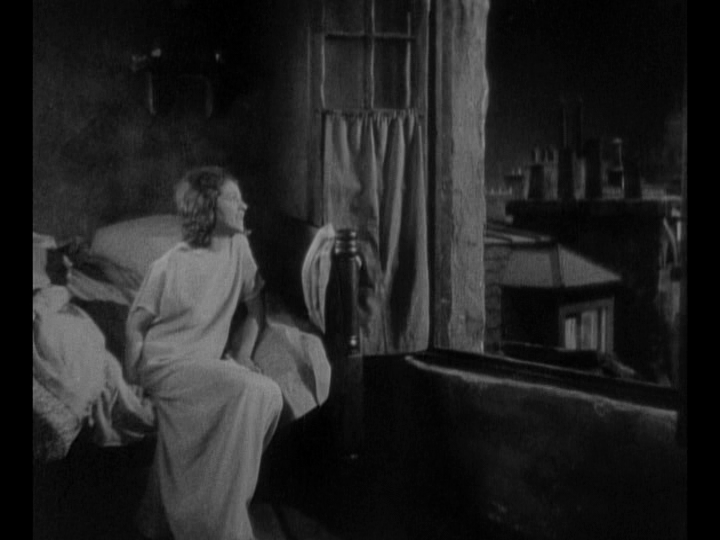
Edmund Goulding’s adaptation of James Hilton’s 1937 novel — about an overly kindhearted doctor whose attempt to help a struggling young Austrian refugee leads to his downfall — remains an overlooked treat from what is often referred to as Hollywood’s “golden year” (1939). The ever-versatile Paul Muni effectively portrays a man so genuinely kindhearted as to border on foolish naivete, committed to his stern wife to an extent far beyond what most would tolerate, and unable to foresee the ramifications of inviting a beautiful young girl into his household; it’s fascinating to watch the subtlety of his growing understanding as the depths of his wife’s intolerance and jealousy are revealed. Robson, meanwhile, is remarkable in the undeniably tricky role as his wife — her portrayal is far from unilaterally shrewish, instead demonstrating the wealth of conflicted emotions behind her character’s every statement and action; while we despise her choices, we nonetheless understand on some level the thrust and sincerity of her convictions. Finally, Bryan — a gifted, glowing actress who gave up her career in Hollywood shortly after marrying — manages to elevate her character from merely the “other woman” into a believable portrayal of a scared refugee genuinely grateful for the assistance Muni innocently affords her. Unfortunately, the storyline goes on for about half an hour too long, and eventually devolves into an unnecessarily metaphorical commentary on wartime prejudices — but the tale until then is a compelling one of a household torn apart by a tragic conflict of attitudes and priorities.

Redeeming Qualities and Moments:

  • Paul Muni as Dr. Newcome
  • Flora Robson as Jessica Newcome
  • Jane Bryan as Leni
  • Atmospheric cinematography

Must See?
Yes, as a most enjoyable “forgotten” film.

Categories

  • Good Show

Links:

David Copperfield (1935)

David Copperfield (1935)

“You have to be educated, David, and take your place in the world.”

Synopsis:
After the death of his mother (Elizabeth Allan), a young orphan named David Copperfield (Freddie Bartholomew) escapes from the clutches of his evil stepfather (Basil Rathbone) and step-aunt (Violet Kemble Cooper), and goes to live with the family of kind but chronically in-debt Mr. Micawber (W.C. Fields); when Micawber is carted off to debtors’ prison, David makes his way towards the house of his kind Aunt Betsey (Edna May Oliver) and her eccentric friend, Mr. Dick (Lennox Pawle). Upon growing up, David (Frank Lawton) falls in love with a ditzy but beautiful girl named Dora (Maureen O’Sullivan), not realizing that his long-time friend Agnes (Madge Evans) — whose father (Lewis Stone) is being manipulated by an unctuous clerk named Uriah Heep (Roland Young) — is secretly enamored with him.

Genres, Themes, Actors, and Directors:

  • Basil Rathbone Films
  • Charles Dickens Films
  • Coming of Age
  • Freddie Bartholomew Films
  • George Cukor Films
  • Lewis Stone Films
  • Maureen O’Sullivan Films
  • Orphans
  • Roland Young Films
  • W.C. Fields Films

Review:
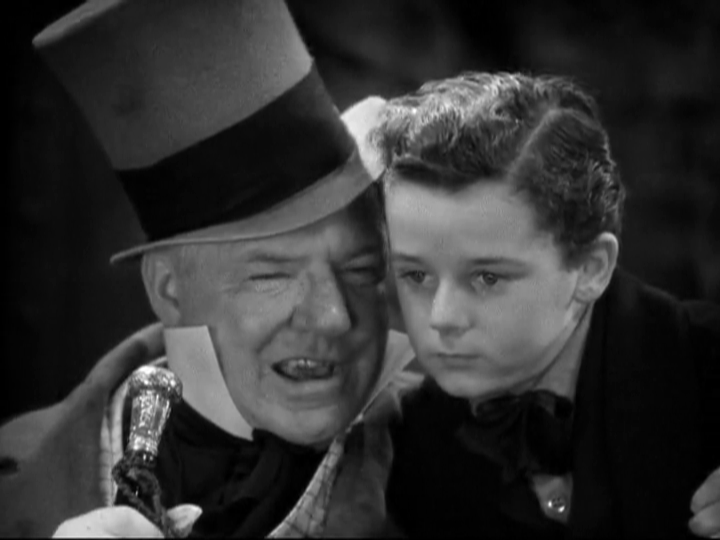
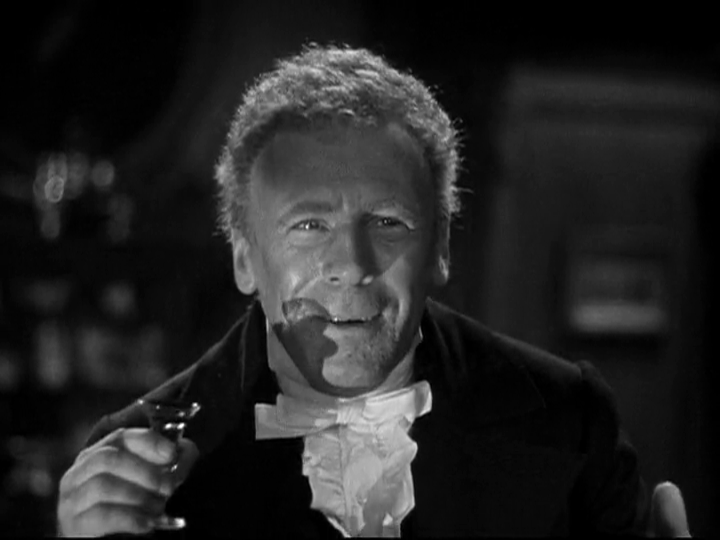
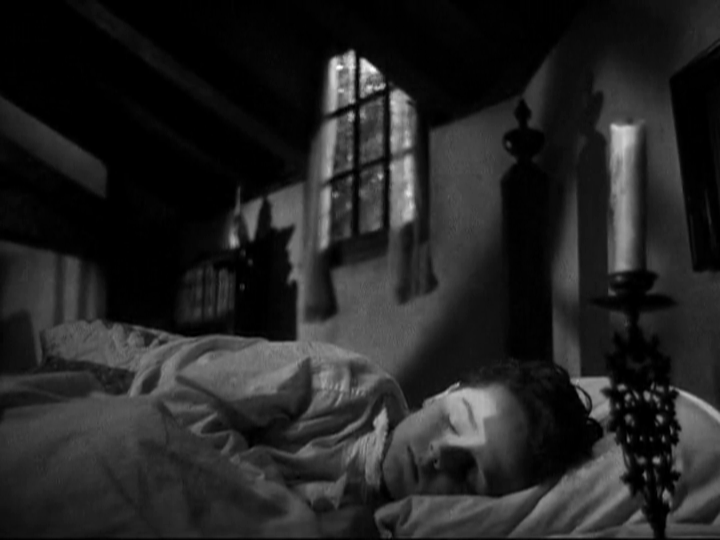
Charles Dickens’ beloved eighth novel (published in serial form between 1849-1850) was admirably condensed into 133 minutes of running time by screenwriters Hugh Walpole and Howard Estabrook, and released as a Christmas-time treat by MGM Studios. All but the nitpickiest of literary fans will surely appreciate how lovingly their favorite scenarios and characters have been brought to life by a roster of the finest studio actors — most notably Edna May Oliver as a nuanced, refreshingly kindhearted Aunt Betsey; Freddie Bartholomew as a sensitive young David:

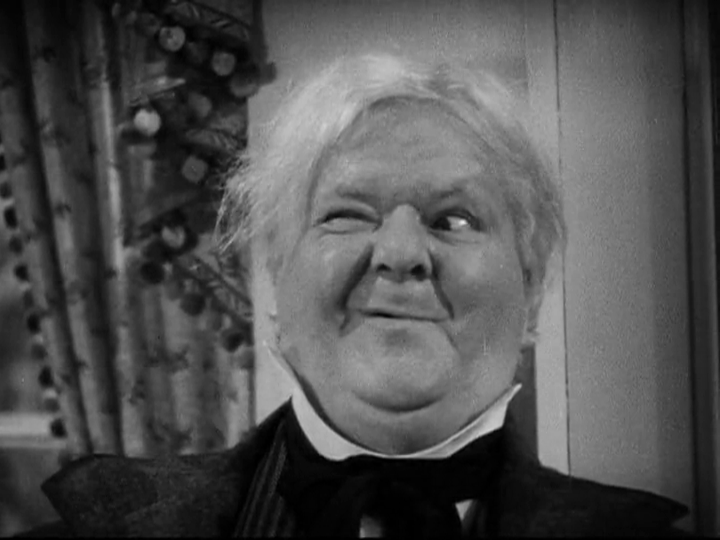
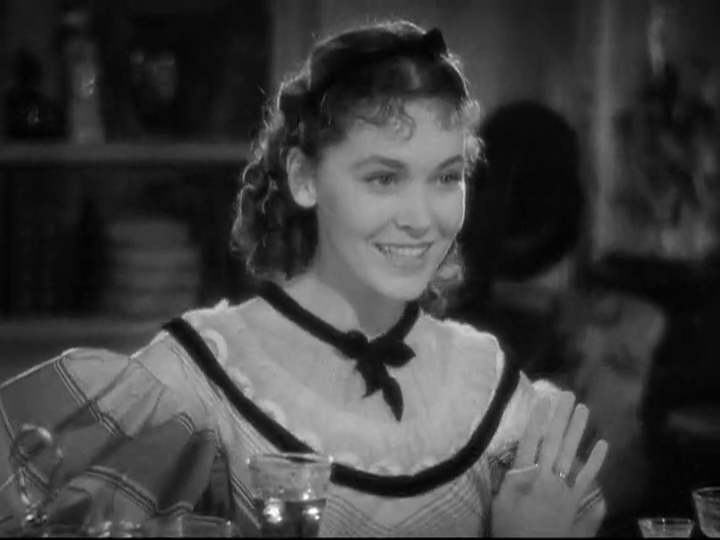
… Roland Young as the inimitably oily Uriah Heep; jolly-faced Lennox Pawle (was this his one claim to cinematic fame?) as the lovably loopy Mr. Dick; Maureen O’Sullivan as the impossibly childlike but angelically beautiful Dora; and, of course, W.C. Fields as Mr. Micawber (whose failure to drop his American accent somehow doesn’t affect the veracity of his performance in the slightest).

With that said, the storyline itself, while carefully crafted, is a tad too episodic and melodramatic for its own good; the noble intention of staying as true as possible to the lengthy source material means that — inevitably — far too many characters and subplots are ultimately introduced, thus diluting the power of the narrative. Meanwhile, grown David (played competently but without much charisma by Lawton) doesn’t really register as a complex individual; he comes across more like the lynchpin around which multiple scenarios conveniently revolve.

Indeed, when it comes to Dickensian adaptations, I prefer David Lean’s Great Expectations (1946) — and (to a somewhat lesser extent) Lean’s Oliver Twist (1948) — both darkly atmospheric renderings of inherently gripping tales. Yet David Copperfield, expertly directed by George Cukor, remains a unique classic in its own right — and as long as one watches it with its literary and historical contexts firmly in mind, it remains an enjoyable treat.

Redeeming Qualities and Moments:

  • Superb casting of all characters — most notably Roland Young as Uriah Heep, Edna May Oliver as Aunt Betsey, Freddie Bartholomew as young David, W.C. Fields as Mr. Micawber, Lennox Pawle as Mr. Dick, and Maureen O’Sullivan as Dora


  • Atmospheric cinematography and direction

Must See?
Yes, as a beloved early literary adaptation.

Categories

  • Genuine Classic

Links: