Browsed by
Category: Original Reviews

Responses to Peary’s “must see” movie reviews, as well as my own “must see” movie reviews up to and after 1986 (when Peary’s book was published).

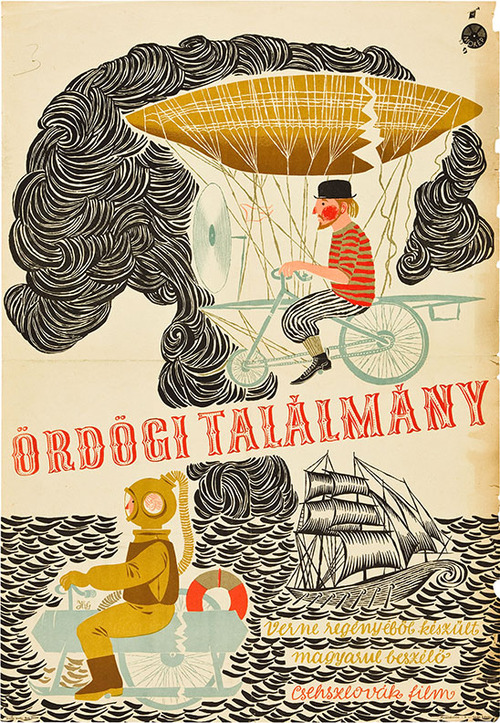
Fabulous World of Jules Verne, The (1958)

Fabulous World of Jules Verne, The (1958)

“The heart is always full of desire to fly sky-high.”

Synopsis:
A world-renowned scientist (Arnost Navratil) and his assistant (Lubor Tokos) are kidnapped by a band of marauding pirates in a submarine and taken to an underwater kingdom run by Count Artigas (Miroslav Holub), who hopes Navratil will unwittingly help him perfect an atomic weapon of mass destruction.

Genres, Themes, Actors, and Directors:

  • Animated Features
  • Eastern European Films
  • Historical Drama
  • Jules Verne Adaptations
  • Kidnapping
  • Science Fiction
  • Scientists

I’d like to begin this review by saying hello to my fellow CMBA bloggers who may be stopping by for the first time. I’m publishing this post as part of the Classic Movie Bloggers Association “Fabulous Films of the Fifties” blogathon (my first ever!) and am honored to participate. If you’re curious to read a bit more about this site in general, please click here.

If you’d like to leave a comment — and I’d love to hear from you! — please send me an email at filmfanatic.org@gmail.com and I’ll sign you up as a user.

Now — on to the review!

Review:
Numerous novels and stories by science fiction author Jules Verne have been adapted for the big screen over the years — indeed, an entire book (Thomas Renzi’s Jules Verne on Film, 1998) has been written on the topic — but it’s safe to say that none begins to approach the visual innovation of this animated feature by Czechoslovakian director Karel Zeman. Based on a relatively obscure Verne novel entitled Facing the Flag (1896), it tells the simple tale of a brilliant but naive scientist (Navratil) who’s been kidnapped for nefarious purposes, and his assistant’s (Tokos’) attempts to alert the world above-sea that destructive havoc is about to be wrought. Romantic interest appears briefly in the form of a beautiful young woman (Jana Zatloukalova) who’s escaped from a ship destroyed by the pirates’ submarine, but she and all other characters are ultimately rather thinly delineated.

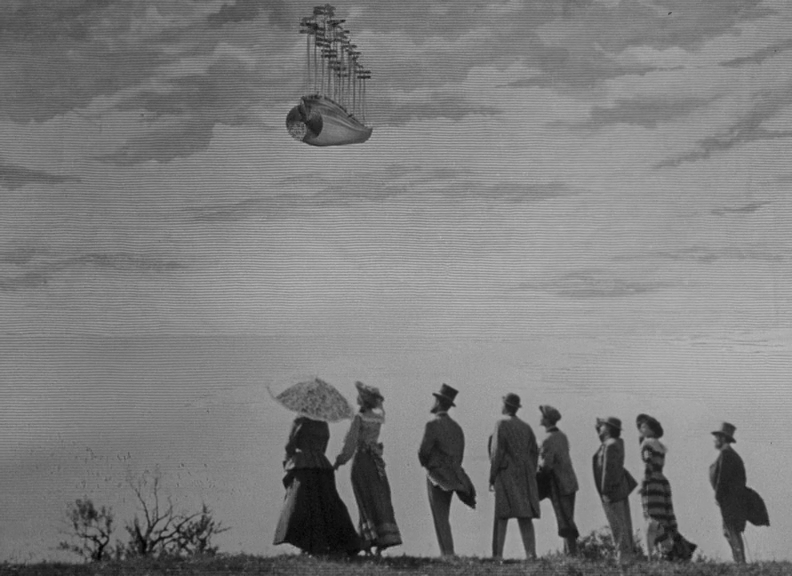
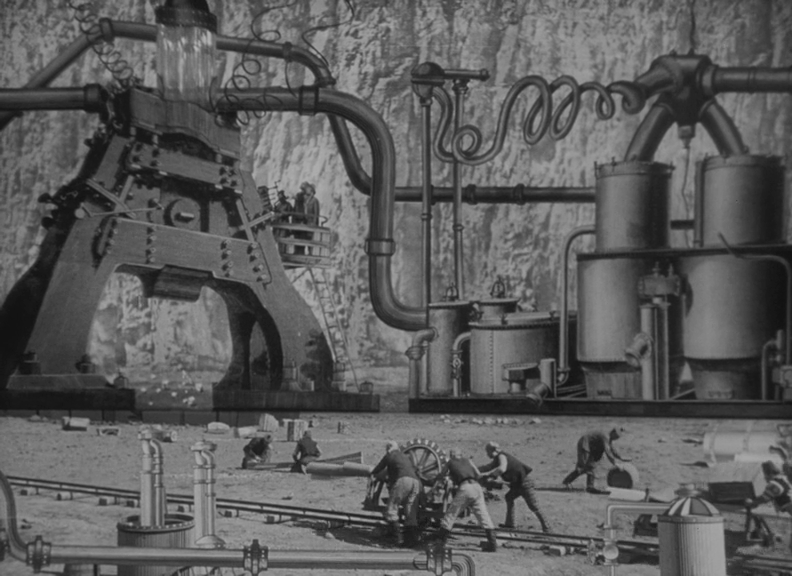
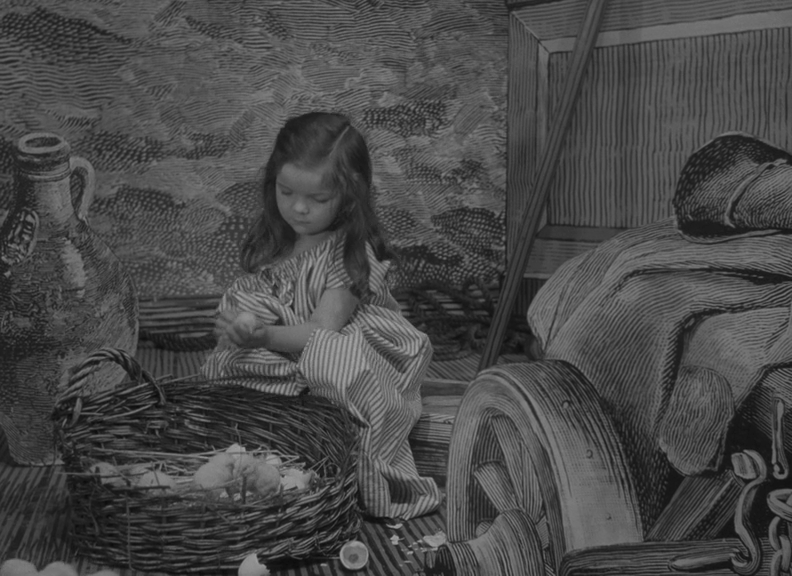
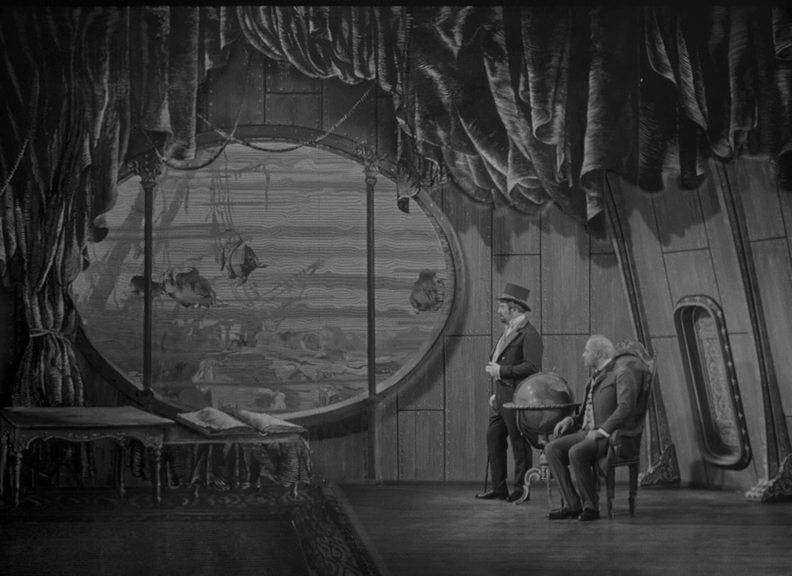
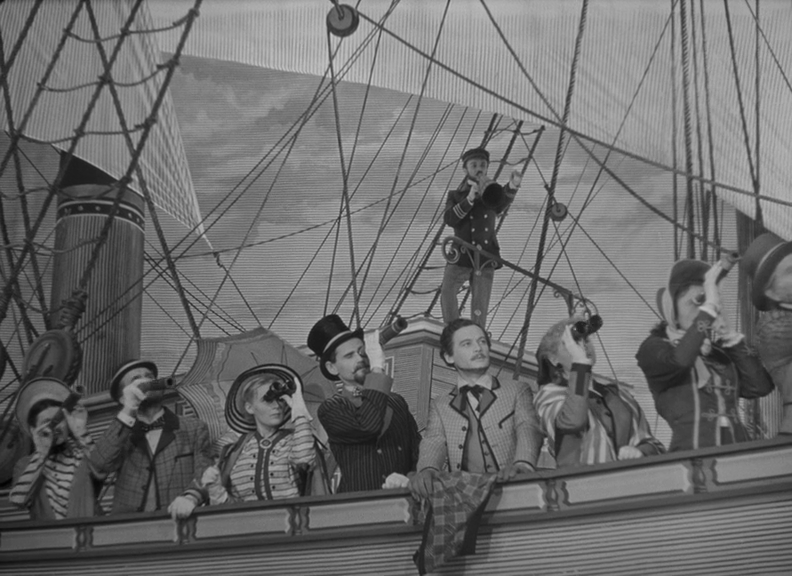
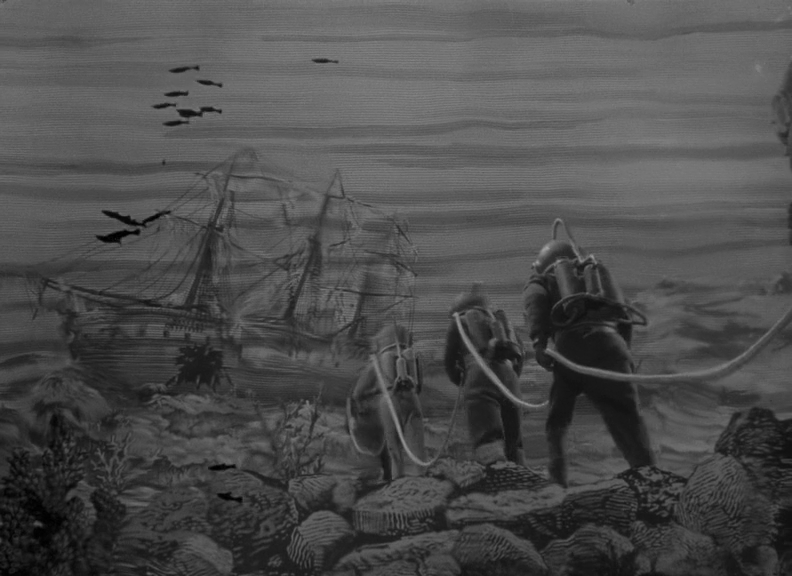
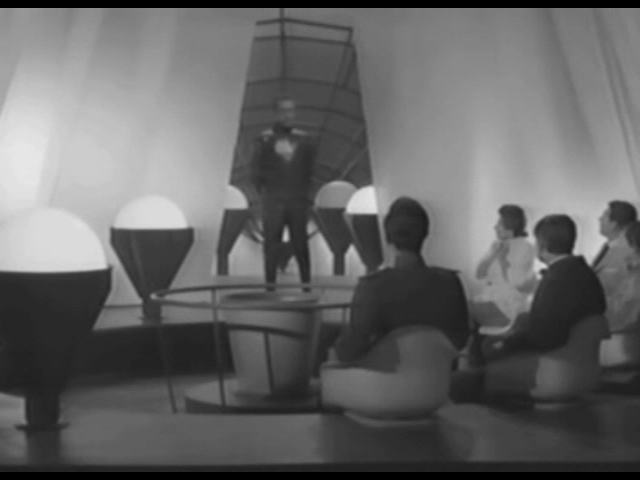
Thankfully, it’s not the screenplay one is concerned with when watching this film — it’s the stunning visuals, through and through. Intended to pay homage to the original lithographic illustrations in the 54 novels that comprise Verne’s collective Voyages Extraordinaires, Zeman’s steampunk sets and animation style suit the subject matter and time period perfectly. Each frame — as intended by Zeman — looks as though it belongs in one of Verne’s books, with the added bonus of live actors bringing the images to life. For an overview of the dizzying combination of animation techniques being employed, I humbly refer to a recent (2010) article by Alex Barrett in Experimental Conversations, cited in Wikipedia’s entry on the movie:

“… [The] film combines all manner of tricks and effects — double exposures, painted animation, cut-out animation, stop-motion animation, puppets, miniatures, models, stylised matte-paintings, and who knows what else — with its live-action footage to create a seamless blend of startling, crisp, black-and-white material. The process was dubbed ‘Mystimation’ [for the later US release], a name which seems perfectly apt for something which really does need to be seen to be believed.”

Other than this title, Zeman’s best-known film is The Fabulous Baron Munchausen (1961), a wonderfully fantastical adventure tale possessing a more complex storyline, heightened surreality, and a differently distinctive animation style; it’s a personal favorite, and one I would likely return to more easily than …Jules Verne. With that said, this earlier outing — which remains Zeman’s most popular title — is far too clever, impressive, and visually innovative to ignore. It’s won numerous awards, was voted in 2010 as the most successful Czech film to date, and is indisputably worth a look by all film fanatics.

Note: As pointed out earlier, Zeman’s animation style is ultimately best understood by actually seeing it in action. Click here to watch a ~3 minute video (entitled “Why Zeman Made the Film”) which includes both short clips and an illuminating interview with Zeman’s daughter. Or, check out the overwrought American trailer here.

Redeeming Qualities and Moments (click on thumbnails for bigger images):

  • Marvelously creative animation (often combined with live action)


  • Innovative Victorian-era sets


  • Zdenek Liska’s harpsichord-infused score

Must See?
Yes, as a most unusual animated classic and foreign gem.

Categories

  • Foreign Gem

Links:

Imitation of Life (1934)

Imitation of Life (1934)

“I wanna be white — like I look!”

Synopsis:
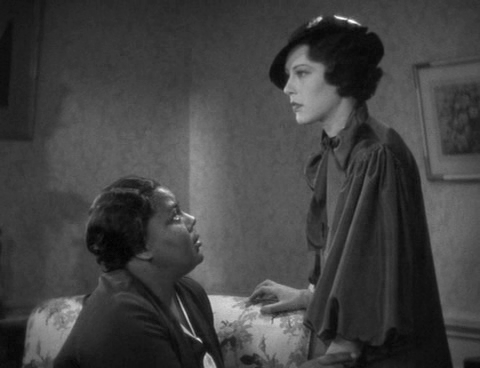
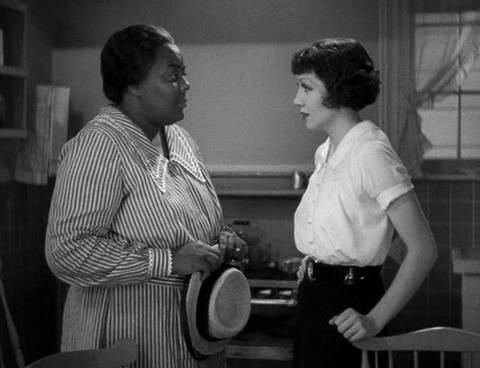
An industrious widow (Claudette Colbert) with a young daughter (Juanita Quigley and Marilyn Knowlden) befriends and hires an out-of-work African American widow (Louise Beavers) with a daughter of her own, light-skinned Peola (Sebie Hendricks). When Colbert turns Beavers’ special waffle recipe into a thriving business, they experience a life of wealth and comfort, though Beavers remains Colbert’s servant and only receives a small portion of the profits. As Peola (Fredi Washington) grows older, she becomes increasingly ashamed of her racial status, and tries to pass as white; meanwhile, Colbert’s teenage daughter (Rochelle Hudson) falls for Colbert’s new boyfriend (Warren Williams), causing additional tensions in the family.

Genres, Themes, Actors, and Directors:

  • Claudette Colbert Films
  • Friendship
  • Race Relations and Racism
  • Suffering Mothers
  • Warren William Films
  • Widows and Widowers

Review:
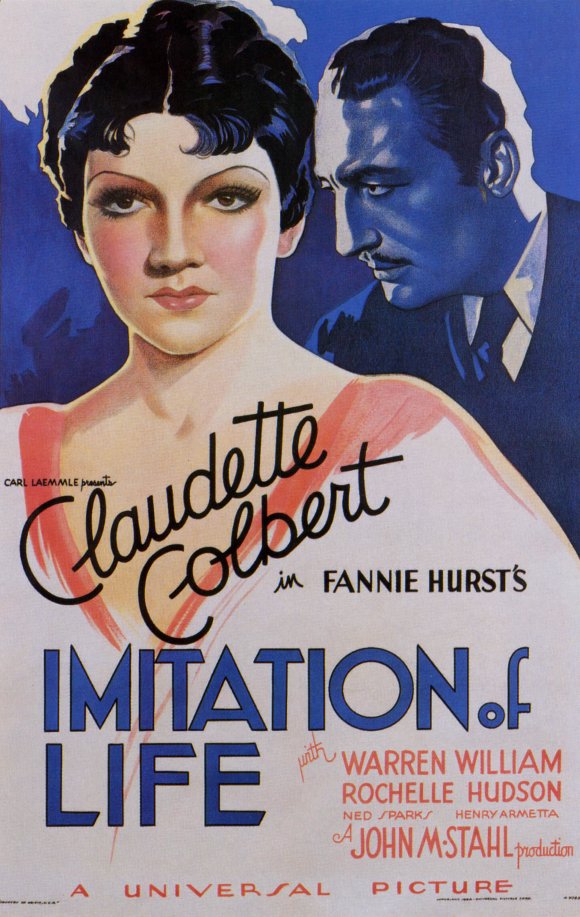
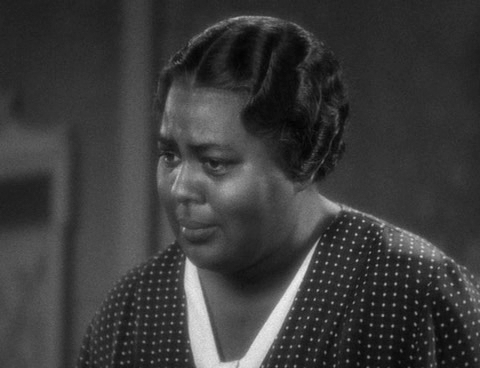
Although Douglas Sirk’s overblown 1959 remake (starring Lana Turner) is much better known, this original, more faithful adaptation of Fannie Hurst’s classic women’s weepie remains the superior version, telling a distressing parable of how racial prejudice — both externally and internally manifested — can destroy lives. Beavers (giving a fine, sensitive performance) represents passive acceptance of racial expectations: it’s clear she wouldn’t even consider asking for more than a 20% share in the business product she created, or shifting away from her “duties” as Colbert’s caretaker despite her new (relative) wealth. Meanwhile, Washington — a mulatto actress and activist who deserves to be better known, and clearly should have had a bigger career in Hollywood — is fantastic in an undeniably challenging role, generating such authentic pathos that we can’t help empathizing with her even while hating the pain she’s causing her mother.

It’s interesting (but not surprising) to note that both liberals and conservatives were distressed by this (relatively) progressive movie, which is bold in its presentation of themes and concerns that simply weren’t tackled in mainstream Hollywood at the time. Knowing that white women were subsequently cast in comparable “Peola”-like roles — i.e., Ava Gardner in Show Boat, Jeanne Crain in Pinky, and Susan Kohner in the film’s remake — makes one especially appreciative of this earlier film’s attempt towards authenticity in that regard. According to Wikipedia, “In 2005, Imitation of Life was selected for preservation in the United States National Film Registry” and “was named by Time in 2007 as one of ‘The 25 Most Important Films on Race'” — both designations that make complete sense.

Redeeming Qualities and Moments:

  • Fredi Washington as Peola
  • Louise Beavers as Delilah
  • A refreshing depiction of inter-racial friendship and social dynamics

Must See?
Yes, for its historical relevance and fine supporting performances. Listed as a Personal Recommendation and a film with Historical Importance in the back of Peary’s book.

Categories

  • Historically Relevant

Links:

27th Day, The (1957)

27th Day, The (1957)

“We cannot hope for disaster — we merely expect it.”

Synopsis:
An alien (Arnold Moss) whose species is seeking a new planet to inhabit gathers five diverse humans — a British woman (Valerie French), an American journalist (Gene Barry), a German scientist (George Voskovec), a Soviet soldier (Azemat Janti), and a Chinese peasant (Marie Tsiena) — and hands them each a container of capsules designed to destroy all human existence. Will Earthlings be able to prevent themselves from mutual self-destruction, or will humanity prevail?

Genres, Themes, Actors, and Directors:

  • Aliens
  • Cold War
  • Science Fiction

Review:
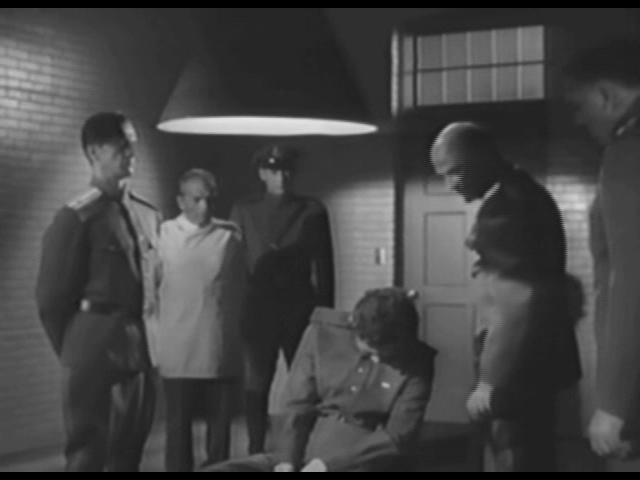
This taut sci-fi parable remains a smartly scripted B-level thriller, one which effectively explores humans’ potential for both beneficial collaboration and destructive antagonism. After being introduced to the basic premise of the situation — each capsule-owning human is the sole person capable (through mind power) of opening the container, which will deactivate upon their death — we eagerly watch as tensions mount, and the 27 days allotted for this alien-inspired life-or-death experiment tick away. Screenwriter John Mantley boldly kills off one of the five capsule-owners right away, then shifts swiftly between the other protagonists’ scenarios, neatly weaving their stories together into a climactic showdown against time and one another. Sure, there’s an obligatory romance (between French and Barry), and the final solution comes across as a tad too convenient — but the majority of this ride is well worth it.

Note: Interestingly, DVD Savant is nearly vitriolic in his distaste for this film, which he claims possesses a “rather embarrassingly bone-headed anti-Commie statement”; I disagree. Sure, the Soviet dictator (Stefan Schnabel) is portrayed as an autocratic, Stalin-esque villain, but it’s made abundantly clear that Janti is being bullied and manipulated, and that his compatriots are equally innocent — so isn’t this actually a remarkably sane and humane perspective on Cold War realities?

Redeeming Qualities and Moments:

  • Effective B-level sets

  • A compelling script:

    “People hate because they fear, and they fear anything they don’t understand — which is almost everything.”

Must See?
Yes, as a finely crafted B-level thriller.

Categories

  • Good Show

Links:

Ladies of Leisure (1930)

Ladies of Leisure (1930)

“What am I — a statue or a hunk of furniture?”

Synopsis:
A self-professed “party girl” is hired to pose for a wealthy aspiring painter (Ralph Graves), and slowly finds herself falling in love — but are the feelings mutual, and if so, will his socially-conscious parents approve of their romance?

Genres, Themes, Actors, and Directors:

  • Barbara Stanwyck Films
  • Cross-Class Romance
  • Frank Capra Films
  • Models
  • Play Adaptation

Review:
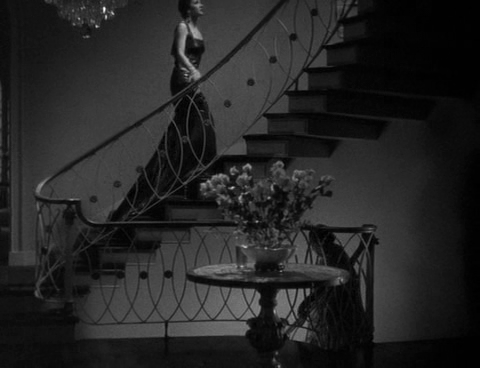
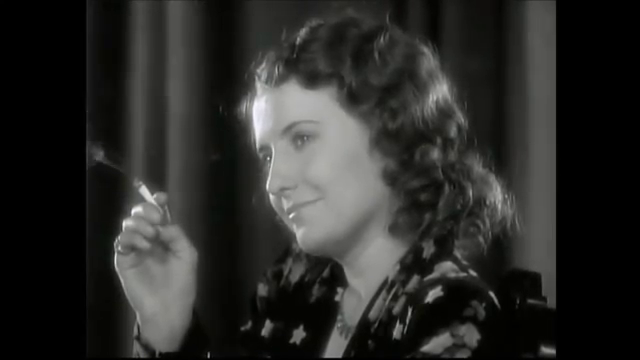
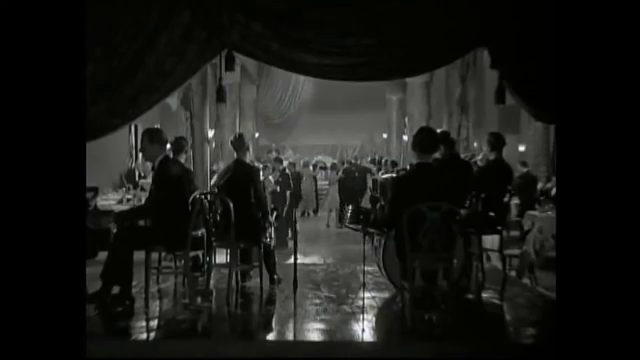
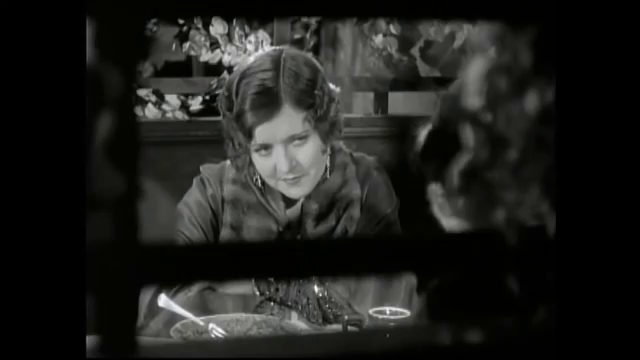
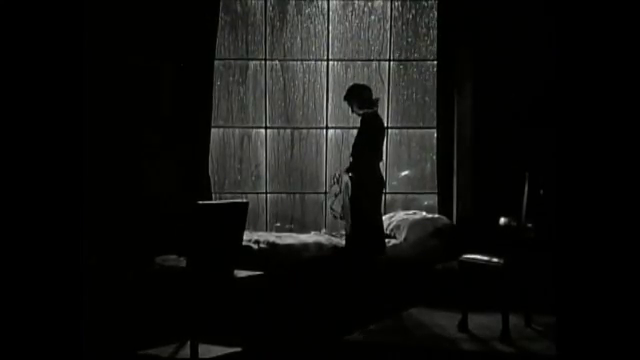
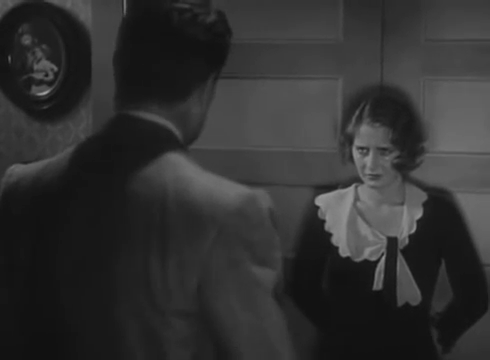
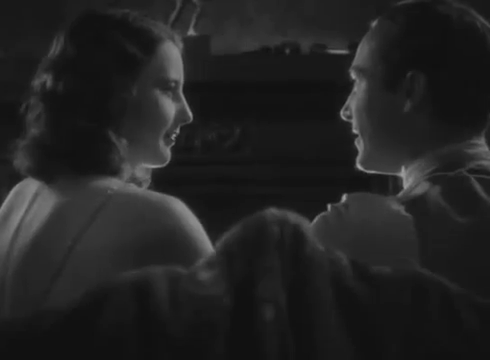
Ladies of Leisure was the first film Barbara Stanwyck made with Frank Capra, and she nearly didn’t get the part — until he was bowled over while watching her studio screen test; the rest is synchronistic history. Stanwyck’s performance (as always) is stellar, and she and her co-stars — most notably sassy sidekick Marie Prevost as “Dot” — are given plenty of spunky Pre-Code dialogue (“Sweet spirits a’ saccharine!”); meanwhile, Capra is more-than-ably assisted by DP Joseph Walker, whose cinematography is often stunning (see stills below).

Unfortunately, however, the film’s pacing is glacially slow, and the would-be romance between Stanwyck and dense-as-concrete Graves is pretty much painful. It gets to the point where we wonder if Graves might be gay — that’s how utterly uninterested he seems to be in her, for far too long. Watching her immense gratitude upon NOT being taken advantage of when he invites her to spend the night (he cozily tucks in her blankets, then leaves) simply makes one cringe at her delusions. Naturally,

[SPOILERS HERE]

romance of a (cinematically contrived) kind does eventually emerge, leading to a conveniently melodramatic showdown between Stanwyck and Graves’ prissy parents. This is nothing we haven’t seen before, and it’s a disappointing use of Stanwyck and Capra’s talents. But the film remains worth a cursory look simply for its historical relevance as Stanwyck’s breakthrough role — and for Walker’s lovely imagery.

Redeeming Qualities and Moments:

  • Barbara Stanwyck as Kay Arnold
  • Fine cinematography by Joseph Walker


  • Fun, sassy dialogue

    “If I didn’t know you real well, I’d say you’re going sour!”
    “Most men never get to be 18 — and most women are over 18 the minute they’re born!”

Must See?
No, though it’s worth a look for Stanwyck’s performance. Listed as a film with Historical Importance in the back of Peary’s book.

Links:

Miracle Woman, The (1931)

Miracle Woman, The (1931)

“When you can’t see the world, you invent one of your own.”

Synopsis:
Grieving the death of her minister-father, a charismatic young woman (Barbara Stanwyck) joins forces with a charlatan (Sam Hardy) to pretend to be a miracle worker — but when she falls in love with a trusting blind man (David Manners), her values suddenly shift.

Genres, Themes, Actors, and Directors:

  • Barbara Stanwyck Films
  • Blindness
  • Character Arc
  • Con-Artists
  • Frank Capra Films
  • Missionaries and Revivalists
  • Play Adaptation
  • Romance

Review:
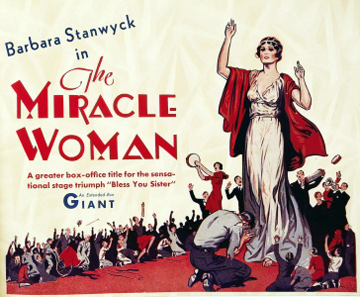
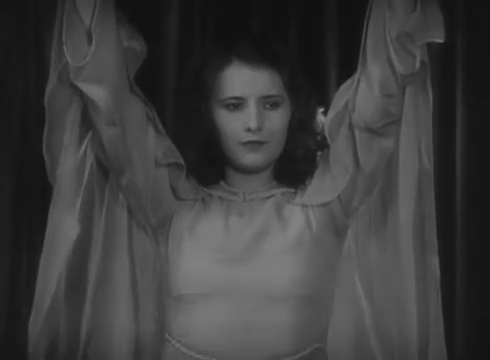
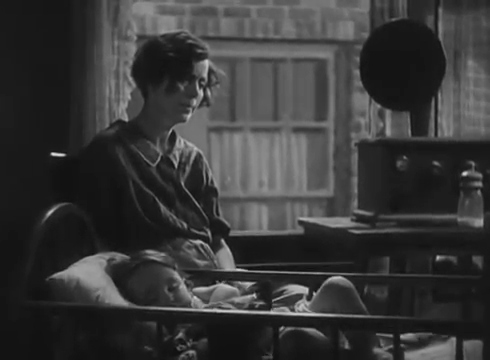
Frank Capra and Barbara Stanwyck collaborated on five features together, four of which are listed in Peary’s GFTFF: Ladies of Leisure (1930), The Bitter Tea of General Yen (1933), Meet John Doe (1941), and this adaptation of John Meehan and Robert Riskin’s play Bless You Sister (loosely based on the storied life of evangelist Aimee Semple McPherson). Unfortunately, The Miracle Woman fails to live up to its potential as a hard-hitting glimpse at the seedy underworld of fraudulent evangelism; instead, the majority of the screentime is taken up by an insipid romance barely worthy of discussion. Seemingly from a desire to establish and maintain the title character’s integrity, the film posits Stanwyck’s “Sister Florence” as a righteously scornful woman (we’re meant to sympathize with her position from the beginning) who quickly comes to see the error of her ways, and must then struggle against the evil machinations of sociopathic Hardy. While Stanwyck crafted countless memorable characterizations over the years, she’s not at her juiciest here; however, her nuanced performance remains as compelling as always, and is certainly worthy of the “Alternate Oscar” nomination Peary gives her. Meanwhile, Capra’s direction and Joseph Walker’s cinematography are superb throughout, presenting a highly atmospheric glimpse of a harsh historical era. (See the 1972 documentary Marjoe for a much more cynical take on the same topic.)

Note: I was surprised to learn that the disappointing Pre-Code screenplay for The Miracle Woman was written by Jo Swerling, responsible for several Hollywood gems — including Lifeboat (1944) and It’s a Wonderful Life (1946).

Redeeming Qualities and Moments:

  • Barbara Stanwyck as Florence
  • Effective direction by Capra

  • Joseph Walker’s cinematography

Must See?
No, though it’s worth a look for Stanwyck’s performance. Listed as a film with Historical Importance in the back of Peary’s book.

Links:

Night of the Iguana, The (1964)

Night of the Iguana, The (1964)

“This is a test of strength between two men and a crate of wetheads.”

Synopsis:
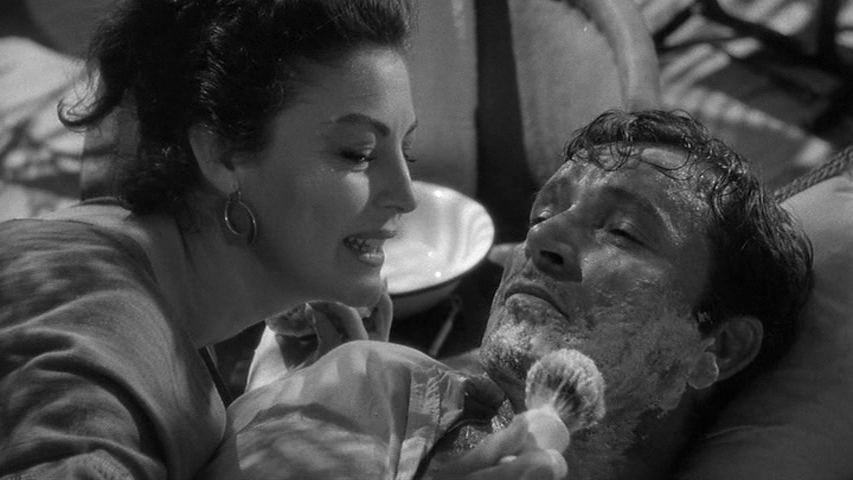
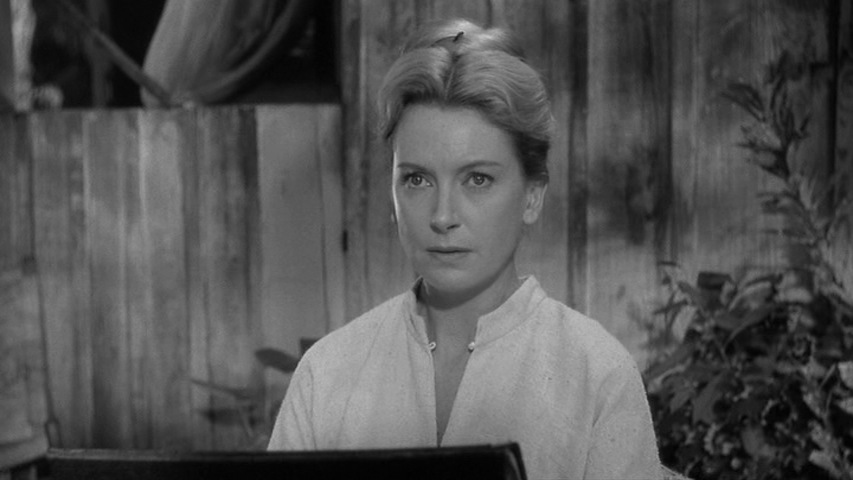
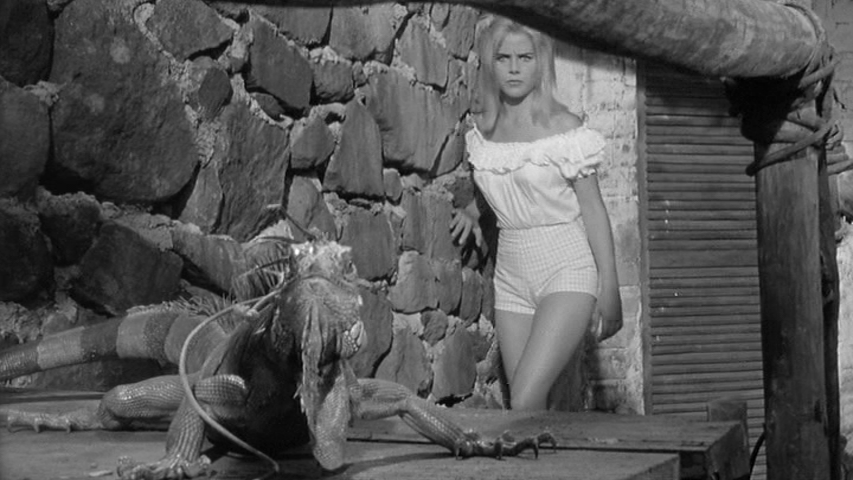
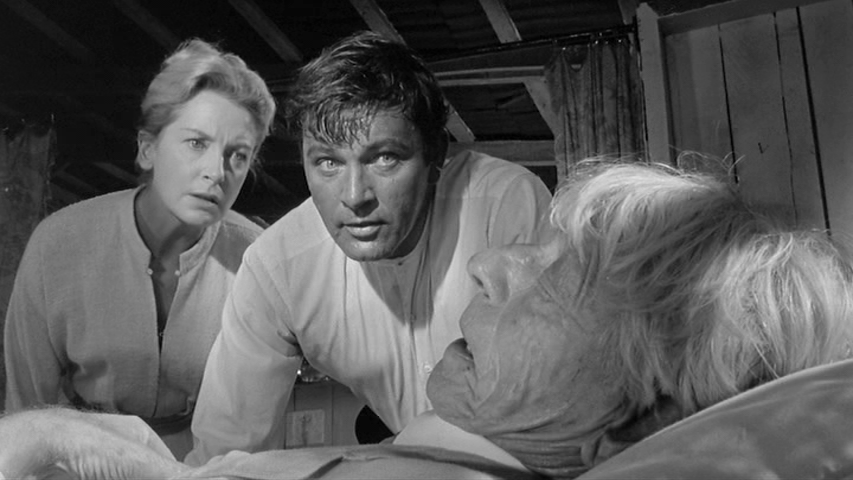
An alcoholic ex-minister (Richard Burton) working as a tour guide in Mexico brings his customers to a hotel run by his widowed friend Maxine (Ava Gardner). While flirting with a beautiful blonde teenager (Sue Lyon) in the tour group, he’s caught and chastised by her furious guardian (Grayson Hall); meanwhile, an artist (Deborah Kerr) travelling with her elderly father (Cyril Delevanti) arrives at the hotel and new sexual tensions soon emerge.

Genres, Themes, Actors, and Directors:

  • Ava Gardner Films
  • Character Studies
  • Deborah Kerr Films
  • John Huston Films
  • Love Triangle
  • Play Adaptation
  • Priests and Ministers
  • Richard Burton Films
  • Tennessee Williams Adaptations

Review:
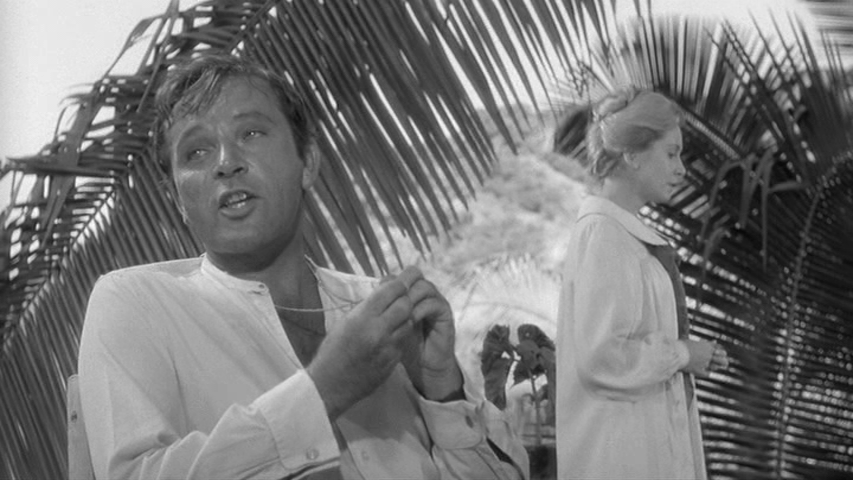
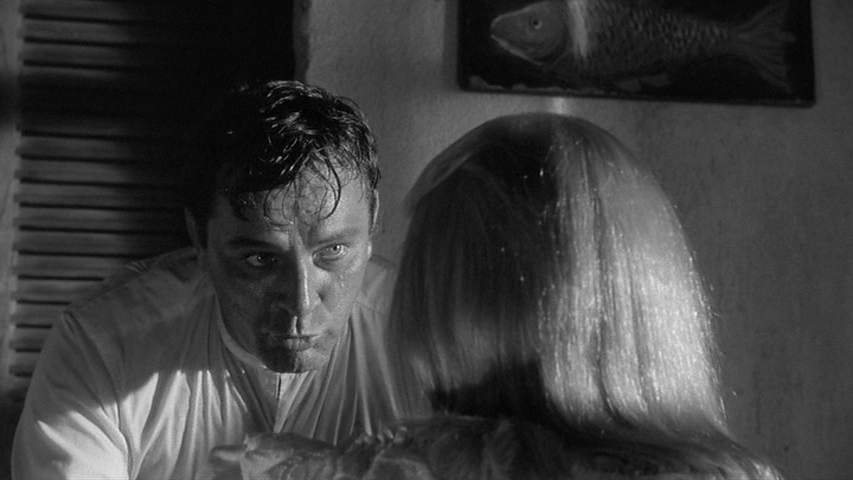
As noted by AllMovieGuide.com, writer/director/actor John Huston is known for telling “stories about independent and adventurous men struggling for their individuality” — and Night of the Iguana (adapted from Tennessee Williams’ 1961 Broadway play, based on his 1948 short story) fits this description aptly (though Burton’s ex-reverend is perhaps less adventurous than desperate and spiritually un-moored). The powerful opening scene sets the stage for Burton’s incipient downfall, as he attempts to deliver a short, impassioned sermon to a flock that’s entirely unwilling to hear him expose his vulnerability. (He boldly poses questions such as, “How weak is man… How often do we stray from the straight and narrow?”) Despite enjoining them not to “turn [their] backs on the God of love and compassion”, they do so anyway, and he is ousted from his position, thus embarking upon the surreally soul-searching adventure that comprises the remainder of the film — all taking place in the then-isolated Mexican beach town of Puerto Vallarta (now a popular modern resort; click here to read more about the film’s on-location shooting).

Night of the Iguana is essentially a character study, following the existential crisis of a man whose family legacy of both spiritual leadership and irresistible “appetites” continues to haunt him. While fending off lust for a nubile young blonde (Lyons) — whose reciprocal interest verges on either harassment or devilish “intervention” — he finds himself dogged by Hall, who functions as a potent reminder of the sanctimonious judgment he’s tried unsuccessfully to run away from. He relies on the steady friendship of earthy Maxine (Gardner) to ground him, literally alighting on her property as a source of refuge, then embarks on a continued quest-for-solace once ethereal yet pragmatic Hannah Jelkes (Kerr) arrives with her elderly father. Gardner and Kerr represent more than merely a traditional “love triangle” in this film: they offer alternative approaches to life, allowing Burton to envision a way out of the quagmire of lustful escapism he’s been plagued by his entire existence.

While the storyline itself merits nearly endless discussion and debate (that Williams sure could spin a meaty yarn!), Night of the Iguana works remarkably well as a cinematic venture as well. As usual, Huston’s directorial hand is not only steady but incisive, framing characters and situations with a precision aimed at not-so-subtly influencing our perspective. Gabriel Figueroa’s black-and-white cinematography is crisp and gorgeous, and the location sets are inspired. Meanwhile, performances across the board are top-notch — from Burton’s tour-de-force lead to the various female roles (not just Hall, but Kerr and Gardner as well). This classic “morality tale” is one all film fanatics should see at least once, and will likely enjoy returning to.

Redeeming Qualities and Moments:

  • Richard Burton as Lawrence Shannon
  • Ava Gardner as Maxine Faulk
  • Deborah Kerr as Hannah Jelkes
  • Grayson Hall as Judith Fellowes
  • Masterful direction by Huston


  • Gabriel Figueroa’s b&w cinematography

Must See?
Yes, as a fine film and one of the best adaptations of Williams’ work.

Categories

  • Genuine Classic
  • Important Director
  • Noteworthy Performance(s)

Links:

Berlin Express (1948)

Berlin Express (1948)

“No one was here without a purpose.”

Synopsis:
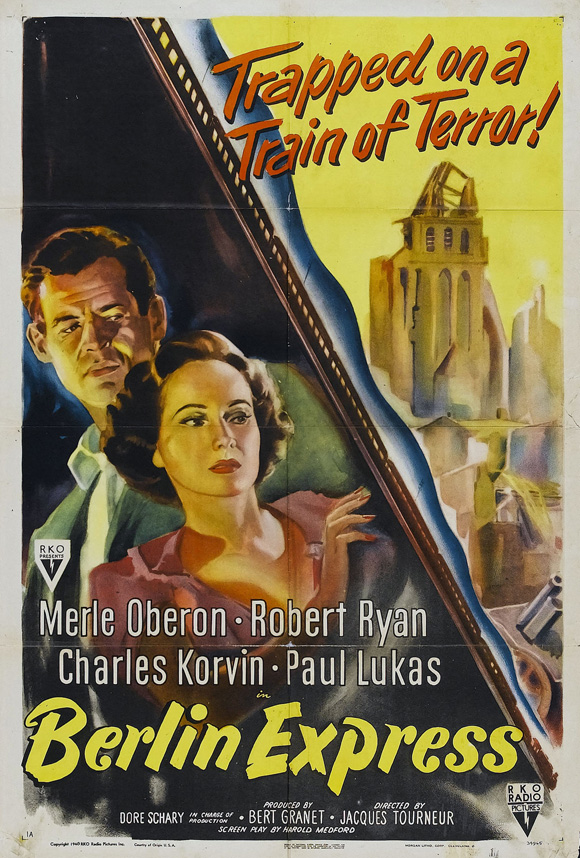
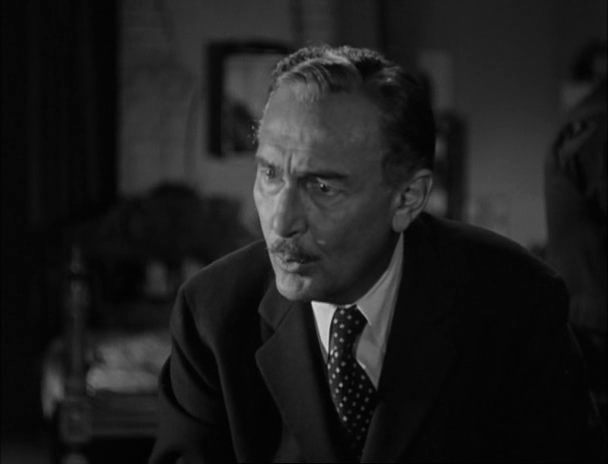
In post-WWII Germany, a group of international train passengers — including an American agronomist (Robert Ryan), a British schoolteacher (Robert Coote), a French businessman (Charles Korvin), a Russian soldier (Roman Toporow), and a French secretary (Merle Oberon) — band together to locate a kidnapped doctor (Paul Lukas) who has been working for peace and political unification.

Genres, Themes, Actors, and Directors:

  • Ensemble Cast
  • Jacques Tourneur Films
  • Merle Oberon Films
  • Mistaken or Hidden Identities
  • Paul Lukas Films
  • Robert Ryan Films
  • Trains and Subways

Review:
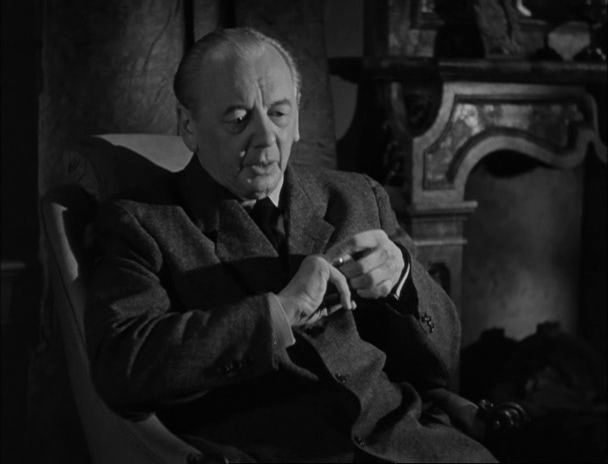
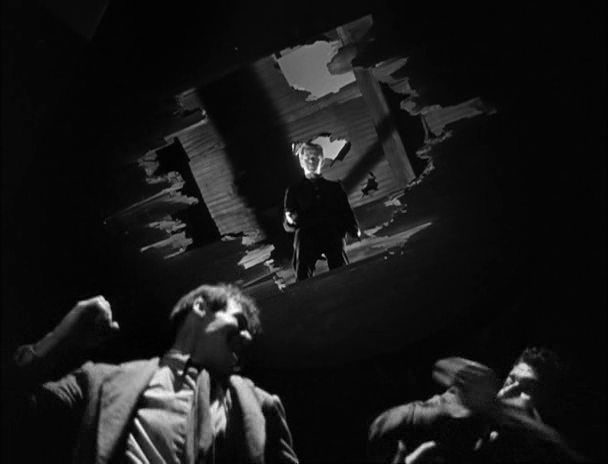
Jacques Tourneur directed this taut ensemble thriller set on-board a moving train and throughout the ruins of post-WWII Germany. What seems at first like a “simple” murder mystery (a la Murder on the Orient Express) quickly reveals itself to be a tale of mistaken identities and deceptively shifting national loyalties; by the climactic pseudo-finale taking place inside an abandoned brewery in Berlin, we’re solidly hooked and pleasantly on edge. Berlin Express is notable as the first American feature film actually shot in post-war Europe — and to that end, it has an unfortunate didactic tone at times, especially during the first half-hour; the anonymous narration (by Paul Stewart) could and should have easily been cut, though I suppose it was assumed that audiences at the time were used to a Voice of God explaining to them the terrible truths of war-torn Europe. Thankfully, one can choose to ignore this and focus instead on both the exciting, twist-filled narrative and the lovely cinematography (by Lucien Ballard, Oberon’s husband at the time).

Note: Listen for the best response in the film (I won’t give away context or spoilers): “I think you’ve got that now.”

Redeeming Qualities and Moments:

  • Paul Lukas as Dr. Bernhardt
  • Reinhold Schunzel as Walther
  • Lucien Ballard’s cinematography


  • Respectfully authentic integration of multiple languages (without subtitles)

Must See?
Yes, as a fine (if subtly flawed) outing by a master director.

Categories

  • Good Show
  • Important Director

Links:

Robinson Crusoe on Mars (1960)

Robinson Crusoe on Mars (1960)

“On Mars, you’ve gotta face the reality of being alone forever!”

Synopsis:
An astronaut (Paul Mantee) stranded on Mars with a monkey named Mona struggles to survive while aching for humanoid contact — which he finally achieves when he encounters a runaway alien slave (Victor Lundin) he dubs “Friday”.

Genres, Themes, Actors, and Directors:

  • Astronauts
  • Science Fiction
  • Survival

Review:
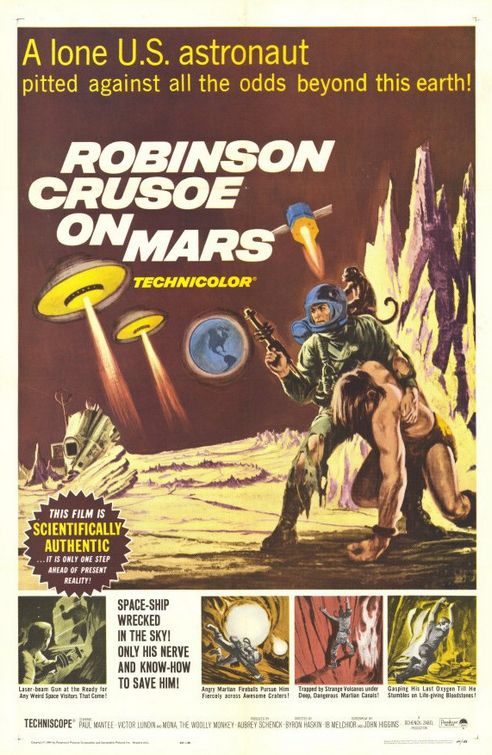
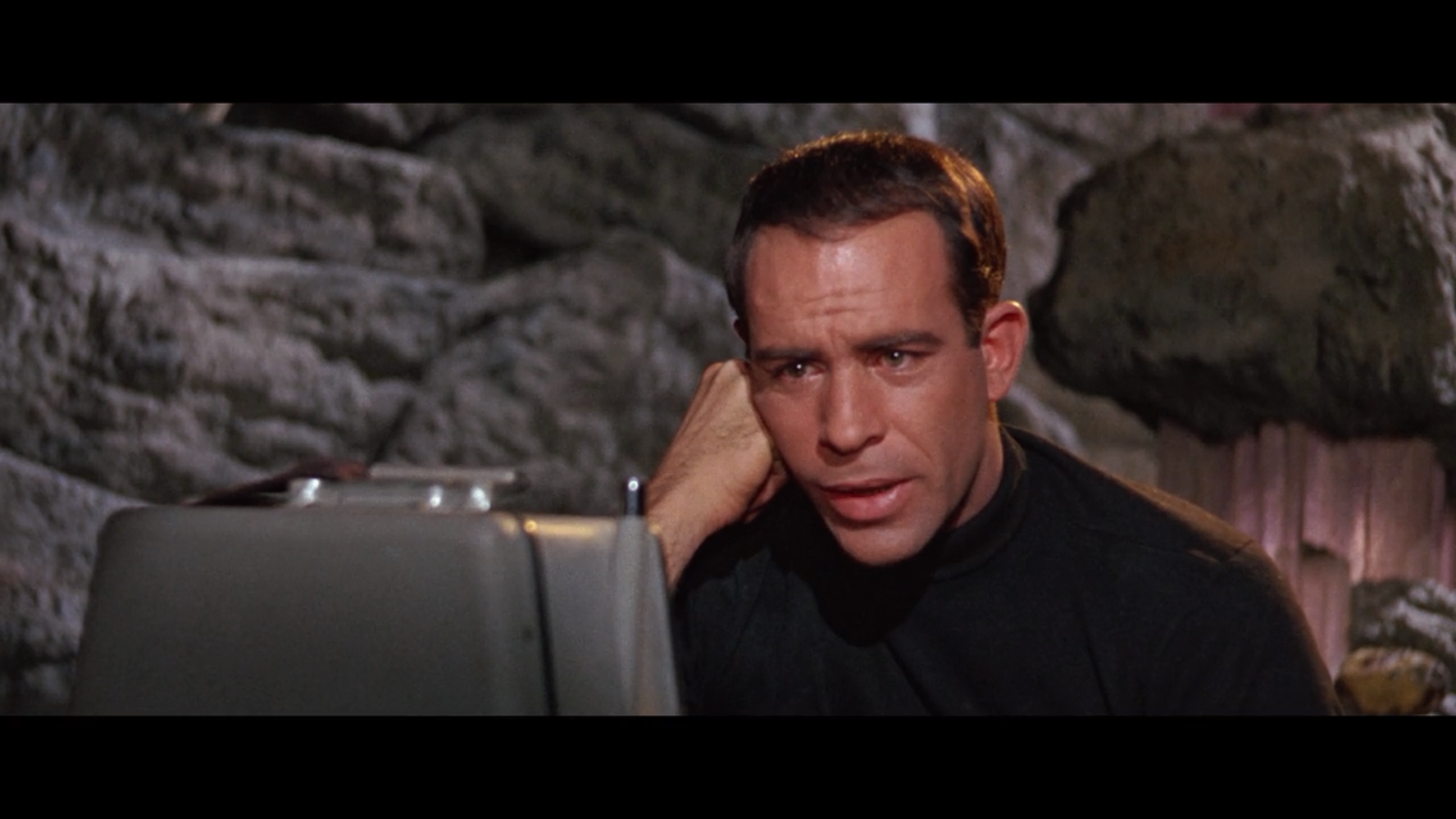
Byron Haskin was a Hollywood Renaissance man who worked his way through a series of positions (including newsreel cameraman, DP, and special effects supervisor) before directing a handful of notable titles, including this cult sci-fi flick (inspired by Daniel Defoe’s literary classic — perhaps best known by film viewers through Luis Bunuel’s 1952 adaptation). DVD Savant refers to RCOM as “a unique and serious adventure” sandwiched chronologically “between silly efforts like Queen of Outer Space and the high budget wonders of the later 2001: A Space Odyssey” — indeed, its poster (see still above) boasts, “This film is scientifically authentic! It is only one step ahead of present reality!” Naturally, such claims can’t even begin to hold up today, so one must watch a flick like this with historical perspective firmly in mind. Indeed, rather than viewing RCOM for its “scientific authenticity”, one appreciates it as a reasonably taut tale of personal survival, featuring a charismatic performance by hunky unknown Paul Mantee (those zippered pants!) and bolstered by the refreshingly unsentimental presence of a pet monkey.

Once “Friday” (Lunden) arrives on the scene, however, things quickly go downhill — both because we see sides of Mantee’s personality we’d rather not be privy to (he refers to Lunden as both “retarded” and an “idiot” in the same breath), and because the overall credibility of the storyline is suddenly strained. It’s somehow easier to imagine a lone astronaut stranded on Mars with a monkey than to envision intergalactic miners with eerily Egyptian-looking slaves attacking the planet. Speaking of the planet, the special effects and sets are quite impressive (at least most of the time); a notable exception is the relentless cheesy intrusion of the invading space ships, apparently spliced in on repeat. Ultimately, this mixed bag adventure tale will probably be of interest to film fanatics simply given its intriguing title, but it isn’t must-see for all viewers.

Note: Other Haskin-directed titles in Peary’s GFTFF include Treasure Island (1950), War of the Worlds (1953), Conquest of Space (1955), and From the Earth to the Moon (1958).

Redeeming Qualities and Moments:

  • Paul Mantee as Kit Draper
  • Excellent special effects and sets


Must See?
No, though it’s worth a look simply for its cult status.

Links:

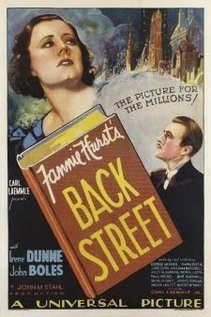
Back Street (1932)

Back Street (1932)

“There isn’t one woman in a million who’s found happiness in the back street of any man’s life.”

Synopsis:
A young woman (Irene Dunne) resists courtship by an earnest entrepreneur (George Meeker), instead falling in love with a charming man (John Boles) who’s about to be married. Eventually, she becomes Boles’ mistress, but finds her entire life compromised by her “back street” position.

Genres, Themes, Actors, and Directors:

  • Feminism and Women’s Issues
  • Historical Drama
  • Irene Dunne Films
  • Star-Crossed Lovers
  • Zasu Pitts Films

Review:
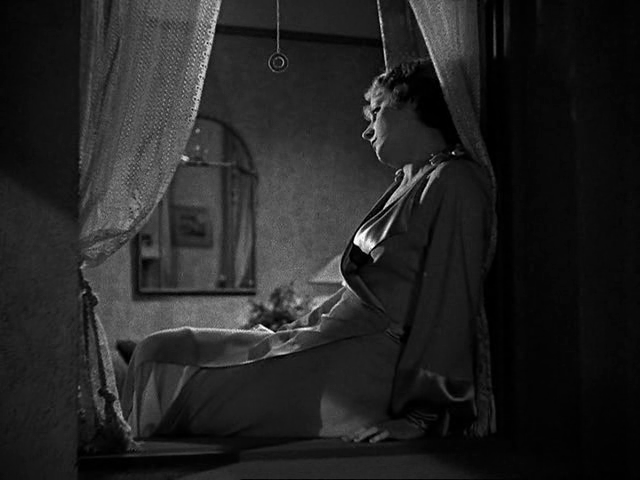
Based on a best-selling novel by Fannie Hurst (best known for penning Imitation of Life), this beautifully photographed (by Karl Freund) women’s weepie is almost unbearably painful to watch, knowing that our plucky protagonist will be doomed by her undying love for a “taken” man. At first, we admire youthful Dunne’s unabashed certainty that she can have a good time with men while setting up inviolable [sexual] boundaries; the opening scene is particularly masterful in establishing this basic tenet of her carefree existence, especially in contrast with the ironic fate that befalls her over-protected half-sister (June Clyde). When Dunne falls hard for Boles, however, we recognize the dangerous territory she’s entered — and, despite the agony of watching her miss (through no fault of her own) her potential opportunity to meet Boles’ mother and be seen as “legit”, we’re thrilled to see her emerging later in the film as an independent, seemingly happy single career woman in New York.

From the moment she accidentally reconnects with Boles, however, things go swiftly downhill. Proving Blaise Pascal’s dictum that “the heart has its reasons which reason knows nothing of”, she allows herself to become a permanent “back street fixture” in Boles’ life. We’re tortured a few times by potential hope of happiness and relief for Dunne, but ultimately, Back Street remains a morality tale through-and-through: despite its pre-Code status, audiences are meant to understand that choosing life as a mistress is a compromised bargain with the Devil. Most infuriating of all is how scot-free Boles’ existence remains: he’s not portrayed as an entirely terrible fellow (he did try, after all, to see if he could manage to make Dunne his legitimate wife) — but hearing him complain childishly about how Dunne CAN’T leave him, how he NEEDS her desperately, makes one sigh with bitterness at the inequity of it all. With all that said, Dunne — beautiful, smart, and tragic — is so marvelous in the lead role that she makes this historical soaper worth sitting through once, no matter how uncomfortable the subject matter.

Redeeming Qualities and Moments:

  • Irene Dunne as Ray Schmidt
  • Luminous cinematography by Karl Freund

  • Fine historical sets

  • Refreshingly frank pre-Code dialogue:

    “Most of them think they can have me without marrying me.”

Must See?
Yes, for Dunne’s performance.

Categories

  • Noteworthy Performance(s)

Links:

Valley of the Dolls (1967)

Valley of the Dolls (1967)

“I’m not nutty; I’m just hooked on dolls!”

Synopsis:
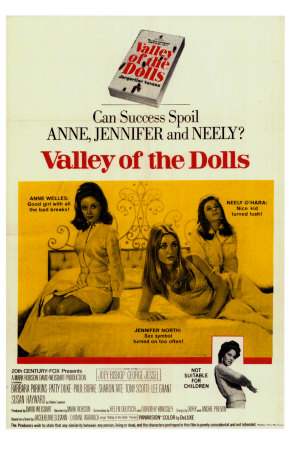
A young woman (Barbara Parkins) seeking adventure in New York City falls for a marriage-phobic man (Paul Burke) while navigating her new career as a famous model; meanwhile, her sexy friend Jennifer (Sharon Tate) marries a singer (Tony Scotti) with a strangely possessive sister (Lee Grant), and a talented ingenue named Neely O’Hara (Patty Duke) becomes increasingly hooked on drugs and alcohol as her star rises.

Genres, Themes, Actors, and Directors:

  • Actors and Actresses
  • Alcoholism and Drug Addiction
  • Aspiring Stars
  • Downward Spiral
  • Lee Grant Films
  • Lee Remick Films
  • Mark Robson Films
  • Susan Hayward Films

Review:
Mark Robson’s infamously trashy adaptation of Jacqueline Susann’s bestselling novel features howl-worthy performances, dialogue, and scenarios — a guaranteed field day for those who enjoy such cinematic “treats”. The story, about a trio of young women experiencing the harsh realities of love, fame, and drugs in the Big City, is loosely based upon the real-life travails of Judy Garland (who was originally cast in Susan Hayward’s supporting role as aging diva Helen Lawson). As young Garland’s fictional doppelganger, Patty Duke’s “Neely O’Hara” emerges as the true focus of the film — and it’s her egregiously over-the-top performance that’s often cited as the pièce de résistance of this venture. She’s given (and runs with) countless unintentionally hilarious lines:

“Boobies, boobies, boobies. Nothing but boobies! Who needs ’em? I made it fine without ’em.”
“Ted Casablanca is NOT a fag… and I’m the dame who can prove it!”

But other scenes and interactions are worthy of chuckles as well — including Tate watching her “art film”, Lee Grant muttering about heating up a lasagna after arguing with her brother (Scotti), and Hayward channeling Judy Garland as she sings “I’ll Plant My Own Tree” while a colorful, Calder-esque mobile spins around her, periodically shading her face. Ultimately, your enjoyment of this one will be predicated entirely upon how much you appreciate such campy fare — but all film fanatics should check it out once, for its infamy.

Redeeming Qualities and Moments:

  • Occasional creative cinematography
  • Many unintentionally hilarious scenes and sequences

Must See?
Yes, as a campy cult favorite. (How could this NOT be labeled a CC — or Camp Classic — in the back of Peary’s book?!)

Categories

  • Cult Movie

Links: