Browsed by
Category: Original Reviews

Responses to Peary’s “must see” movie reviews, as well as my own “must see” movie reviews up to and after 1986 (when Peary’s book was published).

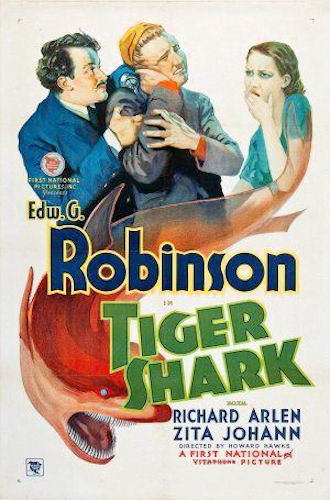
Tiger Shark (1932)

Tiger Shark (1932)

“No fisherman can go to heaven with a bite out of him!”

Synopsis:
A proud Portuguese-American fisherman (Edward G. Robinson) loses his hand to a shark after saving his friend and shipmate (Richard Arlen) from death at sea, then marries the beautiful daughter (Zita Johann) of a recently deceased crewman (William Ricciardi), not knowing Johann and Arlen are secretly in love.

Genres, Themes, Actors, and Directors:

  • Edward G. Robinson Films
  • Fishermen
  • Howard Hawks Films
  • Love Triangle

Review:
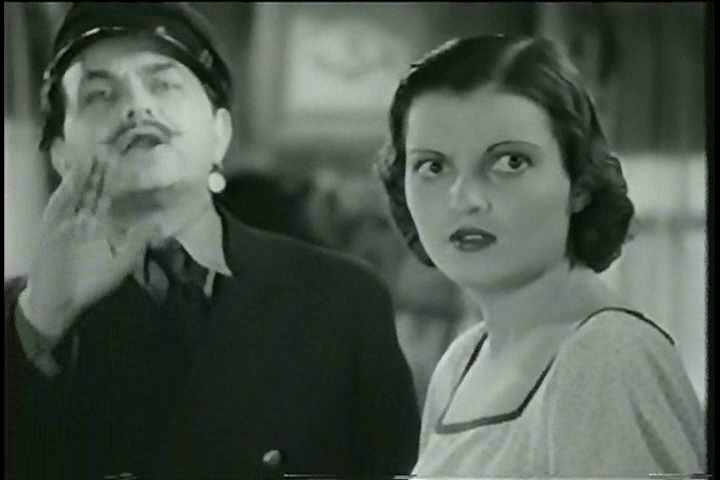
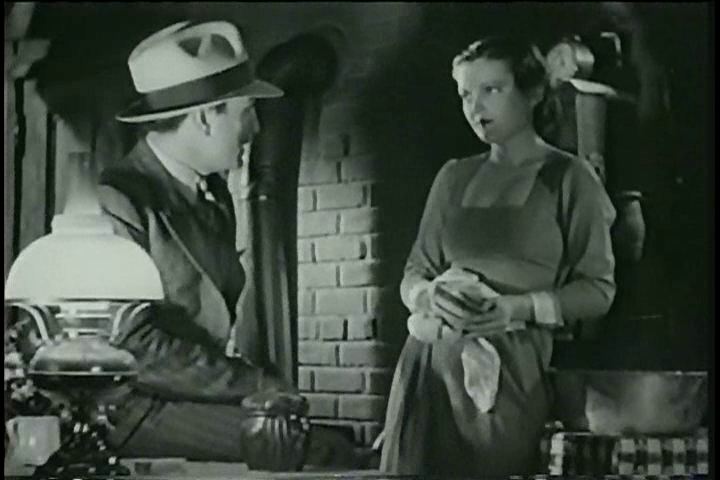
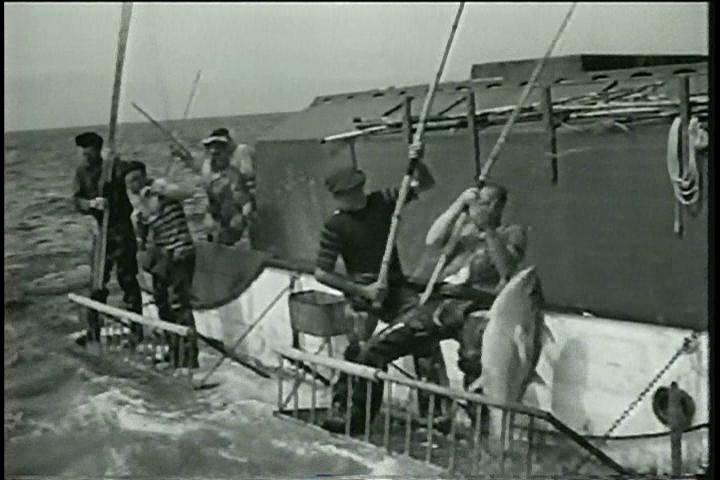
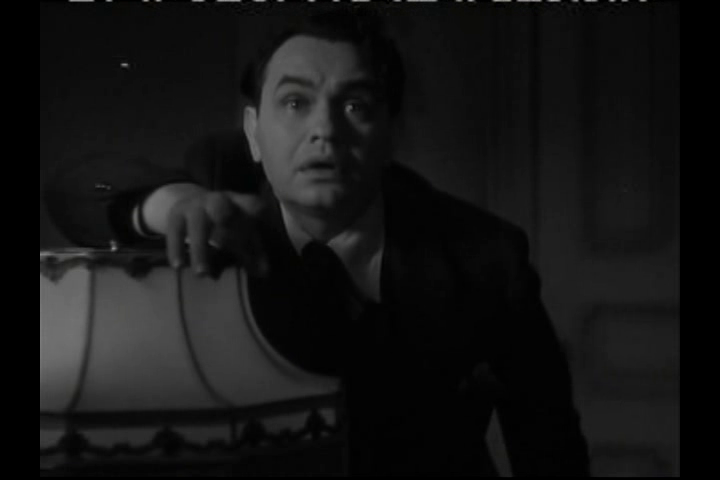
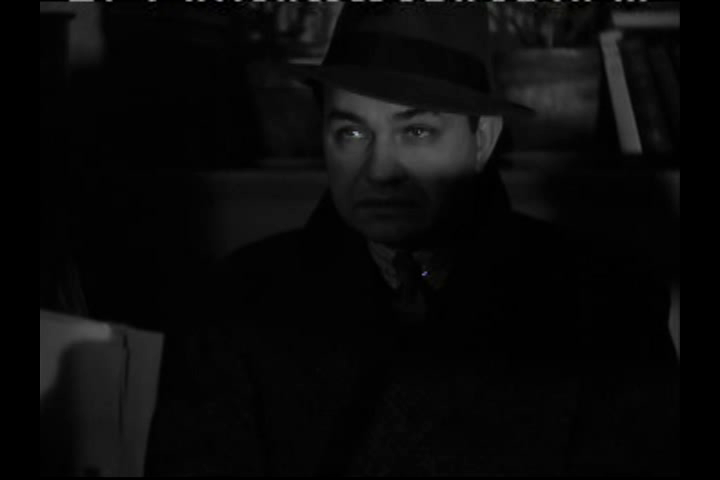
Reading TCM’s article about the genesis of this “crafty, Depression era rip-off of Moby Dick” provides fascinating insights into its wheeling-dealing director (Howard Hawks), its “scenery-chewing” star (Edward G. Robinson), and its lusty/gory storyline (apparently improvised on the spur of the moment by Hawks, who gleefully “stole” from the 1924 play-turned-film They Knew What They Wanted). Originally entitled Tuna (good thing that changed), the strengths of this rather hoary love triangle lie in Robinson’s enjoyable portrayal as an enthusiastic “Port-u-gee”, and in the exciting footage of fishing-in-action, complete with plenty of heart-stopping, genuinely dangerous moments aboard the ship. Unfortunately, viewers know from the get-go that Robinson’s luckless-in-love “Mike Mascarena” is in for heartache, so we’re simply placed in the unenviable position of wondering how this hopeless situation will work itself out.

Note: Film fanatics may recognize the soulful Johann from her performance in The Mummy the same year; her career was quite short (ending in 1934).

Redeeming Qualities and Moments:

  • Edward G. Robinson as Mike Mascarena
  • Tony Gaudio’s cinematography

  • Exciting footage of on-board fishing

Must See?
No, though of course it will be of interest to fans of Robinson and/or Hawks.

Links:

Law and Order (1932)

Law and Order (1932)

“If the west wants law and order, it’ll have to do it without me.”

Synopsis:
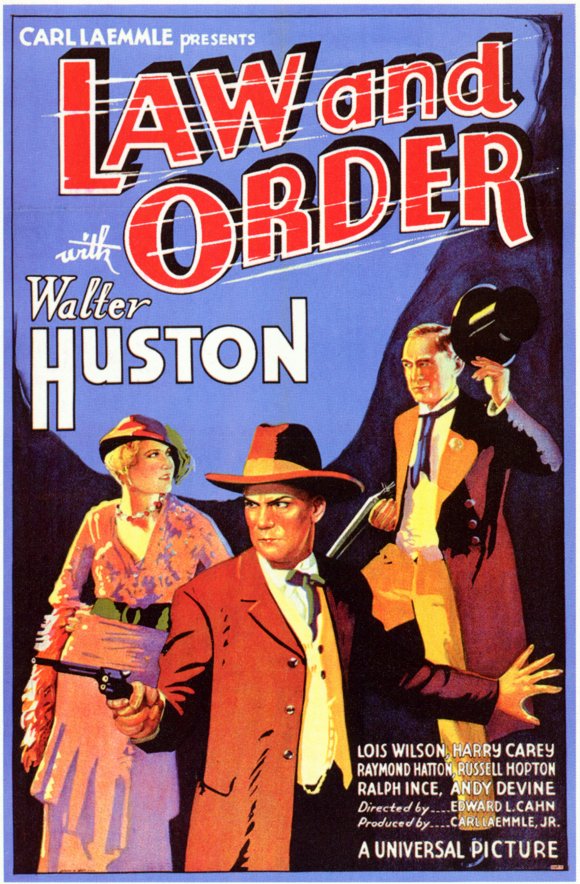
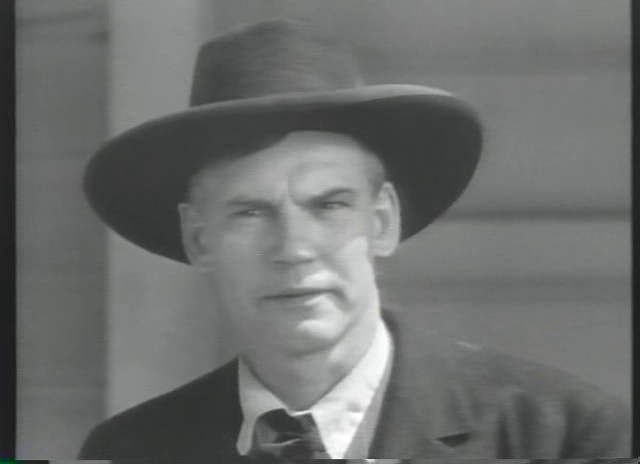
A rugged gambler and frontier marshal (Walter Huston) — loosely based on Wyatt Earp — is conscripted by a group of Tombstone citizens to bring “law and order” to the notoriously wild and woolly western town.

Genres, Themes, Actors, and Directors:

  • Walter Huston Films
  • Westerns

Review:
Based on W.R. Burnett’s novel Saint Johnson, this early talkie (scripted by John Huston) has the distinction of being the first cinematic portrayal of Wyatt Earp (though he’s given a different name). Walter Huston plays the legendary gambler-gunman, who apparently lived enough of a highly storied and dubiously legal life to prompt the publishing of a fictionalized biography two years after his death.

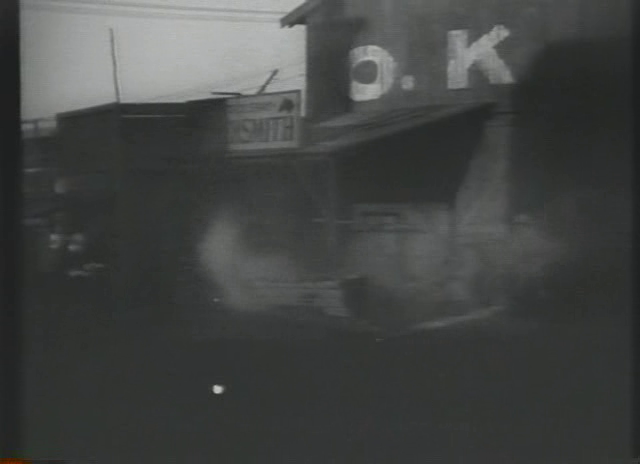
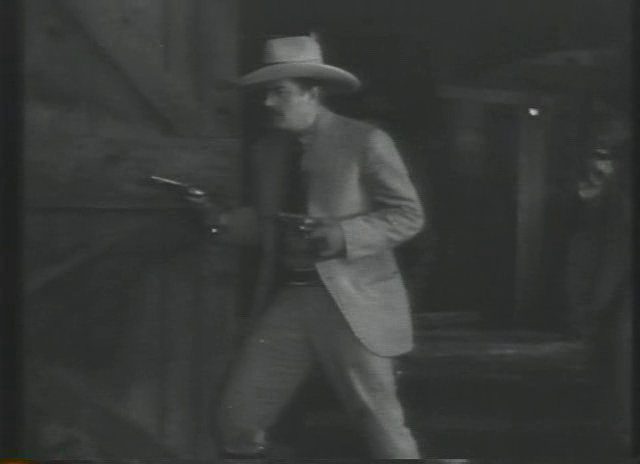
Regardless of its historical veracity, this straightforward western is essentially a tale of hopeless attempts to impose “law and order” in a town where guns are ubiquitous; it culminates with a speedily edited, highly effective shootout sequence which remains its highlight. Otherwise, there’s not much here to hold onto, though fans of early oaters will likely enjoy it.

Redeeming Qualities and Moments:

  • The finely edited closing gunfight sequence

Must See?
No, though anyone interested in early “talkie” Westerns or cinematic depictions of the O.K. Corral gunfight will want to check it out. Listed as a film with Historical Importance and a Personal Recommendation in the back of Peary’s book.

Links:

They Drive By Night (1940)

They Drive By Night (1940)

“We’re tougher than any truck ever come off an assembly line.”

Synopsis:
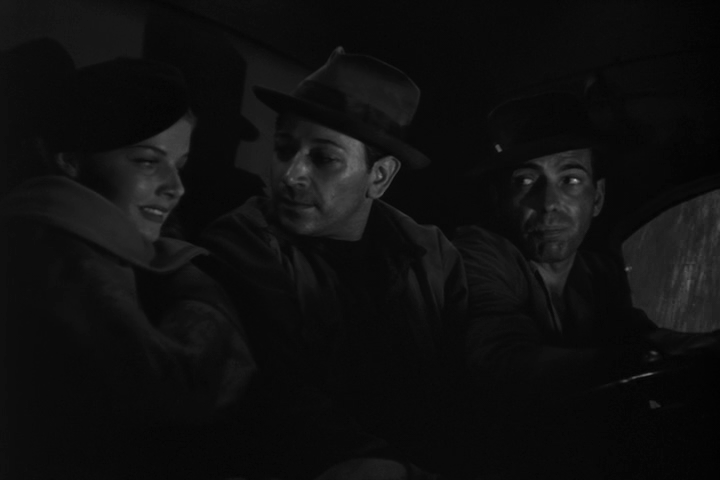
A trucker (George Raft) and his brother (Humphrey Bogart) hoping to “go independent” accept an offer from a wealthy widow (Ida Lupino) to help run her trucking business, not knowing Lupino secretly killed her husband (Alan Hale) in an attempt to make herself available for Raft, who instead has fallen for a beautiful waitress (Ann Sheridan).

Genres, Themes, Actors, and Directors:

  • Alan Hale Films
  • Ann Sheridan Films
  • Courtroom Drama
  • Falsely Accused
  • George Raft Films
  • Humphrey Bogart Films
  • Ida Lupino Films
  • Obsessive Love
  • Raoul Walsh Films
  • Truckers

Review:
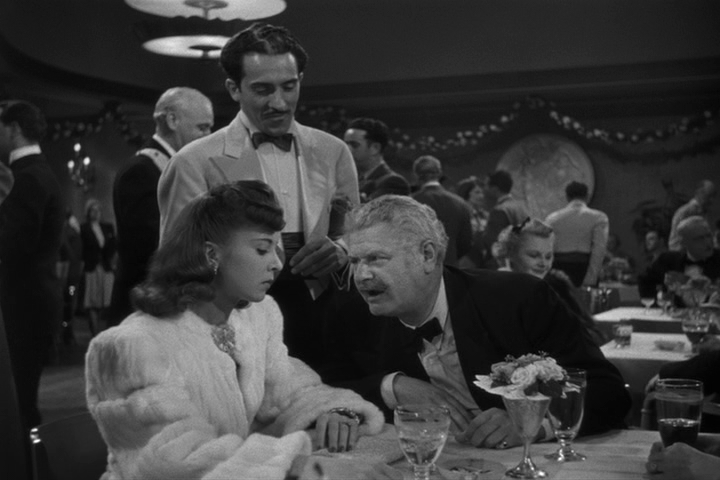
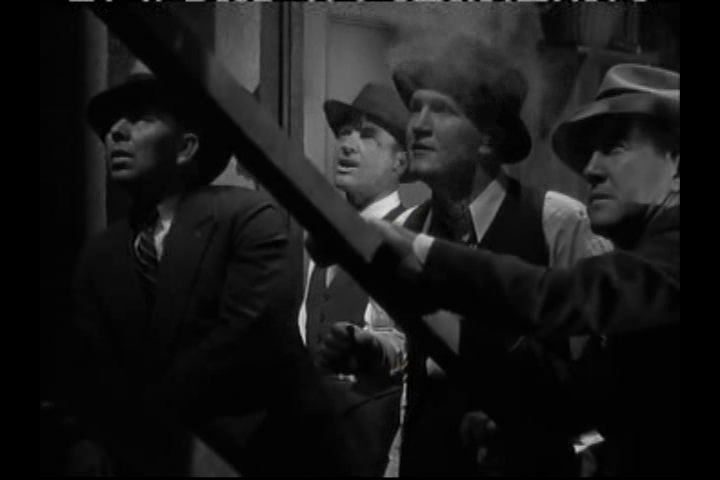
Raoul Walsh directed this gritty trucking noir, featuring the inimitable Ida Lupino in her breakthrough role as a mentally unstable, murdering femme fatale.

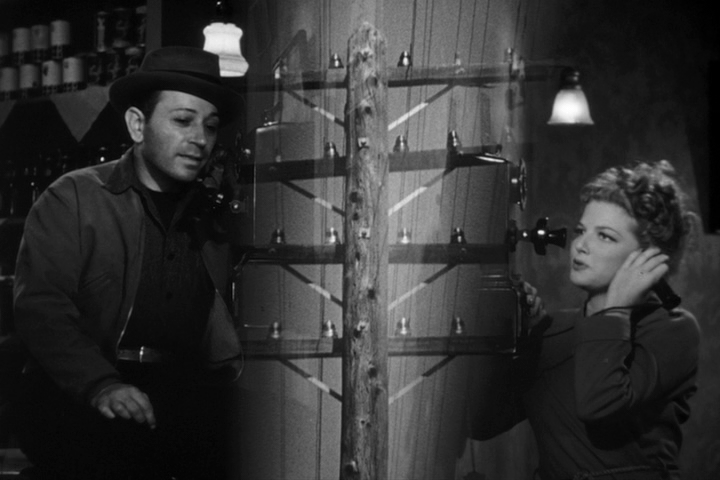
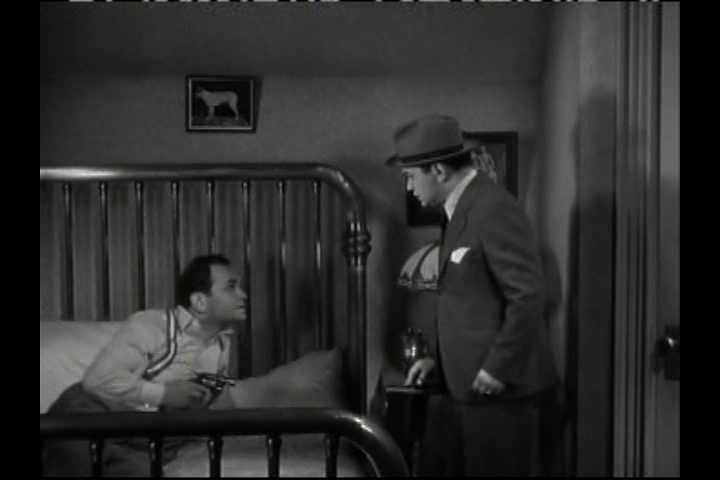
Raft (attempting a “cleaner” on-screen image), Bogart — about to earn leading-man status in Walsh’s High Sierra (1941) — and sassy Sheridan are all fine:

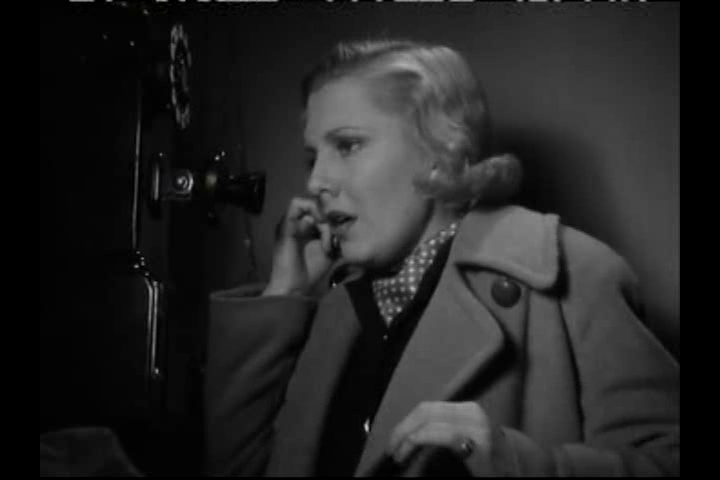
— but this is truly Lupino’s show; it’s easy to imagine Bette Davis playing her character in the film’s inspiration, Bordertown (1935). Lupino knows what she wants and will do anything to get it:

Poor, likable Hale doesn’t stand a chance, and Raft’s hopes for happiness and stability are nearly dashed. Arthur Edeson’s cinematography is appropriately atmospheric throughout, and Walsh nicely contrasts the brothers’ working-class travails with Lupino’s life-of-leisure. This one’s worth a look.

Redeeming Qualities and Moments:

  • Ida Lupino as Lana Carlsen
  • Alan Hale as Ed Carlsen
  • Arthur Edeson’s cinematography
  • A cracker-jack script:

    “The doors made me do it!”

Must See?
Yes, for Lupino’s breakthrough performance.

Categories

  • Important Director
  • Noteworthy Performance(s)

Links:

Verdict, The (1982)

Verdict, The (1982)

“There are no other cases; this is the case.”

Synopsis:
An ambulance-chasing lawyer (Paul Newman) is hired by the sister (Roxanne Hart) and brother-in-law (James Handy) of a woman put into an irreversible coma during childbirth after being given incorrect anesthesia by an attending doctor (Wesley Addy). Newman refuses to take the generous settlement offered by the head (James Mason) of the hospital’s representing firm, instead relying on the assistance of his mentor (Jack Warden) and his new love interest (Charlotte Rampling) to take the case to court — despite the overt disapproval of the presiding judge (Milo O’Shea).

Genres, Themes, Actors, and Directors:

  • Character Arc
  • Charlotte Rampling Films
  • Corruption
  • Courtroom Drama
  • Has-Beens
  • James Mason Films
  • Lawyers
  • Paul Newman Films
  • Sidney Lumet Films

Review:
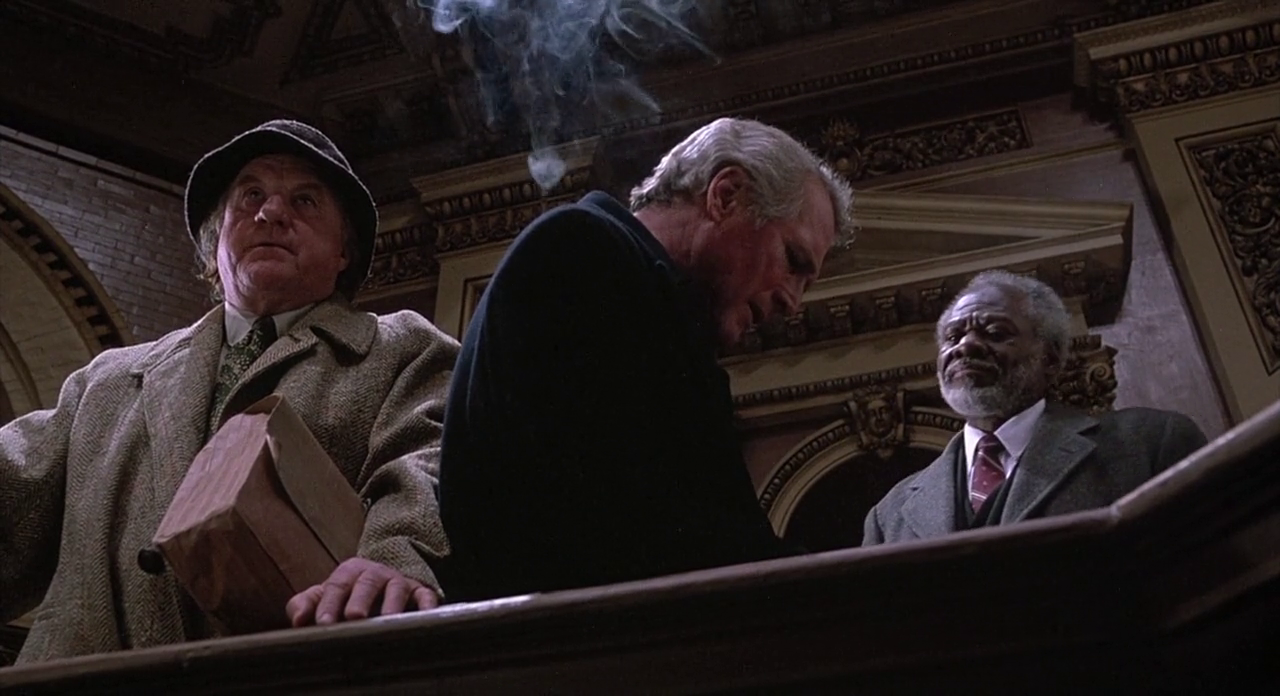
Paul Newman gives a stand-out performance in this Sidney Lumet-directed character study about a seemingly lost-cause alcoholic who has all but given up on his career, only to find himself revived by a “last chance” case. David Mamet’s screenplay keeps us deeply invested in this likable but sad-sack man who continually makes questionable choices in both his personal and professional lives. When he refuses Mason’s settlement without consulting his clients, we suddenly realize our allegiance has been skewed towards him and his interests rather than the case he’s taken on — at which point we’re joltingly reminded of his imperfections, and given a broad hint at the impetuousness that likely landed him in his current situation. The entire cast is spot-on, from Newman’s arch-rival Mason, to bushy-browed Irish O’Shea, to the inscrutable Rampling. Because this is a “Mamet story”, one major character turns out to be not-who-they-seem, and others — all nuanced — demonstrate unexpected sides of themselves. Sidney Lumet’s direction is a marvel of deliberately paced, strategically framed scenes, without quick editing or too many close-ups. We witness scenes taking place in Newman’s apartment, at a local bar, in the courtroom, and on the streets of Boston; as usual, Lumet makes excellent use of all settings, and is ably assisted by DP Andrzej Bartkowiak (who worked with him on Prince of the City the previous year). In sum, this is one of Lumet’s best, and an all-around “great show”.

Redeeming Qualities and Moments:

  • Paul Newman as Frank Galvin (nominated by Peary as one of the Best Actors of the Year in his Alternate Oscars)
  • James Mason as Ed Concannon
  • Fine supporting performances


  • Andrzej Bartkowiak’s cinematography

  • Lumet’s accomplished direction
  • Excellent use of Boston locales
  • David Mamet’s screenplay

Must See?
Yes, as a true “modern” classic. Listed as a Personal Recommendation in the back of Peary’s book.

Categories

  • Genuine Classic
  • Noteworthy Performance(s)
  • Oscar Winner or Nominee

Links:

Whole Town’s Talking, The (1935)

Whole Town’s Talking, The (1935)

“I’ll show you! A false alarm, am I?”

Synopsis:
A mild-mannered clerk (Edward G. Robinson) named Arthur Jones — who happens to look exactly like the murderous bank robber “Killer” Mannion (also Robinson) — is apprehended by police, released with an identity certificate, and commissioned to ghost-write Mannion’s memoirs for the local newspaper. Meanwhile, Mannion takes advantage of Jones by blackmailing him into sharing the identity certificate, and secretly plotting to have Jones take the fall for his crimes.

Genres, Themes, Actors, and Directors:

  • Comedy
  • Edward G. Robinson Films
  • Gangsters
  • Jean Arthur Films
  • John Ford Films
  • Mistaken or Hidden Identities
  • “No One Believes Me!”

Review:
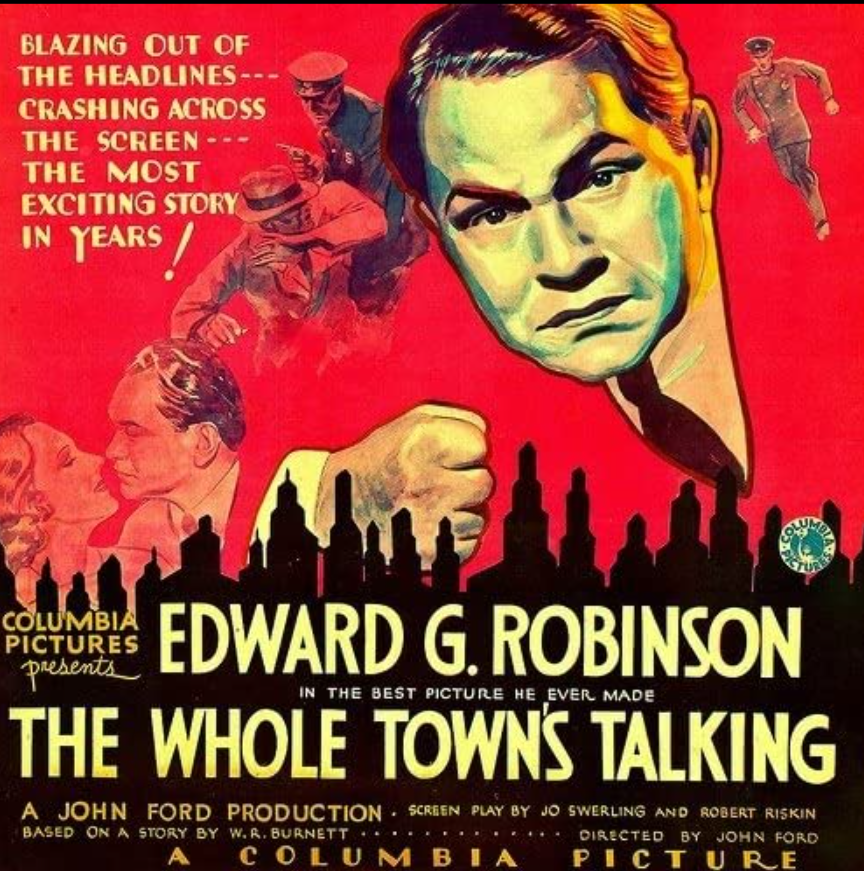
Directed by John Ford and based on a story by W.R. Burnett (author of the novels which Little Caesar, High Sierra, and The Asphalt Jungle are based on), this clever gangster spoof makes perfect use of both Robinson’s menacing screen persona and his (mostly) untapped comedic talents. As noted in TCM’s article, Ford managed to slip this one past Production Code censors given its status as a satire, but some fairly dark elements emerge by the end (I won’t say more at risk of spoiling the fun narrative). Robinson and Arthur are both at the top of their acting games, and Ford’s direction is spot-on. Check this one out if you can! It would make a great double-bill with A Slight Case of Murder (1938), another enjoyable gangster spoof starring Robinson.

Redeeming Qualities and Moments:

  • Edward G. Robinson as Arthur Jones and “Mannion”

  • Jean Arthur as Miss Clark
  • Effective cinematography and “special effects”

Must See?
Yes, for Robinson’s virtuoso double-performance.

Categories

  • Noteworthy Performance(s)

Links:

Prince of the City (1981)

Prince of the City (1981)

“Everybody’s using everybody, right?”

Synopsis:
A narcotics detective (Treat Williams) agrees to cooperate with the lead investigators (Norman Parker and Paul Roebling) of a special commission on corruption, but vows never to “turn” on his partners (Jerry Orbach, Richard Foronjy, Don Billett, and Kenny Marino).

Genres, Themes, Actors, and Directors:

  • Corruption
  • Police
  • Sidney Lumet Films
  • Treat Williams Films

Review:
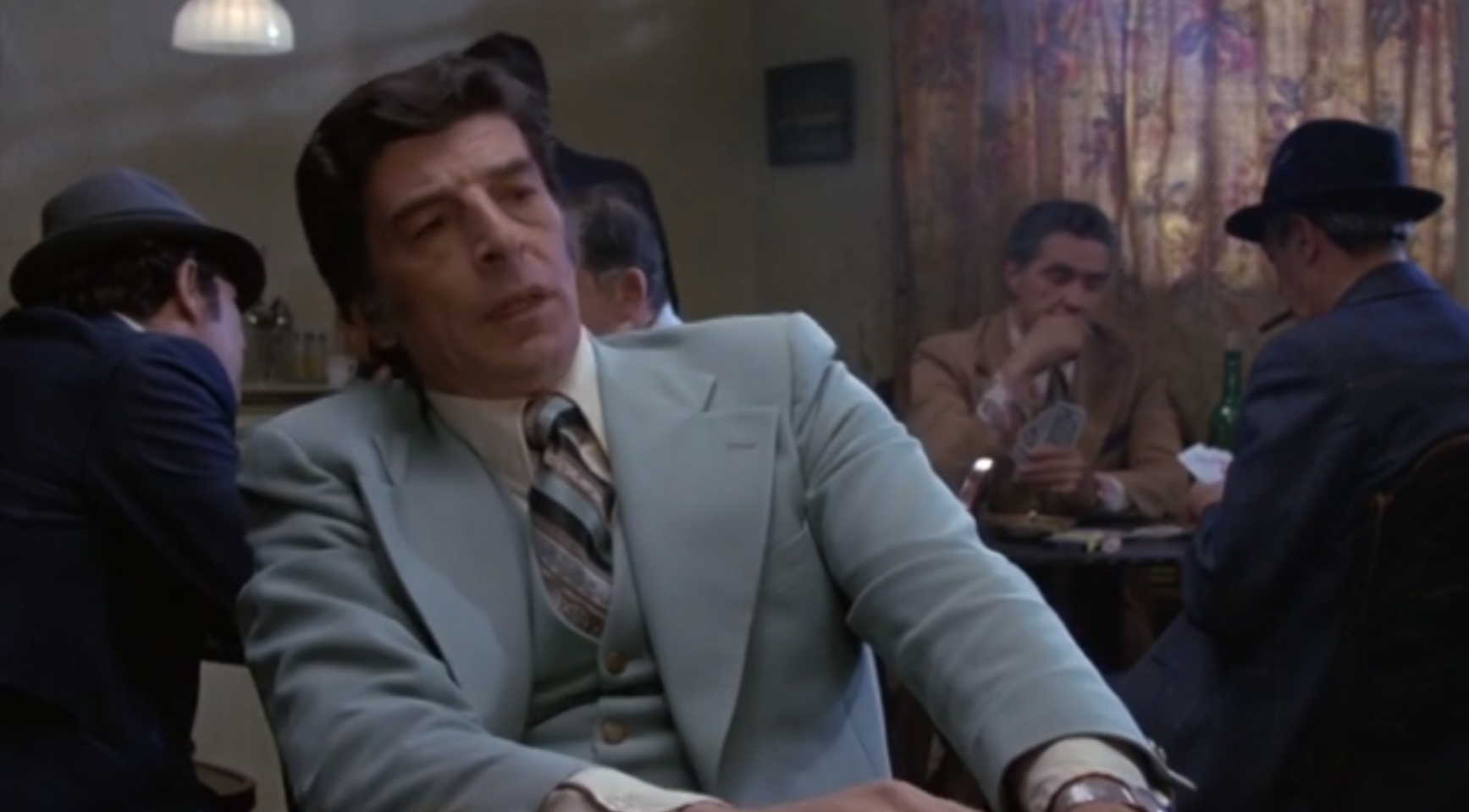
Sidney Lumet’s follow-up to perhaps the most famous film about police corruption in New York City — Serpico (1973) — was this equally compelling film (based on a book by cop-turned-author Robert Daley) about NYPD detective Robert Leuci, whose testimony and secret recordings helped to indict more than four dozen NYPD narcotics detectives. Jay Presson Allen — screenwriter for Marnie (1964), The Prime of Miss Jean Brodie (1969), and Cabaret (1972) — wrote the lengthy script after interviewing nearly everyone in Daley’s book and listening to Leuci’s recordings; the result is a smart, tension-filled, consistently absorbing character study about a man — like Frank Serpico — who feels he has no choice but to speak out against graft and corruption (his conscience won’t allow otherwise), yet whose life, family, friendships, integrity, and identity (“I sleep with my wife, but I live with my partners!”) are put at risk by this decision. Williams gives a nuanced performance in a highly complex role, and is surrounded by a fine supporting cast. This flick deserves wider recognition, and I’m slightly mystified why it’s not better known.

Note: Leuci died last year at the age of 75.

Redeeming Qualities and Moments:

  • Treat Williams as Danny Ciello (nominated as one of the Best Actors of the Year by Peary in his Alternate Oscars)
  • Jerry Orbach as Gus Levy
  • Andrzej Bartkowiak’s cinematography
  • Paul Chihara’s atmospheric score

Must See?
Yes, as an absorbing drama with a powerful lead performance.

Categories

  • Noteworthy Performance(s)

Links:

D.I., The (1957)

D.I., The (1957)

“Anything’s better than this.”

Synopsis:
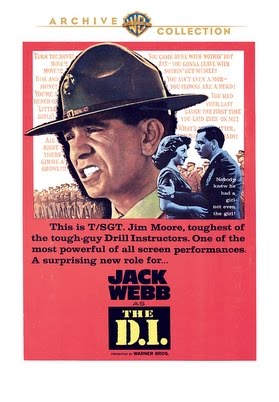
A hard-hitting Marine drill instructor (Jack Webb) falls for a sexy local (Jackie Loughery) while refusing to give up on a seemingly hopeless recruit (Don Dubbins).

Genres, Themes, Actors, and Directors:

  • Jack Webb Films
  • Military
  • Ruthless Leaders

Review:
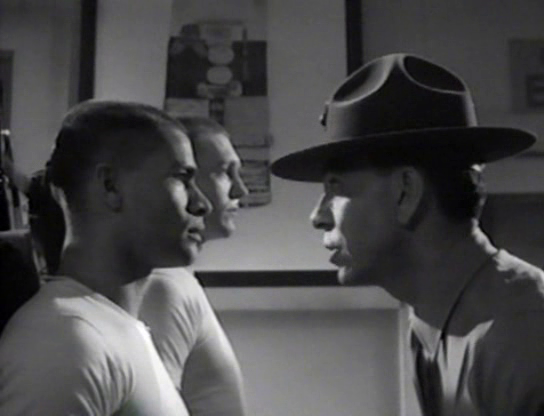
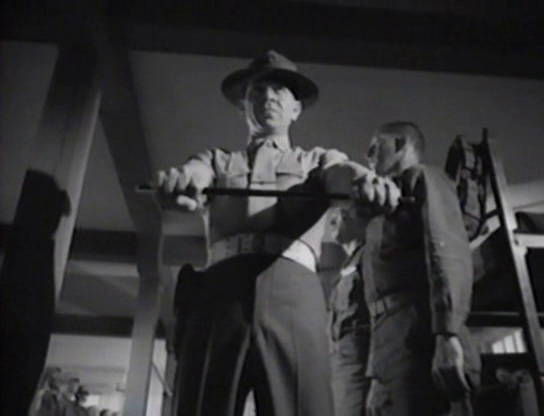
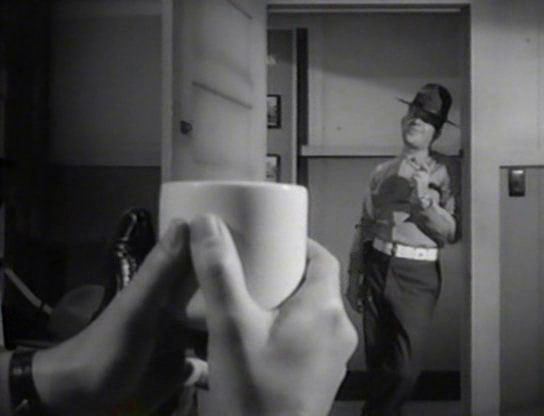
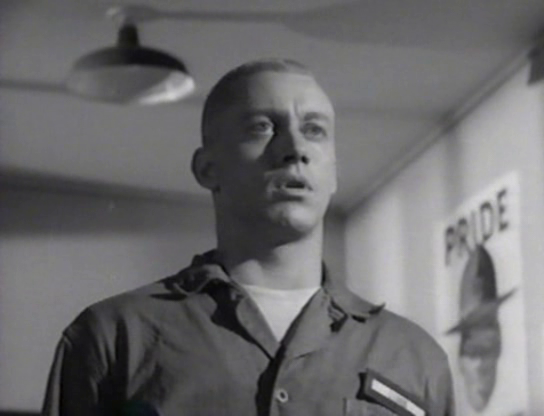
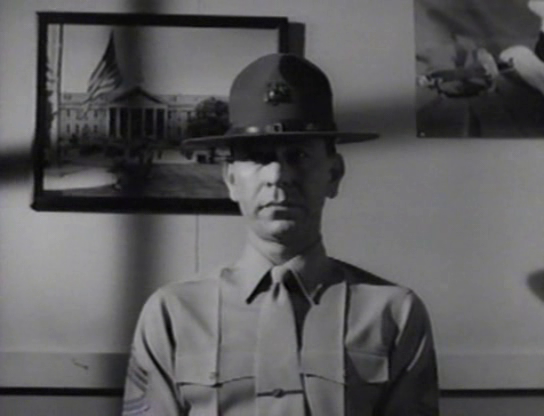
Jack Webb is so inextricably linked to his iconic role as Joe Friday on “Dragnet” that it’s somewhat surprising to find he was actually a busy auteur, producing and directing a handful of films and T.V. shows from the 1950s-1970s. This pre-cursor to Stanley Kubrick’s Full Metal Jacket (1987) begins with a literal bang, as Marine recruits knock on the door of a hard-nosed (what else?) Drill Instructor whose job is to use any means necessary to toughen these men for combat. Webb consistently utilizes creative, stylized framing and cinematography to heighten dramatic tension and highlight power differentials; the film is never boring to look at, even when the screenplay goes soppy during obligatory romantic interludes meant to show us Webb’s “softer side”. While profanity is noticeably absent, many IMDb users have noted how refreshingly authentic this film still comes across today, and others have stated that this film was responsible for their eventual application to the Marines (!). Interestingly, part of the U.S. Marine Corps’ willingness to cooperate so readily in the making of this movie was in response to a tragic occurrence in 1955 known as the “Ribbon Creek” incident — and recent news of the death of a new recruit at Parris Island further reminds us about the intensity of such infamously brutal training.

Redeeming Qualities and Moments:

  • Jack Webb as Sergeant Moore
  • Creative direction


  • Fine cinematography

  • Good use of realistic locales (albeit at Camp Pendleton and on sets rather than Parris Island) and actual Marines in key roles
  • A hard-hitting script:

    “There’s a man hidden somewhere under that baby powder.”
    “Tell me Castro, did your mother ever have any children that lived?”
    “What was it you just said, you miserable clown?”

Must See?
Yes, as a unique cult favorite.

Categories

  • Cult Movie

Links:

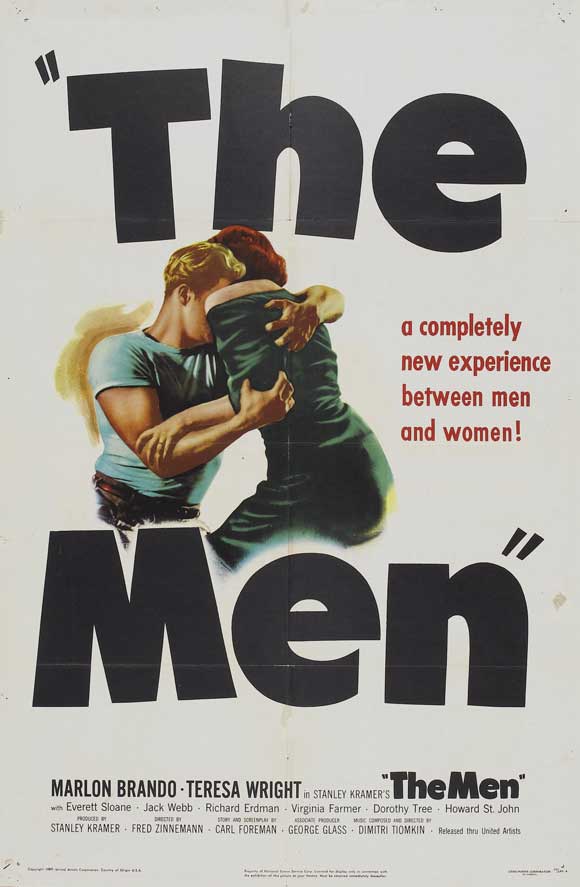
Men, The (1950)

Men, The (1950)

“You try and you try, and you’re still behind the eight ball.”

Synopsis:
A paraplegic vet (Marlon Brando) struggling to adjust to life without the use of his legs finds solidarity with his disabled friends (Jack Webb, Richard Erdman, and Arthur Jurado), but is unsure whether to marry his long-time girlfriend (Teresa Wright).

Genres, Themes, Actors, and Directors:

  • Disabilities
  • Fred Zinneman Films
  • Jack Webb Films
  • Marital Problems
  • Marlon Brando Films
  • Teresa Wright Films
  • Veterans

Review:
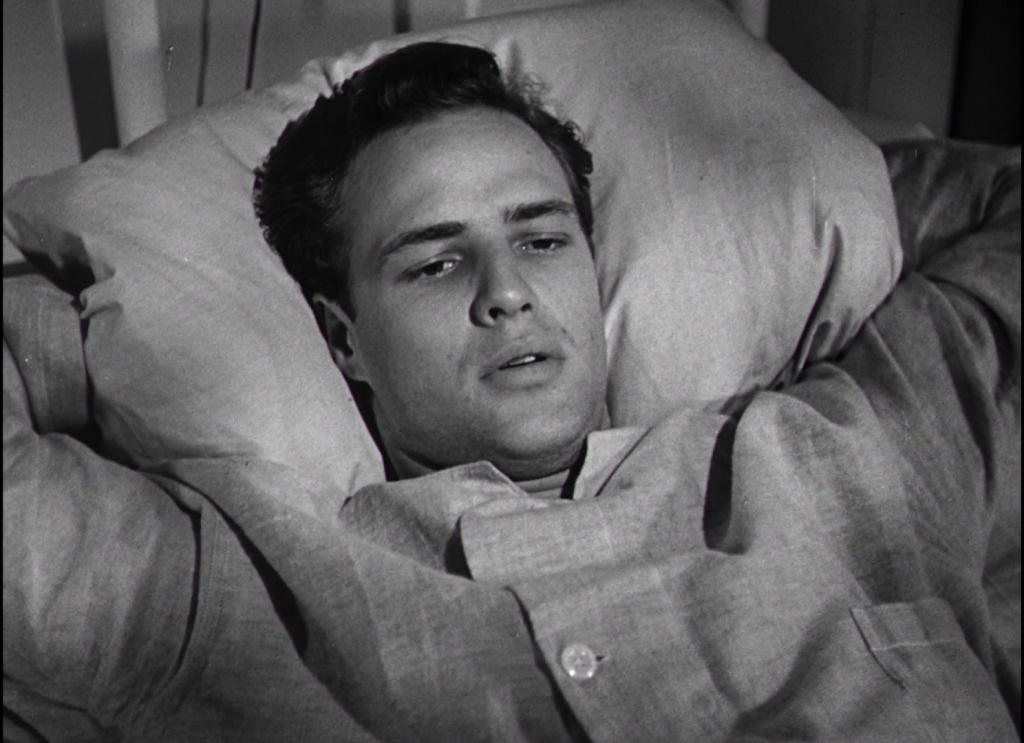
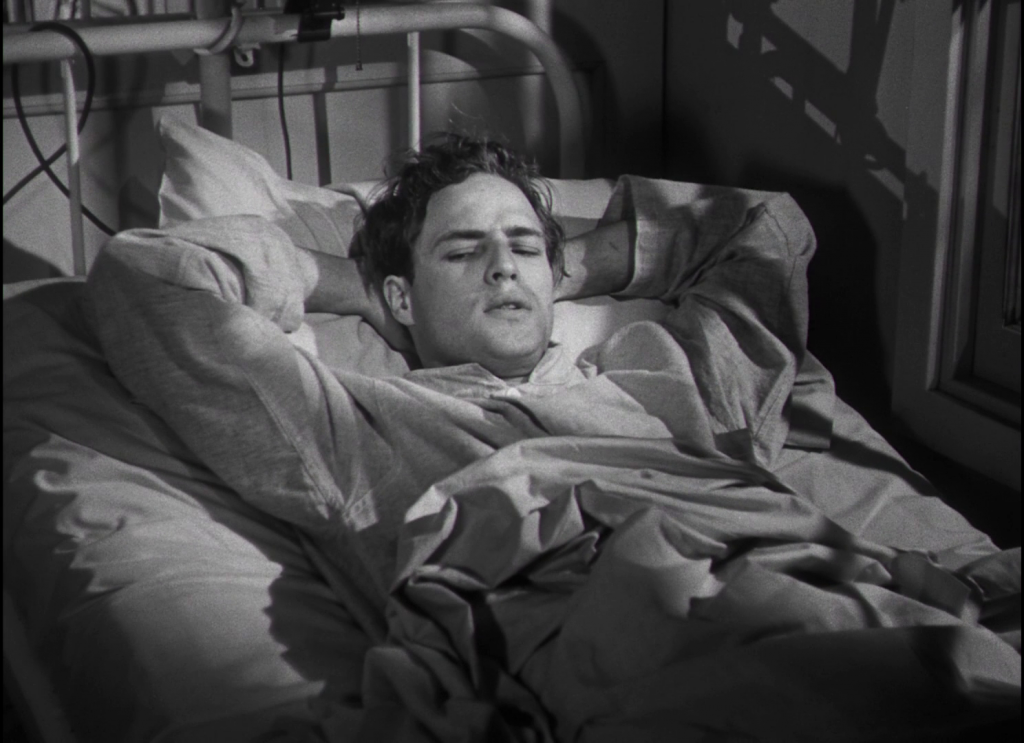
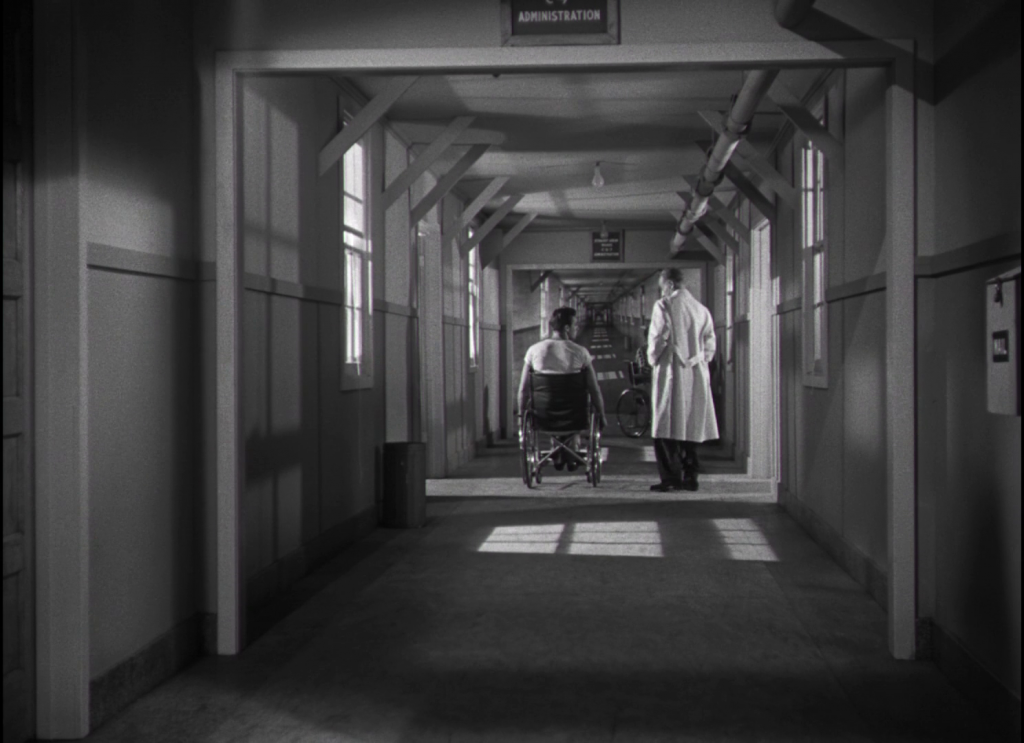
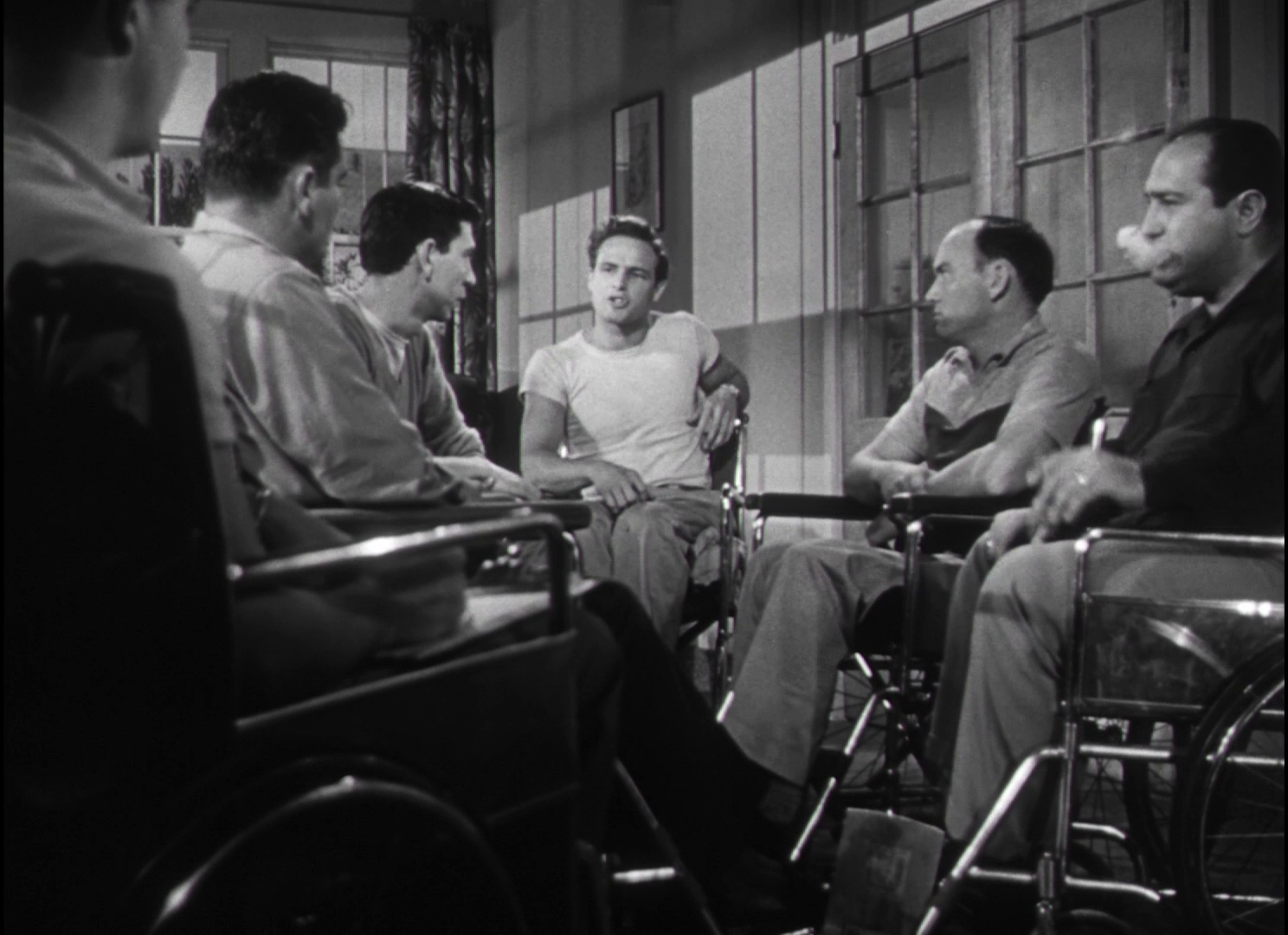
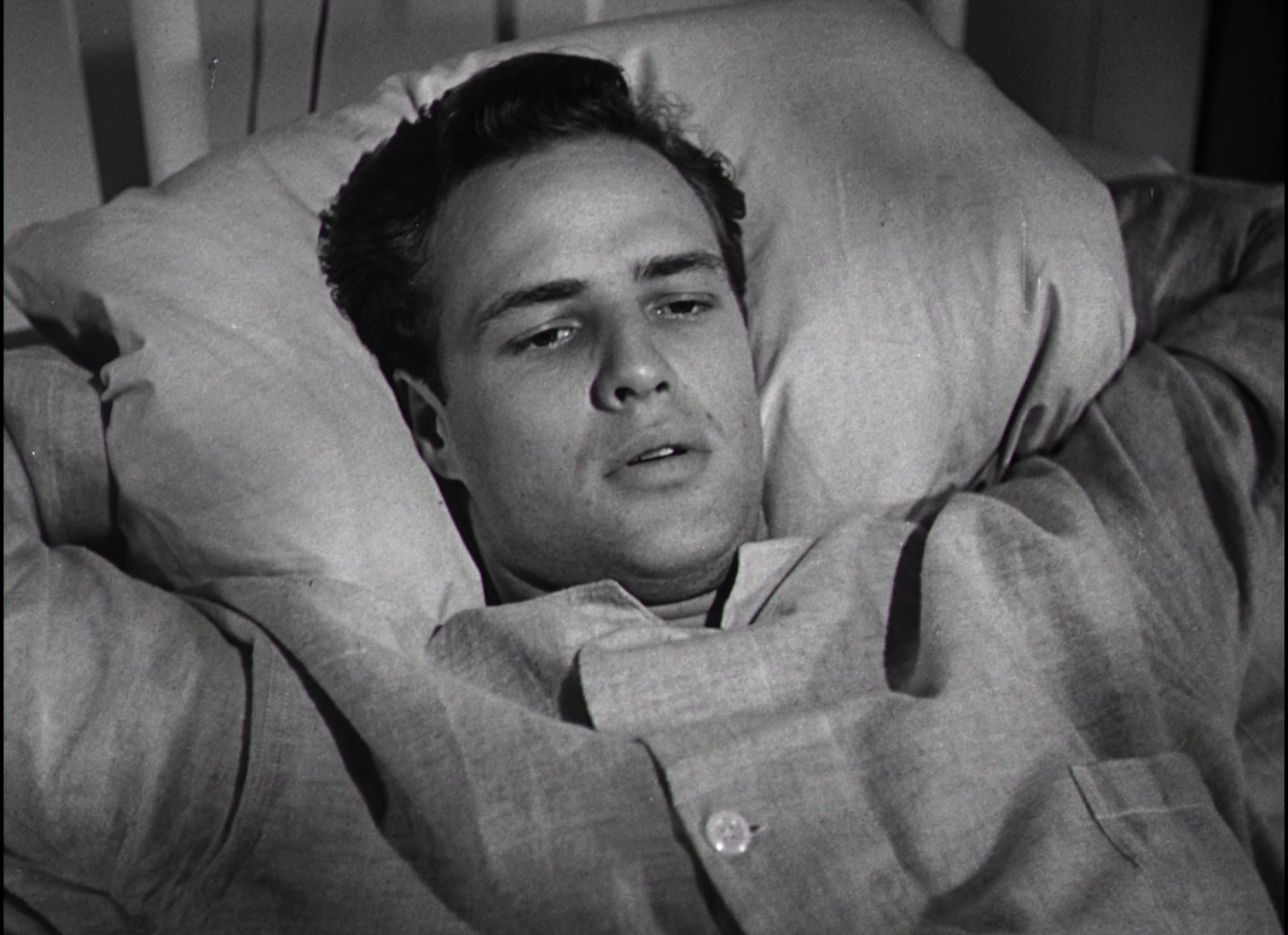
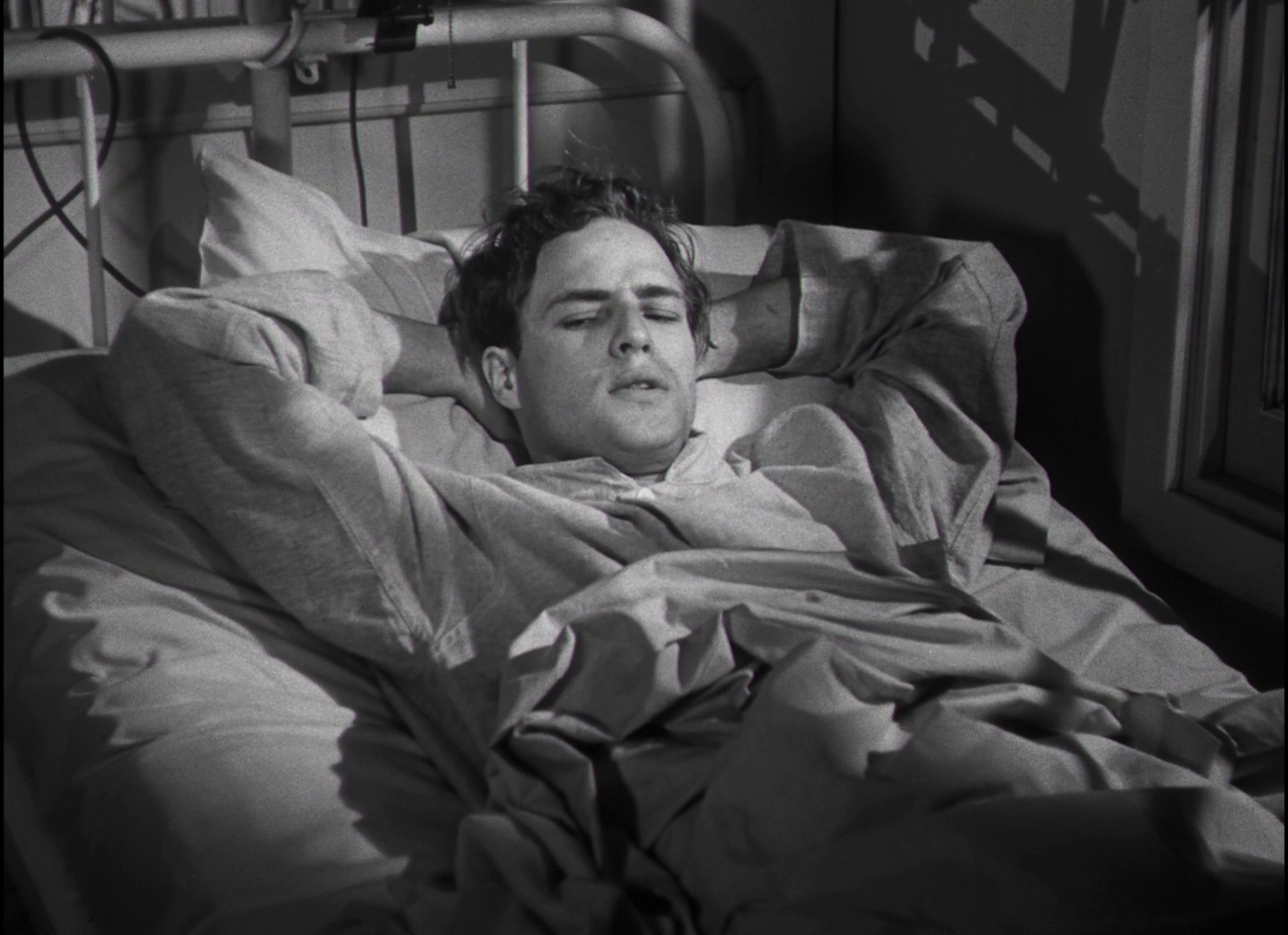
Marlon Brando made an auspicious cinematic debut in this hard-hitting social drama about paraplegic veterans struggling to re-enter mainstream society at a time when mortality rates were much higher, and public sympathy was much lower. Naturally, Brando — fresh from Broadway success as Stanley Kowalski — brought plenty of Method intensity to his preparation for the role (including living for a month in a hospital ward with vets); nothing about his performance here is sugar-coated.
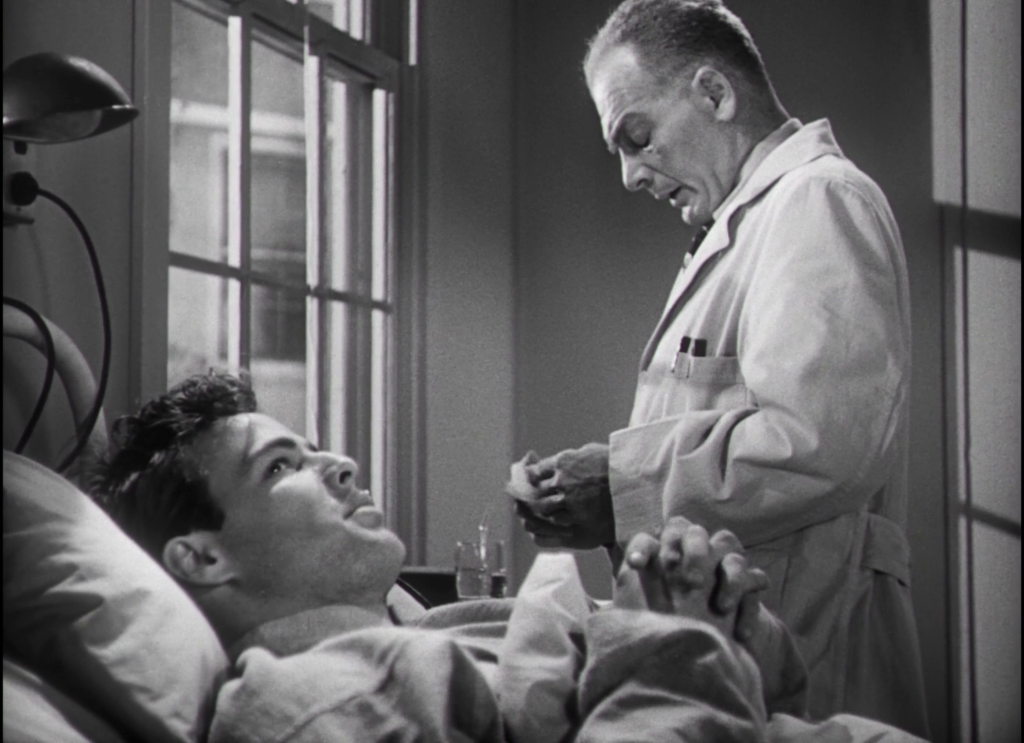
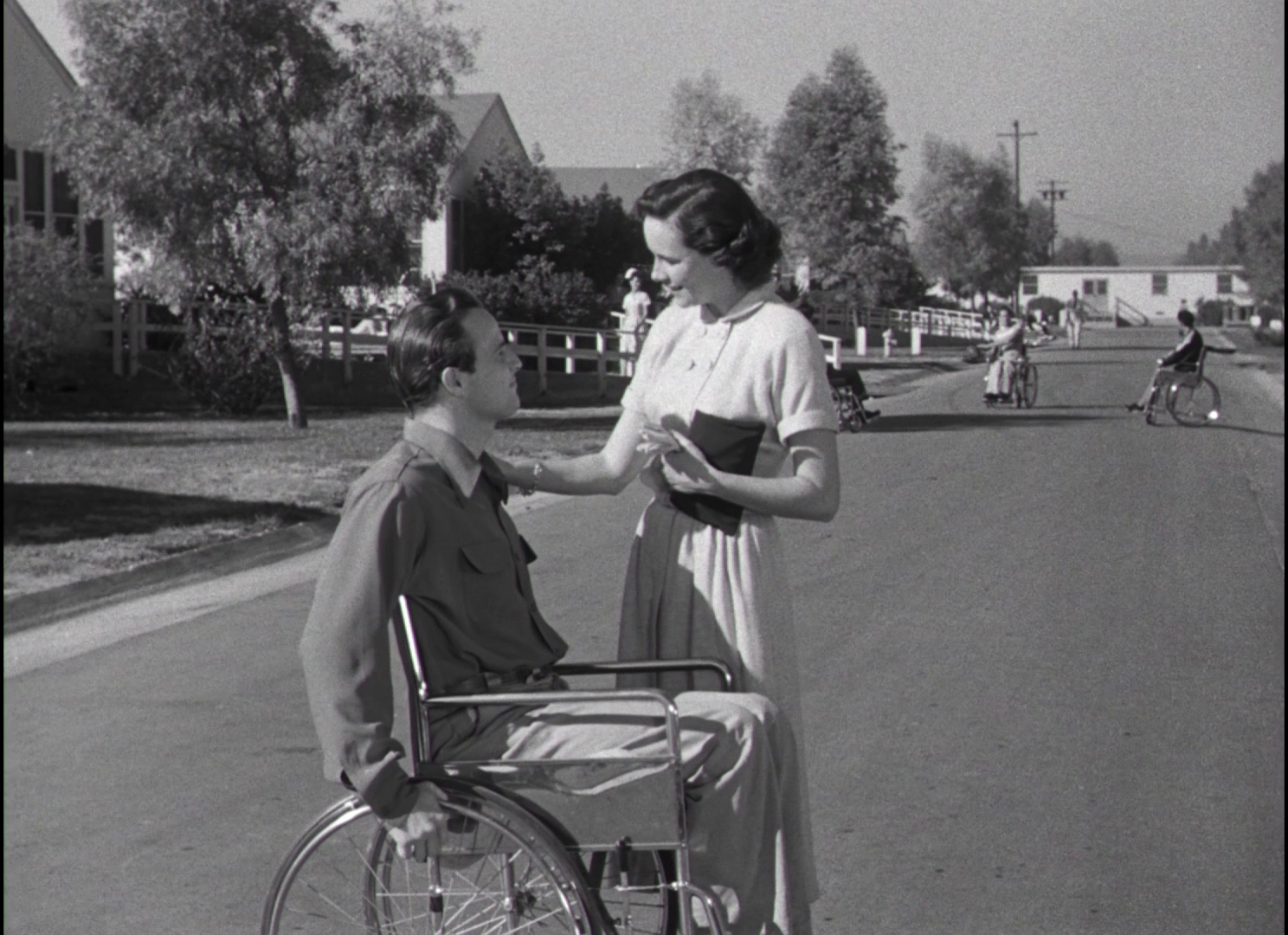
Wright’s overly earnest, non-“Method” portrayal role feels somewhat jarring in contrast, though she nicely conveys the tensions inherent in such a life-altering choice.
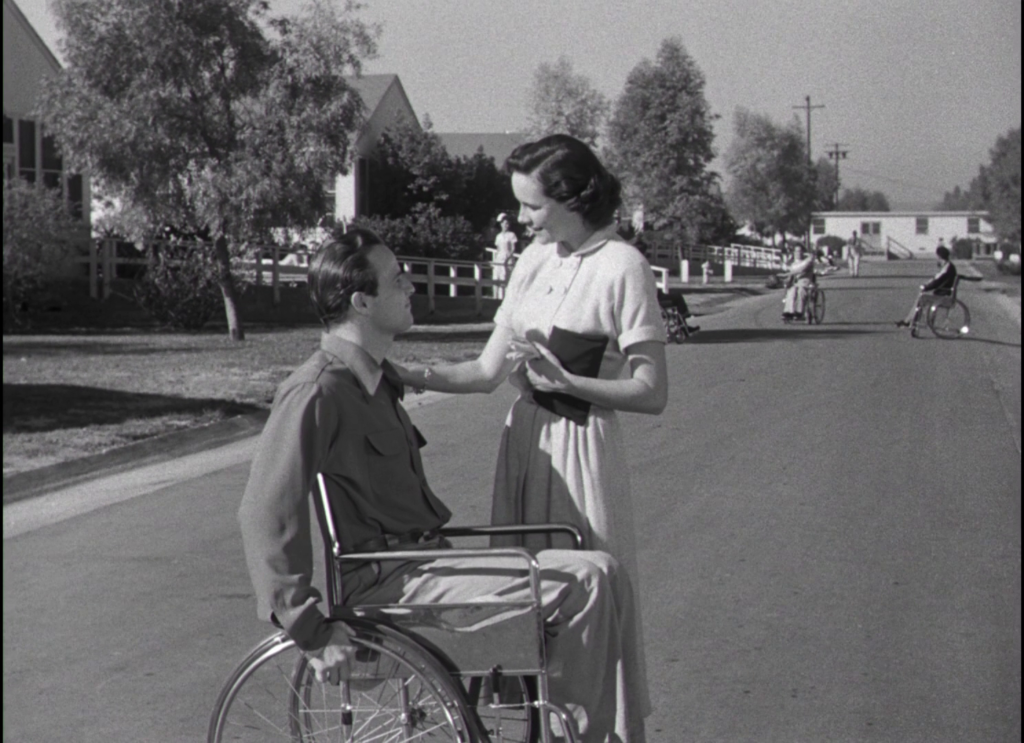
Meanwhile, Carl Foreman’s Oscar-nominated script is refreshingly authentic, touching on a variety of uncomfortable topics (including the sudden, unexpected death of a well-liked vet, and the very real possibility of infertility), and making it clear that life for these brave soldiers has been brutally transformed.
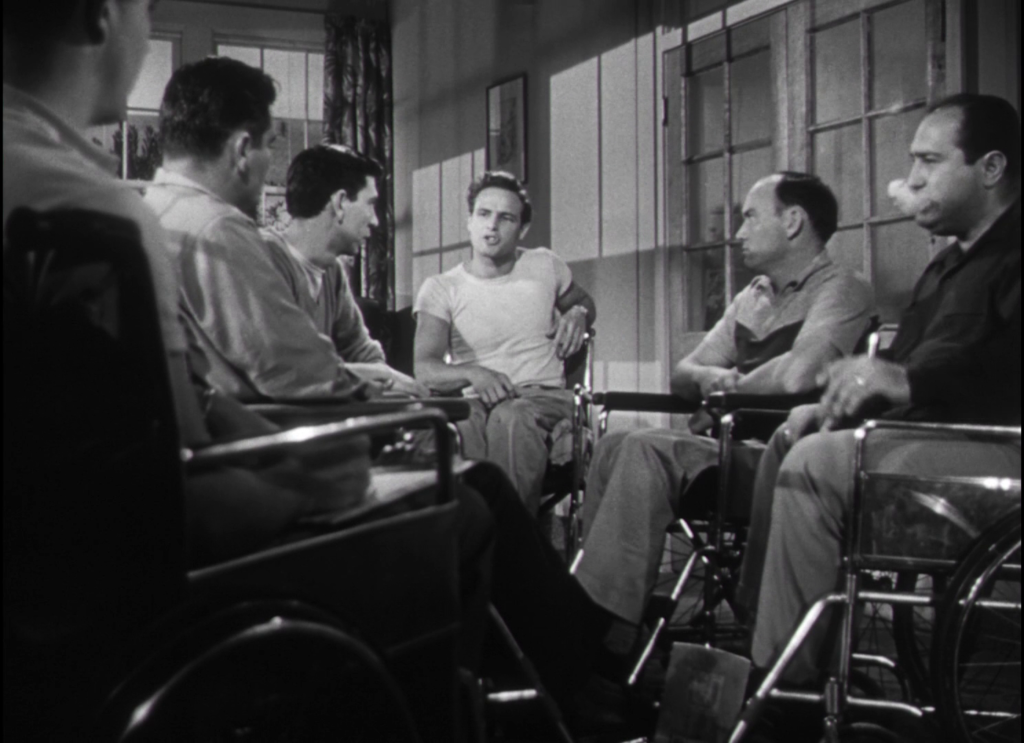
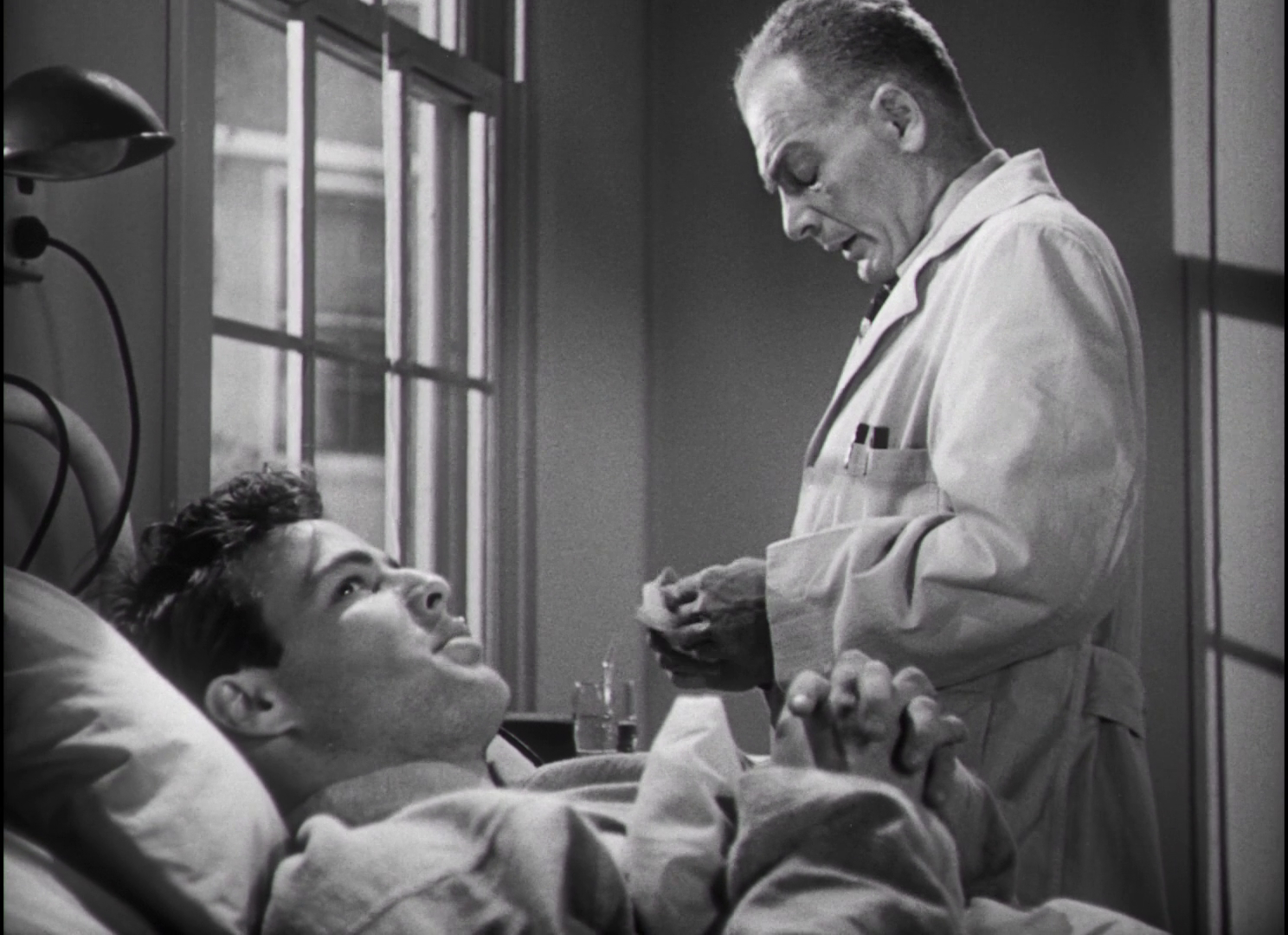
While other films — i.e., Coming Home (1978), Born on the Fourth of July (1989), and Murderball (2005) — have since covered similar territory in both narrative and documentary form, The Men remains worth a one-time look for its historical relevance and for Brando’s performance. Watch for Everett Sloane as the men’s no-nonsense doctor, and Jack Webb in a supporting role as a cynical bearded vet.

Redeeming Qualities and Moments:

  • Marlon Brando as Ken
  • Carl Foreman’s Oscar-nominated script
  • Robert De Grasse’s cinematography

Must See?
No, but it’s certainly worth a one-time look. Listed as a film with Historical Importance.

Links:

Dragnet (1954)

Dragnet (1954)

“Why does the law always work for the guilty?”

Synopsis:
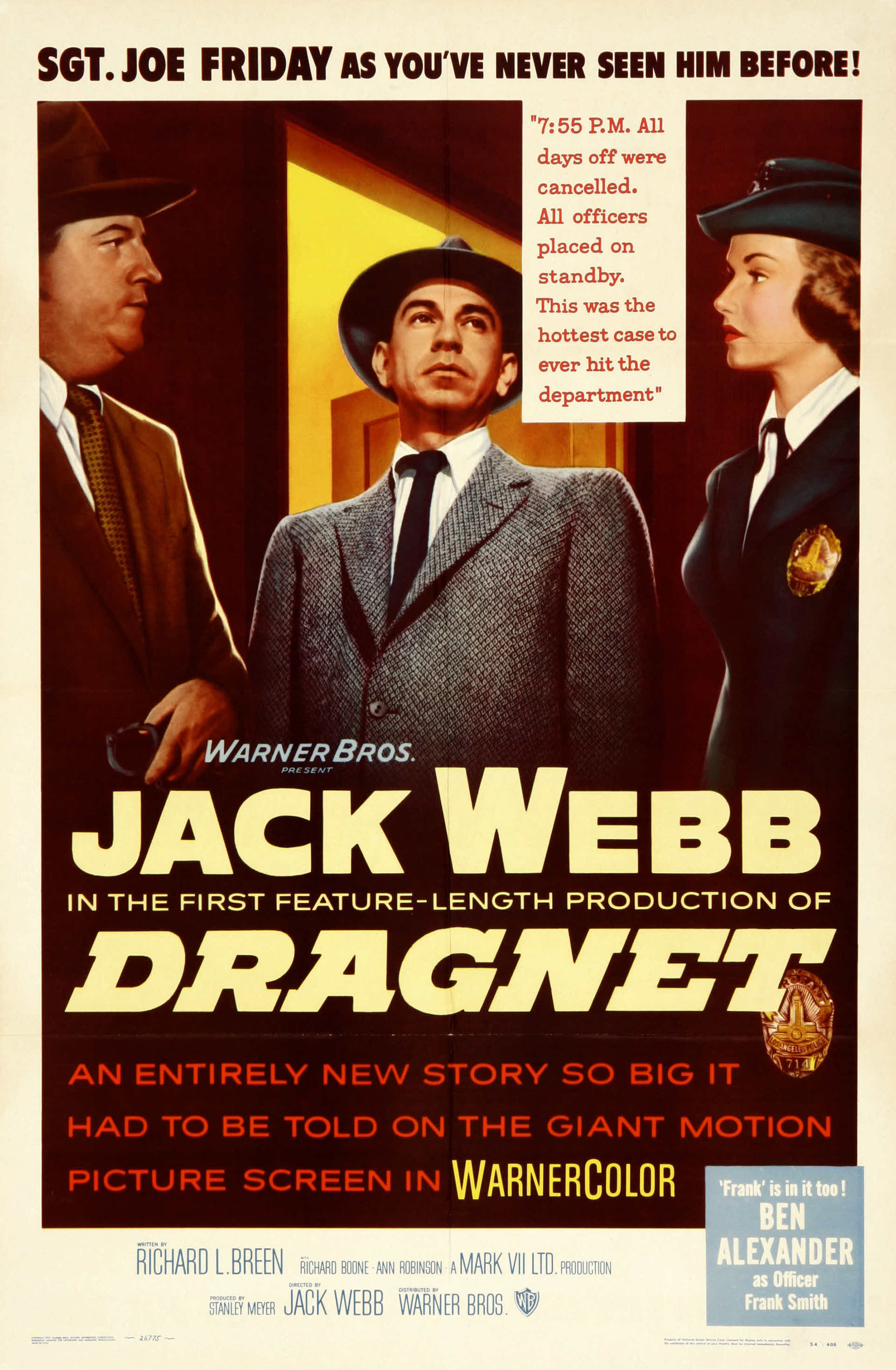
Sergeant Joe Friday (Jack Webb), Officer Frank Smith (Ben Alexander), and undercover Officer Grace Downey (Ann Robinson) of the LAPD investigate the brutal murder of a bookie (Dub Taylor), committed by a known criminal (Stacy Harris) who others in his syndicate are trying to protect.

Genres, Themes, Actors, and Directors:

  • Jack Webb Films
  • Police

Review:
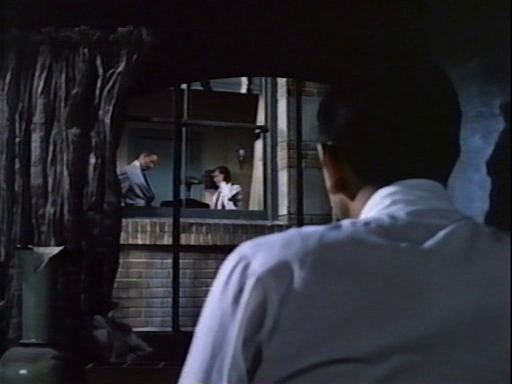
The primary reason to check out this earnest police procedural — notable as the first feature film to be based on a television series — is to get a sense of what the enormously popular show (produced, directed by, and starring Jack Webb) is all about. Unfortunately, while competently filmed, Dragnet hasn’t held up well as entertainment: it’s overly didactic, relies far too heavily on fast-paced dialogue (its original roots as a radio series are evident), and will seem simplistic to modern audiences who already have an insider’s view of police investigations from numerous other shows and movies. Since this is essentially a colorized, extended version of the T.V. show — interspersed with occasionally creative but mostly awkward scenes meant for 3-D that never materialized — I recommend checking out an episode of the show first (on YouTube) to see if this is your cup of tea.

Redeeming Qualities and Moments:

  • Some creative direction

Must See?
No, unless you’re a “Dragnet” fan. Listed as a film with Historical Importance in the back of Peary’s book.

Links:

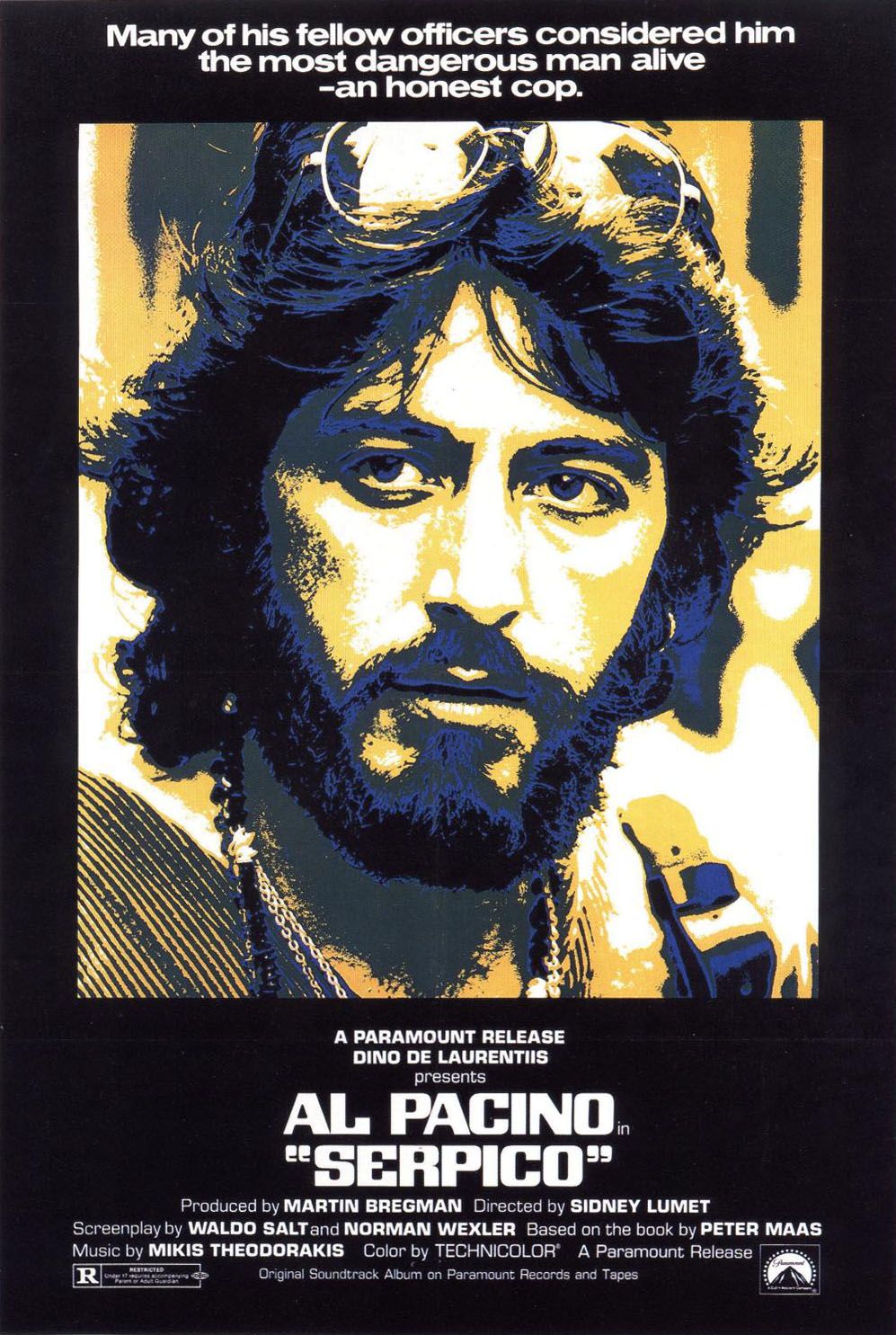
Serpico (1973)

Serpico (1973)

“Who can trust a cop who don’t take money?”

Synopsis:
An idealistic young cop (Al Pacino) hoping to work as a plains-clothes detective is dismayed to find both rampant police corruption and a culture of intolerance for those who don’t participate.

Genres, Themes, Actors, and Directors:

  • Al Pacino Films
  • Biopics
  • Corruption
  • New York City
  • Police

Review:
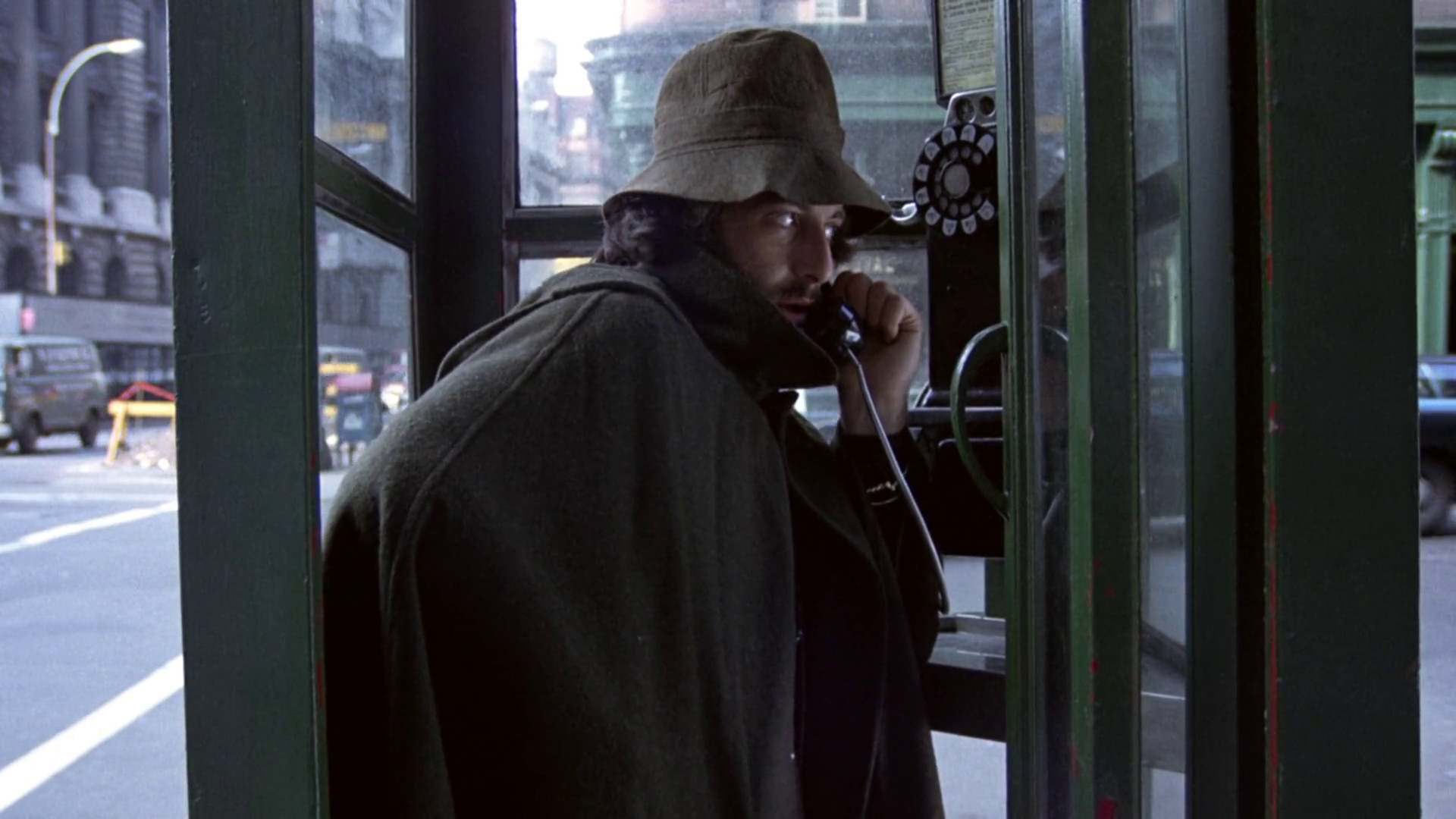
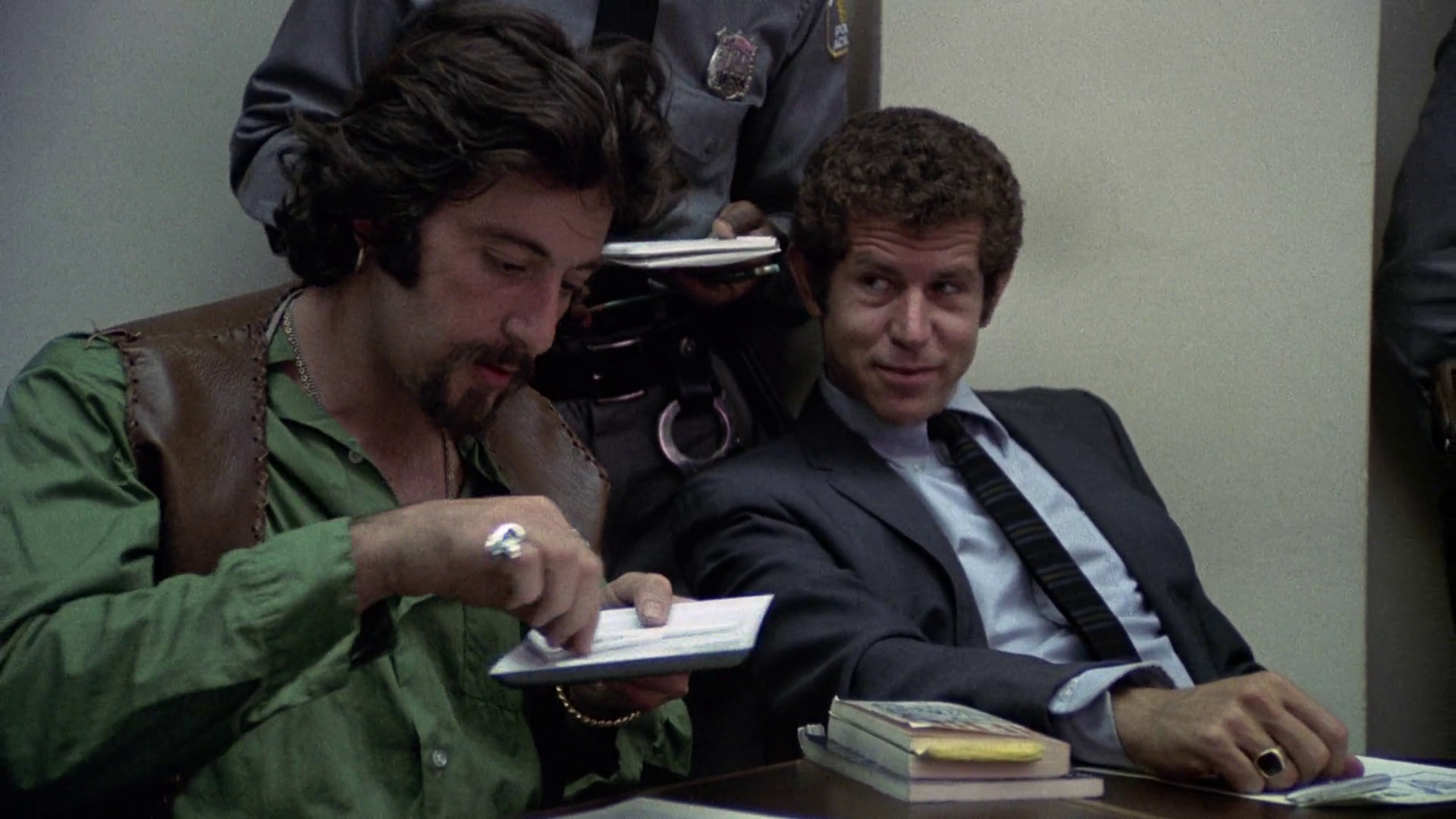
Is there such a thing as an honest cop? After watching this adaptation of Peter Maas’s biography about NYPD officer Frank Serpico — whose refusal to accept pay-offs and attempts to expose endemic corruption nearly led to his death — you’ll scarcely believe it’s possible. The film is book-ended by Serpico’s career-ending facial shooting, so we know that what we’ll see for the next two hours will be nothing but a living nightmare for our would-be whistleblower — but watching his train wreck as it unfolds is morbidly fascinating, especially as Pacino shifts in and out of various undercover get-ups.

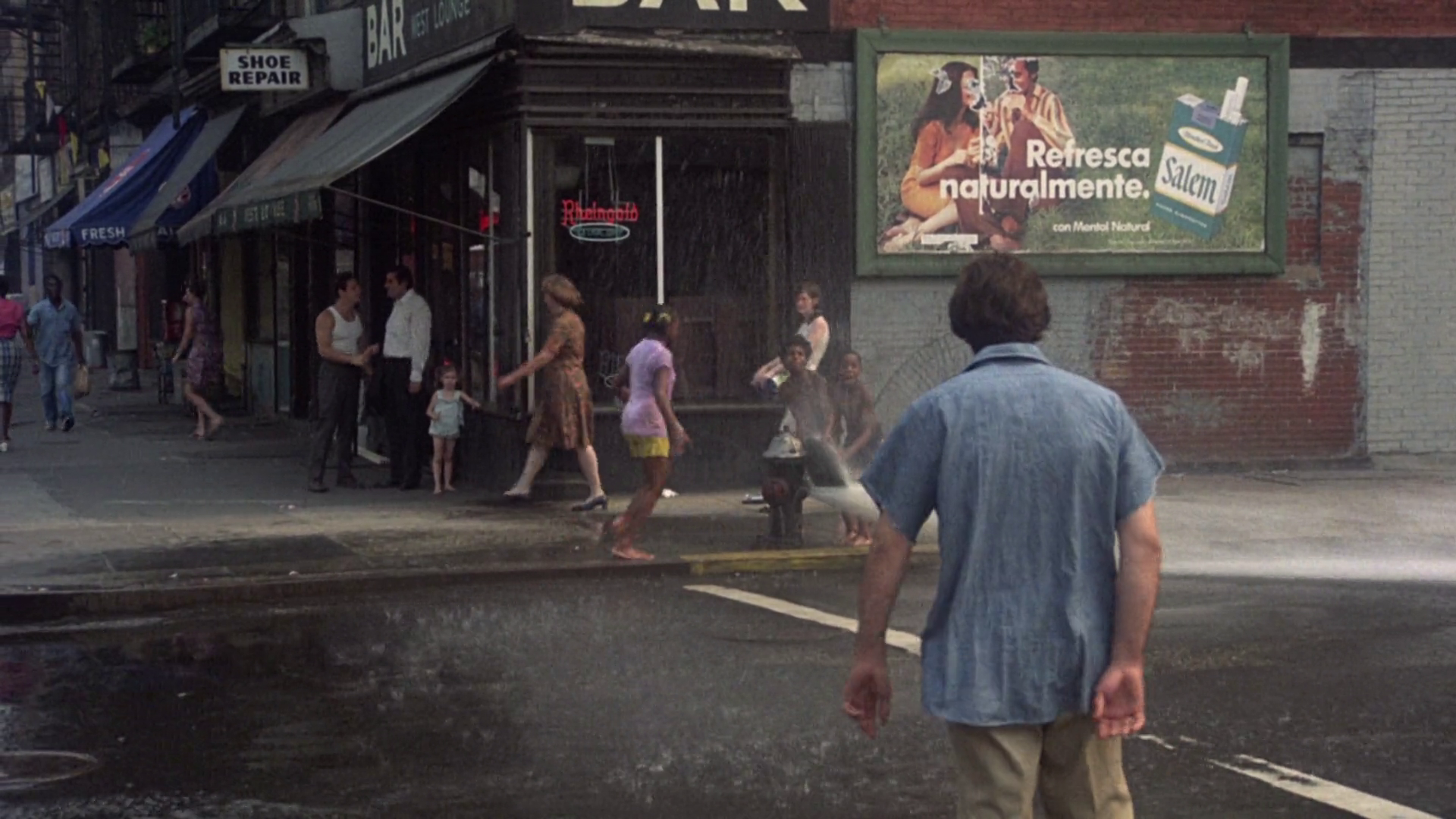
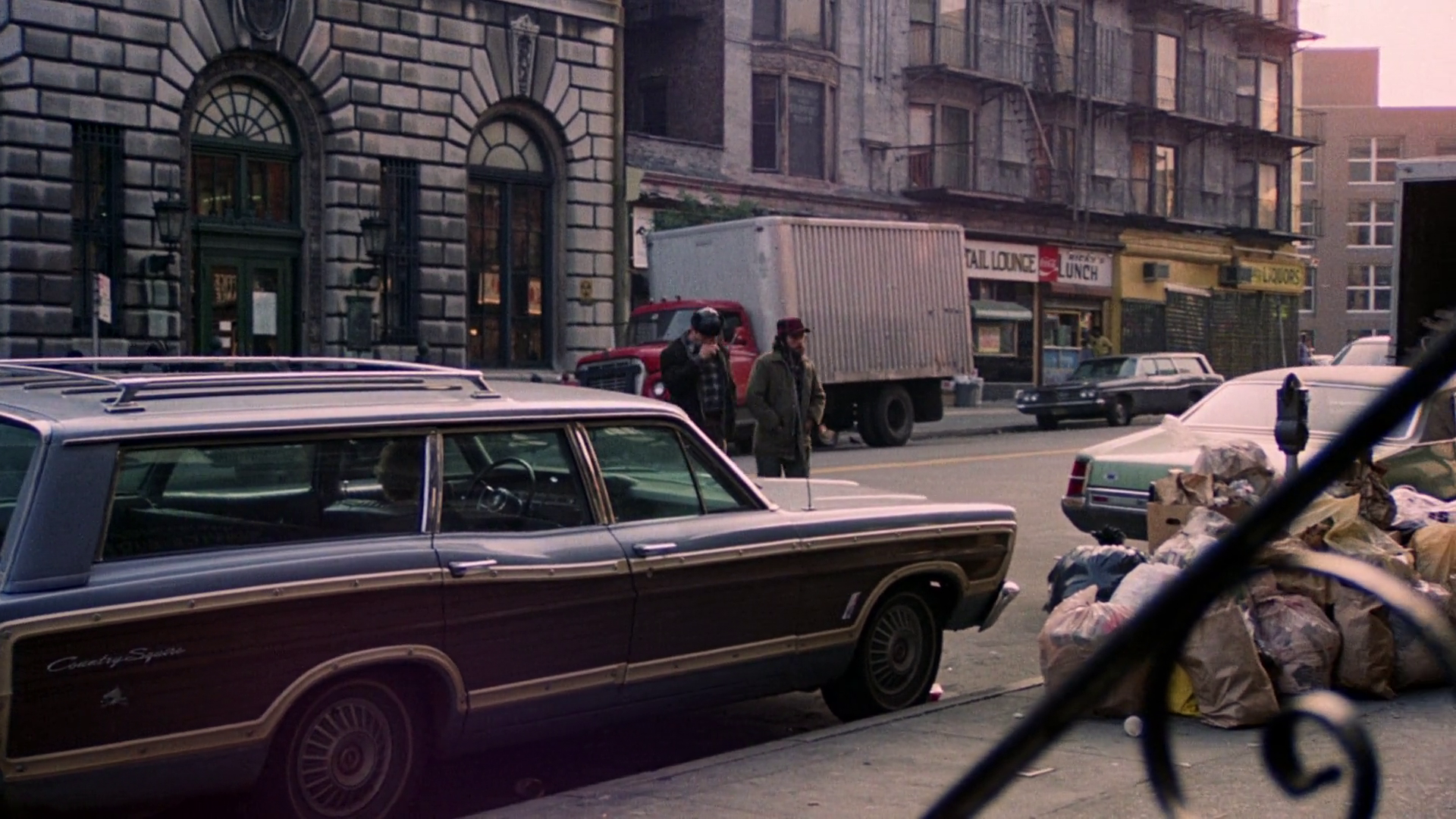
Director Sidney Lumet and DP Arthur Ornitz make impressive use of seemingly countless (actually 104) New York locales — and while Mikis Theodorakis’s invasive, maudlin score mars many scenes, the film is still worth a one-time look.

Note: Check out this 2010 New York Times docu-short in which the real Frank Serpico comments on the film, and we’re updated about his current life.

Redeeming Qualities and Moments:

  • Al Pacino as Frank Serpico
  • Arthur Ornitz’s cinematography
  • Excellent use of authentic New York locales


Must See?
Yes, as a finely crafted if disheartening character study and exposé.

Categories

  • Good Show

Links: