Mary Poppins (1964)
“I shall stay until the wind changes.”
|
Synopsis: |
|
Genres, Themes, Actors, and Directors:
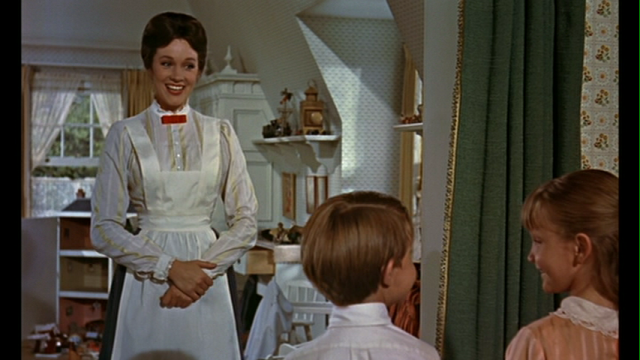
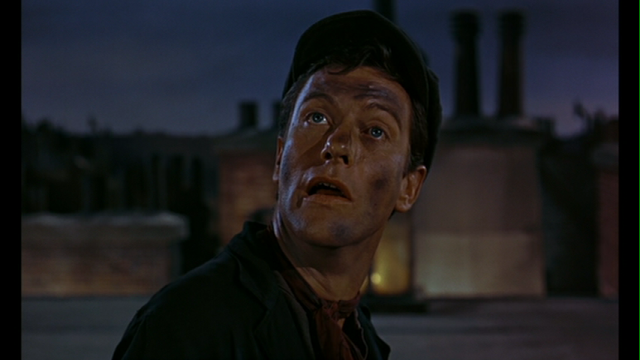
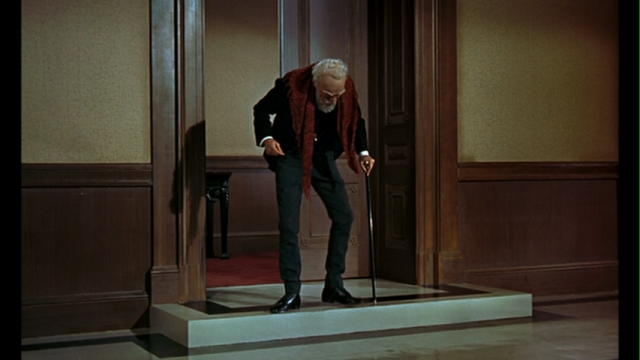
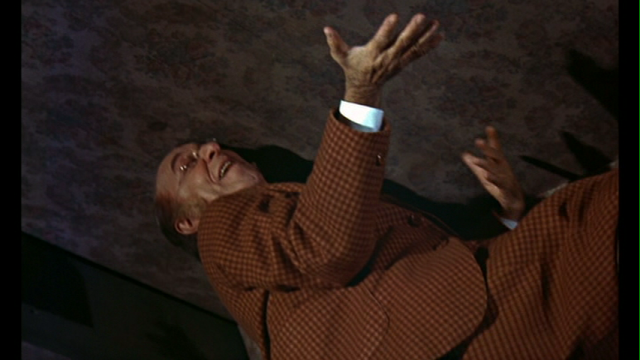
Response to Peary’s Review: Yet Peary’s assessment seems unduly harsh, given that beautiful Andrews (whose iconic voice is in peak form here) literally glows in the title role, and creates an undeniably memorable character in her film debut. Meanwhile, though Peary gripes about Van Dyke’s obviously “phony cockney accent”, kids won’t care — and his “Bert” is such a changeable fellow (he holds down no less than four different jobs throughout the film: a one-man band, a chalk artist, a chimney sweep, and a kite salesman) that it actually makes sense for his accent to be somewhat difficult to pin down. In addition, his “cameo” role as the elder Mr. Dawes (which he fought to get) is enormously enjoyable (apparently Dotrice and Garber weren’t told that it was Van Dyke underneath all that makeup and snowy white hair!). With that said, I’ll agree with Peary about some of the film’s flaws. First, at 139 minutes, it is indeed “about 40 minutes too long”, and could have used some serious editing. The chalk-drawing sequence, for instance — though imaginatively conceived — ultimately drags on longer than necessary; and while I enjoy Ed Wynn’s improvisatory turn as the high-on-laughter “Uncle Albert”, this entire musical sequence does nothing to further the plot, instead simply showcasing Poppins at her least appealing (she’s all simpering, thin-lipped disapproval, but what’s the harm in wanting to laugh yourself silly every once in a while?). Finally, I’ll agree with Peary that Andrews’ character isn’t given enough screentime: as he points out in Alternate Oscars, she “disappears for such long, pivotal stretches of the movie that her part nearly becomes a supporting one”. It should be noted that Peary is not the only critic of this beloved film: P.L. Travers — author of the “Mary Poppins” series (there were 8 books in all) — was notoriously displeased with the way in which her fictional creation was transferred to the big screen. According to an article by Caitlin Flanagan for The New Yorker*, Travers’ “Mary Poppins” was far from the stern but loving caretaker portrayed by Andrews:
For better or for worse, however, Disney’s version of Mary Poppins is the one most children will grow up getting to know — and, given its historical importance, the film itself remains indispensable viewing (at least once) for all film fanatics. Note: A weird bit of trivia on the film, according to IMBd: “Many of the nannies in the large queue of applicants for the job at the start of the film were actually men in drag.” !!! * Thanks to my friend David for pointing this article out to me! Redeeming Qualities and Moments:
Must See? Categories
Links: |


One thought on “Mary Poppins (1964)”
A once-must, for its reputation as a children’s classic.
I just rewatched this as peripheral research for the play I’m in rehearsal for (since the play includes a nod to Julie Andrews). And I find I agree with a good deal of the criticism brought out in this assessment.
I’d forgotten that the film is as long as it is. How did the target audience (kids) sit that long during its initial release? Yes, there’s certainly enough to keep young’uns entertained – but there’s stuff that could clearly be edited out, or at least shortened to greater effect.
It’s true that Andrews’ role does, too often, seem to be strangely passive for such an ‘in-charge’ person. We want to see more of her but she’s too often on the sidelines when she needs to be front-and-center. Part of the problem there is that the writers did not give her sufficient musical focus, I think. (Her winning an Oscar for this is kind of silly, really. It’s the kind of part most reasonably talented musical actresses can do in their sleep, except that Andrews does have a distinctly memorable and soothing singing voice.)
I can’t ultimately say I am a great admirer of this film. There’s too much in the narrative flow that makes me feel impatient.
That said, there’s a sufficient amount to find mildly enjoyable – I point that out for the older ffs watching with their young.
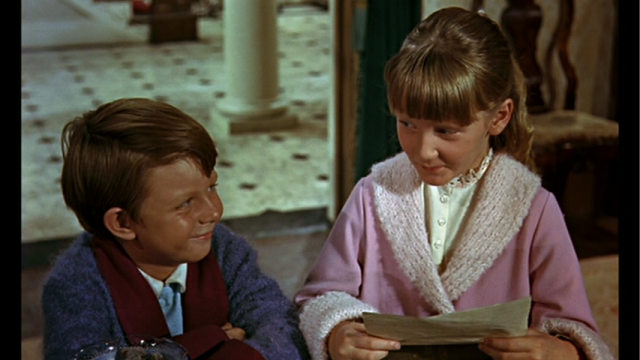
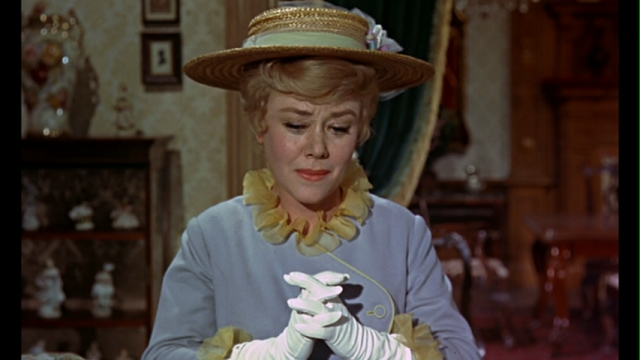
I find I am especially drawn to the children here – as they are presented quite naturally without being sappy or cloying. (I find their ‘Opening For A Nanny’ song quite charming.) And I am quite taken with the underplaying of Johns as Mrs. Banks and enjoy her gumption as a suffragette.
This is a film I wish I could have enjoyed more on a revisit but it now seems to me, overall, to just be showing its age. I’d like to get around to reading at least one of the books, at least before seeing ‘Saving Mr. Banks’…which I can’t say I look forward to tremendously but I think it will hold at least some interest for me.