Blow-Up (1966)

Blow-Up (1966)

“I’ve come for the photographs.”

Synopsis:
A fashion photographer (David Hemmings) fed up with his day job pursues more meaningful shots during his own time, including stills of a pair of lovers (Vanessa Redgrave and Ronan O’Casey) in a park — but when Redgrave comes after him frantically and demands the photos he’s just taken, Hemmings begins to suspect that more sinister events may have been taking place.

Genres, Themes, Actors, and Directors:

  • Amateur Sleuths
  • Michelangelo Antonioni Films
  • Models
  • Photographers
  • Vanessa Redgrave Films

Response to Peary’s Review:
Peary writes that “Michelangelo Antonioni’s landmark film” — the “era’s ‘art film for the masses'” — was “greeted with tremendous excitement and adulation when it was released.” Viewers considered it a “hip, mysterious, visually exhilarating foreign film,” one that caused them to eagerly mull “over symbols, color patterns, and hidden meanings in the storyline; trying to answer that question — ‘What’s the difference between illusion and reality?’ — that turned up too often on literature exams; and deeply contemplating the nature of cameras, images (film, photographs), and those people who make their living with a camera.” He notes that fashion photographer “Hemmings displays only arrogance and insolence when working with his female models”, living “a frivolous fantasy life”:

… so “it will take something drastic to knock him out of his complacency and make him distinguish between what is real and illusionary, what is trivial and important.”


After giving away numerous spoilers in his review (don’t read anything about this film if you’ve never seen it and want to remain surprised), Peary writes that “Antonioni’s point is that the introduction of a camera always distorts reality; also, since each person has singular sensibilities, no individual is capable of seeing Truth (a second person would have a different perspective on the same image).”

Peary argues that this “once vital film is dated and its flimsiness and pretentiousness are more evident today” — indeed, this is precisely how I now view the film many years after first being impressed and deeply intrigued by it as a younger film fanatic. However, Peary asserts it should (still) be watched “as a document of its time, to see the fancy camera work that turned us on, the nudity that had us blushing:

… the Yardbirds performing in front of catatonic youths:

… the mod clothes:

… and Hemmings tossing the invisible tennis ball to the mimes — an image that, for some reason, remains one of the most indelible in cinema history.”

Peary adds that “Antonioni’s picture altered the style of cinema and enlarged its audience — [and] for that we can always think of it fondly.”

Redeeming Qualities and Moments:

  • Vanessa Redgrave as Jane
  • Carlo Di Palma’s cinematography
  • Fine use of authentic location shooting and unusual sets

  • The still-impressive photographic investigation sequence

  • The eerie closing tennis sequence
  • Herbie Hancock’s score

Must See?
Yes, for its historical and artistic importance.

Categories

  • Historically Relevant
  • Important Director

(Listed in 1001 Movies You Must See Before You Die)

Links:

City Girl, The (1984)

City Girl, The (1984)

“You’re just not the girl I thought you were.”

Synopsis:
After breaking up with her boyfriend (Joe Mastroianni), a photographer (Laura Harrington) and explores life and love on her own for awhile.

Genres, Themes, Actors, and Directors:

  • Photographers
  • Strong Females

Review:
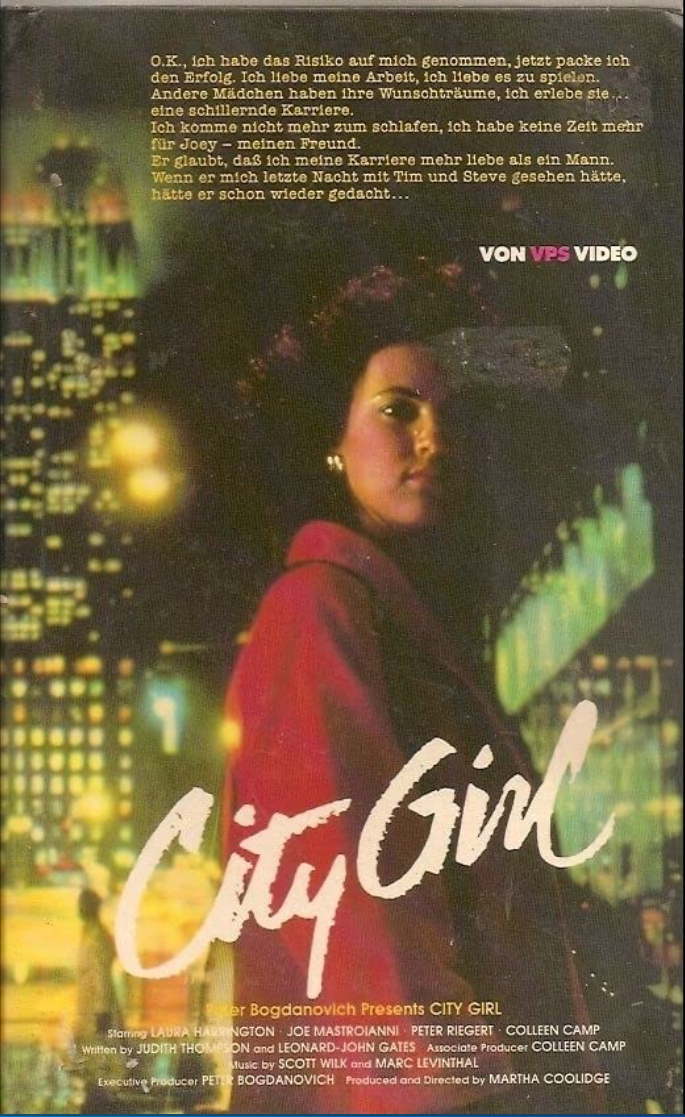
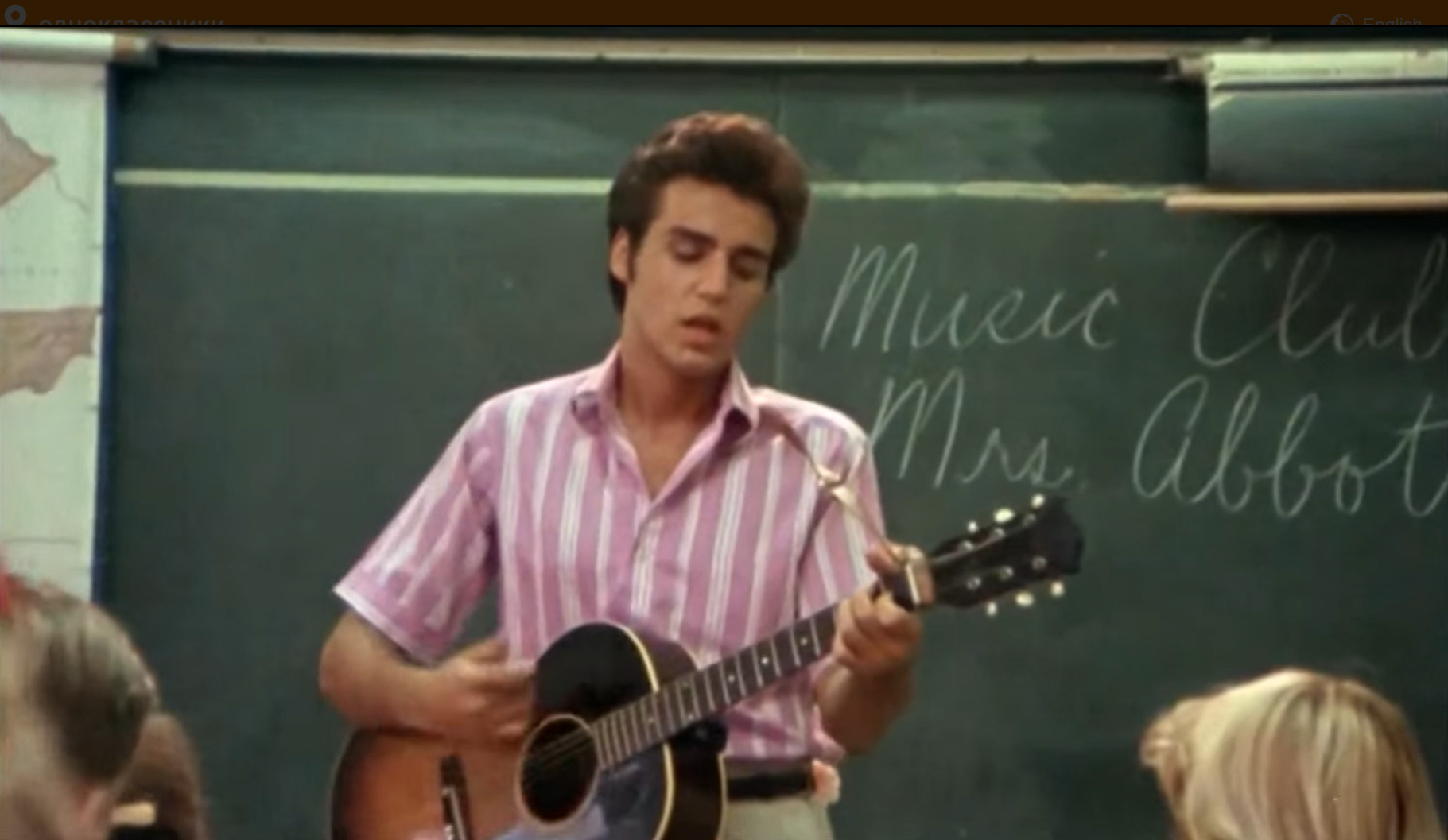
Before making a new for herself with Valley Girl (1983), director Martha Coolidge directed this earnest but meandering indie flick about an aspiring photographer (Harrington) hoping to — make a name for herself. Harrington’s boyfriend (Mastroianni) is irritated that she’s more interested in her career than him, and is fed up when she acts childishly in front of one of his big clients.

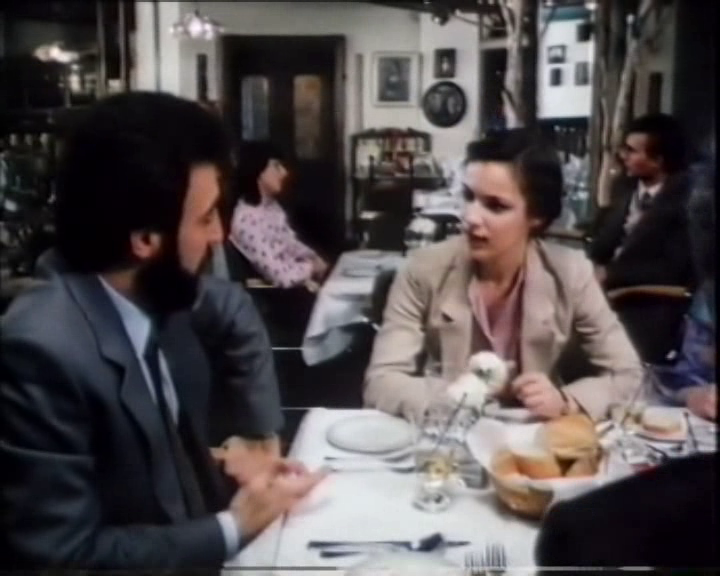
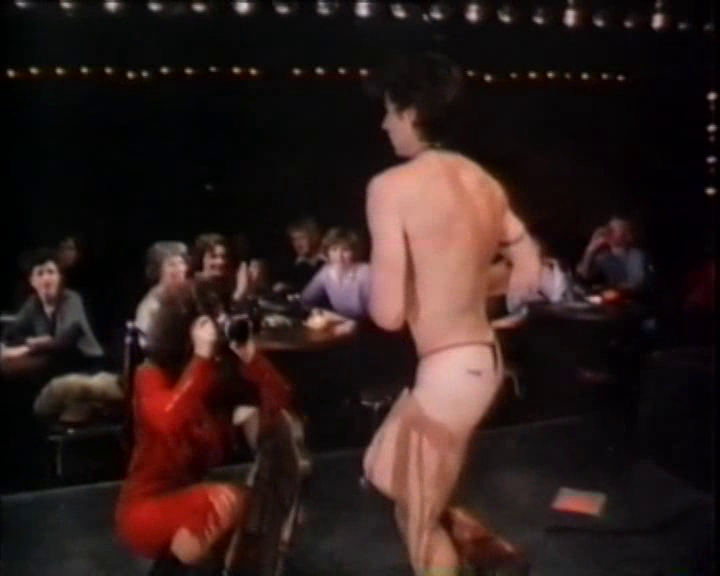
Coolidge seems primarily interested in inverting gender norms by allowing Harrington to unabashedly explore her own goals and interests — including requesting two avid pursuers (Peter Riegert and James Carrington) as sexual partners after a party. (This scene of an attempted but awkwardly thwarted threesome is humorously handled.) The through-line of the film’s narrative ostensibly involves Harrington’s attempt to learn more about a charismatic man seducing young women into his cult, but this thread is insufficiently explored until it reappears for convenient purposes at the end (and it’s disturbing that the villainous target of her inquiry is one of the few Black characters in the mostly White film). Film fanatics who have been faithfully working their way through all the titles in Peary’s book will likely recognize beautiful Harrington from her previous indie film, The Dark End of the Street (1981) — and she has an appealing screen presence:

… but she’s not enough to recommend this as a title worth seeking out.

Redeeming Qualities and Moments:

  • Some amusing sequences

Must See?
No; though one is only must-see for Coolidge fans.

Links:

This is Elvis (1981)

This is Elvis (1981)

“Will we ever see Elvis in person again?”

Synopsis:
People close to Elvis Presley reflect back on his storied life and career, culminating in death by heart attack at the age of 42.

Genres, Themes, Actors, and Directors:

  • Documentary
  • Elvis Presley Films

Review:
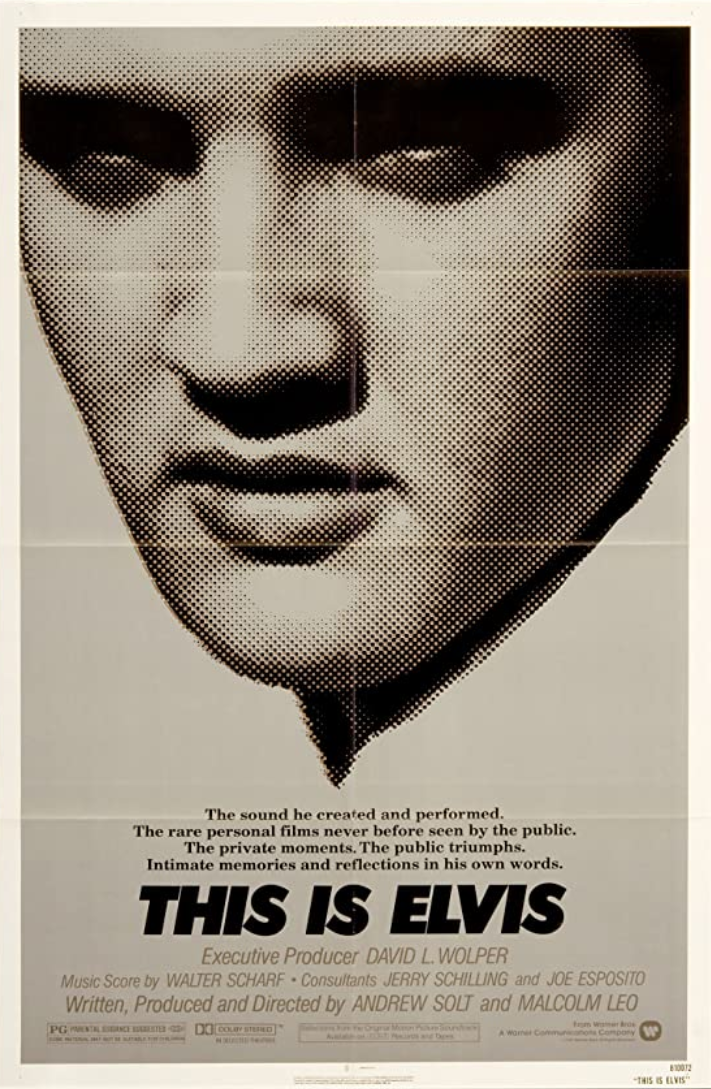
Having watched all nine of Elvis Presley’s Hollywood dramas listed in GFTFF — as well as his riveting Vegas concert film That’s the Way It Is (1970) — it was both fitting and sobering to end my Elvis run by watching this creatively filmed documentary about his life, which includes strategic snippets of recreated scenes (using actors):

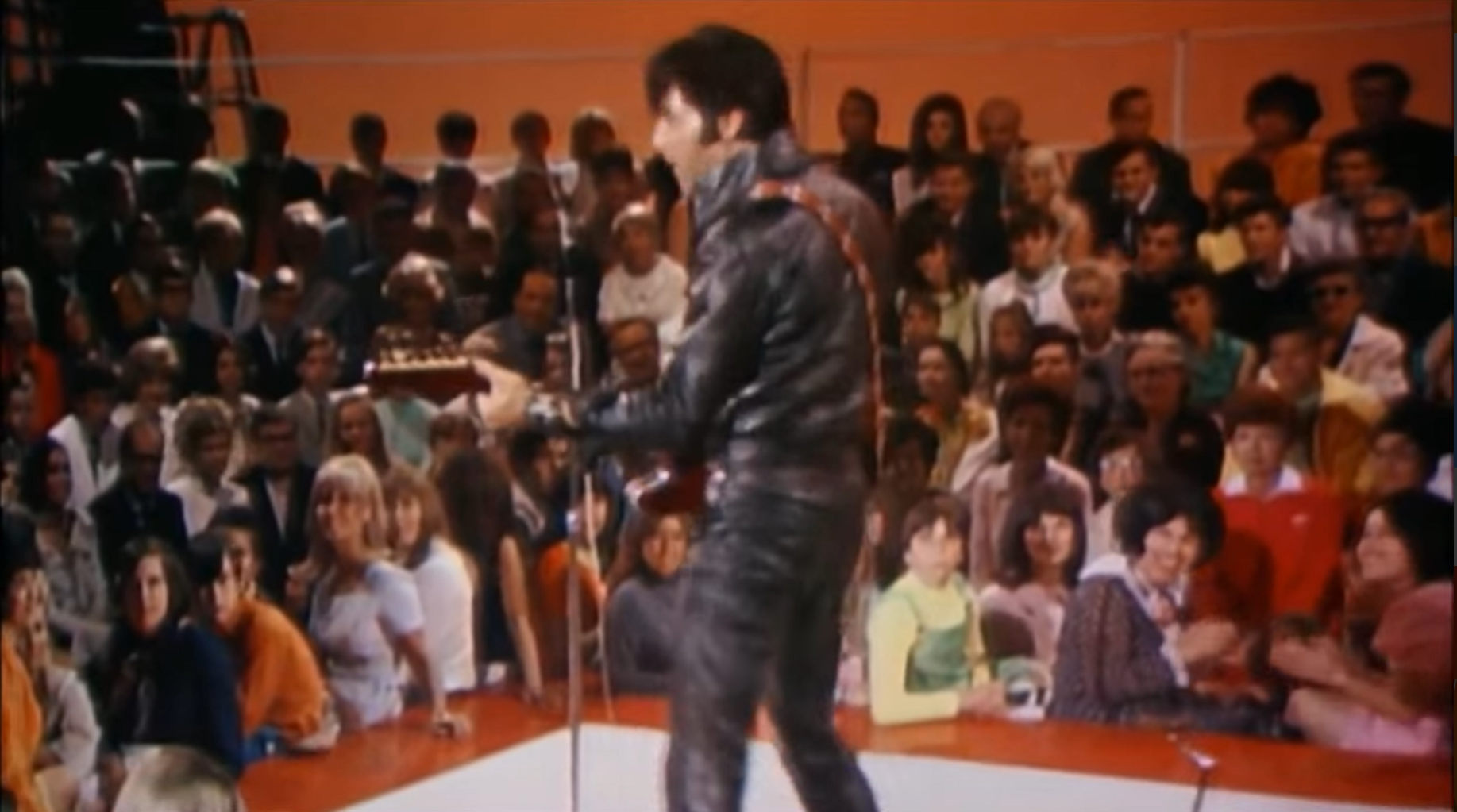
… alongside ample authentic footage from the earliest days of Presley’s stupendous fame:

… to his final challenging weeks. Indeed, it’s the candor of this latter footage that makes one sit up and notice: despite being overseen by his estate, this documentary pulls few punches in letting us know how sick Presley became towards the end of his life, showing heartbreaking evidence of his eventual inability to cope.

Redeeming Qualities and Moments:

  • Plenty of engaging footage

Must See?
Yes, as a surprisingly insightful documentary about Elvis’s rise and eventual fall.

Categories

  • Historically Relevant

Links:

Sisters (1972)

Sisters (1972)

“That body is here somewhere!”

Synopsis:
When a small-town reporter (Jennifer Salt) sees a woman (Margot Kidder) killing her date (Lisle Wilson) in her apartment, she insists on telling a detective (Dolph Sweet) and pursuing any leads she can find — including tracking Kidder’s stalking ex-husband (William Finley) and hiring a private detective (Charles Durning).

Genres, Themes, Actors, and Directors:

  • Amateur Sleuths
  • Brian De Palma Films
  • Horror Films
  • Journalists
  • Living Nightmare
  • Mad Doctors and Scientists
  • Margot Kidder Films
  • “No One Believes Me”
  • Twins

Response to Peary’s Review:
Peary points out that this “creepy, funny, visually innovative” thriller by Brian De Palma is unfortunately “not that satisfying”. De Palma “not only borrows themes and scenes from Alfred Hitchcock (i.e., Rear Window, Psycho) but also has a standout score by Bernard Herrmann” and “seems inspired by The Cabinet of Dr. Caligari and Val Lewton’s Cat People.” Peary writes that “in a performance that recalls Simone Simon, Margot Kidder is unexpectedly sweet and vulnerable as French-Canadian Danielle Breton, a model working in New York” who “has her bad side: Dominique, her murderess, detached Siamese twin”. As Peary notes, the film’s major problem “is that the opening sequence[s] [are] so technically exciting (with tracking shots, split screen, sharp cutting), witty (there’s a hilarious parody of TV game shows called Peeping Toms), and suspenseful that it’s never equaled.”

Peary’s review reveals numerous spoilers that I won’t name here — but suffice it to say that I don’t believe the film capitalizes on its potential, though not all agree, and many take great pleasure in recognizing even more cinematic homages. While it’s worth a look for its highly creative elements, it’s not must-see viewing.

Redeeming Qualities and Moments:

  • Margot Kidder as Danielle Breton
  • Lisle Wilson as Phillip
  • An intriguing premise
  • The highly innovative split-screen sequence
  • Fine use of location shooting
  • Bernard Herrmann’s score

Must See?
No, though it’s worth a one-time look for its better elements.

Links:

Slumber Party Massacre, The (1982)

Slumber Party Massacre, The (1982)

“You know how girls love to scream.”

Synopsis:
A teenager (Michele Michaels) whose parents have gone away for the weekend and asked their next-door neighbor (Ryan Kennedy) to keep an eye on her invites a group of friends (Debra Deliso, Andree Honore, and Gina Mari) over for a party, and they’re soon joined by two male onlookers (Joe Johnson and David Millbern). Meanwhile, Michaels’ beautiful new classmate (Robin Stille) stays home babysitting her annoying little sister (Jennifer Meyers). Can the teens all stay safe from a power-drill-wielding serial killer (Michael Villela) on the loose in their neighborhood?

Genres, Themes, Actors, and Directors:

  • Horror Films
  • Serial Killers

Response to Peary’s Review:
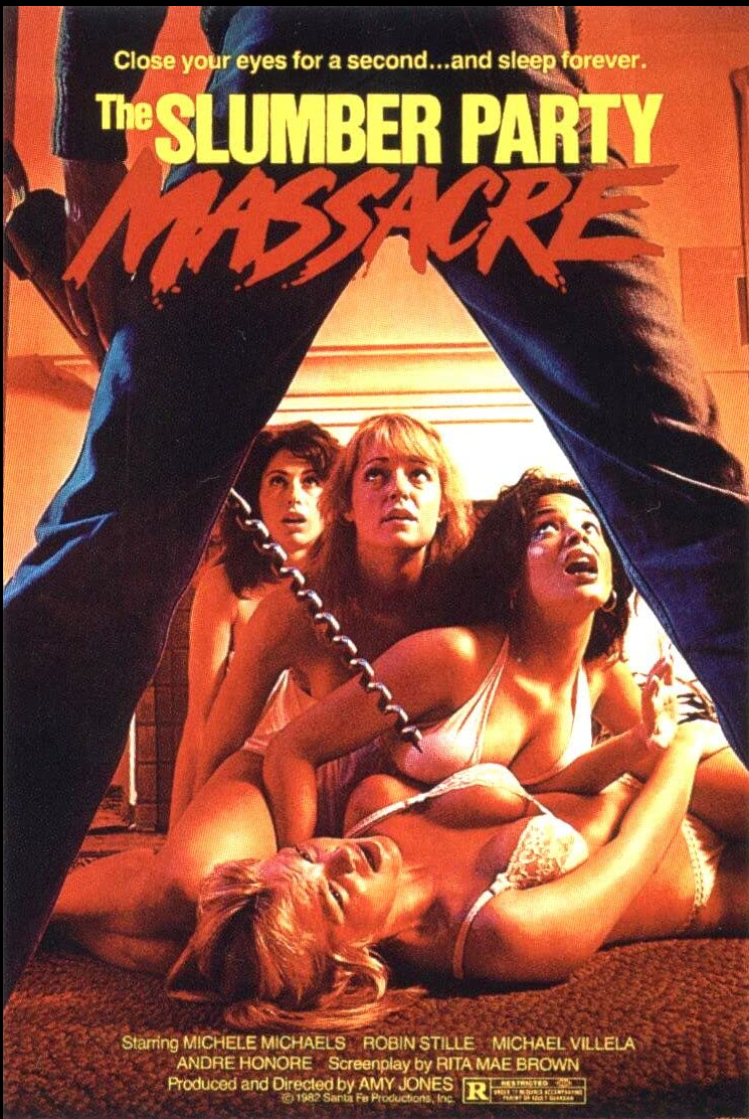
As Peary notes, this “slice-and-dice” slasher flick “has received attention because it was produced and directed by a woman, Amy Jones, and scripted by radical feminist Rita Mae Brown” — but “as hard as one looks, it’s impossible to find a satirical-political-feminist theme that would explain why Jones or Brown would be associated with this entry” in the genre. Indeed, Jones and Brown “follow all conventions relating to female nudity, horny teens, too many false alarms, painful death, [and] buckets of blood,” leading Peary to wonder, “Were they just trying to prove that they could make as tough and obscenely violent a film as young male directors, or that they could make a bloody, sexy exploitation film that would rack in the same amounts of money as the male-directed Halloween rip-offs have?” (If so, they succeeded; this film earned quite a bit at the box office and spawned several sequels.) However, as Peary points out (rather harshly):

“… this film is trash. Every character is stupid beyond belief. There are numerous ways in which the girls could get out of their predicament, but they haven’t even the intelligence to lean out a window of the two-story house to yell for help. Instead, the dense girls wait around to be murdered one by one. It is infuriating and frustrating how they are set up for slaughter.”

While I’m not at all a fan of slasher flicks, I think Peary is missing the boat a bit: viewers of this type of movie don’t tend to spend much energy worrying about logic or characters’ intelligence (and Brown originally wrote it as a parody, which makes sense).

Redeeming Qualities and Moments:

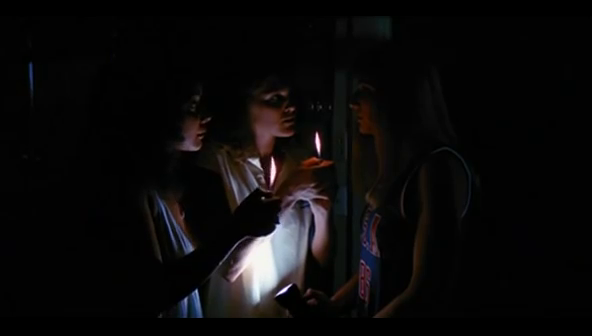
  • Atmospheric cinematography

Must See?
No; this one is only for horror fanatics.

Links:

Friday the 13th (1980)

Friday the 13th (1980)

“Camp Crystal Lake is jinxed.”

Synopsis:
A group of teenage counselors preparing a camp site for re-opening after years of closure due to the death of a child are gruesomely killed off, one by one.

Genres, Themes, Actors, and Directors:

  • Betsy Palmer Films
  • Horror Films
  • Serial Killers
  • Summer Camp
  • Teenagers

Response to Peary’s Review:
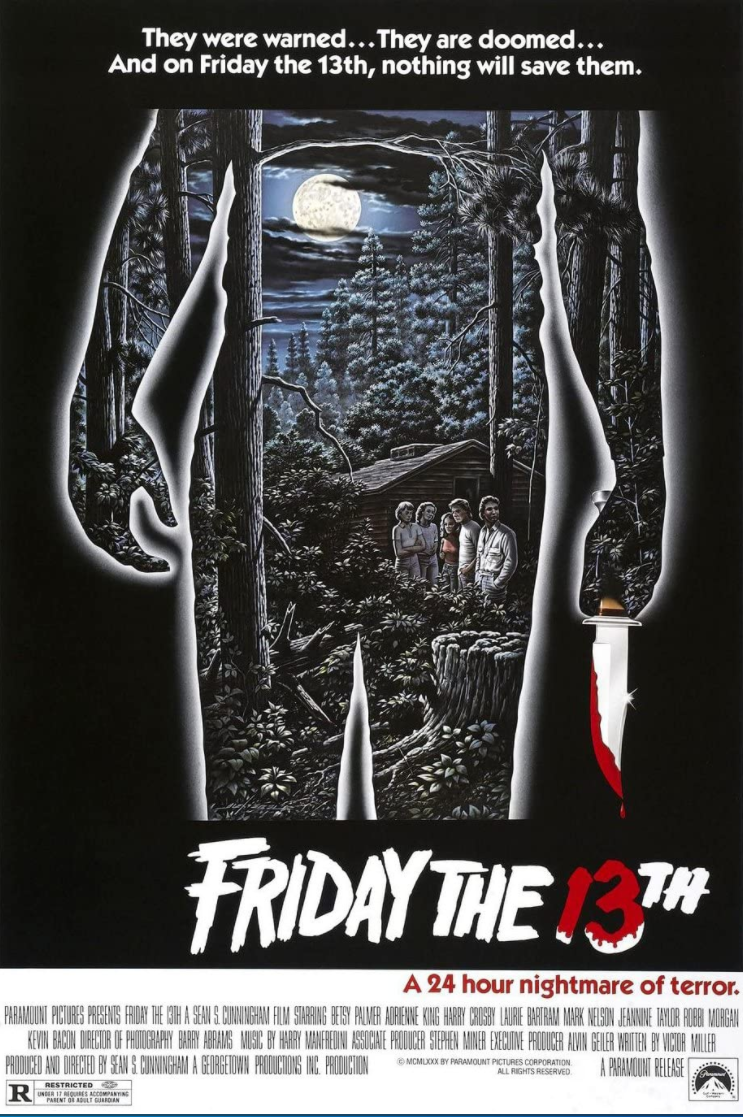
Peary gives away major spoilers in his review of this “low-budget film”, the “first of a series that has become an American institution;” but I’ll try my best to keep identities unrevealed. Peary writes that the murderer’s “dramatic battle with the last survivor, gutsy Adrienne King… is strong stuff” and adds, “In fact, the film is skillfully enough made by director Sean Cunningham that you’ll be scared out of your wits waiting for each counselor to meet his or her ghastly end.” He posits that Friday the 13th is a “successful mix of bloody horror and youth-sex genres, so it’s no surprise it made a fortune”, but he argues you may question “your own reason for sitting through entertainment with gratuitous sex and violence and teenagers who are portrayed as oversexed, insensitive clowns ideal for slaughter.” I disagree completely with Peary’s characterization of the counselors: only one couple (Kevin Bacon and Jeannine Taylor) is shown having sex; the others are reasonably hard-working when they’re not joking around or relaxing with silly and perfectly normal teenage games. All film fanatics will surely be curious to check out this iconic horror flick that kicked off so many sequels — but don’t read anything at all about it if you want to remain authentically surprised.

Redeeming Qualities and Moments:

  • Fine use of idyllic (and menacing) location shooting
  • Numerous scary moments

Must See?
Yes, for its historical importance and status as a cult favorite.

Categories

  • Cult Movie
  • Historically Relevant

Links:

Hills Have Eyes, The (1977)

Hills Have Eyes, The (1977)

“I’m going to get those bastards.”

Synopsis:
A retired police officer (Russ Grieve) travelling across the Arizona desert with his wife (Virginia Vincent), kids (Dee Wallace, Susan Lanier, and Robert Houston), son-in-law (Martin Speer), granddaughter (Brenda Marinoff), and two German shepherds suddenly finds his family’s life in danger when they wander off the beaten path and encounter a family of backwoods “atomic-test mutant” cannibals (James Whitworth, Cordy Clark, Lance Gordon, Michael Berryman, Arthur King, and Janus Blythe).

Genres, Themes, Actors, and Directors:

  • Cannibalism
  • Deserts
  • Horror Films
  • Mutant Monsters
  • Survival
  • Wes Craven Films

Response to Peary’s Review:
Peary writes that this picture about a “middle-class family from Cleveland” who “must give up civilized notions if they are to live” — has “extreme violence” but “differs from director Wes Craven’s previous film, The Last House on the Left, because this time you never forget that it’s ‘only a movie’.” As he points out this is “a relief, considering what we must watch” — and he adds that while the “film is as vicious as its reputation”, it’s unfortunately “neither well-made nor scary”. It’s notable for featuring “bald Michael Berryman (whose frightening face was used on the film’s posters)”:

… and Dee Wallace in one of her first feature-length film roles.

Other noteworthy performances include Houston as a back-flipping teenager who suddenly finds himself at the head of a posse for survival:

… and Blythe as the only sympathetic cannibal.

Redeeming Qualities and Moments:

  • Some effectively terrifying moments

  • Must See?
    No; you can skip this one unless you’re a Wes Craven fan.

    (Listed in 1001 Movies You Must See Before You Die)

    Links:

    Last House on the Left, The (1972)

    Last House on the Left, The (1972)

    “Are you sure we’re not going to put you folks to any trouble?”

    Synopsis:
    During a trip to the big city, Mari (Sandra Cassell) and her friend Phyllis (Lucy Grantham) are kidnapped and tortured by a sadistic gang of escaped convicts (Davis Hess, Fred Lincoln, Jeramie Rain, and Marc Sheffler) while Mari’s concerned parents (Richard Towers and Cynthia Carr) wait back at home ready to celebrate her 17th birthday.

    Genres, Themes, Actors, and Directors:

    • Fugitives
    • Horror Films
    • Kidnapping
    • Revenge
    • Serial Killers
    • Wes Craven Films

    Response to Peary’s Review:
    Peary writes that this “repulsive, controversial cult film” — notorious as the breakthrough movie of writer-director Wes Craven and producer Sean S. Cunningham — “starts out humorously”:

    … but quickly devolves into a middle section that’s “an outright embarrassment” and a “final section” that’s “hogwash”.

    He accurately notes that the “humor [and] happy music are offensive”, that “you’ll feel ashamed to be watching it”, and (presuming you’re seeing it in a theater) you’ll “feel paranoid about the men around you who are grinning and taking delight in the girls’ torture.” He argues that the “major problem is that the film is so convincingly made — and the sadists and their victims so authentic — that the torture scenes really seem to be happening.” Remarkably (or, sadly, not so), the film has a significant cult following and was recently released on Blu-Ray. Regardless, as DVD Savant writes, “it’s still an indefensible carnival of cruelty and carnage, with unendurable pain and suffering meted out to two innocent girls by a quartet of pitiless human monsters.” Meanwhile, Howard Thompson’s review for The New York Times is worth copying here in its (short) entirety:

    In a thing (as opposed to a film) titled “Last House on the Left,” four slobbering fiends capture and torture two “groovy” young girls who airily explore the bad section of a town and more or less ask for trouble. When I walked out, after 50 minutes (with 35 to go), one girl had just been dismembered with a machete. They had started in on the other with a slow switchblade. The party who wrote this sickening tripe and also directed the inept actors is Wes Craven. It’s at the Penthouse Theater, for anyone interested in paying to see repulsive people and human agony.

    Redeeming Qualities and Moments:

    • Decent production values

    Must See?
    No, though film fanatics may be curious to check it out given its cult status.

    Links:

    Omen, The (1976)

    Omen, The (1976)

    “What could be wrong with our child? We’re beautiful people, aren’t we?”

    Synopsis:
    When his wife (Lee Remick) loses her baby during childbirth, a diplomat (Gregory Peck) is urged by a hospital’s chaplain (Martin Benson) to secretly give her a replacement baby whose mom has just died. Soon, however, their son Damien (Harvey Stephens) — cared for by a nefarious new nanny (Billie Whitelaw) and her big black dog — begins showing distressing signs of evil; and when a mysterious priest (Patrick Troughton) repeatedly warns Peck that he must investigate the truth behind his adopted son’s birth, Peck enlists the help of a journalist (David Warner) in learning more.

    Genres, Themes, Actors, and Directors:

    • Amateur Sleuths
    • David Warner Films
    • Evil Kids
    • Gregory Peck Films
    • Horror
    • Lee Remick Films
    • Satanists

    Response to Peary’s Review:
    Peary argues that this “big-budget horror film, given class by a distinguished cast, starts out well, but becomes extremely unpleasant”, with the deaths “repugnant” — “particularly a decapitation (a scene known for its effective special effect).” Peary goes on to write that, “In The Exorcist, God defeats Satan; in Val Lewton’s films, God and the devil fight to a stalemate; but this picture joins Rosemary’s Baby and other recent films in which the devil emerges triumphant — it’s part of a depressing subgenre.” While I agree with Peary that the deaths become increasingly “unpleasant” (and a particular plot twist will sit like a lump in your stomach), it seems to me they’re part and parcel of how a tale like this would be told. The inherent tension of the story — starting with Peck deceiving his wife in such a profound way — carries the narrative along, as we watch the unbearable discomfort of a woman fearing her own son:


    … and Peck’s eventual realization that he will have to take unthinkably drastic actions. Of special note is Billie Whitelaw as Damien’s nanny; she steals the show each moment she’s on screen.

    Redeeming Qualities and Moments:

    • Billie Whitelaw as Mrs. Baylock
    • Gregory Peck as Robert Thorn
    • Lee Remick as Katherine Thorn
    • Atmospheric cinematography and sets

    • Many creepy and/or horrific moments

    • Jerry Goldsmith’s score

    Must See?
    No, but it’s definitely worth a one-time look.

    Links:

    Demon Seed (1977)

    Demon Seed (1977)

    “You like games? So do I.”

    Synopsis:
    An arrogant, driven scientist (Fritz Weaver) who has worked for years on a powerful AI machine named Proteus IV leaves his estranged wife (Julie Christie) at home, not realizing she will soon be terrorized by the super-human computer, who has nefarious plans for propagating his own existence through her.

    Genres, Themes, Actors, and Directors:

    • Computer-Out-of-Control
    • Horror
    • Julie Christie Films
    • Pregnancy
    • Rape
    • Science Fiction
    • Scientists

    Response to Peary’s Review:
    Peary writes that this “controversial science-fiction film” — based on a novel by Dean R. Koontz — “somehow manages to be erotic and anti-erotic, daring and offensive”.

    He adds that the film’s “premise is intriguing but disturbing — it’s tasteless enough seeing movie heroines raped by monsters in some recent pictures, but Christie being molested by a mechanical apparatus is ludicrous and appalling…” With that said, he notes that “Christie’s about the only actress who could retain her dignity playing such a victim”, and indeed “gives one of her finest, most vulnerable performances”.

    Peary writes that while “the film’s cultists don’t like the ending”, he finds “it to be satisfying”, and notes that the “scariest scene, other than the rape of Christie, is when Proteus attacks scientist Gerrit Graham”.

    While Demon Seed is undeniably cliched, illogical, and silly in many ways, it remains surprisingly suspenseful and relevant to our modern times, when “personal devices” control far more of our existence than they (very likely) should, and we’re equally — or more — at risk of AI surpassing our own ability to control what we’ve created. If you’re curious, watch this fun 10-minute overview of the film. (YouTube has added a whole new dimension of possibilities to film blogging!)

    Redeeming Qualities and Moments:

    • Julie Christie as Susan
    • Trippy special effects

    Must See?
    No, but it’s worth a look.

    Links: