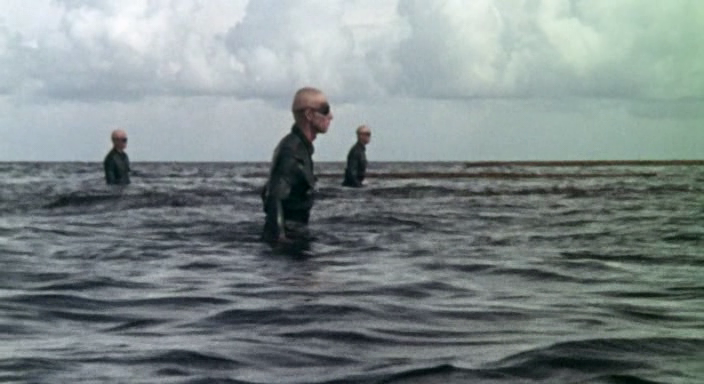
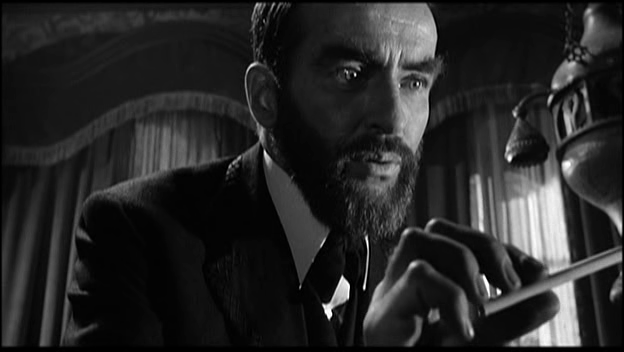
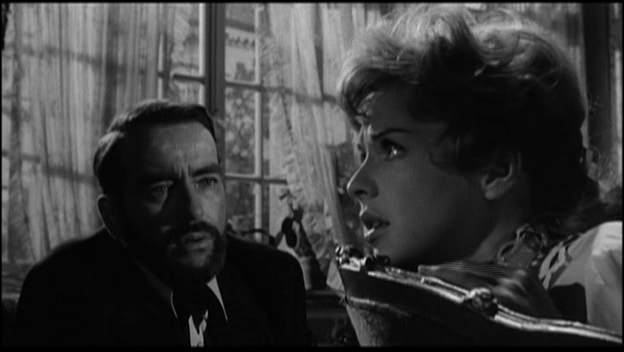
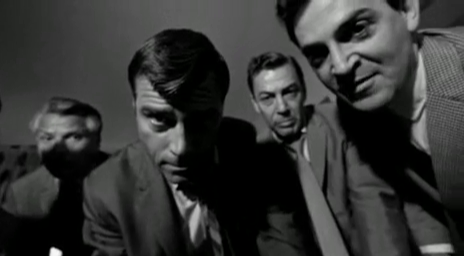
Shock Waves / Death Corps (1977)
“There is danger here — danger in the waters.”
|
Synopsis: |
|
Genres, Themes, Actors, and Directors:
Response to Peary’s Review: Redeeming Qualities and Moments:
Must See? Links: |
“What is the book of life itself but man’s law with nature?”
|
Synopsis: |
|
Genres, Themes, Actors, and Directors:
Response to Peary’s Review: Note: This movie is available for free viewing as a public domain title here. Redeeming Qualities and Moments:
Must See? Links: |
“I’ve been married and now want to begin something new.”
|
Synopsis: |
|
Genres, Themes, Actors, and Directors:
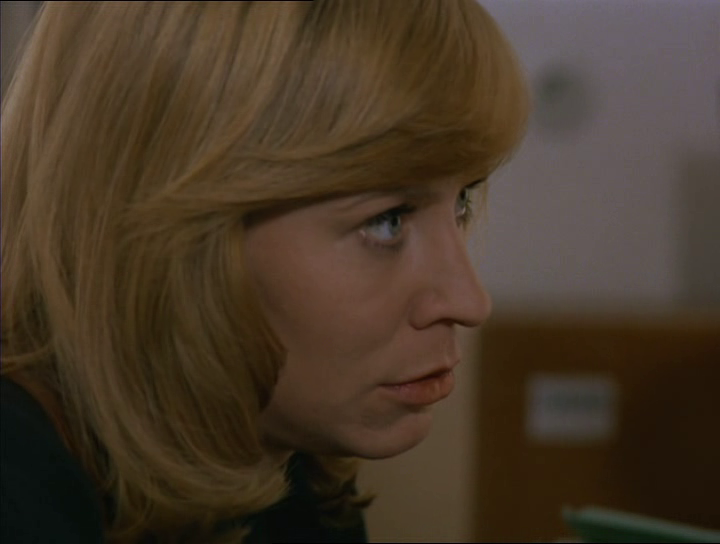
Response to Peary’s Review: Like faulting former slaves for not immediately turning their lives around and becoming successful and happy after years of disenfranchisement, blaming Elisabeth for the challenges she faces as she tries to carve a new life for herself is both insulting and patronizing. Having married early and given up her job to be a housewife and mother, she never had an opportunity to explore her interests, let alone pursue a meaningful career. She certainly has potential and talent (some of the most touching and authentic scenes take place as she ventures forth into singing and dancing lessons), but her downfall lies both in the inherently womanizing society she lives in (her smug, obese, married boss comes on to her matter-of-factly while on a business trip, nearly raping her before he passes out) and in the wrath she invokes by divorcing her husband for no apparent reason: he is vengefully determined to prevent her from gaining custody of their son, and blames her for giving up his dreams of novel-writing to become an editor. Perhaps the famously empowered ending to Paul Mazursky’s An Unmarried Woman (1978) was a deliberate “response” to this earlier, more cynically realistic film. Note: I looked up the meaning of the film’s original German title, and learned that summer lightning refers to “distant sheet lightning without audible thunder, typically occurring on a summer night”. I’m still puzzling through what this implies about the movie’s premise… Redeeming Qualities and Moments:
Must See? Links: |
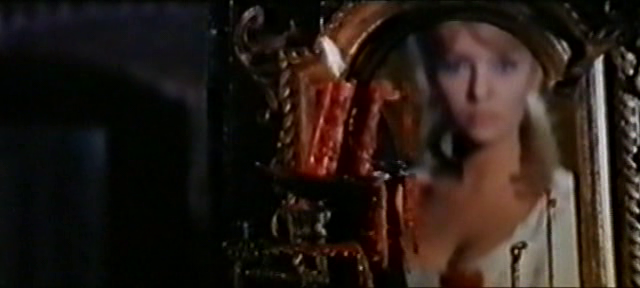
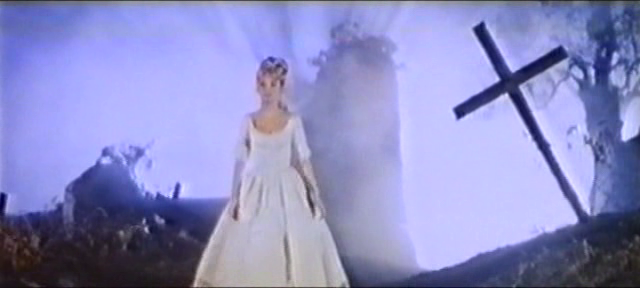
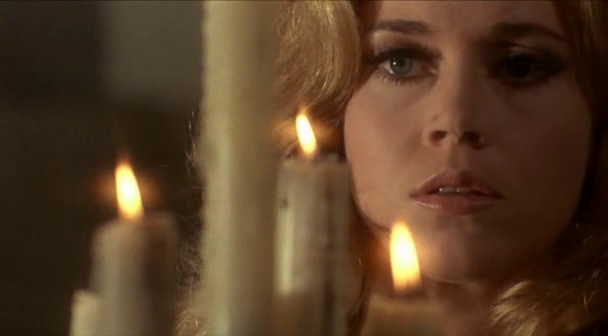
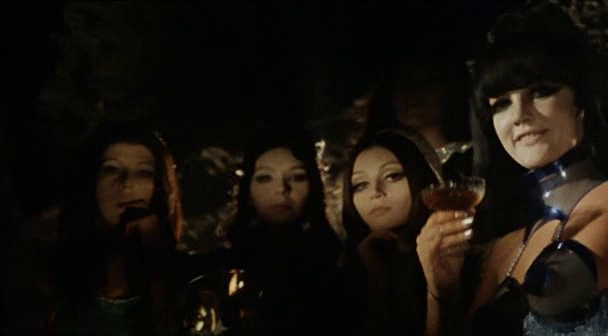
“The Karnsteins are not a naturally happy family.”
|
Synopsis: |
|
Genres, Themes, Actors, and Directors:
Review: Note: The dialogue about a swordfish and a sardine provides an unexpectedly silly interlude of bawdy humor. Redeeming Qualities and Moments:
Must See? Links: |
“A spiritualist told me that a child that wasn’t mine was gonna make me happy one day!”
|
Synopsis: |
|
Genres, Themes, Actors, and Directors:
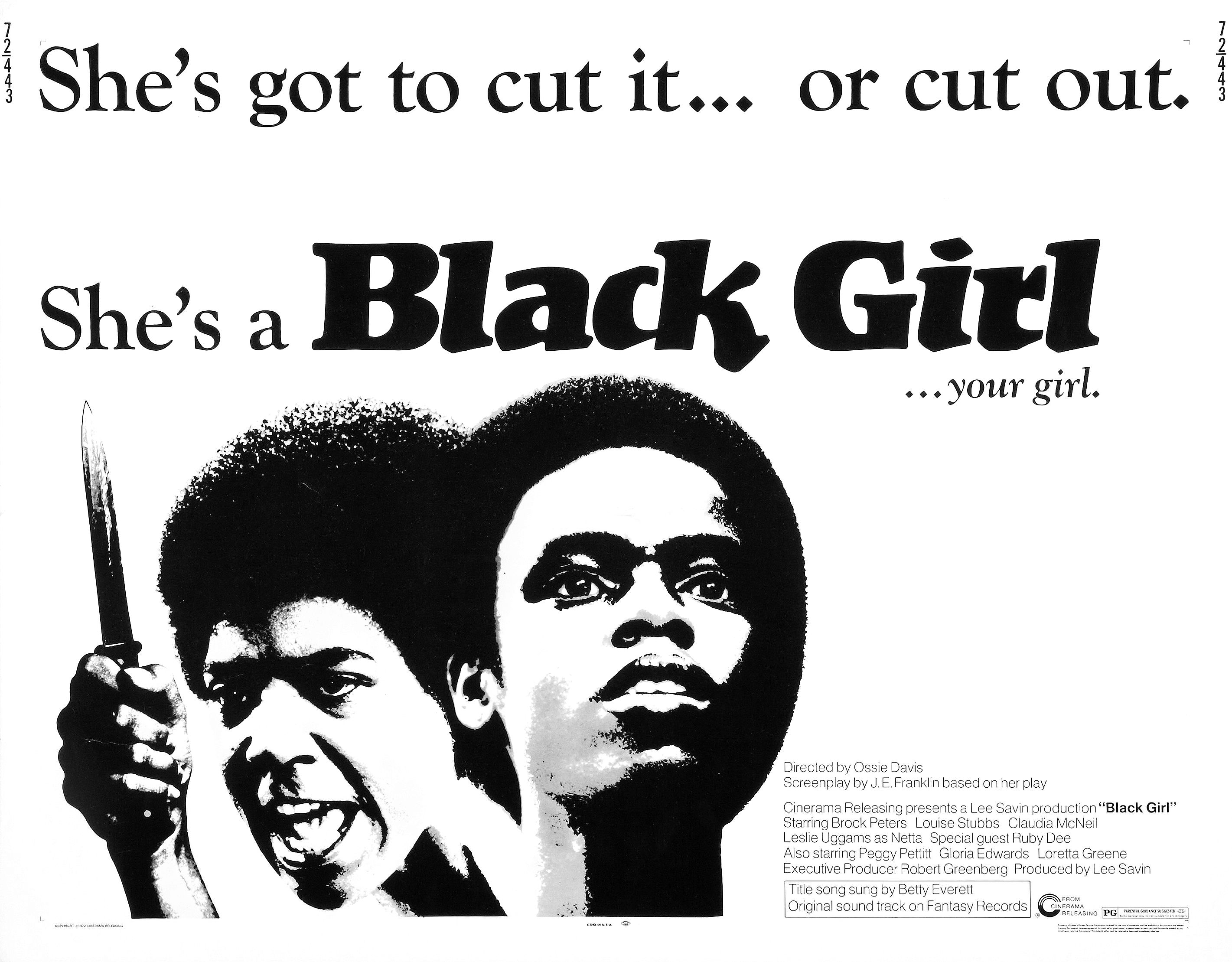
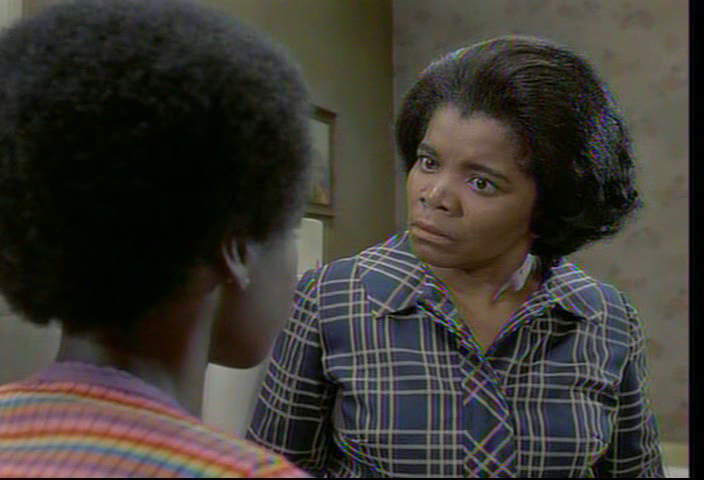
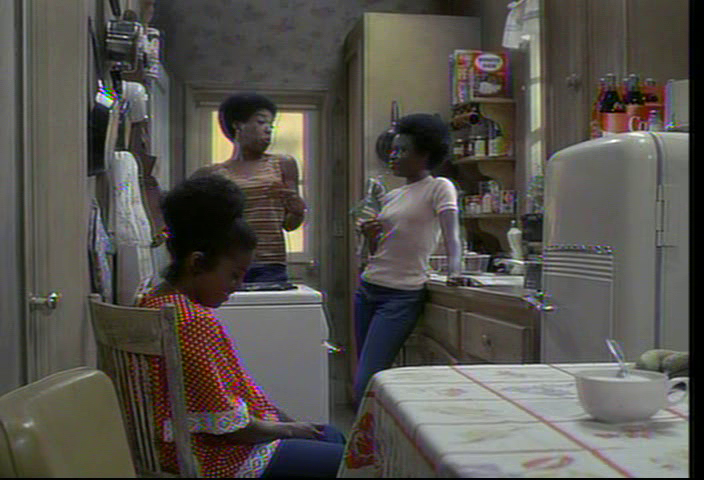
Review: An early interlude involving a visit from Stubbs’ first husband (Brock Peters) — biological father to Edwards and Greene — reveals quite a bit about Stubbs’ history and crushed dreams. He arrives waving $100 bills around, demonstrating his enduring power over the household years after he cheated on Stubbs and left for Detroit; he only half-jokingly withholds money from Pettit, who has borne the burden of different paternity her entire life. To that end, she clearly represents an opportunity to escape — if she can manage the wrath of her envious sisters, who are desperately trying to hold her back along with them. While not a true literary masterpiece like Lorraine Hansbury’s Raisin in the Sun, Black Girl remains worthy viewing for those interested in fearless exploration of family dynamics. Redeeming Qualities and Moments:
Must See? Links: |
“Why am I telling you this? Why did you ask me here? What do you want from me?”
|
Synopsis: |
|
Genres, Themes, Actors, and Directors:
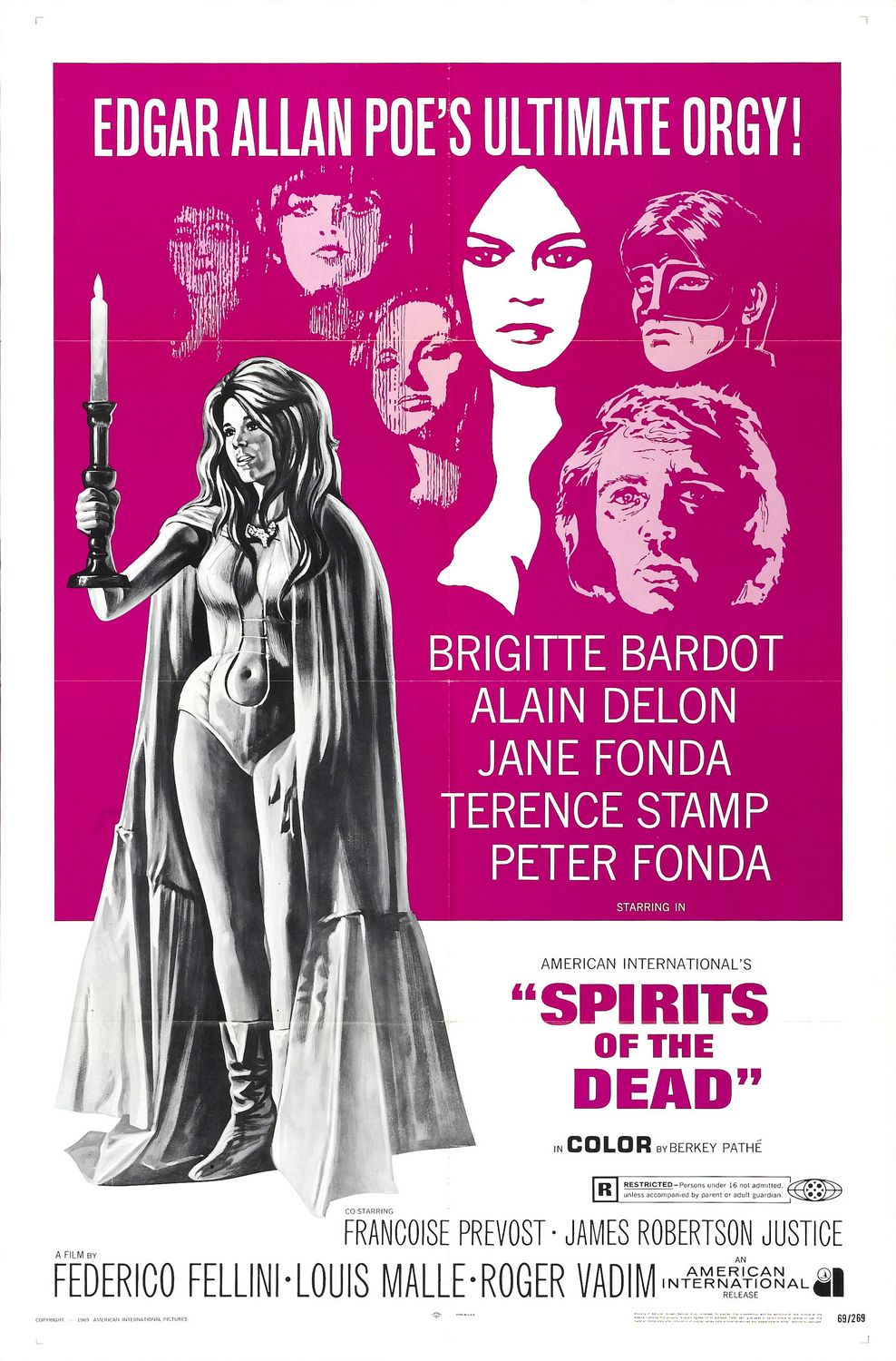
Response to Peary’s Review: Peary writes that “the most praised episode is Federico Fellini’s ‘Never Bet the Devil Your Head’, starring Terence Stamp as a booze-soaked, self-loathing American actor [Toby Dammit] who has come to Italy to make a moralistic western about redemption”, and “encounters Fellini’s usual array of grotesque movie- and press-types and the devil — a little blonde girl who keeps turning up in creepy settings”. He argues that while Fellini’s story is “too long and self-consciously arty”, “at least its violent ending… is carried out in an original manner”. Most other critics give Fellini’s short film even greater due, with DVD Savant (for instance) noting that “for once, a critique of showbiz goes beyond the obvious representations of phoniness and insincerity, and takes the extra step into insanity.” Indeed, this final episode — a deliciously surreal satire with a relentless pace and consistently jarring imagery — at least partially redeems the entire film. But as a whole, Spirits of the Dead remains an unpleasant outing that is more of a curiosity than essential viewing. Redeeming Qualities and Moments:
Must See? Links: |
“Look at them: the cooler they are, the more shots they’ve had.”
|
Synopsis: |
|
Genres, Themes, Actors, and Directors:
Response to Peary’s Review: Redeeming Qualities and Moments:
Must See? Categories
Links: |
“Leave to the night what belongs to the night.”
|
Synopsis: |
|
Genres, Themes, Actors, and Directors:
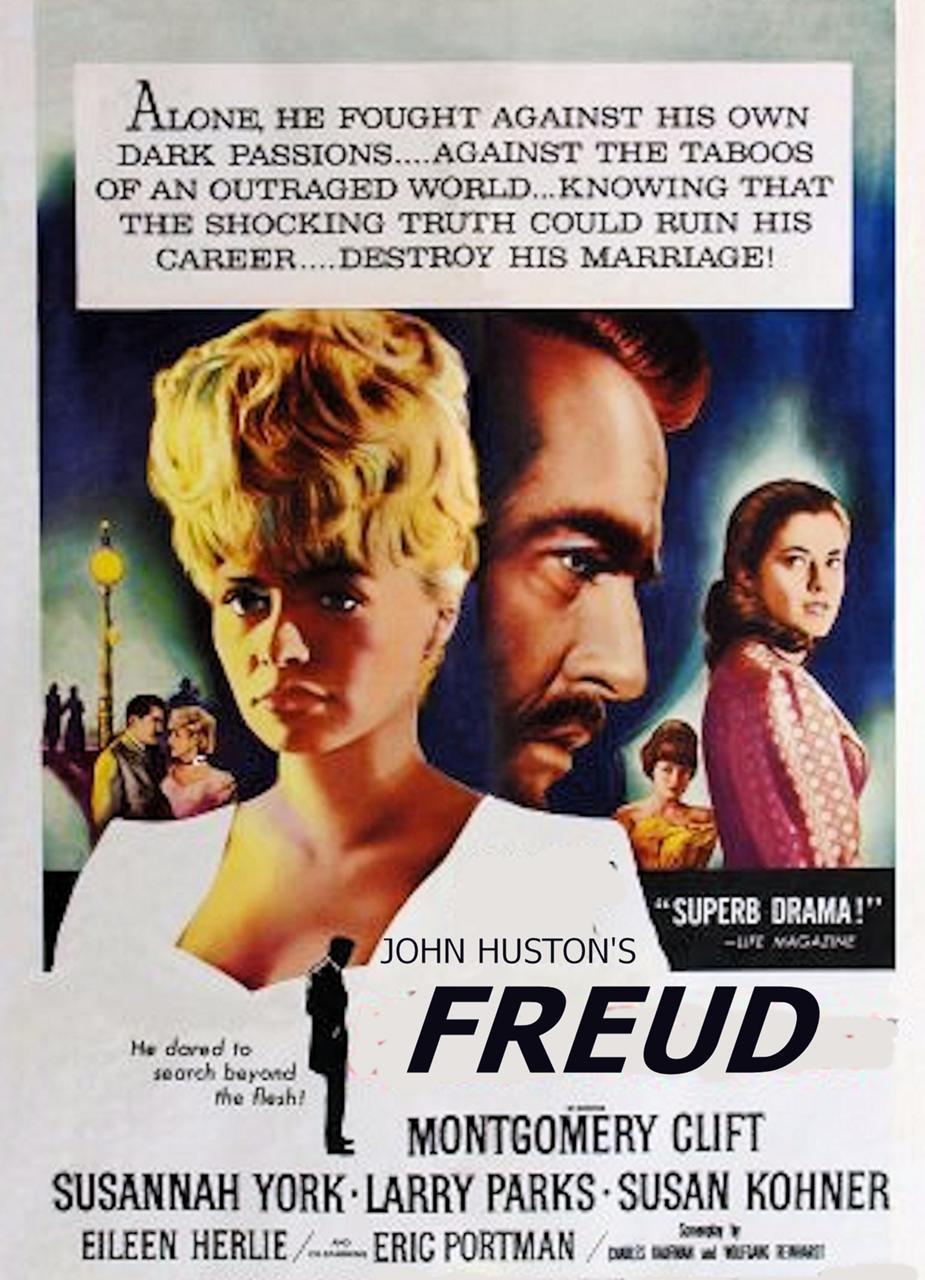
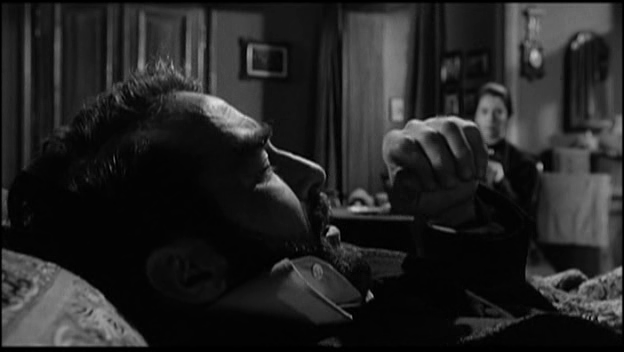
Review: Grounding the film are strong central performances by Clift and Susannah York, as well as wonderfully atmospheric cinematography (by Douglas Slocombe) and creative direction. The flashback scenes, while occasionally contrived, appropriately convey the panic and confusion often felt in one’s dreams and in the slippery memories of childhood. The literate script, though talky, is surprisingly absorbing; according to Jonathan Rosenbaum’s review in The Chicago Reader, the film was actually “scripted mainly by Jean-Paul Sartre”, who “withdrew his name from the project after his second draft — which would have made a much longer film — was radically condensed”. Keeping in mind that biopics can never fully or adequately cover the scope of a famous individual’s life, Freud nonetheless remains a worthy entry in our understanding of this controversial figure. Redeeming Qualities and Moments:
Must See? Categories
Links: |
“Aren’t we all slaves?”
|
Synopsis: |
|
Genres, Themes, Actors, and Directors:
Review:
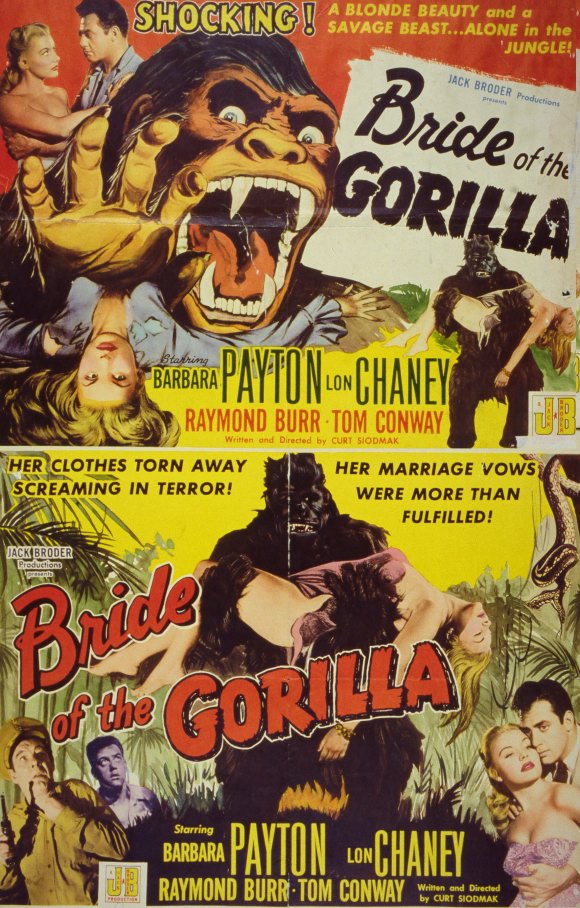
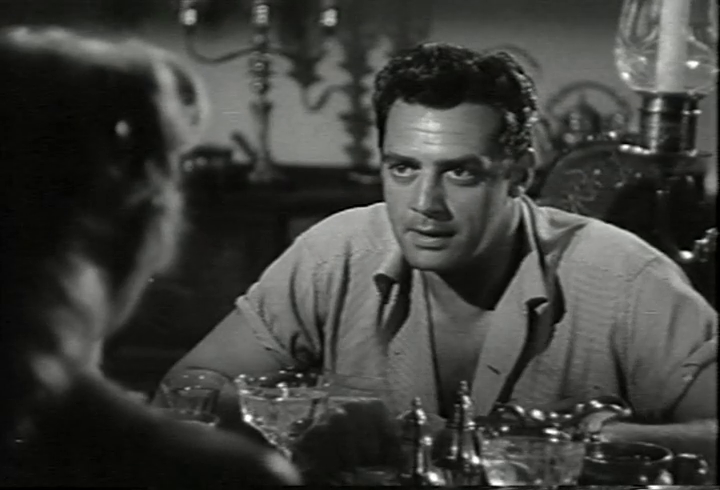
But as DVD Savant notes in his review, “anyone who read the script and signed on had to be in denial, or totally unaware that writer-director Curt Siodmak’s bizarre jungle story was a Career Choice of No Return”. Watch White Cargo (1942) instead if you’re in the mood for this kind of steamy exploitation flick. Note: Lon Chaney Jr. and Woody Strode hover around the periphery of this film as a police commissioner and his deputy. Redeeming Qualities and Moments:
Must See? Links: |
“Don’t think, Tony — I came here to feel, to be!”
|
Synopsis: |
|
Genres, Themes, Actors, and Directors:
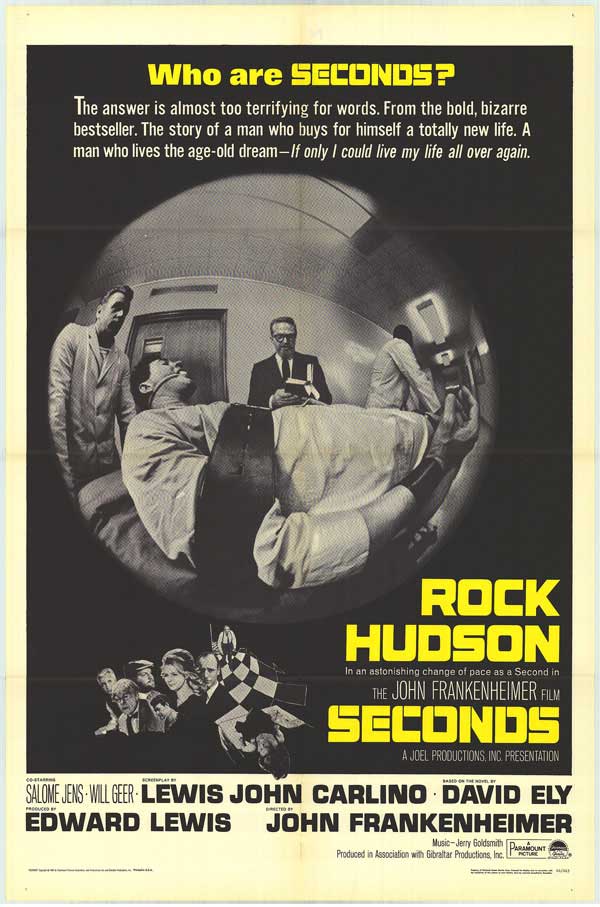
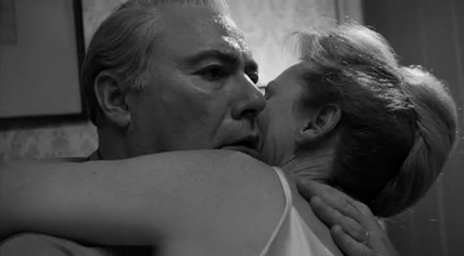
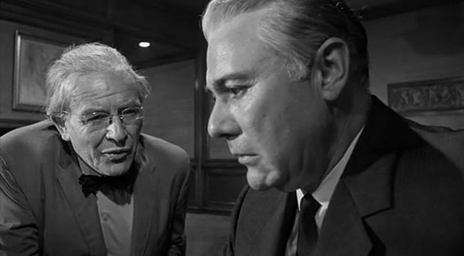
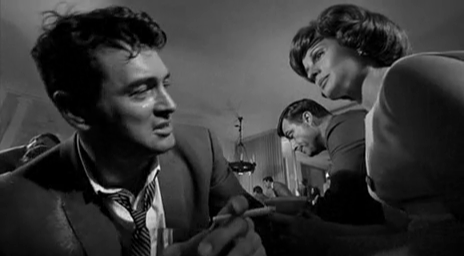
Response to Peary’s Review: In Peary’s Cult Movies 3, he includes an extended essay on Seconds written by Henry Blinder, who interviewed Randolph, screenwriter John Carlino, composer Jerry Goldsmith, and producer Edward Lewis. Blinder writes unequivocally that “Seconds is quite possibly the most depressing film ever made — it is a film of unrelieved despair”, and (citing Carlino) “almost too painful to watch”. Blinder refers to Seconds as “the living nightmare of a man who acts to fill his emptiness without having an idea of what to fill it with”, culminating in “one of the most harrowing murders ever filmed”. In his analysis, Blinder references other key cinematic works — noting, for instance, that the final shot in Seconds is akin to “Rosebud” in Citizen Kane (1941), and that Ely’s original novel was a precursor of sorts to Ira Levin’s novel-turned-movie The Stepford Wives (1975): “In Ely’s work, the men pay a great deal of money to alter/replace themselves; in Levin’s the men pay a great deal of money to alter/replace their wives”. Indeed, Seconds is very clearly about males in crisis, given that the two key females — Reid as Randolph’s wife, and Jens as Hudson’s free-spirited new lover — are ultimately supporting players in his story, and the nefarious “company” is run by (white, middle-aged) men. Blinder writes that Ely’s novel “was inspired by a startling statistic: At the time, 80,000 middle-aged American men left their wives and children each year, never to return”, causing Ely to hypothesize “that big business might want to capitalize on the legion of wealthy men”. The somewhat opaque workings of “The Company” provide a chilling example of fatal coercion in marketing, given that new members are not-so-subtly “encouraged” to name another potential client for the expensive underground procedure before they’re allowed to move on to another “level”. Hudson’s ultimate refusal to “name names” is a poignant tribute to the blacklisted actors brought out of obscurity to play either supporting (Jeff Corey, Will Geer) or central (John Randolph) roles. There is much more to say and discuss about Seconds, but simply put, it remains must-see viewing: steel yourself. Note: Seconds is often referred to as the third of Frankenheimer’s “paranoia trilogy”, following The Manchurian Candidate (1964) and Seven Days in May (1964). Redeeming Qualities and Moments:
Must See? Categories
(Listed in 1001 Movies You Must See Before You Die) Links: |