They Made Me a Criminal (1939)

They Made Me a Criminal (1939)

“From now on, you’ve got to be afraid!”

Synopsis:
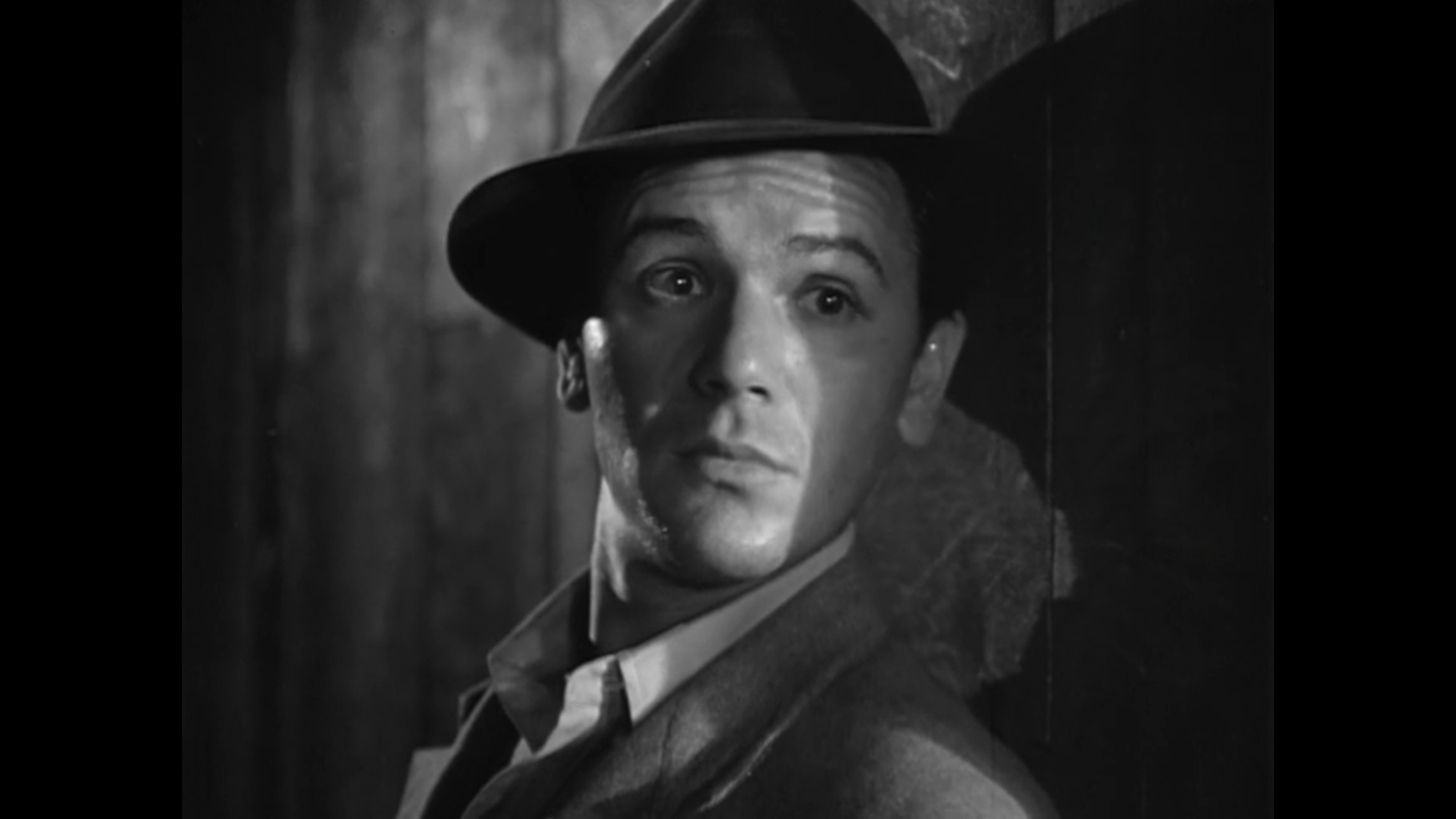
A prizewinning boxer (John Garfield) whose shady manager (Robert Gleckler) accidentally kills a snoopy reporter (John Ridgely) and is then killed in a fiery car crash while making off with Garfield’s girlfriend (Ann Sheridan) is falsely accused of murder and presumed dead. Garfield goes undercover and finds refuge in a farm owned by a woman (May Robson) overseeing a group of juvenile delinquents, where he soon falls for the older sister (Gloria Dickson) of one of the boys (Billy Halop) — but will a detective (Claude Rains) hot on his trail sleuth him out?

Genres, Themes, Actors, and Directors:

  • Ann Sheridan Films
  • Boxing
  • Busby Berkeley Films
  • Claude Rains Films
  • Detectives and Private Eyes
  • Falsely Accused
  • John Garfield Films
  • Juvenile Delinquents
  • Mistaken or Hidden Identities

Review:
Busby Berkeley directed this Depression-era saga of hard luck, mistaken identities, redemptive love, and the chance for new beginnings. Garfield stars in a role seemingly tailor-made for him: an innocent man caught up in events beyond his control that send him spiraling into a life on the run. He’s fine in the role, but the script (other than intermittent doses of harsh cynicism) is primarily hokum. Thankfully, James Wong Howe’s cinematography makes the entire film gorgeous to look at. The best scenes are those involving boxing, which naturally becomes Garfield’s downfall once again (or is it his saving grace?). See also the similarly themed Dust Be My Destiny (1939), which I was equally disappointed by.

Redeeming Qualities and Moments:

  • James Wong Howe’s cinematography


Must See?
No; feel free to skip this one.

Links:

Gold Diggers of 1937 (1936)

Gold Diggers of 1937 (1936)

“I’ve promised him that we’re going to put this show on!”

Synopsis:
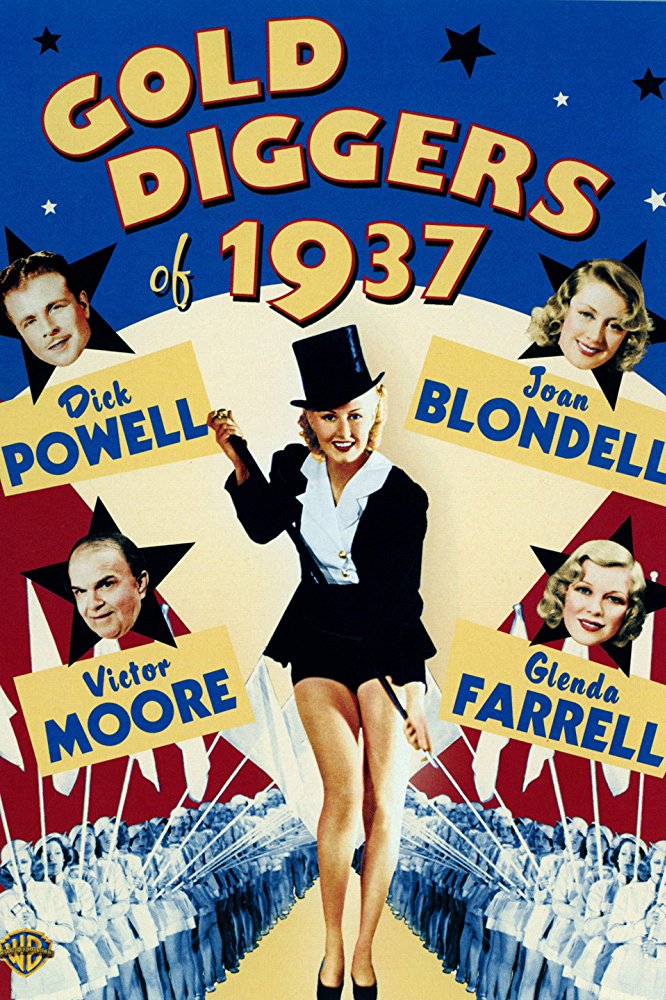
A hypochondriac millionaire (Victor Moore) whose business managers (Osgood Perkins and Charles D. Brown) have gambled away his savings convince him to purchase an insurance policy — secretly hoping he will die soon so they can cash in — from an agent (Dick Powell) who has just fallen in love with the new secretary (Joan Blondell) at his office. Meanwhile, a golddigger (Glenda Farrell) falls for Moore despite knowing he’s broke, and Powell wants to keep Moore alive at any cost to maintain his monthly premiums, so he can afford to marry Powell.

Genres, Themes, Actors, and Directors:

  • Busby Berkeley Films
  • Dick Powell Films
  • Gold Diggers
  • Joan Blondell Films
  • “Let’s Put On a Show!”
  • Millionaires
  • Musicals

Review:
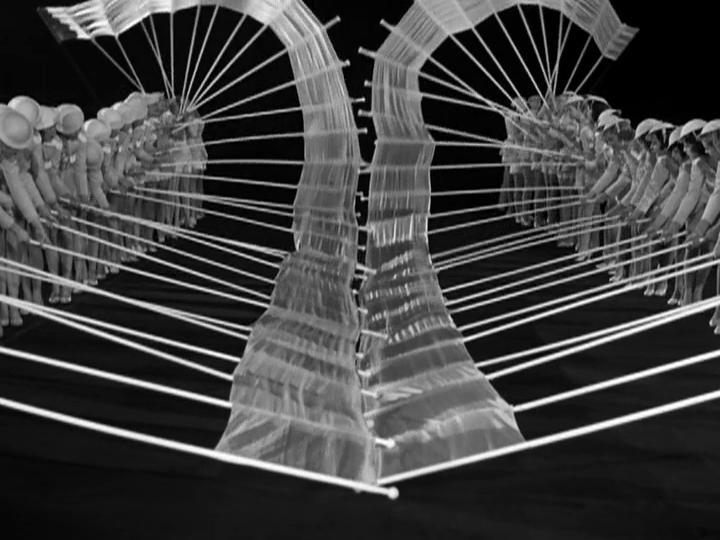
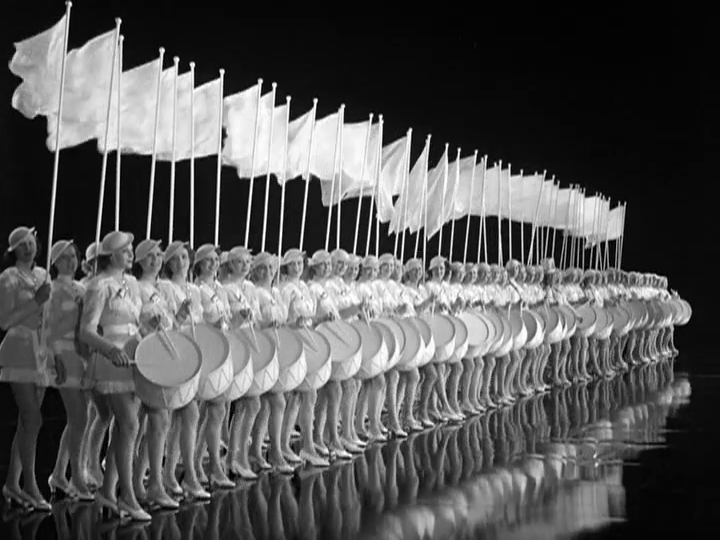
So, who ARE 1937’s golddiggers — and how, exactly, are they different from those of 1935 or 1933? According to this third entry in Busby Berkeley’s series for Warner Brothers, they’re essentially good-hearted gals who actually prefer to earn their own keep (Blondell) and/or don’t truly care about a man’s wealth (Farrell) — a good thing, given that the rather unsavory storyline has two men (Perkins and Brown, effectively sinister) out to literally kill their boss (Moore) to cover up their gambling debts, and another man (Powell) incentivized to keep Moore alive for his own personal benefit. Thank goodness we’re given a fun musical break midway through (“With Plenty of Money and You”), and a typically spectacular Busby-esque finale (“All’s Fair in Love and War”). Upon its release, the New York Times was rather uncharitable in its review of this film, writing that “Mr. Powell suffers from spells of laryngeal and facial cuteness” and that “Miss Blondell” — who “combines the ox-eyed beauty of a duchess by Lely with the gratifying smoothness and symmetry of a piece of gleaming metal tubing” (!?!?) — “not only cannot sing but doesn’t” (for which we should be grateful, apparently). Ouch!

Redeeming Qualities and Moments:

  • The Busby Berkeley musical numbers, naturally!

Must See?
No, though it’s an innocent enough outing if you’re in the mood.

Links:

Multiple Maniacs (1970)

Multiple Maniacs (1970)

“I’m a maniac that cannot be cured!”

Synopsis:
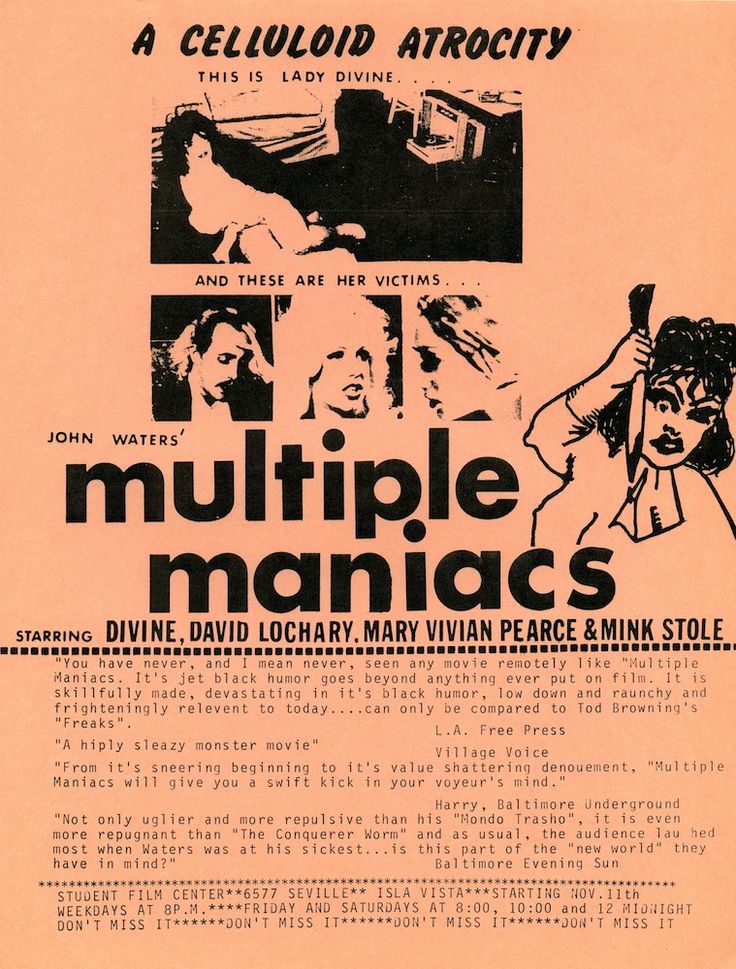
The narcissistic, murderous owner (Divine) of a “Cavalcade of Perversions” travelling show becomes enraged when she learns from a gossipy barista (Edith Massey) that her lover (David Lochary) has a mistress (Mary Vivian Pearce). With assistance from her new lesbian lover (Mink Stole), she plots revenge and true mayhem ensues, involving Divine’s drugged-out daughter (Cookie Mueller) and another troupe member (Rick Morrow).

Genres, Themes, Actors, and Directors:

  • Black Comedy
  • Carnivals and Circuses
  • John Waters Films
  • Plot to Murder
  • Rape

Response to Peary’s Review:
Peary writes that this “typically outrageous and degenerate — and funny — John Waters film” features Divine “becoming increasingly mad” (she’s literally foaming at the mouth by the end) and was “inspired by the Sharon Tate murders” (thus explaining the final massacre scene in an apartment). He notes that the “picture starts with what [he thinks] is [the] funniest Waters sequence” (I disagree) “and most revealing of him as an artist out to shock viewers through bad taste: suburbanites (representing us?) are repulsed, but don’t run away from perverted acts.” However, he argues that while “this is Waters’s own favorite film”, he doesn’t “think it reaches the heights (depths?) of Pink Flamingos or Female Trouble” because “Divine’s character is not as flamboyant or formidable as the ones she plays in those films”. He writes:

“Divine is at ‘her’ funniest when her character is constantly aggravated, dumped on, or humiliated; here, where she manages to achieve a coveted social position and retain faith in her beautiful self, she is too much in control.”

It’s been too long since I’ve seen Waters’ later films for me to compare, so I’ll judge this film on its own merits — and truly, I don’t believe it offers more than a slightly more “polished” version of earlier themes in Mondo Trasho, albeit pushing various outrage and disgust envelopes even further (and containing actual live dialogue). However, I’m not really the target audience for this kind of material, since I don’t see the point in degeneracy for its own sake. Sure, the infamous rosary scene and lobster rape scene are outrageous — but who in the world really cares about any of these folks and what happens to them?

Redeeming Qualities and Moments:

  • Some typically outrageous and bizarro Waters scenes

Must See?
No; while you may be curious to check it out, I think only completists need to include this one in their must-see list.

Links:

Mondo Trasho (1969)

Mondo Trasho (1969)

“It isn’t easy being Divine!”

Synopsis:
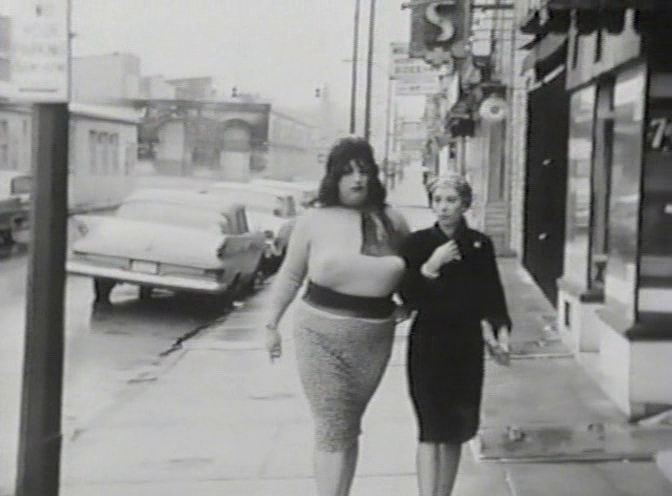
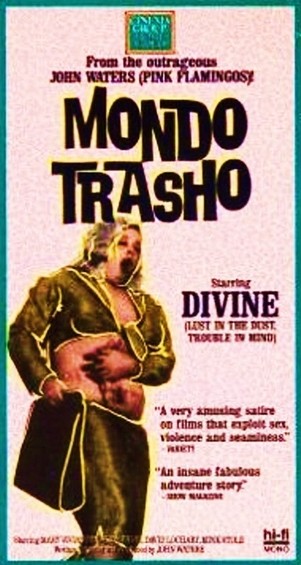
While ogling a naked hitchhiker, a beefy transvestite (Divine) accidentally runs over a young woman (Mary Vivian Pearce) who was recently accosted by a foot fetishist in the park. After Divine envisions the Virgin Mary (Margie Skidmore), she and Pearce are kidnapped and taken to a lunatic asylum, where they witness a semi-nude tapdancer (Mink Stole) performing, then escape to a clinic run by a mad scientist (David Lochary) who wants to mangle Pearce’s feet.

Genres, Themes, Actors, and Directors:

  • John Waters Films
  • Living Nightmare
  • Mad Doctors and Scientists
  • Surrealism

Response to Peary’s Review:
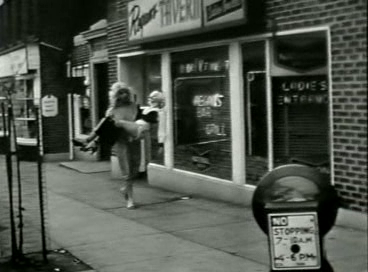
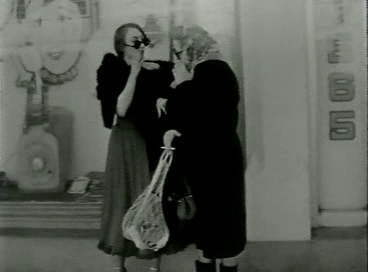
Peary writes that “John Waters’s first feature-length film” “has an offensive pre-title sequence” and “if you walk out at this point, you won’t miss much.” He acknowledges there’s some “humor at the beginning when star Mary Vivian Pearce (who’s made up to look like a sluttish Jean Harlow) has her toes sucked on by a stranger in the park while she excitedly fantasizes she’s scrubbing floors and being pushed around by her stepsisters”, as well as “a couple of funny moments when Divine pushes Pearce’s unconscious body around in a wheelchair” and “a funny finale when Pearce suddenly appears on a Baltimore street by clicking her heels together and finds herself being mercilessly insulted by two women trying to guess what kind of lowlife she is.” However, as he points out, “the rest of the film will bore all but Waters’s strongest fanatics”, given that “little is funny or comprehensible”. He concedes that “it does have a fabulous old rock soundtrack… but Waters is like a nervous guy who can’t stop turning the radio dial” and “he’ll drive you crazy by switching songs every few seconds”. Peary’s assessment is pretty much spot on: while “some bits may be of interest because they would be repeated with better results in Waters’s more sophisticated films”, only his strongest fans need check out this early oddity.

Redeeming Qualities and Moments:

  • Some effectively surreal and/or notable moments

Must See?
No, unless you’re a diehard Waters fan.

Links:

Between the Lines (1977)

Between the Lines (1977)

“We’re still about telling the truth. We’re still about something big here — and not many people can say that now.”

Synopsis:
The staff of an independent newspaper — including a reporter (John Heard), a photographer (Lindsay Crouse), a rock music critic (Jeff Goldblum), and a secretary (Jill Eikenberry) — mourn the changing of times as a new publisher (Lane Smith) takes over the company.

Genres, Themes, Actors, and Directors:

  • Ensemble Cast
  • Jeff Goldblum Films
  • John Heard Films
  • Journalists
  • Romantic Comedy

Response to Peary’s Review:
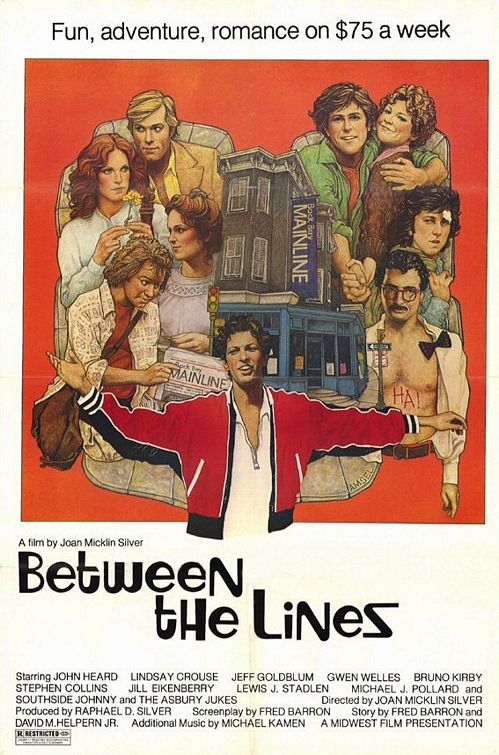
Peary begins his review of Joan Micklin Silver’s romantic comedy by referring to it as “one of those few films [he wishes] would never end”. He notes that “it’s a spirited, nostalgic, sexy, perceptive, warm-hearted character comedy” with a “beautifully organized” script (by Fred Barron) full of “real characters and situations you might identify with”. He adds that director Silver, “who obviously loves the characters who run the paper, gives her young, brilliant cast a lot of freedom and they come through with relaxed, flesh-and-blood performances”. He points out that “most interesting is how characters take turns acting like jerks, egocentrics, being temperamental, and occasionally disappoint us — just as real people do.”

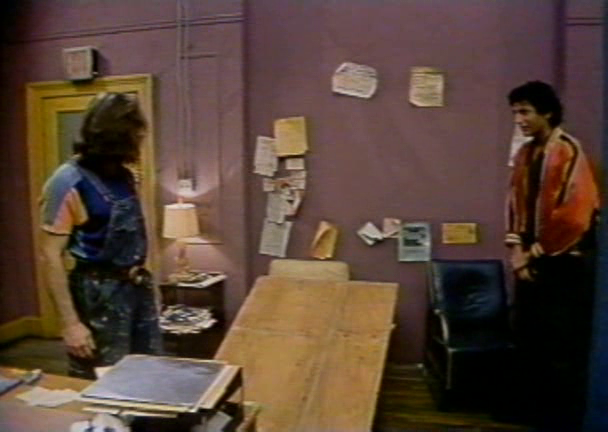
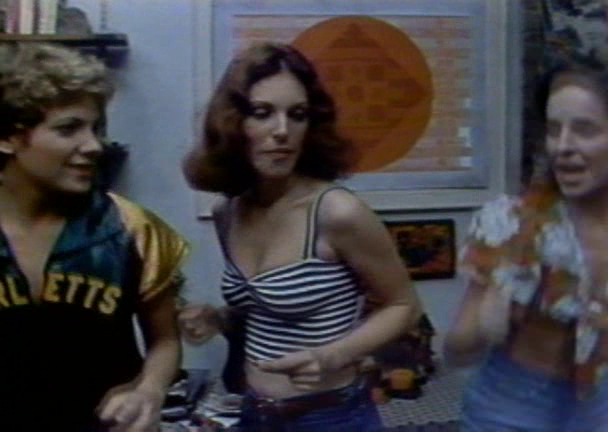
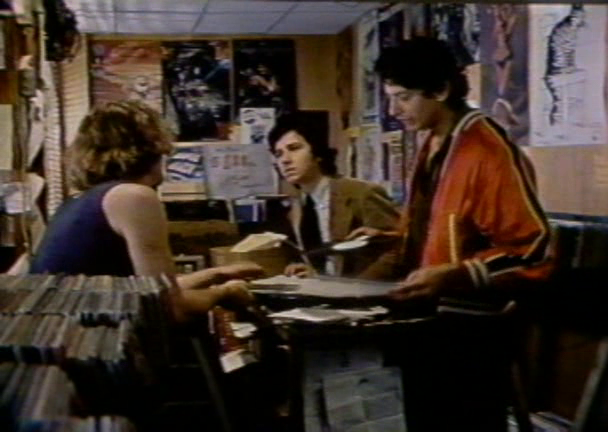
Peary’s review accurately captures the infectious spirit of this ensemble piece, which emanates both the best and most annoying aspects of working on a young team, dating some co-workers and fending off others, managing the always-chaotic world of deadlines and rivalry. Heard and Crouse are perfectly cast as occasional lovers who get back together during the course of the movie, quibbling but always staying companions. Goldblum is as odd as ever; Peary notes that a highlight of the film includes his “nonsensical ad-libbed music lecture, at which young women dutifully take notes” — but I’m an even bigger fan of his stand-off against a performance artist who visits the office. Jill Eikenberry is both lovely and eminently likeable as the grounding force of the office. There’s a fascinating scene in which her character (Lynn) interacts with a nebbishy adsman (Lewis J. Stadlen as Stanley) who she spent time with recently:

Stanley: I didn’t want you to feel like there was any kind of innuendo or sexual connotation…
Lynn: You know, Stanley — I can’t accept that you didn’t want any sexual innuendo. Stanley, you literally jumped on top of me!
Stanley: Oh no… You see, I knew that you had interpreted it that way…
Lynn: Stanley, you did — there you were on my body, Stanley.
Stanley: What can I say, you know? I mean, it’s your perception, and it’s my perception, we were both there…
Lynn: No, listen Stanley — I couldn’t get up!
Stanley: Look, if that’s what you thought, I guess an apology is in the making.
Lynn: It’s okay — it’s okay, really.
Stanley: I mean, let me tell you I’m very sexually attracted to you. You know, nobody in their right mind wouldn’t be. I had a great time!
Lynn: You’re an incredible person, Stanley.
Stanley: And so are you. You’re an incredible person as well and listen… We’ll do it again sometime.

There are definite hints of Woody Allen here; it’s not surprising that Juliet Taylor, Allen’s longtime casting agent, did the casting for this film as well. What’s remarkable is how definitively Eikenberry exudes a relaxed but firm attitude — she’s chuckling and sympathetic throughout this exchange. Obnoxious, bow-tied Stanley is most definitely made the fool, while Eikenberry emerges victorious in every possible way. Similarly, Crouse completely shows up Heard during a scene when she “asks sharp questions of a stripper (Marilu Henner) and [strikes] a rapport with her while [Heard] wants to ask his stupid questions”. However, men are also shown bonding and having fun.

Part of the charm of this film is how pleasantly nostalgic it comes across — which is somewhat ironic, given that it was meant to reflect the end of a charmed era (the counterculture of the 1960s), but now represents an era of its own (the 1970s) that many may also reminisce about with wistful memories. Most notable of all, of course, is how radically sentimental one can’t help feeling about the pre-internet media age, when news was gathered and published in hard copy only, and reading selections were limited to just a few choices — including independent rags like this one. For better or for worse, that period is completely over, and we can now look back on “classic” cinema of the 1970s as reflecting a uniquely bygone era. Be sure to listen through the final scene while the credits begin to roll, as Goldblum chats up a new chum in a bar — it’s priceless.

Redeeming Qualities and Moments:

  • Many memorable, well-acted, humorous scenes


  • Good use of authentic Boston locales

Must See?
Yes, as a sleeper classic of a certain era.

Categories

  • Good Show

Links:

Kansas City Bomber (1972)

Kansas City Bomber (1972)

“We’re all used — you, me, anybody on two legs. That’s what it’s all about. That’s your American pie for you.”

Synopsis:
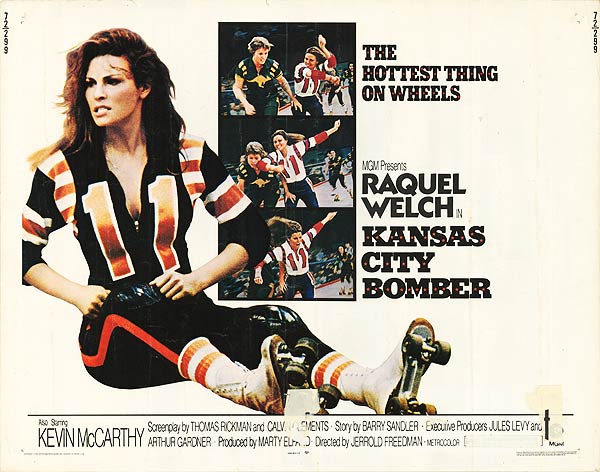
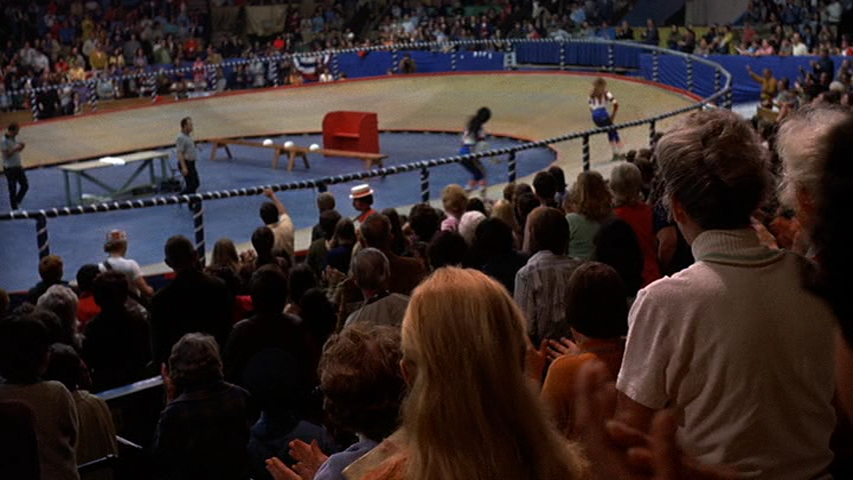
A single mother (Raquel Welch) working on the Roller Derby circuit while her two kids (Jodie Foster and Stephen Manley) live with her mom (Martine Bartlett) is transferred by a new team owner (Kevin McCarthy) from Kansas City to Portland, where she befriends two teammates (Katherine Pass and Norman Alden) but makes an instant rival in the team’s reigning alcoholic queen (Helena Kallianiotes).

Genres, Themes, Actors, and Directors:

  • Jodie Foster Films
  • Kevin McCarthy Films
  • Raquel Welch Films
  • Rivalry
  • Single Mothers
  • Sports
  • Strong Females

Response to Peary’s Review:
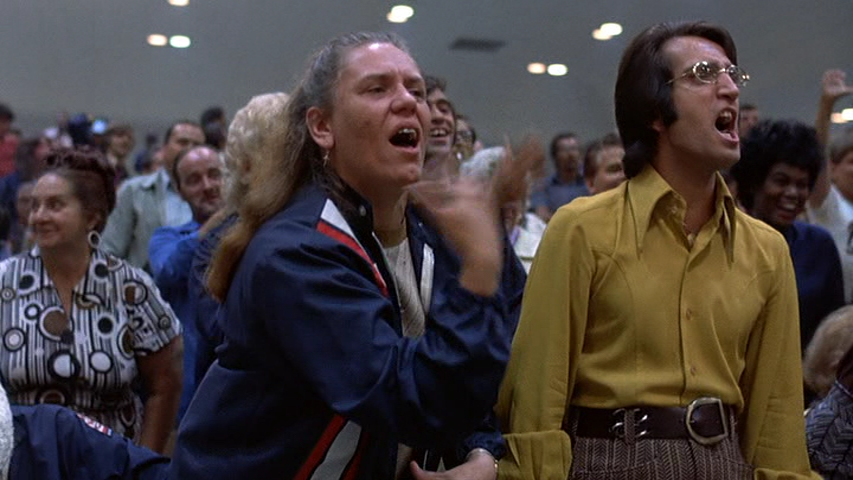
Peary writes that this “sleeper about the trials and tribulations of a roller-derby queen isn’t half bad” and “does contain what [he thinks] is Raquel Welch’s one genuinely fine movie performance”, noting somewhat disparagingly that “for once, she truly worked at establishing a real character.” He adds that the “picture has feminist slant; we get to admire this woman despite sleazy profession, as she stands alone against owner and jealous teammates — and we sympathize because she’s a working single mother who is always on the road and away from her child.” Like Peary, I was very pleasantly surprised by Welch’s characterization — not to mention her obvious skills on the derby rink. This film falls right in line with other movies about women (or men) trying to make a living in high-risk sports such a wrestling or boxing, who are ultimately pawns of those hoping to make a buck off of them at any cost. Both intense rivalry and loyal friendship are prevalant in a world like this — themes which the imperfect but serviceable script takes ample advantage of. While we don’t learn quite enough about Welch’s desire to be a derby girl, it is clear that this is one way she can provide for her family and escape from small-town drudgery. Watch for Jodie Foster in a small role as Welch’s daughter, and Martine Bartlett as a judgmental parent anyone would want to escape from (who can forget her role as Sally Field’s abusive mother in Sybil?).

Redeeming Qualities and Moments:

  • Raquel Welch as K.C.
  • An effectively seedy glimpse at fans and the sport itself


Must See?
No, but it’s well worth a look, and probably has a bit of a cult following.

Links:

Dynamite Chicken (1971)

Dynamite Chicken (1971)

“What is obscene?”

Synopsis:
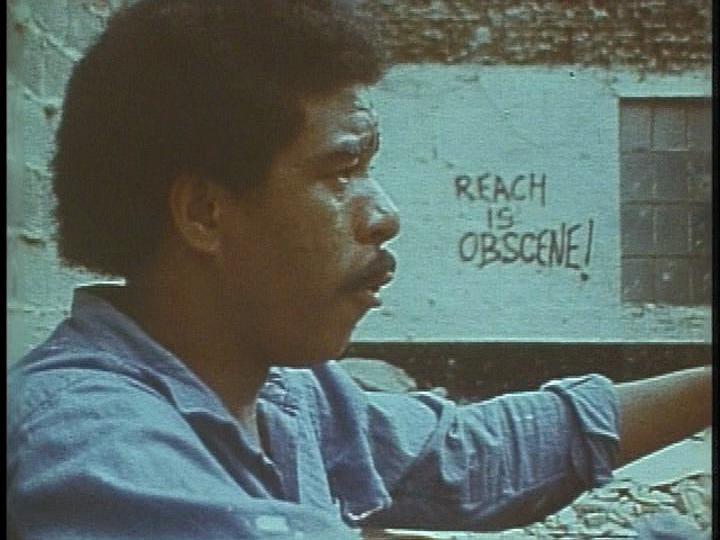
Richard Pryor appears intermittently in this collage of skits, spoofs, and commentary on countercultural topics, including war, sex, feminism, patriotism, politics, and obscenity.

Genres, Themes, Actors, and Directors:

  • Counterculture
  • Experimental Films
  • Richard Pryor Films
  • Satires and Spoofs

Review:
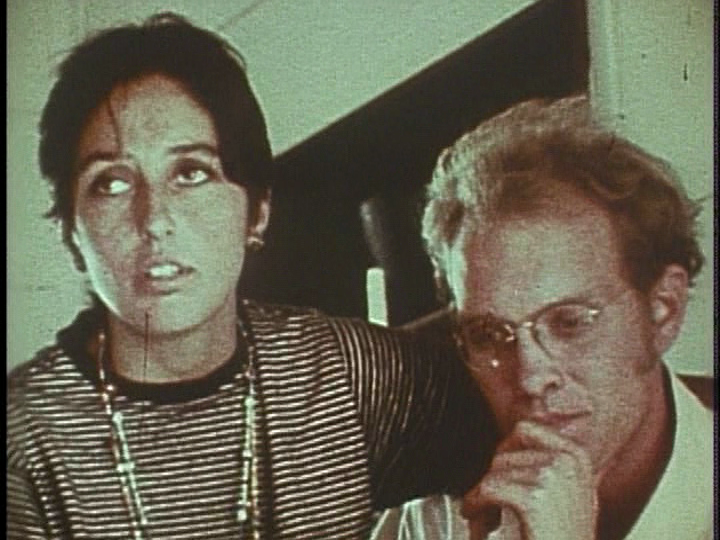
It’s difficult to know what to make of — or say about — this experimental pastiche of a film, which was surely much more relevant at the time of its release, but now simply comes across as a time capsule worthy of screening at a modern art museum. There’s some amusement to be had in “spot the celebrity” (not only Pryor but Fred Willard, Joan Baez, Andy Warhol, and John Lennon and Yoko Ono show up), and there is a clear attempt to push boundaries and taboos of every kind (viz. a scene of a stripping nun) — but… Feel free to skip this one unless you’re curious.

Redeeming Qualities and Moments:

  • A few effectively surreal and/or randomly engaging scenes and moments


Must See?
No; this one is simply an historical curiosity.

Links:

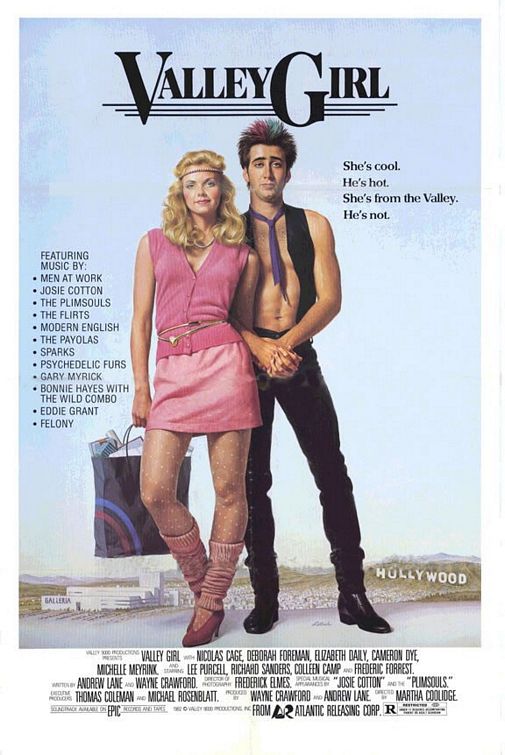
Valley Girl (1983)

Valley Girl (1983)

“Nobody’s going to tell me who I can score with!”

Synopsis:
A popular “valley girl” (Deborah Foreman) breaks up with her boring boyfriend (Michael Bowen) and begins dating a guy (Nicolas Guy) from across town — but soon her friends peer-pressure her into rethinking her romantic choices.

Genres, Themes, Actors, and Directors:

  • Cross-Class Romance
  • Fredric Forrest Films
  • Nicolas Cage Films
  • Teenagers

Review:
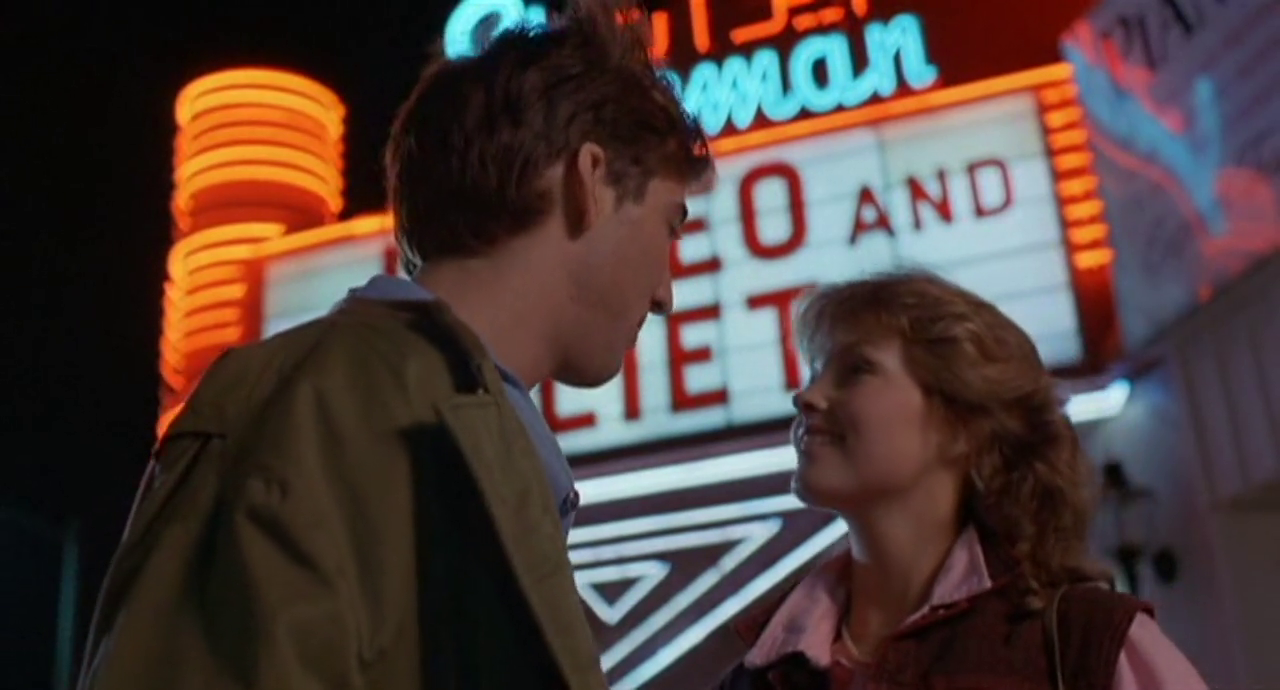
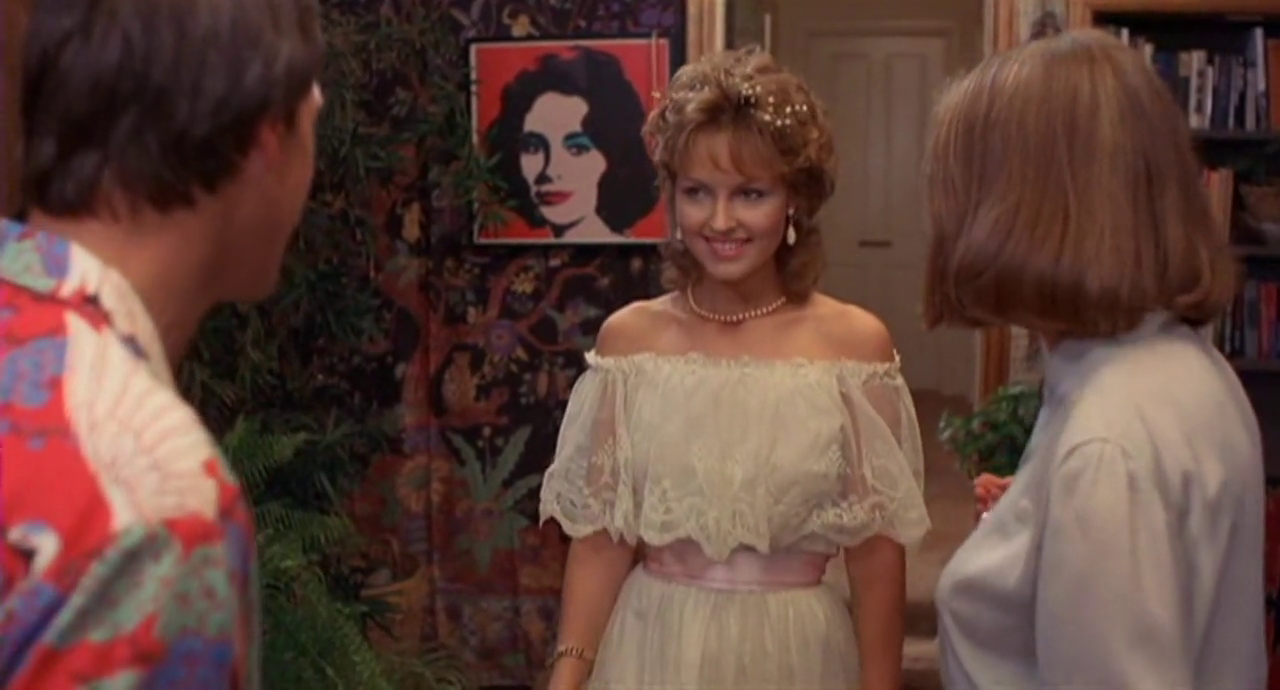
Martha Coolidge directed this insipid teen romance about a blonde (Foreman) with an infectious smile who is suddenly struck with the urge to break free from her usual routine and milieu. Unfortunately, her character and all other members of her clique are either utterly uninteresting or obnoxiously annoying; perhaps this was intentional, to demonstrate why Foreman is so eager for adventure — but since we don’t care much for her either (she’s two-dimensional), it’s hard to put much stock in her wishy-washy romantic foibles. Cage is fine, but essentially wasted in his first starring role; Cameron Dye as his best buddy looks hauntingly like a young Quentin Tarantino in many shots (I was convinced it was him for the longest time).

Fredric Forrest and Colleen Camp are on hand to presumably provide some chuckles as Foreman’s former-hippie parents who run a health food store and are ultra-hip about their daughter’s lifestyle choices — but all the comedic elements of this script pretty much fall flat.

Note: What’s up with the creepy clown Foreman sleeps with?!

Redeeming Qualities and Moments:

  • Fun historic shots of 1980s L.A.


  • Frederick Elmes’ cinematography

Must See?
Nope; this one is strictly must-see for nostalgic fans.

Links:

Fire Over England (1937)

Fire Over England (1937)

“I have seen blacker fears turn to hopes. Hope on, until you know there is none.”

Synopsis:
A loyal supporter (Laurence Olivier) of Queen Elizabeth I (Flora Robson) — happily engaged to one of her ladies-in-waiting (Vivien Leigh) — agrees to replace a killed agent (James Mason) as a spy in the courts of King Philip of Spain (Raymond Massey) to learn more about the impending Armada invasion.

Genres, Themes, Actors, and Directors:

  • Flora Robson Films
  • Historical Drama
  • James Mason Films
  • Laurence Olivier Films
  • Mistaken or Hidden Identities
  • Raymond Massey Films
  • Royalty and Nobility
  • Spies
  • Vivien Leigh Films

Review:
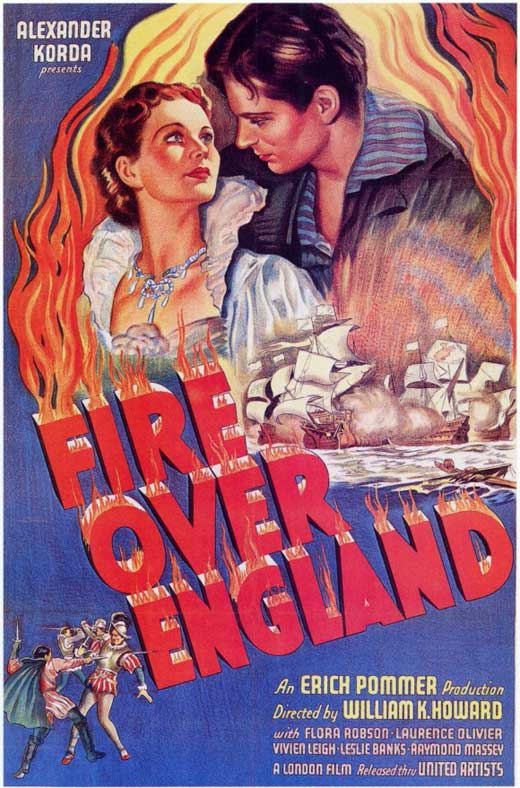
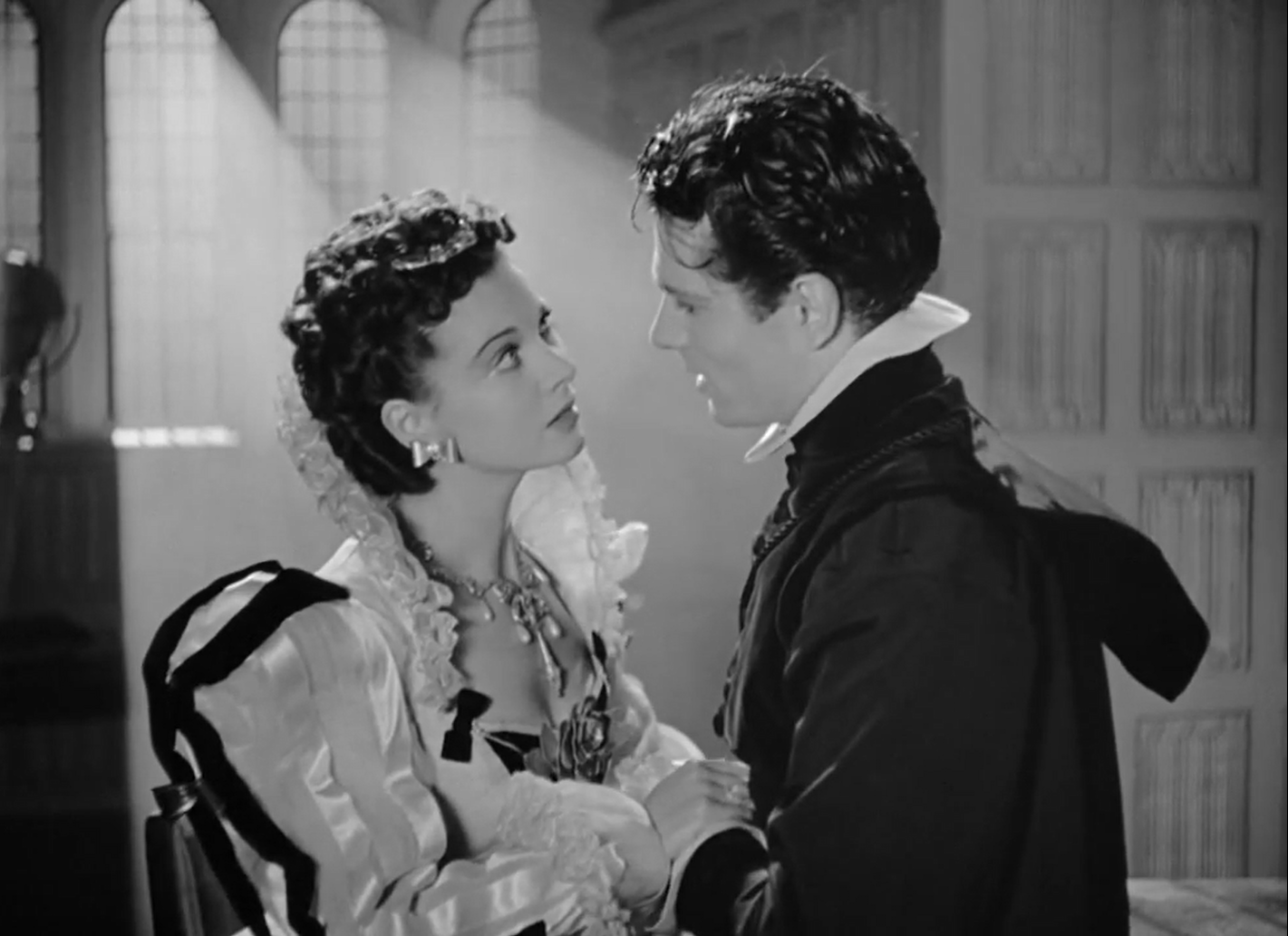
This Alexandar Korda-produced historical drama is best known as the film that first brought Vivien Leigh and Laurence Olivier together, both on-screen and in real-life as lovers.

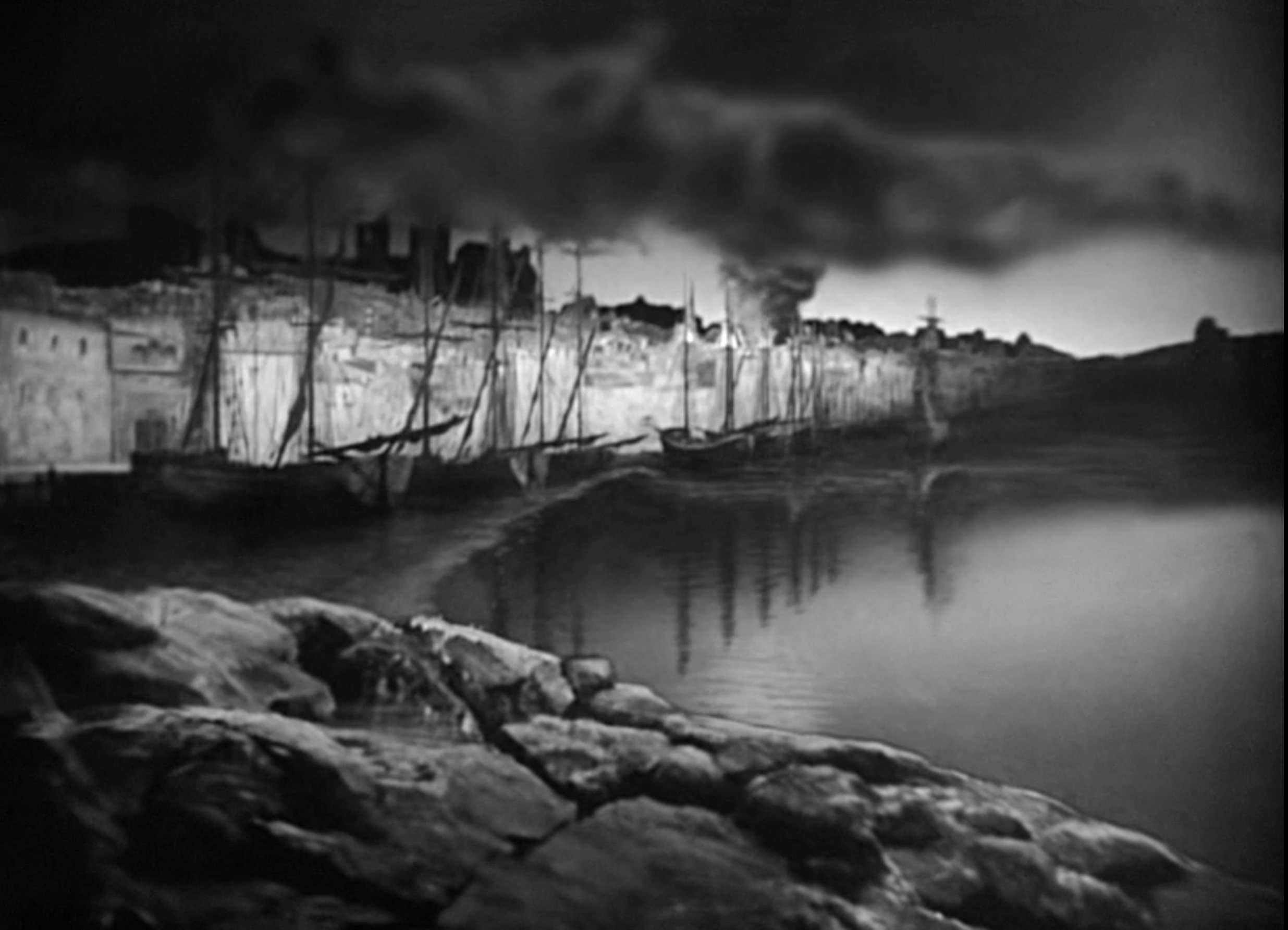
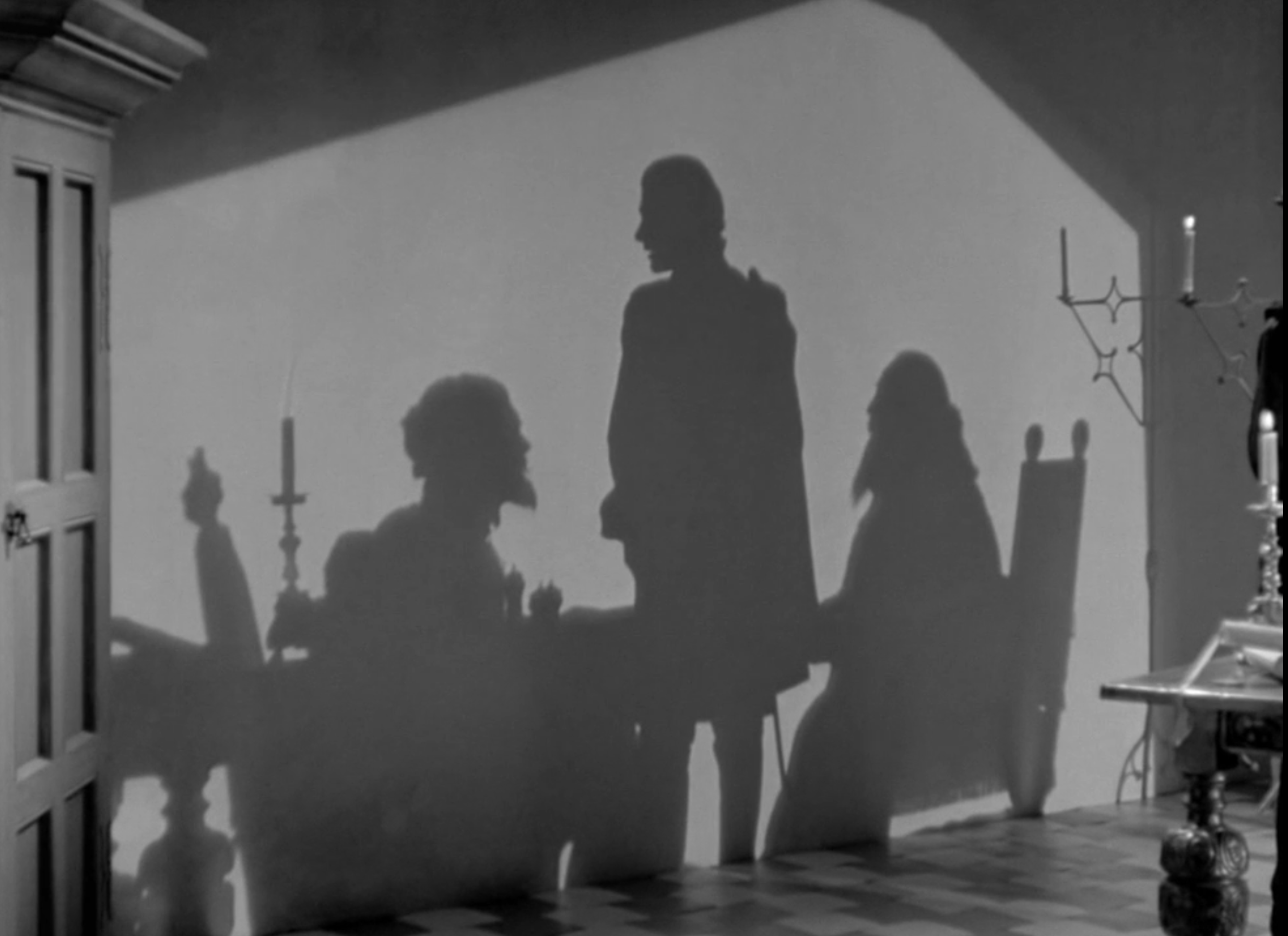
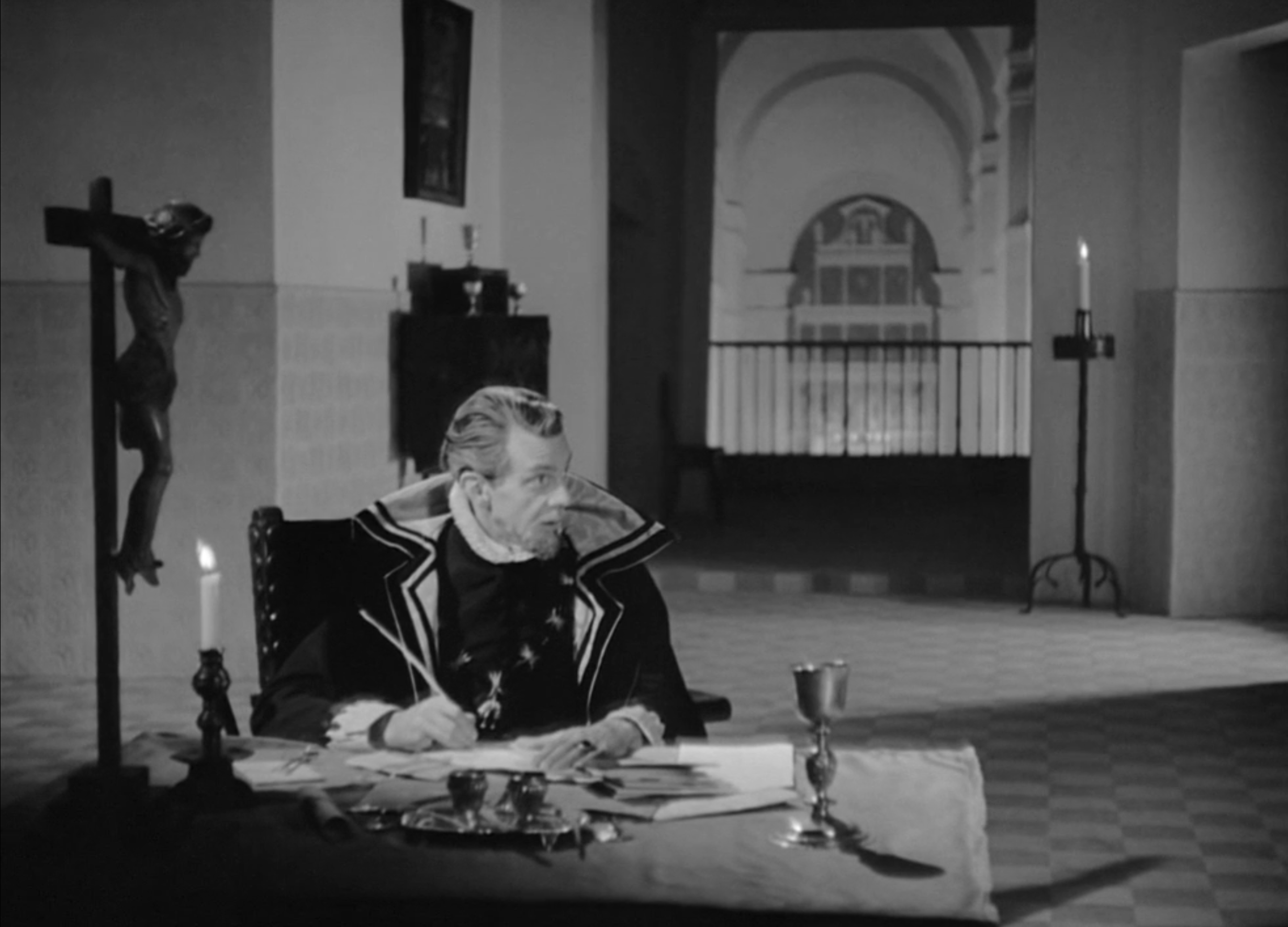
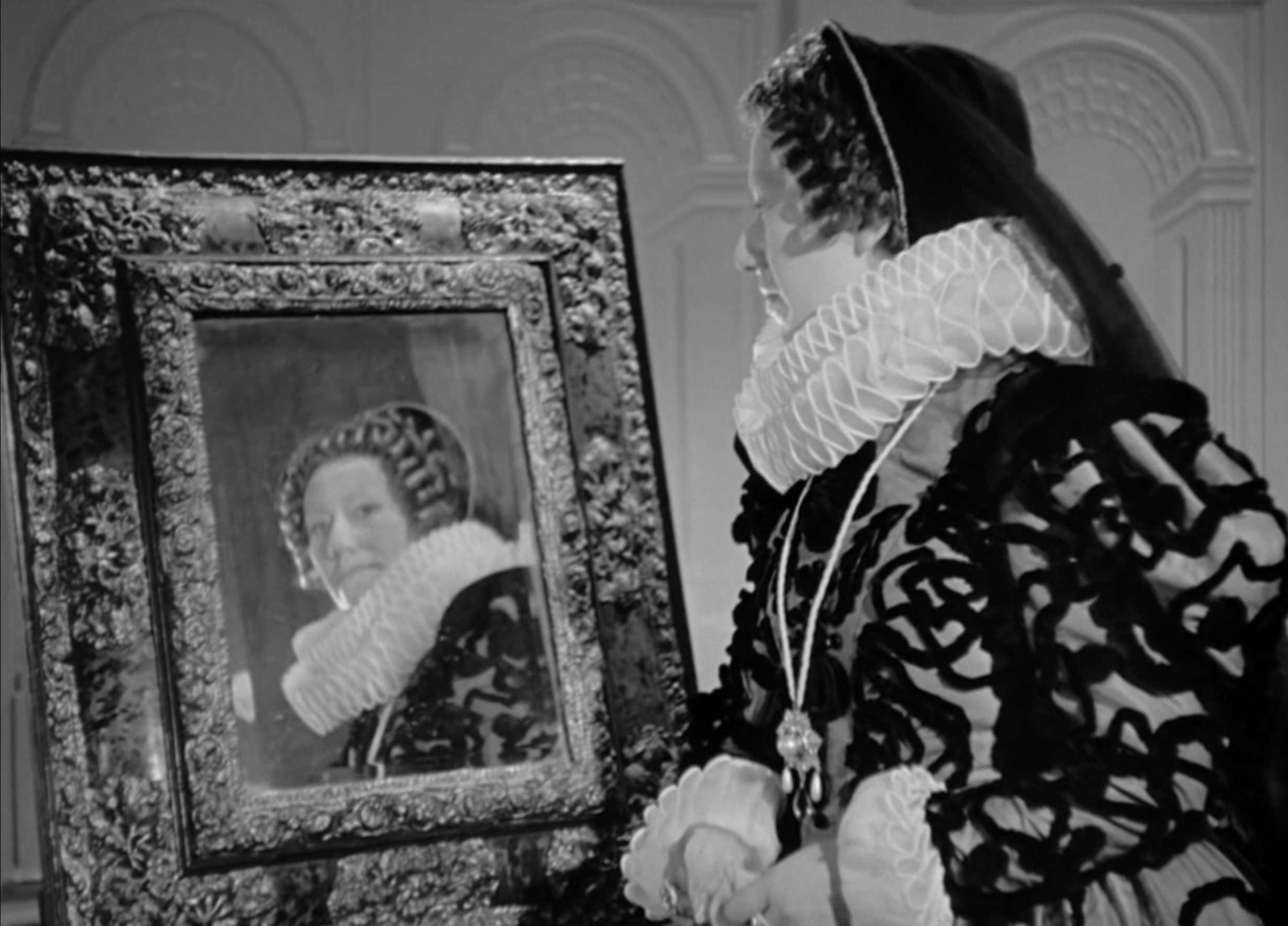
It’s a nicely mounted film, grounded by a strong performance by Flora Robson as Queen Elizabeth, but otherwise simply straightforward, highly fictionalized fare that will be of most interest to fans of the genre (or of “Viv and Larry”). James Wong Howe’s cinematography is a plus, as are Queen Elizabeth’s over-the-top costumes by Rene Hubert. Be sure to check out the Blu-Ray.com review below for an extensive overview of how this public domain title was painstakingly restored.

Redeeming Qualities and Moments:

  • Flora Robson as Queen Elizabeth
  • James Wong Howe’s cinematography

  • Fine sets and costumes

Must See?
No; skip this one unless you’re curious (though it is beautifully restored).

Links:

Corbeau, Le / Crow, The / Raven, The / Little Town in France, A (1943)

Corbeau, Le / Crow, The / Raven, The / Little Town in France, A (1943)

“These letters are nothing but a web of slander and lies.”

Synopsis:
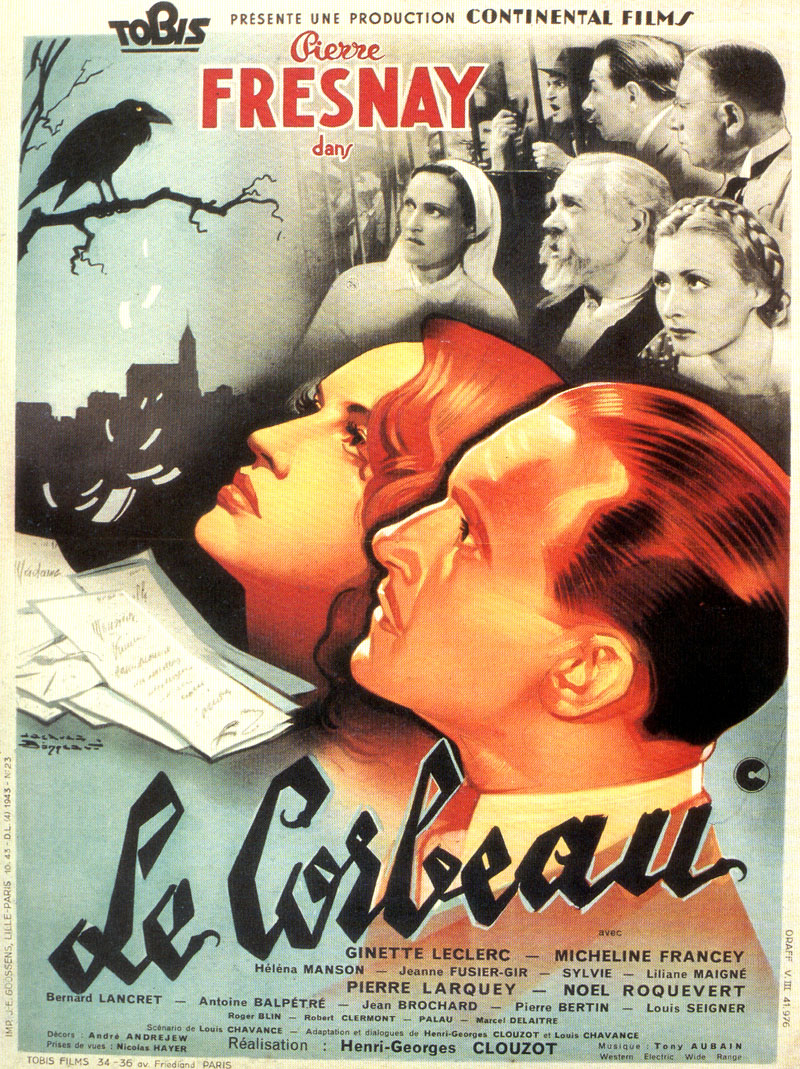
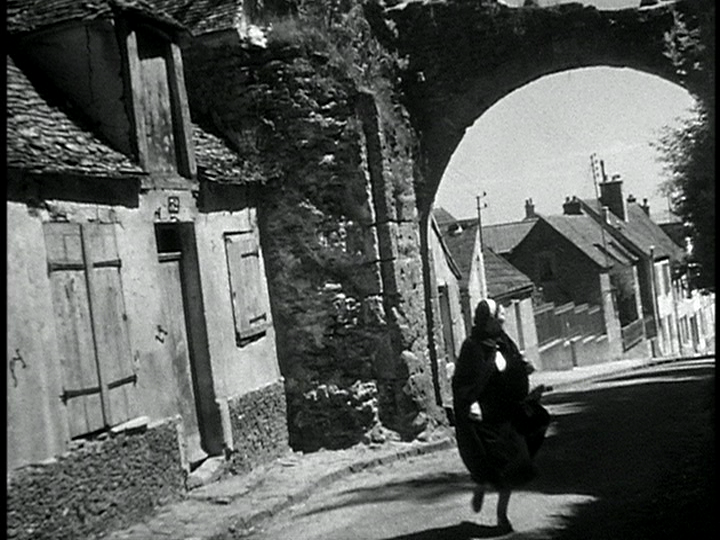
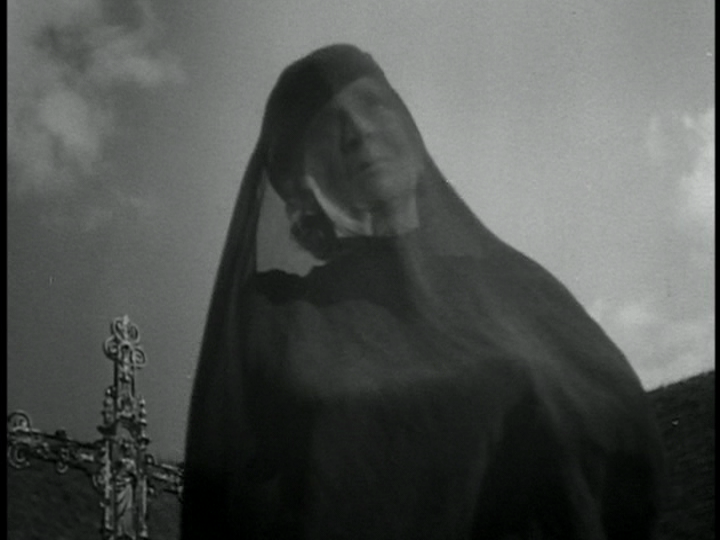
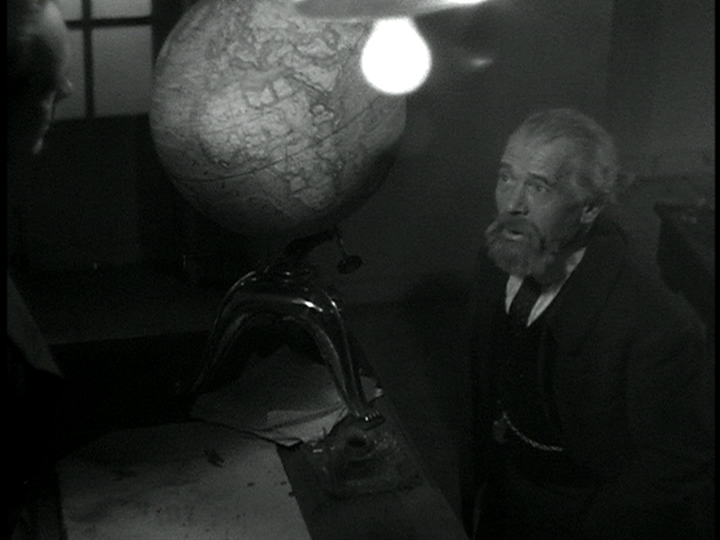
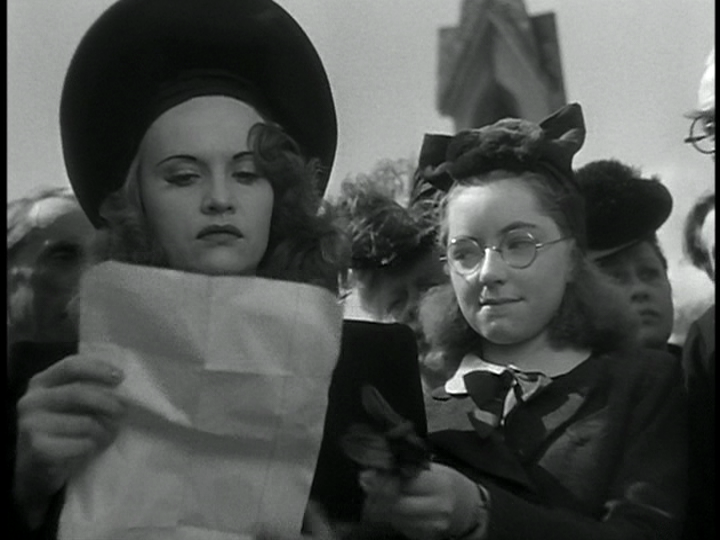
A new doctor (Pierre Fresnay) in a French village accused of committing adultery with the wife (Micheline Francey) of a psychiatrist (Pierre Larquey) is seduced by a lonely handicapped girl (Ginette Leclerc) with a nosy teenage sister (Liliane Maigné), and becomes one of many suspects — including Francey’s embittered sister (Héléna Manson) — when poison-pen letters by a mysterious author named “The Raven” begin to circulate, leading to death and misery in the town.

Genres, Themes, Actors, and Directors:

  • Blackmail
  • Doctors and Nurses
  • Falsely Accused
  • French Films
  • Henri-Georges Clouzot Films
  • Mistaken or Hidden Identities
  • Village Life

Response to Peary’s Review:
As Peary writes, this “unusual film” perfectly reflects director Henri-Georges Clouzot’s “suspicious, cynical view of people — particularly the French during the Occupation”, given that “the only characters who come through unscathed are those who are persecuted”. Peary argues (I disagree) that “the doctor’s past story is hokey, and the ending… is too berserk”, but concedes that “the picture succeeds because of its fabulous premise, excellent direction, and theme (which was relevant in 1943).” As DVD Savant writes in his review, “This is the anti-Capra film, a frightening stew of misanthropy.” He adds that:

Clouzot’s pitiless community is a satire, but we immediately recognize the group behaviors as authentic. Rumors are accepted as truth, and privacy and presumption of innocence fall by the wayside. Pretty soon nobody respects anybody and the town is overrun by civilized savagery.

The imagery, cinematography, sets, and plot twists in Le Corbeau are all noteworthy, and there are more than enough embittered would-be suspects to keep viewers authentically on their toes. Film fanatics should certainly check this thriller out.

Redeeming Qualities and Moments:

  • Many memorable, haunting scenes

  • Atmospheric cinematography
  • A suspenseful script

Must See?
Yes, as a still-powerful wartime classic.

Categories

  • Foreign Gem
  • Historically Relevant

Links: