King of Marvin Gardens, The (1972)
“You notice how it’s Monopoly out there?”
|
Synopsis: |
|
Genres, Themes, Actors, and Directors:
Review: Redeeming Qualities and Moments:
Must See? Links: |
“In other words, gentlemen — in effect — we declare war on Monday, we are defeated by Tuesday, and by Friday we will be rehabilitated beyond our wildest dreams!”
|
Synopsis: |
|
Genres, Themes, Actors, and Directors:
Review: Redeeming Qualities and Moments:
Must See? Categories
Links: |
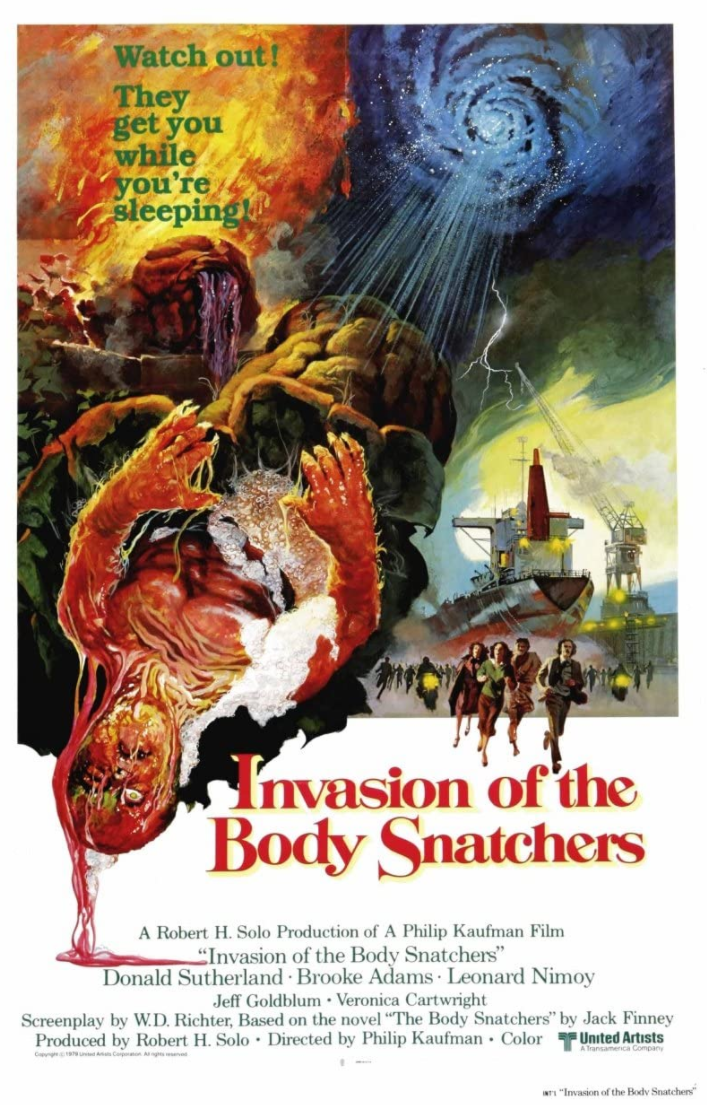
“I’ve lived in this city all my life, but somehow today I felt everything had changed — people were different.”
|
Synopsis: |
|
Genres, Themes, Actors, and Directors:
Response Review:
Peary also laments the loss of political subtext so prevalent in Siegel’s film, but this doesn’t really matter: a world in which everyone you know suddenly becomes “somebody else” is a scary enough premise to exist on its own. Finally, Peary complains that Kaufman places too much emphasis on “special effects and snazzy visuals”, but I disagree; other than the subtle yet effectively creepy opening sequences of spidery alien wisps growing into tiny flowers:
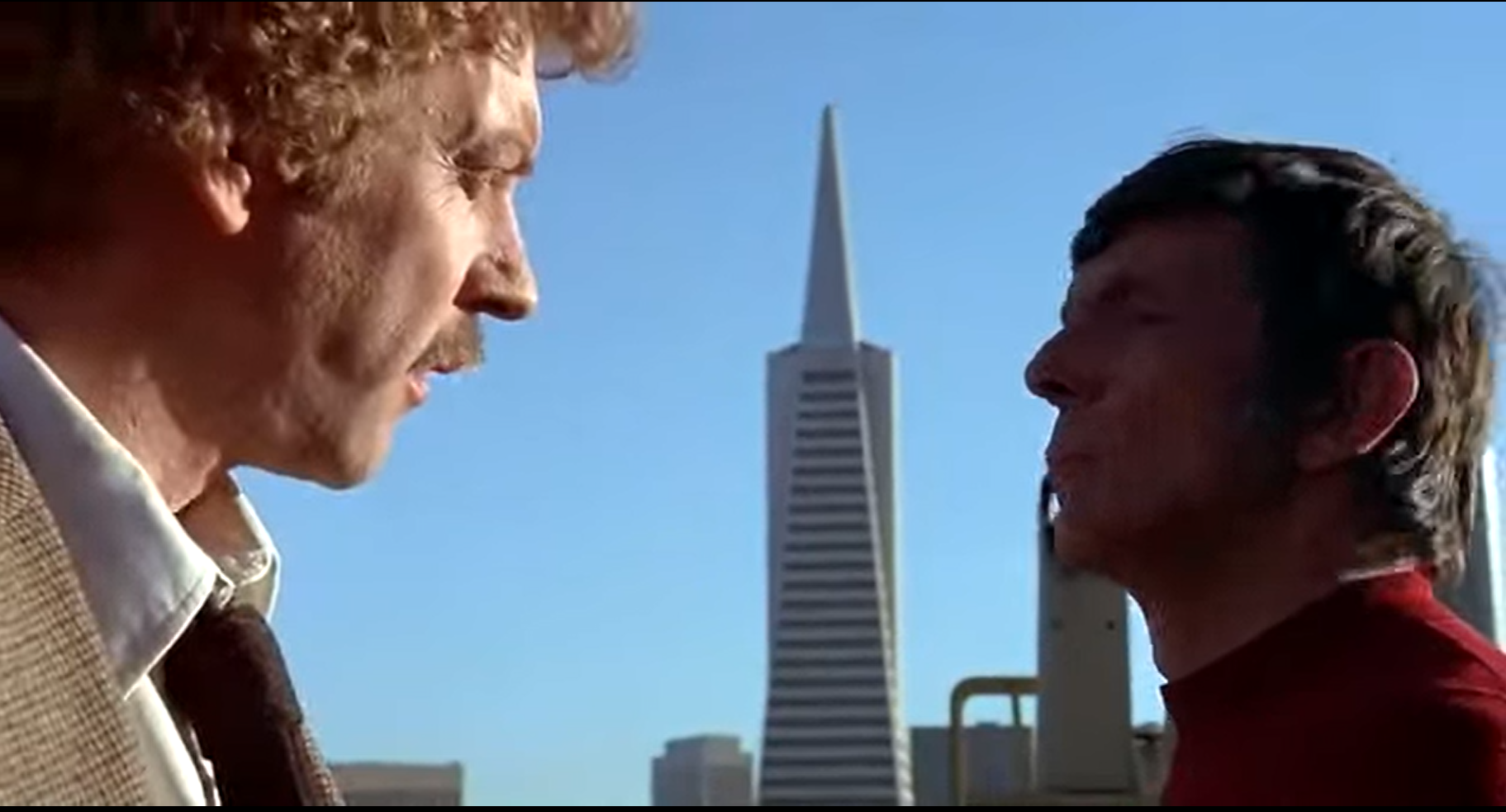
… special effects don’t make an appearance in the film until almost halfway through — at which point they’re used judiciously and to good effect. With that said, Kaufman’s version does run a bit too long, and I could have done without the subplot involving Sutherland’s crush on the married Adams:
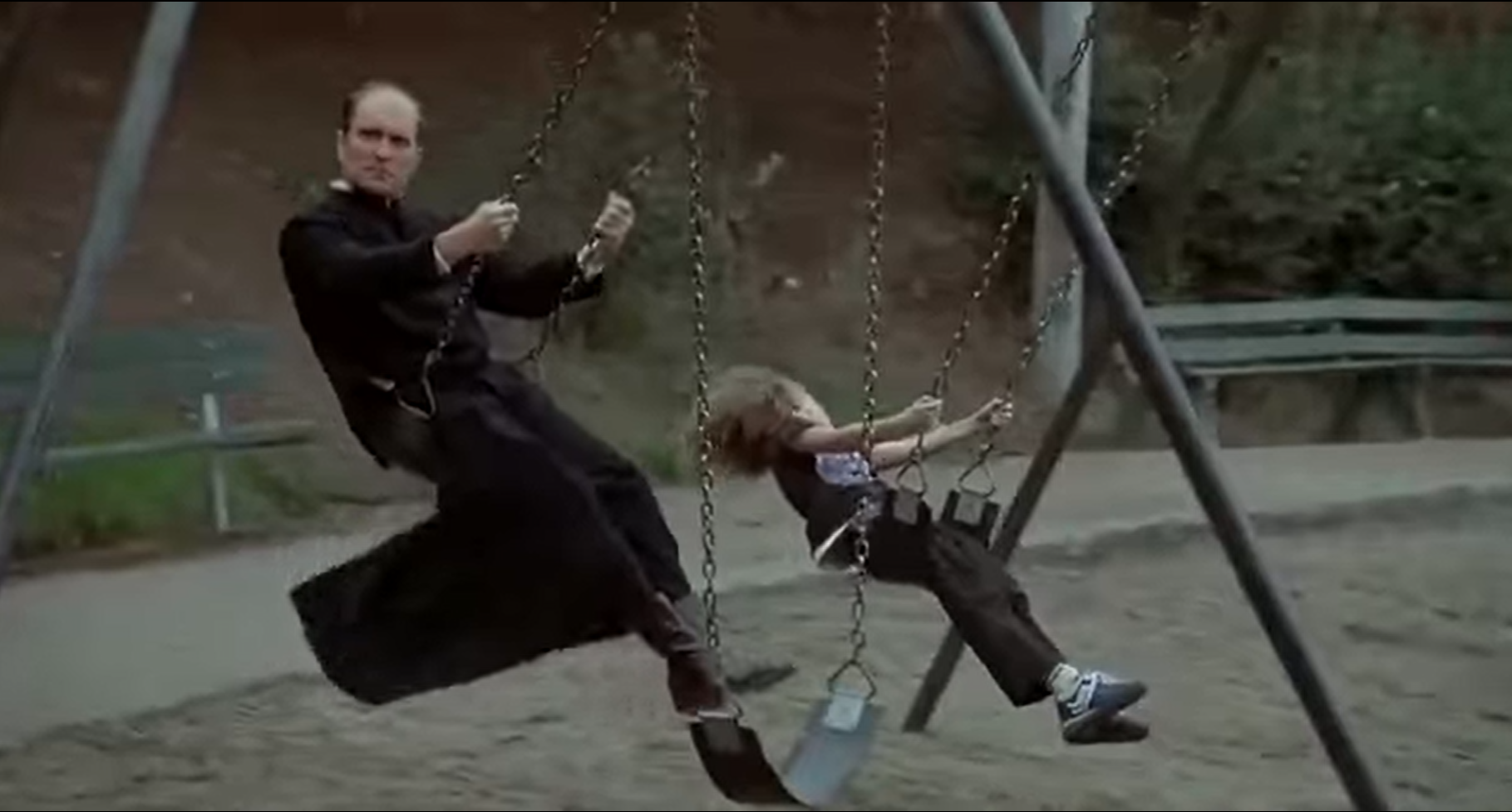
Nonetheless, this remains a surprisingly effective remake, and is well worth watching on its own merits. Note: Watch for several notable cameos: Don Siegel — director of the original …Body Snatchers — appears as a “replaced” taxi driver; Robert Duvall is shown in the very beginning as a creepy priest on a swing:
… and the original movie’s star, Kevin McCarthy, reappears as a man running wildly through the streets. Redeeming Qualities and Moments:
Must See? Categories
Links: |
“I am not alive; I only exist.”
|
Synopsis: |
|
Genres, Themes, Actors, and Directors:
Review:
… and when she allows herself to seek temporary solace in companionship with a male friend, her downfall is guaranteed. Unfortunately, however, because Holly is portrayed so sympathetically (she never stops loving her husband, and we understand that she never considered her friendship with Montalban to be anything more than just this), viewers aren’t given much to feel other than pity. And when, as a “free woman”, she turns down a chance for love and happiness with a wealthy European pianist, we realize that our tragic heroine is basically biding her time until her death.
Ironically, it’s only once Holly’s life goes completely downhill that Turner — never the greatest of actresses — begins showing some true chops. Her performance comes alive in the second half of the film, but the earlier scenes are less than convincing (particularly since Turner was much too old to be playing a newlywed socialite). Unfortunately, other performances in the film are equally problematic. John Forsythe (Turner’s husband) is so bland as to be practically non-existent; Keir Dullea as Turner’s grown son acts as woodenly as ever:
… and while Constance Bennett is effectively cruel (in what was to become her final screen role), she’s not on-screen nearly enough: once Holly is banished to Europe, we don’t see Bennett again until the final courtroom scenes, when she inexplicably appears to have tears in her eyes at the sight of her daughter-in-law.
Indeed, the entire denouement of the film — while exciting in some ways, given that we really don’t know how things will turn out — is ultimately unsatisfying, primarily due to an egregious error in logic: in a convenient yet highly unlikely twist of fate, Holly doesn’t learn that her lawyer is her son until the final tear-jerking day of the trial. However, one watches a melodrama like this simply for the emotions and colorful set designs, which Madame X has in spades. If you enjoy your dramas bordering on camp (typical dialogue: “I don’t give a damn about the past; the world begins with you and me!”), and consider gaping plot holes to be a necessary sacrifice for high melodrama, then perhaps this film was made just for you. Redeeming Qualities and Moments:
Must See? Links: |
“All we got is a cruddy alky for a manager!”
|
Synopsis: |
|
Genres, Themes, Actors, and Directors:
Review:
Most refreshing of all is watching how un-politically correct Matthau is with his young charges — he drinks in front of them, tosses them beer cans to celebrate a good game (!), and calls them every foul name under the planet. Also notable: his relationship with 12-year-old O’Neal never smacks of anything unsavory, even when he’s talking openly with her about her budding breasts; their friendship is allowed to develop without digressing into any unnecessary subplots about pedophilia. The fact that watching The Bad News Bears evokes such nostalgia says a lot about the degradation of children’s movies these days (most of which are sickly sweet in their attempt to shield kid-viewers from anything smacking of real-life). Morris Buttermaker may be a foul-mouthed, obnoxious “alky”, but there are plenty of people like him in the world — and kids know it.
Redeeming Qualities and Moments:
Must See? Categories
Links: |
“They’re afraid of love, because love makes a world they can’t control– And it’s a world worth taking risks for, isn’t it?”
|
Synopsis: |
|
Genres, Themes, Actors, and Directors:
Review: Redeeming Qualities and Moments:
Must See? Categories
Links: |
“But they pooh-poohed the idea.”
|
Synopsis: |
|
Genres, Themes, Actors, and Directors:
Review:
You’ll witness more variations on primitive (and physically impossible) “flying machines” than you ever thought existed:
as well as demonstrations of some truly strange skills — which technically shouldn’t count as inventions, but are included here anyway, presumably for their wackiness factor. The documentary is comprised exclusively of archival footage (with voices dubbed in the silent clips), possesses no voice-over narration, and is accompanied by a surprisingly rocking soundtrack. Redeeming Qualities and Moments:
Must See? Links: |
“Thanks to muggings, malnutrition and disease, we still have a chance to make a buck!”
|
Synopsis: |
|
Genres, Themes, Actors, and Directors:
Review:
Then again, one watches a film like this for the laughs, not the social commentary — and unfortunately, there are far too few to recommend it. Redeeming Qualities and Moments:
Must See? Links: |
“Blanche, you aren’t ever going to sell this house — and you aren’t ever going to leave it, either!”
|
Synopsis: |
|
Genres, Themes, Actors, and Directors:
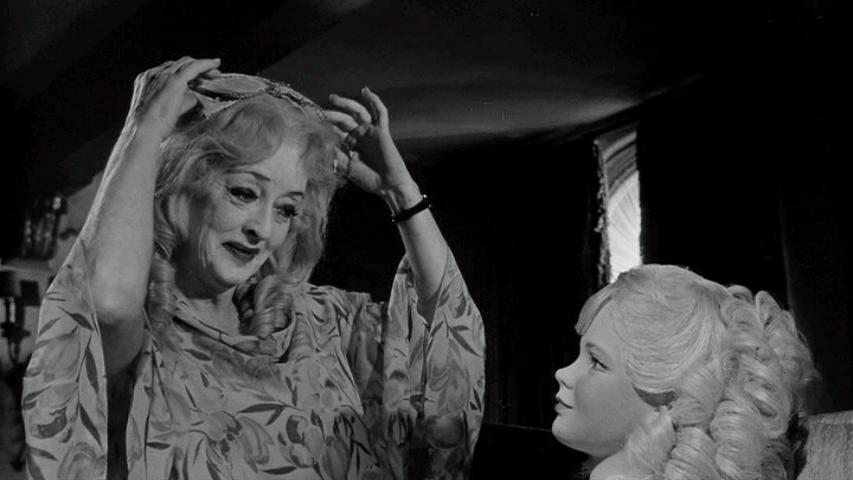
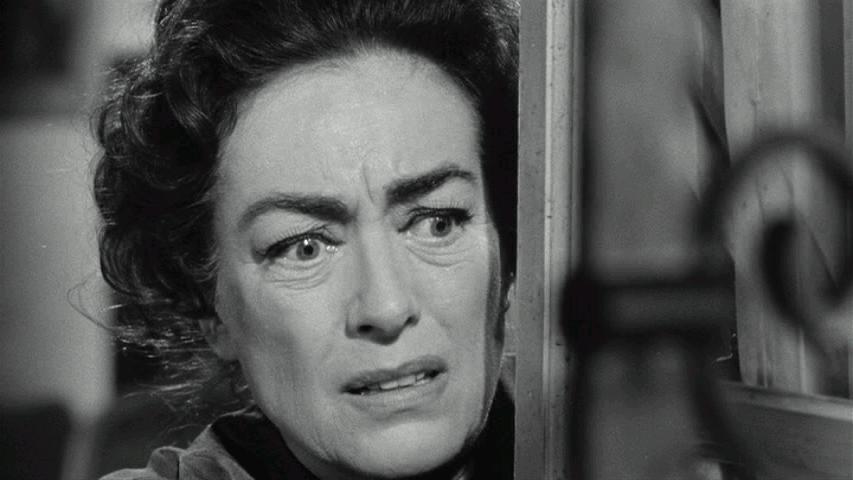
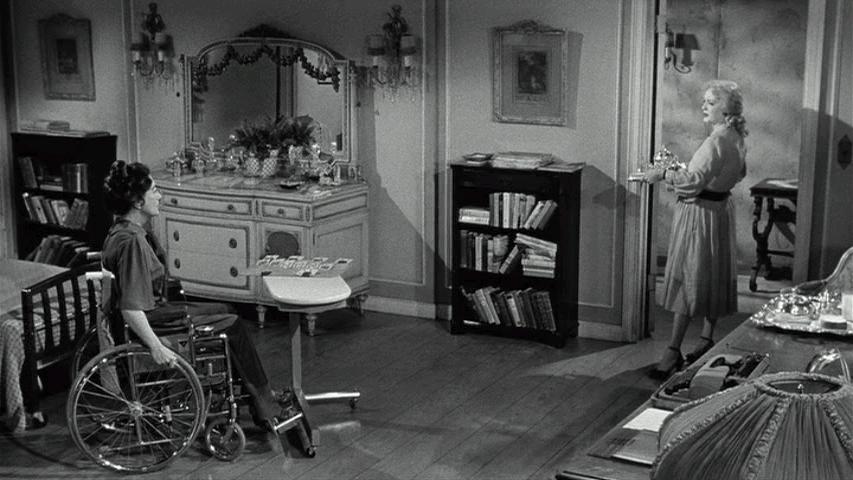
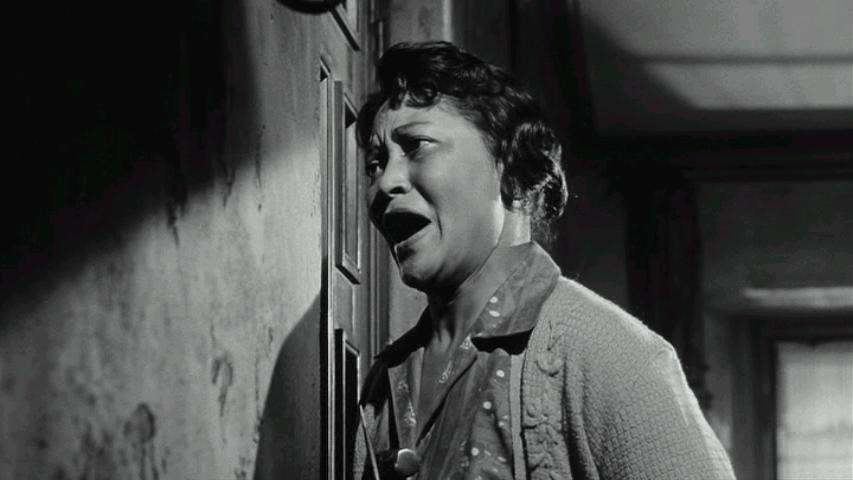
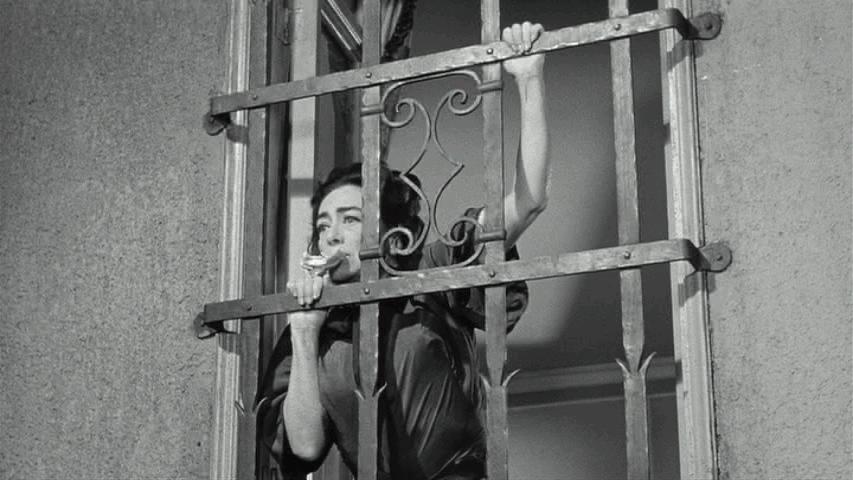
Response to Peary’s Review: There are countless memorable moments in Baby Jane: Jane taunting Blanche by serving her a dead canary — and later a dead rat — for dinner; Jane coyly asking a young man behind the counter at the newspaper office if he recognizes her; Jane taking delight in building sandcastles on the beach; all of Jane’s interactions with Buono (whose use of subtle facial twitches is truly hilarious). Perhaps most interesting, however, is the fact that while director Robert Aldrich appears to be ridiculing his stars — they’re looking their absolute worst here — he also manages to generate genuine sympathy for their plights. Crawford and Davis may have been the unfortunate inspiration for, as Peary puts it, “a whole slew of fright films in which humor came from looking at grotesquely made-up faces of [once beautiful] old women”; but in this film, they’re the real deal: broken, tragic women whose jealousy and vanity have forced them both onto an inescapably disastrous trajectory. Note: In his review, Peary points out the many similarities between What Ever Happened to Baby Jane? and Billy Wilder’s Sunset Boulevard; take note especially of the final scene on the beach. Redeeming Qualities and Moments:
Must See? Categories
(Listed in 1001 Movies You Must See Before You Die) Links: |
“Pity and compassion played little part in the existence of those people– They despised weakness, worshipped strength!”
|
Synopsis: |
|
Genres, Themes, Actors, and Directors:
Review: Redeeming Qualities and Moments:
Must See? Links: |