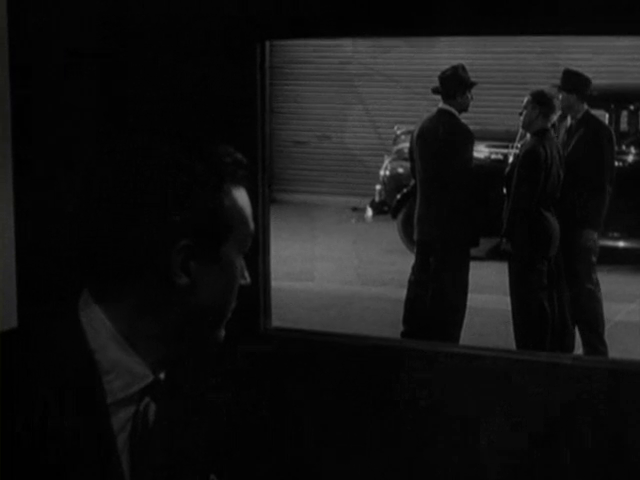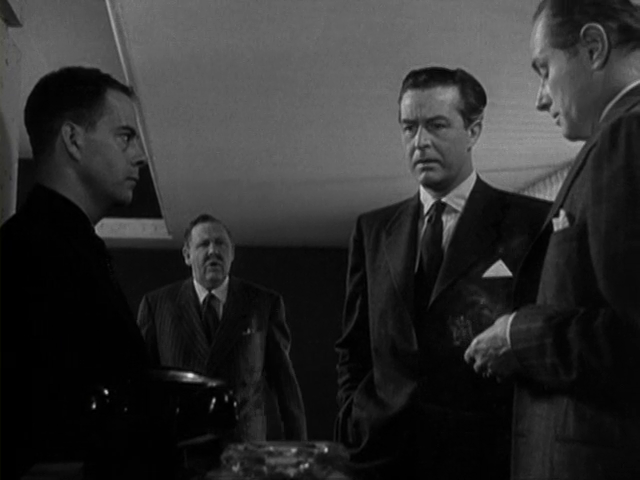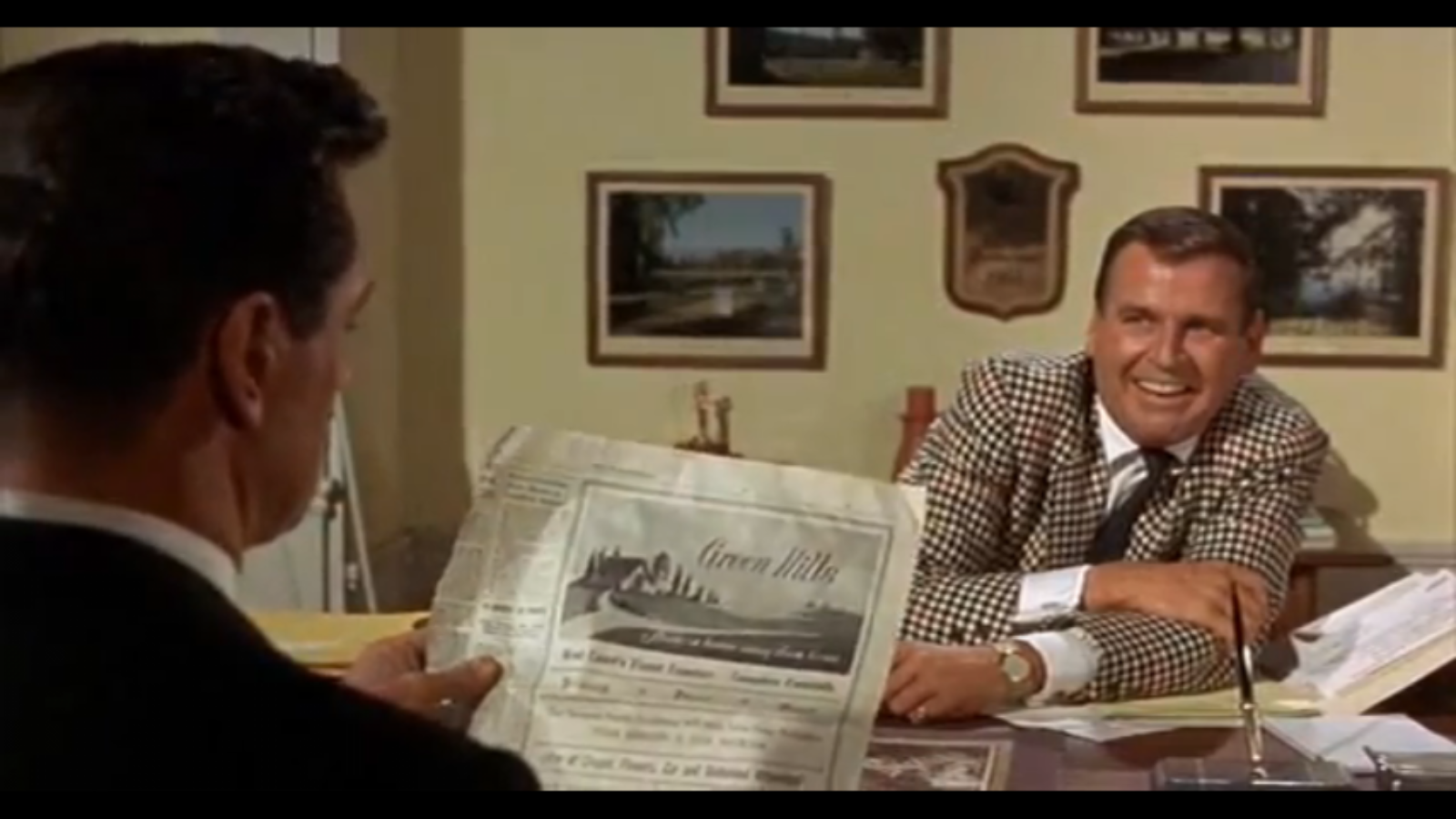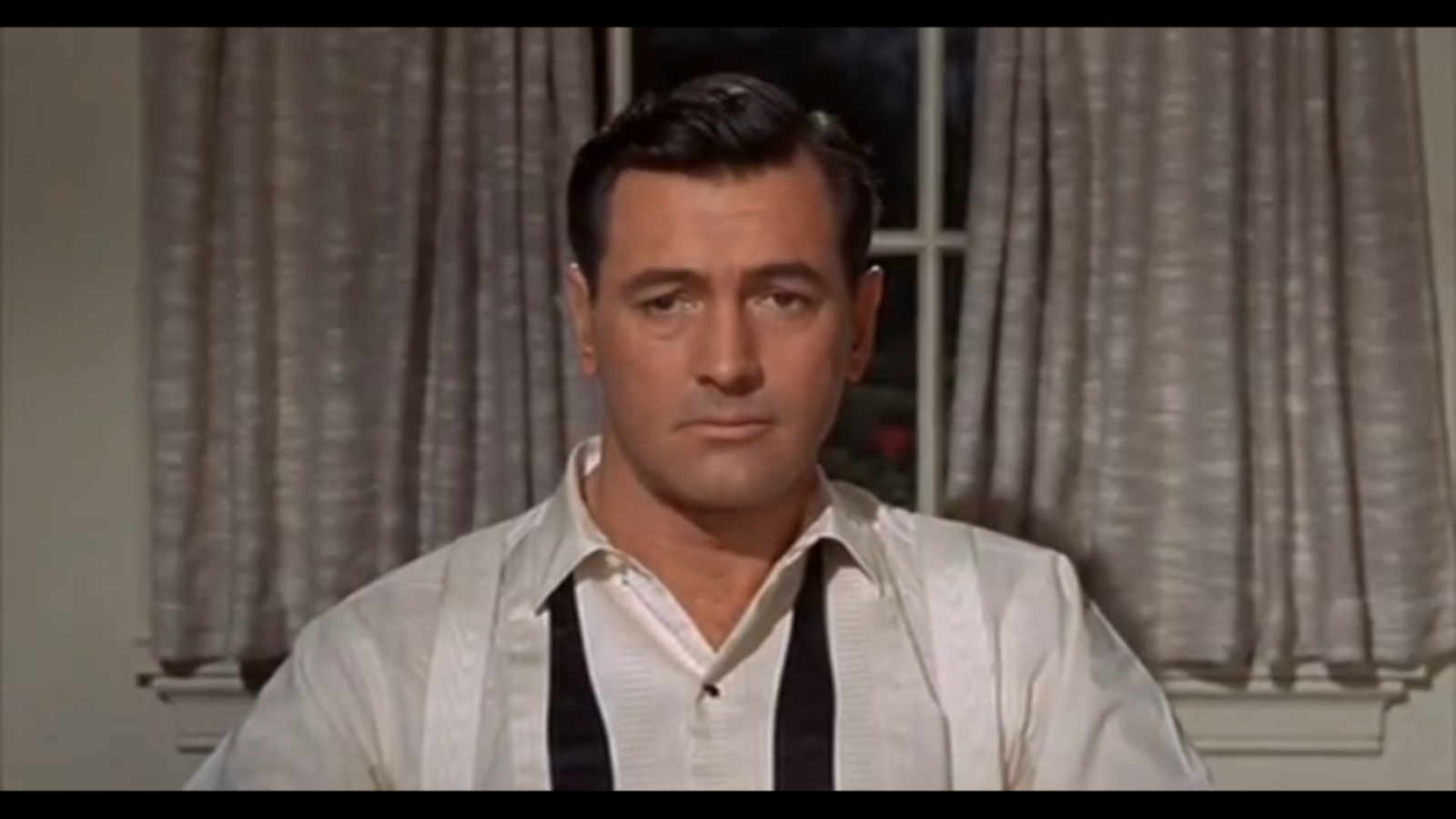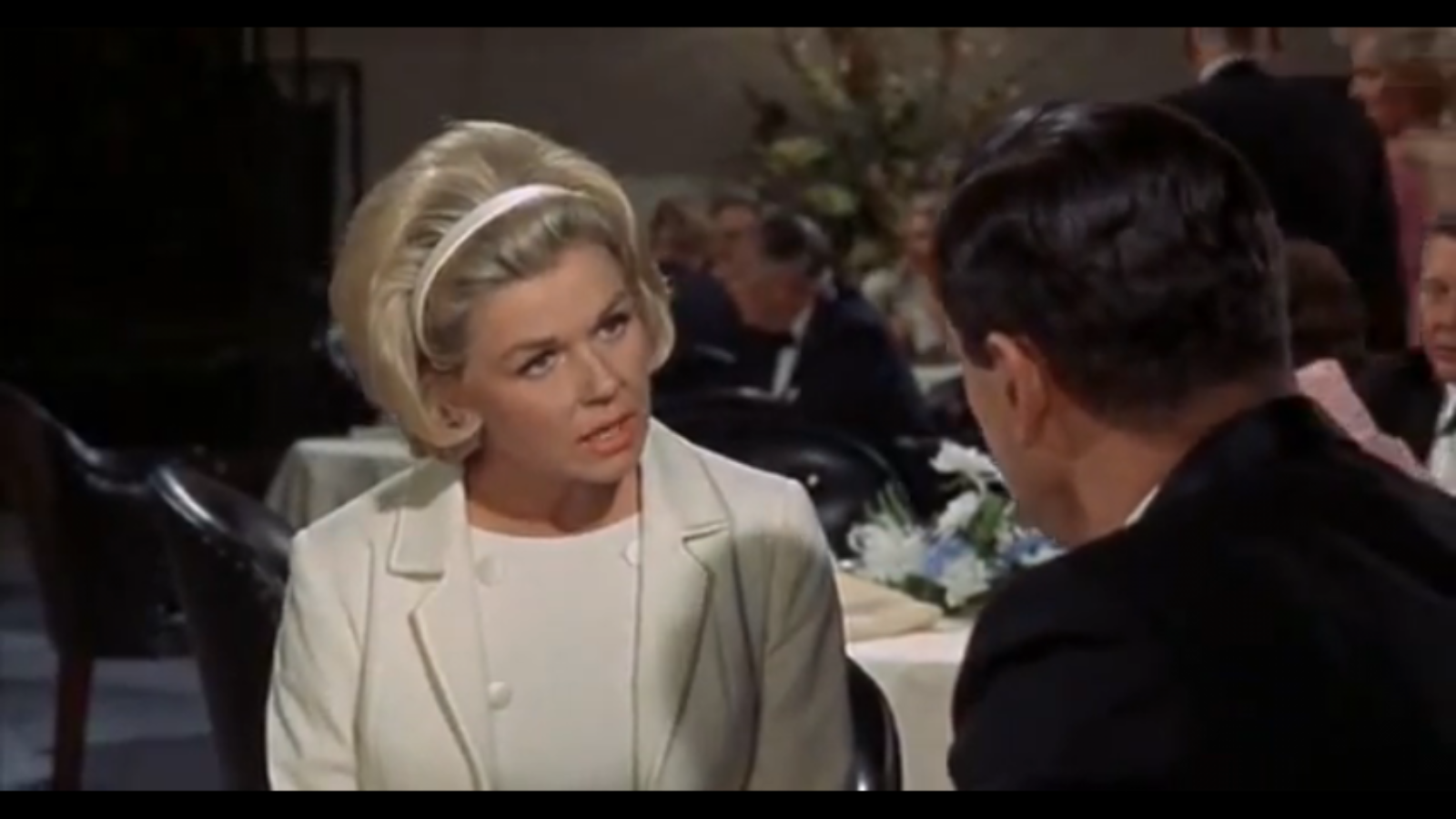
Big Clock, The (1948)
“Oh, Miss York, where are the green clocks of yesteryear?”
“I need him like the axe needs the turkey.”
|
Synopsis: |
|
Genres, Themes, Actors, and Directors:
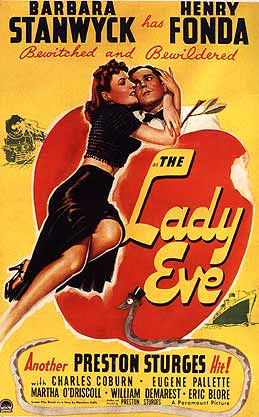
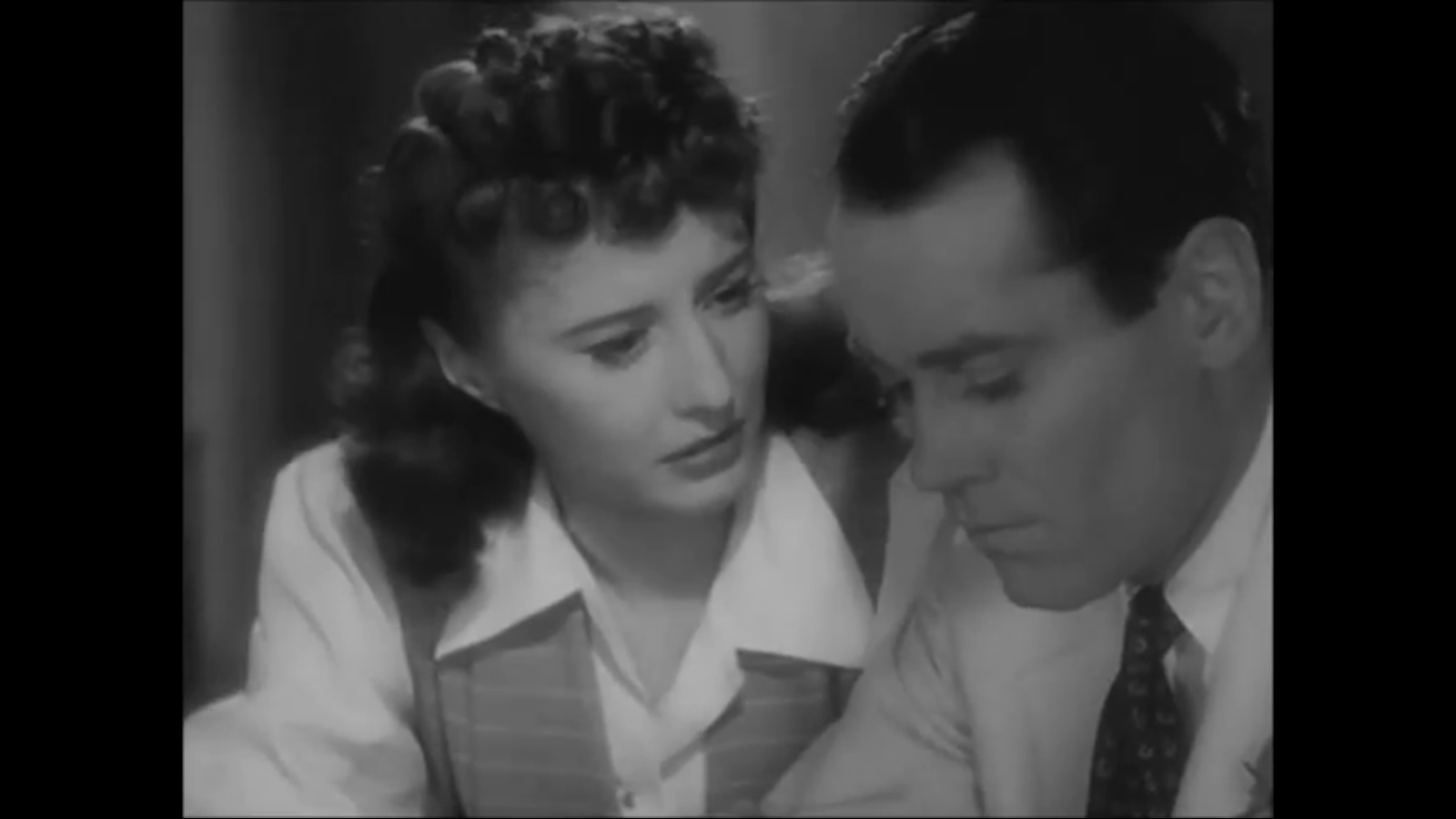
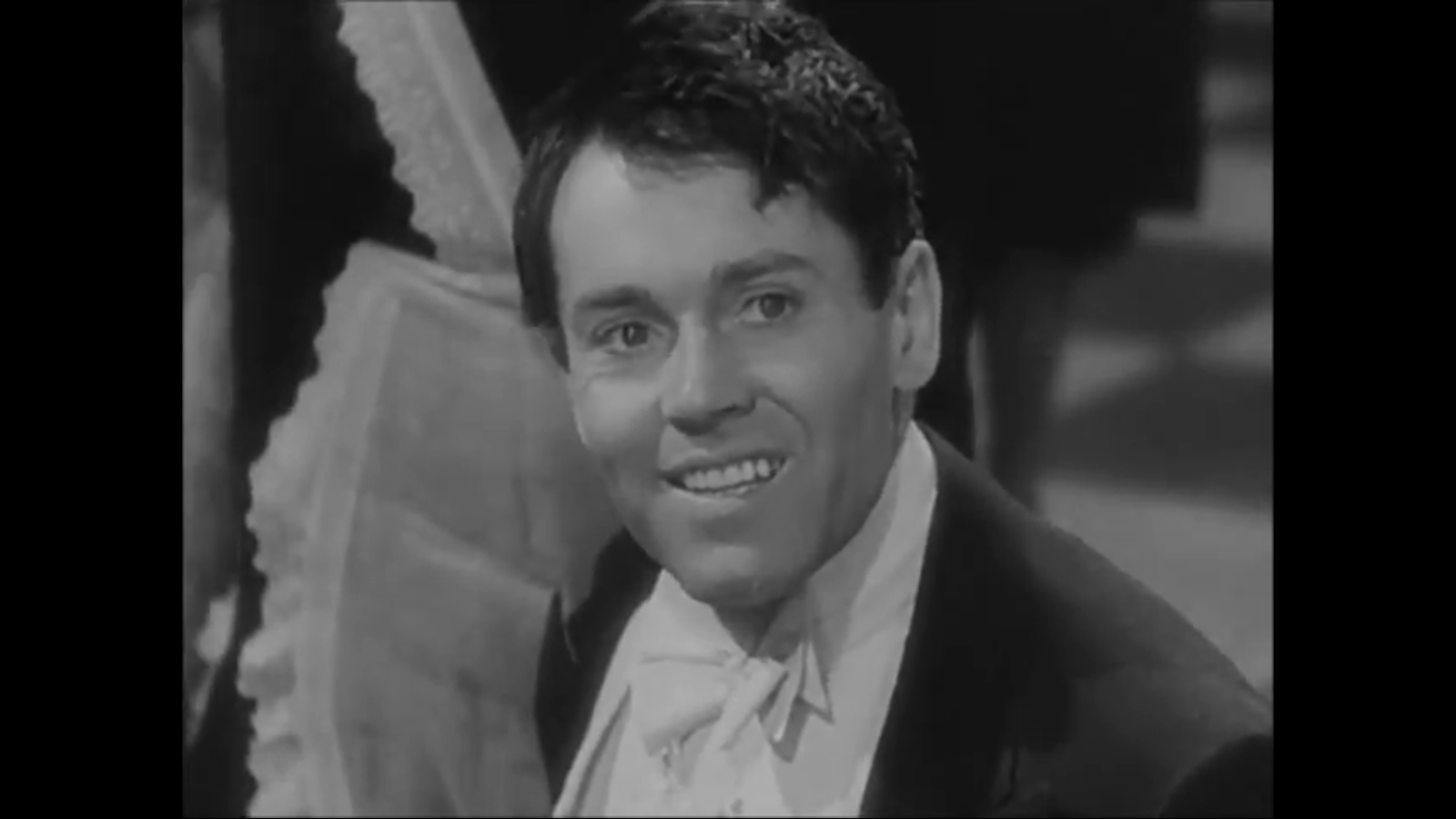
Response to Peary’s Review: What’s most memorable about The Lady Eve, however, are the performances by the odd-couple leads — both at the top of their game. Peary accurately notes that Fonda (never the most exciting of actors) “will surprise you with his skillful pratfalls” (they’re numerous, and all exceedingly well-done), and argues that “Stanwyck is so personable and vivacious that you feel… all the men whose money she stole got their money’s worth”. Peary names Stanwyck Best Actress of the Year in his Alternate Oscars book for 1941, though he ultimately selects her performance in Ball of Fire over this one simply because he “likes her character better” in that film; but he rightfully argues that she’s “flawless in both comedies”. Her complex character here undergoes a tremendous character arc, allowing herself to unexpectedly fall in love, then reverting to wily cynicism when her heart is broken, and magically transforming into a glamorous, seductive, yet hilarious noblewoman who convincingly has dozens of men literally drooling at her feet. She bats not an eye when silently daring Fonda to doubt the veracity of her outrageous assumed persona — yet we can easily see both her vulnerability and her scorned-woman wrath hovering close beneath the surface. Peary culminates his brief review of The Lady Eve by arguing that the “film would match Sullivan’s Travels” — which he nominates as Best Picture of the Year in his Alternate Oscars — “if it didn’t peter out near the end”; however, I’m actually a bigger fan of this title, made the same year. I disagree completely that the film’s ending (reminiscent, in a way, of the denouement to Billy Wilder’s The Major and the Minor) is a cop-out; as Ebert puts it in his “Greatest Films” review, the final two lines are “equal to the classic line ‘Nobody’s perfect!” at the end of Some Like It Hot.” A final kudos should be given to Edith Head and her minions for a set of marvelous outfits; Stanwyck has never looked more enticing. As Peary puts it, “cheers to her wardrobe designer”. Redeeming Qualities and Moments:
Must See? Categories
(Listed in 1001 Movies You Must See Before You Die) Links: |
“I know I don’t look like Joe, but I’m him just the same!”
|
Synopsis: |
|
Genres, Themes, Actors, and Directors:
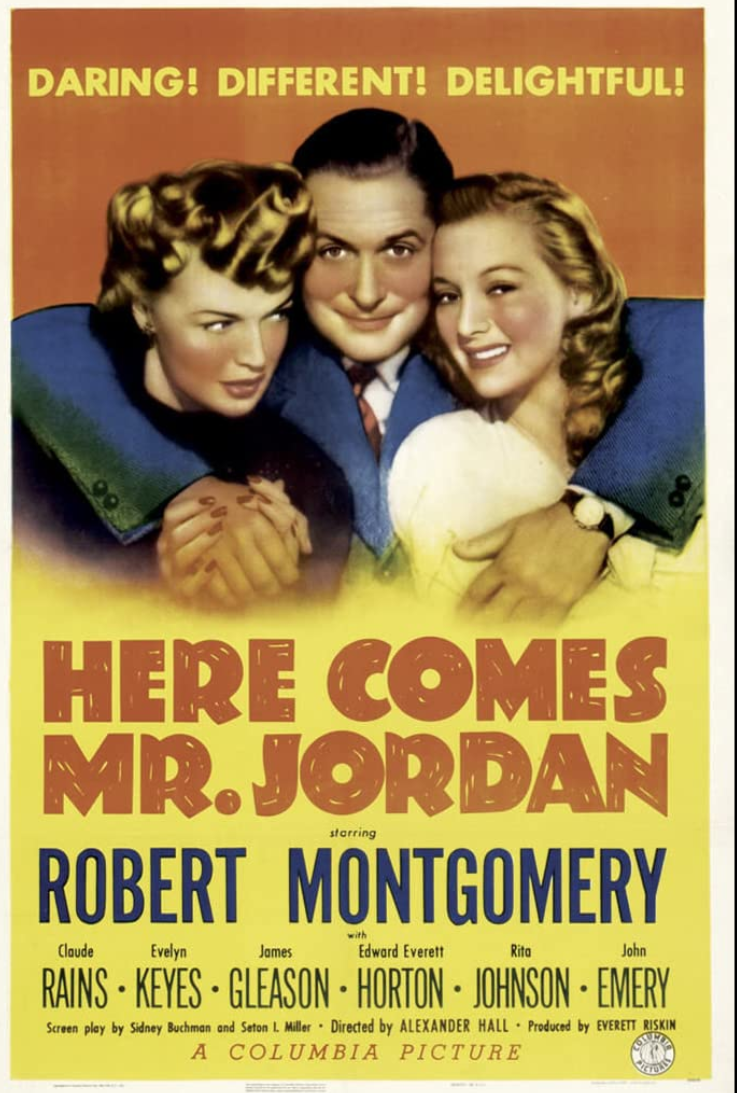
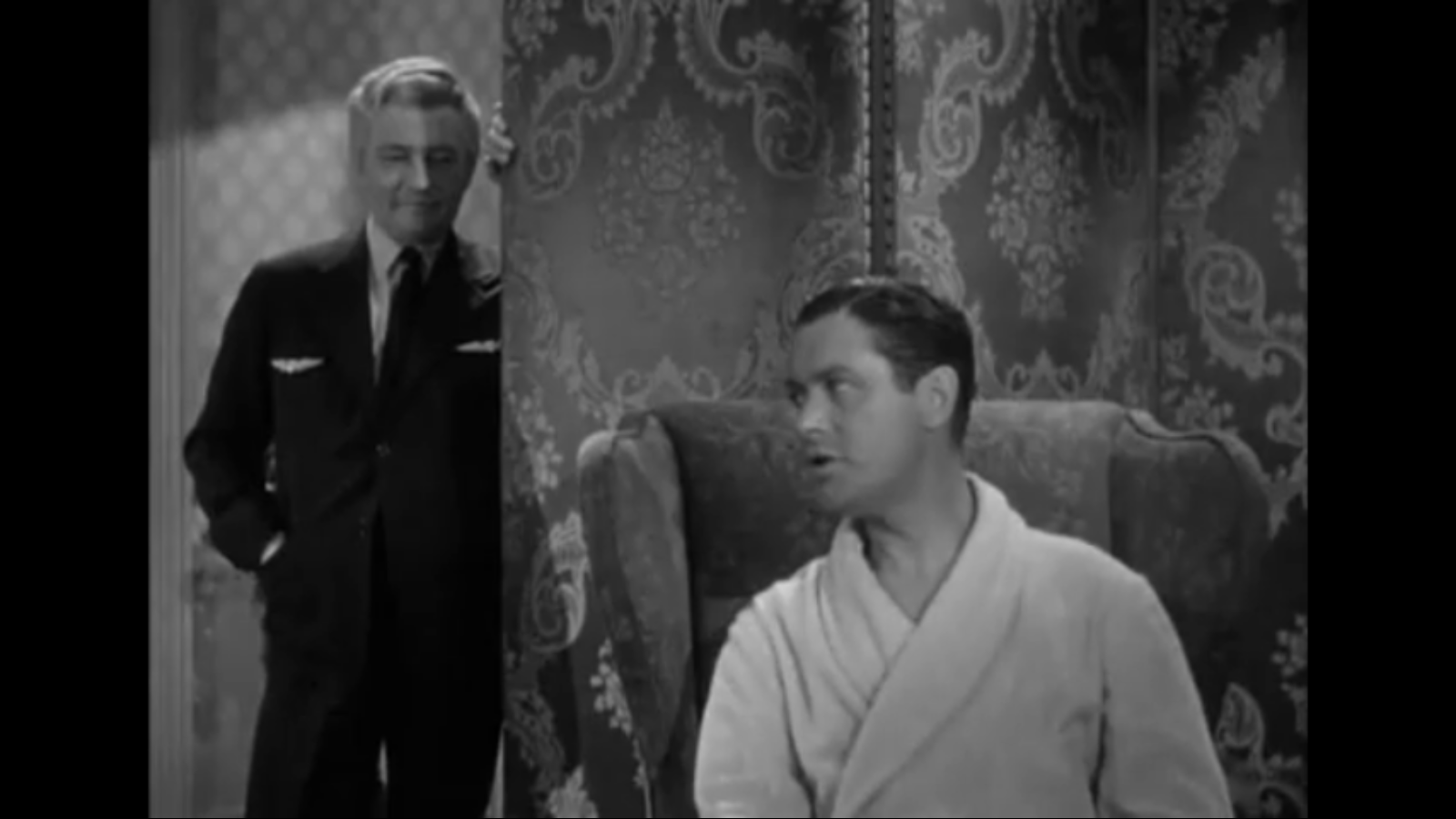
Response to Peary’s Review: In his review, Savant aptly describes the film’s “optimistic and uplifting message” as follows: “the human soul is a wondrous thing that lives after us, even if it takes new forms and new identities”, and “our essential goodness will be passed on to those that follow”, given that “love doesn’t die with one’s mortal body”. Even for hard-headed cynics like myself, this message is simply too appealing not to want to believe — and thus, I gave myself over to the story. To that end, I appreciated the care taken to resolve the undeniably tricky dilemma of Montgomery’s character supposedly inhabiting new bodies while WE still see Montgomery himself; appropriately enough, other players in the “outstanding supporting cast” are given ample time to adjust to the astonishing truth of Montgomery’s bodily inhabitance — most notably James Gleason as a cynical manager who takes some convincing that his former boxing champion now resides in a wealthy financier’s body. Peary accurately notes that Montgomery is “perfect as [boxer Joe] Pendleton”, but I can’t quite agree with his assertion that “Rains’s role should have been stronger”. I was actually quite impressed by how seamlessly the screenplay incorporates his presence in a story that really should be all about Pendleton. Yet I wasn’t especially enthused by Rains’s performance here. He’s certainly competent, and projects just the right amount of avuncular wisdom, but — perhaps strategically? — he’s simply not very charismatic. Meanwhile, Evelyn Keyes (probably best known for playing “Suellen” in Gone With the Wind) gives a delightful performance in a minor yet essential role as the woman who inspires Montgomery to give Farnsworth’s body a try; it’s a joy to watch her slowly learning to trust, and then love, the man who once caused her indescribable grief. Redeeming Qualities and Moments:
Must See? Categories
Links: |
“Now that you’re a capitalist, I don’t know how you feel about working for a living.”
|
Synopsis: |
|
Genres, Themes, Actors, and Directors:
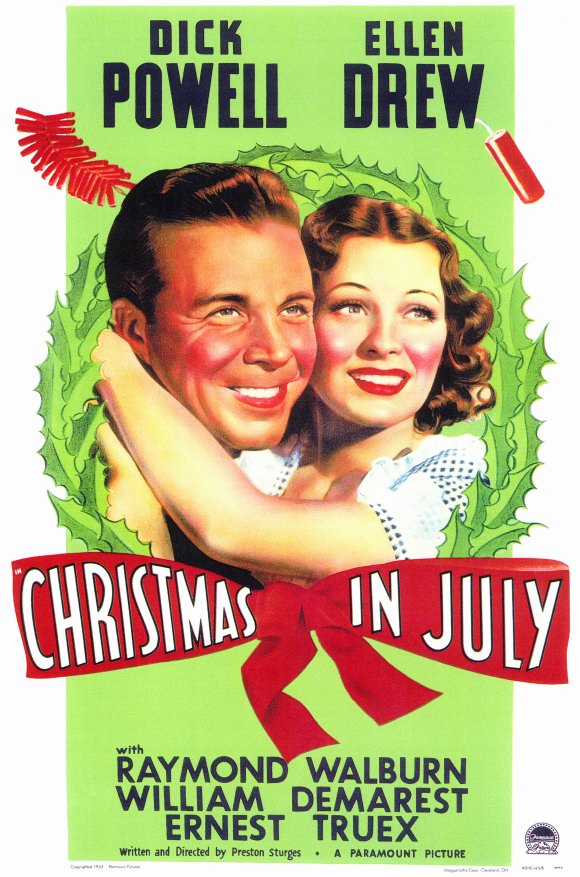
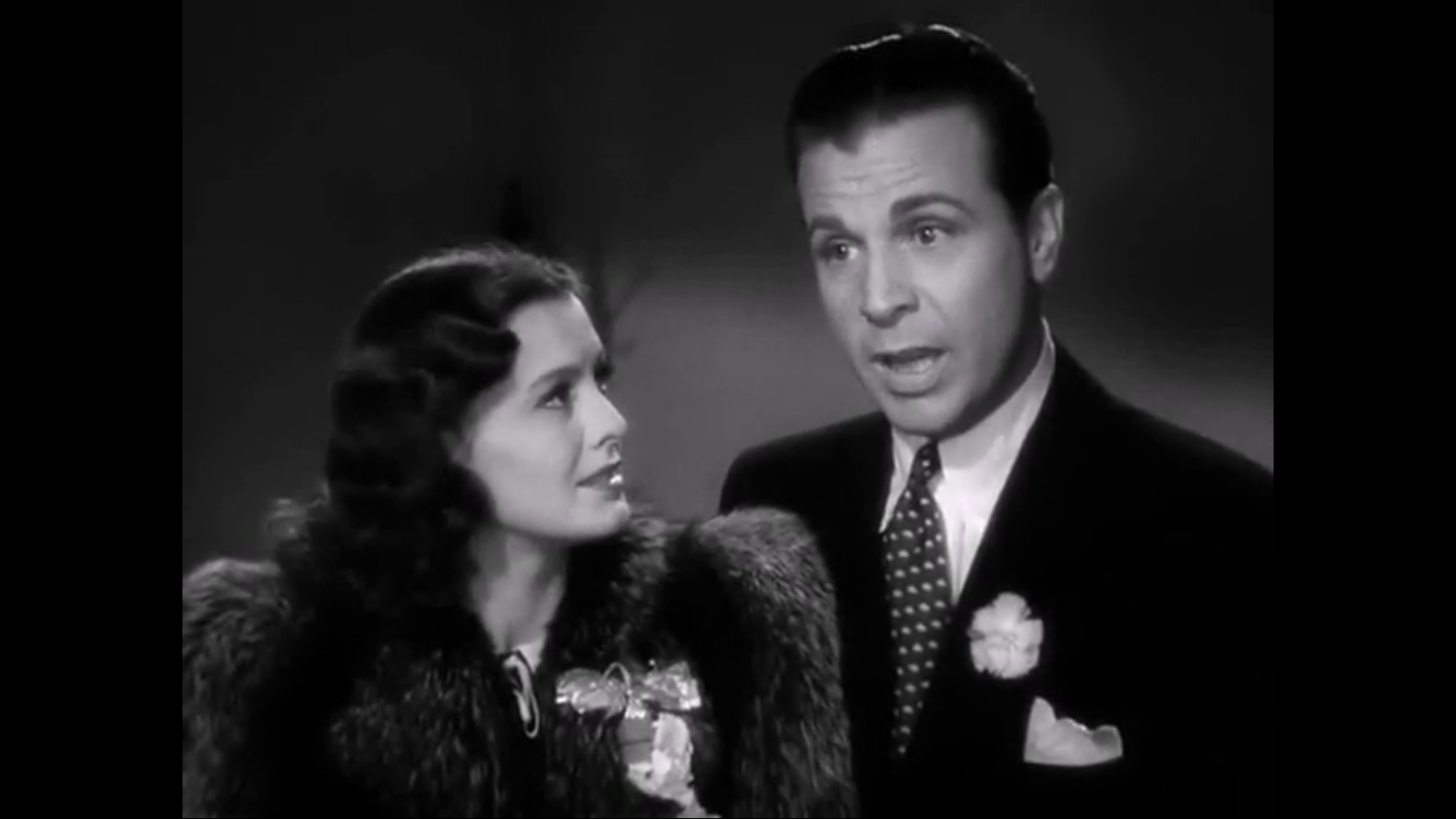
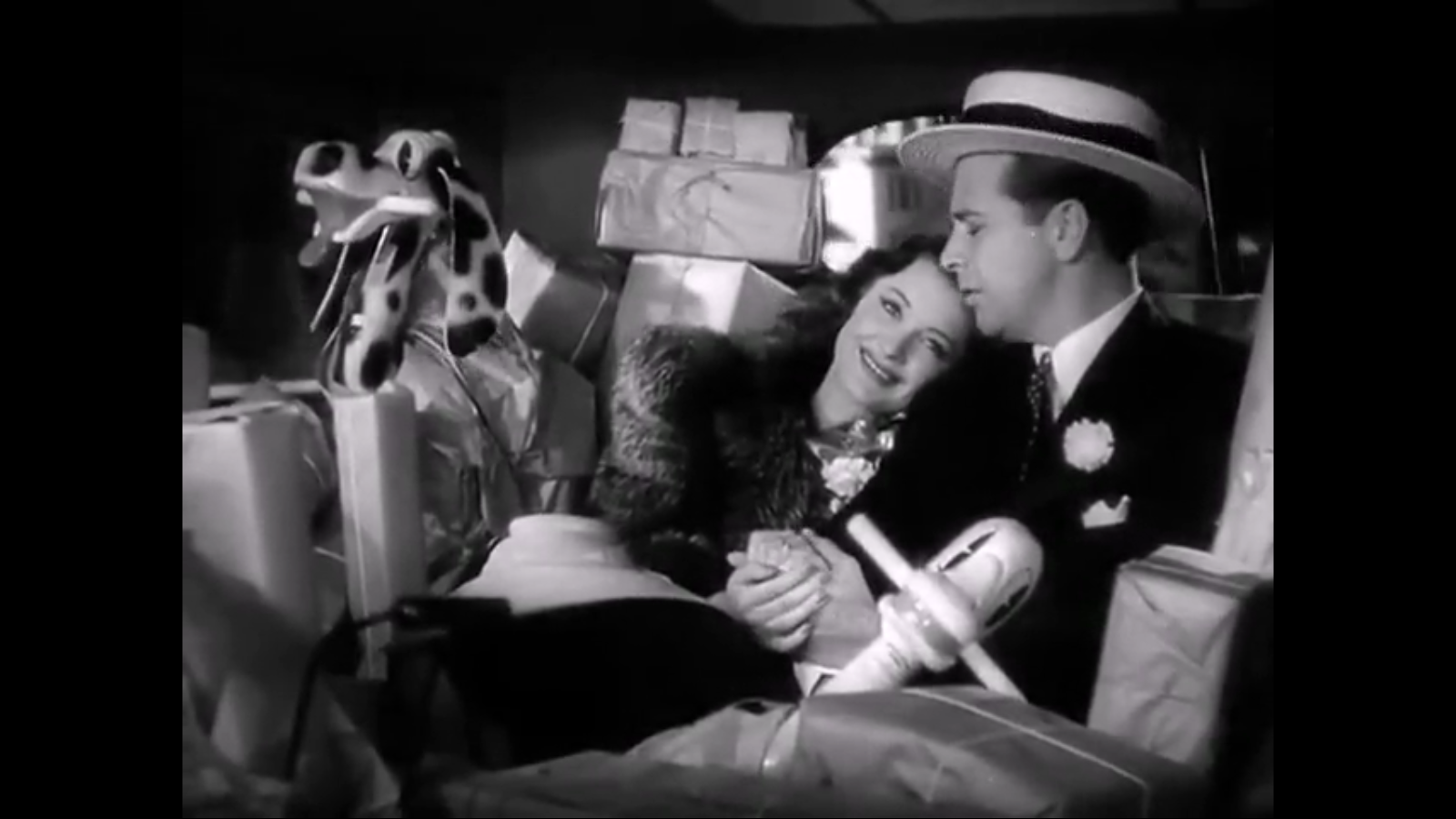
Review: At just 67 minutes long, the storyline here moves like a breeze, shifting quickly from what looks like it will be simply a painful lesson in undue humiliation (as the ever-hopeful Powell is taken for a ride by several of his naughty co-workers), to an unexpectedly joyful tale of happy coincidence and good luck. Naturally, things must eventually come to a head — but along the way, we’re witness to both the delights of seeing asinine men-in-power made fools of, and deserving underlings given a chance to show their best light. Meanwhile, those who harbor nagging suspicions about the — er, veracity — of the advertising industry need look no further than here to have their suspicions verified; what makes for an “award-winning” slogan has apparently always remained a hotly contested exercise in Emperor’s Clothing. With that said, the film’s ending remains the best one possible, on all counts; watch and see for yourself. Note: Powell and Drew are perfectly cast (and utterly believable) as the central young couple in love, and are surrounded by Sturges’ dependable crew of supporting comedic actors (including the inimitable William Demarest and Franklin Pangborn). Redeeming Qualities and Moments: Must See? Categories
Links: |
“That’s one heck of a guy you’ve got there, Judy. When they made George Kimball, they threw away the mold!”
[Note: The following review is of a non-Peary title; click here to read more.]
|
Synopsis: |
|
Genres, Themes, Actors, and Directors:
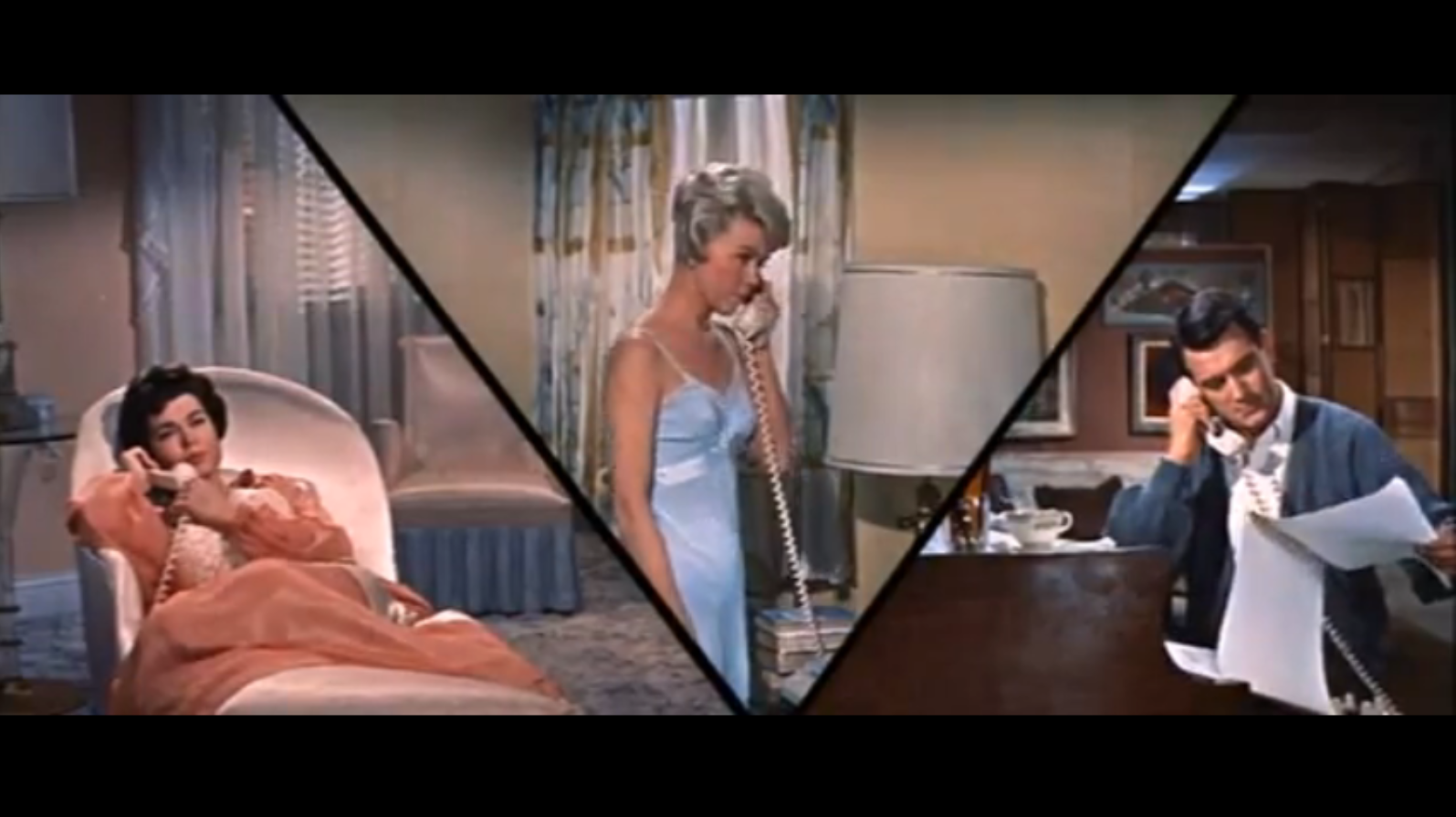
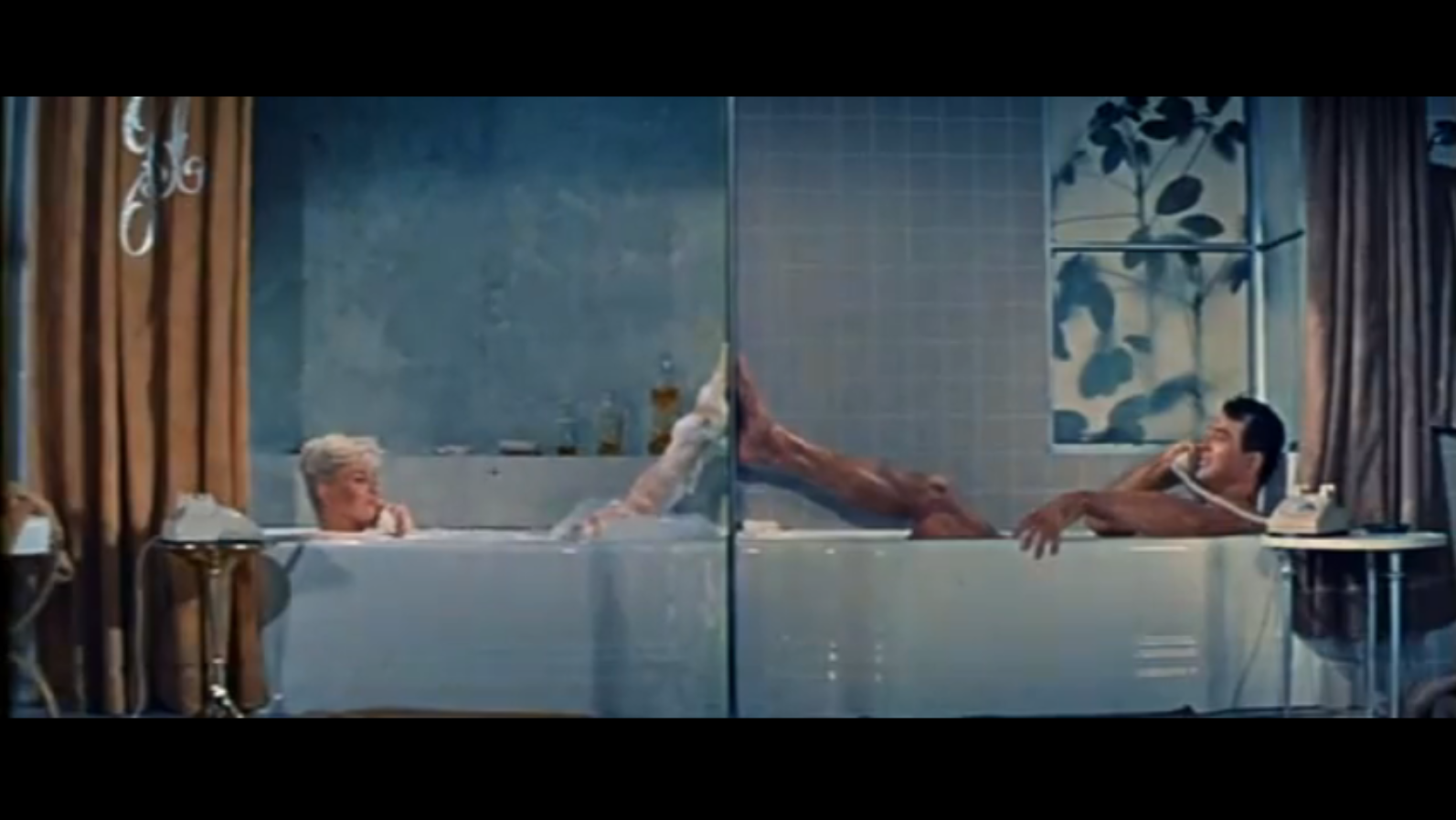
Review: Hudson and Day are both in peak comedic form (as usual) — but it’s co-stars Tony Randall and Paul Lynde who really steal the scenery in this one. Lynde wasn’t in many big-name movies (most viewers will recognize him simply from his work on “Hollywood Squares”), but his role here as an earnest cemetery plot salesman is flat-out hilarious:
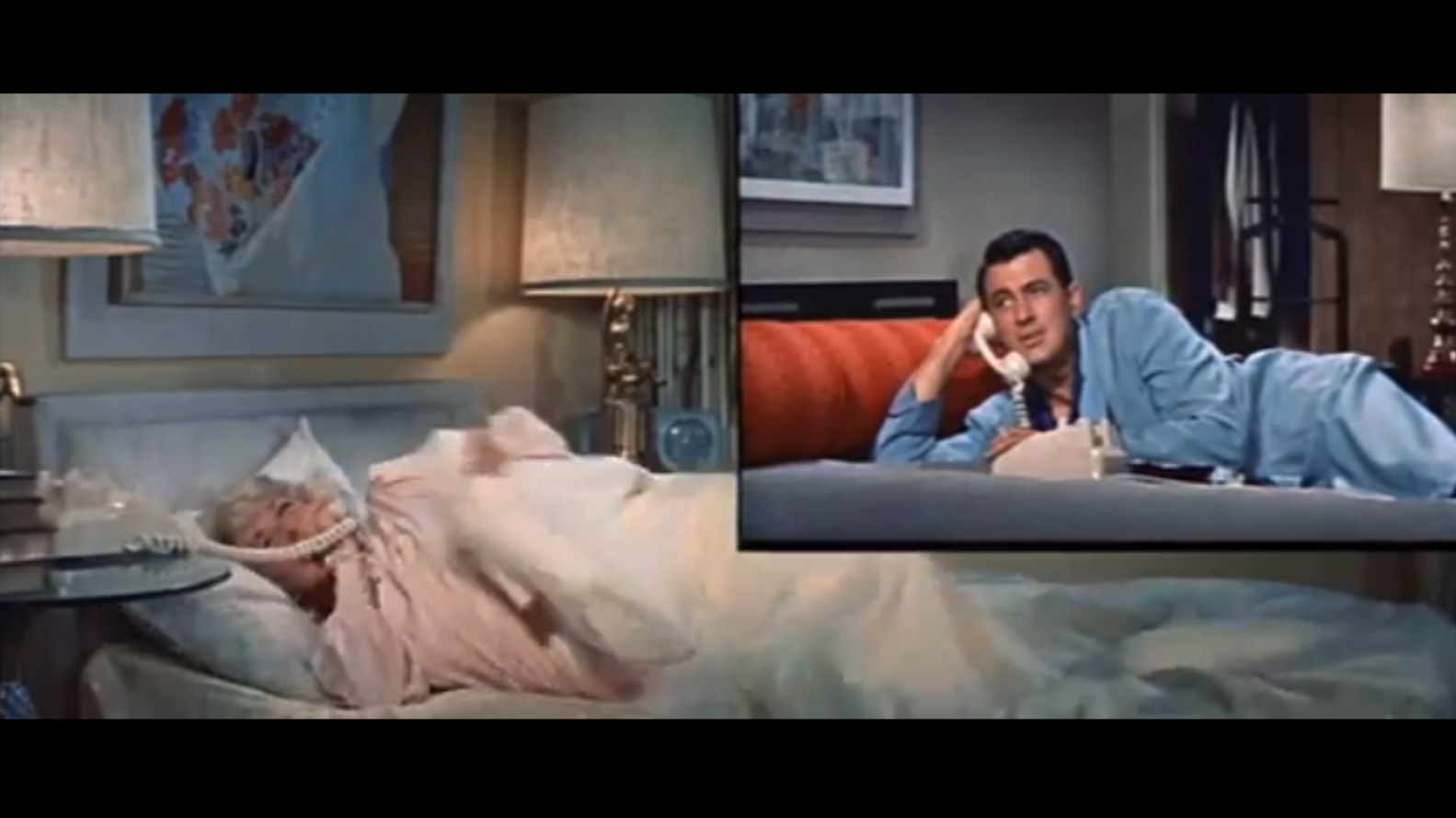
Note that, in addition to his early scene-stealing interaction with Hudson, Lynde’s character plays an unexpectedly important role in the film’s denouement as well. Meanwhile, Randall proves why he was such an essential element in all three of the Day/Hudson films: his consistently maudlin reaction to Hudson’s morbid situation convincingly grounds the entire affair. The thinly-veiled “connection” between the two men (best friends, neighbors, and…? where IS Randall’s wife, anyway?) has been duly noted (indeed, it’s hard to miss); check out the infamous bed-sharing scene, for instance. Yet it’s all simultaneously so “innocent” — and Hudson’s adoration of his wife so clear — that audiences at the time were likely comfortable with the film as the heteronormative experience it was more broadly meant to be. Redeeming Qualities and Moments:
Must See? Categories
Links: |
“Something bad happens, it’s gotta be someone’s fault.”
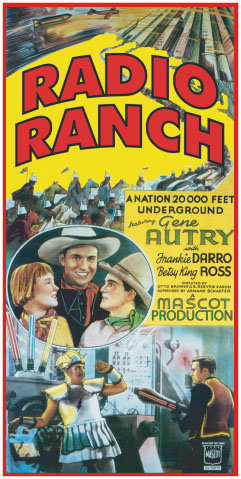
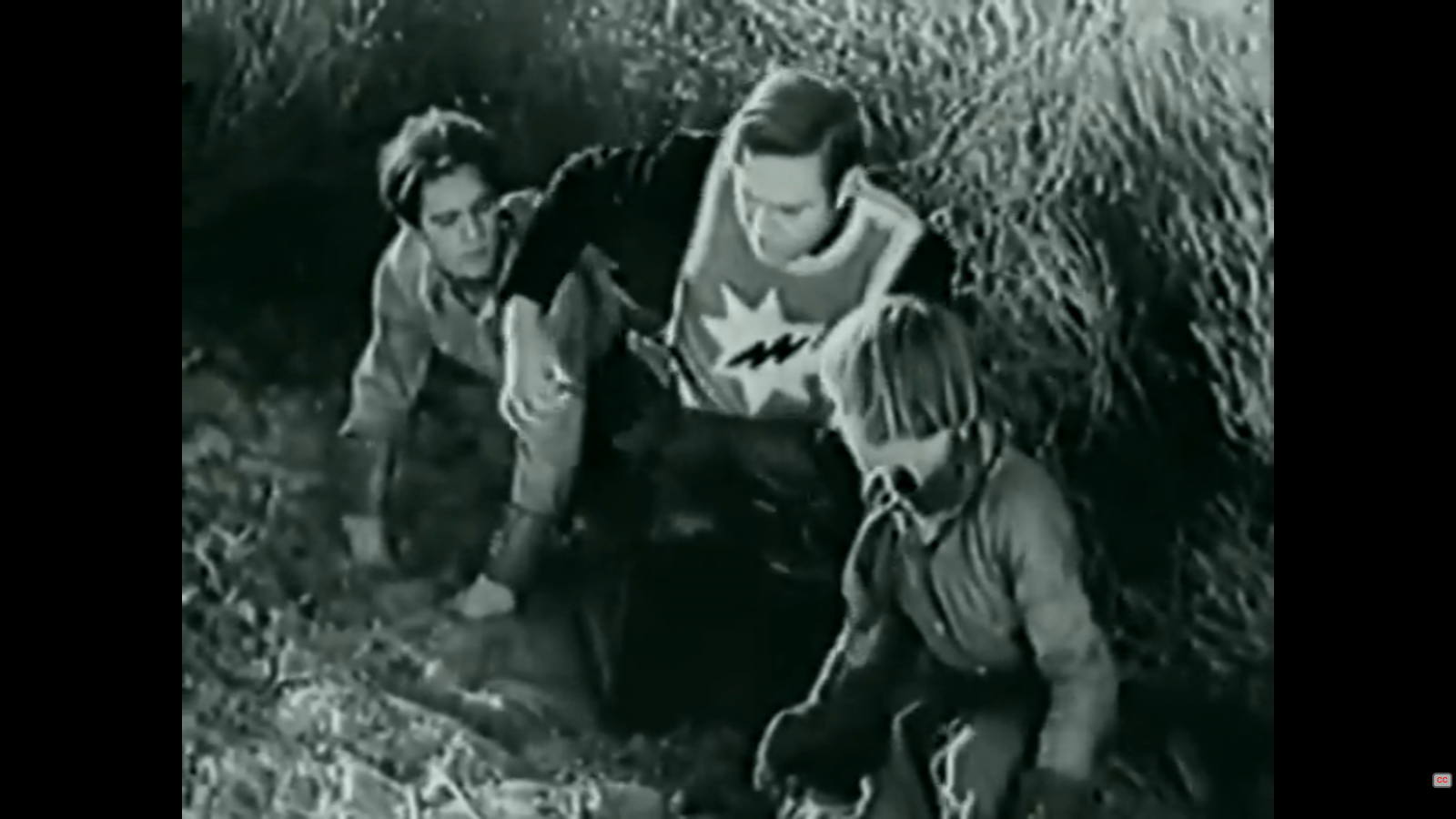
“If we could capture Gene Autry, Radio Ranch would soon become deserted, and the entrance to our underground kingdom would remain forever undiscovered.”
|
Synopsis: |
|
Genres, Themes, Actors, and Directors:
Response to Peary’s Review:
It’s not exactly scintillating stuff — but it remains fascinating simply from a historical perspective. Redeeming Qualities and Moments: Must See? Categories
Links: |
“Have you any idea what it’s like to be on a party line with a sex maniac?”
“You’re beating your head against a stone wall, Milly: You’ll never make jack-a-dandies out of them!”
|
Synopsis: |
|
Genres, Themes, Actors, and Directors:
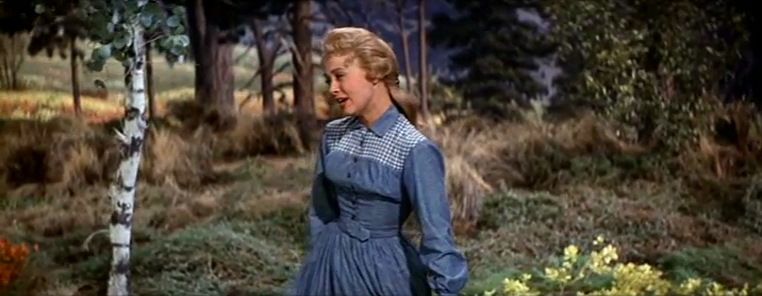
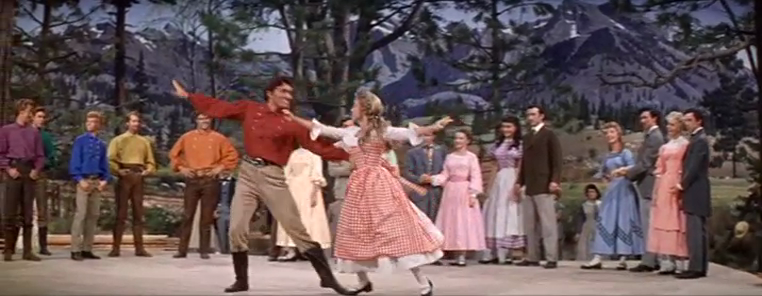
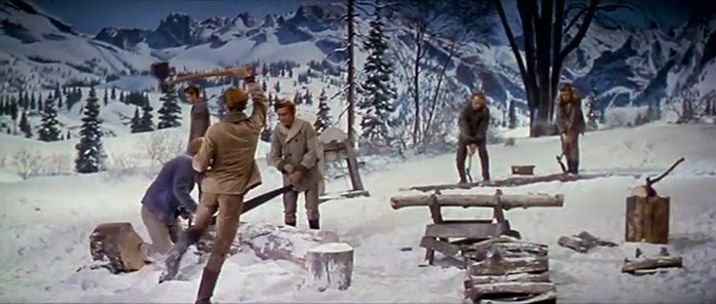
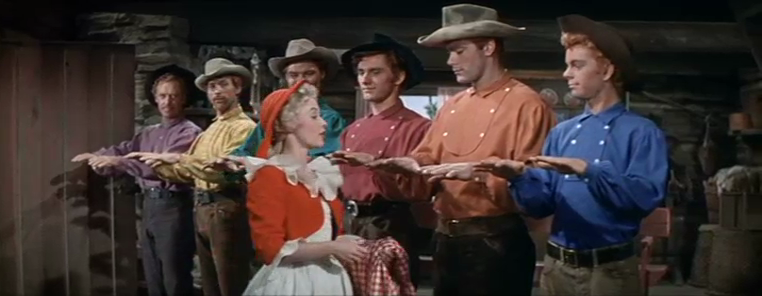
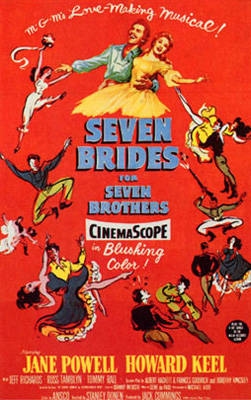
Response to Peary’s Review: Rewatching the film recently, I was gratified to find that the seemingly distasteful storyline — “based on Stephen Vincent Benet’s ‘The Sobbin’ Women'”, which in turn “was inspired by Plutarch’s ‘The Rape of the Sabine Women'” — actually possesses a relatively strong feminist strain. Spunky Powell’s foolhardy willingness to marry Keel the day she meets him (and to wax rhapsodic in song about her desire to cook and clean for him) is tempered by her savvy calculation that this is likely her best possible option in life; it’s certainly better than the thankless work as a servant-for-hire she’s been doing until then. Of course, she didn’t bargain on Keel having six lunk-headed brothers who she’d also be expected to cook and clean for — but she quickly asserts her dominance in their household, “playing Snow White” as she attempts “to turn the ruffians into gentlemen”. And, once the film’s infamous kidnapping occurs, she retains her authority, dictating at every moment exactly what will happen next. She’s a refreshingly strong “Western” woman, and this remains one of Powell’s best roles. Interestingly, Jonathan Rosenbaum — in his review of the film for 1,001 Movies You Must See (2003) — refers to it as “a profoundly sexist” (albeit “eminently hummable”) movie, one which provides a “fascinating glimpse at the kind of patriarchal rape fantasies that were considered good-natured and even ‘cute’ at the time”, with a bevy of tunes that “accurately pinpoint the movie’s sexual politics” (such as “Bless Your Beautiful Hide” and “I’m a Lonesome Polecat”). His take is exactly how I felt as a much younger film fanatic; but at this point, I’m willing to simply place the film within its historical context, and recognize that for women at that time and in that geographical situation, finding a suitable husband really was likely the cleanest path to security and happiness. Regardless, I’m now able to appreciate Seven Brides… for its merits — vibrant widescreen Technicolor cinematography, “hummable” tunes, and truly fantastic dancing — rather than its questionable premise. Redeeming Qualities and Moments: Must See? Categories
(Listed in 1001 Movies You Must See Before You Die) Links: |
“When it’s the real thing, you’ll know it — as surely as if you’d been hit on the head with a sledgehammer!”
|
Synopsis: |
|
Genres, Themes, Actors, and Directors:
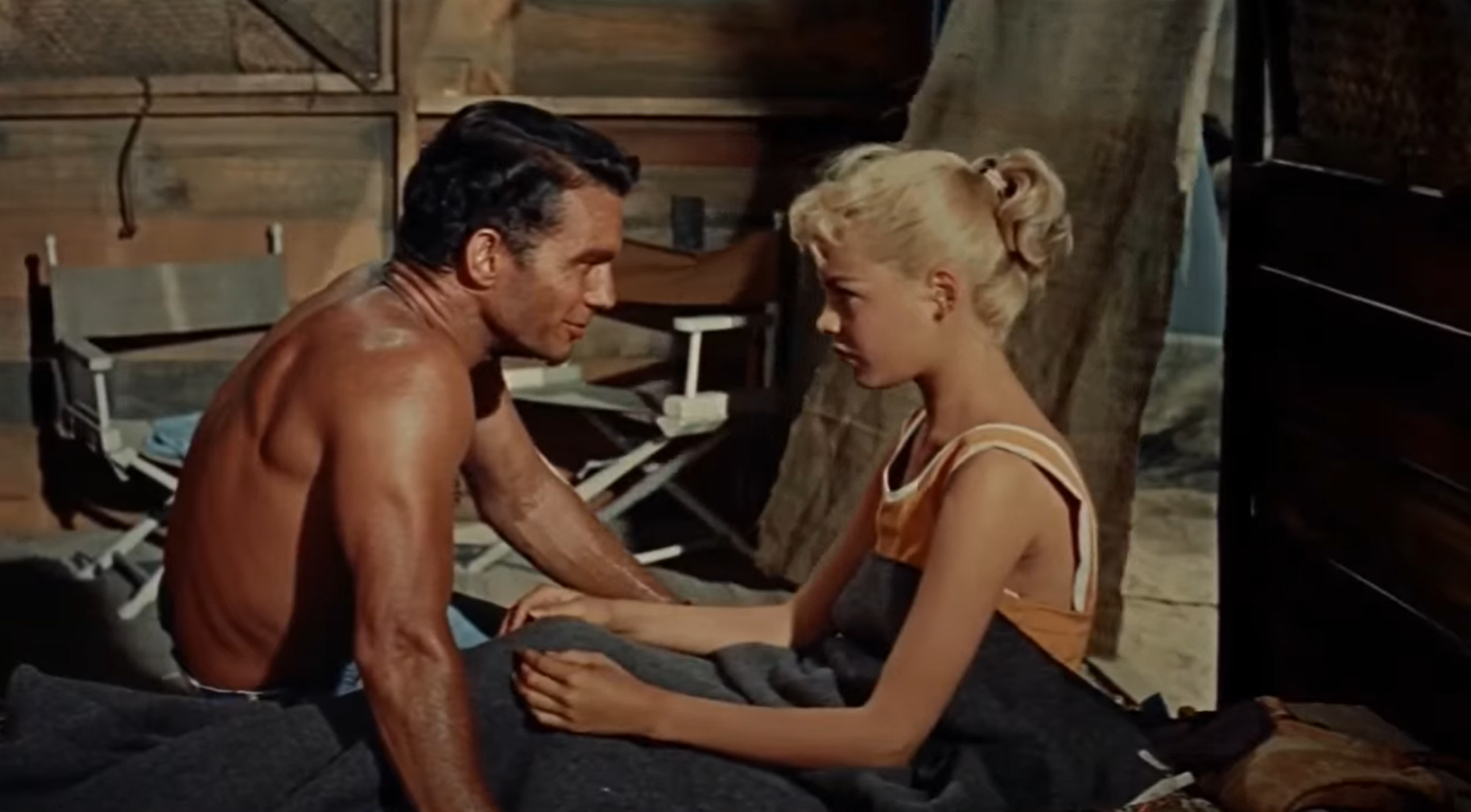
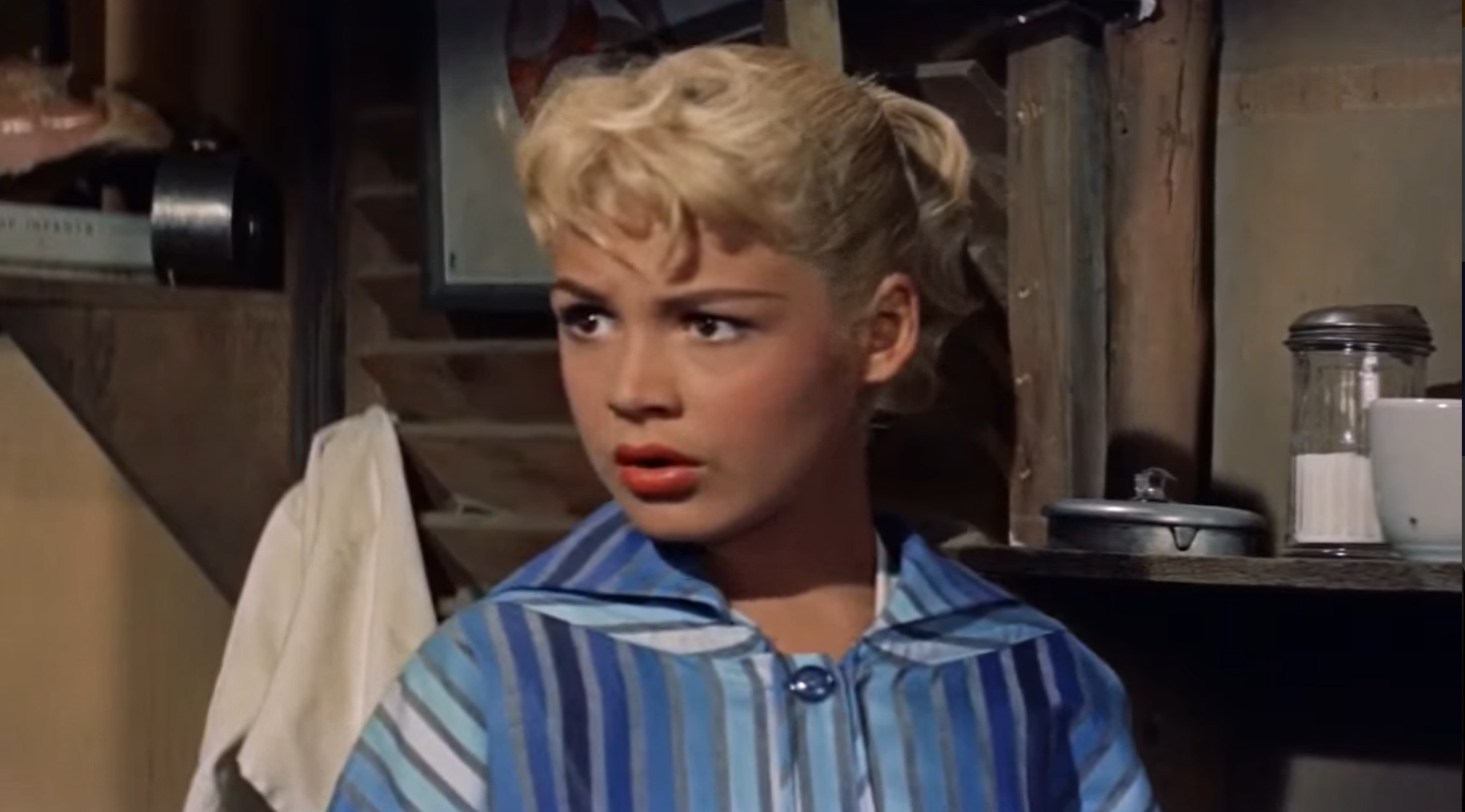
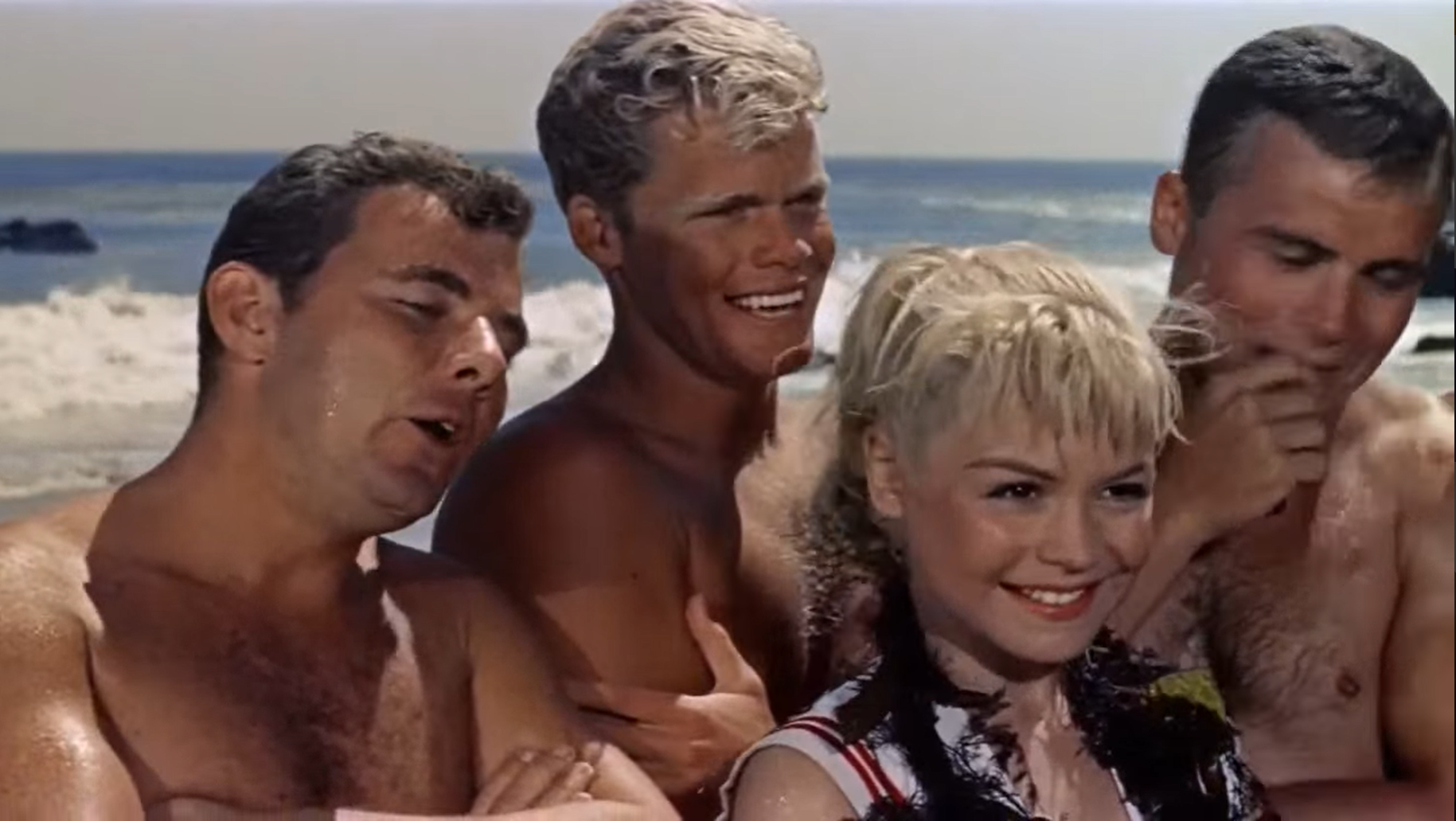
Review: The mocking disdain shown when Gidget first attempts to enter the surfing clique’s hallowed turf rings all-too-true and painful; it’s especially disturbing to see “Lover Boy” (Tom Laughlin) being sexually aggressive with innocent young Gidget while purportedly teaching her how to surf (thankfully, she holds her own just fine). Where the film falters a bit is in the casting of teen heartthrob James Darren as Moondoggie, the object of Gidget’s affections. He’s such a pill that we can’t help wondering why she persists in her crush (though of course, the heart knows no reason, and I suppose he’s good-looking enough in his way). Much more interesting, however, is the relatively complex role played by Robertson, whose character “The Big Kahuna” possesses an intriguing history as a Korean War vet; one wishes his storyline were given a bit more emphasis. Then again, this film really is all about Gidget herself — and Dee is appropriately winsome in this central role.
Note: Residents of Southern California will enjoy laughing themselves silly at the notion that Robertson could successfully set up and maintain a ramshackle home for himself right on the beach. Ha! Redeeming Qualities and Moments: Must See? Links: |