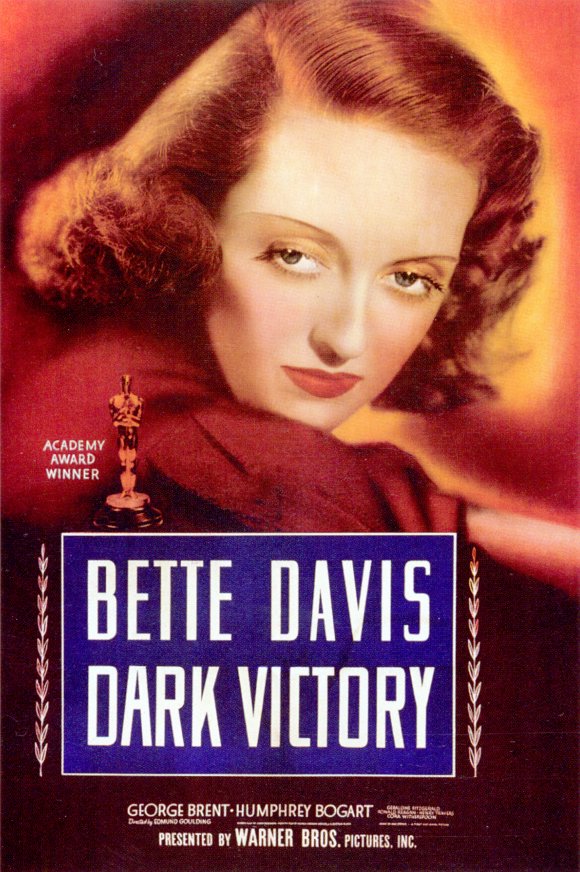
Dark Victory (1939)
“Confidentially, darling, this is more than a hang-over.”
“There’s usually one who loves, and one who is loved.”
|
Synopsis: |
|
Genres, Themes, Actors, and Directors:
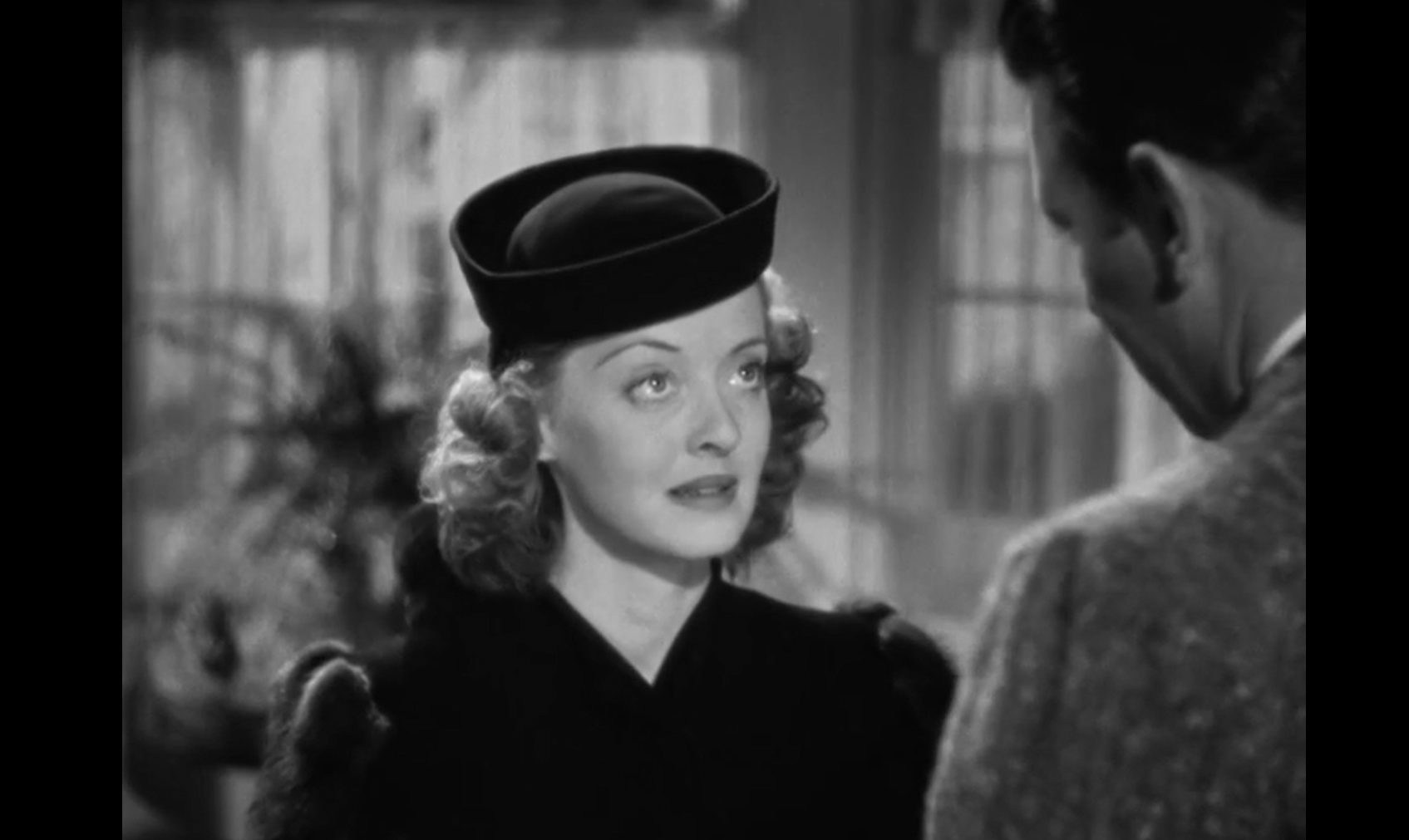
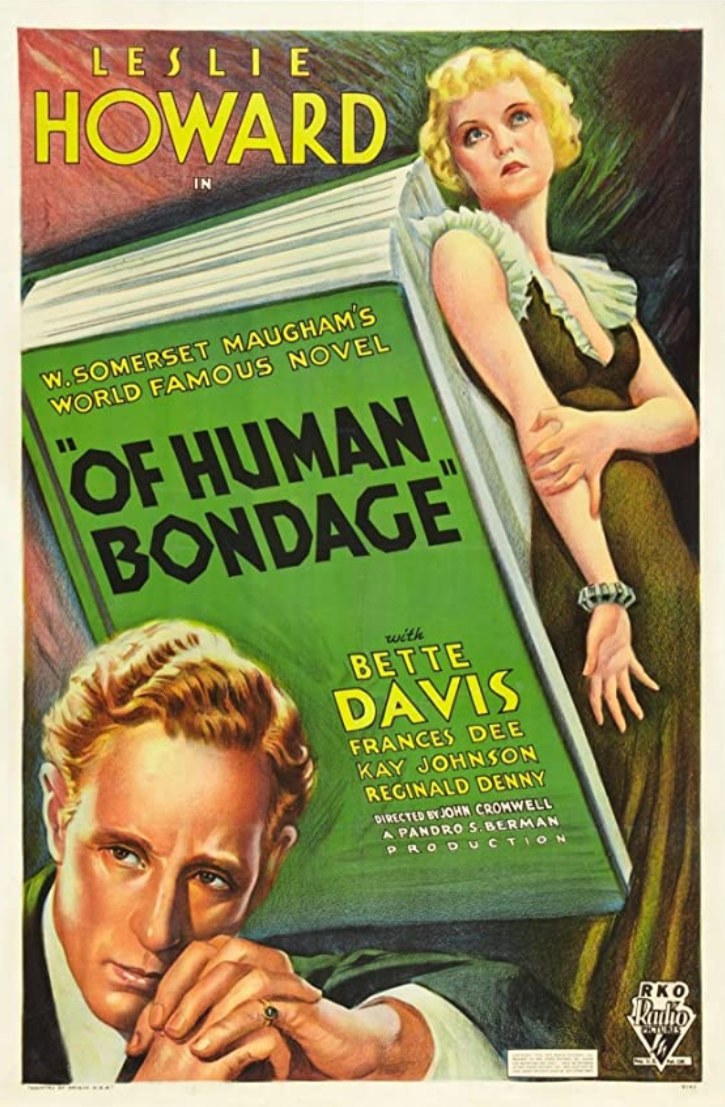
Response to Peary’s Review: … but that it’s “worth watching” as “the film which really launched Davis’s career”. In Alternate Oscars, Peary names Davis Best Actress of the Year for her performance as the “mean and menacing” Mildred, a “cold-hearted, money-loving opportunist who treats Philip like dirt” — or, in the words of New York Times film critic Mourdant Hall, “a heartless little ingrate”. In Alternate Oscars, Peary provides more detailed information on how and why Davis came to take on this role, which “no major Hollywood actress would consider playing” — she apparently “wasn’t concerned about image because no one really knew who she was after twenty-one pictures”, and she “figured [this was] her one shot at stardom”. Peary writes that this role “made such an impression because it was conceived and played in such an original manner” by Davis, given that her Mildred “isn’t especially pretty… or alluring” and “isn’t smart or knowledgeable”. He points out that she “is not a vamp, she is just cheap, stupid, and shallow” — which is precisely why Howard’s relentless obsession with her is so fascinating. As Peary argues, Philip “hates himself for being a cripple… [and] Mildred is his punishment”. Indeed, Davis’s Mildred is a unique variation on a femme fatale: she’s clearly Philip’s undoing, yet he’s almost entirely responsible for their continued dysfunctional “relationship”. She could genuinely care less about him, but — almost to her own surprise — he continues to make himself available to her time and again; and so, as an inveterate manipulator, she takes easy advantage. Theirs is a morbidly fascinating dynamic — not one I find pleasant to watch, but certainly one film fanatics should see at least once. Note: Peary ends his review by stating he’s “never seen a film in which so many letters are read” — really? That’s somehow hard to imagine. Redeeming Qualities and Moments: Must See? Categories
Categories Links: |
“I married the woman everyone else wanted to.”
|
Synopsis: |
|
Genres, Themes, Actors, and Directors:
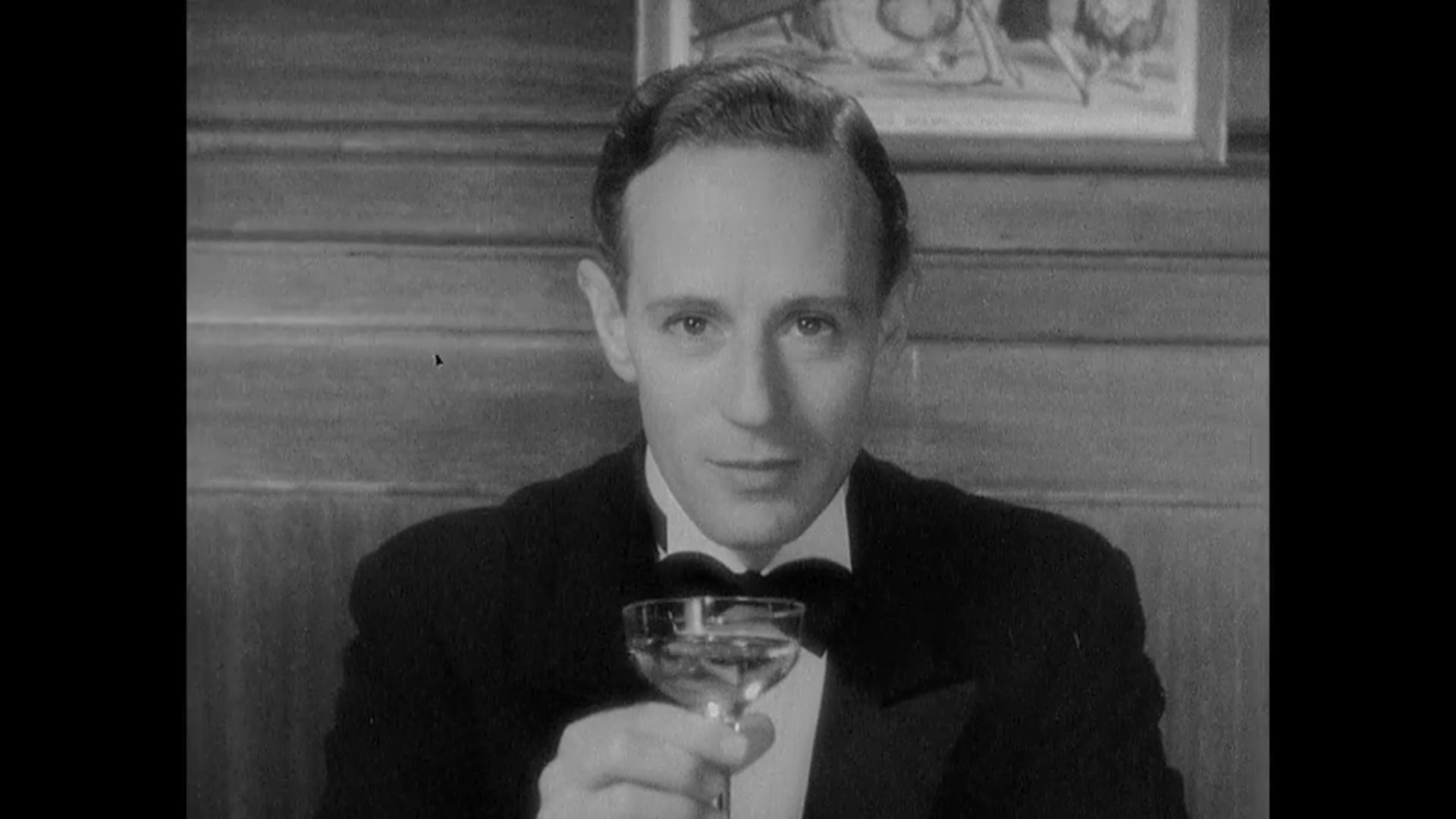
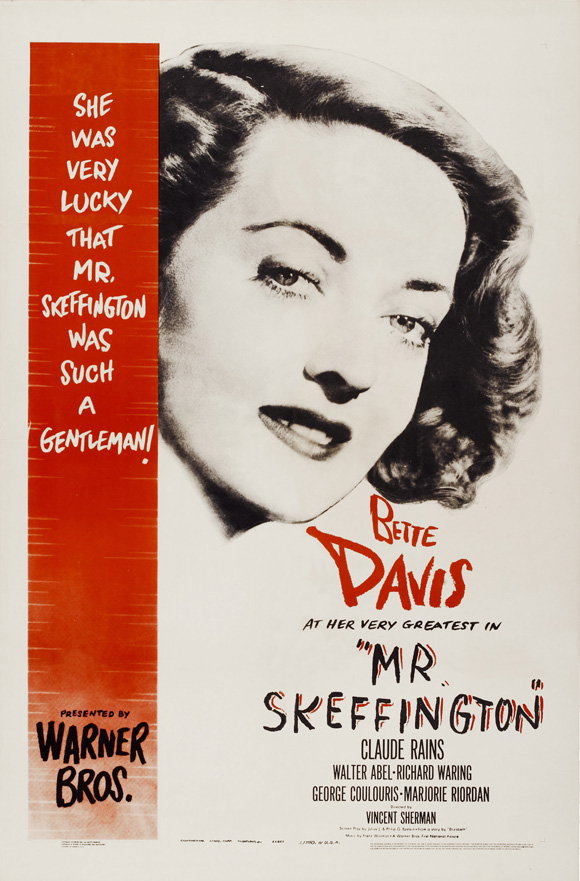
Review: … who’s never at a loss for suitors (who in turn come across more like a comedic Greek chorus than realistic supporting characters). Rains is as invested as always in the title role — but he’s really secondary to the proceedings; this tale should have been called Fanny Skeffington instead, given that it’s primarily concerned with tracking Davis’s predictably disastrous fall-from-grace, hastened by a convenient bout of appearance-wracking diphtheria. To that end, the final portion of the film — in which the hideously transformed Fanny finally gets her comeuppance — provides the most entertainment value, in a gruesomely baroque manner; one can’t help thinking of Davis’s later Grand Guignol performances when viewing her mask-like visage (see still below). Redeeming Qualities and Moments: Must See? Links: |
“Kindly allow me to choose my own friends!”
|
Synopsis: |
|
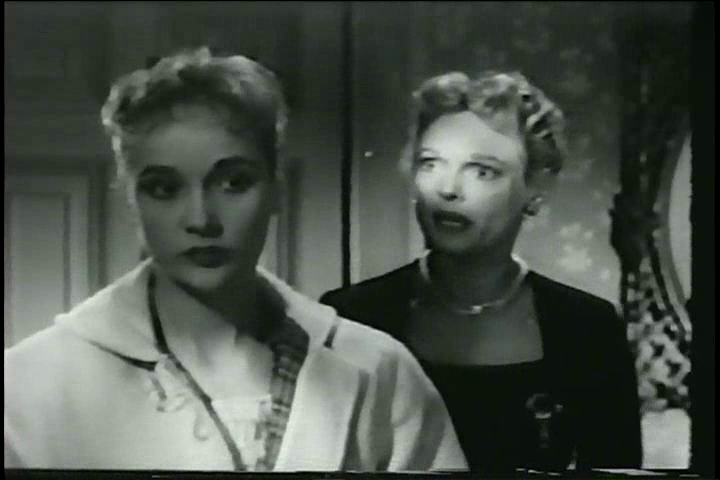
Genres: Review: Meanwhile, Wooland is simply forgettable as her conveniently understanding and handsome suitor. The best feature of the film is Sylvia Syms (in her screen debut) as the pretty young protagonist, who’s torn between a desire to remain her mother’s “good” eldest daughter, and her itch to explore the wild-and-woolly world of soul-corrupting jive. The screenplay becomes needlessly melodramatic in its final third, as Neagle and Syms are provided with further opportunities to explore their complicated mother-daughter dynamic, and the overall tenor of the film begins to feel more like a “women’s weepie” than anything else. Redeeming Qualities and Moments: Must See? Links: |
“Your mother is not dead – not really. She’s come back to me!”
|
Synopsis: |
|
Genres, Themes, Actors, and Directors:
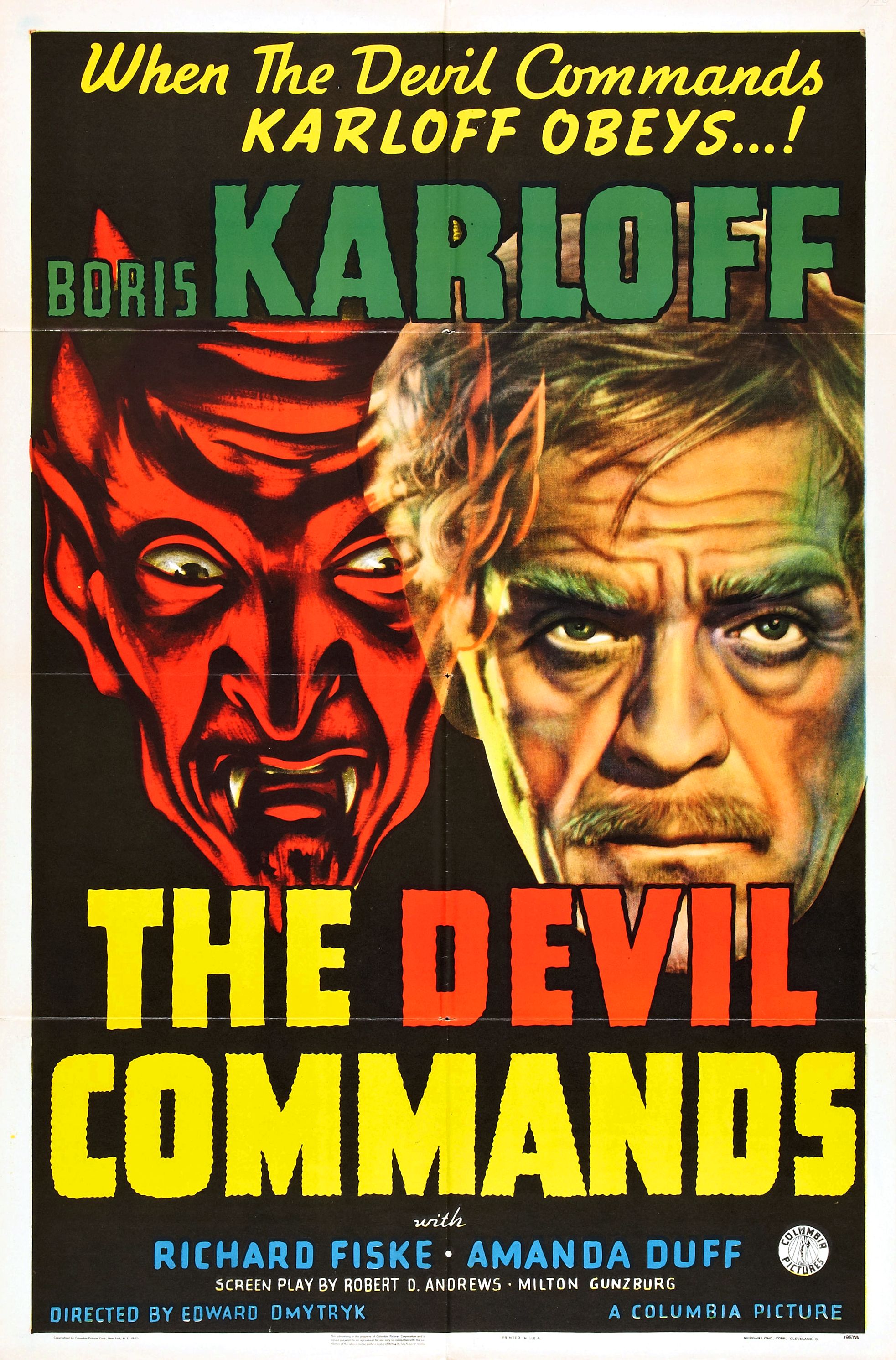
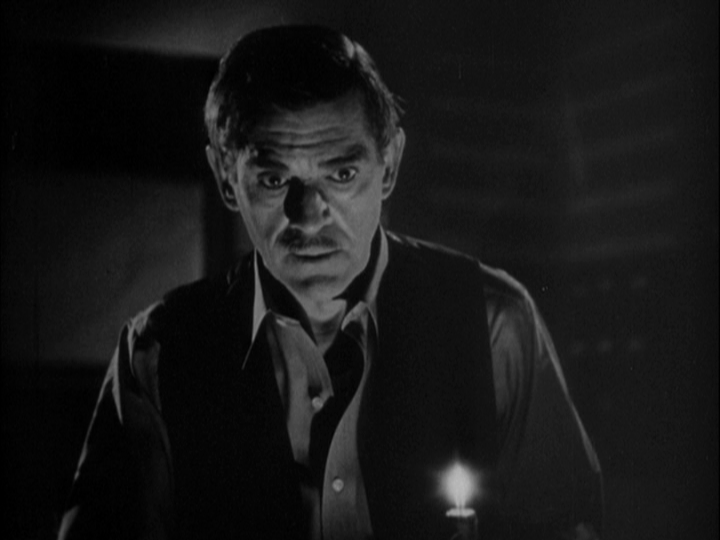
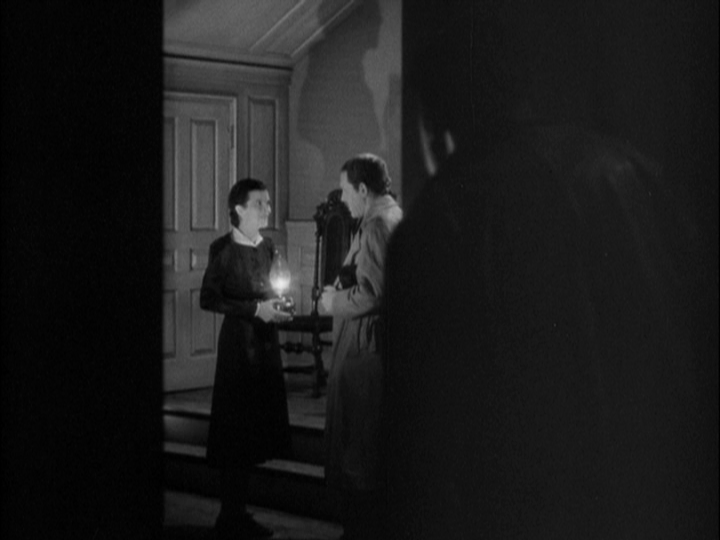
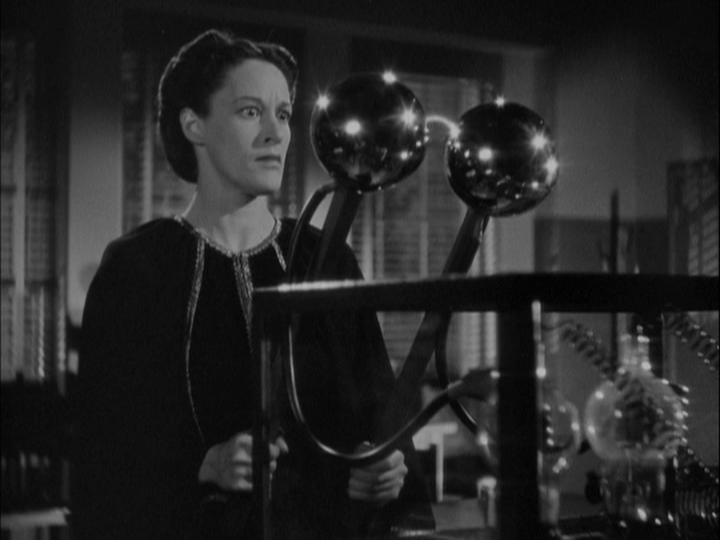
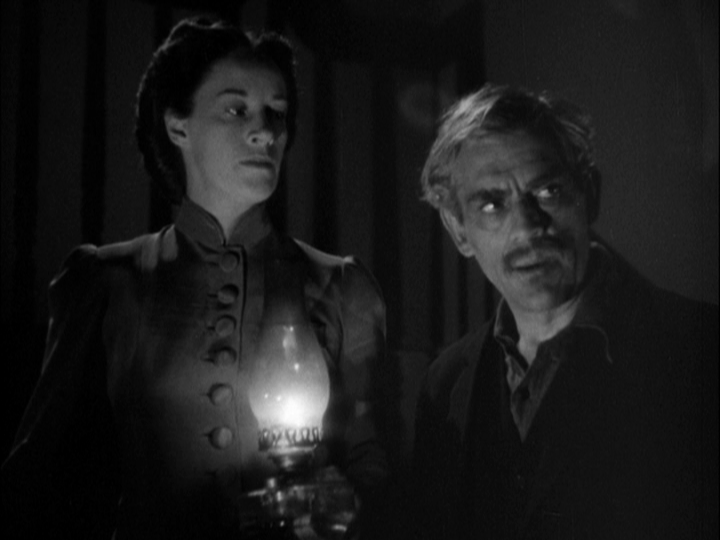
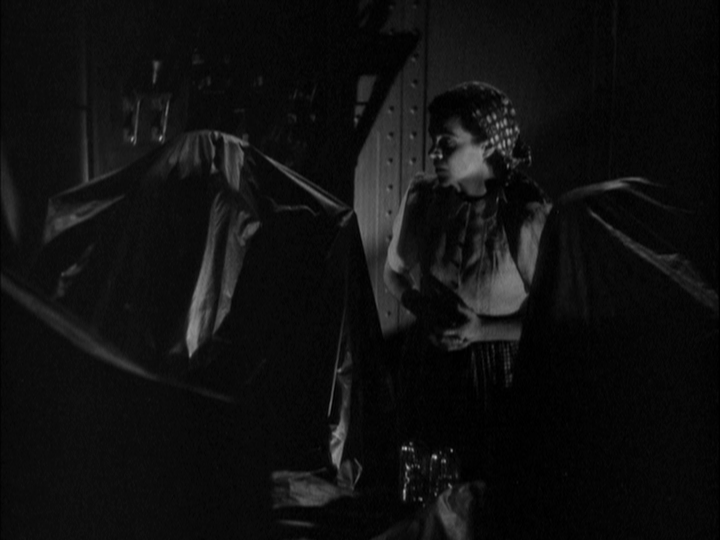
Review: Also lifting the film a notch above average is a strong performance by Anne Revere, playing a quietly psychopathic “medium” whose love of money overrides all other concerns, even her own safety. Other elements of the quickie screenplay (just over an hour long) feel somewhat conventional, but there’s certainly enough here — including a typically committed performance by Karloff: … and atmospheric cinematography — … to recommend this one for fans of the genre. Redeeming Qualities and Moments: Must See? Links: |
“I need a way of living that I can rationalize!”
|
Synopsis: |
|
Genres, Themes, Actors, and Directors:
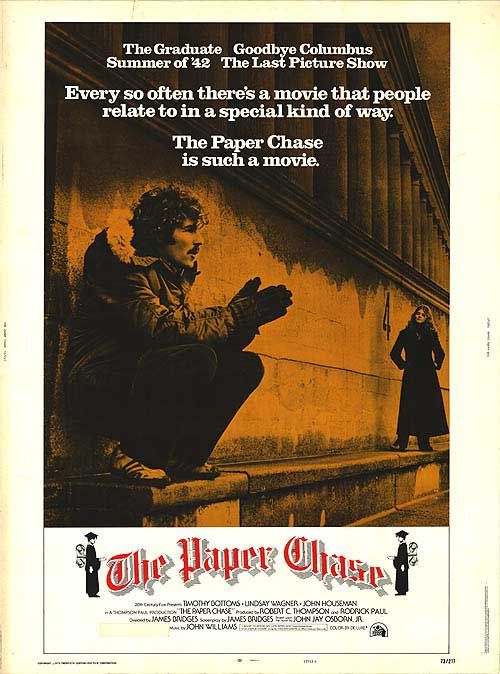
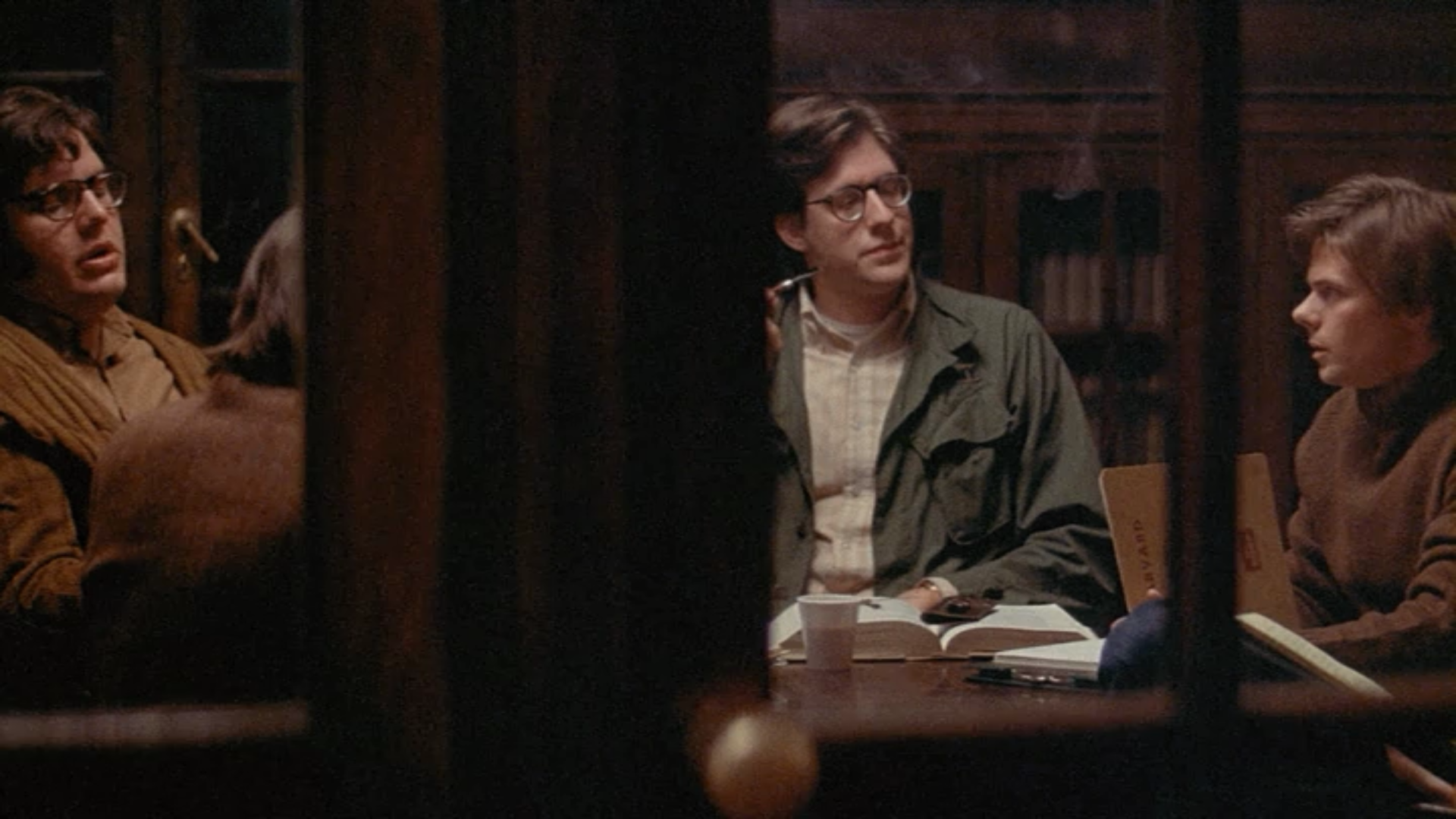
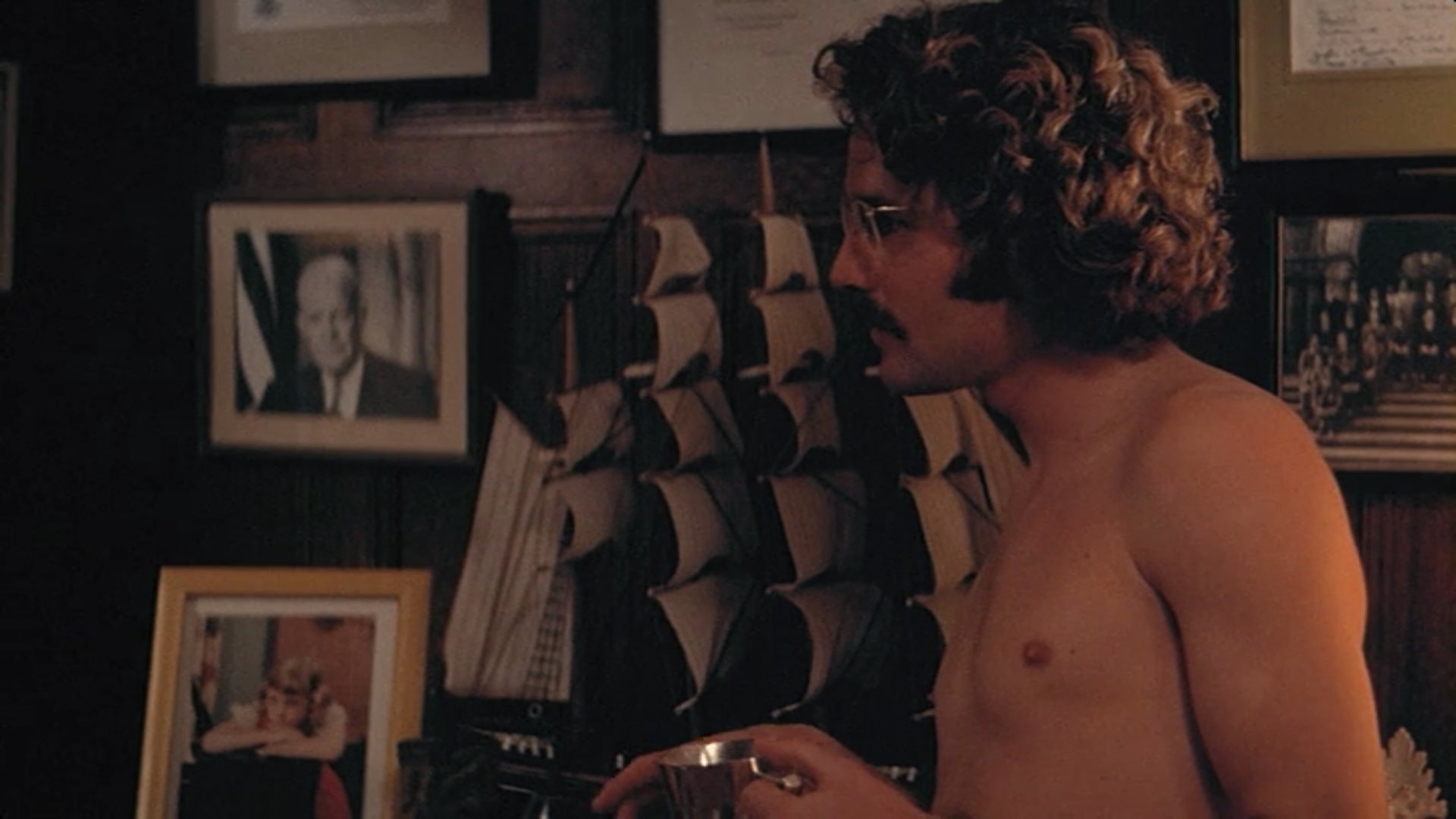
Review: Indeed, in its depiction of Bottoms’ relentless quest to earn Houseman’s respect — and its overall presentation of the rigors of law school, complete with plenty of heady dialogue and ruthlessly competitive interactions — The Paper Chase fully succeeds, and we remain enthusiastically engaged; as Vincent Canby points out in his review for The New York Times, it’s refreshing to see a movie that “acknowledge[s] the existence of a mind”. Unfortunately, however, this focus is interrupted time and again by a poorly developed romantic subplot, one which ultimately feels both contrived and unsatisfying. Wagner’s character, while potentially fascinating, is insufficiently developed to earn our interest; instead, she functions merely as a distraction for Bottoms — someone who happens to conveniently possess an insider’s perspective on the man Bottoms is single-mindedly obsessed with. Meanwhile, Bottoms’ character eventually becomes so callously self-absorbed that we stop rooting for him — a dangerous outcome for a film predicated on whether or not our dauntless protagonist will succeed in his quest. Redeeming Qualities and Moments:
Must See? Links: |
“Corie, if it’s a good marriage, it’ll last until 5:30.”
|
Synopsis: |
|
Genres:
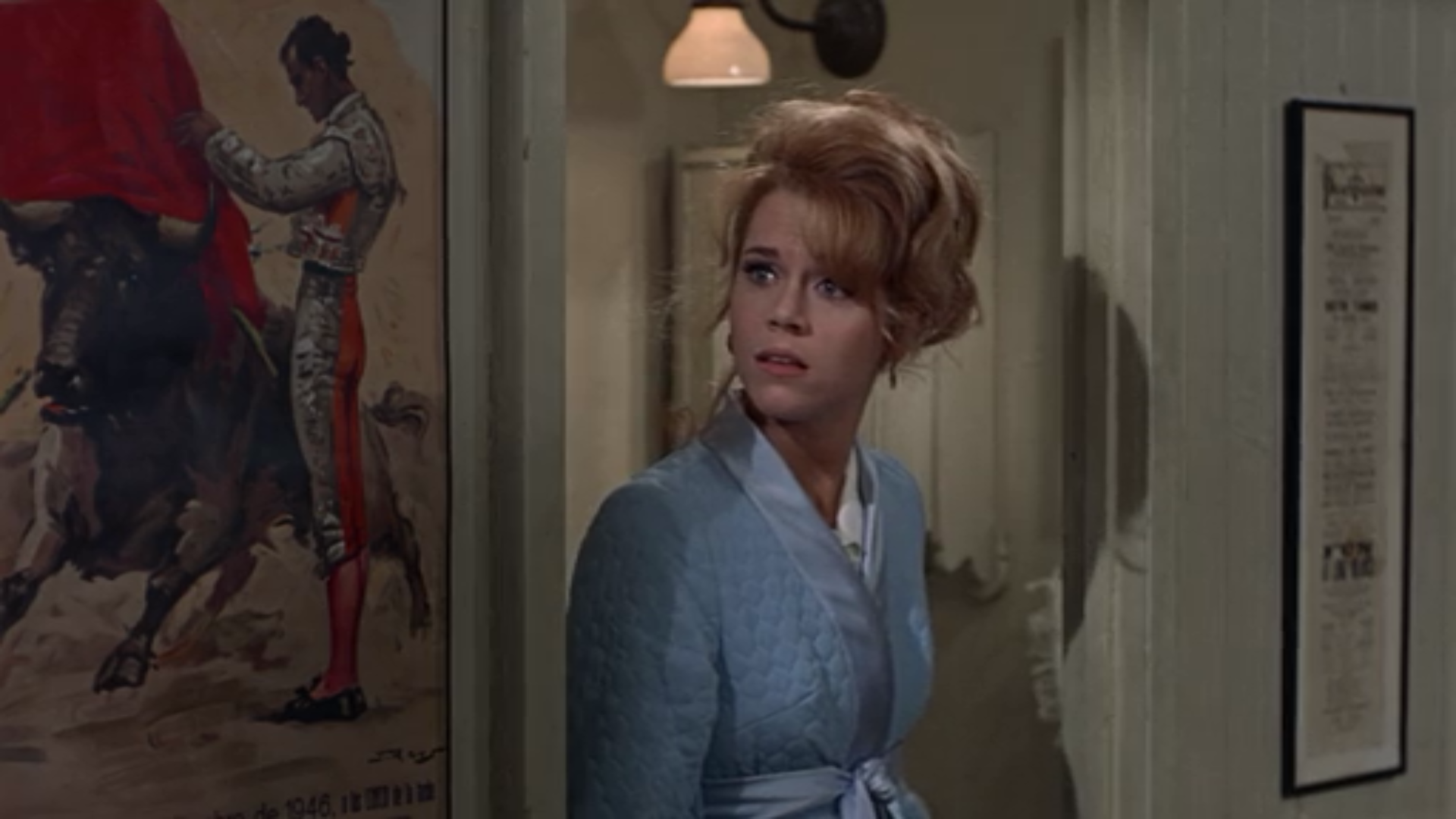
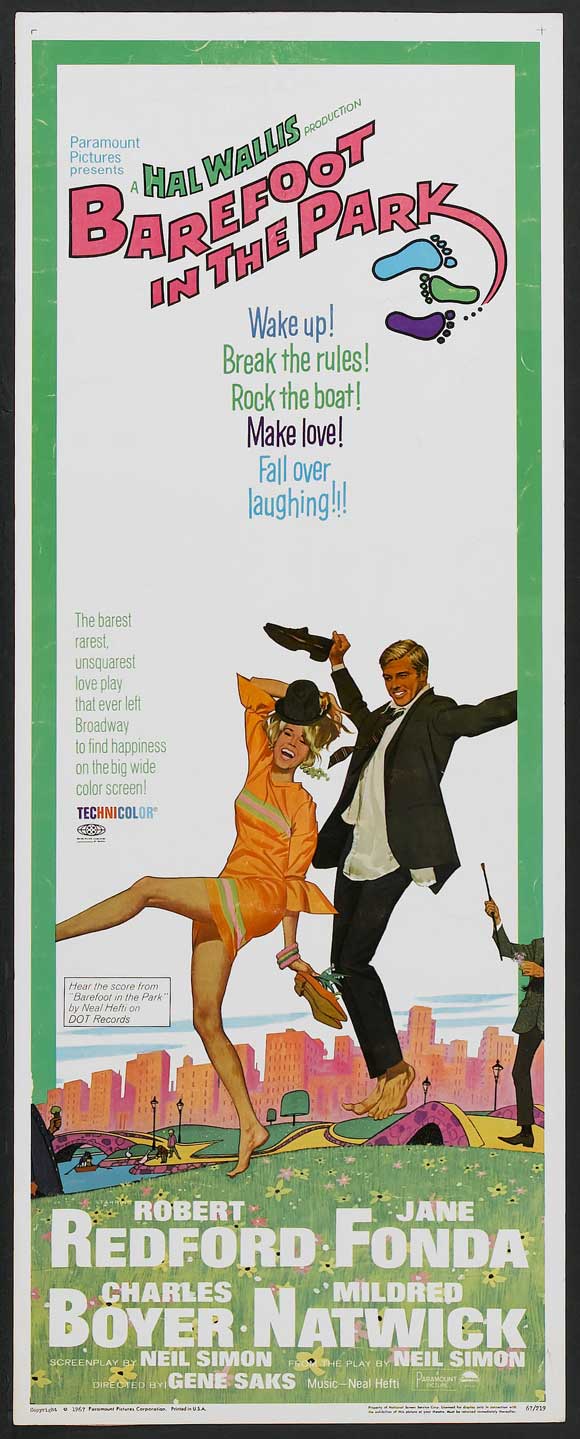
Review: (Many actresses were apparently considered for the role of “Corie”, yet she’s so poorly written that it’s actually difficult to imagine anyone having better success with her than Fonda.) We’re presumably meant to sympathize with poor Redford’s character (a stand-in for Simon himself) — an every-man who simply wants to go to work and earn a living; but he’s so dull and under-written that we don’t care much for him, either. Another critical concern is that we aren’t given sufficient motivation to care about the ultimate survival of this couple’s sexually charged yet perilously unstable marriage, which suffers from seemingly irreconcilable personality differences (she’s free-spirited and likes to walk “barefoot in the park”, while he’s more conservative). Meanwhile, a critical subplot involving Fonda’s attempt to set up her single mother (Mildred Natwick) with an enigmatic foodie neighbor (Charles Boyer) is simply tiresome — as are the running “gags” about how tiny and elevated the couple’s new apartment is. Note: Simon would rework the basic concept of conflicting personality types attempting (unsuccessfully) to live together in his infinitely more clever and enjoyable comedy The Odd Couple (1968). Redeeming Qualities and Moments: Must See? Links: |
“I’ll see Ms. Eden whenever and wherever I can.”
|
Synopsis: |

|
Genres, Themes, Actors, and Directors:
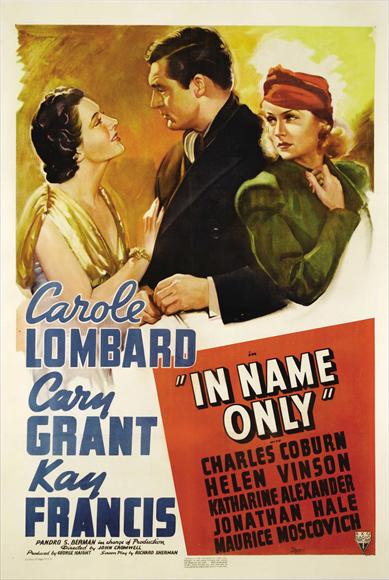
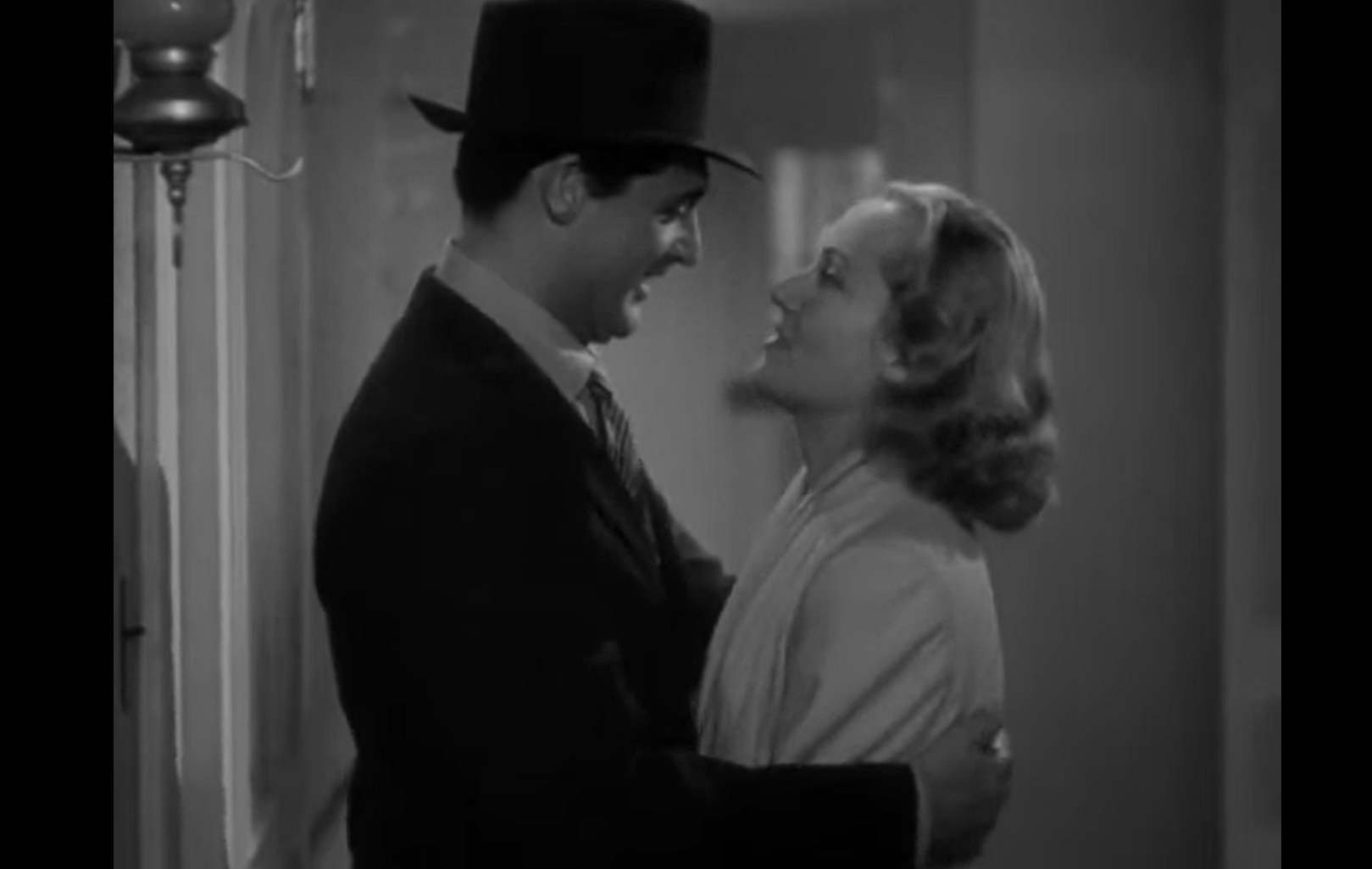
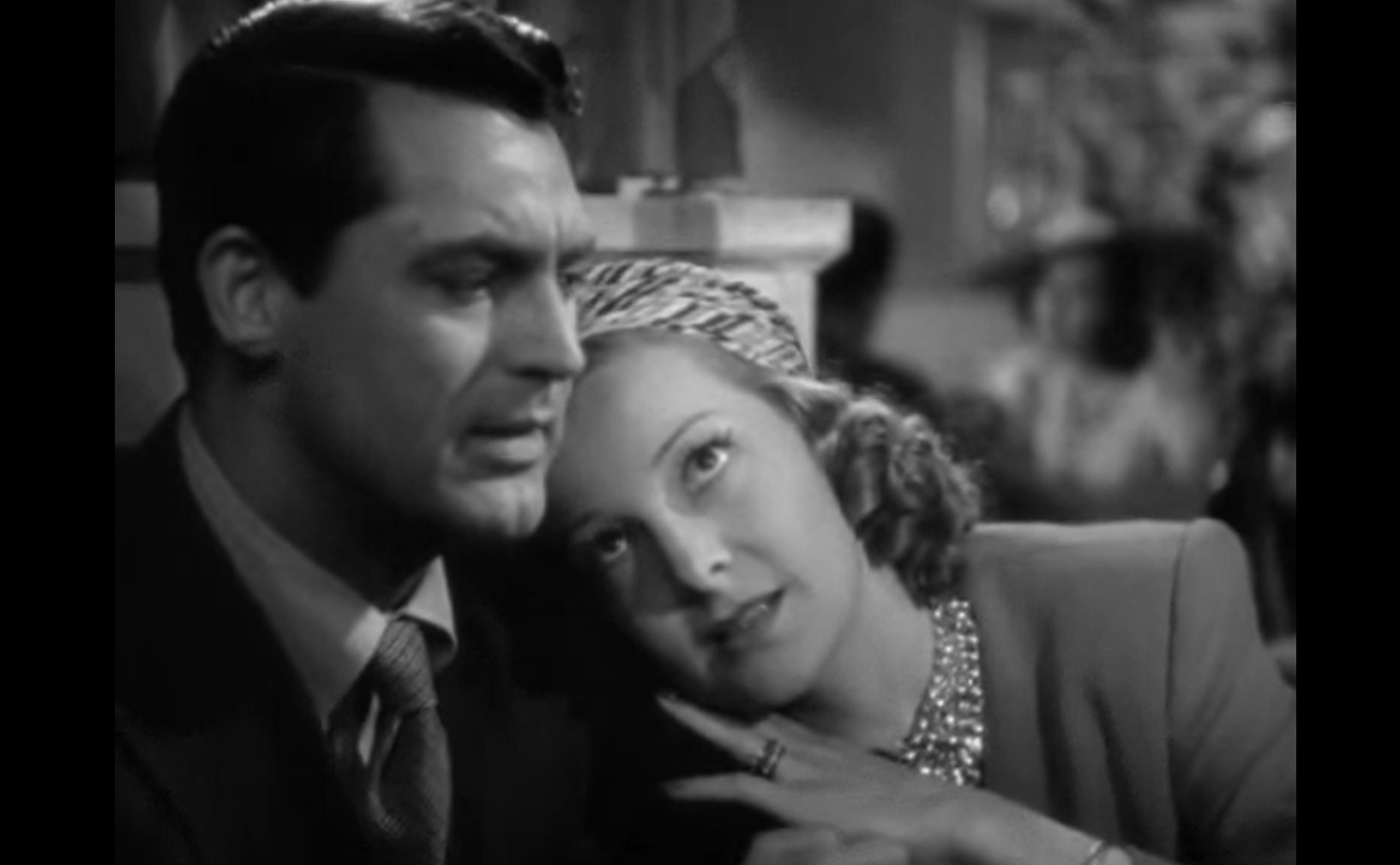
Review: … thanks to the evil machinations of a gold-digging wife-from-hell. Grant and/or Lombard fans hoping for anything close to a screwball comedy will be disappointed, given that In Name Only takes itself quite seriously, with no laughs to be had — but the entire affair is competently directed, acted, and photographed (by J. Roy Hunt), making it fairly easy to sit through. Watch for a fun supporting performance by Helen Vinson as a philandering socialite who makes a play for Grant. Redeeming Qualities and Moments: Must See? Links: |

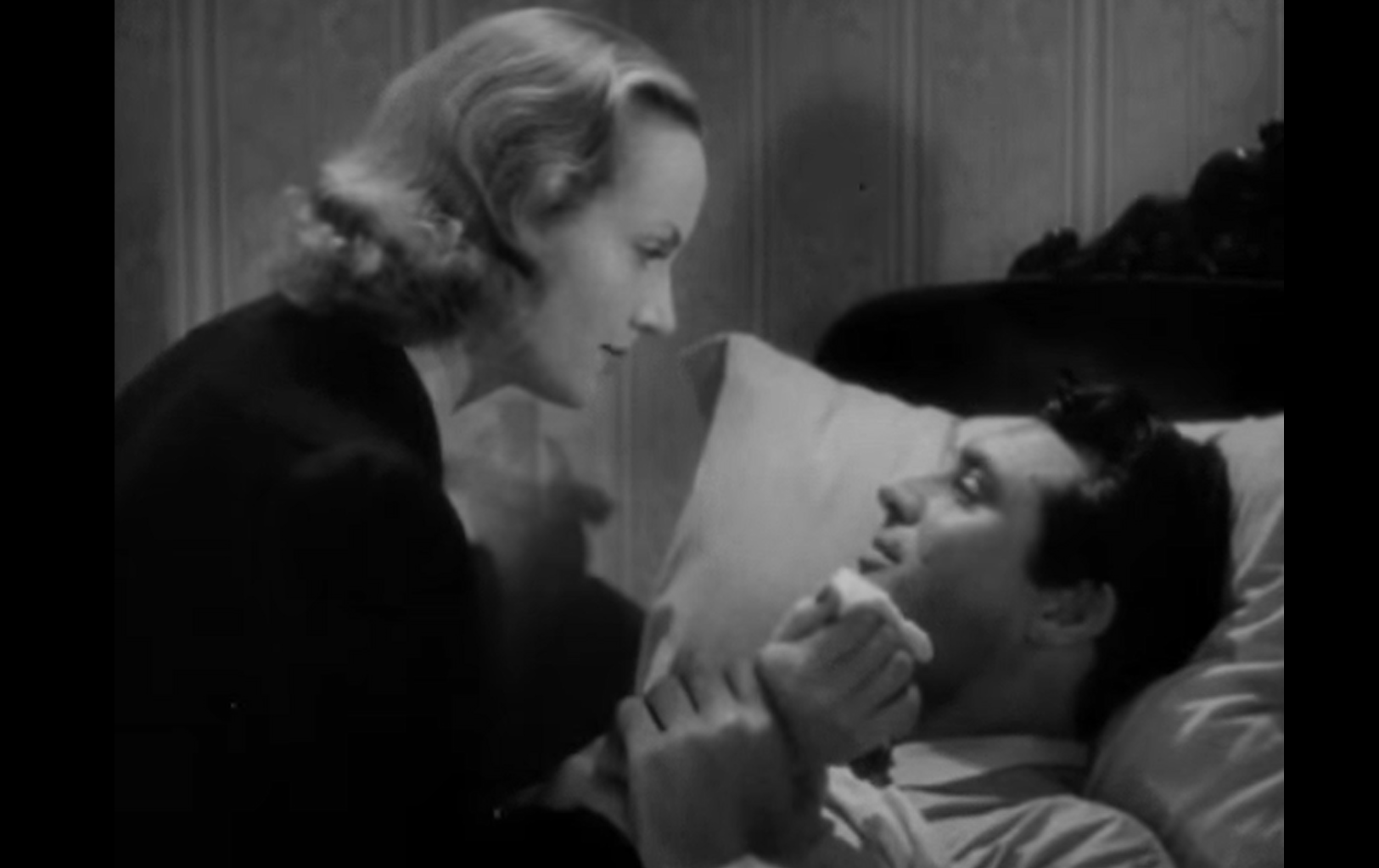
“So they flipped a coin: heads he’s poor, tails he’s rich.”
|
Synopsis: |
|
Genres, Themes, Actors, and Directors:
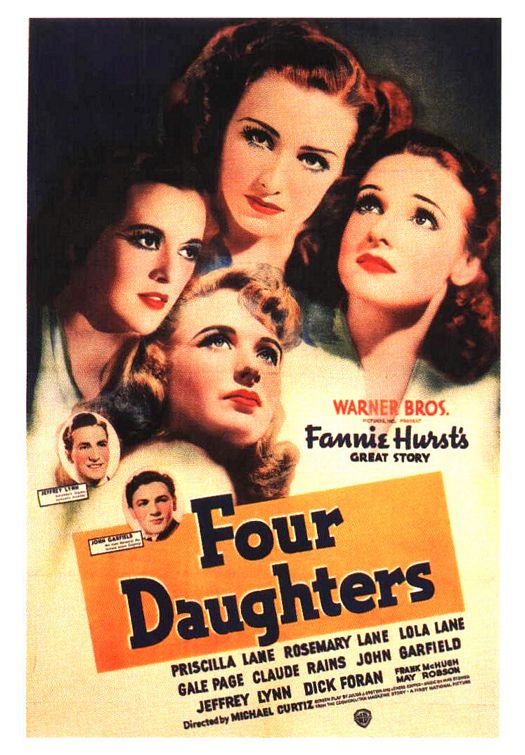
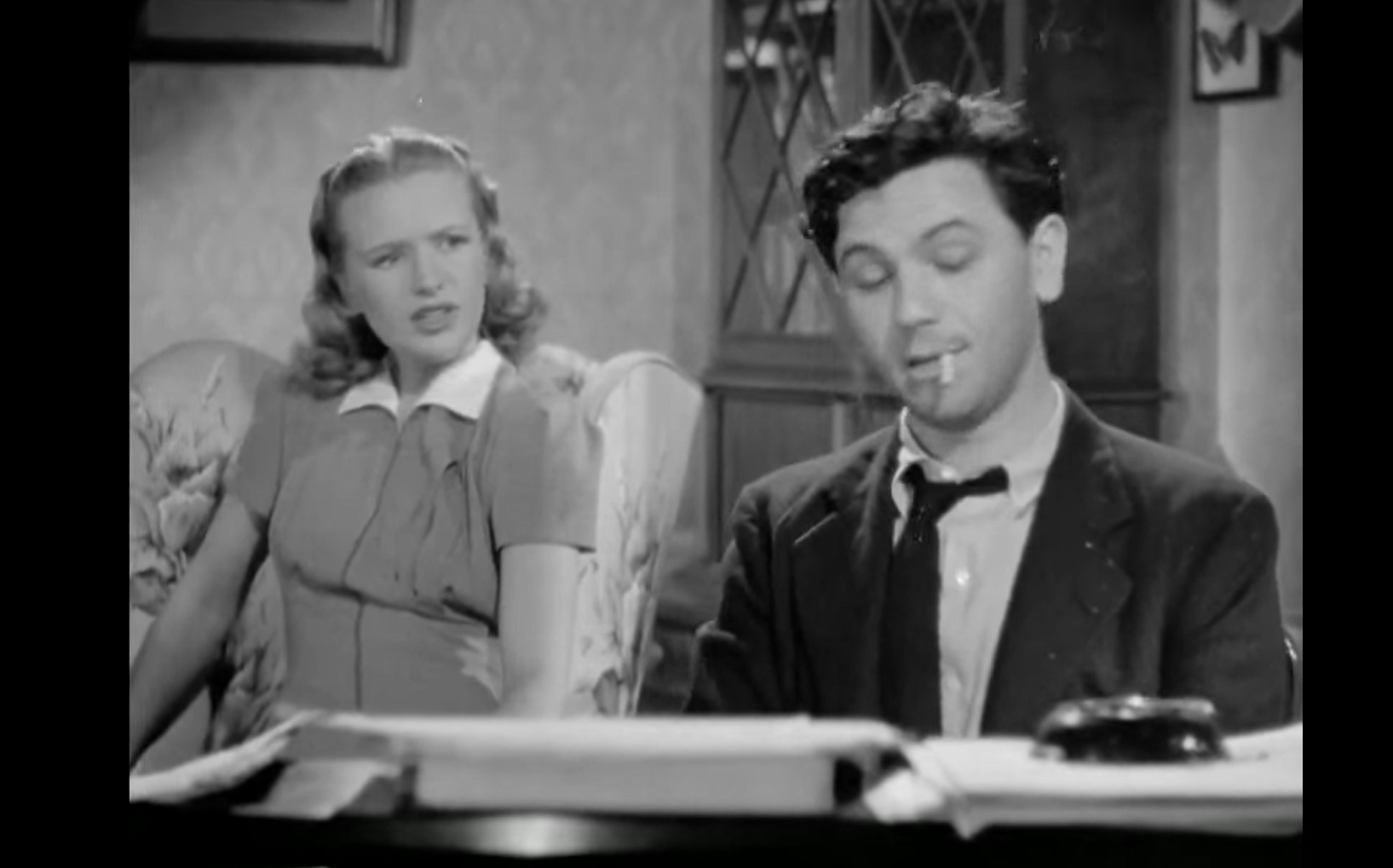
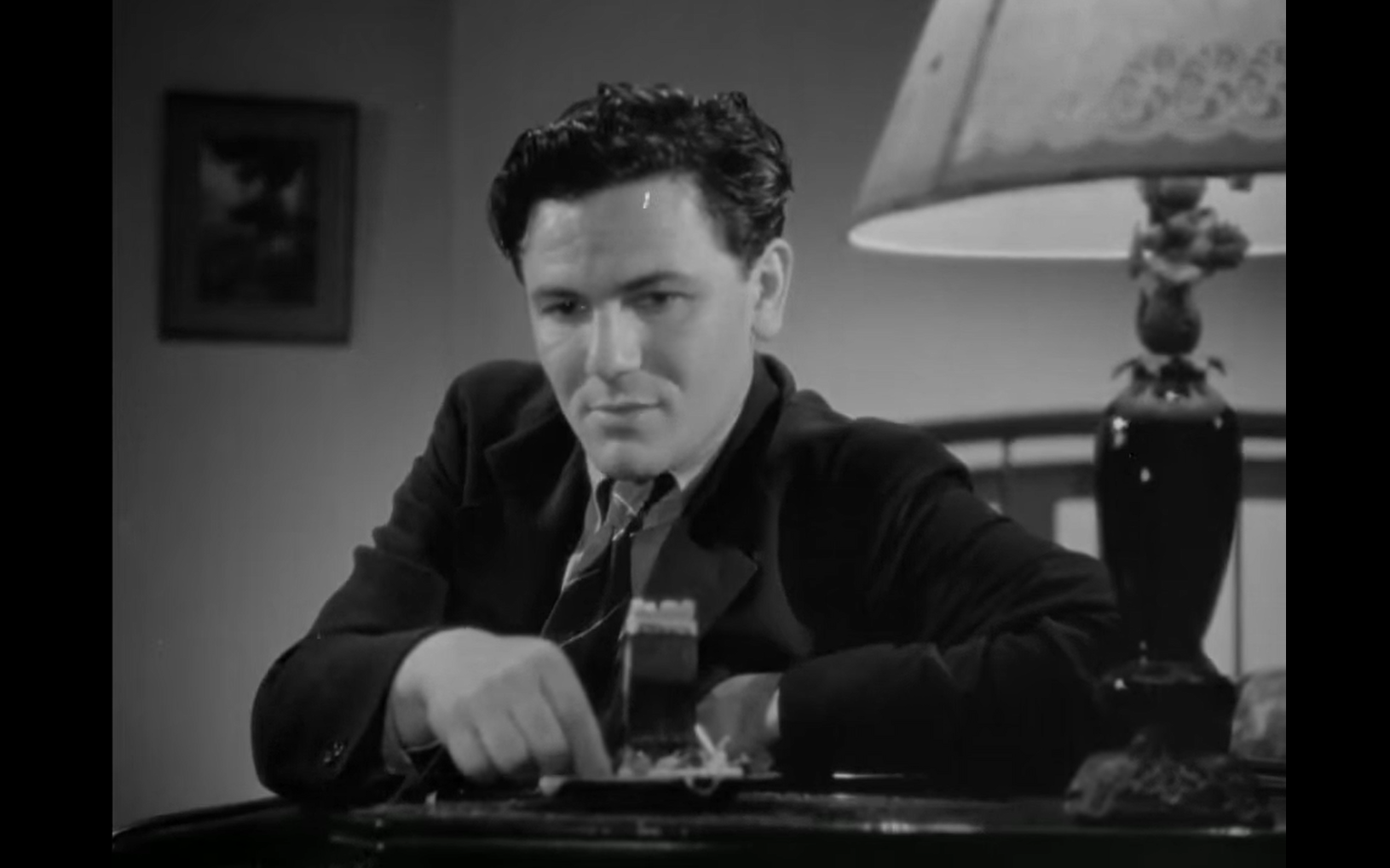
Review: It’s primarily notable today for affording John Garfield his memorable screen debut: Indeed, Garfield’s Oscar-nominated supporting performance as a philosophizing cynic who plucks Ann’s pity strings is likely why Peary includes this title in his GFTFF, and was enough to make the New York Times’ reviewer take note:
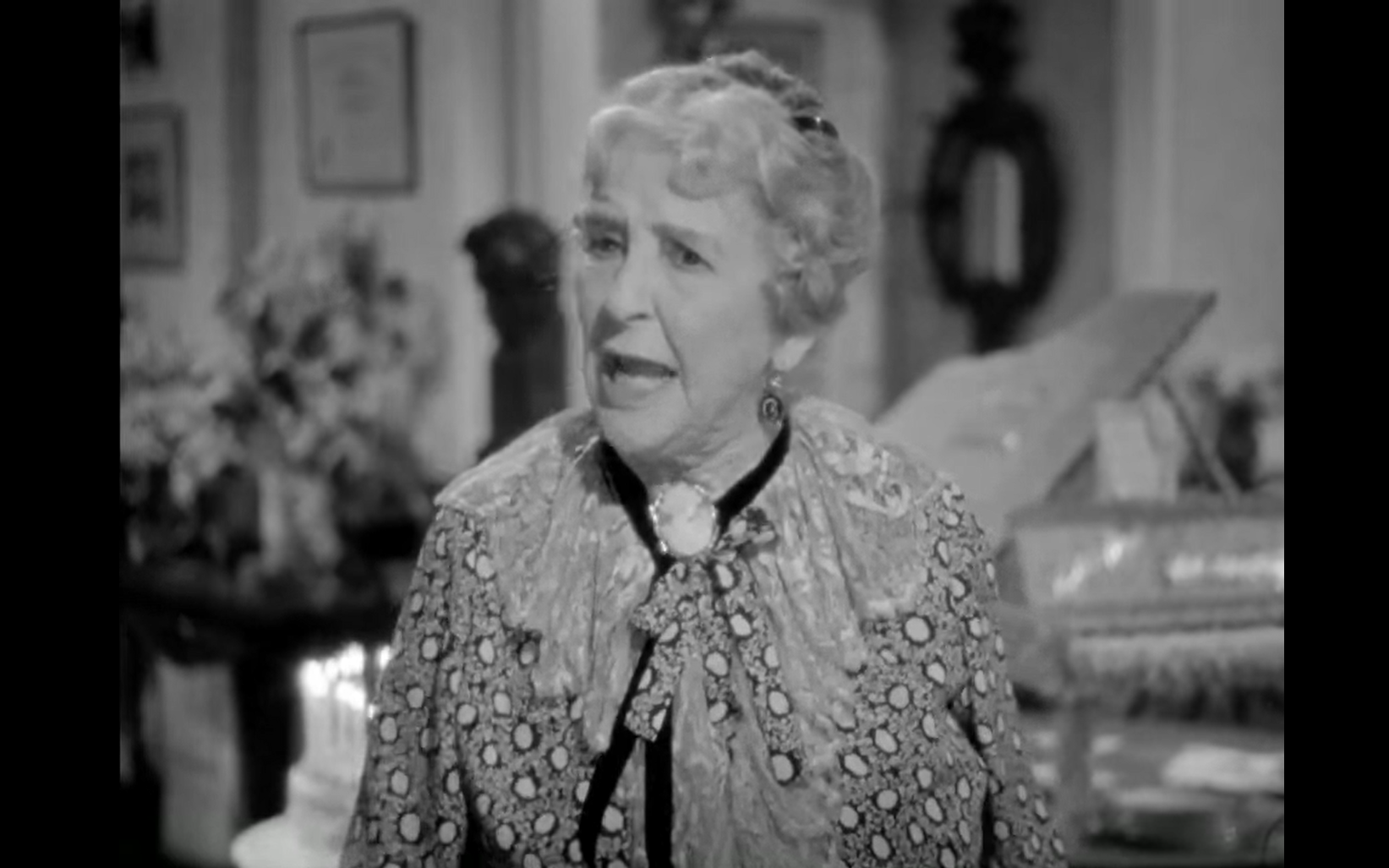
Otherwise, the film remains a fairly straightforward product of its era — a tearjerking romance full of conveniently implausible twists and turns, all taking place within the idyllic white-picket borders of a happy small-town household, presided over by avuncular Rains (in a throwaway role): … and no-nonsense May Robson as “Aunt Etta”. With that said, the script is surprisingly well-written for its genre, and contains quite a few lines of thoughtful and/or amusing dialogue (see examples below) — you’ll likely be pleasantly surprised if you decide to check this one out. Redeeming Qualities and Moments:
Must See? Links: |
“Everyone’s home life is unsatisfying: if it wasn’t, people would live with their parents forever.”
|
Synopsis: |
|
Genres, Themes, Actors, and Directors:
Response to Peary’s Review: Peary’s assessment just about sums up the merits of this guiltily enjoyable teen classic — though he neglects to mention the memorable use of Simple Minds’ “Don’t You (Forget About Me)” as the theme song (it was written specifically for the movie). Interestingly, Hughes was asked to write a play based upon his film (to be performed by high schoolers), and this may be the best way to view the material: as a morality play, one with an overly-convenient resolution (as Peary points out, “the ending is too rushed” and “we aren’t sufficiently prepared for the two couplings that take place”), but which packs a punch precisely because it’s so strategically scripted. Hughes’ genius was in capturing the types of stereotypes and concerns that plague teenagers (who often feel isolated by their differences) — and then allowing his characters to work through these concerns in a cathartic deconstruction. It’s the stuff of (troubled) teens’ fantasies, and clearly explains the film’s cult status years later. Note: In addition to Sixteen Candles (1985), John Hughes wrote and directed several other cult favorites — including Weird Science, Ferris Bueller’s Day Off (1986), and Planes, Trains, and Automobiles (1987); indeed, despite variable output in his later years, Hughes himself (who died from a heart attack in 2009 at age of 59) has a considerable cult following. Redeeming Qualities and Moments: Must See? Categories
(Listed in 1001 Movies You Must See Before You Die) Links: |