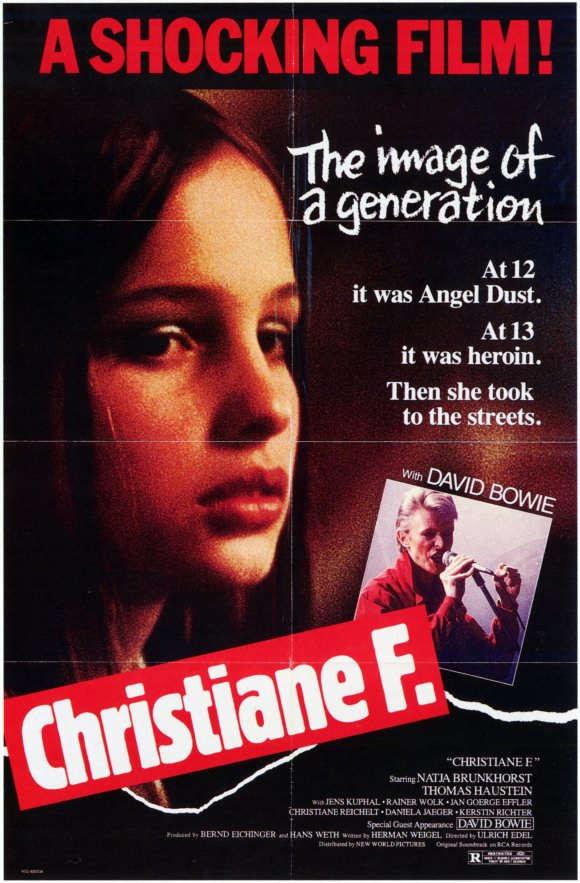
Christiane F. (1981)
“Look at them: the cooler they are, the more shots they’ve had.”
|
Synopsis: |
|
Genres, Themes, Actors, and Directors:
Response to Peary’s Review: Redeeming Qualities and Moments:
Must See? Categories
Links: |
“Look at them: the cooler they are, the more shots they’ve had.”
|
Synopsis: |
|
Genres, Themes, Actors, and Directors:
Response to Peary’s Review: Redeeming Qualities and Moments:
Must See? Categories
Links: |
“Leave to the night what belongs to the night.”
|
Synopsis: |
|
Genres, Themes, Actors, and Directors:
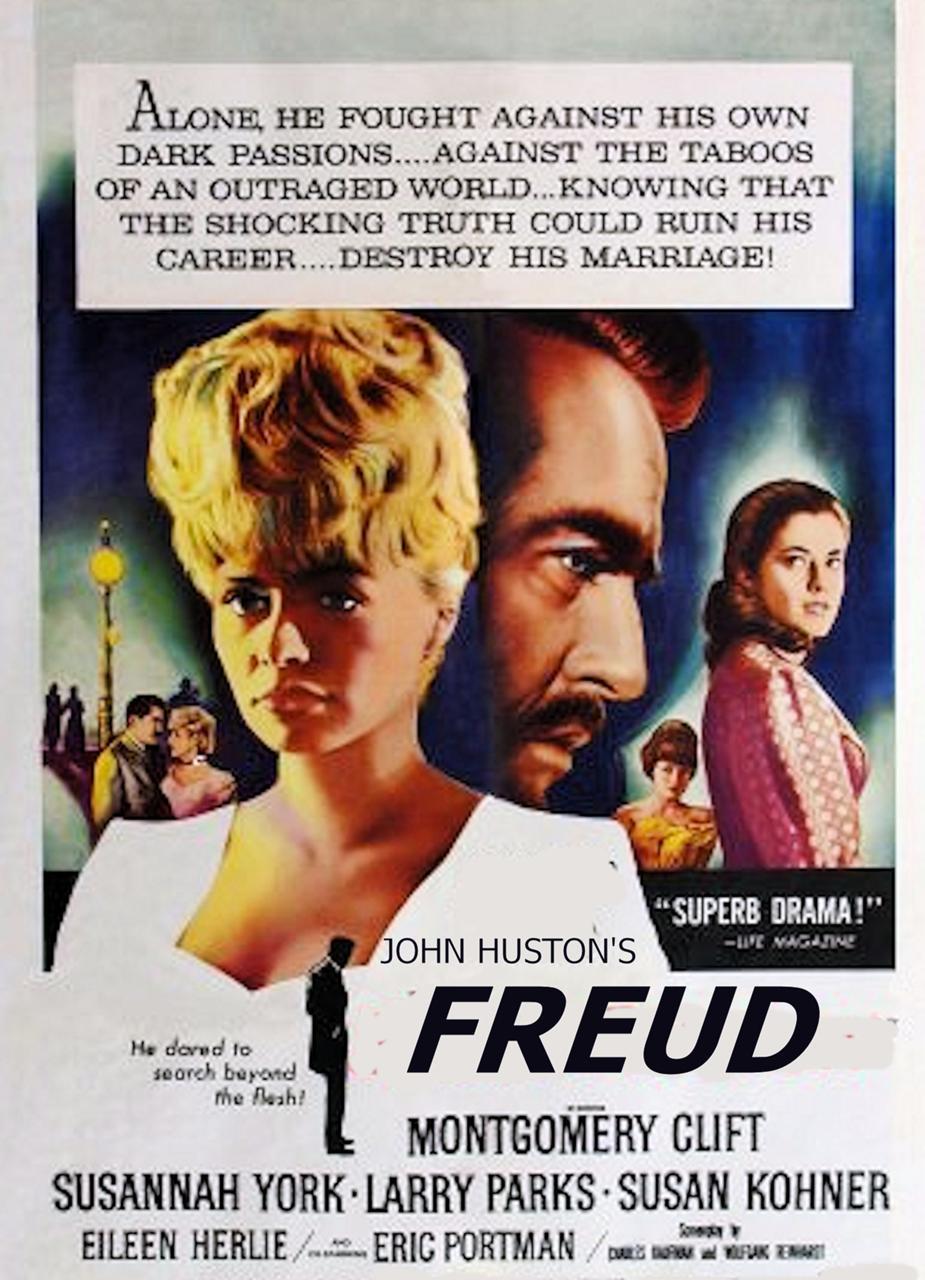
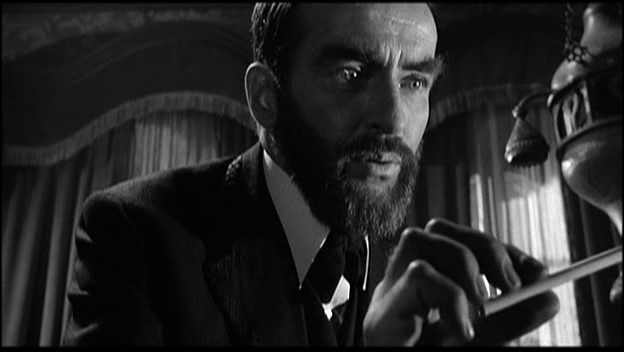
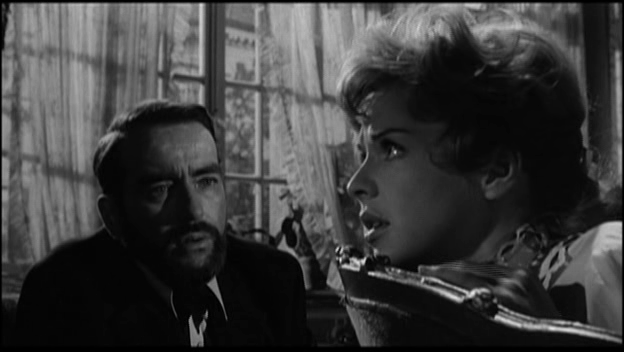
Review: Grounding the film are strong central performances by Clift and Susannah York, as well as wonderfully atmospheric cinematography (by Douglas Slocombe) and creative direction. The flashback scenes, while occasionally contrived, appropriately convey the panic and confusion often felt in one’s dreams and in the slippery memories of childhood. The literate script, though talky, is surprisingly absorbing; according to Jonathan Rosenbaum’s review in The Chicago Reader, the film was actually “scripted mainly by Jean-Paul Sartre”, who “withdrew his name from the project after his second draft — which would have made a much longer film — was radically condensed”. Keeping in mind that biopics can never fully or adequately cover the scope of a famous individual’s life, Freud nonetheless remains a worthy entry in our understanding of this controversial figure. Redeeming Qualities and Moments:
Must See? Categories
Links: |
“Aren’t we all slaves?”
|
Synopsis: |
|
Genres, Themes, Actors, and Directors:
Review:
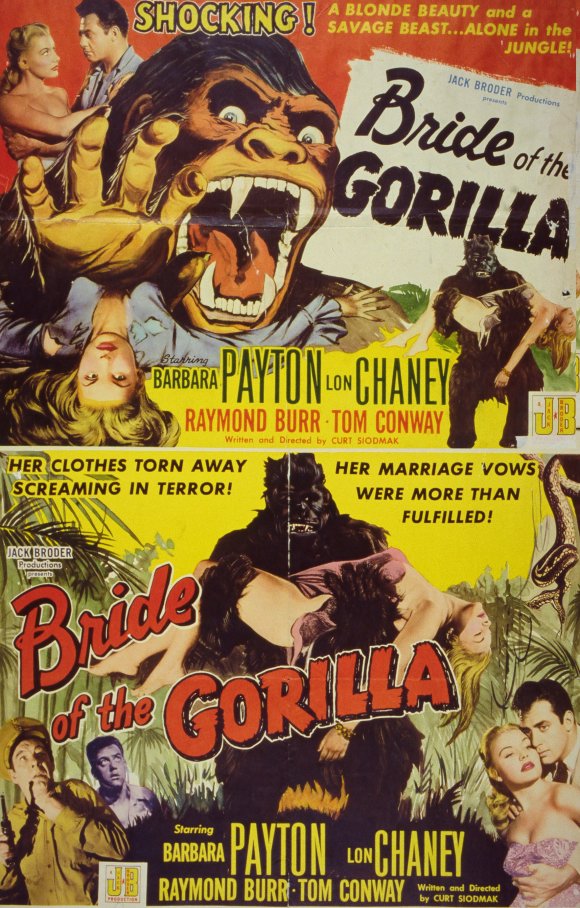
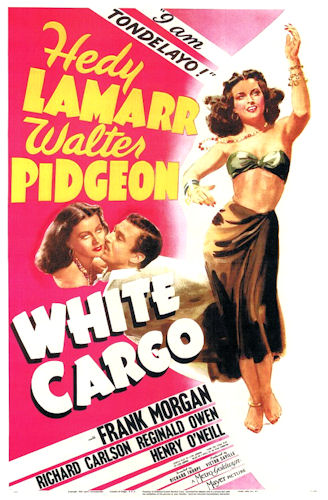
But as DVD Savant notes in his review, “anyone who read the script and signed on had to be in denial, or totally unaware that writer-director Curt Siodmak’s bizarre jungle story was a Career Choice of No Return”. Watch White Cargo (1942) instead if you’re in the mood for this kind of steamy exploitation flick. Note: Lon Chaney Jr. and Woody Strode hover around the periphery of this film as a police commissioner and his deputy. Redeeming Qualities and Moments:
Must See? Links: |
“Don’t think, Tony — I came here to feel, to be!”
|
Synopsis: |
|
Genres, Themes, Actors, and Directors:
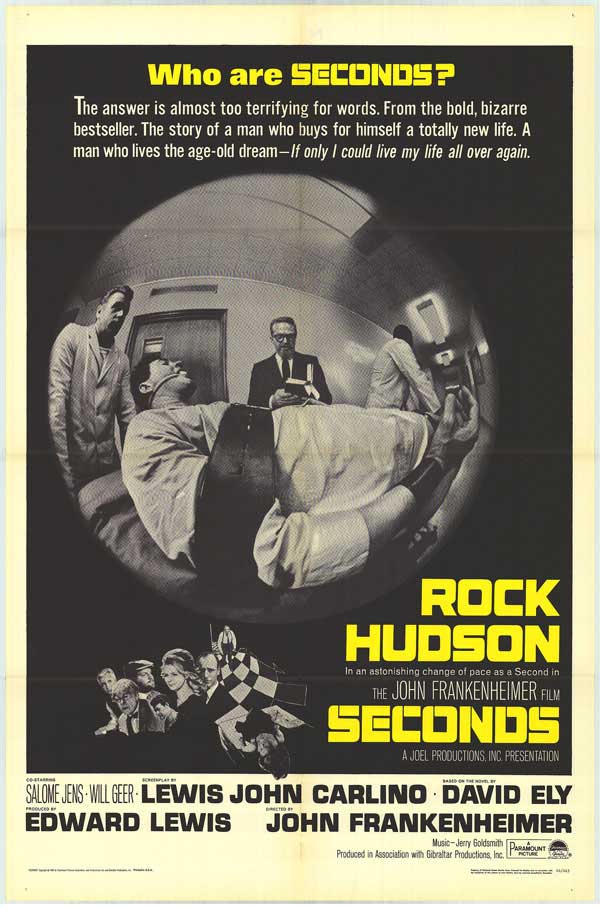
Response to Peary’s Review: In Peary’s Cult Movies 3, he includes an extended essay on Seconds written by Henry Blinder, who interviewed Randolph, screenwriter John Carlino, composer Jerry Goldsmith, and producer Edward Lewis. Blinder writes unequivocally that “Seconds is quite possibly the most depressing film ever made — it is a film of unrelieved despair”, and (citing Carlino) “almost too painful to watch”. Blinder refers to Seconds as “the living nightmare of a man who acts to fill his emptiness without having an idea of what to fill it with”, culminating in “one of the most harrowing murders ever filmed”. In his analysis, Blinder references other key cinematic works — noting, for instance, that the final shot in Seconds is akin to “Rosebud” in Citizen Kane (1941), and that Ely’s original novel was a precursor of sorts to Ira Levin’s novel-turned-movie The Stepford Wives (1975): “In Ely’s work, the men pay a great deal of money to alter/replace themselves; in Levin’s the men pay a great deal of money to alter/replace their wives”. Indeed, Seconds is very clearly about males in crisis, given that the two key females — Reid as Randolph’s wife, and Jens as Hudson’s free-spirited new lover — are ultimately supporting players in his story, and the nefarious “company” is run by (white, middle-aged) men. Blinder writes that Ely’s novel “was inspired by a startling statistic: At the time, 80,000 middle-aged American men left their wives and children each year, never to return”, causing Ely to hypothesize “that big business might want to capitalize on the legion of wealthy men”. The somewhat opaque workings of “The Company” provide a chilling example of fatal coercion in marketing, given that new members are not-so-subtly “encouraged” to name another potential client for the expensive underground procedure before they’re allowed to move on to another “level”. Hudson’s ultimate refusal to “name names” is a poignant tribute to the blacklisted actors brought out of obscurity to play either supporting (Jeff Corey, Will Geer) or central (John Randolph) roles. There is much more to say and discuss about Seconds, but simply put, it remains must-see viewing: steel yourself. Note: Seconds is often referred to as the third of Frankenheimer’s “paranoia trilogy”, following The Manchurian Candidate (1964) and Seven Days in May (1964). Redeeming Qualities and Moments:
Must See? Categories
(Listed in 1001 Movies You Must See Before You Die) Links: |
“There’s no doubt of it! Yes, she’s disfigured forever! Like a cancer that’s beyond control — like leprosy!”
|
Synopsis: |
|
Genres, Themes, Actors, and Directors:
Response to Peary’s Review: Redeeming Qualities and Moments:
Must See? Links: |
“She knows how to purr her way into your mind and scratch her way out, always taking and never giving.”
|
Synopsis: |
|
Genres, Themes, Actors, and Directors:
Review:
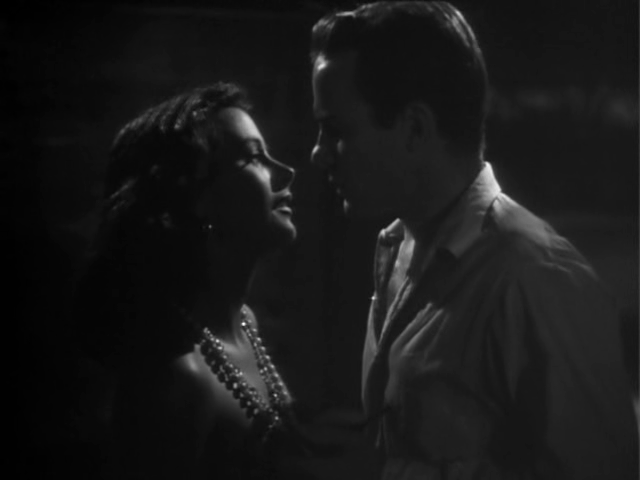
… slinking around spouting dialogue like the following to her “prey” (Carlson):
… you will simply be slack-jawed throughout. Her pidgin-like speech is peppered with the words “much” and “many” (“Him much nice man.”; “Awila give me much silk and many bangles.”), with the particularly favored phrase “much love, many bangles” repeated at least once. While Tondelayo is referred to at one point as possessing an “innate morality”, there’s really none of that on display here, as she simply evinces a “childlike” simplicity combined with seductive, sociopathic maneuvering. At least Harry Stradling’s cinematography is gorgeous, so that’s a bonus. Redeeming Qualities and Moments:
Must See? Links: |
“I’m fed up with Addie Ross!”
|
Synopsis: |
|
Genres, Themes, Actors, and Directors:
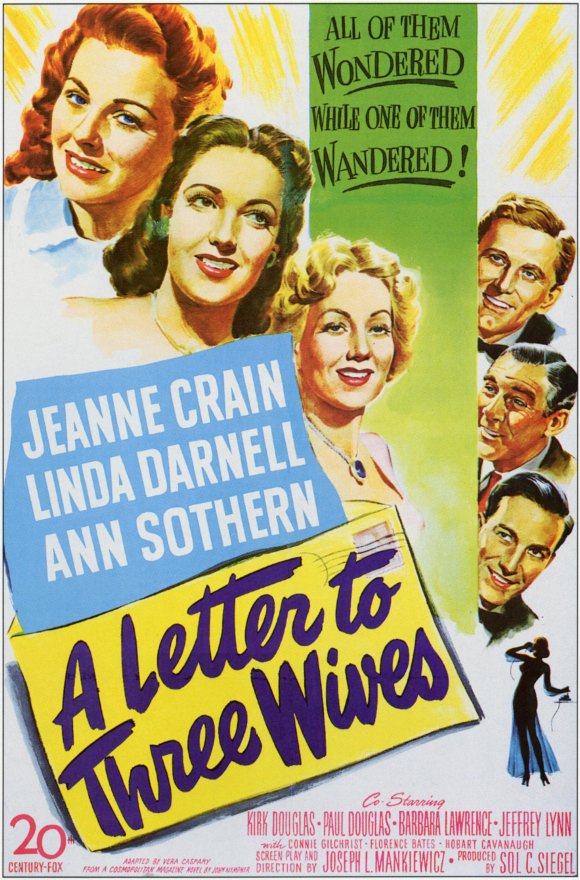
Response to Peary’s Review: As in Mankiewicz’s next two movies — All About Eve (1950) and People Will Talk (1951) — A Letter to Three Wives not only features strong female protagonists but directly addresses feminist issues (work, identity, marital insecurity) not commonly on display in other films of the era. It’s notable that while Sothern is the overworked mother of twins, we never see them; the focus is entirely on her role as a writer painfully aware of how her success is impacting her marriage. The most intriguing storyline, however, is that between Darnell and Douglas: co-screenwriters Mankiewicz and Vera Caspary pull no punches in their depiction of a beautiful woman all-too-aware of the games played between men-of-means and working-class women, and how carefully Darnell must lure Douglas into marrying her in order to bed her. Collectively the three wives’ stories tell a fascinating tale of post-war lives for (white) American women. Note: This film is also noteworthy for providing uncredited Thelma Ritter with one of her first post-Miracle on 34th Street (1947) wisecracking sidekick roles. Redeeming Qualities and Moments:
Must See? Categories
Links: |
“The kid deserves a better break. Why, this burlesque racket is no place for her!”
|
Synopsis: |
|
Genres, Themes, Actors, and Directors:
Review: Redeeming Qualities and Moments:
Must See? Links: |
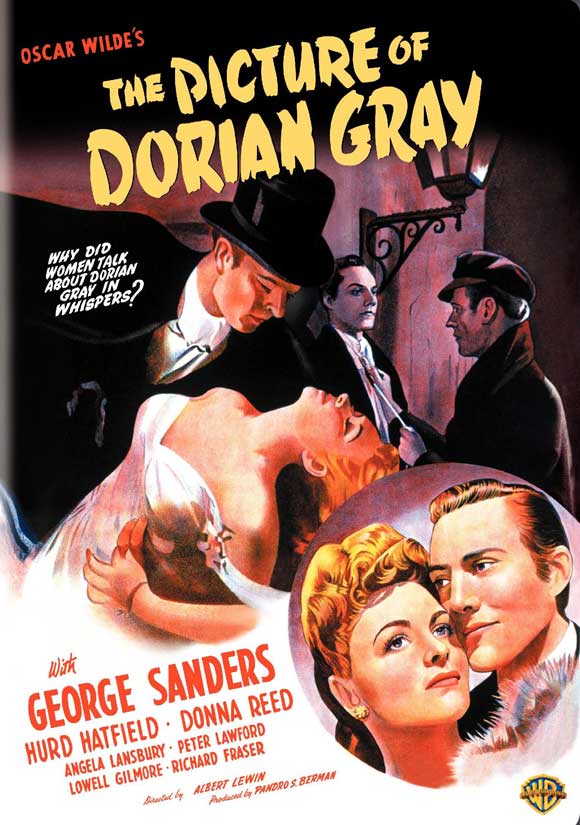
“There can be something fatal about a portrait.”
|
Synopsis: |
|
Genres, Themes, Actors, and Directors:
Response to Peary’s Review:
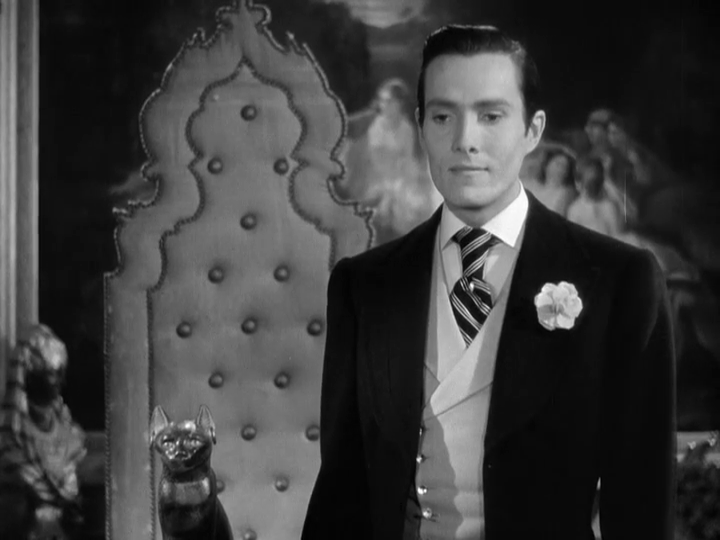
Indeed, Hatfield’s frustratingly flat performance — presumably (mis)guided by Lewin — brings the entire movie to a halt; with his character acting more like a “model” in a Robert Bresson film than a blue-blooded sociopath (and nearly all of his “wicked acts… kept off screen”), we’re hard-pressed to feel engaged in the scenario one way or another. Are we meant to feel sorry for Gray, who appears to have been naively corrupted by the (perfectly typecast) epigraph-spouting Sanders? And why doesn’t Sanders’ character — who “gets a charge out of Gray’s insensitivity” — show up more often in the second half of the film?
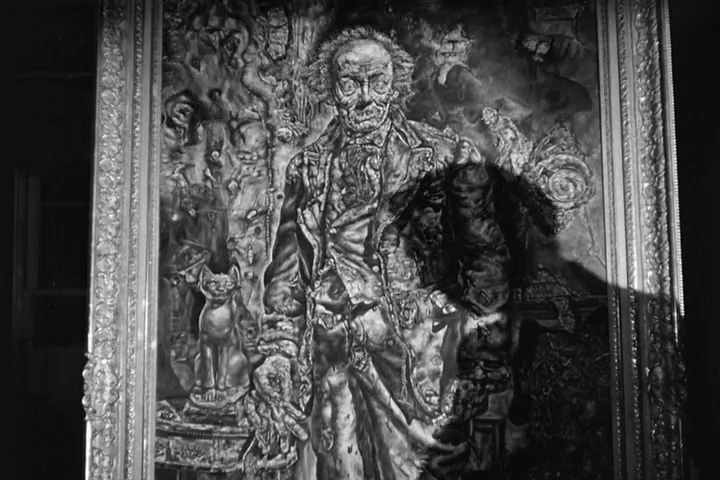
Meanwhile, the film’s biggest “reveal” is, naturally, the hideous state of the continuously morphing titular painting.
We’re given plenty of teasers — with shot after shot of a character looking in horror at the portrait we can’t see — before a flash of Technicolor finally reveals what the painting has turned into, at which point we can’t help guffawing.
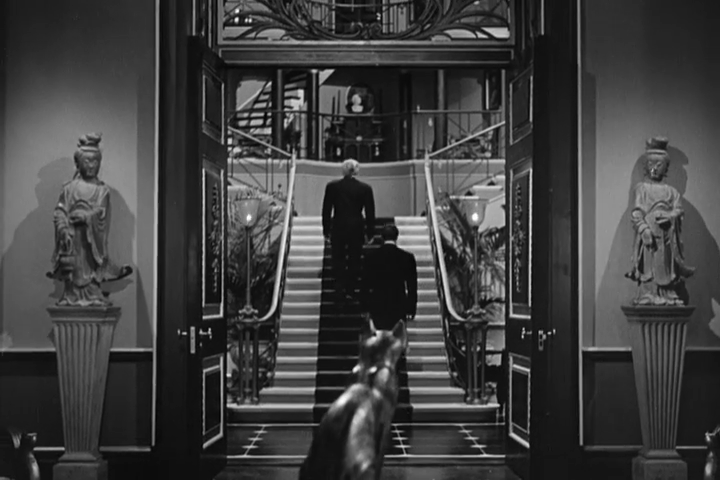
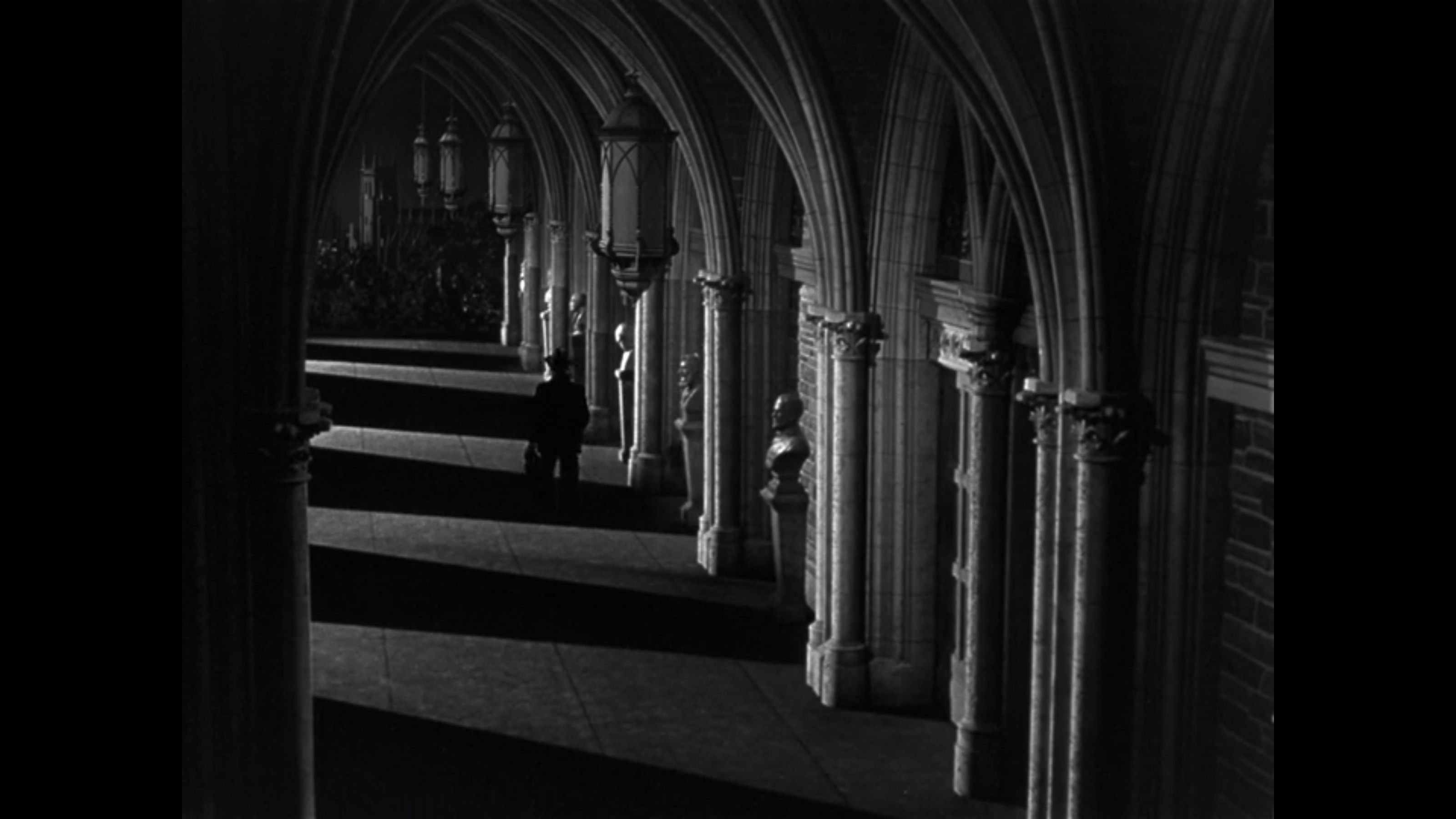
While mid-20th-century audiences may have been aghast at the purulent evidence of Gray’s “moral leprosy”, the painting today comes across like an escaped artifact from A Bucket of Blood (1959) or Color Me Blood Red (1965). Thankfully, the rest of the film is aesthetically pleasing, with scrupulously staged scenes of hollow interactions occurring in cavernous halls, effectively photographed in atmospheric black-and-white:
The mid-film murder scene is particularly memorable. But on the whole, this adaptation doesn’t live up to its potential. Redeeming Qualities and Moments:
Must See? Links: |
“You’re quite a noble character, aren’t you?”
|
Synopsis: |
|
Genres, Themes, Actors, and Directors:
Review:
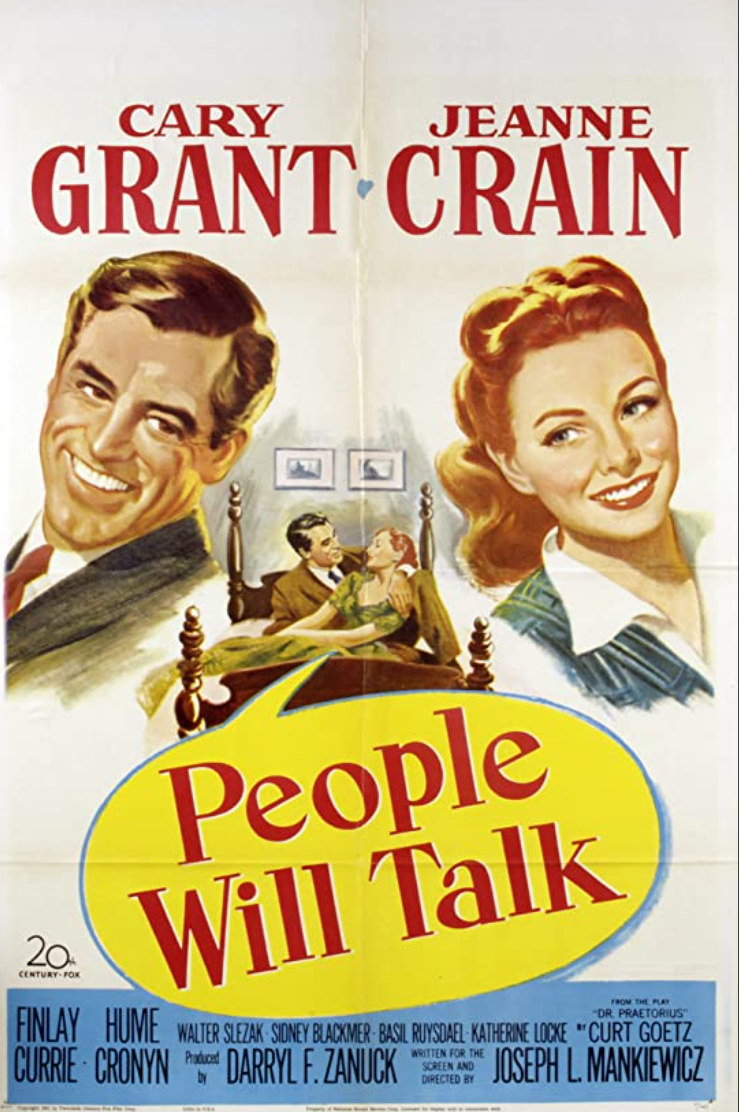
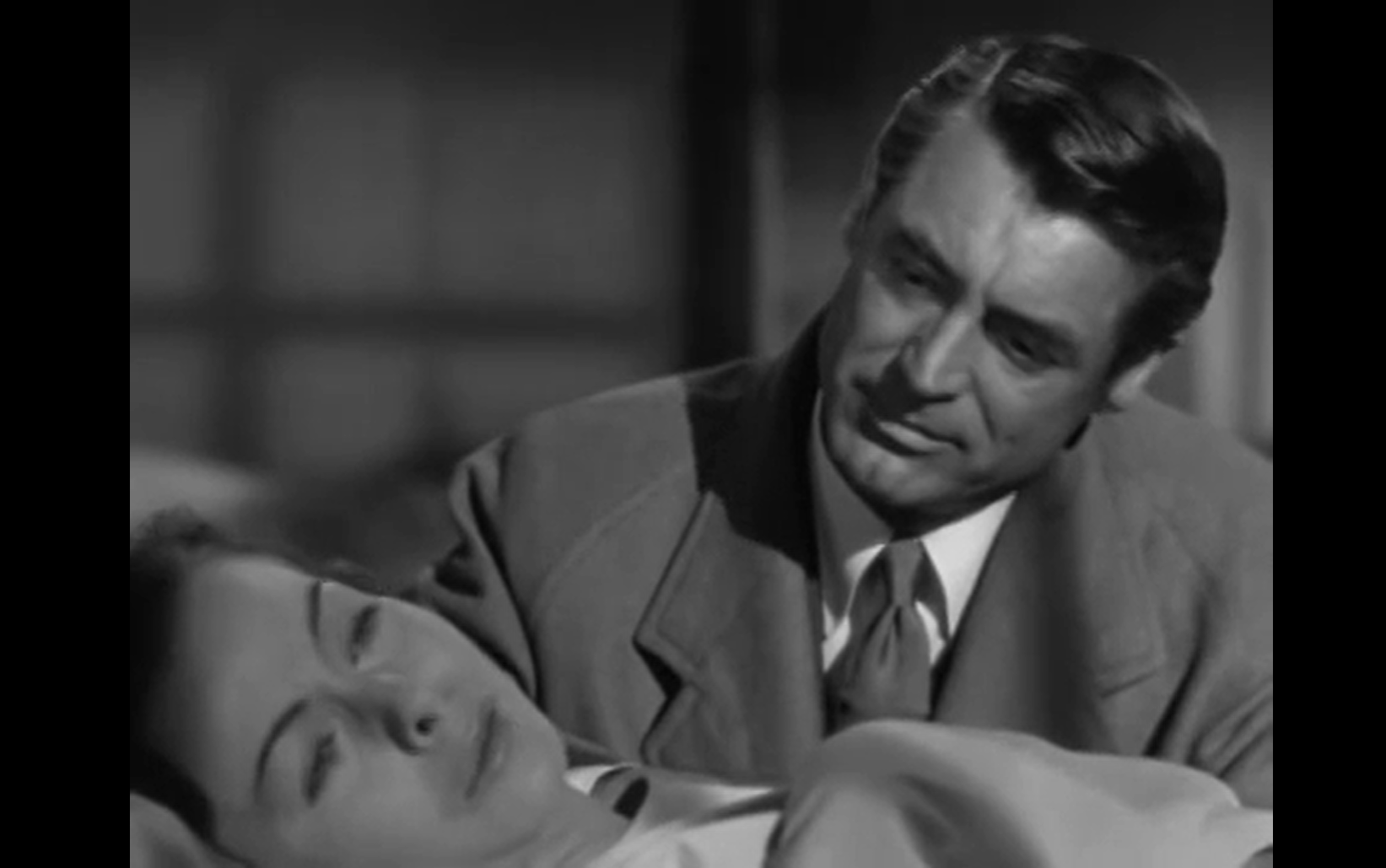
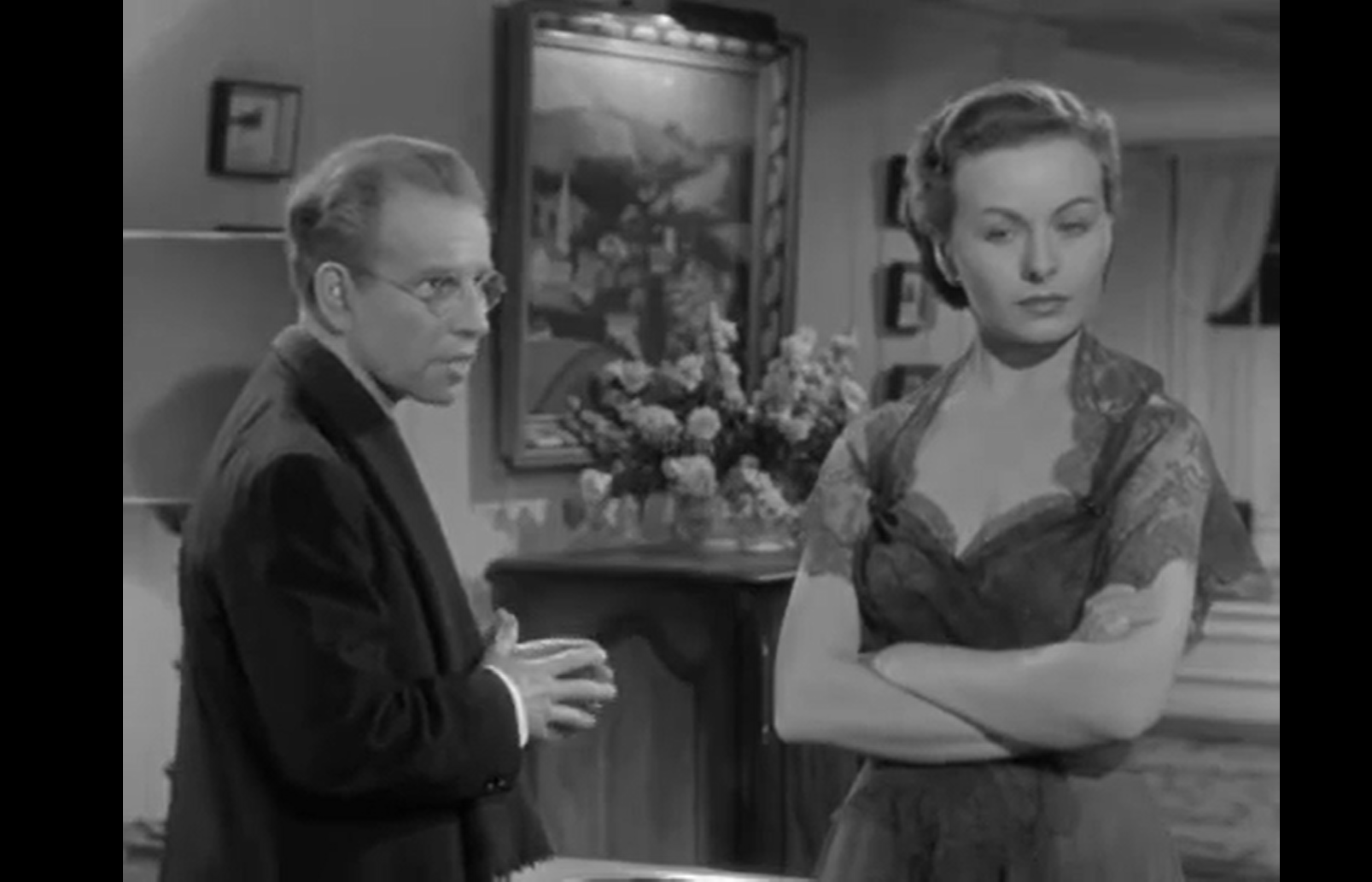
His “rescue” of an unwed, pregnant, suicidal woman is initially posited as a deceptive maneuver to save her life, but we soon realize he’s simply allowing powerful emotions to drive his sense of justice and righteous living (perhaps much like Jesus?). Dr. Praetorius is so superior to slimy leches like jealous Professor Elwell (Cronyn) that it’s clear he’ll win the day; the entire film basically plays out how this triumph occurs. Unfortunately, Grant wasn’t the best choice for this most unusual of romantic male leads; it’s much easier to imagine a more nuanced actor — like Spencer Tracy — investing the character with inspired depth. Crain is fine as Grant’s loyal wife, but never really transcends what’s required of her in the role. The supporting roles are more successful: Cronyn is spot-on as weaselly Elwell:
… Currie gives a memorable performance as the mysterious lumbering “Shunderson”:
… and Margaret Hamilton is nicely typecast as a suspicious shrew brought in during the first scene to bolster Cronyn’s growing case against Grant and Currie.
Ultimately, this odd title remains a mixed bag: intriguing and different enough to be worth checking out, but not entirely successful. Redeeming Qualities and Moments:
Must See? Links: |