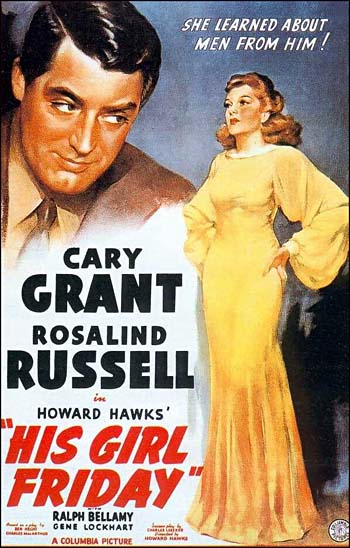
His Girl Friday (1940)

His Girl Friday (1940)

“Walter, you’re wonderful — in a loathsome sort of way.”

Synopsis:
A newspaper editor (Cary Grant) tries anything and everything to win back his ex-wife (Rosalind Russell) from her new fiance (Ralph Bellamy).

Genres, Themes, Actors, and Directors:

  • Career-versus-Marriage
  • Cary Grant Films
  • Feminism and Women’s Issues
  • Howard Hawks Films
  • John Qualen Films
  • Journalists
  • Love Triangle
  • Play Adapation
  • Political Corruption
  • Ralph Bellamy Films
  • Romantic Comedy
  • Rosalind Russell Films
  • Strong Females
  • Winning Him/Her Back

Response to Peary’s Review:
Peary is appropriately impressed by this “brilliantly acted, frantically paced screwball comedy”, which reworks “[Ben] Hecht and [Charles] MacArthur’s famous newspaper play, The Front Page” by recasting the lead character of Hildy Johnson as a woman. As Peary notes, the film (expertly directed by Howard Hawks) “is famous for chaotic, overlapping dialogue”, which is both wickedly funny and pointedly satirical — indeed, you’ll need to watch the film at least a few times to begin to catch all the nuances of its rapidfire, densely packed script. As DVD Savant puts it, “His Girl Friday is not a picture to see if one has a slight headache” — you’ll keep feeling, rightly so, like you’ve missed something.

Indeed, His Girl Friday covers a plethora of narrative bases: not only is it arguably the most famous “newspaper drama” in cinematic existence (it makes journalism look like the most exciting profession EVER), but it relates a satisfyingly humorous love triangle (poor Bellamy never stands a chance), as well as a deeply cynical tale of political corruption. Perhaps most notably, however, His Girl Friday showcases the very real conflict many women feel when faced with the prospect of career-versus-marriage. Hildy “thinks she wants a home, as all women are supposed to”, and assertively tells her fellow newsmen that she wants to “be a woman, not a news-getting machine… [to] have babies and take care of them, give ’em cod liver oil and watch their teeth grow” (!!!). Yet she’s clearly still addicted to the rush of the newsroom — and, in this particular social universe, she must make a choice. Peary astutely argues, however, that the “film is not so much about the traditional battle of the sexes as it is about sexual differentiation”; he notes that “when characters put their guards down, they take on characteristics of the opposite sex”, with “the tough-talking male reporters [becoming] as gossipy as a women’s bridge group”, and Hildy happily “exchanging insults with Walter”.

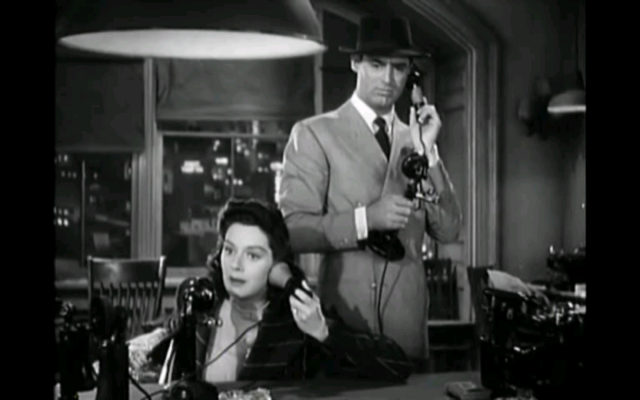
Adding to the success of this tautly scripted, directed, and edited film are standout performances by both Grant and Russell, who are at the top of their game, and perfectly matched for each other. Grant — who reminds me more than ever here of George Clooney — is “exceptional, particularly doing physical comedy”; it’s enjoyable to watch him in a “rare” role as “the aggressor in a relationship, rather than a befuddled suitor”. Meanwhile, Russell “is dynamic… [and] unabashed as [a] cunning, bawdy, aggressive, cigarette-smoking, unladylike female”. As Peary notes, “it’s a shame she wasn’t offered such parts more often”; interestingly, however, Russell was far from Hawks’ first choice for the role — he wanted Carole Lombard. Be sure to check out all of TCM’s online articles for more juicy behind-the-scenes trivia about this fabled film.

Redeeming Qualities and Moments:

  • Rosalind Russell as Hildy Johnson; Peary deservedly names her Best Actress of the Year in his Alternate Oscars
  • Cary Grant as Walter Burns (nominated by Peary as Best Actor of the Year)
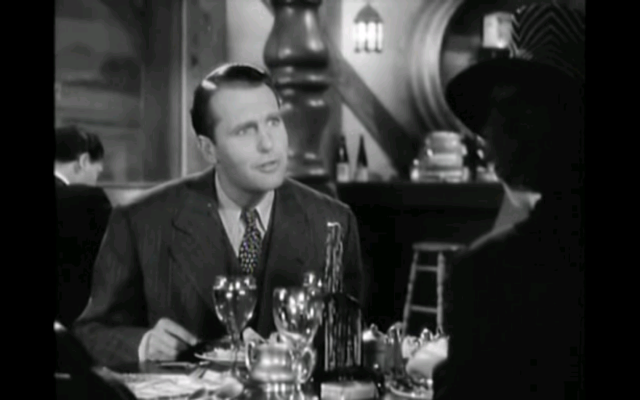
  • Ralph Bellamy as Bruce
  • Charles Lederer’s brilliantly rapidfire script
  • Priceless dialogue:

    “Take Hitler and stick him on the funny page.”

Must See?
Absolutely — numerous times. Nominated as one of the Best Pictures of the Year in Peary’s Alternate Oscars.

Categories

  • Genuine Classic
  • Important Director

(Listed in 1001 Movies You Must See Before You Die)

Links:

Swarm, The (1978)

Swarm, The (1978)

“Oh, my God — bees, bees, millions of bees!”

Synopsis:
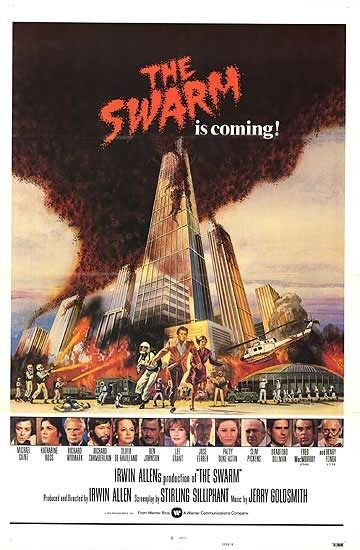
A renowned entomologist (Michael Caine) clashes with a military general (Richard Widmark) over how to deal with an attack by killer bees.

Genres, Themes, Actors, and Directors:

  • Ben Johnson Films
  • Cameron Mitchell Films
  • Disaster Flicks
  • Fred MacMurray Films
  • Henry Fonda Films
  • Jose Ferrer Films
  • Katharine Ross Films
  • Killer Animals
  • Lee Grant Films
  • Michael Caine Films
  • Olivia de Havilland Films
  • Richard Chamberlain Films
  • Richard Widmark Films
  • Scientists

Review:
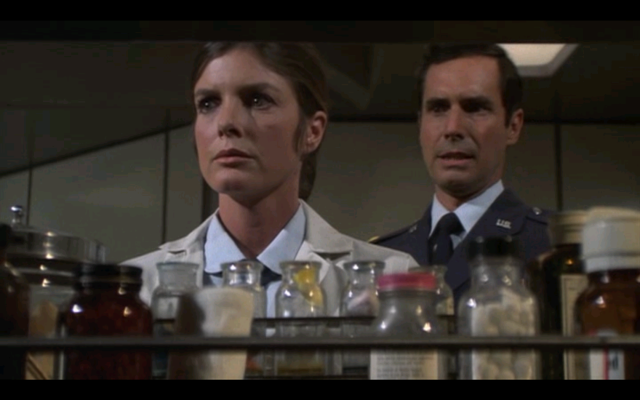
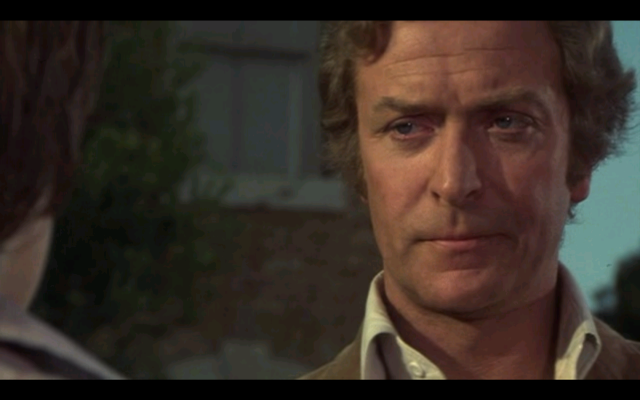
Helmed by famed “Master of Disaster” Irwin Allen (producer of The Poseiden Adventure and The Towering Inferno), The Swarm is an astonishingly boring mess of trite dialogue, ridiculous scenarios, and embarrassing performances by a host of big-name, Oscar-winning actors who should have known better than to attach themselves to this project. Those who argue that Michael Caine is incapable of giving a bad performance, for instance, need look no further than his role here as the film’s Hero, Dr. Crane. Meanwhile, he’s matched by Katherine Ross’s outrageously wooden performance as the requisite Beautiful Female Doctor who conveniently serves as Crane’s Love Interest; she possesses not a shred of conviction in this role. Aging screen legends Olivia De Havilland, Fred McMurray, and Ben Johnson try gamely, but ultimately embarrass themselves in an utterly gratuitous “romantic triangle” subplot.

Faring only marginally better are Richard Widmark as the Crusty General (Caine’s central nemesis):

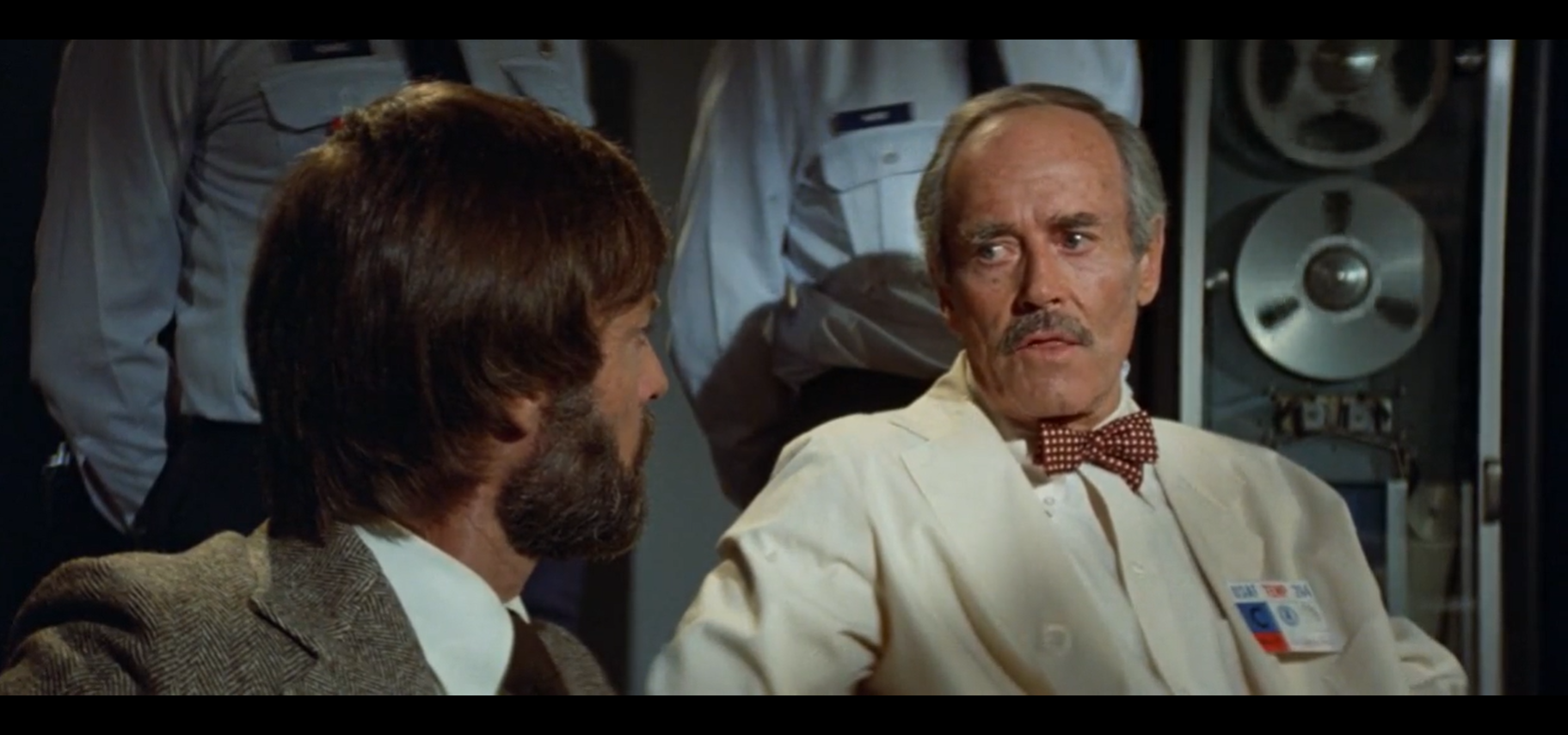
and Henry Fonda as a Renowned Scientist who may or may not be able to develop an antidote to the killer bees’ venom.

Other big names (Lee Grant as The Newscaster, Patty Duke as The Pregnant Woman in Distress, etc.) have such inconsequential roles that they’re barely worth mentioning.

Fortunately, The Swarm is just bad enough to provide some unintentional chuckles throughout its otherwise unendurable running time. Allen’s use of slow-motion at critical attack times — the initial Idyllic Picnic Scene, for instance, or the Schoolyard Deluge — is good for a few laughs, as is Widmark’s consistent labeling of the bees as “Africans”, which provides a jaw-droppingly offensive commentary throughout the film: “By tomorrow there will be no more Africans — at least not in the Houston sector.” Much less amusing is Allen’s deathly slow pacing, which effectively nullifies any potential for terror the film may have possessed.

Redeeming Qualities and Moments:

  • Unintentionally campy performances and dialogue


  • A few mildly freaky scenes of “killer bees” (though they’re too little, too late)

Must See?
No, unless you’re curious. Listed as a Camp Classic in the back of Peary’s book.

Links:

Johnny Got His Gun (1971)

Johnny Got His Gun (1971)

“I’m just like a piece of meat that keeps on living.”

Synopsis:
A WWI veteran (Timothy Bottoms) without limbs, face, or ears finds renewed hope when a kind nurse (Diane Varsi) attempts to communicate with him.

Genres, Themes, Actors, and Directors:

  • Donald Sutherland Films
  • Flashback Films
  • Jason Robards Films
  • Living Nightmare
  • Veterans
  • World War One

Response to Peary’s Review:
In his review of Dalton Trumbo’s adaptation of his own 1939 novel, Peary provides some interesting historical context, noting that while the “film won several awards at Cannes,” it “died at the box office in the U.S.”, given that “those viewers who found it as devastating as the novel and became emotionally attached to it were far outnumbered by those who found it morbid and pretentious” (c.f. New York Times reviewer Roger Greenspun’s opinion that it’s “a mess of cliched, imprecise sentimentalizing and fantasizing … [and] a stultifyingly bad movie.”) Peary goes on to conjecture that perhaps audiences in 1971 weren’t interested in anti-war films that didn’t deal specifically with Vietnam, and notes that “today, when so many films glorify war, Trumbo’s pacificism can better be appreciated”.

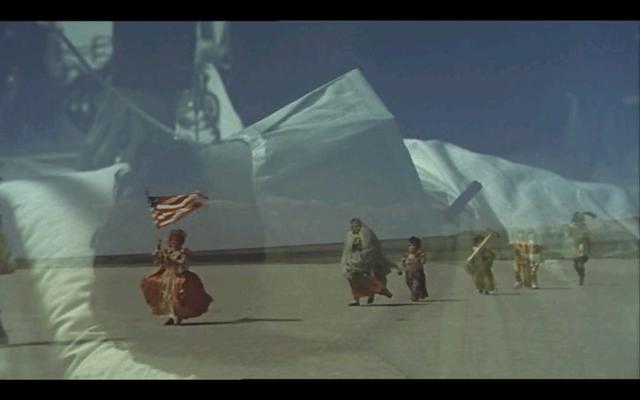
Indeed, as a fan of the novel, I believe Trumbo does a remarkably effective job translating his seemingly unfilmable first-person narrative into a frightening cautionary tale. By interspersing color flashbacks and fantasy sequences into his real-time b&w horror story of doughboy Joe Bonham — who became a “basket case… as the result of an explosion” on the final day of WWI, but retains full consciousness — Trumbo avoids miring the film in relentless gloom. Particularly intriguing are those fantasy sequences in which Bonham chats with an “ineffectual” Jesus Christ (Donald Sutherland), who agrees that his case is pretty hopeless. (Apparently these scenes were inspired by Luis Bunuel, Trumbo’s first choice to direct the film.) The movie’s final moments are truly chilling — be forewarned.

Note: This would make a compelling double bill (for viewers up to the emotional challenge) with Julian Schnabel’s similarly themed The Diving Bell and the Butterfly (2007).

Redeeming Qualities and Moments:

  • Memorable imagery
  • Donald Sutherland as Jesus
  • An undeniably bleak and powerful narrative

Must See?
Yes, as a powerful anti-war film.

Categories

  • Good Show

Links:

Invasion of the Bee Girls (1973)

Invasion of the Bee Girls (1973)

“They’re dropping like flies, Agar — they’re dropping like flies.”

Synopsis:
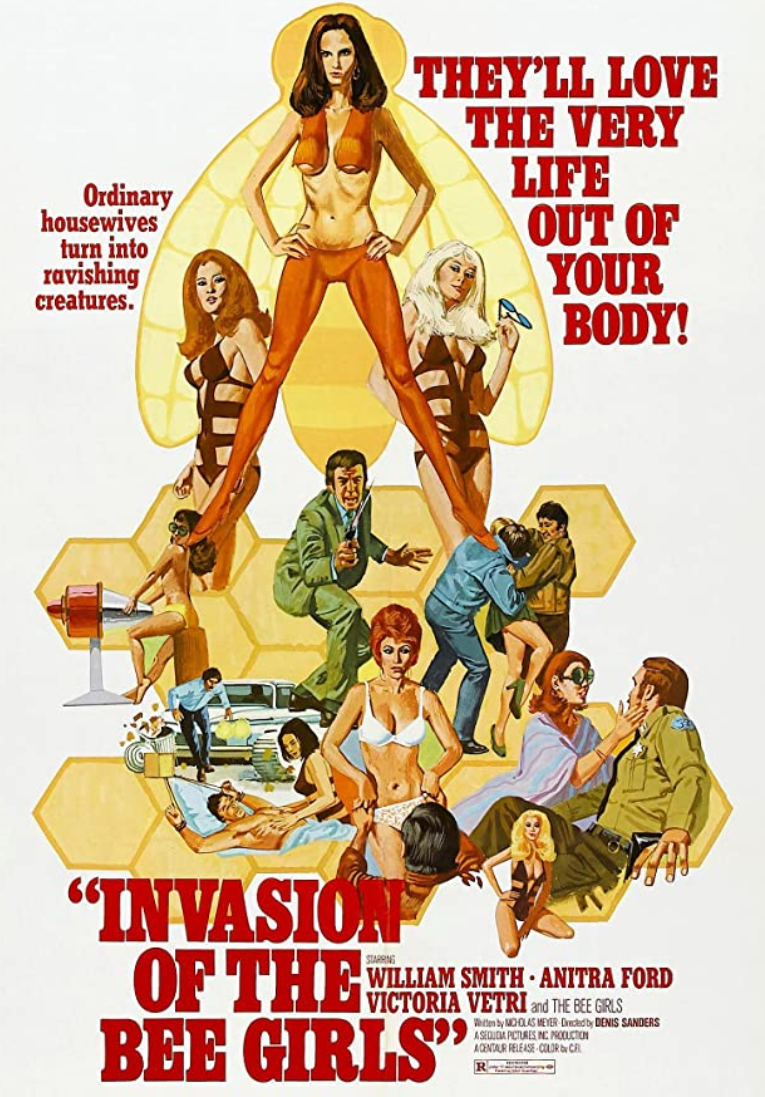
An FBI agent (William Smith) enlists the help of a beautiful scientist (Victoria Vetri) while investigating a rash of mysterious deaths in a small California town.

Genres:

  • Femmes Fatales
  • Horror
  • Insects
  • Scientists

Response to Peary’s Review:
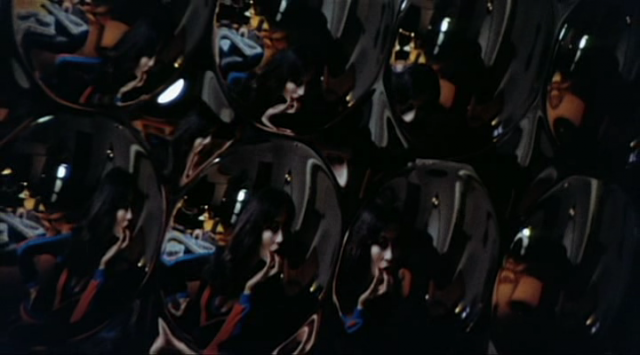
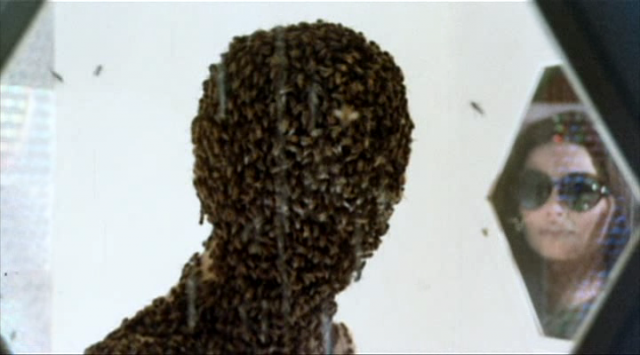
This B-level serio-comic horror flick about a government agent (William Smith) sent to investigate “the deaths of several male scientists at [a] California institute conducting radiation experimentation” — all of whom “die from coronaries while having sexual intercourse” — is, as Peary notes, not quite as campy or “as much fun as its reputation would have you believe”. Nicholas Meyer’s script — while meant to be “tongue in cheek” — is taken far too seriously, instead merely providing a platform for exploiting female nudity (including a disturbingly gratuitous near-rape scene), and tapping into men’s fears about the destructive powers of sex. However, the film is somewhat redeemed by its utterly ludicrous premise, its eerie low-budget “special effects” (dark contacts transform the Bee Girls’ eyes into freaky black pits), a catchy score by Charles Bernstein, and “a memorably bizarre sequence in which thousands of bees encase a nude woman in a cocoon” as she transforms into a Bee Girl. Ew!

Redeeming Qualities and Moments:

  • Campy but effective low-budget visuals

  • The trippy “transformation” scene
  • Charles Bernstein’s score

Must See?
No, but you may be curious to check it out.

Links:

Journey of Natty Gann, The (1985)

Journey of Natty Gann, The (1985)

“You’ve got no business being on the road, kid.”

Synopsis:
During the Depression, a motherless teen (Meredith Salenger) embarks on a journey to find her father (Ray Wise), who has gone to Seattle for a logging job.

Genres, Themes, Actors, and Directors:

  • Coming-of-Age
  • Depression Era
  • Pets
  • Road Trip
  • Search
  • Verna Bloom Films

Response to Peary’s Review:
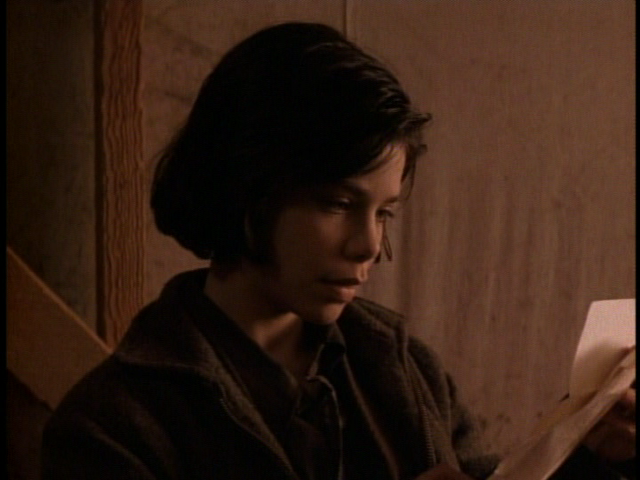
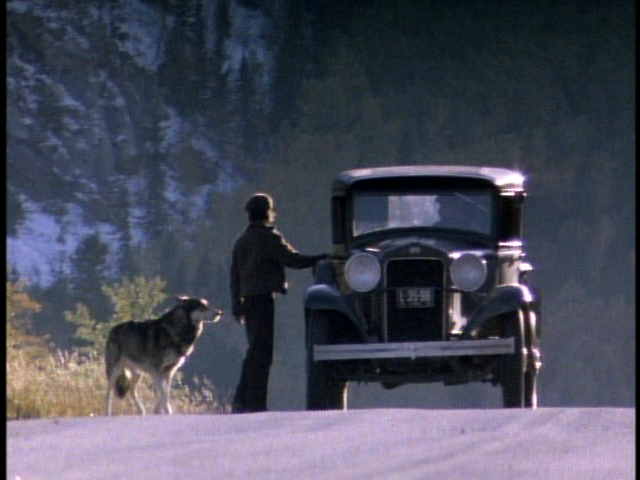
The opening line to Peary’s review of this live-action Disney feature is both intriguing and compelling: “Forget about art films for one night and gather the family for this enjoyable adventure movie”, he writes. Peary contends that while “nothing we see [in the film] is particularly surprising”, it’s nonetheless “well directed”, “intelligently scripted”, and “extremely well cast”, with Salenger’s “natural, very appealing delivery” making her plucky protagonist “easy to root for”. Peary’s assessment rings mostly true: despite being predictable and contrived at times — Natty’s relationship with a pet wolf, for instance, seems merely like an attempt to capitalize on the popularity of Never Cry Wolf (1983) — we quickly learn to care for Salenger’s Natty, and wish her luck as she struggles to reach her beloved dad (nicely played by Ray Wise).

In addition, older kids and teens will benefit from seeing a depiction of life during the Depression that accurately portrays the extreme hardships suffered by employees (the film is pro-union) and their families, who were very often torn apart as Natty and her father are. And, just as I was starting to wonder if Disney wasn’t perhaps sugar-coating the dangers of an attractive teen like Natty traveling on her own across the country, she’s propositioned by an unsavory middle-aged driver, and must flee for safety. Indeed, …Natty Gann really isn’t suitable for younger kids, so be forewarned.

Note: Those looking forward to seeing John Cusack in an early role (he plays Natty’s nominal love interest) should note that he’s not given much screen time; he shows up near the beginning, then disappears until the final half hour of the film.

Redeeming Qualities and Moments:

  • Meredith Salenger as Natty
  • Fine location cinematography
  • An effective depiction of Depression-era economic hardships

Must See?
No, but it’s a worthy family film.

Links:

Other Side of the Mountain, The (1975)

Other Side of the Mountain, The (1975)

“I think the hardest time is waking up in the morning — those moments before I remember who I am, and think instead about who I was.”

Synopsis:
An Olympic hopeful (Marilyn Hassett) becomes paralyzed in a skiing accident, and struggles to create a meaningful new life for herself.

Genres:

  • Beau Bridges Films
  • Biopics
  • Disabilities
  • Flashback Films
  • Romance

Review:
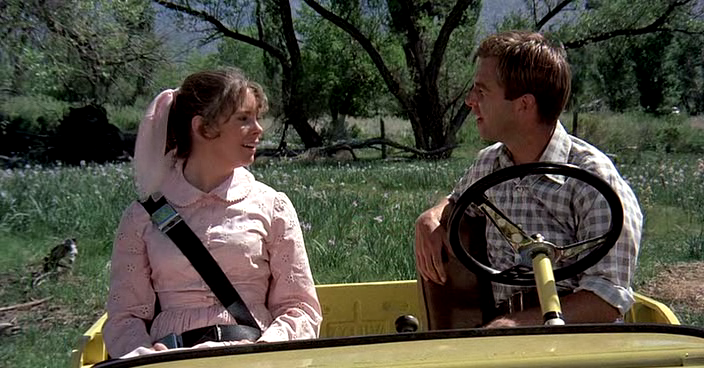
This flashback biopic about real-life skier Jill Kinmont’s tragic, paralyzing accident — and her subsequent romance with a fellow skier (Beau Bridges) who refuses to let her feel sorry for herself — is essentially a glorified disease-of-the-week TV movie, featuring slightly higher quality performances and made with a bit more care. Fortunately, Hassett is an appealing lead (we can’t help rooting for her), and both her post-accident recovery and her tenuous relationship with Bridges (a reckless but oddly seductive daredevil):

… are handled sensitively. Yet knowing Kinmont’s fate ahead of time dampens the lengthy, snow-filled exposition of the film, as teenage Hassett engages in run after run:

… and we’re kept cringing on the edge of our seats as we wonder which one will finally lead to The Accident. Plus, the surprisingly bleak ending is a bit of a downer, after how invested we’ve become in Kinmont’s post-accident happiness.

With all that said, the film provides an interesting sociological perspective on the lack of basic human rights afforded to disabled Americans before the American Civil Rights Act of 1964; we learn that because of being in a wheelchair, Kinmont wasn’t able to secure a job as a teacher in the majority of schools across the country, and had to fight to find a school that would accept her before she could be granted a teaching license. Given that she went on to become a well-known educator in her hometown of Bishop, California (with a school named after her), this remains a fascinating bit of educational history.

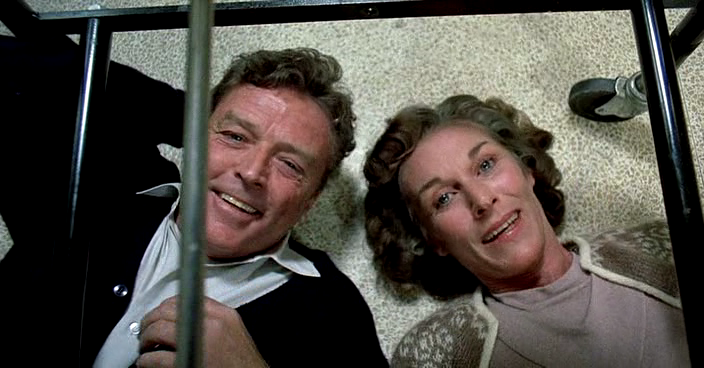
Watch for fine supporting performances by Nan Martin and William Bryant as Kinmont’s concerned parents:

… and Dabney Coleman (!) as her skiing coach.

Note: I haven’t see the follow-up film (the not-very-creatively named OSOTM, Part 2), but apparently it continues where this one leaves off, starring Hassett and several of her co-stars once again.

Redeeming Qualities and Moments:

  • Marilyn Hassett as Jill
  • Jill’s struggle to regain the use of her limbs

Must See?
No, but it’s worth a look if you’re in the mood for this kind of soaper. Listed as a Personal Recommendation in the back of Peary’s book.

Links:

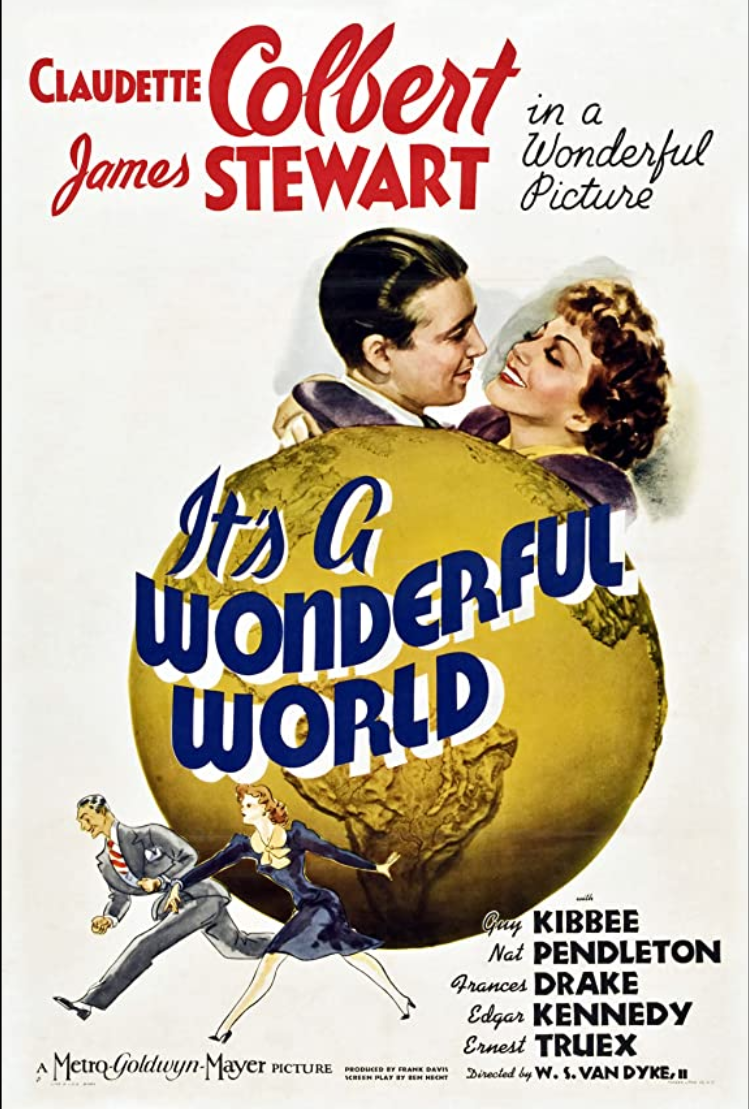
It’s a Wonderful World (1939)

It’s a Wonderful World (1939)

“I need you as much as I need a giraffe!”

Synopsis:
A falsely accused private detective (Jimmy Stewart) tries to ditch an overly helpful poetess (Claudette Colbert) he meets while on the lam.

Genres:

  • Claudette Colbert Films
  • Detectives and Private Eyes
  • Falsely Accused
  • Fugitives
  • Jimmy Stewart Films
  • Romantic Comedy

Review:
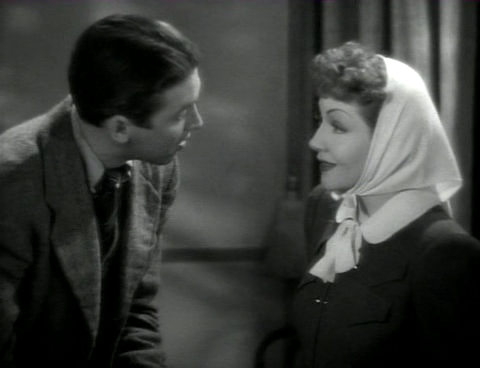
When people think of Jimmy Stewart in a film starting with It’s a Wonderful…, the word that automatically springs to mind is …Life — thus dooming this earlier Stewart vehicle (directed by W.S. Van Dyke, and scripted by Ben Hecht and Herman J. Mankiewicz) to permanent second-class status. If you do manage to locate a copy of …World (it’s curiously unavailable on DVD), you’ll discover a flawed but innocuous screwball rom-com, with Stewart cast against type as a boorish private eye (audiences of the day weren’t happy), and plucky Colbert gamely playing his nemesis and love interest. Unfortunately, we never really believe in their potential together as romantic partners, given their underdeveloped characters and the script’s clumsy handling of their love-hate relationship; with that said, there are some reasonably humorous throwaway moments (i.e., Stewart hiding out as a scout master in coke-bottle glasses):

… and Hecht and Mankiewicz’s screenplay offers a few random zingers: “Lady, you’re full of prunes!” But the end result is ultimately rather forgettable.

Redeeming Qualities and Moments:

  • An innocuously enjoyable screwball comedy

Must See?
No, but fans of the genre may be curious to check it out.

Links:

First Men in the Moon (1964)

First Men in the Moon (1964)

“Do you think we’ll ever see our world again?”

Synopsis:
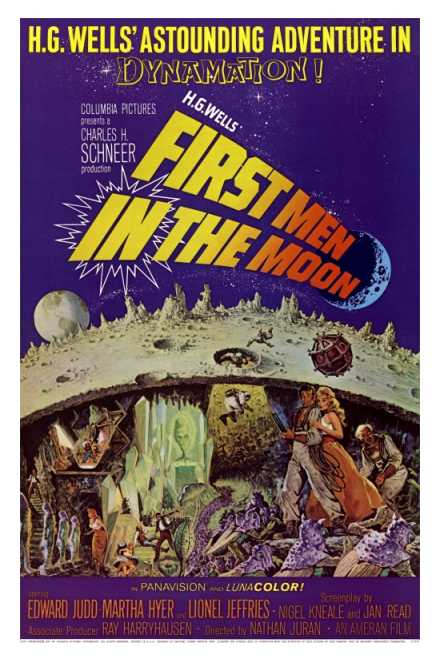
An elderly Englishman (Edward Judd) reminisces about a turn-of-the-century trip he took to the moon with his fiancee (Martha Hyer) and a neighbor (Lionel Jeffries).

Genres, Themes, Actors, and Directors:

  • Aliens
  • Flashback Films
  • H.G. Wells Films
  • Ray Harryhausen Films
  • Science Fiction
  • Space Exploration

Review:
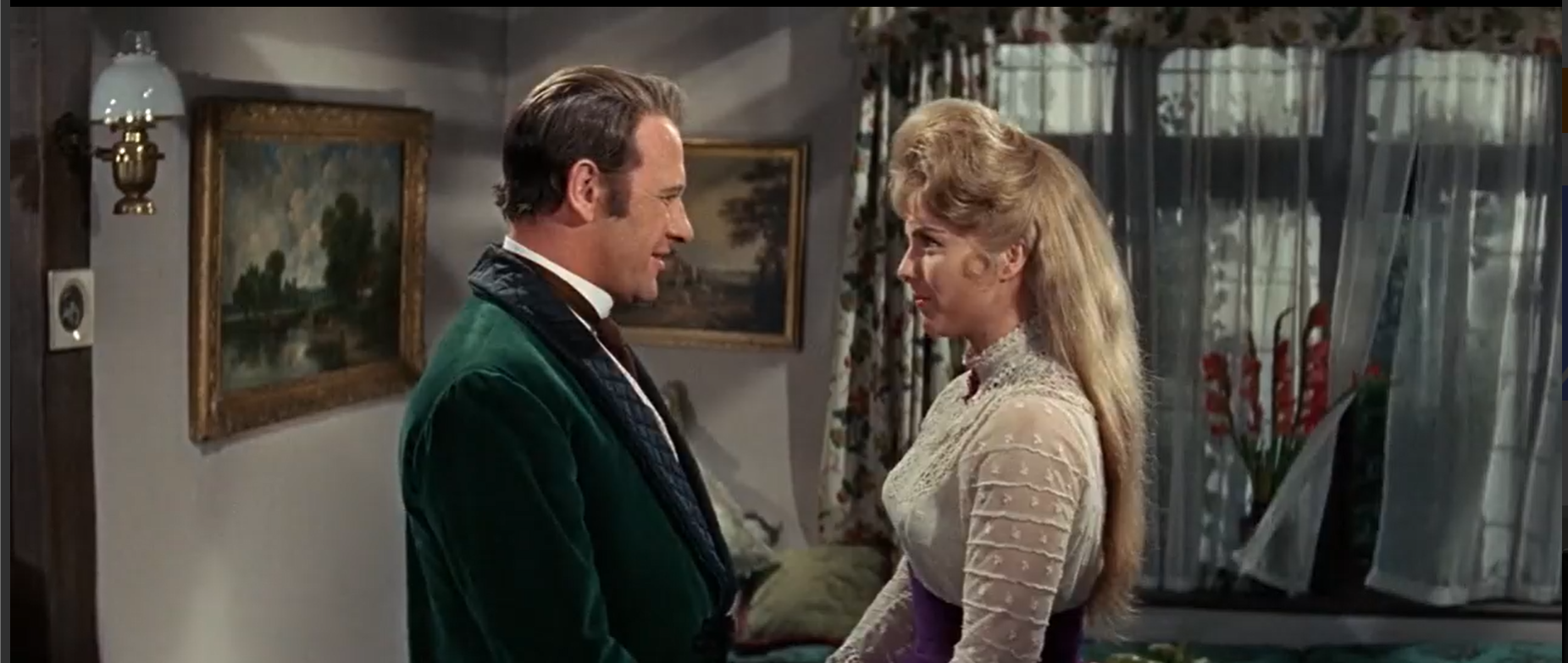
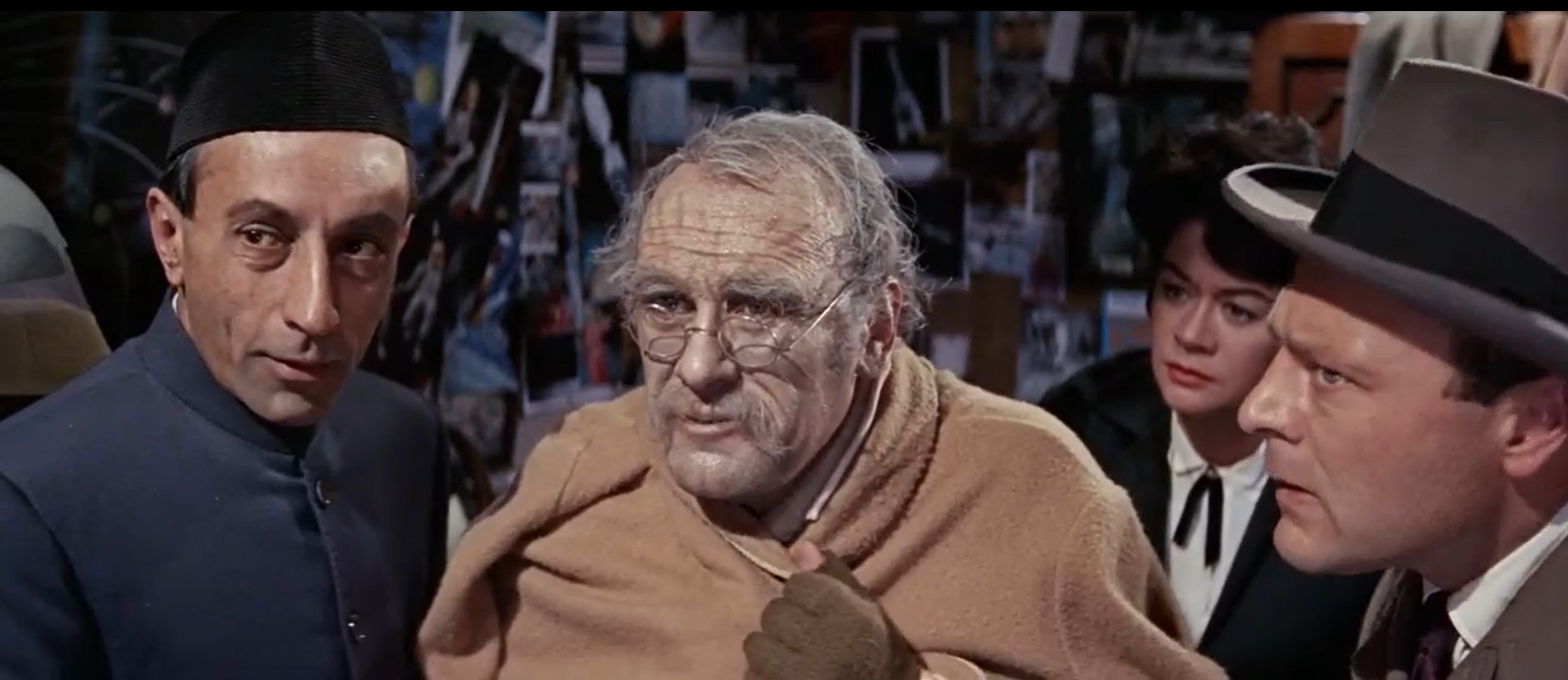
This adaptation of H.G. Wells’ 1901 novel is primarily notable for featuring the work of special effects guru Ray Harryhausen. As DVD Savant notes in his review, “Although there’s relatively little of Harryhausen’s standard animation techniques, the design and creation of the wall-to-wall effects is clearly his”, and the lunar world encountered by Wells’ Victorian-era space travelers is “imaginative, colorful and well designed”. Wells’ original storyline — about an insolvent playwright and an eccentric scientist encountering an ant-like colony of residents inside the moon — is padded here with both an irritating romantic subplot between Judd and Hyer (which merely turns our sentiments against the deceitful Judd, who is lying to Hyer):

… and a reasonably clever exposition, in which Judd’s elderly protagonist is finally able to tell his story with credibility once a Union Jack is found on the moon by modern-day astronauts.

Unfortunately, the meat of the story — i.e., the travelers’ inter-species encounter — isn’t given nearly enough screen time, resulting in an underdeveloped sci-fi film which appears to exist simply as a showcase for Harryhausen’s work.

Redeeming Qualities and Moments:

  • Impressive sets and special effects by Harryhausen

Must See?
No, though it’s certainly worth a look simply for Harryhausen’s work.

Links:

Attack of the Crab Monsters (1957)

Attack of the Crab Monsters (1957)

“We are dealing with a man who is dead, but whose voice and memory live — how this can be, I do not know, but its implications are far more terrible than any ghost could be.”

Synopsis:
A group of scientists studying the effects of nuclear testing on an island find themselves pursued by giant mind-controlling crabs.

Genres, Themes, Actors, and Directors:

  • Mind Control and Hypnosis
  • Mutant Monsters
  • Roger Corman Films
  • Science Fiction
  • Scientists

Review:
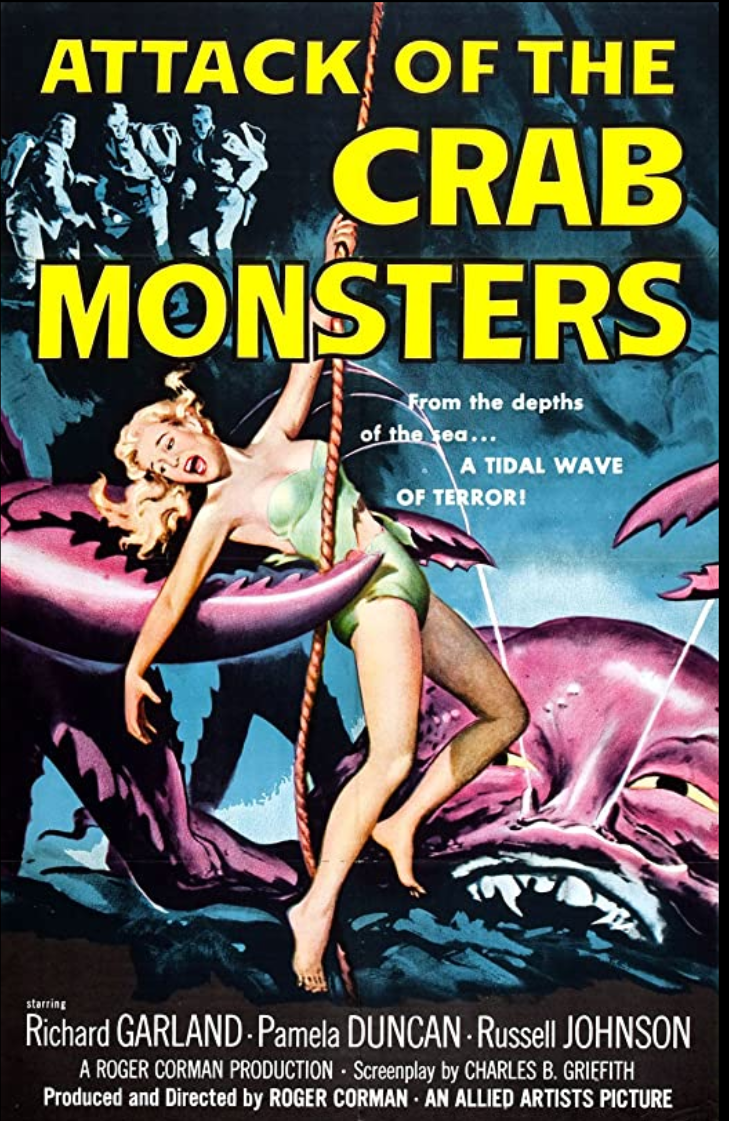
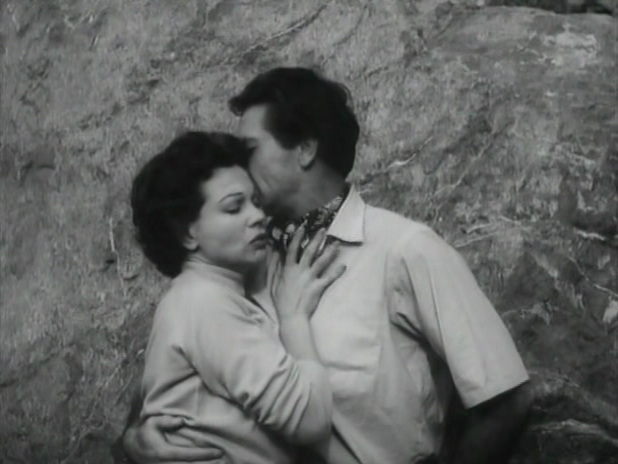
Maverick B-director Roger Corman made no less than nine films in 1957 — including this infamously titled mutant monster flick, featuring mind-controlling styrofoam crabs. The acting is just as campy as you might imagine from such a low-budget venture, with Pamela Duncan’s terrible performance as the busty female marine scientist “Dr. Martha Hunter” particularly noteworthy and giggle-inducing — and the dialogue is equally ludicrous:

Crab Monster: “So you have wounded me! I must grow a new claw, well and good, for I can do it in a day — but will you grow new lives when I have taken yours from you?”

Meanwhile, the storyline is simply too ridiculous to take seriously on any level, with atomically-charged crabs channeling the minds of the humans they’ve devoured through metal objects (?!). Despite such ludicrous plot devices, however, the story as a whole is surprisingly dull, especially in comparison with screenwriter Charles B. Griffith’s deliciously satirical collaboration with Corman two years later — 1959’s A Bucket of Blood. Only true fans of low-grade sci-fi need to bother checking this one out.

P.S. Fans of Gilligan’s Island will surely be thrilled to see “The Professor” (Russell Johnson) in a key role here; note in particular his final heroic act — very “Professor-worthy”.

Redeeming Qualities and Moments:

  • Ridiculously campy performances and special effects


  • Plenty of chuckle-worthy dialogue: “Once, they were men; now, they are crabs.”

Must See?
No, but diehard Corman fans won’t want to miss it. Listed as a Camp Classic in the back of Peary’s book.

Links:

Lifeboat (1944)

Lifeboat (1944)

“The more we quarrel and criticize and misunderstand each other, the bigger the ocean gets, and the smaller the boat.”

Synopsis:
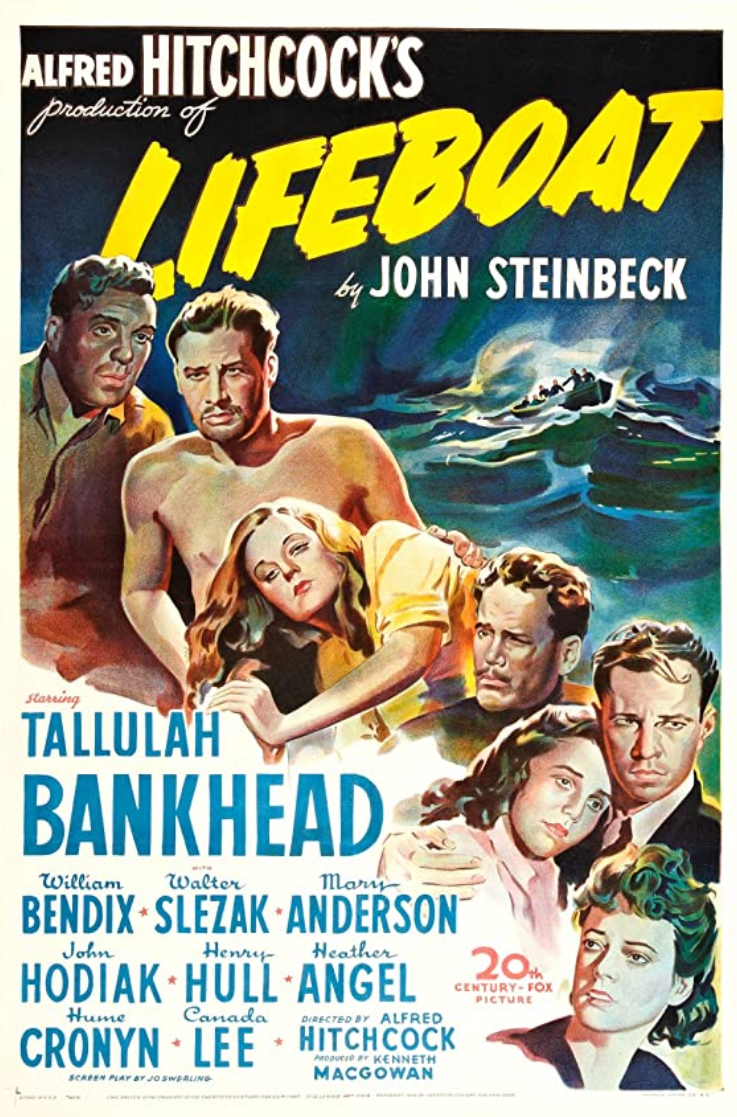
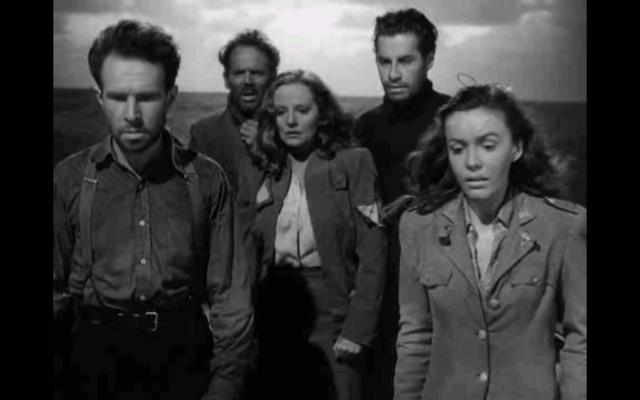
A disparate group of survivors from a torpedoed ship — including a journalist (Tallulah Bankhead), a tycoon (Henry Hull), a seaman (John Hodiak), a wounded stoker (William Bendix), a radio operator (Hume Cronyn), a nurse (Mary Anderson), a shell-shocked mother (Heather Angel), and a steward (Canada Lee) — allow a German U-Boat survivor (Walter Slezak) on board their lifeboat, but are never quite sure how much they can trust him.

Genres, Themes, Actors, and Directors:

  • At Sea
  • Hitchcock Films
  • Hume Cronyn Films
  • Ensemble Cast
  • Mistaken or Hidden Identities
  • Survival
  • Tallulah Bankhead Films
  • William Bendix Films
  • World War Two

Response to Peary’s Review:
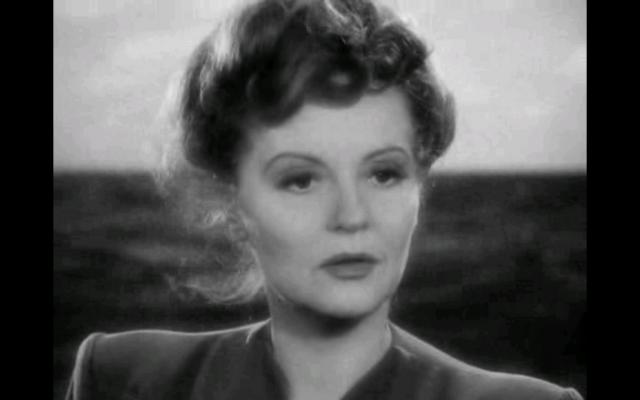
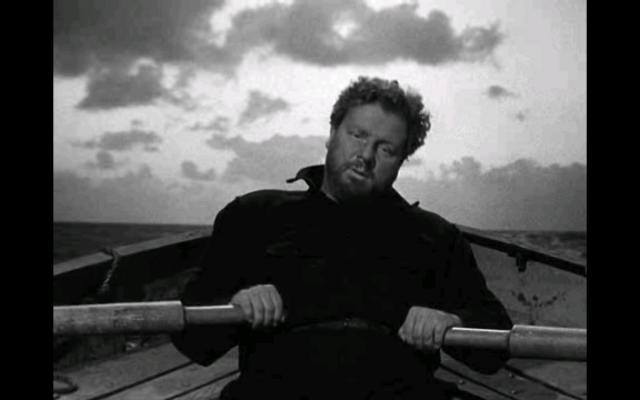
Peary refers to this cleverly conceived “character-propaganda piece” as “flawed but enjoyable”, arguing that director Hitchcock “does wonders with his challenging set, never moving his camera outside the lifeboat”. Indeed, it’s remarkable to realize that, as noted by critic Dave Kehr, “the drama is developed without recourse to flashbacks or cutaways” — yet our attention never flags. While John Steinbeck and Jo Swerling’s script is perhaps a bit “obvious and too didactic”, the performances by the motley cast members are strong enough to carry the film and hold our interest throughout. Especially memorable is Tallulah Bankhead, giving “bite to her every line” in a rare film appearance as a socialite reporter who is gradually forced to give up all physical remnants of her prestige; Hitchcock apparently cast her because he wanted “the most oblique, incongruous person imaginable in such a situation”. Equally impressive is Walter Slezak as “the German”, a “great villain whose cunning is revealed a little at a time” — he’s a genuinely menacing presence on board the tiny ship.

Redeeming Qualities and Moments:

  • Tallulah Bankhead as Connie Porter
  • Walter Slezak as Willy
  • Fine direction in a decidedly cramped shooting location
  • A compelling tale of survival

Must See?
Yes, as a fine Hitchcock drama.

Categories

  • Important Director

Links: