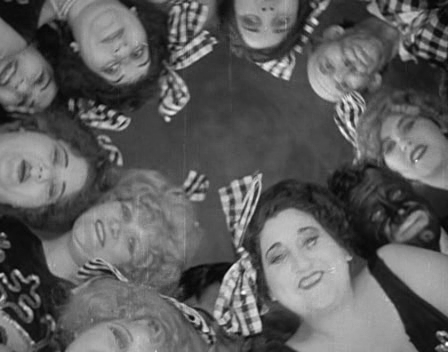
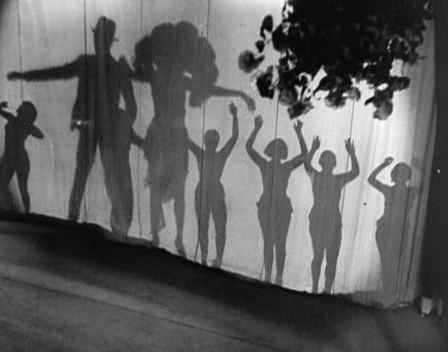
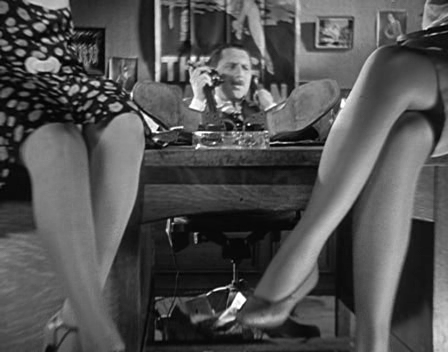
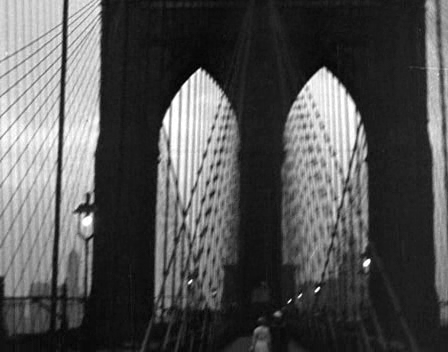
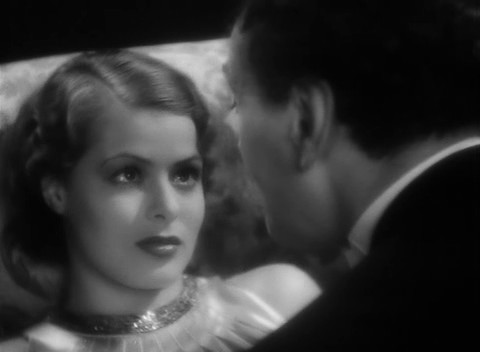
Applause (1929)
“The kid deserves a better break. Why, this burlesque racket is no place for her!”
|
Synopsis: |
|
Genres, Themes, Actors, and Directors:
Review: Redeeming Qualities and Moments:
Must See? Links: |
“The kid deserves a better break. Why, this burlesque racket is no place for her!”
|
Synopsis: |
|
Genres, Themes, Actors, and Directors:
Review: Redeeming Qualities and Moments:
Must See? Links: |
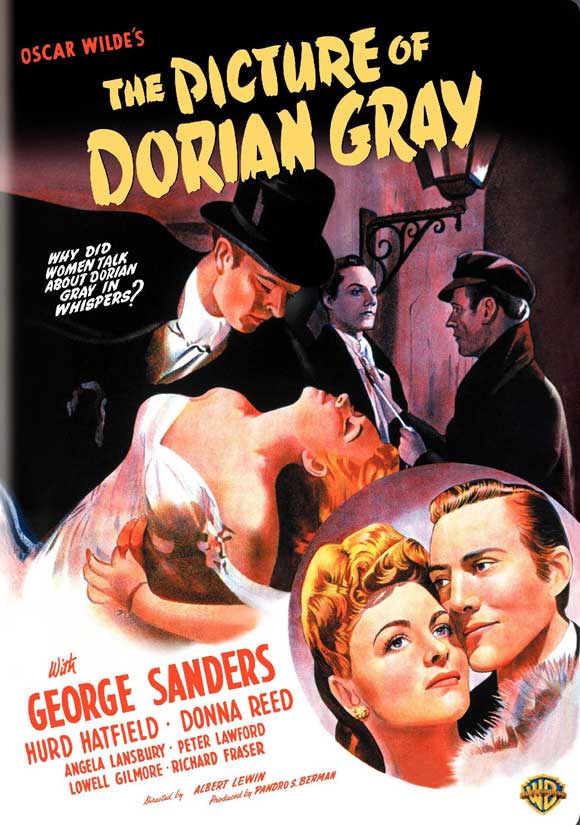
“There can be something fatal about a portrait.”
|
Synopsis: |
|
Genres, Themes, Actors, and Directors:
Response to Peary’s Review:
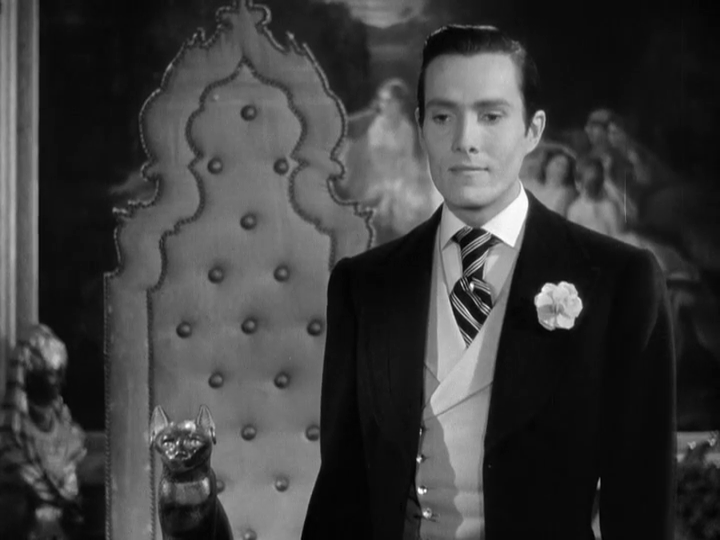
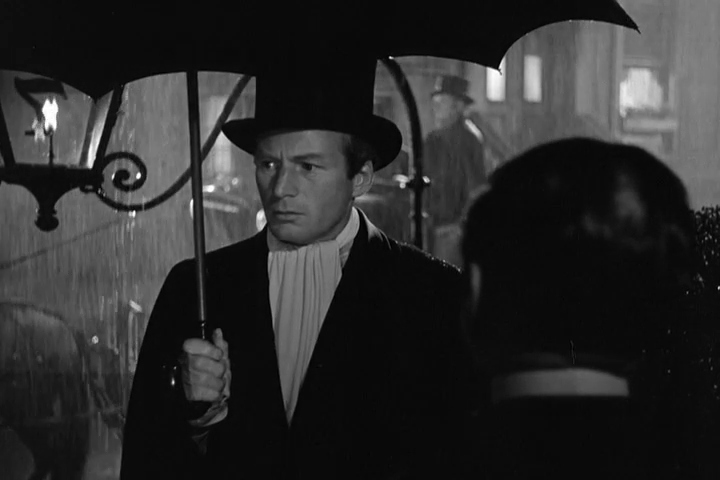
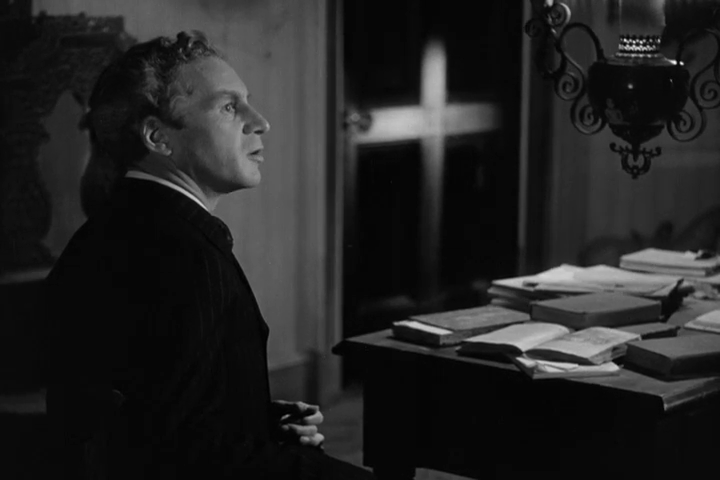
Indeed, Hatfield’s frustratingly flat performance — presumably (mis)guided by Lewin — brings the entire movie to a halt; with his character acting more like a “model” in a Robert Bresson film than a blue-blooded sociopath (and nearly all of his “wicked acts… kept off screen”), we’re hard-pressed to feel engaged in the scenario one way or another. Are we meant to feel sorry for Gray, who appears to have been naively corrupted by the (perfectly typecast) epigraph-spouting Sanders? And why doesn’t Sanders’ character — who “gets a charge out of Gray’s insensitivity” — show up more often in the second half of the film?
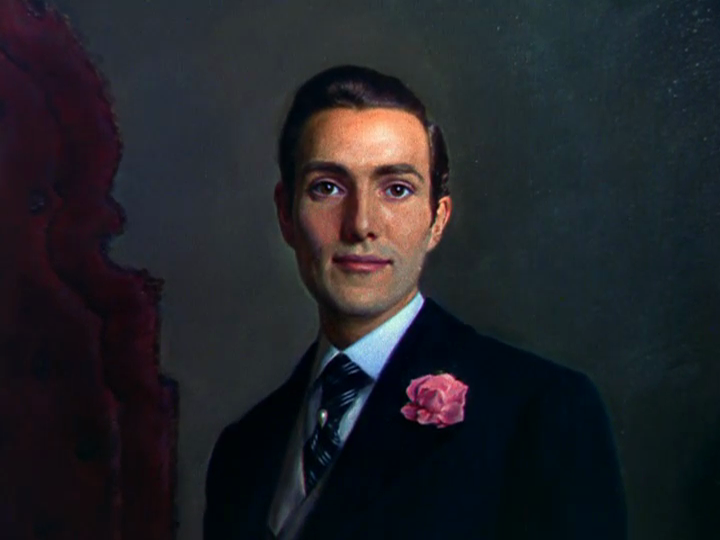
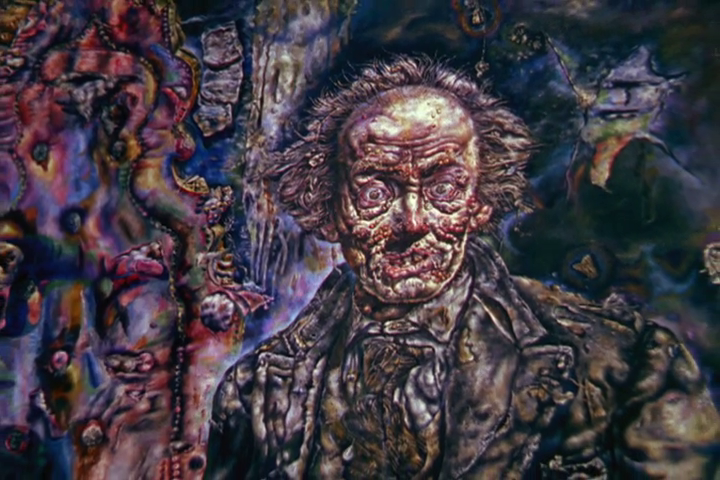
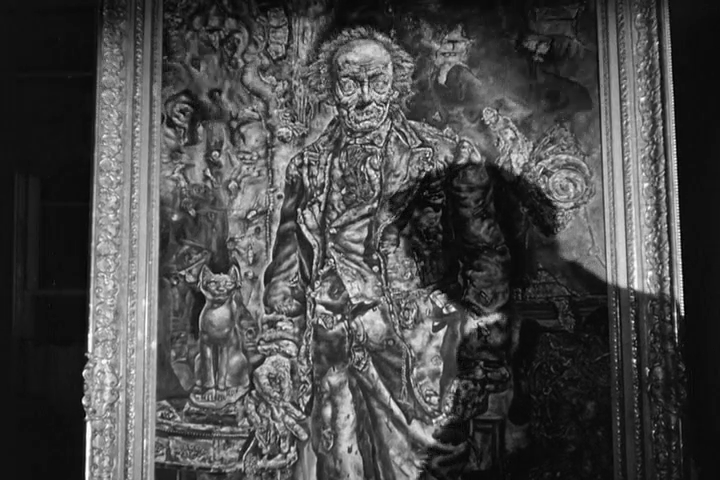
Meanwhile, the film’s biggest “reveal” is, naturally, the hideous state of the continuously morphing titular painting.
We’re given plenty of teasers — with shot after shot of a character looking in horror at the portrait we can’t see — before a flash of Technicolor finally reveals what the painting has turned into, at which point we can’t help guffawing.
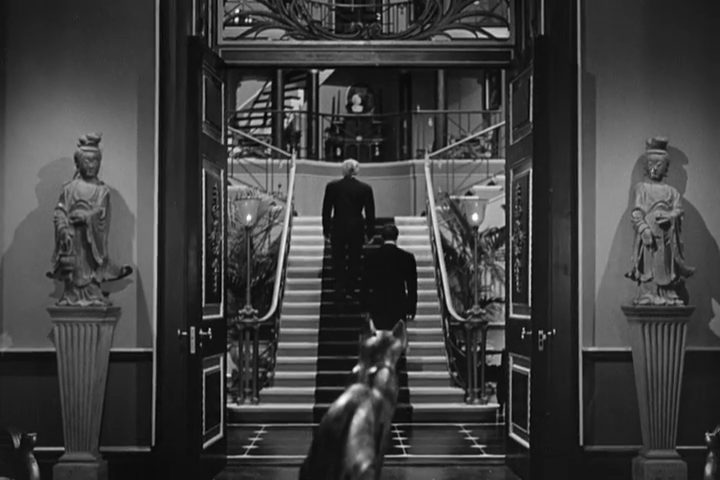
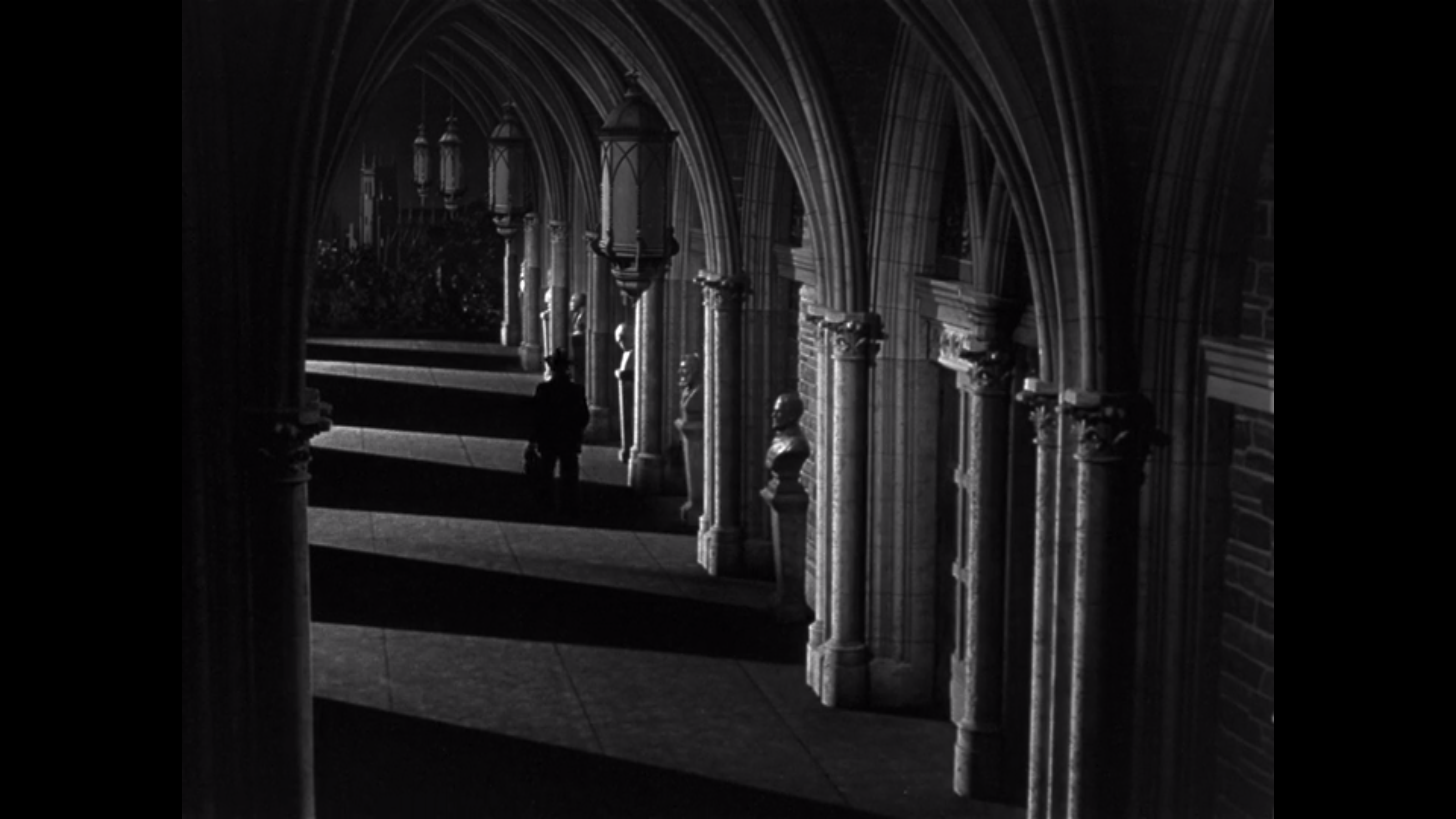
While mid-20th-century audiences may have been aghast at the purulent evidence of Gray’s “moral leprosy”, the painting today comes across like an escaped artifact from A Bucket of Blood (1959) or Color Me Blood Red (1965). Thankfully, the rest of the film is aesthetically pleasing, with scrupulously staged scenes of hollow interactions occurring in cavernous halls, effectively photographed in atmospheric black-and-white:
The mid-film murder scene is particularly memorable. But on the whole, this adaptation doesn’t live up to its potential. Redeeming Qualities and Moments:
Must See? Links: |
“You’re quite a noble character, aren’t you?”
|
Synopsis: |
|
Genres, Themes, Actors, and Directors:
Review:
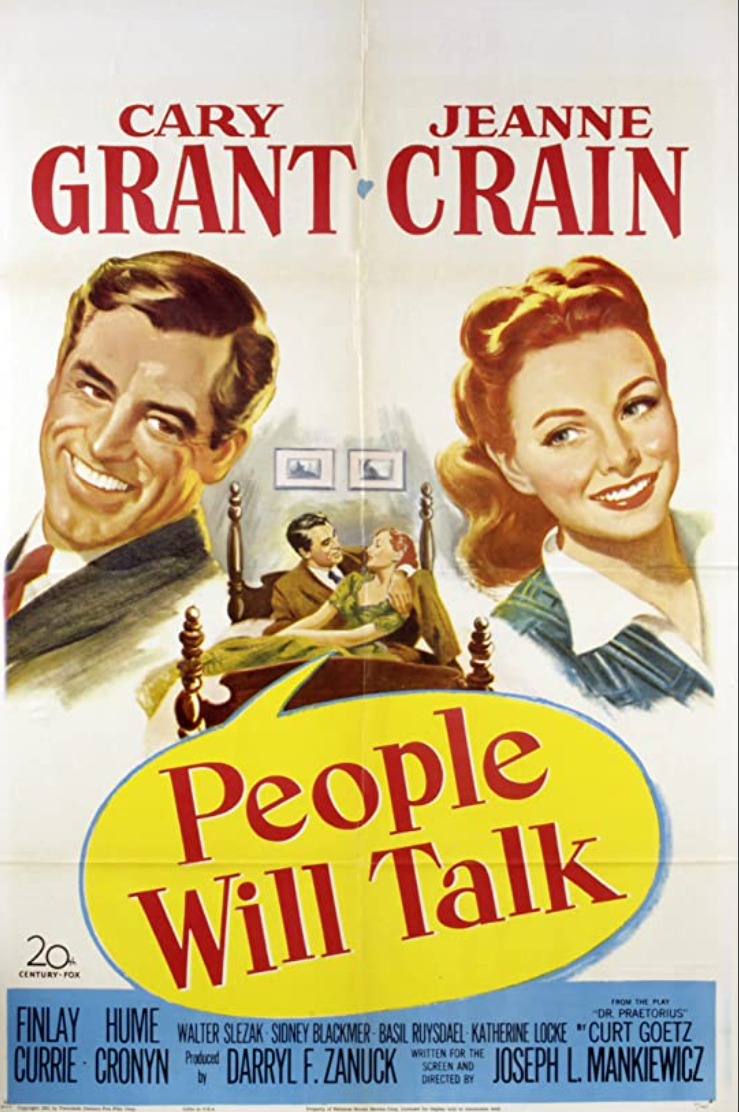
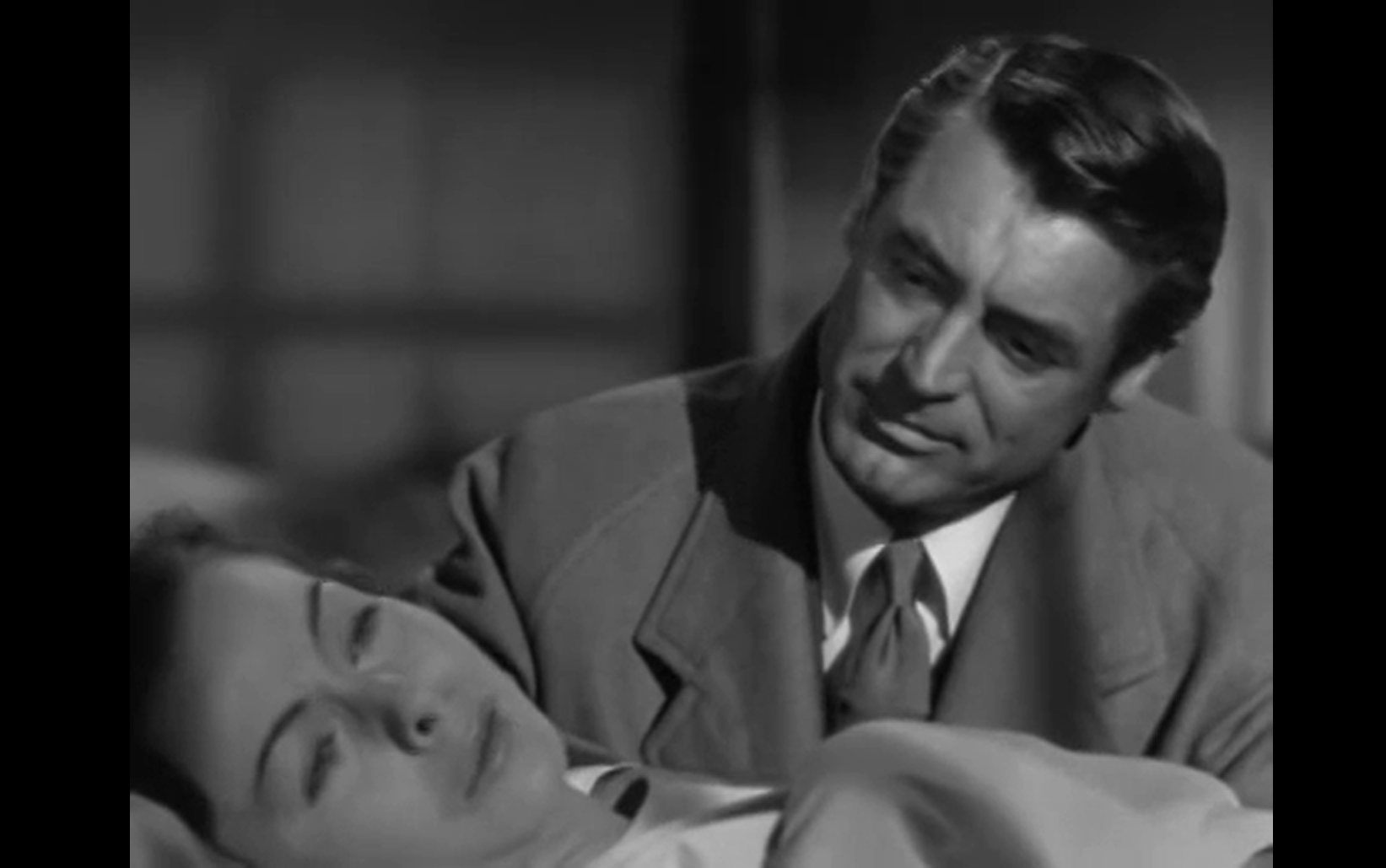
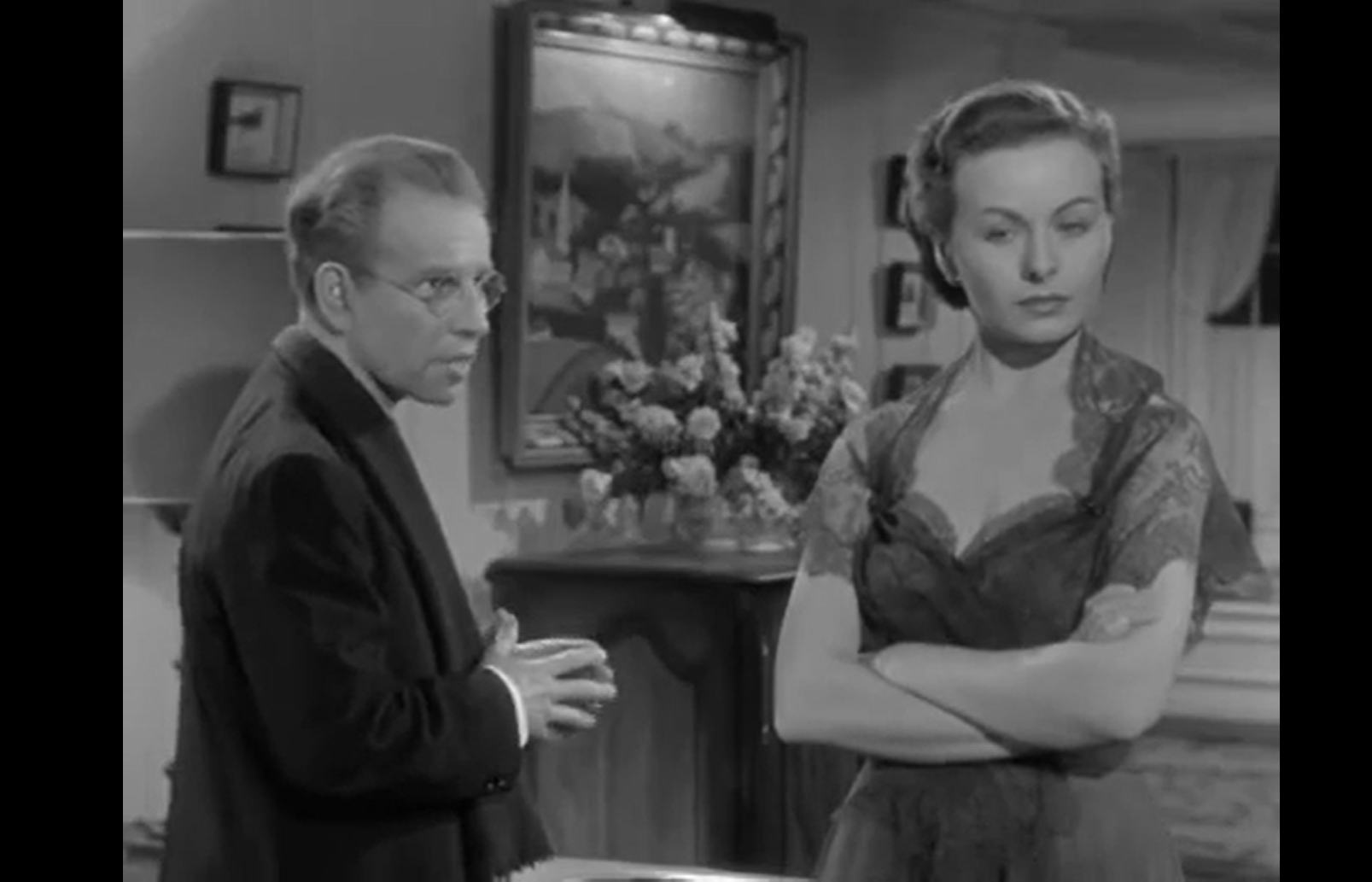
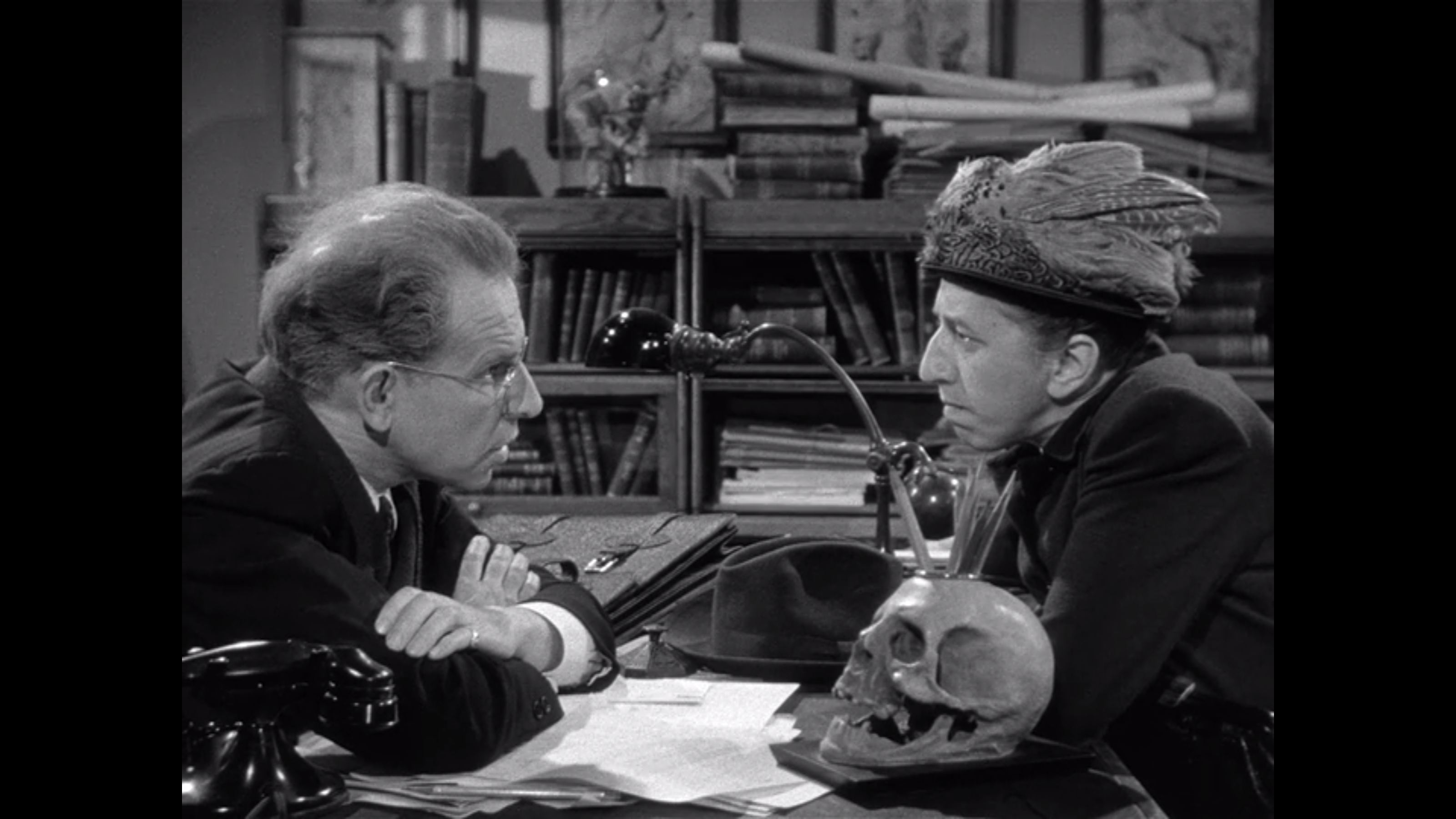
His “rescue” of an unwed, pregnant, suicidal woman is initially posited as a deceptive maneuver to save her life, but we soon realize he’s simply allowing powerful emotions to drive his sense of justice and righteous living (perhaps much like Jesus?). Dr. Praetorius is so superior to slimy leches like jealous Professor Elwell (Cronyn) that it’s clear he’ll win the day; the entire film basically plays out how this triumph occurs. Unfortunately, Grant wasn’t the best choice for this most unusual of romantic male leads; it’s much easier to imagine a more nuanced actor — like Spencer Tracy — investing the character with inspired depth. Crain is fine as Grant’s loyal wife, but never really transcends what’s required of her in the role. The supporting roles are more successful: Cronyn is spot-on as weaselly Elwell:
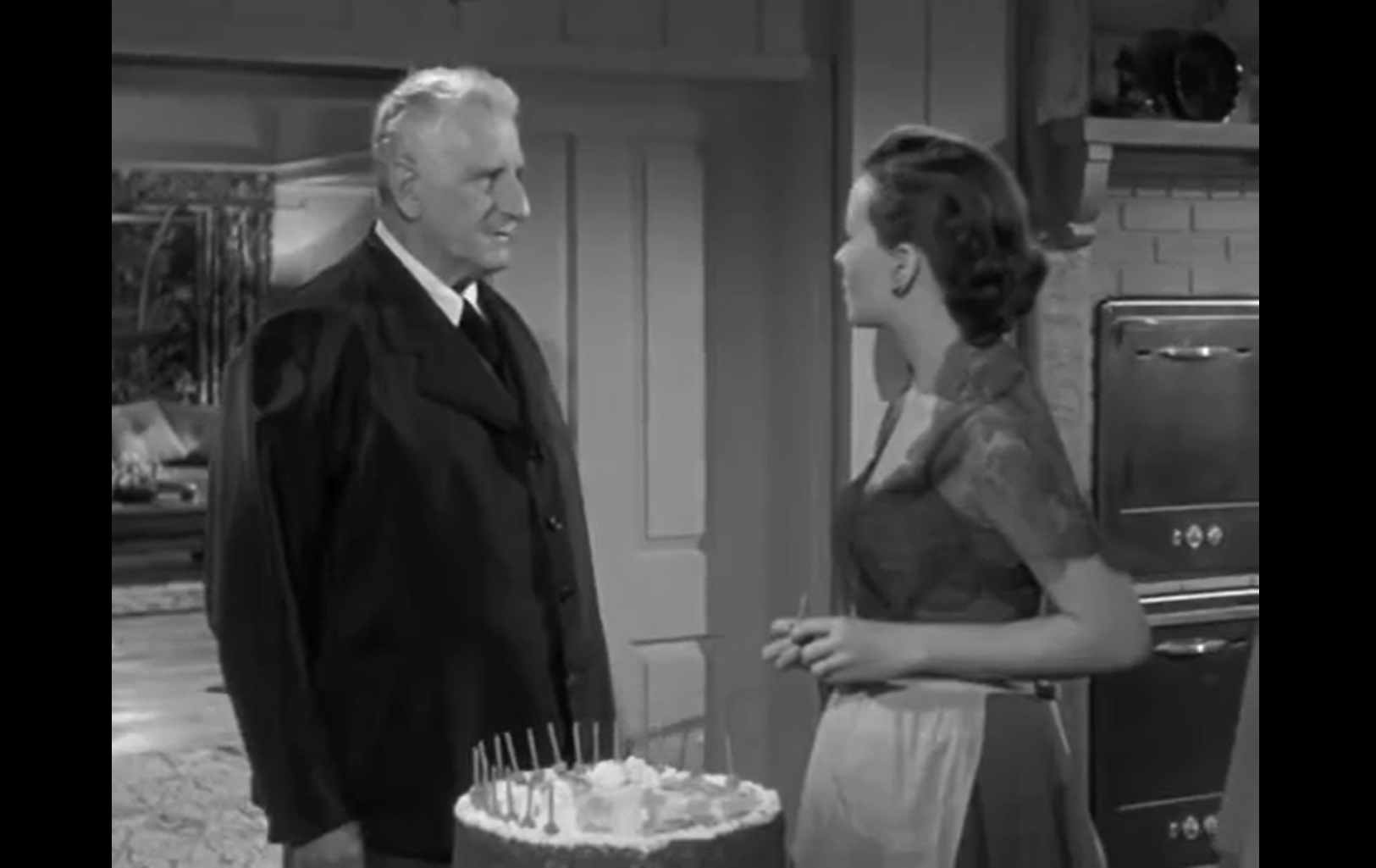
… Currie gives a memorable performance as the mysterious lumbering “Shunderson”:
… and Margaret Hamilton is nicely typecast as a suspicious shrew brought in during the first scene to bolster Cronyn’s growing case against Grant and Currie.
Ultimately, this odd title remains a mixed bag: intriguing and different enough to be worth checking out, but not entirely successful. Redeeming Qualities and Moments:
Must See? Links: |
“What about our sons? What future is there here for them?”
|
Synopsis: |
|
Genres, Themes, Actors, and Directors:
Review:
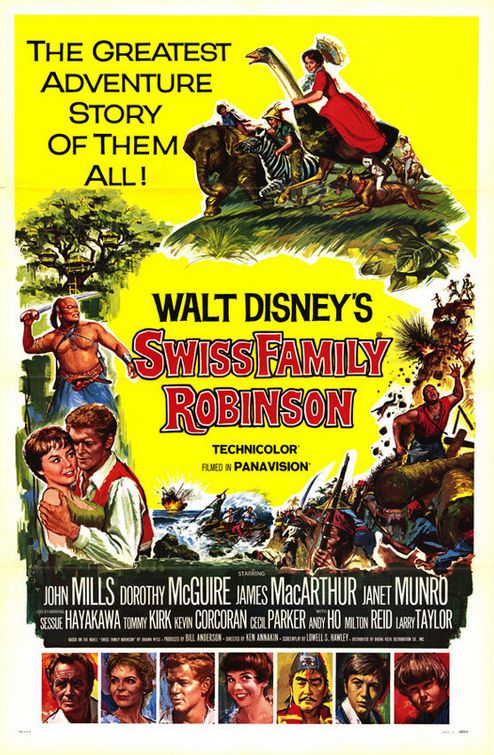
Dozens of animals from around the world were shipped to the island, under the care of no less than 14 trainers. The movie cost 4.5 million dollars to make, but was (and remained) so popular it is considered one of the most profitable films of all time — and its fame lives on through reconstructions of the family’s elaborate treehouse at theme parks around the world. Unfortunately, despite its beloved status, the film is far from a true classic. There’s plenty of adventure to be had, but it’s all so patently unbelievable — a chase between people riding zebras and ostriches?? — that only the youngest or most naive of viewers will be taken in. The two primary plot elements driving the narrative are the family’s attempts to stave off a persistent band of pirates (led by Sessue Hayakawa), and the love triangle that instantly emerges when the two older Robinson brothers conveniently stumble upon (and easily rescue) a teenage girl. Who will win her heart? How will the other boy handle his defeat? Munro is a sweet and lovely actress, but her characterization here does no favors to her gender, and is especially disappointing after her sparkling turn in Disney’s Darby O’Gill and the Little People (1959) the year before. [Thankfully, she got back on track with her notable performance as a deep-throated romantic interest the following year in The Day the Earth Caught Fire (1961).] Redeeming Qualities and Moments:
Must See? Links: |
“We want the greatest show of all: life!”
|
Synopsis: |
|
Genres, Themes, Actors, and Directors:
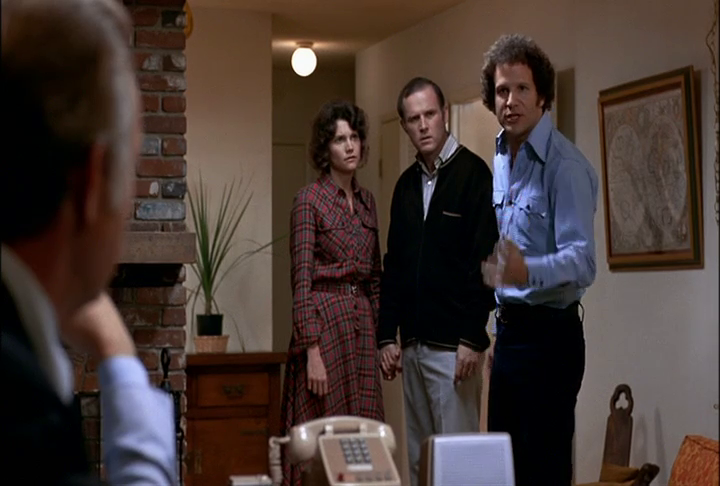
Response to Peary’s Review: However, things get off to a creaky start as soon as filming begins in the Yeagers’ house, as we’re shown how the Yeagers’ “normal” appearance during the audition process masked (who knew?!) a darker suburban reality of bitchy wives, petulant children, and put-upon, milquetoast husbands. McCain’s immediate crush on Brooks — while strategically fueling the ego of his “opportunist” character “whose integrity and sensitivity come and go” — feels patently false, and the two kids are instantly forgettable. Although Peary argues that the secondary plotline involving “Brooks’s meetings with psychologists and studio executives” causes the film to lose momentum, I disagree; I actually find Brooks’ character (as obnoxious as he is) the most perversely interesting and authentic in the film, and his dealings with a faceless producer ring all-too-true. The film’s denouement is reasonably inspired, and zany enough to leave us feeling that this film is really about outsized Hollywood egos run amok. Redeeming Qualities and Moments:
Must See? (Listed in 1001 Movies You Must See Before You Die) Links: |
“For the last time, the athletes have to fight with all their might.”
|
Synopsis: |
|
Genres, Themes, Actors, and Directors:
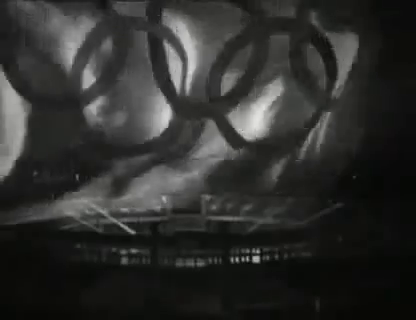
Response to Peary’s Review: Indeed, given its reputation as yet another propaganda-laden film by the infamous Nazi-affiliated director of Triumph of the Will (1935), Olympia — officially titled Olympia Part One: Festival of the Nations and Olympia Part Two: Festival of Beauty — comes across as surprisingly even-handed in its representation of athletes from across the globe. The primary indicators that this film was made in pre-WWII Germany are the presence of swastika-laden German flags, several collective heil-salutes, and reaction shots of Hitler and his key henchmen in the audience. Regardless of her political affiliations (which of course one shouldn’t dismiss or forget), Leni Riefenstahl was an undeniably brilliant filmmaker. Although the film is too long to enjoy in one setting, and often repetitive, I find it far from boring; Riefenstahl could have chosen a different, more personal approach to filming this material, and edited more strategically, but her decision — to show a range of incredible sporting talent and physical beauty across nations — seems defensible. One finishes this marathon, two-part documentary with an appreciation for what the Olympics are (in part, ideally) designed to do: allow gifted athletes to compete as humans while simultaneously bringing honor to their homelands. Redeeming Qualities and Moments:
Must See? Categories
(Listed in 1001 Movies You Must See Before You Die) Links: |
NOTE: This re-posting of an older review is part of the My Favorite Classic Movie Blogathon in celebration of National Classic Movie Day (May 16th). Click here to view the schedule listing all the great posts in this blogathon.
“Pay no attention to the man behind the curtain!”
|
Synopsis: |
|
Genres, Themes, Actors, and Directors:
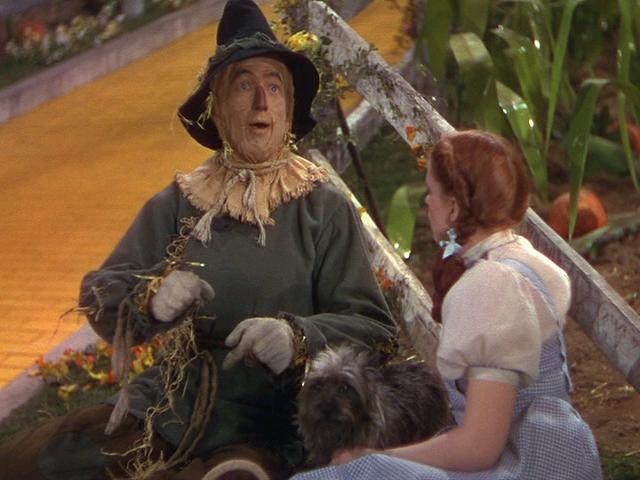
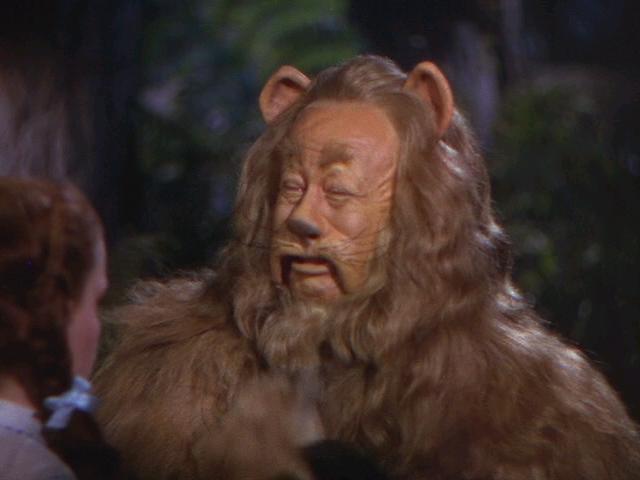
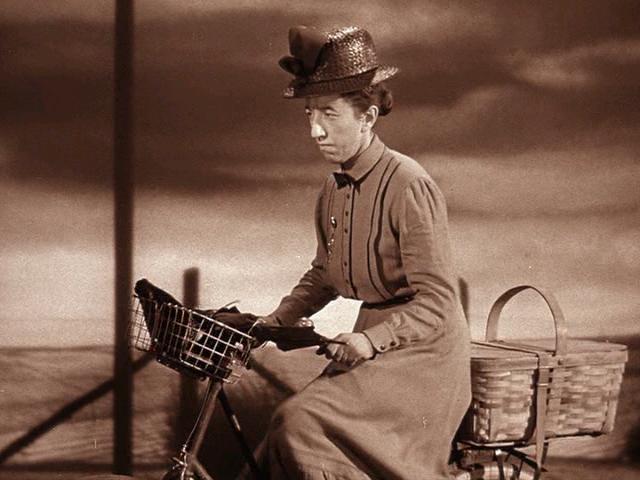
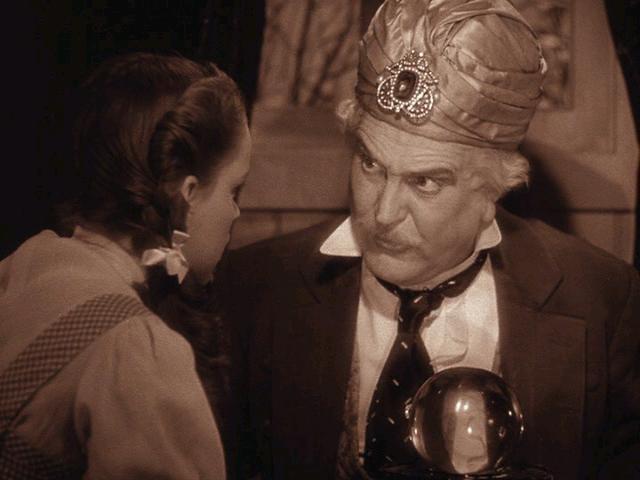
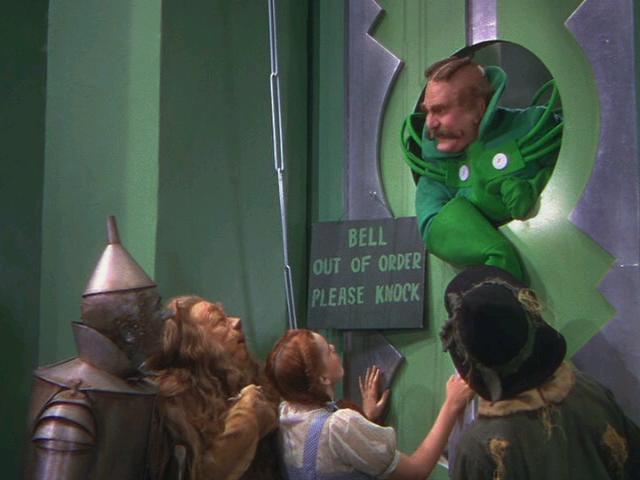
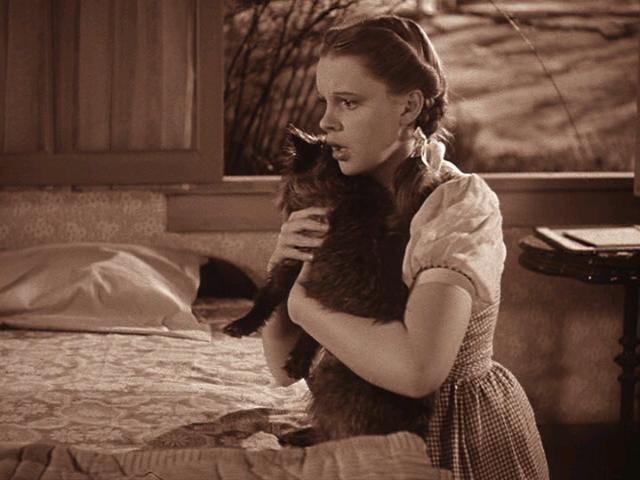
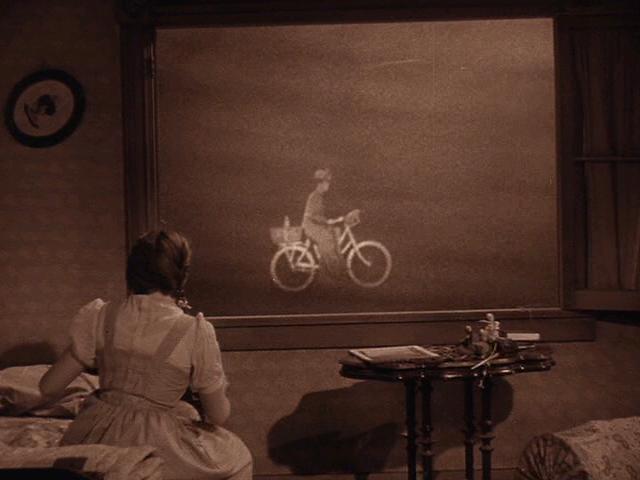
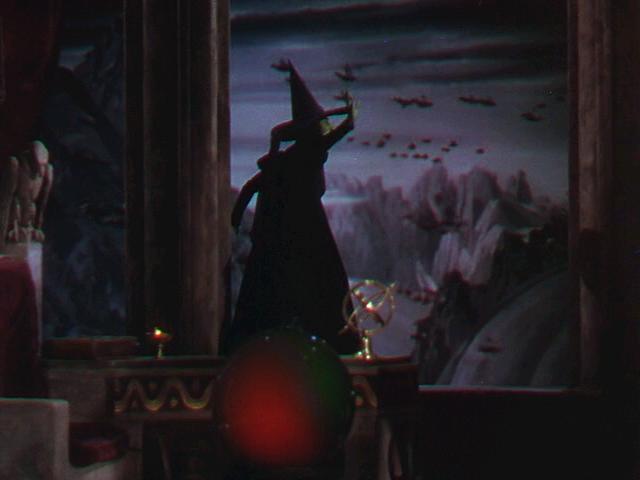
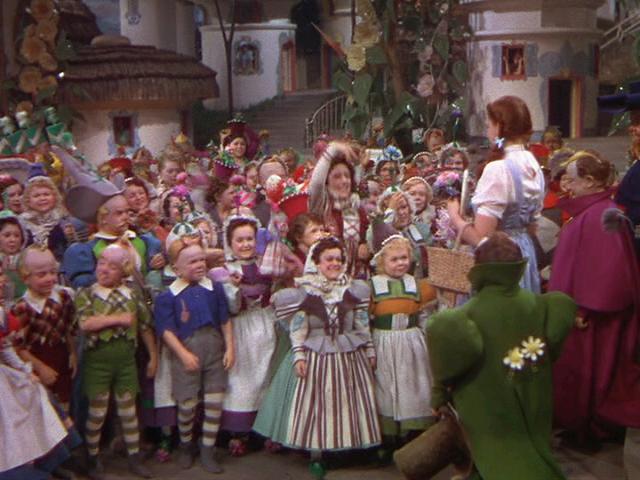
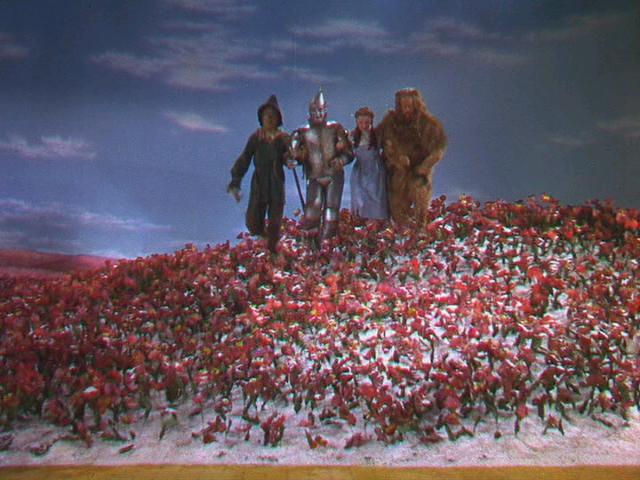
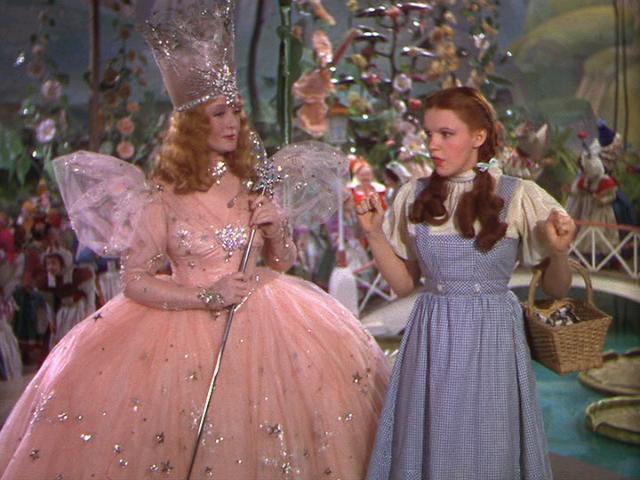
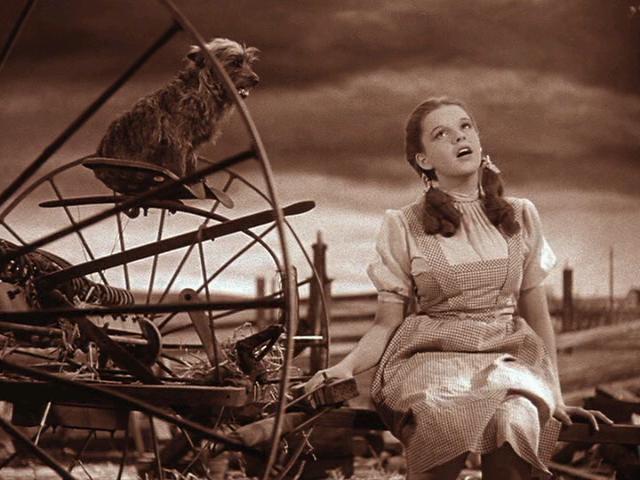
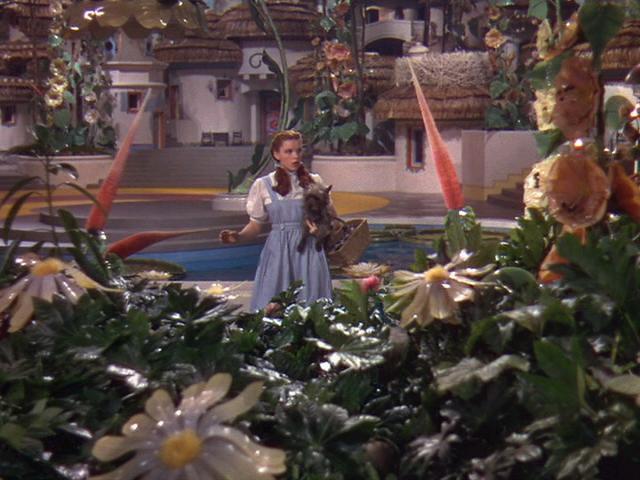
Response to Peary’s Review: Rewatching Oz for the first time recently as an adult, I was struck by how skillfully the filmmakers managed to blend comedy (as when Professor Marvel convinces the naive Dorothy that he knows all about her life back on the farm), terror (the over-sized hourglass in the witch’s castle still fills me with anxious fear), and surrealism (what in the heck is a Lollipop Guild?!) into a colorful musical. The narrative never lags, moving smoothly from one phase of Dorothy’s journey to the next — and, even when we think the denouement has arrived (Dorothy and her friends successfully snag the witch’s broomstick and bring it to the Wizard), there’s more to (over)come. While some have argued that it’s overrated, and Peary asserts that the film’s “There’s no place like home” theme “is nonsense”, there’s more going on here than meets the eye. As noted so succinctly in Time Out’s review, Oz “exposes our childhood anxieties about abandonment and powerlessness and brings to light the tension between the repressive comforts of home and the liberating terrors of the unknown marking all our adult lives.” After her successful venture into the strange, magical, terrible land of Oz, Dorothy ultimately learns that she’s in control of her own destiny — no small feat for a young girl (or boy) coming of age. Redeeming Qualities and Moments:
Must See? Categories
(Listed in 1001 Movies You Must See Before You Die) Links: |
“I had a tough day.”
|
Synopsis: |
|
Genres, Themes, Actors, and Directors:
Review:
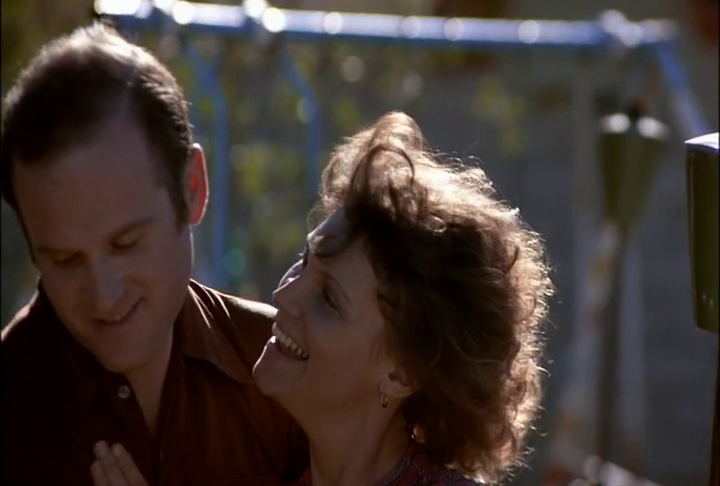
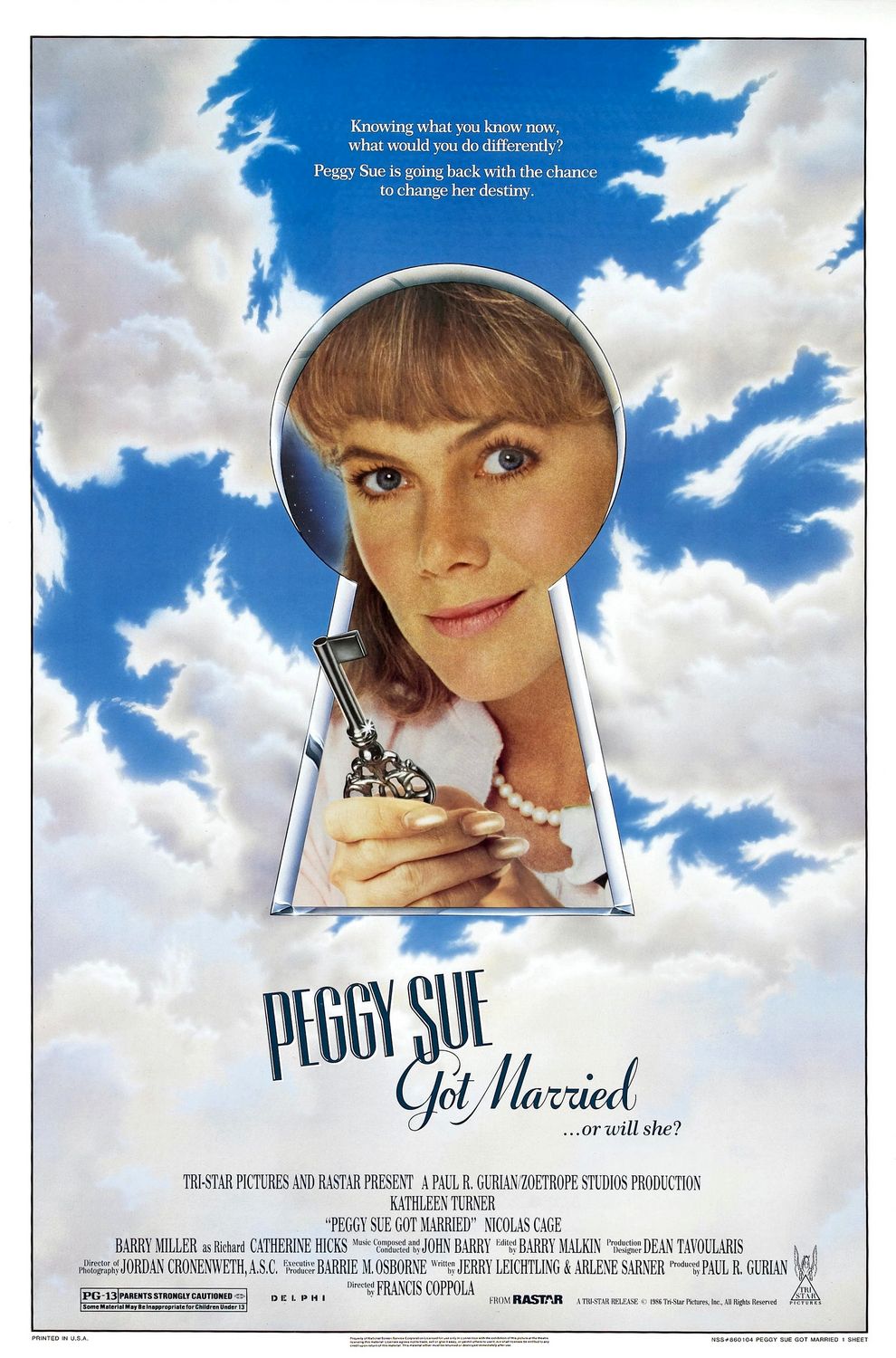
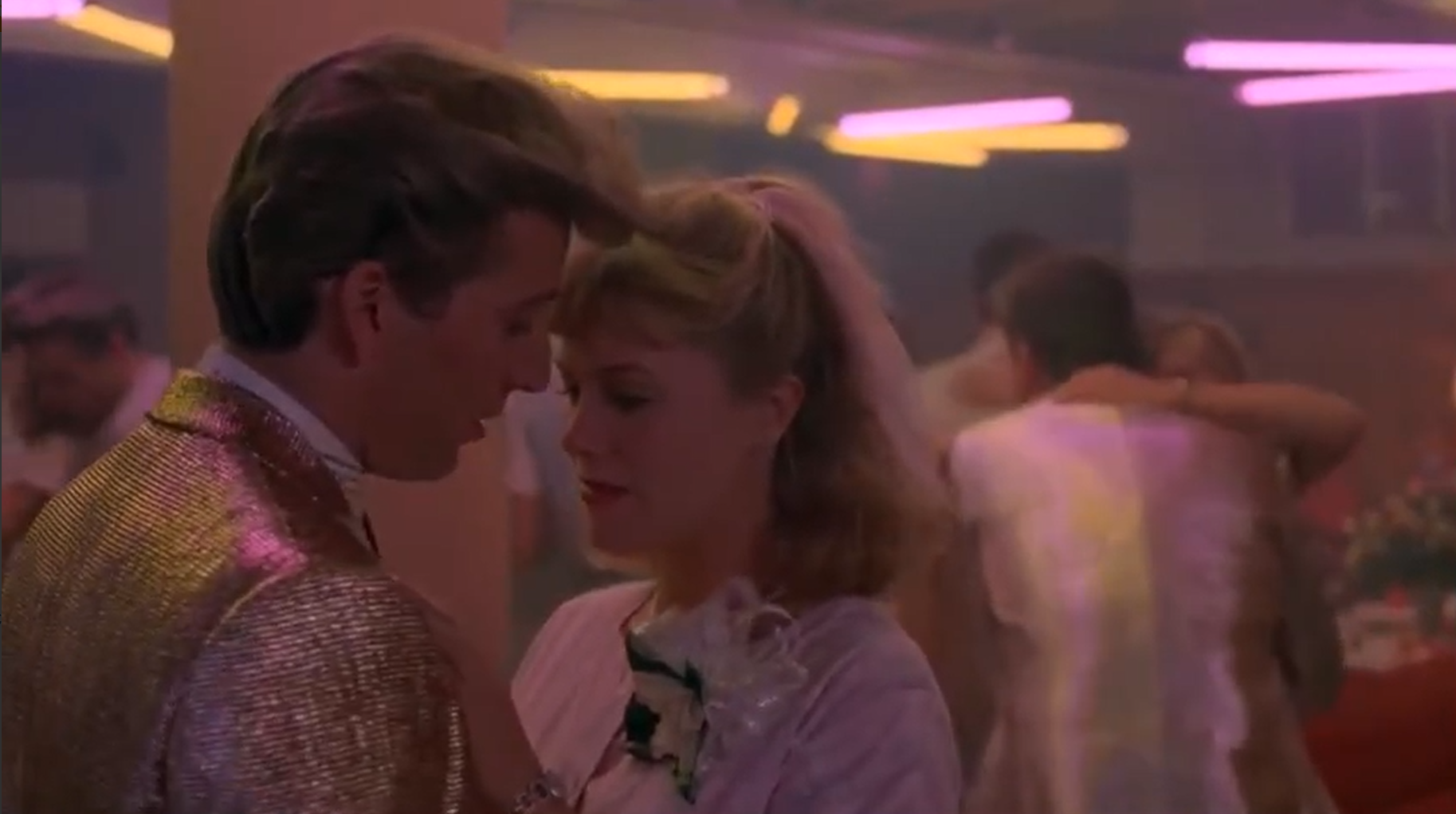
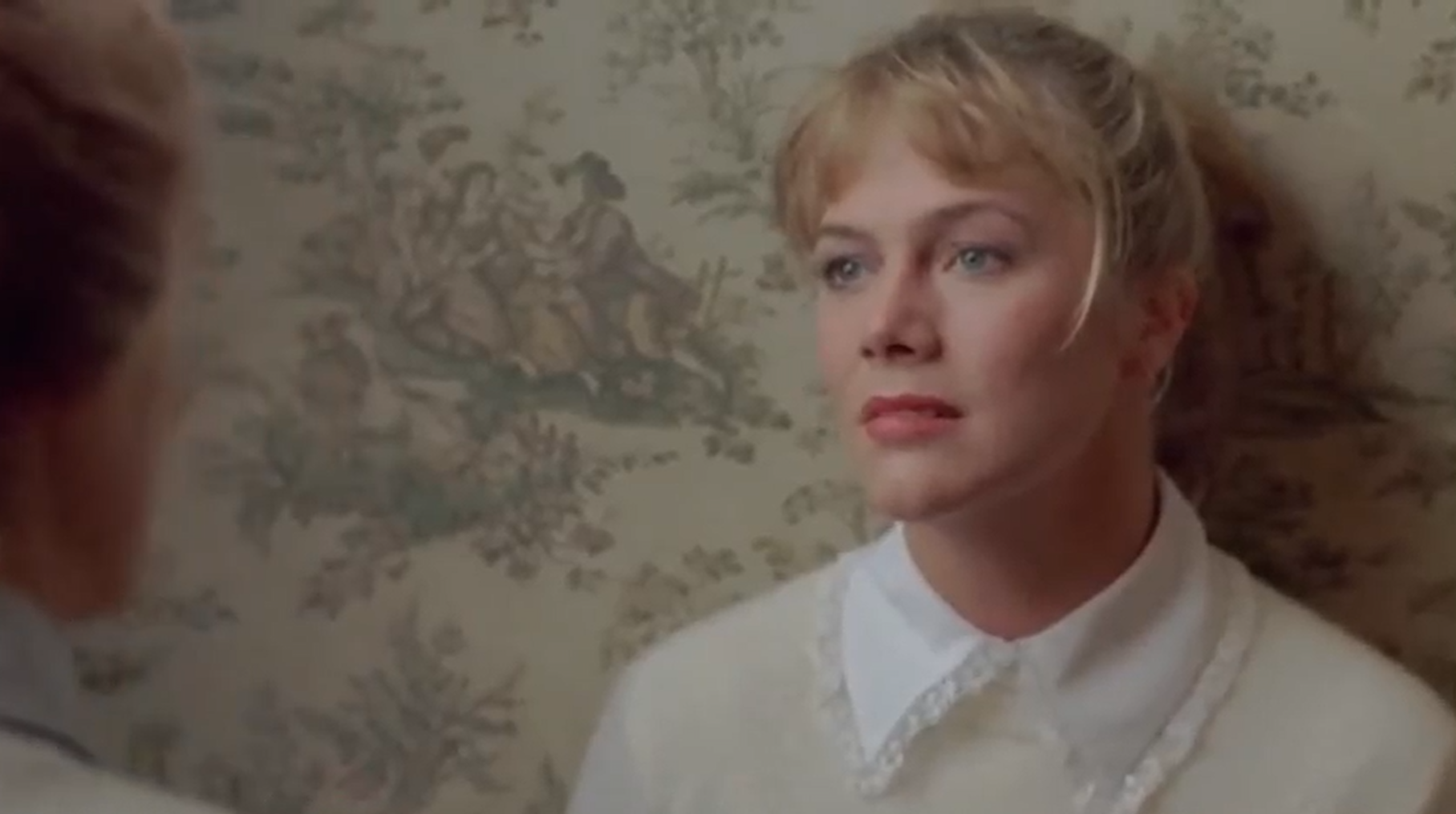
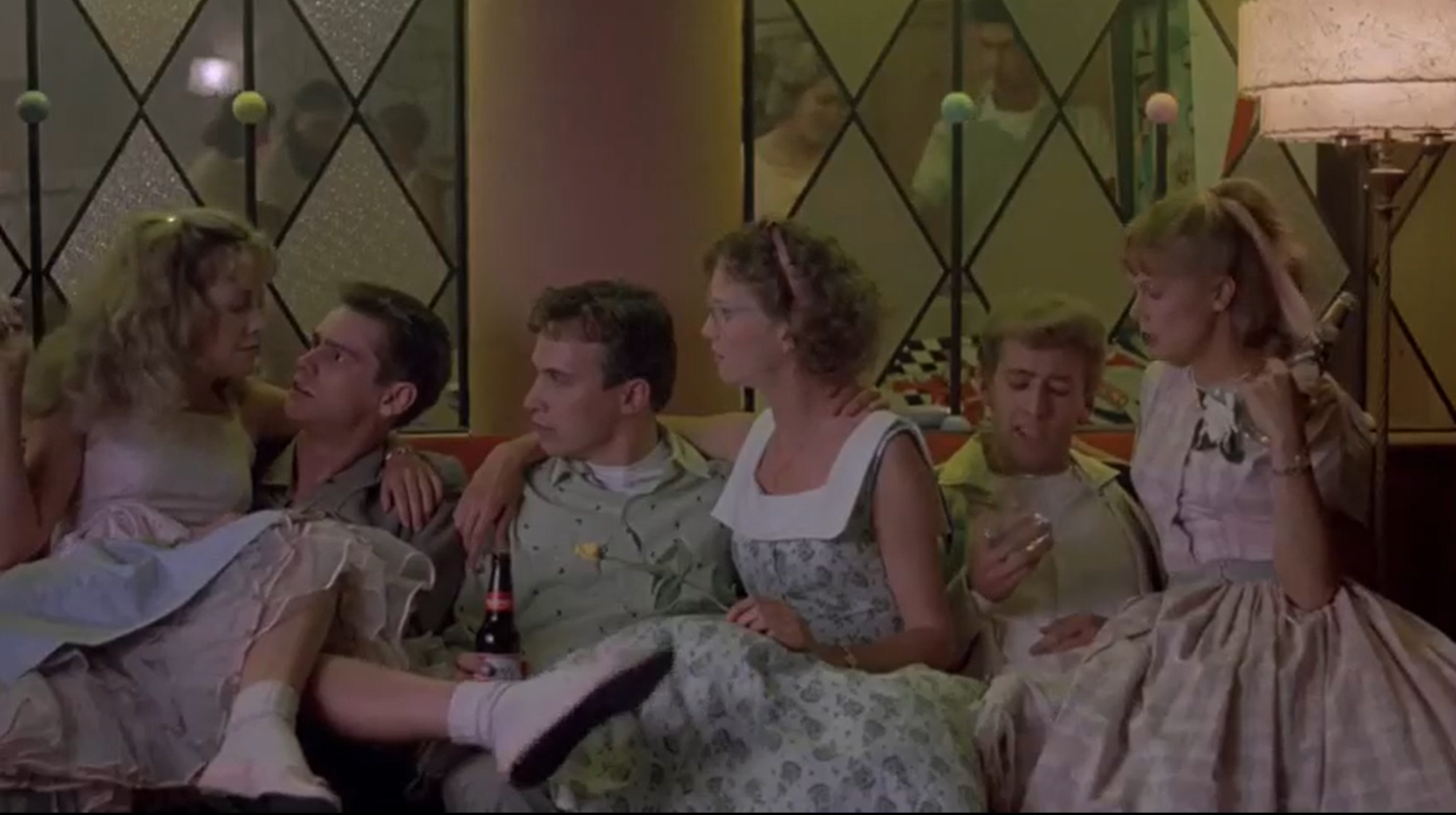
It’s possible this story could have been salvaged if we cared even a bit more for the flawed man she’s saddled with both as a teen and an adult. Watch either Back to the Future or Romy and Michelle’s High School Reunion (1997) for a much more engaging take on the topics covered here. Note: Knowing that Penny Marshall was originally set to direct this title (with Debra Winger in the lead) also puts the entire project in a different, slightly more sensical light. Redeeming Qualities and Moments:
Must See? Links: |
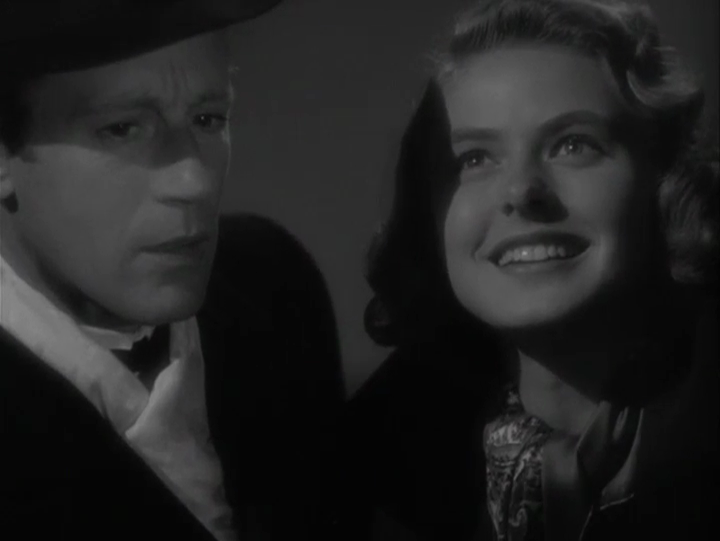
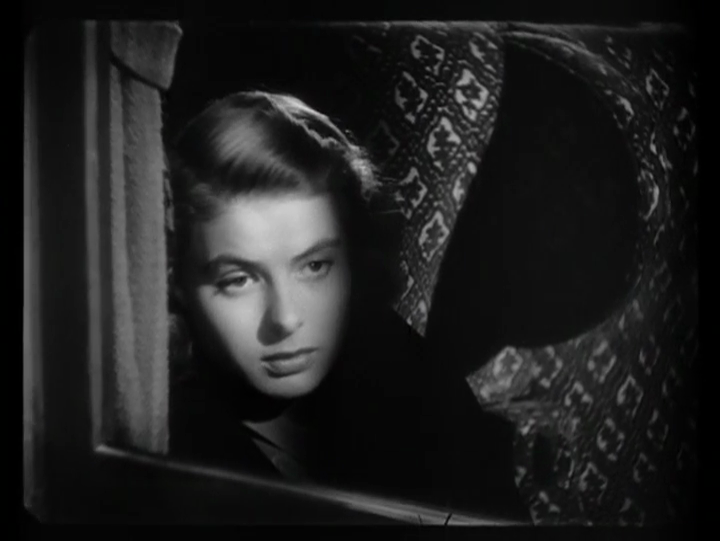
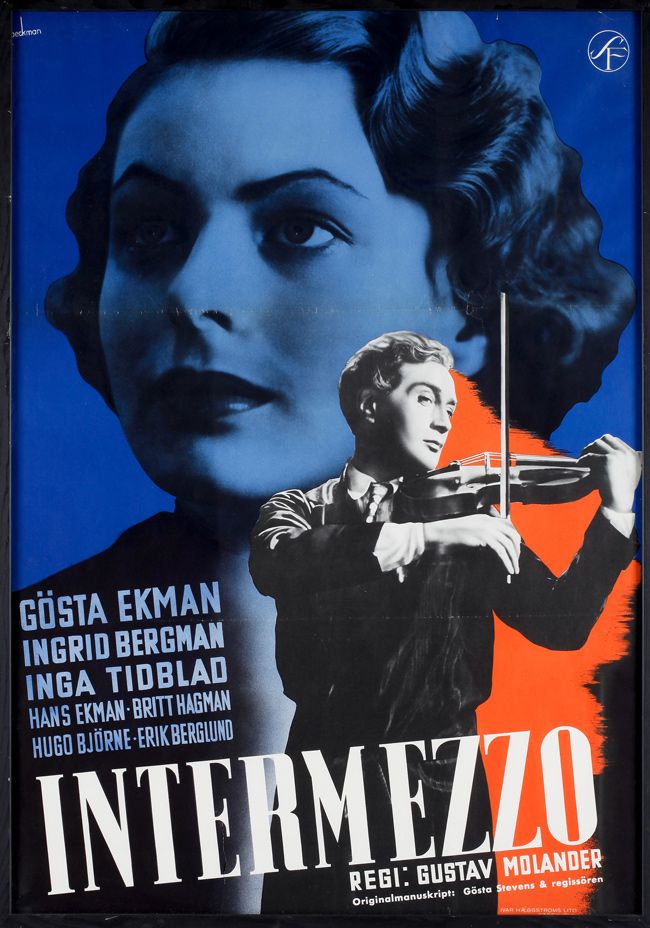
NOTE: I’m posting this review and the next one as part of the Classic Movie Blog Association’s “Fabulous Films of the 30s” spring blogathon. When I committed to writing about “Intermezzo” (both versions), I honestly didn’t know whether they would classify as ‘fabulous’ or not, since I hadn’t watched the 1939 version in many years, and had never seen the original. While both unfortunately failed the test of fabulous-ness (they’re not “must-see” classics of the decade), their luminous star — the inimitable Ingrid Bergman — is as classic and fabulous as they come! So, I’m happy to introduce you to both Bergman’s first Hollywood film, and the film responsible for bringing her to English-speaking audiences.
“I wonder if anyone has ever built happiness on the unhappiness of others?”
|
Synopsis: |
|
Genres, Themes, Actors, and Directors:
Review: Redeeming Qualities and Moments:
Must See? Links: |
“Is it a crime to realize I can’t live without you?”
|
Synopsis: |
|
Genres, Themes, Actors, and Directors:
Review: Redeeming Qualities and Moments:
Must See? Links: |