Beat the Devil (1953)
“We simply mustn’t let anybody murder Harry.”
|
Synopsis: |
|
Genres, Themes, Actors, and Directors:
Response to Peary’s Review:
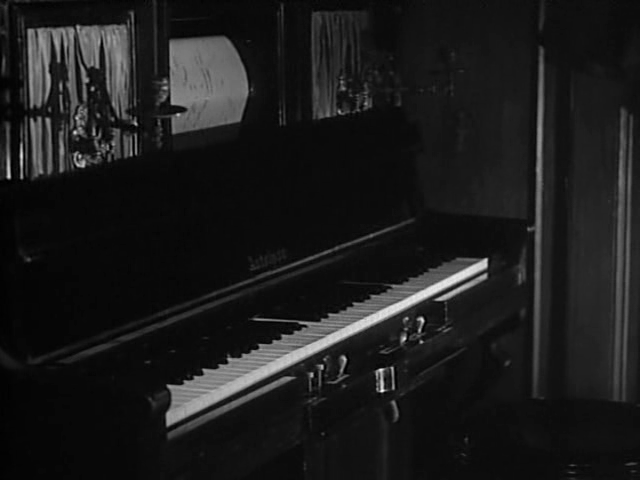
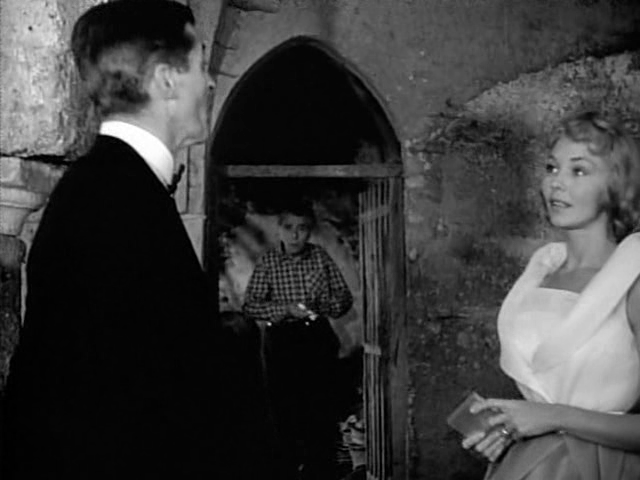
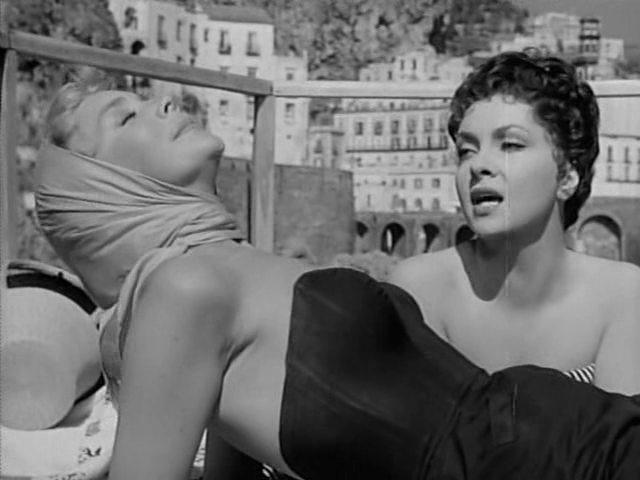
Peary writes that in this film about a “boat trip from Italy to Africa,” “no one is happy with their station in life. Each wants what the other has” — and while “all hope the journey will result in personal happiness,” “as in most Huston films, characters fail at [their] missions” (though a few “reach some sort of fulfillment”). Peary goes on to write that this “film has [a] unique Continental flavor (it was filmed in Ravello, a small coast town in Italy), hilarious, delectable moments, and wonderfully attitudinizing characters.” While he wishes “it had more coherence… and a couple of more serious, creepy scenes like the bit with the player piano”:
… he concedes that the film is “so disarming and so lionized by intelligent film fans that [he worries] it may be better than [he thinks].” In his Cult Movies 2 book, Peary analyzes the film in greater depth, pointing out that the film’s “remarkable fascination” has “as much to do with its background” (including, crucially, hiring Capote to work on the script) “as with its zany characters, performances, and tone.” While it wasn’t well-received upon release, Peary argues that it has a sort of timeless, international quality, given that “the emotional, involved, chatty people in this film could mingle easily with those in a Jean Renoir film, particularly Rules of the Game (1939).”
He adds that “whatever their failings and degrees of pomposity, they believe in living life to its fullest” — yet they “have conflicting personalities” that make them a decidedly “disparate group,” with “even the married couples [not seeming] to belong together.”
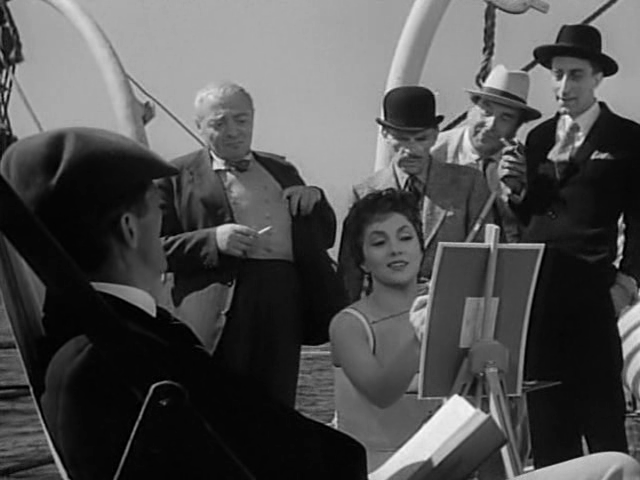
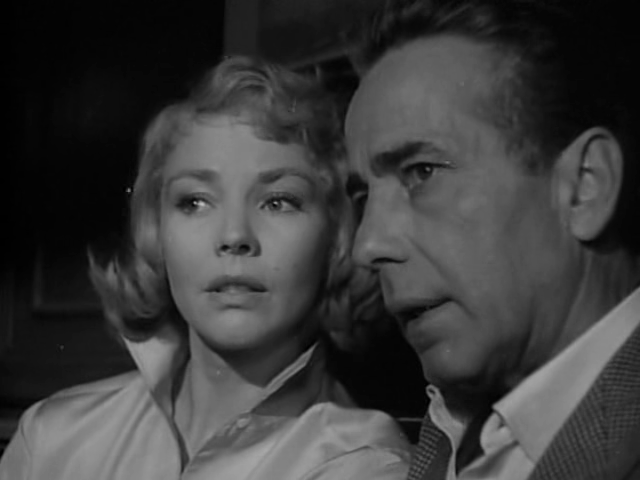
The best performance of all is given by “Jones, once the sainted Bernadette but now a compulsive liar… Wearing a blond wig (!), gabbing nonstop, flirting with Billy, knitting, exercising (while Maria paints), Jones turns in a bravura performance that equals her only other comic role of note in Ernst Lubitsch’s Cluny Brown (1946).”
All the supporting players are game as well, making this a unique trip worth taking at least once. Redeeming Qualities and Moments:
Must See? Categories
(Listed in 1001 Movies You Must See Before You Die) Links: |