|
Genres, Themes, Actors, and Directors:
- Cross-Cultural Romance
- Joshua Logan Films
- May-December Romance
- Musicals
- Play Adaptations
- Racism and Race Relations
- South Seas Islands
- Widows and Widowers
- World War II
Review:
Joshua Logan directed this adaptation of Rodgers and Hammerstein’s enormously popular Broadway musical, based on a series of tales by James Michener. The songs remain as catchy as ever, and viewers will be hard-pressed not to start humming “Some Enchanted Evening”, “Bali Ha’i”, or “I’m Gonna Wash That Man Right Out of My Hair” as they watch:

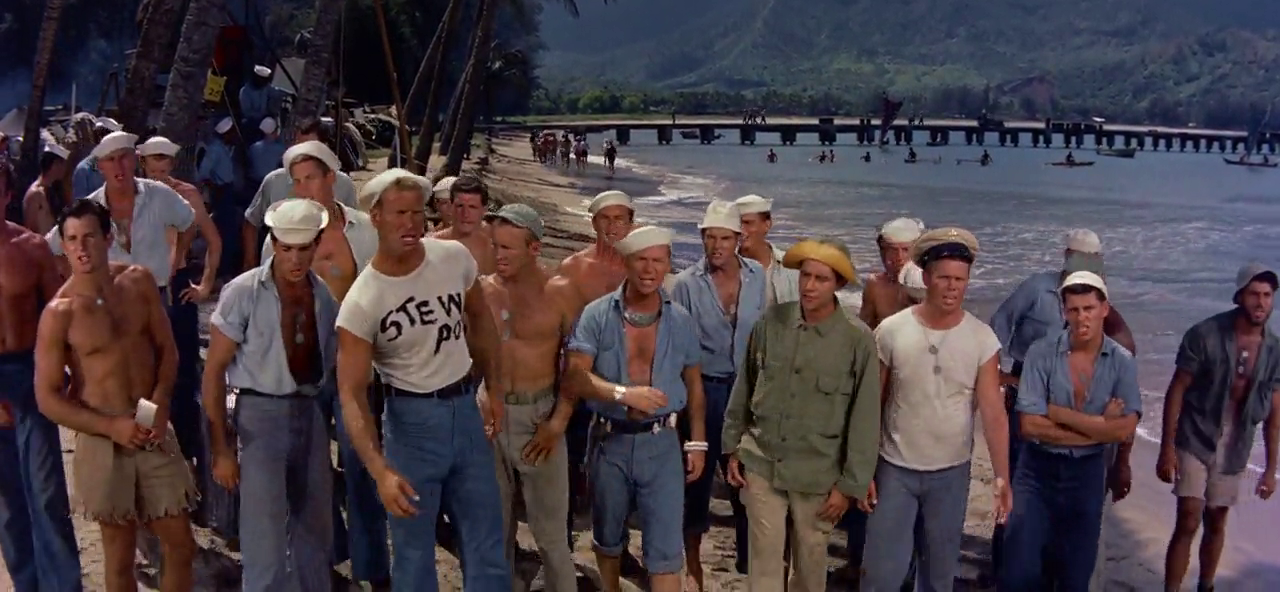
With that said, many of the lyrics remain uncomfortably non-P.C., racy, and/or dated. Consider these lines from one of the opening tunes, “There Is Nothin’ Like a Dame”:

We feel restless, we feel blue
We feel lonely and in brief
We feel every kind of feeling
But the feeling of relief.
I was watching this sequence with my 13-year-old daughter and had to pause the recording to talk with her about women being objectified in this song, and how it reflects dated notions of what was considered acceptable at the time. Meanwhile, the notion of an exotic island (Bali Ha’i) where non-local men can have all their desires met will be distressing to more sensitized modern audiences:

… and the following lyrics from “Bloody Mary” provide further evidence of how “othered” Pacific Islanders were at the time:
Bloody Mary’s chewin’ betel nuts.
She is always chewin’ betel nuts.
Bloody Mary’s chewin’ betel nuts.
And she don’t use Pepsodent!
Now ain’t that too damn bad!
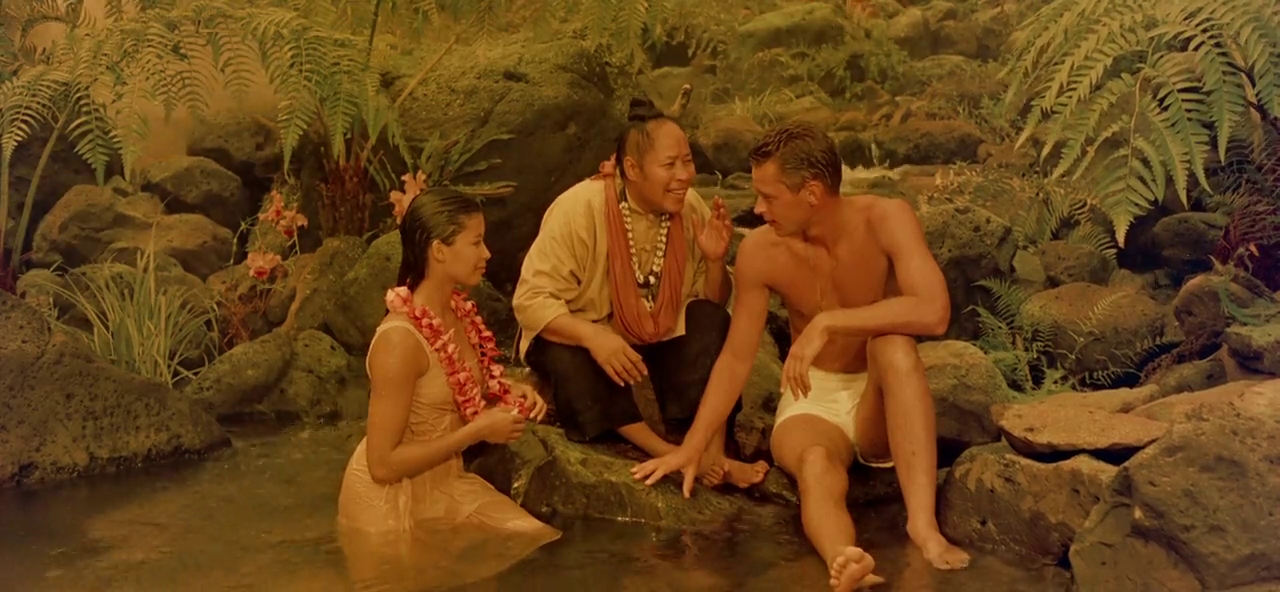
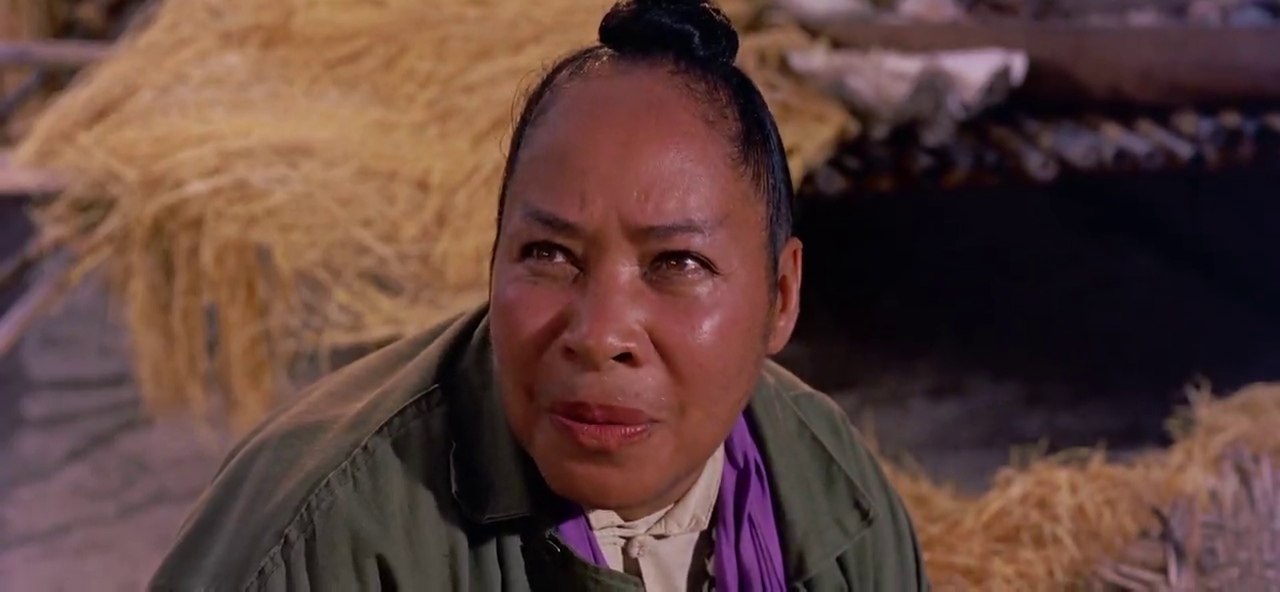
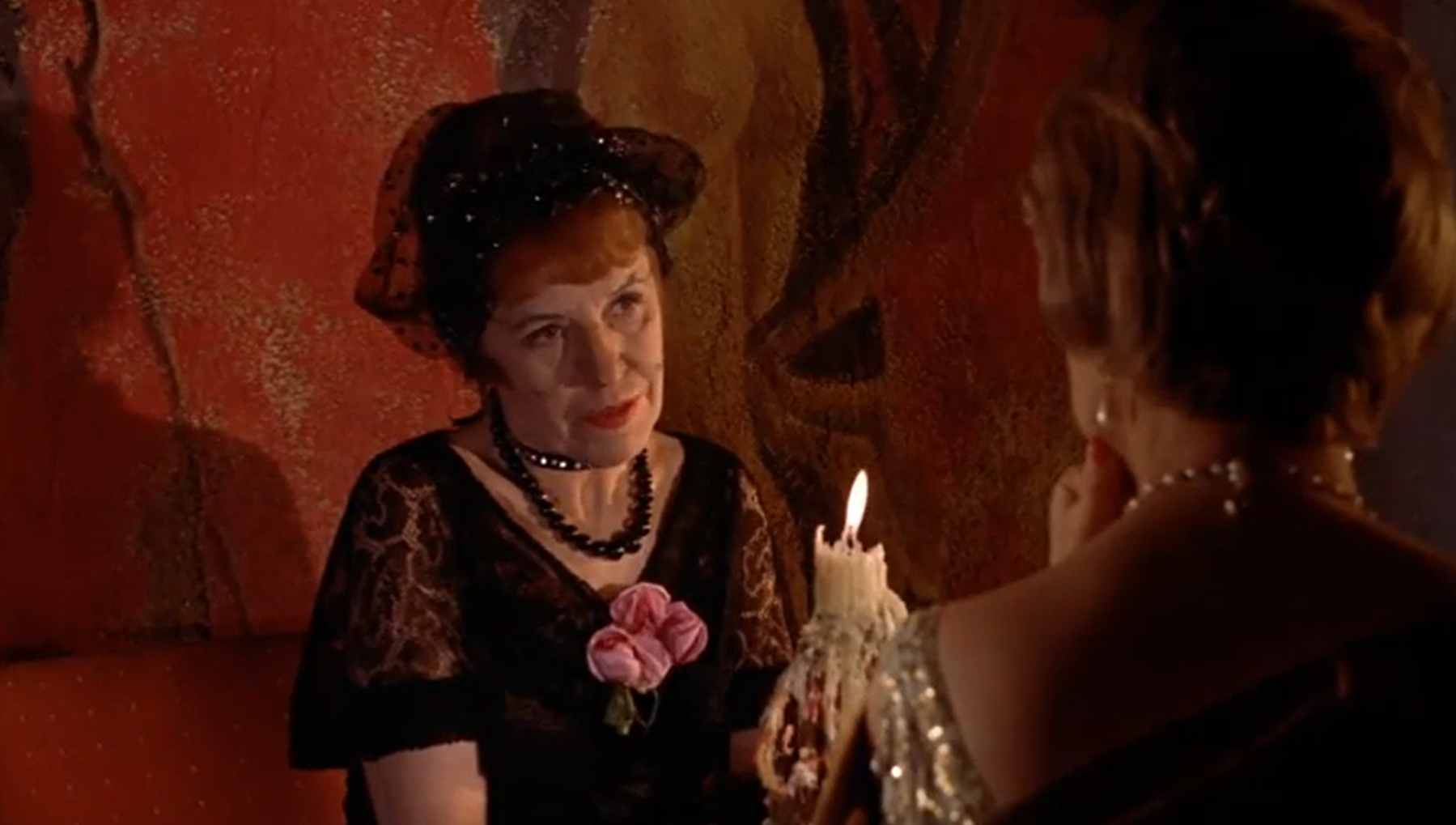
… though at least I was able to talk with my daughter about what a strong female-of-color Bloody Mary is, providing sustainable work for locals rather than forcing them to give in to exploitative wages by whites. On the other hand, Bloody Mary essentially marketing her beautiful, non-English-speaking daughter to Kerr may be pragmatic but is still deeply discomfiting:

Back to “mere” sexism, “Honey Bun” — sung by Gaynor in a sailor suit to a crowd of horny sailors — is also quite racy and objectifying, though adults will be able to appreciate it within its context as wartime entertainment:

My doll is as dainty as a sparrow,
Her figure is somethin’ to applaud.
Where she’s narrow she’s as narrow an arrow,
And she’s broad where a broad should be broad.
A hundred and one pounds of fun,
That’s my little honey bun!
Get a load of honey bun tonight.
…
She’s my baby, I’m her pap!
I’m her booby, she’s my trap!
I am caught and I don’t wanna run,
‘Cause I’m havin’ so much fun with honey bun!
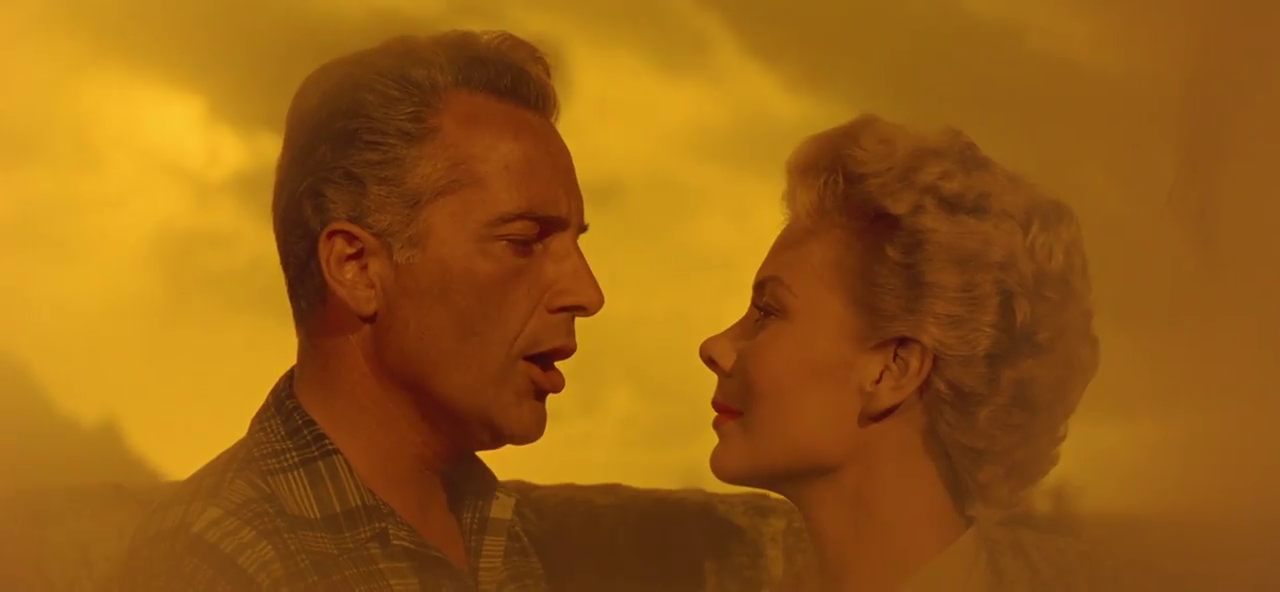
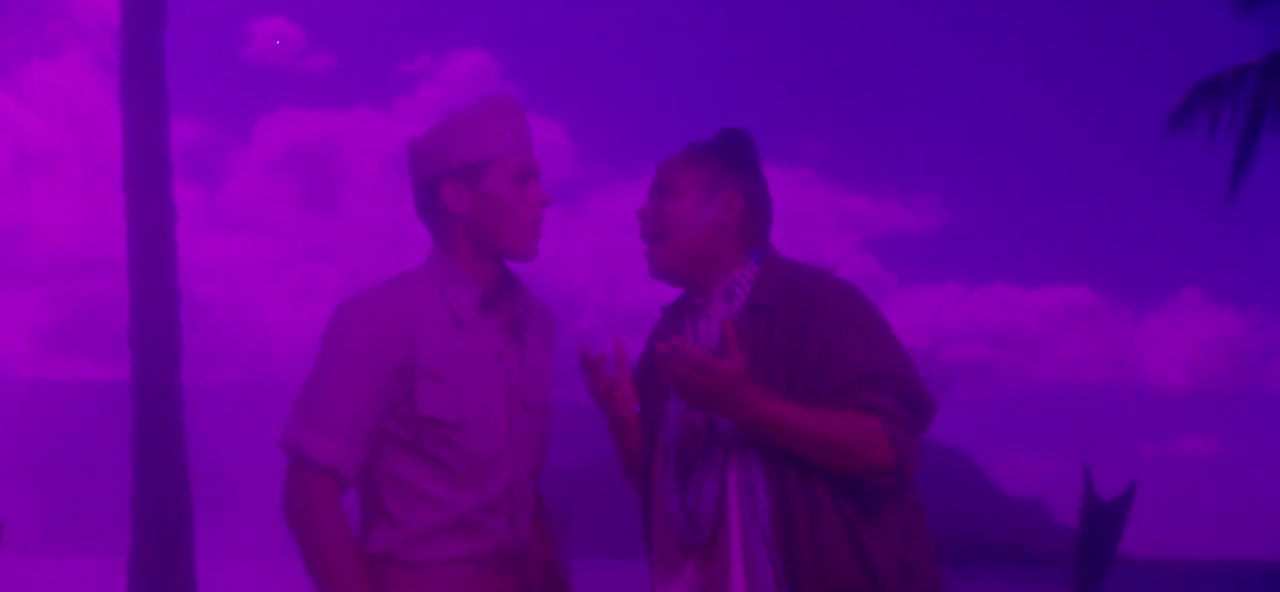
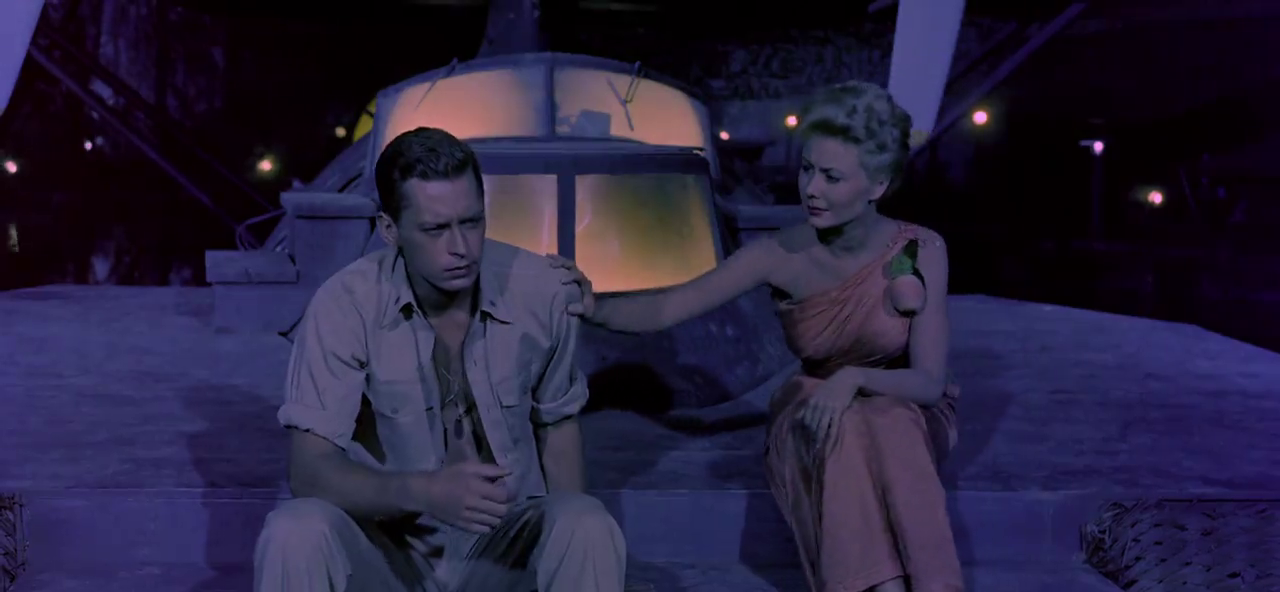
I remember catching snippets of South Pacific on television as a kid, but never fully engaging (which is odd, given my childhood love of beautifully colored musicals). Speaking of colors, even director Logan hated the use of too-obvious filters, which are distracting rather than enhancing:

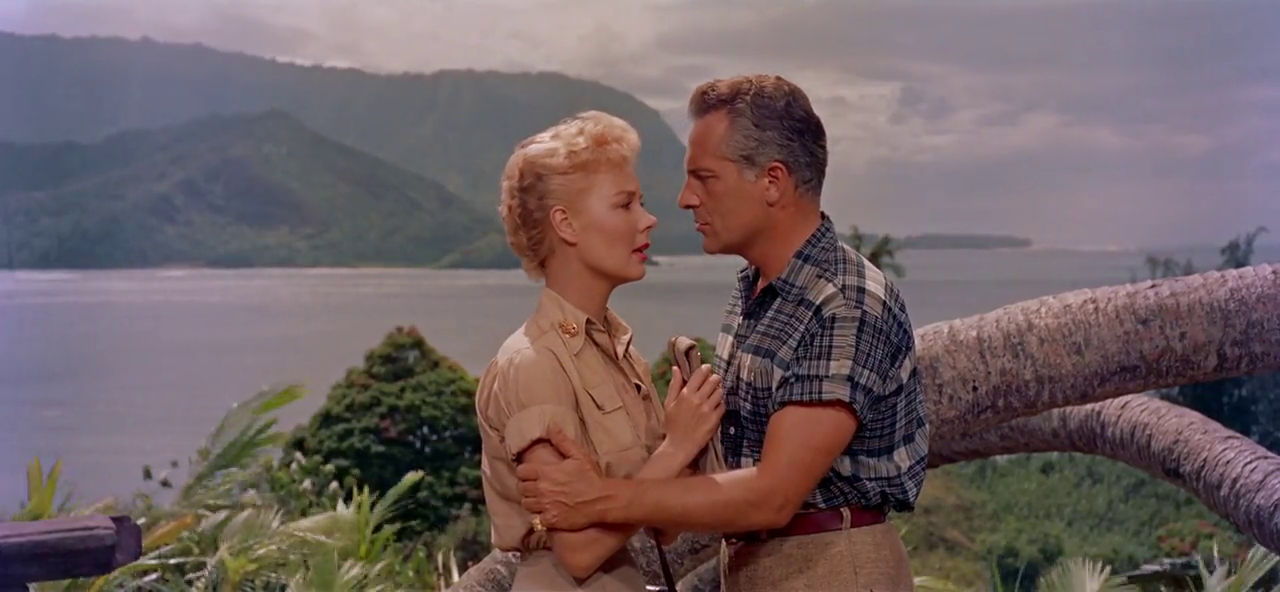
However, what was most interesting to me upon this adult revisit is how the theme of inter-racial romance is handled, with both Gaynor (as Nellie) and Kerr (as Lt. Cable) unable — at least initially — to move beyond their toxic xenophobia in the face of love. Lt. Cable tries to explain his feelings to Nellie:

Lt. Cable: All the time I’ve been in the hospital with that darn malaria, I haven’t been able to see anything but her face. I love her, and… What kind of a guy am I, anyway? I love her, and yet I said I couldn’t marry her, and… I don’t understand myself. If I love her, why don’t I marry her, and stay here, and…
Nellie: You’re just far away from home, Joe. We’re both far away from home.
Lt. Cable: But it doesn’t make sense!
Nellie: Oh yes, it does… I guess it does, anyway. I guess people like us — well, we just have to go back to where we belong.
Ultimately, South Pacific becomes a story about individuals overcoming their entrenched failings — racism, cowardice, lack of desire to support war efforts — and emerging slightly better than before, which isn’t a terrible moral to absorb. However, this film (and the play more broadly) must be viewed through a critical historicized lens in order to appreciate its highlights while wrestling with its many challenges.
Notable Performances, Qualities, and Moments:
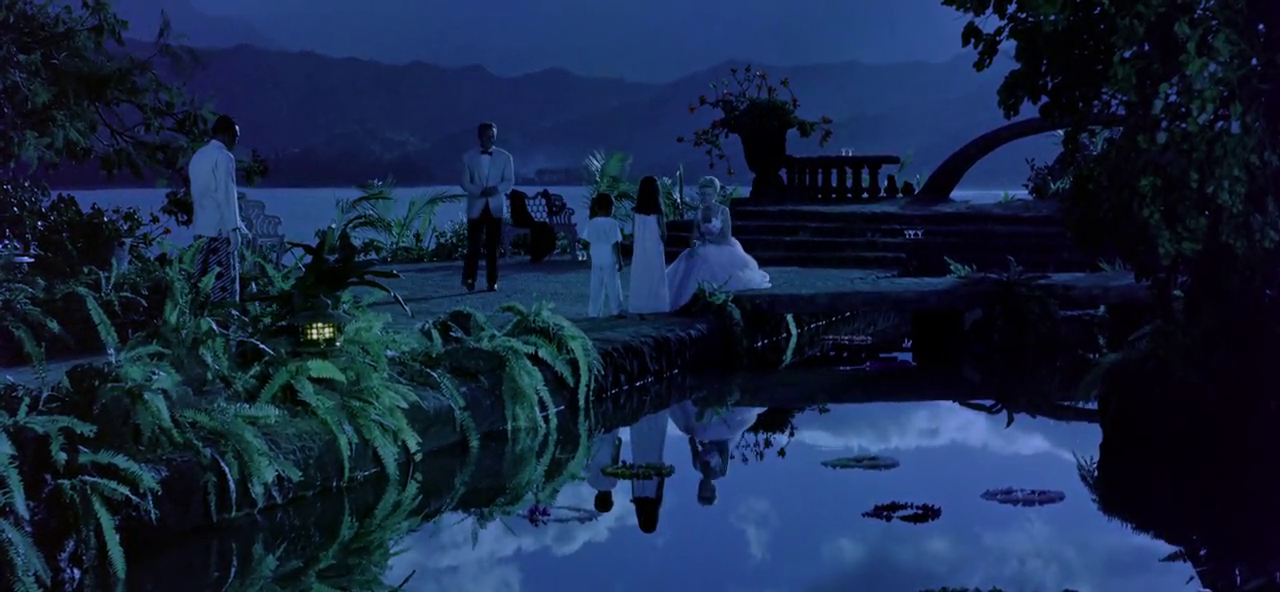
- Leon Shamroy’s cinematography


- Numerous memorable songs

- Juanita Hall as Bloody Mary

Must See?
No, though it’s worth a one-time look for its historical significance and the (mostly) enjoyable songs.
Links:
|