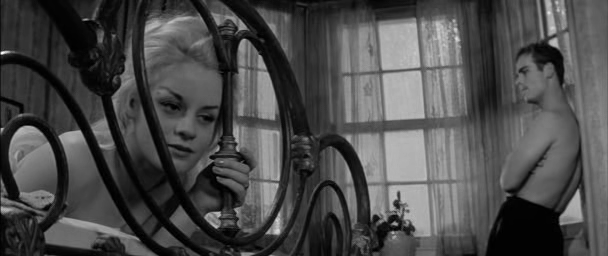
Hiroshima Mon Amour (1959)

Hiroshima Mon Amour (1959)

“Why deny the obvious necessity of remembering?”

Synopsis:
While making a film in Hiroshima, a French actress (Emmanuelle Riva) having an affair with a Japanese architect (Eiji Okada) reflects back on her doomed romance with a German soldier (Bernard Fresson) during World War II.

Genres, Themes, Actors, and Directors:

  • Actors and Actresses
  • Alain Resnais Films
  • Cross-Cultural Romance
  • Flashback Films
  • French Films
  • Mental Breakdown
  • Nuclear Holocaust
  • World War II

Response to Peary’s Review:
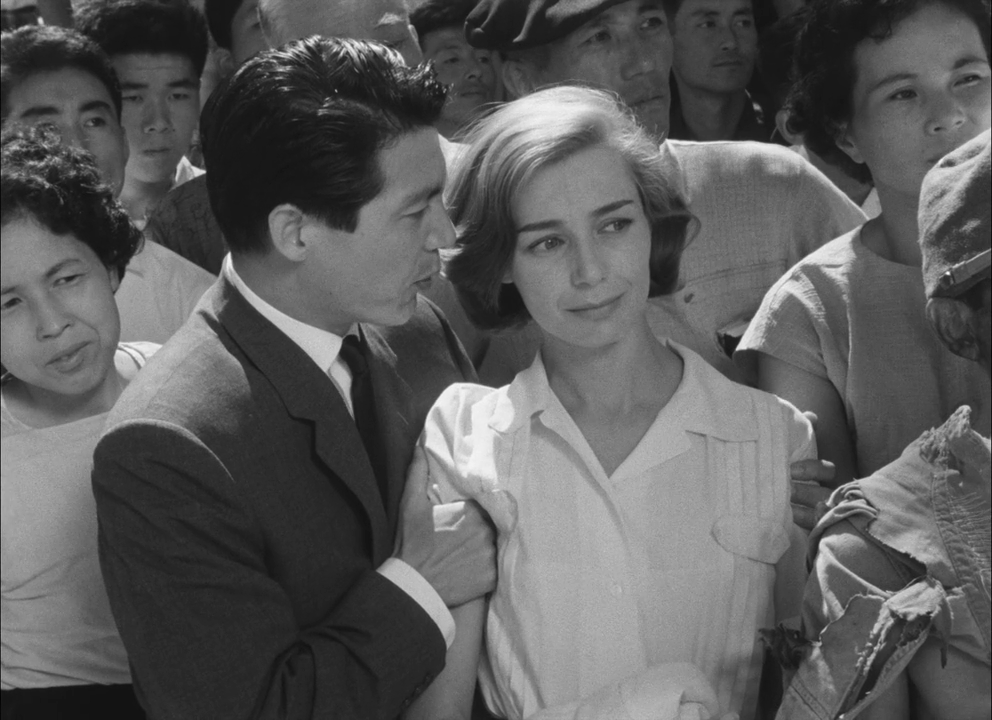
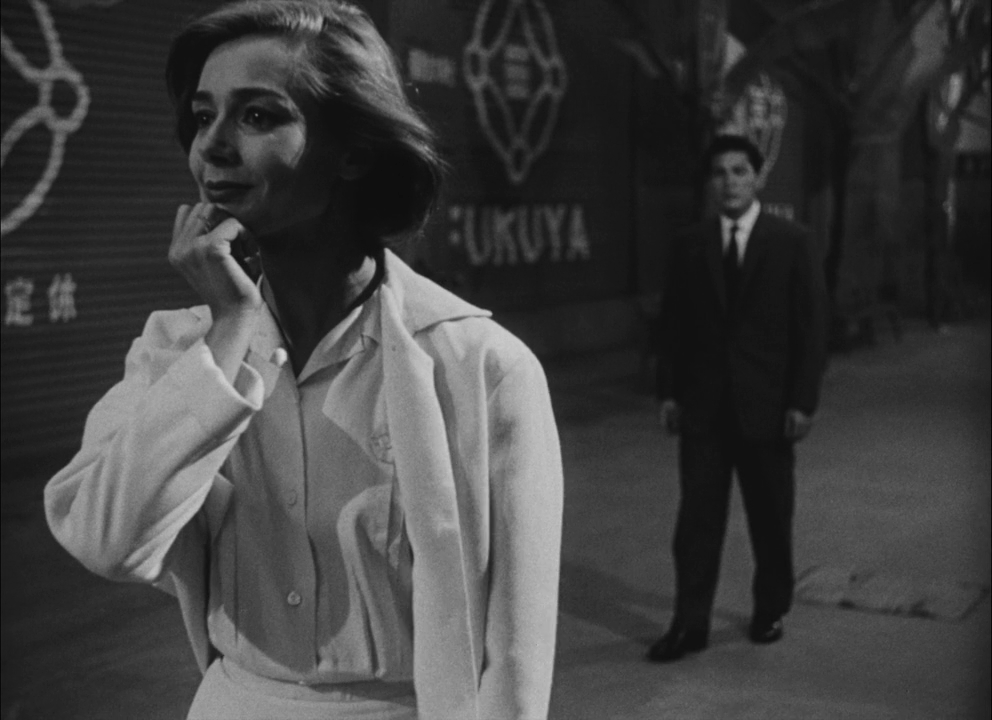
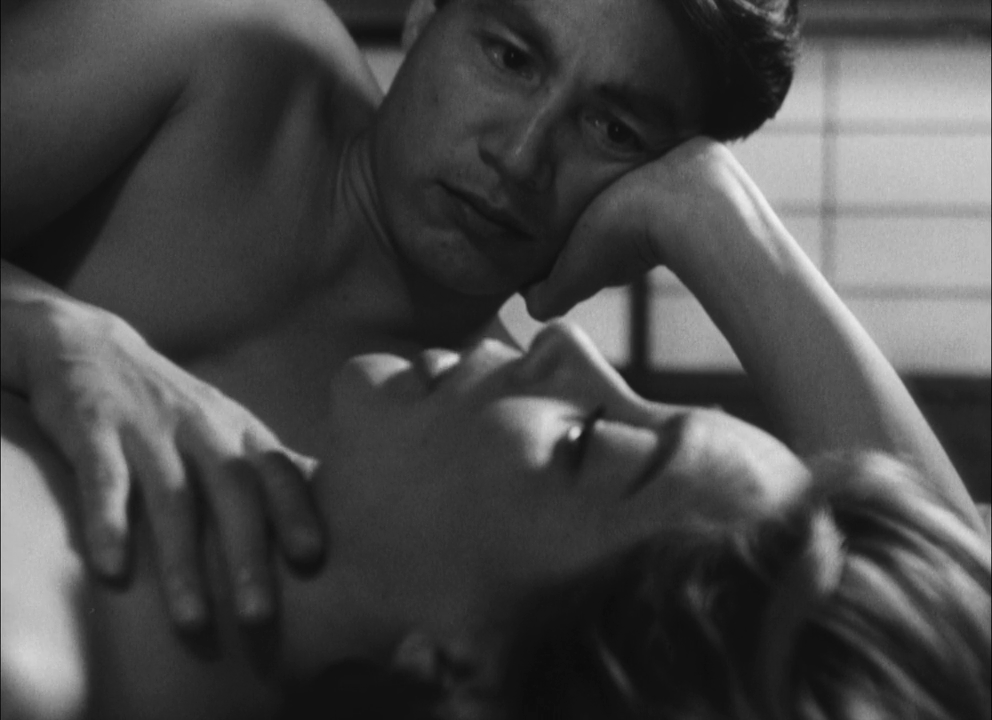
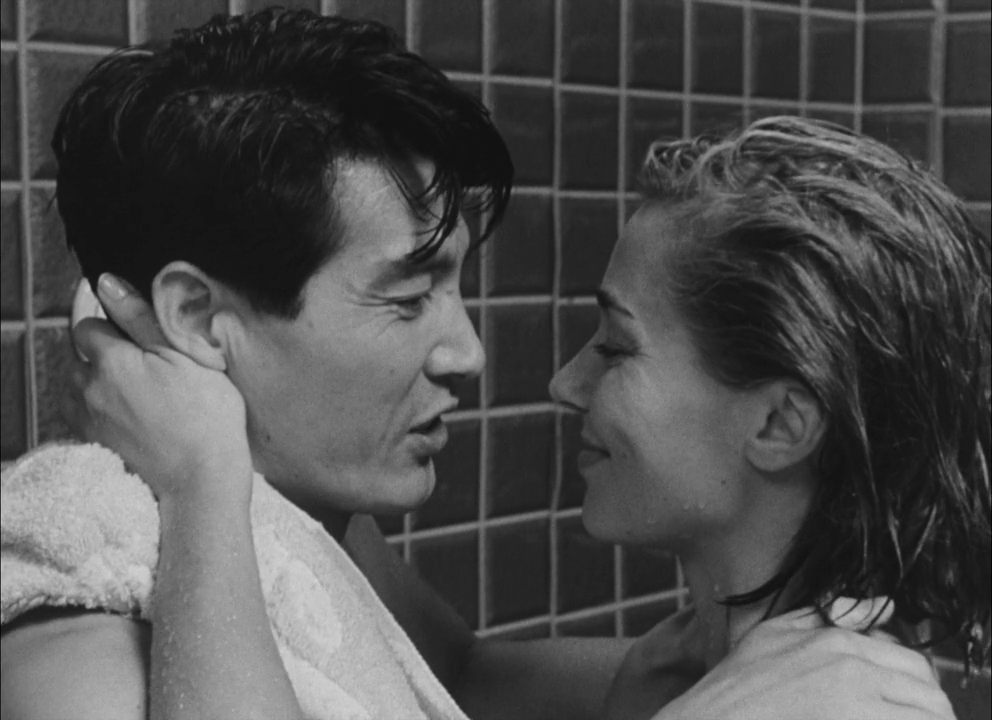
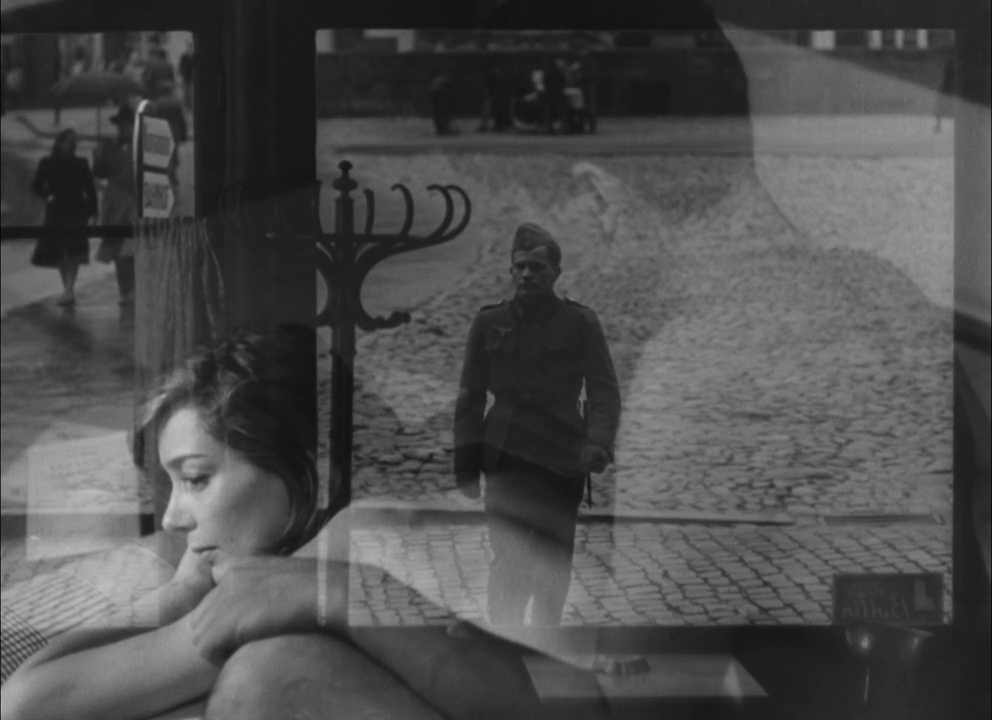
Peary writes that “Alain Resnais’s complex first feature, a seminal film of the French New Wave, could better be described as a mood piece on love and madness or a visual examination of the subconscious than as a straight narrative; in any case, it invented new ways to tell a story.” He notes that “the film is known for the breakthrough use of the subjective (rather than chronological) order during flashbacks” (though Resnais disliked the use of the term ‘flashbacks’, insisting that memories of the past are part of one’s present reality); “flash cuts from images the character is currently seeing to those past images the character is reminded of”:

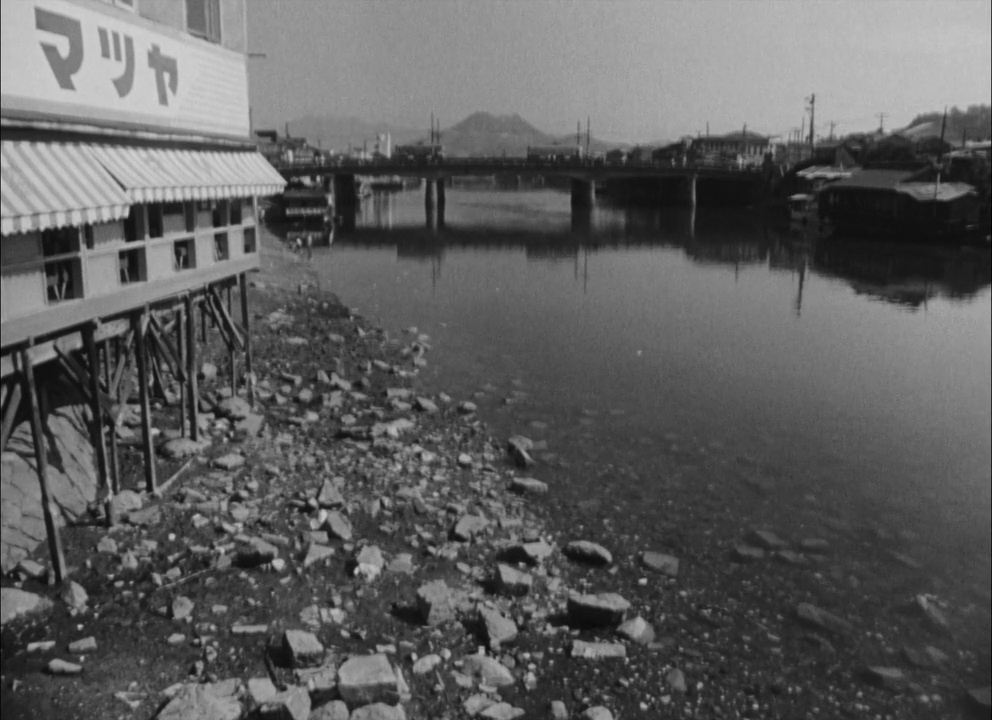
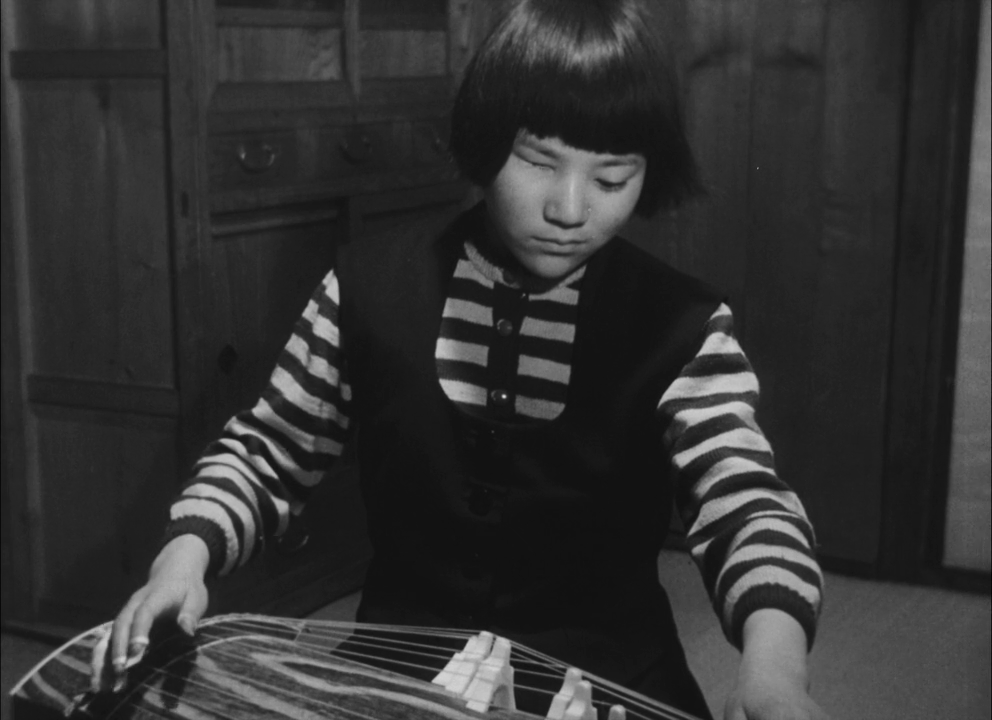
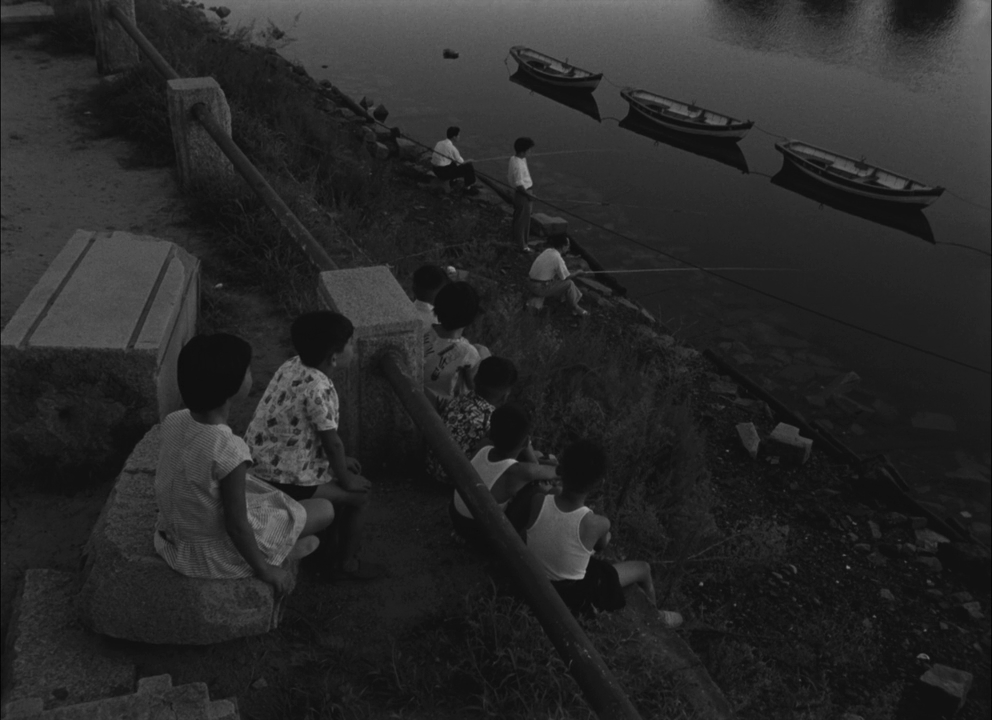
… and “parallel montage whereby juxtaposed shots of [Riva’s hometown of] Nevers] and Hiroshima are filmed similarly and at the same speed — so that the unity of past and present (an important theme) is conveyed.” Also unique to this groundbreaking film are “surreal tracking shots of empty Hiroshima”:

… and “the insertion of footage from the Japanese film Hiroshima [1953], with its grisly shots of A-bomb victims.”

However, Peary posits — though I and many others disagree — that “while the film’s technical achievements are vast, there are problems with the central storyline.” He argues that despite “Resnais and Duras den[ying] that they were trying to draw parallels between the Hiroshima holocaust and the tragedy that befell Riva in Nevers at the same time,” they nonetheless “offer as a theme that love will vanquish terrible memories,” “suggesting that the memory of Nevers is as tragic to Riva as the memory of Hiroshima is to Okada but presuming that the Japanese are trying to forget about Hiroshima in order to move forward.”

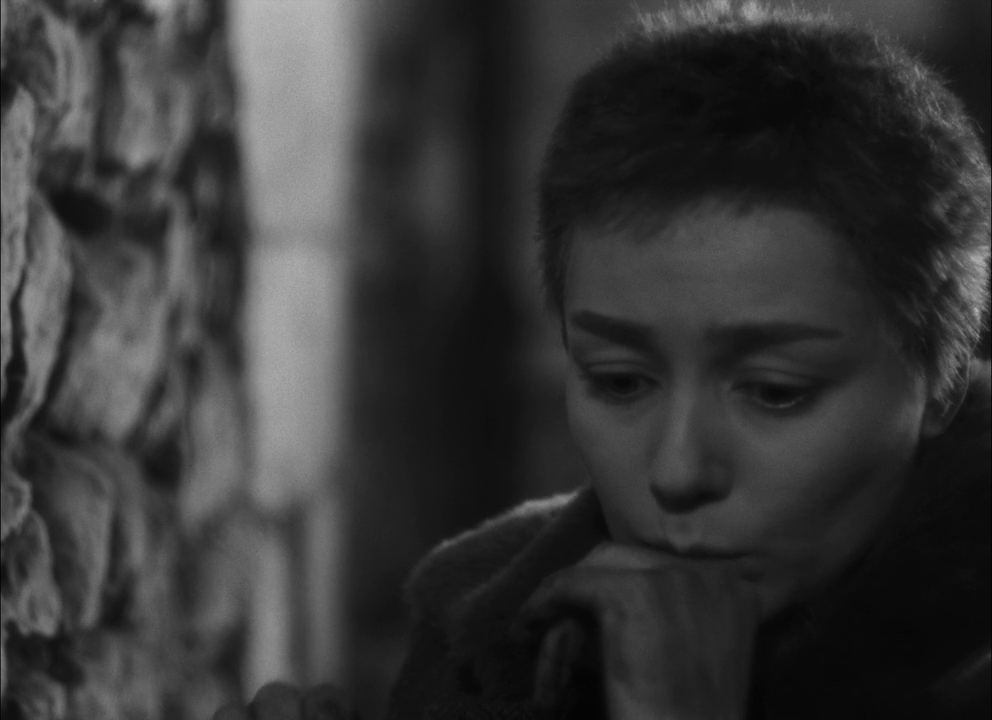
Frankly, I don’t see any of these ideas playing out in the film. Love is not presented as a way to eradicate terrible memories; rather, sensual connection is shown as a form of visceral engagement with uncomfortable truths. By pointing out parallels between the bombing of Hiroshima and Riva’s past — when the German soldier she was in love with “was killed by a sniper on Liberation Day” and “she had her hair shorn by villagers, and her parents locked her in a cellar,” and “at one point she had a mental breakdown”:

— Resnais and Duras are simply making note of the many (indeed, uncountable) tragedies that befall people across the globe as they go about their daily lives during wartime.

Peary seems to be part of a critical camp asserting that “a major problem” with this film “is that Duras did not know what to do with Okada, or know what he represents,” so “Duras concentrates on Riva and foolishly, and insultingly, ignores Okada’s story.” Peary adds: “That Riva tells [Okada] her past and doesn’t ask him to reciprocate and that he accepts this suggests that Duras regarded the white woman as being more important to the film than her Japanese lover.”

However, we now understand that attempting to represent someone else’s lived experience in art — while occasionally successful — is generally not recommended; rather, one should write about or from one’s own truths, which is exactly what Duras does here, to strong effect.

Since the publication of Peary’s GFTFF in 1986 and 1987, we (film fanatics) have many more resources available to help us understand and contextualize the titles he’s listed and reviewed — including restorative DVDs with commentaries and online analyses and discussions (i.e., through blogs and videos posted on YouTube). This film is, to me, an example of where Peary’s reviews begin to show their age: he was writing at a time when nuclear threat (though still very present and real) was at the forefront of everyone’s minds, and I believe he writes about this film through that Cold War-era lens of (justifiable) paranoia.

What our country did to Hiroshima remains undeniably controversial (to say the very least), and of course a false equivalency should never be made comparing this catastrophic event to one young woman’s shaming at the hands of fellow villagers. But what Resnais seems to be saying here (though he has professed he doesn’t analyze his own films — he simply makes them) is that grief and unspeakable trauma at all levels resonate across geographic, gender-based, and cultural boundaries; only by deeply listening to one another can we begin to process the harm we cause each other — and yes, Okada’s character should be given a chance to make a film from his own unique perspective (it’s a movie I’m sure we’d all be eager to watch).

Notable Performances, Qualities, and Moments:

  • Strong performances by the leads
  • Michio Takahasi and Sacha Vierny’s cinematography


  • Marguerite Duras’s screenplay
  • Giovanni Fusco’s score

Must See?
Yes, as a most unique and powerful New Wave film.

Categories

  • Good Show
  • Historically Relevant
  • Important Director

(Listed in 1001 Movies You Must See Before You Die)

Links:

Je T’Aime, Je T’Aime (1968)

Je T’Aime, Je T’Aime (1968)

“I love confusion — things that change.”

Synopsis:
A suicidal man (Claude Rich) is taken from the hospital to a secret laboratory, where a team of scientists send him back in time to relive a minute of his life — but instead he’s caught in a back-and-forth journey between the lab and his memories of loving a woman named Catrine (Olga Georges-Picot), whose death he feels guilty about.

Genres, Themes, Actors, and Directors:

  • Alain Resnais Films
  • Flashback Films
  • French Films
  • Science Fiction
  • Suicide
  • Time Travel

Review:
Peary lists nearly all of French director Alain Resnais’ pre-1987 feature-length films in his GFTFF, from his debut, Hiroshima Mon Amour (1959), to Life Is a Bed of Roses (1983) — but I’ll start by jumping in with a review of his fifth title. Je T’Aime, Je T’Aime falls exactly within the paramaters set forth in Wikipedia’s description of Resnais’s work as “frequently explor[ing] the relationship between consciousness, memory, and the imagination” — and, given that Resnais was known “for devising innovative formal structures for his narratives,” it’s no surprise that this movie jumps back and forth in both time and genre. It begins as a mystery-filled sci-fi flick (what are these scientists up to — and why is Rich so willing to go with them to their laboratory?):

… but eventually shifts towards a non-linear exploration of (Rich’s) memory, guilt, and sense of reality. Certain random scenes from Rich’s past are replayed repeatedly (i.e., a snippet of his snorkeling adventures on the beach):

… while others are merely flashes of conversations or glimpses into his life at work or play:

We never fully understand what happened with his lover Catrine, who was clearly depressed:

… or whether Rich will successfully return from his experimental jaunt through time. It seems he’s stuck in a series of loops — much like his own obsessive thought-process — and we don’t know what’s ultimately in store for him. Your appreciation of this film will depend entirely on your interest in avante garde cinema — i.e., stories more concerned with exploratory impressions and philosophical wonderings than with anything resembling a logical trajectory; though to Resnais’ and co-screenwriter Jacques Sternberg’s credit, the entire affair does cohere.

Notable Performances, Qualities, and Moments:

  • A unique storyline and narrative approach

Must See?
No, but it’s worth a look for its historical relevance. Listed as a film with Historical Importance in the back of Peary’s book.

Links:

Run of the Arrow (1957)

Run of the Arrow (1957)

“There’s no hiding place for what ails you, son. We’re all under one flag now.”

Synopsis:
An embittered Confederate veteran (Rod Steiger) who refuses to concede the reintegration of the United States of America meets an aging Oglala scout (Jay C. Flippen) and joins his tribe, making peace with its leader, Blue Buffalo (Charles Bronson), and living with a Sioux woman (Sara Montiel) and her adopted ward (Billy Miller). However, when a U.S. captain (Brian Keith) — with assistance from the man (Ralph Meeker) Steiger shot but didn’t kill on the last day of the Civil War — leads a group of soldiers in building a fort nearby, and the Sioux want to attack, Steiger’s loyalties are once again tested.

Genres, Themes, Actors, and Directors:

  • Brian Keith Films
  • Charles Bronson Films
  • Cross-Cultural Romance
  • Native Americans
  • Ralph Meeker Films
  • Rod Steiger Films
  • Sam Fuller Films
  • Veterans
  • Westerns

Review:
Writer-director Sam Fuller’s tenth feature film was this “revisionist western” in which taken-for-granted tropes of westerns and American history are turned on their head. From the opening scenes, we’re asked to relate to a protagonist (known simply as “O’Meara”) who — even against his mother’s advice — refuses to concede the Confederacy’s loss, thus becoming a man without a nation:

Given that O’Meara’s sentiments reflect those of many in our nation today, this feels like an especially intriguing and worthy tale to pay attention to as it unfolds. Like Kevin Costner’s Lt. John Dunbar in Dances With Wolves (1990), O’Meara attempts to escape through assimilation with the Sioux, after “winning” a contest from which the title takes its name:

(Note, however, that Chris Smallbone of NativeAmericans.co.uk informs us this supposed custom — of an arrow being shot out onto the land, and the accused person attempting to outrun his assailants once he reaches the arrow — was made up by Fuller.)

The thrust of the film centers on whether and/or how O’Meara will eventually reintegrate into his original society, and what tensions will inevitably emerge during this transition. While it’s jarring seeing Charles Bronson as a Sioux chief:

… and hearing (uncredited) Angie Dickinson’s voice dubbing Montiel as “Yellow Moccasin”:

… it’s still refreshing to see what appear to be authentic Native Americans hired as extras.

This compact, character-driven tale remains worth a look despite its limitations — but be forewarned there’s quite a bit of violence, including yet another supposed Sioux custom (skinning alive) that isn’t authentic.

Notable Performances, Qualities, and Moments:

  • Fine cinematography and direction

Must See?
Yes, as yet another unique outing by Fuller. Listed as a Cult Movie in the back of Peary’s book.

Categories

  • Important Director

Links:

Thunder Bay (1953)

Thunder Bay (1953)

“There’s oil out there; somebody’s got to get it!”

Synopsis:
When an offshore oiling entrepreneur (Jimmy Stewart) and his friend (Dan Duryea) receive funding and support from an investor (Jay C. Flippen), they arrive in a Louisiana fishing town ready to employ its citizens — but a local patriarch (Antonio Moreno) is not happy about Duryea dating his daughter (Marcia Henderson), and Henderson’s sister (Joanne Dru) is cynical about outsiders interfering with their way of life.

Genres, Themes, Actors, and Directors:

  • Anthony Mann Films
  • Dan Duryea Films
  • Fishermen
  • Jimmy Stewart Films
  • Joanne Dru Films
  • Oil Drilling

Review:
Jimmy Stewart’s fourth film with director Anthony Mann — after Winchester ’73 (1950), Bend of the River (1952), and The Naked Spur (1953) — was this less engaging widescreen adventure flick. It takes place off the Gulf of Mexico, but otherwise follows the general themes of a western, with “boats and oil standing in for horses and guns” — or, as Stuart Galbraith IV proposes in his review for DVD Talk, miners and cattlemen replacing oilers and fishermen in an ongoing battle for land (water) use. Unfortunately, it’s especially challenging to relate to Stewart’s character given what we now know about the toxic outcome of mining the Earth’s resources; hearing him make speeches like the following to Dru, we can’t help cringing:

“Maybe you don’t know how oil was formed millions of years ago: it was formed by things dying and being held in the Earth. Well now, if I can reach down there, and bring up the results of all those millions of years, and make them work for the present and the future, then I’ve done something, haven’t I?”

Yes, Jimmy — you certainly are doing something, though we don’t blame you because you don’t yet understand the impact.

At any rate, the storyline is a rather standard melodrama of romantic entanglements:

… culture clashes, high hopes, and competing priorities, with a group of people at one point deciding to band together in a “Let’s put on a show!” type of endeavor (which conveniently leads to said “show” happening just in the nick of time).

This film will likely be of interest to fans of Mann’s work, but isn’t a must-see entry in his impressive oeuvre.

Notable Performances, Qualities, and Moments:

  • William Daniels’ cinematography

Must See?
No; you can skip this one unless you’re curious.

Links:

Sea Wife (1957)

Sea Wife (1957)

“Why shouldn’t I love you? You’re young and beautiful and brave and good.”

Synopsis:
A former officer during World War II (Richard Burton) reflects back on his experiences as a castaway with an incognito nun (Joan Collins), a racist white man (Basil Sydney), and a black purser (Cy Grant). Will the quartet be able to survive together given racial tensions and Burton falling in love with the unattainable Collins?

Genres, Themes, Actors, and Directors:

  • At Sea
  • Flashback Films
  • Joan Collins Films
  • Mistaken or Hidden Identities
  • Nuns
  • Race Relations and Racism
  • Richard Burton Films
  • Survival

Review:
DVD Savant accurately describes this flashback-driven wartime melodrama as “colorful, reasonably well acted and almost completely unsatisfying”. The central conceit — that Collins won’t reveal her true identity as a nun to Burton — makes no sense whatsoever, driving a storyline that keeps us increasingly frustrated as we wonder why (oh, why) she doesn’t just tell him already. No — because then there would be no tension at all, other than the secondary subplot about Sydney’s toxic racism driving him to literally want to snuff out Grant. Ew.

Meanwhile, the characters won’t stop referring to each other by silly nicknames: Biscuit (Burton), Seawife (a.k.a. “mermaid”) (Collins), Bulldog (Sydney), and Number 4 (Grant) (great way to dehumanize him even further…). There’s really nothing here worth watching, other than the beautiful scenery; one imagines Peary included it in GFTFF because young Collins is as gorgeous as ever:

… and we know he had a childhood crush on her from seeing her bare midriff in Land of the Pharaohs (1955).

Notable Performances, Qualities, and Moments:

  • Fine location footage

Must See?
Nope; definitely feel free to skip this one.

Links:

Little Big Horn (1951)

Little Big Horn (1951)

“None of us is in any condition to ride 50 miles — let alone 250 — through what’s between us and the 7th; but we’re gonna do it.”

Synopsis:
On a trip to inform General Custer that the Sioux are waiting to attack, a captain (Lloyd Bridges) whose wife (Marie Windsor) is having an affair with one of his men (John Ireland) struggles with various leadership decisions.

Genres, Themes, Actors, and Directors:

  • Cavalry
  • Historical Drama
  • John Ireland Films
  • Lloyd Bridges Films
  • Marie Windsor Films
  • Marital Problems
  • Native Americans
  • Westerns

Review:
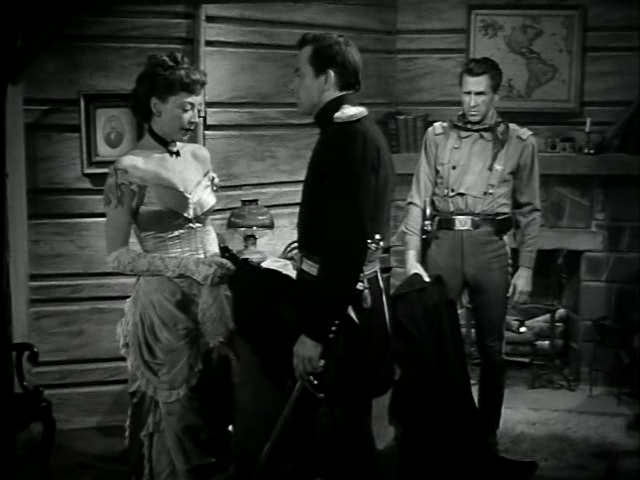
Loosely based on the real-life exploits of Captain Frederick K. Giddleren (here Capt. Phillip Donlin) and Lt. Charles Larin (here Lt. John Haywood) of the United States Cavalry — who tangentially supported Lt. General Custer in the Battle of the Little Bighorn — this western puts a love triangle between Donlin (Bridges) and Haywood (Ireland) front and center, opening with a supposedly private rendezvous between Ireland and Bridges’ wife (Windsor) that’s interrupted by Bridges’ emergence from the shadows:

We learn that tensions between these two men will understandably be running high, making an already dangerous and uncertain military mission even more fraught. Is Bridges assigning tasks to Ireland out of spite and anger — or is he keeping military protocol and best practices at the forefront of his decision making?

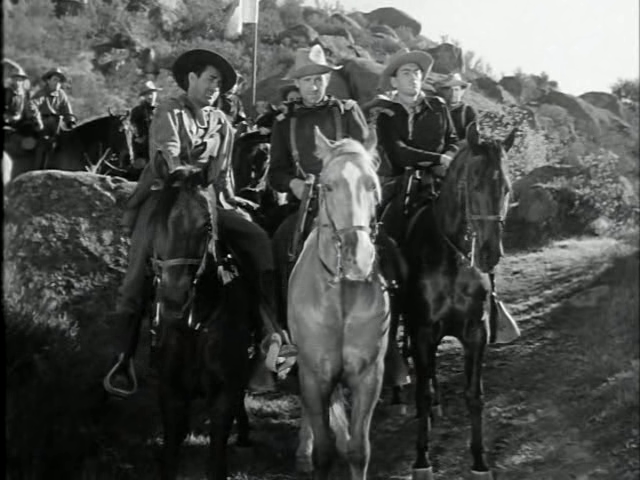
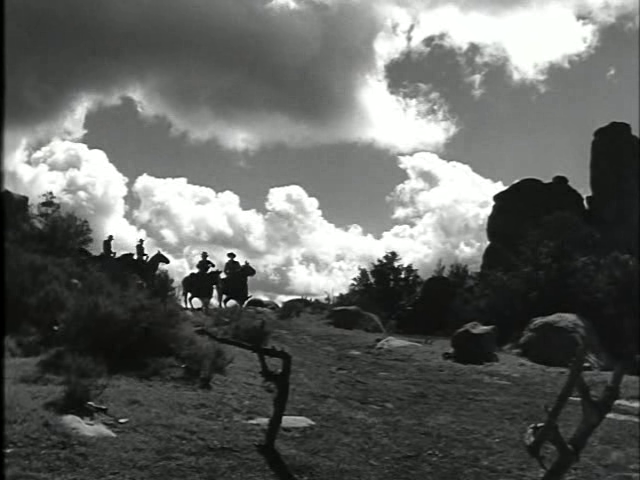
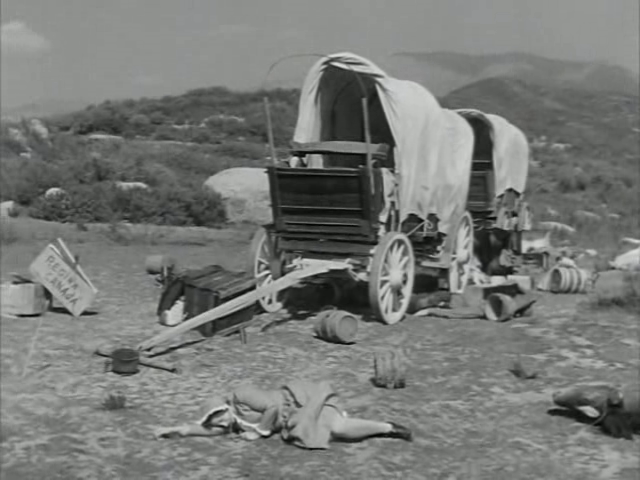
The bulk of the film is spent exploring issues of trust and leadership, as the cavalry members ride their horses over rocky terrain and worry about Sioux hiding behind every boulder.

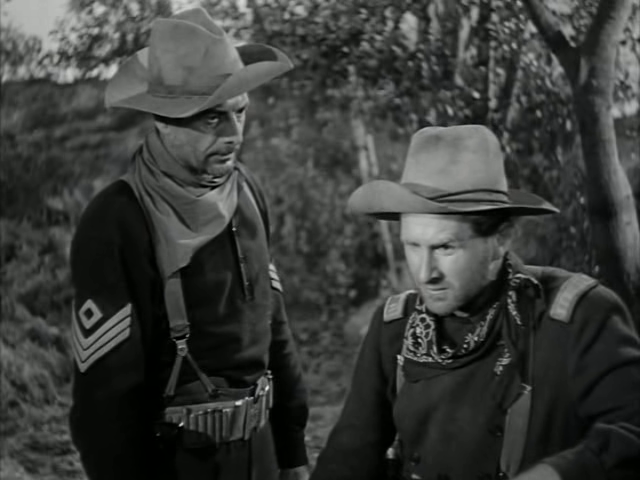
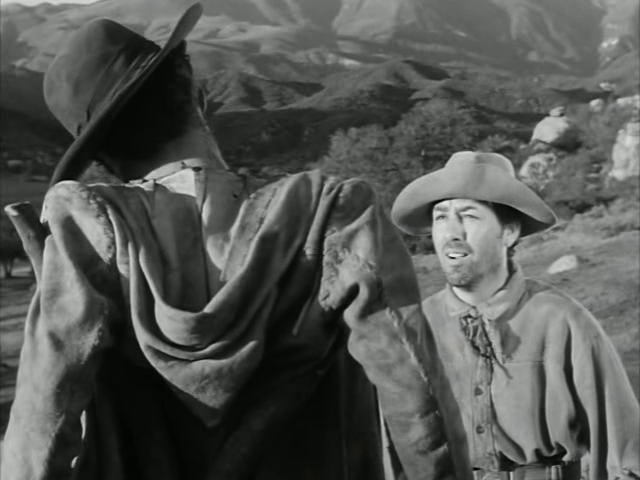
The most interesting scenes show how the men negotiate positions and tasks — i.e., Major Grierson (Reed Hadley) attempting to volunteer to “ride point” (“I’m not a brave man, but the others have got a reason for getting back to the fort”) :

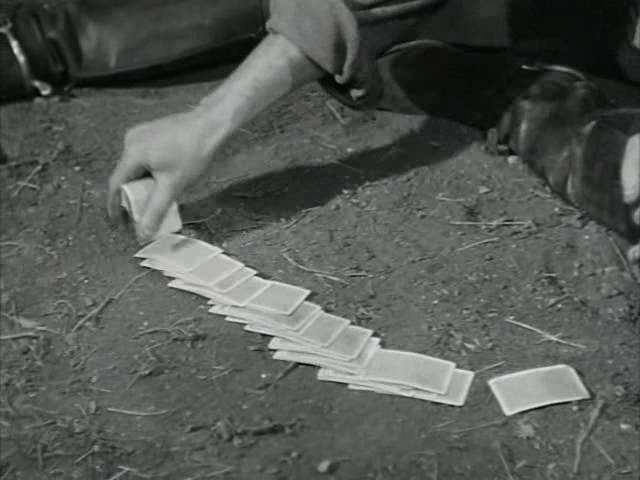
… and the eventual resolution of the situation by “cutting high card to see who rides out in front”, with various men either eager to “win” or relieved to draw low:

Indeed, once the romantic subplot involving Windsor is (mostly) cut from the storyline, things shape into a reasonably taut tale of doomed heroism and duty (we already know things won’t end well for this crew). Fans of American military historical dramas and/or westerns may be curious to check this one out, though it’s not must-see viewing for all.

Notable Performances, Qualities, and Moments:

  • Ernest Miller’s cinematography
  • Several unexpectedly powerful moments

Must See?
No, though it’s worth a look if you enjoy westerns. Listed as a Sleeper in the back of Peary’s book.

Links:

Three on a Meathook (1972)

Three on a Meathook (1972)

“You know what happens when you get around women — and it can’t happen again!”

Synopsis:
When a young man (James Carroll Pickett) living in the country brings home four stranded women, they are brutally murdered, and Billy (Pickett) is accused by his father (Charles Kissinger) of committing these acts. Heading out into town, Billy meets a kind waitress (Sherry Steiner) who brings a friend (Madelyn Buzzard) with her for a visit at Billy’s home the following weekend — but will the pair be safe with a murderer on the loose?

Genres, Themes, Actors, and Directors:

  • Father and Child
  • Horror Films

Review:
Loosely inspired by the Ed Gein murders, this grindhouse debut by low-budget director William Girdler — who died at age 30 in a helicopter crash over the Philippines after completing his final film, The Manitou (1978) — is thankfully a snoozy bore rather than a shockingly crude bloodfest (as one might imagine from the sensationalist title).

Given that Girdler was hugely inspired by Hitchcock (Psycho in particular), the killings are over mercifully quickly, with more emphasis placed on character and psychological motivations — though even that is in short supply. We know Kissinger is gaslighting his son into believing he murdered his own mother years ago, and that he can’t be trusted around any women:

… but we’re unsure what this will lead to for Billy. Instead, we simply watch him heading into town:

… listening to a band perform, meeting a nice girl (Steiner):

… and making inane small-talk while wandering around.

Eventually, of course, Steiner’s life will be put at risk — and when we learn that she’s bringing a friend (Buzzard) with her to Billy’s house, we know exactly what will happen.

At least Buzzard is given a moment in the spotlight, speaking directly to the camera about her deceased veteran-husband. At any rate, we eventually learn the film’s “big reveal” — nothing surprising, yet with an added twist — and all is wrapped up in a tidy horror-film bow. Fans of this type of fare know who they are, but this one certainly isn’t must-see for all film fanatics.

Notable Performances, Qualities, and Moments:
Ummm….

Must See?
Nope.

Links:

Immortal Sergeant (1943)

Immortal Sergeant (1943)

“If I want Valentine or anything else worthwhile in this life, I have to fight for it.”

Synopsis:
While fighting in North Africa under a firm but kind sergeant (Thomas Mitchell), a milquetoast writer (Henry Fonda) reflects on his love for a beautiful woman named Valentine (Maureen O’Hara), who is simultaneously being courted by a wealthy suitor (Reginald Gardner). When Fonda must suddenly take on additional leadership responsibilities, he finds himself developing new confidence and skills — but will this translate to his romantic endeavors once he’s back home?

Genres, Themes, Actors, and Directors:

  • Character Arc
  • Flashback Films
  • Henry Fonds Films
  • Maureen O’Hara Films
  • Soldiers
  • Thomas Mitchell Films
  • World War II

Review:
It’s difficult to know why Peary included this earnest but heavy-handed wartime propaganda film in his GFTFF, other than the star-power provided by Fonda and O’Hara:

Much time is spent in early scenes showing Fonda flashing back to missed opportunities with O’Hara, as Gardner conveniently sweeps in and obnoxiously tries to woo her away.

Once we finally understand the thrust of the drama that will take place on the desert (i.e., Mitchell’s mentorship of Fonda):

… we feel a little more engaged — but not much, since we’re relatively certain how things will turn out, more or less. I recommend watching Sahara (1943) instead for a much better wartime movie taking place in the same setting.

Notable Performances, Qualities, and Moments:

  • A few effectively filmed moments (i.e., the men enjoying passing around a final tiny cigarette and giving it a burial in the sand)

Must See?
No; you can skip this one unless you’re a diehard Fonda or O’Hara fan.

Links:

Women in Love (1969)

Women in Love (1969)

“One has a hankering after a sort of further fellowship.”

Synopsis:
A schoolteacher (Jennie Linden) and her sculptress sister (Glenda Jackson) begin romantic relationships with a school inspector (Alan Bates) and his friend (Oliver Reed), the son of a wealthy mine owner (Alan Webb); meanwhile, Bates and Reed intensify their own bond of male friendship.

Genres, Themes, Actors, and Directors:

  • Alan Bates Films
  • Glenda Jackson Films
  • Ken Russell Films
  • Oliver Reed Films
  • Romance
  • Sexuality
  • Strong Females

Response to Peary’s Review:
Peary argues that Ken Russell’s “visually impressive, sexually explicit adaptation of D.H. Lawrence’s 1920 novel” contains “annoyingly flamboyant” imagery despite “Lawrence’s words [being] graceful and sensual” — but he concedes that Russell “does manage to convey Lawrence’s difficult point about people in a romance pushing and pulling each other and themselves into their correct ‘positions’ in the relationship — just as animals in a jungle form a hierarchy based on predators and prey.” He posits that the “relationship between strong, passionate, cerebral Gudrun [Jackson] and the hard, unloving Gerald [Reed] is about the struggle for power — it is combative and self-destructive and drives them apart.”

“Meanwhile, Ursula [Linden] and Birkin [Bates], who are more romantic and simpler, grow closer together” and “are seemingly the perfect couple because they love each other equally and each has equal standing in the relationship”:

(However, the film’s final scene and image belie this easy interpretation.)

Peary adds that “when the characters make love, especially outdoors, the ‘animal’ analogy is obvious; but it’s interesting to watch how Russell keeps them involved in other physical activities when they’re not having sex — they spend much time dancing:

… they swim, they go sledding, they roll in the snow:

… there is slapping, there is fighting, some men are even knocked down by attack dogs.”

Peary notes that “the performances by the four leads are quite strong… and they are to be commended for appearing in [adult-rated] love scenes when stars of that era were reluctant to do so.” However, he asserts that “from a director’s standpoint, the nude fight scene between Birkin and Gerald:

… and the scene in which the nude Birkin and Ursula run toward each other and Russell turns their images within the frame so that they’re horizontal are shamefully pretentious.”

(The latter might possibly be so, but I disagree about the former, which is a masterfully filmed, oft-discussed and provocative sequence.)

Peary adds that “worse still is Gudrun’s improvisational outdoor dance” — though I’m not exactly sure why he takes issue with it:

In Alternate Oscars, Peary agrees with the Academy in naming Jackson Best Actress of the Year, noting that “Jackson impressed everyone, including [him] in 1970, because she was much different from other leading actresses of the day… [She] came across as extremely intelligent, forceful, defiant, and witty, and could convincingly play women with similar traits without turning off viewers to herself or the characters.” He asserts that while “in the past, viewers rarely warmed to intellectual female characters,” “Jackson showed that brainy women like Gudrun are capable of tremendous passion, even heightened sexuality because of their curiosity.”

He writes that “Jackson gives a bold performance, making no attempt to cover those traits that might diminish Gudrun’s appeal. Apart from barroom floozies in Westerns and B melodramas, Gudrun is one of the few sympathetic female leads with more than a touch of arrogance. She isn’t just highly spirited or headstrong or even aloof — she is arrogant.”

However, Peary asserts that “this doesn’t come aross as meanness… or condescension. It comes across in her refusal to conform or compromise; or — and this drives macho men like Gerald crazy — to reveal her weaknesses or dependence on men.”

While this unusual film isn’t for all tastes, Russell exhibits enough innovation and creativity to recommend it for one-time viewing — and Jackson’s strong performance is indeed worth a watch.

Notable Performances, Qualities, and Moments:

  • Glenda Jackson as Gudrun
  • Oliver Reed as Gerald Crich
  • Alan Bates as Rupert Birkin
  • Billy Williams’ cinematography

Must See?
Yes, as an unusual outing by a creative director — and for Jackson’s Oscar-winning performance.

Categories

  • Important Director
  • Oscar Winner or Nominee

Links:

Sons and Lovers (1960)

Sons and Lovers (1960)

“I don’t want you wasting yourself instead of finding your place in the world.”

Synopsis:
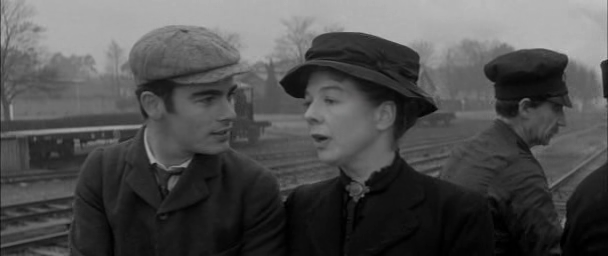
A budding artist (Dean Stockwell) with an alcoholic father (Trevor Howard) and an emotionally manipulative mother (Wendy Hiller) rejects an offer from an elderly art patron (Ernest Thesiger) to move to London to study, instead romancing his local sweetheart (Heather Sears), then moving on to an affair with a married-but-separated suffragette (Mary Ure) at his new workplace.

Genres, Themes, Actors, and Directors:

  • Artists
  • Coming-of-Age
  • Dean Stockwell Films
  • Donald Pleasence Films
  • Sexuality
  • Trevor Howard Films
  • Wendy Hiller Films

Review:
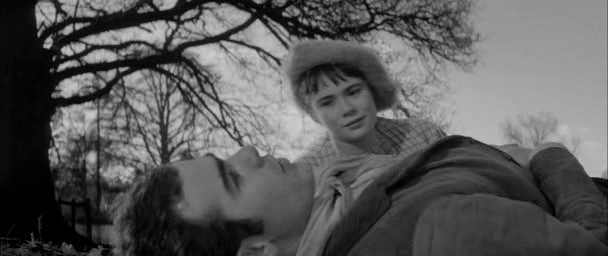
Cinematographer Jack Cardiff helmed this beautifully shot (by DP Freddie Francis) adaptation of D.H. Lawrence’s semi-autobiographical 1913 novel. Unfortunately, while the location shooting in Nottingham, England is lovely:

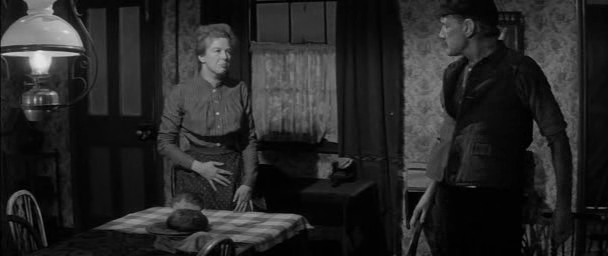
… the storyline implies a prior familiarity with the novel, given that characters are only loosely fleshed out and there is clearly much more to their situations than we’re privy to here. The morbidly unhealthy relationship between Hiller and Stockwell, for instance, hints at deep dysfunction but never goes beyond her surface comments to him:

Meanwhile, Stockwell’s artistic aspirations are hardly given any screentime, and his rejection of Thesiger’s offer in favor of staying at home to care for his mother doesn’t make sense given all her talk about wanting him to go and make something of himself. (We can surmise that she’s actually quite happy to keep him pinned to her apron-strings, but this isn’t made sufficiently evident.)

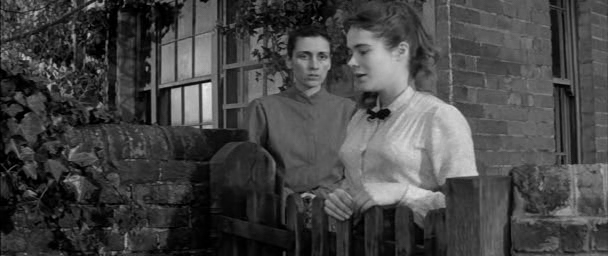
The same is true for the brief glimpses we see of Sears interacting with her puritanical, sex-shaming mother (Rosalie Crutchley):

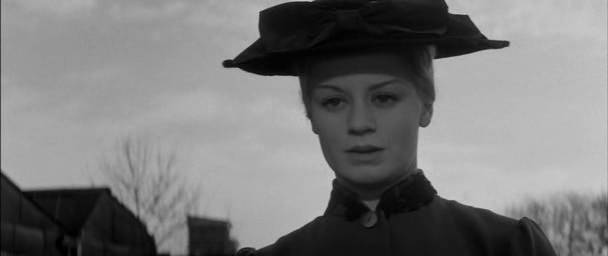
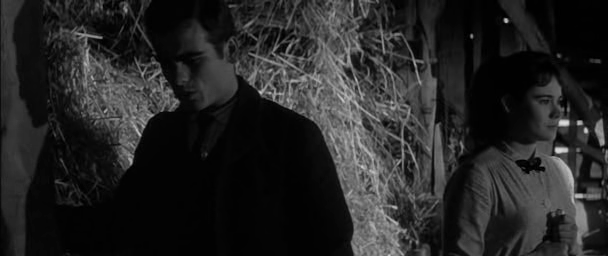
Indeed, Sears’ interesting character is not given enough weight or time, with the majority of romantic scenes involving Ure instead:

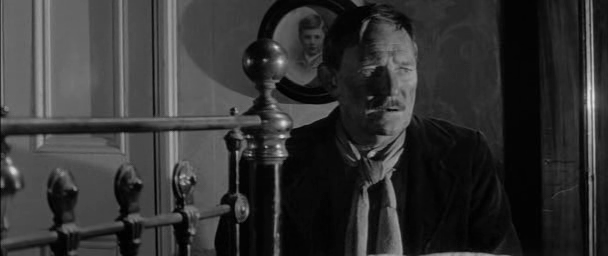
The film’s best performance comes from Oscar-winning Howard as Stockwell’s mercurial coal-mining father — a man who takes great pride in his career, and erupts in alcoholic rage when his value and status are questioned. We can sense how infuriating it is for him to be married to Hiller, yet how deeply he relies on her for companionship and care.

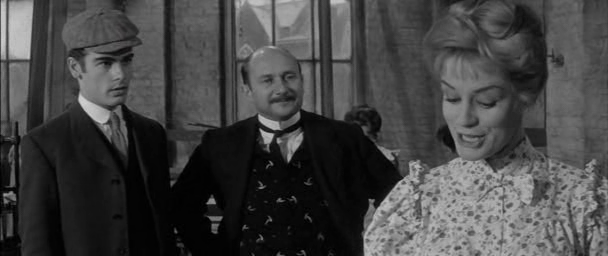
Note: Watch for Donald Pleasence in a small role as Stockwell’s new employer:

Notable Performances, Qualities, and Moments:

  • Trevor Howard as Walter Morel
  • Freddie Francis’s cinematography

Must See?
No; you can skip this one.

Links: