Black Girl (1972)

Black Girl (1972)

“A spiritualist told me that a child that wasn’t mine was gonna make me happy one day!”

Synopsis:
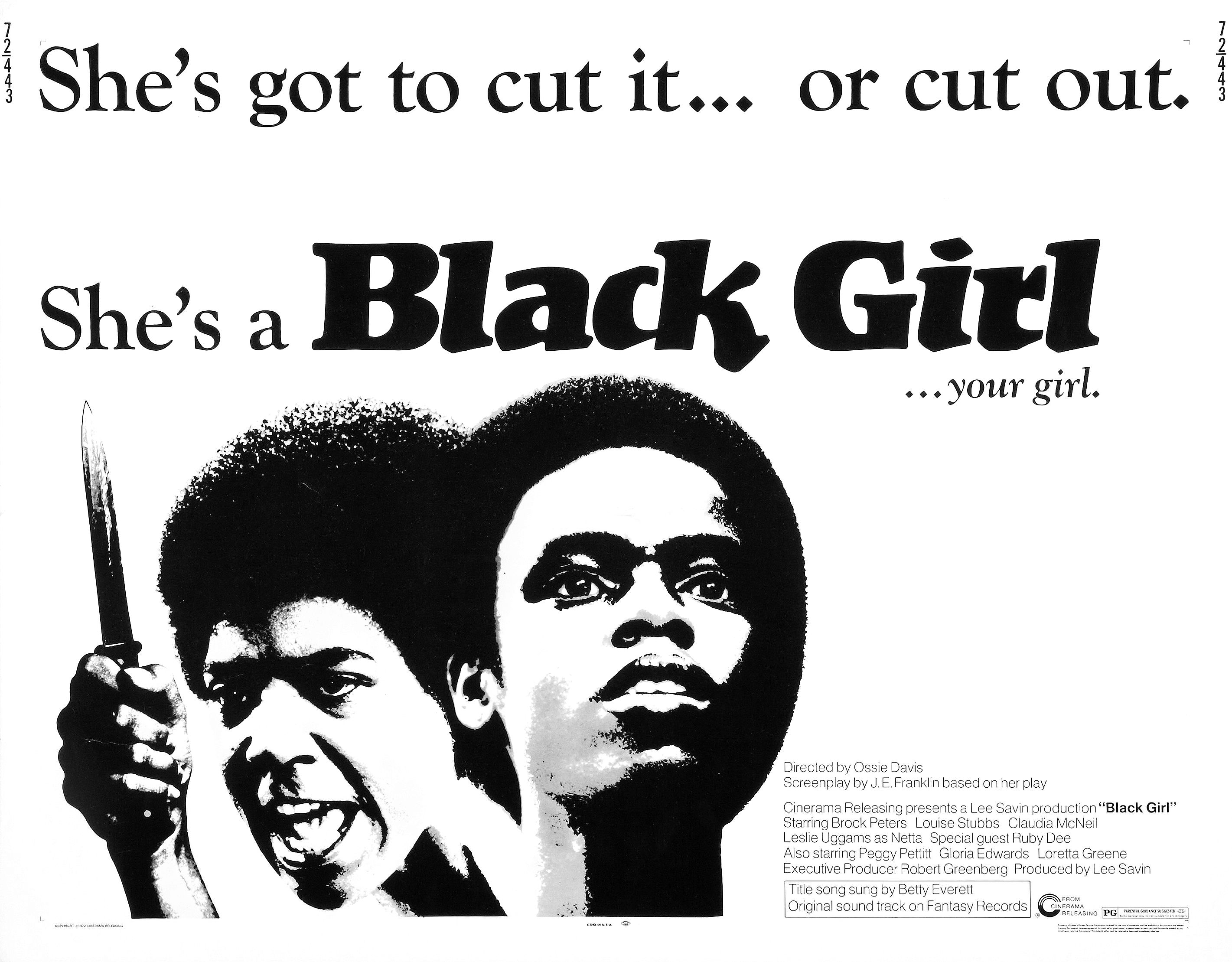
An aspiring dancer (Peggy Pettit) is pressured by her bullying sisters (Gloria Edwards and Rhetta Greene) into mistreating a visiting foster sister (Leslie Uggams) who is idolized by their mother (Louise Stubbs).

Genres, Themes, Actors, and Directors:

  • African-Americans
  • Jealousy
  • Play Adaptations
  • Ruby Dee Films
  • Siblings

Review:
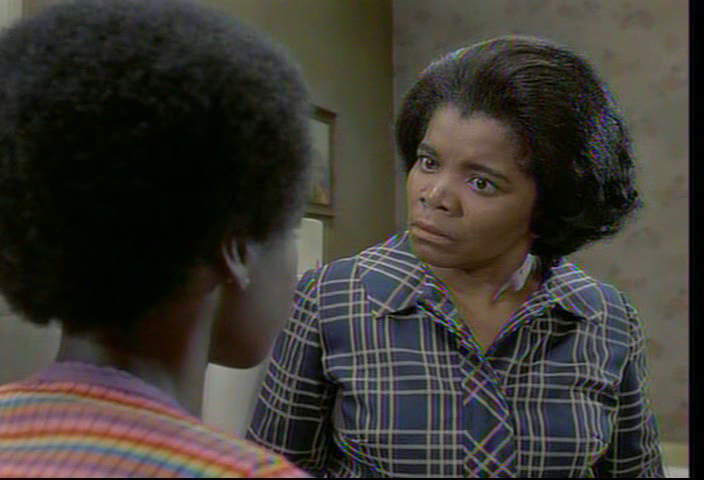
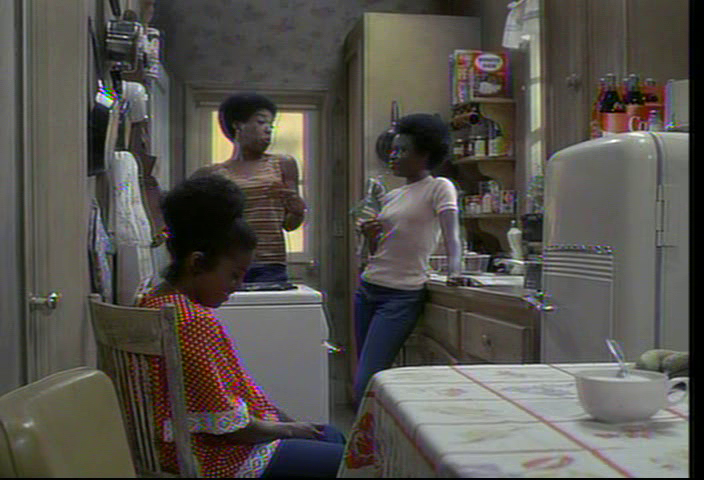
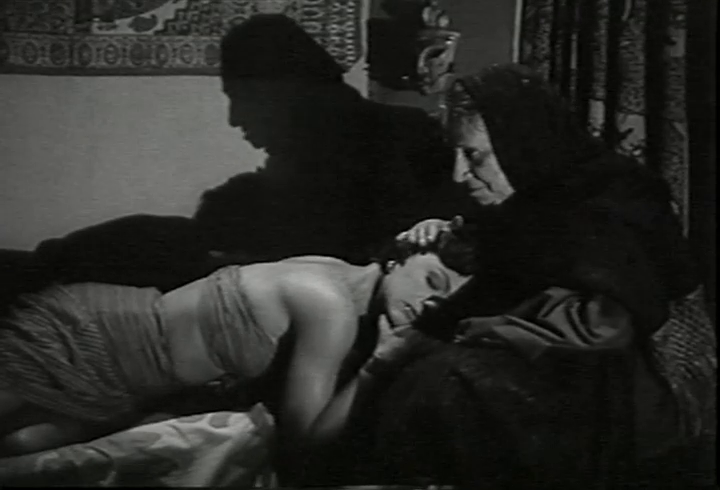
This hard-hitting family drama — based on a play by J.E. Franklin — is graphically authentic in its representation of family dysfunction spiraling through generations. Full of profanity and cruel mistreatment, it’s a challenging but oddly refreshing viewing experience — much like August: Osage County (2013) (also based on a play). Pettit and her two half-sisters — all high school dropouts, living in a cramped apartment with their mother, grandmother (Claudia McNeil), and grandmother’s boyfriend (Kent Martin) — are deeply embittered by their mother’s overt dismissal of their own potential, and understandably furious that Stubbs turned to foster parenting in an attempt to salvage her own reputation as a supportive mother. Uggams — who’s gone away to a “white person’s college”, and whose own mother (Ruby Dee) had a nervous breakdown — adores “Mama Rose”, but feels conflicted about the effect her own success has had on her foster siblings.

An early interlude involving a visit from Stubbs’ first husband (Brock Peters) — biological father to Edwards and Greene — reveals quite a bit about Stubbs’ history and crushed dreams. He arrives waving $100 bills around, demonstrating his enduring power over the household years after he cheated on Stubbs and left for Detroit; he only half-jokingly withholds money from Pettit, who has borne the burden of different paternity her entire life. To that end, she clearly represents an opportunity to escape — if she can manage the wrath of her envious sisters, who are desperately trying to hold her back along with them. While not a true literary masterpiece like Lorraine Hansbury’s Raisin in the Sun, Black Girl remains worthy viewing for those interested in fearless exploration of family dynamics.

Redeeming Qualities and Moments:

  • Louise Stubbs as Mama Rose
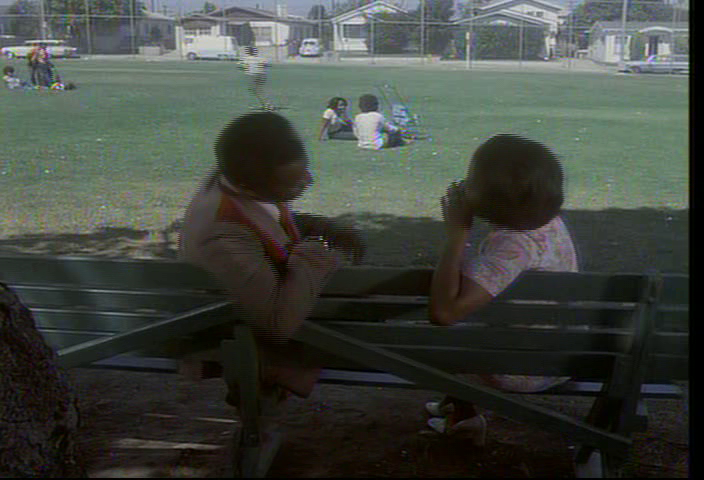
  • Good use of outdoor locales
  • A hard-hitting script

Must See?
No, though it’s strongly recommended if you can stomach it.

Links:

Spirits of the Dead (1968)

Spirits of the Dead (1968)

“Why am I telling you this? Why did you ask me here? What do you want from me?”

Synopsis:
Three mean-spirited individuals — Jane Fonda, Alain Delon, and Terence Stamp — meet appropriately grisly endings.

Genres, Themes, Actors, and Directors:

  • Actors and Actresses
  • Alain Delon Films
  • Brigitte Bardot Films
  • Edgar Allan Poe Films
  • Episodic Films
  • Fellini Films
  • Horror Films
  • Jane Fonda Films
  • Living Nightmare
  • Louis Malle Films
  • Peter Fonda Films
  • Roger Vadim Films
  • Terence Stamp Films

Response to Peary’s Review:
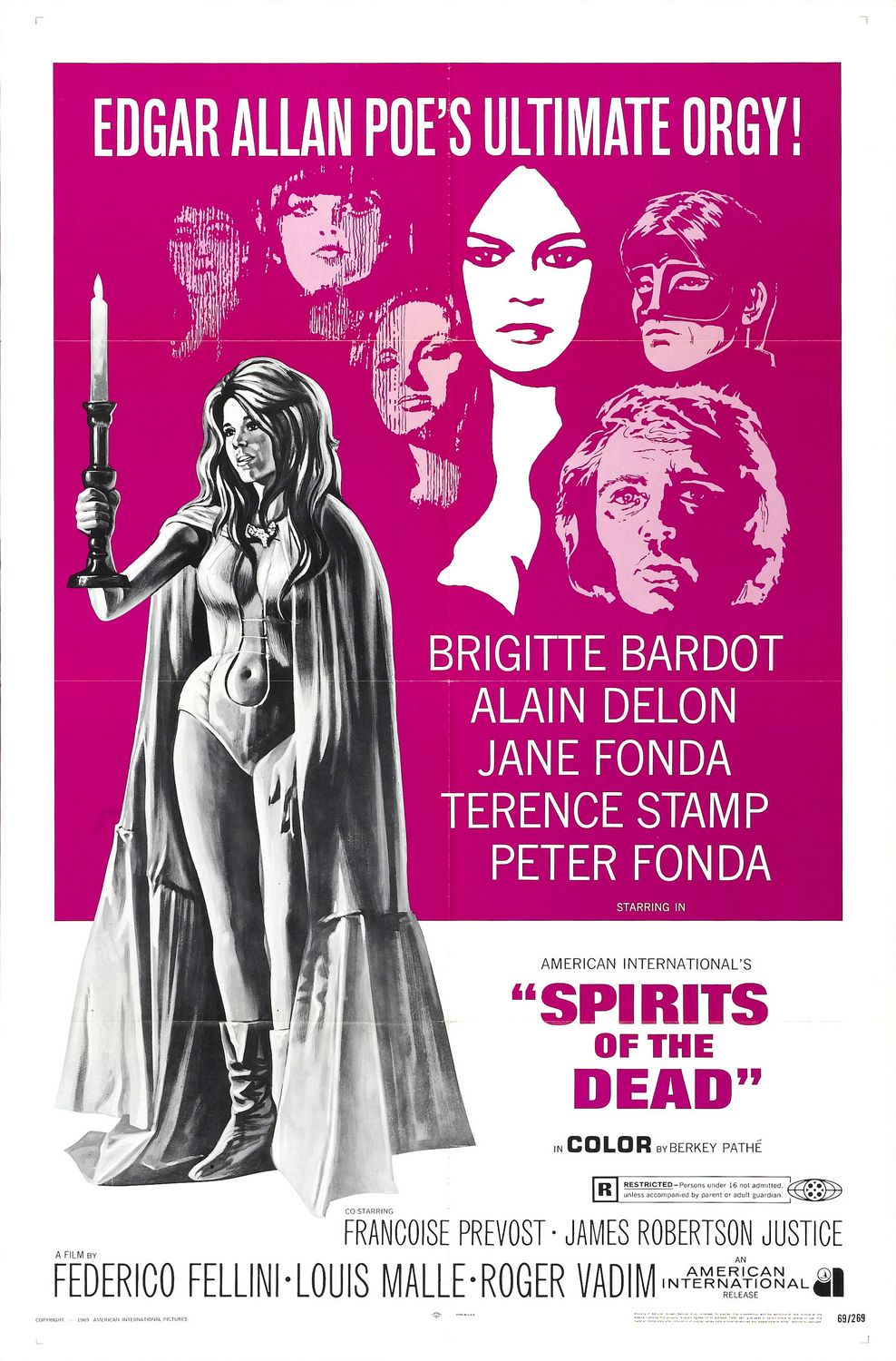
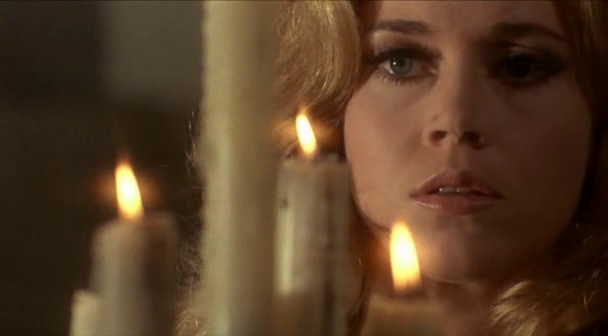
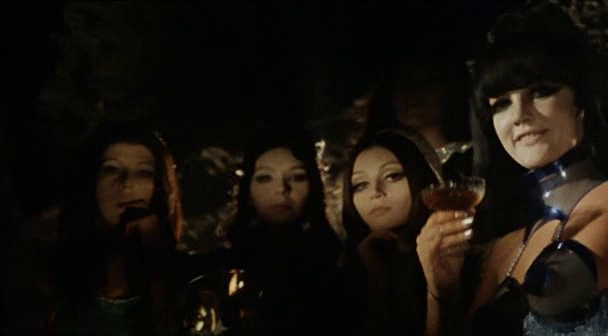
Peary is clearly not a fan of this “disappointing horror anthology for which three Poe tales were adapted by internationally known directors and which starred actors who usually stayed away from the genre”. Roger Vadim helmed the first episode, “Metzengerstein”, starring Jane Fonda as a cruel, “depraved libertine” who secretly covets her humble cousin (played by her real-life brother, Peter — kinky). It seems to exist primarily as an excuse for Fonda to wear yet more “revealing costumes” (after her starring role in Vadim’s Barbarella) while riding horses, staring at tapestries, and engaging in orgies that “must give TV censors fits”; unfortunately, it’s a real snooze. Next is a slightly more compelling but still disappointing episode — directed by Louis Malle — “about a sadist… who keeps seeing his moral counterpart, a lookalike named William Wilson”. Peary argues it is “poorly dubbed, unnecessarily vicious, and, surprisingly, contains no surprises”; its most memorable (if squeamishly disturbing) sequence involves Brigitte Bardot as “a cigar-smoking brunette who loses to the cheating Wilson at cards and must submit to his beating”.

Peary writes that “the most praised episode is Federico Fellini’s ‘Never Bet the Devil Your Head’, starring Terence Stamp as a booze-soaked, self-loathing American actor [Toby Dammit] who has come to Italy to make a moralistic western about redemption”, and “encounters Fellini’s usual array of grotesque movie- and press-types and the devil — a little blonde girl who keeps turning up in creepy settings”. He argues that while Fellini’s story is “too long and self-consciously arty”, “at least its violent ending… is carried out in an original manner”. Most other critics give Fellini’s short film even greater due, with DVD Savant (for instance) noting that “for once, a critique of showbiz goes beyond the obvious representations of phoniness and insincerity, and takes the extra step into insanity.” Indeed, this final episode — a deliciously surreal satire with a relentless pace and consistently jarring imagery — at least partially redeems the entire film. But as a whole, Spirits of the Dead remains an unpleasant outing that is more of a curiosity than essential viewing.

Redeeming Qualities and Moments:

  • Claude Renoir’s cinematography in “Metzengerstein”
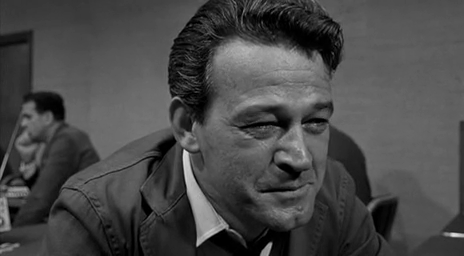
  • Terence Stamp as Toby Dammit
  • Typically surreal imagery by Fellini

Must See?
No, though you may be curious to check out the third story.

Links:

Christiane F. (1981)

Christiane F. (1981)

“Look at them: the cooler they are, the more shots they’ve had.”

Synopsis:
A neglected teen (Natja Brunckhorst) in 1970s Berlin is drawn by her new boyfriend (Thomas Haustein) into a subculture of heroin use and prostitution.

Genres, Themes, Actors, and Directors:

  • Alcoholism and Drug Addiction
  • David Bowie Films
  • Downward Spiral
  • German Films
  • Teenagers

Response to Peary’s Review:
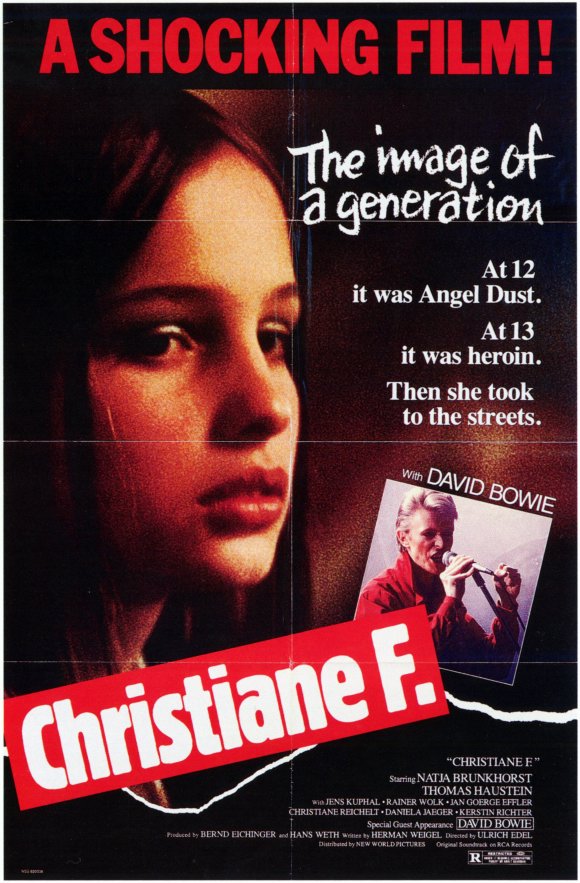
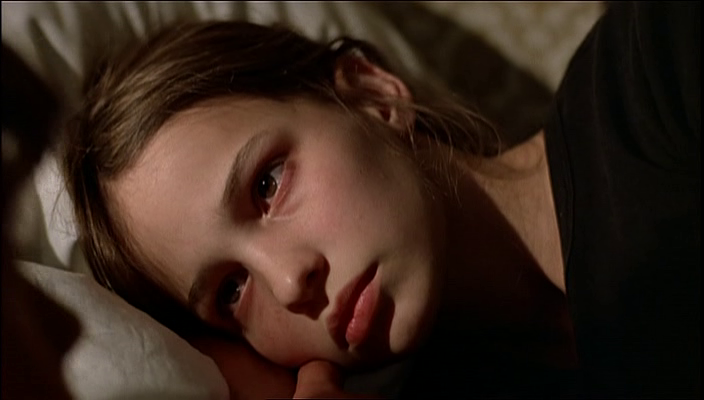
Peary writes that this “controversial, grueling film” — “based on actual transcripts” — is “not as exploitative as you might have heard, but just as depressing”. He notes that it is “extremely graphic, unrelenting in its grimness, [and] believable” — and while it’s “obviously not for all tastes”, it “stays in memory”. Despite presenting drug culture as a no-man’s-land of desperation and debasement, the film became (and remains) a cult hit — due in part to an extended cameo concert appearance by David Bowie. What’s most impressive about the film (which is indeed a grueling, over-long viewing experience) is how authentically it portrays the gradual, almost inevitable allure of drugs to young teens seeking social approval and a sense of community. Christiane is a spunky girl, and resists heroin numerous times until she finally decides to “just try it” — first snorting, then injecting, always insisting she won’t let herself lose control, even as she gradually compromises her morals to earn money for drugs. She and her boyfriend — in perhaps the film’s most infamous scene — go through a harrowing withdrawal (rivaling that in Trainspotting), but they immediately relapse, and witness several of their street friends dying. Sadly, the real “Christiane F.” — who outed herself at an early age to help promote the film — remained an addict her entire life, and noted in a 2013 interview that while she was near death due to poor health, she had no plans to change her lifestyle.

Redeeming Qualities and Moments:

  • Natja Brunckhorst as Christiane
  • An appropriately seedy view of drug addiction
  • Jurgen Knieper’s score

Must See?
Yes, as a cult favorite.

Categories

  • Cult Movie

Links:

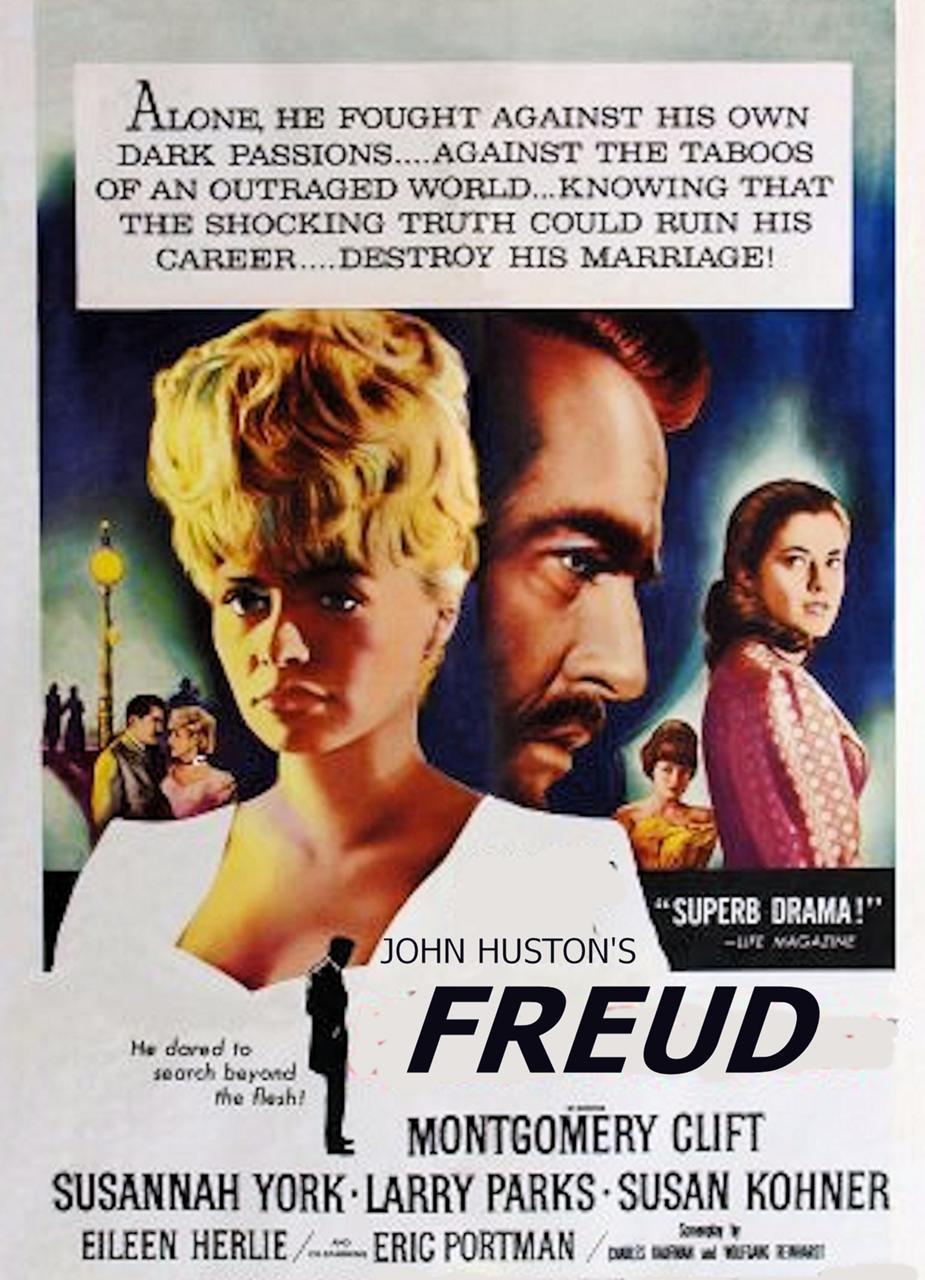
Freud (1962)

Freud (1962)

“Leave to the night what belongs to the night.”

Synopsis:
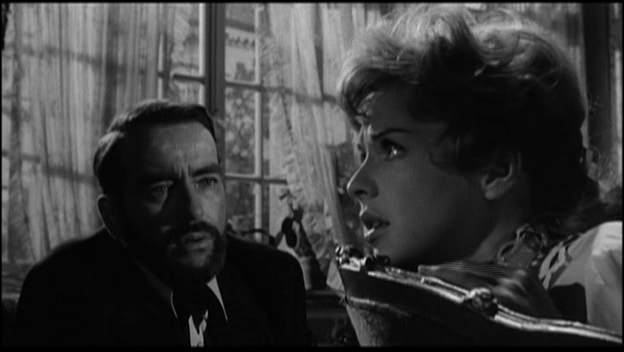
Young Sigmund Freud (Montgomery Clift) — mentored by father-figure Dr. Joseph Breuer (Larry Parks) — develops his controversial psychoanalytical theory while caring for a variety of mentally ill patients, including a hysterical woman unable to walk or drink water (Susannah York).

Genres, Themes, Actors, and Directors:

  • Biopics
  • Flashback Films
  • John Huston Films
  • Montgomery Clift Films
  • Psychotherapy
  • Susannah York Films

Review:
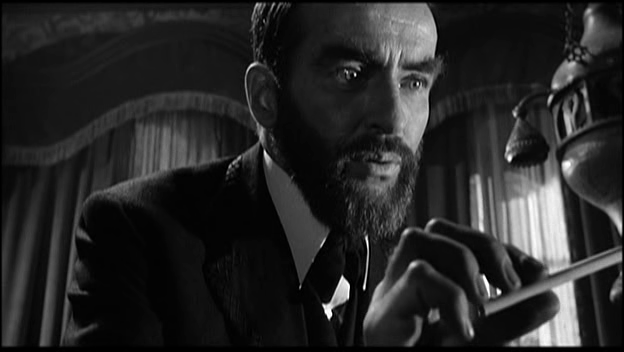
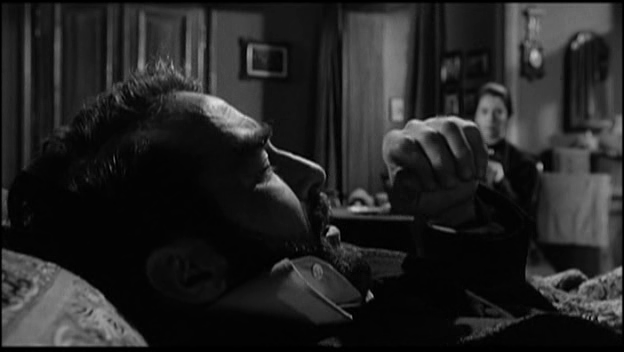
Considered by many to be a flawed if interesting failure, John Huston’s condensed tale of Freud’s evolution as a theorist and practitioner in the nascent field of psychoanalysis tells a surprisingly taut mystery story, one grounded in the ever-elusive search for traumatic origins. Through an exploration of Freud’s interactions with several strategically constructed hysterical patients — interwoven with potent flashbacks from Freud’s own dreams and past — we understand how he came to develop, one insight at a time, his highly controversial theories of repression and neurosis. Because so much has been (and continues to be) learned about psychology and the unconscious, it’s easy to dismiss Freud’s valuable contributions to the early field of psychotherapy; yet Huston’s biopic is less an adulation of Freud (who comes across as appropriately neurotic) than an exploration of how wide-reaching theories evolve and face criticism within a certain era and social milieu.

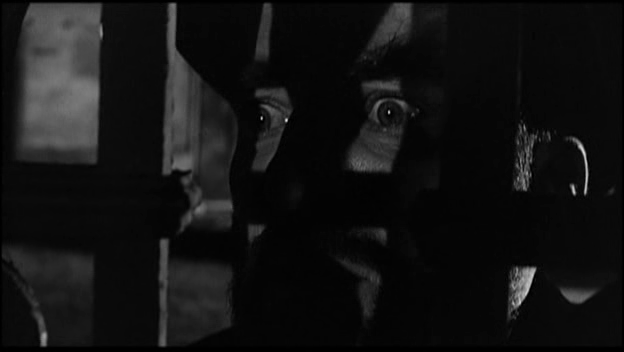
Grounding the film are strong central performances by Clift and Susannah York, as well as wonderfully atmospheric cinematography (by Douglas Slocombe) and creative direction. The flashback scenes, while occasionally contrived, appropriately convey the panic and confusion often felt in one’s dreams and in the slippery memories of childhood. The literate script, though talky, is surprisingly absorbing; according to Jonathan Rosenbaum’s review in The Chicago Reader, the film was actually “scripted mainly by Jean-Paul Sartre”, who “withdrew his name from the project after his second draft — which would have made a much longer film — was radically condensed”. Keeping in mind that biopics can never fully or adequately cover the scope of a famous individual’s life, Freud nonetheless remains a worthy entry in our understanding of this controversial figure.

Redeeming Qualities and Moments:

  • Montgomery Clift as Freud
  • Susannah York as Cecily
  • Highly effective b&w cinematography by Douglas Slocombe

  • Masterful direction

  • A smart script:

    “Hysteria is another name for lying; pity there’s no therapy for that.”
    “Hail Sigmund Freud — the conquering hero of neurosis!”
    “I know why you’re attracted to other people’s madness: because it makes you forget your own!”
    “Angels and saints slay dragons; I’m neither.”

Must See?
Yes, as an unusual and compelling psychological thriller by a master filmmaker.

Categories

  • Important Director

Links:

Bride of the Gorilla (1951)

Bride of the Gorilla (1951)

“Aren’t we all slaves?”

Synopsis:
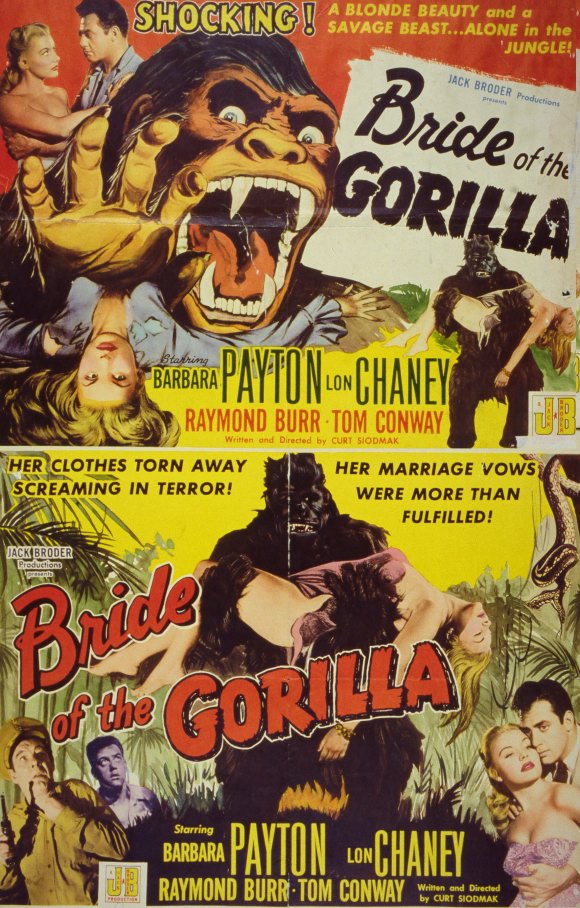
A doctor (Tom Conway) and a hot-headed overseer (Raymond Burr) lust after the beautiful wife (Barbara Payton) of a plantation owner (Paul Cavanaugh), while a native servant (Carol Varga) pines for Burr. When Burr arranges to have Cavanaugh killed by a poisonous snake, a local witch (Gisela Werisbek) places a curse on him, complicating his goal of running away with Payton.

Genres, Themes, Actors, and Directors:

  • Jungles
  • Lon Chaney, Jr. Films
  • Love Triangle
  • Plantations
  • Raymond Burr Films
  • Witches and Wizards
  • Woody Strode Films

Review:
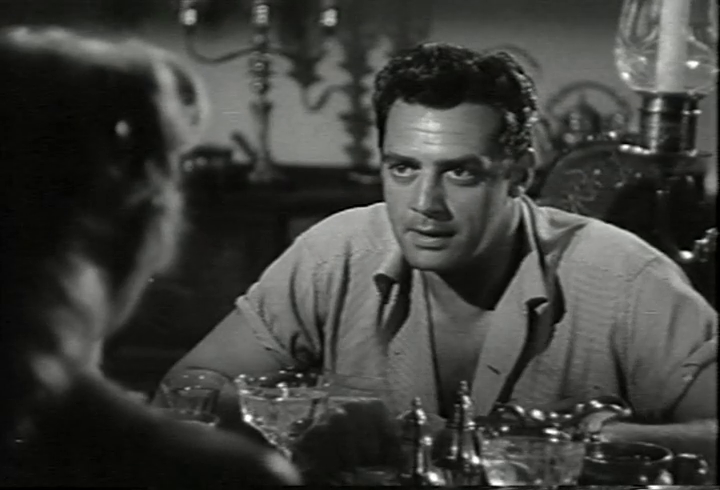
The primary reason to check out this Z-grade jungle plantation love quadrangle is Raymond Burr — who, it turns out, had quite a lengthy career before landing his iconic role as TV’s Perry Mason in 1957. Burr is appropriately virile, menacing, and tortured as the beefy hunk Payton longs to run away with. (The poor thing really had no choice in the matter: “A woman buried in a place like this?! You must understand if she gets a bit mixed up.”) The cinematography is effective, and there is some camp value to be found in the pedantically solemn dialogue:

“White people shouldn’t live too long in the jungle. It brings out their bad side — their jealousies, impatience.”
“Every couple isn’t a pair.”
“I, too, am not clever… But I know where to find wisdom.”

But as DVD Savant notes in his review, “anyone who read the script and signed on had to be in denial, or totally unaware that writer-director Curt Siodmak’s bizarre jungle story was a Career Choice of No Return”. Watch White Cargo (1942) instead if you’re in the mood for this kind of steamy exploitation flick.

Note: Lon Chaney Jr. and Woody Strode hover around the periphery of this film as a police commissioner and his deputy.

Redeeming Qualities and Moments:

  • Raymond Burr as Barney Chavez
  • Atmospheric cinematography

Must See?
No; feel free to skip this one unless you’re a diehard Burr fan. Listed as a Camp Classic in the back of Peary’s book.

Links:

Seconds (1966)

Seconds (1966)

“Don’t think, Tony — I came here to feel, to be!”

Synopsis:
A middle-aged banker (John Randolph) emotionally estranged from his devoted wife (Frances Reid) undergoes extreme plastic surgery and emerges with a new identity as a bohemian painter (Rock Hudson) and a new love interest (Salome Jens) — but will his second chance at life be any more fulfilling than the first?

Genres, Themes, Actors, and Directors:

  • John Frankenheimer Films
  • Living Nightmare
  • Midlife Crisis
  • Plastic Surgery
  • Psychological Horror
  • Rock Hudson Films
  • Science Fiction

Response to Peary’s Review:
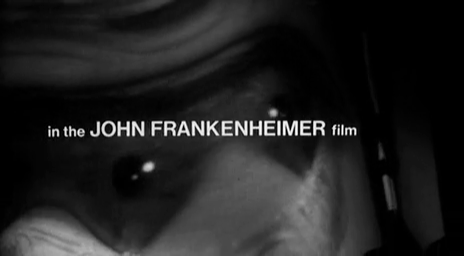
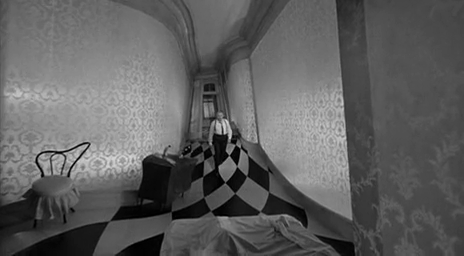
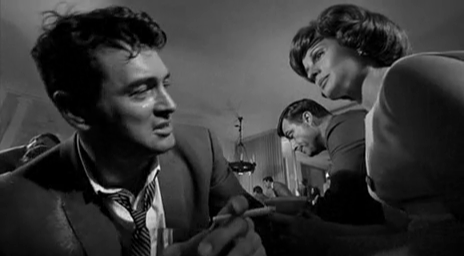
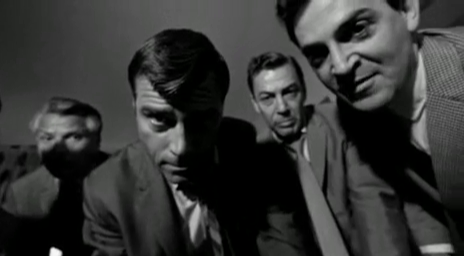
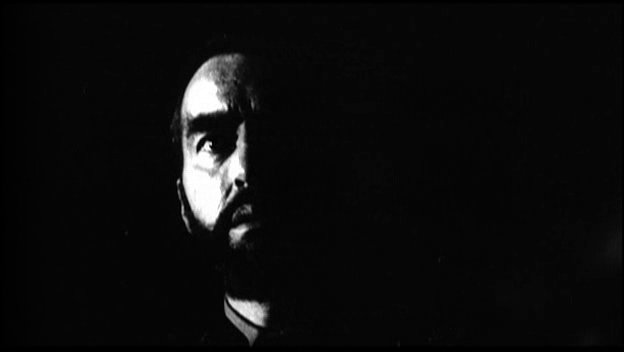
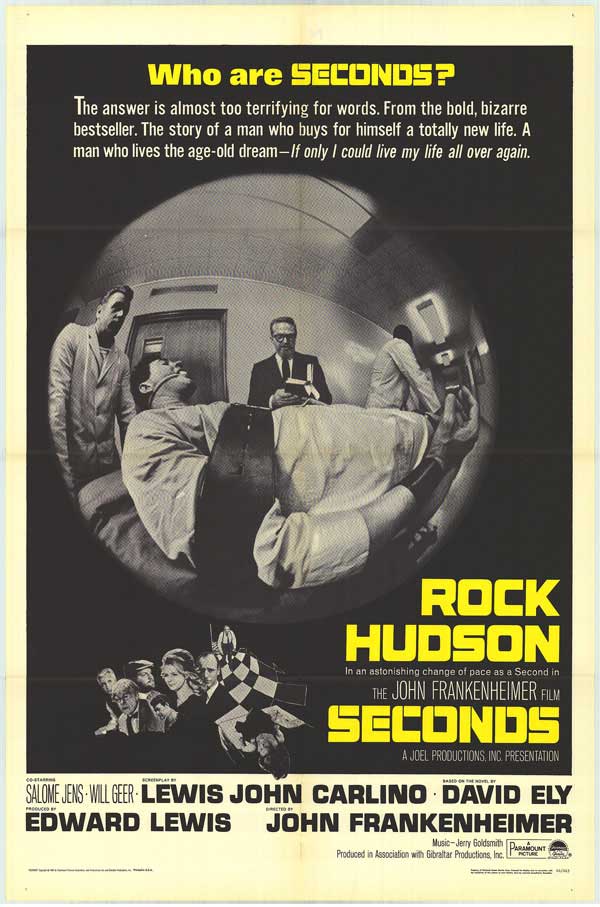
Peary writes that John Frankenheimer’s Kafka-esque psychological horror film (based on a 1963 novel by David Ely) is “one of the most depressing science fiction films ever made — perhaps because its premise seems credible — and one of the most provocative”; he notes that “if you don’t detest this film, then chances are you’ll greatly admire it”. While it was once challenging to see (it received poor reviews and limited screenings until 1988), it’s long held “an enormous cult following” and remains a fascinating — if undeniably emotionally challenging — viewing experience. As Peary writes, “the acting in the film is first-rate” (Hudson gives his best-ever lead performance) and “John Frankenheimer’s direction seems appropriately audacious, if overly self-indulgent”. However, Peary rightly notes that “the ‘star’ of the film is cameraman James Wong Howe, who used black-and-white photography and assorted lenses to create the most sinister-surreal-paranoid atmosphere the genre had ever known”. Howe’s “striking contributions” included “putting a camera with a wide-angle lens on a wheeled suitcase-carrier for bizarre shots of Randolph walking through Grand Central Station” and “using a fish-eye lens for the horrifying final shot of Hudson’s last seconds”, in addition to incorporating a “segment of a real nose operation” for the opening title sequence (designed by Saul Bass).

In Peary’s Cult Movies 3, he includes an extended essay on Seconds written by Henry Blinder, who interviewed Randolph, screenwriter John Carlino, composer Jerry Goldsmith, and producer Edward Lewis. Blinder writes unequivocally that “Seconds is quite possibly the most depressing film ever made — it is a film of unrelieved despair”, and (citing Carlino) “almost too painful to watch”. Blinder refers to Seconds as “the living nightmare of a man who acts to fill his emptiness without having an idea of what to fill it with”, culminating in “one of the most harrowing murders ever filmed”. In his analysis, Blinder references other key cinematic works — noting, for instance, that the final shot in Seconds is akin to “Rosebud” in Citizen Kane (1941), and that Ely’s original novel was a precursor of sorts to Ira Levin’s novel-turned-movie The Stepford Wives (1975): “In Ely’s work, the men pay a great deal of money to alter/replace themselves; in Levin’s the men pay a great deal of money to alter/replace their wives”.

Indeed, Seconds is very clearly about males in crisis, given that the two key females — Reid as Randolph’s wife, and Jens as Hudson’s free-spirited new lover — are ultimately supporting players in his story, and the nefarious “company” is run by (white, middle-aged) men. Blinder writes that Ely’s novel “was inspired by a startling statistic: At the time, 80,000 middle-aged American men left their wives and children each year, never to return”, causing Ely to hypothesize “that big business might want to capitalize on the legion of wealthy men”. The somewhat opaque workings of “The Company” provide a chilling example of fatal coercion in marketing, given that new members are not-so-subtly “encouraged” to name another potential client for the expensive underground procedure before they’re allowed to move on to another “level”. Hudson’s ultimate refusal to “name names” is a poignant tribute to the blacklisted actors brought out of obscurity to play either supporting (Jeff Corey, Will Geer) or central (John Randolph) roles. There is much more to say and discuss about Seconds, but simply put, it remains must-see viewing: steel yourself.

Note: Seconds is often referred to as the third of Frankenheimer’s “paranoia trilogy”, following The Manchurian Candidate (1964) and Seven Days in May (1964).

Redeeming Qualities and Moments:

  • Saul Bass’s opening title sequence
  • Rock Hudson as reborn Arthur
  • John Randolph as older Arthur
  • Fine supporting performances by Will Geer and others
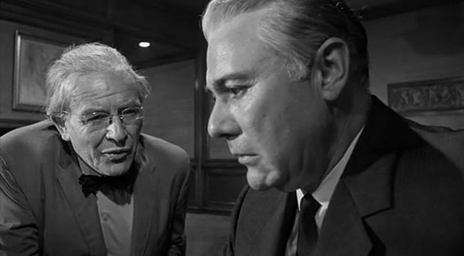

  • James Wong Howe’s superb cinematography
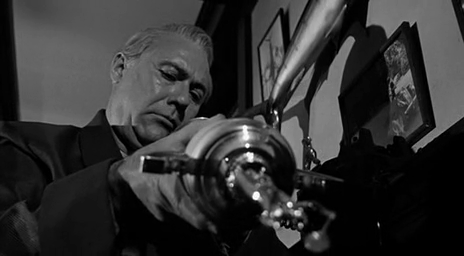


  • Jerry Goldsmith’s score

Must See?
Yes, as a cult classic.

Categories

  • Cult Movie
  • Oscar Winner or Nominee

(Listed in 1001 Movies You Must See Before You Die)

Links:

Atom Age Vampire (1960)

Atom Age Vampire (1960)

“There’s no doubt of it! Yes, she’s disfigured forever! Like a cancer that’s beyond control — like leprosy!”

Synopsis:
Distraught that her boyfriend (Sergio Fantoni) is leaving her because she won’t give up her job as a nightclub dancer, a woman (Susanne Loret) crashes her car and is facially disfigured. She is discovered by a scientist (Albert Lupo) and his loyal assistant (Franca Parisi), who are determined to utilize an experimental new skin cure on her; but when the treatment proves to be temporary, Lupo — who has fallen hopelessly in love with Loret — resorts to monstrous means to keep her looking beautiful.

Genres, Themes, Actors, and Directors:

  • Disfigured Faces
  • Horror Films
  • Mad Doctors and Scientists
  • Obsessive Love

Response to Peary’s Review:
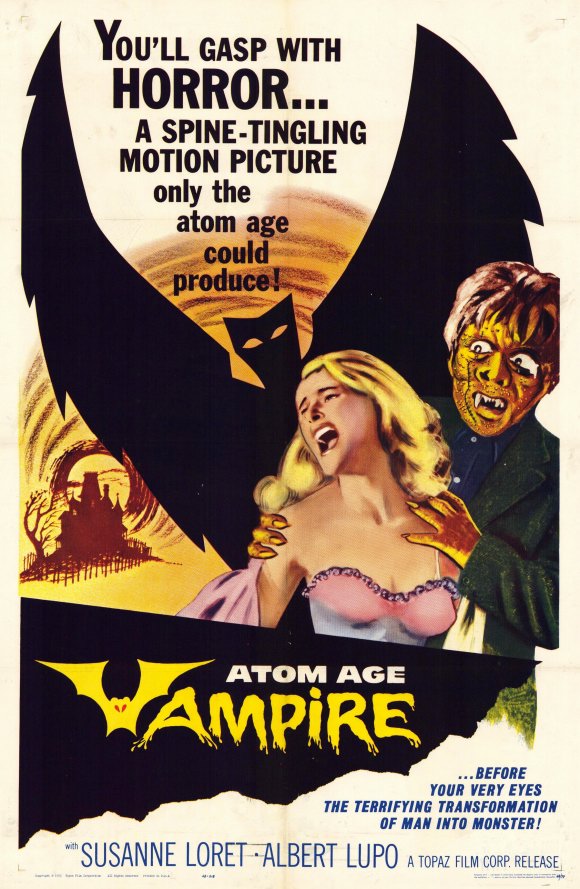
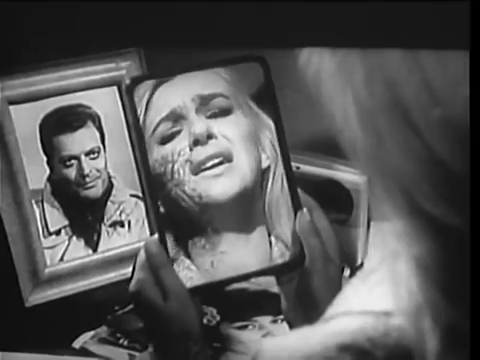
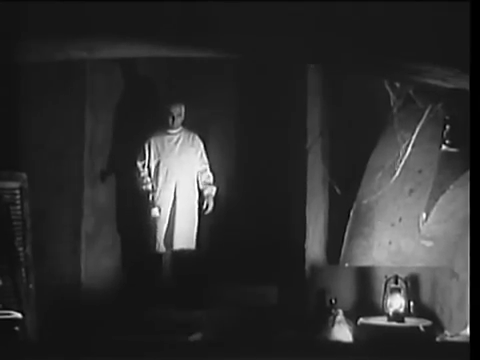
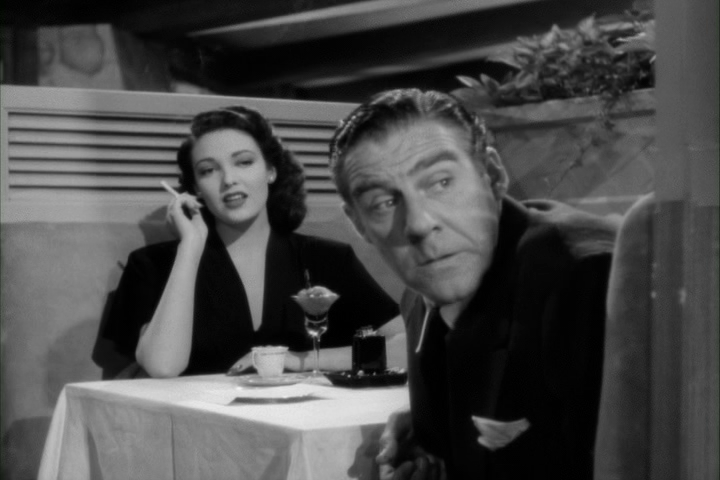
Peary writes that this “sleazy, dubbed horror film” is an “awful picture” but “fun to watch”, and points out how “perversely exciting” it was for him as a young boy to see “scarred Loret displaying her stacked body in skimpy underwear”. Naturally, my own take on this mash-up of Eyes Without a Face (1960) and Dr. Jekyll and Mr. Hyde lacks Peary’s fond memories of it as “one of the first horror films to really exploit sex”. While it is indeed sleazy, terribly dubbed, poorly acted, and somewhat schizophrenic in its many (cliched) narrative strands, I don’t agree with Peary that it’s AWFUL; it’s often creatively shot (see stills below) and reasonably suspenseful for a low-budget thriller, with plenty of campy dialogue. Most humorous of all is how gorgeous Loret — evoking Veronica Lake with her peekaboo blonde wave of hair — survives a near-fatal car crash with facial scarring conveniently on just one side of her face, and no other obvious impairments; her suicidal distress feels somewhat out of proportion.

Redeeming Qualities and Moments:

  • Some creative direction
  • Atmospheric cinematography

Must See?
No, though it’s worth a look simply for its cult/camp appeal. Available as a public domain video here.

Links:

White Cargo (1942)

White Cargo (1942)

“She knows how to purr her way into your mind and scratch her way out, always taking and never giving.”

Synopsis:
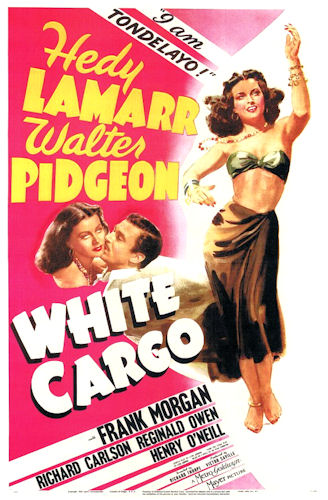
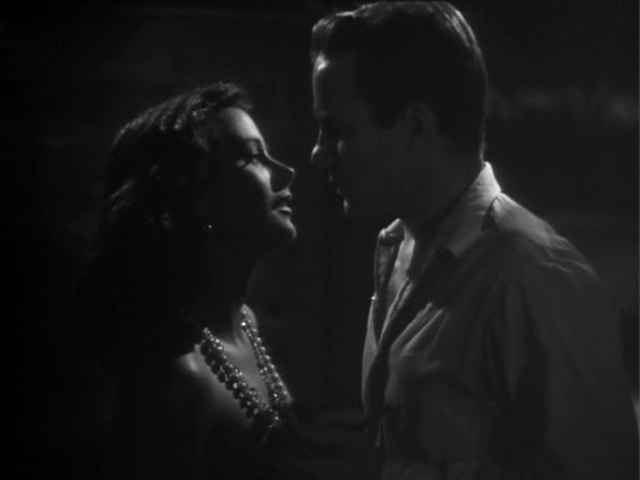
A rubber plantation overseer (Walter Pidgeon) in a humid African village — just one among a handful of white men, including an alcoholic doctor (Frank Morgan) and a kind missionary (Henry O’Neill) — laments the arrival of an idealistic new co-worker (Richard Carlson) who quickly falls in love with a local “half-breed” seductress named Tondelayo (Hedy Lamarr).

Genres, Themes, Actors, and Directors:

  • Africa
  • Femmes Fatales
  • Flashback Films
  • Frank Morgan Films
  • Hedy Lamarr Films
  • Plantations
  • Play Adaptation
  • Walter Pidgeon Films

Review:
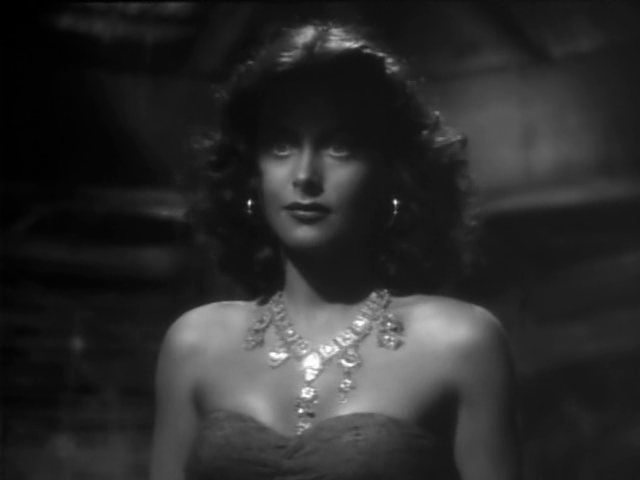
There is so much to be offended by in this openly misogynist, racist, colonialist jungle flick — based on a hit 1923 play, which was in turn based on a novel entitled Hell’s Playground (!) — that, as many viewers have pointed out, its true value lies in its perceived camp appeal. Indeed, TCM refers to it as a “popular mixture of exotica, pulp thrills and over-the-top misogyny”, as well as “a deliciously ripe relic”. With black-faced, shiny-skinned Hedy Lamarr:

… slinking around spouting dialogue like the following to her “prey” (Carlson):

“I’m married to you for five months — and you not beat me once! Awila, please beat me… Then maybe you feel much better. Soon we make up — much love, many bangles.”

… you will simply be slack-jawed throughout. Her pidgin-like speech is peppered with the words “much” and “many” (“Him much nice man.”; “Awila give me much silk and many bangles.”), with the particularly favored phrase “much love, many bangles” repeated at least once. While Tondelayo is referred to at one point as possessing an “innate morality”, there’s really none of that on display here, as she simply evinces a “childlike” simplicity combined with seductive, sociopathic maneuvering. At least Harry Stradling’s cinematography is gorgeous, so that’s a bonus.

Redeeming Qualities and Moments:

  • Harry Stradling’s dramatic cinematography
  • Some clever dialogue:

    “The natives have been looking at me in a queer sort of way.”
    “Maybe they’re wondering how you can walk without a spine.”

Must See?
No — though of course, if this seems like your cup of tea, you should give it a try!

Links:

Letter to Three Wives, A (1949)

Letter to Three Wives, A (1949)

“I’m fed up with Addie Ross!”

Synopsis:
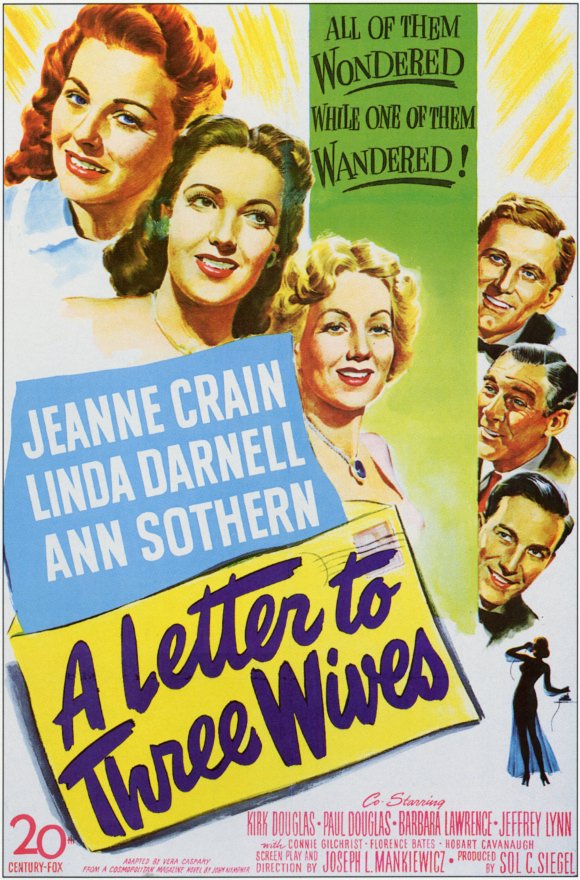
Three small-town wives (Jeanne Crain, Ann Sothern, and Linda Darnell) in post-WWII America each worry that their husband (Jeffrey Lynn, Kirk Douglas, and Paul Douglas) may have run off with one of their “friends” (Celeste Holm).

Genres, Themes, Actors, and Directors:

  • Ann Sothern Films
  • Celeste Holm Films
  • Feminism and Women’s Issues
  • Flashback Films
  • Infidelity
  • Jeanne Crain Films
  • Joseph L. Mankiewicz Films
  • Kirk Douglas Films
  • Linda Darnell Films
  • Marital Problems
  • Paul Douglas Films

Response to Peary’s Review:
Peary writes that this “sharp-edged yet ultimately sentimental look at three marriages in a small American town” — co-written and directed by Joseph L. Mankiewicz — is “stagy, almost like three one-act plays put together” but “perceptive” and possesses a “literate, Oscar-winning script” which makes us “care about the characters” (who, he argues, “would be ideal as the initial characters in a TV soap”). We’re kept in suspense from beginning to end as we wonder which of their three husbands will turn out to be the adulterer who has run away with the unseen yet seductively voiced “Addie Ross”. The film’s three flashback vignettes each provide a glimpse into unique marital challenges of the era: former-WAVE Crain is insecure about transitioning from her pre-war life on a farm to her new role as a socialite wife; Sothern worries that her work as a successful radio writer may be threatening her cultured husband’s sense of masculinity; and Darnell reflects on the seductive wiles she used to climb the social ladder and snare her boss as her husband.

As in Mankiewicz’s next two movies — All About Eve (1950) and People Will Talk (1951) — A Letter to Three Wives not only features strong female protagonists but directly addresses feminist issues (work, identity, marital insecurity) not commonly on display in other films of the era. It’s notable that while Sothern is the overworked mother of twins, we never see them; the focus is entirely on her role as a writer painfully aware of how her success is impacting her marriage. The most intriguing storyline, however, is that between Darnell and Douglas: co-screenwriters Mankiewicz and Vera Caspary pull no punches in their depiction of a beautiful woman all-too-aware of the games played between men-of-means and working-class women, and how carefully Darnell must lure Douglas into marrying her in order to bed her. Collectively the three wives’ stories tell a fascinating tale of post-war lives for (white) American women.

Note: This film is also noteworthy for providing uncredited Thelma Ritter with one of her first post-Miracle on 34th Street (1947) wisecracking sidekick roles.

Redeeming Qualities and Moments:

  • Linda Darnell and Paul Douglas as Lora Mae and Porter Hollingsway
  • A witty, suspenseful script
  • Creative use of sound

Must See?
Yes, as an enjoyable mid-century classic.

Categories

  • Genuine Classic

Links:

Applause (1929)

Applause (1929)

“The kid deserves a better break. Why, this burlesque racket is no place for her!”

Synopsis:
An aging burlesque star (Helen Morgan) with a manipulative boyfriend (Fuller Mellish, Jr.) tries to prevent her daughter (Joan Peers) — who has fallen in love with a kind sailor (Henry Wadsworth) — from following in her footsteps.

Genres, Themes, Actors, and Directors:

  • Has-Beens
  • Rouben Mamoulian Films
  • Showgirls
  • Single Mothers

Review:
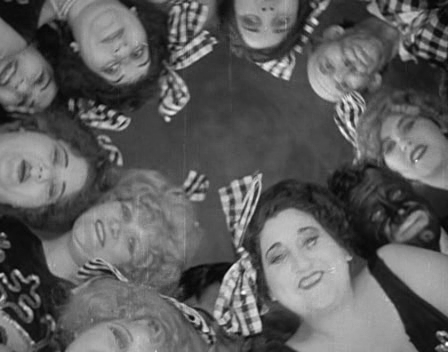
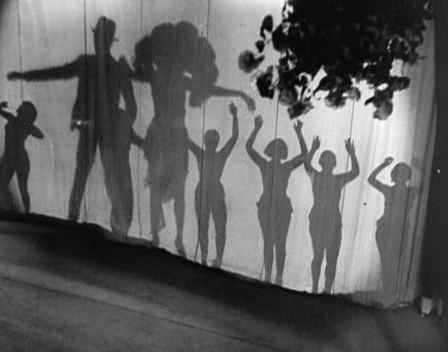
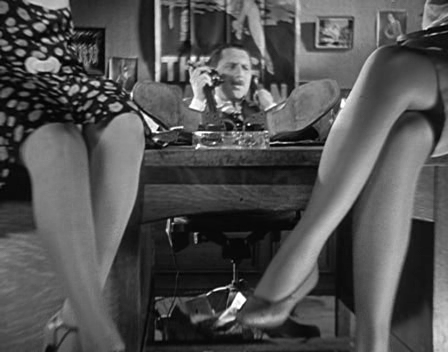
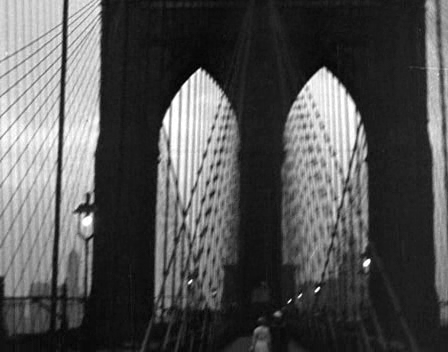
Rouben Mamoulian’s directorial debut remains one of the most creatively conceived early talkies; as noted in Stuart Galbraith IV’s review for DVD Talk, “Compared with the stage-bound, bolt-the-camera-to-the-floor look of nearly all the earliest sound films, Applause is downright astounding.” A glimpse at the stills below provides evidence of Mamoulian’s (and cinematographer George J. Folsey’s) visual brilliance and effective use of on-location shooting. The film is also notable for providing torch singer Helen Morgan with one of a handful of leading cinematic roles as a Stella Dallas-like mother sacrificing all for her daughter. Unfortunately, the storyline itself is pure melodrama through-and-through, with few surprises and many cliches, making this one merely recommended rather than must-see.

Redeeming Qualities and Moments:

  • Creative direction and cinematography


  • Fine on-location shooting

Must See?
No, though it’s certainly worth a look. Listed as a film with Historical Importance in the back of Peary’s book.

Links: