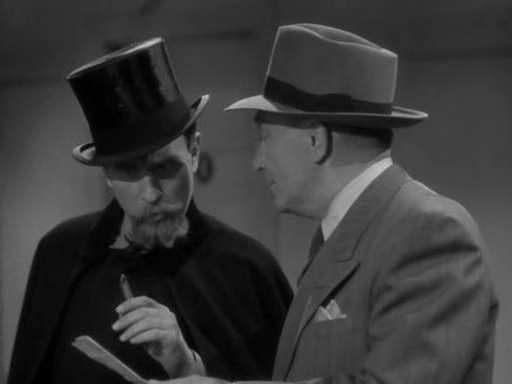
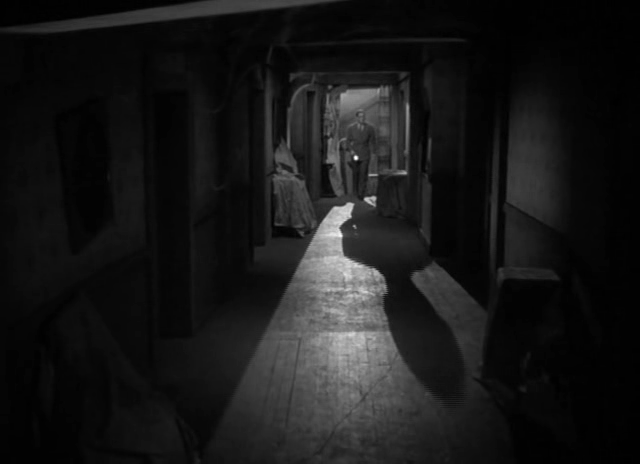
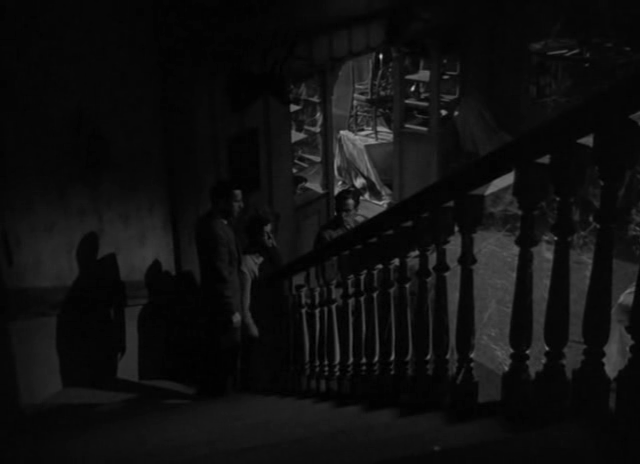
Toolbox Murders, The (1978)
“You need more than a spilled Pepsi to prove that she was kidnapped.”
|
Synopsis: |
|
Genres, Themes, Actors, and Directors:
Review: Redeeming Qualities and Moments:
Must See? Links: |
“You need more than a spilled Pepsi to prove that she was kidnapped.”
|
Synopsis: |
|
Genres, Themes, Actors, and Directors:
Review: Redeeming Qualities and Moments:
Must See? Links: |
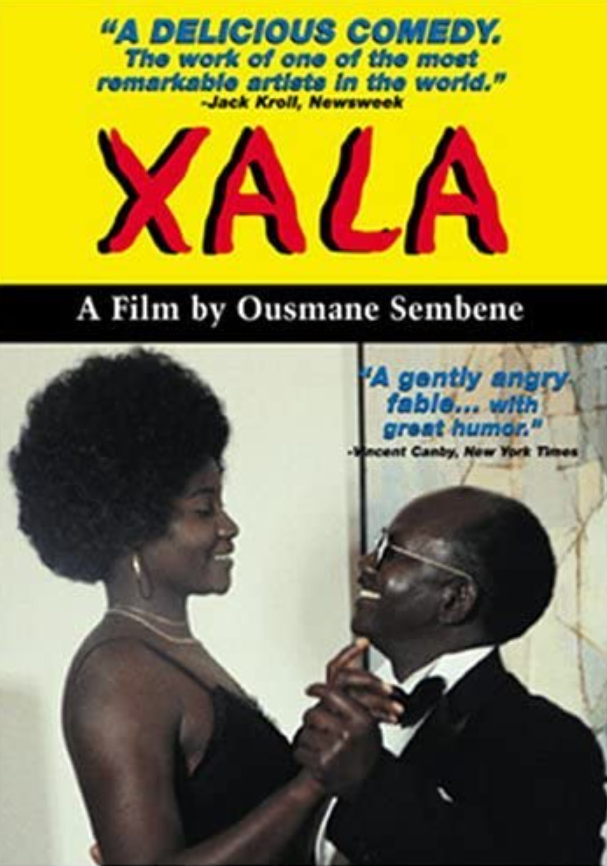
“Make me a man again — I’ll pay whatever you want.”
|
Synopsis: |
|
Genres, Themes, Actors, and Directors:
Review:
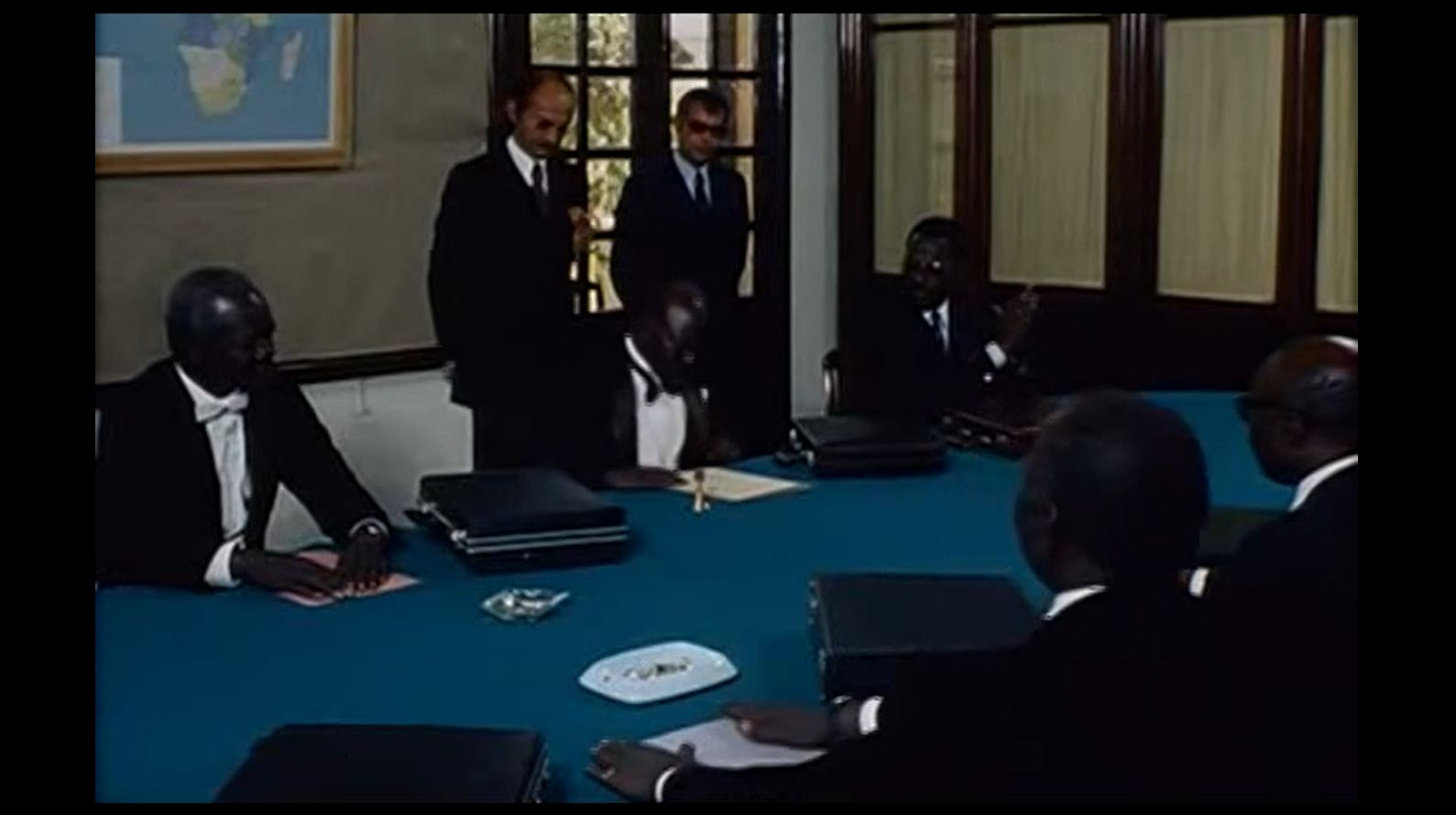
El Hadji uses this money to help purchase a third wife — the young and beautiful Dieynaba Niang — in order to propel his own prestige:
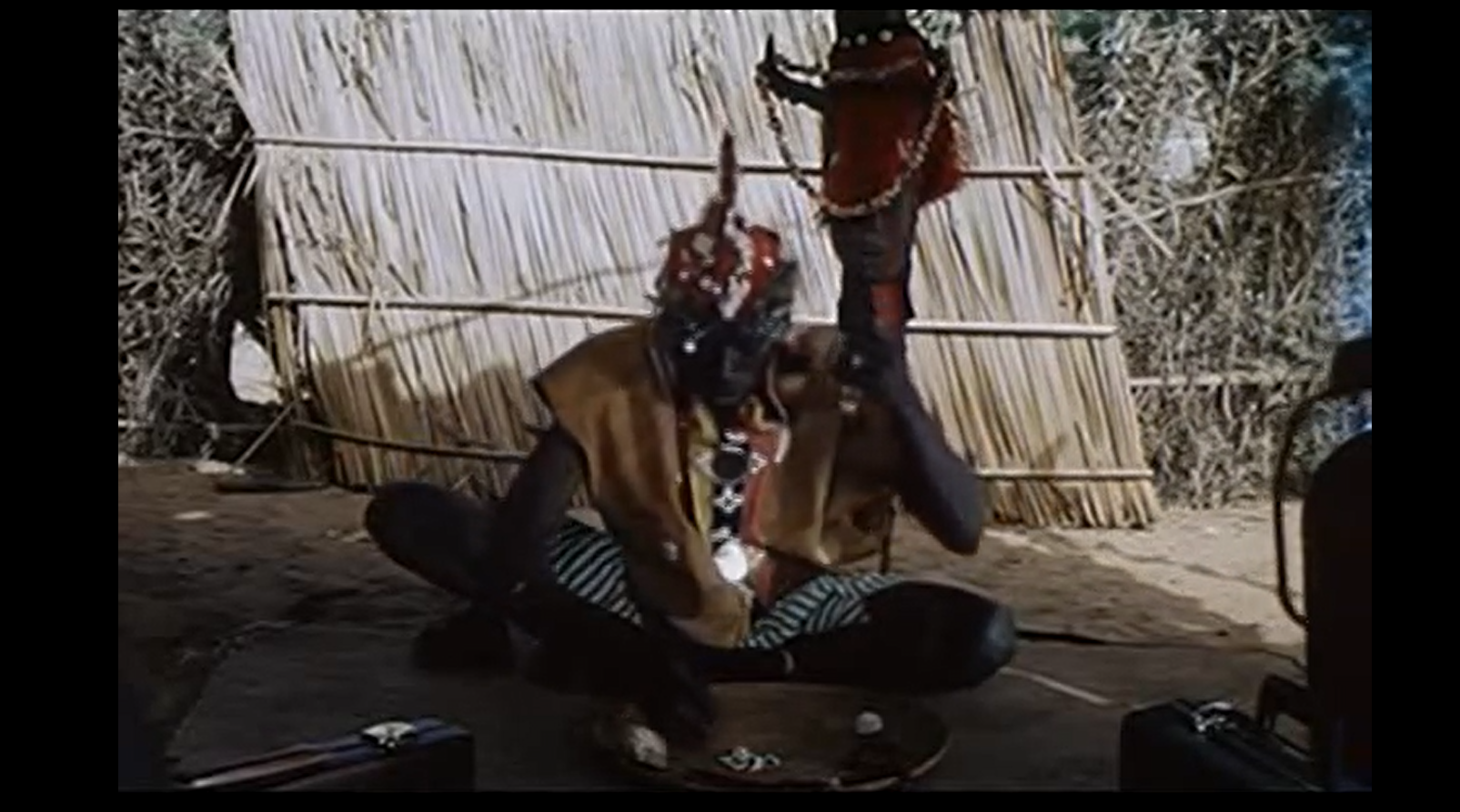
ignoring the fact that this makes both his university-age daughter (Miriam Niang) by his first wife (Seune Samb), and his jealous second wife (Younouss Seye), deeply unhappy. Once El Hadji attempts to consummate his marriage — and finds himself strangely unable to do so — his downward spiral is set in motion. He engages the services of medicine men:
and struggles to maintain dignity in the face of impressively widespread social knowledge about his dilemma. It’s clear to El Hadji that his problems aren’t his own, but rather the result of a curse (xala) — and while he believes this curse has been placed by one of his other wives, the cause for blame remains a central mystery of the film. Unfortunately, Sembene’s narrative (based on his own novel) veers off course at times, shifting to lengthy and seemingly inexplicable sequences (later explained) involving a band of disabled men who at one point gather to drink sweetened condensed milk (!).
From what I’ve read, this confusion may be the result of drastic editing that was done without Sembene’s consent. In addition — as in all Sembene’s films — the performances by the majority of the actors are decidedly amateurish. Regardless, there’s enough sting and bite in Xala to make it worthy viewing for all film fanatics who are genuinely interested in world cinema. Note: Sembene’s other acclaimed film made before the publication of Peary’s book in 1986 — Ceddo (1977), the only Sembene title listed in 1,001 Movies You Must See Before You Die — is strangely missing; I intend to watch it shortly and verify whether it merits inclusion on this website as a Missing Title. Also be sure to check out Sembene’s final film, Moolaade (2004), made before his death in 2007 — it’s most definitely must-see viewing. Redeeming Qualities and Moments:
Must See? Categories
Links: |
“You know people: you mention money, and they all come running.”
|
Synopsis: |
|
Genres, Themes, Actors, and Directors:
Review: It’s a devilish dilemma, and one that Sembene handles with masterful humor — up until the point when Ibrahim’s attempts are foiled for what seems like the umpteenth time, and Sembene’s central thesis (that “decency has become a sin in [Senegal],” and that “in a country like this, only crooks live well”) is made eminently, depressingly clear. Despite its undeniably downbeat trajectory, however, Mandabi (which translates literally into “money order”) remains fascinating simply for its unprecedented ethnographic portrayal of Senegalese village life. Sembene’s ability to slyly slip in visual commentary on the influence of Western norms (watch for the white European doll being washed and played with by the young village girls, for instance) is impressive; and his attempt to call out the impossibility of maintaining civil, logical interactions with one’s fellow citizens in an environment tainted by colonial norms is undeniably essential. Redeeming Qualities and Moments:
Must See? Categories
Links: |
“There’s a curse on this house, all right.”
|
Synopsis: |
|
Genres, Themes, Actors, and Directors:
Review: Note: This film’s rather generic title really should have been reconsidered… It makes little sense, and doesn’t accurately convey the movie’s central premise. Redeeming Qualities and Moments:
Must See? Links: |
“If you could read my mind like I can read yours, you’d know I meant every word of it!”
|
Synopsis: |
|
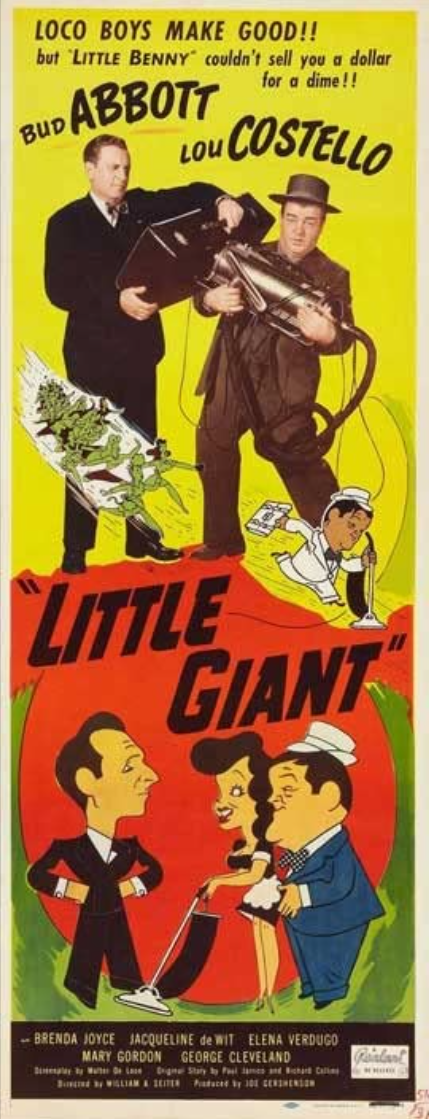
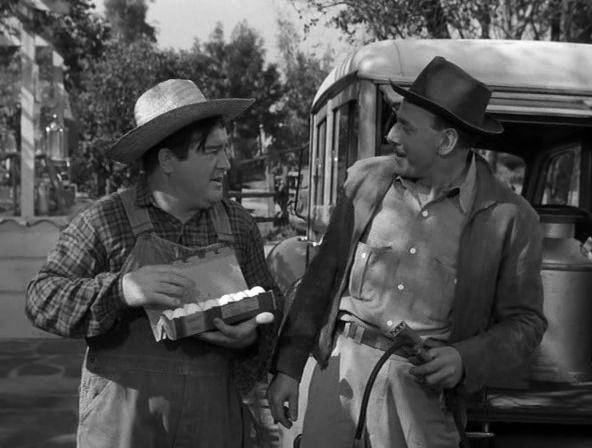
Genres: Review: A bit of historical trivia: In her attempt to “woo” Benny (Costello), Jacqueline deWit (playing evil Abbott’s secret wife) takes him to the Venice Amusement Pier, which was shut down just months after this film was released. Redeeming Qualities and Moments:
Must See? Links: |
“Go ahead and back up.”
|
Synopsis: |
|
Genres:
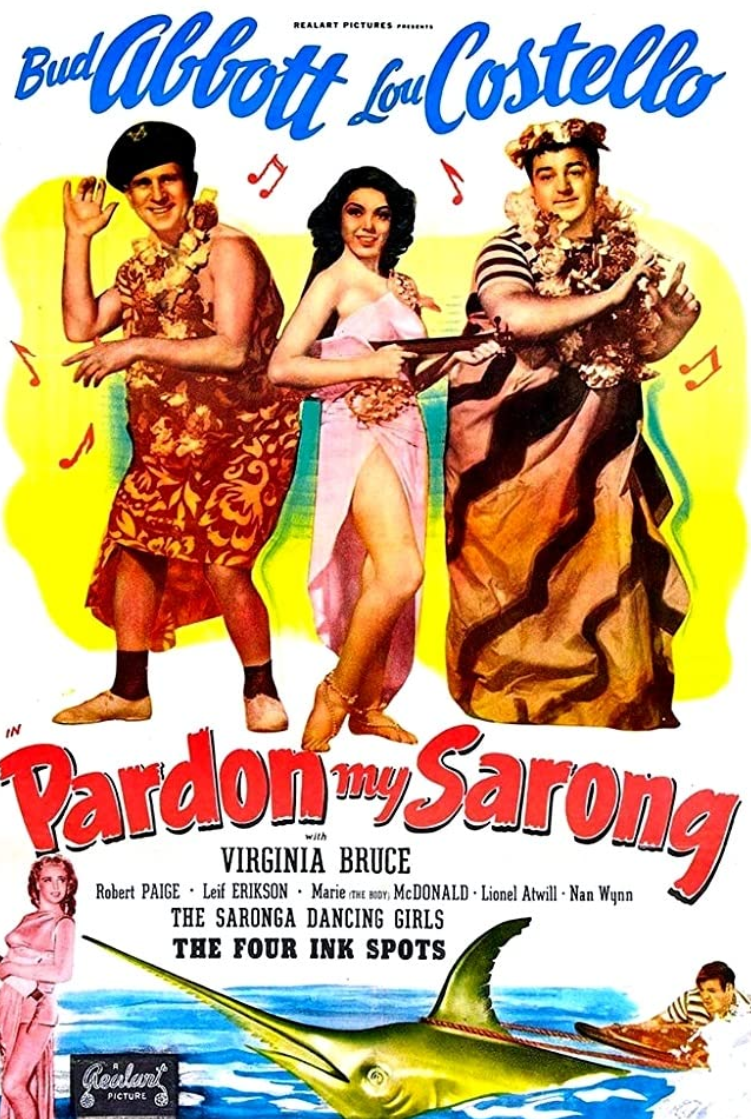
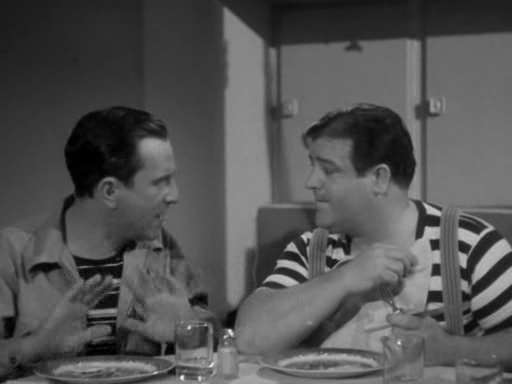
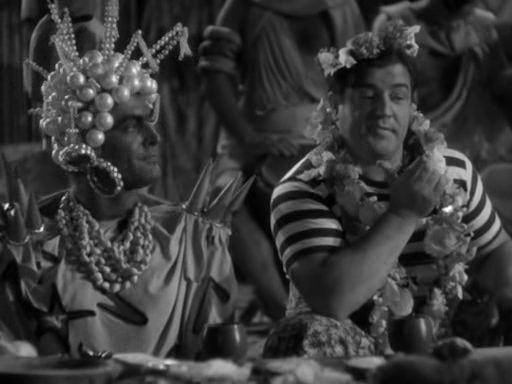
Review: Meant to capitalize on the success of Crosby and Hope’s “Road” pictures, …Sarong takes Bud and Lou on an adventure to an uncharted sound-stage island, where natives are dressed in outrageously fruity costumes, and Lou — naturally — is both pursued by a beautiful local (Nan Wynn) and mistaken for some kind of hero. Only the final half of the movie takes place on the island, however; before this, Bud and Lou are given plenty of opportunities to engage in their usual shenanigans as they’re pursued by The Law (represented by the always delightful William Demarest) and find themselves on board a ridiculously tiny ship, where they quickly run out of food (leading to two of the film’s most infamous sequences — both involving Abbott treating his partner with more than even his usual level of disdain.) Pardon My Sarong isn’t Abbott and Costello’s best outing, but it’s full of enough enjoyable routines — and holds enough historical interest, given its enormous popularity — that I’m recommending it as optional “must-see” viewing for film fanatics. Redeeming Qualities and Moments:
Must See? Links: |
“It’s gonna be a pleasure to take you boys for a ride.”
|
Synopsis: |
|
Genres, Themes, Actors, and Directors:
Review: Redeeming Qualities and Moments:
Must See? Links: |
“If you should hear noises, ignore them — they’re nothing, nothing at all!”
|
Synopsis: |
|
Genres, Themes, Actors, and Directors:
Review: Redeeming Qualities and Moments:
Must See? Links: |
“It’s a picture about a picture about Hellzapoppin.”
|
Synopsis: |
|
Genres, Themes, Actors, and Directors:
Review:
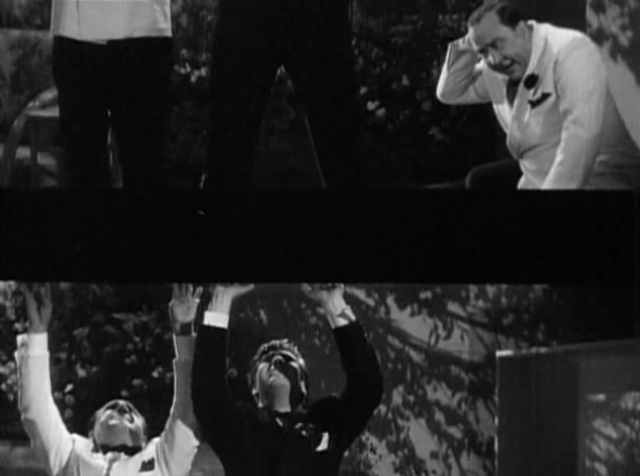
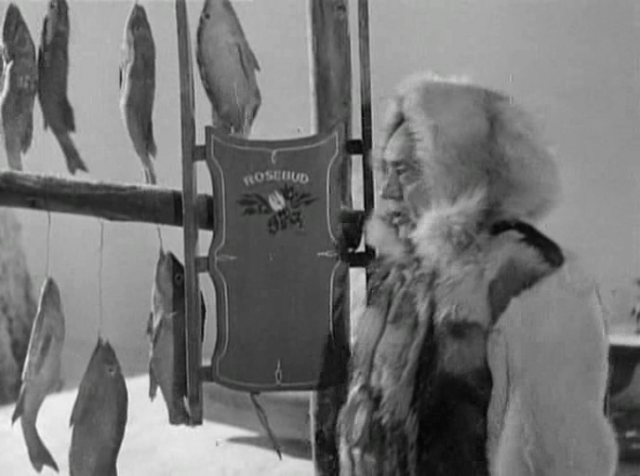
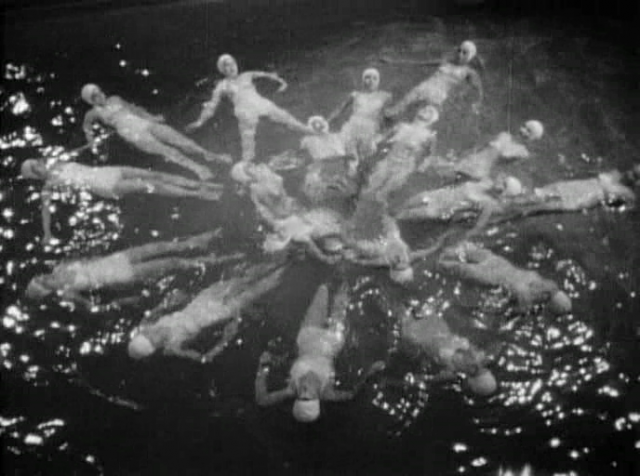
Unfortunately, the narrative itself — a silly musical about a love triangle, with a subplot involving man-crazy Martha Raye chasing Mischa Auer’s penniless baron — is tiresome at best, as is the final extended “sabotaged ballet” sequence. However, it’s what Olsen and Johnson do around their narrative that really entertains, as they construct an ongoing meta-commentary about the making of their own film, and break the “fourth wall” of cinema again and again — these moments are consistently inspired (see stills below for just a few examples). In addition, film fanatics are sure to be delighted by numerous cinematic in-jokes, including a nod to Citizen Kane, a brief Busby Berkeley homage, and a priceless “cameo” by Elisha Cook, Jr. These moments alone make Hellzapoppin’ must-see viewing at least once. Note: Watch for a hint of MST3K inspiration (was it?) as Olsen and Johnson sit with their backs to the camera, commenting as they watch themselves on-screen. Redeeming Qualities and Moments:
Must See? Categories
|
“Why am I here? Am I a nursery maid or a housemaid?”
|
Synopsis: |
|
Genres, Themes, Actors, and Directors:
Response to Peary’s Review: The majority of scenes in this hour-long film — “adapted from Sembene’s 1961 short story about a real-life tragedy” — seem scripted merely to show us how unjust Diop’s situation is, which we understand and sympathize with right away; from there, not much happens, and we’re not given nearly enough insight into the motivations or backgrounds of either Diouana (Diop) or her bigoted employers to care about them as three-dimensional characters. While we can sense and appreciate Sembene’s deeper thematic concerns — Peary notes that his “films are intended to show the problems of his people… [who] are susceptible to falling into the same trap as [Diouana]” — he fails to effectively bring them to the surface, instead relying far too heavily on Diouana’s rather repetitive voiceover. With that said, it’s fitting that this film — which is undeniably groundbreaking on several levels — won the Prix Jean Vigo, an award usually given to a young director, for his or her independent spirit. Redeeming Qualities and Moments:
Must See? Categories
Links: |