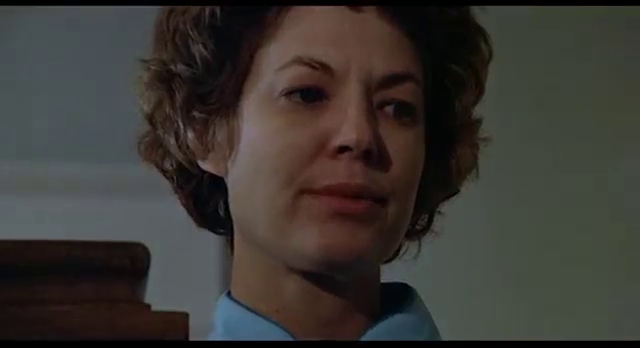
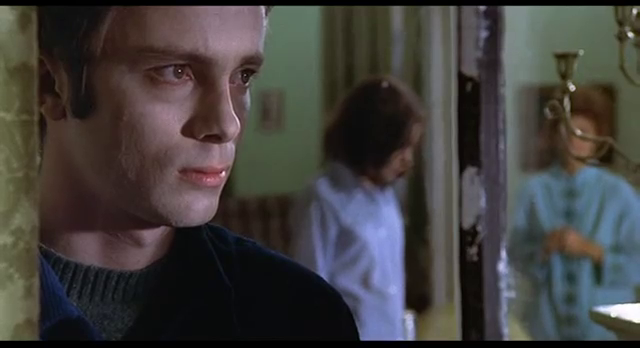
Basket Case (1982)

Basket Case (1982)

“I’ll never desert you — not after all we’ve been through.”

Synopsis:
A young man (Kevin Van Hententryck) living in New York City with his deformed twin brother Belial in a wicker basket hatches a plot to seek vengeance on the doctors who separated them; meanwhile, Van Hententryck falls for a pretty receptionist (Terri Susan Smith), which causes Belial to feel increasingly jealous.

Genres, Themes, Actors, and Directors:

  • Horror
  • Jealousy
  • Mutant Monsters
  • Revenge
  • Twins

Response to Peary’s Review:
Peary writes that “in the year of E.T., midnight movie audiences were equally enthusiastic about B.C. [Basket Case], a very creative little horror gem” (by first-time director Frank Henenlotter) “about another peculiar-looking, waist-high, long-nailed creature who must remain hidden in our hostile world.”

He notes that “the original distributor… trimmed the gruesome gore scenes, not realizing that the excessiveness of blood and violence is what made such scenes cartoonish”, and argues that the inclusion of the deleted footage is fortunate given that “in addition to being a first-rate fright film, this is an outrageous black comedy that uses excessive violence for comic relief.”

Peary adds that while he “detested seeing one more despicable monster-rapes-girl scene”, the “film has many qualities to compensate: the truly clever script; the offbeat characters, even down to the smallest parts; the fascinating on-location photography in a flea-bag New York hotel; and some nifty special effects, model work (two proteges of Dick Smith [Kevin Haney and John Caglione] made Belial from latex and foam), and stop-motion photography that was very ambitious for such a miniscule budget.”

Peary posits that “best of all is Belial, who, when not ripping people apart, is in his own way as endearing as E.T.”. (Nope — but I can understand how fans of monster flicks might feel this way.)

In his Cult Movies 2 book, Peary elaborates on the history of this ultra-indie film’s creation and distribution, noting that producer Edgar Ievins “didn’t want to reveal exactly how low the budget was until he had sold the film to cable.” Suffice it to say that the crew (who apparently had a blast working together) was cutting corners in every way possible, stretching the filming out over six months simply to take advantage of whatever meager funding, supplies, and access to location sites they had.

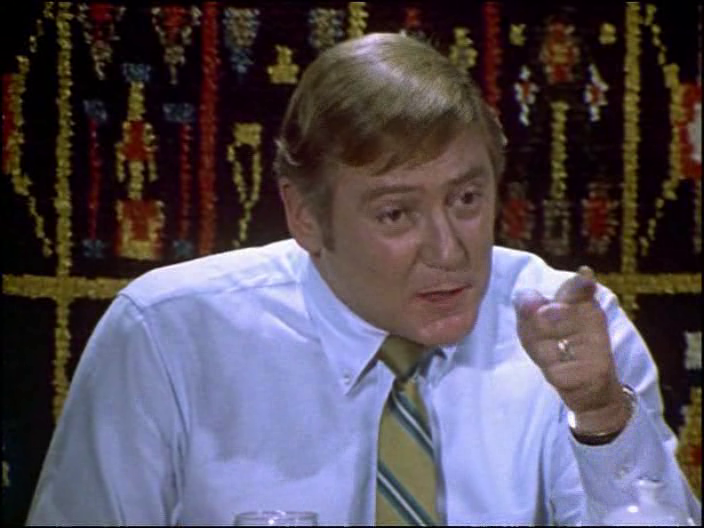
The result is a movie that won over many cult movie audiences (including Peary), who writes that what he finds “most impressive about Basket Case is that it never loses momentum. Scene after scene of this oddball story is interesting, well written for tension and humor, cleverly directed, and well acted” (well… it’s sufficiently acted). He notes that “adding to our enjoyment, Henenlotter has assembled one of the strangest groups of actors/characters to ever grace a horror film”, with Duane (Van Hententryck):

… and Belial seeming “almost normal in a world of mad doctors and lowlifes of the type who occupy the Hotel Broslin…”

He points out that the “three positive influences on the twins are their kindly aunt [Ruth Neuman] (young Belial sits in her lap while she reads out loud):

… prostitute Casey (played by cult favorite Beverly Bonner):

… and Sharon [wig-wearing Smith]:

— and even they are peculiar.”

Finally, Peary writes that “no one can match little Belial. There have been a lot of strange hotel/inn/boarding house boarders in horror movie history — Claude Rains in The Invisible Man (1933), Henry Hull in The Werewolf of London (1935), Laird Cregar’s Jack the Ripper in The Lodger (1944), and Michael Rennie’s alien in The Day the Earth Stood Still (1951) immediately come to mind — but none are as weird as Belial,” who, “when he paces back and forth plotting his next crime” reminds Peary “of gangster Edward G. Robinson, cigar in mouth, pacing while plotting his next heist.” He points out that “for almost the entire film, we sympathize with Belial because a great wrong was done to him in his youth” — and we “don’t mind his doing away with such despicable characters as [Dr.] Lifflander [Bill Freeman]:

… [Dr.] Kutter [Diane Browne]:

… and [Dr.] Needleman [Lloyd Pace]:

… or even thief O’Donovan” (Joe Clarke).

Again, I’m not personally a Belial fan, but I can appreciate the effort that went into humanizing this ultimately monstrous being.

Note: Fans of Basket Case will surely want to check out the 2012 documentary What’s in the Basket? (about the entire Basket Case trilogy), which features interviews with most of the key players — but, sadly, not Smith, who seems to have disappeared off the cinematic radar completely.

Redeeming Qualities and Moments:

  • Good use of location shooting throughout New York
  • Impressive low-budget special effects

Must See?
Yes, as a cult favorite.

Categories

  • Cult Movie

Links:

Deathdream / Night Walk, The / Dead of Night (1974)

Deathdream / Night Walk, The / Dead of Night (1974)

“I died for you, doc — why shouldn’t you return the favor?”

Synopsis:
After his mother (Lynn Carlin) prays for him to come home safely, a Vietnam War soldier (Richard Backus) reported as dead shows up at his house, surprising everyone — including his father (John Marley), sister (Anya Ormsby), girlfriend (Jane Daly), and a local doctor (Henderson Forsythe) who suspects he may have been involved in the recent death of a trucker (David Gawlikowski).

Genres, Themes, Actors, and Directors:

  • Ghosts
  • Horror
  • Vampires
  • Veterans
  • Vietnam War
  • Zombies

Response to Peary’s Review:
As Peary writes, this “effective, little-known horror film” is “well-directed by Bob Clark”, best known for helming Black Christmas (1974), Porky’s (1982) and A Christmas Story (1983). He acknowledges that “Clark has made a creepy, moody horror film” but notes that “it is, on closer examination, also a perceptive critique of a patriarchal family, a microcosm of the patriarchal society that is willing to sacrifice its sons in an ugly war that their fathers are responsible for.” While I don’t necessarily see themes of patriarchal society playing out so strongly, Alan Orsmby’s script does a remarkable job positing soldiers’ PTSD as a literal form of horror, one that manifests not only for the men but for their loved ones back at home. Even if Backus hadn’t died in Vietnam, his return home might very well have provoked an equally confused and problematic response, given how deeply impacted so many soldiers were by this senseless war. Interestingly, one can’t tell exactly what horrific fate has befallen Backus, which is why I’ve listed three different sub-genres (ghosts, vampires, and zombies) above: the point is that this soldier-turned-monster can no longer function “normally” in “regular” society, no matter how much his loved ones want to believe he can and will.

Redeeming Qualities and Moments:

  • John Marley as Charles Brooks
  • Lynn Carlin as Christine Brooks
  • A creepy, well-handled screenplay and premise

Must See?
Yes, as a surprisingly good show.

Categories

  • Good Show

Links:

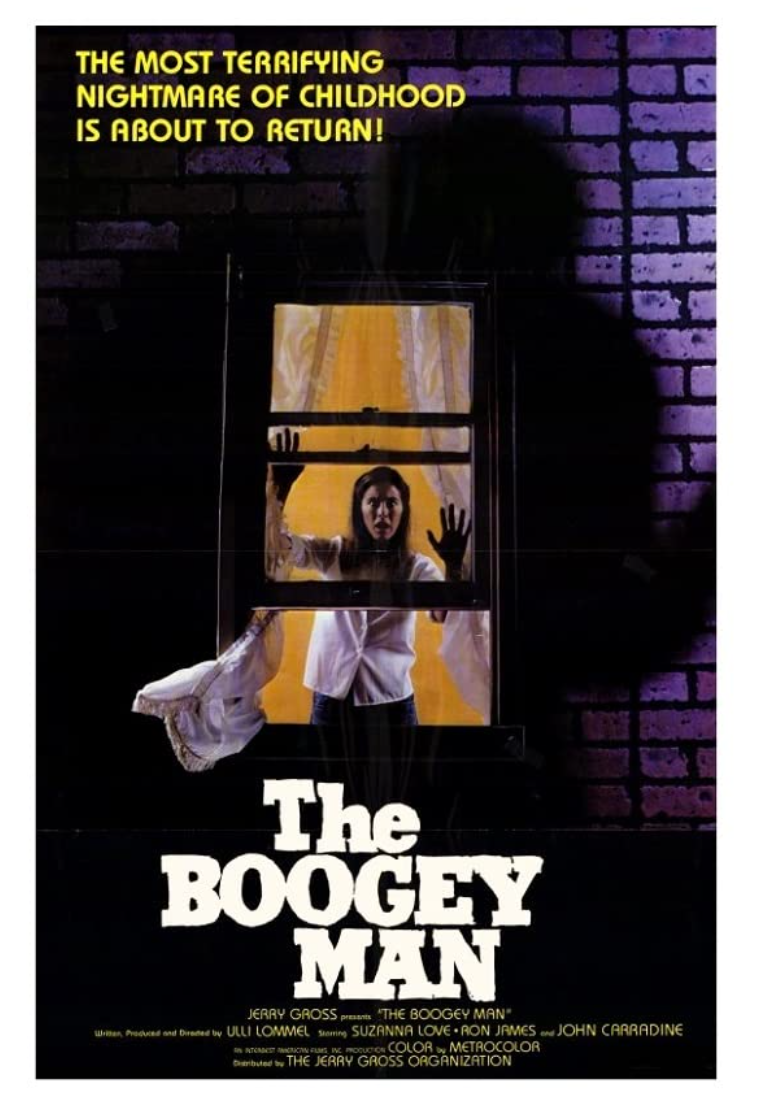
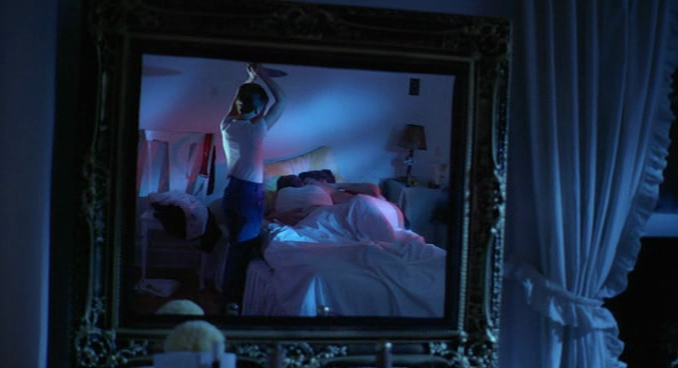
Boogey Man, The (1980)

Boogey Man, The (1980)

“I can’t get away from it — it keeps haunting me.”

Synopsis:
A woman (Suzanna Love) whose mute brother (Nicholas Love) killed their mother’s abusive boyfriend as a child is now happily married with a husband (Ron James) and son (Raymond Boyden) of her own, but suffers from repeated nightmares. Upon advice from her psychiatrist (John Carradine), she goes back to her childhood home, which unwittingly sets in motion a chain of supernatural events related to a spiritually possessed mirror.

Genres, Themes, Actors, and Directors:

  • Horror Films
  • John Carradine Films
  • Possession

Review:
German director Ulli Lommel — whose career in film started with Rainer Werner Fassbinder, and then shifted to working with Andy Warhol in New York — helmed this unusual supernatural horror flick, which starts off seeming like a straightforward slasher film (a man is traumatized by a brutal crime he committed as a child and will continue to act out), but quickly moves in unexpected directions. It’s filled with many effectively filmed moments, drawing inspiration from Halloween (1978), The Amityville Horror (1979), and The Exorcist (1973) — and while it’s not entirely successful, it will surely please fans of the genre.

Redeeming Qualities and Moments:

  • Effective direction and cinematography


Must See?
No, though it’s worth a look by horror fans. Listed as a Sleeper in the back of Peary’s book, which makes sense.

Links:

Jack’s Wife / Season of the Witch (1972)

Jack’s Wife / Season of the Witch (1972)

“Being afraid is necessary to believing.”

Synopsis:
A middle-aged housewife (Jan White) whose husband (Bill Thunhurst) takes her for granted and whose daughter (Joedda McClain) no longer needs her becomes intrigued by the notion of witchcraft, eventually using it as motivation to seduce a local young professor (Raymond Laine).

Genres, Themes, Actors, and Directors:

  • Feminism and Women’s Issues
  • Generation Gap
  • George Romero Films
  • Housewives
  • Marital Problems
  • Sexual Repression
  • Witches and Wizards

Review:
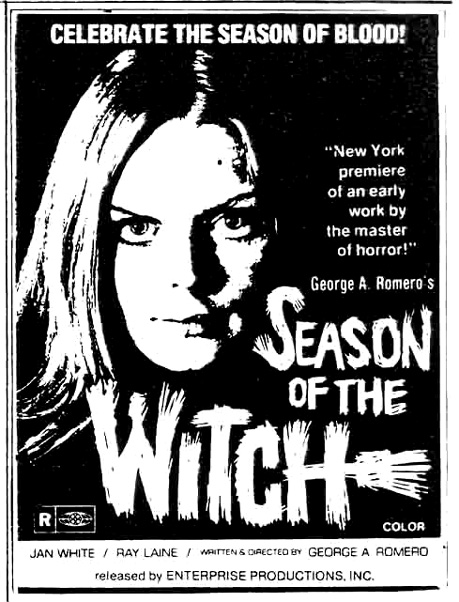
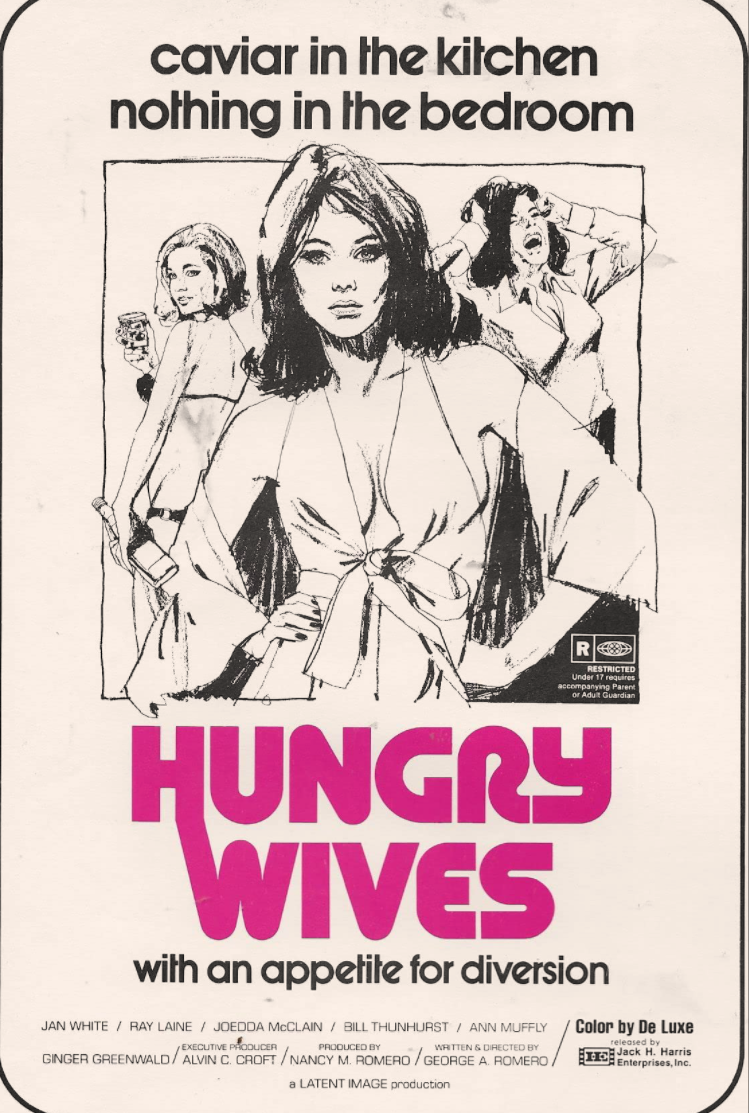
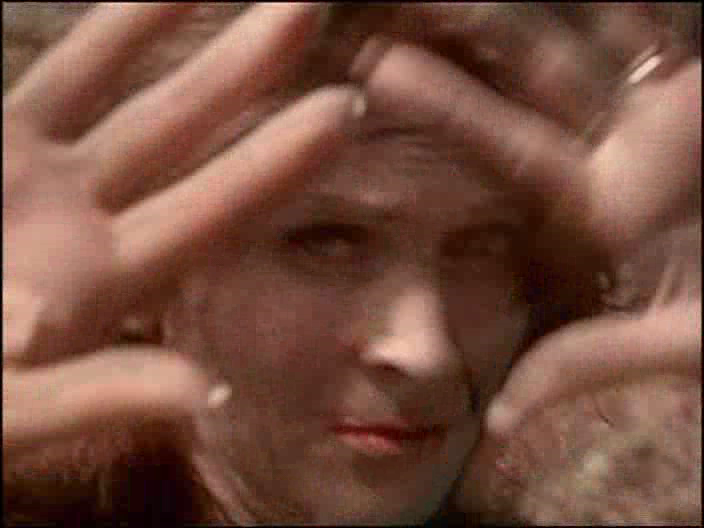
After making a noteworthy debut with Night of the Living Dead (1968), George Romero’s third feature-length film was this self-described “feminist film” that is best captured by its original title (given that the entire storyline is about White’s attempt to be something other than simply “Jack’s wife”), but which distributors attempted to spin in two different directions. Season of the Witch (the poster above doesn’t even showcase White) capitalizes on the film’s theme of witchcraft (utilized by White to give her confidence in breaking free from her staid existence), while Hungry Wives was simply a pathetic attempt to market it as a soft-core adult film.

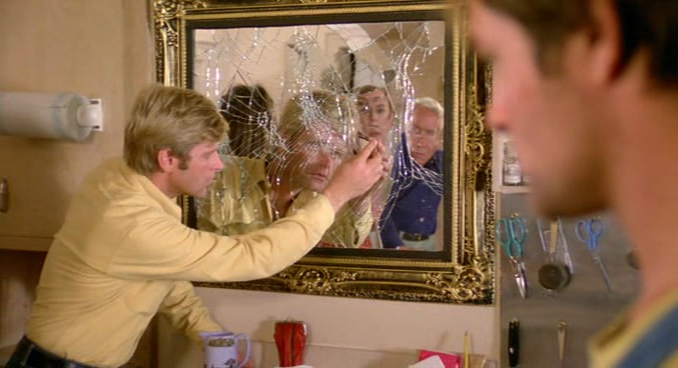
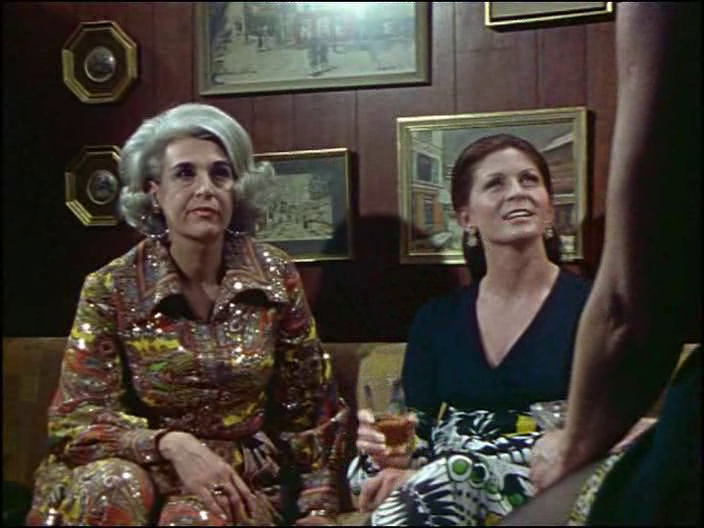
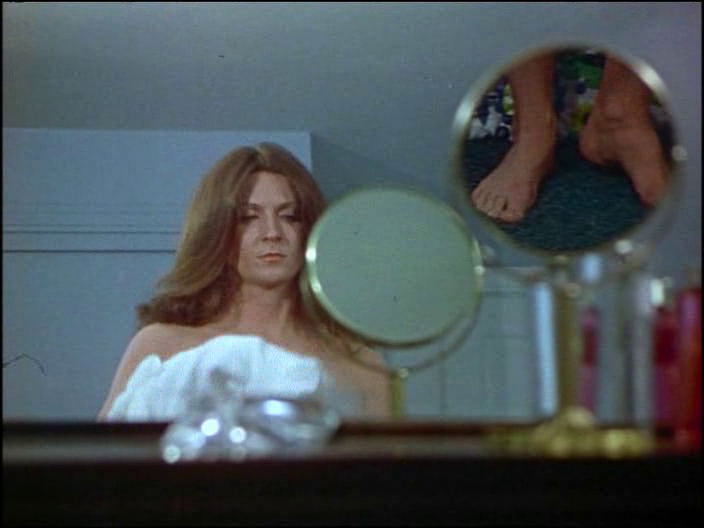
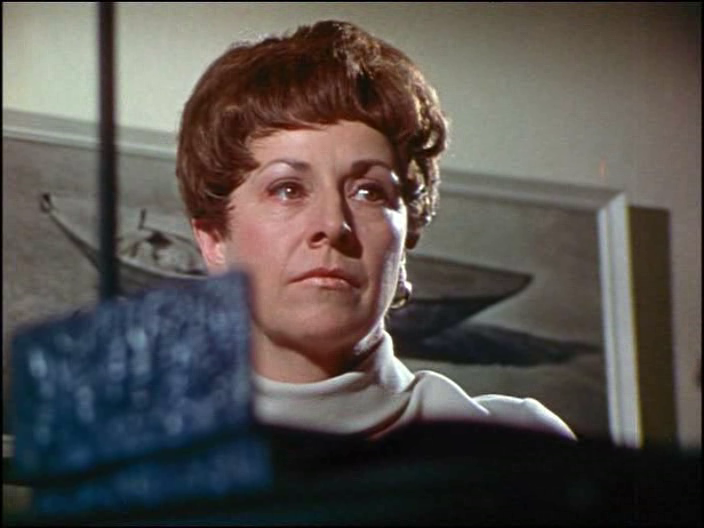
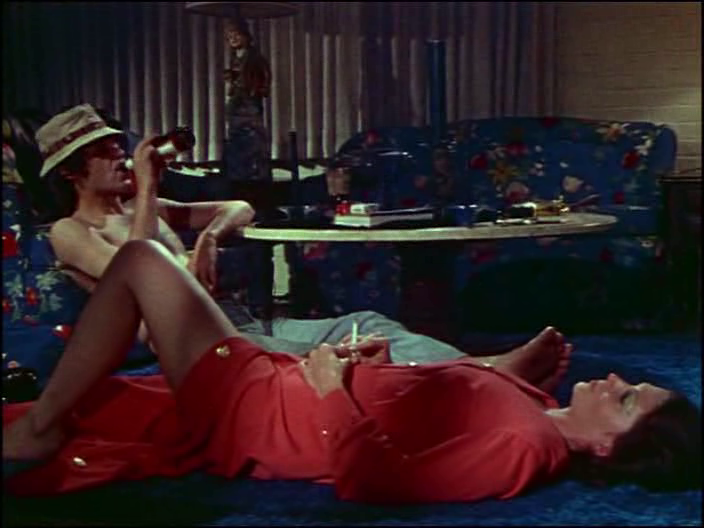
On its own merits, Jack’s Wife remains an intriguing artifact of its era, creatively directed by Romero — albeit within a super-low budget, and at a time when Romero professes he was still just learning basics of directing — and consistently going in unexpected directions. Though it’s not a horror film per se, we can sense the “horror” of White’s situation as she’s surrounded by near-harpies (her circle of friends aren’t exactly appealing):

… ignored (and occasionally beaten) by her oft-travelling husband:

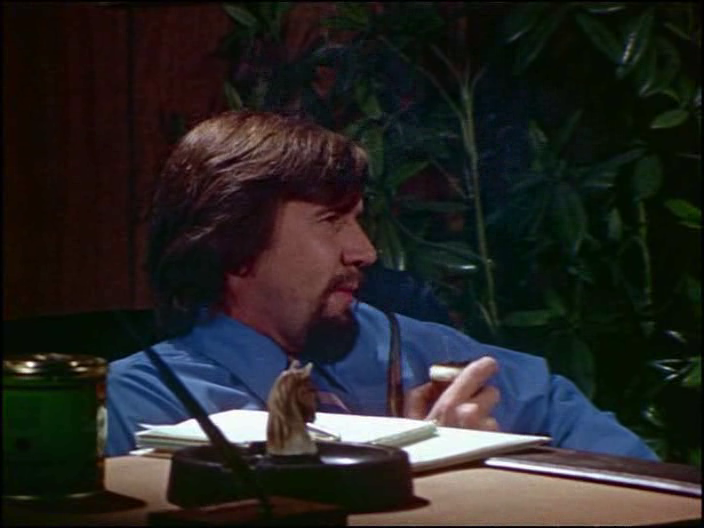
… patronized by her pipe-smoking analyst:

… pitied by her self-absorbed daughter:

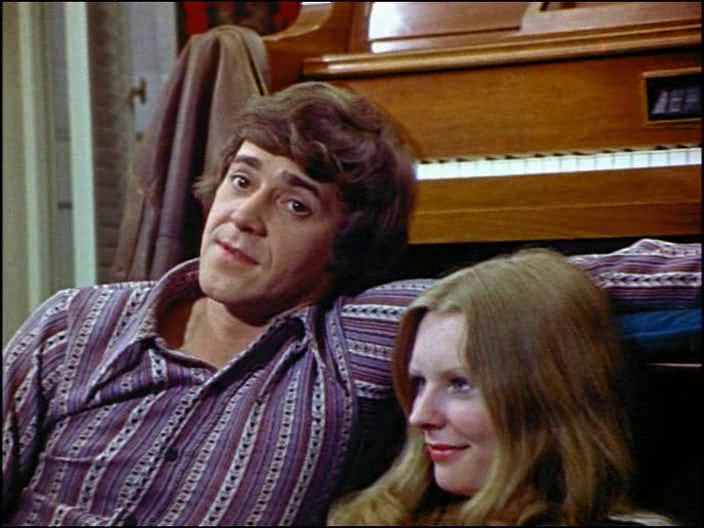
… and chastised as insufficiently “hip” by her daughter’s lover:

Meanwhile, Romero injects numerous frightful nightmare sequences, which lend the film an appropriate air of mystery and trauma throughout:

— and the final scene is most definitely a shocker.

Redeeming Qualities and Moments:

  • Many creatively filmed sequences

  • Ann Muffly as White’s friend Shirley
  • An unusual screenplay

Must See?
No, but it’s recommended for one-time viewing as an unexpected early entry in Romero’s oeuvre. Listed as a Cult Movie in the back of Peary’s book.

Links:

Creepshow (1982)

Creepshow (1982)

“It’s showtime!”

Synopsis:
A young boy (Joe King) whose unreasonable father (Tom Atkins) throws away his Creepshow comic book finds a creative way to get back at him — but first we see a series of horror vignettes about an abusive patriarch (Jon Lormer) returning from the dead on Father’s Day to seek retribution on his murderous daughter (Viveca Lindfors) and other family members; a backwoods yokel (Stephen King) hoping to earn money from a fallen meteor, which instead turns him into a plant-like organism; a millionaire (Leslie Nielson) wreaking gruesome revenge on his wife (Gaylen Ross) and her lover (Ted Danson) before being turned on himself; a henpecked professor (Hal Holbrook) who discovers an unusual way to take care of his shrewish wife (Adrienne Barbeau); and a ruthless business mogul (E.G. Marshall) whose pathological fear of insects literally consumes him.

Genres, Themes, Actors, and Directors:

  • E.G. Marshall Films
  • Episodic Films
  • George Romero Films
  • Horror Films
  • Revenge
  • Stephen King Adaptations

Response to Peary’s Review:
Peary writes that “George Romero and Stephen King collaborated in this homage to… sexy and nightmarish pre-Code horror comics of the early fifties” (such as those produced by EC Comics). He argues that the film is “overlong” — with none of the five “King-written episodes” “exceptional” and none “dreadful” — but all “laced with devilish tongue-in-cheek humor, and four of the five deal[ing] with cruel people getting their horrific just deserts.” He adds that the “production design by Cletus Anderson and the comic-book-like illustrations that bridge the episodes by former comic-book artist Jack Kamen give the film its Tales From the Crypt flavor.” I’m essentially in agreement with Peary’s assessment; while I’m sure fans of these comics will revel in this homage, I simply found it diverting and nicely produced. My favorite episode is “Something to Tide You Over”, which shows the extreme lengths to which a cuckolded (and psychotic) husband will go.

Redeeming Qualities and Moments:

  • Some truly creepy moments
  • Creative production design and cinematography

Must See?
No, though Stephen King fans will of course want to check it out.

Links:

Christine (1983)

Christine (1983)

“It’s that car — I swear, it’s the car.”

Synopsis:
A football star (John Stockwell) is concerned when his bullied friend Arnie (Keith Gordon) purchases and restores a run-down 1958 Plymouth Fury named Christine from a local coot (Roberts Blossom), begins dating a beautiful new girl (Alexandra Paul) at school, and shows increasingly car-obsessed behavior. But a detective (Harry Dean Stanton) sent to investigate wonders: is it Arnie or Christine that’s causing so much mayhem and murder around town?

Genres, Themes, Actors, and Directors:

  • Character Arc
  • Harry Dean Stanton Films
  • Horror Films
  • John Carpenter Films
  • Possession
  • Stephen King Adaptations

Response to Peary’s Review:
Peary writes that Stephen King’s “undistinguished” novel “about a killer automobile — a subject that’s been done to death on television and in film — is given a visually impressive but extremely impersonal treatment by John Carpenter.” He argues that this “unpleasant film has few surprises” (I disagree) and that it “lacks an important transition scene in which the shy Gordon becomes a ladies’ man capable of approaching someone like Paul” (agreed). Peary adds that “also missing are scenes in which Gordon at least tries to ward off Christine’s control — Gordon becomes thoroughly obnoxious so quickly that we don’t really care what happens to him” (though I’m not sure this is so important, given that Christine-the-car is clearly possessed by a malevolent spirit that has infected Gordon as well). Ultimately, Peary posits that “Carpenter paid so much attention to the special effects relating to Christine” (which are nicely handled) “that he forgot about character development”, which I would concede is the case. However, it’s undeniably freaky watching Christine take her revenge on those she feels have wronged her — and the film is well-made enough to recommend to those enjoy this type of fare.

Redeeming Qualities and Moments:

  • Several exciting chase and hunt sequences
  • Fine special effects

Must See?
No, though it’s worth a look by fans of the genre.

Links:

Blow-Up (1966)

Blow-Up (1966)

“I’ve come for the photographs.”

Synopsis:
A fashion photographer (David Hemmings) fed up with his day job pursues more meaningful shots during his own time, including stills of a pair of lovers (Vanessa Redgrave and Ronan O’Casey) in a park — but when Redgrave comes after him frantically and demands the photos he’s just taken, Hemmings begins to suspect that more sinister events may have been taking place.

Genres, Themes, Actors, and Directors:

  • Amateur Sleuths
  • Michelangelo Antonioni Films
  • Models
  • Photographers
  • Vanessa Redgrave Films

Response to Peary’s Review:
Peary writes that “Michelangelo Antonioni’s landmark film” — the “era’s ‘art film for the masses'” — was “greeted with tremendous excitement and adulation when it was released.” Viewers considered it a “hip, mysterious, visually exhilarating foreign film,” one that caused them to eagerly mull “over symbols, color patterns, and hidden meanings in the storyline; trying to answer that question — ‘What’s the difference between illusion and reality?’ — that turned up too often on literature exams; and deeply contemplating the nature of cameras, images (film, photographs), and those people who make their living with a camera.” He notes that fashion photographer “Hemmings displays only arrogance and insolence when working with his female models”, living “a frivolous fantasy life”:

… so “it will take something drastic to knock him out of his complacency and make him distinguish between what is real and illusionary, what is trivial and important.”


After giving away numerous spoilers in his review (don’t read anything about this film if you’ve never seen it and want to remain surprised), Peary writes that “Antonioni’s point is that the introduction of a camera always distorts reality; also, since each person has singular sensibilities, no individual is capable of seeing Truth (a second person would have a different perspective on the same image).”

Peary argues that this “once vital film is dated and its flimsiness and pretentiousness are more evident today” — indeed, this is precisely how I now view the film many years after first being impressed and deeply intrigued by it as a younger film fanatic. However, Peary asserts it should (still) be watched “as a document of its time, to see the fancy camera work that turned us on, the nudity that had us blushing:

… the Yardbirds performing in front of catatonic youths:

… the mod clothes:

… and Hemmings tossing the invisible tennis ball to the mimes — an image that, for some reason, remains one of the most indelible in cinema history.”

Peary adds that “Antonioni’s picture altered the style of cinema and enlarged its audience — [and] for that we can always think of it fondly.”

Redeeming Qualities and Moments:

  • Vanessa Redgrave as Jane
  • Carlo Di Palma’s cinematography
  • Fine use of authentic location shooting and unusual sets

  • The still-impressive photographic investigation sequence

  • The eerie closing tennis sequence
  • Herbie Hancock’s score

Must See?
Yes, for its historical and artistic importance.

Categories

  • Historically Relevant
  • Important Director

(Listed in 1001 Movies You Must See Before You Die)

Links:

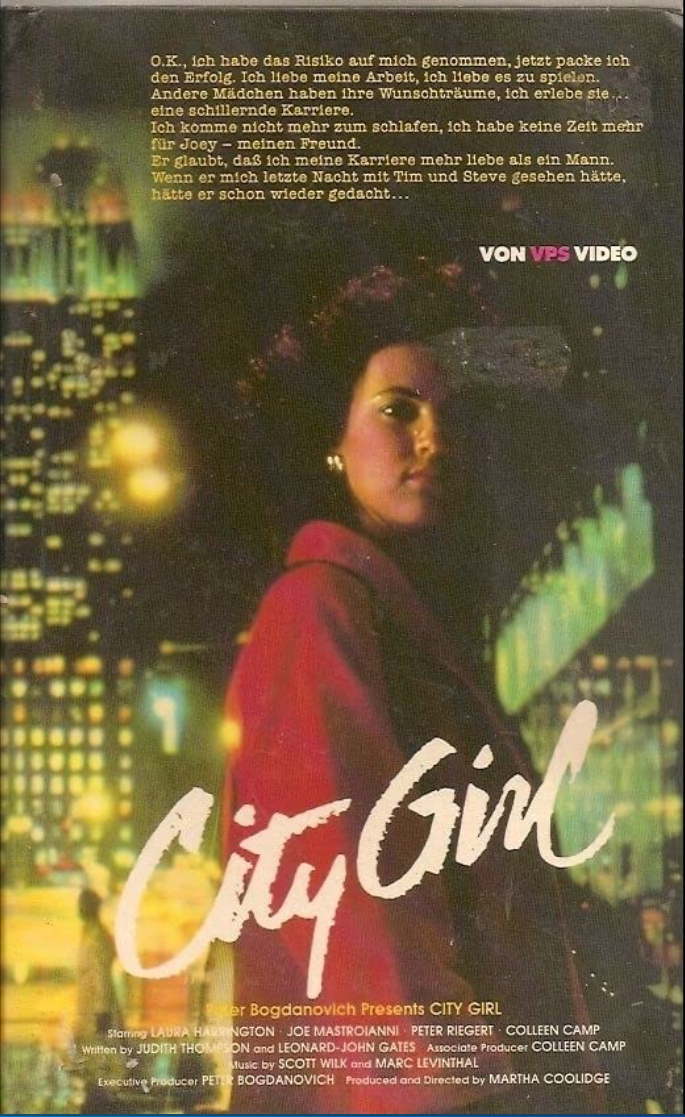
City Girl, The (1984)

City Girl, The (1984)

“You’re just not the girl I thought you were.”

Synopsis:
After breaking up with her boyfriend (Joe Mastroianni), a photographer (Laura Harrington) and explores life and love on her own for awhile.

Genres, Themes, Actors, and Directors:

  • Photographers
  • Strong Females

Review:
Before making a new for herself with Valley Girl (1983), director Martha Coolidge directed this earnest but meandering indie flick about an aspiring photographer (Harrington) hoping to — make a name for herself. Harrington’s boyfriend (Mastroianni) is irritated that she’s more interested in her career than him, and is fed up when she acts childishly in front of one of his big clients.

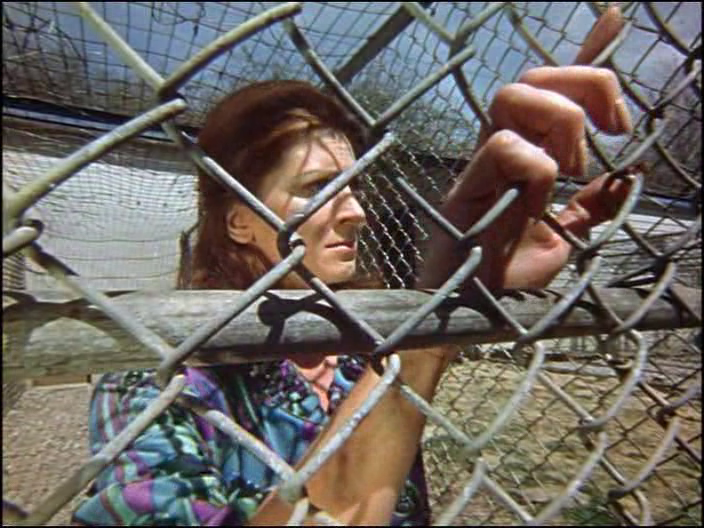
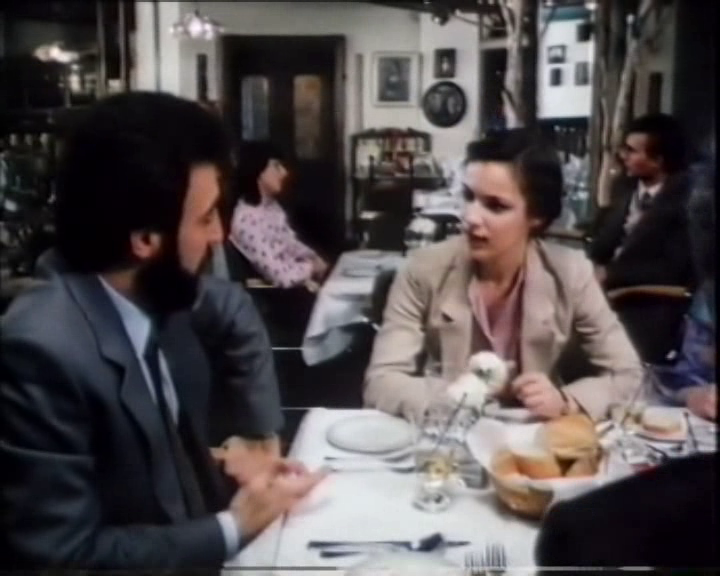
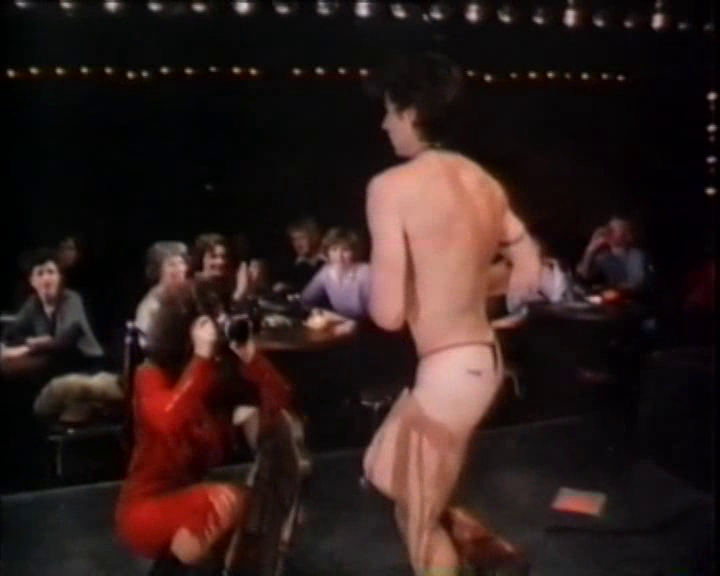
Coolidge seems primarily interested in inverting gender norms by allowing Harrington to unabashedly explore her own goals and interests — including requesting two avid pursuers (Peter Riegert and James Carrington) as sexual partners after a party. (This scene of an attempted but awkwardly thwarted threesome is humorously handled.) The through-line of the film’s narrative ostensibly involves Harrington’s attempt to learn more about a charismatic man seducing young women into his cult, but this thread is insufficiently explored until it reappears for convenient purposes at the end (and it’s disturbing that the villainous target of her inquiry is one of the few Black characters in the mostly White film). Film fanatics who have been faithfully working their way through all the titles in Peary’s book will likely recognize beautiful Harrington from her previous indie film, The Dark End of the Street (1981) — and she has an appealing screen presence:

… but she’s not enough to recommend this as a title worth seeking out.

Redeeming Qualities and Moments:

  • Some amusing sequences

Must See?
No; though one is only must-see for Coolidge fans.

Links:

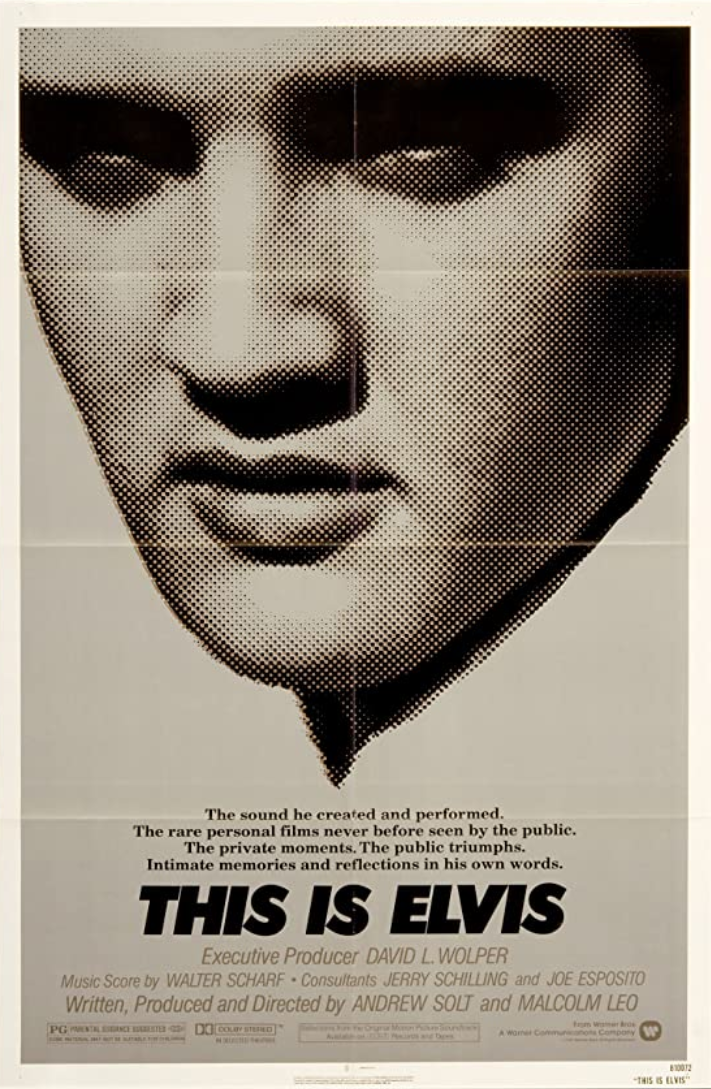
This is Elvis (1981)

This is Elvis (1981)

“Will we ever see Elvis in person again?”

Synopsis:
People close to Elvis Presley reflect back on his storied life and career, culminating in death by heart attack at the age of 42.

Genres, Themes, Actors, and Directors:

  • Documentary
  • Elvis Presley Films

Review:
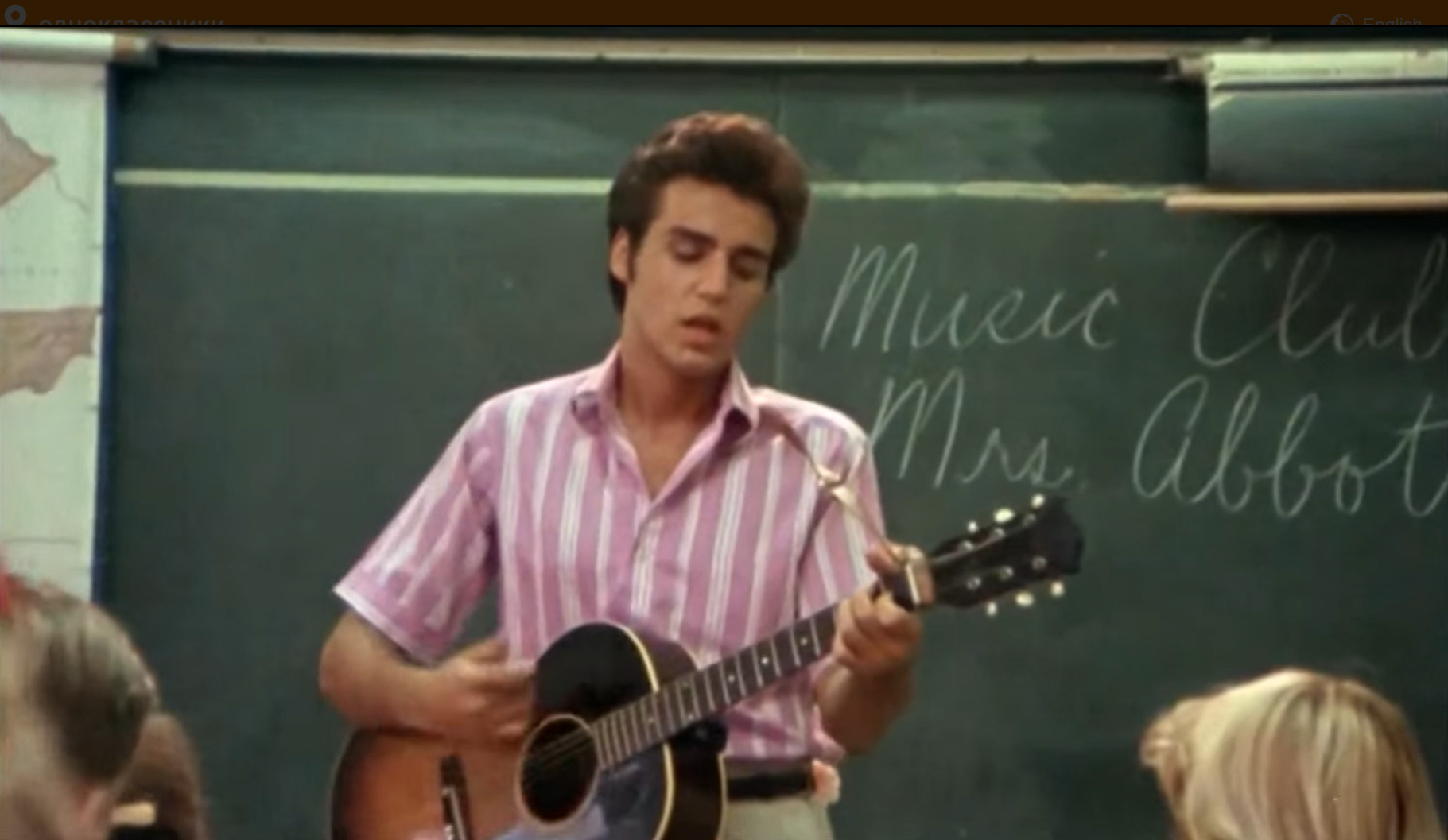
Having watched all nine of Elvis Presley’s Hollywood dramas listed in GFTFF — as well as his riveting Vegas concert film That’s the Way It Is (1970) — it was both fitting and sobering to end my Elvis run by watching this creatively filmed documentary about his life, which includes strategic snippets of recreated scenes (using actors):

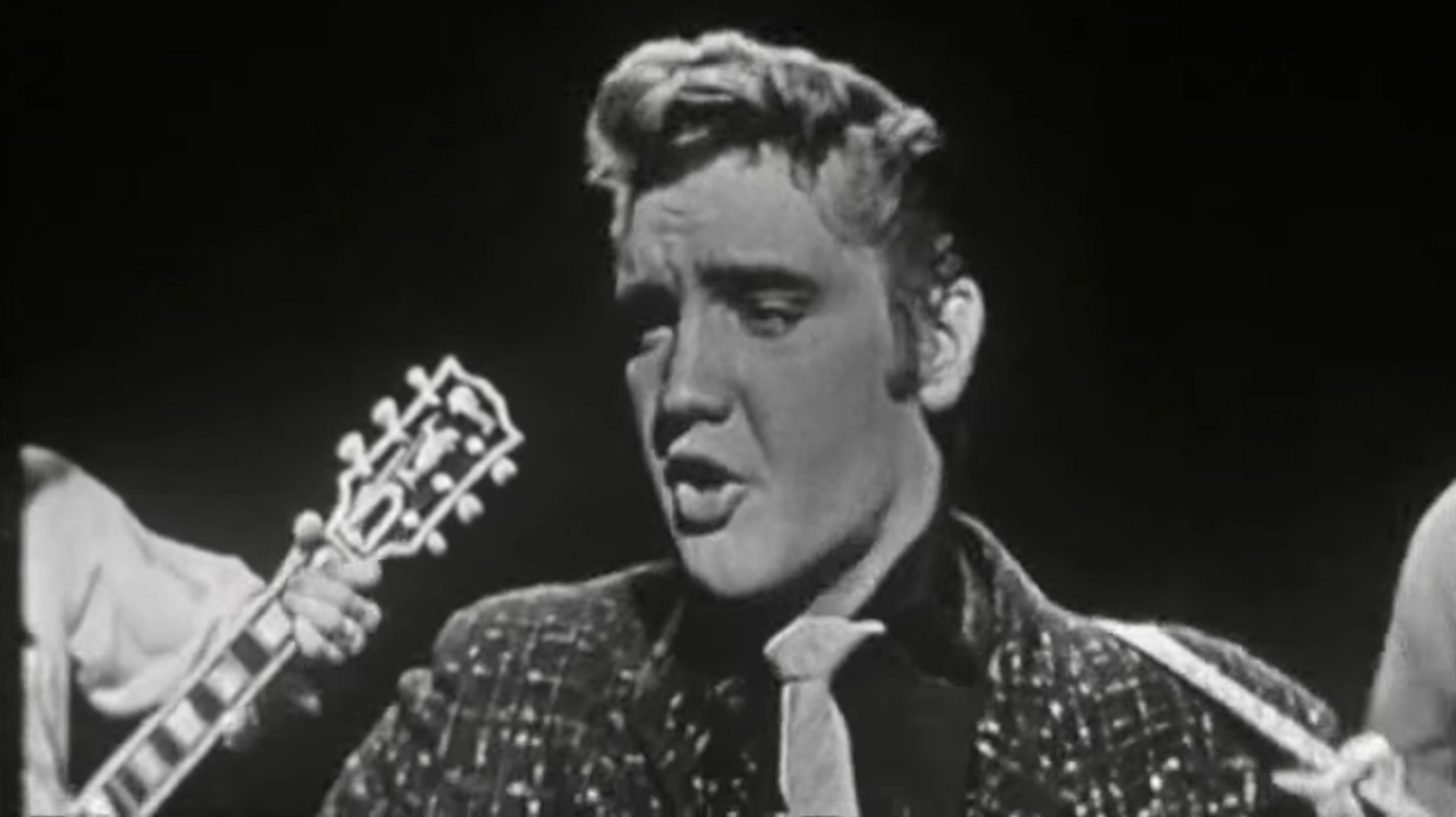
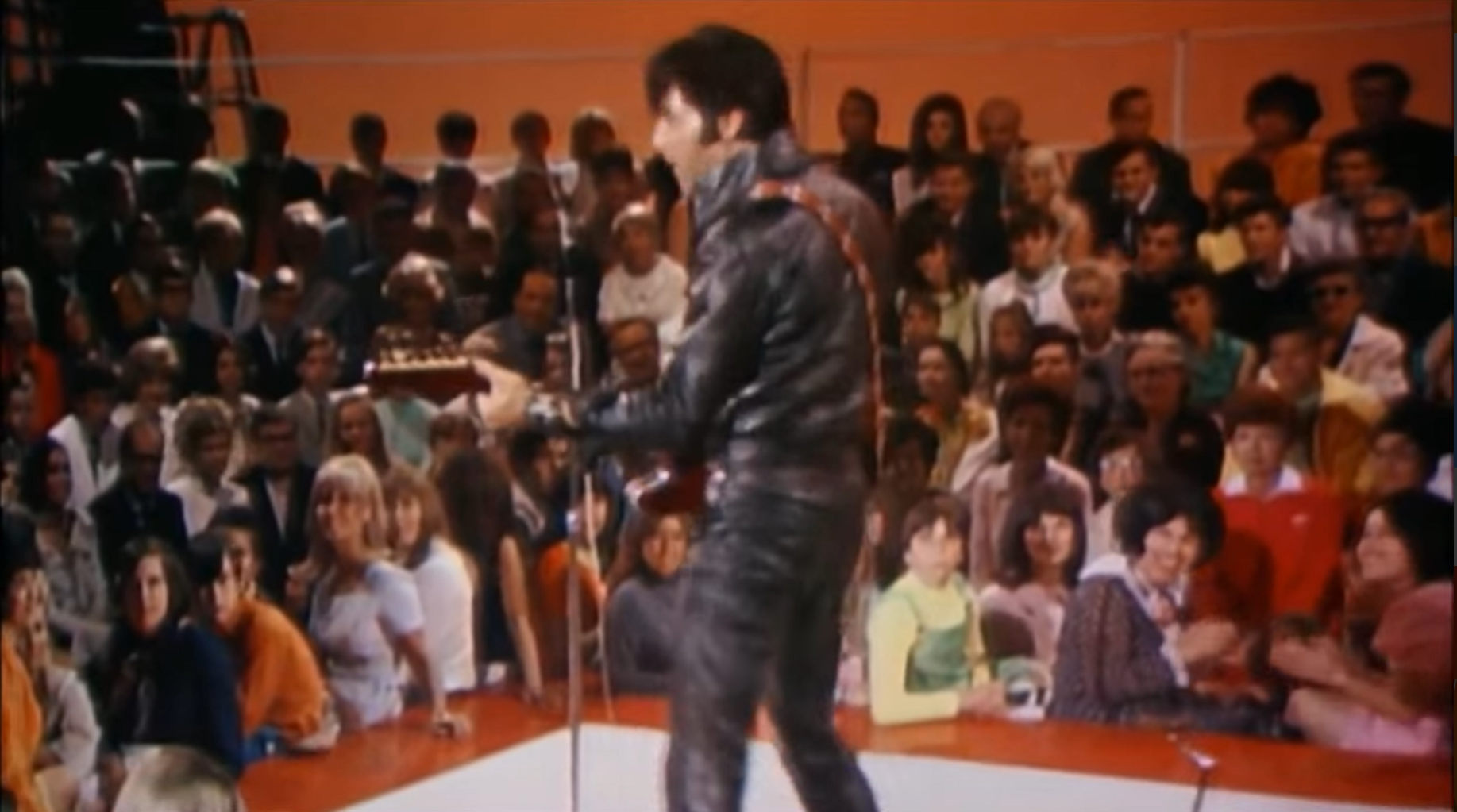
… alongside ample authentic footage from the earliest days of Presley’s stupendous fame:

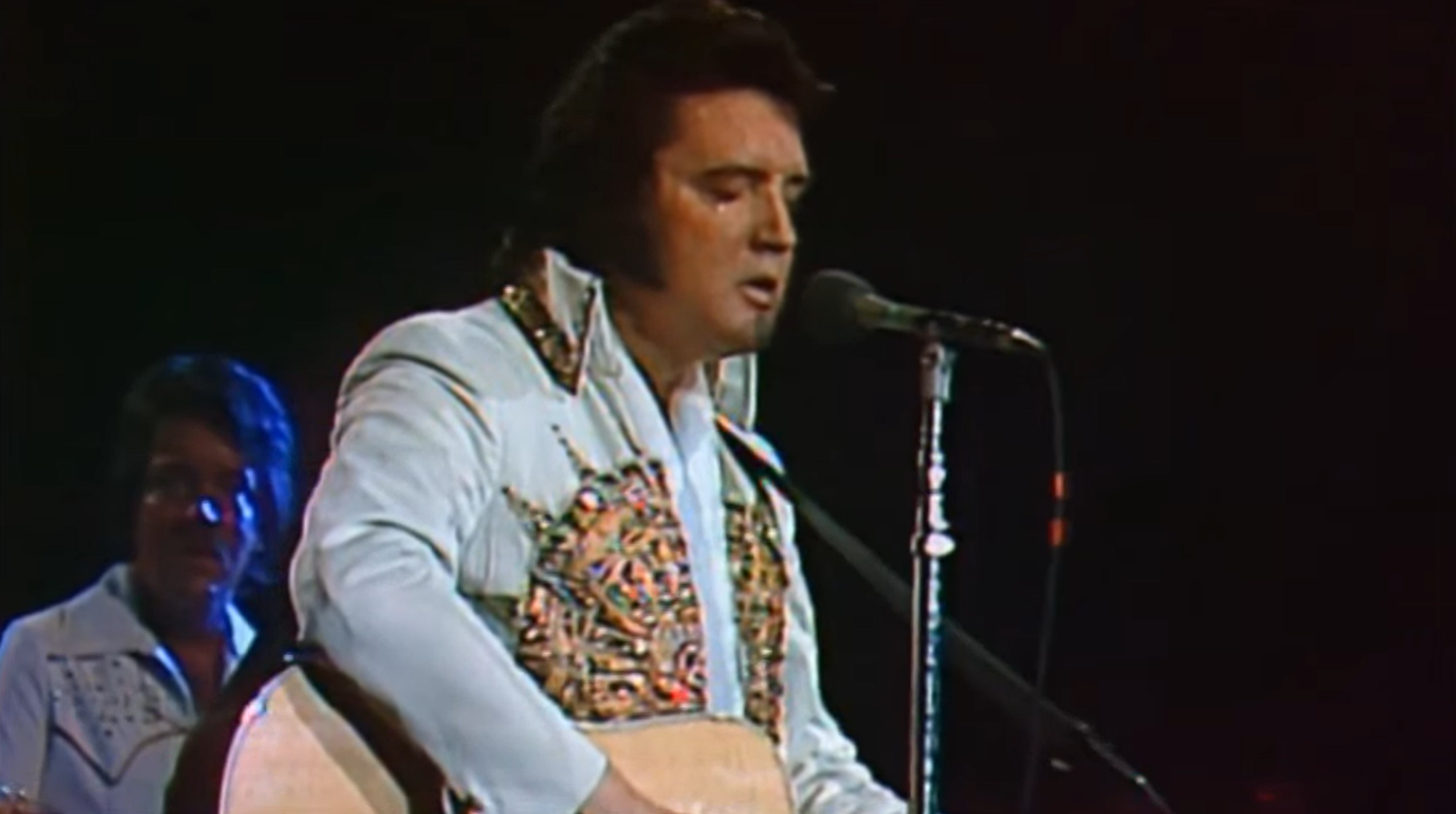
… to his final challenging weeks. Indeed, it’s the candor of this latter footage that makes one sit up and notice: despite being overseen by his estate, this documentary pulls few punches in letting us know how sick Presley became towards the end of his life, showing heartbreaking evidence of his eventual inability to cope.

Redeeming Qualities and Moments:

  • Plenty of engaging footage

Must See?
Yes, as a surprisingly insightful documentary about Elvis’s rise and eventual fall.

Categories

  • Historically Relevant

Links:

Sisters (1972)

Sisters (1972)

“That body is here somewhere!”

Synopsis:
When a small-town reporter (Jennifer Salt) sees a woman (Margot Kidder) killing her date (Lisle Wilson) in her apartment, she insists on telling a detective (Dolph Sweet) and pursuing any leads she can find — including tracking Kidder’s stalking ex-husband (William Finley) and hiring a private detective (Charles Durning).

Genres, Themes, Actors, and Directors:

  • Amateur Sleuths
  • Brian De Palma Films
  • Horror Films
  • Journalists
  • Living Nightmare
  • Mad Doctors and Scientists
  • Margot Kidder Films
  • “No One Believes Me”
  • Twins

Response to Peary’s Review:
Peary points out that this “creepy, funny, visually innovative” thriller by Brian De Palma is unfortunately “not that satisfying”. De Palma “not only borrows themes and scenes from Alfred Hitchcock (i.e., Rear Window, Psycho) but also has a standout score by Bernard Herrmann” and “seems inspired by The Cabinet of Dr. Caligari and Val Lewton’s Cat People.” Peary writes that “in a performance that recalls Simone Simon, Margot Kidder is unexpectedly sweet and vulnerable as French-Canadian Danielle Breton, a model working in New York” who “has her bad side: Dominique, her murderess, detached Siamese twin”. As Peary notes, the film’s major problem “is that the opening sequence[s] [are] so technically exciting (with tracking shots, split screen, sharp cutting), witty (there’s a hilarious parody of TV game shows called Peeping Toms), and suspenseful that it’s never equaled.”

Peary’s review reveals numerous spoilers that I won’t name here — but suffice it to say that I don’t believe the film capitalizes on its potential, though not all agree, and many take great pleasure in recognizing even more cinematic homages. While it’s worth a look for its highly creative elements, it’s not must-see viewing.

Redeeming Qualities and Moments:

  • Margot Kidder as Danielle Breton
  • Lisle Wilson as Phillip
  • An intriguing premise
  • The highly innovative split-screen sequence
  • Fine use of location shooting
  • Bernard Herrmann’s score

Must See?
No, though it’s worth a one-time look for its better elements.

Links: