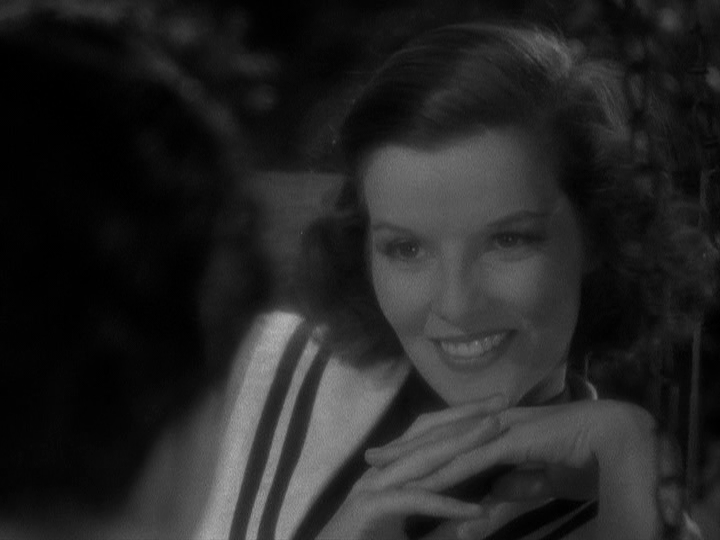
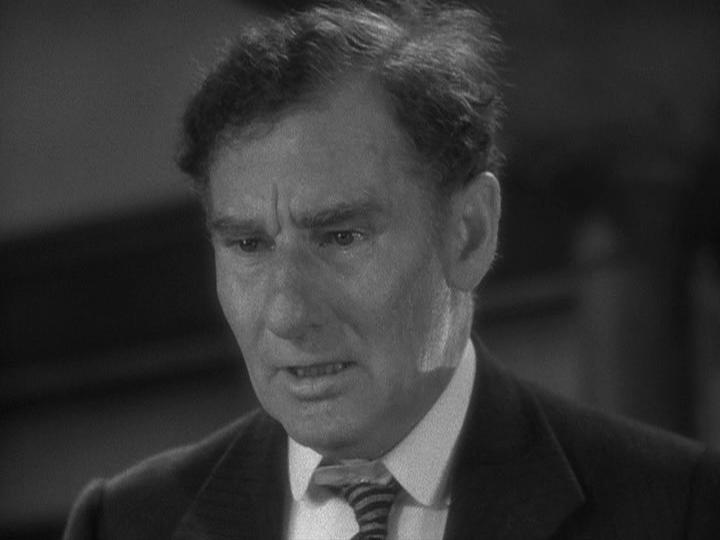
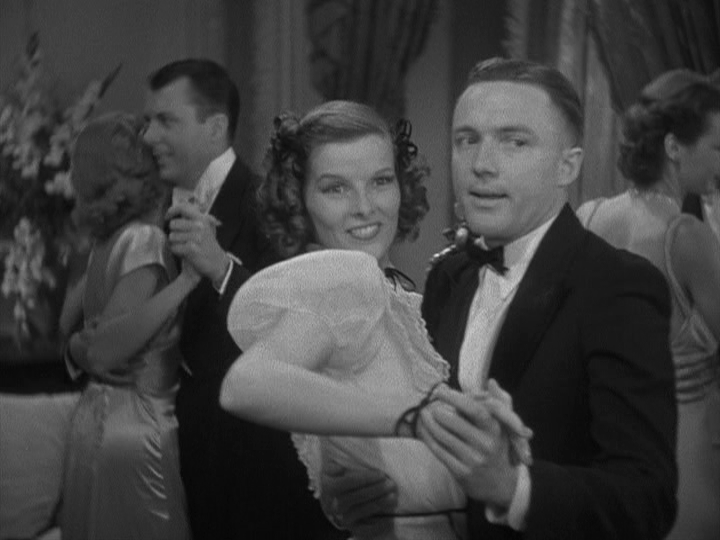
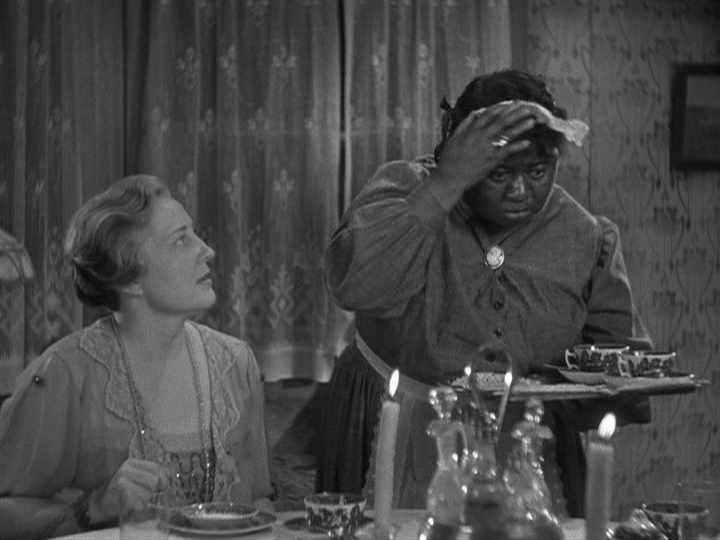
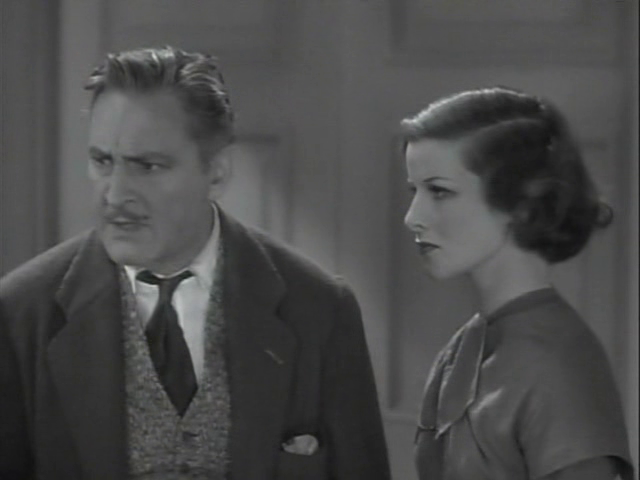
Morning Glory (1933)

Morning Glory (1933)

“I know that I’m a great actress — the greatest young actress in the world!”

Synopsis:
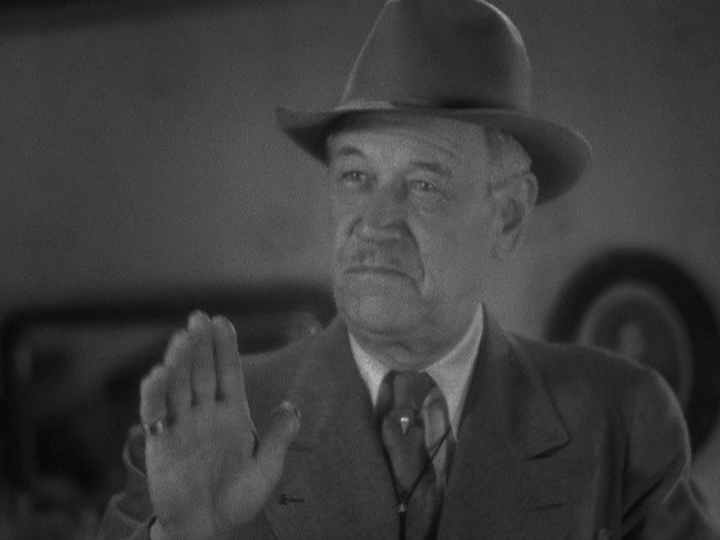
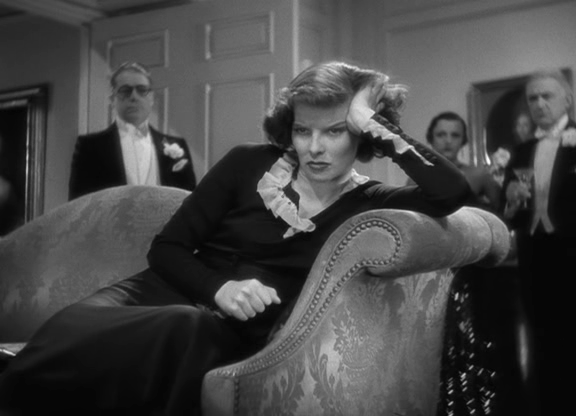
Upon arriving in New York, an aspiring actress (Katharine Hepburn) seeks mentorship from a veteran actor (C. Aubrey Smith) and attempts to impress a famous theatrical producer (Adolph Menjou) whose leading lady (Mary Duncan) is an incurable diva; meanwhile, a playwright (Douglas Fairbanks, Jr.) develops a crush on Hepburn, and feels sorry for her naivete.

Genres, Themes, Actors, and Directors:

  • Actors and Actresses
  • Adolph Menjou Films
  • Aspiring Stars
  • Douglas Fairbanks, Jr. Films
  • Katharine Hepburn Films

Review:
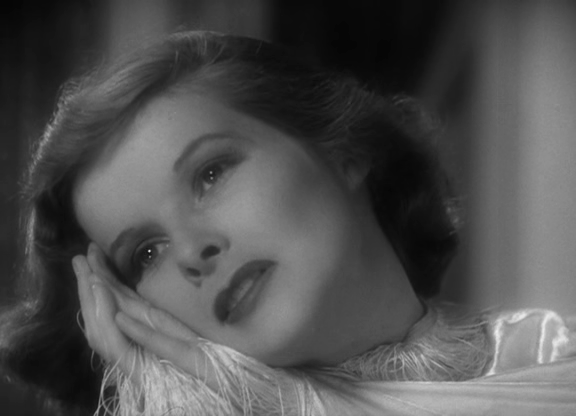
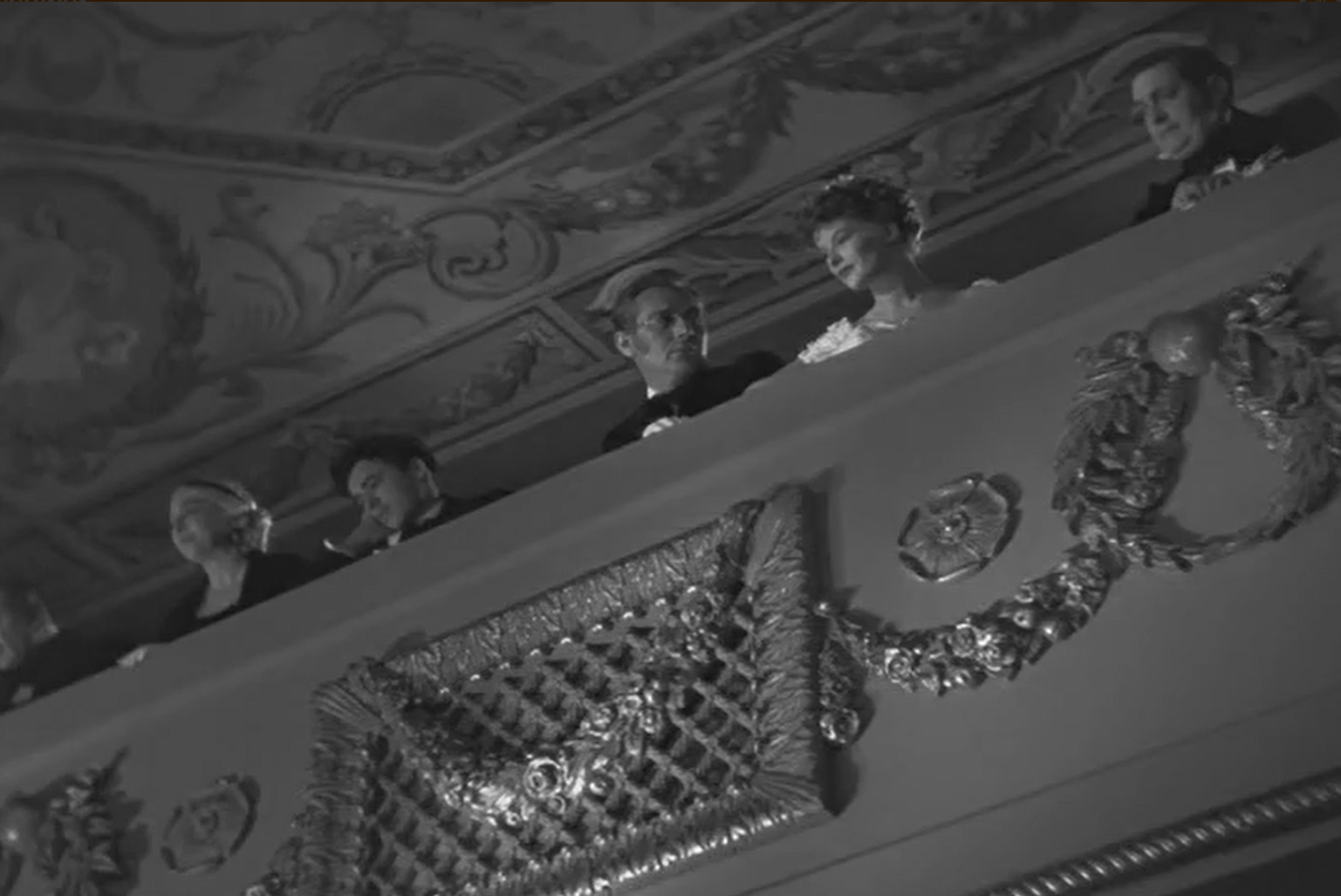
Based on an unproduced* play by Zoe Akins (who wrote the 1930 Broadway hit The Greeks Had a Word for It, which was turned into a film in 1932), this hackneyed rise-to-stardom theatrical tale is best known for providing young Katharine Hepburn with her first Best Actress Academy Award. While he doesn’t review Morning Glory in GFTFF, Peary does briefly mention it in his Alternate Oscars, where he argues that, in hindsight, “Hepburn’s performance seems like one of her worst”, and that she “played her part just as her brittle, affected character would have”. I don’t think Peary’s harsh criticism is quite valid: as always, Hepburn fully embodies her character, and having watched a number of her performances recently, I was impressed by how distinguished this particular characterization is from all the others.

Unfortunately, the screenplay itself — other than possessing some typically refreshing pre-Code nuances — is pretty much a dud, and ends far too abruptly; indeed, I was astonished to see the closing credits emerging after just 74 minutes, when there was so clearly a need for an additional “act”. Meanwhile, the pacing is terribly off, with ample time and energy spent on Hepburn’s initial encounters with the other players, then an unexplained quantity of time suddenly lapsing for no apparent reason. Feel free to skip this one unless you’re an Oscar completist or a Hepburn fan.

* One wonders — why?

Redeeming Qualities and Moments:

  • Katharine Hepburn as Eva Lovelace

Must See?
No, though most film fanatics will likely be curious to check it out simply for Hepburn’s Oscar-winning performance.

Links:

On Golden Pond (1981)

On Golden Pond (1981)

“You know, Norman, you really are the sweetest man in the world — but I’m the only one who knows it!”

Synopsis:
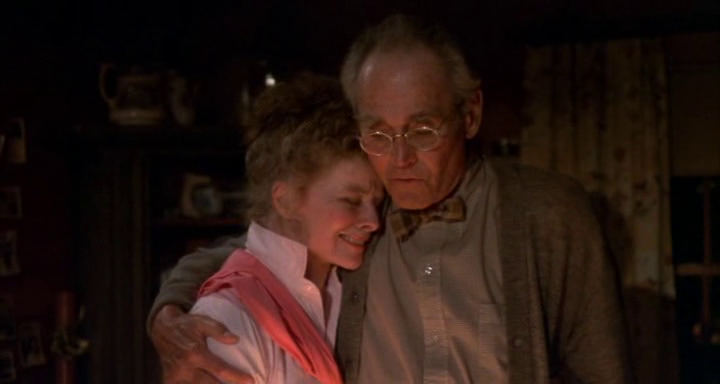
While vacationing at their summer home on Golden Pond, an elderly couple — friendly Ethel (Katharine Hepburn) and crotchety Norman (Henry Fonda), who has a troubled relationship with his grown daughter (Jane Fonda) — agree to care for the sullen teenage son (Doug McKeon) of Fonda’s fiance (Dabney Coleman).

Genres, Themes, Actors, and Directors:

  • Elderly People
  • Father and Child
  • Grown Children
  • Henry Fonda Films
  • Jane Fonda Films
  • Katharine Hepburn Films
  • Play Adaptation

Response to Peary’s Review:
Peary correctly notes that the Oscar-winning script for this “surprise moneymaker” — which earned 80-year-old Henry Fonda his first Oscar, and Hepburn her fourth — is “shameless schmaltz where every line is shrewdly calculated to tug at the heart string”; yet he argues that it’s nonetheless “hard not to be taken with” it. He notes that while “we’ve seen the same problematic relationships — cranky old man and lonely young boy, cold old man and his unloved adult child — in other films (and TV movies), … they’re rooted in real life and are hard not to respond to.” He further points out that the film “has special meaning to viewers” given that “Henry Fonda and Jane Fonda had an estranged relationship for many years, until reconciliation late in his life” — just as happens to their characters in the film. Meanwhile, it’s gorgeously shot (on location in New Hampshire) by D.P. Billy Williams, and consistently beautiful to look at.

Unfortunately, however, I can’t profess to sharing Peary’s guilty fondness for this enormously popular film (the top-grossing movie of 1981), which I find not only calculated and derivative but poorly structured. The emotional pay-off we’re waiting for is clearly the reconciliation between Henry and Jane, yet Jane’s underdeveloped character is hardly onscreen, and the bulk of the film focuses instead on Henry’s mentoring of McKeon. In sum, narrative priorities are confused: if this was meant to be a film about an emotionally troubled young teen coming of age in a gorgeous setting under the guidance of a curmudgeonly yet caring grandfather-figure, then McKeon’s character needed to be written with much more depth and insight.

Despite these serious complaints, however, the lead performances in OGP are certainly a joy to watch, and Hepburn and Fonda Sr. do indeed “rise above their roles”. As Peary writes, Fonda Sr. in particular is “wonderful in this role because he seems to really understand all his character’s strengths, quirks, self-doubts (especially in regard to aging), weaknesses, and flaws — particularly as a father”. Film fanatics will likely want to check out this film once simply to see him in his swan song (and to see Hepburn’s “energetic performance” as well).

Redeeming Qualities and Moments:

  • Henry Fonda as Norman Thayer
  • Katharine Hepburn as Ethel Thayer
  • Gorgeous cinematography by Billy Williams

Must See?
Yes, once, simply for the powerful lead performances.

Categories

  • Noteworthy Performance(s)
  • Oscar Winner or Nominee

Links:

Murder, He Says (1944)

Murder, He Says (1944)

“They don’t dare kill you the way they killed that other feller!”

Synopsis:
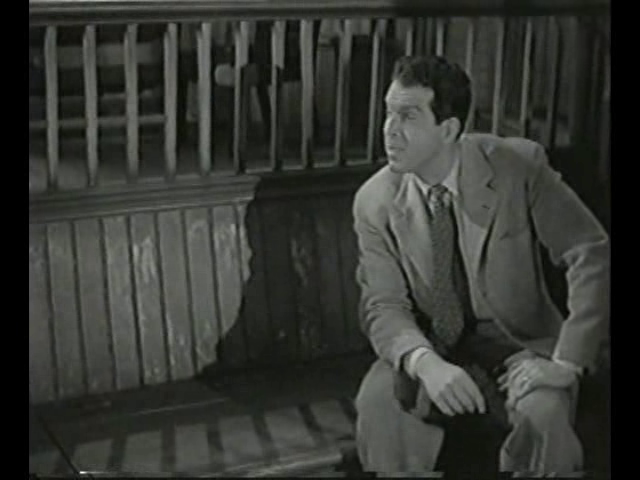
A pollster (Fred MacMurray) in search of a missing colleague stumbles upon a family of creepy hillbillies who will stop at nothing to learn the location of treasure hidden in their house.

Genres, Themes, Actors, and Directors:

  • Black Comedy
  • Fred MacMurray Films
  • George Marshall Films
  • Hidden Treasure
  • Murder Mystery
  • Old Dark House

Review:
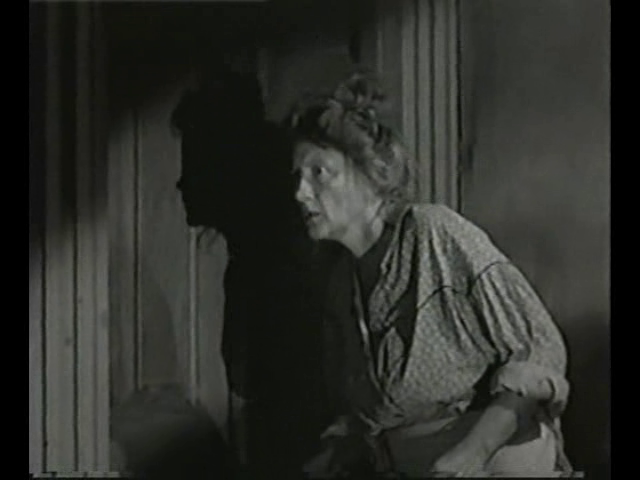
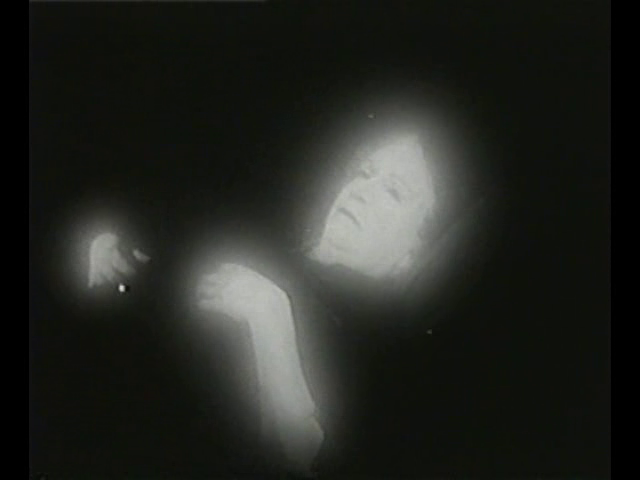
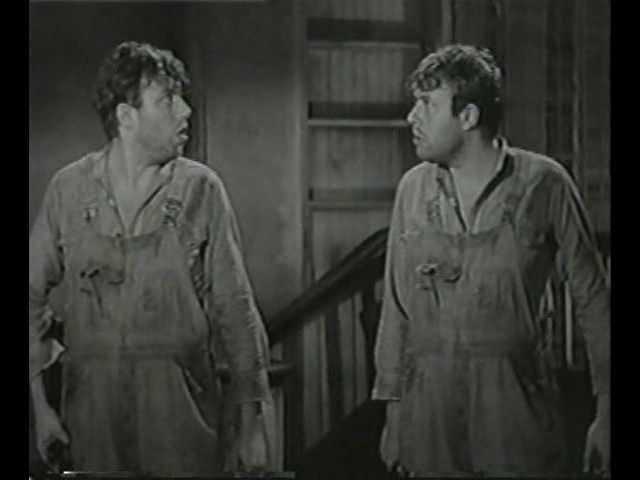
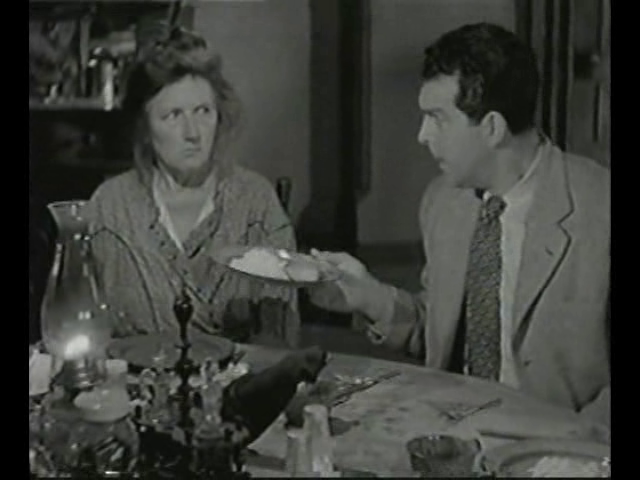
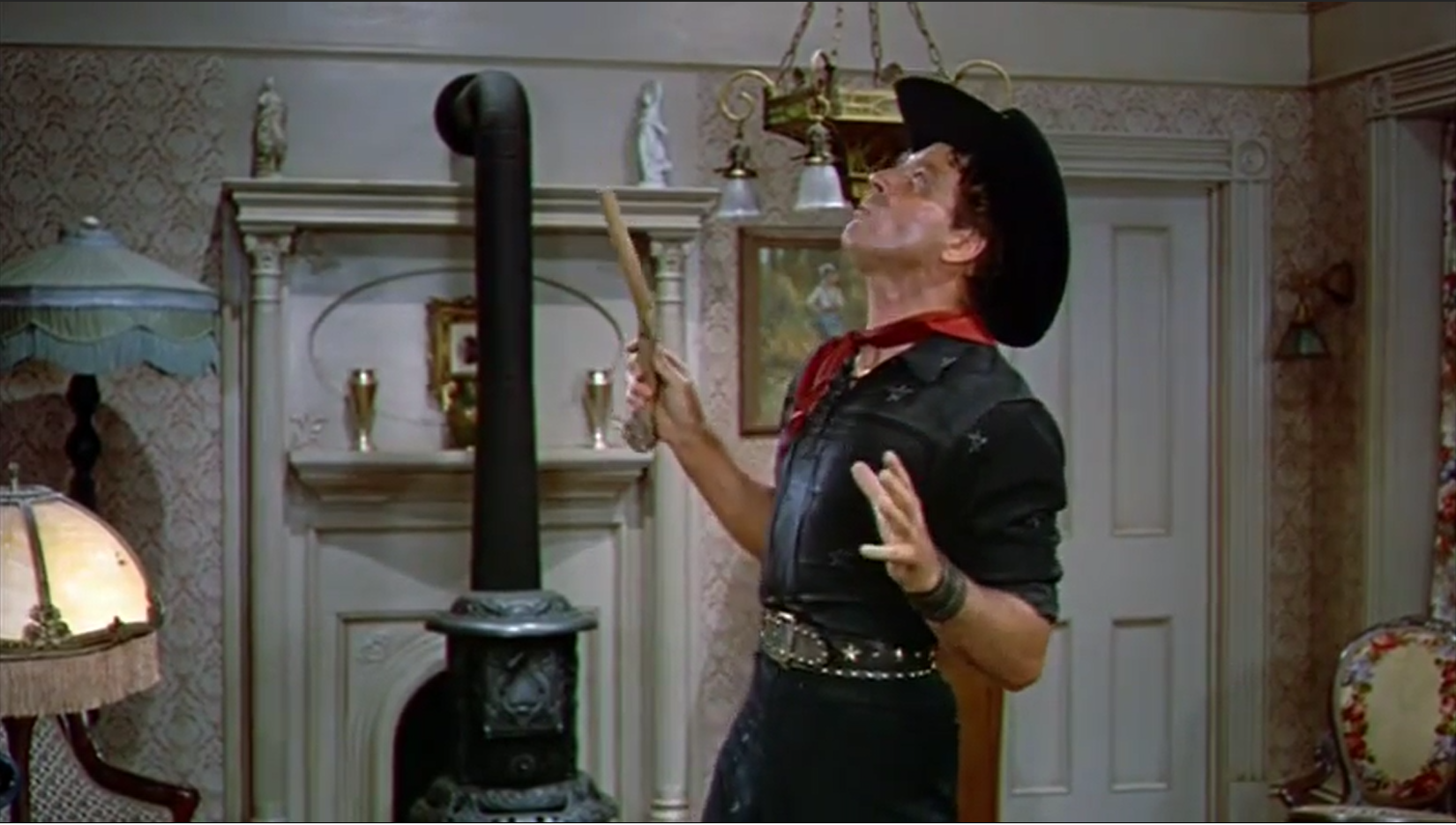
Several years after directing Bob Hope and Paulette Goddard in the disappointing haunted house flick The Ghost Breakers (1940), George Marshall helmed this creatively zany riff on the genre, which features impressive special effects (see stills below), an enjoyably wacky storyline, quick pacing, and fine performances by the ensemble cast — including Fred MacMurray as the hapless protagonist; Marjorie Main as the murderous matriarch of the Fleagle clan; Helen Walker as “Bonnie Fleagle”; Peter Whitney (in a dual role) as a pair of pugilistic Fleagle twins; Jean Heather as the twins’ loopy, chant-singing sister; Porter Hall as Ma Fleagle’s most recent husband; and Mabel Paige as the clan’s senile “Grandma”. In his fun review of the movie, Dave Sindelar provides the following synopsis of its bizarre plot:

The movie features a hidden treasure, a whip-wielding Marjorie Main, poisoned and possibly radioactive water (it makes everything glow in the dark), two stupid twins (one with a crick in his back so you can tell them apart), a nonsense song that holds the key to the treasure, an escaped criminal, a woman disguising herself as an escaped criminal, an imaginary ghost named Smedley, a truck-powered hay machine, a “Lazy Susan” rotating table, poisoned gravy and Fred MacMurray.

To say much more about the plot would spoil the fun of watching it unfold; suffice it to say that — as Sindelar recommends — you should be in a “silly mood” before sitting down to enjoy this one.

Redeeming Qualities and Moments:

  • Fred MacMurray as Pete Marshall
  • Fine supporting performances by the entire ensemble cast
  • Nifty special effects

  • A clever screenplay with many fun sequences

Must See?
Yes, as a cult film and an enjoyably zany riff on the “old dark house” genre. Listed as a Sleeper in the back of Peary’s book.

Categories

  • Cult Movie
  • Good Show

Links:

Rainmaker, The (1956)

Rainmaker, The (1956)

“Once in your life, you’ve got to take a chance on a con-man.”

Synopsis:
In the midst of a drought, a spinster (Katharine Hepburn) living with her widowed father (Cameron Prud’Homme) and two grown brothers (Lloyd Bridges and Earl Holliman) finds her life changed forever when a charismatic huckster (Burt Lancester) comes to town selling rain.

Genres, Themes, Actors, and Directors:

  • Burt Lancaster Films
  • Con Artists
  • Katharine Hepburn Films
  • Lloyd Bridges Films
  • Play Adaptation
  • Spinsters

Review:
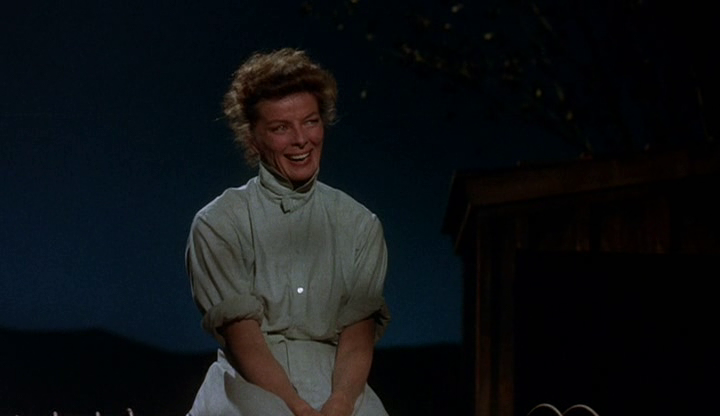
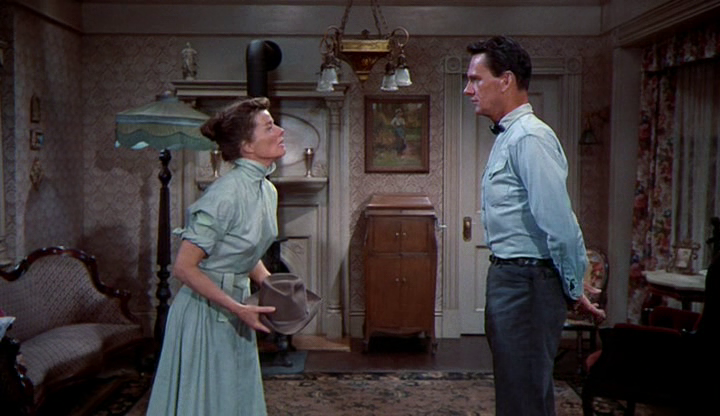
Theatrical director Joseph Anthony helmed this dated, stagy adaptation of N. Richard Nash’s successful Broadway play, about a “plain” spinster who learns that she need only believe in her own beauty and femininity in order to snare the ultimate prize in life: a husband. Nash’s screenplay (he adapted his own work) would have us believe that Hepburn’s overly earnest father and brothers care more about marrying her off than just about anything else, despite the fact that she conveniently provides quite a comfortable home life for them. Meanwhile, the entire storyline is groaningly metaphorical, with Lancaster’s over-the-top con-artist bringing the promise of life (a.k.a. “rain”) to a “parched” soul:

and Hepburn’s dimwitted brother (Holliman) conveniently embodying a hot-blooded alternative to Hepburn’s dilemma in his romance with an aggressive local hottie (Yvonne Fedderson). With that said, Hepburn’s performance as a love-starved spinster is often quite heartbreaking, and the premise itself — two painfully shy and/or reluctant individuals need some serious intervention in order to find their way towards one another — is undeniably sweet; indeed, despite the film’s flaws, you can’t help caring what happens to Hepburn’s self-effacing protagonist.

Redeeming Qualities and Moments:

  • Katharine Hepburn as Lizzie (named Best Actress of the Year in Peary’s Alternate Oscars)
  • A sweet tale of reluctant romance

Must See?
No; this one ultimately remains simply a curio, and will likely be of most interest to Hepburn fans.

Links:

Alice Adams (1935)

Alice Adams (1935)

“I don’t know why he likes me; sometimes I’m afraid he wouldn’t if he knew me.”

Synopsis:
A socially ambitious young woman (Katharine Hepburn) lies about her family’s status to impress her wealthy new beau (Fred MacMurray); meanwhile, her mother (Ann Shoemaker) — desperate to give Hepburn and her brother (Frank Albertson) a better chance in life — convinces Hepburn’s father (Fred Stone) to betray his loyal employer (Charley Grapewin) by starting his own business.

Genres, Themes, Actors, and Directors:

  • Cross-Class Romance
  • Fred MacMurray Films
  • George Stevens Films
  • Katharine Hepburn Films
  • Small Town America
  • Social Climbers

Response to Peary’s Review:
Peary writes that “Katharine Hepburn had one of her greatest successes playing the young heroine of Booth Tarkington’s Pulitzer Prize-winning novel” about a “smart, imaginative, energetic, yet dissatisfied small-town girl” who “covets being on equal social footing with her richer acquaintances” and “is so obsessed with improving her social standing that she assumes an affected attitude whenever she leaves her house”. Peary argues that “we’d dislike [Hepburn’s Alice] except that we admire her love for and loyalty to [her family members], despite their constantly letting her down and causing her grief”; and he points out that “we understand her desperate need to escape her sad home life”. He posits that women may “like this film better than men because they can relate to Alice blowing it in public, in front of an attractive man, by trying too hard, talking too much, and smiling and laughing in an attempt to conceal… nervousness and embarrassment”, but he adds that he personally finds “it too painful to watch”.
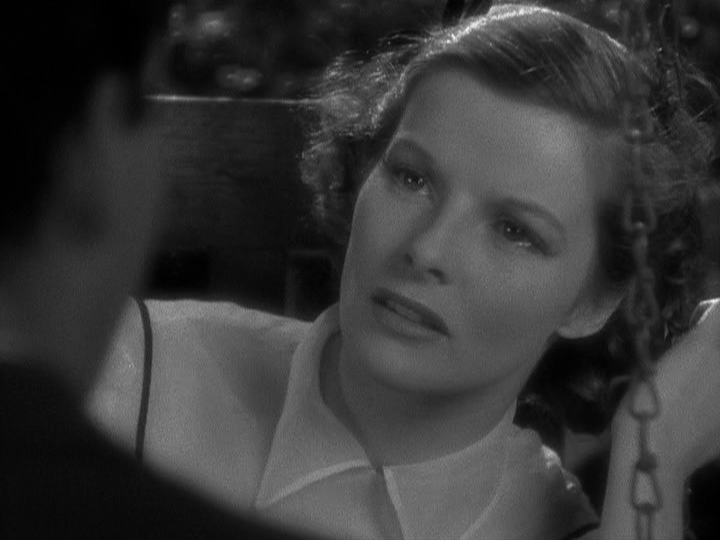
Speaking as a female viewer, I can firmly attest that I don’t find the film any less disturbing than Peary; indeed, it’s nearly as depressing as Hepburn’s notorious downer of a debut film, A Bill of Divorcement (1932). I’m ultimately most in agreement with the assessment provided by DVD Savant, who notes that Alice Adams is “beautifully put together… but raises a number of issues that can’t be easily dismissed” — most specifically the puzzling nature of MacMurray’s attraction to Hepburn. Sure, she’s pretty, but he’s supposedly engaged to his wealthy (and equally pretty) cousin — so what in the world is he doing pursuing Hepburn? We learn absolutely nothing about him — he functions purely as a projection of Hepburn’s fantasies; while it’s clear as day that she’s putting him on, he simply grins at her like a vacuous dolt.
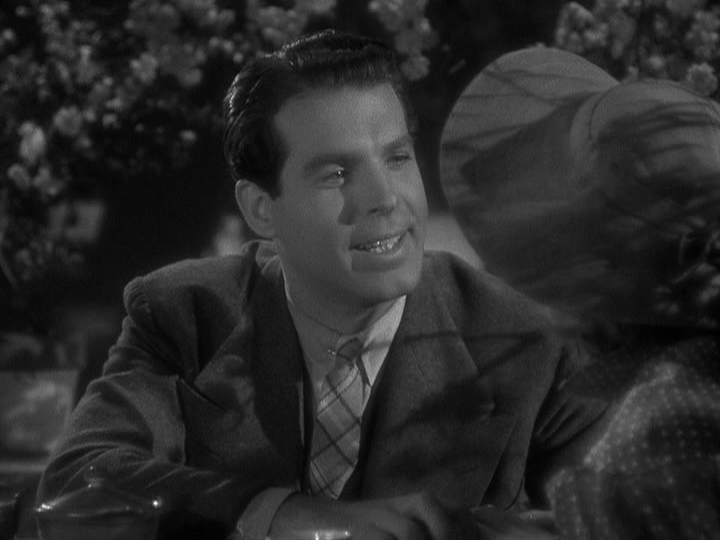
Also frustrating is the film’s tendency to shift in tone between poignant social drama and comedy; meanwhile, the utterly unrealistic denouement between Stone and Grapewin — as well as the obviously tacked-on happy ending (deviating from the original novel) — leave one feeling somewhat cheated (though Peary himself claims to “find [the ending] a relief after watching Alice suffer”).

With that said, the film has much to recommend it — beginning with Hepburn’s passionately committed, nuanced portrayal as Alice. In his Alternate Oscars, Peary names Hepburn Best Actress of the Year for her work here, and it’s hard to argue with his choice. Although she’s an infuriating protagonist to sympathize with — not to mention frustratingly variable (one moment painfully awkward, the next coyly flirtatious) — Hepburn nonetheless brings her to achingly vulnerable life. Meanwhile, the supporting cast (consisting of many little-known faces) is excellent all around — most notably circus performer Fred Stone as Alice’s sad sack father; Frank Albertson as her wastrel brother (who perfectly embodies the cynical antithesis of Alice’s socially conscientious desperation); and droll Hattie McDaniel (in a “scene-stealing performance”) as Malena.

Redeeming Qualities and Moments:

  • Katharine Hepburn as Alice Adams
  • Fred Stone as Virgil Adams
  • Frank Albertson as Walter Adams
  • Hattie McDaniel as Malena
  • Charley Grapewin as Mr. Lamb
  • Luminous cinematography by Robert De Grasse

Must See?
Yes, once, for Hepburn’s Oscar-nominated performance.

Categories

  • Noteworthy Performance(s)
  • Oscar Winner or Nominee

Links:

Little Women (1933)

Little Women (1933)

“Christopher Columbus!”

Synopsis:
While their father (Samuel S. Hinds) is away at war, an aspiring writer (Katharine Hepburn) and her three sisters — beautiful Meg (Frances Dee), kind-hearted Beth (Jean Parker), and young Amy (Joan Bennett) — are raised by their hard-working mother (Spring Byington) while living next door to a wealthy old man (Henry Stephenson) and his handsome grandson (Douglass Montgomery).

Genres, Themes, Actors, and Directors:

  • Coming of Age
  • Feminism and Women’s Issues
  • Frances Dee Films
  • George Cukor Films
  • Historical Drama
  • Jean Parker Films
  • Katharine Hepburn Films
  • Paul Lukas Films
  • Siblings
  • Strong Females
  • Writers

Review:
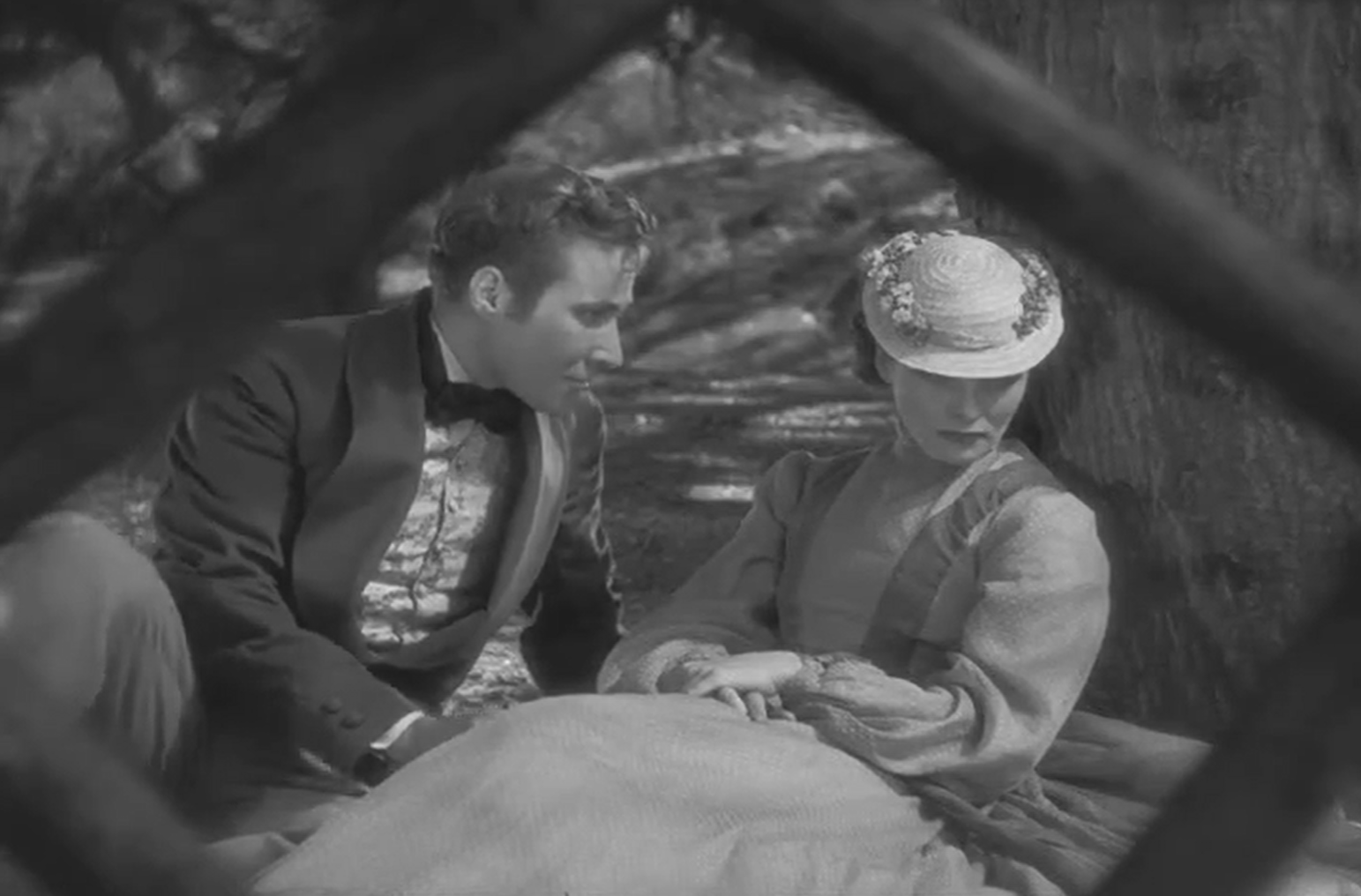
George Cukor’s adaptation of Louisa May Alcott’s enduringly popular Civil War-era novel is often cited as the definitive — and/or the most beloved — of numerous cinematic iterations. Katharine Hepburn is perfectly cast as tomboy-ish Jo, though I’ll admit I find her deep-voiced performance a bit forced during the first half of the film:

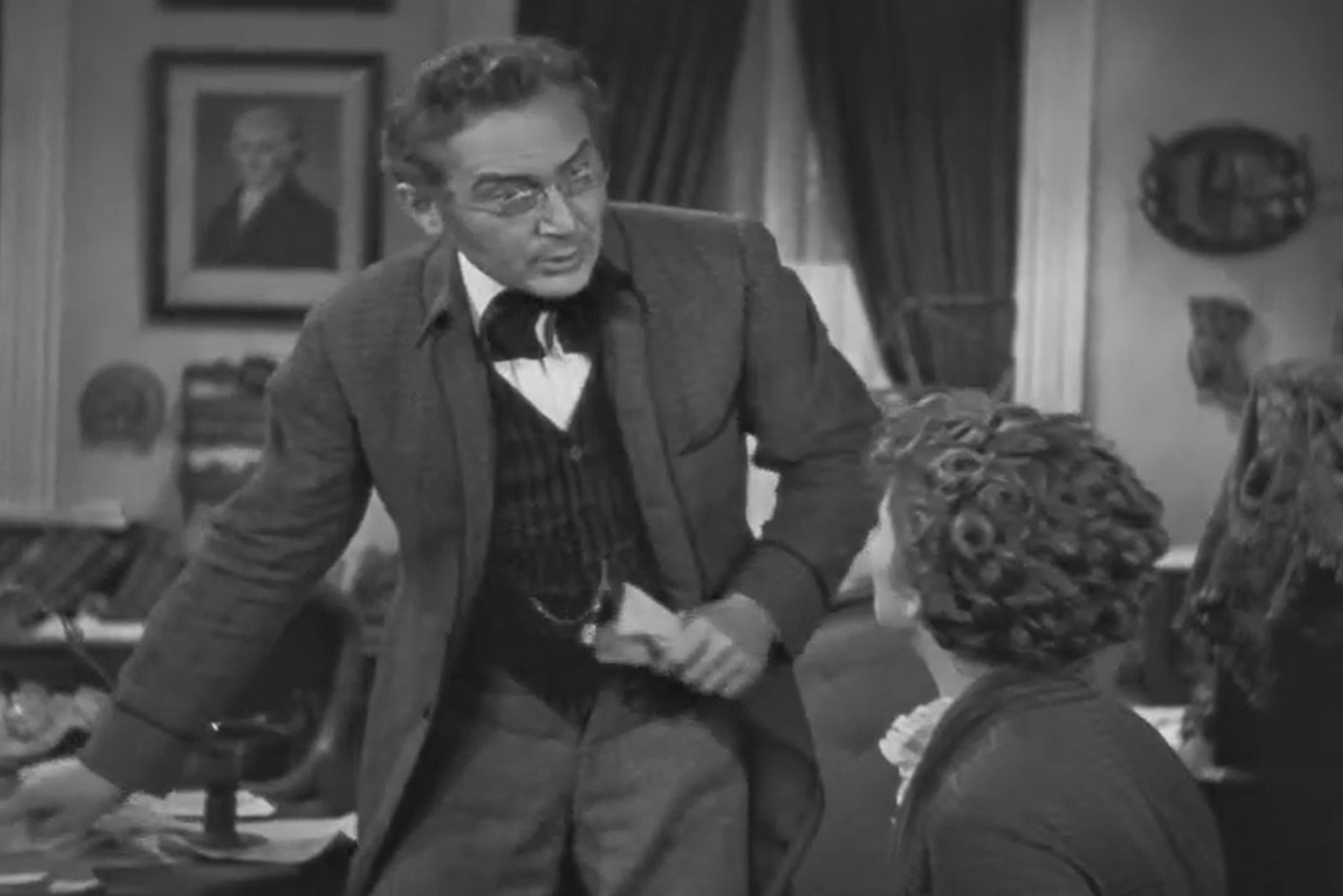
Only once her character matures and moves to New York does Hepburn seem to relax into the role. Other key parts in the ensemble cast are nicely filled as well, with Paul Lukas particularly sympathetic as Jo’s older suitor (it’s easy to see why she would fall for him, despite the age difference):

and Douglass Montgomery a charming, easygoing “Laurie”. (It’s a shame Montgomery’s career never really took off.)

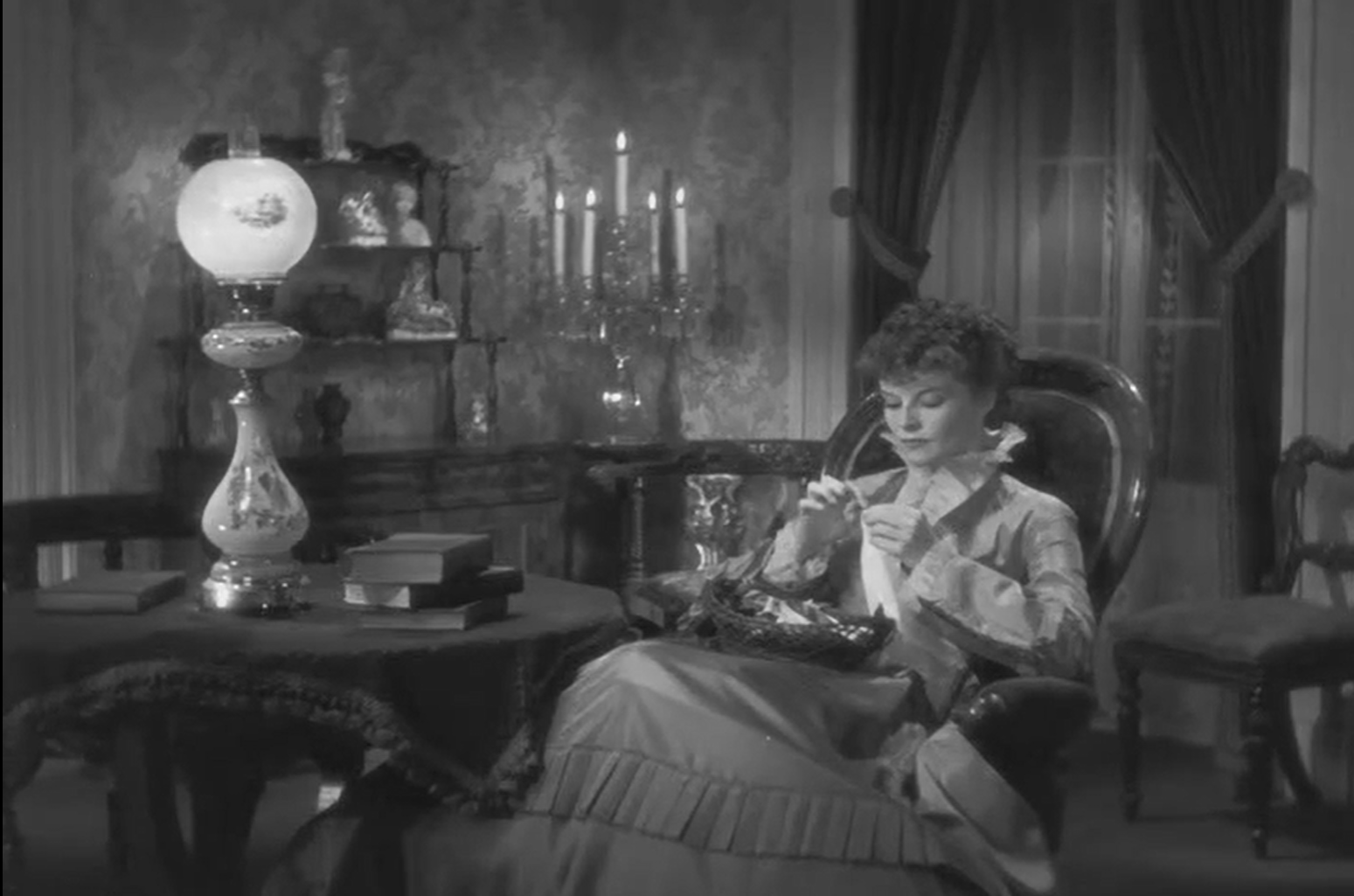
The deliberately episodic, relatively faithful Oscar-winning screenplay follows the cadences of Alcott’s coming-of-age novel nicely, while historically authentic sets and costumes help bring the story to life; fans of the book likely won’t be disappointed.

Redeeming Qualities and Moments:

  • Paul Lukas as Professor Bhaer
  • Nicely authentic sets and costumes
  • A fine, Oscar-winning screenplay (by Victor Heerman and Sarah Y. Mason)

Must See?
Yes, as an enduring literary adaptation. Listed as a film with Historical Importance and a Personal Recommendation in the back of Peary’s book.

Categories

  • Genuine Classic

Links:

Bill of Divorcement, A (1932)

Bill of Divorcement, A (1932)

“It’s in our blood, isn’t it?”

Synopsis:
A shellshocked veteran (John Barrymore) regains his sanity and returns home to find that his wife (Billie Burke) is now engaged to another man (Paul Cavanagh); meanwhile, his grown daughter (Katharine Hepburn) fears for her future with her fiance (David Manners) when she learns that her father’s mental illness may not be entirely due to the war.

Genres, Themes, Actors, and Directors:

  • Divorce
  • Father and Child
  • George Cukor Films
  • John Barrymore Films
  • Katharine Hepburn Films
  • Mental Illness
  • Play Adaptations

Response to Peary’s Review:
Peary is spot-on in his lambasting review of this “stagy, hokey adaptation [directed by George Cukor] of Clemence Dane‘s bad play”. He accurately notes that “the overwrought characters take turns being the martyr”, without any relief in sight; indeed, for those who enjoy watching likable characters suffer (and/or Barrymore at his hammiest), this film should suit the bill nicely. On the plus side, Burke (in a substantial role) actually gives a reasonably nuanced performance, rather than resorting to her typically ditzy socialite mannerisms; knowing that she suffered the loss of her real-life husband (Flo Ziegfeld) during the filming adds gravitas to her portrayal. Meanwhile, Peary points out that the film “at least… has historical significance in that it featured skinny Hepburn’s screen debut”, and she alone makes it worth a one-time look. While producer David O. Selznick was apparently concerned that audiences wouldn’t take to Hepburn, she’s positively luminous here (thanks in part to gorgeous cinematography by Sidney Hickox); one can easily understand why she went on to become a major — if resolutely iconoclastic — Hollywood star.

Note: Hepburn’s creative collaboration with Cukor lasted throughout the next 17 years, resulting in a total of eight theatrical films, including the following titles: Little Women (1933), Sylvia Scarlett (1935), Holiday (1938), The Philadelphia Story (1940), Keeper of the Flame (1942), Adam’s Rib (1949), and Pat and Mike (1952).

Redeeming Qualities and Moments:

  • Katharine Hepburn as Sydney Fairfield
  • Billie Burke as Meg Fairfield

Must See?
No, though it’s worth a one-time look simply out of historical curiosity.

Links:

My Man Godfrey (1936)

My Man Godfrey (1936)

“You’re more than a butler — you’re the first protege I ever had!”

Synopsis:
When a ditzy heiress (Carole Lombard) befriends a “forgotten man” (William Powell) she meets while on a scavenger hunt, she invites him to work as a butler for her family, and quickly finds herself falling in love with him — unaware that he’s really a wealthy businessman in disguise. Meanwhile, her resentful sister (Gail Patrick) is determined to make life miserable for Godfrey (Powell), while her father (Eugene Pallette) struggles to keep his family’s spending under control, and her mother (Alice Brady) amuses herself with her mooching protege (Mischa Auer).

Genres, Themes, Actors, and Directors:

  • Carole Lombard Films
  • Class Relations
  • Heiresses
  • Mistaken Identities
  • Romantic Comedy
  • William Powell Films

Response to Peary’s Review:
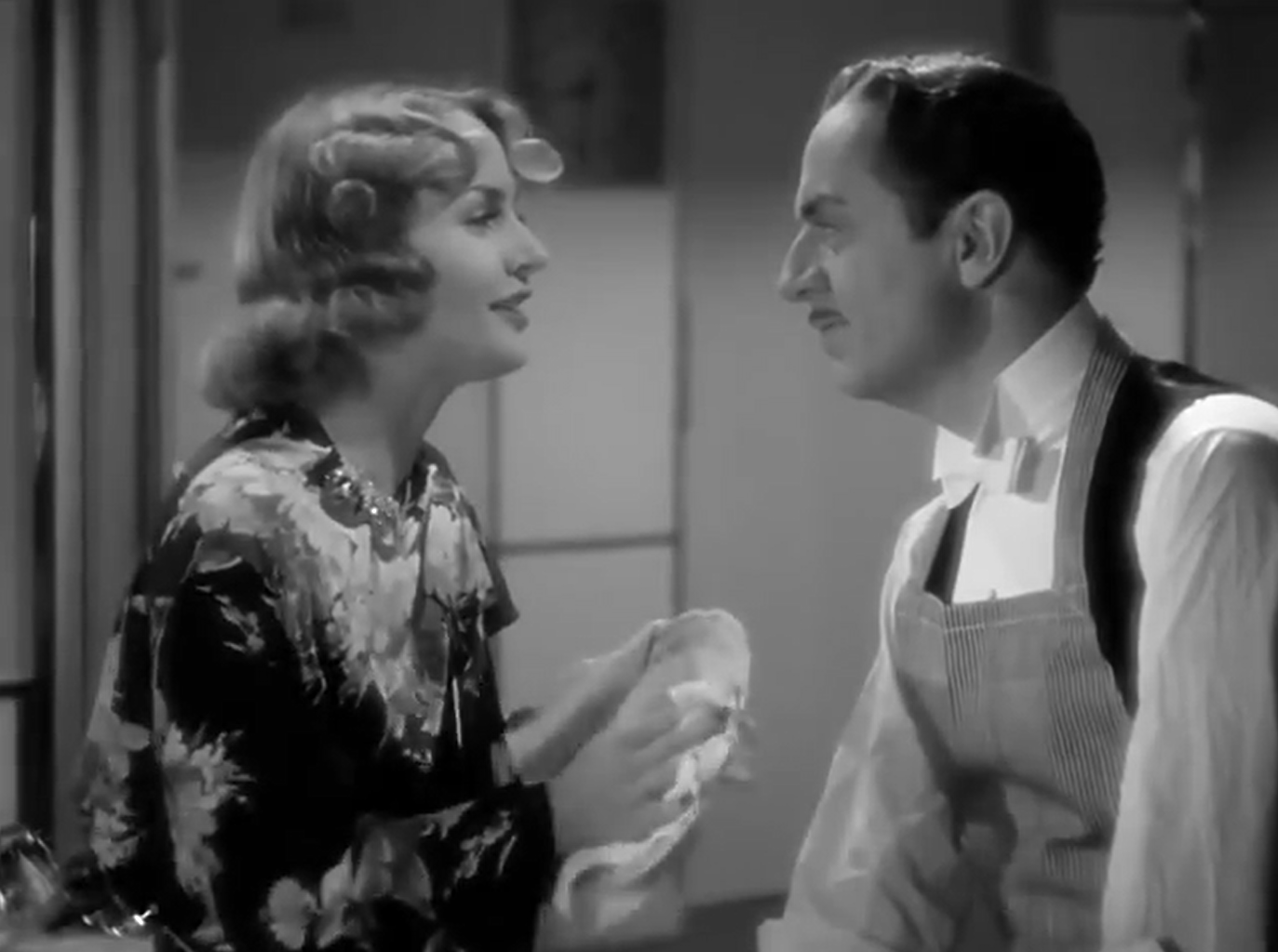
Peary argues that the “interesting premise” of this “classic screwball comedy” — that “it is the bum who has manners and discipline [while] the society clan are wild”:

— is ruined by the plot “twist” (given away early) that Godfrey (Powell) is actually a millionaire in disguise. He posits that while screenwriters Eric Hatch and Morrie Ryskind “may have had praiseworthy intentions” by wanting “Powell to discuss cynically both the plight and the nobility of the unemployed during the Depression”, director “Gregory La Cava has trouble maintaining a humorous thread while injecting serious themes”; he argues that “if the film’s going to attempt social criticism, it shouldn’t be so timid about it”. He concludes his review by noting that the “film succeeds not because of the story or direction but because of the spirited performances”, with “suave Powell and daffy Lombard [possessing] some great moments together”.

I can’t quite agree with most of Peary’s sentiments, given that I find the fast-paced screenplay consistently clever and witty, and don’t have any problem with the way Powell’s mysterious character is written. Indeed, it’s likely that if the social themes were taken more seriously, the entire affair would ultimately be much less successful as a wacky screwball flick. Peary’s right, however, to call out the fine performances by Lombard and Powell, who do indeed possess great chemistry together; it’s especially touching to know that they were divorced, yet still affectionate enough towards one other to maintain good relations.

I’m also fond of the supporting performances throughout this ensemble piece — most notably gravelly-voiced character actor Eugene Pallette as the family’s harried patriarch, and fey Franklin Pangborn in an early bit role as the officiant for the scavenger hunt (a wonderful extended scene) that propels the plot into action.

Redeeming Qualities and Moments:

  • Carole Lombard as Irene Bullock (nominated by Peary as one of the Best Actresses of the Year in his Alternate Oscars)
  • William Powell as Godfrey (nominated by Peary as one of the Best Actors of the Year in Alternate Oscars)
  • Eugene Pallette as Alexander Bullock: “Life in this family is one subpoena after the other.”
  • Franklin Pangborn in a bit part as a scavenger hunt official
  • Fine cinematography

Must See?
Yes, as a genuine screwball classic. Added to the National Film Registry in 1999, and listed as #44 on AFI’s “100 Funniest Movies”.

Categories

  • Genuine Classic
  • Noteworthy Performance(s)

(Listed in 1001 Movies You Must See Before You Die)

Links:

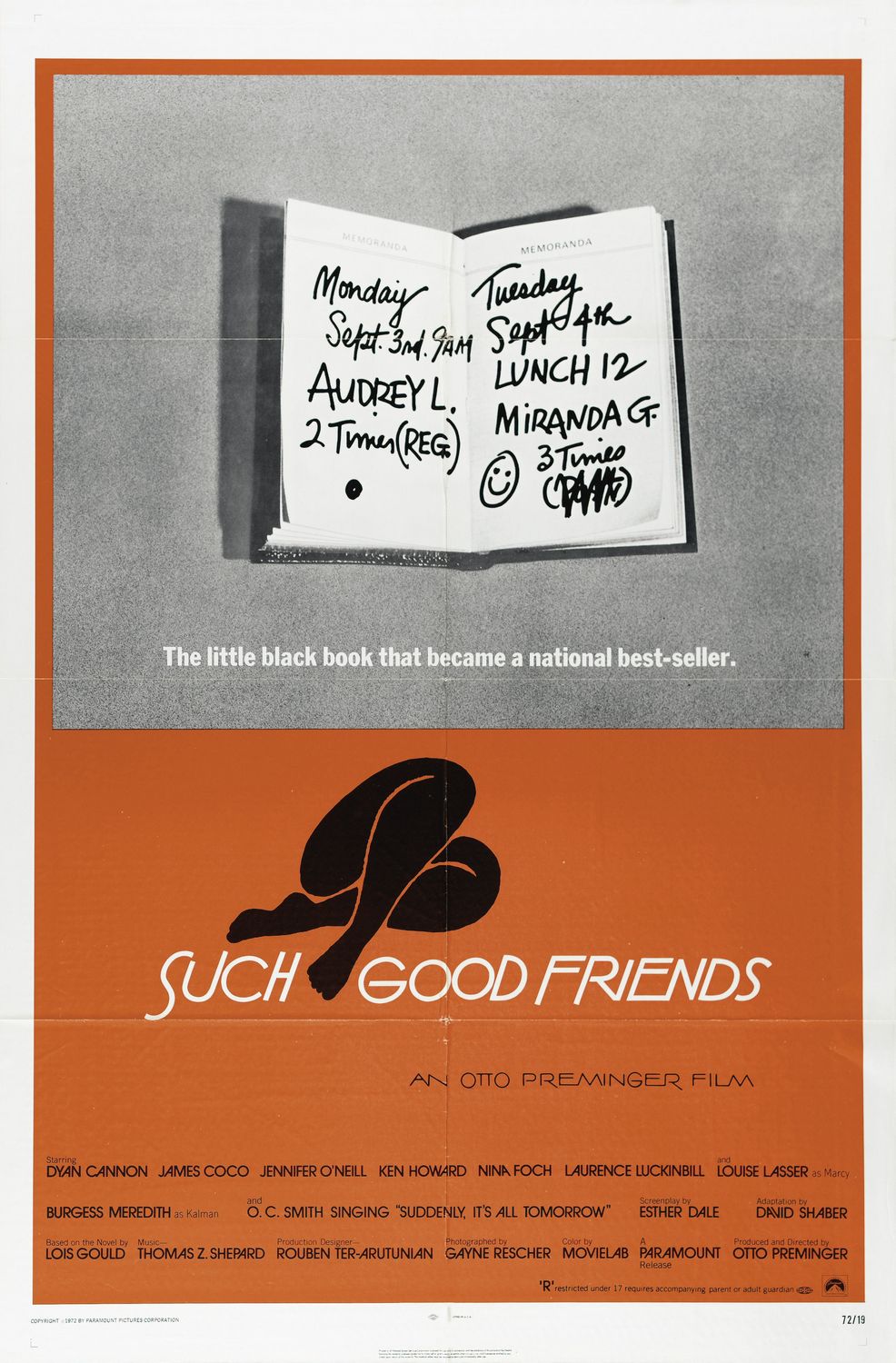
Such Good Friends (1971)

Such Good Friends (1971)

“Now that the damage has been done, your husband’s care will be of the finest.”

Synopsis:
When her husband (Laurence Luckinbill) becomes increasingly ill after entering the hospital for minor surgery, a woman (Dyan Cannon) soon learns some disturbing secrets about their marriage.

Genres, Themes, Actors, and Directors:

  • Death and Dying
  • Dyan Cannon Films
  • Marital Problems
  • Otto Preminger Films

Review:
Otto Preminger’s directorial career went into serious decline during the last years of his life, as he helmed a series of surreal and/or puzzling oddities — the most notorious of which was the all-star musical flop Skidoo (1968). Unfortunately, Such Good Friends — based on a bestselling novel by Lois Gould — is yet another disappointment in his otherwise estimable oeuvre. With a screenplay by Elaine May (writing under the pseudonym Esther Dale), one has high hopes for the premise — but Preminger manages to botch the entire affair so badly that it’s impossible to tell what might have been done with the story in different hands. The tone is wildly uneven: clearly this was meant to be some sort of black comedy, but Preminger flits between failed attempts to mine the comedic premise — Luckinbill goes in to have a benign mole removed, and ends up in a coma, with his doctors increasingly defensive — and filming the material like a weighty drama about illness and infidelity. The result is that we never know whether the characters are supposed to be reacting to each other realistically or comically.

Making matters worse, we don’t like any of these characters — not even the protagonist (Cannon), whose plight we should presumably empathize with. Our distaste for Cannon’s spoiled housewife is cemented from her very first scenes, as she mutters, “Why did they abolish slavery?!” in frustration when her black maid can’t hear her petulant request to answer the doorbell. When events quickly turn more serious, she thankfully drops her characteristically ditzy screen persona and invests her character with gravitas and nuance, turning in what’s probably one of the best performances of her career. However, she’s at sea in the midst of a messy cinematic train wreck, one even her emotional investment simply can’t salvage.

Note: My opinion of this film diverges considerably from most other critics: Roger Ebert gives it four stars out of four, Stuart Galbraith IV of DVD Talk refers to it as “just about as good” as Annie Hall (!!!), and others point out the wittiness and elegance of the dialogue. It’s likely that my overall distaste for how Preminger handles the material is shadowing my ability to appreciate much else about it — but regardless, I consider this one to be a true clunker.

Redeeming Qualities and Moments:

  • Dyan Cannon as Julie

Must See?
No; definitely feel free to skip this one.

Links:

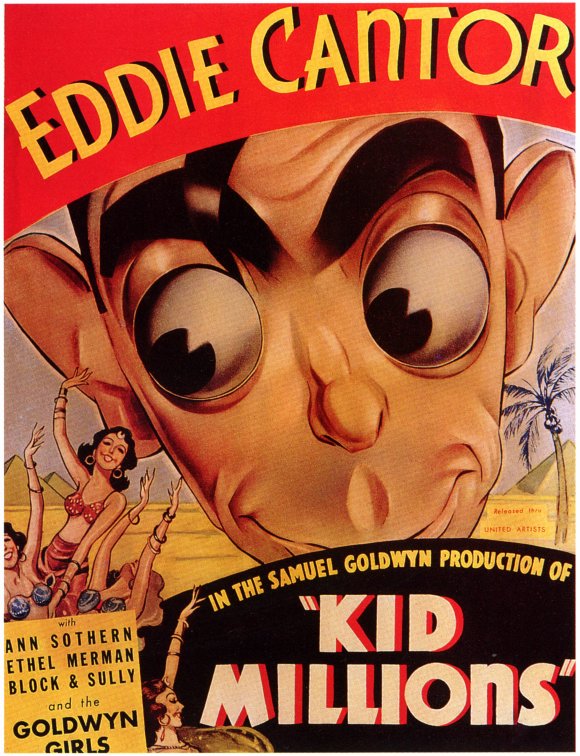
Kid Millions (1934)

Kid Millions (1934)

“Go away! I can’t talk to an idiot!”

Synopsis:
When a nebbish (Eddie Cantor) discovers he’s heir to a fortune, he quickly becomes prey to a con-woman (Ethel Merman) and her partner (Warren Hymer); meanwhile, when traveling to Egypt to collect his inheritance, the daughter (Eve Sully) of an Egyptian sheik (Paul Harvey) becomes smitten with Cantor and attempts to snag him as her husband.

Genres, Themes, Actors, and Directors:

  • Ann Sothern Films
  • Comedy
  • Con-Artists
  • Eddie Cantor Films
  • Egypt and Egyptology
  • Inheritance
  • Musicals
  • Roy Del Ruth Films

Review:
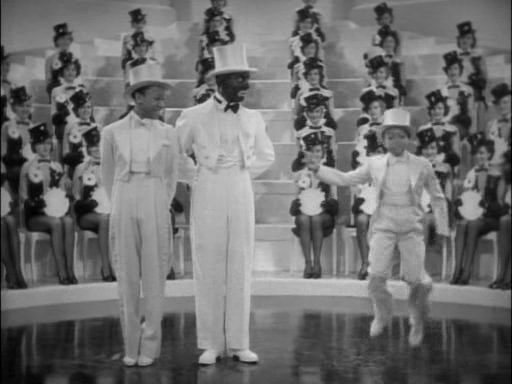
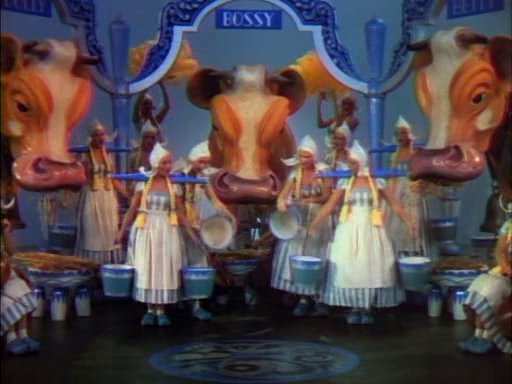
Roy Del Ruth directed this inconsequential Eddie Cantor musical-comedy, based on a fantastical “kitchen sink” storyline that’s essentially a series of excuses for comedic banter and absurd situations to emerge. Naturally, musical sequences are scattered throughout (the best starring the Nicholas Brothers), and there’s also a gratuitous romantic subplot between George Murphy and Ann Sothern (whose characters have little to do with the rest of the story, as far as I can tell). The film’s primary selling point is its truly surreal Technicolor finale (see still below), which — like everything else about the film — feels randomly tacked onto the storyline.

Note: Peary lists all but one of Cantor’s six Samuel Goldwyn titles in his GFTFF; now that I’ve finished watching the five titles he recommends, I’ve decided that two — Whoopee (1930) and Roman Scandals (1934) — are “must-see”, while the rest are strictly for fans.

Redeeming Qualities and Moments:

  • A fun dance sequence by the Nicholas Brothers
  • The fantastical Technicolor ice cream factory finale

Must See?
No; this one is only must-see for Cantor fans.

Links: