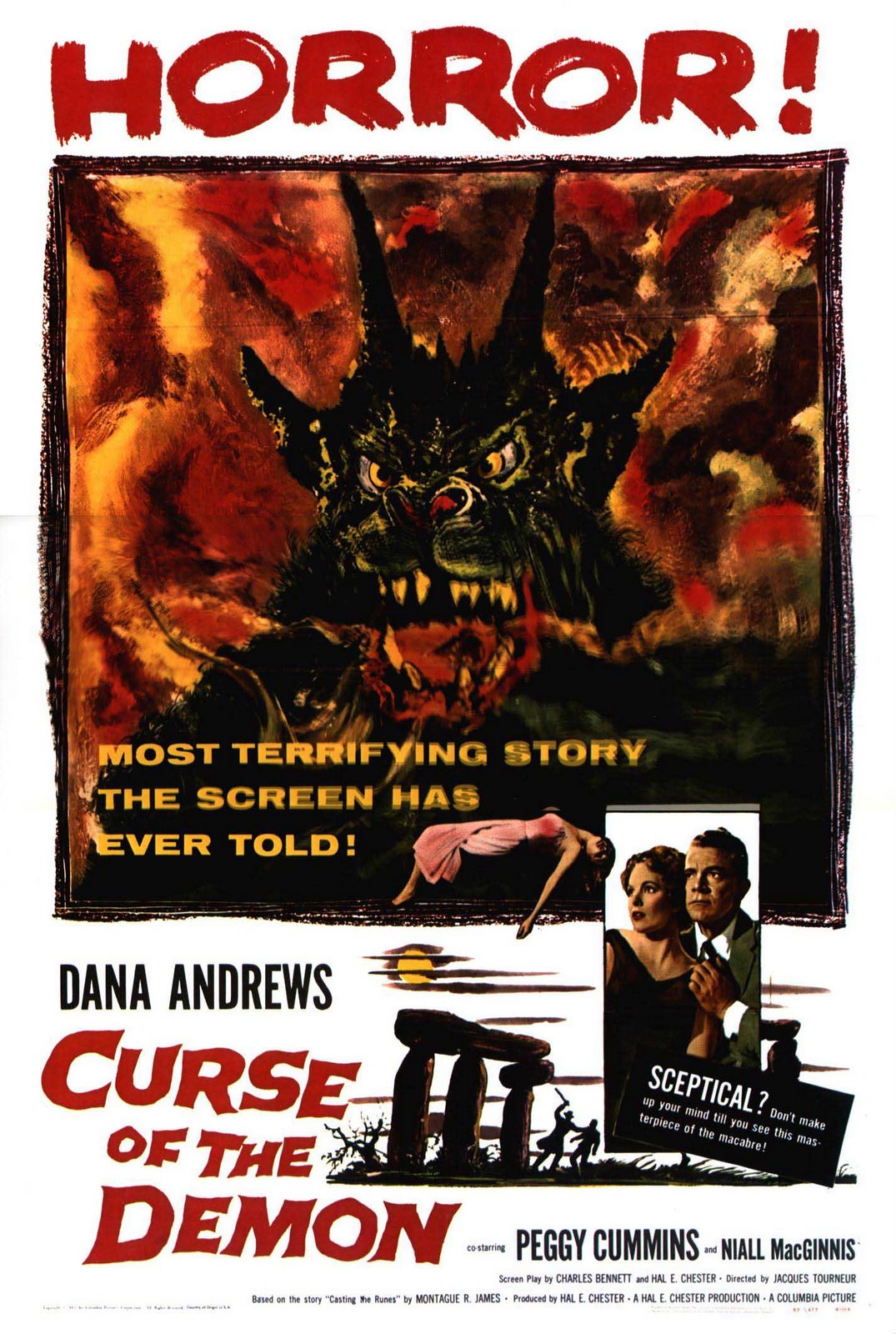
Night of the Demon / Curse of the Demon (1957)

Night of the Demon / Curse of the Demon (1957)

“I’m not a superstitious sucker, like 90% of humanity.”

Synopsis:
An American scientist (Dana Andrews) arrives in England to debunk a devil-worshiping cult led by Dr. Julian Karswell (Niall MacGinnis), but is slowly convinced — in part by Karswell’s niece (Peggy Cummins) — that Karswell may possess truly dangerous supernatural powers after all.

Genres, Themes, Actors, and Directors:

  • Dana Andrews Films
  • Horror
  • Jacques Tourneur Films
  • Niall MacGinnis Films
  • Satanists
  • Scientists

Response to Peary’s Review:
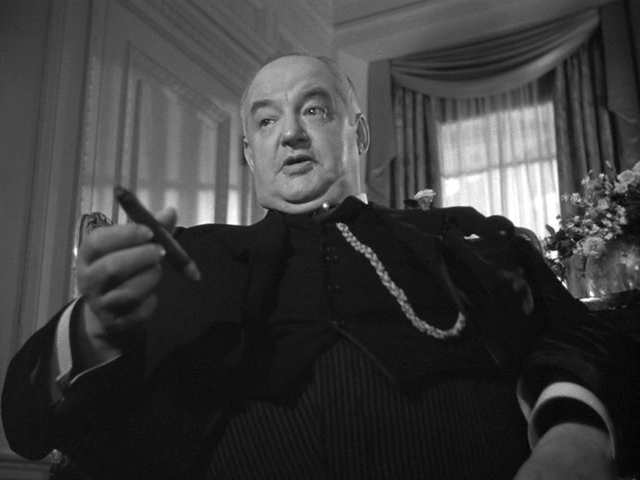
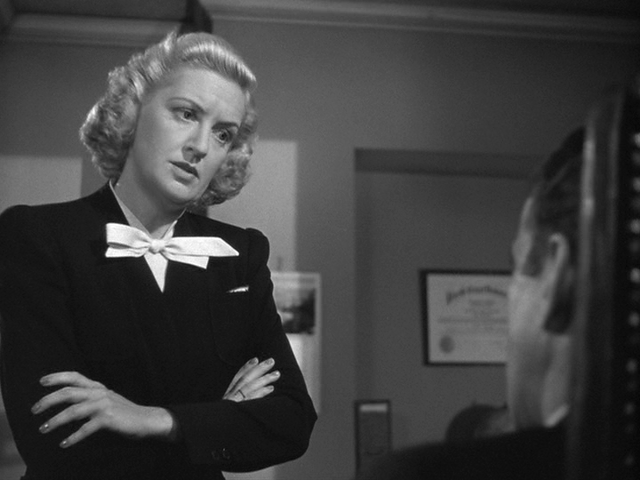
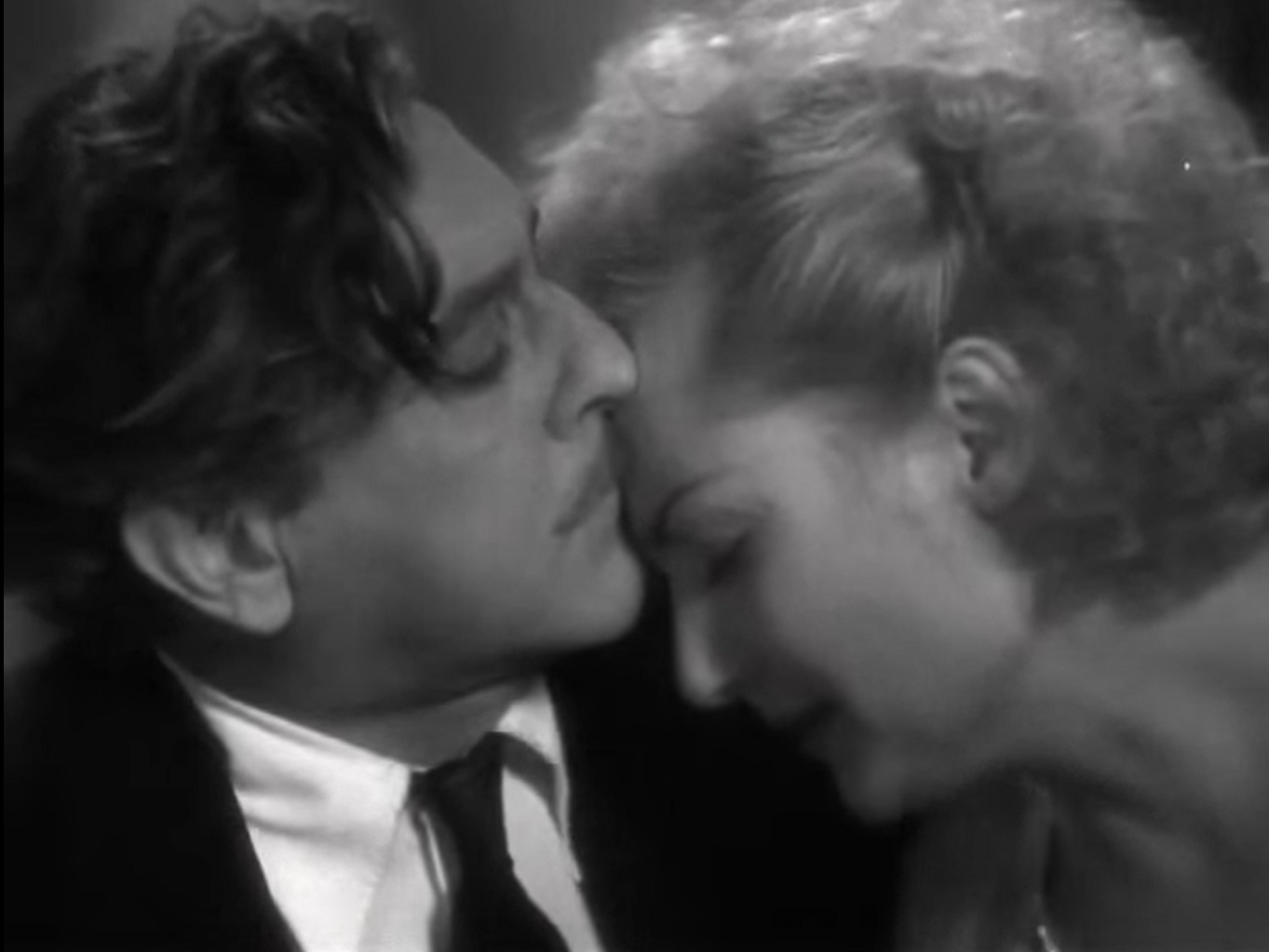
Peary refers to this atmospheric film by director Jacques Tourneur as “the best horror movie of the science-fiction-dominated fifties, the most intriguing picture ever made about witchcraft, and the most intelligent, visually impressive entry to the genre” since Val Lewton’s films of the 1940s. While these superlatives may or may not be warranted, it’s certainly true that Night of the Demon remains stellar adult entertainment, and deserves its status as an enduring cult film. Charles Bennett’s script was notoriously rewritten by producer Hal Chester — a fate which Peary discusses at length in his Cult Movies 2 — but it manages to retain “the grace and literate quality as well as the sinister feel and elements of mystery and suspense (as opposed to shock) that distinguished Bennett’s scripts for Alfred Hitchcock”. In addition, as Peary notes, the material was perfect for Tourneur, who “returned to his forties roots” by “frighten[ing] viewers through such fundamental fears as darkness, sudden sounds, and wild animals”, and who created a “shadowy world” where “the battle between light and darkness, good and evil, science and magic, fate and free will is continuous, and where characters are controlled less by reason than by subconscious.”

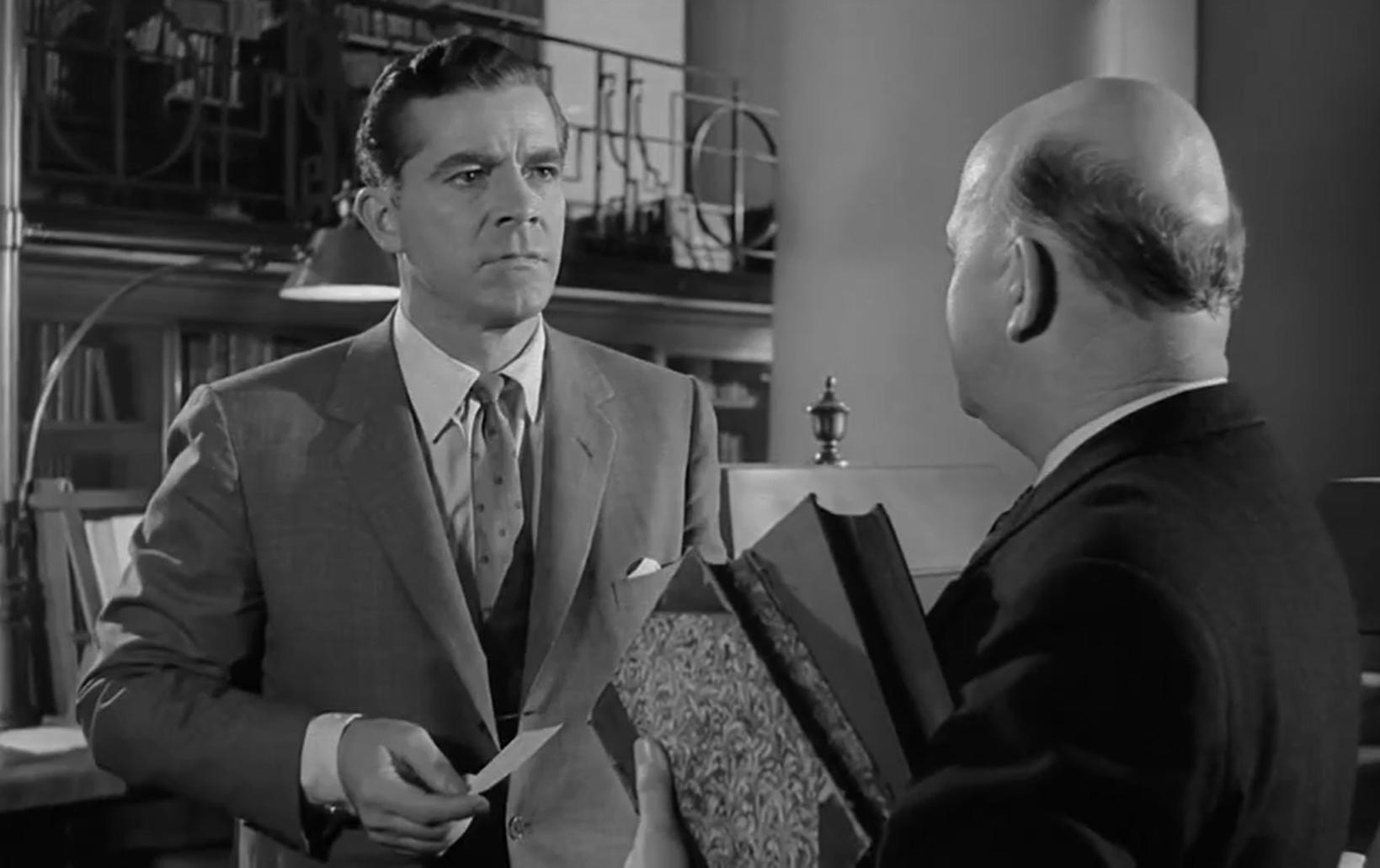
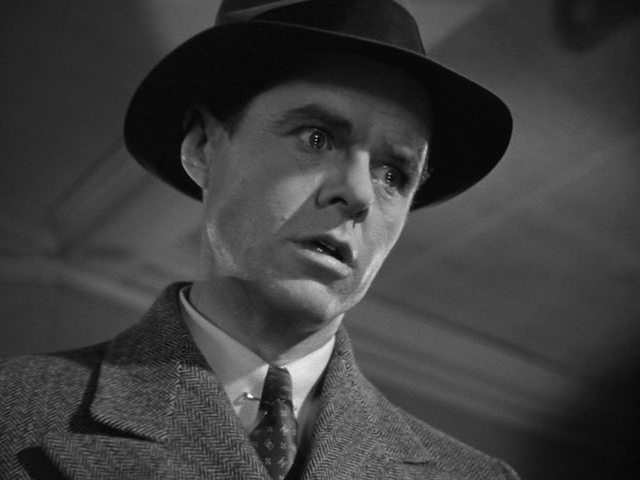
To that end, Dana Andrews is perfectly cast as Dr. Holden, an outsider (an American in England) who — much like his hardboiled detective in Laura (1944) — finds himself sucked into and “seduced” by a world he’s entirely unfamiliar with.

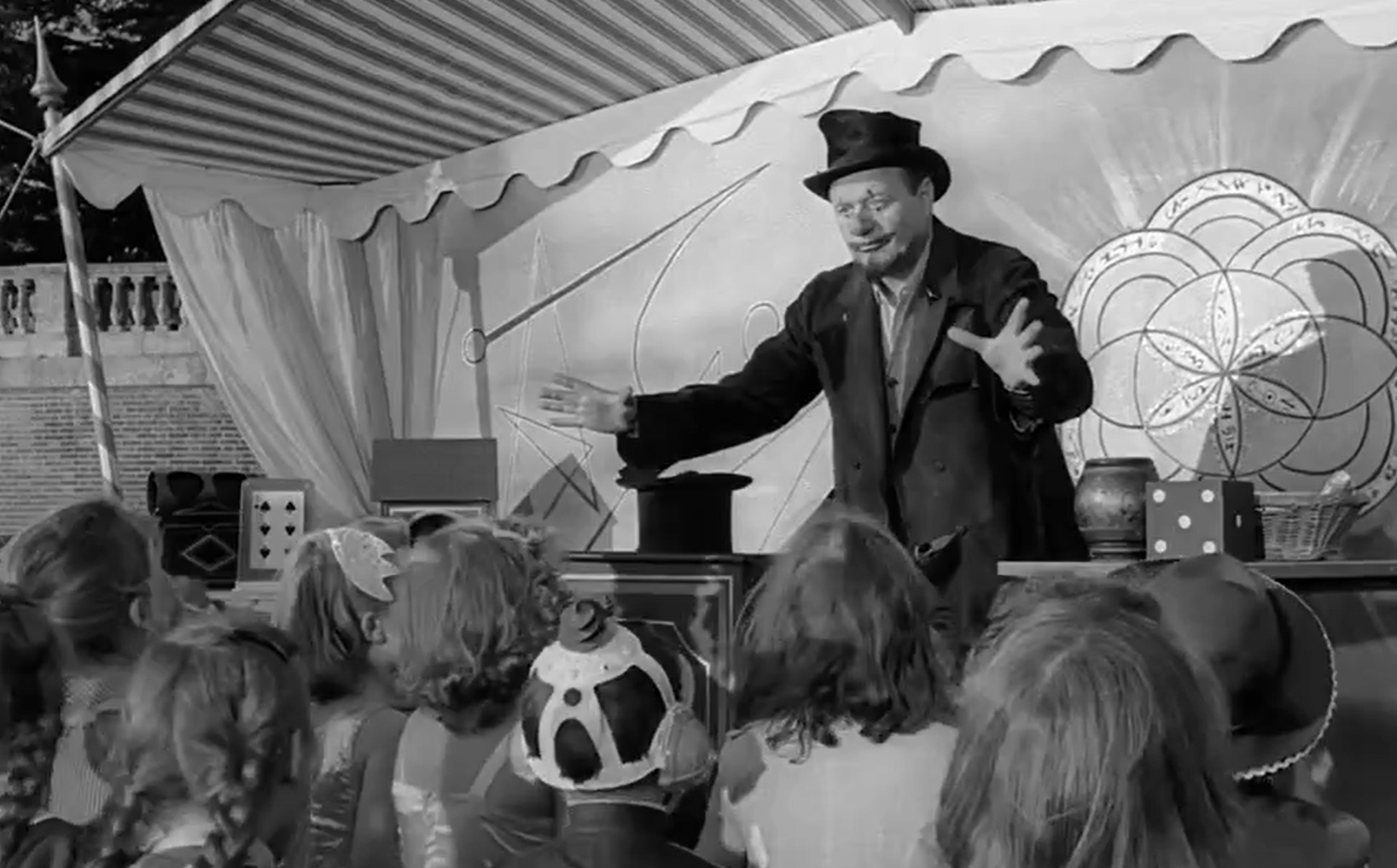
We understand his initial reluctance to believe in witchcraft, and it’s to Tourneur’s credit that we are gradually convinced — right alongside Holden — about the veracity of Dr. Karswell’s supernatural powers. Several key scenes of terror build upon one another, eventually resulting in a truly ominous sense of doom: Karswell conjures up a powerful storm out of thin air during a party he’s hosting for a group of orphans:

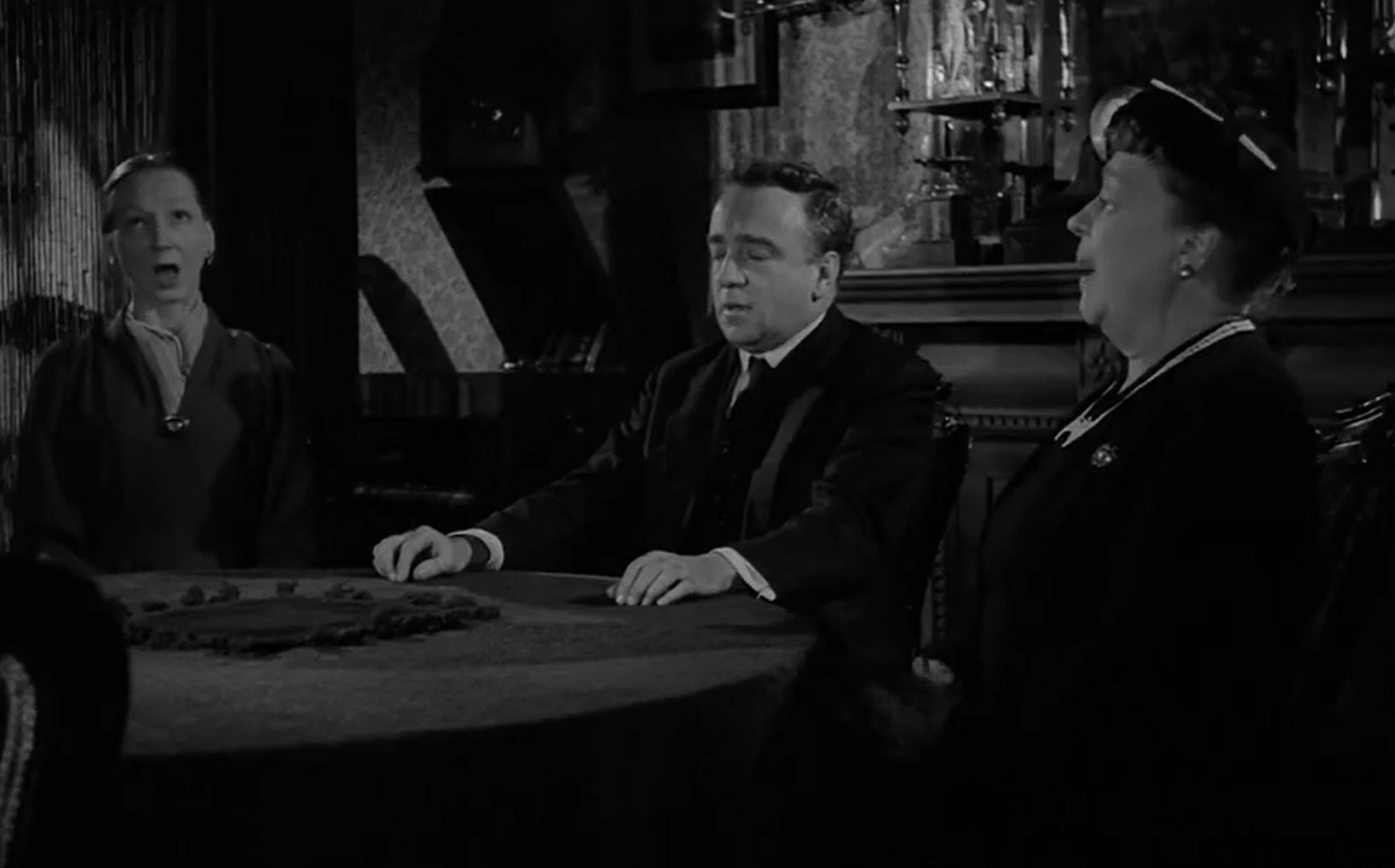
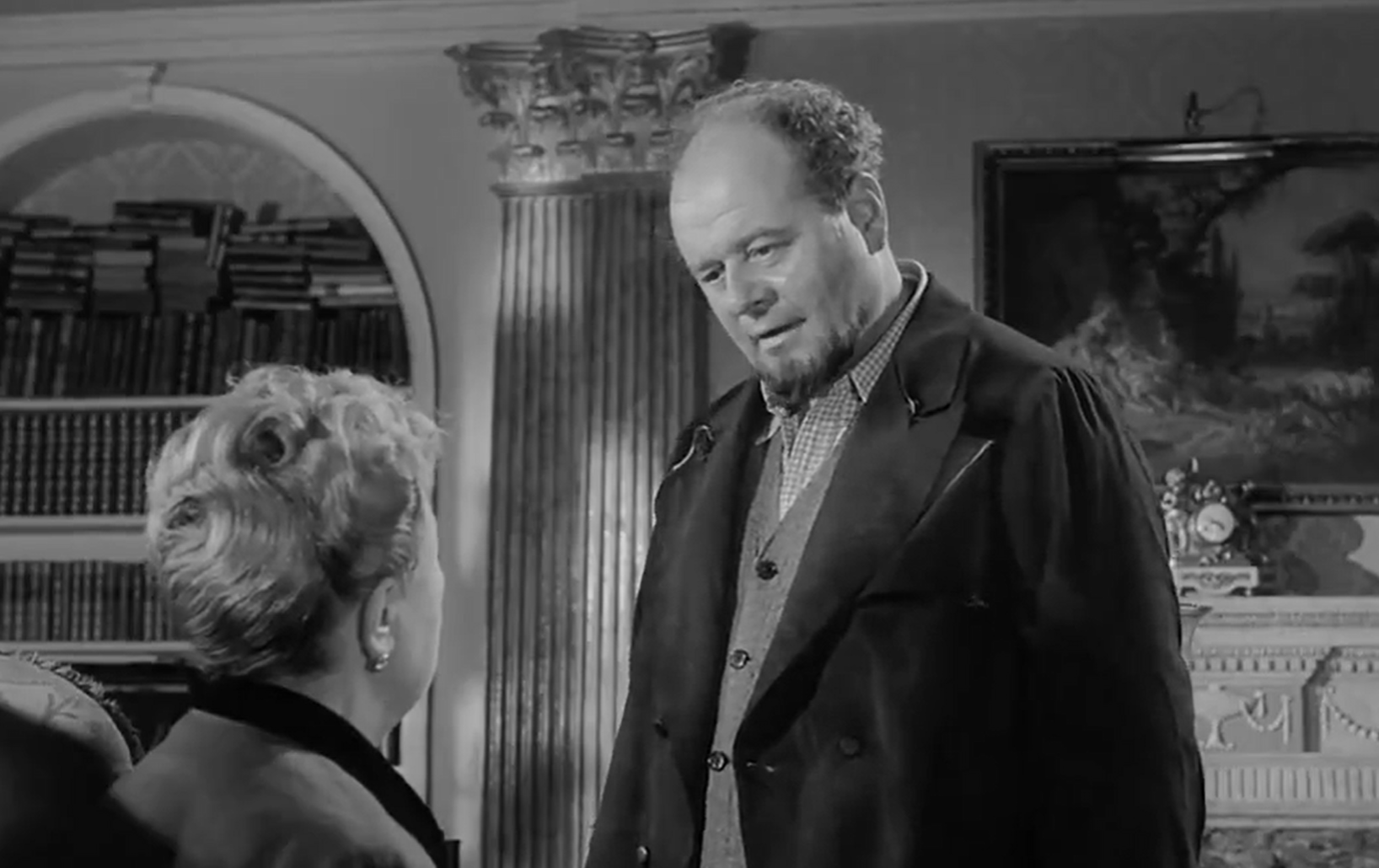
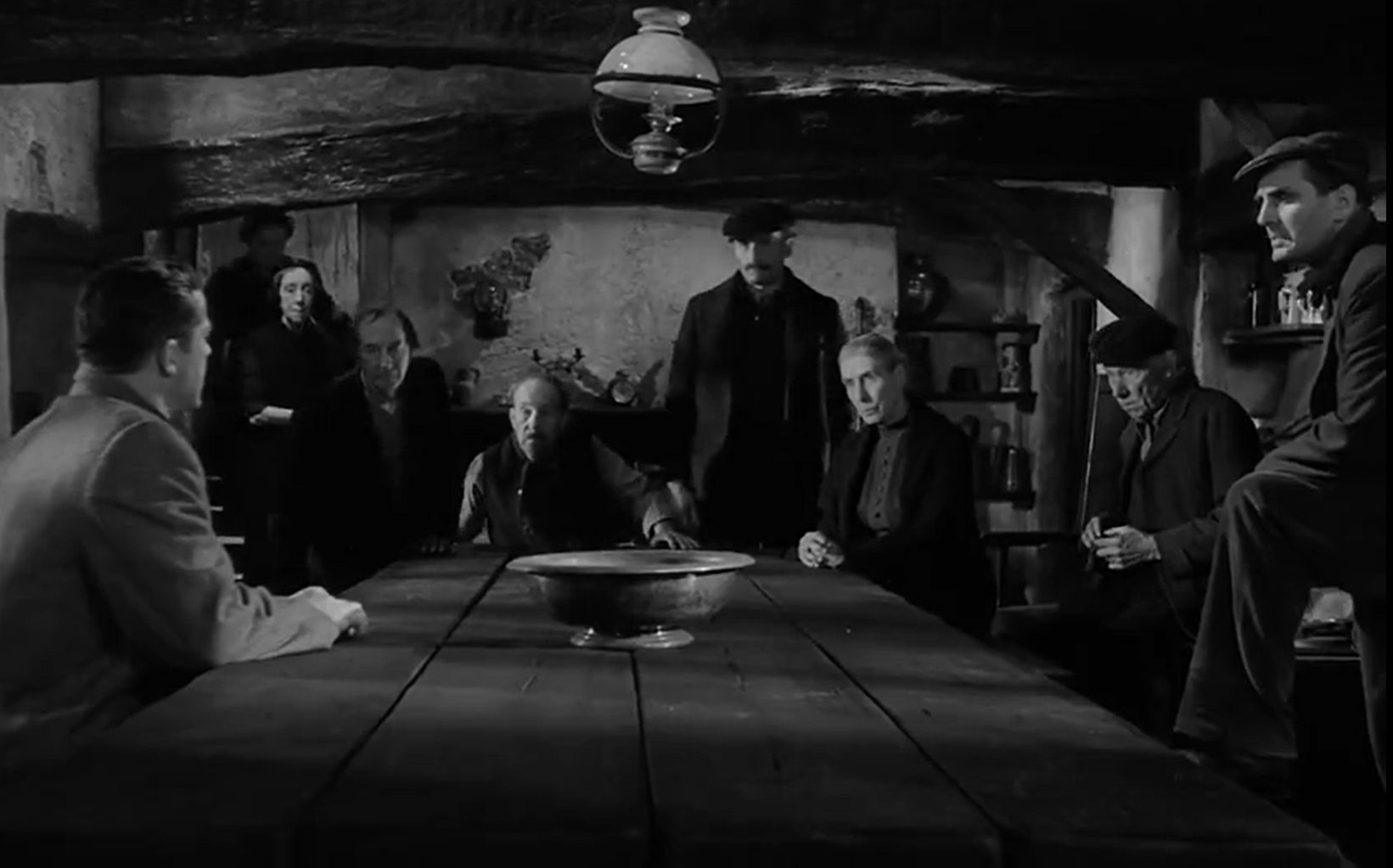
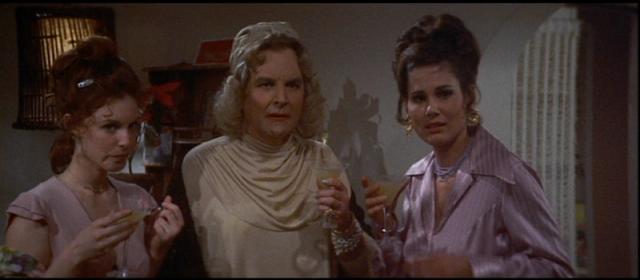
… a “bizarre seance” is hosted by Karswell’s “daffy mother” (Athene Seyler):

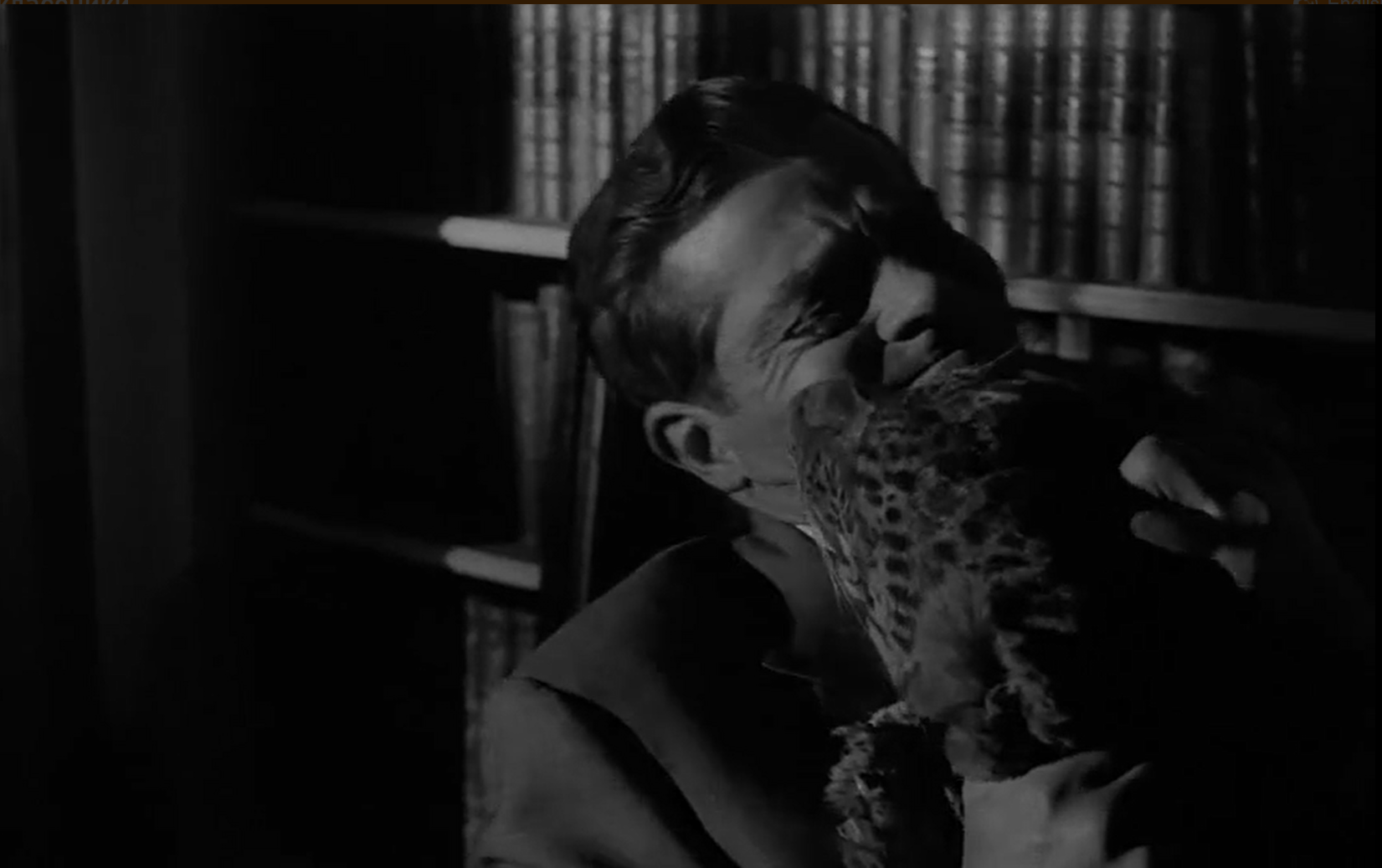
… Holden is attacked by a housecat “disguised” as an enormous feline:

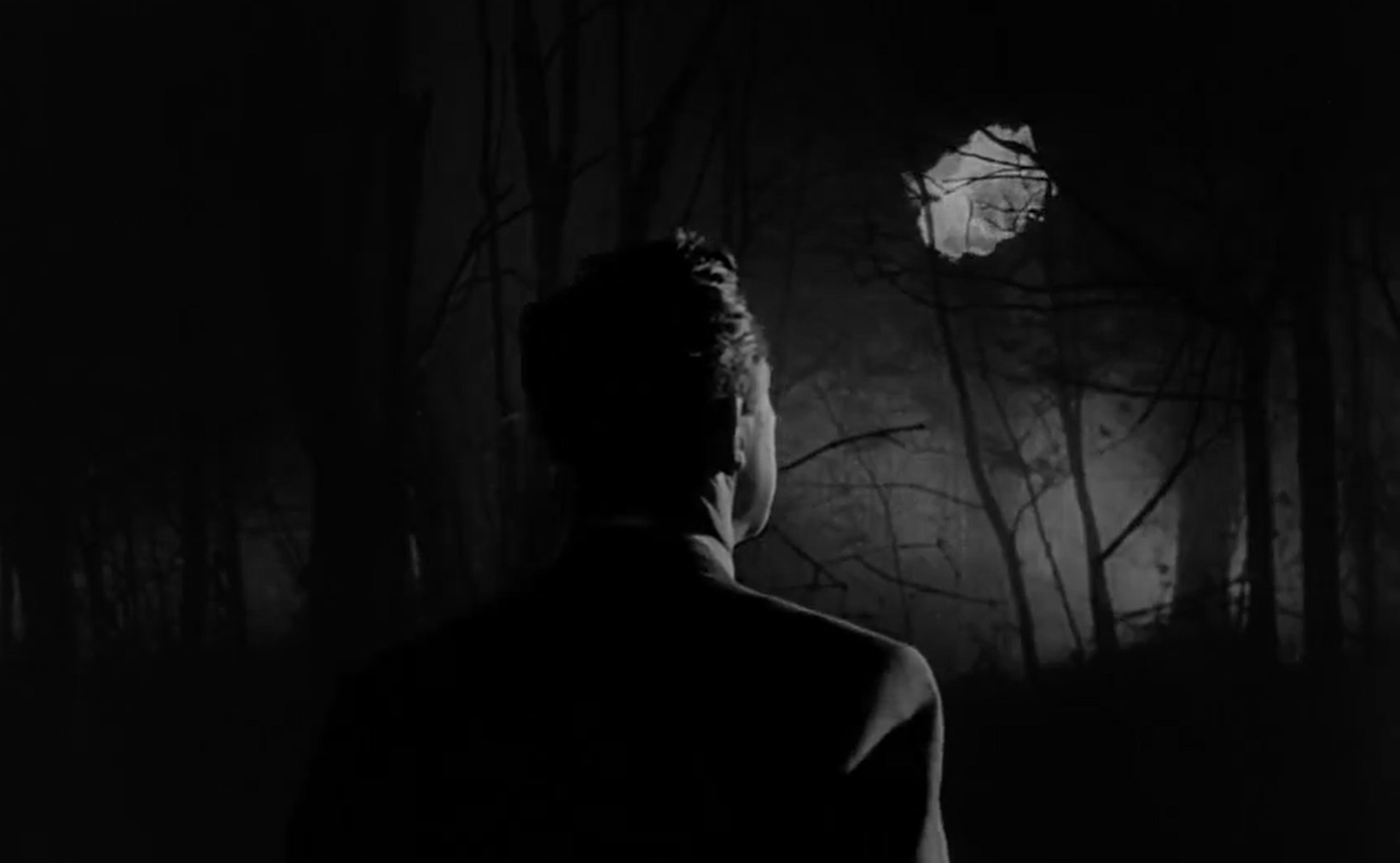
… Holden is chased by a smoke ball while walking through the woods, surrounded by giant footprints.

The film’s biggest controversy continues to center around producer Hal Chester’s inclusion (not part of Bennett’s original script) of an enormous demon, which appears in the very first scene and leaves no doubt in viewers’ minds about the existence of underworld forces at play.

Peary is of the opinion that if “Lewton had had such a spectacular monster” at his disposal, he would “have shown it”, given that it’s “more terrifying than anything we could imagine” — and I tend to agree. Equal props must go towards Niall MacGinnis in a “superb” performance as Dr. Karswell; he projects arrogance and creepiness (note his clown costume during the orphan party) in just the right proportions.

Note: One widely circulated American version of the film leaves out about thirteen minutes of the story (discussed at length in DVD Savant’s review).

Redeeming Qualities and Moments:

  • Niall MacGinnis as Dr. Karswell
  • Edward Scaife’s atmospheric cinematography

Must See?
Yes, as a certifiable cult favorite. Discussed at length in Peary’s Cult Movies 2 (1983).

Categories

  • Cult Movie
  • Important Director

Links:

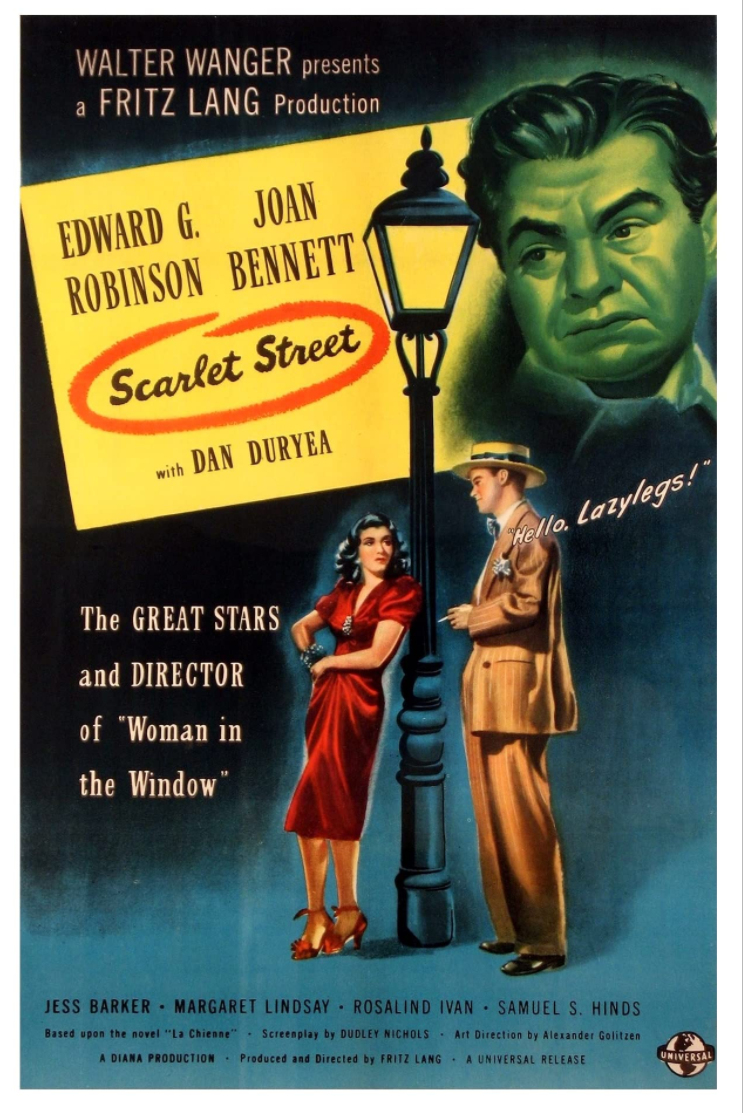
Scarlet Street (1945)

Scarlet Street (1945)

“How can a man be so dumb?”

Synopsis:
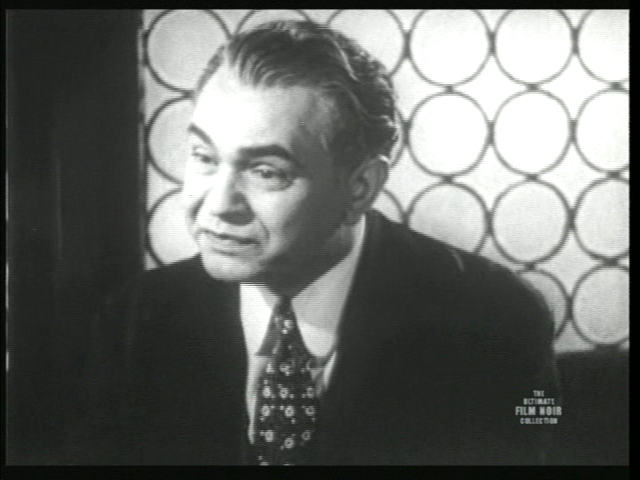
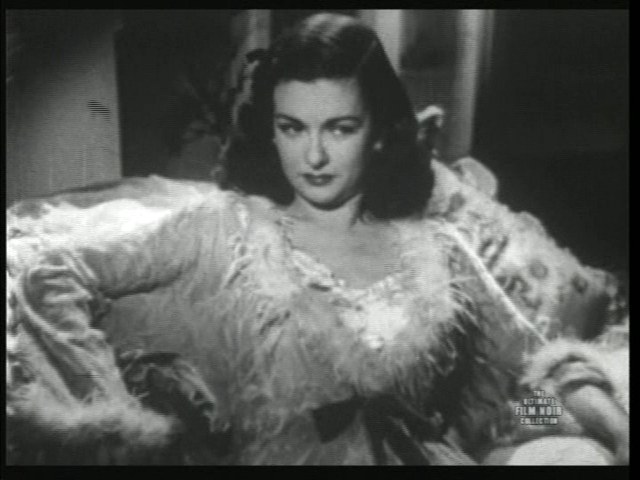
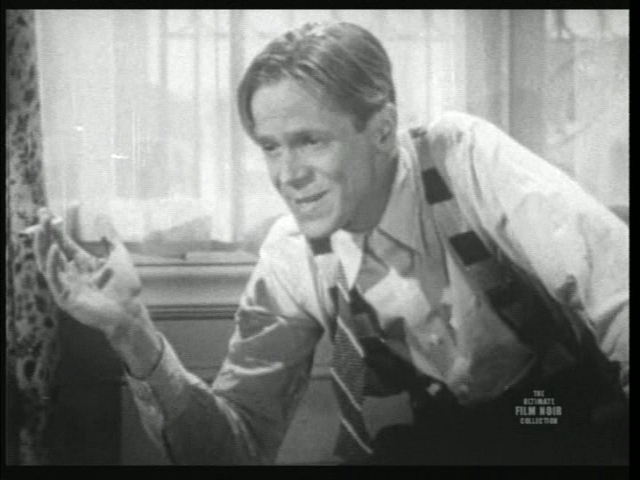
A middle-aged accountant (Edward G. Robinson) henpecked by his wife (Rosalind Ivan) falls for a beautiful prostitute (Joan Bennett) whose pimp boyfriend (Dan Duryea) convinces her to con Robinson into renting her a studio apartment. Soon Bennett is pawning Robinson’s amateur paintings as her own, with unexpected consequences.

Genres, Themes, Actors, and Directors:

  • Artists
  • Con-Artists
  • Dan Duryea Films
  • Edward G. Robinson Films
  • Femmes Fatales
  • Fritz Lang Films
  • Henpecked Husbands
  • Joan Bennett Films
  • Midlife Crisis
  • Mistaken Identities

Response to Peary’s Review:
Fritz Lang’s American noir version of Jean Renoir’s La Chienne (1931) is a rare remake which succeeds entirely on its own merits; indeed, Peary nominates it as one of the Best Films of the Year in his Alternate Oscars book. As in Renoir’s film, the male protagonist — in this case, a perfectly cast Edward G. Robinson — is “the weakling husband of a domineering nag” who “forces him to paint, his dearest hobby, in the bathroom”, and whose life is changed irrevocably by his chance encounter with a duplicitous femme fatale. Peary notes that “Robinson is such a pathetic man that some viewers find no enjoyment from this film”, which “delves into [Lang’s] familiar serious themes — a man falls for a femme fatale and falls into fate’s trap, everyone becomes his enemy, an innocent man is convicted of a crime, and the startling ending is unbearably cruel” — but he argues that “scriptwriter Dudley Nichols regarded the piece as a comedy, with ironic twists, witty dialogue…, and a pathetic, wimpy character who somehow turns the tables on everyone”. Indeed, Robinson’s henpecked, boring life is so dismal before he meets Bennett that it’s difficult to feel too bad about the events that eventually transpire — especially given that he finally experiences romantic pleasure (however false) for the first time, and finds his artwork (his true passion) validated by critics. Plus, as Peary notes, Robinson’s effect on everyone he knows — including Bennett, Duryea, and Ivan — involves “either ruining their lives or ending them”, so nobody emerges unscathed in this world of masochists and manipulators.

Redeeming Qualities and Moments:

  • Edward G. Robinson — nominated by Peary as Best Actor of the Year in his Alternate Oscars book — as Chris Cross (what a name!)
  • Joan Bennett — who Peary awards an Alternate Oscar as Best Actress of the Year — as Kitty
  • Dan Duryea as Johnny
  • Milton Krasner’s noir-ish cinematography

Must See?
Yes, as one of Lang’s minor masterpieces.

Categories

  • Important Director

Links:

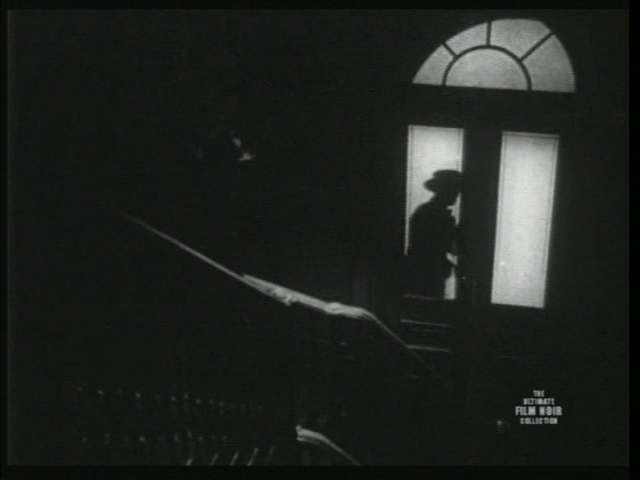
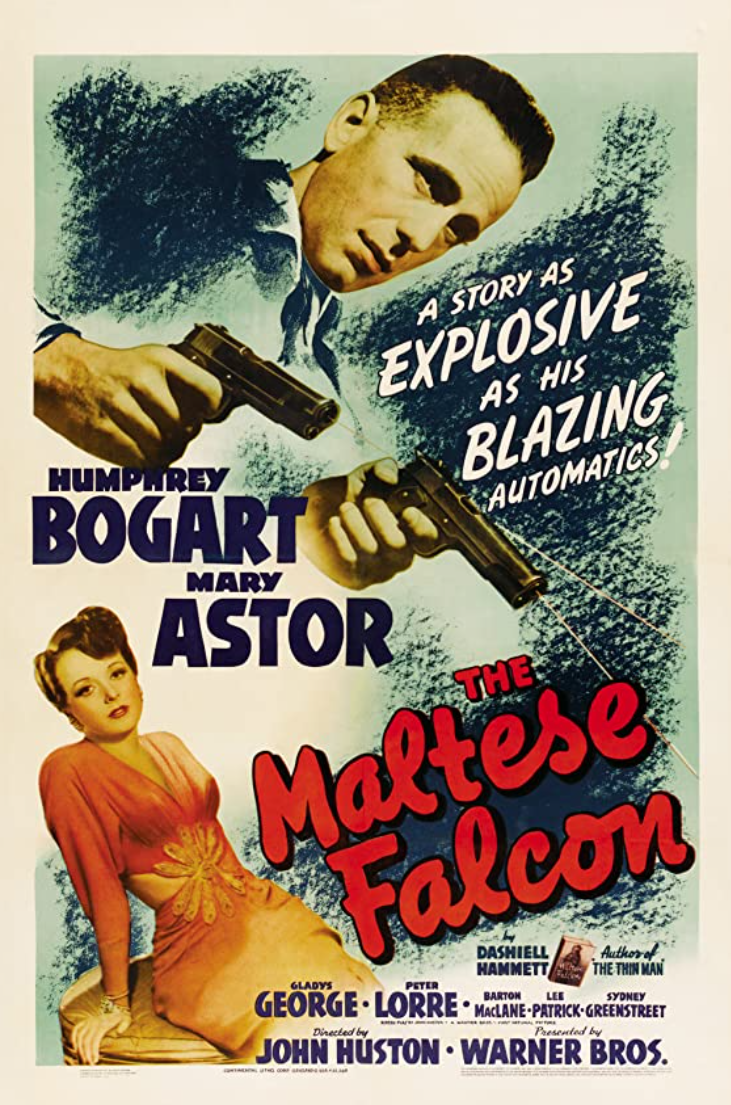
Maltese Falcon, The (1941)

Maltese Falcon, The (1941)

“I don’t mind a reasonable amount of trouble.”

Synopsis:
When his partner (Jerome Cowan) is murdered while doing investigation work for a beautiful, mysterious woman (Mary Astor), private detective Sam Spade (Humphrey Bogart) digs more deeply into the case, and soon finds himself caught up in a desperate search for an invaluable relic known as the Maltese Falcon.

Genres, Themes, Actors, and Directors:

  • Detectives and Private Eyes
  • Elisha Cook Jr. Films
  • Femmes Fatales
  • Humphrey Bogart Films
  • John Huston Films
  • Mary Astor Films
  • Murder Mystery
  • Peter Lorre Films
  • Sydney Greenstreet Films
  • Ward Bond Films

Response to Peary’s Review:
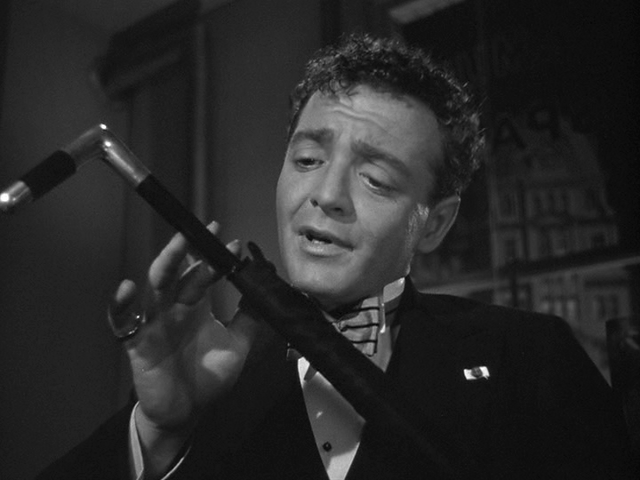
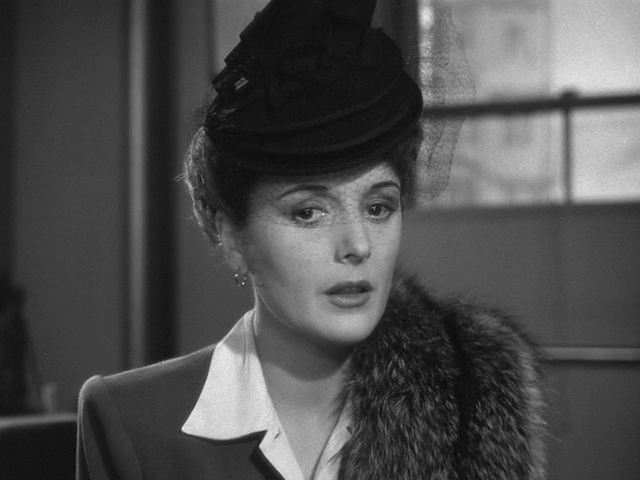
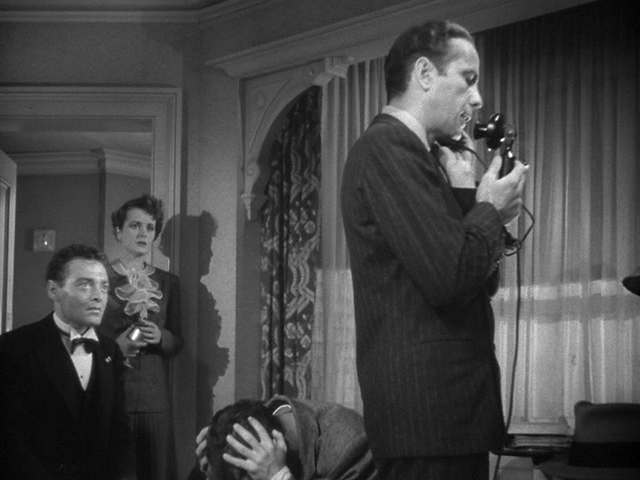
As Peary notes, this third cinematic adaptation of Dashiell Hammett’s novel (following Roy Del Ruth’s 1931 version, and William Dieterle’s Satan Met a Lady in 1936) is a “rare imitation that was more impressive than the original”. The story itself — which remains remarkably faithful to Hammett’s vision — is rather convoluted, and requires multiple viewings to fully absorb; instead, what’s really special about this “true masterpiece” is its “incredible pacing” — accomplished “by Huston’s rapid-fire editing within scenes and dialogue that shoots back and forth” — and the “impeccable casting” choices, most notably 62-year-old Sidney Greenstreet (in his screen debut) as obese Kasper Gutman; the “incomparable Peter Lorre” as Gutman’s “neurotic, emotional, effeminate, gushy partner” (as Peary notes, “one second he’s giggling, the next he’s crying”); and, of course, Humphrey Bogart as Sam Spade, a “complex character” who’s simultaneously “witty, patient, sadistic, and cynical”. Arthur Edeson’s impressive “low-key camera work” deserves mention as well, given that it “helped make film noir the dominant style of forties detective films”. As Peary notes, this “landmark picture” — which he nominates as one of the Best Pictures of the Year in his Alternate Oscars book — “set the style and tone for hardboiled detective films”, and is most definitely worthy repeat viewing for all film fanatics.

Redeeming Qualities and Moments:

  • Humphrey Bogart as Sam Spade (Peary nominates him as Best Actor of the Year in his Alternate Oscars book)
  • Peter Lorre as Joel Cairo
  • Mary Astor as Brigid O’Shaughnessy
  • Sydney Greenstreet as Kasper Gutman
  • Lee Patrick as Effie, Spade’s loyal secretary
  • Elisha Cook Jr. as Gutman’s wide-eyed “gunsel”, Wilmer
  • Arthur Edeson’s noirish b&w cinematography
  • John Huston’s masterful directorial style
  • Huston’s screenplay (by way of Dashiell Hammett’s now-classic pulp novel)

Must See?
Yes. This acknowledged cult classic should be seen and enjoyed multiple times by film fanatics. Discussed at length in Peary’s Cult Movies (1981).

Categories

  • Cult Movie
  • Genuine Classic
  • Important Director

(Listed in 1001 Movies You Must See Before You Die)

Links:

High Plains Drifter (1972)

High Plains Drifter (1972)

“It’s what people know about themselves inside that makes ’em afraid.”

Synopsis:
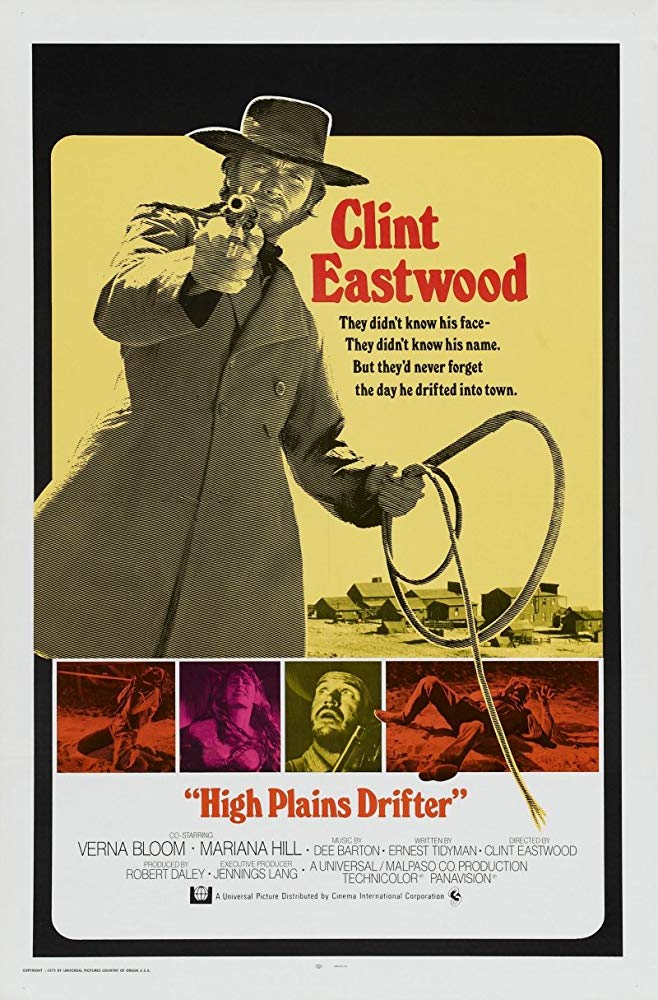
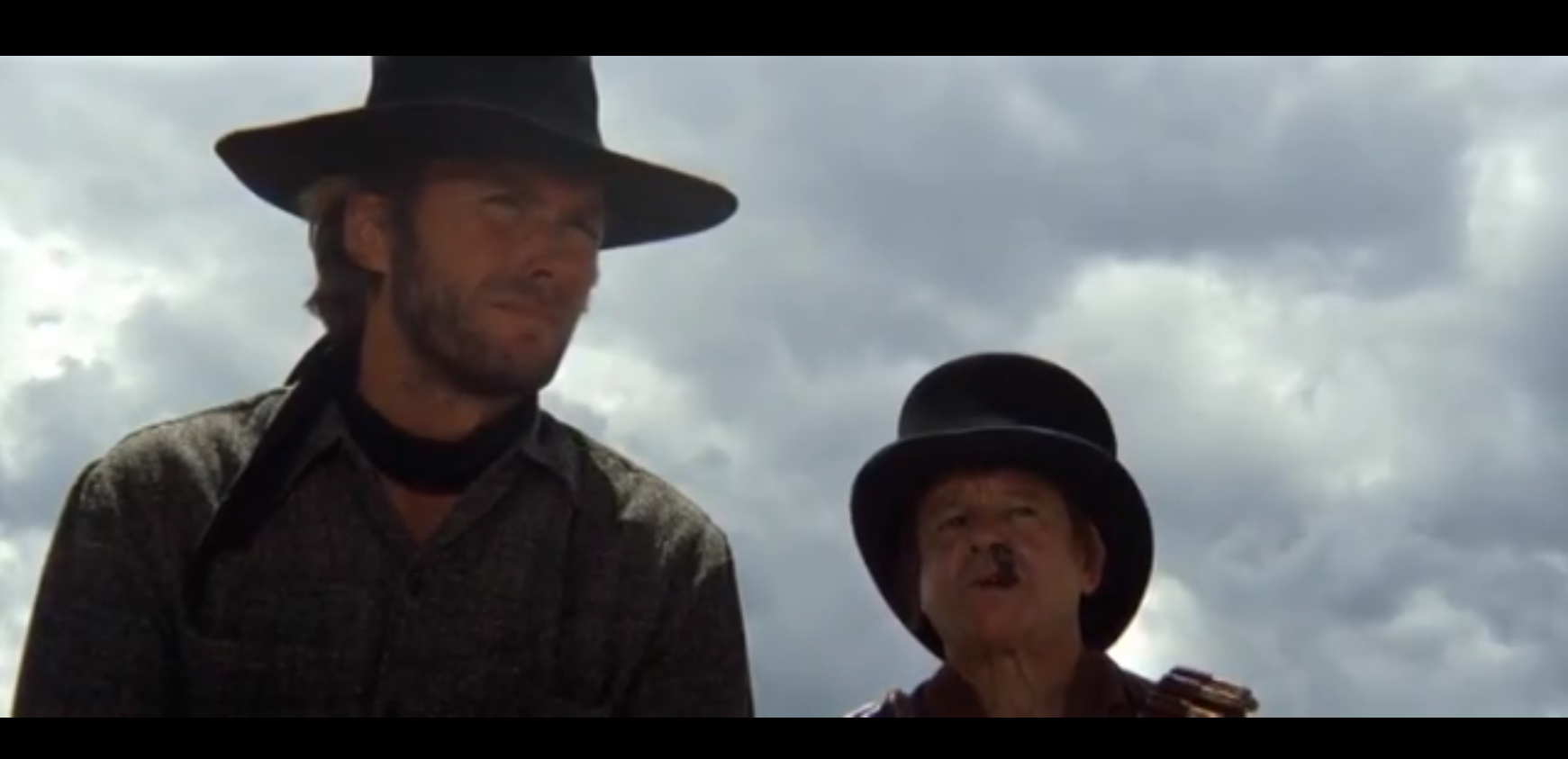
A nameless gunfighter (Clint Eastwood) is hired by the cowardly inhabitants of Lago to protect them against three vicious killers (led by Geoffrey Lewis), who brutally murdered their former marshal.

Genres, Themes, Actors, and Directors:

  • Clint Eastwood Films
  • Revenge
  • Westerns

Response to Peary’s Review:
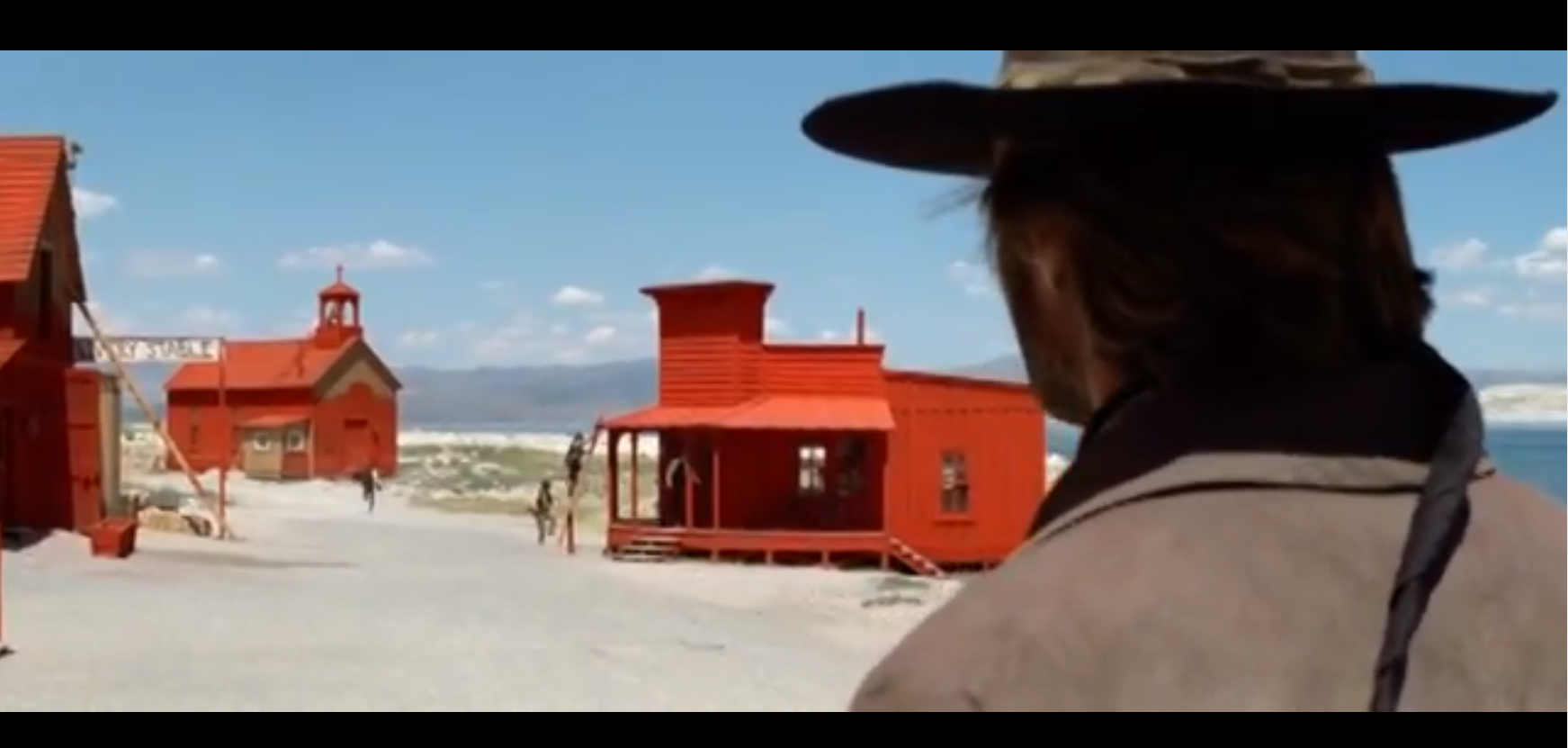
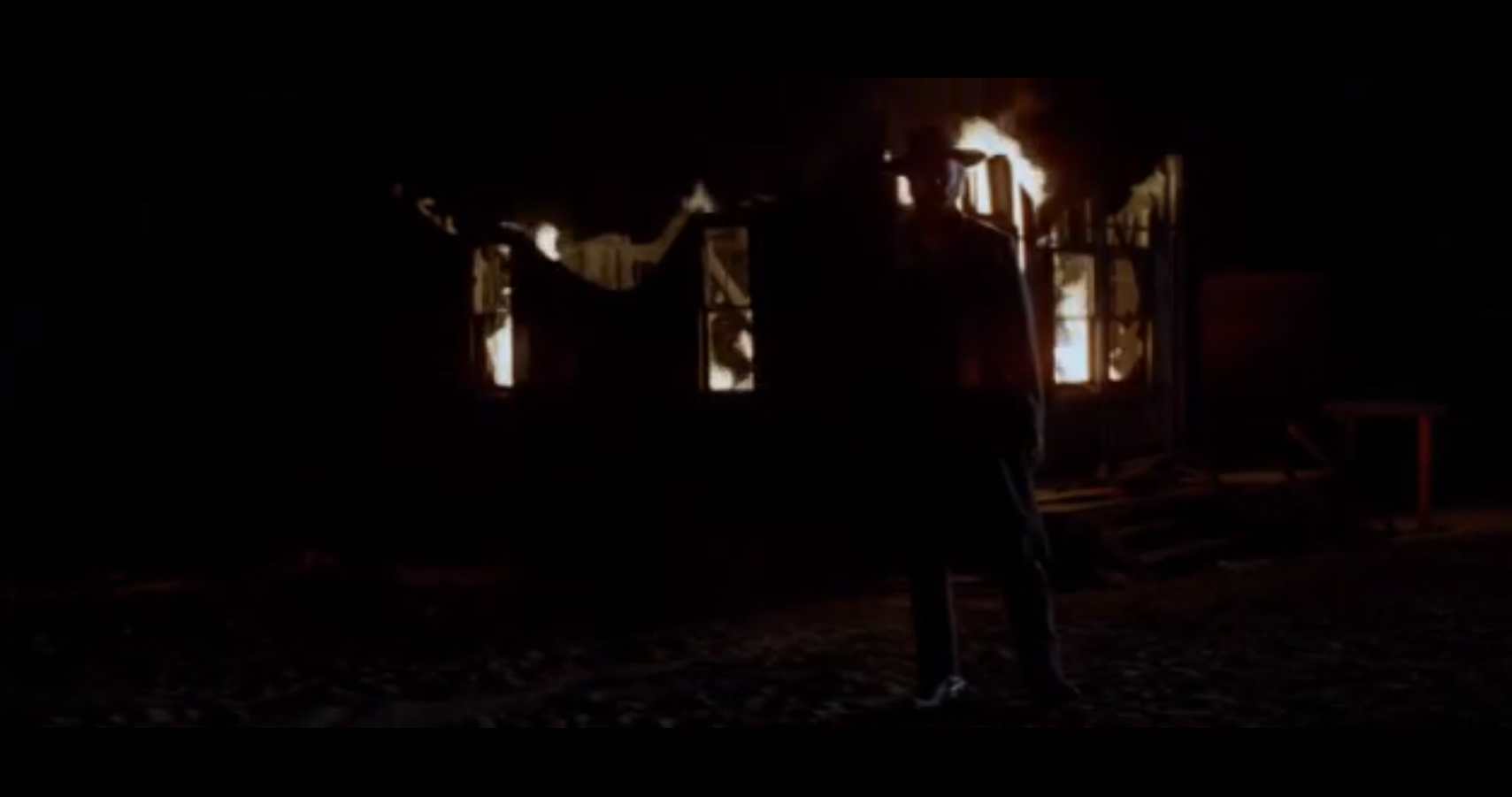
This “well-directed, exciting, oddly amusing film” — which was “inspired by the tragic case of Kitty Genovese, who was brutally murdered in New York while her neighbors pulled down their shades, locked their doors, and turned off their lights” — remains one of the most provocative films in actor-director Clint Eastwood’s oeuvre. A darkly satirical “anti-western”, High Plains Drifter spares no effort in exposing the cravenness of an “entire population [who] did nothing while three bad men killed their marshal”; it boldly posits that these cowards deserve the descent of Eastwood’s nameless stranger (“a ruthless, avenging angel dosing out retribution for a wrathful god”) onto their town, which turns into a literal hell on Earth. As in Roger Corman’s The Haunted Palace (1963), the moral of the story here is that a town’s collective actions against truth and justice will inevitably return to haunt them. Note that the opening scene — in which Eastwood brutally “rapes one woman” (Marianna Hill) — remains difficult to stomach, despite one’s eventual understanding that Eastwood’s actions should be read on a metaphorical level.

Redeeming Qualities and Moments:

  • Billy Curtis as Mordechai the Midget
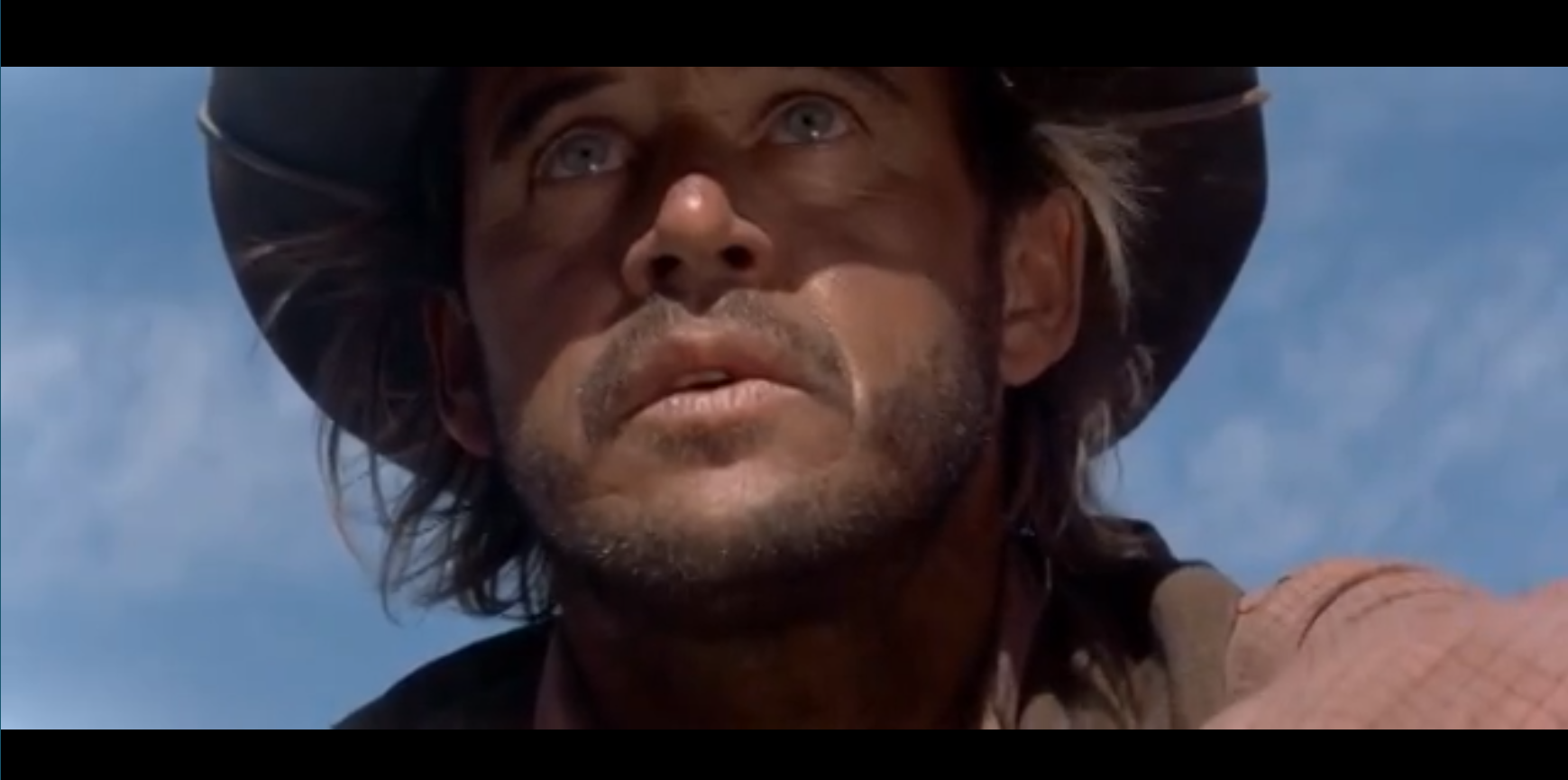
  • Geoffrey Lewis as Stacey Bridges
  • Bruce Surtees’ cinematography
  • Effective set designs (built along the shores of Mono Lake in California)
  • A powerful, visually stunning denouement
  • Ernest Tidyman’s boldly satirical script

Must See?
Yes. This provocative western should be seen by all film fanatics.

Categories

  • Good Show
  • Important Director

(Listed in 1001 Movies You Must See Before You Die)

Links:

Twentieth Century (1934)

Twentieth Century (1934)

“She loves me; I could tell that through her screaming.”

Synopsis:
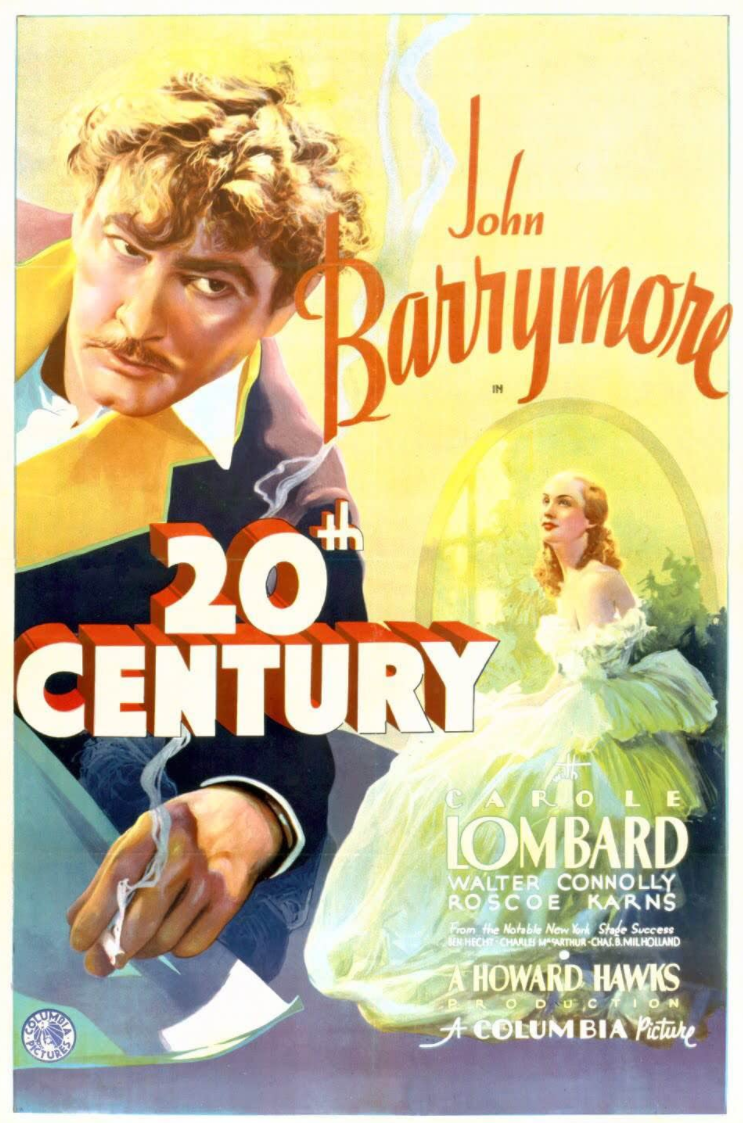
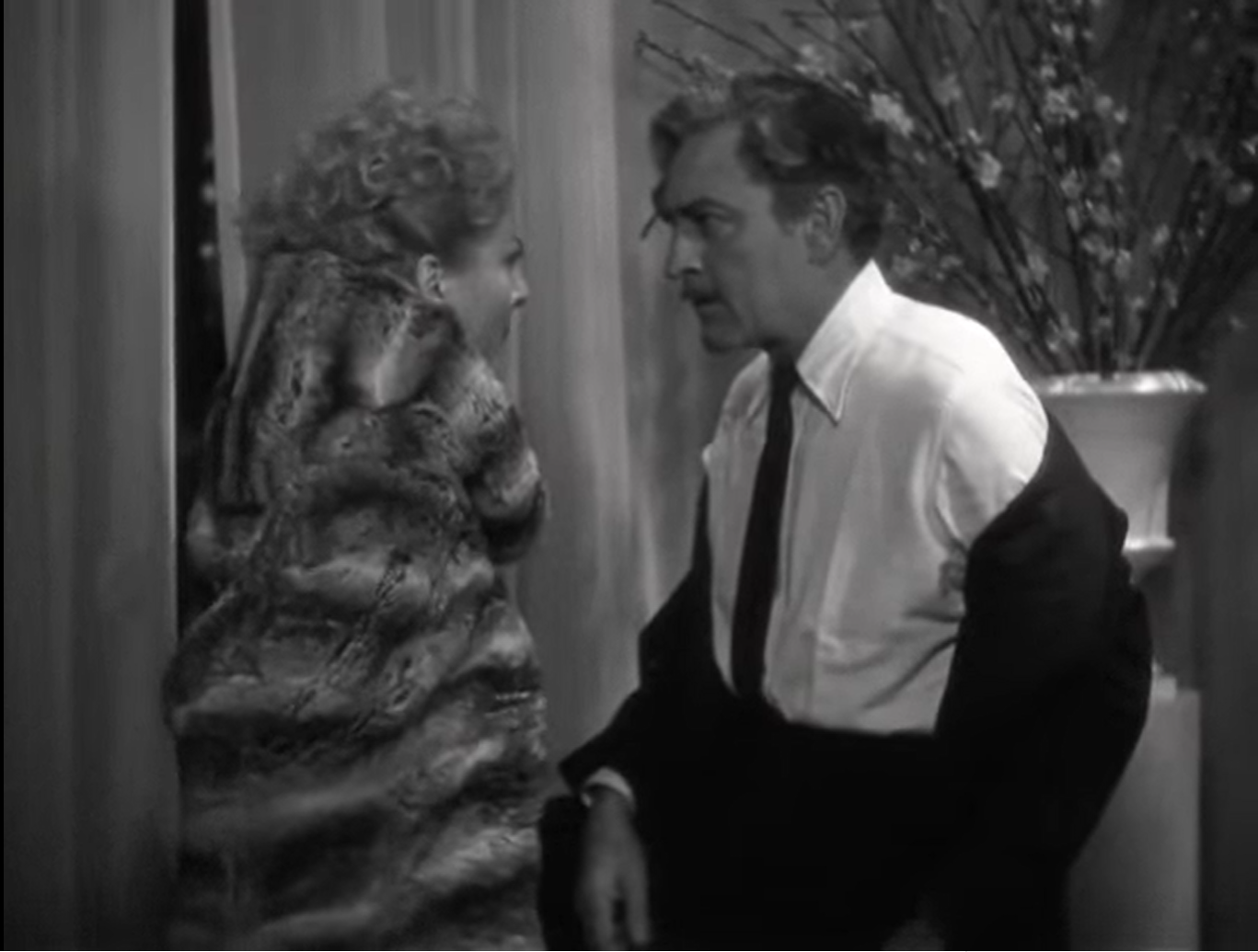
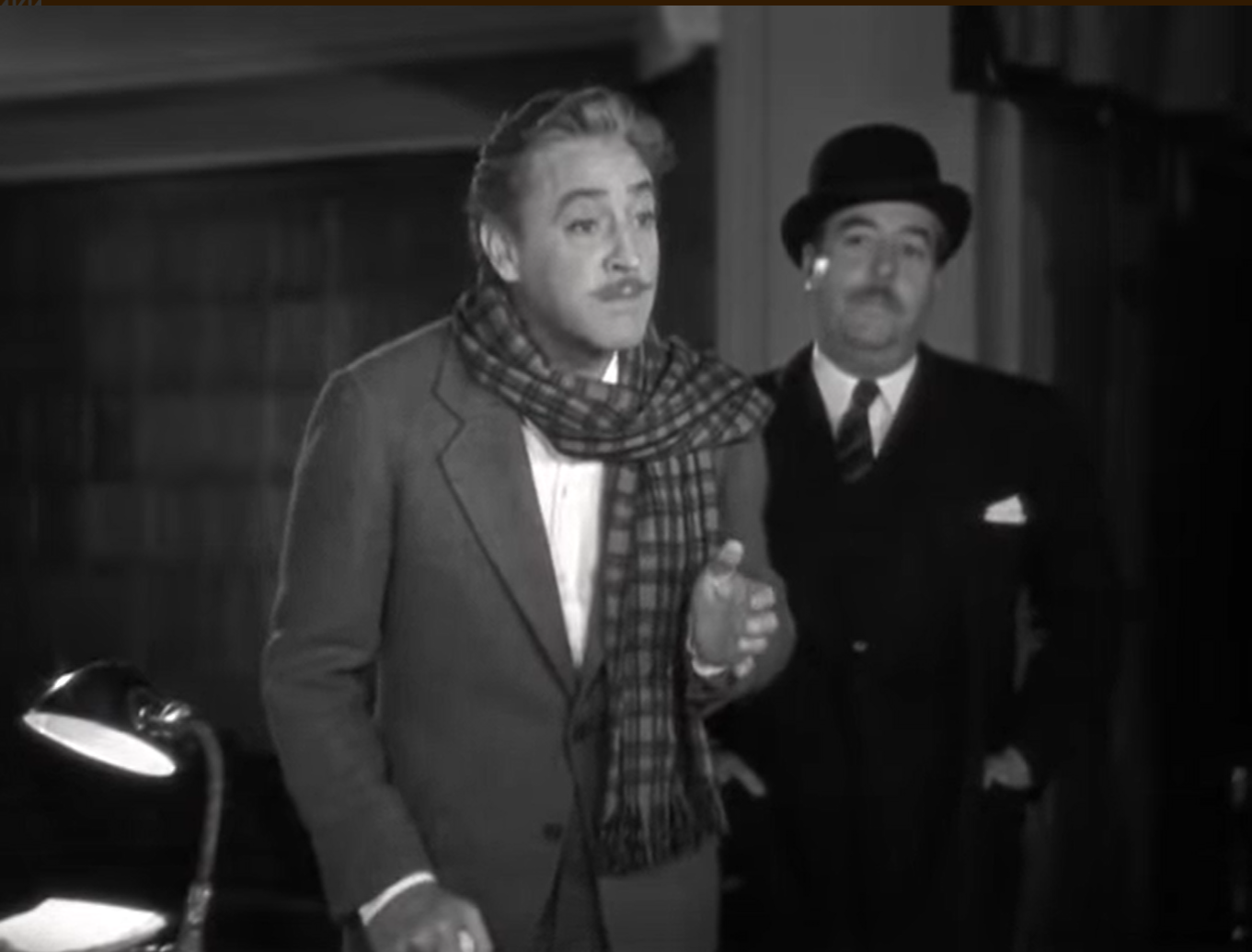
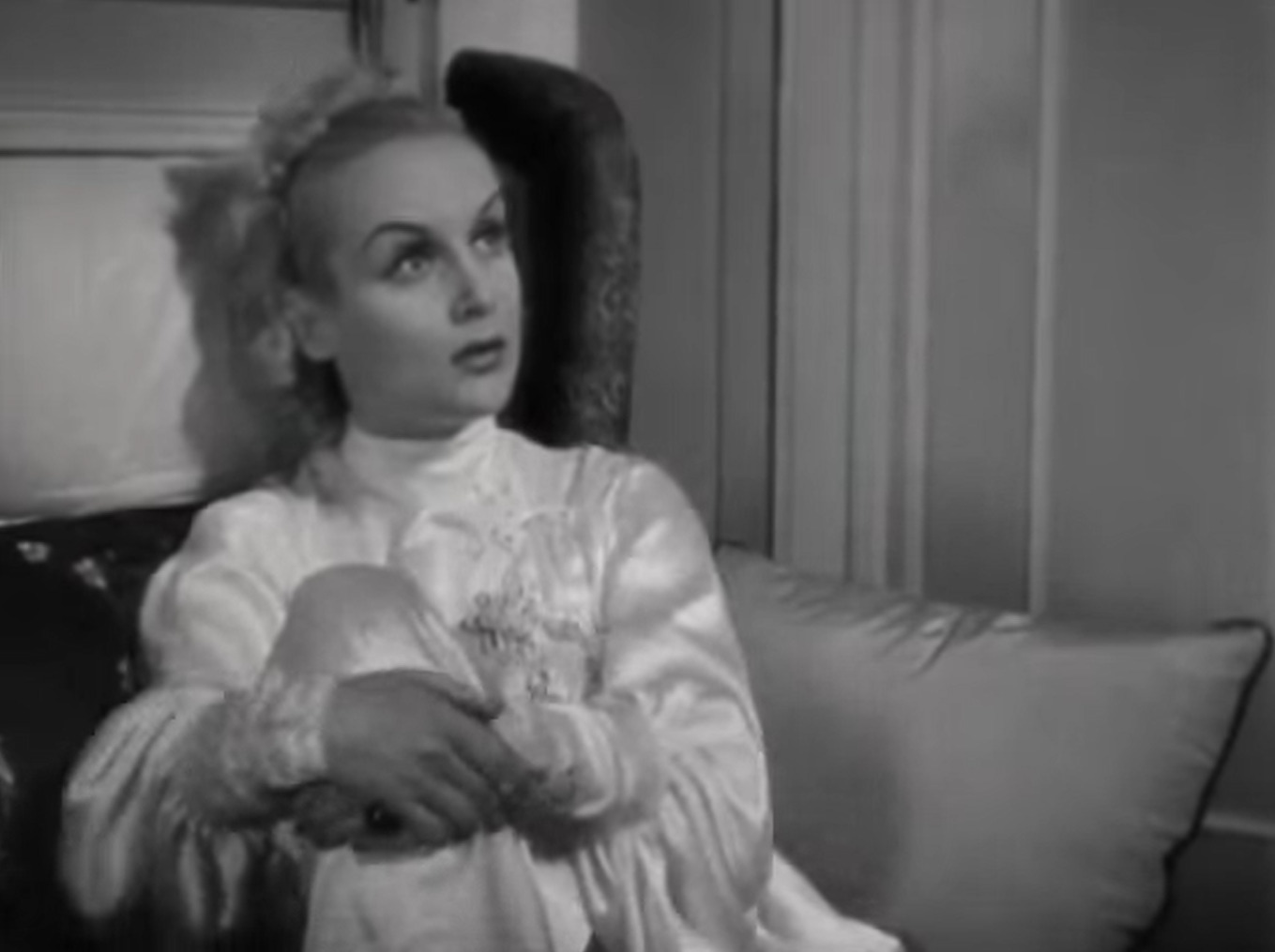
An egomaniacal Broadway producer (John Barrymore) tries to convince his former protege and lover (Carole Lombard) to star in his latest show.

Genres, Themes, Actors, and Directors:

  • Actors and Actresses
  • Carole Lombard Films
  • Comedy
  • Howard Hawks Films
  • John Barrymore Films
  • Play Adaptations
  • Trains and Subways

Response to Peary’s Review:
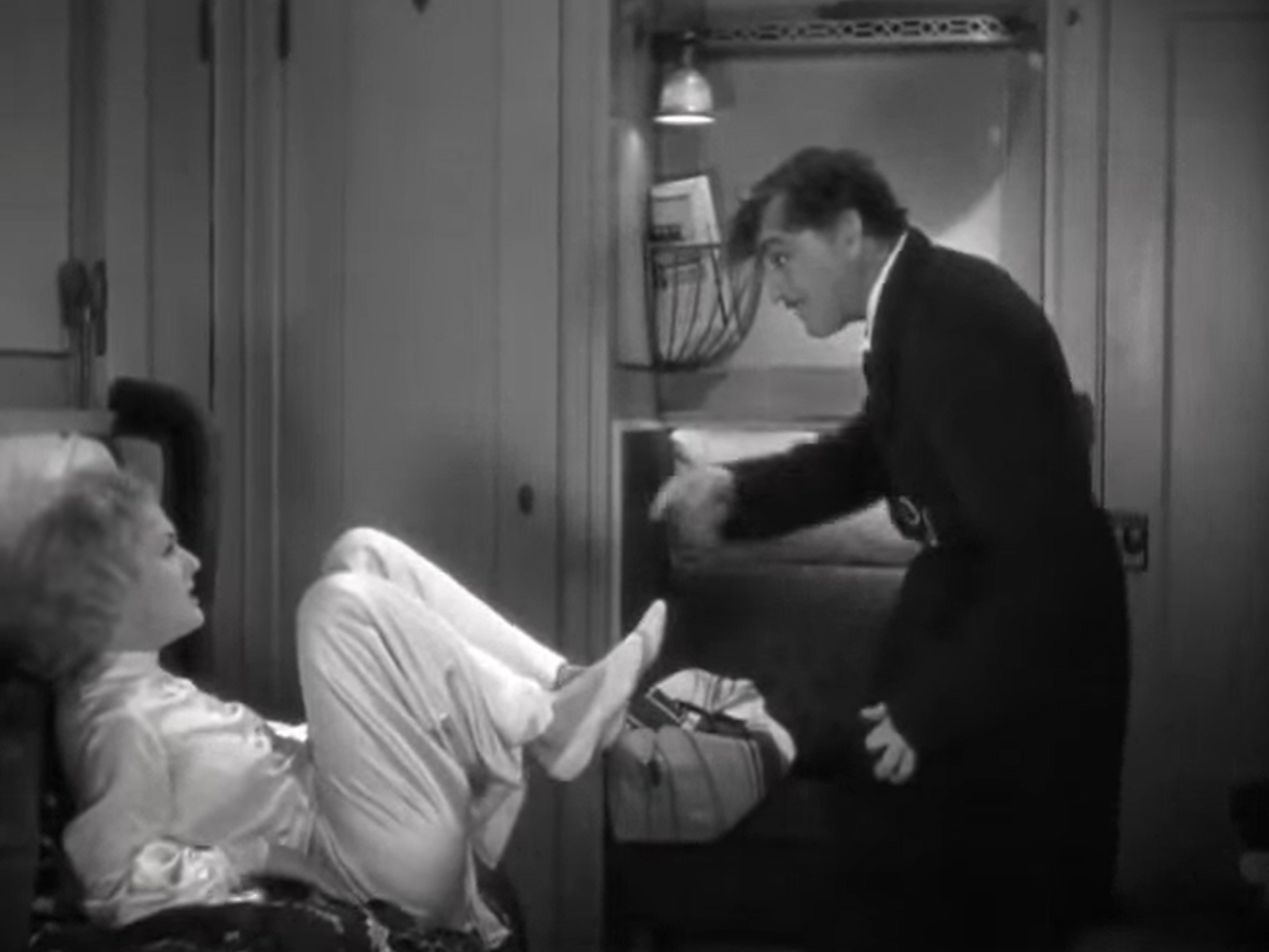
Peary notes that this Howard Hawks classic (co-written by Ben Hecht and Charles MacArthur) “was the first sound comedy to have the male… and female leads… not only carry the brunt of the comedy… [but also] have their characters make absolute fools of themselves” — which, combined with the film’s “frenetic pacing”, is why it’s often considered to be the first “screwball comedy” (rather than Frank Capra’s It Happened One Night, released earlier the same year). The story itself is essentially a no-holds-barred contest of egomaniacal wills between Barrymore (Oscar) and Lombard (Lily), both of whom remain “in a state verging on lunacy” until the “very end” of the story.

Indeed, Lily ultimately “becomes just as pretentious” as Oscar, proving “Hecht and MacArthur’s cynical point… that once the theater gets in your blood, you lose your humanity”.

As Peary points out, while “at times the script is slight… the film itself is consistently funny because of the bravura performances by Barrymore and Lombard” — both of whom are perfectly cast and in rare form here (Peary accurately notes that Lombard is likely the only actress who could come close to matching Barrymore’s hamminess).

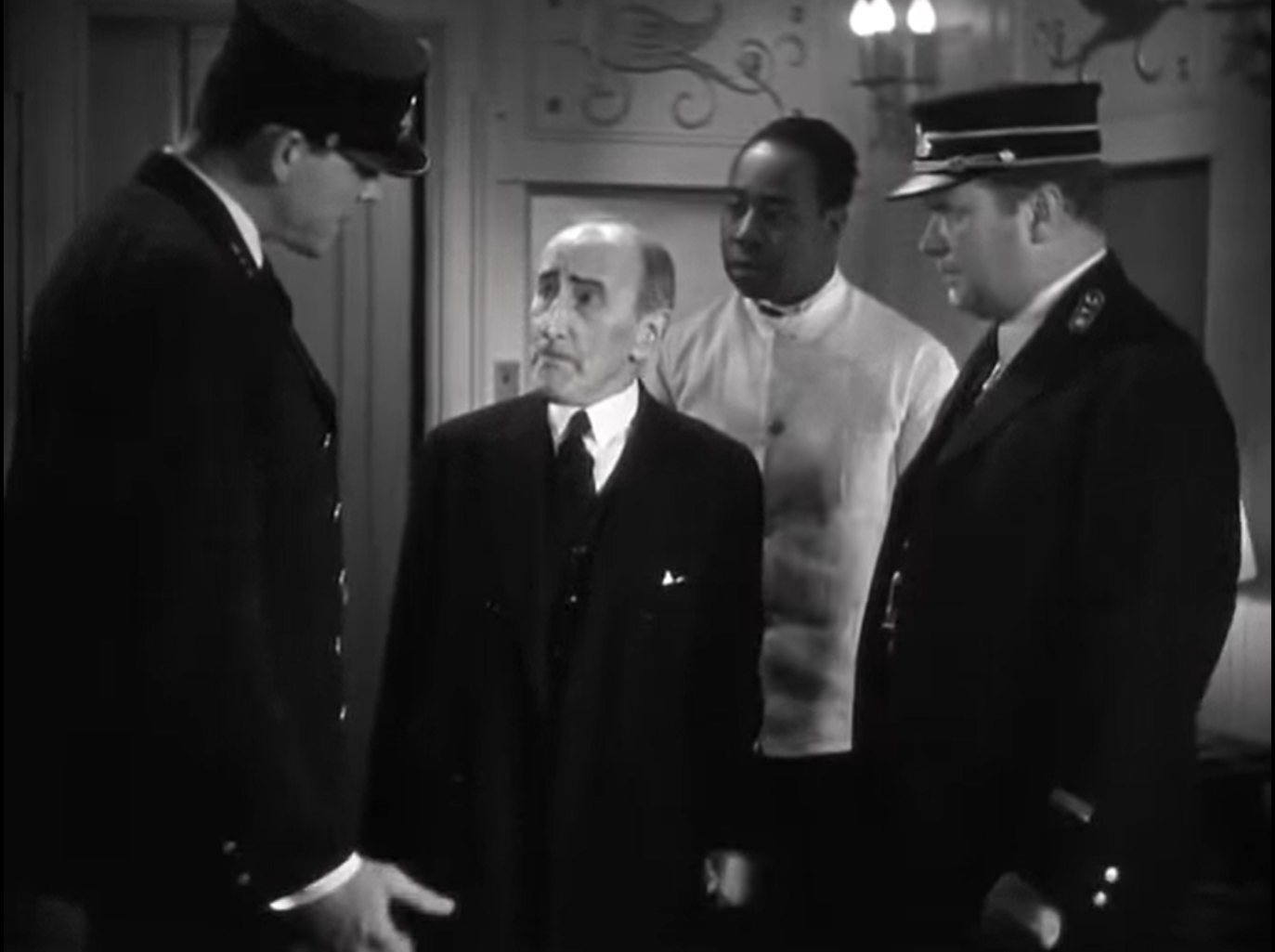
However, given that Oscar and Lily — who scream their way through the film — aren’t particularly sympathetic characters, I find myself admiring Twentieth Century more than I actually enjoy it; they deserve each other, but I was glad to say goodbye to them by the end of the film. The most memorable thread of the movie, for me, remains the hilarious subplot involving a lunatic passenger (Etienne Girardot) who wantonly posts “Repent” stickers all over the train. Given its place in cinematic history, Twentieth Century, should be seen by all film fanatics, but it may or may not become a repeat favorite.

Redeeming Qualities and Moments:

  • John Barrymore as Oscar Jaffe (Peary awards him an Alternate Oscar as Best Actor of the Year)
  • Carole Lombard as Lily Garland (nominated by Peary as Best Actress of the Year in his Alternate Oscars book)
  • Etienne Girardot as mad Mr. Clark
  • Fine cinematography
  • Ben Hecht and Charles MacArthur’s madcap script

Must See?
Yes, for its historical relevance, and for its lead performances. Nominated as one of the Best Pictures of the Year in Peary’s Alternate Oscars book.

Categories

  • Noteworthy Performance(s)
  • Historically Relevant

Links:

Satan Met a Lady (1936)

Satan Met a Lady (1936)

“I’m supposed to be a detective solving a crime case, and everybody thinks I committed the crime!”

Synopsis:
While investigating the mysterious death of his partner (Porter Hall), detective Ted Shane (Warren William) becomes embroiled in a competitive search for the infamous Horn of Roland, desired by a femme fatale (Bette Davis), an Englishman (Anthony Travers), and an old woman (Alison Skipworth) with a pudgy son (Maynard Holmes).

Genres, Themes, Actors, and Directors:

  • Bette Davis Films
  • Detectives and Private Eyes
  • Femmes Fatales
  • Murder Mystery
  • Search
  • Warren William Films
  • William Dieterle Films

Review:
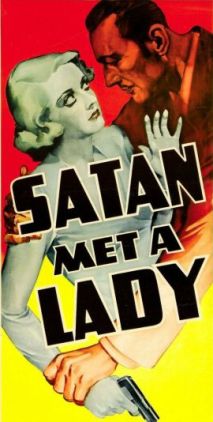
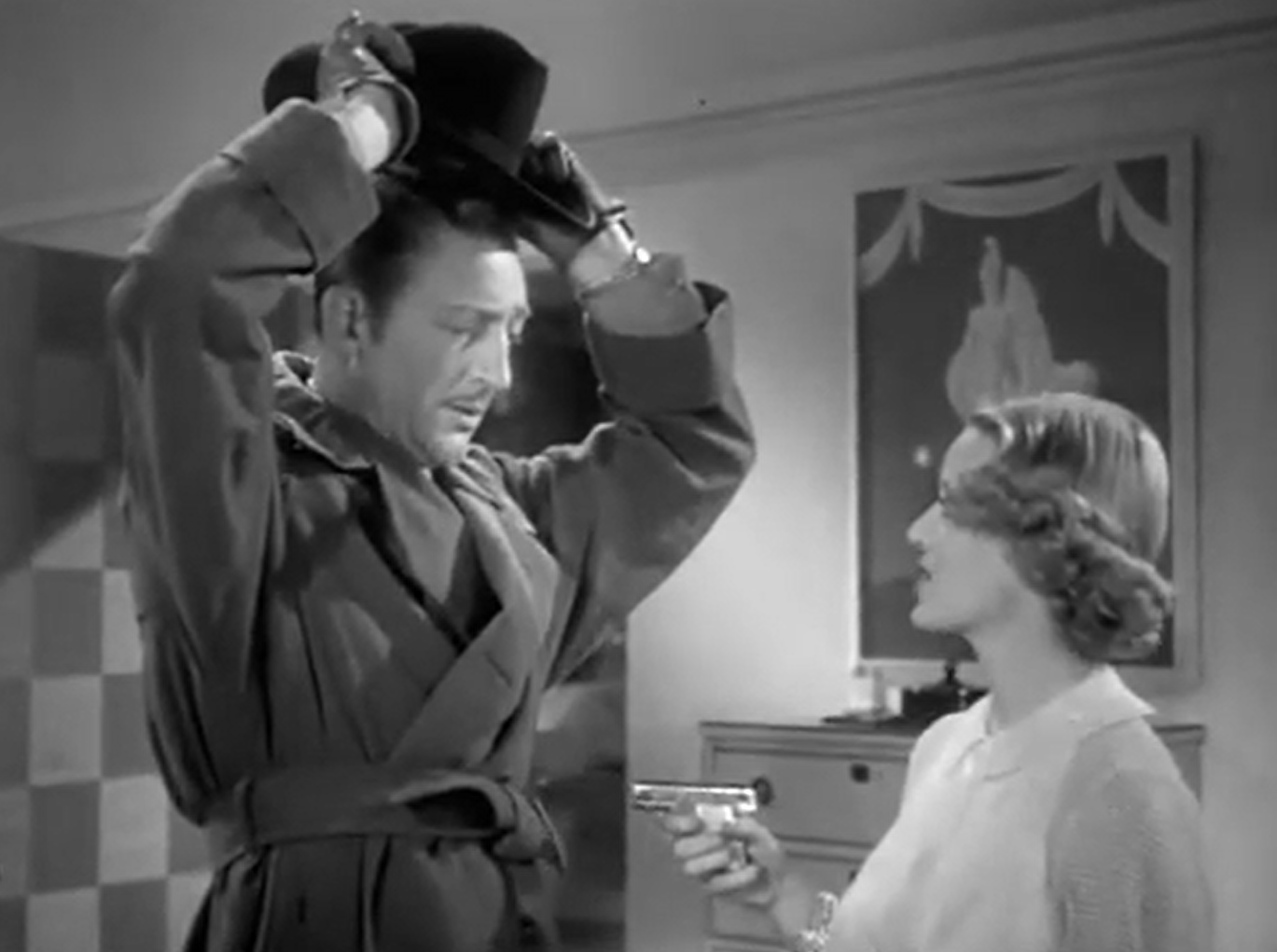
William Dieterle’s lighthearted adaptation of Dashiell Hammett’s detective novel has suffered a most ignoble fate: that of being constantly compared with its more illustrious remake, The Maltese Falcon (1941). Indeed, critic Jonathan Rosenbaum dismisses it as simply an “inferior and unacknowledged adaptation”, while TCM’s reviewer refers to it as a “cinematic train wreck” (!), and Bette Davis reportedly deemed it one of the worst films of her career. Yet, as noted in Time Out’s review, while Satan Met a Lady can’t hold a candle to Huston’s classic version, it’s “nevertheless enjoyably and quirkily funny”, and certainly not a complete waste of cinematic space. Several key changes have been made — most notably in the (inexplicable) exchange of a jewel-filled ram’s horn for the falcon, the alteration of most supporting characters’ names, and the casting of a woman (Skipworth) in what would later become Sydney Greenstreet’s signature role as the Fat Man.

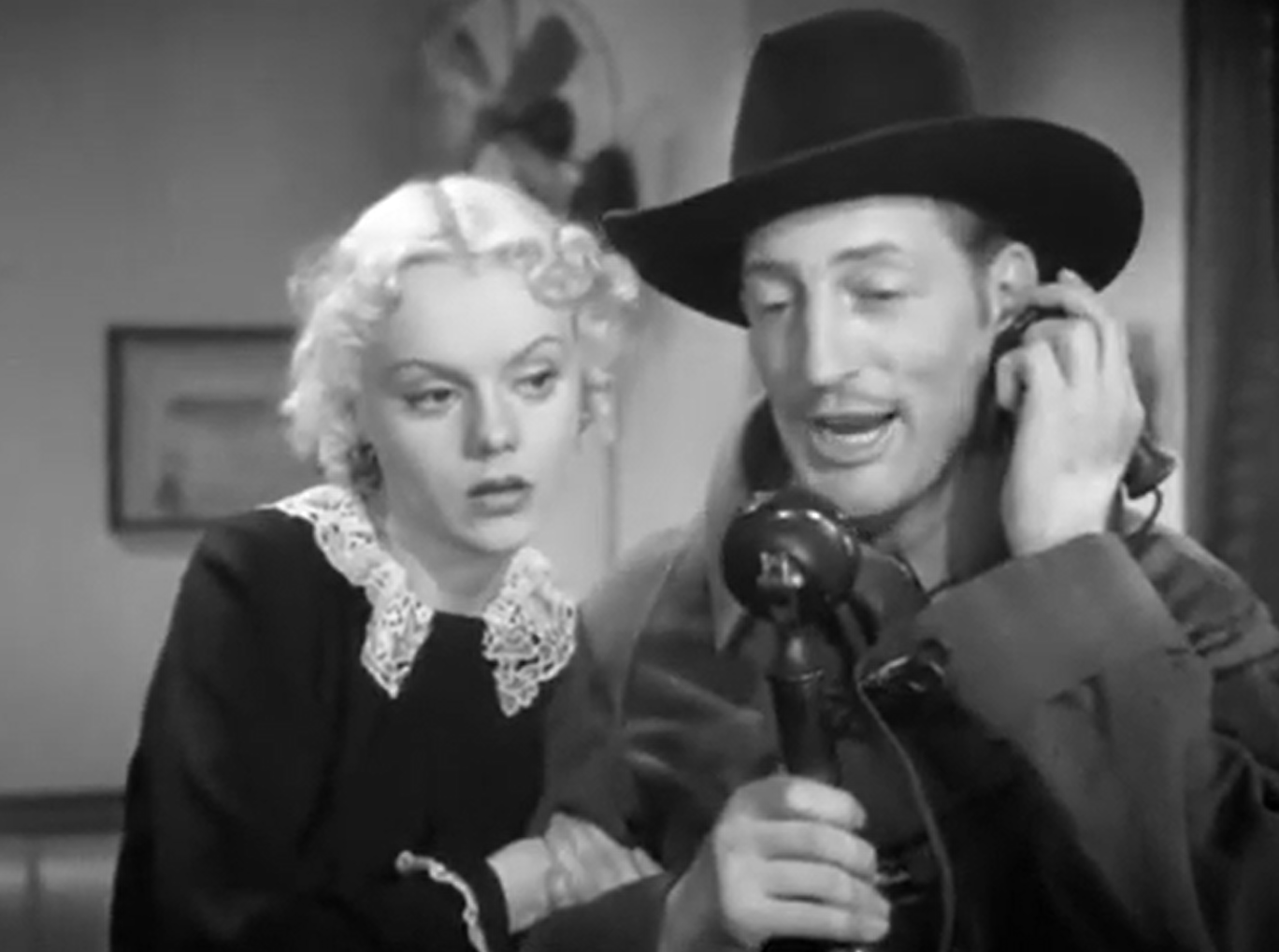
The most significant change, however, is one of tone, given that there’s a lot more overt humor (particularly in the character of Shane’s secretary Miss Murgratroyd, nicely played by Marie Wilson):

and Warren William portrays “Sam Spade” (actually Ted Shane) as a debonair, wisecracking ladies’ man (not necessarily a bad choice — he’s simply not as memorable or enigmatic as Bogart’s more cynical Spade). Despite its somewhat dense plot — which requires some hasty explanation near the end of the film — Satan Met a Lady is worth a look at least once for its cast of fine performances and for its infamous reputation.

Redeeming Qualities and Moments:

  • Fine comedic performances by the entire cast

Must See?
No, but most film fanatics will likely be curious to check it out, given its historical relevance.

Links:

Frenzy (1972)

Frenzy (1972)

“Just thinking about the lusts of men makes me want to heave.”

Synopsis:
When he’s seen leaving the apartment of his recently murdered ex-wife (Barbara Leigh-Hunt), a down-on-his luck bartender (Jon Finch) is accused of being London’s infamous “Necktie Murderer”; meanwhile, the real culprit (Barry Foster) roams the city freely, and continues to put innocent women — including Finch’s girlfriend (Anna Massey) — at risk.

Genres, Themes, Actors, and Directors:

  • Detectives and Private Eyes
  • Falsely Accused
  • Hitchcock Films
  • Serial Killers

Review:
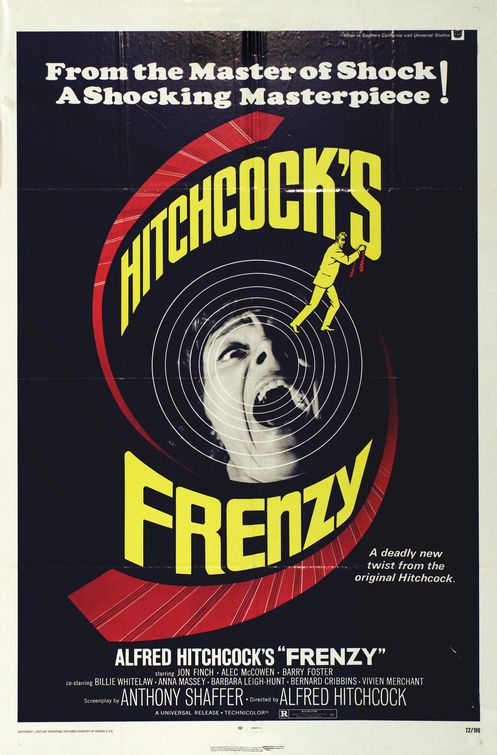
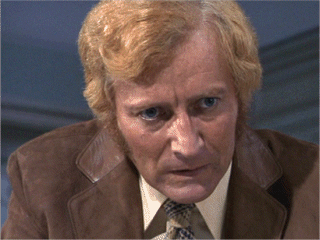
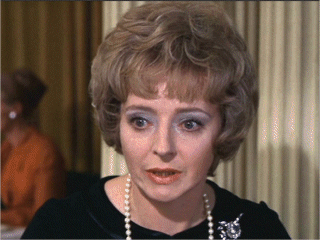
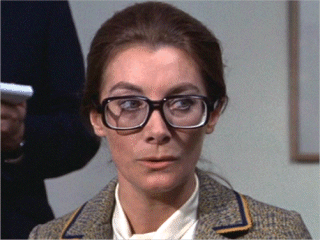
In his next-to-last film, Hitchcock returned to his native England, bringing with him a modern sensibility in horror. Gone are his masterfully oblique references to violence (as epitomized by the shower sequence in 1960’s Psycho); instead, we’re shown gruesomely overt murders with unmistakable sexual underpinnings. Indeed, it’s thoroughly unpleasant watching the first murder victim (sympathetic Leigh-Hunt) being raped and graphically choked to death — so we’re relieved when the next murder happens behind closed doors (btw, don’t read any reviews if you want the identity of this victim to remain a mystery). Fortunately, the film’s violence is balanced in Anthony Shaffer’s script by a healthy dose of levity (a police inspector wryly notes, “We haven’t had a good juicy series of sex murders since Christie.”), and Hitchcock’s sense of direction is in prime form, as shown in several notable sequences: the unexpected delay before Leigh-Hunt’s secretary (a humorously snippy Jean Marsh) finally lets out a scream upon encountering her boss’s body; Foster’s desperate struggle with a cadaver in a truckbed; Hitchcock’s camera slowly panning away from an apartment where a murder is about to take place. Finch is ultimately too morose and unsympathetic as the film’s unwitting protagonist, but Foster is appropriately duplicitous as his murderous mate, and the lead female performances (by Leigh-Hunt and Massey) are both solid. While Frenzy may not be prime Hitchcock, it’s certainly a worthy suspense film, and will likely be of interest to all film fanatics.

Redeeming Qualities and Moments:

  • Barry Foster as the Necktie Murderer
  • Anna Massey as ‘Babs’
  • Barbara Leigh-Hunt as Brenda
  • Jean Marsh as Brenda’s mousy, suspicious secretary
  • Strong, suspenseful direction

Must See?
Yes, as a late-in-life film (his 55th!) by a master director.

Categories

  • Important Director

(Listed in 1001 Movies You Must See Before You Die)

Links:

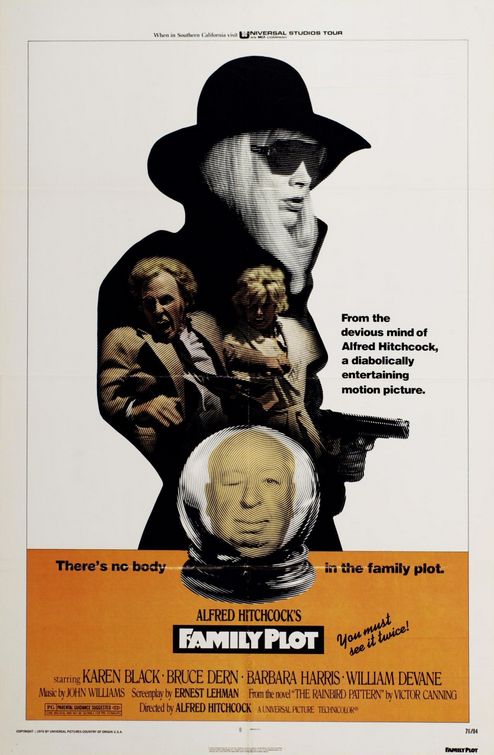
Family Plot (1976)

Family Plot (1976)

“There is no Eddie Shoebridge. He went up in smoke 25 years ago and came down in the city; he calls himself Arthur Adamson.”

Synopsis:
A fraudulent psychic (Barbara Harris) and her taxi-driver boyfriend (Bruce Dern) try to locate the nephew of a wealthy woman (Catherine Nesbitt) who is offering a reward for his discovery — but the nephew (William Devane) turns out to be a psychopathic jewelry store owner who, with the help of his girlfriend (Karen Black), kidnaps people in exchange for enormous diamonds, and will stop at nothing to get Harris and Dern off his trail.

Genres, Themes, Actors, and Directors:

  • Barbara Harris Films
  • Bruce Dern Films
  • Con-Artists
  • Hitchcock Films
  • Kidnapping
  • Mistaken Identities
  • Psychic Powers
  • Thieves and Criminals

Review:
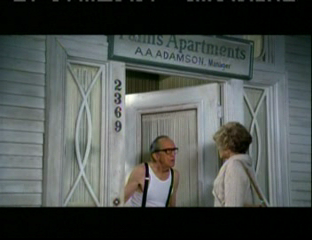
Hitchcock’s last film isn’t one of his best by a long shot (it faces some stiff competition!), but it remains a worthy final installment in his lengthy and illustrious career. The script (by Ernest Lehman, who wrote North by Northwest) is a fun mix of comedy and thrills, with a dense but comprehensible plot that keeps one in suspense throughout. In just one of the film’s many instances of symmetry and “doubles”, Harris and Dern provide a welcome comedic counterpart to Devane and Black’s deliciously nefarious thieves (though I’ll admit I’m not a huge fan of Harris’s overly nutty performance); it’s particularly nice to see Devane — normally a supporting player — given a chance to shine as the central baddie. Naturally, one wonders why Harris and Dern never think about simply finding an impersonator to play Nesbitt’s nephew — but, as I noted in my review of Strangers on a Train (1951), over-analyzing Hitchcock’s films for plot holes simply ruins the fun! What’s most disconcerting to me about Family Plot (much like the graphic violence in his earlier Frenzy) is hearing such overt sexual puns — as when Dern assures sex-starved Harris that she’ll see a “standing ovation” that night in their waterbed. On that note, it’s interesting to contemplate what Hitch’s film might have looked like had he lived and continued working through the 1980s and ’90s…

Redeeming Qualities and Moments:

  • William Devane as Arthur Adamson
  • Karen Black as Fran
  • Bruce Dern as George Lumely
  • Ernest Lehman’s darkly humorous script
  • John Williams’ catchy score

Must See?
Yes, as Hitch’s final film.

Categories

  • Historically Relevant
  • Important Director

Links:

California Split (1974)

California Split (1974)

“If it takes a watermelon five minutes to water, how long does it take a sweetpea to pee? As long as it takes a pair of dice to crap.”

Synopsis:
Two small-time gamblers (Elliott Gould and George Segal) meet at a poker game and continue to try their luck together.

Genres, Themes, Actors, and Directors:

  • Elliott Gould Films
  • Gambling
  • George Segal Films
  • Jeff Goldblum Films
  • Robert Altman Films

Review:
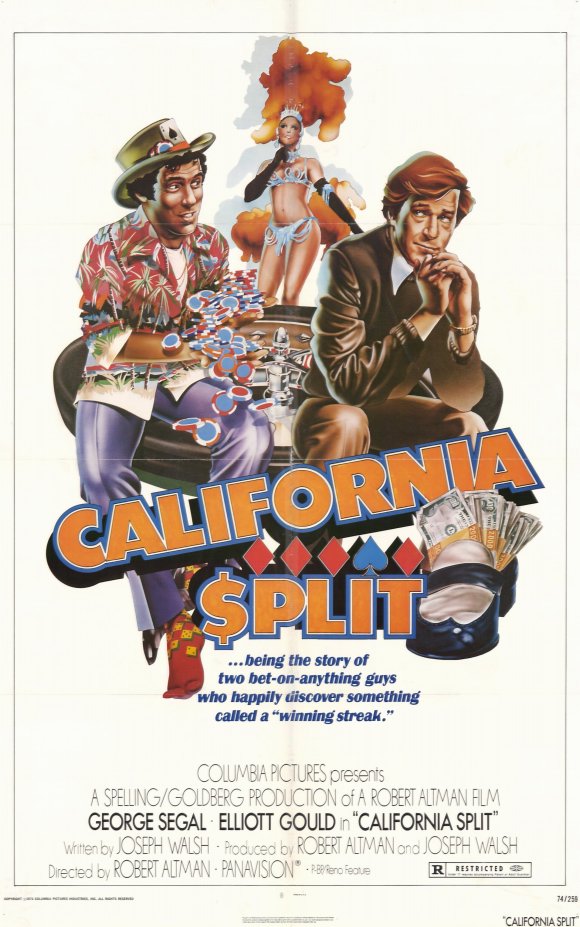
California Split remains an impressive, little known entry in Robert Altman’s career. While certain scenes towards the beginning tend to drag a bit — leading one to wonder where the episodic film is headed — eventually Joseph Walsh’s deceptively clever screenplay sneaks up on you, and by the end it packs an unexpected wallop. A large part of the film’s success is due to its lead performers, who are both perfectly cast in their respective roles: we fully believe that Gould (irreverent as ever) is someone who might wile away his days chasing gambling leads, while Segal (a magazine editor by day) is an essentially strait-laced individual who finds himself caught up in something much bigger and more addictive than he could ever have imagined.

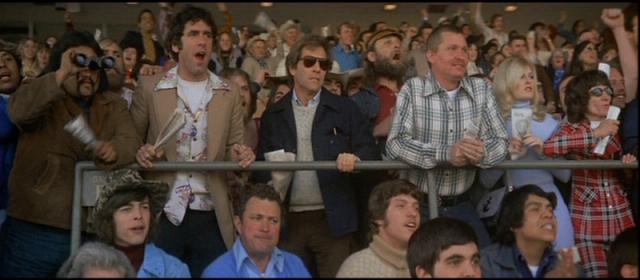
As always in Altman’s films, the roster of supporting performances add indelibly to the movie’s richness and charm. In this case, Ann Prentiss (Paula Prentiss’s sister — their resemblance is uncanny) and Gwen Welles shine as a pair of “happy hookers” who take on decidedly unusual jobs — including, in one of the film’s funniest sequences, spending “quality time” with an “elegant” transvestite (Bert Remsen). Welles’ romantic interest in Segal — and the ultimate outcome of their potential tryst — is handled especially well. Equally impressive is Altman’s ability to evoke the various milieus of the gambling world — poker halls, race tracks, boxing rings, casinos — with characteristic attention to detail; throughout the film, we genuinely believe we’re “there”, wherever we are.

Towards the end, California Split becomes somewhat challenging to sit through, simply because we feel such anxiety about Segal’s situation (he owes a loan shark, played by screenwriter Walsh, $2200 — but instead of paying him off once he secures the funds by selling his car, he goes to Reno to gamble instead). Ultimately, however, this simply demonstrates how well Altman has done his job: we really get it that gambling is an addiction like any other, one that has the potential to ruin lives within just a few short hours. It’s a good thing Altman made this one a comedy rather than a tragedy, or we’d really be clenching our teeth.

Redeeming Qualities and Moments:

  • A fascinating portrayal of the world of compulsive gambling
  • George Segal and Elliott Gould as Bill and Charlie
  • Ann Prentiss and Gwen Welles as Barbara and Susan
  • Many fine smaller supporting performances

Must See?
Yes, as a cult film by a master director.

Categories

  • Cult Movie
  • Important Director

Links:

Going Places (1974)

Going Places (1974)

“If we don’t know where to go, why not stop awhile?”

Synopsis:
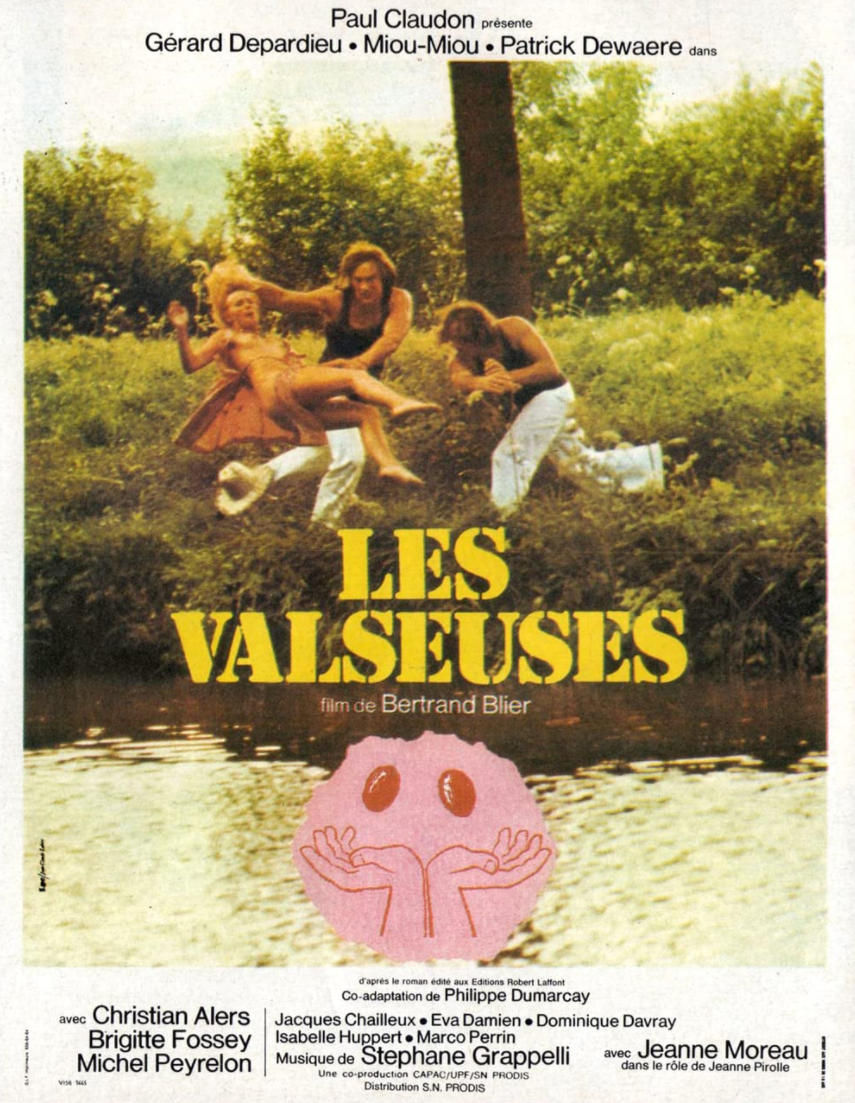
A pair of petty criminals (Gerard Depardieu and Patrick Dewaere) travel aimlessly across France, stealing cars and pursuing women.

Genres, Themes, Actors, and Directors:

  • Bertrand Blier Films
  • French Films
  • Fugitives
  • Gerard Depardieu Films
  • Isabelle Huppert Films
  • Jeanne Moreau Films
  • Road Trip
  • Thieves and Criminals
  • Womanizers

Response to Peary’s Review:
Peary correctly notes that “for about the first half-hour” of this “offbeat” black comedy by Bertrand Blier (based on his own novel), the lead characters’ “amoral behavior, their vulgarity, and their obnoxious treatment of women will wear on your patience”, and “you’ll find it hard not to hate a film that would have them as its heroes”. However, I disagree with his assertion that “once you realize that neither of the characters is vicious and that both are vulnerable, the film becomes more tolerable.” While I’m a fan of Blier’s later anarchic comedies (such as Femmes Fatales and Menage) — in which the male leads expose their vulnerabilities and neuroses to humorous effect — the blatant misogyny of Depardieu’s Jean-Claude and Dewaere’s Pierrot in this film is simply too much to stomach.

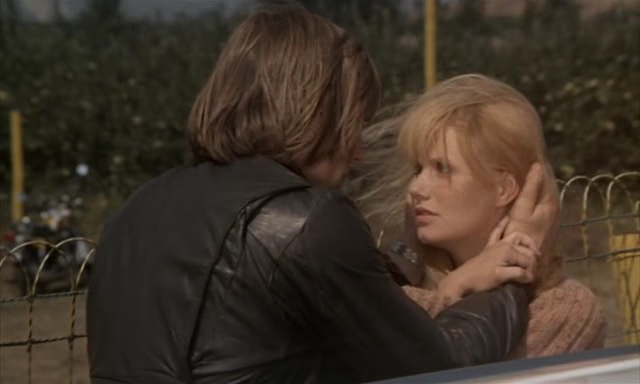
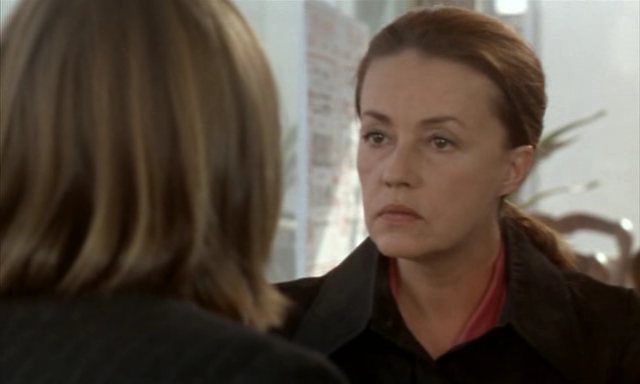
Peary defends their actions by noting that “in the long run the two men don’t do any harm to the women they half-seduce, half force sex upon”, and that “the women end up more satisfied than they are” — but this doesn’t make it any easier to watch our whiny, manipulative protagonists accosting a distressed woman (Dominique Davray) while snatching her purse, terrorizing a breast-feeding woman (Brigitte Fossey) on an otherwise empty train, or verbally and physically abusing a naive young beauty shop employee (Miou-Miou) — not to mention their continuous tendency to steal cars out from under the noses of their owners (a “running joke” which really isn’t funny at all). One vignette near the middle of the film — in which our “heroes” decide to seduce a middle-aged ex-convict (Jeanne Moreau) as she leaves prison — remains intriguing enough to recommend, given that Jean-Claude and Pierrot finally tap into their gentler natures; but this isn’t enough to redeem the film as a whole. Young Blier would clearly need to get a more mature grip on his thematic concerns before his cinematic brilliance could emerge.

Redeeming Qualities and Moments:

  • Miou Miou as Marie-Ange (she makes the best of a pitiable role)
  • Jeanne Moreau as Jeanne

Must See?
No, though it’s worth a look for its historical importance as Blier’s breakthrough film.

Links: