Squirm (1976)

Squirm (1976)

“Something is making the worms go crazy.”

Synopsis:
A city boy (Don Scardino) visiting his girlfriend (Patricia Pearcy) and her family (Jean Sullivan and Fran Higgins) in a backwoods Georgian town discovers that an electrical storm has triggered an onslaught of killer earthworms.

Genres, Themes, Actors, and Directors:

  • Deep South
  • Horror
  • Killer Animals

Response to Peary’s Review:
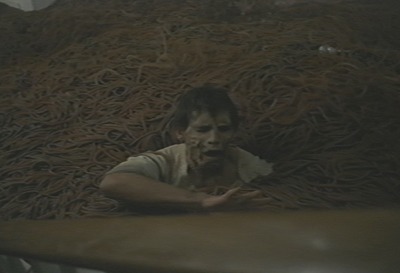
Peary is far too generous in his assessment of this unintentionally campy low-budget horror flick, which he claims is “effective” and full of “fun characters” and “clever directorial touches”. In truth, despite writer-director Jeff Lieberman’s best efforts, Squirm — “as in Sqworm” — is poorly acted (everyone’s pacing is peculiarly off), sadly lacking in any genuine horror thrills (how scary can worms really be? gross, yes, but not scary), and resolutely unfunny (the scene in which Scardino discovers a worm in his egg cream is not, as Peary posits, witty). While a handful of other critics agree with Peary that Squirm is an inspired little film — Time Out‘s reviewer, for instance, argues that it’s “far better and more interesting than the obvious schlock appeal its plot would suggest” — I was relieved to discover I’m not alone in considering it to be an undeniably bad movie, worthy of spoofing (search YouTube and you’ll find the MST3K version available to watch in 10 minute segments). Throughout his Guide for the Film Fanatic, Peary seems to be trying to champion underdog, low-budget films like this one — particularly in the horror genre — but you’re better off skipping Squirm altogether.

Redeeming Qualities and Moments:

  • A few mildly gross shots of wriggling worms en masse

Must See?
No, unless you’re in the mood for a laughably bad “horror” flick — and in that case, I recommend the MST3K version instead.

Links:

Black Room (1935)

Black Room (1935)

“This murder will happen again, just as it did before — in the Black Room!”

Synopsis:
In a desperate attempt to prevent an ancient family prophecy from coming true, a despotic baron (Boris Karloff) kills and impersonates his noble twin brother.

Genres, Themes, Actors, and Directors:

  • Boris Karloff Films
  • Historical Drama
  • Mistaken or Hidden Identities
  • Royalty and Nobility
  • Twins

Review:
This unassuming period thriller about fratricide, ancient familial prophecies, and lust for power remains an enjoyable treat for film fanatics, thanks primarily to the central performance by inimitable horror icon Boris Karloff. Karloff embodies the dual roles of both “good brother” (Anton) and “bad brother” (Gregor) with relish and nuance, immediately convincing us that they’re two different men — but his most impressive work comes once he’s playing Gregor-as-Anton, maintaining a simmering aura of calculated greed and sociopathic arrogance underneath a facade of noble charm. The screenplay is surprisingly tight and suspenseful — especially given that Anton is killed off fairly early — and the denouement offers a nifty resolution to the ancient prophecy. Atmospheric cinematography, creative direction, and appropriately baroque set designs add to the ambience of this compelling B-level flick.

Redeeming Qualities and Moments:

  • Boris Karloff as Gregor, Anton, and Gregor-as-Anton

  • Atmospheric cinematography, direction, and sets

Must See?
Yes, simply to see Karloff in one of his best performances.

Categories

  • Noteworthy Performance(s)

Links:

Angelo, My Love (1983)

Angelo, My Love (1983)

“We’re not going to leave you alone until I get the ring, okay?”

Synopsis:
A precocious Greek gypsy boy (Angelo Evans) and his brother try to retrieve a family ring stolen by a conniving Russian gypsy (Steve Tsigonoff).

Genres, Themes, Actors, and Directors:

  • Coming-of-Age
  • Gypsies
  • New York City
  • Robert Duvall Films

Review:
Fourteen years before producing and directing The Apostle (1997), Robert Duvall helmed this neo-realist indie film about a little-known American subculture: gypsies in New York City. Its strength lies primarily in the central casting of real-life gypsy kid Angelo Evans (essentially playing himself, as does much of the cast), whose precocious energy drives the narrative: we both believe in and care about him from the first moment he’s on-screen. An early scene in which the illiterate Angelo struggles to maintain his pride in a public school classroom is quietly devastating, and immediately helps us to understand why he prefers to live in the “real world” — among adults — instead. Duvall is less successful in crafting a compelling overall narrative (the ring-heist plot is flimsy at best), but this ultimately doesn’t matter, given that we’re most interested in watching Angelo navigate the streets of New York, and gaining a sense of how this group of societal outcasts manages to maintain key elements of its ancient culture while surviving in a modern city. We may not approve of the gypsy lifestyle portrayed here, but it’s certainly memorable, and fascinating to observe for a short while.

P.S. See Mike Newell’s Into the West (1992) for a comparable — albeit more strategically crafted — film about modern-day Irish gypsies (known as “Travellers”) in Dublin.

Redeeming Qualities and Moments:

  • Angelo Evans as himself
  • A fascinating ethnographic look at New York’s gypsy community

Must See?
No, but it’s worth a look.

Links:

Topper Returns (1941)

Topper Returns (1941)

“It isn’t every day a girl gets murdered!”

Synopsis:
When the friend (Joan Blondell) of an heiress (Carole Landis) is accidentally murdered, her ghost enlists the help of Cosmo Topper (Roland Young) in identifying the killer.

Genres, Themes, Actors, and Directors:

  • Amateur Sleuths
  • Carole Landis Films
  • Comedy
  • Fantasy
  • Ghosts
  • Joan Blondell Films
  • Murder Mystery
  • Roland Young Films
  • Roy Del Ruth Films

Review:
Roy Del Ruth directed this final installment in the inexplicably popular Topper trilogy, which banks on much of what made the first two so successful: plenty of ghostly special effects and tedious slapstick humor. While it’s no masterpiece, the presence of Joan Blondell as the ghost de jeur (replacing Constance Bennett’s “Mrs. Kirby”) adds a much-needed touch of sass and vigor to the proceedings, and the Old Dark House “whodunit” plot at least provides viewers with a welcome narrative hook (I’ll admit the ending caught me by surprise). Best of all: Billie Burke as Cosmo’s airhead wife is given mercifully few scenes!

Redeeming Qualities and Moments:

  • Joan Blondell as Gail

Must See?
No. As noted previously, the Topper sequels are certainly not must-see viewing — though Blondell makes this one more bearable than its predecessors.

Links:

Topper Takes a Trip (1938)

Topper Takes a Trip (1938)

“Topper’s too nice a fella to be in trouble… I’m going to get him out!”

Synopsis:
When Mrs. Topper (Billie Burke) catches her husband (Roland Young) with the ghost of Marion Kerby (Constance Bennett), she flees to France to obtain a quick divorce; meanwhile, her conniving friend (Verree Teasdale) arranges for a faux baron (Alexander D’Arcy) to woo and marry Burke for her money, and Marion does what she can to help Topper (Young) win his wife back.

Genres, Themes, Actors, and Directors:

  • Comedy
  • Con-Artists
  • Constance Bennett Films
  • Divorce
  • Fantasy
  • Ghosts
  • Marital Problems
  • Roland Young Films

Review:
This sequel (the first of two) to the enormously successful comedic fantasy Topper (1937) is tiresome on every level. The storyline is weak and utterly predictable; the characters are — without exception — annoying cliches; and none of the cast members (either principals or extras) react to the proceedings in a remotely realistic fashion. Roy Seawright’s Oscar-nominated ghostly “photographic effects” (which made the original Topper such a delight for audiences at the time) quickly become boring: one can only watch so many items drifting through the air on invisible wires before the “joke” becomes stale:

And while Young’s slapsticky pratfalls were amusing in the first film, they’re overused for laughs here. As usual, Burke’s bubble-headed socialite (“Too bad the people in America aren’t French”) is insufferable:

and reliable character actors Franklin Pangborn (with a bad French accent):

and Alan Mowbray are simply wasted. Topper Takes a Trip is, unfortunately, “comedy” at its low-brow worst, and certainly not must-see viewing.

Redeeming Qualities and Moments:
Nothing.

Must See?
Definitely not. While I can excuse Peary for listing the original Topper in his book as must-see viewing, his inclusion of both its sequels truly baffles me.

Links:

Soylent Green (1973)

Soylent Green (1973)

[Note: The following review is of a non-Peary title; click here to read more.]

“Your dead one was a very important man.”

Synopsis:
In the radically overpopulated future, a New York City detective (Charlton Heston) enlists the help of his roommate (Edward G. Robinson) in unraveling the gruesome mystery behind the assassination of a manufacturing magnate (Joseph Cotten).

Genres, Themes, Actors, and Directors:

  • Charlton Heston Films
  • Detectives and Private Eyes
  • Edward G. Robinson Films
  • Joseph Cotten Films
  • Murder Mystery
  • New York City
  • Science Fiction

Review:
Soylent Green holds the distinction of being perhaps the most “spoiled” film of all time, given the notoriety of its final “giveaway” line (chosen as #77 on the AFI’s list of top 100 movie quotes, and infamously lampooned by Phil Hartman on “Saturday Night Live”). It’s also notable for containing the last screen performance of Edward G. Robinson, who died nine days after shooting his final touching scene. Therefore, it’s particularly odd that Soylent Green — based loosely on the book “Make Room! Make Room!” by Harry Harrison (who was decidedly unhappy with the changes made to his story) — is not included in Peary’s book, especially given that the film itself remains a surprisingly effective, only slightly dated dystopian drama. (And it should be noted that knowing the “secret ingredient” contained in the titular foodstuff doesn’t take away from one’s repeat viewing pleasure.)

Heston — “an actor who has had better last movie lines than any other star”, according to Stomp Tokyo’s reviewers — is appropriately stalwart as the hard-nosed detective who is determined to uncover the conspiracy behind Cotten’s death:

but is never above taking advantage of the amenities (namely wildly overpriced foodstuff) he encounters during his investigation.

Meanwhile, Robinson is a class-act in his final role as Heston’s roommate, a “Book” (so-named because he actually reads) who remembers long-gone days of bountiful flora and fauna on Earth; his delight at eating a piece of genuine beef is a joy to watch, and his final scene in the film (considered hokey by some) never fails to move me to tears. I’m also impressed by the simple yet effective way in which New York City is portrayed as drastically overpopulated, with Heston literally crawling over live bodies sprawled up and down stairwells, and crowd members serving as gruesomely effective “body armor” during assassination attempts.

The film’s main flaw is its decidedly anti-feminist portrayal of women, who are (for the most part) either kerchief-clad personae non gratae, or beautiful and sexually compliant “furniture” (ouch!) for wealthy men — yet this gender-biased vision of the future is, sadly, perhaps not all that unrealistic, making Soylent Green all the more effective as a disturbing cautionary tale.

Redeeming Qualities and Moments:

  • Edward G. Robinson (in his final role) as Sol
  • Charlton Heston as Detective Thorn
  • A surprisingly effective portrayal of a devastated future
  • Sol’s touching final scene

Must See?
Yes, for its historical notoriety.

Categories

  • Historically Relevant

Links:

Against All Odds (1984)

Against All Odds (1984)

“It’s simple: either you want to play football again, or you don’t.”

Synopsis:
A football player (Jeff Bridges) recently fired from his team is hired by a gambler (James Woods) to hunt down his missing girlfriend (Rachel Ward) in Mexico; but things get sticky when Bridges falls for Ward himself.

Genres, Themes, Actors, and Directors:

  • Corruption
  • Femmes Fatales
  • Gambling
  • Has-Beens
  • James Woods Films
  • Jane Greer Films
  • Jeff Bridges Films
  • Love Triangle
  • Richard Widmark Films
  • Search

Review:
Few elements work in this well-meaning but fatally flawed update of Jacques Tourneur’s classic Out of the Past (1948). While both Bridges and Ward are naturally appealing leads:

… they’re saddled with such an awkward, muddled script (the synopsis above barely touches on the complexity of the dense plot, which involves insider gambling and high-level corruption) that it’s difficult to care about either their ill-fated romance or their respective predicaments. Ward’s family problems — she’s the spoiled, petulant daughter of a wealthy land developer — are never fully explored, and she fails to project the necessary edginess or complexity of a truly compelling femme fatale. Meanwhile, James Woods is either badly miscast or badly directed in a pivotal role as Ward’s covetous lover:

While no one would ever accuse Woods of an inability to project “slime”, he nonetheless fails to embody the “Mr. Big” presence required of his character here. Worst of all, however, is director Taylor Hackford’s decision to have his actors spout neo-noir dialogue (“I love you, Jessie. Why did that have to be a bad thing?”) as though it’s realistic banter; attempts to infuse this type of hardboiled rhetoric into modern cinematic settings (c.f. Rian Johnson’s Brick, 2005) are tricky at best, and the effort fails completely here — it’s almost laughable, but (sadly) not quite. Not even the presence of cinematic icon Richard Widmark (badly underused):

… or Out of the Past‘s original star, Jane Greer:

… can revive this disappointing thriller, which should be much better than it is.

Redeeming Qualities and Moments:
Not much.

Must See?
No; this one can easily be skipped.

Links:

Dutchman (1967)

Dutchman (1967)

“I told you I’m not an actress. I also told you I lie all the time. Draw your own conclusion!”

Synopsis:
A sultry, psychotic white woman (Shirley Knight) seduces a young black man (Al Freeman, Jr.) on a New York subway.

Genres, Themes, Actors, and Directors:

  • Cat-and-Mouse
  • Femmes Fatales
  • Play Adaptation
  • Race Relations
  • Shirley Knight Films
  • Trains and Subways

Review:
Based on Amiri Baraka’s incendiary, Obie-award-winning 1964 play, Dutchman qualifies as one of the most unusual — and certainly one of the shortest non-silent-film — listings in Peary’s GFTFF. At just 55 minutes, it’s barely a feature-length film, and seems more like an experimental venture than a fully fledged narrative. Indeed, the film’s “simple” premise — a white woman seduces, then humiliates, a gullible black man — is widely regarded as allegorical: Lula (Knight) represents both a seductive Eve (she chomps continuously on apples) and a provocative, wasteful white America (she throws away said unfinished apples with abandon), while Clay (Freeman) embodies an assimilated Black America perpetually taunted by the elusive promise of mainstream acceptance.

Director Anthony Harvey and cinematographer Gerry Turpin do a reasonably impressive job cinematizing what is by its very nature a claustrophobic, geographically-limited playlet, and John Barry’s pulsating score is appropriately jarring — but the truth is that Dutchman (even at such a short running time) remains a bit of a chore to sit through, due primarily to Knight’s insufferable central performance. While subtle characterizations are perhaps too much to ask for in such a heavily weighted allegory, Knight’s performance is (as noted in Nathan Rabin’s DVD review for The Onion) “embarrassingly theatrical, a tour-de-force of histrionics that only underlines the pretentious, feverishly overwritten nature of Jones’ script.” Freeman — infinitely subtle in comparison — fares somewhat better, but can’t help being overshadowed by Knight’s hideous gargoyle of a femme fatale.

Redeeming Qualities and Moments:

  • Al Freeman, Jr. as Clay
  • Gerry Turpin’s cinematography
  • John Barry’s percussive score

Must See?
No; this one will primarily be of interest to theater buffs rather than film fanatics. Listed as a Personal Recommendation in the back of Peary’s book.

Links:

Sudden Impact (1983)

Sudden Impact (1983)

“Go ahead — make my day.”

Synopsis:
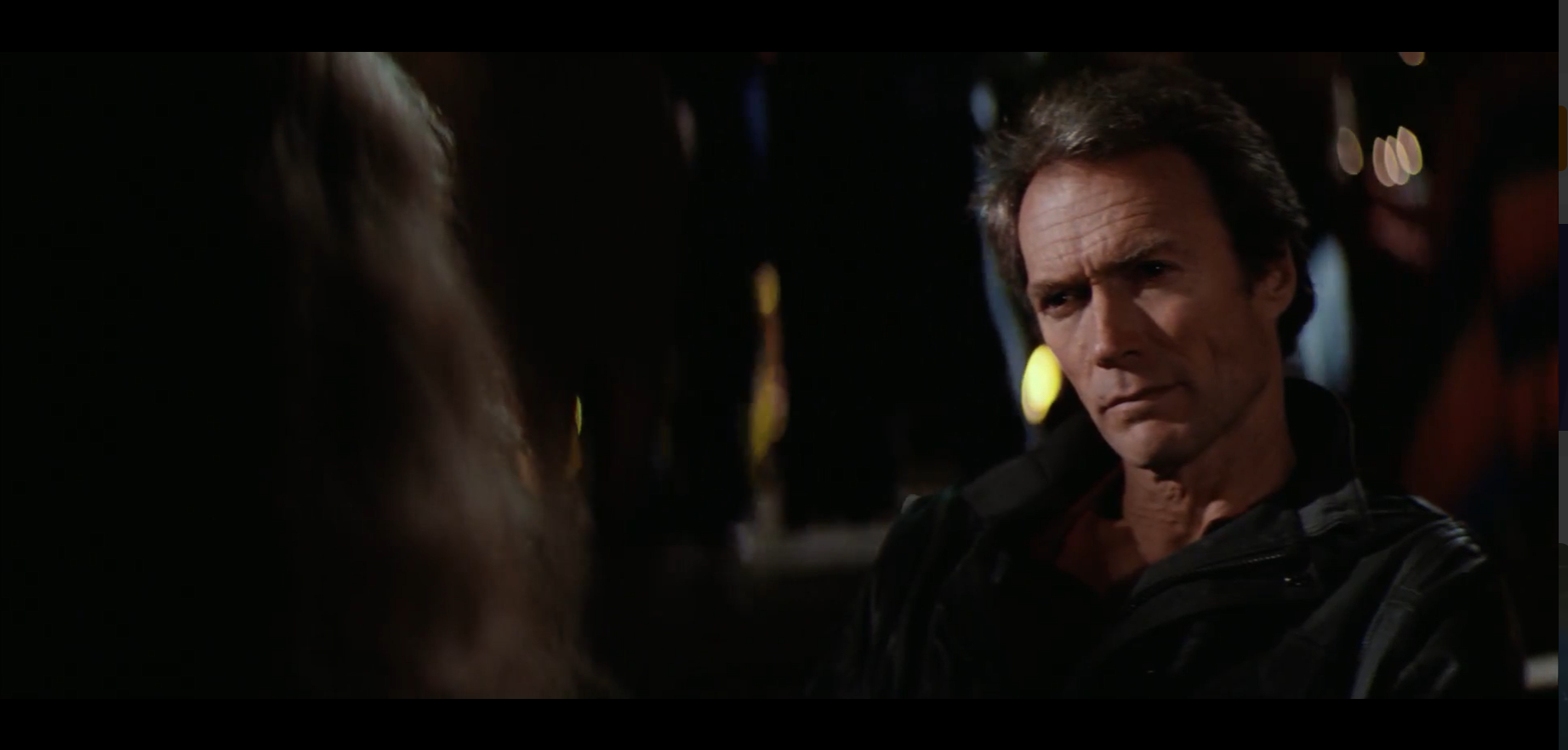
Detective Harry Callahan (Clint Eastwood) is sent to the seaside town of San Paulo to investigate a rash of serial killings committed by an artist (Sondra Locke) seeking revenge for a brutal gang rape.

Genres, Themes, Actors, and Directors:

  • Clint Eastwood Films
  • Detectives and Private Eyes
  • Pat Hingle Films
  • Rape
  • Revenge
  • Serial Killers
  • Vigilantes

Response to Peary’s Review:
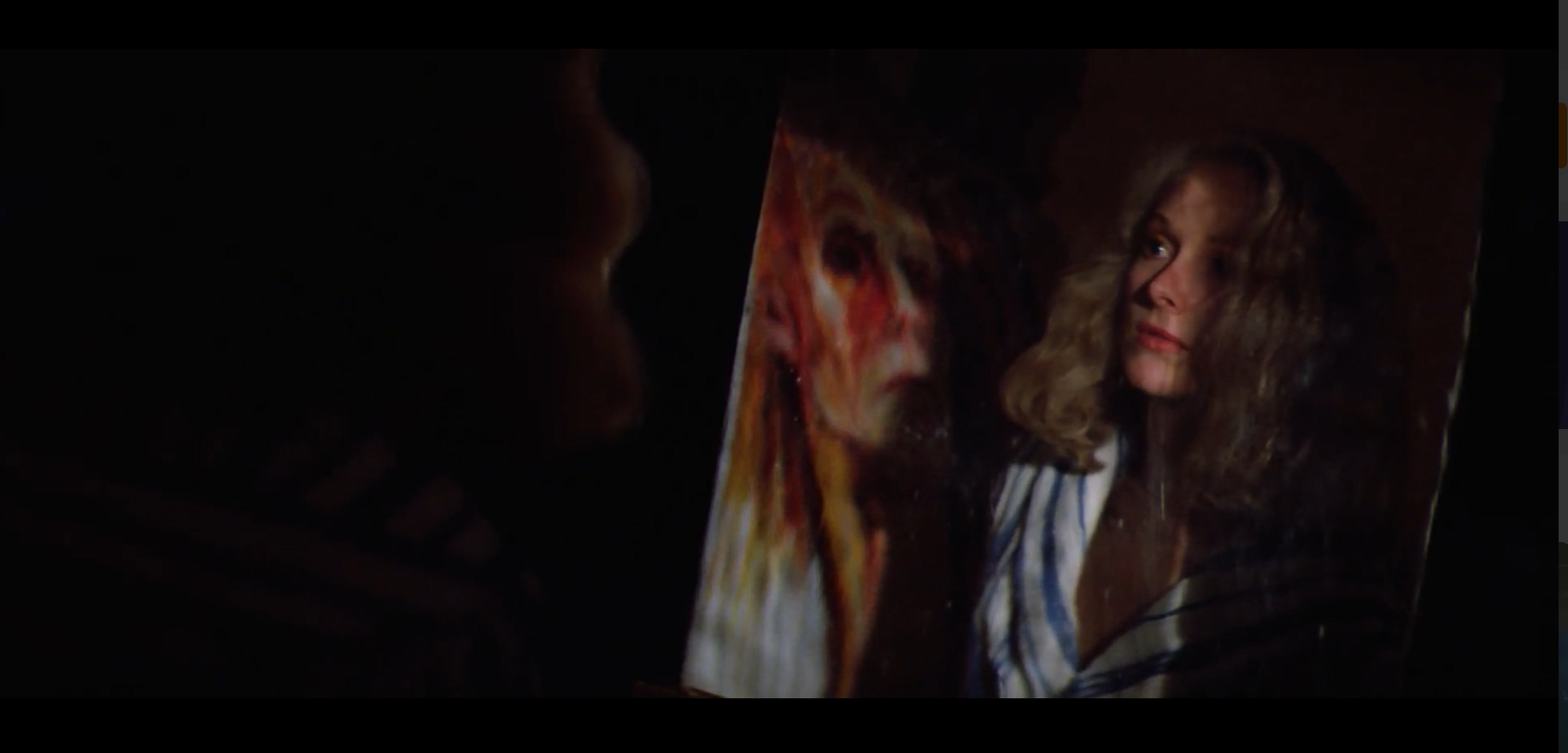
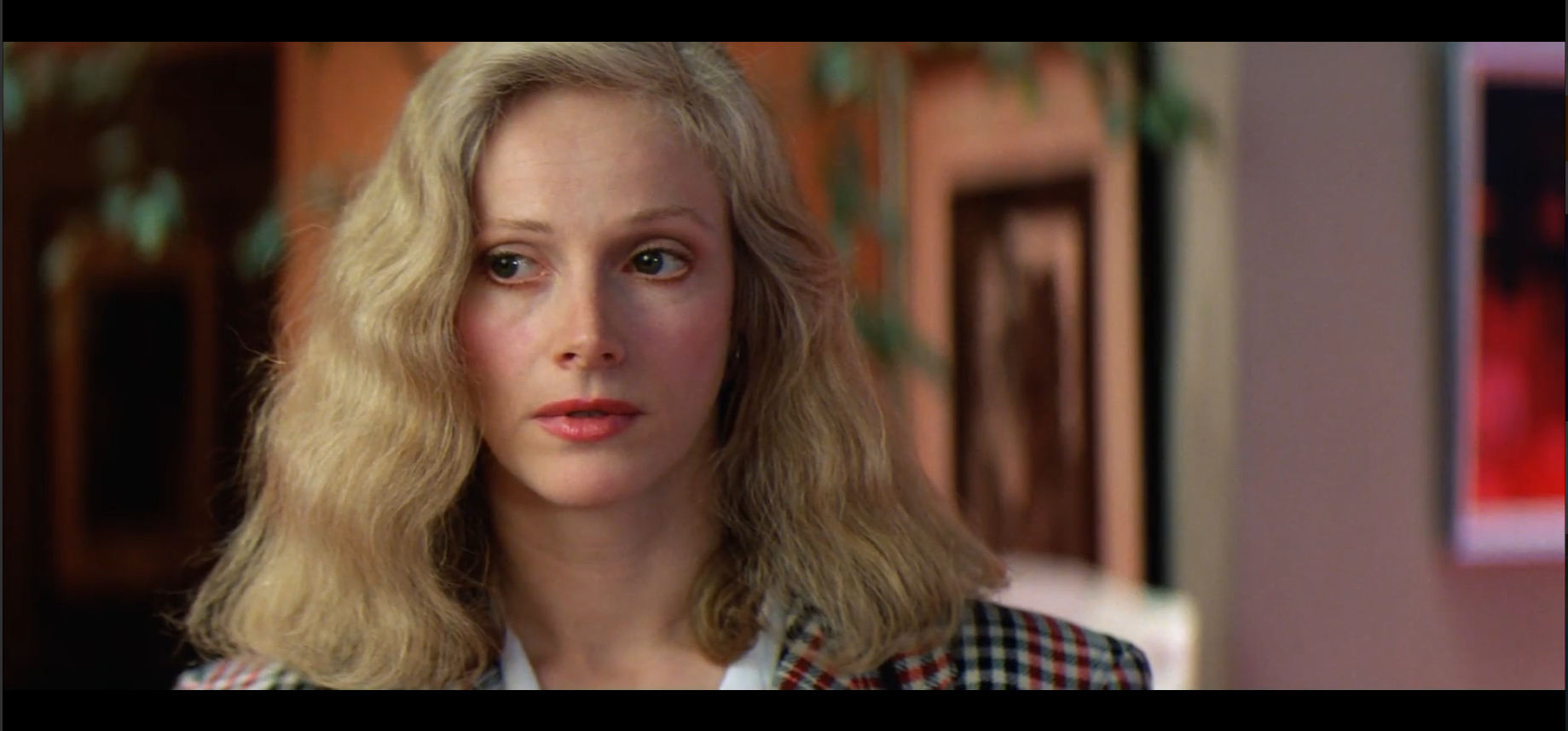
Peary is overly generous in his assessment of this uninspired fourth installment in the “Dirty Harry” franchise, helmed by Eastwood himself. He refers to Eastwood’s direction as “remarkably assured”, noting that “he makes the most of his action scenes, effectively uses color filters and light and shadows to create bleak, mysterious ambience, and gets an especially interesting performance from Locke, truly an underrated actress”. But it’s DP Bruce Surtees who really deserves credit for the impressive cinematography, and Locke’s soulful performance is the only one in the film worth watching.

Indeed, Eastwood fails to elicit any subtlety whatsoever from the rest of his cast: the gang of rapists — including a “mean, foul-mouthed lesbian” (Audrie Neenan):

and the gang’s psychotic leader (Paul Drake) — are particularly one-dimensional; meanwhile, Pat Hingle as San Paulo’s defensive sheriff is sadly underused. Joseph Stinson’s hardboiled script contains plenty of zingy one-liners (including the infamous “Go ahead — make my day”), but is ultimately too focused on providing “Dirty Harry” with dramatic opportunities to kill off Bad Guys to make the most of what should be a compelling tale of justifiable revenge and vigilante romance.

Redeeming Qualities and Moments:

  • Sondra Locke as Jennifer Spencer
  • Bruce Surtees’ effectively dramatic cinematography
  • Lalo Schifrin’s score

Must See?
No — though “Dirty Harry” completists will naturally want to see it, and of course all film fanatics should probably check out the film containing the #6 top movie quote of all time.

Links:

Footsteps in the Fog (1955)

Footsteps in the Fog (1955)

“Another woman once thought she owned me. Don’t drive me too far!”

Synopsis:
When a smitten housemaid (Jean Simmons) discovers that her widowed employer (Stewart Granger) secretly poisoned his wife, she blackmails him into giving her a higher position in his household — but his interest in a beautiful heiress (Belinda Lee) causes tensions in their uneasy relationship.

Genres, Themes, Actors, and Directors:

  • Blackmail
  • Cat-and-Mouse
  • Courtroom Drama
  • Historical Drama
  • Jean Simmons Films
  • Homicidal Spouses
  • Obsessive Love
  • Social Climbers

Review:
It’s been duly noted that the plot of this Victorian-era melodrama — starring real-life husband-and-wife Stewart Granger and Jean Simmons — occasionally “strains credibility”; yet its themes of blackmail, duplicity, obsessive love, and murderous spouses make for an enjoyably stylish thriller, one which is sure to appeal to fans of Hitchcockian cinema. Simmons’ lowly housemaid and Granger’s successful lawyer are seemingly worlds apart, but they’re united by their common quest for social ascendance: savvy Simmons deeply resents being ordered about by the head cook of the household (Marjorie Rhodes):

… while Granger secretly admits to marrying his dead wife for her money, and plans to woo another eligible young heiress (Elizabeth Travers) as soon as propriety allows.

While both are initially conniving, however, Simmons’ Lily Watkins eventually emerges as a sympathetic protagonist — and we can’t help cringing at the ill-founded loyalty she maintains for her murderous master.

Granger’s acting is as limited and campy as ever, but he’s well cast:

Meanwhile, Simmons demonstrates once again why she remains one of the unsung actresses of her time (c.f. her differently plucky turn-of-the-century role in 1950’s So Long at the Fair). Fine set designs and Benjamin Frankel’s score add to this suspenseful film’s overall period ambiance; and while it never reaches the heights of Hitchcock’s masterpieces (Arthur Lubin’s rather perfunctory directorial style prevents this), it’s certainly worth a look.

Redeeming Qualities and Moments:

  • Jean Simmons as Lily Watkins
  • A suspenseful Victorian-era narrative
  • Benjamin Frankel’s atmospheric score

Must See?
No, but it’s worth seeking out.

Links: