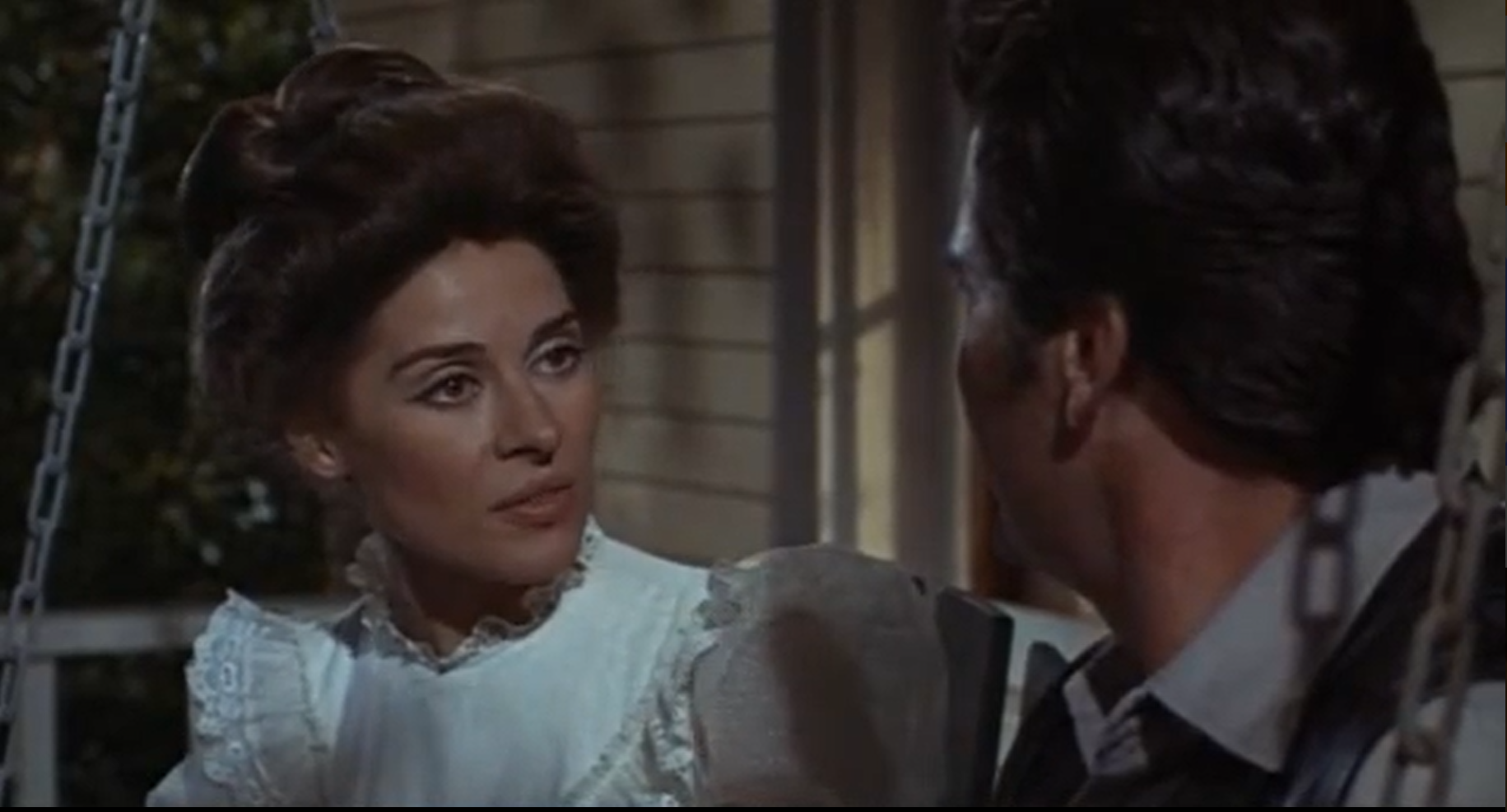
Casablanca (1942)

Casablanca (1942)

“It doesn’t take much to see that the problems of three little people don’t amount to a hill of beans in this crazy world.”

Synopsis:
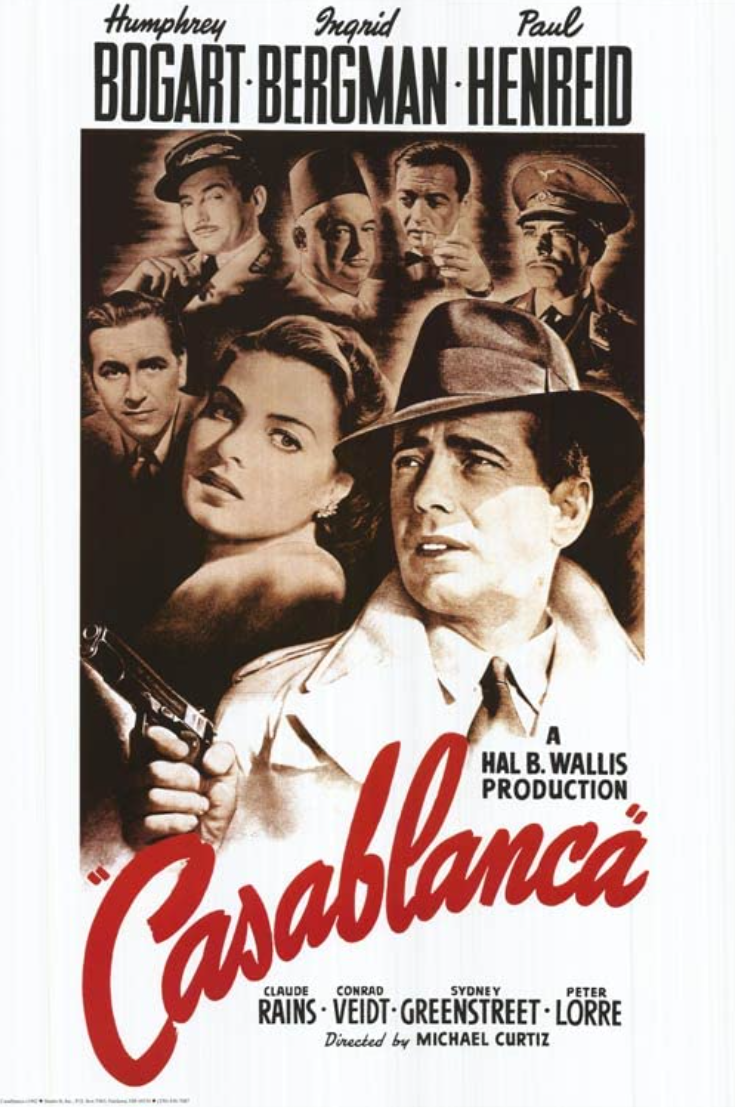
In Casablanca during World War Two, a cynical cafe owner (Humphrey Bogart) finds his loyalties tested when a former flame (Ingrid Bergman) and her resistance-fighting husband (Paul Heinreid) arrive in town seeking transit visas to Lisbon.

Genres, Themes, Actors, and Directors:

  • Claude Rains Films
  • Conrad Veidt Films
  • Expatriates
  • Humphrey Bogart Films
  • Ingrid Bergman Films
  • John Qualen Films
  • Michael Curtiz Films
  • Nazis
  • Peter Lorre Films
  • Play Adaptation
  • Resistance Fighters
  • Romance
  • Star-Crossed Lovers
  • Sydney Greenstreet Films
  • World War Two

Response to Peary’s Review:
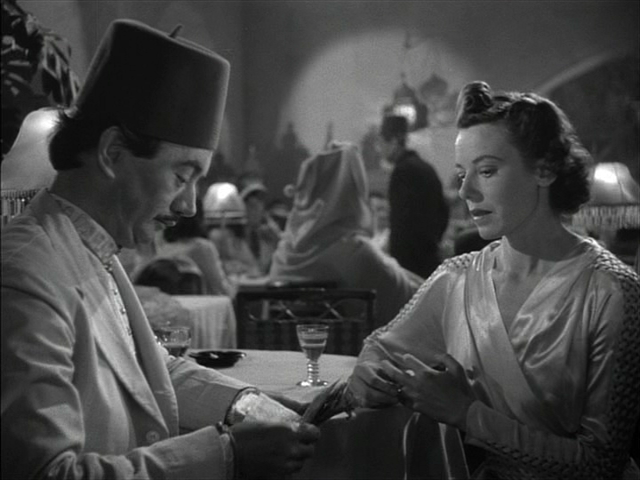
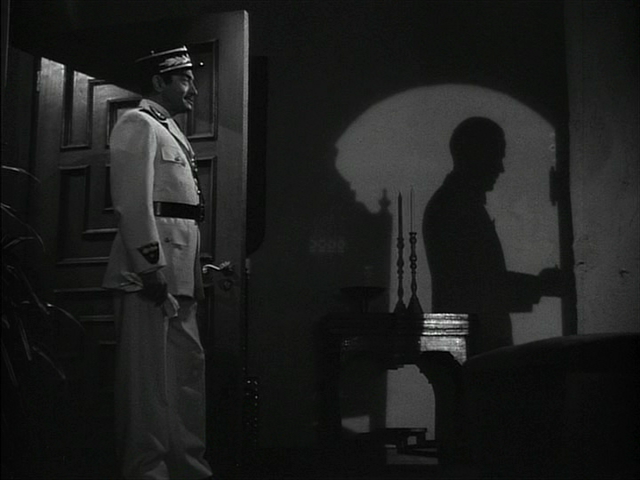
As Peary notes, this classic romantic wartime thriller — consistently voted one of the best films of all time by countless critics and fans — possesses just about every requirement for a truly “entertaining” film: in alphabetical order, it has “action, adventure, bravery, danger, espionage, an exotic locale, friendship, gunplay, humor, intrigue, a love triangle, a masculine hero, a mysterious heroine, patriotism, politics (without being too political), romance, sacrifice, sentimentality, a theme song, a time factor, a venomous villain, and war.” (Whew!). Peary accurately points out that seasoned director Michael Curtiz (whose contribution to the film’s enduring success is often sadly underplayed) “makes [the] somewhat confusing, overloaded story move at a brisk pace”, and he’s helped in no small part by Arthur Edeson’s masterful cinematography, which effectively highlights the shadowy nature of dealings in Casablanca during this most uncertain time in world history.

While it’s hard to know just how much of the script is original (Peary argues “it hasn’t been sufficiently acknowledged that almost everything in the film was in Everybody Comes to Rick’s, the unproduced source play by Murray Burnett and Joan Alison”), it’s difficult to find fault with the end result: a remarkably intelligent and witty screenplay, co-written by (among others) the Epstein twins (Julius and Philip) and Howard Koch. In addition to its countless now-iconic lines (“Here’s looking at you, kid”), one particular exchange — between Rains and a police inspector as Rick’s Cafe Americain is about to be shut down for gambling — remains a personal favorite, and has me giggling with delight every time I hear it.

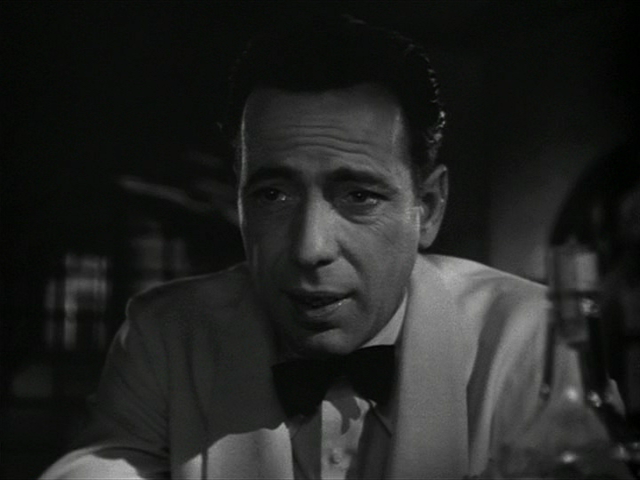
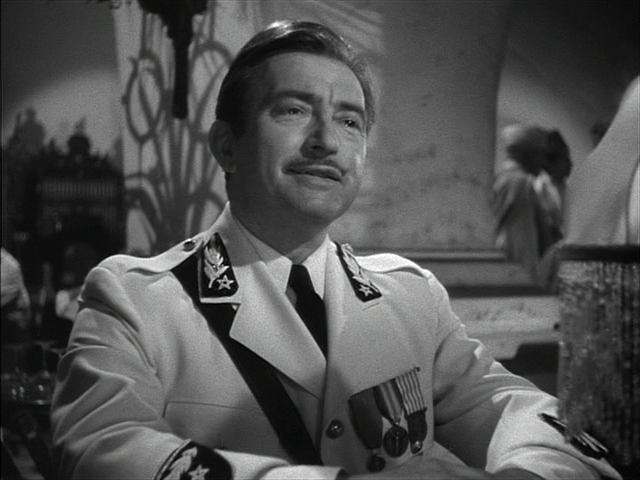
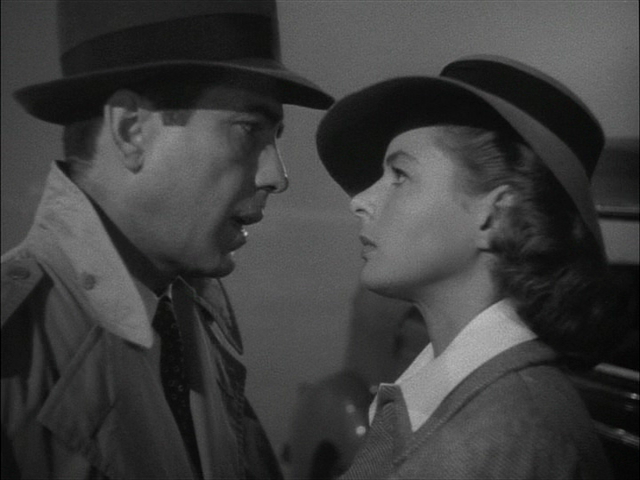
Much has been made about the fortuitous casting behind Casablanca, with Bogart and Bergman making a most unlikely yet inspired pair of star-crossed lovers. Bogart — who Peary refers to as “tough, introspective, ugly” — hits just the right notes of vulnerability and machismo, and, once we learn his backstory with “soft, generous, beautiful” Bergman, it’s easy to see why he’s remained so cynical and bitter for so long. Claude Rains nearly steals the show, however, in yet another stand-out performance: he manages to transform the corrupt overseer of Casablanca from a potential villain into a three-dimensional protagonist who’s both human and humorously droll. Rains’s friendship with Bogart — which evolves over the course of the film — adds yet another level of nuance (and, perhaps, “romance”) to this complex, emotionally charged story, one which will likely continue to delight audiences for decades to come.

Redeeming Qualities and Moments:

  • Humphrey Bogart as Rick Blaine
  • Ingrid Bergman as Ilsa Lund
  • Claude Rains as Louis Renault
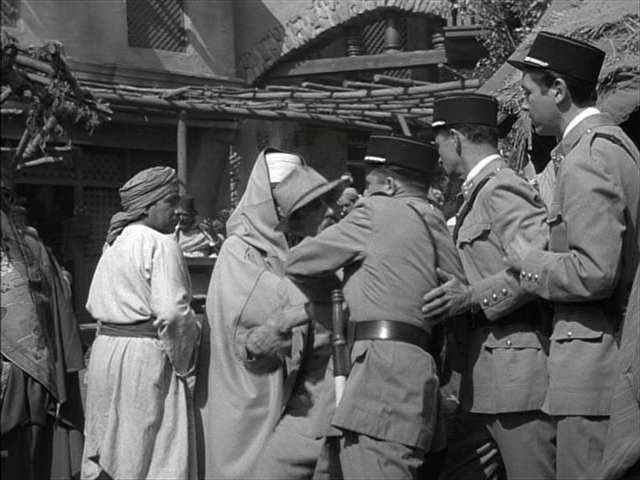
  • The fast-paced opening sequence, which effectively sets the stage for the risk and chaos of passing through Casablanca during WWII
  • A powerful depiction of wartime survival
  • The timeless romantic chemistry between Bogart and Bergman
  • Atmospheric set designs and visuals
  • Arthur Edeson’s stunning b&w cinematography
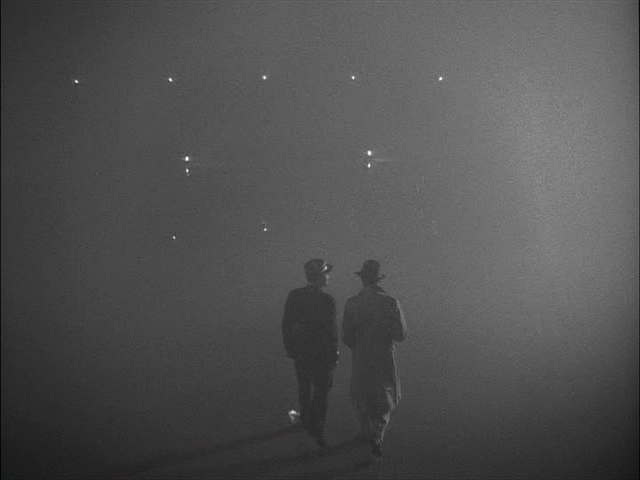
  • The infamous bittersweet ending
  • Epstein, Epstein, and Koch’s Oscar-winning script, full of instantly memorable dialogue: “You know, Rick, I have many a friend in Casablanca, but somehow, just because you despise me, you are the only one I trust.”
  • Max Steiner’s score

Must See?
Most definitely. Discussed at length in Peary’s Cult Movies (1981).

Categories

(Listed in 1001 Movies You Must See Before You Die)

Links:

Body Snatcher, The (1945)

Body Snatcher, The (1945)

“They’re uncommon bold, the grave robbers — and the daft doctors who drive them on!”

Synopsis:
In 19th century Edinburgh, the idealistic young assistant (Russell Wade) of a renowned surgeon (Henry Daniell) is shocked to learn that a creepy coachman (Boris Karloff) who sells stolen cadavers occasionally resorts to murder to secure enough bodies.

Genres:

  • Bela Lugosi Films
  • Blackmail
  • Boris Karloff Films
  • Henry Daniell Films
  • Horror Films
  • Literature Adaptation
  • Robert Wise Films
  • Val Lewton Films

Response to Peary’s Review:
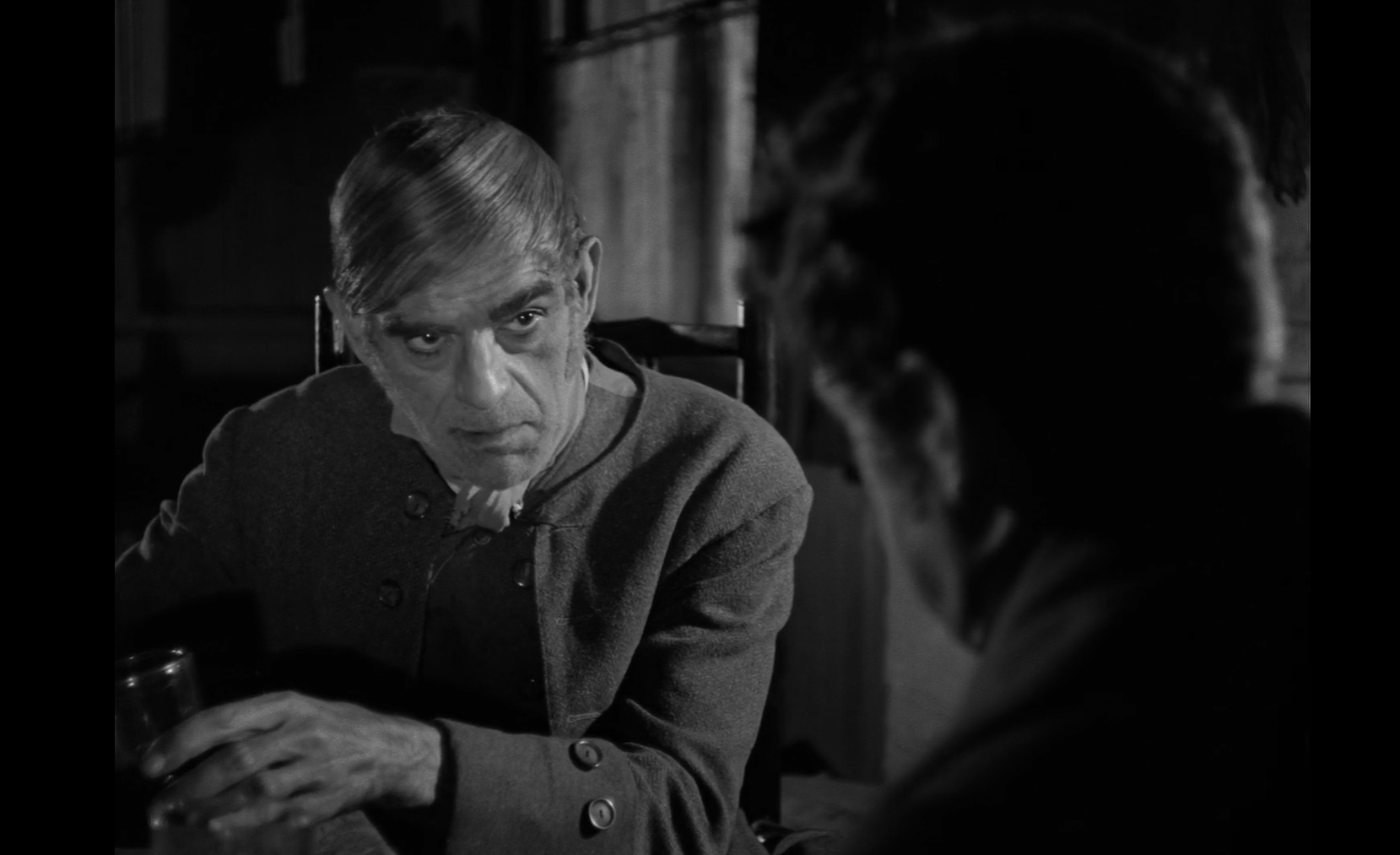
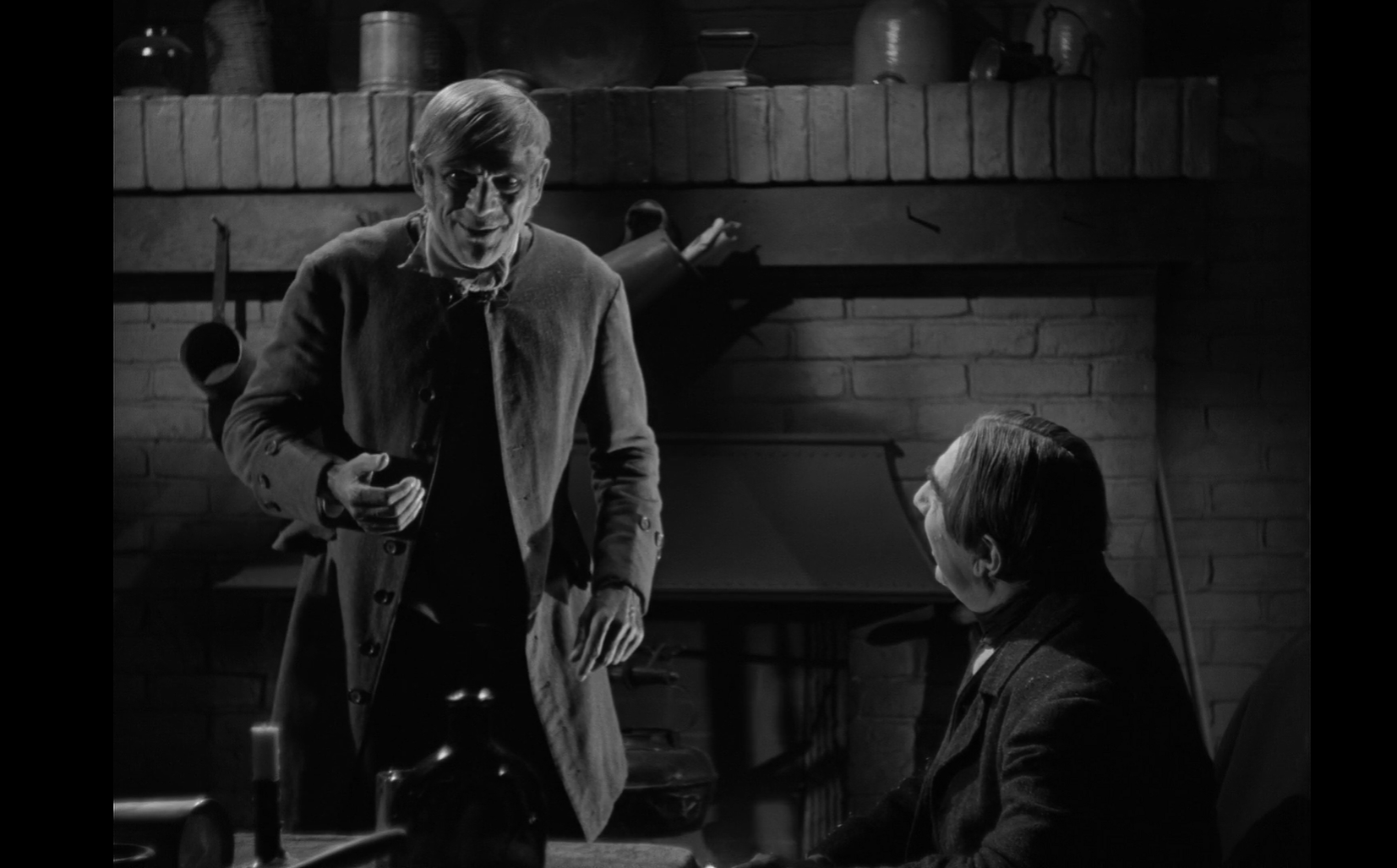
As Peary notes, this classy, “refreshingly literate” adaptation of Robert Louis Stevenson’s short story (based on the real-life exploits of notorious murderers Burke and Hare) presents a unique “Jekyll-and-Hyde variation”: one in which the war between good and evil “is between two men, ‘good’ McFarlane [Daniell] and ‘evil’ Gray [Karloff]”, each of whom possesses a good or bad side which he vehemently denies.

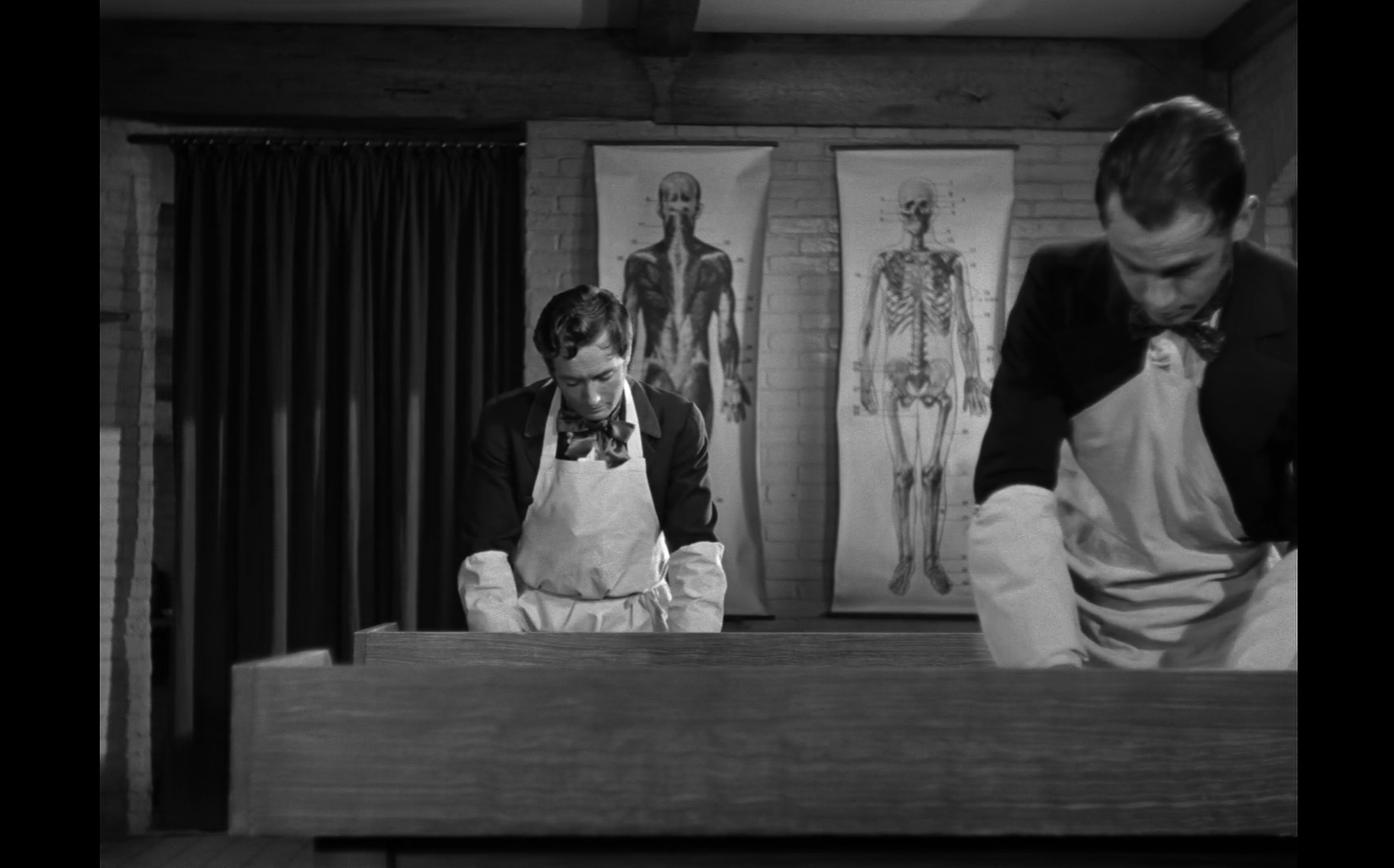
Indeed, it’s the complexity of the film’s two central characters which elevates The Body Snatcher well above its B-level status: we watch with fascination as Karloff (giving a stellar, nuanced performance) repeatedly torments McFarlane with hints about his sordid past, insistently reminding him, “You’ll never get rid of me.” McFarlane’s steadfast dedication to teaching young medical students about anatomy — which in turn requires a steady stream of “fresh” corpses to dissect — has caused him to breach the most important rule of ethics in medicine (“First, do no harm”), and the guilt he lives with because of this eats away at his very soul. Meanwhile, Gray remains unable to rise above his working-class status as a cabbie, but does everything in his power to remind McFarlane that they’re really cut from the same cloth: neither one is ultimately “better” than the other. As Peary notes, director Robert Wise does a “superb and tasteful” job depicting the horror elements of this “morbid”, highly atmospheric film, which remains one of producer Val Lewton’s most successful thrillers.

Note: Peary also argues that the script is “in truth overwritten and dull in spots”, but I disagree; at just 77 minutes, The Body Snatcher moves along quickly and never feels stale.

Redeeming Qualities and Moments:

  • Boris Karloff as Cabman Gray
  • Atmospheric cinematography and set designs

  • Philip MacDonald and Val Lewton’s literate script

Must See?
Yes, as one of Lewton’s best thrillers, and for Karloff’s career-worthy performance, which Peary awards the Alternate Oscar of the year. NB: He nominates Henry Daniell in the same category.

Categories

  • Important Director
  • Noteworthy Performance(s)

Links:

Contest Girl (1964)

Contest Girl (1964)

“You take someone from nowhere, you give them something… Then when the party’s over, you say, ‘You’ve lost — go home!'”

Synopsis:
A pretty typist (Janette Scott) from Bristol is persuaded by a smitten journalist (Ian Hendry) to enter a local beauty contest, and soon finds herself competing for the title of Rose of England.

Genres, Themes, Actors, and Directors:

  • Aspiring Stars
  • Beauty Contests

Review:
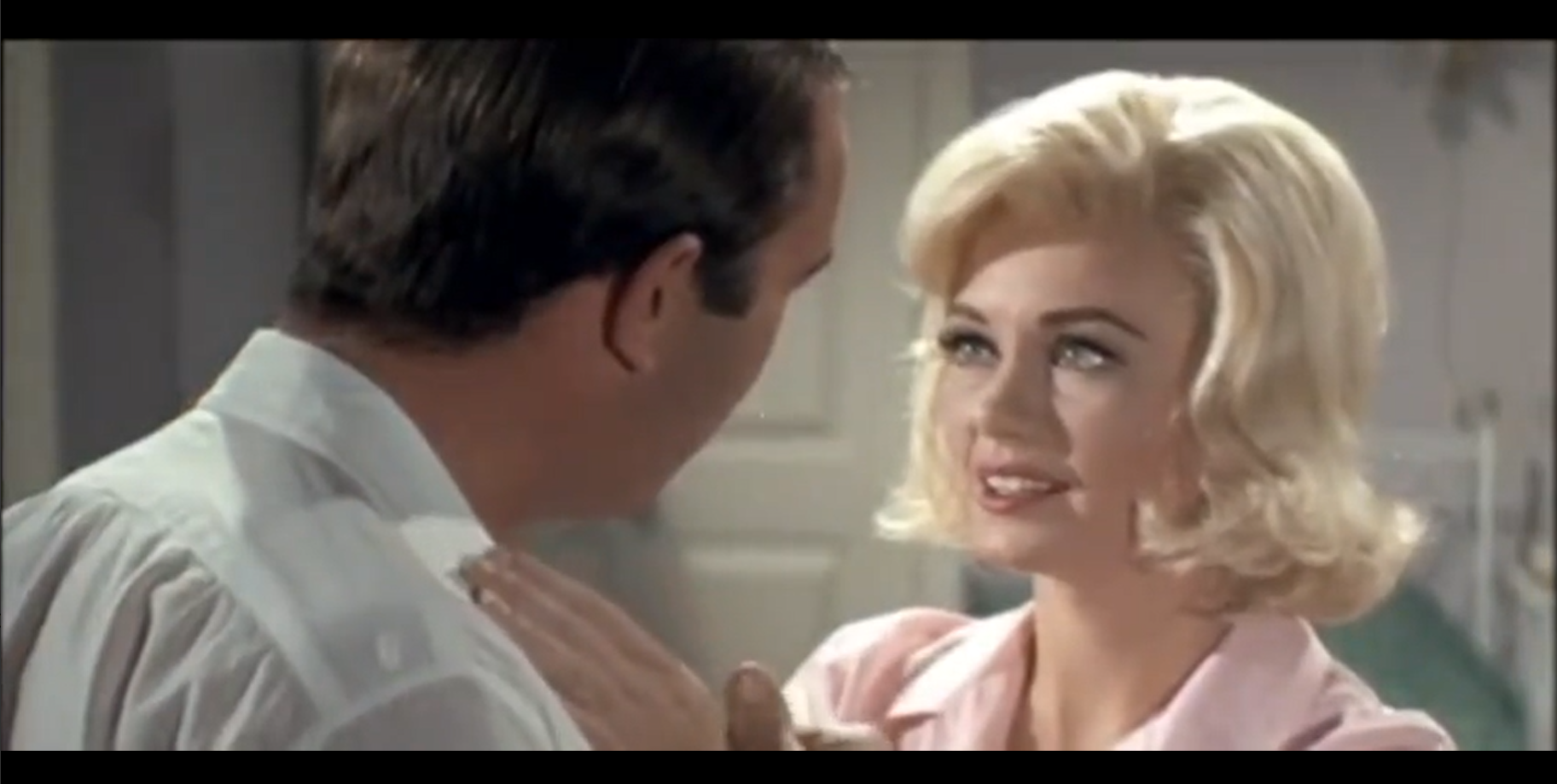
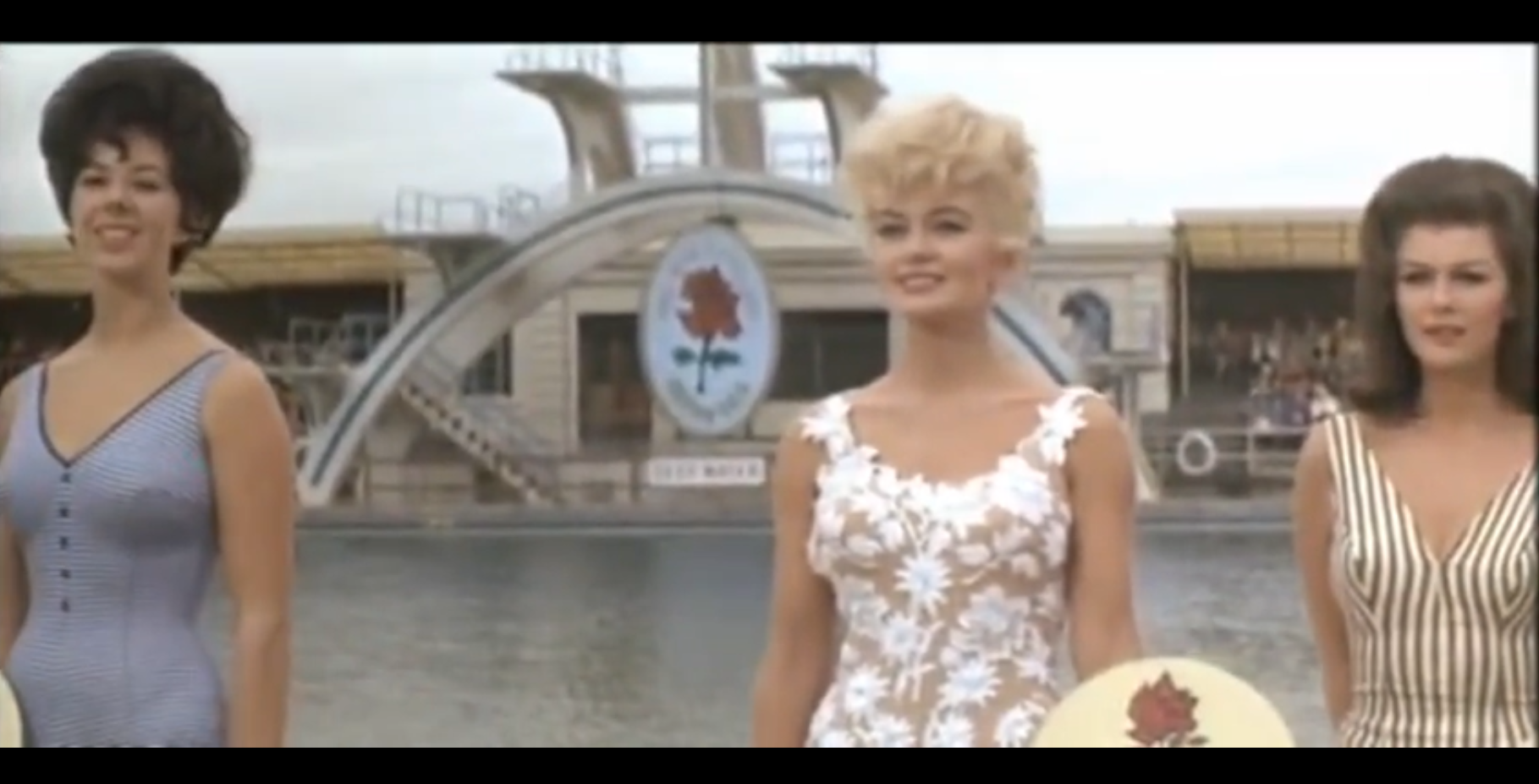
More commonly known by its original British title (The Beauty Jungle), Contest Girl is notable as one of the earliest films to expose the sordid, media-drenched world of competitive beauty pageants. Director Val Guest does a fine job showing how easily a young woman from a humble background can get sucked into the cut-throat scramble for fame and luxury, and Janette Scott is appropriately wide-eyed and pretty as the central character, who quickly ditches her fiance and working-class family in exchange for a bit of glamour and excitement.

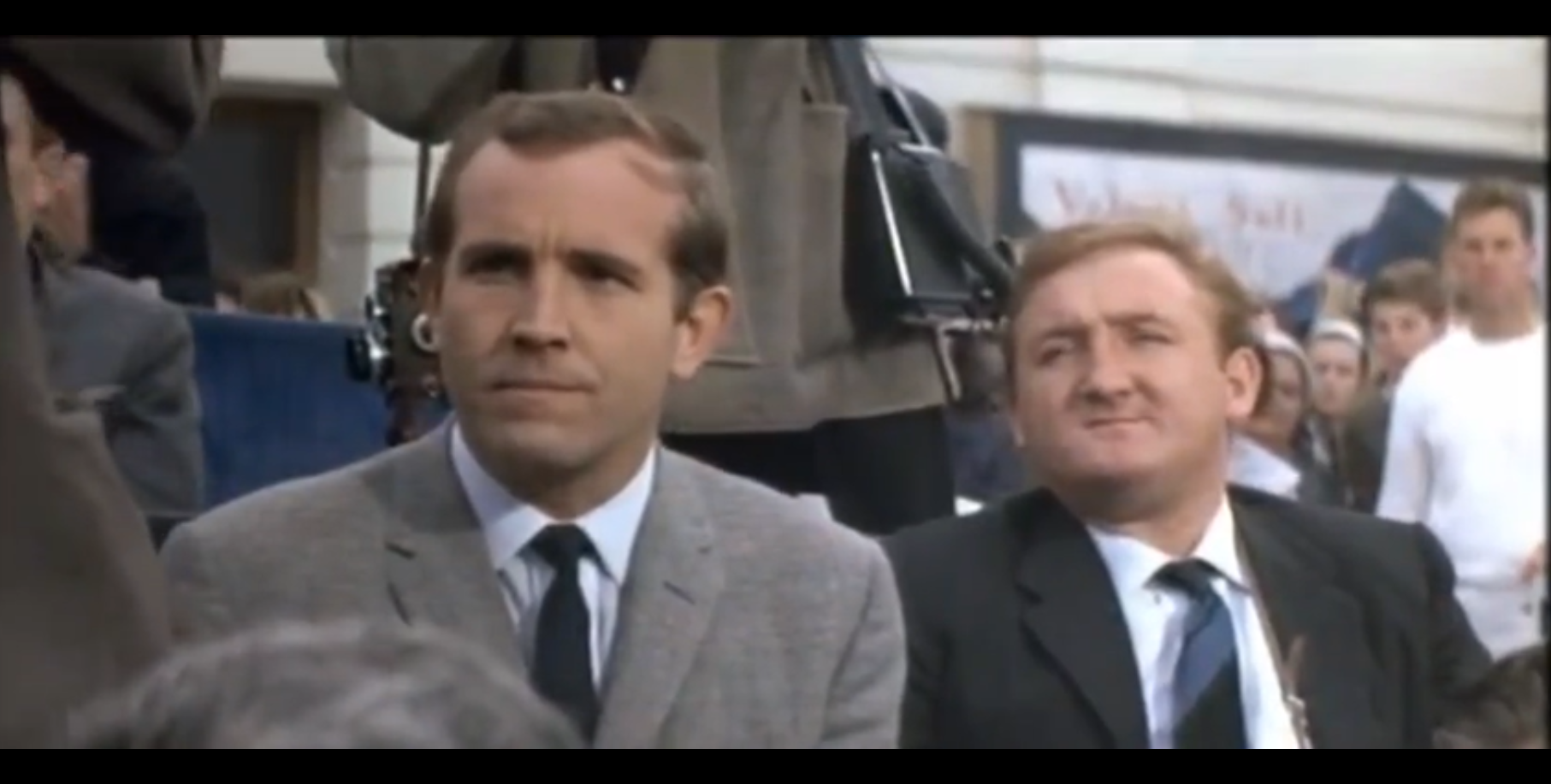
Unfortunately, an ongoing subplot in which Scott must fend off Hendry’s amorous advances fails to generate much interest, primarily because there’s so little chemistry between the two leads; instead, we’re left to focus on Scott’s inevitable education about the cruel realities (who knew?) of competitive pageantry. Fans of Guest’s eclectic body of work will likely be curious to check this obscure little film out; others, however, needn’t bother.

Redeeming Qualities and Moments:

  • An effectively cynical presentation of the beauty pageant racket
  • Ronald Fraser as Hendry’s photojournalist friend

Must See?
No. Listed as a Sleeper in the back of Peary’s book.

Links:

Mrs. Wiggs of the Cabbage Patch (1934)

Mrs. Wiggs of the Cabbage Patch (1934)

“I never had no great hankering to be awful rich and have a carriage and all.”

Synopsis:
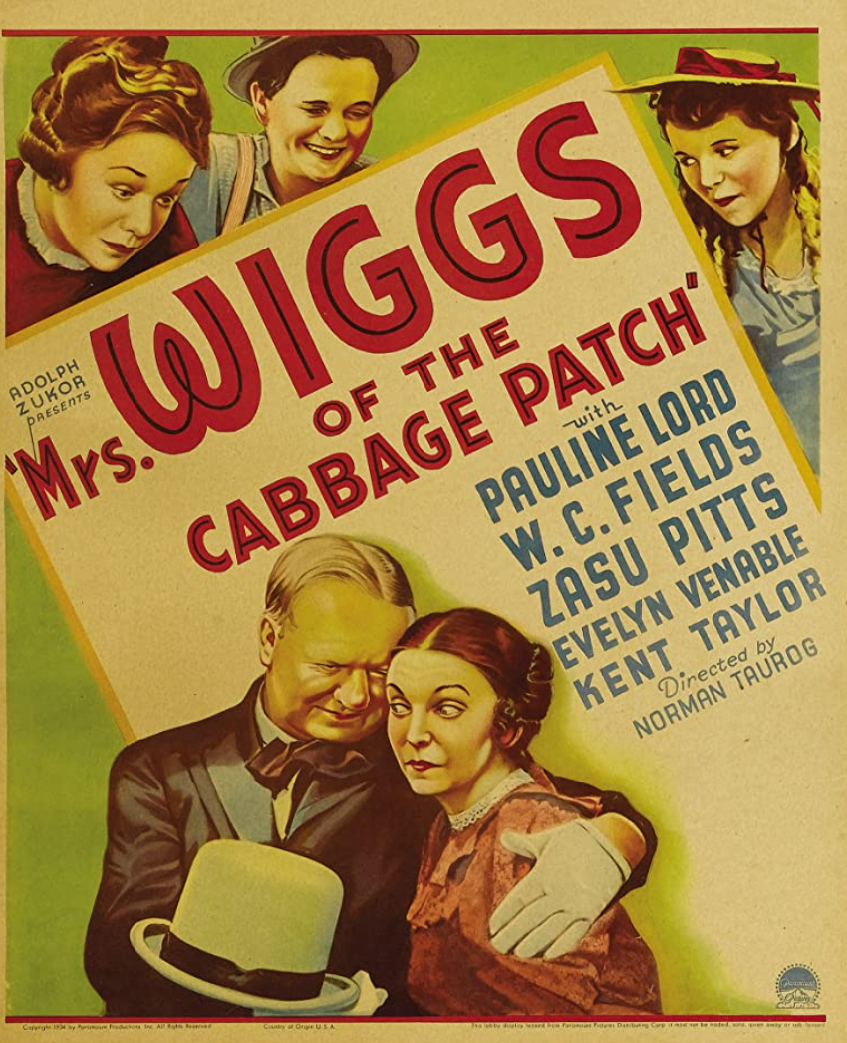
A poverty-stricken mother (Pauline Lord) whose husband (Donald Meek) has abandoned their family to seek gold in the Klondike is assisted by a kind-hearted editor (Kent Taylor) and his wealthy sweetheart (Evelyn Venable); meanwhile, Mrs. Wiggs’ spinster friend (Zasu Pitts) pursues a mail-order husband (W.C. Fields) who demands excellent cooking from his would-be wife.

Genres, Themes, Actors, and Directors:

  • Comedy
  • Do-Gooders
  • Literature Adaptation
  • Single Mothers
  • Survival
  • W.C. Fields Films
  • Zasu Pitts Films

Review:
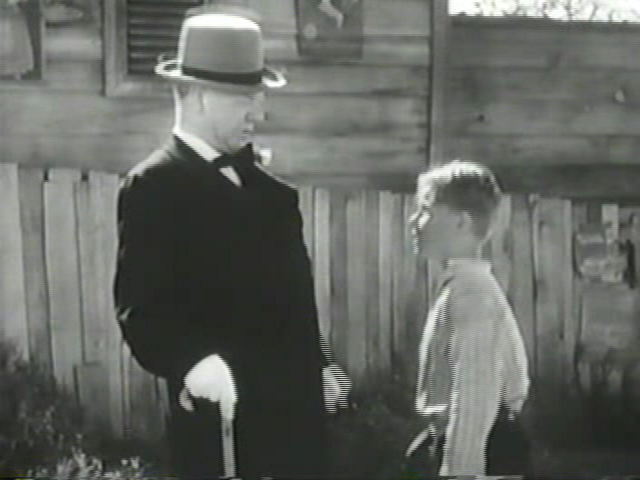
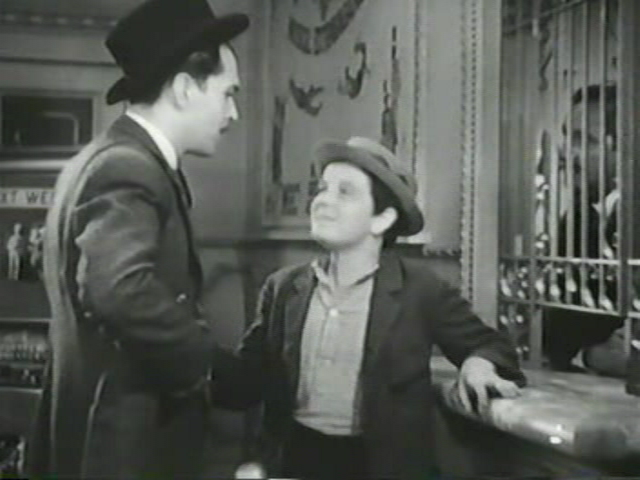
Based on a 1901 novel by Alice Hegan Rice, this simple tale of an eternally optimistic woman raising six children in the midst of poverty manages to transcend its inherent cliches — most notably an evil landowner (Charles Middleton) itching to throw Mrs. Wiggs and her brood out onto the street — and emerge as a sweet little melodrama with a surprising amount of humor. While stage actress Pauline Lord relies a bit too heavily on affectations (such as casting her eyes up to the heavens while speaking), she’s well suited to play Mrs. Wiggs, and nicely embodies her saintly patience. The more difficult aspects of Mrs. Wiggs’ travails (including providing a Thanksgiving meal for her brood, and dealing with a gravely sick son) are mediated by several truly heartwarming vignettes of good will on the part of Taylor and Venable, who do what they can to help out the Wiggs family; my favorite scene (captured below in a still) has Taylor bluffing while purchasing five theater tickets for Mrs. Wiggs and her brood in exchange for a cartload of wood from young Bill Wiggs (Jimmy Butler). W.C. Fields shows up in a bit role near the end of the film, as a mail-order husband who makes poor Zasu Pitts tremble with anxiety over her lack of cooking ability; his cameo is most enjoyable, and makes up for the film’s somewhat disappointing denouement.

P.S. Click here to read Rice’s original novel online at Project Gutenberg.

Redeeming Qualities and Moments:

  • Pauline Lord as Mrs. Wiggs
  • W.C. Fields as Ellsworth Stubbins
  • A genuinely heartwarming tale

Must See?
No, but it’s worth a look if you stumble upon it.

Links:

Support Your Local Sheriff (1969)

Support Your Local Sheriff (1969)

“When you set out to clean up a mess, you don’t just sit around and wait for that mess to get bigger and bigger!”

Synopsis:
The fast-shooting new sheriff (James Garner) of a booming western town faces the wrath of local patriarch Pa Danby (Walter Brennan) when he jails one of Danby’s errant sons (Bruce Dern).

Genres:

  • Bruce Dern Films
  • Comedy
  • James Garner Films
  • Joan Hackett Films
  • Sheriffs
  • Walter Brennan Films
  • Westerns

Review:
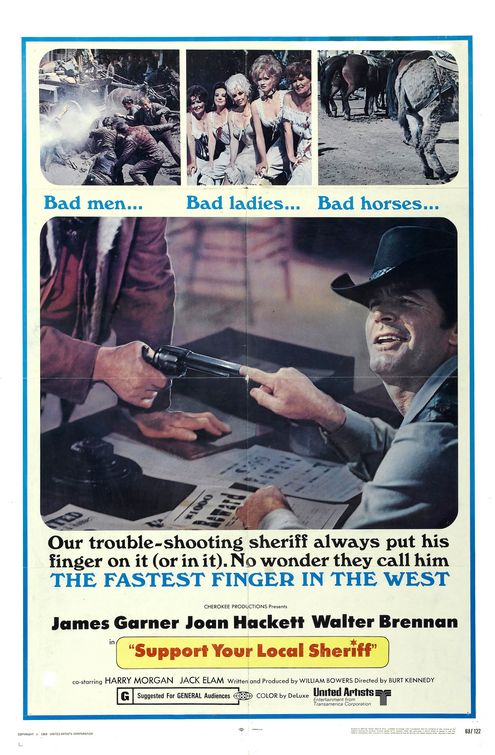
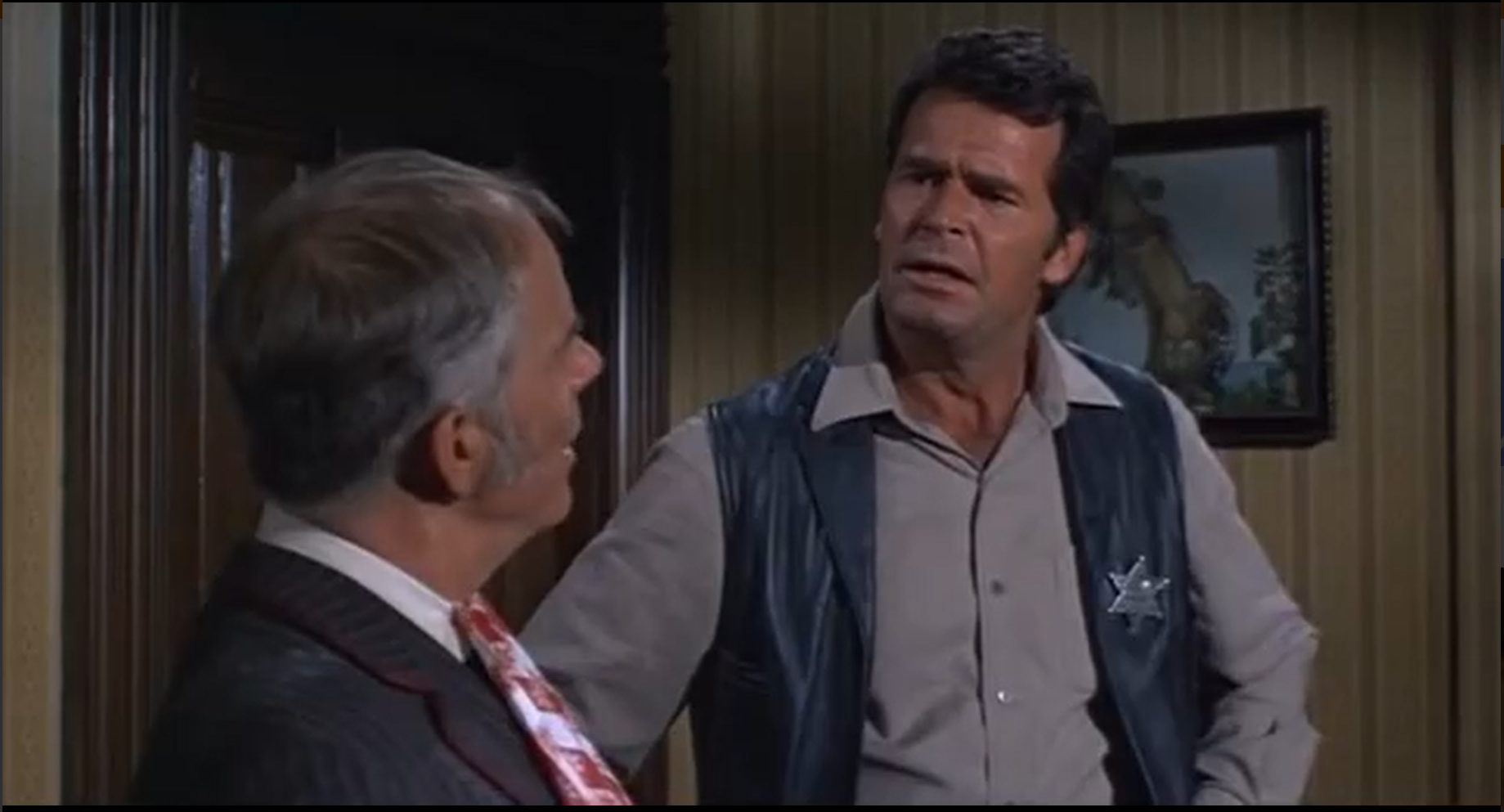
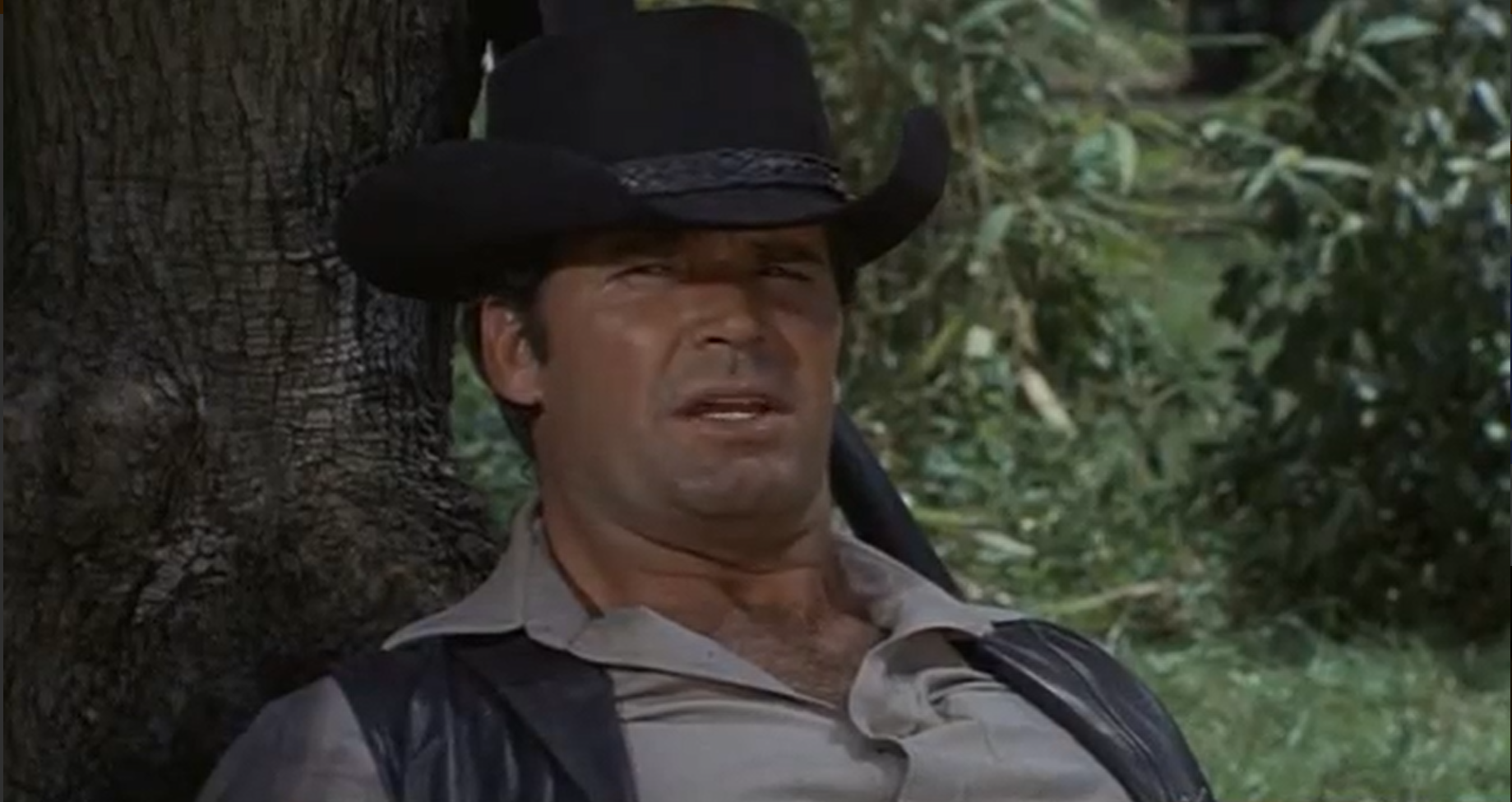
This light-hearted western spoof received less-than-stellar reviews upon its release, but remains an innocuous favorite of many, thanks in large part to James Garner’s winning performance in the title role.

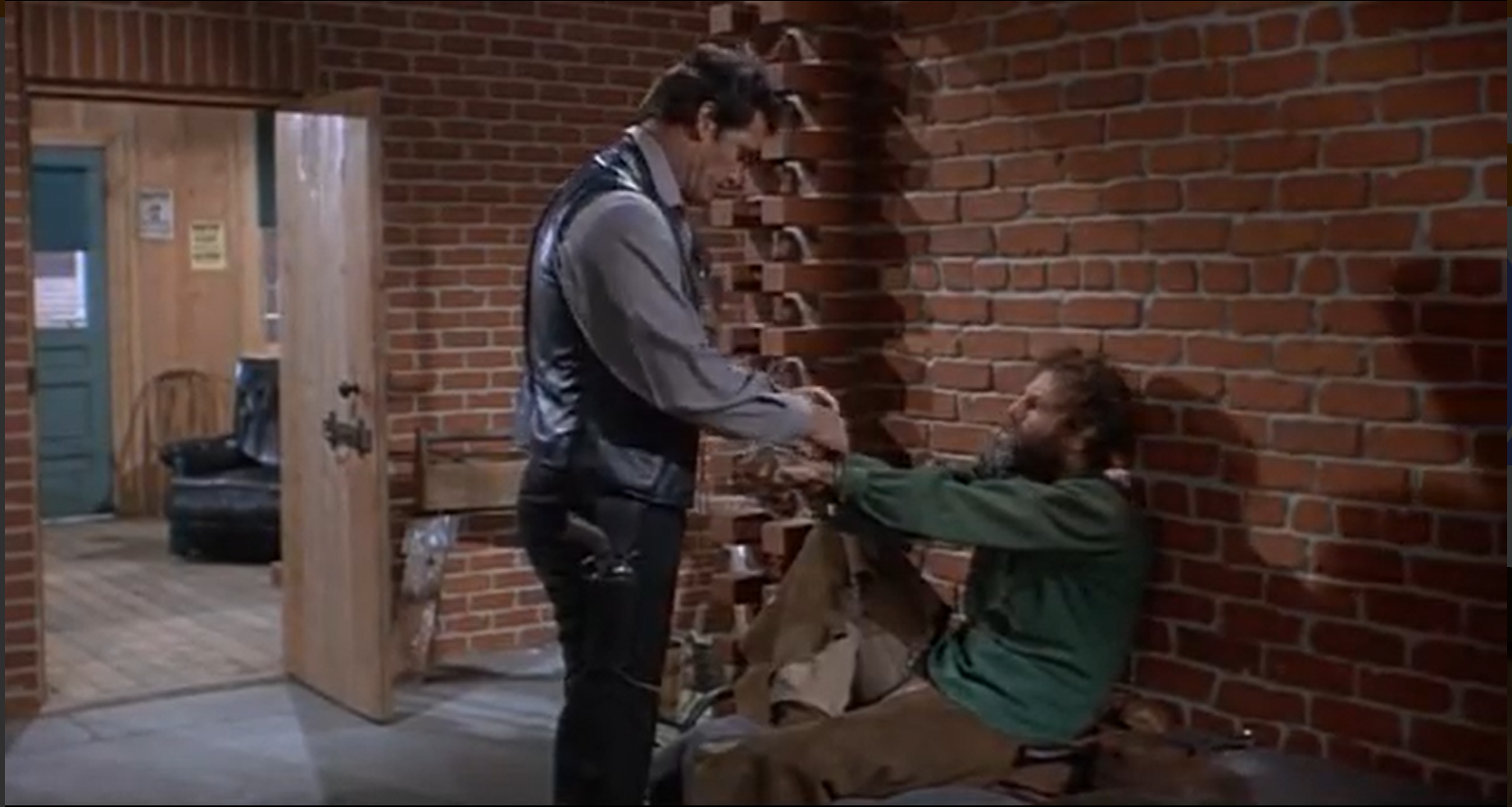
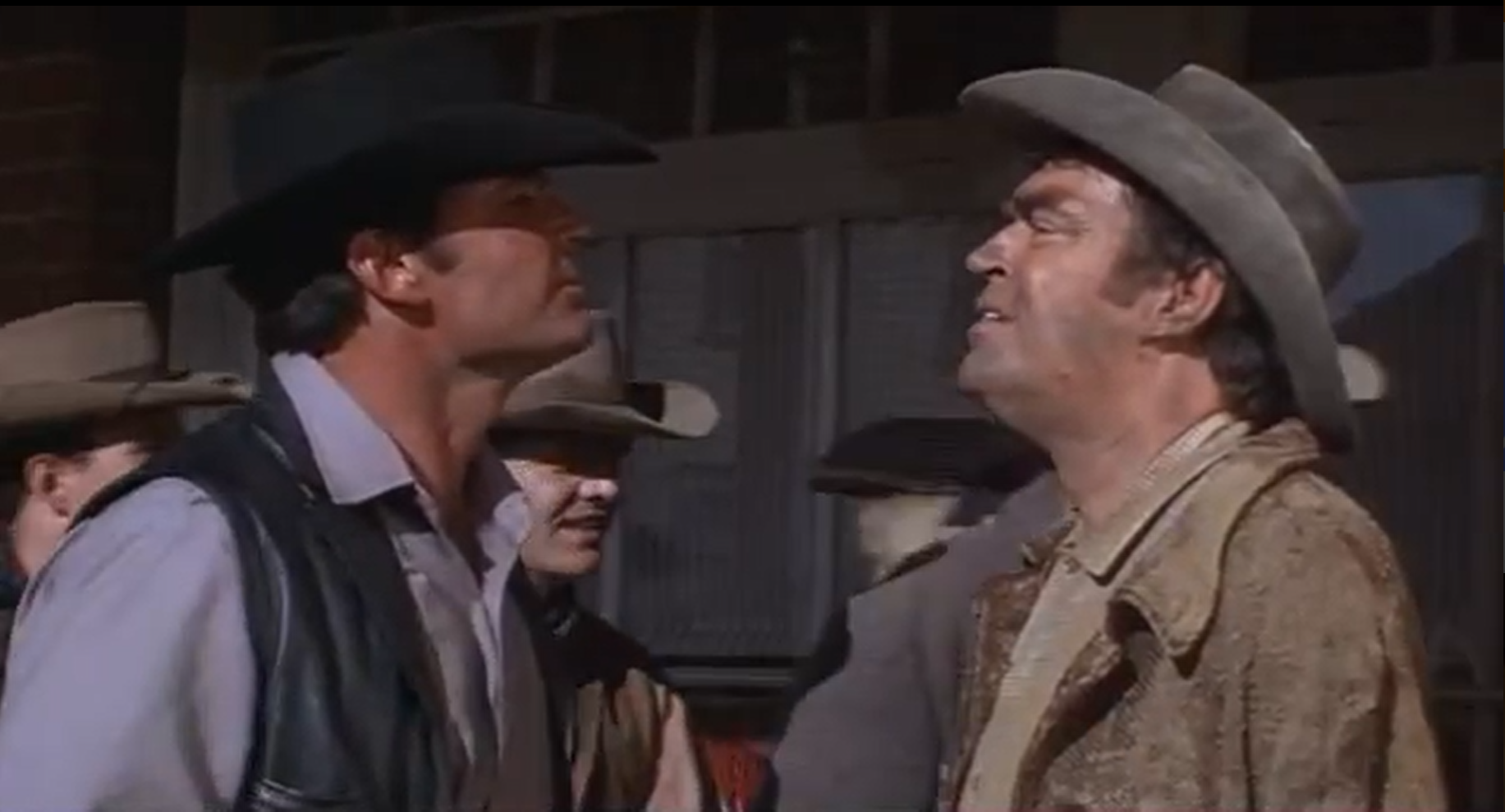
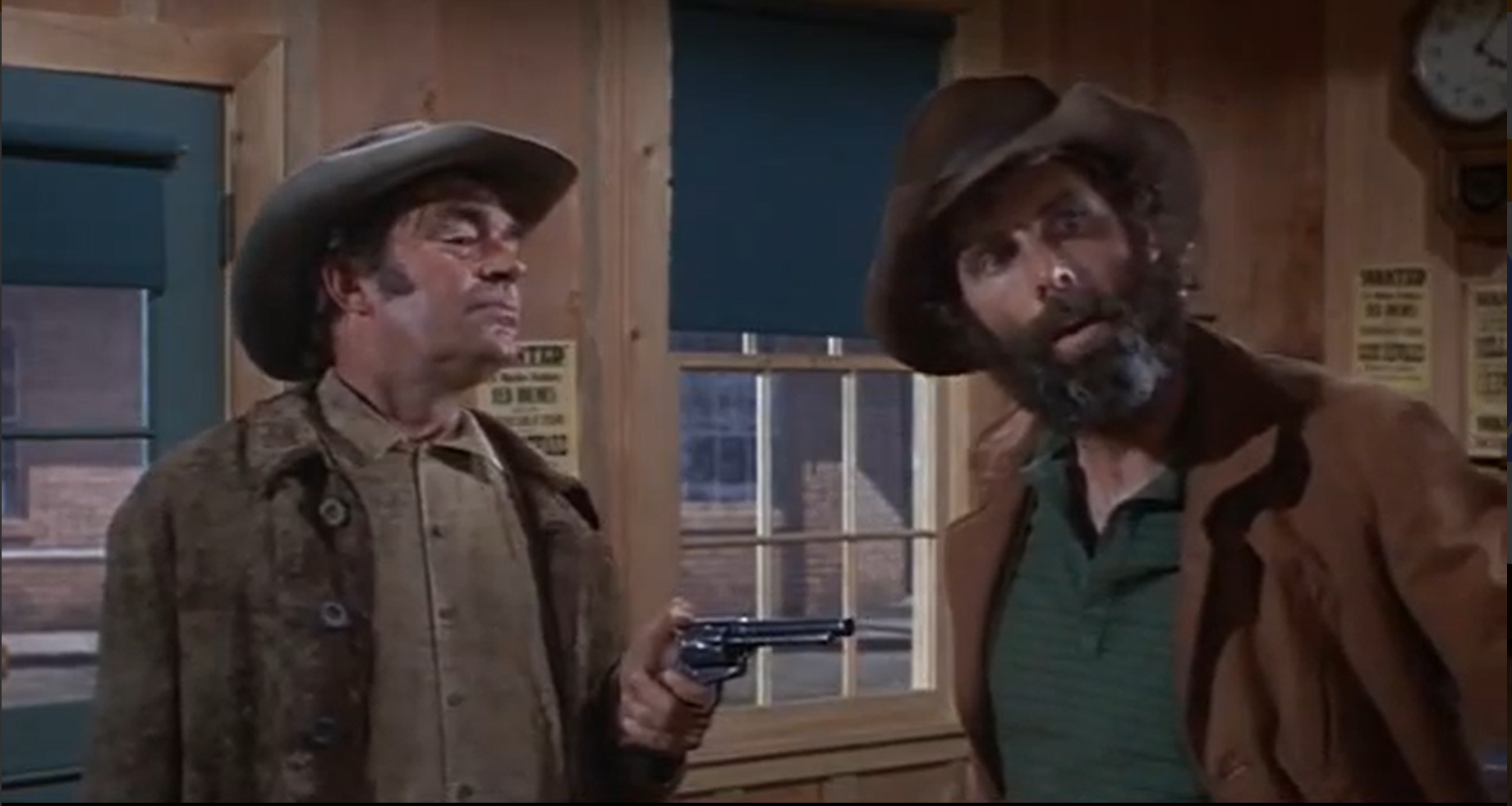
As a humble marksman — likely the fastest gun in the west — who is perpetually “on his way to Australia” (which he considers to be the “real frontier”), Garner is coolly unfazed by the chaos and violence surrounding him, including the town’s infamous baddy, Joe Danby (nicely played by the reliably psychotic Dern). In one of the film’s most humorous subplots, Garner manages not only to keep Danby in an unfinished prison by using simple psychological intimidation, but to get him to install the bars himself!

Some aspects of William Bowers’ screenplay are less successful than others: I’m unimpressed, for instance, by Joan Hackett’s character — the hot-headed daughter of Mayor Olly Perkins (Harry Morgan) — and her ongoing would-be romantic encounters with Garner; she comes across as needlessly shrill.

Yet there are enough genuinely corny laughs and fine performances to carry Support Your Local Sheriff through till its inevitable final shoot-out, and to recommend it for at least one-time viewing.

Redeeming Qualities and Moments:

  • James Garner as Sheriff McCullough
  • Jack Elam as McCullough’s deputy
  • Bruce Dern as Joe Danby
  • William Bowers’ often humorous screenplay

Must See?
No, but it’s recommended.

Links:

Fast Times at Ridgemont High (1982)

Fast Times at Ridgemont High (1982)

“You’re the one who told me I was gonna get a boyfriend at the mall.”

Synopsis:
Teenagers at Ridgemont High School — including Stacy (Jennifer Jason Leigh), Linda (Phoebe Cates), Brad (Judge Reinhold), “Rat” (Brian Backer), and Damone (Robert Romanus) — navigate the tricky terrains of jobs, sex, relationships, and teachers.

Genres, Themes, Actors, and Directors:

  • Comedy
  • High School
  • Nicolas Cage Films
  • Sexuality
  • Teenagers

Response to Peary’s Review:
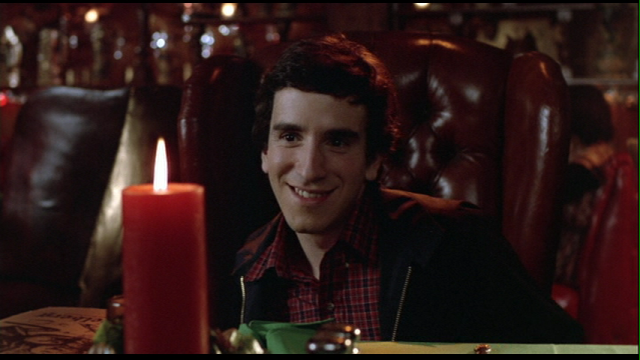
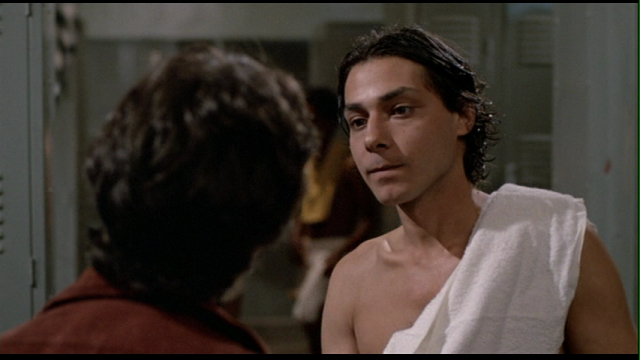
Along with several other mainstream critics at the time of its release (see, for instance, Roger Ebert’s scathing one-star review), Peary is inexplicably dismissive of this comedic high school “expose” — based on Cameron Crowe’s autobiographical novel — which he claims “shows as much special insight as one would have from hanging out at the mall for about an hour.” In truth, Fast Times — which has since become a certified cult classic, and is listed in Barron’s 1,001 Movies You Must See Before You Die — offers a humorous yet realistic look at naive teenagers (such as Jennifer Jason Leigh’s Stacy) who are eager for sexual experience, yet utterly confused about how to protect themselves, both physically and emotionally. Peary dismisses the idea that a pretty girl like Leigh would be interested in “short, nerdy Brian Backer” (“that’ll be the day!” he notes parenthetically) while failing to recognize that Backer is actually Leigh’s best bet by far: he’s sweet, sincere, and ultimately interested in more than just sex. Meanwhile, Leigh’s dismal sexual exploits with an older man (D.W. Brown) and Backer’s conflicted buddy Damone (Robert Romanus) may not be pleasant to watch, but are certainly 100% realistic: anyone who fails to recognize the enormous pressure many teenage girls feel to lose their virginity and become “sexually experienced” is living in a protective bubble.

The other supporting performances in this episodic film (nobody’s really the primary protagonist, though Leigh comes close) are all fine as well — many of the young actors (most notably Leigh and Penn) went on to create big names for themselves. Indeed, Penn is in some ways the truly memorable “star” of this ensemble show: his turn as Jeff Spicoli — a perpetually stoned-out, bleary-eyed, happy-go-lucky surfer — is one of the most iconic performances in recent cinematic history; his “verbal duels” with his “sarcastic, rule-conscious” history teacher, Mr. Hand (Ray Walston), are both “hilarious” and perhaps (as Peary argues) “the major reason to see this film”. Meanwhile, one of the most sympathetic characters in the film, surprisingly enough, turns out to be Judge Reinhold as Stacy’s older brother, Brad, who’s experiencing work and love troubles of his own; his caring response when he discovers his sister needs some help is likely my favorite scene in the film, and offers proof that Fast Times — while far from perfect — is much more honest about the multi-faceted lives of teens than Peary, Ebert, and others would have you believe.

Redeeming Qualities and Moments:

  • Sean Penn as Spicoli
  • Jennifer Jason Leigh as Stacy
  • Phoebe Cates as Stacy’s best friend, Linda
  • Judge Reinhold as Brad
  • Brian Backer as “Rat”
  • Robert Romanus as Damone
  • Spicoli’s hilarious dream sequence

Must See?
Yes, for its status as a cult favorite, and for Sean Penn’s memorable performance.

Categories

  • Cult Movie
  • Noteworthy Performance(s)

(Listed in 1001 Movies You Must See Before You Die)

Links:

Indiana Jones and the Temple of Doom (1984)

Indiana Jones and the Temple of Doom (1984)

“Nothing shocks me: I’m a scientist.”

Synopsis:
A year before his adventures battling the Nazis for the Ark of the Covenant, Indiana Jones (Harrison Ford) finds himself helping an Indian village recover its “magic stone” — and its kidnapped children — from a cult of bloodthirsty Shiva worshipers.

Genres, Themes, Actors, and Directors:

  • Cults
  • Dan Aykroyd Films
  • India
  • Karen Allen Films
  • Scientists
  • Steven Spielberg Films

Response to Peary’s Review:
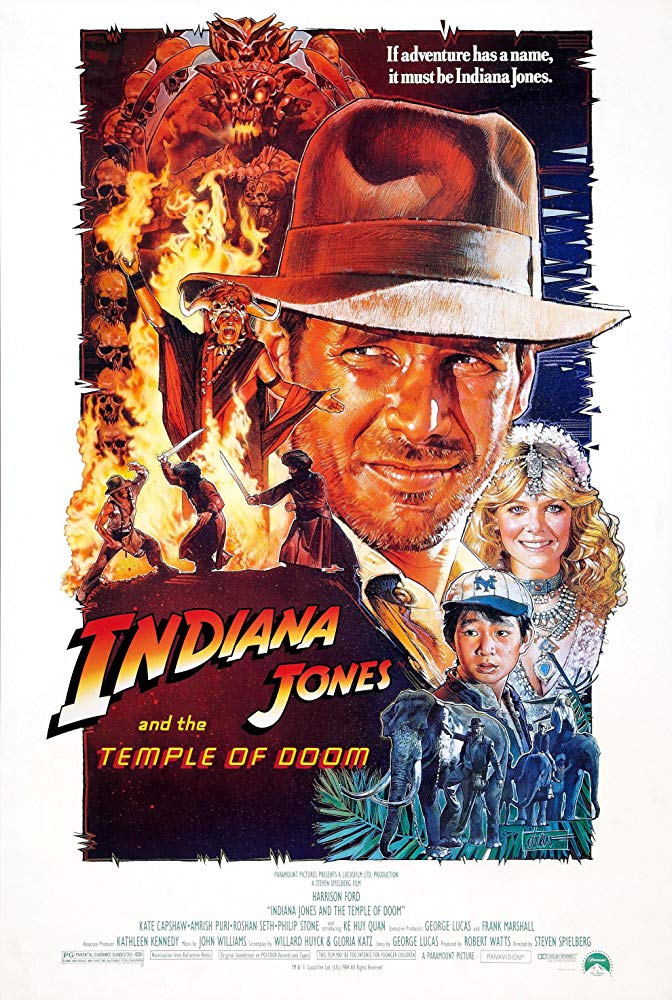
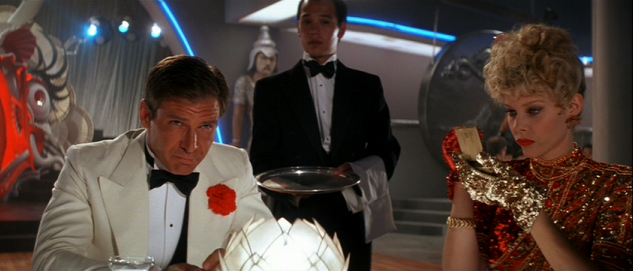
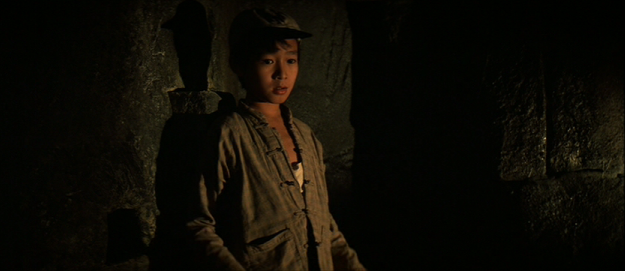
Peary is overly generous in his assessment of this disappointing follow-up (actually a prequel) to Steven Spielberg’s rollicking Raiders of the Lost Ark (1981). The first and most egregious problem with Temple of Doom is the casting of Kate Capshaw (instead of Karen Allen) as the female lead: Capshaw is annoying from the moment she opens her mouth, and never manages to redeem herself. Unlike Allen, she’s utterly hopeless and put-upon when faced with the slightest deviation from her pampered singer’s lifestyle, and screams more often than she talks. Meanwhile, Ford — though always enjoyable to watch — is overly subdued throughout most of the film, perhaps because he’s so busy trying to drown out Capshaw’s shrill whines. The freshest performance comes from young Ke Huy Quan as Indy’s Chinese sidekick, who plays an essential role in the film’s bloody denouement.

As many have pointed out, Temple of Doom — which is high on action, low on character development — is actually more like the old-time serials it’s based on than Raiders; to that end Capshaw’s blonde floozy singer — a “heroine of a type that hasn’t been around since feminism hit Hollywood” — may be more authentic to the time period as well. Arguing in Capshaw’s defense, Peary notes that “if someone like Willie [Capshaw], who worries about broken nails, can become brave and tough in a crisis, then all women have the potential” — but I would argue right back that she never really exhibits either bravery or toughness. And while it’s true that the film has “great sets” and “exciting adventures”, each enjoyable moment is counterbalanced by one that it’s either unduly gross (such as the infamous “banquet scene” in the Maharajah’s palace) or falls flat (such as Indy and Willie’s aborted attempt to bed each other). Film fanatics should see Temple of Doom simply to be familiar with the franchise, but all things considered, it’s a major disappointment.

Redeeming Qualities and Moments:

  • The opening barter scene between Indy and a trio of Shanghai gangsters
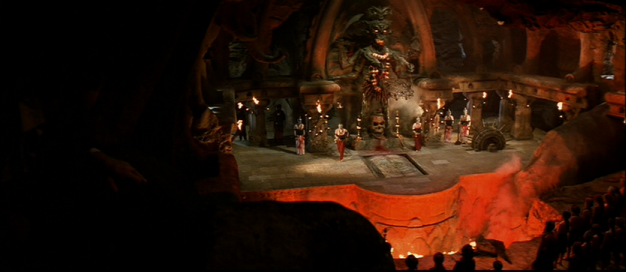
  • Impressive set designs in the Temple of Doom
  • Ke Huy Quan as Indy’s fast-thinking sidekick, Short Round
  • The final “bridge sequence”

Must See?
Yes, but only for its historical importance as part of the Indiana Jones series, and as one of the key films (along with Gremlins) which prompted the MPAA to create a special PG-13 rating.

Categories

  • Historically Relevant

Links:

Raiders of the Lost Ark (1981)

Raiders of the Lost Ark (1981)

“Inside the Ark are treasures beyond your wildest aspirations — you want to see it opened as well as I.”

Synopsis:
A bespectacled archaeologist named Indiana Jones (Harrison Ford) is hired by the United States government to locate a priceless religious artifact — the Ark of the Covenant — before the Nazis get their hands on it.

Genres, Themes, Actors, and Directors:

  • Denholm Elliott Films
  • Harrison Ford Films
  • Karen Allen Films
  • Nazis
  • Romance
  • Scientists
  • Steven Spielberg Films

Response to Peary’s Review:
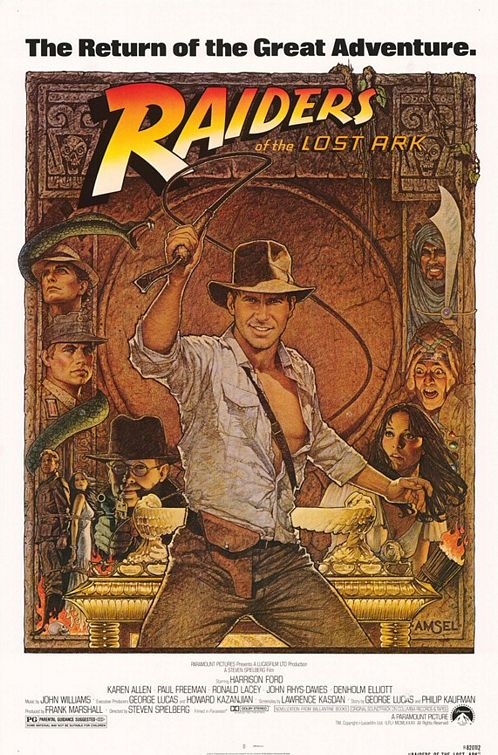
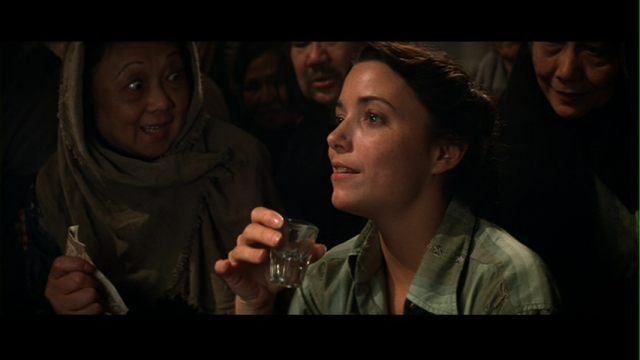
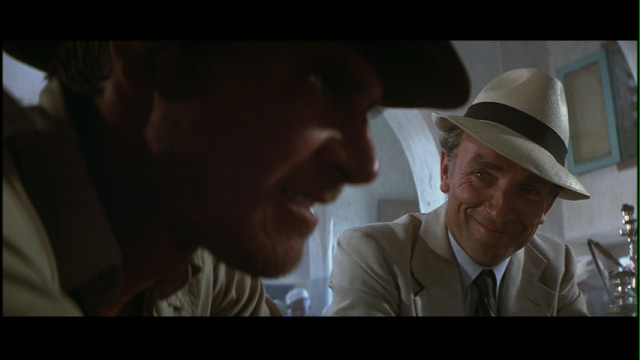
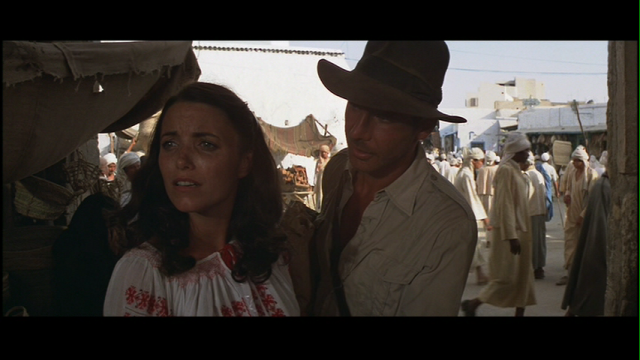
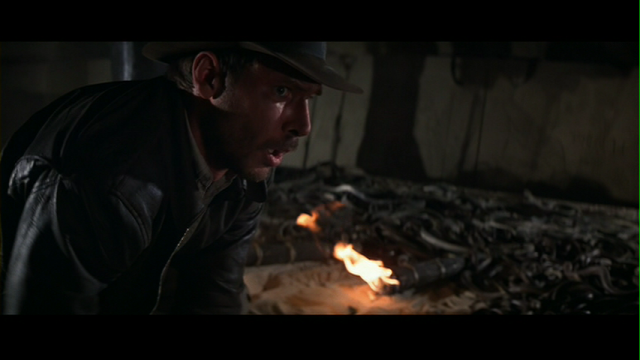
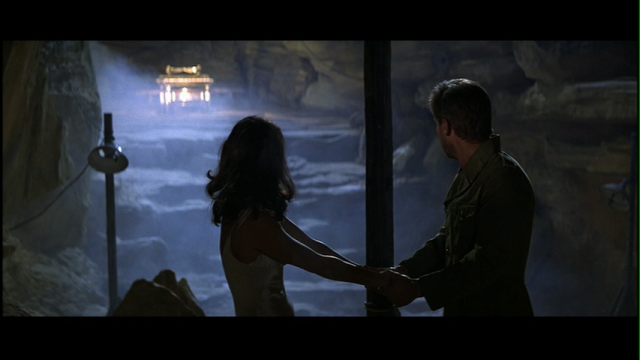
As Peary notes, “this marvelous adventure movie” — directed by Steven Spielberg and produced by George Lucas — is “much better than the old-time Saturday serials it pays tribute to” yet effectively “recaptures the feeling of excitement and awe they originally held for kids.” The first and best of the [original] “Indiana Jones” trilogy, Raiders features “non-stop nail biting action” as well as “tremendous wit, romance that even young boys will enjoy, nasty villains, amazing stunts, a lovely, brave, capable heroine, and an unbeatable action hero.” Ford and Karen Allen (who plays his unwitting sidekick, Marion) are truly believable as a couple, with Allen serving as the perfect female lead for an action movie: she’s both pretty and tough, ready to take on any adventures and/or men that come her way. Meanwhile, Harrison Ford’s dry wit and good looks make him the ideal real-life folk hero — he’s Clark Kent, but without superhero powers, and all the more refreshingly human for it. Excellent use is made of “exotic” locales across the globe, and the supporting characters — both good and bad — are well-played by a host of fine performers; my particular favorite is Paul Freeman as a French archaeologist collaborating with the Nazis who exhibits the tiniest bit of heart (and lust) towards Allen. John Williams’ instantly memorable score (“dum-da DUM DUM… dum-da DUM”) adds the perfect finishing touch to this most enjoyable adventure flick.

Redeeming Qualities and Moments:

  • Harrison Ford as Indiana Jones
  • Karen Allen as Marion Ravenwood
  • Paul Freeman as Dr. Belloq
  • Excellent use of “exotic” locales around the world
  • The exciting opening sequence
  • The infamous “snake pit” scene
  • A satisfying romance between adventurous equals
  • John Williams’ instantly hummable score

Must See?
Yes. This modern-day classic should be seen and enjoyed by all film fanatics.

Categories

  • Cult Movie
  • Oscar Winner or Nominee

(Listed in 1001 Movies You Must See Before You Die)

Links:

King of Kings (1961)

King of Kings (1961)

“For I say unto you, love your enemies; bless them who curse you; and pray for those who despise and persecute you! For if you love only those who love you, what reward shall you have?”

Synopsis:
Shortly after the Romans invade Judea, Jesus of Nazareth (Jeffrey Hunter) becomes a preacher and encourages his followers to rely on faith and peace for their salvation.

Genres, Themes, Actors, and Directors:

  • Ancient Greece and Rome
  • Biblical Stories
  • Biopics
  • Historical Dramas
  • Hurd Hatfield Films
  • Jeffrey Hunter Films
  • Nicholas Ray Films
  • Rip Torn Films
  • Robert Ryan Films

Review:
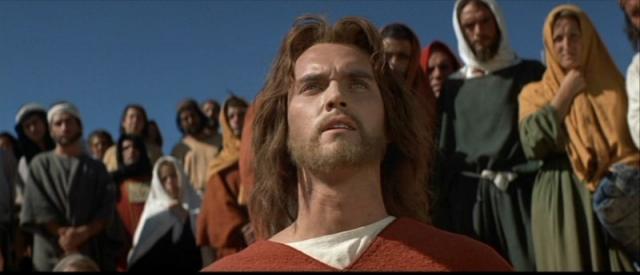
At the time of its release, this Biblical biopic by director Nicholas Ray was snidely referred to by many as I Was a Teenage Jesus, in reference to both Ray’s previous youth-oriented films (most notably Rebel Without a Cause), and the casting of blue-eyed matinee idol Jeffrey Hunter (actually 35 years old) in the title role. In truth, Hunter is reasonably effective as Jesus, and King of Kings as a whole remains a surprisingly tame and “respectful” historical drama. Screenwriter Philip Yordan wisely frames Jesus’s life squarely within the political context of his day (Roman occupation), and establishes a convenient — albeit historically suspect — “rivalry” between the peace-loving Jesus and rabble-rousing Barabbas (actually just an anonymous thief who was set free on the day of Jesus’s crucifixion). This fictionalized subplot allows for Jesus’s emphasis on faith and pacifism in the face of foreign occupation to ring out loud and clear, and places his overall message to mankind within a refreshingly timely and realistic context.

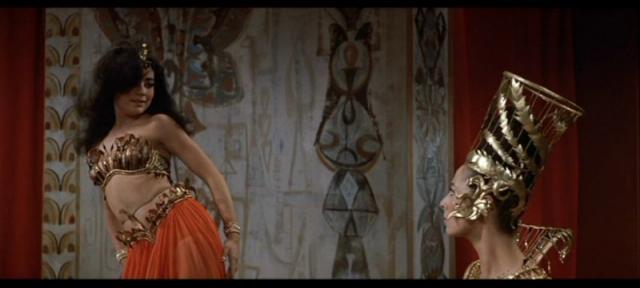
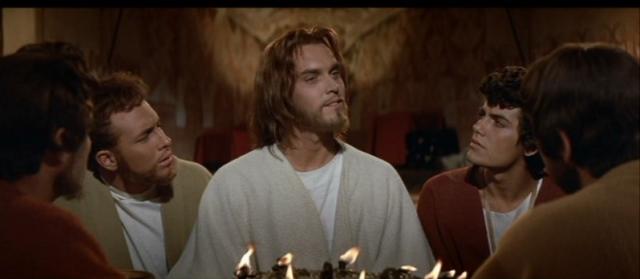
Ray and Yordan are at their best when humanizing iconic biblical events, such as the justly praised Sermon on the Mount sequence, and their intimate recreation of the Last Supper; less interesting are the massive battle scenes, which perhaps are expected fare in an epic drama but distract from the very real human story being told. Some have argued that too much time is spent showing the Romans’ reactions to Jesus’s growing popularity, but the actors in the key Roman roles — including Viveca Lindfors, Frank Thring, and Hurd Hatfield — are all enjoyable to watch, and their decadent lifestyle ultimately provides a nice contrast with that of the hard-working Jews. My favorite “Roman scene” shows the infamous Salome (played by Brigid Bazlen as a sexy teenage hussy) tempting her stepfather, King Harrod (Thring), into decapitating John the Baptist (a shaggy-headed Robert Ryan) and bringing her his head on a platter; while this vignette may not be substantiated by biblical scholars, it plays well on the screen! Ultimately, King of Kings will be of most interest either to Christians (who likely will be pleasantly surprised by how events are depicted) or fans of mid-century historical epics; for all-purpose film fanatics, it’s worth a look simply for its historical notoriety.

Note: In 1980, Hunter was (perhaps unfairly) nominated by the Medved brothers as one of the worst actors to play Jesus Christ in a film — though he lost out on winning the Golden Turkey Award in this category to Ted Neeley in Jesus Christ Superstar.

Redeeming Qualities and Moments:

  • Brigid Bazlen as psychopathic Salome, who requests John the Baptist’s head on a platter
  • Jesus preaching the Sermon on the Mount
  • Nice humanization of many iconic Biblical events — such as the Last Supper
  • Miklos Rozsa’s Score

Must See?
Yes, simply for its importance in film history. Listed as a film with Historical Importance and a Personal Recommendation in the back of Peary’s book.

Categories

  • Historically Relevant

Links:

Mr. Peabody and the Mermaid (1948)

Mr. Peabody and the Mermaid (1948)

“There’s much to be said for a woman — even an imperfect one — who lives, breathes, and exists only for the man she loves.”

Synopsis:
A middle-aged man (William Powell) on vacation in the Caribbean falls in love with a mermaid (Ann Blyth), and finds his marriage (to Irene Hervey) threatened.

Genres, Themes, Actors, and Directors:

  • Ann Blyth Films
  • Fantasy
  • Flashback Films
  • Infidelity
  • Mid-Life Crisis
  • Mermaids
  • Romantic Comedy
  • Vacation
  • William Powell Films

Review:
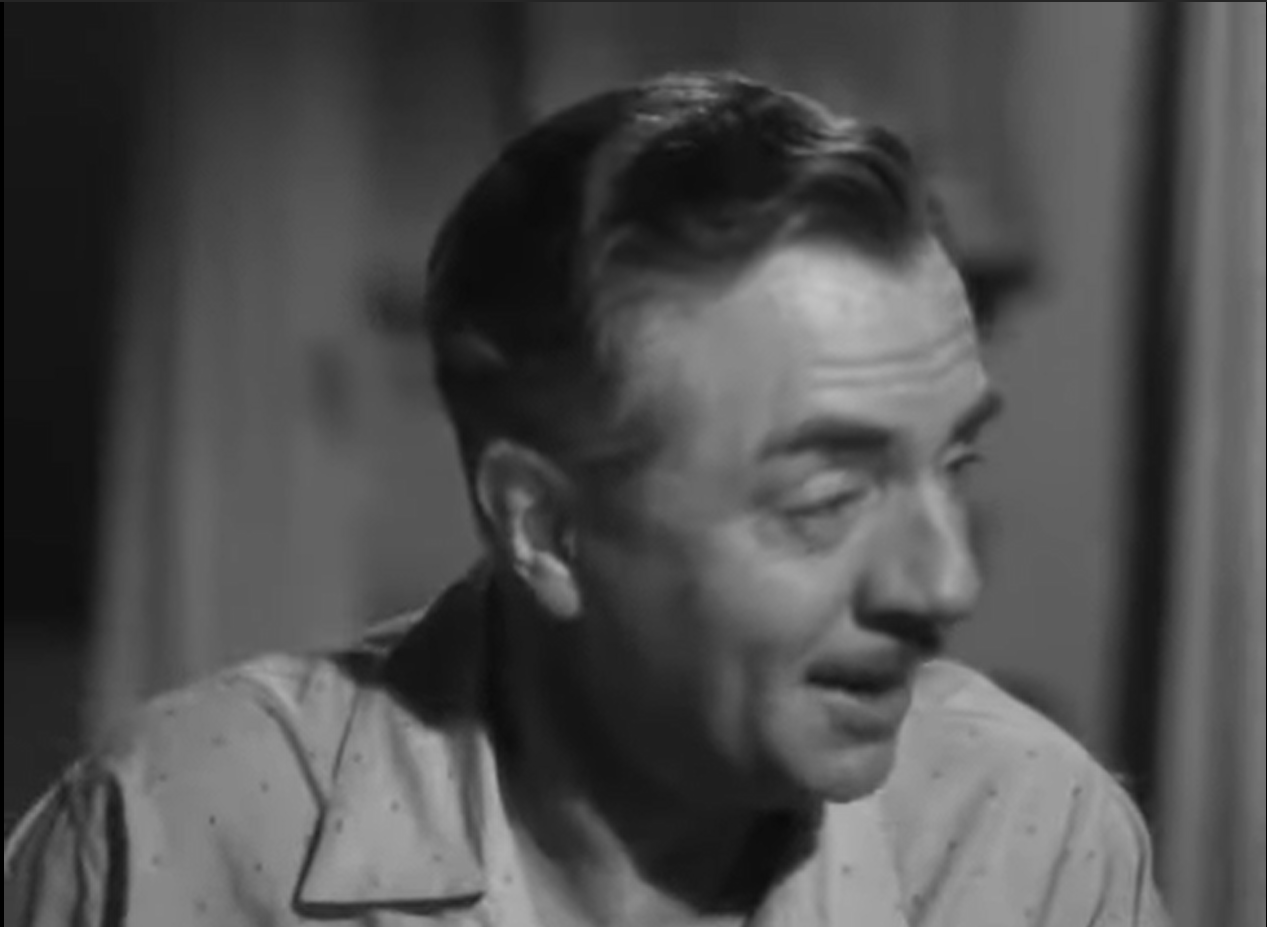
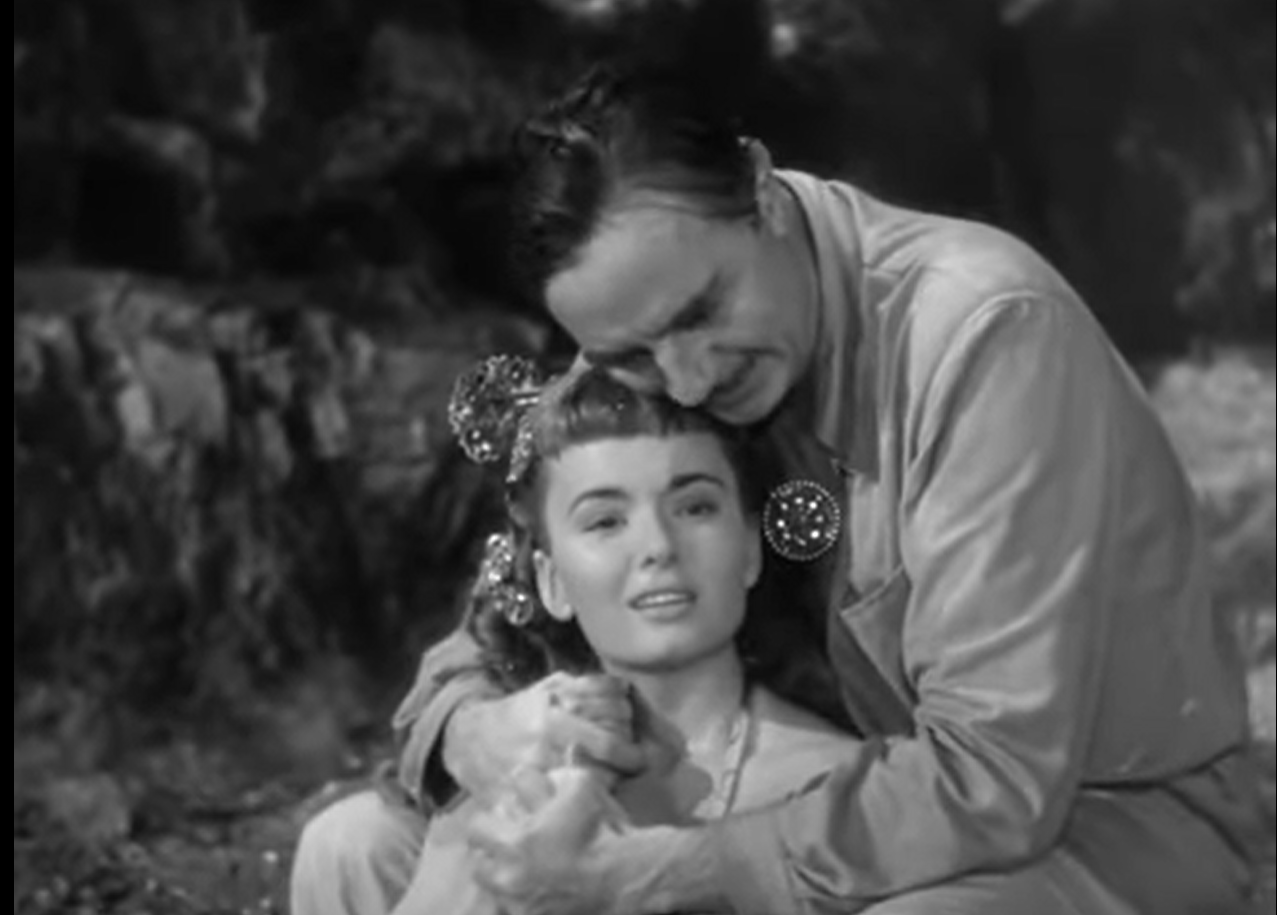
As indicated in the quote cited above, this tepid romantic comedy by director Irving Pichel — based on Guy and Constance Jones’ novel Peabody’s Mermaid — unabashedly explores sex and relationships from a male point of view, specifically that of a 50-year-old married man rapidly embarking upon a mid-life crisis. Structured as a flashback story told to a psychiatrist (Art Smith), Mr. Peabody and the Mermaid is clearly meant to satirize the age-old trope of middle-aged men falling for naive girls half their age; indeed, Peabody makes no excuses for himself when describing — through voiceover — what he’s looking for in an ideal woman (“What I like is a woman who can’t do anything very much”), or telling the nubile, conveniently mute Lenore that in her eyes there exists both eternal wisdom and “the beauty of a child, too: simple, direct, uncomplicated.”

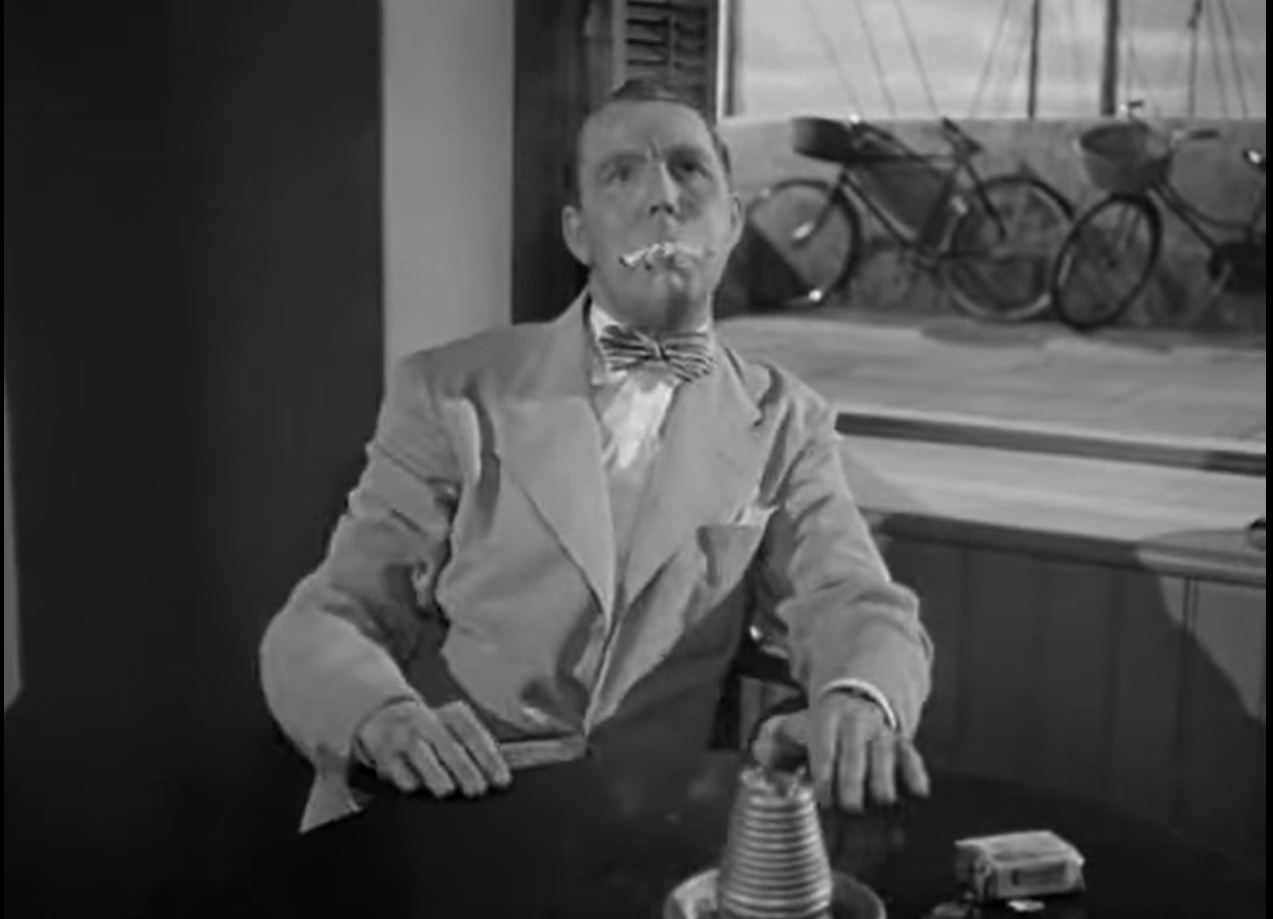
Unfortunately, while it’s clear that Peabody’s lust for Lenore is merely a symptom of his own male insecurity, his growing infatuation remains uncomfortable to watch — yet we’re stuck with nobody else to root for. While Ann Blyth does a nice job playing a character who must communicate exclusively through facial expressions and body language, she never emerges as a three-dimensional character, and Peabody’s wife (Irene Hervey) comes across as little more than a close-minded shrew. Meanwhile, an ongoing comedic riff about a morose investigator (Clinton Sundberg) who has recently given up both alcohol and cigarettes — and must deal with temptation everywhere he goes — is decidedly unfunny:

and Peabody’s biggest crisis — being double-crossed by Sundberg and eventually accused of murder — holds little interest. Ultimately, while Mr. Peabody and the Mermaid maintains a small coterie of devoted fans (click here to read a LOT more about this film’s inception — including the task of outfitting Blyth in her mermaid tail), it’s not must-see viewing.

Redeeming Qualities and Moments:

  • William Powell as Mr. Peabody
  • Ann Blyth as Lenore the Mermaid
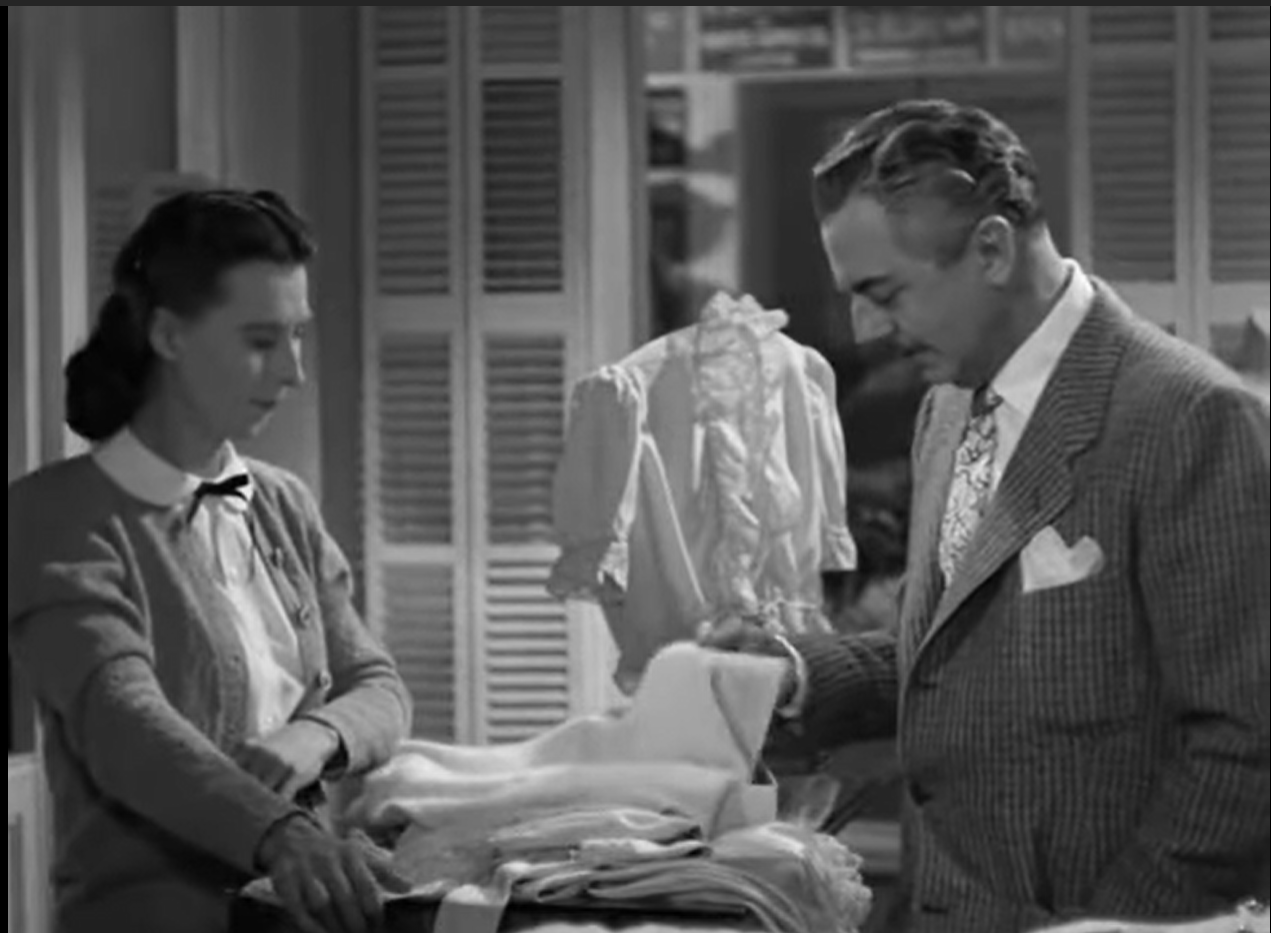
  • Powell’s humorous attempt to buy sweaters — then simply bikini tops — for Lenore

Must See?
No; while beloved by some, this dated comedy hasn’t aged all that well.

Links: