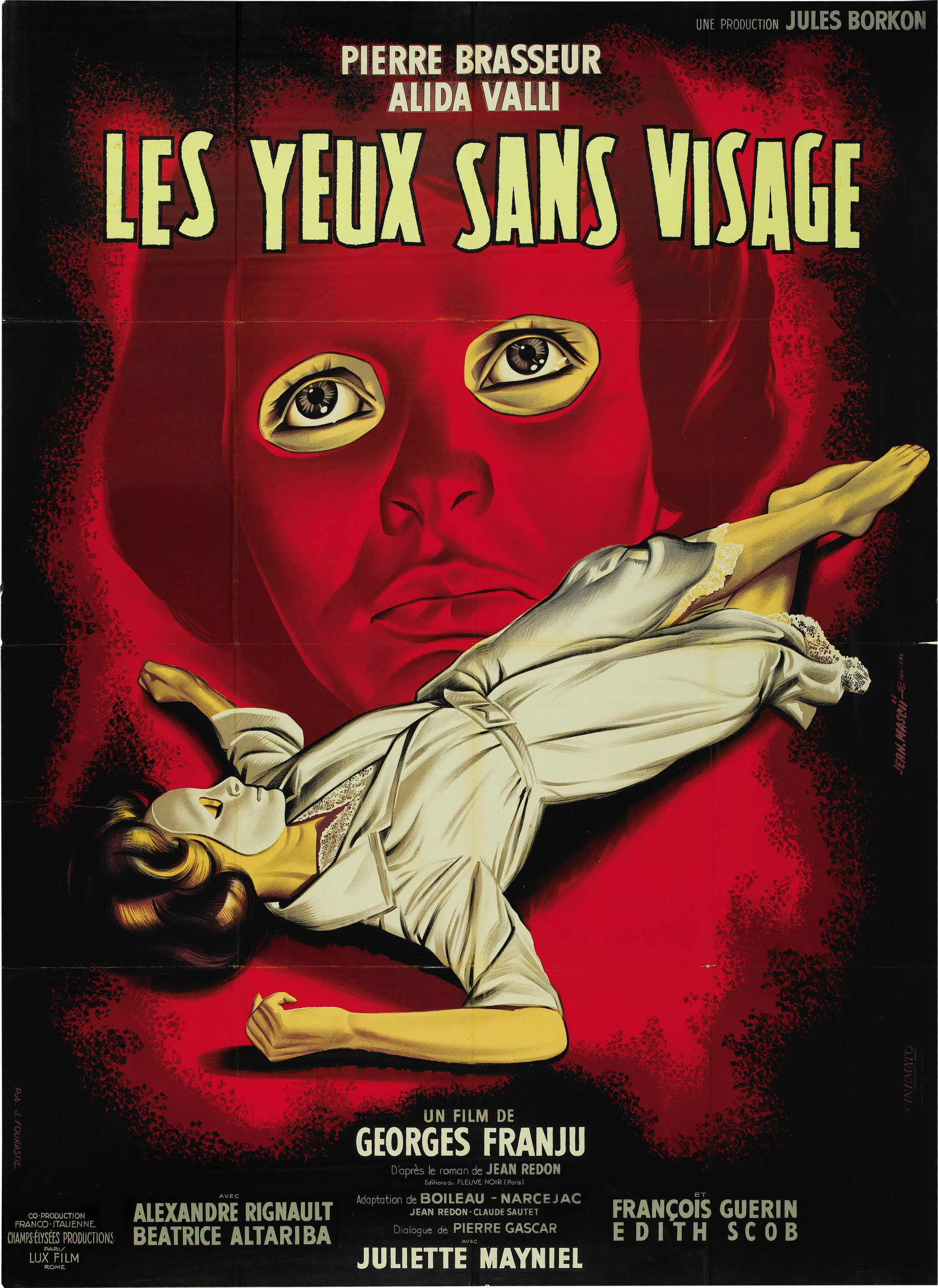
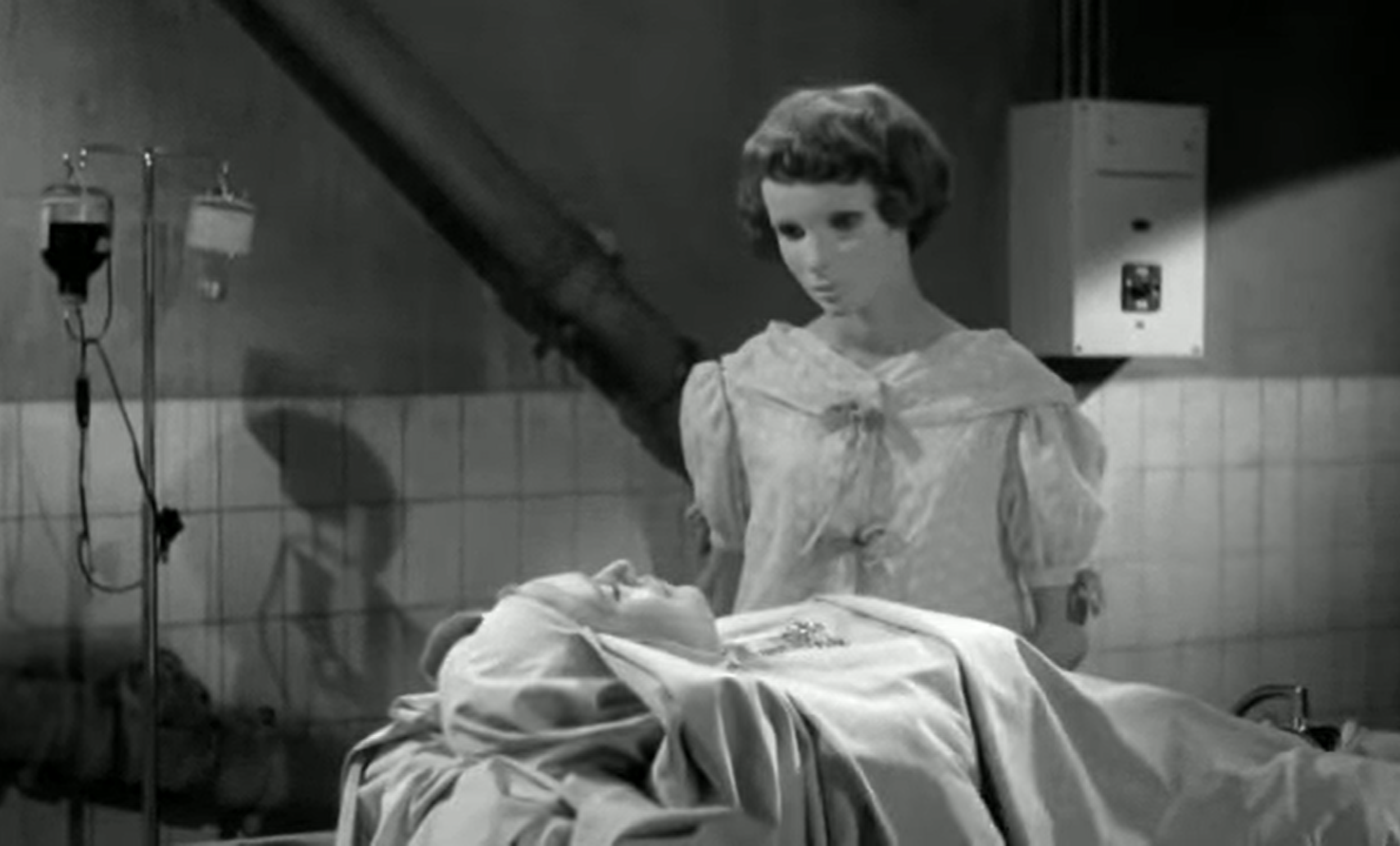
Eyes Without a Face / Yeux Sans Visage, Les (1960)

Eyes Without a Face / Yeux Sans Visage, Les (1960)

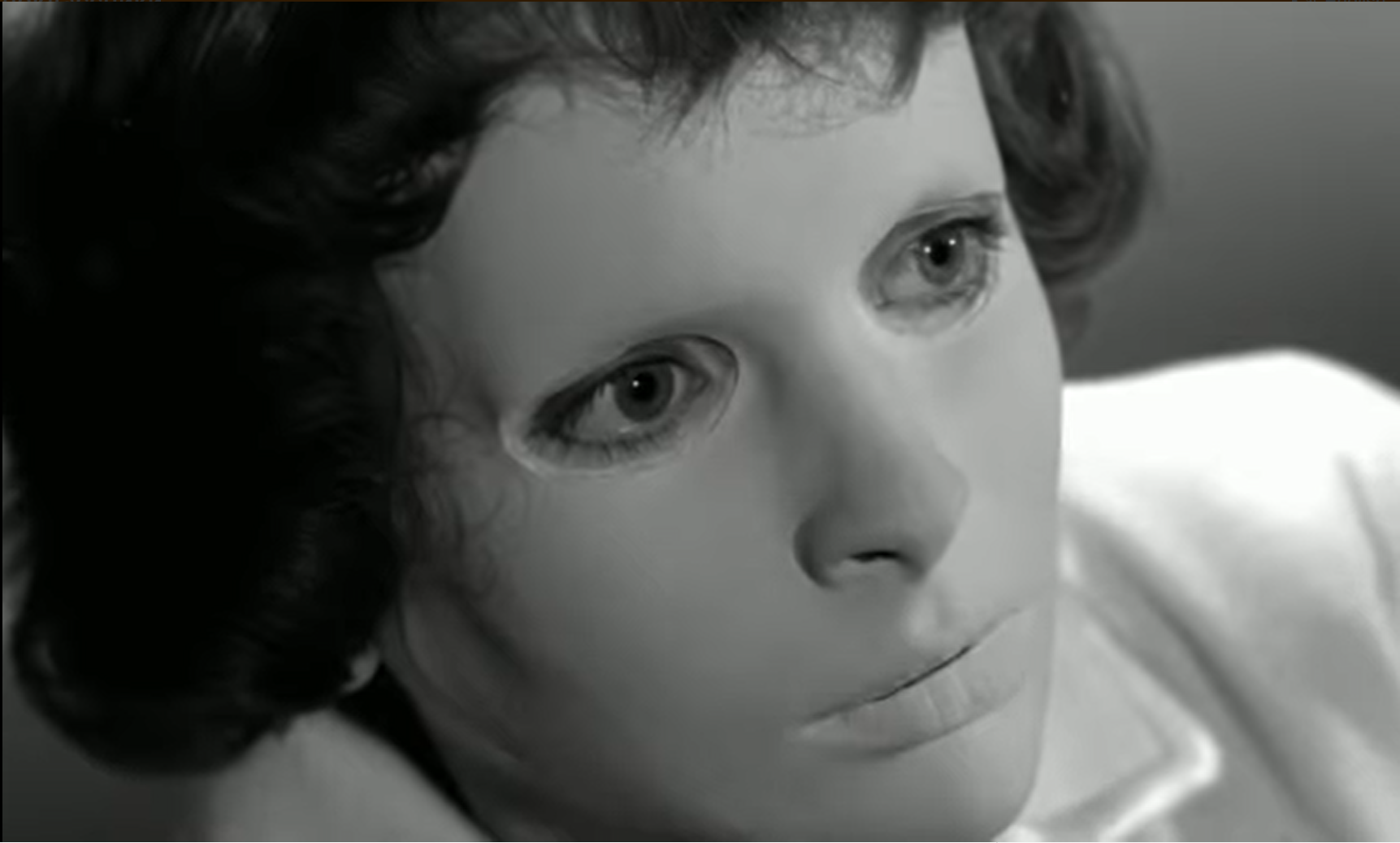
“My face frightens me; my mask frightens me even more.”

Synopsis:
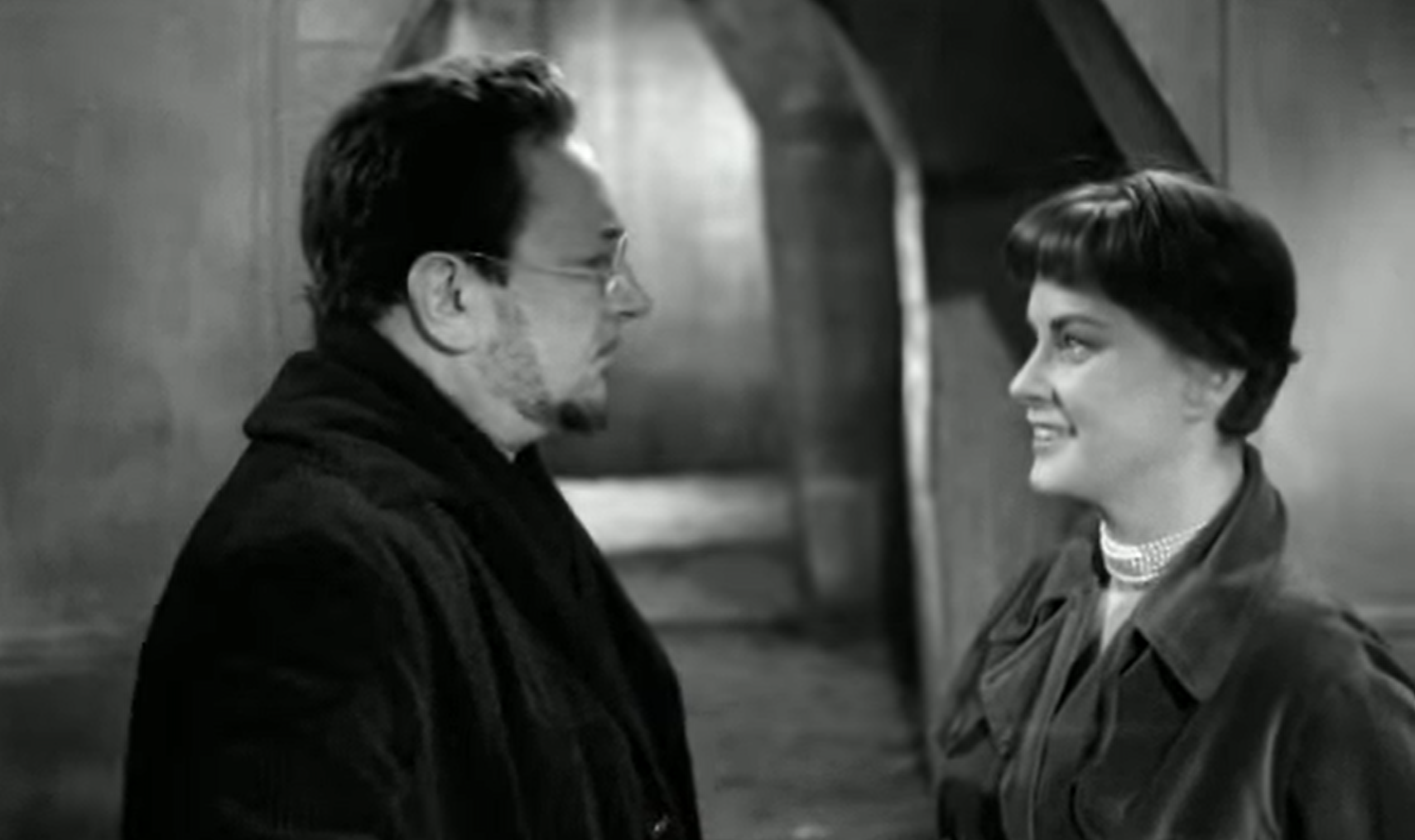
A renowned surgeon (Pierre Brasseur) hoping to graft a new face onto his injured daughter Christiane (Edith Scob) enlists the help of his loyal assistant (Alida Valli) in kidnapping unsuspecting young women with similar features.

Genres, Themes, Actors, and Directors:

  • Alida Valli Films
  • Disfigured Faces
  • Father and Child
  • French Films
  • Georges Franju Films
  • Horror
  • Kidnapping
  • Mad Doctors and Scientists
  • Plastic Surgery

Review:
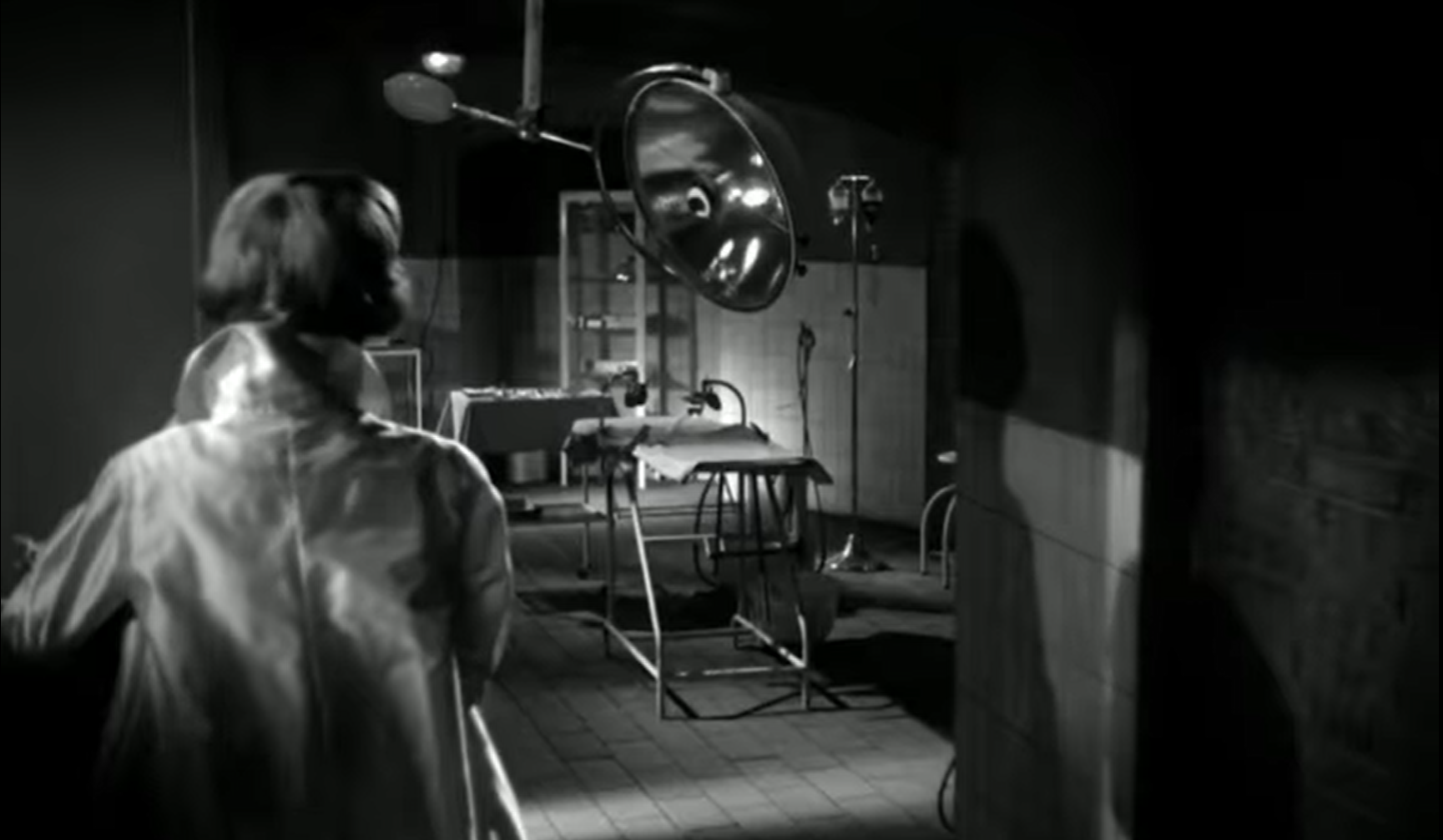
Georges Franju’s Les Yeux Sans Visage remains one of the most haunting and memorable horror films ever made. As in Val Lewton’s early RKO films, Franju relies on atmosphere rather than gore and violence to tell the creepy tale of a young woman trapped in a web of paternal love. Scob is effectively ethereal in the title role; the imagery of Christiane moving through the halls of her prison-like house are guaranteed to hold fast in your memory — as is the infamous surgery scene, when Brasseur methodically slices off a girl’s face. Surprisingly enough, the film contains some levity as well, thanks both to Maurice Jarre’s carnival-like score, and a critical subplot about a naive shoplifter (Beatrice Altariba) who becomes an important catalyst in solving the mystery of the disappearing girls. The final scenes of this must-see horror film are both satisfying and devastating.

Redeeming Qualities and Moments:

  • Edith Scob as Christiane

  • Alida Valli as Dr. Genessier’s loyal assistant
  • Stunning b&w cinematography by Eugen Schufftan
  • Dr. Genessier surgically removing a girl’s face
  • The final powerful sequences
  • Maurice Jarre’s haunting, carnivalesque score

Must See?
Definitely. This horror classic — which merits repeat viewings — will remain in your mind long after you’ve watched it.

Categories

  • Foreign Gem
  • Genuine Classic

(Listed in 1001 Movies You Must See Before You Die)

Links:

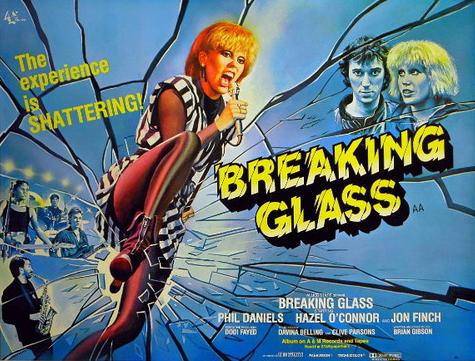
Breaking Glass (1980)

Breaking Glass (1980)

”I don’t like the way life is for the majority of us — I don’t say I can change it, but I can sing about it.”

Synopsis:
An anti-establishment punk singer (Hazel O’Connor) rises to fame and sells out.

Genres, Themes, Actors, and Directors:

  • Aspiring Stars
  • Musicals
  • Musicians
  • Punk Rock

Response to Peary’s Review:
Breaking Glass tells the familiar story of an idealistic artist who discovers, lo and behold, that fame and fortune come at a price. While the film’s screenplay doesn’t cover much new territory, it nonetheless serves as an effective vehicle for charismatic punk New Waver Hazel O’Connor, whose music is raw and seductive. Peary notes that this is a “sad, thematically bewildering” film, but I think that’s exactly the point: we’re supposed to mourn Hazel’s gradual loss of political and artistic autonomy, and to empathize with the angry confusion she feels by the end. The scene in which she defends herself during a radio interview is particularly poignant. Who ever said punk was upbeat?

Redeeming Qualities and Moments:

  • Hazel O’Connor as Kate
  • Phil Daniels as Kate’s manager
  • O’Connor’s increasingly bizarre outfits and make-up
  • An eclectic, often enjoyable soundtrack of New Wave punk

Must See?
No, but it’s worth a look simply for its erstwhile status as a cult favorite.

Links:

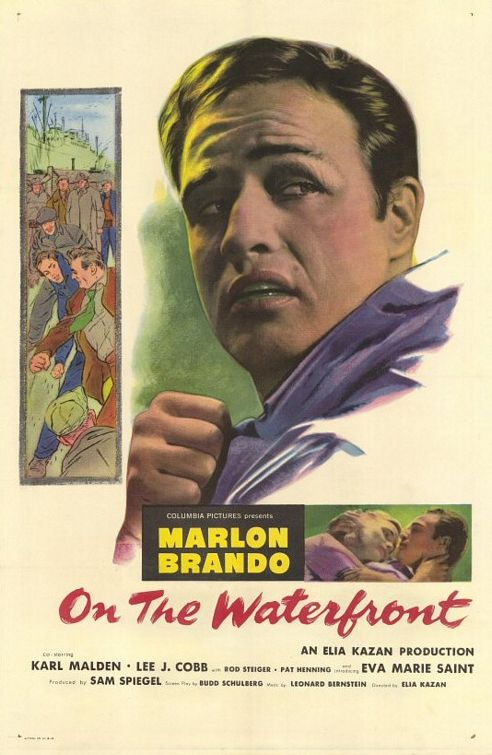
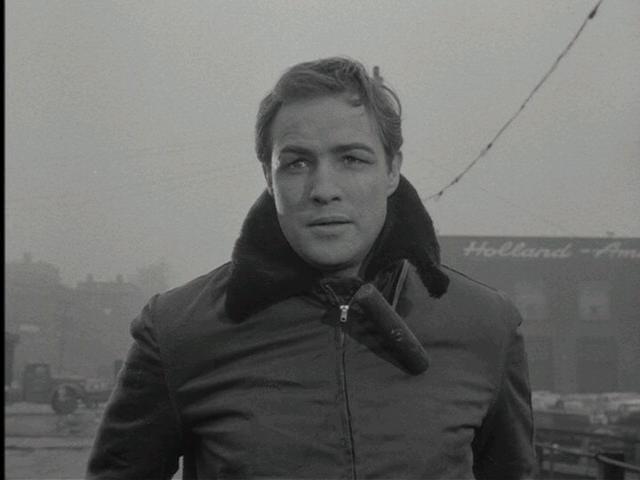
On the Waterfront (1954)

On the Waterfront (1954)

“I’ve been on the docks all my life, boy, and there’s one thing I’ve learned — you don’t ask no questions, you don’t answer no questions.”

Synopsis:
A longshoreman (Marlon Brando) stands up to his corrupt union boss (Lee J. Cobb), against the advice of his brother (Rod Steiger).

Genres, Themes, Actors, and Directors:

  • Character Arc
  • Corruption
  • Elia Kazan Films
  • Eva Marie Saint Films
  • Karl Malden Films
  • Lee J. Cobb Films
  • Marlon Brando Films
  • Political Awakening
  • Rod Steiger Films
  • Romance
  • Siblings
  • Waterfront

Response to Peary’s Review:
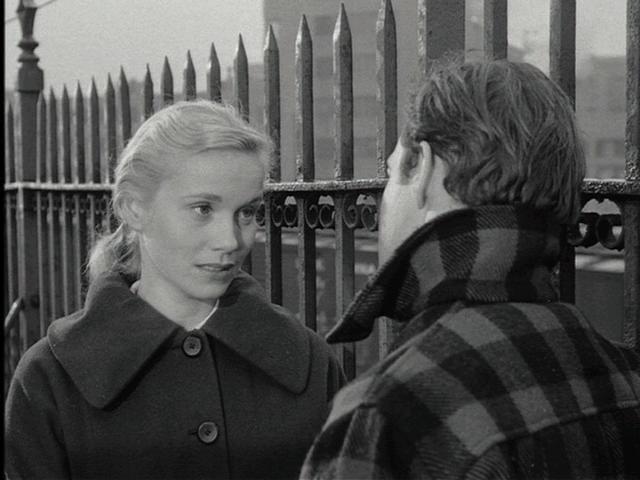
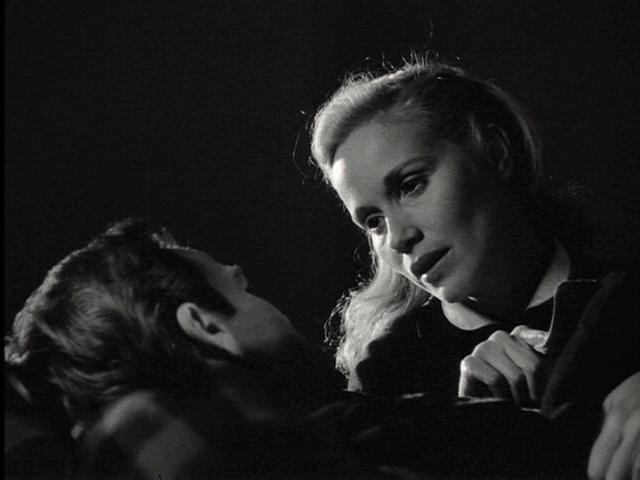
I’m in complete agreement with Peary’s assessment of this “terrific film”, which remains one of my favorite movies of all time. As Peary notes, On the Waterfront — which won eight Oscars — possesses “great acting, a fascinating premise, strong direction by Elia Kazan, tough dialogue by Budd Schulberg, and many classic scenes.” Marlon Brando (young and sexy) is nothing short of brilliant as Terry Malloy; nearly as impressive (Brando’s hard to top!) are Eva Marie Saint in her award-winning screen debut as Edie, and Rod Steiger as Terry’s protective yet misguided older brother.

On the Waterfront has been criticized on multiple fronts over the years: by those upset about its portrayal of the longshoreman’s union in the 1950s as corrupt; by those who claim On the Waterfront is essentially anti-union (I disagree); and — most famously — by those who believe Kazan was trying to offer Terry’s story as an apologetic for his own name-spilling to the House of Un-American Activities Commission (HUAC). Ultimately, however, I choose to view the film as a fable-like character study about personal redemption, rather than a polemic on unions, corruption, or Kazan himself.

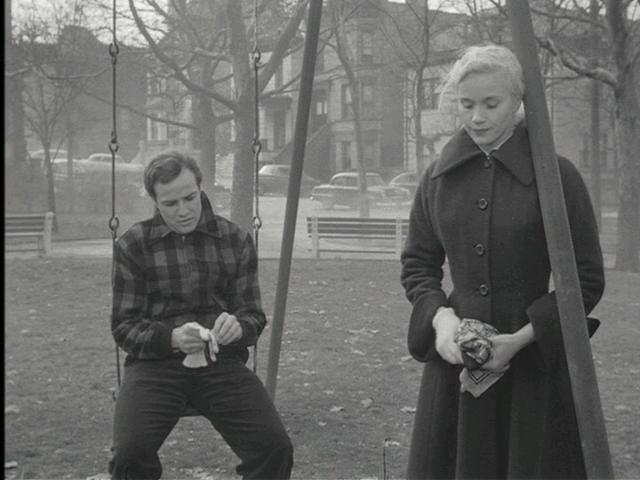
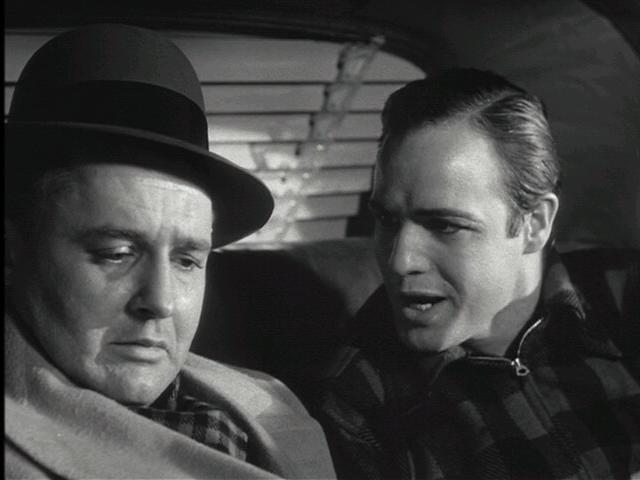
The film’s primary flaw (as noted by Peary) is the fact that “too much Christian morality is expounded by the overacting Karl Malden” — indeed, the scenes with Father Barry are a major distraction. Fortunately, there are enough memorable moments in On the Waterfront — Terry walking with Edie in the park; Terry’s poignant talk with Charlie in the taxi cab; the final climactic moments on the docks — to make up for those which don’t quite work. Also noteworthy are Leonard Bernstein’s majestic score (his first), and Boris Kaufman’s luminous black-and-white cinematography. Ultimately, On the Waterfront remains a glorious example of collaborative filmmaking, and merits multiple viewings by film fanatics.

Redeeming Qualities and Moments:

  • Marlon Brando as Terry Malloy
  • Eva Marie Saint as Edie
  • Rod Steiger as Charley
  • The touching romance between Terry and Edie
  • Terry and Edie’s first walk in the park together
  • Terry and Charley’s taxicab scene
  • The final climactic showdown between Brando and Cobb
  • Boris Kaufman’s evocative b&w cinematography
  • Leonard Bernstein’s soaring score

Must See?
Absolutely. Despite its flaws, this remains both a personal favorite and a genuine classic.

Categories

  • Genuine Classic
  • Noteworthy Performance(s)
  • Oscar Winner or Nominee

(Listed in 1001 Movies You Must See Before You Die)

Links:

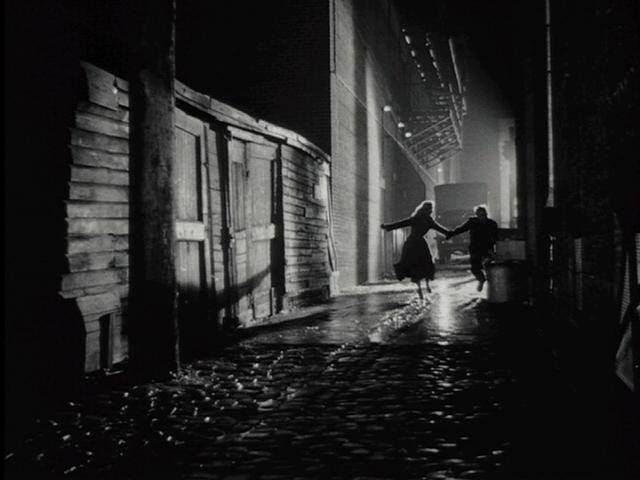
Just Imagine (1930)

Just Imagine (1930)

“If you make this trip successfully, you’ll be the most distinguished person in the world!”

Synopsis:
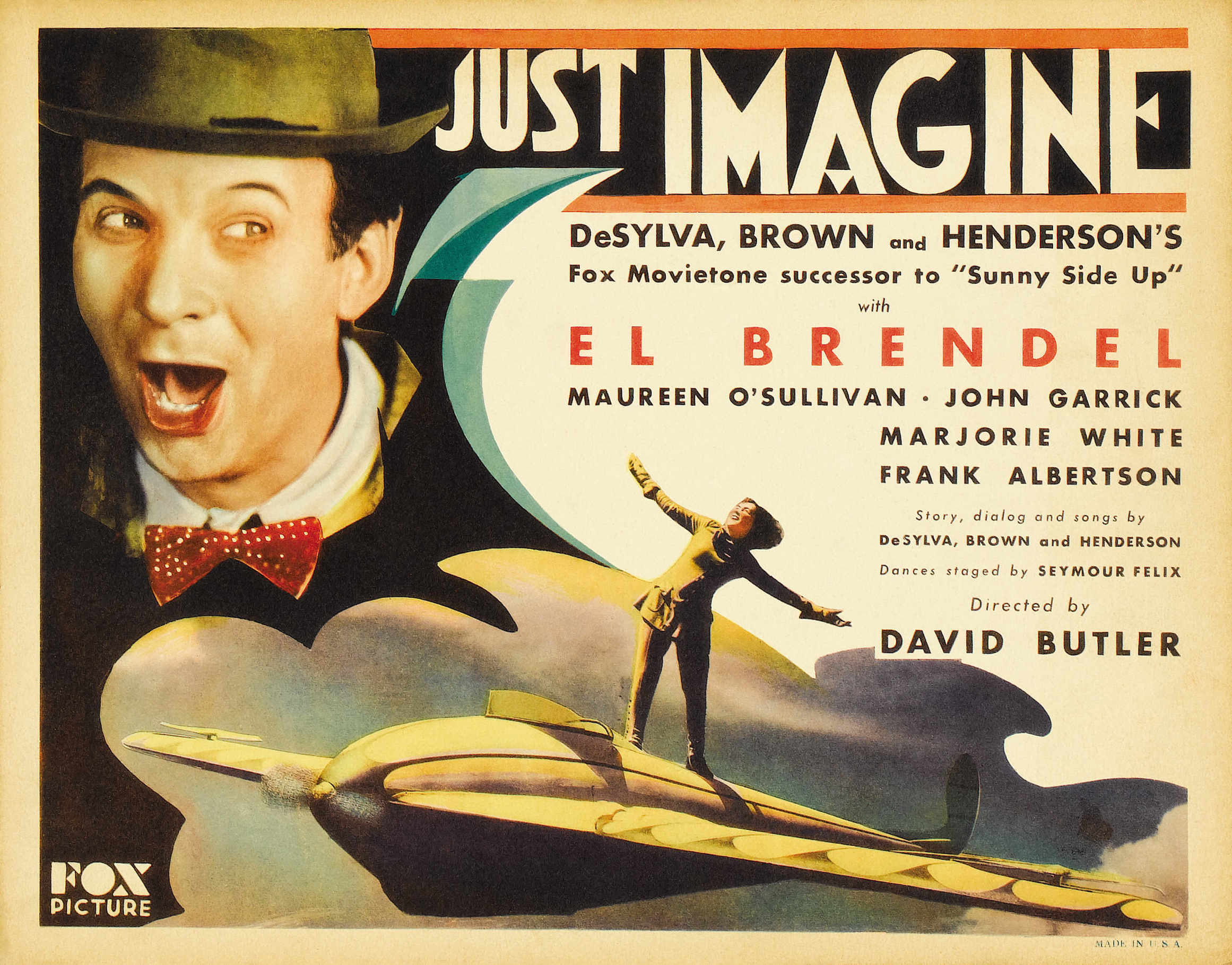
In 1980, a young man named J-21 (John Garrick) is unable to marry his girlfriend, LN-18 (Maureen O’Sullivan), because another man (Kenneth Thomson) has been voted a better candidate. In order to distinguish himself as worthy of LN-18’s hand, J-21 travels on a historic flight to Mars with his friend RT-42 (Frank Albertson) and a man from 1930 who has been brought back to life (El Brendel).

Genres, Themes, Actors, and Directors:

  • Aliens
  • Astronauts
  • Comedy
  • Love Triangle
  • Maureen O’Sullivan Films
  • Musicals
  • Race Against Time
  • Science Fiction
  • Time Travel

Review:
This early sci-fi oddity tries to cram as much as possible into its overlong 109 minutes — including a love triangle, music and dance sequences, aliens, a space voyage, time travel, a race against time, a courtroom drama, and lame comedy (courtesy of the insufferable pseudo-Swedish comedian, El Brendel). The most effective elements of Just Imagine are its futuristic sets (which are reminiscent of Fritz Lang’s Metropolis), and the glimpse it provides of a hypothetical future society in which both food and drink come in the form of pills, letters and numbers have replaced names, individuals jet around in private planes:

… and eligibility for marriage is determined by a court.

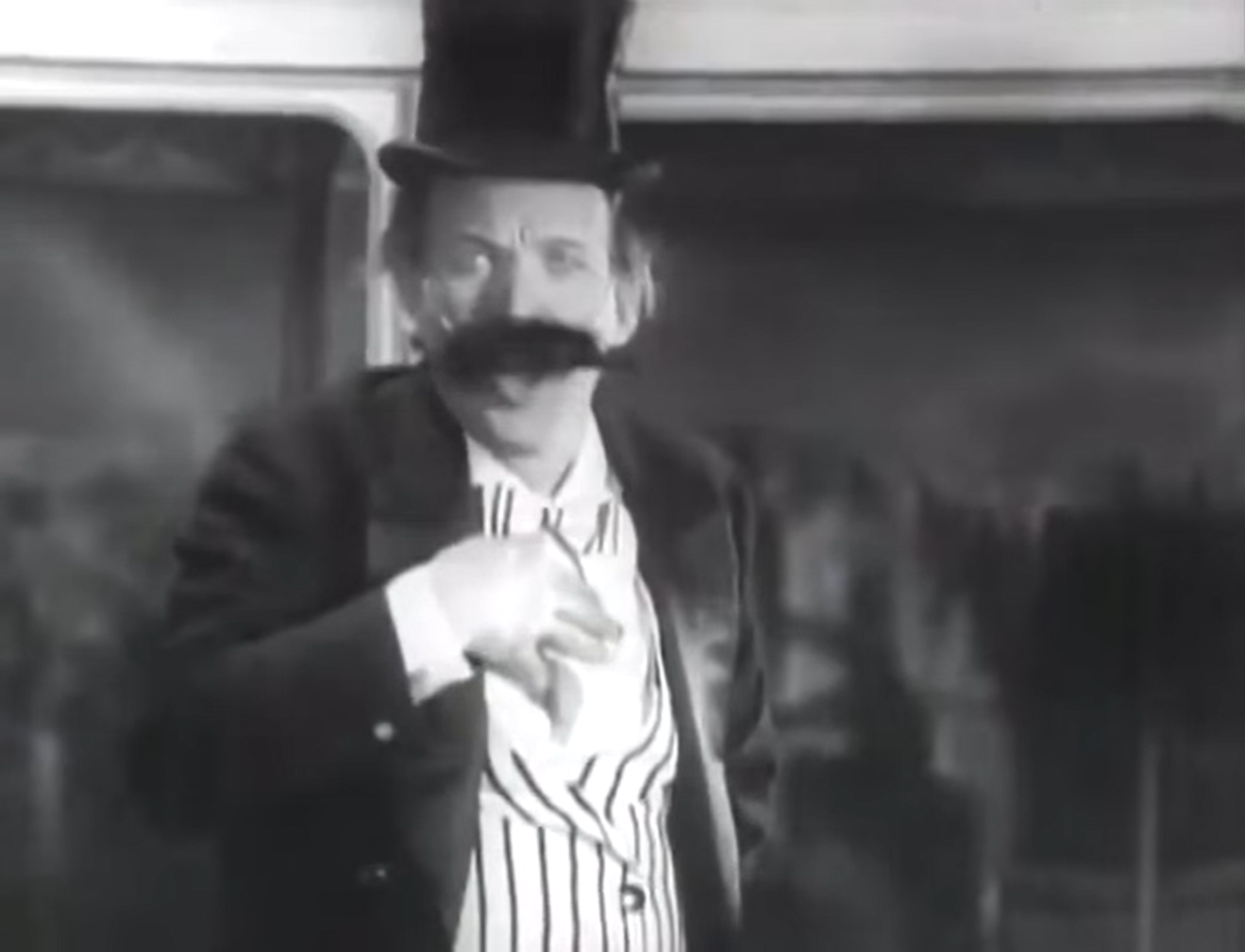
Much less effective are the tedious musical interludes, which seem like they belong in a different film entirely. At a certain point, Brendel sings a song during which he frantically puts on a series of different hats while mimicking various characters — it’s mildly creative, but so out of place!

With that said, the Busby Berkeley-inspired dance sequences on Mars (not to mention the Martians’ outlandish costumes) are just surreal enough to be campily hypnotic.

And you’ve got to give director David Butler credit for taking on such an enormously overinflated script — though one can’t help wishing it had been trimmed back to a slightly more manageable (and enjoyable) size.

Redeeming Qualities and Moments:

  • The lavish art deco sets and over-the-top Busby Berkeley-esque dance sequences on Mars
  • An intriguing vision of what 1980 might have looked like, from a 1930s perspective
  • A bizarre, if not entirely successful, pastiche of nearly every possible movie genre — including comedy, science fiction, romance, and musical

Must See?
Yes, simply for its status as a truly surreal cinematic hybrid.

Categories

  • Historically Relevant

Links:

Stripper, The (1963)

Stripper, The (1963)

“When I was a kid, did you used to kiss me goodnight?”

Synopsis:
After her abusive boyfriend (Robert Webber) leaves her stranded in a small town without money, stage-show actress Lila Green (Joanne Woodward) stays with some acquaintances: a woman (Claire Trevor) she used to babysit for, and the woman’s grown son (Richard Beymer), who — despite having a pretty girlfriend (Carol Lynley) his own age — is deeply attracted to Lila.

Genres, Themes, Actors, and Directors:

  • Actors and Actresses
  • Carol Lynley Films
  • Claire Trevor Films
  • Joanne Woodward Films
  • May-December Romance
  • Play Adaptations
  • Strippers

Review:
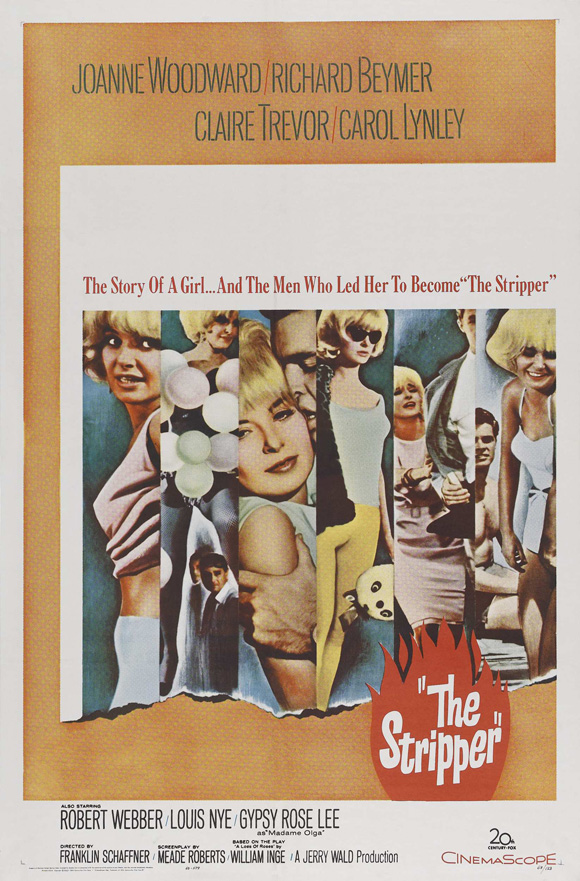
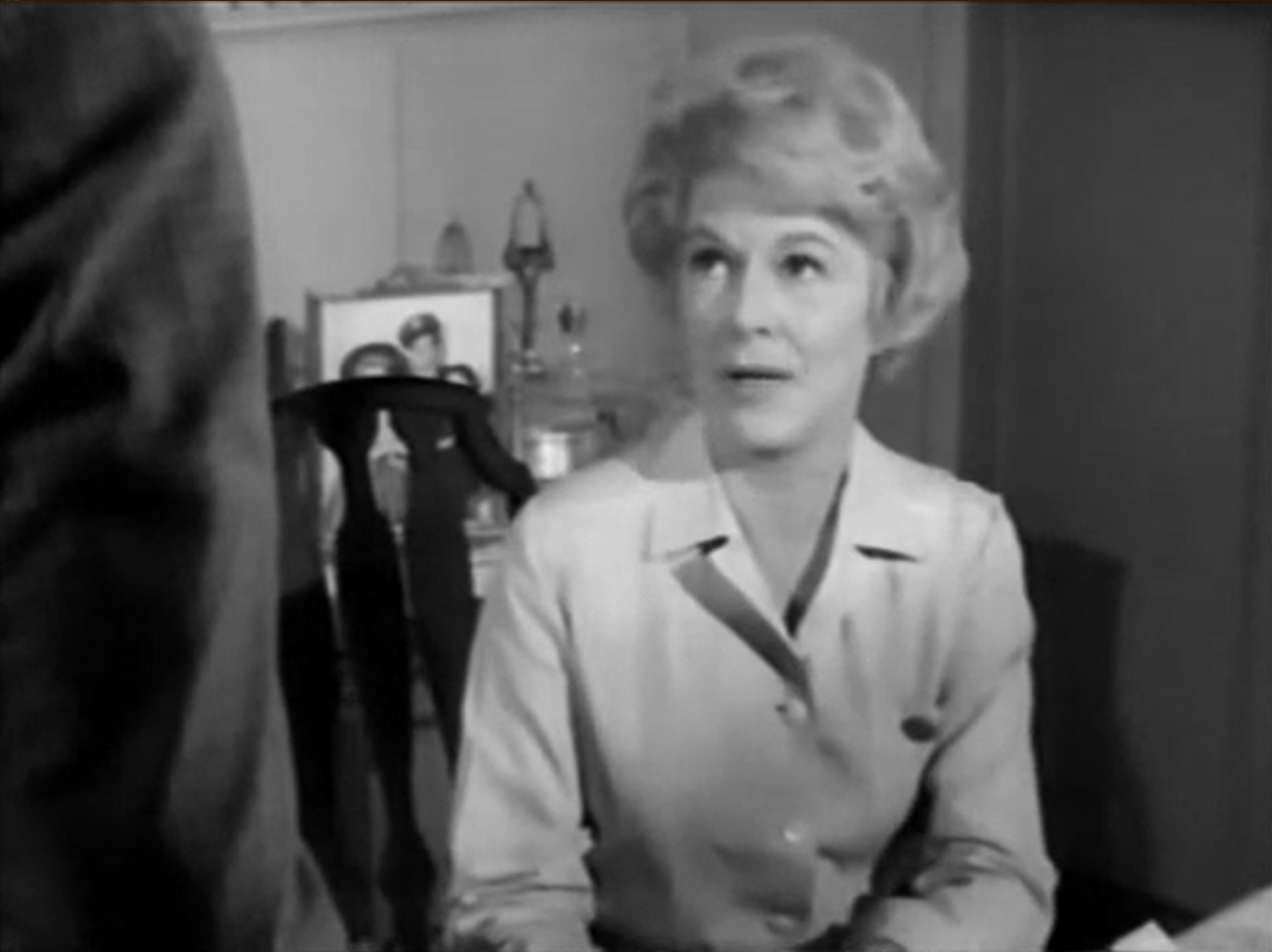
Franklin Schaffner’s adaptation of William Inge’s play (originally titled A Loss of Roses) suffers first and foremost from one of the worst re-titlings ever. Though Lila does become a stripper in the final ten minutes of the movie — hence the provocative image on the video cover — this isn’t what the movie’s about. Rather, it’s the story of a woman who once hoped for a legitimate career as an actress but knows this will never happen, and who has accepted that she will have to eke by on small-town performance gigs — but draws the line at stripping. Even more importantly, however, it’s the story of a woman who has learned not to expect much from men, yet given her innate sensitivity, is bound to get her heart broken yet again when callow Kenny (Beymer) insists he’ll “treat her right”.

The Stripper is ultimately not one of Inge’s best stories (Beymer’s character in particular is especially underdeveloped) but the performances make it enjoyable to watch nonetheless. Woodward is excellent in the lead role; as noted by Peary in his review of Rachel, Rachel (1968), Woodward “has specialized in playing women who are warmhearted, maternal, vulnerable, victimized, and confused about the harshness of the world” — a description which fits Lila to a T. Also noteworthy is Claire Trevor as Kenny’s mom — a well-meaning woman who wants to be kind to Lila, but can’t help feeling concerned about Kenny’s growing attraction to her. It would have been easy for her character to come across as a shrew, but, thanks to both Inge’s writing and Trevor’s performance, she never does.

Redeeming Qualities and Moments:

  • Joanne Woodward as Lila
  • Claire Trevor as Kenny’s concerned mom

Must See?
No, but it’s recommended for fans of Woodward or Inge.

Links:

Hoppity Goes to Town / Mr. Bug Goes to Town (1941)

Hoppity Goes to Town / Mr. Bug Goes to Town (1941)

“The fence is down, the humans come through — there’s only one thing that we can do!”

Synopsis:
A group of bugs and insects — including a grasshopper named Hoppity, a bee named Mr. Bumble, and Mr. Bumble’s daughter Honey — find their homes threatened when humans start littering and walking through their grassy neighborhood. Meanwhile, duplicitous C. Bagley Beetle enlists the help of his two henchmen — Smack the Mosquito and Swat the Fly — in convincing Honey to be his wife.

Genres, Themes, Actors, and Directors:

  • Animated Features
  • Musicals
  • Talking Animals

Review:
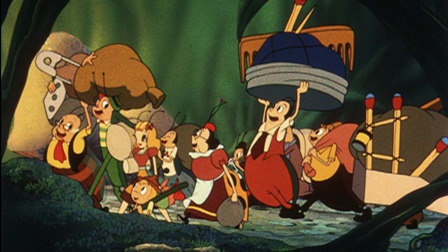
Mr. Hoppity Goes to Town — the second and last feature animated film made by Fleischer Studios — is primarily known today as the first animated feature based on an original story. Made 60 or so years before A Bug’s Life and Antz, Hoppity is an early attempt to show life from a bug’s perspective; my favorite scene has Hoppity taking Honey out for a night on the town, down through a pothole to a bugs’ nightclub. Unfortunately, however, while Hoppity remains an enjoyable tale for kids (the morals are clear and straightforward), it’s ultimately not a classic: Hoppity is an insipid hero, and the songs are instantly forgettable. Nonetheless, this is a film which should be seen once by all film fanatics, simply for its place in animation history.

Note: Mr. Hoppity‘s animators were the victims of incredibly unlucky timing: just three days after the film was released, Pearl Harbor was invaded and Hoppity became a box office failure.

Redeeming Qualities and Moments:

  • One of the few early animated features to compete with Disney
  • Some nifty “neon” animation when Hoppity is accidentally electrified and starts dancing

Must See?
Yes, simply for its historical importance; but it will ultimately be of most interest to kids.

Categories

  • Historically Relevant

Links:

My Cousin Rachel (1952)

My Cousin Rachel (1952)

“There, beside his grave, I made a vow: I swore that whatever it had cost Ambrose in pain and suffering, I would return it in full measure.”

Synopsis:
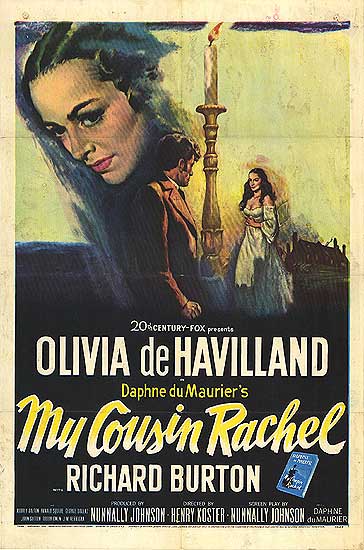
When his wealthy cousin Ambrose (John Sutton) dies while abroad, Philip Ashley (Richard Burton) suspects Ambrose’s new wife, Rachel (Olivia de Havilland), of murder. When Rachel comes to visit, however, Philip finds himself swayed by her charms, and is no longer sure what to think.

Genres, Themes, Actors, and Directors:

  • Historical Drama
  • Inheritance
  • Mistaken or Hidden Identities
  • Olivia de Havilland Films
  • Revenge
  • Richard Burton Films
  • Romance
  • Widows

Review:
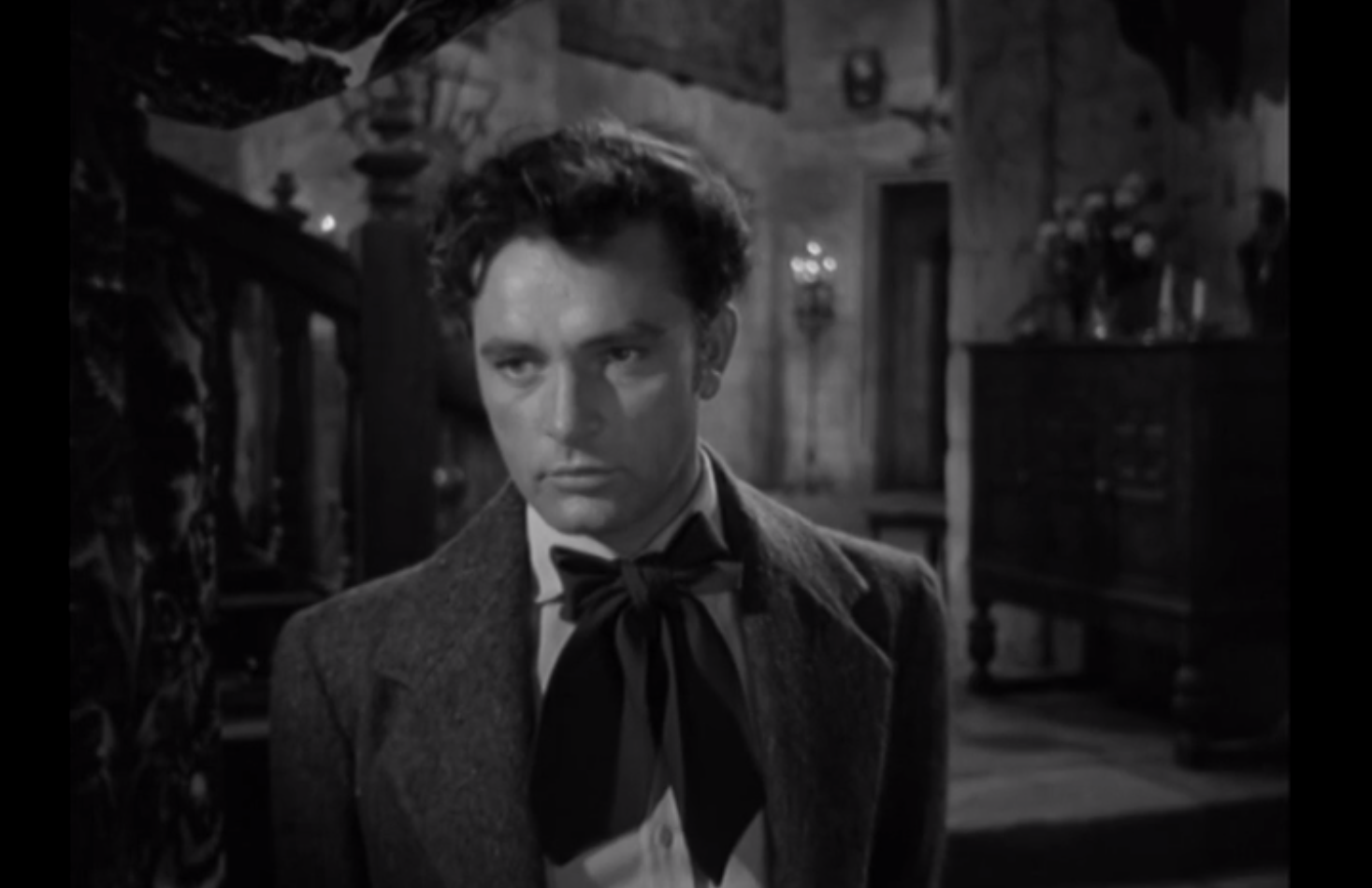
Richard Burton made his screen debut in this excellent adaptation of Daphne Du Maurier’s gothic romance. Burton is appropriately moody as the young protagonist who experiences both love and hatred for his beautiful cousin, while De Haviland once again shows her talent for playing a sweet yet potentially duplicitous woman (see also The Dark Mirror). In addition to fine performances and atmospheric sets, the screenplay is nicely paced, keeping us constantly guessing about Rachel’s motivations until the final climactic moments.

Redeeming Qualities and Moments:

  • Richard Burton as the brooding, love-struck Philip
  • Olivia de Havilland as Rachel
  • Atmospheric sets and cinematography
  • Nunnally Johnson’s script — full of many intriguing mysteries and plot twists

Must See?
No, but it’s highly recommended for fans of gothic romances.

Links:

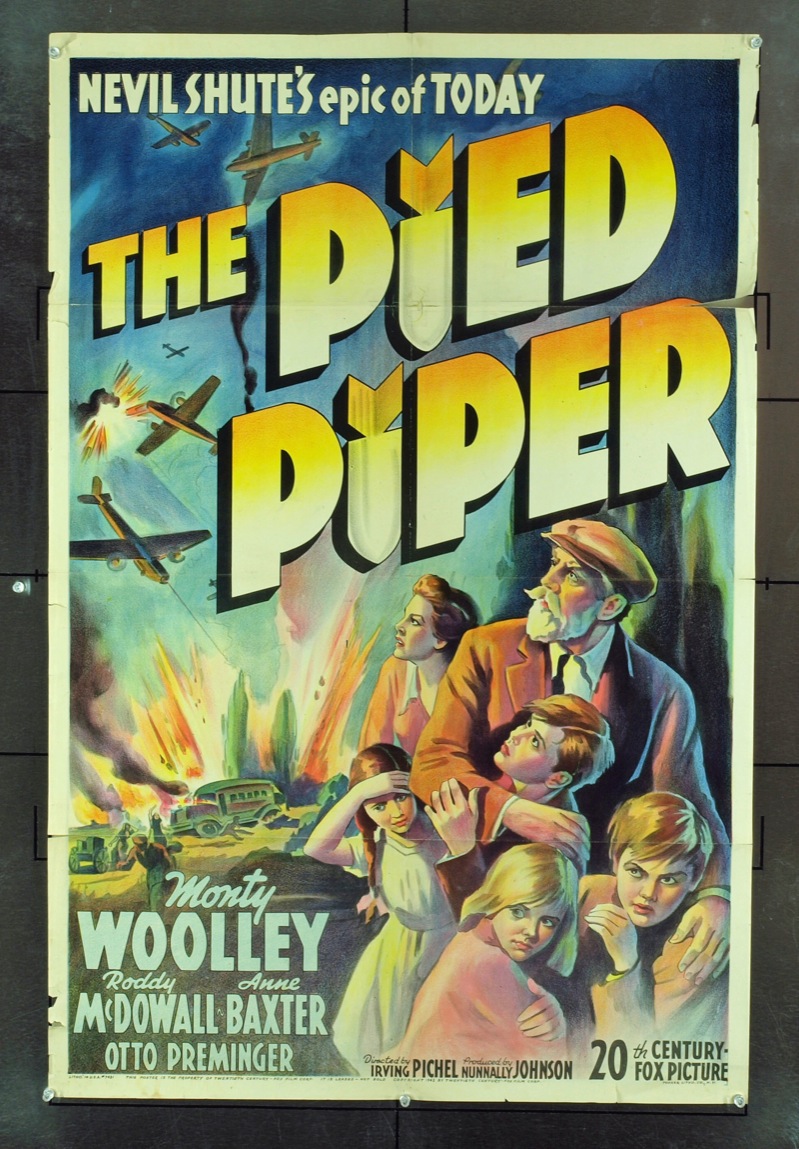
Pied Piper, The (1942)

Pied Piper, The (1942)

“Young or old, an Englishman’s place at a time like this is in England.”

Synopsis:
When the Germans invade France in 1940, a vacationing elderly Englishman (Monty Woolley) is asked to bring two children (Roddy McDowall and Peggy Ann Garner) with him back to London. Along the way, however, Woolley finds himself escorting more and more needy kids.

Genres, Themes, Actors, and Directors:

  • Anne Baxter Films
  • Character Arc
  • Escape
  • Monty Woolley Films
  • Nazis
  • Orphans
  • Roddy McDowall Films
  • World War II

Review:
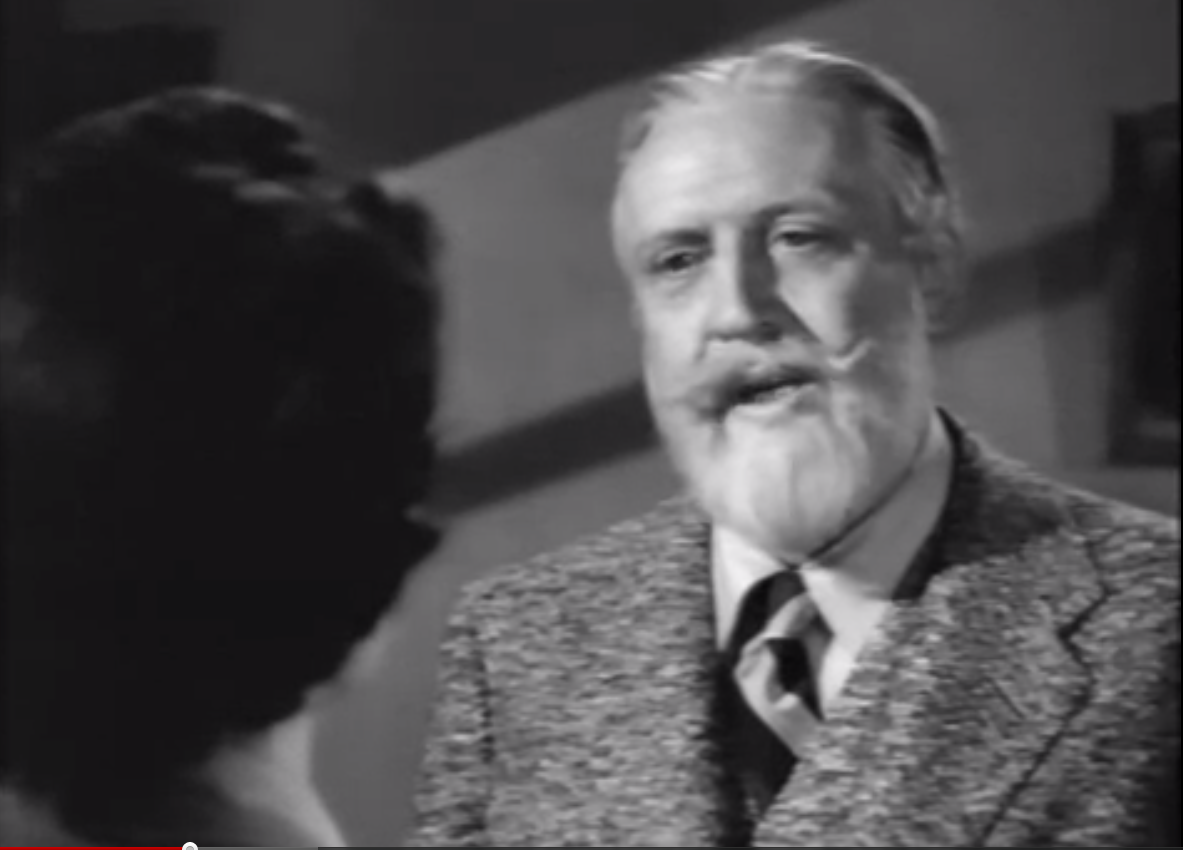
This warm-hearted adaptation of Nevil Shute’s novel — about an unlikely hero (Woolley) who finds himself shepherding a passel of kids through war-torn Europe — is more a fable than a realistic story; indeed, because it was clearly shot on Hollywood sound stages, one never feels as though the characters are in any true danger. Woolley’s performance is the undisputed highlight of the film: he keeps things at a consistently humorous level. No matter how dire the circumstances he and his kids face (including death by Nazis), we know he will always stand up for his rights. I especially like his interactions with McDowell and Garner, both of whom show ample evidence of their natural ability as child actors.

Redeeming Qualities and Moments:

  • Monty Woolley as the elderly curmudgeon who experiences a change of heart; Peary nominates him for an Alternate Oscar as best actor of the year
  • Good, natural performances by child actors McDowall and Garner

Must See?
Yes, to see Woolley in his Oscar-nominated role.

Categories

  • Noteworthy Performance(s)
  • Oscar Winner or Nominee

Links:

Mafu Cage, The (1978)

Mafu Cage, The (1978)

“You’re not in my daddy’s book. My daddy doesn’t know about you, Mafu. That makes you a very rare breed.”

Synopsis:
An astronomer (Lee Grant) cares for her disturbed younger sister (Carole Kane), who is obsessed with drawing and killing primates she keeps in a cage at home.

Genres, Themes, Actors, and Directors:

  • Carol Kane Films
  • Horror
  • Incest and Incestuous Undertones
  • Lee Grant Films
  • Mental Illness
  • Obsessive Love
  • Play Adaptations
  • Primates
  • Siblings

Review:
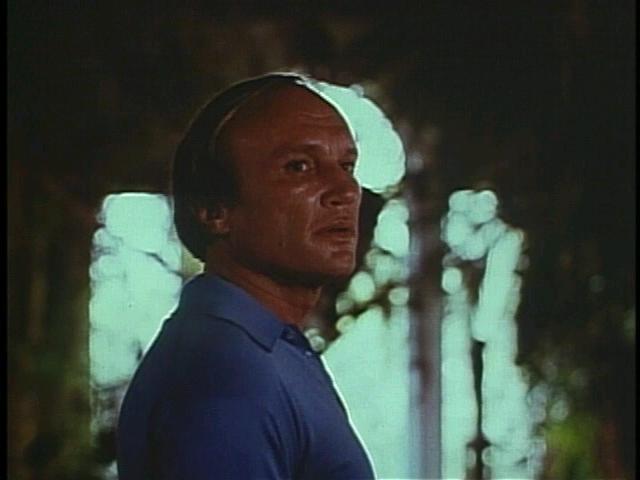
Chances are you’ve never seen anything quite like The Mafu Cage, a bizarrely memorable horror flick based on themes of mental instability, sororal devotion, incestuous behavior, and obsessive love. Director Karen Arthur never opts for cheap thrills, instead choosing to imbue her film with heavy doses of atmosphere — in the sets (including Cissy’s jungle-like living space and the almost minimalist white Mafu cage), the soundtrack (full of pulsating African tribal rhythms), and Cissy’s increasingly far-out costumes and makeup. Carol Kane is nothing less than brilliant in the lead role as Cissy: she shifts at a moment’s notice from seductive to contrite to leering, yet we never doubt the veracity of her impulses. Equally impressive are Lee Grant and James Olson as the primary targets of Cissy’s unpredictable behavior. Although we want to shake Grant for not placing her sister in a mental asylum years earlier, we can’t help admiring her loyalty and love for her disturbed sister; and Olson does a fine job as the innocent visitor who unknowingly walks into a web of insanity, only to pay dearly for it. My one complaint about the film is that we never learn what or who a “mafu” is; this minor quibble aside, however, I’ll admit I was surprised by how much I enjoyed this strange little Sleeper, which is nonetheless not for all tastes.

Redeeming Qualities and Moments:

  • Carole Kane’s brilliantly deranged performance as Cissy
  • Lee Grant as Cissy’s loyal older sister
  • James Olson as Grant’s colleague and would-be love interest
  • Countless eerily memorable moments
  • The pulsating tribal soundtrack

Must See?
No, but it’s recommended. I can easily see this film becoming a cult flick once it’s rediscovered.

Links:

Laughter (1930)

Laughter (1930)

“You’re rich — you’re dirty rich, and nothing but laughter can make you clean.”

Synopsis:
A former chorus girl (Nancy Carroll) married to a boring millionaire (Frank Morgan) is wooed by her hedonistic ex-lover (Fredric March).

Genres, Themes, Actors, and Directors:

  • Fredric March Films
  • Golddiggers
  • Infidelity
  • Romantic Comedy

Review:
This rarely seen film is widely regarded as a formative precursor to 1930s screwball comedies, and remains a humorous look at the pull between love and wealth: if given the choice between living a boring life in the lap of luxury, or laughing your days away in poverty, which would you choose? Carroll is fine as the female lead, but it’s Fredric March who really shines here — from the moment he enters Carroll’s house and attempts to woo her back, we can’t help smiling at his antics. Though it’s hard to feel much sympathy for Carroll (she wants to have her cake and eat it, too), she and March have such genuine chemistry together that it’s easy to see why she’s tempted by his charms.

Note: Director Harry d’Abbadie d’Arrast — who also wrote the Oscar-nominated script — helmed just seven films between 1927-1933, then was blackballed from Hollywood.

Redeeming Qualities and Moments:

  • Fredric March as Carroll’s former lover
  • A clever, Oscar-nominated script

Must See?
Yes, simply for its historical importance as a precursor to 1930s screwball comedies.

Categories

  • Historically Relevant

Links: